





Subscribe to the Bombay Chartered Accountant Journal Subscribe Now!

Section 12AB – Bombay High Court Holds Irrevocability Clause Not A Precondition For Registration

A writ petition was instituted by the Bombay Chartered Accountants’ Society (BCAS) jointly with the Chamber of Tax Consultants (CTC) and several public charitable trusts, challenging orders passed by the Commissioner of Income-tax (Exemptions) rejecting applications for renewal of registration under section 12AB of the Income-tax Act, 1961, on the ground of absence of an irrevocable clause or a dissolution clause in the trust deed.

The Bombay High Court, in Writ Petition (L) No. 7587 of 2026 (order dated 9 March 2026), has rendered a significant ruling, allowing the petition, and granting relief to many trusts, particularly old and established ones, which did not have such clauses.

BACKGROUND AND CONTROVERSY

Pursuant to the revamped registration regime effective from 1 April 2021, the trusts had applied for renewal of registration under section 12AB by filing Form 10AB. The applications were rejected on the following grounds:

  •  the trust deeds did not contain an express clause declaring the trust to be “irrevocable” or providing for dissolution; and
  • the applicants had answered “Yes” to the query in Form 10AB regarding existence of irrevocable clause in the trust deed, which was treated as furnishing “false or incorrect information” and consequently regarded as a “specified violation”.

The challenge before the Court was not merely to address individual rejection orders, but to the approach adopted by the Department, particularly in Mumbai, which had the potential to affect a large number of charitable institutions.

STATUTORY SCHEME

Section 12AB of the Act empowers the Commissioner to grant or refuse registration upon satisfaction regarding:

  1.  the objects of the trust or institution;
  2. the genuineness of its activities; and
  3. compliance with requirements of other laws material for the purpose of achieving its objects.

The provision does not prescribe the presence of any specific clause, such as irrevocability or dissolution, in the trust deed.

CORE ISSUE

The principal issue before the Court was whether the absence of an express irrevocability clause in the trust deed renders the trust “revocable” in law so as to disentitle it from registration under section 12AB.

DECISION AND REASONING

(i) Impermissibility of importing additional conditions

The Court held that the Commissioner had travelled beyond the statutory mandate by insisting upon the presence of an irrevocability clause. Section 12AB does not contemplate such a requirement, either expressly or by necessary implication. The enquiry under the provision is confined to the objects and genuineness of activities, and cannot be expanded by administrative interpretation.

(ii) Proper construction of sections 60 to 63

The Revenue’s reliance on sections 60 to 63 (relating to revocable transfers) was rejected. The Court emphasised that:

  •  Section 63 defines a “revocable transfer” as one where the instrument contains a provision for re-transfer or confers a right to reassume power over the income or assets;
  • such a provision for revocation must be positively found in the instrument;
  • the statute does not provide that the absence of an irrevocability clause renders a transfer revocable.

The Court held that the Department’s approach effectively reversed the legal test laid down in the statute.

(iii) Public charitable trusts under the MPT Act

A substantial part of the judgment is devoted to the scheme of the Maharashtra Public Trusts Act, 1950. The Court noted that:

  • upon dedication, the settlor is completely divested of the trust property;
  •  even where a trust is revoked or deregistered, the property cannot revert to the settlor but is required to be dealt with in accordance with statutory provisions, including vesting in the Public Trusts Administration Fund;
  • Section 55 of the MPT Act embodies the doctrine of cy-pres, ensuring that the property continues to be applied to charitable purposes.

On this basis, the Court concluded that public charitable trusts governed by the MPT Act are inherently irrevocable and the possibility of reversion of assets to the settlor, central to the concept of “revocable transfer” under section 63 does not arise.

(iv) Distinction between “revocable trust” and “revocable transfer”

The Court also clarified that the reference to sections 60 to 63 in section 11 pertains to specific transfers or contributions that may be revocable and not to the nature of the trust itself. A trust may be irrevocable in character, yet receive a donation subject to a revocable condition, in which case the tax consequences are governed by those provisions.

(v) Consistency with earlier precedents

The Court reaffirmed its earlier decision in CIT v. Tara Educational & Charitable Trust ((Income Tax Appeal No. 247 of 2015 dated 31.07.2017), holding that absence of a dissolution clause is not a valid ground for refusal of registration. It noted that the substantive conditions for registration under section 12AB are not materially different from those under section 12AA.

(vi) Adequacy of statutory safeguards

The apprehension of the Revenue regarding possible misuse was found to be unfounded in light of existing safeguards, including:

  • section 13 (denial of exemption where income or property is applied for the benefit of specified persons);
  • section 115TD (tax on accreted income upon conversion or dissolution); and
  • conditions typically imposed while granting registration restricting diversion of assets.

(vii) Defect in Form 10AB

The Court also took note of the practical difficulty arising from the e-filing utility, which compelled applicants to select a particular response in order to upload the form. The subsequent reliance on such response to allege furnishing of incorrect information was held to be arbitrary and unsustainable.

CONCLUSION

The High Court set aside the rejection orders and held that:

  • absence of an express irrevocability or dissolution clause cannot constitute a ground for refusal or cancellation of registration under section 12AB;
  • a public charitable trust is to be regarded as irrevocable unless a power of revocation is expressly reserved; and
  • the Commissioner cannot impose conditions not contemplated by the statutory framework.

The ruling provides much-needed clarity in the administration of the re-registration regime and is likely to have wide application across similarly placed trusts.

ACKNOWLEDGMENT

The petitioners were represented by Mr. Percy Pardiwalla, Senior Advocate along with Mr. Dharan Gandhi Advocate. Their lucid articulation of the statutory scheme assisted the Court in resolving the issues involved. Their contribution is gratefully acknowledged.

Beyond The Business Card

ICAI’s New Era of Responsible Professional Visibility: Analysing the Revised Advertising and Branding Framework for Chartered Accountants

Effective April 2026, the ICAI is introducing a revised ethical framework that shifts from strict advertising restrictions to “responsible professional visibility”. While the core prohibition on direct solicitation under the Chartered Accountants Act remains, the updated Code of Ethics allows CAs to actively engage in thought leadership, share educational insights on digital platforms, and host knowledge-sharing webinars. Furthermore, firms can now provide detailed descriptions of specialized services on their websites rather than just basic write-ups. However, all communication must remain truthful, factual, and devoid of exaggerated claims to maintain professional dignity.

INTRODUCTION

For decades, the chartered accountancy profession in India has been defined by a distinctive professional culture, one that emphasised credibility, independence, and restraint in public communication. Chartered accountants have long played a pivotal role in guiding businesses through taxation, regulatory compliance, financial reporting, and governance. Yet despite this central role, the profession historically maintained a conservative approach toward professional publicity.

Unlike consulting firms, legal practices, and financial advisory organisations that actively communicate their expertise through publications, seminars, and digital platforms, chartered accountants traditionally relied on reputation and referrals rather than marketing to build professional visibility.

This approach was firmly rooted in the ethical framework governing the profession. Clause (6) of Part I of the First Schedule to the Chartered Accountants Act, 1949 provides that a member shall be deemed guilty of professional misconduct if he solicits professional work directly or indirectly through advertisements, circulars, personal communication, or other forms of publicity.

Over the years, the Institute of Chartered Accountants of India (ICAI) supplemented this statutory restriction through detailed guidance under the Code of Ethics and Council Guidelines on Advertisement and Website, which further limited the scope of permissible professional communication.

However, the professional services landscape has evolved significantly. Businesses increasingly identify advisors through digital platforms, research publications, and professional networks. Chartered accountants today operate alongside consulting firms, law firms, and financial advisory organisations that actively communicate their expertise through structured branding and thought leadership.

Recognising these developments, ICAI has introduced important revisions to its ethical framework governing advertising and professional communication. The revised provisions, proposed to be effective from 1 April 2026, signal a calibrated shift toward what may be described as responsible professional visibility.

Rather than removing the prohibition on solicitation, the revised framework clarifies the forms of professional communication that may be permissible when conducted ethically and responsibly. This article analyses these changes from a marketing and professional communication perspective and explores their implications for the future of branding within the chartered accountancy profession.

LEGAL FOUNDATION: THE ETHICAL FRAMEWORK

The regulation of advertising and professional communication within the chartered accountancy profession is primarily anchored in Clause (6) of Part I of the First Schedule to the Chartered Accountants Act, 1949, which prohibits solicitation of professional work through advertisements or other forms of publicity.

Historically, this provision has been interpreted conservatively, resulting in strict limitations on marketing or promotional communication by chartered accountants.

Further guidance is provided through the ICAI Code of Ethics, particularly under Section 300 – Marketing of Professional Services. This section clarifies that professional accountants may communicate information regarding their services provided that such communication:

  • is not misleading or deceptive
  • does not make exaggerated claims
  • does not disparage other professionals
  • can be substantiated if challenged

The revised framework must therefore be understood not as a removal of the prohibition on solicitation but as a clarification of the types of professional communication that may fall within the ethical boundaries of the profession.

Beyond the Business Card A new Era for Indian CAs

THE EARLIER POSITION: A CULTURE OF RESTRAINED VISIBILITY

Under the earlier regulatory framework, chartered accountants were permitted to maintain professional websites; however, the content of such websites was restricted to what ICAI guidelines referred to as a firm write-up.

The permissible content typically included basic information such as:

  • name and address of the firm
  • names and qualifications of partners
  • contact details
  • broad description of services offered

Promotional language, detailed descriptions of expertise, or marketing-oriented narratives were discouraged.

Similarly, the use of social media platforms for professional communication remained a grey area. Many practitioners avoided sharing professional insights publicly due to concerns that such communication might be interpreted as solicitation of professional work.

While these restrictions were designed to preserve professional dignity, they also limited the ability of chartered accountants to communicate their expertise in an increasingly digital and knowledge-driven professional environment.

THE REVISED FRAMEWORK: TOWARD RESPONSIBLE PROFESSIONAL COMMUNICATION

The revised ethical framework reflects a more contemporary approach to professional communication. While the prohibition on solicitation under Clause (6) remains unchanged, the revised Code of Ethics recognises that professionals may communicate their expertise through educational and informational platforms.

Under Section 300 of the Code of Ethics, communication relating to the marketing of professional services is permissible provided that it remains truthful, factual, and not misleading.

This shift acknowledges that activities such as technical publications, regulatory analysis, and professional commentary may serve the public interest by improving understanding of complex financial and regulatory issues.

The revised framework therefore introduces greater clarity regarding permissible professional communication while continuing to safeguard the integrity of the profession.

KEY DEVELOPMENTS IN ADVERTISING AND PROFESSIONAL VISIBILITY

The revised framework introduces several developments that affect how chartered accountants may communicate their services and expertise.

EXPANDED WEBSITE CONTENT

Under the earlier framework, websites were limited to basic firm write-ups. The revised guidelines allow firms to provide more structured descriptions of their professional services and areas of expertise.

This includes the ability to describe specialised services such as forensic accounting, startup advisory, international taxation, sustainability reporting, and management consultancy services.

These changes are reflected in the updated Council Guidelines on Advertisement and Website issued under Clause (6).

RECOGNITION OF THOUGHT LEADERSHIP

The revised Code of Ethics recognises thought leadership as an important form of professional engagement.

Under Section 300 – Marketing of Professional Services, chartered accountants may communicate professional insights through technical articles, regulatory commentary, research publications, and professional analyses.

Such communication contributes to knowledge dissemination and enhances public understanding of financial and regulatory issues.

DIGITAL PLATFORMS AND PROFESSIONAL ENGAGEMENT

The revised framework acknowledges the growing role of digital platforms in professional communication. Professional networks and digital knowledge platforms allow chartered accountants to share insights on regulatory developments and financial governance practices. Such engagement, when conducted responsibly, supports professional education while maintaining ethical discipline.

PROFESSIONAL KNOWLEDGE EVENTS

Professional seminars, webinars, and knowledge sessions are also recognised as legitimate forms of professional engagement. These initiatives enable chartered accountants to contribute to professional education and regulatory awareness among businesses and stakeholders.

TRANSPARENCY IN DESCRIBING EXPERTISE

Another important development is the recognition that professionals may describe their areas of expertise transparently. Firms may communicate their professional capabilities and practice areas provided that such communication remains factual and does not imply superiority over other professionals.

UNDERSTANDING THE SHIFT IN PROFESSIONAL VISIBILITY

The transition from the earlier framework to the revised approach is best understood not as a binary change, but as a shift in how professional communication is interpreted.

Under the earlier regime, communication by chartered accountants was characterised by caution and minimalism. Professional presence was largely confined to static information, with limited scope for articulation of expertise or engagement beyond formal interactions.

In contrast, the revised framework introduces a more enabling environment. Communication, when undertaken within ethical boundaries, is now recognised as a legitimate extension of professional practice.

Firm websites, which were previously restricted to basic descriptions, may now reflect structured and detailed articulation of services. Similarly, digital platforms — once approached with hesitation — are now acknowledged as avenues for sharing knowledge and contributing to professional discourse.

Perhaps most significantly, activities such as publishing technical insights and participating in knowledge forums are no longer viewed conservatively, but are recognised as integral to thought leadership.

This shift reflects a broader transition from restricted visibility to responsible and purposeful professional presence.

APPLYING ETHICAL BOUNDARIES IN PRACTICE

While the revised framework expands the scope of professional communication, it also necessitates careful judgement in its application.

Certain forms of communication remain clearly within acceptable boundaries. These include factual descriptions of services, educational insights shared on professional platforms, and technical or analytical publications that contribute to knowledge dissemination. Similarly, participation in seminars and webinars that are oriented towards education rather than promotion aligns with the intended spirit of the framework.

At the same time, there exists a category of communication that requires thoughtful consideration. Language that moves beyond factual description into subtle positioning, or content that may indirectly promote services without explicit solicitation, must be approached with caution. Likewise, references to professional experience must ensure that confidentiality is preserved and identification risks are minimised.

There are, however, clear boundaries that remain unchanged. Any form of direct or indirect solicitation, exaggerated claims, misleading statements, or explicit client testimonials continues to fall outside permissible limits. The use of communication channels for overt promotional intent remains inconsistent with the ethical foundations of the profession.

The distinction, therefore, lies not merely in the medium of communication, but in its intent, tone, and substance.

CONCLUSION

The revised advertising and professional communication framework introduced by ICAI represents a significant evolution in the regulatory landscape governing the chartered accountancy profession in India.

While the earlier framework focused primarily on restricting publicity, the revised approach recognises that responsible professional visibility is necessary in a modern and digitally connected professional environment.

At the same time, the ethical foundations of the profession remain unchanged. Professional communication must continue to be truthful, factual, and consistent with the dignity and credibility of the profession. When exercised responsibly, the ability to communicate professional expertise can strengthen public trust, enhance regulatory awareness, and contribute meaningfully to the financial ecosystem.

Fraud Reporting – A Convoluted Examination

The article examines India’s complex fraud-reporting landscape, highlighting tensions among regulatory frameworks that define fraud differently and impose varying reporting obligations. Companies face challenges with inconsistent standards across SEBI, NFRA, ICAI, and criminal law, creating timing conflicts and interpretational difficulties that require integrated compliance approaches

1. INTRODUCTION

Over the past decade, India has undergone a significant transformation in the perception of and approach to fraud in the corporate sector. Once regarded as an internal issue that could be discreetly investigated and resolved, fraud now stands prominently under the scrutiny of regulators, shareholders, auditors, and the public.

Despite the widely accepted understanding of fraud as a deceptive act that causes harm, there is no unified, formal definition of fraud. Instead, a mosaic of laws, ranging from the Companies Act, 2013 (the “Act”) and the Bharatiya Nyaya Sanhita, 2024 (“BNS”) to various sectoral regulations, establishes differing standards of evidence, reporting obligations, and consequences. This variation arises from the diverse objectives pursued by these regulations. As a result, different regulators consider a fraud to have occurred at different events. Previously, the impact of these differences was softened by lenient oversight; however, the increasing assertiveness of regulators such as the National Financial Reporting Authority (“NFRA”) and the Securities and Exchange Board of India (“SEBI”) has brought these issues to the forefront. Companies can no longer afford to wait until an investigation concludes to determine their compliance strategy. Instead, they must implement an integrated approach in which investigative processes and compliance strategies continuously inform and strengthen each other, ensuring that every stage of the investigation aligns with all relevant regulatory frameworks.

2. THE REGULATORY LANDSCAPE FOR FRAUD

2.1. Criminal Dimensions: Understanding Fraud in the Eyes of Law Section 4471 of the Act offers an expansive definition of fraud, encompassing any act, omission, concealment of facts, or abuse of position by any person, including an employee, with the intent to deceive, gain undue advantage, or injure the interests of the company, its shareholders, creditors, or others. This broad definition implies that even atypical deceptive acts committed by any person, such as theft of confidential information or insider trading, are classified as fraud regardless of whether they result in a wrongful gain or loss. Section 4482 of the Act, a coterminous provision, criminalises “false statements” or “omissions of material facts” in documents or returns required under the Act.

Although the substantive provisions of criminal law under the Bharatiya Nyaya Sanhita (“BNS”) do not explicitly define “fraud,” Section 2(9) of the BNS defines “fraudulently” as acting with the intent to defraud, but not otherwise3. Many provisions of the BNS, including those related to cheating and criminal breach of trust, address or closely align with conduct considered fraudulent.

The offenses mentioned above are classified as criminal because they carry the possibility of imprisonment. The standard of proof required for such violations is “beyond a reasonable doubt”,4 meaning that the evidence must eliminate any reasonable doubt in a reasonable person’s mind regarding the defendant’s guilt. While the BNS does not mandate reporting these offenses, companies are guided by the principles of their governance framework when considering whether to file a complaint with the appropriate authorities.


1 Section 447 of the Companies Act, 2013, https://www.indiacode.nic.in/bitstream/123456789/2114/5/A2013-18.pdf, 
Last Accessed on March 28, 2025.

2 Section 448 of the Companies Act, 2013, https://www.indiacode.nic.in/bitstream/123456789/2114/5/A2013-18.pdf, 
Last Accessed on March 28, 2025.

3 Section 2(9) of the Bharatiya Nyaya Sanhita, https://www.mha.gov.in/sites/default/files/250883_english_01042024.pdf, 
Last Accessed on March 28, 2025.

4 Goverdhan vs State of Chattisgarh, 2025, SCC Online, SC 69 

2.2. CIVIL RAMIFICATIONS OF FRAUD: THE LOWER BURDEN OF PROOF

In civil proceedings under the law and disciplinary proceedings for violations of company policies, which generally include fraud, the standard of proof is typically a “preponderance of probabilities”5 rather than “beyond a reasonable doubt.” To establish alleged misconduct, it is sufficient to demonstrate on the basis of the evidence, misconduct is more likely than not.

For instance, if an employee submits inconsistent travel receipts and expense reports, this may indicate a misappropriation of assets under the preponderance of probabilities standard, suggesting it is more likely than not that the employee acted improperly. However, that evidence might not meet the higher “beyond reasonable doubt” standard required in criminal proceedings. Additional evidence, such as clear intent to defraud, eyewitness testimony, or a confession, would be necessary to eliminate any reasonable doubt of guilt.


5 Goverdhan vs State of Chattisgarh, 2025, SCC Online, SC 69

2.3. REPORTING OBLIGATIONS FOR LISTED COMPANIES

For listed companies, SEBI’s Listing Obligations and Disclosure Requirements (“LODR”) impose disclosure requirements in various circumstances, which inter-alia include one where directors6 or senior management commit fraud, or if employees commit material fraud7 that could affect investor decisions. When contrasted with Section 447 of the Act, fraud under LODR has broader applicability as it also encompasses fraud8 as contemplated under the Prohibition of Fraudulent and Unfair Trade Practices relating to Securities Market Regulations, 2003 (“PFUTP”). Fraud under PFUTP includes acts that induce another person to deal in securities. Crucially, an intent to deceive is not a prerequisite (when contrasted with Section 447 of the Act), and as such, erroneous financial statements, such as due to reckless application of accounting standards, may be classified as fraud under PFUTP accounting standards, may be classified as fraud under PFUTP.
Fraud under LODR is to be reported at two junctures9; when the fraud is “unearthed”, followed by subsequent reporting when the facts and figures surrounding the fraud are conclusively established. However, the term “unearthed” is undefined within the LODR. This omission creates a subjective threshold for each listed entity, which must decide, based on its specific circumstances and internal procedures, when a potentially fraudulent act has been sufficiently identified to trigger the initial disclosure obligation. Some companies might consider the fraud “uncovered” when there is a credible allegation, while others might wait for preliminary investigations to yield stronger evidence before reporting. This inherent subjectivity means that timing for initial disclosure can vary widely, posing compliance risks if regulators or investors later determine that information was inordinately withheld.


6 Point 6 of Paragraph A of Part A of Schedule III of the SEBI 
(Listing Obligations and Disclosure Requirements) Regulations, 2015, Last Accessed on March 28, 2025

7 Point 9 of Paragraph B of Part A of Schedule III of the SEBI
 (Listing Obligations and Disclosure Requirements) Regulations, 2015, Last Accessed on March, 28, 2025

8 Regulation 2(c) of the Prohibition of Fraudulent and
 Unfair Trade Practices relating to Securities Market Regulations, 2003, Last Accessed on March 28, 2025.

9 Circular No SEBI/HO/CFD/CFD-PoD-1/P/CIR/2023/123 dated July 13, 2023, 
issued by SEBI, https://www.sebi.gov.in/legal/circulars/jul-2023/disclosure-of-material-events-information-by-listed-entities-under-regulations-30-and-30a-of-securities-and-exchange-board-of-india-listing-obligations-and-disclosure-requirements-regulations-201-_73910.html


The convoluted web of fraud reporting

2.4. STATUTORY AUDITORS AS GATEKEEPERS: HIGH STAKES IN FRAUD REPORTING

Section 143(12) of the Act mandates that auditors report to regulators if they have “reason to believe” that employees or officers of the company have committed fraud exceeding ₹1 Crore. The Institute of Chartered Accountants of India (ICAI) has opined10 that possessing knowledge evidencing the commission of fraud meets this threshold; a standard similar to that implied under LODR. Notably, this standard is lower than the “preponderance of probabilities” and “beyond reasonable doubt.” Further, the ICAI has also clarified11 that an auditor’s obligation qua fraud reporting is to be restricted to matters involving fraudulent financial reporting or misappropriation of assets.

NFRA regulates12 auditors of listed and certain specified companies, while the auditors of the rest, including private companies, are regulated by ICAI. While the ICAI, through its guidance note, has opined that obligations under Section 143(12) of the Act would arise only if the auditor had identified or detected the fraud, NFRA has mandated that frauds have to be reported by auditors regardless of the13 source of identification. These differing directions have led to uncertainty and inconsistent practices among private company auditors, with some adhering to the NFRA’s directions and others following the ICAI’s guidelines.

Furthermore, an auditor must file a report along with the Company’s responses within 60 days of the auditor having knowledge about the fraud14. Realistically, it would be infeasible for a Company to investigate fraud in such a short span, mainly when the objective of the investigation is to meet more rigorous evidentiary standards.


10 Section VIII of Overview of Guidance Note on reporting of fraud under 
Section 143(12) of the Companies Act issued by the ICAI, https://resource.cdn.icai.org/41297aasb-gn-fraud-revised.pdf, Last Accessed on March 28, 2025.

11 Section III of Overview of Guidance Note on reporting of fraud under 
Section 143(12) of the Companies Act issued by the ICAI, https://resource.cdn.icai.org/41297aasb-gn-fraud-revised.pdfread with Para 3 of SA 240 - The Auditor’s Responsibilities Relating to Fraud in an Audit of Financial Statements issued by the ICAI, https://resource.cdn.icai.org/15374Link9_240SA_REVISED.pdf, , Last Accessed on March 28, 2025.

12 Rule 3 of the National Financial Authority Rules, 2018 of the Companies Act 2013,  
https://www.indiacode.nic.in/bitstream/123456789/2114/5/A2013-18.pdf, Last Accessed on March 28, 2025.

13 Circular dated June 26, 2023, issued by the NFRA, 
https://cdnbbsr.s3waas.gov.in/s3e2ad76f2326fbc6b56a45a56c59fafdb/uploads/2023/06/2023062673.pdf, Last Accessed on March 28, 2025

14 Rule 13(2) of the Companies (Audit and Auditors) Rules, 2014 of the Companies Act, 2013, , 
https://www.indiacode.nic.in/bitstream/123456789/2114/5/A2013-18.pdf, Last Accessed on March 28, 2025.


3. DIVERGENT TIMELINES AND DEFINITIONS: EMERGING COMPLEXITIES

While the preceding sections outline the distinct evidentiary thresholds and reporting requirements across various statutes and regulations, two overarching complexities merit closer scrutiny. First, differing disclosure obligations create a timing mismatch, often resulting in a single incident being disclosed at multiple junctures. Second, the lack of a uniform definition of fraud across regulatory frameworks fosters interpretational hurdles that can create confusion and discord among stakeholders.

3.1. TENSIONS IN TIMING AND STAKEHOLDER EXPECTATIONS

A pressing concern for listed companies involves the tension between prompt disclosure obligations, such as the near-immediate reporting required under LODR, and management’s desire to confirm or conclusively investigate any alleged wrongdoing before making it public. On one side, transparency and investor protection principles motivate SEBI’s mandate for swift disclosures. Conversely, management must weigh the reputational harm and legal risks of publicising suspicions that may prove baseless later. While there is no obligation to proactively report suspected fraud to auditors, withholding of information from the auditors, particularly when requisitioned, may lead to erosion of the trust between auditors and management and can compromise audit effectiveness.

These conflicts can create a sub-optimal environment where management is reluctant to reveal potential fraud to auditors or regulators before an internal investigation is complete, leading to partial or delayed disclosures. This may also trigger parallel investigations by auditors or regulators, resulting in duplication of effort, complexity, and stakeholder fatigue.

3.2. DISPARITIES IN DEFINITIONS: INTERPRETATIONAL QUAGMIRES

A second layer of complexity arises from how differently fraud is defined under diverse legal and regulatory frameworks. Section 447 of the Act sets out an expansive definition encompassing virtually any deceptive act intended to injure or secure an undue advantage. Meanwhile, LODR captures a broad spectrum of misconduct by not only encompassing fraud committed by directors, senior management, or other employees that could materially affect investor decisions, but also including potential violations under PFUTP, which do not necessarily require an element of deceit.

Under Section 143(12), statutory auditors focus on fraudulent financial reporting or misappropriation of assets above certain thresholds, guided by a standard of “reason to believe.” Management, by contrast, may hesitate to label certain incidents as fraud unless they meet criminal or civil criteria. Such definitional divergences can lead to conflicting interpretations between stakeholders. Auditors might deem a matter reportable under Section 143(12), while management may view it as an infraction that does not rise to the level of fraud. In industries with additional sector-specific regulations, this definitional patchwork can become even more daunting, prompting uncertainty about whether—and under which law—an official complaint or self-reporting obligation is triggered. The result can be inconsistent enforcement and uneven approaches to investigations, ultimately exposing companies to the risk of contradictory outcomes under different legal regimes.

4. MANAGING COMPLEXITIES – AUDITEES PERSPECTIVE

To tackle the regulatory complexities surrounding fraud reporting, companies would benefit from implementing a comprehensive and integrated compliance framework that proactively reconciles the diverse standards across various regulatory regimes. This could inter alia include the following measures:

  •  Establishing a cross-functional fraud response committee comprising representatives from legal, finance, compliance, and audit would create a centralised decision-making body capable of navigating the multifaceted reporting obligations. This committee should develop a tiered disclosure protocol that carefully balances the immediacy required by SEBI’s LODR with the necessity for thorough investigation, potentially utilising preliminary notifications followed by more detailed disclosures as facts emerge.
  •  Companies should also establish clear internal definitions of fraud that encompass the broadest applicable regulatory standards, ensuring that potential incidents are evaluated against all relevant frameworks simultaneously rather than sequentially.
  •  Regular tabletop simulations of fraud scenarios would enhance organisational readiness, allowing management to rehearse responses to various regulatory triggers and stakeholder expectations.
  •  Furthermore, developing robust documentation procedures that thoroughly record the rationale behind disclosure decisions would provide defensible evidence of good faith compliance efforts.
  •  Continuous engagement with auditors through formalised information-sharing protocols could help bridge the disclosure timing gap, fostering transparency while managing reputational risks.

Ultimately, the objective should be to transform what is currently a reactive and often disjointed approach into a strategically integrated system that anticipates regulatory intersections, addresses definitional discrepancies, and harmonises the timing of mandatory disclosures across the regulatory landscape.

5. MANAGING COMPLEXITIES – AUDITORS PERSPECTIVE

Auditors facing the complexities of fraud reporting must establish a robust methodological framework to navigate the regulatory landscape effectively. As gatekeepers with significant reporting obligations under

Section 143(12) of the Companies Act, auditors should develop comprehensive internal protocols that clearly define what constitutes “reason to believe” in potential fraud scenarios, along with detailed documentation templates that capture their decision-making process at each evaluation stage.

Auditors would benefit from maintaining ongoing communication channels with management while preserving their independence, perhaps through structured quarterly fraud risk assessment sessions that facilitate information exchange without compromising objectivity. They should consider implementing a graduated approach to potential fraud indicators, establishing internal thresholds that trigger progressively more intensive scrutiny and documentation before formal reporting obligations are invoked. Given the divergent guidance from NFRA and ICAI, audit firms may consider developing unified firm-wide policies that lean toward the more stringent standard while thoroughly documenting their rationale.

Additionally, training programs that focus on fraud detection techniques and reporting obligations across various regulatory frameworks would enhance auditors’ abilities to identify reportable incidents earlier in the audit process. These measures would empower auditors to meet their statutory obligations while helping to close the timing and definitional gaps that currently complicate the fraud reporting ecosystem.

6. CONCLUSION

In essence, the variability of definitions, evidentiary benchmarks, and reporting obligations highlights the evolving complexity of India’s regulatory framework. What was once a fairly insular exercise, i.e. evaluating misconduct internally and unobtrusively deciding on criminal or civil recourse, now warrants a more transparent and collaborative approach. While there is no singular solution, recognising the complications stemming from varying and sometimes incongruent regulations is crucial for prudent decision-making. Whether establishing a core compliance panel, updating internal procedures for phased disclosures, or strengthening legal and operational processes, each enterprise will have to define its trajectory towards compliance. What endures unchanged, however, is the underlying mandate: the sooner businesses address the potential for discordance in reporting obligations, the better they can shield themselves against the reputational and legal pitfalls that loom large under the heightened regulatory glare.


Chatting Up About India: Part II : Statins, Stents and Lifestyle Changes to Unblock the Arteries of Regulations

India’s pursuit of Ease of Doing Business and Ease of Living is severely choked by “regulatory cholesterol”. To unblock economic growth, India must transition from reliance on foreign standards to building home-grown domestic frameworks. Policymakers must focus on process reforms to eliminate systemic frictions, transforming regulations into enabling “trampolines” rather than restrictive safety nets. Key solutions include decriminalizing civil omissions, ensuring perpetual registrations, minimizing duplicative reporting, and enforcing strict timelines with a “silence is consent” rule. Ultimately, achieving true economic freedom requires a comprehensive civil services reform rather than mere superficial tweaks.

It doesn’t matter if a cat is black or white, so long as it catches mice – Deng Xiaoping

In the previous article (BCAJ, March 2026), we examined a “lipid profile” of regulations affecting Ease of Doing Business (EoDB) and Ease of Living (EoL). In this part, we consider certain causes, effects and ways to reduce regulatory cholesterol.

1. STRATEGIC

There are order-setting regulations and there are directional ones. EAM of India talks of Strategic Autonomy. There are many areas where we have none. Consider sovereign rating agencies: We largely depend on global agencies such as S&Ps. We don’t have our own standards1, we depend on western reports, they rank us and we abide by those norms. China has changed this. A recent image circulating in terms basic things used by India and China demonstrated this – our dependence on external. In areas such as social media platforms (we let KOO die), operating systems, financial messaging systems (like SWIFT), and quality standards (ISO), we rely significantly on external frameworks. Even indices such as the SENSEX carry external branding S&P.


1  Say Digitisation of medical records, how can we analyse this massive 
data of reports now available to prepare for prevention, care and predictive analytics

We need domestic, home-grown, home governed, home rooted entities to do work much of what happens in India and see it from Indian lenses. Dependence, identity and confidence go hand in hand and therefore must evolve together. Encouragingly, in capital markets, the dependence on foreign institutional investors has reduced relative to domestic SIP flows. Similar shifts are required across sectors.

We need more changes like this and build our turf on our terms. Regulations, therefore, must enable the creation of domestic institutions, standards, technologies, and services—rooted in Indian conditions and perspectives. This is the strategic dimension of regulation: laws that enable the development of Bharat in a sustained and accelerated manner.

2. STRUCTURAL VS. PROCESS REFORMS

This is already underway, especially we have heard from Shri Sanjeev Sanyal of EAC to the PM, about structural reforms (GST, IBC, Tax, and so on) already undertaken, and now we need more of process reforms to even out frictions in the system.

Process reforms address frictions that, while seemingly small, have large cumulative effects. For instance, closing a company still takes months or years. Similarly, certain public sector entities continue despite diminished relevance, while sectors that are more critical remain understaffed. Process reforms aim to remove these inefficiencies and improve system responsiveness.

He calls these nuts and bolts reforms2.


2 https://dsppg.du.ac.in/wp-content/uploads/2023/11/Process-Reforms-Working-Paper-Nov-2023_Final.pdf

3. ENABLING

Regulations must enable the very objectives they seek to regulate – growth, quality, employment, and so on. They should remove peripheral burdens and allow focus on core activity. Regulations should create orbits and facilitate shifts in them—not destroy or constrain them. The emphasis must be on enabling transformation rather than constraining activity.

Enabling means removing dross around the core and keeping the main thing the main thing.

The Cardiology of regulation

4. FACILITATING:

Regulations should act as problem-solvers for businesses. Recent GST changes3 demonstrate movement towards trade facilitation. Such responsiveness should become a general principle.

Regulation should rapidly take market inputs, and become the greatest facilitator of free enterprise, which is an expression of freedom and liberty. They should be tested on this question: What can they impede vs. what can they serve. At times, impedance is itself justified as serving a purpose, leading to a self-reinforcing cycle.


3 Referred to as GST 2.0

5. QUANTUM:

A key question is: how much regulatory effort is required merely to remain compliant? Say the number of core regulations to run a business or time spent on compliance vs. to do core work.

Typically, regulatory requirements fall into three categories:

  • Registration
  • Operations (dos and don’ts)
  • Reporting

Registrations should ideally be one-time or long-term, without repeated renewals. Instead of frequent re-registration4, non-compliant entities can be addressed through targeted enforcement.Permissions should be minimal. Regulations should define clear and simple rules of the game, with regulators acting as overseers rather than controllers.

Reporting should be:

  • Infrequent
  • Consolidated
  • Non-duplicative

Currently, reporting often involves duplication across multiple authorities who do not share data effectively. Over time, reporting requirements also tend to expand beyond their original intent a ‘Stretching’ of sorts. Take UDIN5 when it comes to reporting.


4 Section 80G and 12A – These were withdrawn now brought to life from the grave
 instead of targeting certain entities involved in anti-national, conversion, illegal activities.
5 UDIN was meant for authenticity by correlating: Document – Person - Date. 
Now it’s asking way too many things specific to the content.

6. VOLUME AND CHANGES IN REGULATIONS

How many Regulations do authorities introduce and tweak each year? In US 3000 come each year6. India likely experiences similar numbers or more. The concern is:

° how many regulations are introduced,

° how many are amended, and

° how many are repealed?

Every ministry needs to report this. Look at any sarkari agency’s web page—‘new’ red-coloured announcements pop up as if they were badges of honour. Arbitrary changes at any time have become the norm. There is limited institutional incentive for removal of outdated regulations, leading to a cumulative increase. Frequent and sometimes unpredictable changes add to compliance uncertainty.


6 Nikhil Kamath talking to Ruchir Sharma - https://www.youtube.com/watch?v=lTCzIDITaac&t=2212s at 33.50 min

7. BENEFICIARIES OF REGULATIONS

Regulations often favour incumbents by creating entry barriers. Compliance complexity disproportionately affects small and medium enterprises, both in terms of cost and managerial bandwidth.

In contrast, larger entities may navigate complexity more effectively due to scale and resources. This asymmetry needs to be recognised and addressed.

Biggies flourish from obfuscation, maze of regulation and complexities. Biggies often write the laws for lawmakers. Take the example of ICFR. Authorities applied it to all entities in year one—crazy stuff. Then they withdrew it and adjusted it to cover only those entities that needed them. Obviously, someone pushed this through and some parties benefitted from it, adding no value to the actual ground situation.

8. SAFETY NET VS. TRAMPOLINE:

Erstwhile Singapore PM7 Tharman (now president) gave this example. A BBC reporter asks him about safety nets, obviously trying in a cheeky way to trap him. Tharman said they create Trampoline instead safety nets. Both are made of the same thing, however, trampoline allows people who fall into it to bounce back, to rise. Trampoline is meant to propel and accelerate out of the net. Safety net safeguards against setbacks. It prevents and protects. Trampolines amplify trajectory through responsibility, skill development, exposure and innovation.

In India, we have created many safety nets. We need to tweak them to become trampolines – where the same net protects against setbacks but doesn’t make one dependent. We should not make support perpetual and unconditional, but instead design it to enable a person to earn one’s success eventually.


7 https://youtu.be/nPZ8Kj1nIAU?si=c2EU4QSrplAQ2CLE

9. POLITICS

Laws pass through the colour of politics (preservation and extension of votes), and are often made/repealed that way so that someone can hijack them – like trade unions where job preservation is presented as job creation. Trade unions should rather fight for improvement in ESIC or PF or EPS – for better services and thousands of crores stuck in the so-called ‘inoperative accounts’.

Votes override constitutional fundamentals. Politicians talk about ideas like reservation in the private sector. While reservation, being birth based benefit is a problem and is akin to discrimination based on birth. Laws are made to punish people simply based on a certain person complaining, making acts non bail-able. This is just for political purposes – where objectivity and reason goes missing in favour of outright discrimination. Politicising is a magic show where self-interest is garbed as national interest.

10. DECENTRALISE

Greater decentralisation can improve responsiveness. Proximity of decision-making to stakeholders often results in better outcomes.

Keeping power proximate to people is best, instead of situating it in Delhi. Deregulation often means decentralisation.

11. ABSENCE OF TIMELINES

A critical issue is the absence of defined timelines for regulatory approvals.

We need a count of permissions or approvals from administration that lack a timeline whereas every compliance imposes a timeline on the business. These regulations require free citizens to petition the unelected civil servants for permissions. Where timelines are not specified, applicants are effectively dependent on administrative discretion. Introducing enforceable timelines, along with accountability mechanisms, can significantly improve efficiency.

12. THE REGULATED

To be fair, we have to call out the group whose careless disregard fuels this mess. That is Indians against Indians. I was at Surat station waiting for the train to come. One man walking up the platform ate the last biscuit and simply threw the wrapper on the platform and kept walking. When I see such people, my hope shatters.

It will be a shame to call for rules for basics, which otherwise needs sensitivity – say how to park near the kerb; where to stop on the road or to walk on the footpath (when there is one) instead of on the road. Careless disregard for others – fellow citizens – is a consistent and pervasive element. However, we have seen that better processes – say at the Metro where there is certain order is possible. It is a pity that our own conduct and lapses, trigger regulatory reprimand.

DESTRAGULATION, REFORM & EFFECTIVENESS

There is a saying: power corrupts, and absolute power corrupts absolutely. In our context this means: Regulations corrupts, absolute regulations corrupt absolutely. This often happens (apart from the quantum and excessive severity) when legislation, execution and adjudication are bundled with one set of civil servants / department. Here is a partial checklist to accomplish destrangulation:

Registration vs. Approval / Permission – The idea of ‘permissions’ should be terminated except for prohibited sectors like defence. Registration should be default means to kick start something in business sphere. Recent Charity Trust Re-registration by income tax department, is asking what is already supplied in previous ITRs and Audit Reports already with the department. Registrations should be perpetual once there is periodic reporting.

Compliances: We should call this reporting. Reporting should be minimum, non-duplicating, infrequent and easy. Currently, multiple agencies seek overlapping information, often with strict timelines. A rationalised reporting framework, particularly for SMEs, is necessary.

Decriminalisation: Remember, minor TDS delays led to prosecution! Instead of inventing thousands of ways to prove citizens criminal, let’s be civil again. The state compels the deductor to act as its agent. If the government doubts the deductor’s reliability, it should transfer the responsibility to the payee.

Digitisation: Zero officer interface. Filings flow through automated acceptance and processing as standard practice. Interrelated data sharing eliminates duplication. Once a company enters its CIN or PAN, all other registrations should follow automatically, or any single number (like a consolidated folio) should suffice for all reporting. The same applies to cancellations—companies should be able to opt out of GST online when it’s not applicable. This requires databases and departments to communicate with one another.

Timelines: The legislature must evict laws that let bureaucrats sit on paperwork forever. Implement a ‘Silence is Consent’: if authorities ignore a filing beyond the deadline, the system auto-approves it. No ‘No’ in time? We take that as ‘Yes.’ Non-working portals automatically extend compliance timelines.

Regulatory Opacity and Inefficiency without recourse: Implementation fails because citizens have little to no recourse when the government doesn’t enforce laws as required. Authorities routinely auto-close grievances without verifying whether the taxpayer’s problem was actually resolved.

On the ‘Surprise!’ method of governance: When the government makes abrupt policy U-turns, it shatters trust and paralyzes risk-takers. It is hard to build a business when the floor can keep turning into lava. The government must disclose upcoming changes well in advance and explain implementation methods clearly. All changes should come in a bundle through a consolidated master circular / directions once a year for business laws. Predictability builds the trust that citizens expect from their government.

Process as Punishment: Jail provisions for otherwise civil omissions are threat-based governance. Add bureaucratic discretion and you get corruption and court congestion. The Jan Vishwas principle rejects micromanagement8 in favour of accountability9 and prioritises actual harm10 over paperwork11 variations.


8 By inspectors breathing down your throat

9 Trust based compliance and civil fine for delay

10 Fraud, poisoning the environment etc.

11 Removes jail time for missing paperwork and saves it for ‘harm’

Democracy vs. Economic Growth—A False Choice: Some portray mass prosperity and mass democracy as competing goals. Yet if we can manage mass democracy despite our nation’s vast differences, why should mass prosperity prove harder? Obviously, people in power take helicopter view instead of worm’s eye view. We still have too many people farming instead of working in other sectors. We don’t have jobs problem; we have wage problem. Wages stagnate because productivity stagnates. And productivity stagnates because regulations make it so difficult to establish factories that could train college graduates as apprentices.

CONCLUSION: THE HEALTHY RANGE

First, let me clarify which regulatory cholesterol we’re discussing: the harmful kind—Non-HDL cholesterol beyond acceptable biological limits. Just as Vitamin D affects bone health when deficient but becomes toxic when in excess, regulations require constant monitoring. For regulatory cholesterol, statins or stents cannot cure or even manage an over-regulated system. We need comprehensive lifestyle change across all levels and sectors.

Post-1991 liberalization didn’t deliver Poorna Swaraj. India still waits for crisis-driven transformation. This doesn’t mean abolishing all regulations—or Afghanistan would be a unicorn factory. We need laws that let our people sprint, not crawl. EoDB and EoL remain fundamentally civil services reform problems. Deng said it best: “Reform is China’s second revolution.” In Gandhian terms, Poorna Swaraj remains a distant goal until we achieve genuine EoDB and EoL.

GST on Sale, Transfer, Amalgamation of Business

Under the GST framework, transferring a business as a “going concern” is exempt from tax, ensuring neutrality for genuine reorganizations, whereas itemized asset transfers attract GST. During mergers or demergers, merging entities remain distinct taxable persons until the NCLT order date.

Under Section 18(3) and Rule 41, the transferor can pass unutilized Input Tax Credit (ITC) to the transferee via FORM GST ITC-02, provided liabilities are also transferred. While controversies exist regarding transitional ITC mismatches and unadjusted advances, courts have affirmed the transferee’s right to unutilized ITC and ruled that tax proceedings against non-existent amalgamated entities are void ab initio.

The GST implication on the sale or transfer of a business depends fundamentally on the manner in which such transfer is structured. Under the GST framework, a business may be transferred either as a going concern or through an itemized transfer of individual assets and liabilities, with materially different tax consequences in each case. While the transfer of a business as a going concern is recognized as a distinct category of supply and is eligible for exemption subject to prescribed conditions, an asset-wise transfer attracts GST depending upon the nature of the goods or services involved.

GST Navigator for Business Mergers & Transfers

TRANSFER OF BUSINESS AS A GOING CONCERN

Under the GST law, the taxability of a business transfer depends on how a transaction is structured. Paragraph 4(c) of Schedule II to Central Goods and Services Act, 2017 (CGST Act) read with Notification No. 12/2017–Central Tax (Rate), exempts services by way of transfer of a business as a going concern, whether as a whole or as an independent part thereof. Though “going concern” is not defined under GST law, it is a well-established accounting and commercial concept signifying continuity of operations, transfer of assets along with liabilities and absence of intent to liquidate.

Paragraph 4 of the said Schedule II further provides that when a person ceases to be a taxable person, goods forming part of business assets are deemed to be supplied immediately before such cessation, unless the business is transferred as a going concern. Accordingly, where a division or undertaking is transferred in entirety pursuant to a merger or demerger, together with employees, contracts and liabilities, the deeming fiction does not apply, ensuring tax neutrality for genuine reorganisations. The following illustrations provide further clarity on the distinction.

Illustration-1: Where a company discontinues one of its business divisions and cancels its GST registration for that division while retaining the underlying assets such as machinery, inventory or office equipment, the transfer of such assets would be treated as a deemed supply under Paragraph 4 of Schedule II and GST would be payable on their value. However, where the same division is transferred in its entirety to another company as a going concern, together with employees, contracts and liabilities, pursuant to a scheme of demerger or slump sale, the deeming provision would not apply, and no GST would be payable on the transfer of such business assets.

Illustration-2: Where a partnership firm dissolves and the partners distribute the closing stock and capital assets among themselves without transferring the business as a going concern, such distribution would be treated as a deemed supply and GST would be payable on the value of the assets so distributed. However, if the partnership firm is converted into a company and the entire business is transferred to the company as a going concern, with continuity of operations and transfer of liabilities, the deeming provision would not apply, and no GST would be leviable on the transfer of business assets.

REGISTRATION REQUIREMENTS UNDER GST

GST registration is State-specific and entity-specific under Section 25 of the CGST Act. Corporate restructuring approved by the National Company Law Tribunal (NCLT) or Ministry of Corporate Affairs (MCA) does not automatically alter GST registrations. In terms of Section 87(2) of the CGST Act, amalgamating or merging companies are treated as distinct taxable persons up to the date of the NCLT order, notwithstanding any retrospective appointed date mentioned in the scheme. Consequently, the transferor entity must continue to comply with GST obligations, including filing returns and paying tax, until its registration is cancelled.

Post-restructuring, the transferee or resulting entity is required to obtain a fresh GST registration or amend its existing registration to include the transferred business. Cancellation of registration of the transferor operates prospectively and does not extinguish past liabilities. Transfer of ITC on Sale / Merger / Demerger

Section 18(3) of the CGST Act specifically provides that where there is a change in the constitution of a registered person on account of sale, merger, demerger, amalgamation, lease or transfer of business, and such change is accompanied by specific provisions for transfer of liabilities, the registered person is permitted to transfer the unutilized input tax credit (ITC) lying in its electronic credit ledger to the transferee. The manner and conditions for such transfer are prescribed under Rule 41 of CGST Rules 2017 as further clarified by Circular No. 133/03/2020-GST dated 23 March 2020 .

ILLUSTRATION

In a case where a transferor entity transfers only its plant and machinery and unutilized ITC to a transferee entity without transferring its liabilities since the transaction does not involve transfer of liabilities, the conditions of Section 18(3) of the CGST Act read with Rule 41 are not satisfied. Accordingly, the transferor entity is not permitted to transfer the unutilized ITC to the transferee entity.

Under Rule 41, the transferor is required to file FORM GST ITC-02 on the common portal, furnishing details of the transaction and seeking transfer of unutilized ITC. In the case of a demerger, the ITC is required to be apportioned in the ratio of the value of assets of the resulting units as specified in the approved demerger scheme. The term “value of assets” has been clarified to mean the value of the entire assets of the business, irrespective of whether ITC has been availed thereon.

As per Section 232(6) of the Companies Act 2013, a scheme of demerger is deemed to be effective from the appointed date specified therein. Accordingly, for the purpose of apportionment of ITC under Rule 41, the ratio of asset values should be determined as on the appointed date of demerger.

Additionally, the transferor is required to furnish a certificate from a practicing chartered accountant or a cost accountant certifying that the transaction provides for transfer of liabilities. Upon acceptance of FORM GST ITC-02 by the transferee on the common portal, the specified ITC stands credited to the transferee’s electronic credit ledger.

Major Controversies on ITC Mismatches, Credit Notes, Transitional Issues, Unadjusted Advances.


1 Notification No. 16/2019-Central Tax dated 29.03.2019 w.e.f. 29.03.2019

TRANSITIONAL ITC ISSUES

A recurring controversy prevails on the issue of mismatch of ITC between the appointed date under the demerger scheme and the date of filing FORM GST ITC-02. While Rule 41 requires apportionment based on asset values as on the appointed date, the actual transfer is restricted to the ITC available in the electronic credit ledger on the ITC-02 filing date. Since ITC may be availed or reversed during the intervening period due to ongoing operations, disputes arise on whether such intervening adjustments should form part of the transferable ITC pool. Further, ITC transferred through ITC-02 often pertains to pre-demerger periods and may not reflect in the transferee’s GSTR-2B, exposing the transferee for automated mismatch notices and demands.

Another major issue may arise when the transferor is engaged in both taxable and exempt supplies, where Rule 42 reversal of common ITC is applicable. The GST department may insist on a proportionate reversal by the transferor before filing ITC-0 and failing which excess or ineligible ITC gets transferred to the transferee. Taxpayers, on the other hand, contend that Rule 41 does not mandate prior Rule 42 reconciliation as a precondition, and that ITC-02 merely transfers the net balance legally lying in the electronic credit ledger on that date. Insisting on retrospective reversals post ITC-02 effectively results in double adjustment once by restricting transferable credit and again by demanding reversal contrary to the scheme of seamless credit under Section 18(3) which is a vested right of the taxpayer.

Although Section 155 of CGST Act places the burden of proving eligibility of ITC or any claimed benefit on such person, i.e., the transferee, it cannot be invoked to compel the transferee to disprove vague or unquantified past liabilities, especially where the relevant tax periods precede the effective date of transfer and the statutory compliance stood in the name of the transferor.

Another significant issue under Rule 41 arises from post-transfer scrutiny of eligibility, place of supply and nature of credit at the transferee’s end, despite such issues having never been disputed in the hands of the transferor.

Issues on Credit Notes, Debit Notes & Unadjusted Advances

Section 87 of CGST Act provides that the transferor and transferee entities are to be treated as distinct taxable persons up to the date of the order. Accordingly, all inter-se supplies made during the period from the appointed date to the date of the order remain taxable, and any price revision or adjustment must be effected only through debit or credit notes issued between the respective entities. Credit notes issued under Section 34 of CGST Act require corresponding ITC reversal by the recipient, while debit notes permit additional tax payment and ITC availment, subject to the prescribed statutory limits.

Similarly, unadjusted advances create practical difficulty where GST has been paid by the transferor on advances, but the actual supply is made by the transferee post-transfer. Further, under the said Section 87, the transferor and transferee are jointly and severally liable for GST dues up to the date of transfer, to the extent of the business transferred, and any allocation of liabilities in the NCLT scheme operates only inter se between the parties and does not bind the GST authorities.

JUDICIAL DEVELOPMENTS

Recently in the case of Alstom Transport2 Hon. Gujarat High Court examined whether an amalgamating company could claim refund of unutilized ITC after merger. The Court held that upon the merger of Alstom Rail Transportation India Pvt. Ltd. into Alstom Transport India Ltd., pursuant to an NCLT order dated 10 August 2023 effective from 22 September 2023, the transferor entity ceased to exist in law and its GST registration ought to have been cancelled from the effective date. Consequently, unutilized ITC could only be transferred to the transferee in accordance with Section 18(3) read with Rule 41 and could not be partly retained for claiming refund under Section 54(3) of CGST Act as refund is a statutory concession requiring strict compliance. The refund granted to the transferor was therefore held to be legally unsustainable.


2 Alstom Transport India Ltd vs. Additional commissioner, CGST and Central Excise (appeals) & Ors (Writ Petitions (SCA Nos. 11025–11043 of 2025) (23-01-2026)

Further, in another case of Umicore Autocat3 Hon’ble High Court of Bombay (GOA Bench) held that the transferee company is entitled to utilise the unutilised ITC lying in the electronic credit ledger of the transferor company, irrespective of territorial boundaries, since upon amalgamation the transferor had ceased to function and all its assets and liabilities, including ITC, stood vested in the transferee. The Hon’ble Court further directed the GST Council and the Goods and Services Tax Network (GSTN) to evolve an appropriate mechanism to address situations involving inter-State transfer of ITC by upgrading the GSTN system.

Similarly in FLY TXT Mobile4 (AAR -Kerala) it was held that upon merger, the closing balance of CGST and IGST lying in the electronic credit ledger of the transferor can be transferred to the resulting company even where the GST registrations are not within the same State.


3 Umicore Autocat India Pvt. Ltd. vs. Union of India ((2025) 32 Centax 416 (Bom.) [10-07-2025])

4 Flytxt Mobile Solutions Pvt. Ltd. (2025) 36 Centax 149 (A.A.R. - GST - Ker.) [23-07-2025]

PROCEEDINGS AGAINST NON-EXISTENT ENTITIES

Upon amalgamation, the transferor entity ceases to exist in the eyes of law and any proceedings initiated or continued against such a non-existent entity are legally untenable.

In the case of HCL Infosystems5, Hon’ble Delhi High Court held that once a company is dissolved pursuant to amalgamation, any proceedings initiated or continued against such a company are void ab initio. The Hon’ble Court further held that that Section 87 of the CGST Act merely deals with apportionment of liabilities and does not authorize continuation of proceedings against a non-existent entity. Similar views have been expressed by the Karnataka High Court in the case of Trelleborg India6.


5 HCL Infosystems Ltd. vs. Commissioner of State Tax (2024) 25 Centax 72 (Del.)/2025 (93) G.S.T.L. 279 (Del.) [21-11-2024]

6 Trelleborg India Pvt. Ltd. vs. State of Karnataka (2024) 20 Centax 355 (Kar.)/2024 (89) G.S.T.L. 37 (Kar.) [02-07-2024]

CONCLUSION

Thus, GST implication in sales, transfers, mergers, and demergers is determined based on transaction structuring. Services by way of transfer of a business as a going concern enable tax neutrality and seamless ITC transfer under Section 18(3) and Rule 41, while asset-wise transfers may attract GST depending upon the nature of the goods or services involved. Proactive planning, robust documentation, clarity in drafting agreement clauses, defining nature of the transaction to be undertaken as well as valuation aspect are essential to mitigate risks and prevent future disputes.

NFRA’S Twin Imperatives: New Audit Documentation And Communication Regime In Audit Governance

The National Financial Reporting Authority (NFRA) has issued two circulars shifting auditing from “implied compliance” to “demonstrated governance”. The December 16, 2025 circular strictly mandates contemporaneous audit documentation. Auditors must assemble final files within 60 days and submit them within 7 days of an NFRA request, with zero post-facto alterations or metadata-stripping format conversions allowed. Furthermore, the January 2026 circular enforces robust, documented two-way communication with appropriately identified “Those Charged with Governance” (TCWG). It mandates at least two meetings annually to meaningfully discuss strategic risks, fraud, and controls, actively rejecting superficial presentations.

The Indian audit landscape is undergoing a fundamental shift, moving from mere procedural adherence to a regime of substantive accountability. Two recent circulars issued by the National Financial Reporting Authority (NFRA) dated December 16, 2025, and January 7, 2026 represent a pivotal moment in corporate governance. These mandates collectively signal that NFRA is no longer just observing; it is actively re-engineering the DNA of audit evidence and the bridge of communication between auditors and Those Charged with Governance (TCWG). The “tone at the top” must now resonate with the reality that an audit not documented contemporaneously and communicated transparently is, in the eyes of the regulator, an audit not performed. NFRA has observed notable deficiencies, prompting a clear articulation of compliance requirements.

THE REGULATORY PURVIEW: REALITY CHECK

The reach of NFRA is extensive, covering Public Interest Entities (PIEs) as defined under Rule 3 of the NFRA Rules, 2018. The regulator’s recent outreach indicates a heightened focus on the “middle tier,” with a 2025 survey garnering participation from 383 firms across India to tailor audit quality initiatives.

NFRA STANCE ON TIMELINES, MAINTENANCE, ARCHIVAL AND INTEGRITY OF AUDIT FILES.

The circular dated December 16, 2025, addresses chronic deficiencies in how audit firms maintain and submit their work papers. NFRA has issued a timely reminder and a firm warning to all statutory auditors of PIEs must rigorously adhere to the existing Standards on Auditing (SAs) and Standard on Quality Control (SQC)1 regarding the maintenance, archival, and submission of audit documentation. NFRA has observed notable deficiencies, prompting a clear articulation of compliance requirements.

NFRAs Twin Imperatives the new era of audit accoutability

THE NON-NEGOTIABLE: CONTEMPORANEOUS DOCUMENTATION

The foundational principle of SAs is that audit documentation must be prepared contemporaneously as the audit is performed. NFRA highlights observed instances where audit firms requested unreasonable extensions, using that time to convert file formats or even worse, prepare fresh/additional documentation after the fact. This practice is a direct violation of professional standards and compromises the integrity of the audit process.

Practical Problem: An audit firm receives an NFRA request for a 3-year-old audit file. The original electronic workpapers were poorly maintained, and the firm considers “tidying up” or regenerating certain schedules before submission.

Circular’s Stance: This is explicitly prohibited. Any modification or addition to original workpapers is a violation. The documentation must exist in its final, archived form (assembled within 60 days of the report date) and be ready for submission on short notice.

INTEGRITY OF ELECTRONIC RECORDS

A major point of concern for NFRA is the loss of data integrity during format conversions. The circular emphasizes that audit evidence obtained or prepared originally in electronic form must be preserved and maintained in that exact form.

Practical Problem: To compile a submissiondossier, a firm prints original MS-Excel worksheets and then scans them into a single, unsearchable PDF for NFRA or provides printed manual file to NFRA.

Circular’s Stance: This practice is unacceptable. Printing electronic documents and / or scanning them removes crucial metadata (timestamps, authorship, history of changes), formulas, and links to underlying data. This loss of evidentiary value means the documents “cannot constitute valid audit evidence”. Original electronic files must be preserved electronically unless conversion to any other form can be done without loss of evidentiary value.

RETENTION BEYOND SEVEN YEARS: A CRITICAL CAVEAT

Paragraph 82 and 83 of SQC 1 read with A23 of SA 230 suggests a minimum retention period of seven years from the auditor’s report date. However, NFRA clarifies a critical legal requirement often overlooked by firms.

Practical Problem: A regulatory investigation begins in year six of the retention period. The auditor assumes they can delete the files once the seven years are complete, regardless of the ongoing case.

Circular’s Stance: The auditor must retain the audit files even beyond the standard seven-year timeline if legal or regulatory proceedings have been instituted and are ongoing. Preservation of evidence is a legal requirement under Indian law once production in a proceeding is compelled. Such documents must be retained until the proceedings attain finality.

ACTIONABLE COMPLIANCE POINTS

Firms must update their internal policies immediately to reflect these points of compliance:

  • Submission Window: Be prepared to submit complete files within 7 days of an NFRA request.
  •  Extension Requirements: Extensions are for exceptional circumstances only and require detailed justification and upfront submission of key audit documents (Audit Strategy and Audit Plan, Risk Assessment Summary, Summary of corrected and uncorrected misstatements and copies of all communication with Audit Committees and Board of Directors. Details ascertaining completeness of the Audit file are also required to be submitted which includes details such as total number of pages of paper audit file and / or total volume of electronic file in MBs, The index of the paper audit file and / or list of documents in the electronic file are also required to be submitted along with the application for seeking extension within seven days of receipt of communication from NFRA. These requirements ensure completeness of file integrity to be produced by the entity and would act as a deterrent for preparation of fresh / additional documents to improve the file post the archival date.
  • File assembly and archival: Final files must be assembled and archived within the 60-days from the date of the audit report. If NFRA requisitions a file, it must be submitted within 7 days.

STRENGTHENING THE BRIDGE: COMMUNICATION WITH THOSE CHARGED WITH GOVERNANCE (TCWG)

The Circular dated January 7, 2026, focuses on the “two-way” nature of communication required by SA 260 and SA 265. This circular is applicable to all listed companies, companies and bodies corporate as specified in Rule 3 of NFRA Rules, 2018 and auditors of such companies.

Action items for stakeholders.

Category Key Compliance Requirements / Action Points
Statutory Auditor (Section 143 of CA 2013)

Identify and determine TCWG at the start of the audit at the planning stage and communicate planned scope, timing, and significant risks. The Process of communication must be two ways.

Board of Directors (Section 134 of CA 2013) Approve financial statements including consolidated financial statements, selection of accounting policies, making judgements/ estimates on reasonable and prudent basis, maintaining safeguards on assets and preventing and detecting fraud, preparation of financial statements on a going concern basis, implementation of internal controls over financial reporting and to ensure their operating effectiveness, and provide the Directors’ Responsibility Statement; establish proper systems to ensure compliance with laws and regulations.
Audit Committee (Section 177 of CA 2013) Review and monitor auditor independence and performance; discuss areas of judgment/estimates with auditors (e.g. related party transactions, inter corporate loans and investments, Internal controls, valuation of assets, critical estimates etc.,).The Audit Committee is also responsible to ensure the effectiveness of audit process.
Independent Directors- Schedule IV of CA 2013 Satisfy themselves of the integrity of financial information; ensure concerns are recorded in Board minutes if unresolved, induction and regular updating of skills, knowledge and familiarity with the company, approving related party transactions and reporting concerns about unethical behaviour, actual or suspected fraud and violation of Company’s code of conduct / ethical policy.

NFRA has noted instances where auditors incorrectly identified Management Executives as TCWG or relied solely on the engagement letter for communication. To improve governance, NFRA suggests:

  •  Inadequate evaluation and Incorrect identification of TCWG: SA 260 defines TCWG “as those with responsibility of overseeing the strategic direction of the company and obligations relating to the accountability of the entity”. For some entities, those charged with governance may include management personnel, for example, executive members of a governance board of a private or public sector entity, or an owner-manager It casts mandatory requirement for an auditor to determine appropriate persons as TCWG within the governance structure. The Board of Directors (BOD) or a sub-group thereof could qualify for being considered as TCWG. In case the sub-group of BOD is identified as a TCWG, it would be incumbent on the auditor to determine whether there would arise a need to communicate with the full Board.

SA 260 defines Management as “The person(s) with executive responsibility for the conduct of the entity’s operations. For some entities, management includes some or all of those charged with governance, for example, executive members of a governance board, or an owner-manager” A practical issue would arise in distinguishing TCWG from Management and often discussions with management are erroneously construed as discussions with TCWG.

Executive responsibility involves the mandate of executive leadership to administer and enforce laws and policies through operational oversight. The difference lies in the fiduciary scope of oversight held by the board of directors, focused on “supervision and guidance” of the company’s long-term interests and fiscal performance. It involves a “duty of care” to make informed decisions and a “duty of loyalty” to safeguard shareholder interests versus the duty of execution administrative duty to “carry laws and policies into effect,” focusing on day-to-day operations and tactical implementation.

  •  Documentation of Two-way Communication: Oral communications must be documented in writing with clear communication in an unambiguous manner of auditor’s responsibilities, the form of communication, date and time of communication along with the participants must be specified. The Communications should include discussions such as strategic decisions, suspected or identified fraud discussions, auditors approach for testing internal controls, specialised skill requirements such as fair value measurements, expected credit loss allowance and critical management estimates and forecasts, compliance statements by auditors in relation to Code of Ethics, non-audit services ( section 141 and 144 of CA 2013 compliance) and matters of concern to senior management including from the internal audit function.

Some of the critical aspects of documentation requirements are enunciated as below:

› Purpose and objective of communications to have better understanding of relevant issues and the expected actions arising from the communication process.

› The nodal officers who would represent the engagement team and TCWG respectively.

›  The auditor’s expectation that communication will be two-way, and that those charged with governance will communicate with the auditor matters they consider relevant to the audit, for example, strategic decisions that may significantly affect the nature, timing and extent of audit procedures, the suspicion or the detection of fraud, and concerns with the integrity or competence of senior management.

›  The process for acting and reporting back on matters communicated by the auditor and the process of taking matters back to TCWG and escalation if required.

›  Matters that may be discussed with management in the ordinary course of an audit

›  Manner of communication with third parties for example bankers or lawyers or certain regulatory authorities. Or the Manner in which written communications by the auditor’s may be presented to third parties by TCWG

› Effective means of communications could be structured presentations and written reports as well as less structured communications, including discussions. Written communications may include an engagement letter that is provided to those charged with governance.

›  Audit Committee Meeting (ACM) presentations in bullet form without adequate supporting documentation or e-mail communications with caveats or without management comments or responses are unacceptable.

  •  Frequency of meetings: NFRA has recommended that, auditors and TCWG should meet in person or virtually at least twice a year—once before the audit starts and once before the approval of financial statements. Often presentations made to Audit Committee at the time of approval of financial statements are the only evidence available in the audit file which evidences meetings with lesser frequency.
  • Communication of critical matters not communicated: NFRA identified that often matters such as weakness and deficiencies in internal controls, related party transactions and assessment of arm’s length, significant unusual transactions, non-compliance of laws and regulations, discussions with group entities, borrowings and supplier finance arrangements, land advances, significant investments and matters required to be communicated as prescribed by Standards of Auditing are not communicated to TCWG.
  • Specific Agenda: Interactions must include quantification of materiality, assessment of Risk of Material Misstatement (ROMM), and status of work, significant findings, significant difficulties encountered during the audit must be communicated to TCWG and an agenda for the matters to be communicated and timing and frequency thereof must be finalised at the commencement of the audit engagement for the year.

THE MIRROR OF INTROSPECTION

The dual mandates from NFRA are not merely administrative updates; they are a redefinition of the auditor’s burden of proof. The December 16, 2025 circular, on maintenance, archival, retentions and submission of audit files unmasks the excuses for delayed or altered documentation and emphasis on contemporaneous documentation of audit files.

The circular dated January 7, 2026 on effective two-way communication removes the veil of “management-only” discussions. As practitioners, we must ask ourselves:

  • If a regulator were to demand our audit file today, would it reveal a contemporaneous record of professional scepticism, or a hurried reconstruction of events?
  • Would the minutes of our meetings with the Board reflect a robust challenge of accounting estimates, or a “bullet-point presentation” with no evidence of meaningful dialogue?

The era of “implied compliance” is over. We are now in the age of “demonstrated governance.” It is time for every firm, from the local practices to the global networks to look within and introspect. The files we archive today are the only source of defence we will have tomorrow. The question remains; are we truly ready for that that scrutiny?

Bilateralism In An Era Of Protectionism – The India–Us Trade Deal In Perspective

The proposed India–US Trade Deal emerges at a time of heightened global trade turbulence marked by tariff escalations, supply chain fragmentation, and strategic energy realignments. Against the backdrop of intensified tariff-led negotiations under the Trump administration, both countries have engaged in calibrated discussions aimed at restructuring bilateral trade. This article examines broad and sector-specific trade trends, tariff diplomacy, energy considerations, benefits of the proposed India-US trade deal and a brief analysis of the recent Supreme Court of the United States (‘SCOTUS’) decision invalidating the reciprocal tariffs imposed by the Trump administration under the IEEPA. From an Indian perspective, the article further evaluates the implications of reciprocal concessions on commodities included in the trade deal, the strategic re-positioning of India in the global supply chains involving the US, and diversification of India’s export markets as a by-product of increased US tariffs over the last year. The analysis concludes that the proposed arrangement reflects not merely tariff adjustment, but a broader strategic recalibration within an increasingly fragmented global trade order.

INTRODUCTION

The announcement of the India-US Joint Statement on February 6, 2026,1 marked a watershed moment in a bilateral relationship that had, for much of the previous year, been defined by tactical friction and escalating tariff protectionism by the United States (“US”) under the President Donald Trump’s (“Trump”) ‘America First Trade Policy’. After nearly a year of high-stakes tariff diplomacy, both nations have finally signalled a transition toward a framework for an Interim Trade Agreement (“Interim Agreement”). This development is a strategic recalibration aimed at stabilizing the India-US trade corridor that faced unprecedented strain in the second half of 2025 and opening months of 2026.

To recall, India was one of the first countries to engage in a dialogue for a mutually beneficial trade agreement with the US after the historic meeting of the two heads of the State on February 13, 2025. In a joint statement after the meeting, both countries had signalled an intent to enter into Bilateral Trade Agreement (“BTA”) by the fall of 2025.2 The leaders had also set a bold bilateral trade mission – “Mission 500” – aiming to more than double total bilateral trade between the countries to $500 billion by 2030.

However, the following months saw the Trump administration imposing wide range of tariffs on several countries, including India, to correct the long-standing trade deficits which the US ran with most of its trading partners. The most prominent of these tariffs were, the country-specific ‘reciprocal tariffs’ imposed under the US President’s emergency powers of International Emergency Economic Powers Act, 1977 (“IEEPA”) and the product-specific or sector-specific tariffs imposed under Section 232 of the Trade Expansion Act, 1962 (“TEA”). In the tariff-led trade diplomacy that followed, the Trump administration negotiated framework reciprocal trade deals (as against the concept of full-fledged Free Trade Agreements) with many countries that reduced those reciprocal tariffs in return for almost zero-duty and increased market access for US products with some countries even agreeing to investment commitments in the US. In effect, the Trump administration was able to effectively deploy the trade strategy of ‘Tariff-First, Deal-later’ to achieve better negotiated outcomes from a position of command.


1 https://www.pib.gov.in/PressReleasePage.aspx?PRID=2224783&reg=3&lang=2
2 https://www.whitehouse.gov/briefings-statements/2025/02/united-states-india-joint-leaders-statement
3 The US-China trade truce announced in May 2025 (extended in August/November 2025); 
the ‘Economic Prosperity Deal’ with the UK in May 2025; the ‘Turnberry Framework’ with the EU in July 2025; 
Framework deals with Asian countries like Indonesia, Thailand, Philippines, 
South Korea, Vietnam, Malaysia between July to November 2025 (illustrative)

For India, following the breakdown of initial talks in mid-2025, the Trump administration imposed a staggering 50% aggregate duty on majority Indian exports – comprising of a 25% reciprocal tariff4 and a further 25% penal tariff linked to India’s energy trade with Russia.5 India’s response, notably matured and rational, avoided the pitfalls of retaliation. Instead, India adopted a calibrated stance, leveraging diplomatic patience to finally negotiate a removal of 25% Russian oil tariffs and a reduction of reciprocal tariffs to 18%.6 This period of cooling relations has now given way to a multitude of press releases and official mandates aimed at adjusting the tariffs and non-tariff barriers to trade flows between the two nations.


4 Executive Order (“EO”) 14257 available at https://www.whitehouse.gov/presidential-actions/2025/07/further-modifying-the-reciprocal-tariff-rates
5 EO 14329 available at https://www.whitehouse.gov/presidential-actions/2025/08/addressing-threats-to-the-united-states-by-the-government-of-the-russian-federation 
6 At the time of writing, with the announcement of SCOTUS decision dated Feb 20, 2026, 
the reciprocal tariffs, including India’s 18% tariffs, have been held to be illegal,
and the US administration has imposed a 10% temporary surcharge under a separate provision of law (announced to be raised to 15%).

Section I of this Article deals with an analysis of the shift in India-US empirical trade trends and sector-specific performance, followed by an evaluation of trade diplomacy and energy considerations, including developments relating to Russian oil imports. Section II elaborates on the diversification of India’s export markets in the backdrop of strains in India-US trade relations. Section III discusses the prospective trade benefits and concessions on commodities embedded within the proposed framework. Section IV further discusses implications of The Supreme Court of the United States (“SCOTUS”) decision dated Feb 20, 2026, limiting the executive tariff powers of the US’s President and invalidating the so-called “liberation day” or reciprocal tariffs imposed by the US administration on most countries, including India. The article concludes by reflecting on the strategic and legal issues and assessing the importance of the current trade deal and its long-term implications.

I. SHIFT IN INDIA-US TRADE TRENDS

Historically, India has had a long-standing strategic relationship with the US. The bilateral trade has been one of the important pillars of this relationship with exports as a major forex earner insofar that India’s largest trading partner is the US commanding a lion’s share of ~20% in India’s total merchandise exports of $437 billion in FY 24-25. The chart below shows India’s top 5 destinations for exports of goods.

Indias Top Export markets for good

Source: MoC, Trade Statistics

As reflected in the above chart, India’s exports to the US registered strong growth of 11.6% from FY24 to FY25, reaffirming US as a key export destination for India. The data also shows that amongst the top export destinations for India, US leads the pack by a big margin. Further, barring Netherlands, India had a trade surplus ($40.8 billion) only with the US from amongst the above countries in FY 24-25. This makes US as the leading export market for India.

The trend somewhat reversed in FY26 following the imposition of steep US tariffs on Indian merchandise exports. On 6 August 2025, Trump announced an additional 25% tariff as a penalty linked to India’s imports of Russian oil, raising total duties to as high as 50% on several products, which came into effect on and from 27 August 2025.7 For analytical clarity, FY25–26 may be divided into 5 months of April–August 2025 (pre-penalty) and 4 months of September 2025 to December 2025 (post-penalty).

India’s exports to USA (in US $ Million)
Time Period Amount Time Period Amount Growth (in %)
Apr-Aug 2024 34,210.80 Apr-Aug 2025 40,308.85 17.82
Sept-Dec 2024 25,814.62 Sept-Dec 2025 25,507.49 -1.19


India’s exports to USA (in US $ Million)
Time Period Amount Time Period Amount Growth (in %)
Sep-24 6,206.06 Sep-25 5,425.06 -12.58
Oct-24 6,899.47 Oct-25 6,262.29 -9.24
Nov-24 5,695.19 Nov-25 6,934.87 21.77
Dec-24 7,013.91 Dec-25 6,885.28 -1.83

7 https://www.whitehouse.gov/presidential-actions/2025/08/addressing-threats-to-the-united-states-by-the-government-of-the-russian-federation/

While the period from April to August 2025 showed strong growth of 17.82% on anticipation of trade deal and a favourable tariff rate for India as compared to other countries like China, the period from September to December 2025 showed contraction in US exports, attributable to the heightened tariff burden and resulting loss of price competitiveness. Furthermore, a decline in the YoY growth from September till December 2025 (barring November 2025) shows a de-growth as compared to 2024. The decline in exports to India’s largest trading partner, coupled with sustained pressure on labour intensive and export dependent sectors, accelerated the diplomatic engagements on energy trade and provided significant impetus for the structured negotiation of a trade arrangement between the two countries.

While the aggregate data highlights a macro-economic de-growth in late 2025, a sectoral breakdown reveals which industries bore the brunt of US tariffs and which are poised for a recovery under the revised trade terms of the proposed Interim Agreement. For the Indian exporter, particularly in labour-intensive segments, the 2025-26 fiscal year was a masterclass in risk management.8. The following table summarizes the performance of some of the key sectors.

Sector-specific Exports from India to
USA (in US $ Million)
Chapter(s) Commodity Apr-Dec 2024 Apr-Dec 2025 % Growth
50-63 Textiles 7,780.00 7,156.78 -8.01
3 and 16 Fisheries and Shrimp 2,055.35 1,860.15 -9.5
71 Gems and Jewellery 7,025.80 3,870.14 -44.92
39, 41-42 and 64 Plastics and Leather Goods 2,193.27 2,018.90 -7.95
30 Pharmaceuticals 6,601.44 6,561.55 -0.6

Source: MoC Trade Statistics

a. Textiles:9 This sector, a cornerstone of Indian exports, recorded an 8.01% contraction for exports to the US. The data confirms that despite being a high-volume category, the lack of a formal trade deal and the presence of reciprocal tariffs forced a de-growth. The proposed trade deal provides a strategic gateway to the $118 billion U.S. import market, revitalizing India’s largest textile destination. By securing preferential access for high-value apparel (70%) and made-ups (15%), the U.S. is projected to contribute over 20% of India’s $100 billion textile export target for 2030.

b. Fisheries and Shrimp:11 Marine Products also showed a decline of 9.5%, as increased US scrutiny and competition from Latin American exporters (Ecuador) rerouted global supply chains. The U.S. remains the primary destination for Indian frozen shrimp, accounting for nearly 48% of total exports. Following the tariff reduction, industry experts project a 10-15% volume increase in shipments to the U.S. as stalled export orders resume.

c. Gems and Jewellery:12 This sector experienced the most severe contraction, with a nearly 45% drop in value (from $7 billion to $3.8 billion), attributed to the tariffs that peaked in late 2025 and high US interest rates which made the consumers cut down on discretionary spends. High tariffs caused businesses to shift to competitors in Thailand and Vietnam, that had lower reciprocal tariffs of 19-20% with no additional tariffs linked to energy imports. The proposed deal includes “Annex III” provision which secures zero-duty access for cut-but-not-set natural diamonds, coloured gemstones, platinum, and coins. With a reduced rate, India may now hold a structural advantage over China, while matching or undercutting regional rivals like Vietnam and Bangladesh, assuming Trump administration will use other available Statutes to reach the pre-SCOTUS ruling tariffs. The deal also revitalizes key industrial hubs like Surat (processing 90% of the world’s diamonds) and the Mumbai Diamond Bourse, positioning India as the world’s “one-stop destination” for gems and jewellery.


8 https://www.pib.gov.in/PressReleasePage.aspx?PRID=2225318&reg=3&lang=2 
9 https://www.pib.gov.in/PressReleaseIframePage.aspx?PRID=2224925&reg=3&lang=2
10 Based on total US imports under Chapters 51-63 from Trade Map 
11 https://www.pib.gov.in/PressReleasePage.aspx?PRID=2202977&reg=3&lang=2 
12 https://gjepc.org/admin/PressRelease/205231113_GJEPC_Statement_on_India-US_Deal.pdf

d. Plastics and Leather Goods: This segment saw a 7.95% decline, with export values dropping from $2.2 billion to $2 billion. The nearly 10% slump underscores the vulnerability of these MSME-heavy sectors to trade volatility. Reduction of tariffs from the peak of 50% is critical for restoring the viability of leather footwear and industrial plastic clusters (like those in Kanpur and Agra) which were priced out of the US market in Q4 2025.

e. Pharmaceuticals: The pharmaceuticals sector demonstrated remarkable resilience, recording only a marginal 0.6% dip. This stability was primarily due to exemptions granted by the US to pharmaceutical products, which shielded critical generic drugs from the 25% reciprocal and 25% Russian oil tariffs applied to other sectors in late 2025. This sector has been maintaining its position as a top-three export commodity. The Interim Agreement (Annex III) proposes 0% duty access for generic drugs and APIs while initiating Mutual Recognition Agreements (MRAs) to streamline United States Food and Drug Administration (USFDA) inspections and reduce regulatory friction.

Apart from above, there are several other sectors wherein Indian exports could register an increase on the back of the trade deal. This includes processed food sector with “zero-duty” access for specific agricultural items. This duty-free access specifically targets spices, tea, coffee, fresh fruits (mango, guava), nuts (cashew), and processed fruit products. With the removal of the 50% tariff ceiling, Indian processed food exports are projected to see a 15-20% volume surge as they become more price-competitive against Latin American and Southeast Asian suppliers. Mutually recognised quality checks are also applicable for this sector.

It is worth noting that the items mentioned in the press release under the zero reciprocal tariffs are only illustrative and details of all such items will be known when the text of the agreement is finalised and released in public. In particular, the EO 14346 of September 5, 2025, issued by the US includes a wide range of products that are eligible for NIL or reduced reciprocal tariffs for countries that reach a trade agreement with the US.

The strategic trade posture adopted by both countries was closely intertwined with energy considerations, particularly India’s imports of Russian crude oil. The backdrop to this development lies in the outbreak of the Russia-Ukraine War. Western sanctions and price caps redirected Russian oil flows toward Asian markets, with India emerging as a principal destination for discounted crude. Russia’s share in India’s crude imports rose from under 2% prior to 2022 to approximately 30–35% during 2023–2413 and thereafter with geopolitical tensions fell to a low of 21.2% in January 2026.14 The imports of Russian oil into India saw a negative growth from in Q3 FY24 to Q3 FY25, as is evidenced in the table below.


13 https://www.reuters.com/business/energy/russian-oil-drives-opec-share-indias-imports-record-low-data-shows-2025-04-22/
14 https://www.reuters.com/business/energy/russian-share-indias-january-oil-imports-lowest-since-late-2022-data-shows-2026-02-18/
India’s imports from Russia (in US $ Million)
Time Period Amount Time Period Amount Growth
(in %)
Sep-24 4,674.72 Sep-25 3,321.85 -28.94
Oct-24 5,801.83 Oct-25 3,566.16 -38.53
Nov-24 3,902.80 Nov-25 3,722.92 -4.61
Dec-24 3,199.16 Dec-25 2,714.54 -15.15

Source: MoC Trade Statistics

Following the imposition of the additional 25% US tariffs, there was a recalibration in sourcing patterns. Preliminary estimates suggest a decline in the share of Russian crude in India’s imports by approximately 11–14% percentage points in the immediate post-penalty phase, reflecting cautious recalibration rather than abrupt disengagement. It is important to maintain analytical neutrality in assessing this shift. India has not formally ceased imports of Russian oil; rather, its procurement strategy has been guided by considerations of energy security, and geopolitical balancing. The diversification of oil sourcing observed post-penalty appears driven by a combination of commercial prudence and systemic trade pressures, rather than overt political capitulation. The imposition of penalty tariffs reflected the structural approach of the Trump administration, whose economic policy orientation prioritise US domestic industrial revival and, critically, expansion of US energy production and exports. The strategy was sequential, deliberate and transactional. Tariffs were imposed first to create negotiating leverage, and trade agreements were pursued thereafter from a position of enhanced bargaining strength. Subsequent elimination of the additional 25% tariffs via the Joint Statement demonstrates how energy trade became a central axis of negotiation within the evolving India–US framework.

II. EXPORT MARKET DIVERSIFICATION

The dip in exports to the US during the high-tariff phase of 2025 exposed the structural concentration risk inherent in India’s exports. With the US accounting for a significant share of India’s merchandise exports (~20%), sudden imposition of elevated duties generated an immediate need for geographic diversification. Notably, Indian Government, over the last 4 years, has taken major steps to forge newer relationships with trading partners. India signed a free trade agreement with United Arab Emirates (UAE) in February 2022; with Australia in April 2022; with EFTA countries (Switzerland, Norway, Iceland, and Lichtenstein) in early 2024; with the UK in July 2025; and concluded the negotiations with the EU for a trade agreement in January 2026. In response, Indian exporters accelerated engagement with alternative markets across the Middle East, Europe, Southeast Asia, and Africa. The UAE emerged as a key rebalancing destination, supported by preferential arrangements and logistical proximity. The bilateral trade between India and UAE is projected to reach US$ 250 billion by 2030.15 Similarly, trade outreach intensified toward ASEAN economies16 and select EU markets, where tariff exposure was comparatively stable. This rapid market agility ensured that while bilateral trade with the US dipped, India’s total global exports registered a growth of 2.34% between April to December 2025 as compared to same period in 2024, proving that the Indian export machine could function effectively under pressure. This shift was not entirely market-driven; it was institutionally supported. The Ministry of Commerce and Industry operationalised targeted export promotion schemes, credit support measures, and market-access initiatives to cushion exporters from US volatility. Launched with an outlay of ₹25,060 crore in the Union Budget 2025-26, the Export Promotion Mission introduced two critical pillars to strengthen MSMEs exports: ‘Niryat Protsahan’, which provided financial enablers like interest subvention and a ₹20,000 crore credit guarantee, and ‘Niryat Disha’, which focused on non-financial support such as quality compliance and international branding for MSME.17 Incentives for exploring new jurisdictions, participation in trade fairs, and facilitation of compliance with alternative regulatory regimes contributed to partial absorption of the shock. Sectorally, labour-intensive industries displayed the highest degree of adaptive movement. Textile and leather exporters, in particular, redirected shipments to EU and other markets,18 while pharmaceutical exporters deepened penetration in Latin American and EU markets.19

Although diversification may not fully offset the decline in US-bound exports in the short term, it is bound to reduce over-dependence on a single market. Strategically, the episode has accelerated a structural reorientation in India’s export philosophy—from market concentration toward calibrated pluralism. The diversification undertaken during 2025 has strengthened India’s bargaining position in ongoing negotiations by demonstrating reduced vulnerability to unilateral tariff action. In this sense, export market diversification represents not merely a reactive adjustment, but a long-term resilience mechanism for India’s evolving trade architecture.


15 https://www.ibef.org/indian-exports/india-uae-trade#:~:text=India%20and%20UAE%20signed%20the,Tata%20Motors%2C%20and%20Tata%20Power.
16 https://www.orfonline.org/expert-speak/resetting-india-asean-trade-in-2025
17 https://www.pib.gov.in/PressReleasePage.aspx?PRID=2210874&reg=3&lang=2
18 https://www.reuters.com/world/india/indias-textile-exporters-pin-hopes-eu-deal-after-us-tariff-blow-2026-01-29/
19 https://www.ibef.org/economy/quarterly-newsletter/market-spotlight-latin-american-countries-q3

III. BENEFITS OF THE PROPOSED DEAL

The strategic architecture of the 2026 Interim Agreement is built upon a foundation of concessions and calculated market openings that prioritize long-term industrial synergy over immediate, broad-based liberalisation. Central to this framework is a significant reduction in MFN based customs duties for a wide range of US industrial products and high-priority agricultural commodities. According to the official fact sheets, India has agreed to lower or eliminate tariffs on goods such as dried distillers’ grains (DDGs), red sorghum, tree nuts, fresh and processed fruits, soybean oil, and premium spirits.20 However, these concessions are far from unconditional; they exemplify a “farmers-first” selectivity.21 A notable victory for Indian negotiators was the deliberate exclusion and no tariff concessions on sensitive agricultural, dairy, or spice products, ensuring that major grains, fruits, dairy items, and key farm commodities remain fully protected and that no market access has been opened to the US in these critical sectors, despite earlier US pressure.22 By walling off such sensitive categories, alongside dairy and poultry, India has demonstrated a sophisticated ability to deepen trade ties while insulating its agrarian core from sudden market shocks. Beyond immediate duty cuts, the deal is anchored by a massive “Intent to Purchase” framework, wherein India envisions sourcing over $500 billion in US goods and services over the next five years. It is directed toward high-value sectors that are critical to India’s $30 trillion economic vision.

Additionally, a critical, yet often overlooked, facet of this realignment is the focus on harmonizing the “invisible” barriers to trade. The framework includes a commitment to the mutual recognition of BIS (Bureau of Indian Standards) and ISO quality standards, particularly for ICT and medical devices. India has agreed to eliminate the restrictive import licensing procedures that previously hampered the flow of US ICT products including laptops, tablets, and servers. This ensures that India’s digital infrastructure remains powered by top-tier global hardware while providing US tech giants with a stable, transparent market access to India.


20 https://in.usembassy.gov/fact-sheet-the-united-states-and-india-announce-historic-trade-deal/#:~:text=India%20will%20eliminate%20or%20reduce,
and%20spirits%2C%20and%20additional%20products.
21 https://www.pib.gov.in/PressReleseDetailm.aspx?PRID=2223894&lang=1&reg=3&, 
https://www.pib.gov.in/PressReleseDetailm.aspx?PRID=2229322®=3&lang=2
22 https://www.pib.gov.in/PressReleasePage.aspx?PRID=2225186&reg=3&lang=2

GEOPOLITICAL ARBITRAGE: TARIFF DIFFERENTIAL

Perhaps the most significant competitive advantage offered by this deal lies in the tariff differential it establishes relative to other global players, especially China. While the agreement caps the reciprocal tariffs on Indian goods at 18% (after SCOTUS ruling, the current additonal duty rates are 10% which may change to 15% as per the latest annoucements), many Chinese exports remain subject to Section 301 and other duties which can soar significantly higher for many tariff lines.23 This “tariff gap” provides a powerful fiscal incentive for global corporations to accelerate the “China+1” strategy, positioning India as the premier alternative for high-volume manufacturing. By maintaining a tariff rate—which is lower than the duties faced by regional competitors like Vietnam or Bangladesh—India effectively institutionalizes its role as a stable, low-tariff gateway for the US market. This strategic arbitrage not only safeguards India’s labour-intensive exports like textiles and leather but may also signals a shift in global supply chains. A stark example of this is Apple Inc. which is actively shifting its manufacturing and supply chain base from China to India for consumption in the US.24


23 https://www.congress.gov/crs-product/IF12125#:~:text=In%20May%202024%2C%20the%20USTR,%22actionable%22%20under%20Section%20301.
24 https://www.reuters.com/world/china/apple-aims-source-all-us-iphones-india-pivot-away-china-ft-reports-2025-04-25/

IV. LATEST SCOTUS RULING AND ITS IMPLICATIONS

While the proposed India–US trade framework progresses at the diplomatic level, parallel judicial developments within the United States introduce an additional layer of uncertainty. The Supreme Court of the United States (SCOTUS) in Learning Resources Inc., V. Trump, decision dated Feb 20, 2026, by a 6:3 majority has held that US President has no executive authority to impose sweeping reciprocal tariffs (on all countries) and fentanyl linked drug tariffs (on Canada, Mexico and China) under the IEEPA, the statute invoked to justify certain emergency-based trade measures.25 The ruling is firmly grounded in the basic principles of separation of powers between the legislative authority of the Congress and the executive authority granted to the President for imposition of tariffs. For Indian exporters, the ruling is a shot in the arm to not only recalibrate the furture export startegies to the US, but also consider the legality of past collected duties on Indian exports (including Russian oil tariffs collected under IEEPA). The ruling opens the door for refunds of all tariffs imposed during 2025 under IEEPA. The importers, who paid these duties, may consider claiming refunds after lodging appropriate entry summary corrections or lodging protests before the US Customs and Border Protection (CBP) and may also consider an appellate challenge before the United States Court of International Trade (CIT) for such refunds. Any practical financial recovery for Indian exporters would depend on contractual arrangements with their US buyers regarding the incidence of duty.

At the time of writing, while the full impact of SCOTUS ruling was still being analysed, the Trump administration had already issued several executive orders, notably to order termination of reciprocal tariffs (on all countries) and fentanyl linked drug tariffs (on Canada, Mexico and China) as well as certian other tariffs actions under the IEEPA.26 It also issued a proclamation imposing temporary 10% import surcharge section 122 of the Trade Act of 1974, effective February 24, 2026, on all imports into the US27 (announced to be raised to 15%).28 That statute gives power to the President to impose tariffs of up to 15% for 150 days, unless extended by Congress, to deal with fundamental international payments problems.

As per another fact sheet issued by the Trump administration,29 the US has indicated that it will continue with its tariff policy even after the SCOTUS ruling albeit with different Statutes which provide clear powers to the President to impose tariffs. It indicated that Trump has already directed the Office of the United States Trade Representative (USTR) to use section 301 of the Trade Act of 1974 to investigate unreasonable and discriminatory acts, policies, and practices that burden or restrict U.S. commerce. It is under this Statute that the US has imposed duties on China since 2018 for unfair trade and IPR violations. The intent shows that the SCOTUS ruling is not going to deter Trump administration in aggressively pursuing its tariffs and deal approach in coming months and years, while the uncertainty plays out for past collected duties under an illegally invoked statutory authority.


25 https://www.supremecourt.gov/opinions/25pdf/24-1287_4gcj.pdf
26 https://www.whitehouse.gov/presidential-actions/2026/02/ending-certain-tariff-actions
27 https://www.whitehouse.gov/presidential-actions/2026/02/imposing-a-temporary-import-surcharge-to-address-fundamental-international-payments-problems
28 https://indianexpress.com/article/world/us-news/us-president-trump-increases-global-tariffs-10-15-supreme-court-10544932
29 https://www.whitehouse.gov/fact-sheets/2026/02/fact-sheet-president-donald-j-trump-imposes-a-temporary-import-duty-to-address-fundamental-international-payment-problems

V. CONCLUSION

The proposed trade arrangement between India and the United States must be viewed not as an isolated tariff negotiation, but as a defining inflection point in bilateral economic relations. The events of 2025—marked by heightened tariffs, export contraction, energy-linked penalties, and judicial scrutiny—tested the structural resilience of India’s external trade framework. India’s response, however, has been measured and strategic. Rather than adopting retaliatory escalation reminiscent of earlier trade tensions, the approach has been calibrated—preserving critical agricultural and dairy interests, diversifying export markets, recalibrating energy sourcing, and simultaneously pursuing a structured agreement. This reflects a maturing trade philosophy grounded in stability, risk management, and long-term competitiveness. Equally significant is the broader shift from transactional trade engagement to strategic alignment—encompassing supply-chain resilience, energy cooperation, and regulatory coordination. The proposed framework signals movement toward institutionalised predictability, reducing the vulnerability of exporters to unilateral policy shocks. Yet, it must be emphasised that the agreement remains prospective. Its ultimate impact will depend upon the precise drafting of tariff schedules, rules of origin, dispute resolution mechanisms, and implementation timelines. The final text will determine whether the framework delivers durable relief or merely temporary reprieve. The India–US Trade Deal represents not merely tariff calibration, but the redefinition of India’s place in an increasingly polarised global trade order.

Business Responsibility And Sustainability Reporting (BRSR)

Sustainability reporting has rapidly evolved from a voluntary communication exercise to a core mechanism for accountability, risk management, and long term value creation. India’s Business Responsibility and Sustainability Reporting (BRSR) framework represents a significant regulatory and institutional innovation in this evolution. This article delves into the conceptual foundations, regulatory trajectory, and emerging empirical insights from BRSR reporting in India, with particular emphasis on the role of independent assurance and board level oversight. With the given mandate of SEBI for reporting by top 1000 listed companies based on market capitalisation, BRSR has the potential to move organizations beyond compliance driven disclosure towards integrated, decision useful sustainability reporting. The article also outlines practical, organization level steps for effective BRSR implementation, derived from observed reporting challenges and leading practices.

INTRODUCTION: SUSTAINABILITY REPORTING IN A HIGH EXPECTATION ENVIRONMENT

Businesses today operate under unprecedented scrutiny from investors, regulators, customers, and society at large. Climate change, nature loss, social inequality, and governance failures increasingly translate into financial risks, supply chain disruptions, and reputational consequences. In response, stakeholders demand transparent, reliable, and comparable information on how organizations manage environmental, social, and governance (ESG) impacts and dependencies.

Within this context, sustainability reporting has emerged as a critical interface between corporate performance and stakeholder trust. India’s introduction of Business Responsibility and Sustainability Reporting (BRSR) marks a decisive step in institutionalizing ESG disclosure. By mandating standardized sustainability reporting for the top 1000 listed entities along with mandatory assurance in a phased manner on key ESG metrics (BRSR core which is a subset of BRSR), India has positioned itself at the forefront of global sustainability reporting and assurance practices.

THE BRSR FRAMEWORK: REGULATORY REQUIREMENTS

Evolution from Business Responsibility Reporting

BRSR builds on India’s earlier Business Responsibility Reporting (BRR) regime and reflects global developments in sustainability disclosure standards. Introduced by the Securities and Exchange Board of India (SEBI) under the SEBI (Listing Obligations and Disclosure Requirements) Regulations,BRSR became mandatory for the top 1,000 listed entities by market capitalization from FY 2022–23 onwards.

The framework is anchored in the National Guidelines on Responsible Business Conduct (NGRBC) and aligned with the UN Sustainable Development Goals. Its stated objective is to link financial performance with sustainability outcomes, thereby enabling stakeholders to assess long term enterprise value rather than short term financial results alone.

STRUCTURE OF BRSR DISCLOSURES

BRSR disclosures are organized into three sections:

  •  General Disclosures, providing contextual information on the entity’s operations, products, markets, and CSR activities.
  •  Management and Process Disclosures, focusing on governance structures, policies, and processes aligned with responsible business conduct.
  • Principle wise Performance Disclosures, requiring reporting against nine principles through mandatory “essential” indicators and voluntary “leadership” indicators.

This structure reflects an intentional progression—from descriptive information to governance mechanisms and, finally, to performance outcomes—designed to discourage superficial disclosure and promote substantive integration of ESG considerations.

EMPIRICAL INSIGHTS FROM BRSR REPORTING BY INDIAN COMPANIES

By FY 2024–25, more than 1,000 listed companies were reporting sustainability information through BRSR as part of their annual reports, indicating widespread institutionalization of ESG disclosures. This scale of adoption positions BRSR as one of the most comprehensive mandatory sustainability reporting regimes globally. BRSR disclosures by companies for the year 2024-25 offers valuable insights into corporate sustainability performance in India. Aggregate analysis reveals mixed trends across environmental, social, and governance indicators. Some of the observations based the reporting made by listed entities for the year 2024-25 are given below (these are only illustrative and are not comprehensive):

  • Environmental performance shows incremental progress in certain areas, including modest reductions in Scope 1 and Scope 2 greenhouse gas emissions for some companies. In contrast, Scope 3 emissions increased sharply, reflecting growing upstream and downstream value chain impacts and reinforcing the need for supplier engagement and value chain disclosures.
  •  Resource use and circularity indicators reveal rising absolute waste generation alongside declining recycling volumes in several sectors, suggesting inefficiencies in waste management practices or limitations in data collection and classification methodologies.
  • Social indicators present a nuanced picture. While female participation in the workforce has increased in absolute terms, median wages paid to women remain comparatively low across most sectors, highlighting persistent gender equity challenges despite enhanced disclosure.

The above observations support the view that sustainability reporting functions as a diagnostic tool: it surfaces risks, inefficiencies, and blind spots that might otherwise remain obscured, thereby enabling more informed strategic decision making. As companies prepare to report for FY 2025-26, they may review BRSR reports submitted by other organizations to gain insights and benchmarks for their own disclosures. The reports can be accessed at NSE website Corporate Filings Business and Sustainability Reports.

ASSURANCE IN BRSR CORE: ENHANCING TRUST AND TRANSPARENCY

A distinctive feature of India’s approach is the introduction of BRSR Core, a subset of 46 critical ESG metrics spanning environmental footprints, social well being, and governance practices. SEBI has mandated assurance on BRSR Core in a phased manner, extending from the largest listed entities to the top 1,000 companies by FY 2026–27.

This requirement elevates non financial reporting to a level of rigor comparable to financial reporting. Assurance serves not only as a compliance mechanism but also as a safeguard against inconsistent data, weak controls, and greenwashing—concerns that have become increasingly prominent as ESG information influences capital allocation and regulatory oversight.

To support consistent application, SEBI has issued master circulars and industry standards on BRSR & BRSR core that clarify definitions, calculation methodologies, and estimation approaches for BRSR Core indicators. These standards aim to enhance comparability across sectors and reduce interpretational ambiguity for both preparers and assurance providers.

FY 2024–25 is notable for the first full cycle of mandatory assurance on BRSR Core for the top 250 listed companies. Evidence from this cohort indicates a strong preference for higher levels of assurance:

  •  Approximately 91% of listed companies subject to mandatory assurance obtained reasonable assurance on BRSR Core, demonstrating a clear inclination toward enhanced credibility rather than minimum compliance.
  • A subset of these companies voluntarily extended assurance beyond BRSR Core, obtaining limited assurance on non core BRSR indicators, signalling growing confidence in BRSR data systems and increasing stakeholder expectations.

The assurance landscape during FY 2024–25 also reflects diversity in assurance providers and standards. Assurance providers can be Chartered Accountants and other professional as appointed by the Board with necessary knowledge and expertise.While SEBI has not prescribed a single assurance standard, most companies adopted internationally or nationally recognized frameworks such as ISAE 3000 or ICAI’s SSAE 3000, contributing to a gradual convergence toward globally accepted assurance practices. ISSA 5000, the first comprehensive International Standard on Sustainability Assurance 5000, will be effective for assurance engagements on sustainability information reported for periods beginning on or after December 15, 2026. Early adoption is encouraged, and it applies to both limited and reasonable assurance engagements.

REPORTING ON VALUE CHAIN COMPONENTS

Value chain components is a concept described or defined by sustainability reporting frameworks. The value chain encompasses all the activities and processes involved in creating a product or service, from raw material extraction to end-of-life disposal or recycling. SEBI issued a circular dated March 2025 on ‘Measures to facilitate ease of doing business with respect to framework for assurance or assessment, ESG disclosures for value chain, and introduction of voluntary disclosure on green credits. The circular covered the relaxations for ESG Disclosures for Value Chain as summarised below (refer Circular):

  •  ESG disclosures for the value chain shall be applicable to the top 250 listed entities (by market capitalization), on a voluntary basis from FY 2025-26.
  •  The assessment or assurance of the above shall be applicable on a voluntary basis from FY 2026-27.
  • For the first year of reporting ESG disclosures for value chain, reporting of previous year numbers shall be voluntary. To illustrate, for value chain disclosures of FY 2025-26, reporting of previous year data (i.e., data for FY 2024-25) shall be voluntary.
  • If a listed entity provides ESG disclosures for value chain, then it shall disclose the percentage of total sales and purchases covered by the value chain partners, respectively, for which ESG disclosure are provided.

Reference may also be made to the FAQs issued by SEBI in April 2025 on SEBI LODR, 2015. The FAQs clarify that both the disclosures and the associated assessment or assurance for value chain entities are voluntary and the relaxations apply from the first year of applicability and shall continue unless modified by SEBI through subsequent circulars or regulations.

FY 2025-26 will be the first year of voluntary reporting for value chain entities. In case the listed entities opt to report data for value chain entities as part of BRSR report, the listed entity will have to update its systems to capture the details of its value chain partners as on March 31 of the respective financial year. However, collecting data pertaining to value chain components and reporting them as part of BRSR report includes various challenges. One of the foremost issues is the lack of reliable data from value chain partners, which can hinder the accuracy and completeness of reported information. Additionally, differences in reporting timelines across various entities in the value chain create difficulties in synchronising data collection and disclosure efforts. Establishing a clear reporting boundary further complicates the process, as organisations must determine the extent of their value chain for inclusion in the BRSR report.

Given these complexities, it is anticipated that the regulator may issue further guidance to assist reporting entities in navigating these challenges and ensuring consistency in value chain disclosures.

GOVERNANCE AND OVERSIGHT: THE ROLE OF BOARDS AND AUDIT COMMITTEES

The effectiveness of BRSR reporting is closely linked to governance quality. The boards and audit committees plays a pivotal role in overseeing ESG disclosures, approving relevant policies, and ensuring the integrity of non financial data. Active board engagement is associated with stronger internal controls, better resource allocation, and greater credibility in the eyes of investors and rating agencies.

Audit committees, in particular, are increasingly expected to extend their oversight beyond financial reporting to include sustainability metrics, assurance scope, and remediation of gaps identified during assurance engagements. This expanded mandate reflects the convergence of financial and non financial reporting in assessments of enterprise value. The boards and audit committees should systematically assess the reliability of ESG data, review significant disclosures, and hold management accountable for demonstrating the impact of sustainability initiatives. Their responsibilities include endorsing BRSR-related policies, promoting alignment between sustainability objectives and overall business strategy, and ensuring that senior executives—including the Chief Executive Officer (CEO) and Chief Sustainability Officer (CSO)—are directly engaged in advancing these priorities.

PRACTICAL STEPS FOR EFFECTIVE BRSR IMPLEMENTATION

Drawing on the challenges and enabling factors identified in the BRSR landscape, organizations may consider the following practical steps to strengthen implementation and reporting quality as they gear up for the upcoming year of reporting:

  •  Early Planning and Scoping

Organizations benefit from initiating BRSR readiness well in advance of reporting timelines. This includes identifying applicable disclosures, mapping data sources across functions and value chains, and clarifying roles and responsibilities. Early planning reduces last minute data gaps and improves traceability.

  •  Embedding BRSR into Business Strategy

BRSR is most effective when sustainability objectives are integrated into core business strategy rather than treated as a standalone compliance exercise. Aligning ESG priorities with strategic risks, opportunities, and capital allocation enhances the relevance and decision usefulness of disclosures.

  •  Strengthening Data Governance and Controls

Many reporting challenges stem from fragmented data systems and weak internal controls over ESG metrics. Establishing standardized data definitions, documentation, and review mechanisms—aligned with industry standards for BRSR Core—supports consistency and auditability.

  •  Leveraging Technology and Digitization

Digital tools can significantly improve data collection, validation, and consolidation across multiple locations and value chain partners. Technology enabled reporting also facilitates smoother assurance processes and enhances confidence in reported information.

  •  Investing in Capability Building

Given the evolving nature of ESG standards, continuous training for personnel involved in data collection, analysis, and reporting is critical. Capacity building reduces errors, improves interpretation of requirements, and fosters a culture of responsible reporting.

  •  Proactive Engagement with Assurance Providers

Engaging assurance providers early—particularly for BRSR Core—allows organizations to identify control gaps, clarify methodologies, and improve data quality before formal assurance. This proactive approach strengthens both compliance and credibility.

BOTTOM LINE

BRSR represents a significant advancement in the evolution of sustainability reporting in India. By combining standardized disclosure requirements with a phased assurance mandate, it addresses long standing concerns around comparability, credibility, and greenwashing. More importantly, it creates a platform for organizations to integrate sustainability considerations into governance, strategy, and performance management.

As regulatory expectations continue to evolve and global standards converge, the true value of BRSR will depend on how effectively organizations move beyond compliance to embed responsible business conduct into everyday decision making. Robust governance, credible assurance, and disciplined implementation practices will be central to realizing this potential and unlocking long term value for businesses, investors, and society.

Chatting Up About India: Part I Lipid Profile Of Regulatory Cholesterol

India’s ambition to become a developed nation by 2047 is severely hindered by over-regulation, which the author terms “strangulation“. Driven by an archaic, distrust-based approach, current laws are overly complex, coercive, and often weaponized for bureaucratic intimidation and corruption. This excessive compliance burden stifles risk-taking, innovation, and the overall ease of doing business. Instead of enabling growth, the system traps citizens in multiple registrations, overlapping filings, and unending litigation without administrative accountability. To unlock its economic potential, India must shift towards trust-based governance, proportionate regulations, and unified compliance systems like “One Nation, One Business, One Number“.

Reform is China’s second revolution – Deng Xiaoping

Since independence we have solved innumerable problems, which most born after 1990 cannot even imagine. My past articles1 have covered few areas of phenomenal transformation and challenges in recent times. Bharat now seeks to become a developed nation by 2047 (21 years to go).

In this article, we look at a limiting factorover regulation – that blocks the target. Apart from being a remnant of the Raj, OVER REGULATION or as I call it STRANGULATION, is a first order issue that fundamentally contaminates the ability of individuals and businesses to operate in India with speed, scale and certainty.

Speaking about the erstwhile Indian Civil Services, PM Nehru is supposed to have said this2 – it is neither Indian, neither civil nor service. In the following pages, we will talk about nature of regulations and effect of their implementation without going into any specific law or civil service that governs it. The dangerous chasm between where we are and destination 2047, is the challenge of how the government can reduce the sting effect of regulations. Recent GST 2.0 and Jan Vishwas bills have made effort towards removing the sting of strangulation and decriminalising the otherwise civil matters. This article is written from a perspective of ease of doing business (EoDB) and ease of living (EoL) and what makes over-regulation a deterrent to uncovering the potential our nation has.

You may have read about or faced over-regulation such as: despite there being 26,000 ways3 (18,000 only in labour laws) to put an employer in jail, few employers actually go to jail for violations. The reason being, that these laws are often used as a means of intimidation and corruption to extract money by those who control implementation. Who doesn’t know that many of the laws are excessive (disproportionately intrusive), coercive (threatening punishment), one sided (loaded in favour of administrator with low recourse for citizen), archaic (irrelevant), detrimental to growth and freedom, and a means for ‘babudom4. They exist to leave a window open to exploit the situation and make side income. The extent of bureaucratic overreach is aptly captured by the phrase – “you show me the person and I will show you the crime”. Continuing with the example of labour laws, this is possible only because there are 21 definitions of wages, 17 definitions of workers. In such a scenario, no one can comply without violating something, somewhere, sometime.


1 Chatting Up about India series published in September 2023, August 2024, and January 2025
2 Indian Civil Services as it was called before being morphed into IAS after independence in 1947
3 Jailed for Doing Business Report, Dated February 2022
4 The collective Indian civil service and its culture, implying a system of power, coercion, 
entitlement, and often inefficiency, red tape, corruption, focus on hierarchy, 
with a tendency towards slow, rule-bound processes rather than effective action, 
especially in the post-colonial era. This is not just IAS but collective of more than 2 crore civil servants.

Let’s look at the problem of over regulations through these questions–

i) Why are we fifth in total GDP but 128th in per capita GDP?

(generally per capita is linked to productivity of sectors, firms, people!)

ii) Why are there only 30,000 companies with paid up capital of more than Rs. 10 Crores?

(We have infrastructure, skills, and capital but risk taking at scale is a challenge.)

iii) What is stopping the pace of growth? Why does UP and Karnataka have about the same GSDP, but Karnataka does it at 1/3 the population?

iv) Why is there five to six times difference between richest and poorest large states and why are backward states not creating habitat for ease of doing business despite its obvious benefits to its people?

v) Why are HNIs leaving India5?

vi) Why do politicians praise the diaspora for their entrepreneurial contribution in that country?

(We all know that most left India often for better ‘opportunities’ in the first place.)

Despite considerable positive sentiments – policies or the politics of policies remain unstable and untrustworthy6, babudom makes things difficult rather than facilitates ease. Politicians go back on promises, and if it came to political benefit, they will change laws and contracts anytime. In other words, there is a contrast between objectives and tools.

The other day I met an architect friend, who won a contract at L1 to build a museum for a state government. The State government appointed a project manager. On day one, the manager asked how he can get 15% of the total cost of the contract to approve the project progress and expenses. The architect had to contact chief secretary in Delhi, to ensure the manager backs off. However, if he had his way, he could stall the contract, block payments and create havoc for the architect taking risk and putting his capital at stake. That is why a lot of businesses stay quiet, stay small, rather than suck up to politicians and sahebs, and risk taking / innovation suffers. There are innumerable examples like this. However, here we will focus on a more controllable factor – nature and implementation of regulations.


5 Secession of the Successful: The Flight out of New India by Sanjay Baru citing ease of living, 
business environment, escaping bureaucracy, and better quality of life.
6 Many policies are based on the government, and with change of power, 
there is an impending threat that they will invert the current policies on day 1.

REGULATION AND STRANGULATION

Indian governments (includes central, state and local) as an institution historically displayed negligible sense between the two words despite the difference between meaning and spelling. The Indian approach to refining absurd regulations most of the time has been sloooooooooow or postponed until a crisis builds up. The entire system is like a maze of wires we see on photos of old Delhi streets which no one wants to touch. Take the example of four labour codes – have combined 29 laws into four and how much time this took to legislate (2019) and notify (2025).

Regulations and strangulation – in nature, function and everything in between – they are as apart from each other as chalk and cheese. The following indicative list gives a bunch of distinctions. As you go through the list under few headings. Each aspect is juxtaposed under what a Regulation can be vs. what it ends up being : Strangulation

Breaking The Chains From Strangulation to Regulation

I . Philosophical Foundations: Presumption of Guilt over Trust

a) Enables, facilitates, and makes things easy vs. Restrictions, suppression or destruction

b) Akin to a seatbelt vs. Akin to chaining hands and legs while being in the driver’s seat

c) Based on trust of participants vs. Based on distrust of participants

d) Permitted unless prohibited approach vs. Prohibited unless permitted approach

e) For equitable, orderly and balanced growth of everyone; you cannot harm others to benefit yourself vs. Focus on control, manipulation, surprises, excesses where many will give up and say I don’t want to be in this, it’s too much or evade as compliance is disproportionately high in terms of time, cost and risk

f) Makes entry and exit easy vs. Barrier for entry, exit and existence – high degree of difficulty

g) Democracy – Governance – Nagarik is supreme vs. Tyranny– Ruling – Praja is subordinate

h) Business failure is treated with an approach to find out whether it is due to bad judgment, situational change, incompetence or fraud vs. Business failure is seen suspiciously and treated as fraud to start with unless proved otherwise

i) Crimping of administrative state to serve the people to excel and rise instead of crimping of free society which is in pursuit of happiness vs. Crimping of free society with dos and don’ts and coercive provisions which are often tools of corruption

j) Positive reinforcement of good behaviour of citizens, to encourage people to be good citizens vs. Negative reinforcement with only punishments for bad behaviour, good behaviour begets nothing

Examples: Take most laws we deal with and find out Number of provisions asking citizens for a certain type of action or prohibition. Add to it penalties for violations. Now look for number of things that government will do for you or not do and penalties for not doing it on the administrator. The first list almost makes the entire Act. Now take the language of saying this. Add to that fictional items taxed (Section 2(22) (e) of the ITA7 or Rule 8D of calculating mathematically something that may have no relevance for Section 14A to work). Lastly add distrust provisions to this. These lead to constant misuse and conflict, forcing citizens to perpetually prove they are in the right.


7 Indian Income Tax Act

II. Design and Accessibility: Monuments of Complexity and Archaic language

a) Crisp, clear, intelligible vs. Voluminous, ambiguous, incoherent

b) Reads like clauses when reading – plain, simple, in normal language vs. Feels like claws – complicated, long winding and written in English of 200 years ago

c) Low possibilities to interpret and extend meanings, is objective, and lacks susceptibility to litigation vs. Loopholes embedded in laws to extend meanings, interpret, leading to absurd outcomes and litigation

d) Current, realistic, allowance for reality, relevant, pacing with time and addresses current market vs. Outdated, not pacing with time and reality, idealistic to the extent of being absurd

e) Law made by parliament/legislature and rules by executive vs. Guidelines, rules, circulars, office orders, government order, memorandum, FAQs, and multiple instruments which are unrecognised by constitution and become quasi laws throwing their weight around

f) Adaptable, flexible and allowance for reality of current addressable market and its participants vs. Bans (say audits have to be done per individual partner as opposed to firm total to enable specialisation in case of CAs)

Examples: The recently replaced ITA used to be a monument of complexity and inaccessibility (incomprehensible) with 900 odd sections, proviso, explanations, and clauses, sub clauses and the rest. There are decisions and circulars that contradict one another or retrospective changes (recent being LTCG at 12.5% without grandfathering or c/f of losses) where compliance requires constant monitoring so one isn’t hit by a new missile launched from the North Block. Proliferation of scope expansion beyond legislative intent by circulars, notifications, FAQs which lay down ‘laws’ by the unelected and result in administrative enforcement. Unclarity in Section 80JJAA or even Section 44ADA, are prone to litigation. For larger firms that specialise, now there is a ban on number of audits one partner can sign off instead of allowance for average based on total partners.

III. Proportionality and Market Dynamics: One size fits all Regulations

a) Proportionate to activity and risk, need not be equal for all players and is based on situation/need vs. Applies in same proportion to all with disregard for context/need/situation

b) Registration based, creates competition/supply through an open architecture vs. Licenses/permission based, restricts supply/shortage and a closed system

c) Encourages new entrants when laws are less and thresholds are proportionate to the size of the entity vs. Favours incumbent almost always as laws can be a barrier to entry

d) Raises standards, focussed on outcomes, enhances trust in the market vs. Keeps ‘small’ small and make them smaller, makes people want to take short cuts, focussed on process without view of outcomes

e) Degree of economic complexity is less when compared to per capita GDP of our nation (say high thresholds) vs. Degree of economic complexity is much higher when compared to per capita GDP of our nation (say low thresholds)

f) Number of people required by a business for regulatory control/compliance – LOW vs. Number of people required by a business for regulatory control/compliances – HIGH

g) Steel frame – where capacity is increased to facilitate protecting and enabling EoDB and EoL vs. Steel cage – where pressure is put on capacity of business or individual to decrease ease

h) Administrator proportionate for size of business, because laws are so vs. Administrator too big for small fish, and too small for big fish

i) Inexpensive to be in formal economy. Cost makes sense for receiving capital, skills and productivity vs. Expensive to be in formal economy. Makes low sense even to receive capital and skills and productivity

Examples: Look at ITR or TAR Forms – they have low linkage to the business that is filing them – risks, complexity or profitability. A GIANT CAP entity and a small individual will file same ITR and TAR. Isn’t it time that based on business code or something similar that TAR is differentiated for manufacturing, trading and service entities – that it is shorter and take relevant data only and which will get rid of standard questionnaires during ‘assessments’ at later stage. Imagine a single business registration – say PAN instead of CIN, TAN, PF IDs, and the rest of it. Are we one nation or different fiefdoms under a sovereign? A small business is filing same number of forms for companies act, TDS, GST, income tax, DGFT, PF, and so on. There are instances where a politician or a local civil servant can close or shut down a business for illegitimate reasons. If there is benefits to be granted to small businesses, why should they be deducting TDS to start with for the government and be exposed to delays and filings? Why not exempt non TAR cases from TDS deduction? Why should I as a taxpayer or business owner deal with numerous departments and offices if I am living in unified nation – why should there not be a single Indian Tax Office or Indian Revenue Office which has customs, income tax, international tax, GST, employment tax authorities sitting together and talk to one another? Why can I not pay one tax based on turnover which is a combination of GST and Income tax? Federalism is made out to be small kingdoms spread all across for ‘collecting’. BTW we still have something called ‘collector’? ONE NATION, ONE BUSINESS, ONE NUMBER and EVERYTHING on ONE DASHBOARD is the way to go.

Even as an individual, you must still secure a domicile certificate. Why is this necessary and why it can’t be downloaded from a single portal where I have all my data from passports, to ration cards, to Aadhaar, to electricity bills, municipal bills and the rest? One great FM brought one law that existed in Australia and said Bharat needs it too, with zero sense of comparative dissimilarities of GDP of Austrialia and India. the point is people in government think less of people.

IV. Administrative burden and Compliances: Multiple Registrations and Excessive Filings

a) Bare minimum procedures, filings vs. Excessive procedures, filings

b) Timelines are clearly and fairly given wherever action is required from citizen or administrator vs. Administrator works without timelines or favourable timelines compared to citizen

c) Not data hungry. Takes basic data directly. Rest of the data is taken discretely from other sources directly vs. Obsessive data greed, burdening the citizen with forms for supplying more and more data, akin to snooping

d) Tatasthataa – can interrupt on severe critical matters with consideration of people who have taken the risk to start a business vs. Dakhalandazi – can touch almost every area of life or business, disrupt where unelected regulator has no skin in the game

f) Single registration for all laws – one nation one entity one registration – why should a citizen register everywhere and give the same data and do overlapping filings/reporting. Everything linked to a single identifier like Aadhaar or similar instead of numerous registration numbers like PF, ESIC, PAN, DIN, CKYC, CIN, etc. vs. Multiple registrations, permissions, returns, submissions of identical or similar data at a number of places in the garb of ‘compliance’ for taking services. Every law has its different identifier number and having its own registration numbers for individuals and businesses

g) Low jail provisions when there are no cases of prosecution, as law need not be deterrence as it leads to promotion of corruption vs. Jail provisions without examples of prosecutions, to encourage fear and corruption

Examples: India loves compliance. A private company with less than ₹100 Crores of turnover will have to comply with ITR (1), TDS (4) + payments (4), GST (4+4), Company Law – Annual Filings (2), Board Meetings (4), Registers, KYC (1+), Appointments / resignations, all changes, PF (12+12), PT (12+), TAR (1), GST (4+4) plus calculations and dealing with notices and other avoidable harassment like non-working portals or 5 MB upload size by a ₹4000 crore income tax portal’ which is supposed to shrink the size on its end and not tell taxpayers to do this. A minimum of 30-50 compliances per LLP / Company are a normal threshold. The question is – why most of these can’t be filed once a year or twice a year, at the same place under same number? Add to this – if you are running a small entity and its 50% assets and / or income happen to be financial assets – you may trigger a Reserve Bank of India coverage8! Indian industrial laws asking how many times the wall should be painted or whitewashed, and specifying penalties for not doing so. Every department is trying to encroach on businesses to obtain its pound of flesh when its existence is questionable. Imagine single Indian Tax office – all taxes at one location, under one number, under one portal, one login, one DSC registered, one signatory,… I must be crazy to even think this way!


8 Recently raised to `1000 Crore threshold as RBI could possibly not manager no threshold law applied to entities without public interface

V. Outcomes, Accountability, and Continuous Improvement: Litigation without resolution

a) Fast, smooth and inexpensive recourse/escalation for the aggrieved vs. Slow, steep and expensive recourse to excesses inflicted

b) Revisited often for correlating it to fulfilment of its initial purpose and by testing it with present situation vs. Not revisited anytime till there is uproar, mess, crisis or repeated representations

c) Pruning and self-correcting mechanism built inside the law where law will be reviewed, or have sunset clauses for relevance, stability and clarity every few years on a systematic basis vs. No pruning or self-correcting mechanism or modifications set for clarity and stability

d) Data based correlation between written law, its interpretation, practices and enforcement vs. Low evaluation of existing laws, especially at state and municipal levels

e) Creates no friction to justify oil for greasing vs. Needs oil for greasing to remove frictions (pun intended)

f) Penalties and punishment for similar offences are similar across laws vs. Penalties and Punishment for similar offences are different across laws

g) Accountability of regulator vs. Penalties and punishment for similar offences are different across laws vs. Accountability of only citizens

Examples: How long does an appeal take to be heard? Tribunal for GST on paper established 9 years after the law enforced. Should related parties be defined consistently under accounting, direct taxes, indirect taxes? If you delay filing you pay fine/interest or lose chance to fight back and if regulator delays response or gives false response what is she accountable for? Under BNS (S. 319) imprisonment for cyber criminal is different compared to IT Act, 2000 (S.66C). Crime is same/similar – Identity theft. Same for Adulteration under IPC and FSSAI where difference in fine is ₹1,000 and ₹10 Lacs. Look at Charity commissioner sitting like judges – for change of a trustee due to death – takes 6 months, appearing in person, filing 1 inch fat docket and hiring a lawyer through whom the money moves to the approver. Zero reason for any ‘hearing’ – death of a trustee can be ‘seen’ from QR code and name removal should be free of so called ‘hearing’.

The above list seems particularly long to emphasize the fact that innumerable lifetimes wasted by terrible regulations, compliance, adjudication and even recalibration/deletion9. The next two decades are possibly the last big opportunity of Bharat when we are a nation full of youth and energy.

(the second part of the article will be published next month…)


9 It took 100 years to change Indian Succession Act, 1925 where the law makers realised that probate was there in Mumbai but not required in 
Delhi and Bangalore and was required for Hindus, Sikhs, Jains, …and not Christians and Muslims. That’s as bizarre, deaf and blind a law can get.

The Pillar of Audit Integrity – Engagement Quality Control Reviewer (EQCR)

The Engagement Quality Control Reviewer (EQCR) acts as an independent gatekeeper of audit integrity, objectively evaluating significant judgments before an audit report is issued. To combat global audit failures, India is transitioning to SQM 1 and SQM 2 by April 2026, mandating a proactive, risk-based system of quality management. Under SQM 2, an EQCR must possess technical competence, absolute objectivity, and adequate time. Although the EQCR rigorously scrutinizes high-risk areas across the audit’s lifecycle, ISA 220 (Revised) asserts that the Engagement Partner retains ultimate accountability for overall audit quality. Ultimately, robust EQCR involvement ensures professional skepticism and bolsters stakeholder trust.

1. INTRODUCTION: THE EVOLVING FACE OF AUDIT OVERSIGHT

In the realm of statutory audits, audit quality remains the single most critical determinant of stakeholder trust. As corporate reporting grows in complexity and stakeholder expectations intensifies, the audit process is undergoing profound transformation. Amidst these shifts, the Engagement Quality Control Reviewer (EQCR) has emerged as a cornerstone of professional assurance and credibility.

The engagement quality control reviews (EQC reviews) ensure that significant audit judgments, especially in high- risk or contentious areas, undergo an independent, objective evaluation before the audit report is issued. In essence, the EQCR is both a guardian of professional skepticism and a mentor of quality within the firm’s governance ecosystem.

While the engagement quality reviews are not new to the audit profession, their rigor, governance and regulatory expectations have significantly evolved in response to global audit failures. Following major audit failures regulators across the globe underscored one recurring issue: insufficient EQC reviews and lack of independent challenge. As a response, global standard setters have tightened the EQC reviews framework through the ISQM 1, ISQM 2, and ISA 220 (Revised) suite of Quality Management Standards issued by the IAASB.

This article discusses EQC reviews in the context of SQM 1, SQM 2 and ISA 220 (Revised). Currently, the governing standard for audit firm quality control in India is SQC 1 “Quality Control for Firms that Perform Audits and Reviews of Historical Financial Information, and Other Assurance and Related Services Engagements”. ICAI has formally issued and notified Standard on Quality Management (SQM) 1 and SQM 2, which are designed to align closely with the corresponding international standards, ISQM 1 and ISQM 2, and prescribe the firm-level quality management framework and detailed requirements relating to EQC reviews. From 1 April 2026, SQC 1 will be replaced by SQM 1 and SQM 2. However, SA 220 (Revised), which is closely aligned with ISA 220 (Revised) and sets out the engagement partner’s responsibilities relating to quality management at the engagement level, has not yet been notified by ICAI. Accordingly, while this article refers to ISA 220 (Revised) for conceptual completeness and international alignment, the currently applicable engagement-level standard in India continues to be the existing SA 220, until SA 220 (Revised) is formally issued and becomes effective.

2. DEFINING THE EQC REVIEW — PURPOSE, PRINCIPLES AND SCOPE

Under SQM 1 .16(d) and SQM 2.13(a), an EQC review is:

“An objective evaluation of the significant judgments made by the engagement team and the conclusions reached thereon, performed by the EQCR and completed on or before the date of the engagement report.”

This definition reflects three essential attributes:

  • Objectivity: The reviewer must be fully independent of the audit team.
  • Significance: Focus on key judgments, material risks, and complex estimates.
  • Timeliness: Completion must occur prior to signing the audit opinion.

In practice, this translates to a layered defense model:

a. The engagement team performs and documents the audit.

b. The engagement partner reviews and approves key judgments.

c. The EQCR performs an independent evaluation before the audit report is issued.

In many large audit firms, the EQCR role is assigned to a senior partner with extensive industry and technical experience who has had no prior involvement in the audit engagement.

For listed entities / PIE, this review is mandatory, while firms may voluntarily extend EQC reviews coverage to high-risk non-PIE engagements as a quality safeguard.

3. THE QUALITY MANAGEMENT FRAMEWORK: SQM 1, SQM 2, AND ISA 220 (REVISED)

a) SQM 1 – Firms quality management system

SQM 1 redefines the quality control paradigm by introducing a proactive, risk-based approach to managing audit quality.

It requires firms to establish a System of Quality Management (SOQM) that provides reasonable assurance that:

  • Professional and ethical requirements are consistently met.
  • Engagements are conducted in accordance with standards and regulations.
  • Reports issued are appropriate under the circumstances.

EQC reviews are integrated within this system, serving as monitoring and remediation checkpoints for high-risk engagements.

Para 34(f) of SQM 1 defines Policies / procedures for EQC reviews and which engagements must have EQCR: –

Firm shall establish policies/procedures addressing EQC reviews in accordance with SQM 2, and require EQC reviews for:

  1. Audits of financial statements of listed entities (Para 34(f)(i))
  2. Engagements where engagement quality review is required by law / regulation (Para 34(f)(ii))
  3. Engagements where the firm determines engagement quality review is an appropriateresponse to one or more quality risks (Para 34(f)(iii)).

APPLICATION GUIDANCE (PARA A133-A137) – HOW TO THINK ABOUT (PARA 34(F)(II)) AND (PARA 34(F)(III))

  • A 133: Law or regulation may mandate an Engagement Quality Review for certain audits, such as those of public interest entities, public sector or government-funded entities, entities in high-risk industries (e.g. Banks and insurers), large entities crossing prescribed thresholds, or entities under court or judicial supervision, due to their higher public impact and risk. The firm has not got a choice. Most laws and regulations do not explicitly state that an Engagement Quality Control Review is required. Instead, laws and regulators identify certain entities as high public interest, high risk, or publicly accountable (e.g., listed companies, banks, insurance companies, large or government-funded entities, entities under court processes). SQM 1 and SQM 2 translate these legal and regulatory classifications into audit quality requirements. SQM 1- A133 clarifies that audits of such entities are ordinarily subject to EQCR, unless law or regulation provides otherwise.

Therefore, EQCR becomes mandatory through auditing standards and firm policies, even when the law itself is silent on EQCR.

In practice, firms must check applicable laws/regulations to identify high-risk entities and then apply EQCR as required by SQM 1 and SQM 2.

A134-A137: If an engagement is complex, highly judgmental, sensitive, or involves higher public or regulatory risk, the firm may determine that an Engagement Quality Review (EQC review) is an appropriate response to address quality risks. EQC review is used not only for mandatory PIE audits, but also where engagement or entity characteristics elevate audit risk.

EQC review may be appropriate for:

  • Complex or judgment-heavy engagements, such as audits with high estimation uncertainty, going concern issues, or assurance engagements requiring specialized expertise.
  • Engagements with prior or ongoing issues, including recurring inspection findings, significant control deficiencies, or financial statement restatements.
  • Unusual acceptance or continuance circumstances, such as disagreements with previous auditors or other acceptance red flags.
  • Regulatory or sensitive reporting engagements, including IPOs, prospectuses, or pro forma financial information.
  • Entities with high public interest or accountability, even if not listed, such as fiduciary entities, high-profile entities, or those with many stakeholders.
  • New or unfamiliar industries, where the firm has limited prior experience.

The nature, timing, and extent of EQCR should be commensurate with the assessed quality risks, and the review should be completed before the engagement report is issued.

B) SQM 2 – EQCR MECHANISM

SQM 2 establishes explicit criteria for the appointment and eligibility of an EQCR.

The reviewer must possess:

  • Sufficient technical competence, Industry knowledge and professional experience relevant to the engagement;
  • Independence and objectivity, with no prior involvement in the audit. Carry out the role on the engagement with objectivity, integrity and impartiality. Comply with relevant ethical and independent requirements and laws and regulations;
  • Appropriate authority and adequate time to conduct a meaningful review. EQCR must have sufficient time available to perform the EQC review. Lack of sufficient time available to perform the EQC review has been a key root cause of EQC review quality issues identified.

These requirements ensure that the reviewer’s evaluation is both credible and free from bias. Firms are also expected to implement policies for assessing and maintaining the ongoing competence and ethical integrity of EQCRs. This represents a shift toward formalised governance and oversight over who can serve as an EQCR.

Further a minimum two-year cooling-off period applies where the reviewer previously served as the engagement partner, unless a longer period is required by ethical standards. Individuals assisting the reviewer must not be members of the engagement team and must meet relevant competence and ethical requirements, with the reviewer retaining overall responsibility for the engagement quality review. Firms are also required to address circumstances that may impair reviewer eligibility, including withdrawal where necessary.

SCOPE AND RESPONSIBILITIES OF THE EQCR

The EQCR’s responsibilities under SQM 2 extend beyond procedural formality. The reviewer must evaluate whether:

  • The engagement team’s significant judgments are appropriate and consistent with professional standards;
  • The audit evidence obtained adequately supports the conclusions reached;
  • Consultations on difficult or contentious matters have been appropriately performed and documented;
  • The engagement report should be issued, based on the sufficiency of the evidence and the reasonableness of the conclusions.

Importantly, SQM 2 requires that the engagement report must not be dated or released until the EQCR has completed their review and all significant matters have been resolved. This embeds the EQCR as a final quality gatekeeper before the issuance of the audit report.

TIMING AND DOCUMENTATION REQUIREMENTS

SQM 2 mandates that the EQC review is completed on a timely basis at appropriate points in time during the engagement and the engagement report cannot be dated until completion of the EQC review.

Firms must maintain comprehensive documentation of:

  • The nature, timing, and extent of the EQCR’s procedures;
  • The significant discussions between the EQCR and the engagement partner;
  • The conclusions reached, including how differences in view were addressed.

Such documentation enhances transparency and accountability, providing a verifiable record for both internal quality monitoring and external regulatory inspections.

c) ISA 220 (Revised) – Partner Accountability in respect of EQC review

ISA 220 (Revised) enhances the focus on quality management at the engagement level and clarifies that the Engagement Partner (EP) is responsible and accountable for managing and achieving quality on the audit engagement, notwithstanding the involvement of an Engagement Quality Reviewer (EQCR) or the performance of an Engagement Quality Review (EQC review).

The performance of an EQCR does not reduce, substitute, or transfer the Engagement Partner’s responsibility.

The Engagement Partner remains accountable for:

  • Managing and achieving quality on the audit engagement
  • Compliance with professional standards and applicable legal and regulatory requirements
  • The appropriateness of the auditor’s report issued

EP ACCOUNTABILITY IN RELATION TO EQCR:

a) Responsibility to Ensure an EQC review is Performed

The Engagement Partner is responsible for:

  • Ensuring that an EQC review is performed when required by firm policies or applicable standards (e.g., public interest entities, high-risk engagements)
  • Ensuring that the EQCR is appointed at an appropriate stage of the engagement, such that significant judgments are subject to timely review.

b) Responsibility for Cooperation with the EQCR The Engagement Partner shall:

  • Ensure that the EQCR is provided with sufficient and appropriate information to perform the EQC review
  • Engage in discussions with the EQCR regarding significant judgments, including:
  • Significant risks identified
  • Significant accounting and auditing judgments
  • Conclusions relating to going concern
  • Matters that may affect the auditor’s report

c) Responsibility for Resolving Differences of Opinion

Where differences of opinion arise between:

  • The engagement team and the EQCR, or
  • The Engagement Partner and the EQCR

The Engagement Partner is responsible for:

  • Ensuring that such differences are resolved in accordance with firm policies
  • Ensuring that the auditor’s report is not dated until the EQCR is completed and the matter is appropriately resolved.

d) Responsibility for Timing of the Auditor’s Report

The Engagement Partner shall ensure that:

  • The EQC review is completed on or before the date of the auditor’s report
  • The auditor’s report is not dated until:
  • The EQC review has been completed, and
  • The EQCR has not raised any unresolved matters that would require further action.

Limitations on Reliance on EQC review

The Engagement Partner shall not:

  • Regard the EQC review as a substitute for the engagement partner’s own judgment or responsibility
  • Treat the EQCR as assuming ownership of significant or complex judgments
  • Issue the auditor’s report prior to completion of the EQC review.

CORE PRINCIPLE FROM ISA 220 (REVISED)

The engagement partner remains responsible and accountable for managing and achieving quality on the audit engagement, including when an engagement quality review is performed.

However, it is to be noted that during the recent regulatory inspections, the regulatory body has extended its jurisdictions beyond the engagement partner to the EQCR. Such regulatory action against EQCR can be understood not as transfer of engagement accountability but as an enforcement of the EQCR’s independent responsibility to exercise the objective evaluation and professional skepticism in performing quality review. To sum up, accountability for the audit quality and responsibility for the quality review coexist, each operating within the clearly defined but complementary boundaries.

4. THE EQCR’S ROLE IN ENHANCING STATUTORY AUDIT QUALITY

4.1 Independence and Objectivity

EQCR’s independence is both ethical and structural. They must:

  • Be free of any prior involvement in the engagement.
  • Avoid financial or business relationships with the client.
  • Refrain from participating in decision-making for the audit.

4.2 PROFESSIONAL SKEPTICISM AND CHALLENGE

The EQCR effectiveness is directly proportional to the extent of professional challenge they exert.

In firms with strong “challenge culture,” EQCRs more frequently identify inconsistencies in management estimates and risk assessments— leading to measurable improvement in audit outcomes.

5. PERFORMING THE EQC REVIEW: STAGES AND PROCEDURES

An effective EQC review follows a structured process.

STAGE 1: RISK ASSESSMENT STAGE

a) Understanding the Engagement & Firm Inputs

EQCR should:

  • Read and understand:
  • Engagement acceptance/continuance: Ensure the engagement was accepted based on firm policies and quality risk considerations.
  • Resources: EQCR should also confirm that engagement resources (staffing, expertise, time) are adequate for identifying risks.
  • Entity and environment: Understand the entity and environment, background of the engagement, entity’s risk profile, and nature of the operations.
  • Firm monitoring & remediation: Communications from the firm monitoring & remediation: Review any firm-level findings or remediation actions relevant to engagement quality

Document all review procedures and conclusions.

KEY EQCR QUESTION:

“Is this engagement appropriately accepted and resourced given the firm’s quality risks?”

b) Independence & Ethics Evaluation

EQCR reviews:

  • Engagement team’s independence assessment: Verify that the team has appropriately assessed and documented independence in line with firm and regulatory requirements. EQCR should challenge whether independence threats were mitigated effectively, not just documented.
  • Non-audit services and safeguards: Ensure any non-audit services provided to the entity have proper safeguards to maintain independence.
  • Partner rotation /familiarity threats: Confirm compliance with partner rotation rules and evaluate any familiarity threats that could impair objectivity.
  • Consultations on ethics (if any): Review outcomes of any ethics-related consultations to ensure issues were addressed appropriately.
  • Compliance: Ensure compliance with firm’s independence policies and applicable regulatory requirements.

Focus:

  • Whether threats were identified early and mitigated, not merely documented.

c) Review of Planned Audit Approach

EQCR evaluates:

  • Overall audit strategy: Review whether the audit strategy aligns with engagement objectives and addresses key quality risks.
  • Materiality: The EQCR considers whether the benchmark and other metrics selected for determining materiality are suitable in the circumstances and whether the percentages applied to those benchmarks are reasonable. EQCR should also consider whether performance materiality and thresholds for misstatements are reasonable
  • Group audit scoping (if applicable): Ensure the scope for group audits is clearly defined, including component auditor involvement and risk considerations. EQCR should review whether component auditor instructions are clear and address significant risks.
  • Fraud risk assessment: Evaluate whether the elements of the fraud risk triangle have been appropriately identified and addressed in the audit plan. Ensure fraud risk response is proportionate and documented.
  • Significant Risks: Confirm that significant risks are properly identified, documented, and incorporated into the audit approach.

d) Discussion of Significant Matters & Judgments (at planning stage)

EQCR Should:

  • Document discussions and rationale for significant judgments.
  • Assessed professional skepticism applied by the engagement team.
  • Ensure documentation reflects appropriate responses to significant and fraud risks.
  • Discuss expected areas of judgment with engagement partner (e.g., revenue recognition, impairment, going concern, provisions, related parties).

STAGE 2: TESTING STAGE

a) Review of Going Concern & Compliance Risks

EQCR reviews:

  • Going concern assessment: Confirm that management’s going concern assessment has been critically evaluated and appropriately challenged. EQCR should confirm whether alternative scenarios were considered in going concern evaluation.
  • Cash flow forecasts and assumptions: Review whether cash flow projections and underlying assumptions are reasonable and supported by evidence.
  • Actual or suspected:
  • Non-compliance with laws: Ensure any identified or suspected non-compliance is properly addressed and documented.
  • Illegal acts: Verify that procedures for investigating and reporting illegal acts are followed.
  • Fraud indicators: Evaluate whether fraud indicators have been considered and incorporated into the audit response

KEY QUESTION:

“Has professional skepticism been applied, or has management bias influenced conclusions?”

b) Review of Significant Judgments & Estimates

EQCR examines selected documentation relating to:

  • Accounting estimates: Assess whether significant accounting estimates are reasonable, supported by evidence, and free from bias. EQCR should verify whether management’s assumptions were corroborated with external evidence where possible.
  • Management bias indicators: Evaluate if there are signs of management bias in judgments or assumptions impacting financial statements.
  • Use of experts: Review the appropriateness of using specialists and the reliability of their work in forming audit conclusions.
  • Sensitivity analysis: Confirm that sensitivity analyses have been performed for key assumptions and their impact adequately considered.

EQCR FOCUS:

  • Quality of challenge
  • Corroboration of assumptions
  • Whether alternative views were considered

c) Review of Communications & Consultations

EQCR evaluates:

  • Internal consultations (technical, independence, valuation): Verify that all required consultations were sought, documented, and appropriately concluded. EQCR should ensure consultation conclusions are implemented in audit work.
  • Communications with TCWG: Ensure timely and complete communication of significant matters to those charged with governance.
  • Difference of opinion: Review conclusions and ensure differences of opinion were resolved appropriately.
  • Regulator/governance communications: Examine all significant written communications to governance bodies or regulators.

d) Ongoing Discussion of Significant Matters

EQCR:

  • Maintain dialogue with engagement partner: Maintain regular communication with the engagement partner to stay informed on key developments and decisions. EQCR should maintain documentation of all significant discussions and emerging issues.
  • Tracks whether earlier identified risks are being addressed appropriately: Monitor progress to ensure previously identified risks are mitigated and documented effectively.
  • Flags emerging issues: Proactively identify and escalate new or evolving issues that may impact audit quality or conclusions.

STAGE 3: COMPLETION STAGE

a) Review of Misstatements

EQCR reviews:

  • Uncorrected misstatements: Assess whether uncorrected misstatements are properly summarised and evaluated for materiality. EQCR should confirm whether management’s rationale for not correcting misstatements is reasonable and documented.
  • Qualitative considerations: Consider qualitative factors that may render otherwise immaterial misstatements significant.
  • Aggregation impact: Verify that aggregated misstatements have been analyzed for their cumulative effect on materiality.

Key Question:

“Is the conclusion reasonable in light of both quantitative and qualitative factors?’’

b) Review of Financial Statements & Draft Auditor’s Report

EQCR evaluates:

Consistency between:

  • Audit evidence
  • Financial statements
  • Auditor’s report
  • Disclosures: Ensure completeness and consistency.
  • Key Audit Matters (KAM) (if applicable): Review that KAMs are appropriately identified, justified, and clearly communicated.
  • Significant matters missed: EQCR must identify any significant matters missed by the engagement team and ensure resolution before report issuance
  • Emphasis of Matter / Other Matter paragraphs: Evaluate whether these paragraphs are necessary, accurate, and properly presented in the report.
  • Timing: The engagement partner cannot date the audit report until the EQC review is complete.

c) Evaluation of Significant Judgments & Conclusions

EQCR concludes whether:

Significant judgments are:

  • Reasonable: Confirm that key judgments made by the engagement team are logical and aligned with audit evidence.
  • Adequately supported: Ensure judgments are backed by sufficient, appropriate documentation and analysis.
  • Appropriately documented: Verify that all significant judgments are clearly recorded in the audit file for transparency and compliance.

Engagement partner’s involvement was:

  • Sufficient
  • Timely
  • Appropriate

ISA 220.36 compliance: Identify and resolve missed significant matters (risk classification, non-compliance, ethical lapses).

d) Review of Communications

EQCR reviews:

  • Final communications with TCWG: EQCR should confirm that communications to TCWG include all significant findings, judgments, and ethical matters.
  • Management representation letter: Verify that the representation letter is complete, accurate, and consistent with audit conclusions.
  • Consistency across communications: Confirm that all communications (internal and external) are aligned and free of  contradictions.

e) Completion of EQCR Checklist & Conclusion

EQCR:

  • Completes EQCR documentation: Finalize and sign off on all required EQCR documentation for compliance and transparency.
  • Confirms all concerns resolved: Ensure that any issues identified during the review have been satisfactorily addressed.
  • Provides formal approval before report date: Grant formal EQCR approval prior to the issuance of the auditor’s report.

6. COMMON DEFICIENCIES AND PITFALLS OBSERVED IN EQC REVIEWS

Regulatory inspections globally reveal consistent weaknesses in EQC reviews:

Core Observation What Reviewers Are Really Seeing Why It Matters
1. EQCR involvement is often too late in the audit process EQCR is performed close to completion and sometimes after major judgments are already finalised Limits EQCR’s ability to influence significant judgments; contrary to the intent of SQM 2
2. EQCR reviews lack sufficient depth and professional challenge Reviews rely on high-level checklists and summaries with limited documented challenge Weakens demonstration of professional skepticism and audit quality
3. Documentation does not clearly evidence EQCR work performed Audit files often lack clarity on what was reviewed, when, and the reviewer’s conclusions Creates quality inspection risk due to inability to evidence compliance
4. EQCR focus is not consistently risk-based Significant risks and key judgments are not always clearly linked to EQCR procedures Increases risk that critical audit areas are not adequately scrutinised
5. EQCR findings are not effectively embedded into firm-wide quality improvement Recurring themes appear across inspection cycles with limited systemic remediation Indicates broader weaknesses in quality management systems

7. LEADING PRACTICES FOR EFFECTIVE EQC REVIEW IMPLEMENTATION:

  1. Early Planning: Engage EQCRs at engagement acceptance stage.
  2. Dynamic Review: Perform reviews progressively, not just post-completion.
  3. Risk-Based Depth: Calibrate review effort to engagement complexity.
  4. Structured Documentation: Use firm-standardized EQC review checklists.
  5. Rotation and Peer Review: Regularly rotate EQCRs to prevent familiarity threats.

8. THE FUTURE OF EQCR: FROM REVIEWER TO QUALITY LEADER

The role of the EQCR is evolving toward strategic quality leadership.
Emerging developments include:

  • Al-driven risk mapping for EQCRs to prioritize areas of focus.
  • Continuous monitoring systems that integrate EQC review insights into firm-wide dashboards.
  • Behavioral analytics to detect “review fatigue” or bias.
  • Expanded disclosures of EQCR involvement in transparency reports.

As audit firms move toward Integrated Quality Management Systems (IQMS), the EQCR will not only review judgments but also inform firm-wide learning, governance, and accountability mechanisms.

9. CONCLUSION: THE ETHICAL CONSCIENCE OF AUDIT QUALITY

The Engagement Quality Control Reviewer stands as the profession’s ethical compass —ensuring that audits remain credible, transparent, and resilient to bias or pressure.

By embedding EQC reviews into the DNA of quality management, firms reaffirm their commitment to public interest, audit excellence, and professional integrity.

In the Indian landscape, where audit credibility underpins economic growth and investor trust, strengthening the EQCR role represents not just compliance— but a strategic imperative for the future of the profession.

References: –

  • SQM 1, SQM 2, SQC 1 , SA 220 issued by ICAI
  • ISQM 1 , ISQM 2, ISA 220 (Revised) issued by IAASB

A Comprehensive Analysis Of India’s New Labour Codes And Their Impact On Financial Statements

India’s new Labour Codes, effective November 2025, introduce a standardized “Wages” definition that fundamentally alters corporate liabilities. If excluded allowances exceed 50% of an employee’s Cost to Company, the excess is legally deemed “Wages,” drastically increasing the calculation base for statutory benefits like gratuity and provident fund. Furthermore, fixed-term employees now qualify for pro-rata gratuity after just one year. Under Ind AS 19, these structural changes constitute a “Plan Amendment“. Consequently, companies must immediately recognize the heightened obligations as a Past Service Cost in their Profit & Loss statements, directly reducing net profit, earnings per share, and net worth.

The enactment of the 4 new Labour Codes, the Code on Wages, 2019, the Code on Social Security, 2020, the Industrial Relations Code, 2020, and the Occupational Safety, Health and Working Conditions (OSH) Code, 2020 represents the most significant structural reform in India’s employment history. These codes came into effect from November 21, 2025, which will consolidate and simplify 29 central labour laws into a unified framework. However, for the financial community specifically Chief Financial Officers (CFOs), auditors, actuaries, and institutional investors, the implications extend far beyond mere regulatory compliance. These reforms will necessitate a fundamental restructuring of employee benefit obligations that will materially impact financial statements prepared under Ind AS 19 – Employee Benefits and AS 15 Employee Benefits (revised 2005).

The most disruptive element of this legislative overhaul is the standardized definition of “Wages,” which mandates that aggregate of specified exclusions from total CTC must not exceed 50%of the total Cost to Company (CTC) for the calculation of statutory benefits like gratuity and provident fund. For decades, Indian corporate compensation structures have been “allowance-heavy,” often keeping basic pay at 30-35% of CTC to minimize long-term liabilities and increase immediate take-home pay. By artificially uplifting the “wage” base to minimum of 50% of remuneration (CTC) through this deeming fiction, the Present Value of Defined Benefit Obligations (PVDBO) for gratuity and leave encashment is projected to rise by 25% to 50% for many entities, particularly in the service sectors.

This article provides a detailed technical analysis of these changes. It dissects the interplay between the legislative text and accounting standards, explores the actuarial complexities of the transition and considers the importance of disclosures in financial statements.

PART 1: THE LEGISLATIVE AND REGULATORY LANDSCAPE:

Rooted in the industrial era of the mid-20th century, the legacy framework comprised over 40 central laws and 100 state laws, creating a compliance labyrinth that stifled formal employment while failing to provide universal social security. The genesis of the current reforms lies in the report of the Second National Commission on Labour (2002), which recommended consolidating these laws into broad functional groups to ensure uniformity and ease of compliance. The objective is to balance worker welfare (through universal social security and minimum wages) with industrial flexibility (through fixed-term employment and simplified dispute resolution).

The consolidation has resulted in four pillars:

1. Code on Wages, 2019:

Subsumes the Payment of Wages Act, 1936; Minimum Wages Act, 1948; Payment of Bonus Act, 1965; and Equal Remuneration Act, 1976. Its primary financial impact stems from the unified, non-negotiable definition of wages.

2. Code on Social Security, 2020:

Subsumes nine laws, including the Employees’ Provident Funds (EPF) Act, 1952; Employees’ State Insurance (ESI) Act, 1948; and Payment of Gratuity Act, 1972. It extends social security coverage to gig and platform workers and alters eligibility criteria for gratuity enabling eligibility employees engaged under fixed-term contracts of more than one year.

3. Industrial Relations Code, 2020:

Streamlines regulations regarding trade unions, strikes, and lockouts, and introduces statutory recognition for Fixed Term Employment, allowing employers flexibility in hiring while mandating pro-rata benefits.

4. Occupational Safety, Health and Working Conditions (OSH) Code, 2020:

Consolidates safety regulations and significantly impacts leave encashment policies by standardizing leave entitlement and accumulation rules.

THE UNIFIED DEFINITION OF WAGES: THE 50% RULE:

The cornerstone of the financial impact across all four Codes is the new, uniform definition of “Wages” provided in Section 2(y) of the Code on Wages, 2019, which is adopted by reference in the other three codes. This definition is the mathematical engine that drives the increase in employee benefit liabilities.

The definition is structured in 3 distinct parts:

Indias New Labour Code the Financial impact

  •  The Inclusions: The core components that always constitute wages: Basic pay, Dearness Allowance (DA), and Retaining Allowance.
  • The Exclusions: A specific list of components that are not wages, provided they do not exceed the cap. These include House Rent Allowance (HRA), conveyance allowance, overtime allowance, commission, house accommodation value, statutory bonus, and employer contributions to PF/Pension.
  • The Proviso (The 50% Cap): This is the critical “deeming fiction” introduced by the legislation. The Code explicitly states that if the aggregate of the specified excluded components exceeds 50% (or such other percentage notified by the Central Government) of the total remuneration calculated, the excess amount shall be deemed as “Wages” and added back to the inclusions for the purpose of calculating benefits. However, if the aggregate of exclusions exceeds the prescribed limit, the excess amount is deemed to be “Wages” and added back for the purpose of computing statutory benefits.

Now, this prevents employers from engineering compensation structures where the majority of the payout is disguised as allowances (e.g., “Special Allowance,” “Flexi-Pay”) to suppress the base for Provident Fund (PF) and Gratuity contributions.

ILLUSTRATION

Consider a typical service sector employee (e.g., a Software Engineer or Consultant) with a Cost to Company (CTC) of ₹1,000,000.

Component Pre-Code Structure (Typical) Post-Code Statutory Base Calculation
Basic Salary ₹ 300,000 (30%) ₹ 300,000
HRA ₹ 150,000 Excluded
LTA & Conveyance ₹ 50,000 Excluded
Special/Flexi Allowances ₹ 450,000 Excluded
Employer PF ₹ 36,000 Excluded
Gratuity Allocation ₹ 14,000 Excluded
Total Remuneration 1,000,000 1,000,000
Total Exclusions 700,000 (70%)
Permissible Exclusion Limit ₹ 500,000 (50%
of Total)
Excess Exclusion ₹ 700,000 – ₹500,000 =
₹ 200,000
Deemed Wages ₹ 200,000
Final Wage Base for Benefits ₹ 300,000 ₹ 300,000 +
₹ 200,000 =
₹ 500,000

In this scenario, the liability base for Gratuity and PF increases from ₹300,000 to ₹500,000, a 66.6% increase. This increase is not a function of salary increment or inflation; it is a purely legislative adjustment that creates an immediate financial obligation.

Now, consider another scenario, continuing above illustration,

Component Pre-Code Structure (Typical) Post-Code Statutory Base Calculation
Basic Salary ₹ 600,000 (60%) ₹ 600,000
HRA ₹ 50,000 Excluded
LTA & Conveyance ₹ 25,000 Excluded
Special/Flexi Allowances ₹ 225,000 Excluded
Employer PF ₹ 72,000 Excluded
Gratuity Allocation ₹ 28,000 Excluded
Total Remuneration ₹ 1,000,000 ₹ 1,000,000
Total Exclusions ₹ 400,000 (40%)
Permissible Exclusion Limit ₹ 500,000 (50% of Total)
Excess/(Shortfall) Exclusion ₹ 400,000 –
₹ 500,000 =
(₹ 100,000) Negative and hence, shortfall will be ignored for deemed wage calculation
Deemed Wages ₹ 0
Final Wage Base for Benefits ₹ 600,000 ₹ 600,000

Here, exclusions i.e., 60% exceed the limit i.e., 50%, the surplus is mandatorily reclassified as “Wages” and included for benefit computation and hence Gratuity has been computed on ₹ 600,000 and not on deeming fiction of 50% i.e., ₹ 500,000.

THE FIXED-TERM EMPLOYMENT (FTE) PARADIGM SHIFT

The Code on Social Security, 2020 and the Industrial Relations Code, 2020 formalise the concept of “Fixed Term Employment.” Historically, fixed-term contracts were often utilised by industries to maintain workforce flexibility and, crucially, to avoid long-term vesting liabilities. Under the Payment of Gratuity Act, 1972, an employee was required to render five years of continuous service to be eligible for gratuity.

Under Section 53 of the Code on Social Security, 2020, this regime is dismantled. The Code mandates that fixed-term employees are entitled to gratuity on a pro-rata basis if they render service for one year or more. The five-year vesting cliff is removed only for this category of workers.

Now, the financial impact

Pre-Code Post-Code
An entity hiring 1,000 contract workers for a 3 year project had zero gratuity liability on its balance sheet for these workers, assuming they would leave before 5 years. The entity must accrue gratuity liability for all 1,000 workers from Year 1. This moves a significant portion of the workforce from a “defined contribution” (or no benefit) mindset to a “defined benefit” classification.

The probability of vesting for FTEs jumps from near 0% (under the 5-year rule) to 100% (under the 1-year rule).

THE GIG AND PLATFORM ECONOMY

The Code on Social Security, 2020 is pioneering in its recognition of gig and platform workers (e.g., drivers for ride-hailing apps, delivery partners). Section 113 and Section 114 mandate social security schemes for these workers, funded by contributions from aggregators. Aggregators may be required to contribute 1-2% of their annual turnover (capped at 5% of the amount paid to such workers) to a designated Social Security Fund.

While this is not “gratuity” in the traditional defined-benefit sense, it represents a new statutory levy on revenue for platform companies, impacting unit economics and EBITDA margins directly. For financial reporting, this will likely be treated as a statutory levy like PF, recognized as an expense as the service is rendered.

PART 2: ACCOUNTING IMPLICATIONS (IND AS 19 & AS 15)

The primary standards in focus are Ind AS 19 (Employee Benefits) for listed and large unlisted companies following Ind AS, and AS 15 for those reporting under Indian GAAP. The treatment of the sudden, legislatively induced increase in liability is the subject of intense debate, which has been recently clarified by the Institute of Chartered Accountants of India (ICAI).

THE CLASSIFICATION DILEMMA:

The central accounting question triggered by the Labour Codes is: Is the increase in liability due to the new wage definition a change in actuarial assumption or a plan amendment?

  • Actuarial Assumption Change: These typically relate to changes in estimates (e.g., discount rate fluctuations, mortality table updates, changes in future salary growth expectations). Under Ind AS 19, the financial impact of such changes is recognized in Other Comprehensive Income (OCI). Crucially, items in OCI are not reclassified to profit or loss; they bypass the income statement, shielding the Earnings Per Share (EPS).
  • Plan Amendment (Past Service Cost): This arises when the terms of the plan are introduced, withdrawn, or changed (by deed or regulation), resulting in a change in the benefit payable for past service. Under Ind AS 19, Past Service Cost is recognized immediately in the statement of Profit and Loss (P&L). Where such amounts are material, entities may present or disclose them separately, including within line items described as exceptional, to enhance transparency in line with presentation principles under Ind AS 1.

The ICAI Accounting Standards Board (ASB), in its guidance and FAQs on the Labour Codes, has clarified that the changes triggered by the new Codes constitute a Plan Amendment. The reasoning is jurisprudential: the benefit formula itself has effectively been changed by the force of law. The law has structurally redefined the input variable (‘Wages’) upon which the benefit is computed. It is not merely a change in the estimation of the variable, but a redefinition of the variable itself. Therefore, the increase in the Present Value of Defined Benefit Obligation (PVDBO) is a Past Service Cost.

ACCOUNTING UNDER IND AS 19:

For entities complying with Ind AS, the impact is immediate, transparent, and may be potentially severe for the reporting period.

Paragraph 103 of Ind AS 19 requires an entity to recognize past service cost as an expense at the earlier of:

1. When the plan amendment or curtailment occurs; and

2. When the entity recognizes related restructuring costs or termination benefits.

Since the Labour Codes became effective on November 21, 2025, the “amendment” is deemed to have occurred on that date. Ind AS 19 does not allow for the deferral or amortization of past service costs, regardless of whether the benefits are vested or unvested. The concept of “vesting” is irrelevant for recognition under Ind AS 19; once the liability exists, it must be booked.

The Impact on the Financial Statements:

Upon the effective date, the entity must re-measure its DBO using the new wage definition.

  •  Hypothetical Scenario:

              ●  DBO (Old Rules): ₹ 100 Crores.

             ●  DBO (New Rules): ₹ 140 Crores (due to wage base increase + FTE inclusion).

             ●  Increase (Past Service Cost): ₹ 40 Crores.

  • Journal Entry:

             ●   Debit: Employee Benefit Expense (Past Service Cost) – Profit & Loss A/c: ₹ 40 Crores.

            ●   Credit: Net Defined Benefit Liability – Balance Sheet: ₹ 40 Crores.

FINANCIAL CONSEQUENCES:

1. Profitability: The ₹ 40 Crore charge reduces Profit Before Tax (PBT) immediately in the reporting period (Q3 FY 2025-26). It is not routed through OCI, meaning it directly reduces Net Profit.

2. EPS: Earnings Per Share will take a sharp, one-time dip in the transition quarter.

3. Net Worth: The charge flows into Retained Earnings, permanently reducing the Net Worth of the company.

4. Deferred Tax: Since the expense is booked but not paid, a Deferred Tax Asset (DTA) should theoretically be created (subject to probability of future taxable profits), which might partially offset the Net Loss impact, although the cash tax outflow remains unchanged until actual payment.

Companies might attempt to restructure salaries to mitigate the impact (e.g., shifting allowances to basic pay voluntarily). The ICAI guidance notes that if a company increases basic pay disproportionately to comply with the code (e.g., attributing the entire increment to basic pay to reach the 50% threshold), this change in structure is also treated as a Plan Amendment, not an actuarial change. The rationale is that the change is driven by the statutoryamendment, even if executed through an internal policy change.

ACCOUNTING UNDER AS 15:

For companies following Indian GAAP (SMEs, certain unlisted entities, and NBFCs not yet covered by Ind AS), AS 15 offers a slightly different treatment, though the liability must still be recognized.

Unlike Ind AS 19, AS 15 maintains a distinction between vested and unvested past service costs:

  • Vested Benefits: The past service cost relating to benefits that are already vested must be recognized immediately in the P&L.
  • Unvested Benefits: The past service cost relating to unvested benefits can be recognized on a straight-line basis over the average period until the benefits become vested.
    Application to Labour Codes
  • For employees with >5 years of service (already vested for gratuity), the impact of the wage increase is immediate and fully expensed.
  • For employees with <5 years (unvested), the increase in liability due to the new wage definition can be amortized over the remaining vesting period.
  • Crucial Exception: For Fixed-Term Employees who now vest at 1 year, the “unvested” period is significantly shortened. If an FTE has completed 9 months, the amortization period is only 3 months. Thus, the relief offered by AS 15 amortization is practically very limited.

COMPARATIVE ANALYSIS OF IND AS AND AS:

Feature Ind AS 19 AS 15
Event Classification Plan Amendment (Past Service Cost) Plan Amendment (Past Service Cost)
Recognition of Cost Immediate in P&L (100%) Immediate for Vested; Amortized for Unvested
Balance Sheet Impact Full Liability recognized immediately Liability recognized (less unamortized cost)
Impact on EBITDA Significant One-time Hit Significant Hit (Vested portion)

LEAVE ENCASHMENT: THE OSH CODE NUANCE

While Gratuity is the headline post-employment benefit, Leave Encashment liabilities also face pressure. The OSH Code standardizes leave rules, entitlement to encashment, and carry-forward limits, linking them strictly to the new “Wages” definition.

ACCOUNTING TREATMENT:

  • Under Ind AS 19/AS 15, leave encashment is typically classified as an “Other Long-Term Employee Benefit” (OLTB) rather than a post-employment benefit (unless it is strictly payable only on separation).
  • Remeasurement: For OLTB, all components of the change in liability, including past service cost and actuarial gains/losses are recognized immediately in P&L. There is no OCI option for leave encashment.
  • Implication: This compounds the volatility in the P&L. The “50% wage rule” applies here too, meaning the value of each accrued leave day increases. Since companies cannot route any part of the leave liability change through OCI, the P&L hit for leave encashment is often more severe relative to the size of the liability than gratuity.

PART 3: ACTUARIAL VALUATION

The financial statements are merely the reflection of the underlying actuarial models. The Labour Codes necessitate a recalibration of the Projected Unit Credit (PUC) method, the standard actuarial method mandated by Ind AS 19.

THE PROJECTED UNIT CREDIT (PUC) METHOD UNDER THE NEW LABOUR CODE

The PUC method views each period of service as giving rise to an additional unit of benefit entitlement and measures each unit separately to build up the final obligation.

Previously, the model projected Basic Salary + DA. Now, the model must project Maximum of (CTC – Exclusions (Maximum of 50% of CTC)).

The actuary cannot simply project the basic salary using a standard escalation rate. They must project the entire CTC and the individual components to check the 50% threshold at every time.

For the transition valuation (March 31, 2026), companies must provide two distinct sets of data to their actuaries:

  1.  Current/Old Salary Structure: To calculate the opening DBO and verify the “pre-amendment” status.
  2. New Salary Structure: Reflecting the 50% adjustments and FTE inclusions to calculate the closing DBO and derive the Past Service Cost.

IMPACT ON SALARY ESCALATION RATE (SER) DYNAMICS:

The Salary Escalation Rate is a critical actuarial assumption representing the expected long-term growth in the salary base used for benefits. Due to these reforms,

  • The Inflationary Pressure: To maintain “take-home” pay (which drops due to higher PF deductions), employers might be forced to increase gross pay, suggesting a higher short-term SER.

  • The Structural Dampener: If the basic pay is forcibly increased to 50% today (a structural jump), future increments might be suppressed or directed into allowances (up to the limit) to manage costs. Management might argue for a lower future SER on the higher base.
  • ICAI & Actuarial View: The SER must reflect the best estimate of future growth. A one-time structural jump is a “Plan Amendment,” not an “Escalation.” However, the future rate of growth on this higher base must be consistent with the company’s long-term business plan and inflation expectations.

ATTRITION AND MORTALITY IN THE FTE ERA

Attrition (Withdrawal Rate) Assumptions must be overhauled for the FTE population.

  • Old Regime: High attrition in years 1-4 was beneficial for gratuity liabilities because employees leaving before 5 years forfeited the benefit. The actuary would apply a high withdrawal rate, reducing the Net Present Value (NPV).
  • New Labour Code: With 1-year vesting for FTEs, attrition in years 1-4 no longer extinguishes the liability; it only crystallizes it earlier.
  • Actuarial Impact: The valuation model must now assume that almost every FTE who survives one year will vest. This effectively increases the DBO.

PART 4: TRANSITION AND DISCLOSURE:

Major Transition Impact:

A critical area of concern is Section 142 of the Code on Social Security, 2020. While it provides for the validation of acts done under the repealed enactments, it does not explicitly “grandfather”
the gratuity calculation for past service at the old salary rates.

  • The Legal Position: Gratuity is a terminal benefit calculated on the “last drawn wage.”
  • The Consequence: If an employee retires in Dec 2025, their “last drawn wage” is the new (higher) wage defined by the Code.

There is effectively no grandfathering of the liability calculation. The entire past service liability gets re-valued at the new, higher wage rate. This lack of grandfathering is the primary source of the massive “Past Service Cost” hit.

RECOMMENDED DISCLOSURES:

To maintain transparency and investor confidence, the following disclosures are recommended in the financial statements for the year ending March 31, 2026:

  1. Quantitative Impact: Clearly quantify the “Past Service Cost” derived from the legislative change separate from routine current service cost.
  2. Narrative Disclosure:

A Following Note to the Financial Statements:

“Effective November 21, 2025, the Code on Social Security, 2020 and Code on Wages, 2019 was notified. The Codes mandate a revised definition of ‘Wages’ for the calculation of Gratuity and expand eligibility to Fixed Term Employees. The Company has assessed the impact of these changes as a Plan Amendment under Ind AS 19 ‘Employee Benefits’. Consequently, the Defined Benefit Obligation was remeasured using the revised wage definition, resulting in an increase of ₹ [Amount] million. This amount has been recognized as Past Service Cost in the Statement of Profit and Loss. This is a non-recurring item resulting from a change in law.

As the detailed rules under the Codes are currently in draft form and subject to final notification, the assessment is based on the Company’s interpretation of the notified provisions and available guidance. Any subsequent changes arising from finalisation of the rules may require reassessment of the impact in future periods.”

Given the non-recurring nature of the adjustment arising from a legislative change, entities may, where material, present or disclose the impact separately, including within items described as exceptional, to enhance transparency in financial reporting.

   3.  Sensitivity Analysis: Show the sensitivity of the DBO to the wage definition assumption (e.g., impact if the interpretation of “Special Allowance” changes).

  4. Exceptional Item: Argue for presenting the Past Service Cost as an exceptional item to normalize “Adjusted EBITDA” for analyst presentations

CONCLUSION:

The implementation of the New Labour Codes is not merely a legal compliance tick-box; it is a significant financial event that reshapes the cost structure of India Inc. For the Auditor, the focus must be on ensuring that the “Deemed Wage” calculation strictly follows the Section 2(y) proviso and that the financial impact is transparently disclosed as a Past Service Cost, preventing entities from burying the impact in OCI.

The scope for “salary engineering” to avoid the gratuity liability is severely restricted by the “Deeming Fiction” in the Code. The strategy must shift from “avoidance” to “optimization” of the residual 50% allowances to ensure they deliver maximum perceived value to the employee (e.g., through NPS) rather than just being cash allowances that get capped.

Ultimately, while the short-term financial pain is acute, the Codes promise a more transparent, equitable, and legally robust employment framework.

Significant Beneficial Ownership (SBO) Under The Companies Act 2013: A Study

The Significant Beneficial Ownership (SBO) framework under the Companies Act 2013 identifies natural persons who ultimately control companies, preventing corporate misuse. SBO status triggers via a dual-test: a quantitative threshold of 10% indirect or combined shareholding, voting, or dividend rights, or a qualitative test of exercising “control” or “significant influence”. Companies must seek SBO details (Form BEN-4), SBOs declare interests (Form BEN-1), and companies notify the Registrar (Form BEN-2). Non-compliance invites steep penalties and NCLT restrictions on dividend and voting rights. Recent rulings against Samsung and LinkedIn underscore strict enforcement regarding indirect group control.

Significant Beneficial Ownership (SBO) represents one of the most critical compliance requirements under the Companies Act 2013 (CA 2013), aimed at identifying the natural persons who ultimately control or benefit from companies, thereby preventing misuse of corporate structures for illicit purposes. Following recommendations from the Financial Action Task Force (FATF) and the Company Law Committee, India introduced the SBO regime through the Companies (Amendment) Act 2017, which substantially amended Section 90 of the CA 2013. The regime underwent further refinement through the Companies (Significant Beneficial Owners) Rules 2018 (SBO Rules), subsequently amended in 2019, and further refined for Limited Liability Partnerships
(LLPs) in 2023, establishing a comprehensive framework for identification, declaration, and ongoing compliance.

This article provides a detailed examination of the SBO provisions, including identification criteria, trigger points, compliance procedures, and practical examples demonstrating various scenarios where SBO obligations are triggered.

1. UNDERSTANDING THE SBO FRAMEWORK

1.1 Statutory Definition and Scope (What is an SBO)

Section 90 of the CA 2013 establishes a comprehensive framework for identifying and reporting significant beneficial ownership.

Section 90(1) of CA 2013 reads as under:

(1) Every individual, who acting alone or together, or through one or more persons or trust, including a trust and persons resident outside India, holds beneficial interests, of not less than twenty-five per cent. or such other percentage as may be prescribed, in shares of a company or the right to exercise, or the actual exercising of significant influence or control as defined in clause (27) of section 2, over the company (herein referred to as “significant beneficial owner”), shall make a declaration to the company, specifying the nature of his interest and other particulars, in such manner and within such period of acquisition of the beneficial interest or rights and any change thereof, as may be prescribed:

Thus, every individual who, acting alone or together, or through one or more persons or trust (including trusts resident outside India), holds beneficial interests of not less than 25 percent (now 10 percent as per SBO Rules) in shares of a company or exercises the right to exercise or actually exercises significant influence or control (as defined in Section 2(27) of the Act), is required to make a declaration to the company.

However, the Companies (Significant Beneficial Owners) Rules 2018 have reduced this threshold to 10 percent, creating an important distinction between the statutory provision and the delegated legislation.

The definition of “significant beneficial owner” has been strategically broadened to encompass ultimate beneficial ownership, acknowledging that corporate structures often intentionally obscure the real owners behind multiple layers of corporate vehicles, trusts, and other entities. The legislation specifically contemplates an “extra-territorial reach,” applying to foreign registered trusts and persons resident outside India, thereby ensuring that sophisticated international structuring cannot circumvent Indian disclosure requirements. This approach aligns with global beneficial ownership disclosure standards promoted by the FATF and reflects India’s commitment to combating money laundering, terrorist financing, and other illicit financial activities.

1.2 Beneficial Interest under Section 89 and Section 90

A fundamental distinction exists between direct holdings and beneficial interests in the SBO framework. “Direct holding” refers to shares held in an individual’s own name as recorded in the company’s Register of Members, or shares in respect of which a declaration has been made under Section 89(2) of CA 2013. In contrast, “beneficial interest” encompasses a much broader concept defined in Section 89(10) of CA 2013, applicable to Section 90 of CA 2013 as well, extending to include the right to exercise any rights attached to shares or to participate in any distribution in respect of such shares, whether held directly or indirectly through any contract, arrangement, or otherwise.

This distinction is critical because the SBO Rules specifically exclude direct holdings as a sole basis for identifying an SBO, focusing instead on indirect holdings and the exercise of control or significant influence. This clarification, introduced through the 2019 Amendment Rules, ensures that the regime targets those who control companies from behind corporate veils rather than those whose shareholding is already transparent in the company’s register of members.

2. TRIGGER POINTS FOR SBO IDENTIFICATION:

2.1 Threshold-Based Trigger Points

The identification of an SBO is determined through a dual-test framework comprising both quantitative (objective) tests and qualitative (subjective) tests. The objective test primarily focuses on shareholding thresholds, while the subjective test examines control and significant influence exercised over the company.

2.1.1 The 10% Shareholding Threshold: Under the SBO Rules, an individual or a group of individuals triggers SBO status if they hold, either indirectly or together with direct holdings, not less than 10 percent of the shares of the company. This threshold represents the primary quantitative trigger point. For example, if Individual A holds 12 percent of the shares in his own name, he will not qualify as an SBO by virtue of direct shareholding even if it exceeds the 10 percent threshold. However, if Individual B directly holds 8 percent of shares and indirectly holds 3 percent through another entity, the aggregate holding of 11 percent would trigger SBO status.

2.1.2 Voting Rights and Dividend Participation: Beyond share capital, an individual is identified as an SBO if he holds, either indirectly or together with direct holdings, not less than 10 percent of the voting rights in shares. Additionally, an individual who has the right to receive or participate in not less than 10 percent of the total distributable dividend or any other distribution in a financial year, whether through indirect holdings alone or together with direct holdings, qualifies as an SBO. These alternative thresholds recognize that control over a company is not always exercised through share ownership but may be achieved through contractual arrangements that confer voting or dividend participation rights.

2.2 Control and Significant Influence:

Beyond shareholding thresholds, the SBO Rules establish a subjective test based on the exercise of control or significant influence. “Control” is defined in Section 2(27) of CA 2013 to include the right to appoint the majority of the directors or to control the management or policy decisions exercisable by a person or persons acting individually or in concert, directly or indirectly, including by virtue of shareholding, management rights, shareholders’ agreements, voting agreements, or any other manner. This definition is notably broad, extending control to those who influence policy through contractual arrangements rather than shareholding alone.

“Significant influence,” as defined in the SBO Rules, means the power to participate, directly or indirectly, in the financial and operating policy decisions of the reporting company but not constituting control or joint control of those policies. This intermediate category captures those who have substantial influence over company decisions without wielding decisive control.

For instance, an individual with the right to appoint one director (ensuring his presence is necessary to form quorum) would exercise significant influence but not control. Conversely, an individual with the right to appoint the majority of directors would exercise control.

These subjective tests are particularly important in identifying hidden beneficial owners in complex corporate structures where voting rights may be dispersed, or where control is exercised through management agreements or shareholders’ agreements rather than shareholding. The subjective test ensures that the SBO regime captures not only the formal shareholders but also the individuals who direct the company’s operations and strategic decisions.

2.3 Indirect Holding Mechanisms and “Acting Together” Concept:

2.3.1 SBO Identification Matrix:

Diverse Scenarios for SBO Identification Triggering Points

The SBO Rules establish detailed mechanisms for determining indirect holdings, recognizing that corporate structures often involve multiple layers of entities. An individual is considered to hold a right or entitlement indirectly in the reporting company if he satisfies one or more of the following criteria.

  • Body Corporate Ownership: Where a shareholder in the reporting company is itself a body corporate (company or an LLP), an individual is regarded as indirectly holding the shares if he holds a majority stake in that body corporate or holds a majority stake in the ultimate holding company of that body corporate, whether incorporated in India or abroad. “Majority stake” means holding more than 50 percent of equity shares, voting rights, or the right to receive more than 50 percent of distributable dividend or other distributions. For instance, if Company X holds 30 percent of the shares in Target Company Y, and Individual C holds 60 percent of Company X, then Individual C’s indirect holding in Target Company Y would be calculated as 60 percent of 30 percent, equaling 18 percent.
  • Undivided Family (HUF) Holdings: When a shareholder in a company is a Hindu Undivided Family, the Karta (the managing member of the HUF) is regarded as the natural person holding the beneficial interest. This provision recognizes that an HUF is essentially a family of natural persons holding shares collectively, and Karta, as the managing member, exercises control over those shares. If an HUF holds 12 percent of shares in a company and Individual D is the Karta, then Individual D would be identified as the SBO in relation to that shareholding.
  • Partnership Entity Holdings: Where the shareholder is a partnership firm (including Limited Liability Partnerships), an individual or Group of Individuals is regarded as indirectly holding the shares if they meet any of the following conditions: (a) they are partners in that partnership firm; (b) they hold a majority stake in the body corporate where they are partners; or (c) they hold a majority stake in the ultimate holding body corporate of that partnership entity. The partnership provision acknowledges that partners collectively control partnership capital and profits.

•     If Individual E holds 55 percent of a Limited Liability Partnership that holds 18 percent of the shares in Target Company Y, then since LLP is holding more than 10%, each partner is considered as an SBO.

•     Take another situation. If Firm is holding more than 10% of ABC Private Limited (A). If Partner in the said firm is body corporate, then find an Individual holding more than 50% of the body corporate (B). Go up to the ladder find an Individual who holds more than 50% then he is an SBO (C). If no Individual meets the above criteria, then no SBO is identified in such a situation.

  • Trust Holdings: In the case of trusts holding shares, the determination of indirect holdings varies depending on the nature of the trust. For discretionary trust (where beneficiaries have no fixed entitlements), the trustee is regarded as holding beneficial interest and would be identified as an SBO. This reflects the principle that the trustee exercises control over trust assets.

•    For a specific trust or fixed-entitlement trust, the beneficiary or beneficiaries with entitlements are identified as holding beneficial interest.

•   For a revocable trust, the author or settlor of the trust (the person who created and can revoke it) is regarded as the beneficial owner.

  • Pooled Investment etc.: In case the Member of Reporting Company is (a) A Pooled Investment Vehicle (“PIV” i.e. Mutual Fund, Venture Capital Fund, etc.); or (b) An Entity Controlled by the Pooled Investment Vehicle (“Controlled Entity”), based in member State of the FATF on Money Laundering and the regulator of the securities market in such member State is a member of the IOSCO (International Organization of Securities Commissions). Further, the individual in relation to the Pooled Investment Vehicle is- (a) A General Partner; or (b) An Investment Manager; or (c) A CEO where the Investment Manager of such pooled vehicle is a Body Corporate or a partnership entity. However, where the PIV or Controlled Entity is based in a jurisdiction that does not meet the requirements above, the provisions of Explanation III (i) to (iv) to Rule 2(1)(h) of the SBO Rules, shall apply. PIV or Controlled Entity should be treated according to its legal form (as a company, LLP, trust, or HUF) and the company must identify all natural persons who, directly or indirectly, hold at least 10% of shares, voting rights, distributable dividends, or exercise control or significant influence over the reporting company.

2.3.2 The “Acting Together” Principle:

The SBO Rules introduce the concept of “acting together,” meaning natural persons who hold shares in concert or in coordination to exercise control or influence over the company. When several individuals act together, their shareholdings are aggregated to determine whether the combined holding reaches the 10 percent threshold. The critical element of “acting together” is not a general community of economic interests but rather a concerted exercise of control or significant influence specifically in relation to the target company. This togetherness is typically demonstrated through voting patterns, concerted acquisitions, holding of offices in concert, or explicit agreements (which can be formal or informal) to coordinate shareholding decisions.

For example, if Individual F holds 6 percent and Individual G holds 5 percent of the shares, but they have entered into a voting agreement under which they coordinate their voting decisions, their combined holding of 11 percent would trigger SBO status for both individuals.

3. IDENTIFICATION AND DECLARATION PROCEDURES

3.1 Initial Identification Obligations

Companies bear the primary responsibility for identifying SBOs within their shareholding structures. The Companies (Significant Beneficial Owners) Rules 2018, as amended in 2019, impose mandatory obligations on reporting companies to identify potential SBOs and solicit their declarations.

The identification process typically follows these sequential steps:

Step 1: Identification of Non-Individual Members: Every company must identify all non-individual members (entities such as companies, LLPs, partnerships, trusts) holding 10 percent or more shares, voting rights, or dividend participation rights. The company must then trace through these entities to identify the natural persons behind them, following the indirect holding mechanisms prescribed in the SBO Rules.

Step 2: Issuance of Form BEN-4 Notice: Upon identifying potential SBOs or non-individual members, the company must issue formal notice in Form BEN-4 to each such individual or entity, seeking information regarding their beneficial ownership status. The BEN-4 form is annexed with a blank declaration form (BEN-1) to facilitate response. This notice requirement applies both to members and non-members whom the company knows or has reasonable cause to believe may be SBOs. The notice period prescribed for response is 30 days from the date of notice.

Step 3: Receipt and Recording of Declarations: Upon receipt of declarations in Form BEN-1 from identified SBOs, the company must maintain a Register of Significant Beneficial Owners in Form BEN-3. This register must be open to inspection by members of the company upon payment of prescribed fees, ensuring transparency and accountability.

3.2 SBO Declaration Forms and Filing Requirements

The SBO compliance regime involves four primary forms, each serving a distinct purpose in the identification and reporting framework:

Form BEN-1 (Declaration by SBO): Every individual identified as an SBO is required to file a declaration in Form BEN-1 with the company, specifying the nature of his interest and other particulars as prescribed. The declaration must be submitted within prescribed timelines: (a) within 90 days of the applicability of the SBO Rules (a one-time filing for pre-existing SBOs), or (b) within 30 days of acquiring such SBO status in the future. Form BEN-1 captures detailed information regarding the SBO’s ownership structure, the mechanism through which they hold beneficial interest (direct, indirect through various entities, acting together, control, or significant influence), and confirmation of compliance with applicable laws.

Form BEN-2 (Return by Company to the Registrar): Upon receipt of a declaration in Form BEN-1, the company is mandated to file a return with prescribed fees to the Registrar of Companies in Form BEN-2 within 30 days of receiving such declaration. This return formally communicates the identification of an SBO to the regulatory authority, creating an official record of beneficial ownership disclosure. Form BEN-2 must be signed by a director, manager, CEO, Chief Financial Officer, or Company Secretary of the company and further certified by a practicing professional (Chartered Accountant, Company Secretary, or Cost Accountant) in whole-time practice. Filing delays result in additional fees as prescribed.

Form BEN-3 (Register of Significant Beneficial Owners): Every company must maintain and preserve a Register of Significant Beneficial Owners in Form BEN-3, comprising details of all individuals identified as SBOs. This register serves as an internal reference document documenting the company’s SBO identification exercise and is open to inspection by members and registered officials.

Form BEN-4 (Notification Letter to Potential SBOs): In accordance with Section 90(5) and Rule 2A of the SBO Rules, every company must issue a notice in Form BEN-4 seeking information regarding ultimate beneficial owners to (A) every non-individual member holding not less than 10 percent of shares, voting rights, or dividend participation rights, (B) any other person where the company has reasonable cause to believe that such member or person is SBO or, (C) has knowledge of the identity of a SBO or (D) was a SBO at any time during the immediately preceding three years.. This form initiates the identification process and gives potential SBOs an opportunity to disclose their status directly to the company.

3.3 Timelines for Compliance

The Companies (Significant Beneficial Owners) Rules 2018, as originally notified, established an initial one-time filing deadline of 90 days from the effective date (February 8, 2019) for all pre-existing SBOs to file their declarations. This transitional period recognized that companies with existing structures needed reasonable time to identify SBOs and facilitate their declarations. For new SBOs identified after this transition period, the timeline for declaration is 30 days from the date of acquiring SBO status. The company, upon receipt of an SBO declaration, must file the corresponding Form BEN-2 with the Registrar within 30 days. Importantly, delays in filing incur additional fees as prescribed under the Rules, creating a financial disincentive for non-compliance and encouraging timely reporting.

4. PRACTICAL EXAMPLES AND SCENARIOS

To understand the application of SBO provisions in diverse corporate structures, the following detailed examples illustrate various trigger points and compliance requirements:

4. 1 Direct Shareholding Exceeding Threshold

Scenario: Mr. Makrand holds 15 percent shares in ABC Private Limited, a private limited company. The shares are registered in his name on the company’s Register of Members.

Analysis: Although Mr. Makrand’s shareholding is direct and already visible in the Register of Members, since the 2019 Amendment Rules clarified that direct holdings of shares or voting rights are excluded from requiring mandatory declaration if the person is already on the Register of Members, Mr. Makrand would not need to file a separate BEN-1 declaration if he is already registered as a member holding 15 percent. The company would simply record this holding in the Register of Members.

Compliance Action: No separate BEN-1 filing required if registered member; no BEN-2 filing required as no additional disclosure is needed. (Mandatory Indirect Holding is necessary)

4.2 Indirect Holding Through a Single Corporate Layer

Scenario: Mr. Makrand holds 70 percent of the shares in Investment Company X Private Limited. Investment Company X holds 20 percent of the shares in Target Company Y Limited. Mr. Makrand is not directly registered as a member of Target Company Y.

Analysis: Mr. Makrand’s indirect holding in Target Company Y is calculated as 70 percent of 20 percent, equaling 14 percent. Since Mr. Makrand holds a majority stake (70 percent, which exceeds 50percent) in Investment Company X, which in turn is a shareholder in Target Company Y, Mr. Makrand’s holding through Investment Company X is regarded as an indirect holding under Rule 2(1)(h)(iii) of the SBO Rules. As his indirect holding exceeds the 10 percent threshold, Mr. Makrand qualifies as an SBO of Target Company Y.

Compliance Action: (1) Target Company Y must issue a Form BEN-4 notice to Investment Company X seeking information about ultimate beneficial owners; (2) Mr. Makrand must file a Form BEN-1 declaration with Target Company Y within 30 days from the notice date or 30 days of acquiring this status or within 90 days if pre-existing; (3) Target Company Y must file Form BEN-2 with the Registrar within 30 days of receiving Mr. Makrand’s BEN-1 declaration; (4) Target Company Y must record Mr. Makrand in its Register of Beneficial Owners (BEN-3).

4.3 Indirect Holding Through HUF

Scenario: Shetty Hindu Undivided Family holds 12 percent of the shares in XYZ Corporation Limited. Mr. Makrand Shetty is the Karta of this HUF and exercises management and control over the family properties, including this shareholding.

Analysis: Under Explanation III(ii) to Rule 2(1)(h) of the SBO Rules, where a shareholder in a body corporate is a Hindu Undivided Family, the individual who is the Karta of the HUF is regarded as the natural person holding the beneficial interest. Accordingly, Mr. Makrand Shetty, as the Karta of the Shetty HUF, is identified as the SBO in relation to the 12 percent shareholding held by HUF. The shareholding of 12 percent exceeds the 10 percent threshold, confirming Mr. Makrand’s SBO status.

Compliance Action: (1) XYZ Corporation Limited must identify the Karta of the HUF through the company’s records and/or issuance of Form BEN-4; (2) Mr. Makrand Shetty must file Form BEN-1 declaring his beneficial interest as Karta of the Shetty HUF; (3) XYZ Corporation Limited must file Form BEN-2 with the Registrar; (4) XYZ Corporation Limited must maintain the record in Form BEN-3.

Important Note: If Mr. Makrand Shetty holds an additional 5 percent of the shares in his personal name, his aggregate beneficial interest would be 12 percent (through HUF) plus 5 percent (direct), totaling 17 percent, which must be disclosed in his BEN-1 declaration.

4.4 Beneficial Interest Through Limited Liability Partnership

Scenario: Ms. Priya Sharma holds 60 percent of the capital contribution in Tech Innovations LLP. Tech Innovations LLP holds 15 percent of the shares in Software Solutions Limited. Ms. Priya is not a direct member of Software Solutions Limited.

Analysis: Under Explanation III(iii) to Rule 2(1)(h) of the SBO Rules, where a member (shareholder) in a company is a partnership entity, an individual is regarded as indirectly holding the shares if he is a partner holding a majority stake (more than 50 percent) in that partnership entity. Ms. Priya Sharma’s holding of 60 percent in Tech Innovations LLP constitutes a majority stake. Accordingly, her indirect holding in Software Solutions Limited is deemed to be 15 percent (the full holding of Tech Innovations LLP in Software Solutions Limited). Since 15 percent exceeds the 10 percent threshold, Ms. Priya qualifies as an SBO of Software Solutions Limited.

Compliance Action: (1) Software Solutions Limited must issue a Form BEN-4 notice to Tech Innovations LLP; (2) Ms. Priya Sharma must file Form BEN-1 disclosing her indirect holding through the LLP; (3) Software Solutions Limited must file Form BEN-2 with the Registrar; (4) Software Solutions Limited must maintain the record in Form BEN-3.

4.5 Control Through Board Appointment Rights

Scenario: Dr. Ravi Menon holds 8 percent shares of Healthcare Enterprises Limited. However, through a shareholder’s agreement, Dr. Ravi has the explicit right to appoint three directors out of a five-member board, thereby securing majority control of the board composition and management decisions.

Analysis: Although Dr. Ravi’s direct shareholding of 8 percent is below the 10 percent threshold, he exercises control over Healthcare Enterprises Limited through his contractual right to appoint the majority of directors. This control mechanism satisfies the subjective test under Rule 2(1)(h)(iv) of the SBO Rules, which identifies (as an SBO) any individual who has the right to exercise or exercises significant influence or control in any manner other than direct holdings alone. Dr. Ravi’s right to appoint three directors out of five constitutes control as defined in Section 2(27), exceeding the threshold for significant influence.

Compliance Action: (1) Healthcare Enterprises Limited must identify Dr. Ravi as an SBO based on his control through board appointment rights despite his below-threshold shareholding; (2) Healthcare Enterprises Limited must issue Form BEN-4 or directly request Form BEN-1 from Dr. Ravi; (3) Dr. Ravi must file Form BEN-1 disclosing his control mechanism and not merely his shareholding; (4) Healthcare Enterprises Limited must file Form BEN-2 with the Registrar specifying the basis of SBO identification as control, not shareholding; (5) Healthcare Enterprises Limited must maintain detailed records in Form BEN-3.

4.6 Acting Together – Coordinated Shareholding

Scenario: Mr. Rohan Desai holds 6 percent and Ms. Sneha Verma holds 5 percent of the shares in Retail Dynamics Limited. The two individuals have entered into a shareholders’ agreement which permits them to vote in unison on all company matters and to coordinate their shareholding decisions.

Analysis: Under the “acting together” principle, although neither Mr. Rohan nor Ms. Sneha individually meet the 10 percent threshold, their aggregate shareholding of 11 percent, combined with their commitment to exercise coordinated control through voting agreements, triggers SBO status for both individuals. The togetherness element is satisfied by their explicit shareholders’ agreement demonstrating concerted exercise of control. Each individual must be identified and declared as an SBO with specific reference to their acting-together arrangement.

Decoding Significant Beneficial Ownership (SBO) under the Companies Act

Compliance Action: (1) Retail Dynamics Limited must identify both Mr. Rohan and Ms. Sneha as SBOs, noting their acting-together status; (2) Both individuals must file separate Form BEN-1 declarations, each specifying their 6 percent and 5 percent shareholdings respectively, along with a note indicating that they are acting together and the aggregate is 11 percent; (3) Retail Dynamics Limited must file two separate Form BEN-2 returns documenting the identification of each SBO; (4) Retail Dynamics Limited must maintain both individuals’ records in Form BEN-3 with clear indication of the acting-together arrangement.

4.7 Significant Influence Without Control

Scenario: Mr. Suresh Patel, a foreign investor, holds 8 percent of the shares in Manufacturing Corp Limited. Through his shareholders’ agreement, Mr. Suresh has the right to nominate one director to the board of five directors and has contractual rights requiring consultation on all acquisition, divestiture, and major capital expenditure decisions. However, he does not have the right to appoint the majority of directors or to control company policy unilaterally.

Analysis: Although Mr. Suresh does not hold 10 percent shareholding and does not exercise control (defined as the right to appoint majority directors), he exercises significant influence over Manufacturing Corp Limited. Significant influence encompasses the power to participate, directly or indirectly, in financial and operating policy decisions without possessing control or joint control. His rights to nominate one director require consultation on major transactions and participating in financial decisions constitute significant influence. This subjective test triggers SBO status despite his shareholding below the 10 percent threshold.

Compliance Action: (1) Manufacturing Corp Limited must identify Mr. Suresh Patel as an SBO based on significant influence through contractual arrangements; (2) Mr. Suresh must file Form BEN-1 specifying his 8 percent shareholding and explaining his significant influence mechanism; (3) Manufacturing Corp Limited must file Form BEN-2 with the Registrar; (4) Manufacturing Corp Limited must maintain detailed records in Form BEN-3 noting the basis of SBO identification as significant influence.

5. REGULAR COMPLIANCE AND ONGOING OBLIGATIONS

5.1 Maintenance of SBO Register and Updates

Once an SBO has been identified and declared, the company must maintain an up-to-date Register of Significant Beneficial Owners in Form BEN-3. This register must be preserved and made available for inspection by members, directors, and regulatory authorities upon payment of prescribed fees. The register must be open for inspection at the registered office of the company during
business hours, ensuring transparency in corporate governance.

Companies must also file information with the Registrar of Companies whenever there is a change in beneficial ownership. Any material change in an SBO’s holdings, control mechanisms, or identity triggers a new filing obligation. The concerned individual involved must file an updated Form BEN-1 within 30 days of the change, and the company must file a corresponding Form BEN-2 within 30 days of receiving the updated declaration. Changes include acquisitions or disposals of shares, changes in control arrangements, changes in the identity of the Karta of an HUF, changes in partnership composition, or changes in trust beneficiaries or trustees.

Additionally, companies are required to file regular returns with the Registrar and to notify the Registrar whenever an SBO ceases to have beneficial interest falling below the triggering thresholds. These ongoing compliance obligations ensure that the beneficial ownership information maintained by the Registrar of Companies remains updated and reflective of the actual ownership structures.

There has to be a mechanism in place with an SBO as well as the Company for understanding the changes in the Significant Beneficial Ownership since the provisions of Section 90 specifically state that the SBO shall make a declaration to the company, specifying the nature of his interest and other particulars, in such manner and within such period of acquisition of the beneficial interest or rights and any change thereof, as may be prescribed. In this situation, any kind of change in the particulars which are already declared needs to be declared again which imposes a lot of responsibility on the SBO.

SBO identification under section 90 and the SBO Rules continues to pose interpretational and practical challenges, especially for layered, cross-border and complex ownership structures. One needs to note the confusion between Section 90(4A) and Section 90(5) of CA 2013. Section 90(4A) casts an absolute duty on the company to identify SBOs, even without “reason to believe”, whereas section 90(5) is triggered only when such reason exists. Absence of a defined due diligence standard creates uncertainty when a company can safely say that it has discharged its obligation. Even when utmost care is taken for identification of SBOs, non-identification can expose the company to the penalties prescribed.

There can be a situation that after the analysis by SBO or by the Company there is no SBO who is traced and, in such circumstances, or in case the Company is not required to comply with the provisions of the Act as mentioned above, it would be prudent to have a noting of the same in the meeting of a Board of Directors of the Company. Also, just like annual disclosures received from the Directors for their interest and non-disqualification, the Company may have a mechanism of noting the no change in SBO declaration even though this is not specifically mentioned in the rules or Section.

6. PENALTIES FOR NON-COMPLIANCE

CA 2013 prescribes stringent penalties for non-compliance with Section 90 and the SBO Rules, reflecting the regulatory importance of beneficial ownership transparency. The penalty regime operates on multiple levels:

  • Penalty on the Individual (SBO): If an individual fails to make the required declaration as an SBO or makes false or incomplete declarations, he is liable to a penalty of ₹50,000 and an additional ₹1,000 per day for continuing violations, up to a maximum of ₹200,000. The daily component creates a substantial financial disincentive for sustained non-compliance. If the individual willfully furnishes false or incorrect information or suppresses material information, additional consequences may follow under Section 447 of the CA 2013, which deals with fraud and carries criminal penalties.
  • Penalty on the Company: If a company fails to maintain the SBO register, fails to file the required information with the Registrar, or denies inspection of the register to authorized persons, the company is liable to a penalty of ₹100,000 with an additional ₹500 per day for continuing violations, up to a maximum of ₹500,000. These enhanced penalties reflect the company’s greater ability to control compliance and its role as the custodian of beneficial ownership information.
  • Penalty on Officers in Default: Directors and senior management personnel of the company who are in default with respect to the company’s obligations are liable to a penalty of ₹25,000 with an additional ₹200 per day for continuing violations, up to a maximum of ₹100,000. This provision ensures personal accountability of corporate decision-makers for non-compliance.

7. REGULATORY ACTIONS AND NCLT REMEDIES

Beyond penalties, Section 90(7) of the CA 2013 empowers the National Company Law Tribunal (NCLT) to issue orders imposing restrictions on shares held by non-compliant SBOs. If a person fails to provide information sought by the company through Form BEN-4 notice, or if the information provided is not satisfactory, the company may apply to the NCLT seeking an order directing that the shares in question be subject to the following restrictions:

  • Restrictions on transfer of beneficial interest
  • Suspension of voting rights
  •  Suspension of all dividend rights and other distributions
  • Such other restrictions as may be prescribed.

These NCLT orders create significant practical consequences for non-compliant shareholders, potentially rendering their shares economically worthless by suspending dividend rights and preventing any monetization through transfer. This NCLT remedy mechanism provides a powerful enforcement tool for ensuring SBO compliance, as the consequences extend beyond monetary penalties to substantive restrictions on shareholder rights.

8. RECENT CASE STUDIES AND REGULATORY DEVELOPMENTS

8.1 Samsung Display Noida Private Limited Case

A significant regulatory development occurred in the case of Samsung Display Noida, where the Registrar of Companies (Uttar Pradesh) issued an adjudication order dated June 12, 2024, penalizing the company and its officers for violation of SBO disclosure requirements under Section 90 of CA 2013. Samsung Display Noida is a wholly owned subsidiary of Samsung Display Co. Limited (South Korea), which is in turn 84.8 percent owned by Samsung Electronics Co. Limited (South Korea). The company initially contended that because its shareholding was transparent (being entirely owned by Samsung Display Co.), no additional SBO declaration was required. However, the Registrar’s order rejected this position, holding that Samsung Display Noida failed to identify and declare the ultimate beneficial owners, including individuals residing outside India who exercised control through the corporate chains.

The Registrar specifically noted that the company failed to recognize that persons residing outside India hold beneficial interest in the reporting company, which falls squarely within Section 90(1) of CA 2013. The company was required to identify and declare specific natural persons holding controlling interests through the multi-layered structure, including the appointment of Mr. Lee (the director of Samsung Electronics) as an SBO. The Registrar’s order imposed aggregate penalties of ₹8,14,200/ on Samsung Display Noida Private Limited, its managing director, and other key managerial personnel for the default period of approximately 1,212 days.

Key Learning: This case establishes that companies cannot rely on transparent corporate shareholding alone to satisfy SBO obligations. Even where shareholding structure is entirely clear, companies must trace through non-individual members to identify and declare the ultimate beneficial owners, including foreign residents who exercise control through appointment rights, management decisions, or policy influence.

8.2 LinkedIn India Technology Private Limited Case

The Registrar of Companies (Delhi and Haryana) issued an adjudication order on May 22, 2024, determining that LinkedIn India and its parent entities failed to comply with SBO disclosure requirements. The order found that LinkedIn Corporation (USA) exercises control over LinkedIn India through its ability to influence the composition of the Indian subsidiary’s board of directors. This control was attributed to overlapping directorships and reporting structures within the corporate hierarchy. The Registrar further held that the acquisition of LinkedIn by Microsoft extended this control to Microsoft’s CEO, Satya Nadella. Consequently, both Satya Nadella and Ryan Roslansky (LinkedIn CEO) were deemed significant beneficial owners of LinkedIn India.

The order imposed penalties of approximately ₹27 lakhs on various individuals, including Satya Nadella and other executives. This order is particularly significant because it establishes that control exercised through board appointment mechanisms and corporate governance arrangements, even without direct shareholding, constitutes sufficient basis for identifying an individual as an SBO.

Key Learning: The LinkedIn order demonstrates that control and significant influence exercised at the group level, including through appointment of nominee directors and management hierarchies, triggers SBO status in subsidiary companies. This order has expanded the practical scope of SBO identification to encompass group structures with centralized management and board control.

The case highlights how crucial it is to openly disclose nominee directors, even if they are employees of the holding company. It suggests that if a holding company can stop its employees from being on a subsidiary’s board, those directors might be seen as nominees.

The Adjudicating Officer’s emphasis on “widespread control” through financial dealings and the authority given to parent company employees sets a standard for examining the real control that holding companies have over their subsidiaries, even when it looks like just administrative arrangements

This case is a big reminder for MNCs working in India to carefully review their corporate structures and beneficial ownership, making sure they follow Indian corporate laws, which might interpret “control” and “significant influence” more broadly than in other countries.

9. EXEMPTIONS FROM SBO DISCLOSURE

The SBO regime (through The Companies (Significant Beneficial Owners) Rules, 2018) provides specific exemptions recognizing that certain categories of investors operate under different regulatory regimes or pose minimal risk of misuse. Exempted Investors include:

  • IEPF: The authority constituted under sub-section (5) of section 125 of the Act (Investor and Education Protection Fund)
  • Holding Company of reporting company: Its holding company, provided that the details of such holding company shall be reported in Form No. BEN-2.
  • Government Companies: Government Companies as defined under Section 2(45) of CA 2013 are exempted from the requirement to maintain and disclose SBOs, recognizing the public sector governance framework and parliamentary oversight.
  • SEBI-Registered Investment Vehicles: Shares held by SEBI-registered investment vehicles such as mutual funds, Alternative Investment Funds (AIFs), Real Estate Investment Trusts (REITs), and Infrastructure Investment Trusts (InvITs) are exempt, reflecting the comprehensive regulatory oversight exercised by SEBI.
  • Other Regulated Investment Vehicles: Investment vehicles regulated by the Reserve Bank of India, Insurance Regulatory and Development Authority of India, or Pension Fund Regulatory and Development Authority are also exempt, in view of their stringent ownership, disclosure, and supervisory frameworks.

These exemptions must be understood in the context of the SBO regime’s core objective of identifying natural persons exercising ultimate control. Exemptions are granted where the exempt entity itself operates under regulatory oversight that serves the same transparency and control objectives.

10. DISTINCTION BETWEEN SBO AND RELATED CONCEPTS

Understanding SBO is enhanced by distinguishing it from related concepts under CA 2013:

  • Beneficial Interest (Section 89): While Section 89 requires disclosure of beneficial interests in shares and provides a mechanism for interested persons to declare beneficial interests to the company, it does not impose thresholds or identification obligations on companies. Section 89 is primarily a mechanism for voluntary disclosure by shareholders of beneficial interests when they exist.
  • Section 90, by contrast, imposes mandatory obligations on companies to identify SBOs meeting specified criteria.
  • Promoter Status: CA 2013 defines “promoter” as a person who has been instrumental in the incorporation of the company or has subscribed to its memorandum or contributed capital or property in kind during its establishment phase. While promoters typically hold substantial shareholding, not all promoters are SBOs (if their shareholding or control falls below thresholds), and conversely, not all SBOs are promoters (if they acquire beneficial interest post-incorporation).
  • Related Parties (Section 2(76): Related party status under CA 2013 encompasses a broader category than SBOs, including parties related by virtue of subsidiaries, associates, joint ventures, key management personnel, and relatives of key personnel. While SBOs often fall within the related party classification, the SBO regime operates independently with its own identification and disclosure mechanics.

11. PRACTICAL COMPLIANCE CHECKLIST FOR COMPANIES

To ensure comprehensive and timely compliance with SBO requirements, companies should implement the following systematic compliance framework:

11.1. Identification Phase:

  • Identify all members (including non-individual members) holding 10% or more of shares, voting rights, or dividend participation rights.
  • For each non-individual member, determine the natural person(s) behind them through the prescribed indirect holding mechanisms.
  • Identify individuals exercising control or significant influence through contractual arrangements, board composition rights, or management agreements.
  • Document and trace multi-layered ownership structures to ultimate natural persons.

11.2. Documentation Phase:

  • Maintain detailed ownership structure charts and supporting documentation.
  • Prepare communications explaining SBO status and declaration requirements.
  • Maintain copies of all Form BEN-4 notices issued along with proof of dispatch and responses received.

11.3. Declaration and Filing Phase:

  • Issue Form BEN-4 notices to all potential SBOs and non-individual members.
  • Upon receipt of Form BEN-1 declarations, file Form BEN-2 with the Registrar within 30 days
  • Ensure that Form BEN-2 filings are certified by qualified professionals (CA/CS/CMA)
  • Maintain comprehensive records for audit and regulatory purposes.

11.4. Record Maintenance Phase:

  • Prepare and maintain Form BEN-3 (Register of Beneficial Owners) with accurate and updated information.
  • File updates whenever changes occur in beneficial ownership, including changes in shareholding, control mechanisms, or SBO identity.
  • Ensure the register is preserved and available for inspection.

11.5. Ongoing Monitoring:

  • Implement systems to track shareholding changes and control arrangements.
  • Monitor board composition and director appointment arrangements.
  • Review and update SBO records annually or whenever material changes occur.
  • Maintain communication with SBOs regarding any changes affecting their status.

12. WAY FORWARD:

SBO identification in India is currently hindered more by interpretational gaps than by the bare text of section 90 and the SBO Rules. Stakeholders therefore need from MCA/ROC targeted clarifications on specific grey areas rather than fresh obligations.

Below are the key points on which a formal guidance or FAQs from the regulator would help substantially reduce disputes and compliance risk in SBO identification:

  • Individuals who do not meet the thresholds under the provisions should not be treated as SBOs. For instance – Senior management or directors of upstream non-individual members should not be automatically presumed to be SBOs unless they meet the criteria. There should be a formal guidance published which clearly states the circumstances under which an individual should, or should not, be treated as an SBO. Clarify the relationship between section 90(4A) “necessary steps” and section 90(5) “reasonable cause to believe” so companies know whether they must proactively investigate all non individual members or only where there are triggers suggesting a possible SBO. Define what constitutes sufficient “necessary steps” by a company under section 90(4A): e.g., minimum public domain checks, reliance on client KYC, use of group structure charts, and the number and form of follow up notices (BEN 4) before the company can conclude that no SBO exists or that information is not readily obtainable.
  • Confirm whether the SBO regime is strictly “twin test” (ownership threshold and control/significant influence) or whether any “control based” test (e.g., financial control, reporting channel, global group leadership) can be read in by ROCs as seen in recent orders discussed above.
  • Clarify the level of verification expected on information received in BEN 1: whether the company can rely on declarations in the absence of red flags , or must independently verify upstream ownership each time, and how far up the chain it must reasonably go.
  • Publish standardised interpretative guidance (or illustrative case studies) reflecting the tests used by ROCs in recent enforcement orders, with explicit confirmation of which tests are legally endorsed and which were fact specific, to avoid companies having to guess ROC thinking from penalty orders.

Last but not the least, an online helpdesk to give interpretative clarification such as SEBI (Informal Guidance) Scheme 2003 which will be specific to the facts and will help companies address their issues.

These focused clarifications, preferably through detailed MCA FAQs or a circular with examples, would allow companies and professionals to operationalise SBO identification with clear audit trails and substantially fewer interpretational hurdles will definitely go a long way to help companies avoid penalties.

SUMMARY

Significant Beneficial Ownership (SBO) represents a sophisticated regulatory framework designed to pierce(lift) corporate veils and identify the natural persons ultimately controlling or benefiting from Indian companies. The dual-test framework, combining quantitative thresholds (10% shareholding, voting rights, and dividend participation) with qualitative assessments (control and significant influence) ensures comprehensive coverage of diverse ownership and control structures. The regime’s extra-territorial application to foreign residents and structures reflects India’s alignment with international beneficial ownership standards and FATF recommendations.

The identification process, centered on objective tests of shareholding and voting rights alongside subjective tests of control, captures both transparent and hidden beneficial interests. Indirect holding mechanisms through corporate entities, HUFs, partnerships, trusts, and the “acting together” principle address complex corporate structures that might otherwise obscure true beneficial ownership. The declaration and filing requirements, implemented through Forms BEN-1, BEN-2, BEN-3, and BEN-4, establish a transparent record of beneficial ownership accessible to regulatory authorities and company members.

Recent regulatory developments, including the Samsung Display and LinkedIn orders, demonstrate regulatory commitment to rigorous enforcement of SBO requirements, particularly in corporate groups with multi-layered structures and foreign investors. The substantial penalties prescribed for non-compliance, ranging up to ₹50,000 plus ongoing daily penalties for individuals, ₹100,000 plus daily penalties for companies, and the severe consequences of NCLT orders imposing share restrictions, create powerful incentives for compliance.

For Chartered Accountants and compliance professionals, expertise in SBO identification and compliance has become essential as companies face increasing regulatory scrutiny. Systematic implementation of an SBO compliance frameworks, maintaining detailed documentation, and ongoing monitoring of beneficial ownership changes are critical elements of effective corporate governance and regulatory compliance. Given the evolving nature of regulatory interpretation and the expanding scope of beneficial ownership obligations, practitioners must maintain current knowledge of regulatory updates, case law developments, and amendments to the SBO framework to serve their clients effectively and ensure sustained compliance with this increasingly important statutory obligation.

‘Deeming Fictions’ Under the Income Tax Law

Legal “deeming fictions” are assumptions treated as true by law, regardless of reality. Under the Income Tax Act, these provisions have evolved from narrow anti-abuse tools into central components governing residency, deemed dividends, and income characterization. For example, Section 50 deems gains on depreciable assets as short-term for computation purposes, though it does not alter the asset’s inherent nature. Significant contention surrounds Section 56(2)(x), which taxes property receipts for inadequate consideration, leading to debates over its application to bonus and rights issues. Furthermore, the Finance Act 2024 shifted buyback taxation from companies to shareholders, treating proceeds as deemed dividends. Complexities also arise when domestic fictions, such as indirect transfer rules, conflict with Double Taxation Avoidance Agreements (DTAAs), which generally prevail. While essential for plugging loopholes, the expansive use of these fictions increasingly triggers interpretational challenges and litigation.

INTRODUCTION

Fiction is something invented by the imagination, i.e., ‘make believe’. The term ‘legal fiction’ can in the simplest of forms be explained as an assumption believed to be true and present in the eyes of the law. Once a particular assumption by way of a legal fiction is made, it is irrelevant as to whether the same is line with the actual truth or not.1

A famous American author once remarked that “The difference between fiction and reality? Fiction has to make sense”. But do the deeming fictions under the Income Tax Act, 1961 (‘the Income Tax Act’) really make sense?

The immediate mention of the term “deeming fiction” springs to mind provisions such as section 56(2)(x), explanations 5 to 7 of Section 9(1)(i) [‘Indirect Transfer’], or the much-beleaguered section 56(2)(viib)2. Below are some examples such as residency, characterization of losses, timing of taxation, etc. illustrating the various types of deeming fictions embedded within the Income Tax Act:

  • Deemed Resident– Sub-section 1A of section 6 provides that an individual who is a citizen of India, has total income (other than income from foreign sources) exceeding INR fifteen lakh rupees during and is not liable to tax in any other country on account of certain connected factors shall be deemed to be resident in India.
  • Carry forward and set-off of losses and unabsorbed depreciation- Section 72A provides that upon satisfaction of certain conditions, in case of amalgamation3, the accumulated loss and the unabsorbed depreciation of the amalgamating company shall be deemed to be the loss and unabsorbed depreciation of the amalgamated company.4
  • Timing of taxation– Section 45(5A) of the Income Tax Act provides for determining the timing of taxation in case of a joint development agreement entered into by an individual/HUF (deemed to be taxable in the year in which the certificate of completion is issued).
  • Full value of consideration- Deeming fictions aimed at curbing tax avoidance and determining full value of consideration in case of certain transactions include section 50C (Transfer of land/building or both being capital asset), section 50CA (transfer of shares other than quoted share)
  • Deemed Dividend- Whereby the statute aims to expand the meaning of the word ‘dividend’ to curb mechanisms used by taxpayers to repatriate cash or assets to their shareholders such as by way of loans or advances (applicable for closely held companies), capital reduction or distribution of assets pursuant to liquidation.
  • Scope of total income- Clubbing provisions under section 64 of the Income Tax Act seek to expand the scope of total income of an individual to tax income arising to another individual (such as a minor child) in the hands of that particular individual.
  • Computation of tax in case of specific transactions/ instruments- Sections such as section 50 (computation of capital gains in case of sale of a depreciable asset), section 50B (computation of capital gains in case of slump sale), section 50AA (computation of capital gains in case of Market Linked Debenture) are just some examples.

1 CIT vs. Swaroop Krishan [1985] 21 Taxman 404/153 ITR 1 (Pun & Har HC)

2 Section 56(2)(viib) was introduced by the Finance Act, 2012, to tax the share premium received by closely held 
companies when issued above fair market value. It was sunset by the Finance Act, 2024, 
and has been rendered inapplicable from 1 April 2025 (Assessment Year 2025–26 onward)

3 This section is also applicable on demerger and provides that in case of demerger, 
where the loss or unabsorbed depreciation is directly relatable to the undertakings transferred same shall 
be allowed to be carried forward and set off in the hands of the resulting company. 
In case of loss and UAD not directly relatable, same is apportioned between the demerged company and 
the resulting in the ratio of assets being transferred as part of the demerger

4 Finance Act 2025 had introduced an amendment seeking to confine the carry forward of losses to a total 
of eight years from the year in which such losses arose, rather than eight years from the previous year when such merger was undertaken

The above examples illustrate how the role of deeming fictions has evolved and now serves distinct purposes under the Income Tax Act which may range from taxing a particular instrument, item or transaction, prescribe methods of computation, or restrict/ allow carry-forward of losses. Let us examine how courts have interpreted some specific deeming fictions over time and some of the challenges posed in interpreting the same.

FROM FICTION TO FUNCTION: THE EVOLVING ROLE OF DEEMING PROVISIONS IN TAX LAW

  • Decoding the section 50 conundrum:

Section 50 of the Act creates a deeming fiction that capital asset on which depreciation is allowed and it forms part of block of asset, then irrespective of definition in section 2(42A), gain from such asset would be deemed as gain from transfer of short term capital asset.

Further, section 50 prescribes a method of computation adjusting provisions of section 48 and 49. However, the provisions of section 50 do not expressly ascribe a rate of tax to the gains computed and also do not restrict the exercise of section 112.

The provisions of section 50 are relevant to be analyzed in case of itemized sale of assets on which depreciation has been allowed under the Income Tax Act. The operation of the provisions of section 50 of the Income Tax Act had rendered share sale or slump sales more attractive for tax efficiency considering possible elevated tax exposure (since section 50 would deem any gain on transfer of depreciable asset as gain from transfer of short term capital asset)

The above problem came up for consideration most recently before the special bench of the Mumbai Tribunal5 wherein the crux of the question revolved around rate of tax to be ascribed to sale of a capital asset of the nature referred to in section 50.

The Tribunal while adjudicating the matter in favour of the assessee relied on the decision of Ace Builders6 where the scope of the deeming fiction under section was interpreted by the Hon’ble Court in context of availability of benefit under section 54E of the Income Tax Act and it was observed that the deemed fiction created in sub-section (1) & (2) of section 50 is restricted only to the mode of computation of capital gains contained in Section 48 and 49 of the Income Tax Act. The judgement of the Tribunal was a majority decision and the Hon’ble Accounting Member had rendered a dissenting view holding that concessional rate under section 112 of the Income Tax Act shall not be available to the assessee inter alia for the reason that the above view would render provisions of section 50 redundant.

Conclusion:

The intent of section 50 of the Income Tax Act is to compute the capital gains in case of a depreciable asset by way of a deeming fiction overriding the provisions of section 48 and section 49. However, this insertion in section 50 does not alter the inherent nature of an asset.

The period of holding determines the inherent nature of a capital asset, i.e., whether long-term or short-term, which consequentially determines the applicable rate of tax. In my view, the above decision is correct in law and cements the settled principle that deeming fictions may be restricted to the section(s) for which they were originally intended for7.


5 SKF India Limited vs. Dy. Commissioner of Income Tax: [2025] 121 ITR(T) 307 (Mumbai - Trib.) (SB)

6 CIT vs. Ace Builders (P.) Ltd: [2006] 281 ITR 210 (Bom.)

7 CIT vs. Mother India Refrigeration Industries (P.) Ltd: [1985] 155 ITR 711 (SC); Imagic Creative Pvt. Ltd. vs. Commissioner of Commercial Taxes: Appeal (Civil) 252 of 2008 (SC)
  •  The Gift That Isn’t- Understanding section 56(2)(x) on issue of shares:

Section 56(2)(x) was introduced vide Finance Act, 2017 expanding the scope of the erstwhile anti-abuse provisions. In simple terms, section 56(2)(x) seeks to tax receipt of property (including shares) for nil or inadequate consideration.

The language of the section begins with “where any person receives” and thereafter bifurcates into specific cases of receipt of sum of money/immoveable property and any other property (including shares and securities). Thus, from a bare reading of the provisions, for a transaction to fall within ambit of section 56(2)(x) of the Income Tax Act, it should constitute a ‘receipt’.

Thus, whether fresh issue of shares constitute a ‘receipt’ and accordingly can be said to be within ambit of section 56(2)(x) of the Income Tax Act. In case of fresh issue of shares, there cannot be any ‘receipt’ since the property in question being shares are brought into existence for the first time on issue. Support for the above can be firstly drawn from the explanatory notes to finance bill at the time of including transactions involving shares within ambit of section 56(2)(viic), which sought to curb “the practice of transferring unlisted shares at prices much below their fair market value”.

Thus, it can be said that there is a difference between issue of a share to a subscriber and the purchase of a share from an existing shareholder. The first case is that of creation whereas the second case is that of transfer.8

On the contrary, it has also been argued that the exact term used in section 56(2)(vii)(c) is ‘receive’ which cannot be restricted to ‘transfer’ or ‘receipt by way of transfer’ alone.9 Accordingly, limiting the scope of ‘receipt’ to transfer would tantamount to reading down the provision.10


8 Khoday Distilleries Ltd vs. CIT: [2008] 307 ITR 312 (SC)
9 Jigar Jashwantlal Shah vs. ACIT: [2022] 226 TTJ 161 (Ahd Trib) 
(Confirmed in PCIT vs. Jigar Jaswantlal Shah: [2024] 460 ITR 628)
10 Sudhir Menon HUF vs. ACIT: [2014] 148 ITD 260 (Mum Trib)

Given that fresh issue can be undertaken by many modes, i.e., rights issue or bonus issue or preferential issue, thus, it is at this stage critical to diverge and analyze applicability of section 56(2)(x) on some of the different modes of issue of shares, viz, rights issue and bonus issue. The same has been analyzed under:

S.No Particulars Remarks
1 Applicability on section 56(2)(x) on bonus issue

A strict interpretation of law may give the impression that section 56(2)(x) is attracted in case of bonus issue considering no consideration is paid for receipt of shares.

In my opinion, the above view is incorrect and would lead to absurd consequences as bonus issue does not lead to any accretion of property held by the shareholder. In substance, when a shareholder gets a bonus shares, the value of the original share held by him goes down and the market value as well as intrinsic value of two (original and bonus) shares put together will be the same. Thus, any profit derived by the assessee on account of receipt of bonus shares is adjusted by depreciation in the value of equity shares held by him.11

Recently however, the Hon’ble Apex Court12 had admitted a SLP against the decision of the Hon’ble Madras HC on the above issue where it was held that section 56(2)(x) of the Income Tax Act would not apply in case of bonus issue.

2 Section 56(2)(x) of the Income Tax Act in case of Rights Issue

Where there is a proportionate allotment to existing shareholders, there is only apportionment of existing value of the company over larger number of shares and consequently there is no scope for any property being received by the shareholder.

However, the above view was distinguished by adoption of a stricter interpretation that rights issues are nowhere excluded from the express provisions of section 56(2)(vii)(c). The CBDT has also supported applicability of section 56(2)(vii)(c) on fresh issue of shares [Refer to Circular No. 3/2019 by withdrawing its earlier Circular 10/2018]


11 PCIT vs. Dr Ranjan Pai : 431 ITR 250 (Ktk High Court)
12 SLP admitted in CIT vs. M/s Tangi Facility Pvt Ltd: SLP (C) Diary No. 57035/2025 
against Madras HC order in the case of CIT vs. M/s Tangi Facility Pvt Ltd: ITA No. 259/2024

THE CASE OF SUDHIR MENON- A DISPROPORTIONATE TAX?

As can be seen above, in case of rights issue of shares leading to a proportionate shareholding, it can be argued that provisions of section 56(2)(x) of the Income Tax Act may not be attracted. But what happens in case of fresh issue of shares leading to a lopsided shareholding, i.e., the proportionate ownership among shareholders becomes uneven after the rights issue. This scenario can be better explained with the help of the below scenario of Co A which is proposing to undertake a rights issue:

S. No Name of shareholder Existing shares held Existing shares held (%) Fresh rights allotment Whether subscribed or not Shares held post rights issue Fresh shares held (%)
1 Mr. AA 1,000 25% 1,000 No- renounced in favor of Mr.AD 1,000 12.50%
2 Mr. AB 1,000 25% 1,000 1,000 12.50%
3 Mr. AC 1,000 25% 1,000 1,000 12.50%
4 Mr. AD 1,000 25% 1,000 Yes 5,000 62.50%
Total 4,000 100% 100% 8,000 100%


As seen above, Mr. AA, AB,AC and AD are four shareholders of Co A each holding 25% each. Co A decides to undertake a rights issue, and each shareholder is offered shares commensurate to its shareholding.

However, Mr. AA, AB and AC decide to renounce the right to subscribe to shares in favour of Mr.AD and accordingly Mr.AD subscribes to his rights shares as well as to the shares pursuant to renouncement of rights by all the other shareholders. As a result, the shareholding pre and post rights issue becomes skewed, i.e., Mr. AD’s shareholding increases from 25% to 62.50% granting him control of Co A pursuant to such allotment.

Considering that there is a shift in value in the hands of the shareholders because of the above issue, it can be said that as a result of the above allotment of shares, there is a disproportionate value shift in the hands of Mr. AD.

Thus, it can be said that if there is no disproportionate allotment, i.e., shares are allotted pro rata to the shareholders, based on their existing holdings, there is no scope for any property being received by them on the said allotment of shares.13


13 Sudhir Menon HUF vs. ACIT: [2014] 148 ITD 260 (Mum Trib)

Further, in an alternative scenario, where shares of Co A are not subscribed by Mr.AA, AB and AC but are also not renounced in favor of Mr.AD, which would still lead to increase in shareholding of Mr.AD from 25% to 40%, it maybe argued that due to non-renunciation of the rights to subscribe in favor of Mr.AD, section 56(2)(x) may not be applicable in the present case.

Conclusion:

While it may be a fresh issue of shares, the controversy around applicability of section 56(2)(x) remains age old. It can be safely said that even fresh issue is not truly out of the ambit of section 56(2)(x) of the Income Tax Act. In my view, the principle of taxing a value shift or a disproportionate allotment is not something in line with the original intent of the provisions of section 56(2)(x) of the Income Tax Act and is advocating of a ‘see-through’ approach.

While the Tribunal in the judgement of Sudhir Menon (above) has made findings to the contrary, in my view, the principles given in the above decision have lent a more investigative lens at of looking at transactions outreaching the existing provisions which brings into question even bona-fide transactions under the lens of the tax authorities.

INTERPLAY OF DEEMING FICTIONS WITH DOUBLE TAXATION AVOIDANCE AGREEMENTS (‘DTAA’):

In the foregoing sections, we had an overview of how the deeming fiction operates under the domestic Income Tax Act. But what happens in case of a transaction involving a non-resident?

THE CRUX OF THE QUESTION IS WHETHER A DEEMING FICTION UNDER THE INCOME TAX ACT CAN BE EXTENDED TO DTAA?

To answer this question, it is first important to understand the role of a DTAA. In layman’s terms, DTAA is an agreement for assigning taxing rights between two countries, while the domestic tax act (in this case the Income Tax Act) provides the rule of taxation within the jurisdiction of a nation.

In the Income Tax Act, section 90/90A provides the power to the Central Government to enter into agreements with other nations inter alia for: (i) Providing relief from the income charged in both the countries; (ii) Eliminate the double taxation in respect of income; (iii) Exchange of information for the prevention of evasion or avoidance of income tax; and (iv) For recovery of income under the ITA and corresponding law in other country.

In an ideal world, a domestic tax act and a DTAA would co-exist with the utmost harmony and there would be no contradictory provisions or need for intervention to interpret the said agreements.

Since this utopian assumption does not hold true, it becomes essential to understand that the purpose of DTAA and the Income Tax Act are overlapping and can be sometimes contradictory to each other. The Income Tax Act being an act of Parliament, while the DTAA being an agreement negotiated between two countries is not expected to be fully in harmony with each other.

Thus, what happens in case the provisions of the DTAA and the Income Tax Act are not complimentary to each other- CBDT had shed some light on the above issue in the past and stated that where a specific provision is made in the double taxation avoidance agreement, that provisions will prevail over the general provisions contained in the Income-tax Act.14


14 Circular No. 333 of 1982 dt 02.04.1982

The above issue also came up for consideration before the Hon’ble SC from time to time and it has been observed that the terms of the DTAs would override the provisions of the Income-tax Act in the matter of ascertainment of chargeability to income tax and ascertainment of total income, to the extent of inconsistent with the terms of the domestic tax act.15 Let us look at the below practical examples to understand the interplay between the Income Tax Act and DTAAs better.


15 [2003] UOI vs. Azadi Bachao Andolan: 263 ITR 706 (SC)
  •  Indirect transfer of shares:

Background

Perhaps the most disputed use of the deeming fiction was exercised by the legislature in 2012 by way of taxation of indirect transfers. Essentially, the Indian legislature sought to tax sale of shares between two non-residents which involved value shifting of an Indian company. The above can be better understood with the following example:

Transaction Mechanics

FCo1, FCo2 and FCo3 are foreign companies. FCo1 has only one asset which is the shares held in the Indian company, viz, ICo. Similarly, FCo2 in-turn has only one asset, viz, shares held in FCo1. FCo3, another foreign company is keen to buy out the interest of FCo2 in ICo. Therefore, it is decided to sell the shares of FCo1 to FCo3 by FCo2 as against selling shares of ICo directly.

The Revenue, in the said case advocated the application of a ‘look through’ approach and contended that if there is a transfer of a capital asset situated in India ‘in consequence of’ an action taken overseas, then all income derived from such transfer should be taxable in India. The Hon’ble Apex Court, however, held that the transfer of shares of a foreign company which had an Indian Company as its subsidiary does not amount to transfer of any capital asset situated in India.

Thus, prior to 2012, the above transaction would not lead to any adverse tax implications in India as it is essentially sale of foreign company shares from non-resident to another non-resident. To bring such apparent value shift transactions within the tax net of India, the erstwhile government moved a retrospective amendment deeming that shares of a foreign company that derive their value substantially from Indian assets (in this case FCo1) shall be deemed to have their situs in India and overruling prevailing decisions in the favor of the taxpayer16


16 Vodafone International Holdings B.V. vs. UOI: [2012] 204 Taxman 408 (SC)

TAXATION OF INDIRECT TRANSFER UNDER THE INCOME TAX ACT

For a non-resident to be taxed in India, section 5 of the Income Tax Act provides that income which accrues/arises or received or is deemed to accrue/arise or received in India shall form part of total income taxable in India.

Explanation 5 to section 9 (1)(i) of the Income Tax Act, provides for levy of tax in India on gains arising on transfer of shares of a foreign company if shares of such foreign company derive substantial value from assets located in India. Given the threshold provided under explanation 6 to section 9(1)(i) of the Income Tax Act are satisfied, the sale of the shares of FCo1 would be taxable in India as the same would be deemed to have their situs in India.

INTERPLAY WITH DTAAs

The interplay of indirect transfer provisions with the provisions of DTAA has been an intensely debated one. This question came up for consideration before the Andhra Pradesh High Court17: whether sale of shares of a French company (which derived value substantially from shares of an Indian company) to another French company would be brought to tax as per the provisions of section 9(1)(i) of the Income Tax Act read with the provisions of the India-France DTAA.


17 Sanofi Pasteur Holding SA vs. Department of Revenue: [2013] 354 ITR 316 (AP)

The Revenue had put forth an argument that the provisions of article 14(5) of the India-France DTAA be interpreted to adopt a more see through approach, however, that was swiftly rejected by the Hon’ble Court on the ground that Article 14(5) does not provide for an enabling language to effect a see through and bring the tax of the same into India.

On the contrary, such indirect transfer maybe brought to tax had the criteria laid out in article 14(4) of the India-France DTAA be fulfilled. Article 14(4) of the India-France DTAA provides for taxing the gains arising out of sale of capital stock of a company the property of which consists directly or indirectly principally of immovable property situated in India. Similar enabling provisions are also captured in the India-UAE DTAA [Article 13(3)].

In the absence of fulfilling the above criteria, the provisions of indirect transfer would not be applicable on a foreign company. The tax authorities have also litigated the aspect of residency (which would directly impact the availability of DTAA benefit) and have urged the Courts to lift the corporate veil and differentiate between via the ‘head and brain test’. This issue has been recently adjudicated by the Apex Court18 in favour of the Revenue. The present article does not take into account the change brought in by such ruling.


18 The Authority for Advance Rulings vs. Tiger Global Internal II Holdings (Civil Appeal No. 262 of 2026)
The Authority for Advance Rulings vs. Tiger Global Internal IV Holdings (Civil Appeal No. 263 of 2026)
The Authority for Advance Rulings vs. Tiger Global Internal III Holdings (Civil Appeal No. 264 of 2026)
  •  Period of holding and grandfathering benefit:

The above issue can be better understood with the help of an example. ICo is an Indian company and the entire share capital of ICo is held by FCo1, and in turn the entire share capital of FCo1 is held by FCo2.

FCo1 and FCo2 are residents of Mauritius. The shares of ICo were acquired by FCo1 on 01.04.2015 and thus are eligible for grandfathering benefit under the India-Mauritius DTAA. The transaction structure, transaction mechanics and resulting structure are as under:

Illustrative Structure - Pre Transaction

As part of an internal group restructuring exercise undertaken on 01.04.2025, FCo1 is proposed to be amalgamated with ICo and accordingly, ICo would issue fresh shares to FCo2. The proposed transaction mechanics and resulting structure are as under:

Transaction Mechanics1


Let us first examine the implications under the Income Tax Act on the above transaction- In the above amalgamation, there would be no tax in the hands of FCo2, i.e., the shareholder of the Amalgamation Company, the Income Tax Act provides specific exemption under section 47(vii).

At the time of sale of shares of ICo, FCo2 would be granted the period of holding of FCo1 as well, i.e., period of holding of the previous owner by virtue of section 2(42A) r.w. section 49(1) of the Income Tax Act. Thus, considering the above, the question arises whether the period of holding in the hands of FCo2 of shares of ICo for the purposes of the India-Mauritius DTAA would be considered from 01.04.2016 or 01.04.2025.

The Indian Income Tax Act provides the continuity of period of holding in case of transfer by way of amalgamation. Thus, for the purposes of the Income Tax Act, the period of holding shall be taken from 01.04.2016, i.e., date of original acquisition by FCo1. Thus, the taxpayer can contend on these lines to argue availability of grandfathering benefit on the above shares.

While on the other hand, the tax authorities can place reliance on the provisions of article 13(3A) of the India-Mauritius DTAA, which are operative on the shares acquired on or before 01.04.2017. The tax authorities may further contend that ‘to acquire’ would mean to simply ‘be in control or possession’. In the present case, while the original shares were acquired by FCo1 prior to 01.04.2017, there being a fresh issue pursuant to the merger may result in diluting the position of the taxpayer in claiming the benefit of grandfathering.

Conclusion

Given the language used in the DTAA, the above view to avail grandfathering would in my opinion be extremely litigative considering that there is no enabling provisions replicating the benefit of period of holding granted under the Income Tax Act in the DTAAs.

  •  Section 2(22)(f)- The Buyback Maze:

Most recently, Infosys, announced a plan to buyback approx. 2.41% of its total share capital for a total consideration of ₹1,800 crores with an aim to boost EPS and market value. Let us look at the implications in the hands of the shareholder(s)/ in the hands of the company in case of a buyback from a tax point of view.

As per the Income Tax Act, buy-back means purchase by a company of its own shares. Prior to Finance Act, 2024, buyback was taxed in the hands of the company under section 115QA of the Income Tax Act. Tax was levied at 20% (plus 12% surcharge and cess) and the buyback would be exempt in the hands of the shareholder.

FINANCE ACT, 2024- POLICY SHIFT:

Finance Act, 2024 introduced a paradigm shift in buyback taxation. By way of Finance Act 2024, the government announced that buyback done post October 1, 2024 would be exempt in the hands of the company undertaking the buyback and would be taxed in the hands of the shareholder as dividend under section 2(22)(f) per their applicable slab rates.

Further, cost of acquisition of the shares would be allowed as capital loss in the hands of the shareholder. This policy shift has brought buyback on par with dividend but has taken away the sheen of buyback being a lucrative choice of cash repatriation. In many DTAAs such as the India-Netherlands DTAA, it can be argued that given the meaning ascribed to dividend, the proceeds from buyback shall fall within the ambit of the same.

CAN ANTI-ABUSE PROVISIONS SUCH AS SECTION 56(2)(x) OR SECTION 50CA BE APPLIED ON BUYBACK POST FINANCE 2024?

Section 50CA of the Income Tax Act is applicable in case of transfer of unquoted shares at a value less than the fair market value of such shares determined in accordance with the provisions of Rule 11UAA of the Income Tax Rules, 1962 (‘the Income Tax Rules’). Therefore, section 50CA provides for substituting the consideration with the fair market value (determined as per Rule 11UAA of the Income Tax Rules) for the purposes of section 48 and is applicable in the hands of the Seller.

While as discussed above, section 56(2)(x) of the Income Tax Act seeks to tax receipt of property (including shares) for nil or inadequate consideration. Therefore, a key differentiating factor is that section 56(2)(x) is applicable in the hands of the ‘recipient’ of shares (i.e., buyer in case of a transaction of sale/purchase of shares) and section 50CA of the Income Tax Act is applicable in the hands of the seller of shares (in case of a transaction of sale/purchase of shares).

In the present case, the risk of buyback being engulfed under the ambit of section 56(2)(x)/section 50CA of the Income Tax Act is enumerating from the plain reading of provisions of the said sections. The crux of the problem- can two deeming fictions be read on a conjoint basis? Or can a deeming fiction be read into another deeming fiction?

SECTION 50CA AND BUYBACK:

In case of section 50CA of the Income Tax Act, as discussed above, it is applicable in case of ‘transfer’ of unquoted shares. The term ‘transfer’ has been
defined under section 2(47) of the Income Tax Act and includes the relinquishment of any asset or extinguishment of any rights therein. In case where a company buys back its own shares for the
purpose of cancellation/extinguishment, the same can be said to fall within section 2(47) of the Income Tax Act and thus within ambit of section 50CA of the Income Tax Act.

However, since payment made a company on buyback of its own shares from a shareholder in accordance with the provisions of section 68 of the Companies Act, 2013 is covered within section 2(22)(f) of the Income Tax Act, the same may not be taxed again under the head capital gains in line with the provisions of section 46A of the Income Tax Act. Thus, where section 50CA is sought to be invoked by the tax authorities, the same may leave the provisions of section 46A (supra) otiose.

SECTION 56(2)(x) AND BUYBACK:

In case of section 56(2)(x) of the Income Tax Act, the company receives its shares from the shareholder for the purpose of cancellation of the same. At the outset, arguments can be made that receipt of shares for the purposes of cancellation may not fall within purview of section 56(2)(x) of the Income Tax Act keeping in mind the intent for which the provisions of section 56(2)(x) were introduced.

Further arguments can also be made that in case of buyback, the shares are being tendered which would constitute consideration. The action of a deeming fiction is to be restricted to the section(s) for which they were originally intended for and the extension of the said scope under the Act is not permissible.

However, alternative arguments may be advanced by the departments that on a bare reading of section 56(2)(x) of the Income Tax Act, only trigger(s) required are receipt of property (including shares) for inadequate consideration. The intent of receipt (in the present case for cancellation) may not be principally examined for application of section 56(2)(x) of the Income Tax Act.

In my view, the above anti-abuse provisions also no longer find any application in case of a buyback for the plain reason that post Finance Act, 2024, the companies undertaking a buyback would need to incentivize the shareholders to tender their shares by way of a premium on prices (as seen in the case of Infosys). Thus, there would not be any practical applicability of the above anti-abuse provisions.

CONCLUDING REMARKS

Deeming fictions under the Income Tax Act have transitioned from being narrow anti-abuse tools to becoming a cornerstone of tax legislation, influencing computation, timing, and characterisation of income.

While they serve the purpose of plugging loopholes and ensuring uniformity, their expansive use has also introduced interpretational challenges and litigation risks. Like in mathematics, in a world full of variables it is essential to introduce and keep constants as a balancing factor, likewise in law interpretation to keep up with our dynamic world, it is important to keep some constant premise for a meaningful and desired interpretation.

Segment Reporting: A Window Into Business Realities

Segment reporting under IFRS 8 and Ind AS 108 adopts a “management approach,” allowing investors to view a business through the lens of its Chief Operating Decision Maker (CODM). This framework reveals how management allocates resources and assesses performance across various operating components, rather than just legal structures. Key requirements include segment-specific disclosures and entity-wide data regarding products, geography, and major customers contributing over 10% of revenue. Such insights help stakeholders map performance against peers, understand strategic direction, and evaluate exposure to geographical risks. High-quality reporting reduces information asymmetry and enhances transparency. However, common oversights include omitting major customer details or failing to provide entity-wide disclosures for single-segment entities. Ultimately, these disclosures provide a vital analytical tool for assessing enterprise resilience and long-term value creation.

INTRODUCTION: BEYOND MERE DISCLOSURE

Consolidated financial statements show the big picture. But investors want more. Earnings calls prove this every quarter. Analysts routinely break down results by business segment and evaluate key performance indicators such as segment revenues, margins, capital employed and capital expenditure—information that is primarily drawn from segment disclosures and complemented by other parts of the financial statements. Management works the same way. Key decisions on funding, marketing and cost control happen at the segment level. Investors follow product trends, geographic shifts and new business wins for this reason. These patterns point to one conclusion: segment information is not just disclosure. It reveals how the business runs and how management thinks.

USE OF ‘MANAGEMENT APPROACH’ FOR SEGMENT REPORTING:

Segment reporting under IFRS 8 and Ind AS 108 follows the ‘management approach’, introduced when IFRS 8 replaced IAS 14 and aligned with US GAAP’s SFAS 131. The management approach presents segments as management sees them, giving investors insight into how decisions are made and resources are allocated. This shift moved reporting away from predefined categories and required disclosures that reflect how management itself views and manages the business. As a result, segment information goes beyond simple product or geographic splits and provides insight into real decision-making structures. The management approach drives both segment identification and measurement, ensuring external reporting is consistent with internal performance reviews and the MD&A. Because segment results must reconcile to consolidated figures, it effectively links internal management reporting with external financial statements. This enables investors to see the business through management’s lens and assess prospects based on the performance of its key operating components. These also enable users to derive relevant segment-level ratios and performance indicators from the disclosed information, without the standard prescribing uniform ratios that may not reflect management’s internal decision-making framework.

Segment Reporting

KEY DISCLOSURE COMPONENTS UNDER IND AS 108/IFRS 8:

Broadly, the standard requires the following disclosures:

1) Segment wise disclosure

Segment reporting is fundamentally built on identifying operating segments—the level within the entity where management allocates resources and evaluates performance through the Chief Operating Decision Maker (CODM). The CODM represents a decision-making function rather than a specific designation. Identifying the CODM determines the operating segments, which in turn leads to the determination of reportable segments and the related reportable amounts and reconciliations. Each reportable segment requires disclosures such as segment revenue, results, assets, liabilities and other material items, including significant non-cash expenditures. These disclosures reflect the information provided to the CODM and are reconciled to the corresponding figures in the financial statements, thereby linking internal reporting with external reporting.

2) Entity-wide Disclosures

Even single-segment companies must provide entity-wide disclosures, which are often overlooked. Unlike reportable segments, these are simple disaggregations of financial statement amounts rather than based on the management approach. Disclosures are required for:

Products/Services External revenues disclosed by product or service (or groups of similar products/services).
Geography External revenues and non-current assets disclosed separately for the country of domicile and foreign locations (with material countries shown individually).
Major Customers Disclose revenues from customers contributing ≥10% of total revenue and the related segment(s); related customers from the same group are treated as one for the threshold.

FROM COMPLIANCE TO INSIGHT: UNLOCKING THE VALUE OF SEGMENT REPORTING

1) Mapping and Peer Comparison

Segment reporting enables stakeholders to map a company’s performance at the business level, offering a clearer view of how individual segments contribute to overall results. This enhances
transparency and supports a more informed assessment of competitive strengths and weaknesses. For investors analysing a diversified company, such information is indispensable, as each segment may have a different set of peers and competitors.

2) Understanding Strategic Direction

Disaggregated segment information also offers valuable insight into the company’s strategic direction. For diversified entities, such disclosures reveal the relative growth drivers across businesses and the areas where management is focusing its resources. Investors can thus assess whether the company’s strategy aligns with evolving market opportunities and risk exposures, rather than relying solely on consolidated results that may obscure segment-specific trends.

3) Geographical Insights and Risk Assessment

In today’s volatile geopolitical and economic environment, segment information by geography provides critical visibility into an entity’s revenue and resource dependencies. Understanding the geographic composition of revenues and assets helps stakeholders gauge exposure to regional risks — for instance, how trade policies such as U.S. tariffs on Indian pharmaceutical exports or operational dependencies in ports like Adani Ports’ overseas ventures might influence performance. These may also become a relevant consideration for policymakers while framing India’s international trade and diplomatic strategy. Such insights are not merely analytical; they can be pivotal in assessing key accounting judgments, including going concern, impairment testing, and valuation.

Together, these dimensions demonstrate that segment reporting extends well beyond compliance and serves as a practical analytical lens into how management evaluates strategy, risk and performance sustainability. For example, where an entity operates both a core manufacturing activity and a related financing operation, segment reporting reflects whether these activities are monitored together or separately for decision-making purposes. Importantly, segments are not defined by legal structure or subsidiary boundaries, but by the internal management view. Legally separate entities may form part of a single segment if managed on an integrated basis, while closely linked activities may be reported separately if performance and risks are assessed independently. Segment information should therefore be read as a reflection of how the business is actually run, rather than as a mirror of the group’s legal organisation.

LESSONS FROM PRACTICE: MISSED DISCLOSURES

Companies sometimes omit important details when complying with Ind AS 108; a few common oversights, as observed by the Financial Reporting Review Board of ICAI, are listed below:

  •  Some entities incorrectly claimed that Ind AS 108 was not applicable in cases of a single reportable segment, overlooking the requirement to provide entity-wide disclosures
  •  In several cases, segment reportingdisclosures were inappropriately included under “Significant Accounting Policies” instead of being presented separately in the Notes to Accounts.
  •  General disclosures were either missing or inappropriate, including relating to:
  1. Identification of the CODM, and
  2. Criteria and judgements applied in segment identification and aggregation
  • Information about major customers contributing 10% or more of revenue was not disclosed. For instance, media reports on an MCA probe indicated that Everfin Financial Services Private Limited did not separately disclose revenue of ₹134 crore from a single customer, BluSmart, as a major customer exposure under Ind AS 108.

CONCLUDING THOUGHTS:

Segment reporting is far more than a compliance exercise; it is a powerful tool for enhancing transparency and reducing information asymmetry. By reflecting how management views performance and allocates resources, it gives users a clear picture of risks, opportunities and strategic direction. These insights help assess the sustainability of business strategies across varied operating environments. In a period shaped by rapid technological change, geopolitical tension and shifting economic conditions, high-quality segment disclosures enable investors and policymakers to judge enterprise resilience, value creation and future performance with far greater clarity.

Beyond compliance lies clarity. Segment reporting reveals the signals that shape strategy, risk and performance.

Depreciation Policy Changes By Large Technology Companies: Analysis under Indian Accounting Standards

In recent years, a number of large technology firms (for example Meta Platforms, Inc., Microsoft Corporation, Alphabet Inc. (Google) and others) have announced extensions in the useful lives applied to their server and network infrastructure (data-centre hardware) for depreciation purposes. On the face of it, the accounting manoeuvre has the effect of lowering annual depreciation expense, thereby increasing recognised profit, earnings per share (EPS) and various ratios (return on assets, etc.). The key question is: does this practice align with sound accounting principles, especially when economic life (or technological obsolescence) may be much shorter than the extended depreciation period? And if not, what do the applicable Indian standards (Ind AS) say and what risks arise for investors and auditors?

This paper discusses the accounting framework under Indian GAAP / Ind AS for depreciation and useful life, elaborates the concept of “useful life” (economic life) and obsolescence, explains the practice of life-extension for server assets by large tech companies and provides a critical assessment: risks, accounting concerns and whether the practice is consistent with standards. Finally, it examines the implications for Indian-context companies, auditors, and investors.

INTRODUCTION

1. Accounting Framework under Indian GAAP / Ind AS for Depreciation

1.1 Ind AS 16 (and Companies Act Schedule II)

Under Indian accounting standards, the treatment of property, plant and equipment (PPE) is governed by Ind AS 16 “Property, Plant and Equipment”. The standard outlines recognition, measurement, depreciation, componentisation, and review of useful lives.

Key extracts:

  •  Paragraph 50 of Ind AS 16 states: “The depreciable amount of an asset shall be allocated on a systematic basis over its useful life.”
  •  Paragraph 56 of Ind AS 16 lists the factors to be considered in determining useful life: (a) expected usage of the asset; (b) expected physical wear and tear; (c) technical or commercial obsolescence arising from changes or improvements in production or from a change in market demand; (d) legal or similar limits on the use of the asset.
  • Paragraph 51 of Ind AS 16 requires that the residual value and useful life of an asset shall be reviewed at least at each financial year-end, and if expectations differ from previous estimates, the change shall be accounted for as a change in accounting estimate in accordance with Ind AS 8.
  • Disclosure requirements: Ind AS 16 requires disclosure for each class of PPE of the depreciation method, useful lives or depreciation rates, gross carrying amount, accumulated depreciation/impairment, reconciliation of changes, etc.

Additionally, under Indian law, the Companies Act, 2013 Schedule II (Part A) states that “Depreciation is the systematic allocation of the depreciable amount of an asset over its useful life” and that the useful life of an asset is the period over which the asset is expected to be available for use by the entity or the number of production or similar units expected to be obtained from the asset.

1.2 What constitutes a change in useful life / accounting estimate

When an entity changes its estimate of the useful life of an asset (for example, extends the life from 4 years to 6 years), this is a change in accounting estimate under Ind AS 8 — accounted for prospectively (i.e., the carrying amount of the asset is depreciated over the revised remaining useful life). Ind AS 16 para 61-62 (and Ind AS 8) require such changes to be disclosed.

1.3 Comparison to IFRS / other jurisdictions

Globally, under IAS 16 (the IFRS equivalent) similar concepts apply: useful life must reflect expected consumption of future economic benefits. For example, IAS 16 paragraph 56 outlines that “The useful life of an asset is the period over which an asset is expected to be available for use by an entity.” Moreover, many technical publications note that although US GAAP (ASC 360-10) requires depreciation over useful life, it does not specify how useful life should be determined — hence judgment is required.

In short: Indian (and IFRS) standards require that useful life be determined on the basis of expected economic benefits, usage, obsolescence etc., not simply management convenience.

Big Techs Depreciation Game

2. Useful Life, Economic Life and Obsolescence

2.1 Useful life vs physical (economic) life

A frequent misconception is to equate “useful life” with the maximum physical life of an asset. The standards clarify that the useful life is the period over which the asset is expected to be available for use by the entity, not necessarily the total physical life of the asset. Ind AS 16 para 57 states: “The useful life of an asset is defined in terms of the asset’s expected utility to the entity. … Therefore, the useful life of an asset may be shorter than its economic life.”

Hence, while a server rack might physically function for 10 years, its useful economic life (the period over which it yields future economic benefits to the entity) might be much shorter — especially in technology contexts of rapid refresh or obsolescence.

2.2 Technological and commercial obsolescence

Both Ind AS 16 and IAS 16 explicitly require entities to consider technical or commercial obsolescence when estimating useful life. For example, Ind AS 16 para 56(c) refers to “technical or commercial obsolescence arising from changes or improvements in production, or from a change in the market demand for the output of the asset.”

Technical obsolescence is especially relevant for server and networking equipment: newer generations of GPUs, faster processors, more efficient architectures mean that older hardware becomes economically unattractive even if physically operational. If a server continues to operate but its capacity, energy consumption, or performance is no longer competitive, the future economic benefits may fall significantly below initial expectations.

2.3 Review of useful life and residual value

Ind AS 16 para 51 mandates review of useful life and residual value at each reporting date (or earlier if there are indications) and adjust prospectively. Failure to do so may mean carrying amounts and depreciation charges are not updated to reflect reality.

Indeed in practice many companies manage asset refresh cycles and update useful life accordingly. For example, technical guidance notes cite as a common error: “Failing to update assessment of useful lives (depreciation rates) and residual values.”

2.4 Componentisation

Ind AS 16 para 43/46 states that if an asset has parts (components) with different useful lives, each significant part should be depreciated separately. For example, a server chassis may have a cooling unit, a storage array, a GPU blade each with different life cycles.

2.5 Impairment vs depreciation

If indicators of impairment exist (e.g., hardware assets no longer yield the expected benefits, or accelerated obsolescence), then the entity must apply Ind AS 36 (“Impairment of Assets”) and possibly write down the carrying amount. The depreciation process does not replace the requirement to test for recoverability if needed.

3. Practice of Useful Life Extension by Large Tech Companies

The occurrence of major tech companies extending the useful life of servers and network equipment — is documented publicly. I would like give below few examples.

3.1 Example: Meta Platforms, Inc.

In the 2022 annual report (Form 10-K) of Meta, the company states:

“In connection with our periodic reviews of the estimated useful lives of property and equipment, we extended the estimated average useful lives of a majority of the servers and network assets from four
years to 4.5 years, effective the second quarter of 2022, and further extended the useful lives to five years effective the fourth quarter of 2022… The financial impact of the changes in estimates was a reduction in depreciation expense of US$860 million and an increase in net income of US$693 million, or US$0.26 per diluted share for the year ended December 31, 2022.”

That disclosure appears in Note 1 (Summary of Significant Accounting Policies) in Part II, Item 8 of the 10-K (page ~67) of Meta’s 2022 report.

In the half-year (30 June 2022) Meta also reported that the change in estimate reduced depreciation expense by US$252 million and increased net income by US$206 million for that quarter.

In more recent disclosures (2023 10-K) Meta again notes the same useful life policy and that depreciation expense was US$8.50 billion in 2022 (servers and network assets ~US$5.29 billion) and details of the revisions.

3.2 Example: Microsoft Corporation

Public commentary (e.g., on the data centre industry) reports that Microsoft extended the life span of its server and network equipment from four to six years.

It is indicated that Microsoft estimated savings of ~$1.1 billion in Q1 2023 and ~$3.7 billion over full year due to the life extension.

3.3 Example: Alphabet / Google

Google (Alphabet) in 2021 adjusted the useful life of servers from 3 to 4 years and networking equipment from 3 to 5 years, which reportedly led to ~US$2 billion increase in netincome and ~US$2.6 billion reduction in depreciation expense.

3.4 Summary of impact

From the above:

  •  The companies have publicly disclosed that they have changed the estimated useful lives of their infrastructure assets (servers, network) — and have quantified the impact of those changes on depreciation and profits.
  •  The change is accounted for prospectively (i.e., future depreciation is charged over the revised remaining life).
  •  The effect is to reduce annual depreciation charges, thereby increasing reported profits, EPS, and (other things equal) ROA, asset-turnover metrics etc.

4. Critical Assessment: Are These Extensions Consistent with Sound Accounting?

4.1 Is it permitted to change useful life?

Yes — as explained above, standards permit entities to change an estimate of useful life. That by itself is not improper. Ind AS 16/IAS 16 require that the revised estimate be based on current facts and be reviewed at each year end. A change in estimate is accounted for prospectively. So if a company genuinely has evidence that its servers will deliver useful economic benefits for a longer period (e.g., due to improved cooling, better utilisation, more efficient architecture), then extending the useful life is within the accounting framework.

4.2 But the extension must reflect consumption of future economic benefits

The key question is the reasonableness of the estimate. Standards emphasise that the useful life should reflect the pattern in which the asset’s future economic benefits are expected to be consumed by the entity. Ind AS 16 para 60 and IAS 16 para 60 require that the depreciation method (and implicitly life) reflect that pattern.

Hence, if the asset will become technologically obsolete rapidly (e.g., GPU refresh every 12-18 months, or workloads needing new hardware), then extending a depreciation life from 3 to 6 years may not reflect realistic consumption of benefits. In that sense the extension may be inconsistent with the standard. Indeed a technical article points out as a common error: “Assuming useful life is the total economic life (potential life) of the asset” rather than the period the asset will actually yield economic benefits.

4.3 Specific concerns in server / data-centre context

Above concern is especially valid for server and networking infrastructure because:

  •  The pace of hardware innovation (GPUs, accelerators, AI training hardware) is extremely rapid — product cycles may be 12-18 months.
  • Energy efficiency, performance per watt, cooling advances, and usage patterns may mean older servers provide less value (or become less competitive).
  •  Even if physically usable, the economic life (the period over which they generate net economic benefits) could be significantly shorter than physical life.
  •  If management extends useful lives but does not reflect obsolescence or reduced output potential, then depreciation expense may be understated and profits overstated.

4.4 Disclosure and transparency issues

From a governance and investor-protection angle, the extension is problematic if it is not supported by realistic assumptions or clear disclosures of key judgments. While companies like Meta have disclosed the change and the quantitative impact (which is good governance), investor vigilance is required: the note might still not show the underlying assumptions (e.g., what refresh cycle, expected capacity utilisation, residual value), and the rationale may be management¬-biased.

4.5 In India / Ind AS context — special considerations

In the Indian context:

  •  Under Schedule II to the Companies Act, if a company uses a useful life different from that prescribed, it must disclose the difference and justification (including technical advice).
  •  Ind AS entities must review useful life and residual value each year, and change must be treated as an estimate change — not a change in policy.
  •  Auditors and regulators (for Indian entities) must ensure that asset lives reflect actual usage, obsolescence and consumption of benefits, especially for high-tech assets where obsolescence is rapid.

4.6 Legal / regulatory pronouncements

From IFRS/UK/Australia commentary: for example, a BDO (Australia) article on “More common errors when accounting for property, plant and equipment” warns that failing to review useful life and residual values each year is a common error and may lead to over- or under-stated depreciation.

Therefore, while not a “legal ruling”, there is strong regulatory/standards-based expectation that life estimates reflect realistic economic lives.

4.7 Summary of whether the practices highlighted above are permissible

In summary:

  •  It is permissible for a company to extend the useful life of an asset (provided it is an estimate change, prospectively applied, and disclosures made).
  •  It is not permissible (or would be inconsistent with standards) if the extension is arbitrary, ignores the reality of obsolescence, or fails to reflect that the asset’s economic benefits will be consumed sooner than the extended life.
  •  In a rapidly evolving technology environment (servers, AI infrastructure), extending from 3 years to 6 years raises red flags: are the underlying facts (refresh cycle, performance degradation, capacity utilisation) being properly considered? If not, profits may be inflated, and depreciation understated, thereby misleading investors.
  •  From an Indian standpoint, companies using a non-prescribed life must disclose the difference and provide justification supported by technical advice. Ind AS also requires annual review of assumptions.

Hence the above concern—that companies may extend depreciation windows, thereby reducing expenses, boosting profitability and EPS, while the actual economic life may be much shorter—is a legitimate one for investors, auditors and regulators.

5. Implications for Indian Companies, Auditors and Investors

5.1 What Indian companies should do

For Indian entities investing in server/data-centre infrastructure (or any rapidly changing technology assets):

 They must assess useful life realistically, considering physical usage, technological change, output capacity, and replacement cycles.

  •  They should document the basis for useful life assumptions (e.g., refresh policy, utilisation, benchmarking).
  •  They should review the assumptions each year, and where the estimate is changed, provide adequate disclosure as required under Ind AS 8.
  • If a departure from the useful lives specified in Schedule II of the Companies Act is made, they must justify the difference and disclose it.
  •  They should ensure componentisation where relevant (e.g., major hardware components, cooling systems, GPUs) and depreciate accordingly.
  •  Auditors must challenge management assumptions especially in asset-intensive, high-technology investments, and verify whether obsolescence (technical or commercial) has been appropriately factored.

5.2 What investors should watch for

  •  Note disclosures in the “Significant Accounting Policies” or in the PPE notes: what useful lives have been assumed? Have they changed recently? If yes, what is the quantitative impact?
  •  Review the company’s hardware refresh policy, data-centre strategy, server-upgrade cycle. If management is extending lives while the industry refresh cycle is short (12–18 months), that’s a potential red flag.
  •  Check whether the residual value assumptions are realistic; whether impairment indicators exist (e.g., asset under-utilisation, new generation hardware replacing older).
  •  Compare depreciation expense / gross PPE balance / age of assets over time (e.g., is the average age of servers increasing but utilisation/capacity growth flattening?)
  •  Be alert that an extended useful life means lower annual depreciation, hence higher current profit, but it may also mean lower future capital expenditure — or an eventual impairment risk.
  •  Read the footnotes: e.g., Meta’s disclosure that changing the useful life reduced depreciation expense by US$860 million and increased net income by US$693 million in 2022.

5.3 For auditors / regulators

  •  Challenge whether management has credible evidence to support longer useful lives (e.g., improved cooling, higher workload, extension of refresh cycles).
  •  Verify that review of useful lives and residual values has been carried out at each year end.
  •  Check for indicators of impairment (older servers with significantly lower performance, being superseded by new hardware) and ensure that any impairment losses have been recognised.
  •  Confirm disclosures are adequate as per Ind AS 16 and Ind AS 8 (i.e., nature and effect of change in estimate, justification for life extension if deviation from Schedule II).
  •  Assess whether componentisation is appropriate (e.g., the server hardware may have components with different lives) and whether depreciation reflects the consumption of economic benefits.
  •  Monitor whether the company’s refresh cycle or technology lifecycle has shortened (e.g., new GPUs every 18 months) and whether the useful life assumed reflects that shortening.

CONCLUSION

In conclusion, extending depreciation lives for server and data-centre infrastructure in a rapidly evolving technology environment can materially affect profits, EPS, ratios, and investor perceptions. While the accounting standards allow for changes in useful life, the key requirement is that such estimates must be based on realistic assessment of future economic benefits, consumption patterns, technological obsolescence and usage, and be reviewed annually.

In the Indian context, under Ind AS 16 and Schedule II, these requirements are explicit (useful life must reflect consumption, changes must be accounted as estimates, disclosures must be made). If a company, for example, extends the useful life of server infrastructure from 3 years to 6 years without adequate justification in the face of rapidly renewing technology, then the depreciation expense may be understated, and profit and EPS may appear stronger than the underlying economics justify. From an investor’s point of view, that creates a risk of “earnings inflation”.

Auditors, regulators and investors must thus pay careful attention to the assumptions underlying useful lives and refresh cycles, to ensure that asset carrying amounts and depreciation charges reflect economic reality

Tax Implications U/S 56(2)(X) On Capital Asset Contributions To Partnership Firms And LLPS

This article analyses the tax implications of Section 56(2)(x) of the Income-tax Act when a partner contributes capital assets to a partnership firm or LLP. The author argues that this “gift-tax” provision, originally designed to prevent money laundering, is being incorrectly applied to bona fide business transfers where the recorded book value is less than the fair market value. Drawing on various Supreme Court precedents, the article explains that such transactions should not be taxed because the actual consideration received by a partner is legally indeterminate and only matures upon retirement or dissolution. Since the firm and its partners share a joint interest in the property, the firm cannot be viewed as a distinct recipient of a gift. Ultimately, the article concludes that without a specific legislative fiction to value these contributions, the tax charge fails due to an impossible computation mechanism. This reasoning applies equally to Limited Liability Partnerships, which are treated as traditional firms for tax purposes.

BACKGROUND

Section 56(2)(x) of the Income-tax Act, 1961 (“the Act”) — often referred to as the gift-tax provision — seeks to bring to tax, under the head Income from Other Sources, any sum or specified property received without consideration or for inadequate consideration. Section 56(2)(x)(c) provides that where any person receives any specified property (other than immovable property) for a consideration less than its fair market value (“FMV”) determined under Rule 11UA, the difference between the FMV and the consideration actually paid, if any, shall be deemed to be the income of the recipient.

Section 56(2)(x) is a successor to sections 56(2)(vii) and 56(2)(viia) of the Act. A review of the legislative history and the Explanatory Memorandum to the Finance Bill, 2010, and subsequent CBDT Circulars1 — makes it abundantly clear that these provisions were introduced as anti-abuse measures, intended to curb the laundering and circulation of unaccounted money through the guise of gifts or under-valued transfers. This legislative intent has also found judicial affirmation in several precedents2.


1 Circular No. 5 of 2005 dated 15 July 2005, Circular No. 5 of 2010 dated 3 June 2010, Circular No. 1 of 2011 dated 6 April 2011
2 Sudhir Menon HUF vs. ACIT [2014] 148 ITD 260 (Mumbai Trib.), 

Vora Financial Services (P) Ltd vs. ACIT [2018] 171 ITD 646 (Mumbai Trib.), 

ACIT vs. Subodh Menon [TS-718-ITAT-2018] (Mumbai Trib.), 

Kumar Pappu Singh vs. DCIT [TS-722-ITAT-2018] (Viz Trib.), 

Vaani Estate (P) Ltd vs. ITO [2018] 172 ITD 629 (Chennai Trib.), 

ACIT vs. Subodh Menon [2019] 175 ITD 449 (Mumbai Trib.), 

ITO vs. Rajeev Ratan Tushyan [2022] 193 ITD 860 (Mumbai Trib.)

However, in practical administration, the operation of section 56(2)(x) has often been extended beyond its intended anti-abuse scope. Rather than being confined to cases of tax evasion or money
laundering, it has increasingly been invoked as a revenue-generating provision, resulting in unintended taxation of bona fide commercial and capital transactions.

TRANSACTION UNDER EVALUATION

Consider a situation where a partner contributes a capital asset to a partnership firm as his capital contribution. In recognition of such contribution, a corresponding credit is recorded
in the partner’s capital account in the books of the firm.

For instance, assume that a partner contributes listed equity shares to the firm, the fair market value (“FMV”) of which, determined in accordance with Rule 11UA, is ₹1,000. The firm, however, records the contribution at ₹ 400 in its books of account. In such a case, the partner would be liable to capital gains tax on ₹400, being the value recorded in the firm’s books, as per section 45(3) of ITA.

While the capital gains implications in the hands of the partner are not the subject of this discussion, the issue under consideration is whether, in the hands of the firm, the provisions of section 56(2)(x) of ITA could be invoked on the premise that the consideration “discharged” by the firm, namely, the credit to the partner’s capital account, is lower than the FMV determined under Rule 11UA

Capital Contributions and The tax trap Why section 56

  • PROVISIONS OF SECTION 56(2)(X) APPLY ONLY IF THE FIRM RECEIVES THE SPECIFIED PROPERTYSection 56(2)(x) of ITA contemplates a receipt-based charge. The provision is attracted only where a person receives a specified property, either without consideration or for inadequate consideration. Accordingly, in the context of a partnership firm, it becomes crucial to examine who, in law, can be regarded as the recipient of the specified property contributed by a partner.
  • In this regard, reference may be made to the ruling of the Gujarat High Court in CIT vs. Mohanbhai Pamabhai [1973] 91 ITR 393, as affirmed by the Supreme Court in Addl. CIT vs. Mohanbhai Pamabhai [1987] 165 ITR 166 (SC). The Court held that when a partner contributes a personal asset to the partnership as capital, the partner’s exclusive ownership in that asset is converted into a shared ownership interest held jointly by all partners of the firm. Supreme Court reiterated this principle in Sunil Siddharthbhai vs. CIT [1985] 156 ITR 509 (SC), observing that when a partner introduces a personal capital asset into the firm, his individual right in the asset is substituted by a collective interest in the partnership property — an interest that extends to all partners jointly.
  • Reliance can also be placed on SC ruling in case of Addanki Narayanappa vs. Bhaskara Krishnappa [1966] 3 SCR 400, wherein SC made following observations:

“From a perusal of these provisions it would be abundantly clear that whatever may be the character of the property which is brought in by the partners when the partnership is formed or which may be acquired in the course of the business of the partnership it becomes the property of the firm and what a partner is entitled to is his share of profits, if any, accruing to the partnership from the realization of this property, and upon dissolution of the partnership to a share in the money representing the value of the property. No doubt, since a firm has no legal existence, the partnership property will vest in all the partners and in that sense every partner has an interest in the property of the partnership. During the subsistence of the partnership, however, no partner can deal with any portion of the property as his own. Nor can he assign his interest in a specific item of the partnership property to anyone. His right is to obtain such profits, if any, as fall to his share from time to time and upon the dissolution of the firm to a share in the assets of the firm which remain after satisfying the liabilities set out in clause (a) and sub-clauses (i), (ii), and (iii) of clause (b) of section 48.”

  •  Thus, the contribution of an asset by a partner results in the transformation of ownership from an exclusive individual interest to a joint partnership interest. The firm, being merely a compendious name for all partners together, cannot be regarded as a distinct recipient of such property for the purposes of section 56(2)(x) of ITA.

IN CASE CAPITAL CONTRIBUTION BY PARTNER, CONSIDERATION DISCHARGED BY FIRM IS NOT DETERMINABLE

  •  The issue concerning the transfer of a capital asset by way of capital contribution to a partnership firm, and the consequent chargeability of capital gains, has long been a matter of significant judicial deliberation. The controversy was conclusively addressed by the Supreme Court in Sunil Siddharthbhai vs. CIT [1985] 156 ITR 509 (SC). In that case, the Court held that when a partner contributes a personal asset to the partnership as capital, such contribution constitutes a transfer within the meaning of section 2(47) of ITA, since the partner’s exclusive ownership in the asset is replaced by a shared interest held jointly by all partners. However, the Supreme Court held that the consideration received by the partner (transferor) in such a transaction is not capable of determination. The credit to the partner’s capital account is merely a notional entry, recorded for the purpose of adjusting partners’ mutual rights, and cannot be regarded as the full value of consideration for the transfer. Relevant observations from SC ruling are as under:

“It is apparent, therefore, that when a partner brings in his personal asset into a partnership firm as his contribution to its capital, an asset which originally was subject to the entire ownership of the partner becomes now subject to the rights of other partners in it. It is not an interest which can be evaluated immediately, it is an interest which is subject to the operation of future transactions of the partnership, and it may diminish in value depending on accumulating liabilities and losses with a fall in the prosperity of the partnership firm. The evaluation of a partner’s interest takes place only when there is a dissolution of the firm or upon his retirement from it.”

“The consideration, as we have observed, is the right of a partner during the subsistence of the partnership to get his share of profits from time to time and after the dissolution of the partnership or with his retirement from the partnership, to receive the value of the share in the net partnership assets as on the date of dissolution or retirement after deduction of liabilities and prior charges. When his personal asset merges into the capital of the partnership firm, a corresponding credit entry is made in the partner’s capital account in the books of the partnership firm, but that entry is made merely for the purpose of adjusting the rights of the partners inter se when the partnership is dissolved or the partner retires. It evidences no debt due by the firm to the partner. Indeed, the capital represented by the notional entry to the credit of the partner’s account may be completely wiped out by losses which may be subsequently incurred by the firm, even in the very accounting year in which the capital account is credited.”

It is evident from the above judicial extracts that the measure of consideration flowing from the firm to the partner, upon contribution of a capital asset, is inherently indeterminate and incapable of valuation. The amount credited to the partner’s capital account does not represent an enforceable debt due from the firm to the partner; it is merely a notional adjustment reflecting the partner’s participation in the firm. Consequently, where the consideration is not capable of being quantified, the computation mechanism prescribed under section 48 of ITA fails. As laid down by the Supreme Court in CIT vs. B.C. Srinivasa Setty [1981] 128 ITR 294 (SC), when the computation provision cannot be applied, the charging provision itself collapses. This principle applies with equal force in the context of section 56(2)(x)(b) / (c) of ITA. In the absence of a determinable measure of consideration discharged by the firm, the comparison between such consideration and the fair market value under Rule 11UA becomes impossible. Accordingly, just as the capital gains charge failed prior to the introduction of section 45(3), the charge under section 56(2)(x) too must fail for want of a workable computation mechanism

  • When an asset is contributed to a partnership firm, the actual consideration paid by the firm to the partner—whether in money or money’s worth—is fundamentally different from a mere notional credit entry made to the partner’s capital account. For the purposes of section 56(2)(x) of ITA, consideration which is discharged by the firm ought to be determined having regard to the obligation that the firm has to hand over share of profit from time to time over the life of the firm and to pay the value on retirement or dissolution. The money value of such obligation will equate the present fair value of the property. Refer, in this behalf extracts from Gujarat HC ruling in case of Mohanbhai Pamabhai [1973] 91 ITR 393 as approved in SC ruling in case of CIT vs. Mohanbhai Pamabhai [1987] 165 ITR 166

“…..interest of a partner in the partnership is not interest in any specific item of the partnership property, but as pointed out by the Supreme Court and the Full Bench of this court, it is a right to obtain his share of profits from time to time during the subsistence of the partnership and on dissolution of the partnership or his retirement from the partnership, to get the value of his share in the net partnership assets which remain after satisfying the debts and liabilities of the partnership. When, therefore, a partner retires from a partnership and the amount of his share in the net partnership assets after deduction of liabilities and prior charges is determined on taking accounts on the footing of notional sale of the partnership assets and given to him, what he receives is his share in the partnership and not any consideration for transfer of his interest in the partnership to the continuing partners…..It is impossible to contend, in view of this decision of the Supreme Court, that when a partner retires from the partnership, there is relinquishment or extinguishment of his interest in the partnership assets. We must, therefore, hold it to be clear beyond doubt that, even if goodwill be assumed to be capital asset within the charging provision enacted in section 45, there was, in the present case, no transfer of interest of any assessee in the goodwill within the meaning of section 2(47) when the assessee retired from the firm. Each assessee, undoubtedly, received certain amount on retirement, but this amount represented his share in the net partnership assets after deduction of liabilities and prior charges and it was received in satisfaction of his share in the partnership”

Considering the above, even in case where the consideration discharged by the firm is determinable on contribution of asset by partner, such consideration cannot be equated with the credit entry passed in the books of firm but it shall be equal to right of a partner to obtain his share of profit from time to time and to get value of his interest at the time of retirement or dissolution. Accordingly, the acquisition of asset / receipt of asset is for adequate consideration.

Under erstwhile Gift Tax Act, 1957 also, it has been held that on contribution of asset by partner to firm, consideration payable by partner cannot be determined and hence there cannot be any Gift tax liability.

  • Section 4(1)(a) of the Gift-tax Act reads as under:

“For the purposes of this Act, where the property is transferred otherwise than for adequate consideration, the amount by which the market value of the property at the date of transfer exceeds the value of the consideration shall be deemed to be a gift made by the transferor to the transferee.

In order to trigger provisions of Gift-tax Act, the property was to be transferred otherwise than by adequate consideration.

  • The erstwhile provisions of the Gift Tax Act do also bear out (a) that conversion of personal asset into asset of the firm can involve a transfer only to the extent of diminution of exclusive interest into a shared interest without consideration; (b) that, the value of inadequacy, if any, of such transfer is incapable of determination. The issue under consideration i.e. when the asset is contributed by the partner to firm whether such transaction involves adequacy of consideration has been examined by the Court. Reference may be made to CIT vs. Marudhar Hotel (P) Ltd. [2004] 269 ITR 310. This judgement is directly an authority on the proposition that for Gift Tax Act also consideration accruing from firm to partner on contribution of asset was held to be not determinable (refer following extracts from the said judgement). Similar conclusion shall apply with equal force in the context of section 56(2)(x)(b) / (c) of ITA.

“It is only where a transfer of property is for ‘inadequate consideration’, than only the question of finding market price can arise. As noticed above when an asset is brought in partnership the contributor partner acquires in consideration right to obtain his share in profits from time to time and also right to share in the net assets of the firm on its dissolution or on his retirement in accordance with the provisions of Partnership Act and terms of partnership agreement. All these rights fructify in future. The credit to his capital account is only notional value and not the value of consideration as the same is incapable of determination.”
……………………………

The Court clarified that the notional amount credited to the account of capital of the firm as contribution by partner as a value of asset brought into the firm account does not represent the correct and true value of consideration because on that date, it is impossible to determine the value of consideration, which lies in the womb of future. This value can only be computed in future when the partnership is dissolved or the partner retires and the asset of the firm are distributed to the partners on a future date.”

  • This decision of the Rajasthan HC was also followed by the Karnataka HC in the case of CIT and Anr. vs. Jayalakshmamma, N. Dayanand Reddy and N. Shamalamma [2011] 339 ITR 546. In this case, assessee entered into a partnership with nine other partners. Partnership was constituted on 1-4-1993. Each of the assessee contributed the land owned by him/her into the partnership firm as his/her contribution. After five months, i.e., on 31-8-1993 three assessee partners retired from the firm receiving certain amounts as their share in the interest of the firm. The amount standing in the capital account of each of the partner was much lower than amount received on retirement. In other words, the retiring partner received excess amount as compared to book value. The Assessing Officer proceeded to hold that the assessee had adopted a device in order to avoid tax. Assessing officer held since the contribution value was less than the amount at which partners retired from firm, the difference in the aforesaid amount was held to be a deemed gift under section 4(1). Karnataka HC held that at time of transfer of property by assessees into partnership firm, there was no consideration and book value mentioned was a notional value, in such circumstances, in absence of any monetary consideration, question of deemed gift under section 4(1)(a) did not arise. Relevant observations from HC ruling are as under:

“When a partner brings in his asset into a partnership firm by way of contribution it amounts to transfer of property as defined under the Act. Though it amounts to transfer of property, yet as a consideration for that transfer, he becomes entitled to the profits in the partnership firm. It is not a case of complete divesting of his interest in the property brought in as capital asset. Partially, the property is transferred and as a partner he continues to have interest in the said partnership asset. Not only he continues to have interest in the property brought by him to the partnership firm as a partner but if there are other partners who have brought in similar properties into the firm by way of assets, he will also have an interest in those properties. If at the time of constitution of partnership or at the time of his entry into the partnership, if a value is mentioned in the books of the partnership firm representing the interest he has brought into the partnership, it does not truly reflect the market value of the property which he has brought into the partnership firm. It is purely a notional value. The said notional value is only for the purpose of distributing the profits of the said partnership firm, either at the time of dissolution or at the time of retirement. When a partner brings his property into the partnership firm, though the consideration is that he will acquire the status of a partner and he continues to have interest in the partnership assets, yet there is no monetary consideration for such a transfer of the property and the book value mentioned is not the consideration for such a transfer. Section 4(1)(a) is attracted only in a case where there is a monetary consideration for transfer and that consideration is less than the market value of the property. In such a case, difference in the amount is treated as a deemed gift under section 4(1)(a). The share to which a partner is entitled to at the time of dissolution or retirement has no bearing on the question regarding the value of the property which he would have brought into the partnership at its inception. In that view of the matter, when there is transfer of property into a firm there is no consideration and the book value mentioned is a notional value. The share to which a partner is entitled to at the time of retirement or a dissolution of a partnership firm depends upon various other factors. The quantification of a partner’s share cannot by any stretch of imagination be taken into consideration to hold that there is inadequacy of consideration at the time of the partner bringing in the property into the partnership firm. On that basis, it cannot be held that the difference in the consideration constitutes a consideration for the deemed gift.”

  • The Kerala HC in the case of CGT vs. A.C. Raghava Menon [2000] 243 ITR 167, in the context of Gift-tax Act also held that the credit entry in the capital account does not represent the true value of the consideration and that such entry simply represents the notional value of the asset. Inadequacy of consideration cannot be judged vis-a-vis a credit entry made in the capital account of the books of the firm. Except the credit entry made in the capital account, there was nothing also on record to conclude that the assessee had transferred the asset to the firm for inadequate consideration. This judgment also supports that unless a fiction similar to section 45(3) of ITA is brought into section 56(2)(x) of ITA, the consideration discharged by firm to partner cannot be determined and hence the charge cannot survive. Relevant observations from HC ruling are as under:

“The credit entry in the capital account does not represent the true value of the consideration and that such entry simply represents the notional value of the asset. Inadequacy of consideration cannot be judged vis-a-vis a credit entry made in the capital account of the books of the firm.

Except the credit entry made in the capital account, there was nothing else on record to conclude that the assessee had transferred the asset to the firm for inadequate consideration. In order to attract the provisions of section 4(1) (a) several conditions have to be fulfilled, i.e., (a) there must be a transfer of property; (b) consideration for the transfer must be inadequate; and (c) the market value of the property should be more than the consideration for which the transfer was effected. Only one factor seemed to have been stressed upon by the revenue, i.e., that there had been a transfer, but the remaining ingredients had not been established. That being the position, section 4(1) (a) could not be applied and no inference of deemed gift could be drawn.

Consideration for a transfer is unascertainable until dissolution of the partnership.”

In the context of section 56(2)(viia) (predecessor of section 56(2)(x)), it has been held that the in respect of asset contributed by partner to firm, no consideration can be determined and hence the charge fails

  • Hyderabad Tribunal in the case of ITO vs. Shrilekha Business Consultancy (P.) Ltd [2020] 121 taxmann.com 150, section 56(2)(x) held that provisions of section 56(2)(viia) can apply only in a case where a transaction envisages payment of consideration as part of a contract. The amount can constitute consideration if it is payable as a debt due to the transferor and there is enforceable right with transferor to recover enforceable debt from the transferee. Unlike that, as held by Supreme Court in Sunil Siddharthbhai (supra), credit to account of a partner evidences no debt due by the firm to the partner. The amount credited to capital account is not recoverable as an enforceable debt by a partner. According to the Tribunal, such a notional credit would not at all answer to the description of consideration in the nature of a debt due to the transferor.
  • Tribunal also held that, at the stage of formation of the partnership, the firm is not yet in existence. There can be no transaction which a firm can have with a prospective partner. Absent the possibility of a contract, the notion of consideration cannot exist inasmuch as that the element of consideration is connected with contractual relationship of whose consideration is a requisite element

The measure of consideration on contribution of capital asset by partner to firm is restricted to section 45(3) of ITA only. Measure of consideration by way of book entry provided in section 45(3) of ITA cannot be extended to section 56(2)(x) of ITA.

  • Despite being aware that the value of consideration received by a partner in lieu of contribution of his asset is not measurable, the Legislature has, unlike in case of section 45(3) of ITA made no fiction with regard to yardstick of measurement applicable to section 56(2)(x) of ITA. In this regard, it is important to understand the intention behind introduction of the section 45(3) which is explained in Circular No. 495 dated 22 September 1987.

Capital gains on transfer of firms’ assets to partners and vice versa and by way of compulsory acquisition:

One of the devices used by assessees to evade tax on capital gains is to convert an asset held individually into an asset of the firm in which the individual is a partner. The decision of the Supreme Court in Kartikeya V. Sarabhai vs. CIT [1985] 156 ITR 509 has set at rest the controversy as to whether such a conversion amounts to transfer. The court held that such conversion fell outside the scope of capital gain taxation. The rationale advanced by the court is, that the consideration for the transfer of the personal asset is indeterminate, being the right which arises or accrues to the partner during the subsistence of the partnership to get his share of the profits from time to time and on dissolution of the partnership to get his share of the profits from time to time and on dissolution of the partnership to get the value of his share from the net partnership assets.

With a view to blocking this escape route for avoiding capital gains tax, the Finance Act, 1987, has inserted new sub-section (3) in section 45. The effect of this amendment is that profits and gains arising from the transfer of a capital asset by a partner to a firm shall be chargeable as the partner’s income of the previous year in which the transfer took place. For purposes of computing the capital gains, the value of the asset recorded in the books of the firm on the date of the transfer shall be deemed to be the full value of the consideration received or accrued as a result of the transfer of the capital asset.”

The Circular does also acknowledge that no debt becomes due from a firm to a partner in lieu of contribution of asset by a partner by way of capital and that the consideration payable is indeterminate. Indeed, there is no back up provision forming part of section 56(2)(x) of ITA which bridges the gap of indeterminate consideration.

  • The provisions of section 45(3) of ITA are restricted in its application to determination of capital gains tax liability of a partner contributing asset to the firm; the fiction is limited in its application to the purpose of determining consideration received by a contributing partner for the purposes of section 48 of ITA and can have no influence whatever on text or interpretation of section 56(2)(x) of ITA
  • It is a trite law that a deeming fiction cannot be extended beyond its legitimate field. It can merely be applied in determination of capital gains income in the hands of partner. But, in our view, it would be incorrect to apply the fiction for any other purpose3.

3 Reference may be made to SC ruling in case of CIT vs. V S Dempo Company Ltd [2016] [2016] 387 ITR 354 (SC) 
wherein SC held that the fiction created for the purpose of section 50 of ITA 
cannot be extended to any other provisions of capital gains chapter also.

SUMMATION OF THE CONTENTIONS:

  • In order to create an effective charge under section 56(2)(x) of ITA, (a) there should be receipt of asset, (b) the receipt of asset should be without consideration or inadequate consideration. In section 56(2)(x) of ITA, the determination of consideration is necessary as same is required to be compared with Rule 11UA value. Only when the consideration can be effectively determined, it can be compared with Rule 11UA value. In the context of capital gains, Gift-Tax Act and section 56(2)(viia) of ITA, which have consistently held that when the partner contributes an asset to firm, consideration cannot be determined. Once an element of charging provision is absent (consideration in present case), the charge fails.
  • Reference may also be made to SC ruling in case of Govind Saran Ganga Saran vs. CST [1985] 155 ITR 1444 rendered under Bengal Finance (Sales Tax) Act, 1941 (‘Sales Tax Act’) as applied to the Union Territory of Delhi. The case revolved around the interpretation of sections 14 and 15 of the Sales Tax Act. Cotton yarn was classified as one of the goods of special importance in inter-state trade or commerce as envisaged by section 14 of the Sales Tax Act. Section 15 of the Sales Tax Act provided that sales tax on goods of special importance should not exceed a specified rate and further that they should not be taxed at more than one stage. The issue arose because the stage itself had not been clearly specified, and accordingly, it was not clear at what stage the sales tax shall be levied. The Financial Commissioner held that in the absence of any stage, there was a lacuna in the law and consequently, cotton yarn could not be taxed under the sales tax regime. The Delhi High Court reversed the decision of the Financial Commissioner. However, SC held that the single point at which the tax may be imposed must be a definite ascertainable point, and in the absence of the same, tax shall not be levied. SC ruling in the case of Govind Saran Ganga Saran (supra) has been quoted with approval by the Constitution Bench of SC in case of CIT vs. Vatika Township (P.) Ltd. [2014] 367 ITR 466.
  • In view of the above discussion, in absence of determination of consideration payable by firm where partner contributes an asset to firm, there cannot be comparison between consideration discharged and Rule 11UA value. In absence thereof, there is no effective charge and accordingly, firm cannot be liable / subjected to tax under section 56(2)(x)(c) of ITA.

4 Approved by the Constitution Bench of SC in case of CIT vs. Vatika Township (P.) Ltd. [2014] 367 ITR 466

In view of the above discussion, in absence of determination of consideration payable by firm where partner contributes an asset to firm, there cannot be comparison between consideration discharged and Rule 11UA value. In absence thereof, there is no effective charge and accordingly, firm cannot be liable / subjected to tax under section 56(2)(x)(c) of ITA. Additional issue which requires examination is whether conclusion drawn in the context of firm can equally apply for LLP.

On a holistic reading of the LLP Act, 2008 and ITA, an LLP is intended to be treated as substantially equivalent to a partnership firm for tax purposes, notwithstanding its separate legal personality under general law. The legislative intent behind introducing the LLP structure was not to alter the scheme of taxation applicable to partnerships, but merely to provide a business form with limited liability while retaining partnership-style mutual rights and obligations. This is evident from the core features of an LLP: it is constituted by partners associating with a common profit motive; partners enjoy management rights and stand in an agency relationship vis-à-vis the LLP; their mutual rights and duties are governed by a partnership agreement that is statutorily recognised and enforceable; and, upon cessation, a partner is entitled as of right to capital and his right to share in accumulated profits and surplus. Crucially, section 2(23) of the ITA expressly equates an LLP with a “firm” and an LLP partner with a “partner” for all purposes of the Act, a position reinforced by CBDT Circular No. 5 of 2010 and the Explanatory Memorandum, which clarify that LLPs and general partnerships are to be accorded the same tax treatment, except for recovery provisions. The Circular further confirms that even conversion of a firm into an LLP carries no tax consequences, underscoring that the separate legal entity character of an LLP is not determinative for income-tax purposes. Therefore, for purposes of interpreting charging, computation, and incidence provisions under the ITA, including those relating to partners’ rights and firm-level taxation, an LLP must be read harmoniously and fictionally as a partnership firm.

Real Estate Investment Trusts

A Real Estate Investment Trust (REIT) is a business trust that owns or finances income-producing real estate, such as commercial offices or malls, functioning similarly to a mutual fund. Investors purchase units, and the capital is used to invest in properties directly or through Special Purpose Vehicles (SPVs), with generated rent distributed as dividends. Key parties include the sponsor, manager, trustee, and unit holders. While established globally since 1960, India’s REIT market is transitioning from a “nascent” to a “growth” stage. As of 2025, India has five listed REITs covering 175 million square feet of assets. A significant regulatory shift occurred in September 2025 when SEBI reclassified REITs as equity instruments, removing previous allocation caps and enabling wider institutional participation. REITs provide developers with liquidity and an “asset-light” model, while offering investors stable income, high-yield returns (6%–10%), and transparency. Taxation has also evolved; the 2024 Union Budget aligned REITs with equity funds, setting capital gains tax at 12.5% for long-term and 20% for short-term holdings. Additionally, “atypical” distributions, such as debt repayments, now reduce the cost of acquisition or are taxed as “income from other sources” if they exceed the original issue price.

OVERVIEW – WHAT ARE REITs

A REIT is a business trust that owns or finances income-producing real estate which may be in the form of a commercial or any other rent generating property (malls, residential projects, etc).

The basic model of REIT can be considered as similar to a mutual fund wherein the investors shall buy REIT units based on an offer document and the REIT shall then list on the stock exchange. The money so raised would be used by the REIT either to buy into Special Purpose Vehicles (SPVs) which invest in property or the REIT may directly invest in real estate projects.

The rent income generated from the properties shall be distributed as dividend to the REIT unit holder. REITs would be traded on a stock exchange and just like shares, REIT units may trade at a discount or premium to the company’s intrinsic value.

As can be seen from the above, a REIT shall consist of a Sponsor, Manager, Trustee, SPV and unit holder which are defined in the SEBI regulations for REITs as “parties to the REIT”. Additionally, a REIT shall have a valuer and an auditor. The meaning of the aforementioned terms is summarized hereinbelow:

  • Sponsor(s): Who set(s) up the REIT and is designated as such at the time of application to SEBI. Sponsor is mandated to hold minimum prescribed stake of the REIT units.
  • Manager : One who holds the operational responsibility of the REIT
  • Trustee : Holds the assets of the REIT on behalf of the investor
  • Unit holders: Investors (including Sponsors) who hold REIT units. Unit holders could be either resident or nonresident unit holders.
  • Special Purpose Vehicle [‘SPV’]: Holds the real estate properties and is engaged in incidental activities. SPV is held by REIT directly or through a Holding Company
  • Real Estate property: Real estate properties that a REIT is permitted to hold

Global Scenario

Globally, REITs have been in existence since decades. The Dutch regime was the first REIT look alike regime in the Euro region. Further, the United States boasts of the oldest formal REIT regime, having been enacted in 1960 and effective from 1961.

Over the last decade, REITs have developed into a mature market world over, providing easy access to high-quality assets and enabling a stable return on investments.

The number of countries offering REITs as an investment vehicle has increased manifold. Several countries worldwide such as USA, UK, Australia, Malysia, Hong Kong, Singapore, Japan and Germany are said to have established REIT markets. With REIT’s introduction in the United States in 1960, it can be said to have a ‘mature’ REITs market.

India Story

India can be considered as a late entrant in the REIT market with its introduction by the SEBI in 2014.  when Securities and Exchange Board of India (SEBI) enacted Real Estate Investment Trusts Regulations, 2014 (REIT Regulations) on 26th September 2014 and the first REIT being listed in India in March 2019.However, thereafter the REIT theme in India has picked up with multiple listings like Embassy REIT, Mindspace REIT, Brookfield India REIT, Nexus Select Trust and Knowledge Realty Trust between 2019 to 2025.

India’s Real Estate Investment Trust (REIT) market is steadily progressing from a “Nascent” to “Growth” stage, with close to 175 million sq ft of real estate assets including office and retail spaces already getting listed through the above mentioned five listed REITs. Additionally, about 371 million sq ft of office assets, accounting for about 46% of the existing Grade A stock, can potentially come under future REITs. Overall, Indian REITs continue to pick pace, especially in the office sector, supported by new listings, broadening of occupier base and growing institutionalization in the segment.

Below is a chart depicting the Indian REIT performance against global peers1


1.Source -0020CREDAI and Anarock report on Indian REITs – September 2025

EASE OF STRUCTURAL NORMS OVER A PERIOD OF TIME

In the beginning, REITs were only permitted to raise funds via ECBs which had many end use restrictions. The Indian real estate sector had for long demanded opening up multiple routes for investment in REITs.

This demand from the industry finally saw the light of the day in September 2017 when the SEBI allowed REITs to raise funds via debt securities. Besides this, SEBI also allowed strategic investors such as banks, NBFCs, international financial institutions to participate in the public issue of REITs. This was followed by many further relaxations by the regulator including the latest relaxation in Union budget 2021-22. Per the said relaxation through an amendment in FPI regulations, FPIs were enabled to subscribe to debt instruments issued by a REIT. Earlier, FPIs were allowed to invest in non-convertible debentures (NCDs) issued only by a corporate entity.

Recently, in September 2025, SEBI reclassified REITs as equity instruments marking a significant shift in India’s capital markets. Earlier treated as hybrids, REITs were constrained by allocation caps that limited mutual fund and institutional participation. The move to equity classification enabled wider participation, paving the way for index inclusion, and providing institutions with the clarity to allocate at scale

These steps taken by SEBI broadened the fund raising options for REITs. As a result, fund raising in REITs has increased substantially, from ₹950 crores in FY 2021-22 to ₹4,727 crore in FY 2024-25 and ₹5,800 crores between April 2025 to August 20252. It is expected that further fresh investments in REITs shall take place which will not only provide ample real estate investment opportunities to developers but also help boost confidence of retail investors.


2. Source : Fund raising by REITs and InvITs https://www.sebi.gov.in/statistics/reitsinvits/funds-raised-reits-invits.htm

ADVANTAGES OF REITs

REITs allow tremendous advantages to multiple stakeholders and hence have been recently gaining popularity in the Indian markets. Some of the advantages to the stakeholders are captured below:

For real estate developers :

  • Business model: Transformation of business from a asset heavy model to a asset light model
  • Liquidity: Access to alternate fund raising mechanisms and resultant liquidity to carry out projects

For investors / unit holders:

  • Easy participation by small retail investors : Opportunity to invest in portfolios of large-scale properties the same way they invest in listed stocks. Low liquidity requirement compared to a direct investment in real estate
  • Income stability : Regular income in the hands of unit holders through SEBI mandated distribution criteria
  • High yield returns and capital appreciation : Returns in the range of 7% – 10% which is higher than the deposit rates coupled with long term capital appreciation
  • Hedge against inflation : REITs income primarily include lease rentals from tenants, the terms of which tend to protect REIT’s margins from effects of inflation
  • Transparent structure : REIT industry is highly transparent due to high scrutiny of publicly traded firm and mandatory disclosure requirements

For the macro economy

  • Better corporate governance : Improvement in transparency and professionalism in a highly unorganized sector
  • Employment opportunities : Direct and indirect employment opportunities through the following:

– Project management operations
– Fund management services
– Assurance services
– Valuation and trusteeship services

Considering the above it could be construed that the REIT market in India has significant scope for an upper thrust and we might see a lot of new REIT listings as well as additional funding in the Indian REIT market.

TAXATION ASPECTS OF A REIT

On the tax front, considering the relevance of the role played by taxation, in the case of Real Estate Investment Trusts (‘REITs’), a special tax regime was announced vide Finance Act 2014, even prior to the introduction of the REIT Regulations. There have been continuous attempts to provide for additional concessions in the subsequent finance budget announcements to make REIT structure more acceptable from a tax perspective.

EVOLUTION OF THE TAX LAW ON REITs IN INDIA

Before 2020: Tax-free for investors

When REITs were first introduced in India, the tax setup was pretty favourable for investors. The dividends received by unitholders from the REITs were totally tax-free, thanks to the pass-through status. It meant that Special Purpose Vehicles (SPVs) had already paid corporate tax, avoiding double taxation.

After 2020: Dividend taxes for unitholders comes into play

The Finance Act of 2020 introduced amendments to the Income Tax Act, 1961, where the REIT income received by unitholders becomes taxable, if SPV opts for concessional tax regime under Section 115BAA of the Act. Resultantly, dividends distributed by SPVs to REITs (and subsequently to unitholders) are added to the unitholder’s income and taxed according to their individual slab rates.

Year 2023 – Unitholder’s taxability of certain atypical distributions introduced

The Finance Act of 2023 introduced amendments to Section 48 and Section 56(2)(xii) to address tax avoidance involving certain REIT distributions. The non-income REIT distributions (capital repayments or amortization of SPV level debt) were previously not taxed in the hands of unitholders. Under the new provision, such distributions are now taxable as “Income from Other Sources” in the hands of unitholders as per the prescribed mechanism in the said section. We have discussed this in detail in the ensuing paragraphs.

Year 2024 – Bringing the taxability at par with equity oriented funds

The Union Budget 2024 aligned REITs with equity funds, changing its taxation aspect. The tax rates and holding period were revised in the said budget. Unitholders were now taxed @ 12.5% / 20% [Long-term / Short-Term] on the capital gains earned on sale of REITs depending on the holding period [i.e. more than 12 months for long-term]. The holding period prior to the said budget amendment was 36 months and tax rate was 10% / 15%

Year 2025 – Filling-in the loopholes

Prior to Budget 2025, income earned under Sec. 111A [Short-term Capital Gain tax] and Sec. 112 [Long-Term Capital Gain tax] was taxed as per the tax rates prescribed therein and all other income was taxed at Maximum Marginal Rate. However, the reference of income under the head ‘capital gains’, under section 112A [Long-Term Capital Gain tax in certain cases] of the Act was missing. The said reference was introduced by amendment of section 115UA in Finance Act 2025. Now, the income of Business Trusts, chargeable under section 112A, shall also be charged at the rate provided under said section and not at maximum marginal rate

TAX RATES ON TYPICAL INCOME STREAMS IN THE HANDS OF SPV, REIT AND UNITHOLDERS

The incomes which typically a business trust is allowed to pass through to its unit-holders are as follows:

  • Dividend received from special purpose vehicle (SPV);
  • Interest received from SPV; and
  • Rental income from real estate properties either directly owned by REITs or through SPVs.

The pass-through status is provided to the business trust only in respect of the aforesaid incomes and all other incomes are chargeable to tax in the hands of the business trust. Such other income is taxable under Section 115UA at a maximum marginal rate (i.e. 30%3) except the capital gains covered under Section 111A, Section 112, Section 112A.

Section 111A, Sec. 112 and Sec. 112A provide for taxability in case of short term capital gains and long term capital gains arising from units of business trust

The taxation of the abovementioned three streams of income and certain other tax aspects in the hands of various parties to a REIT tabulated below:

DIVIDEND

Particulars In the hands of REIT In the hands of SPV
From SPV to REIT
If SPV is a Wholly Owned Subsidiary No tax [Sec. 115-O(7) r.w.s 10(23FC)] No Withholding Tax (WHT) [Sec. 194 as amended by Finance Act, 2021]


Particulars In the hands of Unit holder In the hands
of REIT
From REIT to unitholder
If SPV has not exercised the option to pay corporate tax under Sec. 115BAA No tax [Sec. 10(23FD)] No WHT
If SPV has exercised the option to pay corporate tax under Sec. 115BAA Tax at rates applicable to unit-holder depending on the type of unitholder

– If resident : Highest tax @ 30%

– If non-resident: Tax @ 20% or as per DTAA whichever is lower

WHT @ 10%

In case of non-resident unitholders, a lower WHT rate as per DTAA may apply depending on the jurisdiction


INTEREST

Particulars In the hands
of REIT
In the hands
of SPV
From SPV to REIT No tax [Sec. 10(23FC)] No WHT [Sec. 194A(3)(xi)]


Particulars In the hands of Unitholder In the hands of REIT
From REIT to unitholder Tax at prevailing rate [Sec.115A(1)(a)(iiac)] WHT as follows:

  • For resident : 10%
  • For non-resident : 5%

[Sec. 194LBA]

RENT

Particulars In the hands of REIT / SPV In the hands of Tenant
From Tenant to REIT

[Applicable in a scenario where assets are directly held by REIT and not through SPV]

No tax [Sec. 10(23FCA)] No WHT by tenant  [Sec. 194I]


Particulars In the hands of Unitholder In the hands of REIT
From REIT to unitholder Tax at rate applicable to unitholder depending on the type of unitholder WHT as follows:

For resident : 10%

For non-resident :  30%

[Sec. 194LBA]

Capital Gains

Particulars Unitholder
From REIT to unitholder
Sale of listed units of business trust – LTCG4 Resident unit holder :

Tax @ 12.5% without indexation

Non-resident unitholder

Tax @ 12.5% without indexation

However, tax rate may reduce under DTAA

Sale of listed units of business trust – STCG Resident unit holder :

Tax @ 20% without indexation – Sec 111A

Non-resident unitholder

Tax @ 20% without indexation

However, tax rate may reduce under DTAA

INCOME AS REFERRED UNDER SEC. 115UA OTHER THAN THE ABOVE

Particulars Unitholder REIT
From REIT to unitholder No tax

[Sec 10(23FD)]

No WHT

4. Period of holding to be considered at 12 months or more for LTCG. Assuming STT has been paid by the unit holder upon acquisition of units.

Taxability of certain other distributions by REIT to unitholders

While the abovementioned items are typical streams of income distributed to unitholders, certain REITs also distribute an atypical item which is in the nature of proceeds from repayment of SPV level debt. The tax treatment of the same was clarified vide Finance Act, 2023 and the same is captured hereinbelow

PROCEEDS FROM REPAYMENT OF SPV LEVEL DEBT BY REIT

Particulars In the hands of Unitholder In the hands of REIT
From REIT to unitholder Reduce the cost of acquisition of Units and in turn will be taxable under the head Capital gain when the unit(s) are sold

[Amendment in Section 48 (cost of Acquisition)] – Finance Act, 2023


Will be taxable under the head Income from other source when the sum received exceeds the issue price

[Sec.56(2)(xii) – Finance Act, 2023

[Refer detailed explanation below with illustration]

Debt repayment by SPVs to REIT is not taxed in the hands of REIT, since the same is on account of repayment of principal portion of Loan

Per the explanation to Section 48, of the Act, any amount received except following will be considered as reduction in cost of acquisition of units of REITs:

  • Interest – As per Section 10(23FC); or
  • Dividend – As per Section 10(23FC); or
  • Rental income (in case of REITs) – As per section 10(23FCA); or
  • Debt repayment portion upto the amount at which such units was issued by the trust [Amount not chargeable to tax u/s 56(2)(xii)]
  • Income Chargeable to tax in the hands of the business trust under section 115UA(2) (i.e. Interest income and capital gains)

Per Sec. 56(2)(xii) any “specified sum” received by a unit holder from a business trust during the previous year, with respect to a unit held by him at any time during the previous year

“Specified sum” has been defined under the Act to as follows:

Specified Sum means: A-B-C (which shall be deemed to be zero if sum of B and C is greater than A), where—

  • A = Aggregate of sum distributed by the business trust during the previous year or during any earlier previous years to unit holders, not in the nature of Interest / dividend exempt u/s 10(23FC) or rental income exempt u/s 10(23FCA) or Capital Gains u/s 111A, 112 and 112A
  • B = Issue price of the REIT/InvIT unit
  • C = Amount offered to tax as IFOS in preceding previous years

Thus, debt repayment must be reduced from cost of acquisition at the time of sale of units. As a consequence, the amount received as debt repayment will in turn taxed as Capital gain at the time of transfer/sale of unit.

Example: Mr. X bought one unit of InvIT at ₹200 and selling it after 3 years at ₹300 in the open market. During this period REIT distributed ₹20 as debt repayment. To calculate Capital Gain Mr. X needs to reduce ₹20 from the cost of acquisition. Thus the net cost of acquisition is ₹180 (₹200 – ₹20) and the capital gain is ₹120 (₹300 – ₹180). Thus, the debt repayment portion is taxed under the head Capital Gain at the time of sale of Unit in the hands of unit holder.

Further, the amendment in Finance Act, 2023 provided for the chargeability of Debt repayment component of distribution under the head Income From Other Source based on certain formula

Example: Mr X bought one unit of REIT from primary market for ₹200/- on Year-1. Mr. X received debt repayment as a component of distribution from REIT as per following:

Year(s) Amount of debt repayment Tax treatment
Year 1-10 ₹180/- (From Year-1 to year-10 Mr. X received ₹180/- as Debt repayment)
  • ₹180 will be reduced from cost of acquisition as per Explanation to Section 48 of the Act and will be taxed under the head Capital gain at the time of sale of unit.
  • Income From Other Source = Zero (based on Formula provided in Section 56(2)(xii)

Calculation of Specified Sum [Section 56(2)(xii)]:

A = Aggregate amount received: ₹180.4
B = Amount at which such units was issued by Trust = ₹200C = Amount charged to tax in earlier year = Nil Specified Sum: A – B – C = ₹180 – ₹200 – Nil = 0

Year 11 ₹30/-
  • ₹20 will be reduced from cost of acquisition as per Explanation – 1 to Section 48 and will be taxed under the head Capital gain at the time of sale of unit.
  • ₹10/- will be treated under the head Income from Other Source (based on Formula provided in Section 56(2)(xii).
Calculation of Specified Sum [Section 56(2)(xii)]:

  • A =  Aggregate amount received: ₹210 (₹180 + ₹30)
  • B = Amount at which such units issued by Trust = ₹200
  • C = Amount charged to tax in earlier year = Nil

Specified Sum: A-B-C = ₹210 – ₹200 – NIL= ₹10

Year 12 ₹20
  • ₹20/- will be treated under Income from Other Source (based on Formula)Calculation of Specified Sum: [Section 56(2)(xii)]:4

A. Aggregate amount received : ₹230 (₹180 + ₹30 + ₹20)

B. Amount at which such units was issued by Trust = ₹200

C. Amount charged to tax in earlier year = ₹10

Specified Sum: A – B – C = ₹230 – ₹200 – ₹10= ₹20/-

As can be seen from the above, out of the total debt repayment component of ₹230/-, ₹200/- is reduced from the cost of acquisition/issue price of the units and the balance ₹30/- is being taxed as Income from other sources, based on the prescribed formulae.

CONCLUSION AND WAY FORWARD

REITs could be a game changer for the Real Estate sector in India. It could redefine the funding strategies and provide a lucrative platform for retail and institutional investors to reap benefits. With the Government giving REITs a much-needed boost in the regulatory and tax field, the market for these investment vehicles has grown substantially and is expected to grow at a rapid pace in the future, helping to accelerate growth in the Indian economy.

While both institutional and retail investors’ interest in REITs have increased in the recent past, India still has a long way to go considering its real estate funding requirement through instruments like REITs and tap the related growth opportunities.

Understanding Scope 2 Emissions And Why They Matter

Global warming and climate change, driven by greenhouse gas (GHG) emissions, are among the greatest challenges to sustainable development worldwide. It is imperative for organisations to step up and build strategies to address the risks related GHG emissions. Scope 2 emissions are indirect GHG emissions of an organisation arising from the purchase and consumption of energy in the form of electricity, heat, steam and cooling. Accounting, analysing and managing Scope 2 emissions provides a practical entry point for organisations in managing their GHG emissions. Scope 2 emissions reduction offer significant and enduring benefits for the organisation.

INTRODUCTION

Global warming and climate change pose a key challenge in sustainable development of the nations. Governments all over the world are taking steps to reduce their carbon footprint (Greenhouse Gas emissions) by setting nationally determined targets and introducing regulations on energy efficiency and emissions reduction. It is thus imperative for organisations (companies, government agencies, small businesses institutions etc.) to develop strategies to address the risks related to Greenhouse Gas (GHG) emissions to ensure long term resilience and align with national climate policies.

GHG emissions of an organisation has three sources1 viz. emitted directly from its business operations i.e. from the sources owned and operated by it (Scope 1 emissions), indirect emissions due to purchase and consumption of energy (Scope 2) and indirect emissions in its value chain (Scope 3 emissions). Total emissions from Scopes 1,2 and 3 emissions comprise the GHG Inventory of any organisation. In current times, understanding and improving the GHG inventory of the organisation makes good business sense for its long-term sustenance.


  1. Operational boundary as per GHG Protocol Corporate Standard

WHAT IS SCOPE 2 EMISSIONS?

Scope 2 emissions are indirect GHG emissions of an organisation arising from the purchase and consumption of energy in the form of electricity, heat, steam and cooling2. Electricity is purchased by organisations from a common grid or a dedicated power generation facility. It is used to run equipment, IT infrastructure, general lighting, air conditioning etc. Around 55% of the electricity generation in India happens using fossil fuels like coal, natural gas etc. in thermal power plants.3 Burning of fossil fuels for electricity generation at the power generation facility results in GHG emissions in the atmosphere.


2. This article focuses on energy generated from electricity only

3. Centra Electricity Authority Report Dec 2024

Scope 2 emissions are indirect in nature because the emissions are a consequence of activities of the organisation (running of equipment, IT infrastructure, general lighting, air conditioning etc) but occur at sources owned or controlled by another organisation i.e. power generation facility. For e.g. a manufacturing company consuming electricity from a grid which is fed by a distant thermal power plant. Here, the actual emissions occur at the thermal power plant by burning of fossil fuels. However, since these emissions are triggered by the operations of the organisation by the act of purchase of electricity, they are accounted as Scope 2 emissions of the organisation.

Note: Under Scope 2 accounting, the key criterion is purchase (or acquisition) of energy, rather than its consumption.

Thermal Power Plant

WHAT IS THE SIGNIFICANCE OF SCOPE 2 EMISSIONS ACCOUNTING?

In 2019, 34% of the global GHG emissions was contributed by electricity and heat production4. This is primarily due to burning fossil fuels for energy generation. Accounting for Scope 2 emissions by an organisation is an acknowledgement of causing emissions by sourcing electricity from “dirty” sources. Consistent Scope 2 accounting opens the doors for identification of GHG emissions reduction opportunities. It helps organisations to identify specific sources of emissions and develop focussed strategies for switching to low emissions electricity sources. Scope 2 accounting can also help setting reduction targets and track progress over time. Transparent reporting of Scope 2 emissions allows comparison of performance with peers and setting industry benchmarks. The significance of accounting for Scope 2 emissions is evident from the fact that all sustainability reporting frameworks like Global Reporting Initiative (GRI), Corporate Sustainability Reporting Directive (CSRD) and Business Responsibility and Sustainability Reporting (BRSR) require organizations to mandatorily report their Scope 2 emissions.


4 IPCC's 6th Assessment Report

WHAT ARE THE VARIOUS ELECTRICITY GENERATION/DISTRIBUTION METHODS?

a. From the Grid: Most organisations purchase or acquire some or all their electricity from the shared electricity distribution network called electricity grid. The grid is fed electricity from various types of power plants viz. thermal, hydel, solar, wind etc. This electricity is then consumed by the organisations from the common grid without being able to identify the specific power plant producing the electricity at any given time. In this case, the organisations shall account for the emissions from purchase of such electricity under Scope 2 using the grid average emissions factor.

Power Distribution Mechanism

b. From direct line transfer: Organisations in many industrial parks or collection of facilities are fed electricity directly from a local power plant owned by a third party. In such cases, the organisations shall account for the emissions from purchase of such electricity under Scope 2 under the supplier specific emissions factor.

c. From owned /operated equipment: Many big organisations have their own captive power plants (thermal or renewable) for power supply. In such cases, since the power plant is owned and operated by the company, its emissions will be accounted under Scope 1 based on actual fuel consumption.

d. From distributed generation/consumption: Some organisations own and operate small power plants (thermal or renewable) in proximity to their operations. The organisation may consume the output of this power plant; sell excess power generated to the common grid and purchase additional power from the grid to cover any additional demand. In this case, the organisations shall account for the emissions from onsite generation of such electricity under Scope 1 and purchased electricity under scope 2 for the gross units purchased from the grid (without adjusting the units sold to the grid) using the grid average emissions factor.

HOW TO CALCULATE SCOPE 2 EMISSIONS?

The first step in calculation of Scope 2 emissions is to ascertain the activity data points in the organisation. This comprises of all energy meters which record purchase and consumption units of electricity in the organisation’s facilities. The energy meters provide the units of electricity consumption (activity data). The second step is to determine if any of the organisation’s facility operates in a location with availability of information on source of electricity in the form of contractual instruments. Based on this information, in step three the appropriate emissions factors are chosen. In the fourth step, facility level emissions are calculated.

Scope 2 emissions = Units of electricity consumed (Activity Data) x Emission

In the final step, emissions data from all facilities of the organisation are rolled up to get emissions at organisational level.

Activity Data

Activity Data is the gross units of energy consumed by the organisation purchased/acquired from an entity outside the organisation. The electricity consumption as per the meter or the electricity bills in MWh or KWh units is the most accurate activity data. In cases where the electricity meter is shared, the activity data needs to be arrived at by allocating the units based on the floor area space occupied in the premises.

Activity data also includes quantity of energy certificates purchased by the organisation from the energy market (in certain locations). Energy Certificates convey an energy generation claim with specific attributes (like associated emissions). Generally, energy certificates and the underlying electricity are bundled together i.e. the consumer of the electricity also holds the energy certificates. However, in certain locations, the energy certificates can be unbundled from the electricity i.e. they can be bought from the market without purchasing the associated electricity. For e.g. Renewable Energy Certificates (RECs) are purchased by large organisations from the power exchanges to meet renewable energy targets.

Emission Factors

Scope 2 emissions accounting is the method of “allocating” the GHG emissions in power generation process to the end consumers of a grid. This allocation is done by applying specific emission factors for each unit of electricity consumed. The choice of emissions factors depends upon the type of electricity consumed i.e. from an identified power source or from the common grid. There are two types of methods to ascertain the emissions factor viz. location based, and market based. Which method to use depends upon the availability of information on source of electricity at the physical location of the facility.

Scope 2 Emissions

a. Location based method:

This method is used by facilities in all locations. The emission factor used is the “grid average emission factor” which is based on the statistical emissions information and electricity output aggregated and averaged within a defined location (country or a region) for a defined time-period. For e.g. the total CO2 emissions in India for electricity generation in FY 2023-24 was 1204.51 million tCO2e. The electricity generated from all power plants (including renewable energy) was 1655.70 million MWh. Therefore, the weighted average emission factor for India grid for FY 2023-24 was 1204.51/1655.70 = 0.7275. These emission factors are generated for a year or for shorter periods in certain locations.


5. CO2 Baseline database for the Indian Power Sector Version 20.0, Dec 2024

Example:

ABC has consumed 1100MWh of energy in FY 2024-25 from the national grid. The grid has published the latest average grid emission factor for the FY 2023-24 as 0.72 tCO2e/MWh.

Scope 2 emissions of ABC

1100 MWh X 0.72 tCO2e/MWh = 792 tCO2e
Total Scope 2 Emissions for FY 2024-25 under location-based method: 792 tCO2e.

b. Market based method6:


6. Only a few Countries in the world have established energy markets to support this method

This method is used by facilities which consume electricity from a grid with access to supplier specific data or energy specific data in the form of certificates or contractual instruments. These certificates provide information like source of electricity, supplier labels, supplier emission factor among others. In such markets, organisations also have access to purchase additional energy certificates (like renewable energy certificates). The energy certificates must meet the Scope 2 Quality Criteria for eligibility to be considered under Market based method.

These criteria are:

  1.  Should convey the GHG emission rate associated with each unit of electricity produced
  2. Should be uniquely identified and should enable tracking, redeeming and retiring/cancellation by the organisation.
  3.  Should be issued and redeemed as close as possible to the period of energy consumption to which the certificate is applied.
  4. Should be from the same market in which the organisation consumes the electricity.
  5. Should state that underlying electricity when unbundled from its certificate shall have a GHG emission rate of residual mix / grid average emission rate.

It may be noted here that the emission factor in market-based method is based on the contractual instruments it owns and not based on actual electricity consumption. In such a scenario, there sometimes exists some units of electricity consumed which are not associated with any contractual instruments. Emissions for such untracked units of electricity are calculated using Residual Mix emission factor. This factor is given by the supplier in the energy certificate/contractual instrument.

Difference between Location based method and Market based method:

Location-based Method Market-based Method
Applicable in areas without access to supplier-specific data Applicable only when supplier-specific or contractual instruments (e.g., RECs) are available
Power source type (renewable/non-renewable) is generally unknown Power source type is known through energy attribute certificates or contractual instruments
Emission factor represents average emissions from the regional/national grid Emission factor reflects emissions from specific sources as per contractual instruments
Based on total electricity consumed Based on the quantity allocated through certificates; unmatched electricity is residual mix

Example 1:

ABC has contractual agreement with XYZ power supplier to supply 1000 MWh of energy in FY 2024-25. XYZ provides energy certificates meeting Scope 2 criteria for the same with an emission factor of 0.5 tCO2e/MWh. During FY 2023-24, ABC consumes 1100 MWh of energy. Residual Mix Emission Factor = 0.70 tCO2e/MWh. Latest available Grid Average Emission Factor for FY 2022-23 = 0.72 tCO2e/MWh.

Scope 2 emissions of ABC

For consumption tracked by energy certificates,

1000 MWh X 0.5 tCO2e/MWh = 500 tCO2e

For consumption not tracked,

100 MWh (1100 – 1000) X 0.70 tCO2e/MWh = 70 tCO2e

Total Scope 2 Emissions for FY 2024-25 under market-based method: 570 tCO2e.

Total Scope 2 Emissions for FY 2024-25 under location-based method: 792 tCO2e (1100*0.72)

Example 2:

ABC has purchased 1000MWh of Renewable Energy Certificates (RECs) meeting Scope 2 criteria in FY 2024-25 from energy exchange. These RECs have an emission factor of 0 tCO2e/MWh. During FY 2023-24, ABC consumes 1100 MWh of energy from the grid. Latest available Grid Average Emission Factor for FY 2022-23 = 0.72 tCO2e/MWh.
Scope 2 emissions of ABC

For consumption being covered by RECs,

1000 MWh X 0 tCO2e/MWh = 0 tCO2e

For consumption not covered by RECs,

100 MWh (1100 – 1000) X 0.72 tCO2e/MWh = 72 tCO2e

Total Scope 2 Emissions for FY 2024-25 under market-based method: 72 tCO2e.

Total Scope 2 Emissions for FY 2024-25 under location-based method: 720 tCO2e. (1000*0.72)

REPORTING OF EMISSIONS UNDER SCOPE 2

Scope 2 emissions are reported in accordance with GHG Protocol Corporate Standard. The following are the points worth noting with respect to Scope 2 emissions reporting for any period:

  •  The organisations whose entire operations exist in a market where supplier specific data of electricity in the form energy certificates is not available shall report Scope 2 emissions only under location-based method.
  •  The organisations whose at least one of operations exist in a market where supplier specific data of electricity in the form energy certificates is available shall report Scope 2 emissions under both market-based and location-based method (for all locations). The locations which do not support market-based method shall show same emissions value under both market-based and location-based methods.
  •  Organisations should provide a reference to an assurance report (internal or external) for confirming the chain of custody of purchased energy certificates or other contractual agreements.
  •  Organisations should provide the disclosure of the methodologies used for Scope 2 emissions calculations. They should disclose the source from where the emission factors were derived.
  •  Organisations should disclose the information of the base year7 selected for Scope 2 emissions. Any context which has triggered base year emissions recalculations need to be disclosed.
  • Organisations should disclose the basis of goal setting i.e. based on location-based method total or market-based method total.

7. The earliest period after which the organisation has started tracking its Scope 2 Emissions. It is used for setting reduction targets

THE INDIAN CONTEXT

In India, electricity sector is managed by Central Electricity Authority (CEA). It is responsible for planning and development of power plants and other electricity systems. The sector is regulated by Central Electricity Regulatory Commission (CERC). This regulatory body determines tariffs, regulates interstate transmissions and issue licenses of trading and transmissions. The total power generation capacity was 441970 MW as on 31st March 2024 of which 55% used fossil fuels.

The whole of India was converted into a single grid in 2013. This involved the integration of all five regional grids into a single, synchronous grid operating at a single frequency. India has a single grid average emission factor published by the CEA. This weighted average emission factor describes the average CO2 emitted per unit of electricity generated in the Indian grid. It is calculated by dividing the absolute CO2 emissions of all power stations (including generation from Renewable sources and grid connected captive stations) by the total net generation injected into the grid. The latest grid average emission factor available is as of Dec 2024 which is available on the CEA website.

India has an established power market consisting of multiple power exchanges like India Energy Exchange (IEX) and Power Exchange of India Ltd (PXIL), providing a nationwide automated trading platform for the physical delivery of electricity, renewable energy, and certificates. Energy exchanges are also instrumental to facilitate exchange of Energy Saving Certificates (ESCerts) amongst Designated Consumers in meeting their Specific Energy Consumption targets under the PAT Scheme8.


8. Under the PAT (Perform Achieve Trade) Scheme, all major energy intensive sectors of India are called Designated Consumers.

 These DCs have been given targets to reduce their specific energy consumptions.

India also has a central agency known as Renewable Energy Certificate (REC) Registration Agency for registration of Renewable Energy generators. The value of 1 REC issued to the generators is equivalent to 1 MWh of electricity injected into the grid from renewable energy sources. The generators can either sell the renewable energy and attributes (bundled REC) at the stated tariffs or sell the electricity generation and environmental attributes associated with renewable energy generation separately (unbundled REC) on the power exchanges. These RECs are bought by Power Distribution Companies, Captive Power Plants (to meet their Renewable consumption obligations) and other organisations voluntarily as a part of their CSR activity. Once the transaction is successful on the exchange, the RECs are redeemed by the central agency.

Procedure of trading and redemption of RECs at Power exchanges

  1. During the Power Exchange bidding window, sellers (Renewable Energy generators) place offers and buyers (Power Distribution Companies) place bids.
  2. After bidding closes, Power Exchange sends bid volumes to Registration Agency for verification if the bid volume is within the valid RECs held by the sellers.
  3. Power Exchange calculates market price and volume
  4. Final trades are sent to Registration Agency which extinguishes/retires the sold RECs on a first-in-first-out basis. Once retired, a REC can no longer be claimed or traded.

Reporting of Scope 2 emissions in India require reporting under both market-based and location-based methods. RECs purchased from the energy exchanges meet the scope 2 quality criteria and is actively used by organisations to claim that their electricity consumption is “renewable,” even if the Indian grid mix is fossil heavy.

WHY IS REDUCTION IN SCOPE 2 EMISSIONS A LOW HANGING FRUIT FOR ORGANISATIONS?

Scope 2 emissions happen to be one the largest sources of Greenhouse Gas emissions globally of which electricity forms a major portion of the energy consumed. Scope 2 emissions reduction is a low hanging fruit since they can be managed by the organisation through relatively simple steps without changing its core business operations. These steps include:

a) Reduce overall energy demand of the organisation: The easiest and the most sustainable approach to achieving long-term reductions in
Scope 2 emissions is through investments in energy-efficient equipment and power quality correction technologies. Reduction in energy demand directly reduces Scope 2 emissions.

b) Tata Communications Ltd have reduced Scope2 emissions from 88,308 mtCO2e in FY 2021-22 to 68,911 mtCO2e in FY 2024-25.

 They consider “increase in energy efficiency by optimising energy consumption in facilities and data centres” as immediate focus action item. They ensure all their energy consumption across all operations is monitored, measured and reviewed. This helps in identifying performance issues, taking corrective actions and benchmarking them with the best practices.

 Source: Company Annual Report FY 2024-25

b) Optimise energy procurement: The next significant step for organisations is to transition their electricity supply towards low-emissions sources, such as renewable power plants (e.g., solar installations). These can effectively provide clean energy for townships, guest houses, offices, and other smaller facilities and directly reduce Scope2 emissions.

GHCL Ltd ‘s power requirements up to FY 2023-24 were primarily met through four captive power plants with a combined capacity of 38.7 MW, operating on fossil fuels such as coal and pet coke.

It commissioned 6.7 MW off-site renewable energy capacity in FY 2024–25. Collectively, these plants generate 46.5% of total electricity. This initiative has contributed to successfully reduce their Scope 1 and Scope 2 emissions by 8% from FY 2021 22 against their internal target of 30% reduction by FY 2030.
Source: Company Annual Report FY 2024-25

c) Purchasing Renewable Energy Certificates (RECs) from the Power Exchange: When the organisation purchases an REC, they claim the environmental attributes of that renewable generation — specifically that it displaced an equivalent amount of fossil-based electricity on the grid and the associated emissions. At a broader, systemic level, this market-based mechanism directs demand toward renewable energy, thereby supporting the expansion of the renewable market and progressively reducing dependence on fossil fuel generation and reducing Scope 2 emissions.

Capgemini India declared in 2023 that it runs entirely on renewable energy, helping avoid over 70,000 tonnes of carbon emissions each year. 17% of this renewable energy was covered by buying Renewable Energy Certificates (RECs), which play a key role in offsetting grid electricity emissions and achieving their Scope 2 emission reduction target.

Source: Press release dated 01st Oct 2023

PRACTICAL CHALLENGES IN SCOPE 2 EMISSION REDUCTION

  • Power Purchase Agreements (PPAs) can be legally complex and involve long negotiation cycles that many organizations may find difficult to navigate.
  • Upgrading to energy-efficient systems (like HVAC, LED, motors) requires capital upfront, despite long-term savings. Assessing what to upgrade and how to prioritise can be difficult for organisations. Also, retrofitting or replacing systems require downtime,
    which can be challenge especially in manufacturing or critical facilities.
  • When a company tries to buy electricity directly from a renewable power plant instead of the local distribution company, it they may additional charges to discourage such direct purchases and protect their revenue.

CONCLUSION

For organisations seeking long-term resilience and growth, integrating sustainability into core business strategies and operations is imperative. Leadership must place the reduction of the organisation’s GHG emissions at the forefront of priorities. Accounting, analysing and addressing Scope 2 emissions provides a practical entry point in this direction, offering significant and enduring benefits for the organisation.

References:

  • GHG Protocol Scope 2 Guidance – https://www.ghgprotocol.org
  • Central Electrical Authority – https://cea.nic.in/
  • India Energy Exchange – https://www.iexindia.com/
  • Renewable Energy Certificate Registry of India – https://www.recregistryindia.nic.in/
  • Intergovernmental Panel on Climate Change – https://www.ipcc.ch/

India’s New Labour Codes

India’s four Labour Codes—the Code on Wages, 2019, the Industrial Relations Code, 2020, the Code on Social Security, 2020, and the Occupational Safety, Health and Working Conditions (OSH) Code, 2020—seek to consolidate 29 central labour laws into a unified framework governing wages, industrial relations, social security and workplace safety. The Codes have been passed and notified, but are yet to be brought into force; implementation will follow separate commencement notifications, and recent policy statements indicate an intention to make them fully operational from 1 April 2026, after re-publication and finalisation of rules by the Centre and States.

The reforms introduce several cross cutting features: a uniform definition of “wages” with a 50% cap on specified exclusions; broader definitions of “worker” and “employee”; an inspector cum facilitator regime; digitisation of registers and returns through portals such as Shram Suvidha; and a common licensing framework, particularly relevant for contract labour and inter State migrant work. At the Code specific level, key changes include a statutory floor wage and universalised wage coverage, expanded social security to gig and platform workers funded partly by aggregator contributions, higher thresholds for prior permission on lay off and closure and for standing orders, recognition of a sole negotiating union with 51% membership, rationalised applicability thresholds under the OSH Code, and formal recognition of fixed term employment.

For professionals, three areas deserve immediate attention: restructuring of CTCs and payroll systems around the new wage definition; re assessment of contract labour and outsourcing strategies in light of new thresholds and licensing; and readiness for digital compliance and transitional issues once commencement notifications are issued. The Codes have the potential to ease doing business and extend social protection, but their success will depend on state-level rule-making, administrative capacity, and how stakeholders navigate the trade offs between flexibility and security.

1. INTRODUCTION

For decades, India’s labour law landscape has been characterised by a dense web of central and state statutes, many with overlapping subject matter, conflicting definitions and dated assumptions about the nature of work. Employers have struggled with fragmented compliance and multiple inspections, while a large majority of the workforce, especially in the unorganised and informal sectors, has remained outside effective social security coverage.

The four Labour Codes are designed to move from a purely regulatory mindset to a facilitative, risk-based framework, recognising contemporary forms of work such as platform work and fixed-term employment. All four Codes have received Presidential assent and stand notified in the Gazette, but they will come into force only on dates to be appointed by separate notifications under the respective commencement provisions. Recent ministerial statements and press releases indicate that the government’s present plan is to make the Codes fully operational from 1 April 2026, aligning with the financial year and allowing time to finalise central and state rules.

The principal reason for the delay has been the federal nature of labour as a Concurrent List subject: the Centre must frame rules on matters within its ambit, while States and Union Territories must frame their own rules where empowered. As of late 2025, most States and UTs have pre-published draft rules under some or all of the Codes, but a small number still lag behind, and several jurisdictions are revisiting their drafts in light of stakeholder feedback. This staggered readiness explains why commencement has been repeatedly deferred, despite the Codes having been passed in 2019–2020.

Decoding Indias New Labour Codes A Modern Framework for Work

2. KEY THEMES CUTTING ACROSS ALL CODES

Broader definitions of “worker” and “employee.”

Across the Codes, the definitions of “worker” and “employee” are significantly broader than in many legacy statutes, generally covering persons employed in any industry to do manual, unskilled, skilled, technical, operational, clerical or supervisory work, subject to specified wage ceilings for certain categories. This enlarged coverage is particularly relevant for supervisory and middle management layers that were previously excluded under some laws by virtue of salary thresholds or nature of duties tests.

For advisory and litigation practice, this implies that classification disputes may shift from the question of “workman versus non-workman” to the precise application of statutory exclusions and state-specific rules. Employers will need to revisit designation structures and job descriptions to ensure they align with the new definitions.

Uniform definition of “wages” and the 50% rule

Perhaps the single most consequential reform is the adoption of a uniform definition of “wages” across all four Codes. While details differ slightly between Codes, the core construct is common: wages include basic pay and dearness allowance and specified components, while certain allowances and benefits are expressly excluded; however, if the aggregate value of such exclusions exceeds 50% of total remuneration, the excess is deemed to form part of wages.

This “50% rule” directly affects calculations for provident fund, gratuity, bonus, retrenchment compensation and other wage-linked benefits, substantially limiting the scope to depress contribution-bearing wage elements by inflating allowances. For many Indian CTC structures—traditionally built around a relatively low “basic + DA” portion with multiple allowances—this will translate into higher long-term social security costs, lower immediate take-home for employees, and a need for complete redesign of salary templates.

Inspector cum facilitator and digitisation

All four Codes envisage a shift from the conventional “Inspector Raj” to an inspector cum facilitator model, emphasising guidance and graded enforcement before prosecution in many situations. Inspection schemes are to be computerised and risk based, with provisions for web based scheduling, random selection and online submission of documents.

Digitisation is a central theme: electronic registers, e returns and online licences are encouraged or mandated, with the Shram Suvidha portal and linked systems expected to play a central role in unified filings. While larger enterprises may find this consistent with existing HRIS/ERP practices, smaller establishments will need to build digital competencies and address issues such as data accuracy, security and document retention.

Common licensing and single registration

The Codes introduce a move towards common licensing, particularly for contractors and staffing entities, and single registration for establishments covered by the OSH provisions. Instead of multiple location specific licences under different Acts (for example, separate contract labour licences for individual sites), a single licence may cover multiple establishments, subject to prescribed conditions.

Similarly, the OSH Code enables one registration for an establishment carrying on more than one activity that would previously have required distinct registrations (such as factory, motor transport and contract labour). This is intended to simplify compliance and make growth across locations easier, but also raises the bar for centralised compliance management within organisations.

3. THE CODE ON WAGES, 2019

Consolidation and coverage

The Code on Wages consolidates four key enactments: the Payment of Wages Act, the Minimum Wages Act, the Payment of Bonus Act and the Equal Remuneration Act. A significant change is that the Code applies to all employees across all sectors for its wage related provisions, moving away from the earlier concept of “scheduled employments” under the Minimum Wages Act.

This universalisation reduces fragmentation and makes it easier to understand wage obligations vis à vis different categories of employees; however, detailed state specific minimum wages and rules will still require careful attention by employers with multi state operations.

National floor wage and minimum wage

The Wage Code introduces a statutory national floor wage to be fixed by the Central Government, taking into account factors such as living standards and geographical differences. States will continue to fix minimum wages for different skill levels and industries, but cannot set them below the notified floor wage.

The distinction between the central floor wage and state minimum wages is important in advisory work, especially when analysing cross border wage disparities and potential relocations of labour intensive activities. The floor wage is intended to reduce extreme regional differentials while allowing states to respond to local cost of living conditions.

Wage definition, overtime and payment modes

Under the Wage Code, the uniform wage definition and 50% cap on exclusions determine the base for overtime, bonus and other wage linked entitlements. Overtime pay must be at least double the normal rate of wages, requiring payroll systems to correctly compute overtime on the statutory wage base, including any deemed additions under the 50% rule.

The Code also rationalises wage periods, prescribes time limits for payment, and clarifies permissible deductions, while facilitating digital payment modes and electronic record keeping. This aligns wage practice with broader financial inclusion and digitisation policies.

Impact on CTC structuring

From a practitioner’s standpoint, the 50% rule is the central driver of CTC impact under the Wage Code. Employers must map each pay component to either the “wage” or “exclusion” bucket, simulate the impact on provident fund, gratuity and other benefits, and consider re balancing fixed and variable pay.

In many cases, the employer’s cost of compliance will rise because contribution-bearing wages will effectively increase, even if the total CTC remains unchanged. Employees may initially perceive a reduction in take-home salary due to higher statutory deductions, but the long-term benefit accrual in PF and gratuity will be more robust. Transparent communication and change management will therefore be critical.

4. THE CODE ON SOCIAL SECURITY, 2020

Consolidation and scheme architecture

The Code on Social Security, 2020 consolidates nine central labour Acts into a single statute. Those Acts are:

  1.  The Employees’ Compensation Act, 1923
  2. The Employees’ State Insurance Act, 1948
  3. The Employees’ Provident Funds and Miscellaneous Provisions Act, 1952
  4. The Employment Exchanges (Compulsory Notification of Vacancies) Act, 1959
  5.  The Maternity Benefit Act, 1961
  6.  The Payment of Gratuity Act, 1972
  7.  The Cine Workers Welfare Fund Act, 1981
  8. The Building and Other Construction Workers’ Welfare Cess Act, 1996
  9. The Unorganised Workers’ Social Security Act, 2008

The Code enables the Central Government to frame schemes for different classes of persons, with institutions such as the National Social Security Board advising on schemes for unorganised, gig and platform workers. The effectiveness of this architecture will ultimately depend on how schemes are designed and funded, and on the capacity of implementing agencies.

Gig and platform workers – registration and aggregator contributions

A path-breaking feature is the explicit recognition of “gig workers” and “platform workers”, who are often engaged as independent contractors and were largely outside traditional social security statutes. The Code contemplates mandatory registration of unorganised, gig and platform workers on a designated portal, typically using Aadhaar-based identity, as a precondition to claim benefits under the relevant schemes.

Aggregators—such as ride-hailing companies, food delivery platforms and similar digital intermediaries—are required to contribute a notified percentage of their annual turnover, within a statutory band, subject to an overall cap as a proportion of the amounts payable to such workers. These contributions, along with government funding and worker co contributions where prescribed, will form the corpus for benefits like accident insurance, health cover and old age support. From a tax and advisory perspective, this will influence pricing, margin structures and the design of platform contracts.

Aadhaar linkage and unorganised sector schemes

The Code provides for Aadhaar based identification in accessing benefits, and in practice Aadhaar linkage is expected to be embedded in registration and claim processes. This can reduce duplication and leakages but may pose inclusion challenges for workers lacking robust documentation or digital literacy, especially in remote areas.

For the unorganised sector more generally, the Code contemplates schemes on health, maternity, disability, old age and other contingencies, to be implemented through existing and new institutions. The key compliance question for employers will be the extent to which they are treated as “aggregators” or “principal employers” under different schemes and rules, especially in complex supply chains.

Gratuity and fixed term employment

The Social Security Code introduces important changes in gratuity eligibility for fixed term employees, aligning it with their actual period of service rather than the earlier five year continuous service requirement. Fixed term employees will be entitled to gratuity on a pro rata basis if they complete one year of service, improving benefit equity compared to permanent workers.

This interacts with the IR Code’s formal recognition of fixed term employment and will influence contract structuring, costing and actuarial valuations. Employers will need to review their gratuity funding policies and consider the volatility introduced by larger numbers of shorter tenure employees becoming eligible for gratuity.

5. THE INDUSTRIAL RELATIONS CODE, 2020

Consolidation and recognition of trade unions

The Industrial Relations Code consolidates the Trade Unions Act, Industrial Employment (Standing Orders) Act and Industrial Disputes Act into a unified regime for trade union registration, standing orders and dispute resolution. One of its most significant changes is the formal recognition framework for negotiating unions.

Where a trade union has at least 51% of workers in an industrial establishment as members, it must be recognised as the sole negotiating union. If no union meets this threshold, a negotiating council is constituted comprising representatives of unions with at least 20% membership, ensuring that collective bargaining is channelled through a defined structure. This reduces multiplicity at the bargaining table but may intensify inter union competition to reach the 51% mark.

Thresholds for lay off, retrenchment and closure

The IR Code raises the threshold at which prior government permission is required for lay off, retrenchment and closure in certain industrial establishments from 100 to 300 workers. Establishments below this threshold may proceed without prior permission, subject to compliance with notice, compensation and other procedural safeguards.
The threshold for mandatory standing orders is also increased from 100 to 300 workers. These changes are aimed at providing mid sized enterprises and MSMEs with greater flexibility to respond to market conditions, but unions view them as weakening job security. In practice, states may exercise their power to further increase the threshold, leading to some jurisdictional variation.

Fixed term employment and unfair labour practices

The IR Code formally recognises fixed term employment, requiring that fixed term employees receive the same wages and benefits as permanent workers doing similar work, including eligibility for gratuity on a pro rata basis under the Social Security Code. This provides a lawful alternative to prolonged contractual arrangements with less clarity on rights and obligations.

The Code also consolidates and clarifies lists of unfair labour practices attributable to employers and workers, modernising the grounds for complaint and enforcement. This will be particularly relevant in adjudication and conciliation proceedings under the new regime.

Regulation of strikes and lock outs

A major change is the extension of the requirement of 14 days’ prior notice for strikes (and lock outs) from public utility services to all industrial establishments. Strikes and lock outs are also prohibited during conciliation proceedings and for prescribed cooling periods thereafter, and an expanded definition of “strike” can cover concerted mass casual leave above a set threshold.

From an employer’s standpoint, these provisions offer greater predictability and time to engage in negotiation or contingency planning. Unions argue that the combination of higher thresholds for retrenchment permissions and tighter strike conditions constrains collective bargaining leverage.

6. THE OCCUPATIONAL SAFETY, HEALTH AND WORKING CONDITIONS CODE, 2020 (OSH CODE, 2020)

Consolidation and applicability thresholds

The OSH Code consolidates 13 enactments relating to occupational safety, health and working conditions, including the Factories Act, Mines Act, Contract Labour Act and others. A key policy objective is to rationalise applicability thresholds, especially for smaller establishments, while maintaining safety oversight in higher-risk environments.

For factories, the threshold is raised to 20 workers where power is used and 40 workers where power is not used, compared with the earlier 10 and 20, respectively. For contract labour, the applicability threshold increases from 20 workers to 50 workers. These changes may relieve very small units from some regulatory burdens, but at the same time call for more robust self-regulation where statutory coverage does apply.

Single registration and duties of employers and workers

The OSH Code provides for single registration for an establishment, covering multiple activities which were previously subject to separate registrations. It also codifies duties of employers, employees and other persons, including obligations relating to safe premises, risk assessments, medical examinations, safety committees and reporting of accidents and dangerous occurrences.

Women are explicitly permitted to work in all establishments, including at night, subject to their consent and compliance with prescribed safety conditions and facilities. This aligns with broader gender equality policies but requires employers to plan carefully for transport, security and workplace design issues for night shift operations.

7. SELECTED COMPARATIVE TABLES

Old–new parameters

Parameter Earlier framework (illustrative) Position under Codes
Wage definition Multiple definitions in EPF, ESI, MW, Bonus. Uniform definition with 50% cap on exclusions.
National floor wage No binding statutory floor; advisory concept. Statutory floor wage by Centre; States’ minima cannot go below.
Lay off/closure permission Prior permission from 100 workmen onwards. Threshold raised to 300 workmen; states may enhance.
Standing orders Applicable from 100 workmen. Applicable from 300 workers.
Contract labour applicability From 20 contract workers. From 50 contract workers under OSH Code.
Gig/platform workers Not recognised. Recognised with aggregator contribution obligations.
Limitations for wage claims Varied/long limitation periods. Harmonised (e.g., three years under the Wage Code).
Inspection model Inspector-driven, often discretionary. Risk-based inspector cum facilitator with e systems.

ILLUSTRATIVE OSH APPLICABILITY THRESHOLDS

Establishment type Earlier threshold OSH Code threshold
Factory (with power) 10 or more workers. 20 or more workers.
Factory (without power) 20 or more workers. 40 or more workers.
Contract labour 20 or more contract workers. 50 or more contract workers.

8. IMPACT AND CRITICAL VIEWPOINTS

Employer and HR perspective

From an employer’s perspective, the Codes simultaneously offer simplification and introduce new cost and capability burdens. On the one hand, higher thresholds for lay off permissions and standing orders, common licensing and digital filings can materially improve ease of doing business, particularly for MSMEs and multi-location enterprises. On the other hand, the 50% wage rule, aggregator contributions for gig workers and expanded gratuity coverage will increase statutory outgo in many cases and demand significant changes to HR, payroll and compliance systems.

Administrative readiness is a further concern: employers will have to navigate overlapping regimes during transition, manage contractual amendments, and align internal policies with central and state rules that may not be perfectly harmonised at the outset. Early years of implementation can be expected to see interpretative disputes and litigation around definitions, thresholds and the interaction between central Codes and state rules.

WORKER AND UNION PERSPECTIVE

Trade unions have welcomed the promise of wider social security coverage but remain sceptical of higher thresholds for prior permission on retrenchment and closure, and of tighter strike notice and prohibition provisions. There is concern that flexibility on fixed term employment, coupled with reduced state control over closures in mid sized units, may encourage increased use of short term contracts and weaken job security.

For workers in the gig and unorganised sectors, the Codes create a statutory framework for social security where none existed earlier, but the real test will lie in the design and funding of schemes, ease of registration and claim processes, and the capacity of institutions to reach highly dispersed and mobile worker populations.

Administrative and system readiness

Regulators face their own readiness challenges: creating interoperable digital systems (such as upgraded Shram Suvidha type platforms), training inspector cum facilitators, issuing clear guidance circulars, and ensuring consistent interpretations across regions. The multilingual publication of rules and the development of user friendly interfaces for small employers and workers will be critical to genuine inclusiveness.

These factors, together with ongoing state level rule making, help explain why commencement has been calibrated and repeatedly deferred, and why a synchronised 1 April 2026 roll out is being projected as the current target.

9. CONCLUSION – READINESS ROADMAP FOR PROFESSIONALS

The four Labour Codes represent one of the most far reaching overhauls of India’s labour regulatory framework since independence, with the potential to simplify compliance, enhance formalisation and extend social security coverage. Whether this potential is realised will depend on the quality and timeliness of rule making, the robustness of digital infrastructure, and how employers, workers and regulators adapt in practice.

For professionals, the immediate action agendabefore the anticipated 1 April 2026 commencement includes:

  • Conducting detailed impact assessments on CTC, PF and gratuity under the new wage definition.
  •  Reviewing contract labour, outsourcing and fixed term employment strategies in light of new thresholds and licensing norms.
  •  Upgrading HR, payroll and compliance systems for digital registers, returns and interaction with central and state portals.
  •  Tracking state wise rule making and tailoring advice and internal policies to jurisdiction specific requirements.
  • Training HR, IR and finance teams on the substantive changes, especially around gig worker contributions, recognition of unions and OSH thresholds.

If these steps are taken proactively, the transition to the new regime can be managed with reduced disruption, allowing businesses to focus on core operations while supporting a more formal, secure and transparent labour market over the next decade.

Income-Tax Act, 2025: TDS & TCS Provisions

The Income Tax Act, 2025 (‘New Act’), attempts to simplify and consolidate the extensive TDS (Tax Deducted at Source) and TCS (Tax Collected at Source) provisions previously spread across 69 sections in the existing Income tax Act, 1961 (‘Old Act’). TDS provisions are now merged primarily into two sections in the New Act: Section 392 (TDS on salary) and Section 393 (TDS on all other payments), while TCS provisions are consolidated into Section 394.

The New Act achieves simplification primarily through tabulation, replacing the self-contained sections of the Old Act with tables that lists payment types, payer categories (e.g., ‘Specified Person’), rates, and thresholds. Key changes in the New Act include streamlining the definition of professional services to align advertising services with Section 393, resulting in a higher 10% TDS rate. The scope for obtaining a lower TDS deduction certificate has also been expanded to cover all payment types.

Furthermore, Section 392 of the New Act merges TDS on salary and EPF withdrawals, clarifying that EPF withdrawals exceeding ₹50,000 are subject to 10% TDS. Procedurally, the timing for TCS collection on motor vehicle sales exceeding ₹10 Lacs has been preponed to the time of debiting the buyer’s account or receipt, whichever is earlier.

INTRODUCTION

Currently, the TDS and TCS provisions are spread across 69 different sections under the Old Act. The new Income Tax Act, 2025 (‘New Act’) makes a fair attempt to consolidate the TDS provisions laid down across 69 sections into 2 sections i.e. section 392 of the New Act, which pertains to TDS on salary, and section 393 of the New Act, which covers TDS on all other types of payments. Further, TCS provisions are merged into 1 single section i.e. section 394 of the New Act. The new sections are now covered under Chapter XIX of the New Act, as against the erstwhile Chapter XVII of the Old Act.

SCHEME OF THE NEW ACT

Under the Old Act, each section was a self-contained code, which included definitions, exclusions, thresholds, etc. In contrast, the New Act has spread the provisions across various tables, and one needs to read the applicable section along with the relevant table and Serial Number in the said table, to determine the applicability and rate of TDS. It is to be noted that definitions for the purpose of Chapter XIX are contained in section 402, which is titled as “Interpretations” for the purposes of this chapter.
Across the sections relating to the TDS and TCS provisions, the language has been simplified and has been put up in a tabulated manner such that it is aligned with the structure of the New Act. Various sub sections to the main section, as provided under the Old Act, are provided in a simplified language in the New Act.

The scheme of the New Act is as follows.

  • Section 393(1) deals with payments made to a Resident
  • Section 393(2) deals with payments made to a Non-Resident
  • Section 393(3) deals with payments made to any person (i.e. both Resident and Non-Resident)
  • Section 393(4) deals with payments where no deduction of tax is required to be made

Each of the above 4 sub-sections includes a table distinctly listing the type of payment, the category of the payer and the applicable TDS rate with the threshold.

In terms of reading the New Act, sub section (1) or sub section (2) or sub section (3) needs to be read in conjunction with sub section (4) concurrently, so as to check whether the applicable provisions have any carve outs or not, including thresholds for
attracting TDS.

Similarly, section 394 of the New Act, which relates to TCS provisions, also includes a table which includes all sub sections of current section 206C.

There is one more table in section 395 dealing with declaration for nil / lower TDS. This covers the procedure for obtaining Nil / lower TDS in certain cases.

Requirements for filing 15CA/15B etc. as per section 195(6) of the Old Act are now expected to be prescribed under section 397(3)(d) of the New Act.

Succinctly, these sections as outlined in the New Act have largely simplified the language as provided in the Old Act, and have essentially tabulated the provisions by retaining the core concept with certain rewording being carried out at a few places.

Furthermore, Section 400 of the New Act has been introduced to empower the CBDT to issue guidelines for the removal of any difficulty in giving effect to the entire chapter of collection and recovery of tax. It is expected that such guidelines will need to be issued considering the changes made in the entire gamut of the TDS / TCS provisions, as one will now need to refer to Serial No of the Tables under the applicable sections, rather than the current practice of referring to the section (or sub section) itself. This will require changes in the entire manner of reporting in the TDS statements, returns, certificates and challans to be used for making the TDS payments. One also awaits the Rules to be notified, as these will contain substantial procedural changes.

TDS & TCS Overhaul Whats New in the 2025 TAx Act

SIGNIFICANT CHANGES

This article brings out the changes in the TDS provisions in the Old Act and the New Act

I)Section 392 of the New Act – Salary and accumulated balance due to an employee

Section 392 of the New Act merges the existing section 192 (TDS on salary) and 192A of the Old Act (TDS on EPF withdrawals). While the crux of both sections of the Old Act is retained, the New Act also clears the ambiguity by providing that payments made to employees on account of EPF withdrawals shall be subject to TDS @ 10% for payments made in excess of ₹50,000.

II) Section 393 of the New Act – Tax to be deducted at source on other payments

Before embarking to this section, it becomes essential to discuss the concept of a ‘Specified Person’ as the table provided in the section 393 and section 394 refers to the said term. The New Act distinctly categorizes the Payer as a ‘Specified Person’ and ‘Any other person’.

The term ‘Specified Person’ has been defined under section 402(37) of the New Act as follows:

A ‘Specified Person’ means:

(a) any person, not being an individual or Hindu undivided family; or

(b) an individual or a Hindu undivided family, whose total sales, gross receipts or turnover from the business or profession carried on by him exceed ₹1 crore in case of business or ₹50 lakh in case of profession during the tax year immediately preceding the tax year in which such income or sum is credited or paid.

In terms, it is bringing into effect the exclusions from the applicability of the chapter on a pari materia basis to the existing provisos to several sections under the Old Act, and is more of a redrafting for ease of reading, rather than any material change of law. This definition is relevant for determining the applicability of the several items listed in the tables, where TDS is to be applicable to payers who are individuals or Hindu Undivided Families.

While the term ‘Any other person’ has not been defined under the New Act, it would mean that Any Person would mean a person who is not a ‘Specified Person’.

III) Lower TDS deduction certificate – Scope expanded

The Old Act provided that certificate to obtain lower TDS rate was available only to payments in the nature of Salary, interest on securities, dividends and interest other than interest on securities.

Section 395 of the New Act has expanded its scope and accordingly, all types of payments are eligible for availing the benefit of obtaining a lower TDS deduction certificate.

While the draft Bill provided for certificate only for lower rate of TDS, the New Act provides for certificate for either nil or lower rate of TDS.

IV) TDS on commission and brokerage – Streamlining of definition to exclude services in the nature of ‘advertisement’

Section 194H of the Old Act provides for deduction of tax at source for payments made in the nature of commission and brokerage (other than payments made in the nature of professional services) @ 2%. The said section also provided for a definition of ‘professional services’ by way of an Explanation in the section, i.e. Explanation (ii). This definition did not include advertising services, and hence commission or brokerage relating to advertising services were covered by section 194H.

Besides, section 194J of the Old Act, which provides for payments in the nature of professional or technical services, this section also provides for a definition of ‘professional services’. The definition under this section, in Explanation (a) includes the profession of advertisement. As a result, professional services relating to advertisement were also sought to be covered by section 194J.

Section 393 read with section 402(28) of the New Act aligns this anomaly by streamlining the definition of professional services across both TDS sections, so as to mention that advertising services are professional services.

V) Sr. no. 9 – TDS on rent – Streamlining of definition

Currently under the Old Act, TDS to be deducted on Rent is spread across 4 sections i.e. Section 194 I (Rent), Section 194-IA (Payment on transfer of certain immovable property other than agricultural land), Section 194-IB (Payment of rent by certain individuals or Hindu undivided family) and Section 194-IC (Payment under specified agreement).

While section 194 I of the Old Act provided for a broader definition for payments made in relation to Rent, Section 194 IB of the Old Act restricted itself to only land or building or both. Section 393(1) read with section 402(29) of the New Act has streamlined the definition, with the change that now even rent for the use of factory buildings and land appurtenant to factory building are now included.

VI) Sr. No. 14 – Update on timing of collection of TCS exceeding ₹10 Lacs in case of motor vehicle

Section 206C(1F) of the Old Act required collection of tax source on the amount exceeding ₹10 Lacs at the time of receipt from the buyer of a motor vehicle. Section 394(1) of the New Act as amended has brought forward the timing for collection of tax at source by changing the timelines as follows:

– at the time of debiting of the amount payable by the buyer or licensee or lessee to the account of the buyer or licensee or lessee; or
– at the time of receipt of such amount from the said buyer or licensee or lessee in cash or by way of a cheque or a draft or any other mode, whichever is earlier.

VII) Sr. No. 5 – Interest income

This entry in section 393(1) of the New Act has essentially clubbed 2 sections – Sections 193 and 194A of the Old Act.

Upon reading of section 393(1) with 393(4) of the New Act, it is worthwhile to note that while all exemptions available are still retained under the New Act when compared to the Old Act, the exemption previously available to ‘any co-operative society engaged in carrying on the business of banking (including a co-operative land mortgage bank)’ has been removed and accordingly if it crosses the threshold limits, then TDS ought to be deducted. This is on account of change in definition of banking company in section 402, which now does not include cooperative banks. consequently, the exemption in this aspect is now restricted to a banking company only.

VIII) TDS on certain amounts paid in cash

Section 194N of the Old Act provides for TDS higher rates of 2% / 5% with different thresholds for cash payments by banks, cooperative banks and post offices, depending on whether the recipient has or has not filed his income tax returns for the preceding three years. Under the New Act, Sl. No 5 of the Table below section 393(3) now does away with the need to verify if the tax returns of the recipient have been filed or not, and fixed the thresholds at ₹3 crore for cooperative banks, and ₹1 crore for others., i.e. banks and post offices.

CONCLUSION

The Old Act and New Act are substantially the same, except the few differences noted above. However, the users will need to get used to the new manner of the presentation of the law. Instead of the provisions relating to a particular type of deduction being available in one place earlier, now reference will need to be made to the section, the applicable table, the table for exclusions, and the definition section in the chapter. It is expected that the users will take time to comprehend the change, and will need to be careful while preparing challans, returns and the like while complying with the law. For the sake of an easy reference, an Annexure is appended to depict the corresponding provisions under both the laws.

Ready Referencer for sections applicable for TDS provisions under both Acts

A. CORE TDS SECTIONS (192 TO 196D)

Old Section Description New Act Section(s)
192 Salary 392
192A PF withdrawal 392(7)
193 Interest on securities 393(1) Sl. No. in Table – 5(i);

393(4) Sl. No. in Table – 6

194 Dividends 393(1) Sl. No. in Table – 7;

393(4) Sl. No. in Table – 10

194A Interest (other than securities) 393(1) Sl. No. in Table – 5(ii),(iii);

393(4) Sl. No. in Table – 7

194B Lottery winnings 393(3) Sl. No. in Table – 1
194BA Online gaming winnings 393(3) Sl. No. in Table – 2
194BB Horse race winnings 393(3) Sl. No. in Table – 3
194C Contractors payments 393(1) Sl. No. in Table – 6(i);

393(4) Sl. No. in Table – 8

194D Insurance commission 393(1) Sl. No. in Table – 1(i)
194DA Life insurance policy proceeds 393(1) Sl. No. in Table – 8(i)
194E Payments to NR sportsmen 393(2) Sl. No. in Table – 1
194EE NSS deposits 393(3) Sl. No. in Table – 6
194F Repurchase of units Omitted (already omitted in 2024)
194G Lottery ticket commission 393(3) Sl. No. in Table – 4
194H Commission/Brokerage 393(1) Sl. No. in Table – 1(ii);

393(4) Sl. No. in Table – 1

194-I Rent 393(1) Sl. No. in Table – 2(ii);

393(4) Sl. No. in Table – 2

194-IA Transfer of immovable property 393(1) Sl. No. in Table – 3(i)
194-IB Rent by certain individuals/HUF 393(1) Sl No.in Table -2(i)
194-IC Joint development agreement 393(1) Sl. No. in Table – 3(ii)
194J Professional / Technical fees 393(1) Sl. No. in Table – 6(iii);

393(4) Sl. No. in Table – 9

194K Income from units 393(1) Sl. No. in Table – 4(i);

393(4) Sl. No. in Table – 4

194L Compensation for compulsory acquisition (old) Omitted
194LA Compensation for immovable property 393(1) Sl. No. in Table – 3(iii);

393(4) Sl. No. in Table – 3

194LB Interest from infrastructure debt funds 393(2) Sl. No. in Table – 5
194LBA Income from units of business trust 393(1) Sl. No. in Table – 4(ii);

393(2) Sl. No. in Table -s 6 & 7;

393(4) Sl. No. in Table -s 5,13

194LBB Income of investment funds 393(1) Sl. No. in Table – 4(iii);

393(2) Sl. No. in Table – 8;

393(4) Sl. No. in Table – 14

194LBC Securitisation trust income 393(1) Sl. No. in Table – 4(iv);

393(2) Sl. No. in Table – 9

194LC Interest from Indian company (foreign borrowings) 393(2) Sl. No. in Table -s 2,3,4
194LD Interest on Government securities / bonds Omitted
194M Payments by certain Individuals/HUFs 393(1) Sl. No. in Table – 6(ii)
194N Cash withdrawals 393(3) Sl. No. in Table – 5;

393(4) Sl. No. in Table – 18

194-O E-commerce payments 393(1) Sl. No. in Table – 8(v);

393(4) Sl. No. in Table – 11

194P TDS for specified senior citizens 393(1) Sl. No. in Table – 8(iii)
194Q Purchase of goods 393(1) Sl. No. in Table – 8(ii)
194R Perquisite/business benefit 393(1) Sl. No. in Table – 8(iv)
194S Virtual digital assets 393(1) Sl. No. in Table -8(vi))

393(4) Sl.No. in Table -12

194T Payments to partners 393(3) Sl. No. in Table -7
195 Payments to non-residents Entirely merged into 393(2) Non-resident
195A Net-of-tax income 393(10)
196 Payments to Govt/RBI/Exempt bodies 393(5)
196A Units of non-residents 393(2) Sl. No. in Table – 10;

393(4) Sl. No. in Table – 15

196B Income from units 393(2) Sl. No. in Table -s 11 & 12
196C Foreign currency bonds/shares 393(2) Sl. No. in Table -s 13 & 14
196D FII income from securities 393(2) Sl. No. in Table -s 15 & 16;

393(4) Sl. No. in Table -s 16 & 17

B. TDS Compliance, Certificates, and Reporting

Old Section Subject New Act Section
197 Lower deduction certificate 395(1)
197A No deduction in certain cases 393(6)
197B Lower deduction – temporary Omitted
198 TDS deemed income of payee 396
199 Credit for TDS 390(1),(5),(6)
200 Duty of person deducting TDS 397(3)
200A Processing of TDS statements 399
201 Failure to deduct/pay TDS 398
202 TDS is one mode of recovery 390(4)
203 TDS certificates 395(4)
203A TAN 397(1)
206A Statement for payments without TDS 397(3)
206AA PAN requirement 397(2)
206AB Higher TDS for non-filers Omitted

C. TCS (Old → New)

Old Section Description New Section
206C Procedural & other provisions for TCS Compliance under 395(3), 397(3), 398
206C(1) TCS on specified goods (alcohol) 394(1) –Sl. No. 1 in Table
206C(1) TCS on sale of scrap 394(1) – Sl. No. in 4 Table
206C(1) TCS on sale of tendu leaves 394(1) – Sl. No. in 2 Table
206C(1) TCS on sale of Timber, etc. 394(1) – Sl. No. in 3 Table
206C(1C) TCS on  parking lot, toll etc. 394(1) –Sl. No. 9 in Table
206C(1C) TCS on sale of minerals being coal, or lignite or iron ore 394(1) – Sl. No. in 5 Table
206C(1F) TCS on sale of motor vehicle 394(1) – Sl. No. 6 in Table
206C(1G) TCS on foreign remittance (LRS) 394(1) – Sl. No. 7 Table
206C(1I) TCS on sale of overseas tour package 394(1) – Sl. No. 8 Table
206CA TAN for TCS collectors 397(1)(a)
206CC PAN requirement for TCS 397(2)

DPDP Law, Cyber Security and Chartered Accountants

India’s Digital Personal Data Protection (DPDP) Law, operationalised by the 2025 Rules, establishes a privacy-centric legislative framework for managing personal data, aligning India with global standards like GDPR and affirming privacy as a fundamental right. The regime is anchored by core principles like consent, data minimization, and accountability.

The law empowers the Data Protection Board (DPB) to enforce compliance, imposing heavy fines up to INR 250 crores for violations. Data Fiduciaries must obtain explicit consent, maintain data logs, designate a DPO (for Significant Data Fiduciaries (SDFs)), and perform Data Protection Impact Assessments (DPIAs). Data Principals are granted rights to access, correct, and erase their data.

While distinct from cybersecurity (which protects all digital assets), DPDP focuses specifically on the lawful processing of personal data. Chartered Accountants (CAs) are positioned to play a vital strategic and advisory role by verifying DPDP controls, participating in DPIAs, assessing financial reporting liabilities, and guiding clients to use compliance as a strategic differentiator.

INTRODUCTION

The recent Digital Personal Data Protection (DPDP) Law, enacted by the Indian government and operationalised with the DPDP Rules of 2025, marks a significant milestone in India’s digital economy and privacy landscape. India’s DPDP Act establishes clear legislative frameworks for processing, storing, and transferring personal data, aiming to balance innovation with robust privacy rights. Enacted after years of deliberation, the DPDP Act and its 2025 Rules represent India’s alignment with global data protection standards. CA as an individual in practice or firms collectively handle massive amounts of personal financial data of their client and hence they themselves are Data Fiduciaries. This article explores the law’s context, core principles, compliance obligations, comparison with Cyber Security, and the strategic, audit, and advisory functions CAs are now expected to discharge, as well as the implications for practising CAs.

EVOLUTION AND CONTEXT OF THE DPDP ACT

India’s move toward a unified data protection law was driven by rapid digital adoption, rising cybersecurity incidents, and the Supreme Court’s affirmation of privacy as a fundamental right. Enacted in 2023 and implemented in phases starting in 2025, the DPDP Act positions India closer to global standards, such as the General Data Protection Regulations (GDPR). The Act and Rules reflect extensive stakeholder consultations and aim to promote trust, accountability, and cross-border data interoperability.

CORE PRINCIPLES AND STRUCTURE

The DPDP regime is anchored on principles of consent, transparency, purpose limitation, data minimization, accuracy, storage limitation, security safeguards, and accountability. The Data Protection Board (DPB) is empowered to oversee compliance, impose penalties, and issue operational guidance. Organisations must implement structured governance mechanisms, including impact assessments, audit trails, consent recording, and breach response controls.

RIGHTS AND DUTIES UNDER THE DPDP ACT

Data Principal Rights

  •  entitled to obtain access to their personal data, request correction of inaccuracies, and seek erasure of such data in accordance with the Act.
  •  designate a nominee to exercise their rights and manage their personal data in the event of their incapacity or death.
  •  require organisations to provide clear information on how their personal data is processed and may request erasure where lawful and appropriate.

Duties of Data Fiduciaries

  •  Obtain explicit, free, and informed consent from Data Principals before collecting or processing their personal data.
  •  Provide easy opt-out mechanisms and ensure Data Principals can obtain access to their data upon request.
  • Perform Data Protection Impact Assessments and regular audits as mandated for Significant Data Fiduciaries (SDFs), to evaluate and mitigate privacy risks.
  • Designate a Data Protection Officer and maintain data logs for at least one year.
  • Implement appropriate retention and data-flow controls for personal data, recognising that the Act does not mandate blanket localisation; assess and manage retention requirements for specific categories of data.
  • Ensure that cross-border transfers are executed only in compliance with applicable law, targeted restrictions prescribed by the Government, and the conditions set out in the Rules.

Exemptions

  •  Processing for research, statistical, or archival purposes provided such processing adheres to conditions that safeguard personal data and prevent misuse.
  • Startups and specified government functions may be granted reduced or conditional compliance requirements, subject to notifications issued by the Government, to balance regulatory burden with operational needs.

Enforcement and Penalties

  •  Non-compliance can attract heavy fines, up to INR 250 crores, depending on severity.
  •  Repeated violations can result in blocking access to services.
  •  Mandatory breach notifications to both individuals and the Data Protection Board (DPB).

Data Privacy is your Business A CA's Guide to India's DPDP Act

CYBERSECURITY AND DPDP REGULATIONS

Cybersecurity and DPDP regulations share common objectives but also have distinct focuses and implications, especially for Chartered Accountants (CAs) in India.

Similarities Between Cybersecurity and DPDP Regulations

Aspect Remarks
Protection of Data Both aim to protect sensitive information—cybersecurity focuses on protecting all digital asset security, while DPDP targets personal data privacy and lawful processing.
Risk Management They require organizations to assess risks, implement controls, monitor vulnerabilities, and respond to incidents or breaches effectively.
Compliance and Accountability Both impose legal and regulatory compliance responsibilities, demanding documented policies, audits, and reporting to regulators and stakeholders.
Incident Response Mandate timely detection, notification, and mitigation of data breaches or cyber incidents.
Governance Frameworks Both require established governance structures, including roles such as Data Protection Officers (DPOs) and Chief Information Security Officers (CISOs).

Differences Between Cybersecurity and DPDP Regulations

Aspect Cybersecurity DPDP Regulations
Scope Protects all digital information assets and IT infrastructure from cyber threats and attacks Governs the processing, storing, and sharing of personal data in compliance with privacy rights
Focus Ensures confidentiality, integrity, and availability of data and systems Emphasises lawful, fair, and transparent processing of personal data with user consent
Legal Basis Based on IT Act, sectoral cyber laws, and security frameworks like ISO 27001 Based specifically on DPDP Act, 2023 and DPDP Rules, 2025 with a privacy-centric legal framework
Primary Function Technical controls such as firewalls, encryption, access controls, intrusion detection Policy-based controls, data minimisation, consent management, impact assessment, and rights of Data Principals
Regulatory Oversight CERT-In, sectoral regulators (RBI, IRDA) Data Protection Board established under DPDP Act
Penalties For cybersecurity breaches and IT law violations Heavy fines for personal data breaches, non-compliance with privacy norms (up to INR 250 Cr)

Chartered Accountants’ Obligations in DPDP Compliance

Obligation Description
Data Fiduciaries requiring privacy and protection of their clients data
Compliance Audits Verify implementation of DPDP-compliant data protection controls and processes.
Risk and Impact Assessments Participate in DPIAs to evaluate data processing risks and mitigation strategies.
Financial Reporting Ensure accurate accounting and disclosure of data protection-related liabilities and penalties.
Advisory Services Guide organizations on policy, contractual, and procedural updates for compliance.
Collaboration with DPOs Provide independent assurance on data protection controls and breach management.
Confidentiality & Ethics Maintain confidentiality of client data consistent with professional standards.
AI and Technology Audits Audit and advise on AI systems’ compliance with DPDP requirements.

LIKELY SDFs IN INDIA: SECTORS / COMPANIES

Based on the criteria in the DPDP Act / Rules (volume of data, sensitivity, risk, technology use) and expert commentary, these are the sectors / companies that are most likely to be designated as Significant Data Fiduciaries (SDFs) – 1) BFSI (Banks, Fintech, Non-bank Financial Institutions), 2) Hospitals, diagnostic labs, telemedicine platforms, 3) E-commerce / Retail Platforms, 4) Social media giants (Meta, Instagram, large content platforms), Internet Platforms, 5) Major telecommunications service providers, 6) Large IT / SaaS companies, 7) Government Contractors / Public-Private Entities, 8) Companies using AI / algorithmic profiling, biometric analytics, behavioral profiling etc.

CHARTERED ACCOUNTANT’S IN PRACTICE – A DATA FIDUCIARIES

The DPDP Act makes CAs in Practice a Data Fiduciaries. CA handles significant personal data (financials, income, etc.), making them Data Fiduciaries responsible for its protection. Processing personal data requires specific, informed, free, unambiguous consent from their clients. Clients (Data Principals) have rights to access, correct, erase data, and appoint others to exercise these rights.

To comply with the requirements, the CAs in Practice require clear Privacy Notices & explicit Consent for client data.

CA has to take updated Engagement Letters which must covers all the details – what (data), why (purpose), how (it’s protected), rights (access/erase) and complaint links necessitating proactive updates for transparency, risk mitigation, and trust, especially for employee/children’s data.

The engagement letter should be expanded and formalised as a comprehensive data protection document, incorporating sections that address the following a) Acknowledging DPDP Act, CA’s role as Data Fiduciary, b) What specific personal data (financial, Aadhaar Card details etc.) is collected, c) Clearly state why (tax filing, audit, advisory) and limit it, d) How consent is obtained (affirmative action, e.g., signed letter) and that it’s specific to purpose, e) Steps taken to protect data (access controls, encryption), f) Inform clients of their right to access, correct, withdraw consent, etc., and how to exercise them, g) Specify process for clients to withdraw consent and data erasure timelines, h) If data shared with third parties (e.g., software vendors, bankers etc.), specify and get consent, i) How to lodge complaints (Link to DPB/Internal Mechanism), j) Specific clause for parental consent if applicable.

OPPORTUNITIES FOR CHARTERED ACCOUNTANTS

  •  New Compliance Practice Area: CAs can advise companies on DPDP compliance frameworks, audit data protection systems, and certify controls akin to financial audits. This is akin to how GST opened a new field for CAs.
  •  Risk and Governance Advisory: mitigation strategies, and integrate privacy governance with financial and operational audits, helping organisations identify privacy risks, and recommend.
  •  Training and Capacity Building: Delivering workshops on DPDP laws, data privacy culture, and cybersecurity basics for employees and management.
  •  Assurance and Reporting: Conducting independent data protection audits, evaluating breach preparedness, and supporting statutory disclosures of data privacy risks.
  •  Representation and Liaison: Representing clients in front of regulatory authorities like the Data Protection Board for compliance issues.
  •  Cross-disciplinary Expertise: Gaining certifications in data privacy (e.g., CIPP, CIPM), cybersecurity (e.g., CISSP), or IT auditing (e.g., CISA) to strengthen advisory credibility.
  •  Strategic Compliance: Turning Risk into Opportunity: CAs should guide companies to treat compliance not as a checkbox but a strategic differentiator, enabling trust and competitive advantage.

CHALLENGES AND EMERGING ISSUES

  •  Phase-wise rollout with an 18-month transition period presents complexities for project planning and milestone tracking.
  •  Balancing compliance, business agility, and cost—especially for MSMEs and startups.
  •  Interpreting rules around algorithmic transparency and AI audits.
  •  Navigating sectoral overlaps (financial regulations, IT Act, etc.).

IMPORTANT ASPECTS RELEVANT TO CHARTERED ACCOUNTANTS

Some important aspects of DPDP Act relevant to chartered accountants are explained below

1. Core Compliance Checklist (All Entities)

  •  Maintain updated Privacy Policy, consent mechanism, and Record of Processing Activities.
  •  Implement personal data lifecycle controls: collection → storage → retention → deletion.
  •  Put in place procedures for access, correction, erasure, withdrawal and nomination requests.
  •  Establish incident response and breach notification workflows.
  •  Execute Data Processing Agreements with all vendors and maintain annual due-diligence records.
  •  Retain security and system logs for the minimum period prescribed under the Rules.

2. Additional Requirements for Significant Data Fiduciaries (SDFs)

  •  Appoint Data Protection Officer in India.
  •  Undertake Data Protection Impact Assessments for high-risk processing.
  •  Commission independent data audits annually.
  •  Maintain board-level oversight on privacy, risk and incidents.

3. Key Areas for CA Engagement

  •  Governance & Risk Advisory: data mapping, policy framework, DPIA facilitation, vendor risk.
  •  Assurance: review of controls, log retention, breach readiness, and compliance documentation.
  •  Financial Reporting: evaluate provisions or contingent liabilities for penalties under Ind AS/ AS; assess post-balance sheet events and impairment implications.
  •  Contract Vetting: recommend clauses on purpose limitation, security safeguards, sub-processing and deletion.

4. The “Consent Manager” Framework – This is a new entity type in the fintech/financial ecosystem. CAs advising fintech clients need to understand this structure as it changes how financial data is shared

CONCLUSION

While cybersecurity focuses on protecting IT assets, including broader information systems from cyber attacks, DPDP regulations focus specifically on protecting individuals’ personal data privacy through lawful processing practices. Both require robust governance, risk management, and compliance mechanisms. Chartered Accountants have a significant opportunity to expand their role beyond traditional finance and audit into the emerging field of data privacy compliance and cybersecurity assurance. Achieving cross-disciplinary expertise through certifications and continuous education will position CAs as trusted advisors in India’s evolving digital privacy landscape. Chartered Accountants are pivotal in ensuring companies not only comply with the law but also strengthen governance, risk management, and public trust. Their multidisciplinary expertise will be vital as businesses transition to the new regulatory paradigm and leverage compliance for strategic growth. CAs in Practice should proactively revise the engagement letter to ensure compliance with the law and ensure robust consent management systems are in place before full enforcement.

Assessment and Appeals under the Income Tax Act, 2025

The Income Tax Act 2025 was enacted following demands to modernize and simplify the bulky 1961 Act. Despite high expectations for structural change, the New Act is considered a disappointment because it makes very little change in substance. The stated objective was merely language simplification, which involved converting hundreds of explanations and provisos into sub-sections, and changing established terms like “notwithstanding” to “irrespective”. This linguistic revision creates an apprehension of increased litigation by disrupting settled judicial interpretation.

Procedurally, the New Act replaces the concept of “assessment year” with “tax year”. A critical transitional issue is that the Old Act (1961) will continue to apply to proceedings pending as of April 1, 2026, for previous tax years. This means taxpayers and practitioners must remain proficient in the provisions of both the 1961 and 2025 Acts for at least the next decade. Ultimately, stakeholders question whether the substantial effort was worthwhile given the minimal changes and the risk of new legal controversies.

BACKGROUND

The Income Tax Act 1961 has been around for more than six decades. The said Act had undergone innumerable changes, some on account of changes in the economic environment, some due to judicial interpretation being not in consonance with legislative intent, and some for other reasons. Consequently, the Act had indeed become bulky, and many new users found it to be cumbersome. The need for a new Income Tax legislation had been doing the rounds for more than a decade and a half. A direct tax code was put in the public domain in around 2010. Professionals spent huge amounts of time trying to analyse and dissect the provisions thereof and make representations to the government. For reasons best known to the lawmakers the direct tax code got a quick burial and is now lying only in the archives.

When a New Act was mooted, the profession and probably the taxpayer had great expectations. This was an era of massive technological development, all-round economic growth and the liberalisation of 1991, had resulted in a sea change in business environment. The government always mentioned its object of ushering in “ease of doing business.” It was hoped that the new legislation would make structural changes, conduct a complete overhaul of the cumbersome procedural issues and the New Income Tax Act, would be a forward-looking model legislation. Sadly, these expectations have not been met and to that extent the new legislation is a disappointment. The feeling is that a great opportunity has been lost.

The announcement of the new legislation was made in July 2024; the bill was tabled on 13th February 2025. referred to the Select Committee immediately thereafter. After the report of the Select Committee, which suggested a large number of changes, many of which were accepted by the Finance Ministry, the old bill was withdrawn on 8th August 2025. The redrafted legislation was placed before Parliament on 11th August 2025, passed by both houses on 11/12th August 2025 and received presidential assent on 21st August 2025. The Income Tax Act 2025 (hereafter referred to as the New Act), does not make any change in substance in the Income Tax Act 1961 (hereafter referred to as the Old Act). In its responses to the Select Committee, the Finance Ministry has made it abundantly clear that it does not intend to make any policy change and the objective was merely to ensure that the new law had language which the stakeholders could easily comprehend, was dynamic and forward-looking. Unfortunately, the objects do not seem to have been achieved. There is apprehension that, on account of the changes in language, there may be increase in litigation, unless the lawmakers take appropriate steps.

SCOPE OF THIS ARTICLE

As has been narrated in the earlier paragraphs, there is very little change in substance between the Old Act and the New Act. The tabulations comparing/ matching old sections with the new sections are already in the public domain, and in this era of complete information access, bear no repetition. Therefore the object is to point out the limited changes that have been made in the provisions relating to assessment and appeals, analyse the thought process of the Finance Ministry which has been recorded by way of responses to the suggestions of the Select Committee and put forth some suggestions wherever appropriate.

IMPACT OF CHANGE IN LANGUAGE

As an endeavour towards simplifying language, all the explanations in the Old Act {900 in number) and provisos (1200 in number) have been given a go by, and the text of the said explanations and provisos find place in the New Act by way of sub-sections. The role and ambit of explanations and provisos had been judicially interpreted for more than six decades and the law on that aspect was now well settled. Judicial fora were clear, that an explanation could not exceed the ambit of the main provision and a proviso was only an exception or carve out.

Income Tax Act 2025 A Missed Opportunity

When an explanation or a proviso is enacted as an independent provision by way of a sub-section, it would stand on the same footing as the other sub-sections in the section. As a consequence, if the two sub-sections are in conflict with each other or there is an element of difference in interpretation, it would require judicial intervention to make a rational interpretation. The most significant difference in language is the use of the word “irrespective of” instead of the word “notwithstanding”. In my humble understanding, these two words do not mean the same thing. It is also important to note that the word “notwithstanding” was a non-obstantate clause, and if it appeared at two places, the impact was judicially interpreted. Using the word “irrespective of”, may result in interpretation issues. The Finance Ministry has clarified that the change in language is only to make it simple and not to disagree with established propositions. It may be appropriate for the Finance Ministry to clearly mention that despite the use of a different word, the intent is to accept the interpretation that was placed on the word “notwithstanding”.

REPEAL AND SAVINGS – SECTION 536

While section 536(2) of the New Act has clauses (a) to (s), clauses (c), (d), (e) and (g) are of importance for the scope of this article. Clauses (c), (d) and (e) provide that in respect of any proceeding pending as at the date of the commencement of the New Act, pertaining to tax year beginning before 1st April 2026, the provisions of the Old Act would continue to apply. This will mean that in regard to any proceeding which is pending as on 1st April 2026, in regard to assessment year 2026-27(previous year 2025-26), or any year prior thereto, the Old Act will apply. Further if any proceeding is initiated after 1st April 2026 pertaining to these years, the Old Act will continue to apply. This will mean that at least for the next decade or so, tax practitioners will have to keep abreast of the provisions of the Income Tax Act 1961, as well as the Income Tax Act 2025. Of course, this was the position also at the time that the Income Tax Act 1922, gave way to the Income Tax Act 1961. The difference is that the tax compliance landscape at that point of time was far simpler than it is today. Considering the current complexities, taxpayers, tax practitioners as well as tax administrators have a daunting task ahead.

The procedures, obligations limitations provided for/prescribed under the Old Act would continue for all years commencing on before 1st April 2026. Clause (g), provides that in regard to any refund pertaining to an year prior to the commencement of the New Act or any sum due by the assessee pertaining to that year, the provisions relating to interest either payable by the Central Government or by the assessee, the provisions of the New Act will apply for the period after the commencement of the act.

DEFINITIONS / CONCEPTS PRIOR TO ASSESSMENT

The definitions pertaining to assessment, person, regular assessment, tax in the New Act are virtually identical to that of the Old Act. In the term “assessment”, the term recomputation has been included. This is only a semantic change as computation of tax was always a part of the assessment process.

In keeping with the change of replacing the concept of assessment year by a tax year, the New Act does not have a definition of assessment year, but a tax year is defined in section 3, in place of a previous year. Therefore 2026-27 will be the assessment year for previous year 2025-26 and tax year for financial year 2026-27.

The provisions of section 263 in regard to furnishing of a return of income, and section 267 pertaining to an updated return are similar to the corresponding provisions in the Old Act.

ASSESSMENT

The provisions in regard to inquiry before assessment are similar to that under the Old Act. Section 270(1) which deals with processing of a return of income corresponds to section 143(1) of the Old Act. Before the Select Committee, the stake holders had represented that after processing the return by the Centralized Processing Centre (CPC), which is a mechanical process now facilitated by artificial intelligence, the responsibility of grant of refund, rectification etc should vest with the jurisdictional assessing officer (JAO). This would solve a large number of problems, which arise on account of the absence of a human interface. To illustrate, in the case of a developer following the percentage completion method, the withholding of tax by the flat purchaser, the determination of income results in a mismatch, requiring reconciliation. In situations like this, a human interface becomes inevitable.

The Finance Ministry response to the stakeholders suggestion was that the duties of the CPC and the JAO are properly delineated. According to the Ministry, the CPC processes returns according to Taxpayer’s Charter. It also transfers the rectification rights on request. The speed of such actions and the actual situation in the field is well known to taxpayers and tax practitioners.

Section 273 of the New Act corresponds to section 144B of the Old Act. However, there is a significant difference between the New Act and Old Act. Section 144B provided for the entire process of a faceless assessment. Despite the deletion of section 144B (9), which expressly provided that the non-adherence to the procedure would result in the assessment as non-est, statutory recognition of the process resulted in protection of the assesee’s rights. Section 273 delegates the duty of prescription to the CBDT. Before the Select Committee, the stakeholders urged that the assessment process should have statutory recognition. The Finance Ministry response was that even delegated legislation has parliamentary oversight, as the rules framed have to be placed before the Parliament. One wonders whether such oversight is sufficient protection for the taxpayer. The infringement of a statute would give different rights to an assessee. The same may not be true of a violation of a rule. While delegated legislation gives the administrators flexibility, one wonders whether the powers of prescription would be fairly used.

REASSESSMENT

Section 280 corresponds to section 148 of the Old Act by virtue of which a person is called upon to file a return, if, in the opinion of the department, income has escaped assessment. Sub section (5) of the section dispenses with the requirement of an opportunity in terms of section 281 in certain circumstances. The circumstances have been expanded to include , in terms of Section 280(6)(g) and (h) two situations, namely the issue of any direction by an approving panel in respect of an impermissible avoidance agreement, and any finding or direction contained in an order passed by any authority tribunal or court in any proceeding under this Act by way of appeal, reference revision, or by a court in any proceeding under any other the law. If these circumstances exist, no opportunity mandated by section 281, is necessary before issue of notice under section 280.

Before the Select Committee, the stake holders had requested that an opportunity be provided to an assessee, in terms of section 281 even if such circumstances exist. The Finance Ministry response was that, since the finding or direction was by a higher authority, it was bound to follow it and in any event an opportunity was already afforded by the authority before it recorded a finding or issued a direction. This could have significant repercussions for two reasons. Firstly, the term “authority” has not been defined in the New Act, though an income tax authority has been defined. So, the scope of the exclusion from a prior enquiry would stand substantially expanded, Secondly the finding or direction by a court under any other law, could put an assessee to substantial inconvenience. This is because each law has a different and distinct ambit. To illustrate, in a proceeding under say the PMLA or Prevention of Corruption Act, the court may record a finding. If the reopening is based on such a finding, it could have repercussions. Another example would be the statement of parties in matrimonial dispute before a family court. In such cases, statements are made in a particular context. If the court records a finding in regard to such statements, it could cause problem to assessees.

Section 282 sets out the time limit within which notice under section 280 can be issued. At first blush, one feels that the time limit has been increased from three years to four years and from five years to six years in certain circumstances, This is however not so. Section 149 of the Old Act prescribed limits with reference to an assessment year while the New Act prescribes time limits with reference to a tax year. The actual timelines therefore remain unchanged.
Section 286, corresponding to section 153 of the Old Act, sets out the time limits within which assessments, reassessments and recomputations are to be completed. Unlike section 153, which uses the term “month”, section 286 uses the word “year”. The reason for such change is not understood. Since both these terms are not defined in either the Old Act or the New Act the definition under the General Clauses Act will apply

APPEALS AND REVISION

The appeal and revision provisions remain substantially unchanged, though there are minor differences in language. Interestingly in regard to the revisionary powers of the Commissioner under section 378, the stakeholders had requested that the intimation under section 270(1) be treated as an order for the purpose of revision. This was earlier provided in section 264 in the Old Act, but after the deletion of the explanation, conflicting views had arisen. While declining to make a change in regard to the revisionary powers of the Commissioner, the Finance Ministry has explicitly stated that there is “no bar to a Commissioner exercising his jurisdiction in regard to an intimation under section 270(1). This would be clarified by way of administrative instructions.“ Thus, at least one controversy as to whether an assessee can invoke a Commissioner’s revisionary jurisdiction in regard to an intimation appears to have been settled.

CONCLUSION

If, simplification of language and reduction in volume were the only objects of the New Act, and the government was not desirous of making any structural or policy change, one wonders whether the huge effort and cost was worth it, A major part of the objects could have been achieved by a Taxation Laws Amendment Act. It will be only in mid-2027 that the provisions which are the subject matter of this article will be put to use. Even with the restriction that no policy change is to be made, it would be appropriate to make some changes in the Income Tax Act 2025. Probably the Government is conscious of this. It is borne out by the answer by the Minister of State for Finance in reply to a question in Parliament, which mentions that the forms to be used with effect from 1st April 2026, will be notified only after the Finance Bill 2026 is passed as the said bill may make certain changes to the New Act. One hopes that the lacunae which have already come to the fore are taken care of, so that litigation pertaining to the New Act can be avoided to the extent it can!

Accounting Treatment of Foreign Exchange Gain/Loss on a Disputed Foreign Creditor Balance under Indian Accounting Standards

The article analyses the correct accounting treatment for disputed foreign-currency trade payables under Ind AS 37 and Ind AS 21. When a quality dispute makes the final settlement uncertain, the liability is no longer a standard trade payable but becomes a provision, since the obligation exists, an outflow is probable, and a reliable estimate—such as a 30–40% settlement—is available (paras in full text). Only this best-estimated amount represents the carrying value under Ind AS 37. The remaining portion becomes a contingent liability, disclosed but not recognised. This estimated foreign-currency liability is a monetary item, which must then be re-translated at the closing rate under Ind AS 21, with resulting exchange differences recorded in profit or loss. The article contrasts this correct method with the incorrect practice of translating the full invoiced amount, and explains auditor expectations under SA 540, disclosure requirements, and the financial-statement impact.

Consider a common yet challenging scenario: a company procures goods from a foreign supplier, and a liability is recorded in a foreign currency. Subsequently, a significant dispute emerges over the quality of the supplies, leading to negotiations. Management, supported by robust evidence and ongoing communication, concludes that the final settlement will be a fraction of the amount originally invoiced.

This situation presents a critical accounting dilemma that strikes at the heart of the “true and fair view” principle. At the reporting date, the auditor come across with the common question: should the period-end foreign exchange (forex) impact be calculated on the full, legally invoiced liability, or on management’s best estimate of the probable settlement amount?

This article provides a definitive analysis of this issue, navigating the intricate interplay between Indian Accounting Standard (Ind AS) 37, Provisions, Contingent Liabilities and Contingent Assets, and Ind AS 21, The Effects of Changes in Foreign Exchange Rates.

The core thesis is that the correct accounting treatment is not a matter of choice between two alternative bases for forex calculation. Instead, it demands a sequential application of these two standards. First, the principles of Ind AS 37 must be applied to determine the appropriate carrying amount of the liability, based on the best estimate of the expected outflow. It is only this adjusted carrying amount that constitutes the monetary item to be subsequently re-translated under the mandatory requirements of Ind AS 21.

Using the Ind AS 37 Framework:

ESTABLISHING THE OBLIGATION:

While the obligation originated as a standard trade payable, the introduction of significant uncertainty regarding the final settlement amount transforms its accounting character, bringing it firmly within the purview of Ind AS 37. Ind AS 37 defines a provision as “a liability of uncertain timing or amount”. This uncertainty is the key feature that distinguishes provisions from other liabilities such as trade payables or accruals, where the amount and timing of the settlement are largely known.

In the scenario under review, the company has a clear liability to its foreign creditor. However, the dispute over quality has rendered the final settlement amount uncertain. The original invoice value no longer represents a certain future outflow. This transformation of a certain liability into an uncertain one is the critical event that triggers the application of Ind AS 37’s recognition and measurement rules.

For a provision to be recognized, Ind AS 37 stipulates that three cumulative criteria must be met which are as follows:

1. A present obligation (legal or constructive) as a result of a past event:

The “past event” or “obligating event” is the initial receipt of goods under a commercial contract. This event created a legal obligation to pay the supplier. The subsequent dispute does not extinguish this present obligation; rather, it introduces uncertainty about the quantum of resources required to settle it. The obligation to the creditor continues to exist at the reporting date.

2. It is probable that an outflow of resources embodying economic benefits will be required to settle the obligation:

The term “probable” in the context of Ind AS 37 means “more likely than not”. In the given situation, settlement negotiations are underway, and management anticipates, based on ongoing negotiations, a payment of 30-40% of the outstanding balance. This clearly indicates that an outflow of resources is not merely possible but probable.

3. A reliable estimate can be made of the amount of the obligation:

The management’s estimate of a 30-40% settlement is not a speculative guess. It is substantiated by ongoing communications with the creditor and an assessment of the merits of the quality dispute. This demonstrates that a sufficiently reliable estimate can be made, even if it is a range rather than a single point figure.

Provision vs. Contingent Liability

It is crucial to distinguish this situation from a contingent liability. A contingent liability is defined as either a possible obligation whose existence is yet to be confirmed, or a present obligation that is not recognized because an outflow of resources is not probable or the amount cannot be measured with sufficient reliability.

In this case, the obligation is present (not possible), and the outflow is probable (not remote or merely possible). Therefore, the liability must be recognized as a provision, not merely disclosed as a contingent liability. The core issue is one of measurement uncertainty, not existence or probability.

By correctly identifying the disputed payable as a provision, we establish that its accounting is no longer governed by the face value of the original invoice. Instead, it must be measured according to the specific principles laid out in Ind AS 37.

The amount not classified as a provision i.e., balance 60-70% will fall under the category of contingent liability. As contingent liability is defined as a possible obligation whose existence is yet to be confirmed, or a present obligation that is not recognized because an outflow of resources is not probable or the amount cannot be measured with sufficient reliability. The difference between total invoice value and amount already classified as a provision may turn into possible obligations once the matter under consideration finalised and hence it is contingent upon the future events and classified as a contingent liability in the notes to the financial statements.

DETERMINING THE BEST ESTIMATE:

Having established that the disputed liability is a provision, the next critical step is to determine its carrying amount at the reporting date. This is the central element that directly informs the subsequent foreign currency translation. Ind AS 37 provides clear, albeit judgement-intensive, guidance on this measurement.

Paragraph 36 of Ind AS 37 is unequivocal: “The amount recognised as a provision shall be the best estimate of the expenditure required to settle the present obligation at the end of the reporting period.” Now, this is a departure from the historical cost or invoice value, focusing instead on a realistic assessment of the future economic outflow.

For a single, one-off obligation, such as the settlement of a lawsuit or a disputed claim, Paragraph 40 of Ind AS 37 further clarifies that the best estimate of the liability may be the “individual most likely outcome”.

The facts of the scenario provide compelling evidence to support an estimate that is significantly lower than the full liability:

  • Management’s Assessment: The management team, being closest to the negotiations, holds the view that the full amount is not payable.
  • Corroborating Communications: This view is not merely an internal opinion; it is “backed by the communications taking place between the supplier and the company.” This documented correspondence is a key piece of audit evidence.
  • Creditor’s Concession: Most significantly, the foreign creditor has expressed “a reluctance on their part to receive the full amount, citing concerns regarding the poor quality of supplies.” This is a powerful admission that corroborates the company’s position and strengthens the reliability of a lower settlement estimate.
  • Specific Range: The estimate is not an arbitrary number but a specific range of 30-40%, indicating a degree of precision based on the negotiation status.

This body of evidence strongly suggests that the “most likely outcome” is a settlement within the 30-40% range. Recognizing a liability for the full 100% of the invoice value would ignore this evidence and would not represent the “best estimate” of the future economic outflow. It would, in fact, overstate the company’s liabilities and understate its equity, failing to present the economic substance of the situation. The principle of substance over form dictates that the financial statements must reflect the probable economic outflow, not merely the legal claim on the original invoice.

Therefore, the carrying amount of the liability must be adjusted at the reporting date to reflect this best estimate. For instance, if the range is 30-40%, management might use the mid-point of 35% as the best estimate, subject to further evidence. It is this adjusted amount in the foreign currency that represents the true liability for financial reporting purposes. It is also important to recognize that this estimate is not static; it must be reviewed at each subsequent reporting date and adjusted to reflect the current best estimate as negotiations evolve, or new information becomes available.

Using the Ind AS 21 Framework:

With the carrying amount of the liability determined under Ind AS 37, the focus shifts to Ind AS 21 to address the foreign currency translation. Ind AS 21 does not create provisions; it prescribes the methodology for translating existing assets and liabilities. The output of the Ind AS 37 measurement process becomes the direct input for the Ind AS 21 translation process.

DETERMINING MONETARY ITEM

Ind AS 21 applies different translation rules for monetary and non-monetary items. A monetary item is defined as “units of currency held and assets and liabilities to be received or paid in a fixed or determinable number of units of currency”. The provision for the disputed liability, although an estimate, represents an obligation to pay a determinable amount of foreign currency units (e.g., 35% of the original invoice value). The uncertainty lies in the final quantum, but once estimated under Ind AS 37, it becomes a determinable amount for translation purposes. It is, therefore, a monetary item.

SUBSEQUENT MEASUREMENT:

Paragraph 23 of Ind AS 21 states that at the end of each reporting period, “foreign currency monetary items shall be translated using the closing rate”. The closing rate is the spot exchange rate at the end of the reporting period. There is no alternative treatment or policy choice available.

Paragraph 28 of Ind AS 21 further mandates that “Exchange differences arising on the settlement of monetary items or on translating monetary items at rates different from those at which they were translated on initial recognition shall be recognised in profit or loss in the period in which they arise”.

The accounting standards require an entity to first determine the correct carrying amount of the liability in the foreign currency using the “best estimate” principles of Ind AS 37. This amount is the monetary item. This monetary item must then be translated into the functional currency at the closing rate as required by Ind AS 21. The resulting exchange difference is recognised in the statement of profit and loss. There is no conceptual basis for applying the closing exchange rate to the original, full invoice amount, as that amount does not represent the entity’s probable future obligation and is not the liability’s carrying amount at the reporting date.

ILLUSTRATIVE EXAMPLE:

Assume Company A, whose functional currency is the Indian Rupee (INR), purchased goods from a foreign supplier for 100,000 units of a foreign currency (FC) when the exchange rate was 1 FC = INR 80. A dispute over quality arises before the year-end.

  • Initial Transaction:

Liability recognized = FC 100,000

Liability in functional currency = 100,000 × 80 = INR 8,000,000

  • Dispute and Re-estimation (Application of Ind AS 37):

Based on negotiations, management’s best estimate for settlement is 35% of the invoice value, i.e., FC 35,000.

The liability is written down by FC 65,000 (100,000 – 35,000).

A gain on remeasurement of the provision is recognized in P&L: 65,000 FC×80 INR/FC = 5,200,000 INR.

The new carrying amount of the provision is FC 35,000, which is carried in the books at 35,000 FC×80 INR/FC = 2,800,000 INR.

FC 65,000 is Contingent Liability that needs to be converted into INR at each reporting date and that amount will be disclosed in Notes to Accounts. No impact in the Profit & Loss Accounts to be given for conversion of FC 65,000 as the same is not recognised liability.

  • Year-End Translation (Application of Ind AS 21):

The closing exchange rate at year-end is 1 FC = 83 INR.

The provision of FC 35,000 is re-translated at the closing rate: 35,000 FC×83 INR/FC = INR 2,905,000.

The exchange difference is calculated as the difference between the re-translated amount and the current carrying amount: 2,905,000 − 2,800,000 = INR 105,000.

An exchange loss of 105,000 INR is recognized in P&L.

Particulars Incorrect Approach (Forex on Full Amount) Correct Approach (Forex on Best Estimate) Impact on Financials
1. Initial Liability (FC) 100,000 100,000
2. Initial Liability (INR @ 80) 8,000,000 8,000,000
3. Remeasurement of Provision (Ind AS 37) Not performed. Liability kept at 100,000 FC. Liability adjusted to 35,000 FC. Gain of 5,200,000 INR recognized in P&L. Correct approach recognizes the gain from the dispute resolution estimate immediately.
4. Year-End Liability (FC) 100,000 35,000
5. Year-End Liability (INR @ 83) 8,300,000 2,905,000 Incorrect approach overstates year-end liability by 5,395,000 INR.
6. Forex Loss for the Period (300,000) (105,000) Incorrect approach overstates the forex loss by 195,000 INR, creating artificial P&L volatility.
Net P&L Impact (300,000) Loss +5,095,000 Gain Highlights the massive difference in reported profitability and the misleading nature of the incorrect approach.

The Auditor’s Lens

The measurement of a provision for a disputed liability is a significant accounting estimate, and as such, it will be subject to scrutiny under the Standards on Auditing (SAs), particularly SA 540, Auditing Accounting Estimates, Including Fair Value Accounting Estimates, and Related Disclosures.

SA 540 requires the auditor to obtain sufficient appropriate audit evidence to evaluate whether accounting estimates are reasonable in the context of the financial reporting framework. A high degree of professional skepticism is required, especially for estimates that involve significant judgment, are complex, or are susceptible to management bias. A disputed liability, where management’s estimate directly impacts reported profit, is a prime example of an area requiring heightened skepticism. The auditor must challenge the assumptions and methodologies used by management rather than simply accepting them.

Given the inherent uncertainty in predicting the outcome of a negotiation or legal dispute, this type of provision is characterized by high estimation uncertainty. This elevates the matter to a “significant risk” in the auditor’s assessment, warranting a more robust and detailed audit response.

To gain assurance over the reasonableness of management’s “best estimate,” the auditor must perform a range of procedures to corroborate the assumptions and data used. These procedures would typically include:

  • Review of Correspondence: Scrutinizing all written communication (emails, letters, meeting notes) between the company and the foreign creditor to find consistent evidence supporting the dispute’s validity and the estimated settlement range.
  • External Confirmation: Requesting direct confirmation from the creditor regarding the outstanding balance and the status of the dispute. While a standard confirmation may not be fully effective, a carefully worded inquiry can provide valuable evidence.
  • Legal Counsel Evaluation: Obtaining and critically evaluating the opinion of the company’s external or internal legal counsel regarding the legal merits of the dispute and the likely range of outcomes.
  • Review of Board Minutes: Inspecting minutes of meetings of the Board of Directors or its audit committee to understand the governance and oversight of the dispute resolution strategy and to confirm consistency with management’s representations.
  • Developing an Independent Estimate: The auditor may develop their own independent point estimate or range of reasonable outcomes to compare against management’s estimate. A significant divergence would require further investigation.

Management must be prepared to provide a comprehensive file of evidence that triangulates information from internal assessments, external communications, and specialist opinions. Without such evidence, the auditor may be unable to conclude that the estimate is reasonable, potentially leading to a qualification in the audit report.

FINANCIAL STATEMENTS PRESENTATION:

  • Balance Sheet: The provision, measured at its best estimate and translated at the closing rate, should be presented as a liability. Its classification as current or non-current will depend on the expected timing of the settlement. If a settlement is anticipated within the next twelve months, it would be classified as a current liability.
  • Statement of Profit and Loss: Two distinct impacts would be presented.

First, the gain arising from the remeasurement of the provision (the write-down from the full invoice value to the best estimate) should be recognized.

Second, the foreign exchange gain or loss arising from the re-translation of this best estimate at the closing rate should be presented. The nature of both items should be clearly explained in the notes.

● Disclosure in Notes to Accounts

A reconciliation (roll-forward) of the provision: This table would show the carrying amount at the beginning of the period, the effect of the remeasurement (the write-down), the foreign exchange adjustment for the period, and the closing balance.

A brief description of the nature of the obligation: This narrative would explain that the provision relates to a disputed payable with a foreign creditor arising from concerns over the quality of goods supplied.

The expected timing of any resulting outflows: For example, “Management expects the dispute to be settled and the resulting payment to be made in the second half of the next financial year.”

An indication of the uncertainties and major assumptions: This is a critical disclosure. The company must disclose the uncertainties surrounding the final settlement amount and timing. Crucially, it must also disclose the major assumptions made in arriving at the best estimate, such as the basis for the 30-40% settlement range.

CONCLUSION:

The accounting treatment for a disputed liability denominated in a foreign currency is a complex issue that requires a disciplined and sequential application of Ind AS principles.

The process begins with Ind AS 37, which dictates that once a dispute introduces uncertainty, the liability must be treated as a provision and measured at the “best estimate” of the expenditure required for settlement. This best estimate, supported by all available evidence, becomes the new carrying amount of the liability in its foreign currency.

Subsequently, Ind AS 21 mandates that this monetary item be translated into the functional currency using the closing exchange rate at the reporting date, with any resulting exchange difference recognized in profit or loss.

Therefore, the definitive answer to the core question is that the forex impact must be calculated on the proposed or best-estimated settlement amount, as this is the amount that faithfully represents the entity’s present obligation at the reporting date. Applying forex calculations to the full, undisputed liability i.e., an amount the entity has no probable expectation of paying would fundamentally misrepresent the entity’s financial position, its performance, and its true exposure to foreign currency risk. Such a treatment would contravene the core tenets of both Ind AS 37 and Ind AS 21 and would ultimately fail the overarching test of presenting a true and fair view.

Trust & FEMA Who Owns Trust Property – Trustee Or Beneficiary?

The article analyses ownership of trust property under the Indian Trusts Act and its implications for FEMA. A trust is not a separate entity and cannot own property; instead, the trustee is the legal owner solely in a fiduciary capacity, holding the property for the benefit of beneficiaries. Beneficiaries do not own the trust property but possess a beneficial interest, which is transferable and treated as a distinct form of property. Supreme Court decisions confirm that a trustee’s ownership is limited to administration, while beneficiaries are the real owners in substance. For FEMA purposes, settlement of property into a trust is treated as a gift from settlor to beneficiaries, not trustees. Accordingly, FEMA applies wherever any party (settlor, trustee, beneficiary) or the property is outside India. Transfers must comply with LRS limits, overseas investment rules, and RBI permissions. RBI has clarified that whatever is permissible directly to a non-resident can also be done through a trust, subject to the same restrictions.

INTRODUCTION

Under FEMA, all current account transactions are permitted except where specifically prohibited or regulated. All capital account transactions are prima facie prohibited except where specifically permitted.

APPLICABILITY OF FEMA:

Where the settlor, trustees, beneficiaries are all Indian residents, and trust property is situated in India; FEMA is not applicable. However, if any of the three categories of persons is a non-resident or if the property is a foreign property, FEMA is applicable. For example, if the settlor, trustees and the beneficiaries are Indian residents, but the property is a foreign property; it is a capital account transaction. One has to examine overseas investment rules to ascertain whether the transaction is permissible or not. Similarly, if the settlor and trustees are Indian residents, property is situated in India, but one or more beneficiaries are non-residents; FEMA is applicable. Again, one will have to examine the applicable provisions of FEMA.

TRANSACTIONS THROUGH TRUST:

Can one say that whatever is permitted to individuals; a similar transaction is permissible through a trust? In this matter, the Reserve Bank of India has responded to a query sent to it. Full texts are reproduced in this article. In short, the answer says whatever is permissible for the individual can be transacted through a trust. As a corollary, whatever is not permissible to an individual, cannot be done through a trust. Thus, consider an illustration; Indian resident father wants to settle a trust where the beneficiaries will be his non-resident son and his family. Under LRS, the Indian resident can make a gift to the non-resident relatives upto $ 250,000 per year. If he settles a trust and contributes upto $ 250,000 per year, it is permissible. However, if the Indian resident settles in a trust an amount exceeding $ 250,000; it would be a violation of FEMA. If shares in an Indian company are to be settled in a trust then nothing can be done without prior permission of Reserve Bank of India. If one or more house property / properties is/are to be settled, any number of properties can be settled without RBI permission. can be done irrespective of the value of the property and without specific permission from RBI. If shares of a foreign company are to be gifted, the same can be gifted irrespective of the value involved.  This subject has attracted different opinions. Hence the author is elaborating his view. The readers may study & take an informed independent decision.

Under FEMA, it is an unwritten cardinal principle: whatever is transacted, should be bonafide in substance.

The query raised under Indian Trust Act is: When a property is settled in a private family trust, who becomes the owner of the Trust Property: Trust, Trustees or Beneficiaries?  In other words, the settlor is gifting the property to the trustee or to the beneficiary? Based on the answer to this query, FEMA applicability may be determined. This is a specific query on the subject covered above. We therefore need to examine the Indian Trust Act and FEMA.

Ownership Rights over Trust Property.

Indian Trust Act (ITA). Let us take the issue in the summary above. Answer to this issue will determine answers about applicability of FEMA.

  1. “Trust” is only a Relationship. It is not an entity. Hence a Trust cannot hold property.
  2. Trustee is the legal owner of trust property in a fiduciary capacity. Section 3 of Indian Trust Act (ITA). A “trust” is an obligation annexed to the ownership of property, and arising out of a confidence reposed in and accepted by the trustee” So trustee is the Legal Owner of the trust property.

While trustee is the owner of the trust property, the ownership is not absolute. It has annexed “Obligation” to use & manage the property for the benefit of the beneficiaries as specified by the settlor. He has NO personal right, title or interest in trust property. Trustee cannot use trust property for personal benefit – Section 51. If a trustee uses a trust property or income for his personal benefit, it will amount to a “Breach of Trust”. Trustee’s “Ownership” of trust property is NOT transferable.

Objective of the Indian Trust Act (ITA) in making the trustee as “Legal Owner” is to facilitate his management of Trust property. One has to look at a law and its purpose. A decision on one issue under one law may not be applicable for a similar issue under another law. (See S.C. decision in State Bank of India vs. West Bengal secretary. Civil Appeals Nos. 3573-74 of 1988. D/d. 24.2.1994.)  Beneficiaries may be minor or otherwise unable to manage and preserve trust property. Hence Trustee is given “Legal Ownership”. But this is only for management & not for personal enjoyment.

Trustee has a “fiduciary” relationship with beneficiaries. It is trustee’s duty to manage the trust property for the benefit of the beneficiaries. When the settlor settles a trust, he is not making any gift to the trustees. He is gifting the property to the beneficiaries subject to management by trustees. He appoints trustees and the trustees accept an obligation to preserve and protect the property for the benefit of the beneficiaries. Beneficiaries enjoy the benefits of the trust.

3. Beneficiary: Under Indian Trust Act, a beneficiary does not have any ownership rights over trust property – neither legal nor beneficial. But he has a Beneficial Interest in trust property. This interest is transferable – section 58; and its value depends on trust property & trust income. Hence beneficial interest is valuable. Any financial interest that is valuable & transferable is a “property” and is subject to the applicable laws.

4. Beneficial Interest: Different laws in India have created different kinds of rights over any property. Let us compare & contrast a few kinds of rights.

5. Types of Ownership

Personal Ownership. When a person has absolute, personal ownership of any property, he can use the same and deal with the same as he likes it. He does not need any one’s permission for sale or gift of the property. Compared to this personal ownership, the beneficiary has no ownership over trust property. He cannot sell or mortgage the property. He can enjoy the benefits of the property as directed in the trust deed.

Company: A company incorporated under Companies Act of India, is a separate legal entity. All the properties of the company are owned by the company. Shareholder does not have an ownership of company’s property. Shareholder, in his capacity of the shareholder cannot sell, mortgage or even use the company’s property. Shareholder owns shares in the company. Shares are a new kind of property created by the Companies Act. They are different from “Personal Ownership of property” and different from titles of partners, trustees etc. Shareholder can sell his shares in a company. But even if he holds 100% shares in a company, he, in his capacity as a shareholder, cannot sell company’s property. Shares in a company are a different property as compared to the properties owned by the company.

Beneficial Interest in a Trust: Beneficial interest is a separate property compared to the trust property. The beneficiary has no Ownership of trust property. He, in his capacity as a beneficiary, cannot sell or deal with the trust property. And yet, entire trust property and trust income are meant for beneficiaries as a group. Beneficiary can transfer his beneficial interest (Section 58) and no one can prevent beneficiary’s right to transfer his interest.

Company provides separation between ownership & management. Indian Trust Act provides a different kind of “Separation between Ownership and Management.” Both are quite different structures. Company is a commercial structure. Trust is generally, a family matter. Trust is created for a different objective – generally, a property is entrusted to a reliable person (trustee) to take care of persons who may not be able to take care of themselves (beneficiaries.) Under Trust Act, Beneficial Interest in a Trust is a valuable, transferable property. Settlement of a trust creates beneficial rights for the beneficiaries.

Who owns Trust Property? An analysis of Supreme Court Decisions.

H. O. W.O. Holdsworth vs. State of U.P. CIVIL APPEAL NO. 389 OF 1956 Year. 1957

In this case, a trust was settled for certain beneficiaries. Trust property consisted of agricultural land yielding agricultural income. The income was subject to U.P. Agricultural Income-tax. If the income was to be assessed in the hands of the trustees as one assessee; it would be subject to some tax. But if the same income were to be divided in the hands of all the beneficiaries; and then taxed as separate smaller incomes; then the aggregate income-tax would be smaller. This is what can happen in the normal income-tax under Income-tax Act, 2025. Hon’ble Supreme Court held that the Trustees owned the property and beneficiaries had no ownership rights. Hence the agricultural income had to be assessed in the hands of the trustees as one income. This is a decision under U.P. Agricultural Income-tax. The Supreme Court has, however, observed that the Trustee holds the property for the benefit of beneficiaries.

SBI vs. WB secretary S. C. Civil Appeals Nos. 3573-74 of 1988. (Year1994)

In this case, State Bank of India (SBI) was the trustee for a private family trust settled by an individual. Trust property was vacant land. UP government applied “Urban Land Ceiling Act” and started proceedings to acquire the surplus land. Under Section 19 of the Urban Land (Ceiling and Regulation) Act, 1976, land owned by SBI is exempt from land ceiling regulations. For the legal ground that SBI is the “Owner” of land and not its beneficiaries; support was taken from the S. C. decision in W.O. Holdsworth vs. State of U.P. in which case, S.C. has held that the Trustees owned the property and beneficiaries had no ownership rights. In the present case, Hon. S. C. observed that “The trustee, …. would, no doubt, become trust property’s owner for the purpose of effectively executing or administering the trust for the benefit of the beneficiaries and for due administration thereof but not for any other purpose.” Thus, the State Bank even though regarded under Trusts Act as the owner of trust property-vacant land for the purpose of executing or administering a trust, it (SBI) cannot hold a trust property as its owner …… as could make that land eligible for the benefit of exemption envisaged under Section 19 of the Act. Beneficiaries are the owners in substance and ULC Act will apply as if the beneficiaries are the owners.

S.C. decision in the SBI case is a later decision and after considering its decision in the Holdsworth case; S.C. has held that the trustee is the legal owner only to administer the trust property and not for its own (trustee’s) benefit. A Comparison of both the SC decisions on the subject of “Ownership of Trust Property” is very important. It is abundantly clear as held by Honourable Supreme Court that “Trustee’s Ownership of Trust Property” is for the limited purpose of administration. The concept of “Trustees are the Legal Owners” has to be applied with reference to context. Not blindly, not universally.

Conclusion on Ownership: Trustee is Legal Owner but only in a fiduciary capacity. His right is only for the purpose of managing trust property for the benefit of beneficiaries. Trustee has no beneficial ownership in trust property. A trust is created for the beneficiaries and not for the trustees. When one considers applicability of FEMA provisions, one has to consider as if the settlor is making a gift to the beneficiaries. For example, if the settlor is settling a trust where the trustees are Indian residents and beneficiaries are non-residents; the settlor must consider whether “he can make a gift to a non-resident beneficiaries.” He cannot make the gift considering that the trustees are Indian residents, ignoring the beneficiaries’ residential status.

Beneficiary is not an owner of trust property. But he is the owner of Beneficial Interest, and he is entitled to transfer his beneficial interest. This is a valuable property and subject to applicable law. Trustee cannot transfer a beneficiary’s beneficial interest. Therefore, when an Indian Resident Individual settles the shares in a foreign company for the benefit of Individual Relatives under the Trust Act, one can consider it as a gift to the beneficiaries and not to the trustees. (The query on 2nd page does not refer to foreign shares. It is only on – who is the owner of property – trustee or beneficiary).

Foreign Exchange Management Act (FEMA)

Under FEMA – Settlement of any property in a trust is considered a gift. Gift amounts to transfer of assets from one person to another person.

Definition of a Capital Account Transaction:

“Section 2(e) – “capital account transaction” means a transaction which alters the assets or liabilities, including contingent liabilities, outside India of persons resident in India or assets or liabilities in India of persons resident outside India, and includes transactions referred to in sub-section (3) of section 6;”
………………………………….

“6.(1) Subject to the provisions of sub-section (2), any person may sell or draw foreign exchange to or from an authorised person for a capital account transaction.

(For laws other than FEMA, “gift” and “transfer” are considered different kinds of transactions.) In a settlement, four factors are involved: Donor (settlor of trust), trustees, beneficiaries (donee) and the property being settled / gifted. If all the four factors are located within India, then FEMA does not apply. If all the four factors are located outside India, then also FEMA does not apply. If any one factor is in India and any other factor is outside India, then FEMA is applicable and it is a capital account transaction. We may call such transactions as “Cross Border” transactions.

Under FEMA, for a capital account transaction one has to check whether it is permitted by the Reserve Bank under any notification, rule or circular. In case, the transaction is not permitted by such notification etc., then the parties concerned must obtain an RBI permission before making the settlement. Please see section 6; Notification: FEMA 1 / 2000-RB dated 3rd May 2000 / GSR 384(E). Rule 4(a). Indian Resident gifting shares in foreign company is also subject to Overseas Investment Rules. One may refer to OI Rules. Schedule III, Rules: 1(2)(iii)(d) and Rule 2(2). These rules permit gift of shares in a foreign company by one Indian resident individual to another resident individual – who is a relative.

One may then refer to Schedule III, Rule 1. This investment is subject to the overall ceiling under LRS.  Hence, if a gift is to be made where FEMA is applicable, the gift has to be limited to LRS limit. In other words, if the settlement is proposed to exceed LRS limit; even before settlement of a trust, the settlor needs to obtain RBI permission.

However, gift by an Indian resident to another Indian resident of shares in a foreign company is permitted by Overseas Investment Rules Schedule III, Rule No. (2)(2). This transaction of gift between two residents is permitted without limit.

Can one say that “What is directly permitted is also permitted indirectly?” Well under FEMA, one has to examine the applicable rules. When an Indian resident acquires or holds shares in a foreign company, OI rules apply. Said OI Schedule III, Rule (2) permits inheritance and gifts. But there is no mention of “Settlement of a Trust”. For getting a clarity on this subject, CA Naresh Ajwani wrote a query to RBI and RBI has responded. Both letters are reproduced below.

Conclusion: Applicability of FEMA provisions to Settlement of a trust.

RBI has clarified that what can be done directly by an Indian resident individual; can also be done by him through a trust. However, in both cases, applicable limits and restrictions will be applicable. Thus, for example:

(i) An Indian resident can gift an amount to a non-resident upto the LRS limit of US $ 2,50,000 per year. He can also settle a trust in favour of a non-resident within the LRS limit of US $ 2,50,000. Any settlement in excess of the limit will amount to a violation of FEMA. (For gift to NRI in rupees in India, it is necessary that persons should be relatives. For remittance abroad, there is no condition of relative.)

(ii) An immovable property situated in India can be gifted to a Non-resident relative without any limit as far as value of the property is concerned. Hence, the Indian resident can transfer an immovable property situated in India to a trust where a non-resident is a beneficiary irrespective of the value of the property.

(iii) Shares in an Indian company cannot be transferred to a non-resident without a prior permission from RBI. Hence shares in an Indian company cannot be settled in a trust where a non-resident is a beneficiary without a prior permission from RBI.

(iv) Shares in a foreign company can be gifted by an Indian resident to another Indian resident without any limit (both donor and done should be relatives). Hence an Indian resident can settle into a trust shares in a foreign company where all beneficiaries are Indian residents (settlor and beneficiaries are relatives). However, if any beneficiary is a non-resident, no such shares can be settled.

Transfer Pricing For Captive Service Providers in India: Disputes, Resolution and Policy Considerations

India’s Information Technology (IT) and IT-Enabled Services (ITES) sector, particularly the captive service provider segment operating within Multinational Enterprises (MNEs), stands as a cornerstone of the nation’s economy. These captives engage in extensive cross-border transactions with their associated enterprises (AEs), making transfer pricing (TP) a paramount area of focus for both taxpayers and the Indian tax administration. This article provides an analysis of the TP landscape for captive IT/ITES providers in India, focusing on practical challenges, dispute resolution mechanisms, and policy considerations.

INTRODUCTION: CAPTIVE IT & ITES PROVIDERS IN INDIA1

The Indian IT/ITeS sector holds a prominent global position and has significantly driven export growth. Within this dynamic landscape, captive service providers, commonly structured as Global Capability Centres (GCCs), play an essential role. GCCs, subsidiaries of Multinational Enterprises (MNEs), are primarily established to deliver specialised services to other entities within their global groups. India hosts over 1,700 GCCs employing more than 1.9 million professionals. These GCCs typically offer diverse services such as software development (SWD), IT-enabled services (ITES)—including back-office support—Knowledge Process Outsourcing (KPO), engineering design, and contract Research & Development (R&D).

In contrast to third-party outsourcing, the captive model integrates these operations within the MNE group, enabling parent companies to maintain comprehensive control over operations, quality assurance, data security, intellectual property management, and strategic alignment. Moreover, the scope and complexity of roles within GCCs are rapidly expanding. Global roles based in Indian GCCs are projected to grow dramatically from approximately 6,500 currently to over 30,000 by 2030, driven by robust leadership and professional training initiatives.

While many captives are established as wholly-owned operations, alternative structures like the Build-Operate-Transfer (BOT) model exist, where third-party providers set up and manage operations temporarily before transferring control back to the parent company. Additionally, some captive centres evolve into hybrid models through strategic collaborations with external service providers.


1. Economic Survey 2025

TYPICAL FUNCTIONAL, ASSET, AND RISK (FAR) PROFILES

A robust FAR analysis is fundamental in accurately characterising entities involved in controlled transactions, facilitating the selection of both the tested party and the most appropriate transfer pricing method. It goes beyond contractual terms, emphasising the economic substance and reality of the transaction. For Indian IT/ITES captives servicing their Associated Enterprises (AEs), a typical FAR profile commonly looks as follows2 (though variations exist based on the complexity and maturity of the captive):

Particulars Captive Indian Entity Associated
Enterprise (Parent/Principal)
Functions Performed3 Primarily focused on service delivery as per AE directives.

SWD: Performs coding, testing against AE-defined criteria, maintenance, and technical support.

– ITES/BPO: Executes standardised operations such as data entry, call handling, or transaction processing in line with defined SOPs.

– R&D Captives: Undertakes specific research tasks allocated by AE.

Captives typically do not engage in strategic planning, core product/service design, market development, significant financial decision-making, or customer relationship management.

Undertakes strategic, higher-level functions, including:

– Overall business strategy formulation.

– Product/service roadmap and core R&D/IP development.

– Market identification and penetration strategies.

– Key customer acquisition, relationship management, and pricing decisions.

– Overall financial risk management.

– Defines work scope, methodologies, tools, or platforms for the captive.

Assets Employed Uses tangible assets such as office infrastructure, computers, servers, communication equipment, and standard software licenses required for operational execution.

Typically, does not own significant or high-value operating intangibles such as brands, core proprietary technologies, or customer lists.

Captives may develop some process-specific know-how or utilise intangible assets provided free of cost by the AE4.

Owns substantial intangible assets, including:

– Global brand names;

– Core technological patents and proprietary software platforms;

– Customer relationships and goodwill.

– Strategic assets concerning market access and overarching business direction.

Owns or controls key tangible assets supporting its global business operations.

Risks Assumed Structured to bear minimal contractual risk.

Primarily exposed to operational risks such as non-compliance with Service Level Agreements (SLAs), employee performance issues, attrition, and process execution quality.

Typically shielded from significant market fluctuations, credit risks, and pricing risks due to the cost-plus arrangement structure.

Bears considerable entrepreneurial and strategic risks inherent to the overall business operations, such as:

– Market Risk: Changes in demand and competition.

– Credit Risk: Customer default.

– Product Development Risk: R&D failures or technological obsolescence.

– Inventory Risk: If applicable.

– Overall Financial Risk: Associated with running the global business operations.

Capacity utilisation risk related to captive operations is implicitly borne by the parent under typical cost-plus frameworks.


2. The CBDT Circular No.06 /2013 (amending Circular No.03/2013 dated 26th March,2013) provides conditions relevant to identify development centres engaged in contract R&D services with insignificant risk. The criteria laid out are also reflected in the eligibility conditions for availing Safe Harbour rates for contract R&D services (both software and generic pharma) and IT/ITES services, which explicitly require the provider to operate with "insignificant risks". Taxpayers claiming insignificant risk status must meticulously document their FAR profile, demonstrating alignment with the CBDT's criteria through robust evidence of the parent's control, risk-bearing, and decision-making authority.
3. The use of DEMPE (Development, Enhancement, Maintenance, Protection, Exploitation) analysis helps scrutinize functions related to intangibles.
4. The treatment of FOC assets can be a point of contention. Refer IQVIA Analytics Services (P.) Ltd. vs. Income-tax Officer [2025] 170 taxmann.com 409 (Bangalore - Trib.)[18-12-2024]

TRANSFER PRICING MODEL AND ARM’S LENGTH PRICING

Reflecting their typical FAR profile, Indian captive IT/ITES service providers commonly adopt a cost-plus remuneration model. Under this arrangement, the captive entity providing services to its AEs is compensated by recovering all relevant operating costs plus a pre-agreed mark-up percentage (the ‘plus’).

This remuneration approach aligns with the economic profile of a low-risk service provider, as it largely protects the captive entity from downside business risks. Essentially, the parent AE guarantees a routine, stable profit margin to the captive, irrespective of the ultimate market performance or commercial success of the products or services supported by the captive. Consequently, the entrepreneurial risks, including market uncertainties and business fluctuations, are borne entirely by the AE, which correspondingly retains any potential upside or absorbs the losses arising from the overall business activities.

However, despite its widespread acceptance and economic rationale for contract service providers, the cost-plus model frequently becomes a focal point for transfer pricing disputes in India, primarily due to disagreements around the appropriate mark-up and the treatment of costs.

CHALLENGES IN IDENTIFYING SUITABLE COMPARABLES

The intrinsic nature of the captive model—an internal service provider operating exclusively for its parent entity—creates inherent complexities in applying the arm’s length principle, which requires comparisons with independent, market-facing enterprises. Independent service providers operate under fundamentally different economic conditions; they assume entrepreneurial risks, invest significantly in their own intellectual property and marketing efforts, and compete openly in the market. Consequently, their FAR profiles rarely align closely with captive entities, whose risk profile is primarily defined by intra-group contractual arrangements rather than genuine market forces.

This fundamental difference significantly complicates the identification of reliable external comparables from commercial databases (e.g., Prowess, Capitaline, Ace TP), despite their extensive usage for transfer pricing methods like the Transactional Net Margin Method (TNMM). In addition, publicly available financial data lacks sufficient granularity, such as segment-specific financial information, detailed cost breakdowns, or standardised accounting policies, necessary to perform accurate and meaningful comparability analyses.

Furthermore, the rigorous application of comparability filters frequently reduces the potential comparables set to a very limited pool, raising legitimate questions about the statistical reliability and representativeness of the resultant arm’s length range. Such challenges underscore that benchmarking remains highly judgmental and subjective, frequently leading to contentious debates and prolonged litigation.

Additionally, the ongoing evolution of Indian captive entities—many now performing complex, higher-value activities such as advanced R&D or even taking ownership of specific processes or products—further complicates their characterisation. As captives transition beyond traditional routine services, the argument for their low-risk profile weakens, rendering the simple cost-plus mark-up potentially inadequate to capture the true arm’s length value of their enhanced functions and risks. Consequently, assessing the captive’s TP characterisation and policies becomes essential, often necessitating consideration of alternative methods, such as the Profit Split Method. This shift inherently increases the complexity of the transfer pricing analysis and the likelihood of disagreements with tax authorities.

ARM’S LENGTH MARGIN – EXPECTATIONS AND THRESHOLDS

Determining an appropriate “arm’s length” margin for captive IT/ITES providers in India is challenging and often contentious. Perspectives and benchmarks vary significantly among stakeholders, creating fertile ground for disputes:

  • Tax Authority Expectations – Even when the low-risk characterisation of captives is accepted, tax authorities scrutinise the level of mark-up intensely. Historically, TPOs have proposed significantly higher mark-ups (commonly 25-40% during past audits), compared to margins typically applied by taxpayers (often initially ranging from 7-12% and currently in the range of 12-15%). This discrepancy regularly leads to substantial TP adjustments. Authorities frequently question or reject comparables selected by taxpayers, often excluding loss-making entities or including companies generating “super-normal” profits. Additionally, captives reporting losses or very low margins (inter alia due to extraordinary economic conditions) face scepticism, as tax authorities argue that low-risk entities should consistently earn stable, positive returns.
  • Safe Harbour Rates – India’s Safe Harbour Rules prescribe fixed margins—such as 17-18% for IT/ITES services, 18-24% for KPO, and 24% for contract R&D activities—to provide taxpayers a degree of certainty and protection against disputes. However, industry stakeholders commonly perceive these rates as higher than realistic arm’s length margins derived from market comparables. Moreover, the turnover threshold of ₹300 crore severely limits eligibility, making this option impractical for many large captives.
  • Benchmarking Study Results – Actual benchmarking analyses conducted using commercial databases typically yield varied results. Median margins identified through such analyses often fall within approximately 8-12% for Indian IT service providers and around 12-15% for ITES providers. These results, however, can fluctuate considerably based on factors such as the specific service type, financial year, choice of databases, comparability filters, and adjustments performed. Notably, the margins observed in India tend to be higher than those for comparable service providers in regions like the US or EMEA5, potentially reflecting regional market dynamics, location-specific cost advantages (“location savings”), or comparability complexities.

Ultimately, there is no universally agreed “correct” margin. Determining an appropriate arm’s length margin for a captive IT/ITES provider depends significantly on the robustness of the benchmarking analysis, the quality and comparability of selected benchmarks, and the reasonableness of adjustments. The persistent gap between taxpayer expectations and tax authority benchmarks—fuelled by inherent complexities in applying the arm’s length principle to captive entities—remains a central driver of transfer pricing litigation in this sector.

TRANSFER PRICING CONTROVERSIES AND LITIGATION TRENDS

The application of TP regulations to captive IT/ITES service providers has given rise to disputes on several key aspects. Rulings from High Courts and Tribunals provide crucial insights into these disputes, offering valuable guidance for taxpayers navigating TP controversies.

Table 2: Common TP Issues & Litigation Hotspots for Indian Captive IT/ITES Providers

Issue Typical Tax Authority Position Common Taxpayer Arguments/Challenges Key Judicial Trends
Comparability Analysis – Selection (most litigated issue) – Rejects the taxpayer’s comparables.

– Introduces high-margin comparables or excludes loss-making entities.

– Challenges the inclusion of TPO’s comparables, arguing functional dissimilarities (e.g., super-normal profits, significant intangibles,  different scale, software products business or extraordinary events)


– Tribunals typically perform detailed, company-specific analyses, often excluding TPO-selected comparables based on FAR, turnover size, brand influence, or R&D intensity.
– Justifies inclusion of specific comparables (including loss-makers).

– Questions the application and the fairness of the filters to select comparables.

– Acceptance of loss-making comparables remains contentious.
Comparability Analysis – Filters – Applies arbitrary filters (turnover, related-party transactions, export earnings thresholds, employee cost ratios, persistent losses). – Argues against arbitrary or overly restrictive filters.

– Seeks consistent and transparent application of filters.


– Tribunals rigorously scrutinise filters based on case-specific facts (consistency, rationale).
Choice of Method – Prefers TNMM

– Occasionally, advocates for CUP, if potentially comparable internal/external transactions exist.

– Justifies the selected method based on the FAR profile, availability, and reliability of data. – Method selection is closely evaluated against the FAR analysis.
Characterisation of Services (ITES vs. KPO) – Challenges the taxpayer’s characterisation.

– Attempts to reclassify services as KPO to justify higher mark-ups, if elements of analytical judgment or value-added processes are identified.

– Provides detailed FAR analyses supporting routine, process-driven ITES characterisation. – Courts emphasise the importance of robust FAR analyses for characterisation.
Risk Profiling and Adjustments – Assumes captives bear minimal or no risk, thus expecting stable, guaranteed positive returns;

– Occasionally, challenges limited-risk characterisation, arguing that critical functions imply risk assumptions beyond a routine return.

– Frequently, disputes cost base items included for mark-up calculations.

– Argues that captives realistically bear operational risks and may face legitimate business downturns or market risks.

– Argues for adjustments for the differences in the risk profile vis-à-vis the comparables selected.

– Tribunals require a clear demonstration of genuine business reasons for any deviations from stable profit expectations.
Interest on Outstanding Receivables – Imputes interest on delayed AE receivables, typically benchmarked against PLR or similar market benchmarks. – Justifies delayed payments based on commercial practices or comparable third-party credit arrangements.

– Challenges the appropriateness of the interest rate used by TPO.

– Tribunals commonly allow working capital adjustments to address the economic reality of receivables delays.

– Moderated through credit period and interest rate considerations.

Procedural Compliance by Authorities – Procedural deficiencies are attributed to tax authorities themselves rather than to taxpayers. – Challenges assessments on procedural grounds: missed statutory deadlines (Section 92CA(3A)), improper draft orders (Section 144C), absence of Document Identification Number (DIN), and non-adherence to DRP directions. – Courts consistently mandate strict adherence to statutory and procedural requirements.

– Taxpayers frequently succeed in litigation on procedural grounds.

ALTERNATE DISPUTE RESOLUTION

  • Advance Pricing Agreement (APA) Regime6 

The APA regime aims to create a non-adversarial tax environment by allowing taxpayers and the Central Board of Direct Taxes (CBDT) to agree on the Arm’s Length Price (ALP) or the methodology for determining the ALP in advance. APAs can cover up to five future years, with an optional rollback provision extending certainty to up to four prior years, offering a total coverage period of nine years.

The Indian APA framework provides both Unilateral APAs (UAPAs, between the taxpayer and CBDT) and Bilateral APAs (BAPAs, involving the taxpayer, CBDT, and treaty partner authorities), effectively mitigating double taxation. India recently concluded its first Multilateral APA (MAPA), further enhancing its dispute resolution landscape.

APA adoption has steadily increased, reaching a record 174 agreements signed in FY 2024-25 (including 65 BAPAs and 1 MAPA). By March 2025, India had cumulatively signed 815 APAs, predominantly within the IT/ITES sector. This sector, largely represented by captive entities engaged in software development and ITES, consistently dominates the APA filings.

Despite its success, challenges remain—primarily lengthy processing times. Unilateral APAs currently average around 44 months, while Bilateral APAs average 59 months, contributing to a considerable backlog. Nevertheless, the collaborative nature and tax certainty offered through APAs make them an attractive alternative to traditional TP audits and litigation.


6. https://www.taxsutra.com/sites/default/files/sftp/CBDT_APA_Annual_Report__2023_24.pdf
  • Dispute Resolution Panel (DRP):

The DRP provides an alternative first appellate forum specifically designed for foreign companies and TP disputes. A significant advantage of the DRP route is that tax demands remain suspended during proceedings, unlike CIT(A) appeals, which typically require payment of at least 20% of the disputed amount. Additionally, while taxpayers retain the right to further appeal DRP directions before the Income Tax Appellate Tribunal (ITAT), the tax department cannot appeal DRP decisions.

However, despite the intended benefits of speed and procedural efficiency, the effectiveness of the DRP mechanism as a final resolution forum is often questioned. Experience indicates DRP decisions frequently favour the revenue, prompting taxpayers to routinely escalate matters to ITAT. Consequently, DRP proceedings may function more as an expedited intermediate step rather than a definitive dispute resolution avenue.

  • Mutual Agreement Procedure (MAP):

The MAP, available under India’s tax treaties, is a critical tool for addressing TP disputes that lead to double taxation. Under this mechanism, taxpayers can request intervention from the competent authorities of the treaty jurisdictions involved to collaboratively engage with the Indian competent authority to find a resolution.

Policy Recommendations

Based on the analysis of prevalent disputes, existing dispute resolution mechanisms, international best practices, and judicial guidance, the following policy recommendations are proposed to foster a stable, predictable, and efficient TP regime for captive IT/ITES providers in India:

1. Enhance and Rationalise Safe Harbour Rules (SHR)

  • Issue: The existing SHR margins (e.g., 17-24%) are high compared to typical market benchmarks, limiting their attractiveness.

The Economic Survey 2025 recommended that expanding the scope of SHR is expected to make the country’s TP regime more attractive and competitive, thereby boosting IT exports and enhancing ease of business for the IT services industry.

Recommendation:

  • Revisit and rationalise SHR margins to reflect realistic market benchmarks, making them more attractive to taxpayers and effective in reducing litigation.
  • Consider expanding eligibility thresholds beyond INR 3 billion to accommodate larger captive entities.

2. Improve Audit Quality and Consistency

Issue: Audits are often inconsistent due to varying levels of understanding of IT/ITES business models and TP nuances among TPOs.

Recommendation:

  • Adopt a robust, risk-based approach to audit selection, focusing resources on high-risk cases.
  • Provide detailed guidance on comparability analysis and permissible comparability adjustments to ensure consistency and transparency in benchmarking analyses.
  • Leverage APA/MAP Data (anonymised, aggregated) and Court rulings for Benchmarking Insights.

3. Strengthen Alternative Dispute Resolution (ADR) Mechanisms

Issue: APA and MAP processes face lengthy delays, affecting their effectiveness as dispute prevention/resolution tools. Additionally, the DRP is perceived as revenue-biased, reducing its credibility.

Recommendation:

  • Streamline the APA process to reduce average processing times by enhancing resources, capacity, and procedural efficiencies.
  • Allocate sufficient resources to MAP, ensuring the timely resolution of international disputes and enhancing coordination with treaty partners.
  • Evaluate and reform the DRP mechanism to improve neutrality and credibility.

4. Implement the Block Assessment Scheme Effectively

Issue: The three-year block assessment scheme offers potential to reduce repetitive TP audits, but lacks detailed operational guidelines.

Recommendation:

  • Issue clear, comprehensive CBDT guidelines detailing eligibility criteria, defining “similar transactions,” outlining the procedure for taxpayers opting into the scheme, clarifying the role of TPOs in validation, and explaining interactions with annual documentation requirements.

Implementing these targeted measures would significantly enhance predictability, transparency, and efficiency within India’s TP regime for the captive IT/ITES sector, ultimately fostering a more stable investment climate.

CONCLUSION

Transfer pricing remains a highly litigious area for captive IT and ITES service providers operating in India.

While litigation remains prevalent, India has implemented mechanisms aimed at providing greater tax certainty and facilitating dispute resolution (The APA program, DRP). MAP continues to be essential for resolving international double taxation disputes under India’s tax treaties.

To foster a more stable environment, policy interventions should focus on rationalising Safe Harbour Rules, enhancing audit quality and consistency, strengthening APA, DRP and MAP processes, and ensuring the effective implementation of new initiatives like the block assessment scheme. Improving comparability requires clearer guidance and potentially leveraging anonymised APA data and insights from Court rulings for indicative benchmarks.

In conclusion, navigating the TP environment for captive IT/ITES providers in India requires robust documentation and strategic use of dispute resolution mechanisms. While challenges persist, potential policy reforms could  offer pathways towards greater tax certainty for this vital sector.

An In-Depth Look at Supplier Finance Arrangements

The recent amendments to Ind AS 7 and Ind AS 107 introduced disclosure requirements for Supplier Finance Arrangements (SFAs) to enhance transparency around liquidity and working capital financing practices. SFAs—often referred to as reverse factoring or channel finance—involve a buyer, supplier and finance provider, enabling suppliers to receive early payment while buyers obtain extended credit terms. Historically, limited disclosures made it difficult for users to distinguish trade payables from arrangement-driven financing and to assess liquidity risk. The amendments require entities to disclose the terms of each arrangement, the carrying amounts of SFA-related liabilities (including amounts already settled by finance providers), and ranges of payment due dates for both SFA and comparable non-SFA payables. Entities must also explain non-cash changes in these liabilities. Although classification as trade payables or borrowings is not prescribed, entities must exercise judgement considering Ind AS 1 and 109. The amendments apply from FY 2026 with limited transition reliefs.

BACKGROUND

In an effort to enhance the financial transparency of general-purpose financial statements, the Ministry of Corporate Affairs has recently issued the Companies (Indian Accounting Standards) Second Amendment Rules, 2025. This amendment introduces several significant changes across various Indian Accounting Standards (Ind AS). A key concept introduced is supplier finance arrangements, which is covered under Ind AS 107, about disclosures related to financial instruments, as well as Ind AS 7, which focuses on the statement of cash flows. These revisions are designed to improve the clarity of supplier finance arrangements and their effects on financial statements, thereby enabling stakeholders to more effectively assess the financial condition and liquidity risks of any entity.

WHAT IS SUPPLIER FINANCE ARRANGEMENT (SFA)?

The Global Supply Chain Finance Forum1 defines supply chain finance to include a variety of techniques, including financing for receivables (e.g. factoring arrangements), financing for inventories (e.g. pre-shipment financing) and financing for payables (e.g. payables finance arrangements). Many use ‘supply chain finance’ to describe only arrangements that finance payables (such as payables finance or reverse factoring arrangements).

Financing the supply chain is a critical aspect of supply chain management, and thus, in recent years, many organisations have resorted to unique financing structures for better liquidity management and to facilitate faster
payments of their supplier invoices so as to maintain an unaffected supply chain, which becomes more imperative in the current global scenario considering inherent uncertainty.

It can be called by many names, such as channel finance or reverse factoring; however,in basic terms supplier finance arrangement involves 3 parties and primarily transaction flow remains as follows.

Optimizes the working capital cycle

Note – In practical terms, there is involvement of multiple intermediaries, such as negotiating bank and other technical documentation; however, for understanding simplified version is demonstrated above.

supplier finance arrangement

In January, 2020 IFRS Interpretations Committee received a submission from Moody’s Investor Services (Moody’s), primarily two questions where they seek guidance were

(a) Presentation of trade liabilities when related invoices are part of a Supply chain finance arrangement and
(b) disclosure related to reverse factoring arrangements.

In response, IFRIC in its Dec, 20 update included agenda decision on the matter, which becomes the foundational pillar for such amendment over time, at that time IFRIC concluded that “the principles and requirements in IFRS Standards provide an adequate basis for an entity to determine the presentation of liabilities that are part of reverse factoring arrangements, the presentation of the related cash flows, and the information to disclose in the notes about, for example, liquidity risks that arise in such arrangements. Consequently, the Committee decided not to add a standard-setting project on these matters to the work plan” (Extract of IFRIC agenda decision – Dec,20), to which Moody’s responded that fewer than 5% of entities they rate disclose information about the use of supply chain finance arrangements and their effects, which poses a challenge in comparing these data points.

Based on the above response and staff recommendations, the board added a narrow-scope disclosure-only standard-setting project on SFA, striking a balance between comprehensive reporting and practical feasibility for preparers. At its June 2021 meeting, the Board tentatively decided on the package of disclosure objectives and requirements that it would propose to add to IAS 7 and IFRS 7.

While drafting the proposed amendment, the board recognised that because entities applying IAS 1 Presentation of Financial Statements might present liabilities that are part of a supplier finance arrangement within different line items (i.e. trade and other payables vs. Other financial liabilities), the board also proposed to require an entity to disclose, the line item in which the entity presents the carrying amount of financial liabilities that are part of SFA.

Finally, in November, 2021 exposure draft was released proposing an amendment to IAS 7 and IFRS 7, post comments from all the relevant stakeholders and analysis thereof, In May, 2023 IASB amended IAS 7 and IFRS 7 introducing new disclosure requirements to enhance transparency and thus, the usefulness of the information provided by entities about SFA, applicable from 01st January, 2024.

As a part of convergence, ICAI in July, 2023 issued an exposure draft to amend Ind AS 7 and Ind AS 107 with no modifications to the amendments as suggested by IASB. In February, 2024 NFRA approved recommendations by ICAI for the Ministry of Corporate Affairs. MCA notified the same in August, 2025.

APPLYING THE AMENDMENTS

The amendments introduce enhanced disclosure rules intended to improve transparency around supplier finance programs. These changes are designed to help investors and other users of financial statements understand the impact of such arrangements on an entity’s liquidity position and overall financial health, while ensuring that the benefits of this additional information outweigh the associated implementation costs for companies.

Notably, the term Supplier financing arrangement has not been defined in IAS 7 or IFRS 7 and consequently not in Ind AS 7 or Ind AS 107, the reason being the dynamic nature of new practices and new type of arrangements entities enter into, which is not possible to be covered in one set of definition and to keep up with the market practice, the definition would need amendments, thus considering the evolving nature of arrangement the amendment (para 44G of Ind As 7) describes the characteristics of a SFA, which are as below :

characteristics of a SFA

All arrangements with the characteristics of supplier finance arrangements (as described above) are, therefore, subject to the proposed new disclosure requirements, irrespective of where and how an entity presents and classifies the related liabilities and cash flows in its Balance Sheet and cash flows. Variations in the form or labelling of the arrangement would not affect whether the disclosure requirements apply.

AMENDED DISCLOSURE REQUIREMENTS

Users of financial statements have highlighted to the IASB the information needs that the standard needs to adhere to. The new disclosure requirements are designed to complement the current requirements in IFRS Standards. The objective of the disclosure requirements is to help users evaluate the effect of SFA on an entity’s liabilities and cash flows and on the entity’s exposure to liquidity risk.

The IASB identified that users of financial statements find it difficult to

  • analyse the total amount and terms of an entity’s debt, especially when financial liabilities that are part of the arrangement are classified as trade and other payables;
  • identify operating and financing cash flows arising from supplier finance arrangements, influencing their understanding of how the arrangement affects an entity’s cash flows and associated financial ratios;
  • understand the effect supplier finance arrangements have on an entity’s exposure to liquidity risk; and
  • Compare the financial statements of an entity that uses supplier finance arrangements with those of an entity that does not.

IASB aimed to provide the greatest benefit to users of financial statements without asking entities to provide an excessive amount of additional information—in other words, the proposals are intended to balance implementation costs for entities and others with the benefits of the information for users of financial statements

To meet the stated objective, an entity shall disclose in aggregate for its SFA (Ind AS 7)

Disclosure 1 (Para 44H (a)) – Qualitative information

The terms and conditions of the arrangements (for example, extended payment terms and security or guarantees provided). However, an entity shall disclose separately the terms and conditions of arrangements that have dissimilar terms and conditions.

Rationale – would identify the existence of supplier finance arrangements and explain their nature.

Disclosure 2 (Para 44H (b)) – Quantitative information

As at the beginning and end of the reporting period:

(i)the carrying amounts, and associated line items presented in the entity’s balance sheet, of the financial liabilities that are part of a supplier finance arrangement.

(ii)the carrying amounts, and associated line items, of the financial liabilities disclosed under (i) for which suppliers have already received payment from the finance providers.

(iii)the range of payment due dates (for example, 30–40 days after the invoice date) for both the financial liabilities disclosed under (i) and comparable trade payables that are not part of a supplier finance arrangement.

Comparable trade payables are, for example, trade payables of the entity within the same line of business or jurisdiction as the financial liabilities disclosed under (i).

If ranges of payment due dates are wide, an entity shall disclose explanatory information about those ranges or disclose additional ranges (for example, stratified ranges)

Rationale

  • Para 44H(b)(i) would indicate the size of the arrangement and enable users of financial statements to identify where in its balance sheet an entity presents financial liabilities that are part of an arrangement (Trade Payables vs. Other financial liabilities)
  • Para 44H(b)(ii) would help users of financial statements analyse the entity’s debt and consequential effects on operating and financing cash flows, and display exposure already financed by third parties
  • Para 44H(b)(iii) would help users of financial statements assess the effect of each arrangement on the entity’s days payable, i.e. assesses delay or extension of payments through SFAs, IASB also clarified that the disclosure of the range of payment due dates does not overlap with or effect the maturity analysis requirements of IFRS 7 (Ind AS 107). The IFRS 7 maturity analysis is prepared for the liabilities at the reporting date and generally shows the earliest time that an entity could be contractually required to repay financial liabilities. Information about the payment due dates of financial liabilities that are part of SFAs and comparable trade payables shows the potential effect that SFAs have on the time it takes an entity to pay for goods or services.

Disclosure 3 (Para 44H (c)) –Additional information

The type and effect of non-cash changes in the carrying amounts of the financial liabilities disclosed under 44H(b)(i).

Examples of non-cash changes include the effect of business combinations, exchange differences or other transactions that do not require the use of cash or cash equivalents

Rationale – would help users of financial statements assess the effect of each arrangement on the entity’s cash flow and any non-cash changes in liability positions.

The above-stated disclosure

  • would help in assessing the extent to which operating cash flows improve from increased use of supplier finance arrangements, because due dates differ for liabilities that are part of an arrangement and trade payables that are not.
  • would provide information about the extent to which the entity has used extended payment terms or its suppliers have used early payment terms. That information would help users of financial statements understand the effect of supplier finance arrangements on the entity’s exposure to liquidity risk and how the entity might be affected if the arrangements were no longer available to it.
  • would help users of financial statements identify and assess changes and trends in the effect of each supplier finance arrangement on an entity’s liabilities and cash flows.

OTHER ADDITIONAL ASPECTS

44H(b)(ii) (the carrying amount of financial liabilities for which suppliers have already received payment from the finance providers)

Entities would need to obtain the information from finance providers (i.e. banks) that would be required to be disclosed here; finance providers would generally be able to make this information available to a buyer that engages the finance providers’ services—if the information is currently not provided, it could be made available to a buyer before the implementation of amendments. Although for some arrangements there may be restrictions on the information that finance providers could provide, such restrictions would be unlikely to prevent the finance providers from providing the information on an aggregated and anonymised basis.

Non-Cash changes

Para 44A and 44B of Ind AS 7 require disclosure of changes in liabilities from financing activities (cash + non-cash), thus 44H(c) specifically requires disclosure of non-cash changes, for example, an entity buys goods and services from suppliers and would typically classify the future cash outflows to settle amounts owed to its suppliers as a cash flow from operating activities. When an amount the entity owes its suppliers becomes part of a supplier finance arrangement, the entity—having considered the terms and conditions of the arrangement—classifies the future cash outflow to settle the amount owed as arising from either operating activities or financing activities. If the entity classifies the future cash outflow as a cash flow from financing activities (without reporting any cash inflow from financing activities), the outcome is that there has been a non-cash change in liabilities arising from financing activities. Such a non-cash change may not be apparent to users of financial statements without the disclosure.

Outstanding SFA: Trade payables or Other Financial liability

There is no doubt that the purchaser has a financial liability till it settles dues under the arrangement, however it would continue as a trade payables or reclassified to borrowings or other financial liabilities needs additional analysis, IASB considered whether to add requirements to IAS 1 (Ind AS 1) Presentation of Financial Statements to help assess whether the nature of financial liabilities within the scope of the proposed requirements is similar to, or dissimilar from, that of trade payables (which is part of an entity’s working capital) or other financial liabilities. IASB was of the view that a project on the classification and presentation of liabilities in the Balance Sheet or on the occurrence and classification of cash flows in the statement of cash flows would need to consider a wider range of liabilities and cash flows than only those related to supplier finance arrangements. Thus, IASB decided not to address classification and presentation in the Balance Sheet and cash flows as part of this project.

We also need to adhere to derecognition criteria as provided under Ind AS 109 pertaining to derecognition of financial liability, which says that a financial liability is derecognised when the obligation is extinguished by settling, cancelling, or expiration. This occurs when the contractual obligation is discharged/settled, and an entity must remove the liability from its balance sheet. Further, the guidance provided under Ind AS 109 specifies that a financial liability (or part of it) is extinguished when the debtor either:

(a) discharges the liability (or part of it) by paying the creditor, normally with cash, other financial assets, goods or services; or

(b) is legally released from primary responsibility for the liability (or part of it) either by process of law or by the creditor. (If the debtor has given a guarantee, this condition may still be met.)

As a part of the Agenda decision, IASB has considered below key pointers

  • entity is required to determine whether to present liabilities that are part of a reverse factoring arrangement:

a. within trade and other payables;

b. within other financial liabilities; or

c. as a line item separate from other items in its Balance Sheet

  • entity presents a financial liability as a trade payable only when it

a. represents a liability to pay for goods or services;

b. is invoiced or formally agreed with the supplier; and

c. is part of the working capital used in the entity’s normal operating cycle.

  • Further, an entity assessing whether to present liabilities that are part of a reverse factoring arrangement separately might consider factors including, for example:

a. whether additional security is provided as part of the arrangement that would not be provided without the arrangement.

b. the extent to which the terms of liabilities that are part of the arrangement differ from the terms of the entity’s trade payables that are not part of the arrangement.

The above evaluation is not an accounting policy choice but requires the exercise of judgment based on the evaluation of the terms of the arrangement and relevant guidance. There is one more factor that requires some consideration is how finance providers (banks) look at it.

It is imperative to note that the presentation under statement of cash flow, would depend on the balance sheet classification, i.e. if the entity considers the related liability to be a trade or other payable that is part of the working capital used in the entity’s principal revenue-producing activities, the entity presents cash outflows to settle the liability as arising from operating activities in its statement of cash flows. In contrast, if the entity considers that the related liability is not a trade or other payable because the liability represents borrowings of the entity, the
entity presents cash outflows to settle the liability as arising from financing activities in its statement of cash flows.

IFRS 7 (i.e. Ind AS 107)

Reverse factoring arrangements often give rise to liquidity risk. By entering into such an arrangement, an entity typically concentrates a portion of its liabilities with one or a few finance providers (rather than a diverse group of suppliers). Consequently, should the arrangement be withdrawn during times of stress (which finance providers can typically do at short notice), that withdrawal could increase pressure on an entity’s cash flows and affect its ability to settle liabilities when they are due. A supplier may also be able or inclined to renegotiate payment terms with its customer (the entity) during times of stress, whereas finance providers—subject to capital requirements—may not be able or inclined to be as flexible.

Users of financial statements need information to help them assess the effect of SFA on an entity’s exposure to liquidity risk and risk management. The liquidity risk disclosure requirements in IFRS 7 (which apply to recognised and unrecognised financial instruments) are already comprehensive, and IASB concluded that there is no need to add to them as part of this project.

Nonetheless, the Board decided to add supplier finance arrangements as an example within the liquidity risk disclosure requirements in IFRS 7 to highlight the importance of providing liquidity risk information about these arrangements.

This inclusion links Ind AS 107 to Ind AS 7, ensuring coordinated application. The entity now must incorporate SFA-related liabilities into risk disclosures, maturity analysis and liquidity-related disclosures.

CONNECTING THE DOTS – US GAAP

In October 2022, the FASB issued final guidance that requires entities that use supplier finance programs in connection with the purchase of goods and services to disclose the key terms of the programs and information about their obligations outstanding at the end of the reporting period, including a roll forward of those obligations. The guidance does not affect the recognition, measurement or financial statement presentation of supplier finance program obligations, which are classified as either trade payables or bank debt, depending on the terms of the program.

Unlike US GAAP, the IASB would require additional disclosure from the buyer to

(1) specifically disclose amounts recognised as financial liabilities for which the suppliers have already received payment from the intermediary and

(2) disclose payment due dates separately for trade payables that are or are not part of a supplier finance program.

Further, under US GAAP, they have not clarified how to present and disclose amounts payable under supplier finance programs, but they have additionally analysed that Regulation S-X, Rule 5-02(19)(a), requires SEC registrants to present amounts payable to trade creditors separately from borrowings on the face of the balance sheet. Accordingly, a purchasing entity that participates in a trade payable program involving an intermediary should consider whether the intermediary’s involvement changes the appropriate presentation of the payable from a trade payable to a borrowing from the intermediary (e.g., bank debt). Entities often seek to achieve trade payable classification because trade payables tend to be treated more favourably than short-term indebtedness in the calculation of financial ratios (e.g., balance sheet leverage measures) and in the determination of whether financial covenants are met.

Generally, a supplier’s decision to factor a trade receivable to a bank or other financial institution does not affect the purchaser’s presentation of the associated trade payable if the factoring terms are negotiated and agreed to independently by the supplier and the institution without any involvement of the purchaser, which may not even be aware of the factoring transaction. Similarly, an entity’s decision to outsource its supplier processing payments to an intermediary and involvement of mere intermediary does not necessarily cause a reclassification of associated trade payables if the terms of the payables remain unaffected and the entity is not involved in, or does not benefit from, transactions between the suppliers and the intermediary. In other words, if the intermediary’s involvement does not change the nature, amount, and timing of the entity’s payables and does not provide the entity with any direct economic benefit, continued trade payable classification may be appropriate. However, reclassification may be required if such changes or benefits result from the intermediary’s involvement.

ILLUSTRATIVE DISCLOSURES

Although the amendments do not necessitate such disclosures, however in line with Ind AS 1 requirements and considering inherent subjectivity and involvement of management judgement, an entity should consider providing material accounting policy information and significant judgements that management has made in the process of applying accounting policies that have the most significant effect on the SFA recognition.

The IASB developed a package of disclosure requirements illustrated below (a company might decide to disclose the information in a different format to that shown).

Disclosure under Notes to accounts

Disclosure pertaining to Cash Flows

Source : IFRS May, 23 Investor Perspectives

GLOBAL ADOPTION AND DISCLOSURE PRACTICE

The amendments were effective from annual reporting periods beginning on or after 1 January 2024. Early adoption was permitted with adequate disclosures.

A few transition reliefs were offered by the amendments. For instance, for any reporting periods submitted before the start of the annual reporting period in which the modifications initially take effect, a business is exempt from disclosing comparative data. Additionally, part of the quantitative data given at the start of the yearly reporting period, when the amendments initially take effect, is relieved. Additionally, the amendments make it clear that during the first annual reporting period in which those amendments apply, organizations are not obliged to make disclosures in accordance with the new requirements during any interim reporting period.

Extracts of Consolidated Financial Statements of the Nestlé Group 2024

Reporting period – 01st January, 2024 to 31st December, 2024 , being the first year of adoption of such amendments

Disclosure 1 under Accounting policies

Disclosure 2 under notes to accounts – Trade and Other Payables

APPLICABILITY

An entity shall apply the amendments from FY 26 Annual Financial Statements. In applying this amendment, an entity is not required to disclose:

(a) comparative information for any reporting periods presented before the beginning of the annual reporting period in which the entity first applies those amendments.

(b) the information otherwise required by paragraph 44H(b)(ii) – (iii) as at the beginning of the annual reporting period in which the entity first applies those amendments.

(c) the   information   otherwise   required   by   paragraphs   44F– 44H   for   any interim   period presented within the annual reporting period in which the entity first applies those amendments.

PRACTICAL APPLICATION NOTES

  • Neither Ind AS nor Schedule III to Companies Act, 2013 define borrowings, however it specifies that a payable shall be classified as ‘trade payables’ if it in respect of amount due on account of goods purchase or services received in the normal course of business.
  • For ease in adoption of amendments, corporates need to modify its MIS related to borrowing and vendor so as to capture additional data points such as
  1. Payment received by suppliers under SFA
  2. Range of payment due dates
  3. Key terms and conditions of each arrangements
  • Under Indian supplier finance eco-system many products exist with differing terminologies such as trade credits, buyer’s credits, suppliers’ credits, letter of credits, import bills collections, Bills acceptances etc. (which may have overlapping transaction flow or terms). corporates need to assess each and every such products initially based on its terms & conditions and transaction flow, does it fall under definition of SFA or not.

COMMENT

It would be interesting to observe the first set of disclosures by India Inc. in FY 26 Annual reports, wherein we would find many different practices and implementation subjectivity, along with explanations and terms of such arrangements. It remains to be seen whether these requirements will evolve into an additional reporting burden for preparers or a valuable analytical tool for stakeholders.

Income-Tax Act 2025: Changes in International Tax and Transfer Pricing Provisions

The Income-tax Act, 2025 (“ITA 2025”) marks a structural overhaul of India’s direct tax legislation, replacing the six-decade-old Income-tax Act, 1961 (“ITA 1961”) with effect from 1 April 2026. In international tax and transfer pricing, ITA 2025 preserves the substantive foundation of ITA 1961, focusing on structure, coherence and interpretational certainty. Indirect transfer rules have been re-drafted, with refined language that broadens the scope of taxable offshore interests while omitting the earlier retrospective deeming phrase “shall always be deemed,” thereby signaling a shift toward prospective clarity. Transfer Pricing provisions remain largely intact, though key clarifications include the uniform applicability of the ±3% tolerance range even where a single arm’s-length price is determined, and a re-organised definition of Associated Enterprises that simplifies interpretational hierarchy and integrates Specified Domestic Transactions within the AE framework. Withholding tax provisions undergo the most significant structural rationalisation. Forty-three TDS sections of ITA 1961 are consolidated into a single comprehensive Section 393, supported by tabular presentation and expanded eligibility for lower/nil deduction certificates, including for non-residents. Presumptive taxation provisions applicable to non-residents are similarly consolidated. Overall, ITA 2025 enhances readability and structural coherence but does not materially simplify long-standing substantive complexities. Further administrative guidance will be critical to ensuring interpretational certainty for taxpayers and professionals.

INTRODUCTION AND BACKGROUND

There has long been recognition that the Income-tax Act, 1961 (‘ITA 1961’) had become complex and voluminous due to its traditional drafting style and frequent amendments. To modernise and simplify the law in line with global trends, the Government initiated a comprehensive restructuring exercise. In her July 2024 Budget speech, the Hon’ble Finance Minister emphasised the objective of making the legislation “concise, lucid, easy to read and understand,” following which the Income-tax Bill, 2025 (‘Original Bill’) was introduced in the Lok Sabha on 13 February 2025.

A Parliamentary Select Committee (‘PSC’) was constituted to conduct an in-depth examination of the Original Bill. After extensive consultations and identification of drafting, structural and interpretational issues, the PSC recommended substantial clarifications and refinements. Incorporating these recommendations, the Government introduced the Income-tax (No. 2) Bill, 2025 (‘Revised Bill’) in the Lok Sabha on 11 August 2025. The Income-tax Act, 2025 (‘ITA 2025’) received presidential assent on 21 August 2025 and was subsequently notified in the Gazette. The new Act will come into force on 1 April 2026, replacing the six-decade-old ITA 1961.

KEY SIMPLIFICATIONS IN THE ITA 2025

ITA 2025 is designed to align closely with the ITA 1961 in terms of substantive policy principles. While ITA 2025 aims to simplify, modernize, and restructure the law, it retains the same core framework on key aspects. To reframe Income Tax law framework, the simplification exercise followed three guiding principles:

  • Textual and structural simplification for improved clarity and coherence
  • No major tax policy changes to ensure continuity and certainty
  • No modifications of tax rates, preserving predictability for taxpayers.

Accordingly, the following key modifications have been made for the purpose of simplification:

  • Reduction of word count and simplification of language and layout compared to ITA 1961
  • Compliance provisions have been simplified, and clarity has been achieved by consolidating scattered clauses.
  • Consolidation of TDS provisions under one single section making it easier for taxpayers, professionals, and authorities to locate and interpret TDS regulations without having to stride through complex provisions.

SIGNIFICANT INTERNATIONAL TAX AND TRANSFER PRICING REFORMS INTRODUCED BY THE ITA 2025

The international tax framework under the ITA 2025 largely preserves the substantive principles contained in the ITA 1961, with changes primarily aimed at improving structure, clarity and interpretational consistency. Core concepts such remain intact. No new compliance requirements or administrative procedures have been introduced.

The overall Transfer Pricing framework remains unchanged with minor clarifications to provisions. There are no changes in the proposed timelines, compliances, procedural aspects and penalty provisions.
Section 536 provides the transition mechanism to ensure continuity, with the repeal of the ITA 1961 governed by the General Clauses Act, 1897.

Indirect Transfer Provisions

The indirect transfer under the ITA 1961 states that if a foreign company derives most of its value from assets located in India, then gains from selling the shares of that foreign company are taxable in India, even though the transaction happens entirely outside India. In simple terms, selling an overseas holding company is treated as if you have sold the underlying Indian business. Explanation 5 to section 9(1)(i) of the ITA 1961 reads as follows:

“For the removal of doubts, it is hereby clarified that an asset or a capital asset being any share or interest in a company or entity registered or incorporated outside India shall be deemed to be and shall always be deemed to have been situated in India, if the share or interest derives, directly or indirectly, its value substantially from the assets located in India.”

The provision was introduced in 2012 after the Supreme Court decision in the Vodafone International Holdings BV case. Vodafone bought shares of a foreign company that indirectly owned an Indian telecom business. The Court held that India could not tax this offshore share transfer. To counter this outcome and prevent similar avoidance structures, the Government amended section 9(1)(i) of the ITA 1961 to clarify that indirect transfers that derive substantial value from Indian assets are deemed taxable in India, even when the transaction takes place abroad.

Section 9(10) of the ITA 2025 (corresponding to Explanation 5 of the ITA 1961) now reads as under:

“In sub section (2), –
(a)
An asset or a capital asset, being any share of, or interest in, a company or entity registered or incorporated outside India, which derives substantial value from assets (whether tangible or intangible) located in India shall be deemed to be situated in India.”

There are 2 key take aways from the slight change in the language:

1. It may be said that the placement of commas in the phrase — “any share of, or interest in, a company or entity registered or incorporated outside India” — is deliberate and affects interpretation. The commas separate two distinct taxable assets:

“any share of” a foreign company; and “interest in” a foreign company.

Because of this drafting, “share” and “interest” operate as independent charging triggers. The law therefore may apply not only to equity shares but also to any other form of economic, beneficial, participative, or derivative interest in a foreign entity (e.g., partnership interests, membership interests, convertible instruments, contractual rights that confer value).

By isolating the phrases through commas, the provision appears to broaden the scope and make it unambiguous, and not restrict the application to traditional shareholding, thereby capturing a wider range of indirect transfer situations.

2. The retrospective deeming provisions with respect to location of a capital asset in India are not present in ITA 2025. The wordings ‘always be deemed to have been situated in India’ have been removed.

The removal of the retrospective deeming language—specifically the phrase “shall always be deemed to have been situated in India”—from the indirect transfer provisions in ITA 2025 suggests a potential policy shift toward greater tax certainty and the avoidance of reopening historical transactions. While this indicates an intention to move away from the retrospective framework embedded in Explanation 5 to section 9(1)(i) of the ITA 1961, the legislation does not expressly clarify whether this omission is intended to eliminate retrospective tax positions or merely streamline drafting. Accordingly, the precise legislative intent remains uncertain until supported by judicial interpretation or explicit administrative guidance.

Overhaul of withholding tax provisions

There are multiple provisions under the ITA 1961 which govern withholding tax provisions, prescribing different rates and threshold limits based on the nature of the payment and the category or status of the payee. ITA 2025 seeks to streamline and simplify the existing framework by consolidating all such provisions into a single section (except for TDS on salary) i.e. Section 393.

Section 393 brings together 43 different sections from ITA 1961 into one unified framework. Section 393 provides for following categories:

  • withholding on payments to residents [Section 393(1)]
  • withholding on payments to non-residents [Section 393(2)]
  • withholding on payments to any person (viz. resident or non-residents)

Although the rates are largely unchanged, the revised provisions are presented in a tabular format, enhancing clarity, accessibility, and consistency, thereby minimizing ambiguity for both taxpayers and tax authorities.

Further, the ITA 1961 permits obtaining both lower as well as Nil TDS/TCS certificates by payees, but only for specified payments and receipts. The ITA 2025 has addressed this limitation by significantly broadening the scope of the lower deduction/collection certificates. ITA 2025 permits obtaining both lower and nil deduction TDS/TCS certificates for all payments/receipts, including for non-residents.

The TDS rates in respect of certain key payments to non-residents are given below:

Nature of Payment Payee Payer Rate
Interest Income Any non- resident (not being a company) or a foreign company Any infrastructure debt fund referred to in Schedule VII 5%.
a.
Income from units of a Mutual Fund specified under Schedule VII orb.
in respect of units from the specified company
Any non- resident (not being a company) or a foreign company Any person 20% or lower DTAA rate applied to payee.
Income from long-term capital gains arising from the transfer of units referred to in Section 208 Any offshore fund Any person. 12.5%
Income from interest or dividends in respect of bonds or Global Depository Receipts referred to in Section 209 Any non-resident Any person 10%
Income from long-term capital gains arising from the transfer of bonds or Global Depository Receipts referred to in Section 209 Any non-resident Any person 12.5%
Interest (not being interest referred to above) or any other sum chargeable under the provisions of this Act, not being income chargeable under the head “Salaries”. Any non-resident (not being a company) or a foreign company Any person Rates in force

Presumptive Taxation of Non-Residents

The ITA 2025 has introduced changes to the presumptive taxation regime, including for non-residents. All identical presumptive taxation schemes for non-residents are consolidated into one section i.e. Section 61 of the ITA 2025 in a tabular form, while simplifying the language and the common eligibility conditions are listed as sub-sections below the table. Section 61 of the ITA 2025 covers the following:

  • Business of operation of ships, other than cruise ships (Section 44B of ITA 1961)
  • Business of providing services or facilities (including supply of plant or machinery on hire) for prospecting, extraction or production of mineral oils. (Section 44BB of ITA 1961)
  • Business of operation of aircraft (Section 44BBA of ITA 1961)
  • Business of civil construction or erection or testing or commissioning of plant or machinery, in connection with a turnkey power project, approved by the Central Government (Section 44BBB of the ITA 1961)
  • Business of operation of cruise ships (Section 44BBC of the ITA 1961)
  • Business of providing services or technology in India, for the purposes of setting up an electronics manufacturing facility or in connection with manufacturing or producing electronic goods, article or thing in India to a resident company (Section 44BBD of ITA 1961)

Key comparison of changes applicable for non-residents engaged in providing services, engaged in business of exploration, etc. of mineral oils or engaged in the business of civil construction, etc. in certain turnkey power projects are as under:

Provision ITA 1961 ITA 2025
All provisions Prohibits set-off of unabsorbed depreciation and brought forward business loss Section 61(4) – Prohibits set-off of any loss and claiming of any deduction / allowance against deemed profits

Meaning of Undefined Terms in Tax Treaties

  • Presently, ITA 1961 provides that if any term is not defined in the Double Taxation Avoidance Agreement (‘DTAA’) assigned by India with other country, then the meaning given under ITA 1961 or any explanation given to it by the Central Government is required to be referred to. Further, if the term is not defined under ITA 1961, the term will have the same meaning as given to it in the notification issued by the Central Government and will be effective from the date on which the tax treaty came into force.
  • Interpretation of terms used but not defined in DTAAs has often been a source of litigation. The ITA 2025 has clarified India’s position in relation to terms used in DTAAs entered into by India with various countries. Section 159(7) of the ITA 2025 provides hierarchy for interpreting undefined terms in a DTAA.
  1. Any term used in the ITA 2025 and DTAA will have the meaning assigned to it under the DTAA
  2. Any term used in the DTAA but not defined under the respective DTAA but defined under the ITA 2025 will have the meaning assigned to it in the ITA 2025 or under any explanation which is given to the term by the Central Government and the meaning will be applicable from the date on which the agreement entered into force.
  3. Any term used in the DTAA and neither defined under the DTAA or ITA 2025 will have the meaning assigned to it in the notification issued by the Central Government and the meaning will be applicable from the date on which the agreement entered into force.
  4. Any term used in the DTAA and neither defined under the DTAA or ITA 2025 or in any notification will have the meaning given in any Act of the Central Government relating to taxes, or in its absence, in any other law of the Central Government and such meaning will be applicable from the date on which the agreement entered into force.

Meaning of Associated Enterprises

The criteria of direct and indirect participation in the management, control or capital of another enterprise remains the same under Section 92A of ITA 1961 and Section 162 of ITA 2025. However, the structure of the definition of Associated Enterprises (‘AE’) under Section 162 of the ITA is now different since all the conditions for determining an AE relation are listed under sub-section (1) of Section 162 as compared to Section 92A of the ITA wherein the general conditions in the first part of the definition and specific deeming conditions under the second part had to be read conjunctively for two enterprises to be regarded as associated enterprises.

The Supreme Court had dismissed the Special Leave Petition filed by the Revenue against the ruling of the Hon’ble Gujarat High Court in case of PCIT vs. Veer Gems [2018] 407 ITR 639 (Guj) wherein the Hon’ble Gujarat High Court ruled in favour of the assessee and held that the conditions under sub-section (1) and (2) of Section 92A of the ITA must be read together for the assessee and the other entity which were controlled by the same family members to be considered as AE’s.

In view of the above, as per section 162 of the ITA 2025, the general definition of AE in sub-section (1)(a) remains applicable even if the specific deeming conditions in sub-section (1)(b) to (1)(l) are not met.

Further, the definition of AE under Section 162 of ITA 2025 has been expanded to include Specified Domestic Transactions (SDT) under the AE framework. The scope of SDTs has not been expanded; however, a new sub-section (3) has been included under Section 162 to include the meaning of AE for SDTs.

Determination of arm’s length price

The manner of determining arm’s length price is provided under Section 92C(2) of ITA 1961. The language of the Section is not very clear regarding applicability of tolerance range (+/-3%) when a single price is determined as the ALP.

Section 165 of ITA 2025 clearly states that the tolerance range of (+/-3%) is applicable even in case of a single ALP determination, ensuring uniform application in transfer pricing arrangements. Further, in case where multiple prices are determined, the final ALP is required to be computed in accordance with the prescribed rules, as against the current requirement of determination by taking the arithmetical mean

Advance Pricing Agreement (‘APA’)

The current provisions under ITA 1961 do not provide a time limit upto when proceedings shall be deemed to be pending. Section 168(10) of the ITA 2025 clarifies that APA proceedings will remain pending until the agreement is signed or formally closed as per prescribed rules, eliminating ambiguity among tax payers.

The above change is clarificatory in change and the rules in this regard are yet to be prescribed.

CONCLUSION

The shift from ITA 1961 to ITA 2025 reflects a structural clean-up rather than a substantive modernisation of India’s international tax regime. While the new Act improves readability, many long-standing complexities continue to remain largely unchanged. The absence of deeper policy rationalisation, clearer safe harbours, or simplified compliance mechanisms indicates a missed opportunity to make the law more user-friendly and globally competitive. As a result, ITA 2025 must still be read with caution, and further clarification from the Government will be essential to provide the level of certainty that taxpayers and practitioners expected from a once-in-a-generation redrafting exercise.

SEBI’s 2025 Overhaul: A New Era for Related Party Transactions in India

SEBI’s 2025 overhaul of Related Party Transactions (RPTs) marks a shift toward a risk-based, transparent, and scalable compliance framework. The new regime under Regulation 23 of the SEBI (LODR) Regulations replaces the earlier uniform materiality limit with scale-based thresholds linked to company turnover, easing compliance for large entities while maintaining oversight on significant transactions. The Industry Standards Forum (comprising ASSOCHAM, FICCI, and CII) introduce uniform disclosure formats effective September 2025, standardizing information to Audit Committees and shareholders. The October 2025 circular simplifies disclosure for transactions below ₹10 crore and exempts those under ₹1 crore. Clarified validity for omnibus approvals and targeted exemptions further streamline governance. Auditors now play an enhanced role in validating RPT disclosures, supported by SA 550 and NFRA guidance. Overall, SEBI’s reforms strengthen transparency and minority protection while reducing compliance friction for listed companies.

INTRODUCTION

Related Party Transactions (RPTs) have always been a focus area of the regulators, considering the potential for conflicts of interest, financial misreporting, and disproportionate advantage. The regulatory bodies, such as the Securities and Exchange Board of India (SEBI), have identified RPTs as an important area for governance due to possible effects on minority shareholder rights and financial transparency. The regulatory framework governing RPTs in India has changed considerably, with the SEBI introducing new reforms in 2025. These changes are designed to enhance transparency, streamline compliance, protect the interests of minority shareholders and ensure that oversight is focused on transactions that truly warrant shareholder scrutiny. This article explores the latest amendments in RPTs, their rationale, and their practical impact on listed companies and their subsidiaries.

MODERNISING THE RPT FRAMEWORK

SEBI’s recent initiatives reflect a broader push to simplify and strengthen the governance of RPTs. The launch of the RPT Analysis Portal1 in February 2025 marked a major step forward, offering stakeholders unprecedented access to
governance data. In parallel, the Industry Standard Forum (ISF), working closely with SEBI, developed new industry standards for approval of RPTs that require listed companies to provide detailed information about RPTs to both their Audit Committees and shareholders. Although these standards were initially set for implementation in early 2025, their effective date was postponed to July, with further simplifications introduced in September 2025.


1. Refer SEBI | Speech of Shri Ashwani Bhatia, Whole Time Member, SEBI at the Launch of 
Related Party Transactions Analysis Portal

Regulation 23 of SEBI Listing Obligations and Disclosure Regulations, 2015, governs Related Party Transactions (RPTs) for listed entities in India. Its primary aim is to ensure transparency, accountability, and fairness in dealings between entities and their related parties, thereby strengthening corporate governance.

SEBI recently approved in its Board Meeting dated 12th September, 2025, the proposals enunciated in the consultation paper dated 4th August, 2025, to amend the provisions relating to RPTs under the LODR Regulations.

SCALE-BASED THRESHOLDS FOR RELATED PARTY TRANSACTIONS

The Old Regime

Previously, the materiality of an RPT was determined by a uniform threshold: the lower of ₹1,000 Crore or 10% of the annual consolidated turnover of the listed entity. This “one size fits all” approach often resulted in routine, high-value transactions in large companies being classified as material, triggering shareholder approval and extensive disclosures—even when such transactions posed little risk to minority shareholders.

The New Scale-Based Approach

The new approach introduces a scale-based mechanism, which aligns the threshold with the size of the company:

  • Turnover up to ₹20,000 Crore: Materiality is set at 10% of annual consolidated turnover.
  • Turnover between ₹20,001 and 40,000 Crore: The threshold is r2,000 Crore plus 5% of turnover above ₹20,000 Crore.
  • Turnover above ₹40,000 Crore: The threshold is ₹3,000 Crore plus 2.5% of turnover above ₹40,000 Crore, capped at ₹5,000 Crore.

This threshold-based approach ensures that the compliance burden is proportionate to the scale of the business, reducing unnecessary approvals for routine, high-value transactions in large organisations. The following paragraphs further explain how this will lead to ease of doing business for the approval of RPTs.

How Scale-Based Thresholds Ease Doing Business

  • Proportional Compliance: By aligning materiality thresholds with company size, the new regime ensures that only genuinely significant transactions are subject to the most stringent scrutiny. Large-listed entities, which routinely engage in high-value intra-group transactions, will no longer need to seek shareholder approval for every such transaction. This reduces unnecessary compliance and allows management to focus on transactions that truly warrant oversight.
  • Reduced Administrative Burden: The scale-based approach minimises the number of transactions classified as “material” for large companies, thereby reducing the frequency of shareholder meetings and the volume of documentation required. This streamlining is particularly beneficial for conglomerates and business groups with multiple subsidiaries and frequent inter-company dealings.
  • Enhanced Efficiency: With fewer routine transactions requiring shareholder approval, companies can execute business decisions more swiftly. This agility is crucial in today’s fast-paced business environment, where delays in approvals can impact competitiveness and operational efficiency.
  • Focused Oversight: The new thresholds ensure that the Audit Committee and shareholders can devote their attention to transactions that are truly material and potentially impactful, rather than being overwhelmed by the sheer volume of approvals for routine matters.

SUBSIDIARY TRANSACTIONS: ENHANCED SCRUTINY

The amendments also address transactions involving subsidiaries. For subsidiaries with at least one year of audited financials, the materiality threshold is the lower of 10% of standalone turnover or the scale-based threshold. For newly formed subsidiaries, the threshold is the lower of 10% of paid-up capital and securities premium or the parent’s scale-based threshold. Importantly, these thresholds only apply to RPTs exceeding ₹1 Crore, ensuring that minor transactions are not unduly burdened by compliance requirements.

STREAMLINED DISCLOSURE REQUIREMENTS

SEBI has also rationalised the information that must be provided to Audit Committees and shareholders for RPT approvals. For transactions below 1% of annual consolidated turnover or INR 10 Crore, only minimal disclosures are required. RPTs under ₹1 Crore are exempt from these requirements altogether, while those between ₹1 Crore and ₹10 Crore are subject to a circular with lighter disclosure obligations. SEBI has issued a circular dated 13th October 20252 which modifies previous requirements by allowing transactions that do not exceed 1% of the annual consolidated turnover or ₹10 crore (whichever is lower) to follow a simplified disclosure format (Annexure-13A to the circular), and exempts transactions not exceeding ₹1 crore from these requirements altogether. These changes aim to facilitate ease of doing business while maintaining transparency and governance standards. The circular also reiterates that listed entities must comply with the revised format and industry standards for RPT disclosures as prescribed under the SEBI LODR Regulations.


2. Refer SEBI Circular - 13th October 2025

Annexure-13A of the circular details the specific information to be provided for Audit Committee and shareholder approvals. For the Audit Committee, disclosures must include the type and terms of the transaction, names and relationships of related parties, transaction value, tenure, justification, and—where applicable—details of loans or advances, including source of funds, terms, and intended use by the ultimate beneficiary. For shareholders, the notice must summarise the information provided to the Audit Committee, justify the transaction’s interest to the entity, and disclose relevant details of loans or investments. The circular takes effect immediately and is intended to streamline compliance while ensuring that all material RPTs are subject to appropriate scrutiny and disclosure.
Transactions above ₹10 Crore must comply with the full Industry Standards for RPTs.

VALIDITY OF OMNIBUS APPROVALS

To further ease compliance, SEBI has clarified the validity of omnibus approvals for material RPTs. Approvals granted at an Annual General Meeting (AGM) are valid until the next AGM, not exceeding 15 months. Approvals from other general meetings are valid for up to one year. This clarification aligns the regulatory framework with the Companies Act, 2013, and provides greater certainty for companies planning their RPTs.

CLARIFICATIONS AND EXEMPTIONS

The other exemptions include the following:

  • Retail Purchases: Transactions involving retail purchases by employees or directors from the company or its subsidiaries are generally exempt from RPT classification, except where relatives of directors or key managerial personnel (KMPs) are involved.
  • Holding Company Transactions: Exemptions for transactions between a holding company and its wholly owned subsidiary apply only to listed holding companies, excluding unlisted structures.

INDUSTRY STANDARDS ON RPTs: ROLE OF ASSOCHAM, FICCI, AND CII

Collaborative Development

Recognising the need for uniformity and clarity, SEBI tasked the Industry Standards Forum (ISF)—comprising representatives from ASSOCHAM, FICCI, and CII—to develop standardised disclosure requirements for RPTs. These standards were finalised in consultation with SEBI and are now mandatory for all listed entities from September 2025 onwards.

KEY FEATURES OF THE INDUSTRY STANDARDS FOR APPROVAL OF RPTs

  • Standardised Disclosure Format: The standards specify the minimum information that must be provided to the Audit Committee and shareholders for RPT approvals. The information includes the nature of the transaction, terms, rationale, pricing, and potential impact on the company.


  • Three-Part Structure:
  • Part A: Minimum information for all RPTs.
  • Part B: Additional details for specific types of RPTs (e.g., loans, guarantees, asset transfers).
  • Part C: Further disclosures for material RPTs, as defined under the new scale-based thresholds.


  • Uniform Application: The standards are applicable to all listed entities and their subsidiaries, ensuring consistency across the market.


  • Procedural Clarity: The standards clarify that information must be included in the agenda for Audit Committee meetings and, for material RPTs, in the explanatory statement to shareholders.

The involvement of ASSOCHAM, FICCI, and CII ensures that the standards reflect industry realities and best practices. Their collaborative input has helped create a disclosure regime that is both robust and workable, reducing ambiguity and facilitating compliance for companies and their advisors.

FREQUENTLY ASKED QUESTIONS (FAQS) AND PRACTICAL GUIDANCE

SEBI and the ISF have also issued detailed FAQs to clarify the application of the new standards. Key points include:

  • The ₹1 Crore threshold applies to the aggregate value of all RPTs with a related party in a financial year.
  • Transactions with foreign subsidiaries are covered if they require Audit Committee or shareholder approval under the LODR Regulations.
  • If an RPT is not approved, the rationale must be documented in the Audit Committee’s  minutes.
  • Information provided to shareholders for approval of material RPTs can be redacted, subject to Audit Committee and Board approval.

AUDITORS’ ROLE IN AUDIT OF RELATED PARTY TRANSACTIONS

Recent amendments to SEBI’s RPT framework have further elevated the auditor’s responsibilities. The revised Industry Standards, effective from September 2025, mandate a tiered disclosure format—Parts A, B, and C—where auditors must ensure that minimum and material information is accurately presented to audit committees and shareholders. These standards aim to simplify compliance while enhancing transparency, and auditors are now expected to validate disclosures, assess valuation reports, and confirm that approvals align with regulatory thresholds. In this evolving landscape, auditors are not just compliance gatekeepers but strategic partners in upholding governance and protecting minority shareholder interests.

The corporate scandals over a period of time have indicated that related parties are often involved in cases of fraudulent financial reporting. The RPTs may provide scope for distorting financial information in financial statements and not presenting accurate information to the decision makers and stakeholders. SA 550, Related parties issued by the ICAI, deals with auditors’ responsibilities regarding related party relationships and transactions. Under the current auditing framework, auditors are required to focus on three areas:

  • Identification of previously unidentified or undisclosed related parties or transactions.
  • Significant related party transactions outside the normal course of business. Related parties may operate through an extensive and complex range of relationships and structures, with a corresponding increase in the complexity of related party transactions.
  • Assertions that related party transactions are at arm’s length.

The National Financial Reporting Authority (NFRA) has also issued Audit Committee- Auditor Interactions Series 33 which deals with audit of Related Parties – Ind AS 24, Related Party Disclosures, AS 18 – Related Party Disclosures and SA 550, Related Parties. This Auditor-Audit Committee Interactions Series 3 draws the attention of the auditors to the potential questions the Audit Committees/Board of Directors may ask them in respect of related party relationships, transactions and disclosures.


3. Refer to NFRA's official Series 3 publication.

Auditors are required to evaluate whether the effects of related party transactions are such that they prevent the financial statements from achieving a true and fair presentation.

With the given plethora of amendments in SEBI regulations, the responsibilities of auditors have been enhanced further. The auditors need to understand the implications of the amendments on the company’s systems and processes of identification and disclosure of related party transactions.

WAY FORWARD

SEBI’s 2025 reforms represent a significant step towards a more efficient, risk-based approach to RPT governance. By introducing scale-based thresholds, streamlining disclosure requirements, and clarifying exemptions, the new framework reduces unnecessary compliance burdens while maintaining robust oversight of material transactions. Listed companies should review their internal policies to ensure alignment with both SEBI regulations and the latest industry standards, thereby fostering a culture of transparency and accountability.

For companies as well as auditors, these changes mean a more rational, risk-based approach to RPT compliance—one that supports business growth while safeguarding stakeholder interests. Companies should review their internal policies and processes to ensure alignment with these new requirements and leverage the clarity and efficiency they bring to RPT governance.

Fast-Track Mergers in India: Recent Amendments

The Ministry of Corporate Affairs’ notification dated 4 September 2025 marks a significant reform in India’s corporate restructuring regime by expanding the scope of fast-track mergers under Section 233 of the Companies Act, 2013. Earlier confined to small companies and wholly owned subsidiaries, the provision now includes mergers between unlisted companies, holding–subsidiary entities, fellow subsidiaries, and certain inbound foreign mergers. It also extends to divisions and demergers, introducing procedural relaxations such as longer filing timelines and mandatory auditor certification (Form CAA-10A). Judicial precedents emphasise balancing efficiency with fairness and stakeholder protection, limiting the Regional Director’s discretion and ensuring public interest oversight. While the amendments simplify processes and decongest tribunals, practical challenges remain – especially in obtaining high shareholder and creditor approvals, managing cross-border compliance, and ensuring valuation transparency. The success of this framework will hinge on harmonized regulation, digital integration, and preservation of stakeholder trust.

INTRODUCTION

Mergers and acquisitions represent some of the most significant transformations in the corporate world, fundamentally altering ownership structures, redefining strategic direction, and often determining the long-term viability of enterprises. In India, the regulatory framework governing mergers has evolved thoughtfully, seeking to harmonize international best practices with the unique challenges of the domestic market. The enactment of fast-track merger provisions under Section 233 of the Companies Act, 2013, including its further enhancement, is one such step towards simplifying the merger process for certain classes of companies, while maintaining essential protections for stakeholders. As Prof. K.T. Shah aptly observed, the Law must serve the people, adapting to changing needs without losing sight of justice. The ongoing evolution of merger regulations, emphasizing both efficiency and equity in corporate restructuring, reflects this very principle.

LEGISLATIVE GENESIS (Evolution of Section 233 and its limited original scope)

Why did India, a jurisdiction long accustomed to court-driven merger approvals, choose to carve out a tribunal-free path for certain companies? The answer lies in the shifting priorities of regulatory reform: streamlining corporate processes, decongesting the judiciary, and aligning with global best practices—without sacrificing stakeholder protection.

Here are some key reasons that set the fast track in motion:

1. Ease of Doing Business (EoDB)

The Ministry of Corporate Affairs (MCA) wanted to align Indian corporate law with the global thrust for simplification of corporate processes. The corporate law regime under the Companies Act, 1956, required all schemes of arrangement under Sections 391 and 394 to obtain High Court sanction, regardless of scale or simplicity, imposing delays and costs. Recognizing these inefficiencies, the J.J. Irani Committee (2005) recommended simplified merger pathways for intra-group and small company restructurings. Consequently, Section 233 of the Companies Act, 2013, along with Rules prescribed later, introduced a fast track route for certain eligible companies that, under specific conditions and subject to rules, allows mergers without first going to the NCLT.

2. Reducing Tribunal Burden

With NCLTs replacing High Courts in 2016, the government anticipated heavy caseloads. To free up judicial bandwidth, simple, non-controversial mergers were carved out into a fast-track route (no NCLT approval unless objections arise).

GLOBAL BENCHMARKS: (Viewing through global lenses)

Several jurisdictions already had streamlined merger processes. Section 233 was India’s attempt to import global best practices while tailoring them to Indian realities. Like Delaware’s short-form mergers or Singapore’s intra-group mechanism, the Indian provisions were crafted to deal with ‘non-contentious, low-risk mergers’ in an efficient manner—ensuring speed and simplicity without overburdening the courts.

Singapore – Short form amalgamation

Singapore’s Companies Act (Cap. 50) provides a ‘short-form amalgamation’ under Section 215D to streamline intra-group mergers where no minority interests are involved. The provision allows a holding company to merge with one or more of its wholly-owned subsidiaries, or for two or more wholly-owned subsidiaries of the same holding company to merge among themselves. In such cases, the process bypasses the more detailed requirements of Sections 215B and 215C, provided that the members of each amalgamating company approve the amalgamation by special resolution. The surviving entity may be either the holding company or one of the subsidiaries. While certain formalities are dispensed with, the procedure still requires directors to provide solvency assurances and, where applicable, notices to secured creditors.

Delaware- Short-Form Mergers

Under Section 253 of the Delaware General Corporation Law (DGCL), a parent corporation that owns at least 90% of the shares of a subsidiary may merge the subsidiary into itself without a vote by minority shareholders. The parent’s board must adopt a resolution approving the merger and file a Certificate of Ownership and Merger with the state. Minority shareholders are notified of the transaction and may exercise appraisal rights under Section 262, enabling them to seek a judicial determination of the fair value of their shares.

These global benchmarks underscore a common objective—streamlining intra-group mergers while safeguarding stakeholders—an approach that India has now reinforced through its recent September 2025 amendments.

RECENT AMENDMENTS (Expanding the doorway: more companies, more possibilities, same safeguards.)

The Ministry of Corporate Affairs (MCA) notification dated 4 September 2025 marks a decisive step in expanding the scope of fast-track mergers under Section 233. While the original provision was limited to small companies and wholly-owned subsidiaries (WOS), the amendment broadens its applicability, signalling a significant evolution in India’s corporate restructuring framework.

What are the significant revisions in Section 233, and how do they enhance the framework for fast-track mergers in India?

1. Expanded Eligible Classes of Companies

  • Unlisted Companies:

Fast-track mergers are now allowed between two unlisted companies, provided

a. None of the Companies involved in the merger is a Company under Section 8 of the Companies Act.

b. The aggregate borrowings (loans, debentures, deposits) of each company involved in the merger do not exceed ₹200 crore, and

c. There is no default in repayment of such borrowings.

The qualification (as mentioned in b and c above) must be satisfied both on a date not more than 30 days before the notice inviting objections and on the date of scheme filing. An auditor’s certificate in Form CAA-10A is required to confirm compliance with these criteria.

  • Holding–Subsidiary Mergers:

Mergers between a holding company (listed or unlisted) and its subsidiary (listed or unlisted) are now allowed. Previously, the fast-track route was limited to wholly owned subsidiaries only.

Notably, the fast-track route will not be available in cases where the Transferor company or companies (whether holding company or subsidiary) is a listed company.

Illustration

Provide, Transferor Company (ies) ≠ Listed Company.

  • Fellow Subsidiaries:

Two or more subsidiaries under the same parent company can now merge through the fast-track process. However, here too, the transferor company or companies must not be listed.

Example Illustration:

Subject to the conditions stated in the clause, any scheme of merger, amalgamation, transfer, or division between Company ‘A’, Company ‘B’, Company ‘C’, and Company ‘D’, or any combination thereof, would be covered under this clause, where the Transferor Company (ies) ≠ Listed Company

  • Foreign / Inbound (Reverse-Flip) Mergers:

A foreign holding company incorporated outside India may merge into its wholly owned Indian subsidiary under the fast-track route.

2. Procedural and Filing Relaxations / Clarifications

  • Notice to Regulators and Stock Exchanges

Companies regulated by a sectoral regulator such as Reserve Bank of India (RBI), Securities and Exchange Board (SEBI), Insurance Regulatory and Development Authority of India (IRDA) or Pension Fund Regulatory and Development Authority (PFDA), as the case may be, must issue notices to the concerned regulatory authorities for their objection(s) or suggestion(s). Listed companies must also notify their respective stock exchanges.

Any objections or suggestions received from the sectoral regulator and the stock exchanges must be addressed in the scheme.

  • Extended Timelines

Following the conclusion of meetings of members or class of members or creditors or class of creditors, the transferee company must file the approved scheme and meeting result reports within 15 days (previously 7 days) using Form CAA-11 (attached to Form RD-1), along with a report from a registered valuer.

3. Extension to Demergers / Transfer of Undertakings

The fast-track provisions now explicitly apply, mutatis mutandis, to schemes involving the division or transfer of undertakings under Section 232(1)(b), providing a statutory pathway for certain demerger cases that were earlier subject to NCLT supervision under Sections 230–232.

This amendment represents a qualitative shift in corporate restructuring procedures. By broadening eligibility, introducing procedural relaxations, and explicitly including certain demergers and transfer of undertakings, it streamlines the approval process while maintaining robust safeguards for creditors, minority shareholders, and regulators.

As these procedural reforms take effect, courts will play a key role in interpreting how efficiency and oversight intersect in the broader public interest.

JUDICIAL INTERPRETATION (When efficiency meets oversight — How courts redefine ‘Public Interest’.)

While corporate laws allow companies to restructure and streamline operations, courts have repeatedly emphasized that efficiency must not compromise fairness, stakeholder rights, or the public interest. These cases show how judicial oversight translates these principles into real-world decisions.

Case example 1: Emphasizing – Purpose and Fairness of the scheme

Gabs Investments Pvt. Ltd. v. Union of India (NCLT, Mumbai, 2017)

Background

Gabs Investments Pvt. Ltd. (Gabs), a promoter holding company, proposed a merger with Ajanta Pharma Ltd. (Ajanta) to streamline the promoter group’s shareholding structure.

Regulatory Objection

The Income Tax Department objected, asserting that the merger was primarily a tax avoidance mechanism under the General Anti-Avoidance Rules (GAAR), potentially leading to significant revenue loss.

Tribunal’s Analysis and Decision

The NCLT rejected the merger after reviewing the financials, finding that it disproportionately benefited promoters while offering minimal advantage to public shareholders. The scheme also enabled the avoidance of significant tax liabilities, indicating it was not in the public interest. The Tribunal stressed that its role goes beyond procedural checks to ensuring the purpose and fairness of the scheme.

Key takeaway

The NCLT emphasized that its role extends beyond procedural compliance. While Sections 230–232 (and by analogy, Section 233 fast-track mergers) permit restructuring, they cannot be misused to evade tax obligations or undermine public interest.

Case example 2: Interesting understanding– Power of the Regional Director

Asset Auto India Pvt. Ltd. & Ors. vs. Union of India (Bombay High Court, 2018)

Background

Asset Auto India Pvt. Ltd. and its wholly owned subsidiaries sought approval for a scheme of amalgamation under the fast-track merger route provided by Section 233 of the Companies Act, 2013. The petitioners confirmed that they had complied with all statutory requirements under subsections (1)–(4) of Section 233.

Action by Regional Director (RD)

The Regional Director, Western Region (Mumbai), rejected the scheme on 12 November 2018, citing concerns about the solvency of the companies based on their balance sheets.

Legal Issue

Whether the Regional Director has the authority to outright reject a fast-track merger scheme under Section 233, when the statutory conditions appear to have been fulfilled.

Court’s Findings

The Bombay High Court held that the RD exceeded his authority by rejecting the scheme outright. The Court relied on Section 233(5), which provides that if the Central Government (through the RD) believes the scheme is not in the public interest or prejudicial to creditors, it may apply to the Tribunal within 60 days for the scheme to be considered under Section 232.

The Court examined and clarified that the word “may” in Section 233(5). The Court clarified that the RD’s role is limited to forming an opinion; any adverse view must be referred to the Tribunal. Allowing direct rejection would violate principles of natural justice and the legislative intent of Section 233.

Conclusion

The High Court held that the Regional Director cannot outright reject a fast-track merger scheme. Adverse opinions must be referred to the NCLT under Section 232, curtailing administrative discretion and ensuring adherence to due process.

Significance

By channelling contentious matters to the Tribunal, the ruling balances efficiency with oversight, strengthens confidence in the fast-track merger framework, and encourages eligible companies to use it while safeguarding stakeholder interests.

While fast-track provisions aim to simplify mergers, the judicial scrutiny in these cases shows that practical and procedural challenges still shape how these schemes operate in reality.

FAST-TRACK MERGER PROCESS (From boardroom to regulatory nod — procedural roadmap.)

The fast-track merger under Section 233 of the Companies Act, 2013, offers a simplified route for mergers between eligible entities. Designed to reduce procedural delays and regulatory burden, this mechanism bypasses the full NCLT approval process.However, companies must carefully navigate statutory requirements, prescribed forms, and stakeholder approvals to ensure a smooth merger process.

FAST TRACK MERGER
PROCESS TIME LINES
A Applicability of fast-track merger
Confirm the applicability as per
section 233 of the Companies Act.
B MOA and AOA review
Before initiating the merger, review their MOA and AOA to ensure that the objects clause permits amalgamation and that the Articles authorize the Board to approve such a scheme; amendments may be required if these provisions are absent.
C STEPS FOR FAST TRACK MERGER
1. Approval of the Board of Directors for the Fast Track merger
Both the transferor and transferee companies shall hold the Board
Meeting to approve the draft scheme of merger.
2. Issue a notice of merger –
 

Issue notice FORM CAA-9 for inviting objects/ suggestions from:


a)            Jurisdictional Registrar of Companies – (In from GNL 1);


b)            Official Liquidator (OL) – (Physical
copy);


c) Persons affected by the scheme of merger of the company (respective Income tax authorities)-  (Physical copy);

d)            Sectoral regulator such as Reserve Bank of India, Securities and Exchange  Board, Insurance Regulatory and Development Authority of India or Pension Fund Regulatory and Development Authority, as the case may be (Physical copy);


e)            Respective stock exchanges  (for listed companies)- (Physical copy).

Within 30 days
3. Declaration of Solvency
Each company involved in the
scheme of merger has to file their
respective Declaration of Solvency Statement in Form CAA-10 with the ROC in Form GNL-2.
Within 7 days of the conclusion of the meeting
4. Any Objection/ Suggestion received
The objections and suggestions received are considered by the companies in their respective general meetings.
5. Approval of Members and Creditors
The scheme must be approved by:

Members holding at least 90% of the total shares, and Creditors representing 9/10th in value..

Both the Transferor and Transferee Companies are to file the special resolution as approved by the members and creditors in E-form MGT-14 with the ROC.
6. Notice of meeting of members and creditors
Notice given to the shareholders/creditors to be accompanied by;


a) Copy of the proposed scheme;


b) Statement disclosing the details of the merger;


c) Copy of the latest audited/provisional financial statements:


d) Copy of valuation report, if any;


e) Explanation stating the effect of the scheme on creditors, KMPs, Promoters and Non-promoter members and debenture holders and the effect on any material interests of the directors or the debenture trustees;


f) Copy of Declaration of Solvency;


7. Filing of scheme with the RD, ROC and OL

The transferee company is to file the approved scheme, notice, along with the result of the members’ meeting and approval by creditors:


– With the RD in Form CAA-11, through hand delivery or registered post or speed post.


– With ROC in Form GNL-1,


– With the Official Liquidator, through hand delivery or by registered post or speed post.


– With the Income Tax department, through hand delivery or by registered post or by speed post.


Note: Form GNL-1 to be accompanied by FormCAA-11 filed with the RD

Within 15  days from the date of the meeting
8. Approval of Scheme
ROC and OL may give objections or suggestions, if any, to the RD within 30days.


Post that if no objection is received and if RD is of the opinion that the scheme is in the public interest or in the interest of creditors, the scheme will be confirmed in Form CAA-12.
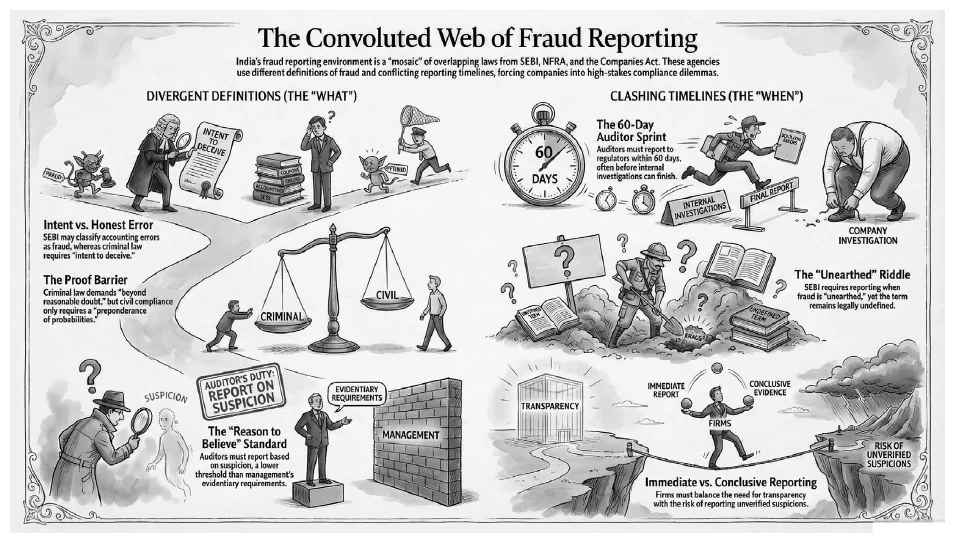
If no objections or suggestions are received within 30 days from ROC and OL, it shall be presumed that they have no objections and within a period of 15 days after the expiry of said thirty days, a confirmation order shall be issued.


If objections are received from ROC or OL or both, and RD is of the opinion that the scheme is not in public interest, it may file an application with the NCLT in Form CAA-13. Within 60 days from the date of receipt of the scheme
9. Filing of approved scheme and confirmation order
The order of RD approving the scheme to be filed in Form INC- 28 with the ROC within 30 days With 30 days from the date of receipt of the order

Additional Consideration – The Regional Director may request for following additional documents. Keeping these ready in advance facilitates smoother and faster processing.

1. Certified Copy of the list of Directors, shareholders and creditors of both the transferor and transferee companies.

2. Verified Facts regarding the subject companies having a relationship of Holding and wholly owned subsidiary company.

3. Shareholding Pattern of pre- and post-merger of the Transferee Company.

4. Audited Financial Statements and Directors’ reports of both the transferor and transferee companies for the preceding three years.

5. Memorandum and Articles of Association of both companies containing a clause empowering merger and amalgamation.

6. Details of Related Party Transactions entered into by both companies.

7. Undertaking from the directors of the Transferee Company that no employees shall be adversely affected, and accounting policies will not be altered.

8. A Certificate issued by the Auditor of the Company to the effect that accounting treatment, if any, proposed in the scheme of merger is in conformity with the Accounting Standards prescribed under section 133 of the Companies Act, 2013.

9. Proof that the Authorised capital of the Transferee Company is sufficient to allot shares to the shareholders of the Transferor Company.

a) Present Paid-up Share Capital of the Company.

b) Cross Holdings to be cancelled.

c) Remaining paid-up Capital of the Company.

d) Amount of shares to be allotted to the members of the Transferor Companies by the Transferee Company.

e) Consolidated Statement of Authorised Capital and Paid-up Capital of Transferee Company after issuing shares to the members of Transferor Company.

f)

(Disclaimer: The documents mentioned above are indicative and may vary on a case-by-case basis.)

Pre-merger consideration and implementation issues:

Before initiating a fast-track merger, companies must carefully evaluate strategic, legal, and compliance aspects to ensure eligibility, smooth execution, and regulatory alignment. Early planning mitigates procedural delays and potential objections. Key points that need consideration before initiating the process of fast-track merger:

1. Creditor Approvals: Obtaining consent from 90% of creditors can be a major operational hurdle. Non-participation may cause delays or force the company to restart the fast-track merger or switch to the standard NCLT process. While written consents are permitted, coordinating responses from a large creditor base can be cumbersome. Companies should assess creditor positions in advance and seek preliminary indications of no-objection before commencing the formal process.

2. Shareholder Approvals: Securing 90% approval from shareholders, especially in public or widely held entities, can be difficult. The framework does not explicitly allow written consent from shareholders, which could simplify the process in closely held companies. Early engagement with shareholders is recommended to anticipate challenges and streamline approvals.

3. Documentation Preparedness: The Regional Director or ROC may request additional documents, including auditor certificates on accounting treatment, updated financial statements, and NOCs from secured creditors. Requirements may vary across jurisdictions, and some ROCs may mandate physical filings. It is advisable to confirm the procedure and customary practice with the relevant authority in advance to avoid delays.

4. Pending Compliance Issues: Unresolved ROC filings, statutory defaults, or litigation may hinder approval. Ensuring that all regulatory requirements are up to date before initiating the merger is critical.

5. Regulatory and Interpretational Considerations: While the statutory procedure for fast-track mergers is prescribed under Section 233 of the Companies Act, 2013, review practices by Regional Directors may vary, and issues such as treatment of pending liabilities, accounting practices, or cross-border elements can give rise to queries. Companies should anticipate potential questions, clarify ambiguities, and provide detailed disclosures in the scheme to facilitate smooth regulatory approval.

6. Intellectual Property and Regulatory Approvals: If either company holds IP, licenses, or regulatory approvals, ensure that these can be transferred or revalidated under the merger scheme.

7. Stamp Duty on Asset Transfer: The transfer of assets from the transferor to the transferee company may attract stamp duty under state-specific laws. Companies should assess applicable rates and understand the implications before initiating the merger process.

8. Solvency Requirement: Only companies that are solvent are eligible for a fast-track merger. Prior verification of solvency is thus essential.

9. Clubbing of Authorised Share Capital: In a fast-track merger, the authorized share capital of the transferor company is combined with that of the transferee. Companies should ensure the post-merger capital structure is properly reflected and represented in the scheme to maintain compliance and ease approval.

10. Taxation Implication: While the Income Tax Act grants tax-neutral treatment to mergers and demergers fulfilling specific conditions under Section 47, it does not explicitly recognize fast-track mergers under Section 233 of the Companies Act. This legislative gap creates uncertainty over the availability of tax benefits such as exemption from capital gains, carry-forward of losses, and transfer of tax credits. Companies should therefore seek tax advice and evaluate potential liabilities in advance to ensure proper structuring and compliance.

TECHNICAL & PRACTICAL CHALLENGES (Challenges Unveiled: The Dynamic between Rules and Realities in Fast-Track Mergers)

The fast-track merger provision offers a streamlined process, allowing companies to undergo mergers or demergers with reduced regulatory hurdles and shorter procedural timelines. However, while designed for efficiency, the mechanism can give rise to several challenges in practice when applying Section 233.

Here are some of the challenges under the current law:

1. Regulatory Coordination Challenges

While notifying sector-specific regulators and stock exchanges enhances oversight, it may also create procedural uncertainty. In practice, delays in feedback or prolonged clarifications from regulatory bodies can undermine the intended efficiency of the fast-track route. To minimize potential setbacks, companies should plan sufficient lead time and engage early with relevant authorities to ensure smoother progression.

2. Complexity in Shareholder Consent

The shareholder and creditor approval requirements under Section 233 can pose practical challenges, particularly due to the high consent thresholds. Obtaining approval from 90% of the value of shareholders may be especially difficult for widely held or listed companies, where aligning diverse interests is inherently complex. By comparison, the regular merger process under the NCLT requires only a 75% majority of voting shareholders present at convened meetings, making the fast-track route comparatively less feasible in certain scenarios.

3. Legal and Structural Challenges

The fast-track merger mechanism still demands full legal and regulatory compliance. Pending disputes, statutory non-compliance, or structural inefficiencies can create significant hurdles. The perception that this route is easier or less demanding is misleading and increasingly risky. With the recent amendment expanding Section 233 to cover certain public company mergers, the bar for legal and operational readiness has been raised.

4. Public Perception and Market Reactions

Fast-track mergers are highly sensitive to investor sentiment and creditor confidence. Limited transparency around strategic objectives or financial health can provoke resistance, especially given the 90% approval threshold for creditors. With the amended framework now covering a broader class of entities, clear communication and proactive stakeholder engagement are more important than ever—particularly in complex or widely held ownership structures.

5. Cross-Border Mergers

Cross-border mergers introduce additional legal and regulatory layers, including compliance with FEMA, RBI guidelines, international tax and investment laws. The recent inclusion of inbound cross-border mergers under the fast-track route heightens the need for careful navigation of multi-jurisdictional requirements.

6. Contingent Delays in the Fast-Track Mechanism

Although the fast-track route is designed to streamline mergers by removing the need for NCLT approval, its efficiency is conditional. If statutory authorities—such as sectoral regulators, the Registrar of Companies, or the Official Liquidator—raise concerns, the Regional Director may escalate the matter to the NCLT. This escalation triggers a fresh tribunal application, nullifying time savings and potentially extending the merger timeline significantly.

With these practical and legal realities in view, we turn our gaze to how merger law in India is poised to adapt and transform in the years ahead.

FUTURE OF MERGER LAW IN INDIA  (The road ahead — reforms, evolving practices, and new opportunities)

Key developments likely to shape the future of India’s merger law:

1. Harmonization Requirement: SEBI LODR and Section 233:

Listed companies must seek prior approval from stock exchanges for schemes of arrangement filed before a court or tribunal under Sections 230–234 of the Companies Act, per regulation 37 of SEBI (LODR) Regulations. However, schemes under Section 233 (fast-track mergers) are not presented before a tribunal, creating a technical gap. While an exemption exists for holding–subsidiary mergers, the drafting does not explicitly extend this relief to fast-track mergers. This misalignment generates compliance uncertainty for listed companies, making SEBI guidance or a clarificatory amendment essential to harmonize the fast-track framework with LODR requirements.

2. Scrutiny of Fellow Subsidiary Merger:

Post-2025, courts are expected to adopt a more rigorous approach to mergers between fellow subsidiaries, particularly to safeguard minority shareholders’ rights. Increased scrutiny will ensure these transactions serve the interests of all shareholders, with courts examining whether mergers are genuinely fair. Minority shareholders may invoke Section 241 of the Companies Act to challenge unfair treatment, potentially adding complexity. This challenge could prompt the development of best-practice protocols for intra-group mergers to ensure transparency and fairness.

3. Further Eligibility Expansion:

Extending fast-track mergers to listed companies under strict disclosure and minority protection frameworks. This expansion would align India with certain other global practices, where listed intra-group mergers are facilitated under controlled conditions.

4. Digital Transformation:

Moving toward end-to-end digital filings, e-consents by shareholders/creditors, and regulator  dashboards to track progress. This transformation would minimize delays caused by physical filings and inter-agency coordination, making “fast-track” truly fast.

5. Valuation Complexities

The extension of fast-track mergers to divisions, undertakings, and demergers introduces valuation challenges. Independent valuers are required, but their methodologies (DCF, NAV, market multiples) can produce divergent outcomes. Disputes over the fairness of swap ratios or book values are likely, especially where promoter interests are perceived to dominate. Professional independence of valuers and transparent disclosures will be the real test of integrity in this regime.

6. Minority Rights Evolution:

As dissent risks increase, India may adopt  mechanisms like “exit rights” at fair value, mandatory valuation fairness opinions, or statutory  appraisal remedies (similar to Delaware’s Section 262). This would strengthen minority confidence in the process.

7. Institutional Bandwidth Constraints:

The effective rollout of the revised fast-track merger regime may be hindered by limitations in regulatory capacity. With Regional Directors managing a diverse set of statutory functions, the additional workload could challenge timely and consistent approvals. Strengthening institutional readiness through additional dedicated teams, procedural clarity, targeted capacity building, setting standard protocols, and inter-agency coordination will be essential to support the intended efficiency of the framework.

CONCLUSION (Fast-track success will be measured not in speed alone, but in trust sustained.)

The Section 233 fast-track merger process offers clear advantages in speed and reduced bureaucracy, yet challenges persist around shareholder and creditor consent, valuation, compliance, and post-merger integration. Meanwhile, the broader regulatory landscape still grapples with uncertainty, enforcement delays, and policy inconsistency — factors that can influence investor confidence. Still, the deeper success of this mechanism will depend not merely on timelines or approvals, but on how faithfully equity among all stakeholders — shareholders, creditors, and the public alike is preserved.

As the ancient Sanskrit maxim reminds us, “Dharmaḥ rakṣati rakṣitaḥ”  — the law protects those who uphold it. When law is honoured, trust follows; and with trust comes the strength to build systems in business and governance that endure.

Cybercrime: Threats, Warning Signs, And Practical Remedies

Cybercrime in 2025 poses severe financial and reputational risks, with Indian entities projected to lose ₹20,000 crore. AI has revolutionised both attack and defense — enabling phishing, ransomware, and deepfake frauds, while also strengthening cybersecurity through real-time anomaly detection. India records 369 million security incidents annually, making awareness essential. Key laws like the DPDP Act 2025, Telecom Cyber Security Rules 2024, and IT Act provisions enhance accountability. Common frauds include phishing, BEC, ransomware, SIM swaps, and crypto scams. Victims must act swiftly—contact banks, report to NCRP (1930), and involve law enforcement. Prevention, vigilance, and education remain the strongest defense.

Indian entities are projected to lose nearly ₹20,000 crore to cybercrimes in 2025. The most significant new threats in 2025 include AI-driven ransomware, large-scale use of infostealers, deepfake-enabled frauds, and event-based attacks. AI has become a game-changer in the cyber threat landscape, serving both as a powerful tool for attackers and a critical defense for security professionals. In 2025, cybercriminals use generative AI to automate phishing, break through traditional defenses and scale social engineering attacks. Deepfakes on social media surged to over 8 million videos and audio in 2025 due to affordable and accessible tools, leading to identity and reputational attacks.

On the defensive front, AI technologies are increasingly used to protect individuals and organizations. State-of-the-art AI cybersecurity systems analyze billions of data points in real time, detect anomalies, reverse-engineer advanced malware, and automate threat response, leading to faster, more accurate detection and mitigation. AI-based security solutions continue to gain ground in India, especially for financial services and critical infrastructure, with adaptive learning and predictive analytics preventing attacks before they escalate.

Digital transformation in India has accelerated cybercrime at an unprecedented rate. In 2025, India has already recorded over 369 million security incidents so far according to the latest India Cyber Threat Report. On an average, 702 cyber threats are detected every minute, impacting businesses, professionals, and citizens across multiple sectors.

Organizations are advised to deploy AI-driven tools for behavior-based detection, automating routine security workflows, and building resilience against rapidly evolving threats. The responsible use of AI combined with timely human intervention remains pivotal to overcoming AI-powered cybercrime in 2025.

The Telecommunications (Telecom Cyber Security) Rules, 2024, require operators to have robust cybersecurity policies and incident reporting within 6 hours. The Digital Personal Data Protection (DPDP) Act is expected to be fully implemented in 2025, mandating stricter data governance. Section 43 and 65 of the IT Act, 2000 and new provisions under the Bhartiya Nyaya Sanhita also strengthen legal prosecution of cybercrimes such as hacking and data theft. Underreporting remains a challenge in certain geographies.

Cybercrime today is no longer confined to the IT department. It directly impacts businesses, professionals, and individual citizens, often resulting in substantial financial and reputational loss. With India’s rapid adoption of digital payments and online services, incidents have multiplied. In 2024, the Indian Cyber Crime Coordination Centre (I4C) reported millions of complaints, while the Federal Bureau of Investigation’s Internet Crime Complaint Center (IC3) in the United States noted losses exceeding USD 16 billion.

For Chartered Accountants, whether in advisory or operational roles, awareness is crucial. This article outlines the main forms of cybercrime and provides actionable steps before, during, and after an incident.

TYPES OF CYBERCRIME

Phishing (email / SMS fraud): Phishing is the fraudulent attempt to obtain sensitive information (passwords, OTPs, account details) by disguising as a trusted entity. For example, a Mumbai-based professional received an email that appeared to be from his bank, urging him to ‘update KYC details.’ The email carried a link to a fake site. The victim entered his internet banking credentials, leading to unauthorised transfers within minutes. Prevention: Verify links, enable multi-factor authentication (MFA), and never share OTPs.

Business Email Compromise (BEC): Business Email Compromise is a sophisticated scam targeting companies, especially their finance departments. Attackers impersonate CEOs or suppliers through compromised or look-alike email accounts. A Delhi-based SME received an invoice from what seemed like a regular supplier, but with slightly altered bank account details. The accounts team transferred ₹25 lakh before realising the fraud. Prevention: Introduce call-back verification for new or changed payment details. Train staff to double-check sender addresses.

Ransomware: Ransomware is malicious software that encrypts data and demands payment for release, often in cryptocurrency. A healthcare facility in Pune found its patient records locked with a ransom note demanding Bitcoin. Since backups were outdated, the hospital had to pay to regain access. Prevention: Maintain offline backups and patch systems regularly.

SIM Swap Fraud: Fraudsters duplicate a victim’s SIM card by tricking telecom operators, allowing them to intercept OTPs. An NRI businessman lost access to his Indian mobile number while abroad. Fraudsters used the duplicate SIM to reset banking passwords and transferred funds from his NRE account. Prevention: Use authenticator apps or hardware tokens instead of SMS OTPs.

Investment and Cryptocurrency Scams: Fraudsters lure victims with promises of high returns on fake platforms. An IT employee in Bengaluru invested through a trading app recommended by a social media contact. The app showed ‘profits,’ but withdrawals were blocked until further payments were made. Eventually, the app vanished. Prevention: Verify regulatory registration of financial platforms. Be wary of unsolicited investment advice.

Travel Booking, Hotel Booking, Action against Money Laundering, Payment Link from Traffic Police for fines, Offers and Free Gifts etc Scams are few more examples of mode adopted by Fraudsters to lure the victims.

Prevention: Verify regulatory registration of financial platforms. Be wary of free gifts and free offers. Be alert when any email/sms/link is received from any government agency entity. Check emails/phone numbers etc. from where the sender is located, don’t click on any link received from any unknown number or from any unknown source, don’t be afraid of any fines/penalties, but check vigilantly, don’t be attracted by any free offers. Nothing is free in this life.

STEP-BY-STEP RESPONSE FOR VICTIMS

Victim has to take following action as applicable: Contact the bank, request freezing of the account, call the cybercrime helpline 1930, and file a report on the National Cyber Crime Reporting Portal (NCRP), inform law enforcement, and alert vendors and auditors, disconnect infected systems, engage CERT-IN (Indian Computer Emergency Response Team), and avoid negotiating directly with attackers, contact the telecom provider to block the duplicate SIM, alert the bank, and file a police complaint, preserve transaction records, and inform SEBI (Securities and Exchange Board of India) if financial markets are involved. This is segregated based on time and importance as under:

Immediate Actions (First Hour):

  • Contact the bank or payment service provider to request a freeze.
  • Call 1930 (India’s cybercrime helpline) and report the incident to NCRP.
  • Disconnect affected devices from the internet.

Within 24 Hours:

  • File an FIR with local cyber police.
  • Notify CERT-IN (for corporate victims).
  • Change passwords and review security measures.

Post-Incident:

  • Hire forensic experts to determine how the breach occurred.
  • Inform clients, auditors, and regulators if any data was compromised.
  • Revise security policies and train staff based on lessons learned.

CONCLUSION

Cybercrime is borderless, opportunistic, and constantly adapting. For accountants, the dual responsibility lies in protecting their firms and guiding clients. The golden rules remain: anticipate, educate, and escalate quickly. Awareness of the prevalent scams, combined with structured pre- and post-incident responses, can drastically reduce financial and reputational losses.

The Importance of a Risk Assessment Framework in Corporate Social Responsibility

Corporate Social Responsibility (CSR) in India has matured into a statutory obligation and a strategic opportunity. With crores being channelled annually into development programmes, the scale of impact is vast — but so are the risks of fund diversion, weak governance, and regulatory non-compliance.

A Risk Assessment Framework is therefore indispensable. It enables companies to identify vulnerabilities, ensure compliance with Section 135 of the Companies Act, 2013 and CSR Rules, and safeguard both corporate reputation and community trust. Beyond regulatory intent, the framework ensures that CSR investments are transparent, well-governed, and directed to their intended beneficiaries.

This article explains how such a framework can be structured and applied in practice. It highlights the key pillars of financial, operational, compliance, and governance risks, and demonstrates how tools like a risk scoring matrix, due diligence protocols, monitoring schedules, and red flag indicators can transform CSR from reactive compliance into proactive risk management.

The core message is clear: CSR risk oversight is no longer optional. It is a moral and strategic imperative for every company aiming to achieve meaningful, measurable, and compliant social impact.

BACKGROUND

As companies increasingly embrace their social mandates and channel significant resources into development programmes across India, the promise of Corporate Social Responsibility (CSR) is immense—yet so are the associated risks. Picture a well-intentioned organisation investing in community development, only to discover that the funds have been misdirected, or worse, misused. This is where a robust Risk Assessment Framework emerges, not merely as a best practice, but as a moral imperative. In the dynamic landscape of CSR, the need for vigilant oversight is essential. Such a framework serves as a compass, guiding resources toward their intended impact while protecting against frauds, mismanagement, and compliance1 failures.

While relevant to all CSR funders, the strategic importance of a structured risk framework is particularly critical for large corporates with CSR obligations of ₹100 crore or more. Given the scale of deployment, the margin for error is slim, and the consequences of oversight lapses far greater.

By identifying vulnerabilities, ensuring compliance, and promoting transparency, a well-structured risk framework enables funders to align their social investments with both regulatory expectations and sustainable impact goals. This article explores how such a framework functions in practice, and why its adoption is central to building responsible, and resilient CSR funding models.


1. Compliance in this context refers to mandatory Corporate Social Responsibility (CSR) 
obligations under Section 135 of the Companies Act, 2013, the Companies (CSR Policy) 
Rules, 2014, and Schedule VII.

UNDERSTANDING THE LANDSCAPE OF CSR RISKS

India’s Corporate Social Responsibility ecosystem operates within a complex web of legal structures, governance models, and implementation vehicles. While the regulatory intent is clear i.e. to promote sustainable development and ensure accountability, the ground-level implementation exposes a spectrum of risks that differ across organisational forms;

Public Charitable Trusts in India face regulatory fragmentation, for example, the state of Maharashtra enforcing strict oversight under the Maharashtra Public Trusts Act, 1950, while several other states operate under the old Indian Trusts Act, 1882— creating inconsistent governance standards and increasing the potential for financial opacity and accountability risks in CSR fund utilisation.

Cooperative societies, often engaged as grassroots CSR implementers, can face significant governance challenges stemming from weak financial controls and limited transparency.

Section 8 companies, though bound by stringent compliance under the Companies Act, 2013 remain vulnerable to governance lapses, as many fail to meet CSR-1 registration norms, lack the required three-year relevant experience record, or risk penalties for retaining surpluses or misaligning with Schedule VII objectives.

Further, beyond risk frameworks, companies must also comply with statutory CSR provisions covering thresholds for CSR Committees, treatment of ongoing vs non-ongoing projects, unspent CSR accounts, treatment of surplus, limits on administrative overheads, set-off of excess spending, impact assessment triggers, annual disclosures, and eligibility norms for implementing agencies.

Compliance issues further compound the problem. Violations of key statutes such as the Companies Act, 2013, FCRA, Maharashtra Public Trusts Act (MPTA), and the Income Tax Act, 1961 not only attract legal scrutiny but also erode public trust. This complexity is further deepened by operational risks arising from weak governance in some NGOs, including inadequate documentation, issues of collusion, failure to uphold the arm’s length principle in commercial transactions, and insufficient disclosures in related party dealings, which heighten the risk of mismanagement and reputational damage.

These realities emphasize the urgency of a robust risk assessment framework, one that enables corporations to evaluate partnerships meticulously, ensure adherence to regulatory norms, and channel resources effectively. In an environment where intent alone isn’t enough, vigilance and structured evaluation become essential tools for responsible and impactful CSR.

DEVELOPING A STRUCTURED APPROACH

Before embarking on CSR partnerships, funders must move beyond surface-level evaluations and adopt a structured and holistic approach to risk assessment. This process begins by identifying critical risk domains—financial, operational, compliance, and governance—and defining clear specific indicators for each. Risk assessments should be grounded in both quantitative metrics (such as liquidity ratios and funding diversification) and qualitative factors (such as leadership stability and adherence to the arm’s length principle in transactions). Tools like risk scoring matrices, regulatory checklists, and tiered due diligence protocols help funders assess the readiness and reliability of NGOs, with the depth of assessment matching the scale of CSR deployment. For large corporates, more rigorous frameworks are essential, and together these dimensions provide a foundation for evaluating vulnerabilities and ensuring accountable fund deployment.

A practical due diligence review must be backed by a checklist of documents such as registration certificates, governing bylaws, board/trustee details, 12AB/80G approvals, FCRA status, audited financials, donor concentration reports, conflict-of-interest declarations, related-party reviews, procurement and vendor policies, and safeguarding/child protection frameworks where relevant.

Sample Due Diligence Checklist for CSR Partnerships:

  • Verify CSR-1 registration and NGO Darpan ID
  • Review audited financial statements for the last three years
  • Confirm FCRA registration and dedicated bank account (if applicable)
  • Check compliance with Schedule VII objectives
  • Assess leadership track record and board independence
  • Obtain registration certificate and governing bylaws
  • Review list of board members or trustees
  • Verify 12AB and 80G approval certificates
  • Review donor concentration details
  • Collect conflict of interest declarations
  • Check related-party transaction disclosures
  • Review procurement and vendor empanelment policy

CORE ELEMENTS OF RISK AND COMPLIANCE ASSESSMENT

An effective CSR risk framework rests on four key pillars: financial sustainability, operational efficiency, compliance, and governance. Many NGOs operate with limited financial buffers and rely heavily on CSR grants, raising concerns about long-term viability and autonomy. Funders must assess liquidity, funding diversification, and corpus reserves, while ensuring that NGOs demonstrate transparent fund utilisation and maintain robust internal controls. Equally important is the ability to measure program impact, supported by accurate reporting, active board oversight, and mechanisms to prevent conflicts of interest. These dimensions collectively help identify vulnerabilities before they evolve into reputational or financial liabilities.

On the compliance front, the stakes are even higher. NGOs must navigate a dense regulatory landscape—including the Companies Act, 2013, FCRA, and state-level trust laws—while meeting administrative benchmarks like CSR-1 registration, NGO Darpan ID, and multi-year project governance requirements. For entities receiving foreign contributions, FCRA compliance demands special safeguards such as maintaining a dedicated bank account, using separate utilisation accounts, tagging foreign donor funds, monitoring geo-restricted spends, and preventing commingling with domestic CSR monies. To mitigate fraud and governance risk, operational controls such as audit trails, and vendor due diligence and dedicated FCRA checks are critical. Additionally, growing scrutiny around documentation, geo-tagged impact tracking, and desk reviews necessitates a sharper focus on digital readiness and transparent record keeping.

Sample Red Flag Indicators in CSR Evaluation:

  • Lapsed FCRA or CSR-1 registration.
  • Over 80% dependence on a single CSR funder.
  • Retention of surplus funds without disclosure.
  • Related-party transactions without transparency.
  • Failure to geo-tag project sites or submit utilisation certificates.

Sample Governance Roles and Responsibilities in CSR Risk Management

Role Key Responsibilities
Board of Directors Overall accountability for CSR policy, approval of annual CSR plan, ensuring alignment with Section 135 and Schedule VII.
CSR Committee Recommends CSR policy, approves projects, monitors implementation, and ensures compliance with statutory thresholds and reporting.
Implementing Agency (NGO/Trust/Section 8 Company) Executes CSR programmes, maintains statutory registrations (CSR-1, 12AB, 80G, FCRA if applicable), and provides utilisation certificates and impact reports.
Internal Audit / Independent Assurance Conducts reviews of fund utilisation, compliance with CSR Rules, checks for fraud risk, and validates monitoring data.

QUANTIFYING RISK THROUGH A SCORING MATRIX

For CSR funders operating at scale, especially those managing high portfolios a qualitative risk review is no longer sufficient. Implementing a structured risk scoring matrix allows funders to evaluate NGOs across weighted dimensions—financial, compliance, operational, and governance. Each domain is scored using a 5×5 severity grid, where risk is measured by likelihood and impact, and weighted according to its relevance to CSR success. For instance, an NGO with heavy CSR dependence and lapsed FCRA registration could be flagged as high risk, requiring corrective action before further disbursements. This matrix serves as both a pre-funding filter and a dynamic monitoring tool that can be recalibrated as regulatory landscapes evolve.

An Illustrative Risk Grading Matrix:

Likelihood ↓ / Impact → Low (1) Medium (2) High (3) Critical (4) Severe (5)
Rare (1) 1 2 3 4 5
Unlikely (2) 2 4 6 8 10
Possible (3) 3 6 9 12 15
Likely (4) 4 8 12 16 20
Almost Certain (5) 5 10 15 20 25

EMBEDDING RISK INTELLIGENCE INTO CSR MONITORING

Once the risk profile is established, it must be embedded into real-time monitoring and evaluation systems. Today’s leading CSR platforms offer MIS dashboards that combine geo-tagged tracking, milestone-based fund release triggers, and automated alerts tied to key compliance checkpoints (like FCRA lapses). Modern CSR frameworks must also safeguard data protection and beneficiary privacy, ensuring that digital records, geo-tagging, and monitoring systems do not compromise individual rights. Risk scores feed into these dashboards to enable differentiated oversight: high-risk partners receive weekly reviews and audits, while low-risk ones follow automated quarterly reporting. Complementing these tools are tiered evaluation frameworks—ranging from monthly formative reviews to post-project impact assessments2—which not only validate outcomes but also directly influence disbursement schedules. This level of real-time visibility is vital in ensuring accountability and responsiveness, especially for long-term or high-value CSR engagements. An assurance layer further strengthens CSR oversight, through internal audits, third-party monitoring agencies, structured sampling methods, site visit protocols, and readiness for forensic reviews.


2. Companies with an average CSR obligation of `10 crore+ over the past three years must 
conduct impact assessment by an independent agency for CSR projects with outlay of `1 crore+ 
completed at least a year prior; expenditure is capped at 5% of CSR spend or `50 lakh, 
whichever is lower. Voluntary assessment for other projects is optional, not mandatory.

Illustrative CSR Monitoring Matrix:

Risk Tier Review Frequency Oversight Actions
High-Risk Weekly Detailed fund utilisation audit + site visit
Medium-Risk Monthly MIS dashboard review + sample verification
Low-Risk Quarterly Automated compliance checks + desk review

THE CASE FOR A FOLLOW-UP: DEEP DIVE INTO DUE DILIGENCE PROTOCOLS

The sophistication of today’s risk intelligence tools and monitoring strategies stresses the growing complexity of CSR governance in India. From block chain enabled audit trails to AI-assisted impact verification and compliance velocity benchmarking, the landscape is rich with evolving technologies and practices. Additionally, due diligence now includes granular assessments like Aadhaar-linked beneficiary verification, independent whistle blower audits, and compliance capacity scoring. Given the depth and importance of these elements, a full exploration of risk matrix construction, digital integration, and the audit-response cycle is beyond the scope of this article. It merits a dedicated follow-up that unpacks these mechanisms in detail, offering funders a comprehensive roadmap to navigate CSR funding with foresight, precision, and regulatory confidence.

THE ROLE OF TECHNOLOGY IN MODERN CSR RISK MANAGEMENT

In an era where regulatory scrutiny is intensifying and stakeholder expectations are rising, technology has emerged as a game-changer in the CSR risk management toolkit. Advanced tools like AI-driven anomaly detection, block chain based fund traceability, and real-time KPI dashboards have revolutionized how companies track, evaluate, and report on their CSR initiatives. Machine learning platforms analyze spending patterns to flag irregularities before they escalate, while predictive models and tools like Benford’s Law are increasingly used to uncover manipulation risks in financial disclosures. Simultaneously, block chain applications now automate milestone-linked fund disbursements and ensure that vendor payments and procurement trails are transparent and tamper-proof. These innovations don’t just boost compliance—they actively prevent fraud, reduce fund leakage in high-value projects, and align seamlessly with audit mandates under India’s CSR regulations.

WHY THE TECHNOLOGY CONVERSATION MERITS A STANDALONE FOCUS

While these digital interventions are already reshaping how CSR is implemented, their full potential—and associated operational complexities—are too vast to cover within this article alone. From automated reporting systems that ensure adherence to CSR Section 135 mandates, to integrated platforms that link corporate dashboards with NGO Darpan and MCA data, the architecture of tech-enabled governance is both deep and fast-evolving. The emergence of unified CSR ecosystems—combining block chain, AI, geo-tagged monitoring, and real-time audits—signals a paradigm shift from reactive compliance to proactive risk mitigation. As such, a comprehensive exploration of these technologies, their interoperability, and implementation challenges deserves dedicated treatment focussed solely on tech-powered CSR governance.

CONCLUSION: FROM OBLIGATION TO STRATEGIC IMPERATIVE

Finally, CSR risk frameworks should not exist in isolation but align with broader ESG and BRSR Core disclosures—ensuring transparency, avoiding over-claiming impact, and preventing double-counting across sustainability reporting. As India’s CSR landscape matures, moving beyond mere compliance to strategic impact, a structured risk assessment framework is no longer optional—it is a cornerstone of responsible corporate governance. For Chartered Accountants and finance leaders, navigating this terrain requires a multi-faceted approach that integrates rigorous financial due diligence, quantitative risk scoring, and real-time monitoring. By leveraging modern tools—from AI-driven anomaly detection to block chain-based audit trails—organisations can effectively mitigate the risks of fund misuse and regulatory non-compliance. Ultimately, embedding a culture of risk intelligence into CSR ensures that every rupee deployed not only adheres to the letter of the law under Section 135 but also achieves its intended social impact, safeguarding both corporate reputation and community trust in an increasingly complex world.

Taxation of Charitable & Religious Organisations under Income Tax Act 2025

The Income Tax Act, 2025 (effective 1 April 2026) restructures the taxation of charitable and religious organisations while largely retaining the substantive framework of the 1961 Act. The concept of “trusts” is replaced by “registered non-profit organisations” (NPOs), with detailed eligibility and registration requirements under section 332. Provisions earlier treated as exemptions are now computation provisions, classifying income into regular, specified, and residual categories, with differential tax treatment. Anonymous donations, impermissible investments, and violations in commercial activity attract strict tax consequences, including 30% levy and possible cancellation of registration. Key exemptions, such as corpus donations and reinvested capital gains, remain, while accumulations are permitted for up to five years. Compliance obligations relating to books, audit, returns, and investments are tightened, with harsher penalties for violations. The exit tax on accreted income and donation approval rules under section 133 also continue. Despite restructuring, complexity persists, raising risks of litigation

The Income Tax Act 2025 (“new Act”), which comes into force from 1st April 2026, has by and large retained the substance of the manner of taxation of charitable and religious organisations as existed in the Income Tax Act, 1961 (“existing Act”), but has significantly changed the structure of the provisions relating to taxation of charitable and religious organisations.

At the stage of the draft Bill, there had been a few major changes suggested in the provisions – withdrawal of the exemption for reinvestment of capital gains [current s.11(1A)] and of the option to spend the income in the subsequent year [current explanation to s.11(1)], extending the taxability of anonymous donations to all charitable-cum-religious trusts are some of the proposals. Fortunately, at the time of passing the Revised Bill, these proposals were withdrawn, and the existing exemptions broadly continue to operate.

In this article, an attempt is being made to analyse how the new provisions need to be read, and some of the changes that may apply on account of the changed structure of the law or changes in the language of the new law. While all major aspects are sought to be covered, it may not be possible to cover all the provisions, which run into 21 pages of the new Act, besides the items contained in the Schedules.

The new provisions are contained in part B of Chapter XVII, which consists of 7 sub-parts – registration, Income of regd NPO, commercial activities by regd NPOs, compliances, violations, approval for purposes of section 133, and interpretation.

1. SIGNIFICANT CHANGES

The significant changes to the structure are analysed below:

1. The concept of a trust or institution holding property in trust for charitable or religious purposes has been replaced by a concept of registered non-profit organisation (“regd NPO”). A list of types of entities which can apply for registration as a regd NPO is laid down in s.332(1), which was not present in the current ITA. These are:

(a) A public trust;

(b) A society registered under Societies Registration Act, 1860 or under any law in force in India;

(c) A company registered under s.8 of Companies Act 2013 or under s.25 of Companies Act 1956 and deemed to have been registered under s.465(2)(g) of Companies Act 2013;

(d) A University established by law or any other educational institution affiliated thereto or recognized by the Government;

(e)An institution financed wholly or in part by the Government or a local authority;

(f) Investor Protection Funds set up by recognized stock exchanges, commodity exchanges or depositories, notified bodies administering any activity for the benefit of the general public, Prime Minister’s National Relief Fund, PM CARES Fund, Chief Minister’s Relief Fund, Swachh Bharat Kosh, Clean Ganga Fund, university/educational institutions and hospitals/medical institutions wholly or substantially financed by the Government or with annual receipts of less than Rs 5 crore, and notified bodies set up under a Central/State Act for dealing with housing accommodation, planning, development or improvement of cities, towns and villages, regulating or regulating and developing any activity for the benefit of the general public or regulating any matter for the benefit of the general public;

(g) Any other person notified by the CBDT.

Section 332(2) provides that such a person shall be eligible for registration if:

(a) It is constituted, registered or incorporated in India for carrying out one or more charitable purposes, or one or more public religious purposes, and

(b) The properties of such person are held for the benefit of the general public under an irrevocable trust –

i. Wholly for charitable or religious purposes in India; or

ii. Partly for charitable or religious purposes in India, if such person was constituted, registered or incorporated prior to 1.4.1962.

Therefore, a trust created after 1.4.1962 cannot apply for registration as a regd NPO if it is not constituted, registered or incorporated in India or any of its objects are for the benefit of the public or any persons outside India. This requirement is not contained in the current Act. This also seems to contradict the provisions of section 338 (analysed later), where income can be applied outside India with the prior approval of the CBDT. One fails to understand how an NPO can apply income outside India, if it does not have such an object permitting application outside India, in which case it would not be eligible for registration.

Further, in case of an NPO set up after 1.4.1962, it can only be wholly for charitable and religious purposes, as is the case under the existing law.

2. The earlier provisions of exemption contained in sections 10 and sections 11 to 13 were contained in Chapter III – Incomes which do not Form Part of Total Income. These were therefore exemption provisions. Under the new Act, the provisions are contained in sections 332 to 355, which are contained in Part B – Special Provisions for Registered Non-Profit Organisations of Chapter XVII – Special Provisions Relating to Certain Persons. These are now therefore computation provisions, and not exemption provisions. Certain specific provisions, such as those contained in clauses (iiiab), (iiiac), (iiiad) and (iiiae) of section 10(23C) continue as complete exemptions, being part of Schedule III, read with section 11 of the new Act, which deals with incomes not to be included in total income.

The switchover from a scheme of exemption to a scheme of computation may not have any significant impact, given that:

(a)  the provisions of section 14 (current section 14A) relating to disallowance of expenditure incurred for earning exempt income apply for the purposes of computing income under Chapter IV (i.e. under the heads of income) and not under Chapter XVII-B; and

(b)  the provisions of Alternate Minimum Tax under section 206 specifically provide for reduction of “regular income” of a regd NPO referred to in section 355 from the profits as per profit and loss account, in the definition of “book profit” in section 206(1)(c).

3. The exemption provisions contained for some specific types of important institutions, educational and medical institutions in clauses (iv), (v), (vi) and (via) of section 10(23C) have been merged with the general computation provisions for regd NPOs. Therefore, there is now only one regime of computation for regd NPOs under the new Act, as opposed to two exemption regimes under the current Act. A beginning for the merger of the two regimes had been made earlier under the current Act, by providing that with effect from 1.10.2024, no application for renewal of s.10(23C) approval would be made under that section, but would have to be made under section 12A, and by bringing the two exemption regimes almost on par with each other. Section 355(g) of the new Act provides that an approval under section 10(23C) would be a registration for the purposes of the new Act, and therefore an entity approved under section 10(23C) would be a regd NPO under the new Act.

4. Instead of all income from property held under trust, including donations, being considered for computation of exemption, and with loss of exemption for certain incomes under sections 11(3), 13 or section 115BBC,  incomes of a trust would now be categorised into 3 categories – regular income (85% of which is required to be applied), specified income (which is taxable at a flat rate of 30%) and residual income.

“Regular income” is defined in section 335 as:

(a) Income from any charitable or religious activity for which the NPO is registered, carried out by it in such tax year;

(b) Income derived from any property, deposit or investment held wholly for charitable or religious purposes by such regd NPO in such tax year;

(c) Income derived from any property, deposit or investment held in part for religious and charitable purposes by NPOs set up prior to 1.4.1962;

(d) Voluntary contributions received by such regd NPO in such tax year; and

(e) Gains of any permitted commercial activity carried out by such regd NPO in such tax year.

In the draft Bill, the word “receipts” had been used in place of the word “income” in items (a), (b) and (c), and in (b), the term used was “receipts, whether capital or revenue”. Fortunately, the language in the new Act has been rectified, with the term used now being “income”.

“Specified income” consists of anonymous donations and income which was so far taxable under section 115BBI, and includes the following:

(a) Taxable anonymous donations;

(b) Income applied for the benefit of specified persons;

(c) Income applied outside India without CBDT approval;

(d) Investment made in contravention of permitted investment pattern;

(e)Accumulated income, applied to purposes other than purposes of accumulation, or ceasing to be accumulated or set apart, or not applied within the period of accumulation, or credited or paid to another regd NPO;

(f) Income applied to purposes other than purposes for which it is registered;

(g) Business income determined by the AO in excess of income shown in books of account of the business undertaking.

Here too, in the draft Bill, the scope of anonymous donations had been proposed to include all anonymous donations received by a charitable-cum-religious trust. The new Act finally covers only anonymous donations received for a university/educational institution or hospital/medical/institution by such religious-cum-charitable trusts, besides all anonymous donations received by a charitable trust, as is the position under the current Act. Anonymous donations received by religious trusts continue to remain outside the purview of taxation as anonymous donations.

“Residual Income” is defined in section 355(j) to mean the total income without giving effect to the provisions of Part B of Chapter XVII, as reduced by regular income and specified income. Incidentally, the term “total income” is not defined in this Chapter. Section 2(108) defines total income as the total amount of income referred to in section 5, computed in the manner as laid down under this Act. Given that the headwise computation provisions would not apply (as discussed below), this would probably mean the sum total of all the incomes as computed after deductions and exclusions under Part B of Chapter XVII.

2. REGISTRATION

The provisions for registration of an NPO are contained in section 332(3), and are identical to those currently applicable under section 12A(1)(ac). Section 332(3) has a table listing out the 7 types of cases [currently found in clauses (i) to (vi)(A) and (B) of current section 12A(1)(ac)], giving the time limit for furnishing the application, time limit for passing the order by the CIT, and the period of validity of registration. The enhanced period of registration of 10 years for small NPOs having gross income of less than ₹5 crores in each of the preceding two years, introduced by the Finance Act 2025, has also been provided for in section 332(5).

As under the current Act, the CIT has been empowered to condone delay in making of the application if he finds that it was for a reasonable cause. There is now a specific provision in section 332(6) to the effect that if an application for registration is not made within the specified time and the delay in filing such application is not condoned, the NPO shall be liable to pay tax on accreted income under section 352.

The provisions of current section 11(7), which prohibit claim of exemption under section 10 except certain specific sub-sections, and which provide a regime for one-time switchover from section 10(23C) to section 11, are continued in section 333.

3. CANCELLATION OF REGISTRATION

Section 12AB(4) of the current Act lists out the “specified violations” on the noticing of which, the CIT can cancel the registration of a trust, and the procedures for the same. Section 12AB(5) provides the time limit within which such order of cancellation, or refusal of cancellation, has to be passed.

Section 351 of the new Act now contains these provisions relating to specified violations, the procedure to be followed for cancellation and the time limits for passing of order by the CIT.

The list of specified violations is identical, except that it now covers violation of section 346. Section 346 deals with commercial activity by GPU trusts, and prohibits such activity unless carried out in course of GPU objects, aggregate receipts from such activity do not exceed 20% of total receipts of the regd NPO and separate books of account are maintained for such commercial activity. Therefore, if the receipts from commercial activity of a GPU trust exceed 20% of the aggregate receipts, this can result in cancellation of registration, which was not the position under the current Act.

4. COMPUTATION OF INCOME AND TAX LIABILITY

Section 334 provides that the tax payable by a regd NPO on its total income for a tax year shall be the aggregate of tax calculated at 30% of the specified income and calculated at the applicable rate for taxable regular income and residual income for the tax year.

As per section 334(2), the provisions of Chapter XVII would override all other provisions of the new Act, except the clubbing provisions contained in sections 96 to 98 of the new Act. Therefore, the computation provisions contained under the respective heads of income would not apply to a regd NPO. This is similar to the position prevailing under the current Act, where the CBDT had clarified vide its Circular No. 5-P (LXX-6) dated 19th June, 1968, that the income, for the purpose of computation of exemption, has to be taken on a commercial basis (as per books of account). One area of difference from the current Act would be in a situation where the entire income of the regd NPO is not exempt from tax, the income would be computed and taxed under this Chapter. Under the current Act, in some Tribunal decisions, a view had been taken that income which was not exempt was to be computed under the respective heads of income.

This would also mean that the tax computation contained in section 334 would apply irrespective of the nature of income. For instance, the tax on long term capital gains would be as per the provisions of section 334, and not at the rate of 12.5% prescribed under section 197 (section 112 of the current Act). Section 334 refers to the rate applicable on taxable regular income and any residual income. This rate is not spelt out in the new Act – it would probably be prescribed under the Finance Act each year. But, in case the regd NPO is a company, it will not be eligible for the concessional rate of tax for companies under section 200 (section 115BAA of the current Act).

A. Taxable Regular Income

Section 336 defines taxable regular income. Taxable regular income is nil, where 85% or more of the regular income has been applied or accumulated for charitable or religious purposes. Where less than 85% of the regular income has been applied or accumulated, the taxable regular income would be 85% of the regular income, less income applied for charitable or religious purposes or accumulated.

Voluntary contributions received by a regd NPO are included in the definition of income under section 2(49)(c).

B. Deemed Accumulated Income

This 15% of regular income (or unspent amount up to 15% where more than 85% of the regular income is spent), is treated as deemed accumulated income [section 343(1)]. As per the draft Bill, such deemed accumulated income was to be invested in modes permitted under section 350. This could have created difficulty, as such amount may not necessarily be available with the regd NPO (e.g. if 100 is donated to another regd NPO, 85% is treated as application and balance 15% may fall under deemed accumulation, but would not be available for investment, having already been donated). Fortunately, in the new Act, the provision is that if invested, it has to be invested in modes permitted under section 350 [current section 11(5)]. In other words, such investment is not mandatory, but only the modes of investment are mandatory. It is specifically provided in section 343(2) that deemed accumulated income is different from accumulated income under section 342 [current section 11(2)].

C. Exclusions from Regular Income

Section 338 provides that certain incomes shall not be included in the regular income. These are:

(a)  Income applied outside India where the CBDT has directed that such income shall not be included in the total income (i.e. income applied outside India with the approval of the CBDT). This approval can be granted for an NPO created before 1st April 1952 for charitable or religious purposes, or for an NPO created on or after 1st April 1952 for charitable purposes where such application of income outside India tend to promote international welfare in which India is interested.

(b) Corpus donations received by the regd NPO.

The language of the new Act in effect settles the controversy existing under the current Act as to whether, to claim exemption, the application has to be in India or charitable purposes has to be in India. The current Act uses the phrase “applied to such purposes in India”, which gave rise to this controversy. The Delhi High Court in National Association of Software & Services Companies, 345 ITR 362, had held that the application had to be in India, while the Karnataka High Court in Ohio University Christ College, 408 ITR 352, had held that the exemption was available if the purposes was in India. Since the new Act uses the term “income applied outside India”, where any application of income is to be made outside India, it would be excluded from income only if prior CBDT approval is obtained for such expenditure.

The exclusion of such income applied outside India (with CBDT approval) and corpus donations, implies that such incomes would not be considered for computing the deemed accumulated income of 15% (i.e. for computing 85% of regular income) in determining the taxable regular income.

D. Corpus Donations

“Corpus donation” is defined in section 339 to mean any donation made with a specific direction that it shall form part of the corpus of the regd NPO, provided that such donation is invested or deposited in one of the modes permitted under section 350 maintained specifically for such corpus. This is similar to the current section 11(1)(d), which requires investment of corpus donations in permitted modes and earmarking of investments.

E. Application of Income

What is considered as allowable application of income is contained in section 341. Sums applied for charitable or religious purposes in India for which the NPO is registered and paid during the year, are allowable as application of income. In case of donations paid to another regd NPO, 85% of the donations are allowable. If such donations are towards the corpus of the other regd NPO, the donation will not be allowable as application of income. As under the current Act, adjustments are required to be made for payments made out of corpus or out of loans or borrowings (not to be considered in the year of payment), and reinvestment back in corpus investments or repayment of such loan or borrowing (to be considered as application in the year of reinvestment or repayment). Cash payments exceeding ₹10,000 and amounts on which TDS which was deductible, but are not deducted, are not allowable as application of income. Similarly, deficit of earlier years is also not allowable as an application of income.

F. Deemed Application of Income- Option to Spend and Capital Gains

The option to spend income in subsequent year (or the year of receipt of income), currently contained in the explanation to section 11(1), which was proposed to be done away with in the draft Bill, has been finally retained in the new Act. This is contained in section 341(5), and is deemed to be an application of income. Similarly, the exemption for capital gains, currently in section 11(1A) of the current Act, which was also sought to be removed in the draft Bill, has been retained in the new Act. It will now be treated as a deemed application under section 341(9). Interestingly, while sub-section (8) of section 341 provides that application under sub-section (1) shall include deemed application where option is exercised under sub-section (5), similar provision is absent in respect of deemed application under sub-section (9) in respect of capital gains. However, the absence of such specific provision should not impact the allowability of capital gains as a deduction in computing taxable regular income.

G. Accumulated Income

As under the current Act, under the new Act also, a regd NPO has the option to accumulate its regular income for a period of up to 5 years. Here also, a form has to be filed stating the purpose and period of accumulation. The amount of accumulation has also to be invested in the modes permitted under section 350, as under the current Act.

Under the current Act, there has been a controversy raging for the last 34 years as to what can be stated to be the purposes of accumulation – whether some or all of the objects of the trust can be stated to be the purposes of accumulation has been a matter of litigation. Unfortunately, this controversy may continue even under the new law, given that it also does not bring about clarity on the issue.

On the contrary, a new issue could arise as to whether the accumulation can only be for a single purpose or whether it can be for multiple purposes, as permitted under the current law. This issue is on account of the use of the word in singular “purpose” in the new Act and not the plural “purposes” as in the current Act. It appears that the intention is not to restrict it to a single purpose, as the objective of the new Act is merely to use simpler language and not to bring about policy changes.

In the new Act also, change in purpose is permissible with the approval of the Assessing Officer (“AO”). Besides, the amount of accumulation cannot be utilized by donating to another regd NPO as under the current Act. Similarly, as under the current Act, on dissolution of the regd NPO, an application can be made to the AO to donate the amount of application to another regd NPO.

As mentioned earlier, the unspent accumulation or accumulation ceasing to be kept apart or that is donated to another regd NPO would be taxable as specified income.

5. COMMERCIAL ACTIVITY

Section 11(4) of the current Act applies to a business undertaking held in trust, and provides that the term “property held under trust” includes a business undertaking so held. Courts have taken the view that section 11(4) applied to a situation where the business itself was held in trust, while section 11(4A) applied in other cases where business was carried on. Therefore, the requirements of section 11(4A) of incidental business and separate books of account did not apply to cases covered by section 11(4). Section 344 of the new Act corresponds to section 11(4). It provides that where the property held by a regd NPO includes a business undertaking, and if a claim is made for benefits under these provisions, then the AO has the power to determine the income of such business undertaking as per the provisions of the new Act. The definition of “specified income” includes the addition made by the AO to the book income of such business undertaking – only the book income would qualify as regular income, eligible for deduction of application, deemed application and accumulation of income.

Under the current Act, the proviso to section 2(15) used the term “activity in the nature of trade, commerce or business or activity of rendering any service in relation to trade, commerce or business”. This applied only to trusts engaged in the object of advancement of general public utility (GPU trusts). Section 11(4A) used the term “business”. Section 11(4A) applies to both GPU trusts as well as non-GPU trusts. There was accordingly a distinction between the proviso to section 2(15), which uses broader terminology, and section 11(4A), which uses the term “business”. The new Act uses the term “commercial activity” in the context of both of these, and does not distinguish between these.

The term “commercial activity” has been defined in section 355(e) as means any activity in the nature of trade, commerce or business, or any activity of rendering any service in relation to trade, commerce or business, for a cess or fee or any other consideration, irrespective of the nature of use or application or retention of the income from such activity. This is identical to the language of the current proviso to section 2(15), which was interpreted by the Supreme Court in the case of ACIT(E) vs. Ahmedabad Urban Development Authority [2022] 449 ITR 1 (SC). In that case, the Supreme Court held that any activity in furtherance of GPU objects where there was substantial mark up over cost would be regarded as in the nature of trade, commerce or business.

Two sections apply to trusts carrying on commercial activity – section 346 deals with GPU trusts, and section 345 deals with non-GPU trusts. In case of GPU trusts, the position under section 346 is the same as was earlier prevalent under the proviso to section 2(15). It provides that a regd NPO, carrying on advancement of any other object of general public utility, shall not carry out any commercial activity unless:

(a) Such commercial activity is undertaken in the course of actual carrying out of advancement of any object of general public utility;

(b) The aggregate receipts from such commercial activity/activities do not exceed 20% of the total receipts of such regd NPO of the relevant tax year; and

(c) Separate books of account are maintained by such regd NPO for such activities.

Section 345, applicable to non-GPU trusts or activities, provides that a regd NPO (other than that referred to in section 346) shall not carry out any commercial activity, unless:

(a)  Such commercial activity is incidental to the attainment of the objectives of the regd NPO; and

(b) Separate books of account are maintained for such activities.

Section 345 was meant to be the equivalent of section 11(4A), with the difference that section 11(4A) as applicable to GPU trusts has been incorporated in section 346. However, section 11(4A) used the term “business”, as opposed to the term “activity in the nature of trade, commerce or business or activity of rendering any service in relation to any trade, commerce or business”, which is a much broader term. Given that the same definition of “commercial activity” would apply to both section 346 (GPU trusts) as well as section 345 (non-GPU trusts), which definition is identical to that contained in the current proviso to section 2(15), it appears that the same meaning which earlier applied only to GPU trusts would now apply to non-GPU trusts as well. The interpretation of the Supreme Court in the case of Ahmedabad Urban Development Authority (supra) may now apply not only to GPU trusts, but also to non-GPU trusts. Therefore, some activities of non-GPU trusts, which resulted in surplus but were not considered as business for the purposes of section 11(4A), may now be covered by section 345. This would require maintenance of separate books of account for such activities.

What are the consequences of violation of sections 345 or 346? Violation of either of these provisions is regarded as a “specified violation” under section 351(1)(b), which can result in cancellation of registration of the NPO. Under the current Act, while violation of section 11(4A) is a “specified violation”, which can attract cancellation of registration, applicability of the proviso to section 2(15) is not such a specified violation and does not result in cancellation of registration. Therefore, under the new Act, if a regd NPO carries on a GPU activity which results in substantial surplus, and the  gross receipts from such activity exceeds 20% of the total receipts of the NPO, its registration can be cancelled, with consequent applicability of tax on accreted income. This is a drastic change from the current position, where there is only a loss of exemption for the year. This seems to be an unintended consequence of merger of the proviso to section 2(15) with section 11(4A) in so far as GPU NPOs are concerned.

Besides, currently, section 13(8) read with section 13(10) provides that in case the proviso to section 2(15) is attracted, while exemption would not be available, only the net income of the trust would be taxable. Section 353(1), corresponding to current section 13(10), provides for taxation of net income of a GPU trust which has violated section 346. However, there is no similar provision for violation of section 345 by a non-GPU trust, which may suffer tax on its gross income.

6. COMPLIANCES

A. Books of Account

Currently, the exemption under sections 11 and 12 is subject to the requirements of section 12A. Clause (b)(i) of section 12A requires the maintenance of books and other documents in the form and manner and at the place, as may be prescribed, where the income exceeds the maximum amount not chargeable to tax. Violation of this condition can result in loss of tax exemption for the relevant year.

Under the new Act, section 347 contains the requirement to maintain the books of accounts and other documents in prescribed form and manner and at the prescribed place. Section 353 provides that the consequence of failure to maintain books of account under section 347 shall be that the regular income as reduced by the expenditure referred to in section 353(3) shall be the taxable regular income, i.e. in other words, the benefit of accumulation, deemed accumulation, deduction for capital expenditure, corpus donations and donations to other NPOs shall not be available. It may be noted that the consequence is only for failure to maintain books of account, and not failure to maintain other documents.

B. Audit

Similarly, current section 12A(b) requires accounts to be audited if the income is above the income exemption threshold limit and the audit report to be filed, in order to get the benefit of exemption. This requirement of audit is now contained in section 348, with the consequences of failure to get books of account audited contained in section 353(1) being taxation of net income without certain deductions, similar to the consequences
of failure to maintain books of account. Here also, section 353(1) is attracted only for failure to get the books of account audited, and not for failure to furnish audit report.

C. Return of Income

Under the current Act, under section 139(4A), a charitable or religious trust claiming exemption under section 11 is required to file a return of income, if its income (before exemption under sections 11 & 12) exceeds the threshold exemption limit. This obligation is now contained in section 263(1)(iii) of the new Act, which requires a person other than a company or a firm to file its return of income if its income (before  giving effect to provisions of Chapter XVII-B)  exceeds the maximum amount not chargeable to tax (“threshold limit”). Current section 139(4C)(e) also requires institutions claiming exemption under clauses (iiiab), (iiiac), (iiiad), (iiiae), (iv), (v), (vi) and (via) of section 10(23C) to file their returns of income. Educational and medical institutions falling under the current clauses (iiiab), (iiiac), (iiiad), and (iiiae) of section 10(23C) would fall within the definition of “specified entity” under the new section 263(1)(iv) and will also be subject to the same obligation. There are no separate exemptions under the new Act corresponding to clauses (iv), (v), (vi) and (via) of the current Act, and these would therefore fall within the general exemption for regd NPOs, also covered by section 263(1)(iii).

Section 349 of the new Act provides that where the total income of a regd NPO exceeds the threshold limit, it has to furnish the return of income as per the provisions of section 263(1)(a)(iii) and (2), within the time limit allowed under section 263(1)(c). This time limit continues to be 31st October for persons whose accounts are required to be audited. Under the current Act, trusts are permitted to file returns within the time limits specified in sub-sections (1) and (4) of section 139 – i.e. even belated returns are permitted.

Section 353 provides that where any regd NPO fails to furnish its return under section 349, its taxable regular income shall be the net income without certain deductions (the same as in cases of failure to maintain books of account or failure to get books of account audited). Would this cover only cases of failure to file the return of income, or even delay in filing the return of income?  While section 353 refers only to failure to file a return under section 349, section 349 requires the return to be filed within the time allowed under section 263(1)(c). Therefore, even cases of delay may invite applicability of these provisions, unlike under the current law where filing of a belated return of income within the time limit under section 139(4) does not attract such consequence.

D. Permitted Modes of Investment

Section 350(1) of the new Act provides that the modes of investing or depositing the money under Chapter XVII-B shall be those specified in Schedule XVI. Section 350(2) further permits notification by the Central Government of other modes of investing or depositing money.

Schedule XVI lists out all the modes currently listed in section 11(5), including immovable property.
It even includes the other modes notified for the purposes of section 11(5) under rule 17C, such as units of mutual funds, equity shares of a depository, equity shares of an incubatee by an incubator, units of Powergrid Infrastructure Investment Trust, etc.

The permissible investments/deposits list in this Schedule also contains the exceptions which are currently listed under section 13(1)(d) and under clause (b) of the third proviso to section 10 (23C), such as:

(a) Assets held as part of the corpus as at 1st June 1973;

(b) Equity shares of a public company held by a university/educational institution/hospital/ medical institution as part of the corpus as of 1st June 1998;

(c) Bonus shares allotted on such shares held as corpus;

(d) Donations received and maintained in the form of jewellery, furniture or any other notified article;

(e) Any asset, other than those permitted under other clauses of this Schedule, if not held beyond one year from the end of the year in which the asset was acquired;

(f) Funds representing profits and gains of business.

Schedule XVI also has an interpretation clause, where various terms used in the Schedule are defined.

The consequences of violation of the provisions of section 350 are contained in S.No.4 of the table of specified income in section 337. It provides that any investment or deposit made in contravention of the provisions of section 350 out of any income, accumulated income, deemed accumulated income, corpus, deemed corpus or any other fund would be taxable as specified income in the year in which such investment or deposit is made.

Under the current provisions of section 13(1)(d), while exemption was lost on account of the impermissible investment to the extent of the impermissible investment, such loss of exemption could only be to the extent of income for the year. Therefore, if the gross income of the trust for the year was Rs 10 lakh, and an impermissible investment of Rs 1 crore was made out of the corpus or past accumulation, the income that could be taxed so far was only Rs 10 lakh (income for that year which suffered loss of exemption). Under the new Act, the entire Rs 1 crore would be treated as specified income and taxed at 30%. The consequences under the new Act are therefore far more stringent.

7. TAX ON ACCRETED INCOME

The provisions for tax on accreted income, a form of exit tax, currently contained in Chapter XII-EB, sections 115TD to 115TF, are now also part of Chapter XVII-B, being contained in section 352. The computation of accreted income is set out in the form of a formula in section 352(2). Section 352(4) contains a table specifying the cases attracting tax on accreted income, the specified date on which accreted income is to be computed, and the due date for payment of tax on accreted income in each case.

Delay in filing an application for renewal of registration continues to attract tax on accreted income, as under the current Act.

8. APPROVAL FOR PURPOSES OF SECTION 133 (CURRENT SECTION 80G)

The provisions for approval for purposes of section 133 (corresponding to section 80G of the current Act) is also contained in Chapter XVII-B in section 354. The conditions for such registration under the new section 354 are the same as those contained in section 80G(5), except that the condition contained in clause (i) that the income is not liable to income tax by virtue of section 11 and 12 or section 10(23C) is omitted.

Section 354(2) contains a table, stating the types of cases, time limits for furnishing application, time limit for passing the order and validity of approval in each case. These are the same as those contained in the current Act.

The requirement of filing a statement of donations and for furnishing a certificate to the donor in respect of such donations continues under the new Act.

9. PENALTY & FEES

The existing penalty and fees applicable to religious and charitable trusts continue under the new Act – penalty for provision of benefit to related persons (current section 271AAE, new section 445), penalty for failure to deliver statement of donations or furnish certificate to donors (current section 271K, new section 464), and fees for failure to deliver statement of donations or certificate to donors within time (current section 234G, new section 429).

CONCLUSION

All in all, while the general provisions relating to charitable and religious organisations have remained broadly the same, the manner in which some of the changes have been carried out could possibly cause difficulty in some cases. One hopes that these are just drafting mistakes, which will be corrected in the forthcoming Budget.

However, the complexity of the provisions and procedures relating to regd NPOs still continues, with harsh consequences for even minor mistakes. Under such circumstances, unless the provisions are really simplified and made more reasonable, the large scale litigation in this area of income tax is likely to continue.

Rising Role of Shareholder Activism in Corporate Governance

In recent years, shareholder activism has emerged as a significant force reshaping corporate governance across the globe. This paper explores how active shareholders are increasingly pushing for greater transparency, accountability, and strategic realignment within companies. Shareholder activism now serves as a vital mechanism through which investors—particularly institutional and minority shareholders—exercise their rights to influence corporate policies, leadership decisions, and long-term strategies. The study demonstrates how activism enhances investor participation while acting as an important check on managerial discretion. It highlights the expanding role of institutional investors, the prevalence of proxy battles, and the growing impact of ESG-focused campaigns in redefining governance practices. Various forms of shareholder action are examined, including voting against management proposals, raising public concerns, engaging directly with boards, and seeking legal remedies where necessary. Special attention is given to the rise of ESG-driven activism, reflecting the shifting priorities of today’s investors. The paper also analyses the evolution of shareholder activism in India, shaped by regulatory reforms and changing market dynamics. Additionally, it considers the implications of activism for capital markets and discusses some potential drawbacks associated with shareholder interventions.

OBJECTIVES OF THIS RESEARCH ARTICLE

  • To trace the historical development of shareholder activism globally and in India, identifying the major drivers behind its growth.
  •  To explore how shareholders exercise influence through voting rights, proxy battles, litigation, engagement, and media campaigns.
  •  To highlight in brief the limitations, potential misuse, and regulatory hurdles associated with shareholder activism.

RESEARCH METHODOLOGY

This study follows a qualitative, descriptive, and exploratory research design to analyze the role of shareholder activism in modern corporate governance. It relies entirely on secondary data sourced from academic journals, books, SEBI guidelines, the Companies Act, 2013, stewardship codes, and proxy advisory firm reports. Case studies such as Invesco–Zee, Tata Motors, and Elliott Management campaigns are examined to understand strategies and outcomes. Content and thematic analysis techniques are applied to categorize activism into governance, financial, proxy, legal, and ESG-driven forms. The study focuses on listed companies, with emphasis on India, while acknowledging limitations of secondary data reliability.

INTRODUCTION & CONCEPTUAL FRAMEWORK

Corporate governance refers to the framework of rules, practices, and processes through which companies are directed and controlled to ensure fairness, accountability, and protection of stakeholder interests. One of the most significant shifts in this field has been the rise of shareholder activism, which has redefined the relationship between companies and their investors. Traditionally, shareholders played a largely passive role, limited to receiving dividends and casting occasional votes. Today, however, they actively participate in shaping corporate policies and governance structures.
Shareholder activism represents deliberate and organized efforts by investors—whether individuals or institutions—to influence corporate decision-making. These efforts may take the form of private engagement with management, filing shareholder resolutions, launching public campaigns, or pursuing legal action. The objective extends beyond safeguarding shareholder value; it seeks to enhance governance standards, strengthen accountability, and promote sustainable long-term performance. Activists commonly focus on issues such as board independence, executive compensation, financial performance, ESG (environmental, social, and governance) practices, and corporate social responsibility.

Modern activism increasingly addresses pressing global concerns such as climate change, diversity, and business ethics, reflecting the evolving priorities of investors. By promoting transparency and accountability, shareholder activism acts as an effective system of checks and balances, discouraging managerial misconduct and unethical behaviour. It helps mitigate the agency problem—where managers prioritise personal gain over shareholder interests—by aligning corporate actions with the goals of shareholders and other stakeholders. Activism also compels companies to enhance disclosures on executive pay, related-party transactions, and risk management practices, thereby building investor confidence. Ultimately, it fosters ethical conduct, drives long-term value creation, and contributes to the development of a healthier and more resilient corporate ecosystem.

GLOBAL CONTEXT AND ORIGIN

Shareholder activism originated in the early 20th century in the United States, when minority investors began raising concerns over corporate mismanagement. It gained prominence in the 1980s during a wave of takeovers and restructuring led by activist investors and hedge funds, initially focusing on unlocking short-term financial gains. By the 1990s and 2000s, the scope of activism expanded, with institutional investors such as pension and mutual funds influencing corporate behaviour through proxy voting and shareholder resolutions. The 2008 global financial crisis further amplified calls for stronger governance, transparency, and risk management, solidifying activism as a mainstream mechanism for holding management accountable. More recently, activism has shifted toward environmental, social, and governance (ESG) issues, with investors demanding corporate responsibility and sustainability. While the U.S. and U.K. remain leaders due to strong regulatory frameworks, emerging markets like India, Brazil, and South Africa are witnessing growing activism, driven by legal reforms and rising investor awareness. Despite variations across regions, the core goal remains to enhance shareholder value while promoting ethical and sustainable business practices.

TYPES OF SHAREHOLDER ACTIVISM

Types of Shareholder Activism

Shareholder activism has evolved into a diverse and powerful mechanism through which investors influence corporate governance, strategy, and performance. Governance activism seeks to strengthen internal governance frameworks by advocating changes in board composition, removing underperforming directors, appointing independent directors, and enhancing board diversity, often urging separation of the CEO and Chair roles to avoid concentration of power. Its primary aim is to improve board oversight, promote accountability, and protect minority shareholder rights, thereby preventing mismanagement and insider abuse. Financial or performance-based activism, typically driven by hedge funds and institutional investors, focuses on unlocking value through restructuring, divestment of non-core assets, spin-offs, improving cost efficiencies, or revising dividend and buyback policies. Proxy activism leverages shareholder voting rights to challenge management proposals, propose resolutions, and mobilize support to influence decisions on mergers, executive pay, or governance reforms, often resulting in board changes or blocking unfavourable actions. Legal activism uses courts and regulators to address fraud, insider trading, related-party transactions, or breaches of law, with frameworks like India’s Companies Act, 2013 and SEBI rules strengthening minority protection. ESG activism, now a global trend, pushes companies toward responsible practices by demanding lower carbon emissions, improved labour standards, greater diversity, and transparent sustainability reporting, aligning business strategies with long-term societal goals. Public or media-based activism amplifies pressure by publishing open letters, releasing reports, or using social media to mobilize investor and public opinion, forcing management to act when private engagement fails. Collaborative activism, by contrast, relies on constructive dialogue between investors and management to achieve gradual improvements in governance and ESG practices without confrontation, fostering long-term relationships. Hostile or aggressive activism represents the most confrontational form, where shareholders acquire significant stakes to force major changes such as board replacement, management overhaul, or mergers, combining proxy fights, litigation, and public campaigns to achieve results. While sometimes criticized for prioritizing short-term gains, this approach can catalyse rapid reform in poorly governed companies, as seen in Carl Icahn’s 2013 campaign against Dell Inc., where he opposed Michael Dell’s buyout plan, rallied shareholder support, and used aggressive tactics to influence the outcome. Together, these forms of activism reflect the expanding role of shareholders as catalysts for accountability, strategic realignment, and sustainable value creation.

MECHANISMS & TOOLS OF SHAREHOLDER ACTIVISM

HOW SHAREHOLDERS INFLUENCE DECISIONS

Shareholder activism mechanisms empower investors to influence corporate decisions through voting, engagement, proposals, litigation, and campaigns, aiming to enhance governance, accountability, transparency, and long-term shareholder value within companies. The following table encapsulates the mechanisms and tools of shareholder activism –

Mechanism Description Typical Uses Example
Voting Rights Each share usually carries one vote, allowing shareholders to influence key decisions at AGMs/EGMs. Approving mergers/acquisitions, electing directors, amending bylaws, approving executive pay. Mutual funds voting against pay hikes in Tata Motors (2017).
Shareholder Proposals / Resolutions Shareholders meeting minimum ownership criteria can submit proposals to be voted on at the AGM. ESG disclosures, governance reforms, capital allocation changes. Proposal for ESG reporting at ITC.
Board Representation (Proxy Fights) Shareholders may nominate directors and solicit votes to replace existing board members. Shifting corporate strategy, replacing underperforming management. Engine No. 1 winning board seats at Exxon Mobil.
Engagement & Negotiations Private discussions with management before resorting to public confrontation. Reaching agreement on strategy without media pressure. LIC engaging with Infosys board on corporate governance issues.
Litigation / Legal Action Filing lawsuits against directors or management for breaches of fiduciary duties, mismanagement, or violation of laws. Stopping value-destructive deals, enforcing disclosure. Shareholders suing Fortis Healthcare board over sale to IHH.
Public Campaigns & Media Pressure Using press releases, interviews, and op-eds to sway public and investor sentiment. Pressuring management to change policies quickly. Elliott Management’s open letter to Arconic shareholders.
Coalitions & Alliances Institutional investors combine votes to amplify influence. Coordinated votes for board reforms. Institutional investors uniting in Vedanta delisting opposition.

Table 1 – Mechanisms & Tools of Shareholder Activism, Source – Authors

ROLE OF PROXY ADVISORY FIRMS

Proxy advisory firms are independent entities that analyze corporate governance matters and provide voting recommendations to institutional investors. They play a vital role in influencing shareholder decisions, particularly in large publicly listed companies where ownership is widely dispersed and no single investor has controlling power. Globally, leading players include Institutional Shareholder Services (ISS) and Glass Lewis, while in India, prominent firms include InGovern Research Services, Stakeholders Empowerment Services (SES), and Institutional Investor Advisory Services (IIAS). The primary function of proxy advisors is to evaluate shareholder proposals—covering issues such as board appointments, executive pay, mergers and acquisitions, and ESG-related resolutions—and issue voting recommendations. Since institutional investors oversee vast pools of capital and may lack the resources to thoroughly analyze every agenda item, these recommendations often exert significant influence on final voting outcomes.

Year Company Proxy Advisor(s) Involved Nature of Campaign Outcome
2018 Fortis Healthcare IiAS, InGovern Opposed proposed deal with Hero-Burman group; supported IHH Healthcare’s higher bid IHH Healthcare’s bid accepted by shareholders
2020 Eicher Motors IiAS Recommended voting against reappointment of Siddhartha Lal due to remuneration concerns Shareholders initially rejected pay proposal; revised proposal later approved
2017 Tata Motors SES, InGovern Recommended voting against certain directors over governance issues post-Tata–Mistry dispute Some directors faced reduced shareholder support; governance reforms initiated
2021 Zee Entertainment IiAS Supported shareholder demand for EGM to remove MD & CEO Punit Goenka EGM proposal gained traction; later merged with Sony Pictures Networks India
2019 Infosys InGovern Called for stronger whistleblower policy after allegations against CEO Infosys strengthened governance and disclosure practices

Table 3 – Examples for Indian Proxy Advisors, Source – Authors


USE OF SOCIAL MEDIA & TECHNOLOGY

Social media and digital technology have become powerful tools for shareholder activism, enabling investors to communicate, coordinate, and influence corporate decisions more effectively than ever. Activists now use platforms like Twitter, LinkedIn, YouTube, and dedicated campaign websites to directly engage both institutional and retail shareholders. These channels serve multiple purposes. They simplify complex corporate issues, making it easier for small investors to understand and participate in voting. They also support pressure campaigns, using public exposure and reputational risk to push companies to address governance lapses or strategic errors. Additionally, they allow activists to shape narratives and influence investor sentiment ahead of key events such as Annual General Meetings (AGMs). Real-world cases highlight this trend. In the U.S., Tesla shareholder activists have used Twitter to advocate for greater board independence and stronger governance. In India, retail investors on Telegram and WhatsApp have coordinated AGM voting strategies, enabling dispersed shareholders to act collectively and increase their influence.

ROLE OF INSTITUTIONAL & RETAIL INVESTORS IN SHAREHOLDER ACTIVISM

Shareholder activism refers to the efforts of investors to influence a company’s policies, governance practices, and strategic direction by exercising their rights as owners. In recent years, activism has surged globally, reflecting the growing influence of shareholders in shaping corporate decisions. Both institutional investors—such as mutual funds, pension funds, and insurers—and retail investors—individual shareholders increasingly active through digital trading platforms—play important but distinct roles in this transformation. The following section explores how each group contributes to activism, the growing influence of retail shareholders, and the relative strengths and limitations of each.

INSTITUTIONAL INVESTORS IN SHAREHOLDER ACTIVISM

Institutional investors now play a central role in corporate governance due to the significant stakes they hold in publicly listed companies. Their large shareholdings give them considerable voting power, allowing them to influence outcomes at shareholder meetings far more effectively than dispersed retail investors. Unlike individuals, institutional investors engage actively in “stewardship” activities, monitoring the companies they invest in and intervening when governance or performance concerns arise. Their influence is most visible through proxy voting, where they routinely support or oppose proposals on executive compensation, mergers, board composition, and governance reforms. Many major asset managers have adopted formal policies to vote against boards that fail on critical issues such as diversity, independence, or ESG performance. Because institutional investors—particularly index funds—typically hold long-term positions, they often prefer engagement over divestment, using private discussions, open letters, voting campaigns, and even collaborations with activist hedge funds to drive change. Regulatory reforms have further encouraged institutional participation. For instance, India’s stewardship codes mandate institutional investors to monitor investee companies and engage constructively with management, signalling a shift from passive shareholding to proactive governance oversight.

RETAIL SHAREHOLDERS AND ACTIVISM

Historically, retail investors were considered passive participants in corporate governance, exhibiting what is often called “rational apathy”—the reluctance to invest time and resources in voting given their relatively small stakes. Traditionally, only about 25% of retail-owned shares were voted, compared with over 90% for institutional investors. However, this pattern is changing. Since 2020, retail participation in equity markets has surged worldwide, including in India, where retail investors’ share of NSE trading volumes rose from 33% pre-2020 to over 45% by 2023. Many of these new investors are younger, more financially aware, and increasingly willing to engage with corporate governance issues. Nonetheless, retail activism faces challenges: holdings are fragmented, coordination is difficult, and many investors lack the time or expertise to assess complex matters such as mergers or board nominations. Technology is helping to overcome these barriers. Social media platforms like Reddit, Twitter, and investor forums now enable retail shareholders to share information, coordinate voting, and exert collective influence. Online voting systems have also simplified participation, reducing procedural hurdles and making corporate engagement more inclusive.

EMERGING TRENDS & DIMENSIONS OF SHAREHOLDERS’ ACTIVISM IN CORPORATE GOVERNANCE

Shareholder activism, once confined to concerns over dividends and board appointments, has evolved into a powerful driver of global corporate governance. Over the past decade, the scope of activism has broadened significantly, with both institutional and retail investors now engaging on deeper issues such as sustainability, ethical leadership, executive compensation, and board diversity. This shift reflects a move from purely profit-driven motives to purpose-driven investing. A major dimension of this evolution is the rise of Environmental, Social, and Governance (ESG) activism. Shareholders increasingly demand reduced carbon footprints, enhanced gender and ethnic diversity, respect for human rights across supply chains, and stronger governance standards. These demands are not merely symbolic—they are backed by shareholder resolutions, proxy voting, and public campaigns. Executive pay has also become a focal point, with investors pressing for pay-performance alignment, tying incentives to ESG targets, increasing transparency in stock options, and curbing excessive compensation. Retail investors, empowered by digital platforms, online voting tools, and social media, have emerged as an influential force. They collaborate, participate in AGMs, submit resolutions, and raise governance issues publicly, effectively democratizing shareholder activism beyond large institutional funds. Companies that resist these evolving expectations face reputational damage, investor exits, and even leadership challenges, whereas those that embrace transparency, sustainability, and shareholder engagement are better positioned to achieve long-term competitive advantage. The convergence of ESG priorities, executive pay scrutiny, retail investor empowerment, and assertive hedge fund campaigns underscores how shareholder activism has become a multidimensional force—shaping financial performance while driving corporate accountability, inclusivity, and sustainable value creation.

IMPACT OF SHAREHOLDER ACTIVISM ON THE SECURITIES MARKETS

Shareholder activism plays a pivotal role in shaping securities markets by fostering stronger corporate governance, greater transparency, and enhanced accountability. Activist interventions often prompt strategic shifts—such as restructuring, capital reallocation, or changes in leadership—that can boost investor confidence and attract new capital. These developments frequently lead to short-term stock price gains as markets anticipate improved performance. At the same time, activism can introduce volatility, particularly when campaigns become contentious or create uncertainty about a company’s future direction. Over the long run, however, activism generally strengthens corporate efficiency, supports sustainable growth, and aligns business decisions with the interests of both shareholders and stakeholders, ultimately contributing to healthier and more resilient markets.

Growth of Shareholder Activism Cases

RISKS AND CHALLENGES OF SHAREHOLDER ACTIVISM IN INDIA

Shareholder activism is increasingly recognised as an important tool for strengthening corporate governance in India, yet it faces significant challenges due to the country’s unique ownership patterns, regulatory environment, and market conditions. One major concern is short-termism, as some activists push for quick returns, pressuring management to focus on quarterly results at the expense of long-term investments in research, innovation, and expansion. The promoter-dominated structure of most Indian companies further limits the impact of activism, as controlling families often hold majority stakes, making it difficult for minority shareholders—even with institutional backing—to effect meaningful change. Proxy advisory firms, though influential, may issue recommendations based on incomplete data or face conflicts of interest, potentially distorting voting outcomes. Legal barriers add to these challenges: under the Companies Act, shareholders must hold at least 10% ownership to initiate mismanagement cases, a threshold many retail investors cannot meet, while slow judicial processes weaken timely intervention.

Activism also carries the risk of misuse. Some investors may spread misleading information, engage in “empty voting” by temporarily acquiring shares, or pursue agendas that harm market fairness. ESG activism, though rising, sometimes results in symbolic compliance, with companies adopting check-the-box measures rather than implementing meaningful environmental or social reforms. Furthermore, activist campaigns can trigger internal board conflicts, delay decision-making, and lead management to adopt defensive measures that reduce transparency. At a broader level, high-profile activist campaigns can create market volatility, impose significant financial and reputational costs, and distract companies from core operations. In some instances, activism may even be initiated by competitors seeking to disrupt business, undermining long-term shareholder value and employee morale.

Thus, while shareholder activism has the potential to improve governance and protect investor interests in India, it requires balanced regulation, transparency, and responsible engagement to prevent misuse, safeguard long-term value creation, and maintain trust in corporate systems.

CASE STUDY: INVESCO VS. ZEE ENTERTAINMENT ENTERPRISES LIMITED

The clash between Invesco and Zee Entertainment Enterprises Ltd. (ZEEL) is one of India’s most notable cases of shareholder activism, highlighting the rising assertiveness of institutional investors in demanding accountability and transparency when shareholder value is at risk. In 2021, Invesco Developing Markets Fund, which owned 17.88% of ZEEL, raised concerns over weak governance practices, related-party transactions, lack of transparency, and what it perceived as strategic drift under CEO Punit Goenka. With ZEEL’s stock underperforming and concerns about promoter dominance growing, Invesco requisitioned an Extraordinary General Meeting (EGM) seeking the removal of Goenka and two other directors, while proposing six independent directors to improve oversight and governance. ZEEL’s board rejected the requisition, questioning its legality and the nominees’ suitability, escalating the matter into a legal battle before the Bombay High Court. During the standoff, ZEEL announced a merger with Sony Pictures Networks India, seen as a strategic move to secure Goenka’s position and counter Invesco’s challenge. Invesco ultimately withdrew its EGM request, viewed as a tactical retreat rather than a defeat. The episode underscored the influence of institutional investors, the challenges of activism in promoter-driven companies, and the potential of activism to reshape governance and corporate strategy.

CASE STUDY: ELLIOTT MANAGEMENT CORPORATION

Elliott Management Corporation, founded by Paul Singer, is one of the world’s most influential activist hedge funds, known for its assertive and highly strategic campaigns to influence corporate direction. The firm typically acquires significant minority stakes in underperforming or undervalued companies and then pushes for changes aimed at unlocking shareholder value. Elliott’s approach combines private negotiations with public activism, often through open letters, proxy battles, and, when necessary, litigation. Its philosophy revolves around identifying structural inefficiencies, governance weaknesses, or flawed strategies and advocating for reforms such as divestitures, leadership changes, capital reallocation, or improved shareholder returns. Unlike passive investors, Elliott is prepared for prolonged engagements, sometimes holding its positions for years until meaningful reforms are implemented. A well-known example of Elliott’s activism was its 2019 campaign against AT&T. After building a $3.2 billion stake, Elliott released a detailed letter criticizing AT&T’s acquisition strategy and capital deployment, urging a strategic review including asset sales and cost-cutting measures. The pressure prompted AT&T to announce a three-year plan to streamline operations, reduce debt, and refocus on core businesses. Similar campaigns at Twitter, SoftBank, and Hyundai Motor further underscore Elliott’s reputation as a determined, sophisticated activist capable of driving significant governance and strategic change.

WAY FORWARD FOR CORPORATE GOVERNANCE IN INDIA

Corporate governance in India has made notable progress in recent years with the introduction of stronger laws, SEBI regulations, and increasing investor awareness. Yet, further reforms are essential to make governance more transparent, effective, and geared toward long-term value creation. Strengthening the role of independent directors is a key priority. While they are tasked with protecting shareholder interests, many are neither fully independent nor actively engaged. A more transparent appointment process, coupled with regular training and capacity-building programs, would ensure they discharge their duties responsibly. Enhancing shareholder participation, particularly for retail investors, is equally important. Companies should leverage digital platforms—such as e-voting and virtual meetings—to simplify participation and enable small investors to influence decisions meaningfully. Legal processes also require streamlining. Lowering the minimum shareholding threshold for filing complaints and establishing faster, cost-effective dispute resolution channels would empower minority investors to raise concerns without delay. Stronger coordination between regulators like SEBI and the MCA is necessary to improve monitoring and ensure swift enforcement of governance standards. Finally, integrating ESG principles into board strategies, encouraging ethical leadership, and promoting investor education will foster a culture of good governance, ultimately boosting trust, competitiveness, and long-term corporate performance.

CONCLUSION

Shareholder activism has evolved into a powerful force in modern corporate governance, moving far beyond passive voting at annual general meetings to include proxy contests, litigation, public campaigns, and direct engagement with management. Both institutional and retail investors are now demanding greater transparency, accountability, and long-term value creation, making activism not only a reaction to governance lapses but also a catalyst for sustainable business practices. By holding boards and executives accountable, activism encourages responsible decision-making and strategic realignment that aligns with stakeholder interests. However, activism must be balanced carefully, as excessive pressure can lead to short-term decision-making or hinder long-term growth initiatives. In India and globally, its success will depend on strong regulatory frameworks, informed and active shareholders, and companies’ willingness to engage in constructive dialogue. Ultimately, shareholder activism reinforces the principle that corporations are not merely vehicles for profit but engines of sustainable value creation—representing both a challenge and an opportunity in today’s dynamic corporate landscape.

REFERENCES –

Marco Becht, Patrick Bolton, Ailsa Röell, (2003), Chapter 1 – Corporate Governance and Control, Handbook of the Economics of Finance Volume 1

https://www.sciencedirect.com/science/article/abs/pii/S1574010203010057

Kose John, Lemma W Senbet, (1998), “Corporate governance and board effectiveness”, Journal of Banking & Finance

https://www.sciencedirect.com/science/article/pii/S0378426698000053

Kevin Chuah, Mark R. DesJardine, Maria Goranova and Witold J. Henisz, (2024), “Shareholder Activism Research: A System-Level View”

https://journals.aom.org/doi/abs/10.5465/annals.2022.0069

Emma Sjostrom, (2008), “Shareholder activism for corporate social responsibility: what do we know?”

https://onlinelibrary.wiley.com/doi/abs/10.1002/sd.361

Ulya Yasmine Prisandani, (2021), “Shareholder activism in Indonesia: revisiting shareholder rights implementation and future challenges”

https://www.researchgate.net/profile/Ulya-Yasmine Prisandani/publication/354390418_Shareholder_activism_in_Indonesia_revisiting_shareholder_rights_implementation_and_future_challenges/links/6699e87202e9686cd10dc3b3/Shareholder-activism-in-Indonesia-revisiting-shareholder-rights-implementation-and-future-challenges.pdf

Income Tax Act, 2025 – An Overview

The Income-tax Act, 2025 replaces the 1961 law, effective from 1 April 2026, with the stated aim of simplification, modernisation, and digital alignment. It introduces a single “Tax Year”, logical reorganisation of provisions, removal of redundant clauses, and greater use of tables and formulae. The Act codifies faceless governance, modernises residence rules, streamlines assessment timelines, strengthens dispute resolution, and consolidates deductions and retirement benefits. It explicitly taxes Virtual Digital Assets (VDAs) and empowers authorities to access digital space during searches. While the Act improves readability and aligns with global practices, critics argue it largely preserves old complexities. Transitional provisions on losses, MAT credits, and incentives may trigger litigation. Key pain points—complex TDS/TCS rules, refund delays, weak taxpayer rights, and lack of automatic indexation—remain unresolved. Thus, the Act represents progress in design and digital readiness but is viewed as a missed opportunity for deeper structural reform.


The Income-tax Act, 2025(‘Act’) is introduced as a significant legislative reform in India’s direct tax landscape, replacing the six and a half decade old Income-tax Act, 1961(‘ITA’). While the core
principles of taxation and the scheme of taxation of income remain broadly the same, the 2025 legislation has the objective of introducing clarity, simplicity, and modernity to align with present-day business realities and digital compliance needs. The focus of the Act is on reducing complexity, consolidating provisions, and strengthening the governance framework.

It has attempted to improve taxpayer access and compliance by reorganising provisions logically besides removing obsolete provisions, consolidating duplicate rules, harmonising definitions, and introducing a formal “tax year” concept to align administrative and accounting practices. Special emphasis on use of plain English, sequential numbering, avoiding alphanumeric clauses is clearly visible.

The Act comes into effect from 1 April 2026 (Tax Year 2026-27 onwards). It contains the mandatory transitional provisions that ensures the continuity for pending matters under the ITA. It saves the applicability of the otherwise repealed provisions of the ITA for the ongoing assessments, appeals, and proceedings pending or initiated under the ITA, which will continue under the old law until concluded. New filings and compliances w.e.f. 1st April 2026 will fall under the framework of the Act. This phased transition has the effect of ensuring stability and avoiding disruption for taxpayers and the administration.

In 2017, the Prime Minister proposed replacing the Income-tax Act, 1961, echoing Kanga and Palkhiwala’s concern in their Eighth Edition of 1990, warning that excessive amendments had made the law a “national disgrace”. The revered authors also cautioned against mistaking constant change for progress and stressed stability in fiscal policy. The 2025 Act, while not a radical departure, represents a modernization of direct tax law. It emphasizes simplicity, digital readiness, global alignment, and dispute reduction. Key features include the tax year, consolidated deductions, faceless governance, and recognition of digital assets. Though concerns remain over search powers and delegated legislation, the Act promises clarity, stability, and reduced complexity.

For statistically oriented readers, the Timeline of the journey of the Bill to Act in 2025 is tabulated below:

Timeline of the journey of the Bill to Act in 2025 is tabulated below

The important recommendations of the PSC that made it into the final Act are consolidation of the faceless schemes and administration, enabling powers of the search party to access the virtual digital space, clarifying the rules for the tax treaty interpretation for undefined terms, need for DRP to pass a reasoned order, maintaining the status quo for determination of the annual value of the vacant house property, saving small taxpayers from penalties and continuity of rates and structure. The Legislature accepted the suggestions that the act of fixing the drafting anomalies in the ITA under the Act should not be construed as a policy change and the core architecture of the ITA is retained.

Structurally, the Act reorganises chapters and sections to group related concepts (residence, charge, exemptions, computation, assessments, appeals and penalties) in a more logical order. The Act replaces many legacy cross-references with self-contained provisions and removes archaic language.

A visible drafting change is sequential numeric sectioning (no “80C(a)(i)”) and an attempt to shorten and standardise definitions. The section count changed (some commentators note fewer words but reorganised numbering), but substance is largely intended to be continuous with earlier law unless expressly altered. The Act also reorganises timelines for assessment, reassessment and collection to be more consistent with modern IT systems and taxpayer needs.

Use of tables (increased to 57 from 18) and formulae (increased to 46 from 6) and illustrations in many sections instead of long textual (proviso/explanation) clauses are laudable and will have the effect in simplifying the otherwise complex provisions of law. This is intended to make computation / interpretation more straightforward. More use of schedules to group related items, clearer definition sections make the law easier to understand. Explanations / provisos are replaced by sub-sections or clauses, making the law modular.

Income tax in India began in 1860 to meet post-1857 financial needs, evolving through license and certificate taxes, and regular income tax in 1869, which was soon abolished. The 1886 and 1918 Acts formalized taxation, introducing six heads of income. The 1922 Act centralized administration, and was later replaced by the Income-tax Act, 1961, which became dense, amendment-heavy, and litigation-prone. Attempts to replace it with the Direct Tax Code (2012) failed. The Task Force appointed attempted to draft a modern, simplified tax law addressing global practices, faceless assessments, compliance reduction, and dispute minimization. The Income-tax Act, 2025 was enacted, modernizing and replacing the 1961 framework.

Territorial connection, and extraterritorial operation of the Act. The Bill introduced as a Money Bill, on enactment is made applicable to the whole of India, including the Union territories and the state of Jammu & Kashmir, as also to the Continental Shelf of India and the Exclusive Economic Zone of India for the extraction and production of mineral oils and the specified services, with the intended application to extra-territorial transactions. The extra-territorial operation of some of the deeming provisions of the Act should not render such provisions invalid or ultra vires the Indian legislature. Given a sufficient territorial connection or nexus between the person sought to be charged and India, levy of income-tax is validly extended to that person in respect of his foreign income. Like under the ITA, once the connection to the Indian territory is real, its extent is not relevant in considering the validity of the legislation. The connection under the Act is founded on the residence of the person or business connection within the Indian territory and the situation within India, of the money or property from which the taxable income is derived. These factors of the Act are sufficient to establish a territorial connection.

Constitutional validity: At first blush, the Act imposing the tax is constitutionally valid in as much as it has been passed by the legislature that was competent to pass it; and does not prima facie in its overall form contravene any of the fundamental rights guaranteed by Part III of the Constitution. Being a law relating to economic activities, it will be viewed with greater latitude than laws touching civil rights, such as freedom of speech, freedom of religion, etc. Unless and until a Court declares any provision to be ultra vires, the Act appears to be constitutionally valid and would be treated as such. In any case, there is always a presumption in favour of the constitutionality of a statute passed by the legislature, and the burden is upon him who attacks it to show that there has been a clear transgression of the constitutional principles.

Legislative Competence: In ‘pith and substance’ the legislation passed falls within the Seventh Schedule, List I and III of the Constitution of India. The four essential ingredients in a taxing statute namely: – (a) subject of tax; (b) person liable to pay the tax; (c) rate at which tax is to be paid, and (d) measure or value on which the rate is to be applied, are present in the Act. The Act that has been passed by the Legislature is within its competence to levy tax. Provisions carry the mechanisms and machinery for assessment of income and do not appear to be arbitrary. Provisions of presumptive taxation provide for opting out. Adequate transitional provisions are put in place and the classifications appear to be fair and reasonable. It contains the necessary machinery for levy of tax and its collection.

Article 246 read with Entry 82 of List I; Seventh Schedule of the Constitution empowers Parliament to levy taxes on income other than agricultural income. Article 265 requires that no tax be levied or collected except by authority of law. The 2025 Act, being a duly enacted parliamentary statute, satisfies this requirement. Article 14 (Equality clause) and Article 19 (1) (g) (Right to trade) place limits: taxation must not be arbitrary, discriminatory, or confiscatory. Classification for taxation under the Act appears to be valid as it is based on an intelligible differentia and has a rational nexus with the object of the law.

Thus, while particular provisions may face judicial scrutiny (especially transitional and incentive-related clauses), the Act as a whole stands on solid constitutional footing.

The Act is Exhaustive: The Act is Exhaustive in as much as it is a self-contained code, exhaustive of the matters dealt with therein. It however does not override the power of the Supreme Court under Article 32 of the Constitution, and of the High Courts under Article 226 of the Constitution, to issue, in appropriate cases, writs in the nature of certiorari, prohibition or mandamus or other directions or orders to examine the vires of the Act.

CONCEPTUAL & IMPORTANT CHANGES

1. Structural Overhaul and Simplification: The most visible feature of the Act is the streamlined structure. The ITA had around 819 sections spread across 47 chapters with a word count of nearly 500,000. The Act consolidates the provisions into 536 clauses under 23 chapters, reducing the word count to approximately 260,000.

  •  About 650 Provisos and 490 Explanations have been eliminated and are replaced by formula-based and tabular presentation wherever possible and/or are captured as sub-sections and sections.
  •  Presentation of the chapters follows a more logical sequence by first covering charging, compliance, assessments, TDS, TCS, taxes, recovery and dispute resolutions including the appeals followed by the penalty and prosecutions chapters in a linear manner.
  •  The simplification reduces interpretational ambiguities and ensures easier navigation for taxpayers, practitioners, and judicial authorities.

This design move alone is expected by the Government to improve compliance and cut down on litigation, which was often driven by complexity and multiple provisos.

2. Introduction of the “Tax Year”: One of the most important conceptual innovations is the replacement of the dual concept of “Previous Year” and “Assessment Year” with a unified “Tax Year.”

  •  Under the old regime, income was earned in the “Previous Year” but taxed in the “Assessment Year.”
  •  The new Act simplifies this by taxing income in the same Tax Year in which it accrues or arises.

This global best practice reduces confusion for taxpayers and aligns India with international tax systems. It also eliminates several interpretational disputes that arose from mismatches between the two years.

3. Emphasis on Digital Governance and Faceless Regime: The Act codifies India’s transition towards technology-driven administration.

  •  Faceless assessments, reassessments, appeals, and penalty proceedings are given a consolidated statutory foundation.
  • All schemes for reducing interface between taxpayers and officials are brought under one enabling provision, subject to parliamentary oversight.
  • E-filing of reports, returns, online payment of taxes, and digital communication of notices and responses are made the norm, reinforcing transparency and reducing subjectivity.

This shift supports the government’s vision of “minimum government, maximum governance” in tax administration.

4 Scope of taxation: One important conceptual strand in the Act is emphasis on “taxation on receipt” for certain items, and clearer rules for deemed income; the Act expressly addresses the issue of when income is to be treated as arising or being received. This clarity is intended to limit disputes over accrual versus receipt.

5. Residence: Residence rules have been rewritten to reflect modern mobility. The definitions and thresholds for residence and ordinarily resident status are rationalised to reduce uncertainty for digital nomads, expatriates and cross-border workers. Practitioners must check transitional rules carefully for individuals who change residence around the enactment date.

6. Deeming fictions: For particular classes of income (certain transfers of capital assets, stock-in-trade receipts from specified persons/entities) the Act contains express deeming provisions to tax amounts on receipt or on specified events — a shift intended to close gaps that previously caused mismatch and litigation.

7. Timelines and procedures for assessment, etc: The Act shortens and clarifies assessment and reassessment timelines, introduces clearer grounds and procedures for reopening assessments, and puts emphasis on pre-deposit and fast track dispute resolution mechanisms in some categories. It requires dispute panels to state points of determination and reasons for decisions.

These procedural changes aim to reduce lengthy litigation and multiple revisits of facts, but they also shift pressure onto initial fact-finding and show-cause stages. If case records are incomplete or notices poorly drafted, taxpayers may face hard choices within shorter windows.

8. Expanded Search and Seizure Provisions: The Act modernizes the powers of the revenue authorities in conducting the search and seizure operations.

  •  The Act explicitly empowers officers to access “virtual digital space” during searches.
  •  Tax authorities can access emails, social-media accounts, online trading platforms, and cloud storage, even by bypassing access codes.
  •  These powers aim to curb tax evasion in an era where digital transactions are widespread.

While such provisions strengthen enforcement, they also raise privacy and constitutional concerns, requiring careful implementation and judicial oversight.

9. Virtual Digital Assets (VDAs) Brought Within the Net: Unlike the ITA, the new law explicitly recognizes Virtual Digital Assets (VDAs) such as cryptocurrencies, NFTs, and digital tokens as capital assets or stock-in-trade.

  •  VDAs are included in the definitions of “property” and “income.”
  •  They are also covered under provisions relating to undisclosed income and search powers.
  •  The Act, while explicitly widening the coverage for “virtual digital assets” (VDAs), cryptocurrencies and income generated through online platforms, aims to update the tax-base, define reporting obligations, and (in some cases) prescribe withholding rules. The aim is to reduce ambiguity that existed under piecemeal amendments to the ITA.
  •  Simultaneously, withholding, reporting and data exchange rules are strengthened to leverage digital reporting (AIS, TDS/TCS modernisation). Practical implementation depends heavily on IT systems and data quality. That reliance both enables better compliance and creates operational risk if systems or guidance lag.

By acknowledging digital wealth, the Act ensures that taxation keeps pace with financial innovation, while providing clarity to investors and businesses dealing in such instruments.

10. Rule-Making Powers and Delegated Legislation: The Act strengthens the hands of the Central Board of Direct Taxes (CBDT).

  •  CBDT has been given wider authority to frame schemes, rules, and notifications to operationalise provisions.
  •  This reduces the need for constant legislative amendments while ensuring adaptability to changing circumstances.

At the same time, these rules must be placed before both the houses of the Parliament, preserving accountability and checks on delegated legislation.

11. Rationalisation of Deductions and Exemptions: The Act consolidates numerous deductions and exemptions which were earlier scattered across multiple sections.

  •  Benefits relating to gratuity, leave encashment, voluntary retirement, and commuted pension are grouped under one head for ease of reference.
  •  Deductions under sections like 80G (donations) and 80TTA/80TTB (interest income) are rationalised and clarified.
  •  Formula-based ceilings and tabular presentation make the provisions more user-friendly.

This rationalisation reduces duplication and ensures that taxpayers understand eligibility in a straightforward manner.

12. Modernised Dispute Resolution Framework: The Act seeks to address the chronic problem of tax litigation through enhanced dispute resolution mechanisms.
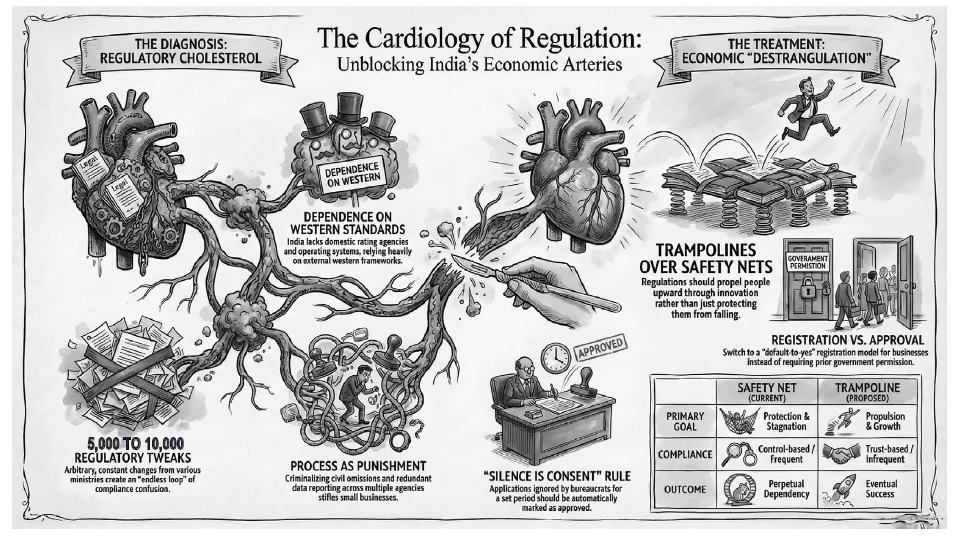
  •  The Dispute Resolution Panel (DRP) must now record specific points for determination and provide reasoned directions.
  •  Provisions for Dispute Resolution Committees (‘DRC’s) offer relief to small taxpayers by enabling faster settlements.

By providing multiple forums and streamlining procedures, the Act aims to reduce prolonged litigation and increase certainty.

13. Anti-Avoidance and International Taxation: The General Anti-Avoidance Rule (GAAR) has been retained but clarified. Arrangements lacking commercial substance and aimed primarily at tax benefits will be disregarded.

  •  Treaty interpretation is codified: if a term is undefined in the treaty, the Act, or relevant notifications, it’s meaning may be sourced from other central laws.
  •  The Act attempts to update many international tax linkage points: residence tests, source rules, permanent establishment concepts and rules addressing cross-border digital supplies. It attempts to harmonise domestic law with BEPS/follow-up OECD standards and recent treaty models, but practical divergence and map-ping to treaty text will remain a complex exercise.
  • Issues will arise in interpreting domestic withholding obligations where treaties provide differing attribution rules; practitioners should watch guidance on treaty override, operation of tax credits and thin-capitalisation or withholding rules that interact with treaty relief.
  • This hierarchy of interpretation provides clarity and consistency in cross-border tax matters.

Such provisions strengthen India’s stance against aggressive tax planning while ensuring harmony with international tax laws.

14. Privacy, Safeguards, and Checks: While the Act grants sweeping powers for search and seizure, including access to digital devices, it simultaneously emphasizes transparency and accountability.

  •  Schemes for faceless procedures must be notified and laid before Parliament.
  •  The DRP’s requirement of speaking orders increases judicial discipline.
  •  Penalties are rationalised to ensure that taxpayers are not punished for minor or technical defaults.

Balancing enforcement with rights protection remains a key theme of the new Act.

15. Pension and Retirement Benefits: Retirement benefits have been streamlined for clarity.

  •  Provisions relating to pension, gratuity, and commuted pension are now consolidated.
  •  Exemptions are clearly defined with formula-based thresholds and moved into schedules for easier reference.
  •  The Act ensures that salaried employees and retirees can understand their entitlements without navigating through scattered provisions.

This will benefit senior citizens, a category often affected by interpretational challenges under the old law.

16. Transition: The devil lies in the details. Any new codification requires transitional rules. The Act contains express transitional provisions for pending assessments, appeals, unabsorbed losses, credits, and ongoing litigations. These provisions are crucial because they determine whether prior tax positions will be preserved or reinterpreted under the new drafting.

Practitioners must scrutinise each transitional clause: loss carryovers, depreciation bases, pending notices and the status of settled legal interpretation under the ITA may be dealt with differently. Early commentary warns that insufficiently precise transitional wording can spawn fresh litigation.

17. Penalties, compliance costs and rationalisation: The Act retains penalties but seeks to rationalise and tier them to reduce disproportionate fines for technical defaults. Nonetheless, new reporting obligations (especially for VDAs and platform economy) may increase compliance costs, particularly for small-medium enterprises and individuals unfamiliar with digital reporting.

Where no tax is payable or refund is due, the provisions for levy of penalty are relaxed to exempt such cases from levy of penalty in MSME and other small cases. Where levy of penalties is administrative and automated, appeals will likely increase if taxpayers perceive disproportionate enforcement; hence the interplay between automated data matching and human oversight is a systemic risk.

What Remains /Conserved: Some core principles remain unchanged and are retained:

  •  Tax rates/slabs have largely been retained; the new Act is not introducing new rates drastically in many segments.
  •  Fundamental heads of income (salaries, house property, business/profession, capital gains and other sources) remain but are refined.

REPEALS & SAVINGS AND TRANSITIONAL PROVISIONS FOR RETAINING THE LEGACY

Section 536 of the Act explicitly repeals the ITA. At the same time, it contains the savings clause for protecting the past operations. Actions already taken, rights acquired, or obligations incurred under the ITA remain unaffected by the repeal. Pending proceedings for example, assessments, reopening, reassessments, rectifications, appeals, penalties, references, revisions, or any related proceedings related to tax years beginning before 1 April 2026 would continue under the ITA; procedures. penalties and proceedings for the earlier years in respect of pre -1st April 2026 tax years would continue to be initiated and pursued as if the ITA has not been repealed but is continued and has remained in force. Pending proceedings before the tax authorities, initiated under the ITA and pending on 1 April 2026, will be adjudicated under the ITA. Refunds or defaults transiting into the Act after 1 April 2026, but relating to the proceeding under the ITA, shall be governed by the ITA for the period up to 31st March, 2025 and thereafter under the Act.

Importantly, no revival or reopening of the lapsed opportunities would be possible under the Act where the time limit to file an application, appeal, reference, or revision has already expired under the ITA on or before 1 April 2026; the Act does not revive or reopen any of them even if it offers longer periods. To reiterate, the legacy law of the ITA shall remain in force in the above referred cases even though the law is otherwise repealed w.e.f 01.04.2026. Law of limitation of the ITA shall apply to the filings, including of the appeals, and where such limitation had expired under the ITA before 1st April 2026, will not get the fresh lease of time under the Act, even if the latter provides more generous timelines.

Express provisions that save the application of the ITA ensures the legal continuity, guarantee a smooth transition without legal uncertainty and render fairness to taxpayers in as much as no pending matters or rights are disrupted or lost due to the repeal of the ITA. Importantly, administrative clarity is achieved with the clear demarcation between old and new regiments.

The principle underlying s. 6 of the General Clauses Act, 1897 providing for the savings for proceedings for liabilities incurred during the currency of the previous law may apply to a law that is repealed. Section 24 of the General Clauses Act, 1897 provides for continuation of orders, notifications etc., issued under enactments repealed and re-enacted. In such instances, if repealed and re-enacted provisions are not inconsistent with each other, any order or notification made under the repealed provisions is deemed to be an order made under the reenacted provisions. Having noted the process, it appears that the prescription will fall short of ensuring the litigation free transition as is highlighted, while dealing with the shortfalls of the exercise.

KEY TRANSITIONAL AREAS AND CHALLENGES

During the transition from the ITA to the Act, several key areas, particularly the following require careful consideration;

  •  Pending assessments and reassessments initiated under ITA will continue under that law or may be deemed under the Act in specified cases. However, disputes may arise on whether the old or new procedure applies, particularly where reassessment timelines differ.
  •  Appeals already filed under the ITA will proceed before the existing appellate forums, but issues of forum shopping and jurisdictional objections may surface if the new Act alters hierarchy or timelines.
  •  Unabsorbed losses and depreciation under the ITA are intended to be carried forward into the new Act. Nonetheless, disagreements may occur regarding speculative or business losses, and whether the restrictions of the old law or the new law would govern such carry forwards.
  •  Similarly, MAT/AMT credits and tax credits such as TDS, TCS, and foreign tax credits accumulated under the ITA will be permitted under the new Act, though timing mismatches – especially for foreign tax credits claimed on accrual—could lead to litigation.
  •  Exemptions and deductions available under the ITA, including SEZ, start-up, and infrastructure incentives, will be grandfathered until expiry. Yet, ambiguity is likely where such benefits are linked to repealed provisions, leading to potential disputes on preservation of benefits.
  •  Corporate restructurings commenced under the ITA but completed after 2025 are intended to retain tax neutrality, though gaps may arise if the new Act omits certain neutralisation provisions, such as those relating to demergers or dividend upstreaming.
  •  Lastly, penalties and prosecutions for defaults committed under the ITA remain punishable under that law. Complications may occur where defaults span both the regiments, and constitutional challenges could arise if penal consequences differ between the two laws.

INTERPRETATION OF THE ACT

The Act of 2025 must be interpreted strictly according to its express words, with no tax imposed without clear legislative authority. Implied intentions or “spirit of the law” cannot create liability. The principle “there is no equity in taxation” applies, so equity cannot override statutory language. Ambiguities favour the taxpayer, and taxation cannot be extended by inference, analogy, or implication. Interpretation is confined to what is explicitly stated in the statute.

The Act of 2025 must be interpreted as a whole, ensuring harmonious construction so that no section renders another redundant and apparent inconsistencies are reconciled within the Act or with related statutes. Beneficial interpretation applies: where two meanings exist, the one most favourable to the taxpayer prevails, recognizing the power imbalance with authorities. Natural justice principles also apply unless explicitly excluded, requiring meaningful opportunity to be heard and substantive consideration of submissions. Ritualistic hearings or orders ignoring taxpayer arguments are unsustainable. Overall, interpretation must balance consistency, fairness, and protection of the taxpayer while furthering the Act’s purpose.

Legislative Simplification – Reality or Illusion? The Act has been presented as a major simplification exercise. Provisos, Explanations, and Non-obstante clauses have been formally removed, and definitions consolidated into a single section. The term ‘as maybe prescribed’ is replaced with ‘as prescribed’. The government has argued that this will reduce complexity and litigation.

Many of these important aids to interpretation, the meaning whereof is judicially settled, have merely been reintroduced as sub-sections or substantive provisions. If their language remains, but in a different form, it is debatable whether genuine simplification has been achieved. Historically, provisos, explanations, and non-obstante clauses served special interpretive functions. By converting them into sub-sections, the Act may blur distinctions and give rise to fresh interpretive disputes. Judicial rulings on the role and effect of these interpretive devices may or may not remain applicable. It is, therefore, premature to conclude that the changes will reduce litigation. Courts will ultimately determine their true import.

Provisos. Traditionally, a proviso carves out exceptions or qualifies the main provision. It cannot nullify the substantive enactment, but it may provide conditions or remedy unintended consequences. A proviso may:

  1.  Qualify or except certain cases from the main enactment.
  2. Impose mandatory conditions necessary to make the enactment workable.
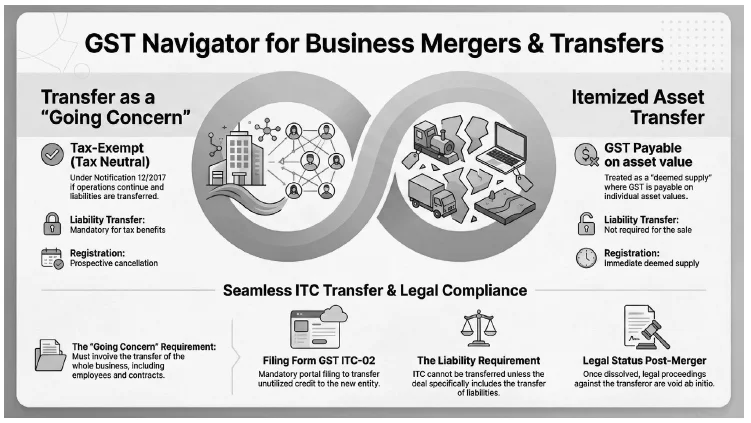

  3. Become so integral as to acquire the colour of the main enactment.
  4. Serve as an explanatory addendum clarifying legislative intent.

Provisos must always be construed harmoniously with the main provision. In some cases, where necessary to give effect to legislative intent, a proviso may even operate retrospectively. In the circumstances, it is difficult to concur with the Government that the Provisos were a burden under the ITA and shifting them to the sub-sections shall retain the same meaning, more so where the understanding of the true import of the Provisos has been justified by the courts.

Explanations. An Explanation is designed to clarify ambiguities, widen scope, or reinforce the object of the Act. Generally, clarificatory and retrospective in effect, Explanations cannot override substantive provisions but can guide interpretation. They may explain phrases, supply missing links, or resolve vagueness in language.

Although ordinarily not substantive, Explanations can sometimes expand the scope of a section, depending on legislative intent. Courts will give effect to such intention even if the provision is labelled as an “Explanation.” It is again difficult to concur with the Government that the Explanations were redundant and its purpose is served by shifting to the main provisions; shifting them to the sub-sections may not retain the same meaning, more so where their understanding of the true import has been justified by the courts.

Non-Obstante Clauses. A non-obstante clause, typically beginning with “notwithstanding anything,” gives overriding effect to the section it qualifies, in case of conflict with other provisions. It is a legislative device to ensure primacy in specified circumstances. The scope of a non-obstante clause is determined by its context and the scheme of the Act. While it provides clarity in resolving conflicts, excessive reliance may undermine coherence.

The Act has replaced everywhere the term ‘notwithstanding’ with the new term ‘irrespective of’. Dictionary meaning of both the terms is interchangeable and therefore neither any harm nor any gain is perceived by the change; it does not complicate the act nor simplify the same.

Definitions and Undefined Words. The Act adopts a novel approach by consolidating definitions into a central section, while also retaining section-specific definitions where necessary. This is intended to create uniformity in interpretation.

However, contextual interpretation remains vital. Defined words ordinarily carry the statutory meaning unless context dictates otherwise. Extended definitions cannot override ordinary meaning unless compelling language demands it. One must ensure that definitions do not destroy the essence of the concept being defined. Thus, while the consolidated definition clause aids clarity, interpretation must remain context-sensitive.

As may be prescribed and As prescribed. At several places the Act, in the name of simplification, has used the term ‘ as prescribed’ in place of the term ‘ as may be prescribed’. It is not possible to corelate with the understanding of the government here. The two terms differ in its meaning as one used under the ITA was futuristic and the other used under the Act has its roots in present. The later requires that the prescription is mandatory and the failure to prescribe may not be made up by the later day prescription.

Deeming Provisions and Legal Fictions: The Act continues to extensively rely on deeming fictions. The best solution would have been to do away with such fictions by using such language that does not require fictions, and instead explains the intent in simple language for creating the effective charge of taxation. Use of legal fictions in the Act is an admission of the legislature of its’ inability to create a specific charge in simple terms. A deeming provision enlarges the meaning of a word or phrase beyond its ordinary sense. Legal fictions must be given full effect, carried to their logical conclusion, but only within the limits of the purpose for which they are created. Courts cannot extend them beyond their defined scope.

While legal fictions may include the obvious, uncertain, or even impossible, they cannot be applied in a way that causes injustice. They are legislative tools to remove doubt, broaden scope, or simplify administration, but require strict interpretation.

Relevance of Legislative History and Judicial Precedent: Legislative history, surrounding circumstances, and background may be considered to understand the object of the Act, though not to alter the plain meaning. Historical context helps identify the mischief the law seeks to remedy. Previous judicial interpretations of similar provisions may also be relevant, particularly where identical wording has been carried forward.

Where Parliament repeats phrases already judicially interpreted, one may infer that the same meaning was intended. At the same time, judicial interpretations under the 1961 Act will not automatically apply; their relevance must be tested in the context of the 2025 Act.

Rules, Circulars and Notifications issued in the context of the ITA may not automatically apply unless specifically provided by the legislature or accepted by the Central Board of Direct Taxes. Recommendation of the Parliamentary Select Committee on this aspect may be seen to understand the position of these useful aids of constructing the Act.

Key Litigation Issues Under the 2025 Act. Despite claims of simplification, several interpretive disputes are anticipated:

  1.  Ambiguity of Key Terms: Definitions of “business connection,” “virtual digital asset,” and “tax year” may give rise to litigation over scope and application.
  2.  Transition from ITA to Act: Whether facts arising before enactment are governed by the repealed Act or the newly enacted Act will be contested. Saving clauses, retrospective application, and transitional provisions will require judicial resolution.
  3. Set-off and Depreciation: Treatment of losses and unabsorbed depreciation carried forward from the ITA involving high-value cash-flow implications, will be fertile grounds for disputes.
  4. Corporate Restructuring: Lack of explicit provisions for tax neutrality in reorganisations, fast-track mergers, demergers, and dividend upstreaming may create asymmetries, leading to corporate tax litigation, more so in cases where the restructuring initiated under the ITA is concluded under the Act.
  5. AIS and Automated Matching: The Act relies heavily on Annual Information Statements (AIS) and automated data matching. Errors in data, lack of human oversight, and limited correction mechanisms may lead to unfair assessments. Taxpayers are expected to challenge these on grounds of accuracy and procedural fairness.

The Act of 2025 represents an ambitious attempt at simplification, but its true test will lie in judicial interpretation. While the express words of the statute remain paramount, the removal and reclassification of interpretive devices, such as provisos and explanations, may lead to fresh uncertainty. Courts will play a crucial role in shaping how the Act functions in practice.

Ambiguities in definitions, transitional provisions, and reliance on technology-driven assessments are likely to drive the first wave of litigation. Until judicial clarity emerges, taxpayers and advisors must proceed with caution, guided by the long-settled interpretive principles that taxation depends strictly on the language of the law, nothing more and nothing less.

IN THE END – MISSED OPPORTUNITY & ROAD AHEAD

Whether the Act of 2025 is a case of a missed opportunity, and what more could / should have been done which the reform did not quite deliver, is the question. While the Act of 2025 is a step forward in reformation of the income-tax law, many observers feel it could have gone further or could have addressed certain areas more fully. Let us first summarise what seem to be the gaps and then suggest what might have been done better.

WHERE THE ACT FALLS SHORT — WHAT IT MISSED

  1.  Incomplete simplification of core tax base and dispute-prone provisions
  •  Some core concepts like income, scope of total income, deemed income, capital receipts, revenue and capital expenditure and overlapping heads of income remain substantially unchanged, continuing old complexities and challenges.
  •  Deletion of the deeming fictions that provide for taxation of a receipt that is not an income by any stretch of imagination or of the provisions that presume higher income than the actual or real income.
  •  Making provisions redundant that provide for disallowance of the legitimate expenditure incurred in earning an income for defaults unrelated to income of a person.
  •  Scrapping of the provisions that mandate for compulsory payment in cases of persons following the mercantile system of accounting for a legitimate deduction.
  •  Removal of unfair limitations like mandatory filing of reports, return of loss or income including the revised return of income by due dates. All such provisions that limit the legitimate right to be assessed on the true and correct income irrespective of the date of filing should have been withdrawn.
  •  Provisions for reopening assessments (which are a large source of litigation and uncertainty), which have largely been retained.
  •  TDS/TCS rules remain complex; for example, TDS on partner’s salary, interest, drawings in partnership firms is retained, which leads to practical difficulties (many firms lack TAN, etc.).

     2. Refunds, late filing, fairness issues

  • No mandatory timelines for disposal of appeals / grievance petitions or revisional orders by the authorities. Delays in timely disposal continue to be pardoned.
  • Provisions for exemption from liability to pay interest for the period where the disposal of appeals are delayed by any appellate authority, including the courts.

     3. Uneven treatment, inequity, mismatch of incentives

  •  Savings-/investment-friendly incentives have not been significantly strengthened; some observers think the new tax regime doesn’t sufficiently reward long-term savings or investment relative to old regime obligations or expectations.
  •  Marginal relief under the Old Tax Regime (OTR) is less favourable compared to the New Tax Regime (NTR) in some respects, which may push taxpayers into making choices that are sub-optimal for their financial planning.

    4. Privacy, oversight and risk of overreach

  • The moulding of digital / algorithmic / data-driven triggers for reassessment and compliance is stronger in the 2025 Act but are not backed by the procedural safeguards, definitions, limits, oversight mechanisms; these are not sufficiently built in. This raises risks of arbitrary or heavy-handed action.

    5. Lack of clarity / roadmap in implementation

  • Though the law reduces sections, changes language etc., actual implementation (IT systems, staffing, training, taxpayer interface, etc.) might lag. Observers worry about capacity to handle digital records, data matching, appeals.
  • Transition rules (for those who have made long-term commitments under the old law, or whose income/assets fall across regimes) could have been more clearly spelt out.

     6. Missed opportunity in broadening tax base / reducing exemptions

  • Though the law claims simplification, many exemptions, deductions, overlapping rules remain. Some think the tax base hasn’t been meaningfully broadened in certain areas (like real estate, informal receipts, etc.).
  •  More progressive changes in rates or rebalancing burden could have been considered, especially as inflation erodes real thresholds. Tax slabs etc., still leave some taxpayers in discomfort.

    7. Support for smaller firms / MSMEs / those with low capacity

  •  Many of data requirements, reporting, TDS, digital obligations impose fixed overheads. Small businesses, partners without formal structures etc. find compliance burdens high relative to their capacity. Observers feel more relief provisions or simplified rules for such groups could have been included.

    8. Transparency, legislative oversight

  •  Some key provisions (like faceless assessments / appeals etc.) are moved to be governed by rules rather than being embedded in the law itself. This gives administrative flexibility, but reduces parliamentary visibility and makes redress harder.

The temptation to suggest what could have been done differently is irresistible; suggestions that may pave way for additional reforms. Some of them are;

  1.  Stronger deadlines mandating fixed timelines for every stage: issuance of notices, disposal of appeals by CIT (Appeals) and ITAT; grievance/redressal mechanisms; timeline for refunds etc.
  2.  Procedural fairness by ensuring the automatic stay of demands / assessments where appeals or rectification petitions are pending, to reduce hardship.
  3.  Wider margin of relief / incentives for savings and investments or simplified exemptions for retirement savings, health insurance, education etc., especially in the new regime. Possibly rebalancing marginal relief to make old regime less penalising for those with existing obligations.
  4.  Simplified regime for small businesses / partnerships including the presumptive taxation and lighter reporting (less frequent TDS / less frequent returns) for small firms or partners.
  5. Removal or postponement of the TDS obligations that create cash flow burdens (e.g. on partner salaries or drawings) especially where profit is uncertain.
  6.  Greater clarity on data / digital enforcement / rights by defining the safe harbour thresholds and introducing the de minimis rules for “unexplained income / assets / credits” so ordinary informal transactions aren’t penalised.
  7.  Stronger privacy protections and oversight for use of personal / digital data.
  8.  Meaningful expansion of the tax base by outreach to a good part of the population by covering the informal sectors, digital / gig economy more comprehensively.
  9.  Introducing transparency in the effective rate of taxation by pruning and consolidating the provisions for exemptions/deductions more aggressively.
  10.  Auto Indexation of thresholds, rates, etc. to adjust for inflation, cost of living etc. so that taxpayers are not pushed into higher tax brackets simply due to inflation rather than real income growth.
  11.  Transitional clarity, especially for those with investments, deductions etc under the old Act.
  12.  Continuity of harmless clauses for some years for minimising the disputes arising from overlapping rules.
  13.  Greater legislative embedding of taxpayer rights by including more rights of taxpayers (Taxpayer Charter) in the main body, not just in rules.
  14.  Ensuring transparency in reopening, reassessment, and appeal (for example, reasons to be stated, officer escalations etc.).
  15.  Continuous review mechanism that involves periodic review of the law, say every few years, involving stakeholders, to identify parts that are still overly burdensome or have led to disputes.
  16. Mechanism for better feedback and active public consultation and solicitation at the pre-legislative stage. An exercise should be carried out to measure the effect of the legal and economic effect and the counter-productive consequences of the Act for posterity.

Putting it all together, yes, there was a strong case for the enactment of the new law, it could have been much more transformative. Many observers feel that the legislature missed a great opportunity to really reform the income-tax law in preference for presenting the old wine in a new bottle; may be there was a lack of will or the courage to take the bull by its horns or was it the tacit acceptance that the law of income tax is beyond simplification? The government took a cautious path, balancing simplification with retaining significant legacy structures, possibly to avoid revenue risk or political backlash. The law improves readability, removes redundant parts, modernises in parts, these are all commendable, but many classic pain points remain. A tax administration which disposes of appeals promptly and reaches a fair and final settlement speedily, is itself to be classed as a tax incentive. But: it’s not fair to say the Act is a failure; it achieves many important reforms and is likely to reduce compliance costs and increase clarity.

The Act has achieved simplicity, readability. cohesiveness, lesser verbosity, modernity, some best global practices and removal of archaic provisions, has missed the structural issues like TDS complexity, refund fairness generally, appeals delays, taxpayers’ rights, MSME reliefs, automatic indexation of slabs with the passage of time. Some of the long-standing issues that cause taxpayers anxiety or litigation remained unaddressed or only partially addressed. Importantly the absence of clarity in the transitional provisions leaves a high potential source of disputes. In essence the Act is a step forward in form and readability, but not a game-changer in substance.

The Act’s strengths lie in modern language, logical regrouping of provisions, and an explicit intention to address digital economy issues and reduce routine litigation. It is a long-needed structural reform that aligns statute design with 21st century record-keeping and digital reporting.

Risks remain in drafting gaps, transitional complexity, and the speed at which administrative guidance will be issued. Simplification of language does not automatically ensure simplification of outcome; poor transitional drafting or omissions create new ambiguity and litigation.

Practitioners should act now to: map exposures, check transitional rules for each client, engage with the tax department’s FAQs and circulars, and prepare to litigate strategic issues if administrative clarification is delayed. The next 24 months will determine whether the Act delivers the promised reduction in disputes or simply reshuffles controversies.

GST Refunds Under Inverted Duty Structure

The inverted duty structure (IDS) under GST arises when inputs are taxed at higher rates than output supplies, leading to accumulation of unutilized input tax credit (ITC) and liquidity blockages. GST 1.0, with four tax slabs, intensified these anomalies, especially in sectors like textiles, footwear, pharmaceuticals, renewable energy, and EV manufacturing. GST 2.0, introduced after the 56th GST Council meeting in September 2025, rationalised rates into two slabs (5% and 18%), but IDS persists as inputs largely remain at 18% while many outputs fall to 5%. To ease working capital strain, the Council proposed provisional refunds of 90% and automatic refund mechanisms, though risks of fraud necessitate strong digital verification. Statutory provisions under Section 54 and Rule 89(5) govern refund eligibility, limited to input goods, with restrictions notified for certain sectors. Judicial rulings, including VKC Footsteps, Malabar Fuel Corporation, and Tirth Agro Technology, continue to shape the evolving refund landscape.

WHAT IS INVERTED DUTY STRUCTURE AND WHY IT OCCURS?

Inverted Duty Structure (IDS) means when the GST rate on inputs (input goods and/or raw materials used to manufacture final products) is higher than the tax rate on output supplies (finished goods) after manufacturing, processing or assembling goods. This situation results into the accumulation of unutilised Input Tax Credit (ITC), creating liquidity crunches and working capital shortages for manufacturers and suppliers.

Inverted Duty Structure is primarily a structural anomaly caused by the following factors:

  • Higher GST Rate on Inputs: It refers to a situation where the GST paid on input goods or raw materials (e.g., at 18%) is higher than the GST rate applicable on the finished goods or output (e.g., at 5%). This leads to accumulation of unutilised Input Tax Credit (ITC), resulting in working capital blockage and refund claims under the Inverted Duty Structure.
  • Changes in Tax Policy: Introduction of concessional or reduced GST rates on specific finished goods or services without proportionate reduction on their inputs can create an inverted duty structure. This disparity leads to accumulation of Input Tax Credit (ITC), causing cash flow challenges and frequent refund claims.
  • Sector-specific anomalies: It occur when industries use a mix of inputs taxed at higher GST rates and produce outputs taxed at lower rates. This mismatch creates a recurring Inverted Duty Structure (IDS), where input taxes exceed output liability, leading to excess Input Tax Credit (ITC) and dependency on refunds.

INVERTED DUTY STRUCTURE UNDER GST 1.0

Introduction of Goods and Services Tax (GST) in India was one of the largest indirect tax reforms aimed at simplifying the tax structure and harmonizing indirect taxes. But one of the major issues with businesses in this multiple rate regime is the Inverted Duty Structure.

Under GST 1.0, the existence of four tax slabs – 28%, 18%, 12% and 5% has created structural challenges for businesses. The large gap between high input rates (28%/18%) and lower output rates (12%/5%) has led to severe working capital blockages and persistent liquidity stress.

The Government recognized these challenges, providing a statutory framework for refund of unutilised ITC under the CGST Act, 2017 and related rules. The correct interpretation and enforcement of these provisions are important to make sure that businesses can reduce the financial hardship caused by IDS and maintain healthy cash flows.

However, Businesses often face the challenge of claiming large refunds under the inverted duty structure, but the slow and complicated processing delays the release of funds for months. The 12% GST slab, in particular, continued to be a hotspot for disputes, classification mismatches, and compliance challenges. To address these issues, the GST Council recently held its 56th meeting, focusing on rate rationalisation and measures to streamline the refund process.

INVERTED DUTY STRUCTURE UNDER GST 2.0

The 56th meeting of the Goods and Services Tax (GST) Council, held on September 3, 2025 unveiled one of the most far-reaching revisions to India’s indirect tax framework since the launch of GST. Referred as “GST 2.0”, the reform collapses the earlier four-rate structure into just major two slabs of 5% and 18% along with a higher rate of 40% for sin and luxury goods. This overhaul is designed to simplify compliance, bring predictability, and align taxation with broader economic priorities. The implications are far-reaching, promising a significant reshaping of the industry landscape.

Yet, despite the clear benefits, the changes bring a major operational complication: a rise of the inverted duty structure (IDS). Under the new regime GST 2.0, inputs/raw materials used in production remain taxed at 18%, while many finished goods now fall into the 5% or Nil category. A 13% gap between rates still creates inverted duty structure for on output goods/services with 5% slab. This mismatch locks up working capital and creates cash flow pressures for manufacturers – an issue the industry has struggled with even under the previous regime.

To offset this strain, the Council has recommended a new relief mechanism: granting a provisional refund of 90% on IDS situations and Zero-Rated Supplies as well. This step is aimed at easing liquidity constraints, ensuring smoother tax credit utilization, and allowing industries to maintain uninterrupted supply chains in the face of the revised tax rates.

Process of Automatic Refunds as Given In GST 2.0:

RISK OF AUTOMATIC REFUND:

  • Automatic refunds without strong checks increase risk of fraudulent claims.
  • Fake registrations and manipulated invoices can exploit refund systems.
  • Past GST frauds revealed massive input tax credit scams worth lakhs or crores.
  • Large-scale illegitimate refunds may strain government revenue.
  • Strong digital verification and AI-based monitoring are essential to prevent misuse.

SECTORS AFFECTED BY INVERTED DUTY STRUCTURE (IDS)

Inverted duty structure (IDS) under GST affects industries where the tax rate on inputs is higher than that on outputs, leading to accumulation of input tax credit. This, results into working capital issues. Addressing IDS is crucial to improve cash flow, boost manufacturing efficiency, and ensure a fair tax structure across the value chain. Following are illustrative examples of inverted duty structure

SECTOR INPUT GST RATE OUTPUT GST 1.0 RATE GST 2.0 RATE
Footwear Synthetic/Artificial leather PU, Chemicals, job work 18% Footwear upto

₹2,500 per pair

12% 5%
Textile/Garments Synthetic or artificial staple fibers, Machines 18% Apparel upto

₹2,500 per piece

5% 5%
Textile Job work Packing Material, Chemical, Colour, Machines 18% Textile Job-work

Processing

5% 5%
Pharmaceutical APIs, Packaging materials 18% Medicines 12% 5%
LPG Bottling & Distribution Bulk LPG Purchase 18% LPG Cylinder for Residential 5% 5%
Renewable Energy Solar Glass, Solar battery 18% Renewable energy devices 12% 5%
Electric Vehicle Manufacturing Components, Parts 18% Electric Vehicles (EV) 5% 5%
Bicycles Steel 18% Bicycles 12% 5%
Any Any Input Goods 5%/18% Supply to Merchant Exporter 0.1% 0.1%

Example of calculation of Inversion of ITC (Renewable Sector)

Particulars Outward GST@12% Proposed GST@5%
Value GST Total Value GST Total
Supply Value of

Renewable Devices

30,00,000 3,60,000 33,60,000 30,00,000 1,50,000 31,50,000
Cost of Manufacturing Renewable Devices:
Solar Cell @ 5% (earlier 12%) 15,50,000 1,86,000 17,36,000 15,50,000 77,500 16,27,500
EVA Sheet @ 18% 4,50,000 81,000 5,31,000 4,50,000 81,000 5,31,000
Solar Glass @18% 5,00,000 90,000 5,90,000 5,00,000 90,000 5,90,000
Aluminium Frame @ 18% 2,00,000 18,000 2,18,000 2,00,000 18,000 2,18,000
Cost of Manufacturing

Renewable Devices

27,00,000 3,75,000 30,75,000 27,00,000 2,26,500 29,66,500
Net Profit =

Supply – Manufacturing Cost

3,00,000 15,000   3,00,000 76,500
Inversion of Input Tax Credit Increased after decision of Reducing GST Rate [i.e., ₹76,500 – ₹15,000] 61,500

STATUTORY PROVISIONS FOR IDS REFUND

Key sections of the CGST Act, 2017

  • Section 54(1): Any person claiming refund of any tax and interest, if any, paid on such tax or any other amount paid by him, may make an application before the expiry of two years from the relevant date in such form and manner as may be prescribed:

This section allows any person to claim a refund of tax and interest paid, within two years from the relevant date.

  • Section 54(3):  Subject to the provisions of sub-section (10), a registered person may claim refund of any unutilised input tax credit at the end of any tax period:

Provided that no refund of unutilised input tax credit shall be allowed in cases other than –

(i) zero rated supplies made without payment of tax;

(ii) where the credit has accumulated on account of rate of tax on inputs being higher than the rate of tax on output supplies (other than nil rated or fully exempt supplies), except supplies of goods or services or both as may be notified by the Government on the recommendations of the Council:

This section specifically enables the refund of accumulated ITC at the end of any tax period, on account of either zero-rated supplies made without payment of tax, or where the tax rate on inputs is higher than the tax rate on output supplies (except in cases of NIL-rated or exempt supplies or as notified by the Government).

Relevant Rules of CGST Rules, 2017

  • Rule 89-97A: Procedures for claiming refund of tax, interest, penalty, fees, or any other amount.
  • Rule 89(5): Formula for calculation of maximum refund under IDS

RESTRICTION OF REFUND UNDER IDS FOR CERTAIN OUTPUT SUPPLY OF GOODS

In accordance with Notification No. 05/2017-CT(R) dated 28.06.2017, as amended from time to time by Notifications No. 29/2017, 44/2017, 20/2018, 09/2022 and 20/2023, the Government has notified a list of goods for which refund of unutilized input tax credit (ITC) under Inverted Duty Structure (IDS) is restricted. These restrictions are applicable where the rate of tax on input goods is higher than the rate on output supply, yet no refund is permitted for the accumulation of ITC. The rationale behind such restrictions is to curb excess refund outflows in certain sectors and streamline credit accumulation aligned with policy objectives.

As per the consolidated list, restriction on refund applies to various vegetable oils such as soya-bean oil, groundnut oil, olive oil, palm oil, sunflower oil, and coconut oil, including their chemically unmodified forms (Tariff Items 1507 to 1518). Similarly, refund has been disallowed for certain coal and petroleum-related products (Tariff Items 2701 to 2703), imitation yarns (5605), and an extensive list of railway locomotives and related parts (Tariff Items 8601 to 8608), with effective restriction dates ranging from 01.07.2017 to 20.10.2023.

Further, It is important to note that certain restrictions imposed earlier on woven fabrics (Tariff Items 5007, 5111 to 5113, 5208 to 5212, 5309 to 5311, 5407-5408, 5512 to 5516, 5608, 5801, 5806 & 60) were lifted later. The restriction period for refund claims on these goods ended on 31.07.2018, thereby allowing refunds for ITC accumulated due to IDS for fabrics post that date.

The restriction on IDS refunds for specified goods reflects the government’s intent to rationalise refund outflows and prevent revenue leakage. Taxpayers dealing in such notified goods must carefully evaluate their eligibility before claiming refunds. Continuous updates to the list also highlight the need for regular compliance checks and policy awareness.

REFUND UNDER IDS FOR CERTAIN OUTPUT SUPPLY OF SERVICES

REFUND RESTRICTED

  • As per Notification No. 15/2017-Central Tax (Rate) dated 28.06.2017, as amended by Notification No. 15/2023-Central Tax (Rate) dated 20.10.2023, refund of accumulated Input Tax Credit (ITC) under the Inverted Duty Structure (IDS) is not available for Construction Services of a Complex/Building meant for sale covered under Schedule II, Para 5(b) where Input goods (e.g., cement @ 28% @18%, steel @ 18%, marble @ 18%) are taxed at a higher rate than output services (1% for affordable units, 5% for others). Refund of accumulated ITC is not allowed under IDS for the same.

REFUND ALLOWED

  • Notification No. 15/2017 specified only para 5(b) of Schedule II (i.e., construction services), therefore, Works Contract Services covered under Schedule II, Para 6(b) read with Section 2(119) of the CGST Act is not restricted by the said notification. Hence, refund under IDS is allowed where works contract service involved public infrastructure and government projects taxed at concessional rates (e.g., 12%) before rate rationalisation and inputs for that is of higher rate.
  • Further, Other Services like Job work where the output service is taxed at a lower rate (e.g., 5%) compared to input taxed at higher rates (18%), Refund is allowed under IDS.
  • As per Circular No. 48/22/2018-GST, Fabric processors providing job work services (i.e., supply of services and not goods) are also eligible for refund under IDS.

It may be noted that the refund restriction under IDS applies only when the output is a supply of goods listed in the Notification, and not for all services. Thus, service providers, except those engaged in construction services under Para 5(b), remain eligible for IDS refunds.

RESTRICTION OF REFUND OF ITC OF INPUT SERVICE & CAPITAL GOODS

Section 54(3) of the CGST Act, 2017 provides that a registered person may claim a refund of any unutilized input tax credit (ITC) at the end of any tax period under two circumstances:

  1. Zero-rated supplies made without payment of tax; or
  2. Where credit has accumulated on account of the rate of tax on inputs being higher than the rate of tax on output supplies (i.e., Inverted Duty Structure or IDS).

The provision specifically mentions “on account of” higher tax on Inputs, which has raised questions about whether the refund is allowed only for input goods or also includes input services.

The term “inputs” under the CGST Act is defined in Section 2(59) as “any goods other than capital goods used or intended to be used by a supplier in the course or furtherance of business.” It does not include input services. This gave rise to confusion because Section 54(3)(ii) only refers to higher tax on inputs and is silent about services.

Initially, taxpayers interpreted that ITC on both input goods and input services could be included in the refund calculation under IDS. However, the government clarified this ambiguity through Circular No. 135/05/2020-GST dated 31st March 2020 and later re-clarified through Notification No. 14/2022-Central Tax dated 5th July 2022 (effective from 5th July 2022), and Rule 89(5) was amended.

These clarifications and amendments establish that:

  • Refund of ITC under inverted duty structure is available only on “input goods”.
  • Input services and capital goods are not eligible for refund under Section 54(3)(ii).
  • The formula under Rule 89(5) of CGST Rules was also amended accordingly to allow refund of net ITC pertaining only to input goods, excluding input services from the calculation.

This legal position has been upheld by courts as well. For instance, the Gujarat High Court in VKC Footsteps India Pvt Ltd. vs. Union of India had ruled in Favor of taxpayers, allowing refund of ITC on input services under IDS. However, the Supreme Court in Union of India vs. VKC Footsteps India Pvt Ltd., in 2021, reversed the High Court decision, upholding the government’s view that only input goods are covered for refund under IDS.

As a result, currently, under the Inverted Duty Structure, a registered taxpayer is not eligible to claim refund of accumulated ITC attributable to input services or capital goods. Only input goods, which are taxed at a higher rate than the output supplies, qualify for refund under Section 54(3)(ii).

In conclusion, while Section 54(3) refers broadly to refund of unutilised ITC due to inverted duty, the restrictive interpretation and supporting rules/circulars clearly limit the refund eligibility to input goods only. Taxpayers should ensure proper classification and calculation while filing refund claims under IDS to avoid rejections or disputes.

REFUND OF ITC OF STOCK DUE TO RATE RATIONALISATION IN GST 2.0

The Government of India has recently announced its intent to rationalise GST rates across sectors to reduce complexities, broaden the tax base, and address revenue leakages. While such rationalisation is expected to bring uniformity and curb classification disputes, it also raises a practical challenge for businesses – what happens to input tax credits (ITC) accumulated on account of higher taxes already paid on inputs when output supplies suddenly face lower tax rates?

The key question is: Can taxpayers claim refund of such unutilized ITC under the Inverted Duty Structure, even though CBIC Circular No. 135/05/2020 restricts refunds where input and output goods are the same?

RESTRICTION BY CIRCULAR:

CBIC Circular No. 135/05/2020 dated 31-03-2020) disallowed refund of ITC under IDS where input and output goods are the same but taxed at different rates.

Further, as per the FAQ issued by the department on GST Rate Rationalisation based on the recommendations of the GST Council in its 56th meeting, it has been again clarified that the refund of Input Tax Credit (ITC) arising due to a difference in tax rates on the same input and output at different points will not be allowed under Section 54(3) of the CGST Act.

FAQ 10. Will I be allowed to take refund of accumulated credit arising out of inverted duty structure for supplies effected upto the date of effect of revised rate as notified?

The said issue has been clarified vide circular No. 135/05/2020-GST dated 31.03.2020 (as amended), which states that refund of accumulated ITC in terms of clause (ii) of first proviso to section 54(3) of the CGST Act, is available where the credit has accumulated on account of rate of tax on inputs being higher than the rate of tax on output supplies. However, the input and output being the same in such cases, though attracting different tax rates at different points in time, do not get covered under the provisions of clause (ii) of the first proviso to sub-section (3) of section 54 of the CGST Act.

FORMULA AND CALCULATION OF REFUND

Refund Calculation Formula – Rule 89(5)

The refund mechanism under the Inverted Duty Structure (IDS) continues to be a controversial issue under GST, with Rule 89(5) of the CGST Rules creating systemic disadvantages for taxpayers. While the intention is to grant refund of unutilised input tax credit where the rate of tax on inputs exceeds that on output supplies, the formulaic construction of refund calculation leads to a double blow – first, by excluding input services & capital goods from the scope of “Net ITC,” and second, by deducting total output tax payable on inverted rated supplies in earlier period. This design results in a gross under-calculation of refund, especially in service-intensive businesses.

Old Formula and Its Drawbacks:

Refund Amount = (Turnover of inverted rated supply of goods and services × Net ITC ÷ Adjusted Total Turnover) – Tax payable on such inverted rated supply of goods and services.

Rule 89(5) was retrospectively amended via Notification No. 26/2018-Central Tax dated 13-06-2018 (effective from 01-07-2017) to replace “turnover of inverted rated supply of goods” with “turnover of inverted rated supply of goods and services.” However, the definition of “Net ITC” remains restrictive, covering only input goods while excluding input services and capital goods. As a result, although businesses accumulate credit on both goods and services, refunds are permitted only on a limited portion relating to goods. This distortion deepens because the formula deducts the full output tax on inverted rated supplies from the reduced “Net ITC.” Such a method overstates the deduction, leading to under-refunds or nil refunds, disproportionately harming industries like pharmaceuticals, e-commerce and exporters with higher input-service credits. While the Supreme Court in VKC Footsteps upheld the formula’s validity, it recognised this inequity and urged the GST Council to review the policy.

New Formula and its Improvements:

The Government amended Rule 89(5) through Notification No. 14/2022 – Central Tax dated 05.07.2022. The revised formula continues to retain the exclusion of input services but attempts to provide some relief by modifying the manner of calculating “tax payable on such inverted rated supply” in the second part of the formula.

Specifically, the amendment introduced “{tax payable on such inverted rated supply of goods and services x (Net ITC/ITC availed on inputs and input services)}”
However, this change was cosmetic at best, as it did not resolve the core issue that Input services continue to be excluded from “Net ITC” for refund eligibility.

After amendment, the maximum refund amount for IDS is determined using the following formula:

Maximum Refund Amount = {(Net ITC × Turnover of Inverted Rated Supply of goods & Services / Adjusted Total Turnover) – [{Tax Payable on such inverted Rated Supply of goods & services x (Net ITC/ITC availed on inputs & input Services}]

Where:

  • Net ITC: ITC availed on input goods during the relevant period.
  • Adjusted Total Turnover: Domestic Supply+ Zero Rated Supply (excluding domestic exempt supplies)

Example of Refund amount: (Pre & Post amendment)

  • Turnover of Inverted Rated Supply: ₹10,00,000
  • Adjusted Total Turnover: ₹12,00,000
  • ITC on Input Goods: ₹1,80,000
  • ITC on Input Services: ₹60,000
  • Output tax payable on Inverted Rated supply: ₹50,000

Pre amendment Refund amount

= (1,80,000 × 10,00,000/12,00,000) − 50,000
= 1,00,000

Post amendment Refund amount

= (1,80,000 × 10,00,000/12,00,000) – (50,000 x 1,80,000/2,40,000)
= 1,12,500

The refund is limited to the least of:

  • Refund calculated as per formula
  • Balance in electronic credit ledger after filing GSTR-3B for refund period
  • Balance in electronic credit ledger at the time of filing refund application

[Circular 125 – Amount of Maximum Refund that can be claimed as per ECL

In case of refunds pertaining to items listed at (a), (c) and (e) in para 3 of Circular 125, the common portal calculates the refundable amount as the least of the following amounts:

a) The maximum refund amount as per the formula in rule 89(4) or rule 89(5) of the CGST Rules (formula is applied on the consolidated amount of ITC, i.e. Central tax + State tax/Union Territory tax + Integrated tax);

b) The balance in the electronic credit ledger of the applicant at the end of the tax period for which the refund claim is being filed after the return in FORM GSTR-3B for the said period has been filed; and

c) The balance in the electronic credit ledger of the applicant at the time of filing the refund application]

REFUND OF ITC IN CASE OF INPUTS TAXED AT SAME OR LOWER RATE THAN OUTPUT

As per Circular No. 125/44/2019-GST dated 18-11-2019, it was clarified that while computing the maximum refund under Rule 89(5) of the CGST Rules, “Net ITC” includes ITC availed on all inputs during the relevant period, regardless of their tax rates, even if some inputs are taxed at the same or lower rate than the outward supply.

Example:

Particulars Value GST Rate Tax
Details of Input
Input A           500 5%             25
Input B        2,000 18%           360
2,500 385
Details of output
Output Y        3,000 12%     360
Particulars Amount
Net ITC (from inputs A & B) A 385
Turnover of inverted rated supply (Output Y) B 3,000
Adjusted total turnover C 3,000
Tax payable on Output Y (Inverted Rate Goods) (12% of 3,000) D 360
Maximum Refund = (A*B/C – D*A/A) 25

From the above example, it is evident that even though Input A attracts a lower GST rate (5%) than the outward supply Y (12%), the ITC on such inputs cannot be excluded while calculating Net ITC. As clarified, the refund computation under Rule 89(5) requires inclusion of all eligible ITC on inputs, irrespective of whether the input GST rate is lower, equal to, or higher than the output GST rate. Therefore, the entire ITC of ₹385 (including ₹25 from Input A) must be considered for refund calculation.

TIME LIMITS AND RELEVANT DATES

As per Section 54 of the CGST Act, 2017, refund claims under Inverted Duty Structure must be filed within two years from the relevant date. The relevant date varies depending on the nature of refund claim. Below are the key timelines:

  • For Refund of unutilized ITC under IDS: The relevant date is the due date for furnishing return u/s 39 (i.e. GSTR-3B) for the period in which such claim for refund arises.
  • Refund arising from Judicial Orders (Court/Tribunal/Appellate Authority): The relevant date is the date of communication of the judgment, decree, order, or direction allowing the refund.
  • In Case of Deficiency Memo (Form GST RFD-01): The time period from the original filing of Form GST RFD-01 till the date of issuance of RFD-03 (deficiency memo) is excluded from the two-year limitation. A fresh claim filed after rectification of deficiencies is considered within time if the original application was within two years.

DOCUMENTATION FOR CLAIMING IDS REFUND

Statements Statement 1 under rule 89(5) – Calculation of Maximum Refund Amount
Statement 1A of Rule 89(2)(h) – Details of Inward & Outward Invoices
Annexure B – Statement of Purchase invoices – ITC & HSN
Certificates Self-Certificate where refund amount is less than 2 lakh rupees [Rule 89(2)(l)]
CA Certificate where refund amount is more than 2 lakh rupees [89(2)(m)]
Declaration/

Undertakings

Undertaking in relation to sections 16(2)(c)
Declaration under second and third proviso to section 54(3)
GST Returns GSTR-2A/2B of the relevant period
GSTR-01 and GSTR-3B of relevant period

INTEREST ON DELAYED REFUNDS

As per Section 56 of the CGST Act, read with Notification No. 13/2017-CT dated 28-06-2017, interest is payable on delayed GST refunds if not sanctioned within 60 days from the date of receipt of the refund application. The applicable rate and period of interest vary based on the type of refund and delay involved:

  • No interest is payable if the refund is granted within 60 days of the application.
  • For regular refund applications
    -6% p.a. interest is payable from the 61st day from date of original(1st) refund application till the actual date of refund credit.
  • In cases where the refund arises from an order of adjudicating authority, appellate authority, tribunal, or court, interest is payable
    -at 6% p.a. from 61st day of original(1st) refund application till 60th day of fresh (2nd) refund application or date of refund credit
    -at 9% p.a. from 61st day of Fresh (2nd) Refund application till date of refund credit

In case of Lupin Limited [Writ Petition No.610 of 2024] (Bombay High Court – Goa Bench), held that GST refunds delayed beyond 60 days of an appellate order attract 9% interest, while delays beyond 60 days from the original order attract 6% under section 56 of the CGST Act.

Circular No. 125/44/2019-GST clarifies that the refund is deemed complete only when the amount is credited to the applicant’s bank account. Hence, the interest period starts after 60 days from the date of application and continues until the date of actual credit to the applicant’s account.

In case of Raghav Ventures [W.P.(C) No. 12209 of 2023] (Delhi High Court, 2024), it was held that interest @ 6% on delayed GST refunds is a statutory right, automatic, and not dependent on the petitioner’s claim. Even if interest is not specifically claimed, it is payable under Section 56 if the refund is delayed beyond the statutory period. The court emphasized that such interest is mandatory and automatic in terms of the Act’s provisions.

IMPORTANT CASE LAWS RELATED TO IDS REFUND

  • VKC Footsteps India Pvt. Ltd. [Civil Appeal No 4810 of 2021] (Supreme Court, 2021) – Upheld validity of Rule 89(5); refund not allowed on Input Services
    The Supreme Court upheld the validity of Rule 89(5) of the CGST Rules, which restricts refund of unutilised input tax credit in cases of inverted duty structure to input goods only, excluding input services. It held that Section 54(3) of the CGST Act grants refund entitlement subject to restrictions, and the legislature is empowered to distinguish between goods and services for refund purposes. The Gujarat High Court’s decision striking down Rule 89(5) as ultra vires was set aside, while the similar view of the Madras High Court upholding the Rule was affirmed. The Court concluded that policy choices on refunds fall within the legislature’s domain and cannot be invalidated merely for being inequitable. Any remedy for inclusion of input services in refund must come from legislative amendment, not judicial intervention.
  • Malabar Fuel Corporation [WP(C) Nos. 26112/2023, 20511/2023, 36699/2023] (Kerala High Court, 2024) – Refund allowed under IDS even with the same inward and outward supplies
    Company engaged in bottling LPG, paid GST at 18% on bulk LPG purchases but charged only 5% on domestic supplies after bottling. The Court examined whether a taxpayer can claim a refund under the inverted duty structure (IDS) when the input and output are the same goods, but the GST rate on the outward supply is lower than the GST rate paid on inward supplies.
  • The department’s argument was that IDS refunds are not allowed if the same goods are supplied outward, since refunds should only apply when different goods are involved.
  • The Court disagreed, holding that Section 54(3) of the CGST Act and Rule 89(5) only require one condition: that the rate of GST on inputs is higher than the rate on outward supplies. They do not require inputs and outputs to be different goods.
  • It also clarified that a CBIC circular No. 135/05/2020-GST cannot override the law. If the Act and Rules allow refund based on rate difference, a circular cannot impose extra restrictions.
  • As a result, the Court quashed the refund rejection order and directed the department to process the refund claim on its merits.
  • This judgment affirms that IDS refunds are driven by rate disparity, not by product variation.
  • Tirth Agro Technology Pvt Ltd [SCA No. 11630, 11635, 11647, 11649 of 2023) (Gujarat High Court, 2024) – Differential refund allowed as per new amended formula

The Court held that the amendment to Rule 89(5) of the CGST Rules, introduced by Notification No. 14/2022, is clarificatory and curative in nature and hence applicable retrospectively. It quashed CBIC Circular No. 181/13/2022, which had restricted the amendment’s benefit prospectively from 05.07.2022. Relying on its earlier decision in Ascent Meditech Ltd., the Court ruled that refund or rectification applications filed within the statutory two-year limit under Section 54(1) must be recomputed using the amended formula. Consequently, the rejection of petitioners’ claims for differential refund under the new formula was set aside. The respondents were directed to release the eligible refund amounts within three months.

The High Court’s decision is now even stronger because the Supreme Court, in Tirth Agro Technology Pvt. Ltd. (July 2025), refused to set aside it. The apex court noted that its earlier ruling in Ascent Meditech – which said the amended Rule 89(5) applies retrospectively—was already final. This means the High Court’s reasoning is not only valid within its own state but has also been effectively approved by the Supreme Court.

  • Patanjali Foods [SCA No. 17298 of 2024] (Gujarat High Court, 2025) – Refund for restricted goods allowed for period before notification

The Court struck down para 2(2) of CBIC Circular No. 181/13/2022-GST dated 10.11.2022, which applied the refund restriction on specified goods under Notification No. 09/2022 (effective 18.07.2022) to all applications filed after 13.07.2022, even for periods before the notification. It held such retrospective application to be arbitrary, discriminatory, and ultra vires Section 54 of the GST Act, violating Article 14. Since the notification itself had prospective effect, refund claims for pre-13.07.2022 periods could not be denied merely because they were filed later within the statutory two-year limit. The Court also held that once refund was sanctioned by a quasi-judicial order and not appealed, it attained finality and could not be reopened via a Section 73 notice. The impugned recovery order was quashed, and the petition allowed in favour of the assessee.

BENEFICIAL CIRCULARS UNDER IDS REFUND

Circular No. 37/11/2018 – Suppliers having merchant export supplies @ 0.05% / 1% can also claim refund under Inverted Duty Structure as per provision of the first proviso to Section 54(3) of CGST Act.

Circular No. 48/22/2018 – Clarifies that fabric processors (job workers) supply services, not goods. Since their output is job work services, not fabrics, Notification No. 5/2017–CT (Rate) does not restrict their refund eligibility. The refund restriction under section 54(3) applies only when the output supply is the goods listed in the notification. Hence, fabric processors are eligible for refund of unutilised ITC under the inverted duty structure.

Circular No. 79/53/2018 – Net ITC includes all input goods used in the course of business, even if not directly consumed in manufacturing. Items like stores, spares, packing materials, and stationery qualify as inputs if not restricted under section 17(5) and not capitalised. Revenue expensed items cannot be treated as capital goods.

Circular No. 173/05/2022-GST – Refund under Inverted Duty Structure allowed in case of same rate of inputs and output goods provided the output is supplied at a lower rate due to a concessional notification.

Circular No. 181/13/2022-GST – The restriction imposed vide Notification No. 09/2022-CTR dated 13-07-2022 on refund of unutilised input tax credit on account of inverted duty structure in case of specified goods falling under chapter 15 and 27 would apply prospectively only.

CONCLUSION

Despite the GST Council’s 56th meeting taking significant steps towards rate rationalisation, the issue of Inverted Duty Structure continues to affect several sectors. While rationalisation has eased the burden for some industries, many businesses still face blocked input tax credits, resulting in liquidity crunches and operational strain. This underscores the fact that structural anomalies within the GST framework require a more comprehensive and sector-specific approach rather than piecemeal adjustments.

To address this challenge, policymakers must intensify efforts to simplify rates and ensure timely refunds for affected sectors. Businesses, on their part, need to maintain strict compliance, robust documentation, and close monitoring of regulatory changes to safeguard working capital. A collaborative approach between industry and government, with continuous evaluation of rate structures, is essential to resolve IDS fully and sustain the growth momentum envisaged under GST.

Amplifying an Auditor’s Obligation: Analysis of NFRA’s Order

The National Financial Reporting Authority’s (NFRA) order dated 26 December 2024 concerning the audit of Zee Entertainment Enterprises Limited (ZEEL) underscores a significant expansion in the interpretation of “fraud” under the Companies Act, 2013. The controversy stemmed from Yes Bank prematurely appropriating ZEEL’s fixed deposits of ₹200 crore to entities linked with promoters. Though the funds were later restored with interest, NFRA held that the information available with auditor raised red flags that the auditors failed to address adequately. The order also highlights deficiencies such as reliance on limited internal inquiries, neglecting external confirmations and insufficient professional skepticism. It also juxtaposes the broader statutory fraud definition under Section 447 with the narrower auditing standard under SA 240, raising unsettled questions on thresholds like “reason to believe” and quantification of fraud. Ultimately, NFRA’s stance reinforces heightened auditor responsibility, especially regarding related-party transactions and concealed disclosures

INTRODUCTION:

Inquiries by the National Financial Reporting Authority (“NFRA”) into audits have resulted in important orders that clarify NFRA’s view of complex issues that come from the interpretation of the Companies Act, 2013 (“Act”) read with the Standards of Auditing. In this context, NFRA’s order dated December 26, 2024 (“Order”) regarding the statutory audit of Zee Entertainment Enterprises Limited (“ZEEL” or “the Company”) is significant.

The Order addresses an alleged fraud that did not result in a loss. ZEEL’s fixed deposit proceeds were credited to other entities. However, the funds were immediately recouped, and the involved parties had no grievances. In this case, the NFRA concluded that the auditor did not comply with the Standards of Auditing and failed to report fraud U/s 143(12) of the Act.

The Order deliberates upon a spectrum of issues stemming from the broad and expansive statutory definition of “fraud,” found in Section 447 of the Act, and the unresolved tension on the auditors’ obligation to report fraud U/s 143(12) of the Act. Ultimately, the inferences drawn from Order, can cast additional, and possibly onerous, obligations on the auditor.

BACKGROUND:

The facts presented to the auditor (before issuance of the audit report) are as follows. ZEEL’s fixed deposit (“FD”) of ₹200 crore with Yes Bank was prematurely closed by Yes Bank in July 2019 and the corresponding funds were credited (“FD Appropriation”) to entities linked to and associated (“PLE”) with a ZEEL promoter and director (“Promoter”). Around 2 months later, the PLEs intimated ZEEL that Yes Bank had unilaterally credited the FD Appropriation funds to their accounts without the PLE’s knowledge and consent, and offered to remit the FD Appropriation funds to ZEEL along with interest, which they did subsequently1.

ZEEL sought explanations from Yes Bank on the FD Appropriation and, at the same time, acting on instructions from the Audit Committee, initiated an internal inquiry whose primary scope was assessing whether any authorised signatories had instructed Yes Bank to affect the FD Appropriation. The internal inquiry did not unearth any incriminating evidence2. Thereafter, on July 22, 2020, ZEEL and Yes Bank issued a joint statement stating that the FD Appropriation issue was resolved3.

The auditors had issued qualified audit reports for the quarters ending in September 2019 and December 2019, citing paucity of relevant information, including the non-availability of responses from Yes Bank regarding the FD Appropriation.4, On July 24, 2020, the auditors issued an audit report that did not cite any concerns or qualifications regarding the FD Appropriation.5 However, certain material facts that were not available to the auditor when the audit report was issued suggest that a fraud had occurred, as the FD Appropriation was effected by Yes Bank based on instructions issued by ZEEL’s Chairman, who had offered the FD as a security for loans availed by PLE’s.6


1 Para 18 and 19 of the Order

2  Para 20 of the Order

3   Para 21 of the Order

4   Para 27 of the Order

5   Para 21 of the Order

6   Para 23 and 25 of the Order

NFRA’S CRITICISM OF AUDITORS’ JUDGMENT

According to the Order, the auditor concluded that there was no basis to believe ZEEL’s officers or directors had committed fraud7. This conclusion appears to be based on the internal inquiry and the auditor’s procedures. Crucially, the internal inquiry focused on authorized signatories only and not on other officers or directors. This distinction becomes significant when viewed alongside subsequent evidence pointing to a broader circle of individuals who may have been involved or were aware of the true reasons for the FD Appropriation8.

NFRA has critiqued the auditor’s decisions on multiple fronts. First, it questioned the rationale for issuing a clean report without evaluating Yes Bank’s rationale and grounds for the FD Appropriation9. In NFRA’s view, the auditor should have formally sought external confirmation from Yes Bank, as the FD Appropriation was treated as a significant risk10. The Order also highlights that SA 33011 issued by the ICAI calls for external corroboration in high-risk scenarios. The Order opines that obtaining clarification directly from Yes Bank was essential in light of the significant reliance on explanations offered by the management.

Moreover, the Order identifies multiple red flags embedded in the information available to the auditor, that, in NFRA’s view, warranted deeper scrutiny:

  • The beneficiaries were PLEs, suggesting a heightened risk of inappropriate related-party transactions.
  • The promoters’ own explanations that they were coordinating with Yes Bank raised questions regarding the implicit reasons behind the FD’s Appropriation12.
  • An email from ZEEL dated February 2, 2019, showed that ZEEL anticipated Yes Bank might attempt to offset the FD against promoter liabilities13.
  • Yes Bank’s subsequent May 2020 letter (cited in the Order) included allegations against ZEEL’s management, hinting at broader corporate governance issues.14

According to NFRA, these red flags indicated a risk of unauthorized related party transactions, which should have led the auditor to exercise greater professional skepticism. NFRA opined that inquiries should have been expanded to evaluate the role and involvement of promoters and other officers. According to the NFRA, had the auditor insisted on explanations from Yes Bank and conducted a more thorough investigation, he/she could have uncovered evidence meeting the “reason to believe” threshold required for reporting under U/s 143(12) of the Act (“Section 143(12)”).


7   Para 27 of the Order

8   Para 25 of the Order

9  Para 28 of the Order

10 Para 17 of the Order

11 Para 31 of the Order.

12  Para 41 of the Order

13  Para 37 of the Order

14  Para 51 of the Order

CONCEALMENT OF INFORMATION AND FRAUD – JUXTAPOSED

The Order highlights a response dated October 11, 2019, from Yes Bank (“Yes Bank Response”), provided as an explanation in response to ZEEL’s query regarding the FD Appropriation15. Crucially, the Yes Bank Response was not disclosed to the auditor. According to the Order, the Yes Bank Response included evidence which showed that the Promoter had on September 4, 2018, authorised Yes Bank to appropriate the FDs in case of a default by PLEs. Notably, it also suggested a certain level of awareness within the leadership team of the Essel Group, of which ZEEL was a part, about Yes Bank’s intent to appropriate the FD16. NFRA has opined that had the auditor been apprised of these details, there would likely have been a reasonable basis to believe the occurrence of a fraud meriting reporting under Section 143(12).

At this juncture, it would be pertinent to highlight the friction between fraud as defined in Section 447 of the Act (“Section 447”) and fraud as contemplated in SA 240 – The Auditor’s Responsibilities Relating to Fraud in an Audit of Financial Statements (“SA 240”)17 . Fraud under Section 447 includes “acts with an intent to injure the interests of the company or its shareholders or its creditors or any other person, whether or not there is any wrongful gain or wrongful loss”. Therefore, acts that do not represent, entail, or result in a financial effect would constitute fraud under Section 447.

ICAI, in its guidance note on Section 143(12) (“Guidance Note”), has noted this divergence and has acknowledged that an auditor may not be able to detect acts that fall under the broader scope of Section 447, especially if the financial effects of such acts are not recorded in the company’s books of account or financial statements18.

Given these limitations, the ICAI has opined that for the purpose of reporting on fraud under Section 143(12), auditors should primarily consider the requirements of the SAs, including the definition of fraud as stated in SA 240, and plan and perform audit procedures to address the risk of material misstatement due to fraud as it impacts the financial statements19. In other words, an auditor has no obligation to identify a fraud that has no impact on the books of accounts or financial statements. It appears that the FD Appropriation squarely falls within the meaning of fraud under SA 240, as the underlying transactions were recorded in the books of accounts, even though ZEEL did not, ultimately, incur any loss.

Importantly, NFRA has also suggested that the concealment of the Yes Bank Response from the Audit Committee, as well as the auditors, may tantamount to fraud under Section 448 of the Act20, which criminalises “false statements” or “omissions of material facts” in documents or returns required under the Act. Conventionally, this provision is construed to apply to documented filings like annual returns, financial statements, or formal declarations. If this broader reading prevails, the statutory boundaries on what constitutes a “filing” or “document” for Section 448 purposes could expand significantly.

One may argue that nondisclosures or omissions during formal communications or Board-level deliberations that are affected under the framework of the Act but not in legally prescribed forms should not, on their own, be considered “false statements” under Section 448. NFRA’s interpretation suggests a more expansive scope that may expose directors and senior management to liability for any material omission in communications that fall within the framework of the Act.


15 Para 25 of the Order

16  Para 24 of the Order

17 Para 11 of SA 240 – The Auditors Responsibilities Relating to Fraud in an Audit of Financial Statements

18 Para 31 of the Guidance Note on Reporting on Fraud under Section 143(12) of the Companies Act, 2013 (Revised 2016)

19 Para 32 of the Guidance Note on Reporting on Fraud under Section 143(12) of the Companies Act, 2013 (Revised 2016)

20 Para 25 of the Order


EVIDENTIARY STANDARDS – DICHOTOMY OF CONFUSION

A crucial topic not explored in depth is how NFRA’s characterization of the FD Appropriation as fraud under Section 447 compares with the rigorous criminal-law standard of “beyond reasonable doubt.” NFRA has asserted that the Promoter misused ZEEL’s funds21 to benefit the PLEs and that ZEEL’s management was complicit, basing this on delays in seeking explanations from Yes Bank and the concealment of the Yes Bank Response; actions NFRA deemed collectively suspicious22. However, proving an offense under Section 447, which is a criminal provision, requires meeting the high “beyond reasonable doubt” threshold, which is stringent than the “reason to believe” standard applicable to auditors under Section 143(12).

The Supreme Court23 explained the reasonable doubt standard in a recent verdict as “the requirement of law in criminal trials is not to prove the case beyond all doubt but beyond reasonable doubt and such doubt cannot be imaginary, fanciful, trivial or merely a possible doubt but a fair doubt based on reason and common sense”. In essence, the reasonable doubt standard requires the prosecution to establish a high degree of certainty but not absolute certainty. Simplistically, reasonable doubt exists when the prosecution’s evidence fails to exclude reasonable alternative explanations that are consistent with innocence and arise naturally from the evidence presented.

Moreover, while the “beyond reasonable doubt” standard has substantial legal precedent, the “reason to believe” standard in relation to its application under Section 143(12) has not been vigorously tested. The Bharatiya Nyaya Sanhita defines “reason to believe”24 as “a person is said to have “reason to believe” a thing, if he has sufficient cause to believe that thing but not otherwise”. Reason to believe straddles the middle ground between knowledge i.e. absolute certainty and suspicion characterised by conjecture or doubt. It is a state of mind arrived at through a process of probable reasoning based on available facts, circumstances, and indicators. A person may not know for certain that a fact is true, but he/she possess enough information that a reasonable person would conclude it to be true25. As a result, sifting through and analysing discrete pieces of information—an inherently subjective exercise which at times would demand juristic knowledge—becomes more difficult in the absence of substantive guidance or case laws for an auditor.’ On the facts cited in the Order, it can be argued that the “reason to believe” standard was not satisfied as pivotal evidence i.e. the Yes Bank Response was not available to the auditor when the audit reports were issued.

Additionally, the Order also highlights the auditors’ views on the uncertainty surrounding the legal or contractual basis on which the FD Appropriation was affected26. While Yes Bank cited the Promoter’s letter as justification, there is no clear indication that this letter amounted to formal authorisation. Instead, the documents suggest that the Board of ZEEL did not approve the alleged lien or security arrangement as required under the Act, leaving open the question of whether Yes Bank had lawful grounds to appropriate the FD for the PLEs. That being said, this uncertainty buttresses the NFRA’s contention that the internal inquiry did not address all substantive questions, thereby warranting a deeper inquiry.


21 Para 53 of the Order.

22 Para 52 of the Order.

23 Goverdhan and Ors. vs. State of Chhattisgarh (09.01.2025 - SC) : MANU/SC/0069/2025

24 Section 2(29) of the Bharatiya Nyaya Sanhita

25 A.S. Krishnan and Ors. vs. State of Kerala (17.03.2004 - SC) : MANU/SC/0233/2004

26  Para 58 of the Order.

NFRA’S STANCE ON INTERNAL INVESTIGATIONS

Additionally, NFRA appears to have deemed all internal inquiries or investigations as inherently unreliable without clearly articulating the rationale for this broad conclusion27. In this case, the internal inquiry was conducted by a longstanding ZEEL employee and was overseen by the Audit Committee. However, the Order does not appear to consider the involvement of the Audit Committee, which bears fiduciary responsibilities, including other institutional checks and balances that are typically instituted to mitigate potential biases and maintain objectivity. Furthermore, NFRA’s assertion that reliance on outcomes derived from internal inquiries would be tantamount to gross negligence may lead auditors to insist on engaging external investigators in most instances, which in turn can impose significant financial costs and operational challenges on companies.


27 Para 51 of the Order.

AMBIGUITY IN QUANTIFYING “AMOUNT OF FRAUD”

Another legally unsettled question concerns how to measure the quantum of fraud, if any, when the entity ultimately sustains no net financial loss. This determination is crucial as frauds exceeding INR 1 Crore are to be reported by the auditor under Section 143(12) of the Act. For instance, if funds had been diverted or, in other terms, “loaned” to related parties without any intent to misappropriate, does the “amount of fraud” equates to the principal sum initially diverted, or merely the interest cost?

While the Order does not deliberate on the quantification, it hints that the FD Appropriation amounted to a misappropriation, even though it was transient. The Act does not prescribe a fixed methodology for quantifying “amount of fraud” in such scenarios, raising questions on whether intangible or temporary impairments of a company’s funds qualify as the basis for fraud calculations.

CONCLUSION: THE EXPANDING ROLE OF AUDITORS IN DETECTING AND REPORTING FRAUD

The Order highlights the evolving expectations placed on auditors, particularly in the context of detection and reporting of fraud under the Act. The Order reaffirms the broad sweep of “fraud” under the Act, whereby even transient or fully remedied misapplications of corporate assets may lead to a potential obligation to report under Section 143(12). Whether all acts falling within the ambit of Sections 447 and 448 must invariably be reported by the auditor remains an ongoing challenge.

The Order suggests that, whenever a plausible suspicion arises, particularly in related-party contexts, an auditor must either gather conclusive exculpatory evidence or fulfil the statutory mandate to report potential fraud.

Statements Recorded Under GST Law

This article explores the legal framework governing the statements recorded during summon proceedings under the Goods and Services Tax (“GST”) law, with a special focus on its evidentiary value. It further analyses the role such statements play in adjudication and prosecution proceedings. In addition, the Article delves into the legal principles surrounding the retraction of statements, assessing the conditions under which retractions are considered valid and their impact on the overall evidentiary value.

STATEMENTS RECORDED DURING SUMMONS PROCEEDINGS

Under Section 70 of the Central Goods and Services Tax Act, 2017 (“CGST Act”), the proper officer is empowered to summon any person to appear, give evidence, or produce documents or any other thing that may be required in any inquiry. Therefore, issuance of a summons is always in connection with a pending/existing inquiry. The inquiry may be pending against the person summoned or against any other person. However, in the absence of any pending/existing inquiry, the validity/legality of such summons may become a ground for challenge. The power to issue summons is similar to that of a civil court under the provisions of the Code of Civil Procedure, 1908 (“CPC”). Therefore, the proper officer while conducting an inquiry under the provisions of the CGST Act is empowered to exercise all such powers which are vested with a civil court in case of issuance of summons, recording of statements and producing evidence.

Section 70(2) of the CGST Act deems such inquiry to be ‘judicial proceeding’ within the meaning of Sections 229 and 267 of the Bharatiya Nyaya Sanhita, 2023 (“BNS”). As a result, the provisions under these sections become applicable to proceedings under the GST law. Section 229 of BNS stipulates punishment/penalties for making false statements during judicial proceedings; at the same time, Section 267 of BNS affords protection to public servants from insult or obstruction while discharging official duties in judicial proceedings. Accordingly, inquiries under Section 70 of the CGST Act are at par with judicial proceedings within the meaning of Sections 229 and 267 of BNS, and any act of interference or falsehood therein attracts punishment and penal consequences.

A summons is issued to call a person to record their statement, submit documents, or give evidence. This raises an important question: Can a statement be recorded without the issuance of a summons? The answer is no. The CGST Act confers the power to summon and record statements exclusively under Section 70. Nowhere else does the Act provide such an authority. Therefore, if a statement is recorded at an individual’s premises during a search without the prior issuance of a formal summons, such a statement lacks legal validity, is not admissible in law and cannot be relied upon as valid evidence. Reference is made to Paresh Nathalal Chauhan Versus State of Gujarat1 .


1 2020 (36) G.S.T.L. 498 (Guj.)

REPRESENTATION THROUGH AN AUTHORISED REPRESENTATIVE IN RESPONSE TO SUMMONS

A question that repeatedly and naturally arises is: once a summons is issued, is the person required to appear in person, or can he be represented by an authorised person such as an Advocate, Chartered Accountant, or any other duly authorised representative?

In this context, it is important to note the amendment introduced by the Finance (No. 2) Act, 2024 w.e.f. 1.11.2024, wherein sub-section (1A) was inserted in the Act following the recommendations of the GST Council in its 53rd meeting held on 22nd June 2024 in New Delhi. This amendment explicitly allows a person to appear through an authorised representative in response to a summons and also specifically provides for the recording of statements.

IS THERE AN OVERLAP BETWEEN SECTION 70(1A) AND SECTION 116 OF THE CGST ACT?

One may question the necessity of the 2024 amendment permitting appearance through an authorised representative in response to summons, especially considering the existing provision under Section 116 of the CGST Act. However, a closer examination reveals that Section 116 and Section 70(1) operate in entirely different contexts and serve distinct purposes under the Act.

To begin with, Section 116 deals with representation in the context of proceedings under the CGST Act. It allows any person entitled or required to appear before a GST officer, Appellate Authority, or Appellate Tribunal to do so through an authorised representative, except when personal appearance is required for examination on oath or affirmation.

However, Section 70(1) stands on a different footing altogether. It specifically deals with the power of the proper officer to issue summons in an inquiry for the purpose of gathering evidence, recording statements, or producing documents. The issuance of summons under Section 70 is an inquisitorial step, aimed at fact-finding, and is distinct from the adjudicatory or appellate “proceedings” contemplated under Section 116.

It is also pertinent to note that the term “proceedings” is not defined under the CGST Act. Its scope has been interpreted by courts to refer broadly to adjudicatory processes where rights and liabilities are determined. In contrast, “inquiry” under Section 70(1) is a preliminary step, a pre-adjudication phase, to ascertain facts or detect evasion. Therefore, the representation rights under Section 116 cannot be mechanically extended to the inquiry stage under Section 70.

The distinction between ‘proceedings’ and ‘inquiry’ underscores the necessity of the 2024 amendment, which addresses a legislative gap by expressly allowing appearance through an authorised representative even in response to summons. The amended Section 70 of the CGST Act now aligns with Section 108 of the Customs Act, 1962 and Section 14 of the Central Excise Act, 1944, both of which explicitly permit representation through an authorised person in response to summons.

However, it raises a critical question: whether statements made by an authorised representative can be treated as binding on the assessee. This issue carries significant legal implications, particularly when considered in light of the evidentiary value and admissibility of such statements.

The amended provision permits representation either by the person himself or through an authorised representative; however, this is subject to the condition “as the officer may direct,” which means the allowance is not absolute but conditional. If the officer specifically directs personal appearance, the assessee is obligated to appear in person and cannot be represented through an authorised representative in such cases.

ANALYSIS OF BHARATIYA SAKSHYA ADHINIYAM, 2023, FOR ANALYSING THE EVIDENTIARY VALUE OF STATEMENTS

The Bharatiya Sakshya Adhiniyam, 2023 (“BSA”) (formerly the Indian Evidence Act, 1872), provides for general rules and principles of evidence. Therefore, it becomes necessary to examine the relevant provisions of BSA in order to assess the admissibility, relevance, and legal effect of such statements.

The preamble of the BSA reads as “An Act to consolidate and to provide for general rules and principles of evidence for fair trial.” Further, as per Section 1(2) of BSA, the BSA applies to all judicial proceedings in or before any ‘Court’, but not to affidavits presented to any Court or officer. The term ‘Court’ is defined under Section 2(1)(a) of BSA as “Court” includes all Judges and Magistrates, and all persons, except arbitrators, legally authorised to take evidence. The court, in its ambit, includes any person who is legally authorised to take evidence. In the GST Law, evidence is produced at every stage, starting from the inquiry / investigation.

The term evidence, as defined under Section 2(1)(e) of BSA, encompasses both oral and documentary forms. Clause (i) covers all statements, including those given electronically, which the Court permits or requires to be made before it by witnesses concerning matters of fact under inquiry; these are classified as oral evidence. While Section 70 of the CGST Act does not specifically refer to written statements, any oral statement recorded during proceedings would squarely fall within the ambit of clause (i). Clause (ii) further clarifies that evidence also includes all documents, whether physical, electronic, or digital, produced for the Court’s inspection, and these are categorised as documentary evidence. Accordingly, any written statement submitted by an assessee to a GST officer would fall within the purview of documentary evidence. Ultimately, whether a statement is oral or written, both forms fall within the inclusive definition of ‘evidence’.

Sections 15 to 18 of BSA define and explain the term ‘Admission’. An admission is a statement, which can be oral, documentary, or contained in electronic form, that suggests any inference as to a fact in issue or a relevant fact. A statement becomes an admission in the following circumstances:

  •  Statement made by a party to the proceedings.
  •  Statement made by an agent when expressly or impliedly authorised by the person to make it. Thus, in case of a statement by an agent, the agent must be specifically authorised either explicitly or implicitly. Any statement by an agent without authorisation cannot be considered as an admission. Therefore, the statement given by an authorised representative on behalf of the assessee becomes binding on the assessee.
  •  A statement made by a party who is suing or being sued in a representative character is an admission only when such statement has been made while the party held that specific representative character.
  •  Statements made by persons who hold a proprietary or pecuniary interest in the subject matter of a proceeding, when made by the person in their character as an interested party and during the continuance of that interest.
  •  Statements made by persons from whom the parties to the suit have derived their interest in the subject, when made during the continuance of the interest of the person making it.
  •  Statements made by individuals whose position or liability needs to be proven against a party to the suit, when such statement is relevant as against those persons concerning their position or liability, had a suit been brought against them, and when they are made while the person occupied that specific position or was subject to that liability.
  •  Statements made by persons to whom a party to the suit has expressly referred for information in reference to a matter in dispute.

Under Section 19 of the BSA, the general rule about admissions is that they can be used as evidence against the person who made them or his representative in interest. However, the law states that the person cannot use his own admission or admission made by his representative except in the following circumstances:

  •  When an admission is of such a nature that the person making it was dead, and it is relevant as per Section 26 of BSA.
  • This applies when the statement describes the state of mind (like the intention or belief) or the physical condition, and it was made around the time that state or condition existed. Importantly, the actions at that time must also show that the statement was likely true and not false.
  •  If the admission is relevant for another reason, not just because it’s an admission.

Section 25 of the BSA states that admissions are not conclusive proof of the matters that have been admitted. This means an admission, on its own, does not definitively settle a fact or conclusively prove a point without further consideration or corroboration by the court. However, Section 25 also specifies that admissions may operate as estoppels. The application of estoppel is a legal principle that prevents a party from asserting a fact contrary to what has been previously stated or established.

Section 27 of the BSA addresses the relevancy of evidence given by a witness in previous judicial proceedings or before persons legally authorised by law, for the purpose of proving the truth of facts stated in a subsequent judicial proceeding or a later stage of the same proceeding. Such evidence becomes relevant under specific circumstances when the witness who originally gave the testimony is unavailable. These circumstances include the witness being dead, unable to be found, incapable of giving evidence, kept out of the way by the adverse party, or if their presence cannot be obtained without an unreasonable amount of delay or expense as deemed by the Court. Crucially, for this previously given evidence to be admissible, certain conditions must be met: the previous proceeding must have been between the same parties or their representatives in interest; the adverse party in the first proceeding must have had the right and opportunity to cross-examine the witness; and the questions in issue were substantially the same in both the first and second proceedings.

In the author’s opinion, the aforementioned provisions of the BSA can be applied within the framework of GST law to determine the admissibility of statements made either against or in favour of the assessee, particularly when such statements are given by the assessee himself or through an authorised representative. Accordingly, reference to these provisions becomes essential.

EVIDENTIARY VALUE AND RELEVANCY OF STATEMENTS RECORDED UNDER THE CGST ACT

To assess the relevancy and legal sanctity of such statements, it is imperative to consider the broader legal framework governing testimonial evidence. Article 20(3) of the Constitution of India provides a fundamental safeguard against self-incrimination, declaring that no person accused of any offence shall be compelled to be a witness against himself.

Evidentiary Value in Adjudication vs. Prosecution

The relevance of any statement recorded by a proper officer during summon proceedings under the CGST Act is governed by Section 136 of the Act, and such a statement attains evidentiary value specifically in the context of prosecution proceedings. In terms of Section 136, a statement, when recorded in response to a summons, becomes relevant for the purpose of prosecution proceedings under two eventualities:

  1.  When the person who made the statement is either dead, cannot be located, is incapable of giving evidence, is kept away by the adverse party, or whose attendance cannot be secured without undue delay or expense, which the court deems unreasonable in the circumstances of the case. or
  2.  When the person making the statement is examined as a witness before the court, and the court, upon considering the facts and circumstances, is of the opinion that the statement ought to be admitted in the interest of justice.

Thus, unless one of the contingencies contemplated under clause (1) of Section 136 is attracted, a statement recorded during summons proceedings attains evidentiary value only when the person making the statement is examined as a witness, and the court, in the exercise of its judicial discretion, considers it admissible in the interest of justice. In the absence of compliance with either of these conditions, such statements, by themselves, do not become relevant or admissible except in cases of prosecution proceedings.

Thus, persons facing prosecution under the CGST Act must carefully keep Section 136(b) in mind while preparing their defence. This provision clearly stipulates that a statement recorded during an inquiry can be treated as relevant evidence only if the person who made the statement is examined as a witness before the court, and the court, after considering the circumstances of the case, is satisfied that admitting such a statement is necessary in the interest of justice. This acts as a vital safeguard against the uncritical reliance on statements recorded by officers during an investigation. Therefore, accused persons should insist on strict compliance with this requirement and challenge any attempt by the prosecution to rely on such statements without subjecting the maker to cross-examination or without the court’s express satisfaction as to its admissibility. Reference is made to Daulat Samirmal Mehta vs. Union of India2


2 [2021] 55 GSTL 264 (Bombay)[15-02-2021]

The procedure has been interpreted by the Punjab and Haryana High Court in the case of Ambika International vs. Union of India3, as follows:

  1.  If the Revenue intends to rely on any statements, it must produce the makers for examination-in-chief before the adjudicating authority.
  2.  A copy of the record of examination-in-chief must be made available to the assessee.
  3.  After the examination-in-chief and furnishing a copy of the same to the assessee, the assessee is entitled to seek permission to cross-examine the persons whose statements have been relied upon. It is incumbent upon the adjudicating authority to consider and permit such cross-examination.

3 [2016] 71 taxmann.com 53 (Punjab & Haryana)

At this stage, it is pertinent to undertake a comparative analysis of Section 136 of the CGST Act with Section 138B of the Customs Act, 1962 and Section 9D of the Central Excise Act, 1944. While the provisions are largely identical across these legislations, it is noteworthy that subsection (2), which exists under the Customs Act and the Central Excise Act, is absent in the CGST Act. The relevant subsection reads as under:

“(2) The provisions of sub-section (1) shall, so far as may be, apply in relation to any proceeding under this Act, other than a proceeding before a court, as they apply in relation to a proceeding before a court.”

A plain reading of the relevant provisions highlights a marked distinction between the CGST Act and the Customs Act, as well as the Central Excise Act. While the latter statutes expressly provide that the procedure under sub-section (1) shall apply to any proceedings under those Acts in the same manner as it applies to proceedings before a court, Section 136 of the CGST Act limits the relevance of such statements to “any prosecution for an offence under this Act.” The deliberate non-inclusion of a provision identical to sub-section (2) of the Customs and Excise Act while enacting the CGST Act suggests a clear legislative intent to restrict the relevancy and evidentiary value of a statement recorded during inquiry to prosecution proceedings alone, thereby excluding their application in adjudication or other non-prosecution proceedings.

A literal reading of Section 136 reveals that it is applicable to prosecution proceedings. However, the provision does not explicitly restrict its applicability to adjudication proceedings. In the absence of such express exclusion, courts may, where appropriate, interpret its applicability to adjudication proceedings by drawing guidance from analogous provisions in other fiscal statutes.

Be that as it may, the essence of Section 136(b) lies in safeguarding the right of cross-examination of the person whose statement is sought to be relied upon. Even if Section 136 of the CGST Act is held inapplicable to adjudication proceedings, the right to cross-examination remains a constitutional safeguard, being an essential facet of the principles of natural justice. Accordingly, an assessee may legitimately seek cross-examination in adjudication proceedings as well.

CAN ALLEGATIONS BASED SOLELY ON UNCORROBORATED STATEMENTS BE SUSTAINED IN LAW?

It has often been observed that the Revenue relies heavily on statements of various persons while framing allegations against the assessee. In this context, it becomes crucial to examine whether allegations made solely on the basis of such statements, without any corroborative evidence, are legally sustainable.

The Hon’ble High Court, Bombay, in the case of Union of India vs. Kisan Ratan Singh & Others4, dealt with the need for independent corroborative evidence. The Court held that a statement recorded under Section 108 of the Customs Act, 1962, though admissible in evidence, cannot be relied upon solely in the absence of independent and reliable corroboration. It is settled law, as held in Ramesh Chandra vs. State of West Bengal5, that customs officers are not police officers and such statements are admissible. However, uncorroborated statements under Section 108 cannot be accepted. The underlying rationale advanced in this case was that “Moreover, if I have to simply accept the statement recorded under Section 108 as gospel truth and without any corroboration, I ask myself another question, as to why should anyone then go through a trial. The moment the Customs authorities recorded the statement under section 108, in which the accused has confessed about his involvement in carrying contraband gold, the accused could be straightaway sent to jail without the trial court having recorded any evidence or conducting a trial.”


4 Criminal Appeal No. 621 of 2001

5 (AIR 1980 SC 793)

In light of the above ruling, the answer to the question posed is clear:

The allegations or findings can be sustained only when supported by independent and reliable corroboration. Courts have consistently emphasised that mere reliance on uncorroborated statements, without supporting material evidence, does not satisfy the standards of legal admissibility or evidentiary reliability.

LEGAL FRAMEWORK GOVERNING RETRACTION OF STATEMENTS

As evident from the foregoing discussion, once a statement is recorded, it carries evidentiary value. However, such a statement may be made either voluntarily or involuntarily, or may be recorded under a mistaken belief or understanding. Accordingly, it becomes necessary to examine the remedies available to the assessee in respect of involuntary statements or those recorded under mistake. In legal parlance, retraction refers to the act of withdrawing, recanting, or disclaiming a previously made statement, confession, or admission. This may occur in both criminal and civil proceedings, typically where a party acknowledges having made a statement but subsequently asserts that it was false, inaccurate, or made under coercion, mistake, or misapprehension. In essence, retraction denotes the reversal or withdrawal of a prior representation, offer, or assertion, often with the intent of restoring the position to what it was prior to such statement being made.

Although there is no specific codified law stating that a person may retract a statement, the concept of retraction is well-recognised and embedded in the legal framework, particularly in the realms of Bharatiya Nagarik Suraksha Sanhita, 2023 (“BNSS”) and the Constitution of India.

  •  Article 20(3) of the Constitution of India: This Article forms the constitutional cornerstone of the jurisprudence surrounding retracted statements. It guarantees that “no person accused of any offence shall be compelled to be a witness against himself.” It provides a safeguard against self-incrimination, especially in situations where statements are alleged to have been made under compulsion or coercion.
  •  Section 183 of BNSS outlines the procedure for recording confessions or statements before a Magistrate and incorporates essential safeguards to ensure voluntariness.
  •  In the case of Narayan Bhagwantrao Gosavi Balajiwale vs. Gopal Vinayak Gosavi, (1960) 1 SCR 773, the Hon’ble Supreme Court held that “An admission is the best evidence that an opposing party can rely upon, and though not conclusive, is decisive of the matter, unless successfully withdrawn or proved erroneous.”

WHEN AND HOW SHOULD A RETRACTION BE MADE?

Retraction of a previously recorded statement is a serious and sensitive legal action. Courts have consistently held that a retraction must be made promptly and supported by cogent reasons and evidence. A retraction of a statement may be justified where it is established that the original statement was made under an erroneous understanding of facts or due to a misinterpretation of the applicable legal provisions. Additionally, if it is demonstrated that the statement was obtained through inducement, coercion, or undue pressure, the individual is entitled to withdraw it; however, the burden of proving such coercive circumstances lies on the person making the retraction. In Commissioner of Customs (Imports), Mumbai vs. Ganpati Overseas6, the Hon’ble Supreme Court reaffirmed that a statement recorded under Section 108 of the Customs Act is admissible in evidence and can be relied upon, provided it is made fairly and voluntarily. While customs officers are not treated as police officers, any statement recorded under duress cannot form the basis of a finding, and it is the duty of the adjudicating authority to assess its voluntariness in accordance with judicial standards.

MANNER AND FORMAT OF RETRACTION BY AFFIDAVIT

  •  Where independent witnesses were present at the time of the original statement, their affidavits may be submitted to substantiate the claim of retraction and enhance its credibility.
  •  The retraction must detail the circumstances under which the original statement was made, identify any factual or legal errors, and disclose any coercion or undue influence. A concurrent complaint should be filed in case of coercion. In S. Hidayatullah vs. Commissioner of Customs7, the retraction was rejected for lacking timely and credible justification.
  •  Timeliness is of utmost importance when it comes to retraction. A retraction should be made at the earliest possible juncture, ideally, immediately after the recording of the statement. Courts have repeatedly held that prompt retraction enhances credibility, whereas delayed retractions are often viewed with suspicion and treated as afterthoughts unless the delay is adequately and convincingly explained. In this regard, reliance is placed on the case of Continental Coffee Ltd. vs. Commissioner of Customs, Chennai8. In particular, where the recorded statement is not provided to the person despite requests and is supplied only later as part of the relied-upon documents in a show cause notice, the individual must act without delay upon receipt of the statement. In such circumstances, the date of receipt of the statement becomes the relevant trigger point, and retraction should be made at the earliest from that point onward.
  •  In many cases, officials themselves prepare the statement, and the assessee is made to sign it without being given a proper opportunity to read or comprehend its contents. If the statement does not reflect the true version of the assessee, a retraction should be promptly made, citing discrepancies.
  •  In the case of the Commissioner of Customs vs. Rajendra Kumar Damani9, it was observed that “If the learned tribunal was of the view that the statement recorded under section 108 of the Act was not admissible on account of the retraction, that by itself cannot render the statement as involuntary. It is the duty casts upon the court to examine the correctness of the validity of the retraction, the point of time at which the retraction was made, whether the retraction was consistent and whether it was merely a ruse. These aspects have not been examined by the learned tribunal resulting in perversity.”
  •  In the case of Vinod Solanki Versus Union of India10, it was observed that “A person accused of commission of an offence is not expected to prove to the hilt that confession had been obtained from him by any inducement, threat or promise by a person in authority. The burden is on the prosecution to show that the confession is voluntary in nature and not obtained as an outcome of threat, etc. if the same is to be relied upon solely for the purpose of securing a conviction. With a view to arrive at a finding as regards the voluntary nature of statement or otherwise of a confession which has since been retracted, the Court must bear in mind the attending circumstances which would include the time of retraction, the nature thereof, the manner in which such retraction has been made and other relevant factors. Law does not say that the accused has to prove that retraction of confession made by him was because of threat, coercion, etc. but the requirement is that it may appear to the court as such.”

6 (2023) 11 Centax 101 (S.C.)/2023 (386) E.L.T. 802 (S.C.) [06-10-2023]

7 2006 (202) E.L.T. 330 (Tri. - Chennai)

8 2005 (191) E.L.T. 1091 (Tri. - Chennai)

9 (2024) 19 Centax 224 (Cal.) [15-05-2024]

10 2009 (13) S.T.R. 337 (S.C.) [18-12-2008]

PROPER FORUM FOR RETRACTION

A frequent question is where the retraction should be submitted. The appropriate authority is the one who recorded the original statement, i.e., the investigating officer or proper officer under the relevant statute. Since the issue pertains to evidence that may be used in subsequent proceedings, retraction must form part of the official investigation or adjudication record.

In the case of K.C. Soni and Sons Steels (P) Ltd. vs. Commr. of C. Ex., Chandigarh-I11, the Tribunal observed that “I also find that the retraction has not been addressed to the investigation officer who recorded the statement. The Tribunal, in its judgment K.P. Abdul Majeed vs. CC, Customs – 2014 (299) E.L.T. 108 (Tri.-Bang.) has held that the retraction has to be necessarily addressed to the officer to whom the statement was given. The letter to the Commissioner has to be treated only as a representation or complaint and is not a valid retraction.”

EVIDENTIARY VALUE OF STATEMENT RETRACTED

A retracted statement does not entirely lose its evidentiary value; however, it cannot be relied upon as the sole basis for any finding or conclusion. In such circumstances, corroboration through independent and credible evidence becomes essential to lend weight and reliability to the retracted statement. Reference can be drawn from the case of Asst. Collector of Customs (Pre.), Bombay Versus Ahmed Abdulkarim12, whereby it was observed as under:

15. What has been held by the Apex Court can summarised as under : (i) There is no prohibition under the Evidence Act to rely upon retracted confession to prove the prosecution case; (ii) Practice and prudence requires that the Court could examine the evidence adduced by the prosecution to find out whether there are any other facts and circumstances to corroborate the retracted confession; (iii) The Court is required to examine whether the confessional statement is voluntary in the sense whether it was obtained by threat, duress or promise; (iv) If the Court is satisfied from the evidence that it was voluntary, then it is required to be examined whether the statement is true; (v) If the Court on examination of the evidence finds that the retracted confession is true, that part of the inculpatory portion could be relied upon to base the conviction; (vi) However, the practice and prudence requires that the Court should seek assurance getting corroboration from other evidence adduced by the prosecution.

Thus, a statement that has been retracted does not entirely lose its evidentiary value, but it cannot be relied upon as the sole basis for any finding or conclusion. It is a matter of practice and prudence that a court should seek assurance by obtaining corroboration from other independent and credible evidence to lend weight and reliability to the retracted statement. Without such robust, independent corroboration, and particularly if allegations of coercion in obtaining the statements are not refuted by authorities, findings resting solely on retracted statements will not stand and may be deemed unsustainable and liable to be set aside.


11   2017 (350) E.L.T. 426 (Tri.-Chan) [13-01-2017]

12  2009 (247) E.L.T. 97 (Bom.) [05-02-2009]

CONCLUSION

In the GST regime, it is often seen that proceedings in high-demand cases are primarily based on statements recorded from certain parties, without substantial corroborative evidence. This raises critical concerns about their evidentiary value. While the statements recorded under GST law are relevant in inquiries, their evidentiary value is not absolute. Sole reliance on uncorroborated statements is legally unsustainable, and retracted statements, though not entirely valueless, necessitate robust independent corroboration. This underscores the critical need for verifiable evidence beyond mere statements to ensure legally sound and fair proceedings in the GST regime.

How to Avoid a “Corporate Kalesh”?

Corporate family disputes, or “kalesh,” remain one of the most significant risks to Indian business continuity, with nearly 91% of listed entities being family-run. While legendary leaders like Warren Buffett and Ratan Tata have demonstrated the value of timely succession planning, Indian corporate history is rife with examples—Ambanis, Birlas, Bajajs—where lack of clarity in succession has eroded value and shaken investor confidence. Key triggers of disputes include blurred lines between ownership and management, complex family dynamics, opaque governance, and delayed succession planning. Legal frameworks such as SEBI Listing Regulations and provisions of the Companies Act, 2013 mandate succession policies and disclosures, yet enforcement challenges remain. Prolonged disputes often harm minority shareholders, disrupt operations, and tarnish reputations. Mitigation lies in proactive steps—drafting family constitutions, involving the next generation (including daughters), appointing independent directors, adopting mediation, succession planning, and drafting wills—to ensure continuity, tax efficiency, and preservation of shareholder value

Recently, the nonagrian “Oracle of Omaha” announced that he would step down from the CEO position of Berkshire Hathaway by the end of 2025. Acknowledged and worshipped by global investors – Warren Buffet’s wisdom and humility has redefined investing and has inspired generations. He also named his successor who would take over as CEO from the next year.

Back home, the celebrated patriarch of India’s “salt to software” conglomerate directed most of the billion-dollar estate to philanthropy. The will of Ratan Tata1 provided financial support to long-serving staff, family members and reinforced his commitment to generosity and welfare.


1 No-contest clause – 1 April 2025

Both of them seem to certainly know the importance of a well laid (and timely executed) succession plan. A well-executed succession plan strengthens organisational culture and ensures that
leadership is not left to chance, but rather shaped by deliberate, strategic preparation. This forward-thinking approach is essential for sustainable success and the continued achievement of business objectives.

But family disputes for the succession and inheritance is not uncommon in corporate India. Studies have generally indicated that most families can’t keep their herd together for more than three generations and India is not an exception. The Birla’s and the Bajaj’s split after three generations and the Ambani’s a little earlier – in their second generation2. Company’s value gets destroyed when the news of a split catches the markets by surprise. One may remember such an instance, when the younger Ambani sibling stated his ownership
issues at the Annual General Meeting of Reliance Industries in 2005. Not only the stock fell, but it also took the Sensex with it.

Discussions among the promoters of Murugappa Group3 to finalise a new family settlement have regained momentum, signalling intent from the three different factions of the storied Chennai-based group to resolve disagreements over business valuations and facilitate a three-way split.

From emotionally charged political debates during lunch to overly competitive card games during Diwali, there are many reasons family members can find themselves at loggerheads with one another. A particularly serious scenario is when family businesses become the epicentre of a bitter conflict between family members.


2 Family Businesses And Splitting Heirs – 15 October 2010

3 Murugappa Group 3-way split talks are back on track – 12 May 2025

WHY THINGS GO WRONG?

Few reports indicate that nearly 91% of all listed Indian entities can be classified as family-run. The disputes among business families underline the complexities of balancing family wealth and business interests. Family disputes typically arise from a combination of following key factors:

► Blurred distinction between ownership and management

Doctrine of separate legal entity provide that the legal status of an entity is distinct from its owners. For example, the actions of shareholders cannot be attributed to the company and vice versa. However, ownership and governance of family run companies is often dictated by policies and principles of the founding families and reflects the founder’s wishes and vision. The concept of the company being a separate legal entity almost blurs. Corporate governance norms, decision-making processes, and ownership/ management can be overshadowed by family dynamics.

► Family dynamics

Personal relationships within the family, including issues of trust and communication, often exacerbate business conflicts. A family feud can take various forms and shapes. It usually starts as a small difference of opinion between family members on business strategy or priorities or simply ego problems. The emotional ties and historical baggage can make resolution more difficult. For example, a lot of resentment can be traced back to the fact that one segment in the family may have an extravagant lifestyle while the other may be more down to earth.

► Opaque culture fuels conflicts

Conflicts in family businesses are rarely caused by poor business performance; most conflicts arise because the family owners perceive that their needs are not met. Conflicts also surface when situations are unclear or not properly understood. The management of these conflicts becomes the key to survival of both the business and the family. Indeed, the main reason behind the emergence of conflict in family businesses is the lack of understanding and communication between the three family dimensions, namely the family, owners and management.

Understanding and managing family dynamics become extremely important as everyone within the family will have their own strong point of views. The individual views will differ based on personalities but also based on where the individual family member is positioned within the family. Some family members will be active shareholders involved in running of the business while other family members may just be passive shareholders. This divergence in knowledge often gives rise to conflicts.

► Succession issues

Indian promoters generally forget about their mortality and leave this important planning until too late. In many businesses, too little of that work goes into determining who will take over when the founders leave the stage. The handing of the baton to the next generation often fraught with challenges due to lack of a clear succession plan which leads to power struggles, as seen in the Ambani conflict. Conflicts over who controls the family business and how decisions are made can lead to prolonged legal battles. Many family businesses despite displaying solid professionalism fail to properly plan for and complete the transition to the next generation of leaders.

Succession planning becomes even more complicated when family issues such as legacy, birthright, and interpersonal dynamics gets entangled. Even without any explicit disagreement, the divergent goals of the business — to generate profits, exploit market opportunities, reward efficiency, develop organizational capacity, and build shareholder value — can come into direct conflict with the recognised goals of the family.

LEGAL FRAMEWORK

Majority shareholding and voting control generally rest in promoter hands. Amendments to SEBI (Listing Obligations and Disclosure Requirements) Regulations, 2015 (“SEBI Listing Regulations”) have tried to break the nexus between the promoter and the businesses, but such changes have not borne the desired fruit. SEBI had wanted to split the positions of the Chairman and MD or CEO, including the requirements that the Chairman and MD/CEO must not be related to each other, but due to widespread concerns, this requirement was subsequently made voluntary.

SEBI Listing Regulations has mandated the need for a Succession Planning Policy. This is one of the most significant attempts to ensure that investors do not suffer due to sudden or unplanned gaps in leadership. It is a mandate for Boards of all listed companies to develop an action plan for successful transition of key executives. Under the SEBI Listing Regulations Board of Directors are required to oversee succession planning.

Disclosures to stock exchange are prescribed under SEBI Listing Regulations to cover agreements between promoters or shareholders, whose purpose and effect is to impact the management or control of the listed entity or impose any restriction or create any liability upon the listed entity. This disclosure addressed the prevalence of undisclosed family arrangements within business groups that directly impact the operation and ownership of listed entities. These arrangements, whether formal or informal, can restrict the freedom of listed entities to conduct business or dictate succession plans for key management positions, while remaining hidden from the scrutiny of the business’s board and shareholders. SEBI Listing Regulations mandates the public disclosure of all such covenants, shedding light on any exclusion of family members from ownership or control, or the allocation of specific entities to particular branches of the family. Such transparency is essential to ensure that the governance of listed entities stays free of undue familial influence and manipulation.

Sections 241 and 242 of the Companies Act, 2013 address oppression and mismanagement. Though a plain reading might indicate that familial disputes do not constitute oppression or mismanagement, the recent order of NCLT in Kirloskar Industries vs. Kirloskar Brothers4 takes a divergent stance. In this case, the NCLT lifted the corporate veil and acknowledged the influence of the family dispute which created an impasse in the company leading to oppression of its shareholders.

Alternative dispute resolution techniques like mediation have grown in acceptance in India recently. A neutral third party, known as a mediator, assists parties to a disagreement in communicating and negotiating a resolution that will be acceptable to both parties. Mediation is a voluntary process. The procedure aims to resolve conflicts more quickly and affordably than traditional litigation by being less formal and confrontational.


4 NCLT order reinforces allegations of mismanagement – 23 May 2024

MINORITY SHAREHOLDER AT RISK

Things turn ugly when the feuding members starts airing their dirty laundry in public, make allegations about financial mismanagement, levies charges of oppression and mismanagement and tarnish stellar reputations.

One of the fiercest fratricidal disputes took place when the then vice-chairman and managing director of Apollo Tyres, battled for control with his father – the company’s chairman5. The Chairman refused to sign the accounts of the company and accused his son at the Annual General Meeting of financial irregularities including overstatement of profits. Eventually, with the battle becoming messier, provoking financial institutions to broker a peace agreement.

An executive director of Godfrey Phillips6 accused his mother and company’s chairman of orchestrating an attack to force him to settle the muti-crore inheritance dispute on unfavourable terms. The contested inheritance includes nearly 50% of Godfrey Phillips, and shares in other group companies across various sectors such as cosmetics, retail, and direct selling.

Past incidents have also shown that investors suffer in a prolonged family feud, resulting in languishing share price and erosion of value of minority shareholders. Sadly, these disputes lead to destruction of the family business in terms of reputation and structure as it disintegrates into smaller less effective units. In many cases, assets of the business are frozen until satisfactory resolution of the disputes thereby severely curtailing the exist opportunities to minority shareholders.


5 No company for old men – 18 October 2018

6 Bina Modi, Lalit Bhasin not charged in Samir Modi assault case – 22 April 2025

WHAT SHOULD INDEPENDENT DIRECTORS (IDS) DO?

Investors rely on the objectivity and expertise of IDs for protection of their interests during these disputes. They should continue to execute their responsibility of safeguarding the interest of minority shareholders and other roles and responsibilities prescribed under the Companies Act, 2013 and SEBI Listing Regulations – which become even more critical in ongoing family feuds. IDs must consistently monitor the information affecting the company’s prospect and act in an unbiased manner by providing an objective perspective to the stakeholders. IDs should guide and support the management to ensure seamless operations during the continuance of the dispute. This would help maintaining investor confidence and prevent any adverse impact on the company’s reputation, financial performance and shareholders’ value.

TAX TANGLE

Dividing massive business could lead to a hefty bill from income tax authorities unless it qualifies as a family settlement – which exempts from levy of income taxes. A family settlement is an agreement between family members to avoid future disputes, settle existing disagreements, and ensure a fair division of assets while keeping things peaceful within the family. The Indian law recognises that transfer of shares between family members under a valid family settlement may not attract capital gains tax, a tax levied on profits from selling assets.

It should be noted that the family’s assets are sometimes owned or held in the corporate entities and transfer of the assets by these corporate entities to family members may not get immunity from the capital gain tax. The settlement of these assets needs to be structured to achieve tax efficiency.

WHAT CORPORATE FAMILIES CAN DO TO MINIMISE CONFLICTS?

An orderly transition of management and ownership would help survival and growth of the business under the current structure or after restructuring, preserve mutual harmony, reduce or eliminate income taxes and facilitate retirement for the current leadership generation. For the sake of long-term survival of business it is imperative that family business owners:

► Get the family involved

Finding acceptance of the transition plan amongst the family members ensures smooth and orderly transition. This is perhaps the most complicated exercise and require harmonisation of expectations inside the family before any blueprint is made and then divide the empire. The first step is difficult, but makes a logical sense – because an undivided group has more resources, a bigger balance sheet and hence a bigger impact in the marketplace.

The Bangalore-based infrastructure company GMR7 put together a family constitution. The key message was that before handling family wealth, each one of them would have to understand relationships within the group. Spouses were taken on board and were explained how their husbands and sons could be picked for a role inside the organisation. They were told the logic behind these choices. All family members were also advised to bring their living standards within a commonly accepted band.


7 Rao family of GMR group signs 'family constitution' – 23 April 2007

► Identify and develop future leaders

The patriarch must exhibit an innate desire to be make space for the next generation, or indeed find an outsider as a successor, and then take proactive and concrete steps to groom them. Whenever ‘that day’ comes, a lot will depend on choices made years before — and not just about who will take over the top job. It’s a process and would generally takes many years of careful decision-making to set the stage. A company’s current leadership is responsible for working to identify and prepare the next generation long before any nameplates change. The founder may rely on personal, one-on-one interactions to identify and train his or her eventual successors.

► Don’t forget Gen Z (or the daughters)

Indian families should involve the younger members (including Gen Z) of the family right at the start of the discussion of the transition plan. The younger lot like Gen Z are open to novel concepts. The older generation is often caught in situations where respect means saying nothing. Even when they see something they don’t agree with, they say nothing. So the next generation must be involved. They are anyway the people who will have to execute the plan and must be convinced, otherwise it won’t work.

The other major shift that business families are trying to make is to include their daughters as well in the succession and discussion plan. Till now, daughters have been by and large ignored but the Godrej group’s and Abbott’s decision to involve the daughters stand as shining examples.

► Succession planning

Succession planning can mean different things to different people. It can be as simple as naming a family member to take over, or as complex as restructuring the business to align it with long-term objectives. Effective succession planning isn’t only about deciding who will run the business — it’s just as important to determine what kind of business those people will run. Also, the family members should appreciate that equal distribution of family wealth is a myth. Succession plans may not create equal opportunities for all parties. This point cannot be emphasized enough.

Promoters of family businesses should no longer loathe to name a successor(s) early or at any point during their (active) lifetime. They may consider leaving behind a ‘break-glass’ letter addressed to the Board, naming a successor in case of death or incapacity. Promoters can take their Board and/or the Nomination and Remuneration Committee into confidence and discuss this choice(s) with them.

► Write a will

It makes sense to consider drafting a will while still having full capacity instead of putting it off until sickness or advanced old age. A will can always be updated if the circumstances change. No will is iron-clad – but simple measures exist to help ensure that wishes of owner are executed exactly as intended when he is gone. Indian businesses are increasingly taking help of skilled professionals to draft wills. Having a neutral professional opens the door for both generations to understand and work together in harmony, to build a sustainable long-term generational family business, where conflicts are addressed in healthy ways.

CONCLUSION

Handling and avoiding corporate family feuds require clear communication, defined roles, and strong governance structures. Establishing formal policies, such as family constitutions or shareholder agreements, helps set expectations and reduce misunderstandings. Succession planning and conflict resolution protocols also play key roles. Involving neutral third parties, like advisors or mediators, can defuse tensions and guide fair decision-making.

Fixed Place PE (Control and Substance over Form)

The Supreme Court of India1 (“SC”) has affirmed the ruling of the Delhi High Court2 (“Delhi HC”), holding that Hyatt International Southwest Asia Ltd. (“Hyatt International”), a UAE-based company, had a fixed place Permanent Establishment (“PE”) in India under Article 5(1) of the India-UAE Double Taxation Avoidance Agreement (“DTAA”). The SC focused on the substance of the arrangement, concluding that Hyatt International’s pervasive operational control over the Indian hotels, owned by Asian Hotels Limited, India (“AHL”), created a fixed place PE.

  •  The SC held that the test for a fixed place PE is not merely physical access but whether the premises are operationally ‘at the disposal’ of a foreign enterprise to conduct its business.
  •  The Court endorsed a substance-over-form approach, looking at the combined effect of (i) the Strategic Oversight Services Agreement (“SOSA”) between AHL and Hyatt International; and (ii) the Hotel Operating Services Agreement (“HOSA”) between AHL and Hyatt India Pvt. Ltd. (“Hyatt India”), Hyatt International’s Indian affiliate to determine the true nature of control.
  •  Pervasive control through strategic planning, brand standard enforcement, and the discretion to deploy personnel was sufficient to constitute the hotel premises as being ‘at the disposal’ of Hyatt International.

This article discusses the impact of the SC decision and the way forward for multinational companies (“MNCs”) operating in India. It delves into how ‘operational control’ may result in physical presence and outlines the crucial steps MNCs must take to consider the constitution of PE risk under this new precedent.


1 Hyatt International Southwest Asia Ltd. vs. Additional Director of Income Tax - 
judgement dated July 24, 2025 [Civil Appeal No. 9766 OF 2025/ SLP (C) No. 5710 of 2024].

2 Hyatt International Southwest Asia Ltd. vs. Additional Director of Income Tax - 
judgement dated December 22, 2023 [ITA 216/2020].

BACKGROUND

The taxpayer, Hyatt International, was a company incorporated in the UAE and was a tax resident of the UAE. It was engaged in rendering hotel consultancy and advisory services from Dubai to hotels within the Hyatt group, including several located in India. On September 4, 2008, it entered into a long-term (20-year) SOSA with AHL, the owners of Hyatt hotels in India, to provide strategic planning services and ‘Know-How’. Contemporaneously, AHL entered into a separate HOSA with Hyatt India, the Indian affiliate of Hyatt International, to provide day-to-day management and operational assistance for the hotels..

The key clauses of the SOSA were as follows:

  • Standards of Operation: The hotel was required to be operated consistently with the standards of international ‘Hyatt Regency’ hotels, referred to as ‘Hyatt Operating Standards’. Hyatt International was responsible for providing strategic plans, policies, procedures, and guidelines to ensure adherence to such ‘Hyatt Operating Standards’
  • Control over Strategic Planning: SOSA granted Hyatt International ‘complete control and discretion’ in formulating and establishing the overall general and strategic plan for all aspects of the hotel’s operation, including branding, product development, and day-to-day on-site operations.

It also granted Hyatt International power to formulate (i) purchasing policies with respect to selection of goods, supplies (and suppliers) and materials; (ii) policies on guest admittance, use of hotel for customary purposes, charges for hotel / room services; (iii) furnishing sales, marketing and centralized reservation services; (iv) making available its own and its affiliated companies personnel for the purpose of reviewing all plans and specifications for future alterations of the premises etc.; and (v) handling of the hotel’s operating bank accounts etc.

  • Provision of ‘Know-How’: As part of its services, Hyatt International agreed to provide the hotel with its proprietary ‘Know-How’. This included written knowledge, skills, experience, operational information, and associated technologies developed by the Hyatt group worldwide. AHL was restricted from using such ‘Know-How’ exclusively for the operation of the hotel.
  •  Personnel and Human Resources:

o Hyatt International, on behalf of and in consultation with AHL, could identify, recruit and assist in appointing any non-local employees of the hotel, including the General Manager, expatriate personnel, key executives and executive committee members. Although AHL had a right to approve the appointment of the General Manager, such approval couldn’t be unreasonably withheld or delayed.

o Hyatt International was required to align the hotel’s human resource policies with ‘Hyatt Operating Standards’.

o Hyatt International was empowered at its ‘sole and absolute discretion’ to assign its own (or affiliates’) employees to India on an occasional basis as needed without needing prior approval from AHL.

o Hyatt International or its affiliates could also temporarily assign its employees to serve as full-time executive staff at the hotel.

  •  Title to the hotel: AHL was restricted from using the hotel as collateral for financing or refinancing without first securing a ‘non-disturbance and attornment agreement’ from the lenders, which was acceptable to Hyatt International. This was to ensure Hyatt International’s rights, including the realisation of its fees, under the SOSA were protected.
  •  Service Fee: Hyatt International was entitled to ‘Strategic Fees’ for the services provided. This consideration was not a fixed fee, but it was calculated as a percentage of room revenue and other revenues and income – whether directly or indirectly derived from the hotel’s operations – as well as cumulative gross operating profit.
  •  Reimbursement: Hyatt International was entitled to advance its own funds in payment of costs and expenses of AHL. Hyatt International was also entitled to reimbursement of costs for certain services, including internal audits, management operation reviews and specialised training programs. Further, AHL was required to reimburse Hyatt International or its affiliates for which employees were assigned to serve as full-time executive staff at the hotel in terms of the secondment arrangement.
  •  Term of Agreement: The SOSA was for a long-term period of 20 years, with an option for a 10-year extension by mutual agreement

Upon examination of the facts of the case and the terms of SOSA and HOSA, the Delhi High Court held that Hyatt International had a fixed place PE in India. The SC dismissed Hyatt International’s appeal against the Delhi HC’s judgment.

SUPREME COURT RULING

As per SC, determination of a fixed place PE involves a fact-specific inquiry, including: the enterprise’s right of disposal over the premises, the degree of control and supervision exercised, and the presence of ownership, management, or operational authority.

The SC distinguished the Hyatt International case from ADIT vs. M/s. E-Funds IT Solutions Inc3 (“E-funds case”) on facts. The SC noted that in the E-funds case, the Indian subsidiary merely provided back-office support and was compensated on an arm’s length basis, with no involvement in core business functions. In contrast, the SC noted that in the Hyatt International case, “the hotel itself was the situs of the appellant’s primary business operations, carried out under its direct supervision and aligned with its commercial interests”.

Similarly, the SC also distinguished UOI v. U.A.E Exchange Centre4 case on facts holding that considering the functions of Hyatt International, “cannot be said that they were performing merely ‘auxiliary’ functions.”


3(2018) 13 SCC 294.

4 (2020) 9 SCC 329

The SC’s decision was grounded on the following key principles:

1. The ‘At the Disposal’ Test – Operational vs. Actual Physical Control:

  •  The SC negated Hyatt International’s argument that the absence of an exclusive or designated physical space within the hotel precluded the existence of a PE. Relying on the Formula One World Championship Limited v. CIT (“Formula One case”), the SC affirmed the principle that for a place to be considered ‘at the disposal’ of an enterprise, it does not require legal ownership, a rental agreement, or exclusive physical possession of a specific area. Temporary or shared use of space is sufficient, provided business is carried on through that space.
  •  The SC also negated the argument that the absence of a specific clause in the SOSA permitting the conduct of business from the hotel premises negated the existence of a PE. Relying on the Formula One case, the SC held that the test is not whether a formal right of use is granted, but whether, in substance, the premises were ‘at the disposal’ of the enterprise and were used for conducting the core business functions of such enterprise. Effectively, SC
  •  The SC found that Hyatt International exercised pervasive and enforceable control over the hotel’s strategic, operational, and financial dimensions under the SOSA. Specifically, the SOSA provided Hyatt International with powers to (a) appoint and supervise the General Manager and other key personnel, (b) implement human resource and procurement policies, (c) control pricing, branding, and marketing strategies, (d) manage operational bank accounts, and (e) assign personnel to the hotel without requiring the AHL’s consent.
  •  As per the SC, such rights under the SOSA went well beyond mere consultancy and indicated that Hyatt International was an active participant in the core operational activities of the hotel.
  •  Hyatt International’s ability to enforce compliance, oversee operations, and derive profit-linked fees from the hotel’s earnings demonstrated a clear and continuous commercial nexus and control with the hotel’s core functions. This nexus satisfied the conditions necessary for the constitution of a fixed place PE under the DTAA. In effect, Hyatt International was running AHL and therefore was carrying on the business of AHL in India.

2. Substance Over Form:

  •  The SC looked past the formal bifurcation of contracts (i.e. SOSA for strategic services and HOSA for day-to-day management). It noted that Hyatt India was obligated to implement the policies and standards dictated by Hyatt International. This structure ensured that Hyatt International retained ultimate control over the hotel’s operations, effectively using its Indian affiliate as an instrument to execute its business strategy within the hotel premises. The SC reiterated the well-settled principle that legal form does not override economic substance in determining PE status.
  •  This holistic analysis of contracts split up between Hyatt International and its Indian affiliate by SC is similar to the issue of splitting of contracts in the case of Supervisory PE5 captured in BEPS Action Plan 7 (Preventing the Artificial Avoidance of Permanent Establishment Status). The recommendation of BEPS Action Plan 7 was eventually adopted in Article 14 (Splitting-up of Contracts) of MLI (Multilateral Convention to Implement Tax Treaty related measures to prevent Base Erosion and Profit Shifting). Although this is not directly applicable to the case of fixed place PE, the principle applied by SC in the Hyatt International case is similar to the principle provided in Article 14 of the MLI.

3. Fixed place PE through presence of employees in India: The SC held that frequent and regular visits by Hyatt International’s employees/ executives established continuous and coordinated engagement, even though no single individual exceeded the 9-month stay threshold. Under Article 5(2)(i) of the DTAA, the relevant consideration was the continuity of business presence in aggregate – not the length of stay of each individual employee. Once it was found that there was continuity in the business operations, the intermittent presence or return of a particular employee became immaterial and insignificant in determining the existence of a PE.

4. Application of Stability, Productivity, and Dependence Tests: The SC implicitly endorsed the Delhi HC’s finding that the 20-year duration of the SOSA, coupled with the Hyatt International’s continuous and functional presence, satisfied the tests of stability, productivity and dependence in constitution of a PE as laid down by the SC in Formula One case.


5 A specialized form of PE that arises when an foreign enterprise 
provides supervisory activities in connection with construction, 
building, installation, or assembly project  if they continue for more than a specified period.

ANALYSIS

The existing tax rules, which were developed by a group of economists appointed by the League of Nations in the 1920s, provided for a threshold for taxation of business profits in the form of PE. The concept of PE is largely conceived as a fixed place of business through which the business of an enterprise is wholly or partly carried on, thereby establishing a taxable nexus based on physical presence.

Under bilateral tax treaties, Article 5 serves as the cornerstone provision that defines the concept of PE. Article 5(1) of the tax treaties captures this fixed place concept of PE. Article 5, in addition to the fixed place concept of PE, recognises other distinct categories of PE, like service PE6, agency PE7, supervisory PE8 etc. Regardless of the type of PE established, the fundamental implication remains consistent, i.e., attribution of profits to the PE for taxation purposes. Once a PE is determined to exist, the source country gains the right to tax the profits attributable to that PE under Article 7 of the bilateral tax treaties.


6 Constitution of service PE is connected with the provisioning of services
 by an enterprise in a jurisdiction through its employees for more than 
a specified period in a year.

7 Agency PE encompasses the situation when a foreign enterprise operates 
through a dependent agent who has the authority to conclude contracts 
on behalf of the foreign enterprise. If the agent habitually exercises 
such authority, a PE is deemed to exist even without a fixed place of business

8 Supra note 5.

The SC’s ruling in the Hyatt International case is a landmark ruling in India’s PE jurisprudence, which reiterates the substance over form principle. The decision not only has significant implications for the hospitality industry but also for all MNCs conducting business in India, especially for MNCs having cross-border service agreements, involving strategic / management advisory, revenue-sharing models, etc.

Economic nexus vis-vis actual physical footprint

Over the years, as businesses become more globalised and conducting business in another country without actual physical presence is enabled through advancement in digital technology, the concept of PE has also evolved. Considering that the determination of PE is a factual exercise, the Indian Courts have adjudicated several principles on this aspect. The Andhra Pradesh High Court in the case of CIT vs. Visakhapatnam Port Trust9 explained the concept of a PE as postulating a substantial element of the presence of a foreign enterprise in another country. The presence had to additionally meet the test of an enduring and permanent nature. This decision propounded the concept of ‘virtual projection’.


9 [1983] 15 Taxman 72/1983 SCC Online AP 287

The SC’s decision in case of Formula One case marked another watershed moment in the jurisprudence on PE determination. In the Formula One case, the racetrack was held to be a PE for the foreign entity because it had control and the premises were at its disposal for its business, albeit for a short duration.

The Hyatt International case builds directly on this foundation. The difference is a lack of exclusive physical place ‘at the disposal’ of a foreign taxpayer in India. The SC noted that a 20-year long agreement, along with Hyatt International’s continuous and functional presence, satisfied the tests of stability, productivity and dependence for the constitution of fixed place PE. Essentially, the Indian hotel being controlled by Hyatt International from outside India was the key factor in SC’s determination of a fixed place PE. The decision enforces the principle of economic nexus rather than actual physical footprint to form the basis of taxation.

The SC’s conclusion was heavily influenced by several facts embedded within the SOSA, which collectively demonstrated pervasive control. Some of the facts that serve as a clear warning for businesses are:

  •  Absolute Strategic Control: The SOSA explicitly granted Hyatt International ‘complete control and discretion’ over all formulation and establishment of the strategic plan for all aspects of the hotel’s operation, leaving AHL, the owner of the hotel, with minimal rights. This transcended beyond mere quality control.
  •  Unfettered Right of Access: The SOSA gave Hyatt International the ‘sole and absolute discretion’ to assign its employees to the Indian hotels whenever it deemed necessary without needing prior approval, which indicates that the premises were constantly available to Hyatt International.
  • Overarching Control on Title: The SOSA required AHL to obtain Hyatt International’s acceptance of a ‘non-disturbance and attornment agreement’ before using the hotel as collateral for loans. This showcased a level of control that went far beyond mere service provision.

Employee presence and travel

Even though a service PE was not being constituted (as the time threshold provided in the DTAA was not being met) in this case, the finding of the SC in relation to employee presence/travel is crucial. The SC decision indicated that even if the specific service PE conditions are not met, a fixed place PE can still be established if the foreign enterprise exercises pervasive control over a place where its core business is conducted. The SC has, in effect, concluded that Article 5(1) is broader than the service PE article, and frequent employee travel establishing continuity of business operations may also constitute a fixed place PE. Therefore, in addition to tracking the duration of employee travel, it will be crucial for MNCs to look at the exact role of the employee and the nature of the relationship with the Indian entity to conclude on the constitution of PE.

Even in the absence of travel of employees of a foreign company to India, the determination of the economic employer of employees is also crucial. The Delhi High Court in the case of Centrica India Offshore (P.) Ltd. v. CIT10 had observed that the substance of the employment relationship has to be looked at instead of the form. Whilst observing the economic employment to be with the Indian entity, courts have considered factors such as (i) control and supervision being exercised with the Indian entity, (ii) the Indian entity bearing the cost of salary and discharging the tax withholding obligations, (iii) the Indian entity having the right to terminate the secondment, etc.11


10  [2014] 224 Taxman 122 (Delhi)/[2014] 364 ITR 336 (Delhi).

11  M/s. Toyota Boshoku Automotive India Pvt. Ltd. v. DCIT, ITPA No. 1646/Bang/2017),
 Goldman Sachs Services (P.) Ltd. v. DCIT, 2022 138 taxmann.com 162 (Bangalore Trib), 
Serco India (P.) Ltd. v. DCIT, 2023 154 taxmann.com 56 (Delhi Trib), 
Abbey Business Services (India) (P.) Ltd. v. DCIT, [2012] 23 taxmann.com 346 (Bang.).

Preparatory and auxiliary / back-office functions

Tax treaties incorporate specific exclusions that prevent certain activities from constituting a PE even when they might otherwise meet the basic definition. Article 5 of tax treaties generally provides a comprehensive list of activities that are explicitly excluded from PE status, including the use of facilities solely for storage, display, or delivery of goods, maintaining a stock of goods for processing by another enterprise, maintaining a fixed place of business solely for purchasing goods or collecting information, and carrying on activities of a preparatory or auxiliary character.

Preparatory activities refer to work undertaken in contemplation of the essential and significant part of the principal activity of an entity12, while auxiliary activities are those activities that don’t form an essential and significant part of the activity of the enterprise as a whole.13 These exclusions ensure that routine, supportive, or preliminary business activities do not inadvertently create taxable nexus in a jurisdiction.

The courts have also held that the provision of back-office or support services should not amount to the creation of PE as they do not form part of the primary business activity of a foreign entity in India.14


12 Progress Rail Locomotive Inc. vs. Deputy Commissioner of Income-tax,
 International-Taxation, [2024] 466 ITR 76 (Delhi).

13 Klaus Vogel on Double Taxation Conventions, Edited by Ekkehart Reimer 
and Alexander Rust, Wolters Kluwer, 5th edition, Vol. 1, 2022

14 E-funds case; Progress Rail Locomotive Inc. (formerly Electro Motive Diesel Inc.) 
Vs. Deputy Commissioner of Income Tax (International Taxation), Circle  – Noida & Ors


As per the SC in the Hyatt International case, the actual nature of work should be seen in determining whether such activities are auxiliary or preparatory in nature. The SC also laid emphasis on the long period over which the services had been provided to the Indian hotel, along with the remuneration model, to hold that the nature of activities did not fall within the ambit of ‘auxiliary or preparatory activities’ or constitute back-office functions.

CONCLUSION AND WAY FORWARD
This judgment effectively lowers the threshold for what can constitute a fixed place PE. The emphasis has decisively shifted from requiring a specific, physical location (like a dedicated office) to a broader test of whether a location is operationally ‘at the disposal’ of the foreign enterprise. By diluting the traditional requirements, the ruling opens the door for tax authorities to scrutinise a wider range of business arrangements, which will likely lead to an increase in PE-related litigation.

This creates a risky situation for MNCs that have long relied on a bifurcated model — keeping strategic functions and intellectual property in an offshore entity while a local affiliate handles Indian operations. This structure was often perceived as a way to manage PE exposure. The SC has now effectively plugged this perceived loophole. It has sent a clear message that if a foreign enterprise exercises pervasive control and runs its core business through an Indian location, it cannot shield itself from taxation merely by avoiding a direct physical footprint and separating contracts.

Further, this judgment puts the onus on foreign enterprises to demonstrate a genuine separation of functions and independence with their Indian affiliates in the provision of services to third-party Indian enterprises. If the Indian affiliate is merely an extension of the foreign parent, implementing its directives without independent discretion, the structure is vulnerable to being disregarded.

In light of this evolving landscape, MNCs have several crucial steps to consider.

MNCs should conduct a thorough internal review of their operational structures in India, specifically examining the extent of control and involvement of the foreign enterprise in the day-to-day activities of their Indian affiliates. This review should include an assessment of resource allocation, decision-making processes, and contractual arrangements to identify any areas that could be interpreted as creating a fixed place PE. Furthermore, they should consider restructuring their agreements to clearly delineate the scope of services and responsibilities between the foreign enterprise and the Indian affiliate, ensuring that the Indian entity has genuine independent discretion in its operations. Training for local teams on maintaining operational independence and proper documentation of all inter-company transactions will also be vital to withstand potential scrutiny from tax authorities.

Building Sustainable Startups – The CA Edge

India’s startup ecosystem has rapidly evolved into the world’s third largest, expanding from 500 recognised ventures in 2016 to over 1.59 lakh by 2025. Backed by initiatives like Startup India, Atal Innovation Mission, and the Seed Fund Scheme, this ecosystem has attracted nearly $70 billion in funding, created 120+ unicorns, and generated 1.7 million jobs, with growing participation from Tier II and III cities. Startups have disrupted industries ranging from e-commerce to fintech and healthcare, reshaping consumer experiences. However, sustainable growth requires more than innovation – it demands financial discipline, compliance, and governance. Chartered Accountants (CAs) play a pivotal role as strategic partners, guiding founders through structuring, investor agreements, tax compliance, valuations, and risk management. Their contribution spans both in-house leadership and external advisory roles, ensuring startups remain investor-ready and resilient. Increasingly, CAs are also emerging as entrepreneurs themselves, leveraging their expertise to build ventures in fintech, SaaS, and consulting.

INTRODUCTION

In an era of rapid technological advancement and shrinking global boundaries, startups have emerged as powerful engines of economic growth. Over the past decade, India’s entrepreneurial landscape has witnessed an unprecedented surge, with thousands of ventures evolving into unicorns and attracting billions in funding. These startups have redefined convenience, transforming how we order food, travel, make payments, and access healthcare, while creating innovative solutions to address complex societal challenges.

At the forefront of this transformation are technocrats and visionaries leveraging technology to deliver new-age products and services. However, while founders often possess deep technical expertise, many are first-generation entrepreneurs with limited exposure to corporate governance, regulatory frameworks, and structured financial management. This is where Chartered Accountants (CAs) step in, not merely as compliance managers, but as strategic partners enabling startups to grow responsibly, attract investment, and navigate the complexities of a regulated business environment.

INDIAN START-UP SAGA

India’s startup scene in 2025 is nothing short of inspiring. In less than a decade, we’ve gone from just 500 recognised startups in 2016 to over 1,59,000 today, making India the third-largest startup ecosystem in the world, right behind the US and China and it’s not just about numbers. These ventures span everything from cutting-edge AI and deeptech to fintech, healthcare, e-commerce, and manufacturing. While big cities like Bengaluru, Delhi-NCR, Mumbai, and Hyderabad continue to lead the charge, the real game-changer is that more than half of all new startups are now coming from Tier II and Tier III cities. This shift shows that entrepreneurship in India is no longer limited to a few metro hubs, it’s spreading deep into the heart of the country.

Funding too has kept pace. In the first half of 2025 alone, Indian startups pulled in $4.8–5.7 billion in investments, keeping us in the global top three for startup funding. Yes, there’s been some cooling compared to the highs of previous years, but early 2025 saw a healthy rebound – Q1 funding jumped 40% over the same period in 2024. Over the last five years, startups here have raised close to $70 billion, pushing the overall ecosystem value to $500 billion+ and creating 120+ unicorns.

This success is built on a strong foundation, visionary government programmes like Startup India, the Atal Innovation Mission, and the Seed Fund Scheme have made it easier for new ideas to take shape and grow. The impact is visible: 1.7 million+ jobs created, and 75,000+ startups led by at least one-woman director, adding to the diversity of voices shaping India’s innovation journey.

REGULATORY REPERTOIRE

A thriving startup ecosystem depends not only on entrepreneurial energy but also on a conducive business and regulatory environment. Recognising this, governments around the world, including India, have played a pivotal role in nurturing innovation-led enterprises through policy support and institutional backing. One such landmark initiative by the Indian government is the “Startup India, Stand Up India” campaign, launched to promote entrepreneurship, simplify compliance, and facilitate access to funding. This initiative has catalysed the creation of thousands of startups and contributed meaningfully to employment generation across the country.

As a result of India’s digital revolution, the country has seen the meteoric rise of homegrown giants such as Flipkart, Myntra, and Snapdeal, platforms that once began as modest startups and have now become some of the most valuable and influential businesses in India’s entire digital economy. Today, these brands anchor India’s thriving e-commerce sector, competing vigorously alongside new entrants and global players. Flipkart remains one of India’s top online marketplaces, continuously expanding its offerings, while Myntra leads in online fashion and innovation with exclusive labels, AI-driven personalization, and nationwide reach. Snapdeal also retains a prominent role, focusing on value-driven segments and tier-II and tier-III cities. This digital transformation is further reflected by the emergence of other leading platforms including Meesho, Nykaa, AJIO, and JioMart, which have significantly reshaped the e-commerce and retail landscape

CURRENT LANDSCAPE

In recent years, terms like startup, entrepreneurship, and seed funding have become deeply embedded in India’s business vocabulary. This cultural shift has inspired a new generation of aspiring entrepreneurs, particularly among the youth, to take the leap into building ventures of their own. What’s remarkable is that this entrepreneurial wave is not confined to metropolitan hubs alone, it is sweeping across the country, reaching smaller towns and even rural regions, where individuals from diverse backgrounds are now actively pursuing their startup dreams.
At the heart of this transformation is the Startup India initiative, which has served as a catalyst for innovation and enterprise. By simplifying regulatory hurdles, promoting access to capital, and providing incubation support, the program has empowered thousands of young Indians to convert their ideas into scalable business models, thereby contributing to both employment generation and inclusive economic growth.

BRIDGING INNOVATION WITH FINANCIAL DISCIPLINE

While innovation and agility form the lifeblood of any startup, long-term success depends on building a business on solid financial and compliance foundations. Investors, regulators, and even customers increasingly expect young companies to demonstrate transparency, fiscal discipline, and legal compliance from the very beginning. This is where Chartered Accountants (CAs) become indispensable. With their deep expertise in financial structuring, taxation, statutory compliance, and strategic advisory, CAs not only help founders avoid costly mistakes but also position startups for sustainable growth and funding readiness. Their role extends far beyond bookkeeping, they act as financial architects, risk managers, and trusted business partners who translate entrepreneurial vision into a scalable, compliant, and investor-friendly enterprise.

HOW CA’S POWER STARTUP GROWTH – STRATEGIC PERSPECTIVE

While startups are often rooted in bold ideas and rapid innovation, they must also be built on a strong foundation of financial discipline, legal clarity, and operational compliance. Chartered Accountants play a critical role in helping founders navigate this complex landscape by guiding them through key agreements, policies, and compliance processes that safeguard the startup’s interests and facilitate long-term growth.

► Founder’s agreement: Aligning vision and responsibilities: A well-structured Founder’s Agreement is essential in defining the roles, responsibilities, ownership, and equity split among co-founders. CA’s work closely with legal advisors to ensure that this agreement reflects not only the business arrangement but also the financial and tax implications of founder equity, vesting schedules, and capital contributions. This clarity is crucial in preventing future disputes and setting a governance framework from day one.

Shareholders’ agreement (SHA): Investor protection and financial governance: As startups raise capital from angel investors, venture capitalists, or strategic partners, a robust Shareholders’ Agreement becomes vital. CAs assist in shaping key financial covenants, investor rights, equity dilution protections, exit clauses, and drag-along/tag-along provisions. Their input ensures that the SHA aligns with valuation models, regulatory limits (such as those under FEMA for foreign investors), and long-term funding strategy.

Non-Disclosure Agreement (NDA): Safeguarding competitive edge: Startups often operate around a unique value proposition, proprietary technology, or confidential financial data. CA’s advise on the financial confidentiality and intellectual property (IP) valuation aspects of NDAs and help establish internal controls that restrict access to sensitive information. This ensures that founders are protected while pitching to investors, onboarding vendors, or engaging with potential acquirers.

Vendor and customer contracts: Financial and commercial due diligence: CAs review commercial contracts to evaluate risk exposure, cash flow impact, revenue recognition methods, and tax compliance. Startups often enter into service agreements, lease contracts, or payment gateway arrangements, each of which can have implications on accounting treatment, indirect tax obligations, or revenue milestones tied to investor commitments.

Policies and disclosures: Risk mitigation and statutory alignment: Startups with a digital presence are required to host policies such as Terms of Use, Privacy Policy, Refund Policy, and Cookie Disclosures. While legal teams often draft the text, CA’s ensure these policies are consistent with financial disclosures, refund accounting, GST liabilities, and risk management protocols. They also help startups maintain proper audit trails for any terms with monetary impact.

Intellectual property and valuation Support: While legal professionals file and prosecute IP registrations, CAs assist in identifying the financial value of IP assets and incorporating them into the startup’s balance sheet or valuation models. For investor presentations, strategic acquisitions, or business transfers, IP forms a critical part of the enterprise value, and CAs play a vital role in validating its commercial worth.

Statutory and regulatory compliance: Startups must comply with several statutory obligations under the Companies Act, Income-tax Act, GST laws, and FEMA, among others. CAs assist in timely filing of returns, maintenance of records and ensuring compliance with requirements of tax & other laws. Non-compliance, even if inadvertent, can lead to penalties or jeopardize funding opportunities, CAs help mitigate these risks with systematic compliance frameworks.

OVERVIEW OF CHARTERED ACCOUNTANTS’ ROLE IN STARTUPS

IN-HOUSE CHARTERED ACCOUNTANTS

As startups evolve from idea-stage ventures to scalable businesses, the role of finance professionals becomes critical in laying the foundation for sustainable growth. Many startups engage CA’s in-house, particularly in the role of Finance Managers, Controllers, or even Chief Financial Officers (CFOs), depending on the stage of the business. These professionals bring a structured financial lens to what is often an unstructured entrepreneurial setup.

Key responsibilities of in-house CAs include:

Establishing financial systems: CAs design and implement robust accounting systems and financial processes tailored to the startup’s nature, ensuring real-time tracking of income, expenses, assets, and liabilities.

Ensuring statutory compliance: They oversee timely compliance with a range of statutory laws including the Companies Act, Income-tax Act, Goods and Services Tax (GST), and, where applicable, the Foreign Exchange Management Act (FEMA).

Preparing financial statements and reports: CAs prepare quarterly and annual financial statements that meet statutory audit requirements and meet investor expectations, especially where funding is involved.

Budgeting and forecasting: They play a key role in creating and monitoring budgets, cash flow forecasts, and variance analysis to support prudent financial planning and cost control.

Advisory to founders and Board: CAs serve as strategic advisors, translating financial data into insights that help the board and founders make informed decisions related to fundraising, expansion, or pivots.

Managing investor relations: For investor-funded startups, CAs are responsible for MIS reporting, cap table management, and addressing investor queries on financial performance.

Internal control and risk management: They establish internal controls, define authorisation limits, and manage risks related to procurement, revenue leakage, or fraud.

ESOP and equity structuring: CA’s help implement Employee Stock Option Plans (ESOPs) and manage equity issuances in line with tax and regulatory frameworks.

In essence, in-house CAs bring professionalism, structure, and strategic depth to startup finance functions, helping balance agility with financial discipline.

ROLE OF PRACTICING CHARTERED ACCOUNTANTS AS CONSULTANTS TO STARTUPS

Not all startups can afford or require full-time finance professionals in their early stages. This is where Practicing Chartered Accountants (CAs in public practice) step in as trusted external advisors. Their role goes far beyond traditional accounting and tax services, encompassing strategic financial support tailored to the dynamic needs of startups.

Key areas of contribution include:

► Business formation and structuring: Practicing CAs help founders choose the right form of business, private limited company, LLP, partnership, or OPC and ensure proper documentation, registration with MCA, PAN/TAN/GST, and DPIIT Startup
India recognition.

► Accounting and book-keeping: Many early-stage startups outsource book-keeping and accounts finalization to CA firms. They ensure timely and accurate accounting, month-end closures, expense classification, and audit preparedness.

► Direct and indirect taxation: Practicing CAs manage end-to-end taxation including:

  •  GST registration, invoicing, input tax credit, and returns
  •  Income tax computation, advance tax, TDS compliance
  •  Representation before tax authorities for assessments and appeals

► Audit and assurance services: Depending on statutory requirements or investor mandates, CAs provide statutory audits, internal audits, limited reviews, and tax audits. They also conduct vendor audits or due diligence as required.

► Fundraising and valuation support: CAs prepare valuation reports under accepted methods (DCF, NAV, CCA) for equity funding, ESOPs, or regulatory purposes. They also assist with investor decks, financial models, and audit readiness.

► Virtual CFO Services: Many startups engage CAs to act as virtual CFOs on a retainer basis. They handle budgeting, investor communication, financial planning, and strategic advisory.

► FEMA and RBI Compliance: For startups receiving FDI or planning overseas expansion, CAs manage FDI compliance via FIRMS portal, FLA returns, pricing certifications, and external commercial borrowings (ECB) filings.

► Project reports and debt financing: CAs prepare CMA data, business plans, and project feasibility reports for securing bank loans, working capital facilities, or grants.

► Payroll and labour law compliance: Startups often outsource payroll processing, TDS deduction on salaries, and PF/ESI filings to CA firms.

IP capitalisation and financial reporting: While IP registration is handled by legal professionals, CAs advise on capitalisation, amortisation, and balance sheet treatment of IP assets, especially for tech-heavy startups.

► Due diligence and exit readiness: Practicing CAs perform financial due diligence for M&A transactions, investor exits, or strategic buyouts. They help startups prepare for these events by ensuring clean books and internal controls.

MIS and reporting systems: CAs implement customized reporting frameworks, including KPIs, dashboards, and business intelligence tools for founders and investors.

Thus, Practicing Chartered Accountants offer end-to-end financial, regulatory, and strategic support that is vital for any startup navigating the complexity of growth and funding.

CHARTERED ACCOUNTANTS AS ENTREPRENEURS

Beyond their traditional roles, many Chartered Accountants are now emerging as successful entrepreneurs themselves. Armed with a deep understanding of finance, taxation, compliance, and business models, CAs are well-positioned to build startups of their own, particularly in fintech, SaaS, consulting, and edtech sectors.

CAs turned entrepreneurs bring with them:

  •  A structured and risk-managed approach to building businesses
  •  Financial acumen to manage capital efficiency
  •  Strategic foresight to build scalable and compliant ventures
  •  Deep networks across investors, regulators, and industry experts

India’s thriving startup ecosystem offers multiple avenues for CA’s not just as enablers, but as founders and business leaders themselves. Their problem-solving mindset, ethical grounding, and multidimensional skills make them natural candidates to thrive in the startup world.

With the rise of platforms like Shark Tank India and Startup India, the narrative of CA-led startups is only gaining momentum. Many are leading innovations in accounting tech, compliance automation, credit scoring, investment platforms, and more adding value far beyond traditional boundaries.

In summary, Chartered Accountants are no longer just compliance managers but are shaping the future of Indian entrepreneurship both as advisors and as innovators.

ESSENTIAL TRAITS OF A CHARTERED ACCOUNTANT IN THE STARTUP ECOSYSTEM

In today’s dynamic business environment, technical expertise alone is not enough. Chartered Accountants are expected to embody a set of personal and interpersonal qualities that distinguish them as trusted professionals and long-term partners to their clients. These attributes, often subtle yet powerful, become the hallmark of their professional identity and are essential in the context of startup advisory and financial leadership.

Problem-solving mindset: Whether advising a bootstrapped founder or a VC-backed venture, CA’s are consistently approached to solve complex financial, compliance, or strategic issues. Their ability to offer practical, legally sound, and efficient solutions, often under pressure and within tight timelines, is what builds trust. A CA’s role is not just to interpret laws, but to translate them into actionable business decisions, maintaining compliance both in letter and in spirit.

Discipline and strategic focus: Startups thrive on agility, but they also require financial discipline to scale sustainably. CAs bring this balance. They help eliminate inefficiencies, enforce process controls, and guide businesses toward long-term goals. Successful CAs are methodical in their approach, aligning every financial or regulatory step with the startup’s broader strategy.

Confidence rooted in competence: Entrepreneurs look for assurance in the professionals they engage, especially when navigating uncertain financial or regulatory waters. CA’s by virtue of their rigorous training and real-world exposure, are well-positioned to offer this confidence. Whether they are representing a client before the tax department, presenting forecasts to investors, or recommending capital allocation strategies, CAs are expected to speak with clarity and conviction.

People skills and communication: Beyond numbers, a CA must be able to communicate financial implications in a language founders, investors, and employees can understand. In the startup context, this involves translating MIS reports into strategy, presenting audit observations with empathy, or training founders on compliance awareness. CAs with strong people skills are not just advisors—they become extensions of the leadership team.

Work ethic and professional integrity: Startups operate at a frenetic pace, and the professionals they work with must match that energy with reliability and integrity. CAs are bound by a strict code of ethics, and this professional grounding translates into trust, especially when handling sensitive data or representing companies before regulators. Ethical behaviour, independence, and a strong work ethos are not just regulatory requirements, they are core to the CA’s professional identity from day one.

CONCLUSION

In today’s fast-paced and highly competitive startup world, having a great idea is only the beginning. What truly sets successful ventures apart is the ability to pair vision with financial discipline, regulatory clarity, and strategic direction. Chartered Accountants bring exactly this blend, combining deep technical expertise with real-world business insight to help founders make smarter decisions at every stage of their journey. From choosing the right structure and ensuring compliance to planning for sustainable growth, they act as trusted partners who help navigate challenges and unlock opportunities. For any entrepreneur aiming to turn ambition into lasting impact, a Chartered Accountant isn’t just a service provider, they are a catalyst for growth and a steady hand on the wheel.

REFERENCES

https://pib.gov.in/PressReleasePage.aspx?PRID=2093125

https://m.economictimes.com/tech/startups/dpiit-recognises-161150-entities-as-startups-as-of-january-government/articleshow/118887182.cms

https://pib.gov.in/PressReleasePage.aspx?PRID=2098452

https://amity.edu/arjtah/pdf/vol1-2/10.pdf

https://blog.mygov.in/editorial/startup-india-what-it-means-for-the-youth/

https://inc42.com/datalab/presenting-the-state-of-indian-startup-ecosystem-report-2020/.

Brand and IP Valuation: Economic Control vs. Legal Title

Intangible assets, especially brands and intellectual property (IP), represent over 90% of corporate value in global enterprises. While trademarks provide legal rights, their true worth emerges through economic activity – marketing, consumer engagement, and brand loyalty – creating a key distinction between legal ownership and economic control.

Case studies reinforce this divide. Nestlé India shareholders resisted increased royalty payouts to the Swiss parent, citing local brand-building efforts. Hyundai India’s IPO also highlighted that despite trademarks being legally owned by Hyundai Korea, significant equity was created in India.

This divergence makes valuation essential, particularly in transfer pricing where tax authorities scrutinise royalty payments, advertising spends, and brand promotion. Courts increasingly apply the principle of substance over form, leading to disputes around AMP expenditure, bright line tests, and allocation of profits. The OECD’s DEMPE framework – Development, Enhancement, Maintenance, Protection, and Exploitation – supported by FAR analysis and income-based valuation methods, ensures arm’s length outcomes aligned with economic contributions

BACKGROUND AND INTRODUCTION

In today’s business environment, intangible assets have become vital strategic resources for multinational enterprises (MNEs) [and local enterprises alike], driving value creation, competitive advantage, and sustainable growth. These assets, which are not physical or financial, inter alia, include patents, trademarks, copyrights, trade secrets, customer lists, and know-how, and their use or transfer would be compensated between independent parties. Among companies in the S&P 500, intangibles make up more than 90% of their market value¹. Intangibles now represent a very large fraction of corporate capital, determining a business’s ability to grow more than physical assets..


1 Reference: Ocean Tomo (2021), Intangible Asset Market Value Study

In the world of intellectual property, trademarks occupy a unique position. They are legal rights with no inherent economic value until activated through consistent and strategic use in the marketplace. While a registered trademark may confer exclusive legal protection, its real value emerges only when it gains consumer recognition, loyalty, and preference. This value is created not merely by registration, but through sustained marketing efforts, brand visibility, product quality, and customer experience. Until consumers prefer to make a conscious choice for a certain trademark, there is no real value attributable to the trademark. However, this conscious choice is extremely valuable for every company.

Many global businesses hold portfolios of high-value trademarks, often referred to as “billion-dollar brands”. A trademark is the legal title to a name or logo, while a brand is the image, trust, and loyalty people associate with it. For example, the word “Nike” is a trademark, but the feelings of performance and style it evokes form the brand. However, the value of these brands is largely attributable to the economic activity surrounding them viz., advertising spend, market penetration, and consumer goodwill. This cannot be attributed to legal ownership alone. As such, in commercial reality, the party funding and driving the brand-building efforts often creates the economic substance of the trademark, even if the legal ownership rests elsewhere.

This distinction becomes critically important in scenarios involving group structures, shareholder disputes, or related-party transfers, where questions of value allocation between the economic and legal owners of trademarks often arise. This article seeks to examine that divide and offer a framework for valuing and allocating the economic benefits of trademarks when legal and economic ownership are not aligned.

Corporate structures often reflect the importance of intangibles, with MNEs’ performance and profitability frequently stemming from the intangible assets of their parent companies. For sound business reasons, MNE groups may centralise ownership of intangibles or rights in intangibles. This can involve transferring legal ownership to a central location, such as a foreign associated enterprise or an “IP company”. While the legal owner may initially receive proceeds from exploitation, the ultimate right to retain returns depends on the functions performed, assets used, and risks assumed by all group members contributing to the intangible’s value. This separation necessitates a thorough functional analysis, considering the Development, Enhancement, Maintenance, Protection, and Exploitation (DEMPE) functions, assets, and risks associated with the intangibles to accurately determine arm’s length compensation for all contributing entities. In such cases, the legal owner generally enters into a licensing arrangement with the entity using the intangible, enabling the user to commercially exploit it in return for an agreed royalty or fee.

ILLUSTRATIVE CASES ON LEGAL VS. ECONOMIC OWNERSHIP OF INTANGIBLES

The following examples highlight situations where the legal ownership of trademarks rests with a foreign parent, yet significant economic value is created by the local entity through its market, operational, and brand-building efforts.

Nestlé

Nestlé is one of the global giants when it comes to brand driven companies and, one of its most important assets are its trademarks.

In 2024, payment of general licence fees (royalty) by Nestlé India Limited (“Nestlé India”) to Société des Produits Nestlé S.A. (“Nestlé Switzerland”) was proposed to be increased from the existing 4.5% to 5.25% of the net sales of the products sold by Nestlé India, net of taxes. The shareholders of Nestlé India had rejected this resolution.

European money managers noted2 that royalty payouts have outpaced Nestlé India’s growth in both revenue and profits. They also highlighted a lack of clear justification, stating that Nestlé Switzerland’s marketing and R&D spends did not warrant an increased claim on Nestlé India’s earnings.


2 https://www.livemint.com/companies/news/nestle-india-shareholders-royalty-payment-to-parent-maggi-11716027711804.html

Even in the case of a highly profitable and established group like Nestlé, shareholders pointed out that while Nestlé Switzerland holds legal ownership of the trademarks, Nestlé India contributes significantly to value creation. This incident emphasised that the economic value generated through the Nestlé India’s efforts should rightfully allow Nestlé India to retain a fair share of the resulting benefits.

HYUNDAI MOTOR COMPANY

Hyundai Motor India Limited came out with its IPO in 2024. Hyundai Motor India Limited (“Hyundai India”) is entirely selling goods under the trademark licensed from Hyundai Motor Company, South Korea (“Hyundai Korea”). The Red Herring Prospectus identified five factors for the benefit of the Indian entity:

► First, “strong parentage” of Hyundai Motor Group: Hyundai India has the support of Hyundai Korea in many aspects of its operations including management, R&D, design, product planning, manufacturing, supply chain development, quality control, marketing, distribution, brand, human resources and financing, among others.

► Second, “advanced technology”: Access to “smart factory” platform of Hyundai Korea, global technology access as a part of the Hyundai motor group.

► Third, “Hyundai brand”: The RHP contains: “In addition to benefitting from the strength of the “Hyundai” brand globally, we have established “Hyundai” as a trusted brand in India. We have received the highest number of the Indian Car of the Year (ICOTY) awards over the years (based on data provided in the CRISIL report). We believe these efforts have helped us evolve as an inclusive brand in India, expand and diversify our customer base and bolster our connection with the youth.”

► Fourth, “Localisation”

► Fifth, “Win-Win approach” across stakeholders including customers, dealers, suppliers, employees, environment and community.

Most of the advantages cited are only economically owned by Hyundai India whereas the legal ownership of the underlying intangible assets lies with Hyundai Korea. In spite of this, the Company sought and also got a valuation of around ₹ 1.59 trillion or little less than USD 19 billion. This was as much as 42% of its parent, Hyundai Korea’s USD 44-billion valuation3.


3 https://www.newindianexpress.com/business/2024/Oct/09/hyundai-sets-price-band-at-rs-1865-1960-for-biggest-ever-ipo-of-rs-27870-crore#

NEED FOR VALUING INTANGIBLE ASSETS

A primary and critical need for valuing intangible assets arises in the context of transfer pricing. Tax administrations focus on ensuring that transactions involving the use or transfer of intangibles between associated enterprises comply with the arm’s length principle. Identifying and examining the specific intangibles involved is fundamental to this analysis, regardless of whether they are transferred directly or used indirectly in connection with sales of goods or the provision of services.

Valuation serves to support the necessary functional analysis, which seeks to identify and assess the contributions of different MNE group members in terms of functions performed, assets used, and risks assumed (FAR analysis) in relation to the intangibles’

Development, Enhancement, Maintenance, Protection, and Exploitation (DEMPE). This analysis is essential because legal ownership of an intangible, by itself, does not necessarily confer the right to retain all returns from its exploitation. Compensation must instead be aligned with the actual economic contributions made. Valuation provides a means to determine the appropriate remuneration for these contributions.

Given the often-unique characteristics of intangibles, identifying reliable comparable uncontrolled transactions can be challenging. In such situations, valuation techniques, particularly income-based methods like discounted cash flow, are valuable tools for estimating arm’s length prices. This is especially pertinent for Hard-to-Value Intangibles (HTVI), where projections of future value are inherently uncertain at the time of the transaction. For HTVI, tax administrations may utilise ex post outcomes as presumptive evidence for pricing, acknowledging the information asymmetry and difficulty in objectively verifying taxpayer valuations ex ante.

Beyond the sphere of transfer pricing, intangible valuation is undertaken for several other purposes, including transaction pricing, licensing arrangements, financial accounting requirements (such as purchase price allocations following acquisitions), informing internal management strategy, shareholder disputes, and facilitating access to debt or equity financing. While significant challenges exist in areas like financing due to factors such as the illiquidity of certain intangible assets and limited understanding among lenders, the valuation of these critical assets remains fundamental to ensuring the proper allocation of value based on economic substance.

TAX LITIGATION

Payments for royalties, such as for the use of trademarks or technical know-how, are subject to scrutiny for their arm’s length price. There have been various complex nuances beyond the simple valuation of the rate of royalties or intangible assets, which has often led to developing new concepts such as the bright line test or focusing on substance over form. Some of the topics that have happened are discussed below for information:

Treatment of AMP Expenditure as Brand Promotion for AE: In the case of Goodyear India Ltd, vs DCIT, Circle 12(1) [ITA No. 5650/Del/2011], the tax department viewed Advertising, Marketing, and Promotion (AMP) expenditure incurred by the Indian entity as being, in part, for the promotion of the brand owned by its foreign Associated Enterprise (AE). This led to the contention that the Indian entity should be compensated by the AE for this alleged service of building or promoting the foreign brand in India. The tax department argued that this activity results in the creation or enhancement of marketing intangibles for the benefit of the AE.

Application of Substance over Form Principle: Even before the introduction of formal general anti-avoidance regulation in the Income-tax Act, 1961, tax authorities intended to apply the principle of substance over form, looking beyond the formal legal structure of transactions to their underlying economic reality. Litigation can ensue in an attempt to re-characterise transactions as their economic substance may differ from their form or if the form and substance, viewed in totality, differ from arrangements independent entities would adopt and impede appropriate transfer pricing determination.

Attempt to Segregate AMP as a Separate International Transaction: Tax authorities often attempt to treat AMP expenditure as a stand-alone international transaction, separate from other transactions like manufacturing or distribution, even when the assessee has benchmarked the overall entity’s profitability.

Historical Reliance on the Bright Line Test (BLT) for AMP: Courts have largely rejected its validity; however, tax authorities have historically and commonly applied the Bright Line Test (BLT) to quantify the portion of AMP expenditure deemed to be for the benefit of the foreign AE. The BLT involves comparing the assessee’s AMP to sales ratio with that of comparable companies and treating the “excessive” expenditure as the value of the international transaction for brand building services.

However, it is to be noted that in practice, the common approach has been to perform or demand a FAR analysis to understand the roles, assets, and risks of each party involved in transactions related to intangibles. This analysis is crucial for determining the appropriate allocation of profits and evaluating whether the compensation received or paid is at arm’s length.

VALUING VARIOUS COMPONENTS OF INTANGIBLE ASSETS

Consistent with the International Valuation Standards (IVS), the basis and premise of value must be defined upfront. IVS 104 deals with bases of value and IVS 105 with valuation approaches and methods, while IVS 210 provides specific guidance on intangible assets, including identification of the subject asset, contributory assets, control, and remaining useful life. ICAI Valuation Standards (ICAI VS) 102 and 103 likewise require clear articulation of the valuation base and premise before proceeding, with ICAI VS 302 covering intangible assets. Under these frameworks, recognised approaches are Market, Income, and the Cost Approach. For compliance with IVS or ICAI-VS, the valuer must select approaches and methods aligned to the stated base and premise, apply them in accordance with prescribed guidance, and ensure the analysis is transparent, well-supported, and fit for the intended purpose of the valuation.

Before initiating any valuation exercise, it is essential to clearly establish the base and premise of valuation i.e., whether the objective is fair valuation or arm’s length pricing. This distinction fundamentally affects the methodology. Fair valuation demands adherence to existing contractual terms; assumptions must reflect the actual economic reality of enforceable agreements. For instance, altering a royalty rate to align with market benchmarks may be appropriate under an arm’s length approach, but if applied in a fair value context, it necessitates remeasuring the associated liability, as the entity no longer enjoys the original contractual benefit. Overlooking such adjustments leads to a misrepresentation of fair value by ignoring the economic cost of deviating from binding terms.

On the other hand, when the valuation is conducted for arm’s length pricing, though it may use fair value principles, it deliberately sets aside the counterbalance required under contractual obligations. This fine distinction is crucial, especially in valuation contexts beyond taxation, and must be clearly understood to ensure that the valuation outcome is both technically sound and contextually appropriate. In this article, we are focusing on arm’s length principle for valuing intangible assets and not the fair valuation aspect, which can yield different results on the overall valuation of an entity.

A core component of applying the arm’s length principle is the Functional Analysis, which seeks to identify the economically significant activities and responsibilities undertaken, assets used or contributed, and risks assumed by the parties to the transactions. This analysis is essential not only for tangible property and services but is of particular significance when dealing with intangibles. In cases involving the use or transfer of intangibles, it is especially important to ground the functional analysis on an understanding of the MNE’s global business and the manner in which intangibles are used to add or create value across the entire supply chain, piercing through the form and looking at the commercial substance that prevails and is in actual practice.

Acknowledging the unique challenges in valuing intangibles and allocating the returns derived from their exploitation, the Organisation for Economic Co-operation and Development’s (OECD) Base Erosion and Profit Shifting (BEPS) initiative, specifically Action 8, led to the introduction of the Development, Enhancement, Maintenance, Protection, and Exploitation (DEMPE) framework. DEMPE is explicitly outlined as a framework within the OECD’s guidance on intangibles to provide additional clarity. The DEMPE functional analysis serves as a guideline for analysing the functions performed, assets used, and risks assumed by various entities within an MNE concerning intangible assets. It is designed to confirm that the allocation of returns from the exploitation of intangibles, and the allocation of costs related to intangibles, is performed by compensating MNE group entities for their contributions in these specific areas.

The five elements of the DEMPE framework are defined as follows:

Development: Refers to the creation or enhancement of intangible assets, including activities such as research, design, and testing. Not all research and development expenditures necessarily produce or enhance an intangible.

Enhancement: Encompasses activities that increase the value, utility, or marketability of existing intangible assets, potentially involving improvements, modifications, or upgrades.

Maintenance: Involves activities necessary to ensure the ongoing functionality, durability, or relevance of intangible assets, such as upkeep, monitoring, or routine management.

Protection: Focuses on safeguarding the legal rights and proprietary interests associated with intangible assets, including activities related to intellectual property protection like obtaining patents, trademarks, or copyrights. The availability and extent of legal, contractual, or other forms of protection may affect the value of an item and the returns attributed to it, although it is not a necessary condition for an item to be characterised as an intangible for transfer pricing purposes.

Exploitation: Encompasses the utilisation or commercialisation of intangible assets to derive economic benefits, involving activities such as licensing, selling, or using the intangible assets in the MNE’s business operations.

The DEMPE framework helps tax authorities and MNEs determine the allocation of profits derived from intangible assets among different jurisdictions based on where the relevant functions are performed, assets are located, and risks are assumed. It emphasises substance over form, with the objective that profits are allocated in a manner that reflects the economic contributions of each entity involved, rather than solely relying on contractual arrangements or legal ownership.

Available literature consistently highlight that legal ownership of an intangible, by itself, does not confer any right ultimately to retain returns derived by the MNE group from exploiting the intangible. Although returns may initially accrue to the legal owner due to legal or contractual rights, the return ultimately retained by or attributed to the legal owner depends upon the functions it performs, the assets it uses, and the risks it assumes. Members of the MNE group performing functions, using assets, and assuming risks related to the DEMPE of intangibles must be compensated for their contributions under the arm’s length principle. This compensation may constitute all or a substantial part of the return anticipated to be derived from the exploitation of the intangible.

The analysis of transactions involving intangibles using the DEMPE framework generally follows a structured approach, as under:

Identify the intangibles used or transferred with specificity. A thorough functional analysis should support the identification of relevant intangibles, their contribution to value, and interaction with other factors.

Identify the full contractual arrangements, focusing on legal ownership based on registrations, agreements, and other indicia, as well as contractual rights and obligations.

Identify the parties performing functions, using assets, and managing risks related to DEMPE via a functional analysis. This includes identifying who controls outsourced functions and economically significant risks.

Confirm consistency between contractual terms and the conduct of the parties. Crucially, determine whether the party assuming economically significant risks under the contract also controls those risks and has the financial capacity to assume them.

Delineate the actual controlled transactions related to DEMPE based on legal ownership, contractual relations, and the parties’ conduct and contributions (functions, assets, risks).

Determine arm’s length prices for these delineated transactions, consistent with each party’s contributions of functions performed, assets used, and risks assumed.

In assigning returns or compensation based on the DEMPE analysis, several aspects are particularly important:

Compensation for Functions: Each member performing functions related to DEMPE should receive arm’s length compensation. This includes important functions such as designing and controlling research/marketing programmes, directing creative undertakings, controlling strategic decisions and budgets, and managing protection / quality control. Performance of these important functions, or controlling outsourced performance, often makes a significant contribution to intangible value and warrants an appropriate share of the returns. If the legal
owner neither controls nor performs these functions, it may not be entitled to any ongoing benefit attributable to them.

Compensation for Use of Assets (including Funding): Group members using assets (physical, intangible, or funding) in DEMPE activities should receive appropriate compensation. Specifically regarding funding, a party providing funding but not controlling the associated risks or performing other functions generally receives only a risk-adjusted return. A funder must have the capability and actually make decisions regarding the risk-bearing opportunity and how to respond to risks associated with the funding. A funder that does not exercise control over the financial risk will only be entitled to a risk-free return. The return expected by the funder is generally an appropriate risk-adjusted return, which can be determined based on the cost of capital or a realistic alternative investment with comparable economic characteristics.

Compensation for Assumption of Risks: The identity of the member or members controlling and assuming risks related to DEMPE is a crucial consideration. Significant risks include development risk, obsolescence risk, infringement risk, product liability risk, and exploitation risks. The party controlling and assuming risks is entitled to the consequences (gains or losses) when the risk materialises differently than anticipated (the difference between ex ante and ex post outcomes). Parties not controlling and assuming relevant risks, nor performing important functions, are generally not entitled to such gains or responsible for losses. In many MNE groups, shared marketing cost arrangements are adopted to pool resources for global brand development, achieve economies of scale, and maintain consistent brand positioning across markets. These arrangements, however, operate within the ambit of transfer pricing rules and multi-jurisdictional legal and regulatory frameworks, which in India have historically included foreign exchange outflow caps under FEMA and restrictions by SEBI on royalty and similar payments to overseas affiliates.

The relative importance of contributions in the form of functions performed, assets used, and risks assumed varies depending on the circumstances. In cases involving unique and valuable intangibles, or where contributions are highly integrated or involve shared assumption of significant risks, traditional transaction methods (like CUP, Resale Price, Cost Plus) or one-sided methods (like TNMM) may be less reliable for valuing the intangible directly. In such situations, transactional profit split methods or valuation techniques (especially income-based methods like discounted cash flow) are often considered more appropriate tools for estimating arm’s length compensation reflecting the relative contributions of multiple parties. Valuation techniques based on the cost of intangible development are generally discouraged as cost rarely correlates with value.

In conclusion, valuing intangible assets and allocating the returns within an MNE structure moves beyond simply identifying the legal title holder. The DEMPE framework, integrated into the FAR analysis, provides a structured approach to identify which entities truly contribute to the value creation of the intangible through their functions performed, assets used, and risks assumed. Arm’s length compensation must then be assigned to these entities commensurate with the economic significance of their contributions and risks controlled, often requiring sophisticated valuation methods beyond simple cost-plus or resale minus approaches, particularly when unique and valuable intangibles or integrated contributions are involved.

Finally Tax Justice in Sight – Procedure before the GSTAT

This article provides a detailed analysis of the Goods and Services Tax Appellate Tribunal (GSTAT) framework in India. It traces the historical delay in establishing GSTAT despite its statutory mandate under Section 109 of the CGST Act, 2017, and the constitutional backing from Article 323B. The delay stemmed from judicial challenges to its composition and appointment procedures, resolved through the 2023 Appointment Rules and GSTAT Procedure Rules, 2025. The article highlights key procedural aspects, including filing timelines, pre-deposit requirements, defect rectification, and powers of the Tribunal. It compares GSTAT’s rules with CESTAT, underscoring differences in cost awards, order enforcement, and digital integration. While applauding GSTAT’s digitalization initiatives, it cautions about practical challenges like infrastructure readiness and staffing. The Tribunal’s success depends on effective implementation and resolution of legacy disputes accumulated over eight years

The introduction of goods and service tax (GST) law in India was a watershed moment in India’s indirect tax regime. With its introduction, several erstwhile indirect tax laws were subsumed to achieve the idea of ‘One Nation, One Tax’. However, despite the law being introduced in 2017, till date there is an institutional gap in the framework due to absence of a functioning GST Appellate Tribunal (‘GSTAT’ or ‘Tribunal’). Before delving into the main topic, it is first important to understand the relevance of having a tribunal-centric adversarial system in India specifically for deciding tax disputes.

WHY ARE SEPARATE TRIBUNALS IMPERATIVE FOR DECIDING TAX DISPUTES IN INDIA?

Tax laws are complicated subjects and are highly technical in nature. Tax disputes are generally interpretational inter alia including complex valuation matters, classification issues, place of supply disputes and issues involving eligibility of input tax credit by assessees. The constitutional courts lack adequate number of qualified individuals who can adjudge such disputes in a timely and effective manner.

Further, the constitutional courts are also burdened with high volume of litigation matters. Tax disputes will further add on to the judicial backlog of the courts. A specialised tribunal serves as an intermediate forum to ensure that only constitutional challenges and major interpretational issues reach the High Courts or the Supreme Court. The Tribunals serve as supplementary bodies and not as a substitution for the constitutional courts1.

Tribunals are composed of members who are specialists in complex or technical subjects. Tribunals are not governed by the Code of Civil Procedure, 1908. They follow simplified procedures, enabling faster resolution. The Tribunals provide a setting for the assessees and their representatives to present their case in court effectively. This not only saves the cost but also ensures speedy resolution. Further, specialised tribunals ensure consistent interpretation and application of the law within their subject matter.


1 L. Chandra Kumar vs. Union of India (1997) 3 SCC 261

CONSTITUTIONALITY AND HISTORY OF GSTAT

In terms of Article 323B of the Constitution of India2, the legislature may provide for adjudication or trial by Tribunals of any disputes pertaining to levy, assessment, collection and enforcement of any tax.


2 Introduced by the 42nd Constitution Amendment Act, 1976.

Section 109 of the Central Goods and Services Tax Act, 2017 (‘CGST Act, 2017’) mandated the constitution of a GST Appellate Tribunal and its benches as the forum to hear appeals. GSTAT ensures an independent authority to examine GST disputes without interference of the executive.

However, the constitution of GSTAT remained in abeyance owing to various legal challenges.

The constitution and composition of GSTAT was challenged before the Hon’ble Madras High Court3 on the grounds that it lacked the judicial independence requirements as originally envisaged. Accordingly, provisions relating to appointment of an Indian Legal Service member as the judicial member, and the composition of the Benches wherein the technical members outnumbered judicial members were struck down by the Hon’ble High Court4.


3 Revenue Bar Association vs. Union of India 2019 (30) G.S.T.L. 584 (Mad.)

4  Ibid

In light of the judgement,after prolonged policy deliberations and legislative amendments, the 2023 Appointment Rules5 and Goods and Services Tax Appellate Tribunal (Procedure) Rules, 2025 (‘GSTAT Procedure Rules, 2025’) were notified. The composition of the Benches and the qualifications of the members were amended in line with the recommendations and findings of the Hon’ble Madras High Court.


5 Goods And Services Tax Appellate Tribunal (Appointment and Conditions of Service of President and Members) Rules, 2023


The aforesaid legal challenges halted the operationalisation of GSTAT. However, it can now be observed that the GSTAT is developing step by step. The President of the Tribunal has been appointed and has entered the office6. Further, Technical Members have also been appointed in few states7. A separate GSTAT Portal has been constituted. A user manual for e-filing has also been released on the GSTAT Portal for the purpose of registration of assessees, advocates and filing of appeals/ applications8. Another most crucial development is the introduction of the GST Procedure Rules, 2025 which have been discussed in detail in the present article.


6 Press Release ID 2019749 dated 06.05.2024

7  Office Order No. TMS – 01, 02 and 04/ 2025 dated 9.7.2025 and Officer No. TMS –06 /2025 dated 10.7.2025
8 GSTAT E-filing Portal User Manual/ Registration- 
Guide to Online Filing of Appeals and Applications 
dated 4.4.2025, Goods and Services Tax Appellate Tribunal, 
Government of India.

Despite the above updates, there are still hurdles before the Tribunal is fully functional. The most immediate logistical challenge is the non-finalisation of locations for the proposed state benches. Without confirmed locations, it will be impossible to commence physical hearings, set up basic court infrastructure, etc.

It is also very crucial to fast-track the process of appointment of members in the Tribunal. This will help in avoiding any relaxation of the eligibility conditions9 and prevent re-constitution of the selection committee after the finalization of the selected candidates10.


9  Notification F. No. 3(17)/Fin (Exp-I)/2024/DS-I/1077 dated 5.12.2024 
for relaxation of condition for appointment of Technical Members in SGST Bench of Delhi.

10  See Pranaya Kishore Harichandan vs. Union of India, 2025 (7) TMI 59 - ORISSA HIGH COURT

OVERVIEW OF THE PROCEDURE BEFORE THE GST

The GSTAT Procedure Rules, 2025, are more comprehensive than the rules pertaining to the earlier laws like the CESTAT Procedure Rules, 1982. However, the GSTAT Procedure Rules, 2025, lack clarity in certain aspects where certain rules are contradictory to other provisions and there are rules which are repetitive11. For instance, Rule 108 states that rectification applications can be filed within a month whereas Section 113 of the CGST Act, 2017 prescribes a period of three months. Hence, the actual implementation of the procedure is yet to test the waters. Some of the key differences between the GSTAT Procedure Rules, 2025 and CESTAT Procedure Rules, 1982 are highlighted below-


11 Rule 102 and Rule 120 prescribe for imposition of costs; 
Rule 77 and Rule 122 discuss the dress code for authorised representatives;
 Rule 14 and 107 both empower the Tribunal to enlarge time period.
12  Rule 120 of the GSTAT Procedure Rules, 2025

13  Rule 38 of the GSTAT Procedure Rules, 2025

14  Section 111 (3) of the CGST Act, 2017

TIME LIMIT TO FILE AN APPEAL

Undoubtedly, a person who is aggrieved by an order passed against him by Appellate Authority or Revisional Authority under Section 107 or Section 108 of the CGST Act, 2017, respectively, can file an appeal to GSTAT against such order15.

The appeal is to be filed within 3 months16, (in the case of an assessee) and 6 months17, (in the case of the department) from the date on which the order is communicated or the date for filing an appeal before the Tribunal may be notified by the Government itself, whichever is later18.

Considering the fact that the Tribunal has not been functional till date, there is no proper mechanism provided to file appeals before the Tribunal. Accordingly, it has been directed that the assesses should file a declaration stating that they will be filing appeal against the order as and when the Tribunal is constituted19. Further, the assessee is also required to pay additional pre-deposit of 10% of the disputed tax amount (or penalty, as and when notified) to prevent any recovery proceedings20.


15  See Section 112 of the CGST Act, 2017

16  Section 112(1) of the CGST Act, 2017

17  Section 112(3) of the CGST Act, 2017

18  Ibid at 16 and 17

19  Circular No. 224/18/2024 – GST dated 11.7.2024

20  Ibid

For the purpose of computing time, Rule 3 of the GSTAT Procedure Rules dictates that the day on which time starts, is excluded. Further, if the last day is a non-operating day (such as holiday), it will be excluded, and the succeeding functional day will be included.

The said rule is in line with Sections 9 and Section 10 of the General Clauses Act, 1897 with a slight variation. Further, Section 12 (1) of the Limitation Act,1963 also has a similar effect.

The law also provides for a condonation period of 3 months for filing an appeal21. The Tribunal has been granted discretionary powers to enlarge any period under the GSTAT Rules22 and non-specified inherent powers to meet the ends of justice23.

However, whether an appeal can be filed beyond the condonable period is still a matter of debate. On strict interpretation of law, delay in filing of appeal cannot be condoned beyond the condonable period since the statute does not provide for such concession24. Section 5 of the Limitation Act, 1963 cannot be resorted to for condonation in filing an appeal beyond the condonable period prescribed under the statute25. The Hon’ble Calcutta High Court resorted to take a different view and has held that without any specific exclusion of Section 5 of the Limitation Act, 1963 by CGST Act, 2017, the period for filing an appeal can be extended beyond the condonable period26. The operation of the order of the Hon’ble Calcutta High Court has been stayed by the Hon’ble Supreme Court27.


21  Section 112(6) of the CGST Act, 2017

22  Rule 107 and Rule 14 of the GSTAT Procedure Rules, 2025.

23  Rule 10 of the GSTAT Procedure Rules, 2025.

24  Singh Enterprises vs. Commissioner, 2007 (12) TMI 11 – SC

25  Addichem Speciality LLP vs. Commissioner, 2025 (2) TMI 366 – Del HC; Sanjib Kumar Pal vs. Union of India, 2023 (8) TMI 397 – Tripura HC.

26 S.K. Chakraborty & Sons vs. Union of India, 2024 (88) GSTL 328 (Cal.)

27 Joint Commissioner vs. S.K. Chakraborty & Sons, 2025 (95) G.S.T.L. 3 (S.C.)

INSTITUTION OF APPEALS

Rule 18 of the GSTAT Procedure Rules 2025 lists the requirements and the content of forms mandated for filing an appeal before GSTAT. In situations where multiple show cause notices have been issued for single order-in-original, the appellant will have to file one appeal only28. However, where order-in-appeal has been passed with reference to more than one orders-in-original, the form for appeal as prescribed shall be as many as the number of the orders-in-original pertaining to the appellant’s case29. The rules clearly prescribe that no common appeal or joint appeal will be entertained even where the order involves multiple parties30. Hence, each person will have to file separate appeals only.

All documents submitted before the Tribunal should be in English only and if there is any document in another language then an English translated copy should be submitted with the same31. If any defect is found in appeal, application or document then a notice will be served to the concerned person to cure the defect within 7 days. If the defect is not cured within 7 days, then the matter will be put before the Registrar. Registrar may allow further period of not exceeding 30 days to cure the defect. However, if the party fails to cure the defect even then, the Registrar has the power to decline the registration of appeal, application or the document. The Registrar can also give a hearing and if not satisfied, it can list the same before the GSTAT Bench, which can either accept or reject the appeal.32


28 Rule 18(2) of the GSTAT Procedure Rules, 2025

29 Rule 18(3)(a) of the GSTAT Procedure Rules, 2025

30 Rule 18(3)(b) of the GSTAT Procedure Rules, 2025

31 Rule 23 of the GSTAT Procedure Rules, 2025

32 See Rule 24 of the GSTAT Procedure Rules, 2025

PAYMENT OF PRE-DEPOSIT FOR FILING AN APPEAL

For filing an appeal, an additional amount of 10% of the disputed tax amount is required to be deposited as pre-deposit33. The same is capped at 20 crores34. If the dispute only involves penalty, then pre-deposit amount of 10% of the penalty amount is required to be deposited35. However, the amendment proposing the pre-deposit of penalty is yet to be notified.

There is divergence of opinion as to whether the payment of pre-deposit can be made either via electronic cash ledger or through electronic credit ledger. The Hon’ble Orissa High Court had held that pre-deposit amount cannot be equated with ‘output tax’ defined under GST law and therefore, electronic credit ledger cannot be used to make payment towards the same36.

In Oasis Realty37, the Bombay High Court had held that any payment towards output tax, whether self-assessed in the return or payable as a consequence of any proceedings instituted under the Act can be made by utilization of the amount available in the Electronic Credit Ledger. For demands which are raised under reverse charge mechanism, the pre-deposit should be made through electronic cash ledger only38. The Hon’ble Patna High Court39 has observed that pre-deposit cannot be paid through the electronic credit ledger. The Hon’ble Gujarat High Court40 held that pre-deposit can be made through electronic credit ledger. The Hon’ble Supreme Court has dismissed the special leave petition filed by the department against the decision of the Hon’ble Gujarat High Court41. This issue needs to be settled through a clarification by the GST Council or by the CBIC.


33 Section 112 (8) of the CGST Act, 2017.

34 Where demand involves CGST And SGST, then 20 crores under each head, 

where demand involves IGST then 40 crores under the IGST Head.

35 Refer Section 129 of the Finance Act, 2025

36   Jyoti Construction vs. Deputy Commissioner, 2021 (54) GSTL 279 (Ori.)

37  Oasis Realty vs. Union of India, 2023 (71) G.S.T.L. 158 (Bom.)

38  Circular F. No. CBIC-20001/2/2022-GST dated 6.7.2022

39  Flipkart internet v. State of Bihar 2023 (12) TMI 419- Patna HC. 

Stayed by Supreme Court in Flipkart Internet v. State of Bihar, 2023 (12) TMI 425;

 Noted in Friends Mobile vs. State of Bihar, (2023) 13 Centax 129 (Pat.), 

Division Bench of the Hon’ble Patna HC set aside the order and remanded

 the matter back for reconsideration on merits.

40 Yasho Industries Ltd. vs. UOI 2024 (10) TMI 1608

41 2025 (5) TMI 1614

PROCEDURE AFTER INSTITUTION OF APPEAL

A copy of each appeal and the relevant relied upon documents are to be provided to the respondent and the concerned Commissioner as soon as the said documents are filed42. The respondent can file cross-objection in the format prescribed in the CGST Rules, 201743 within a period of 45 days from the date of notice of appeal filed.44 Further, respondent can also file a reply to the appeal or application within one month of the receipt of such document45. On receipt of the reply, the applicant has to specifically admit, deny, or rebut the facts made by the respondent in the reply46. In case the respondent states additional facts then the Bench may allow the appellant to file a rejoinder within a period of one month or any period as prescribed by the Bench47.


42 Rule 34 of the GSTAT Procedure Rules, 2025

43 Rule 35 of the GSTAT Procedure Rules, 2025

44 Section 112(5) of the CGST Act, 2017.

45 Rule 36(1) of the GSTAT Procedure Rules, 2025

46  Rule 36(2) of the GSTAT Procedure Rules, 2025

47  Rule 37 of the GSTAT Procedure Rules, 2025

HEARING PROCESS BEFORE THE TRIBUNAL

It is mandatory for GSTAT to hear the appellant in support of the appeal. However, respondent will be heard by GSTAT only if necessary and in such a case the appellant shall be entitled to reply48. The same is slightly contradictory to Section 113 of the CGST Act, 2017 which provides that the GSTAT may pass orders after providing an opportunity of being to the parties to the appeal. It cannot be inferred that no opportunity of hearing will be granted to the respondent. The requirement of reasonable opportunity must be read into the provisions even if the same is not stated explicitly49. However, if the respondents are not present on the day of the hearing, then the Tribunal has the option to pass the order ex-parte50.

If the appellant is not present on the day of the hearing, then the Appellate Tribunal may, in its discretion, either dismiss the appeal for default or hear and decide it on merits51.

When the appeal has been dismissed on the above ground then the Appellant can appear again and show sufficient cause for his non-appearance. Thereupon, GSTAT shall make an order setting aside the dismissal and restore the appeal.52

The above provision aims to strike a balance between judicial discipline and fair access. However, the same can be counterproductive to the sole objective of the Tribunal.

The provision is pari materia to Rule 20 of the CESTAT Procedure Rules, 1982 and Rule 24 of the Appellate Tribunal Rules, 1956 in respect of the Income Tax Appellate Tribunal. Rule 20 of the CESTAT Procedure Rules, 1982 has been struck down by the Hon’ble Gujarat High Court53. The Hon’ble Hight Court noted that Section 35C (1) of the Central Excise Act, 1944 states that the “Appellate Tribunal may, after giving the parties to the appeal an opportunity of being heard, pass such orders thereon as it thinks fit”. The use of the word ‘thereon’ indicates that that the Appellate Tribunal must pass the order on merits and, therefore, Rule 20 which enables the Appellate Tribunal to dismiss the appeal for default of appearance of the party, is ultra vires54.

Similarly, Rule 24 of the Appellate Tribunal Rules, 1956 was struck down by the Hon’ble Supreme Court on the ground that it was ultra vires the statutory provisions55.

It is important to highlight that the language of Section 113(1) of the CGST Act, 2017 is pari materia to Section 35C (1) of the Central Excise Act, 1944. Hence, considering the judgements discussed above, Rule 42 of the GSTAT Procedure Rules, 2025 is likely to be struck down since it is inconsistent with the statutory provisions.


48  Rule 41 of the GSTAT Procedure Rules, 2025

49  CB Gautam vs. Union of India, 1993 (199) ITR 530 (SC)

50  Rule 43 of the GSTAT Procedure Rules, 2025

51  Rule 42 of the GSTAT Procedure Rules, 2025

52  Ibid

53 Viral Laminates vs. Union of India, 1998 (100) ELT 335

54  Ibid

55  Commissioner of Income Tax vs. S. Chenniappa Mudaliar, AIR 1969 S.C. 1068

PROCEEDINGS TO BE CONDUCTED IN A TIME-BOUND MANNER

In terms of proviso to Section 113(2) of the CGST Act, 2017, the number of adjournments that can be granted to a party has been restricted to three. However, no such limit is prescribed in the GSTAT Procedure Rules, 202556.

The other most important procedural mandate is the incorporation of time limit to pass an order after the final hearing. The Tribunal has to make and pronounce an order either at once or as soon as thereafter but not later than 30 days after the final hearing57. This is a welcoming move so as to avoid the matter getting relisted again even after the final hearing is done. The Tribunal also has the power to transmit the order to a court for enforcement. However, no specific procedure has been specified for such transmission and the execution, thereof.


56  Rule 47 of the GSTAT Procedure Rules, 2025

57  Rule 103 of the GSTAT Procedure Rules, 2025

DISSENTING OPINIONS BETWEEN MEMBERS AND REFERENCE TO LARGER BENCH

The mechanism to deal with conflict of different opinions between Members been prescribed in Section 109(9) of the CGST Act, 2017 itself.

Figure 3-Reference to third member in case of dissenting opinions

The points on which the dissent existed will be decided according to the majority opinion including the opinion of the Members who first heard the case. An appeal can be referred to Larger Bench by the President in case of different opinion of the members of the bench58. The CESTAT Procedure Rules, 1982 did not contain any specific provision for reference to Larger Bench. However, in practice the matters were referred to larger bench by the CESTAT whenever there are conflicting decisions/opinions.


58  Rule 50 of the GSTAT Procedure Rules, 2025

POWERS OF THE GSTAT

The Tribunal has been granted with inherent powers to do anything or decide anything in the interests of justice. While there is a specific provision granting such inherent powers, other rules also complement the expansive powers provided to the Tribunal.

The Tribunal can also impose costs on parties for delay, frivolous litigation, or misconduct59. Further, Tribunal can enlarge time prescribed under the GSTAT Procedure Rules, 202560. Hence, it can be seen that the Tribunal has powers in line with that of the High Court except for the power of review.

The GSTAT does not have the power to review its own order. Rule 108 of the GSTAT Procedure Rules, 2025 allows the Tribunal to rectify any clerical or arithmetical mistakes or errors apparent on the face of the record in its orders. The rectification can be done either suo moto or on application made by a party within one month from the date of the order. By way of the said provision, the Tribunal cannot rectify any misapplication of law or reconsider the evidence under the garb of rectification of mistake. This power conferred upon the Tribunal cannot be a substitute for review or appeal61.


59  Ibid

60  Rule 107 of the GSTAT Procedure Rules, 2025

61  Lily Thomas vs. Union of India, AIR 2000 SC 1650

DIGITALIZATION OF GSTAT- A STEP FORWARD?

The introduction of the GSTAT Procedure Rules has not only marked the way for an appellate institution in GST but is also a major step forward in modernising tax dispute resolution process. The comprehensive adoption of digital processes for each and every stage of proceedings before the GSTAT is a significant and much needed step forward towards Digital India initiative. This digital transformation is necessary in a country like India where the judicial system is burdened by procedural inefficiencies, paper-based filings and logistical bottlenecks.

All the appeals62, interlocutory applications, cross-objections, replies to appeals/applications, rejoinder to replies, etc. are required to be uploaded online on the GSTAT Portal63 and will be scrutinised and processed electronically. Further, notices, communications and summons shall be issued electronically and signed in the manner provided on the said portal. Hearings before the GSTAT can either be conducted in physical mode or in electronic mode, only on taking permission from the President64. The law should provide for a hybrid mode of hearing to allow the assessees to choose either mode as per their convenience.

The adoption of a dashboard-based case management system allows the assessees to track their appeal status in real time and also access the filed documents, orders, etc. in one click. This is in line with the eCourts Project adopted by the High Courts and Supreme Court.

However, it is only on implementation that one can know the challenges which may be faced. For instance, server and portal stability is required considering the experiences with the current GST Portal wherein several technical glitches are faced by the assessees. Further, the Tribunal Staff and Members should be proficient with the GSTAT Portal to ensure smooth and seamless progress throughout.


62  Rule 18 of the GSTAT Procedure Rules, 2025

63  Rule 115 of the GSTAT Procedure Rules, 2025

64  Ibid

CONCLUSION

Undoubtedly, the establishment of GSTAT represents a critical step in shaping the GST jurisprudence in India. While the legal and procedural framework has now been enacted, its implementation will only decide its effectiveness.

In the initial stages, the Tribunal is likely to be burdened with a huge backlog of appeals from the last 8 years. With effective management of matters along with the adoption of digital tools, the Tribunal can overcome these challenges and holds the potential to serve as a model for all tribunals in India.

Essential Insights into SA 260: Strengthening Auditor-Governance Communication

This article provides a comprehensive overview of SA 260, focusing on the critical role of effective communication between auditors and Those Charged with Governance (TCWG). It highlights the importance of clear, timely, and two-way communication in enhancing audit quality and transparency. The discussion covers the auditor’s responsibilities, the scope and timing of communications, and the implications of inadequate engagement with TCWG. Practical insights are offered into key areas such as planning, identifying significant risks, and managing disagreements. The article also examines NFRA’s increased scrutiny of compliance with SA 260, underscoring its relevance in fostering strong auditor-governance relationships. This framework ultimately strengthens the reliability of financial reporting and protects stakeholders’ interests.

In auditing, communication between statutory auditors and ‘Those Charged With Governance’ (TCWG) has always been crucial. Recently, there has been a marked increase in the importance of the implementation of Standard Auditing (SA) 260 -“Communication with Those Charged with Governance,” issued by the Institute of Chartered Accountants of India (ICAI), especially after the reports issued by the National Financial Reporting Authority (NFRA).

As a part of the overall improvement in audit quality, NFRA has recently commenced the release of the ‘Auditor- Audit Committee Interactions’ series. This will highlight significant areas of accounting and auditing from time to time and provide practical guidance on them. The 1st series covers potential questions that the Audit Committee/Board of Directors may ask the statutory auditors in respect of the Accounting Estimates and Judgements in the audit of Expected Credit Loss (ECL) for financial assets and other items as required by Ind AS 109, Financial Instruments.

SA 260 SNAPSHOT

SA 260 outlines the role of auditors in communicating with TCWG, emphasising the need for clear, effective communication about audit matters of governance interest.

The table below encapsulates the essence of the auditing standard, highlighting its core aspects and requirements:

Aspect Details
Framework for Communication

Establishes a framework for auditors to communicate with governance bodies, focusing on effective two-way communication.

Scope of Communication

Specifies matters to be communicated with governance, including auditor responsibilities, audit scope and timing, and observations from the audit.

Role of Communication

It aims to aid understanding of audit matters, foster a constructive relationship while ensuring auditor independence, and assist governance in overseeing financial reporting.


It involves obtaining information relevant to the audit from governance and providing them with timely and significant observations.

Management’s Responsibility

This highlights that communication by the auditor does not absolve management of its responsibility to communicate governance-related matters.

Determining the Appropriate Communication Partner

Requires identifying the right person(s) within governance to communicate with, which may involve discussions with the engaging party in less formal governance structures.


Emphasises the communication with TCWG as a key element, detailing expectations for regular meetings and interactions without management.

Evaluating and Documenting Communication

The auditor must evaluate the adequacy of communication for the audit’s purpose and document all communications, including the content, timing, and recipients.


Stresses the importance of documenting oral and written communications as part of the audit documentation.

Implications of Lack of /  Inadequate Communication

Lists potential actions if effective communication is not achieved, such as modifying the audit opinion, seeking legal advice, communicating with third parties or higher authorities, or withdrawing from the engagement.

The following section gives a concise overview of the roles of auditors and TCWG as per SA 260 and related insights:

ROLE OF AUDITORS AS PER SA 260

Auditor’s role is crucial in upholding the transparency and integrity of financial statements by communicating key audit matters of governance interest to TCWG. This communication is multi-faceted, encompassing the audit’s overall approach, any constraints on its scope, and significant findings that could impact the financial statements. This includes not only the written reports but also regular meetings and discussions, sometimes without management present, to ensure transparency and independence in the audit process.

The following are the key elements of the auditor’s role as defined in SA 260:

1. Identify the Governance

It is essential to note that there is a distinction between TCWG and management. The auditor should determine the appropriate persons within the governance structure of the auditee to communicate with. SA 260 has defined what constitutes TCWG. Governance structures vary by the entity and influence communication by the auditors, e.g., in the case of listed companies, the audit committee can be considered as TCWG, whereas in the case of private companies, assuming that it is thinly structured, the board of directors/owners can be considered as TCWG. It also depends on how the organisation is structured in terms of whether supervisory and executive functions are with a single person/board or if different levels have been set up for various roles. Therefore, the auditors must understand the governance structure and communicate with them accordingly.

In the case of audits of consolidated financial statements, SA 600 includes specific matters to be communicated by group auditors to TCWG. When the component is part of a group, the appropriate person(s) with whom the component auditor communicates are determined on the basis of the engagement circumstances and the specific matter being communicated.

2. Matters to Communicate

  •  Auditor is required to communicate their responsibilities, planned audit scope, significant findings, and independent communication with governance.
  •  While communicating their responsibilities, the auditor must emphasise that forming an opinion on financial statements does not relieve management or governance of their duties.
  • It must contain an overview of the planned audit scope and timing, including significant risks identified.
  •  Significant findings, such as qualitative aspects of accounting practices, difficulties encountered, and significant matters discussed with management, must be communicated to TCWG. Appendix 2 of SA 260 contains examples of matters to be included in qualitative aspects.
  •  For listed entities, the auditor must confirm compliance with ethical independence requirements and disclose relationships and fees that may affect independence.
  •  The auditor should also explain safeguards applied to mitigate or reduce threats to independence to an acceptable level.

The following are some of the examples of communication with respect to significant risks as per SA 260:

  •  Auditor plans to respond to the significant risks of material misstatement, whether due to fraud or error.
  •  Auditor plans to address areas of higher assessed risks of material misstatement.
  •  The auditor’s approach to internal control is integral to the audit process.
  • The application of materiality.
  • The nature and extent of specialised skill or knowledge required to execute the planned audit procedures or evaluate the audit results, including the use of an auditor’s expert
  •  When SA 701 is applied, the auditor’s preliminary views about matters that may be areas of significant attention in the audit and, therefore, may be considered as key audit matters.

The following are some examples of communication with respect to other planning matters as per SA 260:

  •  For an entity with an internal audit function, how the external and internal auditors collaborate effectively, constructively and complementary.
  •  The TCWG’s view regarding:

» The appropriate person(s) in the entity’s governance structure with whom to communicate.

» The allocation of responsibilities between those charged with governance and management.

» The entity’s objectives, strategies, and related business risks that may result in material misstatements.

» Matters identified by those charged with governance that they believe require special attention during the audit, and any specific areas where they request additional procedures to be performed.

» Significant communications with regulators.

» Other matters TCWG believe may impact the audit of the financial statements.

The following are some examples of communication with respect to significant difficulties encountered during the audit as per SA 260:

  •  Significant delays by management, the unavailability of entity personnel, or an unwillingness by management to provide information necessary for the auditor to perform the audit procedures.
  •  An unreasonably short time within which to complete the audit.
  •  Extensive unexpected effort is required to obtain sufficient appropriate audit evidence.
  • The unavailability of expected information.
  •  Restrictions imposed on the auditor by management.
  •  Management’s unwillingness to make or extend its assessment of the entity’s ability to continue as a going concern when requested.
  •  In certain situations, such challenges may result in a scope limitation, potentially leading to a modification of the auditor’s opinion.

Other key elements include discussing changes in accounting policies that may materially affect the financial reporting, adjustments identified during audit procedures that have significant impacts, and any concerns regarding the entity’s ability to continue as a going concern.

Furthermore, the auditor’s report on disagreements with management over accounting treatments or disclosures discusses any anticipated modifications to the audit report. A critical aspect of this communication also involves shedding light on material weaknesses in internal controls, ensuring that governance bodies are fully informed and can take appropriate oversight actions. This comprehensive dialogue is essential for fostering a constructive relationship between auditors and those charged with governance, ultimately contributing to the financial statements’ accuracy and reliability.

The primary goal of these communications is to ensure that those responsible for the entity’s accounting and financial reporting are fully informed of the auditor’s findings and concerns.

3. Communication Process

To establish effective two-way communication, clear communication of the auditor’s responsibilities, planned scope and timing of the audit, and expected general content of communication is essential. The auditor is required to communicate the form, timing, and content of communications to TCWG.

  •  The form of communication consists of oral and written communication. The auditor should use professional judgment in deciding whether oral or written communication should be used.
  •  Timely communication is the key to two-way communication. Communication should be done well in advance so that TCWG has a reasonable time to understand the matters and respond to them. Communications on the date of the board meeting/audit committee meeting may not be considered as timely communication.
  •  To ensure the adequacy of the communication, there can be multiple rounds of discussion with TCWG, depending on the matters to be discussed.

4. Documentation

Detailed guidance is given in Standard on Auditing (SA) 230-Audit Documentation for documenting the communication with TCWG. Broadly, the auditor should record oral communications and retain written communications as part of documentation.

The following are some examples of the manner of documentation:

Recording Oral Communications

  •  Summarise Discussions: After oral communications, summarise the key points discussed.
  • Meeting Minutes: Include these summaries in the minutes of meetings with those charged with governance.

Retaining Written Communications

  • Formal Letters: Keep copies of formal letters or written reports sent to those charged with governance.
  • Email Correspondence: Retain relevant email exchanges that document significant communications.
  • Supporting Evidence: Ensure that the documentation supports the conclusions reached and the decisions made.

ROLE OF THE TCWG / AUDIT COMMITTEE

The TCWG /audit committee plays a vital role in governance, serving as the main body with which auditors communicate significant audit matters. Their functions typically include:

  •  Oversight of Financial Reporting: Supervising the entity’s financial reporting process to ensure accuracy and reliability.
  •  Audit Process Supervision: Overseeing the audit process, including the selection and independence of the external auditor.
  •  Internal Controls: Ensuring adequate internal controls over financial reporting are established and maintained.
  • Compliance and Ethics: Overseeing compliance with legal and regulatory requirements and maintaining the entity’s ethics and compliance programs.

NFRA INSPECTIONS: INCREASED FOCUS ON SA 260

In an era marked by increasing scrutiny over the quality and transparency of financial reporting, the NFRA has sharpened its focus on ensuring compliance with auditing standards, particularly SA 260. The findings from the NFRA cases, explicitly focusing on the violation of SA 260, are summarised as follows:

  1.  Identification of TCWG was not correct. The communication was made only to the audit committee members. The determination of TCWG depends on the diversity of governance structures of different organisations. There was no documentation regarding whether the governing body was also required to be communicated. Even communication with the audit committee was not documented adequately.
  2.  The auditor didn’t adequately communicate with TCWG. The communication didn’t include key aspects like auditors’ responsibilities, planned audit scope, timing, and internal control deficiencies.
  3.  There was a failure to establish and maintain effective communication channels with TCWG throughout the audit process. Due to this, TCWG didn’t get crucial insights into audit findings, including significant issues such as the valuation of investments, impairment of assets, and compliance with regulatory requirements.

CONCLUSION – TWO-WAY COMMUNICATION IS THE KEY

SA 260 is not just about fulfilling a procedural requirement; it is about ensuring the integrity and transparency of financial reporting in an increasingly complex global business environment. Thus, auditors and TCWG / audit committees must develop a strategy aligning them toward achieving a shared objective as under:

  •  Collaborative Planning: Early in the audit process, both auditors and audit committees should meet to discuss and agree on audit priorities, scope, and significant areas of focus.
  • Regular Updates: Throughout the audit cycle, regular updates and meetings should be scheduled to discuss progress, any findings, and adjustments. This will ensure no surprises at the end of the audit, and this must be a two-way effort.
  •  Addressing Disagreements: In case of disagreements between auditors and management, the audit committee should act as an arbitrator to objectively assess the situation and make decisions in the best interest of financial reporting integrity.
  • Continuous Education: Both auditors and audit committee members should be involved in continuous education to stay updated on new accounting standards, regulations, and best practices.

By understanding and embracing these responsibilities, auditors and TCWGs can work collaboratively to ensure the reliability and integrity of financial reporting. This partnership enhances the audit process and supports the overarching goal of protecting investor interests and the public’s trust in financial markets.

Correlation between Indirect Taxes and Contractual Clauses

This article examines the intricate relationship between indirect tax laws and contractual clauses in commercial agreements. It emphasises the critical need for tax-conscious drafting of contracts to mitigate risks arising from GST and other indirect tax implications. The author highlights practical scenarios where inadequate tax consideration in contracts can lead to disputes, financial exposure, and compliance challenges. Key topics include tax indemnity clauses, price escalation provisions, GST treatment on supplies, and impact on warranties. The article argues that proactive engagement between legal and finance teams during contract drafting is essential to align commercial objectives with tax compliance. By integrating tax considerations into contracts, businesses can ensure greater certainty, minimize litigation, and achieve smoother operational execution in the GST regime.

1. INTRODUCTION

In the modern global economy, the structuring of commercial contracts goes far beyond a simple agreement to buy and sell goods or services. Contracts today are complex instruments that balance a range of legal, financial, and regulatory risks. One of the most critical yet often underestimated components of this balancing act involves taxes – particularly indirect taxes, which can significantly impact the cost and execution of transactions.

Unlike direct taxes that are levied on income or profits, indirect taxes are imposed on the sale of goods and services, typically collected by intermediaries (like vendors or service providers) and remitted to tax authorities. Common forms include VAT in the UK and European Union, GST in countries like India and Australia, and sales tax in various U.S. states. These taxes are integral to government revenues and are often subject to frequent changes in rates, interpretations, and enforcement practices.

Because of their nature, indirect taxes can create ambiguity and financial exposure if not properly addressed within the contract. For instance, if a contract is silent on whether prices are inclusive or exclusive of GST, disputes can arise regarding who bears the burden of the tax. Moreover, changes in tax legislation during the term of a long-term contract can significantly alter the agreed commercial terms unless specific change in law clauses are incorporated. Therefore, contracts must include well-drafted clauses to address tax liabilities, allocate responsibilities, and ensure compliance with legal requirements.

The relationship between indirect taxes and contractual clauses is therefore not merely incidental – it is essential. Well-constructed tax clauses help parties manage uncertainties, avoid disputes, and fulfil regulatory obligations efficiently. This correlation becomes even more nuanced in cross-border transactions, where differing legal systems, tax regimes, and accounting practices can complicate matters further.

2. UNDERSTANDING INDIRECT TAXES

Indirect taxes are levies imposed by governments on the consumption of goods and services rather than on income or profits. Unlike direct taxes, such as income tax or corporate tax – that are paid directly to the government by the individual or entity, indirect taxes are collected by an intermediary (usually a seller or service provider) and passed on to the government. The burden of the tax ultimately falls on the final consumer, making indirect taxes a form of consumption-based taxation.

Some of the most common types of indirect taxes include:

  •  Value Added Tax (VAT): A multi-stage tax levied at each point of production or distribution based on the value added at each stage. Common in the EU, UK, and many other regions.
  •  Goods and Services Tax (GST): Similar to VAT, GST is a comprehensive indirect tax levied on the manufacture, sale, and consumption of goods and services, used in countries like India, Canada, and Australia.
  •  Sales Tax: A single-stage tax levied at the point of sale to the end consumer, prevalent in many U.S. states.
  •  Excise Duties: Levied on specific goods such as alcohol, tobacco, and fuel, usually at the manufacturing stage.
  •  Customs Duties: Taxes on the import and export of goods across borders.

Given that indirect taxes apply to the supply of goods and services, they directly affect the commercial value and cost of a transaction and, therefore, the economics of business. If not properly accounted for in a contract, these taxes can lead to, amongst others, the following anomalies:

  •  Unexpected Financial Liabilities: A party may end up bearing tax liabilities it did not anticipate, reducing profitability.
  • Pricing Disputes: If a contract does not specify whether prices are inclusive or exclusive of tax, it can result in litigation or renegotiation.
  • Regulatory Penalties: Failure to collect or remit taxes correctly can lead to fines, interest, and reputational damage.
  • Cash Flow Issues: VAT and GST systems often involve complex mechanisms for input tax credits and refunds, which can affect working capital.

Indirect tax laws are subject to frequent changes due to policy updates, budget amendments, and evolving interpretations by tax authorities and courts. For example, the transition from a fragmented indirect tax regime to a unified GST in India in 2017 fundamentally altered how businesses structure their contracts. Similarly, Brexit led to significant changes in VAT compliance and customs procedures for UK-based businesses.

In this context, it becomes essential for parties to foresee and prepare for such changes through robust contractual clauses. Contracts must evolve to reflect not only current tax law but also accommodate future changes that might impact tax liability, compliance obligations, or economic outcomes.

3. ROLE OF CONTRACTUAL CLAUSES IN COMMERCIAL AGREEMENTS

Contracts are the bedrock of commercial relationships, outlining the rights, duties, and obligations of parties engaging in transactions. Within these agreements, contractual clauses serve as the legal architecture that gives the contract enforceability, clarity, and resilience in the face of ambiguity or change. In the context of tax – particularly indirect tax – clauses ensure that the economic intent of the parties is preserved, and legal compliance is maintained.

Every clause in a commercial contract is designed to serve a specific purpose: to allocate risk, define performance obligations, regulate payment terms, establish remedies, or comply with legal requirements. When it comes to taxes, these clauses address who bears the tax burden, how the tax is calculated and reported, and what happens if the tax regime changes during the contract term. Some important clauses are discussed later in this article.

From an indirect tax perspective certain industries or transaction types necessitate heightened sensitivity to tax implications in their contract drafting. Some key components typically found in such contracts include:

  •  Pricing and Payment Terms: Detailed provisions clarifying whether the contract price includes indirect taxes. For example: “All amounts payable under this Agreement are exclusive of Customs Duty, which shall be payable in addition by the Customer.”
  • Invoicing Obligations: The contract may require invoices to comply with local tax legislation, particularly in VAT or GST regimes where incorrect invoicing can prevent flow of input tax credits.
  • Registration and Compliance Warranties: One party may warrant that it is properly registered for VAT or GST in the relevant jurisdiction, and that it will comply with all related obligations.
  • Classification of supply: In case of GST transactions, as an example, it would be important to ascertain if the supply is of goods or services, or composite / mixed supply. It would equally be important to provide for the time, value and place of supply.
  • Applicability of Exemptions, if any: In large number of projects, especially ones that are under the PPP model, exemptions are granted to help control costs. In these cases it will be imperative to identify such benefits.
  • Indemnity Clauses: Provide for indemnification if one party fails to comply with its tax obligations or compliance, resulting in loss or penalty for the other party.
  • Audit and Record-Keeping Clauses: Include obligations to maintain tax-related documentation and cooperate during tax audits or investigations.

These components help ensure the contract is enforceable, tax-efficient, and resilient to disputes or policy changes.

From a legal perspective, a contract that lacks clarity on indirect taxes can be deemed ambiguous or even unenforceable in parts. Courts and tribunals often have to interpret tax-related clauses when disputes arise, and they typically look to the commercial intent, the jurisdiction’s tax laws, and common practices in the relevant industry.

From a commercial standpoint, tax clauses directly affect the net economic outcome of a deal. A supplier expecting a GST-exclusive price who is paid a GST-inclusive price may suffer a loss equal to the tax amount. Conversely, a customer who assumes prices are tax-inclusive may end up bearing an unexpected liability.

Ambiguous or missing tax clauses can also delay transactions, lead to non-compliance, or create reputational risks – especially in regulated sectors such as healthcare, finance, and public procurement.

It is common place for parties to a contract to negotiate the tax implication such that the burden is passed on to the counter party. This is because of multiple reasons, least amongst them being the economic implications. Largely, the fact that there will be an economic implication of tax is known to both sides and unless a tax efficient structure is possible parties are resigned to the fact that payment of tax is a foregone conclusion. What the parties are, however, averse to is taking the responsibility of payment and the related compliance. The last one being a thorn in the flesh. It is a responsibility every party wants to shrug off, given the consequences of non-compliance. While there is a cost attached to compliance, non-adherence, howsoever small can have grave penal implications.

Legal and commercial drafters are becoming increasingly proactive in addressing tax considerations during contract negotiation. This shift is driven by the fact that cross-border transactions require precise identification of which party bears which tax obligation and in which jurisdiction. In today’s world, online services trigger tax liabilities in multiple jurisdictions, necessitating detailed clauses. Lastly, tax authorities worldwide scrutinize indirect tax compliance more closely, often holding both parties accountable.

As a result, tax clauses have evolved from boilerplate language to carefully negotiated terms that reflect the real-world tax position and risk appetite of the parties involved. These clauses ensure legal clarity and commercial fairness. Their proper drafting requires not only legal knowledge but also tax expertise, industry insight, and strategic foresight.

4. INTERLINKAGES BETWEEN INDIRECT TAXES AND CONTRACTUAL CLAUSES

The relationship between indirect taxes and contractual clauses is neither incidental nor theoretical – it is an essential aspect of transactional planning and risk management. It is thus worth examining how specific contractual provisions correlate directly with the presence of indirect taxes in commercial arrangements. These clauses are instrumental in avoiding disputes, allocating risk, and ensuring tax compliance.

4.1 Tax Allocation Clauses

These are the starting point of clauses on tax and specify whether prices quoted in a contract are inclusive or exclusive of indirect taxes. They also clarify which party is responsible for paying those taxes to the relevant authorities. Ambiguity over tax inclusivity can result in costly misunderstandings. For instance, if a price is stated without reference to VAT and tax authorities determine it to be inclusive, the supplier may have to remit VAT out of the contracted price, thereby reducing their net revenue. This leads to increased risk of dispute over who has to bear the burden.

4.2 Gross-Up Clauses

A gross-up clause is used when tax deductions or withholdings are legally required and the contract seeks to ensure the receiving party still obtains the full intended payment. This is especially important in cross-border or highly regulated environments where tax laws may require the payer to withhold a portion of the payment. Without gross-up protection, the recipient could receive significantly less than agreed. This would lead to disputes over net vs. gross payment expectations and thus breach of contract allegations.

4.3 Change in Law Clauses

These clauses provide for adjustments to the contract in the event that tax laws or regulations change during the contract term, altering the economic balance. Indirect taxes are subject to frequent legislative changes. In long-term or high-value contracts, such changes can materially affect costs. Without this clause, the burden of new tax obligations may fall unfairly on one party leading to erosion of profit margins. This can lead to request for renegotiation. The recent implementation of GST laws in India has led to a proliferation in disputes around change in law clauses. Changes in output taxes can lead to imposition of additional burden when read with tax allocation clauses. Changes in input taxes can lead to disputes around what constitutes cost and whether benefit of previously unavailable Input Tax Credit ought to be passed through.

4.4 Tax Compliance and Documentation Clauses

These clauses impose obligations on the parties to ensure compliance with relevant tax laws, including proper invoicing, tax registration, and provision of documents. Input tax credits and refund claims in VAT / GST systems are often contingent upon proper documentation. Errors or omissions in tax invoices can result in denial of tax credits, exposure to tax audits and penalties.

4.5 Place of Supply and Jurisdictional Clauses

These clauses help determine where the supply of goods or services is deemed to occur, which directly affects which jurisdiction’s tax laws apply. Place of supply rules are critical in VAT and GST systems to identify which country has taxing rights. This is particularly relevant in cross-border transactions involving services or digital products. If not properly addressed parties risk double taxation or non-taxation and compliance difficulties.

4.6 Indemnity and Liability Clauses for Tax Exposure

These clauses shift the risk of tax-related loss or liability from one party to another in cases of non-compliance, error, or negligence. Tax penalties can be substantial, especially if the non-compliance spans multiple transactions or years. Indemnity clauses offer financial protection and can deter negligence. If not properly addressed, a party that suffers loss due to counter party’s error is then left remediless, leading to protracted disputes and uncalled for damage to commercial relationship. It is often advisable for the affected party to take control of the tax litigation in order to ensure minimal loss.

Contractual clauses serve as the legal interface between indirect tax laws and the commercial expectations of contracting parties. Without robust clauses addressing indirect tax issues, even well-intentioned agreements can become legally and financially precarious. The interlinkages described above are not theoretical constructs – they are tested in practice across industries and jurisdictions every day. As such, careful drafting, review, and negotiation of these clauses are essential to safeguarding the commercial integrity of a contract.

5. INDUSTRY-SPECIFIC APPLICATIONS

The impact of indirect taxes is not uniform across all sectors. Industry-specific business models, regulatory requirements, and transaction structures influence how contracts are drafted to address indirect taxes. This section explores how three major sectors –construction and infrastructure, IT and software services, and international trade – embed indirect tax considerations in their contractual frameworks.

5.1 Construction and Infrastructure Projects

Construction and infrastructure contracts often involve large sums, multi-year timelines, multiple subcontractors, and deliveries across different jurisdictions. These factors make them highly sensitive to changes in tax laws, especially VAT, GST and Customs. The typical clauses in infrastructure contracts are:-

  • Price Clause (Inclusive vs. Exclusive): Given the large values involved, contractors often specify that prices are exclusive of indirect taxes. Employers on the other hand prefer tax inclusive clauses which can lead to severe disputes especially in change of law scenarios. Also, in government tenders, if the pricing at the time of bidding is all inclusive lumpsum, the unavailability of break-up of the tax component in the bid price leads to disputes.
  • Change in Law Clause: Essential to account for changes in tax rates or introduction of new levies during long-term contracts. It is often observed that change in rate of an existing levy is not classified as a change in law which can have critical financial impact.
  • Withholding and Gross-Up Provisions: Particularly relevant where international contractors are involved.
  • Input Tax Credit Flow: Contracts often include obligations to ensure proper invoicing so that the principal contractor can claim input tax credits.

As an example, in India, under GST, “works contracts” are treated as service supplies, even if they involve goods. Therefore, contracts must ensure GST registration of all parties, invoicing that is compliant with law, clear apportionment of tax obligations and liabilities in contract schedules and a clause that enables seamless transfer of input tax credits between subcontractors and main contractors.

There are also some unique issues that are caused by the interplay of project scheduling, taxation and warranty clauses. In the case of a gradually reducing procurement exemption, if the project is delayed for no fault of the contractor, the loss of tax benefit by delaying the procurement has to be weighed against the warranty obligation which increases as the warranty period only kicks in upon commissioning of the procured goods.

5.2 Information Technology and Software Services

IT and software contracts often involve cross-border services, digital supply of software and cloud computing, varying definitions of taxable services and place of supply. All of these complexities require precision in contract drafting to avoid indirect tax pitfalls. It is common place to find the following clauses in any IT/Software services agreement:

  •  Jurisdiction and Place of Supply Clause: One of the most contentious clauses. It establishes where the services are deemed to be supplied, affecting VAT or GST applicability.
  • Tax Compliance Warranties: Vendors often warrant that they are registered in relevant tax jurisdictions.
  • Reverse Charge Provisions: Some jurisdictions (e.g., EU) require the customer to self-account for VAT under reverse charge mechanisms.

In India, in case of domestic supply of software as a service (SaaS) the place of supply is location of the recipient and the B2B customers can claim input tax credit. On the other hand in case of export of services the supply is zero – rated and the exporter can either chose of pay IGST and claim a refund or export without payment of IGST under letter of undertaking (LUT) and claim a refund of input tax credit.
If the above features are not inbuilt into the contract it can lead to tenacious results qua the party that bears the burden of tax.

5.3 International Trade and Cross-Border Transactions

Import and export transactions typically involve customs duties, import VAT, and potentially destination-based VAT or GST. The complexity increases when multiple jurisdictions and third-party logistics providers are involved. Some key contractual terms that may have a bearing on indirect taxes are:

  •  Delivery Terms (Incoterms): Incoterms like DDP (Delivered Duty Paid) or FOB (Free on Board) directly affect tax responsibility.
  • Customs and Duties Allocation Clauses: These determine who pays for duties, tariffs, and import VAT.
  • Tax Representation and Documentation Clauses: Require the exporter or importer to provide customs-compliant invoices and declarations.
  • Tax Indemnities: Common in agency or distribution agreements to protect parties from unexpected liabilities arising from misclassification or valuation errors.

Further as an example, under DDP, the seller bears all tax responsibilities at the destination. If not carefully drafted, the seller may unknowingly assume a large tax burden and face registration requirements in the destination country.

Each industry presents unique challenges in relation to indirect taxes, and accordingly, contractual clauses are tailored to meet those specific needs. Construction contracts focus on long-term stability and compliance across stakeholders; IT contracts emphasize jurisdictional rules and digital tax treatment; and international trade contracts revolve around customs, VAT, and Incoterms.

The effectiveness of tax clauses in each sector depends on sector-specific risks, regulatory scrutiny, and the evolving global tax landscape.

6. JURISDICTIONAL VARIATIONS AND LEGAL CONSIDERATIONS

Indirect tax systems vary significantly from one jurisdiction to another, creating both legal and practical implications for how contractual clauses are drafted and interpreted. While the underlying objective of such clauses—risk mitigation and tax compliance—remains the same globally, the way they are applied depends on local laws, judicial precedents, and administrative practices. This section explores key jurisdictional variations, including the European Union (VAT), the United States (sales tax), and India (GST), along with the broader legal framework that governs tax clauses.

6.1 European Union: VAT Framework

Overview

The EU operates a harmonized VAT system across its member states, governed by the EU VAT Directive. While the framework provides broad consistency, individual member states retain discretion over rates, exemptions, and enforcement mechanisms.

6.1.1 Implications for Contracts

  •  Place of Supply Rules: These determine where VAT is due. Contracts involving services or digital goods must include clear place-of-supply clauses.
  • Reverse Charge Mechanism: Common in B2B transactions. Contracts must specify when the customer is responsible for accounting for VAT.
  • VAT Registration Requirements: A business may need to register in multiple EU countries if it supplies services or goods beyond thresholds.

6.1.2 Legal Considerations

  •  Courts in the EU often emphasize substance over form. Even a technically non-compliant clause may be upheld if the intent aligns with EU VAT principles.
  • Contracts that fail to clearly allocate VAT responsibilities can lead to tax authority audits and denial of input tax credit.

6.2 United States: Sales Tax Regime

6.2.1 Overview

The U.S. does not have a national VAT or GST system. Instead, sales tax, which is a tax on a consumer spend, is imposed at the state level (and sometimes local levels), with significant variation in rates, exemptions, and nexus rules. Additionally, there is also a complementary use tax, which is a tax imposed on use of goods that were purchased in a different jurisdiction without payment of sales tax because the vendor concerned did not charge it at the point of sale since he/she did not have enough presence either physical or economic within the concerned state.

6.2.2 Implications for Contracts

  •  Nexus Clauses: A business must collect sales tax in a state where it has “nexus” (a sufficient business presence). Contracts often include clauses allocating responsibility for determining nexus.
  • Exemption Certificates: Contracts should address which party is responsible for obtaining and providing exemption documentation.
  • Tax Indemnity Provisions: These are common to protect parties from unforeseen sales tax liabilities due to misclassification or non-collection.

The U.S. Supreme Court in South Dakota vs. Wayfair Inc., et. al. No. (17-494) decided on 21st June 2018, fundamentally altered the manner in which the states could collect sales tax from online retailers. It did away with the requirement, which needed a physical presence in the state for collecting tax. It allowed states to impose sales tax on out-of-state sellers with “economic nexus.” As a result contracts increasingly include economic nexus assessments and sellers may require indemnities for changes in sales tax laws that impose new compliance burdens.

6.3 India: Goods and Services Tax (GST)

6.3.1 Overview

India introduced a comprehensive GST regime in 2017, replacing a patchwork of state and central indirect taxes. GST is a dual tax (Central GST and State GST), and place-of-supply rules determine the tax structure.

6.3.2 Implications for Contracts

  •  GST-Compliant Invoicing: Contracts must require vendors to issue GST-compliant invoices to enable input tax credit claims.
  •  Change in Law Clauses: These are critical due to frequent GST rate updates and changes in classification.
  •  Input Tax Credit Flow: Contracts in sectors like construction often allocate responsibility for ensuring proper tax credit claims across subcontractors and vendors.

6.3.3 Judicial Trends

Indian courts have emphasized the contractual intention of parties in tax matters. For instance, if a contract explicitly states that the buyer is responsible for GST, courts have upheld this despite contrary administrative interpretations.

6.4 International and Cross-Border Transactions

6.4.1 OECD Guidelines

The OECD’s International VAT/GST Guidelines are widely referenced in cross-border services and e-commerce contracts, especially in countries without detailed laws on digital services taxation.

Contracts that involve digital goods or services across borders should:

  •  Identify the place of consumption;
  •  Specify the party responsible for VAT registration and payment;
  •  Include dispute resolution mechanisms aligned with international standards.

6.4.2 Free Trade Agreements and Tax Treaties

While tax treaties primarily deal with direct taxes, some free trade agreements (FTAs) and customs unions include clauses affecting indirect taxes such as tariffs and VAT exemptions. Contracts must be aligned with the rules of origin and valuation criteria defined in such agreements.

6.5 Legal Interpretation and Enforceability

In most jurisdictions, courts aim to uphold the intent of the parties unless a clause contravenes mandatory tax law. Courts typically consider whether the tax allocation clause was clearly worded; if and whether the parties had equal bargaining power; and whether the clause is consistent with public policy and statutory provisions.

Generic or boilerplate tax clauses may not withstand legal scrutiny, especially in multi-jurisdictional contracts. Increasingly, clients are favouring bespoke clauses tailored to the specifics of the transaction and the applicable tax laws.

From the above it is apparent that jurisdictional differences in indirect tax systems necessitate a customised approach to contract drafting. In the EU, the focus is on VAT compliance and place of supply; in the U.S., it’s on nexus and sales tax collection; in India, it’s on GST credit chains and rate changes. Cross-border contracts require additional diligence, including the application of OECD guidelines and alignment with international tax principles.

Understanding these differences is essential not only for legal professionals but also for tax advisors, contract managers, and commercial decision-makers. As global trade becomes more complex, the role of indirect tax clauses in ensuring legal compliance and commercial efficiency will only increase.

Drafting contractual clauses that effectively address indirect tax issues is a nuanced and often complex task. While tax obligations are generally governed by statute, the way these obligations are distributed between contracting parties is largely a matter of private negotiation. This section outlines the key challenges faced in practice and proposes best practices for drafting tax-resilient contracts.

7. COMMON CHALLENGES IN CONTRACTING FOR INDIRECT TAXES AND THE SOLUTION

One of the most frequent issues in tax-related contract clauses is the use of vague language or the failure to address tax at all. For example, stating that “all applicable taxes will be paid by the buyer” may not clearly allocate indirect tax liability if both parties are unsure whether VAT applies.

Indirect tax laws are among the most frequently amended. Contracts that do not contain change in law clauses risk becoming outdated quickly, exposing parties to unforeseen liabilities or compliance burdens. Many contracts reuse generic tax clauses without tailoring them to the specifics of the transaction or jurisdiction. This is particularly problematic in cross-border deals where tax treatments may differ significantly. Sometimes, legal and finance teams fail to coordinate adequately. This can lead to clauses that are legally correct but practically unworkable, for example, requiring tax documentation that the vendor’s billing system cannot generate.

Equally, in complex agreements with multiple annexures, exhibits, and schedules, tax provisions may be inconsistent. For example, the main agreement may state that prices are tax-exclusive, while a pricing schedule includes VAT.

Last and never the least, in the absence of a clear mechanism for handling disagreements over tax liabilities, parties may end up in prolonged legal disputes or face regulatory penalties during audits.

Bearing the above issues in mind, it cannot be gainsaid that precision is critical in tax clauses. It is better to specify whether prices are inclusive or exclusive of tax, and name the specific taxes rather than keeping it open-ended. it is also important to ensure the clause is consistent with the tax laws of the jurisdiction governing the transaction. Where multiple jurisdictions are involved, one must specify the applicable tax rules and place of supply.

A robust clause should define what qualifies as a change in law and provide mechanisms for revising prices or renegotiating terms. Different industries face different tax risks. For example, construction contracts should address GST input credit chains. Ensure that tax, legal, procurement, and finance teams review contracts collaboratively. Legal drafters should understand the practical implications of clauses, and finance teams should understand the legal language.

Where international supply is involved, address customs duties, import/export VAT, and tax registration requirements. Use well-drafted Incoterms clauses and consider local tax representation requirements. A clause for retention of documents for tax audit, exemptions and input tax claims etc. purposes ought to be included.

Indemnity clauses are useful, but should be clearly scoped and proportionate to the risk. Overly broad indemnities can discourage vendors from engaging or raise insurance costs. Thus a clause that is clear and comprehensive, covers a broad range of indirect taxes, includes a mechanism for adjusting terms due to law changes and helps preserve the commercial intent of the agreement needs to be incorporated.

8. CONCLUSION

While indirect taxes are external statutory obligations, their impact on commercial transactions is internalized through the contract. The effectiveness of a contract in managing indirect tax risk hinges on the clarity, relevance, and foresight embedded in its clauses. Many of the challenges faced by businesses today arise not from tax laws themselves, but from contracts that fail to address these laws properly.

The global tax environment is in a constant state of flux. Trends such as digitalisation, increased cross-border trade, and growing scrutiny by tax authorities are raising the stakes for effective indirect tax management. Concurrently, international bodies like the OECD are promoting harmonization efforts, and national governments are tightening indirect tax compliance regimes.

Contracts will increasingly serve as vital tools for navigating this complexity. Practitioners must therefore remain vigilant, continuously updating contractual frameworks to reflect legal developments and business realities. Understanding the correlation between indirect taxes and contractual clauses is not merely an academic exercise—it is a practical necessity. Well-drafted tax clauses safeguard business revenues, maintain regulatory compliance, and support sustainable commercial relationships.

As taxation systems grow more sophisticated and interconnected, the importance of integrating tax considerations into contracts will only deepen. This integration requires a multidisciplinary approach, blending legal expertise, tax knowledge, and commercial acumen.

Continuous Accounting: CFO’s Secret Weapon

Continuous accounting has more to do with the process and less with GL accounting systems that Companies use. If one relooks at the month-end close process and rejigs the same, one’s systems will follow that process easily. The issue that the author observed in his long professional career while working with various large multinational companies is more towards adopting a traditional approach of working on various items mentioned in the article; work on those only at month-end, which takes time and delays the entire month-end close process, internal reporting, decision making etc. Hence, using a continuous accounting approach, if one is able to change the process, the month-end close timeline can be reduced so that one can bring rigour to overall financial processes.

So, irrespective of system, tax regime, local regulation, or statutory compliance; if one tries to follow the concept mentioned in this article and change the process, one can reap plenty of benefits.

BACKGROUND

Today, Accounting is way beyond the act of bookkeeping- debits and credits. It’s the language of business strategy and of all items which can be measured in monetary terms. Human sensory systems receive signals from both inside the body and outside the environment, and the human brain interprets them. Similarly, Accountants translate the complexities of finance into information that the various teams within an organisation can understand. The history of Accounting is depicted below.

Most organisations want their Finance Organization to become a “Quick Decisions Making” finance organisation, where the organisation wants to utilise real-time, accurate financial data to identify errors early, capitalise on opportunities, and respond to changing markets. Business and pressure go hand in hand. CFOs of leading organisations are prioritising transformation by adopting technologies and delivery models that reduce unit costs and enhance business forecasting. This approach frees up critical capacity for mergers and acquisitions, capital re-investment and rapid data-driven decision-making.

WHAT IS CONTINUOUS ACCOUNTING

Once a wise man quoted – Assembly line was a great way to build a car, but it is a dreadful way to build a financial book close at period end. Traditional accounting teams wait until just before the end of a month to carry out various finance close tasks. In a traditional period-end scenario, generally a company’s finance department close transaction processing for the prior month, reconciles accounts, creates adjusting journal entries, runs currency revaluations, calculates margin eliminations, etc and creates period-end standalone as well as consolidated statements. Practically, all that work begins just after the last day of each month and continues until the work is done. When close activities; which involves recording & reconciling all financial transactions for preparing financial statement for previous month, are disseminated through the entire month, instead of pushing for completion at the end of the month, accountants are far less fatigued and loaded due to that peak of few days at every month end and have more time to carry out value added work; for e.g. Variance Analysis, Cash flow planning, Forecasting etc. As key activities happen at short intervals through automation using RPA, ML and AI [Examples are given in the following section in detail], Accountants and decision makers always have access to real-time insight.

Nowadays, above efficient approach, called continuous accounting, aims to modernise the process by integrating accounting tasks into the natural flow of daily business. Continuous accounting is a contemporary approach that utilises digital interventions like RPA, ML and AI to track and reconcile every aspect of a business’s financial activity in real-time. With continuous accounting, a finance department spreads closing tasks over time and attempts to complete as much work as possible before the actual period-ending date. This allows you to make informed decisions about resource allocation, funding strategies, and growth initiatives as your month end close become smooth & fast.

CONTINUOUS ACCOUNTING APPROACH – THE END OF THE MONTH-END CLOSE?

Continuous accounting approach is based on 3 pillars. They are:

I. Automate repetitive accounting tasks which are transactional in nature

II. Distribute the workload in small chunks over a period say over a month.

III. In order to distribute workload in small chunks over a period, carry out tasks at smaller intervals regularly & rigorously and look for continuous improvement opportunities
So the approach is to look at the long standing accounting practices which were established long back due to usage of paper based systems, may no longer be the best practices and hence needs to see how best they can be automated to increase visibility, control and efficiencies. Companies that move beyond traditional financial closing cycles gain an edge by responding to market shifts instantly.

AI AND AUTOMATION ARE RESHAPING CONTINUOUS ACCOUNTING

Traditionally, Accountants are focus towards meticulous number-crunching, complex calculations, and compliance-driven tasks. AI is showing a new era where machines take on the monotonous, rule-based functions, allowing accountants to focus more strategic activities which creates greater value. Below use cases gives detailed insight into how RPA, ML & AI will be leveraged in Continuous accounting journey.

1. Intercompany: Approach is to reconcile Intercompany [IC accounts] regularly at short intervals. This will help avoid discrepancies, issues at month end and early resolutions of intercompany receivables and payables disconnects, if any. AI powered risk analysis of Intercompany transactions can be carried out with predictive controls; which helps find errors, recommend fixes, and provides guidance based on historical behaviour before transactions are booked. Hence Streamlined intercompany processes eliminate manually carried out complex IC reconciliations.

2. Transaction matching: Automate Manual task using RPA – Tasks could be sorting, data insertion, form completion, and interpretation of text and data. Now above example of Intercompany is a good candidate for transaction matching for unreconciled items using AI. Using AI, one can automate matching of intercompany transactions. AI agents can be trained to identify even contents in intercompany invoices and match such transactions, which can eliminate error prone manual reconciliation. This process makes reconciliation process faster and more accurate. Other candidates could be bank reconciliation and overall GL Reconciliations.

3. Data entry automation: Using RPA & ML invoices, receipts, payments, expenses reports can be coded and posted in the GL accounting system. Also at the month end using RPA, ML & AI, Accountants can schedule a list of Automated journals to run & posted on a specific day. This process also enhances Audit efficiency and monitor compliance with Company policies.

4. Bank reconciliation: Perform bank reconciliation at short intervals so that sub ledgers for payables and receivables can be updated regularly giving updated outstanding reports for both suppliers & customers. An updated ageing report for receivables will help speed up the collection as updated data for outstanding receivables is available near real time. RPA, ML and AI builds Risk matrix of reconciliations based on balance and required adjustment trend, type of account, explanation details, and user feedback leads to efficient & improved reconciliation process.AI powers the process of matching financial transactions with corresponding invoices and also between GL & Bank Statement. Through pattern identification and data analytics, AI tools can promptly identify inconsistencies and anomalies, point out them for further review by human accountants. This not only accelerate the overall reconciliation process but also enhances accuracy by minimising the risk of errors and omissions.

5. Cash application: Process receipts from customers and carry out cash application as early as possible so that updated outstanding receivable reports are made available. This also updates the Bank reconciliation and reduces customer sub-ledger reconciliation issues. Similarly, when once payments were made to vendors, immediate cash application would help with updated Outstanding payables reports which helps update the bank reconciliation with clean payables ageing with reduced vendor sub-ledger reconciliation issues. RPA, ML & AI work together to Automate & Optimise entire process by reducing manual efforts, improving accuracy and accelerating cash flows.

6. Allocation of expense: Allocate expenses at short intervals and not as a “batch” at the month end. Such rule based allocations can easily be automated using RPA. At times organisations use allocation of activity-based expenses using capacity, units, activity level, etc and RPA and ML can be used in such situations effectively to Automate the entire process.

7. Expenses reimbursement: A straight through process which allows reimbursement of expenses claims as per company policies using RAP, ML, AI leads to less time spent on accruals at period end. Automating such low value reimbursement of expenses quickly also help improve employee morale. AI can help flag out-of-policy claims before submission.

8. AP invoice processing: Coding of accounts payable invoices to the correct general ledger expense account, matching open purchase orders to supplier invoices using RPA, ML as an ongoing activity. By automating repetitive and manual tasks of AP invoice processing increases efficiency, reduces errors, and frees up resources for more analytical work. Also AI can be leveraged to identify duplicate invoices, over payments and unauthorised vendors.

Principles applied in above use cases are;

  •  RPA will handle structured, rule based data entry,
  •  AI & ML process unstructured data and improve accuracy over time and
  • OCR & NLP extract & interpret text from various sources.

HOW CAN I TRANSITION TO CONTINUOUS ACCOUNTING?

Transitioning to continuous accounting is a strategic move and requires detailed planning. The steps includes: –

I. Process mapping and identification of bottleneck in that: Conduct a granular analysis of your current accounting cycle and process steps involved in your closing process. Identify bottlenecks that create delays and errors.

II. Envisioning the future state: Using above analysis, envision the ideal state of your accounting function built on continuous accounting approach described above. While arriving at future state, special attention has to be given to tasks which can be automated, integration of various system& platforms to ensure seamless movement of data input & output to get real time updates, redistribution of workload among team to implement continuous accounting.

III. Breakdown of tasks list: Break down month end task list; be it monthly, quarterly, year-end closing activities; into small manageable tasks/ steps.

IV. Merging tasks into daily work list: Arrange above broken down task list into daily schedule of tasks to be perform by the team. Idea it to ensure that such task lists become part of routine day-to-day activities and also tasks are carried out regularly at smaller intervals.

V. Bring Automation: Identify opportunities for automation using RPA, ML & AI for repetitive tasks like invoice processing, cash application, reconciliations etc.

VI. Continuous check on improvement: Monitor & track closely the tasks list using technology platforms and check the effectiveness of Continuous accounting. For e.g. one can measure number of days to close.

VII. Regular review: Carry out regular reviews to compare results with planned Vision at Step ii. Learning from such reviews will help refining your continuous accounting strategy for the future.

WHY SHOULD I ADOPT CONTINUOUS ACCOUNTING?

I. Continuous accounting improves the visibility by having comparing close performance & drive continuous improvement because you will have latest information available in real time.

II. It improves control by system driven close performance monitoring which will allow you to identify discrepancies and delay and plug in resources immediately to rectify that which will increase accuracy.

III. It brings lots of efficiency on table as manual repetitive tasks are automated & standardisation of templates and system driven tracking becomes way of life.

IV. Combining Data Analytics with Continuous accounting by using past financial data and industry benchmarks, one can create predictive models. This allows you to forecast various P&L components and cash flows with improved accuracy.

Thus, Continuous accounting is beyond operational improvements and it paves the way of thinking about financial management in the Organisation at large. Companies that adopt it are shifting to real time decision-making with proactive financial strategy to mitigate risk with increased chances of secure long-term success.

Auditor Independence: SMP Perspective

This article examines auditor independence from the perspective of Small and Medium Practitioners (SMPs) in India. It underscores independence as vital for financial reporting integrity, with heightened scrutiny under the Companies Act, 2013, and NFRA’s oversight. SMPs face challenges such as resource constraints, ambiguous prohibitions under Section 144, and balancing audit and non-audit services. While global models like SOX and FRC impose strict bans, the paper advocates a nuanced, risk-based approach for India. It proposes practical safeguards and a phased roadmap to strengthen independence without undermining SMP viability, ensuring trust in audits across all market segments.

INTRODUCTION

Auditor independence stands as the bedrock of the accountancy profession, underpinning the credibility and reliability of financial reporting. It is the assurance that the auditor’s opinion on the financial statements is unbiased and free from any influence. The auditor’s independent opinion is fundamental to the trust of various stakeholders, and it serves as a guide in making critical decisions. Without this trust, the audit function loses its value, and the integrity of the whole financial system as well as the profession.

In India, the requirement for statutory audits has a long history, but the focus on auditor independence has intensified significantly, particularly following the enactment of the Companies Act, 2013, and the subsequent establishment of the National Financial Reporting Authority (NFRA) and its various pronouncement emphasizing frequent breach of independence by the larger players.

The Indian financial reporting eco system presents a unique challenge with many companies being closely held and managed closely. Furthermore, the structure of the accounting profession, characterised by a large number of Small and Medium Practitioner (SMP) firms alongside comparatively fewer large CA firms, creates a diversified landscape with different capacities and pressures. Currently, Indian regulatory landscape is witnessing the dual structure involving the Institute of Chartered Accountants of India (ICAI) and NFRA. NFRA holds direct oversight over auditors of Public Interest Entities (PIEs) and other large unlisted companies. The majority of SMPs are still regulated by the ICAI. NFRA’s pronouncement and findings and consequent actions against the larger players have inevitably set the precedent across the entire profession which includes SMPs as well.

DEFINING AND FRAMING AUDITOR INDEPENDENCE

At its core, auditor independence is a state of mind that enables the issuance of an opinion without any influences that compromise professional judgment, allowing an individual to act with integrity, objectivity, and maintain professional skepticism. ICAI’s code of ethics and also International Ethics Standards Board for Accountants (IESBA) discuss two crucial dimensions: Independence of Mind, where judgment remains rooted in integrity; and Independence in Appearance, where third parties perceive the auditor as free from influence.

THE INDIAN REGULATORY TRIPOD: COMPANIES ACT, CODE OF ETHICS AND NFRA’S PERSPECTIVE

1. Companies Act, 2013

Section 141 describes eligibility, qualifications criteria, covering various relationships – financial (e.g., indebtedness, holding securities), business, and employment – between the auditor (or their relatives or associated entities) and the auditee. The ‘relative’ has been specified to include close family ties.

Section 143 details the powers and duties of auditors, including access to books and information, and duty to issue an opinion.

Section 144 explicitly prohibits auditors from providing a specified list of non-audit services – directly or indirectly – to the company, its holding company, or its subsidiary company. The prohibited services generally include accounting and bookkeeping, internal audit, design and implementation of financial information systems, actuarial services, investment advisory/banking services, outsourced financial services, management services, and any other services as may be prescribed. The “directly or indirectly” clause significantly widens the scope.

Section 140 provides procedures for the removal and resignation of auditors, aimed at preventing arbitrary termination and preserving independence.

2. Code of Ethics by ICAI

It describes the five Fundamental Principles: Integrity, Objectivity, Professional Competence and Due Care, Confidentiality, and Professional Behavior.

It includes Independence Standards (Parts 4A & 4B) cover financial interests, loans, relationships, employment, fee dependency (with a 15% PIE threshold), non-assurance services, and long associations requiring partner rotation.

3. NFRA’s Perspective

NFRA, regulator for PIE auditors, emphasizes stricter enforcement. Its inspections often flag independence breaches, including services by network firms. NFRA’s interpretations, especially under SA 600 and Section 144, tend to be more rigid than previous industry practice.

THE GLOBAL TRIPOD: SOX ACT, IESBA AND FRC

Understanding the international landscape provides valuable context for India’s approach.

Regulation Key Features
SOX (USA)

Rules-based; PCAOB created for oversight; prohibits services like bookkeeping, valuation, system design; partner rotation every 5 years; cooling-off period for personnel joining client management.

IESBA Principles-based; uses a conceptual framework; prohibits certain non-audit services and tightens fee rules for PIEs. Reinforces global shift toward stricter safeguards.
FRC (UK)

Stricter prohibitions for PIE auditors; allows only audit-related or legally required services; bans services like recruitment advice; applies “reasonable and informed third-party” test.

Key takeaways include mandatory rotation (SOX), complete bans on non-audit services for PIEs (FRC), and heightened third-party appearance tests (IESBA).

The consequences of independence violations are severe and well-documented. Ernst & Young paid fines of $9.3 million to SEC1 in 2016 for partners who developed inappropriate personal relationships with client executives. PwC was fined by SEC2 $7.9 million in 2019 for providing prohibited IT services to audit clients. In India, NFRA’s enforcement actions reveal similar patterns – from the ₹34,000 crore DHFL case to multiple instances where auditors failed to identify material misstatements due to compromised independence.


1  https://www.sec.gov/newsroom/press-releases/2016-187

2  https://www.sec.gov/newsroom/press-releases/2019-184

Section 144 of the Companies Act, 2013 provides the list of prohibited non-audit services, like SOX, but perhaps less extensive than the near-total ban for PIE auditors in the UK. Section 144 lists specific services and the ICAI Code provides further context on permissibility. However, the interpretation and enforcement, especially concerning the “directly or indirectly” clause of Section 144 and the activities of network firms, appear to be evolving in India, pushed by NFRA’s oversight and its focus seems to be moving India towards FRC like standards, but it also raises questions about how these stricter norms should apply to the vast SME sector audited by SMPs.

IDENTIFYING THREATS TO INDEPENDENCE: FOCUS ON SMPS

The ICAI Code of Ethics categorizes circumstances that may compromise an auditor’s ability to comply with the fundamental principles of objectivity and integrity into five types of threats which is more likely than not in case of SMPs. The threat and its existence has been captured in the following table.

These threats make the adherence of independence more complex for SMPs compared to the larger firms auditing the larger entities.

The audit segment, particularly for small and medium enterprises, is highly competitive, with pressure from numerous other SMPs and potentially larger firms seeking to expand their reach and this limits the pricing flexibility and can lead to practices like offering audit services at lower fees. Audit services at lower fees may increase reliance on non-audit services later to ensure overall engagement profitability.

Another challenge for SMPs is the lack of resources compared to larger firms. They typically do not have dedicated ethics & compliance departments, training programs, or technological systems for monitoring independence. Implementing practices like second partner for review, conducting formal internal consultations on complex matters, or maintaining detailed documentation of threat assessments and mitigation strategies – can be disproportionately burdensome and costly for smaller practitioners. This can lead to compliance gaps even when practitioners are committed to ethical conduct, simply due to the practical burden involved.

PRACTICAL HURDLES BY SMPs IN COMPLIANCE WITH SECTION 144

The broad scope of the “directly or indirectly” clause is challenging to monitor. While SMPs are fully committed to upholding independence, the wide scope of this term creates a burden, not due to intent but due to capacity constraint. For instance, an SMP may unknowingly breach independence norms, if partner’s relative through a separate consulting firm renders accounting service to the client SMP is auditing. Similarly, network firm structures, even informal ones, can result in perceived indirect service provision that SMPs neither intended nor have systems in place to detect. Unlike larger firms with automated tracking systems, dedicated compliance teams, and centralized conflict-check databases, most SMPs rely on manual declarations and informal controls, making it difficult to comprehensively monitor such extended linkages.

Furthermore, the prohibition on “management services” lacks precise definition within the Act itself, creating ambiguity. SMPs frequently act as trusted business advisors to small and medium enterprises, providing counsel that might inadvertently fall into the area of “management services” making compliance difficult. For instance, assisting a client in drafting financial projections for a loan application, offering informal advice on internal financial controls, or helping prioritize expense categories during cash flow crunches. While this is routine in an SMP-client relationship, but it could be interpreted as assuming a managerial role. This lack of definitional clarity places SMPs in a grey zone where well-intentioned guidance may be construed as a breach.

THE NON-AUDIT SERVICES DEBATE: PROHIBITION VS. SAFEGUARDS

Arguments for a Prohibition-Based Approach

1. Mitigate Conflicts

Directly eliminates potential self-review threats (e.g., auditing an Internal Financial Control system the firm implemented, auditing the books that the firm has written itself) and reduces advocacy threats.

2. Enhances Perceived Independence

This sends a clear message to the market about the auditor’s separation from management functions and thereby increases trust and confidence over the audit opinion. This addresses the question of Independence in appearance.

3. Reduces financial dependency

Having clear demarcation of non-audit and audit functions, it lessens the economic dependency on a single client, and it pushes the firm to adopt the approach which is more diversified in nature and hence business concentration risk can be eliminated.

4. Adhering to the global practice

The ban on providing non-audit services by the audit firm means following the best global practices. It means following the trend set by regulations like SOX in response to past scandals.

Arguments for a Safeguards-Based Approach

1. Knowledge Spillover

Providing certain non-audit services can deepen the auditor’s understanding of the client’s business, industry, internal controls, and risks. This knowledge can potentially enhance the quality and efficiency of the audit itself and can lead to more informed audit.

2. SMP Viability

In Tier 2 and tier 3 cities, non-audit services form a significant revenue stream for many SMPs. A blanket ban impacts their business model disproportionately.

3. Are All Non-Audit Services Equally Threatening?

Can routine compliance services (like tax return preparation) be distinguished from services involving significant management judgment (like designing financial systems or aggressive tax planning)? A nuanced approach might be warranted.

4. Too many cooks spoil the broth

Small and Medium Enterprises receiving multiple services from one trusted firm can be more efficient and cost-effective (“one-stop shopping”). Forcing them to engage separate providers for services like tax compliance or basic accounting advice might increase their administrative burden and may impact their business decisions.

5. Effectiveness of Safeguards

Can robust safeguards – such as using separate teams for audit and non-audit services, independent review partners, clear documentation, enhanced audit committee scrutiny and pre-approval, and full transparency on fees and services – effectively mitigate the threats to an acceptable level without outright prohibition? History finds no conclusive evidence linking non-audit services provision to actual audit failure.

6. What’s the scope of Section 144?

The “directly or indirectly” definition in Section 144 can create complexities, especially regarding associated entities and evolving nature of eco system of network firms. For instance, in the NFRA order in the IL&FS case, NFRA questioned the provision of prohibited services by other entities within the same network. Similarly, PCAOB inspection reports have flagged instances where affiliated entities performed services that raised independence concerns under the “indirectly” clause.

7. Indian Ecosystem is different

Blindly following global standards like SOX, without considering India’s unique ecosystem – dominated by small and medium-sized enterprises that employ the majority of our workforce – risks undermining the very independence we’re trying to protect. India needs a tailored approach to auditor independence, not a one-size-fits-all solution.

CHARTING THE PATH FORWARD

Addressing the independence challenges faced by SMPs requires a nuanced approach that goes beyond simply adding more prohibitions. The goal is to enhance independence and audit quality without unduly burdening practitioners or hindering their ability to serve the small and medium enterprise sector effectively. The following tripod can help in achieving the desired outcomes.

1. Firm Level Solutions

SMPs can strengthen their independence culture through:

Setting clear tone at the top by demonstrating unwavering commitment to independence if accepting assignments clearly compromising their ability to issue an independent audit opinion and this tone must percolate throughout the organization and be consistently reinforced through actions, not just words.

Developing new service lines will help the firm in reducing the client dependency. This will ensure the client diversification. Firm may target different industry sectors or geographical segments. Firm can also form an informal alliance with other professional firms to cross refer the clients.

Service Line Management: Careful management of service offerings to avoid independence conflicts while maintaining economic viability:

– Formal approval processes for all non-audit services

– Clear segregation between audit and non-audit service teams

– Regular monitoring of fee ratios between audit and non-audit services

The firm can maintain a google sheet or basic
CRM noting services rendered to each client. The accounting software can be customised which keeps the track of the audit vs non audit service balance like grouping services rendered by the firm into audit and non-audit category. This will give detailed bifurcation of nature of services rendered by the firm. The firm can mandate internal checklist before accepting new assignments. The firm can use low-cost tools like Trello, Google Forms, or CA practice portals to track service mix and team independence. SMPs can deploy simple tech to automate independence safeguards. For example:

To reimagine the delivery channel, the SMPs can consider setting up of separate LLPs or Private Limited Companies for non-audit services like taxation, MIS, Consultancy or payroll. These entities should operate at arm’s length and ensure no shared staffing on audit engagements. Also Ensure separate GST registration, branding, invoicing, and accounting systems for this non-audit service entity.

The firm can maintain staffing independence by restricting the audit team to work on any engagement related to same audit client in the non-audit arm. Again, tone at the top is crucial here and in SMPs it is comparatively easy to percolate this tone. Firm can require all partners and key staff across the group to annually sign and review robust independence affirmations, vetted by the oversight body.

ACTIONABLE IMPLEMENTATION ROADMAP FOR SMPs

Evolving into a multi-entity, centrally governed structure is not merely a compliance exercise for SMPs but a strategic blueprint for long-term sustainability.

2. Exploring Alternative Regulatory Approaches

While Section 144 prohibits certain non-audit services, a complete ban on all other services for audit clients might be counterproductive, particularly for SMPs whose small and medium enterprise clients often value and seek integrated services for efficiency and convenience. Rather than prohibiting services, alternative approach could be managing the potential conflicts.

Enhanced Transparency and Disclosure: Mandating clearer and more detailed disclosures about the nature and fees of non-audit services provided to relatively smaller clients (threshold for the smaller clients can be defined by the regulatory authorities) could allow stakeholders to make their own assessments of potential independence threats. This could include detailed disclosures about such services in engagement letters, audit reports, or financial statements (such as Payment to Auditors note).

While independence is already evaluated under existing mechanisms such as Peer Review and the firm’s compliance with SQC 1/ISQM 1, an additional layer of targeted certification could be considered specifically in relation to permitted non-audit services rendered to audit clients. SMPs could be required to furnish a declaration affirming that such services do not impair independence – in form or appearance – and detailing the safeguards applied. These declarations could then be selectively reviewed during peer review or subject to risk-based quality reviews, particularly for firms operating in high-fee-dependence environments or offering multiple services to the same client. The intent is not to duplicate existing controls, but to introduce a practical, proactive checkpoint tailored to the nuanced independence risks faced by SMPs.

Risk-Based Restrictions: Instead of outright bans, regulators could consider stricter rules or safeguards for specific non-audit services deemed to pose higher risks (e.g., complex valuations, significant IT system advisory) when provided to audit clients, even if they are not currently listed in Section 144. Certain factors like client size and complexity, firm size and resources, engagement risk based on stakeholders’ expectations can be considered while implementing risk-based approaches to ensure effective implementation of Independence requirements.

3. Potential Safeguards Tailored for SMPs

Given the unique operating environment of SMPs, specific safeguards could be developed such as:

Address Fee Pressure: Establish robust system to deter low-billing and ensure audit fees align with the scope, complexity, and quality expected of a professional audit. Enhance transparency by integrating audit fee disclosures into the peer review certification process for CA firms, reinforcing accountability and fair competition.

Targeted CPE: The ICAI’s Continuing Professional Education programs can include practical case studies and discussions focused on the specific ethical dilemmas and independence challenges commonly encountered by SMPs in the SME sector.

Tiered Approach for SMPs: Evaluate whether certain independence rules could be applied differently based on client size or public interest status, recognizing that the risks associated with auditing small, private entities differs significantly from those of large PIEs.

CONCLUSION

The real risk lies not in compromised ethics, but in the assumption that auditor independence has been compromised if the practitioner firm has provided any non-audit service to an audit client. A balanced regulatory strategy for SMPs is essential, rather than focusing solely on expanding prohibitions,
which could disproportionately affect SMPs and their SME clients. Balanced approach acknowledges the unique eco system of the SMPs and SMEs relationships while upholding the core principles of independence.

The key is to move beyond a one-size-fits-all approach toward a more focused, risk-based framework that acknowledge the unique nature of the audit profession in India.

The measures outlined in this article provide a roadmap for achieving this balance and its success is also dependent on collaboration and commitment rather than competition and prohibition. The goal is to strengthen public trust in the audit function across all segments of the market which requires a system where independence is not just a compliance exercise, but an ingrained principle tailored for everyone.