Subscribe to the Bombay Chartered Accountant Journal Subscribe Now!

Section 43B(H) Of The Income Tax Act And MSME Payments: Interpreting The Fine Print

The Finance Act 2023 introduced clause (h) in section 43B of the Income-tax Act, 1961, with a laudable objective of helping micro and small business enterprises recover their dues faster and improve their cash flows. The provision is made for allowance of expenses that are paid beyond the prescribed time limit only upon actual payment. However, this provision has resulted in a number of issues, as the allowance of expenses under the Income-tax Act is subject to provisions of the other Act, namely, Micro, Small and Medium Enterprises Development Act, 2006 (MSMED Act). Recently, in March 2025, the criteria for the classification of Micro, Small, and Medium Enterprises have been revised, widening its coverage. This article deals with various interesting aspects of section 43B(h) as well as the relevant provisions of the MSMED Act.

INTRODUCTION

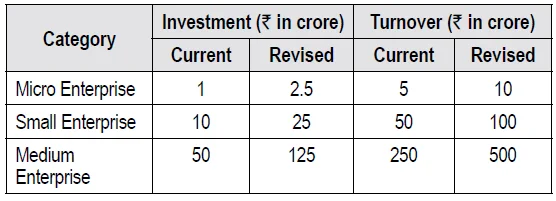
Recent Notification No. S.O. 1364(E) dated 21st March, 2025, issued by the Ministry of Micro, Small and Medium Enterprises (MSMEs) in line with various other initiatives for the MSME industry declared by the government in Budget 2025, brought about a significant revision in the criteria for the classification of Micro, Small, and Medium Enterprises, altering the thresholds for investment and turnover that determine MSME status. These changes have expanded the coverage of enterprises falling within the MSME definition, thereby bringing a larger set of business relationships under the purview of various regulatory and tax provisions designed to safeguard the interests of such entities.

The revised recognition criteria as per this Notification are as under:

Against this backdrop, section 43B(h) of the Income-tax Act, 1961 (the Act) — introduced by the Finance Act, 2023 — has gained renewed attention.

The introduction of clause (h) to section 43B of the Act marked a significant legislative intervention designed to enhance the financial discipline in commercial dealings with Micro and Small Enterprises (MSEs). Applicable from the Assessment Year 2024–25 onwards, this provision introduces a conditional disallowance of expenditure under the Income Tax Act, 1961, in cases where payments to MSEs are not made within the timelines prescribed under the Micro, Small and Medium Enterprises Development Act, 2006 (MSMED Act). Therefore, tax-deductibility of an otherwise legitimate business expenditure has been tethered directly to compliance with another legislation — the MSMED Act.

Section 43B of the Act, since its inception, has functioned as an anti-avoidance provision, disallowing certain statutory and contractual liabilities unless they are actually paid. Traditionally, these have included items such as taxes, contributions to employee welfare funds, and interest on loans from public financial institutions. Clause (h) extends this principle to amounts payable to micro and small enterprises beyond the timelines prescribed under the MSMED Act.

However, a key distinction between clause (h) of section 43B of the Act and the other clauses of the said section must be noted. While the other clauses allow the deduction of specified categories of expenditure only upon actual payment, clause (h) restricts deduction only in respect of payments to micro and small enterprises that are made beyond the timelines prescribed under the MSMED Act. In other words, clause (h) does not provide that all amounts payable to MSEs shall be allowed only on a payment basis; rather, it disallows only those payments that are not made within the prescribed time limit under the MSMED Act. The practical implications of this distinction are discussed in the forthcoming paragraphs.

While the language of this clause is straightforward in its drafting, its interplay with the relevant provisions of the MSMED Act gives rise to several practical implications.

For the sake of convenience, the relevant extracts of section 43B(h) of the Act are reproduced here as under:

43B. Notwithstanding anything contained in any other provision of this Act, a deduction otherwise allowable under this Act in respect of-

…..

(h) any sum payable by the assessee to a micro or small enterprise beyond the time limit specified in section 15 of the Micro, Small and Medium Enterprises Development Act, 2006 (27 of 2006),

shall be allowed irrespective of the previous year in which the liability to pay such sum was incurred by the assessee according to the method of accounting regularly employed by him only in computing the income referred to in section 28 of that previous year in which such sum is actually paid by him

…..

Explanation 4. -For the purposes of this section,-

…..

(e) “micro enterprise” shall have the meaning assigned to it in clause (h) of section 2 of the Micro, Small and Medium Enterprises Development Act, 2006 (27 of 2006);
…..

(g) “small enterprise” shall have the meaning assigned to it in clause (m) of section 2 of the Micro, Small and Medium Enterprises Development Act, 2006 (27 of 2006).”

Therefore, the provision mandates that any sum payable to a micro or small enterprise — as defined under the MSMED Act —beyond the time limits prescribed thereunder shall be allowed as a deduction under the head ‘Profits and Gains of Business or Profession’ only in the year in which it is actually paid.

Section 15 of the MSMED Act, in turn, stipulates that payments to suppliers for goods or services must be made either within fifteen days of the day of acceptance (or deemed acceptance) of the goods or services or within the period agreed upon in writing between the buyer and the supplier — provided that such period does not exceed forty-five days.

In this context, the day of acceptance means the day of actual delivery of goods or rendering of services; or where any objection is made in writing by the buyer regarding acceptance of goods or services within a period of fifteen days of delivery of goods or rendering of services as the case may be, the day of acceptance would mean the day on which such objection is removed by the supplier. The day of deemed acceptance means where no objection is made as above within fifteen days, the day of actual delivery of goods or rendering of services.

Further, as per section 2(n) of the MSMED Act, supplier is defined to mean a micro or small enterprise, which has filed a memorandum with the prescribed authority and includes certain specified entities.

From the reading of section 43B(h) of the Act r.w.s. 15 & section 2(n) of the MSMED Act, it is clear that the provisions of section 43B(h) are applicable only in case of payments to micro and small enterprises and not in case of medium enterprises.

Let us see some of the practical implications arising from the provision:

(A) IDENTIFICATION OF QUALIFYING ENTERPRISES FOR THE PURPOSE OF SECTION 43B(H)

One of the pressing challenges posed by section 43B(h) is the burden of identification. It is incumbent upon the assessee to identify which of its suppliers qualify as micro or small enterprises under the MSMED Act.

Medium enterprises eligible for benefits available to small or micro enterprises:

In this context, it is important to take note of the Notification No. S.O. 2119(E) dated 26th June, 2020, issued by the Ministry of Micro, Small and Medium Enterprises, which lays down the criteria for the classification of micro, small and medium enterprises based on investment, turnover, etc., as subsequently amended by Notification No. S.O. 4926(E) dated 18th October, 2022. It states that in case of an upward change in terms of investment in plant and machinery or equipment or turnover or both, and consequent re-classification, an enterprise shall continue to avail of all non-tax benefits of the category (micro or small or medium), as it was in before the re-classification, for a period of three years from the date of such upward change.

To illustrate – From 1st April, 2024, a supplier is classified as a medium enterprise on account of it exceeding the investment/turnover criteria specified for small enterprises. However, up to 31st March, 2024, the supplier was classified as a small enterprise. During FY 2024-25, the said supplier provides services to the assessee. In this case, even though as on the date of providing services to the assessee, the supplier was classified as a medium enterprise, said supplier is still entitled for three more years to all the non-tax benefits available to a small enterprise under the MSMED Act. The benefits under section 15 and section 16 of the MEMED Act (i.e. prescribed time limits for payments to MSEs and interest payable on delayed payments) are clearly in the nature of non-tax benefits. Consequently, even though the supplier holds the Udyam certificate as a medium enterprise as on the date of providing services, the assessee is still required to make payment within the timelines specified under section 15 of the MSMED Act, and non-compliance with these timelines may lead to consequential disallowance under section 43B(h) of the Act if payment is not made within the same financial year.

Therefore, in the case of medium enterprises, it may not be sufficient to rely on the status of the supplier mentioned on the Udyam Registration, and the assessee shall have to maintain a register of suppliers with their status for three previous years as well to avoid the risk of misstatements in tax computations. It is also unclear whether obtaining such status confirmation annually would suffice or whether it needs to be maintained on a transaction-by-transaction basis.

On the other hand, one may argue that the words micro or small enterprise appearing in clause (h) of section 43B restrict the scope of applicability of this section only to micro and small enterprises as defined in clause (h) and clause (m) of section 2 of the MSMED Act r.w. section 7(1) thereof, and that the Notifications mentioned above would not extend the scope of applicability of section 43(B) to medium enterprises even if those are entitled to the benefits of section 15 of the MSMED Act for three years after upward re-classification of status as per the said Notifications. However, this proposition would require further in-depth analysis, and as of now, there is no clarity available on the issue.

Exclusion of Traders:

Retail and wholesale traders are allowed to be registered as MSMEs on the Udyam Registration Portal. However, benefits to Retail and Wholesale trade MSMEs are restricted to Priority Sector Lending only, and they are not entitled to any other benefits under the MSMED Act, including the time limits for payment prescribed under section 15 and applicability of interest on delayed payments under section 16 of the MSMED Act. This has been clarified vide Central Government’s office memorandum 1/4(1)/2021- P&G Policy, dated 1st September, 2021.

Though there is no express provision in the MSMED Act which may indicate that the trader MSEs are not covered within the definition of MSMEs, relying on the said Office Memorandum, buyers are taking a view that in the case of trader MSEs, section 15 and section 16 of MSMED will not apply and consequently, provisions of section 43B of the Act will also not be attracted.

Till the time the said Office Memorandum remains effective, it would appear to be a reasonable view to take for the assessees.

(B) DATE OF ACCEPTANCE IN THE PRACTICAL SCENARIO

The date of delivery of goods/rendering of services and the date of acceptance — both critical to computing the due date under section 15 of the MSMED Act — are often subject to practical disputes or internal accounting ambiguities, especially in industries with staggered delivery schedules. For instance, in industries like construction or manufacturing, deliveries are often made in parts or batches, whereas the buyer may inspect and approve the goods after complete delivery. In such cases, the question of whether the period of 15 days available for raising an objection should be counted from the date of partial delivery or from the date of complete delivery can be a contentious one.

Let us consider another case where services are rendered by the supplier, and an invoice is raised after the expiry of 15 days from the date of rendering of services, within which period the buyer is required to raise objections, if any. If there is an objection with respect to the invoice raised vis a vis the services rendered, such objection can be raised by the buyer only after receiving the invoice. In such cases, can the date of rendering services be said to be the date of deemed acceptance?

Similarly, under EPC contracts, typically, there is a retention clause which is intended to serve as a performance guarantee. The retention amount, often calculated at a certain percentage of the total invoice amount, is held back for an agreed defect liability period. Since the MSMED Act does not exempt the retention amounts and therefore payment beyond the due date specified under section 15 may attract disallowance even when no interest is demanded by the supplier in accordance with the agreed commercial terms. Whether it is possible to contend that in respect of the retention money, the date of delivery/rendering of services should be construed as the date on which the defect liability period ends, is another debatable issue.

(C) YEAR-END PROVISIONS

In respect of the year-end provisions made by following the accrual and matching concept, the actual liability to pay may arise in the subsequent year. To give an example, the provision for tax audit fees made in the books as on 31st March, 2024 would become actually payable in FY 2024-25 after the services are rendered. As on the date of issuing the tax audit report, it would not be known whether the payment will be made by the assessee to the tax auditor (assuming it to be an SME) within the stipulated time after raising the invoice. Therefore, as on the date of issuing the tax audit report, it would be impossible to determine as to whether the provision qualifies as ‘sum payable by the assessee beyond the time limit specified in section 15 of MSMED Act’.

As pointed out in the opening paragraphs, it is important to note that, unlike other clauses of section 43B, clause (h) gets attracted only when there is a delay in payment to MSEs, and the provision does not stipulate that all amounts payable to MSEs are allowable on payment basis.

Therefore, in the case of year-end provisions which are not due for payment before the date of making computation of income, whether such provisions would fall within the ambit of section 43B of the Act is uncertain as on the date of making such computation of income.

Strictly interpreting the provision, one may take a view that where an expense is otherwise allowable, the disallowance under section 43B(h) would be triggered only if it is established that payment was made beyond the time limit prescribed under the MSMED Act. In the absence of such a finding at the time of making the computation of income, the expense ought to be allowed. However, when viewed in light of the legislative intent behind the provision, the position is not entirely free from doubt.

CONCLUSION

In summation, while the intent behind section 43B(h) is laudable — to empower MSEs by improving their cash flow discipline — its implementation has ushered in a new layer of tax risk and documentation burden for larger businesses. As with many well-intentioned provisions, the practicalities of execution could result in unintended hardship. It is commonly observed that larger businesses may not yet be equipped with systems to capture all the details required for ensuring compliance with section 15 of the MSMED Act. This may lead to a scenario where, rather than promoting the MSME sector, the additional compliance burden and tax risks dissuade larger enterprises from engaging with small suppliers, thereby proving counterproductive to the government’s objective of supporting and integrating MSMEs into mainstream supply chains. Tax practitioners will thus play a critical role in sensitising clients, setting up supplier verification systems, and aligning accounts payable processes to ensure proper compliance with the provisions and consequent reporting in the tax audit report.

Agricultural Income Revisited

Agricultural income has always been the subject matter of discussion among professionals. It has enjoyed an uninterrupted exemption for more than a century. The same is sought to be continued in the Income Tax Bill 2025. The bill makes some cosmetic changes in the concept of agricultural income as envisaged.

The objective of this article is to explore the idea of Agricultural Income and examine all the relevant provisions, key judgments, and Constitutional mandates. In the course of the article, the author has taken the liberty of sowing the seeds of his views.

CONSTITUTIONAL MANDATE AND DEFINITIONS

The story begins with Entry 82 of the Union List of the 7th Schedule of the Constitution of India, which empowers the Union to levy tax on Income other than Agricultural Income. Entry 46 of the State List makes tax on Agricultural income a State subject. In fact, many states (like Bihar, Odisha, Tamil Nadu, West Bengal, and Maharashtra) have passed legislation to this effect, making Agricultural Income taxable in those States, though the implementation or enforcement of those statutes could be a matter of debate.

Under Article 366(1) of the Constitution, Agricultural Income means “agricultural income as defined for the purpose of enactments relating to Indian Income Tax”. The Income Tax Act 1961 defines “Agricultural Income” but doesn’t define “Agriculture”. The meaning we ascribe to the term “Agricultural” is at the core of how we construe the expressions “agricultural purpose” or “agricultural income”.

Black’s Law Dictionary defines Agriculture as the art or science of cultivating the ground, including harvesting of crops, and in a broad sense, the science or art of production of plants and animals useful to man, including in a variable degree, the preparation of these products for man’s use. In the broad sense, it includes farming, horticulture, and forestry, together with such subjects as butter, cheese, making sugar, etc.

Merriam-Webster dictionary defines Agriculture as the science, art, or practice of cultivating the soil, producing crops, and raising livestock, and in varying degrees, the preparation and marketing of the resulting products.

If we go by the above definitions, a broader connotation emerges suggesting that it is not always necessary that some labour and effort are employed to plough the soil and sow the seeds for an activity to be called Agriculture. Even dairy farming or poultry farming can be considered as Agriculture within its expanded meaning.

If we further dig into the etymology of the word “Agriculture,” it is derived from the Latin word “agricultura”, which is a combination of the word “ager”, meaning “field”, and “cultura”, meaning “cultivation”. Therefore, the word “agriculture” literally means “cultivation in the field”. The word “cultivation” implies an active and intentional process of fostering growth and development. Land can be cultivated to foster any form of life, whether plants or animals. So, where there is an intentional plantation of a certain type of grass to feed the cattle and facilitate their healthy growth, it must fall within the literal meaning of the word “agriculture”.

AGRICULTURE UNDER EXISTING TAX LAW

However, such a wide interpretation of the term also gave rise to many disputes. One of them was with respect to scenarios where income was generated out of land without directly performing any labour or toil on the land, like ploughing, sowing, etc. For example, a question often arose whether the phenomenon of plants and fruits growing spontaneously and naturally in the forest, without the intervention of human agency, should be considered as Agriculture. This, in particular, and other disputes in general, were put to rest by the landmark judgment of the Supreme Court in the case of Benoy Kumar Sahas1. In the judgement penned by Bhagwati J, for the first time, a structure to interpret the term agriculture was laid down. In essence, the following principles emerged:

1. Basic Operations are Essential:

  •  Human Skill and Labour: Agriculture must involve basic operations on the land itself that utilise human skills and labour. This includes tilling, sowing, planting and similar efforts before germination.
  •  Not Just Subsequent Operations: Activities after germination, such as weeding, pruning, and harvesting, are not enough on their own to be considered agriculture. They must be carried out as an extension of the basic operation. It is only then that the whole of the integrated activity is considered as Agriculture.

2. Agriculture Includes all Kinds of Products Raised on Land:

  •  Regardless of the nature of the product – whether for humans or for the consumption of the beast.

3. Activities Must be Related to the Land

  •  Not Just Land-Related: The mere fact that an activity has some connection with or is in some way dependent on land is not sufficient to bring it within the scope of the term. For instance, breeding and rearing of livestock, dairy farming, butter and cheese making, and poultry farming would not by themselves be agricultural purposes2.

1  (Raja Benoy Kumar Sahas (1957) 32 ITR 466 (SC))
2  (The Law and Practice of Income Tax, by Arvind P Datar, Eleventh Edition, Vol -1, p. 85)

However, this must be understood holistically along with this disclaimer from the judgement- “The question still remains whether there is any warrant for the further extension of the term “agriculture” to all activities in relation to the land or having a connection with the land including breeding and rearing of livestock, dairy-farming, butter and cheese-making, poultry-farming, etc.”.

Dairy Farming

While the general principle as emerged in Benoy Kumar Sahas is that Dairy Farming may not be considered as Agriculture for want of a direct connection with the land, however, this idea needs to be analysed in the light of judgement by the Rangoon HC in case of Kokine Dairy3.

Roberts, C.J., who delivered the opinion of the Court, observed:

“Where cattle are wholly stall-fed and not pastured upon the land at all, doubtless it is a trade, and no agricultural operation is being carried on: where cattle are being exclusively or mainly pastured and are nonetheless fed with small amounts of oil-cake or the like, it may well be that the income derived from the sale of their milk is agricultural income.”

This, however, is not in consonance with the ruling of the Supreme Court in Benoy Kumar Sahas (supra), where it was held that dairy farming by itself would not constitute agriculture.


3 (Commissioner of Income-tax, Burma v. Kokine Dairy, 6 ITR 502, 509, 1938)

Poultry Farming

While the central issue before the High Court of Andhra Pradesh High Court in the case of Mulakaluru Co-operative Rural Bank4 was not the classification of Poultry Farming as Agriculture, it formed a key component of the ratio decidendi. This judgement underscores the varied and variegated interpretation of the term agriculture and illustrates a potential departure from the established framework in Benoy Kumar. The court held that “No doubt, poultry farming being an extended form of agriculture, certainly qualified eggs to be treated as ‘agricultural produce’ for the purpose of section 80P(2)(iii ).”


4 (CIT v Mulakaluru Cooperative Rural Bank Ltd 173 ITR 629, 1988)

Slaughter Tapping of Rubber

Kerala HC, in the case of KC Jacob,5 held that income generated by the owner from the slaughter tapping on rubber trees was an agricultural income:

“Here, the slaughter-tapping was by the owner himself. The rubber obtained by him, in whatever manner he tapped his trees, is his, and the receipts by him from the sale of rubber obtained by such tapping is “income derived from land which is used for agricultural purposes”, within the meaning of Section 2(a) of the Kerala Agricultural Income Tax Act 1950.”

This takes us to an important question, whether income derived passively from standing trees, like that of rubber, mango, coconut etc., after their initial planting can be regarded as agricultural income.

As established, supra in the case of KC Jacob, income derived by the owner from the slaughter-tapping of a “standing” rubber tree is agriculture income. Thus, there is no requirement to perform the basic operation of tilling, sowing, etc. on land every year. This inference can be extended to mango, coconut and other such standing trees as well. But what would be the scenario where the existing owner did not originally plant the trees? E.g., if a ready mango farm were purchased by the assessee –would the income arising out of the sale of mangoes every year still be regarded as agricultural income? While the answer can vary depending on the facts of the case, but in general, where the sine qua non of agricultural operation, i.e. tilling of the land, sowing of the seeds, planting, and similar operations on the land are missing, courts may be more inclined to deem the same as originating from a commercial activity rather than an agricultural pursuit and treat the income as non-agricultural income. Figuratively – the person reaping the fruits may not be the same as the person who sowed the seeds, but the world appreciates only when the person reaping the fruits had himself sown the seeds.


5 (K.C. Jacob vs Agricultural Income-Tax Officer. 110 ITR 402, 1977)

SECTION 2(1A) OF THE INCOME TAX ACT 1961

With the above background, let us dissect the clauses. Broadly, Section 2(1A) splits the agricultural income into two parts – 1. Depending on the Source, It would either be from Land or Building 2. Depending on the type of Operations- it could be out of agriculture or operations necessary to render the produce fit for market.

Clause 2(1A)(a): This clause focuses on Land being the source of income. It has three mutually inclusive requirements:

(i) Rent or Revenue Derived from Land: The word ‘rent’ means payment of money in cash or kind by any person to the owner in respect of a grant of right to use land. The expression ‘revenue’ is, however, used in the broad sense of return, yield or income and not in the sense of land revenue only6. The Apex court’s decision in the case of Bacha Guzdar established the principle that the expression “revenue derived from land” envisages a direct association with the land. Thus, it was held that “Dividend received from a company earning agricultural income is not agricultural income in the shareholder’s hands7. One should bear in mind that to bring a certain income within the ambit of this clause, it is not necessary that such income should arise by the performance of any agricultural activity – e.g. the compensation received from the government for the requisitioned agricultural land was deemed to possess the character of rent or revenue derived from agricultural land, thus qualifying as agricultural income exempt from tax.8


6 (Raza Buland Sugar Co. Ltd. v. CIT, 1980, 3 Taxman 266 (Allah. HC))
7 (Mrs. Bacha F. Guzdar v. CIT [1955] 27 ITR 1 (SC))
8 (Commissioner of Income Tax v. M/S. All India Tea And Trading Co. Ltd. (1996) 8 SCC 478)

Land Situated in India: Thus, any revenue or rent from agricultural land situated outside India will be out of the purview. The point to note here is that there is no distinction made between urban and rural land. Similarly, the classification of the land in Govt records is also immaterial. This essentially means, e.g., even if the land is classified as Non-Agricultural (NA) it still qualifies for the exemption so long as the third condition is also fulfilled. By virtue of these conditions, income from Fishing in natural waters should ideally be out of the scope of agricultural income.

(ii) Land Used for Agricultural Purposes: We have already explored in detail the scope of meaning of Agriculture. It is the use to which the land is put that is to be seen and not the nature of the land. Very often, we come across parcels of land on the outskirts of big cities that were lush green fields just a few years ago, but now, on those lands, commercial shops have come up, and the owners are earning rent out of it. Though the land may still be agricultural lands in the revenue records, they are no longer used for agricultural purposes. Such rents cannot be treated as agricultural income. Mushroom farming is typically done in a controlled environment and not directly on land. Instead, the soil is placed on racks vertically, and the mushroom is cultured. The question before the ITAT Hyderabad was whether it is an agricultural activity. The gist of the decision is that while soil is an integral component of land, and land itself is a part of the earth, the act of cultivating soil in trays while retaining its fundamental characteristic as ‘land’ does not diminish the agricultural nature of activities conducted upon it. The essence of agriculture remains, even when the soil is separated from its broader terrestrial context9.


9 (Dcit, Circle-2(1), Hyderabad vs Inventaa Chemicals Ltd., 2018)

Clause 2(1A)(b): This clause focuses on the performance of the actual activity of agriculture. Only such income that arises from activities mentioned in the clause will be considered as agricultural income. Further, such activities must be performed on the land as mentioned in clause (b). It provides for three categories of activities:

(i) Agriculture: It is important to note the wording of sub-clause (b)(i)- it says any income derived “by Agriculture” and not “by sale of Agricultural Produce”. It clarifies the intention of the legislature to include even “produce” held by a farmer for self-consumption or produce lying in stock to be considered as “agricultural income”. The Madras HC judgement in the case of Vaidyanatha Mudaliar reinforces this understanding. The judgement was with respect to the issue raised under the Madras Agricultural Income Tax Act, 1955.

(ii) Performance of any process to make the produce fit to be taken to the market: Like in sub-clause (b)(i) above, here too, “sale” of the produce is not required to bring it into the ambit of “agricultural income”. It is the enhancement in the value of the produce after performing the said process that is considered as agricultural income. The process should be one as is ordinarily performed by other cultivators in the locality. The expression “ordinarily performed” is contextual to the locality/region. So, where in the concerned region in the case of Brihan Maharashtra Sugar10, sugarcane was generally sold as such without subjecting it to the process of converting it into gur (jaggery) or sugar, the same when applied in the given case, the income arising from such process was held to be non-agricultural. It is the cultivator or the receiver of rent in kind who alone should have performed such process, e.g., if the standing crop of tobacco is purchased by a trader and he performs “curing” (a process which is ordinarily employed by a cultivator of tobacco to render it fit for sale in the market) on the tobacco after harvesting the income so derived by curing cannot be considered as agricultural income because a trader in this example is neither a “cultivator” nor an owner who is “receiver of rent in kind”.


10 (brihan maharashtra sugar syndicate ltd v CIT(1946) 14 ITR 611 (BOM))

(iii) Sale of Agricultural Produce: In Clause 2(1A)(b), this is the only sub-clause that envisages the “Sale” of Agricultural Produce. However, the stage at which the produce is sold is restricted to the stage the produce is at after applying the process applied to make it fit for the market. e.g., a farmer is involved in preparing and selling ready to cook chapatis in packages. He performs all the agricultural processes for wheat cultivation, from tilling to harvest to threshing, cleaning and packaging chapatis. The sub-clause covers the stage only till threshing and cleaning, as at this stage, the wheat is fit to be sold in the market.

After studying clause 2(1A)(b), an obvious question emerges. Why is there a need to provide for the treatment of income at different stages? The answer to this is that there can be more than one stakeholder in the entire journey of produce, from tilling to making it fit for market. And often, every stakeholder may add value to the value chain. However, the intention of the legislature appears to be to give exemption only to defined contributors till a defined stage.

Clause 2(1A)(c ): The source of income here is the annual value of the House Property. It should meet the four criteria to be considered as Agricultural Income:

i) Used As: dwelling house, or as a store-house, or other out-building.

ii) Occupied By: receiver of rent/revenue or cultivator.

iii) Reason for Occupation: connection of occupier with the land used for agricultural purposes.

iv) Situation of Building: Immediate vicinity of the said Land, and it’s not located within the area specified limits with specified population.

It should be noted here that many buildings in or within the specified limits of municipalities or cantonments will not get the benefit of clause(c ) even if the other criteria are met. The limits are provided in the proviso to clause (c ) of sec 2(1A). The intention of the legislature seems to include only such buildings that are located in rural areas. And the legislature is mindful of the fact that the influence of urbanisation on the use of land is not restricted to the political limits of municipalities or cantonments but is extended even beyond. So, in order to arrest tax evasion by disguising the use of buildings for given agricultural purposes, the law provided for an extended limit of the urban area.

Explanation 1 to Section – 2(1A): Section 2(14), excludes, in general, Agricultural Land from the definition of Capital Asset. Thus, there cannot be Capital Gains on the transfer of such agricultural land. However, it provides for certain exceptions that cover land situated within defined municipal and cantonment limits. Thus, gains on the transfer of such land will be taxed as Capital Gains. A situation might arise where a person describes/discloses such gains are “revenue derived from land” under clause (a) of S. 2(1A) and claims the exemption as agricultural income. To pre-empt such situations, Explanation 1 makes it abundantly clear that such income will not be considered as “income derived from land”.

But this leaves us with an interesting question- while there will not be any Capital gains from the transfer of agricultural land (section – 2(14)), what about the potential of taxing it as non-agricultural income? Some cogent arguments against it can be:

It is Agricultural Income and hence exempt: Explanation 1 to section 2(1A) binds only the exceptions mentioned under section 2(14)(iii); thus, where agricultural land other than that falling within the ambit of clauses (a) and (b) of section 2(14)(iii) (a) and (b) is transferred, the gains could be “revenue derived from the land” and hence is agricultural Income.

It is a Capital Receipt: As a general principle, a receipt that doesn’t partake in the nature of Income cannot be brought to tax under the Income Tax Act. The latter view seems to be the better view.

EXPANDING SCOPE OF AGRICULTURAL INCOME

Explanation 3 to Section – 2(1A): The explanation provides that any income derived from saplings or seedlings grown in a nursery shall be deemed to be agricultural income. However, a question arises whether income from the sale of flower bouquets by a person who owns and manages the nursery will also be agricultural income. The answer might depend on the extent and form of processing involved beyond the basic agricultural operations. So, where the bouquets are simple assemblages of flowers and foliage grown in the nursery, it could be argued that the income remains closely tied to agricultural activity. However, if the process involves significant value addition, such as elaborate flower arrangement, the value addition could be considered as non-agricultural in nature.

SEGREGATING AGRICULTURAL INCOME AND BUSINESS INCOME

How do we disintegrate a composite income which is partially agricultural and partially non-agricultural?

Under the authority of section 295, the Board may make rules for, inter alia, the manner in which and the procedure by which the income shall be arrived at in the case of income derived in part from agriculture and in part from business.

Rule 7 provides the portion that is taxable as business income is calculated by deducting the market value of the agricultural produce used as raw material in the business. No further deductions are allowed for expenses incurred by the assessee as a cultivator or receiver of rent-in-kind.

Market value is the average value at which the produce is sold in its raw form or after basic processing to make it marketable. And where the produce is not marketable, it will be a sum of,

i) Expenses incurred in cultivating the produce.
ii) Land revenue or rent paid.
iii) A reasonable profit as assessed by AO.

Rule 7 is a general rule that applies to all situations with composite income. However, there are specific rules with respect to certain businesses where, perhaps, determining the market value of the raw material is not feasible owing to some practical complications like heavy fluctuations in the rates, etc. Rules 7A, 7B and 8 provide for a fixed proportion of the total composite income to be considered as non-agricultural income and subjected to tax, removing any ambiguity.

Rule 7A- Income from Manufacture of Rubber

The rule outlines how to calculate income from selling certain rubber products (centrifuged latex, cenex, latex-based crepes, brown crepes, or technically specified block rubbers). If these products are made or processed from field latex or coagulum obtained from rubber plants grown by the seller in India, the income from their sale is treated as business income. Out of this business income, 35% is considered taxable.

Rule 7B- Income from Manufacture of Coffee

(1) If one grows and cures coffee in India and then sells it, the income from this sale is considered business income, and 25% of it will be taxed.

(1A) If one grows, cures, roasts, and grinds coffee in India and then sells it (even if one adds chicory or other flavourings), the income is also considered business income, but in this case, 40% of it will be taxed.

Rule 8- Income from Manufacture of Tea

If one grows and manufactures tea in India and then sells it, the income from this sale is considered business income, and 40% of it will be taxed.

EVIDENCES TO SUPPORT THE CLAIM OF AGRICULTURAL INCOME

Where agricultural Income is declared in the return of income, the assessee must maintain robust records to substantiate the claim if scrutiny arises. Ordinarily, these evidences includes,

  •  Proof of Ownership of Land
  • Proof of Cultivation Rights: These could be a Lease Agreement.
  • Proof of Actual Agricultural Operations: Bills of seeds and fertilisers,
  • Proof of Sale
  • Commission Agent’s Receipt etc.
  • Banks Statements

CONCLUSION

Though the concept of agricultural income was first introduced in the Indian Income Tax Act 1886 the same has evolved with time. And even today, determining its scope requires significant caution. While the interpretation is heavily influenced by the Benoy Kumar Sahas case, which insists on basic operations, in today’s fast-changing technological landscape, the very idea of “basic operations” can be challenged. For example, “Hydroponics” is the technique of growing plants using a water-based nutrient solution rather than soil11. It completely bypasses the need for tilling or sowing the land. Classifying the income generated through such a process would, perhaps, call for an amendment in the definition in the Act, which currently hinges on land.

Also, the assessee must be wary: merely deriving income from land or performing any process on land isn’t enough. Overlooking specific criteria for land use, building occupancy, or nature of processing can lead to reclassification of income and an unexpected tax burden.


11 (https://www.nal.usda.gov/farms-and-agricultural-production-systems/hydroponics, n.d.)

Important Amendments by The Finance Act, 2025- 3.0 TDS/TCS, Transfer Pricing and Other Important Amendments (The Budget That Whispered Instead Of Roared)

At a time when dinner table debates revolve around Trump Tariffs 2.0 and WhatsApp forwards are more obsessed with global geopolitics than GST, the Union Budget 2025 feels like last season’s fashion—forgotten, folded away, and faintly nostalgic. But leave it to a tax consultant to bring the spotlight back. Through this article, we proudly wave the India-first (and Budget-first) flag, reviving what should still be the nation’s favourite fiscal performance.

And what a curious performance it was. No frantic tinkering. No budgetary plot twists. No midnight notifications capable of inducing mild heart attacks in CFOs. Instead, we got a whisper of a Budget – a minimalist, polite fiscal note that gives rather than grabs. A ₹1 lakh crore tax cut that, depending on whom you ask, is either a bold growth push or a national stimulus for iPhone sales and premium coffee chains.

What we’ve done, true to tradition, is dive deep into the fine print—dissecting every explanation memo and every comma like it was Shakespeare. Because, in taxation, what is left unsaid often carries the heaviest implications.

Beneath this seemingly serene surface lies a quiet shake-up: tweaks in transfer pricing, restrictions on carrying forward losses in business reorganisations and—you guessed it—our beloved TDS and TCS amendments.

So, pour yourself a tax-free chai (while it lasts) and join us on this annual pilgrimage. The Budget may not have roared, but we’re here to make sure its whispers are heard loud and clear.

THE NEW 3-YEAR BLOCK TRANSFER PRICING SCHEME: CERTAINTY WITH A TWIST

Transfer pricing feels like an endless cricket series — you pad up every year, play the same shots, the department appeals every ball, and the final verdict rests with the third umpire at the appellate stage. Enter the Finance Act 2025’s new Block Assessment Scheme for transfer pricing, a provision that promises to break this cycle. Think of it as an “APA-lite” for the masses: a chance to lock in your TP dealings for three years without the Advanced Pricing Agreement (APA) saga typically reserved for large multinationals. As the Finance Minister noted, this aligns with global best practices in easing TP compliance.

KEY FEATURES OF THE BLOCK TP ASSESSMENT SCHEME

  •  Three-Year Block Option: Taxpayers can opt to have certain international transactions (and specified domestic transactions) assessed on a multi-year basis. If the Transfer Pricing Officer (TPO) determines an ALP for a particular year (the “lead year”), that same ALP can apply to the two subsequent years for similar transactions, as long as conditions are met. In effect, one TPO review can cover three assessment years in a row.
  •  Optional and Taxpayer-Initiated: The scheme isn’t automatic; taxpayers must elect to use it. An application has to be made to the TPO in the prescribed form and within a prescribed time limit (to be specified by CBDT).
  • Simultaneous ALP Determination: Once the taxpayer opts in and the TPO accepts the request (the TPO has a month to decide if the option is valid), the TPO will determine the ALP for the two subsequent years, together with the lead year’s assessment. Essentially, the TPO conducts a multi-year analysis: the same pricing methodology (and potentially the same comparables/ benchmark) is applied across the three-year span. This means the ALP for year 1 is “rolled forward” for years 2 and 3, providing continuity (but notably, there’s no backwards-looking benefit – it’s a roll-forward, not a rollback like in some APA cases).
  •  Fast-Tracked Litigation and Certainty: Perhaps one of the biggest draws is the promise of certainty and quicker dispute resolution. If there’s a dispute over the ALP, it effectively covers all three years, which means any appeal can address the block in one go. For instance, the Income Tax Appellate Tribunal (ITAT) could hear multiple years together, consolidating proceedings.
  •  Section References: The legal architecture for this scheme is set out via new provisions: Section 92CA(3B) (allowing the multi-year option and TPO’s validation of it); Section 92CA(4A) (requiring the TPO to determine ALPs for the subsequent years once the option is accepted); amendments to Section 92CA(1) (to prevent duplicate references to TPO); and Section 155(21) (enabling the AO to adjust/recompute income for the later years based on the block ALP). Additionally, the scheme is effective from Assessment Year 2026-27 (i.e., FY 2025-26) onwards as per the Finance Act 2025, and it won’t apply in search cases.

The block assessment scheme has been greeted as a positive development, almost a mini-revolution in Indian transfer pricing. Of course, as tax professionals, we know every silver lining may have a cloud – so next, we turn to the fine print and potential challenges lurking behind the optimism.

THE FINE PRINT: TECHNICAL ISSUES AND POTENTIAL CHALLENGES

As exciting as the new framework is, it comes with its share of technical complexities and unanswered questions. Seasoned practitioners will want to consider the following issues before jumping on the block assessment bandwagon:

1. Roll-Forward Only – No Retro Relief

The block scheme only works prospectively for future years. It’s explicitly a roll-forward, not a rollback. So, if you had disputes or open issues in prior years,  this scheme won’t magically resolve those – you’re  still on your own for past years. If issues are recurring, this mechanism is speed forward to consolidate litigation and get yourself heard together at the appellate level.

2. Timing of Exercising the Option

A critical practical question is when and how to opt in for the block assessment. The law says the assessee can exercise the option after the TPO has determined an ALP for an assessment year via an application in the prescribed form. But does this mean one must apply after the TPO’s order for year 1 or even earlier? Initial interpretations (and even a CBDT FAQ – Question 5) have caused confusion – suggesting the option might need to be exercised before the TPO determines the ALP for the first year. That would be counter-intuitive since taxpayers would be unlikely to commit to a three-year deal without knowing year one’s result. A fair position should be that the option should be available after the finalisation of the first year’s TP assessment. In such a case, the TPO will have to again start the proceeding for the next two years. The rules should clarify – when to pull the trigger. This clarification will, in turn, decide the success of the novel initiative.

3.Withdrawal and Flexibility (All-or-Nothing?)

Once you opt in, are you locked in for the full three-year block? The law, as written, doesn’t spell out any withdrawal mechanism or mid-course exit. It’s unclear if a taxpayer, having been elected for the block, can later change its mind (say, if year 2’s business circumstances change drastically). There is also an open question of whether the taxpayer must continue the option for both subsequent years or could selectively opt for just one additional year if conditions in the third year diverge. Until guidelines clarify this, opting in is a bit of a leap of faith – taxpayers should be confident that the next couple of years will broadly resemble the first. And if economic conditions or TP dynamics do shift, we may find ourselves testing uncharted waters (with possibly no easy way to unwind the block choice).

4. Defining “Similar Transactions”

The scheme hinges on the concept of “similar” transactions across the years. But how similar is similar enough? The Finance Act memorandum hints at criteria like the same associated enterprise (party), proportional volume, and geographic alignment (location of the AE) over the years. In essence, the transactions should be of the same nature with comparable functional profiles each year (think Rule 10B(2) comparability factors). For example, if you’re providing software development services to your US subsidiary at cost plus 10% in year 1, doing essentially the same in years 2 and 3 with the same subsidiary would qualify. However, this area is ripe for interpretation issues. What if, say, the volume doubles in year 2 – is that still “similar”, or does a scale change knock you out? What if the pricing model is the same, but the contract terms have minor tweaks? The law doesn’t define it, so we anticipate CBDT rules to lay down clear benchmarks for similarity. Ambiguities here could allow the TPO to reject the option if they believe transactions aren’t sufficiently alike. Bottom line: ensure your year 2 and 3 transactions truly mirror year 1 in nature – and watch for a formal definition of “similar” in the upcoming rules.

5. Impact on Comparables and TP Analysis Updates

A multi-year scheme raises the question of how to handle comparable data and analysis for the later years. One interpretation (and arguably the intent) is that the same ALP result or range determined for year 1 would simply carry over to years 2 and 3, giving the taxpayer certainty even if market benchmarks shift. For instance, if, in year 1, the TPO settles that an operating margin of 10-12% is arm’s length for your transaction, then as long as you’re in that range in years 2 and 3, you’d be fine – even if fresh comparables for those years might suggest a different range. This “lock-in” would indeed ease burdens. However, the TPO might choose to only lock in the methodology and comparable set, but still update the comparable companies’ financials for each year. In that case, year 2 and 3 ALPs could be adjusted if the comparables’ performance changes. The safer assumption is that the ALP (price or margin) is intended to be fixed for the block, because anything less wouldn’t truly reduce disputes. But consider practical hitches: databases get updated over time – what if one of your comparables from year 1 drops out in year 3 because it ceased operations or no longer qualifies? Or new comparables emerge? These scenarios could create confusion in applying the year-1 benchmark to later years. Similarly, financial metrics can fluctuate; for example, your working capital or receivables cycle might lengthen in year 2, affecting profitability. Would the TPO allow adjustments or stick to the original benchmark? All these issues underscore the importance of forthcoming guidance. Until then, taxpayers should do their own sanity check: if you are locked in year 1’s analysis for the next two years, would it still be reasonable? If your business is stable, likely yes. If not, tread carefully.

The real challenge lies not in the scheme, but in the very foundation of transfer pricing — a system built on constant external comparisons. As the Bhagavad Gita teaches, true measure lies not in competing with others, but in surpassing your own past self. Perhaps it’s time for transfer pricing too, to reflect inward rather than outward.

6. Handling Multi-Year Transactions (Loans, Guarantees, etc.)

Some related-party dealings naturally span multiple years – inter-company loans, credit lines, intellectual property licenses, long-term service contracts, and corporate guarantees for debt, to name a few. The block scheme seems tailor-made for such continuous transactions, but there are quirks. Take an inter-company loan: you may draw additional amounts in year 2 under the same loan agreement (increasing the outstanding principal). Or a corporate guarantee originally given for a $5 million loan might be upsized to $10 million next year. Are these considered the “same” transactions? Intuitively, yes (same loan or guarantee, just higher quantum), so they should fall under the block’s umbrella of similar transactions. The ALP principle (interest rate or guarantee fee) would remain the same even though the absolute interest or exposure grows. The key point is that such variations in volume under an ongoing arrangement shouldn’t invalidate the option, provided the nature of the service/asset (loan, guarantee) is unchanged. However, taxpayers should be ready to demonstrate that these are continuations of the original deal, not new transactions altogether. If conditions like credit rating or market interest rates shift materially, the TPO might scrutinise whether the pricing still holds arm’s length for later years. Again, clear guidance from CBDT would help confirm that normal ups and downs in volume don’t derail the block agreement for these financing transactions.

7. New or Additional Transactions in the Block Period

A practical challenge arises if a new type of related-party transaction crops up in year 2 or 3 that was not present in year 1. The law allows the block option to be exercised for “all or any” of the transactions in those years, implying you could cover some and exclude others. So, if you introduce, say, a brand new transaction (e.g., start selling machinery to your foreign affiliate in year 2 while year 1 only had service fees), that new transaction is obviously not “similar” to the ones covered by the block. In such cases, that new transaction would fall outside the block scheme and be subject to regular TP assessment for that year. But this bifurcation can get messy. Normally, if any international transaction exists, the AO can refer the case to TPO. Under the block scheme, the AO is barred from referring matters covered by a valid block option. Does the AO then refer only the new transaction to the TPO for that year? The legislation isn’t crystal clear, but presumably, yes – the AO could still trigger a limited scope TPO audit for the uncovered transaction. Moreover, what if the taxpayer simply didn’t report a transaction in year 1, but it comes to light in year 2? The TPO’s block order might have omitted it, and the AO, due to the block, might be handcuffed from referring it. These are procedural grey areas.

8. Adjustment of Income via Section 155(21)

Once a block option is approved and the TPO determines the ALPs for the subsequent two years, how exactly do those later-year assessments get finalised? The answer lies in Section 155(21) (newly inserted), which allows the AO to amend the assessment orders of the subsequent years to align with the TPO’s multi-year order. In practice, the TPO might issue a consolidated TP order covering years 1, 2, and 3 (or separate orders simultaneously). The AO will then recompute the total income for the years 2 and 3 on the basis of that order by passing amendment orders for those years. This mechanism is akin to how APAs are given effect (though APAs use section 92CD). It ensures the block ALP is implemented without needing fresh scrutiny in those years. However, this process raises a few sub-questions: Will the recomputation under 155(21) account for all consequential impacts like interest on shortfall (Sections 234B/C) or MAT calculations for each year? It should, as the law mandates the AO to consider all aspects while recomputing. Also, if those years were originally assessed and closed (say, in case the block option is exercised after assessments are done), the 155(21) route will reopen and amend them – one hopes in a timely manner to avoid any statute limitations issues.

9. Appeal Process and DRP vs Block Adjustments

The introduction of Section 155(21) brings an interesting twist to the appeals procedure. Normally, when a TPO proposes an adjustment, the AO issues a draft assessment order under Section 144C, and the taxpayer can go to the DRP for a quicker resolution before finalising the assessment. But an order under Section 155(21) – which is essentially a rectification/amendment order for the block years – does not have a draft stage; it’s a final order when issued. So, if the taxpayer disagrees with the ALP applied for the year 2 or 3, do they get to approach the DRP for those years? It appears not, since DRP is only for variations proposed in a draft order. The likely scenario is that any dispute on the block ALP will be funnelled through the year 1 draft order’s appeal. In other words, you contest year one’s draft order at the DRP (covering the proposed TP adjustment that will also govern years 2 and 3). The DRP’s directions would then have to be applied to all three years when the AO passes final orders. If one goes to the ITAT, the appeals for all three years could be clubbed (as noted earlier). What if the taxpayer misses the DRP route and goes to the Commissioner (Appeals) for year 1? Then, years 2 and 3, which were amended without draft orders, might each need separate appeals (likely directly to the Commissioner (Appeals) since there is no draft/DRP there). This is somewhat uncharted territory – procedural gaps exist. Additionally, if a TPO rejects the block option (says the transactions aren’t similar or conditions are not met), there’s no immediate way to appeal that decision alone– it would presumably become part of challenging the eventual assessment order.

10. Other Procedural and Administrative Gaps

Beyond the major points above, there are some miscellaneous uncertainties. For one, the law doesn’t specify the timeframe for the TPO to complete the assessments for the two subsequent years once an option is validated – will it be within the same timeline as the lead year’s assessment or some extension? Clarification on this is needed to ensure the benefit isn’t lost to delays. Another subtle point: the block scheme streamlines TP assessments, but regular corporate tax assessments for each year will still occur separately. There’s no mechanism to sync those up, meaning a company could still face scrutiny on other tax issues on an annual basis. So, it’s not a full consolidation of all tax matters, only the TP piece. This could lead to parallel proceedings in a given year – one dealing with block TP adjustment via amendment and another dealing with, say, domestic tax disallowances – which the tax authorities should coordinate to avoid confusion. Finally, consider the strategic angle: how the appeal mechanism will work as each year may have corporate and TP issues. Forms have a special place in appeal proceedings – which form to file, especially when an appeal is governed by a statutory limitation period.

Given the many moving parts in this scheme, the role of the Central Board of Direct Taxes (CBDT) in issuing detailed rules and guidelines cannot be overstated. Guidelines will determine the fate of the scheme.

SECTION 72A – LOSSES AREN’T IMMORTAL

A cat might boast nine lives, but under the new Finance Act 2025 amendment, tax losses barely get eight. Under the Income-tax Act, Section 72A traditionally lets a successor company “inherit” the accumulated losses and unabsorbed depreciation of a predecessor (in amalgamations, demergers, etc.) as if they were its own. In practice, this meant that when two companies merged, the merged (amalgamated) company treated the past losses as losses of the year of amalgamation – essentially giving the business a fresh eight-year run to utilise those losses.

Old Law: “Fresh” Eight-Year Clock

Before the Finance Act 2025, Section 72A worked in tandem with Section 72: no business loss could be carried forward for more than eight years from the year it arose. But an amalgamation effectively reset that eight-year clock. All accumulated losses of the merging entities became losses of the amalgamated entity in the year of amalgamation, allowing the merged company a brand-new eight-year window to set them off. In other words, legacy losses got a second lease of life every time there was a qualifying reorganisation.

Finance Act 2025 – New Section 72A(6B)

The Finance Act 2025 inserts a new sub-section 72A(6B), drastically curtailing this evergreen carry forward. From April 1, 2025 (effectively AY 2026 27) onward, losses must be carried only within the original eight-year span from the year they first arose. The provision states that for any amalgamation or other reorganisation on/after 1-Apr-2025, a loss that is carried to the successor company can only be used in the remaining assessment years of the original eight-year period. Put simply, amalgamation no longer resets the loss-clock: it merely transfers the remaining life of the loss to the new entity. The Finance Bill even introduces the concept of the “original predecessor entity” – the very first company in the chain of amalgamations – to anchor the clock. This prevents successive mergers from indefinitely extending the loss of life (“evergreening” of losses).

Scope and Effective Date

The new rule applies prospectively. By law, the amendment applies only to any amalgamation or reorganisation effected on or after 1st April, 2025. (In turn, the amendment itself takes effect from 1st April, 2026.) Thus, any merger where the appointed date is before 1-Apr-2025 is governed by the old Section 72A. For deals on/after that date, however, the loss must be traced back to its original computation year.

ILLUSTRATIVE EXAMPLES

To crystallise the change, consider:

1. Example 1 – Pre-Amendment Amalgamation: If Company X had losses and merged into Y on 1-Mar-2025 (before the 1-Apr-2025 cutoff), the pre-amendment rules apply. The losses (say, incurred in AY 2018-19) would be deemed Y’s losses in AY 2024-25, and Y would then have a fresh eight-year window (through AY 2031-32) to set them off. In effect, the merger “rebooted” the clock.

2. Example 2 – Post-Amendment Amalgamation: Suppose Company A incurred a loss in FY 2018-19 (AY 2019-20), and it amalgamates into B on 1-Apr-2026. Under the new rule, B treats that loss as its own, but can carry it forward only within eight years from AY 2019-20. That means the loss must be absorbed by AY 2027-28 (eight years after AY 2019-20). No new eight-year term is granted by the 2026 merger. B can only use whatever remaining years were left on A’s original timeline.

3. Example 3 – Chain Amalgamations: Consider a chain: A Ltd (with losses incurred in 2019-20) merges into B Ltd on 1-Apr-2026, and then B merges into C Ltd on 1-Apr-2028. Under 72A(6B), the “original predecessor entity” for C’s losses is still A Ltd. All of A’s losses must be set off within eight years of 2019-20 (i.e. by AY 2027-28). Neither merger (2026 or 2028) extends beyond that horizon. In practice, C inherits only the residual carry forward years from A’s original loss – the clock keeps ticking from the date of the first loss.

Only Losses (Not Depreciation) Affected

It is crucial to note that Section 72A(6B) speaks only of “loss forming part of the accumulated loss”. Unabsorbed depreciation allowances (also carried under Section 72A) are not curtailed by the new sub-section. It can be continued for an infinite period.

Other Conditions still apply.

All the existing safeguards in Section 72A(2)–(6A) remain intact. In particular, the successor company must still meet continuity conditions (e.g. carrying on the business, achieving the threshold of installed manufacturing capacity. maintaining requisite shareholding by the transferors, etc.) for the inherited losses to be allowable. The amendment simply shortens how long a loss can live; it does not relax the usual reorganisation conditions.

TDS/TCS PROVISIONS

The latest finance proposals have modestly raised a bunch of TDS/TCS thresholds, aiming to reduce compliance pain for small payments. For example, the annual rent threshold under Section 194-I jumps from ₹2.4 lakh annually to ₹50,000 per month (i.e. ₹6 lakh annually), and other sections saw smaller increment (e.g. commission and professional-fee limits rose from ₹15K–30K to ₹20K–50K). Threshold increase should be seen in the light of the overall increase in slab rates, and no tax till you earn ₹12 lakh. It puts more money in the hands of people.

FAREWELL TO SECTION 206AB (NON-FILER SURCHARGE)

Starting 1 April 2025, Section 206AB – which forced higher TDS on “non-filers” – will be repealed. In plain English, if the recipient didn’t file a tax return, payers no longer have to immediately apply a higher TDS rate on payments to him. This change was explicitly made to cut compliance headaches: under the old law, deductors had to check their filing status on the spot and withhold tax. Instances were seen where demands were raised on deductors for non-withholding at 20%. This, in effect, penalised payers for the fault of the recipient. The law has omitted this provision with effect from 1 April 2025. This is significant as the legal effect of the omission is that the provision never existed in law. Thus, the entire demand cannot be enforced. Consider the following observations of the Supreme Court in Kolhapur Cane Sugar Works Ltd. vs. Union of India AIR 2000 SC 811

“The position is well known that at common law, the normal effect of repealing a statute or deleting a provision is to obliterate it from the statute –book as completely as if it had never been passed, and the statute must be considered as a law that never existed.”

194Q VS 206C(1H): ENDING DOUBLE TAXING OF LARGE PURCHASES

There’s often confusion when buying and selling large value of goods: should the buyer deduct TDS under Section 194Q, or should the seller collect TCS under Section 206C(1H)? Under prior rules, 206C(1H) already said no TCS if the buyer had to do some TDS. But in practice, sellers found it hard to know if buyers had actually done their TDS, so sometimes both got applied. To clear this up, the budget proposes that from 1st April, 2025, Section 206C(1H) simply “will no longer be applicable”. In effect, the onus shifts entirely to buyers (via 194Q), and sellers can drop the TCS on those ₹50 lakh+ transactions. This should end the TDS-versus-TCS tug-of-war and make compliance far simpler.

UPDATED RETURNS: MORE TIME, BUT WATCH THE CLOCK

The window to file an updated return (ITR-U) is being doubled. Under the old law, you had 24 months (2 years) from the end of the assessment year to fix omissions; now, it’s 48 months (4 years). That means, for example, an ITR for FY 2023–24 (AY 2024–25) can be updated up until March 31, 2029. This extension is meant to “nudge” voluntary compliance – essentially giving taxpayers more time to spot and report missed income.

However, the law also tacks on strict conditions. You cannot file an updated return after 36 months if reassessment has kicked in. In practice, if an officer has already issued a notice under Section 148A (essentially the show-cause for reassessment) after 36 months, your window closes unless that notice is later quashed. (If a 148A(3) order explicitly finds “no fit case to reopen,” then the 48-month door reopens.) In short, you get extra time only if the tax department hasn’t already started formal reassessment proceedings late in the game.

PENALTIES ON LATE ITR-U

Filing late just got pricier. Section 140B of the Act imposes an additional tax (a bit like a penalty) on updated returns, calculated as a percentage of the extra tax and interest due. Originally, it was 25% of the tax plus interest if you filed within 12 months of year-end and 50% if filed within 24 months. The amendments introduce two new tiers: now it’s 60% if you file after 24 up to 36 months, and a whopping 70% if you wait out to 36–48 months. In plain terms, the longer you stall, the stiffer the surcharge – so procrastinators face heavier hits.

CONCLUSION: A BUDGET THAT UNDERSTOOD THE BEAUTY OF RESTRAINT

If there’s a timeless lesson in tax policy, it is this: sometimes, the best amendment is no amendment at all. This year’s Budget seems to have embraced that wisdom — preferring fine-tuning over frenzy and choosing to strengthen the framework rather than constantly reshaping it. A “less is fair” philosophy quietly runs through the Finance Act 2025: thoughtful corrections, calibrated expansions, and a deliberate effort to simplify rather than complicate.

In that sense, this Budget has stood the test of time. Amidst the noise of global uncertainty, Trump Tariff and economic recalibrations, the Indian tax system was offered something rare — stability.

And as we write this, perhaps there’s a quiet sense of history too. This Budget series in the BCAJ may well become a nostalgic bookmark — the last commentary on the Income-tax Act, 1961. With the new Income-tax Act, 2025 on the horizon, we stand at the threshold of a new chapter — one that promises modernisation, new hope for a new India and, more importantly, admission of the ultimate truth – even law is not permanent.

For now, we raise a modest toast to a Budget that whispered instead of shouted — and to a law that, for one final time, chose elegance over excess.

Section 194T – When Taxman Becomes A Silent Partner

Just as partners were settling into their cozy routines of profit-sharing (and occasional stationery disputes), Section 194T stormed into their lives like an uninvited relative at a family dinner—bringing along uncomfortable questions on mismatched Form 26AS entries, accidental GST invitations and sleepless nights for accountants. So, before your accountant contemplates early retirement, dive into this article and decode how to stay friends with the taxman (without losing your partners).

Budget Day in a Chartered Accountant’s life is no less dramatic than the final episode of a Netflix thriller—filled with suspense, sudden twists, and characters (read: taxpayers) you genuinely root for. WhatsApp groups explode faster than popcorn in the microwave, Excel sheets open quicker than umbrellas in Mumbai rains, and suddenly, everyone becomes a tax guru on LinkedIn. Gone are the nostalgic days when earnest CAs gathered in packed study circles, scribbling meticulous budget notes—today, they’re all busy crafting witty LinkedIn posts that get more likes than actual attendance at study circles! Tax professionals, lawyers, and CAs sharpen their keyboards (farewell, pencils!) to dissect, decode, and divine the implications—hoping, praying, and often failing to figure out: who gets hit this year?

This time, it was the humble partnership firm and its partners who found themselves at the receiving end of a legislative surprise—Section 194T, introduced via the Finance Act (No. 2) of 2024. It came in like an uninvited guest at a birthday party: no warning, no cake, just impact. As memes were made and coffee mugs cracked, tax teams scrambled to understand how this provision would affect the sacred bond between a firm and its partners. Many firms (including ours) realised—perhaps for the first time—that the best way to understand the law is to feel its full weight… personally.

However, before we cry over spilt revenue, let’s take a step back and admire the beauty of partnerships. A partnership is a living, breathing embodiment of the phrase Vasudhaiva Kutumbakam—the world is one family—except here, the family files a return, divides profits, and sometimes fights over stationery expenses. While firms operate with collective force, the moment profit-sharing discussions begin, the kumbaya turns into a Game of Thrones episode. Seniority, goodwill, rain-making ability, negotiation prowess (and sometimes just how loud one can argue in partner meetings) all go into deciding who gets how much of the pie.

In this article, we set out to explore how one provision will trigger far reaching impact. The conventional story of a pound of flesh holds good – there will be pain, there will be scar, but no drop of blood. Moreover, of course, all this against the backdrop of traditional issues faced by firms: the perennial people crunch (more humans, fewer hands), client fee pressure, and the age-old CA paradox—“Why is my own assignment never billable?”

So, brace yourself as we untangle the interwoven threads of tax, teamwork, and turf wars. After all, when the firm is the stage, and profits are the script, Section 194T might just rewrite the title to: “To be or not to be a partner.” If you are the managing partner or heading compliance, expect your phone to buzz soon—your partners, after reading this, are likely typing a WhatsApp message right now: “Have you read this? We need to discuss!” You might as well stay ahead—block out 15 minutes to finish this article before their queries land in your inbox.

PARTNERSHIP TAX BASICS

Before diving into case studies, it’s important to understand how partnerships are taxed and how partners are compensated under the Income-tax Act. Here is a quick refresher:

  •  Meaning of Partnership firm, partner – firm

“Partnership” is the relation between persons who have agreed to share the profit of a business carried on by all or any of them acting for all.

Persons who have entered into partnership with one another are called individually “partners” and collectively “a firm”, and the name under which their business is carried on is called the “firm name”.

Partner and partnership stems from legal agreement. The scheme of taxation will accordingly apply to partners who are partners in the agreement. People who are designated as partners to external stakeholders but who are not parties to the partnership deed will not be governed by the scheme.

  •  Firm as a Separate Entity

A partnership firm (including an LLP) is a separate person for tax purposes (per Section 2(31)). The firm files its own return and pays tax on its income like any other assessee, with a flat tax rate for firms of approximately 34.944%. It is possible that partners may be taxed at 39% or upwards. Given that the share of profit is exempt, this tax rate arbitrage is significant.

  •  Share of Profit – Tax-Free for Partners

After the firm pays tax on its profits, those profits can be distributed to partners as their share of the profit, which is exempt in the partners’ hands under Section 10(2A). This avoids double taxation of the same profit. Notably, this exemption holds true even in unusual scenarios – for instance, if the firm’s taxable income is nil due to brought-forward losses, a partner’s share of profit is still exempt. The same applies if the partner is not an individual, but another firm – a partnership firm receiving profit from another firm also enjoys a Section 10(2A) exemption1.


1. Jalaram Transport vs. ACIT [2025] 170 taxmann.com 303 (Raipur - Trib.); 
Radha Krishna Jalan vs. CIT [2007] 294 ITR 28 (Gauhati High Court)

In short, once the income has suffered tax at the firm level, it is not taxed again when passed through as a profit share.

One ongoing controversy is the meaning of share of profit, i.e. what is exempt. Is profit credited in books of account exempt, or is profit computed in accordance with profit and gains of the business or profession exempt, or is profit computed based on firm total income exempt? The difference between book profit and taxable profit is for a variety of reasons: depreciation charge, computation of capital gain (say due to 31st March 2018 grandfathering), tax exemption for GIFT City unit, disallowance under Act, etc. This issue has been the subject matter of controversy in under-noted decisions2 Share of profit would also include income not taxable in the hands of the firm.3 The conclusion of this controversy will be important as the amount paid in excess of the share of profit will be remuneration, which will be subject to TDS under section 194T.


2. Circular No. 8/2014 dated 31-3-2014; S. Seethalakshmi vs. ITO [2021] 128
taxmann.com 175 (Chennai - Trib.); Explanation to section 10(2A);
3. Vidya Investment & Trading Co. (P.) Ltd vs. UOI [2014] 43 taxmann.com 1
(Karnataka).
  •  Remuneration & Interest – Taxable for Partners

In addition to profit share, many partners receive remuneration from the firm – this can be called salary, bonus, commission, monthly drawings, etc. – as well as interest on capital if they’ve invested capital in the firm. These payments are taxable in the hands of the partners (not as “Salaries”, though, but as business income). Section 28(v) specifically treats any salary, bonus, commission or interest from the firm as a partner’s business profit. For the firm, such payments are deductible expenses, but only if they meet the conditions of Section 40(b). Section 40(b) imposes an upper cap on how much partner’s remuneration can be deducted by the firm, linked to the “book profit” of the firm. For example, for a firm with low profits, there is a ceiling (e.g. ₹3 lakh or 90% of book profit or 60% of book profit, etc., as per 40(b)) on deductible remuneration. Amounts beyond the 40(b) limit, if paid, will be disallowed – meaning the firm can’t deduct them (and will pay firm-level tax on those). This excess is not taxable as remuneration in the hands of the partner as per Explanation to section 28(v)

  •  Reconstitution of Firm – Special Rules

When a firm is reconstituted (say, a partner retires, a new partner joins, or profit-sharing ratios change), there can be additional tax implications under Sections 9B and 45(4). In essence, these provisions tax certain capital assets or money distributions that happen upon reconstitution or dissolution. Section 9B deems the firm to have sold any assets or inventory distributed to a partner (triggering capital gains or business income at the firm level). Section 45(4) then may tax the firm on any money or asset given to a partner in excess of that partner’s capital account balance (a formula essentially taxing the firm for paying out accumulated reserves or goodwill). The key point is that these provisions tax the firm, not the partner. The partner’s receipt in such cases (be it cash or assets during retirement or reconstitution) is typically not taxed in the partner’s hands (it is treated as a realisation of their capital interest). Thus, if a partner gets paid during a reconstitution event, that payment might trigger tax for the firm under 45(4)/9B, but the partner doesn’t separately pay income tax on it. As we’ll see, Section 194T specifically carves these situations out of its scope, recognising that those payouts are not in the nature of taxable remuneration to the partner.

With this groundwork laid, let’s introduce the protagonist of our story: Section 194T – the new TDS provision that has sent partnership firms back to the drawing board.

SECTION 194T – THE TAXMAN JOINS THE PARTNERSHIP

Effective from 1st April, 2025, any partnership firm or LLP making payments to its partners now faces a tax withholding duty. In plain language, the firm must deduct tax at source (TDS) at 10% on most forms of partner payouts. Here are the key features of Section 194T:

  •  Scope of Payments

“Any amount in the nature of salary, remuneration, commission, bonus or interest” paid or credited to a partner is covered. The law uses broad terms (“by whatever name called”), ensuring that whether you label it monthly salary, annual bonus, commission for bringing in clients, or interest on capital, it’s all under Section 194T’s umbrella.

  •  Exclusions:

Notably, genuine profit distributions are not mentioned in that list – so the taxman isn’t taking a bite out of the exempt share of profit. Similarly, withdrawals of capital (like when a partner takes out some of their capital or upon retirement) are outside Section 194T. In other words, Section 194T targets what we might call “partner compensation” but not the return of capital or after-tax profit share. The Memorandum to the Finance Bill and subsequent analysis clarify that payments on dissolution or reconstitution (governed by 45(4)/9B as discussed) are not subject to TDS under 194T. The firm doesn’t have to withhold tax when merely giving a partner his own capital or post-tax accumulated profit – those are more like balance sheet transactions, not income payments.

  •  Threshold – A Whopping ₹20,000

Yes, twenty thousand rupees per year, aggregated per partner. If the total of covered payments to a partner is ₹20,000 or less in the financial year, no TDS is required. However, if it likely exceeds ₹20,000, then TDS applies from rupee one. Practically, ₹20k is a very low bar – even a small firm paying token interest on capital will breach it.

  •  Timing of Deduction

Like most TDS provisions, it’s whichever is earlier – the moment of credit to the partner’s account (including credit to their capital account) or actual payment. This prevents clever timing tricks. For example, if a firm accrues a bonus to the partner’s capital account at year-end instead of paying it out, that credit is enough to trigger TDS in that year.

Practically, some elements of remuneration, like bonuses or commissions, are linked with firm performance. Typically, books are finalised towards September, i.e. near to tax audit due date. Now, the law requires a deduction of TDS on the said amount which is determined later. The TDS for March needs to be deposited by April 30, and the TDS return needs to be filed by May. Practically, the firm will have to deduct tax on a provisional basis and thereafter amend the TDS return to reflect accurate figures.

  • Residents, Non-Residents, Working, Non-Working – All Partners

Unlike some sections that distinguish non-residents (section 195) or require the payee to be a “specified person,” Section 194T casts a wide net. There’s no exception for non-resident partners (so resident firm paying, say, interest to an NRI partner must deduct 10% plus applicable surcharge/cess, subject to treaty relief later). If a partner is non-resident, it may be better view to treat such partner as having business connection in India and deduct tax at 30% plus cess and surcharge under section 195.

Even minor partners or partner’s representatives are covered. Also, it doesn’t matter whether the partner is a “working partner” taking an active part or a sleeping partner – interest paid to a dormant partner is equally subject to TDS. Essentially, if you have a “partner” label, any taxable payment from the firm triggers the tax withholding – period!

  • No Escape via Lower TDS Certificate

Interestingly, Section 194T was drafted without a provision to allow lower or NIL deduction certificates under Section 197. Tax professionals noted that you cannot approach the Assessing Officer to reduce the 10% rate, even if the partner’s final tax liability may be lower. Perhaps the logic was simplicity (10% is reasonably moderate). In any case, each partner will have to claim a refund or adjustment when filing returns if 10% TDS overshoots his actual tax liability (for example, if a partner’s income falls below the basic exemption or he has sizeable deductible expenditure against his partnership income).

  •  Compliance Burden & Consequences

Firms now have to obtain TAN, deduct 10% every time a partner’s pay is credited/paid, deposit the TDS by the due date, file TDS returns, and issue TDS certificates to partners. Non-compliance has teeth: the usual disallowance under Section 40(a) (ia) will apply. That means if a firm fails to deduct or pay the TDS, 30% of the corresponding partner payment will be disallowed as an expense, adding to the firm’s own taxable income, plus interest and penalties on the TDS default itself. In short, the cost of ignoring 194T is far heavier than the pain of compliance.

KEY CHALLENGES IN IMPLEMENTATION OF SECTION 194T

Section 194T (introduced w.e.f. April 1, 2025) brings partnership firms into the TDS net for payments to partners. While the intent is to improve reporting, it has thrown up some quirky tax compliance and reporting challenges. Below, we unpack the major issues.

MISMATCH BETWEEN FORM 26AS AND PARTNERS’ INCOME (SECTION 28(V) VS 10(2A))

One immediate challenge is the mismatch between the income shown in Form 26AS and the income the partner actually offers to tax under Section 28(v). Section 28(v) taxes a partner’s remuneration, interest, bonus or commission from the firm as business income, while Section 10(2A) exempts the partner’s share of profit from the firm. Trouble arises when a firm, in an abundance of caution, deducts TDS on conservative estimatesincluding amounts that might eventually be just the partner’s profit share. For instance, firms often allow partners to take profit draws (interim withdrawals of anticipated profits) during the year. If the firm treats these draws as potentially taxable payments and deducts 10% TDS on them, the partner’s Form 26AS will reflect a higher “income” (under Section 194T) than what the partner actually needs to declare as taxable income in return.

Such a scenario is not just theoretical – it is expected in practice. Consider an example: A partner withdraws ₹30 lakh over the year from the firm against upcoming profits. By year-end, the firm’s books decide that out of this, ₹20 lakh is salary (allowable under the deed and taxable for the partner), and the remaining ₹10 lakh is adjusted against the partner’s share of profit. Under Section 194T, the firm, being conservative, might have deducted TDS on the full ₹30 lakh during the year. Consequently, Form 26AS for the partner shows ₹30 lakh credited (with TDS of ₹3 lakh). However, in the partner’s return, only ₹20 lakh is offered as income under Section 28(v) (the ₹10 lakh profit share is not taxable, thanks to Section 10(2A)). This “26AS vs. ITR” mismatch can set off alarm bells in the tax processing system.

Why does this mismatch happen? Section 194T requires TDS at the time of credit or payment, whichever is earlier. If the firm hasn’t definitively credited any salary/interest until year-end, any mid-year withdrawal is technically a “payment” and attracts TDS by law. In our example, every withdrawal got hit with TDS in real time. However, at year-end, when the dust settled, part of those withdrawals were not taxable income at all. The result: Form 26AS shows more income than the partner’s taxable business income. TDS ends up being “deducted where it is not actually deductible,” leading to tax being collected on amounts that never became taxable income. In short, the partner cannot make “income” from himself/herself, yet the TDS mechanism temporarily pretends that they did.

TDS CREDIT WOES UNDER SECTION 143(1)(A) AND RECTIFICATION NEEDS

The mismatch above isn’t just academic – it has real cash flow implications for partners. The Income Tax Department’s CPC (Centralized Processing Center) loves matching figures. When the partner’s return is processed under Section 143(1)(a), the system may notice that the income reported under Profits and Gains from Business/Profession is lower than the amounts on which TDS was deducted per Form 26AS. A straight-laced algorithm does not automatically grasp that the “missing” amount was exempt under Section 10(2A). Instead, it may treat it as under-reported income or disallowance. The immediate effect could be a denial of a portion of the TDS credit – the tax on the “mismatched” amount – in the intimation. In our example, the CPC might allow credit of TDS only proportional to the ₹20 lakh income acknowledged and hold back credit for the ₹10 lakh portion unless that income is brought into the computation. This leaves the partner with a tax-due notice or reduced refund, quite an unwelcome surprise.

Such partial credit denials have been observed whenever income–TDS mismatches occur. It often falls under the umbrella of a “mistake apparent from the record” that requires fixing. The partner then must file a rectification application under Section 154 to resolve the issue. In the rectification, one would cite that the seeming income shortfall was actually exempt profit income (backed by Section 10(2A) and the partnership firm’s audited accounts). Only after this hoop is jumped can the full TDS credit be restored. This procedure is about as enjoyable as watching paint dry – an additional compliance burden that eats up time for both the taxpayer and the department.

The irony is not lost on anyone: the department issues speedy refunds nowadays, yet much of that could be avoidable if the tax were not over-collected in the first place. So, partners finding only partial TDS credit in their 143(1) intimations should not be shocked; instead, gear up to file for rectification, citing the exempt income rationale. It is an extra step in implementing 194T, almost built-in by design.

THE GST ANGLE: WHEN TDS DATA TRIGGERS INDIRECT TAX TROUBLE

Section 194T’s fallout isn’t limited to direct tax. It has an indirect tax twist, thanks to data sharing between departments. Generally, a partner’s remuneration is not considered a “service” and thus not subject to GST – the logic being that a partner isn’t an employee but also isn’t exactly an outside service provider to their firm. In fact, the CBIC has clarified that the salary paid by a partnership firm to its partners “will notbe liable for GST.”. So far, so good on paper – the partner’s income from the firm should be outside GST’s scope.

However, practical reality can differ, especially when compliance data is picked up blindly. GST authorities have started leveraging Form 26AS and income-tax data to smoke out cases where they believe someone exceeded the GST registration threshold without registering. A partner’s receipts under Section 194T could inadvertently light such a beacon. Here’s how: Form 26AS might show substantial “payments to Mr X (Partner) from ABC Firm”, say ₹25 lakh in a year, with TDS under Section 194T. To a GST officer scanning data, that looks like Mr X provided services worth ₹25 lakh (crossing the ₹20 lakh threshold for services) without GST registration. The risk is higher if the nomenclature in the TDS records or books hints at something like “commission” or “professional fees” rather than just “partner’s salary.” Descriptions matter – a label like “partner’s commission” could be misread as if the partner acted as an outside agent to the firm rather than in the capacity of the partner. And crossing ₹20 lakh in any “service” receipts is like waving a big red flag in front of GST authorities.

In short, Section 194T can unintentionally invite the GST inspector to the party. The partner and the firm then have to prove a negative – that these receipts were not for any independent service. It is an added challenge to ensure that tax compliance in one law (TDS) doesn’t create confusion in another. One might quip that a partner now needs not only a good CA but also a good GST consultant on speed dial, just in case the left hand (direct tax) doesn’t tell the right hand (indirect tax) what it’s actually up to.

ACCOUNTANT – THE UNSUNG HERO (OR VILLAIN?) OF SECTION 194T COMPLIANCE

In the whirlwind of partner withdrawals, the accountant emerges not just as someone who balances books, but as the narrator who clearly categorises each payment. Indeed, an accountant capable of distinguishing between withdrawals from previous capital, share of profit, bonus, remuneration, interest, reimbursements, loans from the firm, or simply advances against future payments is nothing short of a rare gem. If your firm happens to have such a precious resource, my advice: keep it secret and keep it safe!

The sheer variety of payment nomenclatures is enough to confuse even the most diligent AO—leading to scenarios where the Taxman may meticulously scrutinise partner capital accounts, placing the horse firmly before the cart and demanding justification for TDS compliance decisions. Accurate accounting thus becomes the saving grace, the ultimate shield against unwarranted scrutiny.

Of course, this is far easier said than done. For most CA firms, self-accounting typically resembles a frantic race against the year-end – where many (or the majority) of the firms finalise the books and file tax returns almost on the eve of the compliance due date. Perhaps, if technology ever advances sufficiently, BCAJ could even host a live poll among readers—if only to humorously reaffirm the author’s suspicion that accountants who excel in accurate partner payment narratives are as common as multi-bagger sightings in Dalal Street!

PRACTICAL TIPS TO MITIGATE THE CHAOS

Implementing Section 194T need not be a nightmare scenario. Firms and partners can take practical steps to mitigate these issues and smooth out the rough edges:

  •  Align Income Reporting in the ITR

To pre-empt mismatches, partners may consider reporting the gross amount of firm-related receipts in their income tax return and then separately deducting/exempting the share of profit. In practice, this means if Form 26AS shows ₹30 lakh under Section 194T, the partner can report ₹30 lakh as gross receipts under business/profession in the ITR computation, then claim the ₹10 lakh (in our example) as exempt under Section 10(2A). This way, the income reported matches Form 26AS, and the exempt portion is clearly disclosed as such. It’s a bit of a workaround – effectively telling CPC, “Yes, I got ₹30 lakhs, but ₹10 lakh is tax-free” – but it can save you from the CPC’s automated mismatch adjustments.

Bottom line: mirror the Form 26AS in your ITR to the extent possible, and then claim your lawful exemptions within the return.

  •  Smart TDS Strategy for Firms

Firms can reduce mismatches by timing and characterising partner payments carefully. One approach is to credit partner remuneration and interest only at year-end (when profits are ascertained) and treat all interim withdrawals as drawings against capital or anticipated profits. If no specific portion of a draw is designated as “salary/interest” during the year, arguably, no TDS is required on mere drawings. The TDS can be deducted when the remuneration is actually credited (i.e. when it becomes income in the sense of Section 28(v)). Of course, firms must be cautious – this works best when the deed or mutual agreement supports it, and there is confidence that by year-end, some remuneration will indeed be authorised. If the firm ends up not crediting any salary due to losses or low profits, then no TDS on drawings was needed at all – avoiding the scenario of “tax paid without corresponding income”. In essence, don’t let the TDS tail wag the dog: deduct tax when income is crystallised, not simply whenever a partner taps the firm’s ATM. This requires discipline and documentation but can save everyone from unnecessary refund / reconciliation workouts.

  •  Partnership Deed Clauses – Clarity is King

It all starts with the deed – A sacred document which, before this amendment, was in some drawer which is today difficult to locate. To prevent misunderstandings, the partnership deed should explicitly define the nature of partner withdrawals and payments. For instance, include a clause that “any drawing by a partner during the year shall be treated as an advance against that partner’s share of profit unless specifically characterised as salary or interest by a resolution/entry.” This makes it clear that until the year-end decision, a withdrawal is not a salary payment, thereby strengthening the case for not deducting TDS on it (since it isn’t “income” yet in Section 28(v) sense). Similarly, for retiring partners, the deed (or retirement agreement) should spell out that any lump sum paid is in settlement of the retiring partner’s capital, share of accumulated profits, and goodwill. Use terms like “share of profit till the date of retirement” rather than calling it a “fee” for departure. This not only helps direct tax (by clarifying that Section 10(2A) covers the profit portion) but is also a shield against GST misinterpretation. If a GST officer inquires, a well-drafted deed allows the response: “This amount was a capital/share settlement as per deed clause X, not a consideration for any service.” In short, paperwork can prevent peril – document the intent so that no one later can recharacterise the nature of the payment.

  •  Communication and Consistency

Partners and finance teams should maintain clear communication regarding these payments. Internally, everyone should know what the firm’s policy is on drawings and TDS, so that a lower-than-expected credit or a surprise GST query does not catch a partner off guard. Externally, if a notice does arrive (be it a 143(1)(a) intimation or a GST notice), respond promptly and factually. For a tax credit mismatch, a brief Section 154 rectification application with a note referencing “TDS on the exempt share of profit (Section 10(2A) not included in total income)” usually suffices to set things right. For a GST notice, a well-reasoned reply citing the CBIC clarification that partner remuneration isn’t taxable, along with a copy of the partnership deed and Form 26AS, should clarify the situation.

By taking these steps, firms and partners can turn Section 194T from a head-scratcher into a manageable routine. As the saying goes (with a 194T twist): “Deduct your tax and credit it too – but keep the paperwork straight to avoid a boo-boo!” And that, in essence, captures the balancing act now required in the post-194T era of partnership taxation.

CONCLUSION

The broader message for firms is clear: adapt and move on. Review your partnership agreements. Educate your partners – especially those accustomed to tax-free profit shares – that henceforth, their bank alerts will show slightly lighter credits (but not to worry, it’s their own tax being prepaid).

Ultimately, Section 194T doesn’t change how profits are split in theory – rainmakers will still rain, team players will still team – but it adds a new layer of accountability and cash-flow management to the mix.

One can end on a lighter note: if you thought partner meetings were intense when debating billable hours or client receivables, wait until someone brings up who’s contributing what to the firm’s TDS deposit each month! The silver lining is that this provision has united every kind of partner – from the golf afternoon equal sharer to the midnight oil grinder – in a single cause: figuring out how to comply. The takeaway for practitioners is to embrace Section 194T as just another business reality, as our clients did when it came to section 194Q and section 194R.

Keep calm, deduct on, and let’s get back to doing what we do best – serving clients – while the TDS Challan gets its regular date with the bank.

Important Amendments by The Finance Act, 2025 – 2.0 Block Assessment in Search Cases

Introduction

The procedure of block assessment to be made in cases where a search has been conducted under Section 132 or a requisition has been made under Section 132A was earlier introduced in 1995. Under this erstwhile scheme of block assessment, in addition to the assessments which were to be conducted in a regular manner, a special assessment was required to be made assessing only the ‘undisclosed income’ relating to the ‘block period’ in a case where the search has been conducted.

In 2003, these provisions dealing with block assessment in search cases were made inapplicable for the reasons as stated in the Memorandum explaining the provisions of the Finance Bill, 2003 which are reproduced below –

The existing provisions of the Chapter XIV-B provide for a single assessment of undisclosed income of a block period, which means the period comprising previous years relevant to six assessment years preceding the previous year in which the search was conducted and also includes the period up to the date of the commencement of such search, and lay down the manner in which such income is to be computed. The main objectives for the introduction of the Chapter XIV-B were avoidance of disputes, early finalization of search assessments and reduction in multiplicity of proceedings. The idea was to have a cost-effective, efficient and meaningful search assessment procedure.

However, the experience on implementation of the special procedure for search assessments (block assessment) contained in Chapter XIV-B has shown that the new scheme has failed in its objective of early resolution of search assessments. The new procedure postulates two parallel streams of assessment, i.e., one of regular assessment and the other for block assessment during the same period, i.e., during the block period. Controversies have sprung up, questioning the treatment of a particular income as ‘undisclosed’ and whether it is relatable to the material found during the course of a search etc. Even where the facts are clear, litigation on procedural matters continues to persist. The new procedure has thus spawned a fresh stream of litigation.

Thus, the experience was that providing for two parallel assessments; one for undisclosed income and the other for regular income, had resulted in a lot of litigation. As a result, the new Sections 153A, 153B and 153C were introduced wherein it was provided that the assessments pending as on the date of initiation of search would abate and only one assessment would be made wherein the total income of the assessee, including undisclosed income, was required to be assessed. Further, separate assessment was required to be made for every year involved unlike the single assessment for the entire block period as provided under Chapter XIV-B. In 2021, these provisions for making the assessment in the cases of the search were merged with the provisions dealing with reassessments in general, as provided in Sections 147 to 151 with the appropriate amendments.

Thereafter, in the last year, the Finance Act (No.2), 2024, had once again restored the scheme of ‘block assessment’ as provided in Chapter XIV-B but in a revised form. This was made effective from 1-9-2024, i.e. when the search was initiated on or after 1st September, 2024. Unlike the erstwhile scheme of block assessment, which had provided for making parallel assessments of the undisclosed income of the block period and of the regular income, the revised scheme of block assessment provided for making only one assessment of the block period wherein the total income was required to be assessed including the undisclosed income as well as the other regular incomes.

However, the Finance Act, 2025 has made further amendments to the provisions of Chapter XIV-B having retrospective effect from 1st September, 2024, i.e. the date from which these provisions were reintroduced by the Finance Act (No. 2) 2024. One of the major amendments which have been made by the Finance Act 2025 is that the scope of the block assessment has been restricted to the assessment of only the ‘undisclosed income’ instead of the ‘total income’. Although the amended provisions do not provide expressly that the assessment of the undisclosed income and of the regular income would be made separately, it implies that there would be two parallel assessments once again as were being made under the erstwhile scheme of the block assessment, which was in force till 2003. Therefore, the provisions which were considered to be highly litigation prone in 2003 have been reintroduced in the Act by the Finance Act, 2025, with effect from 1st September, 2024. Further, it is worth noting that this amendment was made at the time of passing of the Finance Bill, and, therefore, there is no mention of the reasons for making such an amendment in the Memorandum explaining the provisions of the Finance Bill 2025.

In this article, the important amendments to Chapter XIV-B made by the Finance Act 2025 have been discussed and analysed.

Restricting the scope of assessment to the undisclosed income

Section 158BA provides that the Assessing Officer shall make the assessment of the block period in accordance with the provisions of Chapter XIV-B in a case where the search is initiated under Section 132 or books of account, other documents or any assets are requisitioned under Section 132A on or after 1st September, 2024. Under this provision, the Assessing Officer was required to make the assessment of the ‘total income’. Now, this section has been amended to provide that the Assessing Officer shall make the assessment of the ‘total undisclosed income’ of the block period. The marginal heading of this section has also been changed appropriately by replacing the words ‘assessment of total income’ with the words ‘assessment of total undisclosed income’.

The consequential changes have also been made to the other provisions of Chapter XIV-B by replacing the reference to the assessment of total income with the assessment of total undisclosed income.

Thus, as mentioned earlier, the basic principle of the scheme of block assessment itself has been changed with retrospective effect from 1st September, 2024 restricting it now to the assessment of only undisclosed income.

It is worth noting that surprisingly no changes have been made to the provisions dealing with the abatement of the assessments under the other provisions of the Act pending as of the date of initiation of the search. Section 158BA(2) has remained unamended which provides that the assessment or reassessment under the other provisions of the Act pertaining to any assessment year falling in the block period on the date of initiation of search or making of requisition shall abate and shall be deemed to have abated on the date of initiation of search or making of requisition. Although these pending assessments are considered to have been abated, the Assessing Officer is going to make the assessment of only the undisclosed income while making block assessment under the amended provisions. There is no clarity as to whether and how the Assessing Officer would be assessing the income other than the undisclosed income in respect of those assessment years in respect of which the assessments were in progress but have abated as a result of the search being conducted. Therefore, it appears that this particular aspect has remained to be considered while making the amendments to the provisions dealing with the block assessment.

Further, under the erstwhile provisions dealing with the block assessment (as it was in existence prior to 2003), in which assessment was required to be made of only the undisclosed income in the manner same as which is provided now, there was an Explanation to Section 158BA(2) by which the position of the block assessment vis-à-vis the assessment under the other provisions was being clarified as under –

Explanation.—For the removal of doubts, it is hereby declared that—

(a) the assessment made under this Chapter shall be in addition to the regular assessment in respect of each previous year included in the block period;

(b) the total undisclosed income relating to the block period shall not include the income assessed in any regular assessment as income of such block period;

(c) the income assessed in this Chapter shall not be included in the regular assessment of any previous year included in the block period.

Under the current provisions as amended by the Finance Act 2025, no such clarity has been provided expressly as to whether the block assessment would be in addition to the regular assessment to be made under the regular provisions or there would be only one assessment, i.e. the block assessment. The very fact that the block assessment only deals with the undisclosed income implies that it is intended that the regular assessment can be made in addition to the block assessment for the purpose of making the assessment of the income other than the undisclosed income. However, if that is the case, then the question arises as to why such regular assessments, which were pending as of the date of initiation of the search are considered to have been abated.

Computation of the total undisclosed income of the block period

Section 158BB provides the manner of computing the income which needs to be assessed by the Assessing Officer under Section 158BA. Since this section was providing for the computation of the total income, it has also been amended consequentially to provide for the computation of only undisclosed income.

The amended provisions of Section 158BB provide that the total undisclosed income of the block period which is required to be assessed shall be the aggregate of the following –

(a).Undisclosed income declared by the assessee in the return furnished under Section 158BC;

(b).Undisclosed income determined by the Assessing Officer under Section 158BB(2).

The ‘undisclosed income’ has been defined in Section 158B(b), and there has been no change in this definition except for the inclusion of the virtual digital asset in the list of several assets like money, bullion, etc., which can be regarded as the undisclosed income if they are representing the income or property which has not been or would not have been disclosed for the purposes of the Income-tax Act.

Further, the provisions of Section 158BB have also been amended to specifically provide that the following income shall not be included in the total undisclosed income of the block period –

(a).The total income determined under the applicable provisions of the Act (like Section 143(1), 143(3), 144, 147, 153A, 153C, 158BC(1) etc.) prior to the date of initiation of the search or the date of the requisition, in respect of any previous year falling within the block period. Therefore, the income already assessed will not be included in the total undisclosed income.

(b).The total income declared in the return of income filed under Section 139 or in response to a notice under Section 142(1) prior to the date of initiation of the search or the date of requisition in respect of any previous year falling within the block period, if it is not covered by (a) above.

(c).The income as computed by the assessee in respect of the period as specified below and subject to the condition as mentioned below –

However, if the Assessing Officer is of the opinion that any part of such income referred to in the above table as computed by the assessee is undisclosed, then he may recompute such income accordingly.

Undisclosed income of any other person

Section 158BD provides for the assessment of the undisclosed income of any other person, i.e. the person other than a person in whose case the search was initiated under Section 132 or requisition was made under Section 132A. Such other person is required to be assessed when the Assessing Officer is satisfied that any undisclosed income emanating from the search belongs to or pertains to or relates to that person.

It was provided that the block period for the purpose of making the assessment of such other person would be the same period which has been considered to be the block period in the case of the person in whose case the search was conducted. However, it is quite possible that multiple persons are covered by the same search which has been conducted. In such case, the last of the authorisations for the search in the case of such different persons might be executed on different dates. As a result, the block period would not be the same and it would differ from person to person who has been searched. Therefore, in such a case, difficulty will arise in determining the block period for the purpose of making the assessment of the other person who was not covered by the search but the undisclosed income belonging to him has been found.

Therefore, the provisions of Section 158BD have now been amended to provide that where more than one person was covered by the search, then the block period for such another person would be the period which has been considered to be the block period in the case of such person amongst all the persons in whose case the search was conducted which is ending on a later date.

Extension of the time limit for furnishing the return of income in response to the notice issued under Section 158BC

As per Section 158BC, the concerned person is required to submit the return of income in response to the notice issued by the Assessing Officer in this regard. Consequent to the shift in the scheme of the block assessment from the assessment of the total income to the assessment of only undisclosed income, the amendment has also been made in this Section to provide that the return of income shall be filed declaring only the undisclosed income and not the total income.

Further, this return of income is required to be submitted within a period, not exceeding sixty days, as may be specified in the notice issued in this regard. The amendment has been made to provide that the time allowed for furnishing the return of income may be extended by a further period of thirty days if the following conditions are satisfied –

i. In respect of the previous year immediately preceding the previous year of search, the due date for furnishing the return has not expired prior to the date of initiation of such search;

ii. The assessee was liable for audit under Section 44AB for such previous year;

iii. The accounts of such previous year have not been audited on the date of issuance of such notice; and

iv. The assessee requests in writing for an extension of time for furnishing such return to get such accounts audited.

Other amendments

A few other amendments have also been made in Chapter XIV-B, which are summarised as under –

  •  The ‘undisclosed income’ as defined in section 158B shall now even include ‘virtual digital asset’ in addition to any money, bullion, jewellery or other valuable article or thing, etc.
  •  Section 158BA(4) provides that any block assessment which is pending in a case where a subsequent search has been initiated, or requisition has been made shall be duly completed, and thereafter, the block assessment in respect of such subsequent search or requisition shall be made. This provision has been amended to refer to the assessment ‘required to be made’ instead of the assessment which was ‘pending’. Therefore, not only the block assessment which was commenced and pending but also the block assessment required to be made consequent to the search already conducted earlier shall be completed first before making the block assessment in respect of the subsequent search.
  • Section 158BA(2) provides for the abatement of the assessment or reassessment or recomputation which is being conducted under any other provisions of the Act other than the block assessment and which is pending on the date of initiation of the search or making of the requisition. Also, section 158BA(3) provides for the abatement of reference made to the Transfer Pricing Officer under section 92CA(1) or the order passed by the Transfer Pricing Officer under section 92CA(3) during the course of such pending proceeding for assessment or reassessment or recomputation.

Further, section 158BA(5) provides for the revival of such pending proceeding under any other provisions if the proceeding initiated for the block assessment under Chapter XIV-B or the order of assessment passed under section 158BC(1) has been annulled in appeal or any other legal proceeding. However, this provision providing for revival was referring only to the ‘assessment’ or ‘reassessment’ which had been abated under sections 158BA(2) or 158BA(3). Now, this provision has been amended to refer not only to the ‘assessment’ or ‘reassessment’ but also to ‘recomputation’ or ‘reference’ or ‘order’.

  •  Section 158BE provides that the assessment order in respect of the block period shall be passed within twelve months from the end of the month in which the last of the authorisations for the search was executed or requisition was made. This provision has been amended to provide the period of twelve months shall be reckoned from the end of the quarter in which such last authorisation was executed or requisition was made.
  • Section 158BI provided that the provisions of Chapter XIV-B shall not apply where the search was initiated, or the requisition was made before 1st September, 2024, and proceedings in relation to such search or requisition shall be governed by the other provisions of the Act. This section has been completed and omitted with retrospective effect from 1st September, 2024.

Important Amendments by The Finance Act, 2025 -1.0 Charitable Trusts

Important Amendments by the Finance Act, 2025 are covered in three different Articles. It is not possible to cover all amendments at length, and hence, the focus is only on important amendments with a detailed analysis of their impacts. This in-depth analysis will serve as a future guide to know the existing provisions, current amendments, their rationale and impact. We hope that the detailed analysis will enrich the readers. – Editor

The Finance Act, 2025 carried out four amendments in the provisions relating to the exemption of charitable or religious trusts. All these amendments have somewhat relaxed the harshness of the provisions providing partial relief to charitable and religious trusts.

PERIOD OF REGISTRATION FOR SMALL TRUSTS

Every charitable or religious trust seeking exemption under sections 11 and 12 of the Income-tax Act, 1961, is required to be registered under section 12A. The procedure for this is laid down in section 12AB. There are 7 types of applications laid down under section 12A(1)(ac). One of these is a case where an application is made by a trust which was not registered so far under section 12A and which has not yet commenced its activities at the time of making the application [clause (vi)(A) of section 12A(1)(ac)]. Such a trust is granted a provisional registration for a period of 3 years. In all other cases [clauses (i) to (v) and (vi)(B)], registration is currently granted for a period of 5 years by the Commissioner of Income Tax (CIT) or Principal CIT.

By insertion of a proviso to section 12AB(1) with effect from 1st April, 2025, the Finance Act 2025 now grants a longer period of registration of 10 years to certain types of small trusts in all these cases where the period of registration was earlier 5 years, except for one category – clause (vi)(B), i.e. trusts which have commenced their activities and which have never been allowed exemption under clause (iv), (v), (vi) or (via) of section 10(23C) or under section 11 or section 12 before the date of the application since commencement of their activities. These trusts [clause (vi)(B)], even if they are small trusts, will continue to be granted registration only for a period of 5 years. Similarly, the period of registration of trusts covered by clause (vi)(A) remains unchanged at 3 years. There is also no change in the period of section 80G approval, even for eligible small trusts, which remains the same at 5 years.

The small trusts which are eligible to be granted the benefit of the longer period of exemption of 10 years are those trusts whose total income (before considering the exemption under sections 11 and 12) during each of the two previous years preceding the date of application does not exceed ₹5 crore. If income in any of the two years exceeds this limit, the benefit of such a longer period of registration would not be available.

The Finance Minister, in her Budget Speech, has stated:

“I propose to reduce the compliance burden for small charitable trusts / institutions by increasing their period of registration from 5 years to 10 years”.

The Explanatory Memorandum explains the rationale behind this amendment as under:

“2. It has been noted that applying for registration after every 5 years increases the compliance burden for trusts or institutions, especially for the smaller trusts or institutions.

3. To reduce the compliance burden for the smaller trusts or institutions, it is proposed to increase the period of validity of registration of trust or institution from 5 years to 10 years, in cases where the trust or institution made an application under sub-clause (i) to (v) of the clause (ac) of sub-section (1) of section 12A, and the total income of such trust or institution, without giving effect to the provisions of sections 11 and 12, does not exceed ₹5 crores during each of the two previous years, preceding to the previous year in which such application is made.”

In the FAQs issued, the amendments have been explained as under:

Q.2. What amendment has been carried out in respect of registration of trusts?

Ans. The period of validity of registration of a trust or institution with income below ₹5 Crore has been increased from 5 years to 10 years in certain cases.

Q.3. Which cases shall benefit from the above amendment?

Ans. The amended provisions shall be applicable to certain small trusts or institutions whose total income does not exceed ₹5 crores in each of the two previous years, preceding the previous year in which application is made.

In computing income for this limit of ₹5 crore:

i.  The income of the trust has to be considered on a commercial income basis based on the method of accounting followed by the trust;

ii. all incomes of the trust, including donations, have to be considered;

iii.  in case the trust is carrying on a business, the net business income of the trust is to be considered;

iv. Corpus donations are also to be considered, adopting a conservative view, as the tax authorities are of the view that such donations are income which may be exempt under section 11(1)(d);

v.  Administrative expenses are not to be deducted, unless such expenses are incurred to earn the income;

vi. Only profit on the sale of assets as per books of account is to be considered as income, and not the entire sales proceeds nor the capital gains as computed under the head “Capital Gains”.

Since the amendment is with effect from 1st April, 2025, and is a procedural amendment, it applies to all cases where registration is granted on or after 1st April, 2025. There is a doubt as to whether it would apply to extend existing registrations automatically, since it also applies to cases covered by clause (i) of section 12A(1)(ac). From the manner in which the proviso is drafted, the amendment will not extend to cases of existing registrations – it will apply only to approvals granted after that date. All those cases where the registration was granted for a period of 5 years from 1st April, 2021 to 31st March, 2026, including such small trusts, would now need to apply for renewal of their registration on or before 30th September, 2025. The renewed registration, when granted, would then be for a period of 10 years if the trust qualifies for such a longer period of registration.

A large number of trusts (approximately 2,50,000 trusts) with existing registration as of 31st March, 2021, would have been granted registration for a period of 5 years till 31st March, 2026. The applications of all these trusts would have to be processed within a period of 6 months by 31st March 2026, a mammoth task indeed, if all documents and activities of each such trust have to be scrutinised. Not only that, during the same period, section 80G renewal applications of the vast majority of trusts having such approval would also have to be processed. Since a large number of such trusts are small trusts with a total income of less than ₹5 crore, it would have been better had the amendment extended the existing 5-year registration automatically to a period of 10 years, in the case of all such trusts whose total income is less than ₹5 crore for the 2 years ending 31st March 2024 and 31st March 2025. This would have ensured that the focus of the renewal process would then be on the larger trusts.

One aspect which needs to be kept in mind by such small trusts is that after the next renewal period of 10 years, at the time of subsequent renewal, details would have to be provided of activities, etc., over the longer time period of the last 10 years. It would, therefore, be essential for such trusts to maintain a year-wise record of such activities on an ongoing basis to avoid a situation where the trust is unable to provide details of activities carried out from the date of the last renewal till the date of a subsequent application for renewal. Similarly, the records of the trust would have to be maintained for such a longer period, so as to facilitate reply to any query that may be raised during the process of scrutiny of the renewal application.

SUBSTANTIAL CONTRIBUTOR – SECTION 13(3)

Under section 13(1)(c), if any part of the income or property of the trust is utilised for the benefit of a person specified in section 13(3), such income is subjected to tax at the rate of 30% under section 115BBI, besides attracting a penalty at 100% of such amount under section 271AAE for the first offence, and at 200% of such amount for subsequent offences.

The persons specified in section 13(3) include a person who has made donations exceeding ₹50,000 in aggregate to the trust since its inception till the end of the relevant year (a substantial contributor). This limit was ₹5,000 from 1976 to 1984, ₹25,000 from 1985 to 1994 and ₹50,000 thereafter till 2025. Effectively therefore, this limit, which was earlier being modified every 10 years, had remained unchanged for 30 years. The absurdity of such a low limit resulted in a situation where most large trusts were unable to keep a list of such donors (which is one of the documents required to be kept by a charitable trust), and therefore, in cases of the audit reports (Form 10B or 10BB) in most of the trusts, there was a qualification to the effect that the trust had been unable to identify and maintain a list of such substantial contributors.

This limit of ₹50,000 in aggregate has now been increased with effect from 1st April 2025 (i.e. AY 2025-26) to a more reasonable aggregate limit of ₹10,00,000, with an additional alternative limit of donations exceeding ₹1,00,000 for the year. Therefore, a person would be regarded as a substantial contributor either if he has made aggregate donations exceeding ₹10,00,000 over the years or has made a donation exceeding ₹1,00,000 during the relevant year. Hitherto, since there was only an aggregate limit, a person who became a substantial contributor in one year would always remain a substantial contributor for future years, since he had already crossed the aggregate limit of ₹ 50,000. Now, given the two alternative limits, it is possible that a person who is a substantial contributor in one year on account of donations exceeding ₹1,00,000 in that year may not be a substantial contributor in a subsequent year due to the fact that he may not have contributed more than ₹ 10,00,000 in aggregate over the years.

Unfortunately, many trusts, particularly large trusts which have been in existence for many decades, would continue to face difficulty in compiling a list of such substantial contributors with accuracy, since the list has to take into account the aggregate donations received over the past many decades, an impossible task. It would perhaps have been better if the limit of aggregate donations had been made applicable only to donations made in the last few years – maybe 5 years or 10 years, which would have ensured proper compliance by all trusts.

RELATIVE AND CONCERN OF SUBSTANTIAL CONTRIBUTORS – SECTION 13(3)

The list of specified persons in section 13(3) also included:

♦ any relative of persons referred to in clauses (a) – author or founder, (b) – substantial contributor, (c) – any member of the HUF if a HUF was an author, founder, or substantial contributor, and

♦any concerns in which any of the above (including trustees and relatives of such persons) has a substantial interest.

The definition of “relative”, contained in Explanation 1 to section 13, was fairly vast, as under:

(i) spouse of the individual;

(ii) brother or sister of the individual;

(iii) brother or sister of the spouse of the individual;

(iv) any lineal ascendant or descendant of the individual;

(v) any lineal ascendant or descendant of the spouse of the individual;

(vi) spouse of a person referred to in any of the above clauses;

(vii) any lineal ascendant or descendant of a brother or sister of either the individual or of the spouse of the individual.

Here also, obtaining such details of relatives, particularly from substantial contributors, was an impossible task for the trust, as no donor would want to give so many personal details to an organisation to which he was doing a favour by donating. Similarly, obtaining details of concerns in which donors or their relatives have a substantial interest was again almost impossible.

The Finance Act 2025 has amended the definition of specified persons in section 13(3) by excluding relatives of substantial contributors and concerns in which substantial contributors or their relatives have substantial interest from this definition.

The Explanatory Memorandum has also recognised the practical difficulty as under:

“Suggestions have been received that there are difficulties in furnishing certain details of persons other than author, founder, trustees or manager etc. who have made a ‘substantial contribution to the trust or institution’, that is to say, any person whose total contribution up to the end of the relevant previous year exceeds fifty thousand rupees. These details are about their relatives and the concerns, in which they are substantially interested.”

However, relatives of the author or founder, trustees or manager, and concerns in which the author or founder, trustees or manager or their relatives have a substantial interest would continue to be regarded as specified persons. The FAQs clarify this as under:

“Q.7. Whether the relaxation provided to specified person also covers author, founder of trust, trustees, member or manager of the trusts?

Ans. It is clarified that the relaxation shall not apply to author, founder of trust, trustees, member or manager of the trusts”.

Unfortunately, there has been no amendment to the definition of “relative”, which is fairly wide and ropes in even a person not closely related; to illustrate, a brother-in-law’s or sister-in-law’s granddaughter would also be covered. Fortunately, her husband would not be covered! Even for a trustee, to provide such a detailed list of relatives and concerns in which they are substantially interested is indeed a tall task. Getting new trustees today is, as it is, a difficult proposition for most trusts – such detailed compliance adds to the reluctance of persons to take on what is often an honorary and thankless post. One wishes and hopes that the definition of relative is aligned with that under the Companies Act 2013, which only extends to first-degree relatives – spouse, member of HUF, father, mother, son, son’s wife, daughter, daughter’s husband, brother and sister. Unfortunately, even in the draft Income Tax Bill 2025, the same definition of “relative” is continued.

CANCELLATION OF REGISTRATION – SECTION 12AB

Section 12AB(4) provides for cancellation of registration of a trust, if it has committed specified violations. The list of specified violations is contained in the explanation to s.12AB(4). Clause (g) of the explanation refers to a situation where the application referred to in s.12A(1)(ac) (i.e. application for registration or renewal of registration under s.12A) is not complete or contains false or incorrect information.

This clause has been amended by the Finance Act 2025, to remove the reference to application not being complete with effect from 1st April 2025. The amended specified violation would now cover only a situation where the application contains false or incorrect information and would apply to situations where the cancellation order is being passed after 1st April 2025.

The Explanatory Memorandum states that:

“ It is noted that even minor default, where the application referred to in clause (ac) of sub-section (1) of section 12A is not complete, may lead to cancellation of registration of trust or institution, and such trust or institution becomes liable to tax on accreted income as per provisions of Chapter XII-EB of the Act.

It is, therefore, proposed to amend the Explanation to sub-section (4) of section 12AB so as to provide that the situations where the application for registration of trust or institution is not complete, shall not be treated as specified violation for the purpose of the said sub-section.”

In the FAQs, it is clarified as under:

Q.4. What amendment has been carried out in provisions relating to ‘specified violation’ in the case of trusts or institution?

Ans Under current provision an ‘incomplete’ application for registration is treated as specified violation. This may result in cancellation of registration and consequently, fair market value of the assets becomes chargeable to tax under the Act.

In order to prevent harsh consequences for default of filing incomplete application, the above amendment has been carried out. The trust or institution shall be able to complete the application and the same shall be considered for the purposes of registration.”

This amendment really rectifies a drafting mistake made when the provision was introduced, as if an application was incomplete, under rule 17A(6), the Commissioner has the power to reject the application and cancel the registration. While processing the application, the fact that it is incomplete would be obvious, resulting in a rejection, which may not always be the case with respect to incorrect or false information provided in the form, which may come to light later. Hence, the provision for cancellation was perhaps justified for false or incorrect information, but not for incomplete application.

Post amendment, an issue that may arise is whether an omission to provide certain information may amount to giving false or incorrect information. To illustrate, a practical situation often faced is when the Commissioner has cancelled the registration of a trust, and the Appellate Tribunal has set aside such an order of cancellation. One of the questions to be answered in Form 10AB is whether any application for registration made by the applicant in the past has been rejected. This question has to be answered only with a “yes” or “no”. If the trust states “no”, would this amount to giving false or incorrect information? This should not amount to giving incorrect or false information, as when the Tribunal sets aside the order of rejection of the Commissioner, that rejection order ceases to exist. At best, it can be said to be a provision of incomplete information, though that too may not hold good, as the form itself merely requires ticking of the appropriate box without any further details.

CONCLUSION

These amendments, though providing some relief to charitable trusts, do not really address all the issues and problems being faced in these areas by charitable trusts, as discussed above. These amendments have also been incorporated in the draft of the Income Tax Bill 2025, which has been introduced in Parliament, and therefore, one may have to wait for some time for any further amendments in this regard unless the Income Tax Bill 2025 is appropriately amended before being enacted.

Whether Obtaining Prior Approval For Reopening Of Assessment Has Become An Empty Ritual?

I. INTRODUCTION

The Finance (No. 2) Act, 2024, inserted new sections 148, 148A, and 151 relating to the reopening of assessment in the Income Tax Act, 1961 (“the Act”).

Sections 148 inter alia provides for procedure for reopening of assessment and section 148A inter alia provides for passing of an order before issuance of notice for reopening of assessment under section 148. As per these sections, the acts of issuing notice for reopening of assessment and passing an order before the issue of notice for reopening of assessment can be done by the Assessing Officer only after obtaining prior approval of the specified authority laid down under section 151, which states that specified authority for section 148 and 148A shall be the Additional Commissioner or the Additional Director or the Joint Commissioner or the Joint Director as the case may be.

In this write-up, an attempt is made to show the manner in which the rigours of provisions relating to obtaining prior approval for the reopening of assessment have been toned down as per the recent amendment, and thus, the said provisions have become an empty ritual.

II. IMPORTANT OBSERVATIONS OF THE COURTS IN THE CASE OF REOPENING OF ASSESSMENT

It would be apposite to refer to the important observations of the Courts in the case of reopening of assessment as under :

  1.  The Gujarat High Court in the case of P. V. Doshi vs. CIT (1978) 113 ITR 22 has held that provisions relating to the reopening of assessment are to lay down the necessary safeguards in the wider public interest by way of fetters on the jurisdiction of the authority itself, and they could not be said to be merely for the private benefit of the individual assessee concerned.
  2.  The Supreme Court in the case of ChhugamalRajpal vs. S. P. Chaliha (1971) 79 ITR 603 has held that the provisions of section 151 must be strictly adhered to because it contains important safeguards.
  3.  The Supreme Court in the case of ITO vs. LakhmaniMewal Das (1976) 103 ITR 437 has held that the powers of the Income Tax Officer to reopen assessment, though wide, are not plenary. The reopening of the assessment after the lapse of many years is a serious matter. The Act, no doubt, contemplates the reopening of the assessment if grounds exist for believing that the income of the assessee has escaped assessment.
  4.  The Supreme Court, in the case of has observed, “We must keep in mind the conceptual difference between power to review and power to reassess. The Assessing Officer has no power to review; he has the power to reassess. But reassessment has to be based on the fulfilment of certain preconditions, and if the concept of “change of opinion” is removed, as contended on behalf of the Department, then, in the garb of reopening the assessment, the review would take place”.
  5.  The Bombay High Court, in the case of German Remedies Ltd. vs. DCIT (2006) 285 ITR 26, has held that it is a settled position of law that though the powers conferred under section 147 of the Income Tax Act for reopening the concluded assessment are very wide, the said power cannot be exercised mechanically or arbitrarily.

Thus, in spite of the fact that Courts have held that the provisions relating to the reopening of assessment are to lay down the necessary safeguards in the wider public interest, by the recent amendments by the Finance (No. 2) Act, 2024, the provisions relating to obtaining approval of the specified authority for the reopening of assessment, which acted as an important safeguard, have been watered down to facilitate carrying out of reassessment by the assessing authorities, by toning down the rigours of the provisions relating to “approval” as discussed hereafter.

III. AMENDMENT OF SECTION 151 OF THE INCOME-TAX ACT

It would be apt to have the background of the following provisions of the Act before discussing the provisions relating to approval as provided under section 151 of the Act.

  1.  Earlier, prior to 31st March, 1989, the definition of the “Assessing Officer” under section 2 (7A) of the Act included only the Assistant Commissioner, the Income Tax Officer or the Deputy Commissioner. Thereafter, consequent to subsequent amendments to sub-section (7A) to section 2 from time to time, other officers were included in the definition of “Assessing Officer”, which has been stated hereafter.
  2.  (i) Presently, subsection (7A) to section 2 of the Act, which defines “Assessing Officer” as meaning the Assistant Commissioner or Deputy Commissioner or Assistant Director or Deputy Director or the Income Tax Officer who is vested with the relevant jurisdiction by virtue of directions or orders issued under subsection (1) or sub-section (2) of section 120 or any other provisions of this Act and the Additional Commissioner or Additional Director or Joint Commissioner or Joint Director who is directed under clause (b) of sub-section (4) of that section to exercise or perform all or any of the powers and functions conferred on, or assigned to an Assessing Officer under this Act.

(ii) Sections 116 to 118 deal with the Income Tax Authorities, both quasi-judicial and executive. As per the notifications issued by the Board from time to time pursuant to powers vested in it under section 118, the hierarchy of these authorities is in the same order as provided in section 116. The relevant portion of the said section 116 has been reproduced as under, just to indicate which of these authorities fall within the ambit of the definition of “Assessing Officer” as per section 2 (7A) of the Act :

(a) xx

(aa) xx

(b) xx

(ba) xx

(c) xx

(cc) Additional Directors of Income Tax or Additional Commissioners of Income Tax or xx.

(cca) Joint Directors of Income Tax or Joint Commissioners of Income Tax or xx

(d) Deputy Directors of Income Tax or Deputy Commissioners of Income Tax or xx

(e) Assistant Directors of Income Tax or Assistant Commissioners of Income Tax

(f) Income Tax Officers

(g) xx

(h) xx

(iii) As per section 2 (28C), the Joint Commissioner includes an Additional Commissioner. Further, as per section 2 (28D), the Joint Director includes an Additional Director. Therefore, as per notification issued under section 118 r.w.s. 116, Joint Commissioner of Income Tax is subordinate to Additional Commissioner, but by virtue of section 2 (28C), the rank of Joint Commissioner and Additional Commissioner is at par. Similarly, as per notification issued under section 118 r.w.s. 116, the Joint Director is subordinate to the Additional Director, but by virtue of section 2 (28D), the rank of Joint Director and Additional Director is at par.

3.  Under the then provisions of section 151 operative up to 31st March, 1989, no notice under section 148 could be issued :

a. After the expiry of eight years from the end of the relevant assessment year without the approval of the Board.

b. After the expiry of four years from the end of the relevant assessment year without the approval of the Chief Commissioner or Commissioner.

After the amendment of section 151 w.e.f. 1st April, 1989, the sanctioning authorities depended upon whether an earlier assessment was made under section 143 (3) or section 147 of the Act or not, and also the period after the expiry of the assessment year beyond which the assessment is reopened. The said section provided that where the notice is issued after the expiry of four years from the end of the assessment year, the approval of the Chief Commissioner or the Principal Chief Commissioner or the Principal Commissioner or the Commissioner was required.

From the above provisions, it is clear that where the assessment is reopened beyond the expiry of four years from the end of the assessment year, the approving authorities were not assessing authorities.

But sub-section (2) of section 151 permitted approval of certain Assessing Authorities where the assessment earlier made under section 143 (3) or section 147 is reopened within four years from the end of the assessment year. Thus, approving authorities and Assessing Authorities happened to be the same only in specified cases where the reopening of the assessment was made within four years from the end of the assessment year. It is submitted that the said provisions relating to the approval of assessing authorities were not in tune with the ratio of the Supreme Court decisions discussed hereafter. After the rationalisation of provisions relating to the reopening of assessment by the Finance Act, 2021, and further amended by the Finance Act, 2023, the approving authorities depended upon whether less than three years or more than three years have elapsed from the end of the relevant assessment year. But in both the said cases, the approving authorities were not assessing authorities. From the aforesaid discussion, it is clear that prior to the amendment made by the Finance Act, 2021 and the Finance Act, 2023, earlier section 151 made the distinction between the reopening of assessments after the expiry of a specified number of years or those which are not, as also whether assessment made earlier was under section 143 (3) or section 147. In such cases, where the reopening of assessment was made beyond a specified number of years or in cases where an earlier assessment was made under section 143 (3) or section 147, the approval of Superior Authorities, who were not assessing authorities, was required. The amendments to section 151 made by the Finance Act, 2021 and the Finance Act, 2023 mandated the approval of Superior Authorities who were not Assessing Authorities in all cases, depending upon whether the reopening of assessment was made within three years or beyond the period of three years from the end of the assessment year. Shockingly, as per the recent amendment to section 151 by the Finance (No. 2) Act, 2024, reopening of assessment can be made with the approval of specified authorities who happen to be the assessing authorities. The Superior Authorities, like the Principal Chief Commissioner, Principal Commissioner, etc., have not been included in the definition of “specified authority” under the amended section 151 of the Act.

The Uttaranchal High Court in the case of McDermott International Inc. vs. Addl. CIT (259 ITR 138) has held that the provision for sanction under section 151 is a safeguard so that the assessee need not be unnecessarily harassed by the Assessing Officer.

After the present amendment to section 151, the specified authorities for the purposes of sections 148 and 148A are the Additional Commissioner or the Additional Director or the Joint Commissioner or the Joint Director, as the case may be. The specified authorities enumerated under section 151 fall within the definition of “Assessing Officer” as per section 2 (7A) of the Act, the hierarchy of which is given as above as per section 116 of the Act. If approval of any of them is to be obtained, then the same must be sought by the Assessing Authority who is below their rank as specified authorities are themselves Assessing Officers. Thus, the Additional Commissioner or the Additional Director or the Joint Commissioner or the Joint Director, who are themselves the Assessing Authorities, can give approval to the Assessing Authorities below their rank to reopen the assessment. As all these authorities fall within the definition of “Assessing Officer” as per section 2 (7A) of the Act, the amendment made is manifestly arbitrary and unreasonable. This is for the reason that the Superior Authorities like the Board, the Principal Chief Commissioner of Income Tax, the Principal Commissioner of Income Tax, etc., have been removed from the definition of “specified authority” under section 151 of the Act, with the result that important safeguards in the form of approval of superior authorities as hitherto provided under the predecessor section 151 and earlier section 151, have been removed, with the result that the rigours of obtaining approval have been substantially toned down.

IV. MEANING OF ASSESSMENT AND APPROVAL AND MIX–UP OF ASSESSING POWER AND APPROVING POWER NOT PROPER

Black’s Law Dictionary defines “assessment” as the process of ascertaining and adjusting the shares respectively to be contributed by several persons towards a common beneficial object according to the benefit received. It is often used in connection with assessing property taxes or levying property taxes. The same Dictionary defines “approval” to mean an act of confirming, ratifying, assenting, sanctioning or consenting to some act or thing done by another. In the case of Vijay S. Sathaye vs. Indian Airlines & Others (AIR SCW 6213), the Supreme Court has held that approval means confirming, ratifying, assenting, and sanctioning some act or thing done by another. In the case of Manpower Group Services India Pvt. Ltd. vs. CIT (430 ITR 399), the Delhi High Court has held that approval means to agree with the full knowledge of the contents of what is approved and pronounce it as good. In the case of Dharampal Satyapal Ltd. V/s. Union of India (2018) 6 GSTROL 351, it has been observed by the Gauhati High Court that grant of approval means due application of mind on the subject matter approved, which satisfies all the legal and procedural requirements. In the context of the Land Acquisition Act, 1894, the Supreme Court, in the case of Vijayadevi Naval Kishore Bhartia v/s. Land Acquisition Officer (2003) 5 SCC 83, has drawn the distinction between the approving authority and the appellate authority. It has been observed that the Collector, after assessing the land, makes an award for its acquisition and works out compensation payable under section 11 of the said Act, and his award is sent to the Commissioner for his approval as per proviso to section 11 (1) of the said Act. It has further been observed that the said Act has not conferred an appellate jurisdiction on the Commissioner under the proviso to section 11 (1) of that Act, but the appropriate government exercises the appellate power. On the same logic, there is a distinction between the assessing authority and the approving authority. Thus, the assessing power, approving power and appellate powers are separate and distinct, and there should not be a mix-up of the said powers.

Reading section 151 of the Act with section 2 (7A) of the Act, the approving authorities, i.e. Additional Commissioner or the Additional Director or Joint Commissioner or the Joint Director, may act as the assessing authorities as also approving authorities. Further, the Joint Commissioner and Additional Commissioner are of the same rank. Again, the Joint Director and the Additional Director are of the same rank. It is a paradox that all these authorities perform dual functions of assessing and approving authorities.

In certain circumstances, the provisions of section 151 may become unworkable.

For example, the Assessing Authority who proposes to issue notice under section 148 may be a Joint Commissioner. How can the Additional Commissioner accord his sanction for reopening as both the Joint Commissioner and the Additional Commissioner are of equal rank? The same reasoning applies in the case of the Joint Commissioner and the Joint Director, as both are of equal rank. In such cases, the sanction for reopening would be vitiated by official bias, resulting in a violation of the principles of natural justice. Reliance is placed on the ratio of the following decisions :

i. In GullapalliNageshwara Rao vs. A. P. State Road Transport Corporation (Gullapalli I) AIR 1959 SC 308, the petitioners were carrying on the motor transport business. The Andhra State Transport Undertaking published a scheme for nationalisation of motor transport in the State and invited objections. The objections filed by the petitioners were received and heard by the Secretary, and thereafter, the scheme was approved by the Chief Minister. The Supreme Court upheld the contention of the petitioners that the official who heard the objections was ‘in substance’ one of the parties to the dispute, and hence, the principles of natural justice were violated.

ii. In Mahadayal vs. CTO AIR 1961 SC 82, according to the Commercial Tax Officer, the petitioner was not liable to pay tax, and yet, he referred the matter to his superior officer and, on instructions from him, imposed tax. The Supreme Court set aside the decision.

iii. Again, no man can be a judge in his own cause. If it is so, his action is vitiated.

V. LEGAL POSITION OF APPROVAL/SANCTION

1. In the case of the State (Anti–Corruption Branch) Government of NCT of Delhi &Anr. vs. R. C. Anand& Another (2004) 4 SCC 615, it has been held by the Supreme Court as under :

“The validity of the sanction would, therefore, depend upon the material placed before the sanctioning authority and the fact that all the relevant facts, material and evidence, including the transcript of the tape record, have been considered by the sanctioning authority. Consideration implies the application of the mind. The order of sanction must ex-facie disclose that the sanctioning authority had considered the evidence and other material placed before it. This fact can also be established by extrinsic evidence by placing the relevant files before the Court to show that all relevant facts were considered by the sanctioning authority.”

2. In the case of Chhugamal Rajpal v/s. S. P. Chaliha (Supra), which related to the reopening of assessment, it was observed by the Supreme Court that the report submitted by the Income Tax Officer under section 151 (2) did not mention any reason for concluding that it was a fit case for the issue of a notice under section 148 and the Commissioner mechanically accorded his permission. On these facts, it was held by the Supreme Court that important safeguards provided in sections 147 and 151 were lightly treated by the Income Tax Officer as well as by the Commissioner, and therefore, notice issued under section 148 of the Act was invalid and had to be quashed.

From the aforesaid decisions of the Supreme Court, it is clear that the approving / sanctioning authority, while approving the documents placed before him, should apply his mind, and the approval / sanction must ex–facie disclose that the approving/sanctioning authority had considered the evidence and other material placed before it. Therefore, if the assessment order is passed by the Additional Commissioner, who is also the Sanctioning Authority, the question arises as to how the aforesaid provisions would be workable. This question arises because the specified authorities stated under section 151 include the Additional Commissioner, who can happen to be the Assessing Officer, as per the definition of Assessing Officer under section 2 (7A) of the Act.

VI. PRIOR APPROVAL OF THE SUPERIOR AUTHORITIES – A CASUAL APPROACH

It is submitted that though the legislature considered obtaining approval / sanction of the Superior Authorities as a safeguard provided to the assessees, the Assessing Officers consider the said provisions of obtaining approval lightly, and the Superior Authorities also act casually in granting approval. The same is evident from the observations of the Bombay and the Allahabad High Courts in the below-noted cases.

  1.  In the case of German Remedies Ltd. v/s. DCIT (2006) 287 ITR 494 in the context of obtaining sanction for the reopening of assessment, the Bombay High Court has observed as under :
    “It is not in dispute that the Assessing Officer on 15th September, 2003, had himself carried file to the Commissioner of Income-tax and on the very same day, the rather same moment in the presence of the Assessing Officer, the Commissioner of Income-tax granted approval. As a matter of fact, while granting approval, it was obligatory on his part to verify whether there was any failure on the part of the assessee to disclose full and true relevant facts in the return of income filed for the assessment of income of that assessment year. It was also obligatory on the part of the Commissioner to consider whether or not the power to reopen is being invoked within 4 years from the end of the assessment year to which they relate. None of these aspects have been considered by him, which is sufficient to justify the contention raised by the petitioner that the approval granted suffers from non-application of mind. In the above view of the matter, the impugned notices and, consequently, the order justifying the reasons recorded are unsustainable. The same are liable to be quashed and set aside.”
  2.  In the case of PCIT vs. Subodh Agarwal (2023) 450 ITR 526 in the context of obtaining sanction for issuing notice to conduct search assessment, the Allahabad High Court has observed as under :

“In the instant case, the draft assessment order in 38 cases, i.e. for 38 assessment years placed before the Approving Authority on 31-12-2017, was approved on the same day, i.e., 31st December, 2017, which not only included the cases of respondent-assessee but the cases of other groups as well. It is humanly impossible to go through the records of 38 cases in one day to apply an independent mind to appraise the material before the Approving Authority. The conclusion drawn by the Tribunal that it was a mechanical exercise of power, therefore, cannot be said to be perverse or contrary to the material on record.”

VII. CONCLUSION

Though the specified authorities of the rank above the assessing authorities can give their approval/sanction for the issue of notice for reopening of assessment under section 148 and passing of order before the issue of notice under section 148 for the reopening of assessment under section 148A, there will not be any accountability as all of them are the Assessing Officers who, perform their duties sitting in the offices usually situated in the same floor of a building. There are chances of getting substantive irregularities getting cured as superior Authorities, such as the Principal Chief Commissioner, Principal Commissioner, etc., have no role to play in giving approval / sanction. Thus, the provisions relating to obtaining prior approval have become an empty ritual. The obtaining of prior approval in such cases may also suffer from a bias, and there is every chance of assessees being harassed by the Assessing Authorities. See the observation of the Uttaranchal High Court in the case of McDermott International Inc. vs. Additional CIT (Supra). Further, the Supreme Court in the case of Manek Lal v/s. Premchand AIR 1957 SC 425 has observed that reasonable apprehension or reasonable likelihood of bias is a vitiating factor.

One is reminded of the Chief Justice of the USA, Justice John Marshall, who had said in the year 1801 that “the power to tax involves the power to destroy”. The fitting reply came about a hundred years later from another Judge from the USA, Justice Holmes, who said, “The power to tax is not the power to destroy while this Court sits”. Such is the importance of Courts. The eminent Jurist and the legendary Tax Counsel Late Mr Nani Palkhivala had said in one of his famous budget speeches that “the bureaucrats are the unacknowledged legislatures of India.” Thus, it is submitted that they have amended section 151 in such a manner that their colleagues do not face any problem in obtaining prior approval while issuing notice for reopening of assessment. The amended provisions have ensured that no matter goes to the Courts on the ground of invalid approvals / sanctions for reopening of assessment by eclipsing several Court decisions where the Courts have quashed reopening of assessment only on the ground of invalid approval / sanction.

In spite of the fact that Courts have observed that for a wider public interest, adequate safeguards should be provided for resorting to the reopening of assessment, the legislature has been making amendment after amendment by removing adequate safeguards to implement the above provisions and making such provisions simple and smooth for the assessing authorities to execute the same. The Hon’ble Finance Minister, while presenting the (Finance No. 2) Bill 2024 in para 140 of her Budget Speech, has stated, “I propose to thoroughly simplify the provisions for reopening and reassessments.” One should ask her a question as to whether such simplification is for the benefit of the Income Tax officials or the benefit of taxpayers.

Chatting Up About India: Taxpayer Asks From Income Tax Code

The purpose of this article is to present income taxpayer view and some asks. Its cause is some movement in the government about relooking at tax code project more actively. After all, hope of taxpayer cannot be taken or taxed.

Ideally and reasonably, the tax code should mean an enabling force to lead Bharat towards the vision of 2047. For this to happen, taxpayer inputs are critical. Normally taxpayer inputs are taken as a checkbox ticking process. Tax administration does not record reasons for acceptance or rejection of inputs nor communicates anything about them, leave alone reasoning them out. Taxpayer suggestions pass as ‘consultation’, but falls way short of taking the shape of ‘consideration’. Everyone knows that the powerful finally do what they want and what will balance the budget as the obvious and fundamental matters remain off the agenda for decades. At the same time, it will be unfair to ignore work done by this NDA government in last 11 years towards making positive changes.

Nothing in this article that sounds sweeping, is not meant to be so, as there will always be exceptions. The matters in the following paragraphs are based on trends, concept of pre-dominance for the purpose of relevance, emphasis and common sense.

Nation: From Claws to Clauses

The claws of British Raj ended in 1947 and 1950 as we celebrate 75 years of Samvidhaan. The Claws of British ended and a new Rule of Law was envisaged where the nation will run with Clauses that will work for its citizens. The transition is ongoing from the CLAWS of the RAJ to CLAUSES of the STATE and not complete. The legacy system of income taxes is modelled on the Raj. Social Contract (rights, obligations and functions of citizens and government) is still not in place as a diverse country like ours would like. Now we are faced with the magical opportunity to make Bharat glorious for everyone where everyone works towards that common dream. The state obviously is funded by taxes and in that context; the taxpayer is that sub set of the citizenry, which is akin to National Treasure or the precious lot1, that makes a tangible contribution towards making Bharat glorious.


1 Budget Documents of 2024: 19% of Union Budget met by Income taxes

Taxpayer — KarDaataais the real Rashtra Samvardhak

Often the Sarkar takes credit for all development and good news. That is not true largely. Like the AnnaDaata, that is glorified in every political speech (despite them remaining poor and dependent), a taxpayer is the AnnaDaata. She gives nourishment to all schemes, spending, and development through taxes and therefore is a राष्ट्रपोषक, राष्ट्रसंवर्धक, and राष्ट्रकर्तारः. So, taking credit by executive would be like RBI taking credit for every rupee spent or earned since it prints the currency.

The point here is critical: understanding of the KarDaataaas VikasPoshak and should therefore be central to tax laws (by the way, it is not). While many people in the country take to streets, block roads for months, climb on Red Fort and remove tricolour to thrust their demands or protest; the taxpayers who contribute 19 per cent of Union Budget 2024 via income taxes don’t do any of this despite having fair case for a much better treatment. The words of then revenue secretary and now the Reserve Bank of India Governor, Shri Sanjay Malhotra talking to DRI officers pointed out: “We are here not only for revenue, we are here for the whole economy of the country, so if in the process of garnering some small revenue, we are hurting the whole industry or the economy of the country, it is certainly not the intent. Revenue comes in only when there is some income, so we have to be very cautious so that we do not in the process, as they say, kill the golden goose”2


2 https://www.cnbctv18.com/economy/revenue-secretary-sanjay-malhotra-stresses-balanced-approach-to-customs-duty-enforcement-19519098.htm - cnbctv18.com, December 4, 2024

Let’s look at who is this taxpayer?

a) Out of about 140,00,00,000 people of India, 7,54,61,286 individuals file tax returns3.


3 Income Tax Returns Statistics AY 2023-24, Published in June 2024

b) Of the 7.54 Crores individual tax returns, 2,81,61,3614 individual tax returns contributed to ₹6,77,350 Crore as Income Tax Liability5 as declared by them as tax on ₹61,77,988 Crores of GTI or Gross Total Income6. Thus, only 2 per cent of the population in India pays income taxes.


4 Ibid Page 31
5 Ibid Page 6
6 Ibid Page 6

c) Of the above 7.54 Crore people, about 6.92 Crore7 people are in the slab of up to ₹15,00,000 GTI, and declare some 40 Lac Crore as GTI8.


7 Ibid Page 21
8 Ibid page 21

d) During her working life, a taxpayer contributes 5-10-20-30-40 per cent of working life towards this goal excluding indirect taxes and other taxes and levies. How? Because the time spent by her at work, results in earnings, out of that earning, a portion goes as tax. Therefore, she gives on an average 5 per cent to 43 per cent of working life time for the country. That is how Karadaatais Annadataor Vikas Poshak that nourishes the nation.

e) What is a common taxpayer trying to do: He is wanting to come out of poverty / lack and improve his ability to buy for himself and family a life of dignity, comfort, safety and wishes to die without lack and pain.

f) This taxpayer is also “valuable convertible currency” — she can move to other countries and contribute to that country’s development and growth and pay taxes there if the opportunity is better elsewhere. It is well known that Indians are TOP expats anywhere in the world who contribute more and take less from those governments. Richest group in America is of Indian origin — they seek little benefits, they are most educated, they have open outlook, contribute to economy and society in every sphere from taxes to politics.

g) What is beating down the taxpayer in achieving his goal: Inflation and tax obligation defeat the citizen’s aspirations given in (e) above. Therefore, one cannot talk of taxes without inflation. Normally one can compare rise in basic exemption limit by comparing it with inflation indices. But for a moment I wish to present the ‘gold standard’ on how even the Basic Exemption Limit (BEL) furthers this beating of taxpayer:


9 Finance Bill, 1971 for FY 2071-72 
10 https://www.bankbazaar.com/gold-rate/gold-rate-trend-in-india.html

Analysis:

i) Why Gold: Gold has been historically and presently the store of value for all central banks. Value of currency is not the real value nor is declared inflation true reflection of what currency can do. This comparison tells us that BEL is actually going down instead of up, it hasn’t protected taxpayers, and erodes their ability to save and invest. Even if one were to take, ₹700,000 as that BEL, it is more than 30 per cent lower. The author does understand gold as investment class, however it has been so for millennia.

ii) The Basic Exemption Limit if one wants 143 gms. gold should be ₹10.56 lacs at ₹73,909 / 10 gms gold price on 1st April, 2024.

iii) The table shows that BEL has been beating the hell out of taxpayer, especially those on the edge who are trying to stay afloat to remain in the middle income group.

iv) Similar exercise can be done for upper limit of 30 per cent from which maximum rate applies. It could have the same outcome.

h) A taxpayer tries to race and beat the scourge of inflation eating into his savings by investing in modes like the stock market. However, today LTCGs is taxed at flat rate above ₹1.25 Lacs despite continuation of STT (which was brought in place of exemption of LTCG).

i) Inflation basket: The inflation basket doesn’t take two major expenses of middle income group adequately —housing costs and education cost. For emerging middle-income group, which pays this tax at a level that it bleeds, inflation is not factored by tax system fairly. BEL is not ‘inflation adjusted’.

j) What do you get for being a taxpayer: It must be noted that taxpayer doesn’t get ONE BENEFIT from Sarkar that a non-taxpayer doesn’t get (well we received certificates for 1-2 years). Further the taxpayer is susceptible to come into a ‘harassment net’ in the form of not given tax credit despite tax credit in Form 26AS or sending claims for unpaid taxed that are of 10-15 years old without showing any basis and even adjusting refunds against those so called unpaid demands. In fact, if you are general category, your taxes will be used to deny your children admissions on merit by huge margins to the extent that you pay two to three-times apart from being discriminated on marks. One reason for brain drain.

k) Paying taxes will debar you from every incentive a non-taxpayer enjoys at the expense of the taxpayer.

Therefore, the only response a government with a reasonable mind-set, which can grasp the above, is to protect this taxpayer number, and let it grow organically so that it can contribute more by earning more. Disrupting its earning, taking taxes excessively, being unfair will have adverse results.

Tax Administration — A Business Case

The tax administration consists of unelected people but it carries substantial power. The taxpaying citizens’ ask from tax administration is small and reasonable: have clear to understand and easy to comply tax laws and procedures.

At a structural level, the problem with the tax administration is that an individual administrator has nothing to lose personally for a decision he takes or not take whereas the taxpayer has a large monetary stake. This problem gets bigger by slow, expensive, cumbersome and little recourse to justice.

Typically, administrative system is modelled to self-perpetuate — making more of itself and increase the work and importance for itself. This is despite the bureaucracy often identified with sub-par outcomes, corruption, revenue bias, inability to listen to people it is meant to serve, slow implementation, and low standards of services.

Considering the above facts and facets about the taxpayer, the supreme role of tax administration should be to make lives of taxpayers easy, remove difficulties with pace and not have adversarial attitude. The idea of Sarkar vs. Kardaataa where the previous is chasing the latter is a remnant of the Raj. Yet, Sarkar remains the biggest litigant and from tax litigation its track record at winning at all three levels is far from admirable. Therefore, adversity, except with proven evaders and criminals, should be avoided. It just makes business sense.

The idea of serving the taxpayer where he can earn more and therefore he can in absolute terms pay more tax is genetically and historically missing. Tax laws should be made and presented as enablers.

Taxpayer Asks

The following paragraphs carry some simple ideas. Ideas that can:

a) be implemented without much effort,

b) be disproportionately in favour of benefits while evaluating effort vs. benefits ratio,

c) yield long term and short term benefits to taxpayer and tax collector.

d) makeViksit Bharat Sankalp a reality.

e) be measuring rods to evaluate existing laws and as tools to fix undesirable tax laws and their administration.

I. SIMPLICITY OF DRAFTING

Law is how it reads, just as money is what money can buy. Law need not be simple, but its drafting certainly can be.

Anyone who opens the ITA or Rules can tell that it’s not in English that common taxpayer can read and understand both. It is written in terse, dated, Queen’s English that is already BANNED in many countries11 where Queen / King are still on their currency. Such legal writing is culturally misplaced and at best a remnant of the Raj. US and UK had a Plain English movement12 in 1970s. New Zealand has a Legislation Manual13 on drafting laws in a language that is clear for mortals to decipher. It says: “Drafters must never lose an opportunity to make legislation easier to understand. This is primarily a matter of using plain language and drafting clearly14. The Legislation Manual prohibits use of certain words that are everywhere in Indian tax laws.

Indian legislative drafting is far from plain English. India is not Bharat so far as legislative drafting of income tax laws is concerned. We are more British than even the present Britain despite the Queen having left 75 years ago and now even the planet. We haven’t won the battle between Authority and Accessibility yet, which such drafting poses. Lawyers and even CAs too, often tend to believe that complexity in writing is a sign of expertise and even genius. While actually it is only a form of barrier to communication and access at best. A recent MIT report15, posted by Elon Musk16 says the same thing and gives causes and means of obfuscating laws through such writing. How are Indian laws written? Well, most Dharma Shashtras, ArthaShashtra — ideas on conduct and economics are written in poetry, with high level of aesthetics.

Clarity can only come when the language is not a barrier, and drafting is for understanding and not casting a spell. Lack of clarity shows lack of understanding and /and certainly lack of adequate care for the reader. About 0.02 per cent people said English was their first language, 6.8 per cent people said it was their second language, and 3.8 per cent said it was their third language as per last census of 2011. If I were the head of drafting team of Law Ministry, I would have them put this framed:


11 Search Plain English movement and Pg45 , Para 158 of NZ Legislation Manual
12 The movement began in the 1970s in the United States and England. It was a response to criticism of the complexity of legal English and the lack of clarity in consumer information
13 https://www.lawcom.govt.nz/assets/Publications/Reports/NZLC-R35.pdf
14 Ibid Para 118, Page 35
15 https://news.mit.edu/2024/mit-study-explains-laws-incomprehensible-writing-style-0819
16 17th December, 2024 on X

Simplicity is the price for Clarity.
Clarity is the pre-requisite of greatness.17

Here is what research, experience and common sense tells us: Sentences longer than 27 to 30 words don’t land on the other side as they should. I tried redrafting such sections and normally found that in most cases there is 30 per cent flab. The short point is that Income Tax Act should be redrafted largely to:

1. Remove long sentences and break them down in shorter sentences about 30 words in length;
2. Remove / Reduce endless web of clauses, sub clause, sub-sub clauses, explanations, provisos, cross references. Remove all obfuscating words and replace them with common sense words;

3. Shorten the entire law of 1000s of pages by 20 to 30 per cent as legalise is akin to cholesterol and visceral fat in the words of a recent report18.

4. Keep the intent, meaning, key words, numbering and flow as it is. The Act should be contemporaneous and can be rearranged where necessary and yet reduced in size.

Is this doable? Very easily. How long should this take? Perhaps 6-12 Months, if one starts with important clauses.


17 Inspired by Da Vinci quote “Simplicity is the ultimate sophistication”
18 https://www.teamleaseregtech.com/reports/jailed-for-doing-business/ - Jailed for Doing Business, 2022

II. CLARITY

Clarity amongst other meanings would be:

– Words are simple and commonly used

– Where needed, words are defined; no undefined key word should be there;

– Words should not be absurd / redundant – Example: Assessment Year. I wonder whether this has any meaning at all except confusing people. You have year of Birth, year of graduation. Take the word “actually incurred” in Sections 10(5), 10(13A), 17(2) Proviso, 35 (2B)/ (5B) and Section 220 explanation;

– Low on repetition within the section of words and phrases and structuring;

– It’s not over the top long with numerous explanations, provisos, further tarnished by multiple amendments – Example: Read Rule 11UA, Rule 2(a) has 101 words in one sentence.

– Keep control of phrases such as “being”. The word Being seeks to change reality. It creates notion and fiction rather than deal with reality. Such subjectivity causes litigation and tax evasion. Ideas of notional rent (a property which can be reasonably let out). Rent is real, it’s not a word or fiction. Law creates a fiction and then creates a charge.

– Keep control over the phrase “as may be prescribed”. This is the passport to endlessly add directions on taxpayers.

Here is an example of Clarity

Original:

“Notwithstanding anything contained herein, a person who knowingly fails to comply with the provisions of this section shall, upon conviction, be liable to a fine not exceeding fifty thousand rupees or imprisonment for a term not exceeding one year, or both.” (41 words)

Clear:

“If someone knowingly violates this section, he may be fined up to ₹50,000, imprisoned for up to one year, or both.” (21 words)

As you will see Clarity and Simplicity are twins. When they play together, the game is unambiguous.

III. CONGRUENCE OF LAWS WITH EASE OF COMPLIANCE

It is a stated State Policy of PM Modi’s government where ease of living and ease of doing business are pillars of everything. However, the laws are not congruent with the state policy.

Example: Size of ITR. A blank PDF ITR 6 is 80 Pages, ITR 3 is 58 pages, ITR 7 is 33 Pages.ITR 2 is 34 Pages. I could not find ease anywhere in those pages.

Why? Because snoop for data which is otherwise available. For example, for small businesses / companies it is asking Financial Statements
details at trial balance line item level. Today the same government has, and I believe government is one in this country:

i) access to GST data — which is invoice level sale and purchase and expenses.

ii) Annual Filing with MCA of every line item of Balance Sheet and Profit and Loss Account.

iii) AIS and TIS give transactions;

iv) There is NSDL CAS Data for Financial Assets which an assessee can offer to share.

It’s hard to understand why ITD cannot use some of this data instead of seeking it again under every regulation and then causing internal mismatch within the ITR or ITR and TAR or even ITR and other data sets / points like customs / GST etc. It seems like a trap set up or a synonym for ‘got you’.

Duplication and Excess is an impediment. It is probably a means of the state to see if the same data comes at 3–4 places. But doesn’t help Ease of Doing Business and Ease of Living.

Action Point

1. Take Company Identification Number (CIN) and MCA filing challan number of small companies in ITR, if filing is done and audited accounts are uploaded there;

2. This can be done post ITR also — like UDIN for TAR — within say 30 days instead of giving huge financial data. This will mean authorising ITD to fetch data from MCA;

3. Same for LLP;

4. Further, there is an option to attach FS for all others where there is no tax audit or only take total assets, total liabilities, Sale, Expenses and Profit figures where there is GST.

5. Today there are many options to reduce excess, duplicity and cumbersome data filling which often are made a cause of mismatch and dispute.

IV. RESTRAINT ON AMENDMENTS AND NOTIFICATIONS

RBI brings out Master Circulars / Master Directions once a year on a fixed day. It consolidates all Circulars and Notifications.

125 Notifications and 18 Circulars are issued till 15th December, 2024 under the Direct Tax Laws. Most Notifications are very specific and irrelevant to most people. Circulars are often Q&A or clarifications. Many seem like announcements. Here is the statistics:

Calendar Year Notifications Circulars
2024 (15 Dec) 125/2024 18/2024
2023 106/2023 20/2023
2022 128/2022 25/2022


Wouldn’t it be great to have a Quarterly Notification and Circular giving all that is needed unless its life and death situations — like flood relief institutions etc.? Income Tax Department (ITD) must end piecemeal and haphazard approach, which makes income tax law fragmented, messy, and lying all over the place.

Action Point

a. Bring One Notification per quarter or month

b. Bring One Circular per quarter or month

c. Bring and Annual Master Direction collating all changes of the year — Notifications and Circulars.

d. Eventually review all Circulars and Notifications and withdraw what is already a law or Rule and make collation of Circulars that are applicable from a date onwards.

V. FAIRNESS & TIMELINES

a) Laws tilted in favour of tax department

i. Penalties only on taxpayer, nothing on tax officer for their shortcomings.

ii. Interest charged: 12 per cent, Interest given: 6 per cent. This promotes delay in refunds apart from being unfair. Why should a tax payer pay double interest whereas government will pay 6 per cent for delay? This is unfair and promotes late refunds and also causes working capital problems for taxpayer.

iii. Tax Department should be treated akin to trade credit for MSME. Same laws of repayment should apply as often government causes business downfall due to cash flow crunch.

b) Taxpayers’ Charter and Taxpayer Services should be made a law, at least most of it. This will mean that government is committed to taxpayer and treat them as clients. Taxpayer rights and protections are not in the law, but in taxpayer charter on the wall. Much of the taxpayer service should become part of law and tax officer should be bound to deliver basic services – timely response, not closing queries, closing grievances without confirmation of assessee, escalation available for assessee, and so on. RTI like mechanism where 14 days’ rule will apply to provide data to taxpayer. Power without corresponding responsibility and accountability is lacking in the present law.

c) Approval & Discretion without Time lines: This mechanism is most prone to abuse. We all live within time. Taxpayer has to comply within a timeline. Then why not for tax collector at every stage? Example: Taxpayer services like Section 197 certificate. There cannot be anything that requires permission or application or justice without timeline — Say I have to file an appeal in 60 days, shouldn’t ITD dispose appeal in xxx days?

VI. ARBITRARY UNMOVING MONETARY LIMITS

Arbitrary limits that remain unchanged for years and decades:

a. Section 54E: ₹50 lac permitted investment has remained same since 1st April, 2007.

b. TP Study: International transactions of ₹ One Crore and above need a TP Study. This limit is there since TP law was introduced in 2001.

c. ₹100,000 remained as a limit for exempting LTCG from 2018 till 2024.

d. ₹10 Crore on Capital Gains investment in House Property is arbitrary — no explanation, just a law that if you sell shares and buy a property which was allowed without limit, now will be allowed till ₹10 crores. What if a young citizen was planning and saving to buy a dream house for 20 years, and now he will have to pay tax on the tax paid money I invested.

e. Mediclaim limit, 80C limit of ₹150,000, ₹50,000 Standard Deduction Limit have remained unchanged for years.

f. R100 for school allowance19 — this is not a limit; it is an insult. In fact, higher education allowance is a must for taxpayers. Today general category will pay ₹20 lacs minimum in Deemed Medical colleges per year per child despite getting adequate marks. Is this honouring middle income group?


19 Section 10(14), read with Rule 2BB

VII. CONSISTENCY, SURPRISES AND TURNAROUNDS

Taxpayers want consistency and stability. This is the bedrock of any relationship. One of the main ask is to keep the policy and law consistent.

LTCG

Late FM Arun Jaitley, mentioned that India won’t impose tax on LTCG20. In February 2018 tax imposed on LTCG by Shri Jaitley. But it did not end there, STT wasn’t rolled back. Till November ₹36,000 Crores of STT21 collected in FY 24-25 and also LTCG for FY 2023-24 was ₹36, 867 Crores from Individual ITRs between the range of 150,000 to 15,00,00022.


20 25 December 2016, https://www.business-standard.com/article/reuters/india-won-t-impose-long-term-capital-gains-tax-finance-minister-jaitley-116122500535_1.html

21 https://www.thehindubusinessline.com/markets/stt-collection-hits-36000-crore-reaching-97-of-budget-target-amid-market-rally/article68858203.ece

22  Income Tax Returns Statistics AY 2023-24, Published in June 2024, page 25

This is one recent example of lack of consistency and turnaround.

Budget as a Surprise Genie

Is Budget a magic show, where new changes are released? Much of this can stop. There is zero reason to bring out changes via Budgets without informing people in advance.

Example: Sudden change to limit of ₹10 Crore for property Purchase from sale of Shares.

If someone is in the middle of a transaction or is planning for years to buy a property, his costing changes in a big way. If there was knowledge that such changes are effective, then people can plan better. Such changes are used in the Budget as if they are a trap, as in a war where surprise is an element of ambush. Yes some rate changes etc. which are expected, or minor amendments to make law more efficient. However, taxpayer benefit should be above all and taxpayer needs to know what is coming when it’s a major change.

Imagine if this was known in advance that you have 12 months to sell equity, make gains and buy a house if you need to before 12.5 per cent and ₹10 Crore kicks in. Will it result in homes price inflation? Will there be a sell out in equity? I don’t think so. India is way too large now for such changes rocking the markets.

Example of Turnaround: Adding MAT to Tax Free SEZ Units midway in 10-year time period.

SEZ were exempt from tax as scheme. One fine day MAT on SEZ was introduced. This is breaking a promise. Once an investor has started a project with knowledge that there won’t be taxes, and then taxes creep in, it is breaking the contracts through law. A sovereign right need not be used to disrupt and throw taxpayers under the bus.

Predictability attracts investments as it reduces risk and is the bedrock of Trust.

Finally, taxmen always ask this question: will all these increase tax compliance and revenue? The answer is yes, because this government itself has adopted some simplification measures that resulted in better compliance, more tax, and more taxpayers. Mahabharata says Dharma always wins in the end. It means if one does the right things, the end result will be right.

There is a vision and idea of Amrit Kal. Another article will deal with some of the specific changes that are necessary in tax laws and procedures and affecting most taxpayers. Some of these may be redundancy, absurdity, unclarity, complexity and the like. Amrit only comes from manthan, and income tax law requires true manthan, where Amrit and Laxmi can both emerge for all people of Bharat.

Chamber Research By The Judges Post Conclusion Of Hearing – Whether Justified?

Recently, it has been observed that some Judges undertake Chamber Research after the conclusion of the hearing but before the pronouncement of the final order. This may have an impact on the outcome of the case. Whilst it may be justified in some genuine cases, as highlighted in the conclusion, it may seriously vitiate the principle of natural justice, if the affected parties are not given an opportunity of being heard again. This article throws light on the tenability or otherwise, of such research and various aspects of this issue with the relevant judicial pronouncements.

When the hearing of a case has been concluded before a Tribunal or a Court, sometimes the parties to the dispute are shocked when they see in the final order that certain issues, factual or legal, including certain decisions, are contained in the order, which were neither discussed nor cited by any of the parties to the dispute nor were they put forward before the parties by the Judges during the course of hearing of the case. These factual or legal issues may have proven to be the turning point of the case heard by the Judges, causing serious prejudice to one of the parties to the dispute, who did not get an opportunity of being heard in respect of the said factual or legal issue, including any decision, coming to the mind of the Judges after the conclusion of the hearing.

In this article, an attempt is made to highlight the tenability and legality of chamber research conducted by the Judges after the conclusion of a hearing before the Tribunal or the Court before the final order is pronounced by them. Such chamber research by the Judges undoubtedly violates the principles of natural justice and is not a fair practice. Therefore, the principles of natural justice are discussed hereafter with special emphasis on case laws under the Income-tax Act, 1961, before arriving at the conclusion.

I. BACKGROUND

1. Principles of Natural Justice

While deciding a case by the Judges, if the principles of natural justice are not followed, one of the parties to the dispute against whom the case is decided will be adversely affected as severe prejudice and injustice will be caused to him. The said principles are briefly summarised as under citing the relevant case laws.

i. In Mukhtar Singh v/s. State of Uttar Pradesh, AIR 1957 All 297, the Allahabad High Court observed as under:

“The principles of natural justice are those rules which have been laid down by the courts as being the minimum protection of the rights of the individual against the arbitrary procedure that may be adopted by a judicial or quasi-judicial authority while making an order affecting those rights. These rules are intended to prevent such authority from doing injustice. These principles are now well-settled and are as under:

a. That every person whose civil rights are affected must have a reasonable notice of the case he has to meet.

b. That he must have reasonable opportunity of being heard in his defence.

c. That the hearing must be by an impartial tribunal, i.e. a person who is neither directly or indirectly a party to the case or who has an interest in the litigation, is already biased against the party concerned.

d. That the authority must act in good faith, and not arbitrarily but reasonably.”

The said principles of Natural Justice are discussed as under:

A. The First Principle is: “Nemo debet esse judex in propria causa”: This means that no person shall be a judge in his own cause or a judge should be impartial and without any bias.

The above principle lays down that the judge should be free from the following bias:

a. Pecuniary bias means that the judge should not have any financial interest in the matter in dispute.

b. Personal bias will disqualify the judge if it is a relative, friend or close associate of the Party.

c. Official bias means the bias with regard to the subject matter in dispute or the total absence of preconditioned mind of the judge or prejudice with regard to the subject matter in dispute.

B. The Second Principle is: “Audi alteram partem”: This means that no person shall be condemned unheard or both the parties to the dispute must be heard before deciding the case.

2. The Principles Of Natural Justice to be followed by whom?

In the case of Frome United Breweries Co. v/s. Bath Justice, 1926 App Cas 586, the following proposition was laid down:

“The rule of natural justice has been asserted, not only in the case of Courts of Justice and other Judicial Tribunals, but in the case of authorities which, though in no sense to be called Courts, have to act as judges of the rights of others.”

Thus, rules of natural justice are to be followed by all authorities who act as judges of deciding the rights of others.

3. No person shall be condemned unheard, presupposes sending him a show cause notice

The object of giving notice to the affected party is to give an opportunity to him to present his case and to apprise him of the charges levelled against him.

i. In the case of Swadeshi Cotton Mills v/s. Union of India (AIR 1981 SC 818 SC), the management of the company was taken over by the National Textiles Corporation by exercise of the power by the Government under section 18AA of the Industrial (Development and Regulation) Act, 1951 without any notice. The company challenged the said takeover by filing a Writ Petition in the Delhi High Court on the ground of not following the principle of audi alteram partem. The Delhi High Court held that prior notice and hearing were excluded by the statute. The Supreme Court however allowed the appeal and held that such takeover of management of the company without notice was bad in law and invalid, as the rules of natural justice had been violated.

ii. In the case of Institute of Chartered Accountants of India v/s. L. K. Ratna, (AIR 1987 71 SC), a member of the Institute was removed on the ground of misconduct without giving him any prior notice. The Supreme Court held that such removal of the member of the Institute was invalid as no opportunity of being heard was ever given to him.

iii. In Dhakeswari Cotton Mills v/s. CIT, West Bengal, AIR 1955 SC 65, the Court observed as under :
“In this case, we are of the opinion that the Tribunal violated certain fundamental principles of justice in reaching its conclusions. Firstly, it did not disclose to the assessee what information had been supplied to it by the departmental representative. Next, it did not give any opportunity to the company to rebut the material furnished to it by him, and lastly, it declined to take all the material that the assessee wanted to produce in support of its case. The result is that the assessee had not had a fair hearing. The estimate of the gross rate of profits on sales, both by the Income Tax Officer and the Tribunal seems to be based on surmises, suspicions and conjectures.”

iv. In Sangram Singh v/s. Election Tribunal, AIR 1955 SC 425, the Court observed as under:

“Next, there must be ever present to the mind that our laws or procedure are grounded on a principle of natural justice which requires that men should not be condemned unheard, that decisions should not be reached behind their backs, that proceedings that affect their lives and property should not continue in their absence and that they should not be precluded from participating in them. Of course, there must be exceptions and, where they are clearly defined, they must be given effect to. But taken by and large, and subject to that proviso, our laws of procedure should be construed, wherever that is reasonable possible, in the light of that principle.”

v. In the case of Kishinchand Chellaram v/s. CIT (125 ITR 713 SC), the employee of one office of the assessee, made a telegraphic transfer of a certain amount to his counterpart at another office. The Assessing Officer, on the basis of letters from the manager of the bank, without confronting the same to the assessee, treated the said amount remitted as undisclosed income. The Tribunal and the Bombay High Court confirmed the said addition. The Supreme Court reversed the decision of the Bombay High Court on the ground that there was a heavy burden of proof on the Department to inform the assessee that the amount remitted through telegraphic transfer belonged to the assessee by showing the letters from the manager of the bank to the assessee.

vi. The Supreme Court in the case of Uma Nath Pandey and Others V/s. State of Uttar Pradesh and another AIR 2009 SC 2375 held as under:

“The adherence to principles of natural justice as recognized by all civilised States is of supreme importance when a quasi-judicial body embarks on determining disputes between the parties, or any administrative action involving civil consequences is in issue. These principles are well settled. The first and foremost principle is what is commonly known as audi alteram partem rule. It says that no one should be condemned unheard. Notice is the first limb of this principle. It must be precise and unambiguous. It should apprise the party determinatively the case he has to meet. Time given for the purpose should be adequate so as to enable him to make his representation. In the absence of a notice of the kind and such reasonable opportunity, the order passed becomes wholly vitiated. Thus, it is but essential that a party should be put on notice of the case before any adverse order is passed against him. This is one of the most important principles of natural justice. It is after all an approved rule of fair play. The concept has gained significance and shades with time.”

vii. In the case of Biecco Lawrie Ltd. and another v/s. State of West Bengal and another AIR 2010 SC 142, the Supreme Court held as under:

“It is fundamental to fair procedure that both sides should be heard, audi alteram partem, i.e., hear the other side and it is often considered that it is broad enough to include the rule against bias since a fair hearing must be an unbiased hearing. One of the essential ingredients of fair hearing is that a person should be served with a proper notice, i.e., a person has a right to notice. Notice should be clear and precise so as to give the other party adequate information of the case he has to meet and make an effective defence. Denial of notice and opportunity to respond result in making the administrative decision as vitiated. The adequacy of notice is a relative term and must be decided with reference to each case. But generally, a notice to be adequate must contain the following:

a. time, place and nature of hearing;

b. legal authority under which hearing is to be held;

c. statement of specific charges which a person has
to meet.”

4. Rules of natural justice must be followed even though there is no specific provision in that regard in the enactment

i. In Ramnath v/s. Collector of Darbangha, AIR 1955 Patna 345, a case under the Excise Act, with regard to an issue of a license the Court held as under :

“Even if the statute is silent, there is an obvious implication that some sort of enquiry must be made for the section requires the Collector to satisfy himself that there has been a breach of the conditions of the license by the holder or any of his servants. The Collector is under a duty to hear the matter in a judicial spirit for the question at issue is a matter of proprietary or professional right of an individual.”

ii. In Vinayak Vishnu v/s. B. G. Gadre, AIR 1959 Bom 39, the Court held as under :

“It is true that the Arbitration Act does not provide for the procedure to be followed by the arbitrators. Even so, it is well settled that the arbitrators are bound to apply the principles of natural justice. One of these principles is that nothing prejudicial to a party shall be done behind its back or without notice to that party”.

iii. In the case of C. B. Gautam v/s. Union of India 1993 (1) SCC 78 it has been held by the Supreme Court that the Rule of Natural Justice must be read into the provisions of an enactment.

iv. In the case of Meneka Gandhi v/s. Union of India 1978 AIR 599 the Supreme Court held as under :

“It is well established that even where there is no specific provision in a statute or rules made thereunder for showing cause against action proposed to be taken against an individual, which affects the rights of that individual, the duty to give reasonable opportunity to be heard will be implied from the nature of the function to be performed by the authority which has the power to take punitive or damaging action.”

5. The rules of natural justice can not be dispensed with on the ground that notice and hearing will serve no useful purpose

In the case of Board of High School v/s. Kum. Chitra AIR 1970 SC 1039, the Supreme Court observed that the rules of natural justice cannot be dispensed with on the ground that notice and hearing will serve no useful purpose.

6. Rules of natural justice must be followed even though facts are admitted and there are no disputes about facts

The Supreme Court, in the case of S. L. Kapoor Jagmohan 1981 AIR 136, has held that the person against whom any action is proposed to be taken has furnished the information, and hence facts are admitted even then the principle of natural justice of giving notice must be followed.

II. CHAMBER RESEARCH BY THE JUDGES AFTER THE CONCLUSION OF HEARING OF A CASE

1. In the backdrop of the background described above highlighting the principles of natural justice, it is evident that after the conclusion of the hearing, either before the Tribunal or the Court, if the Judges resort to chamber research, whether factual or legal, with regard to the case heard by them, and then they pass the order based on such research, then the said research is vitiated on the following grounds:

i. The said research by the Judges after the conclusion of the hearing can raise a reasonable apprehension of official bias with regard to the subject matter in dispute, thereby preventing the affected party from putting up his defence.

ii. During the said research, if the Judges come across any decision or formulate an opinion with regard to the matter in dispute, such decision found by them or opinion formed by them during chamber research would vitiate the order passed by the Judges as the rules of “audi alteram partem” have been violated, i.e. a show cause notice has not been given as contemplated by this rule so as to given an opportunity to the affected party to put up his defence or counter-argument. In the catena of judgements referred to above, it has been held that the opportunity of hearing by show cause notice is a sine qua non of the rules of natural justice. In the judgements of the Supreme Court referred to above, the giving of notice to the affected party to put up its defence cannot be dispensed with even in cases where the Judges believe that the notice and hearing will not serve any useful purpose and even in cases where the facts are admitted and not disputed.
2. It needs to be appreciated that in the case of JCIT V/s. Saheli Leasing & Industries Ltd. 324 ITR 170 (SC), the Supreme Court has formulated the guidelines to be followed by the courts while writing orders and judgements. Clause (a) and Clause (f) of the said guidelines, which are relevant, are reproduced as under :

“(a) It should always be kept in mind that nothing should be written in the judgement / order which may not be germane to the facts of the case. It should have a co-relation with the applicable law and facts. The ratio decidendi should be clearly spelt out from the judgement/order.”

“(f) After arguments are concluded, an endeavour should be made to pronounce the judgement at the earliest and, in any case not beyond a period of three months. Keeping it pending for a long time, sends a wrong signal to the litigants and the society.”

From the aforesaid paras of the guidelines, it is clear that there is no scope for chamber research by the judges after the conclusion of the hearing, as the guidelines also do not provide for the same as para (f) of the said guidelines clearly state that after the arguments are concluded, an endeavour should be made to pronounce the judgement at the earliest.

3. The following case laws under the Income Tax Act, 1961 are worth mentioning.

a. In the case of Jain Trading Co. v/s. Union of India 282 ITR 640 (Bombay High Court), the Tribunal decided the appeal of the assessee, relying on certain factual aspects which were not put up before the assessee during the course of the appeal hearing. Against the said order of the Tribunal, the assessee filed a Miscellaneous Application challenging the order of the Tribunal on the ground that the Tribunal relied upon certain factual aspects of the matter and there were errors committed by the Tribunal while dealing with such factual aspects. The said Miscellaneous Application was dismissed by the Tribunal. Against the dismissal of the Miscellaneous Application, the assessee filed a Writ Petition before the Bombay High Court contending that as various factual errors were there in the Tribunal’s order, the Miscellaneous Application was filed and the dismissal of said Miscellaneous Application by the Tribunal was unjustified. The Bombay High Court held as under:

“After hearing both the sides and considering the facts and circumstances, we are clearly of the view, that the Tribunal ought to have heard the petitioner and also ought to have dealt with the specific contentions regarding factual errors, by giving proper findings. Hence, we do hereby, quash and set aside the said impugned order dated 28th August, 2003, and remand back the matter to the Tribunal to consider the said Miscellaneous Application for rectification of mistakes, to be decided strictly on its own merits in accordance with law after affording an opportunity of hearing to the Petitioner. Writ Petition stands disposed of accordingly, however, with no order as to costs”.

b. In the case of Naresh Pahuja v/s. ITAT (2009) 224 CTR 284 (Bombay High Court), while passing the order, the Tribunal relied on certain judgements, including that of the Supreme Court in the case of CIT v/s. P. Mohankala & Others 291 ITR 271 (SC). The Tribunal also upheld the addition of gifts without taking into consideration the donor’s statement. Against the said order of Tribunal, the assessee filed a Miscellaneous Application, contending that the reliance on the judgements by the Tribunal which were not cited by either party was not proper, and further that the addition of gifts without taking into consideration the donor’s statement was not tenable. The said Miscellaneous Application was dismissed by the Tribunal. The assessee filed a Writ Petition in the Bombay High Court challenging the dismissal of Miscellaneous Application by the Tribunal. The Bombay High Court set aside the order passed on the Miscellaneous Application and remanded the Miscellaneous Application to the Tribunal to decide the same afresh after hearing the parties in accordance with the law.

c. In the case of DCIT v/s. Manu P. Vyas (2013) 32 taxmann.com 176 (Gujarat High Court) the case of the assessee was that only one question discussed at the time of oral submissions before the Tribunal was as to whether the Tribunal had the power to consider the assessee’s challenge to the validity of search itself and therefore, the Tribunal should not have considered the issues of additions on merits. In the order of the Tribunal, it considered the controversy with regard to the validity of the search and ruled in favour of the revenue. The Tribunal also examined the merits of various additions made. Against the Tribunal’s order, the assessee filed a Miscellaneous Application, contending that the Tribunal should have decided the issue of validity of the search only and should not have decided additions on merits. The Tribunal allowed the Miscellaneous Application by recalling its earlier order. Thereafter, the Revenue challenged the order passed by the Tribunal allowing Miscellaneous Application by filing a Writ Petition before the Gujarat High Court. However, the Gujarat High Court dismissed the Writ Petition of the Revenue, holding that the Tribunal had rightly recalled its order when it proceeded to decide certain issues on merits without giving full opportunity to the assessee to make submissions thereon.

d. In the case of Inventure Growth & Securities Ltd. v/s. ITAT 324 ITR 319 (Bombay High Court), the issue before the Tribunal was as to whether the cost of a membership card of the Bombay Stock Exchange was a plant within the meaning of section 32 (1) of the Income Tax Act, 1961 and alternatively whether the same could be allowed as a deduction under section 37 (1) of the said Act.

The Tribunal held that membership card could not be considered as a plant for allowing depreciation. On the alternative contention of the assessee, the Tribunal, without giving any notice to the assessee, following another decision in the case of DCIT v/s. Khandwala Finance Ltd. (2009) 309 ITR (AT) 8 (Mumbai), held that expenditure incurred to acquire the membership card could not be allowed under section 37 (1) of the Act. The assessee filed a Miscellaneous Application before the Tribunal on the ground that the Tribunal, by relying upon the decision of a co-ordinate bench, had not furnished an opportunity to the assessee to deal with the same, as the said decision had not been cited by either side during the course of the hearing. The said Miscellaneous Application was dismissed by the Tribunal. The assessee filed a Writ Petition before the Bombay High Court challenging the dismissal of Miscellaneous Application, contending that there were distinguishing features in the case which came up before the Tribunal in the case of DCIT v/s. Khandwala Finance Ltd. (supra), and if an opportunity were granted to the assessee, the distinguishing features would have been brought to the notice of the Tribunal. Surprisingly, it was held by the Bombay High Court as under :

“We have adverted to this submission since we had called upon the counsel appearing on behalf of the assessee to at least prima facie indicate to this court as to whether there were grounds for urging that the decision in Khandwala Finance Limited is distinguishable. We do not propose to render any conclusive finding or even an opinion of this count on that aspect of the matter. However, it would be necessary to note that the distinguishing features in the case of Khandwala Finance Ltd., which have been pointed out during the course of submissions by counsel for the assessee, are sufficient for this Court to hold that an opportunity should be granted to the Petitioner to place its own case on the applicability or otherwise of the decision in Khandwala Finance Ltd. before the Tribunal.

It is in these circumstances that we are inclined to allow the Miscellaneous Application and to restore the appeal and the cross–objections for fresh consideration before the Tribunal. We clarify that it cannot be laid down as an inflexible proposition of law that an order of remand on a Miscellaneous Application under section 254 (2) would be warranted merely because the Tribunal has relied upon a judgment which was not cited by either party before it. In each case, it is for the Court to consider as to whether a prima facie or arguable distinction has been made and which should have been considered by the Tribunal. It is in this view of the matter that we had called upon Counsel appearing on behalf of the assessee to at least prima facie indicate before this Court the grounds on which the decision in Khandwala Finance Ltd.’s case was sought to be distinguished. If we were to be of the view that the decision in Khandwala Finance Ltd.’s case was squarely attracted to the facts of the present case, we may not have been inclined to remand the proceedings. An order of remand cannot be an exercise in futility. However, for the reasons which we have already indicated, we find prima facie that prejudice would be sustained by the petitioner by denying him an opportunity to deal with the distinguishing features in the case of Khandwala Finance Ltd.”

In the above case, even though prior notice of the co-ordinate decision of the Tribunal, which the Tribunal followed, was not given to the assessee, the High Court allowed the Writ Petition of the assessee only on the ground that the assessee was able to demonstrate before the High Court, the distinguishing features of the said case with the assessee’s case. In other words, had the co – ordinate bench decision of the Tribunal relied upon by the Tribunal applied to the facts of the assessee’s case, the High Court would not have intervened in the matter.

As the Tribunal had not confronted the decision of the co-ordinate bench in the case of Khandwala Finance Ltd. to the assessee, so that the assessee could explain the distinguishing features of the said case with the facts of the assessee’s case and justify that the said decision did not apply to the facts of the assessee’s case, the rules of natural justice were clearly violated. In spite of the fact that there was a clear violation of the principle of audi alteram partem, the High Court called upon the assessee’s counsel to satisfy itself that the facts in the case of Khandwala Finance Ltd. did not apply to the facts of the assessee’s case. Instead, the High Court could have simply restored the Miscellaneous Application to the file of the Tribunal, because it is the Tribunal which has to be satisfied about the distinguishing features of the decision in Khandwala Finance Ltd. with the facts of the assessee’s case. It is surprising that the High Court apparently ignored the principle of audi alteram partem.

e. In the case of Rama Industries Ltd. v/s. DCIT (2018) 92 taxmann.com 289 (Bombay) the Mumbai Tribunal allowed the Revenue’s appeal, following the Delhi High Court decision in the case of Logitronics (P.) Ltd. v/s. CIT 333 ITR 386 (Delhi), without the same being cited by any of the parties, nor the Tribunal making the reference to it during hearing before it. The assessee filed a Miscellaneous Application before the Tribunal, seeking to rectify the order passed by it, on the ground that the Tribunal relied on the aforesaid decision of the Delhi High Court after the conclusion of the hearing, as the same was not cited by any of the parties, nor did the Tribunal make reference to it during the course of hearing before it. The said Miscellaneous Application was rejected by the Tribunal. The assessee filed a Writ Petition in the Bombay High Court challenging the rejection of Miscellaneous Application by the Tribunal on the ground that, while passing the order, the Tribunal relied upon the Delhi High Court decision after the conclusion of the hearing. Again, surprisingly, the Bombay High Court held as under :

“We have considered rival submissions. From the extract of the order dated 19th May, 2017 reproduced hereinabove, we note that having directed the restoration of the matter to the Assessing Officer, it goes on to extract certain observations of the Delhi High Court in Logitronics (P.) Ltd. and only thereafter i.e. considering the above decision, decides Ground No. 2 in the Appeal, in favour of the Revenue. In the aforesaid facts, we cannot with certainty state that the decision in Logitronics (P.) Ltd. had not even remotely influenced the decision taken. In this case, the manner in which the order dated 28th March, 2016 is structured and in the final view / direction given after considering the decision of the Delhi High Court in Logitronics (P.) Ltd., it does prima facie appear to us, have been influenced by it. Therefore, in the present case, Tribunal while dealing with the rectification application, must deal with the Petitioner’s grievance that the Delhi High Court’s decision in Logitronics (P.) Ltd. does not apply to the present facts. We are satisfied that the above aspect has to be considered while disposing of the rectification application in the present facts.

In the above view, we set aside the common impugned order of the Tribunal dated 19th May, 2017 and restore each of the Petitioner’s rectification application dated 6th September, 2016 to the Tribunal for fresh consideration. This restoration is only to reconsider the Petitioner’s grievance in respect of reference / reliance upon the Delhi High Court decision in Logitronics (P.) Ltd. in the common impugned order dated 28th March, 2016 and pass appropriate order on the rectification application.”

In the above case, even though prior notice of the decision of the Delhi High Court was not given to the assessee, the High Court restored the Miscellaneous Application of the assessee to the Tribunal for fresh consideration to give an opportunity to the assessee to distinguish the said case by observing that “we cannot with certainty state that the decision in Logitronics Pvt. Ltd. had not even remotely influenced the decision taken”. Had the decision of the Delhi High Court applied to the facts of the assessee’s case, the High Court would not have intervened in the matter.

As the decision of the Delhi High Court in the case of Logitronics (P.) Ltd. v/s. CIT 333 ITR 386 (Delhi) was relied upon by the Tribunal without any of the parties citing it nor the Tribunal making reference to it during the hearing before it, the rules of natural justice were clearly violated. In spite of the fact that there was a violation of the principle of audi alteram partem, the High Court went on to consider as to whether the above decision of the Delhi High Court in the case of Logitronics (P.) Ltd. (supra) had influenced the decision taken by the Tribunal. Instead, the High Court could have simply restored the Miscellaneous Application to the file of the Tribunal, as the assessee had no opportunity to distinguish the said Delhi High Court decision from the facts of his case. Here, too, it is surprising that the High Court apparently ignored the principle of audi alteram partem.

III. CONCLUSION

From the aforesaid discussion, it is clear that the chamber research by the judges, after the conclusion of the hearing before the Court or the Tribunal, clearly violates the above Principles of Natural Justice, i.e. Nemo debet esse judex in propria causa and Audi alteram partem. However, surprisingly in the case of Geofin Investment (P.) Ltd. v/s. CIT (2013) 30 taxmann.com 73 (Delhi High Court) the High Court observed as under :

“It is not unusual or abnormal for judges or adjudicators to refer and rely upon judgements / decisions after making their own research.”

In the said case, the Delhi Tribunal allowed Revenue’s Appeal relying on another decision of the Tribunal in the case of Macintosh Finance Estates Ltd. v/s. Addl. CIT (2007) 12 SOT 324 (Mumbai), which was noticed by the Bench after the conclusion of the hearing. The assessee filed a Miscellaneous Application against the order of the Tribunal, contending that the Tribunal relied upon another decision of the Tribunal, which was not cited by either party during the course of the hearing. The said Miscellaneous Application was dismissed by the Tribunal. Against the dismissal of the Miscellaneous Application, the assessee filed a Writ Petition before the Delhi High Court, which was also dismissed by the Delhi High Court, observing as above. It is surprising that even though the Tribunal had not confronted the decision of the co-ordinate bench of the Tribunal in the case of Macintosh Finance Estates Ltd. v/s. Addl. CIT to the assessee so that the assessee could explain the distinguishing features of the said case with the assessee’s case and justify that the said decision did not apply to the facts of the assessee’s case, the rules of natural justice were clearly violated. Instead, the High Court dismissed the Writ Petition filed by the assessee against the dismissal of Miscellaneous Application by holding that it is not unusual or abnormal for judges or adjudicators to refer and rely upon judgements/decisions after making their own research.

It is submitted that if the chamber research is made by the judges after the conclusion of the hearing of the case before them, the result would be alarming. For example, during the course of the hearing of a case, the assessee’s counsel cites case law X and Y before the Judges and the hearing gets completed by hearing the other side. Thereafter, the Judges embark upon chamber research and come to the conclusion that instead of case law X and Y cited by the assessee’s Counsel, case law Z is applicable to the facts of the case and decides the case against the party whose counsel cited case laws X and Y. According to the Delhi High Court, in the case of Geofin Investment (P.) Ltd. (supra), the chamber research by the Judges can be conducted. In the illustration given above, the parties whose counsel did not get an opportunity to express his view on the case law Z relied upon by the Judges, the party represented by him will be severely prejudiced and irreparable injustice will be caused to the said party.

If chamber research by the judges is permitted after the conclusion of the hearing, the above two principles of natural justice will not be followed, as also the catena of judgements of various High Courts and Supreme Courts, laying emphasis on the observance of these two principles of natural justice will be ignored, causing possible detriment to the faith of the public in the judicial system.

However, it is submitted that there may be genuine cases under which the chamber research brings to the notice of judges a particular decision, which, though was in the public domain, went unnoticed by both the parties or any decision pronounced subsequent to the conclusion of hearing which comes to light during conducting chamber research and therefore it is submitted that chamber research by the Judges after the conclusion of hearing is not cast in stone. In such cases, it is suggested that the matter be refixed to give a fair hearing to the affected party so that the principles of natural justice are not violated.

Important Amendments By The Finance (No. 2) Act, 2024 – Other Important Amendments

The Hon’ble Finance Minister, during the Union Budget presentation, repeatedly emphasised the government’s endeavour to simplify taxation. This series of articles on the Finance (No. 2) Act of 2024 has thoroughly analysed various amendments to the Income-tax Act, 1961 (“the Act”) in five earlier parts, bringing out various nuances of these amendments and helping readers assess whether this promise of simplification has been realised.

In this Article, we continue this analysis, examining a few other significant amendments made to the Act.

(A) AMENDMENTS RELATING TO TDS AND TCS:

Reduction in TDS rates:

A series of welcome amendments in the following sections of the Act has been made, reducing the rates of TDS w.e.f. 1st October, 2024 as under:

It may be pointed out that in addition to the above, the Memorandum explaining the provisions of the Finance Bill (“Memorandum”) also contained a proposal to reduce the rate of TDS applicable to payments of insurance commissions u/s 194D of the Act from 5 per cent to 2 per cent in case of a person other than company. However, this proposal did not find place in the actual Finance Bill and consequently, this amendment has not been made in the Finance Act, 2024.

Accordingly, the rate of TDS u/s 194D applicable to payments of insurance commission, continues to be 5 per cent in case of persons other than a company.

TDS on payment to contractors – Section 194C

Section 194C of the Act provides for withholding of tax on payments made to contractors for carrying out “work” as defined therein.

For the purpose of section 194C, “work” has been defined as under:

“work” shall include:

(a) advertising;

(b) broadcasting and telecasting including production of programmes for such broadcasting or telecasting;

(c) carriage of goods or passengers by any mode of transport other than by railways;

(d) catering;

(e) manufacturing or supplying a product according to the requirement or specification of a customer by using material purchased from such customer or its associate, being a person placed similarly in relation to such customer as is the person placed in relation to the assessee under the provisions contained in clause (b) of sub-section (2) of section 40A

But does not include manufacturing or supplying a product according to the requirement or specification of a customer by using material purchased from a person, other than such customer or associate of such customer.
The above exclusion is now expanded w.e.f. 1st October, 2024 to cover:

a. Manufacturing or supplying a product according to the requirement or specification of a customer by using material purchased from a person, other than such customer or associate of such customer; or

b. any sum referred to in sub-section (1) of section 194J.

The reason for specifically excluding sums referred to u/s 194J(1) from the definition of “work”, as stated in the Memorandum, is that some deductors have been deducting tax under section 194C of the Act when in fact they should be deducting tax under section 194J of the Act.

Therefore, w.e.f. 1st October, 2024, if any sum paid or payable falls within the scope of “fees for professional services”, “fees for technical services” or others sums specified under section 194J of the Act, tax would have to be deducted under section 194J and not under section 194C even if the same are paid in pursuance of a work contract.

Interpretation of the terms “fees for technical services”, “royalty” and “fees for professional services” as used in section 194J(1) r.w.s. 44AA r.w. CBDT notification pertaining to professional services, itself has been a subject matter of extensive litigation over the years. Now the amendment in section 194C is likely to complicate the issues even further.

An interesting point to note in this context is that the definition of “work”, as per the Explanation to section 194C of the Act specifically includes “advertising”. The proviso to the said Explanation however excludes the sums referred to in section 194J(1) of the Act. Section 194J(1) includes “professional services”, which, as defined in the Explanation to section 194J, covers within its ambit, inter alia, “advertising”. Therefore, the amendment results in a contradiction whereby, “advertising” is specifically included in the definition of “work” but is again excluded by virtue of the carve out to the said definition. This contradiction could likely trigger litigation in regard to payments made under contracts for “advertising.”

One may wonder as to when, on one hand, TDS rates have been reduced for certain categories of payments for the sake of promoting simplification as seen in the foregoing section, whether such amendment in section 194C, which is likely to result in unsettling of accepted propositions, was necessary at all.

Insertion of new section 194T requiring TDS on payment of salary, remuneration etc. to partners of a firm

Section 194T has been inserted w.e.f. 1st April, 2025 which provides that tax shall be deducted at source by a firm on payment to its partners of any sum in the nature of salary, remuneration, commission, bonus or interest. The rate of TDS prescribed is 10% of these sums, deductible at the time of credit or payment, whichever is earlier.

A threshold limit of ₹20,000 has been provided and no tax is required to be deducted if, aggregate of the above sums likely to be credited or paid to a partner does not exceed ₹20,000.

The provision is applicable to sums in the nature of salary, remuneration, commission, bonus or interest only and therefore, it may be concluded that credit or payment of share of profit to a partner is not covered within the ambit of this provision. Further, though no clarity has been provided in the Memorandum in this regard, it would be reasonable to take a view that withdrawals out of opening balance of the capital account of a partner as on 1st April, 2025 would not require deduction of tax at source under section 194T of the Act.

This amendment is likely to result in various practical issues for the firms, as often the bifurcation between allowable remuneration and profit share can only be determined at the end of the year when firm’s books of accounts have been finalized and “book profit” is determined. Further, whether a particular payment has been made to a partner during the year is out of the opening balance as on 1st April, 2025 or out of the sums credited to capital account during the year, can also be an issue for deliberation and maintaining a track of such payments may become a task in itself.

Again, when the partners of a firm would normally be required to pay advance tax, the intention behind this amendment is not clear and would seem contrary to the object of ‘simplification’ of TDS regime.

TDS on sale of immovable property – section 194-IA

Under section 194-IA(1), any person being a transferee, paying any sum by way of consideration for transfer of any immovable property, is required to deduct tax at source at the rate of 1 percent of such sum (or Stamp duty value-SDV, whichever is higher) at the time of credit or payment thereof, whichever is earlier.

Section 194-IA(2) provides that tax is not required to be deducted if the “consideration” for transfer of immovable property and SDV, both, are less than ₹50 lakhs.

Some taxpayers were taking a view that “consideration” for the purpose of the threshold limit as above is qua-buyer rather than qua-property.

Therefore, to clarify the position, a proviso to section 194-IA(2) has been enacted to provide that where there are multiple transferors or transferees, the consideration shall be the aggregate of amounts payable by all transferees to all transferors for transfer of the immovable property, i.e., aggregate consideration has to be considered for the purpose of determining the limit of R50 lakhs under sub-section (2).

Though this provision is made applicable with effect from 1st October, 2024, since it is only a clarificatory amendment, even for the period prior to the said date, it would be prudent to take the same view considering the legislative intent.

TDS on Floating Rate Savings (Taxable) Bonds (FRSB) 2020 under section 193

Presently, under section 193, tax is required to be deducted by the payer at the time of credit or payment of any income to a resident by way of interest on securities.

However, the TDS provision does not apply to any interest payable on any security of the central or state government except interest in excess of ₹10,000 payable on 8 per cent Savings (Taxable) Bonds 2003 or 7.75 per cent Savings (Taxable) Bonds 2018.

W.e.f. 1st October, 2024, interest in excess of ₹10,000 payable on Floating Rate Savings Bonds 2020 (Taxable) (FRSB) or any other security of the central or state government, as may be notified, will also be covered in this exclusion. Consequently, tax shall be required to be deducted from interest in excess of ₹10,000 on FRSB or any other notified security of central or state government.

TCS on notified goods – section 206C(1F)

Presently, tax at the rate of 1 per cent is required to be collected by a seller on consideration for sale of a motor vehicle exceeding in value of ₹10 lakhs.

W.e.f. 1st January 2025, section 206C(1F) of the Act shall also include within its ambit, any amount of consideration for sale of any other goods as may be notified, exceeding in value of ₹10 lakhs.

As clarified by the Memorandum, this amendment is intended to facilitate tracking of expenditure of luxury goods, as there has been an increase in expenditure on luxury goods by high-net-worth persons and accordingly, the goods to be notified under the section would be in the nature of “luxury goods”.

Therefore, one will have to wait and see as to which goods are notified by the CBDT as “luxury goods” requiring collection of tax at source under this provision.

As practically witnessed by the tax professionals and taxpayers so far, often the tax authorities lose sight of the intent behind the TDS/TCS provisions and adopt a hyper technical approach to make additions to income on the basis of TDS/TCS without verifying correctness of such deduction/collection of tax. While TCS provisions are an acknowledged tool for gathering information aimed at reducing revenue leakage, the continuous expansion of their scope raises concerns about the government’s commitment to simplifying the tax system.

Time limit to file correction statements in respect of TDS/ TCS returns

So far, there was no time limit to file correction statements in respect of TDS/TCS statements, to rectify any mistake or to add, delete or update the information furnished in TDS / TCS statements. Section 200(3) and Section 206C(3) of the Act are now amended w.e.f. 1st April, 2025 to provide that correction statements cannot be filed after the expiry of 6 years from the end of the financial year in which TDS/TCS were required to filed under those sections.

Extending the scope for lower deduction / collection certificate of tax at source

Section 194Q of the Act requires a buyer to deduct tax at source at the rate of 0.1 per cent from consideration payable to a resident seller, if aggregate consideration for purchase of goods is in excess of R50 lakhs in a previous year. Corresponding provisions are there in section 206C(1H) of the Act to require the seller to collect tax at source on purchase of goods as specified.

Recognising the grievance of the taxpayers that in case of lower margins or losses, funds get blocked on account of TDS/TCS which are ultimately required to be refunded, Section 197 is amended w.e.f. 1st October, 2024 to include section 194Q within its scope to enable granting of a lower deduction certificate. Corresponding amendments have been made in section 206C(9) as well to enable granting of a lower deduction certificate in respect of tax collectible under section 206C(1H) of the Act.

Tax deducted outside India deemed to be income received

Section 198 provides that tax deducted in accordance with the provisions of Chapter XVII-B i.e., shall be deemed to be income received.

As stated in the memorandum, some taxpayers were not including the taxes deducted outside India declaring only net income in India but were claiming credit for taxes deducted outside India which resulted in double deduction.

Section 198 is amended with effect from 1st April, 2025 to provide that in addition to TDS under Chapter XVII-B, income tax paid outside India by way of deduction, in respect of which an assessee is allowed a credit against the tax payable under the Act, will also be deemed to be income of the assessee in India.

Alignment of interest rates for late payment of TCS

Section 206C(7) of the Act has been amended w.e.f. 1st April, 2025 to provide that where a person responsible for collecting tax does not collect the tax or after collecting the tax fails to pay it, interest at the rate of 1 per cent p.m. or part thereof is chargeable on the amount of tax from the date on which such tax was collectible to the date on which the tax is collected. Interest shall be chargeable at the rate of 1.5 per cent p.m. or part thereof on the amount of such tax from the date on which such tax was collected to the date on which the tax is actually paid.

Before the amendment, a flat rate of 1 per cent per month or part of the month was applicable on the amount of tax from the date on which it was collectible till the date on which it was paid to the government. To bring parity between TDS and TCS provisions, a differential rate of 1.5 per cent has been made applicable for the period from collection of tax till it is actually paid to the government.

Reduction in extended period allowed for furnishing TDS / TCS statements to avoid penalty

Section 271H of the Act imposes penalty for failure to file TDS / TCS statements within prescribed time. A relief is available presently, that no penalty shall be levied if, after paying TDS / TCS along with fees and interest thereon, TDS / TCS statements are filed before the expiry of one year from the time prescribed for furnishing such statements. This period of one year is now reduced to one month, w.e.f.
1st April, 2025.

It may be pointed out that even if the TDS/TCS returns are filed beyond a period of one month on account of a “reasonable cause” within the meaning of section 273B of the Act, no penalty shall be leviable.

Claim of TDS/TCS by salaried employees

While deducting tax from salaries, any income under the other heads of income (excluding loss) and loss under the head of income from house property along with tax deducted thereon can be considered by the employer under section 192(2B).

However, credit for TCS was not being considered by the employers in absence of a specific provision to that effect. Maximum rate of TCS being as high as 20 per cent in certain cases, non-consideration of TCS by the employers while deducting tax from salary resulted in cashflow issues for the employee.

To address this issue, section 192(2B) is amended w.e.f. 1st October, 2024 to provide that TCS shall also be considered by the employer while deducting tax from salaries.

This is a welcome amendment providing much needed relief to the salaried taxpayers.

(B) INCREASED LIMITS OF ALLOWABLE REMUNERATION TO PARTNERS

Presently, as per section 40(b) of the Act, the maximum allowable remuneration to any working partner of a firm is restricted to the following limits:

(a) On first ₹3,00,000 of the book-profit or in case of a loss ₹1,50,000 or at the rate of 90 per cent of the book-profit, whichever is more
(b) On the balance of the book-profit At the rate of 60 per cent


The above limits were last revised in A.Y. 2010–11 vide Finance Act (No. 2) of 2009.

Now these limits of allowable remuneration to a working partner under section 40(b)(v) are revised w.e.f. A.Y. 2025–26 as under:

(c) On first ₹6,00,000 of the book-profit or in case of a loss 3,00,000 or at the rate of 90 per cent of the book-profit, whichever is more
(d) On the balance of the book-profit At the rate of 60 per cent

However, after a lapse of 15 years, this revision still seems inadequate, and not in line with the effort directed towards granting reduced individual tax rates to small taxpayers. This limit needs to be significantly increased, if any real benefit is intended out of it.

It is important to note in this context that remuneration clause in partnership deeds is often drafted on the basis of the limits prescribed under section 40(b) of the Act. Therefore, it needs to be examined by persons concerned whether any amendments are required to be made in existing partnership deeds, on account of the above change.

(C) ANGEL TAX ABOLISHMENT

Though often referred to as “Angel Tax”, section 56(2)(viib) is, in fact, not just applicable to angel investors but the provision is applicable to all companies in which the public are not substantially interested. As per the pre-amendment provision, where a company (other than a company in which public are substantially interested) received any consideration for issue of shares in excess of fair market value (FMV) of shares, the excess premium was deemed as income in hands of the company.
Section 56(2) (viib) of the Act was inserted vide Finance Act, 2012 “to prevent generation and circulation of unaccounted money” through share premium received from resident investors in a closely held company in excess of its fair market value.

This provision resulted in extensive litigation as the valuation of shares was a crucial factor and the tax officers often disregarded the valuation made by the companies.

Up-to 31st March, 2024, the provision was restricted to consideration received from a “resident” person. W.e.f. 1st April, 2024, it was made applicable to consideration received from non-residents as well.

After having caused significant controversy and litigation for a long period of time, and specifically after having the scope of the provision expanded in immediately preceding year vide Finance Act 2023, now the provision has been abruptly abolished w.e.f. 1st April, 2025. There is no explanation in the Memorandum to help the taxpayers understand the rationale behind such abrupt abolishment of the provision. The lack of a detailed explanation in the Memorandum only adds to the speculation that the provision could be reinstated in future, creating uncertainty in the mind of a taxpayer.

(D) EXPANSION OF POWERS OF CIT(A)

Over the past two-three years, tax professionals have been experiencing significant delays in disposal of appeals at the first appellate level. Particularly, where the issue is decided by the assessing officer ex-parte and requires calling for a remand report for adjudication by the Commissioner of Income Tax (Appeals) [CIT(A)], delays in such cases are excessive and often unreasonable.

Existing powers of CIT(A) did not contain a power to set aside the matter to the file of the assessing officer. During the pendency of the appeal, the taxpayers are required to pay at least a partial outstanding demand, thereby blocking the funds for a long period of time till disposal of the appeal.

Considering the huge pendency of appeals and disputed tax demands at CIT(A) stage, in cases where assessment order was passed as best judgement case under section 144 of the Act, CIT(A) has now been empowered w.e.f. 1st October, 2024 to set aside the assessment and refer the case back to the Assessing Officer for making a fresh assessment.

This would mean that the demand raised in the ex-parte assessments would be quashed and would no longer be enforceable.

In the present faceless regime, it is commonly observed that often the notices issued by the assessing officer are sent to an incorrect email address even after the correct address has been notified by the taxpayer. In such cases, on account of the notices remaining un-responded, orders are passed ex-parte and additions made are often deleted subsequently in appeal. However, during the pendency of appeal, taxpayer is unnecessarily required to pay a part of the demand. Practically, obtaining a refund from the department of this payment after disposal of appeal is often a task in itself.

Therefore, this amendment would grant a huge relief in cases of best judgement assessments.

(E) TAX CLEARANCE CERTIFICATE

Section 230(1A) of the Act presently provides that no person who is domiciled in India, shall leave India, unless he obtains a certificate from the income-tax authorities stating that he has no liabilities under Income-tax Act, 1961, or the Wealth-tax Act, 1957, or the Gift-tax Act, 1958, or the Expenditure-tax Act, 1987; or he makes satisfactory arrangements for the payment of all or any of such taxes, which are or may become payable by that person. Such certificate is required to be obtained where circumstances exist which, in the opinion of an income-tax authority render it necessary for such person to obtain the same.
However, we do not see this provision being actually enforced by the income tax authorities.

Now, w.e.f. 1st October, 2024, a reference to the liabilities under Black Money (Undisclosed Foreign Income and Assets) and Imposition of Tax Act, 2015 (BMA) is also included in section 230(1A) in addition to the liabilities under other laws as stated therein.

As section 230(1A), was rarely enforced even pre-amendment, one can safely assume that the practical implication of the amendment would be restricted to a very limited extent. The CBDT has already addressed the fears of taxpayers.

A corresponding amendment has also been made in section 132B of the Act, to insert a reference to BMA to allow recovery of existing liabilities under BMA out of the seized assets under section 132.

CONCLUSION

Overall, while some of the amendments in this budget are a step in the right direction, others seem to diverge from the promise of simplifying the tax system. These changes could potentially introduce additional complexities rather than streamlining the process.

In light of the Hon’ble Finance Minister’s information that a holistic review of the Income-tax Act is underway, let us hope that the goal of genuine simplification of tax system would guide future reforms!

Important Amendments by The Finance (No. 2) Act, 2024 – Block Assessment

INTRODUCTION

Chapter XIV-B of the Act was earlier inserted in 1995 to provide for the special procedure for assessment of search cases which was commonly referred to as the ‘block assessment’. Under this erstwhile scheme of block assessment, in addition to the assessments which were to be conducted in a regular manner, a special assessment was required to be made assessing only the ‘undisclosed income’ relating to the block period in a case where the search has been conducted.

The Finance Act, 2003 made these provisions dealing with block assessment in search cases inapplicable to the searches initiated after 31st May, 2003 for the reason that the scheme of block assessment had failed in its objective of early resolution of search assessments. It had provided for two parallel assessments, i.e., one regular assessment and the other block assessment covering the same period, i.e., the block period which had resulted into several controversies centering around the treatment of a particular income as ‘undisclosed’ and whether it is relatable to the material found during the course of search etc. Therefore, the new Sections 153A, 153B and 153C were introduced wherein it was provided that the assessments pending as on the date of initiation of search would abate and only one assessment would be made wherein the total income of the assessee was required to be assessed. Further, separate assessment was required to be made for every year involved unlike the single assessment for the entire block period as provided under Chapter XIV-B.

The Finance Act, 2021 further altered the procedure for making the assessment in search cases on the ground that the provisions of Section 153A, 153B & 153C have also resulted in a number of litigations and the experience with the revised procedure of assessment had been the same as the earlier one. On that basis, the provisions of Sections 153A, 153B & 153C were made inapplicable to the search initiated after 31st March, 2021. No special provisions were made to deal with the assessment in search cases. Instead, the provisions dealing with the reassessment i.e., Section 147, 148, etc. which were also altered substantially by the Finance Act, 2021 were made applicable also to the cases in which search has been conducted with suitable modifications.

Now, the Finance Act (No.2), 2024 has once again restored the scheme of ‘block assessment’ as provided in Chapter XIV-B but in a revised form. Unlike the erstwhile scheme of block assessment which had provided for making parallel assessment of only undisclosed income of the block period, the revised scheme of block assessment provides for making only one assessment of the block period including the undisclosed income as well as the other incomes.

The objective of making this amendment as stated in the Memorandum explaining the provisions of the Finance Bill is that, under the existing provisions not providing for consolidated assessment, every year only the time-barring year was reopened in the case of the searched assessee. It has resulted in staggered search assessments for the same search and consequentially, the search assessment process takes time for almost up to ten years. Therefore, with the objective of making the search assessment procedure cost-effective, efficient and meaningful, the provisions of block assessment have been reintroduced.

THE CASES IN WHICH THE BLOCK ASSESSMENT CAN BE MADE

The new procedure for making the block assessment is applicable in a case where a search is initiated under Section 132 or requisition is made under Section 132A (referred to as search cases in this article) on or after 1st September, 2024. In respect of the search initiated or requisition made prior to 1st September, 2024, the provisions of Section 147 to 151 shall apply as they were in existence prior to their amendments by the Finance (No. 2) Act, 2024.

Section 158BA provides for the assessment in the case in which search has been conducted or requisition has been made. Section 158BD provides for the assessment of the other person other than the one in whose case the search was conducted if any undisclosed income belonging to or pertaining to or relating to that other person is found as a result of search.

BLOCK PERIOD

For the purpose of the assessment under these provisions, the block period is defined as consisting of the following periods:

  • Six years preceding the year in which the search was initiated; and
  • Period starting from 1st April of the previous year in which the search was initiated and ending on the date of the execution of the last of the authorisation for such search.

There is no provision allowing the Assessing Officer to make the assessment of income pertaining to any year beyond the period of six years prior to the year of search. Further, the part of the year in which the search is conducted till the conclusion of the search has also been included in the block period.

However, Section 158BA(6) provides that the total income other than undisclosed income of the year in which the last of the authorisation for the search was executed shall be assessed separately in accordance with the other provisions of the Act dealing with the assessment.

ISSUING NOTICE UNDER SECTION 158BC(1)

For the purpose of making the assessment, the Assessing Officer is required to issue a notice to the assessee under Section 158BC(1) requiring him to furnish his return of income within the time specified in the notice which cannot be more than 60 days. The assessee is required to declare his total income, including the undisclosed income in respect of the entire block period.

The return so required to be submitted shall be considered as if it was a return furnished under Section 139 and the Assessing Officer is required to issue the notice under Section 143(2) thereafter. However, if the assessee furnishes his return of income beyond the time period allowed in the notice, then such return shall not be deemed to be a return under Section 139.

The return of income filed in response to the notice issued under Section 158BC(1) is not allowed to be revised thereafter.

SCOPE OF ASSESSMENT

As mentioned earlier, the Assessing Officer is required to make an assessment of the total income and not just the undisclosed income relating to the block period under the new block assessment procedure. Further, the period which is required to be covered is the entire block period and, therefore, there would be only one order of assessment covering the entire block period.

The total income of the block period assessable under this Chater shall be the aggregate of the followings:

i. total income disclosed in the return furnished under section 158BC;

ii. total income assessed under section 143(3) or 144 or 147 or 153A or 153C prior to the date of initiation of search;

iii. total income declared in the return of income filed under section 139 or in response to a notice under section 142(1) or 148 and not covered by (i) or (ii) above;

iv. total income determined where the previous year has not ended, on the basis of entries relating to such income or transactions as recorded in the books of account and other documents maintained in the normal course on or before the date of last of the authorisations for the search or requisition relating to such previous year;

v. undisclosed income determined by the Assessing Officer under section 158BB(2).

Here, it may be noted that Section 158BC(1) requires the assessee to declare his total income, including the undisclosed income, for the block period. Therefore, the total income required to be declared should be inclusive of the total income which has otherwise been declared individually for all the years comprising within the block period while filing the return of income under the other provisions. There is no provision allowing the assessee to exclude the total income which has been already included in the returns filed earlier. Therefore, it is not clear as to when does the case envisaged by clause (iii) above can arise i.e., the total income declared in the return filed under Section 139 etc. but not included in the return filed in response to the notice issued under Section 158BC(1).

Further, a similar issue arises where the income has already been assessed under any of the provisions dealing with the assessment (other than search assessment) prior to the date of initiation of the search. The income so assessed should ideally be included in the total income of the block period which the assessee needs to declare in the return to be filed in response to the notice under Section 158BC(1). Therefore, this component of income gets included twice in the above computation; first under clause (i) if it has been included in the total income declared in the return filed under Section 158BC and second under clause (ii). Similarly, in respect of the previous year, which did not end as on the date on which the search was initiated, the income pertaining to that period would also get included twice; first under clause (i) and second under clause (iv). Had the requirement under Section 158BC been to include only the undisclosed income which the assessee wants to declare voluntarily in the return of income, then the manner of computing the total income of the block period would have worked properly.

The ‘undisclosed income’ includes any money, bullion, jewellery or other valuable article or thing or any expenditure or any income based on any entry in the books of account or other documents or transactions, where such money, bullion, jewellery, valuable article, thing, entry in the books of account or other document or transaction represents wholly or partly income or property which has not been or would not have been disclosed for the purposes of this Act, or any exemption, expense, deduction or allowance claimed under this Act which is found to be incorrect, in respect of the block period.

Such undisclosed income shall be computed in accordance with the provisions of the Act on the basis of evidence found as a result of search or survey or requisition of books of account or other documents and any other materials or information as are either available with the Assessing Officer or come to his notice during the course of proceedings under this Chapter.

It can be observed that the power of the Assessing Officer to make the addition to the total income is limited only to the ‘undisclosed income’ which is defined for this purpose. Therefore, the issues might arise as they have arisen in past as to whether the Assessing Officer is permitted to make the additions which are unconnected with the incriminating materials found during the course of the search. This would be more relevant in the cases in which the assessment under the other provisions of the Act were pending and they have abated as discussed below.

If the income as mentioned at (i), (ii), (iii) or (iv) above is a loss then it shall be ignored. Further, the losses brought forward or unabsorbed depreciation of any earlier years (prior to the first year of block period) is not allowed to be set off against the undisclosed income but may be carried forward further for the remaining period left after taking into consideration the block period.

ABATEMENT OF ASSESSMENT

Since the Assessing Officer is required to assess the ‘total income’ of the block period, it has been provided that any assessment in respect of any assessment year falling in the said block period pending on the date of initiation of search or making the requisition shall abate. Further, if a reference has been made under section 92CA(1) or an order has been passed under section 92CA(3), then also such assessment along with such reference or the order as the case may be, shall abate.

If the proceeding initiated under this Chapter or the consequential assessment order passed has been annulled in appeal or any other legal proceeding, then such abated assessment shall get revived. However, such revival shall cease to have effect if the order of annulment is set aside.

Further, assessment pending under this Chapter itself (consequent to search earlier conducted in the same case) shall not abate and it shall be duly completed before initiating the assessment in respect of the subsequent search or requisition.

LEVY OF TAX, INTEREST AND PENALTY

The total income relating to the block period shall be charged to tax at the rate of 60 per cent as specified in section 113 irrespective of the previous year or years to which such income relates. Such tax shall be charged on the total income determined as above and reduced by the total income referred to in (ii), (iii) and (iv) as listed above. Further, the tax so charged shall be increased by a surcharge, if any, levied by any Central Act. However, presently, no surcharge has been provided for income chargeable to tax for the block period.

There is no specific provision dealing with the rate of tax at which the total income referred to in (ii), (iii) and (iv) will get charged. However, Section 158BH provides that all other provisions of the Act shall apply to assessment made under this Chapter unless otherwise provided.

The interest under section 234A, 234B or 234C or penalty under section 270A shall not be levied in respect of the undisclosed income assessed or reassessed for the block period.

The assessee shall be charged the interest at the rate of 1.5 per cent of the tax on undisclosed income if he has not furnished the return of income within the time specified in the notice issued under section 158BC or he has not furnished the return of income at all. The interest shall be charged for the period commencing from the expiry of the time specified in the notice and ending on the date of completion of assessment.

The Assessing Officer or the CIT(A) may levy the penalty equivalent to fifty per cent of tax leviable in respect of the undisclosed income. No such penalty or penalty under section 271AAD or 271D or 271DA shall be imposed for the block period if the following conditions are satisfied:

i. The assessee has filed a return in response to the notice issued under section 158BC.

ii. The tax payable on the basis of such return has been paid or if the assets seized consist of money, the assessee offers the money so seized to be adjusted against the tax payable.

iii. No appeal has been filed against the assessment of that part of income which is shown in the return.

If the undisclosed income determined by the Assessing Officer is higher than the income shown in the return, then the penalty shall be imposed on that portion of undisclosed income determined which is in excess of the amount of income shown in the return.

TIME LIMIT TO COMPLETE THE ASSESSMENT

The assessment order is required to be passed within twelve months from the end of the month in which the last authorisation for search was executed or requisition was made. If any reference has been made under section 92CA(1), then period available for making the assessment shall be extended by 12 months.

The provisions of section 144C have been made inapplicable to the assessment to be made under this Chapter. Therefore, the Assessing Officer is not required to provide the draft order to the eligible assessee so as to enable him to file the objections before the DRP if he wishes.

The period commencing from the date on which the search was initiated and ending on the date on which the books of account or documents or money or bullion or jewellery or other valuable article or thing seized are handed over to the Assessing Officer having jurisdiction over the assessee is required to be excluded from the period of limitation.

Several other periods are also required to be excluded from the period of limitation which are similar to the exclusions which have assessment in Section 153 providing for the time limit to complete the other types of the assessment.

ASSESSMENT OF OTHER PERSONS

If the Assessing Officer is satisfied that any undisclosed income belongs to any person other than the person in whose case the search was conducted or requisition was made, then the money, bullion, jewellery or other valuable article or thing, or assets, or expenditure, or books of account, other documents, or any information contained therein, seized or requisitioned shall be handed over to the Assessing Officer having jurisdiction over such other person. Thereafter, that Assessing Officer shall proceed under section 158BC against such other person for the purpose of making his assessment under this Chapter. For this purpose, the block period shall be the same as that determined in respect of the person in whose case the search was conducted, or requisition was made. The time limit for completing the assessment of such person is twelve months from the end of the month in which the notice under section 158BC was issued to him. Further, this time period shall be extended by twelve months if any reference has been made under section 92CA(1).

Important Amendments by The Finance (No. 2) Act, 2024 – Re-Assessment Procedures

1 This Article deals with the amendments made by the Finance (No. 2) Act, 2024 to the provisions of the Income-tax Act, 1961 dealing with reassessment provisions. The Finance (No. 2) Act, 2024 is referred to as “the Amending Act”, the Income-tax Act, 1961 is referred to as “the Act”. The provisions of the Act as they stood immediately before their amendment by the Amending Act are referred to as “the erstwhile provisions”, the amended provisions are referred to as “the amended provisions” / “the present provisions” and the provisions as they stood immediately before their amendment by the Finance Act, 2021 are referred to as “the old provisions”. In this Article, the effect of the amendments carried out by the Amending Act to the provisions of sections 148, 148A, 149, 151 and 152 of the Act have been analysed.

2 Introduction / Background: The Finance Act, 2021 amended the procedure for assessment or reassessment of income escaping assessment w.e.f. 1st April, 2021. The Finance Act, 2021 modified inter alia the provisions of sections 147, 148, 149 and also introduced section 148A. These provisions led to widespread litigation. The Explanatory Memorandum to the Finance (No. 2) Bill, 2024 recognises this and states that “multiple suggestions have been received regarding the considerable litigation at various fora arising from the multiple interpretations of the provisions of aforementioned sections. Further, representations have been received to reduce the time-limit for issuance of notice for the relevant assessment year in proceedings of assessment, reassessment or recomputation.” The Amending Act has amended the reassessment provisions with a view to rationalise the reassessment provisions and with an expectation that the new system would provide ease of doing business to the taxpayers since there is a reduction in time limit by which a notice for assessment or reassessment can be issued.

3 Provisions of the Act dealing with reassessment which have been amended and the effective date from which the amended provisions apply: The Amending Act has amended the provisions of Sections 148, 148A, 149, 151 and 152. Sections 148, 148A, 149 and 151 have been substituted and amendments have been carried out to Section 152. The substituted provisions as also the amendments are effective from 1.9.2024. Section-wise amendments carried out and their impact is explained in subsequent paragraphs.

4 Amendments to Section 148: The Amending Act has substituted a new Section 148 in place of the erstwhile Section 148. The effect of the amended Section 148 is as follows:

4.1 Section 148 requires “issuance of notice” as against “service of notice” earlier: The amended section 148 now provides that the Assessing Officer (AO) shall before making the assessment, reassessment or recomputation under section 147 “issue” a notice to the assessee. The erstwhile section 148 provided for “service” of a notice. Therefore, now the limitation period to file the return of income under section 147 will be with reference to date of “issue” of notice as against the date of “service” of notice under the erstwhile provision. While it is true that in the electronic era, since the notices are generated online the same are dispatched instantly and therefore there would normally be no significant difference between the date of issue of the notice and service thereof. However, at times, it is noticed that due to notices being sent to an incorrect email address, there could be a significant difference between the date of issue of notice and service thereof. In such cases, the time available to the assessee to file return of income will be lower to the extent of time period between the date of issuance of notice and the date of service thereof. To illustrate, if the notice is issued on 25th March, 2025 and it provides that the return be furnished by 30th April, 2025, if such a notice is served on 5th April, 2025, then the time available with the assessee to furnish the return of income is shortened by 10 days, since the assessee will come to know of the notice having been issued only when it is served upon him.

4.2 While Section 148 now provides for “issuance” of notice instead of “service” thereof, the service of notice will still be relevant since, as has been mentioned above, unless the notice is served upon the assessee, the assessee will not be in a position to know about its issuance and comply with the same. Also, since section 153(2) has not been amended the limitation period mentioned in section 153(2) for passing of order of assessment, the time limit for reassessment or re-computation made under section 147 continues to be with reference to date of service of notice under section 148.

4.3 When can notice be said to have been “issued”? Since section 148 provides for issuance of notice by Assessing Officer who is an income-tax authority, in terms of section 282A, it will need to be signed in terms of sub-section (1) of section 282A. Such notice has to be signed and issued in paper form or communicated in electronic form by that authority in accordance with procedure prescribed. Rule 127A prescribes procedure for this purpose.

The Allahabad High Court has, in Daujee Abhushan Bhandar (P.) Ltd. vs. Union of India [(2022) 136 taxmann.com 246 (All. HC)], after considering the various provisions, dictionary meanings and the case laws on the subject, held that the words `issue’ or `issuance of notice’ have not been defined in the Act. However, the point of time of issuance of notice may be gathered from the provisions of the 1961 Act, Income-tax Rules, 1962 and the Information Technology Act, 2000. Similar would be the position if the meaning of the word `issue’ may be gathered in common parlance or as per dictionary meaning. Merely digitally signing the notice is not issuance of notice. Issuance of notice will take place when the email is issued from the designated email address of the concerned income-tax authority.

4.4 Notice under section 148 to be accompanied by copy of order passed under section 148A(3) : Section 148 as amended by the Amending Act provides that the notice shall be issued along with a copy of the order passed under section 148A(3) of the Act. The erstwhile provision required that the notice shall be served along with a copy of the order passed, if required, under section 148A(d). The absence of the words “if required” in the amended provisions makes it mandatory for the notice to be accompanied by an order under section 148A(3). This mandate will not be possible to be complied with in a case where information has been received by the AO under the scheme notified under section 135A. This is because section 148A(4) provides that the provisions of section 148A shall not apply to a case where the AO has received information under the scheme notified under section 135A. If the assessee challenges a notice which has been issued pursuant to information received under the scheme notified under section 135A of the Act on the ground that it is not accompanied by an order under section 148A(3), the court will hold that the provisions of section 148 are subject to the provisions of section 148A and therefore since an order u/s 148A(3) is not required to be passed in a case where information is pursuant to a scheme notified u/s 148 being accompanied by an order u/s 148A(3) would not apply to such a case. Also, the court may invoke the doctrines explained by the maxims Impossibilium Nulla Obligato Est; Lex Non Cogitad Impossiblia; Impossibiliumnulla Obligatio Est and hold that the revenue is not expected to perform the impossible. These maxims have been followed by the courts in several cases e.g. Standard Chartered Bank vs. Directorate of Enforcement [(2005) 275 ITR 81 (SC)]; IFCI vs. The Cannanore Spinning & Weaving Mills Ltd. [(2002) 5 SCC 54 (SC)]; Poona Electric Supply Co. Ltd. vs. State [AIR 1967 Bom 27]; Engineering Analysis Centre of Excellence Pvt. Ltd. vs. CIT [(2021(3) TMI 138 – SC] and Dalmia Power Ltd. vs. ACIT [(2012) 112 taxmann.com 252 (SC)]. However, it would have certainly been advisable that the words “if required” were retained in the amended provisions.

4.5 Time limit for filing return of income now at the discretion of the AO subject to outer limit provided in Section 148: Section 148, as amended by the Amending Act, provides that the notice issued shall specify the period within which the assessee is to furnish a return of income. It is also, however, provided that the time period specified in the notice cannot exceed 3 months from the end of the month in which the notice is issued. The erstwhile provisions of section 148 provided that the notice shall call upon the assessee to furnish a return of income within a period of three months from the end of the month in which such notice is issued or such further period as may be allowed by the AO on the basis of an application made in this regard by the assessee.

The time limit available to furnish the return of income will now be at the discretion of the AO. Failure to furnish the return of income within the period specified in the notice will mean that the return of income so furnished will not be regarded as a return furnished under section 139 and all the consequences thereof will follow e.g. the assessee will not be able to file an updated return under section 139(8A); in terms of the decision of the Supreme Court in Auto & Metal Engineers vs. Union of India [(1998) 229 ITR 399 (SC)] there will be no requirement to issue a notice under section 143(2) and the assessment would commence once return of income is filed.

Earlier, under the erstwhile provisions, when the time period of three months from the end of the month in which the notice is served was provided, an assessee could, if the facts of the case so demanded, file a writ petition and the outcome of the Writ Petition could be known before the date by which the return of income was required to be furnished. Now, possibly, pending the decision in the Writ Petition, an assessee will be required to furnish the return of income, unless a stay is granted by the High Court.

4.6 Express power to the AO to grant extension of time to file return of income on the basis of an application made by the assessee now not there: The erstwhile section 148 empowered the AO to grant, on the basis of an application made by an assessee, an extension of time to furnish return of income in response to notice under section 148. Such a power is not there in section 148 as has been introduced by the Amending Act. Further, in view of the outer limit of the period which may be granted to furnish return of income, it is quite possible to take a view that the AO does not have power to grant an extension of time to furnish the return of income. This view can be supported by the contention that there was an express power to grant extension in the erstwhile provisions, which has not been conferred under the amended provisions. Therefore, legislative intent is not to confer such a power on the AO. Non-furnishing of the return of income by the period specified in the return would render such a return to be a return which has not been furnished under section 139 and all consequences thereof will follow.

4.7 Definition of the expression “the information with the Assessing Officer which suggests that income chargeable to tax has escaped assessment” expanded: A notice under section 148 can be issued only if the AO has information which suggests that the income chargeable to tax has escaped assessment in the case of the assessee for the relevant assessment year. The expression “the information with the Assessing Officer which suggests that income chargeable to tax has escaped assessment” was exhaustively defined in the erstwhile regime in Explanation 1 to the erstwhile section 148 whereas, under the amended provisions, this expression is defined exhaustively in Section 148(3).
On a comparison of the definition of this expression under the erstwhile provisions and under the amended provisions, one finds that earlier the definition had five clauses whereas now it has six clauses. The five clauses which were there in the erstwhile regime and which continue in the present provisions are:

(i) information received in accordance with risk management strategy;

(ii) any audit objection to the effect that assessment has not been made in accordance with the provisions of the Act;

(iii) any information received under agreements referred to in section 90 or 90A;

(iv) any information made available pursuant to a scheme notified under section 135A;

(v) any information which requires action in consequence of the order of a Tribunal or a Court.

Clause (vi) which has now been added in the definition of the said expression reads “any information in the case of an assessee emanating from survey conducted under section 133A, other than under sub-section (2A) of the said section, on or after the 1st day of September, 2024”.

The scope of the expression prima facie appears to have been widened whereas actually it is not so, since the information pursuant to survey conducted on assessee constituted deemed information under the erstwhile regime.

Earlier, under the erstwhile regime, if a survey was conducted under section 133A [other than under section 133A(2A)] and if such a survey was conducted on or after 1.4.2021 and it was conducted on the assessee, then it was deemed that AO had information which suggests that income chargeable to tax has escaped assessment. Therefore, an action of survey on the assessee which, under the erstwhile regime, constituted deemed information, now results into an information suggesting that income chargeable to tax has escaped assessment, with the difference being that the present provisions could even cover a case where information has emanated from a survey under section 133A conducted on some other person and not necessarily on the assessee.

Under the provisions as amended by the Amending Act, what is necessary is that the information in the case of an assessee should emanate from a survey conducted under section 133A [other than under section 133A(2A)]. Based on the language, it is possible to take a view that the survey need not be on the assessee, but the information should emanate as a result of the survey under section 133A [other than under section 133A(2A)].

4.8 Amended provisions do not provide for any situation / circumstance in which the AO shall be deemed to have information with the Assessing Officer which suggests that income chargeable to tax has escaped assessment:

Explanation 2 to erstwhile Section 148 provided for situations / circumstances in which the AO was deemed to have information which suggests that income chargeable to tax has escaped assessment. These were cases related to search initiated / books of accounts or documents pertaining to the assessee found in the course of search on some other person / any money, bullion, jewellery or other valuable article or thing belonging to the assessee and seized in the course of search of any other person / survey being conducted in the case of an assessee under section 133(A).

Now, under the provisions as amended by the Amending Act, since the assessment in search cases is covered by Chapter XIV-B, this provision is not necessary and therefore is not there. As regards information emanating from survey under section 133A, the same has been included in the definition of the expression “information which suggests that income chargeable to tax has escaped assessment”. This has been analysed in earlier paragraph.

4.9 Requirement to obtain prior approval of Specified Authority before issuing notice under section 148 done away with, except in cases where information is pursuant to scheme notified under section 135A: Under the erstwhile Section 148, up to 31st March, 2022 the AO was required to obtain prior approval of Specified Authority before issuing notice under section 148. This approval was in addition to the approval to be obtained by him for passing an order under section 148A(d) of the Act. The Finance Act, 2022 has w.e.f. 1st April, 2022 done away with this requirement in cases where an order under section 148A(d) was passed with prior approval of Specified Authority that it is a fit case for issuance of notice under section 148.

Under the provisions of Section 148 as amended by the Amending Act, there is no requirement of obtaining prior approval of Specified Authority before issuance of notice under section 148, except in a case where the AO has received information pursuant to a scheme notified under section 135A of the Act [second proviso to section 148].

4.9 Change in Specified Authority: For the purpose of section 148 and 148A, the Specified Authority is as defined in Section 151. Section 151 has been substituted w.e.f. 1st September, 2024. The Specified Authority as defined in present provisions of section 151 is stated hereafter in para 6.2.

4.10 Role of Specified Authority in case information is received pursuant to scheme notified under section 135A: In a case where information is received by the AO pursuant to the scheme notified under section 135A, then the provisions of Section 148A do not apply and a notice under section 148 can be issued by the AO after obtaining prior approval of Specified Authority. In such a case a question arises as to what is the role of Specified Authority? Is the information received under a scheme notified sacrosanct so that no further inquiry / response is to be called for even in a case where assessee challenges the correctness of the information received by the AO? If the information so received is to be regarded as sacrosanct, then the legislature would not have provided the requirement for obtaining prior approval of Specified Authority before issuing a notice under section 148, as that would then be a mere empty formality.

Under the erstwhile provisions as well, the provisions of section 148A did not apply to information received pursuant to scheme notified under section 135A. In that context, in Benaifer Vispi Patel vs. ITO [(2024) 165 taxmann.com 5 (Bombay)], an assessee in whose case there was a discrepancy in the information received pursuant to the scheme notified under section 135A, challenged the notice issued to her under section 148 before the Bombay High Court. The court held:

i) it cannot be conceived that at all material times, the information available in the electronic mechanism / system, would be free from errors and defects, in as much as the basic information which is being fed into the system would certainly be filed by the manual method and thereafter such information is converted and disseminated as an electronic data.

ii) since assessee had informed Assessing Officer that interest income disclosed in return was correct, such remarks or explanation as offered by assessee necessarily was required to be considered before Assessing Officer could proceed with issuance of notice under section 148.

Amendments to Section 148A: The Amending Act has substituted a new Section 148A in place of the erstwhile Section 148A. The effect of the amended Section 148A is as follows:

4.10 Conducting an enquiry before issuance of notice under section 148A done away with: Section 148A(a) of the erstwhile provisions empowered the AO to conduct an enquiry, if required, with respect to the information which suggests that income chargeable to tax has escaped assessment. This enquiry could be conducted with prior approval of Specified Authority. Results of the enquiry were to be shared with the assessee. As a result of this power, the AO was reasonably assured of the correctness of the information before he could issue a show cause notice under section 148A(b) of the Act.

Under the amended section 148A, there is no express power to the AO to conduct an enquiry before issuance of show cause notice. This will result in notices being issued without verification of the correctness of the information, and in cases where enquiry is conducted after issuance of the show cause notice under section 148A(1), to verify the correctness of the contentions of the assessee, then the AO will be under pressure of time to pass an order under section 148A(4).

4.11 Prior approval of Specified Authority not required for issuing notice under section 148A(1): Section 148A(1) of the amended provisions is akin to section 148A(b) of the erstwhile provisions. Like in the erstwhile regime, there is no requirement to obtain prior approval of Specified Authority for issuing notice under section 148A(1). Where AO has information suggesting that income chargeable to tax has escaped assessment, the AO is mandated to serve upon the assessee a notice under section 148A(1), before issuing a notice under section 148, asking him to show cause why a notice under section 148 should not be issued in his case for the relevant assessment year. An opportunity of hearing has to be provided to the assessee.

4.12 Statutory mandate to provide information which suggests that income chargeable to tax has escaped assessment along with the notice under section 148A: Under the amended provisions of section 148A(2), it is mandatory for the AO to give information which suggests that income chargeable to tax has escaped assessment in his case for the relevant assessment year along with the show cause notice. It is the entire information and material which the AO has, which should accompany the notice issued under section 148A(2). Not giving information along with the notice will be a jurisdictional defect rendering the notice bad in law and liable to be quashed. Furnishing the information subsequently upon the assessee asking for the same, may not meet the requirements of the provision. Opportunity of being heard has to be necessarily provided to the assessee. Not granting opportunity of being heard, apart from being a violation of the principles of natural justice, will be contrary to the statutory mandate of section 148A(1) of the Act. Furnishing / giving partial information or portions of information considered relevant by the AO will not be compliance of the mandate of this provision.

It is not necessary that the AO must merely have information but the ‘information’ must prima facie, satisfy the requirement of enabling a suggestion of escapement from tax – Divya Capital One (P) LTD. vs. Assistant Commissioner of Income Tax & Anr [(2022) 445 ITR 436 (Del)]; Dr. Mathew Cherian & Ors. vs. ACIT [(2022) 329 CTR 809 (Mad.)] and Excel Commodity & Derivative (P) Ltd. vs. UOI [(2022) 328 CTR 710 (Cal.)].

4.13 No statutory time limit for furnishing response to show cause notice issued under section 148A(1): Section 148A(2) of the amended provisions provides that an assessee, on receiving the notice under section148A(1), may furnish his reply within such period as is mentioned in the notice.

Under the erstwhile provisions, it was provided that the AO had to grant a minimum time period of seven days and a maximum time period of 30 days to the assessee to furnish his reply. Also, it was provided that the AO may, on an application made by the assessee, extend the time granted for furnishing a reply. However, the amended provisions do not provide for any minimum or maximum period which needs to be granted. Therefore, the time to be granted to furnish a response to the show cause notice will now be at the discretion of the AO. However, principles of natural justice will demand that a reasonable time be granted to the assessee to furnish his response. There could be a debate as to what constitutes reasonable time. One may contend that a time period of two weeks would be reasonable time period and for this one may place reliance on the circulars of CBDT in the form of SOPs for Assessment Unit under Faceless Assessment Scheme, 2019 being Circular dated 19th November, 2020 and also SOP for Assessment Unit dated 3rd August, 2022, where for the purposes of furnishing response to notices under faceless assessment schemes it is stated that a time period of 15 days be granted. The courts in various contexts have held a time period of 15 days to be reasonable time period. At the worst, the time period of seven days provided in erstwhile provisions could be taken to be a reasonable yardstick.

4.14 Section 148A does not apply to cases where information is received pursuant to scheme notified under section 135A: Like in the erstwhile regime, even the amended provisions provide that where information is received pursuant to the scheme notified under section 135A of the Act, then the provisions of section 148A are not applicable to such information. In such a case, the AO can directly issue a notice under section 148 with prior approval of Specified Authority [Section 148A(4)]

4.15 Express power not available to grant extension of time for furnishing reply to the show cause notice issued under section 148A(1) : The erstwhile provisions of section 148A(b) clearly empowered the AO to grant on the basis of an application by the assessee, further time to furnish response to show cause notice issued by the AO. Such an express power is now missing in the amended provisions of section 148A(1) of the Act. Consequently, the AO having granted time (which he considers to be reasonable) mentioned in the notice issued by him, may refuse to grant extension of time on the ground that the section does not provide so. However, it is possible to contend that the AO has an inherent power to grant extension. In the event, the AO issues notice under section 148A(1) when the issuance of notice under section 148 is getting time barred soon, then the AO will be reluctant to grant extension of time and this may result in avoidable litigation.

4.16 Statutory obligation to provide opportunity of being heard continues: Like in the erstwhile regime, even the amended provisions provide for granting an opportunity of being heard. Opportunity of being heard would mean an opportunity of a personal hearing as well. Not granting an opportunity of being heard would be a fatal defect which may lead to the proceedings being quashed.

4.17 Order under section 148A(3) is to be passed on the basis of material available on record and taking into account reply of the assessee. Does material available on record mean only information available with the AO on the basis of which a notice under section 148A(1) has been issued? The amended provisions in Section 148A(3) provide that an order shall be passed by the AO determining whether or not it is a fit case to issue notice under section 148. This order shall be passed on the basis of material available on record and taking into account the reply of the assessee furnished under section 148A(2).

A question which arises for consideration is as to whether, when the provision refers to material available on record, is it merely the information which the AO has which suggests that income chargeable to tax has escaped assessment in the case of an assessee or is it any other material as well. The AO, on the basis of information which he has, issues a show cause notice, and the assessee furnishes the response thereto. To verify the correctness of the response furnished by the assessee, the AO may make enquiry by exercising powers vested in him under the Act and the results of such enquiry may also be the basis of determining whether or not it is a fit case for issuance of notice under section 148. However, the results of such enquiry will need to be shared with the assessee and the assessee granted an opportunity of furnishing his response thereto.

This view also gets support from the provisions of section 149, which provide that if three years but not more than five years have elapsed from the end of relevant assessment year, then a notice under section 148A can be issued only if, as per information with the AO, the income chargeable to tax which has escaped assessment amounts to or is likely to amount to ₹50 lakh or more. However, when it comes to issuance of notice under section 148, the requisite condition inter alia is that the AO has in his possession books of account or other documents or evidence related to any asset or expenditure or transaction or entries which show that the income chargeable to tax which has escaped assessment amounts to or is likely to amount to ₹50 lakh or more.

On a comparison of the two, it is clear that at the stage of issuance of notice under section 148A, what the legislature envisages is merely information with the AO whereas when it comes to issuance of notice under section 148, the requisite condition is AO having in his possession books of account, documents or evidence. It appears that these books of accounts, documents or evidence can come into possession of the AO in the course of proceedings under section 148A as a result of enquiries or otherwise.

4.18 Passing of an order under section 148A(3) requires prior approval of Specified Authority: The amended provisions of section 148A(3) provide that an order can be passed under section 148A(3), determining whether or not it is a fit case for issuance of notice under section 148, only with the prior approval of Specified Authority. For this purpose, Specified Authority is defined in section 151 to mean Additional Commissioner or Additional Director or Joint Commissioner or the Joint Director, as the case may be. Under the erstwhile provisions as well prior sanction of the Specified Authority was necessary. However, the Specified Authority under the erstwhile provisions was as stated in Para 6.2.

4.19 No outer time limit to pass an order under section 148A(3): Section 148A(d) of the erstwhile provisions provided that an order under section 148A(d) was required to be passed within one month from the end of the month in which the reply of the assessee was received and, where no reply was furnished, within one month from the end of the month in which the time or extended time allowed to furnish a reply expired.

Under the amended provisions, there is no outer limit for passing an order under section 148A(3), but the time limit provided in section 149 for issuance of notice under section 148 will indirectly work as an outer time limit for passing an order under section 148A. The AO will need to ensure that he has sufficient time to issue notice under section 148, which has to be accompanied by an order passed under section 148A(3).

5 Amendments to Section 149: The Amending Act, with effect from 1st September, 2024, has substituted a new Section 149 in place of the erstwhile Section 149. Section 149 provides for limitation period beyond which notice under section 148 / 148A cannot be issued.

5.1 Under the erstwhile provisions of section 149 it was only time limit for issuance of notice under section 148 which was provided. The amended provisions of section 149 provide for separate time limits for issuance of notice under section 148A and also for section 148. The time limits and the conditions for issuance of notice are as under:

Time which has elapsed from the end of the relevant assessment year Conditions, if any / Observations
For issuance of notice under section 148A
Not more than three years


[Section 149(2)(a)]

AO should have information which suggests that income chargeable to tax has escaped assessment.


There is no de minimis as far as quantum of income which has escaped assessment is concerned. It could be a miniscule sum or it could be an amount in excess of ₹50 lakh or much more than that too.

More than three years but not more than five years


[Section 149(2)(b)]

AO should have information which suggests that income chargeable to tax has escaped assessment; and


Income chargeable to tax which has escaped assessment, as per the information with the AO, amounts to or is likely to amount to ₹50 lakh or more

For issuance of notice under section 148
Not more than three years and three months


[Section 149(1)(a)]

AO should have information which suggests that income chargeable to tax has escaped assessment.


There is no de minimis as far as quantum of income which has escaped assessment is concerned. It could be a miniscule sum or it could be an amount in excess of ₹50 lakh or much more than that too.

More than three years and three months but not more than five years and three months


[Section 149(1)(b)]

AO should have information which suggests that income chargeable to tax has escaped assessment; and


AO has in his possession books of account or other documents or evidence related to any asset or expenditure or transaction or entries which show that the income chargeable to tax, which has escaped assessment, amounts to or is likely to amount to ₹50 lakh or more.

The limitation under section 149 is for issuance of notice under section 148A and not for passing of an order under section 148A(3).

5.2 Illustrations:

i) For A.Y. 2023–24: A notice under section 148A for A.Y. 2023–24 can be issued at any time up to 31st March, 2027 and a notice under section 148 for A.Y. 2023–24 can be issued at any time up to 30th June, 2027, irrespective of the quantum of income which is alleged to have escaped assessment. After 31st March, 2027, notice under section 148A can be issued up to 31st March, 2029 only if the income escaping assessment as per the information with the AO amounts to or is likely to amount to ₹50 lakh or more. After 30th June, 2027, notice under section 148 can be issued up to 30th June, 2029 only if AO has in possession books of account or other documents or evidence related to any asset or expenditure or transaction or entries which show that the income chargeable to tax which has escaped assessment amounts to or is likely to amount to ₹50 lakh or more. After 30th June, 2029, notice under section 148 cannot be issued for A.Y. 2023–24.

ii) For A.Y. 2019–20: A notice under section 148A for A.Y. 2019–20 can be issued up to 31st March, 2025 only if income chargeable to tax which is alleged to have escaped assessment as per information with the AO is R50 lakh or more and a notice under section 148 can be issued up to 30th June, 2025 if the AO has in his possession books of account or other documents or evidence related to any asset or expenditure or transaction or entries which show that the income chargeable to tax, which has escaped assessment, amounts to or is likely to amount to ₹50 lakh or more.

5.3 Under the erstwhile provisions, Explanation to section 149 defined “asset”, whereas the amended provisions do not have definition of “asset”. Therefore, the term “asset” in section 149 would have to be understood in its normal sense as is explained by the dictionaries. The following are some of the meanings of “asset”:

(i) As per Black’s Law Dictionary (Eighth edition), the word “asset” means, an item that is owned and has value; the entries on a balance sheet showing the items of property owned, including cash, inventory, equipment, real estate, accounts receivable and goodwill; all the property of a person available for paying debts or for distribution;

(ii) In Velchand Chhaganlal vs. Mussan 14 Bom.L.R. 633, it was held that the word “assets” means, a man’s property of whatever kind which may be used to satisfy debts or demands existing against him;

(iii) In Funk & Wag-nail’s Standard Dictionary, “asset” has been defined as meaning, in accounting, the entries in a balance-sheet showing the properties or resources of a person or business as accounts receivable, inventory, deferred charges and plant as opposed to liability. The assets also signify everything which can be made available for the payment of debts. [UOI vs. Triveni Engg. Works Ltd., (1982) 52 Comp. Cas 109 (Del)];

(iv) “Asset” is a word of wide import. In its common acceptation the term means property, real and personal, property owned, property rights. It represents something over which a man has domain and can transfer with or without consideration, and which may be reached by execution process – Oudh Sugar Mills Ltd. vs. CIT [(1996) 222 ITR 726 (Bom)].

5.4 Under the erstwhile provision, the sum of ₹50 lakh alleged to be income chargeable to tax which has escaped assessment was to be computed with reference to aggregate of investment in asset or expenditure incurred in various years in which such investment was made or expenditure incurred, whereas under the amended provisions, the limit of ₹50 lakh is qua each assessment year.

5.5 The time limit for reopening the assessments has been reduced from ten years under the erstwhile provisions to five years under the amended provisions.

6 Amendments to Section 151: The Amending Act has, with effect from 1st September, 2024, substituted a new Section 151 in place of the erstwhile Section 151.

6.1 Under the erstwhile provisions, the Specified Authority for granting approval for the purposes of section 148 and 148A depended upon the time period which has elapsed after the end of the relevant assessment year till the date of issuance of the notice / passing of an order for which approval was being granted. Under the present provisions, irrespective of the number of years which have elapsed from the end of the relevant assessment year, the Specified Authority is the same.

6.2 The Specified Authority under the erstwhile provisions and under the amended provisions is as mentioned in the Table below:

Number of years which have elapsed from the end of the relevant assessment year Specified Authority under the erstwhile provisions Specified Authority under the amended provisions
Three years or less PCIT or PDIT or CIT or DIT The Additional Commissioner or the Additional Director or the Joint Commissioner or the Joint Director
More than three years PCCIT or PDGIT or CC or CDG

6.3 The expression “Assessing Officer” is defined in section 2(7A) inter alia to mean Additional Commissioner or Additional Director or Joint Commissioner or Joint Director who is directed under 120(4)(b) to exercise or perform all or any of the powers and functions conferred on, or assigned to, an Assessing Officer under the Act. Therefore, if an Additional Commissioner or Joint Commissioner has done an assessment of income of the relevant assessment year which is sought to be reopened, can the very same authority be regarded as Specified Authority authorised to grant approval for the purposes of section 148 and 148A? It would be fallacious to contend that same authority which has framed assessment order can grant approval for issuance of notice for reassessment. It is understood that, presently, in practice, Additional Commissioner or Joint Commissioner does not frame assessments and therefore this question is academic.

7 Amendments to Section 152: The Amending Act has, with effect from 1st September, 2024, inserted sub-sections (3) and (4) in Section 152.

7.1 Sub-sections (3) and (4) of section 152 provide that the provisions of sections 147 to 151, as they stood prior to their amendment by the Amending Act shall continue to apply in the following cases:

(i) where on or after 1st April, 2021 but before
1st September, 2024:

(a) a search has been initiated under section 132; or

(b) requisition is made under section 132A; or

(c) a survey is conducted under section 133A [other than under section 133(2A)]; or

(ii) where a case is not covered by (i) above and prior to 1st September, 2024:

(a) a notice under section 148 has been issued; or

(b) an order has been passed under section 148A(d).

7.2 In view of the above, the erstwhile provisions of sections 147 to 151 shall continue to apply to all cases where, up to 31st August, 2024, a notice under section 148 is issued or an order is passed under section 148A(d) of the Act. It is relevant to note that issuance of notice under section 148 up to 31st August, 2024 or passing of an order (and not necessarily its service) under section 148A(d) is sufficient to have the case covered by the erstwhile provisions of sections 147 to 151.

7.3 In respect of a search which has been initiated up to 31st August, 2024, the provisions of erstwhile sections will apply to the assessee in whose case search is initiated. However, if in such a search, any money, bullion, jewellery or other valuable article or thing belonging to any other person is seized, then whether, to such other person, the provisions of erstwhile sections 147 to 151 will apply or will the provisions as amended by the Amending Act apply? It appears that it will be the provisions as amended by the Amending Act which will apply. However, the matter is not free from doubt.

8 Consequence of reduction in time limit for reopening from six years to five years:

8.1 As a result of reduction in time period for re-opening of assessments from six years to five years, on 1st September, 2024, i.e., upon the coming into force of the amended provisions, issuance of notice under section 148 / 148A for assessment year 2018–19 will be time barred. However, if for A.Y. 2018–19, a notice under section 148 is issued up to 31st August, 2024 or an order under section 148A(d) is passed up to 31st August, 2024, then the provisions of erstwhile sections 147 to 151 shall apply. The Department is presently trying to issue notices for A.Y. 2018–19, in all cases where the AO has information that suggests that income chargeable to tax has escaped assessment.

9 Sanctions to be obtained: Under the erstwhile provisions, as were in force immediately before their amendment by the Amending Act, subject to certain exceptions, approval was required for:

(i) conducting an enquiry before issuance of notice under section 148A(b);

(ii) passing of an order under section 148A(d) determining whether or not it is a fit case for issuance of notice under section 148;

(iii) up to 31st March, 2022, issuance of notice under section 148 in all cases;

(iv) from 1st April, 2022, for issuance of notice under section 148 in cases where an order under section 148A(d) was not required to be passed.

Important Amendments by The Finance (No. 2) Act, 2024 – Buy-Back of Shares

BACKGROUND

The tax treatment of buy-back of shares has been a focal point of legislative intervention since the concept’s inception. In a buy-back, a company purchases its own shares for cancellation and pays consideration to the shareholders. From a shareholder’s perspective, this transaction resembles the sale of shares, with the company itself acting as the buyer. However, from the standpoint of the Companies Act, a company purchasing its own shares cannot hold them as treasury stock, and the quantum of the buy-back is partially linked to reserves, aligning its treatment more closely with dividends. This distinction has significantly influenced the legislative framework governing the taxation of buy-backs.

Prior to the Finance Act of 2013, the law provided that any consideration received by a shareholder on a buy-back was not treated as ‘dividend’ due to a specific exemption under section 2(22)(iv). Such buy-back considerations were instead taxed as ‘capital gains’ under section 46A in the hands of shareholders. In the case of shareholders residing in Mauritius or Singapore, India did not have the right to tax capital gains, allowing the entire buy-back proceeds to be repatriated tax-free. Consequently, companies increasingly used buy-backs as an alternative to dividend payments, thereby avoiding the Dividend Distribution Tax (DDT).

This tax arbitrage was addressed by the Finance Act of 2013 through the introduction of section 115QA, which shifted the tax liability to the company executing the buy-back. The Memorandum to the Finance Bill 2013 highlighted the issue:

“Unlisted Companies, as part of tax avoidance schemes, are resorting to buy-backs of shares instead of paying dividends to avoid the payment of tax by way of DDT, particularly where the capital gains arising to the shareholders are either not chargeable to tax or are taxable at a lower rate.”

Following the amendment, the regime for buy-backs became analogous to that of dividends, with the company paying the tax, and the income being exempt in the hands of shareholders under section 10(34A). The Finance Act 2020 abolished DDT (i.e., section 115-O) and reverted to the classical method of taxation, wherein dividends are taxed in the hands of the shareholders. This change led to a shift from a flat DDT rate to variable tax rates for shareholders — 36 per cent for residents and 20 per cent for non-residents (potentially reduced under DTAA rates). However, section 115QA remained intact, with companies continuing to pay tax at a flat rate of 23.296 per cent (inclusive of surcharge and cess), while the shareholders’ income remained exempt under section 10(34A). This discrepancy once again created an opportunity for tax arbitrage. For resident individual shareholders, dividends were taxed at 36 per cent, whereas buy-backs were taxed at 23.296 per cent. Moreover, since the tax was borne by the company, a larger distributable amount remained with the shareholders, prompting unlisted companies to favour buy-backs over dividend declarations to exploit the tax advantage.

This practice was curtailed by the Finance Act (No. 2) of 2024, which introduced a classical, albeit unconventional, split in the tax treatment. The new law proposes to treat the consideration received on a buy-back as a dividend, while the extinguishment of shares by shareholders is treated as a capital gain. This hybrid treatment is the focus of the article’s analysis.

LAW PRIOR TO AMENDMENT

Section 115QA mandated a flat rate of taxation at 23.296 per cent on the company executing the buy-back, while the consideration received by the shareholder was exempt under section 10(34A). The law, as it stood, had several unique features:

  • Tax Liability on the Company: The obligation to pay tax was placed on the company, allowing it to distribute the entire amount computed under section 68 of the Companies Act, 2013, to shareholders. The tax paid on the buy-back did not count towards the limits set by the law, enabling a higher payout to shareholders. Consequently, the effective tax rate, on a derivative basis, reduced to 18.89 per cent (calculated as 23.296/123.926*100).
  • Tax on Distributed Income (DI): The tax was levied on the distributed income, which was defined as the amount received by the company upon the issuance of shares, minus the consideration paid on the buy-back. This definition excluded the cost to the shareholder in cases where shares were purchased through secondary transfers, resulting in tax being paid on a higher amount than the actual income generated.
  • Challenges for Non-Resident Shareholders: Since the tax was paid by the company in addition to the corporate tax, non-resident shareholders faced difficulties in claiming tax credits in their home countries. This scenario often led to the possibility of double taxation.
  • Exemption for Shareholders: With the income being exempt in the hands of shareholders and the tax borne by the company, listed companies frequently offered buy-back prices above market value to incentivize participation. Shareholders, seeing significant value appreciation, were thus motivated to tender their shares in the buy-back.

This tax arbitrage was addressed by the Finance Act (No. 2) of 2024, which introduced significant changes to the tax regime governing buy-backs.

AMENDMENT BY FINANCE (NO. 2) ACT 2024

Finance (No. 2) Act 2024 introduced series of amendment introducing novel method to tax buy back. Following are list of amendments:

i) Introduction of section 2(22)(f) in the ‘Act’ to state that any payment by a company on purchase of its own shares from a shareholder in accordance with the provisions of section 68 of the Companies Act, 2013 is taxable as dividend. (Clause 3 of the Bill)

ii) Insertion of proviso to section 10(34A) of the Act to provide that this clause shall not apply with respect to any buy-back of shares by a company on or after the 1st October, 2024. (Clause 4 of the Bill).

iii) Insertion of a proviso to section 46A of the Act w.e.f. 1st October, 2024 to provide that where a shareholder receives any consideration of the nature referred to in sub-clause (f) of section 2(22) from any company, in respect of any buy-back of shares, then the value of consideration received by the shareholder shall be deemed to be “nil’. (Clause 18 of the Bill)

iv) Insertion of a new proviso to section 57 to provide that that no deduction shall be allowed in case of dividend income of the nature referred to in sub-clause (f) of clause (22) of section 2. (Clause 24 of the Bill)

v) Insertion of a further proviso to sub-section 115QA(1) of the Act whereby it would not apply in respect of any buy-back of shares that takes place on or after 1st October, 2024. (Clause 39 of the Bill)

vi) Amendment to section 194 of the Act on deduction of taxes at source @10 percent on payments of dividend, to make it applicable to sub-clause (f) of clause (22) of section 2. (Clause 52 of the Bill)

Provisions are effective from 1st October, 2024. In other words, buy back before cut-off date will be governed by section 115QA. It is advisable that buy back scheme is complete in all respects (including filing with ROC), to avoid transitionary issues.

IMPLICATIONS IN HANDS OF COMPANY

Previously, companies were required to pay buy-back tax under section 115QA. With the recent legislative changes, the law now treats the payment of consideration by the company as a dividend, making it taxable in the hands of the shareholder. Consequently, the company assumes the role of a tax deductor. It will be required to deduct tax under section 194 or section 195 of the Income Tax Act, depending on the specific circumstances. Following the deduction, the company must remit the tax and comply with the filing requirements for TDS (Tax Deducted at Source) and SFT (Statement of Financial Transactions) returns.

The treatment of buy-back proceeds as dividends remains consistent even in scenarios where the company does not have accumulated profits. The deliberate omission of the phrase “to the extent of accumulated profits,” which is present in other provisions of Section 2(22), underscores the intent to classify buy-back transactions as dividends irrespective of the company’s profit status. This is particularly relevant in cases where the buy-back is funded from the securities premium account. However, from an equity perspective, securities premium fundamentally represents a repayment of capital, and therefore, its characterization as a dividend raises questions. The underlying principle is that securities premium should not be treated as a dividend, as it does not constitute income in the traditional sense but rather a return of capital to shareholders.

An intriguing question arises regarding buy-backs conducted under sections 230 to 232 of the Companies Act, which require approval from the National Company Law Tribunal (NCLT). The query is whether such buy-backs will be treated as dividends. This ambiguity exists because section 2(22)(f) of the Income Tax Act specifically refers to the purchase of shares in accordance with the provisions of section 68 of the Companies Act, 2013. A similar situation emerged concerning section 115QA, where the definition of buy-back initially referred only to section 77A of the Companies Act, 1956. This definition was subsequently broadened by the Finance Act of 2016 to include the purchase of shares in accordance with the provisions of any law in force relating to companies. However, this amendment was applied prospectively.

In the absence of a similar broadening of the language in the current context, it can be argued that only buy-backs conducted in accordance with section 68 of the Companies Act, 2013, fall within the scope of the new definition of dividend. At the same time, care and caution needs to be exercised as Court / Tribunal in undernoted decision1 have recharacterised buy back as dividend.

On similar lines, redemption of preference shares is governed by section 55 of Companies Act 2013 and should be outside the purview of provisions.

TAX IMPLICATIONS IN THE HANDS OF RESIDENT SHAREHOLDERS

CHARACTERISATION OF BUY-BACK CONSIDERATION

Section 2(22) of the Income-tax Act defines “dividend,” and clause (f) within this section specifically includes payments made by a company for purchasing its own shares as dividends. This definition of dividend is applied consistently across the entire Act, meaning that the consideration received by shareholders during a buy-back transaction will be treated as dividend income. Consequently, this income must be reported under the head “Income from Other Sources” and taxed accordingly.


1 Cognizant Technology-Solutions India Pvt. Ltd., vs. ACIT [2023] 154 taxmann.com 309 (Chennai - Trib.); Capgemini India (P.) Ltd., In re [2016] 67 taxmann.com 1 (Bombay HC)

Section 57 of the Act prohibits any deductions against this income, implying that the entire buy-back consideration will be taxed on a gross basis, without allowing any deduction for the original cost of the shares. Shareholders must also account for this dividend income when calculating their advance tax obligations. However, interest obligations under Section 234C will only commence from the quarter in which the dividend is actually received.

The Act allows this dividend income to be set off only against losses under the heads “House Property” or “Business Loss.” The fiction of treating buy-back consideration as dividend is intended to be applied uniformly throughout the provisions of the Act. For shareholders that are domestic companies, the benefit of Section 80M should be available. In essence, buy-back consideration deemed as dividend can be considered by the company if it further declares dividends to its shareholders or engages in additional buy-backs, allowing the company to claim a deduction under Section 80M. As a result, tax will only be paid on the income exceeding the relief available under Section 80M. Additionally, an Indian company can claim a capital loss for the shares bought back and set it off against future capital gains, effectively allowing for a double benefit under the new regime.

TAX RATE ON DIVIDEND INCOME

Dividend income, classified as “Income from Other Sources,” is taxed according to the applicable income tax slab rates. The highest tax rate for a resident individual taxpayer is 36 per cent. It’s important to note that the surcharge on Buy-Back Tax (BBT) is capped at 12 per cent, compared to a 15 per cent surcharge on dividend income, potentially resulting in a higher overall tax burden on dividend income. On the other hand, if a shareholder’s income falls below the taxable slab limits, the entire dividend income may be tax-free, allowing the shareholder to carry forward the cost of acquisition as a capital loss.

SHARES HELD AS STOCK IN TRADE

The new scheme of taxation primarily addresses cases where shares are held as capital assets. However, an important issue arises when shares are held as stock-in-trade, which is particularly relevant because dividend income is generally required to be offered for tax under the head “Income from Other Sources” without any deductions.

In the author’s view, since these shares are held as business assets, the appropriate head of income for dividend income should be “Business Income” under Section 28 of the Income-tax Act2. This approach would allow for a more accurate reflection of the economic reality of holding shares as part of the business inventory. Accordingly, the cost of shares should be allowed as a deduction when computing the business income, ensuring that the income is taxed in a manner consistent with its treatment as part of the business operations3. This interpretation aligns with the principle of matching income with related expenses, thereby providing a fair and logical tax outcome for shares held as stock-in-trade.


2 Refer CIT v Coconada Radhaswami Bank Ltd (1965) 57 ITR 306 (SC)
3 Badridas Daga v CIT (1958) 34 ITR 10 (SC); Dr TA Quereshi v CIT (2006) 287 ITR 547 (SC)

COST OF ACQUISITION OF SHARES

From the shareholder’s perspective, the buy-back results in the extinguishment of shares. Under the law, the cost of acquisition of these shares is treated as a capital loss, which can then be set off against other capital gains. This treatment is facilitated by an amendment to Section 46A, a special provision introduced by the Finance Act of 1999. This section states that, subject to the provisions of Section 48, the difference between the consideration received on buy-back and the cost of acquisition is deemed to be capital gains for the shareholder.

The Finance Act (No. 2) 2024 adds a proviso to Section 46A, deeming the value of the consideration received by the shareholder as Nil. Since the consideration is deemed Nil, the cost of acquisition becomes a capital loss, which can be carried forward according to the provisions of the capital gains chapter. The law’s intention is to allow shareholders to offset this loss against future gains, thereby economically maintaining the status quo. The Memorandum to the Finance Bill provides detailed numerical examples illustrating this tax neutrality.

Because the consideration is deemed Nil, this treatment applies uniformly across all provisions of the Act. Notably, the provisions of Section 50D or Section 50CA cannot be used to notionally increase the consideration. This fiction of Nil consideration will also hold true in the context of transfer pricing provisions involving non-resident Associated Enterprises (AEs).

An interesting question arises regarding the determination of the cost of acquisition for the purposes of Section 46A. Shareholders may acquire shares through direct purchase, various modes specified in Section 47 read with Section 49, or by acquiring shares before 31st January, 2018, which would qualify for the grandfathering benefit under Section 55(2)(ac). Section 46A references the cost of acquisition and explicitly makes its provisions subject to Section 48, which outlines the mode of computation but does not define the cost of acquisition itself.

While Section 49 provides the cost of acquisition for specific modes of acquisition, Section 46A does not directly reference this section, nor does it explicitly refer to Section 55, which defines the cost of acquisition for the purposes of Sections 48 and 49. This creates ambiguity, as Section 46A does not provide a clear fallback to Sections 49 and 55 for determining the cost of acquisition.

There are two possible interpretations of this issue:

1. Strict Interpretation (Recourse Not Permissible): Some may argue that Section 46A, being a special provision, is intended to override the general provisions of Sections 45 and 47. If this interpretation is followed, it would imply that recourse to other provisions, such as those allowing for a step-up in cost under Sections 49 and 55, may not be permissible. This view treats Section 46A as a self-contained code, limiting the ability to refer to other sections for determining the cost of acquisition.

2. Contextual Interpretation (Recourse Permissible): On the other hand, it can be argued that this interpretation is too extreme. Section 46A is explicitly made subject to Section 48, and Section 55 provides the cost of acquisition for the purposes of Section 48. Therefore, it stands to reason that the cost step-up provisions, including those under the grandfathering rules in Section 55(2)(ac), should be available to shareholders. Additionally, the headnotes of Section 49 state that it pertains to the “cost with reference to certain modes of acquisition,” which suggests that it should be interpreted in a manner similar to Section 55. This interpretation aligns with the legislative intent to preserve the cost base for shareholders, ensuring that they are not disadvantaged by the lack of explicit reference in Section 46A.

In conclusion, while there is room for debate, the contextual interpretation that allows recourse to Sections 49 and 55 seems more consistent with the broader legislative intent and the structure of the Income-tax Act. This approach ensures that shareholders can benefit from the cost step-up provisions, thereby maintaining their cost base and achieving a fairer tax outcome.

The grandfathering provisions under Section 55(2)(ac) require a comparison of three key values: the cost of acquisition, the fair market value of the asset as on 31st January, 2018, and the full value of consideration received or accruing as a result of the transfer. Among these, the lowest value must be adopted as the cost base for computing capital gains.

However, the proviso to Section 46A introduces a significant twist by deeming the third limb—the full value of consideration received — to be Nil in the context of buy-back transactions. As a result, the benefit of the grandfathering provisions effectively becomes unavailable in these cases. Since the deemed consideration is Nil, the computed capital gains could potentially be much higher, negating the protective intent of the grandfathering rules.

Given this scenario, shareholders might find themselves better off by selling their shares in the open market and paying tax on the resultant long-term capital gains, rather than opting for a buy-back. This approach would allow them to fully utilise the grandfathering benefit, thereby reducing their tax liability. Consequently, this provision makes buy-back transactions less attractive compared to a straightforward market sale, especially for shares that have appreciated significantly since 31st January, 2018.

TREATMENT OF CAPITAL LOSS

The cost of acquisition treated as a capital loss in the hands of the shareholder falls under the head “Capital Gains” and is governed by Section 74. A short-term capital loss can be set off against either short-term or long-term capital gains, while a long-term capital loss can only be set off against long-term gains. Overall, capital losses can be carried forward for a period of eight years.

Capital loss from a buy-back may arise from both listed and unlisted shares and can be set off against capital gains from the sale of shares, immovable property, or any other capital asset. This broad spectrum of gains available for set-off provides flexibility to shareholders. There may be instances where capital loss may not be available for set off:

  • If no future gains arise within the eight-year period, the capital loss becomes a dead cost.
  • In cases where the transfer is exempt under the Income-tax Act, such as transfers between a holding company and its subsidiary, the capital loss from a buy-back may not be allowable for set-off. Although the buy-back would be fully taxed, the exemption on the transfer prevents the recognition of the capital loss, leading to double jeopardy for the holding company, which faces taxation without the benefit of loss offset.
  • If shares were converted into stock-in-trade prior to 1st October, 2024, and the buy-back occurs after this date, the entire proceeds would be taxed as dividend income. Simultaneously, the suspended capital gains tax on the conversion would become taxable under Section 45(2) of the Income-tax Act. This situation again results in double jeopardy, as the shareholder faces dual taxation. However, in such cases, the fair market value of the stock-in-trade as on the date of conversion should be allowed as a business loss at the time of the buy-back, providing some relief to the tax payer. From an equity perspective, the consideration is taxed as a dividend at a rate of 36 per cent, while the set-off of capital loss is available against long-term gains taxed at 12.5 per cent or short-term gains at 20 per cent. This discrepancy results in higher taxable income, reducing the real gain in the hands of the shareholder. Additionally, shareholders must file a return of income to carry forward the loss in accordance with Section 80, even if they have no other income chargeable to tax.

For the company, capital loss is attached to the company itself. In cases of merger or demerger, there are no transitional provisions since Section 72A only addresses the transfer of business loss. Furthermore, shareholders of unlisted companies cannot carry forward and set off capital losses if there is a change in shareholding that triggers Section 79.

TAX IMPLICATIONS IN HANDS OF NON-RESIDENT SHAREHOLDER

TAX RATE

For non-resident shareholders, dividend income is taxed under Section 115A of the Income-tax Act at a flat rate of 20 per cent (plus applicable cess and surcharge). However, this rate can be reduced under the provisions of the Double Taxation Avoidance Agreement (DTAA) between India and the shareholder’s country of residence. Depending on the specific treaty, the tax rate may be reduced to 5 per cent4 or 10 per cent5 or 15 per cent6, provided the non-resident shareholder meets the treaty eligibility criteria, such as the Principal Purpose Test (PPT) or the Limitation of Benefits (LOB) clause.


4 Hongkong, Malaysia, Mauritius if shareholding in India Company is at least 15%
5 UK, Norway, Ireland, France
6 USA, Singapore

Regarding the cost of shares, it will be treated as a capital loss, which can be set off in the manner prescribed earlier. However, this brings into focus a potential tax disadvantage for Foreign Direct Investment (FDI) shareholders who do not have any other investments in India. The capital loss arising from the buy-back of shares can typically only be set off against capital gains from the sale of shares in the FDI company. In such cases, the conventional route of declaring dividends might be more tax-efficient for the non-resident shareholder, as it would allow for a more immediate and potentially beneficial tax treatment compared to the deferral and potential loss of the capital loss offset in the buy-back scenario.

DIVIDEND CHARACTERISATION UNDER DTAA

Shareholders have the option to choose between the provisions of the Double Taxation Avoidance Agreement (DTAA) and domestic law, depending on which is more beneficial to them. The Dividend Article under most DTAAs offers a concessional rate of taxation. However, an important consideration is whether the dividend defined under Section 2(22)(f) of the Income-tax Act qualifies as a dividend under the DTAA.

One approach is the “pick and choose” method, where the shareholder adopts the domestic law definition of “dividend” for characterisation purposes and then opts for the concessional DTAA rate. This approach has been supported by courts and tribunals in various cases7, allowing shareholders to leverage the more favourable aspects of both the domestic and treaty provisions.


7 ACIT vs. J. P. Morgan India Investment Company Mauritius Ltd [2022] 143 taxmann.com 82 (Mumbai - Trib.)

Alternatively, one might argue that the dividend under Section 2(22)(f) does not fall within the Dividend Article of the DTAA. If successful, this argument would imply that the consideration received during the buy-back is not taxable as a dividend under the DTAA. Instead, it would fall under the Capital Gains Article, with its computation governed by domestic law. Under Section 46A, the consideration is deemed to be Nil, and this fiction remains absolute, irrespective of the taxability of the consideration in the hands of the shareholder. The “Other Income” Article in the DTAA would only apply if the income is not addressed by any other specific Article.

For this discussion, let’s consider the Dividend Article as defined in the OECD Model Convention (MC) and the UN Model Convention (MC). The definition of “dividend” under these conventions comprises three parts:

1. Income from shares;

2. Income from other rights, not being debt-claims, participating in profits; and

3. Income from other corporate rights which is subjected to the same taxation treatment as income from shares by the laws of the Contracting State of which the company making the distribution is a resident.

These parts are interconnected, particularly through the use of “other” in the second and third parts, which serves as a linking element. While the first two parts are intended to be autonomous, the third part is complementary, including income from other corporate rights, provided it is subject to the same tax treatment as income from shares under the laws of the source State. However, this does not automatically imply that all income treated domestically as dividend would fall within this definition.

Arguments Supporting that Dividend under Section 2(22)(f) Does Not Fall Within the Definition of Dividend under the DTAA:

  • For income to fall under any of the three limbs of the Dividend definition, it must originate “from” shares, other rights, participation in profits, or corporate rights. The term “from” implies a direct relationship between the income and the asset. The asset must exist at the time the income arises, which is a crucial aspect of the definition.
  • All three limbs require the asset to continue existing after the income is realised. This is consistent with the Supreme Court’s decision in Vania Silk Mills, where it was held that the charge under the capital gains article fails if the asset no longer exists after the transaction.
  • The Dividend Article should be interpreted from the shareholder’s perspective, not the company’s. Section 2(22)(f) is specific to the company, as indicated by the words “any payment by a company on purchase of its own shares from a shareholder.” From the shareholder’s perspective, this payment is the consideration received for selling shares, and the tax consequences should not differ merely because the shares are purchased by the company itself.
  • In cases involving buy-backs, there is a conflict between the Capital Gains Article and the Dividend Article. From the shareholder’s perspective, the transaction results in the extinguishment of rights in the company. This is acknowledged by the Memorandum to the Finance Bill, and the amendment to Section 46A, which deems the consideration to be Nil, indicates that the transaction is governed by capital gains provisions. The characterization of the transaction under the treaty should remain consistent, even if domestic law prescribes a different method of taxing the consideration.
  • The first limb of the Dividend definition deals with “income from shares.” If this were interpreted to include income from the alienation of shares, it would render the Capital Gains Article redundant.
  • The references to “other rights” or “other corporate rights” should be understood as rights arising from shareholding, not from the sale of shares. Klaus Vogel supports this interpretation, noting that “corporate rights” are meant to distinguish from “contractual rights” and should stem from a member’s rights within the company, not from a creditor’s right based on a contract or statute.

““With respect to the second element, income will stem from ‘corporate rights’ if it flows to the recipient because of a right held in the company, rather than against the company which implies a direct deviation from a member right as opposed to the right of a creditor based on any other contractual or statutory relationship.”

  • The OECD Commentary on Articles 10 also suggests that payments reducing membership rights, such as buy-backs, do not fall within the definition of dividends. Following are relevant extracts:

“The reliefs provided in the Article apply so long as the State of which the paying company is a resident taxes such benefits as dividends. It is immaterial whether any such benefits are paid out of current profits made by the company or are derived, for example, from reserves, i.e., profits of previous financial years. Normally, distributions by a company which have the effect of reducing the membership rights, for instance, payments constituting a reimbursement of capital in any form whatever, are not regarded as dividends.”

Arguments Supporting that Dividend under Section 2(22)(f) Does Fall Within the Definition of Dividend under the DTAA:

  • The DTAA does not exhaustively define “dividend,” leaving it to the contracting states to provide definitions. As such, Section 2(22)(f) could fall within the scope of the DTAA’s definition.
  • Characterising capital gains transactions as dividends is not unprecedented. For instance, Section 2(22)(c), which deals with capital reduction, treats payments as deemed dividends to the extent of accumulated profits.
  • The Mumbai Tribunal in KIIC Investment Company vs. DCIT8 sdealt with whether deemed dividends under Section 2(22)(e) fall within the Dividend Article of the India-Mauritius DTAA. The Tribunal held that, given the explicit reference to domestic law in the third limb of the definition, deemed dividends under Section 2(22)(e) should be considered dividends under the DTAA. Following are relevant extract:

“We have considered the aforesaid plea of the assessee, but do not find it acceptable. The India-Mauritius Tax Treaty prescribes that dividend paid by a company which is resident of a contracting state to a resident of other contracting state may be taxed in that other state. Article 10(4) of the Treaty explains the term “dividend” as used in the Article. Essentially, the expression ‘dividend’ seeks to cover three different facets of income; firstly, income from shares, i.e., dividend per se; secondly, income from other rights, not being debt claims, participating in profits; and, thirdly, income from corporate rights which is subjected to same taxation treatment as income from shares by the laws of contracting state of which the company making the distribution is a resident. In the context of the controversy before us, i.e., ‘deemed dividend’ under Section 2(22)(e) of the Act, obviously the same is not covered by the first two facets of the expression ‘dividend’ in Article 10(4) of the Treaty. So, however, the third facet stated in Article 10(4) of the Treaty, in our view, clearly suggests that even ‘deemed dividend’ as per Sec. 2(22)(e) of the Act is to be understood to be a ‘dividend’ for the purpose of the Treaty. The presence of the expression “same taxation treatment as income from shares” in the country of distributor of dividend in Article 10(4) of the Treaty in the context of the third facet clearly leads to the inference that so long as the Indian tax laws consider ‘deemed dividend’ also as ‘dividend’, then the same is also to be understood as ‘dividend’ for the purpose of the Treaty.”


8 [2019] 101 taxmann.com 19 (Mumbai - Trib.)
  • The OECD Commentary on Article 13 supports the idea that domestic law treatment can be decisive in determining whether a transaction falls within the Dividend Article, even when the transaction involves the alienation of shares.

“If shares are alienated by a shareholder in connection with the liquidation of the issuing company or the redemption of shares or reduction of paid-up capital of that company, the difference between the proceeds obtained by the shareholder and the par value of the shares may be treated in the State of which the company is a resident as a distribution of accumulated profits and not as a capital gain. The Article does not prevent the State of residence of the company from taxing such distributions at the rates provided for in Article 10: such taxation is permitted because such difference is covered by the definition of the term “dividends” contained in paragraph 3 of Article 10 and interpreted in paragraph 28 of the Commentary relating thereto, to the extent that the domestic law of that State treats that difference as income from shares.”

  • Klaus Vogel’s Commentary (5th Edition, Page 939) also emphasises that domestic law treatment should prevail when determining whether a payment is considered a dividend, thereby supporting the inclusion of Section 2(22)(f) within the DTAA’s Dividend Article.

“Sale proceeds of shares and other corporate rights generally fall under Article 13 and not under Article 10 ODCD and UN MC, as such income is not derived from shares within the meaning of the OECD MC but stems from the alienation of shares. If one considered sale proceeds to come within the meaning of ‘income from shares’, Article 13 OECD and UN MC would still prevail, however, by virtue of its more specialised nature regarding such transactions. Problems may arise, however, in either case, to the extent that such proceeds may represent undistributed profits of the paying company, as it would open up an easy way to avoid source taxation, in particularly by way of share repurchase in lieu of dividend distribution. Thus, the OECD MC Comm. Acknowledges that Article 13(5) does not prevent source State from taxing ‘the difference between the selling price and the par value of the shares’ as dividend in accordance with Article 10 OECD and UN MC where the shares are sold to the issuing company.
……… (Page 981)

Moreover, nothing in the provision requires income to be derived from an ‘equity investment’: a mere recharacterisation of the income (rather than the underlying right) under domestic law is sufficient to trigger the application of Article 10.”

In the author’s view, the reference to domestic law is broad enough to encompass payments falling within the scope of Section 2(22)(f), allowing them to be treated as dividends under the DTAA. This interpretation aligns with the intention to provide clarity and consistency in the application of tax treaties.

TRANSFER PRICING IMPLICATIONS

Under the Buy-Back Tax (BBT) regime, it was possible to argue that in cases involving Associated Enterprises (AEs), the amount of consideration paid by the company needed to be benchmarked against the Arm’s Length Price (ALP) criteria. Shareholders were largely indifferent to this aspect since the income from the buy-back was exempt in their hands. However, the new taxation regime introduces an intriguing dimension to this issue.

Transfer pricing regulations focus on the substance of the transaction. While the transaction is still treated as a dividend in the hands of the company, it will now require benchmarking as if the buy-back were a transfer, meaning the company must determine the ALP of the consideration paid. Theoretically, there should not be any adverse implications if the consideration paid does not align with the ALP, since buy-back payments are not deductible expenses for the company. The company’s primary responsibility remains the withholding of tax.

A plausible interpretation is that the withholding tax obligation applies to the transaction value rather than the ALP value. In hands of shareholder Section 46A deems the consideration to be Nil for tax purposes. This fiction is absolute and is not affected by the ALP price. Thus, benchmarking needs to be done for compliance purposes without any impact on tax computation.

INTERPLAY WITH SECTION 56(2)(X)

Buybacks often involve a company using its free cash flow to purchase its own shares, leading to an increase in the remaining shareholders’ stakes without them having to dip into their own cash reserves. This tactic has become a popular method for realigning shareholding structures, particularly in the context of family arrangements or the elimination of cross holdings. However, when buy-backs are executed at prices below the Rule 11UA value, questions inevitably arise regarding the applicability of Section 56(2)(x).

At first glance, Section 56(2)(x) applies to the “receipt” of property, a term that has been interpreted to mean the receipt that benefits the recipient. In the case of a buy-back, the shares are technically received by the company solely for the purpose of cancellation, with no economic enrichment resulting from this transaction. This lack of enrichment leads to the failure of the charge under Section 56(2)(x). This line of reasoning has found favour in various judicial decisions9.


9. Vora Financial Services (P.) Ltd. v ACIT [2018] 96 taxmann.com 88 (Mumbai); DCIT v Venture Lighting India Ltd [2023] 150 taxmann.com 523 (Chennai - Trib.); VITP (P.) Ltd v DCIT [2022] 143 taxmann.com 304 (Hyderabad - Trib.);

Section 115QA adds another layer of defence. By shifting the liability to pay Buy-Back Tax (BBT) onto the company, Section 115QA acts as a special provision and a self-contained code. According to the principles of statutory interpretation, a special provision like Section 115QA should override more general provisions such as Section 56(2)(x).

However, the new taxation regime introduces a fresh angle to the interplay with Section 56(2)(x). Section 2(22)(f) deems the payment by a company on the purchase of its own shares as a dividend. Sections 194 and 195 impose an obligation on the company to withhold tax on such payments. Following the fiction created by Section 2(22)(f) to its logical conclusion, this payment should be treated as a dividend for all purposes under the Act, effectively preventing the application of Section 56(2)(x) from the outset.

In the absence of any anti-abuse provision requiring the company to pay dividends at fair market value, it is arguable that considerations below the Rule 11UA value should not be taxed under Section 56(2)(x).

COMPARISON WITH CAPITAL GAIN

Under the new regime, long-term capital gains are taxed at a rate of 12.5 per cent, and short-term capital gains are taxed at 20 per cent on net gains (i.e., consideration minus the cost of acquisition). For non-resident shareholders, dividend income is taxed according to the provisions of the applicable DTAA, with most DTAAs providing a concessional rate of 10 per cent for dividend taxation.

Shareholders, particularly those holding stakes in startups or joint ventures, will need to carefully evaluate buy-back as an alternative to conventional exit strategies. In cases where shares have significantly appreciated, opting for buy-back could result in the gains being taxed as dividends, potentially reducing the overall cash tax outflow. Additionally, the cost of acquisition can be offset against other capital gains, thereby improving overall tax efficiency.

This scenario presents an opportunity to structure transactions more efficiently. Instead of providing an exit through secondary sales, shareholders might consider infusing equity into the company, followed by a buy-back. This approach could optimize the tax implications and enhance the financial outcome of the transaction.

BUY-BACK AND INDIRECT TRANSFER

Explanation 5 to Section 9(1)(i) of the Income-tax Act provides that the shares of a company are deemed to be situated in India if they derive their value substantially from assets located in India. Circular No. 4 of 2015, dated 26th March, 2015, clarified that the declaration of dividends by a foreign company does not trigger the provisions of indirect transfer under Indian tax law. The term “dividend” in this context, as stated in the Circular, derives its meaning from Section 2(22)(f) of the Income-tax Act, which includes payments made by a company on the purchase of its own shares from a shareholder in accordance with the provisions of Section 68 of the Companies Act, 2013.

A pertinent issue arises when considering buy-backs by foreign companies, which are not conducted in accordance with Section 68 of the Companies Act, 2013. This raises the question of whether a buy-back under the corporate law of a foreign jurisdiction falls within the scope of the indirect transfer provisions.

Non-resident shareholders may consider invoking the Non-Discrimination Article under the applicable DTAA to address this issue. Article 24(1) of many DTAAs provides that nationals of one contracting state shall not be subjected in the other contracting state to any taxation or related requirements that are more burdensome than those imposed on nationals of the other state under similar circumstances.

An argument can be made that the reference to Section 68 should be interpreted as indicative of a buy-back governed by corporate law in general, rather than being limited to Indian law. Non-resident shareholders should not be expected to comply with Section 68 of the Companies Act, 2013, as it applies exclusively to Indian companies. The argument of discrimination has been accepted by the Tribunal in the context of Section 79 in the case of Daimler Chrysler India (P.) Ltd. vs. DCIT10, where similar principles were considered.


10 [2009] 29 SOT 202 (Pune)

CONCLUDING REMARKS

There’s no denying that Income Tax is fundamentally a tax on real income — at least, that’s the theory. However, with the numerous fictions introduced over the years — each one merrily overriding the last —the Income-tax Act has started to resemble a novel with more plot twists than logic. It’s like watching a thriller where the protagonist, just when you think you understand the story, wakes up to find themselves in an entirely different movie.

As we navigate these convolutions, it’s worth remembering that all of this complexity is supposed to bring us closer to fairness and clarity. But in reality, it’s a bit like trying to assemble flat-pack furniture without the instructions — there’s always one piece that doesn’t seem to fit, and you’re never quite sure if that extra screw was supposed to go somewhere.

With the introduction of a new Income-tax Act on the horizon, one can’t help but feel a mix of hope and trepidation. Will this new Act finally streamline these fictions, or will it just add a few new chapters to the saga? Either way, as tax professionals, we’ll be here — armed with our calculators and a good sense of humour — ready to decipher the next instalment of this ever-evolving tax code.

Important Amendments by The Finance (No. 2) Act, 2024 – Capital Gains

The maiden Budget of the Government in their third innings promises simplification and rationalisation of Capital Gains tax regime under the Income-tax Act, 1961 (“the Act”). With the said purpose, the Finance (No. 2) Act, 2024 (“FA (No. 2) 2024”) provides for standardisation of tax rates for the majority of short-term and long-term capital gains tax as well as period of holding of the majority of listed and unlisted capital assets. However, simultaneously, the Capital Gains Chapter of the Act has been amended at various other places making those provisions more complex and litigious thereby clearly contradicting the intention propagated by the Government.

This Article discusses the various amendments brought in by the FA (No. 2) 2024 under the said Chapter1 and the issues arising therefrom.

PERIOD OF HOLDING

Section 2(42A) of the Act determines “Period of Holding” relevant for the purpose of classifying an asset as short-term or long-term. Earlier, there were three holding periods, namely, 12 months, 24 months and 36 months. The period of 12 months was applicable for selected assets such as listed shares, listed equity oriented funds and zero coupon bonds. Further, the period of 24 months was applicable to unlisted shares and immovable properties, being land or building or both.

The said section has now been amended with effect from 23rd July, 2024 so that now, all listed securities shall be regarded as long-term capital asset if held for more than twelve months and all other capital assets shall be regarded as long-term capital asset if held for more than 24 months.

The same is summarised as under:

Nature of Capital Asset Short term Long term
Listed securities =< 12 months > 12 months
Other Assets =< 24 months > 24 months

The said amendment shall apply to any “transfer” of capital asset undertaken on or after 23rd July, 2024. The word “transfer” would need to be understood as used under the Act in the context of capital assets. Hence, where a capital asset was converted before 23rd July, 2024, the same would be considered to be transferred prior to 23rd July, 2024 due to the specific provisions of section 45(2) and accordingly, the old period of holding shall apply even if the converted asset is sold on or after
23rd July, 2024.

Though the intention of the Legislature is to cover all assets within this purview, the said standard rule would still not apply in case of transfer of an undertaking by way of a slump sale which is governed by the provisions of section 50B of the Act. The proviso to sub-section (1) therein specifically provides that any profits or gains arising from the transfer under the slump sale of any capital asset being one or more undertakings owned and held by an assessee for not more than thirty-six months immediately preceding the date of its transfer shall be deemed to be the capital gains arising from the transfer of short-term capital assets. Hence, a case of slump sale shall be an exception to the general rule as provided through the FA (No. 2) 2024.

Further, listed securities for the purpose of section 2(42A) means the securities as listed on the recognised stock exchanges of India. Accordingly, for foreign listed securities, the relevant period of holding shall still be 24 months and not 12 months.

The impact of said amendment on various types of capital assets is tabulated in attached Annexure.

RATE OF TAX

Section 112 and section 112A of the Act provides for specific rates of income tax on long-term capital gains in respect of various categories of assets.

Further, section 111A of the Act provides for a specific rate of income tax on short-term capital gains arising from transfer of equity share in a company or a unit of an equity oriented fund or a unit of a business trust (REIT and InVit), subject to the conditions as provided therein.

The rate of tax under the said sections prior to the amendment are tabulated hereunder:

Section Nature of Asset Nature of Capital Gain Rate of Tax
112A Eligible Listed securities* LT 10%
112 Any other long term Capital asset except those covered u/s. 50AA LT 20%**
112(1)(c)(iii)  Unlisted securities transferred by a non-resident/foreign company LT 10% without indexation
111A Eligible Listed securities* ST 15%

* i.e., equity shares, units of equity-oriented funds and business trusts, on which STT is paid at the time of transfer.

** In case of listed securities (other than units) and zero-coupon bonds, option of tax at 10% without indexation is available.

For cases not falling under these provisions, the capital gains are taxable as per the normal applicable rate as provided in the relevant Finance Act.

Further, an exemption up to ₹1 lakh is available from long term capital gain covered u/s. 112A.

Pursuant to various amendments vide FA (No. 2) 2024, the rate of tax applicable w.e.f. 23rd July, 2024 would be as under:

Long-term capital gains: FA (No. 2) 2024 provides a universal tax rate of 12.5 per cent without indexation for all types of long-term capital gains, irrespective of whether the asset is listed or unlisted, STT paid or not, Indian or foreign, held by resident or non-resident, subject to certain exceptions, which are as under:

  • Capital gains arising from assets covered u/s. 50AA is deemed to be short-term capital gains irrespective of period of holding;
  • Capital gains arising from transfer of depreciable assets also continue to be taxed as short-term capital gains u/s. 50A of the Act;
  • In case of immovable property acquired before 23rd July, 2024 by resident individuals or HUFs, the assessee shall have an option to adopt tax rate at 12.5 per cent without indexation or 20 per cent with indexation, whichever is lower. However, loss based on indexed cost would not be allowed to be set-off or carried forward.
  • For non-resident assessees, the benefit of adjustment of foreign exchange fluctuation under first proviso to section 48 on transfer of shares/debentures of Indian Companies continues.
  • Lastly, capital gains up to ₹1.25 Lakhs (aggregate) would not be subject to tax u/s. 112A of the Act. The said limit of ₹1.25 Lakhs would apply to the entire capital gains, whether relating to transfer before or after 23rd July, 2024. Hence, for AY 2025-26, Assessee may choose to set-off this limit against the eligible capital gains u/s. 112A earned pursuant to transfers before 23rd July, 2024, the same being more beneficial to them. For the said purpose, reliance may be placed on the CBDT Circular No. 26(LXXVI-3) [F. No. 4(53)-IT/54], dated 7th July, 1955, wherein the CBDT has clarified that in the absence of any indication on the manner of set-off, the general rule to be followed in all fiscal enactments is that where words used are neutral in import, a construction most beneficial to the assessee should be adopted. Further, it is also settled rule of interpretation that the interpretation, which is more favourable to the taxpayer should prevail, as has been held in the under-noted cases:
  • CIT vs. Vegetable Products Ltd. (88 ITR 192) (SC);
  • CIT vs. Kulu Valley Transport Co. Pvt. Ltd. (77 ITR 518, 530) (SC);
  • CIT vs. Madho Prasad Jatia (105 ITR 179) (SC);
  • CIT vs. Naga Hills Tea (89 ITR 236, 240) (SC);
  • CIT vs. Shahzada Nand (60 ITR 392, 400) (SC).

To give effect to the above, various sections viz. sections 112, 112A, Section 115AD, 115AB, 115AC, 115ACA, 115E, 196B and 196C have been amended to change the rate mentioned therein from 20 per cent to 12.5 per cent in case of long-term capital gains.

The said amendments would apply to transfers undertaken on or after 23rd July, 2024.

SHORT-TERM CAPITAL GAINS

In case of short-term capital gains arising from transfer of equity shares, units of equity-oriented funds and business trusts, on which STT is paid at the time of their transfer, the rate of tax has been increased from 15 per cent to 20 per cent for transfers affected on or after 23rd July, 2024.

Corresponding amendment is made in section 115AD of the Act, which provides rates of taxes for FIIs.

The rate of tax on short-term capital gains for other assets, shall continue to be governed by the rates as applicable to the assessee as per the relevant Finance Act.

These amendments will take effect from 23rd July, 2024 and will accordingly apply in relation to the transfer taking place on or after the said date.

The impact of said amendment on various types of capital assets is tabulated in attached Annexure.

DEEMED SHORT-TERM CAPITAL GAINS U/S. 50AA

FA, 2023 inserted a new provision, Section 50AA which provides for treating the capital gain arising from transfer, redemption or maturity of ‘Market Linked Debentures’ and unit of a ‘Specified Mutual Fund’ as short-term capital gain irrespective of the period of holding.

‘Specified Mutual Fund’ was defined to mean a ‘Mutual Fund by whatever name called, where not more than 35% of its total proceeds is invested in the equity shares of domestic companies’.

The said provision was not applicable to any gain arising from transfer of unlisted bonds and unlisted debentures and accordingly, the same was taxed at the rate of 20 per cent without indexation (in case of LTCG) or at applicable rates (in case of STCG).

Section 50AA has been amended vide FA (No. 2) 2024 redefining the term ‘Specified Mutual Fund’ with effect from AY 2026-27 as under:

  • a Mutual Fund by whatever name called, where more than 65 per centof its total proceeds is invested in debt and money market instruments.
  • a fund which invests at least 65 per cent of its total proceeds in units of a fund referred above (FOFs).

As would be observed, under the new definition, the language has been replaced from earlier negative condition of ‘not’ holding more than 35 per cent in equity shares to a positive condition of holding at least 65% of the total proceeds in debt and money market instruments. As a result, funds other than equity-oriented funds which were covered under the earlier definition, such as on the ETFs, Gold Mutual Fund, Gold ETFs, etc. now stand excluded as such funds do not invest 65 per cent or more of their proceeds in debt instruments.

The said amendment in the definition of ‘Specified Mutual Funds’ is effective only from AY 2026-27 i.e., AY 2026-27 applicable to FY 2025-26 and therefore, capital gain arising from transfer, redemption or maturity of unit of funds like ETFs, Gold Mutual Fund, Gold ETFs acquired after 1st April, 2023 and transferred till 31st March, 2025 will still be covered by the existing provisions of Section 50AA.

Further, the scope of section 50AA has been expanded to tax the capital gain arising from transfer, redemption or maturity of unlisted bonds and unlisted debentures as short-term capital gain irrespective of the holding period. The said amendment is effective from 23rd July, 2024 and will accordingly apply in relation to the transfer taking place on or after the said date.

The impact of said amendment on various types of capital assets is tabulated in attached Annexure.

INCREASE IN RATES OF STT (SECTION 98 (CHAPTER VII) OF FINANCE ACT (NO. 2), 2004)

Section 98 of the Finance Act, 2004 provides a list of various taxable securities along with STT levied on their sale and purchase transactions.

As per the said section, the rate of levy of STT on sale of an option in securities is 0.0625 per cent of the option premium and on sale of a future in securities is 0.0125 per cent of the price at which such futures are traded.

The FA (No. 2) 2024 has increased the said rates on sale of an option and a future in securities. The table below enumerates the same:-

Type of Transaction Old rates New rates
Sale of an option in securities 0.0625% of the option premium 0.1 % of the option premium
Sale of a future in securities 0.0125 % of the price at which such “futures” are traded. 0.02% of the price at which such “futures” are traded

The above amendments will take effect from 1st October, 2024.

As per the explanatory memorandum, the trading in derivatives (F&O) is now accounting for a large proportion of trading in stock exchanges. The said amendment has been made keeping in mind the exponential growth of derivative markets in recent times.

GRANDFATHERING OF CAPITAL GAINS IN CASE OF SHARES OFFERED FOR SALE UNDER AN IPO/FPO

Section 112A of the Act provides for a concessional rate of 12.5 per cent (w.e.f. 23rd July, 2024) on long-term capital gains on transfer of, inter alia, equity shares subject to payment of Securities Transaction Tax (STT) at the time of acquisition and on transfer.

Shares which are transferred under Offer for Sale (OFS) at the time of initial public offering are subject to STT as per S. 97(13)(aa) of Chapter VII of the Finance (No. 2) Act, 2004. Further, such shares are exempt from the requirement of STT at the time of acquisition to avail the benefit of section 112A as per CBDT Notification no. 60 of 2018. Hence, gains on transfer of such shares qualify for concessional tax rates u/s. 112A.

The gains chargeable under said section are allowed grandfathering of gains accrued till 31st January, 2018.

Accordingly, S. 55(2)(ac) of the Act provides that the cost of acquisition in case of long-term equity shares acquired before 1st February 2018 shall be grandfathered as under –

Higher of –

a. The cost of acquisition of such asset; and

b. Lower of:

i. The FMV of such asset as on 31st January, 2018; and

ii. The full value of consideration received

Explanation(a)(iii) to S. 55(2)(ac) defines what is FMV in case of an equity share in a company. The said section presently does not cover cases where unlisted shares are subject to STT and accordingly fall under the ambit of section 112A. As a consequence, there is ambiguity with respect to determining COA of the shares transferred under OFS.

With a view to clarify the ambiguity with regards to determining COA of the shares transferred under OFS, Explanation(a)(iii) to S. 55(2)(ac) has been amended with retrospective effect from AY 2018-19 so as to include within its ambit even transfers in respect of sale of unlisted equity shares under an OFS to the public included in an IPO.

In such cases, FMV shall be an amount which bears to the COA the same proportion as CII for the FY 2017-18 bears to the CII for the first year in which the asset was held by the assessee or for the year beginning on the first day of April, 2001, whichever is later.

This amendment is deemed to have been inserted with effect from the 1st day of April, 2018 and shall accordingly apply retrospectively from AY 2018-19 onwards.

CORPORATE GIFTING

Section 47 provides exclusions to certain transactions not regarded as “transfer” for the purposes of Section 45 of the Act. Clause (iii) of section 47 specifies that any transfer of a capital asset under gift, will or an irrevocable trust would not be regarded as transfer. The said provision hitherto applied to all assessees.

The FA (No. 2) 2024 has amended the said clause (iii) of Section 47 with retroactive effect from AY 2025-26 (i.e., for gifts effected on 1st April, 2024 and onwards) to restrict its application only in case of Individuals and HUFs.

As per the Memorandum Explaining the Provisions of the Finance (No. 2) Bill, 2024, even though the Act contains certain anti-avoidance provisions, such as sections 50D and 50CA, in multiple cases taxpayers have argued before judicial fora that transaction of gift of shares by company is not liable to capital gains tax in view of provisions of section 47(iii) of the Act, which has resulted in tax avoidance and erosion of tax base. However, as per the Memorandum, gift can be given only out of natural love and affection and therefore, provisions of section 47(iii) has been restricted to gifts given by individuals and HUFs.

Hence, apparently, the intention of the Legislature is to bring transactions of gift by assessees other than individuals and HUFs within the ambit of provisions such as section 50CA, 50D, etc. However, the question remains as to whether the said provisions can at all apply where there is no consideration involved, irrespective of whether the transaction itself is specifically exempted or not.

Now, the opening words of the provisions such as sections 50CA, 50C, 43CA as well as 50D are identical namely:

“Where the consideration received or accruing as a result of the transfer of ….”

As would be observed, the said provisions apply only where the transfer results in ‘receipt’ or ‘accrual’ of ‘any consideration’. Hence, the moot question which needs consideration is as to whether the said provisions can at all apply where a transfer does not result in receipt or accrual of any consideration.

Now, a transaction involving ‘gift’ essentially means a transaction where no consideration is contemplated at all. The said term is defined u/s. 122 of the Transfer of Property Act, 1882 as under:

“”Gift” is the transfer of certain existing movable or immovable property made voluntarily and without consideration, by one person, called the donor, to another, called the donee, and accepted by or on behalf of the donee.”

As is clear, a transaction of ‘gift’ is always without consideration. Now, as per the Explanatory Memorandum, section 47(iii) has been restricted only to Individuals and HUFs since as per the Legislature other entities such as corporate bodies cannot give a valid gift in absence of possibility of any natural love or affection.

However, as is clear from the foregoing definition of ‘gift’, there is no condition of natural gift or affection attached to a gift transaction.

In fact, considering the said definition, various Courts have held in the past that even corporate bodies can give a gift as long as the same is permitted in their charter documents such as memorandum of association since there is no requirement in the Transfer Of Property Act that a ‘gift’ can be made only between natural persons out of natural love and affection. See, for example:

  • PCIT vs. Redington (India) Ltd. [2020] 122 taxmann.com 136 (Madras)
  • Prakriya Pharmacem vs. ITO[2016](66 taxmann.com 149)(Guj)
  • DP World (P) Ltd. vs. DCIT (140 ITD 694)(MumT);
  • DCIT vs. KDA Enterprises Pvt. Ltd. (68 SOT 349) (MumT);
  • Deere & Co. Deere & Co. [2011] 337 ITR 277 (AAR).
  • Jayneer infrapower & Multiventures (P.) Ltd. vs. DCIT [2019] 103 taxmann.com 118 (Mumbai – Trib.)

In Redington’s case (supra), the Madras High Court laid down the essentials of a ‘gift’ as under:

(i) absence of consideration;

(ii) the donor;

(iii) the donee;

(iv) to be voluntary;

(v) the subject matter;

(vi) transfer; and

(vii) the acceptance.

The High Court accordingly held that even a corporate body can make a valid gift, however, on the facts of that case, it held the transaction to not be a valid gift.

Now, after the amendment in section 47(iii), the foregoing decisions may not be relevant for the purpose of applying the provisions of section 47(iii) to corporate gifting. However, the following ratios laid down in these decisions are still relevant, namely:

  • Corporate gifting which satisfies the foregoing essential components is a legally valid transaction, and
  • In such transactions, there can never be any element of consideration.

This brings us back to the question as to whether in absence of any ‘receipt’ or ‘accrual’ of ‘any consideration’ in case of a corporate gifting, can the provisions like section 50CA, 50D, etc. at all trigger even if there is no specific exemption for such gifting, considering that existence of ‘consideration’ is a sine qua non under these provisions.

Recently, the Bombay High Court in the case of Jai Trust vs. UOI [2024] 160 taxmann.com 690 (Bombay) had an occasion to examine taxability of shares gifted by a trust and in that context, also examined the provisions of sections 50CA and 50D. The High Court considering the language used in the said sections, held that, these provisions can apply only where any consideration is received or accruing as a result of the transfer. It held that these sections postulates receiving consideration and not a situation where admittedly no consideration has been received.

Hence, even after amendment in section 47(iii), it is possible to argue that unless any consideration can be demonstrated, the deeming provisions of sections 50D, 50CA and the like cannot be applied to a corporate gifting. Indeed, it is settled law the deeming provisions should be construed strictly2 and therefore, to expand the scope of such deeming provisions than what is specifically mentioned in these sections is not permissible. Besides, if all cases of corporate gifting becomes subject to capital gains, then even CSR donations by corporates would be impacted, which certainly cannot be the intention of the Legislature.

Nevertheless, considering the rationale for the amendment provided in the Memorandum, the tax department is likely to more rigorously scrutinise the transactions corporate gifting and try to apply the said deeming provisions to such transactions.

It is also important to note that such corporate gifting of ‘property’ could now be subject to double whammy, one at the end of the donor under the likes of sections 50CA, etc. and second at the end of the donee under the provisions of section 56(2)(x). This would lead to double taxation of same income, which should not be condoned.

From the magnitude of amendments brought in the capital gains taxation, it is clear that the issues thereunder are far from becoming simple and rationale. Amendments in provisions such as section 2(22)(f) and 47(iii) have raised various unanswered questions, which would be settled only in the due course of time as the law develops before the judicial forums.

Annexure

Name of Capital Asset Nature of Capital Gain Relevant provision Period of Holding Rate of Tax
Old provisions

i.e., before 23rd July, 2024

New provisions

i.e., after 23rd July, 2024

Old provisions

i.e., before 23rd July, 2024

New provisions

i.e., after 23rd July, 2024

Listed Equity Shares (STT paid)* LT 112A > 12 months > 12 months 10% (without indexation) 12.5% (without indexation)
ST 111A ≤ 12 months ≤ 12 months 15.00% 20.00%
Listed Equity Shares (STT not paid) LT 112 > 12 months > 12 months 10% (without indexation) 12.5% (without indexation)
20% (with indexation) 12.5% (without indexation)
ST Rates as per First Schedule of FA (No. 2) 2024 ≤ 12 months ≤ 12 months applicable rate applicable rate
Unlisted Equity shares LT 112 > 24 months > 24 months 20% (with indexation) 12.5% (without indexation)
ST Rates as per First Schedule of FA (No. 2) 2024 ≤ 24 months ≤ 24 months applicable rate applicable rate
Units of Equity Oriented MFs (Listed)* LT 112A > 12 months > 12 months 10% (without indexation) 12.5% (without indexation)
ST 111A ≤ 12 months ≤ 12 months 15.00% 20.00%
Units of Debt Oriented MFs**

(> 65% in debt or

fund of such  funds)

Always ST 50AA (Rates as per First Schedule of FA (No. 2) 2024) > 36 months > 24 months applicable rate applicable rate
Listed Bonds/Debentures (other than Capital index bonds and Sovereign Gold Bonds) LT 112 (without indexation) > 12 months > 12 months 20%3 (without indexation) 12.5% (without indexation)
ST Rates as per First Schedule of FA (No. 2) 2024 ≤ 12 months ≤ 12 months applicable rate applicable rate
Unlisted Bonds/Debentures/Debt-Oriented FOFs LT 50AA (Rates as per First Schedule of FA (No. 2) 2024) > 36 months NA 20% (without indexation) applicable rate
ST 50AA (Rates as per First Schedule of FA, (No. 2) 2024) ≤ 36 months NA applicable rate applicable rate
Market Linked Debentures ST 50AA (Rates as per First Schedule of FA, (No. 2) 2024) NA NA applicable rate applicable rate
Listed Capital Indexed Bonds and Sovereign Gold Bonds LT 112 > 12 months > 12 months 10% (without indexation) 12.5% (without indexation)
20% (with indexation) 12.5% (without indexation)
ST Rates as per First Schedule of FA (No. 2) 2024 ≤ 12 months ≤ 12 months applicable rate applicable rate
Unlisted Capital Indexed Bonds LT 112 > 36 months > 24 months 20% (with indexation) 12.5% (without indexation)
ST Rates as per First Schedule of FA (No. 2) 2024 ≤ 36 months ≤ 24 months applicable rate applicable rate
Zero Coupon Bonds LT 112 > 12 months > 12 months 10% (without indexation) 12.5% (without indexation)
20% (with indexation) 12.5% (without indexation)
ST Rates as per First Schedule of FA (No. 2)  2024 ≤ 12 months ≤ 12 months applicable rate applicable rate
Listed Units of Business Trust (InVITs and REITs)* LT 112A > 36 months > 12 months 10% (without indexation) 12.5% (without indexation)
ST 111A ≤ 36 months ≤ 12 months 15.00% 20.00%
Listed Preference Shares LT 112 > 12 months > 12 months 10% (without indexation) 12.5% (without indexation)
20% (with indexation) 12.5% (without indexation)
ST Rates as per First Schedule of FA (No. 2) 2024 ≤ 12 months ≤ 12 months applicable rate applicable rate
Unlisted Preference Shares LT 112 > 24 months > 24 months 20% (with indexation) 12.5% (without indexation)
ST Rates as per First Schedule of FA (No. 2) 2024 ≤ 24 months ≤ 24 months applicable rate applicable rate
Immovable Properties LT 112 > 24 months > 24 months 20% (with indexation) 12.5% (without indexation)
ST Rates as per First Schedule of FA (No. 2)2024 ≤ 24 months ≤ 24 months applicable rate applicable rate
Physical Gold LT 112 > 36 months > 24 months 20% (with indexation) 12.5% (without indexation)
ST Rates as per First Schedule of FA (No. 2)2024 ≤ 36 months ≤ 24 months applicable rate applicable rate
Foreign Equity LT 112 > 24 months > 24 months 20% (with indexation) 12.5% (without indexation)
ST Rates as per First Schedule of FA (No. 2) 2024 ≤ 24 months ≤ 24 months applicable rate applicable rate

* The limit of exemption from long term capital gain covered u/s. 112A is proposed to be increased from ₹1 Lakh to ₹1.25 lakhs (aggregate).

** For funds purchased before 1st April, 2023, the gains will be LTCG or STCG depending upon its period of holding. Further, this covered even other non-equity funds such as Gold, ETF, Gold funds, etc. purchased on or after 1st April, 2023 and transferred before 1st April, 2025. From 1st April, 2025, these other non-equity bonds / MFs will be taxed as per normal provisions of CG.

Important Amendments by The Finance (No. 2) Act, 2024 – Charitable Trusts

Important Amendments by the Finance (No.2) Act, 2024 are covered in six different Articles. It is not possible to cover all amendments at length and hence the focus is only on important amendments but with a detailed analysis of their impacts. These in-depth analysis will serve as a future guide to know the existing provisions, current amendments and their rationale, and the revised provisions. We hope the readers will enrich by the detailed analysis. – Editor


For the past several years, charitable institutions have awaited the Finance Bill of each year with dread and trepidation, as to what further compliance, burden and complexity would be imposed upon them. Since 2009, many new provisions for charitable institutions have been introduced, making the requirement of claiming exemption increasingly difficult.

Fortunately, some of this year’s amendments have sought to alleviate some of the difficulties being faced by charitable institutions. However, there have been no amendments in respect of many other complex and pressing problems faced by charitable institutions (such as the applicability of the proviso to section 2(15) as to what activity constitutes a business, applicability of tax on accreted income under certain circumstances, the low reporting requirement of a cumulative ₹50,000 for substantial contributors, etc).

The amendments made are analysed below:

MERGER OF SECTION 10(23C) EXEMPTION REGIME WITH SECTION 11 EXEMPTION REGIME

Currently, there are two major schemes of exemption for charitable institutions – one contained in various sub-clauses of section 10(23C) available for educational and medical institutions and certain other specific types of institutions. In particular, exemption under the following sub-clauses requires approval of the CIT – these are applicable to:

(iv) charitable institutions important throughout India or a State;

(v) public religious institutions;

(vi) university or other educational institution existing solely for educational purposes and not for purposes of profit, not wholly or substantially financed by the Government and whose gross receipts exceed ₹5 crore;

(vii) hospital or other institution for the reception and treatment of persons suffering from illness or mental defectiveness or for the reception and treatment of persons during convalescence or of persons requiring medical attention or rehabilitation, existing solely for philanthropic purposes and not for purposes of profit, not wholly or substantially financed by the Government and whose gross receipts exceed ₹5 crore.

The conditions for exemption under these 4 sub-clauses of section 10(23C) are contained in the 23 provisos to section 10(23C), and by the Finance Act, 2022, these conditions were almost fully aligned with the requirements contained in section 11 for claim of exemption. Only a few minor differences remained, such as option to spend in subsequent year and exemption for capital gains on reinvestment in capital asset, which are available under section 11 but not available under section 10(23C). Given this alignment, it was expected that the exemption under these 4 sub-clauses would finally be merged with the exemption under section 11.

The Finance (No 2) Act 2024 now begins the process of merger of these two exemption regimes. The first and second provisos to section 10(23C) have now been amended to provide that application for approval or renewal of approval under sub-clauses (iv), (v), (vi) and (via) of section 10(23C) can only be made before 1st October, 2024, and that the Commissioner shall only process such applications made before 1st October, 2024. A 24th proviso has been added to section 10(23C) stating that no approvals shall be granted for applications made on or after 1st October, 2024. Simultaneously, amendments have been made to section 12A(1)(ac) with effect from 1st October 2024, requiring such charitable entities to make an application for registration under that section.

This effectively means that charitable entities whose approval expires on 31st March, 2025, can still apply for renewal up to 30th September 2024 since the application for renewal has to be made six months prior to the expiry of approval. Such applications would be processed, and approvals continued to be granted under section 10(23C). Given that the approval would normally be valid for 5 years, they can therefore continue to claim exemption under sub-clauses (iv), (v), (vi) or (via) till 31st March, 2030 (AY 2030-31). Thereafter, they will have to switch to registration under section 12A, and would then be entitled to exemption under section 11 post registration with effect from A.Y. 2031-32.

In case such entities are late in making an application for approval (beyond 30th September, 2024), they will then have to apply for registration under section 12A, and post registration which would be granted with effect from
1st April, 2025, their claim for exemption would then be under section 11 with effect from A.Y. 2026-27.

In case of other entities whose approval under any of the above 4 sub-clauses of section 10(23C) expires after 31st March 2025, if such approval is expiring shortly after March 2025, such entities may choose to make an application before 1st October, 2024 or thereafter, since there is only a minimum prior period for application (since the application has to be made at least 6 months prior to the expiry of approval), and there is no specification as to the maximum prior period within which one can make such an application. Depending on whether the application for renewal is made before 1st October, 2024 or thereafter, the application would have to be made either under any of the above 4 sub-clauses of section 10(23C) or under section 12A, respectively.

All entities whose approval under any of these 4 sub-clauses of section 10(23C) is in force can continue to claim exemption under section 10(23C) till the expiry of that approval.

Effectively therefore, over the next 5 years, all approvals under section 10(23C) will cease to have effect, and entities would migrate to registration under section 12A and consequent claim of exemption under section 11.

Further, exemption for charitable entities under the various other sub-clauses of section 10(23C) and other clauses of section 10 are not being phased out and would continue. These include:

  • Educational or medical institutions wholly or substantially financed by the Government or having gross receipts of less than ₹5 crore – 10(23C)(iiiab), (iiiac),(iiiad) and (iiiae),
  • Research associations – 10(21),
  • Professional regulatory bodies – 10(23A),
  • Khadi and village industries development institutions – 10(23B),
  • Regulatory bodies for charitable or religious trusts – 10(23BBA),
  • Investor Protection Funds of stock exchanges, commodity exchanges and depositories – 10(23EA), 10(23EC) and 10(23ED),
  • Core Settlement Guarantee Fund of clearing corporation – 10(23EE),
  • Notified bodies set up by the Government – 10(46),
  • Housing Boards, Planning & Development Authorities, and other regulatory bodies set up under a State or Central Act – 10(46A), etc.

While no amendment is made to section 11(5) regarding permitted investments, the provisions of section 13(1)(d) have been amended, by adding one more exception in the proviso to section 13(1)(d). The following assets have now been also excluded from the purview of section 13(1)(d):

a. Any asset held as part of the corpus of the trust as on 1st June, 1973;

b. Equity shares of a public company held by the trust as part of the corpus as on 1st June, 1998;

c. Any accretion to such shares held as part of corpus (bonus shares, etc);

d. Debentures issued by a company/corporation acquired by the trust before 1st March, 1983;

e. Jewellery, furniture or other notified article received by way of voluntary contribution. No other article seems to have been notified so far.

AMENDMENT OF SECTION 11(7)

Section 11(7) of the Income Tax Act provides that a trust granted registration under section 12AB cannot claim exemption under section 10, except under certain clauses of section 10. These clauses were:

  • agricultural income – clause (1),
  • educational, medical and other institutions – clause (23C),
  • Investor Protection Fund of Commodity Exchanges – clause (23EC),
  • notified bodies set up by the Government – clause (46), and
  • Housing Boards, Planning & Development Authorities, and other regulatory bodies set up under a State or Central Act – clause (46A).

In some of these cases, once they are approved or notified under the respective clauses, their section 12AB registration becomes inoperative, and can be made operative only by making an application to the Commissioner for doing so. Once section 12AB registration becomes operative, the approval or notification under the respective clause ceases to have effect, and thereafter no claim for exemption can be made under those respective clauses of section 10.

The Finance (No 2) Act, 2024 has added clauses (23EA) – Investor Protection Fund of a stock exchange, (23ED) – Investor Protection Fund of a depository, and (46B) – National Credit Guarantee Trustee Company and trusts managed by it, to these alternative clauses of exemption.

CONDONATION OF DELAY IN MAKING APPLICATION FOR REGISTRATION/RENEWAL OF REGISTRATION U/S 12A

Section 12A(1)(ac) of the Income Tax Act provides that a trust would be entitled to exemption under sections 11 and 12 if it makes an application for registration to the Commissioner/Principal Commissioner and application for renewal within the specified timelines. Given the complex provisions specifying the timelines, with six alternative clauses, many charitable organisations mistakenly filed applications for registration/renewal of registration late. Their applications for registration/renewal of registration were rejected by the Commissioner on the ground that the application was made beyond the prescribed time.

Given the fact that such rejection had severe consequences of applicability of the provisions of tax on accreted income under section 115TD, such trusts filed appeals to the Tribunal against such rejection as well as made applications to the CBDT seeking condonation of delay in filing such applications. Almost all the appeals to the tribunal were decided in favour of the trusts, with the matters being sent back to the Commissioner for processing the application on the merits of each case. The CBDT granted condonations from time to time, the latest condonation being vide CBDT circular No. 7/2024 dated 25th April, 2024, whereunder belated/rectified applications could be made till 30th June, 2024.

The Finance (No. 2) Act, 2024 has now inserted a proviso to section 12A(1)(ac) with effect from 1st October, 2024, giving powers to the Commissioner/Principal Commissioner to condone any delay in making of such applications if he considers that there is a reasonable cause for delay in filing the application. On condonation of delay, the application shall be deemed to have been filed within time.

By this amendment, on or after 1st October, 2024 the Commissioner can consider condonation of any genuine delays in making of such applications which may be noticed during the course of processing such applications, irrespective of whether the delay was before or after 1st October, 2024. This is a much-needed amendment, so that trusts now need not have their applications rejected merely on account of delay in filing the application due to the Commissioner not having the powers to condone any delay.

MODIFICATION OF TIME LIMITS FOR PROCESSING APPLICATIONS UNDER SECTION 12A(1)(ac)

The applications for registration/renewal of registration under section 12A(1)(ac) are required to be processed by the Commissioner/Principal Commissioner within the timelines specified in section 12AB(3), which requires the order under section 12AB(1) to be passed within such timelines. These timelines have now been amended as under with effect from 1st October 2024:

Sub-clause of s.12A(1)(ac) Type of Application Earlier Time Limit Amended Time Limit
(i) Trusts registered u/s 12A/12AA on 31st March, 2021 for registration u/s 12AB to be made by 30th June, 2021 3 months from the end of the month in which the application was received 3 months from the end of the month in which the application was received
(ii) Trusts registered u/s 12AB for renewal 6 months from the end of the month in which the application was received 6 months from the end of the quarter in which the application was received
(iii) Trusts provisionally registered u/s 12AB for renewal
(iv) Trusts whose registration has become inoperative u/s 11(7) to make operative
(v) Trusts which have modified objects not conforming to conditions of registration
(vi)(B) Trusts which have commenced their activities and not claimed exemption u/s 11 and 12 for any year ending before the date of application
(vi)(A) Trusts which have not commenced their activities for provisional registration 1 month from the end of the month in which the application was received 1 month from the end of the month in which the application was received

This amendment is stated to be for better processing and monitoring.

This being a procedural amendment, the revised timeline of 6 months from the end of the quarter may apply even to applications made prior to 1st October, 2024, where the original timeline for processing has not lapsed before 1st October, 2024. Therefore, in case of applications received in April 2024, where the orders could have been passed till October 2024, the orders can now be passed till December 2024.

APPROVAL U/S 80G

A trust which had commenced its activities could have applied for approval under section 80G only if it had not claimed exemption under clause (iv), (v), (vi) or (via) of section 10(23C) or exemption under section 11 for any year ending prior to the date of its application. Therefore, an existing trust having activities for many years claiming exemption under section 11 but not having opted to obtain approval under section 80G earlier, could never have applied for approval. This restriction of not having claimed exemption earlier, has been deleted with effect from 1st October 2024, permitting such existing trusts to seek approval.

Just as in the case of processing of applications under section 12AB, in case of applications for renewal of approval under section 80G or for fresh application under section 80G where activities of the trust have commenced, the timeline for passing the order granting approval or rejecting the application has been amended to a period of 6 months of the end of the quarter in which the application was made, from the period of 6 months from the end of the month in which the application was made.

No amendment has been made to delegate powers to the Commissioner to condone delays in filing applications for approval under section 80G. Perhaps this is on account of the fact that a trust can now make an application at any time after the commencement of its activities. Therefore, even if its earlier application was rejected on account of delay in filing the application, it can make a fresh application again subsequently. However, this will result in it not being approved for the interim period. It would have been better had the power been delegated to the Commissioner in such cases as well.

MERGER OF TRUSTS — SECTION 12AC

A new section, section 12AC, has been inserted with effect from 1st April, 2025. This provides that if a trust approved under clauses (iv), (v), (vi) or (via) of section 10(23C) or registered under section 12AB merges with another trust, the provisions of Chapter XII-EB (Tax on Accreted Income) shall not apply if:

(a) The other trust has similar objects;

(b) The other trust is registered u/s 12AB or under clause (iv), (v), (vi) or (via) of section 10(23C); and

(c) The merger fulfils such conditions as may be prescribed.

The Explanatory Memorandum to the Finance Bill explains the rationale behind this amendment as under:

“Merger of trusts under the exemption regime with other trusts

1. When a trust or institution which is approved / registered under the first or second regime, as the case may be merges with another approved / registered entity under either regime, it may attract the provisions of Chapter XII-EB, relating to tax on accreted income in certain circumstances.

2. It is proposed that conditions under which the said merger shall not attract provisions of Chapter XII-EB, may be prescribed, to provide greater clarity and certainty to taxpayers. A new section 12AC is proposed to be inserted for this purpose.

3. These amendments will take effect from the 1st day of April, 2025.”

While one understands the need to provide clarity on various exemption provisions in the event of merger of an approved/registered trust with another approved/registered trust (e.g., treatment of accumulation, spending out of corpus, loans, etc), the language of the amendment as well as the Explanatory Memorandum explaining the amendment are a little baffling. This is on account of the fact that as the law stands today, tax on accreted income under section 115TD applies to a merger only when an approved/registered trust merges with a trust which is not approved / registered, or which does not have similar objects. Section 115TD(1)(b) does not apply at all when both the trusts involved in the merger are registered trusts having similar objects. There was therefore no need for such a provision at all.

The further interesting aspect is that since section 115TD has not been amended at all, even if conditions are prescribed for the purposes of section 12AC, these conditions cannot create a charge under section 115TD, which excludes a case where both trusts are approved/registered and have similar objects.

One will have to await the rules that will be prescribed, to fully understand the impact of this amendment.

Whether an Inordinate Delay in the Disposal of Appeals by the First Appellate Authorities is Justifiable?

INTRODUCTION

The Indian public, especially professionals, are perturbed, agitated and upset as there has been an inordinate delay on the part of First Appellate Authorities in passing appellate orders in respect of appeals filed by the assessees against assessment orders passed by the Assessing Officers. This is for the reason that the assessees who may have received high-pitched assessment orders raising huge tax and interest demands must have approached the First Appellate Authorities by preferring appeals before them. However, it is very disturbing that the First Appellate Authorities, for reasons best known to them, have refrained from taking any further action in deciding the appeals, except sending notices after notices in standard formats to the assessees to file submissions in support of their grounds of appeal. It may be noted that after the introduction of the Faceless Appeal Scheme by the Government, the Faceless Appeal Centre conducts the functions of the First Appellate Authorities.

In this write-up, an attempt is made to highlight the legal position as to whether the time limit for passing appellate orders by the First Appellate Authorities is mandatory or directory, the consequences of inaction on the part of the First Appellate Authorities in hearing and disposing of appeals, whether the First Appellate Authorities can be made accountable for their inaction, and whether there is any remedy against such inaction.

PROVISIONS OF THE INCOME TAX ACT, 1961

The provisions relating to the appeals before the Joint Commissioner (Appeals) and the Commissioner (Appeals) (hereinafter referred to as “the First Appellate Authorities”) are contained under Chapter XX of the Income Tax Act, 1961 (hereinafter referred to as “the Act”) covering sections 246 to 251 of the Act. Section 250 of the Act provides for the procedure in appeal. The Finance Act, 1999, for the first time, inserted sub–section (6A) to section 250 of the Act, which reads as follows:

Sub-section (6A)

In every appeal, the Commissioner (Appeals), where it is possible, may hear and decide such appeal within a period of one year from the end of the financial year in which such appeal is filed before him under section (1) of section 246A.

The Finance Act, 2023, slightly amended the above sub-section by including the Joint Commissioner (Appeals) in the said sub-section and also provided for the time limit for passing orders when the appeal gets transferred to the First Appellate Authority. The amended sub-section (6A) reads as under:

Amended Sub-section (6A)

In every appeal, the Joint Commissioner (Appeals) or Commissioner (Appeals), as the case may be where it is possible, may hear and decide within a period of one year from the end of the financial year in which such appeal is filed before him under subsection (1) or transferred to him under subsection (2) or sub-section (3) of section 246 or filed before him under sub-section (1) of section 246A as the case may be.

The memorandum explaining the provisions of the Finance Bill, 1999, giving the reasons for the insertion of sub-section (6A) in section 250 of the Act, reads as under:

“In the absence of any statutory provision, there is considerable delay in the disposal of appeals. It is also seen that there is a disinclination to take up old appeals for disposal by the Commissioner (Appeals). To ensure accountability as well as to ensure disposal of appeals within a reasonable timeframe, it is proposed to provide that the Commissioner (Appeals) where it is possible, may hear and decide every appeal within a period of one year from the end of the financial year in which the appeal is filed.”

WHETHER THE PROVISIONS OF SUB-SECTION (6A) TO SECTION 250 ARE MANDATORY OR ONLY DIRECTORY?

There are several judicial pronouncements in which the Supreme Court has held that where a public officer is directed by a statute to perform his duty within a specified timeframe, the provisions as to time are only directory. Reliance in this regard may be placed on the ratio of the decision of the Supreme Court in the case of P. T. Rajan vs. T. P. M. Sahir (2003) 8 SCC 498.

As per the ratio of the decision of the Supreme Court in the case of T. V. Usman vs. Food Inspector Tellicherry Municipality JT 1994 (1) SC 260 it can be argued that although the provisions in a statute requiring a public officer to perform a public duty within a particular timeframe are directory, nonetheless the other party on whom the right is conferred is seriously prejudiced on account of non — performance of such duty within the prescribed timeframe then in such cases, the related provisions with regard to performance of public duty by a public officer within the prescribed time can be construed as imperative. Therefore, on the basis of this decision of the Supreme Court, it can be contended that even though the legislature has used the words “may” in the context of hearing and deciding appeals by using the expression “where it is possible may hear and decide every appeal” in sub-section (6A) to section 250 of the Act, as the assessees are seriously prejudiced on account of non — performance of their duties by the First Appellate Authorities in hearing and disposal of appeals within the time limit of one year, the said provisions with regard to time limit should be considered as mandatory. In such cases, assessees on whom the right is conferred to challenge the appellate orders before the Tribunals cannot do so on account of non-performance of duties by the First Appellate Authorities within the stipulated timeframe. Further, the legislature, in fixing the time limit, has contemplated that the First Appellate Authorities should be made “accountable” for not acting within the prescribed timeframe because, in the memorandum explaining the provisions of the Financial Bill, 1999, it has been emphasised that “to ensure accountability as well as to ensure disposal of appeals within a reasonable timeframe”, the time limit of the year has been prescribed for hearing and deciding the appeals. There are conflicting decisions of the Supreme Court with regard to reliance on the memorandum explaining the provisions of the Bill while interpreting the provisions of the Enactment, for example, in the case of Ajoy Kumar Bannerjee vs. Union of India, AIR 1984 SC 1130, while interpreting the provisions of section 16 of the General Insurance Business (Nationalisation) Act, 1972, the Supreme Court relied on the memorandum of the relevant Bill explaining the object of clause 16 of the Bill, which became section 16 of the said Act. Further, one can rely on the ratio of mischief rule laid down in the famous Heydon’s case for the proposition that “accountability” was contemplated by the First Appellant Authorities to cure the mischief of delaying the hearing and deciding appeals within a reasonable time.

But the directory provisions do not vest in the concerned First Appellate Authorities, who are quasi-judicial authorities to act according to their whims and fancy. Assuming for the sake of argument that the provisions regarding hearing and deciding appeals within one year, as stated in sub-section (6A) to section 250, are directory, then whether the First Appellate Authorities can take the assessees for a ride by not deciding the appeals for several years?

MEANING OF “ACCOUNTABILITY”

The Cambridge Dictionary defines the word “accountable” as meaning “someone who is accountable is completely responsible for what they do and must be able to give a satisfactory reason for it.” The Collins Dictionary defines the word accountable as meaning “if you are accountable to someone for something that you do, you are responsible for it and must be prepared to justify your actions to that person.” The synonym for the word “accountable” is “answerable” which has been defined by Mitra’s Legal & Commercial Dictionary as “Liable to be called to account, responsible, liable to answer.” When it comes to the accountability of public servants, the word “accountable” assumes a greater significance because a public servant is answerable to the Government and the Public for justification for his inactions.

Para 5 of the “Tax Payers’ Charter issued by the Income Tax Department states that the Department shall make decisions in every income tax proceeding within the time prescribed under the law. Therefore, non-passing of appellate orders within the timeframe prescribed under sub-section (6A) of section 250 of the Act amounts to infringement of the provisions of the Tax Payers’ Charter issued by the Income Tax Department, and this is a serious matter. The CBDT has also released a Citizen Charter in which it has been emphasized that the Income Tax Department should act in a fair manner with the taxpayers.

Now, the Tax Payers’ Charter has the mandate of section 119A of the Act and therefore, the Income Tax Department should not take this matter lightly, where a large number of assessees are adversely affected.

Way back in the Year 1955, the CBDT had issued administrative instructions for the guidance of Income Tax Officers on matters pertaining to assessment in terms of Circular No. 14 (XL — 35) dated 11th April, 1955 inter-alia stating in Para 3 that the officers of the Department must not take advantage of the ignorance of an assessee as to his rights. As the powers of the First Appellate Authorities are coterminous with those of the Assessing Offices, these instructions apply with equal force to the First Appellate Authorities.

Even the Direct Tax Laws Committee, in its Interim Report in the Year 1977 had observed that whenever litigation is inevitable, the same will be disposed of as expeditiously as possible.

It may be noted that in which manner the public officers performing public duty, including the First Appellate Authorities, can be made accountable for their inactions is a matter of great concern. Our constitution is silent for making public officers accountable for their acts of omission as well as their inaction in performing their official duties. Further, section 293 of the Act offers a shield to those erring officers, as the said section states that no suit shall be brought in any civil court to set aside or modify any proceeding taken or order made under this Act, and no prosecution, suit or other proceedings shall lie against the Government or any officer of the Government for anything in good faith done or intended to do under this Act. It needs to be emphasized that this section bars suits, etc., against the Government or its officers for anything in good faith done or intended to be done under this Act. Whether non-disposal of appeals by the First Appellate Authorities for several years, overstepping the time limit of one year laid down under sub-section (6A) of section 250 of the Act be construed as an act done in good faith? The answer will certainly be in the negative. Whether in such cases, the provisions of section 293 of the Act can be invoked? The answer will be in the affirmative.

EFFECT OF INORDINATE DELAY IN DELIVERING JUSTICE

With regard to the delay in delivering justice, it is apposite to quote the following observations of the Supreme Court in the case of Imtiaz Ahmed vs. State of Uttar Pradesh & Others (AIR 2012 SC 642).

“Unduly long delay has the effect of bringing about blatant violation of the rule of law and adverse impact on the common man’s access to justice. A person’s access to justice is a guaranteed fundamental right under the Constitution and, particularly Article 21.

Denial of this right undermines public confidence in the justice delivery system. It incentivises people to look for shortcuts and other fora where they feel that justice will be done quicker. In the long run, this also weakens the justice delivery system and poses a threat to the Rule of Law.”

Thus, it is very true that non-disposal of appeals within the time frame prescribed for the First Appellate Authorities under the Act has resulted in the blatant violation of the Rule of Law and has shaken the confidence of a large number of assessees who are eagerly awaiting appellate orders in their cases.

WHETHER A LONG TIME TAKEN FOR THE DISPOSAL OF APPEALS BY THE FIRST APPELLATE AUTHORITIES LIKELY TO IMPROVE THE QUALITY OF APPELLATE ORDERS?

If the quality of appellate orders passed by the First Appellate Authorities is likely to improve, then the slight delay in passing such appellate orders by the First Appellate Authorities may be justified.

One is reminded of the case of CIT vs. Edulji F. E. Dinshaw (1943) 11 ITR 340 (Bombay), which came up for consideration before the Bombay High Court in which his Lordship Chief Justice Beaumont remarked as under with regard to the quality of appellate orders passed by the First Appellate Authorities.

“I have been hearing income tax references in this Presidency for the last thirteen years, and I would say that in at least ninety per cent of the cases which have come before this Court, the Assistant Commissioner has agreed with the Income Tax Officer and the Commissioner has agreed with the Assistant Commissioner, however complicated and difficult the questions may have been.”

It appears that even after a long period of more than eighty years, the situation is far from satisfactory, as otherwise, the Income Tax Appellate Tribunals all over India may not have been flooded with appeals filed mostly by the assessees.

JUSTICE DELAYED IS JUSTICE DENIED AND AMOUNTS TO VIOLATION OF ARTICLE 21 OF THE CONSTITUTION OF INDIA

The expression “Justice delayed is justice denied” was used for the first time by the Jurist Sir Edward Coke in the Sixteenth Century.

Article 21 of the Constitution of India, which deals with the Protection of Life and Personal Liberty, states that “No person shall be deprived of his life or personal liberty except according to procedure established by law.”

In the landmark case of Hussainara Khatoon vs. Home Secretary, State of Bihar [1979 SCR (3) 532], the Supreme Court gave a wider interpretation to Article 21 of the Constitution of India, holding that speedy trial is a fundamental right of every litigation.

Thus, by not passing appellate orders in a reasonable timeframe by the First Appellate Authorities, there is a violation of Article 21 of the Constitution of India.

The delayed justice results in mental agony, harassment and frustration amongst the assessees.

HEADS I WIN AND TAILS YOU LOSE APPROACH OF THE INCOME TAX DEPARTMENT

It is a matter of great concern that when it comes to filing of appeals before the First Appellate Authorities against assessment orders passed by the Assessing Officers, the time limit has been laid down under section 249 of the Act, and only in exceptional circumstances, the time limit is extended by the First Appellate Authorities. Where there is a slight genuine delay on the part of the assessee in filing an appeal, he is at the mercy of the First Appellate Authority. In such cases, the assessee has to file a Petition for Condonation of Delay with the supporting affidavit duly notarized. Therefore, the honest assessees suffer at both ends. They have to file appeals within a particular timeframe and also they do not receive appellate orders well in time. The Income Tax Department expects that the assessees should strictly follow the law, but it does not take any action against the erring First Appellate Authorities, who act according to their whims and fancies and do not abide by the law.

CONCLUDING REMARKS

In view of the aforesaid discussion, it is amply clear that on account of the non-disposal of appeals by the First Appellate Authorities —

The delay in justice tantamounts to the denial of justice.

There is a violation of Article 21 of the Constitution of India apart from infringement of the Taxpayers’ Charter.

The Income Tax Department is neither taking any remedial action against the erring First Appellate Authorities nor making them accountable for their inactions. It appears that the Income Tax Department is unperturbed and is a silent observer. Even if the Income Tax Department has taken some actions, they are outside the public domain and certainly did not yield the desired results.

The honest taxpayers’ are suffering, undergoing mental stress and agony and facing considerable hardships on account of the non-disposal of appeals by the First Appellate Authorities within a reasonable period.

The main reason why no attention is being paid to the taxpayers’ grievances is because of the reason that those taxpayers who are willing to fight against grave injustice done to them are not duly supported by others, as a result of which their grievances go unnoticed and remain unredressed.

The eminent Jurist and Senior Lawyer Late Mr. Nani Palkhiwala had, in the context of tinkering with the Act every year, had once remarked during one of the great Budget Speeches that “the patience of the Indian Public is anaesthetised, and it continues to endure injustice and unfairness without any resistance”.

REMEDY

The appropriate remedy in such cases is to approach the High Court by filing a Writ of Mandamus. In the case of Praga Tools Corporation vs. Imannual AIR 1969 SC 1306, the Supreme Court observed that an order of mandamus is a form of a command directed to a person requiring him to do a particular thing which pertains to his office which is in the nature of a public duty. In the case of Samarth Transport Company vs. Regional Transport Authority, AIR 1961 SC 93, it was held by the Supreme Court that where there was an inordinate delay on the part of the Issuing Authority in disposing of an application for renewal of license, a writ of mandamus can be issued. Thus, the assessee can approach the High Court by filing a writ of mandamus against the First Appellate Authority, seeking an order of mandamus from the High Court directing the First Appellate Authority to hear and decide the appeal within a particular timeframe.

Tax Implications in the Hands of Successor / Resulting Company

Business reorganizations have always been of vital importance for any entity to meet certain needs, expand the business, etc. and have risen over time to explore various opportunities. The drivers that create interest in various forms of restructuring could be internal or external. Equally important is the tax aspect of such business reorganization.

The judiciaries have given importance to the law of succession while interpreting the tax implications in the hands of the successor. In the present article, we have dealt with the tax implications in the hands of the successor / resulting company and the benefits that can be passed on to the resulting company.

The Apex Court has laid down certain principles as a law of succession, which acts as a guide to assess the implications under various scenarios. In the case of succession through amalgamation, the SC1 has held that although the outer shell of the entity is destroyed in case of amalgamation, the corporate venture continues to exist in the form of a new or the existing transferee entity. The SC in another decision2 emphasized the point that the successor-in-interest becomes eligible to all the entitlements and deductions which were due to the predecessor firm subject to the specific provisions contained in the Act. Basis the said findings of the SC, what can be underlined is that the successor should be entitled to the benefits which would have been otherwise available to the predecessor had the restructuring not taken place.

In the present Article, we are discussing the tax implications in the hands of the successor under a few of the provisions of the Act.


1   PCIT vs Mahagun Realtors (P) Ltd. : [2022] 443 ITR 194 (SC)

2   CIT vs. T. Veerabhadra Rao : (1985) 155 ITR 152 (SC)

A) CARRY FORWARD AND SET-OFF OF MAT CREDIT

Section 115JAA deals with the carry forward and set-off of Minimum Alternate Tax (‘MAT’) credit in the subsequent years pursuant to any tax liability discharged under section 115JB of the Act. However, the provisions do not provide any specific clarifications for carrying forward MAT credit in case of business reorganizations, except a restriction to carry forward MAT credit in case of conversion of a Company to an LLP as per section 115JAA(7) of the Act. A few of the important points for consideration are discussed hereunder:

Whether MAT liability entity-specific or business-specific?

Before analyzing the impact under different forms of business reorganization, it is important to understand whether MAT liability is entity-specific or business-specific. And consequently, who should be eligible for the MAT credit; i.e., the entity who has discharged the MAT liability or if the MAT liability pertains to the business, then the entity who is in control of the business.

The provisions of section 115JAA state that the credit of the MAT liability discharged in the past should be allowed to the person who has paid such MAT liability. Relevant extracts of the provisions are reproduced as follows, for easy reference.

“…(1A) Where any amount of tax is paid under sub-section (1) of section 115JB by an assessee, being a company for the assessment year commencing on the 1st day of April 2006 and any subsequent assessment year, then, credit in respect of the tax so paid shall be allowed to him in accordance with the provisions of this section.”

Thus, the wording of the provision, basis literal interpretation, allows credit to the same person who has discharged the liability and the same is the contention of the Revenue.

Generally, tax liabilities are taxpayer-specific, wherein an entity is required to discharge the tax liability on the total book profit (in the case of MAT liability), which would be a consolidated profit from all the businesses carried on by the taxpayer. However, an equally important fact of the tax laws is that tax is on the income earned from the businesses carried on by the taxpayer. As held by the SC in the case of Mahagun Realtors (P) Ltd (supra), in case of amalgamation, the corporate venture continues and it just that the form of the entity changes. Thus, the importance is on the venture undertaken and the assets and liabilities are associated with the said venture and not the entity. Even the provisions for recovery of demand in case of succession permit the Revenue Authority to recover demand from the successor. Thus, these provisions also indicate that the tax is on the income earned from the relevant businesses.

Basis the above interpretation, identifying MAT credit particular to any undertaking could be a point of possibility in order to pass on the MAT credit, which would be available for set-off in the hands of the successor company that takes over the relevant part of the business from the transferor company. To put it in other words, it can be contended that the MAT liability discharged is specific to a particular business carried on by the company and can be passed on to the entity that is in control of such business.

Amalgamations and demergers are tax-neutral

Amalgamations and Demergers, if undertaken by complying with the conditions provided under the Act, are intended to be tax-neutral transactions. Accordingly, the successors should be entitled to all the available tax benefits as a part of succession which are associated with the businesses taken over. Thus, where in the past, any MAT liability was discharged on the book profits in relation to the business transferred, the credit of the same should be entitled to the successor company. To view it from another perspective, if the MAT credit relating to the business transferred is carried forward by the transferor company, it would lead to the set-off of the MAT credit in relation to the business which is transferred, against the tax liability on the income that would be retained by the transferor company. This could be an unjust position. Further, the said proposition would otherwise be impossible, at least in the case of amalgamation, where the amalgamating company ceases to exist. Thus, again, the contention that should prevail is that the MAT credit should be passed on to the successor company.

All the assets and liabilities to be transferred in case of amalgamation and demerger

One of the conditions under section 2(1B) dealing with amalgamation requires all the properties of the amalgamating company to become the properties of the amalgamated company. Similar provisions are for demergers wherein even section 2(19AA) requires all the properties of the demerged undertaking to be transferred to the resulting company.

Thus, all the properties could be contended to include the MAT credits of the entity (in case of amalgamation) and undertaking (in case of demerger). The important consideration would be to identify the MAT credit relating to the demerged undertaking in case of a demerger. Thus, the relevant computation needs to be in place to justify the MAT credit relating to the demerged undertaking and if it is possible to identify such MAT credit, a reasonable argument could be that even the MAT credits, as a part of the business, needs to be transferred.

However, a point that requires deliberation is whether MAT credit could be said to be “property” as the above provisions relating to amalgamation and demerger speaks about “properties” and not “assets”. Ideally, the intention in amalgamation and demergers is to include all the properties including trade receivables, cash and bank balance and other advances, etc. Thus, the word “property” would have a broader meaning and a justifiable proposition should be to also include MAT credits.

Approval of the Schemes by the Courts

If there are no statutory provisions on any specific issue, in that case, the scheme of arrangement as approved by the Courts (now NCLT) would have statutory recognition. The Mumbai Tribunal Bench3 had allowed the demerged entity to carry forward the MAT credit as the scheme was approved by the Court, holding that the tax payments until the appointed date would belong to the demerged entity. Thus, where any scheme of arrangement permits the carry forward of MAT credit to the successor, the scheme will prevail.


3   DCIT vs. TCS E-serve International Limited (ITA No. 2779/Mum/2108)

However, now the judicial authority to grant approvals for the various scheme of arrangements is the National Company Law Tribunal (‘NCLT’). Thus, it needs to be assessed as to whether the decisions, in respect of schemes where Courts were the approving authority, could also prevail and hold good where the approvals of the schemes are through NCLT.

As per the Companies Act, the scheme of arrangement would have statutory force, once the same is approved under the relevant provisions of the Companies Act. Accordingly, it may be argued that the scheme holds a position of sanctity once it receives the sanction of the NCLT and cannot be disturbed. A scheme is said to have statutory force under all the Acts for all the stakeholders unless any clause of the scheme is contrary to other provisions of the Act. Thus, once a scheme is sanctioned and is in force under one law, all the clauses for the said scheme should be said to have legal sanctity.

No case of dual credit

In the case of amalgamation, there are no chances of dual credit that could be claimed by two parties as the amalgamating company would cease to exist post-amalgamation. Hence, there is no question of claiming dual credits by both parties. The same would be a reasonable position to contend4

Even in the case of a demerger, if the MAT credit is transferred to the resulting company and the resulting company has paid for such takeover of credit, then naturally, the demerged entity should be debarred from claiming the MAT credit again.

To summarize, the position of carry forward of MAT credit in case of amalgamation is reasonable and there are judicial precedents providing assent for the same. However, the issue is slightly on a separate footing with distinct judicial precedents in the case of demergers. The Ahmedabad Tribunal5 has allowed the MAT credit to be carried forward by the resulting company in case of demerger, though certain aspects were not considered or argued by the Revenue. Thus, though a strong argument of the law of succession should equally apply in the case of demergers as in the case of amalgamation, the practical difficulties of apportioning the MAT credit to the demerged entity are equally challenging. Additionally, the contention that MAT credit associated with the business undertaking and not to be entity-specific also needs judicial sanction as the wording of the provisions do not support the same, basis the argument of tax being linked with income.


4   Ambuja Cements Ltd. vs. DCIT : [2019] 111 taxmann.com 10 (Mum Tri), Capgemini Technology Services India Ltd. in ITA Nos. 1857 & 1935/Pun/2017
5   Adani Gas Limited vs. ACIT in ITA Nos. 2241 & 2516/Ahd/2011

B) DEDUCTIONS UNDER SECTION 40(A) / 43B

At times, there are certain disallowances under section 40(a) for non-deduction of tax at source, or under section 43B for non-payment of statutory dues, or other payments prescribed under the said section. Generally, the deduction for the said expenses is allowed in the year when the tax is deducted or prescribed payments are made, unless the liabilities are discharged before the filing of the return of income under section 139(1) of the Act as prescribed.

The issue arises as to the allowability of deduction in the case of amalgamations or demergers where the disallowances happen in a particular financial year in the hands of the transferor companies, whereas the payments are made after the appointed date by the transferee companies.

In the absence of any explicit provisions in the above scenarios of business reorganizations, a question arises on the allowability of expense in the hands of the predecessor or successor due to the change of hands of the person incurring expenditure, and the person discharging the liability. There are multiple views adopted by the assessees due to a lack of clarity in the law and diverse judicial precedents.

i) As per the general principles of law, the deductibility of the expense is allowed to the assessee who has incurred the expenditure and expensed it out in the profit and loss account. However, the provisions of section 40(a) and section 43B come with an exception, where the allowability is deferred to the year in which the tax is deducted or expenses are paid, respectively.

ii) In the case of amalgamation as well as demerger, the definitions require all the liabilities to be taken over by the transferee company. Thus, the above statutory liabilities should also be taken over by the transferee company to meet the requirements under the Act. Thus, there is no option available to the predecessor companies in the case of a demerger to continue with such liabilities in the demerged entity. In the said scenarios, the question is whether the transferee company would be eligible for the deduction on making the respective payments or discharging the liabilities, or the same should be allowed to the transferor company.

iii) However, where such liabilities are taken over by the resulting company, the same is contended to be a capital expenditure by the Revenue on the ground that it arises on account of a capital account transaction of acquiring the business. Resultantly, the claim is denied to the transferee company and also to the transferor company.

It could be important to highlight the decision of the SC6 rendered in the context of taxability under section 41 wherein it was held that the amalgamated company should not be subjected to tax under section 41, as the corresponding expenses were claimed as a deduction by the predecessor entity, which ceased to exist. It was then that an amendment was made to section 41 whereby the provisions were specifically introduced to tax the successor company in the above scenario. The said precedence in the context of section 41 could be considered while assessing the deduction in the hands of the transferor company in case of demerger, or successor company in case of amalgamation and demerger.


6   Saraswati Industrial Syndicate Ltd vs. CIT : (1990) 186 ITR 278 (SC)

Implications under section 40(a)

iv) We may first analyze the provisions of section 40(a) of the Act which states that any expenditure on which tax is deductible will be allowed as a deduction only when tax is deducted and paid before filing the return of income under section 139(1) of the Act.

The provisions of the Act simply say that the deduction would be available when the tax is deducted and deposited to the credit of the Central Government. It does not talk about who should be allowed a deduction for the same. Thus, what can be construed is that the person who ultimately complies with the above conditions would be eligible for the deduction. When looking at the intent of the provisions, the focus is on the liability to deduct and deposit tax and naturally, the entity that complies with the condition should be eligible for the deduction.

v) Say for example, there is an expense which is debited to the profit and loss account in the books of the predecessor company. However, the tax is not deducted on the same and thus, there is a disallowance while computing the total income of the amalgamating company. Thereafter, amalgamation takes place, and the tax is deducted and paid by the amalgamated entity. A question arises as to whether the amalgamated company would be eligible for the deduction under section 40(a) of the Act. A similar situation may also arise in the case of a demerger. The only difference is that in the case of a demerger, the demerged entity would continue to be in existence, unlike in the case of amalgamation.

In the above scenario, as far as the amalgamation is concerned, a possible contention could be that the deduction should be allowed to the amalgamated company as the predecessor company ceases to exist. However, the scenario in the case of a demerger may differ as the entity that was subject to the disallowance, i.e., the demerged entity, continues to exist. Thus, taking an analogy from the decision of the SC in the case of Saraswat Industrial Syndicate Ltd. (supra), it can be contended that deduction should be allowed to the demerged entity in the year when the liability is discharged by the resulting company. While adopting such a position, there needs to be co-ordination between the entities to understand when such payments are made and that the resulting company is not claiming the deduction as well.

vi) As an alternate view, reference is made to the decision of the SC in the case of CIT v. T Veerabhadra Rao (cited supra), whereby the claim of bad debts was allowed in the hands of the transferee company even though the corresponding income was offered to tax by the predecessor company. Drawing an analogy from the same, deduction could be claimed by the successor company under section 40(a) on discharge of such liabilities even when the expense was incurred by the predecessor and disallowed in its hands.

Implications under section 43B

vii) Section 43B deals with deduction of any expense only while computing the income in the year in which such liability is paid by the assessee, irrespective of the previous year in which the liability to pay such sum was incurred by the assessee according to the method of accounting regularly employed by him. Basis the literal reading of the law, the provisions of section 43B do not specifically mention that the deduction will only be allowed in the hands of the person who incurred and discharged the liability.

viii) Similar to the contention adopted for deduction under section 40(a) and adopting an analogy basis the decision of the SC in the case of Saraswat Industrial Syndicate Ltd. (supra), a similar plea could continue even in case of deductibility under section 43B, whereby, the demerged entity can claim deduction once the resulting company discharges the liability. However, due to the act of impossibility in case of amalgamation where the amalgamating company ceases to exist, the deduction could only be claimed in the hands of the successor company.

ix) Another way of looking at the provisions is that the income tax provisions treat certain specific dues mentioned under the section as expenses of the year in which the same are actually paid and no regard is given to the accounting principles followed by the assessee.

Consequently, it can be argued that the deduction should be allowed to the person discharging the liability. The provisions of section 43B are an exception to the general law in which the provision itself states that the expenses which are otherwise allowable under the Act, should be allowed as a deduction on a payment basis. Thus, in light of the same and obeying the provisions of the Act, the deduction of the expense could be allowed as a deduction basis for actual payment to the entity that has made the payment.

x) At the same time, while adopting the above view, there could be a practical difficulty in cases where the year of demerger is also the first year of the resulting company. The liabilities that would be discharged by the resulting company would pertain to the preceding previous years when the resulting company was not in existence and the expenses were booked by the demerged entity. Thus, the reporting under the relevant clause of the Tax Audit Report for section 43B stating liabilities pre-existing on the first day of the previous and being paid during the year, could be a practical challenge.

xi) The Mumbai Tribunal7 has relied on the principle held by the SC in the case of T Veerabhadra Rao, K Koteswara Rao & Co. (cited supra) and allowed the deduction of liabilities under section 43B to the transferee, on the reasoning that the transferee had taken over all the assets and liabilities of the transferor.

xii) The Mumbai Tribunal8 has analyzed the eligibility of deduction under section 43B in the hands of the transferor in the year in which slump sale took place. The Tribunal observed that the transferor cannot by contract, transfer or shift his statutory obligation to the transferee and thus, there was no basis to hold that impugned liability stands discharged by the transferor upon sale of its undertaking on slump sale basis.

Thus, in the absence of any explicit provisions, Revenue can contend a similar proposition even for demergers.

xiii) The implications in the case of demergers are litigious with divergent views. Thus, it is advisable to provide for a suitable clause in the scheme of arrangement for such statutory dues, which would give a legal sanction through approval of the scheme. Separately, it is also advised to have a suitable disclosure in the Tax Audit Report about the positions taken, to reflect the conscious and bonafide claim.


7   In KEC International (2011) 136 TTJ 60 (Mum Tri), Huntsman International (India) Private Limited (ITA No.3916 and 1539/Mum/2014)

8   Pembril Engineering (P) Ltd. v. DCIT (2015) 155 ITD 72 (Mum Tri)

C) IMPLICATIONS UNDER SECTION 79 IN LIGHT OF SECTION 72A

i) Section 79 of the Act restricts the carry forward and set off of business loss incurred in any preceding previous years by a company (other than a company in which the public is substantially interested and an eligible start-up company), if the shares of the company carrying more than 49 per cent of the voting power change hands and are beneficially held by different shareholders in the previous year when the losses are set off, as compared to the year when the losses were incurred. The provisions were introduced to prevent business reorganizations undertaken where the profits earned by a company are intended to be set off against the losses of the target company.

ii) Correspondingly, section 72A of the Act deals with specific provisions for carried forward and set-off of losses in case of amalgamations and demergers, subject to fulfilment of certain conditions.

iii) The provisions are mutually exclusive to each other. However, there could arise a situation in the cases of amalgamation and demergers between unrelated parties, which could lead to a change in the shareholding of the entities and where provisions of section 79 get triggered. At the same time, if the conditions of section 72A are fulfilled, the losses should be allowed to be carried forward in the hands of the successor company. Thus, it would be important to understand the interplay between the two provisions and we have tried to cover some issues in this regard.

Issue regarding carry forward of losses of the predecessor company to the successor company

iv) Before dealing with the interplay between the above provisions, it would be important to understand a scenario where the losses of the demerged entity are transferred to the resulting company, which is a profit-making entity. In the said scenario, the question is whether the provision of section 79 will be applicable in the said scenario. It may be noted that in the above scenario, the demerged entity is not going to claim the losses as the same are transferred to the resulting company. Thus, where the losses are not carried forward and set off by the demerged entity, the question of applying the provisions of section 79 will not be applicable.

Thereafter, another question is whether the provisions of section 79 will be applicable to the resulting company while setting off the losses of the demerged undertaking. It may be noted that the provisions of section 79 could come into play when losses of the same entity are proposed to be set off. In the above scenario, the losses proposed to be set off pertains to the demerged undertaking which comes due to demerger. Thus, ideally, a contention could be that the provisions of section 79 will not be applicable where the resulting company intends to set off the losses acquired by way of demerger.

Having said so, if there is contention to apply the provisions of section 79 even on set-off losses of the demerged undertaking by the resulting company, the following contentions could be considered.

v) One of the important legal interpretations of the above two provisions is that both Section 79 and Section 72A of the Act start with a non-obstante provision. While the former applies notwithstanding anything contained in Chapter VI of the Act, the latter applies notwithstanding anything contained in any other provisions of the Act. Thus, Section 79 of the Act has an overriding effect only over Chapter VI of the Act whereas Section 72A of the Act has an overriding effect over any other provisions of the Act. Thus, section 72A ideally should prevail over the provisions of section 79 of the Act.

vi) Another point to be noted is that the provisions of section 79 speak about losses incurred in the years preceding the previous year in which there is change in the shareholding of more than 49 per cent.

vii) Section 72A(1) states that in case of amalgamation, the losses incurred in the preceding previous years would be deemed to be the loss of the year in which the amalgamation took place and would be available for carry forward and set off for a period of 8 years thereafter. Accordingly, it can be contended that the provisions of section 79 will not be applicable in case of amalgamation and the amalgamated company can carry forward and set off the losses of the amalgamating company.

viii) However, unlike in the case of amalgamation, the provisions relating to a demerger are quite different. The provisions of sub-section (4) of section 72A do not cover the above deeming provisions. Accordingly, the losses of the preceding previous years would pertain to the said years only and would be available for carry forward and set off to the resulting company only for the balance years.

ix) However, a contention may be taken that the provisions of section 72A are more specific as it deal with an explicit scenario of amalgamation and demerger. Thus, as per the general rule of interpretation, the specific provisions will prevail over general provisions. Accordingly, the provisions of section 79 cannot be applied in case of amalgamations and demergers which meet the requirements of section 72A. This proposition is supported by a decision of the Mumbai Tribunal9.


9   Aegis Ltd. vs. Addl. CIT in ITA No. 1213 (Mum) of 2014

x) Thus, overall, considering the general rules of interpretation and intent of the introduction of provisions of section 72A, a liberal view is plausible that provisions of section 79 do not apply where requirements of section 72A are met.

xi) However, it may be noted that the present discussion is only limited towards the interplay of provisions of section 72A v/s section 79. There are other conditions also required to be fulfilled as per other provisions of the Act and requirements prescribed under section 72A need to be met to carry forward and set off the loss.

An issue where the successor company had losses and on account of amalgamation, the shareholding pattern changes by more than 49 per cent.

xii) In this scenario, say for example, the successor company had certain brought forward losses and pursuant to the business reorganization, the shareholding of the successor company changes by more than 49 per cent. Thus, as per the provisions of section 79 of the Act, the losses pertaining to the successor company would lapse. The provisions of section 72A would not apply to such losses, as section 72A deals with losses of the predecessor company getting transferred to the successor company.

xiii) Sub-section (2) of section 79 has provided certain exceptions where the provisions of section 79 will not apply. However, the said exceptions do not cover the above scenario. Thus, a position could be that the provisions of section 79 would get triggered, and the losses of the successor company may lapse.

xiv) Another way to look at the provisions is where the losses of the predecessor company are allowed to be set off in the hands of the successor company even if there is a change in the shareholding of the successor company by more than 49 per cent. However, at the same time, losses of the successor company itself are not allowed to carry forward and set off as the provisions of section 79 get triggered. Thus, this indicates an anomaly in allowing the set off of losses of the predecessor company and the successor company in the same restructuring of amalgamation and demerger.

xv) Additionally, it could also be a difficult proposition to digest the applicability of section 79 as the change in the shareholding is not on account of any transfer of shares by the existing shareholders of the successor company, but change is only in the percentage of shareholding i.e., dilution of the holding due to issue of shares to the new shareholders due to scheme of arrangement. However, it could be difficult to claim losses in the absence of any specific provisions and the basis of the literal reading of the provisions.

xvi) On the contrary, the applicability of section 79 in the above scenario could be genuine to avoid deliberate restructuring to set off the losses of the successor company against the profits of the predecessor company.

xvii) Thus, the contentions could change on the basis of the genuineness of the restructuring undertaken keeping aside the applicability of the provision basis the literal reading.

CONCLUDING THOUGHTS

There are following few other provisions which needs assessment for tax implications in the hands of the successor company:

— Implications under section 56(2)(viib) on the issue of shares pursuant to any business reorganization

— Treatment of depreciation on Goodwill / Intangible assets taken over

— Depreciation on other depreciable assets

— Tax implications under tax holiday provisions

Thus, there are plethora of issues which have implications in the hands of the successor entities apart from other transaction related issues, and it is important to take a position which has a reasonable view.

Power of AO to Grant Stay — Whether Discretionary or Controlled By the Instructions and Circulars

1. GENERAL BACKGROUND AND SCOPE

1.1 Upon completion of the assessment of total income by the Assessing Officer (AO), the amount of tax payable by the assessee is determined. It is quite common to see huge additions being made, in many cases, which result in huge demands arising as a result of a tax on additions made to the returned income and interest thereon under section 234B (and in cases where the return of income was filed beyond due date than under section 234A as well). The amount determined to be payable by the assessee is stated in the notice of demand issued under section 156 and the amount so mentioned is generally payable within 30 days from the date of issue of the notice of demand. The notice of demand issued under section 156 of the Act accompanies the assessment order.

1.2 Non-payment of the amount specified in the notice of demand, which is validly served on the assessee, within the time mentioned in the notice will mean that the assessee becomes an `assessee in default’ and consequently is liable to not only interest and penalty being levied on the amount of demand which is unpaid but also coercive steps being taken for recovery of the unpaid amount. Refunds of other years may be adjusted against such demands which have arisen as a result of disputed additions.

1.3 As per CBDT Instruction No. 1914 dated 2nd February, 1993 (hereinafter referred to as “the said Instruction”) —

i) the Board is of the view that, as a matter of principle, every demand should be recovered as soon as it becomes due;

ii) the responsibility of collection of the demand is upon the AO and the TRO;

iii) except for demands which are stayed every other demand is required to be collected;

iv) it is the responsibility of the supervisory authorities to ensure that the AOs and the TROs take all such measures as are necessary to collect the demand;

v) mere issuance of show cause notice with no follow-up is not to be regarded as an adequate effort to recover taxes.

1.4 While an assessee may choose to file an appeal against the assessment order, a question arises as to whether an assessee is bound to pay the demand which is disputed by the assessee. Many times, demands are of such a magnitude as would disrupt the smooth functioning of the business of the assessee. If recovery proceedings are to continue in spite of an appeal having been preferred, then the entire purpose of the appeal will be frustrated or rendered nugatory.

1.5 Does the filing of an appeal operate as a stay or suspension of the order appealed against? Is the assessee entitled to a stay of demand or instalments? Is the AO empowered to grant stay in a case where the assessee chooses to file a revision application under section 264? What is the position in case an assessee chooses not to contest the additions? Is granting of stay mandatory? Is AO bound by the Guidelines issued by CBDT? Is the AO bound by the restrictions imposed by the guidelines on exercise by the AO of the discretionary power conferred upon him by the statute under section 220(6) of the Act? These are some of the many questions which arise for consideration and are considered in this article.

1.6 Upon completion of the assessment, demand may arise as a result of —

i) additions made which are accepted by the assessee;

ii) additions which are disputed by the assessee and against which the assessee chooses to file a revision application under section 264 of the Act;

iii) additions which are disputed by the assessee and against which the assessee files an appeal under section 246 or section 246A to the JCIT(A) or CIT(A);

iv) additions which are disputed by the assessee and against which the assessee files an appeal to the Tribunal.

1.7 In a situation of the type referred to in (i) above it is quite unlikely (even unimaginable) that, in actual practice, a stay will ever be granted. Situations of the type mentioned in (ii) and (iv) above will be covered by the powers vested in the AO under section 220(3) of the Act. The situation of the type mentioned in (iii) above will be covered by the power vested in the AO under section 220(6) of the Act.

1.8 The power of the Tribunal to grant a stay of demand is not covered by this article.

2 ARE DECISIONS RENDERED IN THE CONTEXT OF PRE-DEPOSIT PRESCRIPTIONS PLACED BY A STATUTE OF RELEVANCE?

2.1 A plethora of judicial precedents are available in the context of pre-deposit prescriptions placed by a statute. The principles enunciated therein would clearly be relevant while examining the extent of power placed in the hands of the AO in terms of section 220(6) of the Act — National Association of Software and Services Companies (NASSCOM) vs. DCIT [(2024) 160 txmann.com 728 (Delhi HC); Order dated 1st March, 2024]. Courts have while deciding upon the allow ability or otherwise of the writ petitions filed by the assesses against refusal to grant stay by authorities, have based their decision on judicial precedents rendered in the context of pre-deposit prescription placed by a statute and have applied the ratio laid down by such decisions.

2.2 Consequently, this article contains references to decisions rendered in the context of Excise and Customs Laws to the extent it is considered that the said decisions are helpful in the context of the provisions of the Act.

3 NO COERCIVE RECOVERY CAN BE TAKEN DURING THE PENDENCY OF THE RECTIFICATION APPLICATION AND/OR STAY APPLICATION AND/OR TILL SUCH TIME AS STATUTORY TIME FOR FILING THE APPEAL EXPIRES.

3.1 Many times, assessment orders and/or tax computations have mistakes which are apparent on record and can be rectified by the AO under section 154 of the Act. An assessee is well advised to check if either the assessment order and/or the tax computation has any mistakes which are rectifiable under section 154 of the Act. In the event any such mistakes are found, an application should be made to the AO under section 154 of the Act requesting him to rectify these mistakes by passing an order under section 154 of the Act. Para D(iii) of the said Instruction requires the rectification application should be decided within 2 weeks of the receipt thereof. It goes on to say that instances where there is undue delay in deciding rectification applications, should be dealt with very strictly by the CCITs / CITs. In actual practice, this instruction is followed more in breach, and we find rectification applications undisposed for prolonged periods. Be that as it may, till the rectification application is not disposed of coercive steps cannot be taken for recovery of the demand because correct demand should be determined before an assessee can be treated as an assessee in default. For this proposition reliance may be placed on the decision in Sultan Leather Finishers P. Ltd. vs. ACIT [(1991) 191 ITR 179 (All. HC)].

3.2 Also, where an assessee has made an application to the AO for granting a stay of the demand which has arisen, then till the stay application is not disposed of by the AO, no coercive steps can be taken for recovery of the demand —Dr T K Shanmugasundaram vs. CIT & Others [(2008) 303 ITR 387 (Mad HC)] and UTI Mutual Fund vs. ITO [(2012) 345 ITR 71 (Bom.)].

Very recently, the Delhi High Court while deciding the writ petition filed by NASSCOM (supra) has termed the action of the AO in adjusting the refund against demand for AY 2018-19, while application for grant of stay under section 220(6) was pending to be wholly arbitrary and unfair. The court observed “Undisputedly, and on the date when the impugned adjustments came to be made, the application moved by the petitioner referable to section 220(6) of the Act had neither been considered nor disposed of. The respondents have thus, in our considered opinion, clearly acted arbitrarily in proceeding to adjust the demand for AY 2018-19 against the available refunds without attending to that application. This action of the respondents is wholly arbitrary and unfair.” The court allowed the writ petition and remitted the matter back to the AO for considering the application under section 220(6) in accordance with the observations made by the court in its order.

3.3 In a case where a stay application filed by the assessee before the AO is rejected or the AO has granted a stay but the assessee is not satisfied and has preferred an application to the PCIT / CIT for review of the order of AO then till such time as the application filed before the PCIT / CIT is not disposed of the AO cannot take any coercive steps to recover the demand. Para B(iii) of the said Instruction is also suggestive of this interpretation. However, the assessee should keep the AO informed of having preferred a review of his order.

3.4 No coercive action shall be taken till the expiry of the period within which an appeal can be preferred against the order which has resulted in the creation of the demand sought to be recovered — Mahindra and Mahindra Ltd. vs. UOI [(1992) 59 ELT 505 (Bom. HC)].

3.5 The Bombay High Court has in the case of UTI Mutual Fund vs. ITO [(2012) 345 ITR 71 (Bom.)] held that no recovery of tax should be made pending—

i) expiry of the time limit for filing an appeal; and

ii) disposal of a stay application, if any, moved by the Applicant and for a reasonable period thereafter to enable the Applicant to move to a higher forum.

3.6 Recovery of demand arising as a result of high-pitched assessment is dealt with in Para 5 herein.

4 POWER OF THE AO TO GRANT STAY IN A CASE WHERE AN APPEAL HAS BEEN PRESENTED TO JCIT(A) / CIT (A) — SECTION 220(6)

4.1Section 220(6) reads as under —

“(6) Where an assessee has presented an appeal under section 246 or section 246A the Assessing Officer may, in his discretion and subject to such conditions as he may think fit to impose in the circumstances of the case, treat the assessee as not being in default in respect of the amount in dispute in the appeal, even though the time for payment has expired, as long as such appeal remains undisposed of.”

4.2 The following points emerge from the above provision—

i) the AO has the discretion to treat the assessee as not being in default in respect of the amount in dispute (in general parlance it is referred to as a grant stay on recovery of the amount demanded);

ii) the stay may be granted without any conditions or with conditions which the AO may think fit to impose in the circumstances of the case;

iii) the discretion can be exercised only in cases where an appeal has been presented under section 246 or section 246A. In other words, the discretion under this sub-section cannot be exercised in cases where an appeal lies to the Tribunal and/or the assessee chooses to file an application under section 264 instead of filing an appeal under section 246A;

iv) the power may be exercised even after the time for making the payment, as per the notice of demand, has expired;

v) the power can be exercised and stay granted only till the appeal remains undisposed;

vi) the discretion can be exercised only in respect of an amount in dispute in an appeal. In a case where a particular addition can be a subject matter of rectification under section 154, it is advisable that the assessee takes up such addition in a rectification application as well as take the issue in appeal;

vii) while the section does not provide that the power will be exercised only upon an application to be made by the assessee, it is unimaginable that an AO may exercise the discretion vested in him by virtue of section 220(6) suo moto;

viii) while on a literal interpretation, it appears that an assessee can make an application / power can be exercised by the AO only where the assessee has `presented an appeal under section 246 or section 246A’.

In practice, it is advisable to make an application even before an appeal is filed. The application, in such a case, should mention that the assessee is in the process of filing an appeal under section 246A of the Act. The assessee should undertake to file an appeal before the expiry of the statutory time for filing of an appeal and also to provide to the AO a copy of the acknowledgement of having filed an appeal once it has been filed. The AO may grant a stay on the condition that an appeal be filed within the statutory time limit. Failure to do so would vacate the stay so granted.

4.3 Every power is coupled with a duty to act reasonably. While section 220(6) confers a discretion / authority upon the AO, going by the principles laid down bythe courts, such an authority has to be construed as a duty to exercise that power. This is evident from the following —

i) The Apex Court in L Hriday Narain vs. ITO [(1970) 78 ITR 26 (SC)] has observed as under —

“If a statute invests a public officer with authority to do an act in a specified set of circumstances, it is imperative upon him to exercise his authority in a manner appropriate to the case when a party interested and having a right to apply moved in that behalf and circumstances for the exercise of authority are shown to exist. Even if the words used in the statute are prima facie enabling, the courts will readily infer a duty to exercise power which is invested in aid of enforcement of a right-public or private — of a citizen.”

ii) The Allahabad High Court in ITC Ltd. vs. Commissioner (Appeals), Customs & Central Excise [2003 SCC Online All 2224] has held as under-.

“24. Thus, even where enabling or discretionary power is conferred on a public authority, the words which are permissive in character, require to be constituted, involving a duty to exercise that power, if some legal right or entitlement is conferred or enjoyed, and for the effectuating of such right or entitlement, the exercise of such power is essential. The aforesaid view stands fortified in view of the fact that every power is coupled with a duty to act reasonably and the Court / Tribunal / Authority has to proceed to have strict adherence to the provisions of law [vide Julius vs. Lord Bishop of Oxford, (1880) 5 Appeal Cases 214; Commissioner of Police, Bombay vs. Gordhandas Bhanji, 1951 SCC 1088; K S Srinivasan vs. Union of India, AIR 1958 SC 419; Yogeshwar Jaiswal vs. State Transport Appellate Tribunal (1985) 1 SCC 725; Ambica Quarry Works, etc. vs. State of Gujarat (1987) 1 SCC 213.”

4.4 CBDT has, from time to time, issued guidelines regarding the procedure to be followed for recovery of outstanding demand, including the procedure for granting of stay of demand. Presently, the said Instruction read with Office Memorandum (OM) dated 31st July 2017 interalia provides for a grant of stay upon payment of 20 per cent of the disputed demand. Undoubtedly, under sub-section (6) of section 220 stay cannot be granted in respect of an amount which is admitted to be payable by the assessee.

4.5 A question often arises as to whether the discretion vested in the AO by section 220(6) is circumferenced by the said Instruction and the OM. Can the AO, in case circumstances so demand, exercise discretion and grant a stay of the entire amount of demand or on payment of an amount less than that mandated by the OM. Supreme Court in PCIT & Ors. vs. L G Electronics India Pvt. Ltd. [(2018) 18 SCC 477] has emphasized that the administrative circular would not operate as a fetter upon the power otherwise conferred upon a quasi-judicial authority and that it would be wholly incorrect to view the OM as mandating the deposit of 20 per cent, irrespective of the facts of the individual case.

The said Instruction states the following cases as illustrative situations where an assessee would be entitled to stay of the entire disputed demand where such disputed demand —

i) relates to the issues that have been decided in the assessee’s favour by an appellate authority or court earlier; or

ii) has arisen as a result of an interpretation of the law on which there is no decision of the jurisdictional high court and there are conflicting decisions of non-jurisdictional high courts;

iii) has arisen on an issue on which the jurisdictional high court has adopted a contrary interpretation, but the Department has not accepted that judgment.

The said Instruction read with OM suggests that where a stay is to be granted by accepting a payment of less than 20 per cent of the disputed demand then the AO should refer the matter to the administrative jurisdictional PCIT / CIT.

Undoubtedly, all such instructions and circulars are in the form of guidelines which the authority concerned is supposed to keep in mind. Such instructions/circulars are issued to ensure that there is no arbitrary exercise of power by the authority concerned or in a given case, the authority may not act prejudicial to the interest of the Revenue.

4.6 The courts have held that —

i) the discretion vested in the hands of the AO is one which cannot possibly be viewed as being cabined in terms of the OM [Nasscom (supra)];

ii) the requirement of payment of twenty per cent of the disputed tax demand is not a pre-requisite for putting in abeyance recovery of demand pending the first appeal in all cases — Dabur India Ltd. vs. CIT (TDS) & Another [2022 SCC OnLine Del 3905];

iii) it becomes pertinent to observe that the 20 per cent deposit which is spoken of in the OM dated 31st July 2017 is not liable to be viewed as a condition etched in stone or one which is inviolable — Indian National Congress vs. DCIT [2024: DHC: 2016 — DB];

iv) CBDT’s Office Memorandum cannot be read as mandating a pre-deposit of 20 per cent of the outstanding demand – Sushem Mohan Gupta vs. PCIT [(2024) 161 taxmann.com 257 (Delhi HC)];

v) Instruction 1914 sets out guidelines to be taken into account while deciding stay applications. As is evident on examining such guidelines, the discretion of the appellate authority remains, and it is not mandated that in all cases 20 per cent of the disputed tax demand should be pre-deposited. This aspect was noticed by this Court in the Order in Kannammal [2019 (3) TMI 1 — MADRAS HIGH COURT] wherein, the appellate authority was directed to take into account the classical principles relating to the consideration of stay petitions – Telugupalayam Primary Agricultural Co-operative Bank vs. PCIT [2024 (2) TMI 549 — MADRAS HIGH COURT];

vi) The requirement of payment of 20 per cent of disputed tax is not a pre-requisite for putting in abeyance recovery of demand pending the first appeal in all cases. The said pre-condition of deposit of 20 per cent of the demand can be relaxed in appropriate cases – Dr B L Kapur Memorial Hospital vs. CIT [(2023) 146 taxmann.com 422 (Delhi HC)];

vii) .. we fail to understand what is so magical in the figure of 20 per cent. To balance the equities, the authority may even consider directing the assessee to make a deposit of 5 per cent or 10 per cent of the assessed amount as the circumstances may demand as a pre-deposit – Harsh Dipak Shah vs. Union of India [(2022) 135 taxmann.com 242 (Guj. HC)].

In spite of the clear position having been explained by various High Courts, an assessee desiring a stay of entire demand or stay of demand by paying an amount less than 20 per cent of the disputed demand has to knock on the doors of the writ courts merely because the AOs take a view that they are bound by the Instructions and OMs issued by CBDT.

4.7 The plain reading of the sub-section (6) of section 220 would indicate that if the assessee has presented an appeal against the final order of assessment under section 246A of the Act, it would be within the discretion of the AO subject to such conditions that he may deem fit to impose in the circumstances of the case, treat the assessee as not being in default in respect of the amount in dispute in the appeal so long as the appeal remains undisposed of. What is discernible from the provisions of section 220(4) is that once the final order of assessment has been passed, determining the liability of the assessee to pay a particular amount and such amount is not paid within the time limit as prescribed under sub-section (1) to section 220 or during the extended time period under sub-section (3) as the case may be, then the assessee, because of the deeming fiction, would be deemed to be in default. Therefore, even if the assessee prefers an appeal challenging the assessment order before the Commissioner of Appeals as the First Appellate Authority, he would still be treated as an assessee deemed to be in default because the mere filing of an appeal would not automatically lead to a stay of the demand as raised in the assessment order. It is in such circumstances that the assessee has to make a request before the authority concerned for appropriate relief for a grant of stay against such demand pending the final disposal of the appeal. This relief that the assessee seeks is within the discretion of the authority. In other words, the authority may grant such a stay conditionally or unconditionally or may even decline to grant any stay. However, the exercise of such discretion has to be in a judicious manner. Such exercise of discretion cannot be in an arbitrary or mechanical manner.

4.8 However, when it comes to granting a discretionary relief like a stay of demand, it is obvious that the four basic parameters need to be kept in mind (i) prima facie case (ii) balance of convenience (iii) irreparable injury that may be caused to the assessee which cannot be compensated in terms of money and (iv) whether the assessee has come before the authority with clean hands.

4.9 The power under section 220(6) is indeed a discretionary power. However, it is one coupled with a duty to be exercised judiciously and reasonably (as every power should be), based on relevant grounds. It should not be exercised arbitrarily or capriciously or based on matters extraneous or irrelevant. The AO should apply his mind to the facts and circumstances of the case relevant to the exercise of discretion, in all its aspects. He has also to remember that he is not the final arbiter of the disputes involved but only the first among the statutory authorities. Questions of fact and law are open for decision before the two appellate authorities, both of whom possess plenary powers. In exercising his power, the AO should not act as a mere tax-gatherer but as a quasi-judicial authority vested with the power of mitigating hardship to the assessee. The AO should divorce himself from his position as the authority who made the assessment and consider the matter in all its facets, from the point of view of the assessee without at the same time sacrificing the interests of the Revenue.

4.10 In the context of what is stated above, the following observations of Viswanatha Sastri J. in Vetcha Sreeramamurthy vs. ITO [(1956) 30 ITR 252 (AP)] (at pages 268 and 269) are relevant —

“The Legislature has, however, chosen to entrust the discretion to them. Being to some extent in the position of judges in their own cause and invested with a wide discretion under section 45 of the Act, the responsibility for taking an impartial and objective view is all the greater.If the circumstances exist under which it was contemplated that the power of granting a stay should be exercised, the Income-tax Officer cannot decline to exercise that power on the ground that it was left to his discretion. In such a case, the Legislature is presumed to have intended not to grant an absolute, uncontrolled or arbitrary discretion to the Officer but to impose upon him the duty of considering the facts and circumstances of the particular case and then coming to an honest judgment as to whether the case calls for the exercise of that power.”

4.11 Since the power under section 220(6) is discretionary it is not possible to lay down any set principles on which the discretion is to be exercised. The question as to what are the matters relevant and what should go into the making of the decision, in such circumstances, has been explained in Aluminium Corporation of India vs. C Balakrishnan [(1959) 37 ITR 267 (Cal.)] as follows—

“A judicial exercise of discretion involves a consideration of the facts and circumstances of the case in all its aspects. The difficulties involved in the issues raised in the case and the prospects of the appeal being successful is one such aspect. The position and economic circumstances of the assessee are another. If the Officer feels that the stay would put the realisation of the amount in jeopardy that would be a cogent factor to be taken into consideration. The amount involved is also a relevant factor. If it is a heavy amount, it should be presumed that immediate payment, pending an appeal in which there may be a reasonable chance of success, would constitute a hardship. The Wealth-tax Act has just come into operation. If any point is involved which requires an authoritative decision, that is to say, a precedent that is a point in favour of granting a stay. Quick realisation of tax may be an administrative expediency, but by itself, it constitutes no ground for refusing a stay. While determining such an application, the authority exercising discretion should not act in the role of a mere tax-gatherer.”

4.12 The Apex Court has in the case of Pennar Industries Ltd. vs. State of A.P. and Ors. [(2009) 3 SCC 177 (SC)] has held that —

“If on a cursory glance, it appears that the demand raised has no leg to stand, it would be undesirable to require the Applicant to pay full or substantive part of the demand. Petitions for stay should not be disposed of in a routine manner unmindful of the consequences flowing from the order requiring the Applicant to deposit full or part of the demand. There can be no rule of universal application in such matters and the order has to be passed keeping in view the factual scenario involved.”

4.13 It is a settled position that when a strong prima facie case, on merits, has been demonstrated, then no demand whatsoever can be enforced. This proposition can be substantiated by the ratio of the following decisions —

i) If the party has made out a strong prima facie case, that by itself would be a strong ground in the matter of exercise of discretion as calling on the party to deposit the amount which prima facie is not liable to deposit or which demand has no legs to stand upon, by itself, would result in undue hardship if the party is called upon to deposit the amount — CEAT Limited vs. Union of India [250 ELT 200];

ii) In the case of UTI Mutual Fund vs. ITO [(2012) 345 ITR 71 (Bom.)] the Bombay High Court, referring to the decision in the case of CEAT Limited (supra) observed that “where the assessee has raised a strong prima facie case which requires serious consideration, as in the present case, a requirement of pre-deposit would itself be a matter of hardship.”

iii) The Delhi Bench of the Tribunal in the case of Birlasoft (India) Ltd. vs. DCIT [(2011) 10 taxmann.com 220 (Delhi Trib.)], following the decision of the Apex Court in Pennar Industries Ltd. (supra) held that where the taxpayer demonstrates prima facie case, the Tribunal must weigh in favour of granting stay of disputed demand, particularly if recovery of such demand would cause financial hardship to the taxpayer.”

4.14 Demand needs to be stayed where the order giving rise to the demand has been passed in violation of principles of natural justice such as the opportunity of personal hearing not having been granted, request for short adjournment for filing reply to show cause notice having been neglected and assessee was devoid of opportunity to file reply on account of option of furnishing the response on the portal having been disabled, assessment order having been passed without considering the reply of the assessee. The assessee in Renew Power P. Ltd. vs. National E-Assessment Centre [(2021) 128 taxmann.com 263 (Delhi HC)] filed a writ against the assessment order as having beenpassed in violation of the principles of natural justice. The court on the basis of prima facie opinion of the order having been passed in violation of principles of natural justice granted a stay on the operation of the assessment order, notice of demand, and also notice for initiation of penalty proceedings under section 270A of the Act.

Similarly, even in the case of B L Gupta Construction P. Ltd. vs. National E-Assessment Centre [(2021) 127 taxmann.com 131 (Delhi HC)], where the assessment order was passed in violation of principles of natural justice, the court granted a stay on the operation of the assessment order and demand notice.

In the following cases also the courts have, in writ petitions filed by the assessee, granted a stay on the operation of the assessment order, demand notice and initiation of penalty proceedings on the ground that the assessment order was passed in violation of principles of natural justice —

i) Lemon Tree Hotels Ltd. vs. NFAC [(2021) 437 ITR 111 (Delhi HC)]

ii) GPL-PKTCPL JV vs. NFAC [(2022) 145 taxmann.com 156 (Delhi HC)]

iii) Dr. K R Shroff Foundation [(2022) 444 ITR 354 (Guj. HC)]

iv) Dangee Dums Ltd. vs. NFAC [(2023) 148 taxmann.com 22 (Guj. HC)]

5 POWER OF THE AO TO GRANT STAY — SECTION 220(3)

5.1 Section 220(3) reads as under —

“(3) Without prejudice to the provisions contained in sub-section (2), on an application made by the assessee before the expiry of the due date under sub-section (1), the Assessing Officer may extend the time for payment or allow payment by instalments, subject to such conditions as he may think fit to impose in the circumstances of the case.”

5.2 The following points emerge from the above provision—

i) the provisions of sub-section (3) of section 220 are without prejudice to the provisions of sub-section (2) of section 220 i.e., even if a stay is granted by the AO under section 220(3), the liability to pay interest leviable under sub-section (2) of the Act shall continue;

ii) the power conferred upon the AO under sub-section (3) can be exercised only upon satisfaction of twin conditions viz. an application being made by the assessee and such application being made before the expiry of the due date under sub-section (1);

iii) the AO has the power to either extend the time for payment or allow the payment by instalments;

iv) extension of time or payment by instalments may be permitted without imposing any conditions or it may be coupled with such conditions as the AO may think fit to impose in the circumstances of the case;

5.3 It is not necessary that the assessee making an application under sub-section (3) should have preferred an appeal under section 246A. This sub-section will therefore cover even cases where an appeal against an order lies to the
Tribunal or the assessee chooses to file a revision application under section 264 of the Act or the assessee accepts the additions made and chooses not to file an appeal.

5.4 On a comparison of the power vested under sub-section (3) with the power vested under sub-section (6), the following similarities and differences are evident —

SIMILARITIES

i) In both cases, the power is discretionary. In both cases, the power can be exercised and stay granted either with or without conditions as the AO may deem fit.

ii) In both cases, the assessee should make out a prima facie case; point of violation of principles of natural justice, if any; financial hardship and balance of convenience may be established.

DIFFERENCES

i) Power vested under section 220(3) can be exercised by the AO only on an application made by the assessee. Sub-section (6) does not have a reference to making an application by the assessee as a pre-condition for the exercise of the power vested under sub-section (6);

ii) Application under sub-section (3) needs to be made before the expiry of the time period mentioned in the notice of demand. However, an application under sub-section (6) may be made by the assessee even after the time period for making the payment, as mentioned in the notice of demand, has expired;

iii) For exercising the power vested under sub-section (3) it is not necessary that the assessee should have preferred an appeal to CIT(A). Even an assessee who has preferred a revision application under section 264 of the Act or an assessee who has preferred an appeal directly to the Tribunal can also apply for a stay. However, the power vested under sub-section (6) can be exercised only after the assessee has presented an appeal to the JCIT(A) / CIT(A).

iv) Sub-section (3) does not provide for an outer limit beyond which stay cannot be continued. However, under sub-section (6) can be granted only till such time as the appeal before CIT(A) is not disposed of.

v) The provisions of sub-section (3) are without prejudice to the provisions of sub-section (2) whereas sub-section (6) is not without prejudice to the provisions of sub-section (2).

vi) The stay granted pursuant to power under sub-section (6) can be only of disputed demand whereas that is not a pre-condition for grant of stay under sub-section (3).

vii) The said Instruction and the Office Memorandums are in connection with powers vested in the AO under sub-section (6).

6 INSTRUCTIONS ISSUED BY CBDT

6.1 With an intention to streamline recovery procedures, the Board has issued Instruction No. 1914 dated 2.2.1993 (herein referred to as “the said Instruction”). The said Instruction is stated to be comprehensive and is in supersession of all earlier instructions on the subjects and reiterates the then-existing Circulars on the subject.

6.2 Instruction No. 1914 is partially modified by Office Memorandum [F. No. 404/72/93-ITCC] dated 29th February, 2016 and also by Office Memorandum [F. No. 404/72/93-ITCC] dated 31st July, 2017.

6.3 OM dated 29th February, 2016 recognises that the field authorities often insist on payment of a remarkably high proportion of disputed demand before granting a stay of balance demand which results in hardship for taxpayers seeking a stay of demand. Therefore, to streamline the process of grant of stay and standardize the quantum of lumpsum payment, OM dated 29th February, 2016 provides for a lump sum payment of 15 per cent of the disputed demand as a pre-condition for a stay of demand disputed before CIT(A). Exceptions to this general rule, as given in the said Instruction read with OMs, are discussed in 6.7 below.

6.4 OM dated 31st July, 20217 only modifies the lump sum payment required to be made from 15 per cent as provided in OM dated 29th February, 2016 to 20 per cent. All other guidelines provided by OM dated 29th February, 2016 continue to be effective.

6.5 It is a settled position that such circulars and instructions are in the nature of guidelines and are issued to assist the Assessing Authority in the matter of grant of stay and cannot substitute or override the basic tenets to be followed in the consideration and disposal of the stay applications. However, the AOs feel that they are bound by the instructions issued by CBDT and therefore cannot act contrary thereto. Consequently, no matter how strong the facts of the case are, an AO never grants a stay of the entire demand but stays 80 per cent of the demand only if 20 per cent of the demand is paid.

6.6 The Bombay High Court in the case of Bhupendra Murji Shah vs. DCIT [(2020) 423 ITR 300 (Bom. HC)] held that the AO is not justified in insisting on payment of 20 per cent of the demand based on CBDT’s instruction dated 29th February, 2016 during the pendency of the appeal before CIT(A). The court held that this approach may defeat and frustrate the right of the Applicant to seek protection against collection and recovery pending appeal. Such can never be the mandate of law. The operative paragraph of the order makes an interesting read and therefore is reproduced hereunder —

“We are not concerned here with the Circular of the Central Board of Direct Taxes. We are not concerned here also with the power conferred in the Assessing Officer of collection and recovery by coercive means. All that we are worried about is the understanding of this Deputy Commissioner of a demand, which is pending or an amount, which is due and payable as tax. If that demand is under dispute and is subject to appellate proceedings, then, the right of appeal vested in the Petitioner / Applicant by virtue of the Statute should not be rendered illusory or nugatory. That right can very well be defeated by such communication from the Revenue / Department as is impugned before us. That would mean that if the amount as directed by the impugned communication is not brought in, the Petitioner may not have an opportunity to even argue his appeal on merits or that appeal will become infructuous if the demand is enforced and executed during its pendency.

In that event, the right to seek protection against collection and recovery pending appeal by making an application for stay would also be defeated and frustrated. Such can never be the mandate of law. In the circumstances, we dispose of both these petitions with directions that the Appellate Authority shall conclude the hearing of the Appeals as expeditiously as possible and during the pendency of these appeals, the Petitioner / Applicant shall not be called upon to make payment of any sum.”

6.7 An AO may demand a lump sum payment which is greater than 20 per cent of the disputed demand in the following cases where the disputed demand is as a result of additions —

i) which are confirmed by the appellate authorities in earlier years;

ii) on which decision of the Apex Court or jurisdictional High Court is in favour of revenue;

iii) which are based on credible evidence collected in a search or survey operation.

However, in cases where the disputed demand arises because of addition which is decided by appellate authorities in favour of the assessee and / or the addition is on an issue which is covered in favour of the assessee by the decision of the Apex Court and / or the jurisdictional High Court and the AO is inclined togrant stay upon payment of an amount lower than 20 per cent of the disputed demand, the OM dated 29th February, 2016 directs the AO to refer the matter to the administrative PCIT / CIT and states that the PCIT / CIT after considering all relevant facts shall decide the quantum / proportion of demand to be paid by the assessee as lump sum payment for granting a stay of the balance demand.

Therefore, while the AO can grant a stay upon directing payment of an amount greater than 20 per cent of the disputed demand, it appears on a literal interpretation of the said Instruction that the AO cannot reduce the magical figure of 20 per cent mentioned in the guidelines. This is contrary to what several courts have held upon interpreting the provisions of section 220(6) and even guidelines and circulars e.g., Madras High Court has in Mrs Kannammal vs. ITO [(2019) 103 taxmann.com 364 (Mad. HC)] has held as under —

“12. The Circulars and Instructions as extracted above are in the nature of guidelines issued to assist the assessing authorities in the matter of grant of stay and cannot substitute or override the basic tenets to be followed in the consideration and disposal of stay petitions. The existence of a prima facie case for which some illustrations have been provided in the Circulars themselves, the financial stringency faced by an assessee and the balance of convenience in the matter constitute the ‘trinity’, so to say, and are indispensable in consideration of a stay petition by the authority. The Board has, while stating generally that the assessee shall be called upon to remit 20 per cent of the disputed demand, granted ample discretion to the authority to either increase or decrease the quantum demanded based on the three vital factors to be taken into consideration.

6.8 In case the AO has granted a stay on payment of 20 per cent of the disputed demand and the assessee is still aggrieved, he may approach the jurisdictional administrative PCIT / CIT for a review of the decision of the AO.

6.9 The AO shall dispose of the stay application within 2 weeks of filing of the petition. Similarly, if reference has been made by the AO to PCIT / CIT or a review petition has been filed by the assessee the same needs to be disposed of within 2 weeks of the AO making such reference or assessee filing such review, as the case may be.

6.10 The other salient points arising out of the said Instruction No. 1914 read with the two OMs dated 29th February, 2016 and 31st July, 2017 are —

i) A demand will be stayed only if there are valid reasons for doing so;

ii) Mere filing of an appeal against the assessment order will not be sufficient reason to stay the recovery of demand;

iii) In the event that an appeal has been filed by an assessee to CIT(A), the AO shall grant stay upon payment of 20 per cent of the disputed demand;

iv) In the following cases, the AO can in his discretion, ask for payment of an amount greater than 20 per cent of the disputed demand —

a) where the disputed demand is on account of an addition which has been confirmed by the appellate authorities in earlier years;

b) where the disputed demand is on account of an issue on which the decision of the Apex Court or jurisdictional High Court is in favour of the revenue;

c) where the addition is based on credible evidence collected in a search or survey operation, etc.

However, this stands modified by a direction to refer the matter to the Administrative PCIT/CIT (see para 6.12).

6.11 The Bombay High Court in Bhupendera Murji Shah vs. DCIT [(2020) 423 ITR 300 (Bom.)] has held that – “The AO is not justified in insisting upon the payment of 20 per cent of the demand based on CBDTs instruction dated 29.2.2016 during the pendency of the appeal before the CIT(A). This approach may defeat and frustrate the right of the assessee to seek protection against collection and recovery pending appeal. Such can never be the mandate of law.”

6.12 However, where the disputed demand is on account of an addition which has been decided by appellate authorities in favour of the assessee in earlier years or where the decision of the Apex Court or jurisdictional High Court is in favor of the assessee, the said Instruction requires the AO to refer the matter to the administrative PCIT / CIT. The said Instruction states “The AO shall refer the matter to the administrative PCIT / CIT who after considering all relevant facts shall decide the quantum / proportion of demand to be paid by the assessee as lump sum payment for granting a stay on the balance demand.” The Instruction is shifting the discretion granted to the AO by the statute under section 220(6) to a superior authority. It is highly debatable as to whether CBDT has the power to divest the AO of his statutory powers and vest the same into a superior authority.

6.13 Section 220(6) empowers the AO to grant a stay subject to such conditions as he may think fit to impose in the circumstances of the case. While the section leaves it to the AO to decide the conditions to be imposed, the said Instruction No. 1914 lists 3 conditions, which may be imposed, as an illustration viz. —

i) requiring an undertaking from the assessee that he will cooperate in the early disposal of the appeal failing which the stay order will be cancelled;

ii) reserve the right to review the order passed after the expiry of a reasonable period (say 6 months) or if the assessee has not co-operated in the early disposal of the appeal, or where a subsequent pronouncement by a higher appellate authority or court alters the above situation;

iii) reserve the right to adjust refunds arising, if any, against the demand to the extent of the amount required for granting stay and subject to the provisions of section 245.

The conditions to be imposed are illustrative. The AO may consider imposing a condition/s which are other than the above-stated 3 conditions. However, such conditions to be imposed by the AO will need to be imposed considering the judicial exercise of his discretion. An AO imposing conditions will need to pass a speaking order listing reasons for his deciding to impose such conditions as he may decide to impose failing which his order may be subject to challenge as being arbitrary and having been passed without application of mind. Gujarat High Court has in the case of Harsh Dipak Shah (supra) observed that “Many times in the overzealousness to protect the interest of the Revenue, the authorities render their discretionary orders susceptible to the complaint that those have been passed without any application of mind.”

6.14 Where stay has been granted by the AO upon payment of 20 per cent as mentioned in the said Instruction and the assessee is aggrieved by such an order, the assessee may approach the jurisdictional administrative PCIT / CIT for a review of the decision of the AO.

6.15 The stay application as well as the review by the PCIT / CIT need to be decided within 2 weeks of filing of the application / making of a reference by the assessee / AO.

7 HIGH PITCHED ASSESSMENTS

7.1 High-pitched assessments are assessments where the assessed income is several times the returned income. Demand arising as a result of high-pitched assessment is generally required to stay.

7.2 The then Deputy Prime Minister, during the 8th Meeting of the Informal Consultative Committee held on 13th May 1969, observed as under —

“Where the income determined on assessment was substantially higher than the returned income, say, twice the amount or more, the collection of tax in dispute should be held in abeyance till the decision on the appeals, provided there was no lapse on the part of the Applicant.”

The above observations were circulated to the field officers by the Board as Instruction No. 96 dated  21st August, 1969 [F. No. 1/6/69-ITCC]. CBDT has on 1st December, 2009 issued `Clarification on Instructions on Stay of Demand’ [F. No. 404/10/2009-ITCC] wherein it is clarified that there is no separate existence of Instruction no. 96 dated 21st August, 1969 and presently it is Instruction No. 1914 which holds the field currently. Instruction No. 1914 does not mention a word about high-pitched assessment.

7.3 The courts have taken note of the tendency to make high-pitched assessments by the AO. Courts have observed that this tendency results in serious prejudice to the assessee and miscarriage of justice and sometimes may even result in insolvency or closure of the business if such power were to be exercised only in a pro-revenue manner — N Jegatheesan vs. DCIT [(2016) 388 ITR 410 (Mad. HC)] and Maheshwari Agro Industries vs. UOI [SB Civil Writ Petition No. 1264/2011 (Raj. HC)]. The Rajasthan High Court in Maheshwari Agro Industries (supra) has held that “it may be like the execution of death sentence, whereas the accused may get even acquittal from higher appellate forums or courts.”

7.4 Courts have consistently understood assessments where assessed income is twice the returned income to be a case of `high pitched assessment’ e.g., Gujarat High Court in Harsh Dipak Shah (infra) has held that the “high pitched assessment” means where the income determined and assessment was substantially higher than the returned income for example, twice the returned income or more”. The Madras High Court in N. Jegatheesan vs. DCIT [(2015) 64 taxmann.com 339 (Mad. HC)], in para 14, observed — “`High Pitched Assessment means where the income determined and assessment was substantially higher than returned income, say twice the later amount or more, the collection of tax in dispute should be kept in abeyance till the decision on the appeal provided there were no lapses on the part of the assessee.”. To a similar effect are the observations of the Delhi High Court in the case Valvoline Cummins Limited vs. DCIT [(2008) 307 ITR 103]; Soul vs. DCIT [(2010) 323 ITR 305] and Taneja Developers and Infrastructure Limited vs. ACIT [(2010) 324 ITR 247].

7.5 The view taken by the AO that in view of the CBDT Instructions and guidelines, he does not have the power to grant a stay unless 20 per cent of the disputed demand is paid is not legally correct.

Para 2B(iii) of the said Instruction No. 1914 states that “the decision in the matter of stay of demand should normally be taken by AO / TRO and his immediate superior. A higher superior authority should interfere with the decision of the AO / TRO only in exceptional circumstances e.g., where the assessment order appears to be unreasonably high pitched ….”

Para 2B(iii) of Circular No. 1914 CBDT which directs factors to be kept in mind both by the Assessing Officer and by the higher Superior Authority continues to exist and this part of Circular No. 1914 is left untouched by Circular dated 29th February, 2016. Therefore, while dealing with an application filed by an Applicant, both the AO and PCIT are required to examine whether the assessment is “unreasonably high pitched” or whether the demand for depositing 20 per cent / 15 per cent of the disputed demand amount would lead to a “genuine hardship to the Applicant” or not? — Flipkart India Pvt. Ltd. vs. ACIT [396 ITR 551 (Kar. HC)].

7.6 The courts have in the following cases stayed the entire demand which was raised pursuant to high-pitched assessments e.g., see —

i) Delhi High Court in Valvoline Cummins Limited vs. DCIT [(2008) 307 ITR 103 (Del HC)]; Soul vs. DCIT [(2010) 323 ITR 305 (Del HC)]; Taneja Developers and Infrastructure Limited vs. ACIT [(2010) 324 ITR 247 (Delhi HC)]; Maruti Suzuki India Ltd. vs. ACIT [222 Taxman 211 (Delhi HC)]; Genpact India vs. ACIT [205 Taxman 51 (Delhi HC)];

ii) Bombay High Court in Humuza Consultants vs. ACIT [(2023) 451 ITR 77 (Bom. HC)]; BHIL Employees Welfare Fund vs. ITO [(2023) 147 taxmann.com 427 (Bom. HC)]; Mahindra and Mahindra vs. Union of India [59 ELT 505 (Bom. HC)]; Mahindra and Mahindra Ltd. vs. AO [295 ITR 42 (Bom. HC)]; ICICI Prudential Life Insurance Co. Ltd. vs. CIT [226 Taxman 74 (Bom. HC)]; Disha Construction vs. Ms. Devireddy Swapna [232 Taxman 98 (Bom. HC)]

iii) Gujarat High Court in Harsh Dipak Shah vs. Union of India [(2022) 135 taxmann.com 242 (Gujarat)];

iv) Andhra Pradesh High Court in IVR Constructions Ltd. vs. ACIT [231 ITR 519 (AP)]

v) Allahabad High Court in Mrs R Mani Goyal vs. CIT [217 ITR 641 (All. HC)]

vi) Rajasthan High Court in Maharana Shri Bhagwat Singhji of Mewar (Late His Highness) vs. ITAT, Jaipur Bench & Others [223 ITR 192 (Raj. HC)]

7.7 Gujarat High Court in Harsh Dipak Shah vs. Union of India [(2022) 135 taxmann.com 242 (Gujarat)] has held that in case of high pitched assessment, wheretax demanded was twice or more of declared taxliability, the application of stay under section 220(6) could not be rejected merely by describing it to be against interest of the revenue if recovery was not made, and; in such cases, revenue could even consider directing the assessee to make a pre-deposit of 5 per cent or 10 per cent of the assessed amount as circumstances may demand.

8 APPLICATION FOR STAY

8.1 It is seen in practice that generally an application made to the AO for a grant of stay is brief and merely mentions the fact that an appeal has been preferred against the order giving rise to the demand in respect of which stay is being sought. However, it needs to be noted that merely filing an appeal against the assessment order will not be sufficient reason to stay the recovery of the demand.

8.2 It is advisable that the stay application should contain arguments to support the contention that the assessee is entitled to a stay of recovery. The assessee must explain the facts of his case in brief, the assessment history, briefly describe the nature of additions made, the arguments in support of the contention that the addition is incorrect and is likely to be deleted in appellate proceedings, and particulars of the appeal filed. The three factors which an assessee must establish in his application are prima facie case, financial stringency, and balance of convenience. In addition, violation of principles of natural justice, if any, must be narrated.

Balance of convenience means comparative mischief or inconvenience that may be caused to either party. An assessee must demonstrate that the balance of convenience is in its favour.

In Avantha Realty Ltd. vs. PCIT [(2024) 161 taxmann.com 529 (Delhi)], the court remanded the matter back for fresh adjudication to the PCIT on the ground that the assessee failed to directly raise contentions such as prima facie case, the balance of convenience and irreparable loss that may be caused. Rajasthan High Court in Kunj Bihari Lal Agarwal vs. PCIT [2023] 152 taxmann.com 339 (Rajasthan)] quashed the order passed by PCIT granting stay upon payment of 20 per cent and remanded it for fresh adjudication since PCIT had failed to give any findings about financial hardships pointed out by assessee and had also not taken into consideration factors such as prima facie case, balance of convenience and irreparable loss while passing impugned order. Madras High Court in Aryan Share and Stock Brokers Ltd. vs. PCIT [(2023) 146 taxmann.com 508 (Madras)] set aside the stay order since it was passed without taking note of financial stringency and balance of convenience.

8.3 Undoubtedly, all instructions and circulars are in the form of guidelines which the authority concerned is supposed to keep in mind. Such instructions/circulars are issued to ensure that there is no arbitrary exercise of power by the authority concerned or in a given case, the authority may not act prejudicial to the interest of the Revenue. However, when it comes to granting a discretionary relief like a stay of demand, it is obvious that the four basic parameters need to be kept in mind (i) prima facie case (ii) balance of convenience (iii) irreparable injury that may be caused to the assessee which cannot be compensated in terms of money and (iv) whether the assessee has come before the authority with clean hands — Harsh Dipak Shah vs. Union of India [(2022) 135 taxmann.com 242 (Gujarat HC)]

9 PARAMETERS TO BE FOLLOWED BY THE AUTHORITIES WHILE DISPOSING OF STAY APPLICATIONS

9.1 Many times stay applications are disposed of in a routine manner. Applications are rejected without granting reasons. Courts have come down heavily on the disposal of stay applications in an arbitrary manner leading the orders to their challenge in writ courts. Casual disposal of stay applications leads to severe consequences e.g., if a garnishee is issued and recovery made from the bank account then the business may get crippled, salaries / wages which are due could remain unpaid, etc. More than two decades back, the Bombay High Court in the case of K E C International vs. B R Balakrishnan [(2001) 251 ITR 158 (Bombay)] laid down the following parameters which authorities should comply with while passing orders on stay applications —

i) while considering the stay application, the authority concerned will at least briefly set out the case of the assessee;

ii) the authority will consider whether the assessee has made out a case for unconditional stay; if not, whether a part of the amount should be ordered to be deposited for which purpose, some short prima facie reasons could be given by the authority in its order;

iii) in cases where the assessee relies upon financial difficulties, the authority concerned can briefly indicate whether the assessee is financially sound and viable to deposit the amount if the authority wants the assessee to so deposit;

iv) the authority concerned will also examine whether the time to prefer an appeal has expired. Generally, coercive measures may not be adopted during the period provided by the statute to go into appeal. However, if the authority concerned comes to the conclusion that the assessee is likely to defeat the demand, it may take recourse to coercive action for which brief reasons may be indicated in the order; and

The court added that “if the authority concerned complies with the above parameters while passing orders on the stay application, then the authorities on the administrative side of the department like Commissioner need not once again give reasoned order.”

9.2 In spite of clear parameters having been laiddown, the authorities are even today passing orders more in breach of the above parameters. It is in the interest of the revenue to pass orders which are reasoned and speaking so that they stand the tests laid down by the judiciary.

10 CAN A RECOVERY NOTICE BE ISSUED IF THE AO HAS NOT ISSUED A LETTER / PASSED AN ORDER GRANTING A STAY

10.1 A question which often arises in actual practice is that recovery notices are issued while the stay application has been made but no order has been passed rejecting the application / granting a stay. At the outset, such an inaction on the part of the Assessing Officer is contrary to the mandate of para 2B(i) of the said Instruction. Para 2B(i) requires the Assessing Officer to dispose of the stay petition filed with him within two weeks of the filing of the petition by the taxpayer. The said Instruction also states the obvious i.e., the assessee must be intimated of the decision without delay. The said Instruction also deals with a situation where a stay petition is filed with an authority higher than the AO then a responsibility is cast upon such higher authority to dispose of the petition without any delay and in any case within two weeks of the receipt of the petition. Such higher authority is required to communicate the decision thereon to the assessee and also to the Assessing Officer immediately. The obvious reason for communicating the decision to the Assessing Officer immediately is that the Assessing Officer can thereafter take further actions which are in consonance with the said decision.

10.2 As has been mentioned in para 3, no recovery can be made during the pendency of the stay application.

As long as the order rejecting the application is not passed and communicated to the assessee, the position in law would be that the stay application will be regarded as pending and undisposed with the authority to whom it is made. The proposition that no recovery can be made during the pendency of the stay application is supported by the ratio of the decisions of the Madras High Court in Dr T K Shanmugasundaram vs. CIT & Others [(2008) 303 ITR 387 (Mad. HC)] and Bombay High Court in Mahindra and Mahindra Ltd. vs. UOI [(1992) 59 ELT 505 (Bom. HC)] and UTI Mutual Fund vs. ITO [(2012) 345 ITR 71 (Bom.)].

10.3 To sum up, upon an application having been made by an assessee seeking a stay of demand, the AO ought to pass an order granting a stay or rejecting the application made by the assessee.

10.4 The remedy available to an assessee against whom recovery has been made or steps have been taken for recovery while the stay application remains undisposed of will be to approach the higher authorities against such an illegal recovery and/or in the alternative file a writ petition to the High Court. More often than not, in such matters, a writ is the only effective remedy if the assessee wants the recovery made to be restored. Needless to mention, filing a writ petition is both expensive and time-consuming apart from the fact that it results in scarce judicial time on avoidable issues.

11 WHERE DISPUTED DEMAND IS PENDING AND STAY THEREOF HAS BEEN GRANTED UPON PAYMENT OF 20 PER CENT, CAN REFUND BE ADJUSTED AGAINST THE BALANCE WHICH HAS BEEN STAYED

11.1 In a case where disputed demand is outstanding and AO has granted stay thereof upon payment of 20 per cent which has been paid, can the refund due for another year be adjusted against the outstanding demand which has been stayed. The categorical answer is in the negative. Once the demand is stayed then recovery thereof is not permissible. Adjustment of refund against the said demand which has been stayed also amounts to recovery thereof. This position is supported by the ratio of the decision of the Bombay High Court in Bharat Petroleum Corporation Ltd. vs. ADIT [(2021) 133 taxmann.com 320 (Bombay)].

11.2 In the event the assessee has not yet paid the lump sum amount of 20 per cent upon payment of which the stay of balance is to be granted, the refund, if any, can be adjusted only to the extent of 20 per cent. Bombay High Court has in Hindustan Unilever Ltd. vs. DCIT [(20150 377 ITR 281 (Bombay)] that it is not open to the revenue to adjust refund due to the assessee against recovery of demand which has been stayed by order of stay.

11.3 The situation of adjustment of refund against outstanding disputed demand qua which stay application is pending has been dealt with in para 3.2 above.

12 POWER OF CIT(A) TO GRANT STAY

12.1 The Supreme Court in ITO vs. Mohammed Kunhi [(1969) 71 ITR 815 (SC)] held that the Appellate Tribunal had powers to stay the collection of tax even though there was no specific provision conferring such power on the Tribunal. The Supreme Court had approved the principle that the power of the appellate authority to grant a stay was a necessary corollary to the very power to entertain and dispose of appeals. This lends credence to the general principle that wherever the appellate authority has been invested with power to render justice and prevent injustice, it impliedly empowers such authority also to stay the proceedings, in order to avoid causing further mischief or injustice, during the pendency of appeal. In fact, CIT(A) exercising power under section 251 has powerswhich are wider in content, and amplitude as compared to those of a Tribunal under section 254 of the Act. This is apart from the fact that the powers of CIT(A) are co-terminus with the powers of the AO. CIT(A) can do all that the AO can do. Therefore, relying upon the ratio of the decision of the Apex Court in Mohd. Kunhi (supra) it can safely be concluded that section 251 impliedly grants power to CIT(A) to do all such acts (including granting stay) as are necessary for the effective disposal of the appeal.

12.2 It is not correct to say that because a power to grant a stay, while the appeal is pending before CIT(A), has been specifically conferred upon an AO, the CIT(A) does not have power to grant a stay of demand during the pendency of the appeal before him because. Section 220(6) is no substitute for the power of stay, which was considered by the Supreme Court as a necessary adjunct to the very powers of the appellate authority. The powers conferred on the Assessing Officer and Tax Recovery Officer cannot be equated to the powers of the appellate authorities, either in their nature, quality, or extent or vis-à-vis the hierarchy — Paulsons Litho Works vs. ITO [(1994) 208 ITR 676 (Mad)].

12.3 In actual practice, CIT(A) generally does not grant a stay of demand. CIT(A) either keeps the stay application pending or in the alternative contends that under the Act it is the AO who has the discretion to grant a stay of demand or otherwise and that there is no express provision in the Act which grants power to CIT(A) to stay the demand raise.

12.4 The following decisions support the proposition that CIT(A) has the power to grant stay of demand —

i) Karmvir Builders vs. Pr. CIT [(2020) 269 Taxman 45 (SC)];

ii) Sporting Pastime India Ltd. vs. Asstt. Registrar [(2021) 277 Taxman 19 (Mad.)];

iii) Gorlas Infrastructure (P.) Ltd. vs. Pr. CIT [(2021) 435 ITR 243 (Telangana)];

iv) Prem Prakash Tripathi vs. CIT [(1994) 208 ITR 461 (All)];

v) Paulsons Litho Works vs. ITO [(1994) 208 ITR 676 (Mad)];

vi) Debashish Moulik vs. DCIT [(1998) 231 ITR 737 (Cal)];

vii) Punjab Kashmir Finance (P.) Ltd. vs. ITAT [(1999_ 104 Taxman 584 (P & H)];

viii) Bongaigaon Refinery & Petrochemicals Ltd. vs. CIT [ (1999) 239 ITR 871 (Gau)];

ix) Tin Mfg. Co. of India vs. CIT [(1995) 212 ITR 451 (All)]

12.5 Upon the filing of an appeal to CIT(A), where the assessee is of the view that it is entitled to stay of disputed demand without insisting upon the payment of 20 per cent of the disputed demand, it is desirable that a stay application is filed before CIT(A) as well. This will be useful in case the jurisdictional administrative PCIT / CIT does not pass the review order in favour of the assessee.

13 WRIT JURISDICTION

13.1 In cases where the assessee seeks a stay of demand by paying an amount less than 20 per cent of the disputed demand, more often than not, an assessee has to file a writ petition to seek a stay of demand. This is indeed a sorry state of affairs. As to what must be mentioned in the memorandum of the writ has been conveyed by the Apex court in ITO, Mangalore vs. M Damodar Bhat [1969 71 ITR 806 (SC)]. The Apex Court has conveyed that the writ applicant in the memorandum of his writ must furnish specific particulars in support of his case that the AO has exercised discretion in an arbitrary manner. It is just not sufficient to make an averment in the memorandum of writ application that “the order of the ITO made under section 220 is arbitrary and capricious.” In the absence of the specific particulars in the writ application, the High Court should not go into the question of whether the AO has arbitrarily exercised his discretion.

14 CONCLUSION

Section 220(6) confers discretion upon an AO to grant a stay of demand, whether conditionally or otherwise, in cases where the assessee has preferred an appeal to JCIT(A) / CIT(A). While granting a stay the AO has to exercise his discretion judiciously and grant a stay considering the facts and circumstances of the case. Prima facie case, balance of convenience, financial stringency and undue hardship need to be considered before deciding the stay application. The said Instruction, in the garb of standardising the procedure and percentage, curtails the power of the AO when it directs that the AO shall insist upon payment of at least 20 per cent of the demand. The said Instruction has been understood by the courts as only a guideline but not a curtailment of the power vested in the AO by the statute. The said Instruction is unfair as it states that if the circumstances so demand the AO can direct payment of a sum greater than 20 per cent of the disputed demand. However, if the circumstances demand that a sum lower than 20 per cent of the disputed demand be collected and the balance stayed then the said Instruction requires the AO to make a reference to the administrative PCIT / CIT. In case of high-pitched assessment, the assessee should be granted a total stay of demand. Stay application should state briefly the facts of the case and the merits, the application should demonstrate that the assessee has a prima facie case in its favour and bring out financial stringency and balance of convenience. Substantial litigation will be reduced if the authorities consider the stay application judiciously on merits. CBDT should issue a clarification to the effect that while 20 per cent payment is a general rule, the AO can without making a reference to the higher authorities grant a complete stay where circumstances so require.

Section 43B(h) – The Provisions And Debatable Issues

BACKGROUND

Micro and Small enterprises’ role in developing a country like India is significant. It generates employment opportunities, and rural growth is mainly because of micro and small enterprises. Like all business entities, micro and small enterprises also have various problems. Central and State Governments have always given support and multiple incentives for the growth of micro and small enterprises. Shortage of working capital and effective utilisation of available working capital are two significant problems that micro and small enterprises face. To overcome such a situation, the Government and RBI have provided guidelines for cheap and sufficient working capital finance to micro and small enterprises. However, many micro and small enterprises suffer acute working capital shortages due to delayed payments by buyers of goods and services. Several representations were made to the State and Central Governments for bringing a law to make timely payments to Micro and Small Enterprises mandatory. The Micro, Small and Medium Enterprises Development Act, 2006 (MSMED Act) was enacted to give relief to such units. Provision was introduced in said Act for payment of interest on delayed payments, and such interest was not allowable as a deduction under the Income Tax Act. Further, statutory auditors of companies were asked to provide an ageing analysis of trade payables to Micro and Small Enterprises. However, such measures did not yield the desired result. Hence, the Honourable Finance Minister introduced section 43B(h) in the Income Tax Act, 1961 through Finance Bill, 2023, to disallow expenses in case of delayed payments to micro and small enterprises. It may be noted that the provisions in section 43B(h) apply only to micro and small enterprises and not medium enterprises. Hence, the discussion in this article is restricted to Micro and Small Enterprises only unless expressly referred to as Medium Enterprises. At present, it is the most debated and burning topic for all assessees engaged in business, and hence, it is necessary to understand the provisions of section 43B(h) of the Income Tax Act, 1961 and to see what are the debatable issues in the said provision.

SECTION 43B(h) OF THE INCOME TAX ACT:

It is necessary first to read the provisions of section 43B(h); hence, the section is reproduced below:

S. 43B. Certain deductions are to be only on actual payment. — Notwithstanding anything contained in any other provision of this Act, a deduction otherwise allowable under this Act in respect of—

(h) any sum payable by the assessee to a micro or small enterprise beyond the time limit specified in section 15 of the Micro, Small and Medium Enterprises Development Act, 2006 (27 of 2006) shall be allowed (irrespective of the previous year in which the liability to pay such sum was incurred by the assessee according to the method of accounting regularly employed by him) only in computing the income referred to in section 28 of that previous year in which such sum is actually paid by him:

It is to be noted that this subsection starts with the words “Notwithstanding anything contained in any other provisions of this Act”. Hence, this is a non-obstante clause, overriding other law provisions.

PROVISIONS OF THE MSME ACT, 2006 RELEVANT TO SECTION 43B(H) OF THE INCOME TAX ACT:

The following terms in the MSMED Act, 2006 are relevant for the correct interpretation of provisions of section 43B(h).

  • Micro enterprise — section 2 (h):

“micro-enterprise” means an enterprise classified as such under sub-clause (i) of clause (a) or sub-clause (i) of clause (b) of sub-section (1) of section 7;

(so we should know what is provided in sub-clause (i) of clause (a) or sub-clause (i) of clause (b) of sub-section (1) of section 7).

  • Small enterprise — Section 2 (m):

“small enterprise” means an enterprise classified as such under sub-clause (ii) of clause (a) or sub-clause (ii) of clause (b) of sub-section (1) of section 7;

CLASSIFICATION OF ENTERPRISES UNDER THE MSME ACT, 2006

The MINISTRY OF MICRO, SMALL AND MEDIUM ENTERPRISES vide notification dated 1st July, 2020, which is applicable from 1st July, 2020, has classified an enterprise as a micro, small or medium enterprise on the basis of the following criteria:

Composite Criteria Investment in Plant & Machinery or Equipment Turnover
Micro Does not exceed ₹1 crore Does not exceed ₹5 crores
Small Above ₹1 crore but does not exceed ₹10 crores Above ₹5 Crores but does not exceed ₹50 crores
Medium Above ₹10 crores but does not exceed ₹50 crores Above ₹50 crores but does not exceed ₹250 crores

It is to be noted that both the conditions are simultaneous as the word “and” is coming between “Investment in Plant and Machinery or equipment” and “Turnover”. It is clarified by Explanation 1 to 7(1) of the MSMED Act that in calculating the value of an investment in plant and machinery or equipment, one has to see WDV as per the Income-tax Act of earlier year and plant and machinery does not include land, building, furniture fixtures, office equipment, vehicles like car, two-wheelers, computers, laptops, the cost of pollution control, research and development, industrial safety devices and such other items as may be specified, by notification.

In the same manner for calculating turnover, you have to exclude export turnover.

(b) The sum payable means when the sum becomes payable or due, which is prescribed in section 15 of the MSME Act, 2006, which is summarised as under.


It is important to note that the written agreement includes credit terms mentioned in any manner, either in the agreement or Purchase order or on the invoice or by any other mode of communication in writing like email or letter etc.

(c) Now let us understand what the day of acceptance or deemed acceptance.

(i) “The day of acceptance” means—

• the day of the actual delivery of goods or the rendering of services; or

• where any objection is made in writing by the buyer regarding the acceptance of goods or services within fifteen days or up to a maximum of forty-five days, as the case may be from the day of the delivery of goods or the rendering of services, the day on which the supplier removes such objection;

(ii) “the day of deemed acceptance” means where no objection is made in writing by the buyer regarding acceptance of goods or services within fifteen days or up to a maximum of forty-five days, as the case may be, from the day of the delivery of goods or the rendering of services, the day of the actual delivery of goods or the rendering of services;

Above is the understanding of the applicability of section 43B(h) of the Income-tax Act, 1961, read with relevant MSME Act, 2006 provisions. Now, let us discuss some debatable issues.

DEBATABLE ISSUES:

SR. NO. DEBATABLE ISSUE / MATTER AUTHOR’S VIEWS
1 Whether the amount payable from a trader for purchase of goods or services would be covered u/s 43B(h)? Section 43B(h) says “any sum payable by the assessee to a micro or small enterprise” and if we see the definition of enterprise as per section 2 (e) of MSME Act, 2006, it includes an industrial undertaking engaged in the manufacture or production of goods or
engaged in providing or rendering of service or services. In view of the above definition of enterprise, it does not include trader and hence, the amount payable to trader is not covered u/s 43B(h) of Income-tax Act, 1961. A contrary opinion is that since the definition of supplier includes trader of specific nature, section 43B(h) would be applicable to trader who is buying goods from micro and small enterprises. However, in the author’s view, as section 43B(h) talks about amount payable to Micro or Small Enterprise and as enterprise does not include trader, the purchase of goods from trader will not be covered u/s 43B(h) of Income-tax Act,1961. Moreover, as per Para 2 of Office Memorandum: No. 5/2(2)/2020/E/P&G/POLICY dated 2nd July, 2021 issued by the Central Government, it has been clarified that “The Government has received various representations, and it has been decided to include Retail and wholesale trades as MSMEs and they are allowed to be registered on Udyam Registration Portal. However, benefits to Retail and Wholesale trade MSMEs are to be restricted to Priority Sector Lending only.” Central Government’s office memorandum ¼(1)/2021— P&G Policy, dated 1st September 2021, further clarifies that “the benefit to Retail and wholesale trade MSMEs are restricted up to priority sector landing only and other benefit, including provisions of delayed payment as per MSMED Act, 2006, are excluded”.
2 Would opening balance on 1st April, 2023 remaining unpaid on 31st March, 2024 attract section 43B(h)? In the author’s opinion, provisions of section 43B(h) would not be attracted to the opening balance as on
1st April, 2023, as section 43B(h) is for disallowance of the expense of the relevant previous year and in case of opening balance as on 1st April, 2023; the same is for expense debited in FY 2022–23 or earlier year/s and not in FY 2023–24 which is the year from which the said section 43B(h) is applicable and hence, for expense debited in year(s) before FY 2023–24, section 43B(h) would not be applicable.
3 If the amount for purchase of goods or taking services from micro or small enterprise is outstanding as at the year-end in the books of micro or small enterprise beyond the due date, is the amount disallowable u/s 43B(h)? There is no exception to the applicability of section 43B(h) to Micro and Small Enterprises; hence, in this case, the amount would be disallowed u/s. 43B(h). All paying entities, including Micro and Small Enterprises, are covered. Here, it will be against the objective of bringing this provision into law, i.e., Socio-economic benefit to Micro and Small Enterprises,  but till any amendment is made in the law, as per current provisions, it would apply to buyers who themselves are Micro and Small Enterprises.
4 Whether GST is to be included in purchases or expenses for services for disallowance u/s 43B(h)? Where input credit of GST is claimed, and purchase or expense for services is debited net of GST, it will be disallowed without GST as the expense is debited net of GST. However, where GST input credit is not available for any reason, then, in such cases, disallowance would be with GST as expense or purchase would have been debited inclusive of GST. Where the exempt and taxable sale is mixed and proportionate GST credit is taken, the purchase or expense of services will be disallowed, including GST, to the extent of input GST not claimed, disallowed, or reversed.
5 If goods or services are purchased from unregistered Micro and Small Enterprise, will provisions of section 43B(h) apply to such transactions? Para 2 of the Notification provides that any person who intends to establish a Micro, Small or Medium Enterprise may file Udyam Registration online on the Udyam Registration portal based on self-declaration with no requirement to upload documents, papers, certificates, or proof. The word ‘may’, used in the Notification, indicates that an enterprise does not need to get registered to establish itself as an MSME. However, Section 43B(h) mentions Section 15 of the MSMED  Act, which talks about the delay in payment to a ‘supplier’. Section 2(n) defines “supplier” to mean a micro or small enterprise that has filed a memorandum with authority referred to in Section 8(1) (i.e., Udyam Registration). So, without registration on the Udyam Portal, Section 15 of the MSMED Act may not be invoked for disallowance under Section 43B(h) of the Income-tax Act. Further, it is practically impossible for any buyer to determine whether a particular entity is Micro and Small Enterprises. In such circumstances, the only feasible method to conclude the supplier’s classification is to refer to his Udyam registration. Based on this, if the entity is a trader or a medium enterprise, one can ignore it; if it is not, one can take the information for calculating the disallowance.
6 Is the disallowance under Section 43B applicable if supplies are made before obtaining Udyam registration? Section 43B(h) will not apply with respect to payments for supplies made before the date of Udyam Registration. In such a case, the supplier would be regarded as a micro-enterprise or small enterprise only from the date of obtaining such registration, as Udyam Registration does not operate retrospectively. As per the MSMED Act,
registration is not mandatory, but as per the definition of supplier, it is compulsory to file a memorandum, and hence, instead of the date of registration, the most recent date of submission of the memorandum could be considered.
7 Can the information received in one year, say FY 2023–24, about registration as an MSME, be considered permanent and applicable forever? No. Each year, the status may change due to changes like business or investment in plant and machinery or turnover; hence, every year, information on the status of registration of micro or small enterprises must be verified. The registration needs to be renewed every year.
8 Will 43B(h) apply to an entity following the cash method of accounting? Since there would be no amount outstanding at the year-end in the books of account of creditors where the cash method of accounting is followed, provisions of section 43B(h) will not be applicable.
9 Does Section 43B(h) apply with respect to the amounts due towards the purchase of Capital Goods? Section 43B applies to sums payable in respect of which a deduction is otherwise allowable under this Act. Therefore, Section 43B(h) would apply to amounts payable to micro or small enterprises with respect to the purchase of capital goods for which a 100 per cent deduction is admissible under Sections 30 to 36. For example, the deduction of 100 per cent of capital expenditure under Section 35AD and the deduction of 100 per cent of capital expenditure on scientific research under Section. If a 100 per cent deduction of capital expenditure is not allowable, there would be no disallowance with respect to depreciation on capital goods purchased if the MSE supplier of capital goods is not paid in time. This is because depreciation is not a “sum payable in respect of which deduction is otherwise  allowable”, and depreciation is not
an expense but an allowance different from an expense. What can be disallowed under Section 43B(h) must have the character of a sum payable in respect of which deduction is otherwise allowable. The Courts had taken the view that depreciation cannot be disallowed on the cost of the asset, which was capitalised in books of account, but tax thereon was not deducted under Section 40(a)(i)/(ia) of the Act. Refer Lemnisk (P.) Ltd. vs. Dy. CIT [2022] 141 taxmann.com195 (Bangalore – Trib.). The same stand is taken for disallowance under section 40A(3) prior to its amendment, where it is mentioned explicitly that proportionate depreciation will be disallowed for breach of section 40A(3). As no such reference to disallowance of depreciation is available in 43B(h), one can take the stand that the same is not disallowable u/s 43B(h).
10 Is disallowance attracted if the assessee opts for a presumptive taxation scheme under Section 44AD, Section 44ADA, Section 44AE, etc.? Section 43B(h) begins with a non-obstante clause “notwithstanding anything contained in any other provision of this Act”. Therefore, Section 43B apparently overrides all provisions of the Act, including presumptive taxation under Section 44AD, Section 44ADA, Section 44AE, Section 44BBB and Section 115VA (Tonnage Tax). However, Sections 44AD, 44ADA, 44AE, 44BBB and 115VA also begin with non-obstante clauses as ‘Notwithstanding anything to the contrary contained in Sections 28 to 43C,…….’ Therefore, Section 43B(h) overrides all other provisions of the Act except Sections 44AD, 44AE, 44ADA, 44BBB and 115VA. Thus, Section 43B(h) will not apply to eligible assessee-buyers
who opt for presumptive taxation under Sections 44AD, 44AE, 44ADA, 44BBB or 115VA. When two non-obstante clauses are there, which clause will prevail over the other is an issue. Here, courts have also held that specific will prevail over general in such circumstances. In this case, provisions of section 44AD, 44ADA, 44AE, etc, are specific for particular businesses and provisions of section 43B(h) are generally applicable to all entities; in the author’s view, the specific will prevail over the general.
11 Would disallowance be attracted if provisions are made instead of crediting individual accounts of the trade creditors / suppliers? Provisions represent sums payable in respect of which deduction is otherwise allowable under Section 37(1). Therefore, they would fall within the ambit of Section 43B(h) irrespective of whether the same is credited to the creditor’s individual account or to a common “payable account” or “provisions account” by whatever nomenclature called. What is relevant is the booking of the expense and non-payment or delayed payment to the micro and small enterprise for purchasing goods or taking services.
12 Can disallowance under Section 43B(h) be made while computing book profit for MAT purposes? Section 43B(h) is applicable for calculating a company’s taxable business profits in regular assessment under the Act. It is not applicable for calculating Minimum Alternate Tax under Section 115JB of the Act.
13 What if any charitable trust is not making payment or is making a delayed payment to an MSME? Are such delayed or non-payments disallowable under section 43B(h)? As the income of a charitable trust is governed by section 11 to section 13 and is not taxable under the head business and profession, section  43B(h) does not apply to such a trust since, in the case of a trust, there is no allowance of expense. There is the application of income, which is reduced from the income
(donations). Unlike the applicability of sections 40A(3) and 40a(ia), which has been provided for in section 11, there is no provision in section 11 for treating such amount as non-application of income where provisions of section 43B(h) are applicable.
14 How does one compute investment in plant and machinery and turnover in the first year of operations? It is considered based on a declaration made by the enterprise on its own.
15 If the provision for expenses made on year-end is not paid on the due date, i.e., within 15 days or up to 45 days as specified in section 15 of the MSMED Act, will the said expenses be subject to disallowance u/s 43B(h)? In any business, provisions for certain expenses are made on the last date of the year to match the accrual concept of accounting. Where provision for expense is created like audit fees, legal fees, etc., then in the Author’s view, Section 43B(h) will not apply because payment as per Section 15 of the MSMED Act is to be made within the specified time after acceptance of services or goods. In such cases, payment will be made only after the services are rendered. For example, audit fees would become due for payment only after the audit is done, and therefore, such sum will not be hit by Section 15 of the MSMED Act till the services are rendered. Once the services have been rendered, payment must be made within the time limit from the date of rendering of services.
16 When part payment is made on or before the due date, would the entire expense be disallowed, or will only part of the amount not paid be disallowed? In the Author’s view, if part of the amount is paid on or before the due date, said part would be an allowable expense. The other part, if paid after year-end and if paid late or not paid on or before the due date under MSMED Act, shall be disallowed u/s 43B(h).
17 There is no agreement between the buyer and seller, but the seller, in its invoice, mentioned that the credit allowed is 15 days. Can this be treated as an agreement? Yes, if any written communication, whether on the invoice or through the purchase order, email, or letter, is exchanged between the two parties, then the
same could be treated as an agreement.
18 If an entity is engaged in trading and service providing or manufacturing and trading, will it be treated as an enterprise? One has to see the major activity, and if that activity falls into manufacturing and service, it will be treated as an enterprise. If significant activity is trading, it would not be treated as an enterprise.
19 Whether a proprietorship concern is treated as an enterprise? The definition of “enterprise” states that for an entity to be treated as an enterprise, it should be registered. If a proprietary concern is registered under the MSMED Act under the proprietor’s PAN, then the same will be treated as a registered entity and as an enterprise.
20 If one proprietor has more than one proprietorship concern, can all of them be treated as enterprises eligible as micro or small? In such a scenario, the turnover of all concerns should be calculated together. It has to be established that the major activity is manufacturing and/or service. The criteria of investment and turnover are per requirement for micro or small enterprises, and the proprietor has PAN. Then, one can decide whether such a proprietor is a micro or small enterprise.
21 Can retention money withheld by a buyer and outstanding at the year-end beyond the time limit prescribed u/s 15 of MSMED Act be disallowed u/s 43B(h)? As such, retention money is withheld as per contract and is to be paid after a certain period to fulfil certain conditions. So, it is a security deposit given out of payment received (deemed receipt); hence, retention money is not claimed as an expense, and therefore, it ought not to be disallowed u/s 43B(h) of the Act.
22 If a creditor is registered as a Micro or Small Enterprise on, say,
1st October, 2023, the purchase of goods prior to 1st October, 2023
and remaining unpaid as of
31st March, 2024 will be subject to disallowance u/s 43B(h)?
Since registration is mandatory, any purchases prior to registration shall not be subject to disallowance u/s 43B(h). As mentioned earlier, at the most, one could consider the date of filing the Memorandum (application for registration) for the purpose of disallowance rather than the date of registration as in the
definition of supplier u/s 15 of MSMED Act, the supplier is defined as the one that has filed a Memorandum.
23 If adjustment entry is passed for receivable against the sale of goods as payment by debiting the creditor account, is it treated as payment for 43B(h)? In the Author’s view, yes, as in section 43B(h), unlike 40A(3), there is no mention of the mode of payment in a specific manner, and in the case of 40A(3) also, it is treated as valid by rule 6DD.
24 Will payments made after the year-end (31st March) but before the due date of filing the return of income be allowed as a deduction? If the payment is made after the year-end (say, 31st March, 2024) but before the due date of filing the return of income, it will be allowed only in the next year, i.e., the year of payment (Y.E. 31st March, 2025) and not the year in which the expenses are incurred. In this respect, this provision differs from other provisions of section 43B.
25 Would delayed payments (beyond the time limit prescribed under the MSMED Act) to any micro and small enterprise within the Financial Year attract disallowance under section 43B(h)? No. The disallowance under section 43B(h) will be attracted only regarding the delayed payment to a micro and small enterprise, which has remained outstanding at the year’s end (i.e., 31st March).

5. CONCLUSION:

Efforts have been made to analyse all the provisions of section 43B(h) of the Income Tax Act, 1961, keeping in mind provisions of the MSMED Act, 2006 and to consider as many issues as may arise in calculating disallowance u/s 43B(h) while preparing statement of income, showing disallowance u/s 43B(h) in form 3CD and assessment/appellate proceedings. With the passage of time, there will likely be protracted litigation revolving around the interpretation and application of this provision since the impact of tax liability on account of disallowance may be more than taxable income without such disallowance. All assessees, professional bodies, etc., expect a notification from CBDT to clarify various debatable issues to reduce litigation and for better understanding. In the author’s opinion, for compliance with any law, shelter of the Income Tax Act should not be taken all the time. It is nothing but a breach of the real income principle. In some cases, tax liabilities are so high that they bring the business of the assessee to an end which is not the objective of the Government. The government cannot help or support MSMEs to grow at the cost of survival of all other types of enterprises, including MSMEs themselves, as they too may be subjected to disallowance u/s 43B(h) of the Income-tax Act, 1961, if they fail to pay within the timeframe for goods or services bought from other MSME.

Scope of Reassessment Proceedings in Search Cases In The Light of CBDT Instruction No. 1 of 2023

EXECUTIVE SUMMARY

The Central Board of Direct Taxation (“CBDT”) has recently issued instruction no. 1 of 2023 dated 23rd August, 2023, (hereinafter referred to as “instruction”) in exercise of its powers under section 119 of the Income-tax Act, 1961 (“the Act”) with the object of implementing the decision of the Hon’ble Supreme Court in cases of PCIT vs. Abhisar Buildwell (P) Ltd [2023] 454 ITR 212 (SC) (hereinafter referred to as “Abhisar Buildwell”) and DCIT vs. U. K. Paints (Overseas) Ltd [2023] 454 ITR 441 (SC) (hereinafter referred to as “U K Paints”) in a uniform manner. The CBDT has taken a view that in cases where the proceedings did not abate at the time of the search, reassessment proceedings under section 147 / 148 of the Act will have to be undertaken in view of section 150 of the Act by following the procedure laid down under section 148A of the Act as inserted by Finance Act, 2021 in accordance with the law laid down by Supreme Court in case of Union of India vs. Ashish Agarwal [2022] 444 ITR 1 (SC). This article analyses the scope of the provisions of section 150 of the Act, and it is submitted that the said section is not applicable. Accordingly, the Revenue would be justified to initiate reassessment proceedings only if the time limit prescribed under section 149 of the Act is adhered to and it is submitted that any other view would mean that the CBDT instruction is not in accordance with the law and thus, invalid.

Part 1: Decision of the Supreme Court in the cases of Abhisar Buildwell (supra) and U. K. Paints (supra)

1. In the case of Abhisar Buildwell (supra), the Hon’ble Supreme Court settled the dispute on the scope of the assessments under section 153A of the Act. The question before the Hon’ble Supreme Court in the batch of several appeals was whether the Assessing Officer (hereinafter referred to as “the AO”) was justified to make additions to total income in respect of assessment / reassessment proceedings which do not abate under the second proviso to section 153A(1) of the Act.

2. The Hon’ble Supreme Court vide order dated 24th April, 2023, held that in the absence of incriminating material, the AO cannot make any addition to the total income on the basis of other material. However, the AO may initiate reassessment proceedings under section 147 / 148 of the Act subject to fulfilling the conditions prescribed in law. In cases where incriminating material is found, the Hon’ble Court held that the AO will be entitled to make additions based on incriminating material as well as other material which is available with him including the income declared in the returns.

3. Subsequently, the Revenue moved miscellaneous application no. 680 of 2023 with a request that the Hon’ble Court may clarify that the Department is entitled to initiate reassessment proceedings under section 147 / 148 read with section 150 of the Act and that the AO may be given a period of 60 days to follow the procedure prescribed under section 147 to 151 of the Act. The request made by the Revenue to clarify was denied on the grounds that the prayers sought can be said to be in the form of review which requires detailed consideration. The Supreme Court vide order dated 12th May, 2023, relegated the Revenue to file an appropriate review application [PCIT vs. Abhisar Buildwell (P) Ltd (2023) 150 taxmann.com 257 (SC)].

4. After deciding the batch of appeals in respect of the scope of assessment under section 153A of the Act, the Supreme Court in U. K. Paints (supra) was considering the scope of assessment under section 153C of the Act. The principle laid down in Abhisar Buildwell (supra) was reiterated and held that in the absence of incriminating material, additions would not be justified. It was requested before the Hon’ble Court to observe that the Revenue may be permitted to initiate reassessment proceedings under section 147 / 148 of the Act. The Court, in paragraph 3 of its order dated 25th April, 2023, observed that “it will be open for the Revenue to initiate the re-assessment proceedings in accordance with law and if it is permissible under the law”.

Part 2: Instruction No. 1 of 2023 dated 23rd August, 2023

5. The instruction issued by the CBDT in the exercise of powers under section 119 of the Act states that the judgment of the Supreme Court is required to be done in a uniform manner and directs various aspects which need to be taken into consideration.

6. Paragraph 6.1 of the instruction states that there are cases where the assessment was made based on other material and the additions have been deleted by the appellate authorities on the ground that in the absence of incriminating material, the assessment / additions cannot be made. In various cases, the orders of the appellate authorities have attained finality because the same was not challenged. In such types of cases, it is stated that no action is required to be taken under sections 147 / 148 of the Act. However, in the following cases, reassessment as per section 147 / 148 of the Act is required to be carried out:

a. Lead and tagged cases before the Supreme Court.

b. Cases which are pending at appellate levels or before AO or any tax authority.

c. Cases in which a contrary decision has been given by appellate authorities after the Supreme Court decision in Abhisar Buildwell (supra).

7. Paragraph 7 states that the AO will have to categorise the cases in two categories viz. (i) pending / abated assessment and (ii) completed / unabated assessment.

8. Directions in respect of abated assessments: Paragraph 7.1 states that in respect of assessments which have abated owing to search and if assessments under section 153A(1) of the Act are annulled in appeal or any other legal proceedings (example: if search is quashed as illegal by a competent court) then the abated assessments shall stand revived from the date of receipt of order of annulment and the AO is required to assess in accordance with section 153A(2) and 153(8) of the Act.

The directions provided in the instruction issued by the CBDT in respect of assessment which stand abated appear to be in accordance with the law.

9. Directions in respect of unabated assessments: Unabated assessments are further classified into three categories as stated above and the CBDT has provided directions in respect of each category of case.

10. The first category is in respect of the cases which were before the Hon’ble Supreme Court (lead and tagged matters). It is stated that necessary action under section 147 / 148 of the Act needs to be taken in view of section 150 of the Act. The reassessment proceedings will be subject to the procedure specified under section 148A of the Act and in accordance with the law laid down by the Supreme Court in the case of Ashish Agarwal (supra). The CBDT has also directed that the assessment shall be completed by 30th April, 2024, in view of section 153(6) of the Act.

11. The second category of cases are those where the matters are pending before the appellate authorities viz. Commissioner of Income-tax (Appeals) [hereinafter referred to as “the CIT(A)”], Income-tax Appellate Tribunal (hereinafter referred to as “the Tribunal”) and the Hon’ble High Courts, as the case may be. It is stated that the decision of the Supreme Court in the cases of Abhisar Buildwell (supra) and U. K. Paints (supra) are required to be brought to the notice of the respective appellate authorities. Pursuant to the disposal of such appeals, the AO may be required to act under section 147 / 148 read with section 150 of the Act in appropriate cases after complying with the procedure laid down which is in force.

12. The third category of cases is where appellate authorities have rendered the decision after the order of the Supreme Court in the case of Abhisar Buildwell (supra) and if the same is inconsistent with the decision of the Supreme Court, then necessary action may be taken to file miscellaneous application before the Tribunal or notice of motion before the Hon’ble High Court, as the case may be with a request to review the decision in line with Abhisar judgment with a prayer for condonation of delay. A suggested draft of the notice of motion / miscellaneous application is also provided. A perusal of the said draft indicates that the CBDT seems to be suggesting that a request be made before the Tribunal or the High Court (as the case may be) that the order already passed may be modified in line with the decision of the Supreme Court in case of Abhisar Buildwell.

Part 3: Point for consideration

The central point that arises pursuant to the instruction issued by the CBDT is whether the Revenue would be entitled to initiate reassessment proceedings under section 147 / 148 of the Act. Another issue that arises is whether CBDT is justified to direct filing of miscellaneous applications / notices of motion as stated in paragraph 7.2.3

Part 4: Discussion

Validity of reassessment proceedings as per section 150 of the Act

13. Reassessment proceedings under the Act are initiated upon issuance of a valid notice under section 148 of the Act. Section 149 of the Act provides that notice under section 148 of the Act cannot be issued beyond the period specified therein. Section 150(1) of the Act is an exception to the time limits prescribed under section 149 of the Act. If the conditions prescribed under section 150(1) of the Act are satisfied, notice under section 148 of the Act may be issued without the requirement to follow the time limit prescribed under section 149 of the Act. Section 150(2) of the Act is an exception to the sub-section and reinforces the time limit prescribed under section 149 of the Act to issue a notice under section 148 of the Act.

14. To appreciate the scope of section 150 of the Act, the provisions are reproduced hereunder:

“Provision for cases where assessment is in pursuance of an order on appeal, etc.

150. (1) Notwithstanding anything contained in section 149, the notice under section 148 may be issued at any time for the purpose of making an assessment or reassessment or recomputation in consequence of or to give effect to any finding or direction contained in an order passed by any authority in any proceeding under this Act by way of appeal, reference or revision or by a Court in any proceeding under any other law.

(2) The provisions of sub-section (1) shall not apply in any case where any such assessment, reassessment or recomputation as is referred to in that sub-section relates to an assessment year in respect of which an assessment, reassessment or recomputation could not have been made at the time the order which was the subject-matter of the appeal, reference or revision, as the case may be, was made by reason of any other provision limiting the time within which any action for assessment, reassessment or recomputation may be taken”.

15. The effect of section 150(1) of the Act is that a notice under section 148 of the Act may be issued at any time (notwithstanding the time limit prescribed under section 149) for the purpose of making an assessment or reassessment or recomputation. However, such notice under section 148 of the Act can be issued subject to the condition that the same is being issued in consequence of or to give effect to any finding or direction contained in an order passed by any authority in any proceeding under the Act by way of appeal, reference or revision or by a Court in any proceeding under any other law.

16. Sub-section (2) to section 150 of the Act limits the scope of sub-section (1) of section 150 which has the effect of reintroducing the time limit prescribed under section 149 of the Act. A notice under section 148 of the Act cannot be issued for an assessment year if an assessment or reassessment or recomputation of such assessment year could not have been made at the time the order which was subject matter of appeal, reference or revision, as the case may be, was made by reason of any other provision limiting the time within which any action for assessment, reassessment or recomputation may be taken.

17. To appreciate the provisions of section 150(2), let us take an example of the lead case which was before the Hon’ble Supreme Court viz. Abhisar Buildwell.

a. Assessment years before the Delhi High Court: A.Ys. 2007-08 and 2008-09
b. Limitation under section 149 to issue notice under section 148 for A.Y. 2007–08: 31st March, 2014
c. Limitation under section 149 to issue notice under section 148 for A.Y. 2008–09: 31st March, 2015
d. Date of order passed by Delhi High Court which was before the Supreme Court: 24th July, 2019

18. In the case of Abhisar Buildwell, the order which was subject matter of appeal before the Hon’ble Supreme Court was the order passed by the Hon’ble Delhi High Court dated 24th July, 2019. Assuming section 150(1) of the Act applies, pursuant to the decision of the Supreme Court, the AO would be justified to issue a notice under section 148 of the Act for the assessment years 2007-08 and 2008–09 in the case of Abhisar Buildwell only if he had the time limit to issue a notice under section 149 of the Act as on 24th July, 2019. Since the time limit to issue a notice under section 148 of the Act for the assessment years 2007–08 and 2008–09 had already expired as illustrated above, the provisions of section 150(2) of the Act would operate as a limitation upon the powers of the AO to issue the notice under section 148 of the Act.

19. In view of the above, it is submitted that the provisions of section 150(2) of the Act will have to be applied depending upon the facts and circumstances
of each case and only then the AO can be said to have the jurisdiction to issue a notice under section 148 of the Act.

20. The Revenue is aware of the legal position in respect of section 150(2) of the Act. This is evident from the fact that the miscellaneous application was filed before the Hon’ble Supreme Court for the specific prayer that the limitation provided under section 150(2) of the Act be waived. This further supports the proposition that the CBDT instruction must be read in accordance with the provisions of section 150 of the Act and the limitations which are imposed upon the AO.

21. Having discussed the scope of section 150(2) above. Let us now consider the applicability of section 150(1) of the Act.

22. Apart from the limitation imposed upon the application of section 150(1) of the Act as discussed above, there are certain additional conditions to issue a notice under section 148 of the Act. The same are discussed hereunder.

a. There must be an order passed by (i) any authority in any proceeding under the Act by way of appeal, reference, or revision or by (ii) a Court in any proceeding under any other law; and

b. The notice under section 148 of the Act is being issued in consequence of or to give effect to any finding or direction contained in such order.

23. Having set out the conditions under which section 150(1) itself may apply, it would be necessary to consider the following:

a. Whether the decision of the Supreme Court in the cases of Abhisar Buildwell (supra) or U. K. Paints (supra) can be construed as a “finding or direction” for the purpose of section 150(1) of the Act?

b. Whether the Hon’ble Supreme Court can be regarded as falling within the scope of the expression “any authority” as provided under section 150(1) of the Act?

c. Whether civil appeal / special leave petitions before the Supreme Court can be regarded as “proceeding under this Act”?

24. The CBDT is of the opinion that paragraph 14(iv) of the Supreme Court decision in the case of Abhisar Buildwell (supra) does constitute a finding / direction for the purpose of section 150(1) of the Act. To appreciate the same, the relevant paragraph 14(iv) in the case of Abhisar Buildwell (supra) is reproduced hereunder:

“in case no incriminating material is unearthed during the search, the AO cannot assess or reassess taking into consideration the other material in respect of completed assessments / unabated assessments. Meaning thereby, in respect of completed / unabated assessments, no addition can be made by the AO in absence of any incriminating material found during the course of search under section 132 or requisition under section 132A of the Act, 1961. However, the completed / unabated assessments can be re-opened by the AO in exercise of powers under sections 147 / 148 of the Act, subject to fulfilment of the conditions as envisaged / mentioned under sections 147 / 148 of the Act and those powers are saved”. (Emphasis supplied)

25. In the case of U. K. Paints (supra), the Supreme Court observed as under:

“3. However, so far as the prayer made on behalf of the Revenue to permit them to initiate the re-assessment proceedings is concerned, it is observed that it will be open for the Revenue to initiate the re-assessment proceedings in accordance with law and if it is permissible under the law. (Emphasis supplied)

26. In both decisions, the Hon’ble Supreme Court has merely stated that the AO would be entitled to reopen provided the same is permissible in accordance with law.

Finding or direction for the purpose of section 150(1) of the Act

27. In the case of Rajinder Nath vs. CIT [1979] 120 ITR 14 (SC), the Supreme Court was considering the scope of the expressions “finding” and “direction”. The appellant before the Court was a partner in a partnership firm. The Assessing Officer had held that the partnership firm was the owner of the property and since the actual cost of the said property was higher than the cost debited in the books, the excess was taxed as income. On appeal, the first appellate authority had held that the property did not belong to the firm and thus, the excess could not be taxed in its hands. It was also held by the first appellate authority that the partners are owners of the said property. The first appellate authority also stated that the ITO “is free to take action” to assess the excess in the hands of the owners. The issue before the Court was whether the order of the first appellate authority can be said to constitute a finding or direction for the Assessing Officer to issue notice for reopening beyond the time limit prescribed.

In respect of the issue as to whether the order of the first appellate authority can be constituted as a finding, the Supreme Court held that a finding given in an appeal, revision or reference must be a finding necessary for the disposal of the case. It must be directly involved in the disposal of the case. In the facts of the case before the Court, it was held that all that has been recorded is the finding that the partnership firm is not the owner of the properties. It also held that the finding of the appellate authority was based on the fact that the cost was debited from the accounts of the owners. But that does not mean, without anything more, that the excess over the disclosed cost of construction constitutes concealed income of the Assessees. The finding that the excess represents their individual income requires a proper enquiry for which an opportunity must be provided.

It was also held that the expression “direction” must be an express direction necessary for the disposal of the case before the authority or the court. It must also be a direction which the authority or court is empowered to give while deciding the case before it. The Court held that the observation of the first appellate authority that the ITO “is free to take action” cannot be described as a direction. A direction by a statutory authority is an order requiring positive compliance. When it is left open to the option and discretion of the ITO whether to act, it cannot be described as a direction.

28. Applying the principle laid down in the case of Rajinder Nath (supra), it becomes clear that the relevant paragraphs of the Supreme Court decision in Abhisar Buildwell (supra) as well as U. K. Paints (supra) clearly show that the same were also in the nature of discretion and thus, it cannot be regarded as a direction.

29. Similarly, applying the principle laid down by the Supreme Court in the case of Rajinder Nath (supra), it is submitted that the scope of the appeals before the Supreme Court in the case of Abhisar Buildwell (supra) was with respect to the scope of assessment under section 153A of the Act. The Court was called upon to decide on the correctness of the additions made to total income by the Assessing Officer in the absence of any incriminating material in respect of proceedings which do not abate as of the date of search. It is therefore respectfully submitted that the observation in paragraph 14(iv) cannot be held to be a finding for the purpose of section 150(1) of the Act because the said observation was not necessary for the purpose of deciding the question which was involved in the appeals.

30. The decision of the Supreme Court in the case of Rajinder Nath (supra) has thereafter been followed in various cases. Recently, the Hon’ble Bombay High Court in the case of Pavan Morarka vs. ACIT [2022] 136 taxmann.com 2 (Bombay) has followed the principle laid down in Rajinder Nath (supra).

31. To appreciate the principle laid down by the Hon’ble Bombay High Court, it is necessary to consider the facts that were before the Hon’ble Court. In that case, the petitioner owned 50 per cent of the share capital of a company viz. Shivum Holdings Private Limited (SHPL). The petitioner also owned 25 per cent share capital in a company called P&A Estate Private Limited (P&A). SHPL held an 85 per cent interest in a partnership firm called Lotus Trading Company (LTC) and the petitioner held the balance 15 per cent in the said LTC. P&A had received a loan advanced by LTC. The said loan was advanced by LTC on behalf of SHPL. The Assessing Officer held in the case of P&A that the loan was to be regarded as deemed dividends under section 2(22)(e) of the Act. On appeal, the CIT(A) held that section 2(22)(e) of the Act does not apply because it is necessary that P&A is a shareholder of SHPL. The Tribunal affirmed the order of the CIT(A) and the order of the Tribunal was affirmed by the Hon’ble Delhi High Court [CIT vs. Ankitech (P) Ltd (2011) 340 ITR 14 (Delhi)]. In paragraph 30 of the said order, it was observed by the Delhi High Court as under:

“30. Before we part with, some comments are to be necessarily made by us. As pointed out above, it is not in dispute that the conditions stipulated in section 2(22)(e) of the Act treating the loan and advance as deemed dividends are established in these cases. Therefore, it would always be open to the revenue to take corrective measure by treating this dividends income at the hands of the shareholders and tax them accordingly. As otherwise, it would amount to escapement of income at the hands of those shareholders”. (Emphasis supplied)

On the strength of the above paragraph 30, the Revenue initiated reassessment proceedings in the case of the petitioner. The Revenue argued that paragraph 30 constituted “finding” or “direction” for the purpose of section 150 of the Act. This argument was rejected by the Hon’ble Bombay High Court which held that when it is left to the option and discretion of the Income-tax Officer, it cannot be described as a direction. Similarly, since the Hon’ble Delhi High Court was dealing with a question as to whether section 2(22)(e) applies in case of P&A, it was held that paragraph 30 cannot be regarded as a finding.

32. Further, the CBDT instruction appears to be taking a view that the observation of the Supreme Court is the ratio decidendi and thus, binding under Article 141 of the Constitution. It is submitted that the understanding of the CBDT is without appreciating the fact that the subject matter of appeal before the Supreme Court was the scope of assessment under section 153A of the Act. Ratio decidendi is something which is essential to decide the issue involved. It is submitted that the observations which have been made in paragraph 14(iv) cannot be regarded as ratio decidendi because the observation was not necessary to decide the question involved in the appeals. As held by the Hon’ble Supreme Court in the case of Mavilayi Service Co-Operative Bank Ltd vs. CIT [2021] 431 ITR 1 (SC), it is only the ratio decidendi of a judgment that is binding as a precedent and what is of essence in a decision is its ratio and not every observation found therein.

33. Even otherwise, it is submitted that the observation cannot be interpreted as if the Supreme Court has given its prior approval to initiate reassessment proceedings in the future. In each case, the AO will have to satisfy the jurisdictional preconditions which may become the subject matter of consideration. All that the Hon’ble Supreme Court has observed is that the AO can reopen in accordance with the law. It is submitted that had the Supreme Court not made any observation, even then the action of the AO would be tested in accordance with the law. In other words, dehors the observations made by the Supreme Court, the AO is not precluded from initiating reassessment proceedings if the same is otherwise valid and in accordance with the law. It is thus submitted that the observations made by the Supreme Court which has been relied upon by the Revenue cannot be regarded as ratio decidendi.

The Hon’ble Supreme Court / High Court / Tribunal cannot be regarded as “any authority” for the purpose of section 150(1) of the Act

34. As discussed above, one of the conditions based on which the AO can issue notice under section 148 of the Act irrespective of the time limit specified under section 149 of the Act is when the said notice is being issued for the purpose of making an assessment or reassessment or recomputation in consequence of or to give effect to any finding or direction contained in an order passed by any authority in any proceeding under this Act by way of appeal, reference or revision.

35. In this regard, a question that arises is as to whether the Hon’ble Supreme Court can be regarded as an “authority”. A further issue that arises is as to whether civil appeals with which the Hon’ble Supreme Court was dealing with could be regarded as “proceeding under this Act”.

36. In the case of Pavan Morarka (supra), the Hon’ble Court held that authority is defined under section 116 of the Act and the Hon’ble Delhi High Court is not among the classes of income-tax authorities for the purpose of the Act. It is submitted that on the same principle, even the Hon’ble Supreme Court cannot be regarded as falling within the scope of expression “authority”, the provisions of section 150 of the Act do not apply. Similarly, the Tribunal as well as the High Court would not fall within the scope of “authority” for the purpose of section 150 of the Act and thus, the CBDT instruction to the extent it directs that the AO may initiate reassessment proceedings by following the procedure prescribed under section 148A of the Act after disposal of appeals by the Tribunal / High Court, is invalid.

37. There is one more way in which the expression “authority” may be interpreted. Sub-section (1) provides that notice under section 148 of the Act may be issued for the purpose of assessment or reassessment in consequence of or to give effect to any finding or direction contained in an order passed by any authority in any proceeding under this Act by way of appeal, reference or revision or by a Court in any proceeding under any other law. Under section 150(1), two separate expressions are used viz. authority and Court which are separated by the word “or”. It is therefore clear from the express language itself that the scope of the expression “authority” does not include a Court and would thus, exclude the Hon’ble Supreme Court and the Hon’ble High Court.

38. In view of the above discussion, it is submitted that the Tribunal, High Court and the Supreme Court would not fall within the scope of “authority” for the purpose of section 150 of the Act.

Civil Appeals / Special Leave petitions are not proceedings under the Act

39. In the batch of appeals in the case of Abhisar Buildwell (supra) and U. K. Paints (supra), the Hon’ble Supreme Court was deciding a batch of civil appeals in its appellate jurisdiction. Originally, the Revenue had filed special leave petitions (“SLP”) under Article 136 of the Constitution which were converted into civil appeals.

40. In the case of Kunhayammed vs. State of Kerala [2000] 245 ITR 360 (SC), the Hon’ble Supreme Court has considered the scope and various stages of the appellate jurisdiction of the Supreme Court under Article 136 of the Constitution. It is observed that it is not the policy of the Court to entertain an SLP and grant leave under Article 136. It is only in certain cases where the Court may grant leave. Upon leave being granted, the SLP will be treated as an appeal, and it will register and be numbered as such. The said procedure is not under the Act but under the Supreme Court Rules which are framed under Article 145 of the Constitution.

41. It is therefore submitted that the decision of the Supreme Court is not an order from any proceeding under the Act and thus, even on this ground, section 150(1) of the Act may not be applicable. The issue may also be examined from another perspective. Section 261 of the Act provides for an appeal to the Supreme Court. However, the appeals filed by the Revenue in the case of Abhisar Buildwell (supra) were not under section 261 of the Act and thus, not a proceeding under the Act.

Scope of miscellaneous application / notice of motion

42. Paragraph 7.2.3 provides that if the Tribunal / High Court decides the appeal pending before it contrary to the decision of the Supreme Court in the case of Abhisar Buildwell (supra), then a miscellaneous application / notice of motion is suggested. In case the time limit to file a miscellaneous application / notice of motion has expired, then the same may be filed with an application for condonation.

43. It appears that in all cases, the CBDT is requesting the Tribunal/ High Court to modify the order in line with paragraph 14(iv) of the Supreme Court decision in the case of Abhisar Buildwell (supra). In other words, the CBDT has directed the AO to request the Tribunal / High Court to modify the appellate order and hold that the AO has the power to act under section 147 / 148 of the Act if the same is permissible.

44. It is submitted that the Tribunal / High Court in its appellate jurisdiction is only called upon to decide the issues which are the subject matter of the appeal. In view of the ratio of the Supreme Court in the case of Abhisar Buildwell (supra), the Tribunal / High Court is bound to decide the appeals in favor of the Assessee and against the Revenue in all assessments under section 153A of the Act where additions were made in the absence of incriminating material. The power of the AO to reopen is not and cannot be the subject matter of the appeal.

45. It is therefore respectfully submitted that any other observation made by the Tribunal / High Court in the appellate order would be beyond the subject matter of appeal. It is therefore submitted that any miscellaneous application / notice of motion to modify the appellate order and insert observations in line with paragraph 14(iv) of the Supreme Court order in the case of Abhisar Buildwell (supra) would not be maintainable. In other words, when the scope of appeal itself is limited to determine the scope of assessment under section 153A of the Act, there does not arise any question of miscellaneous application / notice of motion which is in line with the decision of the Supreme Court. In any case, if the appellate order of the Tribunal / High Court is in line with the ratio of Abhisar Buildwell (supra), no modification in such order would be permissible.

46. In view of the above, the direction issued by the CBDT in paragraph 7.2.3 of the instruction is wholly untenable, misconceived and misdirected in law.

CONCLUSION

47. It is submitted that the CBDT instruction must be read and interpreted in a manner that is not contrary to the provisions of section 150 of the Act and the settled judicial precedents which continue to hold the field. Any other view would mean that there is no time limit to issue a notice under section 148 of the Act. It is a fundamental principle of law that there must be finality to all legal proceedings. An interpretation which leads to such a result must be avoided. One must not attribute the CBDT to disregard such a fundamental principle of law.

Angel Tax — Amendment and Its Implications

BACKGROUND

The concept of ‘Angel Tax’, first introduced by the Finance Act of 2012, has now been around for more than a decade. The intention behind the enactment of section 56(2)(viib) of the Income Tax Act, 1961 (‘Act’) was to deter the creation of shell firms and to prevent the circulation of black money through the subscription of shares of closely held companies at unreasonably high valuations.

Prior to 1st April, 2023, the angel tax provisions were applicable only to funds raised by a closely held company from a person resident in India. The erstwhile provisions stated that, where a company, not being a company in which the public is substantially interested, receives, in any previous year, from any person being a resident, any consideration for the issue of shares that exceeds the face value of such shares, the aggregate consideration received for such shares as exceeds the fair market value of the shares shall be deemed to be the income of the concerned company and will be chargeable to tax under the head Income from other Sources for the relevant financial year.

Under the proviso to the section, the following investments are excluded from the ambit of angel tax provisions:

a. Investment received by a venture capital undertaking from venture capital companies or venture capital funds (‘VCFs’) or a specified fund [Category I and Category II Alternative Investment Funds (‘AIFs’)].

b. Investment received by a company from certain classes of persons as notified under the notification1 (The Ministry of Commerce and Industry notified companies2 that would qualify the definition of ‘start-up’ as being exempt).


1 Notification No. 13/2019/F. No. 370142/5/2018-TPL (Pt.) superseded by Notification No. 30/2023/F. No. 370142/9/2023-TPL (Part-I)
2 Notification No. G.S.R. 127(E), dated 19th February, 2019 issued by the Ministry of Commerce and Industry in the Department for Promotion of Industry and Internal Trade

For the determination of fair market value (‘FMV’) of shares for the purpose of the above provisions of angel tax, the explanation to the section provided that the FMV shall be the greater of the following value:

– Determined as per prescribed method; and

– As may be substantiated by the company to the satisfaction of the income tax authorities.

Under the erstwhile rules, the “prescribed method” under Rule 11UA of Income Tax Rules, 1962 (‘ITR’) for unquoted equity shares, allowed the taxpayer, i.e., the issuing company to value its unquoted equity shares either on the basis of book value per share based on the prescribed formula or value determined by a merchant banker using Discounted Cash Flow (‘DCF’) method. In the case of unquoted shares and securities other than equity shares in a company, the fair market value was to be determined based on the price it would fetch if sold in the open market on the valuation date. The Company may obtain a report from a merchant banker or an accountant for such valuation.

Amendment to section 56(2)(viib)
The Finance Act, 2023, has amended section 56(2)(viib) to widen the net of the specific anti-avoidance rules to include non-resident investors as well. Thereby, any share premium over and above the fair market value received from non-resident investors will now be taxed in the hands of the Indian company.

While exclusions that are currently provided to domestic venture capital funds, Cat I & II AIFs and registered start-ups as per proviso to the section are permitted to continue. The Central Board of Direct Taxes (‘CBDT’) has further notified the following class or classes of persons who will be outside the purview of angel tax provisions (‘Exclusion Notification’3):


3 Notification 29/2023 dated 24th May 2023 and Notification 30/2023 dated 24th May 2023.


i. Government and government-related investors, such as central banks, sovereign wealth funds, international or multilateral organisations or agencies, including entities controlled by the government or where direct or indirect ownership of the Government is 75 per cent or more;

ii. Banks or entities involved in the insurance business where such entity is subject to applicable regulations in the country where it is established or incorporated or is a resident;

iii. Any of the following entities, which is a resident of any country or specified territory (listed in Annexure – I), and such entity is subject to applicable regulations in the country where it is established or incorporated or is a resident:

a) entities registered with SEBI as Category-I Foreign Portfolio Investors;

b) endowment funds associated with a university, hospitals or charities;

c) pension funds created or established under the law of the foreign country or specified territory; and

d) Broad Based Pooled Investment Vehicle or fund where the number of investors in such a vehicle or fund is more than 50 and where such a fund is not a hedge fund or a fund which employs diverse or complex trading strategies.

However, vital countries, such as Singapore, Mauritius, UAE, Netherlands, Cayman Islands and BVI, from where the majority of FDI investment is received by India, are excluded from the said list of notified countries (refer to Annexure – I).

In addition to the above notification, CBDT has also extended the exemption from the angel tax provisions to a company on consideration received for issue of shares to non-resident investors on fulfilment of conditions prescribed in the said notification2 issued by the Ministry of Commerce and Industry (‘Startup Exemption’), which was earlier provided to resident investors only.

Amendment to Rule 11UA(2)

The extension of angel tax on investments made in closely held companies by non-residents made it necessary to amend Rule 11UA(2) to allow for more adaptable valuation methods in order to align with applicable pricing guidelines for foreign investments under the Foreign Exchange Management Act, which require the issue of shares by Indian companies to non-residents at a price higher than the Fair Market Value of the shares.

Introduced from 25th September, 2023, the revised rules prescribe the mechanism for computation of fair market value of unquoted equity shares as well as compulsory convertible equity shares (‘CCPS’) issued to resident and non-resident investors for the purposes of section 56(2)(viib). A closely held company will have an option to select any of the valuation methods for the purpose of valuation of unquoted shares.

Methods for valuation of unquoted equity shares

I. For Resident Investors

1. Book Value Method
The FMV of shares is to be determined based on the net worth of the company computed using book values of assets and liabilities and further subjected to prescribed adjustments.

2. Discounted Cash Flow Method (‘DCF’)
The FMV under this method is determined by calculating the present value of future cash flows generated by an investment or asset, by using an appropriate discounting rate. The FMV is to be determined by the merchant banker under this method as per the rules.

3. Benchmarking
The new regulations allow a price-matching mechanism in the following cases:

a. Where a Venture Capital undertaking receives any consideration for the issue of shares to a Venture Capital Fund, Venture Capital Company, or Specified Fund (Category I or II AIF).

b. Where a company receives any consideration for the issue of shares to a notified entity.

In the above cases, the issue price can be considered as the FMV for the issuance of shares to others, subject to adherence to the following criteria:

i. Total consideration received at above determined FMV from other investors does not exceed consideration from shares issued to the VCF, VCC, Specified Fund or notified entity as the case maybe; and

ii. The issuance of shares to other investors is within 90 days before or after the date of the issue of shares to the VCF, VCC, Specified Fund or notified entity as the case may be.

For example: Company A received a consideration of ₹30,00,000 from a notified entity on 1st January for the issue of 600 shares at ₹5,000 per share. The shares are allotted and credited to the demat account of the notified entity on 15th January. Accordingly, Company A may issue up to 600 shares at ₹5,000 to any other investor during a period from 15th October to 15th April by benchmarking to the above transaction.

II. For Non-resident Investors

In addition to the above methods in Point I, the following are the prescribed additional methods that a merchant banker may use for the valuation of unquoted equity shares for receipt of investment from non-resident investors:

4. Comparable company multiple method
Under this approach, the value of a company is determined by comparing it to a similar company in the same industry. This method relies on the premise that companies within the same industry or sector often trade at similar valuation multiples due to similar risk profiles and growth prospects. However, this is subject to case-specific adjustments to ensure the accuracy of valuation.

5. Probability weighted expected return method
The value determined under this method represents the average or expected value of shares, considering the weightage of multiple outcome-based scenarios and their associated probabilities. It provides a more comprehensive valuation approach than a single-point estimate and takes into account the uncertainty and risk associated with different potential outcomes.

6. Option pricing method
When estimating the fair market value of shares, the option pricing approach takes into account the value of the option to buy or sell the shares at a later time. The calculation of FMV is based on the supposition that the value of a share is the total of the present values of all expected future cash flows as well as the value of the option to exercise (buy or sell) the share at any time.

7. Milestone analysis method
Milestone analysis method is relevant for the valuation of companies with limited operating history. The valuation is based on the achievement of pre-agreed milestones aligned to business-specific metrics such as sales growth, user acquisition, etc., for computing the FMV of shares.

8. Replacement cost methods
The replacement cost method is a valuation method where the FMV of the shares is computed based on the cost of re-establishing the company / business. This will allow the investor to understand the worth of a particular business / company.

Valuation methods in case of valuation of CCPS

The amended rules have now introduced specific provisions for the valuation of compulsorily convertible preference shares (‘CCPS’). Further, parity has been brought in the valuation of CCPS and equity shares by permitting benchmarking of the valuation of CCPS to equity shares. Accordingly, at the option of the company, the FMV determined for unquoted equity shares (determined based on the above-mentioned prescribed approaches) can be considered as FMV of CCPS.

Further, CCPS can be independently valued based on the methods for valuation prescribed for unquoted equity shares (covered in Point I and II above for resident and non-resident investors respectively) except to the exclusion of the book value method.

Valuation methods in case of valuation of other securities

For the determination of the fair market value of preference shares other than CCPS, the valuation method continues based on the price it would fetch if sold in the open market on the valuation date. The company may obtain a report from a merchant banker or an accountant in respect of such valuation.

Summary for applicability of methods for unquoted equity shares and CCPS:

Approaches for determination of FMV Applicable for Type of share Type of share
Book value approach – FMV computed based on the net worth of the Company, computed based using book values of assets and liabilities and further subjected to prescribed adjustments Resident and
Non-resident
Unquoted equity share
Discounted Free Cash Flow method — FMV to be determined by a merchant banker Resident and
Non-resident
Unquoted equity share and CCPS
New valuation methods —FMV to be determined by a merchant banker through any of the below methods:

•   Comparable Company MultipleMethod

• Probability Weighted Expected Return Method

• Option Pricing Method

• Milestone Analysis Method

• Replacement Cost Method

Non-resident


Unquoted equity share and CCPS


Price at which shares issued to specified entities — Price at which shares issued to venture capital funds / company, specified fund or notified entities, within a period of 90 days before / after proposed share issuance — Consideration received for proposed share issuance not to exceed aggregate consideration received from venture capital fund / specified fund / notified entities Resident and
Non-resident
Unquoted equity share and CCPS

Price at which shares issued to specified entities — Price at which shares issued to venture capital funds / company, specified fund or notified entities, within a period of 90 days before / after proposed share issuance — Consideration received for proposed share issuance not to exceed aggregate consideration received from venture capital fund / specified fund / notified entities Resident and
Non-resident Unquoted equity share and CCPS

OTHER KEY CHANGES

Date of Valuation
Under the amended Rule 11UA, where the date of valuation report issued by the merchant banker is within a period of 90 days prior to the date of issue of shares, then such date at the option of assessee / company may be deemed to be the ‘valuation date’.

However, in case the assessee does not opt for a valuation date as per above, then the date on which the consideration is received by the assessee shall be the valuation date in accordance with Rule 11U(j).

Safe Harbour tolerance band
Under the amended Rule 11UA, a tolerance band of 10 per cent has been provided for both resident and non-resident investors in the case where the issue price exceeds the value determined by the valuer, but does not exceed 10 per cent of such value. In such a scenario, the issue price shall be deemed to be the fair market value of such shares. However, the tolerance band is not extended to the price-matching mechanism against shares issued to VCF, specified funds, or notified entities. The safe harbour tolerance limit is a beneficial amendment which will address practical issues brought on by currency fluctuations, bidding procedures, multiple rounds of investment and other implementation challenges.

Illustration:
M Co. is issuing 500 equity shares to Y Co. (Indian Company) of face value ₹10 each. The FMV determined as per rule 11UA (except in case of price matching mechanism) of the equity share is ₹200 per share. Based on commercial negotiations, the issue price of a share is finalised as under:

Situation A) ₹218 per share
Situation B) ₹230 per share

Situation A) Issue price of ₹218 per share is within the tolerance band of 10 per cent of the FMV arrived above. [i.e., 218 < 220 (200+10 per cent)]. Therefore, for the purpose of section 56(2)(viib), the issue price of ₹218 per share will be considered as the fair market value.

Situation B) Similarly, the issue price of ₹230 exceeds the tolerance band of ₹220 per share in the current case. Therefore, for section 56(2)(viib), the FMV of shares will be R200 per share. Accordingly, the difference of ₹30 per share will be liable to tax under the Angel Tax provisions.

SUMMARY

The extension of angel tax to non-resident investors has opened a Pandora’s box. Exclusion of a certain class of persons and extended start-up exemption to non-resident investors is a much-needed relief, and introduction of additional methods of valuation along with a price-matching mechanism and safe harbour tolerance limit is beneficial for all stakeholders.

Having said that, challenges still prevail for angel tax. Issues which are yet to be addressed include no exemption on the issue of shares pursuant to court-approved schemes, non-inclusion of vital countries in the notified list of countries from where the major FDI investment comes to India, such as Singapore, Netherlands, etc., limited valuation methods available vis-à-vis FEMA regulations, validity of report by merchant banker up to 90 days, etc.

Annexure – I

List of Countries

Sr. No. Name of Country / Specified Territory
1 Australia
2 Austria
3 Belgium
4 Canada
5 Czech Republic
6 Denmark
7 Finland
8 France
9 Germany
10 Iceland
11 Israel
12 Italy
13 Japan
14 Korea
15 New Zealand
16 Norway
17 Russia
18 Spain
19 Sweden
20 United Kingdom
21 United States

Notice under Section 148 of The Income-Tax Act, Post Faceless Reassessment Scheme

INTRODUCTION
The provisions of the Income-tax Act, 1961 (“the Act”) dealing with the reassessment of income have undergone a change by virtue of various amendments inter-alia to sections 147 to 151A of the Act made by the Finance Act, 2021 w.e.f. 1st April 2021. The Explanatory Memorandum to the Finance Bill, 2021 states that the assessment or reassessment or re-computation of income escaping assessment, to a large extent, is information-driven, and therefore, there is a need to completely reform the system of assessment or reassessment or re-computation of income escaping assessment and the assessment of search-related cases.

The amendments made by Finance Act, 2021 were followed up by amendments made by the Finance Act, 2022 and also, to a certain extent, by amendments made by the Finance Act, 2023.

Any amendment made to the Act should normally be with a view to enlarge/curtail the scope of the provision being amended or to plug existing mischief or to make the law simpler, or to grant/take away discretion vested in an authority (which discretion Legislature believes is not being used in a manner it ought to be).

Experience, however, since the introduction of new provisions for reassessment, is that the amended provisions have brought in a flood of litigation, and much more is expected till the Apex Court settles the divergent views expressed by the High Courts.

ISSUE CONSIDERED IN THIS ARTICLE

Subsequent to coming into force of the e-Assessment of Income Escaping Assessment Scheme, 2022, notified by Notification dated 29th March, 2022 (“Faceless Reassessment Scheme”), a notice under section 148 of the Act has to be issued by the Faceless Assessing Officer (“FAO”), as is mandated by Faceless Reassessment Scheme. The issue for consideration is consequently whether all notices issued under section 148 of the Act, after coming into force of the Faceless Reassessment Scheme, by the Jurisdictional Assessing Officer (“JAO”), being contrary to the provisions of the Faceless Reassessment Scheme, are bad in law and need to be struck down?

JURISDICTIONAL CONDITIONS  FOR ISSUANCE OF NOTICE  UNDER SECTION 148

Under amended provisions of the Act, a notice proposing reassessment is issued under section 148 of the Act if income chargeable to tax has escaped assessment and the Assessing Officer (“AO”) has obtained prior approval of the Specified Authority to issue such notice. Approval of Specified Authority is not needed in cases where an order under section 148A(d) has been passed with the approval of the Specified Authority that it is a fit case to issue a notice under section 148. The provisions of section 148 are subject to the provisions of section 148A. Thus, the AO issuing notice under section 148 must necessarily:

(i)    have information which suggests that income chargeable to tax has escaped assessment;

(ii)    ensure that the provisions of section 148A have been complied with;

(iii)    have the approval of the Specified Authority, where required, to issue such notice.

The notice under section 148 is to be served along with a copy of the order passed, if required, under section 148A(d) of the Act.

For the purposes of sections 148 and 148A –

(i)    The expression “information which suggests that income chargeable to tax has escaped assessment” is defined in Explanation 1 to section 148;

(ii)    Specified Authority has the meaning assigned to it in section 151.
Since the provisions of section 148 are subject to the provisions of section 148A, compliance with section 148A becomes a sine qua non for issuance of notice under Section 148. The trigger for reassessment is ‘information which suggests that income chargeable to tax has escaped assessment’. The information is available through Insight Portal. It is the case of the revenue that this information is in accordance with the risk management strategy formulated by the Board. It is understood that such information is linked to the PAN of the assessee and is available for viewing to the AO having jurisdiction over the PAN of the assessee i.e., JAO. Once the AO has ‘information which suggests that income chargeable to tax has escaped assessment’, section 148A requires the following –

i)    with the prior approval of the Specified Authority, the AO must conduct an enquiry with respect to the information suggesting that the income chargeable to tax has escaped assessment;

ii)    having made an enquiry, the AO must then provide to the assessee an opportunity of being heard by serving upon the assessee a notice requiring him to show cause as to why a notice under section 148 should not be issued on the basis of the information which suggests that income chargeable to tax has escaped assessment in his case and results of an enquiry conducted, if any, as per clause (a) of section 148A and must give the assessee material which he has in his possession. The Assessing Officer must give the assessee a minimum time of seven days to respond to the show cause notice;

iii)    the AO must decide, on the basis of material available on record and also the reply of the assessee and after having provided an opportunity of being heard to the assessee, that it is a fit case to issue a notice under section 148 of the Act. This decision has to be in the form of an order under section 148A(d) of the Act, which needs to be passed with the prior approval of the Specified Authority. Order under section 148A(d) has to be passed within the time period mentioned therein.

EXCEPTIONS TO THE ABOVE PROCEDURE

The provisions of section 148A and, therefore, the above steps, are not required to be complied with in a case where a search is initiated under section 132 and also in a case where the AO is satisfied, with prior approval of PCIT or CIT, that any money, bullion, jewellery or other valuable article seized in a search under section 132 belongs to the assessee.

SANCTIONS TO BE OBTAINED

The following acts require the sanction of the Specified Authority to be obtained:
i)    conduct of an enquiry on the basis of information suggesting that income chargeable to tax has escaped assessment;

ii)    up to 31st March, 2022, for issuing a show cause notice to the assessee, as required by section 148A(b), as to why a notice under section 148 should not be issued on the basis of information which suggests that income chargeable to tax has escaped assessment and results of enquiry conducted, if any, under clause (a) of section 148A;

iii)    passing an order under section 148A(d) of the Act, deciding that on the basis of material available on record, including reply of the assessee, that it is a fit case for issuance of notice under section 148 of the Act;

iv)    up to 31st March, 2022, for issuance of notice under section 148 of the Act in all cases;

v)    from 1st April, 2022, for issuance of notice under section 148 in cases where an order under section 148A(d) is not required to be passed;

vi)    in a case where, in the course of a search on any person other than the assessee, any money, bullion, jewellery or other valuable article or thing is seized and in respect of which the AO is satisfied that such money, bullion, jewellery or other valuable article of thing belongs to the assessee, and consequently provisions of section 148A are not applicable to such a case.

FACELESS ASSESSMENT OF INCOME ESCAPING ASSESSMENT –  SECTION 151A

Taxation and Other Laws (Relaxation and Amendment of Certain Provisions) Act, 2020 has w.e.f. 1st November, 2020, inserted section 151A in the Act, captioned ‘Faceless assessment of income escaping assessment’. This section empowers Central Government to make a scheme, for the purposes of:

i)    assessment, reassessment or re-computation under section 147; or

ii)    issuance of notice under section 148; or
iii)    conducting of enquiries or issuance of show cause notice or passing an order under section 148A; or

iv)    sanction for issue of such notice under section 151.
The above powers are given to the Central Government so as to impart greater efficiency, transparency and accountability by carrying out the processes mentioned in clauses (a) to (c) of section 151A(1) of the Act.

Section 151A(2) empowers the Central Government to issue directions that any of the provisions of the Act shall not apply or shall apply with such exceptions, notifications and adaptations as may be specified in the notification. Such direction is to be issued no later than 31st March, 2022

While section 151A has been introduced w.e.f. 1st November, 2020, the amended provisions dealing with the new reassessment scheme have come into force w.e.f. 1st April, 2021. Simultaneous with the introduction of the amended provisions, section 151A has been amended by the Finance Act, 2021, to cover conducting of enquiries or issuance of show cause notice or passing of an order under section 148A.

While the section is on the statute w.e.f. 1st November, 2020, the Scheme has been framed and is effective from 29.3.2022.

Section 144B already provides for reassessment or re-computation under section 147 of the Act to be done in a faceless manner. Therefore, the Scheme makes a reference to section 144B.

Notification issued under section 151A(2) – On 29th March, 2022 a Notification No. 18/2022/F. No. 370142/16/2022-TPL(Part 1] had been issued notifying a scheme known as ‘e-Assessment of Income Escaping Assessment Scheme, 2022’ (“Faceless Reassessment Scheme”). The Faceless Reassessment Scheme has come into force with effect from the date of its publication in the Official Gazette i.e., 29th March, 2022. The scope of the Faceless Reassessment Scheme is stated in Para 3 of the said Notification dated 29th March, 2022. Para 3(b) provides that for the purpose of this Scheme, issuance of notice under section 148 of the Act shall be through automated allocation, in accordance with the risk management strategy formulated by the Board as referred to in section 148 of the Act for issuance of notice, and in a faceless manner, to the extent provided in section 144B of the Act with reference to making assessment or reassessment of total income or loss of the assessee. (Emphasis supplied)

Section 144B does not deal with the issuance of notice under section 148 or conducting of enquiries or issuance of show cause notice or passing an order under section 148A; or sanction for the issue of such notice under section 151. Therefore, the expression “to the extent provided in section 144B of the Act with reference to making assessment or reassessment of total income or loss of the assessee has to be read, only with making an assessment, reassessment or recomputation under section 147 and not with reference to other parts viz. issuance of notice under section 148; or conducting of enquiries or issuance of show cause notice or passing an order under section 148A; or sanction for the issue of such notice under section 151.

Does the scheme cover only cases covered by clause (i) of Explanation 1 to section 148 defining ‘information with the Assessing Officer which suggests that income chargeable to tax has escaped assessment’ – The Scheme states that the issuance of notice under section 148 shall be through automated allocation, in accordance with the risk management strategy formulated by the Board as referred to in section 148 for issuance of notice. Reference to risk management strategy formulated by the Board is only in clause (i) of Explanation 1 to section 148 which defines the expression ‘information with the Assessing Officer which suggests that income chargeable to tax has escaped assessment.’ Explanation 1 to section 148 has 5 clauses, each of which constitutes information with the AO which suggests that income chargeable to tax has escaped assessment. However, the Scheme covers only clause (i). In cases where the notice under section 148 is issued on the basis of clauses (ii) to (v) of Explanation 1, it is possible to take a view that such a notice cannot be issued in a faceless manner as the same is beyond the scope of the Faceless Reassessment Scheme. The cases covered by clauses (ii) to (v) of Explanation 1 to section 148 are cases where reopening is on account of:

(i)    an audit objection in the case of an assessee, or

(ii)    information received under an agreement referred to in section 90A, or

(iii)    any information made available to the AO under the scheme notified under section 135A, or

(iv)    any information which requires action in consequence of the order of a Tribunal or a Court.

ISSUES FOR CONSIDERATION

Para 3(b) of the Scheme provides that the notice under section 148 has to be issued in a faceless manner i.e., Faceless Assessing Officer will issue it. Therefore, a question which arises for consideration is whether all the notices issued under section 148 of the Act by the Jurisdictional Assessing Officer after the Scheme came into force are bad in law and, therefore can be challenged in a writ jurisdiction or otherwise.

In the alternative, is it that in view of the provisions of the Act, the Notification cannot be given effect to at all, or is it that the provisions of the Faceless Reassessment Scheme are to run concurrently with the normal provisions of the Act?

ANALYSIS OF THE ISSUE

Faceless Reassessment Scheme provides that a notice under section 148 of the Act is to be issued in a faceless manner. Therefore, the assesses are likely to challenge the notices issued under section 148 of the Act by JAO and contend that such notices are bad in law/illegal and need to be quashed since the same are not in accordance with the Faceless Reassessment Scheme, which requires notice under section 148 of the Act to be issued in a faceless manner.

Considering the recent trend of judicial decisions, it appears to be quite unlikely that the Courts will hold the notices issued by JAO to be illegal and/or without jurisdiction. The courts may try to harmoniously read the provisions of the Act and the Faceless Reassessment Scheme and may, for the following reasons, despite the Faceless Reassessment Scheme requiring a notice to be issued by FAO, hold that a notice under Section 148 issued by a JAO is to be upheld –

i)    information suggesting escapement of income, which is the trigger for the commencement of reassessment proceedings, is received by JAO;

ii)    the enquiry with respect to information which suggests that income chargeable to tax has escaped assessment is conducted, by JAO, with prior approval of the Specified Authority;

iii)    opportunity of being heard is provided to the assessee by the JAO by issuing a SCN required to be issued pursuant to section 148A(b) of the Act;

iv)    the assessee furnishes his explanation and explains the case to the JAO;

v)    it is the JAO who, on the basis of information which suggests that income chargeable to tax has escaped assessment and results of the enquiry conducted by him and also after considering the replies of the assessee, takes a decision that it is a fit case, for issuance of notice under section 148 of the Act and passes an order with the prior approval of the Specified Authority;

vi)    up to 31st March, 2022, issuance of notice under section 148 required prior approval of the Specified Authority. In case it is the FAO who is issuing the notice under section 148, then will it be approval of PCIT / CIT under whose jurisdiction the FAO is working who will approve the issuance of notice? If yes, then the approval for conducting an enquiry was given by PCIT / CIT under whose jurisdiction JAO works, but the approval for issuance of notice is by the PCIT/CIT under whose jurisdiction FAO works. If the answer is negative and, therefore, approval is to be obtained from the jurisdictional PCIT / CIT, then will the FAO be validly able to obtain such approval since, administratively FAO is not working under their jurisdiction?

vii)    Section 148 provides that the notice under section 148 should be issued along with copy of the order under section 148A(d);

viii)    from receiving of information till passing of the order under section 148A(d) it is the JAO who is satisfied that it is a fit case for issuance of notice under section 148, then can FAO issue a notice under section 148?

ix)    Assuming that it is FAO who is to issue a notice under section 148, then who will be the PCIT who will sanction issuance of notice?

x)    In view of the above, issuance of a notice under section 148 by FAO will only amount to being a ministerial act which is not what is envisaged by the Act.

POSSIBILITY OF HOLDING THAT JAO AND FAO HAVE CONCURRENT JURISDICTION TO ISSUE A NOTICE UNDER SECTION 148.

For the above reasons, which could be supplemented further by the courts/tribunals, the court may not strike down the notices issued by the JAOs. However, since such an interpretation may make the Scheme otiose, the Court may try and give meaning to the Scheme as well by holding that the provisions of the Act and the Scheme are to be read harmoniously. The Court may hold that both JAO and FAO have concurrent jurisdiction to issue notice under section 148 and therefore, in cases where information is with the JAO and the provisions of section 148A are complied with by the JAO, then it will be JAO who will be entitled to issue notice under section 148 and in cases where the information is with FAO and the provisions of section 148A are complied with in a faceless manner, then the notice under section 148 may be issued by FAO and sanction of Specified Authority under section 151 be obtained in a faceless manner as is provided in the Scheme.

THE SCHEME DOES NOT AMEND ANY PROVISIONS OF THE ACT, THOUGH FOR GIVING EFFECT TO THE SCHEME, SUCH AMENDMENTS COULD HAVE BEEN MADE.

Section 151A authorises the Central Government to make amendments to the provisions of the Act to the extent necessary to give effect to the Scheme. Such amendments could have been made till 31st March, 2022. The Notification dated 29th March, 2022 notifying the Faceless Reassessment Scheme does not amend any of the provisions of the Act, in the circumstances, can one say that the scheme is not to be given effect to. The Notification could have clearly amended the provisions of the Act to provide that the cases where information which suggests that income chargeable to tax has escaped assessment is with the JAO, and JAO has complied with the provisions of section 148A and has passed an order under section 148A(d), then the notice under section 148 shall be issued by JAO.

SEARCH CASES ARE ALSO COVERED BY FACELESS REASSESSMENT SCHEME.

The Scheme does not make any distinction between a search case and a non-search case. Can a notice under section 148 be issued in a faceless manner in the case of an assessee who has been subjected to an action under section 132 of the Act and in whose case even assessment is not done in a faceless manner?

THE SCOPE OF THE SCHEME IS NARROWER THAN WHAT SECTION 151A ENVISAGES.

Section 151A empowers the Central Government to make a scheme for the purposes of assessment, reassessment or re-computation under section 147 or issuance of notice under section 148 or conducting of enquiries or issuance of show cause notice or passing of order under section 148A or sanction for issue of such notice under section 151. The section does not provide for obtaining sanction for passing an order under section 148A(d).

Scope of the Scheme is provided in para 3 of the Scheme. For better appreciation of the issue, the said Para 3 of the Scheme is reproduced hereunder –

“3    Scope of the Scheme – For the purpose of this Scheme –

(a)    assessment, reassessment or re-computation under section 147 of the Act, or

(b)    issuance of notice under section 148 of the Actshall be through automated allocation, in accordancewith risk management strategy formulated by the Board as referred to in section 148 of the Act for issuance of notice, and in a faceless manner, to the extent provided in section 144B of the Act with reference to making assessment or reassessment of total income or loss of assessee.”

On a plain reading of para 3 of the Scheme, it is evident that the scope of the Scheme does not extend to conducting enquiries or issuing of show cause notice or passing of order under section 148A or sanction for issue of such notice under section 151.

The language of the 4 lines below clause (b) of Para 3 describing the process leaves much to be desired. The said lines are common for clauses (a) and (b), whereas the reference in these 4 lines to section 144B could be only for clause (a) and the reference to notice under section 148 is only for clause (b).

CONCLUSION

Litigation is time consuming and expensive both for the assessee as well as for the revenue, but more so for the assessee. In the circumstances, it would be desirable that a significant thought process is gone through before the schemes are formulated. Possibly, the Scheme could have been effective if there would have been corresponding amendments to the provisions of the Act and/or if the entire process of reassessment is to be implemented in a faceless manner. The Scheme ought to have been clear as to which of the functions/processes/steps are to be carried out by JAO, and which of the functions/processes/steps are to be carried out in a faceless manner. Schemes which are not well drafted often create results contrary to the legislative intent. It is desirable that suitable amendments be made at the earliest and/or steps taken to rectify the position and resolve the issues arising from the Scheme.

Taxation of Life Insurance Policies

INTRODUCTION

Proceeds from life insurance policies (LIPs) have caught attention of the law makers in recent years. The Finance Act, 2016 amended section 194DA to increase the rate of TDS to 2% and the Finance Act, 2019 made it 5% of the “income comprised” in the life insurance policy proceeds. This started a discussion on how income from a life insurance policy could be computed and under which head of income.

Two years later the Finance Act, 2021 inserted sub-section (1B) in section 45 giving capital gains characterization for the income from Unit Linked Insurance Policies (ULIPs) and Rule 8AD was inserted.

Three years later the Finance Act, 2023 has inserted clause (xiii) in section 56(2) providing taxation of income from life insurance policies not qualifying for the benefit of section 10(10D). This article summarises some of the issues related to the taxation of proceeds from life insurance policies.

WHAT IS A LIFE INSURANCE POLICY?

Life insurance companies issue several types of policies such as pension policies, annuity plans, health policies, group policies etc. Considering the types and varieties of policies issued by the insurance companies, it would be important to first determine whether the policy qualifies as a “life insurance policy” and then apply the relevant provisions.

The provisions dealing with life insurance policy under the Act are section 10(10D), section 194DA, section 80C(3), section 80C(3A) and section 56(x)(xiii). None of these provisions give a precise definition of the term “life insurance policy”.

The term “life insurance business” is defined under the Insurance Act, 19381 as follows:

“(11) “life insurance business” means the business of effecting contracts of insurance upon human life, including any contract whereby the payment of money is assured on death (except death by accident only) or the happening of any contingency dependent on human life, and any contract which is subject to payment of premiums for a term dependent on human life and shall be deemed to include—

(a) the granting of disability and double or triple indemnity accident benefits, if so provided in the contract of insurance,

(b) the granting of annuities upon human life; and

(c) the granting of superannuation allowances and benefit payable out of any fund] applicable solely to the relief and maintenance of persons engaged or who have been engaged in any particular profession, trade or employment or of the dependents of such persons;

Explanation. — For the removal of doubts, it is hereby declared that “life insurance business” shall include any unit linked insurance policy or scrips or any such instrument or unit, by whatever name called, which provides a component of investment and a component of insurance issued by an insurer referred to in clause (9) of this section. “


1. Section 2(11).

One possible approach could be to treat each policy issued in the course of running “life insurance business“ as getting covered by “life insurance policy”. This is on the basis that every policy issued in the course of carrying on a “life insurance business” should be treated as a “life insurance policy”.

The problem with the approach in the preceding para is that the Income-tax Act, 1961 (“Act”) also recognises other types of policies and gives tax treatment for such policies. For example, section 10(10A) specifically deals with “pension policies”, section 80C(2)(xii) and section 80CCC deal with “annuity policy”, section 80D deals with “health insurance policy” etc.

Although the above policies are issued as a part of the “life insurance business” carried on by a life insurance company, the Act does not treat these policies as “life insurance policies” and gives different treatment. A better view could be that for a policy to qualify as a life insurance policy, it must be a policy on the life of a person. In other words, the life of a person must be an insured event i.e. on the occurrence of the death of a policyholder, the insurance company is obliged to pay the assured amount.

In this regard, the orders of the Amritsar bench of the Tribunal in the case of F.C. Sondhi & Co. (India) (P.) Ltd. vs. DCIT2 and DCIT vs. J.V.Steel Traders3 need to be noted. In these cases, the assessee had claimed a deduction for premia paid on insurance policies on the basis that these policies were “Keyman Insurance Policy”, as defined in Explanation 1 to section 10(10D). The Tribunal found that the policies were essentially Unit Linked Insurance Policies (ULIP) and the predominant feature of the policy was an investment plan. A small fraction of the premium paid by the assessee was towards insurance risk and the balance was towards investment. The Tribunal held that such policies cannot be treated as “life insurance policies”, as contemplated in section 10(10D)4, and hence deduction for premium was not allowable. Reference was also made to CBDT Circular No. 7625 in this regard.


2. [2015] 64 taxmann.com 139.
3. 0ITA No. 377 (Asr)/2010.
4. Explanation 1- For the purposes of this clause, “Keyman insurance policy” means a life insurance policy taken by a person on the life of another person who is or was the employee of the first-mentioned person or is or was connected in any manner whatsoever with the business of the first-mentioned person and includes such policy which has been assigned to a person, at any time during the term of the policy, with or without any consideration.
5. Dated 18-02-1998.

It would also be relevant to take note of the order of the Mumbai bench of the Tribunal in the case of Taragauri T. Doshi vs. ITO [2016] 73 taxmann.com 67 (Mumbai – Trib.) wherein the Tribunal allowed benefit of section 10(10D) for a life insurance policy issued by an American Insurance Company. The dispute in the case pertained to AY 2006-07. The definition of Unit Linked Insurance Policy inserted in the form of Explanation 3 to section 10(10D) by the Finance Act, 2021 makes a specific reference to IRDAI Regulations as well as the Insurance Act, 1938. However, it is possible to argue that this definition does not have an impact on insurance policies other than ULIPs and benefit of section 10(10D) can be availed for insurance policies issued by foreign insurance companies as well if all the conditions of section 10(10D) are satisfied.

RATIONAL FOR TAXING OR EXEMPTING LIPS

It is a settled principle that “capital receipts” are not subject to tax. The understanding or perception which prevailed for a long period of time was that the proceeds of LIPs are not subject to tax under the Act. However, disputes related to bonuses to policyholders necessitated the insertion of specific exemption in the form of section 10(10D) in the year 1991. The relevant observations in the CBDT Circular no. 6216 are reproduced hereunder:

“14. Payments received under an insurance policy are not treated as income and hence not taxable. However, in a recent judicial pronouncement, a distinction has been made between the sum assured under an insurance policy and further sums allocated by way of bonus under life policies with profits. The sum representing bonus has been held to be chargeable to income-tax in the year in which the bonus was declared by the Life Insurance Corporation.

14.1 Since such bonus has always been considered as payment under an insurance policy, section 10 of the Income-tax Act has been amended to exempt from income-tax the bonus declared or paid under a life insurance policy by the Life Insurance Corporation of India.

14.2 This amendment takes effect retrospectively from 1st April, 1962.”


6. Dated December 19, 1991.

Subsequently, the life insurance sector was opened for private-sector players. This not only increased the competition for Life Insurance Corporation of India, but also resulted in the availability of a variety of products to the customers. To some extent, the life insurance industry effectively also started competing with the mutual fund industry as the insurance products offered a variety of investment products. The provisions of section 10(10D) were amended from time to time to ensure that exemption was given to pure life insurance products. The following extracts from the Explanatory Memorandum to the Finance Bill, 2023 need to be noted:

“1. Clause (10D) of section 10 of the Act provides for income-tax exemption on the sum received under a life insurance policy, including bonus on such policy. There is a condition that the premium payable for any of the years during the terms of the policy should not exceed ten per cent of the actual capital sum assured.

2. It may be pertinent to note that the legislative intent of providing exemption under clause (10D) of section 10 of the Act has been to further the welfare objective by benefit to small and genuine cases of life insurance coverage. However, over the years it has been observed that several high net worth individuals are misusing the exemption provided under clause (10D) of section 10 of the Act by investing in policies having large premium contributions (as it is acting as an investment policy) and claiming exemption on the sum received under such life insurance policies.

3. In order to prevent the misuse of exemption under the said clause, Finance Act, 2021, amended clause (10D) of section 10 of the Act to, inter-alia, provide that the sum received under a ULIP (barring the sum received on death of a person), issued on or after the 01.02.2021 shall not be exempt if the amount of premium payable for any of the previous years during the term of such policy exceeds Rs 2,50,000. It was also provided that if premium is payable for more than one ULIPs, issued on or after the 01.02.2021, the exemption under the said clause shall be available only with respect to such policies where the aggregate premium does not exceed Rs 2,50,000 for any of the previous years during the term of any of the policy. Circular No. 02 of 2022 dated 19.01.2022 was issued to explain how the exemption is to be calculated when there are more than one policies.

4. After the enactment of the above amendment, while ULIPs having premium payable exceeding Rs 2,50,000/- have been excluded from the purview of clause (10D) of section 10 of the Act, all other kinds of life insurance policies are still eligible for exemption irrespective of the amount of premium payable.

5. In order to curb such misuse, it is proposed to tax income from insurance policies (other than ULIP for which provisions already exists) having premium or aggregate of premium above Rs 5,00,000 in a year. Income is proposed to be exempt if received on the death of the insured person. This income shall be taxable under the income from been claimed as deduction earlier.”

POLICIES ISSUED PRIOR TO APRIL 1, 2023

The provisions of section 56(2)(xiii) are inserted with effect from 1-4-2024 i.e. they will apply from FY 2023-24 onwards. The Explanatory Memorandum to the Finance Bill, 2023 clarifies that the proposed provision shall apply for policies issued on or after 1st April, 2023. There will not be any change in taxation for polices issued before this date.

The policies issued prior to April 1, 2023 (pre-Apr 2023 policies) will continue to be governed by the old provisions and not section 56(2)(xiii). The relevant issue then would be under which head of income the proceeds from such insurance policies be taxed if the benefit of section 10(10D) is not available. In the absence of any specific provision in section 56(2), the policyholder may decide to offer its income from LIP (not qualifying for Keyman policy) to tax either as capital gains or as income from other sources.

CAPITAL GAINS CHARACTERIZATION FOR PRE-APRIL 2023 POLICIES

For the computation of income under the head “capital gains”, the following must be satisfied:

  • there should be an identifiable “capital asset”
  • there should be a “transfer” of such capital asset
  • the computation machinery must work

The words “property of any kind” contained in the definition of the term “capital asset” in section 2(14) are given very wide interpretation to include various assets. A life insurance policy may be treated as a “property of any kind”. Such policies constitute a major asset for many individuals and support life of many families.

The definition of the term “transfer” has been a subject matter of several disputes and satisfaction of this definition would be most critical for capital gains characterization.

The following extract from Kanga & Palkhiwala’s Commentary7 needs to be noted:

“The supreme court held in Vania Silk Mills v CIT,8 that compensation received from an insurance company on the damage or destruction of an asset is not liable to Capital gains tax. The judgment of the court rested on three grounds:

i. When an asset is destroyed or damaged it is not possible to say that it is transferred: the words ‘the extinguishment of any rights therein’ postulate the continued existence of the corporeal property.9

ii. The word ‘transfer’ must be read in the context of s 45 which charges the gains arising from ‘the transfer… effected’; and so read, ‘transfer’ would include cases in which rights are extinguished either by the assessee himself or by some other agency, but not those in which the asset is merely destroyed by a natural calamity like fire or storm.10

iii. The insurance money represents compensation for the pecuniary loss suffered by the assessee and cannot be taken as ‘consideration received… as a result of the transfer’ which is the basis under s 48 for computing capital gains.”

Subsequently, sub-section (1A) and sub-section (1B) were inserted in section 45 to bring proceeds of insurance policy on account of damage or destruction of capital asset11 and proceeds of ULIP respectively to tax under the head “capital gains”.


7. 13th Edition updated by Arvind P Datar, page no. 1183 and 1184, Vol 1
8. 191 ITR 647, followed in CIT v Marybing 224 ITR 589 (SC); Agnes Corera v CIT 249 ITR 317; CIT v Kanoria 247 ITR 495; CIT v Herdelia 212 ITR 68 (under s 34); Travancore Electro v CIT 214 ITR 166; CIT v EID Parry 226 ITR 836; Air India v CIT 73 Taxman 66; Union Carbide v CIT 80 Taxman 197.
9. CIT v East India 206 ITR 152 (debenture stock extinguished).
10. Darjeeling Consolidated v CIT 183 ITR 493 (machinery lying in valley after storm).
11. On account of flood, typhoon, hurricane, cyclone, earthquake, riot, accidental fire or explosion, civil disturbance, enemy action etc.

Based on the insertion of sub-section (1A) and (1B) in section 45, one may argue that the legislative intent is to tax proceeds of insurance policies under the head “Capital gains”. This article does not analyse all the nuances of the definition of “transfer”. Given that sub-section (1A) and (1B) of section 45 gives a “capital gain regime” to tax certain insurance policies, the article proceeds on the basis that the definition of “transfer” is satisfied.

The taxability is to be examined in cases where the policy proceeds are received otherwise than on the occurrence of the death of a person. This could happen when the policy matures or when the policyholder surrenders the policy before that. In terms of section 2(47)(iva), the maturity or redemption of a zero coupon bond is treated as a “transfer” and based on this, one may argue that the definition of “transfer” gets satisfied in the case of life insurance policies as well. Further, reference can also be made to the decision of the Supreme Court in the case of CIT v. Grace Collis [2001] 115 Taxman 326 (SC) where in the apex court held that the expression “extinguishment of rights therein” in the definition of “transfer” extends to mean extinguishment of rights independent of or otherwise than on account of transfer.

Insertion of sub-clause (xiii) in section 56(2) however does create some confusion, although that provision is to be applied to only post-March-2023 policies.
Taxation under the head “capital gains” could be beneficial due to the lower tax rates applicable to capital gains as well as the benefit of indexation.

COMPUTATION OF CAPITAL GAINS

The application and implications of the computation provisions can be considered on the basis of examples. It is assumed that the policyholder in these cases did not claim the benefit of section 80C for the premiums paid.

Example 1

Mr. A acquired a single premium policy on December 1, 2012. Mr. A paid a premium of Rs. 150,000. The sum assured is Rs. 6,00,000 as the policy is having predominant features of an investment product.

Mr. A receives the policy proceeds on March 31, 2022 amounting to Rs. 9,50,000.

The capital gains from the policy would be computed as follows:

Particulars Rs. Rs.
Full value of consideration 950,000
Cost of acquisition 150,000
Indexed cost of acquisition 150,000*295/20012 221,250
Capital gains 728,750

The amount of Rs. 728,750 will be treated as a long-term capital gain and will be subject to tax at the reduced rate.


12. Cost Inflation Index for the financial year 2021-22 is assumed to be 295.

Example 2

Mr. A acquired a single premium policy on December 1, 2012. Mr. A paid a premium of Rs. 150,000. The sum assured is Rs. 6,00,000 as the policy is having predominant features of an investment product.

Mr. A was in dire need of Rs. 500,000 in December 2018 and he partially surrendered his policy on December 31, 2018.

After this partial surrender, the sum assured under the policy is reduced to Rs. 250,000. Mr. A receives the policy proceeds on March 31, 2022, amounting to Rs. 4,00,000.

ANALYSIS

In this case, Mr. A receives policy proceeds on two occasions and to make the computation machinery work, the following questions need to be answered:

  • Is there a “transfer” of “capital asset” on both occasions (i.e. on Dec 31, 2018, and on March 22, 2022)?
  • Is the “capital asset” identifiable for both events?
  • Is the cost of acquisition available?

In this case, the capital asset is the “life insurance policy” and the question which arises is, can the part of the policy surrendered be said to be transferred? In this case, the insurance company is able to give revised or balance sum assured after the partial surrender and hence it is possible to split the capital asset as well as the cost of acquisition in two parts.

If the capital asset was a house property and part of the property was transferred, there would be a separate capital gains computation for part of the property transferred.

Capital gains computation for FY 2018-19

Particulars Rs. Rs.
Full value of consideration 500,000
Cost of acquisition 87,500 (Note 1)
Indexed cost of acquisition 87,500*280/200 122,500
Capital gains for FY 2018-19 377,500

Note 1: The original cost of acquisition (i.e. premium paid) is split into two parts on the basis of the sum assured (i.e. 350,000: 250,000).

The amount of Rs. 377,500 will be treated as a long-term capital gain and will be subject to tax at the reduced rate.

Capital gains computation for FY 2022-23

Particulars Rs. Rs.
Full value of consideration 400,000
Cost of acquisition 62,500 (Note 1)
Indexed cost of acquisition 62,500*295/20013 92,188
Capital gains for FY 2021-22 307,812

13. Cost Inflation Index for the financial year 2021-22 is assumed to be 295

Note 1: The original cost of acquisition (i.e. premium paid) is split into two parts on the basis of the sum assured (i.e. 350,000: 250,000).

The amount of Rs. 307,812 will be treated as a long-term capital gain and will be subject to tax at a reduced rate.

Example 3

Mr. A acquired a life insurance policy on December 1, 2012, on which he paid a premium of Rs. 75,000 each for 8 years. The insured event, i.e. death of Mr. A, did not happen and at the end of the 15th year he got a sum of Rs. 740,000.

ANALYSIS

In this case, the real issue to be addressed is, in which year did Mr. A acquire the capital asset. This question is relevant from the perspective of indexation of the cost of acquisition.

The following approaches can be considered:

A. Treat the first year as the year of acquisition of a capital asset. This is on the basis that had Mr. A died in the first year itself, the insurance company was liable to pay the sum assured.

Under this approach, the entire premium of eight years i.e. Rs. 600,000 (75,000 * 8) will get indexed with reference to the first year. This is on the basis that once the capital asset is acquired, the year in which the consideration is paid is not relevant from the perspective of indexation. Section 48, section 49 or section 55 do not categorically provide that the entire cost of acquisition must have been “actually paid” by the assessee to claim indexation. However, whether extending the benefit of second proviso to section 48 dealing with Cost Inflation Index in such cases is contrary to the rationale for the provision could be an issue.

B. Treat the first year as the year of acquisition of a capital asset. Further, each year, the capital asset gets improved. This is on the basis that although the policy is acquired in the first year unless Mr. A keeps on paying premiums year after year, he would not get the benefits of the policy.

Under this approach, the premium paid for the years 2 to 8 will be treated as a “cost of improvement” and will be indexed on the basis of the cost inflation index for the respective years.

C. One-eighth of the policy gets acquired every year.
Under this approach, the premium paid for the years 1 to 8 will be treated as “cost of acquisition” and will be indexed based on the cost inflation index for the respective years.

RULE 8AD

Sub-section (1B) of section 45 provides that the method of capital gains computation would be prescribed and Rule 8AD gives the method. This method does not give indexation benefit for capital gains arising from ULIP products. While section 48 does not specifically deny indexation benefit to ULIP products, such benefit may be denied on the basis that section 45(1B) read with Rule 8AD is a specific provision for the computation of capital gains from ULIP products, which will prevail over general provisions of section 48.

TAXATION under section 56 FOR PRE-APR 2023 POLICIES

If the proceeds of insurance policy are subject to tax in terms of section 45, the same cannot be subjected to tax under section 56. However, given that the application of section 45 could lead to lesser tax payment, the tax authorities may attempt to apply section 56. Further, section 56 may also be applied on the basis that for Post-2023 policies the Finance Act, 2023 has inserted a specific provision in section 56(2)(xiii).

Deduction for expenses

The income taxable under the head “income from other sources” is also required to be computed on net basis. Section 57 and section 58 deal with the deductibility of expenses. In this regard, the following restrictions need to be considered.

Section 57(iii) permits a deduction for any other expenditure (not being in the nature of capital expenditure) laid out or expended wholly and exclusively for the purpose of making or earning such income. While premia paid would certainly qualify as “paid wholly and exclusively for the purpose of earning income”, the issue would be whether the premium can be said to be “capital expenditure”, especially in the case of a single premium policy.

Further, section 58(1)(a)(i) restricts the deduction for “personal expense” for the assessee. The argument could be that the primary purpose of the policy is to give financial support to the family members after the death of a person and hence the premium payment is in the nature of personal expense. Alternatively, this involves a dual purpose, requiring apportionment of cost.

However, it would be possible for the policyholder to rely on the observations in the Explanatory Memorandum to the Finance (no. 2) Bill, 2019, which suggests that the intention is to allow a deduction for premia paid. Further, reliance can also be placed on CBDT Circular no. 07/2003 dated 5-09-2003 which explained the provisions of the Finance Act, 2003 which replaced section 10(10D) and restricted the scope of the exemption. The Circular provides that the income accruing on non-qualifying policies (not including the premium paid by the assessee) shall become taxable. The Nagpur bench of the Tribunal has in the case of Swati Dyaneshwar Husukale vs. DCIT [2022] 143 taxmann.com 375 upheld deduction for premia.

The policyholder may be eligible and may have claimed a deduction for premia in terms of section 80C. While there does not appear to be a specific restriction, if so claimed, the deduction for premium u/s 57(iii) may result in a double deduction. Certain other issues related to deduction for premiums are described in the subsequent paragraphs.

It will be relevant to take note of the order of the Kolkata bench of the Tribunal in the case of Bishista Bagchi vs. DCIT [2022] 138 taxmann.com 419. In this case, the assessee was not entitled to claim the benefit of section 10(10D) and claimed capital gains characterisation for the income arising from a single premium policy. The tax authorities subjected the income to tax under section 56. The Tribunal allowed the capital gains characterisation claimed by the assessee. The deduction was allowed after indexation of the premium paid only to the extent it was not allowed as a deduction under section 88.

POLICIES ISSUED AFTER 31ST MARCH, 2023

The Finance Act, 2023 has inserted clause (xiii) in section 56(2) which specifically deals with the taxation of post-March 2023 policies which do not qualify for the benefit of section 10(10D). Section 56(2)(xiii) does not apply in the following situations:

  • When the policy qualifies as a ULIP
  • When the policy qualifies as a Keyman insurance policy and income from such policy is subject to tax under section 56(2)(iv)
  • When the benefit of exemption under section 10(10D) is available

POST-MARCH 2023 LIPs – INCOME FROM OTHER SOURCES

When section 56(2)(xiii) is applicable, the amount described in the provision shall be subject to tax under the head “Income From Other Sources”. The amount described is the sum received (including the amount allocated by way of bonus) at any time during the previous year under a life insurance policy as exceeds the aggregate of the premium paid, during the term of such life insurance policy, and not claimed as deduction under any other provision of this Act, computed in such manner as may be prescribed.

It can be observed that the manner of computation would be prescribed separately and hence it can be said that the complete tax regime is not yet declared in this regard.

Double deduction for premium

It can be observed that the words “and not claimed as deduction under any other provision of this Act” in section 56(2)(xiii) ensures that the policyholder does not get a deduction for premia more than once. The policyholder may be eligible and may have claimed a deduction for premia under section 80C. It should be noted that the deduction for premium is capped under section 80C(3) and section 80C(3A) to 20%/10% of the actual capital sum assured. Thus, it is possible that the policyholder paid the premium of Rs. 10,000 but the deduction in terms of section 80C was restricted to Rs. 6,000.

In the following circumstances, the determination of whether or not the policyholder has claimed deduction could result in difficulties:

Where the total amount paid/invested on premium, PPF, tuition fees etc. qualifying for section 80C was Rs. 300,000 and deduction was restricted to Rs. 150,000.

Where the policyholder was required to file the return of income for one or more earlier previous years but did not file it.

Where the policyholder was not required and did not file the return of income for one or more earlier previous years.

Partial surrenders

At times, it is possible for the policy holder to partially surrender an insurance policy. Example 2 above deals with such a situation. Section 56(2)(xiii) as such does not seem to be contemplating the policyholder getting money prior to maturity and application of section 56(2)(xiii) to such situations where the policyholder gets money more than once from the insurance policy could be difficult. This may be prescribed as a part of the manner of computation.

Deduction under other sections

While section 56(2)(xiii) itself facilitates deduction for premiums which could be the biggest item of expenditure, there is no restriction for claiming a deduction for other expenses under section 57, provided the related conditions are satisfied.

Where the total of premia exceeds maturity proceeds

Ordinarily, this may not happen. However, it would be interesting to understand the application of section 56(2)(xiii) to such a situation. This provision describes what is chargeable under section 56. Further, the description contained in clause (xiii) contemplates excess of the amount received from the insurance policy over the aggregate of the premia paid. If the aggregate of premia paid does not exceed the policy proceeds, then prima facie clause (xiii) does not get triggered.

POST-MARCH 2023 LIPs – CAPITAL GAINS CHARACTERIZATION?

In terms of section 56(1), income not chargeable under other heads of income shall be chargeable under the head “Income from other sources”. However, sub-section (2) of section 56 gives a list of items of income which shall be chargeable to income-tax under the head “Income from other sources”. Thus, prima facie, if the policyholder offers income from post-March 2023 LIPs to tax under the head capital gains, such treatment may be denied.

In this regard, it would be relevant to take note of the order of the Mumbai bench of the Tribunal in the case of Tata Industries Ltd [TS-935-ITAT-2022(Mum)] involving a comparable situation. Mumbai ITAT, in this case, held that since Tata Industries’ held investments in various subsidiary companies for the purpose of exercising control over such companies, which constituted business activity, the resultant income in the form of dividends was of the character of business receipts, though it is taxed under the head ‘income from other sources’ pursuant to specific provision contained in section 56(2)(i). Accordingly, ITAT held that against the foreign dividends income, the Assessee shall be entitled to: (i) set off of current year loss, (ii) set off of brought forward business losses and unabsorbed depreciation of earlier years and (iii) deduction under Section 80G from the Gross Total Income, subject to the restrictions provided in that relevant section.

IMPLICATIONS OF AMENDMENT TO SECTION 2(24)

The Finance Act, 2024 also inserts sub-clause (xviid) in section 2(24) to specifically include in the definition of “income” the income from life insurance policies referred to in section 56(2)(xiii). This is consistent with several other sub-clauses inserted in section 2(24), which correspond to the items listed in specific clauses of section 28 or section 56.

As stated in the Explanatory Memorandum to the Finance Bill, 2023, the new regime contained in section 56(2)(xiii) is applicable only to policies issued after March 31, 2023. Thus, there is no specific sub-clause in section 2(24) dealing with income from life insurance policies which are issued prior to April 1, 2023, which are not Keyman insurance policies and which do not qualify for the benefit of section 10(10D). Although income from such policies is not specifically included in the definition of income in section 2(24), it cannot be said that the amounts received from such policies cannot be treated as income. The definition given in section 2(24) is an inclusive definition.

CONCLUSION

Taxation of proceeds from life insurance policies is uncharted territory. Provisions specifically inserted in the Act for life insurance policies are new and the application of old provisions to such proceeds could also be new. The law is likely to further evolve on these issues and guidance from specific rules as well as the judiciary can be expected. This article does not attempt to give a final view on the issues but attempts to give related technical arguments.

Union Budget Receipt Side Movement Trends of Last 20 Years

An analysis of the Abstract of Receipts side of the Union Budget reveals some very interesting macro trends impacting federalism, fiscal prudence and impact of the decisions of Ministry of Finance (both at Centre and states) leadership.

Please see the Tables below which set the stage for study and discussions. Note that the values considered for study are ‘Revised Estimates’ of the completing year, given in the Budget booklet for the upcoming year. The details are:

A) Budget Statement details of Gross Receipts.

All Values are in Rupees Crores.

Abstract of Budget Revenues — Revised Estimates (RE) for the year coming to an end.

Details

RE 2002/03

RE 2012/13

RE 2022/23

CAGR % – 20 Years

REVENUE RECEIPTS


Total Tax Revenue collection (refer Note 1 below)

221918

1038037

3043067

14.00

Calamity Contingency

-1600

-4375

-8000


Share of States

-56141

-291547

-948406

15.18

Centre – Net Tax Revenue (refer Note 2 below)

164177

742115

2086661

13.56

Non Tax Revenue (dividends, profits, receipts of union
territories, others)

72759

129713

261751

6.61

Total Centre Revenue Receipts

236936

871828

2348412

12.15

Total Centre Capital Receipts

161779

564148

1842061

12.93

Draw-down of cash


-5150


Total Budget Receipts

398715

1430826

4190473

12.48


RATIOS


1. Share of states in gross
tax revenue – %

25.30

28.09

31.17


2. Composition of Total
Revenue Receipts


A. Centre Net Revenue Receipt

41.18%

51.87%

49.80%


B. Non Tax Revenue

18.25%

9.07%

6.25%


C. Capital Receipts

40.58%

39.43%

43.96%


3. Taxes contribution to
Total Revenue Receipts


Direct Tax


Corporate Tax

44700

358874

835000

15.76

Income Tax

37300

206095

815000

16.67

Expenditure & Wealth Tax

445

866

0


Cumulative Gross Direct Taxes

82445

565835

1650000

16.16

% of Gross Direct Tax to Total Tax Collection

37.15

54.51

54.22


Direct Tax


Customs Duty

45500

164853

210000

7.95

Union Excise Duty

87383

171996

320000


Service Tax

5000

132687

1000


GST

0

0

854000


Cumulative – ED, ST, GST

92383

304683

1175000

13.56

Cumulative Indirect Tax

137883

469536

1385000

12.23

% of Gross Indirect Tax to Total Tax Collection

62.13

45.23

45.51


Notes:

1.    Total Tax Revenue Collection = Cumulative Gross Direct Tax Plus Cumulative Indirect Tax plus other minor tax receipts.

2.    Centre –– Net Tax Revenue = Total Tax Revenue Collection minus Share of states as per agreed devolution per GST Committee and Finance Commission.

3.    RE 2022/23 represents the year of receipt of GST Taxes. Cumulative Indirect Tax = Customs Duty plus Union Excise Duty plus Service Tax plus GST.

4.    The above figures are taken from budget documents on a government website. Minor rounding off is ignored for the purpose of this article.

B)    20 Years Trends analysis of Union Budget Receipts side. It needs to be noted that 3 Prime Ministers were in Power at the Centre.

1.    The share of states from Central Tax Collection Pool has increased over 20 years, from 25.30 per cent of Gross Tax to 31.17 per cent. This higher devolution of funds is also borne out by the Compound Annual Growth Rate percentage (CAGR %) increase in states share being higher than CAGR % increase in Total Tax Collection by the Centre. This trend is good for India’s federal polity since many crucial spending actions happen at States’ end. GST compensations for 5 years started from July 2017. It has to be seen whether this trend of States percentage share is maintained. In the personal view of the author, the answer is YES.

2.    The increase in non-tax revenues is a weak link. It represents dividends, profits etc. That it’s CAGR % growth trajectory is restricted is evident since the growth percentage is just 6.61 per cent. The Central Public Sector Undertakings do not appear to be pulling their weight. It would be interesting to see what these receipts are as a percentage of Capital Invested on Govt of India Undertakings. Perhaps, that’s a separate topic but on the face of it – contrary to tax revenues, the non-tax revenues are not showing desired escalation. Also, the Customs Duty CAGR % growth is quite low, maybe because of high import tariffs in the past and duty rates adjustments under WTO requirements.

3.    Gross Direct Tax Growth in CAGR% at 16.16 per cent is faster than Gross Indirect Tax growth at 12.23 per cent. This is also borne out by the percentage of Direct Tax and Indirect Tax to Total Tax Revenue collected. Direct Tax percentage collection is improving and is now higher in percentage terms than Indirect Taxes collection. Interestingly, over 20 years the Direct Tax collection percentage has improved from 37.15 per cent to 54.22 per cent. One may say that Income Tax in India is quite regressive (due to exclusion of income from agriculture) but even then, through the effective use of tax deducted at source / tax collected at source mechanism and computerization, the income tax collections have spurted.

4.    It is the belief of many progressive economists that a Nation must have a superior Direct Tax collection than Indirect Tax collection, because Direct Tax is considered egalitarian and equitable since based on income levels while Indirect Tax does not consider income levels but is based on nature of Goods and Services sold. The more the shift to Direct Taxes improved collection, that nation’s tax structure is considered progressive.

5.    The Capital Receipts side (mainly in the nature of Borrowings / Debt) has stayed constant over 20 years at between 39 – 44 per cent of Total Central Receipts for the relevant year. Despite almost 3 years of Covid pandemic impact, the Debt taken in India Budget workings has not gone overboard. The high infrastructure spending, the Covid impact slowdown and the Russia / Ukraine war have given India a jolt on inflation. However, we seem to be escaping the banking sector financial security issue. While India is facing a sticky core inflation (mainly imported), it is in much better shape than many other economies – facing concurrent inflation and slowdown and now banking sector instability. This is due to fiscal prudence practiced over 20 years.

6.    For the purpose of taking such decadal comparatives (this is a 2 decades’ period) of Budget Receipts – it would help if some improved indexation criteria were released and implemented. The value of the Indian Rupee in 2002/03 is certainly not the same as the value in 2012/13 and 2022/23. Inflation has eaten away a lot of value. For a proper comparative of 2022/23, 2012/13 to 2002/23, an indexed value for both years compared to year 2002/03, would give a much more revealing outcome. Constant and comparative Rupee values for all 3 years 2002/03, 2012/13 and 2022/23 would make this a much more sensible comparative analysis. At indexed values (removing the effect of inflation), the comparatives of the 3 years across 2 decades would yield a much better comparative analysis since numbers value is constant.

Important Amendments by the Finance Act, 2023

This article, divided into 4 parts, summarises key amendments carried out to the Income-tax Act, 1961 by the Finance Act, 2023. Due to space constraints, instead of dealing with all amendments, the focus is only on important amendments with a detailed analysis. This will provide the readers with more food for thought on these important amendments. – Editor

PART I | NEW Vs. OLD TAX REGIME w.e.f. AY 2024-25

DINESH S. CHAWLA I ADITI TIBREWALA

Chartered Accountants

“The old order changeth yielding place to new and God fulfils himself in many ways lest one good custom should corrupt the world”.

Lord Alfred Tennyson wrote these famous lines several decades back.

In the present context, the old order in the world of Income tax in India is changing. And it is changing very fast. The new order is here in the form of the “new tax regime”. The new regime that was brought in vide the Finance Act 2020 has already been replaced now by a newer tax regime vide Finance Act 2023.

This article aims at simplifying the newest new tax regime for readers while comparing it with the erstwhile “old” regime.

I. APPLICABILITY AND AMENDMENTS

The Indian Government has introduced an updated new tax regime that will come into effect from AY 2024-25. This new regime can be exercised by Individuals, HUF, AOP (other than co-operative societies), BOI, and AJP (Artificial Juridical Person) under Sec 115BAC.

This new regime is a departure from the erstwhile regime that has been in place for several decades.

The 5 major amendments that affect the common man are:

1. Rebate limit increased from Rs. 5 lakh to Rs. 7 lakh;

2. Tax Slabs updated to 5 slabs with new rates (as given below);

3. Standard deduction for salaried tax payers would now be available even under the new regime;

4. Reduction in the top rate of surcharge from 37% to 25%, bringing the effective tax rate to 39% as compared to the erstwhile 42.74%;

5. Leave encashment limit for non-government salaried employees enhanced to Rs. 25 lakhs.

II. NEW SLABS & RATIONALE

New Tax Regime (Default Regime, w.e.f. AY 2024-25)

As per the amended law, the new regime has become the default regime w.e.f. AY 2024-25. Any taxpayer
who wishes to continue to stay in the old tax regime will have to opt-out of the new regime. In the original avatar of the new tax regime, the situation was exactly the opposite whereby the old regime was the default regime and anyone wanting to opt for the new regime had to do so in the ITR or by way of a separate declaration in case of persons having business/professional income.

The rationale behind the tweaks in the new tax regime is that it is expected to benefit the common-man with 20% lesser tax out-flow due to lower tax rates and streamlining of the tax slabs, when compared to the old regime. The catch here is that taxpayers will have to forego many investment-based deductions and exemptions vis-à-vis the old regime except the following:

1. Standard deduction of INR 50,000 under Sec 16,

2. Transport allowance for specially abled,

3. Conveyance allowance for travelling to work,

4. Exemption on voluntary retirement under Sec 10(10C),

5. Exemption on gratuity under Sec 10(10D),

6. Exemption on leave encashment under Sec 10(10AA),

7. Interest on Home Loan under Sec 24b on let-out property,

8. Investment in Notified Pension Scheme under Sec 80CCD(2),

9. Employer’s contribution to NPS,

10. Contributions to Agni veer Corpus Fund under Sec 80CCH,

11. Deduction on Family Pension Income,

12. Gift up to INR 5,000,

13. Any allowance for travelling for employment or on transfer.

The tax slabs under the new regime under Sec 115BAC(1A) are as follows:

Total Income Tax Rate
Up to 3 lakh Nil
From 3 lakh to 6 lakh 5%
From 6 lakh to 9 lakh 10%
From 9 lakh to 12 lakh 15%
From 12 lakh to 15 lakh 20%
Above 15 lakh 30%

Note: Surcharge and Cess will be over and above the tax rates.

Old Tax Regime

The old regime continues to be available to the taxpayers but, as mentioned earlier, they must now opt-in to be covered under this regime. Any taxpayer who has been claiming investment-based deductions may continue to opt for this regime, and may switch back & forth between the new regime and old regime (except for persons with income chargeable under the head “Profits and Gains of Business or Profession” (PGBP) as per their choice, on a yearly basis.

The tax slabs under the old regime are as follows:
Note: Surcharge and Cess will be over and above the tax rates.

Key Differences:

One of the key differences between the new regime and the old regime is the lower tax rates under the new regime. Taxpayers will be able to save money by way of lesser tax outflow, which will come at the cost of foregoing of deductions for investment-based savings.

Under the new regime, the taxpayers will not be able to claim investment-based deductions (Sec 80C, Sec 80D, etc.,) as well as certain exemptions that were available under the old regime. This means that taxpayers will have to pay taxes on their gross income without any deductions, with few exceptions (standard deductions, etc.).

This means that taxpayers will not be able to claim deductions for investments in tax-saving instruments like PPF, NSC, tuition fees for children, life & health insurance premium etc.

Taxpayers will also not be able to claim any deductions for home loan interest payments (in case of SOP), medical expenses, and education expenses, etc.

III. BENEFITS

The new regime has several benefits for taxpayers/tax department. Here are some of the key benefits:

1. Simpler structure (from the department’s perspective): The new regime has a simpler tax structure with lower tax rates. Taxpayers will no longer have to navigate the complex system of tax slabs and deductions that was prevalent under the old tax regime.

2. Lower rates: Under the new regime, taxpayers will be able to save money on taxes as the tax slabs are wider and tax rates are lower than the old regime. This will result in more disposable income (cash availability) for taxpayers.

3. No need for documentation: Since taxpayers are not allowed to claim deductions and exemptions under the new regime, they will no longer have to keep track of various tax-saving investments and deductions.

4. No investment proofs: Under the old regime, taxpayers had to submit investment proofs to claim tax deductions. Under the new regime, taxpayers will not be required to submit any investment proofs, as they are not allowed the deductions.

5. Encourages greater tax compliance: The simpler tax structure and lower tax rates under the new regime will encourage more people to file their tax returns, which will increase the tax base for the government.

6. Higher Rebate: Full tax rebate up to Rs. 25,000 on an income up to Rs. 7 lakh under the new regime, whereas, the rebate is capped at Rs. 12,500 under the old regime up to an income of Rs. 5 lakh. Effectively NIL tax outflow for income up to Rs. 7 lakh.

7. Reduced Surcharge for Individuals: The surcharge rate on income over Rs. 5 crore has been reduced from 37% to 25%. This move will bring down their effective tax rate from 42.74% to 39%.

IV. WHAT SHOULD YOU CHOOSE?

A salaried employee has to choose between the new regime and old regime at the beginning of each Financial Year by communicating in writing to the employer. If an employee fails to do so, then the employer shall deduct tax at source (TDS) as computed under the new regime. However, once the regime (new or old) is opted, it is not clear as to whether any employer will permit an employee to change the option anytime during the year. Therefore, salaried tax payers need to be very careful about what they chose at the beginning of the year.

An Individual who is earning income chargeable under the head “Profits and Gains of Business or Profession” has the option to opt out of the new regime and choose the old regime only once in a lifetime. Once such a taxpayer opts for the old regime, then he can opt out of it only once in his lifetime. Thereafter, it would not be possible to opt back into the old regime again as long as he is earning income under the head PGBP.

WHICH SCHEME IS MORE BENEFICIAL FOR A TAXPAYER?

1. Under the old regime, taxpayers can claim deductions and exemptions to save money (cash flows) on their taxes. However, the tax rates under the old regime are significantly higher than the tax rates under the new regime.

2. Under the new regime, taxpayers will not be able to claim most deductions and exemptions. However, the tax rates are lower, which can result in lower tax outflow, especially for those with lower / no deductions.

3. Taxpayers with lower deductions may benefit from the new regime as the lower tax rates will offset the lack of deductions. On the other hand, taxpayers with significant deductions may find the old regime more beneficial.

4. The parameters to effectively evaluate and select the tax regime (new or old) shall significantly depend on the tax profile of the taxpayer. Whichever regime is more beneficial in terms of better cash flows and their immediate financial needs, the taxpayers can evaluate and get a comparison done from the following link: https://incometaxindia.gov.in/Pages/tools/115bac-tax-calculator-finance-bill-2023.aspx.

5. The above link can also be accessed by scanning the following QR Code

PART II | CHARITABLE TRUTS

GAUTAM NAYAK

Chartered Accountant

In the context of taxation of charitable trusts, there were high expectations from the budget that the rigours of the exemption provisions would be relaxed, in the backdrop of the strict interpretation given to these provisions by the recent Supreme Court decisions in the cases of New Noble Education Society vs CCIT 448 ITR 594 and ACIT vs Ahmedabad Urban Development Authority 449 ITR 1. However, such hopes were dashed to the ground, as no amendment has been made in relation to the issues decided by the Supreme Court – eligibility for exemption of educational institutions, interpretation of the proviso to section 2(15) and the concept of incidental business under section 11(4A). On the other hand, some of the amendments further tighten the noose on charitable trusts, whereby their very survival may be at stake due to small mistakes.

Exemption for Government Bodies

The availability of exemption under section 11 to various government bodies and statutory authorities and boards, was also disputed in the case before the Supreme Court of Ahmedabad Urban Development Authority (supra). While the Supreme Court decided the issue in favour of such bodies, a new section 10(46A) has now been inserted, exempting all income of notified bodies, authorities, Boards, Trusts or Commissions established or constituted by or under a Central or State Act for the purposes of dealing with and satisfying with the need for housing accommodation, planning, development or improvement of cities, towns and villages, regulating or regulating and developing any activity for the benefit of the general public, or regulating any matter for the benefit of the general public, arising out of its objects. The notification is a one-time affair, and not for a limited number of years. Once such a body is notified, its entire income would be exempt, unlike under section 10(46) where only notified incomes are exempt, irrespective of the surplus that it earns without any controversy. Under this section, there is also no restriction on carrying on of any commercial activity, as contained in section 10(46). In case exemption is claimed u/s 10(46A), no exemption can be claimed u/s 10(23C).

Time Limit for Filing Forms for Exercise of Option/Accumulation

Under Clause (2) of explanation 1 to section 11(1), a charitable organisation can opt to spend a part of its unspent income in a subsequent year, if it has not applied 85% of its income during the year. This can be done by filing Form 9A online. Under section 11(2), it can choose to accumulate such unspent income for a period of up to 5 years, by filing Form 10 online. The due date for filing both these forms was the due date specified u/s 139(1) for furnishing the return of income, which is 31st October.

This due date for filing these two forms is now being brought forward by two months, effectively to 31st August. Since this amendment is effective 1st April 2023, it would apply to all filings of such forms after this date, including those for AY 2023-24. Therefore, charitable organisations would now have to keep in mind 3 tax deadlines – 31st August for filing Form No 9A and 10, 30th September for filing audit reports in Form 10B/10BB (in the new formats), and 31st October for filing the return of income.

The ostensible reason for this change is stated in the Explanatory Memorandum to be the difficulty faced by auditors in filling in the audit report, which requires reporting of such amounts accumulated or for which option is exercised, with the audit report having to be filed a month before the due date of filing such forms. Practically, this is unlikely to have been a problem in most cases, as generally auditors would also be the tax consultants who would be filing the forms, or where they are different, would be in co-ordination with the tax consultants.

The purpose could very well have been served by making the due date for filing these forms the same as the due dates for filing the audit reports. Since the figures for accumulation or for the exercise of the option can be determined only on the preparation of the computation of income, which is possible only once the audited figures are frozen, practically the audit for charitable organisations would now have to be completed by 31st August to be able to file these 2 forms by that date.

Of course, in case these forms are filed belatedly, an application can be made to the CCIT/CIT for condonation of delay – refer to CBDT Circular No. 17 dated 11.7.2022.

A similar change is made in section 10(23C) for seeking accumulation of income.

Exemption in Cases of Updated Tax Returns

A charitable trust is entitled to exemption u/s 11 only if it files its return of income within the time stipulated in section 139. An updated tax return can be filed u/s 139(8A) even after a period of 2 years. The Finance Act 2023 has now amended section 12A(1)(b) to provide that the exemption u/s 11 would be available only if the return is filed within the time stipulated under sub-sections (1) or (4) of section 139, i.e. within the due date of filing return or within the time permitted for filing belated return. Effectively, a trust cannot now claim exemption by filing an updated tax return, unless it has filed its original return within the time limits specified in section 139(1) or 139(4).

Exemption for Replenishment of Corpus and Repayment of Borrowings

The Finance Act 2021 had introduced explanation 4 to section 11(1), which provided that application from the corpus for charitable or religious purposes was not to be treated as an application of income in the year of application, but was to be treated as an application of income in the year in which the amount was deposited back in earmarked corpus investments which were permissible modes. Similar provisions were introduced for application from borrowings, where only repayment of the borrowings would be treated as an application of income in the year of repayment.

Such treatment of recoupment of corpus or repayment of loans has now been made subject to various conditions by the Finance Act, 2023 with effect from AY 2023-24 – i) the application not having been for purposes outside India, ii) is not towards the corpus of any other registered trust, iii) has not been made in cash in excess of Rs 10,000, iv) TDS having been deducted if applicable, has been actually paid, or v) has not been for provision of a benefit to a specified person.

Further, such treatment as the application would now be permitted with effect from AY 2023-24, only if the recoupment or repayment has been within 5 years from the end of the year in which the corpus was utilised. The reason stated for this amendment is that availability of an indefinite period for the investment or depositing back to the corpus or repayment of the loan will make the implementation of the provisions quite difficult. However, this time restriction brought in by the Finance Act 2023 would create serious difficulty for trusts who undertake significant capital expenditure by borrowing or utilising the corpus. Recoupment of such large expenditure or repayment of such a large loan may well exceed 5 years, in which case the recoupment or repayment would not qualify to be treated as an application of income, though the income of that year would have been used for this purpose. Such a provision is extremely harsh and will seriously hamper large capital expenditure by charities for their objects. A longer period of around 10 years would perhaps have been more appropriate.

Besides, recoupment or repayment of any amount spent out of corpus or borrowing before 31st March 2021 would also not be eligible to be treated as an application in the year of recoupment or repayment with effect from AY 2023-24. This is to prevent a possible double deduction, as a trust may have claimed such spending as an application of income in the year of spending since there was no such prohibition in earlier years.

Similar amendments have been made in section 10(23C).

Restriction on Application by Way of Donations to Other Trusts

Hitherto, a donation to another charitable organisation by a charitable organisation was regarded as an application of income for charitable purposes. An amendment was made by the Finance Act 2017, effective AY 2018-19, by insertion of explanation 2 to section 11(1) to the effect that a donation towards the corpus of another charitable organisation shall not be treated as an application of income. The Finance Act 2023 has now further sought to discourage donations to other charitable organisations by insertion of clause (iii) to explanation 4 to section 11(1). Henceforth, any amount credited or paid to another charitable organisation, approved under clauses (iv),(v),(vi) or (via) of section 10(23C) or registered under section 12AB, shall be treated as an application for charitable purposes only to the extent of 85% of such amount credited or paid with effect from AY 2024-25.

The Explanatory Memorandum states the justification for the amendment as under:

“3.2 Instances have come to the notice that certain trusts or institutions are trying to defeat the intention of the legislature by forming multiple trusts and accumulating 15% at each layer. By forming multiple trusts and accumulating 15% at each stage, the effective application towards the charitable or religious activities is reduced significantly to a lesser percentage compared to the mandatory requirement of 85%.

3.3 In order to ensure intended application toward charitable or religious purpose, it is proposed that only 85% of the eligible donations made by a trust or institution under the first or the second regime to another trust under the first or second regime shall be treated as application only to the extent of 85% of such donation.”

From the above explanatory memorandum, it is clear that, while the section talks of payments or credits to other trusts, it would apply only to such payments or credits which are by way of donation. The restriction would not apply to medical or educational institutions claiming exemption under clause (iiiab), (iiiac), (iiiad) or (iiiae) of section 10(23C), i.e. those organisations who are wholly or substantially financed by the government or whose gross receipts do not exceed Rs 5 crore, who are not registered u/s 12AB. It will also not apply to donations to charitable organisations, who may have chosen not to be registered u/s 12AB or u/s 10(23C).

This provision would obviously apply only in a situation where the donation is being claimed as an application of income, and would not apply to cases where the donation is not so claimed, on account of it being made out of the corpus, out of past accumulations under section 11(1)(a), etc.

The important question which arises for consideration is whether the balance 15% can be claimed by way of accumulation under section 11(1)(a), or whether such amount would be taxable, not qualifying for exemption under section 11. One view of the matter is that accumulation contemplates a situation of funds being available, which are kept back for spending in the future. If the funds have already been spent, it may not be possible to accumulate such amount u/s 11(1)(a).

The other view is that the 15% amount, though donated, would still qualify for the exemption. Reference may be made to the observations of the Supreme Court in the case of Addl CIT vs A L N Rao Charitable Trust 216 ITR 697, where the Supreme Court considered the nature of accumulation under sections 11(1)(a) and 11(2), as under:

“A mere look at Section 11(1)(a) as it stood at the relevant time clearly shows that out of total income accruing to a trust in the previous year from property held by it wholly for charitable or religious purpose, to the extent the income is applied for such religious or charitable purpose, the same will get out of the tax net but so far as the income which is not so applied during the previous year is concerned at least 25% of such income or Rs.10,000/- whichever is higher, will be permitted to be accumulated for charitable or religious purpose and will also get exempted from the tax net…..If 100 per cent of the accumulated income of the previous year was to be invested under section 11(2) to get exemption from income-tax then the ceiling of 25 per cent or Rs. 10,000, whichever is higher which was available for accumulation of income of the previous year for the trust to earn exemption from income-tax as laid down by section 11(1)(a) would be rendered redundant and the said exemption provision would become otiose. Out of the accumulated income of the previous year an amount of Rs. 10,000 or 25 per cent of the total income from property, whichever is higher, is given exemption from income-tax by section 11(1)(a) itself. That exemption is unfettered and not subject to any conditions. In other words, it is an absolute exemption. If sub-section (2) is so read as suggested by the revenue, what is an absolute and unfettered exemption of accumulated income as guaranteed by section 11(1)(a) would become a restricted exemption as laid down by section 11(2). ….Therefore, if the entire income received by a trust is spent for charitable purposes in India, then it will not be taxable but if there is a saving, i.e., to say an accumulation of 25 per cent or Rs. 10,000, whichever is higher, it will not be included in the taxable income.”

Since 15% of the donation is not considered to be applied for charitable purposes, it should be capable of accumulation, as per this decision.

The first interpretation does seem to be a rather harsh interpretation and does not seem to be supported by the intention behind the amendment, as set out in the Explanatory Memorandum. The figure of 85% also seems to have been derived from the fact that the balance 15% would in any case qualify for exemption under section 11(1)(a).

Consider a situation where a trust having an income of Rs. 100 donates its entire income to other charitable trusts. Had it not spent anything at all, it would have been entitled to the exemption of Rs. 15 under section 11(1)(a). Can it then be taxed on Rs. 15 merely because it has donated its entire income to other trusts? Based on the Explanatory Memorandum rationale, what is sought to be prohibited is the trust claiming accumulation of Rs. 15, and donating Rs. 85 to other trusts, who in turn claim 15% of Rs. 85 as accumulation. A possible view, therefore, seems to be that the trust should be entitled to the 15% accumulation u/s 11(1)(a), even though it has donated its entire income.

Similar amendments have been made in section 10(23C).

Registration u/s 12AB in case of New Trusts

Where a trust has not been registered under section 12AB and is applying for fresh registration, section 12A(1)(ac)(vi) provided that such a trust would have to apply for registration at least one month prior to the commencement of the previous year relevant to the assessment year from which registration was being sought. In such cases, section 12AB(1)(c) provided that such a trust would be granted provisional registration for a period of three years. Subsequently, as per section 12A(1)(ac)(iii), the trust would have to apply for registration 6 months prior to the expiry of a period of provisional registration, or within 6 months of commencement of its activities, whichever is earlier.

The law is now being amended with effect from 1.10.2023 to divide such cases of fresh registration into 2 types – those cases where activities have already commenced before applying for registration, and those cases where activities have not commenced till the time of applying for registration. The position is unchanged for trusts where activities have not yet commenced, with application having to be made one month prior to commencement of the previous year and provisional registration being granted.

In cases where activities have commenced, and such trust has not claimed exemption u/s 11 or 12 or section 10(23C)(iv),(v),(vi) or (via) in any earlier year, such trust can directly seek regular registration by filing Form 10AB, instead of Form 10A. Such trust may be granted registration, after scrutiny by the CIT, for a period of 5 years.

Unfortunately, the problem of a new trust (which has not commenced activities) having to seek registration prior to the commencement of the previous year has not been resolved even after this amendment. Take the case of a trust set up in May 2023. This trust would not be able to get exemption for the previous year 2023-24, since it has not applied one month prior to the commencement of the previous year (by 28th February 2023), a date on which it was not even in existence.

Similar amendments have been made in respect of approvals under clauses (iv),(v),(vi) and (via) of section 10(23C).

Cancellation of Registration u/s 12AB

The Explanation to section 12AB(4) provided for specified violations for which registration could be cancelled. Rule 17A(6) provided that if Form 10A had not been duly filled in by not providing, fully or partly, or by providing false or incorrect information or documents required to be provided, etc., the CIT could cancel the registration after giving an opportunity of being heard. The Finance Act 2023 has now amended section 12AB(4) with effect from 1.4.2023 to add a situation where the application made for registration/provisional registration is not complete or contains false or incorrect information, as a specified violation, which can result in cancellation of registration under section 12AB. In a sense, prior to this amendment, the provision in rule 17A(6) was ultra vires the Act. This amendment, therefore, removes this lacuna.

This provision is however quite harsh, where, for a simple clerical mistake while filling up an online form or forgetting to attach a document, the registration of a trust may be cancelled. Cancellation of registration can have severe consequences, attracting the provisions of Tax on Accreted Income under section 115TD at the maximum marginal rate on the fair market value of the assets of the trust less the liabilities. One can understand this provision applying to a situation where a trust makes a blatantly incorrect statement to falsely obtain registration, but the manner in which this provision is worded, even genuine clerical mistakes can invite the horrors of this provision. One can only wish and hope that this provision is administered with caution and in a liberal manner, whereby it is applied only in the rarest of rare cases.

Deletion of Second and Third Provisos to section 12A(2)

The second and third provisos to section 12A(2) provided a very important protection to charitable entities which had been in existence earlier, but had not applied for registration earlier u/s 12A/12AA/12AB. When such entities made an application for registration, they could not be denied exemption u/s 11 for earlier years for which assessment proceedings were pending, or reassessment proceedings could not be initiated in respect of earlier years on the ground of non-registration of such entity. These two provisos have been deleted by the Finance Act 2023, with effect from 1.4.2023.

The ostensible reason given for such deletion, as explained in the Explanatory Memorandum, is as under:

“4.5 Second, third and fourth proviso to sub-section (2) of section 12A of the Act discussed above have become redundant after the amendment of section 12A of the Act by the Taxation and Other Laws (Relaxation and Amendment of Certain Provisions) Act, 2020. Now the trusts and institutions under the second regime are required to apply for provisional registration before the commencement of their activities and therefore there is no need of roll back provisions provided in second and third proviso to sub-section (2) of section 12A of the Act.

4.6 With a view to rationalise the provisions, it is proposed to omit the second, third and fourth proviso to sub-section (2) of section 12A of the Act.”

The statement that these provisions have become redundant does not seem to be justified, as even now, a trust already in existence, which seeks registration for the first time, may desire such exemption for the pending assessment proceedings or protection from reassessment for earlier years. A very important protection for unregistered trusts, which was inserted with a view to encourage them to come forward for registration, has thus been eliminated.

These provisions had been inserted by the Finance (No 2) Act, 2014, which at that time, had explained the rationale as under:

Non-application of registration for the period prior to the year of registration causes genuine hardship to charitable organisations. Due to absence of registration, tax liability gets attached even though they may otherwise be eligible for exemption and fulfil other substantive conditions. The power of condonation of delay in seeking registration is not available under the section.

In order to provide relief to such trusts and remove hardship in genuine cases, it is proposed to amend section 12A of the Act to provide that in case where a trust or institution has been granted registration under section 12AA of the Act, the benefit of sections 11 and 12 shall be available in respect of any income derived from property held under trust in any assessment proceeding for an earlier assessment year which is pending before the Assessing Officer as on the date of such registration, if the objects and activities of such trust or institution in the relevant earlier assessment year are the same as those on the basis of which such registration has been granted.

Further, it is proposed that no action for reopening of an assessment under section 147 shall be taken by the Assessing Officer in the case of such trust or institution for any assessment year preceding the first assessment year for which the registration applies, merely for the reason that such trust or institution has not obtained the registration under section 12AA for the said assessment year.”

This amendment, therefore, seems to be on account of a change in the approach of the Government towards charitable entities, rather than on account of redundancy.

Extension of Applicability of S.115TD

Section 115TD provides for a tax on accreted income, where a trust has converted into any form not eligible for grant of registration u/s 12AB/10(23C), merged with any entity other than an entity having similar objects and registered u/s 12AB/10(23C), or failed to transfer all its assets on dissolution to any similar entity within 12 months from date of dissolution. By a deeming fiction contained in section 115TD(3), cancellation of registration u/s 12AB/10(23C), and modification of objects without obtaining fresh registration are deemed to be conversion into a form not eligible for grant of registration, and therefore attract the tax on accreted income. The tax on accreted income is at the maximum marginal rate on the fair market value of all the assets less the liabilities of the trust, on the relevant date.

The Finance Act, 2023 has now added one more situation in sub-section (3) with effect from 1.4.2023, where the trust fails to make an application for renewal of its registration u/s 12AB/10(23C) within the time specified in section 12A(1)(ac)(i),(ii) or (iii). Therefore, if a trust now fails to apply for renewal of its registration u/s 12AB at least 6 months prior to the expiry of its 5-year registration or 3-year provisional registration, the provisions of section 115TD would be attracted, and it would have to pay tax at the maximum marginal rate on the fair market value of its net assets.

This is an extremely harsh provision, whereby even a few days’ delay in making an application for renewal of registration can result in wiping out a large part of the assets of the trust. There is no provision for condonation of delay, except by making an application to the CBDT u/s 119. There is also no provision for relaxation of the provisions even if the delay is on account of a reasonable cause.

One can understand the need for such a provision in cases where the trust effectively opts out of registration by not seeking renewal at all – but a mere delay in seeking renewal of registration should not have been subjected to the applicability of section 115TD. Most charitable trusts in India are not professionally managed but are run on a part-time basis as an offshoot of social commitments felt by persons who may be engaged in employment or other vocations. To expect such absolute time discipline from them seems to reflect the Government’s intention of ensuring that only well-managed charitable organisations claim the benefit of the exemption. On the other hand, if an organisation is professionally run in order to be well managed, it would necessarily need to carry on an income-generating activity to meet its expenses, which may be treated as business attracting the proviso to section 2(15)!
Looking at the amendments in recent years and the stand taken in litigations, it appears that the Government seems to view all charitable entities with suspicion. The Government needs to adopt a clear position as regards tax exemption for charitable trusts – whether it wishes to encourage all genuine charitable trusts, which can at times reach far corners of India where even the Government machinery cannot reach, or whether it wishes to restrict the exemptions only to certain large trusts, which it monitors on a regular basis. Accordingly, given the complications introduced in the last few years, it is perhaps now time to decide whether there should be a separate tax exemption regime for small charities, just as there is a separate taxation regime for small businesses.


PART III | SELECT TDS / TCS PROVISIONS

BHAUMIK GODA | SHALIBHADRA SHAH

CHARTERED ACCOUNTANTS

Background

The purpose of TDS/TCS provisions is two-fold a) to enable the government to receive tax in advance simultaneously as the recipient receives payment b) to track a transaction which is a subject matter of taxation. In recent years, major amendments have been made in Chapter XVII of the Income-tax Act, 1961 (Act) dealing with the deduction and collection of taxes.

Finance Act 2023 is no different. Amendments are likely to have far-reaching implications.

Increase in the tax rate on Royalty & FTS for Non-residents

Amendment in brief

Erstwhile Section 115A of the Act provided that royalty & FTS income of Non-residents (NR) shall be taxable in India at the rate of 10% (plus applicable surcharge & cess). Surprisingly, at the time of passing the Finance Bill in Lok Sabha, the rate of tax on royalty & FTS has been increased from the existing 10% to 20% (plus applicable surcharge & cess). A corresponding increase in TDS rates has also been provided in Part II of the First Schedule to FA, 2023. Hence effective 1 April 2023, any payment of royalty or FTS by a resident to a non-resident will invite TDS at the rate of 20% (plus surcharge & cess) under the Act.

Implications

  • Increase in tax rate

There is a sharp increase in FTS/royalty rate under the Act from 10% to 20% plus cess and surcharge. The amendment does not grandfather existing agreements or arrangements. Accordingly, any payment made after 1st April 2023 will attract a higher TDS rate of 20%. In the case of net of tax arrangements, it is likely to result in additional cash outflow, especially payments made to countries where the DTAA rate provides for a rate higher than 10% (e.g. DTAA of India – USA – 15%; India-UK – 15%; India-Italy -20%). It will impact cost, profitability and project feasibility which perhaps was not factored in by parties at the time of entering the arrangement.

  • Treaty superiority

With the increase in tax rate from 10% to 20%, the DTAA rate which ranges from 10% to 15% is advantageous. Non-residents will rely upon DTAA benefits to reduce their tax liability in India. The FTS clause in DTAA with Singapore, USA, UK, is narrow as it includes a make-available clause. In other words, even if services are FTS under Act, it needs to be demonstrated that there is a transfer of knowledge and the recipient is enabled to perform services independently without support from the service provider. India’s DTAAs with the Philippines, Thailand etc. do not have an FTS clause. In that case, a view is possible that in the absence of PE in India, FTS payment is not taxable. In the context of royalty, India-Netherland DTAA does not have an equipment royalty clause, India-Ireland DTAA excludes aircraft leasing from the scope of royalty. Supreme Court in the case of Engineering Analysis Centre of Excellence v CIT (2021) 432 ITR 471 held that payment for shrink-wrapped software where the owner retains IP rights is not taxable under DTAA.

Treaty benefit is subject to the satisfaction of numerous qualifying conditions – both under the Act as also under DTAA. Failure to satisfy qualifying conditions will entail a higher TDS rate of 20% [apart from section 201 proceedings and payment of interest under section 201(1A)].

Section 90(4) provides that non-residents to whom DTAA applies, shall not be entitled to claim any relief under DTAA unless a certificate of his being a resident in any country outside India or specified territory outside India, is obtained by him from the Government of that country or specified territory. Ahmedabad ITAT in the case of Skaps Industries India (P.) Ltd v ITO1 held that requirement to obtain TRC does not override tax treaty. Thus, failure to obtain TRC does not stop non-residents from availing of DTAA benefits. This decision was followed by under noted decisions2. In practice, one encounters a number of situations where TRC is not available at the time of remittance – a) Transaction with Vendor is a one-off transaction and the cost of TRC outweighs the cost of services b) TRC is applied for but the Country of Residence takes time to process and issue TRC c) Vendor provides incorporation certificate, VAT certificate and states that his Country does not issue TRC d) TRC is not in the English language. In such situations, case by case call will be required to be taken. Considering the steep rate of 20%, decision-making becomes difficult if the tax liability is on the payer. In case reliance is placed on favourable decisions, the payer must maintain alternative documents which prove that the vendor is a resident of another Contracting State.


1 [2018] 94 taxmann.com 448 (Ahmedabad - Trib.)
2 Ranjit Kumar Vuppu v ITO [2021] 127 taxmann.com 105 (Hyderabad - Trib.); Sreenivasa Reddy Cheemalamarrim (TS-158-ITAT-2020)

On the DTAA front, Article 7 of MLI incorporates Principal Purpose Test (PPT) in DTAA. It provides that benefit under the DTAA shall not be granted in respect of an item of income if it is reasonable to conclude, having regard to all relevant facts and circumstances, that obtaining that benefit was one of the principal purposes of any arrangement or transaction that resulted directly or indirectly in that benefit unless it is established that granting that benefit in these circumstances would be in accordance with the object and purpose of the relevant provisions of the Agreement. Similarly, India-USA DTAA has a Limitation of Benefits (LOB) clause contained in Article 24 of DTAA; Article 24 of the India-Singapore DTAA contains a Limitation Relief article requiring remittance to be made in Singapore to avail DTAA benefits. It is necessary that the recipient satisfies the stated objective and subjective conditions laid down by DTAA. From a deductor standpoint, some conditions are subjective (e.g. principal purpose of arrangement). It will be difficult to reach objective satisfaction. The payer may obtain declarations to prove that he acted in a bonafide manner.

Section 90(5) mandates NR to provide prescribed information in Form 10F. Notification No 3/2022 dated 16 July 2022 (‘Notification’) requires Form 10F to be furnished electronically and verified in the manner prescribed. NR will be required to log in to the income tax portal and submit Form 10F in digital manner. This will require NR to have PAN in India and also the authorised signatory to have a digital signature. This requirement was deferred for NR not having PAN and who is not required to obtain PAN in India till 30 September 20233. Read simplicitor, NR having PAN in India – irrespective of the year and purpose for which PAN is obtained, needs to furnish Form 10F in digital format. Practical challenges arise as NR is not comfortable obtaining PAN in India to issue digital Form 10F. A question arises whether NR is not entitled to DTAA benefits if Form 10F is furnished in a manual format as against digital format. For the following reasons, it is arguable that the Notification requiring Form 10F in digital format is bad in law as it amounts to treaty override4:

  • Genesis of the requirement to obtain Form 10F is section 90(5) read with Rule 21AB. Rule 21AB(1) prescribes various information, which is forming part of Form 10F (e.g. Status, Nationality, TIN, Period of TRC, address). Importantly, Rule 21AB(2) provides that the assessee may not be required to provide the information or any part thereof referred to in sub-rule (1) if the information or the part thereof, as the case may be, is contained in TRC.
  • Thus, if the information contained in Form 10F is contained in TRC, then Form 10F is not required. Most of the TRCs contains prescribed information (the exception being Ireland and Hong Kong which does not contain address). Some information like PAN and status are India specific and accordingly, the absence of such information should not be read as mandating obtaining of Form 10F.
  • Section 139A read with Rule 114 / Rule 114B does not require NR to obtain PAN if income is not chargeable to tax pursuant to favourable tax treaty. AAR in under noted decisions5 has taken a view that the assessee is not required to file the return of income if capital gain income is exempt under India-Mauritius / India – Netherlands DTAA.
  • Notification requiring digital Form 10F is issued under Rule 131 which in turn is issued under section 295. Notification is not issued under section 90(5) and accordingly cannot override tax treaty.
  • Article 31 of the Vienna Convention provides that a treaty is to be interpreted “in good faith in accordance with the ordinary meaning to be given to the terms of the treaty in their context and in the light of its object and purpose. The domestic legislature cannot override tax treaty.
  • In spite of section 90(4), the Tribunal has held that TRC is not mandatory if otherwise, NR can prove his residence6. A similar conclusion can be drawn for the Form 10F requirement.
  • Section 206AA prescribed a steep rate of 20% for payment made to a person not having PAN or invalid PAN. The question arose whether section 206AA overrides tax treaties. Tribunal/Court took a unanimous view7 that section 206AA cannot override tax treaty. In fact, Delhi High Court in Danisco India (P.) Ltd. v. Union of India [2018] 404 ITR 539 struck down the operation of section 206AA for cases involving tax treaties.
  • Section 206AA(7) read with Rule 37BC provides that the section is inapplicable if NR provides specified details. Details are identical to ones prescribed in Form 10F. Thus, it can be contended that the Notification mandating digitalization of Form 10F contradicts the provisions of Rule 37BC.

3 [Notification dated 12 December 2022 read with Notification dated 29 March 2022
4 Readers may refer to BCAJ – September 2022 Article – Digitalisation of Form 10F – New Barrier to Claim tax treaty?
5 Dow Agro Sciences Agricultural Products Limited [AAR No. 1123 of 2011 dated 11 January 2016] and Vanenburg Group B.V. (289 ITR 464)
6 Skaps Industries India (P.) Ltd v ITO [2018] 94 taxmann.com 448 (Ahmedabad - Trib.); Ranjit Kumar Vuppu v ITO [2021] 127 taxmann.com 105 (Hyderabad - Trib.)]
7 Infosys Ltd. v DCIT [2022] 140 taxmann.com 600 (Bangalore - Trib.); Nagarjuna Fertilizers & Chemicals Ltd. v. Asstt. CIT [2017] 78 taxmann.com 264 (Hyd.)

• Interplay with Transfer Pricing Provisions

Indian-based conglomerate makes royalty/FTS to its group companies deducting tax at DTAA rate. In the DTAA framework, this rate is subject to the rider that the concessional rate is available only to the extent of arm’s length payment. DTAAs contain following limitation clause:

“Where, by reason of a special relationship between the payer and the beneficial owner or between both of them and some other person, the amount of royalties or fees for technical services paid exceeds the amount which would have been paid in the absence of such relationship, the provisions of this Article shall apply only to the last-mentioned amount. In such case, the excess part of the payments shall remain taxable according to the laws of each Contracting State, due regard being had to the other provisions of this Agreement”.

OECD Commentary states that excess amount shall be taxable in accordance with domestic law. From the Indian context, the excess amount shall be taxable at higher rate of 20%. Following are some illustrative instances of ongoing transfer pricing litigation that is factual and legal in nature:

  • Benchmarking of royalty payment
  • Management cross charge – the satisfaction of benefits test, service v/s shareholders function, duplicated cost, and adequate backup documents to prove the performance of the service.
  • Allocation of group cost – relevance to Indian companies, cost driver, appropriateness of markup charged by AEs.

In case, it is ultimately concluded (in litigation) that the Indian company has paid higher than ALP price, then the Indian company will be liable to pay tax at 20%. Thus, the transfer pricing policy adopted by Companies needs to factor in increased tax risk. The amendment is also likely to have an impact on Advance Pricing Agreement (APA). It typically takes 4-5 years to conclude APAs. Assume the Indian Company pays cost plus 10% to its German AEs. In APA it is concluded that services are low-value services and appropriate ALP is cost plus 5%. In such a case, the Indian Company will have to get an additional 5% back from German AE (secondary adjustment) and pay tax at 20% on excess 5%.

  • Interplay with section 206AA

Section 206AA provides that person entitled to receive any sum or income or amount, on which tax is deductible under Chapter XVIIB shall furnish his PAN to the person responsible for deducting such tax failing which tax shall be deducted at higher of a) at the rate specified in the relevant provision of this Act b) at the rate or rates in force c) 20%.

Section 2(37A)(iii) defines ‘rates in force’ to mean rate specified in the relevant Finance Act or DTAA rate. It is judicially held that 20% rate prescribed in section 206AA need not be increased by surcharge and cess8. Part II to Schedule to Finance Act 2023 specifies a 20% rate which needs to be increased by the cess and a surcharge. Thus, non-submission of PAN in a situation not covered by section 206AA(7) read with Rule 37BC will entail a higher withholding rate.


8 Computer Sciences Corporation India P Ltd v ITO (2017) 77 taxmann.com 306 (Del)
  • NR obligation to file a return of income

Section 115A(5) provides for exemption from filing return of income to non-residents if the total income of a non-resident consists of only interest, dividend, royalty and/or FTS and the tax deducted is not less than the rate prescribed under Section 115A(1) of the Act. The royalty and FTS rate prescribed in the majority of India’s DTAA is 10%. Prior to the amendment, NRs availing DTAA benefits adopted a position that they are not required to file tax returns in India as the rate at which tax is deducted is not less than 115A rate. Due to an increase in tax rate from 10% to 20%, non-residents availing DTAA benefits will have to file income-tax returns in India.

TDS on benefit or perquisites – Section 194R

Amendment in brief

Section 194R provides that any person responsible for providing to a resident, any benefit or perquisite, whether convertible into money or not, arising from business or the exercise of a profession, by such resident, shall, before providing such benefit or perquisite, as the case may be, to such resident, ensure that tax has been deducted in respect of such benefit or perquisite at the rate of ten percent of the value or aggregate of value of such benefit or perquisite. Explanation 2 to section 194R is inserted by Finance Act 2023 to clarify that the provisions shall apply to any benefit or perquisite whether in cash or in kind or partly in cash and partly in kind.

Implications

Prior to Explanation 2 to section 28(iv), the language of section 194R was identical to section 28(iv). Supreme Court in Mahindra & Mahindra Ltd. vs. CIT [2018] 404 ITR 1 (SC) (‘M&M) held that section 28(iv) does not cover cash benefits. Taking an analogy from it, it was possible to contend that cash benefit does not fall within section 194R. In contrast to this popular view, CBDT in Circular No 12 of 2022 mentioned that provisions of section 194R would be applicable to perquisite or benefit in cash as well. Insertion of Explanation 2 to section 194R gives legislative backing to Circular.

Transactions like performance incentives in cash, gift voucher, prepaid payment instrument like amazon cards etc. will be subject to TDS. The applicability of section 194R to transactions like bad debt and loan waiver is not clear. Section 194R requires a) deductor to ‘provide’ benefit b) benefit to arise to the recipient from business or exercise of the profession. These conditions indicate that both parties agree to the benefit being passed on from one party to another. The word ‘provide’ is used in the sense of direct benefit being passed on. The indirect or consequential benefit is not what is envisaged by the provisions. In case of bad debt, there is no benefit intended to be provided. In fact, the benefit is the consequence of a write-off. In one sense there is no benefit. A write-off is merely an accounting entry as the party would retain his right to recover. Further, there is no valuation mechanism prescribed to value the impugned benefit. Question 4 of Circular No 12 of 2022 does not deal with such a situation.

As regards loan waiver, CBDT Circular No 18 of 2022 has exempted Bank from the applicability of section 194R to loan settlement/waiver. No similar exemption is given to other similarly placed transactions (e.g. loan by NBFC, private parties, parent-subsidiary loans). The rationale for exempting the bank was to give relief to the bank as subjecting it to section 194R would lead to extra cost in addition to the haircut already suffered. It can be argued that other similarly placed assessee should also merit exemption as the legislature cannot distinguish between two similarly placed assessees.

TDS on online Gaming – Section 194BA

In recent times there has been a surge in online gaming. Hence the government proposed to introduce TDS on online gaming with effect from 1 July 2023. Section provides that any person responsible for paying to any person any income by way of winnings from online games shall deduct tax on net winnings in user account computed as per prescribed manner (yet to be prescribed). Tax on net winnings from online games is to be deducted as per rates in force (i.e., 30%+ surcharge + cess). The Section is applicable to all users including non-residents. No threshold limit is provided for TDS. TDS is to be deducted at the time of withdrawal of net winnings from the user account or at the end of the FY in case of net winnings balance in the user account.

Implications

  • Computation of Net winnings

The section provides for the deduction of tax on net winnings. However, the computation mechanism of TDS is yet to be prescribed. Typically, online gaming requires a user to initially deposit cash in the wallet at the time of registration. This cash deposit can be utilised for playing games. However, such cash deposits are practically non-refundable and users can only withdraw the money out of winnings. Hence a question arises whether the initial cash deposit or losses in games can be permitted to be set off against the winning balance as the section uses the word net winnings. The dictionary meaning of “net” means after adjustment or end result. Thus, the plain language of the section seems to indicate that winnings can be offset against losses. Similarly, cash deposits which are also not refundable should be permitted to be set off against the winnings and tax should be deducted only on net winnings. However, one would have to wait for the computation mechanism which shall be prescribed by the government.

TDS on interest on specified securities – Section 193

The existing clause (ix) of the proviso to Sec. 193 of the Income-tax Act, 1961 (“the Act”) prior to 1st April, 2023 provided that no tax shall be deducted on interest payable on any security issued by a company to a resident payee, where such security is in dematerialised form and is listed on a recognised stock exchange in India in accordance with the Securities Contracts (Regulation) Act, 1956 and the rules made thereunder. However, vide Finance Act 2023, the amendment has been made to omit the above clause with effect from 01-04-2023 and accordingly tax is required to be deducted w.e.f. 1st April, 2023 on interest payable to resident payee on such listed securities issued by a company.

In view of the above amendment and with effect from 1st April, 2023, tax will be deducted on any interest payable / paid on listed NCD held by respective investors.

Prior to the amendment, borrowers were deducting tax on interest payments to non-resident investors. Now, the tax will have to be deducted on the interest paid to resident investors. TDS will not be applicable to investors like insurance companies, mutual funds, National Pension Funds, Government, State Government who are exempt recipient under section 193, section 196, section 197(1E).

TCS on overseas remittances for overseas tour packages and other prupsoes (other than medical and education purposes) – Section 206C

TCS rate on overseas remittance is enhanced to 20% as against the existing rate of 5%. Accordingly, remittances towards overseas tour package or for any other purposes (other than remittances towards medical and educational purposes), TCS shall be collected at the rate of 20% as against earlier 5%. Further in respect of other purposes, the threshold of INR 7 lakhs has also been removed.

TCS will be applicable whenever any foreign payment is made through debit cards, credit cards and travel cards etc. without any threshold limit. This will result in a higher cash outflow for LRS remittance and overseas tour packages. Though the taxpayer will be eligible for a credit of tax collected or claim a refund by filing a return of income, it may lead to blockage of funds till the credit is availed or refund is received.

Concluding Thoughts

One important amendment which was expected by the taxpayers was an extension of the sunset date for concessional rate forming part of section 194LC/194LD. The sunset clause sets in from 1 July 2023. This will make the raising of capital in the form of ECB and other debt instruments costly.

Amendments are likely to have far-reaching implications. An inadvertent slippage is likely to be expensive. It is advisable that tax implication and consequential TDS implications are factored in at the time of entering into a transaction. It is recommended that positions adopted in the past are revalidated on a periodic basis in light of various developments.

PART IV | MUTUAL FUNDS

ANISH THACKER

Chartered Accountant

Introduction

Finance Acts in recent years have had their fair share of amendments which have focused on the financial services sector and in particular, funds, i.e., collective investment schemes. The Securities and Exchange Board of India (SEBI) has permitted various types of collective investment schemes such as Mutual Funds (MFs), Alternative Investment Funds (AIFs), Real Estate Investment Trusts (REITs), Infrastructure Investment Trusts (InvITs), etc. to harness foreign and domestic investment. As these funds are set up with the specific purpose of channelizing investments into particularly designated sectors of the economy, and because these have certain peculiar features, these funds also have their own specific taxation provisions in the Income-tax Act, 1961(the Act). The taxation law as regards these funds continues to evolve with experience. Each Finance Act in recent times, therefore, has contained provisions which have amended the taxation scheme of these funds and their investors.

In this article, the key provisions of the Finance Act, 2023 that deal with Mutual Funds (for the sake of convenience, these are collectively called ‘Mutual Funds’ (admittedly loosely) for the sole purpose of this article only) have been discussed. It is submitted that the law as regards ‘Mutual Funds is still evolving, and one may well see a further amendment to the provisions of the Income-tax Act, 1961 (Act) dealing with ‘Mutual Funds’ going forward.

Amendments Impacting the Taxation of Specified Mutual Funds

The Finance Bill, 2023 (FB 2023), when it was tabled before the Parliament, on 1st February 2023, sought to introduce a deeming fiction, by way of section 50AA in the Act, to characterize the gains on transfer, redemption, or maturity of Market Linked Debentures (MLDs) as ‘short-term capital gains’ (STCG), irrespective of the period for which the MLDs are held9.

Such gains are to be computed by reducing the cost of acquisition of such debentures and expenses incurred in connection with the transfer. However, as these are deemed to be ‘short term’, the benefit of indexation is not available while computing such gains.

At the time of moving of the FB 2023 before the houses of the Parliament for discussion, an amendment was made to Section 50AA of the Act10 whereby it was sought to extend the scope of the special deeming provisions applicable to MLDs to a unit of a Specified Mutual Fund (SMF) purchased on or after 1 April 202311. A SMF is defined to mean a mutual fund (by whatever name called) of which not more than 35% of total proceeds are invested in the equity shares of domestic companies. The percentage of holding in equity shares of domestic companies is to be computed by using the annual average of the ‘daily averages’ of the holdings unlike in the case of Equity Oriented Funds where to construe a fund as an equity-oriented fund, to calculate the percentage of holdings in equity shares of domestic companies (at least 65%), the annual average of the ‘monthly averages’ has to be used.


9 This article does not deal with the taxation of income from MLDs.
10 The Finance Act 2023 (after incorporating the amendments at the time of moving of the Finance Bill, 2023, has received the assent of the President of India.
11 Unlike in the case of MLDs where the new tax provision applies to existing MLDs already issued, I n case of units of a specified mutual fund, the application is prospective, i.e., section 50 AA of the Act applies only to units of a specified mutual fund acquired on or after 1 April 2023.

One very important point to note here is that the ‘mutual fund’ referred to in section 50 AA of the Act is not merely a ‘mutual fund’ as is commonly understood. Unlike the provisions of section 10(23D) of the Act or section 115R thereof, where a reference can reasonably be drawn that these apply only to a mutual fund registered with the SEBI, section 50AA does not make such a reference. In fact, it uses the expression ‘by whatever name called’ when it defines the term ‘Specified Mutual Fund’ in Explanation (ii) to the said section. A question therefore arises as to what does the expression ‘Specified Mutual Fund’ as contained in this section, bring within its ambit.

The SEBI Mutual Funds Regulations, 1996 (SEBI MF Regulations) define ‘mutual fund in regulation 2 (22q) to mean a fund established in the form of a trust to raise monies through the sale of units to the public or a section of the public under one or more schemes for investing in securities, money market instruments, gold or gold related instruments, silver or silver related instruments, real estate assets and such other assets and instruments as may be specified by the Board from time to time

This definition only covers a trust but does not cover a fund set up as a company. Also, it is unclear as to whether a fund set up outside India is covered by the expression ‘specified mutual fund’ or not. It will thus remain to be seen and debated and indeed litigated, as to what a ‘specified mutual fund’ would include, within its fold. Unfortunately, as this addition to the scope of section 50 AA of the Act was done not at the time of tabling the FB 2023 but later, there is no mention of this in the memorandum explaining the provisions of the FB 2023, which may guide taxpayers as to what position to take in respect of funds other than SEBI registered mutual funds. The Government may therefore be requested to issue guidance in this regard to avoid ambiguity and avoid potential litigation.

Coming back to the nature of the capital gains on the transfer of the units of this specified mutual fund, these are admittedly only ‘deemed’ to be STCG. Considering the judicial precedents12 in the context of capital gains arising on depreciable assets under a comparable provision (section 50 of the Act), it may be possible to take view that the section 50 AA of the Act merely modifies the method of computation of gains (by denying indexation benefit in case of SMF units) and does not change the ‘long term’ character of the assets mentioned in section 50AA of the Act, (MLD or SMF units) for other purposes like subjecting the gains to a lower rate of tax on long term capital gains, (section 112 of the Act) or roll over capital gains exemption (section 54F) and set off of losses. This is another area where taxpayers will need to take considered decisions on the positions to be taken in their return of income and brace themselves for a potential difference of opinion from their assessing officer (now the Faceless Assessment Centre for most).

Amendments relating to business trusts (REITs/ InvITs) and their unit holders:

Computation of certain distributions to be taxed as “other income” in the hands of business trust unit holders:

Section 115UA of the Act accords a partial ‘pass-through’ status to business trusts in terms of which certain specific incomes (i.e., interest, dividend, and rent) are taxed in the hands of the unit holders on distribution by the business trusts13 whereas other incomes are taxed in the hands of the business trust.


12 Illustratively, CIT v. V. S. Demo Co. Ltd (2016)(387 ITR 354)(SC), Smita Conductors v. DCIT (2015)(152 ITD 417)(Mum)
13 Comprising REITs and InvITs

From the memorandum explaining the provisions of the FB 2023, it could be inferred that the intention behind amending the scheme of taxation of business trusts and the unitholders thereof was to take care of a situation where, if a business trust received money by way of repayment of a loan from the Special Purpose Vehicle (SPV) set up to acquire the property, the same arguably, was neither taxable in the hands of the business trust nor in the hands of the unitholders. This was due to the ‘pass through’ mechanism available under the provisions of the Act as they then prevailed.

It was apprehended that the business trusts were using these repayments to distribute money to the unitholders thereby increasing the internal rate of return (IRR) to these unitholders. The said ‘return’ was however ostensibly escaping tax, from the Revenue’s viewpoint.

Accordingly, amendments were proposed to sections 2(24), 115UA and 56(2) to seek to tax the repayment of loans.

The FB 2023 proposed to introduce a new set of provisions whereby any other distributions (such as repayment of debt) by business trusts that presently do not suffer taxation either in the hands of business trust or in the hands of unit holders, will henceforth be taxed as “other income” in the hands of unit holders.

Further, where such distribution is made on redemption of units by business trusts, then the distribution received shall be reduced by the cost of acquisition of the unit(s) to the extent such cost does not exceed the distribution so received.

Stakeholders represented for reconsideration of the proposal – more particularly, in respect of the treatment of redemption proceeds as normal income instead of capital gains.

At the time of the moving of the FB 2023 for discussion, an amendment was proposed to the said section, which has now been enacted, which provides a revamped version of the new provision. The revamped provisions provide the manner of computing the distribution which is taxable as “other income” in the hands of unit holders (referred to as “specified sum”). As per this computation, the “specified sum” shall be the result of ‘A – B – C’, where:

‘A’ Aggregate sum distributed by the business trust during the current Taxable Year (TY) or past TY(s), w.r.t. the unit held by the current unit holder or the old unit holder.

However, the following sum shall not be included in ‘A’:


–  Interest or dividend income from the SPV


–  Rental income


–  Any sum chargeable to tax in the hands of business trusts

‘B’ Issue price of the units
‘C’ Amount charged to tax under this new provision in any past TY(s).

If the result of the above is negative (i.e., where ‘B’ + ‘C’ is more than ‘A’), the “specified sum” shall be deemed to be zero.

The above computation mechanism indicates that specified sum is to be computed by taking into account the distribution made in the past Assessment Years (AY), including the distribution made to the old unit holders who were holding units prior to the current distribution date. Thus, while the levy as per the revamped provision applies prospectively w.e.f. AY 2024-25, the provision has a retroactive impact since it factors the distributions made prior to the previous year relevant to the said assessment year.

Furthermore, at the time of the movement of the FB 2023 for discussion an amendment was proposed, which now finds place in the Act, which omits the proposal of FB 2023 to reduce the cost of acquisition of units by the amount of distribution for computing “other income”. To this extent, the unitholders do get some kind of ‘relief’ (the term is used tongue in cheek, here).

The set of amendments brings forth their own interpretational issues, which can form the subject matter of another detailed article. Also, if we look at the interplay between the provisions of Double Tax Avoidance Agreements (DTAA), certain other interesting issues are likely to emerge.

Since these are not issues that affect a large number of taxpayers, these are not elaborated here. Suffice it to say that again this is not the last, one will hear on this topic.

Notified Sovereign Wealth Fund (SWF) and pension funds to be exempted from the above revamp provision:

The Act provides an exemption to notified SWF and pension funds by way of section 10(23FE), in respect of certain incomes including distribution received from business trusts.

The amended FB 2023, (this provision is now enacted) extends the exemption in respect to “other income” received by notified SWF and pension fund as per the revamped business trust taxation provisions mentioned above. For notified SWFs and pension funds therefore, the provisions discussed above will not apply and the existing exemption regime will continue to apply.

Computation of cost of acquisition of units in business trusts:

The Finance Act 2023 (at the enactment stage, this amendment was moved) introduces a provision to determine the cost of acquisition of units of a business trust. In determining the cost of acquisition any sum received by a unit holder from business trust w.r.t. such units, is to be reduced, except the following sums:

  • Interest or dividend income from the SPV
  • Rental income
  • Any sum not chargeable to tax in the hands of business trusts

Any sum not chargeable to tax in the hands of unit holders under revamped provision.

Furthermore, it provides that where units are received by way of transaction not considered as a transfer for capital gains, the cost of acquisition of such unit shall be computed by reducing the sum received from the business trust (as explained above), whether such sum is received before or after such transaction.

The above provision requires a reduction of all sums received from the business trust even prior to 1 April 2023, and to this extent, the provisions have a retroactive impact.

Amendments to the taxation of funds located in the International Financial Services Centre (IFSC)

Tax exemption for non-residents on distribution of income from Offshore Derivative Instruments (ODIs) issued by an IFSC Banking Unit (IBU)

The endeavor of the provision of exemption under section 10(4D) of the Act has been to provide parity in tax treatment to IFSC Funds as compared to Funds in offshore jurisdictions (of course, the overseas funds typically issue ODIs, popularly called P Notes or participatory notes to offshore investors). These notes are contracts which allow investors a synthetic exposure to income from Indian securities. To hedge the exposure that the funds take on, the funds typically hold the said securities in their own books. The same also applies to an IFSC fund including IFSC Banking units (IBUs). The discussion below is in the context of the IBUs.

Under the ODI contract, the IBU makes investments in permissible Indian securities. Such income may be taxable/ exempt in the hands of IBU as per the provisions of the ACT. The IBU would pass on such income to the ODI holders.

Presently, the income of non-residents on the transfer of ODIs entered with IBU is exempt under the Act. However, there is no similar exemption on the distribution of income to non-resident ODI holders. Resultantly, such distributed income may be taxed twice in India i.e., first when received by the IBU, and second, when the same income is distributed to non-resident ODI holders.

In order to remove double taxation, FB 2023 proposed an exemption to any income distributed on ODI entered with an IBU provided that the same is chargeable to tax in the hands of the IBU.

The condition of chargeability of such income to tax in the hands of IBU could have resulted in practical difficulties for non-residents to claim the exemption. Considering the various representations made on this aspect, the Amended FB 2023 addresses this anomaly by removing the said condition.

Non-applicability of surcharge and cess on income from securities earned by Category III AIFs and investment banking division of an Offshore Banking Unit (OBU) (i.e., “Specified Fund” as per section 10(4D) of the Act)

The Amended FB 2023 intends to remove the burden of surcharge and cess on income from securities earned by a Specified Fund. Under the Act, Specified Fund is inter alia defined to mean a Category III AIFs (which meets specified conditions) and investment banking division of an OBU (meeting specified conditions). In this context, a fact-specific evaluation may be required considering the nature of technical amendments.

The objective of the amendment appears to be to bring the taxation of Specified Funds in IFSC at par with the tax regime applicable for Fund investing from a jurisdiction with which India has a Tax Treaty.

Relocation of an off-shore Fund – Expansion of the definition of ‘Original Fund’

Presently, the Act provides for a tax-neutral relocation of offshore Funds to IFSC [i.e., assets of the Original Fund, or of its wholly owned special purpose vehicle, to a resultant Fund in IFSC] for promoting the Fund Management ecosystem in IFSC.

The definition of ‘Original Fund’ under the Act is now expanded to include:

  • an investment vehicle, in which Abu Dhabi Investment Authority (ADIA) is the direct or indirect sole shareholder or unit holder or beneficiary or interest holder and such investment vehicle is wholly owned and controlled, directly or indirectly, by ADIA or the Government of Abu Dhabi, or
  • a Fund notified by the Central Government in the Official Gazette (subject to such conditions as may be specified).

Shares issued by a private company to specified fund located in IFSC will not be subjected to angel taxation i.e., section 56(2) (viib) of the Act.

Prior to the FB 2023, shares issued by a closely held company to non-resident in excess of the company’s prescribed fair market value was not liable to tax in the hands of the closely held company issuing the shares under section 56(2)(viib) of the Act (popularly called by the media and now even more popularly called by most people as “angel tax”). Additionally, angel tax i.e., section 56(2) (viib) of the Act, did not apply with respect to (i) shares issued to a resident being a venture capital fund or a specified fund14; or (ii) shares issued by a notified start-up.


14 Being a fund established in India which has been granted a certificate of registration as Category I or II AIF and is regulated by Securities and Exchange Board of India (‘SEBI’) or IFSC Authority

FB 2023 extended the provisions of “angel tax” i.e., section 56(2)(viib) of the Act in respect of shares issued by closely held companies to non-residents also with effect from Financial Year 2023-24 i.e. Assessment Year 2024-25.
However, considering that a specified fund located in IFSC is now governed by the International Financial Services Centre Authority (Fund Management) Regulations, 2022, amended FB 2023 provides that shares issued by closely held companies to specified fund located in IFSC governed by said Regulations, 2022 will not be subject to “angel tax” i.e., section 56(2)(viib) even in its expanded avatar, would continue to be not applicable.

Conclusion

At a policy level, the importance of encouragement of collective investment, both domestic and foreign, be it from retail investors, or from private equity or institutional investors, is clearly brought out by repeated encouraging interviews given by senior Government officials to the media. Investors have also positively responded to this encouragement by looking at India’s growth trajectory and growth potential and committing significant investment in sectors where the Government has clearly felt the need for infusion of capital. The Government’s bold initiative of conceiving and developing the International Financial Services Centre has been welcomed, albeit initially with cautious optimism, but investment therein is steadily showing good progress. Investors are already dealing with unpredictable macro-economic and political situations in the recent past. In this situation, they look to the Government for a stable, certain, and unambiguous tax regime supporting the policy decision to encourage collective investment. On its part, the Government has also been giving them its full ear and trying to make the investment climate as conducive to them as possible. Some challenges, however, persist when amendments with rationalization and protection of tax base are made with retroactive effect. This creates some doubt in the minds of the investors. Also, to foster a stable and predictable tax regime, adequate guidance to taxpayers on contentious issues should be regularly published so as to encourage and incentivise tax compliance and result in a consequential increase in the tax base.

Conundrum on Section 45(4) – Pre- and Post-SC Ruling in the case of Mansukh Dyeing

BACKGROUND

The general concept of a partnership, firmly established by law, is that a firm is not an ‘entity’ or ‘person’ in law but is merely an association of individuals and a firm name is only a collective name of those individuals who constitute the firm. In other words, a firm name is merely an expression, only a compendious mode of designating the persons who have agreed to carry on business in partnership.

Prior to the insertion of section 45(4), it was a judicially well-settled position that cash/capital assets received by the partner on retirement or dissolution of the partnership firm neither resulted in the transfer of any asset from the perspective of the firm nor resulted in transfer of partnership interest from the perspective of partners1. The judicial decisions were rendered on the premise that (a) a partnership firm is not a distinct legal entity (b) a partnership firm has no separate rights of its own in the partnership assets (c) the firm’s property or firm’s assets are property or assets in which all partners have a joint or common interest (d) distribution of asset or property by the firm to its partners is nothing but a mutual adjustment of rights between the partners and there is no question of any extinguishment of the firm’s rights in the partnership assets (e) what a partner receives on retirement/dissolution is nothing but the realisation of pre-existing right and that does not result in any transfer.

In addition to the above, statutory exemption was provided under section 47(ii) on capital gains in the hands of a partnership firm on the distribution of capital assets on the dissolution of a firm.


1. See Supreme Court (‘SC’) rulings in case of CIT v Dewas Cine Corporation [1968] 68 ITR 240, Malabar Fisheries Co v CIT [1979] 120 ITR 49 from the perspective of firm and Sunil Siddharthbhai v CIT [1985] 156 ITR 509, Addl. CIT v Mohanbhai Pamabhai [1987] 165 ITR 166, Tribuvandas G Patel v CIT [1999] 236 ITR 511, CIT v. R. Lingamullu Raghukumar [2001] 247 ITR 801 (SC) from the perspective of partners

Insertion of Section 45(4) to the Income-tax Act, 1961 (“Act”):

Section 45(4) was introduced vide Finance Act, 1987 with effect from 1 April 1988 and is as under:

“The profits or gains arising from the transfer of a capital asset by way of distribution of capital assets on the dissolution of a firm or other association of persons or body of individuals (not being a company or a co-operative society) or otherwise, shall be chargeable to tax as the income of the firm, association or body, of the previous year in which the said transfer takes place and, for the purposes of section 48, the fair market value of the asset on the date of such transfer shall be deemed to be the full value of the consideration received or accruing as a result of the transfer.”

Upon insertion of section 45(4), vide Finance Act, 1987, s. 47(ii) was omitted. There was, however, no amendment made to the definition of ‘transfer’ in s. 2(47).

Explanatory Memorandum (‘EM’) to Finance Bill, 1987 explained the intent of legislature behind the insertion of section 45(4) which provided that there should be a distribution of capital asset by a firm to trigger section 45(4)2. CBDT Circular No. 495 dated 22 September 1987 explaining the provisions of the Finance Act, 1987 provided the following rationale for insertion of section 45(4):

“24.3 Conversion of partnership assets into individual assets on dissolution or otherwise also forms part of the same scheme of tax avoidance. Accordingly, the Finance Act, 1987 has inserted new sub-section (4) in section 45 of the Income-tax Act, 1961. The effect is that profits and gains arising from the transfer of a capital asset by a firm to a partner on dissolution or otherwise shall be chargeable as the firm’s income in the previous year in which the transfer took place and for the purposes of computation of capital gains the fair market value of the asset on the date of transfer shall be deemed to be the full value of the consideration received or accrued as a result of the transfer.”


2. Refer para 36 of EM to Finance Bill, 1987

Controversies arisen under section 45(4):

Insertion of section 45(4) gave rise to its fair share of controversies and resulted in litigation. By and large, prior to the SC ruling in the case of Mansukh Dyeing and Printing Mills [2022] 145 taxmann.com 151, controversies arose on interpretation of section 45(4) which were the subject matter of judicial scrutiny can be summed up as under:

  • Provisions of section 45(4) are triggered where the firm distributes capital asset on dissolution of a firm. Such will be the position even where no amendment is carried out to the definition of ‘transfer’ contained in section 2(47)3.
  • Provisions of section 45(4) are not triggered where the firm settles the retiring partner in cash including by taking into account the balance credited on revaluation of a capital asset4.
  • Provisions of section 45(4) are triggered where a firm distributes capital to a retiring partner during the subsistence of the firm. Such will be the position even where no amendment is carried out to the definition of ‘transfer’ contained in section 2(47)5.
  • However, there were two stray decisions on the subject. One is that of Madhya Pradesh HC ruling in the case of CIT v Moped and Machines [2006] 281 ITR 52 wherein HC held that to trigger section 45(4), it is essential that there must be a transfer of capital asset and in absence of an amendment to the definition of the term ‘transfer’ contained in section 2(47), there cannot be a charge under section 45(4). Second is that of Madras HC ruling in the case of National Company v ACIT [2019] 263 Taxman 511 wherein HC held that provisions of section 45(4) are not triggered where a subsisting firm distributes capital asset to a retiring partner. Strangely, Revenue has not preferred an appeal before SC against both these rulings.

3. CIT v Vijayalakshmi Metal Industries [2002] 256 ITR 540 (Madras), M/s Suvardhan v CIT [2006] 287 ITR 404 (Karnataka HC), CIT v Southern Tubes [2008] 326 ITR 216 (Kerala HC), CIT v Kumbazha Tourist Home [2010] 328 ITR 600 (Kerala HC), ITO v Pradeep Agencies [Tax Appeal No. 309 and 310 of 2004, order dated 10 December 2014] (Bombay HC)
4. CIT v R.K. Industries [Income Tax Appeal No. 773 of 2004) (Bombay HC, order dated 3 October 2007), CIT v Little & Co [Income Tax Appeal No. 4920 of 2010, order dated 1 August 2011] (Bombay HC), CIT v Dynamic Enterprises [2014] 359 ITR 83 (Karnataka Full Bench), PCIT v Electroplast Engineers [2019] 263 Taxman 120 (Bombay HC)
5. CIT v Rangavi Realtors / CIT v A N Naik & Associates [2004] 265 ITR 346 (Bombay HC)

Discussion on Bombay HC ruling in case of Rangavi Realtors (supra) and A N Naik Associates (supra):

In these two cases before Bombay HC, pursuant to a family settlement, the business carried on by the firm was distributed to the partner on retirement. The firm was reconstituted by the retirement of existing partners and the admission of new partners. One of the contentions put forth before HC by the taxpayer was whether the charge would fail under section 45(4) in absence of an amendment to section 2(47). As regards this contention, Bombay HC leaned in favour of the interpretation that section 45(4) created an effective charge without it being necessary to amend the definition of transfer in section 2(47). Relevant extracts from the Bombay HC ruling are hereunder:

“23. Considering this clause as earlier contained in section 47, it meant that the distribution of capital assets on the dissolution of a firm, etc., were not regarded as “transfer”. The Finance Act, 1987, with effect from April 1, 1988, omitted this clause, the effect of which is that distribution of capital assets on the dissolution of a firm would henceforth be regarded as “transfer”. Therefore, instead of amending section 2(47), the amendment was carried out by the Finance Act, 1987, by omitting section 47(ii), the result of which is that distribution of capital assets on the dissolution of a firm would be regarded as “transfer”. Therefore, the contention that it would not amount to a transfer has to be rejected. It is now clear that when the asset is transferred to a partner, that falls within the expression “otherwise” and the rights of the other partners in that asset of the partnership are extinguished. That was also the position earlier but considering that on retirement the partner only got his share, it was held that there was no extinguishment of right. Considering the amendment, there is clearly a transfer and if, there be a transfer, it would be subject to capital gains tax.”

One more contention dealt with by the Bombay High Court was with regard to the controversy of whether the expression “otherwise” qualifies the transfer of a capital asset or whether it qualifies dissolution. Dealing with this controversy, Bombay HC observed as under:

“21. The expression “otherwise” in our opinion, has not to be read ejusdem generis with the expression, “dissolution of a firm or body or association of persons”. The expression “otherwise” has to be read with the words “transfer of capital assets” by way of distribution of capital assets. If so read, it becomes clear that even when a firm is in existence and there is a transfer of capital assets it comes within the expression “otherwise” as the object of the Amending Act was to remove the loophole which existed whereby capital gain tax was not chargeable. In our opinion, therefore, when the asset of the partnership is transferred to a retiring partner the partnership which is assessable to tax ceases to have a right or its right in the property stands extinguished in favour of the partner to whom it is transferred. If so read, it will further the object and the purpose and intent of the amendment of section 45. Once, that be the case, we will have to hold that the transfer of assets of the partnership to the retiring partners would amount to the transfer of the capital assets in the nature of capital gains and business profits which is chargeable to tax under section 45(4) of the Income-tax Act. We will, therefore, have to answer question No. 3 by holding that the word “otherwise” takes into its sweep not only cases of dissolution but also cases of subsisting partners of a partnership, transferring assets in favour of a retiring partner.”

It may be noted that against the Bombay HC ruling, taxpayers had filed SLP6 before SC and the same was granted. On grant of SLP, appeals were converted into Civil Appeals.


6. Civil Appeal No. 6255 of 2004 and Civil Appeal No. 6256 of 2004

Surprising SC ruling in the case of Mansukh Dyeing (supra):

In the case of Mansukh Dyeing (supra), SC was concerned with appeals for A.Y. 1993-94 and 1994-95. In this case, the revaluation of capital assets was carried out in A.Y. 1993-94 and corresponding credit was given to the Partners’ Capital Account (A/c). The total amount of revaluation was Rs. 17.34 crore. Amount to the extent of Rs. 20-25 lacs were withdrawn by the partners either during A.Y. 1993-94 or A.Y. 1994-95. Further, there was a conversion of the partnership firm into a company under Part IX of the Companies Act, 1956 in A.Y. 1994-95. However, not much information is available about conversion.

While concluding the assessment for A.Y. 1993-94, the assessing officer taxed the amount of Rs. 17.34 Cr. as being assessable to tax under section 45(4) by considering that the process of revaluation together with the credit of revaluation amount to the accounts of the partners attracted section 45(4) of the Act. Mumbai Tribunal [ITA No. 5998 & 5999/Mum/2002, order dated 26 October 2006] and Bombay HC [[2013] 219 Taxman 91 (Mag.)] deleted the additions on the ground that in the absence of distribution of capital asset to a partner, section 45(4) was not triggered. SC, however, upheld the addition made under section 45(4) for AY 1993-94 and thereby restored the order of the assessing officer. Relevant extracts from SC ruling at para 7.5 are as under:

“7.5 In the present case, the assets of the partnership firm were revalued to increase the value by an amount of Rs. 17.34 crores on 01.01.1993 (relevant to A.Y. 1993-1994) and the revalued amount was credited to the accounts of the partners in their profit-sharing ratio and the credit of the assets’ revaluation amount to the capital accounts of the partners can be said to be in effect distribution of the assets valued at Rs. 17.34 crores to the partners and that during the years, some new partners came to be inducted by introduction of small amounts of capital ranging between Rs. 2.5 to 4.5 lakhs and the said newly inducted partners had huge credits to their capital accounts immediately after joining the partnership, which amount was available to the partners for withdrawal and in fact some of the partners withdrew the amount credited in their capital accounts. Therefore, the assets so revalued and the credit into the capital accounts of the respective partners can be said to be “transfer” and which fall in the category of “OTHERWISE” and therefore, the provision of Section 45(4) inserted by Finance Act, 1987 w.e.f. 01.04.1988 shall be applicable”

In terms of the SC ruling revaluation of capital asset coupled with credit of such amount to Partners’ Capital A/c would ‘in effect’ result in the distribution of asset and such can be considered as ‘transfer’ under the category ‘otherwise’. Consequently, provisions of section 45(4) are triggered.

Considering the rationale of the SC ruling, provisions of erstwhile section 45(4) are triggered merely on the revaluation of a capital asset even where the actual distribution of that asset has not taken place.

Questions to ponder on post SC ruling in case of Mansukh Dyeing (supra):

  • Explanatory Memorandum (EM) to the Finance Bill, 1987 and CBDT Circular No. 495 require the distribution of a capital asset to trigger provisions of section 45(4). Accordingly, can it be suggested that the SC ruling in the case of Mansukh Dyeing (supra) (which neither refers to EM to Finance Bill, 1987 nor CBDT Circular) is against the Legislative intent and thereby not laying down the correct law? It may be noted that Circulars are binding on Court. Once SC has interpreted the law, such interpretation becomes binding and if such interpretation is against the EM/Circular, such EM/Circular may not be regarded as placing correct interpretation of the law – refer the SC rulings in the cases of CCE v. Ratan Melting & Wire Industries [2008] 17 STT 103, and ACIT v Ahmedabad Urban Development Authority [2022] 143 taxmann.com 278.
  • At para 7.6 of the ruling in case of Mansukh Dyeing (supra), SC has completely agreed with the Bombay HC ruling in the case of A N Naik Associates (supra). To reiterate, the Bombay HC ruling was delivered in the factual background that the firm had transferred capital asset (business undertaking) in favour of a retiring partner. If one refers to various observations from Bombay HC ruling in case of A N Naik Associates (supra), it has been held that transfer of capital asset by a firm to its partner results in the extinguishment of a capital asset and hence there is a transfer which falls within the term ‘otherwise’. Absent distribution of capital asset by firm (as it was in case of Mansukh Dyeing (supra)), there cannot be transfer. In view of the same, there is a conflict between para 7.5 and 7.6 of SC ruling which is irreconcilable.
  • Whether revaluation of stock-in-trade may also trigger section 45(4) in the light of the SC ruling in the case of Mansukh Dyeing (supra)? Taxability of stock in trade is not governed by the capital gains chapter and section 45(4) cannot be triggered on revaluation of stock in trade. Further, the head of income ‘Profits and gains from business or profession’ does not contain a provision similar to section 45(4) and hence no amount can be brought to tax under the head ‘Profits and gains from business or profession’. Additionally, one may rely on the SC ruling in the case of Chainrup Sampatram v CIT [1953] 24 ITR 581 to urge that valuation of stock cannot be ‘source of profit’ and hence revaluation of stock in trade cannot trigger section 45(4).
  • Whether the revaluation of a capital asset which is credited to Revaluation Reserve A/c (and not to Partner’s Capital A/c) triggers section 45(4) in the light of SC ruling in case of Mansukh Dyeing (supra)? At para 7.5 of SC ruling, it is held that revaluation of capital asset coupled with credit to Partners’ A/c is regarded as ‘in effect’ distribution of a capital asset. Absent credit to Partners’ A/c, there is, arguably, no distribution of capital asset and hence section 45(4) is not triggered.
  • In view of SC ruling Mansukh Dyeing (supra), where a firm carries out ‘downward revaluation’ (i.e., devaluation) of a capital asset and the same is debited to Partners’ Capital A/c, can capital loss be granted to the firm? Arguably, when section 45(4) refers to profits or gains, it includes losses – see CIT v Harprasad & Co (P) Ltd. [1975] 99 ITR 118 (SC), CIT v Sati Oil Udyog Ltd. [2015] 372 ITR 746 (SC). Accordingly, downward revaluation coupled with a debit to Partner’s Capital A/c results in an effective distribution of a capital asset for section 45(4) per ratio of SC ruling in the case of Mansukh Dyeing (supra). The capital loss so computed is incurred by the firm.
  • Consider a case where the firm carries out revaluation of a capital asset and credits the same to Partners’ Capital A/c which resulted in the trigger of section 45(4). In view of the SC ruling in Mansukh Dyeing (supra), as and when a firm transfers a capital asset to a third party, whether capital gains arise in the hands of a firm? If yes, whether amount considered in computing gains under section 45(4) be allowed as the cost of acquisition? Though not free from doubt, the firm may contend that once the distribution of capital asset has taken place, no capital gains arise on the transfer of capital asset to a third party. In case capital gain is again taxed in the hands of the firm, arguably, the amount considered in computing under section 45(4) shall be available as a cost to the firm. Any other view will result in double taxation, and such cannot be an intent of the Legislature – see Escorts Ltd. v Union of India [1993] 199 ITR 43 (SC), CIT v Hico Products (P) Ltd [2001] 247 ITR 797 (SC).
  • Consider a case where Mr. A, Mr. B and Mr. C are partners of a partnership firm. Mr. C decides to retire from the firm. No revaluation of partnership asset is carried out in the books of the partnership firm. However, the partnership deed provides that the outgoing partner’s dues shall be settled at fair value. An independent valuer carries out the valuation of partnership assets and thereby determines the share of Mr. C in the partnership. The amount determined to be payable to Mr. C is more than the amount standing in his Capital A/c. Accordingly, the excess amount (difference between the fair value of Mr. C’s share in partnership and the amount standing in the capital A/c of Mr. C) is debited to continuing partners’ capital A/c (capital A/cs of Mr. A, and Mr. B) and credited to Mr. C’s capital A/c. Further, Mr. C retires by withdrawing cash from the partnership firm. In such a case, even post SC ruling in case of Mansukh Dyeing (supra), in absence of revaluation of capital asset in the books of accounts coupled with no credit to the retiring Partner’s Capital A/c, it is arguable that provisions of section 45(4) are not triggered.

Does SC ruling in the case of Mansukh Dyeing (supra) suffer from ‘per incuriam’?

As mentioned above, assesses have filed SLP before the SC against the Bombay HC ruling in the case of Rangavi Realtors (supra) and A N Naik Associates (supra), and the same have been granted.

In the case of M/s Suvardhan v. CIT [2006] 287 ITR 404, the Karnataka HC upheld that the charge under section 45(4) would be attracted to a case of distribution of a capital asset by the partnership firm on its dissolution. HC rejected assessee’s argument that a charge would fail in absence of an amendment to the definition of ‘transfer’ contained in section 2(47). While concluding, Karnataka HC relied on the Bombay HC decision in the case of A.N. Naik Associates (supra) on the scope of section 45(4). While rendering the decision, Karnataka HC made the following observations:

“A reading of the said provision would show that the profits or gains arising from transfer of capital assets by way of distribution of capital assets on dissolution of a firm shall be chargeable to tax as income of the firm in the light of transfer that has taken place. Transfer has been defined under section 2(47) of the Act. What is contended before us that if section 2(47) read with section 45(4), there is no transfer at all, and if there is any transfer, it is not by the assessee but by the retiring partner. Therefore, according to Sri Parthasarathi, orders are bad in law. To consider this aspect of the matter, we have to notice section 47 of the Income-tax Act. Section 47 is a special provision which would say as to which are the transactions not regarded as transfer. A reading of the said section 47 of the Act would show that several transactions were considered as no-transfer for the purpose of section 45 of the Act.

On the other hand, as rightly pointed out by Sri Seshachala, learned counsel for the Department, a similar question was considered by the Bombay High Court in the case of CIT v. A.N. Naik Associates [2004] 265 ITR 3462. In the said judgment, Bombay High Court has noticed the effect of Act of 1987. After noticing, the Bombay High Court has ruled that section 45 of the Income-tax Act is a charging section. Bombay High Court further ruled that:

“…From a reading of sub-section (4) to attract capital gains tax what would be required would be as under: (1) transfer of capital asset by way of distribution of capital assets: (a) on account of dissolution of a firm; (b) or other association of persons; (c) or body of individuals; (d) or otherwise; the gains shall be chargeable to tax as the income of the firm, association, or body of persons. The expression ‘otherwise’ has to be read with the words ‘transfer of capital assets’. If so read, it becomes clear that even when a firm is in existence and there is a transfer of capital assets it comes within the expression ‘otherwise’. The word ‘otherwise’ takes into its sweep not only cases of dissolution but also cases of subsisting partners of a partnership, transferring assets to a retiring partner….” (p. 347)

Bombay High Court has noticed section 2(47) and thereafter ruled reading as under:

“…The Finance Act, 1987, with effect from April 1, 1988, omitted this clause, instead of amending section 2(47), the effect of which is that distribution of capital assets on the dissolution of a firm would be regarded as transfer….” (p. 347)

9. We are in respectful agreement with the judgment of the Bombay High Court. When the Parliament in its wisdom has chosen to remove a provision, which provided ‘no transfer’, there is no need for any further amendment to section 2(47) of the Act as argued before us. In our view, despite no amendment to section 2(47), in the light of removal of Clause (ii) to section 47, transaction certainly would call for tax at the hands of the authorities.”

Further, in the case of Davangere Maganur Bassappa v ITO [2010] 325 ITR 139, Karnataka HC was concerned with a case where the taxpayer firm was dissolved, and assets of the firm were distributed to partners. The taxpayer firm contended that no capital gains were triggered in the hands of the firm. Karnataka HC, relying on its earlier ruling in the case of M/s Suvardhan (supra), held that the taxpayer firm was liable to pay capital gains tax under section 45(4).

Against the Karnataka HC in the case of M/s Suvardhan (supra), Special Leave to Petition (SLP) was preferred by the taxpayer before SC7. SC granted Special Leave Petition, vide order dated 5 January 2007, on the ground that SLP has already been granted in the case of A N Naik (supra) and the Karnataka HC relied upon the Bombay HC ruling in the case of A N Naik Associates (supra) while passing the order. Similarly, against the Karnataka HC in the case of Davangere Maganur Bassappa (supra), the taxpayer filed SLP before SC8. SC granted SLP, vide order dated 29 March 2010, on the ground that SLP was granted in the case of M/s Suvardhan (supra). On granting the SLP, both the appeals in case of M/s Suvardhan and Davangere Maganur Bassappa were converted into Civil Appeal No. 98/2007 and 2961/2010 respectively before SC.


7. SLP (Civil) No. 21078 of 2006
8. SLP (Civil) No. 8446 of 2010

Post grant of SLP, four cases viz. Rangavi Realtors (supra), A N Naik Associates (supra), M/s Suvardhan (supra) and Davangere Maganur Bassappa (supra) were placed before Three Judge Bench. Taxpayers in the cases of Rangavi Realtors (supra) and A N Naik Associates (supra) withdrew their appeals and consequently, Civil Appeals were dismissed. Hence, no ratio was laid down by Court in their cases. In the cases of M/s Suvardhan (supra) and Davangere Maganur Bassappa (supra), SC dismissed the Civil Appeals without assigning any specific reasons. It must be noted that M/s Suvardhan (supra) and Davangere Maganur Bassappa (supra) do not deal with the mere dismissal of SLP. In these cases SLPs were granted, but resultant Civil Appeals were dismissed. Considering the same, one may rely on the following observations from SC ruling in the case of Kunhayammad v State of Kerala [2000] 245 ITR 360 (as approved by Khoday Distilleries Ltd. v. Sri Mahadeshwara Sahakara Sakkare Karkhane Ltd. [2019] 4 SCC 376) to contend that once the order is passed by SC, doctrine of merger is applicable, and order of HC becomes the order of SC.

“Once a special leave petition has been granted, the doors for the exercise of appellate jurisdiction of this Court have been let open. The order impugned before the Supreme Court becomes an order appealed against. Any order passed thereafter would be an appellate order and would attract the applicability of doctrine of merger. It would not make a difference whether the order is one of reversal or of modification or of dismissal affirming the order appealed against. It would also not make any difference if the order is a speaking or non- speaking one. Whenever this Court has felt inclined to apply its mind to the merits of the order put in issue before it though it may be inclined to affirm the same, it is customary with this Court to grant leave to appeal and thereafter dismiss the appeal itself (and not merely the petition for special leave) though at times the orders granting leave to appeal and dismissing the appeal are contained in the same order and at times the orders are quite brief. Nevertheless, the order shows the exercise of appellate jurisdiction and therein the merits of the order impugned having been subjected to judicial scrutiny of this Court

We may look at the issue from another angle. The Supreme Court cannot and does not reverse or modify the decree or order appealed against while deciding a petition for special leave to appeal. What is impugned before the Supreme Court can be reversed or modified only after granting leave to appeal and then assuming appellate jurisdiction over it. If the order impugned before the Supreme Court cannot be reversed or modified at the SLP stage obviously that order cannot also be affirmed at the SLP stage.”

Relying on the above, one may contend that order passed by Karnataka HC in the cases of M/s Suvardhan (supra) and Davangere Maganur Bassappa (supra) achieved finality and thereby order passed by Karnataka HC stood merged with order of SC. Judicial discipline requires that the decision of a Larger Bench must be followed by Bench with a lower quorum – refer to Union of India v Raghubir Singh (Dead) [1989] 2 SCC 754 (Constitution Bench) and Trimurthi Fragrances (P) Ltd. v Govt. of NCT of Delhi [TS-729-SC-2022] (Constitution Bench). Accordingly, a question that may arise is whether observations made by Karnataka HC as regards the requirement of transfer of a capital asset by way of distribution of capital assets to trigger provisions of section 45(4) are approved by SC? If yes, since the earlier ruling was rendered by Three Judges’ Bench, will the same not become binding on a Two Judge Bench in the case of Mansukh Dyeing (supra)? Further, will it mean that the ruling rendered in the case of Mansukh Dyeing (supra) without referring to a Larger Bench ruling in the case of M/s Suvardhan (supra) and hence suffers from ‘per incuriam’?

Since we are purely treading on a legal issue, one shall remain guided by Senior Counsel.

Is there a possibility that SC may examine/re-examine the ratio laid down in the case of Mansukh Dyeing (supra) in near future?

In the case of Hemlata S Shetty v ACIT [ITA No.1514/Mum/2010 and ITA No. 6513/Mum/2011, order dated 1 December 2015), Mumbai Tribunal was concerned with a case of money received by a partner on his retirement from the firm. In this case, the taxpayer had contributed Rs. 52.5 lacs as capital on being admitted as a partner on 16 September 2005. Subsequently, the partnership firm acquired immovable property in 2006 which was held as stock in trade and not as capital asset. From the facts, it appears that, immediately, post-acquisition of immovable property, revaluation was carried out and revaluation was credited to Partner’s Capital A/c. On 27 March 2006, the taxpayer retired from the partnership firm and received a sum of Rs. 30.88 Crores. The source of money for the discharge of the amount payable to the partner on his retirement was not known. Tax authorities sought to bring the difference between the amount received on retirement and the amount contributed by the tax taxpayer as capital gains. Tribunal, relying on various judicial precedents, held that the amount received on the retirement of a partner does not result in transfer and hence no capital gains are chargeable in the hands of the taxpayer. Against the Tribunal ruling, Revenue preferred an appeal before Bombay HC [reported in PCIT v Hemlata S Shetty [2019] 262 Taxman 324]. Bombay HC held that the amount received by the partner on retirement is not taxable in her hands and further held that capital gains liability (if any) can arise in the hands of the partnership firm.

Against the Bombay HC ruling, Revenue preferred SLP before SC – [SLP (C) No. 21474/2019]. This matter came up for hearing before SC on 10 November 2022. While hearing the matter, Counsels appearing for parties informed SC that a similar matter was heard by a co-ordinate bench [SLP (Civil) No. 3099/2014 – which is a matter of Mansukh Dyeing (supra)]. Accordingly, the case of Hemlata S Shetty before SC was parked in view of the pendency of the final Judgement of Mansukh Dyeing (supra). As the SC has, now, delivered the ruling in case of Mansukh Dyeing (supra), it is likely that SC may refer to the ruling while disposing of SLP in the case of Hemlata S. Shetty (supra) which is scheduled to be heard on 15 February 2023. Interested parties may keep a close watch on this proceeding before SC.

Whether ratio laid down by SC in case of Mansukh Dyeing (supra) has bearing on section 9B and / or substituted section 45(4)?

Vide Finance Act, 2021, with effect from AY 2021-22, section 9B was inserted and section 45(4) was substituted. Section 9B(1) provides that where a specified person (partner) receives a capital asset or stock in trade in connection with the dissolution or reconstitution of a specified entity (firm) then the firm shall be deemed to have transferred capital asset or stock in trade to partner. Substituted provisions of section 45(4) are triggered where a specified person (partner) receives during the previous year any money or capital asset or both from a specified entity in connection with the reconstitution of such specified entity.

An important question that may arise is that under the new regime where revaluation of capital asset and/or stock in trade is carried out and same is credited to Partner’s Capital / Current A/c, provisions of section 9B or section 45(4) are triggered9? In terms of SC ruling in the case of Mansukh Dyeing (supra) may urge that on revaluation of capital asset coupled with credit to Partner’s capital A/c is regarded as transfer. Relying on the SC ruling, tax authorities may urge that once there is a transfer of a capital asset, the asset cannot remain in a vacuum. The recipient of an asset has to exist, and the partner can only be the recipient. Accordingly, on revaluation, there is effective receipt of capital asset/stock in trade by a partner which triggers provisions of section 9B. Since section 45(4) is also triggered on a receipt basis, for similar reasons, there is a trigger of substituted section 45(4) also.


9. For the purpose of present analysis, we have proceeded on the assumption that revaluation and credit to the account of partners’ is along with reconstitution or dissolution of firm. It may be noted that mere revaluation of asset which is not coupled with reconstitution / dissolution, there is neither trigger of section 45(4) nor section 9B

For the following reasons, in view of author, revaluation of capital asset/stock in trade and credit to partner’s capital account does not trigger section 9B and section 45(4).

  • The dictionary meaning of the term ‘receipt’ means ‘to take into possession’, ‘conferred’, ‘have delivered’, ‘given’, ‘paid’, ‘take in’, ‘hold’ etc. On revaluation of capital asset and/or stock in trade, revalued asset remains within the coffers of a firm, and it is not the possession of the partner or conferred/given / paid to the partner. Absent receipt by the partner, there is no trigger of section 9B.
  • Section 9B and substituted section 45(4) are worded differently from erstwhile section 45(4). Under the old provision, in terms of sequence, distribution had to follow, and such distribution was deemed to be a transfer. In the amended provision, in terms of sequence, there should be a receipt of an asset by a partner and such receipt will be considered to be a transfer. Hence, before alleging that there is a transfer, there is an onus to establish that there is a receipt of an asset by the partners. The onus is to first establish that the act of revaluation results automatically in a receipt. The expression “distribution” does not appear in section 9B / 45(4). SC ruling in the case of Mansukh Dyeing (supra) that revaluation could amount to distribution cannot be applied in a case where there is no reference to the expression “distribution”.
  • Section 45(5)(b) uses the term ‘received’ for the purpose of taxing the enhanced compensation received on compulsory acquisition of an asset. In the context of section 45(5), reference may be made to the Karnataka HC ruling in the case of CCIT v Smt. Shantavva [2004] 267 ITR 67. In this case, the taxpayer received the amount of enhanced compensation in pursuance of an interim order which was subject to a final order. HC held that the amount received pursuant to the interim order cannot be considered as amount received for the purpose of section 45(5)(b). HC held that, ‘received’ shall mean ‘receipts of the amount pursuant to a vested right or enforceable decree’. In case of revaluation of an asset, the partner does not get any vested / binding right to demand the asset from the firm. During the subsistence of a firm, what all partners can demand is their share of profit and nothing beyond that. Additionally, as held by SC in the case of Sunil Siddharthbhai v CIT [1985] 156 ITR 509, the value of the partnership interest depends upon the future transactions of the partnership and the value of the partnership interest may diminish in value depending on accumulating liabilities and losses with a fall in the prosperity of the partnership firm. Accordingly, artificial credit on revaluation cannot be considered as a receipt in the hands of partners.
  • Where a partner receives any capital asset or stock in trade from the firm in connection with dissolution or reconstitution, section 9B(1) creates a fiction that there is deemed transfer of a capital asset or stock in trade by the firm to partner. Perhaps the fiction is created to overcome the past SC rulings10 wherein it was held that the distribution of an asset by the firm to its partners does not result in any transfer. The opening para of section 9B(2) provides that any profits and gains arising from deemed transfer shall be an income of the firm. Section 9B(2) creates a charge of income in the hands of the firm. In order to create a charge in the hands of the firm, there shall be profits and gains in the hands of the firm – see opening para of section 9B(2). There is no fiction created under section 9B to provide that deemed transfer results in deemed profits or deemed gains in the hands of firm. It is a well-settled principle that deeming fiction shall be construed strictly and cannot be extended beyond the purpose for which it is created – see State Bank of India v D. Hanumantha Rao [1998] 6 SCC 183 (SC), CIT v V S Dempo Company Ltd. [2016] 387 ITR 354 (SC). Accordingly, to trigger section 9B(2) there shall be commercial profits or gains. On mere revaluation, no profits or gains are derived by the firm – see CIT v Hind Construction Ltd. [1972] 83 ITR 211, Sanjeev Woollen Mills v CIT [2005] 279 ITR 434 (SC). The firm stands where it was. Further, it is a well-settled principle that one cannot earn income out of oneself – see Sir Kikabhai Premchand v CIT [1953] 24 ITR 506 (SC). Accordingly, it may also be urged that the firm cannot earn profits or gains out of itself to trigger provisions of section 9B(2).
  • On close scrutiny, a charge under section 45(4) is triggered where any profits and gains arising from the receipt of a capital asset or money in the hands of a partner. Section 45(4) seems to deem two aspects (a) profits and gains arising from receipt of a capital asset or money in the hands of a partner as income of the firm and (b) year of taxation to be the year of receipt of a capital asset or stock in trade. Like, section 9B, section 45(4) does not deem that receipt of a capital asset or money results in profits or gains in the hands of a partner. Accordingly, to trigger section 45(4) there shall be commercial profits or gains. Mere revaluation of the asset of the firm and credit to the account of the partner does not result in any commercial profits or gains in the hands of a partner. Partners’ interest in the firm remains the same with or without revaluation. The economic wealth of the partner would depend upon the inherent value of his share in the firm irrespective of whether revaluation is carried out or not. Mere revaluation cannot change the economic wealth or standing of a partner. Even where the partner was to assign his stake in the firm to a third party, he would have derived the same value, which he would derive irrespective of whether the revaluation of an asset was carried out by the firm or not. Absent commercial profit or gains, provisions of section 45(4) cannot be triggered.
  • Mere revaluation of an asset, even when there is no reconstitution will automatically result in the receipt of assets by partners without attracting any charge in absence of dissolution or reconstitution. Having already received the asset at some stage, there would be no further receipt possible in as much as the same asset cannot be received twice.

10. Dewas Cine Corporation (supra), Malabar Fisheries Co (supra)

Reopening of Assessments under section 147 with effect from 1st April 2021

1. INTRODUCTION

The law applicable to the reopening of assessments is enshrined in sections 147 to 151. That law was changed by the Finance Act 2021 with effect from 1st April 2021.

The objective for the change is explained in the Explanatory Memorandum explaining the provisions of the Finance Bill 2021:

There is a need to completely reform the system of assessment or reassessment or re-computation of income escaping assessment and the assessment of search related cases. The Bill proposes a completely new procedure of assessment of such cases. It is expected that the new system would result in less litigation and would provide ease of doing business to taxpayers.

This Article discusses –

(i) Change in the law of reopening of assessments by the Finance Act 2021 with effect from 1st April 2021.

(ii) The consequences of the aforesaid change in the law.

(iii) Judgement of Hon. Supreme Court in UOI vs Ashish Agarwal (2022) 444 ITR 1 (SC)

(iv) How should the assessee reply to notices issued by the Assessing Officer under section 148A(b)?

(v) When should the assessee challenge, in a Writ Petition before the High Court, the order passed by the Assessing Officer under section 148A(d) as well as the notice issued by the Assessing Officer under section 148?

2. CHANGE IN LAW WITH EFFECT FROM 1ST APRIL 2021

With effect from 1st April 2021 the Finance Act 2021 changed the law applicable to reopening of assessments under section 147 read with sections 148 to 151. The New Scheme of reopening is based on the procedure laid down by the Hon. Supreme Court in GKN Driveshaft (India) Ltd vs ITO1 . In that case the Hon. Supreme Court held that on issuance of the notice under the erstwhile section 148 the assessee should file a return of income in response to such notice and seek reasons recorded by the Assessing Officer (AO) for issuing such notice. The AO is bound to furnish reasons to the assessee within a reasonable time. On receipt of the reasons, the assessee is entitled to file objections to the issuance of notice under section, 148 and the AO is bound to dispose of the objections by passing a speaking order. Only after following this procedure, the AO could proceed with the reassessment. This procedure, prescribed by the Hon. Supreme Court under the Old Law (applicable up to 31st March 2021), has now been incorporated in the New Law (applicable from 1st April 2021).


1. (2003) 259 ITR 19 (SC)

3. COMPARISON OF THE LAW

APPLICABLE UP TO 31ST MARCH 2021 (OLD LAW) AND THE LAW APPLICABLE FROM 1ST APRIL 2021 (NEW LAW)

The salient features of the Old Law and the New Law are highlighted in the table below –

Section Old
Law up to
31st
March, 2021
New
Law from
1st
April, 2021 inserted by Finance Act, 2021
147: Income escaping assessment •  Under the Old Law, before initiating
proceedings to reopen the assessment, the Assessing Officer (AO) had to
record ‘reasons to believe’ that income had escaped assessment.•  On the basis of those reasons, the AO was
required to form a belief that there is escapement of income and therefore
action is required under section 147.
•  Under the New Law, section 147 does not use
the phrase reason to believe that any income has escaped assessment but
rather states if any income has escaped assessment.•  So, now the reason to believe that any
income has escaped assessment is not necessary.•  Rather there is a requirement of having
prescribed information (as defined in Explanation 1 to
    section 1482) suggesting that
income has escaped assessment.
148 (2): Issue of notice where income
has escaped assessment
•  Under the old section 148 the AO was only
required to record reasons for reopening before issuing notice under section
148.•  Courts interpreted the phrase ‘reason to
believe’ to lay down several legal principles to prevent abuse of power by
the AO. [Refer CIT vs Kelvinator of India Limited (2010) 320 ITR 561
(SC)].
•  New section 148 provides that no notice can
be issued unless there is information (as defined in Explanation 1 to section
1483) which suggests that income has escaped assessment.
Explanation 1 to Section 148 Did
not exist under the Old Law
•  Under the New Law the AO can issue a notice
under section 148 only when the AO has information which suggests that the
income has escaped assessment.•  The statutory definition of ‘information
which suggests that the income has escaped assessment’ is provided in
Explanation 1 to section 1484.Note: In Explanation 1 to section 148 any
information flagged in the case of the assessee for the relevant assessment
year in accordance with the risk management strategy formulated by the Board
from time to time – this means information received by the AO from the Insight
Portal
of the Department.
Explanation 2 to Section 148 Did
not exist under the Old Law
•  Explanation 2 to section 148 lays down that
in cases of search, survey and requisition, initiated or made on or after 1st
April 2021, the AO shall be deemed to have information which suggests that
income chargeable to tax has escaped assessment.•  So, in cases of search, survey and
requisition, NO information as defined in Explanation 1 to section 148 is
required by the AO to issue notice under section 148.
148A: Conducting inquiry and providing
opportunity before issue of notice under section 148
Did
not exist under the Old Law
•  Under the New Law before issuing notice
under section 148 the AO has to follow the procedure prescribed under section
148A and pass an order under section 148A (d).Thus, under section 148A, the AO has to –(1)
Conduct enquiry with respect to information which suggests that income
chargeable  to tax has escaped
assessment. Such enquiry is to be conducted with the prior approval of the
Specified Authority as prescribed in section 151. [Section 148A (a)]
(2)
Issue a notice upon the assessee to show cause why notice under
section 148 should not be issued on basis of information which suggests that
income chargeable  to tax has escaped
assessment and enquiry conducted under section 148A (a). The AO must provide time
of minimum 7 days
and
maximum 30 days to the assessee to respond to the show-cause notice.This
provision provides opportunity of being heard to the assessee before issue of
notice under section 148. 
[Section 148A (b)](3)
Consider the reply

of the assessee to the show-cause notice. [Section 148A (c)](4)
Decide
on
the basis of material available on record and reply of the assessee by
passing an order within one month of the assessee’s reply whether or not it
is a fit case for issuing notice under section 148 with the prior approval of
the Specified Authority as prescribed in section 151.The
AO has to consider the reply of the assessee, in response to the show-cause
notice under section  148A (b), before
passing an order under section 148A (d).

[Section 148A (d)]
149 (1): Time limit for issuing notice
under section 148
Under the Old Law –

•  General cases: 4 years

•  Where income escaping assessment more than 1
lakh: 6 years

•  Where there was undisclosed Foreign Asset
(including Financial Interest): 16 years.

Under the New Law –

•  General cases: 3 years

•  Where likely escapement of income in the
form of asset/expense/entry is more than Rs. 50 lakhs: 10 years

[the
term “asset” is defined in the Explanation to section 149 (1)5]

•  No separate category for undisclosed Foreign
Asset

151: Sanction for issue of notice •  If four years have elapsed from the end of
the relevant assessment year,
•  If three years or less than three years have
elapsed from the end of the relevant
    then the AO had to take approval/sanction
of PCCIT or CCIT or PCIT or CIT for issuing notice under section 148.•  If less than four years have elapsed from
the end of the relevant assessment year, then the AO himself had to be a
JCIT. Otherwise, the AO had to take approval/sanction of JCIT for issuing
notice under section 148.
assessment
year, then the AO has to take approval/sanction of PCIT or PDIT or CIT or DIT
for the purposes of conducting enquiries, issuing show-cause notice and
passing order under section 148A, and for issuing notice under section 148.•  If, however, more than three years have
elapsed from the end of the relevant assessment year, then the AO has to take
approval/sanction of PCCIT or PDGIT or CCIT or DGIT for the aforesaid
purposes.

2. For statutory definition of the phrase ‘information which suggests that the income has escaped assessment’ please refer to Point 7.2 of Para 7
3. Ibid
4. Ibid
5. For discussion on the condition term ‘likely escapement of income in the form of asset/expense/entry is more than 50 lakhs’ please refer to Point 7.3 of Para 7

4. TIME LIMIT FOR COMPLETING THE REASSESSMENT UNDER THE NEW LAW

Section 153 (2): No order of assessment, reassessment or recomputation shall be made under section 147 after the expiry of nine months from the end of the financial year in which the notice under section 148 was served:

Provided that where the notice under section 148 is served on or after the 1st day of April, 2019, the provisions of this sub-section shall have an effect, as if for the words “nine months”, the words “twelve months” had been substituted.

5. JUDGMENT OF HON. SUPREME COURT IN UOI VS ASHISH AGARWAL (2022) 444 ITR 1 (SC)

  • Following the CBDT clarification by way of Explanations to the Notifications dated 31st March, 2021 and 27th April, 2021 issued under The Taxation and Other Laws (Relaxation and Amendment of Certain Provisions) Act, 2020 (TOLA), the AOs across the Country issued several reassessment notices under section 148 as per the Old Law even after 1st April 2021 (not complying with the procedural safeguards introduced in New Law by the Finance Act 2021).
  • This raised an interesting question: Whether, in view of TOLA, the Old Law or the New Law should apply to 148 notices issued from 1st April 2021 to 30th June 2021?
  • On Writ Petitions filed by the assessee, the High Courts of Allahabad6, Delhi7, Rajasthan8, Calcutta9, Madras10, and Bombay11, over the course of several decisions, quashed the 148 notices issued by the AOs from 1st April 2021 to 30th June 2021 under the Old Law. The High Courts held that once the Finance Act 2021 came into force on 1st April 2021, the Old Law ceased to exist and the same could not be revived through a Notification of the CBDT under TOLA.
  • The Department filed appeals before the Hon. Supreme Court against the common judgment of the Allahabad High Court in Ashok Kumar Agarwal vs Union of India12 (which directed the quashing of 148 notices issued from 1st April 2021 to 30th June 2021).
  • In UOI vs Ashish Agarwal (supra) the Hon. Supreme Court favourably allowed the Department’s appeals.
  • The Hon. Supreme Court held –
  • We are in complete agreement with the view taken by the various High Courts in holding that the New Law should apply on or after 1st April 2021 for reopening of even the past assessment years.
  • However, at the same time, the judgments of several High Courts would result in no reassessment proceedings at all, even if the same is permissible under the Finance Act 2021 and as per amended sections 147 to 151 of the IT Act. The Revenue cannot be made remediless and the object and purpose of reassessment proceedings cannot be frustrated.
  • Thus, the Hon. Supreme Court allowed an opportunity to the Department to continue with the reassessment proceedings initiated under the Old Law by following the procedure prescribed under the New Law.
  • The CBDT issued Instruction No. 01/2022, Dated 11th May 2022 interpreting the Judgement of Hon. Supreme Court in UOI vs Ashish Agarwal (supra) and issuing instructions to the AOs for completion of the reopened assessments.

6. Ashok Kumar Agarwal vs UOI [2021] 439 ITR 1 (Allahabad HC)
7. Man Mohan Kohli vs ACIT [2022] 441 ITR 207 (Delhi HC)
8. Bpip Infra Pvt. Ltd. vs Income Tax Officer & Others [2021] 133 taxmann.com 48 (Rajasthan HC); Sudesh Taneja vs ITO [2022] 135 taxmann.com 5 (Rajasthan HC)
9. Manoj Jain vs UOI [2022] 134 taxmann.com 173 (Calcutta HC)
10. Vellore Institute of Technology vs CBDT 2022] 135 taxmann.com 285 (Madras HC)
11. Tata Communications Transformation Services vs ACIT [2022] 137 taxmann.com 2 (Bombay HC)
12. 2021] 439 ITR 1 (Allahabad HC)

The AOs passed order under section 148A (d) after ostensibly considering replies of the assessee to notice under section 148A (b), in accordance with the Judgement of Hon. Supreme Court in UOI vs Ashish Agarwal (supra). However, in several cases such replies were not properly considered by the AOs.

Due to defects in the order passed by the AOs under section 148A (d) the assessees have filed Writ Petitions before various High Courts challenging the order passed by the AOs under section 148A (d) as well as the notice issued by the AOs under section 148.

These Writ Petitions are yet to be disposed of by the High Courts.

This has given rise to the second round of litigation as in view of the assessee the Department has failed to give effect to judgment of Hon. Supreme Court in UOI vs Ashish Agarwal (supra) in the right spirit.

6. THE JUDGMENT OF THE HON. SUPREME COURT IN UOI VS ASHISH AGARWAL (SUPRA) AND THE CBDT INSTRUCTION NO. 01/2022, DATED 11TH MAY 2022 ARE NOW NOT RELEVANT

The judgment of the Hon. Supreme Court in UOI vs Ashish Agarwal (supra) and the CBDT Instruction No. 01/2022, Dated 11th May 2022 were applicable to notices under section 148 issued by the AOs during the period 1st April 2021 to 30th June 2021. But for notices issued under section 148A (b), and under section 148, from 1st July 2021 onwards the judgment of the Hon. Supreme Court in UOI vs Ashish Agarwal (supra) and the CBDT Instruction No. 01/2022, dated 11th May 2022 are no longer relevant. For notices issued 1st July 2021 onwards we need to, without relying on UOI vs Ashish Agarwal (supra) and the CBDT Instruction No. 01/2022, dated 11th May 2022, check (action points related to new notices are discussed below) whether the notices meet the requirements of the New Law.

The action points related to new notices issued by the AOs under section 148, under the New Law, are discussed below.

7. WHAT SHOULD YOU DO IF YOU NOW RECEIVE NOTICE UNDER SECTION 148A (B) UNDER THE NEW LAW?

Reassessment notices issued under section 148 on or after 1st July 2022 have to be as per the New Law. So, before issuing notice under section 148 under the New Law notice under section 148A (b) must first be issued by the AO.

Upon receipt of notice under section 148A (b), you must check the following points.

Point 7.1: Whether the Notice is pertaining to AY 2016-17 and subsequent years?

Although, under the New Law, the Department can reopen assessments up to ten years from the end of the relevant assessment year, by virtue of the first Proviso to the new section 149 –

No notice under section 148 shall be issued at any time in a case for the relevant assessment year beginning on or before 1st day of April, 2021, if a notice under section 148 could not have been issued at that time on account of being beyond the time limit specified under the provisions of clause (b) of sub-section (1) of this section as it stood immediately before the commencement of the Finance Act 2021.

By virtue of this Proviso, reopening of assessment for any assessment year prior to AY 2016-17 would be time-barred and bad in law. That is because under the Old Law assessment could be reopened up to six years where the income escaping assessment was one lakh rupees or more (and where there was no undisclosed Foreign Asset). For AY 2015-16 and earlier years more than six years have already elapsed on 31st March 2022. So, under the New Law, the notices under section 148 read with section 148A (b) have to be now in relation to AY 2016-17 and later years.

Point 7.2: Whether the information provided by the AO along with the Notice under section 148A (b) suggest that income has escaped assessment?

Explanation 1 to Section 148 defines ‘information which suggests that income has escaped assessment’. We should check whether the information provided by the AO along with the notice under section 148A (b) meets the said definition.

Explanation 1 to section 148

For the purposes of this section and section 148A, the information with the Assessing Officer which suggests that the income chargeable to tax has escaped assessment means –

(i) any information in the case of the assessee for the relevant assessment year in accordance with the risk management strategy formulated by the Board from time to time; or

[Note: Information in accordance with the ‘risk management strategy formulated by the Board’ means information available on the Insight Portal of the Department and received by the AO from the Insight Portal.]

(ii) any audit objection to the effect that the assessment in the case of the assessee for the relevant assessment year has not been made in accordance with the provisions of this Act; or

(iii) any information received under an agreement referred to in section 90 or section 90A of the Act; or

(iv) any information made available to the Assessing Officer under the scheme notified under section 135A;
or

(v) any information which requires action in consequence of the order of a Tribunal or a Court.

Point 7.3: Whether the concerned AY is within 3 years, or beyond 3 years (but within 10 years) from the end of the relevant assessment year sought to be reopened?

As per section 149 (1), no notice under section 148 shall be issued beyond three years from the end of the relevant assessment year unless the AO has in his or her possession books of account or other documents or evidence which reveal that the income chargeable to tax is represented in the form of:

(a) an asset,

(b) expenditure in respect of a transaction or in relation to an event or occasion; or

(c) an entry or entries in the books of account,
and the amount of income which has escaped assessment amounts to or likely to amount to fifty lakh rupees or more.

As per Explanation to section 149(1), “asset” shall include immovable property, being land or building or both, shares and securities, loans and advances and deposits in bank account.

Further, as per section 149 (1A), where the income chargeable to tax represented in the form of an asset or expenditure has escaped assessment, and the investment in such asset or expenditure, in relation to an event or occasion, has been made or incurred, in more than one previous year relevant to the relevant assessment years, notice under section 148 shall be issued for every such assessment year.

Point 7.4: Whether the Notice is issued with the prior approval of the Specified Authority as laid down in section 151?

Sanctioning Authority under section 151 is –

(i) Where three or less than three years have elapsed from the end of the relevant assessment year: Principal Commissioner or Principal Director or Commissioner or Director

(ii) Where more than three years have elapsed from the end of the relevant assessment year: Principal Chief Commissioner or Principal Director General or Chief Commissioner or Director General

Sanction by an unauthorized authority would render the approval bad in law. When the statue authorizes a specific officer to accord approval for issuing notice under section 148, then it is for that officer only, to accord approval and not for any other officer even superior in rank13.


13. (i) CIT (Central-1) vs Aquatic Remedies (P.) Ltd. [2020] 113 taxmann.com 451 (SC); (ii) Ghanshyam K Khabrani vs ACIT 2012 (3) TMI 266 (Bombay HC); (iii) Reliable Finhold Ltd vs Union of India [2015] 54 taxman.com 318 (Allahabad HC); (iv) Dr. Shashi Kant Garg vs CIT (2006) 285 ITR 158 / [2006] 152 Taxman 308 (Allahabad HC); (v) Sardar Balbir Singh vs Income Tax Officer [2015] 61 taxmann.com 320 (ITAT Lucknow)

Point 7.5: Whether sanction is obtained by the AO prior to issuance of Notice?

The AO must bring on record documents to demonstrate that he or she had obtained the sanction of the appropriate authority before issuing notice under section 148 or 148A. If the AO issues the notice for reopening the assessment before obtaining the sanction, the reopening proceeding is void ab initio.

Point 7.6: Whether a period of at least seven days has been provided to the assessee to respond to the Notice?

There have been instances where less than seven days have been given to the assessee to respond to the notice issued under section 148A (b). This results in a violation of the procedure laid down by law.

Violation of the Principles of Natural Justice is not a curable defect in appeal14. Lack of opportunity before the AO cannot be rectified by the Appellate Authority by giving such opportunity.


14 Tin Box Co. vs CIT (2001) 249 ITR 216 (SC)

7A Raise objections in reply to the Notice, file a robust reply, and seek an opportunity of a personal hearing.

On checking the notice under section 148A (b), if you find any defects and shortcomings highlighted above, you must raise objections to the notice in your reply. Further, you should file a detailed submission on the merits of your case and ask the AO to provide an opportunity of a personal hearing before the AO passes the order under section 148A (d). Filing of robust submission at the first stage i.e., reply to notice under section 148A (b) will help the assessee before the High Court (in case of a Writ Petition) or in appellate proceedings subsequent to completion of reassessment proceedings.

8. WHAT SHOULD YOU DO WHEN YOU NOW RECEIVE AN ORDER UNDER SECTION 148A (D) ALONG WITH NOTICE UNDER SECTION 148 UNDER THE NEW LAW?

On the basis of material available on record, including the reply of the assessee, the AO has to pass an order under section 148A (d), with the prior approval of the Specified Authority, within one month from the end of the month in which the reply of the assessee is received by the AO.

Upon receipt of an order under section 148A (d) you must check the following points.
Point

8.1: Whether Notice under section 148 has been served along with the Order under section 148A(d)

As per amended section 148 of the Act, under the New Law, the AO has to serve a notice under section 148 along with a copy of the order passed under section 148A (d).

Point 8.2: Whether in the order passed under section 148A (d) the AO has recorded a finding of income escaping assessment on the basis of “information” which suggests that income has escaped assessment?

When no finding of escapement of income is recorded in the order passed under section 148A (d) on basis of “information” as defined in Explanation 1 to section 148, but on some other ground, then the order under section 148A (d) will be invalid.

The Hon’ble Bombay High Court in the case of CIT vs Jet Airways (I) Ltd15 held, under the Old Law, that if after issuing a notice under section 148 of the Act, the AO accepts the contention of the assessee and holds that income, for which he had initially formed a reason to believe had escaped assessment, has, as a matter of fact, not escaped assessment, it is not open to him to independently assess some other income; if he intends to do so, a fresh notice under section 148 of the Act would be necessary, the legality of which would be tested in event of a challenge by the assessee.


15. [2011] 331 ITR 236 (Bombay HC)

Point 8.3: Whether the AO has passed a detailed speaking Order under section 148A(d) after considering the reply of the assessee?

It is a well-settled law that the AO has to pass a speaking order disposing of the objections of the assessee. If the order is without dealing with the contentions and issues raised by the assessee in its reply to the notice under section 148A(b), then such an order would not be in accordance with the law. Such an order can be challenged in Writ Petition before the High Court.

Point 8.4: Whether the Order passed by the AO has the sanction of the Specified Authority?

Please refer to Point 7.4 above.

Point 8.5: Whether the Order is passed by the AO within one month?

The AO must pass an order under section 148A (d) within one month from the end of the month in which the reply of the assessee, in response to the notice under section 148A(b), is received by the AO.

Where the order under section 148A(d) is passed after a period of one month, such an order would be considered time barred and bad in law. Such an order can be challenged in Writ Petition before the High Court.

Point 8.6: Whether the information on the basis of which assessment is reopened was furnished to the AO during the original assessment?

[Please refer to Paragraph 5. Power to Review and Change of Opinion above]

Point 8.7: Whether your case is a search or search-related case?

No notice under section 148A is required for search cases, search-connected matters, cases where information has been obtained pursuant to a search, and cases where information has been received under section 135A of the Act.

Point 8.8: Whether the AO has followed the procedure prescribed under section 148A in a survey case?

As stated above in Point 13, Section 148A will not be attracted in certain cases, including search cases. Further, Explanation 2 to Sec. 148 lays down that in cases of search, survey and requisition, initiated or made on or after 1st April 2021, the AO shall be deemed to have information that suggests that income chargeable to tax has escaped assessment. So, in cases of search, survey, and requisition, no information as defined in Explanation 1 to Sec. 148 is required by the AO to issue a notice under section 148.

However, the due procedure prescribed under section 148A needs to be followed in section 133A survey cases before issuing notice under section 148 – please refer to the Proviso to Section 148.

Therefore, in survey cases, section 148A of the Act is attracted and the AO has to issue a notice under section 148A (b) and pass an order under section 148A (d) in survey cases.

Point 8.9: Whether Opportunity of a personal hearing has been granted?

If the assessee asks for a personal hearing in response to the notice issued under section 148A (b), then the AO must grant the opportunity of a personal hearing. If the AO has not granted the opportunity of personal hearing despite the assessee asking for it, then the principle of natural justice is vitiated.

8A Filing Return of Income

Pursuant to the order under section 148A(d), the AO shall serve the assessee with a notice under section 148 asking the assessee to file the return of Income. In response, the assessee should file a return of income. The assessee can challenge the order under section 148A(d) as well as the notice under section 148, by filing a Writ Petition before the High Court, either before or after the filing of the return of income in response to notice under section 148. Filing of return of income does not cause any prejudice to the filing of Writ Petition.

Note: Penalty – As per section 270A(2)(c) of the Act, a person shall be considered to have under-reported his income, if the income reassessed is greater than the income assessed or reassessed immediately before such reassessment. Therefore, disclosing of income in the return in compliance with section 148 of the Act may not help during penalty proceedings.

9. When should you file a Writ Petition before the High Court?

Where you find, while checking Points 1 to 15 mentioned above, that there is any lapse or violation, then you can file a Writ Petition on receipt of the notice under section 148 of the Act along with an Order under section 148A(d) of the Act.

You may, however, note that a Writ Petition before the High Court, under Article 226 of the Constitution of India, is different from an appeal before the High Court under section 260A of the Act. One cannot file the Writ Petition in a routine manner when an alternative remedy is available.

If you choose not to file a Writ Petition but to go ahead with the reassessment (under the Faceless Assessment Regime), then you will have to go for the regular route of appeal to CIT (Appeals), ITAT, High Court and Supreme Court.

10 CONCLUSION

The New Law mandates that the AO shall carry out the procedure prescribed under section 148A before issuing a notice under section 148. Only after carrying out that procedure (conducting an enquiry, issuing a show-cause notice, considering the assessee’s reply to the show-cause notice and passing a speaking order whether it is a fit case for issuing notice under section 148) the AO can issue a notice under section 148 and reopen an assessment.

Further, the AO must have in his or her possession ‘information which suggests that income has escaped assessment’ as defined in Explanation 1 to section 148. Without such statutorily defined information, the AO cannot issue a notice under section 148 and reopen an assessment.

Also, if more than three years have elapsed from the end of the relevant assessment year then the AO can issue notice under section 148 only when the AO has in his or her possession books of account or other documents or evidence which reveal that the income chargeable to tax, represented in the form of (i) an asset (immovable property, being land or building or both, shares and securities, loans and advances and deposits in bank account); or (ii) expenditure in respect of a transaction or in relation to an event or occasion; or (iii) an entry or entries in the books of account, which has escaped assessment amounts to or is likely to amount to fifty lakh rupees or more.

For passing an order under section 148A (d) the AO has to obtain prior sanction or approval of appropriate authority specified in section 151.

The assessee should take note of these changes and check that the statutory procedure is followed by the AO for reopening the assessment. If the AO fails to follow such procedure, and if there are shortcomings and defects in the show-cause notice issued by the AO under section 148A (b) and in the order passed by the AO under section 148A (d), then the assessee should challenge the notice issued by the AO under section 148, by filing a Writ Petition before the High Court.

Let us hope that the AOs follow the new procedure in the right spirit so that unnecessary reopening of past assessments is prevented, and the taxpayers are spared the brunt of costly litigation.

Corpus Donations – Recent Developments

INTRODUCTION

The taxation of charitable trusts has been the subject matter of discussions among professionals, in various fora. Tax issues of charitable and religious trusts, which evoked limited interest earlier, have attained significant importance. In the past two or three decades, charitable trusts which were treated with indulgence by the administrators, and lenience by the judicial fora, are looked upon with a certain degree of suspicion. A major reason for this is the use of charitable trusts as vehicles of tax planning. This has resulted in a number of legislative amendments, both procedural and substantive, culminating with the two recent decisions of the Supreme Court in October 2022.

Income of charitable trusts enjoys exemption on the basis of application thereof, subject to various conditions enshrined in the law. Some of these conditions, particularly the one as regards application, do not apply to contributions received by such institutions as “Corpus.” It is for this reason that this term has been the subject matter of legislative and judicial examination.

This article intends to examine the provisions of the Income Tax Act (hereinafter referred to as the Act), in regard to various issues governing the receipt of contributions to the corpus, their investment, utilisation and the tax impact of various actions concerning these aspects.

MEANING OF THE TERM CORPUS/RELEVANT PROVISIONS IN THE ACT

The term is not defined in the act or any other tax statute. The word corpus is based on the Latin word “body”, indicating a degree of permanence or long-lasting form. In common parlance, the word corpus means a principal or capital sum as opposed to income or revenue.

The following provisions of the Act that are relevant in the context of “corpus” are discussed below:

(a) Section 2(24) (iia)

(iia) voluntary contributions received by a trust created wholly or partly for charitable or religious purposes or by an institution established wholly or partly for such purposes or by an association or institution referred to in clause (21) or clause (23), or by a fund or trust or institution referred to in sub-clause (iv) or sub-clause (v) or by any university or other educational institution referred to in sub-clause (iiiad) or sub-clause (vi) or by any hospital or other institution referred to in sub-clause (iiiae) or sub-clause (via) of clause (23C) of section 10 or by an electoral trust.

The above is the definition as it stands today. The definition underwent an amendment by the Direct Tax Laws (Amendment) Act 1987 with effect from 1st April 1989 which added the following words “not being contributions made with a specific direction that they shall form part of the corpus of the trust or institution”. These words were deleted by the Direct Tax Laws Amendment Act 1989 with effect from the same date.

CORPUS DONATIONS WHETHER A CAPITAL RECEIPT?

Whether a corpus donation can partake the character of income or whether it is of a capital nature has been the subject matter of judicial scrutiny.

The definition inserted by the Finance Act, 1972 with effect from 1st April 1973 gave legislative support to the proposition that a donation towards the corpus would be capital in nature and therefore need not be tested for exemption u/s 11. As mentioned earlier, the definition underwent an amendment from 1st April, 1989 and the definition as it stands today treats all voluntary contributions, whether with a specific direction or otherwise, as income. Many tribunal decisions have even after the amendment taken a view that the receipt of a corpus donation is of a capital nature, and therefore not exigible to tax irrespective of application /investment thereof. {ITO (Exemptions) Ward 2 Pune vs Serum Institute of India Research foundation 169 ITD 271 (Pune)} and {Bank of India Retired Employees Medical assistance Trust 96 taxmann.com 274 (Mum)}. A similar view has been taken by the Delhi High Court in the case of Director Income Tax vs. Basanti Devi & Shri Chakhan Lal Garg Education Trust 77 CCH 1213 (Del). Shri Nani Palkhivala, in his commentary “The law & Practice of Income Tax” has also taken the view that the mere fact of amendment of section 2(24) by Direct Tax Laws (Amendment) Act 1987 does not change the situation that such donations are capital receipts. The decisions referred to above hold that since the receipt is a capital receipt, even if a charitable institution is not registered u/s 12A, the same is not liable to tax. There are certain contrary decisions as well. {Veeravel Trust vs ITO 129 taxmann.com 358 (Chennai)}. If one takes a view that corpus donations are capital in nature, they will fall outside the ambit of income. Therefore, once the identity of the donor is established and the fact that it is with a specific direction that it is towards corpus is established, the receipt need not be tested for exemption for it will fall outside the scope of sections 4 and 5. Section 11(1)(d) will then have to be treated as having been enacted only for abundant caution.

CORPUS DONATION EXEMPT INCOME – THE OTHER VIEW

While section 11(1)(d), treats corpus donations as income, section 12 (1) provides as follows

12.(1) Any voluntary contributions received by a trust created wholly for charitable or religious purposes or by an institution established wholly for such purposes (not being contributions made with a specific direction that they shall form part of the corpus of the trust or institution) shall for the purposes of section 11 be deemed to be income derived from property held under trust wholly for charitable or religious purposes and the provisions of that section and section 13 shall apply accordingly.”

In R.B.Shreeram Religious and Charitable Trust 172 ITR 373, the Bombay High Court held that voluntary contributions other than those with a specific direction that they shall form corpus of the trust would be in the nature of income even without the amendment to section 2 (24), which came into force from 1st April, 1972. This decision was approved by the Supreme Court in 233 ITR 53. How does one reconcile section 2(24)(iia), (post amendment in 1989) section 11(1)(d) and section 12(1)? A conservative interpretation would be that all voluntary contributions are in the nature of income. Sections 11 to 13 are virtually a code in themselves. Once a trust is entitled to the benefit of sections 11 and 12 having obtained registration u/s 12A, corpus donations would be exempt subject to the compliance of the conditions provided. If the trust is not registered u/s 12A, such corpus donations would not enjoy exemption. Once one accepts the power of the legislature to define income, even corpus donations which are voluntary contributions received by a charitable or religious institution will have to be treated as income. Considering the current status of jurisprudence, the author is of the view that it may be appropriate to take the more conservative view.

While trusts which are registered u/s 12A will enjoy exemption in respect of corpus donations, subject to conditions which we will analyse later in the article, those not so registered will have to meet the challenge of section 56(2)(x) as well. Voluntary contributions of property without consideration will be chargeable under the head ?income from other sources’. However, section 56 will come into play only if the receipt is in the nature of “income”. If one is able to establish that the receipt is capital in nature, section 56 itself will not trigger.

(b) Section 11(1)(d)

11. (1) Subject to the provisions of sections 60 to 63, the following income shall not be included in the total income of the previous year of the person in receipt of the income—

(d) income in the form of voluntary contributions made with a specific direction that they shall form part of the corpus of the trust or institution [subject to the condition that such voluntary contributions are invested or deposited in one or more of the forms or modes specified in sub-section (5) maintained specifically for such corpus].

The words “subject to the condition that such voluntary contributions are invested or deposited in one or more of the forms or modes specified in sub-section (5) maintained specifically for such corpus” as appearing in the above definition have been inserted by Finance Act, 2021 w.e.f. 1st April, 1922.

WHEN WILL A DONATION BE TREATED AS A CORPUS DONATION

Section 11(1)(d), reproduced above lays down that the following conditions that need to be satisfied:

(1)    the contribution is voluntary

(2)    it is made with a specific direction that it shall form part of the corpus

(3)    the said contribution is invested or deposited in one or more of the forms or modes specified in subsection (5), maintained specifically for such corpus

The words “specific direction” have been the subject matter of controversy. The real question is whether such a direction can be inferred from conduct of the donor and other attendant circumstances, or it has to be in writing.

It needs to be appreciated that a corpus donation, to enjoy exemption, does not require an application at all, at any point in time. It has therefore a hallowed status, in ascertaining the quantum of exemption to which the assessee trust is entitled. From the A.Y. 2022-23, apart from the specific direction of the donor, what has to be established is that the voluntary contribution is invested in modes u/s 11(5), maintained specifically for the said purpose.

The specific direction referred to in the provision must emanate from the donor. Merely the issue of receipt by the donee, stating that the voluntary contribution has been received towards the corpus would not be sufficient, though there are certain rulings in the assessee’s favour in that context. Further, since the said specific direction should be capable of verification by the assessing authority while granting the exemption u/s 11(1)(d), it must be in writing and must be from an identified donor.

In a particular case it was urged that where two boxes, one without any writing/description and the other labelled as “corpus donations”, were placed before a deity, the action of the donor placing his offerings in the corpus box as in preference to the other one which had no description should be treated as a specific direction. The tribunal did not accept the proposition. {Shri Digamber Naya Mandir vs ADIT 70 ITD 121 (Cal)}. The author is of the view, that such a direction based on circumstantial evidence would not be sufficient to treat the said donation as a corpus donation as the donor was not capable of identification and consequently his direction was also not verifiable. The Karnataka High Court in DIT vs Ramakrishna Seva Ashram 357 ITR 731, did take a view that the law does not provide that specific direction should be in writing and that the conduct of the trust and attendant circumstances should suffice to establish that the donation is a corpus donation. With utmost respect, it is difficult to accept that in the current scene of jurisprudence in regard to charitable trusts, this decision will hold the field. It would be advisable to tread with circumspection, and in the absence of a direction in writing, there would be a heavy burden on the trust to establish that attendant circumstances are so compelling that the donation cannot be anything other than a corpus donation.

The question of whether such a contribution should be tested for it being an anonymous donation in terms of section 115BBC will depend on whether the receiving trust is charitable, charitable and religious, or purely religious, as well as the quantum thereof. However, since anonymous donations are not the subject matter of this article, that is not being discussed here.

The law requires only a specific direction that the voluntary contribution should form part of the corpus. There is no requirement or condition that the donor should specify the purpose for which the donation is to be spent or utilised. {JCIT Vs Bhaktavatsalam Memorial Trust 54 taxmann.com 248 (Chennai)} Obviously the purpose must fall within the objects of the institution for if it does not fulfill that parameter, both the receipt and the utilisation would violate the charter of the trust itself. It is however not necessary that the purpose has to be utilisation for a capital expenditure though normally that is what is contemplated. The nomenclature of the corpus also does not matter. For example, contributions to building funds would satisfy the contribution being towards the corpus.

Another issue that often arises is whether if the corpus is invested and interest is earned, does such interest partake the character of the corpus itself? In other words, would the direction extend to the accretion by way of interest or other return on investment during the period that the corpus remains unutilised? Corpus donations have a hallowed status in the taxation of charitable trusts. Therefore, unless the intent of the donor is to cover such interest or return on investment, the specific direction would not apply to such interest or return. It would be the income of the institution and entitled to exemption on the basis of application. If, however, there is a specific direction by the donor to the effect that the interest would partake the character of his contribution during the period that it remains unutilised then it must be added to the corpus. {CIT (Exemptions)vs Mata Amrithanandmayi Math 85 taxmann.com 261(Ker), SLP rejected by the Supreme Court in 94 taxmann.com 82}

An interesting question that arises whether, if the trustees do not adhere to the conditions stipulated by the donor, what would be the effect? In the absence of any specific provision in that regard, it is difficult to treat the amount in respect of which the infringement arises as “income”. {CIT vs Sri Durga Nimishamba Trust 18 taxmann.com 173 (Kar)} The consequences of such infringement, which may arise under other statutes is a separate matter altogether. For example, the trustees may be liable for an action under the Maharashtra Public Trusts Act for having violated the directions of the donor. In fact, the Income Tax Act contemplates utilisation of the corpus for the other objects of the trust. This will be apparent from an analysis of explanation 4 to section 11(1), which appears later in this article.

The Finance Act, 2021 added another condition from A.Y. 2022-23. The amendment requires the corpus donation to be invested in modes specified u/s 11(5), maintained specifically for that purpose. A number of issues arise on account of this amendment. These are:

(a)    since the donation has to be “invested” does the law contemplate spending only the interest or income accrued thereon or can the corpus itself be spent?

(b)    What is the position in regard to the corpus donations received prior to the amendment coming into force and which have already been partially / fully utilised

(c)    what is the time gap between the receipt of the contribution within which the investment has to be made?

Since the amendment imposes a condition for claim of exemption, it would apply only prospectively, and ought not to affect corpus donations received in a period prior to the coming into force of the amendment.

In view of the author, the law does not bar on the spending of the corpus as long as the same is as per the directions of the donor. In fact, a corpus can also be spent for revenue purposes. {ITO vs Abhilash Kumari Public Charitable Trust 28 TTJ 523(Del)}. Therefore, the mandate to invest the amount would apply only to that amount that remains unspent after a reasonable lapse of time from the receipt of the corpus donation. To apply the law reasonably and harmoniously, it would be advisable to maintain a separate bank account in which corpus donations could be deposited. One view of the matter is that as long as the investments in the modes specified in section 11(5) are equal to or more than the unspent corpus donations, the condition is complied with. However, that may not satisfy the words “maintained specifically for such corpus”. The intent seems to be that the corpus donation is invested in identified earmarked investments. Obviously, there would be a time gap between the receipt and the actual investment. The words “maintained specifically for such corpus” seem to indicate the requirement of a specific action by the trust to comply with the mandate. Ideally, the satisfaction of the mandate should be tested at the commencement and at the end of the previous year. If the earmarked investments are equal to or more than the unspent corpus donations the law should be treated as having been complied with.

While it is true that the law does not require utilisation of a corpus, if it remains unutilised and invested for long periods without any foreseeable plan of trustees to utilise the same, it is possible that a trust is visited with some penal/adversarial action, say revocation of 10(23C) recognition or cancellation of 12A registration. It must be remembered that, while interpreting an exemption provision, a purposive interpretation has to be made. While unspent corpus contributions for valid reasons should not result in any adverse consequences, trustees would do well to remember that the absence of a requirement to utilise does not give them a carte blanche to keep the money invested without utilisation for charitable objects.

(c) Explanation 2 to section 11(1)

Explanation 2.—Any amount credited or paid, out of income referred to in clause (a) or clause (b) read with Explanation 1,  to any fund or trust or institution or any university or other educational institution or any hospital or other medical institution referred to in sub-clause (iv) or sub-clause (v) or sub-clause (vi) or sub-clause (via) of clause (23C) of section 10 or other trust or institution registered under section 12AA  or section 12AB, as the case may be, being contribution with a specific direction that it shall form part of the corpus], *shall not be treated as application of income for charitable or religious purposes.

• Emphasis Supplied

The law contemplates an exemption of income to the extent of application. It is probably for this purpose that the lawmakers have provided that, donations to another trust with the direction that the same shall form corpus of the donee trust, shall not be treated as application of income by the donor.

This amendment is in consonance with the spirit of the section. In the absence of this explanation, it would have been possible for the donor trust to receive voluntary contributions for which the donor may enjoy tax relief u/s 80G. Such contributions could then be contributed/donated to another trust towards its corpus. In the hands of the donor trust, the requirement of application would be satisfied while in the hands of the donee trust, there is no condition that the receipt would have to be utilised for charitable objects. This would then frustrate the grant of the exemption itself.

(d) Explanation 3A to Section 11(1)

Explanation 3A.—For the purposes of this sub-section, where the property held under a trust or institution includes any temple, mosque, gurdwara, church or other place notified under clause (b) of sub-section (2) of section 80G, any sum received by such trust or institution as voluntary contribution for the purpose of renovation or repair of such temple, mosque, gurdwara, church or other place, may, at its option, be treated by such trust or institution as forming part of the corpus of the trust or the institution, subject to the condition that the trust or the institution,—

(a)    applies such corpus only for the purpose for which the voluntary contribution was made;

(b)    does not apply such corpus for making contribution or donation to any person;

(c)    maintains such corpus as separately identifiable; and

(d)    invests or deposits such corpus in the forms and modes specified under sub-section (5) of section 11.

(e) Explanation 4 to section 11(1)

[Explanation 4.— For the purposes of determining the amount of application under clause (a) or clause (b),—

(i)  application for charitable or religious purposes from the corpus as referred to in clause (d) of this sub-section, shall not be treated as application of income for charitable or religious purposes:

Provided that the amount not so treated as application, or part thereof, shall be treated as application for charitable or religious purposes in the previous year in which the amount, or part thereof, is invested or deposited back, into one or more of the forms or modes specified in sub-section (5) maintained specifically for such corpus, from the income of that year and to the extent of such investment or deposit;

This explanation has probably been inserted to take care of situations where notified religious places are undergoing reconstruction or major renovation. Trusts which carry out these projects of reconstruction/renovation may not find it feasible to spend or apply the donations within a period of five years, which is the maximum time for which income other than corpus donations can be accumulated. {Section 11(2)}. In the absence of this provision, the unutilised or unapplied donations would have been the subject matter of tax on the conclusion of five years from the year in which the contributions were received. This explanation takes care of this difficulty, and such religious institutions would be able to undertake long-term projects of renovation / reconstruction.

(e) Explanation 4

The scheme of the exemption u/s 10(23C) and section 11 is that income of a charitable/religious institution to the extent that it is applied for the objects enjoys exemption. An accumulation without fetter to the extent of 15 per cent, and an accumulation beyond that subject to certain conditions {for a period of five years in terms of section 11(2)}, is what is permissible. The exception to this requirement of application is in regard to corpus donations which are entirely exempt under section 11(1)(d), as corpus donations. Since such donations enjoy a blanket exemption, their utilisation cannot be claimed as application against other income. There were certain judicial rulings which had held that such a claim was possible. {JCIT vs Divya Jyoti Trust Tejas Eye Hospital 137 taxmann.com 472 (Ahd)} These rulings were clearly against the intent of the law. At the same time, there is no specific consequence provided for the utilisation of a corpus donation for the other objects of the trust. (Objects other than those specified by the corpus donor). In fact, a charitable institution may face a situation where, in the absence of non-corpus voluntary contributions, it would have to dip into its corpus fund to take care of a rainy day. This situation was faced by many institutions during the Covid -19 period.

The explanation inserted from A.Y. 2022-23, takes care of such eventualities. It provides that any expenditure from corpus donations, would not be treated as application. This would result in a depletion of the corpus fund itself. Consequently, in a subsequent year, in which regular voluntary contributions received are utilised for restoring the corpus, such restoration is to be treated as application of income. This is a welcome provision and takes care of unintended difficulties which a trust would otherwise have to face.

CONCLUSION

The subject of corpus donations is an interesting subject. They have a special place in the law in as much as while being included as income, they have no restriction as to the period of utilisation. They therefore operate as a mode through which, charitable trusts can undertake long-term projects without any risk of their exemption being affected. While accounting for, investing and utilising corpus donations, all the stakeholders of charitable institutions must ensure that they adhere to the spirit of the law and not only its letter. If this happens, probably the manner in which charitable trusts are perceived by the lawmakers and the administrators of the law will undergo a change.

Immunity from Penalty for Under-Reporting and from Initiation of Proceedings for Prosecution – Section 270AA

BACKGROUND
With a view to introduce objectivity, clarity and certainty, the Finance Bill, 2016 proposed a levy of penalty for under-reporting of income in lieu of penalty for concealment of particulars of income or furnishing inaccurate particulars of income. W.e.f. Assessment Year 2017-18, in respect of additions which are made to total income, penalty is leviable u/s 270A if there is under-reporting of income.

Under section 270A, penalty is levied at 50 per cent of tax for under-reporting of income and at 200 per cent of tax for under-reporting in consequence of misreporting. Of course, levy of penalty u/s 270A has to be in accordance with the provisions of section 270A.

Section 276C, providing for prosecution for wilful attempt to evade tax, etc., has been amended by the Finance Act, 2016 w.e.f. 1st April, 2017 to cover a situation where a person under-reports his income and tax on under-reported income exceeds Rs. 2,500,000.

Since, provisions of section 270A are enacted in a manner that in most cases, where there is an addition to the total income, penalty proceedings u/s 270A will certainly be initiated and barring situations covered by sub-section (6) of section 270A, penalty will also be levied. The Legislature, with a view to avoid litigation, has simultaneously introduced section 270AA to provide for grant of immunity from penalty u/s 270A and from initiation of proceedings u/s 276C and section 276CC.

IMMUNITY GRANTED BY SECTION 270AA

The Finance Act, 2016 has, w.e.f. 1st April, 2017, introduced section 270AA, which provides for immunity. The Delhi High Court in Schneider Electric South East Asia (HQ) Pte. Ltd. vs. ACIT [WP(C) 5111/2022; Order dated 28th March, 2022, has held that the avowed legislative intent of section 270AA is to encourage/incentivize a taxpayer to (i) fast-track settlement of issue, (ii) recover tax demand; and (iii) reduce protracted litigation.

Section 270AA achieves this objective by granting immunity from penalty u/s 270A and from initiation of proceedings u/s 276C and section 276CC, in case the assessee chooses not to prefer an appeal to CIT(A) against the order of assessment or reassessment u/s 143(3) or 147, as the case may be, and also pays the amount of tax along with interest within the period mentioned in the notice of demand.

Section 270AA has six sub-sections. It has not been amended since its introduction.

In this article, for brevity sake,

i) ‘immunity from imposition of penalty u/s 270A and initiation of proceedings u/s 276C or section 276CC’ is referred to as ‘IP&IPP’;

ii) an application by the assessee made u/s 270AA(1) for grant of IP&IPP is referred to as ‘application u/s 270AA’;

iii) the order of assessment or reassessment u/s 143(3) or 147, as the case may be, in which the proceedings for imposition of penalty u/s 270A are initiated and qua which immunity is sought by an assessee is referred to as ‘the relevant assessment order’;

iv) under-reporting in consequence of misreporting or under-reporting in circumstances mentioned in sub-section (9) of section 270A is referred to as ‘misreporting’; and

v)    Income-tax Act, 1961 has been referred to as ‘Act’.


BRIEF OVERVIEW OF SECTION 270AA
An assessee may make an application, for grant of IP&IPP, to the AO, if the assessee cumulatively satisfies the following conditions –

(a)    the tax and interest payable as per the order of assessment or reassessment u/s 143(3) or section 147, as the case may be, has been paid;

(b)    such tax and interest has been paid within the period specified in such notice of demand;

(c)    no appeal against the relevant assessment order has been filed. [Sub-section (1)]

The application for grant of IP&IPP needs to be made within a period of one month from the end of the month in which the relevant assessment order has been received. The application is to be made in the prescribed form i.e. Form No. 68 and needs to be verified in the manner stated in Rule 129. [Sub-section (2)]

The AO shall grant immunity if all the conditions specified in sub-section (1) are satisfied and if the proceedings for penalty have not been initiated in circumstances mentioned in sub-section (9). However, such an immunity shall be granted only after expiry of the time period for filing of appeal as mentioned in section 249(2)(b) [i.e. time for filing an appeal to the CIT(A) against the relevant assessment order] [sub-section (3)]

Within a period of one month from the end of the month in which the application is received by him, the AO shall pass an order accepting or rejecting such application. Order rejecting application shall be passed only after the assessee has been given an opportunity of being heard. [sub-section (4)]

The order made under sub-section (4) shall be final. [Sub-section (5)]

Where an order is passed under sub-section (4) accepting the application, neither an appeal to CIT(A) u/s 246A, nor the revision application u/s 264 shall be admissible against the relevant assessment order. [sub-section (6)]

SCOPE OF IMMUNITY
The immunity granted u/s 270AA is from imposition of penalty u/s 270AA and for initiation of proceedings u/s 276C or section 276CC.

Immunity granted u/s 270AA will be only for IP&IPP and not from imposition of penalty under other sections such as 271AAB, 271AAC, etc., though penalty under such other provisions may be initiated in the relevant assessment order itself.


CONDITIONS PRECEDENT FOR APPLICABILITY OF SECTION 270AA
An application u/s 270AA can be made only upon cumulative satisfaction of the conditions mentioned in sub-section (1) – see conditions mentioned at (a) to (c) in the para captioned `Brief overview of section 270AA’.

Sub-section (1) does not debar or prohibit an assessee from making an application even when penalty has been initiated for misreporting.

The application for immunity can be made only if the proceedings for imposition of penalty u/s 270A have been initiated through an order of assessment or reassessment u/s 143(3) or section 147, as the case may be, of the Act.

In a case where an assessment is made u/s 143(3) pursuant to the directions of DRP, it would still be an assessment u/s 143(3) and therefore an assessee will be entitled to make an application u/s 270AA.

In a case where search is initiated after 31st March, 2021, assessment of total income will be vide an order passed u/s 147 of the Act and therefore, it would be possible to make an application u/s 270AA in such cases.

Orders passed u/s 143(3) r.w.s. 254; section 143(3) r.w.s. 260;  143(3) r.w.s. 263 and 143(3) r.w.s. 264 which result in an increase in quantum of assessed income/reduction in amount of assessed loss and consequential initiation of proceedings u/s 270A, upon assessments being set aside by revisional / appellate authority as also orders passed to give effect to the directions of appellate authorities, will also qualify for making an application for grant of immunity u/s 270AA.  The following reasons may be considered to support this proposition –

i)     Sections 143, 144 and 147 are the only sections under which an assessment can be made;

ii)    Section 270AA refers to `order of assessment’ and not ‘order of regular assessment’;

iii)     The Bombay High Court has in Caltex Oil Refining (India) Ltd. vs. CIT [(1975) 202 ITR 375], held that “For these reasons, the impugned order of assessment passed by the ITO pursuant to the directions of the appellate authorities with a view to giving effect to the directions contained therein was an order of assessment within the meaning of section 143 or section 144 ….”

iv)    The Madras High Court in Rayon Traders (P.) Ltd. vs. ITO [(1980) 126 ITR 135] has held that “An order passed by the ITO to give effect to an appellate order would itself be an order under section 143(3).”

v)    Where the appellate authority’s order necessitates a re-computation e.g., when it holds that a particular receipt is not income from business but is a capital gain, the AO has to pass an order under this section (refers to section 143) making a proper calculation and issue a notice of demand [Law & Practice of Income-tax, 11th Edition by Arvind P. Datar; Volume II – page 2521 commentary on section 143];

vi)    The order itself mentions that it is passed u/s 143(3) though it is followed by ‘read with …..’;

vii)    Contextual interpretation requires that these orders would be regarded as ‘order of assessment u/s 143(3)’ for the purpose of section 270AA;

There can be hardly any arguments against the above stated proposition except contending that it is an order passed u/s 143(3) read with some other provision.

To avoid any litigation on this issue and to achieve the avowed object with which section 270AA is enacted, it is advisable that the matter be clarified by the Board.

An interesting issue will arise in cases where an assessment made u/s 143(3) without making any addition to returned income is sought to be revised for rectifying a mistake apparent on record after giving notice to the assessee and such rectification results in an increase in assessed income and also initiation of proceedings for levy of penalty u/s 270A. In such a case while the penalty is initiated in the course of rectification proceedings, the assessment is still u/s 143(3), and all that the order passed u/s 154 does is to change the amount of total income assessed u/s 143(3) by rectifying the mistake therein and consequently the amount of tax and interest payable will also undergo a change and a fresh notice of demand will be issued. It appears that the assessee, in such a case also, will be entitled to make an application for grant of immunity u/s 270AA if the assessee pays the amount of tax and interest as per the notice of demand issued along with order passed u/s 154 and such tax and interest is paid within the time mentioned in such notice of demand and the assessee does not prefer an appeal against the addition made via an order passed u/s 154. It is submitted that it would not be proper to deny the immunity on the ground that the proceedings for imposition of penalty have been initiated via an order which is not passed u/s 143(3) or section 147. The language of sub-section (1) is that ‘the tax and interest payable as per the order of assessment under section 143(3) has been paid within the period specified in the notice of demand’. The tax and interest payable pursuant to an order passed u/s 154 only rectifies the amount of tax and interest payable computed in the order of assessment u/s 143(3). Even going by the avowed intent of the legislature it appears that an application in such cases should be maintainable. In a case where the assessment made u/s 143(3) by making additions to returned income is sought to be rectified and against such assessment the assessee had applied for and was granted immunity, it appears that the assessee will be entitled to immunity since, as has been mentioned, order u/s 154 only amends the amount of assessed income in the assessment order passed u/s 143(3). However, if against the assessment u/s 143(3) the assessee had preferred an appeal to CIT(A) and such an assessment is rectified by passing an order u/s 154 the assessee may not qualify for making an application u/s 270AA.

The application for grant of immunity cannot be made where the proceedings for levy of penalty u/s 270A have been initiated by CIT(A) or CIT or PCIT.

Normally, the time period granted to pay the demand is thirty days. However, if the time mentioned in the notice of demand is less than thirty days, then the amount of tax and interest payable as per notice of demand will have to be paid within such shorter period as is mentioned in the notice of demand if the assessee desires to make an application for grant of IP&IPP.

If there is an apparent mistake in the calculation of the amount mentioned in the notice of demand accompanying the relevant assessment order, the assessee may choose to make an application for rectification u/s 154 of the Act. In the event that the rectification application is not disposed of before the expiry of the time period within which the application for grant of IP&IPP needs to be made, then the assessee will have to make the payment of amount demanded (though incorrect in his opinion) since pendency of rectification application cannot be taken up as a plea for making an application u/s 270AA(1) for grant of IP&IPP beyond the period mentioned in section 270AA(1).

It is not the requirement for making an application u/s 270AA that there should necessarily be some amount of tax and interest payable as per the relevant assessment order. Therefore, even in cases where the amount of demand as per the relevant assessment order is Nil (e.g. loss cases), subject to satisfaction of other conditions, an assessee can make an application u/s 270AA.

The CBDT has clarified that an immunity application by the assessee will not amount to acquiescence of the issue under consideration, for earlier years where a similar issue may have been raised and may be litigated by the assessee, and authorities will not take any adverse view in the prior year/s – Circular No. 5 of 2018, dated 16th August, 2018.


TIME WITHIN WHICH APPLICATION NEEDS TO BE MADE
The application for grant of immunity needs to be made within a period of one month from the end of the month in which the relevant assessment order is received by the assessee [Section 270A(2)].

Section 249(2)(b) provides that the time available for filing an appeal to the CIT(A), against the relevant order, if the same is appealable to CIT(A), is 30 days from the date following the date of service of notice of demand. Consequent to introduction of section 270AA, second proviso has been inserted to section 249(2)(b) to exclude the period beginning from the date on which the application u/s 270AA is made to the date on which the order rejecting the application is served on the assessee. Therefore, in a case where the application u/s 270AA is rejected and the assessee upon rejection of the application chooses to file an appeal to CIT(A), then the second proviso to section 249(2)(b) will come to the rescue of the assessee to exclude the period mentioned therein. However, the benefit of the second proviso will be available to the assessee only if he has filed an application u/s 270AA before the expiry of the time period for filing an appeal. In cases where the application u/s 270AA is made after the expiry of the time period of filing the appeal to CIT(A), the appeal of the assessee will be belated and the assessee will need to make an application to the CIT(A) seeking condonation of delay which application may or may not be allowed by CIT(A). This is illustrated by the following example–

Suppose, an assessee receives an assessment order passed u/s 143(3) on 10th December, 2022, wherein penalty u/s 270A has been initiated and the assessee is eligible to make an application u/s 270AA, then the assessee can make an application u/s 270AA till 31st January, 2023. The time period for filing an appeal against this assessment order is 9th January, 2023. If the assessee files his application u/s 270AA on say 2nd January, 2023 then in the event that the application of the assessee is rejected by passing an order u/s 270AA(4) on 14th February, 2023, then for computing the time period available for filing an appeal to CIT(A), the period from 2nd January, 2023 to 9th January, 2023 will need to be excluded and assessee will still have eight days from 14th February, 2023 (being the date of service of order u/s 270AA(4)) to file an appeal to the CIT(A). However, if the above fact pattern is modified only to the extent that the assessee chooses to file an application u/s 270AA on 14th January, 2023, then upon rejection of such application the assessee does not have any time available to file an appeal to the CIT(A), as there is no period which can be excluded from the time available u/s 249(2)(b). In this case, the assessee will need to make an application for condonation of delay in filing an appeal and will be at the mercy of CIT(A) for condoning the delay or otherwise.

Therefore, it is advisable to file an application u/s 270AA by a date such that in case the application u/s 270AA is rejected, then the assessee still has some time available to file an appeal to CIT(A).

TO WHOM IS THE APPLICATION REQUIRED TO BE MADE, FORM OF APPLICATION – PHYSICAL OR ELECTRONIC? FORM OF APPLICATION AND VERIFICATION THEREOF
The application u/s 270AA for grant of IP&IPP needs to be made to the AO [section 270AA(1)]. The application needs to be made to the Jurisdictional Assessing Officer (JAO) in all cases i.e. even in cases where the assessment was completed in a faceless manner u/s 143(3) r.w.s.144B.

The application u/s 270AA needs to be made in Form No. 68. The Form seeks basic details from the assessee. Form No. 68 has a declaration to be signed by the person verifying the said form. The declaration is to the effect that no appeal has been filed against the relevant assessment order and that no appeal shall be filed till the expiry of the time period mentioned in section 270AA(4) i.e. the period within which the AO is mandated to pass an order accepting or rejecting the application made by an assessee u/s 270AA.

Form No. 68 is to be filed electronically on the income-tax portal. On the portal, Form 68 is available at the tab e-File>Income Tax Forms>File Income Tax Forms>Persons not dependent on any Source of Income (source of income not relevant)>Penalties Imposable (Form 68)(Form of Application under section 270AA(2) of the Income-tax Act, 1961). Presently, immunity is granted by the JAO. The JAO who is holding charge of the case of the assessee can be known from the income-tax portal.

ACTION EXPECTED OF AO UPON RECEIVING THE APPLICATION
The AO, upon verification that all the conditions mentioned in sub-section (1) are cumulatively satisfied and also that the penalty has not been initiated for misreporting, shall grant immunity after expiry of the period for filing an appeal u/s 249(2)(b) [Section 270A(3)]. In other words, upon a cumulative satisfaction of the conditions, granting of immunity is mandatory.

The AO is not required to obtain approval of any higher authority for granting IP&IPP.

In the case of GE Capital US Holdings Inc vs. DCIT [WP No. (C) – 1646 /2022; Order dated 28th January, 2022, the Petitioner approached the Delhi High Court to issue a writ declaring Section 270AA(3) as ultra vires the Constitution of India or suitably read it down to exclude cases wherein the AO has denied immunity without ex-facie making out a case of misreporting of income. The Court observed that in the facts of the case before it – (i) the SCN did not particularize as to on what basis it is alleged against the Petitioner that he has resorted to either under-reporting or misreporting of income; and (ii) there was no finding even in the assessment order that the Petitioner had either resorted to under-reporting or misreporting. The Court has issued notice to the Department and till the next hearing has stayed the operation of the order passed u/s 270AA(4) and directed the AO not to proceed with imposition of penalty u/s 270A.

TIME PERIOD WITHIN WHICH AO IS REQUIRED TO PASS AN ORDER ON THE APPLICATION OF THE ASSESSEE FOR GRANT OF IP&IPP
While sub-section (3) casts a mandate on the AO to grant immunity upon satisfaction of the conditions mentioned in the previous paragraph, sub-section (4) provides that the AO shall within a period of one month from the end of the month in which an application has been received for grant of IP&IPP, pass an order accepting or rejecting such application. Proviso to sub-section (4) provides that an order rejecting application for grant of IP&IPP shall be passed only after the assessee has been given an opportunity of being heard.

Except in cases where penalty u/s 270A has been initiated for misreporting, it is not clear as to whether there could be any other reason as well for which application for grant of IP&IPP can be rejected by the AO. This is on the assumption that the assessee has satisfied conditions precedent stated in sub-section (1) of section 270AA.

While the outer limit for passing an order accepting or rejecting an application has been provided for in section 270AA(4) namely, one month from the end of the month in which the application for grant of immunity has been received, the AO will have to ensure that such an order is passed only after expiry of the period mentioned in section 249(2)(b) for filing an appeal to CIT(A).

A question arises as to what is the purpose of sub-section (4) since sub-section (3) clearly provides that the AO shall grant IP&IPP. One way to harmoniously interpret the provisions of these two sub-sections would be that in cases where conditions mentioned in sub-section (3) are satisfied, it is mandatory for the AO to grant immunity whereas in cases where conditions mentioned in sub-section (3) are not satisfied, it is discretionary on the part of the AO to grant immunity. This would be one way to reconcile the provisions of the two sub-sections, and it would in certain cases appear that such an interpretation would advance the intention of the legislature to avoid litigation. For example, take a case where the under-reporting of income is Rs. 10.05 crore, of which Rs. 5 lakh is on account of misreporting, whereas the balance Rs. 10 crore is for under-reporting simplicitor and the assessee applies for grant of immunity by paying the amount of tax and interest within the time mentioned in the notice of demand and does not file an appeal against such an order. If one were to interpret the provisions of sub-section (3), it would appear that the AO is not under a mandate to grant immunity but sub-section (4) possibly grants him a discretion to pass an order accepting or rejecting the application for grant of IP&IPP. This view can also be supported by the fact that if the initiation of penalty for misreporting was a disqualification, it would have been mentioned as a condition precedent in sub-section (1) that penalty should not have been initiated in the circumstances mentioned in sub-section (9) of section 270A of the Act. As on date, this view has not been tested before the judiciary. In case the AO chooses to reject the application then, of course, he will need to grant an opportunity of being heard to the assessee.

Also, it appears that in a case where the assessee has made an application for grant of IP&IPP and the AO is of the view that the penalty u/s 270A has been initiated in the circumstances mentioned in sub-section (9) of section 270A, then he may grant an opportunity to the assessee. The assessee, in response, may show cause as to how his case is not covered by the circumstances mentioned in sub-section (9), in case the AO is convinced with the submissions/ contentions of the assessee, he may pass an order granting immunity. Sub-section (4) is a statutory recognition of the principle of natural justice.

The Delhi High Court in the case of Schenider Electric South East Asia (HQ) PTE Ltd. [WP No. 5111/2022 & C.M. Nos. 15165-15166/2022; Order dated 28th March, 2022] was dealing with the case of a Petitioner whose application for grant of immunity was rejected by passing an order u/s 270AA(4) on the ground that the case of the Petitioner did not fall within the scope and ambit of section 270AA. The Court observed the show cause notice initiating the penalty proceedings did not specify the limb whether “under-reporting” or “misreporting”. The Court held that in the absence of particulars as to which limb of section 270A is attracted and how the ingredients of sub-section (9) of section 270A are satisfied, the mere reference to the word “misreporting” in the assessment order to deny immunity from imposition of penalty and prosecution makes the impugned order passed u/s 270AA(4) manifestly arbitrary. The Court set aside the order passed by the AO u/s 270AA(4) and directed the AO to grant immunity to the Petitioner.

To the similar effect is the ratio of the decision of the Delhi High Court in the case of Prem Brothers Infrastructure LLP vs. National Faceless Assessment Centre [WP No. (C) – 7092/2022; Order dated 31st May, 2022].


CONSEQUENCES OF AO NOT PASSING AN ORDER WITHIN THE TIME PERIOD MENTIONED IN SUB-SECTION (4) OF SECTION 270AA
The Delhi High Court in the case of Ultimate Infratech Pvt. Ltd. vs. National Faceless Assessment Centre, Delhi High Court – WP (C) 6305/2022 & CM Applns. 18990-18991/2022; Order dated 20th April, 2022] was dealing with the case of an assessee who filed a Writ Petition challenging the order levying penalty u/s 270A and also sought immunity from imposition of penalty u/s 270A of the Act in respect of income assessed vide assessment order for A.Y. 2017-18. The assessment of total income was completed by reducing the returned loss. There was no demand raised on completion of the assessment. The assessee filed an application u/s 270AA for grant of IP&IPP. No order was passed, within the statutory time period, to dispose of the application filed by the assessee. Penalty was imposed on the assessee on the ground that no order granting immunity was passed by the JAO within the statutory time period. The Court observed that the statutory scheme for grant of immunity is based on satisfaction of three fundamental conditions, namely, (i) payment of tax demand, (ii) non-institution of appeal, and (iii) initiation of penalty on account of under-reporting of income and not on account of misreporting of income. The Court noted that all the conditions had been satisfied. The Court held that in a case where an assessee files an application for grant of immunity within the time period mentioned in sub-section (2) of section 270AA and the AO does not pass an order under sub-section (4) of section 270AA within the time period mentioned therein, the assessee cannot be prejudiced by the inaction of the AO in passing an order u/s 270AA within the statutory time limit, as it is settled law that no prejudice can be caused to any assessee on account of delay / default on the part of the Revenue

ORDER REJECTING THE APPLICATION OF THE ASSESSEE FOR GRANT OF IP&IPP – WHETHER APPEALABLE?
Sub-section (5) of section 270A clearly provides that the order passed u/s 270A(4) shall be final. In other words, an order rejecting the application u/s 270AA is not appealable. The only option to the assessee who wishes to challenge the order rejecting the application u/s 270AA would be to invoke a writ jurisdiction. Since there is no alternate remedy available, the revenue will not be able to oppose the writ petition of the assessee on the ground that there is an alternate remedy which ought to be exercised instead of invoking the writ jurisdiction.

The Bombay High Court in a Writ Petition filed by Haren Textiles Private Limited, [WP No. 1100 of 2021; Order dated 8th September, 2021], was dealing with the case of an assessee who filed a revision application before PCIT against the action of the AO. The PCIT rejected the revision application filed by the assessee on the ground that sub-section (6) of section 270AA specifically prohibits revisionary proceedings u/s 264 of the Act against the order passed by the AO u/s 270AA(4) of the Act. The Bombay High Court while deciding the Writ Petition challenging this order of the PCIT, agreed with the contention made on behalf of the assessee that there is no such prohibition or bar as has been held by the PCIT.

The Court held that what is provided in sub-section (6) is that when an assessee makes an application under sub-section (1) of section 270AA and such an application has been accepted under sub-section (4) of section 270AA, the assessee cannot file an appeal u/s 246A or an application for revision u/s 264 against the order of assessment or reassessment passed under sub-section (3) of section 143 or section 147. This, according to the Court, does not provide any bar or prohibition against the assessee challenging an order passed by the AO, rejecting its application made under sub-section (1) of section 270AA. The Court observed that the application before PCIT was an order of rejection passed by the ACIT of an application filed by the assessee under sub-section (1) of section 270AA seeking grant of immunity from imposition of penalty and initiation of proceedings u/s 276C of section 276CC. The Court held that the PCIT was not correct in rejecting the application on the ground that there is a bar under sub-section (6) of section 270AA in filing such application. The Court set aside the order passed by PCIT u/s 264 of the Act.

It is humbly submitted that the court, in this case, has not considered the provisions of sub-section (5) of section 270AA which provide that the order passed under sub-section (4) of section 270AA shall be final. Had the provisions of sub-section (5) been considered, probably the decision may have been otherwise.    

CONSEQUENCES OF THE AO PASSING AN ORDER DISPOSING APPLICATION OF THE ASSESSEE FOR GRANT OF IP&IPP
In case an order is passed accepting the application, then the assessee will get immunity from imposition of penalty u/s 270A and from initiation of proceedings u/s 276C or section 276CC. Also, against the relevant assessment order, the assessee will not be able to file either an appeal to CIT(A) or a revision application to the CIT. However, in cases where an appeal against the relevant assessment order lies to the Tribunal, the assessee will be able to challenge the relevant assessment order in an appeal to the Tribunal, notwithstanding the fact that immunity has been granted, e.g. in cases where the relevant assessment order has been passed by the AO pursuant to the directions of Dispute Resolution Panel (DRP).

However, if an order is passed u/s 270AA(4) rejecting the application of the assessee for grant of immunity, the assessee will be free to file an appeal to the CIT(A) or a revision application to CIT against the relevant assessment order.

Normally, an application u/s 270AA will be rejected on the ground that the penalty u/s 270A has been initiated in the circumstances mentioned in sub-section (9) thereof. In order to avoid the possibility of the revenue contending at appellate stage or while imposing penalty u/s 270A, that the position that penalty has been initiated in circumstances mentioned in sub-section (9) of section 270A has become final by virtue of an order passed u/s 270AA(4) and the assessee has not challenged such an order, it is advisable that upon receipt of the order rejecting the application for grant of immunity, if the assessee chooses not to file a writ petition against such rejection, the assessee should write a letter to the AO placing on record the fact that he does not agree with the order of rejection and his not filing a writ petition does not mean his acquiescence to the reasons given for rejection of the application u/s 270AA.

The Hon’ble Delhi High Court has in the case of Ultimate Infratech Pvt. Ltd. vs. National Faceless Assessment Centre, Delhi High Court – WP (C) 6305/2022 & CM Applns. 18990-18991/2022; Order dated 20th April, 2022, has held that “it is only in cases where proceedings for levy of penalty have been initiated on account of alleged misreporting of income that an assessee is prohibited from applying and availing the benefit of immunity from penalty and prosecution under section 270AA.”

SOME OBSERVATIONS
i)    Immunity u/s 270AA is from initiation of proceedings u/s 276C and section 276CC. However, if before an assessee makes an application u/s 270AA, if proceedings u/s 276C or 276CC have already been initiated, then it appears that the assessee will be able to avail only immunity from penalty under section 270A.

ii)    Before making an application for grant of immunity, assessee is required to pay the entire amount of tax and interest payable as per the relevant assessment order within the period mentioned in the notice of demand. In case the application is rejected, the entire demand would stand paid and the assessee would be in an appeal before CIT(A), whereas had the assessee chosen not to apply for grant of immunity, the assessee would have, as per CBDT Circular, applied for and obtained a stay in respect of 80 per cent of the demand.

iii)    Till the date of filing an application u/s 270AA, the assessee should not have filed an appeal against the relevant assessment order. However, if the assessee has, upon receipt of the relevant assessment order, filed a revision application to CIT u/s 264, he is not disqualified from making an application. However, once an order is passed accepting the application for grant of IP&PP, then such a revision application already filed will no longer be maintainable in view of section 270AA(6).

iv)    There is no provision to withdraw the immunity once granted by passing an order u/s 270AA(4).

v)    There is no bar on assessee making an application under section 154 for rectification of the relevant assessment order even after an order is passed u/s 270AA(4) accepting the application of the assessee for grant of immunity.

CONCLUSION
Section 270AA is a salutary provision and if implemented in the spirit with which it is enacted, it would go a long way to reduce litigation and collect taxes and interest. While section 270AA grants IP&IPP, it makes the relevant assessment order not appealable in its entirety. The additions made in the relevant assessment order may be such as would attract penalty / penalties leviable under provisions other than section 270A. This may work as a disincentive to an assessee who is otherwise considering to apply for immunity and accept the additions which attract penalty u/s 270A. Also, in fairness, a provision should be made that in the event that the application u/s 270AA is rejected and the assessee chooses to file an appeal, the amount of tax and interest paid by him in excess of 20 per cent of the amount demanded will be refunded within a period of 30 days from the date of order rejecting the application for grant of immunity. This is on the premise that had the assessee not opted to make an application for immunity but directly preferred an appeal against the relevant assessment order, he would have got a stay of demand in excess of 20 per cent. It is advisable that the difficulties mentioned above and may be other difficulties which the author has not noticed be ironed out by issuing a clarification.

New Provisions for Filing an Updated Return of Income

BACKGROUND
In this year’s Budget, the provisions of Section 139 of the Income-tax Act have been amended effective from 1st April, 2022. The effect of this amendment is that an assessee can file a revised or updated return within two years of the end of the relevant assessment year. In Paras 121 and 122 of the Budget Speech delivered by the Finance Minister on 1st February, 2022, it is stated as under:

“121. India is growing at an accelerated pace and people are undertaking multiple financial transactions. The Income tax Department has established a robust frame work of reporting of tax payer’s transactions. In this context, some taxpayers may realise that they have committed omissions or mistakes in correctly estimating their income for tax payment. To provide an opportunity to correct such errors, I am proposing a new provision permitting taxpayers to file an Updated Return on payment of additional tax. This Updated Return can be filed within two years from the end of the relevant assessment year.

122. Presently, if the department finds out that some income has been missed out by the assessee, it goes through a lengthy process of adjudication. Instead, with this proposal now, there will be a trust reposed in the taxpayers that will enable the assessee herself to declare the income that she may have missed out earlier while filing her return. Full details of the proposal are given in the Finance Bill. It is an affirmative step in the direction of Voluntary tax Compliance.”

Reading the amendments in the Income-tax Act, it will be noticed that several conditions are attached to these provisions. In this Article, the new provisions for filing revised or updated returns of income are discussed.

FILING RETURN OF INCOME

Section 139(1) of the Income-tax Act provides that the assessee, depending on the nature of his income, has to file his returns before the due date i.e. 31st July (Non-Audit cases), 31st October (Audit cases) and 30th November (Transfer Pricing Audit cases). If an assessee has not filed his return before the due date, he can file the same on or before 31st December u/s 139(4). Earlier, this time limit was up to 31st March. If the assessee has filed his return of income before the due date, he can revise the return u/s 139(5) on, or before 31st December. Earlier this was possible on or before 31st March. In a case where the assessee was entitled to claim refund of tax, prior to 1st September, 2019, he could apply for the refund within one year from the end of the assessment year. This time has also been curtailed, and an application for a refund can be made u/s 239 by filing the Return of Income as provided in Section 139.

FILING AN UPDATED RETURN OF INCOME
The Finance Act, 2022 has amended Section 139 by inserting sub-section (8A) w.e.f. 1st April, 2022. This section permits the filing of a revised return u/s 139(4) or an updated return u/s 139(5) within 2 years after the expiry of the relevant assessment year. Such a Return is to be filed in Form ITR U. The assessee has to follow the procedure laid down by new Rule 12AC notified by CBDT on 29th April, 2022. However, there are several conditions attached to this facility. These conditions are as under:

(i) The revised or updated return should not be a loss return;

(ii) It should not have the effect of reducing the tax liability as determined in the returns already filed u/s 139;

(iii) It should not result in claiming a refund of tax or increasing the refund of tax;

(iv) If a revised or updated return is already furnished earlier for that year. In other words, a revised or an updated return for any year can be furnished only once u/s 139(8A);

(v)  If any assessment, reassessment, re-computation or revision of income is pending or has been completed for that assessment year. This means that if the case is taken up for scrutiny and notice u/s 142(1), or 143(2) is issued, the revised or updated return cannot be filed;

(vi) The AO has information in his possession about the assessee for that year under the specified Acts, and the same has been communicated to the assessee. These Acts are (a) Smugglers and Foreign Exchange Manipulators (Forfeiture of Property) Act, 1976, (b) Prohibition of Benami Property Transaction Act, 1988, (c) Prevention of Money-Laundering Act, 2002 and (d) Black Money (Undisclosed Foreign Income and Assets) and Imposition of Tax Act, 2015;

(vii) Where information for that year has been received under the agreement referred to in section 90 or 90A (under DTAA) in respect of the assessee and is communicated to him;

(viii) Where any prosecution proceedings under Chapter XXII have been initiated in the case of the assessee for that year;

(ix) The assessee is such a person or belongs to such a class of persons as may be notified by CBDT;

(x) Where Search or Survey proceedings are initiated u/s 132, 132A or 133A (other than TDS/TCS Survey) the updated return cannot be filed for the relevant assessment year and any preceding assessment year;

(xi) However, in the following cases, the revised or updated return can be filed by the assessee:

(a) If the assessee has furnished a return showing loss, he can furnish an updated return if such a return shows income. This will mean that if the loss is reduced, the revised or updated return cannot be filed.

(b) If any carried forward loss, unabsorbed depreciation, or carried forward tax credit u/s 115JAA/115JD is to be reduced as a result of furnishing an updated return.

The above revised or updated return can be filed within 24 months of the end of the relevant assessment year. Where such a revised or updated return is filed, the AO has to pass an assessment order within 9 months of the end of the financial year in which such return is filed.

ADDITIONAL TAX PAYABLE

The tax, interest, and fees for the updated return is payable as under where no return was filed u/s139.

(i) Tax payable as per the updated return after the deduction of Advance tax, TDS/TCS, Relief u/s 89, 90, 90A or 91 and tax credit u/s 115 JAA or 115JD.

(ii) Interest for delay in filing return u/s 234A, 234B and 234C.

(iii) Fees payable for delay in filing return u/s 234F.

Where the return u/s 139 is already filed and the updated revised return is furnished to correct any error in the original return, the balance tax after deducting taxes already paid shall be payable. Interest is also payable on the difference in tax u/s 234A, 234B and 234C.

Apart from the above, additional tax is also payable for filing revised or updated return of income as stated below:

(i)    If the revised or updated return is filed within 12 months from the end of the assessment year for which time for filing the return u/s 139(4) or 139(5) has expired, 25 per cent of the aggregate tax and interest is to be paid.

(ii)    If the revised or updated return is filed after 12 months, but within 24 months from the end of the assessment year as stated above, 50 per cent of the aggregate tax and interest is to be paid.

For the above purpose, section 140B is added from 1st April, 2022. Consequential amendments are made in Sections 144, 153 and 276CC.

TO SUM UP

From the above discussion, it is evident that there are several conditions attached to the new provision for filing revised or updated returns of income. In cases where scrutiny assessment has been taken up or in search and survey cases, the advantage of this new provision cannot be taken. Further, if the revised or updated return shows a loss or reduces the tax liability, the advantage of the new provision cannot be taken. If a loss return is filed in time, any mistake noticed later on which reduces the loss, the advantage of the new provision cannot be taken by filing a revised return.

The way the new provision, giving the facility of filing revised or updated return of income is made, shows that this facility can be used only if additional tax is payable. Thus, if an assessee has forgotten to claim any relief due to him, he cannot take advantage of this new provision. In particular, if an assessee has an income below the taxable limit, and is entitled to claim a refund of tax deducted at source, the advantage of this new provision cannot be taken if he later finds that he has not claimed a refund for TDS from certain income. From Paras 121 and 122 of the Budget Speech, an impression was created that this provision will benefit the assessee also. However, the manner in which the amendments are made shows that the new provision is made for the benefit of the Tax Department, and collection of additional tax.

The only advantage to the assessee is that he will not be liable to a penalty or prosecution if he files the revised or updated return of income under new provision of section 139(8A) and pays additional tax and interest.

Charitable Trusts – Recent Amendments Pertaining to Books of Accounts and Other Documents – Part 2

[Part – I of this article was published in October, 2022 BCAJ. In this concluding part, the author has analysed the remaining provisions in detail.]

The following records are also required to be maintained:

Rule 17AA(1)(d)(iv)(Text)

Record of the following, out of the income of the person of any previous year preceding the current previous year, namely:-

(I)  
 application out of the income accumulated or set apart containing
details of the year of accumulation, amount of application during the
previous year out of such accumulation, name and address of the person
to whom any credit or payment is made and the object for which such
application is made;

(II)    application out of the deemed
application of income referred to in clause (2) of Explanation 1 of
sub-section (1)    of section 11 of the Act, for any preceding previous
year, containing details of the year of deemed application, amount of
application during the previous year out of such deemed application,
name and address of the person to whom any credit or payment is made and
the object for which such application is made;

(III)  
 application, other than the application referred to in Item (I) and
Item (II), out of income accumulated during any preceding previous year
containing details of the year of accumulation, amount of application
during the previous year out of such accumulation, name and address of
the person to whom any credit or payment is made and the object for
which such application is made;

(IV)    money invested or deposited in the forms and modes specified in sub-section (5) of section 11 of the Act;

(V)    money invested or deposited in the forms and modes other than those specified in subsection (5) of section 11 of the Act;

Analysis

This sub-clause requires details of application out of the income of any previous year preceding the current previous year.
Ordinarily, this would be the income exempt up to 15 per cent u/s
11(1)(a) or the income of preceding years accumulated u/s 11(2).

It
appears that the main purpose behind seeking these details is to
ascertain the amount of application which is not allowable u/s 11(1).

Application out of the deemed application of income referred to in explanation 1(2) of section 11(1) [item (ii)]

Ordinarily,
the details of credit balance in income and expenditure accounts are
not maintained year-wise. The assessee may now have to split up the
credit balance in income and expenditure year-wise based on the accounts
of preceding years, and then consider their utilization. In such a
case, the assessee may also have to record the basis on which the
amounts have been quantified. To illustrate, the credit balance in the
income and expenditure account as on 31st March, 2022 is Rs. 86 lakhs,
which can be regarded as composed as follows:

In the above case, the amount of Rs. 40 lakhs is regarded to have come out of the F.Y. 2020-21.

Also, see the analysis of Rule 17AA(1)(d)(iii)- ‘Out of previous year’ published on page 25 of October BCAJ.

Application other than the application referred in Item (I) and Item (II), [Item (III)]

Although not explicitly stated, this Item appears to apply to the application to be made within five years u/s11(2).

Money invested or deposited in permissible modes u/s 11(5); [Item (IV)]

The comments in Money invested or deposited in permissible modes of section 11(5) on Page 28 of October BCAJ apply to this para.

Money invested or deposited in impermissible modes [Item (V)]

The comments in Money invested or deposited in non- permissible modes on Page 28 of October BCAJ apply to this para.

Rule 17AA(1)(d)(v)(Text)

Record of voluntary contribution made with a specific direction that they shall form Part of the corpus, in respect of-

(I)  
 the contribution received during the previous year containing details
of the name of the donor, address, permanent account number (if
available) and Aadhaar number (if available);

(II)    application
out of such voluntary contribution referred to in Item (I) containing
details of the amount of application, name and address of the person to
whom any credit or payment is made and the object for which such
application is made;

(III)    the amount credited or paid towards
corpus to any fund or institution or trust or any university or other
educational institution or any hospital or other medical institution
referred to in subclause (iv) or sub-clause (v) or sub-clause (vi) or
sub-clause (via) of clause (23C) of section 10 of the Act or other trust
or institution registered under section 12AB of the Act, out of such
voluntary contribution received during the previous year containing
details of their name, address, permanent account number and the object
for which such credit or payment is made;

 
(IV)    the
forms and modes specified in sub-section (5) of section 11 of the Act in
which such voluntary contribution, received during the previous year,
is invested or deposited;

(V)    the Money invested or deposited
in the forms and modes other than those specified in subsection (5) of
section 11 of the Act in which such voluntary contribution, received
during the previous year, is invested or deposited;

(VI)  
 application out of such voluntary contribution, received during any
previous year preceding the previous year, containing details of the
amount of application, name and address of the person to whom any credit
or payment is made and the object for which such application is made;

(VII)  
 The amount credited or paid towards corpus to any fund or institution
or trust or any university or other educational institution or any
hospital or other medical institution referred to in subclause (iv) or
sub-clause (v) or sub-clause (vi) or sub-clause (via) of clause (23C) of
section 10 of the Act or other trust or institution registered under
section 12AB of the Act, out of such voluntary contribution received
during any year preceding the previous year, containing details of their
name, address, permanent account number and the object for which such
credit or payment is made;

(VIII)    the forms and modes
specified in sub-section (5) of section 11 of the Act in which such
voluntary contribution, received during any previous year preceding the
previous year, is invested or deposited;

(IX)    The Money
invested or deposited in the forms and modes other than those specified
in subsection (5) of section 11 of the Act in which such voluntary
contribution, received during any previous year preceding the previous
year, is invested or deposited;

(X)    The amount invested or
redeposited in such voluntary contribution (which was applied during any
preceding previous year and not claimed as application), including
details of the forms and modes specified in sub-section (5) of section
11 in which such voluntary contribution is invested or deposited;

Analysis

This
sub-clause requires details of receipts of corpus donations and their
utilization. Courts have held that the specific direction can be
inferred in many cases [e.g., when the donation is received to meet the
cost of a building [CIT vs. Sthanakvasi Vardhman Vanik Jain Sangh,
(2003) 260 ITR 366 (Guj); ACIT vs. Chaudhary Raghubir Singh Educational
& Charitable Trust, (2012) 28 taxmann.com 272 (Del)].
This aspect may have to be borne while preparing the details.

Application out of voluntary contribution referred to in Item (I) [Item (II)]

To
avoid any overlap between details under Item (II) and Item (III), the
details under this Item may be restricted to contributions other than
those covered under Item (III), that is, application towards corpus of
specified institutions.

Application out of such voluntary corpus contribution received during any previous year preceding the previous year [Item (VI)]

This item requires maintenance of application details out of corpus received during any previous year preceding the previous year.

Permissible
investments in which such voluntary contribution, received during any
previous year preceding the previous year, is made
[Item (VIII)]

This item requires details of permissible investments u/s 11(5) out of corpus received during any previous year preceding the previous year.

The comments in Money invested or deposited in permissible modes of section 11(5) on Page 28 of October BCAJ apply to this para.

Non-permissible
investments made from voluntary corpus contribution received during any
previous year preceding the previous year
[Item (IX)]

This item requires details of investments/deposits in impermissible modes out of corpus received during any previous year preceding the previous year.

The comments in the Money invested or deposited in non-permissible modes on Page 28 of October BCAJ apply to this para.

Amount invested or deposited back into corpus [Item (X)]

The
details are required only in respect of such investments or deposits
back into the corpus which satisfies the following conditions:

The voluntary contribution towards corpus was received in any preceding previous year;

Such voluntary contribution was applied during any preceding previous year;

Such application was not claimed as such application during any preceding previous year.

Rule 17AA(1)(d)(viii)[Text]

record
of contribution received for renovation or repair of the temple,
mosque, gurdwara, church or other place notified under clause (b) of
sub-section (2) of section 80G, which is being treated as corpus as
referred in Explanation 1A to the third proviso to clause (23C) of
section 10 or Explanation 3A to sub-section (1) of section 11, in
respect of:

(I)    the contribution received during the previous
year containing details of the name of the donor, address, permanent
account number (if available) and Aadhaar number (if available);

(II)  
 contribution received during any previous year preceding the previous
year, treated as corpus during the previous year, containing details of
name of the donor, address, permanent account number (if available) and
Aadhaar number (if available);

(III)    application out of such
voluntary contribution referred to in Item (I) and Item (II) containing
details of the amount of application, name and address of the person to
whom any credit or payment is made and the object for which such
application is made;

(IV)    the amount credited or paid towards
corpus to any fund or institution or trust or any university or other
educational institution or any hospital or other medical institution
referred to in sub-clause (iv) or sub-clause (v) or sub-clause (vi) or
sub-clause (via) of clause (23C) of section 10 of the Act or other trust
or institution registered under section 12AB of the Act, out of such
voluntary contribution received during the previous year containing
details of their name, address, permanent account number and the object
for which such credit or payment is made;

(V)    the forms and modes specified in sub-section (5) of section 11 of the Act in which such corpus, received during the previous year, is invested or deposited;

(VI)  
 the Money invested or deposited in the forms and modes other than
those specified in subsection (5) of section 11 of the Act in which such
corpus, received during the previous year, is invested or deposited;

(VII)  
 application out of such corpus, received during any previous year
preceding the previous year, containing details of the amount of
application, name and address of the person to whom any credit or
payment is made and the object for which such application is made;

(VIII)  
 the amount credited or paid towards corpus to any fund or institution
or trust or any university or other educational institution or any
hospital or other medical institution referred to in subclause (iv) or
sub-clause (v) or sub-clause (vi) or sub-clause (via) of clause (23C) of
section 10 of the Act or other trust or institution registered under
section 12AB of the Act, out of such voluntary contribution received
during any year preceding the previous year, containing details of their
name, address, permanent account number and the object for which such
credit or payment is made;

(IX)    the forms and modes specified
in sub-section (5) of section 11 of the Act in which such corpus,
received during any previous year preceding the previous year, is
invested or deposited; Money invested or deposited in the forms and
modes other than those specified in sub- section (5) of section 11 of
the Act in which such corpus, received during any previous year
preceding the previous year, is invested or deposited;

Analysis

This
sub-clause refers to contributions received by a temple, etc. It
requires details pursuant to Explanation 3A and 3B to section 11(1).

Contribution received during the previous year [Item (I)]

This Item appears to require details of all contributions, whether corpus or otherwise.

Permissible modes in which corpus received during the previous year is invested or deposited
[Item (V)]

The details under this Item are partially sought under Item II to rule 17AA(1)(d)(ii).

The comments in Money invested or deposited in permissible modes of section 11(5) on Page 28 of October BCAJ apply to this para.

Non-permissible modes in which corpus received during the previous year is invested or deposited [Item (VI)]

The details under this Item are partially sought under Item II to rule 17AA(1)(d)(ii).

The comments in Money invested or deposited in non- permissible modes on Page 28 of October BCAJ apply to this para.

Rule 17AA(1)(d)(vii)[Text]

record of loans and borrowings,-

(I)  
 containing information regarding amount and date of loan or borrowing,
amount and date of repayment, name of the person from whom loan taken,
address of lender, permanent account number and Aadhaar number (if
available) of the lender;

(II)    application out of such loan or
borrowing containing details of amount of application, name and address
of the person to whom any credit or payment is made and the object for
which such application is made;

(III)    application out of such
loan or borrowing, received during any previous year preceding the
previous year, containing details of amount of application, name and
address of the person to whom any credit or payment is made;

(IV)  
 repayment of such loan or borrowing (which was applied during any
preceding previous year and not claimed as application) during the
previous year;

Analysis

This sub-clause refers to
loans and borrowings by the assessee. Generally, it requires details
pursuant to Explanation 4(ii) to section 11(1).

The sub-clause requires details of loans and borrowings but not advances received.

Information regarding the amount and date of loan or borrowing [Item (I)]

A confirmation from the lender is not required under this Item. However, the assessee should keep it on record.

Application out of such loan or borrowing [Item (II)]

While
the details in respect of any credit or payment out of loans/borrowings
are required under this Item, in view of Explanation to section 11, the
amount credited to a person’s account will not be allowed as an
application of income unless it is paid.

Application out of such loan or borrowing, received during any previous year preceding the previous year [Item (III)]

This Item does not require details of the object for which such an application is made.

Repayment
of such loan or borrowing (which was applied during any preceding
previous year and not claimed as application) during the previous year
[Item (IV)]

This Item requires maintenance of details of repayment of loans/borrowings, which satisfy the following conditions:

  • The loan/borrowing was effected in the year preceding the previous year;

  • Such loan/borrowing is repaid during the previous year;

  • The loan/borrowing was applied during any preceding previous year;

  • The loan/borrowing was not claimed as an application during any preceding previous year.

To
illustrate, suppose Rs. 1 crore was borrowed in the F.Y. 2021-22 and
Rs. 60 lakhs was applied during the said year but not claimed as
application. In this situation, for F.Y. 2022-23, the rule requires
details of Rs. 60 lakhs and not the other Rs. 40 lakhs not applied
during the previous year.

Rule 17AA(1)(d)(viii)[Text]

record of properties held by the assessee, with respect to the following, namely, –

(I)    immovable properties containing details of,

(i) nature, address of the properties, cost of acquisition of the asset, registration documents of the asset;

(ii) transfer of such properties, the net consideration utilized in acquiring the new capital asset;

(II) movable properties, including details of the nature and cost of acquisition of the asset;

Analysis

This
clause requires details of all properties of the assessee. Some details
are also required by Item II in Rule 17AA(1)(d)(ii). (Also refer Part I
of this article)

Immovable Properties [item (I)]

The term “immovable property” is defined in the explanation to section 11(5) as follows:

“Immovable
property” does not include any machinery or plant (other than machinery
or plant installed in a building for the convenient occupation of the
building) even though attached to, or permanently fastened to, anything
attached to the earth;

The definition is negative, hence some
elements of the following definition of “immovable property” in section
3(26) of the General Clauses Act, 1897 may become applicable:

“immovable
property” shall include land, benefits to arise out of the land, and
things attached to the earth, or permanently fastened to anything
attached to the earth;

The Item does not differentiate
between properties acquired as investment and properties acquired for
the purpose of activity of the assessee. Thus, land and building on
which a school is situated is required to be recorded.

Courts have held that tenancy
rights are immovable property of the tenant. [Jagannath Govind Shetty
vs. Javantilal Purshottamdas Patel, AIR 1980 Guj 41; Lal & Co. And
Anr. Vs. A.R. Chadha And Ors., ILR 1970 Delhi 202; Kanhaiya Lal v. Satya
Narain Pandey, AIR 1965 All 496].
Thus, tenancy rights are also immovable properties whose details are required to be recorded.

The
rule does not require details of sale consideration, expenditure in
relation to transfer, etc. However, it is advisable that such details
are also recorded.

Movable Properties [item (II)]

The term “moveable properties” is defined in section 2(36) of the General Clauses Act, 1897 as “property of every description, except immovable property.”

Thus,
all properties including plant and machinery, furniture and fixtures,
investments, cash and bank balance, book debt, loans and advances, and
inventory are also movable properties!

The rule does not
distinguish between movable property as investment or as capital asset
or otherwise in connection with the activities. Hence, for an assessee
running an institution such as a hospital, every piece of equipment,
furniture etc. is a movable property and its details are required!!

Details of all assets, whether existing on 31st March or not, are required to be recorded!!

Rule 17AA(1)(d)(ix)[Text]

record of specified persons, as referred to in sub-section
(3) of section 13 of the Act,-

(I)    containing details of their name, address, permanent account number and Aadhaar number (if available);

(II)  
 transactions undertaken by the fund or institution or trust or any
university or other educational institution or any hospital or other
medical institution with specified persons as referred to in sub-section
(3) of section 13 of the Act containing details of date and amount of
such transaction, nature of the transaction and documents to the effect
that such transaction is, directly or indirectly, not for the benefit of
such specified person;

Analysis

This clause requires
details of “interested parties” u/s 13(3) and the transactions with
them. Its details are required pursuant to section 12(2), 13(1)(c),
13(2) and 13(4) of the Act.

Interested parties [Item (I)]
 
The record will have to be updated, if the interested parties change during the year, e.g.

  • person makes a voluntary contribution of more than Rs. 50,000 during the year and becomes an interested party u/s 13(3)(b).

  • there is a change in the trustees.

A
substantial contributor is an interested party and includes any person
who has contributed Rs. 50,000 or above in aggregate to an assessee. To
illustrate, if a person has donated Rs. 5,000 per year from 1980 to
1990, he became a ‘substantial contributor’ from financial year 1990-91
onwards and his details are required to be maintained!!

Transactions [Item (II)]

Section
13(2) generally requires comparison with arm’s length price to
determine whether the benefit is granted to an interested party or not.
However, this sub-clause does not specifically require co-relation with
arm’s length price.

The assessee will need to give reference to
documents showing that no benefit is given to the interested party. For
this purpose, different transactions will require other documents. To
illustrate:

  • in case of remuneration to an interested party,
    evidence regarding his educational qualifications or experience in the
    relevant field or amount paid by the assessee to a non-interested person
    for similar work, etc., may be required.

  • In case of a sale
    transaction, a document showing the price at which it has been sold to
    other parties or the evidence regarding the market price of the product,
    etc., may be required.

Rule 17AA(1)(d)(x)[Text]

Any other documents containing any other relevant information. [Rule 17AA(1)(d)(x)]

Analysis

This
is a very subjective requirement: it means that the assessee has to
determine whether any other document contains any “relevant information”
and, if so, maintain it. Now, the maintenance of documents is
mandatory. Hence, if the AO believes that any other document not
maintained by the assessee has “relevant information”, then he can hold that the assessee has not maintained the prescribed documents !! This is too wide a discretion given to AOs.

Rule 17AA(2)[Text]

The
books of accounts and other documents specified in sub-rule (1) may be
kept in written form, electronic form, digital form, or as printouts of
data stored in electronic form, digital form, or any other form of
electromagnetic data storage device.

Analysis

This
requirement reproduces the definition of “books of accounts” in section
2(12A). Under this provision, documents must also be maintained in
written or electronic form.

It appears that a combination of print and handwritten books of account/document is also permitted.

Rule 17AA(3)[Text]


The
books of account and other documents specified in sub-rule (1) shall be
kept and maintained by the fund or institution or trust or any
university or other educational institution or any hospital or other
medical institution at its registered office:

Provided
that all or any of the books of account and other documents as referred
to in sub-rule (1) may be kept at such other place in India as the
management may decide by way of a resolution and where such a resolution
is passed, the fund or institution or trust or any university or other
educational institution or any hospital or other medical institution
shall, within seven days thereof, intimate the jurisdictional Assessing
Officer in writing giving the full address of that other place and such
intimation shall be duly signed and verified by the person who is
authorized to verify the return of income u/s 140 of the Act, as
applicable to the assessee.

Analysis

The books of
accounts and documents have to be maintained at the registered office.
Under the Companies Act 2013 (“CA 2013”), the books of account and other
records have to be kept at the registered office [s.128(1)]. Under the
Central Goods and Services Tax Act, 2017 (“the CGST Act”), the accounts
and records have to be kept at the principal office mentioned in the
certificate of
registration. [s.35(1)].

A company incorporated
under CA 2013 must have a registered office [s.12(1)]. In case of a
trust or a society registered under Societies Registration Act, 1860
there is no such statutory requirement. Since the Rules and the Act do
not define a registered office, such entities can designate any office
as a registered office. However, it should be the same as the office
specified in Form 10A/10B (application for registration) and in ITR-7.

Place where the books of accounts on electronic platform are maintained

The
Guidance Note on Tax Audit u/s 44AB of the Act, A.Y.2022-23 issued by
the Institute of Chartered Accountants of India, states as follows:

In
case, where books of account are maintained and generated through the
computer system, the auditor should obtain from the assessee the details
of the address of the place where the server is located or the
principal place of the business/head office or registered office by
whatever name called and mention the same accordingly in clause 11(b).
Where the books of account are stored on the cloud or online, IP address
(unique) of the same may be reported.
(page 72).

Exception

The
books of accounts and documents may be maintained at a place other than
the registered office if the following conditions are satisfied:

  • The other place is in India;

  • The management decides by way of a resolution as to where the books/documents will be kept;

  • An intimation is sent in writing to the jurisdictional AO giving the full address of that other place;

  • the intimation is duly signed and verified by the person authorized to verify the return of income u/s 140;

  • the assessee intimates the AO within 7 days of the resolution.

A similar provision is found in section 128 of the CA 2013.

The
books of accounts may be kept at some other “place” which should be
construed to mean places, applying the principle in section 13 of the
General Clauses Act, 1897 that singular includes plural.

The
proviso provides that “any or all” the books of account may be kept at
other places. Hence, the books/documents may be kept partially at one
place and partially at some other place or places.

Intimate

The assessee shall “intimate” the AO. Dictionaries explain the term as follows:

(i)    To make known; formally to notify

[Legal Glossary 2015 by Govt of India, page 225]

(ii)    to make known especially publicly or formally:

[https://www.merriam-webster.com]

Thus,
“intimate” means “make known”; in other words, the AO should know that
the resolution has been passed, and such knowledge should be conveyed to
him within seven days of the passing of the resolution. The assessee
may not be able to argue that it has posted the intimation within seven
days of passing of the resolution and hence there is no default, even if
the intimation has not reached the AO.

No particular format is provided for the intimation.

A
similar requirement to keep books of account/other documents at the
registered office is not found in the Act for other profit
organizations.

Suppose the books/documents are temporarily
shifted elsewhere, say, for audit or for compilation of details to be
furnished to the AO, or to be presented to the GST authorities, etc. It
appears that such temporary movement does not mean that the books of
accounts/documents have not been kept and maintained at the registered
office or the designated place.

Rule 17AA(4)[Text]

“The
books of account and other documents specified in sub-rule (1) shall be
kept and maintained for a period of ten years from the end of the
relevant assessment year:
 
Provided that where the assessment in
relation to any assessment year has been reopened under section 147 of
the Act within the period specified in section 149 of the Act, the books
of account and other documents which were kept and maintained at the
time of reopening of the assessment shall continue to be so kept and
maintained till the assessment so reopened has become final.”

Analysis

The
books of account/documents must be kept for 10 years from the end of
the relevant assessment year (11 years from the end of the relevant
financial year). The corresponding requirement under the CA 2013 and
CGST Act 2017 is 8 financial years1 and 72 months2 from the due date of furnishing the annual return pertaining to the account records.

The period of 10 years corresponds with the maximum reassessment period u/s 149.

The
expression “final” would, perhaps, mean when neither the assessee or
the tax department challenges the reassessment any further and the AO
has passed the final order giving effect to the order by the Appellate
Authority.

The books of accounts/documents kept and maintained at
the time of reopening of the assessment shall continue to be kept and
maintained. On a literal interpretation, all books of accounts/documents
have to be kept and maintained whether or not they have bearing on the
matter under reassessment.

The proviso does not have
retrospective applicability; hence, it should apply only to books of
accounts/ documents prepared after the Rule has come into force. To
illustrate, suppose the assessment for F.Y. 2021-22 is reopened in F.Y.
2025-26 and is not final as on 31st March, 2032. In this case, the
proviso does not apply since the Rule itself is not applicable and
hence, the books of accounts/document need not be kept and maintained
till the reassessment is final. On the other hand, the books for the
year 2022-23 are required to be maintained up to end of 2032-33. Suppose
the assessment for the A.Y. 2023-24 is reopened in F.Y. 2027-28, and it
is not final till 31st March, 2033. Then the books of
accounts/documents for the said year must be maintained till the
reassessment becomes final.


1 Section 128(5)
2 Section 36


Consequences if the books of accounts/documents are not maintained for 10 years

Section
12A(1)(b) does not state that the books of accounts/documents shall be
maintained for such period “as may be prescribed”; in the absence of
these words, it is not clear whether the expression “in such form and
manner” used in the said provision and as explained below covers the
period for which the books/documents ought to be maintained.

  • The words “in manner and form” were construed by Lord Campbell, C. J. in Acraman vs. Herniman. (1881) 16 QB 998: 117 ER 1164
    as referring only to “the mode in which the thing is to be done” and
    not the time for doing it. This construction put by Lord Campbell on the
    words “in manner and form” was accepted in Abraham vs. Sales Tax Officer, AIR 1964 Ker 131 (FR) and Murli Dhar vs. Sales Tax Officer. AIR 1965 All 483. [K. M. Chopra & Co. vs. ACS, AIR 1967 MP 124, (1967) 19 STC 46 (MP)]


  •  …. in Stroud’s Dictionary it is stated that the words ‘manner and
    form’ refer only “to the mode in which the thing is to be done [Dr. Sri Jachani Rashtreeya Seva Peetha vs. State of Karnataka, AIR 2000 Kar. 91]


  • “Manner” means “method or mode or style” (see Webster’s International Dictionary) [Rama Shankar vs. Official Liquidator, Jwala Bank Ltd. [(1956) 26 Comp. Cas. 126 (All.)]

If
books of accounts/documents are not maintained after, say, 5 years,
there is no provision for any taxation in the sixth year; at the same
time, a reassessment can be made only in accordance with the conditions
in section 149. Hence, if a reassessment cannot be initiated, then it
could be argued that the non-maintenance of books of accounts/documents
for a period of 10 years cannot result in any adverse impact on the
income of the relevant year, notwithstanding the default under Rule
17AA(4).

It is now well settled that the legislature does not compel performance of impossibility (Life Insurance Corporation of India vs. CIT, (1996) 219 ITR 410 (SC)).
Hence, if the books of accounts and records are destroyed or mutilated
on account of causes beyond the control of the assessee, say a fire,
floods, etc., then it cannot be said that the assessee has not kept the
prescribed books in the prescribed form and manner.

CONCLUSION

The
tightening of reporting requirements of charitable institutions by the
tax department is aimed at higher transparency and avoiding
mis-utilization. However, Rule 17AA is very wide with overlapping
requirements. This will adversely impact small charitable institutions.
Further, the requirements are open to multiple interpretations, and any
difference of opinion between the assessee and the AO may result in
denial of exemption, which is too harsh a punishment, more so because
there is no express provision for giving the assessee an opportunity to
rectify the defect. Considering these, the CBDT may reconsider and
revise the rules.

[Author acknowledges assistance from Adv.
Aditya Bhatt, CA Kausar Sheikh, CA Chirag Wadhwa and CA Arati Pai in
writing this Article]

Charitable Trusts – Recent Amendments Pertaining to Books of Accounts and Other Documents – Part I

INTRODUCTION
Section
12A(1)(b) of the Income-tax Act 1961 (“the Act”) has been amended by
the Finance Act, 2022 w.e.f the assessment year 2023-24 to provide that a
charitable institution claiming exemption u/s 11 and 12 shall keep and
maintain books of account and other documents (“books of
account/documents”) in such form and manner and at such place, as may be
provided by rules.

BRIEF ANALYSIS OF THE SECTION

(a)  
 On a literal reading, even a solitary point of difference between the
assessee and the Assessing Officer (“AO”) as to whether prescribed
books/documents are maintained or whether they are maintained at the
prescribed place or whether they are maintained in the prescribed form
or in the prescribed manner can result in denial of exemption u/s 11/12
and taxation u/s 13(10). On the other hand, it has been held that “when
there is general and substantive compliance with the provisions of a
rule, it is sufficient.” [CIT vs. Leroy Somer and Controls India (P.)
Ltd., (2014) 360 ITR 532 (Del),
cited in Worlds Window Impex (India) (P.) Ltd. vs. ACIT, (2016) 69 taxmann.com 406 (Del.-Trib.)]

Also see:

•    Arvind Bhartiya Vidhyalya Samiti vs. ACIT, (2008) 115 TTJ 351 (Jaipur)

•    CIT vs. Tarnetar Corporation, (2014) 362 ITR 174 (Guj)

•    CIT vs. Sawyer’s Asia Ltd., (1980) 122 ITR 259 (Bom)

•    CIT vs. Harit Synthetic Fabrics (P.) Ltd., (1986) 162 ITR 640 (Bom)

Applying
the principle, it could be argued that if there is substantial
compliance with the prescribed rule, then exemption u/s 11 cannot be
denied. Further, it is also a moot point as to whether it could be
argued that having regard to the onerous consequences, the AO should
give an opportunity to the assessee to make good the deficiency and only
if the assessee fails to do so that the AO should deny the exemption
u/s 11.

(b)    While books of account should be maintained
regularly as a good practice, there is no provision requiring the other
documents/records to be maintained contemporaneously. Also, there is no
provision prohibiting correction in the records.

RULE 17AA

The
CBDT has notified Rule 17AA (“the Rule”) specifying the books of
accounts and other documents to be maintained by a charitable
institution. [Notification No. 94/2022 dated 10th August, 2022 under the Income-tax (24th Amendment) Rules, 2022]

This article analyses the said Rule, which contains more than 50 requirements.

Brief analysis of the Rule as a whole

The
Rule requires record keeping of various receipts/payments in respect of
which, Courts/Tribunal could have taken different views and hence,
there could be a controversy as to their scope. To illustrate, the Rule
requires records of application of income outside India. For this
purpose, Courts/Tribunal are divided on what constitutes the application
of income “outside India”. Thus, in such cases, if the assessee adopts a
favourable interpretation based on a judicial precedent which is not
accepted by the tax department, the AO may hold that proper documents
have not been maintained. To mitigate this exposure, it is advisable
that the assessee keeps notes explaining why it has considered or not
considered a particular receipt/payment under the relevant Rule. Such
notes may be kept along with the record to which it is applicable.
Difficulty may arise if a subsequent ruling of the Courts/Tribunal takes
a view different from what has been adopted hitherto by the assessee in
maintaining the records. In such circumstances, the assessee may
continue the old practice with a note that the interpretation based on
the judgment has not been followed by it. In the alternative, the
assessee could maintain specified information with a note that it is
maintained without prejudice to its claim to the contrary.

Difference between amount as per records and as per computation of income for return of income: whether permissible?

Suppose
the assessee has maintained records on a particular basis, but for the
return of income, he is advised to adopt a different basis favourable to
him. For the following reasons, it appears that the assessee can adopt
such different basis:

•    If a particular income is not
taxable under the Income-tax Act, it cannot be taxed on the basis of
estoppel or any other equitable doctrine. [CIT vs. V. Mr. P. Firm, Muar,
(1965) 56 ITR 67 (SC); Taparia Tools Ltd. vs. JCIT, (2015) 7 SCC 540].
Hence, the assessee is not estopped from offering correct income instead of the income as per the documents maintained by him.

•    The AO is duty bound to guide the assessee and compute the correct income. See

•    CBDT Circular No. 14 of 1955.

•    CIT vs. Mahalaxmi Sugar Mills Co. Ltd., (1986) 27 Taxman 267 (SC).

If
the AO is duty bound to assess the correct income, surely, he is duty
bound to accept the right of the assessee to offer correct income
contrary to what is ascertained on the basis of the documents maintained
by him.

•    It is now well settled that an additional ground not raised before the AO can be raised before CIT(A) [Jute Corporation of India Ltd vs. CIT, (1991) taxmann.com 30 (SC)] and subject to fulfillment of conditions, a claim could be made for the first time before the Tribunal [see National
Thermal Power Co. Ltd. vs. CIT, (1998) 229 ITR 383 (SC), Ahmedabad
Electricity Co. Ltd. vs. CIT, (1993) 199 ITR 351 (Bom)].

If
claim could be made for the first time before appellate authorities,
there is no reason why a claim contrary to documents/records maintained
may not be made in the return of income.

Date from which the Rule is applicable

The Rule has “come into force from the date of their publication in the Official Gazette”,
that is, 10th August, 2022. Since the Rule will be in force on the
first day of the A.Y. 2023-24, it may be contended that it is applicable
throughout the relevant previous year, that is, 1st April, 2022 to 31st
March, 2023. In other words, the books/documents are required to be
maintained for the entire period from 1st April, 2022. It could be
argued for the following reasons, that the Rule cannot apply to the
period prior to 10th August, 2022:

•    Section 295(4) provides
that a rule cannot have retrospective effect unless it is permitted
expressly or by necessary implication. In the instant case, the Rule
expressly mentions that it shall come into force from the date of
publication in the Official Gazette; in view of this express statement,
it appears that the condition for a Rule having a retrospective effect
is not satisfied by Rule 17AA.

•    The Supreme Court has observed as follows:

•    every
statute is prima facie prospective unless it is expressly or by
necessary implication made to have retrospective operations. [CIT vs.
Essar Teleholdings Ltd., (2018) 90 taxmann.com 2 (SC)]
(in the context of rule 8D of the Income-tax Rules);

•   
… one established rule is that unless a contrary intention appears, a
legislation is presumed not to be intended to have a retrospective
operation. The idea behind the rule is that a current law should govern
current activities. Law passed today cannot apply to the events of the
past. If we do something today, we do it keeping in view the law of
today and in force and not tomorrow’s backward adjustment of it. [CIT vs. Vatika Township P. Ltd., (2014) 367 ITR 466 (SC)].

In view of the above, the Rule cannot be said to require maintenance of books/documents for the period up to 10th August, 2022.

•  
 It appears that whenever a rule has to have a retrospective effect, it
clearly states that it shall come into force from a prior date.
Further, the Explanatory Memorandum in Notification dated 30th June,
2020 containing the Income-tax (15th Amendment) Rules, 2020 and
Notification dated 29th December, 2021 containing the Income-tax (35th
Amendment) Rules, 2021 also mention that the relevant rules have a
retrospective effect. It is pertinent that no such reference is made in
Rule 17AA. Further, the Rule explicitly states that it shall come into
force from the date of publication of Gazette; if it was to have
retrospective effect, it would have clearly stated 1st April, 2022.

Section
44AA(3) provides that the Board may prescribe the books of account and
other documents to be kept and maintained, the particulars to be
contained therein and the form and the manner in which and the place at
which they shall be kept and maintained. On the other hand, section
12A(b)(i) reads as follows:

(i) the books of account and other
documents have been kept and maintained in such form and manner and at
such place, as may be prescribed;

Thus, unlike section
44AA(3), section 12A(b)(i) does not provide for books/documents or the
particulars to be contained therein to be prescribed. It is a moot point
as to whether to the extent Rule 17AA requires the said details, it
conflicts with the section.

It may be noted that the Memorandum to Finance Bill 2022 reads as follows:
“However,
there is no specific provision under the Act providing for the books of
accounts to be maintained by such trusts or institutions…”.

Thus,
the Memorandum suggests that the amendment would list the books of
accounts to be maintained. However, an Explanatory Memorandum is usually
‘not an accurate guide of the final Act’, [Shashikant Laxman Kale vs. UOI, (1990) 185 ITR 104 (SC); Also see Associated Cement Co. Ltd. vs. CIT, (1994) 210 ITR 69 (Bom)]. Hence, it could be argued that a mere statement in Memorandum cannot override the Act.

The clauses of the Rule are now analysed, after reproducing the relevant text.

Rule 17AA(1)(a)(Text)

“Books of account and other documents to be kept and maintained—

(1)
Every fund or institution or trust or any university or other
educational institution or any hospital or other medical institution
which is required to keep and maintain books of account and other
documents under clause (a) of the tenth proviso to clause (23C) of
section 10 of the Act or sub-clause (i) of clause (b) of sub-section (1)
of section 12A of the Act shall keep and maintain the following,
namely:-

(a)    books of account, including the following, namely….”

(i)    cash book;

(ii)    ledger;

(iii)    journal;

(iv)  
 copies of bills, whether machine numbered or otherwise serially
numbered, wherever such bills are issued by the assessee, and copies or
counterfoils of machine numbered or otherwise serially numbered receipts
issued by the assessee;

(v)    original bills wherever issued to the person and receipts in respect of payments made by the person;

(vi)  
 any other book that may be required to be maintained in order to give a
true and fair view of the state of the affairs of the person and
explain the transactions effected;

Analysis

Clause
(a), on a literal reading, is an inclusive provision which means that it
includes not only the specified books of accounts but also any other
book which is understood in normal accounting parlance as books of
account. This makes the definition highly subjective (what is “books of
accounts” in normal parlance?) and may result in litigation. For
instance, there could be a case where the assessee may have maintained
the books specified in Rule 17AA(1)(a). However, the AO may be of the
view that the assessee has not maintained certain other books/documents
which are not specifically mentioned but which, in his opinion, are
books of account in normal parlance and are necessary.

As against the above, it could be argued that the definition is exhaustive, on the basis of the following reasons:

•    The Supreme Court has observed that “it is possible that in some context the word “includes” might import that the enumeration in exhaustive”. [Smt. Ujjam Bai vs. State of Uttar Pradesh, AIR 1962 SC 1621].

•  
 Rule 17AA(a)(vi) is a residuary clause which requires any “other” book
to give a true and fair view. The use of the expression “any other”
suggests that the list is exhaustive.

•    The clause uses the expression “namely” and it has been held that “… use
of the expression ‘namely’, … followed by the description of goods is
usually exhaustive unless there are strong indications to the contrary”.
[Mahindra Engineering and Chemical Products Ltd. vs. UOI, (1992) 1 SCR 254 (SC)].

Diaries or bundles of sheets are not books of account.

A mere collection of sheets or diaries cannot be regarded as books of account.

Please see:

•  
 A book which merely contains entries of items of which no account is
made at any time, is not a “book of account” in a commercial sense. [Sheraton Apparels vs. ACIT, (2002) 256 ITR 20 (Bom)]

•  
 A book of account… must have the characteristic of being fool-proof.
A bundle of sheets detachable and replaceable at a moment’s pleasure
can hardly be characterized as a book of account. [Zenna Sorabji vs. Mirabelle Hotel Co. Pvt. Ltd., AIR 1981 Bom 446]

Bills and receipts in respect of income [Rule 17AA(1)(a)(iv)]

This sub-clause refers to income of the assessee.

Paraphrasing, books of account include:

•    copies of bills issued by the assessee where the  bills have to be machine numbered or serially numbered; and

•  
 copies of receipts or counterfoils of receipts issued by the assessee
where the receipts or counterfoils, as the case may be, have to be
machine numbered or serially numbered.

The expression “bills issued by the assessee” is wide enough to include bills.

•    in respect of sale of capital assets;
•    arising in the course of business or otherwise; and
•    not paid by the counterparty.

“Receipts” include those in respect of

•    payment received against sale of goods/services by the charitable institution; and

•    donations received.

In
the context, the expression “wherever” means in any case or in any
circumstances in which a bill is issued; in other words, books of
account include only those bills which are issued: it does not mean that
the assessee should always issue bills.

Bill

The expression ‘bill’ is an itemized account of the separate cost of goods sold, services rendered, or work done: Invoice
[Webster’s Seventh New Collegiate Dictionary, page 84]. In the context
of this sub-clause, ‘bill’ means an invoice for goods sold or services
rendered, or work done and should include a cash memo [see CST vs. Krishna Brick Field, (1985) 58 STC 336 (All)].

Original bills and receipts [Rule 17AA(1)(a)(v)]

In
the previous sub-clause, it is stated that books of account include
copies of bills issued by “the assessee” whereas this sub-clause
requires original bills issued to “the person”; it appears that the word
“person” here refers to the assessee himself and not a third party.
With this interpretation, the preceding sub-clause and this sub-clause
become complementary to each other: one covering income/receipts and
other covering expenditure/payments.

The term “payment bills” and
“receipts” are wide enough to cover revenue expenditure and capital
expenditure. On a literal reading, even bills for purchase of
investments, such as debentures, are covered.

Any other book in order to give a true and fair view and explain the transactions effected [Rule 17AA(1)(a)(vi)]

This
requirement is similar to the requirement in section 128(1) of the
Companies Act 2013. However, Rule 6F, prescribing books for
professionals, does not have such a requirement.

Rule 17AA(1)(b)(Text)

Books of account, as referred in clause (a), for business undertaking referred in sub-section (4) of section 11 of the Act.

Analysis

This
clause requires books of accounts for a business undertaking referred
to in section 11(4). It requires separate books of accounts for every
business undertaking owned by the assessee.

The term “business undertaking” is not defined in the Act.

“Business” is defined in section 2(13) as includes any trade, commerce or manufacture or any adventure or concern in the nature of trade, commerce or manufacture;

Business ordinarily involves profit motive. See:

•    DIT(E) vs. Gujarat Cricket Association, (2019) 419 ITR 561 (Guj)

•    CIT(E) vs. India Habitat Centre, (2020) (1) TMI 21 – Delhi HC,

•    DIT(E) vs. Shree Nashik Panchvati Panjrapole, (2017) 81 taxmann.com 375 (Bom)]

The terms “undertaking/industrial undertaking” have been judicially explained as follows:

•  
 the existence of all the facilities including factory buildings,
plant, machinery, godowns and things which are incidental to the
carrying on of manufacture or production, all of which when taken
together are capable of being regarded as an industrial undertaking [CIT vs. Premier Cotton Mills Ltd., (1999) 240 ITR 434 (Mad)].

•    ‘Undertaking’ in common parlance means an ‘enterprise’, ‘venture’ and ‘engagement’. (Websters Dictionary). [P. Alikunju vs. CIT, (1987) 166 ITR 804 (Ker)].

Hence,
the expression “business undertaking” should mean an enterprise with
various assets and which is carried on with profit motive.

The
books of account are required to be maintained in order to be eligible
to claim an exemption u/s 11 [section 12A(1)]. If the business is such
that proviso to section 2(15) applies then there is no question of
obtaining the benefit of section 11 and maintaining the books is
irrelevant. However, on a literal reading, books of accounts are
required for every business undertaking, whether or not the profits of
the business undertaking are exempt under proviso to section 2(15).

The provision applies whether or not the profits of the business undertaking are exempt u/s 11(4A).

All
business undertakings irrespective of the object, that is, whether in
the course of medical relief or education or yoga or advancement of
general public utility, are covered by the clause.

Rule 17AA(1)(c)(Text)

Books
of account, as referred in clause (a), for business carried on by the
assessee other than the business undertaking referred in sub-section (4)
of section 11 of the Act;
[Rule 17AA(1)(c)].

Analysis

On
a plain reading, it refers to a business which is not carried on
through an undertaking. To illustrate, a one-off adventure in the nature
of trade could be regarded as a business; however, it may not be
carried on through an undertaking. The clause requires separate books of
accounts for such a business. Even in this case, it appears that the
profit motive ought to be there before the activity can be regarded as a
business.

The provision requires separate books of accounts for every business of the assessee.

On a literal reading, the provision covers all businesses:

(a)    whether or not the profits of the business are exempt under proviso to section 2(15) or u/s 11(4A); and

(b)    irrespective of the object pursuant to which the business is set up.

Rule 17AA(1)(d)(i)(Text)

(d) other documents for maintaining

(i) record of all the projects and institutions run by the person containing details of their name, address and objectives;

Analysis

This clause refers to “other documents”, which term has been explained by High Court as follows:

The
authorities can require production of accounts and other documents. The
words “other documents” in the section are vague and indefinite. Under
the Rules of construction of statutes, where general words follow
particular words, the general words will have to be construed in the
light of particular words. … the ejusdem generis Rule. Therefore, “other
documents” will be in the nature of account books, bill books etc.,
that have some relation to the accounts and not any correspondence etc. [P. K. Adimoolam Chettiar, In Re (1957) 8 STC 741 (Mad.)].

Applying
the principle, it appears that the provision enables the CBDT to
prescribe only those documents having some relation to books of account
and not any other correspondence, paper, documents etc.

The term “document” is defined in section 3(18) of the General Clauses Act, 1897 as follows:

“document”
shall include any matter written, expressed or described upon any
substance by means of letters, figures or marks, or by more than one of
those means which is intended to be used, or which may be used, for the
purpose or recording that matter.

Projects and institutions

The requirements under this sub-clause are perhaps, pursuant to section 2(15), section 11(4) and section 11(4A).

Project

The
term ‘project’ is neither defined in the Act nor used in section 11 to
section 13. In ITR – 7, the details of projects are required, although
even in the ITR the term is not explained. In the absence of a clear
definition, there could be conflicting views between the assessee and
the tax department as to what constitutes a ‘project’.

According to the dictionary, a project means ‘A
set of activities intended to produce a specific output, which has a
definite beginning and end. The activities are interrelated and must be
brought together in a particular order, based on precedence
relationships between the different activities. Examples of projects
include the building of the Channel Tunnel and the design of a computer
system for an ambulance service. Projects are usually based on bringing
together teams of specialists within relatively temporary management
structures. Project management techniques are increasingly being used to
manage such tasks as the introduction of total quality management
within organizations.
[Oxford’s Dictionary of Business and Management, pages 423 and 424].

Every project undertaken will have to be included since there is no de minimus clause.

Institution

Section 2(24)(iia) covers ‘institution’ established wholly or partly for charitable purposes.

The term “institution” has not been defined in the Act. It has been judicially explained as follows:
In
the Oxford English Dictionary, Volume V at page 354, the word
“institution” is defined to mean “an establishment, organisation, or
association, instituted for the promotion of some object, especially one
of public or general utility, religious, charitable, educational, etc.”

[CIT
vs. Sindhu Vidya Mandal Trust, (1983) 142 ITR 633 (Guj); Mangilal
Gotawat Charitable Trust vs. CIT, (1985) 20 Taxman 207 (Kar)].

The term would include schools, colleges, hospitals, etc.

Rule 17AA(1)(d)(ii)(Text)

record of income of the person during the previous year, in respect of, –

(I)  
 voluntary contribution containing details of name of the donor,
address, permanent account number (if available) and Aadhaar number (if
available);

(II)    income from property held under trust referred to under section 11 of the Act along with list of such properties;

(III)  
 income of fund or institution or trust or any university or other
educational institution or any hospital or other medical institution
other than the contribution referred in items (I) and (II);

Analysis

This
sub-clause requires maintenance of record of income during the previous
year. It applies only in the case of “income” and not receipts not
constituting income.

Voluntary contribution containing details of name of the donor, etc. [Item (I)]

The
requirement under this item is pursuant to section 11(1), including
section 11(1)(d) and section 115BBC (anonymous donations).

PAN and Aadhar number are to be recorded if available. Hence, they are not mandatory.

The
requirement regarding the name and address of donors also applies to a
religious trust, which gets donations in its donation box. In such
circumstances, obviously, it will not be possible for the Trust to
maintain such details and it should suffice if the assessee mentions
this fact. It may be noted that even section 115BBC, which deals with
anonymous donations, does not apply to a wholly religious trust.

The
requirement covers contributions in kind. Now, strictly speaking,
offerings in kind in a temple constitute voluntary contribution and
hence income (see CBDT Circular No. 580 dated 14th September, 1990).
There is no de minimis clause and to take an extreme example, all offerings made in a temple such as coconuts, pedhas,
etc. also constitute income whose details have to be recorded!
Similarly, record for donation of even rupees ten have to be collated!

Details of all voluntary contributions, corpus as well as non-corpus, are required.

It
appears that the documents supporting these details are not required to
be maintained; to illustrate, a photocopy of the Aadhar card is not
required to be maintained.

Income from property held under trust along with list of such properties; [Item (II)]

Section
12(1) provides that voluntary contributions (other than corpus
donations) shall, for the purposes of section 11, be deemed to be
“income derived from property held under trust”. On the other hand, this
item refers to “income from property held under trust”. Again,
voluntary contributions are already covered by Item I. Hence, for the
purpose of this item, the expression “income from property held under
trust” does not include voluntary contributions.

The term ‘property held under trust’ is very wide and includes:

(a) income earned by it in the course of carrying out its objects.

(b) assets acquired out of such income referred to in (i) above or out of donations received by it. [ACIT vs. Etawah District Exhibition and Cattle Fair Association, (1978) 1978 CTR 166 (All)]

Thus,
even an FD is ‘property held under trust’. Any change, such as
withdrawal of FD, would require alteration in the ‘list of such
properties’.

Property held under trust includes assets invested u/s 11(2).

The requirement under this item is also partially repeated in the following clause/sub-clause/item:

• (d)(iii)(VI)

• (d)(iv)(IV)/(V)

• (d)(v)(VI)/(VII)

Income other than the contribution referred in Items (I) and (II); [Item III]

The
requirement in this Item applies to all institutions including
religious trusts, which get donations in their donation box. It will
include anonymous donations.

Rule 17AA(1)(d)(iii)(Text)

(iii) record of the following, out of the income of the person during the previous year, namely:

(I)  
 application of income, in India, containing details of amount of
application, name and address of the person to whom any credit or
payment is made and the object for which such application is made;

(II)  
 amount credited or paid to any fund or institution or trust or any
university or other educational institution or any hospital or other
medical institution referred to in sub-clause (iv) or sub-clause (v) or
sub-clause (vi) or sub-clause (via) of clause (23C) of section 10 of the
Act or other trust or institution registered under section 12AB of the
Act, containing details of their name, address, permanent account number
and the object for which such credit or payment is made;

(III)  
 application of income outside India containing details of amount of
application, name and address of the person to whom any credit or
payment is made and the object for which such application is made;

(IV)  
 deemed application of income referred in clause (2) of Explanation 1
of sub-section (1) of section 11 of the Act containing details of the
reason for availing such deemed application;

(V)    income
accumulated or set apart as per the provisions of the Explanation 3 to
the third proviso to clause (23C) of section 10 or sub-section (2) of
section 11 of the Act which has not been applied or deemed to be applied
containing details of the purpose for which such income has been
accumulated;

(VI)    money invested or deposited in the forms and modes specified in sub-section (5) of section 11 of the Act;

(VII)  
 money invested or deposited in the forms and modes other than those
specified in subsection (5) of section 11 of the Act;

Analysis

The
requirement under this item is pursuant to section 11(1), Explanation
1(2), Explanation 2, 3, 4 to section 11(1), 11(2), 11(5), etc.

Its main purpose is to identify the amount of application of income which is allowable u/s 11(1)(a).

Out of “income of the previous year”

It appears that for this purpose income excludes “corpus donations” received by the assessee and treated as exempt u/s 11(1)(d).

The
expression “income of the previous year”, used in this clause can lead
to computational issues. To illustrate, if a payment is made on 1st
April, is it out of the income of the previous year? Again, in the case
of mixed funds (income for the year as well as accumulated income,
corpus donations, borrowing, etc.), how to determine which fund has been
applied? Three principles set out by judgments are explained below:

•    In Siddaramanna Charities Trust vs. CIT [(1974) 96 ITR 275 (Mys)],
donation was made by the assesse on the first day of the accounting
year; The Court noticed that during the relevant previous year, there
was a profit and the sum donated was less than the amount of the
profits. It was also not shown that the said amount was paid out of the
capital account. Hence, it was held that the said donation was
application of income of the previous year, although when the donation
was given on the first day there was no profit of the previous year.

•    In Infosys Science Foundation vs. ITO(E), TS-453-ITAT-2018(Bang),
it has been held that once income is accumulated u/s 11(2) [say, in
year 1], the assessee can claim that application of income in year 2
should be split into two: initially, the application should first be
considered as having been made out of the accumulation of year 1 and
only the remainder should be considered as an application of income of
year 2. In this case, both the accumulation of unutilized income of year
1 u/s 11(2) as well as the income of year 2 were deployed in the form
of fixed deposits in bank, which were renewed and reinvested and it was
not possible to link the identity of the deposits with either one of the
accumulations or the current income.

•    For the purposes of other sections, the Supreme Court has held as follows:

•  
 Where interest-free own funds available with the assessee exceeded its
investments in tax-free securities; investments would be presumed to be
made out of assessee’s own funds, and proportionate disallowance was
not warranted u/s 14A although separate accounts were not maintained by
the assessee for investments and other expenditure incurred for earning
tax-free income [South Indian Bank Ltd. vs. CIT, (2021) 130 taxmann.com 178 (SC)].

•  
 If interest-free funds available to the assessee were sufficient to
meet its investment in subsidiaries, the assessee’s claim for deduction
was justified [CIT vs. Reliance Industries Ltd., (2019), 102 taxmann.com 52 (SC)].

The above judgments could be relevant in ascertaining whether the application is “out of income of the previous year” or not.

It
appears that what is required is that the assessee should choose a
reasonable method of determining the source from which the application
is made and follow it uniformly.

Application of income in India [Item (I)]

This item requires maintenance of details of the application.

The
term ‘application of income’ is very wide and includes, expenditure on
salaries, administrative expenses, establishment expenses, donations to
other institutions, capital expenditure, etc.

Every payment is a
different and separate application. Thus, a voucher for even a payment
of Rs. 10 (for say, conveyance) shall have to be recorded separately.

The Rule requires details of the “amount” of application, which term has been judicially explained by Courts as follows:

•   
…from the point of view of linguistics, the words “sum” and “amount”
are synonyms. But under the Income Tax Act, each of the words “sum”,
“amount”, “income” and “payment” have different connotations. [T. Rajkumar vs. UOI, 2016 (4) TMI 593 – Madras High Court]

•  
 The word “amount” is used here in a wider sense than usual and that it
includes the total quantity of the debtor’s liabilities in cash or in
kind. Consequently, the payment of these “amounts” can also be either in
cash or in kind. [Shridhar Krishnarao vs. Narayan Namaji, AIR 1939 Nag 227]

Thus,
the Item may require details of the amount of application in kind also.
To illustrate, if a hospital receives an ambulance as a non-corpus
donation, then the value of the ambulance is to be regarded as income of
the hospital and if it is used for the purposes of the hospital,
simultaneously the same amount is be regarded as application of income
[see CBDT Circular No. 580 dated 14th September, 1990)]. In such a
circumstance, the details of the ambulance will have to be recorded
under this item.

If an assessee is constructing a building, he
will have to maintain details of every payment made for purchase of
cement, sand, bricks, iron and steel, etc. and daily payment to
contractor!!!

Every TDS from payment is a separate application and hence, will have to be separately recorded.

If
more than one payment is made to a person for the same object, then it
appears that all the payments during the previous year to such person
can be aggregated.

Explanation 2 to section 11(1) provides that a
“corpus donation” to another specified institution shall not be treated
as application of income. Similarly, Explanation 3 provides cash
payments or payments without  deduction of tax at source will be
partially disallowable and not treated as application. Whether these
Explanations have to be considered in recording the details? It appears
that the requirement of the Rule is complete record keeping. It should
not be affected by the tax treatment of expenses in the computation of
income. Hence, it may be advisable to consider all such payments as
application of income with due disclosure by way of note.

Amount credited or paid to any other Trust etc. [Item (II)]

Explanation to section 11(2) uses the same language, that is, amount credited or paid to any other trust.
However,
such payments are not required to be recorded under this item. This is
because what is required is amount paid or credited out of the income of
the previous year, whereas Explanation to section 11(2) covers any
amount credited or paid to a charitable institution out of “accumulated
income of preceding years”: such payments are required to be recorded
under Rule 17AA(1)(d)(iv)(III).

The details of all
payments/credits to the specified institution are required, irrespective
of whether the payment is towards corpus of the payee or not.

Application of income outside India [Item (III)]

There
is a huge controversy on what constitutes application of income outside
India. The purpose is to identify the amount of application which is
not to be considered for exemption of income u/s 11(1)(a).

Deemed application of income referred in Explanation 1(2) to section 11(1) [Item (IV)]

An
assessee can decide whether to opt for deemed application of income or
not only after the finalization of accounts and computation of taxable
income. Hence, this record cannot be maintained contemporaneously during
the year but only after the amount of deemed application is determined.

The
item requires details of reasons for availing of deemed application.
Explanation 1(2) to section 11(1) provides that the option may be
availed “(i) for the reason that the whole or any part of the income
has not been received during that year, or (ii) for any other reason”.

It appears that the assessee need not give precise reasons but cite the aforesaid provision to justify the option availed of.

Income accumulated or set apart u/s 11(2) [Item (V)]

This
amount can also be recorded only after the end of the previous year
when the amount of income accumulated u/s 11(2) is determined.

Money invested or deposited in permissible modes of section 11(5) [Item (VI)]

If
a fixed deposit is placed during the year and it  matures before 31st
March, is it required to be recorded under this provision? On a literal
reading, record has to be maintained for each and every investment  or
deposit, whether continuing at the end of the year or not.

It appears that income for this purpose does not include corpus donations received during the year.

The details under this item are partially sought also under Rule 17AA(1)(d)(ii)(II).

Money invested or deposited in non-permissible modes [Item (VII)]

In
this case also, each and every investment or deposit in non-permissible
mode is required to be reported. This is because section 13(1)(d)
provides that income is not exempt to the extent of investment or
deposit in non-permissible mode.

[Some other interesting issues of this amendment will be discussed by the Author in part – II of this Article.]

[Author
acknowledges assistance from Adv. Aditya Bhatt, CA Kausar Sheikh, CA
Chirag Wadhwa and CA Arati Pai in writing this Article.]

Intricate Issues in Tax Audit

INTRODUCTION
Since the provision for audit u/s 44AB of the Income-tax Act was introduced in 1984, it has occupied centre stage of activity for many CAs in practice. Popularly, it is referred to as Tax Audit. After nearly four decades, while the original provisions and forms may look simple, the task of conducting a tax audit has always been complex. While in earlier years, the complexities revolved around getting the client to prepare proper financial statements from manually maintained accounting records, today, the challenge is getting the client to compile the voluminous details before auditing and reporting these in the complex online utilities.

Before we get into some of the issues one has to tackle while forming a view and reporting on the same; it is important to understand the objective behind the introduction of Tax Audit.  The scope and effect of section 44AB were explained by the CBDT in Circular No. 387, dated 6th July, 1984 [(1985) 152 ITR St. 11] in para 17, as under:

“17.2 A proper audit for tax purposes would ensure that the books of accounts and other records are properly maintained, that they faithfully reflect the income of the taxpayer and claims of deduction are correctly made by him. Such audit would also help in checking fraudulent practices. It can also facilitate the administration of tax laws by a proper presentation of the accounts before the tax authorities and considerably saving the time of assessing officers in carrying out routine verifications, like checking correctness of totals and verifying whether purchases and sales are properly vouched or not. The time of the assessing officers thus saved could be utilised for attending to more important investigational aspects of a case.”

The reporting complexities have been continuously increasing over the years, and it is evident from the fact that after the introduction of the forms in 1984, the first major change in reporting happened in 1999, after almost 15 years. The changes in the law and forms have become more frequent thereafter. At times, the reporting requirements travel beyond mere furnishing of particulars. The most glaring example is clause 30C(a), which requires the auditor to report on whether the assessee has entered into an impermissible avoidance arrangement.

The Institute of Chartered Accountants’ of India has been providing guidance to the members in the form of Guidance Notes and other pronouncements from time to time. The 2022 revised edition of The Guidance Note on Tax Audit under section 44AB of the Income-tax Act, 1961 – A.Y. 2022-23 (the GN) has been recently published.

We may turn our attention to some of the important matters when it comes to reporting in Form Nos. 3CA / 3CB / 3CD.

REPORTING CONSIDERATIONS
As per section 145, an assessee has an option to follow cash or mercantile system of accounting. Under clause 13(a) of Form 3CD, the assessee has to state the method of accounting it follows. As stated in para 11.6 of the GN, Accounting Standards (AS) also apply to financial statements audited u/s 44AB, and members should examine compliance with mandatory Accounting Standards when conducting such audits. Further, as per para 13.9 of the GN, normal Audit Procedures will also apply to a person who is not required by or under any other law to get his accounts audited. Where in the case of an assessee, the law does not prescribe any specific format or requirements for the preparation and presentation of financial statements, the ICAI has recently published ‘Technical Guide on Financial Statements of Non-Corporate Entities’ and ‘Technical Guide on Financial Statements of Limited Liability Partnerships’.

The following matters need to be kept in mind while furnishing an audit report, especially under Form No. 3CB:

(a) Assessee’s responsibility and Tax Auditor’s responsibility paragraphs have to be included at appropriate places in both Form No. 3CA and Form No. 3CB, as the case may be. The illustrations of the same are given in para 13.11 of the GN.

(b)  If an assessee follows the cash system of accounting in accordance with section 145, then the said fact must be mentioned in Form No. 3CB while drawing attention to the notes included in the financial statements, if any.

(c)  In case the financial statements of an assessee are otherwise not required to be prepared or presented in any particular format by any law, and if the ‘Technical Guide on Financial Statements of Non-Corporate Entities’ or ‘Technical Guide on Financial Statements of Limited Liability Partnerships’, as applicable, is not followed, then the said fact should be included as an observation.

PAYMENT OR RECEIPT LESS THAN 5% IN CASH IN CASE OF ELIGIBLE ASSESSEE COVERED BY SECTION 44AD
With effect from A.Y. 2020-21, a proviso was inserted to section 44AB(a), whereby a relaxation from getting accounts audited was provided to certain assessees. Thus, an assessee,  having sales, turnover or gross receipts below Rs. 10 crores, whose aggregate of all receipts or payments in cash (including non account-payee cheques / bank drafts) does not exceed five per cent of the sales, turnover or gross receipts, is not required to get its accounts audited u/s 44AB(a).

U/s 44AD(4) if an eligible assessee, who has declared profit for any earlier year in accordance with section 44AD, chooses to declare profit less than that prescribed in section 44AD(1) in any of the succeeding 5 years and his income exceeds the maximum amount which is not chargeable to tax, then he is liable to get his accounts audited u/s 44AB(e) r.w.s. 44AD(5).

The issue that arises for consideration is whether the benefit provided in the proviso to section 44AB(a) would also apply to assessees covered u/s 44AB(e). The objective of increasing the said limit, as stated, was to reduce the compliance burden on small and medium enterprises. Even the Finance Minister, in her speech, had said – “In order to reduce the compliance burden on small retailers, traders, shopkeepers who comprise the MSME sector, I propose to raise by five times (in Finance Act raised to Rs. 10 crores) the turnover threshold for audit ….”.

However, the stated object of the amendment and law ultimately introduced in this regard are at variance. It does not appear to encompass eligible assessees covered u/s 44AD by not extending the said proviso to section 44AB(e). Thus, reference to small retailers, traders, and shopkeepers in the Finance Minister’s speech is rendered meaningless, as they are the ones who are actually covered as eligible assessees u/s 44AD.

TURNOVER FROM SPECULATIVE TRANSACTIONS AND DERIVATIVES, FUTURES & OPTIONS
Determination of turnover or gross receipts from  Speculative Transactions as well as from Derivatives, Futures & Options has been a subject matter of many lengthy discussions. The GN has dealt with the subject and provided the following guidance in paras 5.14(a) and (b) for determination of turnover for applicability of section 44AB. In either case, the determination would be as under:

(a) Speculative Transactions: These are transactions in respect of commodities, shares or stocks etc., that are ultimately settled otherwise than by actual delivery. In such cases, transactions are recognised in the books of account on net basis of difference earned or loss incurred. According to the GN, the sum total of such differences earned or loss incurred, i.e. total of both the positives and negatives has to be taken into consideration for determination of turnover.

(b)  Derivatives, Futures & Options: These transactions are also settled, on or before the strike date, without actual delivery of the stocks or commodities involved. In such cases, the total of all favourable and unfavourable outcomes should be taken into consideration for determining turnover along with the premium received on the sale of options (unless included in determining net profit from transaction). The GN also states that differences on reverse trades would also form part of the turnover.

INTEREST AND REMUNERATION RECEIVED BY A PARTNER IN A FIRM
The applicability of provisions of section 44AB to receipt of interest and remuneration by a partner in a firm has been a matter of some litigation in the context of levy of penalty u/s 271B. There have been judgements of the ITAT both in favour and against. This issue came up before the Hon. Bombay High Court recently in Perizad Zorabian Irani vs. Principal CIT [(2022) 139 taxmann.com 164 (Bombay)] wherein it is held that:

“Where assessee was only a partner in a partnership firm and was not carrying on any business independently, remuneration received by assessee from said partnership firm could not be treated as gross receipts of assessee and, accordingly, assessee was justified in not getting her accounts audited under section 44AB with respect to such remuneration.”

In coming to the above conclusion, the High Court relied on the judgement of Hon. Madras High Court in Anandkumar vs. ACIT [(2021) 430 ITR 391 (Mad)]. The case before the Madras High Court was of an assessee who had declared presumptive income u/s 44AD at 8% of the remuneration and interest earned from the partnership firm. The Assessing Officer had disallowed the claim of benefit u/s 44AD while holding that the assessee was not carrying on business independently but as a partner in the firm, and receipts on account of remuneration and interest from firms cannot be construed as gross receipts as mentioned in section 44AD.

Thus, two important points emerge from the above discussion:

(a) Remuneration and Interest in excess of Rs. 1 crore would not make a partner of a firm liable to tax audit u/s 44AB, and

(b) Benefit of section 44AD is not available in respect of remuneration and interest received by a partner from a partnership firm.

INCOME COMPUTATION AND DISCLOSURE STANDARDS (ICDS)
Reporting under this clause assumes great significance as, most of the time, assessees are not fully aware of the said standards. Two important matters to note from an auditor’s perspective are:

(i)    If financial statements are prepared and presented by following the Accounting Standards, as discussed in Reporting Considerations herein before, then there might be some items of adjustments under ICDS and accordingly need reporting under clause 13 of Form No. 3CD, and

(ii)    If the ICDS are followed in the preparation and presentation of financial statements, especially in the case of non-corporate assessees or LLPs, then there would be a need for qualifications in Form No. 3CB, where the Accounting Standards are not followed.

Generally, one will have to take into consideration the following important items, amongst others, in respect of the following ICDS:

ICDS

Subject

Matters for consideration

ICDS – I

Accounting Policies

• Impact of changes in accounting policies

• Marked to market profit / losses

ICDS – II

Valuation of Inventories

• Inclusive vs. Exclusive

• Borrowing Costs

• Time value of money

• Clause 14(b)

ICDS – IV

Revenue Recognition

• Performance Obligations

• Provision for sales returns

ICDS – V

Tangible Fixed Assets

• Borrowing Cost

• Forex gain / loss treatment

• Clause 18

ICDS – VI

Effects of Changes in Foreign Exchange
Rates

• Cash flow hedges

• Marked to market profit / losses

ICDS – VIII

Securities

• Average cost vs. Bucket Approach

ICDS – IX

Borrowing Costs

• Inventories

• Fixed Assets

Some of the above matters are covered for reporting under other clauses also. At times such multiple reporting results in further adjustments in the intimations received u/s 143(1).

1. Certain adjustments in respect of inventories relating to taxes, duties etc., are reported, as per ICDS II, under clause 13(e), as well as in clause 14(b) for reporting deviation from section 145A. When intimation u/s 143(1) is received, it is noticed that there are double additions made if the same item is reported in two different clauses as per the reporting requirements. It is difficult to prescribe any particular method of reporting in such a matter. However, one may take a practical view and report such adjustments in clause 14(b) as it is directly arising from the provision of law rather than under clause 13(e), which comes  from the requirement of delegated legislation in the form of ICDS. Of course, whatever manner of reporting is adopted by the assessee, it would be prudent to disclose the same in para 3 of Form No. 3CA or para 5 of the Form No. 3CB, as the case may be.

2. In cases of proprietary concerns, along with business affairs, many times other personal details are also reported in the financial statements. If the proprietor is following the mercantile system of accounting and is also earning some other incomes, which are credited directly to the capital account, then clause 13(d) is attracted. It may be remembered that ICDS also apply to the computation of income under the head ‘Income from Other Sources’. Clause 13(d) is attracted if any adjustments are required to be made to the profit or loss for complying with ICDS. The scope of ICDS also extends to the recognition of revenue arising from the use by others of the person’s resources yielding interest, royalties or dividends. Similarly, under clause 16, amounts not credited to the profit and loss account are required to be reported. Under clause (d) of the said clause, ‘any other item of income’ is to be reported.

This particular reporting has been causing some problems again in intimations received where the said amount, though declared as income from other sources, is added to business income.

To deal with such a problem, the correct course of action would be to segregate personal financial affairs from business affairs. However, where such segregation is not possible for some good reasons, then probably the assessee may have to make a choice of reporting or not reporting the same. The auditor, in turn, would have to disclose such fact as a qualification under clause 5 of Form No. 3CB if not reported. If reported, then probably, an explanation would need to be included at the appropriate place, probably along with other documents that are uploaded along with the financial statements.

One may face such situations in respect of other items also. As an auditor, it may be a good practice to disclose such fact/s in clause 3 of Form No. 3CA or clause 5 of Form No. 3CB, as the case may be. Such disclosure may simply be an observation or a qualification, also at times depending on the facts and circumstances of a given case.

CHANGES IN PARTNERSHIP
In clause 9(b), in respect of Partnership Firms or Association of Persons, changes in the partnership or members or in their profit-sharing ratio are required to be reported. There has been a major change in provisions of section 45(4) w.e.f. 1st April, 2021. Any profits or gains arising from receipt of money or capital asset by a partner because of reconstitution of partnership firm is chargeable to tax, and such tax has to be paid by the firm.

While there is no separate reporting required in Form 3CD of such gains, one will have to take the above into account to ensure that due payment or provision for tax is made in the books of account. In such cases, the assessee may have taken legal opinions on some of the issues. If reliance is placed on the same, then necessary audit procedures as also disclosure, if additionally required, may be discussed with the assessee. One would also need to examine the valuation reports in respect of some of the assets that may have been obtained for the determination of amounts payable to any partner on account of reconstitution. Also, the assessee needs to obtain Form No. 5C, where applicable, to determine the nature of capital gains and carried forward cost of assets retained by the firm.

IMPERMISSIBLE AVOIDANCE ARRANGEMENT (IAA)
Clause 30C requires reporting of impermissible avoidance arrangement entered into by the assessee during the previous year under consideration. Reporting under this clause was deferred to 1st April, 2022.

Chapter X-A deals with provisions of General Anti-Avoidance Rules (GAAR) contained in sections 95 to 102. The intent, as per the Explanatory Memorandum of provisions of GAAR is to target the camouflaged transactions and determine tax by determining transactions on the basis of substance rather than form. GAAR applies to transactions entered into after 1st April, 2017. There are elaborate procedures for a transaction to be declared an IAA. For an arrangement to be declared as IAA, its main purpose should be to obtain a tax benefit and should satisfy one or more conditions of section 96, which are as under:

  • it creates rights / obligations which are not ordinarily created between persons dealing at arm’s length,

  • it results, directly or indirectly, in misuse or abuse of the provisions of the Act,

  • it lacks commercial substance or is deemed to lack commercial substance, by virtue of fiction created by section 97, or

  • is entered into or is carried out, by means, or in a manner, which may not be ordinarily employed for bona fide purposes.

There are elaborate steps laid down where a matter travels from Assessing Officer to the CIT or PCIT and to the Approving Panel. The CIT or the PCIT may declare the transaction as IAA if the assessee does not respond to show cause notice. In case the assessee objects to such a treatment, then the matter is referred to the Approving Panel, which may or may not hold the transaction to be IAA.

As per Rule 10U, GAAR is not applicable in certain specified cases thereunder.

Thus, there are various complexities involved in determining whether a transaction is an IAA. It involves determining parties who are to be treated as one and the same person, calculation of tax benefit obtained and if the same is more than Rs. 3 crores and access to records of some or all of the connected parties. This will involve substantial uncertainty, impossibility of computing overall tax effect and involvement of substantial subjectivity. The very fact that, even for administrative purposes, such an elaborate system from AO to Approving Panel is put in place, is a pointer to the difficulties involved. It is well-nigh impossible for a Tax Auditor to come to a conclusion on such a matter. In any case, the first step of furnishing the details under this clause rests on the assessee. Thus, in view of the difficulties arising on account of uncertainty and subjectivity, an auditor would hardly ever be able to come to a true and correct view of the matter. Accordingly, a Tax Auditor should include a disclaimer in respect of reporting under this clause as per para 56.14 of the GN with necessary modification.

The GN also suggests inquiring about pending matters relating to IAA or declaration of any transaction as IAA in respect of any of the earlier years and reporting the facts relating to the same.

THE BREAK-UP OF TOTAL EXPENDITURE AND GST
Clause 44, in pursuance of the information exchange collaboration initiated between CBIC and CBDT, was inserted on 20th July, 2018, but kept in abeyance for reporting prior to 1st April, 2022. While the ultimate objective of this clause is not clear, it appears to be in the nature of data collation for the purposes of GST. It requires reporting of the break-up of expenditure of entities registered or not registered under GST in the following manner:

1. Total amount of expenditure incurred during the year (Column 2)

2. Expenditure in respect of entities registered under GST:

a.    Relating to goods or services exempt from GST (Column 3)

b.    Relating to entities falling under composition scheme (Column 4)

c.    Relating to other registered entities (Column 5)

d.    Total payment to registered entities (Column 6)

3.    Expenditure relating to entities not registered under GST (Column 7)

The first question that arises for the purpose of reporting under this clause is what is the ambit or scope of the term “expenditure”? Oxford dictionary defines it as “the act of spending or using money; an amount of money spent”. It appears that all the expenditures as reported in the Profit and Loss Statement may have to be bifurcated for the purpose of reporting at clause 44. However, there might be certain exclusions or inclusions that may have to be taken care of:

1. Provisions and allowances (e.g., provisions for doubtful debts) are not expenditure and therefore, will have to be excluded.

2. Depreciation and amortisation, not being in the nature of expenditure, will also have to be excluded.

3. Capital Expenditure shall also be treated as expenditure and requires to be reported.

4. Prepaid expenditure incurred in the current year but forming part of the expenditure of the subsequent year will have to be added and conversely, prepaid expenditure of previous year forming part of the expenditure of current year will have to be reduced.

Once the total expenditure incurred during the year is derived under column 2, this requires bifurcation into expenditure in respect of entities registered under GST and those not registered under GST. The expenditure in respect of registered entities requires further bifurcation into exempt goods or services, relating to entities under the composition scheme and those relating to other registered entities.

As per section 2(47) of CGST Act, 2017, exempt supply means “supply of any goods or services or both which attracts nil rate of tax or which may be wholly exempt and includes non-taxable supply”. Exempt supplies shall include the supply of goods or services that have been exempted by way of notification (e.g., interest) or subjected to a nil rate of tax by way of notification. It shall also include supplies which are currently outside the levy of GST, such as petrol, diesel and liquor.

Activities or transactions that are treated as neither supply of goods nor a supply of services under Schedule III do not fall within the ambit of exempt supplies. Thus, expenditure in respect of such activities may have to be reported under the residuary category at column 5, in case of registered entities, or column 7 in case of unregistered entities. However, Para 82.3 of GN states that such activities need not be reported under this clause.

The details of expenses under the reverse charge mechanism (i.e., RCM where the recipient is liable to pay tax) are also required to be reported. In the case of RCM expenses from registered entities, these shall form part of expenditure relating to other registered dealers under column 5. In the case of RCM expenses from unregistered dealers, it shall be reportable under expenditure relating to entities not registered in column 7.

The critical issue here is what should be the source of such details required to be reported under this clause, as currently, there is no return or form in GST that requires mandatory reporting with respect to all expenditures. The reporting in respect of supplies from entities under the composition scheme in Table 16 of Form GSTR-9 (Annual Return) is currently optional up to F.Y. 2021-22. Table 14 of Form GSTR-9C (Reconciliation Statement), which requires expenditure head-wise reporting of Input Tax credit availed, is also optional up to F.Y. 2021-22. Reporting in respect of inward supplies from composition entities and exempt inward supplies is also required in Table 5 of GSTR-3B. However, most taxpayers are not able to report it on a monthly basis.

An inward supplies register, if available, consisting of all the expenditures incurred for the year could be considered as the basis for compiling vendor-wise expense details. Additionally, internal data for vendor master may have to be analysed to obtain details of entities registered under the composition scheme, registered entities, and unregistered entities. All the entries not charged with GST may be analysed to obtain details pertaining to exempt supplies, those pertaining to composition entities and those pertaining to unregistered entities.

The reporting is not required head-wise or vendor-wise. However, it is advisable to separately report revenue and capital expenditure. It is also advisable to maintain detailed head-wise and vendor-wise details as, typically, it may expected to be called for during scrutiny.

GSTR-2A (a statement containing details of inward supplies) may also be considered for reporting details in respect of registered entities. Owing to the dynamic nature of the statement and further requirement of reconciling the same with the books, it may not give desired and accurate details. The details in respect of composition entities and unregistered entities will also have to be separately compiled as these shall not be available from GSTR-2A.

Reporting under clause 44 involves an elaborate exercise, and all the details may not be available in most of the cases. In most cases, it may not be true and correct as required for the purpose of reporting. Therefore, it may be necessary to consider adequate disclosures along with notes, partial disclaimers, and in an appropriate circumstance, a complete disclaimer on reporting in this clause.

CONCLUSION
In this article, some intricate contemporary matters have been touched upon. However, there are some evergreen issues that keep on springing some surprises during the conduct of the audit and teach us something new. While many things have become easy on account of technology, there are matters which also add to our difficulties in terms of submission of data, maintenance and preserving of audit records and, of course, not the least, the challenges posed by the portal at times.

Two things that one has come to realise about tax audit, after practicing for some decades:

  • Assessees and Tax Auditors adapt to reporting on many intricate issues and settle with the same in a couple of years, and

  • When the issues are settled, the law comes up with something new and more complex requirements to be reported.

The tax audit reporting is, therefore, never finally settled, adding to the woes of taxpayers and tax auditors.

RECENT AMENDMENTS FOR TAX DEDUCTION AND TAX COLLECTION AT SOURCE

1. BACKGROUND
The scope for Tax Deduction
at Source (TDS) and Tax Collection at Source (TCS) has been enlarged in
the last three Budgets presented by our Finance Minister, Smt. Nirmala
Sitharaman, in 2020, 2021 and 2022. Various Sections of the Income-tax
Act (Act) dealing with TDS and TCS have been amended, and some new
sections are added for this purpose. All these amendments have increased
the compliance burden on taxpayers. In this article, the various
amendments made in the Act in the last three years are discussed.

2. SECTION 192: TDS FROM SALARIES
Finance Act, 2020, amended this Section, effective from A.Y.2021-22 (F.Y.2020-21).
Section 17(2)(vi) of the Act provides for taxation of the value of any
specified securities or sweat equity shares (ESOP) allotted to any
employee by the employer as a perquisite. The employer must deduct tax
at source on such perquisite at the time of exercise of option u/s 192.

To
ease the burden of Start-Ups, the amendments in this Section provide
that a company which is an eligible start-up u/s 80IAC will have to
deduct tax at source on such income within 14 days (i) after the expiry
of 48 months from the end of the relevant assessment year, or (ii) from
the date of sale of such ESOP shares by the employee or (iii) from the
date on which the employee who received the ESOP benefit ceases to be an
employee of the company, whichever is earlier. For this purpose, the
tax rates in force of the financial year in which the said shares (ESOP)
were allotted or transferred are to be considered. By this amendment,
the employee’s liability to pay tax on such perquisite and deduction of
tax on the same is deferred as stated above. Consequential amendments
are also made in Sections 140A (Self-Assessment Tax), 156 (Notice of
Demand) and 191 (Direct payment of Tax).

3. SECTION 194: TDS FROM DIVIDENDS
i)
Up to 31st March, 2020, domestic companies declaring / distributing
dividends to shareholders were required to pay Dividend Distribution Tax
(DDT) u/s 115-O of the Act at the rate of 15% plus applicable surcharge
and cess. Consequently, Section 10(34) granted an exemption to dividend
income in the hands of the shareholder. This provision in Section 115-0
for payment of DDT by the company and exemption of dividend in hands of
the shareholder has been deleted by the F.A. 2020 effective from 01.04.2020.

ii) Section 194 is amended from 01.04.2020
to provide that if the dividend paid by a domestic company to a
Resident Shareholder exceeds Rs 5,000 in a Financial Year, tax at the
rate of 10% shall be deducted at source. The rate of TDS in the case of a
Non-Resident Shareholder shall by 20% as provided u/s 195.

iii) Finance Act, 2021, has further amended this Section, effective from 01.04.2020,
to provide that TDS provision shall not apply to dividend credited or
paid to (a) A Business Trust i.e., Infrastructure Investment Trust or
Real Estate Investment Trust by a Special Purpose Vehicle or (b) Any
other notified person.

4. SECTION 194A: TDS FROM INTEREST INCOME
4.1 This Section deals with TDS from Interest Income. This section is amended by the F.A. 2020, effective from 01.04.2020.
Prior to this date, a Co-operative Society was not required to deduct
tax at source from interest payment in the following cases.

i) Interest payment by a Co-operative Society (Other than a Co-Operative Bank) to its members.

ii) Interest payment by a Co-operative Society to any other Co-operative Society.

iii)
Interest payment on deposits with a Primary Agricultural Credit Society
or Primary Credit Society or a Co-operative Land Mortgage Bank.

iv)
Interest payment on deposits (Other than time deposits) with a
Co-operative Society (Other than Societies mentioned in (iii) above)
engaged in the business of banking.

Under the amendments made in Section 194A effective from 01.04.2020,
the above exemptions have been modified, and a Co-Operative Society
shall be required to deduct tax at source in all the above cases at the
rates in force if the following conditions are satisfied.

a) The
total sales, gross receipts or turnover of the Co-operative Society
exceed Rs 50 Cr. during the immediately preceding financial year, and

b)
The amount of interest, or the aggregate of the amounts of such
interest payment during the financial year, is more than Rs 50,000 in
case the payee is a Senior Citizen (Age of 60 years or more) or more
than Rs 40,000 in other cases.

4.2 i) It may be noted that Section 10(12) is amended by the F.A. 2021, effective from 01.04.2022.
By this amendment, interest credited to the account of an employee in
his account in a recognized Provident Fund is now taxable in respect of
his contribution in excess of Rs 2.50 Lakhs in a financial year. The
method of calculating such interest is provided in Rule 9D inserted in
the Income-tax Rules, effective from 01.04.2022. In this Rule, it
is provided that the Employees’ PF Trust will maintain a separate
account for each employee under the heading ‘Taxable Contribution
Account’ and credit his contribution, which is in excess of Rs 2.50
Lakhs during the F.Y. 2021-22 and each of the subsequent years. Interest accrued on this excess contribution shall be credited to this account.

ii)
The Ministry of Labour and Employment, Government of India, has issued
Circular No. WSU/6(1) 2019/Income tax / Part I (E – 33306) dated 5th
April, 2022. In this circular, it is stated that interest credited to
the employee’s account in the ‘Taxable Contribution Account’ as provided
in Rule 9D of the Income-tax Rules shall be subject to TDS u/s 194A at
10%. If PAN is not linked with the PF Account of the employee, the rate
of TDS will be 20%. If the total amount of such interest is less than Rs
500 in any Finance Year, this TDS provision will not apply. This tax
will have to be deducted by Trustees of Employees’ PF Trust and
deposited with the Government when it is credited or paid, whichever is
earlier.

5. SECTION 194C: PAYMENTS TO CONTRACTORS
This section is amended by the F.A. 2020 effective from 01.04.2020.
Prior to the amendment, the term “Work” was defined in the section to
include manufacturing or supplying a product according to the
requirement or specification of a customer by using material purchased
from such customer. Now, this term “Work” will also include material
purchased from the Associate of such Customer. For this purpose, the
term “Associate” means a person specified u/s 40A(2)(b).

6. SECTION 194 – IA: TDS FROM PAYMENT FOR TRANSACTION IN IMMOVABLE PROPERTY
This
Section requires that, if the consideration for the transaction is Rs
50 Lakhs or more, the buyer shall deduct tax at the rate of 1% of the
consideration for the transfer of immovable property. Effective from
01.04.2022, this Section is amended by the F.A. 2022 to provide that tax
at 1% is to be deducted from the amount determined for the Stamp Duty
Valuation if that amount is higher than the consideration. If the
consideration for transfer and the Stamp Duty Valuation is less than Rs
50 Lakhs, then no tax is required to be deducted.

7. SECTION 194J: TDS FROM FEES FOR PROFESSIONAL OR TECHNICAL SERVICES

This section is amended by the F.A. 2020, effective from 01.04.2020.
The rate for TDS has been reduced from 10% to 2% in respect of Fees for
Technical Services. The rate of TDS for Professional Fees continues at 10%.

8. SECTION 194K: TDS FROM INCOME FROM MUTUAL FUND

This is a new Section inserted by the F.A. 2020, effective from 01.04.2020.
It provides that income distributed by a Mutual Fund to a Resident unit
holder in excess of R5,000 in a financial year will be subject to TDS
at the rate of 10%. In the case of a Non-Resident Unit holder, the rate
of TDS is 20% u/s 196A. Prior to 1.4.2020, a Mutual Fund was
required to pay tax at the time of distribution of income u/s 195R and
the Unit Holder was granted exemption u/s 10(35).

9. SECTION 194LBA: TDS FROM INCOME DISTRIBUTED BY A BUSINESS TRUST
This section has been amended by the F.A. 2020, effective from 01.04.2020,
to provide that in respect of income distributed by a Business Trust to
a resident unit holder, being dividend received or receivable from a
Special Purpose Vehicle, the tax shall be deducted at source at the rate
of 10%. In respect of a non-resident unit holder, the rate for TDS is
20% on such dividend income.

10. SECTION 194LC: TDS FROM INTEREST FROM INDIAN COMPANY
This section is amended by F.A. 2020, effective from 01.04.2020.
The eligibility of borrowing under a loan agreement or by issue of long
term bonds for concessional rate of TDS under this section has now been
extended from 30.06.2020 to 30.06.2023. Further, Section 194LC(2) has
now been amended to include interest on monies borrowed by an Indian
Company from a source outside India by issue of Long Term Bonds or Rupee
Denominated Bonds between 01.04.2020 and 30.06.2023, which are listed
on a recognized Stock Exchange in any International Financial Services
Center (IFSC). In such a case, the rate of TDS will be 4% (as against 5%
in other cases).

11. SECTION 194LD: TDS FROM CERTAIN BONDS AND GOVERNMENT SECURITIES
This section is amended by the F.A. 2020, effective from 01.04.2020.
This amendment is made to cover interest payable from 01.06.2013 to
30.06.2023 by a person to an FII or a Qualified Foreign Investor on
Rupee Denominated Bonds of an Indian Company or Government Security u/s
194LD. Further, now interest at specified rate on Municipal Debt
Securities issued between 01.04.2020 to 30.06.2023 will also be covered
under the provisions of this Section. The rate for TDS is 5% in such
cases.

12. SECTION 194N: TDS FROM PAYMENT IN CASH
Section
194N was inserted, effective from 01.09.2019, by the Finance (No.2)
Act, 2019. This Section provided that a Banking Company, Co-operative
Bank or a Post Office shall deduct tax at source at 2% in respect of
cash withdrawn by any account holder from one or more accounts with such
Bank / Post office in excess of Rs 1 Cr. in a financial year.

Now, the above Section has been replaced by a new Section 194N by the F.A. 2020, effective from 01.07.2020. This new Section provides as under:

i) The provision relating to TDS at 2% on cash withdrawals exceeding Rs 1 Cr. as stated above is continued. However, w.e.f. 01.07.2020,
if the account holder in the Bank / Post Office has not filed returns
of income for all the three assessment years relevant to the three
previous years, for which the time for filing such return of income u/s
139(1) has expired, the rate of TDS will be as under:

a) 2% of
cash withdrawal from all accounts with a Bank or Post Office in excess
of R 20 Lakhs but not exceeding Rs 1 Cr. in a financial year.

b) 5% of cash withdrawal from all accounts with a Bank or Post Office in excess of Rs 1 Cr. in a financial year.

ii)
This TDS provision applies to all persons, i.e., Individuals, HUF, AOP,
Firms, LLP, Companies etc., engaged in business or profession and to
all persons having bank accounts for personal purposes.

iii) The
Central Government has been authorized to notify, in consultation with
RBI, that in the case of any account holder, the above provisions may
not apply or tax may be deducted at a reduced rate if the account holder
satisfies the conditions specified in the notification.

iv) This
Section does not apply to cash withdrawals by any Government, Bank,
Co-operative Bank, Post Office, Banking Correspondent, White Label ATM
Operators and such other persons as may be notified by the Central
Government in consultation with RBI if such person satisfies the
conditions specified in the notification. Such notification may provide
that the TDS may be at reduced rates or at “Nil” rate.

v) This
provision is made to discourage cash withdrawals from Banks and promote
the digital economy. It may be noted that u/s 198, it is provided that
the tax deducted u/s 194N will not be treated as income of the assessee.
If the amount of this TDS is not treated as income of the assessee,
credit for tax deducted at source u/s 194N will not be available to the
assessee u/s 199 read with Rule 37BA. If such credit is not given, this
will be an additional tax burden on the assessee.

13. SECTION 194-O: TDS FROM PAYMENT BY E-COMMERCE OPERATOR TO E-COMMERCE PARTICIPANT
New Section 194-O has been inserted by the F.A. 2020, effective from 01.04.2020.
Existing Section 206AA has been amended from the same date. Section
194-O provides that the TDS provisions will apply to E-commerce
operators. The effect of this provision is as under:

i) The two
terms used in the Section are defined to mean (a) “e-commerce operator”
is a person who owns, operates or manages digital or electronic facility
or platform for electronic commerce and (b) “e-commerce participant” is
a person resident in India selling goods or providing services or both,
including digital products, through digital or electronic facility or
platform for electronic commerce. For this purpose, the services will
include fees for professional services and fees for technical services.

ii)
An e-commerce operator facilitating the sale of goods or provision of
services of an e-commerce participant through its digital electronic
facility or platform is now required to deduct tax at source at the rate
of 1% of the payment of the gross amount of sales or services or both
to the e-commerce participant.

iii) No tax is required to be
deducted if the payment is made to an e-commerce participant who is an
Individual or HUF if the payment during the financial year is less than
Rs 5 Lakhs and the e-commerce participant has furnished PAN or Aadhar Card
Number.

iv) Further, in the case of an e-commerce operator who
is required to deduct tax at source as stated in (ii) above or in case
stated in (iii) above, there will be no obligation to deduct tax under
any provisions of chapter XVII-B in respect of the above transactions.
However, this exemption will not apply to any amount received by an
e-commerce operator for hosting advertisements or providing any other
services which are not in connection with sale of goods or services.

v)
If the e-commerce participant does not furnish PAN or Aadhar Card
Number, the rate for TDS u/s 206AA will be 5% instead of 1%. This is
provided in the amended Section 206AA.

vi) It is also provided
that CBDT, with the approval of the Central Government, may issue
guidelines for the purpose of removing any difficulty that may arise in
giving effect to provisions of Section 194-O.

14. SECTION 194-P: TDS IN CASES OF SPECIFIED SENIOR CITIZENS
This is a new section inserted by F.A. 2021, from 01.04.2021.
Since the section deals with TDS and provides for relaxation from
filing Return of Income by Senior Citizens it will apply for the F.Y. 2021-2022 (A.Y. 2022-23).
This section grants exemption from filing of Return of Income by Senior
Citizens (age of 75 years or more). For this purpose, the following
conditions should be complied with:

i) Such Senior Citizen should have only pension Income.

ii) Such Senior Citizen may also have interest income from the same specified Bank in which he /she is receiving the pension.

iii) Such Senior Citizen will be required to furnish a declaration in the prescribed manner to the specified Bank.

In
the case of the Senior Citizen to whom the section applies, the
specified bank shall, after giving effect to the deductions allowable
under Chapter VIA and the Rebate allowable u/s 87A, compute the total
income and tax payable by such Senior Citizen for the relevant
assessment year and deduct income tax on such total income based on
applicable rates.

It may be noted that the above exemption from
filing return of income will not be available if such Senior Citizen has
Income from House Property, Business, Profession, Capital gains, and
Interest income from any other Bank or any person, Dividend etc.
Considering the conditions imposed in the Section, very few Senior
Citizens will be able to get benefit of this section.
        
15. SECTION 194-Q: TDS FROM PAYMENT FOR PURCHASE OF GOODS
This is a new section inserted by the F.A. 2021, effective from 01.07.2021.
Last year, section 206C(IH) was inserted to provide for the collection
of tax at source (TCS) by the seller of goods of the aggregate value
exceeding Rs 50 Lakhs at the rate of 0.1% of the value of goods
purchased by the purchaser. The new section 194Q applies to an assessee
whose total sales, gross receipts or turnover from business exceeds Rs 10
Cr. in the immediately preceding financial year. Further, this provision
will apply if the aggregate value of goods purchased in the financial
year exceeds Rs 50 Lakhs. In such a case, tax at the rate of 0.1% of the
amount in excess of Rs 50 Lacs is required to be deducted at source.
This provision will not apply if the tax is required to be deducted or
collected under any other provisions of the Act, other than TCS on the
sale of goods as provided in section 206C(IH). It is also provided that
if the buyer deducts tax on the purchase of goods under this section,
the seller will not be required to collect tax u/s 206C(IH). In other
words, if section 194Q, as well as section 206C(IH) applies to any
transaction, TDS provision u/s 194Q will apply and TCS provision u/s
206C (IH) will not apply except in the case of advance received by the
seller against sales.
In case the seller does not have PAN, the
applicable rate of TDS will be 5%. A consequential amendment is made in
section 206AA. It may be noted that the term “Goods” has not been
defined in sections 194Q or 206C (IH). If we rely on the definition
under the Sale of Goods Act, 1930, it will mean movable assets.
Therefore, immovable property will not be considered “Goods”.

16. SECTION 194-R: TDS FROM BENEFIT OR PERQUISITES
i) This is a new Section which has been inserted by the F.A. 2022 and comes into force from 01.07.2022. The
section provides that tax shall be deducted at source at the rate of
10% of the value of the benefit or perquisite arising from business or
profession if the value of such benefit or perquisite in a financial
year exceeds Rs 20,000.

ii) The provisions of this Section are
not applicable to an Individual or HUF whose Sales, Gross Receipts or
Turnover does not exceed Rs 1 Cr. in the case of business or Rs 50 Lakhs
in the case of profession during the immediately preceding financial
year.

iii) The section also provides that if the benefit or
perquisite is wholly in kind or partly in kind and partly in cash and
the cash portion is not sufficient to meet the TDS amount, then the
person providing such benefit or perquisite shall ensure that tax is
paid in respect of the value of the benefit or perquisite before
releasing such benefit or perquisite.

iv) In the Memorandum
explaining the provisions of the Finance Bill, 2022, it is clarified
that Section 194R is added to cover cases where value of any benefit or
perquisite arising from any business or profession is chargeable to tax
u/s 28(iv) of the Act. It is also provided that the Central Government
shall issue guidelines to remove any difficulty that may arise in the
implementation of this section.

v) It may be noted that CBDT has
issued a Circular No. 12 of 2022. This Circular provides Guidelines for
the removal of difficulties arising from implementation of this section.
This Circular explains the transactions to which this section applies.
Briefly stated, the position about the following transactions will be as
under:

a) The section applies to any benefit or perquisite
provided to a person if such benefit or perquisite is taxable in the
hands of the recipient. However, the tax deductor is not required to
verify whether such benefit or perquisite is taxable in the hands of the
recipient u/s 28(iv).

b) If the benefit or perquisite is in the form of a Capital Asset, tax is required to be deducted under this section.

c)
This section will not apply to Sales Discount, Cash Discount and Rebate
on sales given by the assessee. However, if free samples are given or
if an incentive is given only to selected persons in the form of TV,
Computer, Gold Coin, Mobile Phone, Free Tickets for Travel etc., the
provisions of this section will apply.

d) If the benefit of use
of assets of ABC Co. Ltd., is given free of cost to BCD Co. Ltd or its
directors, employees or their relatives, ABC Co. Ltd., will have to
deduct tax under this section.

e) The valuation of the benefit or perquisite given in kind is to be made at fair market value.

The
above Circular deals with many other cases in which tax is either to be
deducted or not to be deducted under this section. Therefore, the
person liable to deduct tax at source will have to carefully study the
guidelines in the Circular before giving any benefit or perquisite to a
third person.

17. SECTION 194-S: TDS FROM TRANSFER OF VIRTUAL DIGITAL ASSET (VDA)

i) This is a new section inserted by the F.A. 2022 which comes into force on 01.07.2022.
The section provides that any person paying to a resident consideration
for transfer of any Virtual Digital Asset (VDA) shall deduct tax at 1%
of such sum. In a case where the consideration for transfer of VDA is
(a) wholly in kind or in exchange of another VDA, where there is no
payment in cash or (b) partly in cash and partly in kind but the part in
cash is not sufficient to meet the liability of TDS in respect of whole
of such transfer, the payer shall ensure that tax is paid in respect of
such consideration before releasing the consideration. However, this
TDS provision does not apply if such consideration does not exceed Rs
10,000 in a financial year.

ii) Section 194-S defines the term
“Specified Person” to mean any person (i) being an Individual or a HUF,
whose total sales, gross receipts or turnover from business or
profession does not exceed Rs 1 Cr. in case of business or Rs 50 Lakhs
in the case of profession, during the immediately preceding financial
year in which such VDA is transferred or (ii) being an Individual or a
HUF who does not have income under the head “Profits and Gains of
Business or Profession”.

iii) In the case of a Specified Person –

a)  
 The provisions of Section 203A relating to Tax Deduction and
Collection Account Number and 206AB relating to Special Provision for
TDS for non-filers of Income-tax Return will not apply.

b) If the
value or the aggregate value of such consideration for VDA does not
exceed Rs 50,000 during the financial year, no tax is required to be
deducted.

iv) In the case of a transaction to which Sections
194-O and 194-S are applicable, then tax is to be deducted u/s 194-S and
not under Section 194-O.

(v) The CBDT has issued certain
Guidelines by its Circular No. 13 of 2022 dated 22nd June, 2022 for
removal of difficulties under this Section. Briefly stated this Circular
states as under:

a) These guidelines apply only in cases where the transfer of VDA is taking place on or through an Exchange.

b)
When the transfer of VDA is taking place on or through an Exchange and
payment is made by the purchaser to the Exchange directly, or through a
Broker, the tax should be deducted by the Exchange. The Circular also
explains the circumstances under which tax is required to be deducted by
the Broker. The terms “Exchange” and “Broker” are defined in the
Circular.
    
c) When VDA-‘X’ is exchanged by the seller against
VDA–‘Y’ owned by the buyer, TDS provisions apply to both the seller and
the buyer. The Circular explains the mechanism for deduction of tax at
source when such transfer takes place directly or through the Exchange.

d)
It is clarified that when tax is deducted u/s 194-S, no tax is required
to deducted u/s 194-Q dealing with TDS from payment for purchase of
goods.

e) For TDS under this section, the consideration for VDA
is to be computed excluding GST and charges levied by the deductor for
rendering service.

f) The circular also explains the TDS
provisions relating to VDA in the form of questions and answers which a
person dealing in VDA will have to study before deducting tax at source
u/s 194-S.

(vi) CBDT has also issued another Circular No. 14 of
2022 on 28th June, 2022 explaining how the provisions of this Section
will apply when the transfer of VDA takes place for consideration in
cash or kind otherwise than through an Exchange.

18. SECTION 196-C: TDS FROM FOREIGN CURRENCY BONDS OR SHARES
This
section dealing with TDS from interest or dividend in respect of Bonds
or GDRs purchased by a Non-Resident in Foreign Currency has been amended
by the F.A. 2020, effective from 01.04.2020. Under the amended Section, TDS at 10% is now deductible from interest or dividend paid to the Non-Resident.

19. SECTION 196-D: TDS FROM INCOME OF FII FROM SECURITIES
i)
This section deals with TDS from income in respect of securities held
by an FII. By amendment of the Section by the F.A. 2020, effective from 01.04.2020, it is provided that Dividend paid to FII or FPI will be subject to TDS at the rate of 20%.
    
ii)
As stated above, this section provides for TDS at the rate of 20% on
income of FIIs from securities referred to in section 115AD(1)(a), other
than interest u/s 194LD. Due to this specific rate of 20%, the benefit
of lower rate under the applicable DTAA was not available. To give this
benefit to FIIs, the section has now been amended by the F.A. 2021,
effective from 01.04.2021, and it is now provided that in the
case of any FII, to whom DTAA applies, the tax shall be deducted under
this section at the rate of 20% or the rate as per the applicable DTAA,
whichever is lower. The FII must produce the ‘Tax Residency Certificate’
to get this benefit.
            
20. SECTIONS 206 AB AND 206 CCA: TDS/TCS FROM NON-FILERS OF ITR
i)
At present, sections 206AA and 206CC provide for TDS and TCS at higher
rates if the PAN is not furnished by the person to whom payment is made
or the person from whom the amount is received. Now, two new sections
206AB and 206CCA are inserted by the F.A. 2021 effective from 01.07.2021
for TDS and TCS at higher rates if the specified person from whom tax
is to be deducted or the tax is to be collected has not filed the return
of income for the two preceding years. These two new sections will
apply, notwithstanding anything contained in any other provisions of the
Act, where tax is required to be deducted or collected under Chapter
XVII-B or Chapter XVIIBB. However, these provisions will not apply to
TDS provisions under sections 192 and 192A (salary), 194B and 194BB
(winnings from lottery, crossword puzzle and horse races), 194LBC
(Income from investment in securitization Trust) or 194N (Payment of
certain amount in cash by Banks etc.).

ii) For the above purpose,
“specified person” is defined to mean (a) a person who has not filed
return of income for both the two immediately preceding years in which
tax is required to be deducted / collected, (b) the time limit to file
the Return of income for the above years u/s 139(1) has expired, (c)
aggregate of TDS/TCS exceeds Rs 50,000 in each of the two preceding
years an (d) the specified person shall not include a non-resident who
does not have a PE in India.

iii) The higher rate for TDS/TCS provided in the above sections is to be worked out as under:

a) TDS Rate: Higher of (a) Twice the rate specified in the relevant section or (b) Twice the Rate or Rates in force or (c) The rate of 5%.

b) TCS Rate: Higher of (a) Twice the Rate specified in the relevant section or (b) The rate of 5%.

iv)
It is further provided that if the provisions of section 206AA (for
TDS) or section 206CC (for TCS) are applicable to the specified person
in addition to section 206AB (for TDS) or section 206CCA (for TCS), the
higher of the two rates provided in the above sections will apply.

v)
For the convenience of the deductor and collector of tax, CBDT vide
Circular No. 11 of 2021 dated 21st June, 2021 has clarified the steps
taken to ease the compliance burden of the deductor/collector by launch
of new functionality ‘Compliance Check for sections 206AB and 260CCA’
through the reporting portal of the Income-tax department. The Deductor
or Collector using this functionality can get the information about the
specified person as to whether he has filed the return of income for the
preceding two years. It is also possible for the dedutor or collector
to obtain a declaration from the specified person as to whether he has
filed the return of income for the preceding two years, and if so on
what dates.

vi) These two sections are further amended by the F.A. 2022, effective from 01.04.2022. It
is now provided the TDS/TCS at higher rates in such cases will not
apply to cases under sections 194IA, 194IB and 194M where the payer is
not required to obtain TAN. Further, the test of non-filing the
Income-tax Returns under Sections 206AB / 206CCA has now been reduced
from two preceding years to one preceding year.

21. SECTION 206C: TCS FROM CERTAIN TRADING TRANSACTIONS

This
Section dealing with collection of tax at source (TCS) has been amended
by the F.A. 2020, effective from 01.10.2020. Hitherto, this provision
for TCS applied in respect of specified businesses. Under this
provision, a seller is required to collect tax from the buyer of certain
goods at the specified rates. The amendment of this Section, effective
from 01.10.2020, extends the net of TCS u/s 206C (1G) and (1H) to other
transactions as under:

i) An Authorized Dealer, who is authorized
by RBI to deal in foreign exchange or foreign security, receiving Rs. 7
lakhs or more from any person, in a financial year, for remittance out
of India under Liberalized Remittance Scheme (LRS), is liable to collect
TCS at 5% from the person remitting such amount. Thus, LRS remittance
upto Rs. 7 Lakhs in a financial year will not be liable for this TCS. If
the remitter does not provide PAN or Aadhar Card Number, the rate of
TCS will be 10% u/s 206CC.

ii) In the above case, if the
remittance in excess of Rs. 7 Lakhs is by a person who is remitting the
foreign exchange out of education loan obtained from a Financial
Institution, as defined in Section 80E, the rate of TCS will be 0.5%. If
the remitter does not furnish PAN or Aadhar Card No. the rate of TCS
will be 5% u/s 206CC.

iii) The seller of an overseas tour
programme package, who receives any amount from a buyer of such package,
is liable to collect TCS at 5% from such buyer. It may be noted that
the TCS provision will apply in this case even if the amount is less
than Rs. 7 Lakhs. If the buyer does not provide PAN or Aadhar Card No.
the rate for TCS will be 10% u/s 206CC.

iv) It may be noted that the above provisions for TCS do not apply in following cases:

a) An amount in respect of which the sum has been collected by the seller.

b)
If the buyer is liable to deduct tax at source under any other
provisions of the Act. This will mean that for remittance for
professional fees, commission, fees for technical services etc., from
which tax is to be deducted at source, this section will not apply.

c)
If the remitter is the Central Government, State Government, Embassy,
High Commission, Legation, Commission, Consulate, Trade Representation
of a Foreign State, Local Authority or any person in respect of whom
Central Government has issued notification.

v) Section 206C(1H), which comes into force on 01.10.2020
provides that a seller of goods is liable to collect TCS at the rate of
0.1% on receipt of consideration from the buyer of goods, other than
goods covered by Section 206C(1), (1F) or (1G). This TCS provision will
apply only in respect of the consideration in excess or Rs 50 Lakhs in
the financial year. If the buyer does not provide PAN or Aadhar Card
No., the rate of TCS will be 1%. If the buyer is liable to deduct tax at
source from the seller on the goods purchased and made such deduction,
this provision for TCS will not apply.

vi) It may be noted that the above Section 206C (1H) does not apply in the following cases:

a)
If the buyer is the Central Government, State Government, Embassy, High
Commission, Legation, Commission, Consulate, Trade Representation of a
Foreign State, Local Authority, person importing goods into India or any
other person as the Central Government may notify.

b) If the
seller is a person whose sales, turnover or gross receipts from the
business in the preceding financial year does not exceed Rs. 10 Cr.

vii)
The CBDT, with the approval of the Central Government, may issue
guidelines for removing any difficulty that may arise in giving effect
to the above provisions.

22. OBLIGATION TO DEDUCT OR COLLECT TAX AT SOURCE
Hitherto,
the obligation to comply with the provisions of Sections 194A, 194C,
194H, 194I, 194J or 206C for TDS/TCS was on Individuals or HUF whose
total sales or gross receipts or turnover from business or profession
exceeded the monetary limits specified in Section 44AB during he
immediately preceding financial year. The above Sections are now amended
by F.A. 2020, effective from 01.04.2020, to provide that above
TDS / TCS provisions will apply to an individual or HUF whose total
sales or gross receipts or turnover from business or profession exceed
Rs 1 Cr. in the case of business or Rs 50 Lakhs in the case of
profession. Thus, every individual or HUF carrying on business will have
to comply with the above TDS/TCS provisions even if he is not liable to
get his accounts audited u/s 44AB.

23.    TO SUM UP
i)
From the above amendments, it is evident that the net for TDS and TCS
has now been widened and even transactions which do not result in
income, are now covered under these provisions. Individuals and HUF
carrying on business and not covered by Tax Audit u/s 44AB will now be
covered by TDS and TCS provision. In particular, persons remitting
foreign exchange exceeding Rs 7 Lakhs under LRS of RBI, will have to pay
tax u/s 206C. This tax will be considered as payment of tax by the
remitter u/s 206C(4), and he can claim credit for such tax u/s 206C(4)
read with Rule 37-1.

ii) It may be noted that the Government
issued a Press Note on 13th May, 2020 providing certain relief during
the COVID-19 pandemic. By this Press Note, it announced that TDS/TCS
under sections 193 to 194-O and 206C will be reduced by 25% during the
period 14.05.2020 to 31.03.2021. This reduction is given only in respect
of TDS/TCS from payments or receipts from Residents. This concession is
not in respect of TDS from salaries or TDS from Non-Residents and
TDS/TCS under sections 260AA or 206CC.

iii) There are about 65
sections in the Income-tax Act dealing with the obligations relating to
TDS and TCS. These sections include certain procedural provisions which
the taxpayer has to comply with. With the above amendments made in the
last 3 years, the provisions relating to TDS/TCS have become more
complex. Every person will have to be very careful while making any
payment, purchase or sale in the course of his business, profession or
other activities, and he will have to first ascertain whether any of the
provisions for TDS/TCS are applicable. In case of non-compliance with
these provisions, he will have to face many penal consequences. Even
Chartered Accountants conducting Tax Audit u/s 44AB will have to verify
and report whether the entity under audit has correctly deducted tax or
not under the above sections.

DISCLOSURE OF FOREIGN ASSETS AND INCOME IN THE INCOME-TAX RETURN

ENABLING PROVISION

Section 139 of the Income-tax Act, 1961 (“the IT Act”) deals with the filing of return of income. Sub-section (1) to section 139, inter alia, provides that every person whose total income exceeds the maximum amount not chargeable to tax shall file a return of income in the prescribed form and in the prescribed manner before the due date of filing of return of income.

The fourth proviso to section 139(1) provides that a person being a resident, other than a not ordinarily resident, who is not required to file return of income u/s 139(1) shall still be required to file a return of income if he satisfies any of the conditions mentioned in clauses (a) and (b) of the fourth proviso. The said clauses (a) and (b) under the fourth proviso broadly deal with the holding of any asset or being the beneficiary of any asset located outside India.

Therefore, any resident person who holds any asset located outside India or is a beneficiary of any asset located outside India shall be required to file a return of income u/s 139(1) even if the total income of such person does not exceed the prescribed limits. The conditions given under clauses (a) and (b) of the fourth proviso regarding the holding of any asset or being the beneficiary of any asset located outside India are dealt with in greater detail in subsequent paragraphs.

WHO IS REQUIRED TO REPORT?

The fourth proviso expressly provides that every person being a ‘resident’, other than not ordinarily resident in India within the meaning of section 6(6) of the IT Act, shall be required to file a return if he satisfies the prescribed conditions. Thus, the provision applies only to a ‘resident person’. Persons who are either not-ordinarily resident or non-residents are not covered under the fourth proviso to section 139(1).

Further, section 2(31) of the IT Act defines a person to include an Individual, HUF, Company, Firm, AOP or BOI, Local Authority and every artificial juridical person who does not fall in either of the specified categories. Therefore, the requirement of reporting foreign assets and income will apply to all such resident persons.

An illustrative list of persons who may get covered and require reporting are:

  • Non-residents who have become residents in India and have purchased/obtained assets outside India while they were non-residents in India;
  • Individuals who have invested funds outside India under the Liberalised Remittance Scheme (LRS);
  • Individuals who have invested outside India through ODI route;
  • Individuals employed with the Indian arm of a multi-national group, who have received ESOPs of the parent company outside India;
  • Individuals who are employed with the Indian Parent Company and have signing authority in the bank accounts of the foreign subsidiary companies;
  • Individuals who own foreign assets by way of gift/inheritance;
  • Foreign expats coming to India permanently and becoming residents in India;
  • Individuals who have for the first time shifted outside India for employment;
  • Companies who are subject to transfer pricing provisions; and
  • Companies having foreign branch/es.

WHEN IS REPORTING REQUIRED?

Clause (a) of the fourth proviso reads as follows:

“holds, as a beneficial owner or otherwise, any asset, (including any financial interest in any entity) located outside India or has signing authority in any account located outside India”

Thus, if a resident person, at any time during the previous year:

–    holds any asset, whether as a beneficial owner or otherwise; or

–    holds any financial interest in any entity; or

–    has signing authority in any account

located outside India, then such resident person is required to file a return of income even if the total income of such resident person does not exceed the maximum amount not chargeable to tax.

There is an exception to the aforesaid requirement which has been provided under the fifth proviso. As per the fifth proviso to section 139(1), the said requirement shall not apply to an individual, being a beneficiary of any asset located outside India and income arising from such asset is includible in the total income of the person referred to in the abovementioned clause (a).

Clause (b) of the fourth proviso reads as follows:

“Is a beneficiary of any asset (including any financial interest in any entity) located outside India”

Thus, if a resident person is a beneficiary of any asset located outside India or is a beneficiary of financial interest in any entity located outside India, then the resident person is required to file a return of income, even if his total income does not exceed the maximum amount not chargeable to tax.

Explanation 4 defines the term ‘beneficial owner’ in respect of an asset to mean “an individual” who has provided directly or indirectly consideration for the asset for the immediate or future benefit, direct or indirect, of himself or any other person.

It is important to note that the definition of the term beneficial owner in respect of an asset specifically refers to an individual as against the term resident person. Therefore, it raises a question as to whether the condition of holding the asset as a beneficial owner applies only in respect of an Individual and not all the other categories of persons given u/s 2(31) of the IT Act!

Similarly, Explanation 5 to section 139 of the IT Act defines the term ‘beneficiary’ in respect of an asset to mean “an individual” who derives benefit from the asset during the previous year and the consideration for such asset has been provided by any person other than such beneficiary.

Interestingly, the ITR Form Nos. 5, 6 and 7 which are prescribed for other categories of persons provide for reporting under Schedule FA.

Therefore, this mismatch of the requirement under the provisions of the IT Act and the requirement under the ITR Forms raises a larger issue as to whether the ITR Forms can go beyond what is provided in the provisions of the IT Act and require the assessee to comply with the requirement of disclosure and reporting of foreign assets and income?

Be that as it may, the reporting requirement under Schedule FA is only a disclosure requirement; all categories of resident persons must ensure due compliance of the requirement to avoid the adverse consequences under the IT Act and Black Money (Undisclosed Foreign Income and Assets) and Imposition of Tax Act, 2015 (“BMA”).

WHAT IS THE PERIOD FOR WHICH SUCH REPORTING IS REQUIRED TO BE MADE?

From A.Y. 2022-23, the ITR Forms for A.Y. 2022-23 require the reporting of foreign assets to be made if the same were held by the resident person at any time during the calendar year ending on 31st December, 2021.

It is important to note that under the fourth proviso to 139(1), the applicability is triggered if the foreign asset is held by the resident person ‘at any time during the previous year’, whereas the reporting which is to be done is only in respect of the foreign assets held ‘at any time during the calendar year ending on 31st December, 2021’. For example, a resident individual opens an account with a bank in Singapore in February, 2022 for the first time. In such a case, he will be required to file a return of income even if his total income during the previous year does not exceed the maximum amount not chargeable to tax. However, will he be required to report the foreign bank account balance in Singapore in the ROI filed for A.Y. 2022-23? The answer would be in the negative since the ITR form states that the reporting is required to be done for the foreign asset held at any time during the calendar year ending on 31st December, 2021. Though the resident individual held the asset during the previous year 2021-22, since the ITR Form categorically states that the requirement of disclosing is in respect of the calendar year ending on 31st December, 2021, the resident individual will not be required to report the balance of the foreign bank account held by him in Singapore.

Suppose an ordinarily resident individual purchases certain shares of a USA-based company in January, 2021. Since January, 2021 falls within the calendar year ending 31st December, 2021, the same will have to be reported in the return for A.Y. 2022-23. This is despite the fact the said purchase of shares would have been reported by such an individual in his return of income for A.Y. 2021-22. Further, if the shares purchased in January, 2021 are sold in February, 2021, the same will still have to be reported even though the assessee did not hold the shares during the previous year 2021-22 relevant to A.Y. 2022-23. Due care will have to be taken in such cases as the resident individual may not even be required to file his return of income since he did not hold the foreign asset during the previous year! Extending the example further, if the resident individual makes a further purchase of shares of USA-based company in January, 2022, the same will not be reported even though the same falls within the previous year relevant to A.Y. 2022-23. However, the gains from the sale of the said shares (purchased in January, 2022) before 31st March, 2022, if any, will have to be offered as income for A.Y. 2022-23 on accrual basis. Further, if the total income of such an individual does not exceed the maximum amount not chargeable to tax, he will still be required to file the return of income under the fourth proviso to section 139(1) of the Act.

The period of reporting (relevant for A.Y. 2022-23) can be summarised with the help of the following table under different scenarios:

Sr. No. Scenario Falls in P.Y.
2021-22?
Falls in calendar year ending
31st December, 2021?
Required to file ROI under the fourth proviso to section 139(1) for A.Y. 2022-23?1 Required to disclose in the ROI for A.Y. 2022-23?
1 Foreign Asset held before January, 2021 No No No No
2 Foreign Asset held between January, 2021 to March, 2021?2 No Yes No Yes
3 Foreign Asset held between April, 2021 to December, 2021 Yes Yes Yes Yes
4 Foreign Asset held between January, 2022 to March, 2022 Yes No Yes No
5 Foreign Asset held after March, 2022 No No No No

1   This column deals with only those cases where the resident person holds the foreign asset during the previous year, but is otherwise not required to file his return of income u/s 139(1) of the IT Act.
2   This results in a peculiar situation due to the inconsistency between the fourth proviso and the ITR Form. However, in such a situation, it is ideal to file the return of income and also disclose and report the foreign asset even if there is no requirement to file the Return of Income as per the fourth proviso to section 139(1) so as to avoid any penalties for non-disclosure and other severe consequences under the IT Act and BMA.

IN WHICH CURRENCY IS THE REPORTING REQUIRED TO BE DONE?
All the amounts are required to be reported in Indian currency3.

WHAT IS THE RATE OF EXCHANGE TO BE USED?

The rate of exchange for conversion of the balances / amounts for the purpose of reporting in Indian currency is to be done by adopting the ‘telegraphic transfer buying rate’ (“TTBR”) of the foreign currency on the closing date4.

For the purpose of reporting peak balance, the TTBR on the date of the peak balance should be adopted, and for reporting the value of the investment, the TTBR on the date of investment shall be adopted for conversion into Indian currency5.

A question arises as to what will be the ‘closing date’ in a case where the foreign asset is purchased and sold before the end of the calendar year? In such a case, the date on which the asset is disposed may be taken as the closing date for the purpose of conversion of balance / amount.

3  As per Instructions to ITR Forms for A.Y. 2021-22. Instructions to ITR Forms for A.Y. 2022-23 have not been issued.
4  Instructions to ITR Forms for A.Y. 2021-22. Instructions to ITR Forms for A.Y. 2022-23 have not been issued.
5  Instructions to ITR Forms for A.Y. 2021-22. Instructions to ITR Forms for A.Y. 2022-23 have not been issued.

WHAT IS REQUIRED TO BE REPORTED?
Details of foreign assets and income from a source outside India are required to be reported under Schedule FA in the ITR Form. Schedule FA consists of reporting under 9 Tables as follows:

A1 – Details of Foreign Depository Accounts (including any beneficial interest):

What is to be reported?

Remarks:

  • In case of joint holders in a depository account, it must be ensured that both the joint holders report the details in their respective ITRs. Further, the entire balance should be reported and not the proportionate share.
  • In case of foreign bank accounts which have multiple currencies – separate account numbers allocated to each currency account must be reported.

A2 – Details of Foreign Custodial Accounts (including any beneficial interest):

What is to be reported?

A3 – Details of Foreign Equity and Debt Interest (including any beneficial interest):

What is to be reported?


Remarks:

  • Foreign Equity would generally cover investments in equity shares, preference shares, or any other shares.
  • Debt Interest would generally cover debentures, bonds and notes.
  • Investment in units of mutual funds and government securities will have to be reported under this part.
  • ESOPs granted to a resident employee of a foreign company and which have not vested or which are pending allotment may be reported with a note6 explaining that the interest is not ‘held’ until the satisfaction of the conditions and the disclosure is being made out of abundant caution.
  • Proceeds from the sale or redemption of investment during the period will be reported twice, i.e. under Table A2 (since there is a requirement to specify the nature of the amount credited in the Foreign Custodial Account) as well as under this Table.

6    In case of electronic return, there is no provision for filing notes to the return separately. However, this may be done by way of filing a letter to the jurisdictional Assessing Officer.

A4 – Details of Foreign Cash Value Insurance Contract or Annuity Contract (including any beneficial interest):

What is to be reported?

Remarks:

  • Reporting under this clause to cover inter alia, the following:

– Insurance obtained by resident individual while he was a non-resident.

– Insurance contracts entered by a non-resident outside India where the resident person is a beneficiary.

  • Only cash value insurance contracts are covered. Therefore, insurance contracts such as term life insurance, general insurance contracts are not required to be reported.

B – Details of Financial Interest in any Entity (including any beneficial interest):

What is to be reported?

Remarks:

  • Indian Companies having Subsidiaries and Step-down Subsidiaries should ensure that reporting is made in case of shares held by the Indian Company in its Step-down Subsidiaries.
  • If the Indian Holding/Parent Company has, say, 50 subsidiaries and 45 sub-subsidiaries, the details, though voluminous, in respect of all the subsidiaries must be given.
  • Financial interest7 would include the following:
  1. Where the resident assessee is the owner of record or holder of legal title of any financial account, irrespective of whether he is the beneficiary or not.

ii.    The owner of record or holder of a legal title of any financial interest is one of the following:

–    an agent, nominee, attorney or a person acting in some other capacity on behalf of the resident assessee with respect to the entity;

–    a corporation in which the resident assessee owns, directly or indirectly, any share or voting power;

–    a partnership in which the resident assessee owns, directly or indirectly, an interest in partnership profits or an interest in partnership capital;

–    a trust of which the resident assessee has beneficial or ownership interest; and

–  any other entity in which the resident assessee owns, directly or indirectly, any voting power or equity interest or assets or interest in profits.

7    Instructions to ITR Form No. 2 for A.Y. 2021-22. Instructions to ITR Forms for A.Y. 2022-23 have not been issued.

C – Details of Immovable Property (including any beneficial interest):

What is to be reported?

Remarks:

  • Reporting under this table to cover, inter alia, the following:

– Immovable Property acquired by resident person while he was residing outside India.

– Immovable property held by expat employees.

– Guest house/Flat/Apartment/Bungalow purchased by the Indian Company outside India for the stay of Directors when on official visit outside India.

– Immovable property held pursuant to a gift/will.

  • Cost of immovable property acquired under a gift or will should be reported as per section 49 of the IT Act, i.e. at cost to the previous owner.
  • In case of purchase of under construction property, the same should be disclosed with a suitable note8.
  • In case of rental income from the immovable property, the amount under the column ‘income derived from the property’ and the amount of income offered in the return of income will differ due to the reporting requirement being for the calendar year 31st December, 2021.

8    In case of electronic return, there is no provision for filing notes to the return separately. However, this may be done by way of filing a letter to the jurisdictional Assessing Officer

D – Details of any other Capital Asset (including any beneficial interest):

What is to be reported?

Remarks:

  • Reporting under this part will inter alia include reporting of other assets such as bullions, cars, jewellery, jets, yacht, leasehold rights in land, etc.
  • Foreign Branch of an Indian Company is an extension of the head office and does not have its own legal existence. Therefore, the assets acquired by the foreign branch should be reported under this Part.

E – Details of accounts in which the resident person has signing authority (including any beneficial interest) and which has not been included in Part A to D above:

What is to be reported?

Remarks:

Reporting under this table to cover, inter alia, the following:

  • Bank accounts where the resident person is a signatory.
  • Bank account of companies of which resident individual is an employee and authorised signatory.
  • Bank accounts where the resident person is a joint holder.

F – Details of trusts created under the laws of a country outside India in which the resident person is a trustee, beneficiary or settlor:

What is to be reported?

Remarks:

  • If the trust is revocable, the income taxable in India in the hands of the Settlor should be disclosed.
  • If the trust is indeterminate, one will have to make the disclosure and report the details irrespective of whether the income is taxable in India.
  • The amount under the column ‘income derived’ will differ from the amount of income offered in the return of income.

G – Details of any other income derived from any source outside India which is not included in A to F above and income under the head business or profession:

Common observations in respect of all the above Tables

  • Since the reporting is for the calendar year ending 31st December, 2021, and the income accrued and offered for tax in the return of income is for the previous year 2021-22, the amount reported under Schedule FA and the amount offered as income in the return of income will not match;
  • Disclosure and reporting requirements should be complied with irrespective of whether the Foreign Income or Income from Foreign Asset is taxable during the assessment year.

WHAT ARE THE CONSEQUENCES OF NON-REPORTING?

Consequences under Black Money (Undisclosed Foreign Income and Assets) and Imposition of Tax Act, 2015 (“BMA”)

Tax

Undisclosed foreign income and asset are chargeable to tax at the rate of 30% of such undisclosed foreign income and asset.

Further, the income included in the total undisclosed foreign income and asset under the BMA shall not form part of the total income under the IT Act. The provisions of IT Act and BMA are mutually exclusive.

Penalty

Section 41 of the BMA deals with a penalty in relation to undisclosed foreign income and asset. As per section 41, a penalty of a sum equal to 3 times the amount of tax computed has been prescribed.

Section 42 of the BMA deals with a penalty for failure to furnish a return in relation to foreign income and asset. As per section 42 of the BMA, if a person fails to file the return of income in contravention to fourth proviso to section 139(1) of the Act, then the AO has the power to levy a penalty of Rs. 10 lakhs. The only exception being in respect of an asset being one or more bank accounts having an aggregate balance which does not exceed Rs. 5 lakh at any time during the previous year.

Section 43 of the BMA deals with a penalty for failure to furnish in return of income, an information or inaccurate particulars about foreign asset or foreign income. The penalty prescribed under the said section for the default is Rs. 10 lakhs, with the only exception being a case of an asset, being one or more bank accounts having an aggregate balance which does not exceed
Rs. 5 lakhs.

Prosecution

Section 49 of the BMA deals with punishment for failure to furnish a return in relation to foreign income and asset. The punishment prescribed is rigorous imprisonment for a term ranging from 6 months to 7 years and with a fine in case of willful failure to furnish return of income required to be furnished u/s 139(1).

In addition to the above consequences, non-disclosure of foreign assets and income could also attract penal consequences under the IT Act.

RECENT JUDICIAL VIEWS ON REPORTING OF FOREIGN ASSETS AND INCOME

[2022] 216 TTJ 905 (Mum.-Trib) Addl. CIT vs. Leena Gandhi Tiwari

  • A mere non-disclosure of a foreign asset in the IT return, by itself, is not a valid reason for a penalty under the Black Money Act.
  • The use of the expression “may” in section 43 of the BMA signifies that the penalty is not to be imposed in all cases of lapses and that there is no cause and effect relationship simpliciter between the lapse and the penalty. Imposition of penalty under s. 43 is at the discretion of the AO, but the manner in which this discretion is to be exercised has to meet well-settled tests of judicious conduct by even quasi-judicial authorities.

[2021] 193 ITD 141 (Mum.-Trib.) Rashesh Manhar Bhansali vs. Addl. CIT

It was inter alia, held that the point of time for taxation of undisclosed foreign asset under BMA is the point in time when such an asset comes to the notice of the Government and it is immaterial whether the said asset existed at the time of taxation or for that purpose even at the time when BMA came into existence.

CONCLUDING REMARK

A flurry of summons is being issued, wherein thousands of assesses have been caught for non-compliance with the disclosure requirements. It is time now that the reporting of foreign assets and income be undertaken with the utmost care, lest one face the stringent penal consequences under the IT Act and the BMA.

RECENT AMENDMENTS IN TAXATION OF CHARITABLE TRUSTS

BACKGROUND
There have been significant amendments in the provisions of the Income-tax Act (Act) relating to taxation of Charitable Trusts. Our Finance Minister, Smt. Nirmala Sitharaman, started this process when she presented the Union Budget on 1st February, 2020. Since then, in her successive Budgets presented in 2021 and 2022, many significant amendments have been made. All these amendments have increased the compliance burden of the Charitable Trusts. In this Article, Public Charitable Trusts and Public Religious Trusts claiming exemption under sections 11, 12 and 13 of the Act are referred to as “Charitable Trusts”. Further, Universities, Educational Institutions, Hospitals etc., claiming exemption under section 10 (23 C) of the Act, are referred to as “Institutions”. Some of the important amendments made in the taxation provisions relating to Charitable Trusts and Institutions are discussed in this article.

REGISTRATION OF TRUSTS
Before the recent amendments, Institutions claiming exemption under section 10(23C) of the Act were required to get approval from the designated authority (Principal Commissioner or a Commissioner of Income-tax). The procedure for this was provided in section 10(23C). The approval, once granted, was operative until cancelled by the designated authority. For other Charitable Trusts, the procedure for registration was provided in section 12AA. Registration, once granted, continued until it was cancelled by the designated authority. The Charitable Trusts and other Institutions were entitled to get approval under section 80G from the designated authority. This approval under section 80G was valid until cancelled by the designated authority. On the strength of the certificate under section 80G the donor to the Charitable Trust or other Institutions could claim a deduction in the computation of his income for the whole or 50% of the donations as provided in section 80G. The Finance Act, 2020 has amended sections 10(23C), 11, 12A, 12AA and 80G and inserted section 12AB to completely change the procedure for registration of Trusts. These provisions are discussed below.

1. NEW PROCEDURE FOR REGISTRATION
(i)    A new section 12AB is inserted effective from 1st October, 2020. This section specifies the new procedure for registration of Charitable Trusts. Similarly, section 10(23C) is also amended and a similar procedure, as stated in section 12AB, has been provided. All the existing Charitable Trusts and other Institutions registered under section 10(23C) or 12AA will have to apply for fresh registration under the new provisions of section 10(23C) / 12AB within 3 months i.e. on or before 31st December, 2020. By CBDT Circular No. 16 dated 29th August, 2021, this date was extended up to 31st March, 2022. The fresh registration will be granted for 5 years. Thereafter, all Institutions / Trusts claiming exemption under section 10(23C)/11, will have to apply for renewal of registration every 5 years. For this purpose, the application for registration is to be made in Form No. 10A. The application for renewal of registration is to be made in Form No. 10AB.    

(ii)     Existing Charitable Trusts and Institutions have to apply for fresh registration under section 12AB or 10(23C) on or before 31st March, 2022. The designated authority will grant registration under section 12AB or 10(23C) for 5 Years. This order is to be passed within 3 months from the end of the month in which application is made. Six months before the expiry of the above period of 5 years, the Trusts/Institutions will have to again apply to the designated authority
for renewal of Registration which will be granted for a period of 5 years. This order has to be passed by the designated authority within six months from the end of the month when the application for renewal is made.

(iii) For new Charitable Trusts or Institutions the following procedure is to be followed:

(a) The application for registration in the prescribed form (Form No. 10AB) should be made to the designated authority at least one month prior to the commencement of the previous year relevant to the assessment year from which the registration is sought.

(b) In such a case, the designated authority will grant provisional registration for a period of 3 assessment years. The order for provisional registration is to be passed by the designated authority within one month from the last date of the month in which the application for registration is made.

(c) Where such provisional registration is granted for 3 years, the Trust/Institution will have to apply for renewal of registration in Form No. 10AB at least 6 months prior to expiry of the period of the provisional registration or within 6 months of commencement of its activities, whichever is earlier. In this case, designated authority has to pass order within 6 months from the end of the month in which application is made. In such a case, renewal of Registration will be granted for 5 years.

(iv) Section 11(7) is amended to provide that the registration of the Trust under section 12A/12AA will become inoperative from the date on which the trust is approved under section 10(23C)/10(46) or on 1st June, 2020 whichever is later. In such a case, the trust can apply once to make such registration operative under section 12AB. For this purpose, the application for making registration operative under section 12AB will have to be made at least 6 months prior to the commencement of the assessment year from which the registration is sought. The designated authority will have to pass the order within 6 months from the end of the month in which application is made. On making such registration operative, the approval under section 10(23C)/10(46) shall cease to have effect. Effectively, a trust now has to choose between registration under section 10(23C)/10(46) and section 12AB.

(v) Where a Trust or Institution has made modifications in its objects and such modifications do not conform with the conditions of registration, application should be made to the designated authority within 30 days from the date of such modifications.

(vi) Where the application for renewal of registration is made, as stated above, the designated authority has power to call for such documents or information from the Trust / Institution or make such inquiry in order to satisfy about (a) the genuineness of the Trust / Institution and (b) the compliance with requirements of any other applicable law for achieving the objects of the Trust or institution. After satisfying himself, the designated authority will grant renewal of registration for 5 years or reject the application after giving hearing to the trustees. If the application is rejected, the Trust or Institution can file an appeal before ITA Tribunal within 60 days. The designated authority also has power to cancel the registration of any Trust or Institution under section 12AB on the same lines as provided in the existing section 12AA. All applications for Registration pending before the designated authority as on 1st April, 2021 will be considered as applications made under the new provisions of section 10(23C)/12AB.

1.1 Section 80G(5)
Proviso to Section 80G(5)(vi) is added from 1st October, 2020. Prior to this date, certificate granted under section 80G was valid until it was cancelled. Now, this provision is deleted and a new procedure is introduced. Briefly stated, this procedure is as under.

(i) Where the trust/institution holds a certificate under section 80G, it will have to make a fresh application in the prescribed form (Form No. 10A) for a new certificate under that section on or before 31st March, 2022. In such a case, the designated authority will give a fresh certificate which will be valid for 5 years. The designated authority has to pass the order within 3 months from the last date of the month in which the application is made.

(ii) For renewal of the above certificate, application in Form 10AB will have to be made at least 6 months before the date of expiry of such certificate. The designated authority has to pass the order within 6 months from the last date of the month in which the application is made.

(iii) In a new case, the application for a certificate under section 80G will be required to be filed at least one month prior to commencement of the previous year relevant to the assessment year for which the approval is sought. In such a case, the designated authority will give provisional approval for 3 years. The designated Authority has to pass the order within one month from the last date of the month in which the application is made. In such a case, the application is to be filed in Form No. 10AB. By CBDT Circular No. 8 of 31st March, 2022, the date for filing such an application in Form 10AB is extended to 30th September, 2022.

(iv) In a case where provisional approval is given, an application for renewal will have to be made in Form No. 10AB at least 6 months prior to the expiry of the period of provisional approval or within 6 months of commencement of the activities by the trust/ institution whichever is earlier. In this case, the designated authority has to pass the order within six months from the last date of the month in which application is made.

In case of renewal of approval, as stated in (ii) and (iv) above, the designated authority shall call for such documents or information or make such inquiries as he thinks necessary in order to satisfy that the activities of the trust/institution are genuine and that all conditions specified at the time of grant of registration earlier have been complied with. After he is satisfied, he shall renew the certificate under section 80G. If he is not so satisfied, he can reject the application after giving a hearing to the trustees. The trust/institution can file an appeal to ITAT within 60 days if the approval under section 80G is rejected.

1.2 Section 80G(5)(viii) and (ix)
(i) Clauses (viii) and (ix) are added in Section 80G(5) from 1st April, 2021 to provide that every trust/institution holding section 80G certificate will be required to file with the prescribed Income-tax Authority particulars of all donors in the prescribed Form No. 10BD on or before 31st May following the Financial Year in which Donation is received. The first such statement had to be filed for the F.Y. 2021-22. The trust/institution also has to issue a certificate in the prescribed Form No. 10BE to the donor about the donations received by the trust/institution. Such certificates are generated from the Income-tax portal after filing the Form 10BD. The donor will get deduction under section 80G only if the trust/institution has filed the required statement with the Income-tax Authority and issued the above certificate to the donor. In the event of failure to file the above statement or issue the above certificate to the donor within the prescribed time, the trust / institution will be liable to pay a fee of Rs. 200 per day for the period of delay under new section 234G. This fee shall not exceed the amount in respect of which the failure has occurred. Further, a penalty of Rs. 10,000 (minimum), which may extend to Rs. 1 Lakh (Maximum), may also be levied for the failure to file details of donors or issue a certificate to donors under the new section 271K.

(ii) It may be noted that the above provisions for filing particulars of donors and issue of a certificate to donors will apply to donations for scientific research to an association or company under section 35(1)(ii)(iia) or (iii). These sections are also amended. Provisions for levy of fee or penalty for failure to comply with these provisions will also apply to the Company or Association, which received donations under section 35. As stated earlier, the donor will not get a deduction for donations as provided in section 80GG if the donee company or association has not filed the particulars of donors or not issued the certificate for donation.

(iii) Further, there is no provision for filing an appeal before CIT(A) or ITAT against the levy of fee under section 234G.

1.3 Audit Report
Sections 12A and 10(23C) are amended, effective from 1st April, 2020 to provide that the Audit Reports in Form 10B or 10BB for A.Y. 2020-21 (F.Y. 2019-20) and subsequent years shall be filed with the tax authorities one month before the due date for filing the return of income

1.4 Corpus Donation To Charitable Trust or Institutions
(i) A Corpus donation given by an Institution claiming exemption under section 10 (23C) to a similar institution claiming exemption under that section was not considered as application of income under that section. By an amendment of this section, effective from 1st April, 2020, the scope of this provision is enlarged and a Corpus Donation given by such an institution to a Charitable Trust registered under section 12A, 12AA or 12AB will not be considered as application of income under section 10(23C).

(ii) Similarly, section 11, provided that Corpus Donation given by a Charitable Trust to another Charitable Trust registered under section 12A or 12AA was not considered as an application of income. This section is also amended, effective from 1st April, 2020, to provide that Corpus Donation by a Charitable Trust to an Institution approved under section 10(23C) will not be considered as application of income.

(iii) It may be noted that Section 10(23C) is amended, effective from 1st April, 2020, to provide that, subject to the above exceptions, any Corpus Donation received by an Institution approved under that section will not be considered as income. This provision is similar to the existing provisions in sections 11 and 12.

2. AMENDMENTS MADE BY THE FINANCE ACT, 2021:
The Finance Act, 2021, has further amended the provisions relating to Charitable Trusts and Institutions claiming exemption under section 10(23C) and 11. These amendments are as under:

2.1 Enhancement In The Limit Of Receipts Under Section 10(23C)
At present, an Education Institution or Hospital etc, as referred to in section 10 (23C) (iiiad) and (iiiae) is not taxable if the aggregate annual receipts of such institution does not exceed Rs. 1 Crore. If this limit is exceeded, the institution is required to obtain approval under section 10(23C) (vi) or (via). This section is amended, effective from F.Y. 2021-22 (A.Y. 2022-23), to provide that the above exemption can be claimed if the aggregate annual receipts of a person from all such Institutions does not exceed Rs. 5 Crore.

2.2 Accounting Of Corpus Donation and Borrowed Funds
Hitherto, Corpus Donations received by a Charitable Trust or Institution Claiming exemption under section 10(23C) or 11 are not treated as Income and hence exempt from tax. No conditions are attached with reference to the utilization of this amount. These sections are amended effective from 1st April, 2021 as under:-

(a) Corpus Donation received by a charitable trust or institution will have to be invested or deposited in the specified mode of investment such as in Bank deposit or other specified investments as stated in section 11(5). Further, they should be earmarked separately as Corpus Investment or Deposit.

(b) Any amount withdrawn from the above Corpus Investment or Deposit and utilised for the objects of the Trust will not be considered as application of income for the objects of the trust or institution for claiming exemption. Therefore, if a Charitable trust withdraws Rs. 5 Lakhs from the investments in which Corpus Donation is deposited and utilizes the same for giving relief to poor persons affected by floods, this amount will not be counted for calculating 85% of income required to be spent for the objects of the Trust.

(c) If the Trust deposits back the said amount in the Corpus Investments in the same year or any subsequent year from its other normal income, such amount will be considered as application of income for the objects of the trust in the year in which such amount is reinvested.

(d) It is also provided that if the Charitable Trust or Institution borrows money to meet its requirement of funds, the amount utilised for the objects of the Trust or Institution, out of such borrowed funds, will not be considered as application of income for the objects of the Trust or Institution. When the borrowed monies are repaid, such repayment will be considered as application of income for the objects of the Trust or Institution.

(e) It will be noted that the above amendments will raise some issues relating to accounting of Corpus Donations and Borrowed Funds. The Trusts and Institutions will have to open a separate bank account for Corpus donations and Borrowed Funds and will have to keep a separate track of these Funds.

2.3 Set Off of Deficit of Earlier Years
One more amendment affecting the Charitable Trusts or institutions is very damaging. It is provided that if the trust or institution has incurred expenditure on the objects of the trust in excess of its income in any year, the deficit representing such excess expenditure will not be allowed to be adjusted against the income of the subsequent year. Hitherto, such adjustment was allowed in view of several judicial decisions, which are now overruled by this amendment. In view of this provision, accumulated excess expenditure of earlier years incurred upto 31st March, 2021 will not be available for set-off against the income of F.Y. 2021-22 and subsequent years.

3. AMENDMENTS MADE BY THE FINANCE ACT, 2022
Significant amendments are made in Sections 10(23C),11,12 and 13 of the Income-tax Act by the Finance Act, 2022. These amendments are as under:

3.1 Institutions Claiming Exemptions Under Section 10(23C)
Section 10(23C) granting exemption to specified Institutions is amended as under:

(i) Section 10(23C)(v) grants exemption to an approved Public Charitable or Religious Trust. It is now provided that if any such Trust includes any temple, mosque, gurudwara, church or other notified place and the Trust has received any voluntary contribution for renovation or repair of these places of worship, the Trust will have an option to treat such contribution as part of the Corpus of the Trust. There is no requirement of a specific direction towards corpus from the donor for such donations. It is also provided that this Corpus amount shall be used only for this specified purpose, and the amount not utilised shall be invested in specified investments listed in Section 11(5) of the Act. It is also provided that if any of the above conditions are violated, the amount will be considered as income of the Trust for the year in which such violation takes place. This provision is applicable from A.Y. 2021-22 (F.Y. 2020-21)

It may be noted that a similar provision is added, effective A.Y. 2021-22 (F.Y. 2020-21), in Section11 in respect of Charitable or Religious Trusts claiming exemption under Section 11 of the Act.

(ii) At present, an Institution claiming exemption under Section 10(23C) is required to utilize 85% of its income every year. If this is not possible, it can accumulate the unutilised income for the next 5 years and utilise the same during that period. However, there is no provision for any procedure to be followed for such accumulation. The amendment of Section 10(23C), effective from A.Y. 2023-24 (F.Y. 2022-23), now provides that the Institution should apply to the A.O. in the prescribed form before the due date for filing the Return of Income for accumulation of unutilised income within 5 years. The Institution has to state the purpose for which the Income is being accumulated. By this amendment, the provisions of Section 10(23C) are brought in line with the provisions of Section 11(2) of the Act.

(iii) At present, Section 10(23C) provides for an audit of accounts of the Institution. By amendment of this Section, it is now provided that, effective from A.Y. 2023-24 (F.Y. 2022-23), the Institution shall maintain its accounts in such manner and at such place as may be prescribed by the Rules. A similar amendment is made in section 12A. Such accounts will have to be audited by a Chartered Accountant, and a report in the prescribed form will have to be given by him.

(iv) Section 10(23C) is also amended by replacing the existing proviso XV to give very wide powers to the Principal CIT to cancel Approval or Provisional Approval given to the Institution for claiming exemption. If the Principal CIT comes to know about specified violations by the Institution he can conduct inquiry and after giving opportunity to the Institution cancel the Approval or Provisional Approval. The term “Specified Violations” is defined in this amendment.

(v) By another amendment of Section 10(23C), effective from A.Y. 2023-24 (F.Y. 2022-23), it is provided that the Institution shall file its Return of Income by the due date specified in Section 139(4C).

(vi) A new Proviso XXI is added in Section 10(23C) to provide that if any benefit is given to persons mentioned in Section 13(3) i.e. Author of the Institution, Trustees or their related persons such benefit shall be deemed to be the income of the Institution. This will mean that if a relative of a trustee is given free education in the Educational Institution the value of such benefit will be considered as income of the Institution. In this case, tax will be charged at the rate of 30% plus applicable surcharge and Cess under Section 115BBI.

(vii) It may be noted that Section 56(2)(x) has been amended from A.Y. 2023-24 (F.Y. 2022-23) to provide that if the Author, Trustees or their related persons as mentioned in Section 13(3) receive any unreasonable benefit from the Institution or Charitable Trust, exempt under sections 10(23C) or 11, the value of such benefit will be taxable as Income from Other Sources.

(viii) At present, the provisions of Section 115TD apply to a Charitable or Religious Trust registered under Section 12AA or 12AB. Now, effective from A.Y. 2023-24 (F.Y. 2022-23), the provisions of Section 115TD will also apply to any Institution, claiming exemption under Section 10(23C). Section 115TD provides that if the Institution loses exemption under section 10(23C) due to cancellation of its approval or conversion into non-charitable organization for other reasons the market value of all its assets, after deduction of liabilities, will be liable to tax at the maximum marginal rate.

3.2 Charitable Trusts Claiming Exemption Under Section 11
Sections 11, 12 and 13 of the Act provide for exemption to Charitable Trusts (including Religious Trusts) registered Under Section 12A, 12AA or 12AB of the Act. Some amendments are made in these and other sections as stated below:

At present, if a Charitable Trust is not able to utilize 85% of its income in a particular year, it can apply to the A.O. for permission for accumulation of such income for 5 years. If any amount out of such accumulated income is not utilised for the objects of the Trust upto the end of the 6th year, it is taxable as income in the Sixth Year. This provision has now been amended, effective from A.Y. 2023-24 (F.Y. 2022-23), to provide that if the entire amount of the accumulated income is not utilised up to the end of the 5th Year, the unutilised amount will be considered as income of the fifth year and will become taxable in that year.

If a Charitable Trust is maintaining accounts on accrual basis of accounting, it is now provided that any part of the income which is applied to the objects of the Trust, the same will be considered as application for the objects of the Trust only if it is paid in that year. If it is paid in a subsequent year, it will be considered as application of income in the subsequent year. A similar amendment is made in Section 10 (23C) of the Act.This amendment will come into force from A.Y. 2022-23 (F.Y. 2021-22).

Section 13 deals with the circumstances in which exemption under Section 11 can be denied to the Charitable Trusts. Currently, if any income or property of the trust is utilised for the benefit of the Author, Trustee, or related persons stated in Section 13(3), the exemption is denied to the Trust. Now, effective from A.Y. 2023-24 (F.Y. 2022-23), this section is amended to provide that only that part of the income which is relatable to the unreasonable benefit allowed to the related person will be subjected to tax in the hands of the Charitable Trust. This tax will be payable at the rate of 30% plus applicable surcharge and cess under section 115BBI.

At present, Section 13(1)(d) provides that if any funds of the Charitable Trust are not invested in the manner provided in Section 11(5), the Trust will not get exemption under Section 11. This Section is now amended, effective from A.Y. 2023-24 (F.Y. 2022-23), to provide that the exemption will be denied only to the extent of such prohibited investments. Tax on such income will be chargeable at 30% plus applicable surcharge and Cess.

In line with the amendment in Section 10(23C) Proviso XV, very wide powers are now given by amending Section 12AB (4) to the Principal CIT to cancel Registration given to a Charitable Trust for claiming exemption. If the Principal CIT comes to know about specified violations by the Charitable Trust he can conduct an inquiry and, after giving an opportunity to the Trust cancel its Registration. The term “Specified Violations” is defined by this amendment.

3.3 Special Rate of Tax
A new Section 115BBI has been added, effective from A.Y. 2023-24 (F.Y. 2022-23), for charging tax at the rate of 30% plus applicable Surcharge and Cess. This rate of tax will apply to Registered Charitable Trusts, Religious Trust, Institutions, etc., claiming exemption under Section 10(23C) and 11 in respect of the following specified income.
(i) Income accumulated in excess of 15% of the Income where such accumulation is not allowed.

(ii) Where the income accumulated by the Charitable Trust or Institution is not utilised within the permitted period of 5 years and is deemed to be the income of the year when such period expires.

(iii) Income which is not exempt under Section 10(23C) or Section 11 by virtue of the provisions of Section 13(1)(d). This will include the value of benefit given to related persons, income from Investments made otherwise than what is provided in Section 11(5) etc.

(iv) Income which is not excluded from the Total income of a Charitable Trust under Section 13(1)(c). This refers to the value of benefits given to related persons.

(v) Income, which is not excluded from the Total Income of a Charitable Trust under Section 11(1) (c). This refers to income of the Trust applied to objects of the Trust outside India.

3.4 New Provisions for Levy of Penalty
New Section 271 AAE is added in the Income-tax Act for levy of Penalty on Charitable Trusts and Institutions claiming exemption under Sections 10(23C) or 11. This penalty relates to benefits given by the Charitable Trusts or Institutions to related persons. The new section provides that if an Institution claiming exemption under Section 10(23C) or a Charitable Trust claiming exemption under Section 11 gives an unreasonable benefit to the Author of the Trust, Trustee or other related persons in violation of proviso XXI of Section 10(23C) or section 13(1) (c), the A.O. can levy penalty on the Trust or Institution as under:

(i) 100% of the aggregate amount of income applied for the benefit of the related persons where the violation is noticed for the first time.

(ii) 200% of the aggregate amount of such income where the violation is noticed again in the subsequent year.

4. TO SUM UP
4.1 The provisions granting exemption to Charitable Trusts and Institutions are made complex by the above amendments made by three Finance Acts passed in 2020, 2021 and 2022. When the present Government is propagating ease of doing business and ease of living, it has made the life of such Trustees more difficult. The effect of these amendments will be that there will be no ease of doing Charities. In particular, smaller Charitable Trusts and Institutions will find it difficult to comply with these procedural and other requirements. The compliance burden, including cost of compliance, will considerably increase. The Trustees of Charitable Trusts and Institutions are rendering honorary service. To put such onerous burden on such persons is not at all justified. If the Government wants to keep a track on the activities of such Trusts, these new provisions relating to renewal of Registration, renewal of Section 80G Certificates etc., should have been made applicable to Trusts having net worth exceeding Rs. 5 Crore or Trusts receiving donations of more than Rs. 1 Crore every year. Further, the provisions for filing details of Donors and giving Certificates to Donors in the prescribed form should have been made mandatory only if the aggregate donation from a Donor exceeds Rs. 5 Lakhs in a year.

4.2 Some of the amendments made by the Finance Act, 2022 are beneficial to the Charitable Trusts and Institutions. However, the manner in which the amendments are worded creates a lot of confusion. To simplify these provisions, it is now necessary that a separate Chapter is devoted in the Income-tax Act and all provisions of Sections 10(23C), 11, 12,12A, 12AA, 13 etc., dealing with exemption to these Trusts and Institutions are put under one heading. This Chapter should deal with the provisions for Registration, Exemption, Taxable Income, Rate of Tax, Interest, Penalty etc., applicable to such Trusts and Institutions. This will enable persons dealing with Charitable Trusts and Institutions to know their rights and obligations.

THE FINANCE ACT, 2022

1. BACKGROUND
Finance
Minister Smt. Nirmala Sitharaman presented her fourth regular Budget in
Parliament on 1st February,2022. In her Budget speech, she emphasised
four priorities, namely (i) PM Gatishakti, (ii) inclusive development,
(iii) productivity enhancement & investment, sunrise opportunities,
energy transition and climate action and (iv) financing of investments.
The Finance Minister has given a detailed explanation of the measures
that the Government proposes to take in the coming years.

The Finance Minister has also introduced the Finance Bill, 2022, containing 84 sections amending various sections of the Income-tax Act. Before the passage of the Bill, 39 amendments to the Bill were
introduced in Parliament. The Parliament passed the Bill with the
amendments on 29th March, 2022. The Finance Act, 2022, has received the
assent of the President on 30th March, 2022. By this Act, several
amendments are made to the Income-tax Act, increasing the burden of
compliance for tax payers. However, there are some amendments which will
give some relief to taxpayers. Contrary to the Government’s declared
policy , there are some amendments that will have retrospective effect.
In this article, some of the important amendments in the Income tax-Act
(Act) are discussed.

2. RATES OF TAXES FOR A.Y. 2023-24

2.1
There are no changes in the slabs and the rates for an Individual, HUF,
AOP and BOI. The tax rates remain unchanged in the case of a Firm
(including LLP), Co-operative Society and Local Authority. In the case
of a Domestic Company, the tax rate remains the same at 25% if a
company’s total turnover or gross receipts for F.Y. 2020-21 was less
than R400 Crore. In the case of other larger companies, the tax rate
will be 30%. The rate of 4% of the tax for ‘Health and Education Cess’
will continue for all assessees. Apart from what is stated in Para 2.2,
the rates of surcharge are the same as in earlier years.

2.2 It
may be noted that some relief in rates of surcharge is given in A.Y.
2023-24 (F.Y. 2022-23). The revised rates of surcharge are as under:

(i) Individual, HUF, AOP / BOI
There
is no change in the surcharge rates on slab rates in A.Y. 2023-24.
However, the surcharge on income taxable under sections 111A, 112, and
112A and dividend income will not exceed 15%.

(ii) AOP (having corporate members only)
In
the case of AOP having only corporate members, the rate of surcharge
will be 7% if the income exceeds R1 crore but does not exceed R10
crores. The rate of surcharge will be 12% if the income exceeds R10
crores.

(iii) Co-operative Societies
The rate of
surcharge is reduced for A.Y. 2023-24 to 7% if the income is more than
R1 crore, but less than R10 crore. In respect of income exceeding R10
crore, the rate of surcharge is unchanged at 12%.

2.3. Alternate Minimum Tax
In
the case of co-operative societies, the Alternate Minimum Tax (AMT)
payable u/s 115JC is reduced from 18.5% to 15% from A.Y. 2023-24 (F.Y.
2022-23).

3. TAX DEDUCTION AND COLLECTION AT SOURCE (TDS AND TCS)

3.1 Section 194-IA:
This section is amended w.e.f. 1st April, 2022 – tax at 1% is to be
deducted on higher of stamp duty value or the transaction value. When
the consideration and stamp duty valuation is less than R50 Lakhs, no
tax is required to be deducted.

3.2 Section 194R: (i) This new section comes into force from 1st April, 2022.
It provides that tax shall be deducted at source at 10% of the value of
the benefit or perquisite arising from business or profession if the
value of such benefit or perquisite in a financial year exceeds R20,000.

(ii) The provisions of this section are not applicable to an
Individual or HUF whose sales, gross receipts or turnover does not
exceed R1 crore in the case of business or R50 Lakhs in the case of
profession during the immediately preceding financial year.

(iii)
The section also provides that if the benefit or perquisite is wholly
in kind or partly in kind and partly in cash, and the cash portion is
not sufficient to meet the TDS amount, then the person providing such
benefit or perquisite shall ensure that tax is paid in respect of the
value of the benefit or perquisite before releasing such benefit or
perquisite.

(iv) In the Memorandum explaining the provisions of
the Finance Bill, 2022, it is clarified that section 194R is added to
cover cases where the value of any benefit or perquisite arising from
any business or profession is chargeable to tax u/s 28(iv). Therefore,
this new TDS provision will apply only when the value of the benefit or
perquisite is chargeable to tax in the hands of the person engaged in
the business or profession u/s 28(iv). It is also provided that the
Central Government shall issue guidelines to remove any difficulty that
may arise in implementing this section.

3.3 Section 194-S: (i) This is a new section which will come into force on 1st July, 2022
– which provides that any person paying to a resident consideration for
transfer of any Virtual Digital Asset (VDA) shall deduct tax at 1% of
such sum. In a case where the consideration for transfer of VDA is (a)
wholly in kind or in exchange of another VDA, where there is no payment
in cash or (b) partly in cash and partly in kind but the part in cash is
not sufficient to meet the liability of TDS in respect of the whole of
such transfer, the payer shall ensure that tax is paid in respect of
such consideration before releasing the consideration. However, this TDS
provision does not apply if such consideration does not exceed R10,000
in the financial year.

(ii) Section 194-S defines the term
‘Specified Person’ to mean a person being an Individual or a HUF, whose
total sales, gross receipts or turnover from business or profession does
not exceed R1 crore in case of business or R50 Lakhs in the case of
profession, during the financial year immediately preceding year in
which such VDA is transferred or being Individual or a HUF who does not
have income under the head ‘Profits and Gains of Business or
Profession’. In the case of a Specified Person –

(a) The
provisions of section 203A relating to Tax Deduction and Collection
Account Number and section 206AB relating to special provision for TDS
for non-filers of Income-tax returns will not apply.

(b) If the
value or the aggregate value of such consideration for VDA does not
exceed Rs. 50,000 during the financial year, no tax is required to be
deducted.

(iii) In the case of a transaction to which sections
194-O and 194-S are applicable, then tax is to be deducted u/s 194-S and
not u/s 194-O.

3.4 Sections 206AB and 206CCA: These
sections deal with a higher rate of TDS and TCS in cases where the payee
has not filed his Income-tax returns for two preceding years and in
whose case aggregate TDS/TCS exceeds R50,000. At present, section 206AB
is not applicable in respect of TDS under sections 192, 192A, 194B,
194BB, 194BL and 194N. By amendment, effective from 1st April, 2022,
it is now provided that TDS/TCS at higher rates in such cases will not
apply u/s 194IA, 194IB and 194M where the payer is not required to
obtain TAN. Further, the test of non-filing the Income-tax returns under
sections 206AB/206CCA has been now reduced from two preceding years to
one preceding year.

4. DEDUCTIONS

4.1 Section 80CCD: At
present, the deduction for employer’s contribution to National Pension
Scheme (NPS) is allowed to the extent of 14% of the salary in the case
of Central Government employees. For others, the deduction is restricted
to 10% of the salary. In order to give benefit to State Government
employees, section 80CCD(2) is amended with retrospective effect from A.Y. 2020-21 (F.Y. 2019-20).
By this amendment, the State Government employees will now get a
deduction for employer’s contribution to NPS to the extent of 14% with
retrospective effect.

4.2 Section 80DD: At present, a
deduction is allowed in respect of the contribution to a prescribed
scheme for maintenance of a dependent disabled person if such scheme
provides for payment of the annuity or lump sum to such dependent person
in the event of death of the assessee contributing to the scheme, i.e.
the parent or guardian. This section is amended effective from A.Y. 2023-24 (F.Y. 2022-23)
to allow a deduction for such contribution even where the scheme
provides for payment of annuity or lump sum to the disabled dependent
when the assessee contributor has attained the age of 60 years or more
and the deposit to such scheme has been discontinued. It is also
provided by the amendment that such receipt of annuity or lump sum by
the disabled dependent shall not result in the contribution made by the
assessee to the scheme taxable.

4.3 Section 80-IAC: At
present, an eligible start-up incorporated on or after 1st April, 2016
but before 1st April, 2022, is entitled to claim an exemption of profits
for three consecutive assessment years out of ten years from the year
of incorporation. For this purpose, the conditions laid down in this
section should be complied. This section is now amended to provide that
the above benefit will be available to a start-up company incorporated
on or before 31st March, 2023.

4.4 Section 80LA: This
section provides for specified deduction in respect of income arising
from the transfer of an ‘aircraft’ leased by a unit in International
Financial Services Centre (IFSC) if the unit has commenced operation on
or before 31st March, 2024. The amendment of this section has extended
this benefit to a ‘ship’ effective A.Y. 2023-24 (F.Y. 2022-23).

5. CHARITABLE TRUSTS AND INSTITUTIONS
Significant
amendments were made in the procedural provisions relating to
Charitable Trusts and Institutions in sections 10(23C), 12A and 12AA of
the Income-tax Act by Finance Acts 2020 and 2021. A new section 12AB was
added to the Income-tax Act. This year, far-reaching amendments are
made in sections 10(23C), 11 and 13 dealing with Specified Universities,
Educational Institutions, Hospital etc. (herein referred to as
‘Institutions’) and Charitable and Religious Trusts (herein referred to
as ‘Charitable Trusts’). These amendments are as under:

5.1 Institutions Claiming Exemptions u/s 10(23C)
Section
10(23C) of the Act provides for exemption to a Specified University,
Educational Institutions, Hospitals etc., (Institutions). This section
is amended as under:

(i)  Section 10(23C)(v) grants exemption to
an approved Public Charitable or Religious Trusts. It is now provided
that if any such Trust includes any temple, mosque, gurudwara, church or
other notified place and the Trust has received any voluntary
contribution for the purpose of renovation or repair of these places of
worship, the Trust will have option to treat such contribution as part
of the Corpus of the Trust. It is also provided that this Corpus amount
shall be used only for this specified purpose and the amount not
utilized shall be invested in specified investments listed in section
11(5) of the Act. It is also provided that if any of the above
conditions are violated, the amount will be considered as income of the
Trust for the year in which such violation takes place. This provision
will come into force from A.Y. 2021-22 (F.Y. 2020-21).

It may be noted that a similar provision is added, effective A.Y. 2021-22 (F.Y. 2020-21), in section 11 in respect of Charitable or Religious Trusts claiming exemption u/s 11.

(ii)
At present, an Institution claiming exemption u/ 10(23C) must utilise
85% of its income every year. If this is not possible, it can accumulate
the unutilised income within 5 years. However, there is no provision
for any procedure to be followed for such accumulation. The amendment to
section 10(23C), effective from A.Y. 2023-24 (F.Y. 2022-23),
now provides that the Institution should apply to the Assessing Officer
(AO) in the prescribed form before the due date for filing the return
of income for accumulation of unutilised income within 5 years. The
Institution must state the purpose for which the income is being
accumulated. By this amendment, the provisions of section 10(23c) are
brought in line with section 11 of the Act.

(iii) At present,
section 10(23C) provides for an audit of accounts of the Institution. By
amendment, it is now provided that, effective from A.Y. 2023-24 (F.Y. 2022-23),
the Institution shall maintain its accounts in such manner and at such
place as may be prescribed by the Rules. Such accounts will have to be
audited by a CA, and a report in the prescribed form will have to be
given by him.

(iv) Section 10(23C) is also amended by replacing
the existing proviso XV to give very wide powers to the Principal CIT to
cancel approval or provisional approval given to the Institution for
claiming exemption. If the Principal CIT comes to know about specified
violations by the Institution, he can conduct an inquiry, and after
giving an opportunity to the Institution, cancel the approval or
provisional approval. The term ‘specified violations” is defined in this
amendment.

(v) By another amendment to section 10 (23C), effective from A.Y. 2023-24 (F.Y. 2022-23), it is provided that the Institution shall file their returns of income by the due date specified in section 139(4C).

(vi)
A new Proviso XXI is added in section 10(23C) to provide that if any
benefit is given to persons mentioned in section 13(3), i.e., author of
the Institution, Trustees or their related persons, such benefit shall
be deemed to be the income of the Institution. This will mean that if a
relative of a trustee is given free education in the educational
Institution, the value of such benefit will be considered as income of
the Institution. In this case, the tax will be charged at 30% plus
applicable surcharge and cess u/s 115BBI.

(vii) It may be noted that section 56(2)(x) has been amended from A.Y. 2023-24 (F.Y. 2022-23)
to provide that if the Author, Trustees or their related persons as
mentioned in section 13(3) receive any unreasonable benefit from the
Institution or Charitable Trust exempt under sections 10(23C) or 11, the
value of such benefit will be taxable as ‘Income from Other Sources’.

(viii)
At present, the provisions of section 115TD apply to a Charitable or
Religious Trust registered u/s 12AA or 12AB. Now, effective from A.Y. 2023-24 (F.Y. 2022-23), the
provisions of section 115TD will apply to any University, Educational
Institution, Hospital etc., claiming exemption u/s 10(23C) also. Section
115TD provides that if the Institution loses exemption u/s 10(23C) due
to cancellation of its approval or due to conversion into a
non-charitable organization or other reasons, the market value of all
its assets, after deduction of liabilities, will be liable to tax at 30%
plus applicable surcharge and cess.

5.2 Charitable Trusts claiming exemption u/s 11

Sections
11, 12 and 13 of the Act provide exemption to Charitable Trusts
(Including Religious Trusts), registered u/s 12A, 12AA or 12AB. Some
amendments are made in these and other sections as stated below:

(i)
As stated above, if a Charitable Trust owns any temple, mosque,
gurudwara, church etc., it can treat any contribution received for
repairs or renovation of such place of worship as corpus donation. This
amount should be used for the specified purpose. The unutilized amount
should be invested as provided in section 11(5). This provision will
come into force from A.Y. 2021-22 (F.Y. 2020-21).

(ii)
At present, if a Charitable Trust is not able to utilise 85% of its
income in a particular year, it can apply to the AO for permission for
the accumulation of such income for 5 Years. If any amount out of such
accumulated income is not utilised for the objects of the Trust up to
the end of the 6th year, it is taxable as income in the sixth year. This
provision has now been amended, effective from A.Y. 2023-24 (F.Y. 2022-23),
to provide that if the entire amount of the accumulated income is not
utilised up to the end of the 5th Year, the unutilised amount will be
considered as income of the fifth year and will become taxable in that
year.

(iii) If a Charitable Trust is maintaining accounts on an accrual basis of accounting, it is now provided that any
part of the income which is applied to the objects of the Trust, the
same will be considered as application for the objects of the Trust only
if it is actually paid in that year.
If paid in a subsequent year,
it will be considered as application of income in the subsequent year.
This amendment will come into force from A.Y. 2022-23 (F.Y. 2021-22).

(iv)
Section 13 deals with the circumstances in which exemption under
section 11 can be denied to Charitable Trusts. At present, if any income
or property of the Trust is utilised for the benefit of the Author,
trustee or related persons stated in section 13(3), the exemption is
denied to the Trust. Now, effective from A.Y. 2023-24 (F.Y. 2022-23),
this section is amended to provide that only that part of the income
which is relatable to the unreasonable benefit allowed to the related
person will be subjected to tax in the hands of the Charitable Trust.
This tax will be payable at 30% plus applicable surcharge and cess.

(v)
At present, section 13(1)(d) provides that if any funds of the
Charitable Trust are not invested in the manner provided in section
11(5), the Trust will not get exemption u/s 11. This section is now
amended, effective from A.Y. 2023-24 (F.Y. 2022-23), to
provide that the exemption will be denied only in respect of the income
from such prohibited investments. Tax on such income will be chargeable
at 30% plus applicable surcharge and cess.

(vi) Section 12A has been amended, effective from A.Y. 2023-24 (F.Y. 2022-23),
to provide that the Charitable Trust shall maintain its accounts in the
manner as may be prescribed by Rules. These accounts will have to be
audited by a Chartered Accountant.

(vii) In line with the
amendment in section 10(23c) proviso XV, very wide powers are now given,
by amending section 12AB (4), to the Principal CIT to cancel
registration given to a Charitable Trust for claiming exemption. If the
Principal CIT comes to know about specified violations by the Charitable
Trust, he can conduct an inquiry and after giving opportunity to the
Trust, cancel its registration. The term ‘Specified Violations’ is
defined by this amendment.

5.3 Special Rate of Tax
A new section 115BBI has been added, effective from A.Y. 2023-24 (F.Y. 2022-23),
for charging tax at 30% plus applicable surcharge and cess. This rate
of tax will apply to registered Charitable Trusts, Religious Trusts,
Educational Institutions, Hospitals etc., in respect of the following
specified income:

(i) Income accumulated in excess of 15% of the income where such accumulation is not allowed.

(ii)
Where the income accumulated by the Charitable Trust or Institution is
not utilised within the permitted period and is deemed to be the income
of the year when such period expires.

(iii) Income which is not
exempt u/s 10(23c) or section 11 by virtue of the provisions of section
13(1)(d). This will include the value of benefit given to related
persons, income from Investments made otherwise then what is provided in
section 11(5) etc.

(iv) Income which is not excluded from the
total income of a Charitable Trust u/s 13(1) (c). This refers to the
value of benefits given to related persons.

(v) Income which is
not excluded from the total income of a Charitable Trust u/s 11(1) (c).
This refers to income of the Trust applied to objects of the Trust
outside India.

5.4 New Provisions for Levy of Penalty

New
section 271 AAE is added in the Income-tax Act for levy of penalty on
Charitable Trusts and Institutions claiming exemption under sections
10(23C) or 11. This penalty relates to benefits given by the Charitable
Trusts or Institutions to related persons. The new section provides that
If an Institution claiming exemption u/s 10(23C) or a Charitable Trust
claiming exemption u/s 11 gives an unreasonable benefit to the Author of
the Trust, Trustee or other related persons in violation of proviso XXI
of section 10(23C) or section 13(1) (c), the AO can levy penalty on the
Trust or Institution as under:

(i) 100% of the aggregate amount
of income applied for the benefit of the related persons where the
violation is noticed for the first time.

(ii) 200% of the aggregate amount of such income where the violation is noticed again in the subsequent year.

6. INCOME FROM BUSINESS OR PROFESSION

6.1 Section 14A:
At present, expenditure incurred in relation to exempt income is not
allowed as a deduction. There was a controversy as to whether section
14A would apply when there was no income from a particular investment.
This section is now amended effective from A.Y. 2022-23 (F.Y. 2021-22)
to clarify that the disallowance under this section can be made even in
a case where no exempt income had accrued or was received, and
expenditure was incurred. It is also clarified that the provisions of
section 14A will apply notwithstanding anything to the contrary
contained in the Income-tax Act.

6.2 Section 35 (1A):
Section 35 allows deduction of expenditure on scientific research. Under
section 35(1A), such deduction is denied under certain circumstances.
This section is now amended effective from A.Y. 2021-22 (F.Y. 2020-21) to
provide that the donor will not be allowed a deduction in respect of
the donation for research u/s 35 if the donee has not filed a statement
of donations before the specified authorities.

6.3 Section 17: This section is amended effective from A.Y. 2020-21 (F.Y. 2019-20) to
provide that any sum paid by the employer in respect of any expenditure
actually incurred by the employee on medical treatment of the employee
or any of his family members for treatment relating to COVID-19 shall
not be regarded as taxable perquisite. This will be subject to such
conditions as may be notified by the Central Government.

6.4 Section 37(1): At
present, Explanation 1 to section 37(1) provides that any expenditure
incurred for any purpose which is an offence or which is prohibited by
law shall not be allowed as a deduction while computing income under the
head ‘Profits and Gains of Business or Profession’. Now Explanation – 3
is added from A.Y. 2022-23 (F.Y. 2021-22) to clarify that the following types of expenses shall not be allowed while computing the business income of the assessee:

(i)
Expenditure incurred for any purpose which is an offence under, or
which is prohibited by, any law in India or outside India, or

(ii)
Any benefit or perquisite provided to a person, whether or not for
carrying on business or profession, where its acceptance is in violation
of any law or rule or regulation or guidelines governing the conduct of
such person, or

(iii) Expenditure incurred to compound an
offence under any law, in India or outside India. It may be noted that
this amendment may affect the benefits or perquisites provided by
pharmaceutical companies to medical professionals. If any benefit or
perquisite is received by a medical professional from a pharmaceutical
company, the same is taxable as the income of the medical professional
u/s 28 (iv). This will now suffer TDS at 10% of the value of such
benefit or perquisite under new section 194R. Further, it will be
difficult to find out whether a particular benefit is prohibited by law
in a foreign country.

6.5  Section 40(a) (ii): (i) Tax
levied on ‘Profits and Gains of Business or Profession’ is not allowed
as a deduction under this section. In the case of Sesa Goa Ltd vs. JCIT 117 taxmann.com 96,
the Bombay High Court held that the term ‘tax’ will not include ‘cess’
levied on tax. A similar view was taken by the Rajasthan High Court.
This section is now amended retrospectively effective from A.Y. 2005-06 (F.Y. 2004-05),
and it is now provided that the term ‘tax’ shall include any surcharge
or cess on such tax. Thus, no deduction will be allowable for ‘cess’ on
the basis of the above High Court decisions.

(ii) It may be noted
that section 155 has been amended from 1st April, 2022 to provide for
the amendment of the computation of income/loss in a case where
surcharge or cess has been claimed and allowed as a deduction in
computing total income. This amendment is as under:

(a) If the
assessee has claimed the deduction for surcharge or cess as business
expenditure, the AO can rectify the computation of income or loss u/s
154. He can also treat this deduction as under-reported income u/s
270A(3) and levy a penalty under that section. For this purpose, the
limitation period of 4 years u/s 154 shall be counted from 31st March
2022. This will mean that such a rectification order can be passed on or
before 31st March, 2026.

(b) However, if the
assessee makes an application to the AO in the prescribed form and
within the prescribed time, requesting for recomputation of the income
by excluding the above claim for deduction of surcharge or cess and pays
the amount due thereon within the specified time, no penalty under
section 270A will be levied. It appears that interest will also be
payable with the tax.

(iii) This is a retrospective legislation.
The claim for deduction of surcharge or cess may have been made by some
assessees in view of the High Court decision. To levy a penalty u/s 270A
for such a claim made in earlier years is a very harsh provision.

6.6 Section 43B:
This section provides that interest payable on an existing loan or
borrowing from Financial Institutions shall be allowed only in the year
of actual payment. The Supreme Court, in the case of M.M. Aqua Technologies Ltd. vs. CIT reported in 436 ITR 582
held that the interest payable in such a case can be considered to have
been actually paid if the liability to pay interest is converted into
debentures. The Explanation 3C, 3CA and 3CD of section 43B have been
amended from A.Y. 2023-24 (F.Y. 2022-23) to provide that
if such interest payable is converted into debenture or any other
instrument, by which the liability to pay is deferred to a future date,
it shall not be considered as actual payment.

6.7 Section 50: This section was amended by the Finance Act, 2021, from A.Y. 2021-22 (F.Y. 2020-21). Now, an explanation is added from A.Y. 2021-22 to
clarify that reduction of the amount of goodwill of a business or
profession from the ‘block of assets’ as provided in section 43(6) (c)
(ii) (B) shall be deemed to be transfer of goodwill.

6.8 Section 79A:
At present, there is no restriction on the set-off of any loss or
unabsorbed depreciation against undisclosed income detected during a
search or survey proceedings under sections 132, 132A or 133A (other
than 133A (2A)). Now, a new section 79A is added from the A.Y. 2022-23 (F.Y. 2021-22)
to provide that any loss, either of the current year or brought forward
loss or unabsorbed depreciation, cannot be adjusted against the
undisclosed income, which is defined as under:

(i) Any income of
the relevant year or any entry in the books of accounts or other
documents or transactions detected during a search, requisition or
survey, which has not been recorded in the books of accounts or has not
been disclosed to the Principal Chief CIT, Chief CIT, Principal CIT or
CIT before the date of search, requisition or survey, or

(ii) Any
expenditure recorded in the books of accounts or other documents are
found to be false and would not have been detected but for the search,
requisition or survey.

7. TAXATION OF VIRTUAL DIGITAL ASSETS
In
this year’s Budget, no ban has been imposed on dealing in
cryptocurrencies or other similar digital currencies. In para III of the
budget speech, the Finance Minister has stated that “Introduction of
Central Bank Digital Currency (CBDC) will give a big boost to digital
economy. Digital Currency will also lead to a more efficient and cheaper
management system. It is, therefore, proposed to introduce Digital
Rupee, using blockchain and other technologies, to be issued by the
Reserve Bank of India starting 2022-23”.

Further, in Para 131 of
the Budget Speech, the Finance Minister has stated that “There has been a
phenomenal increase in transactions in virtual digital assets. The
magnitude and frequency of these transactions have made it imperative to
provide for a specific tax regime. Accordingly, for taxation of virtual
digital assets, I propose to provide that any income from transfer of
any virtual digital assets shall be taxed at the rate of 30 per cent”.

To implement this decision the following amendments are made in various sections of the Income-tax Act effective A.Y. 2023-24 (F.Y. 2022-23).

7.1 Section 2(47A): This
is a new section which defines the term ‘Virtual Digital Asset’ (VDA)
to mean any information or code or number or token (other than an Indian
currency or a foreign currency) generated through cryptographic means
in or otherwise, by whatever name called, providing a digital
representation of value exchanged with or without consideration with the
promise or representation of having inherent value, or functions as a
store of value or a unit of account including its use in any financial
transaction or investment, but not limited to investment scheme, and can
be transferred, stored or traded electronically. This definition also
includes non-fungible tokens or any other token of a similar nature. It
also includes any other digital asset that may be notified by the
Central Government. This definition comes into force from 1st April,
2022.

7.2 Section 115BBH: This is a new section which comes into force from A.Y. 2023-24. It provides as under:

(i)
Where the total income of an assessee includes any income from transfer
of VDA, income tax on such income is payable at 30% plus a surcharge
and cess. It may be noted that in this provision, no distinction is made
between income from transfer VDA in the course of trading or VDA held
as a capital asset. However, it is clarified that the definition of the
term ‘transfer’ in section 2(47) shall apply whether VDA is a capital
asset or not.

(ii) No deduction in respect of any expenditure
(other than the cost of acquisition) or allowance or set-off of any loss
shall be allowed to the assessee under any provision of the Income-tax
Act in computing income from transfer of such VDA.

(iii) No
set-off of loss from the transfer of the VDA shall be allowed against
income computed under any provision of the Income-tax Act, and such loss
shall not be allowed to be carried forward.

7.3 Section 56(2)(x): Gift
of VDA received by a non-relative will be taxable u/s 56(2) (x) as
‘Income from Other Sources’. If a person receives a gift of VDA of the
aggregate market value exceeding R50,000 or VDA is transferred to him
for a consideration where the difference between the consideration paid
and its market value is more than R50,000, tax will be payable by him as
provided in section 56(2) (x). Amendment in section 56(2) (x) provides
that the expression ‘property’ includes ‘VDA’. The CBDT will have to
frame rules for the determination of market value of VDA for the
purposes of section 56(2) (x).

7.4 Section 194-S: This is a
new section which provides for deduction of TDS @1% from the
consideration for VDA. The provisions of this section are discussed in
Para 3.3 above. This provision comes into force on 1st July, 2022.

7.5 General: In
the Memorandum explaining the provisions of the Finance Bill, 2022, it
is stated that “Virtual digital assets have gained tremendous popularity
in recent times and the volumes of trading in such digital assets has
increased substantially. Further, a market is emerging where payment for
transfer of virtual digital assets can be made through another such
asset. Accordingly, a new scheme to provide for taxation of such virtual
digital assets has been proposed in the Bill”.

Reading the above amendments, some issues arise for consideration.

(i)
The new provisions do not clarify as to under which head the income
from transfer of VDA will be taxable i.e. whether it is ‘Income from
Business’ or ‘Capital Gains’ or ‘Income from Other Sources’.

(ii)
A transfer of VDA in exchange for another VDA is liable to tax. It is
not clear how the market value of the VDA received in exchange will be
determined. The Central Government will have to frame Rules for this
purpose.

(iii) VDA is defined u/s 2(47 A) and this definition
comes into force on 1st April, 2022. A question will arise as to whether
income from transfer of similar VDA prior to 1st April, 2022 will be
taxable and if so whether it will be considered as a ‘Capital Asset’ as
defined in section 2(14). Under this definition, ‘Capital Asset’ means
“property of any kind held by an assessee, whether or not connected with
his business or profession”.

(iv) If income arising from
transfer VDA before 1st April, 2022 is considered taxable, a question
will arise whether the loss in such transactions will be allowed to be
adjusted against other income and carried forward loss will be allowed
to be adjusted against income in subsequent years.

We will have to wait for some clarification from CBDT on all the above issues.

8. CAPITAL GAINS

8.1 Section 2(42C): This
section defines ‘slump sale’. Finance Act, 2021, had widened this
definition to cover a case of transfer of an undertaking ‘by any means’,
which till then was restricted to a case of transfer ‘as a result of
the sale’. There was some doubt about the interpretation of this
provision. Therefore, this definition is now amended from A.Y. 2021-22 (F.Y. 2020-21)
to substitute the word ‘sales’ by the word ‘transfer’. Thus, the
definition now covers a case of transfer of any undertaking by means of a
lump sum consideration without assigning individual values to assets
and liabilities for such transfer.

8.2 Surcharge on Capital Gains: As
stated in Para 2.2 above, a surcharge on tax on long-term capital gains
u/s 111A, 112 and 112 A in the case of Individual, HUF, AOP, BOI etc.
will not exceed 15% of tax from the A.Y. 2023-24 (F.Y. 2022-23).

9. INCOME FROM OTHER SOURCES

9.1 Section 56(2)(x): According
to the Government’s declared policy, amount received by a person for
medical treatment of COVID -19 illness should not be made liable to any
tax. Therefore, section 56(2) (x) has been amended to provide as under:

(i)
Any sum of money received by an Individual from any person in respect
of the medical treatment of himself or any member of his family for any
illness related to COVID -19, to the extent of the expenditure actually
incurred will not be taxable.

(ii) Any amount received by a
member of the family of a deceased person from the employer of the
deceased person will not be taxable.

(iii) An amount up to R10
lakhs received from any person by a member of the family of the deceased
person, whether the cause of death of such person was illness related
to COVID -19 will not be taxable. However, such amount should be
received within 12 months of the date of the death, and such other
conditions as may be notified by the Central Government are satisfied.

It
may be noted that for the purpose of (ii) and (iii), the word ‘family’
is given the meaning as defined in section 10(5). This word will,
therefore, mean (a) the spouse, (b) children of the individual and (c)
parents, brothers and sisters of the Individual or any of them who is
wholly or mainly dependent on the Individual.

The above amendments are made from A.Y. 2020-21 (F.Y. 2019-20)

9.2 Section 68: This
section provides that any sum credited in the books of the assessee
shall be considered as income if the assessee does not offer an
explanation about the nature and source of such sum. Even if the
explanation is offered by the assessee, but the AO is of the opinion
that the explanation offered by the assessee is not to his satisfaction,
the AO can treat such sum as income of the assessee. This section is
amended from A.Y. 2023-24 (F.Y. 2022-23). The amendment
now provides that where the amount received by the assessee consists of
loan or borrowing or otherwise, by whatever name called, the assessee
will have to give a satisfactory explanation to the AO about the source
from which the person in whose name the amount is credited obtained the
money. In other words, the assessee will now have to prove the source of
funds in the hands of the lender. However, this provision will not
apply if the amount is credited in the name of a Venture Capital Company
or a Venture Capital Fund.

It may be noted that this new
provision will create many practical difficulties for the assessee. If
the lender does not co-operate and share the details of the source of
his funds, the assessee borrower will suffer. Further, it is not clear
whether this new provision will apply to borrowings made on or after 1st
April, 2022 or to old borrowing also. There is also no clarity on
whether the assessee will have to prove the source of funds borrowed
from a Financial Institution, Banks or Co-operative Societies etc.

9.3 Dividend from Foreign Company:
At present, dividend income earned by an Indian Company from a Foreign
Company in which it holds 26% or more of the equity share capital is
taxed at the concessional rate of 15%. This provision is contained in
section 115BBD. By amendment of this section from A.Y. 2023-24 (F.Y. 2022-23),
this concession is withdrawn from 1st April, 2022. Thus, such dividends
will be taxed at the normal rate of 30%. However, the Indian Company
will be able to take benefit of deduction u/s 80M if it declares a
dividend out of such dividend from the Foreign Company.

10. ASSESSMENT AND REASSESSMENT OF INCOME

10.1 In the Finance Act, 2021, new
provisions were made for the procedure to be followed for assessment or
reassessment of income including that in the case of a search or
requisition. Sections 147, 148 and 149 were substituted and a new
section 148A was added from 1st April, 2021. The following amendments
are made in these provisions from A.Y. 2022-23 (F.Y. 2021-22):

10.2 Section 132 and 132B
dealing with search and requisition are amended to include reference to
the assessment, reassessment or re-computation under sections 14(3),
144 or 147 in addition to assessment under section 153A.

10.3 Explanation 1
to Section 148 lists items considered as information about income
escaping assessment. Following changes are made in this list:

(i)
One of the item relates to the final objection raised by C&AG. Now
the requirement is that if any ‘Audit Objection’ states that the
assessment for a particular year is not made in accordance with the
provisions of the Income-tax Act, it will become information, and the AO
can issue notice based on such information.

(ii) The scope of the ‘information’ is now extended to the following items:

(a) Any information received under an agreement referred to in section 90 or 90A.

(b)
Any information made available to the AO under the scheme notified u/s
135A, providing for the collection of information in a faceless manner.

(c) Any information which requires action in consequence of the order of a Tribunal or a Court.

10.4 Explanation 2 to
section 148 deals with information with the AO about escapement of
income in cases of search, survey etc. The following changes are made in
these provisions:

(i) Information about any function, ceremony
or event obtained in a survey u/s 133A (5) can now be used for reopening
an assessment u/s 148. This will include any marriage or similar
function.

(ii) The deeming fiction that Explanation 2 to section
148 was applicable for 3 assessment years immediately preceding the
relevant year has been removed.

10.5 The requirement of obtaining approval of any Specified Authority by the AO is modified as under:

(i)
If the AO has passed the order u/s 148A(d) to the effect that it is a
fit case for the issue of notice u/s 148, he is not required to take the
approval of the Specified Authority before issuing a notice u/s 148.

(ii) For serving a show-cause notice on the assessee u/s 148A(b), no approval of the Specified Authority is required.

(iii)
A new section 148B is inserted, providing that the AO below the rank of
Joint Commissioner is required to take the approval of Additional
Commissioner, Additional Director, Joint Commissioner or Joint Director
before passing an order of assessment or reassessment or re-computation
in respect of an assessment year to which Explanation 2 to section 148
applies.

10.6 Section 149(1)(b): This section provides for
extended time limit of 10 years for issuance of notice u/s 148. This
extended time limit applies where the AO has in his possession books of
accounts, documents or evidence to reveal that income represented in the
form of asset which has escaped assessment is of R50 Lakhs or more.
This provision is now amended to provide that the income escaping
assessment should be represented in the form of (a) an asset, (b)
expenditure in respect of a transaction or in relation to an event or
occasion or (c) An entry or entries in the books of account.

Further,
the words ‘for that year’ has been omitted. Thus, the threshold limit
of R50 Lakhs or more need not be satisfied for each assessment year for
which notice u/s 148 is to be issued.

10.7 Section 149(1A):
A new sub-section (IA) is added in section 149 to provide that, in case
investment in such asset or expenditure in relation to such event or
occasion has been made or incurred in more than one year within the 10
years period, a notice u/s 148 can be issued for every such assessment
year.

10.8 Section 148A: It is now provided that the
procedure for issue of a notice under this section will not apply where
the AO has received any information under the scheme notified u/s 135A.

10.9 It is now provided, effective from 1st April, 2021, that restriction in section 149(1) for issuance of a notice u/s 148 for A.Y. 2021-22 or
any earlier year, if such notice could not have been issued at that
time on account of being beyond the time limit as specified in section
149(1)(b) as it stood before 1st April, 2021, shall also apply to notice
under sections 153A or 153C.

10.10 Section 153: This section, dealing with the time limit for completing an assessment, has been amended from 1st April, 2021.
It is now provided that the assessment for the A.Y. 2020-21 (F.Y.
2019-20) should be completed by 30th September, 2022 (within 18 months
of the end of the assessment year).

10.11 Section 153A:
Explanation 1 to this section provides for excluding the period to be
excluded for limitation. This section is now amended from 1st April, 2021
to provide for the exclusion of the period (not exceeding 180 days)
commencing from the date on which search is initiated u/s 132 or
requisition is made u/s 132A to the date on which the books of account,
documents, money, bullion, jewellery or other valuable articles seized
or requisitioned are handed over to AO having jurisdiction over the
assessee. A similar amendment is made in section 153B.

10.12 Section 153B: The time limit for completing assessment u/s 153A relating to search cases have now been removed from 1st April, 2021. In all cases where a search is made on or after 1st April, 2021,
the assessment will be made under sections 143, 144 or 147. Time limit
provided for such assessments will apply. However, in a case where the
last authorization for search or requisition u/s 132/132A was executed
in F.Y. 2020-21, or books/documents/assets seized were handed over to
the AO in F.Y. 2020-21, the assessment in such case for the A.Y. 2021-22
can be made on or before 30th September, 2022.

10.13 Section 271 AAB: This
section provides for the levy of penalty at a lower rate in search
cases if the specified conditions are complied. One of the conditions is
that the assessee should have paid tax on undisclosed income and filed
the return of income declaring the undisclosed income before the
specified date. The definition of ‘specified date’ is now amended from 1st April, 2021 to include the date on which the period specified in the notice u/s 148 expires.

11. FACELESS ASSESSMENTS SCHEME

11.1
Section 92CA deals with the provisions for reference to the Transfer
Pricing Officer. Section 144C deals with reference to Dispute Resolution
Panel. Section 253 deals with the procedure for filing appeals before
ITA Tribunal. Under these sections, power is given to notify a scheme
for faceless procedure for assessments and appeals before 31st March,
2022. Similarly, u/s 255 dealing with the procedure for disposal of
appeals before the ITA Tribunal, the notification for a faceless hearing
can be issued before 31st March, 2023. In all these sections,
amendments are made, and the above time limit for issue of notification
for faceless procedure is now extended up to 31st March, 2024.

11.2 Section 144B dealing with the procedure for faceless assessments has been amended from 1st April, 2022.
The faceless assessment scheme has come into force on 1st April, 2021.
Some amendments are made in section 144B, modifying the procedure under
the scheme. In brief, these amendments are as under:

(i) At
present, the scheme applies to assessments under sections 143(2) and
144. Now, it will also apply to assessments, reassessments and
recomputation u/s 147.

(ii) At present, the time limit for a
reply to a notice u/s 143(2) is 15 days from the receipt of notice. This
time limit is removed. Now, the time limit will be stated in the notice
u/s 143(2).

(iii) The concept of Regional Faceless Assessment Centre is done away with.

(iv)
It is now specified that the Assessment Unit can seek the assistance of
the Technical Unit for (a) determination of Arm’s Length Price, (b)
valuation of property, (c) withdrawal of registration and (d) approval,
exemption or any other matter.

(v) The procedure for Assessment
Unit (AU) preparing the draft assessment order and revising the same on
getting comments has been done away with. Now, AU has to state in
writing if no variations are proposed to the returned income. If
variations are proposed a show-cause notice is to be issued to the
assessee. On receipt of the response from the assessee, the National
Assessment Centre shall direct the AU to prepare a draft order, or it
can assign the matter to the Review Unit.

(vi) After receiving
the suggestions from the Review Unit, the National Assessment Centre has
to assign the case to the same AU which had prepared the draft order.
In the old scheme, the case had to be assigned to another AU. To this
extent, the new provision that the matter goes back to the original AU
which made the draft order is a welcome change.

(vii) In the old
scheme, there was no provision for referring the case for special audit
u/s 142(2A). Now, it is provided that if AU is of the opinion that
considering the complexity of the case, it is necessary to get special
audit done, it can refer the matter to the National Assessment Centre.

(viii)
Under the old scheme, a request for a personal hearing through video
conferencing could be granted only if the Chief Commissioner or Director
General approved the same. This provision is now amended and it is
provided that if the request for personal hearing is made by the
assessee, the Income tax Authority of the concerned Unit has to allow
the same through video conferencing. This is a welcome provision.

(ix)
At present, section 144B(9) provides that the assessment shall be
considered non-est if the same is not made in accordance with the
procedure laid down u/s 144B. This provision is now deleted with retrospective effect from 1st April, 2021. This is very unfair. It removes the safeguard, which ensured that the department would follow the procedure u/s 144B.

(x)
At present, section 144B(10) provides that the function of the
verification unit can be assigned to another verification unit. This
sub-section is now deleted from 1st April, 2022.

12. TO SUM UP

12.1
Contrary to the declared policy of the present government, there are
more than a dozen amendments in the Income-tax Act which have
retrospective effect. In particular, the amendment to disallow surcharge
and cess while computing business income is retrospective and applies
from A.Y. 2005-06. Further, such a claim made by an assessee based on
the High Court decision will be subject to a levy of penalty if the
assessee does not recompute the total income for that year and pay the
tax within the specified time. It is not clear whether interest on the
tax due will be payable. The AO is given time up to 31st March, 2026 to
pass the rectification order u/s 154 and levy penalty u/s 270A. Such
type of retrospective amendment is very harsh and may not stand judicial
scrutiny.

12.2 It is true that there is no increase in the rates
of taxes, and some relief is given to specific entities in the matter
of rates of surcharge. The only new tax levied is on Virtual Digital
Assets (VDA). This is a new type of asset, and some issues will arise
while computing the income from transactions relating to VDAs. The CBDT
will have to clarify issues relating to the valuation and reporting of
transactions.

12.3 Significant amendments were made in the
Finance Act 2020 and 2021 in the provisions relating to Charitable
Trusts and Institutions claiming exemption u/s 10(23c) and 11. This
year, some further amendments are made to these provisions. Some of
these amendments are beneficial to Charitable Trusts and Institutions.
However, the manner in which the amendments are worded creates a lot of
confusion. It is necessary that a separate chapter is devoted in the
Income-tax Act, and all provisions of sections 10(23c), 11, 12, 12A,
12AA, 12AB, 13 etc., dealing with exemption to these Trusts and
Institutions are put under one heading. This chapter should deal with
rate of tax, interest, penalty etc., payable by such Trusts and
Institutions. This will enable the person dealing with Public Trusts and
Institutions to know their rights and obligations.

12.4 The
scope for deduction of tax at source (TDS) has been extended to two more
items. New section 194-R has been added, and TDS provisions will now
apply to the value of benefit or perquisite given to a person engaged in
business or profession. Further, under the new section 194-S, the TDS
provisions apply to the transfer of VDA. These provisions will increase
the compliance burden of assessees.

12.5 Significant amendments
are made in the provisions relating to computation of ‘Income from
Business or Profession’. Now, expenditure incurred in relation to exempt
income will be disallowed even if no exempt income is received.
Further, the value of any benefit or perquisite provided to a person
where acceptance of such benefit or perquisite is prohibited by any law,
rule or guidelines governing the conduct of such person will be
disallowed. This will affect most of the pharmaceutical and other
companies providing such benefits or perquisites to their agents or
dealers.

12.6 Another damaging provision introduced by new
section 79A relates to denial of adjustment of current years or carried
forward loss or unabsorbed depreciation against specified undisclosed
income. This provision comes into force from A.Y. 2022-23 (F.Y.
2021-22).

12.7 The amendment to section 68, putting the burden of
proving the source of the money in the hands of the person from whom
funds are borrowed is another amendment that will increase the
compliance burden of the assessees. Now assessees will have to maintain
evidence about the source of funds in the hands of the lender. This is
going to be difficult.

12.8 A new provision is made in section
139 (8A), allowing the assessee to file a belated return of income
within 24 months after the end of the specified time limit for filing a
revised return. There are several conditions attached to this provision.
Further, interest, fees for late filing, and additional tax is payable.
Reading these conditions, it is evident that such belated return cannot
be filed to claim any relief in tax. Thus, very few persons will be
able to take advantage of this provision.

12.9 Taking an overall
view of the amendments made in the Income-tax Act this year, one can
take the view that it is a mixed bag. There are some retrospective
amendments which are very harsh. There are some amendments which are
with a view to give some relief to assessees but they are attached with
several conditions. In this effort, the Income-tax Act has become more
complex, and the Government’ declared objective to simplify the tax laws
is not achieved.

(This article summarises key direct tax
provisions. Because of the extensive amendments, provisions related to
updated returns, penalties and prosecution, IFSC, appeals and revisions,
and certain other amendments are excluded due to space constraints –
Editor)

FUNGIBILITY OF DIRECT TAX AND INDIRECT TAX FOR INDIVIDUAL INCOME TAXPAYERS AND INCOME TAX RETURNS FILERS

Kindly refer to my article – ‘India’s Macro-Economic & Financial Problems and Some Macro-Level Solutions’, published in September, 2021 BCAJ. Some professional colleagues and friends have opined that Fungibility of Direct and Indirect Taxes is never possible. No country in the World to their knowledge has such a facility given multiple difficulties etc. I accept their worthy views with a caveat that some country has to start. Why cannot India take the lead in this matter?

Others stated that my suggestion in the article is a solution that is self-defeating. The country loses out on Tax Revenues – Direct and Indirect and nobody gains in this matter. Please see the workings later.

My listing of benefits of tax fungibility is as under (from the above-published article):
1) Possibility of increased Income Tax Returns being filed by Individuals to claim the GST refund.
2) Widening of GST net due to individual income taxpayer asking for GST invoice.
3) The individual taxpayer MUST FEEL rewarded for filing income tax returns. Ultimately, Income Tax has always been a sensitive topic, and one must make the Tax Payer feel rewarded.

So far as individual income taxpayers are concerned, Indirect Tax is apparently unfair for B2C transactions (Business-to-Consumer). In B2B transactions, the business receiving goods and services is able to take an input tax credit of the same for its business and tax payment. While in B2C, this facility is not available. My proposal is aimed at making it
available.

Working:
By the working below, I wish to dispel this argument of Revenue Loss or no net increase in Tax Revenues. Note that this is only applicable to Individual Taxpayers filing ITRs 1 – 4.

Case: Individual ‘A’ (based on the old tax regime of income tax)

1

Total annual income

Rs 22.00 lakhs

2

Taxable annual income

Rs 20.00 lakhs

3

Income tax payable

(@ 21% tax rate (slab computation)

Rs 4.20 lakhs

4

Income available for annual spending (2-3)

Rs 15.80 lakhs

5

Amount spent

(assuming 80% spend on goods and services
and balance 20% savings)

Rs 12.64 lakhs

6

GST invoices available

(on 80% of total purchases)

Rs 10.10 lakhs

7

Value of purchases

GST paid on purchases

(at 15% average GST rate)

Rs 8.80 lakhs

Rs 1.30 lakhs

When filing the Income Tax Return, the individual taxpayer MUST show the amount of GST paid Rs 1.30 lakhs and claim an applicable Income Tax Refund. It is my view that even a 100% GST setoff will not impact Income Tax Revenues but will increase Income Tax Returns filings and add to GST revenues.

Note: Lower the value and percentage of GST Invoices, lower the GST set off against income tax payable. Individual purchasers/Buyers will insist on GST Invoices.

MECHANISM
To all those who already have PAN Cards and are filing any of the above 4 types of Income Tax Returns, the Income Tax office can send out a special code that is linked to the assessee’s PAN Card Number.

Those who have not filed their returns in the past MUST do so for availing GST setoff /refund and make an application to the Income Tax Authorities for the special code.

Every time a GST invoice is collected this special code must get referenced and scanned. That is the responsibility of the purchaser to show his special code card which the seller will scan and link with the GST Invoice. This can be done with safeguards and conditions that are easy to fulfill such as payment via debit/credit card/UPI/Electronic mode and even a threshold per transaction to start with.

Through the above referenced individual code, the Income Tax authorities must capture the GST paid by the individual as they are capturing the other Income and TDS thereon.

This collated information about sellers giving GST invoice details should also go to the GST authorities. They can then find out who is filing GST Returns and who is not.  Is the GST paid by the seller in line with the Sales
Invoice details given by the purchaser? An App or other modes of technology for this purpose could also come in handy.

As stated by me in the September, 2021 BCAJ article, the Revenue authorities must do some original thinking. There is a possible solution which MOST IMPORTANTLY favours the individual income tax payer. This must not be refrigerated but be worked on for 2023-24 implementation.

The key issue we are facing is the issue of Equity for the individual income taxpayer. Already, with Agriculture income out of ambit of the Income Tax Act, there is a high sense of frustration that large landowners and wealthy agriculturists are conveniently excluded.

Note: The author wishes to thank the members of the BCAJ Editorial team for value-added interventions to the article.  

DOES TRANSFER OF EQUITY SHARES UNDER OFFER FOR SALE (OFS) DURING THE PROCESS OF LISTING TRIGGER ANY CAPITAL GAINS?

The calendar year 2021 was a blockbuster year for Indian primary markets, with 63 companies collectively garnering Rs. 1.2 lakh crore through initial public offerings. The Indian primary market witnessed the largest and most subscribed public offers in this period. A large part of public offering was by way of Offer For Sale (OFS), i.e. promoters offloading (selling) their stake in companies to financial institutions / public. What follows the transfer of equity shares is the determination of capital gains income and income-tax liability thereon.

Finance Act, 2018 brought a paradigm shift in taxation of long-term capital gains arising from the transfer of equity shares and equity-oriented mutual funds. Finance Act, 2018 withdrew the exemption granted on long-term capital gains arising on transfer of equity shares and equity-oriented mutual funds. With the withdrawal of exemption, special provisions in the form of Sections 112A and 55(2)(ac) of the Income Tax Act, 1961 (‘the Act’) were inserted to determine capital gains income.

This article seeks to examine capital gains tax liability arising from the transfer of equity shares under an OFS in an IPO process under the new taxation regime.

BRIEF BACKGROUND OF THE PROVISIONS
Section 112A of the Act provides for a tax rate of 10% in case where (a) total income includes income chargeable under the head capital gains (b) capital gains arising from the transfer of long-term capital asset being equity shares (c) securities transaction tax is paid on acquisition and transfer of those equity shares1.

Section 55(2)(ac) of the Act provides a special mechanism for computation of cost of acquisition in respect of assets covered by Section 112A. Cost of acquisition of equity shares acquired prior to 1st February, 2018 is higher of (a) or (b) below:

(A) Cost of acquisition of an asset.
(B) Lower of:

1. Fair market value of the asset as on 31st January, 2018, and
2. Full value of consideration received or accruing on the transfer of equity shares.

The essence of the insertion of Section 55(2)(ac) is to provide grandfathering in respect of gains up to 31st January, 2018 regarding equity shares. This is with a rider that adopting fair market value does not result in the generation of loss.


1   Section 112A(4) of the act provides relief
from payment of securities transaction tax on acquisition of shares in respect
of certain transaction covered by Notification No. 60/2018 Dated 1st
October, 2018.

CASE UNDER EXAMINATION AND ANALYSIS

Mr. A, an individual, is the promoter of A Ltd. Mr. A had subscribed to equity shares of A Ltd. on 1st April, 2011 when the company was unlisted at their face value of Rs. 10. Since then, Mr. A has been holding these equity shares as a capital asset. Mr. A decides to sell the equity shares under the IPO process as an offer for sale at Rs. 1,000 per share in February, 2022. The question to be examined is: what should be the cost of acquisition of the shares, and how should one compute the capital gains?
In this case, the transfer of shares is covered by Section 112A of the Act since (a) total income of Mr. A includes income chargeable under the head ‘capital gains’; (b) capital gains arise from the transfer of long-term capital asset2 being equity shares; (c) in terms of Section 98 (entry no. 6) r.w.s. 97(13)(aa) of Finance (No.2) Act, 2004, Mr. A is required to pay securities transaction tax on the transfer of equity shares; (d) the requirement of payment of securities transaction tax on acquisition of equity shares is relieved in terms of Notification No. 60/2018 dated 1st October, 20183 as shares were acquired when equity shares of A Ltd. were not listed on a recognised stock exchange.

The provisions of Section 112A cover the case on hand and therefore the cost of acquisition of equity shares shall be determined in terms of Section 55(2)(ac), which requires identification of three components, namely cost of acquisition, fair market value as on 31st January, 2018 and full value of consideration. In the facts of the case, the cost of acquisition of each equity share is Rs. 10, and the full value of consideration accruing on the transfer of each share is Rs. 1,000. What remains for determination is the fair market value of the asset as on 31st January, 2018 to compute the cost of acquisition under Section 55(2)(ac).

Before determining the fair market value of equity shares as on 31st January 2018, one may refer to Section 97(13)(aa) of Finance (No. 2) Act, 2004, which provides that sale of unlisted equity shares under an OFS to the public in an initial public offer and where such shares are subsequently listed on recognised stock exchange shall be considered as taxable securities transaction and securities transaction tax is leviable on the same.

From the above, it is pertinent to note that when the equity shares are transferred under an OFS, such shares are unlisted and are listed on a recognised stock exchange only subsequent to the transfer. Further, the practical experience of applying for shares under an IPO suggests that consideration for equity shares is paid, and equity shares are credited to the purchaser’s account, prior to the date of listing of equity shares on a recognised stock exchange. This also corroborates that when the promoter transfers the equity shares under an OFS, such shares are still unlisted.

2   Equity
shares held by Mr. A qualifies as ‘long-term capital asset’ as equity shares
are held for a period exceeding 12 months.

3   Notification
No. 60/2018/F. No.370142/9/2017-TPL.

Determination of fair market value of equity shares as on 31st January, 2018

Clause (a) of Explanation to Section 55(2)(ac) of the Act provides a methodology for the determination of fair market value.

Sub-clause (i) of clause (a) of Explanation to Section 55(2)(ac) provides that where equity shares are listed on a recognised stock exchange as on 31st January, 2018, the highest price prevailing on the recognised stock exchange shall be the fair market value. In the present case, shares will only be listed post the IPO in February, 2022 (i.e. Equity shares were not listed on a recognised stock exchange as on 31st January, 2018). Accordingly, the case is not covered by said sub-clause.
Sub-clause (ii) of clause (a) of Explanation to Section 55(2)(ac) does not apply to the present case as the subject matter of transfer is equity shares and not units of equity-oriented mutual fund/business trust.
Sub-clause (iii) of clause (a) of explanation to Section 55(2)(ac) provides that where equity shares are not listed on any recognised stock exchange as on 31st January, 2018, but listed as on the date of transfer, the fair market value of equity shares shall be the indexed cost of acquisition up to F.Y. 2017-18.

The literal reading of sub-clause (iii) of clause (a) of Explanation to Section 55(2)(ac) of the Act suggests that the case of Mr. A will not be covered by said sub-clause as equity shares are not listed as on the date of transfer.

Considering the above, an important issue arises that when the fair market value of an asset cannot be determined basis the methodology provided in clause (a) of Explanation to Section 55(2)(ac), what shall be the impact of the same?

TAX AUTHORITIES MAY PUT FORTH FOLLOWING ARGUMENTS
With the withdrawal of exemption under Section 10(38) of the Act, the intent of insertion of Section 55(2)(ac) of the Act is to provide grandfathering of gains on equity shares up to 31st January, 2018. The legislature, in its wisdom, may provide the grandfathering in any manner.

In respect of equity shares, which are not listed on a recognised stock exchange as on 31st January, 2018, legislature has provided for the benefit of indexation in terms of sub-clause (iii) of clause (a) of Explanation to Section 55(2)(ac) of the Act.
In the case under consideration, Mr. A’s equity shares were unlisted as on 31st January, 2018 and the transfer of shares took place subsequently. And although the equity shares held by Mr. A were not listed as on the date of transfer, considering the legislative intent, the case of Mr. A shall be covered by sub-clause (iii) of clause (a) of Explanation to Section 55(2)(ac) of the Act. Accordingly, capital gains computation does not fail. In this regard, reference may be made to Supreme Court (‘SC’) ruling in the case of CIT vs. J. H. Gotla [1985] 156 ITR 323. In this case, the taxpayer had suffered a significant business loss in the earlier assessment years, which were carried forward. The taxpayer gifted certain oil mill machinery to his wife. A partnership firm was floated where the wife and minor children were partners. Income earned by wife and minor children from the firm was clubbed in the hands of the taxpayer, who claimed set-off of clubbed income against the business losses carried forward. Tax authorities denied such set off on the ground that for setting off losses business was required to be carried on by taxpayer and in this case, business was carried out by the firm and not the taxpayer. SC allowed the set-off of losses in the hands of the taxpayer against the clubbed income and made the following observations on interpretation of the law:

“Now where the plain literal interpretation of a statutory provision produces a manifestly unjust result which could never have been intended by the legislature, the Court might modify the language used by the legislature so as to achieve the intention of the legislature and produce a rational construction. The task of interpretation of a statutory provision is an attempt to discover the intention of the legislature from the language used. If the purpose of a particular provision is easily discernible from the whole scheme of the act which, in the present case, was to counteract, the effect of the transfer of assets so far as computation of income of the assessee was concerned, then bearing that purpose in mind, the intention should be found out from the language used by the legislature and if strict literal, construction leads to an absurd result, i.e., result not intended to be subserved by the object of the legislation found out in the manner indicated above, then if other construction is possible apart from strict literal construction, then that construction should be preferred to the strict literal construction. Though equity and taxation are often strangers, attempts should be made that these do not remain so always so and if a construction results in equity rather than in injustice, then such construction should be preferred to the literal construction.”

In the present case, legislative intent for providing grandfathering benefit in respect of equity shares which are not listed as on 31st January, 2018 and transferred subsequently can be gathered from the language employed in sub-clause (iii) of clause (a) of Explanation to Section 55(2)(ac) of the Act and accordingly, the said sub-clause covers the case of Mr. A.

AS AGAINST THE ABOVE, THE TAXPAYER MAY SUBMIT AS UNDER
The computation of capital gains is carried out in terms of Section 48 of the Act. The computation of capital gains begins with the determination of full value of consideration which is reduced by (a) expenditure incurred wholly and exclusively in connection with transfer, (b) cost of acquisition of capital asset, and (c) cost of improvement of a capital asset. Accordingly, the before mentioned are four important elements of computing capital gains.

Section 55(2) of the Act provides for the determination of the cost of acquisition of capital assets for the purpose of Sections 48 and 49 of the act. Section 55(2)(ac) is a special provision for determining the cost of acquisition in certain specified cases. Unlike Section 55(2)(b) of the act4, Section 55(2)(ac) of the Act is not optional. Once the taxpayer’s case is covered by provisions of Section 55(2)(ac), the cost of acquisition of a specified asset has to be determined under that Section.

Clause (a) of Explanation to Section 55(2)(ac) defines the term ‘fair market value’ in an exhaustive manner, and accordingly, no other methodology can be read into Section 55(2)(ac) of the Act to determine the fair market value.

In order to determine the cost of acquisition under Section 55(2)(ac), one of the important components is the fair market value of the asset as on 31st January, 2018. In the absence of a determination of the same, the exercise of determination of cost of acquisition under Section 55(2)(ac) of the Act cannot be completed.

The SC, in the case of CIT vs. B. C. Srinivasa Setty [1981]128 ITR 2945, held that since the cost of acquisition of self-generated goodwill cannot be conceived, the computation of capital gains fails. On failure of computation provision, it was held that such asset is not covered by Section 45 of the Act and hence not subjected to capital gains. Similarly, in the case of Sunil Siddharth Bhai vs. CIT [1985] 156 ITR 509 (SC)6, where the taxpayer had contributed capital asset to a partnership firm, it was held that full value of consideration accruing or arising on transfer of capital asset cannot be determined and accordingly such asset is beyond the scope of capital gains chapter. Also, in the case of PNB Finance Ltd. vs. CIT [2008] 307 ITR 757, on the transfer of undertaking by the taxpayer pursuant to the nationalisation of the bank, SC held that undertaking comprises of various capital assets and in the absence of determination of cost of acquisition of undertaking, the charge fails and accordingly, capital gains cannot be charged.

4   Section
55(2)(b) of the act provides an option to taxpayer to either adopt the actual
cost of acquisition or fair market value as on 1st April, 2001 where capital
asset is acquired prior to 1st April, 2001.

5   Rendered
prior to insertion of Section 55(2)(a) of the Act.

6   Rendered
prior to insertion of Section 45(3) of the Act.

Reference may also be made SC ruling in case of  Govind Saran Ganga Saran vs. CST [1985] 155 ITR 144 rendered under Bengal Finance (Sales Tax) Act, 1941 (‘Sales Tax Act’) as applied to the Union Territory of Delhi. The case revolved around the interpretation of Sections 14 and 15 of the Sales Tax Act. Cotton yarn was classified as one of the goods of special importance in inter-state trade or commerce as envisaged by Section 14 of the Sales Tax Act. Section 15 of the Sales Tax Act provided that sales tax on goods of special importance should not exceed a specified rate and further that they should not be taxed at more than one stage. The issue arose because the stage itself had not been clearly specified, and accordingly, it was not clear at what stage the sales tax shall be levied. The Financial Commissioner held that in the absence of any stage, there was a lacuna in the law and consequently, cotton yarn could not be taxed under the sales tax regime. The Delhi High Court reversed the decision of the Financial Commissioner. However, SC held that the single point at which the tax may be imposed must be a definite ascertainable point, and in the absence of the same, tax shall not be levied. While rendering the ruling, SC has made the following observations which are worth quoting:

“The components which enter into the concept of a tax are well known. The first is the character of the imposition known by its nature which prescribes the taxable event attracting the levy, the second is a clear indication of the person on whom the levy is imposed and who is obliged to pay the tax, the third is the rate at which the tax is imposed, and the fourth is the measure or value to which the rate will be applied for computing the tax liability. If those components are not clearly and definitely ascertainable, it is difficult to say that the levy exists in point of law. Any uncertainty or vagueness in the legislative scheme defining any of those components of the levy will be fatal to its validity.”

The SC ruling in the case of Govind Saran Ganga Saran (supra) has been approved by Constitution Bench of SC in case of CIT vs. Vatika Township (P.) Ltd. [2014] 367 ITR 466. In the facts of the case, the measure or value to which the rate will be applied is uncertain in the absence of determination of cost of acquisition, and accordingly, a levy will be fatal.

The cardinal principles of interpreting tax statutes centre around the observations of Rowlatt J. In the case of Cape Brandy Syndicate vs. Inland Revenue Commissioner [1921] 1 KB 64, which has virtually become the locus classicus. In the opinion of Rowlatt J.:
“. . . . . . . . . in a Taxing Act one has to look merely at what is clearly said. There is no room for any intendment. There is no equity about a tax. There is no presumption as to a tax. Nothing is to be read in, nothing is to be implied. One can only look fairly at the language used.”8

AUTHOR’S VIEW
Considering that: (a) in terms of a literal reading, fair market value of equity shares as on 31st January 2018 cannot be determined, (b) computation provision and charging provision both together form an integrated code, and on the failure of computation provision, charge fails, (c) judicial precedents holding that uncertainty or vagueness in legislative scheme lead to the levy becoming invalid, and (d) requirement of taxing provisions to be construed in terms of language employed only, in the view of the author, the taxpayer stands on a firm footing that in the absence of a determination of the fair market value of equity shares as on 31st January, 2018 in terms of methodology supplied in Section 55(2)(ac) of the act, cost of acquisition of equity shares cannot be determined. In the absence of a determination of the cost of acquisition, the computation mechanism fails. Accordingly, one may vehemently urge that the equity shares transferred under the OFS are beyond the capital gains chapter.

One may also note that the issue discussed herein may not be restricted in its applicability to promoters transferring their equity shares under an offer for sale. It may equally apply to private equity players, institutions, financial investors, individuals etc., who have either subscribed to the shares of an unlisted company or have purchased the shares of an unlisted company from the market and are selling the shares under an offer for sale.

One shall note that courts may be slow in adopting a position of total failure of charge and transfer of capital asset falling beyond the provisions capital gains chapter. Further, considering the impact of the position stated above, one may expect high-rise litigation.

[The views expressed by author are personal. One may adopt any position in consultation with advisors.]

________________________________________________________________
8    The above passage has been quoted with approval in several SC rulings. Illustratively, refer PCIT vs. Aarham Softronics [2019] 412 ITR 623 (SC), CIT vs. Yokogawa India Ltd. [2017] 391 ITR 274 (SC), Orissa State Warehousing vs. CIT [1999] 237 ITR 589 (SC), Smt. Tarulata Shyam vs. CIT [1977] 108 ITR 345 (SC), Sole Trustee, Loka Shikshana Trust [1975] 101 ITR 234 (SC), CIT vs. Ajax Products Ltd. [1965] 55 ITR 741 (SC), CIT vs. Shahzada Nand and Sons [1966] 66 ITR 392 (SC).

THE GHOST OF B.C. SRINIVASA SETTY IS NOT YET EXORCISED IN INDIA

In this article, the taxability of capital gains arising on the transfer of internally generated goodwill and other intangible assets has been deliberated upon. We have also discussed whether the ratio laid down by the Hon’ble Supreme Court in CIT vs. B.C. Srinivasa Setty [1981] 128 ITR 294 (SC) still holds the field in the case of self-generated goodwill and other internally generated intangible assets. Before we do so, it would be relevant to understand briefly the history of past litigation on this issue and the series of judicial amendments made.

DECISION IN B.C. SRINIVASA SETTY’S CASE AND INSERTION OF SECTION 55(2)(a)
The question as to whether ‘goodwill’ generated in a newly commenced business can be described as an ‘asset’ for the purposes of Section 45 came for consideration before a 3-judge bench of the hon’ble supreme court in the case of B.C. Srinivasa Setty’s case (supra).

While concluding that the self-generated goodwill was undoubtedly an asset of the business, the court, however held that self-generated goodwill was not an asset within the contemplation under Section 45.

The court took note of the provisions relating to capital gains and laid down the important principle that the charging section and the computation provisions together constitute an integrated code. When there is a case to which the computation provisions cannot apply, it is evident that such a case was not intended to fall within the charging section. The court observed that Section 48(ii) required deduction of the cost of acquisition from the full value of consideration in computing the capital gains chargeable under Section 45. Thus, the court held that what is contemplated under the provisions of Section 45 and 48 is an asset for which it is possible to envisage a cost of acquisition. Taking note of the fact that in case of goodwill of a new business acquired by way of generation, no cost element can be identified or envisaged, the court reached the conclusion that the goodwill of a new business, though an asset could not be regarded as an asset within the contemplation of the charge under Section 45.

In paragraph 12 of the said judgement, the court has observed that in the case of internally generated goodwill, it is not possible to determine the date when it comes into existence. It has been observed that the date of acquisition of the asset is a material factor in applying the computation provisions pertaining to capital gains. It has been held that the ‘cost of acquisition’ mentioned in Section 48 implies a date of acquisition.

To overcome the above decision in B.C. Srinivasa Setty’s case (supra), Section 55(2)(a) was inserted vide Finance Act, 1987 with effect from 1st April, 1988. The said section originally contained two clauses. Clause (i) dealt with capital asset being goodwill of a business acquired by purchase from a previous owner, and clause (ii) dealt with the residual clause.

However, a reading of the memorandum to Finance Bill, 1987 would indicate that the amendment sought to deal with two classes of goodwill being – a) purchased goodwill and b) self-generated goodwill.

Section 55(2)(a)(ii), which dealt with the latter, i.e.  self-generated goodwill, provided that for the purposes of Sections 49 and 50, the cost of acquisition of such self-generated goodwill would be taken to be nil.

The said section has been amended from time to time to include various classes of intangible assets.

PERIOD OF HOLDING AND LEVY OF TAX IN CASE OF SELF-GENERATED GOODWILL AND INTERNALLY GENERATED INTANGIBLE ASSETS

As discussed earlier, in order to overcome the decision in B.C. Srinivasa Setty’s (case), Section 55(2)(a)(ii) [currently Section 55(2)(a)(iii)] was inserted to deem the ‘cost of acquisition’ of the self-generated goodwill and other classes of internally generated intangible assets to be nil.

However, while making such an amendment, the legislature has not made any amendment to the provisions of the act to provide for the manner of computation of the period of holding in case of such assets.

As discussed earlier, it was observed by the Supreme Court that the date of acquisition in case of self-generated goodwill cannot be determined. The court has also observed that the date of acquisition is a material factor in applying the computation provisions relating to capital gains. It has also been held that the ‘cost of acquisition’ mentioned in Section 48 implies a date of acquisition.

The date of acquisition is a material factor in applying computation provisions considering that 2nd proviso to Section 48 replaces the ‘cost of acquisition’ in Section 48(ii) with ‘indexed cost of acquisition’ in case of gains arising from transfer of a long-term capital asset. The determination of whether a capital asset is a long-term capital asset would entail the determination of the period of holding in the hands of the assessee, which would, in turn, require the date of acquisition. Since the date of acquisition in the case of self-generated goodwill cannot be determined, the computation under Section 48 would not be possible.

By providing that the cost of acquisition in case of self-generated goodwill and other internally generated intangible assets as referred to in Section 55(2)(a) would be nil, the legislature may overcome the issue relating to the benefit of indexation under 2nd proviso to Section 48. However, this is not the end of the matter.

It would be pertinent to note that once the capital gains under Section 48 are computed and the charge under Section 45 is attracted, the tax payable on such capital gains would have to be determined based on whether such capital gain is a ‘short-term capital gain’ under Section 2(42B) or a ‘long-term capital gain’ under Section 2(29B). This exercise would, in turn, involve the determination of whether the capital asset is a ‘short-term capital asset’ under Section 2(42a) or a ‘long-term capital asset’ under Section 2(29AA).

A combined reading of sub Sections 42A, 42B, 29AA and 29B of Section 2 would indicate the following:

•    The period of holding of a capital asset will have to be determined in the hands of the assessee. In determining the same one will have to reckon the actual period for which the capital asset has been held by the assessee.

•    Having determined the period of holding in respect of the capital asset in the hands of an assessee, one will have to examine whether the capital asset would fall within the definition of ‘short-term capital asset’ under Section 2(42A) read with the provisos thereto based on such period of holding.

•    If such capital asset meets the definition of ‘short-term capital asset’, the gain arising from the transfer of the same would amount to short-term capital gain by virtue of Section 2(42B).

•    If such capital asset does not meet the definition of ‘short-term capital asset’ under section 2(42A), it will become a ‘long-term capital asset’ by virtue of  Section 2(29AA). Thus, in order to invoke the residuary provision of Section 2(29AA), such a capital asset must clearly not be a ‘short-term capital asset’ within the meaning of Section 2(29AA). Thus, where it cannot be conclusively concluded that a capital asset is not a ‘short-term capital asset’, it cannot, by virtue of the residuary provision under Section 2(29aa), become a ‘long-term capital asset’.

•    This is clear from the fact that ‘long-term capital asset’ has been defined to mean a capital asset that is not a ‘short-term capital asset‘. Firstly, the use of the word ‘means’ in Section 2(29AA) indicates that the definition given under Section 2(29aa) to the term ‘long-term capital asset’ is exhaustive. In this regard, reliance is placed on Kasilingam vs. P.S.G. College of Technology [1995] SUPP 2 SCC 348 (SC), wherein it has been held that the use of the term ‘means’ indicates that the definition is a hard and fast definition. Secondly, Section 2(29AA) defines a ‘long-term capital asset’ to mean a capital asset which is not a short-term capital asset. Thus, only where a capital asset is conclusively found not to be a ‘short-term capital asset’ within the meaning contemplation of Section 2(42A), it would fall within the purview of Section 2(29AA), and any gain arising from the transfer of the same would be a ‘long-term capital gain’ by virtue of Section 2(29B).

Since the period of holding of self-generated goodwill and other internally generated intangible assets cannot be determined, it would not be possible to conclusively rule out that such capital assets are not ‘short-term capital assets’ under Section 2(42A). Resultantly, such assets cannot be ‘long-term capital assets’. As a result, it would not be possible to determine whether the capital gains arising from the transfer of such assets are ‘short-term capital gains’ or ‘long-term capital gains’.

A fortiori, the applicable tax rates in respect of such capital gains cannot be determined as the nature of capital gains is unknown.

It may be noted that the impossibility in determination of the period of holding would further impact an assessee who acquires it from such previous owner who generated the goodwill or other intangible assets, under any of modes provided in clauses (i) through (iv) of Section 49(1).

In such case, by virtue of explanation 1(b) to Section 2(42A), in determining the period of holding in the hands of such assessee, the period of holding of the previous owner is required to be included. Since, the period of holding in the hands of the previous owner cannot be determined, the period of holding in the hands of the assessee would also be
indeterminate.

Can one argue that where the period of holding in the case of the previous owner is indeterminate, such period will have to be ignored for the purposes of explanation 1(b) to Section 2(42A)? However, such a view is clearly contrary to the mandate of the said explanation which provides that the period of holding of the previous owner ‘shall be included’.

Such being the case, it would also not be possible to determine the tax rates applicable to an assessee who acquires self-generated goodwill or internally generated intangible assets under the modes mentioned in Section 49(1)(i) to (iv), upon subsequent transfer of such assets by him.  In Govind Saran Ganga Saran vs. CST, 1985 SUPP SCC 205 : 1985 SCC (Tax) 447 at page 209:

‘6. The components which enter into the concept of a tax are well known. The first is the character of the imposition known by its nature which prescribes the taxable event attracting the levy, the second is a clear indication of the person on whom the levy is imposed and who is obliged to pay the tax, the third is the rate at which the tax is imposed, and the fourth is the measure or value to which the rate will be applied for computing the tax liability. If those components are not clearly and definitely ascertainable, it is difficult to say that the levy exists in point of law. Any uncertainty or vagueness in the legislative scheme defining any of those components of the levy will be fatal to its validity.’

From the above extract, it can be observed that there are four components of tax:

•    The first component is the character of the imposition,
•    The second is the person on whom the levy is imposed,
•    The third is the rate at which tax is imposed, and
•    The fourth is the value to which the rate is applied for computing tax liability.

Further, the court has held that if there is any ambiguity in any of the above four concepts, the levy would fail.

In the following cases, the ratio laid down in Govind Saran Ganga Saran’s case (supra) has been  followed:

•    CIT vs. Infosys Technologies Ltd. [2008] 297 ITR 167 (SC) (para 6);
•    CIT  vs. Vatika Township (P.) Ltd. [2014] 367 ITR 466 (SC) (para 39);
•    Commissioner of Customs (Import) vs. Dilip Kumar & Co. [2018] 95 taxmann.com 327 (SC) (para 42);
•    CIT vs. Govind Saran Ganga Saran [2013] 352 ITR 113 (Karnataka) (para 15);
•    CIT vs. Punalur Paper Mills Ltd. [2019] 111 taxmann.com 50 (Kerala) (para 9).

Thus, it is clear that the rate of tax is one of the important components of tax and any uncertainty in the legislative scheme in defining it will be fatal to the levy.
Thus, in case of self-generated goodwill and other intangible assets, the charge under Section 45 in respect of capital gains upon transfer of the same would fail as the rate of tax cannot be determined. The charge would fail not only in respect of the assessee who acquired it through self-generation but also another assessee who acquires it from the former under modes provided in Section 49(1).

COMPARISON WITH SECTION 45(4) AS RECAST BY FINANCE ACT, 2021
Section 45(4), as inserted by Finance Act, 2021 with effect from 1st April, 2021, creates a charge in respect of profits or gains arising from a receipt of any money or capital asset or both by a specified person from a specified entity in connection with the reconstitution of such specified entity. It also provides the formula for the determination of such profits
or gains.

The said section provides that such profits or gains shall be chargeable to income tax as income of such specified entity under the head ‘capital gains’ and shall be deemed to be the income of such specified entity of the previous year in which the specified person received such money or capital asset or both.

It may be noted that in a given case, a specified person may receive two or more capital assets from the specified entity, comprising of a combination of short-term and long capital assets. In such a case, it would not be possible to apportion the aggregate profits or gains between short-term and long-term capital gains as no such mechanism has been provided in Section 45(4).

Further, there may be cases where only cash is received by the specified person from the specified entity. In such case, there is no transfer of a capital asset (be it long-term or short-term) by the specified entity to the specified person.

However, irrespective of the above situations, the entire profit or gain as determined by applying the provisions of Section 45(4) would be chargeable to tax in the hands of the specified entity under the head ‘capital gains’.

Thus, Section 45(4) is indifferent to whether there is actually a transfer of a capital asset, let alone whether such capital asset is long-term or short-term. Likewise, it is indifferent to the classification of the gains as ‘short-term capital gains’ or ‘long-term capital gains’. The trigger point in Section 45(4), unlike Section 45(1), is not the transfer of a short-term or long-term capital asset, but is rather the receipt of any money or capital asset or both by a specified person from a specified entity in connection with the reconstitution of such specified entity.

Further, Section 45(4), unlike Section 45(1), provides the mechanism for the computation of the profits and gains. The said computation is independent of the existence of any capital asset or, if it existed, the nature of such capital asset (i.e. short-term or long-term), unlike the computation under  Section 48.

At this juncture, the question that would arise is what rate of tax would apply to the capital gains under Section 45(4). This is for the reason that the tax rate is dependent on the classification of the gains as ‘short-term capital gains’ or ‘long-term capital gains’ as discussed earlier.

According to the authors, the normal tax rates applicable to the assessee as per the first schedule to the relevant finance act would be applicable. This would be similar to the case of short-term capital gains other than those referred to in  Section 111A.

A reference may be made to Section 2(1) of the Finance Act, 2021. The said Section, subject to exceptions under Sections 2(2) and 2(3) of the said Act, provides for charge of income-tax at the rates specified in part I of the first schedule. In other words, the tax rates mentioned in Section 2(1) read with part I of the first schedule of the Finance Act, 2021 would generally apply for computing the tax chargeable subject to the exceptions provided in Sections 2(2) and 2(3) of the said Act. One of the exceptions under Section 2(3) of the Finance Act, 2021 is with respect to cases falling under Chapter XII of the Income Tax Act where the said Chapter prescribes a rate. In such a case, the rate provided in the said Chapter would be applicable and not the rates provided in Part I of First Schedule to the Finance Act, 2021.

It may be noted that Section 111A, falling within Chapter XII, deals with short-term capital gains arising from transfer of certain capital assets and provides the rate of tax in respect of the same. Sections 112 and 112A deal with long-term capital gains and provide the tax rates in respect of the same. However, with regard to short-term capital gains other than those covered under Section 111A, no rate of tax is provided either in Chapter XII or any other provisions of the Income Tax Act. Thus, by virtue of Section 2(1) read with Section 2(3) of the Finance Act, 2021, with respect to such short-term capital gains, the rates provided  in Part I of First Schedule to Finance Act, 2021 would apply.

The capital gains under Section 45(4) are not covered by Sections 111A, 112 and 112A. Such gains, therefore, form part of normal income and would suffer normal rates of tax as provided in Part I of First Schedule to Finance Act, 2021.

From the above, it can be observed that wherever the legislature has sought to do away with the requirement of the classification of the gains as short-term or long-term, it has done so.

However, the above would not apply in the case of self-generated goodwill and other internally generated intangible assets. Unless the period of holding of these assets is found, it cannot be determined whether they are ‘long-term capital assets’ or ‘short-term capital assets’ and the gains arising from the transfer thereof as short-term capital gain or long-term capital gain. In the absence of such determination, it would not be known whether such gain would fall under Section 112 and hence covered by Section 2(3) of the Finance Act. Unless its case is conclusively excluded from Section 2(3) of the Finance Act, Section 2(1), which provides for the normal rate cannot be pressed into service. Thus, the determination of the correct rate of tax becomes impossible, thereby frustrating the very levy.

CONCLUSION
Based on the foregoing analysis, it would not be unreasonable to take a stand that the charge under Section 45 and the subsequent levy of tax in respect of capital gains arising from transfer of capital assets, being self-generated goodwill and other intangible assets, would fail, despite the amendment under Section 55(2)(a). Thus, it would not be wrong to state that the ratio laid down by the Hon’ble Supreme Court in the case of B.C. Srinivasa Setty’s case (supra) is still good law, and the same continues to hold the field.

CHANGES IN PARTNERSHIP TAXATION IN CASE OF CAPITAL GAIN BY FINANCE ACT, 2021

A. INTRODUCTION
In the case of partnership, there may be transfer of capital asset by a partner to a firm or vice versa. Section 45(3) deals with transfer of a capital asset by a partner to a firm; before its substitution by the Finance Act, 2021, section 45(4) dealt with transfer by way of distribution of a capital asset by a firm to a partner on dissolution or otherwise. These provisions were inserted with effect from 1st April, 1988 to provide for full value of consideration in respect of the aforesaid transfer of capital assets between firm and partner.

While the aforesaid sections apply to even AOPs and BOIs, for the purpose of this article reference is made only to firm and partners.

When a partner’s account is settled on retirement or dissolution, he may be given one or more of the following;

(a) Cash, (b) Capital asset, (c) Stocks.

The aforesaid provisions dealt with transfer of capital asset in the limited circumstances provided thereunder.These sections generated a lot of controversies and have given rise to a number of court rulings. A prominent issue is, when a partner upon retirement or dissolution takes home more cash than his capital account balance at the time of retirement, whether he or the firm is liable to pay any tax. The courts are almost unanimous in holding that mere payment of cash would not give rise to any taxable capital gains either in the hands of the firm or in the hands of the partner. It has been held that what he gets is in settlement of his account and nothing more.

B. FINANCE ACT, 2021
The changes proposed in the Finance Bill, 2021 by way of substitution of section 45(4) and insertion of section 45(4A) were not carried through. The Finance Act, 2021 discarded the proposed changes but seeks to change the scheme of taxation of capital gain in the following manner:

(a) Existing section 45(3) is retained,
(b) Existing section 45(4) is replaced by a new sub-section,
(c) New section 9B is introduced,
(d) New clause (iii) is added to section 48.

The new scheme, through the combination of sections 45(4) and 9B, provides for taxation in the hands of the firm in the case of receipt of capital asset or stock-in-trade or cash (or a combination of two or more of them) by the partner on reconstitution or dissolution of the firm. Section 48(iii) seeks to mitigate the impact of double taxation.

Sections 9B and 45(4) apply to receipts by partner from the firm on or after 1st April, 2020 in connection with dissolution / reconstitution. A question arises as to whether these sections apply to such receipts in connection with dissolution / reconstitution which took place prior to 1st April, 2020. The literal interpretation suggests that the date of receipt being critical, the date of dissolution / reconstitution is immaterial as long as the  receipt is in connection with dissolution / reconstitution. One possible counter to this interpretation is that the erstwhile section 45(4) dealt with distribution of capital asset on dissolution or otherwise of the firm and it held the field till 31st March, 2020. Section 9B deals with receipt in connection with reconstitution or dissolution, while substituted section 45(4) deals with receipt in connection with reconstitution. One could notice some overlap between erstwhile section 45(4) and section 9B insofar as receipt of capital asset on dissolution is concerned.

On the basis of this reasoning, it is not unreasonable to expect that new provisions should be considered as applicable only when both the dissolution / reconstitution and receipt have taken place on or after 1st April, 2021. One more reason for this interpretation could be that once dissolution / reconstitution has taken place prior to 1st April, 2021, respective rights arising from such dissolution / reconstitution crystallised on the date of such dissolution / reconstitution. Any receipt thereafter is only in relation to such rights which crystallised before the effective date of the new provisions.

C. SECTION 9B

The Finance Bill, 2021 did not propose section 9B. It rather proposed a substitution of existing section 45(4) and insertion of new section 45(4A). However, while enacting the Finance Act, 2021, section 9B is introduced.

Explanation (ii) to section 9B defines ‘specified entity’ as a firm or other association of persons or body of individuals (not being a company or a co-operative society). Explanation (iii) defines ‘specified person’ as a person who is a partner of a firm or member of other association of persons or body of individuals (not being a company or a co-operative society) in any previous year. For the sake of convenience, in this article, specified entity is referred to as a firm and specified person is referred to as a partner.

Section 9B(1) provides that where a partner receives, during the previous year, any capital asset or stock-in-trade or both from a firm in connection with the dissolution or reconstitution of such firm, the firm shall be deemed to have transferred such capital asset or stock-in-trade, or both, as the case may be, to the partner in the year in which such capital asset or stock-in-trade or both are received by the partner.

Section 9B(2) provides that any profits and gains arising from such deemed transfer of capital asset or stock-in-trade, or both, as the case may be, by the firm shall be deemed to be the income of such firm of the previous year in which such capital asset or stock-in-trade or both were received by the partner. Such income shall be chargeable to income-tax as income of such firm under the head ‘Profits and gains of business or profession’ or under the head ‘Capital gains’ in accordance with the provisions of this Act.

As per section 9B(3), fair market value of the capital asset or stock-in-trade, or both, on the date of its receipt by the partner shall be deemed to be the full value of the consideration received or accruing as a result of such deemed transfer of the capital asset or stock-in-trade, or both, by the firm.

As per Explanation (i), reconstitution of the firm means, where
(a) one or more of its partners of firm ceases to be partners; or
(b) one or more new partners are admitted in such firm in such circumstances that one or more of the persons who were partners of the firm, before the change, continue as partner or partners after the change; or
(c) all the partners, as the case may be, of such firm continue with a change in their respective share or in the shares of some of them.

D. SALIENT FEATURES OF SECTION 9B

The purpose of placing section 9B outside the heads of income appears to be to avoid replication of charging and computation provisions under both heads of income, i.e., profits and gains from business or profession, and capital gains.

Section 9B would apply when a partner receives during the previous year any capital asset / stock-in-trade or both from a firm in connection with dissolution or reconstitution of firm.

Upon such receipt, the firm shall be deemed to have transferred such capital asset / stock-in-trade or both to the partner in the year of receipt of the same by the partner.

The business profits or capital gains arising from aforesaid deemed transfer shall be chargeable under the respective heads of income. Fair market value (FMV) of capital asset / stock-in-trade or both on the date of receipt shall be deemed to be the full value consideration (FVC) for determination of the business profits / capital gain.

Reconstitution would include the case of admission / retirement / change in profit-sharing ratio.

E. CERTAIN ISSUES ASSOCIATED WITH SECTION 9B
Section 9B(2) deems the profits and gains on deemed transfer of capital asset or stock-in-trade as the income of the firm in the year of receipt of asset by the partner. If receipts by one or more partners spread over to more than one year, the taxability thereof on the firm follows suit.

In the case of dissolved firm, it is interesting to note how the above fiction works when the partners receive the assets in the years subsequent to the year of dissolution. While there is a fiction to deem such receipt as a transfer by firm, there is no fiction to deem that the firm is not dissolved. In such a situation, whether the machinery provision of section 189(1) which permits the A.O. to proceed to assess the firm as if it is not dissolved, applies or not is a debatable issue.

The fair market value of the allotted asset shall be deemed to be the full value of consideration. For this purpose, the balance in the capital account of the partner is not relevant.

Section 9B does not as such provide for prescription of the rules for determination of the FMV. Therefore, recourse has to be had to section 2(22B) which defines FMV. Special provisions like sections 43CA and 50C do not apply in a case covered by section 9B.

The business profit arising u/s 9B, though chargeable under the head ‘profits and gains from business or profession’, does not fall u/s 28. Therefore, section 29 which provides that ‘the income referred to in section 28 shall be computed in accordance with the provisions contained in sections 30 to 43D’ may not apply. This is for the reason that section 29 refers only to income referred to in section 28. Therefore, business profits may have to be computed on commercial principles, without recourse to the aforesaid provisions providing any allowance or disallowance.

Unlike in the case of section 29 which refers only to section 28, section 48 refers to the head ‘capital gains’. Therefore, capital gains arising from section 9B will have to be computed after considering section 48. Therefore, the cost of acquisition, cost of improvement, their indexation and incidental transfer expenditure will be available as deduction.

While section 45 is saved by sections 54 to 54GB, there is no such saving provision in section 9B. Therefore, whether a firm is eligible for exemption u/s 54EC, etc., in respect of capital gains arising u/s 9B is an open question. While on a stricter note such exemption is not available, on a liberal note one may contend that exemption should be available if related conditions are fulfilled. Proponents of a stricter interpretation may argue that exemption u/s 54EC is inconceivable as there is no inflow in terms of actual consideration for satisfying the requirement of rollover. The proponents of a liberal interpretation may counter such contention by pointing out that deeming fiction requires logical extension and rollover sections do not require rupee-to-rupee mapping. If the liberal theory is accepted, the date of receipt being deemed to be the date of transfer, is relevant for reckoning the time limit irrespective of the date of change in constitution or dissolution.

F. SECTION 45(4)
Section 45(4) as it stood before substitution by Finance Act, 2021 read as follows:
‘(4) The profits or gains arising from the transfer of a capital asset by way of distribution of capital assets on the dissolution of a firm or other association of persons or body of individuals (not being a company or a co-operative society) or otherwise, shall be chargeable to tax as the income of the firm, association or body, of the previous year in which the said transfer takes place and, for the purposes of section 48, the fair market value of the asset on the date of such transfer shall be deemed to be the full value of the consideration received or accruing as a result of the transfer.’

The substituted section 45(4) by the Finance Act, 2021 reads as follows:
‘(4) Notwithstanding anything contained in sub-section (1), where a specified person receives during the previous year any money or capital asset or both from a specified entity in connection with the reconstitution of such specified entity, then any profits or gains arising from receipt of such money by the specified person shall be chargeable to income-tax as income of such specified entity under the head “capital gains” and shall be deemed to be the income of such specified entity of the previous year in which such money or capital asset or both were received by the specified person, and notwithstanding anything to the contrary contained in this Act, such profits or gains shall be determined in accordance with the following formula, namely:…’

The following table depicts some key differences between the two provisions:

Earlier
section 45(4)

Substituted
section 45(4)

It would apply to transfer of capital asset by a partner on
the dissolution of a firm

It would apply upon receipt of capital asset or money or both by
a partner in connection with reconstitution of a firm

Profits and gains arising from transfer are chargeable to tax as
the income of firm

Profits and gains arising from such receipt by partner are
chargeable to tax as income of the firm

Chargeable to tax in the PY in which the transfer took place

Such profits and gains chargeable to tax as income is deemed to
be the income of the firm in the PY in which money or capital asset or both
is received by partner

Capital gains are computed
u/s 48

Capital gains are computed as per the formula provided therein
notwithstanding anything to the contrary contained in the Act

FMV of the asset on the date of transfer shall be deemed to be
the FVC

Formula does not provide for any full value of consideration


However, aggregate of amount of money received and fair market
value of capital asset received on the date of receipt constitutes
consideration

Cost of acquisition, cost of improvement and incidental
expenditure upon transfer are reduced from FVC

Amount of capital account balance of partner in the books of
firm at the time of reconstitution is reduced from the above aggregate amount

Benefit of indexation is available

There is no element of cost of acquisition and cost of
improvement, hence no indexation

G. SALIENT FEATURES OF SECTION 45(4)
Section 45(4) would apply when a partner receives during the previous year any money or capital asset or both from a firm in connection with the reconstitution of a firm.

Any profits and gains arising from such receipt shall be chargeable in the hands of the firm under the head ‘capital gains’.

Such capital gain shall be deemed to be chargeable to tax in the previous year of receipt of such money or capital or both by the partner.

Reconstitution is defined in the same manner as is defined u/s 9B.

H. COMPUTATION OF CAPITAL GAIN U/S 45(4)
Capital gain shall be computed u/s 45(4) as per the formula provided therein, i.e., A=B+C-D.

The capital gain is computed by considering the following components:
B = Amount of cash received by the partner,
C = Amount of FMV of capital asset received by the partner,
D = Amount of capital account balance of a partner in the books of the firm at the time of its reconstitution.

The difference between capital account balance on the date of receipt and aggregate of cash received and FMV of capital asset received constitutes capital gains in the hands of the firm.

I. CORRIGENDUM TO SECTION 45(4)
On 22nd March, 2021, the Finance Ministry sent a notice of amendments to the Lok Sabha, wherein section 45(4) as proposed in the Bill was substituted completely by a new section 45(4). The newly-proposed section 45(4) had the words ‘…any profits or gains arising from receipt of such money by the specified person…’

On 23rd March, 2021, the Lok Sabha approved the Bill as amended by notice of amendments dated 22nd March, 2021. The Presidential Assent to the Bill was given on 28th March, 2021. The Finance (No. 13) Act, of 2021 was notified on 28th March, 2021. The Notified Finance (No. 13) Act, of 2021 carried Section 45(4) with the aforesaid words.

Two corrigenda were issued on 6th April, 2021 and 15th April, 2021. In the first corrigendum, for the words ‘…from receipt of such money by’, the words ‘…from such receipt by…’ were substituted. While it is not known as to the exact content of section 45(4) as approved by the Lok Sabha, on the basis of Notified Finance (No. 13) Act, of 2021 it can be inferred that the Lok Sabha has approved the Bill which carried section 45(4) as stated in the notice of amendments dated 22nd March, 2021.

The aforesaid substitution is not just correcting a clerical error, but it has substantial implications. The originally introduced words would have confined the scope of section 45(4) only to receipt of money, whereas the substituted words would extend it not only to receipt of money but also to receipt of capital asset.

Unless an Amendment Act is enacted, substituted words by a corrigendum having the effect of amending a law passed by the Parliament may be open to challenge on the ground of overreach by the executive.

J. COMPARISON BETWEEN SECTION 9B AND SECTION 45(4)
The following table compares above two provisions;

Section
9B

Section
45(4)

It would apply upon receipt of capital asset or stock-in-trade
or both by a partner from the firm on the dissolution or reconstitution of a
firm

It would apply upon receipt of capital asset or cash or both by
a partner from the firm in connection with reconstitution of the firm

Allotment of stock-in-trade is covered

Allotment of stock-in-trade is not covered

For the purpose of computation u/s 9B, FMV is deemed to be FVC
and computation would be in accordance with Chapter IV-C or D, i.e., ‘Profits
and gains of business or profession’ or ‘Capital gains’

Computation mechanism is given u/s 45(4) in the form of formula

The following table summarises the applicability of the above two sections:


Section
9B

Section
45(4)

Reconstitution

Yes

Yes

Dissolution

Yes

No

Cash to partner

No

Yes

Capital asset to partner

Yes

Yes

Stock-in-trade to partner

Yes

No

K. DOUBLE TAXATION AND ITS MITIGATION
As may be seen from a close reading of sections 9B and 45(4), in the event of receipt of capital asset by a partner from a firm in connection with its reconstitution, the firm is liable to tax under both section 9B and section 45(4).

Explanation 2 to section 45(4) clarifies that when a capital asset is received by a partner from a firm in connection with the reconstitution of such firm, the provisions of section 45(4) shall operate in addition to the provisions of section 9B and the taxation under the said provisions thereof shall be worked out independently.

Therefore, it is a clear case where double taxation is explicitly intended or provided for. Where Parliament in its wisdom chooses to explicitly provide for double taxation, it has a plenary power to do so.

In this regard, reliance is placed on the following decisions:

  •     Jain Bros vs. Union of India [1970] 77 ITR 107 (SC);
  •     Laxmipat Singhania vs. CIT [1969] 72 ITR 291 (SC);
  •     CIT vs. Manilal Dhanji [1962] 44 ITR 876 (SC);
  •     Escorts Limited vs. UOI [1993] 199 ITR 43 (SC); and
  •     Mahaveer Kumar Jain vs. CIT [2018] 404 ITR 738  (SC).

Thus, while double taxation cannot be inferred or implied, the same can be explicitly provided for.

Thus, it is a clear case of Parliament wanting to apply both sections in case of receipt of capital asset by a partner in connection with the reconstitution of a firm.

Section 48 is also amended by Finance Act, 2021 where Clause (iii) is inserted which reads as follows:
‘(iii) in case of value of any money or capital asset received by a specified person from a specified entity referred to in sub-section (4) of section 45, the amount chargeable to income-tax as income of such specified entity under that sub-section which is attributable to the capital asset being transferred by the specified entity, calculated in the prescribed manner:’

Section 48(iii) provides that the amount chargeable to tax u/s 45(4) to the extent attributable to the capital asset being transferred by a firm shall be reduced from the FVC of a capital asset being transferred by a firm. Such reduction, however, needs to be calculated in the prescribed manner. The rules in this regard are awaited. These provisions are applicable for PY 2020-21 and the rules were not out as on 1st April, 2021. Therefore, such rules when notified will have to be made retrospective so as to be applicable to PY 2020-21. If the retrospective application of rules causes prejudice to the taxpayer, the same may be open to challenge in terms of section 295(4).

As noted earlier, section 45(4) applies when a partner receives capital asset or money or both from a firm in connection with its reconstitution. If a partner receives capital asset with or without money, capital gain attributable to such receipt of capital asset will not be available for relief u/s 48(iii). This is for the obvious reason that the subject capital asset having already been given to a partner, could not be subsequently transferred by the firm to any other person. Upon allotment to a partner, the capital asset concerned ceases to exist with the firm.

However, if a firm is liable to tax on transfer of money with or without capital asset to the partner in connection with reconstitution of a firm, the capital gain on such transfer of money chargeable u/s 45(4) would be available for relief u/s 48(iii). This relief is given on the premise that when cash is paid to the retiring partner on reconstitution, the same may be attributed wholly or partly to the revaluation of one or more capital assets which are retained by the firm. Subsequently, when a firm transfers such revalued capital asset, it would be liable to pay tax on capital gain. In such a case, capital gain may include the revalued portion on which the firm would have discharged tax u/s 45(4). This will result in double taxation. In order to mitigate such double taxation, it is provided that capital gains already charged to tax u/s 45(4) to the extent attributable to the capital asset that is being transferred by a firm would be allowed as deduction u/s 48(iii).

It is interesting to note that section 48(iii) may also apply in a situation where both sections 9B and 45(4) are applied simultaneously in the same previous year.

As stated earlier, section 8 applies not only to capital gain chargeable u/s 45, but to any capital gains chargeable under the head ‘capital gain’. As section 9B provides for capital gains to be chargeable to tax under the head ‘capital gain’, section 48 is applicable to the capital gain covered u/s 9B as well.

While computing the capital gain chargeable u/s 9B read with section 48, capital gain chargeable u/s 45(4) to the extent attributable to the capital asset dealt with by section 9B would be reduced from the FVC determined u/s 9B(3). Section 48 does not provide for determination of the FVC. It only provides for deductions from the same. Therefore, there is no disharmony between section 9B(3) and deduction u/s 48(iii).

L. CERTAIN OTHER ISSUES OF SECTION 45(4)

What is the meaning of receipt of money? Whether receipt of money includes constructive receipt by way of credit to account? A mere credit to the account of the partner cannot be equated with the receipt of money. Upon reconstitution, certain sum may be credited to a partner’s account which is allowed to remain in the firm. In such case, it cannot be said that he received money from the firm upon a mere credit. However, when the amount so credited is withdrawn by him, section 45(4) is attracted. The answer could be different if the ratio of Raghav Reddy in 44 ITR 760 SC is applied to such credit unless such ratio is distinguished on the basis of Toshiku in 125 ITR 525 SC.

Whether receipt of rural agricultural land covered: As rural agricultural land is not a capital asset, section 45(4) is not attracted.

Receipt by legal heirs of deceased partner: Section 45(4) would apply to receipt by a partner from the firm. A receipt by the legal heir of the deceased partner cannot be regarded as receipt by the partner. Therefore, section 45(4) is not applicable.

Would capital balance include balances in current account and loan of partners: While the balance in current account could be appropriately called as part of capital balance, the same may not be so in the case of loan by partners.

Is proportionate share of reserves to be considered as part of capital: Credit balance in the profit and loss account or balances in the reserves should be credited to partners’ accounts before dissolution / reconstitution. In any case, payment from such credit / reserves cannot be regarded as payment in connection with dissolution / reconstitution.

How to compute if there is negative capital balance: A negative balance in the capital account represents money due by the partner to the firm. If such balance is not made good by him on dissolution / reconstitution, it amounts to a waiver which may in turn amount to payment of cash in the light of the ratio in Mahindra and Mahindra 404 ITR 1 SC.

M. WHEN GOODWILL IS TRANSFERRED
If goodwill, being a capital asset, is transferred to a partner, sections 45(4) and 9B as discussed earlier would apply. This is so irrespective of whether the goodwill is self-generated or acquired.

If goodwill is self-generated, in terms of section 55(2)(a) and section 55(1)(a) the cost of acquisition and cost of improvement shall be deemed to be nil.

If goodwill is purchased for a consideration, newly-introduced proviso to section 55(2)(a) would apply. This proviso provides that the actual cost of goodwill shall be reduced by the depreciation allowed up to A.Y. 2020-21.

Provisions of section 50 along with the newly-introduced proviso to section 50(2) may not apply in view of the fact that sections 45(4) and 9B are special provisions.

Additionally, upon such transfer, if no consideration is received or is accrued, provisions of section 50 may not operate unless the fiction of section 9B(3) is read into section 50. In any case, section 45(4) does not have any such fiction.

ACKNOWLEDGEMENTS: The author acknowledges the inputs from Mr. S. Ramasubramanian and Mr. H. Padam Chand Khincha and the support of Mrs. Sushma Ravindra for the purposes of this analysis.

JDA STRUCTURING: A 360-DEGREE VIEW

“When a subject is multidimensional, a different approach is necessary. Instead of a series of standalone articles on the topic, a single article covering important aspects of the subject (JDA here) and have domain experts comment on each aspect of the subject was deemed worthwhile. The uniqueness of the article is in its subject coverage from the standpoint of each of the four perspectives: accounting, direct and indirect taxes and general and property law at once. This has resulted in an integrated piece where each facet is at once analysed from each of the four perspectives. Sunil Gabhawalla, CA, conceptualised the content and format of this article and shared the outline with three other domain experts. Through the medium of video calls, each one of them shared his perspectives on a number of touch-points outlined by Sunil. These were eventually compiled into this article. Ameet Hariani, advocate and solicitor, covered the Legal side; Pradip Kapasi, CA, covered the Direct tax aspects; Sudhir Soni, CA, covered Accounting aspects; and Sunil took on the Indirect taxation aspects. Thus, the article is a ‘joint development’ by all of them! – Editor”  

Joint development of real estate – A win-win for both landowner and developer?

In today’s scenario, joint development is the preferred mode of development of urban land. A joint development agreement (JDA) is beneficial for both the landowner as well as the developer. It is a win-win situation for both. Conceptually, the resources and the efforts of the landowner and the developer are combined together so as to bring out the maximum productive result post-construction.

What are the possible risk factors?

Having said so, real estate development is spread over quite a few years and is fraught with risks as diverse as price risk (the expected market price of the developed property at the end of the project not commensurate with the expectations), regulatory risk (frequent changes in development regulations at the local level), tax risk (significant lack of clarity on the tax implications of the present law as well as the risk of possible amendments therein before the project completion), business risk (inability of the landowner / developer to fulfil the commitments resulting in either substantial losses or disputes), financial risk (inability to match the regular cash outflows till the time the project becomes self-sustaining) and so on. Like many other businesses, there are risks involved in real estate development in general and joint development projects in particular.

Why this article?

It is not only the diversity of the risks but also the interplay of these risks which makes the entire subject complex and also results in varying models or transaction structures between the landowner and the developer for the joint development of the real estate project. This article attempts to draw upon the experiences of the respective domain experts to apprise the readers of the complex interplay of the risk factors which go into the structuring of the joint development agreements and provide a holistic view of this complex topic. It aims to introduce the nuances and niceties across multiple domains but is not intended to be an exhaustive treatise on the topic.

What are the possible transaction structures?
Well, there are choices galore. Each joint development agreement is customised to suit the specific needs of the stakeholders. While in most of these structures the landowner would pool in the development rights in the property already held by him, the developer would undertake development obligations and compensate the landowner either in the form of money or developed area (either fixed or variable, again either upfront or in instalments). Within this broad conceptual definition of the ‘deliverables’ by the respective stakeholders, a multitude of factors and a complex interplay between them will determine the ‘terms and conditions’ and, therefore, the essence of the joint development agreement. Without diluting the specificity of each joint development agreement, one may compartmentalise the scenarios into a few baskets as listed below:

1. Outright sale of land / grant of development rights by the landowner to the developer against a fixed monetary consideration either paid upfront or in deferred instalments over the project period.
2. Grant of development rights by the landowner to the developer against sharing of gross revenue earned by the developer from the sale of the project.
3. Grant of development rights by the landowner to the developer against sharing of net profits earned by the developer from the project.
4. Grant of development rights by the landowner to the developer against sharing of area developed by the developer in a pre-determined ratio.

How does one choose an appropriate structure?

Well, this is the million-dollar question. The experts spent a considerable amount of time brainstorming this question and identifying various parameters which will help in choosing an appropriate structure.

From the landowners’ perspective, the structure could be determined based on the fine balancing of the timing of the transfer of legal title in the property from the landowner and the timing of the flow of consideration to him. Throw in the subjective metrics of the risk-taking ability of the stakeholders and the level of comfort that the landowner and the developer have with each other in terms of the extent of trust and / or mistrust, and the entire equation starts becoming fuzzy. To add to the fizz, compliance obligations under regulations like RERA and restrictions under FEMA could also act as show-stoppers.

Ameet Hariani says, ‘For example, under RERA it is the promoter’s obligation to obtain title insurance of the real estate project. The relevant section of RERA, among other things, requires a promoter to obtain all such insurances as may be notified by the appropriate Government, including in respect of the title of the land and building forming the real estate project and in respect of the construction of the said project. Since both the landowner as well as the developer will be classified as promoters, it would be prudent for parties entering into a JDA to specify which party (among the “promoters”) will be responsible for obtaining the title insurance for the project.’

In some transaction structures, tax obligations (both direct tax as well as indirect tax – GST and, not to forget, stamp duty) could act as the final nail in the coffin. For example, the upfront exposure towards payment of stamp duty and income-tax coupled with the ab initio parting of the title may rule out the possibility of an outright sale of land by the landowner against deferred consideration from the developer. As stated by Ameet Hariani, ‘From a legal perspective, legal rights should be retained by the landowner till the performance by the developer of the developer’s obligations. Only then should legal rights be transferred.’

While stamp duty is a duty on the execution of the document and could be paid by either of the parties, Ameet Hariani has this to say, ‘So far as stamp duty implications are concerned, normally these are borne by the developer. All documents relating to immovable property should be registered and consequently the quantum of stamp duty is an important determinant to be worked out.’

The above factors are relevant from the developer’s perspective as well. However, many more aspects become relevant. While the landowner would like to protect and retain his title in the property to the last possible milestone, for the developer a restricted right in the land could present significant constraints in financing the project, especially if he is dependent on funding from banks. Ameet Hariani has a word of advice, ‘Legally speaking, agreements for development rights are significantly different from those for sale of land. Courts have held that some types of development agreements cannot be specifically enforced. The key is to ensure that the development agreements that are executed should be capable of being specifically enforced.’ More importantly, the marketability of the project to the end customer / investor depends significantly on the buyer taking a loan from the bank. Therefore, the customer’s and the customer’s lending institution’s perception of the transaction structure and the clarity of the title of land become very important factors.

Hence, Ameet Hariani warns, ‘Financial institutions normally will not give finance in respect of the development agreement unless there is a specific clause in the development agreement entitling the developer to raise finance on the property; and the developer must also have the right to also mortgage the developer’s proportionate share in the land. This often makes the landowner extremely uncomfortable, especially because the landowner’s contribution, i.e., the land comes into the “hotchpotch” almost immediately. This is a matter that is often debated strongly while financing the development agreement’. The local development regulations and restrictions may also play an important part. ‘Is the plot size economically viable? Is there some arbitrage available due to an adjacent plot of land also available for development? Does the development fit within the overall vision of the developer?’ These are some questions which occupy the mind-space of the developer.

Is there one dominant parameter determining the transaction structure?

With such a high level of subjectivity and associated complexity, the discussion amongst the panel of experts tried to focus on identifying whether there was one dominant factor for determining the transaction structure. ‘Cash, Cash and Cash’ was the vocal emphasis factor from the experts. Let’s see what Ameet Hariani has to say: ‘The essential part of the transaction is the cash flow requirement of the landowners. Based on this, all the other issues can be structured.’

Sudhir Soni concurs: ‘The commercial considerations are largely dependent on the cash flow requirements of the developer and the landowner. Grant of development rights against sharing of revenue or developed area are the more prevalent JDA structures and there is not much difference in the business context. Grant of development rights against share of net profits is rare. The commercial considerations for a landowner to select between an area share or revenue share arrangement also depend on the cash flow requirements and taxation implications.’

There is a financial facet other than cash which is equally important – the timing of revenue recognition. Says Ameet Hariani, ‘So far as the developer’s requirements are concerned, since revenues can now only be recognised effectively upon the Occupation Certificate being obtained, and keeping the RERA perspective in mind, the speed of completion of the project is of paramount importance. This is especially true so far as listed developers are concerned.’

Practically, joint development arrangements have specific performance clauses for both the parties and will not allow a mid-way exit to either party. However, the future is uncertain. What if a developer runs out of cash mid-way and needs to exit and bring in another developer? Ameet Hariani opines, ‘Normally, a landowner would be uncomfortable to have a provision whereby development rights can be transferred / assigned without the landowner’s consent. It will be a very rare case where such right is allowed to the developer. There is a high likelihood of litigation where there is a transfer of rights proposed to a third party developer by the current developer’.

The litigation risk is not only at the developer’s end but also at the landowner’s end. Ameet Hariani continues, ‘Also, in the event the landowner wants the developer to exit and wants to appoint a new developer, once again there is a high likelihood of litigation.’ But Ameet Hariani has a golden piece of advice suggesting the incorporation of an arbitration clause in the agreement. ‘Earlier, there was a debate as to whether developer agreements could be made subject to arbitration or not. Recent judgments read with the amendments to the Specific Relief Act and the Arbitration Act have now clarified the position significantly and a well-drafted arbitration clause would be key to ensure protection for both the parties’, he says.

But new transaction structures are emerging

While the discussion was around the traditional options of transaction structuring, the experts did agree that the scenario is fluid and specific situations may suggest the evolution of new transaction structures. While income-tax and stamp duty outflows act as a deterrent to the transaction structure of an outright sale of land, the grant of development rights could possibly be a subject matter of GST. There appears to be a notification which obliges the developer to pay GST on acquisition of development rights (under reverse charge) and another notification which obliges him to also pay GST on the area allotted to the landowner (under forward charge). Much to the chagrin of the developer, the valuation of such a barter transaction is far away from business reality and input tax credits (ITC) are also not allowed. Perhaps the only sigh of relief is that the substantial cash outflow on this account is deferred till the date of receipt of the completion certificate.

But wait! Weren’t transactions in immovable property expected to be outside the purview of GST? ‘Though there is a strong case to argue that such transactions should not be subjected to GST, there are conflicting interpretations on this front and the lower judicial forums are divided. One therefore has to wait for the Supreme Court to provide a final stand on this aspect,’ says Sunil Gabhawalla. Unluckily, businesses can’t wait and the stakes involved are phenomenal. The industry therefore tries to adapt and innovate newer transaction structures which are perhaps more tax-efficient.

Welcome the new concept of ‘Development Management Agreement’ wherein the developer acts as a project manager or a consultant to the landowner in developing the identified real estate. Suitable clauses are inserted to ensure that the developer and the landowner appropriate the profits of the venture in the manner desired. Essentially, this concept turns the entire relationship topsy-turvy and the key challenge is to ensure that the developer has a suitable title in the property while under development. ‘Safeguarding the developer’s rights and title in the property being developed becomes the most important aspect in this structure. Further, the brand value of the developer and past experience of other landowners with the developer is crucial for the landowner to make a choice as to which developer the landowner will go with,’ says Ameet Hariani.

It’s not really new for a tax aspect to be an important determinant for deciding a transaction structure. In case of corporate-owned properties put up for redevelopment, it is not uncommon to explore the route of demerger or slump sale and seek the associated benefits under the income-tax law. Pradip Kapasi says, ‘In case of demerger, the transfer of land by the demerged company to the resulting company would be tax-neutral provided the provisions of section 2(19AA) and sections 47(vib) and 47(vic) are complied with. No tax on transfer would be payable by the company or the shareholders. The cost of the land in the hands of the resulting company would be the same as was its cost in the hands of the demerged company’. Sunil Gabhawalla supports this approach, ‘GST is not payable on a transaction of transfer of business under a scheme of demerger’.

Well, the devil lies in the details. The provisions referred to above effectively require continuity of shareholding to the extent of at least 75%. This may not be possible in all cases. There comes up another option, of slump sale. Pradip Kapasi suggests, ‘The provisions of section 2(42C) r/w/s 2(19AA) and section 50B would apply on transfer of land as a part of the undertaking. No separate gains will be computed in respect of land. The company, however, would be taxed on the gains arising on transfer of the business undertaking in a slump sale. The amendments of 2021 in sections 2(42C) and 50B would have to be considered in computing the capital gains in the hands of the assignor company’. Effectively, income-tax becomes due on slump sale. What happens to GST? Sunil Gabhawalla opines, ‘There is an exemption from payment of GST.’

While such exotic products and arrangements may exist and appeal to many, there would always be takers for the plain vanilla example. The essential business case is that of the landowner and the developer coming together to jointly develop the property. A simple transaction structure could be to recognise the same as a joint venture, as an unincorporated association of persons. In fact, this is a risk parameter always at the back of the mind of any tax consultant. A less litigative route would be to grant such concept a legal recognition by entering into a partnership. To limit the liability of the stakeholders, the LLP / private limited company route can be considered. What could be the tax consequences of introduction of land into the entity?

Pradip Kapasi has this to say, ‘In such an event, of introduction in the partnership firm or LLP, provisions of section 45(3) of the Income-tax Act would be attracted and the landlord’s income under the head capital gains would be computed as per section 45(3) read with or without applying the provisions of section 50C. The profit / loss on subsequent development by the SPV would be computed under the head profits and gains of business and profession. In computing the income of the SPV, a deduction for the cost of land would be allowed on adoption of the value at which the account of the partner introducing the land is credited’. Would such introduction of land into the partnership have any GST implications? ‘Apparently, no, since such transactions are structured as in the nature of supply of land per se’, says Sunil Gabhawalla. He further comments, ‘If the transaction is structured as an introduction of a development right in the partnership firm, things can be different and reverse charge mechanism as explained earlier could be triggered’.

The next steps

Having dabbled with the possible transaction structures with an overall understanding of the complex factors at play in determining the possible transaction structures, we now proceed to dive into the accounting and tax issues in some of these specific structures. Since the landowner and the developer would be distinct legal entities, the discussion can be undertaken from both the perspectives separately.

Landowner’s perspective


Fundamentally different direct tax outcomes arise depending on whether the land or the development rights are contributed by the landowner as an investor or as a business venture.

Landowner as an investor
Essentially, in case the immovable property is held as an investor, it would be treated as a capital asset and the transfer of the capital asset or any rights therein would attract income-tax in the year of transfer itself under the head ‘capital gains’. While a concessional long-term capital gains tax rate and the benefits of reinvestment may be available, in order to curb the menace of tax evasion the Government prescribes that the value of consideration will be at least equivalent to the stamp duty valuation. This provision can become a spoilsport especially in situations where the ready reckoner values prescribed by the Government are not in alignment with the ground-level reality. However, Pradip Kapasi offers some consolation. While the said provisions would apply with full force to transactions of outright sale of land, the application of section 50C to grant of development rights transferred could be a matter of debate. But is the minor tax advantage (if at all) so derived really worth it? Remember the jigsaw puzzle of GST discussed above. But again, someone said that GST applies only on supplies
made in the course or furtherance of business. Did we not start this paragraph with the assumption that the landowner is an investor and is not undertaking a business venture?

Sunil Gabhawalla agrees with this thought process but at the same time cautions that the term ‘business’ is defined differently under the GST law and the income-tax law. He adds, ‘The valuation based on ready reckoner may be prescribed under income-tax law, but the same does not apply to GST where either the transaction value or equivalent market value become the key criteria’. Sudhir Soni endorses this thought from the accounting perspective as well, ‘The ready reckoner value will not necessarily be the fair value for accounting. The valuation for accounting purposes will be either based on the fair value of the entire land parcel received by the developer [or] based on the standalone selling price of constructed property given by the developer’.

In many cases, both the developer as well as the landowner wish to share the risks and rewards of the price fluctuations and also align cash flows. Accordingly, the consideration for the grant of development is both deferred as well as variable – either by way of share of gross revenue or share of profits, or sharing of area being developed. In cases where the landowner does not receive the money upfront and is keen on deferring the taxation to a future point of time, is it possible? The views of Pradip Kapasi are very clear, ‘Provision in agreement or deed for deferred payment or even possession may not help in deferring the year of taxation’. In the case of sharing of gross revenue, he further cautions that the fact of uncertainty of the quantum of ‘full value of consideration’ and its time of realisation may be impending factors but may not be conclusive for computation of capital gains, unless ‘arising’ of profits and gains on transfer itself is questioned. There could be debatable issues about the year of taxation of overflow or the underflow of consideration.

How does one really question or defer the timing of ‘arising’ of profits and gains on transfer? Without committing to the conclusiveness of the end position, which would be based on multiplicity of factors, Pradip Kapasi has a ray of hope to offer. In his words, ‘The cases where either the profit or developed area is shared could be differentiated on the ground that the landlord here has agreed to share the net profits of a business and therefore has actively joined hands to carry on a business activity for sharing of profits of such business. In such circumstances, his “share of profits” could arise as and when it accrues to the business’.

But tax law is full of caveats and provisos. Pradip Kapasi further warns, ‘There is a possibility that the landowner’s association with the developer here could be viewed as constituting an AOP and his action or treatment could activate the provisions of section 45(2) dealing with conversion of capital asset into stock-in-trade and / or the provisions of section 45(3) for introduction of capital asset into an AOP. In case of application of section 45(2) and / or 45(3), there would arise capital gains in the hands of the landlord and would be subjected to tax as per the respective provisions. The surplus, if any, could be the business profits; however, where the transactions are viewed as constituting an AOP, he would be receiving a share in the net profits of the AOP and the share of profit received from the AOP would be computed as per provisions of sections 67B, 86 and 110 of the Income-tax Act’.

Phew, that’s a barrage of cryptic sections to talk about! Let’s keep our fingers crossed and assume that the landlord survives this allegation of the transaction being treated as an AOP. The battle is then nearly won. Pradip Kapasi continues, ‘Where no profits and gains are brought to tax in the year of grant of development rights under the head “capital gains”, the capital gains can be held to have arisen in the year of receipt of the ready flats, where the gains would be computed by reducing the COA (cost of acquisition) of land from the SDV (stamp duty value) of the flats received. Further, if the transaction is structured such that no capital gains tax is levied in the year of receipt of ready flats, the capital gains may be taxed in the year of sale of the flats allotted by the developer’. He further warns about some practical difficulties in this stand being taken; ‘where the landlord on receipt of flats does not sell them but lets them out, difficulties may arise for bringing to tax the notional gains in the hands of the landlord’.

In case all this mumbo-jumbo has dumbed your senses, a landlord who is an individual or HUF may consider the possibility of entering into a ‘specified agreement’ prescribed u/s 45(5A) that involves the payment of consideration in kind, with or without cash consideration in part, for grant of development rights. Under the circumstances, the capital gains on execution of the development agreement shall stand deferred to the year of issue of the completion certificate of the project or part thereof where the full value of consideration for the purpose of computation of capital gains would be taken as the aggregate of the cash consideration and the stamp duty value of his share of area in the project in kind on the date of the issue of the completion certificate. This assumed concession is made available on compliance of the strict conditions including ensuring that the landlord does not transfer his share in the project prior to the date of issue of the completion certificate. Subsequent sale of the premises received under the agreement would be governed as per the provisions of section 45 r/w/s 48.

That’s too much of income-tax. Let’s divert our attention to GST. As a welcome change, Sunil Gabhawalla has a bit of advice for the landowners entering into joint development agreements after 1st April, 2019, ‘Sit back and relax. As stated earlier, the burden of paying the tax on supply of development rights has been transferred to the developer’. What happens when the landowner resells the developed area allotted to him under the area-sharing agreement? Sunil Gabhawalla adds, ‘If the developed area is sold after the receipt of the completion certificate, there is no tax. If the developed area is sold while the property is under construction, the landowner can argue that he is not constructing any area and therefore he is not liable for payment of GST. Remember, the GST on the area allotted to the landowner would also be paid by the developer’.

But life in GST cannot be so simple, right? Nestled in the by-lanes of a condition to a Rate Notification disentitling a developer from claiming input tax credit (ITC) for residential projects is an innocent-looking sentence which permits the landowner to claim ITC on units resold by him if he pays at least equivalent output tax on the units so resold. Sunil Gabhawalla says, ‘Well, the legal tenability of such a position can be questioned. But in tax laws, with the risk of litigation and retrospective amendments, the writing on the wall is that the boss is always right. If the landowner opts to fall in line, he would require a registration and would be paying additional GST on the difference between the tax charged to him and that which he charges to the end buyer. While this also brings commercial parity vis-à-vis the buyers for landowner’s inventory and the developer’s inventory, it could also result in some cash flow issue if not structured appropriately.’

In a nutshell, therefore, the key tax issue bothering the landowner in case of joint development agreements is not really GST but the upfront liability towards a substantial capital gains tax irrespective of actual cash realisation.

Landowner as a businessman

Will things change if the land is held as stock-in-trade? Actually, yes, and substantially. As a businessman, the landowner forfeits his entitlement of concessional long-term capital gains tax rate. But that pain comes with commensurate gain – the tax is attracted not when the transfer takes place but at a point of time when the income accrues in relation to such land. Says Pradip Kapasi, ‘The point of accrual of income is likely to arise on acquisition of an enforceable right to receive the income with reasonable certainty of realisation. The method of accounting and sections 145 and 28 may also play a vital role here. Provisions of ICDS and Guidance Note, where applicable, would apply’. Welcome to the wonderland of accounting and its impact on taxation!

Sudhir Soni says, ‘There may be alternatives. If it is treated as a capital gain, the amounts received as revenue share will be accumulated as advance and recognised at the end of the project, on giving possession. If it is treated as a business, at each reporting date apply percentage of completion to the extent of its share’. But is it really that simple? Well, the situation is fluid and the conflict is nicely summarised by Pradip Kapasi, ‘The fact that there was a “transfer” would not be a material factor in deciding the year of taxation. At the same time, the deferment of receipt may not be the sole factor for delaying the taxation where the enforceability of realisation is reasonably certain’.

Pradip Kapasi further cautions, ‘The provisions of section 43CA may play a spoilsport by introducing a deeming fiction for quantifying the revenue receipts.’ He has an additional word of advice. He suggests the preference of variable consideration models like gross revenue sharing, profit sharing or area sharing over the fixed consideration model. To quote him, ‘The case of the landlord here to defer the year of taxation could be better unless an income can be said to have accrued as per section 28 r/w/s 145, ICDS, where applicable, and Guidance Note of 2012’.

As usual, he has a few words of caution: firstly, ‘There is a possibility that the development rights held by the landlord are considered as a capital asset within the meaning of section 2(14) by treating such rights as a sub-specie of the land owned by him. In such case, a challenge may arise on the income-tax front where transfer of such
rights to the developer is subjected to taxation in the year of transfer itself. This possibility, however remote, could not be ignored though the better view is that even this sub-specie is a part of this stock-in–trade’; and secondly, ‘The possibility of treating the association with the developer as an AOP is not altogether ruled out especially in view of the amendment of 2002 for insertion of Explanation of section 2(31) dealing with the definition of “person” w.e.f. 1st April, 2002. In such an event, though remote, issues can arise in application of the provisions of section 45 to 55, particularly of sections 45(2), 45(3), 50C and 50D.’ Again, a plethora of sections to study and analyse. Well, that’s for the homework of the readers.

What happens on the GST front if the landowner is a businessman? Sunil Gabhawalla reiterates, ‘Sit back and relax if the development agreement is entered into after 1st April, 2019’. But what happens in cases where the development agreement is prior to that date? ‘I’m afraid, definitive answers are elusive. Whether transfer of development rights is liable for GST or not is itself a subject matter of debate. The issues of valuation and the timing of payment of tax are also not settled. We may need a separate article to deal with this,’ he adds.

Is Development Management Agreement a panacea for the landowner?
The concept of Development Management Agreement (DMA) has already been explained earlier. A quick sum and substance recap of the transaction structure would help us appreciate that the appointment of a development manager by the landowner vide a DMA would tantamount to the landowner donning the hat of a real estate developer and the development manager acting as a mere service provider. It will effectively mean that the landowner is the real estate developer who is developing a real estate project in his own land parcel. While this model offers significant respite in the GST outflow on development rights and also avoids the stretched interpretation of barter and consequent GST on free units allotted to existing members for self-consumption (remember, a redevelopment agreement entered into by a co-operative society is a sub-specie of a development agreement), it also helps the landowner in deferring the income-tax liability to a subsequent stage due to his becoming a businessman.

In the words of Pradip Kapasi, ‘In this case, the appointment of a Development Consultant under a DMA would itself be treated as a business decision in most of the cases. The appointment would signal the undertaking of an enterprise by the landlord on a systematic and continuous basis, constituting a business. Such an appointment would not be regarded as a “transfer” of capital asset and no capital gains tax would be payable on account of such an appointment. The first effect of such a decision would be to invite the application of section 45(2) providing for conversion or treatment of a capital asset into stock-in-trade and as a consequence lead to computation of capital gains that would be chargeable in the year of transfer of the stock-in-trade being developed. The market value of the land on such happening would be treated as the cost of the stock-in-trade and the rest would be governed by the computation of Profits and Gains of Business and Profession r/w/s 145, ICDS and Guidance Note’.

But is all hunky-dory as far as GST is concerned? Sunil Gabhawalla cautions, ‘While there is a respite in taxation for the landowner, it may be important to note that the developer relegates himself to the position of a contractor rather than a developer. This would disentitle him from claiming the concessional tax rate of 5% for developers and instead he would be liable for the general tax rate of 18% on the value of the services provided by him. However, this higher rate of tax comes with the eligibility towards claiming input tax credit.’

Developer’s perspective
Well, that was a lot of discussion from the point of view of the landowner. What happens at the developer’s end? Pradip Kapasi has a very simple and affirmative answer on this front. ‘The payment agreed to be made towards the development rights / land acquisition to the landowner would constitute a business expenditure that will be allowed to be deducted against the sale proceeds of the developed area, and if not sold by the yearend, would form the stock-in-trade and would be reflected in the books of accounts as its carrying cost’.

But what happens if the payment towards the development rights is deferred like in gross revenue sharing arrangements? ‘The net receipts subject to his method of accounting would be taxed in respective years of sale and / or realisation. The carrying cost of the stock would be represented by the amount of direct expenditure incurred by him excluding the notional cost of acquiring DR. In the alternative, the payment to be made to the landlord would constitute a business expenditure that will be allowed to be deducted against the gross sale proceeds, and if remaining to be sold by the yearend, would form part of the stock-in-trade and would be reflected in the books of accounts as its carrying cost’, says Pradip Kapasi.

In case of profit-sharing arrangements, however, he cautions about the risk of constitution of an AOP and the associated perils of sections 67B, 86 and 110. He is also afraid that the land cost may not be available as a deduction to the AOP. How does one deal with area-sharing agreements? Pradip Kapasi responds, ‘The net receipts of the balance area coming to the share of the developer would be taxed in respective years of sale and / or realisation where the cost of construction of all the flats would be allowed to be deducted as business expenditure. The carrying cost of the stock could be represented by the amount of direct expenditure incurred by him excluding the notional cost of acquiring DR. In the alternative, the payment to be made to the landlord in kind would constitute a business expenditure that will be allowed to be deducted against the gross sale proceeds, and if remaining unsold by the yearend, would form a part of the stock-in-trade and would be reflected in the books of accounts as its carrying cost.’

The clear essence of the above discussion is that the accounting treatment is important. But depending on certain criteria, enterprises are required to follow either IGAAP or Ind AS. Let us check out what Sudhir Soni has to say. ‘While there is very limited guidance available under IGAAP for accounting of joint development agreements, the cost that is incurred by the developer towards construction of the entire project is treated as cost towards earning the revenue from sale to the developer’s customers. Accordingly, in case of area share for landowner there is no separate accounting and in case of revenue share to landowner it is accounted through the balance sheet. Elaborate guidance is, however, available under Ind AS 115’.

He adds, ‘The JDA is a contract for specific performance and does not have a cancellation clause. For projects executed through joint development arrangements, it is evaluated that the arrangement with land owners are contracts with customers. The transaction is treated as if the developer is buying land from the landowner and selling the constructed area to the landowner. This results in a “grossing” of revenue and land cost, which is a difference from the accounting under Indian GAAP.’ Whether such a difference in accounting treatment will have any ramifications under the income-tax or GST law, only time will tell.


Having treated the transaction as a barter, there comes the issue of accounting for such a transaction. Sudhir Soni says, ‘For real estate projects executed through JDA not being jointly controlled operations, wherein the landowner provides land and the developer undertakes the development work on such land and agrees to transfer certain percentage of constructed area / revenue proceeds to the landowner, the revenue from the development and transfer of agreed share of constructed area / revenue proceeds in exchange of such development rights / land is accounted on gross basis. Revenue is recognised over time (JDA being specific performance arrangements) using input method, on the basis of the inputs to the satisfaction of a performance obligation relative to the total expected inputs to the satisfaction of that performance obligation. The gross accounting at fair value for asset in form of land inventory (subsequently recognised as land cost over time basis stage of project completion) and the corresponding liability to the landowner (subsequently recognised as revenue over time basis stage of project completion) may be accounted on signing of JDA, but in practice the accounting is done on the launch of the project, considering the time gap between the signing of the JDA and the actual launch of the project. The developer’s commitments under the JDA, which is executed and pending completion of its performance obligation, are disclosed in the financial statements.’

Further, ‘For real estate projects executed through a JDA being jointly controlled operations, which provide for joint control to the contracting parties for the relevant activities, the respective parties would be required to account for the assets, liabilities, revenues and expenses relating to their interest in such jointly controlled JDA.’

Now comes the next accounting issue of measurement of fair value for such a barter. Sudhir Soni says, ‘The fair value for the gross accounting of JDA is the market value of land received by the developer or based on the standalone selling price of the share of constructed property given by the developer. In case the same cannot be obtained reliably, the fair value is then measured at the fair value of construction services provided by the developer to the landowner’. Well, but the valuation provisions under GST are different. Sunil Gabhawalla agrees and says that each domain will have to be independently respected.

The bottom line, it seems, is that the direct tax consequences for the developer will closely follow the generally accepted accounting principles for determination of net profit for a year. But are things equally simple in GST? Not really. Sunil Gabhawalla shares his inputs. ‘Unless the developer in essence constitutes a contractor, all new residential projects attract 5% GST on the sale proceeds of the units sold while under construction. Even area allotted to the landowner attracts this 5% GST on the equivalent market value of the units allotted to the landowner. Affordable housing projects enjoy a concessional tax rate of 1%. However, no input tax credit is available to the developer’.

But wait a minute! This is not all. A plethora of reverse charge mechanism Notifications require the developer to pay tax on the expenses incurred by him. For example, the proportionate value of the development rights acquired by him from the landowner is liable to GST in the hands of the developer at the time of receipt of the occupation certificate. As Sunil Gabhawalla adds, ‘It may make sense for the developer to procure goods and services from registered dealers only since another Notification requires the developer to pay GST on reverse charge if the procurement from unregistered dealers exceeds 20%. Notably, no tolerance limit has been provided for procurement of cement, where reverse charge mechanism triggers from the first rupee of procurement from unregistered dealers.’

Summing up
This article was an attempt to apprise the readers of the nuances of this complex topic. All experts agreed that the tax efficiencies of each structure over the other would be determined largely by the available circumstances and the needs of the parties. No structure, in such an understanding, is superior to other structures, nor inferior to any.


COVID IMPACT AND TAX RESIDENTIAL STATUS: THE CONUNDRUM CONTINUES

The last 12 months have resulted in people facing challenges and difficulties coming at them from all sides, and often all at once. At the very inception of the lockdown in late March, 2020, a panic had set in amongst a large number of NRIs and PIOs stuck in India, despite wishing to leave the country to avoid becoming tax resident in India.

The CBDT came out with a welcome Clarification on 8th May, 2020 vide Circular No. 11/2020 and provided relief to such persons becoming accidental and unintentional residents. The accompanying press release, dated 9th May, 2020, provided further assurance from the Government that relief for F.Y. 2020-21 would be given in due course of time.

‘Further, as the lockdown continues during the Financial Year 2020-21 and it is not yet clear as to when international flight operations would resume, a Circular excluding the period of stay of these individuals up to the date of normalisation of international flight operations, for determination of the residential status for the previous year 2020-21, shall be issued after the said normalisation.’

By the time of the actual normalisation of international flight operations, the 182-day mark had already been crossed, thereby resulting in a situation in which a non-resident who was stranded in India due to the lockdown became a tax resident for F.Y. 2020-21. There was indeed a pressing need for a proactive step from the Government to provide a breather to such people stranded in India, or to instruct the CBDT to issue the necessary guidelines for them. However, our Government, recognising tax as a major source for revenue, felt it appropriate to leave the matter untouched and was busy in other priority matters not concerning the hardship that people would face. Accordingly, people had to make several representations to the Government for clarity, since the so-called commitment to issue a relief-granting Circular was never met, nor any statement or indication given by the Government as to its plans.

Finally, after multiple representations to the Government, an SLP had to be filed before the Supreme Court. While hearing the SLP filed by an NRI who gained involuntary residency in India, the Court pronounced that the CBDT was the appropriate body to grant relief and directed it to issue a Circular within three weeks. But despite all these efforts, the CBDT came out with an ineffective Circular and reasoning. On the international platform, the Government is trying to co-operate with OECD countries to tackle tax nuances whereas, on the other hand, this action of the Government reflects its fickle mind-set in relation to tax levy. It is important for the Government to understand that ‘trust is earned when actions meet words’. They should learn from the ancient days when kings collecting bali from the people were considerate not to collect such bali during the periods of drought / floods.

Circular No. 2/2021 was issued on 3rd March, 2021 and instead of granting any relief or concession, as was expected, it was merely a summarisation of the existing provisions of section 6 of the Income-tax Act, 1961 (‘ITA’) and a short explanation of how Articles 4 and 16 of the India-US tax treaty work, amongst other things.

What was the CBDT trying to clarify through this Circular – the provisions of the ITA and the Tax treaty, or guidelines for stranded people in India? It is a perfect example of how CBDT easily discharged its obligation without considering the practical applicability of the Circular. No relief through this Circular means that non-residents have to again make representations and file SLPs before the due date to file returns in India, resulting in prolonged litigation for these NRIs. It is believed that this Circular will severely harm NRIs stranded in India.

On an examination of the reasons in the Circular for not granting any relief, the following points emerge:

ONE. There is no ‘short-stay’ in India

The first reason given by the Circular for not granting relief was that a ‘Short stay will not result in Indian residency’. This reason shows that the CBDT has not considered the situation that by the time international flights were normalised and stranded NRIs could leave the country and return to their country of usual residence, they had already exceeded the threshold of 183 days’ stay in India and become residents. Therefore, for most persons who were stranded in India as on 1st April, 2020 the terminology of a ‘short stay’ in India during F.Y. 2020-21 introduced by the CBDT is highly irrelevant, especially as it was evident that NRIs were forced to remain in India till at least July (when limited flights to the US and France were commenced) and in most other cases till October. Further, in case of several other countries such as Hong Kong and Singapore, flights have yet not resumed.

TWO. Possibility of dual non-residency is no reason for not granting relief
The Circular, while further explaining the rationale for not granting relief, raised an issue which has become a hot topic and a sore point for the Indian Government – the inequity and injustice of double non-taxation. The Indian Government has been focused on non-residents, especially NRIs, avoiding tax in India by ‘managing’ their residential status to remain outside India. Section 6 was significantly amended to tackle this scourge on the Indian exchequer. The Circular states that granting relief for the forced period of stay in India could result in a situation where ‘a person may not become a tax resident in any country in F.Y. 2020-21 even after staying for more than 182 days or more in India resulting in double non-taxation and end up not paying tax in any country.’ Therefore, the Government deems it fit to not grant any general relief.

Never mind that this aspect was not considered relevant while granting relief for F.Y. 2019-20, or that the Government had already committed to granting relief in May, 2020.

Coming back to the reasoning, even if a person ends up becoming a ‘stateless’ person (if relief were hypothetically provided), they would then be unable to seek recourse to any beneficial position under a tax treaty and have all their India-sourced income subject to tax in India anyway. The only tax revenue that the Indian Government would forgo would be in respect of foreign-sourced income, which anyway it has no right to tax. The reasoning defines the intention of the CBDT to tax global income of the NRI stranded in India due to the lockdown. Is the Indian Government morally right to levy tax on such foreign-sourced income under the ‘residence-based’ taxation rules?

Clearly, the answer to this must be an emphatic ‘No’. However, the knife is in the hands of the Indian Government and they would try to tax (i.e., cut) everything which comes their way in the name of legitimate tax collection. Just because NRIs have got stranded in India due to the lockdown by virtue of which they became residents in India satisfying the condition of section 6, the Government feels it has the right to tax their worldwide income. This shows that the Government interprets Indian laws as per its convenience. Further, if the source-country has ‘source-based’ taxation rules like India, then it will levy tax on such income, irrespective of the fact that the income-earner is a non-resident there. If the source-country has given up its right to tax such income arising and originating therein, then that should be of no concern to the Indian Government and remain a matter solely relevant to that Sovereign State.

It is also unfair for the involuntary period of stay in India to be considered while determining residential status. The Delhi High Court in its decision in CIT vs. Suresh Nanda [2015] 375 ITR 172 has articulated this point very well as follows:

‘It naturally follows that the option to be in India, or the period for which an Indian citizen desires to be here, is a matter of his discretion. Conversely put, presence in India against the will or without the consent of the citizen should not ordinarily be counted adverse to his chosen course or interest, particularly if it is brought about under compulsion or, to put it simply, involuntarily. There has to be, in the opinion of this Court, something to show that an individual intended or had the animus of residing in India for the minimum prescribed duration. If the record indicates that – such as for instance omission to take steps to go abroad, the stay can well be treated as disclosing an intention to be a resident Indian. Equally, if the record discloses materials that the stay (to qualify as resident Indian) lacked volition and was compelled by external circumstances beyond the individual’s control, she or he cannot be treated as a resident Indian.’

Besides, the newly-inserted section 6(1A) should have automatically addressed the concerns of the Indian Government of double-non-taxation of ‘stateless’ Indian citizens, if that is the thinking behind non-granting of relief.

The Indian Government seems to be taking a position that because some persons may get too much of a benefit, no relief should be granted to anyone, a position which is both disingenuous and inconsistent. By granting relief, the Indian Government would not have done any favour; instead, it would simply be forgoing a right it normally would, and should, never have had in the first place.

In addition to exposing the income of stranded foreign residents to tax in India, they shall be burdened with the additional responsibility of the disclosures and compliances in India as applicable to residents. In case the foreign assets’ disclosures are not made by such persons, then the Indian Assessing Officer has been given unfettered powers under the Black Money Act wherein he can levy penalties and prosecutions.

Further, they would also lose the benefit of concessional or beneficial tax provisions available to non-residents both under the ITA and a tax treaty. And, if they are engaged in a business or profession outside India or take part in the management of a company or entity outside India, they would risk the income arising to them through such business or profession becoming taxable in India, or the company being considered a resident in India by virtue of its place of effective management being in India. Compliances with tax audit provisions, transfer pricing provisions, etc., also become applicable to such persons and their business transactions when they become resident in India. Additionally, whatever payments such persons would make, whether personal in nature or for their business or profession, would also be subject to evaluation for taxability in India – for example, if a person who becomes resident in India due to being stuck here during the lockdown makes royalty payments in respect of his foreign business to a non-resident, then such royalty would be deemed to accrue and arise in India and be chargeable to tax in India.

These follow-on consequences of becoming a resident are completely ignored by the Government while evaluating the impact of not granting relief, since there is nothing which is going from its pocket instead of falsely piling up the case for taxing such income.

THREE. No tie to break
The Circular explains that the tie-breaker test under tax treaties will come to the rescue of dual-residents. This clarity completely misses its own stand as stated in the Circular in the earlier section, that if someone becomes a resident of India by virtue of their period of stay in India, they will not be able to access the tie-breaker test of the tax treaty because they may not qualify as residents of the country of their usual or normal tax residency. So, how would the tie-breaker test come to the rescue? The Government should take the trouble to explain in detail the difference in stand taken by it in the same Circular. Was the Circular drafted by two different persons applying their minds independently? Further, India does not have a tax treaty with each and every country and any person who is resident of such a country with which India does not have a tax treaty would have no such recourse available, even if he were to become a dual resident. In case of any non-compliance, the Government comes with retrospective clarifications to tax such people. Isn’t this a kind of tax terrorism?

The Circular further states that: ‘It is also relevant to note that even in cases where an individual became resident in India due to exceptional circumstances, he would most likely become not ordinarily resident in India and hence his foreign sourced income shall not be taxable in India unless it is derived from business controlled in or profession set up in India.’

If this is indeed the case, and eventually relief will anyway be granted by operation of the tie-breaker test or MAP (Mutual Agreement Procedure), or foreign source income will anyway not be subject to tax in India, then there should be no reason for the Indian Government to not grant relief pre-emptively and reduce the genuine hardship and burden on accidental residents. By the very reasoning adopted in the Circular, granting relief will not confer any additional benefit upon anyone and therefore the Government should not have had any reluctance and objection to granting such relief.

The issue of tie-breaker also raises the practical difficulty in claiming tax treaty based on non-residential status while filing the return of tax (‘ITR’) in India. There is no provision in the ITR for individuals to claim status as tax treaty non-residents if they are residents under the provisions of the ITA. It has become mandatory to provide details of period of stay in India in the ITR and, therefore, issues shall arise in cases where stay in India exceeds 182 days but the tie-breaker results in non-residence in India.

In such cases, the options are that the filer simply claims all foreign source income as exempt even though his status is disclosed as a resident, or the filer does not fill in the period of stay and files as a non-resident. Filing as a resident may expose him to the need to make unnecessary additional disclosures and compliances, such as in respect of foreign assets. However, if such disclosures are rightly not made, this may attract additional scrutiny and also the potential for proceedings under the Black Money law. Even if the proceedings may not eventually result in any consequence, the nuisance and additional effort and financial burden due to the scrutiny will nonetheless arise. Filing as a non-resident without providing details of period of stay may result in the ITR being considered defective, which has its own consequences. In the absence of any changes to the ITR or clarification on this subject from the CBDT, the fact that such difficulty has not been addressed will add to the anguish and confusion.

FOUR. Employment income
The Circular reiterates the current legal position that employment-related income of an accidental resident will only be subject to tax in India if his stay exceeds 183 days in India or if a PE of the foreign employer bears the salary.

Therefore, the Circular itself acknowledges the fact that many persons will be in India for 183 days or more when it talks about dual non-residency, (but) it ignores this very aspect while discussing taxation of salary and wages.

The salary structure of any employee is designed based on the applicable taxation and labour laws of the jurisdiction where the employee was expected to be exercising his employment. The tax deductions and taxability of perquisites, employment benefits such as pension, social security and retirement benefit contributions, stock options and similar reward schemes, etc., vary greatly from country to country and the calculation is extremely sensitive to the specific tax considerations under which the remuneration package was designed.

Therefore, all those persons stuck in India and exercising their employment in India will unnecessarily have their employment income subjected to tax in India. While there may not be an instance of double taxation, there surely will be instances of unforeseen and unexpected tax consequences on account of differing tax treatments and employment-related tax breaks not being available in India as against the jurisdiction of the employer.

Not merely this, the rates of tax applicable in India may be much higher than the rates of tax applicable in the person’s home country, and given the relatively weaker purchasing power of the Indian Rupee, it is likely that a major portion of the employment-related income would be subject to tax under the 30% tax slab, while the income would not have been subject to such high rates of tax in the home country. This will have a serious cash flow impact due to the additional tax liability to be borne in India.

FIVE. No credit-worthiness

This brings up the next matter which the Circular addressed, i.e., credit of foreign taxes. The Government’s argument is that even if there is a case of double taxation, credit of foreign taxes would be available in India as per Rule 128.

This ignores the concern of many of the accidental residents, that the real problem may not be double taxation but the overall rate of taxation. If the foreign tax liability and effective rate of tax is greater that the Indian rate of tax, there would be no concern. However, in most cases the Indian rate of tax is higher due to which even after eliminating double taxation there would be an additional tax cost borne in respect of Indian taxes. In this respect, the CBDT in its Circular could have clarified that such additional burden shall be refunded to the people taxed overly. On a serious note, if you want to tax people considering a certain scenario, then the Tax Department should also consider a scenario in which it has to refund money to them.

Apart from this, the elimination of double taxation through tax credit is irrelevant to the many Indian emigrants living and working abroad in lower tax or zero-tax rate countries such as the UAE, Bahrain, Oman, Qatar, Kuwait, Bahamas, Singapore, Cyprus, Mauritius, Hong Kong, etc. In such a scenario, the Indian Government is taxing something which it never had the right to tax. Clearly, the Government is taking undue advantage of the pandemic by deriving revenue from the stranded people.

SIX. International inexperience
The Circular then goes on to quote from the OECD Policy Responses to Coronavirus (Covid-19), which stated that the displacement that people would face would be for a few weeks and only temporary and opined that acquiring residency in the country where a person is stranded is unlikely.

This reference to the OECD’s analysis is of 3rd April, 2020, less than a week into India’s lockdown. The Circular relying on a projection in April, 2020 of people being stranded for a few weeks only is absurd given that this Circular is issued in March, 2021 and it is abundantly clear that people were stranded for several months (or even a year) and in almost all cases acquired residency in India.

A majority of OECD countries are in Europe where inter-country and cross-continental travel by road is fairly common and convenient due to the short distances involved. If a person working in France gets stranded in the Netherlands or Belgium, he could simply travel back to France by his own private car – this convenience is surely not available to a person working in the US and stranded in India.

If the Government really did want to rely on international experience to justify its actions, it should have fallen back on something more recent, which considers the situation as it is today, not on what it was in April, 2020 and definitely not an invalidated forecast from the past.

The Circular then mentions what other countries have done and states that the UK and the USA have provided an exclusion or relief of 60 days, subject to fulfilment of certain conditions, while some countries have not provided any relief or have undertaken to provide relief based on the circumstances of each case. The Indian tax authorities often argue that India is not bound by the actions, decisions and interpretations of other countries. This is done especially while denying benefits or adopting positions that are not aligned with the international experience and best practices. Conveniently in this case, the CBDT has taken its cue from international experience!

What is also relevant is the difference in circumstances between India and the other countries. A large number of Indians normally reside and work in other countries – estimated to be more than 13 million NRIs / PIOs globally. The US, the UK, Germany or Australia are more likely to host foreign citizens than have their own citizens working and living overseas. Therefore, these countries are less likely to be concerned about their emigrants accidentally re-acquiring residency under their domestic tax laws from being stranded due to the lockdown. The Indian Government, however, ought to have been more considerate to the plight of some of these 13 million people.

Another argument relied upon by the Circular is the position adopted by Germany which has held that ‘in the absence of a risk of double taxation, there is basically no factual inequity if the right to tax is transferred from one contracting state to another due to changed facts.’

However, this presumes that the taxation system and tax burden faced by the person in either jurisdiction will be similar or comparable. As has been argued above, there are real possibilities that accidental residents will suffer a much greater tax burden as compared to what they would have suffered had they continued to reside in the country of normal residence.

CONCLUSION
The position of the Government is correct to the extent that there are reduced chances of double taxation and that double taxation through dual residency can be mitigated and relieved through operation of tax treaties and credit for foreign taxes. The Circular also provides that persons suffering double taxation and not receiving relief can make an application to the CBDT for specific relief. It, however, ignores several other issues.

It neither acknowledges nor addresses the concerns of the large number of NRIs and PIOs who are normally residing in lower tax or zero-tax jurisdictions and will suffer a much higher tax burden only because an unforeseen global lockdown forced them to be physically present in India. It also ignores the implications arising out of residency in India that go beyond being subject to tax in India.

There would be a large number of persons who were resident in India previously but have recently emigrated to another country, but they become not just resident but also ordinarily resident in India because of their current year’s presence along with their past status and stay. This exposes their global income to tax in India, which is patently unfair.

Such forced residential status may also require them to disclose all their foreign assets in India and if they are unable to do so accurately and exhaustively, it exposes them to implications under Black Money law and severe non-disclosure related penalties. It will also restrict their access to beneficial tax provisions available to non-residents under the ITA simply because they were stranded in India.

Most importantly, however, none of the arguments made by the CBDT in the Circular are new or were not already known before. They were also known in May, 2020 when the Government provided relief for F.Y. 2019-20 and explicitly committed that it would issue a Circular to provide relief in respect of the period of stay in India till the normalisation of international flights.

The second petition filed against the Circular before the Supreme Court by the same NRI who had filed the original SLP makes the argument that the Government is obligated to provide relief based on its earlier promise. It relies on the Supreme Court’s ruling in the case of Ram Pravesh Singh vs. State of Bihar that there was a legitimate expectation of relief based on the fact that under similar facts relief had been provided for F.Y. 2019-20 and it had been promised for F.Y. 2020-21. The doctrine of ‘legitimate expectations’, although not a right, is an expectation of a benefit, relief or remedy that may ordinarily flow from a promise or established practice. The expectation should be legitimate, i.e., reasonable, logical and valid. Any expectation which is not based on established practice, or which is unreasonable, illogical or invalid cannot be a legitimate expectation. It is a concept fashioned by courts for judicial review of administrative action. It is procedural in character based on the requirement of a higher degree of fairness in administrative action, as a consequence of the promise made, or practice established. In short, a person can be said to have a ‘legitimate expectation’ of a particular treatment if any representation or promise is made by an authority, either expressly or impliedly, or if the regular and consistent past practice of the authority gives room for such expectation in the normal course.

In addition to this, the petition argues that the Circular is unconstitutional because it violates the principle of equality before law under Article 14 – there is inconsistency in not granting relief for F.Y. 2020-21, although under similar circumstances relief had been granted for F.Y. 2019-20. Another argument is that not granting relief from being a non-resident violates Article 19 because it interferes with the freedom to practice a trade or profession and places undue restrictions on the same. Lastly, it argues that the Constitution guarantees protection to life and personal liberty and the lockdown was a force majeure situation, where the appellant was forced to remain in India in order to protect his life and liberty – the Circular penalises him for merely exercising this Constitutional right because, if not for the pandemic, he would have travelled back to the UAE and not remained in India.

The fresh petition makes other arguments which have also been made here to seek justice from the Supreme Court in the matter. The CBDT was also possibly aware that it may have to provide additional relief since it has stated in the Circular that based on the applications that will be received it shall examine ‘whether general relaxation can be provided for a class of individuals or specific relaxation is required to be provided in individual cases’. We can only hope that given the almost universally negative response to the Circular, the CBDT relents and provides the much needed, and previously promised, general relief and exclusion. Else, the soon-to-be-heard petition seems to be the last resort for any equitable relief for the NRI and PIO community.

I HAD A DREAM

The intensity was brewing slowly in the court. Spectators were biting their nails, not knowing which shot will be fired next. Both players were not letting their guard down. The crowd was silent, the referee’s movement oscillated with the player’s delivery and the linesman kept a check on every movement. The match was telecast live on various channels. Young aspirants were seeing their heroes showcasing their skills – and just then the siren went berserk.

I woke up shaking, shut the alarm and realised that it was a dream. Although it might have seemed like that, but it was not a match at the Australian Open, rather, it was two learned tax experts arguing their case in the Income Tax Appellate Tribunal. It was telecast live on the ITAT’s channel and subscribers could watch any hearing going on across the country. ‘What a dream’, I whispered to myself, considering that it might have been the after-effect of the recent budget proposal of turning the ITAT faceless. However, instead of ruminating on the bizarre story, I thought about daydreaming and penned down my thoughts on my wish list for the future of the Income Tax Appellate Tribunal (ITAT).

The ITAT was established in 1941 and has been the torch-bearer of judicial fairness in the country. It can be compared to cricketer M.S. Dhoni in his heydays. It is the last fact-finding authority (the finisher), the first appellate authority outside the Income Tax Department (the ’keeper) and has led the way for being the Mother Tribunal of all the other tribunals in the country (the Captain). And the fact that the Department winning ratio in ITAT is just 27%1, it overturns many high-pitched assessments (the DRS winner) and it keeps on doing its work without making much of a fuss (the cool-headed).

I still remember the first day when I entered the Tribunal as a first-year article assistant. Though my only contribution to the paper book at that time was numbering the pages, I realised the holiness of the inner sanctum of the Tribunal when my manager insisted that I be meticulous on page numbering and he even reviewed the same after I finished it. The showdown was spectacular and I was awestruck by the intellect and inquisitiveness shown by the Honourable Tribunal members.

_______________________________________________________________________________
1    Economic Survey, 2017-18
That was the story of the past; now let’s focus back on the dream. The ITAT has stood the test of time and it is only possible because it is agile and adaptive to changes. Keeping with that spirit, I present my 7-point wish list for the future of the ITAT.

1. Less-Face and not Face-Less: Changes which might not have been sought by a Chief Technical Officer of an entity in a decade have been brought by Covid-19. Companies adapted and learnt to work from home and now are seeing multiple ways of saving costs through technical upgradation. Similarly, all cases in the Tribunal should be categorised into three: (a) Basic – Does not require a hearing and can be judged just based on submission; (b) Complex – Requires video hearing; and (c) Complex and high value – Requires in-person hearing. This will be cost and time-efficient for the Tribunal, the tax practitioners and the clients. Since in-person attendance will not be required, it will open a lot of opportunities for tax practitioners from tier-2 and tier-3 cities to grow their litigation practice.

2. One Nation – One Law – One Bench: In spite of numerous benches, currently there is a huge backlog of cases (88,0002). With the technological upgradation (mentioned at point 1 above) in place, Tribunal members from across the country could preside over hearings related to any jurisdiction. This will not only reduce the workload from overloaded benches but will also reduce the hectic travelling of Tribunal members who go on a tour to set up benches in several locations. This may also result in a spurt in the setting up of additional benches and Tribunals which can work in two shifts, having separate members if required.

3. Jack of all trades and master of one: A decade back, the accounting profession was mostly driven by general practitioners who were masters in all subjects. With rising complexities and frequent changes in the law, very few can now deal with all the intricacies of even a single income tax law. Most of the big firms have separate teams for Transfer Pricing, International Taxation, Individual Taxation, Corporate Taxes and so on. Owing to these complexities, the Honourable Tribunal members must spend a lot of time studying minute details of every case. If a ‘dynamic jurisdiction’ is in place (see point 2), judges of a specialised area / section can preside over all similar cases. This will ensure detailed, in-depth discussion on each topic and the results will be similar and swifter.

_______________________________________________________________________________
2

https://timesofindia.indiatimes.com/business/india-business/88000-appeals-pending-before-income-tax-appellate-tribunal-chairman/articleshow/74322517.cms

4. OTT platform: Online telecasts of Tribunals can be done for viewers which will not only help tax practitioners and students learn some technical aspects, but will also help them to learn court craft. This will give confidence to newcomers and more lawyers and chartered accountants would be inclined to join litigation practice.

5. ETA: Currently, a lot of the time of a professional is spent waiting for his hearing. Once full digitisation kicks in with video conferencing facility, an ETA (Expected Time of Appeal!) could be provided. This would help tax professionals to schedule their day better.

6. Error 404 – Page not found: Many times, digitisation leads to further problems rather than solutions. A robust internal technical system which allows uploading of documents without size limit, writing of replies without word limit and allowance of documents to and from in the hearing would help the cause of e-hearing. Additionally, the facility of explaining through a live digital whiteboard and PowerPoint presentation would be the cherry on the cake.

7. Circular reference: Often, a case is remanded back to the Assessing Officer for finding the facts. Then, the whole circular motion of the A.O., CIT(A) and ITAT starts once again, which delays the decision-making. With the help of technological advancement, if a special cell is created at the ITAT level to finalise the facts and present them to the bench, it would surely ensure speedy justice.

The list can go on and on with the emphasis on technological upgrading and efficient utilisation of resources. However, the one thing that I don’t want to be changed is the way in which ITAT has upheld the principle of natural justice. This is one thing by which I was mesmerised as a young kid and I want any other person joining the profession to feel the same. I would be extremely grateful if some portion of my dream does come true.

Jai Hind! Jai Taxpayers!

FACELESS REGIME UNDER INCOME-TAX LAW: SOME ISSUES AND THE WAY FORWARD

INTRODUCTION
With a view to making the tax system ‘seamless, faceless and painless’, the Government of India had introduced the Faceless Assessment Scheme, 2019 (Faceless Assessments) in September, 2019. The purpose behind it was to ensure fair and objective tax adjudication and to make sure that some of the flaws in the operation of physical assessment proceedings (such as the element of subjectivity in assessment proceedings, non-consideration of written submissions, granting of inadequate opportunities to the taxpayers for filing responses, etc.) do not recur. What is equally commendable is the phased manner in which Faceless Assessments have been introduced (first, by introducing e-proceedings on a pilot basis, then on a country-wide basis, and lastly introducing Faceless Assessments).

All these steps were aimed in the right direction to impart greater efficiency, transparency and accountability by (a) eliminating the human interface between taxpayers and tax officers; (b) optimising the utilisation of resources through economies of scale and functional specialisation; and (c) introducing a team-based assessment with dynamic jurisdiction.

Currently, all income tax assessments [subject to certain exceptions viz., (a) assessment orders in cases assigned to central charges; and (b) assessment orders in cases assigned to international tax charges] are being carried out in a faceless manner. For the purpose of carrying out Faceless Assessments, the Government had set up different units [i.e., National Faceless Assessment Centre (NaFAC), Regional Faceless Assessment Centres, Assessment Units, Verification Units, Technical Units and Review Units].

However, as it is still in its nascent stage, the taxpayers have had to grapple with several challenges / issues (as discussed below) during the course of Faceless Assessments. The Government needs to resolve these teething issues so that the objective of having a fair, efficient and transparent taxation regime is met. Nevertheless, there are some good features in the Faceless Assessment proceedings but these are not being fully utilised. There are some tabs in the e-proceedings section of the e-filing portal which provide details as to the date on which the notice was served to the taxpayer, the date on which the taxpayer’s response was viewed by the field authorities, etc., but such functionalities are not yet operational.

The following are some practical problems / issues faced by the taxpayers and the suggested changes:

  •  Requests for personal hearings and written submissions are not being considered before passing of assessment orders: A salient feature of Faceless Assessments is that personal hearing (through video conferencing) would be given only if the taxpayer’s request for such hearing is approved by the prescribed authority. Unfortunately, in some of the cases, written submissions were not considered at all. Moreover, it has come to light that some taxpayers’ request for personal hearings were also not granted before passing of the assessment order despite the fact that the frequently asked questions (FAQs) uploaded by the Income-tax Department on its website require the field authorities to provide reasons in case a request for personal hearing is rejected. In many such cases, taxpayers were forced to file writ petitions in courts to seek justice on the ground of violation of the ‘principles of natural justice’.

Fortunately, the courts came to their rescue and stayed the operation of such faceless assessment orders1 / directed the Department to grant personal hearing2 and do fresh assessments. One of the basic tenets of tax adjudication / tax proceedings is that the taxpayer should get a fair and reasonable hearing / chance to explain its case and make its submissions to present / defend its case. Written submissions are, perhaps, the most critical tool of taxpayers through which they can actualise this right. Needless to say, in Faceless Assessments the importance and vitality of written submissions grow manifold.

While the underlying objective of Faceless Assessments – to eliminate human interface – is certainly a commendable reason, it cannot be denied that on many occasions (especially for complex matters such as eligibility of tax treaty benefits, etc.), face-to-face hearings are needed for the taxpayer to properly and effectively represent its case and put forth its submissions / arguments as well as for the tax Department to understand and appreciate such arguments / merits. During a personal hearing, the taxpayer / its authorised representatives would generally gauge whether the Assessing Officer (AO) / tax authorities are receptive to their arguments and averments. This is helpful because it gives them an opportunity to make further submissions, oral or written, or to adopt a different line of reasoning / arguments in support of their case. This distinct advantage is lost under the faceless regime. From the perspective of the tax Department also, personal hearings are helpful as it not only saves their time, energy and effort in understanding the facts and merits of the case, but also gives them an opportunity to ask more effective / relevant questions of the taxpayers for doing an objective assessment.

Thus, the Government may consider amending Faceless Assessments and provide a threshold (say income beyond a particular amount, turnover beyond a particular amount, etc.) wherein the taxpayers’ right for personal hearing will not be denied / will not be at the discretion of the prescribed authority. Given that the Government’s focus is on digital push, it may consider allowing an oral-cum-video submission also in addition to filing of written submissions. This will improve the efficiency and efficacy of tax adjudication proceedings.

  •    Taxpayers’ requests for adjournment are not being considered before passing of assessment orders: One of the grievances of many taxpayers who faced Faceless Assessments has been that their adjournment requests (filed in time / before the expiry of due date fixed for compliance) were not considered before passing of the assessment order. This is certainly not fair and is against the core principles of tax adjudication. In this regard, certain taxpayers also knocked the doors of courts on the ground of violation of the ‘principles of natural justice’ and sought quashing of such assessment orders and consequent tax demands raised on them. Fortunately, the courts3 ruled in favour of the taxpayers and directed the tax Department to consider their written submissions and to do fresh assessments.

Further, instances have also come to light where very short deadlines were provided to taxpayers to comply with notices (sometimes only three to four days’ time was given). Since currently the service of notices is done electronically, the possibility of the taxpayers missing out on such notices or realising very late that such a notice has been issued, cannot be ruled out. This is even more critical in the current Covid pandemic situation wherein the functioning of offices is already disturbed. It is thus advisable that the tax Department should give a reasonable time period (at least ten to 15 days) to taxpayers for filing their explanations – written submissions / comply with the notices.

  •   Draft assessment orders are not sent to taxpayers before passing the final assessment order: Under Faceless Assessments, the tax Department is required to serve a show cause notice (SCN) along with a draft assessment order in case variations proposed in the same are prejudicial to the interests of the taxpayers. It has been reported that final assessment orders were passed in some cases without providing such draft assessment orders to the taxpayers. Such orders have been quashed / stayed by the courts4 in writ proceedings.

  •   Passing of assessment orders prior to the expiry of time allowed in SCN: One of the intentions of Faceless Assessments was to hasten the assessment proceedings and to ensure time-bound completion. This objective gets reflected in the annual budgetary amendments wherein the time limits for passing assessment orders are gradually being reduced. But on a practical basis, it has come to light that in some taxpayers’ cases Faceless Assessment orders were passed even before the expiry of the time allowed in the SCN. What has added to this grievance is that in some cases, taxpayers were not able to upload their written submissions also because the assessments orders were passed and the tab on the e-filing portal was closed. Again, this is neither fair nor pragmatic. In such cases also, the courts5 have granted relief to taxpayers by quashing such orders by observing that with the issuance of an SCN, the taxpayers’ statutory right to file a reply and seek a personal hearing kicks in and which cannot be curtailed.

  •   Notices are not getting uploaded / reflected on e-filing portal on real-time basis: As part of Faceless Assessments, notices issued by NaFAC in connection with the Faceless Assessment proceedings are to be uploaded on the taxpayers’ account on the e-filing portal. But cases have come to light where notices issued by NaFAC were getting reflected on the e-filing portal after one or two days – perhaps due to technical glitches. Due to such delays, taxpayers are left with less time to comply with such notices and as a consequence, they are left with no option but to file adjournment requests. One hopes that these technical glitches get resolved soon so that the notices are reflected on the e-filing portal on a real-time basis. This step will increase the efficiency of Faceless Assessments significantly. Even as per Faceless Assessments, every notice / order / any electronic communication should be delivered to the taxpayer by way of:

•    Placing authenticated copy thereof in taxpayer’s registered account; or
•    Sending an authenticated copy thereof to the registered email address of the taxpayer or its authorised representative; or
•    Uploading an authenticated copy on the taxpayer’s mobile app.
and followed by a real-time alert6.

It has been further specified that the time and place of dispatch and receipt of electronic record (notice, order, etc.) shall be determined in accordance with the provisions of section 13 of the Information Technology Act, 2000 (21 of 2000) which inter alia provides that receipt of an electronic record occurs at the time when the electronic record ‘enters’ the designated computer resource (that is, the taxpayer’s registered account on the e-filing portal) of the taxpayer. Thus, the crucial test for determining service / receipt of any notice / order, etc., is the time when it ‘enters’ the taxpayer’s registered account on the e-filing portal. Since there is a time lag between uploading of notice by the tax Department and its viewability by the taxpayer, an issue can arise as to what will be the date of service of notice.

The first step in a communication process is intimating the taxpayer about the issuance of any notice / order, etc. Thus, unless a taxpayer is informed, it will not be possible for the taxpayer to comply with the same. Further, in the case of reopening of assessments, there has been litigation on the aspect of issuance and service of reopening notice. The Supreme Court in the case of R.K. Upadhyaya vs. Shanabhai P. Patel [1987] 166 ITR 163 (SC) ruled that service of reopening notice u/s 148 is a condition precedent to making the order of assessment. Thus, service of a notice is an important element and
to avoid any unnecessary litigation it is advisable that the technical glitch gets resolved and notices are reflected on the e-filing portal on a real-time basis. Given that short messaging service (SMS) is one of the most effective ways of putting the other person on notice about some communication, it is advisable that sending of real-time alert to taxpayers by SMS be made mandatory.

  •   Certain restrictions / glitches on the e-filing portal: There are certain other technical restrictions or glitches on the e-filing portal which cause practical difficulties in the effective and efficient implementation of the Faceless Assessments. The same are discussed below:

•    Attachment size restriction: Currently, the e-filing portal has a restriction wherein attachment size cannot exceed 10 MB. This means that if the size of the response (written submissions / annexures) exceeds this limit, the same is required to be split into different parts such that each attachment size does not exceed 10 MB. While the tax Department is expected to read the entire response (written submissions and annexures) and assess the taxpayers’ income accordingly, practically it becomes difficult for the Department to open multiple files and read them in continuation when written submissions including annexures run into a number of pages (especially in case of large taxpayers). This difficulty for the tax Department becomes a cause of suffering for the taxpayers. Thus, the Government should consider investing in improvement of digital infrastructure and increase the attachment size limit (say to 40 to 50 MB per attachment).

•    Issuance of reopening notices: It is seen that reopening notices are issued by the tax Department asking the taxpayers to file their return of income. There is no window / tab available to the taxpayers to object to such reopening notice which was otherwise allowed under the physical assessment proceedings as per the settled position of law. Further, there is no window / option available on the e-filing portal to ask for reasons for reopening of an assessment even after filing the return of income in response to reopening notices.

•    All file formats are not allowed: Currently, the taxpayers can upload the documents / responses only in certain file formats – .pdf, .xls, .xlsx and .csv format. Other commonly used file formats, viz., .doc, .docx, .ppt, .pptx, etc., cannot be uploaded. The Government should consider investing in improvement of digital infrastructure on this count so that all types of file formats get supported by the e-filing portal.

•    Special characters are not allowed: The e-filing portal does not allow use of certain special characters. However, the problem occurs at the time when taxpayers are submitting their response in the respective fields, and just then they are given a message that special characters are not allowed. It is advisable that the disallowed special characters are highlighted, and the taxpayers get a pop-up as and when such special characters are used by them.

•    Other glitches: It has also been observed that taxpayers faced other technical glitches such as e-filing portal was not working at certain times, video conferencing link was not working, documents were not getting uploaded, etc.

CONCLUSION

One of the apprehensions of the entire taxpayer community is that with Faceless Assessments coming into force, proper hearing may not be given and this could lead to erroneous / unfair assessments. In this regard, attention is invited to the decision of the Supreme Court in the case of Dhakeswari Cotton Mills Ltd. vs. CIT [1954] 26 ITR 775 (SC) wherein it was held that the ‘principle of natural justice’ needs to be followed by the tax Department while passing assessment orders. The Court also ruled that the taxpayer should be given a fair hearing and aspects like failure to disclose the material proposed to be used against the taxpayer, non-granting of adequate opportunity to the taxpayer to rebut the material furnished and refusing to take the material furnished by the taxpayer to support its case violates the fundamental rules of justice. Thus, it is crucial that in doing Faceless Assessments, (a) proper hearing is afforded to the taxpayer; (b)‘written submissions’ filed are duly taken into account before passing the assessment order; and (c) adjournment is allowed in genuine cases.

The Government should resolve these teething issues (as discussed above) so that this fear / apprehension does not turn into reality. With revenue of Rs. 9.32 lakh crores7 already stuck in direct tax litigation in various forums, and considering the vision of the Government in making India a US $5 trillion economy, it will not be prudent if such teething issues are not resolved at the earliest. If not done, Faceless Assessments may need to pass through various litmus tests in courts8. Further, one hopes that the Central Board of Direct Taxes comes up with some internal instructions (such as writing proper reasons in the assessment order in case field authorities do not accept / reject judicial precedents cited by the taxpayer in its support) to the field authorities for fair, smooth and effective functioning of Faceless Assessments.

The Government is also on a spree to digitise the tax administration system in India which is evident from the fact that Faceless Assessments; Faceless Appeal Scheme, 2020; and Faceless Penalty Scheme, 2021 are already in force. Besides, enabling provisions have been introduced under the Income-tax Act, 1961 to digitise other aspects of tax adjudication, viz., faceless inquiry, faceless transfer pricing proceedings, faceless dispute resolution panel proceedings, faceless collection and recovery of tax, faceless effect of appellate orders, faceless Income Tax Appellate Tribunal, etc. Thus, it becomes all the more important to resolve the aforesaid teething issues at this stage itself so that other faceless schemes (existing as well as upcoming) are free of such shortcomings / gaps.

One hopes that the new, revamped e-filing portal of the Government will bring a new ray of hope to the taxpayers wherein such issues are taken care of.

(The views expressed in this article are the personal views of the author/s)

SLUMP SALE – AMENDMENTS BY FINANCE ACT, 2021

BACKGROUND
The sale of a business undertaking on a going concern basis for a lump sum consideration is referred to as ‘slump sale’ and section 50B of the Income-tax Act, 1961 (the Act) provides for a mechanism to compute capital gains arising from such a slump sale. Section 50B has for long remained a complete code to provide the computation mechanism for capital gains with respect to only a specific transaction, being the ‘slump sale’.

The essence of this amendment seems to be to align this method of transfer of capital assets with other methods (such as transfer of shares, gifts, assets), wherein a minimum value has been prescribed and such prescribed minimum value did not apply to transfer of capital assets forming part of an undertaking transferred on a slump sale basis. For example, an immovable property could be transferred as an indivisible part of an undertaking under slump sale at any value, without having any reference to the value adopted or assessed by the stamp valuation authority, which if otherwise transferred on a stand-alone basis would need to be transferred at any value higher than the value adopted or assessed by the stamp valuation authority. In addition, the Finance Act, 2021 also expands the scope of section 50B from merely ‘sale’ of an undertaking to any form of transfer of an undertaking, whether or not a ‘sale’ per se, essentially to include ‘slump exchanges’ within its ambit.

Section 50B was inserted by the Finance Act, 1999 with effect from 1st April, 2000 and since then this amendment by the Finance Act, 2021 is the first major amendment to this code of taxing profits and gains arising from slump sales. This article evaluates the following amendments in the ensuing paragraphs:

i. Amendment in section 2(42C) of the Act;
ii. Substitution of sub-section 2 of section 50B of the Act;
iii. Insertion of clause (aa) in Explanation 2 to section 50B of the Act; and
iv. The date of enforcement of these amendments and whether these amendments will have retrospective effect.

LIKELY IMPACT OF THE AMENDMENT ON M&As / DEALS

Sale of business undertakings has been one of the prominent methods of deal consummation in India, since the buyers usually find it cleaner to acquire an Indian business without acquiring the legal entity / company and therefore keep the acquisition free of any legacy legal, tax or commercial disputes. In such transactions, it is hard to believe any transaction being consummated at a value less than its fair value, unless the transaction is consummated with the mala fide intention of transferring the assets for a value less than their fair value. Therefore, such transactions with independent parties are likely to remain un-impacted except the compliances attached with slump sale under the new provisions like obtaining a valuation report in compliance with the prescribed rules as on the date of the slump sale.

The amended section 50B is, however, likely to impact internal group restructurings wherein intra-group transfers were resorted to at book values which would often be less than the prescribed fair values. Such internal transfers of ‘undertakings’ or divisions from one company to another are often resorted to to get to the deal-ready structure (e.g., one company has two divisions and a deal is sought with respect to only one division – the other division will need to be moved out) and such transactions could have remained tax neutral if made within the group, similar to the way amalgamations / de-mergers remain tax neutral. Such restructurings could at times also be driven by regulatory changes or external factors and imposing tax consequences on such internal restructurings will discourage such transfers and the companies will need to resort to time-consuming structures like amalgamations / de-mergers which require a long-drawn process under sections 230 to 232 of the Companies Act, 2013, including approval by the National Company Law Tribunal.

Moreover, in case of transactions where the sale consideration against transfer of the undertaking is discharged in the form of shares / securities (‘slump exchange’), the seller would no more be able to walk away without paying its dues to the taxman.

ANALYSIS OF THE AMENDMENTS BY THE FINANCE ACT, 2021
(a) Amendment in section 2(42C) of the Act
Section 2(42C) defines the term ‘slump sale’ and read as follows before amendment by the Finance Act, 2021: ‘slump sale’ means the transfer of one or more undertaking as a result of the sale, for a lump sum consideration without values being assigned to the individual assets and liabilities in such sale.

The text underlined above is being substituted by the Finance Act, 2021 with ‘undertaking by any means’. Therefore, the amended definition of slump sale reads as follows: ‘slump sale’ means the transfer of one or more undertaking by any means, for a lump sum consideration without values being assigned to the individual assets and liabilities in such sale.

Thus, the amendment replaces the words ‘as a result of sale’ with ‘by any means’, thereby expanding the scope of the term ‘slump sale’ from merely ‘sale’ to ‘any transfer’. This amendment seeks to neutralise the judicial precedents like CIT vs. Bharat Bijlee Ltd. (365 ITR 258) (Bom) wherein the assessee transferred its division to another company in terms of the scheme of arrangement u/s 391 of the Companies Act, 1956 and that consideration was not determined in terms of money but discharged through allotment or issue of bonds / preference shares; it was to be regarded as ‘exchange’ and not ‘sale’ as envisaged under the then section 2(42C), and therefore could not be taxed as a ‘slump sale’. In other words, judicial precedents established the principle that a ‘sale’ must necessarily involve a monetary consideration in the absence of which a transaction, though satisfying all other conditions, will not qualify as a ‘slump sale’ and would merely be an ‘exchange’. Therefore, with the expanded scope of the term ‘slump sale’ to mean transfer ‘by any means’, transactions of varied nature will get covered including but not limited to slump exchanges.

Effective date of the amendment
The Finance Act, 2021 provides that the amendment shall be effective from 1st April, 2021 and shall accordingly apply to the assessment year 2021-22 and subsequent years.

With its applicability for A.Y. 2021-22 one could argue that the amended provisions are applicable to transactions executed on or after 1st April, 2020 and to this effect the amendment is retrospective in nature.

Could this amendment be considered merely clarificatory and therefore retrospective?
The Explanatory Memorandum to the Finance Act, 2021 while explaining the rationale of this amendment, begins the last paragraph with ‘In order to make the intention clear, it is proposed to amend the scope of the definition of the term slump sale by amending the provision of clause (42C) of section 2 of the Act so that all types of transfer as defined in clause (47) of section 2 of the Act are included within its scope.’ The language is suggestive that the amendment is merely clarificatory in nature which is also abundantly clear from the language used in the Explanatory Memorandum with respect to this amendment, claiming that the pre-amended definition also included transactions like slump exchanges. A paragraph from the Explanatory Memorandum to the Finance Act, 2021 is reproduced hereunder:

‘For example, a transaction of – sale may be disguised as – exchange by the parties to the transaction, but such transactions may already be covered under the definition of slump sale as it exists today on the basis that it is transfer by way of sale and not by way of exchange. This principle was enunciated by the Supreme Court in CIT vs. R.R. Ramakrishna Pillai [(1967) 66 ITR 725 SC]. Thus, if a transfer of an asset is in lieu of another asset (non-monetary), it can be said to be monetised in a situation where the consideration for the asset transferred is ascertained first and is then discharged by way of non-monetary assets.’

In the absence of a retrospective operation having been expressly given, the courts may be called upon to construe the provisions and answer the question whether the Legislature had sufficiently expressed that intention of giving the statute retrospective effect. On the basis of Zile Singh vs. State of Haryana [2004] (8 SCC 1), four factors are suggested as relevant:
(i) general scope and purview of the statute; (ii) the remedy sought to be applied; (iii) the former state of the law; and (iv) what it was that the Legislature contemplated. The possibility cannot be ruled out that Indian Revenue Authorities (IRA) could contest this amendment to be clarificatory in nature to have always included ‘slump exchanges’. However, since the change doesn’t specifically call itself clarificatory nor does it give itself a retrospective operation, a reasonable view can be that the said change is prospective.

Essential characteristics of slump sale
With the modified definition, the Table below compares the essential characteristics of a transfer to qualify as a slump sale under the pre-amendment definition vis-à-vis the post-amendment definition u/s 2(42C) of the Act:

Characteristic

Pre-amendment

Post-amendment

Transfer

Yes

Yes

Of one or more undertaking(s)

Yes

Yes

As a result of sale

Yes

No

For a lump sum

Yes

Yes

Consideration

Yes

Yes

Without values being assigned

Yes

Yes

As one can see, all the essential characteristics of a transfer of an undertaking to qualify as a ‘slump sale’ continue, the only change being a transfer through sale vs. by any means.

By any means could have a very wide connotation when read with the newly-inserted Explanation 3 which provides that for the purposes of this clause [being section 2(42C)], ‘transfer’ shall have the meaning assigned to it in section 2(47).Therefore, this will include transactions or transfers wherein an undertaking is transferred for a lump sum consideration like an amalgamation which does not satisfy the conditions prescribed u/s 2(1B) of the Act or a de-merger which does not satisfy the conditions prescribed u/s 2(19AA) of the Act. A ‘gift’ of an undertaking will also be included within the meaning of ‘transfer’, but in the absence of the ‘lump sum consideration’, may not qualify to be a ‘slump sale’ even under the amended definition.

(b) Substitution of sub-section 2 of section 50B of the Act
The Finance Act, 2021 also substituted sub-section 2 of section 50B and the substituted text reads as follows:

[(2) In relation to capital assets being an undertaking or division transferred by way of such slump sale –

(i) The ‘net worth’ of the undertaking or the division, as the case may be, shall be deemed to be the cost of acquisition and the cost of improvement for the purposes of sections 48 and 49 and no regards shall be given to the provisions contained in the second proviso to section 48;

(ii) The fair market value of the capital assets as on the date of transfer, calculated in the prescribed manner, shall be deemed to be the full value of the consideration received or accruing as a result of the transfer of such capital asset.]

Essentially, the clause (ii) above has been newly inserted through substitution of the sub-section 2 as the clause (i) above existed in the form of previous sub-section 2 itself.

Section 50B provides for a complete code in itself for computation of profits and gains arising from transfer of ‘capital asset’ being an undertaking in case of slump sale. The erstwhile sub-section 2 provided that the ‘net worth’ of the undertaking would be considered as the cost of acquisition and there was no provision deeming the value of sale consideration or overriding the consideration agreed between the transferor and transferee. The newly-inserted sub-section 2 continues to provide that the ‘net worth’ of the undertaking shall be considered as the cost of acquisition and includes a deeming provision to impute the consideration, being the prescribed fair market value.

Rule 11UAE has been inserted in the Income-tax Rules, 1962 vide a notification dated 24th May, 2021 providing a detailed methodology for arriving at the deemed consideration of the ‘undertaking’ as well as a methodology for arriving at the value of non-monetary consideration received, if any (slump exchange transaction or amalgamation / de-mergers which may qualify as slump sale if they do not meet their respective prescribed conditions). The prescribed valuation rules provide for valuation of specific assets in line with already existing valuation methodologies under Rule 11UA and in this specific context, the Rule provides for value to be the value determined in accordance with the Rule or agreement value, whichever is higher.

Sub-rule (2) of the newly-inserted Rule 11UAE provides for determining the fair market value of the ‘capital assets’ transferred by way of slump sale and that could imply that the prescribed rules will not apply to value any asset other than ‘capital assets’ and such other assets will need to be taken at book values, for example, a parcel of land held as stock-in-trade and not as capital asset. Notably, even the newly-inserted sub-section (2) in clause (ii) refers to ‘fair market value of capital assets as on the date of transfer’ which supports the interpretation that Rule 11UAE would apply only to value ‘capital assets’ forming part of the undertaking being transferred through slump sale. However, one would need to be careful while applying this interpretation, as the specific clauses of Rule 11UAE do not distinguish between the assets as ‘capital assets’ or otherwise.

(c) Insertion of clause (aa) in Explanation 2 to section 50B of the Act
Explanation 2 to section 50B of the Act provides the mechanism to arrive at the value of total assets for computing the net worth. The said Explanation provides guidance on determination of values of respective assets forming part of the undertaking, in order to arrive at the ‘net worth’ being cost of acquisition for the purposes of section 50B of the Act. The Finance Act, 2021 inserted clause (aa) in Explanation 2 to section 50B which reads as follows:

(aa) in the case of capital asset being goodwill of a business or profession which has not been acquired by the assessee by purchase from a previous owner, nil.

Consequent to the insertion of the above-mentioned clause (aa), if ‘goodwill’ is one of the assets on the books of the undertaking, its value shall be considered to be ‘Nil’ for computation of net worth if it is not acquired by way of purchase which will result in its book value not being considered for computing the cost of acquisition. The amendment seems to be one of the consequential amendments made by the Finance Act, 2021 with respect to ‘goodwill’.

In a situation where the goodwill is appearing on the books by virtue of a past amalgamation or a de-merger, its value shall be taken as nil for computing the net worth of the undertaking. Whereas, if the goodwill was purchased prior to 1st April, 2020 and depreciation has been allowed thereof, it would be considered as a depreciable asset and its written down value shall be considered while computing the ‘net worth’. Similarly, if the goodwill is acquired on or after 1st April, 2020, it will not be considered as a depreciable asset pursuant to other amendments made by the Finance Act, 2021 and its book value shall be considered while computing the net worth of the undertaking.

CONCLUSION


Going forward, the expansion of scope of slump sale from merely ‘sale’ to any mode of transfer will bring transactions like ‘slump exchanges’ under the scanner. One needs to carefully consider the impact of this amendment on past slump exchange transactions and whether the amendment will be read as clarificatory and hence retrospective. The expanded scope of the definition will also cover amalgamations / de-mergers where the respective prescribed conditions are not met. In a situation where during the assessment proceedings the Indian Revenue Authorities challenge a specific condition not being satisfied, it could consequentially lead to the transaction being taxed as slump sale.

From a commercial perspective, the amendments do not impact genuine transactions. Even in genuine transactions where there are valuation gaps, the current law does not put the buyer in any adverse position and the tax risks seem to be restricted to the seller, primarily because section 56(2)(x) does not tax ‘undertaking’ as a property in the hands of the buyer.

One will still need to deal with challenges in application of the prescribed valuation methodology, especially valuation required to be as on the date of the slump sale, and the availability of the financials and data points to apply the rule.

UNFAIRNESS AND THE INDIAN TAX SYSTEM

In a conflict between law and equity, it is the law which prevails as per the Latin maxim dura lex sed lex, meaning ‘the law is hard, but it is the law’. Equity can only supplement law, it cannot supplant or override it. However, in CIT vs. J.H. Gotla (1985) 156 ITR 323 SC, it is held that an attempt should be made to see whether these two can meet. In the realm of taxes, the tax collector always has an upper hand. When this upper hand is used to convey ‘heads I win, tails you lose’, the taxpayer has to suffer this one-upmanship till all taxpayers collectively voice their grievance loud and clear and the same is heard and acted upon. In this article, the authors would be throwing light on certain unfair provisions of the Income-tax Act.

Case 1: Differential valuation in Rule 11UA for unquoted equity shares, section 56(2)(x)(c) vs. section 56(2)(viib); section 56(2)(x)(c) read with Rule 11UA(1)(c)(b)

Section 56(2)(x)(c) provides for taxation under ‘income from other sources’ (IFOS), where a person receives, in any previous year, any property, other than immovable property, without consideration or for inadequate consideration. ‘Property’, as per Explanation to section 56(2)(x) read with Explanation (d) to section 56(2)(vii), includes ‘shares and securities’.

Section 56(2)(x)(c)(A) provides that where a person receives any property, other than immovable property without consideration, the aggregate Fair Market Value (FMV) of which exceeds Rs. 50,000, the aggregate FMV of such property shall be chargeable to tax as IFOS. Section 56(2)(x)(c)(B) provides that where a person receives any property, other than immovable property, for consideration which is less than the aggregate FMV of the property by an amount exceeding Rs. 50,000, the aggregate FMV of such property as exceeds such consideration shall be chargeable to tax.

The FMV of a property, as per the Explanation to section 56(2)(x) read with Explanation (b) to section 56(2)(vii) means the value determined in accordance with a prescribed method.

Rule 11UA(1)(c)(b) provides for determination of FMV of unquoted equity shares. Under this Rule, the book value of all the assets (other than jewellery, artistic work, shares, securities and immovable property) in the balance sheet is taken into consideration. In case of the assets mentioned within brackets, the following values are considered:
a) Jewellery and artistic work – Price which it would fetch if sold in the open market (OMV) on the basis of a valuation report obtained from a registered valuer;
b) Shares and securities – FMV as determined under Rule 11UA;
c) Immovable property – Stamp Duty Value (SDV) adopted or assessed or assessable by any authority of the Government.

SECTION 56(2)(viib) READ WITH RULE 11UA(2)(a)

Section 56(2)(viib) provides for taxation of excess of aggregate consideration received by certain companies from residents over the FMV of shares issued by it, when such consideration exceeds the face value of such shares [angel tax].

Explanation (a) to the said section provides that the FMV of shares shall be a value that is the higher of the value
a) As determined in accordance with the prescribed method; or
b) As substantiated by the company to the satisfaction of the Assessing Officer based on the value of its assets, including intangible assets.

Rule 11UA(2)(a) provides for the manner of computation of the FMV on the basis of the book value of assets less the book value of liabilities.

DISPARITY BETWEEN RULES 11UA(1)(c)(b) AND 11UA(2)(a)

Section 56(2)(x)(c) deals with taxability in case of receipt of movable property for no consideration or inadequate consideration. Thus, the higher the FMV of the property, the higher would be the income taxable u/s 56(2)(x). Hence, Rule 11UA(1)(c)(b) takes into consideration the book value, or the OMV or FMV or SDV, depending on the nature of the asset.

Section 56(2)(viib) brings to tax the delta between the actual consideration received for issue of shares and the FMV. Therefore, the lower the FMV, the higher would be the delta and hence the higher would be the income taxable under the said section. Rule 11UA(2) provides for the determination of the FMV on the basis of the book value of assets and liabilities irrespective of the nature of the same.

One may note the disparity between the two Rules in the valuation of unquoted shares. Valuation for section 56(2)(x)(c) adopts FMV or OMV, so that higher income is charged to tax thereunder. Valuation for section 56(2)(viib) adopts only book value so that a higher delta would emerge to recover higher angel tax.

The levy of angel tax is itself arbitrary, because such tax is levied even if the share issue has passed the trinity of tests, i.e., genuineness, identity and creditworthiness of section 68. No Government can invite investment as it wields this nasty weapon of angel tax. Adding salt to the wound, the NAV of unlisted equity shares is determined by insisting on adopting the book value of the assets irrespective of their real worth.

It is time the Government takes a bold move and drops section 56(2)(viib). Any mischief which the Government seeks to remedy may be addressed by more efficiently exercising the powers under sections 68 to 69C. In the meanwhile, the aforesaid disparity in the valuation should be immediately removed by executive action.

Case 2: Indirect transfer – Rule 11UB(8)
Explanation 5 to section 9(1)(i) provides that an asset or a capital asset being any share or interest in a company or entity registered or incorporated outside India shall be deemed to be, and shall always be deemed to have been, situated in India if the share or interest derives, directly or indirectly, its value substantially from the assets located in India (underlying asset).

Explanation 6(a) to section 9(1)(i) provides that the share or interest, referred to in Explanation 5, shall be deemed to derive its value substantially from the assets (whether tangible or intangible) located in India if, on the specified date, the value of such assets
a) Exceeds Rs. 10 crores; and
b) Represents at least 50% of the value of all the assets owned by the company or entity, as the case may be.

Explanation 6(b) to section 9(1)(i) provides that the value of an asset shall be its FMV on the specified date without reduction of liabilities, if any, determined in the manner as prescribed.

Rule 11UB provides the manner of determination of the FMV of an asset for the purposes of section 9(1)(i). Sub-rules (1) to (4) of Rule 11UB provide for the valuation of an asset located in India, being a share of an Indian company or interest in a partnership firm or association of persons.

Rule 11UB(8) provides that for determining the FMV of any asset located in India, being a share of an Indian company or interest in a partnership firm or association of persons, all the assets and business operations of the said company or partnership firm or association of persons are taken into account irrespective of whether the assets or business operations are located in India or outside India. Thus, even though some assets or business operations are not located in India, their value would be taken into account, thereby resulting in a higher FMV of the underlying asset in India and hence a higher chance of attracting Explanation 5 to section 9(1)(i).

This is contrary to the scheme of section 9(1)(i) read with Explanation 5 which seeks to tax income from indirect transfer of underlying assets in India. Explanation 5 codifies the economic concept of location of the asset. Such being the case, Rule 11UB(8) which mandates valuation of the Indian asset ignoring the downstream overseas investments by the Indian entity, is ultra vires of Explanation 5. It offends the very economic concept embedded in Explanation 5.

Take the case of a foreign company [FC], holding shares in an investment company in India [IC] which has step-down operating subsidiaries located outside India [SOS]. It is necessary to determine the situs of the shares of the FC in terms of Explanation 5.

Applying Explanation 6, the value of the shares of IC needs to be determined to see whether the same would exceed Rs. 10 crores and whether its proportion in the total assets of FC exceeds 50%.

Shares in FC derive their value not only from assets in India [shares of IC] but also from assets outside India [shares of the SOS]. However, Rule 11UB(8) mandates that while valuing the shares of the IC, the value of the shares of the SOS cannot be excluded. It seeks to ignore the fact that the shares of IC directly derive their value from the shares of the SOS, and thus the shares of FC indirectly derive their value from the shares of the SOS. This is unfair inasmuch as it goes beyond the scope of Explanation 5 and seeks to tax gains which have no economic nexus with India.

This is a classic case of executive overreach. By tweaking the rule, it is sought to bring to tax the gains which may have no nexus with India, whether territorial or economic. It is beyond the jurisdiction of the taxman to levy tax on gains on the transfer of the shares of a foreign company which derive their value indirectly from the assets located outside India.

Taxation of indirect transfer invariably results in double taxation. Mitigation of such double taxation is subject to the niceties associated with complex FTC rules. Such being the case, it is unfortunate that the scope of taxation of indirect transfer is extended by executive overreach. Before this unfair and illegal action is challenged, it would be good for the Government to suo motu recall the same.

SHOULD CHARITY SUFFER THE WRATH OF SECTION 50C?

INTRODUCTION
In this article, the applicability of section 50C in the case of a charitable trust has been deliberated upon. Before we proceed any further, a basic understanding of the method of computation of capital gains in the case of a charitable trust would be very helpful.

COMPUTATION OF ‘INCOME’ IN THE CASE OF A CHARITABLE TRUST

Section 11 of the Income-tax Act deals with computation of income from property held for charitable and religious purposes. Section 11(1) provides the incomes that shall not be included in the total income of the previous year of the person in receipt of the income.

It is well settled that the ‘income’ as referred to in section 11(1) must be computed in accordance with commercial principles and not in accordance with the ordinary provisions of the Act.

In this regard, reference may be made to the following materials:
• Board Circular No. 5P (XX-6), dated 19th June, 1968;
• CIT vs. Ganga Charity Trust Fund [1986] 162 ITR 612 (Guj);
• CIT vs. Trustee of H.E.H. the Nizam’s Supplemental Religious Endowment Trust [1981] 127 ITR 378 (AP);
• CIT vs. Rao Bahadur Calavala Cunnan Chetty Charities [1982] 135 ITR 485 (Mad);
• CIT vs. Janaki Ammal Ayya Nadar Trust [1985] 153 ITR 159 (Mad) (para 13);
• CIT vs. Programme for Community Organisation [1997] 228 ITR 620 (Ker) upheld in CIT vs. Programme for Community Organisation [2001] 248 ITR 1 (SC);
• CIT vs. Rajasthan and Gujarati Charitable Foundation [2018] 402 ITR 441 (SC); and
• DIT(E) vs. Iskcon Charities [2020] 428 ITR 479 (Karn) (para 7).

Section 11(1A) and computation of capital gains in the hands of a charitable trust:
Section 11(1A) provides that for the purposes of section 11(1), where a capital asset held wholly for charitable or religious purposes is transferred and the whole or any part of the net consideration is utilised for acquiring another capital asset to be so held, then, the capital gain arising from the transfer shall be deemed to have been applied to charitable or religious purposes to the extent specified thereunder.

Given that the exemption u/s 11(1)(a) is subject to condition of application or accumulation, the Legislature found that such condition mandating application or accumulation of capital gains could lead to eroding the corpus of the trust. Hence, with a view to ease the onerous condition of requiring application or accumulation of capital gains for religious or charitable purposes, the Legislature introduced section 11(1A) vide Finance (No. 2) Act, 1971 with effect from 1st April, 1962. This is forthcoming from the Circular No. 72, dated 6th January, 1972.

It may be noted that section 11(1A) only deems acquisition of another capital asset held for charitable or religious purposes as application for the purposes of section 11(1). This is clear from the preamble of section 11(1A), which uses the words ‘for the purposes of sub-section (1)’.

It may be noted that the computation of capital gains will also have to be made u/s 11(1) by applying commercial principles as capital gains is also an ‘income’ u/s 11(1) and cannot receive any different treatment. Reference may be made to the Board Circular No. 5P (XX-6), dated 19th June, 1968 which provides that even income under the head ‘capital gains’ will have to be computed under commercial principles in case of a charitable trust.

APPLICABILITY OF PROVISIONS OF SECTION 50C

For section 50C to apply, the following prerequisites must be satisfied:
i) Consideration received or accruing as a result of a transfer of a capital asset is less than the value adopted or assessed or assessable by any Authority of a State Government for the purpose of stamp duty in respect of such transfer; and
ii) The capital asset being transferred is land or building, or both.

Section 50C is a deeming provision which deems the Stamp Duty Value (SDV) adopted, assessed or assessable as the full value of consideration for the purpose of computation of capital gains u/s 48.

It is well settled that the scope of a deeming provision must be restricted to the purpose for which it is created and must not be extended beyond such purpose. Such legal fiction must be carried to its logical conclusion and must not be taken to illogical lengths. One should not lose sight of the purpose for which the legal fiction was introduced. In this regard, reference may be made to the judgments in CIT vs. Mother India Refrigeration Industries P. Ltd. [1985] 155 ITR 711 [SC] and CIT vs. Ajax Products Ltd. [1965] 55 ITR 741 [SC].

Thus, the provisions of section 50C, which deem the SDV as the full value of consideration for the purposes of section 48, cannot be extended to the case of a charitable trust, in whose case the capital gains must be computed in accordance with commercial principles.

Even otherwise, it may be noted that there can be no room for importing a deeming fiction of Chapter IV-E in computing the income of a charitable trust on commercial principles u/s 11(1).

In the following judgments it has been held that section 50C has no application in case of charitable or religious trusts:
• ACIT vs. Shri Dwarikadhish Temple Trust, Kanpur (ITA No. 256 & 257/Lkw/2011, dated 21st August, 2014) (paras 4.3-6.2);
• ACIT vs. The Upper India Chamber of Commerce [ITA No. 601/Lkw/2011, dated 5th November, 2014 (2014) 46-B BCAJ 282] (paras 4 & 5).

It would also be pertinent to note that section 50C was inserted into the Income-tax Act much after section 11(1A) was introduced. However, the Legislature has not chosen to make an amendment to section 11(1A) after insertion of section 50C, thereby indicating that the Legislature does not intend to take away the benefit of section 11(1A) in the case of a trust with the introduction of section 50C into the statute book.

Wherever the Legislature has sought to provide for application of normal provisions of the Act in the case of a charitable trust, it has expressly provided so. It has done so because it is aware that the income of a charitable trust is to be computed in accordance with commercial principles. [See Explanation (ii) to section 11(1A) and Explanation 3 to section 11(1).]

However, it has consciously chosen not to import the fiction of section 50C into sections 11(1) and 11(1A) and hence section 50C would not be applicable in the case of a charitable trust.

It is a settled principle of interpretation that law has to be interpreted in the manner that it has been worded. Nothing is to be read into and nothing is to be implied in it while reading the law. There is no intendment to law. In this regard, reference may be made to the judgment in CIT vs. Kasturi & Sons Ltd. (1999) 237 ITR 24 (SC).

Even otherwise, it may be noted that section 50C is incompatible with the scheme of sections 11(1) and 11(1A) as there cannot be an application or accumulation of any artificial income or consideration created by way of a deeming fiction.

In CIT vs. Jayashree Charity Trust [1986] 159 ITR 280 (Cal), it was held that though section 198 provides that the amounts deducted by way of income tax are deemed to be ‘income received’, what is deemed to be income
can neither be spent nor accumulated for charitable purposes. Hence, the deeming provisions of section 198 should not be construed in a way to frustrate the object of section 11.

It may also be noted that a charitable trust cannot be expected to do the impossible act of applying / accumulating / investing a notional consideration which it has neither received nor is going to receive. In this regard, reference may be made to the judgments in Krishnaswamy S. Pd. vs. Union of India [2006] 281 ITR 305 (SC) and Engineering Analysis Centre of Excellence Private Limited vs. CIT [2021] 125 taxmann.com 42 (SC).

The interpretation that section 50C does not apply to charitable trusts saves the provisions of section 11 from the vice of the absurdity of requiring the application / accumulation / investment of a notional consideration.

Thus, the provisions of section 50C do not apply to the case of a charitable trust.

NON-APPLICABILITY OF SECTION 50C BY APPLYING MISCHIEF PRINCIPLE

By applying the Mischief rule, or Heydon’s rule of interpretation, while interpreting the provision, the real intention behind the enactment of the statute needs to be gone into in order to understand what mischief it seeks to remedy. This principle of interpretation finds support of the judgment in K.P. Varghese vs. ITO [1981] 131 ITR 597 (SC).

The overarching reason for insertion of section 50C would be to curb generation of black money by understating the agreed consideration on records. Under the erstwhile provisions, the A.O. without any evidence to the contrary could not question the consideration stated to have been agreed between the parties to a transaction by presuming the market value to be the full value of consideration. Hence, in order to plug evasion of taxes by understating consideration, section 50C has been inserted into the statute books. In Gouli Mahadevappa vs. ITO [2013] 356 ITR 90 (Karn), it has been held that the ultimate object and purpose of section 50C is to see that the undisclosed income of capital gains received by the assessees should be taxed.

In the case of a charitable trust, there can be no motivation whatsoever to generate any black money as the entire income generated is exempt from taxation if the conditions u/s 11 are met.

In case of a charitable trust, deposit of sale consideration into a Fixed Deposit amounts to utilisation as envisaged in section 11(1A). In this regard, reference may be made to Board Circular No. 833 of 1975 dated 24th September, 1975 and the judgment of the Calcutta High Court in CIT vs. Hindusthan Welfare Trusts [1994] 206 ITR 138 (Cal). Hence, a mere investment in a Fixed Deposit could amount to utilisation.

Thus, when there is no motivation to generate black money in case of a charitable trust, the mischief sought to be remedied by section 50C does not arise.

It may be noted that even qua the buyer of the land or building, the provisions of section 56(2)(x) do not apply by virtue of exception provided in clause (VII) of proviso to section 56(2)(x). Therefore, neither party will have any tax advantage in fixing a consideration lower than the actual consideration.

As discussed earlier, section 11(1A) was brought into the statute to do away with the erosion of the corpus. Thus, when the intention of the Legislature was to ensure that there is no erosion of corpus by way of requiring application of actual income, it can never be the intention of the Legislature to import section 50C into section 11(1A) and require the application or utilisation of an artificial sum, thereby eroding the corpus.

It can never be the intention of the Legislature to give a benefit with one hand and then take the same away with the other. Hence, a sincere attempt must be made to reconcile the provisions to ensure that the benefit given by the Legislature is not taken away. In this regard, reference may be made to the judgment in Goodyear India Ltd. vs. State of Haryana [1991] 188 ITR 402 (SC).

Thus, even applying the mischief rule of interpretation, section 50C cannot be applied in the case of a charitable trust.

IMPACT OF DECISIONS RENDERED IN THE CONTEXT OF INTERPLAY BETWEEN SECTIONS 50C AND 54-54H ON SECTION 11(1A)

Under section 11(1A)(a)(i), if the entire net consideration is utilised in acquiring another capital asset, the whole of such capital gains arising from the transfer shall be deemed to have been applied to charitable or religious purposes.

It may be noted that the definition of ‘Net consideration’ in Explanation (iii) to section 11(1A) is similar to that contained in Explanation 5 to section 54E(1), Explanation (b) to section 54EA(1), Explanation to section 54F(1) and section 54GB(6)(c).

In certain judgments, it has been held that though section 50C must not be applied for the purposes of computing ‘net consideration’ as referred to in sections 54F and 54EC, the capital gains referred to therein will also have to be computed without giving effect to the provisions of section 50C. In the said judgments, it has been held that the capital gains for the purposes of section 45(1) will have to be computed in accordance with section 48 read with section 50C. Thus, the effect would be that though the exemptions under sections 54F and 54EC are based on capital gains computed without applying the provisions of section 50C, the capital gains for the purposes of section 45(1) would be determined after applying the provisions of section 50C, thereby effectively taxing the difference between the deemed consideration as determined u/s 50C and the actual consideration agreed between the parties to the sale.

The same may be demonstrated by way of an illustration:

Particulars

Amount (Rs.)

Amount (Rs.)

Full value of consideration (actual sale consideration – Rs. 20 lakhs
or SDV – Rs. 36 lakhs, whichever is higher) [A]


36,00,000

Less: Indexed cost of acquisition [B]


(1,93,506)

Income chargeable under the head capital gains [C] = [A] – [B]


34,06,494

Less: Exemption u/s 54F [D]


(18,06,494)

Actual sale value [D1]

20,00,000


Less: Indexed cost of acquisition [D2]

(1,93,506)


Capital gain u/s 54F [D3] = [D1] – [D2]

18,06,494


Net consideration received

20,00,000


Amount invested in new asset

20,00,000


Deduction u/s 54F(1)(a) [since the net consideration is invested,
entire capital gains is exempt] [D4]

18,06,494


Taxable long-term capital gains [E] = [C] – [D]


16,00,000

From the above illustration it is clear that though the assessee has invested Rs. 20,00,000 in the acquisition of a new asset which is equal to the net consideration of Rs. 20,00,000, the assessee is suffering tax on a long-term capital gain of Rs. 16,00,000 (Rs. 36,00,000 – Rs. 20,00,000), which is nothing but the difference between the deemed sale consideration u/s 50C of Rs. 36,00,000 and the actual sale consideration of Rs. 20,00,000.

The above implications have been approved in:

• Shri Gouli Mahadevappa vs. ITO [2011] 128 ITD 503 (Bang) upheld in Gouli Mahadevappa vs. ITO [2013] 356 ITR 90 (Karn);
• Jagdish C. Dhabalia vs. ITO [TS-143-HC-2019 (Bom)];
• Mrs. Nila V. Shah vs. CIT [2012] 21 taxmann.com 324 (Mum) / [2012] 51 SOT 461 (Mum).

Without going into the correctness of the said judgments, the ratios laid thereunder have no application in the context of charitable trusts for the following reasons:

• The same were laid down in the context of sections 54F and 54EC and not in the context of section 11(1A).
• Sections 54F and 54EC form part of Chapter IV, whereas section 11 forms part of Chapter III. Thus, section 11 is to be applied prior to the stage of computation of income under Chapter IV which deals with computation of total income, and hence section 50C which forms part of Chapter IV would have no application in the context of section 11.
• Unlike section 54F which deals with exemption from chargeability u/s 45, section 11(1A) provides for computation of capital gains deemed to be applied to charitable or religious purposes. As held by various courts, ‘Application’ can be only of real income.
• Even if one were to conclude that section 50C would be applicable to the case of a charitable trust, the fiction imported for determining the full value of consideration will necessarily have to be imported into the utilisation of such consideration. This is based on the principle of parity of reasoning, which has been upheld by the Supreme Court in CIT vs. Lakshmi Machine Works [2007] 290 ITR 667 (SC) and CIT vs. HCL Technologies Ltd. [2018] 404 ITR 719 (SC).
• The Board, vide Circular No. 5P (XX-6), dated 19th June, 1968, has itself stated that the income of the trust (including capital gains) must be computed by applying commercial principles. Thus, no notional income u/s 50C can be brought to tax in case of a charitable trust.
• The courts have reached the said conclusions keeping in mind the mischief sought to be remedied by section 50C. As discussed above, the mischief sought to be remedied by application of section 50C does not arise in the case of a charitable trust.
• Sections 11(1) and 11(1A) being exemption provisions with beneficial purposes, must be interpreted liberally. In this regard, reference may be made to the judgment in Government of Kerala vs. Mother Superior Adoration Convent [2021] 126 taxmann.com 68 (SC), wherein the five-judge Bench’s decision in Commissioner of Customs vs. Dilip Kumar & Co. [2018] 9 SCC 1 (SC), was distinguished on the ground that the said judgment did not refer to the line of authorities which made a distinction between exemption provisions generally and exemption provisions which have a beneficial purpose.

CONCLUSION
On the basis of the above, it may be argued that section 50C does not have any application in the case of a charitable trust. Hence, the capital gains as referred to in section 11(1A) will have to be computed without applying the provisions of section 50C. Any other interpretation will lead to the absurd result of requiring a charitable trust to apply / accumulate / invest notional gains which have never accrued or arisen to it, which can never be the intention of the Legislature.


TAXABILITY OF PRIVATE TRUST’S INCOME – SOME ISSUES

Taxability as to the income of the trustees of a private trust is something which at times eludes answers. This is despite the fact that most of the taxation law in this regard is contained in just a few sections, viz., sections 160 to 167.

SPECIFIC TRUST VS. DISCRETIONARY TRUST

Section 161 provides inter alia that tax shall be levied upon and recovered from the representative assessee in the like manner and to the same extent as it would be leviable upon the person represented. This phrase, ‘in like manner and to the same extent’, came to be interpreted by the Hon’ble Supreme Court in the case of C.W.T. Trustees of H.E.H. Nizam’s Family (Remainder Wealth) Trust, 108 ITR 555, page 595 in which the Court explained the three-fold consequences:

a) There must be as many assessments on the trustees as there are beneficiaries with determinate and known shares, though for the sake of convenience there may be one assessment order specifying separately the tax due in respect of the income of each of the beneficiaries;
b) The assessment of the trustees must be made in the same status as that of the particular beneficiary whose income is sought to be taxed in the hands of the trustee; and
c) The amount of tax payable by the trustees must be the same as that payable by each beneficiary in respect of the share of his income, if he were to be assessed directly.

Thus, it is clear that income in case of specific trust cannot be taxed in the hands of the trustees as one unit u/s 161(1) and tax on the share of each beneficiary shall be computed separately as if it formed part of the beneficiaries’ income. It is because of this reason that the Madras High Court in the case of A.K.A.S. Trust vs. State of Tamil Nadu, 113 ITR 66, held that a single assessment on the trustees by clubbing the income of all beneficiaries whose shares were defined and determined was not valid.

As opposed to specific trust there is a discretionary trust which means that the trustees have absolute discretion to apply the income and capital of the trust and where no right is given to the beneficiary to any part of the income of the trust property. Section 164 of the Act itself provides that a discretionary trust is a trust whose income is not specifically receivable on behalf of or for the benefit of any one person, or wherein the individual shares of the beneficiaries are indeterminate or unknown.

Therefore, section 161(1) can apply only where income is specifically received or receivable by the representative assessee on behalf of or for the benefit of the single beneficiary, or where there are more than one, the individual shares of the beneficiaries are defined and known. Tax in such a case would be levied on the representative assessee on the portion of the income to which any particular beneficiary is entitled and that, too, in respect of such portion of income. On the other hand, if income is not receivable or received by the representative assessee specifically on behalf of or for the benefit of the single beneficiary, or where the beneficiaries being more than one, their shares are indeterminate or unknown, the assessment on the representative assessee qua such income would be in accordance with the provision of section 164.

APPLICABILITY OF MAXIMUM MARGINAL RATE

The next issue is that relating to the interpretation of sub-section (1A) of section 161 which provides that in case of a specific trust where income includes profits and gains of business, tax shall be charged on the whole of the income in respect of which such person is so liable at the maximum marginal rate. Therefore, whenever there is any income of profits and gains of business in the case of specific trust, the whole income would suffer the tax at the maximum marginal rate irrespective of the tax which could have been levied upon the beneficiary as per the plain text of that section. But it has been held in CIT vs. T.A.V. Trust 264 ITR 52, 60 (Kerala) that where there are business income as well as other income in case of specific trust, then, too, income from the business earned by the trust alone shall be taxed at the maximum marginal rate and the other income has to be assessed in the hands of the trustees in the manner provided in section 161(1), i.e., in the hands of the beneficiaries. It would be appropriate if the observations of the High Court are extracted:

‘Now reverting to section 161(1A) of the Act it must be noted the sub-section (1A) only says, “notwithstanding anything contained in sub-section (1)”: in other words, it does not say “notwithstanding anything contained in this Act”. Thus, though the provisions of sub-section (1A) override the provisions of sub-section (1) of section 161, it does not have the effect of overriding the provisions of section 26 of the Act and consequently computation of the income from house property has to be made under sections 22 to 25 of the Act since the Tribunal had entered a categorical finding that the shares of the beneficiaries are definite. As already noted, as per sub-section (1A), where any income in respect of which a representative assessee is liable consists of, or includes, income by way of profits or gains of business, tax shall be charged on the whole of the income in respect of which such person is so liable at the maximum rate. The income so liable referred to in the said sub-section is only the business income of the trust and not any other income. It is only the income by way of profits and gains of business that can be charged at the maximum marginal rate. Any other interpretation, according to us, is against the very scheme of the Act and further such an interpretation will make the provisions of sub-section (1A) of section 161 unconstitutional. It is a well settled position that if two constructions of a statute are possible, one of which would make it intra vires and the other ultra vires, the Court must lean to that construction which would make the operation of the section intra vires (Johri Mal vs. Director of Consolidation of Holdings, AIR 1967 SC 1568).

This was an important interpretation placed by the Kerala High Court which is available to the taxpayers and can be pressed in appropriate cases.

According to section 164(1), income of the discretionary trust shall suffer tax at the maximum marginal rate, meaning that there would not be any basic exemption available except in situations provided under the provisos appended thereto. However, the Gujarat High Court in Niti Trust vs. CIT 221 ITR 435 (Guj.) has held that if there is a long-term capital gain, the maximum marginal rate applicable is 20% and such income would suffer the tax @ 20%. A similar position has been explained and taken by the Mumbai Bench of the Income-tax Appellate Tribunal in the case of Jamshetji Tata Trust vs. JDIT (Exemption) 148 ITD 388 (Mum.) and in Mahindra & Mahindra Employees’ Stock Option Trust vs. Additional CIT 155 ITD 1046 (Mum).

It may, however, be noted that the maximum marginal rate (MMR) as per the existing tax structure otherwise would work out to approximately 42.74%. Therefore, it can be taken in case of discretionary trust that if income includes any income on which special tax rate is applicable, that special rate being MMR for that income would be applicable qua such income and the rest of the income would suffer the tax rate (MMR) of 42.74% approximately.

‘ON BEHALF OF’ ‘FOR THE BENEFIT OF’


Private trust in itself is not a ‘person’ under the Act. Trustees who receive or are entitled to receive income ‘on behalf of’ or ‘for the benefit of any person’ are assessed to tax as taxable entities. Although section 160(1) uses the twin expressions ‘on behalf of’ and ‘for the benefit of’, but section 5(1)(a) which prescribes the scope of total income, uses the expression ‘by or on behalf of’ and therefore the question arises as to whether the implications of both the expressions are similar or are different.

The Supreme Court in the case of W.O. Holdswords & Ors. vs. State of Uttar Pradesh, 33 ITR 472, had occasion to examine both the phrases in the context of the position of trustees. The Court held that trustees do not hold the land from which agricultural income is derived on behalf of the beneficiary but they hold it in their own right though for the benefit of the beneficiary. Besides, a trust is defined in the English Law as ‘A trust in the modern and confined sense of the word is the confidence reposed in a person with respect to property of which he has possession or over which he can exercise a power to the intent that he may hold the property or exercise the power for the benefit of some other person or objects’ (vide Halsbury’s Laws of England, Hailsham Edition, Volume 33, page 87, para 140).

Thus, it is more than evident that legal estate is vested in the trustees who hold it for the benefit of the beneficiary. Section 3 of the Indian Trust Act, 1882 is also clear and categorical on this point to the effect that the trustees hold the trust property for the benefit of the beneficiaries but not ‘on their behalf’.

Section 56(2)(x) introduced by the Finance Act, 2017 provides inter alia that any sum of money and / or property received by a person without consideration, or property received by a person without adequate consideration, would constitute income. There is some threshold limit in certain situations given under that section but that is not relevant for the purpose of the present discussion. Exceptions given in the proviso to section 56(2)(x) provide inter alia that money or property received from an individual by a trust created or established solely for the benefit of a relative of an individual would not be hit by clause (x) of section 56(2). Thus, if the settlor is an individual and the beneficiary is a relative of such individual, receipt of money and / or property by the trustees for the benefit of the relative would not be hit by the provisions of section 56(2)(x).

But whether the property settled by the individual settlor for the benefit of a non-relative would become taxable income u/s 56(2)(x) is a question which would engage all of us.

Section 4, which is the charging section, provides inter alia that income tax shall be charged for any assessment year in accordance with and subject to the provisions of the Act in respect of total income of the previous year of every person. Section 5 provides inter alia that total income of any previous year of a person includes all income from whatever source derived which is received or deemed to be received in India in such year by or on behalf of such person. Therefore, any income which is not received by the person or on behalf of such person cannot be brought within the scope of total income. In other words, income received for the benefit of such person is not contemplated to be covered u/s 5 and cannot be brought to tax in the hands of such person. Therefore, when the trustees receive the property for the benefit of the beneficiary, such receipt falls outside the scope of total income even if the beneficiary is a non-relative qua the settlor as the receipt of the property by the trustees cannot be said to be received by the beneficiary or received on behalf of the beneficiary. Therefore, the applicability of section 56(2)(x) even in the case of a non-relative beneficiary in the light of the above interpretation may not be easy for the Revenue. However, such interpretation is liable to be fraught with strong possibility of litigation.

In sum, taxability of private trust has been saddled with lots of controversies many of which have been sought to be given quietus with amendments made from time to time, but such controversies are never-ending.


The point of modern propaganda isn’t only to misinform or push an agenda. It is to exhaust your critical thinking, to annihilate truth
– Gary Kasparov

Teachers should prepare the student for the student’s future, not for the teacher’s past
– Richard Hamming

TAXABILITY OF FORFEITURE OF SECURITY DEPOSIT

As we enter the seventh month living with
the coronavirus in India, with each passing day we come across new issues and
manage to find ways to skip / survive them. The virus has not only affected
one’s physical well-being, it has also had an impact on one’s mental, social
and economic health!


Talking of the impact on economic health,
every individual, whether in business or employed, is grappling with liquidity
issues. With the entire payment chain affected, no one in the cycle is left
untouched. Needless to say, the domino effect of salary cuts and layoffs has
only multiplied people’s woes.


This article deals with the consequences
under the Income-tax Act, 1961 (‘the Act’) arising out of one of the many
issues which most people will come across or are already experiencing. It is
now common to hear about people defaulting on their monthly rental payments.
Apart from this, a lot of people are seeking reduction in rent or are prematurely
terminating their existing agreements in order to obtain the benefit of
competitive market rates. Whatever may be the reason, what could ensue, inter
alia
, is the forfeiture of the security deposit placed by the licensee with
the licensor.


An attempt will be made in this article to
explain the nature of security deposits and the taxability on their forfeiture
by the licensor and / or waiver by the licensee.


UNDERSTANDING THE NATURE OF SECURITY DEPOSITS

In general terms, a security deposit is

(a) a sum of money

(b) taken from the licensee

(c) to secure performance of contract, and

(d) to protect the licensor from the damage, if
any, caused to the property.


In a typical leave and license agreement,
the licensor takes a security deposit from the licensee. This is done to ensure
due performance by the licensee of his obligations under the contract and, more
particularly, as the name suggests, the deposit acts as a security to make sure
about the safe return of the property at the end of the license period. It is
usually refundable by the licensor to the licensee upon termination of the
license period. The amount of security deposit is not fixed and is mutually
agreed upon by the parties involved. The amount of security deposit is held in
trust for the licensee and is repayable to him. Therefore, the security deposit
represents the liability of the licensor / owner of the premises which has to
be repaid to the licensee at the end of the license period, provided no damage
is caused to the property.


The Supreme Court in Lakshmainer and
Sons vs. CIT (23 ITR 202) (SC)
held that a security deposit is in the
nature of a loan and observed as follows:


‘The fact that one of the conditions is
that it is to be adjusted against a claim arising out of a possible default of
the depositor cannot alter the character of the transaction. Nor can the fact
that the purpose for which the deposit is made is to provide a security for the
due performance of a collateral contract invest the deposit with a different
character. It remains a loan of which the repayment in full is conditioned
by the due fulfilment of the obligations under the collateral contract.’


Generally, in
most leave and license agreements security deposit is refundable upon
termination of the agreement. The question being considered is whether
forfeiture / waiver of security deposit constitutes ‘income’ chargeable to tax
or whether it is a capital receipt not chargeable to tax.


SECURITY DEPOSIT AND ITS FORFEITURE – WHETHER ‘INCOME’
UNDER THE ACT?

Section 4 of the Act deals with the charge
of income tax. As per this section, income tax shall be charged in respect of
the total income of every person.


‘Income’ is defined u/s 2(24). A security
deposit is not specifically covered within any of the specific sub-clauses under
this section. However, since the definition of income is an inclusive
definition, a particular item could still be treated as the income of the
assessee if it partakes the character of income even though it is not expressly
included in the definition of income.
The scope of income is therefore not
restricted to the receipts mentioned in the specific sub-clauses of the
definition, but also includes the receipts which could generally be understood
as income.


The term ‘income’ has been judicially
interpreted in the case of Shaw Wallace 6 ITC 178 by the Privy
Council to mean:


‘Income… in this Act connotes a
periodical monetary return “coming in” with some sort of regularity, or
expected regularity from definite sources. The source is not necessarily one which
is expected to be continuously productive but must be one whose object is the
production of a definite return, excluding anything in the nature of a mere
windfall.’


Further, receipts which are generally
capital in nature are not chargeable to tax unless there is a specific
provision in the Act which requires taxing such an item.


There are specific provisions under the Act
to bring certain capital receipts to tax, for example, capital gains u/s 45 and
gifts u/s 56(2); subsidy received from the Central or State Government, though
generally capital in nature, is specifically included in the definition of
income u/s 2(24) and hence chargeable to tax. However, there is no such
specific provision which treats a security deposit or its forfeiture as income in
the hands of the assessee.


Security deposit is a liability and cannot,
therefore, be regarded as income.


However, a question arises as to whether the
security deposit becomes taxable if the same is no longer required to be repaid
to the licensee and is forfeited for breach of the agreed terms of contract
between the licensor and the licensee, or if the licensee defaults in the
payment of rent to the licensor.


Like security deposit, forfeiture of
security deposit is also not specifically covered within the definition of
income. Further, forfeiture of security deposit also cannot be construed as
being a regular activity, nor is it expected to have any regularity and hence
is also out of the scope of income as judicially interpreted by the Privy
Council.


Besides, since security deposit itself does
not constitute income and is not chargeable to tax, its forfeiture also cannot
be brought to tax as income.


BURDEN OF PROOF

If the Department seeks to tax the same as
income, then the burden lies on it to prove that it falls within the taxing
provisions. The Supreme Court in Parimisetti Seetharamamma vs. CIT [1965]
57 ITR 532 (SC)
has observed as follows:


‘By
sections 3 and 4 the Act imposes a general liability to tax upon all income.
But the Act does not provide that whatever is received by a person must be
regarded as income liable to tax. In all cases in which a receipt is sought to
be taxed as income, the burden lies upon the Department to prove that it is
within the taxing provision.
Where however a
receipt is of the nature of income, the burden of proving that it is not
taxable because it falls within an exemption provided by the Act lies upon the
assessee.’


A similar view has been taken by the Courts
in the following cases:

i)   Udhavdas vs. CIT
[1965] 66 ITR 462 (SC);

ii)  Dr. K. George Thomas
vs. CIT [1985] 156 ITR 412 (SC);

iii) Amartaara Ltd. vs. CIT
[2003] 262 ITR 598 (Bom.);

iv) CIT vs. Rajkumar Ashok
Pal Singh Ji [1977] 109 ITR 581 (Bom.).


Therefore, if the Revenue authorities seek
to tax the security deposit, the onus will be on them to establish that the
same is covered within the taxing provisions and hence chargeable to tax. The
Department may also, inter alia, look into the terms of the agreement
and the conduct between the parties so as to determine the taxability of the
forfeiture of security deposit.


The following paragraphs deal with the
taxability or otherwise of forfeiture of security deposit under different
scenarios. For the sake of clarity and ease of understanding, the scenarios are
broadly classified depending upon whether the rental income is offered by the
assessee / licensor under the head ‘Profits and Gains of Business or
Profession’, or under the head ‘Income from House Property’.


IF THE ASSESSEE OFFERS RENTAL INCOME UNDER THE HEAD PROFITS
AND GAINS FROM BUSINESS OR PROFESSION

In this case, the licensor would primarily
be regarded as engaged in the business of renting of properties and would,
therefore, be offering the rental income under the head Profits and Gains from
Business or Profession.


Termination of agreement and consequent
forfeiture is a rare exception and can never be contemplated as a method of
profit-making by the assessee. Premature termination of a long-term contract
is not, by any means, a feature of business activity.
Upon forfeiture of
security deposit, the amount received by the assessee in the past which
undisputedly was capital in nature at the time of receipt, is now partly not
payable or is waived by the creditor, i.e., the licensee, and the amount
forfeited / waived continues to retain the same character as it held at the
time of receipt.


However, the same may not hold true in a
case where the security deposit is adjusted against dues. Where a person
defaults on payment of rent, the dues are adjusted against the security deposit
placed with the licensor. In such cases, the taxability will differ and the
same is dealt with in later paragraphs.


If the forfeiture of security deposit is
considered to be a revenue receipt chargeable to tax, the same would have to be
taxed u/s 28 which provides for items chargeable to tax under the head ‘Profits
and Gains of Business or Profession’, or u/s 41 which deals with taxing of
expenditure or trading liability upon its remission or cessation.


In CIT vs. Mahindra & Mahindra Ltd.
[2018] 404 ITR 1 (SC)
, the Apex Court considered the question whether
waiver of loan and interest thereon is a benefit or a perquisite arising from
the business of the assessee so as to be chargeable to tax under clause (iv) of
section 28. On this issue, the Court remarked that for applicability of section
28(iv), the income which can be taxed shall arise from the business or
profession. It also observed that the benefit which is received has to be in
‘some form other than money’. In the said case, the assessee procured equipment
from a US company. The supplier provided the said equipment on loan bearing
interest which was repayable after a period of ten years. Subsequently, another
US entity acquired the supplier company from whom equipment was purchased and
the loan was waived. In these facts, the Supreme Court held that the assessee
had received an amount due to waiver of loan and therefore the very first
condition of section 28(iv) which requires benefit or perquisite in the shape
of any form other than money, was not satisfied and in no circumstances could
it be said that the amount so received could be taxed u/s 28(iv). The Court therefore categorically laid down that waiver of loan is not income.


The ratio laid down by the Court in Mahindra
& Mahindra (Supra)
will also apply to a case of forfeiture of
security deposit since it is similar to that of loan and forfeiture of security
deposit, not being a benefit in any form other than money, section 28(iv)
cannot apply.


It is worthwhile to note that in the Mahindra
& Mahindra
case, the loan was taken for acquiring a capital asset
and the waiver was considered to be a capital receipt. Therefore, one may argue
that the ratio laid down in this case will apply only in cases where the
licensor holds the property as a capital asset and not where it is held as
stock-in-trade. However, for the purposes of section 28(iv) what is relevant is
that the benefit must be in some form other than money. Now, whether the
property is held as capital asset or stock-in-trade, the condition of section
28(iv) of benefit being in some form other than money still does not get
satisfied and therefore, even if the property is held as stock-in-trade, the
decision of the Supreme Court in this case (Mahindra & Mahindra)
will still apply and the forfeiture of security deposit will not be chargeable
to tax.


In continuation to the question of
taxability of forfeiture of security deposit u/s 28, a question arises as to
whether the same can be brought to tax as a normal business receipt. The
Department may tax forfeiture of security deposit u/s 28(i) rather than u/s
28(iv). For this, reliance may be placed by the Department on the decision of
the Bombay High Court in the case of Solid Containers Ltd. vs. DCIT
[2009] 308 ITR 417 (Bom.)
wherein it has been held that loan taken for
business purposes and subsequently waived is ultimately retained in business by
the assessee and since the same is directly arising out of the business
activity, it is liable to be taxed. With utmost respect, this ruling of the
Bombay High Court may not be correct in light of the following decisions
wherein it has been held that the character of the receipt is determined
initially at the time of receipt and if the receipt is not a trading receipt
initially, then subsequent events cannot turn it into a trading receipt. The
Courts, therefore, held that if a loan / security deposit is not repaid, then
it cannot be treated as income.


i)   Morely vs. Tattersall
7 IR 316 (CA);

ii)  British Mexican
Petroleum Company Ltd. vs. Jackson 16 TC 570 (HL);

iii) CIT vs. P. Ganesh
Chettiar 133 ITR 103 (Madras);

vi) CIT vs. Sesashayee Bros.
(P) Ltd. 222 ITR 818 (Madras).


To contest the abovementioned decisions, the
Department generally resorts to the decision of the Supreme Court in the case
of CIT vs. T.V. Sundaram Iyengar & Sons Ltd. [1996] 222 ITR 112 (SC).
In this case, the assessee received deposits from its customers in the course
of carrying on its business and these were treated as capital receipts. Since
the balances remained to be claimed by the customers, the assessee transferred
the amounts credited in the accounts of the customers to the Profit & Loss
Account. The Court held that though the amounts were not in the nature of
income when they were received, they subsequently became income and the
assessee’s own money since the claim of the customers became barred by
limitation. However, the Supreme Court categorically held that it was not a
case of security deposit and held as follows:


‘We are unable to uphold the decision of
the Tribunal. The amounts were not in the
nature of security deposits held by the assessee for performance of contract by
its constituents…

…The
amounts were not given and retained as security to be retained till the
fulfilment of the contract. There is no finding to that effect. The deposits
were taken in course of the trade and adjustments were made against these
deposits in course of trade. The unclaimed surplus retained by the assessee
will be its trade receipt. The assessee itself treated the amount as its trade
receipt by bringing it to its profit and loss account’
(paras 18 & 19).


In fact, after considering the decision of
the Supreme Court in T.V. Sundaram Iyengar & Sons (Supra),
the Mumbai Tribunal in ACIT vs. Das & Co. [2010] 133 TTJ 542 (Mum.)
held that forfeiture of security deposit on premature termination of agreement
is a capital receipt in the hands of the assessee. The question to be decided
by the Tribunal was regarding the taxability of forfeiture of security deposit.
The relevant facts in the said case were as follows:


i)   The assessee was engaged in the business of
leasing of properties, warehouses, etc., and offered the income from leasing of property as its business income;


ii) The assessee had entered into a leave and
license agreement to sub-lease its property. However, the licensee terminated
the agreement prematurely and upon termination of the lease, the assessee
forfeited the security deposit of Rs. 1.5 crores and received an amount towards
compensation. The assessee treated the said forfeiture of security deposit as a
capital receipt.


iii) The A.O. as well as the Commissioner of
Income-tax (Appeals) [CIT(A)] held that the receipts were revenue receipts and
were taxable as income;


iv)         The Tribunal allowed the appeal of the
assessee and held as follows:


*    Perusal of the terms of agreement showed that
security deposit was capital receipt and was treated as such by the assessee
and the same was accepted by the Department. The deposit was neither in the
nature of advance for goods nor could it be treated as part of the rental
component;


*    From the clauses of the termination agreement
it was clear that the forfeiture of security deposit was not in lieu of
the rental payments;


*    The quality and nature of receipt is fixed
once and for all when the same is received and its character cannot be changed
subsequently.


In the aforesaid case, the assessee was
engaged in the business of leasing of properties, warehouses, etc., and offered
the income from leasing of property as its business income.


A similar view has been taken by the Mumbai
Tribunal in the case of Samir N. Bhojwani vs. DCIT ITA No. 4212/Mum./2006
which has been relied upon and considered in the aforementioned decision of the
Mumbai Tribunal in the Das & Co. case (Supra).
Even in this case, the assessee was engaged, inter alia, in the business
of renting of its properties and offered rental income from leasing of flats
under the head business income.


However, the Mumbai Tribunal, in Anand
Automotive Systems Ltd. vs. Addl. CIT (ITA No. 1343/Mum./2012)(Mum) order dated
3rd June, 2013
, after considering the decision of the
coordinate bench in Das & Co. (Supra) has, in a subsequent
decision, held that forfeiture of security deposit on termination of lease
agreement was a receipt in lieu of the rents and hence liable to
be taxed as revenue receipt. The facts in the said case were as follows:


(a) The assessee had given premises on rent to one
of its group concerns and received a security deposit of Rs. 10.58 crores for
the same;

(b) Pursuant to sealing of the assessee’s premises,
the lessee requested the assessee to discontinue the agreement;

(c) The matter went into arbitration and the
Arbitrator, inter alia, ordered the lessee to forego the security
deposit to the extent of Rs. 5.8 crores and directed the assessee to refund the
balance security deposit to the assessee;

(d) The assessee regarded the said forfeiture of
security deposit as a capital receipt not chargeable to tax.

(e) The A.O. as well as the CIT(A) held the receipt
to be in the nature of revenue.

(f)  The Tribunal held that it was evident from the
order of the Arbitrator that the amount of Rs. 5.8 crores was nothing but
compensation received for loss of rent as a result of early termination of the
agreement. The amount so received by the assessee was on revenue account and
not capital account which constituted the business income of the assessee as
the rental income received from the property earlier was offered to tax as
business income by the assessee.


In the Das & Co. case (Supra),
the assessee had not forfeited the security deposit but was directed to adjust
it against the compensation due to it for loss of rent. The Tribunal
categorically observed that compensation received by the assessee from the
licensor was nothing but a payment in lieu of rent and since the
assessee offered rental income as its business income, the Tribunal held that
the compensation received was also chargeable to tax as business income of the
assessee.


However, the Mumbai Tribunal, in the Anand
Automotive Systems Ltd.
case (Supra), while dealing with
the case of the coordinate bench in Das & Co. (Supra), has
relied on the part of the judgment which deals with the taxability of
compensation to hold that the amount of security deposit forfeited was
chargeable to tax in the hands of the assessee. In this case, the security
deposit was forfeited by the assessee pursuant to an order of the Arbitrator
which also required the assessee to adjust the same towards the compensation
for early termination of the license agreement. In the peculiar facts of the
case, it was held by the Tribunal that the forfeiture of deposit was nothing
but compensation for loss of rent and therefore chargeable to tax as business
income of the assessee.


This decision of the Mumbai Tribunal in the
case of Anand Automotive Systems Ltd. vs. Addl. CIT (ITA No.
1343/Mum./2012)(Mum)
has been challenged by way of an appeal before the
Bombay High Court which has been admitted and the same is pending till date.
The matter has, therefore, not attained finality.


Insofar as taxability u/s 41(1) is
concerned, it provides for taxing of loss, expenditure or trading liability in
respect of which allowance or deduction has been made in the past and,
subsequently, the assessee obtains any benefit in respect thereof by way of
remission or cessation. Therefore, what is necessary is that loss, expenditure
or trading liability in respect of which the assessee obtains benefit must have
been allowed as a deduction in the past.


When the licensor takes a security deposit,
there is no deduction whatsoever claimed by the licensor in respect thereof and
therefore there is no question of obtaining any benefit by the remission or
cessation and hence the provisions of section 41(1) cannot apply irrespective
of the fact whether the property is held by the licensor as a capital asset or
as a stock-in-trade.


This view also draws support from the
following decisions:


i)   CIT vs. Compaq
Electric Ltd. [2019] 261 Taxman 71 (SC)
, SLP dismissed by the Supreme
Court against the decision of the Karnataka High Court reported in CIT
vs. Compaq Electric Ltd. [2012] 204 Taxman 58 (Kar.);

ii)  CIT vs. Gujarat State
Fertilizers & Chemicals Ltd. [2013] 217 ITR 343 (Guj.);

iii) Pr. CIT vs. Gujarat
State Co-op. Bank Ltd. [2017] 85 taxmann.com 259 (Guj.).


The views expressed in the above
paragraphs apply to cases where the security deposit is forfeited.


Where the forfeiture is treated as
compensation for damages or adjusted towards the rent, it no longer remains a
security deposit and its colour changes to rent and will therefore be a revenue
receipt chargeable to tax in the hands of the licensor.


It is, therefore, necessary to determine
from the fine print of the agreement between the licensor and the licensee as
to whether the deposit is compensatory or in lieu of rent
and if that be the case, then the same will be chargeable to tax.


IF THE LICENSOR OFFERS RENTAL INCOME UNDER THE HEAD
INCOME FROM HOUSE PROPERTY

In this scenario, the licensor offers rental
income under the head Income from House Property, i.e., the income of the
licensor is charged u/s 22. As per section 22, the annual value of the property
consisting of any buildings or land appurtenant thereto of which the assessee
is the owner is chargeable to tax. Section 23 provides how the annual value of
any property is determined.


Now, in a case where the licensor offers
income under the head House Property and the licensee makes a default in
payment of rent or prematurely terminates the agreement, the licensor may either:

(a) Adjust the dues from the security deposit and
return the balance to the licensee:

In this situation,
the colour of deposit changes to rent to the extent it is adjusted. It is
nothing but an amount received by the licensor as rent and therefore taxable
under the head Income from House Property. The charge u/s 22 is on the annual
value and for the purpose of computing annual value the rent receivable has to
be considered.

OR

(b) Adjust the dues from the security deposit and
forfeit the balance security deposit:

In this case, the
taxability of the adjusted security deposit remains the same as mentioned at
point (1.) above. However, so far as the forfeited deposit is concerned,
the same cannot be brought to tax. This is based on the reasoning that what is
taxed u/s 22 is the annual value and any receipt other than annual value cannot
be brought to tax under the head Income from House Property.

OR

(c)        Entire
security deposit is forfeited:

In such a scenario as well, nothing will be
chargeable to tax in the hands of the licensor since it is only the annual
value which is chargeable to tax.


The Pune Tribunal in Datar & Co.
vs. ITO [2000] 67 TTJ 546 (Pune)
held that compensation received by the
owner from the lessee for premature termination of tenancy agreement was a
revenue receipt. However, such compensation was held not taxable as property
income. This was held so on the basis that it is only the annual value which is
assessable under the head Income from House Property and any other receipt
other than annual value cannot be computed as income under this head.


The Tribunal observed that the agreement was
terminated with effect from September, 1988 and there was a loss of future
rents for 20 months which amounted to Rs. 1,50,000. The compensation of Rs.
1,00,000 received by the assessee was nothing but the discounted present value
of the future rent for the unexpired period of the agreement. Plus, the
assessee was free to let out the bungalow to any party. Based on these facts,
the Tribunal held the compensation to be revenue receipt. However, as regards
the taxability of the compensation, the Tribunal held that it is only the
annual value which is assessable under the head Income from House Property as
follows:


‘In the present case, the compensation arises out of the agreement of
letting out immovable property and therefore, assumes the nature of the income
from house property. Therefore, in our opinion, such receipt would fall under
the head “income from house property”. However, it is only annual
value which can be assessed under the head “income from house
property”. Any other receipt other than the annual value cannot be
computed as income under this head. Therefore, following the decision of the
Bombay High Court in the case of
T.P. Sidhwa (Supra) and the decision of Supreme
Court in the case of
N.A. Mody (Supra), it is held that the compensation received by the assessee cannot
be taxed.’


Further, the Mumbai Tribunal in Addl.
CIT vs. Rama Leasing Co. (P) Ltd. [2008] 20 SOT 505 (Mum.),
following
the decision of the Pune Tribunal in the Datar & Co. case
(Supra)
held that compensation received by the assessee on premature
termination of the lease agreement is not chargeable to tax though it is a
revenue receipt.


A similar view has also been taken in one
more decision of the Mumbai Tribunal in ITO vs. Nikhil S. Goklaney in ITA
No. 2542/Mum/2017 order dated 6th September. 2019.


Though the aforementioned decisions of the
Pune and Mumbai Benches of the Tribunal deal with the receipt of compensation
due to premature termination of tenancy agreement and not forfeiture / waiver
of security deposit, the principle laid down by the Tribunal that it is only
the annual value which can be taxed under the head Income from House Property
still applies. In fact, a case of forfeiture of security deposit stands on a
better footing than receipt of compensation.


CONCLUSION

To conclude, forfeiture of security deposit,
to the extent the forfeited amount is adjusted towards rent, in my view, will
be chargeable to tax irrespective of the fact whether rental income is offered
as business income or income under the head House Property. Therefore, it is
essential to determine from the terms of the agreement whether or not the
deposit forfeited is compensatory. To the extent that the forfeited amount is
not adjusted or is not compensatory in nature, forfeiture will not be
chargeable to tax u/s 28(iv) or section 41(1) even if the assessee offers
rental income as business income. If rental income is offered as business income
and the property is held as stock-in-trade, the same could be taxed as regular
business income of the assessee u/s 28(i). If, however, the assessee offers
rental income under the head House Property, forfeiture of security deposit
will be a capital receipt not chargeable to tax. However, even if the same is
held to be a revenue receipt, nothing will be charged to tax as annual value
under sections 22 and 23. In my view, one must first determine from the terms
of the agreement between the parties the exact nature of deposit and then
determine the taxability in view of the provisions contained as well as the
decisions laid down by the Courts.


Twitter is like a Public Sector Bank. Its losses mount
year on year; the organisation is run by pompous individuals; the rules &
regulations are confounding & absurd; the complaints are seldom heard; the
decisions go mostly against your wishes; but everyone who hates it uses it

  
Anand Ranganathan, Author


Domestic Tax Considerations Due To Covid-19

Background

The intensifying Covid-19
pandemic and the looming uncertainty on future business outlook have put the
emergency brakes on India Inc. Sudden lockdown, supply side disruption, adverse
foreign exchange rate, travel restriction as also uncertainty on vaccine to
cure the misery have added to the uncertainty, pushing Captains of India Inc.
into rescue mode. Clearly, while the immediate focus is to save the ship from
sinking, tax considerations also require due consideration in time to come.
This article focuses on some of the direct tax issues which are likely to be
faced by Indian taxpayers.


Deduction
of expenses incurred on Covid 19

As the pandemic increased its
spread into the country, India Inc. rose to the occasion and started supporting
various noble causes of the society in terms of supplying food, medical
supplies, setting up of quarantine centres, etc. Most of the corporates joined
hands in the national interest and contributed to PM CARES and CM Covid-19
Funds to support frontline workers and assist in the medical war. MCA, with a
noble intention, amended Schedule VII of the Companies Act, 2013 (‘Cos Act’) to
include Covid-19 expenditure as eligible CSR expenditure in compliance with CSR
law.


Explanation 2 to section 37(1) of
the Income-tax Act, 1961 (‘the Act’) provides that any expenditure incurred by
an assessee on the activities relating to corporate social responsibility referred
to in section 135 of the Companies Act, 2013 (18 of 2013) shall not be deemed
to be an expenditure incurred by the assessee for the purpose of the business
or profession.


The amendment to Schedule VII of
the Companies Act read with the Explanation 2 to section 37(1) of the Act
raises the following issues:


a)   Whether the expenditure on Covid-19 is tax deductible for an
assessee not required to comply with CSR regulations of the Companies Act,
2013?

b)   Can an assessee claim business expenditure for
Covid -19 related expenditure which he does not claim to be CSR for the purpose
of compliance with section 135 of Cos Act?

It is possible to take a view
that Explanation 2 to section 37(1) of the Act is applicable only to those
assessees who are covered by section 135 of the Companies Act. Thus, if an
assessee is not covered by the said regulation, the limitation of Explanation 2
to section 37 is not applicable. Courts have held that factors like meeting
social obligation, impact on goodwill on contribution to society, etc. meet the
test of commercial expediency and deduction has been granted1. Thus,
onus will be on the assessee to prove nexus of the expenditure with the
business and the positive impact on business to perfect the claim of deduction.
Branding of company on distribution of food and essential requirements, images
of employees wearing company branded shirts and supporting larger cause, media
reports, posting on social websites will all support the claim for deduction.


The issue arises in the second
category i.e. an assessee who is otherwise covered by section 135 of Companies
Act who does not claim Covid-19 related expenditure for compliance with CSR
laws. The difficulty arises as Explanation 2 to section 37(1) disallows
expenditure ‘referred to in section 135’. Referred to would mean ‘mentioned’ in
section 135 of the Companies Act. Explanation 2 to section 37(1) fictionally
deems such expenditure as not being for business purpose. Whilst argument in
favour of deduction seems a better view of the matter, it is recommended that
assessee should take fact-specific legal advise before claiming deduction.


Impact on lease rental

Lockdown and
social distancing are likely to have significant impact on lease rentals. The
impact may be deep for let-out properties in shopping malls and hotels.
Further, the sudden lockdown may have resulted in economic disruption of
business of the lessee, impairing its ability to pay rent. Following situations
are likely to arise:


a)   Lessee does not pay rent for lockdown period by invoking force
majeure
, which is accepted by the lessor;

b)   Lessee invokes force majeure which is not accepted by the
lessor;

c)   Lessor and lessee defer rent for a mutually
agreed period;

d)   Lessee is unable to pay rent and vacates the
premises;

e)   Lessor is subsequently unable to find a
lessee for the property either on account of lockdown or lower rental yield;


In case of situation a), act of force
majeure
goes to the root of the contract making the contract unworkable. On
account of the said event, a view could be taken that the property ceases to be
a let-out property. Accordingly, it may be possible for the lessor to seek
benefit of vacancy allowance u/s 23(1)(c). The said provision states that in
case actual rent received or receivable is less than deemed Annual Let out
Value (ALV) on account of vacancy then, actual rent received or receivable will
be deemed to be ALV. In this case, vacancy arises contractually. In other
words, even though goods or assets of lessee may continue to be lying in said
property but still it has to be treated as not let out, absolving the  lessee from the liability to pay rent.
Vacancy in the context in which it is used in section 23(1)(c) will need to be
interpreted as the antithesis of let out.


Situation b) is tricky as there
is a rent dispute during the lockdown period. Section 23(1)(b) provides that
when actual rent received or receivable is higher than ALV, then said amount
will be treated as ALV. ‘Receivable’ postulates concept of accrual. As per one
option, lessor may treat same amount as unrealised rent and offer the same in
the year of receipt u/s 25A. However, if it is required to keep rent as
receivable in books of accounts to succeed under the Contract Act, then in such
an event, tax liability will arise.


Situation c) involves mere
deferment of payment of rent and accordingly lessor will be required to pay tax
on rent component as it fulfils the test of receivable u/s 23(1)(b). 


Situation d) is a case comparable
to unrealised rent. Explanation to section 23 read with Rule 4 provides for
exclusion of such rent if the conditions prescribed in Rule 4 are complied
with.


Issue in case of situation e)
arises as section 23(3) permits only two houses to be treated as self-occupied.
Situation narrated in e) needs to be distinguished from a situation wherein
assessee in past years has offered income from more than two houses under the
head Income from house property. Conclusion does not change for such assessee.
Situation e) deals with a situation wherein assessee desires to actually let
out his house but could not find a tenant. In such situations, the Tribunal2  has held that even if the house remains
vacant for the entire year despite the best attempts of the assessee, then
benefit of vacancy allowance u/s 23(1)(c) should be granted to the assessee and
accordingly ALV for such property would be Nil. Against this proposition, there
is also an adverse decision in the case of Susham Singla [2016] 76
taxmann.com 349 (Punjab & Haryana)
3. Perhaps a
distinguishing feature could be that in cases where vacancy allowance was
granted by the Tribunal, the assessee was able to demonstrate efforts made to
let out property.


Impact on business income


Revenue
recognition

Revenue recognition for computing
income under the head ?profits and gains of business or profession’ is governed
by the principles of accrual enshrined in section 4 as also ICDS IV dealing
with revenue recognition. ICDS IV permits revenue recognition in respect of
sale of goods only if the following criteria are met:


  •     Whether significant risks and rewards of ownership have been
    transferred to the buyer and the seller retains no effective control
  •     Evaluate reasonable certainty of its ultimate collection


These criteria are relevant for
revenue recognition for F.Y. 2019-20. On account of lockdown and logistics
issues, it is possible that goods dispatched could not reach the customer.
Contractually, even though the transaction may have been concluded, the seller
was obliged to deliver goods to the buyer. In such a case, because of lockdown,
goods may be in transit or in the seller’s warehouse. In such a situation,
significant risk and reward of ownership continues to be with the seller.
Accordingly, the seller may not be required to offer the said amount to tax.
Further, economic stress may change the credit profile of the customer, raising
a question on the realisability of sale proceeds of the goods sold even
pre-Covid-19 outbreak. In such a case, even though the test of accrual would be
met, since there is uncertainty in ultimate collection, the assessee may not
recognise such revenue. This criterion is also important as the customer may
invoke force majeure clause or material adverse clause and turn back
from its commitment. 


Section 43CB of the Act read with
ICDS IV requires the service industry to apply Percentage of Completion Method
(POCM). If duration of service is less than 90 days, the assessee can apply
Project Completion Method (PCM) and offer revenue to tax on completion of the
project. Disruption caused due to pandemic and work from home is likely to
impact numerous service contracts. Assessee will have to determine stage of
completion of contract on 31st March 2020 for each open contract at
year end to determine its chargeable income. It is equally possible that a
contract which was estimated to be completed in less than 90 days may take more
time and accordingly move from PCM to POCM basis of recognition. Thus, it is
possible that an income which was estimated to be offered to tax in F.Y.
2020-21 may partially be required to be taxed in F.Y. 2019-20, changing the
assumptions at the time of computing advance tax. An issue which judiciary is
likely to face is whether the 90 days period should be read as a rigid test or
exceptional events like Covid-19 can be excluded for computing the 90 days’
periods. 


Provision
for onerous contract

Ind AS 37 requires recognition of
provision for onerous contract. An onerous contract is a contract in which the
unavoidable costs of meeting the obligations under the contract exceed the
economic benefits expected to be received under it. If an entity has a contract
that is onerous, the present obligation under the contract shall be recognised
and measured as a provision.


Section 36(1)(xviii) of the Act
provides that mark to market (M2M) loss or other expected loss shall be
computed in accordance with ICDS. Section 40A(13) of the Act provides that no
deduction or allowance shall be allowed in respect of any M2M loss or expected
loss except as allowable u/s 36(1)(xviii). ICDS 1 provides that expected loss
shall not be recognised unless the same is in accordance with other ICDS. ICDS
X provides that no provision shall be recognised for costs that need to be
incurred to operate in the future. On co-joint reading of aforesaid law, no
deduction shall be allowed for onerous contract under normal provisions.
However, for MAT purposes, such provision will be deductible as it cannot be said
that such provision is for unascertained liability. This treatment will require
an assessee to accurately track expenses incurred on such contract in future
years and claim it as deduction in year of incurrence.


Liquidated
damages

Disruption in the supply chain
may result in claims or counter claims as it is possible that the assessee
would not be in a position to meet its contractual obligations. The contract
may provide for payment of liquidated damages. Courts have held that such
payment is tax deductible4.


Remeasurement
of provision

Lockdown and social distancing
have resulted in India Inc. rethinking on extension of warranty and service
period in respect of goods sold prior to Covid-19. This is likely to result in
change in warranty provision. Provision for warranty is tax deductible if
otherwise the requirements of ICDS X are met. Practically for companies
following Ind AS, warranty provisions are discounted to fair value. However,
ICDS X expressly prohibits deduction based on discounting to net present value
basis. This mismatch will require an assessee to accurately reconcile claims
made in the past ignoring NPV basis, revise the provision and ignore NPV
discounting for claiming deduction. This is much easier said than done.


Further, companies following Ind
AS are required to make provision for debtors based on Expected Credit Loss
(ECL) method. This method requires consideration of not only the historic data
but also of the future credit risk profile of debtor. In turbulent times like
these, making an estimate of the future profile of a customer is likely to be
challenging since the business outlook is uncertain. Further, the impact of
lockdown on each customer, its ability to raise finances and stay afloat
involves significant assumptions and customer-specific data. Normative
mathematical models cannot be relied upon. It is possible that ECL provision
may increase for F.Y. 2019-20. Such provision may not be tax deductible under
normal computation provisions [Explanation 1 to section 36(1)(vii)]. As regards
MAT, the issue is debatable. Gujarat High Court’s Full Bench in case of CIT
vs. Vodafone Essar Gujarat Ltd
5  has held that if the provision is accounted
as reduction from debtor / asset side and not reflected separately in
liabilities side then, in such case said provision is not hit by any limitation
of Explanation 1 to section 115JB and is tax deductible.


Inventory
valuation

ICDS 2 permits valuation of
inventory at cost or Net Realisable Value (NRV) whichever is lower. It is
possible that on account of prolonged shutdown, disruption in supply chain,
overhaul of non-essential commodities, some of the inventory which may be lying
in warehouse or stuck in transport may no longer be marketable e.g perishable
goods, inventory with short shelf life (food products) may be required to be
disposed of. In such case, it should be possible to recognise NRV at Nil. Care
should be taken to obtain corroborative 
evidence in terms of internal technical reports, subsequent measures to
dispose of, etc. to substantiate Nil realisable value.

Fixed
Asset

The spread of Covid-19 has had a
differing impact on various nations. It is possible that some of the fixed assets
acquired could not be installed on account of cross border travel prohibitions
not only in India but across the globe. In such a case, such assets which were
earlier contemplated to start active use in F.Y. 2019-20 will miss the
deadline. In absence of satisfaction of the user test, no depreciation can be
claimed in F.Y. 2019-20. Further in terms of ICDS V – tangible fixed assets,
cost attributable to such fixed asset may also be required to be capitalised.
Further, if such asset is purchased out of borrowed funds, interest expenditure
will be required to be capitalised. Unlike Ind AS 23, ICDS IX does not suspend
capitalisation when active development is suspended. This mismatch will require
the assessee to accurately determine interest cost which is expensed for books
purpose and capitalise it as part of borrowing for tax purposes. It is equally
possible that unexpected delay may impact advance tax projections made for F.Y.
2019-20.


Shares and securities

The Act provides special
anti-abuse provisions in respect of dealing in shares and securities. Sections
50CB and  56(2)(x) regulate transactions
where actual consideration is less than fair market value. Rule 11UA provides a
computation yardstick to compute fair market value. The economic downturn may force
some promoters to sell their shares at less than Rule 11UA value to genuine
investors either to repay debts borrowed on pledge of shares or to raise
capital for future survival. Provisions of sections 50CB and 56(2)(x), if
invoked, may result in additional tax burden. Fortunately, Mumbai Tribunal in ACIT
vs. Subhodh Menon
  relying on the
Supreme Court decision in the case of K P Varghese  read down the provision to apply only in
abusive situations.


Further, the pandemic may require
promoters to pump in capital into the company. Section 56(2)(viib) regulates
share infusion by a resident shareholder. The provision proposes to tax
infusion of share capital above the fair market value as computed by a merchant
banker. DCF is a commonly accepted methodology to value business. DCF requires
reasonable assumption of future cash flows, risk premium, perpetuity factor
etc. Considering that the present situation is exceptional, it may involve
significant assumptions by the valuer as also the company. Further, there will
be an element of uncertainty, especially when the business outlook is not
clear. It is possible that the actual business achievements may be at material
variance with genuine assumptions.


In contrast, the existing
situation may have an impact on capital infused in the past, say 2-3 years,
which were justified considering the valuation report availed from the Merchant
Banker at the said time. Tax authorities may now rely upon actual figures and question
the valuation variables used by the Merchant Banker. Tax authorities may
attempt to recompute fair value considering actual figures. In such a
situation, the onus will be on the assessee to demonstrate impact of Covid-19
on valuation assumptions made in the past. Evidence such as loss of major
customer, shutdown in major geographies, increased cost of borrowing, capacity
underutilisation will support the case of the assessee to justify valuation
done before Covid-19 breakout. 


Conclusion

One hopes normalcy returns soon.
Aforesaid are some of the issues which, in view of the authors, are only the
tip of the iceberg. If the pandemic deepens its curve, it is likely to result
in significant business disruption. Every impact on business has definite tax
consequences and tax professionals have a special role to play.   


________________________________________________

1   CIT vs. Madras Refineries Ltd., (2004) 266 ITR 170 (Mad);
Orissa Forest Development Corporation Ltd. vs. JCIT, (2002) 80 ITD 300
(Cuttack); Surat Electricity Co. Ltd. vs. ACIT, (2010) 5 ITR(Trib) 280 (Ahd)

2   Sachin R. Tendulkar vs.
DCIT [2018] 96 taxmann.com 253 (Mumbai – Trib.); Empire Capital (P.) Ltd vs.
DCIT [2018] 96 taxmann.com 253 (Mumbai – Trib.);
Ms. Priyananki Singh Sood vs. ACIT [2019] 101 taxmann.com 45 (Delhi –
Trib.)

3   SLP dismissed by Supreme Court [2017] 81 taxmann.com 167 (SC)

4    PCIT vs. Green
Delhi BQS Ltd [2019] 417 ITR 162 (Delhi); CIT
vs. Rambal
(P.) Ltd [2018] 96 taxmann.com 170 (Madras); PCIT
vs. Mazda Ltd
[2017] 250 Taxman 510 (Gujarat) ; Haji Aziz and Abdul Shakoor Bros [1961] 41
ITR 350 (SC)

5    [2017] 397 ITR 55 (Gujarat)

6    [2019] 103 taxmann.com 15 (Mumbai)

7    [1981] 131 ITR 597 (SC)

REMUNERATION BY A FIRM TO PARTNERS: SECTION 194J ATTRACTED?

From the remuneration payable by a
firm to its partners in pursuance of section 40(b) of the Income-tax Act, 1961
(‘the Act’), the firm does not deduct any tax at source (hereinafter also
referred to as ‘TDS’) under any provision of the Act. This position has been
undisputedly settled and accepted by the Income-tax Department for over 25
years since the new scheme of taxation of firms and partners was brought on the
statute book by the Finance Act, 1992 from the assessment year 1993-94.

But in a recent case I came across an
overzealous officer of the Income-tax Department adopting the stand that a firm
is liable to effect TDS u/s 194J of the Act @ 10% from the remuneration payable
to its partners as, in their view, the services rendered by the partners to the
firm are in the nature of ‘managerial services’ which fall within the scope of
the term ‘technical services’ employed in section 194J. Apart from a huge demand
of tax u/s 201(1), a substantial amount of interest u/s 201(1A) is also being
charged. This is playing havoc with the taxpayers, especially when the partners
have already paid tax on their remuneration in their respective individual
returns and the credit for such tax paid allowable under the first proviso
to sub-section (1) of section 201 is being denied on procedural technicalities.

Therefore, before proceeding further,
it is fervently pleaded that to alleviate the hardships faced by the taxpayers
and to avoid unnecessary litigation, the Central Board of Direct Taxes (‘CBDT’)
needs to urgently issue a circular clarifying the position on this subject, to
be followed (if necessary) by an appropriate legislative amendment in section
194J expressly excluding such remuneration from the purview of section 194J.


CLEAR LEGISLATIVE INTENT

Principally, it is submitted that the
remuneration payable by a firm to its partners cannot be subjected to TDS u/s
194J. In this regard the following propositions are submitted:

(1)  Firstly,
the legislative intent has always been clear beyond doubt that under the new
scheme of taxation of firms and partners, interest and remuneration payable by
a firm to its partners are not liable to TDS since by nature, character and
quality any such payment by a firm to its partners is nothing but a share in
the profits of the firm, though called interest or remuneration and though
deductible u/s 40(b). This legislative intent is manifestly evident from the
following:


ACCEPTED FOR OVER 25 YEARS

(a)  When
the new scheme of taxation of firms and partners was introduced by the Finance
Act, 1992 with effect from A.Y. 1993-94, section 194DD1 was also
proposed to be inserted in the Act which provided for TDS2 both from
interest and remuneration payable by a firm to its partners. But section 194DD
was dropped during the process of the Finance Bill, 1992 becoming an Act,
because the legislature was conscious that, conceptually, under the new scheme
of taxation of firms and partners, both interest and remuneration payable by a
firm to its partners are only a mode of transferring profits from the firm to
the partners for tax. This is fortified from the statutory provision that the
remuneration (as well as interest) received by a partner from the firm is treated
as business income in the individual hands of the partner u/s 28(v)3
of the Act4;

(b)  Explanation
2 below section 15 unambiguously provides that any salary, bonus, commission or
remuneration, by whatever name called, due to, or received by, a partner from
the firm shall not be regarded as ‘salary’. Consequently, provisions of section
192 relating to TDS from salaries are not attracted. This is statutory
recognition of the principle that there cannot be an employer-employee
relationship between a firm and its partners and as such no tax is required to
be deducted from such remuneration u/s 192;

(c)  Section
194A(3)(iv), likewise, expressly provides that no tax is to be deducted at
source from the interest payable by a firm to its partners;

(d) As
a matter of fact, any firm deducting tax at source under any provision of the
Act, including section 194J, from the remuneration payable to its partners is
unheard of in India and this position has been undisputedly, ungrudgingly and
eminently accepted by the Income-tax Department for over 25 years since the new
scheme of taxation of firms and partners came on the statute book;

(e)  Section 194J was introduced in the Act by the
Finance Act, 1995 with effect from 1st July, 1995 for TDS from fees
for professional services5  and fees for technical services6.
Later, by the Finance Act, 2012 a new category was added by inserting clause
(ba) in sub-section (1) of section 194J with effect from 1st July,
2012 which mandates TDS from ‘any remuneration or fees or commission, by
whatever name called, other than those on which tax is deductible u/s 192, to a
director of a company’. Thus, whenever the legislature intended that tax should
be deducted u/s 194J from the remuneration payable, it has expressly provided
for it in so many words as is the case with clause (ba) above applicable to
remuneration payable by a company to its directors. But no such specific clause
is inserted with regard to the remuneration payable by a firm to its partners;

while inserting clause (ba), the Memorandum explaining the provisions in the
Finance Bill, 2012 ([2012] 342 ITR [St] 234, 241) visibly
acknowledges that there is no specific provision for deduction of tax on the
remuneration paid to a director which is not in the nature of salary.
Furthermore, it is also judicially held7  that prior to insertion of the above referred
clause (ba) with effect from 1st July, 2012, no tax was deductible
u/s 194J from the commission / remuneration payable by a company to its
directors. It follows, therefore, that in the absence of any such specific
clause in section 194J postulating TDS from the remuneration payable by a firm
to its partners, the legislative intent is loud and clear – that no tax is
deductible u/s 194J by a firm from such remuneration.


A FIRM HAS NO LEGAL EXISTENCE

(2)  A
firm and its partners are treated as separate assessable entities for the
limited purpose of assessment under the Act, but, in law, as is settled
judicially for ages, a firm has no legal existence of its own, separate and
distinct from the partners constituting it, and the firm name is only a
compendious mode of describing the partners constituting the partnership. As
such, a person cannot render services to himself and there cannot be a contract
of service between a firm and its partners. Therefore, a firm cannot be
expected or made liable to deduct tax at source u/s 194J from such remuneration.


In CIT vs. R.M. Chidambaram
Pillai [1977] 106 ITR 292 (SC)
the Apex Court observed that a firm is
not a legal person even though it has some attributes of a personality; and
that in income-tax law a firm is a unit of assessment by special provisions,
but not a full person.

The Supreme Court then unequivocally
held that since a contract of employment requires two distinct persons, viz.,
the employer and the employee, there cannot be a contract of service, in
strict law, between a firm and its partners
8.


SHARE OF PROFITS OF THE FIRM

(3)  A
partner works for the firm since he is duty-bound to do so under the deed of
partnership as well as in terms of the provisions of the Indian Partnership
Act, 19329  and therefore
there is no relationship of service provider or consultant and client between
the partners and the firm.

(4)  Under
the Indian Partnership Act, 1932 since there is a relationship of ‘mutual
agency’ among the partners, there cannot be a relationship between a firm and
its partners which could give rise to a liability to deduct tax at source u/s
194J.

(5)  Conceptually,
whatever may be the amount received by a partner from the firm, whether called
salary or remuneration, it is not expenditure of the firm (though allowed as
such u/s 40[b]), nor in the nature of compensation for services in the hands of
the partner, but it is in the nature of a share of profits from the firm as is
settled judicially, including by the Supreme Court. In CIT vs. R.M.
Chidambaram Pillai (Supra)
it was categorically held that payment of
salary to a partner represents a special share of the profits of the
firm and salary paid to a partner retains the same character of the
income of
the firm.

(6)  Even
under the statutory provisions embodied in section 28(v) of the Act, both
interest and remuneration received by a partner from the firm are expressly
assessed as business income in the hands of the partner and as such interest
and remuneration both are statutorily recognised as in the nature of a share of
profits from the firm10.


RULE OF CONSISTENCY

(7)  Since
generally the remuneration payable to the partners is a percentage of the
profits of the firm determined at the end of the year, which keeps on varying with
the amount of profits and is not reckoned with with reference to the quantity
and quality of services rendered by the partners to the firm, the same is a
mode of transferring a share of the profits of the firm to the partners and not
a compensation for the services rendered by the partners to the firm, and hence
the question of invoking section 194J does not arise.

(8)  Inasmuch
as the position that no tax is required to be deducted by a firm from the
remuneration payable to its partners is undisputedly and consistently accepted
by the Income-tax Department for over a quarter of a century now, even the rule
of consistency11 obligates
that this position should not be disturbed by the Income-tax Department at this
stage.

(9) It
can also be contended that by nature the services rendered, if any, by a
partner to the firm do not fall within the connotation of either ‘professional
services’ or ‘technical services’ as defined and understood for the purposes of
section 194J.

(10) No tax is levied under the laws
relating to Goods and Services Tax (‘GST’) on the remuneration received by a
partner from the firm. Thus, the remuneration received by a partner from the
firm is not treated as consideration for the supply of services to the firm but
as a share of profits even under the GST laws.

One arm of the Union Government (the
Income-tax Department) cannot adopt a stand conflicting with the view accepted
by another arm of the same Union Government (GST Department). In Moouat
vs. Betts Motors Ltd. 1958 (3) All E R 402 (CA)
it was held that two
departments of the government cannot, in law, adopt contrary or inconsistent
stands, or raise inconsistent contentions, or act at cross purposes. Lord
Denning in this case succinctly summed up the principle in his inimitable
style: ‘The right hand of the government cannot pretend to be unaware of what
the left hand is doing.’ To the same effect was the Supreme Court decision in M.G.
Abrol, Addl. Collector of Customs vs. M/s Shantilal Chhotelal & Co. AIR
1966 SC 197
, holding, to the effect, that the customs authorities12
cannot, in law, take a stand or adopt a view which is contrary to that taken by
the licensing authority under the Export (Control) Order, 195413.
This principle of law has been consistently applied for income-tax purposes as
well in a variety of contexts under the Act14.

In view of the foregoing discussion,
it is submitted that the remuneration payable by a firm to its partners cannot
suffer TDS u/s 194J of the Act.  

__________________________________________________________________

1   Clause 74 of the Finance Bill, 1992: [1992]
194 ITR (St) 68-69

2   At the average rate of income-tax computed on the basis of the
rates in force for the financial year concerned

3   Read with section 2(24)(ve)

4      See
also CBDT Circular No. 636 dated 31st August, 1992: [1992] 198
ITR (St) 1, 42-43

5   Clause (a) of sub-section (1) of section 194J

6   Clause (b) of sub-section (1) of section 194J

7      See, among others, Dy. CIT vs. ITC
Ltd. [2015] 154 ITD 136 (Kol.)
and Dy. CIT vs. Kirloskar Oil
Engines Ltd. [2016] 158 ITD 309 (Pune).
See also Bharat Forge
Ltd. vs. Addl. CIT [2013] 144 ITD 455 (Pune)
(pre-2012 period) (sitting
fees to directors not ‘fees for professional services’ u/s 194J)

8   While reaching this conclusion, the Supreme
Court referred to, among others, Dulichand Laxminarayan vs. CIT [1956] 29
ITR 535 (SC); CIT vs. Ramniklal Kothari [1969] 74 ITR 57 (SC);
and
Addanki Narayanappa vs. Bhaskara Krishnappa AIR 1966 SC 1300

9      See sub-sections (a) and (b) of section 12
along with sub-section (a) of section 13 of the Indian Partnership Act, 1932

10  See also CBDT Circular No. 636 dated 31st
August, 1992: [1992] 198 ITR (St) 1, 42-43

11     The rule of consistency is settled by
countless judicial precedents. See, for example, Radhasoami Satsang vs.
CIT [1992] 193 ITR 321 (SC); Berger Paints India Ltd. vs. CIT [2004] 266 ITR 99
(SC); Bharat Sanchar Nigam Ltd. vs. UOI [2006] 282 ITR 273 (SC); CIT vs. Neo
Poly Pack (P) Ltd. [2000] 245 ITR 492 (Del.); CIT vs. Leader Valves Ltd. [2007]
295 ITR 273 (P & H); CIT vs. Darius Pandole [2011] 330 ITR 485 (Bom.)
;
and Pr. CIT vs. Quest Investment Advisors Pvt. Ltd. [2018] 409 ITR 545
(Bom.)

12  Under the Sea Customs Act, 1878

13  Issued under the Import and Export (Control)
Act, 1947

14  See, for instance, Mobile
Communication (India) P. Ltd. vs. Dy. CIT [2010] 33 DTR (Del) (Trib) 398, 416

PROSECUTION UNDER THE INCOME TAX ACT, 1961 – LIABILITY OF DIRECTORS

INTRODUCTION

It has been
observed of late that the Income Tax Department has become very aggressive in
initiating prosecution proceedings against assessees for various offences under
the Income-tax Act, 1961. As per a CBDT press release dated 12th
January, 2018, during F.Y. 2017-18 (up to end-November, 2017) prosecution
complaints increased by 184%, complaints compounded registered a rise of 83%
and convictions marked an increase of 269% compared to the corresponding period
of the previous year. Even the Courts have adopted a proactive approach. In Ramprakash
Biswanath Shroff vs. CIT(TDS) [2018] 259 Taxmann 385 (Bom)(HC)
, where
the assessee filed a petition contending that Form No. 16 had not been issued
by his employer in time, the Court suggested the Income Tax Department also
invoke section 405 of the Indian Penal Code, 1860 which is a non-cognisable offence.


When the offence is
committed by a company, an artificial juridical person, it is observed that
prosecution is launched against all the directors, including independent
directors, in a mechanical manner. As per section 2(47) r/w/s 149 of the
Companies Act, 2013, independent director means a director other than a
Managing Director, or a whole-time director, or a nominee director. Thus, an
independent director is not responsible for the day-to-day affairs of the
company.


Recently, the Court
of Sessions at Greater Mumbai, in the case of Eckhard Garbers vs. Shri
Shubham Agrawal, Criminal Revision application No. 267 of 2019
dated
16th December, 2019,
quashed prosecution proceedings
launched against Mr. Eckhard Garbers, an independent director and a foreign
national. This decision has received wide publicity in view of several
prosecution proceedings launched against directors who had no role in the
day-to-day affairs of the company. This article looks at the said decision in
addition to analysing section 278B which deals with prosecution against a
person/s in charge of or responsible for the conduct of the business of a
company.

The provisions
regarding the liability of the directors and other persons for offences
committed by the company are enumerated under various Acts such as Industries
(Development and Regulation) Act; Foreign Exchange Regulation Act; MRTP Act;
Securities Contracts (Regulations) Act; Essential Commodities Act; Employees’
Provident Funds and Miscellaneous Provisions Act; Workmen’s Compensation Act;
Payment of Bonus Act; Payment of Wages Act; Environment (Protection) Act; Water
(Prevention and Control of Pollution) Act; Minimum Wages Act; Payment of
Gratuity Act; Apprentices Act; Central Excise and Salt Act; Customs Act, 1961;
Negotiable Instruments Act; etc. The provisions of these Acts are somewhat
identical in nature. Even section 137 of the CGST Act is identical to the
provisions of section 278B of the Income-tax Act, 1961. Hence, when the
provisions qua the directors’ liability are considered under the
Income-tax Act, 1961, or the GST Act, it is also pertinent to note the law as
laid down under other Acts by the Courts.


SCHEME
OF THE INCOME TAX ACT, 1961


PROVISIONS OF
SECTION 278B

As per sub-section
(1) of section 278B, where an offence under this Act has been committed by a
company, every person who, at the time the offence was committed, was in charge
of, and was responsible to, the company for the conduct of the business of the
company as well as the company shall be deemed to be guilty of the offence and
shall be liable to be proceeded against and punished accordingly. The proviso
to sub-section (1) provides that nothing contained in this sub-section shall
render any such person liable to any punishment if he proves that the offence
was committed without his knowledge or that he had exercised all due diligence
to prevent the commission of such offence.


Sub-section (2)
provides that notwithstanding anything contained in sub-section (1), where an
offence under this Act has been committed by a company and it is proved that
the offence has been committed with the consent or connivance of, or is
attributable to any neglect on the part of, any director, manager, secretary or
other officer of the company, such director, manager, secretary or other
officer shall also be deemed to be guilty of that offence and shall be liable
to be proceeded against and punished accordingly.


As per sub-section
(3) where an offence under this Act has been committed by a person, being a
company, and the punishment for such offence is imprisonment and fine, then,
without prejudice to the provisions contained in sub-section (1) or sub-section
(2), such company shall be punished with fine and every person referred to in
sub-section (1), or the director, manager, secretary or other officer of the
company referred to in sub-section (2), shall be liable to be proceeded against
and punished in accordance with the provisions of this Act. The Explanation to
section 278B provides that for the purposes of section 278B, (a) ‘company’
means a body corporate and includes (i) a firm; and (ii) an association of
persons or a body of individuals whether incorporated or not; and (b)
‘director’, in relation to (i) a firm means a partner in the firm; (ii) any
association of persons or body of individuals, means any member controlling the
affairs thereof.


LEGISLATIVE
HISTORY AND ANALYSIS OF THE SECTION

Section 278B was
inserted by the Taxation Laws (Amendment) Act, 1975 reported in [1975]
100 ITR 33 (ST)
w.e.f. 1st October, 1975. The object and
scope of this section was explained by the Board in its Circular No. 179 dated
30th September, 1975 reported in [1976] 102 ITR 26 (ST).


Under sub-section
(1) the essential ingredient for implicating a person is his being ‘in charge
of’ and ‘responsible to’ the company for the conduct of the business of the
company. The term responsible is defined in the Blacks Law dictionary to mean
accountable. Hence, the initial burden is on the prosecution to prove that the
accused person/s at the time when the offence was committed were ‘in charge of’
and ‘was responsible’ to the company for its business, and only when the same
is proved that the accused persons are required to prove that the offence was
committed without their knowledge, or that they had exercised all due diligence
to prevent the commission of such offence.


Both the
ingredients ‘in charge of’ and ‘was responsible to’ have to be satisfied as the
word used is ‘and’ [Subramanyam vs. ITO (1993) 199 ITR 723 (Mad)(HC)]. Under
sub-section (2) emphasis is on the holding of an offence and consent,
connivance or negligence of such officer irrespective of his being or not being
actually in charge of and responsible to the company in the conduct of the
business. Apart from this, while all the persons under sub-section (1) and
sub-section (2) are liable to be proceeded against, it is only persons covered
under sub-section (1) who, by virtue of the proviso, escape punishment
if they prove that the offence was committed without their knowledge or despite
their due diligence. From the language of both the sub-sections it is also
clear that the complaint must allege that the accused persons were responsible
to the firm / company for the conduct of its business at the time of the
alleged commission of the offence to sustain their prosecution. [Jai
Gopal Mehra vs. ITO (1986) 161 ITR 453 (P&H)(HC)].


Insertion of
sub-section (3) by the Finance (No. 2) Act, 2004 w.e.f. 1st October,
2004 [2006] 269 ITR 101 (ST) was explained by Circular No. 5
dated 15th July, 2005 reported in [2005] 276 ITR 151 (ST).
The said amendment was brought to resolve a judicial controversy as to whether
a company, being a juristic person, can be punished with imprisonment where the
statute refers to punishment of imprisonment and fine. The Apex Court in Javali
(M.V.) vs. Mahajan Borewell and Co. (1998) 230 ITR 1(SC)
held that a
company which cannot be punished with imprisonment can be punished with fine
only. However, in a subsequent majority decision in the case of ACIT vs.
Veliappa Textiles Ltd. (2003) 263 ITR 550 (SC)
it was held that where
punishment is by way of imprisonment, then prosecution against the company
would fail. In order to plug loopholes pointed out by the Apex Court in Veliappa
Textiles (Supra)
, sub-section (3) was introduced whereby the company
would be punished with fine and the person/s in charge of or conniving officers
of the company would be punished with imprisonment and fine. It is also to be
noted that the legal position laid down in the case of Veliappa Textiles
(Supra)
was overruled by the Apex Court decision rendered in Standard
Chartered Bank vs. Directorate of Enforcement (2005) 275 ITR 81 (SC).


NATURE
OF LIABILITY

The principal
liability u/s 278B is that of the company. The other persons mentioned in
sub-section (1) and sub-section (2) are vicariously liable, i.e., they could be
held liable only if it is proved that the company is guilty of the offence
alleged.


The Apex Court in Sheoratan
Agarwal vs. State of Madhya Pradesh AIR 1984 SC 1824
while dealing with
the provisions of section 10 of the Essential Commodities Act which are similar
to section 278B, has held that the company alone may be prosecuted. The
person-in-charge only may be prosecuted. The conniving officer may individually
be prosecuted.


The Apex Court in Anil
Hada vs. Indian Acrylic Ltd. A.I.R. 2000 SC 145
while dealing with
section 141 of the Negotiable Instruments Act, held that where the company is
not prosecuted but only persons in charge or conniving officers are prosecuted,
then such prosecution is valid provided the prosecution proves that the company
was guilty of the offence.


The Supreme Court
in Aneeta Hada vs. Godfather Travels and Tours Private Limited (2012) 5
SCC 661
held that the director or any other officer of the company
cannot be prosecuted without impleadment of the company unless there is some legal
impediment and the doctrine of lex non cogit ad impossibilia (the law
does not compel a man to do that which is impossible) gets attracted.


STRICT
CONSTRUCTION

The Supreme Court in the case of Girdharilal Gupta vs. D.N. Mehta,
AIR 1971 SC 2162
has held that since the provision makes a person who
was in charge of and responsible to the company for the conduct of its business vicariously liable for an offence committed by the company, the
provision should be strictly construed.


MENS REA

Section 278B is a
deeming provision and hence it does not require the prosecution to establish mens
rea
on the part of the accused. In B. Mohan Krishna vs. UOI 1996
Cri.L.J. 638 AP
it is held that exclusion of mens rea as a
necessary ingredient of an offence is not violative of Article 14 of the
Constitution.


DIRECTORS
WHO ARE SIGNATORY TO AUDITED BALANCE SHEET

In Mrs.
Sujatha Venkateshwaran vs. ACIT [2018] 96 taxmann.com 203 (Mad)(HC)
it
was held as under: ‘Since assessee had subscribed her signature in profit and
loss account and balance sheet for relevant assessment year which were filed
along with returns, the Assessing Officer was justified in naming her as
principal officer and accordingly she could not be exonerated for offence under
section 277.’

IMPORTANT
JUDICIAL PRECEDENTS

In the case of Girdhari Lal Gupta (Supra),
the Supreme Court construed the expression, ‘person in charge and responsible
for the conduct of the business of the company’ as meaning the person in
overall control of the day-to-day business of the company. In arriving at this
inference, the Supreme Court took into consideration the wordings pertaining to
sub-section (2) and observed:


‘It mentions
director, who may be a party to the policy being followed by a company and yet
not be in charge of the business of the company. Further, it mentions manager,
who usually is in charge of the business but not in overall charge. Similarly,
the other officers may be in charge of only some part of business’.


The Apex Court in State
of Karnataka vs. Pratap Chand & Ors. (1981) 2 SCC 335
has, while
dealing with prosecution of partners of a firm, held that ‘person in charge’
would mean a person in overall control of day-to-day business. A person who is
not in overall control of such business cannot be held liable and convicted for
the act of the firm.


In Monaben
Ketanbhai Shah & Anr. vs. State of Gujarat & Ors. (2004) 7 SCC 15 (SC)

the Apex Court, while dealing with the provisions of sections 138 and 141 of
the Negotiable Instruments Act, 1881, observed that when a complaint is filed
against a firm, it must be alleged in the complaint that the partners were in
active business. Filing of the partnership deed would be of no consequence for
determining this question. Criminal liability can be fastened only on those who
at the time of commission of offence were in charge of and responsible for the
conduct of the business of the firm. The Court proceeded to observe that this
was because of the fact that there may be sleeping partners who were not
required to take any part in the business of the firm, and / or there may be
ladies and others who may not know anything about such business. The primary
responsibility is on the complainant to make necessary averments in the
complaint so as to make the accused vicariously liable. In Krishna Pipe
and Tubes vs. UOI (1998) 99 Taxmann 568 (All)
it was held that sleeping
partners cannot be held liable for offence/s.


In Jamshedpur
Engineering & Machine Manufacturing Co. Ltd. & Ors. vs. Union of India
& Ors. (1995) 214 ITR 556 (Pat.)(HC)
, the High Court of Patna
(Ranchi Bench) held that no vicarious liability can be fastened on all
directors of a company. If there are no averments in the complaint that any
director was ‘in charge of’ or ‘responsible for’ the conduct of business,
prosecution against those directors cannot be sustained.


Justice Mathur,
while dealing with the liability of non-working directors in R.K.
Khandelwal vs. State [(1965) 2 Cri.L.J. 439 (AH)(HC)]
, very succinctly
stated as under:


‘In companies there can be directors who are not in charge of, and
responsible to the company for the conduct of the business of the company.
There can be directors who merely lay down the policy and are not concerned
with the day-to-day working of the company. Consequently, the mere fact that
the accused person is a director of the company shall not make him criminally
liable for the offences committed by the company unless the other ingredients
are established which make him criminally liable. To put it differently, no
director of a company can be convicted of the offence under section 27 of the
Act [The Drugs Act, 1940] unless it is proved that the sub-standard drug was
sold with his consent or connivance or was attributable to any neglect on his
part, or it is proved that he was a person in charge of and responsible to the
company, for the conduct of the business of the company.’


In Kalanithi
Maran vs. UOI [2018] 405 ITR 356 (Mad)(HC)
, while dealing with the
liability of the Non-Executive Chairman of the Board of Directors of the
company for the offence of non-deposit of TDS, it was held that merely because
the petitioner is the Non-Executive Chairman, it cannot be stated that he is in
charge of the day-to-day affairs, management and administration of the company.


The Court held in Chanakya
Bhupen Chakravarti and Ors. vs. Rajeshri Karwa and Ors. (4th
December, 2018) (Del)(HC) Crl. M.C. 3729/2017
that ‘there is some
distinction between being privy to what were the affairs of the company and
being responsible for its day-to-day affairs or conduct of its business.’


In Pooja
Ravinder Devidasani vs. State of Maharashtra & Anr. (2014) 16 SCC 1 (SC)
,
the Supreme Court ruled thus: ‘17. Non-Executive Director is no doubt a
custodian of the governance of the company but is not involved in the
day-to-day affairs of the running of its business and only monitors the
executive activity.’


In Mahalderam
Team Estate Pvt. Ltd. vs. D.N. Pradhan [(1979) 49 Comp. Cas. 529 (Cal)(HC)],

it was held that a director of a company may be concerned only with the policy
to be followed and might not have any hand in the management of its day-to-day
affairs. Such person must necessarily be immune from such prosecutions.


In the case of Om
Prakash vs. Shree Keshariya Investments Ltd. (1978) 48 Comp. Cas. 85 (Del)(HC)
,
the Court had held that a distinction has to be made between directors who are
on the board purely by virtue of their technical skill or because they
represented certain special interests, and those who are in effective control
of the management and affairs, and it would be unreasonable to fasten liability
on independent directors for defaults and breaches of the company where such
directors were appointed by virtue of their special skill or expertise but did
not participate in the management. This view has been followed by the Division
Bench of the Bombay High Court in the case of Tri-Sure India Ltd. [(1983)
54 Comp. Cas. 197 (Bom)(HC).


In S.M.S.
Pharmaceuticals Ltd. vs. Neeta Bhalla & Anr. [2005] 148 Taxmann 128 (SC)

the Court, while dealing with provisions of section 141 of the Negotiable
Instruments Act which is similar to section 278B, laid down the following
important law relating to the liability of directors:


(a)   It is necessary to specifically aver in a
complaint u/s 141 that at the time the offence was committed, the person
accused was in charge of, and responsible for, the conduct of business of the
company. This averment is an essential requirement of section 141 and has to be
made in a complaint. Without this averment being made in a complaint, the
requirements of section 141 cannot be said to be satisfied.

(b)   Merely being a director of a company is not
sufficient to make the person liable u/s 141 of the Act. A director in a
company cannot be deemed to be in charge of and responsible to the company for
the conduct of its business. The requirement of section 141 is that the person
sought to be made liable should be in charge of and responsible for the conduct
of the business of the company at the relevant time. This has to be averred as
a fact as there is no deemed liability of a director in such cases.

(c)   The Managing Director or Joint Managing
Director would be admittedly in charge of the company and responsible to the
company for the conduct of its business. When that is so, holders of such
positions in a company become liable u/s 141 of the Act. By virtue of the
office they hold as Managing Director or Joint Managing Director, these persons
are in charge of and responsible for the conduct of the business of the
company. Therefore, they get covered u/s 141.

In Madhumilan
Syntex Ltd. vs. UOI (2007) 290 ITR 199 (SC)
the assessee had deducted
TDS but credited the same to the account of the Central Government after the
expiry of the prescribed time limit, thereby constituting an offence u/s 276B
r/w/s/ 278B. A show-cause notice was issued against the company as well as its
four directors as ‘principal officers’. The accused pleaded the ground of
‘reasonable cause’. However, sanction for prosecution was granted as a
complaint was filed against the appellants on 26th February, 1992 in the Court of the Additional
Chief Judicial Magistrate (Economic Crime), Indore. The accused filed
applications u/s 245 of the Cr.PC, 1973 (the Code) for discharge from the case
contending that they had not committed any offence and the provisions of the
Act had no application to the case. It was alleged that the proceedings
initiated were mala fide. In several other similar cases, no prosecution
was ordered and the action was arbitrary as also discriminatory. Moreover,
there was ‘reasonable cause’ for delay in making payment and the case was
covered by section 278AA of the Act. The directors further stated that they
could not be treated as ‘principal officers’ u/s 2(35) of the Act and it was
not shown that they were ‘in charge’ of and were ‘responsible for’ the conduct
of the business of the company. No material was placed by the complainant as to
how the directors participated in the conduct of the business of the company
and for that reason, too, they should be discharged.


However the prayers
of the accused were rejected. Against this rejection a revision petition was
filed, which was also rejected. And against this, a criminal petition was filed
before the High Court, which was also dismissed. Hence, the accused approached
the Supreme Court. The following important points of law were laid down by the
Apex Court:


1.    Wherever a company is required to deduct tax
at source and to pay it to the account of the Central Government, failure on
the part of the company in deducting or in paying such amount is an offence
under the Act and has been made punishable;

2.    From the statutory provisions, it is clear
that to hold a person responsible under the Act it must be shown that he / she
is a ‘principal officer’ u/s 2(35) of the Act or is ‘in charge of’ and
‘responsible for’ the business of the company or firm. Where necessary
averments have been made in the complaint, initiation of criminal proceedings,
issuance of summons or framing of charges cannot be held illegal and the Court
would not inquire into or decide the correctness or otherwise of the
allegations levelled or averments made by the complainant. It is a matter of
evidence and an appropriate order can be passed at the trial;

3.    No independent and separate notice that the
directors were to be treated as principal officers under the Act is necessary
and when in the show-cause notice it was stated that the directors were to be
considered as principal officers under the Act and a complaint was filed, such
complaint can be entertained by a Court provided it is otherwise maintainable;

4.   Once a statute requires to pay tax and
stipulates the period within which such payment is to be made, the payment must
be made within that period. If the payment is not made within that period,
there is a default and appropriate action can be taken under the Act;

5.     It is true that the Act provides for
imposition of penalty for non-payment of tax. That, however, does not take away
the power to prosecute the accused persons if an offence has been committed by
them.


Though the Apex
Court did not go into the merits of the case and decided the issue in respect
of the maintainability of the criminal complaint, the decision has given a
clear warning to corporates and their principal officers on the need for strict
adherence to time schedules in the matter of payment of taxes, especially Tax
Deducted at Source.


Analysis of
recent decision of Court of Sessions at Greater Mumbai in the case of Eckhard
Garbers vs. Shri Shubham Agrawal, criminal revision application No. 267 of 2019
dated 16th December, 2019


FACTS
OF THE CASE

The facts of the
case as can be culled out from the order are as under:

(i)    The Income Tax Department had filed criminal
case bearing C.C. No. 231/SW/2018 against the company, its six directors and
Chief Financial Officer on the ground that the company had deducted income tax
by way of TDS from various parties but the said amount was not immediately
credited to the Central Government; subsequently, after a delay of between one
and eleven months, the said amount was credited to the Government; as such,
offences punishable u/s 276B r/w/s 278B of the Income Tax Act, 1961 were
attracted.

(ii)    The learned Additional Chief Metropolitan
Magistrate, 38th Court, Ballard Pier, Mumbai, by order dated 24th July,
2018, issued process against the accused persons for offences punishable u/s
276B r/w/s 278B of the Income Tax Act, 1961.

(iii)   Being aggrieved by the said order of issue of
process, the applicant / accused No. 7, i.e., Eckhard Garbers, had preferred
criminal revision application before the Sessions Court. He contended that he
is a foreign national and as such he was just a professional and an independent
director. He has not participated in the day-to-day business of the company and
was not in charge of such day-to-day business; as such, as per section 278B of
the Act, he is not liable for criminal proceedings.


FINDINGS
OF THE SESSIONS COURT

(a)   The averments regarding the position and the
liability of the accused persons, especially Mr. Eckhard, are vague in nature.
There is nothing in the complaint showing how each of the accused / directors
were in charge of and responsible for the day-to-day business of the accused
No. 1 / Company. The averment in the complaint is as under:

‘8. It is further
respectfully submitted that the accused are… the directors. The accused are
also liable for the said acts of omission and contravention committed by the
accused and therefore they are also liable to be prosecuted and to be punished
for the act committed by the accused… u/s 276B of the I.T. Act, 1961.’


(b)   There must be detailed averment showing how
the particular director / accused was participating in the day-to-day conduct
of the business of the company and that he was in charge of and responsible to
the company for its business and if such averments are missing, the Court
cannot issue process against such director. The Sessions Court, while coming to
the said conclusion, has relied on the following two decisions:


# Hon’ble Supreme
Court in the case of Municipal Corporation of Delhi vs. Ram Kishan
Rohtagi and others reported in AIR 1983 SC 67
. In paragraph 15 of the
judgment, it is observed by their Lordships as under:

‘15. So far as the
manager is concerned, we are satisfied that from the very nature of his duties
it can be safely inferred that he would undoubtedly be vicariously liable for
the offence, vicarious liability being an incident of an offence under the Act.
So far as the directors are concerned, there is not even a whisper nor a shred
of evidence nor anything to show, apart from the presumption drawn by the
complainant, that there is any act committed by the directors from which a
reasonable inference can be drawn that they could also be vicariously liable.
In these circumstances, therefore, we find ourselves in complete agreement with
the argument of the High Court that no case against the directors (accused Nos.
4 to 7) has been made out ex facie on the allegations made in the
complaint and the proceedings against them were rightly quashed.’


# In Homi
Phiroze Ranina vs. State of Maharashtra [2003] 263 ITR 6 636 (Bom)(HC)

while dealing with the liability of non-working directors, the Bombay High
Court held as follows:

‘11. Unless the
complaint disclosed a prima facie case against the applicants / accused
of their liability and obligation as principal officers in the day-to-day
affairs of the company as directors of the company u/s 278B, the applicants
cannot be prosecuted for the offences committed by the company. In the absence
of any material in the complaint itself prima facie disclosing
responsibility of the accused for the running of the day-to-day affairs of the
company, process could not have been issued against them. The applicants cannot
be made to undergo the ordeal of a trial unless it could be prima facie
showed that they are legally liable for the failure of the company in paying
the amount deducted to the credit of the company. Otherwise, it would be a
travesty of justice to prosecute them and ask them to prove that the offence is
committed without their knowledge. The Supreme Court in the case of Sham
Sundar vs. State of Haryana AIR 1989 SC 1982
held as follows:


… It would be a
travesty of justice to prosecute all partners and ask them to prove under the proviso
to sub-section (1) that the offence was committed without their knowledge. It
is significant to note that the obligation for the accused to prove under the proviso
that the offence took place without his knowledge or that he exercised all due
diligence to prevent such offence arises only when the prosecution establishes
that the requisite condition mentioned in sub-section (1) is established. The
requisite condition is that the partner was responsible for carrying on the
business and was during the relevant time in charge of the business. In the
absence of any such proof, no partner could be convicted…’ (p. 1984).


(c)   The Chief Finance Officer, who
was responsible for the day-to-day finance matters, including recovery of TDS
from the customers and to deposit it in the account of the Central Government,
was prima facie responsible for the criminal prosecution for the alleged
default committed, but certainly the Director, who is not in charge of and not
responsible for the day-to-day business of the company is not liable for
criminal prosecution, unless it is specifically described in the complaint as
to how he is involved in the day-to-day conduct of the business of the company.


CONCLUSION

From the analysis
of the provisions of section 278B it could be seen that the scope and the exact
connotation of the expression ‘every person who at the time the offence was
committed was in charge of, and was responsible to, the company for the conduct
of the business of the company’ assumes a very important role. If a person,
i.e., the director or an executive of the company falls within the purview of
this expression, he would be liable for the offence of the company and may be
punished for the same. If, on the other hand, the person charged with an
offence is not the one who falls within the ambit of that expression, the court
will relieve him of the accusation. Therefore, the essential question that
arises is as to who are the persons in charge of, and responsible to, the
company for the conduct of the business of the company. It should be noted that
the onus of proving that the person accused was in charge of the conduct of the
business of the company at the time the contravention took place lies on the
prosecution.


Another essential
aspect is that the complaint must not only contain a bald averment that the
director is responsible for the offence, but the averment must show how the
director who is treated as accused has participated in the day-to-day affairs
of the company. If such an averment is not found and the Magistrate has issued
process and taken cognisance of the complaint, then the accused director can
file a revision application before the Courts of Session. The director can also
file a Writ Petition before the High Court by invoking the provisions of
section 482 of the Cr.PC. The Bombay High Court in Prescon Realtors and Infrastructure
Pvt. Ltd. and Anr vs. DCIT & Anr WP/59/2019 dated 7th August,
2019
has stayed the proceedings before the trial court against the
company and its directors as self-assessment taxes were ultimately paid by the
company. Thus, in genuine cases the Bombay High is entertaining the Writ
Petitions challenging the processes issued by the Magistrate.


Where the directors
have resigned, or were not involved in the day-to-day affairs of the company,
the directors can also file discharge application u/s 245 of the Cr.PC before
the Magistrate Court. However, one must note that as per section 280C, offences
punishable with imprisonment extending to two years or fine, or both, will be
tried as summons cases and not warrant cases. There is no provision of discharge
in summons triable cases. Hence, in such cases the process may be challenged by
filing revision before the Sessions Court or by filing a Writ Petition before
the Bombay High Court.


The companies must
clearly cull out the responsibilities of directors, Chief Financial Officers,
accountants, etc. so that tax defaults can be appropriately attributed to the
right person in the company and all the key persons of the company don’t have
to face the brunt of prosecution.

ASSUMPTION OF JURISDICTION U/S 143(2) OF THE INCOME TAX ACT, 1961

Putting one to notice is one of the most
fundamental aspects of law and adjudication. As we are aware, in scrutiny
proceedings the Assessing Officer (AO), in order to ensure that the assessee
has not understated income or not claimed excessive loss, can call the assessee
to produce evidence to support the return of income filed. To assume proper
jurisdiction, the AO has to satisfy two conditions provided in section 143(2)
of the Income Tax Act (the Act). This section states that where a return of
income has been furnished, the AO shall, if he considers it necessary or
expedient to ensure
that the assessee has not understated income or has
computed excessive loss, serve on the assessee a notice requiring him to
adduce evidence in support of his return of income. The proviso to
section 143(2) of the Act states that no notice under the sub-section shall
be served on the assessee after
the expiry of six months from the end of
the month in which the return is furnished. It is pertinent to note that the
section, including the proviso, has not gone through any material
changes over the years.


It is clear from the above that it is
incumbent upon the AO to serve a notice u/s 143(2) and the proviso puts
a further limit on the AO to serve the notice within six months from the end of
the month in which the return of income was furnished. Now, one does not
require any authority to support the proposition that when the legislature has
used the word ‘shall’, it has not left any discretion with the AO and that it
is mandatory for him to follow such procedure. The issue eventually boils down
to interpretation of the word ‘serve’ and whether mere issuance of notice u/s
143(2) is sufficient compliance.


SECTIONS AND RULES
DEALING WITH SERVICE UNDER THE ACT

At this point it would be useful to go
through section 282 of the Act as it stood prior to the amendment brought in by
the Finance (No. 2) Act, 2009; it stated that ‘a notice or requisition under
this Act may be served on the person therein named either by post or as if it
were a summons issued by a court under the Code of Civil Procedure, 1908’.
Therefore,
notice could have been served either through post or as if it were summons
under the Code of Civil Procedure, 1908 (CPC). It would be pertinent to note
that Order 5 of the CPC deals with issue and service of summons. In Order 5 of
the CPC, Rules 9 to 20 are of relevance and Rules 17 and 20 are of some
importance for the discussion herewith.


Rule 17 of Order 5 of the CPC reads as
follows: ‘Where the defendant or his agent or such other person as aforesaid
refuses to sign the acknowledgement… the serving officer shall affix a copy of
the summons on the outer door or some other conspicuous part of the house in
which the defendant ordinarily resides or carries on business or personally
works for gain, and shall then return the original to the Court from which it
was issued, with a report endorsed thereon or annexed thereto stating that he
has so affixed the copy, the circumstances under which he did so, and the name
and address of the person (if any) by whom the house was identified and in
whose presence the copy was affixed.’


The Rule
provides that if the defendant or his agent refuses to sign the
acknowledgement, then the serving officer can affix a copy of the summons on
the outer door or any conspicuous part of the house and shall return the
original to the Court (in our case the AO) with a report saying under what
circumstances he affixed the copy on the outer door.


Rule 20 of Order 5 of the CPC reads as
under: ‘(1) Where the Court is satisfied that there is reason to believe
that the defendant is keeping out of the way for the purpose of avoiding
service, or that for any other reason the summons cannot be served in the
ordinary way, the Court shall order the summons to be served by affixing a copy
thereof in some conspicuous place in the Courthouse, and also upon some
conspicuous part of the house (if any) in which the defendant is known to have
last resided or carried on business or personally worked for gain, or in such
other manner as the Court thinks fit.

(2) Effect of service substituted by
order of the Court shall be as effectual as if it had been made on the defendant personally.’

From a reading of the above Rule it is
evident that if the Court (in our case the AO) is satisfied that there is
reason to believe that the defendant is keeping out of the way for the purpose
of avoiding service, the Court shall order the summons to be served by affixing
a copy thereof in some conspicuous place. The aforesaid provisions are relevant
to appreciate the point that the Act sufficiently provides remedy to a
situation where the assessee is being evasive in receiving notices either in
order to frustrate the attempts of the AO to serve the notices within the time
limit prescribed under the Act and, as a consequence, to vitiate the entire
proceedings, or to stall the assessment proceedings. Further, the aforesaid
position will not change even under the amended provisions of section 282 of
the Act, as I will point out below.


The Act also deals with how the notice has
to be delivered to the person mentioned therein. Under the amended section
282(2) of the Act, the Board has been empowered to make rules providing for the
addresses to which a communication referred to in sub-section (1) may be delivered.
In view of the same, Rule 127 of the Rules was inserted. Further, the first proviso
states that if the assessee specifically intimates to the AO that notice shall
not be served on the addresses mentioned in sub-clauses (i) to (iv) of Rule
127(1) of the Rules (address in PAN database and return of income of the year
in consideration, or previous year, or in the MCA database) where the assessee
furnishes in writing any other address for the purpose of communication. The
second proviso states that if the communication could not be served on
the addresses mentioned in clauses (i) to (iv) of Rule 127(2) of the Rules as
well as the address mentioned in the first proviso as provided by the
assessee, then the AO shall deliver or transmit the document, inter alia,
to the address available with any banking company, or co-operative bank, or
insurance company, or post-master general, or address available in government
records, or with any local authority mentioned in section 10(20) of the Act. As
evident, the Rules have provided enough avenues to the AO to achieve the same.


The question which one would have to
consider is what would be the position when the assessee has not intimated the
AO of the new address and the notice issued on an old address comes back unserved
and, thereafter, the time limit to issue further notice has expired?


In my opinion, considering the sheer avenues
available with the AO in view of Rule 127 of the Rules, it was incumbent upon
the AO to serve or communicate the notice on any of the addresses provided
therein. The argument with respect to passing of time limit and, therefore, the
AO could not serve notice on the assessee, would not exonerate the AO from
making endeavours much before the passing of the time limit. If the assessee has
to be vigilant enough to meet deadlines, compliances and its rights and
contentions, equally, the AO, with all the resources at its disposal in today’s
technologically advanced environment, is expected to serve notices within the
time limit provided under the Act. If the AO issues a notice at the fag end of
the period of limitation and thereafter the service of the notice is called
into question, in my opinion, as stated above, it may not absolve the AO from
his duty to serve it within time for the simple reason that proceedings ought
to have been initiated a bit earlier on a conservative basis. Further, if, at
the same time, the conduct of the assessee is not forthcoming or is evasive,
the Courts, in my opinion, surely would step in to do justice.


Further, instances have come to light with
regard to E-assessment proceedings where the AO, rather than serving the
notices on the email address provided by the assessee, is merely uploading the
notices on the e-filing income tax portal of the assessee; this, in my opinion,
would also not be valid service of notice. The Rules mandate, as discussed
above, that the electronic record has to be communicated to the assessee on his
email address and not merely uploaded.


After dealing with the sections on modes of
service, it would be suitable to deal with sections mandating service of notice
in addition to section 143(2) of the Act. Section 292BB, which states that
where an assessee has appeared in any proceedings relating to an assessment,
then it shall be deemed that any notice which was required to be served upon
the assessee has been duly served upon him in time in accordance with the
provisions of the Act and such assessee shall be precluded from taking any
objection in any proceedings, inter alia, on the ground that the notice
was not served upon him on time. However, nothing contained in the section
would apply where the assessee raises that objection before the completion of
the assessment itself. The provision impliedly, or rather expressly, recognises
the fact that valid service of notice within the time limit prescribed under
the requisite provisions has been given utmost importance under the Act and
failure to service it within the stipulated time limit would vitiate the entire
proceedings.


Reference can also be made to section
153C(2) to demonstrate that the legislature has been emphasising the point of
service of notice u/s 143(2) and recognising a distinction between service and
issuance of notice. The section provides that where the incriminating material
as mentioned in 153(1) has been received by the AO of the assessee after the
due date of filing of return of the assessment year in which search was carried
out and no notice u/s 143(2) has been served and the time limit to serve the notice
has also expired before the date of receiving the incriminating material, then
the AO shall issue notice as per the manner prescribed u/s 153A.


Therefore, what the section provides is, all
other conditions remaining constant, if notice u/s 143(2) has been issued but
not served and the time limit for serving the notice has also expired, then the
AO can proceed as per the procedure provided u/s 153A. Therefore, the
legislature itself has again made a distinction between issue of notice and
service of notice u/s 143(2) and put beyond the pale of doubt that the
requirement as provided u/s 143(2) is of service of notice and not mere
issuance. It would also be relevant to take note of section 156, which also
puts an embargo of service of the notice of demand. Further, as I point out in
paragraph (vii) below, service of notice is a precondition to assume valid
jurisdiction.


A FEW DECISIONS OF THE
SUPREME COURT / THE COURT

The Supreme Court, in the context of section
156, dealt with the issue whether the subsequent recovery proceedings would
stand vitiated when no notice of demand had been served on the assessee. In the
case of Mohan Wahi vs. CIT (248 ITR 799), the Court, following
the decision in the case of ITO vs. Seghu Setty (52 ITR 528)
rendered in the context of the Income-tax Act, 1922 (1922 Act), held that the
use of the term ‘shall’ in section 156 implies that service of demand notice is
mandatory before initiating recovery proceedings and constitutes the foundation
for recovery proceedings and, therefore, failure to serve the notice of demand
would render the subsequent recovery proceedings null and void.


Reference can also be made to the Three-Judge
Bench decision
of the Supreme Court in the case of Narayana Chetty
vs. ITO (35 ITR 388)
wherein the Court, dealing with section 34
(providing power to reopen an assessment) of the 1922 Act, held that service of
the notice is a precondition and it is not a procedural irregularity. A similar
analogy, in my submission, can be drawn with regard to section 143(2) as well –
that section 143(2) mandates service of notice on the assessee and the said
notice also forms the bedrock of assessment proceedings, therefore, mere
issuance is not sufficient.


Further, I would like to point out the
decision of the Supreme Court in the case of R.K. Upadhyaya vs. Shanabhai
P. Patel (166 ITR 163)
  where the
Court has made a distinction between issuance of notice and service of notice.
However, prior to dealing with the same it is appropriate to discuss the
decision of the Supreme Court in the case of Bansari Debi vs. ITO (53 ITR
100).
The controversy in that is as follows: Section 34(1)(b) of the
1922 Act provided that the AO may, at any time within eight assessment years
from the end of the assessment year of which reopening is sought to be done,
reopen the assessment by serving a notice on the assessee. The aforesaid
section was amended by section 4 of the Indian Income tax (Amendment) Act, 1959
(Amending Act) which, inter alia, provided that no notice issued u/s 34(1)
can be called into challenge before any court of law on the ground that the
time limit for issuing the notice had expired. The assessee raised a plea that
when the notice is issued within a period of eight years but served beyond the
period of eight years, it would not be saved by the Amending Act, as it only
dealt with issuance of notice.


The Court, rejecting the argument of the
assessee, held that the purpose of bringing the Amending Act was to save the
validity of the notice; if a narrow interpretation of ‘issue’ is given, then
the Amending Act would become unworkable as the time limit prescribed in
34(1)(b) of the 1922 Act was only with regard to service of notice. Therefore,
to advance the purpose of the legislature, which was to save the validity of
notices beyond the time prescribed under the 1922 Act, the Court held that the
word ‘issue’ has to be interpreted as the word ‘service’. The Court held that a
wider meaning of the word ‘issue’ would be consistent with the provisions of
the Act as well. In conclusion, the Court in the aforesaid case held that
‘issue’ can be interchangeably used with ‘service’.


Thereafter, in the context of the 1961 Act,
the Supreme Court in the case of R.K. Upadhyaya (Supra)
was again called upon to decide whether service and issue can be used
interchangeably. The controversy before the Court was that the notice u/s 148
was issued by registered post prior to the date of limitation; however, it was
served after the period of limitation. The assessee / respondent before the
Court argued that though section 149 states that the no notice shall be issued
beyond the period of limitation and section 148 provides that reassessment
cannot be done without service of the notice u/s 148, in view of the decision
of Bansari Debi (Supra), ‘issue’ used in section 149 shall be
interpreted to mean ‘serve’; therefore, service beyond the period of limitation
is not valid in law.


The Supreme Court rejected the argument by
holding that the scheme of the 1961 Act is materially different from the 1922
Act. A clear distinction has been made between ‘issue of notice’ and ‘service
of notice’ under the 1961 Act. The Court held that section 148 provides service
of notice as a condition precedent to making the assessment and section 149
provides for issuance of notice before the period of limitation; therefore,
there is a clear distinction between the two. The decision in the case of Bansari Debi (Supra) could not be applied for the purpose of
interpreting the provisions of reopening under the 1961 Act.


In my view of the aforesaid decisions as
well as the provisions of the Act, it can be contended that service of notice
u/s 143(2) is a condition precedent for assuming jurisdiction u/s 143. The
legislature has made a clear distinction between the term ‘issue’ and ‘service’
and it is manifested from sections 148 and 149 of the Act. Therefore, the two
terms cannot be used interchangeably.


CIRCULARS /
INSTRUCTIONS ISSUED BY THE BOARD

Reference can also be made to Instruction
No. 1808 dated 8th March, 1989 which deals with the then
newly-inserted proviso u/s 143(2). The proviso is identically
worded as the new proviso, the only difference being the time limit for
service of the notice. The instruction which the Board gave to the authorities
is as follows:


‘4. It may be noted that, under the
aforesaid provision, it is essential that a notice under section 143(2) of the
Act is served on the assessee within the statutory time limit, and mere issue
of the notice within the statutory period will not suffice’
. The instruction clearly states that mere issuance of notice within
the statutory period will not suffice, it has to be served. Similar
instructions have been given by the Board for selection of cases u/s 143(2)(i)
vide Instruction No. 5 dated 28th June, 2002. A similar instruction
has been given in the General Direction issued by the Board vide Notification
No. 3265 (E) 62/2019 dated 12th September, 2019 with regard to the
new scheme of E-assessment, which has been brought with much fanfare.


In view of the aforesaid interpretation
given by the Board through various circulars and instructions that notice u/s
143(2) has to be served, it would not be open to Revenue to contend otherwise
that mere issuance of notice would suffice the requirement of the section. Considering
the aforesaid provisions, the dictum of the Supreme Court in the aforesaid
decisions and the interpretation given by the Board itself, it would be safe to
conclude that issuance of notice u/s 143(2) will not meet the requirement of
assuming valid jurisdiction to initiate proceedings u/s 143.


RECENT DECISION OF THE
SUPREME COURT

However, the Supreme Court recently,
in the case of Pr. CIT vs. M/s I-ven Interactive Ltd. (418 ITR 662),
has apparently altered the aforesaid position. The Court has not only put a
burdensome finding on the assessee but has also given a distinctive
interpretation of law which I would like to discuss.


Facts

The assessee filed its return of income
online on 28th November, 2006 for 2006-07 and also filed a hard copy
on 5th December, 2006. In the return of income, the assessee had
mentioned its new address. Thereafter, a notice u/s 143(2) was issued on 5th
October, 2007 at the old address, picked up from the PAN database of the
assessee. Though it is not coming out very clearly from the facts as narrated
by the Court in its order, the question of law before the Bombay High Court as
well as the grounds of appeal raised before the Tribunal proceeds on the footing
that the notice was indeed served on the associate entity of the assessee
within the time limit prescribed under the proviso to section 143(2).
Another notice u/s 143(2) was issued on 25th July, 2008 at the
address available in the PAN database. The assessment order was passed u/s
143(3) on 24th December, 2008.


The assessee challenged the order before the
Commissioner of Income tax (Appeals) (CIT[A]), inter alia, on the ground
that the notice u/s 143(2) issued on 5th October, 2007 was not
served on the assessee and the subsequent notices were served beyond the time
limit prescribed u/s 143(2). The CIT(A), vide order dated 23rd December,
2010, allowed the appeal holding that the AO passed the order without assuming a valid jurisdiction u/s 143(2).


Revenue challenged the order of the CIT(A)
before the Income tax Appellate Tribunal (the Tribunal) which, vide its order
dated 19th January, 2015, confirmed the order of the CIT(A). The
Tribunal, affirming the finding of the CIT(A), inter alia, held that the
assessee had, during the course of the assessment proceedings, brought to the
notice of the AO that the notice u/s 143(2) dated 5th October, 2007
was not served on the appellant, therefore, the proceedings u/s 143(3) were bad
in law.


Revenue challenged the order of the Tribunal
before the Bombay High Court in ITA No. 94 of 2016. The Bombay High Court,
dismissing the appeal, noted that the AO had, in fact, served at the new
address the assessment order u/s 143(3) on 30th November, 2006 for
assessment year 2004-05 which was very much prior to the notice u/s 143(2)
dated 5th October, 2007 and 25th July, 2008. The Bombay
High Court noted that the assessee, in the course of the assessment
proceedings, had raised the issue of valid service of notice u/s 143(2) and, therefore,
the Tribunal rightly held that in view of the proviso to section 292BB,
notice not being served within time was invalid.


Arguments before the Supreme Court

It was submitted that as there was no
intimation by the assessee to the AO of change of address, the notice u/s
143(2) was sent to the assessee at the available address as per the PAN
database. In view of these facts, the AO was justified in sending the notice
u/s 143(2) on the old address. Once the notice has been issued and sent to the
available address as per the PAN database, it is sufficient compliance of
provisions u/s 143(2).


The assessee argued that the AO was aware
about the new address and, therefore, the notice u/s 143(2) ought to have been
served at the new address only. But the notice u/s 143(2) was, in fact, served
on the old address and, therefore, the same was never served on the assessee.
Further, the subsequent notice was served beyond the time limit provided u/s
143(2). The assessee further relied on the decision of the Supreme Court in the
case of ACIT vs. Hotel Blue Moon (321 ITR 362) to submit that
notice u/s 143(2) has to be served within the time limit prescribed under the proviso
to section 143(2).


The assessee further argued that the AO was
aware about the change of address, which is evident from the fact that the AO
had sent assessment orders for the assessment years 2004-05 and 2005-06 to the
new address.


Conclusion of the Supreme Court

The Court held that as there was no
intimation of change of address to the AO, the AO was justified in issuing the
notice u/s 143(2) on the address available in the PAN database. The Court
further held that mere mentioning of the new address in the return of income
without specifically intimating the AO with respect to the change of address
and without getting the PAN database changed is not adequate. In the absence of
any specific intimation, the AO was justified in issuing the notice at the
address available in the PAN database, especially in view of the return being
filed under the e-filing scheme. The Court noted that the notices u/s 143(2)
are issued on selection of cases generated under the automated system of the
Department which picks up the address of the assessee from the PAN database.


The Court, thereafter, held that once a notice
is issued within the time limit prescribed as per the proviso to section
143(2), the same can be said to be sufficient compliance of section 143(2).
Actual service of the notice upon the assessee is immaterial. The Court gave
such an interpretation to the proviso because, in its wisdom, it felt
that in a case it may happen that though the notice is sent within the period
prescribed, the assessee may avoid actual service of the notice till the expiry
of the period prescribed. The Court further held that in the decision relied
upon by the assessee in the case of Hotel Blue Moon (Supra) also,
it was observed that issuance of notice u/s 143(2) within the time limit
prescribed under the proviso to section 143(2) is necessary.


With regard to the argument of the assessee
that the AO was aware of the change of address in view of the fact that the AO
himself had issued assessment orders for earlier assessment years, i.e. 2004-05
and 2005-06 on the new address, the Court held that the matter had been
adequately explained by the Revenue. In view of the aforesaid findings, the
Court set aside the order of the Bombay High Court and remanded the matter back
to the file of the CIT(A) to decide the issue on merits.


Analysis of the aforesaid decision

The Court came to the aforesaid conclusion
that issuance of a notice is sufficient and service is immaterial majorly on
the point that an assessee may deliberately avoid service of notice within the
time limit in order to stall the assessment proceedings. The remedy for the situation
envisaged by the Court has been adequately provided under the Act itself as
pointed out in paragraph (ii) above, that if the assessee is evasive then there
are various modes of effecting service which would be considered as valid forms
of service. Further, the Act has made clear the requirement of service of the
notice, and not mere issuance, as discussed in paragraph (vi) above. The Court
in its previous decisions has also opined that service of notice is a
precondition for assuming valid jurisdiction and also brought out distinction
between issue and service of notice and how it has been used distinctively
under the Act, which we have seen in aforesaid paragraph (viii). In fact,
Revenue itself has interpreted that service of notice is the most crucial point
of assuming jurisdiction u/s 143(2) which we have seen in paragraph (ix) above.


In my submission, it was not open to the
Revenue to contend otherwise. Further, reference can also be made to the
decision of the Supreme Court Three-Judge Bench in the case of UCO
Bank vs. CIT (237 ITR 889)
in which the Court dealt with a somewhat
similar issue. To a previous Three-Judge Bench of the Supreme Court, a CBDT
Circular was not pointed out which was in consonance with the provisions of the
Act and the concept of income. The Court held that circulars are issued for the
purpose of proper administration of the Act, to mitigate the rigours of the
application of provisions of the statute, in certain situations by applying
interpretation beneficial to the assessee, and circulars are not meant for
contradicting or nullifying any provision of the law. Such circulars are
binding on the Revenue and when one such circular was not put before the
earlier Three-Judge Bench of the Supreme Court in a correct perspective, the
same would be contrary to the ratio laid down by the decision of the Constitutional
Bench
in the case of Navnitlal Jhaveri vs. AAC (56 ITR 198). In
my opinion, this can be similarly submitted with regard to the aforesaid
circulars referred to in paragraph (vi) as well.


Obiter vs.
ratio
of the decision

One more aspect
which I would like to highlight with regard to the aforesaid decision and that
can be kept in mind is that the notices were served on the associate of the
assessee within the time limit provided under the proviso to section
143(2) and that may have prompted the Court to reach the aforesaid conclusion.
Looking at it from another angle, we can wonder whether the interpretation
given by the Court is the ratio of the judgment or an obiter dictum?
It is well settled that even the obiter of the Court is binding
throughout the country and no authority is required to support that
proposition. The only point of distinction would be that when the obiter of
the Court contradicts the ratio of a previous decision, then the ratio
laid down in the previous decision has to be followed and not the obiter.


In this regard, I would draw attention to
the decision rendered by the Punjab and Haryana High Court in the case
of Sirsa Industries vs. CIT (178 ITR 437). Even there, the High
Court was dealing with a question in which seemingly a Three-Judge Bench
decision of the Supreme Court in the case of Chowringhee Sales
Bureau vs. CIT (87 ITR 542)
had taken a view contrary to the decision
of the Division Bench in the case of Kedarnath Jute Mfg. Co. Ltd.
vs. CIT (82 ITR 363)
. The facts of the case are noteworthy. The
assessee was following the mercantile system of accounting and claimed
deduction of sales tax payable by taking a view that the liability had accrued
and therefore deduction could be claimed. The AO sought to reopen the
assessment to deny deduction claimed on mercantile basis by taking the view
that in the case of Chowringhee Sales (Supra), the Supreme Court
held, even though that party was following the mercantile system of accounting,
that ‘a party would be entitled to claim deduction as and when it passes it
on to the government’.
The High Court held that the Supreme Court in the
case of Chowringhee Sales (Supra) was considering a different
issue and not the allowability or non-allowability of sales tax payable and,
therefore, it cannot be said that there is a conflict between the decision of
the Three-Judge Bench in the case of Chowringhee Sales (Supra)
and the decision of the Division Bench in the case of Kedarnath Jute Mfg.
(Supra),
which allowed deduction of sales tax liability on the basis of
accrual of liability. In view of the same, the High Court quashed the reopening
notices.


The facts of the case before the Court in
the case of I-ven Interactive, as narrated above, show that the notice was
served on the associate of the assessee within the time limit provided under
the proviso to section 143(2). Therefore, it is possible to argue that
the Court was called upon to decide only on the point as to whether or not
notice u/s 143(2) served on the associate of the assessee on the old address of
the assessee was a valid service u/s 143(2). Consequently, mere issuance of
notice u/s 143(2) was sufficient compliance of the provision of section 143(2)
was merely an observation made by the Court.


Considering the aforesaid provisions of the
Act, the decisions of the Court itself which the Court did not have the
occasion to deal with sufficiently, as well as the CBDT Circulars, in my
opinion it is still an arguable case that mere issuance of notice u/s 143(2) is
not a sufficient compliance of the provisions of section 143(2). Inversely,
whether service of notice should have been read as issuance of notice has not
been foreclosed.


With regard to the second important finding
which the Court had given, that merely mentioning the new address in the return
of income would not suffice, a specific intimation has to be filed with the AO
bringing to his notice the change of address as well as an application for
change of address has to be made in the PAN database. From 2nd
December, 2015 (the date from which Rule 127 of the Rules was inserted), the
Act has implicitly recognised the fact that once an address is mentioned in the
return of income, the AO is aware about that address and, thereby, notice can
be served on the said address as well in a given scenario. The second proviso,
inserted from 20th December, 2017, sheds some light on the
controversy dealt with by the Court. Therefore, in my view, after insertion of
Rule 127 of the Rules, failure to specifically bring to the AO’s notice would
not enable the AO to shirk his responsibility of serving the notice to the
assessee.


I have tried to comprehensively deal with
the aspect of issue vs. service as well as what would be the consequences of a
notice coming back unserved. In future on account of electronic transmission of
notices as well as e-assessments, service of notice would throw up innumerable
fresh challenges. It would be interesting to see how the Courts deal with the
same.


INCOME-TAX E-ASSESSMENTS – YESTERDAY, TODAY & TOMORROW

INTRODUCTION

The Government of
India has, over the last few years, taken various steps to reduce human
interface between the tax administration and the taxpayers and to bring in
consistency and transparency in various tax administrative matters through the
use of Information Technology. This has been very pronounced in the matter of
scrutinies being conducted by tax officers under the Income-tax Act, 1961 (the
Act). This article traces the history of E-assessments and takes a peep into
what the coming days will bring.


RECENT
HISTORY

When we look at the
recent past, one of the initial impacts of technology in the income tax
scrutiny assessment procedures was the implementation of the Computer-Assisted
Scrutiny Selection (CASS) scheme for selection of cases. The process of
selection of cases based on scrutiny on random basis was gradually dispensed
with and was replaced by a system-based centralised approach. Under CASS, the
selection of income tax returns for the purpose of scrutiny was based on a
detailed analysis of risk parameters and 360-degree data profiling of the
taxpayers.


The CASS
substantially reduced the manual intervention in the selection process of cases
for assessment proceedings. Nonetheless, some cases were manually picked up by
the taxmen on the basis of pre-determined revenue potential-based parameters.


The CASS provided
greater transparency in the selection procedures as the guidelines of selection
were placed in the public domain for wider information of taxpayers. The entire
process was made quite transparent and scientific.


In order to address
the concerns of taxpayers with respect to undue harassment and to ensure proper
tax administration, the Board, by virtue of its powers u/s 119 of the Act and
in supersession of earlier instructions / guidelines that in cases selected for
scrutiny during the Financial Year 2014-15 under CASS, on the basis of either
AIR data or CIB information or for non-reconciliation with Form 26AS data,
ensured that the scope of inquiry should be limited to verification of those
particular aspects only. The Assessing Officers (AOs) were instructed to
confine their questionnaire and subsequent inquiry or verification only to the
specific point(s) on the basis of which the particular return was selected for
scrutiny.


Apart from this,
the reason(s) for selection of cases under CASS were displayed to the AOs in
the Assessment Information System (AST) application and notices for selection
of cases of scrutiny u/s 143(2) of the Act, after generation from AST, were
issued to the taxpayers with the remark ‘Selected under Computer-Aided Scrutiny
Selection (CASS)’.


PILOT
PROJECT

In order to further
improve the assessment procedures and usher in a paperless environment, the
Department rolled out the E-assessment procedures via a pilot project wherein
the AOs conducted their inquiry by sending queries and receiving responses
thereto through e-mails.


The cases covered under the pilot project were initially those which had
been selected for scrutiny on the basis of AIR (Annual Information Return) /
CIB (Central Information Branch) information or non-reconciliation of tax with
Form 26AS data. However, the Department ensured that the consent of the
taxpayers was sought for their scrutiny assessment proceedings to be carried
out under the newly-introduced E-assessment proceedings and only willing
taxpayers were considered under the pilot run.


New Rule 127 was
inserted by the Income Tax (Eighteenth Amendment) Rules, 2015 w.e.f. 2nd
December, 2015 which gave the framework for issue of notices and other
communication with the assessee. It prescribes the rule for addresses
(including address of electronic mail or electronic mail message) to which
notices or any other communication may be delivered.


Between the years
2016 and 2018, the CBDT progressively amended rules, notified various
procedures and issued the required guidelines to increase the scope of
E-proceedings on the basis of the pilot study. Notification No. 2/2016 dated 3rd
February, 2016 and Notification No. 4/2017 dated 3rd April, 2017
were very important and provided the procedures, formats and standards for
ensuring secured transmission of electronic communications.


The Finance Act,
2016 introduced section 2(23C) in the Act to provide that the term ‘hearing’
includes communication of data and documents through electronic mode.
Accordingly, to facilitate the conduct of assessment proceedings
electronically, CBDT issued a revised format of notice(s) u/s 143(2) of the
Act.


The scope of
E-assessment proceedings was extended vide Instruction No. 8/2017 dated 29th
September, 2017 to cover all the cases which were getting barred by limitation
during the financial year 2017-18 with the option to the assessees to
voluntarily opt out from ‘E-proceedings’.


The CBDT later
issued Instruction No. 1/2018 dated 12th February, 2018 through
which the proceedings scheme was stretched to cover all the pending scrutiny
assessment cases. However, exceptions were carved out for certain types of
proceedings such as search and seizure cases, re-assessments, etc., where the
assessments were done through the personal hearing process. Further, there
remained an option to object to the conduct of E-assessment.


Thereafter,
Instruction No. 03/2018 dated 20th August, 2018 issued by the Board
carved out the way for all cases where assessment was required to be framed u/s
143(3) during the year 2018-19. It provided that assessment proceedings in all
such cases should mandatorily be through E-assessment


NEW
E-ASSESSMENT SCHEME

In September, 2019
the CBDT notified the ‘E-Assessment Scheme, 2019’ (scheme) laying down the
framework to carry out the ‘E-assessments’. As anticipated, the scheme was
churned out with the intention to bring about a 360-degree change in the way
tax assessments will be carried out in future.


The scheme is in line with the recommendations of the Tax Administration
Reforms Commission (TARC) which was formed with the intention to review the
application of Tax Policies and Tax Laws in the context of global best
practices and to recommend measures for reforms required in tax administration
in order to enhance its effectiveness and efficiency. An extract of the TARC
report is as under:

‘Currently, the
general perception among taxpayers is that the tax administration is focused on
only one dimension – that of revenue generation. This perception gains strength
from the manner in which goals are set at each functional unit of both the
direct and indirect tax departments. These goals, in turn, drive the
performance of individual tax officials. Therefore, the whole system of goal
setting, performance assessment, incentivisation and promotion appears to be
focused on only this dimension. This single-minded revenue focus can never meet
the criteria of the mission and values mentioned above. What is required is a
robust framework that is holistic in its approach to issues of performance
management.’


As the phrase
‘faceless’ suggests, under this scheme a taxpayer will not be made aware of the
AO who would be carrying out the assessment in his case. It could be an officer
located in any part of the country.


The prime objective
of the Government in introducing the E-Assessment Scheme, 2019 has admittedly
been to eliminate the interface between the taxpayers and the tax department
and to impart greater transparency and accountability. The scheme would also
help in optimising the utilisation of resources of the tax department, be it
human or technical, through economies of scale and functional specialisation.
The scheme envisages a team-based assessment with dynamic jurisdiction. It is
also intended to ensure the tax assessments are technically sound and that
consistent tax positions are taken on various issues to avoid prolonged and
unnecessary litigations for both the taxpayer as well as the tax officers.


The then Hon’ble
Finance Minister, the late Mr. Arun Jaitley, said in his Union Budget speech
for the financial year 2018-19:


‘E-assessment

We had
introduced E-assessment in 2016 on a pilot basis and in 2017 extended it to 102
cities with the objective of reducing the interface between the department and
the taxpayers. With the experience gained so far, we are now ready to roll out
the E-assessment across the country which will transform the age-old assessment
procedure of the income tax department and the manner in which they interact
with taxpayers and other stakeholders. Accordingly, I propose to amend the
Income-tax Act to notify a new scheme for assessment where the assessment will
be done in electronic mode which will almost eliminate person to person contact
leading to greater efficiency and transparency.’

In the above
background, two new sub-sections, (3A) and (3B), were introduced in section 143
of the Act enabling the Central Government to come out with a scheme for the
faceless electronic assessments which was finally notified as ‘E-Assessment Scheme, 2019’ vide Notification No. 61/2019
and 62/2019, dated 12th September, 2019 to conduct
E-assessments with effect from 12th September, 2019.


The scheme has laid out a functional structure of the E-assessment
centres at the national and the regional levels. The framework also provides
for specialised units in the Regional E-assessment Centre for carrying out
specific functions related to various aspects of an assessment. The proposed
structure is depicted as under:


The functions of
these centres and units set up under the scheme are discussed below:


NATIONAL E-ASSESSMENT CENTRE (NeAC)

NeAC will be an
independent office and a nodal point which would oversee the work of the
E-assessment scheme across the country. All the communications between the
income tax department and the taxpayers would be made through the NeAC, which
will enable the conduct of tax assessment in a centralised manner.


On 7th
October, 2019 the Revenue Secretary, Mr. Ajay Bhushan Pandey, inaugurated the
NeAC in Delhi. He stated that the setting up of the NeAC of the Income Tax
Department is a momentous step towards the larger objectives of better taxpayer
service, reduction of taxpayer grievances in line with the Prime Minister’s
vision of ‘Digital India’ and promotion of the Ease of Doing Business.


The NeAC in Delhi
will be headed by the Principal Chief Commissioner of Income Tax (Pr.CCIT) and
would coordinate between the different units in the tax department for
gathering information, coordination of assessment, seeking technical inputs on
tax positions, verification and review of the information submitted by
taxpayers, review of draft orders framed by the assessment units, etc.


REGIONAL
E-ASSESSMENT CENTRE

The Regional
E-assessment centre would comprise of (a) Assessment unit, (b) Review unit, (c)
Technical unit, and (d) Verification unit. Eight Regional E-assessment Centres
(ReAC) have already been set up in Delhi, Mumbai, Chennai, Kolkata, Ahmedabad,
Pune, Bengaluru and Hyderabad. Each of these ReACs will be headed by a Chief
Commissioner of Income Tax (CCIT).


(a) Assessment
units

Assessment units
under the E-Assessment Scheme will perform the function of making assessments,
which will include identification of points or issues material for the
determination of any liability (including refund) under the Act, seeking
information or clarification on points or issues so identified, analysis of the
material furnished by the assessee or any other person, and such other
functions as may be required for the purposes of making assessment. In simple
terms, the Assessment units will largely perform the functions of an AO.


(b) Verification
units

Verification units,
as the name suggests, will carry out the function of verification, which
includes inquiry, cross-verification, examination of books of accounts,
examination of witnesses and recording of statements, and such other functions
as may be required for the purposes of verification. This may also include site
visits for examining and verifying facts for carrying out assessments.


(c) Technical
units

Technical units
will play the role of experts by providing technical assistance which includes
any assistance or advice on legal, accounting, forensic, information
technology, valuation, transfer pricing, data analytics, management or any
other technical matter which may be required in a particular case or a class of
cases under this scheme. This apparently will include the functions of a
Transfer Pricing Officer in a transfer pricing assessment.


(d) Review units

The Review units
would perform the function of review of the draft assessment order, which
includes checking whether the relevant and material evidence has been brought
on record, whether the relevant points of fact and law have been duly
incorporated in the draft order, whether the issues on which addition or
disallowance that should be made have been discussed in the draft order,
whether the applicable judicial decisions have been considered and dealt with
in the draft order, checking for arithmetical correctness of modifications
proposed, if any, and such other functions as may be required for the purposes
of review.


As notified in
Notification No. 61/2019, the Assessment units, Verification units, Technical
units and Review units will have the authorities of the rank of Additional /
Joint Commissioner, or Additional / Joint Director, or Assistant / Deputy
Director, or Assistant / Deputy Commissioner, amongst other staff /
consultants.


The CBDT vide
Notification No. 77/2019 has already notified 609 tax officers to play the role
of Assessment, Technical, Verification and Review Units. As per the said
notification, these officers will concurrently exercise the powers and
functions of the AO to facilitate the conduct of E-assessment proceedings in
respect of returns furnished u/s 139 or in response to notice under sub-section
(1) of section 142 of the said Act during any financial year commencing on or
after the 1st day of April, 2018.


The E-Assessment
Scheme also provides for levy of penalty for non-compliance of any notice,
direction and order issued under the said scheme on any person including the
assessee. Such penalty order after providing adequate opportunity of being
heard to the assessee, will be passed by the NeAC.


After the
completion of assessment proceedings, the NeAC would transfer all the
electronic records of the case to the AO having jurisdiction over such case to
perform all the other functions and proceedings such as imposition of penalty,
collection and recovery of demand, rectification of mistake, giving effect to
appellate orders, submission of remand report, etc. which are otherwise
performed by an AO.


The notification
has also carved out an exception for cases wherein the NeAC may, at any stage
of the assessment, if considered necessary, transfer the case to the AO having
jurisdiction over such case.


DIGITAL
SERVICE OF NOTICE / RECORDS

All notices or records
or any other communication will be delivered to the assessee by electronic
means, viz. by placing it on the E-proceeding tab available on the income-tax
E-filing portal account of the assessee, or by sending it to the e-mail address
of the assessee or his authorised representative, or by uploading on the
assessee’s mobile application.


Notice or any
communication made to any person other than the assessee would be sent to his
registered e-mail address. It also provides that any delivery would also have
to be followed by a real-time alert to the addressee.


The date and time
of service of notice will be determined in accordance with the provisions of
section 13 of the Information Technology Act, 2000. As per the said section,
the time of receipt of an electronic record shall be, if the addressee has
designated a computer resource for the purpose of receiving electronic records,
the time when the electronic record enters the designated computer resource,
otherwise, the time when the electronic record is retrieved by the addressee.


E-RESPONSE
TO N
eAC

Under this scheme, the assessee, in response to notice or any other
communication received from the NeAC, shall file his response only through the
E-proceedings tab on his income-tax e-filing portal account. Any other person
can respond to the NeAC using his registered e-mail address.

PERSONAL HEARINGS

Generally, no personal hearings will be required between the assessee /
authorised representative and the income tax department in the course of the
E-assessment proceedings under this scheme. However, in the following cases,
the assessee by himself or through his authorised representative will be
entitled for hearings which will be conducted exclusively through video
conferencing:


(i)   Where a modification is proposed in the draft
assessment order, the assessee or his authorised representative in response to
show-cause notice may request a hearing;

(ii)   In the case of examination or recording of the
statement of the assessee or any other person (other than statement recorded in
the course of survey u/s 133A of the Act).


APPELLATE
PROCEEDINGS

The E-Assessment
Scheme has clarified regarding the filing of appeals u/s 246A of the Act
against the E-assessment orders passed by NeAC, which shall be filed with the
Commissioner (Appeals) having jurisdiction over the jurisdictional AO in such
case.


ISSUES
IN E-ASSESSMENT SCHEME

The E-Assessment
Scheme, 2019 is not a separate code by itself. It is a part of the existing
statute and therefore the scheme must gel well with the existing statute. Any
conflict there would create legal friction and attract litigation on the
validity of the very assessment.


Provision of the
newly-inserted sub-sections (3A), (3B) and (3C) to section 143 of the Act:


‘(3A) The
Central Government may make a scheme, by notification in the Official Gazette,
for the purposes of making assessment of total income or loss of the assessee
under sub-section (3) so as to impart greater efficiency, transparency and
accountability by

(a) eliminating
the interface between the Assessing Officer and the assessee in the course of
proceedings to the extent technologically feasible;

(b) optimising
utilisation of the resources through economies of scale and functional
specialisation;

(c) introducing
a team-based assessment with dynamic jurisdiction.

(3B) The Central
Government may, for the purpose of giving effect to the scheme made under
sub-section (3A), by notification in the Official Gazette, direct that any of
the provisions of this Act relating to assessment of total income or loss shall
not apply or shall apply with such exceptions, modifications and adaptations as
may be specified in the notification:

Provided that no
direction shall be issued after the 31st day of March, 2020.

(3C) Every
notification issued under sub-section (3A) and sub-section (3B) shall, as soon
as may be after the notification is issued, be laid before each House of
Parliament.’


The entire
E-Assessment Scheme, 2019 is born out of the provision of sub-section (3A) of
section 143 of the Act which empowers the Government to make a scheme for the
purposes of making assessments under sub-section (3) of section 143(3) of the
Act. Thus, although the assessments u/s 144, section 147 and section 153A etc.
are carried out conjointly u/s 143(3) of the Act, it appears from the scheme
that such assessment originating from the said sections would currently be
outside the ambit of the said scheme.


The E-Assessment
Scheme is based on the concept of dynamic jurisdiction. The Notifications No.
72 and 77 of 2019 have specified various income tax authorities in the NeAC (9)
and ReAC (609) which have been empowered with the concurrent powers and
functions of an AO in respect of returns furnished u/s 139 and section 142(1)
of the Act during the financial year commencing on or after 1st
April, 2018.


At this point, it is relevant to refer to the provisions of section 120
of the Act which deals with the jurisdiction of income tax authorities.
Sub-section (5) of the said section deals with concurrent jurisdiction. It
empowers the Board to allow concurrent jurisdiction in respect of any area or
persons or class of persons or incomes or classes of income or cases or classes
of cases, if considered necessary or appropriate. Under the scheme, the Board
has already allowed concurrent jurisdiction to over 600 income tax authorities.
Whether this is in line with the provision of section 120(5) of the Act is the
question that perhaps will be answered by the Courts in course of time.


The scheme in its holistic structure, despite having multiple units,
viz. Verification unit, Review unit, NeAC, Technical unit, still leaves the
entire discretion to complete the assessment to the Assessment unit. The
suggestions of the other units like the Technical unit which also appears to be
performing the functions of a Transfer Pricing Officer will not be binding on
the Assessment unit. This deviates from the existing provision of section 92CA
of the Act.

Under sub-section
(3B) of the Act, the Government has also been authorised to come out with such
notifications till 31st March, 2020 which may be necessary to give
effect to the E-Assessment Scheme by making exceptions, modifications and
adaptations to any provision of the Act. It still remains to be evaluated
whether this would amount to excessive delegation of power as the power to make
law is the jurisdiction of the Parliament. It is only the implementation of
such law that lies with the Government. Vide this provision, the Government is
allowed to make changes in the Act merely by way of notification. Although the
intention behind such provision is to ensure smooth implementation of the
scheme, one cannot deny the fact that there is also a possibility of it being
misused.


Although
sub-section (3C) of section 143 of the Act requires all such the notifications
to be tabled before each House of Parliament, it has not specified any
time-frame. Further, it does not necessitate discussion of such notifications
in the Parliament, which could prompt insightful debates and allow the Houses
to make necessary changes in the notifications. Thus, this provision appears to
be more routine in nature. Also, this arguably endows the power to make law to
the Board.


Section 144A of the
Act allows an assessee to approach the jurisdictional Joint Commissioner of
Income-tax requesting his authority to examine the case and issue necessary
directions to the AO for completion of assessment. With the advent of the
E-Assessment Scheme, this provision will more likely lose its relevance as all
the specified income tax authorities under the scheme, including Joint
Commissioners, will concurrently hold the power and perform the functions of an
AO.


The scheme provides
for review of assessment orders by the Review unit if considered necessary by
the NeAC. The Review unit, upon perusal of the draft assessment order, would
share its suggestions. However, the scheme does not provide that such
suggestions would be mandatory for the Assessment unit to follow while passing
the final draft assessment order.


At present, the
scheme covers only limited scrutiny cases as all the notices issued u/s 143(2)
of the Act in accordance with the scheme must, as mentioned in the Notification
Nos. 61 and 62 of 2019, have to specify the issue/s for selection of cases for
assessment. However, it is seen in some cases that such issues mentioned in
notices u/s 143(2) of the Act have been very general and vague; for example,
‘business expenses’, ‘import and export’,
etc. Thus, it needs to be seen whether such issues can even be termed as
specific if they are not broad and are imprecise.


Further, it does not visualise conversion of limited scrutiny cases to
complete scrutiny cases. However, it allows the NeAC to transfer cases to the
jurisdictional assessing officer at any given point of time during the course
of assessment. Needless to say but upon transfer, the jurisdictional assessing
officer can take necessary recourse under the Act for conversion of a case to
complete scrutiny. Further, it would require compliance of provision of section
127 of the Act for transfer of cases to the jurisdictional assessing officer.


An assessee under the circumstances specified in the scheme will be
allowed to represent his case in person or through his authorised representative
via video conferencing which will be attended by the Verification unit. It will
be interesting to see whether a recording of the discussion is forwarded to the
Assessment unit to avoid any spillage of information in the process.


The scheme provides for the Assessment unit to share with the NeAC, along
with the draft assessment order, details of penalty proceedings to be initiated
therein, if any. NeAC is then authorised to issue show cause on the assessee
for levy of penalty under the Act. It will have to be seen who, under this
scheme, will be considered to record satisfaction for levy of penalty. If such
satisfaction is held to be recorded by the Assessment unit, a show-cause notice
issued by the NeAC will be held as invalid since as per the current settled
position of laws, recording of satisfaction and issue of show cause notice for
levy of penalty have to be carried out by the same AO.


At present, the provision of section 264 empowers the Pr. Commissioner of
Income Tax or the Commissioner of Income Tax to call for and examine the record
of any assessment proceedings carried out by any income tax authority
subordinate to him, other than cases to which the provision of section 263
applies, and pass such order not being prejudicial to the assessee. With the
advent of faceless E-assessments, it would be interesting to see whether such
an order u/s 264 is passed by the Pr. Commissioner of Income Tax or the
Commissioner of Income Tax having jurisdiction over the Assessment unit, or the
one having jurisdiction over the jurisdictional assessing officer. As yet, the
scheme has not visualised such circumstances.


The provision of section 144C requires mandatory passing of a draft
assessment order in the case of foreign companies and cases involving transfer
pricing assessment. In such cases, the assessee has the option to choose to
file an application before the dispute resolution panel and it is only after
the direction of the dispute resolution panel that the final assessment order
is passed by the AO. It is quite clear that the scheme currently does not have
scope for carrying out assessment in these cases.


CONCLUSION

The scheme has been launched by the Government on 7th October,
2019 and 58,322 cases have already been selected for assessment under it in the
first phase by issue of e-notices on taxpayers for the cases related to tax
returns filed u/s 139 of the Act since 1st April, 2018.


There is no doubt that the scheme has conceptualised a complete paradigm
shift in the way assessments will be carried out in future. The assessments
have been centralised and made faceless. Exchange of communication between
taxpayers and the tax department as well as amongst the income tax authorities
in the tax department has been centralised. The allocation of cases by the NeAC
would be based on the automated allocation system. Thus, it goes without saying
that both the taxpayers and the tax department will need to gear up their
systems to adapt to the scheme.

SPECIFIED DOMESTIC TRANSACTIONS: RETROSPECTIVE OPERABILITY OF OMISSION OF CLAUSE (i) TO SECTION 92BA(1)

Section 92BA of
the Income-tax Act, 1961 defines ‘Specified Domestic Transaction’ by providing
an exhaustive list of transactions; this section was introduced through the
Finance Act, 2012 w.e.f. 1st April, 2013. The transaction for
expenditure payable / paid to certain persons [mentioned u/s 40A(2)(b)], being
one of the specified domestic transactions, was omitted from the statute book
through the Finance Act, 2017 w.e.f. 1st April, 2017.


The enumeration
of a domestic transaction in section 92BA is a necessary requirement for the
reference of the same to the Transfer Pricing Officer u/s 92CA. Accordingly,
the omission of clause (i) to section 92BA(1) had the effect of restraining
reference to the Transfer Pricing Officer in case of transactions for expenditure
payable / paid to certain persons [mentioned u/s 40A(2)(b)] on and after the
date of enforcement of the omission (1st April, 2017).


The above said
omission and its effect was clear enough to rule out the scope for any
ambiguities, but incidentally, there exist contradictory findings / judicial
pronouncements by certain Tribunals as well as the High Courts in relation to
(A) applicability of the above said omission since 1st April, 2013,
i.e. the date of introduction of section 92(BA); (B) on holding that the clause
(i) to be believed to have never existed on the statute book; and (C) holding
the reference to the Transfer Pricing Officer in respect of clause (i)
transactions as void
ab initio. Hence, this
article puts forth a synopsis of various judicial decisions on the captioned
issue.


MOOT QUESTION FOR
CONSIDERATION

The moot question
for consideration is whether the provisions appearing in clause (i) to
section 92BA [i.e., the clause that included expenditures relating to clause
(b) of section 40A(2), under Specified Domestic Transactions], which was
omitted vide Finance Act, 2017 with effect from 1st April,
2017, will be considered as omitted since the date on which section 92BA was
brought into force (i.e., 1st April, 2013 itself), which makes
clause 92BA(1)(i) inapplicable even in respect of the period of assessment
prior to 1st April, 2017?


And accordingly, whether
it is a correct and settled position of law to state that when a provision is
omitted, its impact would be to believe that the particular provision did not
ever exist on the statute book and that the said provision would also not be
applicable in the circumstances which occurred when the provision was in force
even for the prior period?


WHAT IS CENTRAL TO THE
ISSUE

Section 92BA, as it
stood prior to the omission of clause (i), and section 92CA are central to the
issue at stake and hence are reproduced hereunder:


Section
92BA(1)
For the purposes of this section
and sections 92, 92C, 92D and 92E, ‘specified domestic transaction’ in case of
an assessee means any of the following transactions, not being an international
transaction, namely,

(i) any
expenditure in respect of which payment has been made or is to be made to a
person referred to in clause (b) of sub-section (2) of section 40A;

(ii) any
transaction referred to in section 80A;

(iii) any
transfer of goods or services referred to in sub-section (8) of section 80-IA;

(iv) any
business transacted between the assessee and other person as referred to in
sub-section (10) of section 80-IA;

(v) any
transaction referred to in any other section under Chapter VI-A or section
10AA, to which provisions of sub-section (8) or sub-section (10) of section
80-IA are applicable; or

(vi) any other
transaction as may be prescribed and where the aggregate of such transactions
entered into by the assessee in the previous year exceeds a sum of [five] crore
rupees.

Section
92CA(1)
– Where any person, being the
assessee, has entered into an international transaction or specified domestic
transaction in any previous year, and the Assessing Officer considers it
necessary or expedient so to do, he may, with the previous approval of the
Principal Commissioner or Commissioner, refer the computation of the arm’s
length price in relation to the said international transaction or specified
domestic transaction under section 92C to the Transfer Pricing Officer.


PROSPECTIVE, NOT
RETROSPECTIVE

It is pertinent to
note here that the deletion by the Finance Act, 2017 was prospective in nature
and not retrospective, either expressly or by necessary implication of the
Parliament. At this juncture, the findings of ITAT Bangalore (further
upheld by the High Court of Karnataka in ITA 392/2018) in Texport Overseas Pvt.
Ltd. vs. DCIT [IT(TP)A No. 2213/Bang/2018]
are of relevance:


The ITAT held that ‘clause (i) of section 92BA deemed to be omitted from its
inception and that clause (i) was never part of the Act. This is due to the
reason that while omitting the clause (i) of section 92BA, nothing was
specified whether the proceeding initiated or action taken on this continue.
Therefore, the proceeding initiated or action taken under that clause would not
survive at all in the absence of any specific provisions for continuance of any
proceedings under the said provision. As a result if any proceedings have been
initiated, it would be considered or held as invalid and bad in law.’


WIDE ACCEPTANCE

This finding of the
ITAT Bangalore received wide acceptance all over the country and had been
followed by various Tribunals (such as ITAT Indore, Ahmedabad, Cuttack and
Bangalore).


The Tribunal based
its finding completely on the following judicial pronouncements pertaining to
section 6 of the General Clauses Act, 1897:

i.  Kolhapur Canesugar Works Ltd. vs. Union of
India in Appeal (Civil) 2132 of 1994
vide
judgment dated 1st February, 2000 (SC);

ii. General Finance Co. vs. Assistant Commissioner
of Income-tax 257 ITR 338 (SC);

iii. CIT vs. GE Thermometrics India Pvt. Ltd. in ITA
No. 876/2008 (Kar.).


Before looking into
the findings of the Hon’ble Supreme Court in this regard, which were relied
upon by the ITAT Bangalore, sections 6, 6A and 24 of the General Clauses Act,
1897 should be considered. These sections are reproduced hereunder:

Section 6:‘Where this Act, or any Central Act or Regulation made after the
commencement of this Act, repeals any enactment hitherto made or hereafter to
be made, then, unless a different intention appears, the repeal shall not –

(a) revive
anything not in force or existing at the time at which the repeal takes effect;
or

(b) affect the
previous operation of any enactment so repealed or anything duly done or
suffered thereunder; or

(c) affect any
right, privilege, obligation or liability acquired, accrued or incurred under
any enactment so repealed; or

(d) affect any
penalty, forfeiture or punishment incurred in respect of any offence committed
against any enactment so repealed; or

(e) affect any
investigation, legal proceeding or remedy in respect of any such right,
privilege, obligation, liability, penalty, forfeiture or punishment as
aforesaid;

and any such
investigation, legal proceeding or remedy may be instituted, continued or
enforced, and any such penalty, forfeiture or punishment may be imposed as if
the repealing Act or Regulation had not been passed.’


Section 6A:‘Where any Central Act or Regulation made after the commencement of
this Act repeals any enactment by which the text of any Central Act or
Regulation was amended by the express omission, insertion or substitution of
any matter, then, unless a different intention appears, the repeal shall not
affect the continuance of any such amendment made by the enactment so repealed
and in operation at the time of such repeal.’


Section 24: ‘Where any Central Act or Regulation is, after the commencement of
this Act, repealed and re-enacted with or without modification, then, unless it
is otherwise expressly provided, any appointment notification, order, scheme,
rule, form or bye-law, made or issued under the repealed Act or Regulation,
shall, so far as it is not inconsistent with the provisions re-enacted,
continue in force, and be deemed to have been made or issued under the provisions
so re-enacted, unless and until it is superseded by any appointment
notification, order, scheme, rule, form or bye-law, made or issued under the
provisions so re-enacted.’


DEEMED ORDER

The effect of
section 24 insofar as it is material is that where the repealed and re-enacted
provisions are not inconsistent with each other, any order made under the
repealed provisions are not inconsistent with each other, any order made under
the repealed provision will be deemed to be an order made under the re-enacted provisions.

Section 24 of the
General Clauses Act deals with the effect of repeal and re-enactment of an Act
and the object of the section is to preserve the continuity of the
notifications, orders, schemes, rules or bye-laws made or issued under the
repealed Act unless they are shown to be inconsistent with the provisions of
the re-enacted statute. In the light of the fact that section 24 of the General
Clauses Act is specifically applicable to the repealing and re-enacting
statute, its exclusion has to be specific and cannot be inferred by twisting
the language of the enactments – State of Punjab vs. Harnek Singh (2002)
3 SCC 481.


WHERE AN ACT IS
REPEALED

Section 6 applies
to repealed enactments. Section 6 of the General Clauses Act provides that
where an Act is repealed, then, unless a different intention appears, the
repeal shall not affect any right or liability acquired or incurred under the
repealed enactment or any legal proceeding in respect of such right or
liability and the legal proceeding may be continued as if the repealing Act had
not been passed.


As laid down by the
Apex Court in M/s Gammon India Ltd. vs. Spl. Chief Secretary & Ors.
[Appeal (Civil) 1148 of 2006]
that, ‘…whenever there is a repeal of
an enactment the consequences laid down in section 6 of the General Clauses Act
will follow unless, as the section itself says, a different intention appears
in the repealing statute. In case the repeal is followed by fresh legislation
on the same subject, the court has to look to the provisions of the new Act for
the purpose of determining whether they indicate a different intention. The
question is not whether the new Act expressly keeps alive old rights and
liabilities but whether it manifests an intention to destroy them. The
application of this principle is not limited to cases where a particular form
of words is used to indicate that the earlier law has been repealed. As this
Court has said, it is both logical as well as in accordance with the principle
upon which the rule as to implied repeal rests, to attribute to that
legislature which effects a repeal by necessary implication the same intention
as that which would attend the case of an express repeal. Where an intention to
effect a repeal is attributed to a legislature then the same would attract the
incident of saving found in section 6.’


Section 6A is to
the effect that a repeal can be by way of an express omission, insertion or
substitution of any matter, and in such kind of repeal unless a different
intention appears, the repeal shall not affect the continuance of any such
amendment made by the enactment so repealed and in operation at the time of
such repeal.


Now, we examine the
observations of the Apex Court in General Finance Co. vs.
ACIT.
Therein, the Apex Court has examined the issue of retrospective
operation of omissions and held that the principle underlying section 6 as
saving the right to initiate proceedings for liabilities incurred during the
currency of the Act will not apply to omission of a provision in an Act but
only to repeal, omission being different from repeal as held in different
cases. In the case before the Apex Court, a prosecution was commenced against
the appellants by the Department for offences arising from non-compliance with
section 269SS of the Income-tax Act, 1961 (punishment for non-compliance with
provisions of section 269SS was provided u/s 276DD). Section 276DD was omitted
from the Act with effect from 1st April, 1989 and the complaint u/s
276DD was filed in the Court of the Chief Judicial Magistrate, Sangrur, on 31st
March, 1989.The assessee sought for quashing of the proceedings by filing a
petition u/s 482 of the Code of Criminal Procedure and Article 227 of the
Constitution. The High Court held that the provisions of the Act under which
the appellants had been prosecuted were in force during the accounting year
relevant to the assessment year 1986-87 and they stood omitted from the statute
book only from 1st April, 1989. The High Court, therefore, took the
view that the prosecution was justified and dismissed the writ petition. But
the Apex Court did not concur with the view of the High Court and ruled that:


‘…the principle
underlying section 6 of the General Clauses Act as saving the right to initiate
proceedings for liabilities incurred during the currency of the Act will not
apply to omission of a provision in an Act but only to repeal, omission being
different from repeal as held in the aforesaid decisions. In the Income-tax
Act, section 276DD stood omitted from the Act but not repealed and hence, a
prosecution could not have been launched or continued by invoking section 6 of
the General Clauses Act after its omission.’


PRINCIPLE OF EQUITY AND
JUSTICE

It is inferable
from the findings of the Apex Court that by granting retrospective operability
to the omission of a penal provision it was merciful and did uphold the
principles of equity and justice. But the moot question here is whether the
findings of the Apex Court in respect of a penal provision can be extended
universally to all kinds of provisions present under any law in force, i.e.
substantive, procedural and machinery provisions. A situation that revolves
around this moot question was before the Karnataka High Court in CIT vs.
GE Thermometrics India Pvt. Ltd. [ITA No. 876/2008]
and further in DCIT
vs. Texport Overseas Pvt. Ltd. [ITA 392/2018]
, which followed the ratio
laid down by the Apex Court in General Finance Co. vs. ACIT and
applied the findings in an identical manner to the cases involving omission of
the provision providing definitions.


The ITAT Bangalore
in Texport Overseas also relied upon the findings of the Apex
Court in Kolhapur Canesugar Works Ltd. vs. Union of India [1998 (99) ELT
198 SC]
, wherein the sole question before the Hon’ble Court was whether
the provisions of section 6 of the General Clauses Act can be held to be
applicable where a Rule in the Central Excise Rules is replaced by Notification
dated 6th August, 1977 issued by the Central Government in exercise
of its Rule-making power, (and) Rules 10 and 10A were substituted. The findings
of the Apex Court herein were also similar to those in General Finance
Co. vs. ACIT
, as to retrospective operability of the omission.


Section 6A of the
General Clauses Act is central to the captioned issue; it removes the ambiguity
of whether the repeal and omission both have the same effect as retrospective
operability. ‘Repeal by implication’ has been dealt with in State of
Orissa and Anr. vs. M.A. Tulloch and Co. [(1964) 4 SCR 461]
wherein the
Court considered the question as to whether the expression ‘repeal’ in section
6 r/w/s 6A of the General Clauses Act would be of sufficient amplitude to cover
cases of implied repeal. It was stated that:


‘The next
question is whether the application of that principle could or ought to be
limited to cases where a particular form of words is used to indicate that the
earlier law has been repealed. The entire theory underlying implied repeals is
that there is no need for the later enactment to state in express terms that an
earlier enactment has been repealed by using any particular set of words or
form of drafting but that if the legislative intent to supersede the earlier
law is manifested by the enactment of provisions as to effect such
supersession, then there is in law a repeal notwithstanding the absence of the
word “repeal” in the later statute.’


REPEAL VS. OMISSION

The captioned issue
in reference to the findings of the Apex Court in Kolhapur Canesugar
Works Ltd. vs. Union of India
and General Finance Co. vs. ACIT
was also discussed in G.P. Singh’s ‘Principles of Statutory Interpretation’ [12th
Edition, at pages 697 and 698] wherein the learned author expressed his
criticism of the aforesaid judgments in the following terms:


‘Section 6 of
the General Clauses Act applies to all types of repeals. The section applies
whether the repeal be express or implied, entire or partial, or whether it be
repeal
simpliciter or repeal accompanied by
fresh legislation. The section also applies when a temporary statute is
repealed before its expiry, but it has no application when such a statute is
not repealed but comes to an end by expiry. The section on its own terms is
limited to a repeal brought about by a Central Act or Regulation. A rule made
under an Act is not a Central Act or regulation and if a rule be repealed by
another rule, section 6 of the General Clauses Act will not be attracted. It
has been so held in two Constitution Bench decisions. The passing observation
in these cases that “section 6 only applies to repeals and not to
omissions” needs reconsideration, for omission of a provision results in
abrogation or obliteration of that provision in the same way as it happens in
repeal. The stress in these cases was on the question that a “rule” not being a
Central Act or Regulation, as defined in the General Clauses Act, omission or
repeal of a “rule” by another “rule” does not attract section 6 of the Act and
proceedings initiated under the omitted rule cannot continue unless the new rule
contains a saving clause to that effect…’


In a comparatively
recent case before the Apex Court, M/s Fibre Boards (P) Ltd. vs. CIT
Bangalore [(2015) 279 CTR (SC) 89]
, the Hon’ble Court reconsidered its
opinion as to retrospective operability of omissions and distinguished the
findings in Kolhapur Canesugar Works Ltd. vs. Union of India, General
Finance Co. vs. ACIT
and other similar cases. The Apex Court held that
sections 6 and 6A of the General Clauses Act are clearly applicable on
‘omissions’ in the same manner as applicable on ‘repeals’; it also held that:


‘…29. A reading
of this section would show that a repeal can be by way of an express omission.
This being the case, obviously the word “repeal” in both section 6 and section
24 would, therefore, include repeals by express omission. The absence of any
reference to section 6A, therefore, again undoes the binding effect of these
two judgments on an application of the
per incuriam
principle.

…31. The two
later Constitution Bench judgments also did not have the benefit of the
aforesaid exposition of the law. It is clear that even an implied repeal of a
statute would fall within the expression “repeal” in section 6 of the General
Clauses Act. This is for the reason given by the Constitution Bench in
M.A. Tulloch & Co. that only the
form of repeal differs but there is no difference in intent or substance. If
even an implied repeal is covered by the expression “repeal”, it is clear that
repeals may take any form and so long as a statute or part of it is obliterated,
such obliteration would be covered by the expression “repeal” in section 6 of
the General Clauses Act.

…32. In fact,
in ‘
Halsbury’s Laws of England’ Fourth Edition,
it is stated that:

“So far as
express repeal is concerned, it is not necessary that any particular form of
words should be used. [R vs. Longmead (1795) 2 Leach 694 at 696]
. All that is required is that an
intention to abrogate the enactment or portion in question should be clearly
shown. (Thus, whilst the formula “is hereby repealed” is frequently
used, it is equally common for it to be provided that an enactment “shall
cease to have effect” (or, if not yet in operation, “shall not have
effect”) or that a particular portion of an enactment “shall be
omitted”).’


In view of the
above-mentioned judicial pronouncements and the provision of law, it can be
interpreted that insofar as ‘omission’ forms part of ‘repeal’, the omission of
clause (i) to section 92BA(1) does not have retrospective operation and the
omission will not affect the reference to the Transfer Pricing Officer in
respect of transactions u/s 92BA(1)(i) for the accounting years prior to 1st
April, 2017. But on account of varied findings in this regard by the Tribunals
as well as the High Courts, the matter is yet to be settled.

TAX AND TECHNOLOGY – GETTING FUTURE-READY

We have seen a tectonic shift in the way tax administration has been
revolutionised in India adapting technology to make it easier to deliver
service to citizens. The tax department in India has been at the forefront to
rally measures which make the taxpayer service come alive through technology,
eliminating the need for physical interactions, to improve transparency,
facilitate data sharing across government arms (SEBI, MCA, RBI), to track
taxpayer behaviour and make precise audit interventions.


With e-invoicing now a reality and expected to go live in the calendar
year 2020, GST audits round the corner, approach to stimulate audits and
show-causes based on taxpayer profiling and approach to seamlessly analyse
information shared to it across the spectrum using specialised algorithms, we
will see the government strike its first goal and put the taxpayer on the back
foot with compelling facts it cannot ignore and counter facts with facts.


The key to the
future is to become proactive in terms of embracing technology rather than
being reactive.


REACTIVE

PROACTIVE

Data is maintained locally

Data is maintained in a centralised manner

Non-standard process

Standardised process

Work is mostly manual

Work is automated

No analytics involved

Involves usage of analytics

Increased amount of risk

Amount of risk exposure is less


Tax authorities
across the world are increasingly adopting technology to make it easier for the
assessees to make payment of taxes and to fulfil compliances. This requires the
tax professionals and the assessees to become even more adept with the technology,
because developments in implementation of technology in the tax function are
moving at a much faster pace.


To deep-dive into
this ocean, I have shared some global experiences which articulate how tax
authorities across the world are competing with one another to better their
taxpayer services and target their audits:


TECHNOLOGY
FOR TAXPAYERS – GLOBAL EXPERIENCES1, 2


ASSESSMENT PROCESS

        PARTICULARS

SINGAPORE

UK

US

INDIA

Is faceless assessment
(E-assessment) mandatory?

For the returns filed
electronically, assessments happen via the online
myTax portal

No, traditional way of
assessment

No, traditional way of
assessment

YES, except in the following
cases:

• Taxpayers not having
E-filing account / PAN

• Administrative difficulties

• Extraordinary
circumstances

Personal hearing through VC
– post draft order

Assessment process

• Tax Bills (notices of
assessment) are available in the myTax Portal of the IRAS. IRAS sends
tax bills in batches, some taxpayers receive it earlier than others

• HM Revenue and Customs
(HMRC) will write or phone to say what they want to check; if an
accountant
is used, then

• The IRS notifies the
assessee via mail and the audit is managed either by mail or
in-person interview

• The interview

• The E-assessment process
in India has been illustrated in detail in the article below


• If the tax bill is not
available in the myTax Portal, one can obtain a copy of the tax bill
at the Taxpayer & Business Service Centre at Revenue House

• If one disagrees with the
tax assessment when receiving the tax bill, one can file an objection within
30 days from the date of the tax bill using the ‘Object to Assessment’
e-Service
at myTax Portal; alternatively, one can also email the
same to IRAS

• For assessment purposes,
companies are divided into 2 categories based on the complexity of their
business and tax matters and risk to Revenue.

Companies with
straightforward tax affairs (90% of the companies)

• Companies with more
complex tax affairs (10% of the companies)

HMRC will contact the
accountant instead

• HMRC may ask to visit
one’s home, business or an adviser’s office, or ask one to visit them. One
can have an accountant or legal adviser along during a visit

• One can apply for
alternative dispute resolution (ADR) at any time if one doesn’t agree with
HMRC’s decision or what they’re checking.

• Post the check, HMRC will
write
to inform the results of the check

• Appeals can be made if
there is disagreement with the decision of the HMRC


may be at an IRS office
(office audit) or at the taxpayer’s home, place of business, or accountant’s
office (field audit)

•If the IRS conducts the
audit by mail, the letter will contain the request for additional
information; however, if there are too many books or records to mail, a
request for face-to-face audit can be made

•If the assessee disagrees
with the audit findings of the IRS, the IRS offers ADR, i.e., mediation or
appeal


BEST PRACTICES


US

JAPAN

CANADA

INDIA

Electronic Federal Tax
Payment System (EFTPS)

• Provides taxpayer with the
convenience and flexibility of making the tax payments via the Internet or
phone

• Helps to keep track of
payments by opting in for e-mail notifications when taxpayers enrol or update
their enrolment for EFTPS

• Businesses and individuals
can schedule payments up to 365 days in advance. Scheduled payments can be
changed or cancelled up to two business days in advance of the scheduled
payment date

• Provides up to 16 months
of EFTPS payment history

• Tax professionals /
providers can register through this software and send up to 1,000 enrolments
and 5,000 payments in one transaction. Users can synchronise enrolments and
payments between the software and EFTPS database in
real-time


E-Tax System

• Enables the taxpayers, by
way of Internet, to implement procedures for filing of return, notice of
change in place of tax payment, etc.

Digital signatures are
exempted if returns are filed through E-Tax


Ease of filing return and
payment of taxes

• Availability of filing
assistance
on the National Tax Agency (NTA) – allows the taxpayer to file the return by
just entering necessary information as displayed
on the screen

• NTA has set-up touchscreen
computers at tax offices for taxpayers who are unaccustomed to using PCs

• Easy payment of taxes by
utilising ATMs connected with Pay-easy


Other initiatives

• NTA has set up a
Professional Team for E-commerce Taxation (PROJECT); the team collects
information on
e-commerce service providers and others, conducts tax examination based

Online access to personal
information

My Account online

provides Canadians
with the convenience and flexibility of accessing their personal income tax
and benefit information on a secure website

• Drastic reduction in
taxpayers visiting office or calls to the traditional inquiries line

• Website survey measures
user satisfaction as consistently 85% (or more). While around 70% of
Canadians think it is unsafe to transact on the Internet in general, the CRA
enjoys the highest level of trust of any organisation

My Account
has upheld this trust by requiring a rigorous authentication of My
Account
users by requiring four ‘shared secrets’ to validate the
identity of the user

Ease of filing returns and
payment of taxes

• Easy E-filing of income
tax returns with pre-filled ITR-I and IV (taking data from
previously filed ITR)

• Facility of paying tax
online has been available for a long time


Infrastructure

Centralised Processing
Centre 2.0 Project
to bring down the processing time from the present 63
days to one day and  expedite refunds

The TDS Reconciliation
Analysis and Correction Enabling System (TRACES)
of the Income tax
Department allows online correction of already-filed TDS returns. Hassle-free
system that does away with the lengthy process of filing the revised return


Grievance redressal

• Department provides
state-wise IT ombudsman (an independent jurisdiction of the Income tax
Department) with whom the taxpayer can take up his grievances


US

JAPAN

CANADA

INDIA

• Option for bulk provider –
Designed for payroll processors who initiate frequent payments from and
desire automated enrolment through an Electronic Data Interchange (EDI)
compatible system


Where’s My Refund Tool

• Use the Where’s My
Refund Tool
or the IRS2Go mobile app to check your refund online. Fastest
and easiest way to track refund. The systems are updated once every 24 hours

• Refunds are generally
issued within 21 days of electronic filing of returns and 42 days of
paper-filing of returns


on information collected and
develops and accumulates the examination method. It provides the tax
officials and the tax office with the information collected and various
examination methods

• A call centre has been set
up to handle delinquency cases (where tax payment has been defaulted)


Assessment process

• Faceless assessment –
Scrutiny assessment with the objective to impart greater efficiency,
transparency and accountability, with dynamic jurisdiction. Personal hearing
(in limited scenarios) to be conducted through video-conferencing facilities

• VC facility – The same
shall be available on tabs, mobiles, PCs, etc.,  eliminating the requirement of assessees
visiting the Income tax Department


To simplify the structure
of the direct tax laws, the new direct tax code aims at benchmarking the Indian
practices with some of the best practices across the world and implementing the
same. While some countries have started electronic assessment of returns, India
has been the early adapter to fully implement E-assessment (except in certain
cases).


THE INDIAN STORY

The Indian tax
authorities have been early adapters of technology. The systems implemented so
far have helped direct taxpayers applying for tax registrations online,
e-payment of taxes, reconciliation and e-viewing of tax credits, e-filing of
tax returns, e-processing of returns and refunds by authorities, etc.


As for indirect
tax, with the implementation of the Goods and Services Tax (GST), all
compliances, payments and credits matching are proposed to be administered
online. The tax authorities have also used IT systems as a risk management tool
to pick up returns / consignments (in the case of customs) for scrutiny.


Some new
technologies that have been implemented have helped increase transparency and
reporting requirements; these are:

(i)    Monthly GST returns with invoice-level
information details.

(ii)    Reconciliation of GST returns with audited
financial statements and potentially in the future with filings across tax
filings, e.g., income tax.

(iii)   Increasing levels of disclosures in income tax
filing, e.g., disclosure of personal assets, comprehensive filing for
cross-border remittances and Income Computation Disclosure Standards (ICDS).

(iv)   Mandatory linking of Aadhaar and PAN and
quoting of Aadhaar on particular transactions: Annual information return (AIR)
replaced by statement of financial transactions (SFT) and expansion in the
scope to include details of high-value cash and other transactions such as
buybacks by listed companies, and purchase and sale of immovable property

(v)   Under BEPS section plan, requirement of
three-tiered TP documentation, i.e., (a) Master file; (b) local files; and (c)
CbCR.

(vi)   FATCA and CRS filings.


DATA
SHARING BETWEEN COUNTRIES

In recent years,
India has re-negotiated its tax treaties with countries for inclusion of an
exchange of information (EOI) clause. India has also complied with the
implementation of BEPS Action Plan 5 – Transparency Framework through timely
exchange of information, especially tax rulings, and sharing of information
concerning APA’s (except unilateral APA).


And in tune with the BEPS Action Plan 5 – Transparency Framework, India
has upgraded the relevant technological framework to ensure compliance with the
same. The 2018 peer review report on exchange of information on tax rulings
issued by OECD also corroborates India’s compliance with the terms of reference
(ToR) for exchange of information.


E-ASSESSMENT

E-assessment
enables the taxpayer to participate in tax assessment electronically without
visiting the tax office. This is an attempt to eliminate human interference and
bring in greater transparency and efficiency. The E-assessment process works as
follows:


SOME INITIAL CHALLENGES
LIKELY TO BE FACED UNDER E-ASSESSMENT

Given that the
Department has extended the deadline to respond to the tax notices issued under
the E-assessment scheme, it is evident that there are challenges being faced by
the assessees / tax officers. Some of the other challenges that may arise in
the future are as follows:


(a) Knowing whether the point of view highlighted by the taxpayer has
been fully understood by the Revenue – more so for large taxpayers with
evolving business models;


(b) Working around
the technology limitations, including extent of information which could be
uploaded; enable option to ‘Preview submission’ and give consent to closure of
assessment proceedings;


(c) Obtain clarity on a few areas including: (1) Procedure of video
conferencing – this should be mandatorily allowed prior to finalisation of
draft order by the assessment unit; (2) Allow maintenance of E-order sheet
which tracks events, movement of files and filings during the course of
assessment;


(d) Upload of
scanned version of documents not being in machine-readable format, resulting in
manual inspection;

(e) Difficulties
with respect to repeated uploading of voluminous scanned documents and varied
details being sought;


(f) Lack of
structured consumable information for the assessing officer and little to no
use of analytical technology;


(g) Since the
remand proceedings are left with the jurisdictional assessing officer who may
not be familiar with the issue, the system of remand may be time-consuming and
cumbersome;


(h) Rectification
of mistakes, levy of penalty is also the responsibility of the jurisdictional
assessing officer who may not be familiar with the issue. This may result in
delay in rectification proceedings and the process of levy of penalty becoming
cumbersome.


The above
challenges are quite evident but with the implementation of the scheme and the
familiarisation of both the Department and the taxpayers with the scheme, it
may eliminate these shortcomings in future and the objective of faceless
assessment for better tax administration will be definitely achieved.


THE ROAD AHEAD FOR
E-ASSESSMENT

(1) Taxpayer
profiling: The Income tax Department is considering whether to deploy
artificial intelligence to create a tax profile for the assessees. With the use
of machine learning along with artificial intelligence, the tax authority will
be able to get a comprehensive view of the taxpayer’s profile, transactions,
network and documents to drill down to the underlying crucial information;


(2) Out of the
58,322 E-assessment cases selected for F.Y. 2017-18, simple returns most likely
to be taken up and completed before the close of F.Y. 2019-20;


(3) Substantial
increase in the number of scrutiny notices to be issued u/s 143(2);


(4) Assessment
procedures likely to become more stringent with standardised positions from
technical unit, penalty, launch of prosecution; recovery of taxes expected to
be more seamlessly integrated;


(5) Trial period of
2016-17, 2017-18 and 2018-19 will allow the Department to create a robust mechanism
to analyse taxpayers further, test the facilities and infrastructure required
and create the required database (technical units) which will facilitate
faceless assessment;


(6) Office of CIT
(Appeals) most likely to be organised based on taxpayer industry with standard
technical positions to expedite disposal. Appeals to ITAT expected to be for
limited situations.


ROLE OF TAX
PROFESSIONALS3, 4

Tax professionals
are expected to move beyond their domain of working with legal principles
emanating from past tax rulings, accounting standards and confidently guide
their clients inter alia by understanding the challenges of implementing
taxation of digital economy, being intuitive to what tax administration will
look for in audits and synthesise these risks today, creating solutions and
compliance frameworks based on these future trends.


Apart from becoming
multi-disciplined, tax professionals expect the growing requirement for
business awareness to continue its upward trend. This is second on the list of
the most important areas where competency is currently lacking. Tax
professionals in business and in practice expect to move beyond their
traditional roles as technicians focusing on compliance and reporting the past.
Planning for future risk is moving beyond the possibility of an unexpectedly
large tax assessment. Consequently, tax specialists will need to look beyond
the tax silo. The increasing influence of, and interaction with, stakeholders
who are not tax specialists will require tax professionals to take a more
inclusive and risk-oriented view of business in the years to 2025.


They will need to
think and plan commercially and strategically. They will need to monitor
existing and expected legal, political, social and technological developments,
to assess potential outcomes and advise on the financial and reputational
challenges and opportunities of various courses of action. There have always
been grey areas in tax, but heightened media and public interest in tax
transparency will add more uncertainty. For example, pressure on governments
may intensify their focus on substance over form, leading tax authorities to
reject technically legal tax arrangements simply because they breach the spirit
of legislation.


Translating tax for
non-technical stakeholders, such as the board, business management, investors,
clients and the media, will become progressively more challenging. The roles
and responsibilities of tax professionals are expanding. Tax directors expect
that by 2020-25 they will be part of the business risk management structure.
They expect to collaborate in the design and running of control processes; they
expect to form partnerships with other business leaders, and not just to
provide them with information. Complex processes will follow basic tasks in
being outsourced to service providers and managing this will also require new
‘partnering’ skills.


The tax professional needs to start critiquing his tax reporting,
relooking at every function which is performed today:

(i)    be it in-house or externally managed;

(ii)    the type of ERP, software application being
used to deliver the reports;

(iii)   analyse audit trends, audit algorithms;

(iv)   analyse the stress arising from evolving
compliance regulations – 15 days’ response to tax notices, reduced time for
assessment completion, providing details with respect to GST as required by the
tax audit report as amended from time to time.


The tax professional
needs to have a conversation with the audit committee to explain the
requirements of an integrated tax function and the need to create a road map
which provides for phased implementation of technology in the tax function. An
indicative road map could cover these areas:


(A)   Introduction of technology in the following
areas:


   Document management in response to the
automated system followed by the government;

    Litigation management including ensuring
that there is a proper work flow to respond to notices received from the
government;

   Modularise tax submissions, attachments to
ensure consistency, brevity and analytical approach to data collation, review
and submissions;

   Relook at the data flows within the
organisation and identify tax control risks;

   Create one common repository system from
which all statutory compliance data is reported;


(B) Management of
tax content, rules and logic for companies with global presence using
technology;


(C)   Automation in the computation
of current tax provision, deferred tax provision and effective tax rate (ETR);

(D)   A data reconciliation engine can reconcile
data from different sources to increase the accuracy and reliability of the
data being submitted to the authorities.


This one-time
technology re-boot is also likely to include estimating its budget which would
vary taking into account the countries involved in the roll-out and the
reporting which are to be prioritised for the automation.


A precise way
forward would have to be devised for each organisation considering its
dynamics, global presence, evolution in the technology space, its tax history
and availability of talent to project-manage this transformation and power the
future of tax reporting as Indian corporates chase the US $5 trillion dream.


The above, while it
seemingly requires re-skilling of senior tax professionals, does provide a
platform for the chartered accountant of the future to evolve into a
technology-led service provider whose services remain even more critical in a
digitally-administered tax world.


(The author was
supported by Kirti Kumar Bokadia and Gokul B. in writing this article)


CASE STUDY: SECTION 36(1)(III) OF THE I.T. ACT, 1961 WITH SPECIAL REFERENCE TO PROVISO

ABC Ltd. commenced
development of a real estate project in F.Y. 2019-20. It proposes to enter into
agreements for sale of units under construction.


ABC Ltd. has
borrowed capital of Rs. 100.00 crores from financial institutions. The yearly
borrowing cost (interest) is Rs. 12.00 crores. The capital is borrowed for
construction of units which, as on 31st March, 2020 are in the state
of work-in-progress (WIP).


The company is
finalising its accounts for F.Y. 2019-20. It has capitalised interest in the
books of accounts in conformity with the Accounting Standard-16 on ‘Borrowing
Costs’ (AS-16). The accountant of the company raises an issue about the claim
for deduction in respect of the interest paid on the borrowing, for he wants to
know whether provision for taxation in the accounts of F.Y. 2019-20 should be
based on the profit as per the profit and loss account or should be based on such
profit as reduced by the amount of interest that is otherwise capitalised. The
company approaches you for guidance.


IDENTIFICATION
OF ISSUES

The central issue
for consideration is whether or not interest paid on borrowing used in
construction of real estate for sale is allowable, particularly in the light of
the proviso to section 36(1)(iii) as amended from A.Y. 2016-17.


The following
issues require consideration:

(i)    Scope of proviso to section
36(1)(iii): Whether, on the basis of the facts and circumstances, interest on
the borrowing used for construction of WIP would be an allowable expense
particularly in the light of the proviso to section 36(1)(iii) of the
Income-tax Act, 1961 (the Act)?

(ii)   Income Computation and Disclosure Standard
(ICDS): How will the provisions of ICDS-IX relating to the ‘Borrowing Cost’
impact the claim for deduction for interest in this case?

(iii) Can the treatment of interest in own books of
accounts be ignored? Whether a claim for deduction in respect of interest can
be made when the assessee has himself capitalised such interest in the books of
accounts?

Scope of proviso to section 36(1)(iii)

Section 36(1) in
its main part provides for allowance of the interest in respect of capital
borrowed for the purpose of business. However, the proviso carves out an
exception to the general provisions. The proviso reads as, ‘Provided
that any amount of the interest paid, in respect of capital borrowed for
acquisition of an asset (whether capitalised in the books of accounts or not),
for any period beginning from the date on which the capital was borrowed for
acquisition of the asset till the date on which such asset was first put to
use, shall not be allowed as deduction.’


The proviso
provides for disallowance of interest when the following circumstances exist
cumulatively:

(a)   interest is paid in respect of borrowing;

(b) the borrowing is used for acquisition of an
asset;

(c)   there is a time gap between the date on which
capital was borrowed and the date on which such asset was put to use.


If these conditions
are fulfilled, interest for the period from the date of borrowing till the time
the asset is put to use will be disallowed.


In this case, the
company has used borrowed capital on construction which is in the stage of WIP.
The proviso prescribes, under certain circumstances, disallowance of
interest if the borrowed capital is used for acquisition of an ‘asset’. In this
case, therefore, the question of disallowance of interest attributable to WIP
should arise provided it is shown first that ‘WIP’ is contemplated in the
meaning of the term ‘asset’. The language of the proviso does not
provide a straight answer. Therefore, the language of the proviso has to
be carefully considered to find out whether interest attributable to
‘inventory’, or ‘WIP’ is in contemplation of the proviso.


Two things stand
out from a reading of the proviso. It applies if there is an
‘acquisition’ of an asset, and two, that the asset is such as is capable of
being ‘put to use’. When the proviso is read in the context of interest
attributable to WIP, the ‘asset’ referred to in the proviso is WIP. In
order to find out whether WIP is contemplated as an ‘asset’ in the proviso,
we can test it by rephrasing the proviso thus: ‘…interest paid in
respect of capital borrowed for acquisition of WIP for any period beginning
from the date on which the capital was borrowed till the date on which such WIP
was first put to use…’


WIP in a case such
as this one is said to be ‘constructed’ and not ‘acquired’. The expression ‘WIP
is acquired’ has a completely different meaning from the meaning of the expression
‘WIP is constructed’. Random House Webster’s Unabridged Dictionary defines
‘acquisition’ as ‘act of acquiring or gaining possession, e.g., the acquisition
of real estate’. Black’s Law Dictionary defines ‘acquisition’ as ‘the gaining
of possession or control over something’. The word ‘acquire’ is defined in the
same dictionary as ‘to get possession or control of; to get; to obtain’. One
can see that the normal meaning of ‘acquisition’ carries in it a sense of a
thing that exists and the act of gaining possession of or control over that
thing is called ‘acquisition’.


With this
understanding of the term ‘acquisition’, let us rephrase the proviso to
see whether the language sounds natural when the proviso is sought to be
applied to the borrowing costs attributable to construction of WIP. The
rephrased proviso will read as ‘…interest paid in respect of capital
borrowed for acquisition of WIP…’. If this is the sentence, the usual sense
that is conveyed is that the person gains possession of or control over an asset
which so far existed, but its possession was not with him. When a builder
constructs units which are in the state of WIP, does the builder describe his
activities as amounting to ‘acquisition’ of WIP? Isn’t the builder more
accurate in describing his activities as amounting to ‘construction’ of WIP?
Thus, the use of the word ‘acquisition’ and the absence of the word
‘construction’ in the proviso is the first indication that WIP is not
contemplated as an ‘asset’ to which the proviso should apply.


There is one more
reason, and perhaps more indicative than the first reason, showing that WIP is
not contemplated in the meaning of the term ‘asset’ in the proviso. This
second reason is that the proviso prescribes the date on which the asset
was first ‘put to use’ as the terminus for capitalisation of interest. It
follows logically that if WIP is deemed to be contemplated in the meaning of
the term ‘asset’, then capitalisation of interest will cease on the date on
which the WIP is ‘put to use’. Now, one hardly ‘puts WIP to use’; what one
ordinarily does with WIP is to make it ready for sale. Thus, WIP or the units
constructed for sale do not have a date on which they are ‘put to use’. How
does one then decide the point of cessation of capitalisation of interest if
the proviso is applied to the interest attributable to the WIP?
Reference should be made here to paragraph 8(b) of the ICDS-IX which prescribes
the point of time when capitalisation of interest attributable to inventories
will cease. According to this paragraph, one arrives at this point of time
‘when substantially all the activities necessary to prepare such inventory for
its intended sale are complete’. Thus, it may be argued that even for ICDS-IX
the concept of ‘put to use’ is not relevant when it is dealing with
capitalisation of interest attributable to WIP; instead, the ICDS prescribes a
new terminus for capitalisation of interest while dealing with interest
attributable to WIP. The terminus prescribed by ICDS-IX is different from the
one that is prescribed in the proviso.


Two things can be
said about this inconsistency. One, this part of ICDS-IX which prescribes a new
terminus exceeds the scope laid down by the proviso; there is conflict
between the ICDS and the statutory provision. The conflict is that the law
amply indicates by its language that it is not intended to apply to interest
attributable to inventories, whereas the ICDS-IX ropes in such interest by
using a different language. Therefore, to that extent, the statutory provision
should prevail. Two, the framers of ICDSs believe that the concept of ‘put to
use’ insofar as WIP is concerned is not relevant, or else, they would not have
changed the terminus for capitalisation of interest attributable to WIP from
what is prescribed in the proviso.


Impact of ICDS-IX on Section 36(1)(iii)

As seen above, the proviso
uses the expression ‘acquisition of an asset’ which, as shown above, does not
serve well if the meaning that is intended to be conveyed is ‘construction of
an asset’. One may argue here that though the word ‘construction’ is not used
in the proviso, it is used in ICDS-IX. Therefore, interest on borrowing,
directly or indirectly attributable to WIP, should be disallowed if not under
the proviso then under ICDS-IX. To this argument, it may be said that
the argument would be valid if ICDS’s were allowed to exceed the statutory
provision which the ICDS’s find themselves in conflict with. Quite to the
contrary, the preamble to ICDS-IX states that in case there is a conflict
between the provisions of the Act and the ICDS, the provisions of the Act shall
prevail to that extent.


Therefore, when
ICDS-IX uses the words ‘construction’ and ‘production’ in addition to the term
‘acquisition’, it is in acknowledgement of the fact that ‘construction’ has a
distinct meaning different from the meaning of the term ‘acquisition’.
Therefore, when interest attributable to WIP is sought to be disallowed by
taking resort to ICDS-IX it should be recognised that ICDS-IX exceeds the scope
assigned to it by section 36(1)(iii). Therefore, to that extent, the provisions
of the Act shall prevail.


In the above
discourse, considerable emphasis is placed on the meaning of certain terms,
like ‘acquisition’ and ‘put to use’ and their usage in section 36(1)(iii)in
order to decipher the scope of the proviso. This approach of inferring a
meaning of a statutory provision is acceptable when the positive use of a word
or non-use of specific words can help decide an issue. A good example
deciphering meaning is provided by the Bombay High Court’s decision in the case
of CIT vs. Jet Airways (I) Ltd. (2011) 331 ITR 236 in which the
use of a pair of words ‘and also’ helped decide the issue.


Can the treatment of interest in
own books of accounts be ignored?

The allowability of
interest in a case like this should be decided independently and if the law is
found to allow such deduction, then it does not matter that the accounting
policy provides otherwise. As for the importance of accounts in determining
taxable income, the Supreme Court said in Taparia Tools Ltd. vs. CIT 372
ITR 605 (SC)
, ‘It has been held repeatedly by this Court that entries
in the books of accounts are not determinative or conclusive and the matter is
to be examined on the touchstone of provisions contained in the Act’.


As to the
relationship between the accounting policy and a provision of law, the Supreme
Court held in Tuticorin Alkali & Fertilizers Ltd. vs. CIT 227 ITR 172
(SC)
that ‘It is true that the Supreme Court has very often referred to
accounting practice for ascertainment of profit made by a company or value of
the assets of a company. But when the question is whether a receipt of money is
taxable or not, or whether certain deductions from that receipt are permissible
in law or not, the question has to be decided according to the principles of
law and not in accordance with accountancy practice. Accounting practice cannot
override section 56 or any other provision of the Act.’


OTHER POINTS

There is one more
reason to hold the view that the meaning of ‘asset’ in the proviso does
not contemplate ‘WIP’. This will be clear from a reading of the proviso
before it was amended by the Finance Act, 2015 effective from A.Y. 2016-17
which, when unamended, read as, ‘Provided that any amount of the interest paid,
in respect of capital borrowed for acquisition of an asset for extension of
existing business or profession (whether capitalised in the books of accounts
or not), for any period beginning from the date on which the capital was
borrowed for acquisition of the asset till the date on which such asset was
first put to use, shall not be allowed as deduction.’


The amendment has
not affected the meaning of the word ‘asset’; it has dropped the words, ‘for
extension of existing business or profession’. When these words formed part of
the proviso, it was hardly anybody’s case that interest on capital
borrowed for construction of WIP should be disallowed, because construction of
WIP would ordinarily not result in ‘extension of business’, and therefore,
interest was not disallowable. Now, with the removal of the words, ‘for
extension of existing business or profession’ from the proviso, the
interest attributable to an asset which interest earlier escaped disallowance
on account of the fact that the asset was acquired but not for extension of
business, will also be roped in for capitalisation. For example, a company buys
a machine which is put to use after 12 months from the time the capital for its
acquisition was borrowed. Interest paid for such period will be disallowed in
spite of the fact that the machine may not have been acquired for extension of
existing business.


A useful reference
may be made here to the Circular No. 19/2015 dated 27th November,
2015 explaining the amendment brought in by the Finance Act, 2015. The relevant
parts of the Circular are reproduced below:


‘16.1 The Income
Computation and Disclosure Standards (ICDS)-IX relating to borrowing costs
provides for capitalisation of borrowing costs incurred for acquisition of
assets up to the date the asset is put to use. The
proviso
to clause (iii) of sub-section (1) of section 36 of the Income-tax Act provided
for capitalisation of borrowing costs incurred for acquisition of assets for
extension of existing business up to the date the asset is put to use. However,
the provisions of ICDS-IX do not make any distinction between the asset
acquired for extension of business or otherwise.


16.2 Therefore, there was an inconsistency between
the provisions of
proviso
to clause (iii) of sub-section (1) of section 36 of the Income-tax Act and the
provisions of ICDS-IX. The general principles for capitalisation of borrowing
cost requires capitalisation of borrowing cost incurred for acquisition of an
asset up to the date the asset is put to use without making any distinction
whether the asset is acquired for extension of existing business or not. The
Accounting Standard Committee, which drafted the ICDS, also recommended that
there is a need to carry out suitable amendments to provisions of the
proviso
to clause (iii) of sub-section (1) of section 36 of the Income-tax Act for
aligning the same with the general capitalisation principles
.


16.3 In view of
the above, the provisions of
proviso to clause
(iii) of sub-section (1) of section 36 of the Income-tax Act have been amended
so as to provide that the borrowing cost incurred for acquisition of an asset
shall be capitalised up to the date the asset is put to use without making any
distinction as to whether an asset is acquired for extension of existing
business or not.’


It can be seen from
the contents of the Circular that the purpose of the amendment was to remove
inconsistency between the provisions of the proviso and the provisions
of ICDS-IX. However, when the proviso requires capitalisation of that
interest which is directly or indirectly attributable to the acquisition,
construction and production of a qualifying asset, ICDS-IX requires
capitalisation of interest even in cases where the qualifying asset is
constructed or produced, whereas the proviso mandates capitalisation of
interest in the cases where the qualifying asset was acquired. The Act
recognises the difference in the connotations of the terms ‘acquired’ and
‘constructed’ by using both in section 24(b). Thus, the provisions of ICDS-IX
in this regard exceed the scope of the statutory provision to which the
provisions of ICDSs have to yield.


A reference may be
made here to the decision of the Bombay High Court in the case of CIT vs.
Lokhandwala Construction Ind. Ltd. (2003) 260 ITR 579
. The assessee had
used borrowed capital on construction of buildings which were WIP. The
Commissioner invoked his powers u/s 263 and directed the interest to be
disallowed on the ground that it was incurred in relation to acquisition of a
capital asset and therefore the interest expenditure was capital in nature. The
High Court held otherwise and directed the interest to be allowed.


It is true that the
assessment year involved in this case is such that the proviso in any
shape was not on the statute book. However, the decision explains an important
principle of accountancy, which is that interest paid on capital borrowed and
used for construction, acquisition or production of inventory is expenditure of
revenue in nature. This principle should hold good even in the present times as
‘true income’ cannot be computed ignoring such principles of accountancy.


CONCLUSION

The accountant may
consider the interest capitalised in the books of accounts as deductible for
the purpose of computation of taxable income, and may provide for taxation
accordingly with a clear understanding that this may lead to litigation arising
mainly on account of inconsistency between the proviso to section
36(1)(iii) and ICDS-IX. The company has a good, arguable case on hand.


FINANCE (NO. 2) ACT, 2019 – ANALYSIS OF BUY-BACK TAX ON LISTED SHARES

BACKGROUND

A company
having distributable profits and reserves may choose one of two ways to return
profit to its shareholders – declare a dividend or buy-back its own shares. In
the former case, the company is liable to dividend distribution tax (DDT) u/s
115-O of the Income-tax Act, 1961 (IT Act), while in the latter case, the
taxability is in the hands of the shareholder on the capital gains as per
section 46A of the IT Act. Such capital gain on unlisted shares had been either
tax-free on account of the application of beneficial tax treaty provisions, or
the taxable amount used to be lower because of special tax treatment accorded
to capital gains under the IT Act (such as indexation benefit).


Unlisted
companies used to be under the spotlight as they opted for the buy-back route
instead of dividend declaration to avoid DDT liability and in such cases the
capital gains tax was lower than DDT due to the above-mentioned reasons. To
counter this practice, the Finance Act, 2013 introduced section 115QA in the IT
Act. This section created a charge on unlisted companies to pay additional
income tax at the rate of 20% on buy-back of shares from a shareholder. In such
cases, exemption was provided to income arising to the shareholder u/s 10(34A)
of the IT Act.


AMENDMENT BY
FINANCE (No. 2) ACT, 2019

The Memorandum
to the Finance Bill noted the instances of tax arbitrage even in case of listed
shares wherein companies resorted to buy-back of shares instead of payment of
dividend. The buy-back option was considered attractive on account of the
following:


(i) Taxability
in case of buy-back: The company did not have any liability and capital gain in
the hands of the shareholder was exempt u/s 10(38) of the IT Act. After
abolition of this exemption, section 112A of the IT Act caused a levy of 10%
tax on capital gain with effect from A.Y. 2019-20;

(ii) Taxability
in case of dividend declaration: The company was liable to DDT but the dividend
was exempt in the hands of the shareholder (except if it exceeded Rs. 10 lakhs
which was taxable at 10% as per section 115BBDA of the IT Act).

In the backdrop
of companies (including major IT companies) implementing buy-back schemes worth
Rs. 1.43 trillion in the past three years to return cash to shareholders, the
Finance Bill presented on 5th July, 2019 introduced an
anti-avoidance measure. Section 115QA of the IT Act – tax on distributed income
to shareholders that was hitherto applicable only to buy-back of shares not
listed on a recognised stock exchange – has been made applicable to all
buy-back of shares, including of listed shares.


By a parallel
amendment, exemption is provided in section 10(34A) of the IT Act for income
arising to the shareholder on account of such buy-back of shares.


The amendments
are effective from 5th July, 2019.


ANALYSIS


Calculation of buy-back tax

The company
shall be liable to additional income-tax (in addition to tax on its total
income – whether payable or not) at the rate of 20% on distributed income. As
per clause (ii) of Explanation to section 115QA(1) of the IT Act, the
distributed income means consideration paid on buy-back of shares, less amount
received by it for the issue of shares, determined as prescribed in Rule 40BB
of the Income tax Rules. The Rule describes various situations and
circumstances for determination of the amount received by the company. This
includes subscription-based issue, bonus issue, shares issued on conversion of
preference shares or debentures, shares issued as part of amalgamation,
demerger, etc.


For issue of
shares not covered by any of the specific methods prescribed in the Rule, the
face value of the share is deemed to be the amount received by the company as
per Rule 40BB(13). Applying this mechanism, if a shareholder has acquired
shares (face value Rs. 10) from an earlier shareholder at Rs. 100 and the
buy-back price is Rs. 500; the buy-back tax liability for the company will be
computed as Rs. 490 (500 less 10) and not on the gain of Rs. 400 (500 less 100)
in the hands of the shareholder.

In case of
buy-back of listed shares, provisions of Rule 40BB(12) will come into the
picture. This states that where the share being bought back is held in dematerialised
form and the same cannot be distinctly identified, the amount received by the
company in respect of such share shall be the amount received for the issue of
share determined in accordance with this rule on the basis of the
first-in-first-out method. If the shares have been dematerialised in different
tranches and in different orders, practical challenges will be faced in
computing buy-back tax.


Dividend or buy-back – what is more beneficial?

After this
amendment, a question arises as to whether a company is better off declaring
dividend rather than repurchasing its own shares? The pure comparison of the
rates of tax u/s 115-O of the IT Act: DDT at 20.56%, and u/s 115QA of the IT
Act: buy-back tax at 23.29%, suggest so. However, if one adds the taxation of
dividend income in the hands of the shareholder at the rate of 10% for dividend
in excess of Rs. 10 lakhs as per section 115BBDA of the IT Act, higher
surcharge of 25% / 37% on tax to the DDT tax liability, the overall outcome for
the company and the shareholder taken together gives a different perspective.
This is reflected in the following table:


The comparison
of total tax impact column shows tax arbitrage in case of the buy-back option.


Section 14A disallowance

As per section
14A of the IT Act, expenses incurred in relation to income that does not form
part of total income is not allowed as deduction. In the year of buy-back where
additional tax is paid by the company and exempt income is claimed by the
shareholder, section 14A of the IT Act may be triggered to make a disallowance
in the hands of the shareholder. One may draw reference to the Supreme Court
decision in the case of Godrej & Boyce Manufacturing Company Ltd.
(394 ITR 449).
In the context of disallowance u/s 14A of the IT Act on
tax-free dividend income that was subjected to DDT u/s 115-O, the Supreme Court
had ruled in favour of making a disallowance. The underlying principle of the
decision may be extended to cases covered by section 10(34A) of the IT Act as
well in the year of buy-back to contend that although buy-back has suffered
additional tax in the hands of the company, the applicability of section 14A of
the IT Act persists in the hands of the shareholder.


Whether loss in the hands of the shareholder will be
available for set off?

If buy-back
price (say 500) is lower than the price at which the shareholder acquired the
shares from the secondary market (say 700), the shareholder will record a loss
of Rs. 200. Section 10(34A) of the IT Act provides that any ‘income’ arising to
a shareholder on account of buy-back as referred to in section 115QA of the IT
Act will not be included in total income. Therefore, whether ‘income’ will also
include loss of Rs. 200, and as such this amount is to be ignored and not
considered for carry forward and set off purposes.


The Kolkata
Tribunal in the case of United Investments [TS-379-ITAT-2019(Kol.)]
examined whether when gain derived from the sale of long-term listed shares was
exempt u/s 10(38) of the IT Act, as a corollary loss incurred therefrom was to
be ignored. The Tribunal opined that in a case where the source of income is
otherwise chargeable to tax but only a specific specie of income derived from
such source is granted exemption, then in such case the proposition that the
term ‘income’ includes loss will not be applicable. It remarked that it cannot
be said that the source, namely, transfer of long-term capital asset being
equity shares by itself is exempt from tax so as to say that any ‘income’ from
such source shall include ‘loss’ as well. The legislature could grant exemption
only where there was positive income and not where there was negative income.
Referring to CBDT Circular No. 7/2013 on section 10A, the Tribunal noted that
exemption was allowable where the income of an undertaking was positive; and
the Circular also provided that in case the undertaking incurs a loss, such
loss is not to be ignored but could be set off and / or carried forward.
Accepting the reliance on the Calcutta High Court ruling in Royal
Calcutta Turf Club (144 ITR 709)
, the Mumbai Tribunal in Raptakos
Brett & Co. Ltd. (69 SOT 383)
, allowed benefit of carry forward of
losses.


Applying the
principles of the above decision, it can be said that transfer of listed shares
in a buy-back scheme is a taxable event per se and it is only a positive
income arising to the shareholder on buy-back effected as referred to in
section 115QA of the IT Act that has been granted exemption by the legislature.
In case of loss resulting from the buy-back price being lower than the
acquisition cost, it may be considered for carry forward and set off provisions
as per the relevant provisions of the IT Act. However, litigation on this
aspect cannot be ruled out.


Re-characterisation still possible?

In the past and
now in the recent case of Cognizant Technology Solutions, the tax authorities
have sought to disregard the buy-back scheme and treat it as distribution of
dividend. The General Anti-Avoidance Rules (GAAR) effective from 1st
April, 2017 has empowered the tax department to disregard and re-characterise
arrangements if the main purpose is to obtain tax benefit and other conditions
are satisfied.


Now that
distribution out of profits by way of dividend declaration and buy-back of
shares is chargeable to tax in the hands of the company as additional income,
will the income tax department still question the choice and manner chosen by
the company under the GAAR provisions remains to be seen. If such an attempt is
made, it would seek to ignore the very form of the transaction. The taxpayers
have recourse to CBDT Circular No. 7/2017 wherein it was clarified that GAAR
will not interplay with the right of the taxpayer to select or choose the
method of implementing a transaction.


A buy-back
scheme undertaken by a company compliant with the provisions of the Companies
Act and other regulatory frameworks may be alleged as a colourable device to
evade payment of DDT and tax on dividend income in the hands of the recipient.
The action of the tax authorities can be refuted by placing reliance on the
decision of the Mumbai Tribunal in the case of Goldman Sachs (India)
Securities (P) Ltd. (70 taxmann.com 46)
which laid down that merely
because a buy-back deal results in lesser payment of taxes it cannot be termed
as a colourable device.


CONCLUDING
REMARKS

With the
immediate applicability of buy-back tax from 5th July, 2019 and
considering that it is an additional tax outflow for the company, the buy-back
price offered by companies and the return on investment will be affected. To
save the tax, companies may use surplus funds for additional investments or
deploy them back again in business rather than distribution to shareholders.


One will have
to wait and see if the grandfathering clause is considered by the Finance
Minister to protect and safeguard listed companies whose buy-back was already
underway as on budget day i.e. 5th July, 2019. Besides, the current
buy-back rules may need to be revisited to provide for situations that are
relevant to shares of listed companies. The rules ought to factor in a
situation where shares are acquired on a stock exchange at a higher price than
the issue price received by the company. If the acquisition price is considered
in such an instance, the buy-back tax will essentially be computed on the gain
in the hands of the shareholder (buy-back price less acquisition price).

THE FINANCE (No. 2) ACT, 2019

THE FINANCE ACT, 2019

Mr. Piyush Goyal, the eminent chartered accountant, in his capacity as
Finance Minister presented a very bold Interim Budget of the Narendra Modi
government on 1st February, 2019. He tried to give benefits to
farmers, the poor, the unorganised sector, salaried employees and the
middle-class families. The Interim Budget was unique as it gave relief to
certain deserving persons in respect of the income tax payable by them in the
financial year beginning from 1st April, 2019. No Finance Minister
in the past has given any concession in the direct tax provisions in an Interim
Budget. With this Interim Budget, the Finance Act, 2019 was passed in February,
2019 and received the assent of the President on 21st February,
2019.


BENEFITS TO SALARIED EMPLOYEES AND MIDDLE
CLASS FAMILIES

While delivering
the Interim Budget, the Finance Minister stated that as per convention the main
tax proposals would be presented in the regular budget. However, he pointed out
that small taxpayers, especially the middle class, salary earners, pensioners
and senior citizens, need certainty in their minds at the beginning of the year
about their taxes. He said that while the existing rates of income tax would
continue for the financial year 2019-20, the following amendments have been
made by the Finance Act, 2019 for giving benefits to salaried employees and
middle-class families; these benefits will be available in the computation of
income and in the taxes payable on income for the financial year commencing on
1st April, 2019.


Salary income: In the last Budget the provision for allowing
standard deduction of Rs. 40,000 was made in place of the earlier provision for
allowance for reimbursement of medical expenses and transport allowance. This
standard deduction is now increased to Rs. 50,000 w.e.f. 1st April,
2019. This will benefit all salaried employees and pensioners.


House
property income:
At present an individual is
entitled to claim exemption in respect of one self-occupied house property. But
from 1st April, 2019 he will be entitled to claim exemption in
respect of two residential houses. Therefore, if an individual owns two or more
houses, which are not let out, he can claim exemption in respect of two
residential houses of his choice. In respect of houses in excess of two which
are not let out, he will have to pay tax on the basis of notional income.


Properties
held as stock-in-trade:
In the case of
assessees holding house properties as stock-in-trade, i.e., builders,
developers and persons dealing in real estate, the Finance Act, 2017 had
provided that such assessees would have to pay tax on the basis of notional
income of the house property which is not let out after one year from the date
of completion of construction. By an amendment of section 23(5) of the Income
tax Act, it is now provided that no tax will be payable in respect of the house
properties which are not let out for the first two years after the date
of completion of the construction.


Interest on
housing loans:
Section 24 of the Income-tax Act
at present provides for deduction of interest (subject to a maximum of Rs. 2
lakhs) paid in respect of one house which is claimed to be self-occupied. This
provision is now amended to provide that this limit of Rs. 2 lakhs shall apply
in respect of two houses which are claimed to be for self-use and not
let out. Considering the present level of prices of real estate, when the
benefit of exemption to self-occupied houses is extended to two houses, the
above limit of Rs. 2 lakhs for deduction of housing loans for two such houses
should have been enhanced to
Rs. 5 lakhs.


Exemption of
capital gains:
Section 54 of the Act provides
for exemption in respect of long-term capital gains on sale of any residential
house by an individual or HUF. This exemption is available if the assessee
sells any residential house and reinvests the capital gain in the purchase of
another residential house within two years of sale, or constructs such residential
house within three years of the sale. This section is now amended, effective
from the financial year 2019-20, to provide that if the long-term capital gain
does not exceed Rs. 2 crores the individual or HUF can purchase or construct two
houses within the prescribed time limit to claim the exemption from tax. It is
also provided that if this benefit is claimed by the individual or HUF in any
assessment year, he cannot claim a similar benefit in any other year later on.
However, if the individual or HUF subsequently sells the residential house, the
benefit u/s 54 will be available if the capital gain is invested in the
purchase or construction of one residential house during the specified period.


Benefit for
affordable housing projects:
At present section
80IBA provides for exemption in respect of income of the assessee who is
developing and building affordable houses. This is available if such a housing
project is approved between 1st June, 2016 and 31st
March, 2019. To encourage this activity, it is now provided that the benefit of
this exemption u/s 80IBA can be claimed if such a housing project is approved
between 1st June, 2016 and 31st March, 2020.


Rebate in
computing income tax:
Section 87A of the
Income-tax Act provides that if the total income of a resident individual does
not exceed Rs. 3,50,000 he shall be entitled to a deduction from tax on his
total income of Rs. 2,500, or the actual tax payable on such income, whichever
is less. This section is now amended to provide that if the total income of an
individual does not exceed Rs. 5 lakhs, he shall be entitled to rebate of Rs.
12,500, or the actual tax payable on such income, whichever is less. This
amendment is effective from the financial year 2019-20. It may be noted that
the above benefit of tax rebate is available u/s 87A only to
individuals. An HUF or AOP will not get this benefit.


Tax deduction
at source:
Tax is deducted at source (TDS) at
10% if the interest receivable on bank / post office deposits exceeds Rs.
10,000 in a financial year. By an amendment of section 194A of the Act, the
threshold limit for TDS on such interest is increased from Rs. 10,000 to Rs.
40,000, effective from 1st April, 2019. This will benefit small
depositors and the non-working spouse who will not suffer TDS in respect of
interest from bank / post office deposits if such interest is less than Rs.
40,000.


Similarly, u/s
194-I, tax is required to be deducted from rent paid by the tenant to the
specified assessee at the rate of 10% if the total rent for a financial year is
more than Rs. 1,80,000. This threshold limit has been increased to Rs. 2,40,000 from 1st April, 2019. Thus, no tax will deductible if
the yearly rent is less than Rs. 2,40,000 from 1st April, 2019.


THE FINANCE (No. 2) ACT, 2019

After the recent
General Elections, Ms Nirmala Sitharaman took charge as the first lady Finance
Minister of the country and presented her Budget to Parliament on 5th
July, 2019. The Finance (No. 2) Bill, 2019 was presented with the Budget and
was passed in July, 2019. The Finance (No. 2) Act, 2019 received the assent of
the President on 1st August, 2019. Some of the important provisions
of this Act are discussed in this article. After the above Act was passed, the
President promulgated ‘The Taxation Laws (Amendment) Ordinance, 2019’ on 20th
September, 2019 to further amend the Income-tax Act and the Finance (No. 2)
Act, 2019. Some of the important provisions of this Act and the Ordinance are
discussed in this article.


Rates of
taxes

The slab rates of
taxes for A.Y. 2020-21 (F.Y. 2019-20) for an individual, HUF, AOP, etc., are
the same as in A.Y. 2019-20. Similarly, the rates of taxes for firms,
co-operative societies and local authority for A.Y. 2020-21 are the same as in A.Y.
2019-20. However, in the case of a domestic company the rate of tax will be 25%
if the total turnover or gross receipts of the company in F.Y. 2017-18 was less
than Rs. 400 crores. In A.Y. 2019-20 the limit for total turnover or gross
receipts for this rate was Rs. 250 crores for F.Y. 2016-17. Thus, about 99% of
domestic companies will now pay tax at the rate of 25%. Other larger companies
will pay tax at the rate of 30%.


The existing rates of surcharge on income tax will continue to be levied
on companies, firms, co-operative societies and local authorities. However, the
rates of surcharge (S.C.) in cases of individuals, AOPs, HUFs, BOIs, trusts,
etc. (residents and non-residents) have been revised as under:


Total income

Existing rate of S.C.

Rate of S.C. for A.Y. 2020-21
(F.Y.2019-20)

1

Up to Rs. 50 lakhs

Nil

Nil

2

Rs. 50 lakhs to Rs. 1 crore

10%

10%

3

Rs. 1 crore to Rs. 2 crores

15%

15%

4

Rs. 2 crores to Rs. 5 crores

15%

25%

5

Rs. 5 crores and above

15%

37%


Thus, the
super-rich individuals, HUFs, AOPs, BOIs, Trusts, etc., will now pay more tax
if their income exceeds Rs. 2 crores. While proposing to levy this additional
surcharge on super-rich individuals and others, the Finance Minister stated in
para 127 of her Budget speech:


‘In view of
rising income levels, those in the highest income brackets need to contribute
more to the nation’s development. I, therefore, propose to enhance surcharge on
individuals having taxable income of Rs. 2 crores to Rs. 5 crores and Rs. 5
crores and above so that the effective tax rates for these two categories will
increase by around 3% and 7%, respectively.’


The impact of the above enhanced super surcharge was felt by many of the
Foreign Institutional Investors (FPI) who are assessed in the status of AOPs.
There was large-scale protest by them. In order to alleviate the tax burden in
such cases and for others who pay tax at special rates u/s 111A and 112A, the
Central government issued a press note on 24th August, 2019 announcing
that this additional super surcharge will not be payable in the following
cases… in order to give effect to this announcement, the ordinance dated 20th
September, 2019 has made the required amendments in the First Schedule to
the Finance (No. 2) Act, 2019:


(i)    Capital gains on transfer of equity shares
in a company, redemption of units of an equity-oriented M.F. and units of a
business trust as referred to in section 111A and 112A.;

(ii)    Capital gains tax payable on derivatives
(futures and options) in the case of Foreign Institutional Investors (FPI)
which are taxable at special rates u/s 115AD;

(iii)   In the case of foreign companies there is no
change in the rates of taxes and surcharge. In the cases to which sections
92CE(2A), 115O, 115QA, 115R, 115TA or 115TD apply, the rate of S.C. will
continue to be 12%.

(iv)   The rate of health and education cess at 4%
of total tax will continue as at present.


Corporate
taxation

The ordinance dated
20th September, 2019 has amended certain provisions of the Income-tax
Act effective from A.Y. 2020-21 (F.Y. 2019-20). It is clarified in the press
note dated 20th September, 2019 that these amendments are made in
order to promote growth and investment. These amendments are as under:


Section 115BA This section provides for tax on income of
certain domestic companies. The taxation at the rate of 25% is at the option of
the company – if specified tax incentives are not claimed. Now, section 115BAB
has been inserted from A.Y. 2020-21 giving similar tax concession to certain
manufacturing companies. Therefore, it is now provided that where the company
exercises the option u/s 115BAB, the option exercised u/s 115BA will be
withdrawn.


Section
115BAA
This is a new section inserted effective
from A.Y. 2020-21 (F.Y. 2019-20). It provides that the tax payable by a
domestic company, at its option, shall be 22% plus applicable surcharge and
cess if such company satisfies the following conditions:

(a)   The Company does not claim any deduction u/s
10AA, 32(1)(iia), 32AD, 33AB, 33ABA, 35(1)(ii), (iia),(iii), 35(2AA), 35(2AB),
35AD, 35CCC, 35CCD or any of the provisions of chapter VIA under the heading ‘C
– deductions in respect of certain incomes’ excluding section 80JJAA;

(b)   The company does not claim deduction for
set-off of any carried forward loss which is attributable to deductions under
the above sections;

(c)   The company will be able to claim
depreciation u/s 32, excluding 32(1)(iia), which is determined in the
prescribed manner;

(d)   The company has to exercise the option for
the lower rate of 22% in the prescribed manner before the due date for filing
return of income u/s 139(1) relevant to A.Y. 2020-21. The option once exercised
will be valid for subsequent years. Further, the company cannot withdraw the
option once exercised in any subsequent year.


It may be noted
that section 115JB is also amended, effective A.Y. 2020-21, to provide that
section 115JB will not apply to a company which exercised the option under the
new section 115BAA.


The companies which
are engaged in trading activities, letting out of properties, rendering
services and other similar activities may find this concession in rate of tax
attractive if they are not claiming deductions under the sections stated in (a)
above.


Section
115BAB
This is also a new section inserted from
A.Y. 2020-21 (F.Y. 2019-20). It provides that the tax payable by a
manufacturing domestic company, at the option of such company, shall be at the
rate of 15% plus applicable surcharge and cess if the company satisfies the
following conditions:


(i) The company
should be set up and registered on or after 1st October, 2019 and
should commence manufacturing on or before 31st March, 2023 and

– is not formed by
splitting up, or reconstruction, of a business already in existence. However,
this condition will not apply to reconstruction or revival of a company u/s
33B;

– it does not use
any machinery or plant previously used for any purpose.

However, this
condition will not apply to machinery or plant previously used outside India if
the conditions stated in Explanation – 1 in the section are satisfied. Further,
by Explanation 2, concession is given if the value of the old plant and
machinery used by the company does not exceed 20% of the total value of the
plant and machinery;

– The company
should not use any building previously used as a hotel or convention centre;

(ii)    The company should not be engaged in any
business other than the business of manufacture or production of any article or
thing. Further, the company has to ensure that the transactions of purchase,
sales, etc., are entered into at arm’s length prices;

(iii)   The total income of the company should be
computed without any deduction u/s 10AA, 32(1)(iia), 32AD, 33AB, 33ABA,
35(1)(2AA)(2AB)(iia)/(iii), 35AD, 35CCC, 35CCD, or under any provisions of
chapter VI A other than the provisions of section 80JJA;

(iv)   The option u/s 115BAB for concessional rate
is to be exercised in the first return to be submitted after 1st
April, 2020 before the due date u/s 139(1). This option once exercised cannot
be withdrawn.


It may be noted
that the provisions of section 115JB will not apply to a company which
exercises the option under this new section 115BAB. This new section will
encourage investment in new companies engaged in manufacture of goods and
articles in India.


TAX DEDUCTION AT SOURCE

The existing
provisions for TDS will continue. However, there are some modifications in
sections 194-A and 194-I made by the Finance Act, 2019 as discussed earlier.
Further, the following modifications and additions are made by the Finance (No.
2) Act, 2019:


Section 194
I-A
It provides for TDS at the rate of 1% when
payment of consideration is made at the time of purchase of immovable property.
The term ‘consideration for immovable property’ is not defined at present. This
section is now amended w.e.f. 1st September, 2019 to provide that
the consideration for immovable property will include charges in the nature of
club membership fees, car parking fees, electricity and water facility fees,
maintenance fees, advance fees or any other charges of similar nature, which
are incidental to the transfer of the immovable property. This deduction of 1%
tax will have to be made for payment made on or after 1st September, 2019.


Section 194M: A new section 194M has been inserted in the Income-tax Act with
effect from 1st September, 2019. At present, any individual or HUF,
not liable to tax audit, is not required to deduct tax from payments made to a
contractor, commission agent or a professional u/s 194C, 194H or 194J. It is
now provided in section 194M that if any individual or HUF makes payment for a
contract to a contractor, commission or brokerage or fees to a professional of
a sum exceeding Rs. 50 lakhs, in the aggregate in any financial year, tax at
the rate of 5% shall be deducted at source. This provision will apply even if
the payment is for personal work. The individual / HUF governed by section 194M
will not be required to obtain TAN for this purpose. The individual / HUF can
use his PAN for this purpose. This provision for TDS will come into force from
1st September, 2019 and will cover all payments made in F.Y.
2019-20.


Section 194N: A new section 194 N has been inserted w.e.f. 1st
September, 2019 which provides that a banking company, co-operative bank or a
post office shall deduct tax at source at 2% in respect of cash withdrawn by
any account holder from one or more accounts with the bank / post office in
excess of Rs. 1 crore in a financial year. This section does not apply to
withdrawal by any government, bank, co-operative bank, post office, banking correspondent,
white label ATM operators and such other persons as may be notified by the
Central government. This limit of Rs. 1 crore will apply to all accounts of a
person in any bank, co-operative bank or post office. Hence, if a person has
accounts in different branches of the same bank, total cash withdrawals in all
these accounts will be considered for this purpose. This TDS provision will
apply to all persons, i.e., individuals, HUFs, firms, companies, etc., engaged
in business or profession, as also to all persons maintaining bank accounts for
personal purposes. Thus, there will be no deduction of tax up to Rs. 1 crore.
This TDS provision applies on amounts drawn in excess of Rs. 1 crore in a
financial year. The provision is effective from 1st September, 2019.
Therefore, if a person has withdrawn cash of more Rs. 1 crore in the F.Y.
2019-20, tax of 2% will be deductible on or after 1st September,
2019. This provision has been made in order to discourage cash withdrawals and
promote digital economy.


It may be noted
that u/s 198 it is now provided that the tax deducted u/s 194N will not be
treated as income of the assessee. If the amount of this TDS is not treated as
income of the assessee, credit for this TDS amount will not be available to the
assessee u/s 199 read with Rule 37BA. If credit is not given, this will be an
additional tax burden on the assessee. It may be noted that by a press release
dated 30th August, 2019 the CBDT has clarified that if the total
cash withdrawal from one or more accounts with a bank / post office is more
than Rs. 1 crore up to 31st August, 2019, TDS will be deducted from
cash withdrawn on or after 1st September, 2019 only.


Section
194DA:
Section 194DA, providing for TDS in
respect of payment for life insurance policy has been amended w.e.f. 1st
September, 2019. At present the insurance company is required to deduct tax at
1% of the payment to a resident on maturity of life insurance policy if such
payment is not exempt u/s 10(10D). The present provision for TDS at 1% applies
to gross payment made by the insurance company although the assessee is
required to pay tax on the net amount after deduction of premium actually paid.
In order to mitigate the hardship, this section now provides that tax at the
rate of 5% shall be deducted at source w.e.f. 1st September, 2019,
from the net amount, i.e., actual amount paid by the insurance company on
maturity of policy after deduction of actual premium paid on the policy.


EXEMPTIONS AND DEDUCTIONS

Section
10(4C):
A new section 10(4C) is inserted in the
Income-tax Act after the press release dated 17th September, 2018.
Under this announcement the Central government had given exemption from tax in
respect of interest paid to a non-resident or a foreign company by an Indian
company or a business trust on Rupee-denominated bonds. Under the new section
10(4C), such interest received by the non-resident or foreign company during
the period 17th September, 2018 to 31st March, 2019 will
be exempt from tax.


Section
10(12A):
At present, payment from the National
Pension System Trust to an assessee on closure of his account or on opting out
of the pension scheme u/s 80CCD to the extent of 40% of the total amount
payable to him is exempt u/s 10(12A). This limit for exemption is now increased
to 60% of the amount so payable to the assessee by amendment of section 10(12A)
effective from F.Y. 2019-20.


Section 80C: In order to enable Central government employees to have more
options of tax savings investments u/s 80C, this section has been amended to
provide that such employees can now contribute to a specified account of the
pension scheme referred to in section 80CCD – (a) for a fixed period of not
less than three years, and (b) the contribution is in accordance with the
scheme as may be notified. For this purpose, the specified account means an
additional account referred to in section 20(3) of the Pension Fund Regulatory
and Development Authority Act, 2013.


Section
80CCD:
Section 80CCD(2) has been amended. The
Central government has enhanced its contribution to the account of its
employees in the National Pension Scheme (NPS) from 10% to 14% by a
notification dated 31st January, 2019. To ensure that such employees
get full deduction of this contribution, the limit of 10% in section 80CCD(2)
has been increased from F.Y. 2019-20 to 14%. For other employees the old limits
of 10% will continue.


Section
80EEA:
This is a new section that provides that
an individual shall be allowed deduction of interest payable up to Rs. 1,50,000
on loan taken by him from any financial institution for the purpose of
acquiring any residential house property. This deduction is subject to the
following conditions:


(a)   The individual is not eligible for deduction
u/s 80EE;

(b)   The loan has been sanctioned during the F.Y.
1st April, 2019 to 31st March, 2020;

(c)   The Stamp Duty Value of the residential house
does not exceed Rs. 45 lakhs;

(d)   The assessee does not own any other
residential house as on the date of sanction of the loan.


Once deduction of
interest is allowed under this section, deduction of the same interest shall
not be allowed under any other provisions of the Act for the same or any other
assessment year. It may be noted that the assessee will have the option to
claim deduction for interest up to Rs. 2 lakhs u/s 24(b) if he does not desire
to avail of the
above deduction.


Section
80EEB:
This is also a new section inserted to
encourage purchase of electric vehicles (EV) and preserve the environment. This
section provides that an individual can claim deduction for interest up to Rs.
1,50,000 payable on loan taken by him from a financial institution for purchase
of an EV. For this purpose the loan should have been sanctioned between 1st
April, 2019 and 31st March, 2023. Once a deduction of interest is
allowed under this section, no deduction for this interest will be allowable
under any other section for the same or any other assessment year. The terms
‘Electric Vehicle’ and ‘Financial Institution’ are defined in the section. It
may be noted that this deduction is allowable to an individual only and not to
any other assessee. From the wording of this section it is evident that an
individual can claim this deduction for interest even if the electric vehicle
is purchased for his personal use.

Section 80 –
IBA:
This section deals with deduction from
profits and gains from housing projects. The Finance Act, 2019 has extended the
date for approval of the project by the competent authority from 31st
March, 2019 to 31st March, 2020. However, in respect of the projects
approved on or after 1st September, 2019, some of the conditions
about the size of the project have been modified by amendment of the section as
under:

(i)    The restriction of plot area for the project
of 1,000 sq. metres which applied to only four metropolitan cities will now
apply to the cities of Bengaluru, Chennai, Delhi National Capital Region
(limited to Delhi, Noida, Greater Noida, Ghaziabad, Gurugram, Faridabad),
Hyderabad, Kolkata and the whole of the Mumbai Metropolitan Region (specified
cities);

(ii)    The carpet area of a residential unit in the
housing project should not exceed…

– In specified
cities 60 sq. metres (as against 30 sq. metres at present);

– In other cities
90 sq. metres (as against 60 sq. metres at present).

(iii)   The Stamp Duty Valuation of a residential unit
in the housing project should not exceed Rs. 45 lakhs.


The above
amendments will benefit some affordable housing projects.


CHARITABLE TRUSTS

The provisions of
section 12AA deal with the procedure for granting registration and cancellation
of registration in the case of a public trust or institution claiming exemption
u/s 11. This section is now amended, effective from 1st September,
2019, to give the following additional powers to the Commissioner (CIT):

(i)    At the time of granting registration, the
CIT can call for necessary information or documents in order to satisfy himself
about the compliance of such requirements of any other law for the time being
in force by the trust or institution as are material for the purpose of
achieving its objects;

(ii)    Where a trust or institution has been
granted registration u/s 12A or 12AA, and subsequently it is noticed that the
trust or institution has violated the requirements of any other law which is
material for the purpose of achieving its objects and the order, direction or
decree, holding that such violation under the other law has become final, the
CIT can cancel the registration granted to the trust or institution.


It may be noted
this is a very wide power given to the CIT. To give an example, if a trust
governed by the Bombay Public Trust Act takes a loan from a trustee or a third
party, or sells its immovable property without obtaining the permission of the
Charity Commissioner as provided in the BPT Act, and the non-compliance or
delay in compliance with the provisions of the BPT Act is not condoned by the
Charity Commissioner and his order becomes final, the CIT can cancel the
registration u/s 12A/12AA. The consequence of such cancellation of registration
will be that the trust or the institution will be denied exemption u/s 11. In
addition, tax on accreted income u/s 115TD will be payable at the maximum
marginal rate.


It may be noted
that similar amendment is made in section 10(23C) effective from 1st
September, 2019. Therefore, all hospitals, universities, educational
institutions claiming exemption u/s 10(23C) will have to ensure that they
comply with any other law which is material for the purpose of achieving their
objects.


INTERNATIONAL FINANCIAL SERVICES CENTRE

Section
47(viia b):
This section provides that any
transfer of a capital asset such as bonds, global depository receipts,
Rupee-denominated bonds of an Indian company or derivatives, made by a
non-resident through a recognised stock exchange located in the International
Financial Services Centre (IFSC) will not be treated as a transfer. In other
words no tax will be payable on
such transfer.


By amendment of
this section, the Central government is given power to notify similar other
securities in respect of which this exemption can be claimed. The consequential
amendment is made in section 10(4D).


Section 80LA: At present any unit located in an IFSC is eligible for deduction
u/s 80LA in respect of the specified business. Under the existing provision 100%
of the income of the unit from the specified business is exempt for the first
five consecutive assessment years and 50% of such income is exempt for the
subsequent five years. By amendment of this section, effective from A.Y.
2020-21 (F.Y. 2019-20), it is now provided that 100% of such income will be
exempt for ten consecutive assessment years, at the option of the assessee, out
of fifteen years beginning with the assessment year in which permission or
registration is obtained under the applicable law.


Section 115A: This section provides for special rate of tax for a non-resident or
a foreign company having income from dividend, interest, royalty, fees for
technical services, etc. In computing total income in such cases, deduction
under chapter VIA is not allowed from the gross total income. To give benefit
of section 80LA to the eligible unit set up in the IFSC, this section is
amended to the effect that in the case of such an eligible unit, deduction u/s
80LA will be allowed against the income referred to in section 115A. This
amendment is effective from A.Y. 2020-21 (F.Y. 2019-20).


Section 115-O: Under this section dividend distribution tax
(DDT) is not applicable on dividend distributed out of current income by a unit
in the IFSC deriving income solely in convertible foreign exchange on or after
1st April, 2017. By amendment of this section, effective from 1st
September, 2019, it is now provided that DDT will not be payable even if the
dividend is distributed out of the income accumulated after 1st
April, 2017 by such a unit in the IFSC.


Section 115R: This section provides for levy of additional
income tax (income distribution tax) by a Mutual Fund (MF). This section is now
amended, effective from 1st September, 2019 to provide that the
above income distribution tax will not be payable if such distribution is out
of income derived from transactions made on a recognised stock exchange located
in any IFSC. For this exemption, the following conditions will have to be
satisfied:

(a)   The M.F. specified u/s 10(23D) should be
located in an IFSC;

(b)   The M.F. should derive its income solely in
convertible foreign exchange;

(c)   All units in the M.F. should be beneficially
held by non-residents.


Section
10(15):
This section provides for exemption of
interest income from specified sources. A new clause (ix) has been inserted,
effective from 1st September, 2019 to provide for exemption in
respect of interest received by a non-resident from a unit located in an IFSC
on monies borrowed by such unit on or after 1st September, 2019.


From the above
amendments it is evident that the government wants to encourage units to be set
up in IFSCs (e.g., Gifts City).


INCOME
FROM BUSINESS OR PROFESSION

Section 32: At a press conference on 23rd August, 2019 the Finance
Minister announced that on vehicles purchased during the F.Y. 2019-20
depreciation will be allowed at the rate of 30% instead of 15%. For this
purpose the I.T. Rules will be amended. It is not clear from this announcement
whether this benefit will be given for only motor cars or all other vehicles
and whether it will apply to purchase of new vehicles or to purchase of second
hand vehicles also.


Section 43B: This section provides that deduction for certain expenditure will
be allowed in the year in which actual payment is made. This is irrespective of
the fact that liability for the expenditure is incurred in an earlier year.
This section is amended with effect from A.Y. 2020-21 (F.Y. 2019-20) to provide
that interest on any loan or borrowing taken from a deposit-taking NBFC or
systemically important non-deposit-taking NBFC will be allowable only in the
year in which the interest is actually paid. It is also provided that in
respect of F.Y. 2018-19 or any earlier year, if the deduction for such interest
is actually allowed on accrual basis, no deduction will be allowed for the same
amount in the year in which actual payment is made.


Section 43D: This section provides that in the case of a scheduled bank,
co-operative bank and other specified financial institutions interest on
specified bad and doubtful debts is not taxable on accrued basis but is taxable
in the year in which the same is credited to the profit and loss account. By
amendment of this section this benefit is now extended, effective from A.Y.
2020-21 (F.Y. 2019-20), to deposit-taking NBFCs and systemically important non-
deposit-taking NBFCs.


CAPITAL GAINS

Section 50CA: At present the difference between the fair market value and actual
consideration is taxed in the hands of the assessee who transfers unquoted
shares, held as a capital asset, for inadequate consideration. The section 50CA
is now amended, effective from A.Y. 2020-21 (F.Y. 2019-20) to provide that this
section will not apply to any consideration received or accruing as a result of
transfer of such shares by such class of persons and subject to such conditions
as may be prescribed. The intention behind this amendment is that if the prices
of the shares are fixed by certain authority (e.g., RBI) and the assessee has
no control over fixing the price, the assessee should not suffer.


Section 54GB:
This section grants exemption in respect of
long-term capital gain arising from transfer of residential property if the net
consideration is invested in shares of an eligible startup company. The said
startup company has to utilise the amount so invested for purchase of certain
specified assets, subject to certain conditions. By amendment of section 54GB,
effective from A.Y. 2020-21 (F.Y. 2019-20) some of the above conditions have
been relaxed as under:

(a)   Lock-in period of holding the new asset
(computer or computer software) by the company is now reduced from five to
three years;

(b)   Benefit of section 54GB is now extended to
transfer of residential property from 31st March, 2019 to 31st
March, 2021;

(c)   The minimum shareholding and voting power
requirement in the startup company is now reduced from 50% to 25%.


The wording of the
amended section suggests that the above relaxations will also apply to
investments made by an assessee in a startup company prior to 31st March,
2019.


Section 111A: At present short-term capital gain on transfer of Units of Fund of
Funds is not eligible for concessional rate of 15% under this section. The
section is now amended, from A.Y. 2020-21 (F.Y. 2019-20) to provide that
short-term capital gain on transfer of units of Fund of Funds will be taxable
at the concessional rate of 15% plus applicable surcharge and cess.


INCOME FROM OTHER SOURCES

Section
56(2)(viib):
Under this section, share premium
received from a resident by a closely-held company from issue of shares at a
consideration in excess of the fair market value is taxable in the hands of the
company as income from other sources. This is popularly referred to as ‘Angel
Tax’. At present this provision does not apply to investments by a venture
capital fund under the ‘Category I Alternative Investment Funds’. By amendment
of this provision, it is now provided, effective from A.Y. 2020-21 (F.Y.
2019-20) that this section will not apply to investments by Category II
Alternative Investment Funds.


This section
provides that the Central government can declare that the provisions of this
section shall not apply to investment by specified class or classes of persons.
By amendment of this provision it is now provided that if there is failure on
the part of the company to comply with the conditions specified in the above
notification, the company will be liable to pay the ‘Angel Tax’ as provided in
the section in the year in which there is such default. Further, the difference
between the fair market value of shares and the actual consideration received
on issue of shares will be considered as under-reported income and penalty u/s
270A will be levied on such amount.

It may be noted
that by a press release dated 22nd August, 2019 the CBDT has
clarified that the provisions of this section will not apply to startup
companies recognised by the DPIIT. CBDT has also issued a comprehensive
circular on 30th August, 2019 to clarify the assessment procedure for
such startup companies and also clarifying the circumstances when the
provisions for levy of ‘Angel Tax’ will not apply to such companies. This
indicates that the government is keen to encourage startups and may amend the
Income-tax Act to give effect to the assurances given by the Finance Minister
at the press conference on 23rd August, 2019 and at various meetings
with stakeholders.


Section
56(2)(x):
This section provides that any sum of
money, immovable property or specified movable assets received by an assessee
for inadequate consideration, the difference between the fair market value and
the actual consideration will be taxable in the hands of the assessee. There
are certain exceptions to this provision as listed in the fourth proviso to the
section. An amendment has been made in this proviso and item XI is added to
provide that receipt from such class of persons, and subject to such conditions
as may be prescribed, will not be taxable under this section.


It may be noted
that the provisions of this section are now made applicable to a non-resident.
This has been provided by amendment of section 9(1)(viii). Therefore, if a
non-resident receives any money, immovable property or specified movable
property outside India on or after 5th July, 2019 for inadequate
consideration, tax u/s 56(2)(x) will be payable by the non-resident.


INCOME OF A NON-RESIDENT

Section 9: Section 9 of the Act deals with income deemed to accrue or arise in
India. Under the Act, non-residents are taxable in India in respect of income
that accrues or arises (including income deemed to accrue or arise) or received
in India. At present, a gift of money or property (movable or immovable)
received by a resident is taxed in the hands of the donee, subject to certain
exceptions as provided in section 56(2)(x) of the Act. However, in the case of
a non-resident (including a foreign company) who is outside India a view is
taken that such gift is not taxable as it does not accrue or arise or is
received in India and is a capital receipt. To ensure that such gifts by a
resident to a non-resident are subject to tax u/s 56(2)(x) of the Act, section
9 has been amended w.e.f. 5th July, 2019. The amendment provides in
new clause (viii), added in section 9(1), that such income is taxable u/s
56(2)(x) under the head ‘Income from Other Sources’. Thus, any sum of money
paid or transfer of any movable or immovable property situated in India on or
after 5th July, 2019 by a resident to a person outside India shall
now be taxable. In other words, section 56(2)(x) which provides for taxation of
a gift or a deemed gift where the value of the gift exceeds Rs. 50,000 will now
apply to such gift given by a resident to a non-resident. If there is a treaty
with any country, the relevant article of the applicable DTAA shall continue to
apply for such gifts as well.


Some of the cases
in which the above amendment will apply are considered below:

(a)   If Mr. ‘A’ (resident) who is not a relative
of Mr. ‘B’ (non-resident), as defined in section 56(2)(vii), remits more than
Rs. 50,000 as a gift to Mr. ‘B’ in a financial year, Mr. ‘B’ will be liable to
tax on this amount.;

(b)   In the above case, if Mr. ‘A’ has sold some
shares of an Indian company to Mr. ‘B’ at a price below its market value as
provided in section 56(2)(x), Mr. ‘B’ will have to pay tax on the difference
between the market value and the sale price, if such difference is more than
Rs. 50,000;

(c)   In the above case, if Mr. ‘A’ sells any
immovable property situated in India to Mr. ‘B’ at a price which is below the
Stamp Duty Valuation and the difference between the Stamp Duty Valuation and
the sale price is more than Rs. 50,000, the said difference will be deemed to
be the income of Mr. ‘B’;

(d)   It may be noted that the above amendment is
applicable to all transfers of property made on or after 5th July,
2019. Further, the amended provisions apply in all cases of transfers of
property situated in India by a resident (including an individual, HUF, AOP,
firm, company, etc.) to a non-resident person (including individual, firm, AOP,
company, etc.). In all such cases the resident will have to deduct tax at
source u/s 195 at applicable rates.


BUY-BACK OF SHARES

Section
115QA:
This section provides for levy of
additional income tax at the rate of 20% plus applicable surcharge and cess of
the distributed income on account of buy-back of shares by an unlisted domestic
company. As a result of this, the consequential income in the hands of the
shareholder is exempt u/s 10(34A). This provision does not apply to buy-back of
shares by a listed company. This section as well as section 10(34A) are now
amended. The amendment provides that even in the case of buy-back of shares by
a listed company on or after 5th July, 2019, the above additional
income tax will be payable by the company. So far as the shareholder is
concerned, exemption u/s 10(34A) will be allowed. It may be noted that the
ordinance dated 20th September, 2019 provides that this provision
will not apply to a listed company which has made a public announcement for
buy-back of shares before 5th July, 2019 in accordance with SEBI
regulations.


CARRY FORWARD OF LOSSES

Section 79: The existing section 79 which restricts carry-forward and set-off
of losses in the case of companies where there is change in shareholding of
more than 51%, has been substituted by a new section 79. This new section is
more or less on the same lines as the existing one. The only change made by the
new section is that this section will not apply from A.Y. 2020-21 (F.Y.
2019-20) to a company and its subsidiary and the subsidiary of such subsidiary
in the case where the National Company Law Tribunal (NELT), on an application
by the Central government, has suspended the Board of Directors of such a
company and has appointed new directors nominated by the Central government u/s
242 of the Companies Act, 2013 and a change in shareholding has taken place in
the previous year pursuant to a resolution plan approved by NCLT u/s 242 of the
Companies Act, 2013 after affording an opportunity of hearing to the Principal
C.I.T. concerned.


Section
115UB:
This section provides for pass-through
of income earned by Category I and II Alternate Investment Funds (AIF), except
for business income which is taxed at AIF level. Pass-through of income (other
than profit and gains from business) has been allowed to individual investors
so as to give them the benefit of lower rate of tax, if applicable.
Pass-through of losses is not permitted and these are retained at AIF level to
be carried forward and set off in accordance with chapter VI.


Sections
115UB(2)(i) and (ii) have been substituted and sub-section (2A) has been
inserted from A.Y. 2020-21 (F.Y. 2019-20) to provide that the business loss of
the investment fund, if any, shall be allowed to be carried forward and it
shall be set off by it in accordance with the provisions of chapter VI and it
shall not be passed on to the unit holder. The loss other than business loss,
if any, shall be regarded as loss of the unit holders. It shall, however, be
ignored for the purposes of pass-through to its unit holders, if such loss has
arisen in respect of a unit which has not been held by the unit holder for a
period of at least 12 months.


The loss other than
business loss, if any, accumulated at the level of investment fund as on 31st
March, 2019 shall be deemed to be the loss of a unit holder who held the unit
on 31st March, 2019 and be allowed to be carried forward for the
remaining period calculated from the year in which the loss had occurred for
the first time, taking that year as the first year and shall be set off in
accordance with the provisions of chapter VI. The loss so deemed in the hands
of unit holders shall not be available to the investment fund.


FILING OF INCOME TAX RETURNS

Section 139: At present, section 139(1) provides that an individual, HUF, AOP,
BOI or Artificial Juridical Person has to file the return of income if their
total income exceeds the threshold limit without giving effect to exemptions /
deductions provided u/s 10(38), 10A, 10B, 10BA and chapter VIA. By amendment of
this section from the current financial year, in case of such assessees the
return of income will have to be filed if the total income exceeds the
threshold limit before claiming the benefit of sections 10(38), 10A, 10B, 10BA,
54, 54B, 54D, 54EC, 54F, 54G, 54GA, 54GB and chapter VIA.


Further, from the
A.Y. 2020-21 (F.Y. 2019-20) it will be necessary for an individual, HUF, AOP,
BOI, etc., to file the return of income although their income is below the
threshold limit in the following cases:

(i)    If the person has deposited an aggregate
amount exceeding Rs. 1 crore in one or more current accounts, with one or more
banks or co-operative banks during the year. It may be noted that this
requirement includes deposits in cash or by way of cheques, drafts, transfers
by electronic means, etc.;

(ii)    If the person has incurred expenditure
exceeding Rs. 2 lakhs on foreign travel for himself or any other person during
the year;

(iii)   If the person has incurred expenditure
exceeding Rs. 1 lakh on electricity consumption during the year; or

(iv)   If the person fulfils any
other conditions that may be prescribed.


Section 139A:
This section provides for allotment of PAN and
has been amended effective from 1st September, 2019 to provide as
under:

(a)   It is now provided that every person
intending to enter into any transaction, as may be prescribed, shall apply for
PAN;

(b)   Every person possessing Aadhaar number who is
required to furnish or quote his PAN which has not been allotted can furnish or
quote his Aadhaar number in lieu of PAN. He shall then be allotted a PAN in the
prescribed manner;

(c)   Every person who has been allotted PAN and
who has intimated his Aadhaar number u/s 139AA(2) can furnish or quote his
Aadhaar number in lieu of his PAN;

(d)   If a person is required to quote his PAN in
any document or transaction, as may be prescribed, he has to ensure that his
PAN or Aadhaar number is duly quoted in the document pertaining to such
transaction and authenticated in the prescribed manner;

(e)   It may be noted that in section 272, which
deals with levy of penalty for non-compliance of section 139A, consequential
amendment has been made effective from 1st September, 2019.


The above
amendments are made for ease of compliance and inter-changeability of PAN with
Aadhaar number effective from 1st September, 2019.


Section
139AA:
This section provides for linking of
Aadhaar number with PAN. The amendment in this section, effective from 1st
September, 2019, provides that if a person fails to intimate the Aadhaar
number, the PAN allotted to such person shall be made inoperative after the
date so notified in such manner as may be prescribed.


Section 140A: This section provides for payment of tax by way of self-assessment.
It has been amended effective from 1st April, 2007 to provide that
while calculating the amount of tax payable on self-assessment basis, any
relief of tax claimed u/s 89 can be deducted from the tax liability. Section 89
grants relief in tax payable when salary or allowances are paid to an employee
in advance. The consequential amendment is made in sections 143(1)(c), 234A,
234B and 234C. This amendment is only clarificatory.


Section 239: This section provides for a time limit for a person claiming refund
of tax. It has been amended with effect from 1st September, 2019.
Before the amendment, the provision was that, (a) the assessee claiming refund
of tax was required to file Form 30 prescribed by the I.T. Rules; and (b) such claim
for refund of tax could be made within one year from the last day of the
assessment year. Thus, claim for refund of tax could be made in respect of the
F.Y. ending 31st March, 2019 on or before 31st March,
2021. This time limit has now been reduced by one year and the requirement of
filing the prescribed Form No. 30 has been done away with by this amendment
from 1st September, 2019. Therefore, claim for refund of tax u/s 239
can be made by the assessee only within the time limit provided u/s 139. In other
words, claim for refund in respect of F.Y. 2018-19 will have to be made before
31st March, 2020.


MINIMUM ALTERNATE TAX (MAT)

At present, clause
(iih) of Explanation 1 below section 115JB(2) provides for book profits to be
reduced by the aggregate amount of unabsorbed depreciation and loss brought
forward in case of a company in respect of which an application for corporate
insolvency resolution process has been admitted by the Adjudicating Authority
u/s 7, 9 or 10 of the Insolvency and Bankruptcy Code, 2016.


By amendment of
this section, this benefit is extended to a company and its subsidiary and the
subsidiary of such subsidiary, where the NCLT, on an application moved by the
Central government u/s 241 of the Companies Act, 2013 has suspended the Board
of Directors of such company and has appointed new directors who are nominated
by the Central government u/s 242 of the said Act. This amendment is effective
from the A.Y. 2020-2021 (F.Y. 2019-20).


The ordinance dated 20th September, 2019 has amended section
115JB(1) to provide that from A.Y. 2020-21, the rate of tax on book profits
will be reduced from 18.5% to 15%.


Section 115JB(5A)
is also amended to provide that this section will not apply to companies opting
to be taxed u/s 115BAA and 115BAB from A.Y. 2020-21.


TRANSFER PRICING PROVISIONS

Section 92CD: Section 92CD(3) provides that where the assessment or re-assessment
has already been completed and modified return of income has been filed by the
assessee pursuant to an Advance Pricing Agreement (APA), then the AO has to
pass the order of assessment, re-assessment or computation of total income.
This section is now amended, effective from 1st September, 2019, to
provide that the AO can pass such revised order only to the extent of modifying
the total income of the relevant assessment year in accordance with the APA.
The consequential amendment is also made in section 246A dealing with
appealable orders before CIT (Appeals).


Section
92CE(a):
Section 92CE(1) provides that the
assessee shall make secondary adjustment in a case where primary adjustment to
transfer price takes place as specified therein. Further, it is provided that
the said section shall not apply in cases fulfilling cumulative conditions, i.e.,
(a) where the amount of primary adjustment
made in any previous year does not exceed Rs. 1 crore; and (b) the primary
adjustment is made in respect of an assessment year commencing on or before 1st
April, 2016. Now this proviso is amended to make these two conditions
alternative. This amendment is effective from A.Y. 2018-19.


Section
92CE(1)(iii):
This section provides that
secondary adjustment shall be applicable where primary adjustment to transfer
price is determined by an advance pricing agreement. Now, section 92CE(1)(iii)
is amended to provide that the secondary adjustment will be applicable only
where the primary adjustment to transfer price is determined by an advance
pricing agreement entered into by the assessee u/s 92CC on or after 1st
April, 2017. Further, a new proviso after section 92CE(1) has been inserted
with effect from A.Y. 2018-19 to provide that no refund of the taxes already
paid till date under the pre-amended section shall be claimed and allowed.


Section
92CE(2):
This section
provides that the excess money available to the associated enterprise shall be
repatriated to India from such associated enterprise within the prescribed time
and, in case of non-repatriation, interest thereon is to be computed deeming
the excess money as advance to such associated enterprise. Now the said section
is amended to provide that the assessee shall be required to calculate interest
on the money that has not been repatriated. Further, an explanation has been
inserted to clarify that the excess money may be repatriated from any of the
associated enterprises of the assessee which is not resident in India in lieu
of the associated enterprise with which the excess money is available. This
amendment is effective from A.Y. 2018-19.


This section has
also been amended by insertion of new sub-sections (2A), (2B), (2C) and (2D) to
provide that where the excess money or part thereof has not been repatriated in
time, the assessee will have the option to pay additional income tax at the
rate of 18% on such excess money or part thereof. Such tax shall be in addition
to the computation of interest till the date of payment of this additional tax.
Further, if the assessee pays additional income tax, such assessee will not be
required to make secondary adjustment or compute interest from the date of
payment of such tax. Also, the deduction in respect of the amount on which
additional tax has been paid shall not be allowed under any other provision of
the Act and no credit of additional tax paid shall be allowed under any other
provision of the Act. This amendment is effective from 1st
September, 2019.


Section 286: This section provides for a specific reporting regime containing
revised standards for transfer pricing documentation and a template for
country-by-country reporting. Section 286(9)(a)(i) defines ‘accounting year’ to
mean a previous year in a case where the parent entity or alternate reporting
entity is resident in India. This definition is now amended effective from A.Y.
2017-18 and ‘accounting year’ in such a case will be the annual accounting
period with respect to which the parent entity of the international group
prepares its financial statements under any law of the country or territory of
which such parent entity is resident.


PENALTIES AND PROSECUTION

Section 270A:
This section provides for levy of penalty in a
case where a person has under-reported his income. The several cases of
under-reporting of income have been provided in section (2) of this section
which includes a case where no return of income has been furnished. In a case
where the person files his return of income for the first time in response to a
notice u/s 148, the mechanism for determining under-reporting of income and
quantum of penalty to be levied are not provided in this section. By amendment
of the section, effective from A.Y. 2017-18, it is now provided that where a
return of income has been filed for the first time in response to a notice u/s
148, if the income assessed is greater than the maximum amount which is not
chargeable to tax, then it will be considered that the assessee has
under-reported his income.


In such a case, the
amount of under-reported income shall be computed in the following manner:
(a)   In case of a company, firm or local
authority, the assessed income itself will be considered as under-reported
income;

(b)   In other cases, the excess of assessed income
over the maximum amount not chargeable to tax will be considered as
under-reported income.


Section
271DB:
This is a new section added with effect
from 1st November, 2019 which provides that if a person who is
required to provide facility for accepting payment through the prescribed
electronic modes of payment as referred to in new section 269SU, fails to
provide such facility, a penalty of Rs. 5,000 for each day of default will be
levied. This penalty can be levied only by the Joint Commissioner. No penalty
under this section will be levied if the person concerned proves that there
were good and sufficient reasons for such failure.


It may be noted
that new section 269SU has been added with effect from 1st November, 2019 to
provide that every person whose turnover or gross receipts in a business
exceeds Rs. 50 crores in the immediately preceding previous year shall provide
facility for accepting payment through prescribed electronic modes.


Section
271FAA:
This section provides for levy of a
penalty of Rs. 50,000 for default in compliance with clause (k) of section
285BA(1). Clause (K) referred to only reporting of prescribed particulars. By
amendment of this section, effective from 1st September, 2019, this
section has been made applicable to defaults in complying with reporting
requirements u/s 285BA(1)(a) to (k).


Section
276CC:
This section empowers prosecution in the
case of wilful default to furnish return of income within the prescribed time
limit. At present, in the case of a non-corporate assessee, prosecution cannot
be initiated if the tax payable on total income, as reduced by advance tax and
TDS, does not exceed Rs. 3,000. The amendment in this section from A.Y. 2020-21
(F.Y. 2019-20) provides that such prosecution cannot be initiated if the tax
payable on the total income assessed in a regular assessment, as reduced by
advance tax and self-assessment tax paid before the end of the assessment year
and TDS, does not exceed Rs. 10,000.


It appears that
raising of limit from Rs. 3,000 to Rs. 10,000 is inadequate when the government
is trying to reduce litigation. This limit should have been raised to Rs. 25
lakhs.


It may further be
noted that by CBDT circular No. 24/2019 dated 9th September, 2019 it
has now been clarified that no prosecution u/s 276B to 276CC should ordinarily
be initiated if the amount of tax is less than Rs. 25 lakhs. In cases where the
amount of tax is less than Rs. 25 lakhs, the prosecution should be initiated
only with the prior approval of the Collegium of two CCIT / DGIT. This is a
welcome move and will result in reduction of litigation.


It may further be
noted that by another circular No. 25/2019 dated 9th September,
2019, the CBDT has granted further time up to 31st December, 2019
for making an application for compounding of offences under Direct Tax Laws as
a one-time measure. Normally, an application for compounding of offences can be
filed within 12 months as per the guidelines issued by CBDT. In some cases, the
assessees have not been able to make such an application. In order to reduce
litigation the CBDT, by the above circular, has granted time up to 31st December,
2019 as a one-time concession. Therefore, assessees who have not been able to
make such compounding applications till now will be able to make such
applications up to 31st December, 2019.


Section 201: At present section 201 provides for treating certain persons as
assessees in default for failure to deduct tax and also provides for charging
interest in such cases. From this, relaxation is provided in cases of failure
of such deduction in respect of payments, etc. made to a resident subject to
the condition that such resident payee (a) has furnished his return of income
u/s 139; (b) has taken into account such sum for computing income in such
return of income; and (c) has paid the tax due on the income declared by him in
such return of income. In such cases, it is provided that the person shall not
be deemed to be an assessee in default in respect of such non-deduction of tax.


The above benefit
is now extended, by amendment of sections 201 and 40(a)(i), for payments made
to non-residents effective from 1st September, 2019.


Section
201(3):
This section provides that an order deeming
a person to be an assessee in default for failure to deduct whole or part of
the tax from a payment made to a resident shall not be made after expiry of
seven years from the end of the financial year in which payment is made or
credit is given.


Section 201(3) is
now amended, effective from 1st September, 2019, to provide that
such an order can be made up to:

(i)    expiry of seven years from the end of the
financial year in which payment is made or credit is given; or

(ii)    two years from the end of the financial year
in which the correction statement is delivered under proviso to section 200(3),
whichever is later.


OTHER AMENDMENTS

Section
2(19AA):
This section gives the definition of
‘demerger’. Section 2(19AA)(iii) provides that for such demerger, the property
and liabilities of the undertaking transferred by the demerged company to the
resulting company should be at book value. The applicable Indian Accounting
Standards (Ind AS) provides that in the case of demerger, the property and
liabilities of the demerged company should be transferred at a value different
from its book value.


This section has
been amended from A.Y. 2020-21 (F.Y. 2019-20) to provide that in a case where
Ind AS is applicable, the property and liabilities of the demerged company can
be recorded by the resulting company at values different from the book value.


Rule 68B of
Second Schedule:
At present the Rule provides
that sale of immovable property attached towards recovery shall not be made
after expiry of three  years from the end
of the financial year in which the order in consequence of which any tax,
interest, fine, penalty or any other sum becomes final.


The following
amendments have been made affective from 1st September, 2019 to
protect the interest of Revenue, especially to include those cases where demand
has been crystallised on conclusion of the proceedings:

(a)   Sub-rule 1 is amended to increase the time
limit for sale of attached property from a period of three years to seven
years; and

(b)   A new proviso has been inserted in the said
sub-rule so as to give powers to CBDT to extend the above period of limitation
by a further period of three years after recording the reasons in writing.


Section 206A: The existing section 206A dealing with submission of statement, in
the prescribed form to the prescribed authority, about Tax Deducted at Source
from payment of any income to a resident has been replaced by a new section
effective from 1st September, 2019. The new section is more or less
on the same lines as the old one with a few major modifications as under:


(i)  In the case of a bank or a co-operative bank
the threshold limit for submission of this statement for interest payment to
the resident will now be Rs. 40,000 instead of Rs. 10,000;

(ii) Earlier, the Central
government was authorised to issue a notification to require any other person
to submit a statement for TDS from other payments. This power is now given to
CBDT which will frame Rules for this purpose;

(iii) The persons required to submit these statements
can make corrections in the statement in the prescribed form.


Section
285BA:
This section provides for furnishing of statement
of financial transactions or reportable accounts by the specified persons. This
section is amended effective from 1st September, 2019, as under:

(a) At present, CBDT has power to prescribe different values for
different specified transactions. This is subject to the minimum limit of Rs.
50,000. This limit is now removed;

(b) If there is any
defect in the statement, at present it can be rectified within the specified
time provided in section 285BA(4). If this defect is not rectified by the
person concerned, it is now provided that such person has furnished inaccurate
information in the statement. This will invite penalty of Rs. 50,000 u/s
271FAA.


Promotion of
digital economy:
At present various sections of
the Income-tax Act encourage payment / receipts through account payee cheques,
drafts, electronic clearing systems, etc. From the current year sections 13A,
35AD, 40A, 43(1), 43CA, 44AD, 50C, 56(2) (X), 80JJA, 269SS, 269ST, 269T, etc.,
are amended to provide that in addition to the existing modes of payment /
receipt, any other electronic mode, as may be prescribed, will also be
considered permissible.


AMENDMENTS IN OTHER LAWS

Along with the
Finance (No. 2) Act, 2019, some of the sections of the following Acts are also
amended:

(a) The Reserve Bank
of India Act, 1934; (b) The Insurance Act, 1938; (c) The Securities Contracts
(Regulation) Act, 1956; (d) The Banking Companies (Acquisition and Transfer of
Undertakings) Act, 1970 and 1980; (e) The General Insurance Business
(Nationalisation) Act, 1972; (f) The National Housing Bank Act, 1987; (g) The
Prohibition of Benami Property Transactions Act, 1988; (h) The Securities and
Exchange Board of India Act, 1992; (i) The Central Road and Infrastructure Fund
Act, 2000; (j) The Finance Act, 2002, 2016, 2018 and The Finance (No. 2) Act,
2004; (k) The Unit Trust of India (Transfer of Undertaking and Repeal) Act,
2002; (m) The Prevention of Money-Laundering Act, 2002; (n) The Payment and
Settlement System Act, 2007; and (o) The Black Money (Undisclosed Foreign Income
and Assets) and Imposition of Tax Act, 2015.


Finance Act,
2016:
The Income Declaration Scheme, 2016 –
Sections 187 and 191 of the Finance Act, 2016, have been amended effective from
1st June, 2016 as under:

(i) At present,
under the Income Declaration Scheme, 2016 there is no provision for delayed
payment of the tax, surcharge and penalty payable in respect of undisclosed
income. Further, section 191 of the Finance Act, 2016 states that any tax,
surcharge and penalty paid shall not be refunded. A proviso is now inserted in
section 187 of the Finance Act, 2016 to provide that where the tax, surcharge
and penalty has not been paid within the due date for the same, the government
may notify a class of persons who may make payment of the same within the notified
date along with interest at the rate of 1% for every month or part thereof from
the due date of payment till the date of actual payment.

(ii) Further, a proviso has been inserted to section 191 to enable the
government to notify a class of persons to whom excess tax, surcharge and
penalty paid shall be refunded.


TO SUM UP

From the above
analysis it is evident that Mr. Piyush Goyal, the then Finance Minister,
provided some relief to all deserving sections of the society in the Finance
Act, 2019 which was passed with the Interim Budget in February, 2019. In that
Interim Budget he had placed the vision document of the government covering ten
areas, such as building physical as well as social infrastructure, creating
digital India, making India a pollution-free nation, expanding rural
industrialisation, making our rivers and water bodies our life-supporting
assets, developing our coastlines, developing our space programmes, making
India self-sufficient in food, making India a healthy society and transforming
India into a ‘Minimum Government-Maximum Governance’ nation. He had also stated
that this would be the India of 2030. Further, there would be a proactive and
responsible bureaucracy which will be viewed as friendly to the people. If this
can be achieved, we can create an India where poverty, malnutrition and
illiteracy would be things of the past. He further stated that it is the vision
of the present government that by the year 2030 India will be a modern,
technology-driven, high growth, equitable, transparent society and a ‘Ten
Trillion Dollar Economy’. Let us hope that our present government is able to
achieve its vision.


The present Finance
Minister, Ms Nirmala Sitharaman, in her Budget speech has repeated the above
ten points of the vision of the government for the next decade. She has further
stated in para 10 of her Budget speech that ‘Today, we are nearing the three
trillion dollar level. So when we aspire to reach the five trillion dollar
level, many wonder if it is possible. If we can appreciate our citizens’
“purusharth” or their “goals of human pursuit” filled with their inherent
desire to progress, led by the dedicated leadership present in this House, the
target is eminently achievable’.


In the Finance Act,
2019 which was passed in February, 2019, some benefit was given to small
taxpayers, especially the middle class, salary earners, pensioners and senior
citizens. In the Finance (No. 2) Act, 2019, several amendments have been made
in the Income-tax Act. The major amendment is in the field of surcharge on
income above Rs. 2 crores earned by all Individuals, HUFs, AOPs, Trusts, etc.
There was a lot of resistance from Foreign Institutional Investors. Considering
the issues raised by them, the Finance Minister has now announced that this super
surcharge will not be payable on capital
gains on sale of quoted shares by residents and non-residents. Further, as
promised by the government, the rate of tax for domestic companies is now
reduced to 25% where the turnover or gross receipts is less than Rs. 400
crores. This year’s Finance (No. 2) Act, 2019 passed in July, 2019 is unique as
it has been amended by an Ordinance within two months – on 20th
September, 2019. It is explained that this has been done to resolve several
issues raised and opposing some of the tax proposals. Further, some of the
amendments have been made by the ordinance to encourage the corporate sector to
invest in new manufacturing activities and thus boost the economy.


Another important
amendment relates to TDS provisions. Now tax is required to be deducted at 5%
by an individual or HUF, who has paid more than Rs. 50 lakhs in a financial
year to a contractor, commission agent or a professional even for personal
work. Further, TDS at 2% will now be deducted by a bank if an assessee
withdraws more than Rs. 1 crore in cash in a financial year. Since this tax is
not to be deducted from any income chargeable to tax, the assessee will not get
credit for the TDS amount. This will amount to an additional tax burden on the
assessee.


There are several
provisions in the Act to give incentives to units situated in International
Financial Services Centres (IFSC). Incentives are also provided to attract new
units to be established in IFSCs. Similarly, incentives are also given to
startups. It is proposed that the ‘Angel Tax’ shall not be charged on startups
registered with the DPIIT. Incentives are also provided for those engaged in
construction of affordable houses.


Last year, section
143 of the Income-tax Act was amended authorising the government to notify a
new scheme for ‘e-assessment’ to impart greater efficiency, transparency and
accountability. Under this scheme it is proposed to eliminate the interface
between the assessing officer and the assessee, optimise utilisation of resources
and introduce a team-based assessment procedure. The Finance Minister has
stated in her Budget speech that it is proposed to launch this scheme of
‘e-assessment’ in a phased manner this year. To start with, such ‘e-assessment’
will be carried out in cases requiring verification of certain specified
transactions or discrepancies. Cases selected for scrutiny shall be allocated
to assessment units in a random manner and notices will be issued
electronically by a central cell, without disclosing the name, designation or
location of the AO. The central cell will be the single point of contact
between the taxpayer and the Department. It is stated that this new scheme of
assessment will represent a paradigm shift in the functioning of the Income tax
Department. It may be noted that the CBDT has issued a notification dated 12th
September, 2019 notifying a detailed scheme called the ‘E-Assessment Scheme,
2019’ which provides for the procedure for e-assessment u/s 143(3A). The Scheme
will come into force on a date to be notified hereafter. There is going to be
some confusion in the initial years when the new scheme is introduced. Let us
hope that this new scheme is successful.


With the amendments
made in several sections of the Income-tax Act by this year’s Budget, the
Income-tax Act has become more complex. The committee appointed by the
government has submitted its report to simplify the Income-tax Act. The
proposal is to replace the present six-decade-old Act by a new Direct Tax Code.
This report is not yet in the public domain. Let us hope that we get a new
simplified law during the tenure of the present government.


SECTION 115BAA AND 115BAB – AN ANALYSIS

INTRODUCTION

Finance Minister Nirmala Sitharaman presented her maiden Budget in the
backdrop of a significant economic slowdown which is now threatening to turn
into a recession. The Budget and the Finance Act passed thereafter did not
reduce the tax rates which many expected. In fact, the surcharge on individuals
was increased significantly, reversing the trend of a gradual reduction in
taxes in earlier Budgets. The increase was criticised and it was felt that the
high level of taxes would have a negative impact on the investment climate in
the country. Responding to the situation, the government issued the Taxation
Laws (Amendment) Ordinance, 2019 which seeks to give relief to corporates and a
fillip to the economy.


This article analyses the various issues in the two principal provisions
in the Ordinance. In writing this article I am using inputs from Bhadresh
Doshi, my professional colleague who spoke on the topic on the BCAS
platform a few days ago.


As I write this article, the Ordinance has been converted into a Bill. I
have considered the amendments made in the Bill while placing it before
Parliament. However, during its passage in Parliament, the said Bill may
further be amended. The article therefore should be read with this caveat.


SECTION 115BAA

The new provision 115BAA(1) provides that

(a) notwithstanding anything contained in the other provisions of the
Income-tax Act

(b)        income tax payable by

(c)        a domestic company

(d)       for A.Y. 2020-21 onwards

(e)        shall at the option of
the company

(f)        be computed at the rate
of 22% if conditions set out in sub-section (2) are satisfied


The proviso to this sub-section stipulates that in the event the company
opting for the lower rate violates any condition prescribed in sub-section (2),
the option shall become invalid for that previous year in which the condition
is violated and the provisions of the Act shall apply as if the option had not
been exercised for that year as well as subsequent years.


Sub-section (2) provides the following conditions:

(i)         the income of the
company is computed without deductions under sections 10AA, 32(1)(iia), 32AD,
33AB, 33ABA, 35(1)(ii)/(iia)/(iii), 35(2AA)/(2AB), 35CCC, 35CCD or any
deductions in respect of incomes set out in Part C of Chapter VIA other than a
deduction u/s 80JJAA;

(ii)        the company shall not
claim a set-off of any loss or depreciation carried forward from earlier
assessment years, if such loss or depreciation is attributable to the
provisions enumerated above;

(iii)       the company shall not
be entitled to set-off of any deemed unabsorbed loss or depreciation carried
forward by virtue of an amalgamation or demerger in terms of section 72A;

(iv) company shall claim depreciation u/s 32(1).


Sub-section (3) provides that the loss referred to in sub-section (2)
shall be treated as having been given effect to. The proviso, however, provides
that there would be an adjustment to the block of assets to the extent of the
depreciation that has remained unabsorbed for the years prior to assessment
year 2020-21.


Sub-section (4) provides that if the option is exercised by a company
having a unit in the International Financial Services Centre as referred to in
sub-section (1A) of section 80LA, the conditions contained in sub-section (2)
shall be modified to the extent that the deduction u/s 80LA shall be available
to such unit subject to compliance with the conditions contained in that
section.


Sub-section (5) provides that the section shall apply only if an option
is exercised by the company in the prescribed manner on or before the due date
specified under sub-section (1) of section 139 for any assessment year from
2020-21 onwards. The sub-section further provides that the option once
exercised cannot be withdrawn for the said year or future years.

The proviso provides that if an option exercised u/s 115BAB becomes
invalid on account of certain violations of the conditions set out in that
section, such a person may exercise the option under this section.


ANALYSIS

The new section grants an option to domestic companies to choose a lower
rate of tax @ 22% plus the applicable surcharge and cess and forgo the
deductions enumerated. It is fairly clear from the section that claim in an
anterior year attributable to the specified deductions which could not be
allowed on account of insufficiency of income cannot be set off in the year in
which an option under the section is exercised or future years.


The issue that may arise in this context is that except for the claim
u/s 35(1)(iv), the law does not contemplate a segregation of the business loss
into loss attributable to different sections. In fact, it is only in regard to
the loss arising on account of a capital expenditure u/s 35(1)(iv) that a
priority of set-off of losses is contemplated in section 72(2). Therefore, if
one is to give effect to section 115BAA(2), then the assessee company would
have to compute a breakup of a business loss which has been carried forward,
between various provisions to which it is attributable. Without such a
bifurcation the provision attributing loss to the enumerated deductions cannot
be given effect to. Even as far as depreciation is concerned, depreciation is
computed under sections 32(1)(i) and (iia). It is the aggregate of such depreciation
which is claimed as an allowance and a reduction from the written down value
(w.d.v.) of the block of assets. There is no specific provision requiring a
bifurcation between the two.


A harmonious interpretation would be that a company exercising the option
for the applicability of this section would have to give a breakup of the said
loss, attributing losses to the deductions referred to above and such
attribution would bind the Department, as the provisions for set-off do not
provide for an order of priority between general business loss and loss
attributable to the enumerated deductions.


The proviso
to sub-section (3) seeks to mitigate the double jeopardy to a person seeking to
exercise the option of the lower rate, namely, that set-off of unabsorbed
depreciation will not be allowed as well as the w.d.v. of the block would also
stand reduced. The proviso provides that if there is a depreciation allowance
in respect of a block of assets which has not been given full effect to, a
corresponding adjustment shall be made to the w.d.v. of the block. To
illustrate, if Rs. 1 lakh is unabsorbed depreciation in respect of a block of
assets for assessment year 2019-20, for computing the depreciation for the
block for assessment year 2020-21 the w.d.v. of the block shall stand increased
to that extent.


SECTION 115BAB

This section seeks to grant a substantial relief in terms of a reduced
tax rate to domestic manufacturing companies. The section provides that

(1)  a domestic company, subject
to conditions prescribed, would at its option be charged at a tax rate of 15%
from assessment year 2020-21 onwards;

(2)   it is, however, provided
that income which is neither derived from nor incidental to manufacturing or
production, and income in the nature of short-term capital gains arising from
transfer of non-depreciable assets, will be taxed at 22%. In regard to such
income, no deduction of expenditure would be allowed in computing it;

(3)   the income in excess of the
arm’s length price determined u/s 115BAB(6) will be taxed at 30%;

(4)     the conditions are:


(a)        the company is set up
and registered on or after 1st October, 2019 and commences
manufacture or production on or before the 31st day of March, 2023;

(b)        it is not formed by
splitting up or the reconstruction of a business already in existence (except
for re-establishment contemplated u/s 33B);

(c)        it does not use any
machinery or plant previously used for any purpose (except imported machinery
subject to certain conditions). Other than imported machinery, the condition
will be treated as having been fulfilled if the value of previously used
machinery or part thereof does not exceed 20% of the total value of machinery;

(d)       it does not use any
building previously used as a hotel or convention centre in respect of which a
deduction u/s 80-ID has been claimed and allowed;

(e)        the company is not
engaged in any business other than the business of manufacture or production of
any article or thing and research in relation to or distribution of such
article or thing manufactured or produced by it;

(f)        the explanation to
section 115BAB(2)(b) excludes development of computer software, mining,
conversion of multiple blocks or similar items into slabs, bottling of gas into
cylinders, printing of books or production of cinematograph film from the
definition of manufacture or production. The Central Government has also been
empowered to notify any other business in the list of excluded categories;

(g)        income of the company is
computed without  deductions under
sections 10AA, 32(1)(iia), 32AD, 33AB, 33ABA, 35(1)(ii)/(iia)/(iii),
35(2AA)/(2AB), 35CCC, 35CCD or any deductions in respect of incomes set out in
Part C of Chapter VIA other than a deduction u/s 80JJAA;

(h)        the company shall not be
entitled to set-off of any deemed unabsorbed loss or depreciation carried
forward by virtue of an amalgamation or demerger in terms of section 72A;

(i)         company shall claim
depreciation u/s 32(1).


Sub-section (3) provides that the loss referred to in sub-section (2)
shall be treated as having been given effect to.


Sub-section (4) empowers the CBDT, with the approval of the Central
Government, to remove any difficulty by prescribing guidelines in regard to the
fulfilment of the conditions regarding use of previously-used plant and
machinery or buildings, or the restrictive conditions in regard to the nature
of business.


Sub-section (5) provides that the guidelines issued shall be laid before
each House of Parliament and they shall bind the company as well as all income
tax authorities subordinate to the CBDT.


Sub-section (6) provides that if, in the opinion of the assessing
officer, on account of close connection between the company and another person,
the business is so arranged that it produces to the company more than ordinary
profits, he shall compute for the purposes of this section such profits as may
be reasonably deemed to have been derived from such business.


The proviso to the sub-section provides that if the aforesaid
arrangement involves a specified domestic transaction (SDT) as defined in
section 92BA, the profits from such transaction shall be determined having
regard to the arm’s length price as defined in section 92F.


The second proviso provides that the profits in excess of the arm’s
length price shall be deemed to be the income of the person.


Sub-section (7) provides that the section shall apply only if an option
is exercised by the company in the prescribed manner on or before the due date
specified under sub-section (1) of section 139 for any assessment year from
2020-21 onwards. The sub-section further provides that the option once
exercised cannot be withdrawn for the said year or future years.


The explanation to the section states that the expression ‘unabsorbed
depreciation’ shall have the meaning assigned to it in section 72A(7) for the
purposes of section 115BAB and 115BAA.


ANALYSIS

Unlike the provisions of section 115BAA, the provisions of this section
give rise to a number of issues, many of them arising on account of lacunae in
drafting which may be taken care of when the Taxation Laws (Amendment) Bill
becomes an Act. These are as under:


The threshold condition of eligibility is that the company is set up and
registered on or after 1st October, 2019 and commences manufacture
or production on or before the 31st day of March, 2023. It is not
clear as to whether the eligibility for the lower rate would be available to
the company after it is set up but before it commences manufacture or
production.


It needs to be pointed out that the situs of manufacturing unit
is not relevant. Therefore, manufacture outside India would also be entitled to
the lower rate of tax. Considering the tax cost in the country of manufacture,
this may not turn out to be tax effective, but such a situation is
theoretically possible.


If a company fails to meet the condition of commencement of manufacture
or production, the grant of the lower rate of tax would amount to a mistake
apparent from record amenable to a rectification u/s 154.


It is possible that in the interregnum between the setting up and
commencement of manufacture or production, the company may earn some income.
This is proposed to be taxed at 22% if it is not derived from or incidental to
manufacture or production. The term ‘incidental’ is likely to create some
controversy. While the higher rate of tax for such other income can be
understood, the condition that no deduction or expenditure would be allowed in
computing such income appears to be unjust. To illustrate, a company demolishes
an existing structure and disposes of the debris as scrap. The debris is
purchased by a person to whom it has to be transported and the company bears
the transport cost. On a literal interpretation of the section a deduction of
such expenditure will not be allowed. This aspect needs to be dealt with during
the passage of the Bill into an Act, or a suitable clarification needs to be
issued by
the CBDT.


Section 115ABA(2)(a)(i): This provides that the company is not formed by
splitting up or reconstruction of a business already in existence. As to what
constitutes splitting up or reconstruction of a business is already judicially
explained [Refer: Textile Machinery vs. CIT 107 ITR 195 (SC)].
There are several other decisions explaining the meaning of these terms. The
difference between this provision and all other incentive provisions is that in
those provisions (sections 80-I, 80-IA) this phrase was used in the context of
the business of an ’undertaking’. In this case the phrase is used in the
context of an assessee, namely, a domestic company. Therefore, an issue may
arise as to whether, after its formation, if a company acquires a business of
an existing entity (without acquiring its plant and machinery), the conditions
of this section would be vitiated. The words used are similar to those in other
incentive provisions, namely, ‘is not formed’. It therefore appears that a
subsequent acquisition of a business may not render a company ineligible for
claiming the lower rate of tax.


Section 115ABA(2)(a)(ii): This prescribes that the company does not ‘use’
any machinery or plant previously used for any purpose. While the explanation
grants some relaxation in regard to imported machinery, this condition is
extremely onerous. This is because hitherto the words used were ‘transferred to
a new business of machinery or plant’. Therefore, the undertaking had to be
entitled to some dominion and control over the old machinery for the condition
to be attracted. The provision as it is worded now will disentitle the company
to the relief if any old machinery is used. To illustrate, a company decides to
construct its own factory and the plant and machinery in the said factory is of
the value of Rs. 5 crores. During the course of construction, the company hires
for use a crane (which obviously has been used earlier), of the value of Rs. 2
crores. It would have, on a literal reading of the section, contravened one of
the eligibility conditions. It must be remembered that the condition is not
even connected with the business of manufacture but is attracted by ‘use’ of
the machinery by a company for any purpose.


Admittedly, this may not be the intention, but this condition needs to
be relaxed or amended to ensure that an overzealous tax authority does not deny
the rightful lower rate to a company which is otherwise eligible.


Section 115ABA(2)(a)(iii): This clause prescribes a condition that is even
more onerous. The company is not entitled to ‘use’ any building previously used
as a hotel or convention centre, in respect of which a deduction u/s 80-ID is
claimed. Here again the test is merely ‘user’ without there being any dominion
or control of the company over the building. Further, it is virtually
impossible for a company to ascertain whether the building in respect of which
it has obtained a right of temporary user has hitherto been used as a hotel or
convention centre, and whether deduction u/s 80-ID has been claimed by the
owner / assessee. To illustrate, a company decides to hold a one-month
exhibition of its manufactured goods and for that purpose obtains on leave and
licence 5,000 sq. ft. area in a commercial building. It holds its exhibition
and it later transpires that the said area was hitherto used as a convention
centre. On a literal reading of the section, the company would lose benefit of
the lower rate of tax. Clarity on this issue is required by way of issue of a
CBDT circular.


Section
115BAB(2)(b):
The
last condition, which is distinct from the conditions prescribed in 115BAA, is
in regard to restricting the eligibility to those companies whose business is
of manufacture or production of articles and things, research in relation to
such goods as well as distribution thereof. The term manufacture is defined in
the Act in section 2(29B). The same is as follows: [(29BA) ‘manufacture’, with
its grammatical variations, means a change in a non-living physical object or
article or thing:

(a)
resulting in transformation of the object or article or thing into a new and
distinct object or article or thing having a different name, character and use;
or

(b) bringing
into existence of a new and distinct object or article or thing with a
different chemical composition or integral structure.]


These two terms have been judicially interpreted and are distinct from
each other, though the common man uses them interchangeably. Reference may be
made to the decisions of the Apex Court in CIT vs. N.C. Budharaja 204 ITR
412 (SC); CIT vs. Oracle Software India Ltd. 320 ITR 546(SC)
. The term
production is a wider term, while the term manufacture must ensure that there
is change in the form and substance of an article at least commercially. While
introducing the Bill, development of software in any form, mining and certain
other activities which could have fallen into the realm of manufacture or
production have been specifically excluded. Companies engaged in such business
will therefore not be entitled to the lower rate. It is also provided that the
Central Government is empowered to notify further businesses which will not be
entitled to the lower rate. It is hoped that any notification will be
prospective in nature, because if a company is registered and it incurs a cost
in setting up a manufacturing facility, a subsequent notification denying it
the lower rate will be unfair.


The
conditions prescribed in section 115BAB(2)(c) are identical to those of section
115BAA and the analysis in regard thereto will apply with equal force to this
section as well.


Sub-section (6) seeks to limit the operation of the section to income
which is derived from the business of the company computed at arm’s length. The
proviso further provides that if the arrangement between the company and the
related person (associated enterprise), involves a specified domestic
transaction, then the profits from the transaction will be computed based on
the arm’s length price as defined in 92F(ii).


Like in the case of section 115BAA, sub-section (7) provides that, in
order to avail of the benefit of the section, the company must exercise the
option on or before the due date prescribed in section 139, and once exercised
the option cannot be subsequently withdrawn for that or any previous year.


The explanation provides that the term ‘unabsorbed depreciation’ will
have the meaning assigned to it in clause (b) of sub-section (7) of section
72A. It is therefore clear that the denial of unabsorbed depreciation in
computing income will be restricted to such depreciation that is deemed to be
unabsorbed on account of an amalgamation or demerger. This appears to be in
keeping with the intent of the lawmakers.


CONCLUSION

Both the sections are clear on intent but seem to suffer from lacunae in
drafting, particularly in the case of section 115BAB. Let us hope that these
creases are ironed out before the Bill becomes an Act or if that does not
happen, then the Central Board of Direct Taxes (CBDT) issues circular/s
clarifying the legislative intent.


PROSECUTION AND COMPOUNDING

PROSECUTION – The word Prosecution makes every person’s blood run cold. The
menace of black money, i.e., unaccounted money, and tax evasion have assumed
gigantic proportions. The need to control the menace resulted in taking of
drastic remedial measures by the Government. Prosecution and the resultant
terror of imprisonment serve as a powerful deterrent.
Under the Income Tax
Act, 1961 there are various sections for Penalties and Provisions to
ensure/enforce tax compliance, but the best and most effective measure is
Prosecution. Assessment proceedings are civil proceedings while penalty
proceedings are quasi-criminal and prosecution proceedings are criminal in
nature. Prosecutions for offences committed by an assessee are tried by the
Magistrates in the Criminal Courts of the country and the procedure thereof is
governed by the provisions of the Indian Penal Code where attracted, as well as
the rules in the Code of Criminal Procedure and the Indian Evidence Act. In
simple words, we can say that the Income Tax Department has three ways to
punish the assessee, i.e. Levy Interest, Levy Penalties and Prosecution if he
does not follow provisions as prescribed by the Act. Monetary Punishment does
not have that impact on the assessee that Prosecution proceedings have.


The roots of
such harsh/rigorous provisions of Prosecution were found in the Wanchoo
Committee Report. The final report by the said Committee states as follows:


NEED FOR VIGOROUS PROSECUTION POLICY


In the
fight against tax evasion, monetary penalties are not enough. Many a
calculating tax dodger finds it a profitable proposition to carry on evading
taxes over the years if the only risk to which he is exposed is a monetary
penalty in the year in which he happens to be caught. The public in general
also tends to lose faith and confidence in tax administration once it knows
that even when a tax evader is caught, the administration lets him get away
lightly after paying only a monetary penalty, when money is no longer a major
consideration with him if it serves his business interests….


The Supreme
Court in Gujarat Travancore Agency vs. CIT (1989) 77 CTR (SC) 174: (1989)
177 ITR 455 (SC)
observed that the creation of an offence by the statute
proceeds on the assumption that society suffers injury by the act of omission
of the defaulter and that a deterrent must be imposed to discourage the
repetition of the offence.


OFFENCES AND PROSECUTION UNDER INCOME TAX ACT, 1961


The term
“offence” is not defined under the Income Tax Act. Even the
Constitution does not define the term “offence” for the purpose of
Article 20. Section 3(37) of the General Clauses Act defines
“offence” to mean any act or omission made punishable by any law for
the time being in force. This definition would apply to ascertain whether or
not an offence had been committed and only if there is an offence committed the
offender would be prosecuted and would attract liability for punishment in
accordance with the law in force at the relevant time of the commission of the
offence. The term Prosecution is also not defined under the Income Tax Act;
however, Webster’s dictionary defines Prosecution as “The institution and
carrying on of a suit in a court of law or equity, to obtain some right, or to
redress and punish some wrong; the carrying on of a judicial proceeding on
behalf of a complaining party, as distinguished from the defence.”


CBDT recently
tabled its report[1]
on Performance Audit on Administration of Penalty and Prosecution before
Parliament wherein they pointed out various gaps in Administration of
Prosecution by the Department. They made some important recommendations; (a)
more robust mechanism to be employed for identifying cases for prosecution
which takes into account timelines, quantum of tax evasion and contemporary
impact, (b) posting of designated and experienced Nodal officer to handle
prosecution, (c) to identify the stage of pendency of all cases in the various
courts and follow it actively for resolution, (d) CBDT to consider compounding
offences before launching Prosecution so that revenues are collected, (e) CBDT
to deploy prosecution machinery for high-impact cases and avoid focusing on
low-impact cases.


Recently, it
has become a trend and it has been observed that notices for launching of
Prosecution are being issued in large numbers. The department went into
overdrive and issued show-cause notices en masse after CBDT released
Standard Operating Procedure to be followed for Prosecution in cases of the
TDS/TCS with a strict time frame to complete the entire process from
identification to passing order u/s. 279(1)/279(2) of the Act. Even for the
technical lapse, the department launched Prosecution or forced the assessee to go
for compounding. During FY 2017-18 (up to the end of November, 2017), the
Department filed Prosecution complaints about various offences in 2225 cases
compared to 784 for the corresponding period in the immediately preceding year,
marking an increase of 184%. Therefore, it has become very important to be
aware of the laws relating to Prosecutions under direct taxes.


KINDS OF OFFENCES


Income Tax
Act contains a Chapter XXII dealing with ‘offences and prosecution,’ i.e.
section 275A to section 280D of the Act, refer Appendix. Provisions of the
Criminal Procedure Code, 1973 are to be followed relating to all offences under
the Income Tax Act since the said Chapter XXII of the Act does not inter se
deal with the procedures regulating the prosecution. However, if the provisions
of the Code are contrary to what is specially provided for by the Act, then the
Act will prevail.


Recently,
Prosecutions have been initiated for various offences including wilful attempt
to evade tax or payment of any tax; wilful failure in filing returns of income;
false statement in verification; and failure to deposit the tax
deducted/collected at source or inordinate delay in doing so, among other
defaults.


For this
Article, sections 276B, 276C, 276CC and 277 of the Act are dealt hereunder
since most of the prosecution has been launched on the commission of offence
contained in these sections.


SECTION 276B – OFFENCE RELATED TO TAX DEDUCTION


Failure to
deduct tax is not an offence but having deducted but not paid to the Central
Government is an offence. If the accused wants to prove that he was prevented
by reasonable causes, the burden to prove is on the accused. The courts have
taken contrary positions with respect to Prosecution in the event the penalty
proceedings have been dropped. The Punjab and Haryana High Court held in Jag
Mohan Singh vs. ITO (1992) 196 ITR 473 (P&H)
that the offence is
complete on the due date on which the amount should have been deposited but not
deposited and a late deposit will not absolve the accused; the fact that the
income-tax authorities charged interest on such deposit and did not impose
penalty will not absolve the accused from liability to Prosecution. However, in
Banwarilal Satyanarayan & Ors. vs. State of Bihar & Anr. (1989) 80 CTR
(Pat) 31: (1989) 179 ITR 387 (Pat),
it has been held that when the
authority under the IT Act has dropped the penalty proceedings on finding that
assessee had furnished good and sufficient reasons for failure to deduct and/or
pay the tax, within time, the Prosecution for the same default is liable to be
discontinued.


SECTION 276C – WILFUL ATTEMPT TO EVADE TAX, ETC.


Section 276C
provides that if a person wilfully attempts to evade any tax, penalty or
interest chargeable or imposable under the Act, then without prejudice to any
penalty that may be imposable on him under any provisions of the Act, he will
be liable for prosecution. The Explanation inserted gives very wide coverage to
what constitutes ‘wilful attempt’. The Andhra Pradesh High Court in ITO vs.
Abdul Razaq (1990) 181 ITR 414 (AP)
held that to spell out a wilful attempt
there must be an assessment on the return filed. The Rajasthan High Court in Gopal
Lal Dhamani vs. ITO (1988) 67 CTR (Raj) 175: (1988)172 ITR 456 (Raj)
held
that what is contemplated is evasion before charging or imposing penalty or
interest; it may include wilful suppression in the returns before assessment
and completion; it is not necessary that an assessment must have been made
prior thereto and it is for the prosecution to prove the ingredients of the
offence before the
Criminal Court.


SECTION 276CC – FAILURE TO FURNISH A RETURN OF INCOME


With the
online return filings and various data at the disposal of the assessing
officer, it has become very easy to identify the assessees who despite having
taxable income have failed to file their tax return. This section opens with
the words “wilfully fails to furnish…return”. The word `wilful’
implies the existence of a particular guilty state of mind and it imports the
concept of mens rea. The Supreme Court (SC), in a recent ruling in the
case of Sasi Enterprises vs. ACIT [TS-43-SC-2014] has held that
prosecution proceedings u/s. 276CC of the Income Tax Act, 1961 (the Act) for
failure to file a return of income (ROI) could be initiated even while appellate
proceedings were pending. In deciding this case, the SC has placed reliance on
its earlier judgement in the case of Prakash Nath Khanna (Prakash Nath
Khanna vs. CIT [2004] 266 ITR 1 (SC)).


SECTION 277 – FALSE STATEMENT IN VERIFICATION, ETC.


This section punishes a person for providing the
Assessing Officer with information which he knows to be false or does not
believe to be true and thus induces him to make a wrong assessment resulting in
the levy of lower income-tax than is proper and due from the assessee. The
expression `person’ in this section is very wide and need not be restricted to
an assessee only. The Madras High Court in N.K. Mohnot vs. Chief CIT (1992)
195 ITR 72 (Mad)
held Prosecution to be valid against the accused who in a
conspiracy with the other accused and certain employees in the race club
applied for duplicate tax deduction certificates in the names of winners,
forged the signatures of the original winners, made false documents and filed
returns containing false declarations and forged signatures and obtained tax
refund orders which were encashed by them.


 SECTION 278E – ‘PRESUMPTION AS TO CULPABLE MENTAL STATE’


The burden of
proving the absence of mens rea is on the accused and provides that the
absence needs to be proved not only beyond ‘preponderance of probability’ but
also ‘beyond reasonable doubt[2]’.
He has to prove that he has no ‘culpable mental state’ which includes
intention, motive or knowledge of a fact or belief in, or reason to believe, a
fact. The Delhi High Court in V.P. Punj vs. Assistant Commissioner of Income
Tax & anr. (2002) 253 ITR 0369
held that in view of section 278E, the
absence of culpable mental state has to be proved by the accused in defence
beyond reasonable doubt — Otherwise the Court has to presume the existence of mens
rea
.


SECTION 278B – OFFENCES BY COMPANIES / FIRMS/ ASSOCIATION OF PERSONS (AOP)


In case the
default is committed by a company/firm or AOP, the provisions of section 278B
of the IT Act prescribe that every person who was in charge of the company/firm
or AOP at the time of the commission of the offence will also be deemed to be
guilty and liable for Prosecution. Courts have held that a person in charge for
the purposes of section 278B means a person who is in overall control of the
day-to-day business of the company/firm/AOP.


Such person
will not be liable for prosecution if he proves the offence was committed
without his knowledge or that he exercised due diligence to prevent the
commission of such an offence. In case it comes to light that an offence has
been committed with the consent or connivance of or such offence is
attributable to some neglect on the part of a director, manager, secretary or
other officer of an entity, then such person will also be liable for
Prosecution.


SECTION 280 – ACCOUNTABILITY OF THE PUBLIC SERVANT


If a public
servant furnishes any information or produces any document in contravention of
the provisions of sub-section (2) of section 138, he would be punishable.
However, such Prosecution can be instituted only with the previous sanction of
the Central Government.


THE PROCEDURE FOLLOWED BY THE DEPARTMENT


The Income
Tax Act does not prescribe any specific procedure to be followed. However, the
Department follows its own Manual on Prosecution which lays down the various
rules and regulations for the launch of Prosecution and proceedings thereafter.
The Assessing Officer initiates the process and refers the matter to his
Commissioner with a report on the offence committed. The Commissioner, if
satisfied, will issue a notice to the assessee. If the assessee can prove
‘beyond doubt’ of no culpable mental state, then the Commissioner may direct
the AO not to file a complaint before the Court. It may be noted that if the
accused is aged 70 years or above, no prosecution is to be initiated in view of
instructions of the Board and judgment of Allahabad High Court in Kishan Lal
vs. Union of India (1989) 179 ITR 206 (All).


THE PROCEDURE FOLLOWED BY THE COURT


Once the
complaint is received, the Court summons the accused by sending the copy of the
complaint, and if the accused is not present on the day of summoning, then the
Court can issue a warrant against the accused, wherein he may be arrested and
produced before the Court.


After giving
the opportunity of hearing to the accused if the Court feels that there is no
apparent case, then the court will dismiss the complaint, whereas if there is
any primary evidence available, then the Court will frame a charge and the
Prosecution proceedings will be continued under Criminal Procedure Code. If the
trial results in a conviction, the appeal to the court will lie under the CPC
to be filed within 30 days of the date of order. Sanction for each of the
offence under which the accused is prosecuted is mandatory, otherwise the
entire proceedings will be void ab initio.


In the case
of Champalal Girdharlal vs. Emperior (1933) 1 ITR 384 (Nag) (HC), where
sanction was issued for an offence u/s. 277, however, the accused was found
guilty u/s. 277C, Therefore, it was held that the conviction was illegal.


When the
magistrate issues bailable or non-bailable warrant, necessary application for
seeking bail has to be made. If the bail application is rejected, an appeal
lies before the Session Judge and thereafter an application lies u/s. 482 of
the Criminal Procedure Code before the Hon’ble High Court.


PROOF OF ENTRIES IN RECORDS OR DOCUMENTS


By insertion
of section 279B of the Act by the Amending Act, 1989, the requirement to produce
a number of original records, documents, seized books of accounts, etc., before
the Courts for establishing the case have been dispensed with. It is now
possible for the Court to admit as evidence the entries on the records or other
documents in the custody of an income-tax authority and all such entries may be
proved either by the production of such records or other documents or by the
production of a copy of the entries certified by the income-tax authorities.

The question
is whether there is any mode of conciliation to avoid the rigours of
Prosecution; and the answer is compounding of offence.


COMPOUNDING OF OFFENCES


Section
279(2) of the Act provides that any offence under Chapter XXII of the Act may,
either before or after the institution of proceedings, be compounded by the
Chief Commissioner of Income Tax/Principal Chief Commissioner of Income Tax.
The CBDT has instructed that efforts should be made to convince the assessee to
go for compounding rather than face Prosecution. The Board has also instructed
that a prosecution should not ordinarily be compounded if prospects of success
are good. The number of complaints compounded by the Department during the
current FY (upto the end of November, 2017) stands at 1,052 as against 575 in
the corresponding period of the immediately preceding year, registering a rise
of 83%.


THE GENERAL MEANING OF COMPUNDING OF OFFENCES


Compoundable
offences are those which can be conciliated by the parties under dispute. The
permission of the Court is not required in such cases. When an offence is
compounded, the party, which has been distressed by the offence, is compensated
for his grievance.


A new set of
compounding guidelines are issued by the Income-tax Department vide
Notification F No. 185/35/2013 IT (Inv.V)/108 dated 23rd December,
2014 (2015) 371 ITR 7 (St) w.e.f 1st January, 2015.


The offences
under Chapter – XXII of the Act are classified into two parts (Category ‘A’ and
Category ‘B’) for the limited purpose of compounding of the offences, refer
Appendix. In case of an offence categorised in Category A, which are ‘less
grave’ offences, compounding is allowed only up to three occasions. Those
offences in Category B, or more serious offences, can be compounded only once.
The guidelines list down various other categories of persons who are not
eligible for compounding, for example: Offences committed by a person who was
convicted by a Court of law for an offence under any law, other than the Direct
Taxes laws, for which the prescribed punishment was imprisonment for two years
or more, with or without fine, and which has a bearing on the offence sought to
be compounded.


Notwithstanding
anything contained in the guidelines, the Finance Minister may relax
restrictions for compounding of an offence in a deserving case on consideration
of a report from the board on the petition of an appellant.


  •   Procedure for
    compounding

1.  Compounding of an offence may be considered
only in those cases in which the assessee comes forward with a written request
for compounding of offence;

2.  The amount of undisputed tax, interest and
penalties relating to the default should have been paid;

3.  The assessee should express his willingness to
pay both the prescribed compounding fees as well as establishment expenses;

4.  The assessee undertakes to
withdraw any appeal filed by him, if any, in case the same has a bearing on the
offence sought to be compounded. In case such appeal has mixed grounds, some of
which may not be related to the offence under consideration, the undertaking
may be taken for appropriate modification on grounds of such appeal;

5.  On receipt of the application for compounding,
the same shall be processed by the Assessing Officer/Assistant or Deputy
Director concerned and submitted promptly alongwith a duly filled in
check-list, to the authority competent to compound, through the proper channel;

6.  The competent authority shall duly consider
and dispose of every application for compounding through a speaking order in
the prescribed format within the time limit prescribed by the board from time
to time. In the absence of such a prescription, the application should be
disposed off within 180 days of its receipt. However, while passing orders on
the compounding applications, the period of time allowed to the assessee for
paying compounding charges shall be excluded from the limitation specified
above;

7.  Where compounding application is found to be
acceptable, the competent authority shall intimate the amount of compounding
charges to the applicant requiring him to pay the same within 60 days of
receipt of such intimation. Under exceptional circumstances and on receipt of a
written request for further extension of time, the competent authority may
extend this period up to further period of 120 days. Extension beyond this
period shall not be permissible except with the previous approval of the Member
(Inv), CBDT on a proposal of the competent authority concerned;

8.  However, wherever the compounding charges are
paid beyond 60 days as extended by the competent authority, the applicant shall
have to pay the additional compounding charge at the rate of 2% per month or
part of the month of the unpaid amount of compounding charges;

9.  The competent authority shall pass the compounding
order within 30 days of payment of compounding charges. Where compounding
charge is not deposited within the time allowed, the compounding application
may be rejected after giving the applicant an opportunity of being heard. The
order of rejection shall be brought to the notice of the Court immediately
through prosecution counsel in the cases where the prosecution had been
instituted. The Division Bench of the Hon’ble High Court of Delhi in response
to the writ petition titled Vikram Singh vs. UOI (W.P.(C) 6825/2016)
held that the CBDT cannot insist on a “pre-deposit” of the compounding fee even
without considering the application for compounding. The CBDT instructions to
that extent is undoubtedly ultra vires section 279 of the Act.


CONCLUSION


Prosecution
is a serious offence. It is high time that the assessee realise the seriousness
with which the Department has started pursuing prosecution. It is in the
interest of the assessee to comply with the law; at the same time, it is the
responsibility of the CA fraternity to guide and advise their clients in not
violating any of the provisions of the Act. The Department should also take a
holistic view before launching Prosecution and be guided by the conduct of the
taxpayer and the gravity of the situation.


APPENDIX
– SUMMARY OF PROVISIONS UNDER THE INCOME TAX ACT, 1961


Sr. No.

Act or omission which constitutes an offence

Section under I.T. Act, 1961

Maximum Punishment (Rigorous imprisonment)

Minimum Punishment (Rigorous imprisonment)

Classification for Compounding Category

1

2

3

4

5

6

1

Contravention
of an order u/s. 132(3)

275A

Up
to two years and fine

As
decided by the Court

B

2

Failure
to comply with provisions of S.132(1)(iib)

275B

Up
to two years and fine

As
decided by the Court

B

3

Removal,
concealment, transfer or delivery of property to thwart tax recovery (w.e.f.
1-4-1989)

276

Up
to two years and fine

As
decided by the Court

A

4

Liquidator 


(a)
Fails to give notice u/s. 178(1)


276A (i)

Up
to two years

Not less than six months unless special and
adequate reason given

B

(b)
Fails to set aside the amount u/s. 178(3)

276A (ii)


(c)
Parts with assets of company

276A (iii)


5

Failure
to comply with the provisions of section 269UC about the transfer of property
without entering into an agreement as specified; failure to surrender or
deliver/possession of the property vested in the Central Government on the
presumptive purchase or contravening the provisions putting a restriction on
registration of documents.

276AB

Up
to two years

Not less than six months unless special and
adequate reason given

B

6

Failure
to pay the tax deducted at source within the specified period.

276B

Up
to seven years and fine

Three months and fine

A

7

Failure
to pay tax collected at source

276BB

Up
to seven years and fine

Three months and fine

A

8

a)
Wilful attempt to evade tax, penalty, interest, etc., chargeable or imposable
under the Act.

276C(1)

If
tax evaded is over Rs. 2,50,000/ – Seven years and fine


In
any other case two years and fine

Six months and fine


Three months and fine

B


 b) Wilful attempt to evade payment of tax,
penalty or interest

 276C(2)

Two
years and fine

 Three months and fine


 9

Wilful
failure to file a return of income u/s. 139(1) or return of fringe benefit
u/s. 115WD(1) or in response to notice u/s. 115WD(2), 115WH, 142(1), 148 or
153A of the Act

276CC

If
the amount of tax evaded is over Rs. 2,50,000/-, up to seven years and fine

Six
months and fine

B

In
any other case, Simple imprisonment for a term of two years and fine

Three
months and fine

10

Wilful
failure to furnish in due time return in response to notice u/s. 158BC.

276CCC

Simple
imprisonment for a term of three years and fine

Three
months and fine

B

11

Wilful
failure to produce accounts and documents or non-compliance with an order
u/s. 142(2A) to get accounts audited etc.

276D

Up
to one year with fine


B

12

Whenever
verification is required under Law, making a false verification or delivery
of a false account or statement.

277

If
the amount of tax evaded is more than Rs. 2,50,000/- –Up to 7 years and fine

Six
months and fine


 Three months and fine

B

In
other cases, two years and fine

13

Falsification
of books of account or document, etc.

277A

Up
to two years and fine

Three
months and fine

B

14

Abetting
or inducing another person to make, deliver a false account, statement or
declaration relating to chargeable income, or to commit an offence u/s.
276C(1)

278

Amount
of tax, penalty or interest evaded more than Rs. 2,50,000/- – up to seven
years and fine

Six
months and fine

A
– Abetment of false return etc. with reference to Category ‘A’ Offences

Any
other case two years and fine

 Three months and fine

Abetment
of false return  etc. with
reference  to Category ‘B’ offences

15

A
person once convicted, under any of the sections 276B, 276(1), 276CC, 276DD,
276E, 277 or 278 is again convicted of an offence under any of the aforesaid sections.

278A

Up
to 7 years and fine

Six
Months and fine


16

A
public servant furnishing any information or producing any document in
contravention of s. 138

280

Up
to six months and fine

As
decided by the Court


[1] Union Government
Department of Revenue – Direct Taxes Report No. 28 of 2013

[2] Circular No. 469
dt. 23-9-1986 (1986) 162 ITR 21(St) (39)

TAXABILITY OF LOAN WAIVER POST SC DECISION IN CASE OF MAHINDRA & MAHINDRA

Introduction 

The decision
of the Supreme Court (SC) in the case of Commissioner vs. Mahindra &
Mahindra Ltd
.1
(Mahindra’s case) is a landmark ruling in the context of tax treatment
of loan waiver benefit obtained by a tax payer. The SC held that such waiver is
neither taxable as business perquisite u/s. 28(iv)2  of the Income-tax Act 1961 (ITA), nor taxable
as remission of trading liability u/s. 41(1)3 of the ITA.


The SC delivered the judgement after hearing a
batch of connected appeals with the lead case being that of Mahindra. In most
cases before the SC, the loan was utilised by the assessee for acquiring capital
assets (including in Mahindra’s case). But, there were also cases where the
loan was utilised by the assessee for working capital purposes. The SC has
delivered the judgment by analysing the fact pattern of Mahindra’s case as the
lead case.


To understand
the controversy in greater detail, it is worthwhile to revisit the history of
judicial development on this aspect.


OLD ENGLISH RULING ON NON – TAXABILITY OF REMISSION OF LIABILITY


As far back
as 1932, the House of Lords in the British Mexican Petroleum Company Limited
vs. The Commissioners of Inland Revenue
4 (British case) dealt
with a case where the tax payer used to purchase raw material from a supplier
who was also the promoter of the company. At a later date, there was remission
or waiver of indebtedness (including indebtedness which arose due to supplies
effected during the year of remission). The release from liability was not
regarded as a ‘trading receipt’. The Court held “how on earth the
forgiveness in that year of a past indebtedness can add to those profits, I
cannot understand”.

_________________________________________

1   [2018]
404 ITR 1

2   Section
28(iv) of the ITA provides for taxation under the head ‘Profits and gains from
Business or Profession’ of value of any benefit or perquisite whether
convertible into money or not arising from business or profession

3   Section
41(1) of the ITA provides for business taxation of any loss, expenditure or
trading liability which is claimed in past years in the year of remission or
cessation of such loss, expenditure or trading liability.

4   (16
Tax Cases 570) (HL)


BRITISH CASE FOLLOWED BY INDIAN JUDICIARY

In the case
of Mohsin Rehman Penkar vs. CIT5 before the Bombay High Court
(HC), there was waiver of loan (including waiver of interest expense
component).Following the ratio of the British case, the Bombay HC held “it
is impossible to see how a mere remission which leads to the discharge of the
liability of the debtor can ever become income for the purposes of taxation”
.


The ratio of these decisions was followed in the
following illustrative cases dealing with (a) waiver of a trading liability,
e.g. payable towards trading goods, or interest expense, allowed as deduction
from income, (b) waiver of a loan used for working capital purposes, and (c)
waiver of loan used for fixed capital.


Illustratively,
the following cases dealt with waiver of trading liability:

  •    Agarchand Chunnilal vs.
    CIT [1948] 16 ITR 430 (Nagpur HC) (A.Y. 1943-44)
  •   C.I.T. vs. Kerala Estate
    Moorlad Chalapuram [1986] 161 ITR 155(SC)(A.Y. 1964-65)


Further,
the  following cases dealt with waiver of
loan used for trading purposes:

  •   CIT vs. Phool Chand Jiwan
    Ram [1995] 131 ITR 37 (Delhi)(A.Y. 1957-58)


Further, the
following cases dealt with waiver of loan used for fixed capital purposes:

  •    Mahindra & Mahindra Ltd
    vs. CIT [2003] 261 ITR 501(Bom HC) (A.Y. 1976-77);
  •    Iskraemeco Regent Ltd vs.
    CIT [2010] 331 ITR 317(Mad HC (A.Y. 2001-02).

5     [1948] 16 ITR
183


STATUTORY INTERVENTION TO OVERCOME THE RATIO OF BRITISH CASE RESTRICTED TO REMISSION OF TRADING LIABILITY

To overcome
the ratio of British case, a new s/s. (2A) was added in section 10 of the
Indian Income-tax Act 1922 (erstwhile ITA), whereby waiver of trading liability
was expressly made liable to tax by treating the waiver or remission as profits
and gains of business chargeable to tax as such.


Section 41(1)
of ITA is successor to section 10(2A) of the erstwhile ITA. Section 41(1)
fictionally treats any amount or benefit received by way of remission or
cessation in respect of loss, expenditure or trading liability allowed in any
past year as profits and gains of business or profession. The fiction is
attracted regardless of discontinuance of business in respect of which the
allowance or deduction was originally made.


The question
whether section 41(1) is wide enough to overrule decisions like Phool Chand (supra)
dealing with non-taxability of loan used for working capital became the subject
matter of debate which is discussed a little later in
this article.


JUDICIAL DEVELOPMENTS FAVOURING NON TAXABILITY OF WAIVER OF FIXED CAPITAL LOAN

The judicial
development in context of non-taxability of waiver of loan utilised for fixed
capital like plant and machinery has been quite consistent. The Courts
consistently held that such waiver is neither taxable u/s. 28(iv) of the ITA as
a business perquisite nor taxable u/s. 41(1) of the ITA. Refer, the following
illustrative cases:

  •    Mahindra & Mahindra
    Ltd vs. CIT (supra);
  •   Narayan Chattiar Industries
    vs. ITO [2007] 277 ITR 426(Mad HC);
  •    CIT vs. Chetan Chemicals Pvt
    Ltd [2004] 267 ITR 770(Guj HC) (A.Y. 1982-83);
  •    Iskraemeco Regent Ltd vs. CIT
    (supra);


An aberration
to this trend was the Madras HC ruling in the case of CIT vs. Ramaniyam
Homes
6  which after
considering the earlier rulings including its own decision in the case of
Iskraemeco Regent (supra) held that waiver of loan has ‘monetary value’
and is, therefore, taxable u/s. 28(iv) of the ITA.

_________________________________

6     [2016] 384 ITR 530 (A.Y. 2006-07)


JUDICIAL DEVELOPMENTS FAVOURING NON TAXABILITY OF WAIVER OF WORKING CAPITAL LOAN

The Bangalore
Income-tax Appellate Tribunal (ITAT) in the case of Comfund Financial
Services (I) Ltd vs. DCIT
7  held
that section 41(1) of the ITA does not capture remission of a loan liability
used for working capital purposes.


In that case,
Deutsche Bank (DB) was one of the promoters of the tax payer company. It also
acted as banker to the tax payer company. DB had extended huge overdraft
facilities to the tax payer company. During the year under reference (A.Y.
1983-84), the outstanding on account of principal amount was Rs. 44.70 crore
and the outstanding on account of interest was Rs. 2.60 crore.


On account of huge losses suffered by the tax
payer company, DB decided to write off the above outstanding. In the assessment
of the tax payer, there was no dispute as regards taxability of write-back of
interest amount of Rs. 2.60 crore which was offered to tax u/s. 41(1) of the
ITA. The write-back of principal amount of Rs. 44.70 crore was not offered by
the tax payer to tax on the ground that section 41(1) of the ITA did not apply
to such write-back. However, the Tax Department’s contention was that the
overdraft facility was used to buy securities on trading account, and the cost
of security was allowed as deduction.


The ITAT did
not accept the contentions of the Tax Department and held that neither section
41(1) nor section 28(iv) of the ITA was applicable to the facts of the case.
The ITAT, drawing distinction between trading transactions of the tax payer
comprising of purchase of securities and the loan transactions with DB, held that
the remission of loan does not constitute revenue income in the hands of the
tax payer.


JUDICIAL DEVELOPMENTS FAVOURING TAXABILITY OF WAIVER OF WORKING CAPITAL LOAN

However, the
tide turned against the tax payer with the Bombay HC ruling in the case of Solid
Containers Ltd vs. DCIT
8 which held that waiver of working
capital loan is taxable as income. The Bombay HC distinguished its earlier
ruling in the case of Mahindra & Mahindra Ltd. (supra) where waiver
of loan used for acquiring capital assets was held to be non-taxable u/s. 41(1)
or section 28(iv) of the ITA. The Bombay HC ruling was followed by the Delhi HC
in the case of Rollatainers Ltd. vs. CIT9  and Logitronics (P.) Ltd. vs. CIT10  where the Delhi HC distinguished between
waiver of loan used for acquiring fixed assets and loan used for working
capital purposes. The Delhi HC held that waiver of loan used for acquiring
fixed assets is not taxable, whereas waiver of loan used for working capital
purposes is taxable as income. While in the case of Solid Containers and
Rollatainers (supras), the taxability was confirmed u/s. 28(iv) of the
ITA, in the case of Logitronics (supra) it is not clear whether the
taxability was confirmed u/s. 41(1) or section 28(iv) of the ITA. None of the
decisions considered the amount to be a chargeable receipt w.r.t section 28(i)
of the ITA, and, with respect, correctly so.


__________________________________

7   [1998]
67 ITD 304 (A.Y. 1983-84)

8   [2009]
308 ITR 417


While
sustaining taxability, the Bombay and Delhi HCs relied on SC decisions in the
cases of CIT vs. T.V. Sundaram Iyengar & Sons Ltd.11 and CIT
vs. Karamchand Thapar
12 for their conclusion on taxability of
waiver of working capital loan. Hence, it is necessary to understand the
purport of these SC rulings.


The SC in
Sundaram’s case (supra) held that if the amount is received as trading
transactions, even though it is not taxable in the year of receipt as being of
capital character, the amount changes its character when the amount becomes the
tax payer’s own money because of limitation or by any other statutory or
contractual right. 


In the case
of Karamchand (supra), the tax payer was acting as a delcredre agent of
collieries and also as an agent for purchase of coal. Excess collections from
the customers for payment of railways remained unclaimed with the tax payer and
the Tax authority sought to tax the same as revenue income. In this case, the
SC upheld taxability on the reasoning that the initial receipt from the
customers was on trading account as a part of trading transaction. Excess
remaining with the tax payer was a normal feature of the regular business of
the tax payer. The SC held that “we do not see the case as a case of
transaction on capital account; it is a simple case where trading receipts were
more than expenditure”.

___________________________

9 [2011] 339 ITR 54

10 [2011] 333 ITR 386

11 [1996] 222 ITR 344

12[1996] 222 ITR 112


Having regard
to the context before the SC in the above rulings, with utmost respect, the
authors believe that reliance on these SC cases was not apt. These SC cases are
distinguishable from loan waiver case inasmuch as the SC in Sundaram’s case (supra)
and tax payer’s case was dealing with a receipt which always represented a
trading transaction, at point of receipt. The ratio, with respect, could not
have been extended to waiver of a loan receipt which was never, to begin with,
a trading receipt forming part of the regular trade transaction.


BUNCH OF APPEALS BEFORE SC IN MAHINDRA’S CASE INVOLVES BOTH WAIVER OF FIXED CAPITAL AND WORKING CAPITAL LOANS

The Tax
Department appealed to the SC against HC rulings holding that waiver of loan
used for acquiring fixed assets is on capital account and not taxable. The tax
payer in Rollatainer’s case (supra) appealed against the Delhi HC ruling
to the extent it held that waiver of loan used for working capital purposes is
taxable as revenue income13. The tax payer in Ramaniyam Homes (supra)
also appealed to the SC against the Madras HC ruling holding that remission of
loan is taxable as ‘monetary benefit’ u/s. 28(iv) of the ITA. The SC heard all
the appeals together in Mahindra’s case and disposed them under a common judgement.


AS A LEAD CASE, SC DECIDED MAHINDRA’S CASE, INVOLVING WAIVER OF FIXED CAPITAL LOAN, IN FAVOUR OF THE TAX PAYER

The SC explicitly dismissed the Tax Department’s
appeal in Mahindra’s case making it clear that waiver of loan used for
acquiring capital assets is neither taxable u/s. 28(iv) of the ITA nor taxable
u/s. 41(1) of the ITA. The SC held that the scope of section 28(iv) of the ITA
is restricted to non-monetary benefits received during the course of business,
whereas waiver of loan is akin to receipt of money.


Further, since the loan when borrowed
was not allowed as deduction, waiver thereof is not taxable as remission of
trading liability u/s. 41(1) of the ITA.

_________________________

13    Civil Appeal No. 1214 of 2012


SC ‘disposed’ off
other appeals involving both fixed capital and working capital loan cases

While
concluding and dealing with other appeals including tax payer’s appeal in
Rollatainer’s case (supra), the SC observed as follows:


“17. To
sum up, we are not inclined to interfere with the judgment and order passed by
the High Court in view of the following reasons:


(a) Section
28(iv) of the IT Act does not apply on the present case since the receipts of
Rs 57,74,064/- are in the nature of cash or money.

(b) Section
41(1) of the IT Act does not apply since waiver of loan does not amount to
cessation of trading liability. It is a matter of record that the respondent
has not claimed any deduction under section 36 (1) (iii) of the IT Act qua the
payment of interest in any previous year.


18. In
view of above discussion, we are of the considered view that these appeals are
devoid of merits and deserve to be dismissed. Accordingly, the appeals are
dismissed. All the other connected appeals are disposed off accordingly,
leaving parties to bear their own cost.”


Unfortunately,
the SC did not expressly comment on the aspect of distinction between loan used
for acquiring fixed assets and a loan used for working capital purposes.


SC RULING ARGUABLY SETTLES WAIVER OF WORKING CAPITAL LOAN CONTROVERSY

In the view
of the authors, the reasoning adopted by the SC at para 17 of the judgment for
upholding non-taxability was that: (a) section 28(iv) of the ITA does not apply
to a benefit in the nature of cash; and (b) section 41(1) of the ITA does not
apply since waiver of loan is not cessation of trading liability for which
respondent has claimed deduction. These reasonings are as applicable to a loan
for working capital as to a term loan. In fact, the basis on which some of the
decisions turned against the tax payer stands demolished by the SC conclusion
that section 28(iv) of the ITA is inapplicable to a case of loan receipt which
was received in the form of cash or money.


Further, it is also arguable that the SC used the
term ‘disposed’ while dealing with other connected appeals as distinguished
from ‘dismissed’ or ‘allowed’ since it was concerned with both the Tax
Department’s and the tax payer’s appeals.


Hence, the
authors believe that the ratio of the SC ruling in Mahindra’s case is equally
applicable to waiver of working capital loan.


WHETHER WAIVER OF LOAN CAN BE TAXED U/S. 56(2)(x) OF THE ITA?

In Mahindra’s
case, while dealing with non-applicability of section 28(iv) of the ITA to
waiver of loan, the SC observed, “Hence, waiver of loan by the creditor results
in the debtor having extra cash in his hand.
It is receipt in the hands
of the debtor/assessee.” This observation raises concern whether a waiver of
loan granted by lender can be taxed as ‘Income from other sources’ u/s. 56(2)(x)
of the ITA.


Section
56(2)(x)14  of the ITA is an
‘anti-abuse’ provision. Section 56(2)(x) of the ITA provides that where any
person receives, in any previous year any sum of money, without
consideration
, the aggregate value of which exceeds fifty thousand rupees,
the whole of the aggregate value of such sum shall be regarded as income
chargeable to tax. The provision has certain exceptions (like gifts from
relatives) which are not relevant for the purposes of current discussion.


The authors
believe that the context and language of section 56(2)(x) of the ITA would not
permit such interpretation. Firstly, in context, on a strict construction
basis, the section could apply only in a case where there is physical instead
of a hypothetical receipt, and the chargeability is examined at the stage of
receipt. Secondly, when the amount was received, it was not without
consideration. Thirdly, more often than not, the creditor will grant waiver in
lieu of some condition to be fulfilled by the borrower. For example, the banker
may grant waiver of a part of the amount, provided the balance part is agreed
to be paid within a given time frame. In any such scenario, the waiver is
backed up by consideration and cannot be said to be a grant ‘without
consideration’. Fourthly, in case of a distressed or insolvent company, it
would be a case of inability to recover rather than an intent to place cash in
the hands of the company. All in all, the context of a provision should be
limited to cases which tap the abuse for which the provision is introduced, and
is, arguably, very unlikely to extend to a case of waiver of loan.

______________________________

14    As also its predecessor provisions of s.
56(2)(v) / (vi) / (vii) / (viia) of the ITA


MINIMUM ALTERNATE TAX (MAT) LIABILITY IS GOVERNED BY BOOK TREATMENT

The entire
discussion in the earlier part of this article is in the  context of computation under normal
provisions of the ITA. In contrast, section 115JB levies a MAT on ‘book profit’
of the company. The ‘book profit’ is largely governed by accounting treatment
adopted for recognition of gains and losses in Profit & Loss account
(P&L) as per applicable accounting standards. It is well settled by a
series of SC rulings starting with Apollo Tyres Ltd. vs. CIT15  that MAT requires strict construction and the
Tax Authority is not permitted to tinker with net profit shown in P&L
beyond what is expressly permitted by MAT provision itself.


Incidentally, the Expert Advisory Committee (EAC)
of the Institute of Chartered Accountants of India has opined that waiver of
loan should be credited to P&L16. Hence, if gain on account of
waiver of loan is credited to P&L, an issue arises whether such gain is
liable to MAT. This is a controversial issue which is not resolved by Mahindra’s
case since Mahindra’s case was concerned with normal tax treatment.

______________________________________

15  [2002]
255 ITR 273

16  Refer
EAC Opinion dated 24th December 1998


Mahindra’s
case is helpful to the extent it holds that the benefit of waiver of loan is
not in the nature of ‘income’. The debate which arises is whether a benefit
which does not fall within the scope of charging provisions of sections 4 and 5
of the ITA can be taxed under MAT merely because it is credited to P&L.
This is a highly debatable issue on which there is sharp difference of opinion
within the judiciary, but this part of the controversy is best discussed as an
independent subject.


CONCLUSION

Since the
introduction of Insolvency and Bankruptcy Code, the waiver or re-calibration of
banking loans has been a matter of regular recurrence. The sacrifice made by
financial institutions plays a vital role in the rehabilitation of ailing
enterprises. The stamp of non-taxability on such waiver amount is perceived by
the tax payers as a substantial relief. The SC judgement is consistent with the
understanding that, but for a fictional provision in law, an income can only
accrue provided it originates from a source of income; the grace from a lender
is not reckoned to be a source from which income is expected to accrue to a man
in business. While the authors believe that the judgement is authentic enough
to urge for non-taxability of waiver of working capital loans, a clarification
to that effect from tax administration will go a long way in controlling
litigation in the years to follow. 
 

Is there a limitation for ‘reassessment’ when the return is processed U/s.143(1)?

fiogf49gjkf0d
The culminating point of the return filing exercise under the Income-tax Act, 1961 is its assessment. It may so happen that the income returned is accepted per se or subjected to some increase by virtue of the provisions of law. Section 2(8) very briefly defines the term ‘assessment’ as “assessment includes reassessment”. However, there is no definition of the term ‘reassessment’ under the Act.

When a return of income is filed by the taxpayer , it could be accepted. Later on, it could also be selected for detailed verification technically known as “scrutiny assessment”. However, there is a time limit for selecting a return for scrutiny assessment viz. six months from the end of the financial year in which the return was filed. Once this time limit expires, whether the tax authorities can invoke reassessment provisions which provide longer time limit has been litigated..

Recently, the Gujarat High Court in Olwin Tiles India P Ltd v. Dy. CIT (2016) 130 DTR (Guj) 209 analysed whether the Assessing Officer without having any extra material / information could reopen the case. This article discusses this decision which dissented from the decision in the case of CIT v. Orient Craft Ltd (2013) 87 DTR (Del) 313 / 354 ITR 536 (Del) as well asthe recent statutory amendments which require further fine tuning for having hassle free tax compliance in respect of the majority of taxpayers whose returns are accepted as it is by the tax authorities.

Olwin Tiles India (P) Ltd ’s case
The assessee filed its return of income declaring “nil” income. It was processed u/s. 143(1) and later on, a notice u/s. 148 was issued for reopening the assessment.

The reason given by the Assessing Officer for reopening the assessment was that the assessee had issued 60,000 equity shares of Rs.10 each at a premium of Rs.990 per share. The Assessing Officer based on the assets and liabilities furnished in the return of income computed the ‘net worth’ of the company and found book value of equity share to be Rs.33 per share. Hence, the Assessing Officer concluded that the shares were issued to the shareholders at a premium which was far above their book value or intrinsic worth.

Readers may note that the facts of the case relate to assessment year 2011-12 and hence clause (viib) of section 56(2) could not be applied as the said provision became operational by virtue of the Finance Act, 2012 w.e.f. the assessment year 2013-14.

The assessee submitted that the return having been accepted by the Assessing Officer cannot be subjected to reassessment on the basis of materials which are already available on record. It was contended that the Assessing Officer must have some tangible material which did not form part of the original record to enable him to reopen the case or else, it would amount to mere review of the earlier assessment, which is impermissible in law.

The reason recorded by the Assessing Officer was that the investors invested in the shares of the company at a value far above the net asset value which implied that the additional amounts represent unexplained cash credits chargeable to tax under section 68 of the Act.

The assessee relied on the decision in the case of CIT vs. Orient Craft Ltd (2013) 354 ITR 536 (Del).

Orient Craft’s case
The assessee in this case for the assessment year 2002- 03 filed its return of income declaring total income of Rs.445.35 lakh. The income returned included inter alia (i) claim of deduction u/s. 80HHC; and (ii) deduction u/s. 10B. The return was processed u/s. 143(1).

Later, a notice u/s. 148 was issued on the ground that the income chargeable to tax had escaped assessment by virtue of the items such as (i) duty drawback; (ii) DEPB; (iii) premium on DEPB; and (iv) sale of quota all of which were included in the ‘export turnover’ and thus excess deduction was allowed u/s. 80HHC. The assessee filed a return in response to the notice issued under section 148 declaring the same total income as was admitted in the original return.

The assessee questioned the reopening of assessment which the Assessing Officer rejected by citing clause (c) of the Explanation to section 147. The Assessing Officer claimed that the assessee had claimed excess deduction under section 80HHC by including ineligible items. The reassessment was completed by scaling down the deduction u/s. 80HHC to Rs.683.95 lakh from the original claim of Rs.874.21 lakh.

The assessee challenged the reassessment order both on the grounds of jurisdiction and merit. The CIT (Appeals) rejected the objection to jurisdiction , but on merit decided the issue in favour of the assessee. Before the tribunal, both the assessee and the Revenue filed cross appeals. The assessee challenged the jurisdiction assumed for reopening the assessment u/s. 147 as also certain other issues on merit which were decided against it by the CIT (Appeals).

The tribunal examined the assessee’s claim and found that the issue was decided in favour of the assessee for the earlier assessment years and accordingly decided the case by citing decision in the case of CIT vs. Kelvinator of India Ltd (2010) 320 ITR 561 (SC) in which it was observed “since there was no tangible material available with the Assessing Officer to form the requisite belief of escapement of income, the reopening of the completed assessment is unsustainable in the eyes of law. The same is, therefore cancelled”.

The matter went to the Delhi High Court where the court held that even an assessment u/s. 143(1) can be reopened u/s. 147 subject to fulfillment of the conditions precedent, which includes that the Assessing Officer must have “reason to believe” that income chargeable to tax has escaped assessment.

Though no assessment order was passed and intimation u/s. 143(1) is sent, the apex court in Asstt. CIT vs. Rajesh Jhaveri Stock Brokers (P) Ltd (2007) 291 ITR 500 (SC) has held that for initiating the proceedings u/s. 147 the ingredients of section 147 are to be fulfilled. The ingredient is the presence of “reason to believe” that income chargeable to tax has escaped assessment. The court held that this judgment does not give carte blanche to disturb the finality of the intimation issued u/s. 143(1).

The Delhi High Court finally held that the reasons recorded by the Assessing Officer were not based on any tangible material which came to his possession subsequent to the issue of intimation u/s. 143(1). It held that reopening of assessment after issue of intimation without any fresh material reflects an arbitrary exercise of the powers conferred u/s. 147. The decision hence was in favour of the assessee.

Reasoning in Olwin Tiles case
The Gujarat High Court referred to its precedent in Inductotherm India (P) Ltd vs. M.Gopalan, Dy. CIT (2012) 356 ITR 481 (Guj) where it was held that no assessment had taken place when an intimation under section 143(1) was issued accepting the return filed by the assessee. It held that the Assessing Officer would not have formed any opinion with respect to any of the aspect arising in such return. The power to reopen assessment is available when a return has been accepted u/s. 143(1) or a scrutiny assessment has been framed u/s. 143(3) of the Act. The common requirement in both the situations is that the Assessing Officer should have reason to believe that any income chargeable to tax has escaped assessment.

The Gujarat High Court in Olwin Tiles case (Supra) hence held that it cannot accept the contention of the assessee that the Assessing Officer must have some material outside or extraneous to the records to enable him to form an opinion or entertain a belief that income chargeable to tax has escaped assessment. The only requirement to be fulfilled for issuing a notice for reopening the assessment is the ‘reason to believe’ that income chargeable to tax had escaped assessment.

It adverted to the decision of the Supreme Court in the case of Rajesh Jhaveri’s case (Supra) where it has been highlighted that ‘reason to believe’ does not have to be a final opinion that the additions would certainly be made to the income originally admitted / assessed. The reason recorded in Olwin Tiles case (Supra) by the Assessing Officer was that the share valuation of the company on the basis of balance sheet furnished in the return of income was only Rs.33 as against the issued price of Rs.1000 per share.

The court observed that the assessee-company had not commenced manufacturing activity and whether or not it has earned income cannot be gone into at this stage viz. at the time of deciding the validity of reassessment notice. The court accordingly held that it was not inclined to terminate the reassessment proceedings at this stage on the grounds put forth by the appellant.

Olwin Tiles vS. Orient Crafts – a comparative study
Prima facie the decision of the Gujarat High Court in Olwin Tiles case (Supra) was in favour of the Revenue and it dissented from the Delhi High Court decision in the case of Orient Crafts Ltd (Supra).

The decision rendered in Orient Craft’s case related to assessment year 2002-03 being an era preceding the electronic filing / processing of returns. Hence, at that time the assessee would have furnished the necessary details along with the return of income. Whereas in Olwin Tiles case (Supra) which pertained to assessment year 2011-12, the return of income would have been filed electronically and is an annexure-less return. No further details except the return form duly filled in were available with the tax authorities. This would show that a return processed u/s. 143(1) is prima facie an acknowledgement of the return, subject to a cursory verification of the claims contained therein.

Further tax returns are presently processed by Centralized Processing Centres (CPC). Though CPC is managed by the officials of the Department, it is not possible to analyse or validate the contents of the return filed by the taxpayers in the absence of supporting documents / evidences as the returns filed nowadays are annexure-less.

In this backdrop, it is debatable whether the return processed by CPC can be called as an appraisal of the return of income filed by the taxpayers. It appears that the e processing of the return is adequate only for detection of apparent errors or inconsistencies detected by the software based on the schedules forming part of the return, Thus processing of return and issue of intimation u/s. 143(1) in all fairness cannot taken as approval of the return filed by the taxpayers.

If the Delhi High Court (dealt with Orient Craft’s case) had dealt with the assessment year where the return is processed by CPC and not by the jurisdictional Assessing Officer, perhaps the decision may have been different. The decision of the Gujarat High Court (in Olwin Tiles case) is to be read in the context of the situation on the ground. Therefore a subsequent appraisal of the information contained in the return may also lead to formation of a reason to believe, and a consequent reopening.

Amendments in Finance Act, 2016
The Finance Act, 2016 probably taking note of the limitations in processing of returns by CPC enlarged the scope for adjustments on processing of returns which hitherto was limited to adjusting (i) arithmetical errors; and (ii) incorrect claims which are apparent from any information in the return.

Now w.e.f. 01.04.2017, four more sub-clauses to section 143(1) are inserted which validate adjustments to the returned income while processing the returns either by the Department (in the case of paper returns) or CPC which processes e-returns. These adjustments are popularly known as prima facie adjustments and they covers the following:

(i) Incorrect claim of brought forward loss when the return of the assessment year in which the loss was incurred, is filed beyond the ‘due date’ specified in section 139(1);

(ii) Disallowance of expenditure which could be deciphered from the audit report filed with the return but was not to be taken into account while computing the total income;

(iii) Disallowance of deduction under sections 10AA, 80- IA, 80-IAB, 80-IB, 80-IC, 80-ID or 80-IE when the return is furnished beyond the ‘due date’ specified in section 139(1); and

(iv) Addition of income due to mismatch of figures between Form 26AS or Form 16A or Form 16 vis a vis the income disclosed in the return.

Though the first three adjustments are are fully justified while processing the return u/s. 143(1), the fourth one could create substantial hardship, particularly when the mismatch arises on account of difference in method of accounting followed by the deductor and deductee. Consequently , if for any reason an adjustment falling within these categories is not made in processing u/s. 143(1), the provisions of section 148 cannot be resorted to subsequently. The tax authorities may invoke section 154 if such omitted adjustments would fall in the category of error apparent on record. Other debatable claim of expenditure or income, which do not require any disclosure in the return or in the audit report continue to remain beyond the scope of the said adjustments, and therefore possibly attract the provisions of section 148..An explicit amendment in sections 147 /148 would put an end to this kind of controversy.

Yet another subsisting controversy resolved by the Finance Act, 2016 relates to substitution of sub-section (1D) to section 143 by mandating processing of returns u/s. 143(1) before issue of notice u/s. 143(2). This is applicable w.e.f. 01.04.2017. However, processing of returns u/s. 143(1) is not permitted after issuance of an order u/s. 143(3). This amendment would provide the taxpayers the benefit of cash flow viz. refund of tax if any, on processing of return under section 143(1) which was hitherto kept in abeyance till the completion of assessment u/s. 143(3). Further as a corollary to insertion of sub-clauses (iii) to (vi) to section 143(1), the concept of limited scrutiny has been done away with by amending section 143(2) w.e.f. 01.06.2016.

Revision under section 263
Section 263 empowers the Commissioner to assume jurisdiction where any order passed by the Assessing Officer is erroneous or prejudicial to the interests of the revenue. Whether intimation u/s. 143(1) is an ‘order’ to permit the CIT to assume the revisionary jurisdiction u/s. 263 has also been litigated at various points of time.

The legislature by amending the law and the courts by interpreting the law have provided safeguards when Commissioner exercises revisionary powers u/s. 263 such as (i) revision not permissible in respect of debatable claims; (ii) mandating recording of reasons for revision; (iii) revision of matters limited to issues not pending in appeal; and (iv) wider meaning of ‘record’ for the purpose of permitting revision.

The catch phrase in section 263 is “any order passed therein by the Assessing Officer” which is erroneous or prejudicial to the interests of revenue. Prima facie, when the return is processed u/s. 143(1), there is no examination of the claims made in the return except prima facie items listed in section 143(1). Thus the intimation issued u/s. 143(1) may not qualify as an ‘order’ for the purpose of revision u/s. 263.

However, the Bombay High Court in CIT vs. Anderson Marine & Sons (P) Ltd (2004) 266 ITR 694 has held that the intimation u/s. 143(1) will have to be understood as having the force of an ‘order’ on self-assessment. By legal fiction, intimation u/s. 143(1) shall be deemed to be a notice of demand issued u/s.156 and all the provisions of the Act are applicable.

Thus the court held in the affirmative that intimation u/s. 143(1) is eligible for interference u/s. 263.

Conclusion
Based on the two legal decisions given at different points of time in the light of the fact that the returns were processed manually vis a vis electronically and the provisions of law as it stands now, one may summarize the position as follows:

(i) A return processed u/s. 143(1) in spite of the expanded scope of adjustments may be subjected to reassessment proceedings provided the Assessing Officer has reason to believe escapement of income or on the basis of some credible information from which he entertains the belief of escapement of income chargeable to tax.

(ii) Processing of a return u/s. 143(1), in the current scenario does not indicate appraisal of the return. Thus it appears that formation of the belief on the basis of a scrutiny of the return subsequent to the processing might result in a notice u/s. 148 and possession of information or knowledge by the tax authorities beyond the return may not be mandatory for issue of notice u/s. 148.

RULE FOR INTERPRETATION OF TAX STATUTES PAR T-IV

fiogf49gjkf0d
Introduction:
In the April, May and June issues of the BCAJ I had discussed the basic rules of interpretation of tax statutes and have tried to explain some rules with binding precedents. Other rules / concepts / dictums are finally discussed hereafter.

1. Harmonious Construction :

It is well settled that the provisions of a statute must be read harmoniously together. However, if this is not possible then it is settled law that where there is a conflict between two sections, and one cannot reconcile the two, one has to determine which is the leading provision and which is the subordinate provision, and which must give way to the other. A legislative instrument must be construed on the prima facie basis that its provisions are intended to give effect to harmonious goals. Where conflict appears to arise from the language of particular provisions, the conflict must be alleviated, so far as possible, by adjusting the meaning of the competing provisions to achieve that result which will best give effect to the purpose and language of those provisions while maintaining the unity of all the statutory provisions. Reconciling conflict provisions will often require to determine which is the leading provision and which the subordinate provision, and which must give way to the other. Only by determining the hierarchy of the provisions will it be possible in many cases to give each provision the meaning which best gives effect to its purpose and language while maintaining the unity of the statutory scheme.

2. Construction of a document :

A document, as is well known, must be read in its entirety. When character of a document is in question, although the heading thereof would not be conclusive, it plays a significant role. Intention of the parties must be gathered from the document itself but therefore circumstances attending thereto would also be relevant; particularly when the relationship between the parties is in question. For the said purpose, it is essential that all parts of the deed should be read in their entirety. A document as is well known, must primarily be construed on the basis of the terms and conditions contained therein. It is also trite that while construing a document the court shall not supply any words which the author thereof did not use.

3. Ratio decendi, the words and expressions :

It is a well settled principle of law that the decision on an interpretation of one statute can be followed while interpreting another provided both the statutes are in parimateria and they deal with identical scheme. However, the definition of an expression in one statute cannot be automatically applied to another statute whose object and purpose are entirely different. One should not place reliance on decisions without discussing how the factual situation fits in with the fact situation of the decision on which reliance is placed. There is always peril in treating the words of a speech or judgment as though they were words in a legislative enactment. Judicial utterances are made in the setting of the facts of particular cases. Circumstantial flexibility, one additional or different fact may make a world of difference between conclusions in two cases.

3.1. For reliance on the words and expressions defined in one statute and applying to the other statute it has also to be seen as to whether the aim and object of the two legislation, is similar. When the word is not so defined in the Act it may be permissible to refer to the dictionary to find out the meaning of that word as it is understood in the common parlance. But where the dictionary gives divergent or more than one meaning of a word, in that case it is not safe to construe the said word according to the suggested dictionary meaning of that word. In such a situation, the word has to be construed in the context of the provisions of the Act and regard must also be had to the legislative history of the provisions of the Act and the scheme of the Act. It is a settled principle of interpretation that the meaning of the words, occurring in the provisions of the Act must take their colour from the context in which they are so used. In other words, for arriving at the true meaning of a word, the said word should not be detached from the context. Thus, when the word; read in the context conveys a meaning, that meaning would be the appropriate meaning of that word and in that case we need not rely upon the dictionary meaning of that word.

4. Discretion :

Many provisions confer discretion on the Court or the Authority. Discretion should be exercised judiciously as a judicial authority well versed in law. In Halsbury’s Laws of England, it has been observed: “A statutory discretion is not, however, necessarily or, indeed, usually absolute; it may be qualified by express and implied legal duties to comply with substantive and procedural requirements before a decision is taken whether to act and how to act. Moreover, there may be a discretion whether to exercise a power, but; no discretion as to the mode of its exercise; or a duty to act when certain conditions are present, but a discretion how to act. Discretion may thus be coupled with duties”.

4.1. Discretion, in general, is the discernment of what is right and proper. It denotes knowledge and prudence, that discernment which enables a person to judge critically of what is correct and proper united with caution; nice discernment, and judgment directed by circumspection; deliberate judgement; soundness of judgment; a science or understanding to discern between falsity and truth between wrong and right, between shadow and substance, between equity and colourable glosses and pretences, and not to do according to the will and private affections of persons. When it is said that something is to be done within the discretion of the authorities, that something is to be done according to the rules of reason and justice, not according to private opinion; according to law and not humour. It is to be not arbitrary, vague, and fanciful, but legal and regular. And it must be exercised within the limit, to which an honest man, competent to the discharge of his office ought to confine; himself. (See S.G. Jaisinghani vs. Unkon of India and other AIR 1967 SC 1427.

4.2. The word ‘discretion’ standing single and unsupported by circumstances signifies exercise of judgement, skill or wisdom as distinguished from folly, unthinking or haste; evidently therefore a discretion cannot be arbitrary but must be a result of judicial thinking. The word in itself implies vigilant circumspection and care; therefore, where the Legislature concedes discretion it also imposes a heavy responsibility to exercise it soundly and properly.

5. Other Considerations :

Recourse to construction or interpretation of statute is necessary when there is ambiguity, obscurity or inconsistency therein and not otherwise. An effort must be made to give effect to all parts of statute and unless absolutely necessary, no part thereof shall be rendered surplus or redundant. True meaning of a provision of law has to be determined on the basis of what provides by its clear language, with due regard to the scheme of law. Scope of the legislation on the intention of the Legislature cannot be enlarged when the language of the provision is plain and unambiguous. In other words statutory enactments must ordinarily be construed according to its plain meaning and no words shall be added, altered or modified unless it is plainly necessary to do so to prevent a provision from being unintelligible, absurd, unreasonable, unworkable or totally irreconcilable with the rest of the statute. It is also well settled that a beneficent provision of legislation must be liberally construed so as to fulfill the statutory purpose and not to frustrate it.

5.1. In a taxing Act one has to look merely at what is clearly said. There is no room for any intendment. There is no equity about a tax. There is no presumption as to a tax. Nothing is to be read in, nothing is to be implied. One can look fairly at the language used.” This view has been reiterated by the Supreme Court time and again. In State of Bombay vs. Automobile and Agricultural Industries Corporation (1961) 12 STC 122, the court said (page 125) : “But the courts in interpreting a taxing statute will not be justified in adding words thereto so as to make out some presumed object of the Legislature……. If the Legislature has failed to clarify its meaning by the use of appropriate language, the benefit thereof must go to the taxpayer. It is settled law that in case of doubt, that interpretation of a taxing statute which is beneficial to the taxpayer must be adopted.”

5.2. To the extent not prohibited by the statute, the incidents of the general law are attracted to ascertain the legal nature and character of a transaction. This is quite apart from distinguishing the “substance” of the transaction from its “form”. The court is not precluded from treating what the transaction is in point of fact as one in point of law also. To say that the court could not resort to the so-called “equitable construction” of a taxing statute is not to say that, where a strict literal construction leads to a result not intended to subserve the object of the legislation another construction, permissible in the context, should not be adopted. In this respect, taxing statutes are not different from other statutes.

5.3. A public authority cannot be stopped from doing its duty, but can be estopped from relying on a technicality as said by the Lord Denning. Francis Bennion in his Statutory Interpretation, “Unnecessary technically : Modern courts seek to cut down technicalities attendant upon a statutory procedure where these cannot be shown to be necessary to the fulfilment of the purposes of the Legislation.”

5.4. The definition section of the Act in which various terms have been defined, if it opens with the words “in this Act, unless the context otherwise requires” would indicate that the definitions, which are indicated to be conclusive may not be treated to be conclusive if it was otherwise required by the context. This implies that a definition, like any other word in a statute, has to be read in the light of the context and scheme of the Act as also the object for which the Act was made by the legislature. While interpreting a definition, it has to be borne in mind that the interpretation placed on it should not only be not repugnant to the context, it should also be such as would aid the achievement of the purpose which is sought to be served by the Act. A construction which would defeat or was likely to defeat the purpose of the Act has to be ignored and not accepted.

5.5. In Raja Jagdambika Pratap Narain Singh vs. C.B.D.T. (1975) 100-ITR-698, Supreme Court held that “equity and income-tax have been described as strangers”. The Act, in the very nature of things, cannot be absolutely cast upon logic. It is to be read and understood according to its language. If a plain reading of the language compels the court to adopt an approach different from that dictated by any rule of logic, the court may have to adopt it, vide Azam Jah Bahadur (H.H. Prince) vs. E.T.O. (1972) 83- ITR-82 (SC). Logic alone will not be determinative of a controversy arising from a taxing statute. Equally, common sense is a stranger and an incompatible partner to the Income-tax Act. It does not concern itself with the principles of morality or ethics. It is concerned with the very limited question as to whether the amount brought to tax constitutes the income of the assessee. It is equally settled law that if the language is plain and unambiguous, one can only look fairly at the language used and interpret it to give effect to the legislative intention. Nevertheless, tax laws have to be interpreted reasonably and in consonance with justice adopting a purposive approach. The contextual meaning has to be ascertained and given effect to. A provision for deduction, exemption or relief should be construed reasonably and in favour of the assessee.

5.6. When a word is not defined in the Act itself, it is permissible to refer to dictionaries to find out the general sense in which that word is understood in common parlance. However, in selecting one out of the various meanings of a word, regard must always be had to the context, as it is a fundamental rule that ‘the meaning of words and expressions used in an Act must take their colour from the context in which they appear’.”

5.7. When a recognized body of accountants, such as the Institute of Chartered Accountants of India, after due deliberation and consideration publishes certain material for its members, one can rely upon it. The meaning given by the Institute clearly denotes that in normal accounting parlance the word “turnover” would mean “total sales”. The sales would definitely not include scrap which is either to be deducted from the cost of raw material or is to be shown separately under a different head. There is no reason not to accept the meaning of the term “turnover” given by a body of accountants, having statutory recognition. If all accountants, auditors, businessmen, manufacturers normally interpret the term “turnover” as sale proceeds of the commodity in which the business unit is dealing, there is no reason to take a different view, as held in C.I.T. vs. Punjab Stainless Steel Industries (2014) 364-ITR-144 (SC).

5.8. The principle of statutory interpretation embodies the policy of the law, which is in turn based on public policy. The court presumes, unless the contrary intention appears, that the legislator intended to conform to this legal policy. A principle of statutory interpretation can therefore be described as a principle of legal policy formulated as a guide to legislative intention.

5.9. Justice P. N. Bhagwati in Francis Coralie Mullin vs. Administrator, Union Territory of Delhi, AIR 1981 S.C. 746 ‘emphasized the importance of reading the text of the Constitution in a progressive manner in tune with the social reality and to serve the cause of improverished sections of humanity : “The principle of interpretation which requires that a constitutional provision must be construed, not in a narrow and constricted sense, but in a wide and liberal manner so as to anticipate and take account of changing conditions and purposes so that constitutional provision does not get atrophied or fossilized but remains flexible enough to meet the newly emerging problems and challenges….”

6. Some Words & Doctrines :

(i) “Profit” : means the gross proceeds of a business transaction less the costs of the transaction. Profits imply a comparison of the value of an asset when the asset is acquired with the value of the asset when the asset is transferred and the difference between the two values is the amount of profit or gain made by a person. E.D. Sassoon and Company Ltd. vs. CIT (1954) 26-ITR-27 (SC).

(ii) “Without Prejudice” : The term “without prejudice” means (i) that the cause of the matter has not been decided on merits, (ii) that fresh proceedings according to law were not barred, as held in Superintendent (Tech.I) Central Excise, I.D.D. Jabalpur vs. Pratap Rai (1978) 114- ITR-231 (SC). It signifies that the mere filing of a return will not be allowed to be used against the assessee implying its admission. “Without prejudice” implies future rectification in accordance with law, as held in C.W.T. vs. Apar Ltd. (2004) 267-ITR-705 (Bom.).

(iii) “Sums Paid” : The context in which the expression “sums paid by the assessee” has been used makes the legislative intent clear that it refers to the amount of money paid by the assessee as donation, as held in H.H. Sri Rama Verma vs. C.I.T. (1991) 187-ITR-303 (SC).

(iv) “Presumption” : A presumption is an inference of fact drawn from other known or proved facts. It is a rule of law under which courts are authorized to draw a particular reference from a particular fact. It is of three types, (i) “may presume”, (ii) “shall presume” and (iii) “conclusive proof”. “May presume” leaves it to the discretion of the court to make the presumption according to the circumstances of the case. “Shall presume” leaves no option with the court not to make the presumption. The court is bound to take the fact as proved until evidence is given to disprove it. In this sense such presumption is also rebuttable. “Conclusive proof” gives an artificial probative effect by the law to certain facts. No evidence is allowed to be produced with a view to combating that effect. In this sense, this is an irrebuttable presumption- as held in P.R. Metrani vs. C.I.T. (2006) 287-ITR-209 (SC) at 211.

(v) “Suo Moto” : “Means of own accord or on its own motion. However the Judge, even when he is free, is still not wholly free. He is not to innovate at pleasure. He is not a knighterrant roaming at will in pursuit of his own ideal of beauty or of goodness. He is to draw his inspiration from consecrated principles. He is not to yield to spasmodic sentiment, to vague and unregulated benevolence. He is to exercise a discretion informed by tradition, methodized by analogy, disciplined by system, and subordinated to “the primordial necessity of order in the social life”. Wide enough in all conscience is the field of discretion that remains” as observed by Benjamin N. Cardozo in the legal classic “The Nature of the Judicial Process”.

(vi) Doctrine of lifting Veil : The doctrine of ‘piercing the veil’ is applied to reach at reality, substance and avoid façade. It can be invoked if the public interest so requires or if there is allegation of violation of law by using the device of corporate entity or when the corporate personality is being blatantly used as a cloak for fraud or improper conduct or where the protection of public interests is of paramount importance or where the Company has been formed to evade obligations imposed by law or to evade an existing obligation to circumvent a statue or to avoid a welfare legislation etc. State of Rajasthan vs. Gotam Lime Khanij Udhyog Pvt. Ltd. – AIR 2016 S.C. 510.

7. Conclusion :

General principles of interpretation of Law including the Tax Laws are to protect a citizen against the excesses of the Executive, Administration, Corrupt authority, erring individuals and the Legislature. It is an aid to protect and uphold ‘enduring values’ enshrined in the Constitution and Laws enacted by the Parliament/Legislatures. It is to assist, to arrive at the real intention, object and purpose for which Laws are enacted and to make life of each citizen worth living. Let the hopes of the framers of the Constitution and the father of Nation, Mahatma Gandhi, inspire all Constitutional functionaries, Judges, Jurists, Members of Tribunals, Advocates, Chartered Accountants and the people of India to preserve their freedom and mould their lives on sound principles of interpretation of Laws. Endeavour should be to deliver justice, which is a divine act.

GENERAL ANTI-AVOI DANCE RULE (GAAR)

fiogf49gjkf0d
1. Background:

1.1 General Anti-Avoidance Rule (GAAR) was first introduced in sections 95 to 102 and 144BA of the Income tax Act by the Finance Act, 2012, w.e.f. A.Y. 2014-15. In view of large scale opposition by Trade and Industry Associations, these provisions were replaced by new sections 95 to 102 and 144BA by the Finance Act, 2013, w.e.f. AY . 2016-17.

1.2 In Para 150 of the Budget Speech while introducing the Finance Bill, 2013, the Finance Minister has stated as follows:

“150. Hon’ble Members are aware that the Finance Act, 2012 introduced the General Anti Avoidance Rules, for short, GAAR. A number of representations were received against the new provisions. An expert committee was constituted to consult stakeholders and finalise the GAAR guidelines. After careful consideration of the report, Government announced certain decisions on 14-1-2013 which were widely welcomed. I propose to incorporate those decisions in the Income tax Act. The modified provisions preserve the basic thrust and purpose of GAAR. Impermissible tax avoidance arrangements will be subjected to tax after a determination is made through a well laid out procedure involving an assessing officer and an Approving Panel headed by the judge. I propose to bring the modified provisions into effect from 1-4-2016.”

1.3 In the Explanatory Statement presented with the Finance Bill, 2013, the reasons for introducing the new provisions are explained as under:

“The General Anti Avoidance Rule (GAAR) was introduced in the Income tax Act by the Finance Act, 2012. The substantive provisions relating to GAAR are contained in Chapter X-A (consisting of sections 95 to 102) of the Income tax Act. The procedural provisions relating to mechanism for invocation of GAAR and passing of the assessment order in consequence thereof are contained to section 144 BA. The provisions of Chapter X-A as well as section 144BA would have come into force with effect from 1st April, 2014.

A number of representations were received against the provisions relating to GAAR. An Expert Committee was constituted by the Government with broad terms of reference including consultation with stakeholders and finalising the GAAR guidelines and a road map for implementation. The Expert Committee’s recommendations included suggestions for legislative amendments, formulation of rules and prescribing guidelines for implementations of GAAR. The major recommendations of the Expert Committee have been accepted by the Government, with some modifications. Some of the recommendations accepted by the Government require amendment in the provisions of Chapter X-A and section 144BA”.

1.4 In 2015 the Finance Minister, in Para 109 of his Budget Speech, stated as under:

“109 Implementation of the General Anti- Avoidance Rule (GAAR) has been a matter of public debate. The investment sentiment in the country has now turned positive and we need to accelerate this momentum. There are also certain issues relating to GAAR which need to be resolved. It has therefore been decided to defer the applicability of GAAR by two more years. Further, it has also been decided that when implemented GAAR would apply prospectively to investments made on or after 1-4-2017”

Accordingly, section 95 was amended to provide that the GAAR provisions contained in sections 95 to 102 will apply from A. Y. 2018-19 ( i.e. accounting year 1-4-2017 to 31.03.2018) and onwards.

1.5 Since the provisions relating to GAAR will come into form on 1.4.2017, the tax provisions which will affect some economic decisions by tax payers are discussed in this Article

2. GAAR Provisions:

2.1 Section 95: This section provides that an arrangement entered into by an assesse may be declared to be an impermissible avoidance arrangement. The tax arising from such declaration by the tax authorities will be determined subject to provisions of sections 96 to 102. It is also stated in this section that the provisions of sections 96 to 102 may be applied to any step or a part of the arrangement as they are applicable to the entire arrangement. Section 95(2) provides that Sections 95 to 102 shall apply from A/Y:2018-19 and onwards. Rule 10U of the Income tax Rules provides that Sections 95 to 102 shall not apply to an arrangement where the tax benefit in the relevant assessment year, to all parties to the arrangement, does not exceed Rs.3 Crore.

2.2 Impermissible Avoidance Arrangement (Section 96):

i) Section 96 explains the meaning of Impermissible Avoidance Arrangement to mean an arrangement, the main purpose of which is to obtain a tax benefit and it –

a) Creates rights or obligations which would not ordinarily be created between persons dealing at arm’s length.

b) Results, directly or indirectly, in misuse or abuse of the provisions of the Income tax Act.

c) Lacks commercial substance, or is deemed to lack commercial substance u/s. 97, in whole or in part, or

d) is entered into or carried out, by means, or in a manner, which are not ordinarily employed for bonafide purposes.

ii) An arrangement whereby there is any tax benefit to the assesse shall be presumed to have been entered into or carried out for the main purpose of obtaining tax benefits, unless the assesse proves otherwise. It will be noticed that this is a very heavy burden cast on the assesse. The Finance Minister has, however, declared on 7/5/2012 that the onus of proof will be on the department who has to establish that the arrangement is to avoid tax before initiating the proceedings under these provisions.

2.3 Lack of Commercial Substance (Section 97):

(i) Section 97 explains the concept of Lack of Commercial Substance in an arrangement entered into by the assesse. It states that an arrangement shall be deemed to lack commercial substance if :

a) The substance or effect of the arrangement, as a whole, is inconsistent with, or differs significantly from, the form of its individual steps or a part of such steps.

b) It involves or includes

• Round Trip Financing
• An accommodating party.
• Elements that have the effect of offsetting Or canceling each other or A transaction which is conducted through one or more persons and disguises the value, location, source, ownership or control of funds which is the subject matter of such transaction.

c) It involves the location of an asset or a transaction or the place of residence of any party which is without any substantial commercial purpose. In other words, the particular location is disclosed only to obtain tax benefit for a party, or

d) It does not have a significant effect upon the business risks or net cash flows of any party to the arrangement apart from any effect attributable to the tax benefit that would be obtained.

ii) For the above purpose, it is provided that round trip financing includes any arrangement in which through a series of transactions :

a) Funds are transferred among the parties to the arrangement, and,

b) Such transactions do not have any substantial commercial purpose other than obtaining tax benefit.

iii) It is further stated that the above view will be taken by the tax authorities without having regard to the following:

a) Whether or not the funds involved in the round trip financing can be traced to any funds transferred to, or received by, any party in connection with the arrangement.

b) The time or sequence in which the funds involved in the round trip financing are transferred or received, or

c) The means by, manner in, or mode through which funds involved in the round trip financing are transferred or received.

iv) The party to such an arrangement shall be treated as “Accommodating Party” whether or not such party is connected with the other parties to the arrangement, if the main purpose of, direct or indirect, tax benefit under the Income tax Act.

v) It is clarified in the section that the following factors may be relevant but shall not be sufficient for determining whether the arrangement Lacks commercial substance.

a) The period or time for which the arrangement exists

b) The fact of payment of taxes, directly or indirectly, under the arrangement.

c) The fact that exit route, including transfer of any activity, business or operations, is provided by the arrangement.

3. Consequence of Impermissible Avoidance Arrangement (Section 98):

3.1 Under section 144 BA, the Commissioner has been empowered to declare any arrangement as an impermissible arrangement. Section 98 states that if an arrangement is declared as impermissible, then the consequences, in relation to tax or the arrangement shall be determined in such manner as is deemed appropriate in the circumstances of the case. This will include denial of tax benefit or any benefit under applicable Tax Treaty. The following is the illustrative list of consequences and it is provided that the same will not be limited to this list.

i) Disregarding, combining or re-characterising any step in, or part or whole of the impermissible avoidance arrangement.

ii) Treating, the impermissible avoidance arrangement as if it had not been entered into or carried out;

iii) Disregarding any accommodating party or treating any accommodating party and any other party as one and the same person;

iv) Deeming persons who are connected persons in relation to each other to be one and the same person;

v) Re-allocating between the parties to the arrangement, (a) any accrual or receipt of a capital or revenue nature or (b) any expenditure, deduction, relief or rebate;

vi) Treating (a) the place of residence of any party to the arrangement or (b) situs of an asset or of a transaction at a place other than the place or location of the transaction stated under the arrangement.

vii) Considering or looking through any arrangement by disregarding any corporate structure.

viii) It is also clarified that for the above purpose the tax authorities may re-characterise (a) any equity into debt or any debt into equity, (b) any accrual or receipt of Capital nature may be treated as of revenue nature or vice versa or (c) any expenditure, deduction, relief or rebate may be re-characterised.

3.2 It may be noted that if only a part of the arrangement is declared to be impermissible under this section, Rule 10UA provides that the consequences in relation to tax shall be determined with reference to such part only.

4. Section 99: This section provides for treatment of connected persons and accommodating party. The section provides that for the purposes of sections 95 to 102, for determining whether a tax benefit exists –

i) The parties who are connected persons, in relation to each other, may be treated as one and same person.

ii) Any accommodating party may be disregarded.

iii) Such accommodating party and any other party may be treated as one and the same person.

iv) The arrangement may be considered or looked through be disregarding any corporate structure.

5. Section 102 : Some Definitions

i) “Arrangement” means any step in, a part or whole of any transaction, operations, scheme, agreement or understanding, whether enforceable or not, and includes the alienation of any property in such transaction, operation, scheme, agreement or understanding.

ii) “Benefit” includes a payment of any kind whether in tangible or intangible form.

iii) “Connected Person”, in relation to a person who is an Individual, Company, HUF, Firm, LLP, AOP or BOI is defined in more or less the same manner as the term “Related Person” is defined in Section 40A(2). It may be noted that, for this purpose, the definition of the word “Relative” is wider in as much as the definition of “Relative” given in Explanation to Section 56(2) (vi) is adopted, whereas in section 40A(2) the narrower definition of “Relative” given in Section 2(41) is adopted.

iv) “Fund” includes (a) any cash, (b) cash equivalents and (c ) any right or obligation to receive or pay in cash or cash equivalent.

v) “Party” means any person, including Permanent Establishment which participates or takes part in an arrangement.

vi) “Relative” has the same meaning as given in section 56(2) (vi) – Explanation. It may be noted that this definition is very wide as compared to the definition given in section 2 (41) which is adopted for the purpose of explaining related person in section 40A (2).

vii) The definition of a person having substantial interest in the company and other non- corporate body is the same as given in section 40A(2).

viii) “Step” includes a measure or an action, particularly one of a series taken in order to deal with or achieve a particular thing or object in the arrangement.

ix) “Tax Benefit” includes (a) a reduction, avoidance or deferral of tax or other amount payable under the Income tax Act, (b) an increase in a refund of tax or other amount under the Act, (c) a reduction, avoidance or deferral of tax or other amount that would be payable under the Act, as a result of tax treaty, (d) an increase in a refund of tax or other amounts under the Act as a result of tax treaty, (e) a reduction in total income or (f) increase in loss in the relevant accounting year or any other accounting year.

x) “Tax Treaty” means Agreements entered into by the Government with any foreign county, territory or Association u/s 90 or 90A.

6. Section 144 BA: Procedure for declaring an arrangement as impressible under sections 95 to 102 is given in this section. This section will come into force from A.Y. 2018-19

i) The Assessing Officer can, at any stage of assessment or reassessment, make a reference to the Commissioner for invoking GAAR. On receipt of reference the Commissioner has to issue a notice to the assesse to make his submissions and give a hearing within such period not exceeding 60 days. If he is not satisfied by the submissions of taxpayer and is of the opinion that GAAR provisions are to be invoked, he has to refer the matter to an “Approving Panel”. In case the assesse does not object or reply, the Commissioner can issue such directions as he deems fit in respect of declaration as to whether the arrangement is an impermissible avoidance arrangement or not. Under Rule 10UC (1)(i) no such direction can be issued after expiry of one month from the end of the month in which the date of compliance of the notice to the assesse u/s 144BA(2) is given.

ii) The Approving Panel has to dispose of the reference within a period of six months from the end of the month in which the reference was received from the Commissioner.

iii) The Approving Panel can either declare an arrangement to be impermissible or declare it not to be so after examining material and getting further inquiry made. It can issue such directions as it thanks fit. It can also decide the year or years for which such an arrangement will be considered as impermissible. It has to give hearing to the assesse before taking any decision in the matter.

iv) The Assessing Officer (AO) can determine consequences of such a declaration of arrangement as impermissible avoidance arrangement.

v) The final order, in case any consequence of GAAR is determined, shall be passed by the AO only after approval by Commissioner.

vi) The period taken by the proceedings before Commissioner and the Approving Panel shall be excluded from time limitation for completion of assessment.

vii) The Central Government has to constitute one or more Approving Panels. Each Panel shall consist of 3 members, including a chairperson. The constitution of the Panel shall be as under.

a) Chairperson – He shall be a sitting or retired judge of a High Court

b) Members – One member shall be IRS of the rank of CCIT or above. One member shall be an academic or scholar having special knowledge of matters such as direct taxes, business accounts and international trade practices.

The term of the Panel shall ordinarily be for one year and may be extended from time to time upto 3 years. The Panel shall have power similar to those vested in AAR u/s 245U. CBDT has to provide office infrastructure, manpower and other facilities to the Approving Panel’s members. The remuneration payable to Panel members shall be decided by the Central Government.

viii) In addition to the above, it is provided that the CBDT has to prescribe a scheme for efficient functioning of the Approving Panel and expeditious disposal of the reference made to it. No such scheme has been prescribed by CBDT so far.

ix) Appeal against the order of assessment passed under the GAAR provisions, is to be filed directly with the ITA Tribunal and not before CIT (A). Section 144 C relating to reference before DRT does not apply to this assessment order and, therefore, no reference can be made to DRT when GAAR provisions are invoked. No appeal can be filed by the AO against the directions given by the Approving Panel.

7. Procedure (Rules 10U to 10UC)

7.1 It is provided in section 100 that the provisions of sections 95 to 102 shall apply in addition to, or in lieu of, any other basis of determination of tax liability. Section 101 gives power to CBDT to prescribe the guidelines and lay down conditions for application of sections 95 to 102 relating to General Anti- Avoidance Rule (GAAR). It may be noted that for this purpose Rules 10U to 10UC and Forms 3CEG to 3CEI have been inserted in the Income tax Rules.

7.2 Rule 10U provides that the GAAR provisions of chapter X-A (Sections 95 to 102) shall not apply in respect of the following:

a) To an arrangement where the tax benefit in the relevant assessment year arising to all the parties to the arrangement does not exceed, in the aggregate, Rs. 3 Crore.

b) To a Foreign Institutional Investor (FII) who is assesse under the Income tax Act and has not taken benefit of DTTA u/s 90 or 90A. Further, such FII should have made investment in listed or un-listed securities with prior permission of SEBI under the applicable Regulations.

c) To a Non-resident, in relation to investment made by him by way of offshore derivative instruments or otherwise, directly or indirectly in a FII.

d) To any income accruing, arising or received by any person from transfer of Investments made before 1-4-2017 by such person.

e) Without prejudice to (d) above, it is clarified in the Rule that GAAR Provisions will apply to any arrangement, irrespective of the date on which it has been entered into, in respect of the tax benefit obtained from the arrangement on or after 1-4-2017. This will mean that if any impermissible arrangement is entered into prior to 1/4/2017, GAAR provisions will apply to the tax benefit obtained after 1/4/2017.

f) The term (a) FII, (b) offshore derivative instrument, (c) SEBI and (d) tax benefit are defined in the Rule.

7.3 Rule 10 UB provides for Forms and Notice for reference u/s. 144BA. If the Assessing Office is of the view that GAAR provisions are to be invoked to a particular arrangement or transaction he has to issue a notice to the assesse seeking his objections, if any, to the applicability of the provisions of Chapter X-A (i.e. Sections 95 to 102). In this notice A.O. has to state

a) Details of the arrangement to which provisions of Chapter X-A are proposed to be applied.

b) The tax benefit arising under the arrangement

c) The basis and reasons for considering that the main purpose of the arrangement is to obtain tax benefit.

d) The basis and reasons as to why conditions provided in Section 96(1) are satisfied.

e) The A.O. has to give a list of the documents and evidence relied upon by him supporting his reasons stated under (c ) and (d) above.

7.4 After receiving the objections from the assesse, the A.O., if not satisfied with the objections, can make a reference to the CIT u/s 144BA (1) in Form No. 3 CEG. If the CIT, after considering the reference by the A.O. and the objections filed by the assesse is satisfied that provisions of chapter X-A are not applicable to the facts of the case, he shall issue directions to A.O. in Form No. 3CEH. Such directions are to be given within a period of 2 months from the end of the month in which the final submissions of the assesse in response to notice issued u/s 144BA (2) are made.

7.5 If the commissioner decides to refer the matter to the Approving panel u/s 144BA(4), he shall record his satisfaction regarding the applicability of the provisions of Chapter X-A in Form No.3CEI and enclose the same with the reference. Rule 10UC provides that no reference shall be made to the Approving panel u/s 144 BA (4) after the expiry of 2 months from the end of the month in which final submissions of the assesse in response to notice u/s 144BA(2) is received.

8. To Sum Up:

8.1 The above GAAR provisions will have far reaching consequences for assesses engaged in the business with Indian or Foreign parties. GAAR is not restricted to only business transactions. Therefore, all assesses who are engaged in business or profession or who have no income from business or profession but have income from some source will be affected by these provisions. It appears that any assesse having any arrangement, agreement, or transaction with a connected person will have to take care that the same is at Arm’s Length Consideration. In particular, an assesse will have to consider the implications of GAAR while (a) executing a WILL or Trust, (b) entering into partnership or forming LLP, (c) taking controlling interest in a company, (f) entering into amalgamation of two or more companies, (c ) effecting demerger of a company, (f) entering into a consortium or joint venture, (g) entering into foreign collaboration, (h) acquiring an Indian or Foreign company or (i) making a Gift. It may be noted that this is only an illustrative list and there may be other transactions which may attract GAAR provisions.

8.2 From the wording of the above provisions of sections 95 to 102, 144BA and Rules it appears that the provisions of GAAR can be invoked even in respect of an arrangement made prior to 1-4- 2017. The CIT or the Approving Panel can hold any such arrangement entered into prior to 1-4- 2017 as impermissible and direct the AO to make adjustments in the computation of income or tax in the assessment year 2018-19 or any year thereafter. As suggested in Para 15.15 of the report of the Standing Committee on Finance on DTC Bill, 2010 GAAR provisions should have been applied prospectively so that they are not made applicable to existing arrangements / transactions. Even in the Press Note issued by the Central Government on 14-1-2013 it was stated that transactions entered into prior to 30-8-2010 will not be made subject to GAAR provisions. This has not been provided in the above sections and, therefore, the above GAAR provisions may have retroactive effect. The only exception made in Rule 10U is with reference to income from transfer of certain investments made prior to 1-4-2017.

8.3 The Government has not yet issued notification for constitution of Approving Panel u/s 144BA. Moreover, the CBDT has not yet issued the scheme for efficient functioning of the Approving Panel and expeditious disposal of the reference made to it.

8.4 The provisions in Rule 10U that GAAR Provisions will not apply where the aggregate tax benefit does not exceed Rs.3 crore, is welcome. Let us hope that in other cases the tax department will take a reasonable view while dealing with commercial arrangements made by tax payers while conducting their economic activities.

8.5 The Concept of GAAR is new in our Country. Therefore, it is necessary to educate the tax payers about the nature of arrangements and transactions which will be considered by the tax department as impermissible arrangements. For this purpose the CBDT should issue detailed guidelines giving illustrations of different types of arrangements which may be considered as impermissible. This can be given in question answer form. Such guidelines will enable tax payers to take care while entering into any arrangement or transaction. This will also reduce litigation.

Introduction Of Group Taxation Regime – A Key To Ease Of Doing Business In India?

It is an undisputed fact that economic growth and tax legislation are inextricably linked together. This would concurrently boost tax revenues and bring debt ratios under control.

An excessively complex tax legislation has an adverse impact on the investment climate of the country. Laws which are unnecessary, unclear, ineffective and disjointed generate an expendable burden on the economy. Even the Guiding Principles for Regulatory Quality and Performance, endorsed by Organisation for Economic Co-operation and Development (OECD) member countries, advised governments to “minimise the aggregate regulatory burden on those affected as an explicit objective, to lessen administrative costs for citizens and businesses”, and to “measure the aggregate burdens while also taking account of the benefits of regulation”.

In the recent Indian context, ‘Make in India’ which is a major new national programme of the Government of India, designed to facilitate investment and build best in class manufacturing infrastructure among other things in the country. The primary objective of this initiative is to attract investments from across the globe and strengthen India’s economic growth. This programme is also aimed at improving India’s rank on the ‘Ease of Doing Business’ index by eliminating the unnecessary laws and regulations, making bureaucratic processes easier, making the government more transparent, responsive and accountable. Though India has jumped up 30 notches and entered the top 100 rankings on the World Bank’s ‘Ease of Doing Business’ index, thanks to major improvements in indicators such as resolving insolvency, paying taxes, protecting minority investors and getting credit, it still has a long way to go, standing at ranking of 100 out of 190 surveyed countries. A review of the application of tax policies and tax laws in the context of global best practices and implement measures for reforms required in tax administration to enhance its effectiveness and efficiency, is the need of the hour for India. This article discusses the concept of Group Taxation Regime, a suggested effective tax reform, in line with the global best practices which could help India provide some policy support to investors and achieve its political, social and economic objectives.

GROUP TAXATION REGIME

A company diversifies into other fields of business as a part of its strategy. As a part of their strategy, the companies incorporate subsidiary companies with different business objectives due to regulatory requirement, ensure corporate governance or to invite fresh capital from other shareholders. Some businesses have a medium to long gestation period as a company takes time to establish its strategies, markets, financers. The idea of group taxation is to reduce the burden on the holding company as it may be required to inject funds into a loss making company without any reduction in corporate tax. Also, the holding company shall receive a return on its investment only when the subsidiary becomes profitable.

The group taxation regime has been adopted by several countries viz, (a) Australia; (b) Belgium (c) Denmark (d) France (e) Germany (f) Italy (g) New Zealand (h) Spain (i) United Kingdom; and (j) United States of America.    

A group taxation regime permits a group of related companies to be treated as a single taxpayer. Group taxation is designed to reduce the effect that the separate existence of related companies has on the aggregate tax liability of the group. The principles under the group taxation regime for income tax purposes are discussed below:
–    the assets and liabilities of the subsidiary companies are treated as assets and liabilities of the head company;
–    transactions undertaken by the subsidiary companies of the group are treated as transactions of the head company;
–  the head company is liable to pay instalments on behalf of the
consolidated group based upon income derived by all members of the consolidated
group;

   intra-group
transactions are ignored (for example, management fees paid between group
members are not deductible nor assessable for income tax purposes);

  the
head company is liable for the income tax-related liabilities of the
consolidated group that relate to the period of consolidation. However, joint
and several liability is imposed on members of the group in the event that the
head entity defaults;

  eliminate
income and loss recognition on intragroup transactions by providing for deferral
until after the group is terminated or the group member involved leaves the
group;  and

   permit
the offset of losses of one group member against the profits of a related group
member.

Unlike many countries, India does not have a system to consolidate the tax reporting of a group of companies or to offset the profits and losses of the members of a group of companies. The introduction of a system of group taxation would constitute a fundamental change to the Indian tax system. Such a regime could lead to significant benefits like (a) economic efficiency by better aligning the unit of taxation with integrated companies within a group (b) reduce compliance costs for taxpayers as groups of companies would have to apply a single set of tax rules across and deal with only one tax administration; (c) make certain compliance driven tax provisions like specified domestic transfer pricing redundant; (d) give flexibility to organise business activities and engage in internal restructurings and asset transfers without worrying about triggering a net tax; and (e) reduce the cost the government incurs in administration of the tax system including litigation cost.

The specific provisions of group taxation framework vary from country to country. The significant provisions relating to the regime are highlighted below:
    
Eligible Head of tax group (parent): The group tax consolidation laws in most countries consider a domestic company or a permanent establishment of a foreign company who is assessed to tax as per the domestic laws as an eligible parent company. Most of the countries restrict the definition of group companies to resident companies only and non-resident companies are excluded from this relief.  

Group company eligibility: Group taxation includes all legal entities within a group of taxable entities. The criteria is that a company is deemed to control another company if, on the first day of the tax year for which the consolidated regime applies, it satisfies certain requirements. In Spain, the controlling company must directly or indirectly hold at least 75% of the other company’s share capital. In France, at least 95% of the share capital and voting rights of the company must be held, directly or indirectly, by the French company. In New Zealand, a group of resident companies that have 100% common ownership can be considered for consolidated group regime.  The subsidiary company will be deemed to be 100% owned by the parent if the requisite degree of control is met as per the provisions of the group tax regime. The total income/ loss of the subsidiary company will be included in group taxation, even if the parent does not own 100% of a subsidiary. Prima facie, this advantage is given to the holding company of being able to utilise the losses of the subsidiary company although it does not own all the subsidiary’s shares. The minority shareholders will not be able to claim a group relief as they do not meet the requite control requirement. However, if the losses to be set off are restricted to percentage of shareholding, then it would mean that the loss making company in the group will be left with losses that cannot be set off immediately and can only be utilised against the company’s future profits.

Hence, in such scenarios, agreements, if any, made between shareholders may also be important. In several binding international rulings, it has been concluded that even if a company has the majority of the voting rights or the majority of the capital, joint taxation may still be denied due to agreement between shareholders. For instance, a minority shareholder has a veto on important decisions in the company, the majority shareholder cannot be jointly taxed with its subsidiary.  For illustration, in Denmark the tax consolidation regime provides for a cross-border tax consolidation option based on an “all-or-none principle”, which means that (i) either all foreign group entities are included in the Danish tax consolidation group or (ii) none of them are. In case of a veto power provided and exercised by the minority shareholder vide an agreement may cause hindrance for applicability of the group taxation regime for the entire group. In India, companies having 100% shareholding must only be covered within the group tax regime to avoid disparity between shareholders.

Minimum Term: The minimum term for opting for group taxation differs country to country. In Denmark, the minimum period is 10 years, in France and Germany, the minimum period is 5 years.  In Italy, Spain and USA, there is no requirement to opt for a minimum period. In India, having a minimum term of 5 years – 10 years would provide consistency and stability in the tax approach adopted by the group and as well as to the Revenue authorities from an assessment point of view.
    
Net operating loss: In all group relief provisions, only the current year losses and tax depreciation of group companies are available for set-off against the profits of the other companies in the group. In case of subsidiaries that are acquired, no  consideration needs to be given to whether the items are post or pre-acquisition as only the current year losses and tax depreciation are available for relief.

1.Worldwide Corporate Tax Guide, 2017
 2. BDO Joint Taxation in Denmark
  3. IBFD Country Tax Laws

Exiting the group:  A group member may exit the group at any point of time without terminating the group. A company will automatically exit the group as a result of liquidation or sale or merger or if the ownership requirements are not met. On exit, the adjustments made at the consolidated level maybe reassessed according to the standard rules and may give rise to additional tax liability in the hands of the exiting company. The exiting group member’s net operating loss carry forwards realised during the consolidation period would remain with the group. The losses generated while being a member of the consolidated group are transferred to the group and cannot be carried forward at the level of the exiting company when assessing its future taxable income. In France, the question was raised whether the exiting company should be compensated for the losses surrendered to the group. The Supreme Court of France ruled that the compensation given by a parent company to a loss making company subsidiary that exits a group does not constitute taxable income. Correspondingly, the payment is not a deductible expense of the parent company.  

In light of the aforesaid provisions, it can be safely stated with the introduction of group taxation regime, the compliance burden would reduce for companies as intra group taxation would be disregarded and only the ‘real income’ would be taxed. It would also promote stability in corporate structures in India and attract foreign investment in India. The Revenue authorities may be at a disadvantage due to loss of revenue due to setting off of income by way of intra group transactions. However, this is fairly insignificant as compared to the advantages that the introduction of this regime would have to offer. The introduction of a group taxation regime would be a welcome move by the Government and will allow the exchequer to tax the real income which is in line with International tax practices. For illustration, if A Co (holding company) has a profit of Rs. 2 million and A Co’s wholly owned subsidiaries B Co and C Co have a loss of Rs. 0.5 million each. With the introduction of group taxation the real income of A Co i.e Rs. 1 million (2-0.5-0.5) would be liable to tax in India.  

Currently, with the Indian Revenue authorities being well integrated with the wave of automation and digitisation lead by the current Government, the Revenue authorities can keep a real time tab on filings being made in different jurisdictions. For illustration, a company having a head office in jurisdiction X and subsidiaries in various jurisdictions like Y and Z would have to file separate return of income in each of the jurisdictions for each entity. The group taxation regime would require only the holding company to file its return of income in the jurisdiction where its head office is situated. This would lead to reduction in compliance burden for the corporates. Also, the Revenue authorities of the concerned jurisdiction i.e. Y and Z could view the filings made in jurisdiction X.  With easy accessibility of records and integration of the tax systems, a robust infrastructure system is put in place by the tax administrators which makes it feasible to implement the group taxation regime and provide ‘ache din’ to the corporates.

As aptly quoted by Edward VI, the King of England and Ireland, “I wish that the superfluous and tedious statutes were brought into one sum together, and made more plain and short”. We wait with baited breath for India to bridge the gap between its tax legislation and simplify them to further boost economic growth.

REFERENCES
–    BDO, Joint Taxation in Denmark
–   Ernst & Young, Implementation of Group Taxation in South Africa
–   IBFD, Group taxation laws
–    India Brand Equity Foundation
–    Length of a tax legislation a measure of complexity – Office of Tax Simplification, UK
–   Pre and Post Budget Representations, 2017
–    Tax Administration Reform Commission Reports
–    When laws become too complex, Review by UK Parliamentary Counsel
–   Worldwide Corporate Tax Guide, 2017 _

  4. IBFD Group Taxation in France

Section 80JJAA – A Liberalised Incentive

Introduction

Job creation is the objective of any welfare
state. In a developing country like India, with its typical demographic
profile, creating employment is a priority of the government. For this purpose,
the state often promotes labour intensive industry and business. Giving a tax
incentive to businesses which provide for jobs is a method adopted for this
purpose. If the object is to promote a certain category of expenditure a tax
incentive/deduction is normally related to the expenditure itself. Section
80JJAA, from the time it was brought on the statute book from assessment year
1999-2000, provided such a deduction with reference to “additional wages”
paid to new regular workmen.

The manner in which it was enacted,
restricted its availability to only a few assessees. Firstly, only those
carrying on the business of manufacture of goods in a factory were entitled to
the deduction. Secondly, the deduction was limited only to payments to workmen.
Thirdly, the deduction was available only with reference to new regular workmen
in excess of 50 workmen, and that too, only if there was an increase of 10% or
more in the number of workmen employed. All in all, the deduction did not
provide the requisite incentive.

Finance Act
2016, with effect from 1st April 2017, liberalised the deduction
substantially. While some further relaxation would make the provision even more
effective, in its current form as well, the deduction is welcome. Though the
amendment to this provision was enacted a year earlier, it does not seem to
have attracted the attention that it deserves. The object of this article is to
explain the provisions, and bring to the notice of the reader certain issues
that may arise.

 Scope of the deduction

The deduction granted u/s. 80JJAA (1)
specifies the following conditions:

(1) it applies to an assessee
to whom section 44AB applies

(2) the gross total income of
such an assessee should include any profits and gains derived from business.

If  these threshold conditions are satisfied, the
assessee is eligible for a deduction of 30% of “additional employee cost”
incurred in the course of such business for three assessment years commencing
from the year in which such employment is provided.

 Exclusions

The deduction will not be available if

(1) the business is formed by
splitting up or the reconstruction of an existing business (the proviso
excludes business which is formed as a result of re-establishment,
reconstruction or revival specified in section 33B)

(2) the business is acquired by
the assessee by way of a transfer from any other person or as a result of any
business reorganisation

(3) the assessee fails to
furnish along with the return of income the report of an accountant as defined
in the explanation to section 288, giving such particulars in the report as may
be prescribed ( Rule 19 AB and form 10DA).

 Definitions

The explanation defines the terms
“additional employee cost”, “additional employee” and “emoluments”.

 Additional employee cost

This means the total emoluments paid or
payable to additional employees employed during the previous year. In the first
year of a new business, the additional employee cost will be the aggregate
emoluments paid or payable to employees employed during the previous year. In
case of an existing business, if there is no increase in the number of
employees from the total number of employees employed on the last day of the
preceding year, the additional employee cost shall obviously be “nil”

Emoluments paid otherwise than by account
payee cheque, account payee bank draft or the use of electronic clearing system
through a bank account would not be eligible for deduction. This would ensure
that the payment to the employee is verifiable subsequently and, since cash
payments are not permissible, it would significantly reduce misuse.

 Additional employee

An additional employee is one who is
employed by the employer during the previous year and thereby increases the
total number of employees employed by the employer. The following employees are
excluded from this definition.

 (1)    Employees whose total
emoluments are more than Rs. 25,000 per month.

(2)    An employee whose entire
contribution is paid by the government under the employees pension scheme
notified in accordance with the Employees Provident Funds and Miscellaneous
Provisions Act 1952 (EPF Act). Under the EPF Act, this refers to employees with
a disability. The rationale and relevance of this exclusion is not understood
and is discussed separately in the following paragraphs.

(3)    An employee who is
employed for a period of less than 240 days during the previous year.

(4)    An employee who does not
participate in the recognised provident fund.

 Emoluments

The term emolument is defined as any sum
paid to the employee but excludes

 (1)    contribution by the
employer to a pension fund, provident fund or any other fund for the benefit of
employees

(2)    any lump sum payment
paid or payable to an employee at the time of termination of his service, or on
superannuation or voluntary retirement such as gratuity, severance pay, leave
encashment, voluntary retrenchment benefits, commutation of pension etc.

Deduction for earlier years

Sub-section 80JJAA (3), provides that the
provisions of this section as they stood prior to the amendment would govern
the deduction for the assessment year 2016-17, and earlier years.

Issues

The amended provisions are certainly far
more liberal than those in force for assessment year 2016-17, and earlier
years. However, certain issues still remain. These are

(1) The deduction is available only to an
assessee to whom section 44AB applies and whose gross total income includes any
profits and gains derived from business.
The question that arises is
whether an assessee carrying on a profession would be eligible for the
deduction.

The terms business and profession are defined distinctly in section 2. Further,
section 44AB itself prescribes different thresholds for business and
profession. The Act, where it seeks to include the term profession, does so
explicitly (e.g., section 28). Therefore, it appears that an assessee carrying
on a profession will not be eligible for the deduction.

(2) If an assessee acquires a business
either by way of transfer or business reorganisation
, such an assessee
would not be eligible for the deduction
. While denying the benefit to an
assessee who acquires business on transfer may have some logic, one does not
understand as to why the benefit should be denied in a case of business
reorganisation. An undertaking may be transferred in the course of an
amalgamation or demerger. The business in such a situation is continued in a
different entity post such amalgamation/demerger. The possible reason for this
exclusion may be that the benefit is not intended to be given on account of
employees added due to a business being received on amalgamation/demerger.

However, succession to a business which
falls neither in the term “transfer” or “business reorganisation”, should not
result in a denial of the deduction. To illustrate if a business is succeeded
by legal heirs on the demise of the proprietor, the legal heirs should be
entitled to the deduction, in regard to the remaining assessment year/s for
which the claim is available

(3) The term additional employee excludes a
person whose emoluments are more than 25,000 per month. It may so happen
that an employee joins employment at a lower salary, but during the period of
three years for which an assessee employer is entitled to the claim his
emoluments cross 25,000.
The issue would be whether emoluments paid to such
an employee, should be excluded in totality or if such exclusion is
partial/limited. The exclusion of the employee is one “whose total emoluments
are more than Rs. 25,000 per month”. Therefore, till the emoluments reach that
threshold, the employee would continue to be an additional employee. The
provision to be interpreted is a deduction granting relief. Consequently, the
emoluments paid till they reach the threshold should be eligible for the
deduction.

(4) An employee who is employed for a
period of less than 240 days is excluded from the definition of “additional
employee”.
An issue is whether leave taken by the employee is to be
included for counting the days of employment. If an employee is entitled to a
certain number of days leave for the days served, the days of paid leave should
certainly be included for the purposes of calculating the number of 240 days.
Even otherwise, just because an employee has gone on leave, it cannot be said
that his employment has ceased during that period.

(5) An employee who does not participate
in a recognised provident fund is excluded from the definition of additional
employee.
In a situation where the provident fund act does not apply to the
establishment, on account of the number of employees being less than the
threshold limit, this should not act as a disability. This is on account of the
established principle of law that an assessee cannot be asked to do the impossible.
Therefore, if the relevant statute does not apply to the assessee, he should
not be denied deduction.

(6) A very odd
provision seems to be the provision of Explanation (ii)(b). As has been
mentioned in the foregoing paragraphs, under the Employees Provident funds and
Miscellaneous Provisions Act 1952, the contribution to the employees pension
fund is to be borne by the government in the case of an employee having a
disability. Such an employee is excluded from the definition of an additional
employee and consequently the emoluments paid to him do not qualify for
deduction. This provision does not seem to have any rationale, except perhaps,
that the Government does not want to give an additional benefit in such cases,
over and above the PF contribution that it is already bearing. The government
always seeks to promote and ensure that persons with disability are employed
gainfully. Therefore those employers who employ differently abled persons ought
to get an incentive. An amendment to this provision is called for.

 (7) One more issue is in respect of
calculation of number of additional employees. This could be a potent point for
litigation and therefore working of it is a key element. Consider the following
example in respect of eligible employees:


Year 1

Year 2

Employees at the beginning of the year

50

52

Resigned during the year

3

5

Added during the year

5

2

Net Addition

2

(3)

Total at year end

52

49


Considering the
above example, following questions arise:

a)  In Year 1, should net
additional employees be considered for deduction or gross addition?

b)  Does one need to maintain a
list of eligible employee and if so, how? If the numbers resigning / retrenched
are more, will deduction be denied?

c)  In Year 2, if there is a
net deduction, should the assessee still make a claim for 2 the additions made?

While at first blush this appears to be a
controversial issue, the answer is contained in the definition of additional
employee in the Explanation to the section. According to clause (ii) of the
explanation the term “additional employee” means an employee who has been
employed during the previous year and whose employment has the effect of
increasing the total number of employees employed by the employer as on the last
day of the preceding year.
In the illustration given above, the employer
employs five new employees during the year, but three resign resulting in a net
addition of two employees.

The issue arises because while the
explanation requires a comparison to be made with the strength of the employees
as on the last day of the preceding year, it does not contain a stipulation as
to when this comparison is to be made. When there is no specific mention one
would have to go by a purposive interpretation of the section. The incentive is
for employment generation. This is how the explanatory memorandum
describing the amendment refers to it. In light of the same, it will be
appropriate to consider only the net addition of employees. As to the point of
time when the comparison is to be made, it should be the last day of the
previous year for which the deduction is to be claimed. In respect of which
employee the deduction is to be claimed will be left to the discretion of the
employer assessee. Therefore in year one, the deduction should be claimed in
respect of the net increment of two employees. As far as the second year is
concerned, it appears that the assessee would not be entitled to any deduction.

Conclusion

Considering the provision in totality, it is
certainly far more liberal than its predecessor. A large number of assessees
could become entitled to the benefit of this deduction. This will be the first
year of the claim, and therefore, my professional colleagues should apprise
their clients of this deduction.

Reporting in form 3CD For AY 2017-18 – New Elements

Tax Audit has become more onerous with each
passing year. Tax Audit u/s. 44AB is carried out by perhaps the largest number
of practitioners, even more than statutory audit of companies. This article
seeks to cover important new points relevant to Tax Audit for AY 2017-18.

There have been notable changes in clauses related to ICDS and Loans. This
article seeks to put those points in perspective and update the reader of
nuances and intricacies that require a professional’s attention either as a
preparer or as the tax auditor.

 1.      Clause 8

        The relevant clause
of section 44AB under which the audit has been conducted is required to be
mentioned here. This aspect becomes important considering the fact that certain
deductions and exemptions may depend on the appropriate selection, and possibly
trigger action from CPC. A new category inserted in the utility pertains to S.
44ADA which is applicable from AY 1718:

         Clause (d) For
claiming profits less than prescribed u/s. 44ADA

        Eligible assessee [as
per section 44AA (1)] can select this clause in the utility if assessee chooses
to show taxable profit from specified profession less than 50% of total
turnover not exceeding Rs. 50 lakh.

 2.      CLAUSE 13 – Method of accounting                – ICDS Aspects

        Sub-clauses (d),
(e) and (f) have been inserted this year
to cover the impact of the Income
Computation and Disclosure Standards (ICDS). The Tax Auditor is required to
identify whether any adjustment is required to be made to the profit or loss as
per books of accounts in order to comply with the ICDS and if so, quantify the
adjustment. Further, the various disclosures required by each ICDS are required
to be given in clause (f). The following paragraphs deal briefly with each ICDS
and identify probable areas which may warrant adjustment from the income in the
books to arrive at the taxable income and consequent reporting under these
clauses.

 3.      ICDS discussed

        The Income
Computation and Disclosure Standards are applicable for computation of income
chargeable under the head “Profits and gains of business or
profession” or “Income from other sources” and not for the
purpose of maintenance of books of account. The Preamble to every ICDS provides
that in case of any conflict between the provisions of the Income-tax Act,
1961(‘the Act’) and the relevant ICDS, the provisions of the Act shall prevail
to that extent.

 3.1     ICDS II – Inventories

 3.1.1  ICDS II requires the
value of inventories to include duties and taxes (the “inclusive method”) in
line with the provisions of section 145A of the Act. This is in contrast with
Accounting Standard (“AS”) – 2 on Valuation of Inventories which mandates the
“exclusive method”. Under the exclusive method, inventories are to be valued
net of any duties or taxes that are subsequently recoverable from the taxing
authorities. The ICAI Guidance Note on Tax Audit provides detailed
reconciliation of the adjustments required u/s. 145A of the Act between both
the methods and concludes that the effect on the profit or loss due to these
adjustments would be ‘nil’. Looking at the requirements of ICDS II in isolation
one may conclude that the inclusion of recoverable duties and taxes in the
value of inventories would result in increase of profit for the year. However,
taking the effect of all the adjustments required as per the provisions of
section 145A, there would be no resulting increase or decrease of profit.
Accordingly, the Tax Auditor may report ‘nil’ under this head with a suitable
note detailing the Section 145A adjustments and the stand taken by her.

 3.1.2  In respect of business
of service providers, AS 2 does not cover work in progress (WIP) arising in the
ordinary course of business. Therefore, if under Ind-AS, WIP of service
providers is recognised, that is to be ignored under the ICDS unless it falls
under ICDS III.

 3.2     ICDS III – Construction
contracts

 3.2.1  ICDS III requires
contract revenue to be recognised when there is a reasonable certainty of
ultimate collection while AS 7 and Indian Accounting Standard (“Ind- AS”) -11
mandate recognition when it is possible to reliably measure the outcome of the
contract. In cases where these two conditions are not simultaneously met, it
could result in an adjustment.

 3.2.2  ICDS III provides for
adopting the percentage of completion method (‘POCM’) for recognising contract
revenue and contract costs at the reporting date. AS 7 and Ind-AS 11 also
provide similarly. The manner of determining the stage of completion for
recognition of contract revenue / contract costs is similarly provided.

 3.2.3  Under ICDS III, as in AS
7 and Ind-AS 11, during the early stage of contract where the outcome of the
construction contract cannot be estimated reliably, contract revenue is
recognised only to the extent of costs incurred. However, early stage of a
contract shall not extend beyond 25% of the stage of completion as per ICDS
III. There is no such requirement under AS-7 or Ind-AS 11. The difference in
treatment will result in an adjustment.

 3.2.4  Retention monies are
part of contract revenue as defined in ICDS III. AS 7 is silent on their
treatment. If the retention monies are not recognised in books till they are
due, there will be an adjustment required to taxable income.

 3.2.5  Both AS 7 and Ind-AS 11
require recognition of expected losses, that is, when it is probable that total
contract costs will exceed total contract revenue, as an expense immediately.
There is no such provision under ICDS III and such expected loss would be
recognised like any other loss from the contract on the basis of Percentage of
Completion Method followed. This difference in treatment would require an
adjustment while computing the taxable income.

 3.2.6  CBDT has ‘clarified’
that there is no specific ICDS applicable to real estate developers, BOT
projects and leases.1 However, in the later part of the
clarification, CBDT has stated, “Therefore, relevant provisions of the Act
and ICDS shall apply to these transactions as may be applicable”
. It
appears that since there is no special treatment given for these businesses,
all the ICDS would be relevant. However, the draft ICDS on Real Estate
Transactions issued in May 2017, would be notified in due course. In case
of  Builder-Developer, applicability of
ICDS III and ICDS IV  is questionable,
considering that such Developer is constructing on his own account and not as a
contractor, and further, is not selling goods or rendering servicces. However,
ICDS IV may apply for other income of Real Estate Developers.

 3.2.7  ICDS IV applies to sale
of goods and rendering of services. In cases where, in substance, the
transactions are not in nature of construction contracts, with the developer
not passing on the risk and rewards of ownership, the developer is selling
immovable property which are not goods and he is not rendering any services as
he develops the property on his own account and subsequently sells or leases
them. Hence, arguably, ICDS IV should also not apply to him.

 3.3    ICDS
IV – Revenue Recognition

 3.3.1  Revenue is measured
under Ind AS 18 at fair value of consideration received or receivable. If there
is an element of deferred payment terms in the consideration, then the fair
value of consideration may be less than the nominal amount of cash receivable.
In such a case, the difference is to be recognised as interest revenue. ICDS IV
does not require such treatment and the resulting difference in the amount of
revenue will require an adjustment.

 3.3.2  In cases where the
transaction price is composite, for instance, where the selling price of a
product includes consideration for after-sales service, Ind AS 18 requires the
consideration for such after-sales service to be deferred and recognised as
revenue over the period during which the service is performed. There is no such
requirement in
ICDS IV.

 3.3.3  Services contracts-

         AS 9 gives the option
of completed service contract method for services contracts in certain
situations. In contrast, under ICDS IV, services contract revenue is to be
recognised as per the percentage of completion method (POCM) in accordance with
ICDS III. The resulting difference would require an adjustment. Further, ICDS
IV permits completed services contract method in cases of services contracts
with duration of not more than ninety days. Similar relaxation is not available
under AS 9 and could result in an adjustment.

 3.3.4  Interest, royalty and
dividends-

a.  Interest received on
compensation or enhanced compensation is taxable when received [section
145A(2)] and ICDS IV is not applicable.

b.  ICDS requires interest on
any refund of tax, duty or cess to be recognised when received. This treatment
may be at variance with that in the books when such interest is recorded
earlier on accrual..

c.  Under ICDS IV, interest is
to be recognised on time basis while royalty on the basis of contractual terms.
The condition of reasonable certainty of ultimate collection contained in AS 9
or Ind-AS 18 is absent. The difference in treatment could result in an
adjustment.

 3.4    ICDS
V – Tangible assets

 3.4.1  Under Ind-AS 16, the
components of costs of property, plant and equipment (PPE) include estimated
costs of dismantling and removing the item and restoring the site. Also
included in the costs are costs of major inspections. These costs are not
included under ICDS V and such expenditure cannot be considered as expenditure
directly attributable in making the asset ready for its intended use.

 3.4.2  Ind-AS 16 provides that
in case the payment for PPE is beyond the normal credit terms, the difference
between the cash price equivalent and the total payment is to be recognised as
interest over the period of credit unless such interest relates to a period
before such asset is ready for intended use and is capitalised in accordance
with Ind- AS 23. However, ICDS V is silent in this regard, and therefore, the
total payment would be treated as the cost.

 3.4.3  Under both AS 10 and
Ind-AS 16, cost of a fixed asset/PPE should be recognised as an asset only if
it is probable that future economic benefits associated with the item will flow
to the enterprise and such costs can be measured reliably. Under ICDSV, this
condition is absent. As a result, under ICDS V, the initial recognition of the
asset and subsequent addition to the cost would be made whether or not economic
benefits will flow to the enterprise.

 3.4.4  Though AS 10 recognises
that the cost of fixed asset may undergo changes subsequent to its acquisition
and construction due to exchange fluctuations, exchange losses or gains cannot
be capitalised after the asset is ready for its intended use. However, ICDS VI
provides for recognition of exchange difference as per section 43A of the Act.
Section 43A provides that, in case of an asset acquired from a country outside
India, the increase or reduction in liability while making payment towards the
cost of the asset or repayment of the moneys borrowed for acquiring the asset
due to change in the rate of exchange, shall be added to or deducted from the
actual cost of such asset. Section 43A has no application in case of asset
acquired from within India by availing a foreign currency loan. These
differences in treatment could result in an adjustment while computing the
taxable income.

 3.5    ICDS
VI – Effect of changes in Forex Rates

 3.5.1  ICDS VI requires
non-monetary items to be translated at the rate on the date of the transaction,
except in case of inventory which is carried at net realisable value
denominated in foreign currency, where it shall be reported at the closing
rate. This treatment is in accordance with AS 11 dealing with effects of
foreign exchange rates. However, ICDS [in para 5(ii)] provides that any
exchange difference arising on conversion of non-monetary items on the
reporting date shall not be recognised as income or expense of the year. There
is an apparent contradiction within ICDS VI itself in the treatment provided in
this respect.

 3.5.2  Foreign operations

        AS 11 and Ind-AS require that all assets and
liabilities of a non-integral foreign operation to be converted at closing rate
and resulting exchange differences to be taken to a Foreign Currency
Translation Reserve (FCTR). ICDS VI requires the transactions of a foreign
operation, integral or non-integral, to be treated as the transactions of the
assessee itself. Accordingly, the difference in treatment will give rise to
adjustment to the taxable income. Further, the transitional provisions require
any balance in FCTR as on 1st April, 2016 to be recognised in AY
2017-18 to the extent not recognized in the computation of income in the past
[FAQ 16 Circular No. 10/2017, dated 23rd March, 2017]. These
differences in treatment will result in adjustments while computing the taxable
income.

 3.5.3  Forward exchange
contracts

      AS 11 requires
mark-to-market (MTM) losses/gains to be recognised at the reporting date in
respect of trading or speculation contracts. In contrast, ICDS requires
premium/discount on such contracts to be recognised only on settlement.

 3.6    ICDS
VII – Government grants

 3.6.1  ICDS VII provides that
the recognition of government grants should not be postponed beyond the date of
receipt. In a case where the grant is received pending compliance of some
conditions and the accrual of the grant has not taken place, the grant would be
disclosed as a liability in the books of accounts. This difference in treatment
could result in an adjustment in the computation of income, though it can be
argued that where income has not accrued, ICDS VII should yield to section 5 of
the Act.

 3.6.2  As per AS 12, grants
that relate to non-depreciable assets are to be credited to a capital reserve.
Such an option is not available under ICDS VII and has to be recognised as
income. This will require an adjustment to the computation of total income.

 3.6.3  As per AS 12,
non-monetary assets given at concessional rates are to be accounted in the
books at their acquisition cost or if given free, such assets are to be
accounted at a nominal value. ICDS VII also requires similar treatment.
However, Ind-AS 20 requires such assets to be accounted at fair value,
warranting an adjustment in computation.

 3.7    ICDS
VIII – Securities

 3.7.1  Under ICDS VIII, where a
security is acquired in exchange for other security, the fair value of security
so acquired shall be its actual cost. This is in contrast to the treatment
under AS 13 wherein the acquisition cost should be the fair value of the
securities issued. This difference in treatment would result in different costs
of securities for accounting and tax purposes and will affect the resulting
gain or loss on their disposal.

 3.7.2  The treatment of
pre-acquisition interest is same in ICDS VIII and AS 13.

 3.7.3  ICDS VIII requires the
securities held as stock-in-trade to be valued at year-end at actual cost or
net realisable value, whichever is lower. However, the comparison of actual
cost and net realisable value is required to be done category-wise and not
item-wise
as is done under AS 13. The categories for the purpose of
comparison under ICDS VIII are shares, debt securities, convertible securities
and any other securities not covered above. Therefore, adjustments would need
to be made for the difference in valuation of closing stock.

 3.7.4  ICDS VIII requires
unlisted and thinly-traded securities held as stock in trade to be valued at
actual cost regardless of their realisable value. AS 13 does not deal with
unlisted and thinly-traded securities specifically.

 3.8    ICDS
IX – Borrowing Costs

 3.8.1  Borrowing costs defined-

         Section 36(1)(iii)
and Explanation 8 to section 43(1) of the Act cover only interest to be
considered for capitalisation to the cost of the asset. ICDS IX extends
capitalisation requirement to other components of borrowing costs [vide para
2(1)(a)]. Borrowing costs are defined in ICDS IX on the same lines as under AS
16 and Ind-AS 23, except that the exchange differences arising from foreign
currency borrowings to the extent they are regarded as an adjustment to
interest costs are not dealt with by ICDS IX.

 3.8.2  In case of inventories,
as per AS 2, interest and other borrowing costs are usually considered as not
relating to bringing the inventories to their present location and condition
and as a result not included in the cost of inventories. On the other hand,
inventories which require a substantial period of time to bring them to a
saleable condition are qualifying assets and borrowing costs that are directly
attributable to the acquisition, construction or production of such assets are
to be capitalised as part of the cost of such asset as laid down in AS 16.
However, Proviso to section 36(1)(iii) read with Explanation 8 to section 43(1)
require that interest paid on amount borrowed for the acquisition of new assets
for the period before such assets are first put to use is to be capitalised and
not allowable as revenue expenditure. Arguably, inventories are not for
extension of business or profession and are not ‘put to use’ and the proviso
ought not apply to inventories. Contrarily, ICDS IX requires capitalisation of borrowing
costs related to inventories which take more than twelve months to bring them
to saleable condition. This will result in an adjustment.

 3.8.3  Under AS 16 and Ind-AS
23, qualifying assets requiring capitalisation of borrowing costs are assets
requiring substantial period of time to get ready for their intended use. There
is no such requirement under ICDS IX. Thus, any delay, however short, in
putting to use any asset, being tangible or intangible assets listed in the
definition would require capitalisation of borrowing costs directly related to
their acquisition. The treatment mandated by ICDS IX is in accordance with
provisions of section 36(1)(iii) and Explanation 8 to section 43(1) of the Act.

 3.8.4  Further, there is no
provision in ICDS IX for suspension of capitalisation during extended periods
when active development in construction of a qualifying asset is interrupted as
is mandated by AS 16 and Ind-AS 23. This treatment is in accordance with the
provisions of section 36(1)(iii) and Explanation 8 to section 43(1) of the Act.

 3.8.5  Capitalisation –
Borrowing costs directly attributable borrowings

        Where funds are
borrowed specifically for acquisition, construction or production of a
qualifying asset, ICDS IX provides that the amount of borrowing costs to be
capitalised on that asset shall be the actual borrowing costs incurred during
the period on the funds so borrowed. In cases where funds borrowed are not
utilised for the qualifying asset or where funds are borrowed for other
purposes but are utilised for acquisition, construction or production of
qualifying asset, ICDS IX would have no application. However, such a literal
reading of ICDS IX could lead to an anomalous interpretation and the
consequences may be unintended. Utilisation of the funds borrowed for the
purposes of acquisition, construction or production of qualifying asset alone
should qualify for capitalisation.

 3.8.6  Capitalisation –
Borrowing costs of general borrowings

        ICDX IX gives detailed
calculations to determine borrowing costs to be capitalised in case of use of
general borrowings to acquire qualifying assets. The calculations given do not
envisage situations where funds are utilised out of general borrowings on
different dates. Both AS 16 and Ind-AS 23 provide for weighted average cost of
borrowing to be capitalised. The difference in determining the borrowing costs
for general borrowings could result in adjustment in computation of income.

 3.8.7  Income from temporary
investments out of borrowed funds

        Both AS 16 and Ind-AS
23 provide that where borrowed amounts are temporarily invested pending their
expenditure on the qualifying asset, the borrowing costs to be capitalised
should be determined as the actual borrowing costs incurred on that borrowing
during the period less any income on the temporary investment of those
borrowings. ICDS IX is silent in this respect and could result in an
adjustment. The Supreme Court has held that such interest cannot be set off
against interest paid and has to be offered to tax under the head ‘Income from
other Sources’.2 On the other hand, it was held in another case that
where the investment is inextricably linked with the process of setting up of
the plant, such interest should be set-off against the interest paid and the
net interest is to be capitalised3. The Tax Auditor may form her
opinion on the basis of specific facts of the auditee and apply these rulings.

 3.9    ICDS
X – Provisions and contingencies

 3.9.1  As in AS 29 and Ind AS
37, ICDS X does not require recognition of a contingent asset. However, for
subsequent recognition of a contingent asset as an asset, ICDS X requires
‘reasonable certainty’ of inflow of economic benefits, as against the need for
‘virtual certainty’ of inflow of economic benefits under AS 29 and Ind AS 37.

This difference in treatment could result in an adjustment.

 3.9.2  In respect to
recognising reimbursements of expenditure to be provided for, both AS 29 and
Ind AS 37 require a ‘virtual certainty’ of the receipt of reimbursement. In
contrast, ICDS X requires only ‘reasonable certainty’ to recognise the
reimbursements.

 3.9.3  Under ICDS X, provisions
are to be reviewed at every year-end and if it is no longer reasonably certain
that an outflow of resources will be required to settle the obligation, the
provision should be reversed. AS 29 and Ind AS 37 both require reversal of the
provisions if it is no longer probable that there will be an outflow of
resources. This difference in the trigger for reversal of provisions could lead
to an adjustment in computing taxable income.

 3.9.4  Transitional
provisions in ICDS X require that at the end of the financial year 2016-17, a
review of all past events is needed to be carried out to see whether any
provision is to be recognised or derecognised, and whether any asset is to be
recognised or derecognised, in relation to such past events, as per the
provisions of ICDS X.

3.10   One will have to
carefully consider the transitional provisions given in each ICDS to ascertain
exact applicability of the respective ICDS for previous year ended 31st
March 2017 being the first transitional year.

 3.11   An important point that
demands mention here relates to keeping track of ICDS related changes in the
following years. Since ICDS effect is given directly in the computation of
income, and not in books of account, one will have to keep a track on a
memorandum basis. In the subsequent year/s, this effect will have to be
considered at the time of computation of income since the same might be getting
reflected in the books of account and double inclusion of income and its
elimination will be required. For example, an item of revenue was considered in
FY 2017-18. Due to ICDS revenue standard, it was already added to taxable
profits in FY 2016-17 (AY 2017-18). In such a scenario, this item needs to be
removed at the time of computing the income for AY 2018-19.

 3.12   A welcome measure
introduced by way of a proviso to section 36 (1)(vii) which has considered the
possible implications of an item being considered as income even though not in
the books and its subsequent irrecoverability not being written off in the
books of account. This provision was introduced by Finance Act 2015 w.e.f.
1.4.2016 and accordingly applies from AY 2017-18 onwards.

 3.13   Disclosure required by
clause 13(f) is a new challenge. The online utility already contains a field
for standard wise disclosures. However, in the utility, no tables are getting
accepted thus necessitating description. It is suggested that the practitioner may
compile a list of ICDS disclosures required each ICDS wise, and insert them in
these fields. Alternatively, an annexure may be prepared of all such
disclosures ICDS wise, and uploaded as an annexure to the tax audit report.

 4.      CLAUSE 18: Depreciation

         Recently, the CBDT
has made changes in the Income Tax Rules to restrict the rate of
depreciation maximum up to 40% for block of assets which are currently eligible
for depreciation at a higher rate (50%, 60%, 80%, 100%). This amendment is
applicable from current financial year itself (i.e. FY 2016-17) in case of new
manufacturing companies (incorporated on or after 1.3.2016) which will opt for
lower corporate tax rate of 25% u/s. 115BA of the Income Tax Act, 1961.

       For all other
assessees, the Notification states the effective date is 01.04.2017. However,
ITRs for A.Y. 2017-18 have not been modified and they still mention rates of
depreciation higher than 40%. Hence, it can be inferred that the above
amendment is applicable from next year (i.e. FY 2017-18) for assesses not
opting for section 115BA benefit.

 5.      CLAUSE 26 – Section 43B – Any tax, duty or other sum

        Section 43B has been
amended vide Finance Act (FA) 2016 to include any sum payable by the assessee
to the Indian Railways for the use of railway assets [Clause (g)]. For
instance, this clause will include amounts charged by Indian Railways to hire
out wagons. The disallowance under this clause does not include railway freight
payable as the same is towards service of transportation and not for use of
railway assets.

 6.      CLAUSE 31: ACCEPTANCE OR REPAYMENT OF LOAN OR DEPOSIT OR SPECIFIED
SUMS (SECTION 269SS/SECTION 269T)

         Substantial changes
have been made in clause 31 of Form 3CD dealing with above transactions.

         Earlier there were
three sub clauses in clause 31. In the amended form, there are five sub
clauses.
Sub-clause (a) deals with particulars of each loan or deposit
in an amount exceeding the limit specified in section 269SS taken or accepted
during the previous year. Sub-clause (b) deals with particulars of each specified
sum
in an amount exceeding the limit specified in section 269SS taken or
accepted during the previous year.

          In both the above
clauses, following details to be reported additionally:

            Whether the loan or deposit or specified sum
was taken or accepted by cheque or bank draft or use of electronic clearing
system through a bank account;

            in case the loan or deposit or specified sum
was taken or accepted by cheque or bank draft, whether the same was taken or
accepted by an account payee cheque or an account payee bank draft.

         In this regard,
reference may be made to amendment to sections 269SS and 269T by the Finance
Act 2015, whereby the scope of these sections was extended to transactions in
immovable property. Explanation to section 269SS defines the term specified sum
as money receivable as advance or otherwise in relation to transfer of an
immovable property, whether or not transfer has taken place. Explanation to
section 269T defines the term specified sum as money in the nature of advance
or otherwise in relation to transfer of an immovable property, whether or not
transfer has taken place. This definition does not distinguish between capital
asset or stock in trade. So the scope of this section is very wide. All
transactions in immovable property exceeding the threshold will have to be
reported in this clause.

        Sub-clause (c) deals
with particulars of each repayment of loan or deposit or any specified sum in
an amount exceeding the limit specified in section 269T made during the
previous year. In addition to the existing details, the following details are
to be reported additionally:

     – whether the repayment
was made by cheque or bank draft or use of electronic clearing system through a
bank account;

     – in case the repayment
was made by cheque or bank draft, whether the same was taken or accepted by an
account payee cheque or an account payee bank draft

          In addition to the
above changes, two new sub- clauses (d) and (e) are inserted:

       Sub-clause (d) deals
with particulars of repayment of loan or deposit or any specified sum in
an amount exceeding the limit specified in section 269T received otherwise
than by a cheque or bank draft or use of electronic clearing system through a
bank account during the previous year.
Sub-clause (e) deals with
particulars of repayment of loan or deposit or any specified sum in an
amount exceeding the limit specified in section 269T received by a cheque or
bank draft which is not an account payee cheque or account payee bank draft during the previous year.

           Following details are
required to be given in these clauses:

(i) name, address and
Permanent Account Number (if available with the assessee) of the payer;

(ii) amount of loan or deposit or any specified advance received
otherwise than by a cheque or bank draft or use of electronic clearing system
through a bank account during the previous year / received by a cheque or bank
draft which is not an account payee cheque or account payee bank draft during
the previous year.

        The reporting
requirement in respect of section 269T was earlier applicable only in case of
the person making the repayment of loan or deposit or any specified advance.
Under the new clause 31, reporting is also to be done by the recipient. So the
person who receives any repayment of loan or deposit or any specified sum
in an amount exceeding the limit specified in section 269T, will have to
scrutinize the mode of repayment and report whether any repayment is received
by him otherwise than by a cheque or bank draft or use of electronic
clearing system through a bank account during the previous year or received by
a cheque or bank draft which is not an account payee cheque or account payee
bank draft during the previous year.
This information will enable the
department to initiate penalty proceedings u/s. 271E against the person who has
made the repayment in contravention of section 269T.

 7.      Cash 
deposits  during
demonetisation period – Impact on     Clause 16 (a) & 16(d)

         Cash deposits in the
bank accounts due to demonetisation would be very common. This needs to be
dealt with diligently as it might have consequences on taxable income of the
assessee. Clause 16 of the tax audit report requires reporting of certain
amounts not credited to the Profit & Loss A/c. It has several sub-clauses
out of which the followings may be relevant:

(a) the items falling within
the scope of section 28

(d) any other item of income

        It might be possible
that cash has been deposited in personal bank account of the assessee (who has
a proprietary concern) and it does not form part of the books of account
related to his business which have been audited. In such case, the auditor
should not be concerned about its source and evidences in that regard as the
scope of audit is restricted only to the books of account related to the
business or profession of the assessee.

        However, when cash
has been deposited in the regular bank account of the business and has also
been recorded in the books of account which are subject to audit, the auditor
needs to consider the following aspects:

  Whether
it is out of the balance available in the cash book as on that particular date?

  Are
there any irregular / unusual receipts which are recorded in the cash book
which have increased the cash balance matching with deposit into bank account?

   What
is the source of such receipts and are there sufficient audit evidences
available to justify it?

        In case of companies,
the disclosure made in the financial statements pursuant to MCA Notification GSR
308(E) dated 31-3-2017 should also be taken into account while reviewing the
above aspects. One may need to ascertain, especially in case of non corporate
assessees, that the available cash balance shown as on 31st March
consist of permitted / non SBN currency to ensure accuracy and validity of cash
balance.

          The
reporting under the specific clause as mentioned above or reporting of
qualification at the appropriate place in Form No. 3CA/3CB may be considered
depending upon outcome of the inquiry made in this regard. Where sufficient and
reliable audit evidences are not available justify the source of cash deposits,
the auditor may qualify his report by incorporating suitable qualification in
Form No. 3CA/3CB.

E-Assessments – Insights on Proceedings

In 2006, the Indian government introduced
mandatory e-filing of income tax returns by the corporate assesses. Later on,
this was extended to other types of assessees and since then, the digitisation
in this area has progressed for betterment. Gradually, a lot of facilities have
been provided through the official e-filing website of income tax like checking
refund status and demand status, filing of online rectifications, viewing 26AS
for the ease of tax payers etc.

Until now, processing of returns is done by
two ways, i.e. summary assessments u/s. 143(1) and scrutiny assessment u/s.
143(3). In summary assessment, the arithmetical accuracy of returns filed like
errors in interest calculation or claim of credit u/s. 26AS or any such errors
are checked by Centralised Processing Centre (CPC) on e-filing of return of
income. Intimation is thereby sent to the taxpayer by email determining a
demand, refund or just accepting the return as filed, if there are no errors.
Tax payer can file a response to this intimation online on the e-filing portal.
In the latter case of scrutiny assessment, the case is transferred from CPC to
the jurisdictional Income Tax Officer of the assessee to analyse the case in detail.

A scrutiny assessment requires submission of
lot of paper work, evidences and submission of basically everything which the
Assessing officer (AO) desires. Also, the assessee is required to be present
every time the AO will request attendance by way of notice. The entire process
of filing heaps of paper with several meetings and of course, a never-ending
wait outside the officer’s cabin has made the entire process of assessment time
consuming and cumbersome, not to mention the menace of growing corruption in
the whole practice.

As a part of the e-governance initiative and
with a view to facilitate a simple way of communication between the Department
and the taxpayer, through electronic means, the Central Board of Direct Taxes
(CBDT), the policy making body of income tax department, launched its pilot
project on E-assessment proceedings in October, 2015. The idea was to reduce
human interface in the proceedings and to bring transparency and speed.

Initially, the pilot project was launched in
5 metro cities i.e. in Ahmedabad, Bengalaru, Chennai, Delhi and Mumbai where a
few non corporate assessees were assessed through notices and replies shared
through electronic mails (E- mails) and through e-portal of income tax, and
later on it was extended to another two metros – Kolkata and Hyderabad. This
pilot project was successful in these 7 cities. A latest blue print prepared by
the department on the subject states that the number of paperless or
e-assessments over the internet has seen growth in the last three years. It
also said that a simple analysis of the figures states that the growth in the
number of cases being processed in an e-environment has jumped slightly over 78
times. As digital platform is now available to conduct end to end scrutiny
proceedings, CBDT has decided to utilise it in a widespread manner for conduct
of proceedings in scrutiny cases.    

The Finance Bill, 2016 proposed to amend
various provisions of the Income-tax Act, 1961 read with Rule 127 of Income Tax
Rules, 1962 and the Notification No. 2/2016 issued by the Central Board of
Direct Taxes (CBDT) which aimed to provide adequate legal framework for
e-assessment, in order to enhance the efficiency and reduce the burden of
compliance.

Accordingly, section 282A is amended so as
to provide that notices and documents required to be issued by income-tax
authority under the Act shall be issued by such authority either in paper form
or in electronic form in accordance with
such procedure as may be prescribed. Also, sub-section (23C) is inserted to
section 2 so as to define the words “Hearing” to include the communication of
data and documents through electronic mode.

The Central Board of Direct Taxes (CBDT)
vide Income-tax (18th Amendment) Rules, 2015 had notified Rule 127
for Service of notice, summons, requisition, order and other communication on 2nd
December 2015. This rule states the manner of communications through physical
and electronic transmission. Also, the Principal Director General of Income tax
(Systems) has specified by Notification No. 2/2016, the procedure, formats and
standards for ensuring secured transmission of electronic communication in
exercise of the powers conferred under sub-rule (3) of Rule 127. So, all the e-
assessment proceedings will be governed by the above stated section, rule and
notification.

Who and what is covered under E-assessments?

  All
taxpayers who are registered under the e-filing portal of income tax –
http//:incometaxindiaefiling.gov.in are technically covered by this initiative.

 –  The
new regime is voluntary for the tax payer and the tax payer can choose between
the e-proceedings through electronic media or the existing manual assessment
proceedings with the income tax department.

 –  The
E-functionality shall be open for all types of notices, questionnaires, and
letters issued under various sections of the Income-tax Act, 1961, and it shall
cover the following:

    Regular Assessment
proceedings u/s. 143(3).

    Transfer pricing
assessments.

    Penalty proceedings under various
sections.

    Revision assessments.

    Proceedings in first
appeal for hearing notice.

   Proceedings for granting
or rejecting registrations u/s. 12AA, 80G or other exemptions.

    Proceedings for seeking
clarification for resolving e-nivaran grievances.

   Rectification applications
and proceedings and any other things which may be notified in future.

 Step by step procedure of E-assessment
proceedings
:

   All
the notices and questionnaires will be visible to the taxpayers after they log
onto the income tax e-filing website under “E-proceeding” tab and the same
shall also be sent to the registered email address of the taxpayer. In case a
taxpayer wishes to communicate through any other alternative email ID, the same
may be informed to the officer in writing. All mails from the income-tax
department for the e-assessment proceedings should be sent through the
designated email ID of the assessing officer having the official domain, for
eg: domain@incometax.gov.in.

 –   Also,
a text message will also be required to be sent on the mobile number of the
taxpayer registered on the e-filing website.

 –  Notice
received u/s. 143(2) should clearly mention the nature of scrutiny as “Limited
Scrutiny” or “Complete Scrutiny” as the case may be, along with issues
identified for examination i.e. reason for selection by the Assessing Officer
is supposed to have detailed description related to the case collected from
AIR, CIB and other sources.

 –   All
notices/questionnaires/communications sent by department through e-proceeding
shall be digitally signed by the Assessing officer.

 –  The
ITO along with these correspondences shall also send a letter by email seeking
consent for use of email based communication of paperless assessment. However,
the assessee will have the choice to opt out of the e-proceedings and this can
be communicated by sending a response through e-filing website. Also, the
assessee can, even after he has opted for e-assessment proceedings, at any time
choose to switch to manual proceedings with prior mention to the Assessing
Officer.
This should remove apprehensions about limiting the right to
being heard.

 –  Manual
mode can also be adopted for those assessees who are not registered on the
E-filing website of The Income-tax Department or if the Income-tax Authority so
decides with specific reasons which should be recorded in writing and approved
by the immediate supervisory authority.

 – Response
should be submitted in PDF format as attachments and the size of attachments in
a single email cannot exceed 10MB. In case total size of the attachments
exceeds 10 MB, then the tax payer shall split the attachment and send in as
many emails as may be required to adhere to the limit of the attachment size of
10MB per mail. Alternatively, responses may also be sent in e-filing website
through e-proceeding tab available.

 –  The
Assessee will be able to view the entire history of
notice/questionnaire/letter/orders on ‘My Account’ tab on the e-filing website
of the department, if the same has been submitted under this procedure.

 –  All
email communications between the tax officer and taxpayer shall also be copied
to e-assessment@incometax.gov.in for audit trail purposes.

   In
order to facilitate a final date and time for e-submission, the facility to
submit a response will be auto closed 7 days prior to the Time-Barring (TB)
date, if any. If there is no statutorily prescribed TB date, then the
income-tax authority can, on his volition, close the e-submission whenever the
compliance time is over or when the final order or decision is under
preparation to avoid last minute submissions. The authority shall close
proceedings in such case after mentioning in the electronic order sheet that
‘hearing has been concluded’        

 –  Once
the proceeding is closed or completed by the income-tax authority, e-submission
will not be allowed from assessee.

 – Once
the scrutiny/hearing is completed, the tax officer shall pass the assessment
order/final letter and email it in PDF format to the taxpayer and the same will
also be uploaded on the e-filing portal of the user.

Salient Features of CBDT’s Instruction no.9/2017
dated 29th September, 2017:

CBDT vide its Instruction No. 8/2017 dated
29th September, 2017 has brought about various aspects of conducting
assessments electronically in cases which are getting time barred by limitation
during the financial year 2017-18.

 –  All
time barring scrutiny assessments pending as on 1st October 2017,
where hearing has not been completed shall be now migrated to e-proceeding
module on ITBA. An intimation informing the same shall be sent by the AO to
assessee before 8th October, 2017.

 –  In
respect of ‘limited scrutiny’ cases, now an option has been made available to
the assessee to give his consent to conduct e-proceeding of their scrutiny
assessment. The consent is required to be submitted before 15th October,
2017.

 –  Scrutiny
cases which are covered as above or cases where assessee has opted for manual
proceedings, all time barring assessments u/s. 153C/53A or any specific time
barring proceedings such as proceedings before the transfer pricing officer,
before the Range head u/s. 144A shall be continued to be conducted
manually. 

 –  
Assessment proceedings being carried out through e–proceeding facility may
under following situations take place manually:

    Where manual books of
accounts or original documents needs to be examined.

    Where AO invokes
provisions of section 131 of the Act or notice has been issued for any third
party investigation/enquiries.

    Where examination of
witness is required to be made by the concerned assessee or department.

    Where a show cause notice
has been issued to the assessee expressing any adverse views and assessee
requests for personal hearing to explain the matter.

   In
time barring ‘limited scrutiny cases’ or seven metros under email based
assessment where now proceedings will be conducted through e-proceeding
facility, the records related to earlier case proceedings shall be continued to
be treated as part of assessment records. In these cases, case records as well
as note sheet of subsequent proceedings through e-proceeding shall be maintained
electronically.                       

 Advantages if the taxpayer opts for the
scheme:

  It
shall certainly save a lot of time and money of the tax payer contrary to the
existing scenario, where most of the time goes in travelling to the income tax
offices and being present personally before the officer, as also waiting
outside the cabins of the officers.

 –  No
bulky submissions are required to be made physically anymore, so this will
definitely reduce the compliance burden on the assessee. It will also result in
saving of tonnes of paper.

 –   Facilitates
ease of operation for both the taxpayer as well as the Income Tax Officer.
Taxpayer can at anytime, and from anywhere, reply to the questionnaires and
notices issued by the Income Tax Officer.

 – Taxpayer
and Assessing Officer can track a complete record of any number of proceedings
between the two, thus offering stability and uniformity.

 – The
e-assessment process will limit the interactions between the taxman and the
taxpayer and will improve transparency in the entire course of assessments,
accordingly helping in reducing corruption in the system.

  The
taxpayer has flexibility any time at his discretion to opt out of this scheme
with prior intimation to the Assessing Officer.

 Prospective issues which may occur:

  The
complete proceedings of e-assessments are based on technology and hence, the
system shall totally depend on the timely and appropriate two way communication
between the tax payer and the tax officer and also the simplicity the system
provides.

 –  Currently,
many tax payers are reluctant to opt for e-assessments, worrying that it will
be difficult to make a complex representation.

 –  For
assessments where voluminous data and details are asked by the assessing
officer, it may be a challenge to upload everything online within the given
limit of 10 MB, and may also become an onerous task at the same time.

 –  Once
the proceedings are closed by the officer, no e-submission of the assessee will
be accepted, one has to wait and watch the consequences of genuine defaults and
delays.

   The
proceedings can be a nightmare for senior citizens who may not be technology
savvy to use this service, so they may opt for manual proceedings only.

However, given the limited hardships it has,
the expediency offered by the paperless proceedings cannot be neglected. The
time and cost saved in consultants, record keeping, and making personal
representations are worth appreciating. Considering the significance of
technology in today’s era, it is a welcome move by the government towards
digitalisation of India.

The e-proceedings are hassle free and cannot
be tampered with under vigilant cyber security laws. If best practices are
adopted by the taxmen and the taxpayer towards the e-proceedings, it shall
prove to be a historic change in the tax systems of the country. A large number
of assessments today are done based on asking for details and data and seeking
justifications and explanations; this option should help such assessees.

The success of the scheme shall depend upon
the ease of operation in e-proceedings, acceptance of tax officers to get acquainted
with it and the willingness of the taxpayers to opt for it. _


The Finance Act 2018

1.  INTRODUCTION:

1.1  The Finance Minister, Shri Arun Jaitley, has
presented his last full Budget of the present Government for 2018-19 in the
Parliament on 1st February, 2018. This Budget can be described as
Pro-Poor and Pro-Farmer Budget. The Budget contains several schemes for
Agriculture and Rural Economy, Health, Education and Social Protection,
Encouragement to Medium, Small and Micro Enterprises (MSME), Employment
Generation, Improving Public Service Delivery etc.

1.2  The Finance Minister has summarized his views
about economic reforms in Para 3 of his Budget Speech.

1.3  In the field of Direct Taxes he has made some
amendments in the Income-tax Act. These amendments can be classified under the
following heads.


(i)    Tax Incentives for
promoting post-harvest activities  of
agriculture;

(ii)   Employment Generation;

(iii)   Incentive for Real
Estate;

(iv)  Incentive to MSMEs.

(v)   Relief to Salaried
Taxpayers;

(vi)  Relief to Senior
Citizens;

(vii)  Tax Incentives for
International Financial Services Centre (IFSC)

(viii) Measures to Control cash
Economy,

(ix)  Rationalisation of Long
term Capital Gains Tax.

(x)   Health and Education Cess

(xi)  E-Assessments


1.4  Out of the above, the
major amendment in the Income tax Act relates to levy of Long-term Capital
Gains Tax on Shares and Units of Equity Oriented Mutual Funds on which
Securities Transaction Tax (STT) is paid. Hitherto, this long term capital gain
was exempt from tax. This one proposal will bring in about Rs.20,000 crore
additional revenue to the Government. The logic for this new levy is explained
in Para 155 of the Budget Speech.

1.5  This year’s Budget and
the Finance Bill, 2018, has been passed, with some procedural amendments,
suggested by the Finance Minister, by the Parliament without any debate. The
Finance Act, 2018, has received the assent of the President on 29th
March, 2018. Most of the amendments in the Income-tax Act have come into force
from 1.4.2018 i.e. F.Y. 2018-19 (A.Y. 2019-20). In this Article some of the
important amendments in the Income-tax Act have been discussed.


2.  RATES OF TAXES:

2.1  There are no changes in
tax rates or tax slabs in the case of non-corporate assessees. There is no change
in the rates of surcharge applicable to all assessees. Similarly, there is no
change in the rebate from tax allowable u/s. 87A of the Income-tax Act.


2.2 The existing Education Cess (2%) and Secondary and Higher
Education Cess (1%) levied on tax payable has now been replaced from A.Y.
2019-20 by a new cess called “Health and Education Cess” at 4% of the tax
payable by all assessees.


2.3 In the case of domestic companies, there are some modifications
as under w.e.f. A.Y. 2019-20:


(i)  At present, where the
total turnover or gross receipts of a company does not exceed Rs. 50 cr., in
F.Y. 2015-16, the rate of tax is 25%. From A.Y. 2019-20, it is provided that
where the turnover or gross receipts of a company does not exceed Rs. 250 cr.,
in F.Y. 2016-17, the rate of tax will be 25%. This will benefit many small and
medium size companies.


(ii)  In the case of a
Domestic company which is newly set up on or after 1.3.2016, which complies
with the provisions of section 115BA, the rate of tax is 25% at the option of
the company.

(iii) In all
other cases, the rate of tax will be 30%.


2.4   There are no changes in the rates of tax and
surcharge chargeable to foreign companies. The rate of education cess is
increased from 3% to 4% as stated above.

2.5  As stated earlier, one major amendment this
year relates to levy of tax on long term capital gain on transfer of shares and
units of equity Oriented Mutual Funds on which STT is paid. Hitherto, this
capital gain was exempt from tax. By insertion of a new section 112A, it is now
provided that in respect of transfer of such shares or units on or after
1.4.2018, the long term capital gain in excess of Rs. 1 Lakh will be taxable at
the rate of 10% plus applicable surcharge and cess.

2.6  There is no change in the rate of Minimum
Alternate Tax (MAT) chargeable to companies. However, in the case of a Unit
owned by a non-corporate assessee located in an International Financial
Services Centre (IFSC), the rate of AMT payable u/s. 115 JC in respect of
income derived in foreign currency has been reduced from 18.5% to 9% plus
applicable Surcharge and Cess.

2.7  Section 115-O is amendment to levy tax at
the  rate of 30% plus applicable
surcharge and cess on a closely held company in respect of any loan given to a
related party to whom section 2(22) (e) applies. Hitherto, tax was payable by
the person receiving such loan u/s. 2(22)(e). This burden is now shifted to the
company giving such loan and the person receiving such will not be liable to
pay any tax from A.Y. 2019-20.


2.8  Section 115R has been amended to provide for
levy of tax on Mutual Fund in aspect of income distributed to Unit holders of
equity oriented mutual fund. This tax is at the rate of 10% plus applicable
surcharge and cess.


2.9  In view of the above, the effective maximum
marginal rate of tax (including surcharge and Health & Education Cess) for
A.Y. 2019-20 will be as under:


Assessee

Up to Rs. 50 lakhs

Above Rs.50 lakhs and up to Rs.1 crore.

Above Rs. 1 cr., and up to Rs.10 cr.

Above
Rs.10 cr.

Individual,
HUF etc.

31.2%

34.32%

35.88%

35.88%

Firms
(including LLP)

31.2%

31.2%

34.944%

34.944%

Domestic
Companies with turnover / gross receipts in F.Y.2016-17 not exceeding Rs. 250
cr.

26%

26%

27.82%

29.12%

New
Domestic Companies complying with the  conditions of section 115BA

26%

26%

27.82%

29.12%

Other
Domestic Companies

31.2%

31.2%

33.384%

34.944%

Foreign
Companies

41.6%

41.6%

42.432%

43.68%


2.10  Commodities
Transaction Tax:

The Finance
Act, 2013, has been amended to provided that the Commodities Transaction Tax
(CTT) shall be payable at the following Rates w.e.f. 1.4.2018.


Sr. No.

Taxable
Commodities Transaction

Rate

Tax payable
by

1

Sale of a
Commodity derivative

0.01%

Seller

2

Sale of an
option on Commodity derivative

0.05%

Seller

3

Sale of an
option on commodity derivative, where option is exercised

0.0001%

Purchaser


3.   TAX DEDUCTION AT SOURCE:

(i)   7.75% Savings (Taxable) Bonds, 2018 – Section 193           


It is now provided
tax shall be deducted at source on interest exceeding Rs. 10,000/- payable on
the above Bonds at the rates provided in section 193.


(ii) Interest on Deposits by Senior Citizens – Section
194A


Section 194A has
been amended w.e.f. 1.4.2018 to provide that tax will not be deducted at source
by a Bank, Co-operative Bank or Post Office in respect of interest upto Rs.
50,000/- on a deposit made by a Senior Citizen. 
It may be noted that under the newly inserted section 80TTB, it is now
provided that in the case of a Senior Citizen, deduction of interest up to Rs.
50,000/- received from a bank, co-operative bank or post office on all deposits
will be allowed for computing the Total Income.


4.   EXEMPTIONS
AND DEDUCTIONS:

4.1  Exemption
on withdrawal from NPS  – Section 10(12A)

At present,
withdrawal by an employee contributing to National Pension Scheme (NPS),
referred to in section 80CCD, on closure of account or opting out of the Scheme
is exempt from tax to the extent of 40% of the amount withdrawn on closure of
the account or opting out of the scheme.

The benefit of
this exemption u/s. 10(12A) is now extended to all other persons who are
subscribers to the NPS from the A.Y. 2019-20 (F.Y. 2018-19). It may be noted
that the exemption given for partial withdrawal from NPS to employees u/s.
10(12B) from A.Y. 2018-19 has not been extended to other assessees.

4.2 Exemption from Long term Capital Gains Tax –
Section 10(38)

At present, long
term capital gain on transfer of equity shares of a company or units of equity
oriented Mutual Fund is exempt from tax u/s. 10(38) if STT is paid. This
exemption is now withdrawn by amendment of this section w.e.f. 1.4.2018. This
issue is discussed in detail in Para 9 under the head “Capital Gains.”


4.3  Deduction
from Gross Total Income – Section 80AC

At present,
Section 80AC provides that deductions u/s. 80 – IA, 80-IAB, 80-IB, 80-IC, 80-ID
or 80-IE will not be allowed if the assessee has not filed the return of Income
before the due date mentioned u/s. 139(1) of the Income tax Act. This section
is now amended w.e.f. A/Y: 2018-19 (F.Y:2017-18) to provide that deduction in
respect of Income under sections 80 H to 80 RRB (Part “C” of Chapter VIA) will
not be allowed if the return of Income is not filed within the time allowed
u/s. 139(1).


4.4  Deduction
for Health Insurance Premium –
Section 80D

At present, the amount paid for health
insurance  premium, preventive health
check-up or medical expenses is allowed to Senior Citizens upto Rs.
30,000/.  This limit is increased, by
amendment of Section 80D from A.Y. 2019-20 (F.Y. 2018-19), to Rs. 50,000/-.
This amendment applies to all Senior Citizens (including Very Senior Citizens).

A new subsection
(4A) is added to provide that where the amount has been paid in Lump Sum to
keep in force an Insurance Policy on the health of the specified person for
more than a year, then deduction will be allowed in each year, on proportionate
basis, during which the insurance is in force.

4.5  Deduction for
medical treatment for Special Diseases – Section 80DDB

 At present,
Section 80DDB provides for deduction for medical expenses in respect of certain
critical illness, as specified in Rule 11DD. In the case of a Senior Citizen
this deduction is allowable upto Rs. 60,000/-. In the case of a very Senior
Citizen, the limit for this deduction is Rs. 80,000/-.  By amendment of this
section from  A.Y. 2019-20 (F.Y.
2018-19), this limit for Senior Citizens (including very Senior Citizens) is
increased to Rs.1,00,000/-.

4.6  Incentives
to Start – Ups – Section 80 IAC

Section 80IAC
provides for 100% deduction of profits of an eligible start-up for three
consecutive years out of seven years beginning from the year of its
incorporation.  This section is amended
with retrospective effect from A.Y. 2018-19 (F.Y. 2017-18). Some of the
conditions for eligibility of this exemption have been relaxed as under.

(i)  At present, this benefit is available to an
eligible start-up incorporated between 01.04.2016 to 31.03.2019. Now it is
provided that this benefit can be claimed by a start-up incorporated between
01.04.2016 to 31.03.2021.

(ii)  At present, this benefit is available to an
eligible start-up only if the total turnover of the business does not exceed
Rs. 25 crore during any of the years between F.Y. 2016-17 to F.Y. 2020-21. It
is now provided that this benefit can be claimed if the total turnover of the
business in the year for which the deduction is claimed does not exceed Rs. 25
crore.

(iii)  The definition of the term “Eligible
Business” has been substituted by a new definition as under;

“Eligible
Business” means a business carried out by an eligible start-up engaged in
innovation, development or improvement of Products or processes or services or
a scalable business model with a high potential of employment generation or
wealth creation.”

From the above,
it will be noticed that the existing requirement of development of ‘new
products’ and of the business being driven by technology or intellectual
property is now removed.

4.7  Incentives
for Employment Generation – Section 80 JJAA

(i) Section 80JJ
AA has been amended from A.Y. 2019-20 (F.Y. 2018-19). This section provides for
an additional deduction of 30% in respect of salary and other emoluments paid
to eligible new employees who are employed for a minimum period of 240 days
during the year. At present, this requirement of 240 days of employment in a
year is relaxed to 150 days in the case of Apparel Industry. This concession
has now been extended to “Footwear and Leather” industry.

(ii)  The above deduction is available for a period
of 3 consecutive years from the year in which the new employee is employed. The
amendment in the section now provides that where the new employee is employed
in a particular year for less than  240 /
150 days but in the immediately succeeding year such employee is employed for
more than 240/150 days, he shall be deemed to have been employed in the
succeeding year. In such a case, the benefit of this section can be claimed in
such succeeding year and also in the two immediately succeeding years.

 4.8  Incentive to
Producer Companies – New Section 80 PA

(i)  Section 80PA is a new section inserted from
A.Y. 2019-20 (F.Y. 2018-19). This section provides that a Producer Company (as
defined in section 581 A (l) of the Companies Act, 1956) shall be entitled to
claim deduction of 100% of its profits from eligible business during 5 years
i.e. A.Y. 2019-20 to A.Y. 2024-25. This benefit can be claimed by such a
company only in the year in which its turnover is less than Rs.100 crore.

For this
purpose, the eligible business is defined to mean-

(a) The
marketing of Agricultural Produce grown by its members;                       

(b) The purchase
of agricultural implements, seeds, livestock or other articles intended for
agriculture for the purpose of supplying to its members.

(c) The
processing of the agricultural produce of its members.

(ii)  It may be noted that the provisions of
section 581A to 581 ZT of the Companies Act, 1956 are applicable also to
Producer Companies registered under the Companies Act, 2013, by virtue of
section 465 of the Companies Act, 2013. The term ‘Producer Company’ is defined
in section 581A(l) and the term “Member” of such company is defined in section
581A (d).

 (iii)  It may be noted that the above deduction u/s.
80PA will be allowed in respect of the above 100% income included in the Gross
Total Income after reducing any other deduction claimed under Chapter VIA of
the Income-tax Act. It may further be noted that the above benefit of deduction
of 100% income is not available while computing book profits u/s.115 JB.
Therefore, such producer company will be required to pay MAT under Section 115
JB.

(iv)  Further, it may be noted that the above
benefit given under sections 80IAC, 80 JJAA or 80 PA will not be available if
the assessee does not file its return of income before the due date as provided
in section 139(1) in view of the fact that section 80AC is amended from A.Y. 2019-20.

4.9  Deduction
of Interest on Bank Deposits by Senior Citizens New Section 80TTB

(i)  At present, interest received on savings
account with a bank, co-operative bank or post office upto Rs. 10,000/- is
allowed as deduction in the case of an individual or HUF u/s. 80TTA. By an
amendment of section 80TTA, it is now provided that the said section shall not
apply to a Senior Section from A/Y:2019-20 (F.Y:2018-19).

(ii)  To give additional benefit to a Senior
Citizen (An Individual whose age is 60 years or more), a new section 80TTB is
inserted from A.Y. 2019-20 (F.Y. 2018-19). This section provides that in the
case of a Senior Citizen deduction can be claimed upto Rs. 50,000/- in respect
of interest on any deposit (savings, recurring deposit, fixed deposit etc.)
with a bank, co-operative bank or post office. This deduction cannot be claimed
by a Senior Citizen who holds any such deposit on behalf of a Firm, AOP or BOI
in which he is a partner or member. As stated earlier, the bank, co-operative
bank or post office will not be required to deduct tax at source u/s. 194A from
the interest upto Rs. 50,000/- on such deposit.


5.   CHARITABLE
TRUSTS:

Sections 10(23C)
and 11 have been amended w.e.f. A.Y. 2019-20 (F.Y2018-19) to provide for
certain restrictions while computing the income applied for objects of the
Trust. These sections apply to Educational Trusts, Hospitals and other Public
Charitable or Religious Trusts, which claim exemption u/s. 10(23C) or Section
11. It is now provided that restrictions on cash payment u/s. 40A(3) / (3A) and
consequences of non-deduction of tax at source u/s. 40 (a)(ia) will apply to
these Trusts. In other words, any payment in excess of Rs. 10,000/- made to a
person, in a day, otherwise than by an account payee cheque / bank draft will
not be considered as application of income to the objects of the Trust. Similarly,
if any payment is made to a person by way of salary, brokerage, interest,
professional fees, rent etc., on which tax is required to be deducted at
source under Chapter XVII of the Income-tax Act, and is not so deducted or paid
to the Government, the same will not be considered as application of income to
the extent provided in section 40(a)(ia). It may be noted that u/s. 40(a) (ia),
it is provided that 30% of such payment will not be allowed as deduction. Thus,
30% of the amount paid by the Trust without deduction of tax will not be
considered as application of income to the objects of the Trust.  Therefore, all public trusts claiming
exemption under the above sections will have to be careful while making
payments for scholarships, donations, professional fees, rent and other
expenses as they have to make sure that they comply with the provisions of
section 40A(3), 40A(3A) and 40(a) (ia).


6.   INCOME
FROM SALARY:

Sections 16 and
17 have been amended from A.Y. 2019-20 (F.Y. 2018-19). The effect of these amendments
is
as under:

(i)  All salaried employees will now be allowed
standard deduction of Rs. 40,000/- while computing income from salary u/s 16
and 17. This deduction can be claimed by persons getting pension from the
employer.

(ii)  At present, exemption is given to the
employee in respect of reimbursement of medical expenses incurred upto Rs.
15,000/- while computing perquisites u/s 17. This exemption is withdrawn from
A.Y. 2019-20 as standard deduction is now allowed.

(iii)  At present, u/s. 10(14)(i) read with Rule
2BB, an employee can claim deduction upto Rs. 1,600/- P.M. by way of transport
allowance while computing the income from salary. As stated in Para 151 of the
Budget Speech, this benefit will be withdrawn from A.Y. 2019-20 as standard
deduction is now allowed.

The above
amendment will reduce compliance burden of providing and maintaining records
relating to medical expenditure incurred by the employees. The net effect of
the above amendment will be that a salaried employee will get additional
deduction of Rs. 5800/- in the computation of Salary Income.

7.   INCOME
FROM BUSINESS OR PROFESSION:

7.1  Compensation
or termination or modification of contracts – Section 28(ii)

Section 28(ii)
is now amended from A.Y. 2019-20 (F.Y. 2018-19) to provide that any
compensation or other payments (whether of a revenue or capital nature) due to
or received by an assessee on termination of a contract relating to its
business will now be treated as its business income. Similarly, any such amount
due or received on modification of the terms and conditions of such contract
shall also be considered as business income.

7.2  Trading
in Agricultural Commodity Derivatives

At present,
section 43(5) considers a transaction of trading in commodity derivatives
carried on a recognised association which is chargeable to Commodities
Transactions Tax (CTT) as non-speculative. Since no CTT is payable on
transactions of Agriculture Commodity Derivatives, this section is amended from
A.Y. 2019-20 (F.Y. 2018-19) to provide that in case of trading in Agricultural
Commodity Derivatives the condition of chargeability of CTT shall not apply.

7.3  Full Value of
Consideration for Transfer of assets

Section 43CA,
50C and 56(2)(X) have been amended from A/Y:2019-20  (F.Y:2018-19) giving some relief in
computation of full value of consideration for transfer of Immovable Property.
Briefly stated, the effect of these amendments is as under:

(i)  At present, section 43CA(1) provides that in
case of transfer of any land or building or both, held as stock-in-trade, the
value adopted or assessed or assessable by Stamp Duty Authority (Stamp Duty
Value) shall be deemed to be the full value of the consideration, if the actual
consideration is less. Similarly, section 50C, dealing with transfer of land,
building or both held as capital asset and section 56(2) (X) dealing with
receipt of consideration by any person on transfer of land, building or both
contains a similar provision.

(ii)  In order to provide some relief in cases of
such transactions, the above sections are amended to provide that where Stamp
Duty Value does not exceed the actual consideration by more than 5% of the
actual consideration, no adjustment under these sections will be made and
actual consideration will be considered as full value of the consideration.
Thus, if the sale consideration is Rs.1,00,000/- and the stamp duty value is
Rs. 1,04,000/- the sale consideration will be considered as full value of the
consideration.

(iii)  If, however, the Stamp Duty Value is more
than 5% of the actual consideration, the Stamp Duty Valuation will be
considered as the full value of the consideration. Thus, if the sale
consideration is Rs. 1,00,000/- and the stamp duty value is Rs. 1,06,000/-, the
stamp duty value will be considered as full value of the consideration.

7.4  Presumptive Taxation – Section 44 AE

Section 44 AE
provides for computation of income on a presumptive basis in the case of
business of plying, hiring or leasing of goods carriers carried on by an
assessee who owns not more than 10 goods carriers at any time during the year.
At present, this section does not provide for presumptive income rates based on
capacity of vehicles. Therefore, this section is amended effective from A.Y.
2019-20(F.Y. 2018-19) to provide that in respect of heavy goods vehicles (i.e.
where gross vehicle weight is more than 12000 Kilograms) the presumptive income
u/s. 44AE will be computed at the rate of Rs. 1,000/- per tonne of gross
vehicle weight or Unladen weight, as the case may be, for every month or part
of the month or such higher amount as earned by the assessee. In the case of
vehicles, other than heavy vehicles, the presumptive income shall be Rs.
7,500/- from each goods vehicle for every month or part of the month during
which the vehicle is owned by the assesse or such higher income as earned by
the assessee. The other conditions of the existing section 44 AE will continue
to apply to the assesse who opts to be assessed on presumptive income under
this section.

 7.5  Carry forward
and set-off of Losses – Section 79

At present,
section 79 allows carry forward and set off of loses by a closely held company
only if the beneficial ownership of shares carrying at least 51% of the voting
power, as on the last day of the year in which the loss is incurred, is
continued.

In order to give
relief to cases covered by Insolvency and Bankruptcy Code, 2016, (IBC-2016)
this section is amended retrospectively from A.Y. 2018-19 (F.Y. 2017-18). The
effect of the amendment is that the carry forward and set off of losses shall
be allowed, even if the change in the beneficial ownership of shares carrying
voting power is more than 51% as a result of the Resolution Plan under
IBC-2016, after providing an opportunity of hearing to the concerned
commissioner of Income tax. 

7.6  Taxation of
Book Profits – Section 115JB

(i)  Section 115 JB is amended from A.Y. 2018 – 19
(F.Y. 2017-18). – By this amendment, relief is given in the case of a company
against which an application for insolvency resolution has been admitted by the
Adjudicating Authority under IBC-2016. By this amendment it is now provided
that, from A.Y. 2018-19, the aggregate of unabsorbed depreciation and brought
forward losses, as per the books, shall be reduced in computing book profit.

(ii)  At present, the provisions of section 115JB
apply to Foreign Companies. Exception is made for companies which have no
permanent establishment in India and which are residents of countries with whom
India has entered into Double Tax Avoidance Agreement (DTAA). The exception is
also made with regard to companies resident of other countries with which there
is no DTAA and which are not required to seek registration under any applicable
laws. The section is now amended retrospectively from A.Y. 2001-02 to provide
that this section will not apply to foreign companies opting for presumptive
taxation under sections 44B, 44BB, 44BBA or 44BBB, where total income of such
companies comprises solely of income from business referred to in these sections
and such income has been offered for tax at the rates specified in those
sections.

8. INCOME computation AND DISCLOSURE
STANDARDS (ICDS):

8.1  Section 145(2) of the Income-tax Act
authorised the Central Government to notify ICDS. Accordingly, CBDT notified 10
ICDS by a Notification No. 87/2016 dated 29.09.2016. These ICDS came into force
from A.Y. 2017-18 (F.Y. 2016-17). Under section 145(2), it is provided that
income from Business or Profession or Income from Other Sources should be
computed in accordance with ICDS. Further, ICDS applies to all assessees (other
than an Individual or HUF who is not required to get their accounts audited
u/s. 44AB) who follow the Mercantile System of Accounting for computation of
Income from Business or Profession or Income from Other Sources.

8.2 
The Delhi High Court, in the case of Chamber of Tax Consultants vs.
Union of India (252 Taxman 77)
have struck down some of the ICDS fully and
read down some of the ICDS partially holding them to be contrary to the
judicial precedents or the provisions of the Income-tax Act.

8.3  It may be noted that in the above judgement
of Delhi High Court ICDS –I (Accounting Policies) ICDS II (Valuation of
Inventories), ICDS VI (Effects of Changes in Foreign Exchange Rates), ICDS VII
(Government Grants), and Part “A” of ICDS VIII (Securities) have been held to
be Ultra vires the Income-tax Act and have been struck down. Further,
Para 10(a) and 12 of ICDS III (Construction Contracts), Para 5 and 6 of ICDS IV
(Revenue Recognition) and Para 5 of ICDS IX (Borrowing Costs) have been held to
be Ultra Vires the Act and therefore struck down.

8.4  In order to overcome the effect of the above
judgment of Delhi High Court specific provisions are made in sections 36(1)
(xviii), 40A(13), 43 AA, 43CB, 145A and 145B with retrospective effect from
A.Y. 2017-18 (F.Y. 2016-17). In other words, these new provisions now validate
the objectionable provisions of ICDS which were struck down by the Delhi High
Court. The provisions of the above sections are as under:

(i)  Deduction
of marked-to-market loss

A new clause
(xviii) has been inserted in section 36(1) to provide for deduction of
marked-to-market loss or other expected loss as computed in accordance with the
ICDS VI. Further, a new sub-section (13) is inserted in Section 40A, to provide
that no deduction/ allowance of any marked-to market loss or other expected
loss shall be allowed, except those which are allowable as per the provisions
of section 36(1) (xviii).

(ii) Foreign Exchange Fluctuations – Section 43AA

New Section 43AA
has been inserted to provide that any gain or loss arising on account of any
change in foreign exchange rates shall be treated as income or loss, as the
case may be. Such gain or loss shall be computed in accordance with ICDS VI and
shall be in respect of all foreign currency transactions, including those
relating to –

(a) Monetary
items and non-monetary items

(b) Translation
of financial statements of foreign operations

(c) Forward
exchange contracts

(d) Foreign
currency translation reserve

The provisions
of this section are subject to the provisions of  section 43A.

(iii)  Income from Construction and Services Contracts –
Section 43 CB

New section 43CB
has been inserted to provide that –

 (a)  Profits and gains arising from a construction
contract shall be determined on the basis of percentage of completion method in
accordance with ICDS III, notified under section 145(2).

(b)  In respect of contract for providing services

(i) Where the duration of contract is not more
than 90 days, profits and gains from such service contract shall be determined
on the basis of project completion method;

(ii) Where the
contract involves indeterminate number of acts over a specific period of time,
profits and gains from such contract shall be determined on the basis of
straight line method;

(iii) In respect
of contracts not covered by (i) or (ii) above, profits and gains from such
service contract shall be determined on percentage of completion method in
accordance with ICDS III.

(c) For the
purpose of project completion method, percentage of completion method or
straight line method revenue shall include retention money and accordingly
retention money will be considered for the above purposes. Further, contract
costs shall not be reduced by any incidental income in the nature of interest,
dividend or capital gains.

(iv) Inventory valuation – section 145A

The existing
section 145A has been replaced by a new section 145A from A.Y. 2017-18 (F.Y.
2016-17) to provide as under:

(a)  The valuation of inventory shall be made at
lower of actual cost or net realisable value computed in accordance with the
ICDS II. In case of securities held as inventory, it shall be valued as
follows:


Type of
Securities

Method of
Valuation

Securities
not listed on a recognised stock exchange or listed but not quoted on a
recognised stock exchange with regularity from time-to-time

At actual
cost initially recognised in accordance with the ICDS II

Securities
listed and quoted on a recognised stock exchange with regularity from
time-time

At lower of
actual cost or net realisable value in accordance with the ICDS II. The
comparison of actual cost and net realisable value shall be made category
wise.

In the case
of securities held as Inventory by a Scheduled Bank or a Public Financial
Institution

The
valuation shall be made as provided in ICDS II after taking into account the
applicable guidelines issued by the RBI


(b) The existing
section 145A provides for inclusion of the amount of any tax, duty, cess or fee
actually paid or incurred by the assesse to bring the goods to the place of its
location and condition as on the date of valuation of purchase and sale of
goods and inventory. The new section 145A retains the above provision and also
extends it to valuation of services. Therefore, services are required to be
valued inclusive of taxes which have been paid or incurred by the assesse.

(v)  Year of
taxability of certain Income – New section 145B

The applicable
ICDS provides for taxability of certain incomes even before they have accrued.
In order to validate such provisions of ICDS, the corresponding provisions have
also been incorporated in the new section 145B from the A.Y. 2017-18
(F.Y.2016-17) as follows:-


Type of
Income

Previous
year in which it shall be taxed

Any claim
for escalation of price in a contract or export incentives

Previous
year in which reasonable certainty of its realisation is achieved

Income
referred to in section 2(24) (xviii) i.e., subsidy, grant
etc.

Previous
year in which it is received, if not charged to tax in any earlier previous
year.

Interest
received by the assessee on any compensation or on enhanced compensation

Previous
year in which such interest is received


9.   CAPITAL
GAINS:

9.1  Long Term
Capital Gains On Transfer Of Quoted Shares And Securities

At present, long
term Capital Gain on transfer of quoted shares and Securities is exempt if
Securities Transaction Tax (STT) is paid on acquisition as well as on transfer
through Stock Exchange transactions. Now, under the new section 112A tax on
such long term capital gains on transfer of such shares and securities, on or
after 1.4.2018, will be payable at the rate of 10%. The rationale for this
proposal is explained by the Finance Minister in Para 155 of his Budget Speech.

9.2  Impact of New
Section 112A

The New Section
112A is inserted in the Income tax Act effective from A.Y. 2019-20 (i.e F.Y.
2018-19). Briefly stated, this new section provides as under.

(i) This section
will apply to transfer of following long term assets (hereinafter referred to
as “specified assets”) if the following conditions are satisfied.

(a) Quoted
Equity Shares on which STT is paid on acquisition as well as on sale. If such
shares are acquired before 1.10.2004 the condition for payment of STT on
acquisition will not apply. The Central Government will notify the cases where
the condition for payment of STT on acquisition will not apply.

(b) Units of
Equity Oriented Fund of a Mutual Fund and Business Trust on which STT is paid
at the time of redemption of the units. The above condition of payment of STT
will not apply where the transaction is entered into in an International
Financial Services Centre.

(ii) The rate of
tax on such Long term capital gains is 10% plus applicable surcharge and Health
and Education Cess on the capital gain in excess of Rs. 1 Lakh. If the capital
gain in any F.Y. is less than Rs. 1 Lakh no tax is payable on such capital gain

(iii) The cost
of acquisition of specified assets for computing capital gain in such cases
shall be computed as provided in section 55(2) (ac). This provision is as
under:-

If the above
specified assets are acquired before 1.2.2018 the cost of acquisition shall be
computed as per formula, given in section 55(2)(ac). According to this formula,
the cost of acquisition of the specified assets acquired on or before 31.1.2018
will be the actual cost. However, if the actual cost is less than the fair
market value of the specified assets as on 31.1.2018, the fair market value of
the specified assets as on 31.1.2018, will be deemed to be the cost of
acquisition.

Further, if the
full value of consideration on sale/transfer is less than the above fair market
value, then such full value of consideration or the actual cost, whichever is
higher, will be deemed to be the cost of acquisition.

Illustration to explain the above formula


A

B

C

D

Actual Cost
–Purchase prior to 1.2.2018

100

550

300

500

Market Value
as at 31/1/2018

150

350

450

300

Sale Price

500

600

350

450


——

——

——-

—–

Deemed Cost

150

550

350

500

Sale Price

500

600

350

450


——-

——-

——-

——

Capital Gain

350

50

Nil

(50)


——

——-

——-

——


(iv) No
deduction under Chapter VI A shall be allowed from the above Capital Gain.
Therefore, if Gross Total Income includes any such capital gain, deduction
under chapter VIA will be allowed from the gross total income after reducing
the above long term capital gain.

(v) Similarly,
tax Rebate u/s. 87A will be allowed from income tax on the total income after
deduction of the above long term capital gain.

(vi) For the
purpose of applicability of the above provisions for taxation of such long term
capital gains, the expression “Equity Oriented
Fund”
means a fund set up by a Mutual 
Fund specified u/s. 10(23D) which satisfies the following conditions-

A.  If such a Fund invests in Units of another
Fund which is traded on the recognised Stock Exchange-

 –  A minimum of 90% of the
proceeds are invested in units of such other Fund and

 – Such other Fund has invested 90% of its Funds in Equity Shares of
listed domestic companies.

B. In cases of
Mutual Funds, other than “A” above, minimum 65% of the total proceeds of the
Fund are invested in Equity Shares of listed domestic companies.

(vii)  The expression” Fair Market Value” as at
31.1.2018 for the Formula stated in (iii) above is defined in Explanation below
section 55 (2) (ac) to mean the highest price quoted on the Recognised Stock
Exchange. If there was no trading of a particular script on 31.1.2018 then the
highest price quoted for that script immediately prior to 31.1.2018. In the
case of Units of Equity Oriented Fund not quoted on the Stock Exchange the NAV
as on 31/1/2018 will be considered as fair market value.

(viii)  It is not clear from the above definition as
to how the highest price of a quoted script will be considered when the script
is quoted in two or more recognised Stock Exchanges. Whether highest of the
closing prices in these Stock Exchanges is to be considered or the highest
price quoted during the day in any one of the Stock Exchanges is to be
considered. This requires clarification.

(ix)  It may be noted that in respect of the
specified assets purchased on or after 1.2.2018, the Formula given in (iii)
will not apply for determining the actual cost of such specified assets. In
such a case, the actual cost of the specified assets will be deducted from the
sale price and, as stated in the third proviso to section 48, benefit of
Indexation will not be available.

(x)  It may also be noted that the above tax on
long term Capital Gain is not payable if the specified assets are sold on or
before 31.03.2018. This tax is payable only on sale of such specified assets on
or after 1.4.2018.

(xi)  Section 115 AD dealing with tax on income of
FII on Capital Gain has also been amended. It is clarified that any FII to
which section 115AD applies will have to pay tax on long term Capital Gain
arising on sale of quoted shares/units as provided in section 112A. In the case
of FII also, the rate of tax on such capital gain will be 10% in respect such
capital gain in excess of Rs. 1 Lakh in the A/Y:2019-20 (F.Y:2018-19) and
onwards.

(xii)  The exemption given to such long term capital
gain u/s. 10(38) has now been withdrawn w.e.f. 1.4.2018.

(xiii) It may be
noted that the above provisions of the new section 112A will not apply to
equity shares of a listed company acquired by an assessee after 1.10.2004 under
an off market transaction and no STT is paid. 
Similarly, where such equity shares are acquired prior to 1.10.2004 or
after that date and STT is paid at the time of acquisition, the above provisions
of section 112A will not apply if the shares are sold on or after 1.4.2018 in
an off market transaction. In such cases the normal provisions applicable to
computation of capital gain will apply and the assessee can claim the benefit
of indexation u/s 48 for computing cost of acquisition. Tax on such long term
capital gains will be payable at the rate of 20%. Therefore, the assessee will
have to ascertain, before selling the equity shares on or after 1.4.2018, the
tax impact under both the methods and decide whether to sell the shares in an off
market transaction or through Stock Exchange.

9.3  Capital Gains
Bonds

At   present,  
an   assessee   can 
claim  deduction  upto Rs. 50 lakh from
long term Capital Gain on sale of any capital asset by making an Investment in
specified bonds u/s. 54EC within 6 months of the date of sale. There is a
lock-in period of 3 years for such investment. In order to restrict this
benefit the following amendments are made in section 54EC.

(i)  The benefit of section 54EC can be claimed
only if the long term capital gain is from sale of immovable property (i.e.
land, building or both) on or after 1.4.2018. Thus, this benefit cannot be
claimed in respect of long term capital gain on any other capital asset in A.Y.
2019-20 or thereafter. The effect of this amendment will be that benefit of
section 54EC will not now be available in respect of long term capital gain
arising on or after 1-4-2018 in respect of compensation received on surrender
of tenancy rights or sale/transfer of shares, units of Mutual Fund, goodwill or
other movable assets.

(ii)  The
lock in period for this investment made on or after 1.4.2018 will be 5 years
instead of 3 years. From the wording of the amendments in section 54EC it
appears that investment in Bonds of National Highway Authority of India or
Rural Electrification Corporation Ltd., or other notified bonds made before
31.3.2018 will have a lock-in period of 3 years. In respect of investment in
bonds made on or after 1.4.2018 the lock-in period will be 5 years. Therefore,
it appears that even in respect of long term capital gain made on or before
31.3.2018 if the investment in such bonds is made within 6 months of the date
of sale but on or after 1.4.2018, the Lock-in period will be 5 years.

9.4  Conversion Of
Stock-In –Trade Into Capital Asset

(i)  The concept of conversion of a capital asset
into stock-in-trade is accepted in section 45(2) at present. It is provided in
this section that on such conversion there will be no tax liability. The tax is
payable only when the stock-in-trade is sold.

(ii)  New clauses (via) is now added in section 28
w.e.f. AY. 2019-20 (F.Y. 2018.19) to provide that “the fair market value of
inventory as on the date on which it is converted into, or treated as, a
capital asset determined in the prescribed manner” shall be chargeable to
income tax under the head “ Profits and gains of business or profession”. This
will mean that on conversion of stock-in-trade (inventory) into a capital
asset, the difference between the cost and the market value on the date of such
conversion will be taxable as business income. This will be the position even
if the stock-in-trade is not sold. It may be noted that by insertion of clause
(xiia) in section 2(24) it is now provided that such notional difference
between the fair market value and cost of stock-in-trade shall be deemed to be
income liable to tax.

(iii)  Further, section 49 is also amended by
addition of clause (9) w.e.f. A.Y. 2019-20 (F.Y. 2018-19) to provide that where
capital gain arises on sale of the above capital asset (i.e. stock-in-trade
converted into capital asset) the cost of acquisition of such capital asset
shall be deemed to be the fair market value adopted under section 28(via) on
conversion of the stock-in-trade into capital asset. By an amendment in section
2(42A), it is also provided that in such a case, the period of holding such
capital asset shall be reckoned from the date of conversion of stock-in-trade
into capital asset.

(iv)  A new Explanation (1A) has been added in
section 43 (1) to provide that, if the above capital asset (after conversion of
stock-in-trade to capital asset) is used for the business or profession, the
fair market value on the date of such conversion shall be treated as cost of
the capital asset. Depreciation on such cost can be claimed by the assessee.

9.5  Exemption Of
Specified Securities From Capital Gain

Section 47 has
been amended by insertion of a new clause (viiab) w.e.f. AY. 2019-20
(F.Y.2018.19). It is now provided that any transfer of a capital asset viz (i)
Bond or Global Depository Receipt mentioned in section 115AC(1), (ii) Rupee
Denominated Bond of an Indian Company or (iii) a Derivative made by a
non-resident on a recognised Stock Exchange located in an International
Financial Services Centre shall not be considered as transfer. In other words,
any capital gain arising by such a transaction will be exempt from capital gain
tax.

9.6  Full Value of
consideration – Section 50C

As discussed in
Para 7.3 above, concession is now given from A/Y:2019-20 (F.Y:2018-19) for the
computation of full value of consideration on transfer of Immovable
Property.  Section 50C is amended to
provide that if the difference between the actual consideration and stamp duty
value is less than 5% the same will be ignored.

9.7  Tax On
Distributed Income Of Unit Holders Of Equity Oriented Fund – Section 115-R

(i)  Section 115R dealing with tax on distributed
income to holders of units in Mutual Funds has been amended w.e.f. 1.4.2018. At
present any income distributed to a unit holder of equity oriented fund is not
chargeable to tax. Since new section 112A now provides for levy of 10% tax on
the capital gains arising to unit holders of equity oriented funds, in excess
of Rs.1 lakh, section 115R has now been amended to provide for Dividend
Distribution Tax (DDT) at the rate of 10% by the Mutual Fund at the time of
distribution of income by an equity oriented fund.

(ii)  It is stated that this amendment is made with
a view to providing a level playing field between growth oriented funds and
dividend paying funds, in the wake of the new capital gains tax regime for unit holders of equity oriented funds. 


10.  INCOME FROM OTHER SOURCES:

10.1  Transfer of
Capital Asset by a Holding Company to its wholly owned subsidiary company –
Section 56(2) (x)

Section 56(2)(x) of the Income tax Act provides
that if any person receives any property without consideration or for a
consideration which is less than its fair market value the difference between
the fair market value and the value at which the property is received will be
taxable as income from other sources in the hands of the recipient. There are
certain exceptions to this rule as provided in the Fourth Proviso. Clause IX of
this Fourth Proviso is now amended from the A.Y. 2018-19 (F.Y. 2017-18) to
provide that the provisions of section 56(2) (x) will not apply to any transfer
of a capital asset by a holding company to its wholly owned subsidiary company
or any transfer of a capital asset by a wholly owned subsidiary company to its
holding company.

10.2  Gift of
Immovable Property

As discussed in
Para 7.3 above, concession is now given from A/Y:2019-20 (F.Y:2018-19) for the
computation of full value of consideration on transfer of Immovable Property.
Section 56(2)(x) is amended to provide that if the difference between the
actual consideration and stamp duty value is less than 5% the same will be
ignored for the purpose of taxation in the hands of the recipient of Immovable
Property.

10.3  Compensation
on termination /modification of any contract of employment – Section 56(2) (xi)

A   new  
clause (xi)   is   inserted  
in   section 56(2)  from A.Y. 2019-20
(F.Y. 2018-19) to provide that any compensation received by any employee on
termination or modification of the terms and conditions of the contract of
employment on or after 1.4.2018 shall be taxable as Income from Other Sources.


10.4  Deemed
Dividend

(i)  Dividend Income is taxable under the head
Income from Other Sources – Section 2(22) defines the term “Dividend”.  Under section 2(22) (a) to (e) it is provided
that distribution by a company to its members under certain circumstances shall
be deemed to be Dividend to the extent of its “accumulated profits”. The
definition of the term “accumulated profits” is given in the Explanation to the
section 2 (22). From the A.Y. 2018-19 (F.Y. 2017-18), a new explanation (2A)
has been added to provide that the accumulated profits (whether capitalised or
not) or loss of the amalgamated company, on the date of amalgamation, shall be
added / deducted to/from the accumulated profits of the amalgamating company.

 (ii)  At present, section 2(22) (e) provides that
any loan or advance given by a closely held company to a Related Party, as
defined in that section, shall be taxable as deemed dividend in the hands of
that related party to the extent of the accumulated profits of the Company.
There was some debate whether this deemed dividend can be taxed in the hands of
the related party if it is not a share holder of the company.

To eliminate
this doubt, it is now provided that the company giving such loan or advance
will pay tax at the rate of 30% plus applicable surcharge and Cess w.e.f.
1.4.2018.  Thus, the shareholder or
related party receiving such loan will not be required to pay tax on such
deemed dividend.


11.  TAXATION OF NON-RESIDENTS:

11.1 Expansion of scope of Business Connection –
Section 9

At present,
Explanation 2 to section 9(1)(i) defines the concept of “Business connection”
through dependent  agents. With an
objective to align with Article 12 of the Multilateral Instrument (MLI) forming
part of the BEPS Project to which India is a signatory, Explanation 2(a) has
been amended. By this amendment the term “business connection” will include any
business activity carried on through an agent who habitually concludes contract
or habitually plays a principal role leading to conclusion of contracts by the
non-resident where the contracts are:

 – In the name of
that non-resident; or

– For the
transfer of ownership of, or for granting the right to use of, the property
owned by that non-resident or that non-resident has the right to use; or

– For the
provision of services by that non-resident.

 11.2  Significant
economic presence resulting in Business Connection

(i)   At
present, section 9(1) (i) provides for physical presence based nexus for
establishing business connection of the non-resident in India. A new
Explanation (2A) to section 9(1)(i) now provides a nexus rule for emerging
business models such as digitized business which do not require physical
presence of the non-resident or his agent in India. This amendment is made from
A/Y:2019-20 (F.Y:2018-19).

 (ii) Accordingly, this amendment provides that a
non-resident shall be deemed to have a business connection on account of his
significant economic presence in India. This amendment would apply irrespective
of whether the non-resident has a residence or place of business in India or
renders services in India. The following shall be regarded as significant
economic presence of the non-resident in India.

  Any transaction in respect of any goods,
services or property carried out by non-resident in India including provision
of download of data or  software in
India, provided that the transaction value exceeds the threshold as may be
prescribed; or

  Systematic and continuous soliciting of
business activities or engaging in interaction with number of users in India
through digital means, provided such number of users exceeds the threshold as
may be prescribed.

In such cases,
only so much of income as is attributable to the above transactions or
activities shall be deemed to accrue or arise in India.

(iii)  It is further clarified in this section that
the transactions or activities shall constitute significant economic presence
in India, whether or not

 (a)  the agreement for such transactions or
activities is entered in India, or

 (b) the
non-resident has a residence or place of business in India, or

 (c) the
non-residnet renders services in India.

11.3  Exemption to
Royalty etc. under section 10(6D)

New clause (6D)
is added in section 10 from A/Y: 2018-19(F.Y. 2017-18) to grant exemption to a
non-resident.  This clause provides that
any income of a non-resident or a Foreign Company by way of Royalty from, or
fees for technical services rendered in or outside India to National Technical
Research Organisation will be exempt from tax. In view of this exemption no tax
will be deductible at source from this Royalty or Fees u/s 195.

11.4  Global
Depository Receipts – Section 47 (viiab)

As discussed in
Para 9.5 above transfer of a Bond or Global Depository Receipts (GDR) referred
to in section 115AC(1), or Rupee Denominated Bond of any Indian company, or
Derivative, executed by a non-resident on a recognized stock exchange located
in any International Financial Services Center (IFSC) shall not be considered
as a transfer under newly inserted section 47(viiab), if the consideration for
the transfer is paid in foreign currency. As a result of this amendment,
capital gains from such transaction will not be taxable.

12.  TAX ON INCOME REFERRED TO IN SECTIONS 68 TO
69D AND SECTION 115BBE:

(i)  Section 115BBE provides that income referred
to in sections 68,69,69A, 69B,69C or 69D shall be charged to tax at the rate of
60%. Section 115BBE(2) provides that no deduction in respect of any expenditure
or allowance or set off of any loss shall be allowed to the assessee under any
provision of the Act in computing his income referred to in the above sections.
However, sub-section (2) applied only to cases where such income is declared by
the assesse in the return of income furnished u/s. 139.

(ii)  Section 115BBE(2) has now been amended with
retrospective effect from A.Y.2017-18 (F.Y. 2016-17) to provide that even in
cases where income added by the Assessing Officer includes income referred to
in the above sections, no deduction in respect of any expenditure or allowance
or setoff of any loss shall be allowed to the assessee under any provision of
the Act in computing the income referred to in these sections.

13.
ASSESSMENTS AND APPEALS:

13.1 Obtaining Permanent Account Number (PAN) in
certain cases – Section 139A

To expand the
list of cases requiring the application for PAN and to use PAN as Unique Entity
Number (UEN), amendment has been made w.e.f. 01.04.2018 by way of insertion of
clause (v) and clause (vi) in section 139A as under:

(i)  A resident, other than an individual, which
enters into a financial  
transaction   of   an  
amount  aggregating  to Rs. 2,50,000 or
more in a financial year is required to apply for PAN.

(ii) Managing
director, director, partner, trustee, author, founder, Karta, chief executive
officer, principal officer or office bearer or any person competent to act on
behalf of such entities is also required to apply for PAN.

 It may be noted
that the term “financial transaction” has not been defined.

13.2  Verification
of Return in case of a company under insolvency resolution process – Section
140

Section 140 has
been amended w.e.f. 1.4.2018 to provide that, during the resolution process
under the Insolvency and Bankruptcy Code, 2016 (“IBC”), the return of Income
shall be verified by an insolvency professional appointed by the Adjudicating
Authority.

13.3  Assessment
Procedure – Section 143

(i)  Section 143 (1)(a) provides that at the time
of processing of return, the total income or loss shall be computed after
adding income appearing in Form 26AS or Form 16A or Form 16 which has not been
included in the total income disclosed in the return of Income, after giving an
intimation to the assessee. A new proviso to section 143(1)(a) has been
inserted to provide that no such adjustment shall be made in respect of any
return of Income furnished for Ay 2018-19 and subsequent years.

13.4  New Scheme for
scrutiny Assessments – New Section 143(3A) 143(3B
)

A new
sub-section (3A) is inserted in section 143 w.e.f 01.04.2018. This new section
143(3A) authorises the Government to notify a new scheme for “e-assessments” to
impart greater efficiency, transparency and accountability. It is stated that
this will be achieved by-

(i) Eliminating
the interface between the Assessing Officer and the assesse in the course of
proceedings to the extent of feasibility of technology.

(ii) Optimising
utilisation of the resources through economics of scale and functional
specialisation.

(iii)
Introducing a team-based assessment with dynamic jurisdiction.

For giving
effect to the above scheme, section 143(3B) authorizes the Government to issue
a Notification directing that the provisions of the Income-tax Act relating to
assessment procedure shall not apply or shall apply with such exceptions,
modifications and adaptations as may be specified in the notification. No such
notification can be issued after 31.03.2020. The Government has set up a
technical study group to advise about the Scheme for e-assessments.

13.5  Appeal to
Tribunal against the order passed under section 271J – Section 253

Section 253 has
been amended w.e.f. 01.04.2018 to provide for filing of an appeal by the
assessee before the ITA Tribunal against an order passed by the CIT(A) levying
penalty u/s. 271J on an accountant, a merchant banker or a registered valuer
for furnishing incorrect information in their report or certificate.

13.6  Increase in
penalty for failure to furnish statement of financial transaction or reportable
account – Section  271FA

Section 271FA
has been amended w.e.f. 01.04.2018 to enhance the penalty for delay in
furnishing of the statement of financial transaction or reportable account as
required u/s. 285BA to ensure greater compliance:


Particulars

Penalty

Delay in
furnishing the statement

Increased
from
Rs.100 to       Rs. 500 for each
day of default

Failure to
furnish statement in pursuance of notice issued by tax authority

Increased
from
Rs. 500 to Rs. 1000 for
each day of default

13.7  Failure to
furnish return of income in case of companies –Section 276CC

Section 276CC
provides that if a person willfully fails to furnish the return of income
within the due date, he shall be punishable with imprisonment and fine.
Immunity from prosecution is granted inter alia in a case where the tax
payable on the total income determined on regular assessment, as reduced by the
advance tax, if any paid, and any withholding tax, does not exceed Rs. 3,000
for any assessment year commencing on or after 1st April 1975.  By amendment of this section, w.e.f.
1.4.2018, it is now provided that this immunity will not apply to companies.

14.  TO SUM UP:

14.1  It is rather unfortunate that this year’s
Finance Bill has been passed in the Parliament without any discussion. Various
professional and commercial organisations had made post budget representations
and expressed concerns about some of the amendments proposed in the Finance
Bill. As there was no discussion in the Parliament, it is evident that these
representations have not received due consideration.

14.2  The Finance Act has provided some relief to
salaried employees, small and medium sized companies, senior citizens, other
assessees who have invested in NPS, start-up industries, producer companies and
to employers for employment generation. There are some provisions in the
Finance Act which will simplify some procedural requirements.

14.3  Last year, several amendments were made to
tighten the provisions relating to taxation of capital gains. Most of the
assessees have not yet understood the impact of the new sections 45(5A), 50CA,
56(2)(x) etc., introduced last year. This year, the introduction of new
section 112A levying tax on capital gain on sale of quoted shares and units of
equity oriented funds is likely to create some complex issues. There will be
some resistance to this levy as there is no reduction in the rates of STT. The
levy of tax on Mutual Funds on distribution of income by equity oriented funds
will affect the yield to the unit holders. Let us hope that the above impact on
the tax liability of the investors is accepted by all assessees as this
additional burden is levied in order to provide funds for various Government
Schemes for upliftment of poor and down trodden population of our country.

14.4 The concept
of Income Computation and Disclosure Standards (ICDS) was introduced from A.Y.
2017-18. The assessees have to maintain books of accounts by adopting
Accounting Standards issued by the Institute of Charted Accountants of India.
Recently the Government has notified Ind-AS which is mandatory for large
companies. Therefore, compliance with Ten ICDS notified u/s. 145(2) of the
Income tax Act was considered as an additional burden. When Delhi High Court
struck down most of the ICDS the assessees felt some relief. Now the Finance
Act, 2018, has amended the relevant sections of the Income-tax Act with
retrospective effect from A.Y. 2017-18 to revalidate some of the provisions of
ICDS. With these amendments the responsibility of professionals assisting tax
payers in the preparation of their Income tax Returns will increase. Similarly,
Chartered Accountants conducting tax audit u/s. 44AB will now have report in
the tax audit report about compliance with ICDS.


14.5 Section 143
of the Income-tax Act has been amended authorising the Government to notify a
new scheme for “e-assessments” to impart greater efficiency, transparency and
accountability. Under this scheme, it is proposed to eliminate the interface
between the assessing officer and the assessee, optimise utilisation of
resources and introduce a team based assessment procedure. There is
apprehension in some quarters as to how this new scheme will function.
Considering the present infrastructure available with the Government and the
technical facilities available with the assessees, it will be advisable for the
Government to introduce the concept of ‘e-assessment’ in a phased manner. In
other words, this scheme should be made applicable in the first instance in
cases of large listed companies with turnover exceeding Rs. 500 crore. After
ascertaining the success, the scheme can be extended to other corporate assessees
after some years. There will be many practical issues if the scheme is
introduced for all assessees immediately.

14.6   Taking an overall view of the amendments
discussed in this Article, it can be concluded that the provisions in the
Income-tax Act are getting complex. There is a talk about replacing this six
decade old law by a new simplified law. We have seen the fate of the Direct Tax
Code which was introduced in 2009 but not passed by the parliament.
Let us hope that we get a new simplified tax law in the coming years.


Delhi High Court On ICDS – Battle Begins!

The first ever decision on ICDS has been pronounced by Delhi High Court in a writ petition filed by The Chamber of Tax Consultants assailing its constitutional validity. The Court has read down the provisions of section 145(2) enabling the Central Government to notify only such standards which do not seek to override binding judicial precedents interpreting statutory provisions contained in the Act. Some of the ICDS have been struck down fully and few selected provisions of other ICDS which were inconsistent with judicial precedents have been knocked off.

Here is a summary of the important observations of the Court on the conflicting provisions of ICDS and the final decision of the Court thereon.

ICDS

Observations

Final Decision

ICDS I – Accounting Policies

Non-acceptance of the concept of prudence in
ICDS is per se contrary to the provisions of the Act. This concept is
embedded in Section 37(1) of the Act which allows deduction in respect of
expenses “laid out” or “expended” for the purpose of business. It is
acknowledged by the Courts also.

ICDS is unsustainable in law.

ICDS II – Valuation of Inventories

The requirement to value inventories at market
value in case of the dissolution of a firm, where its business is taken over
by other partners is contrary to the decision of the Supreme Court in the
case of Shakti Trading Co. vs. CIT 250 ITR 871.


Where the assessee regularly follows a certain
method for valuation of goods then that will prevail irrespective of the ICDS
because of a non-obstante clause in Section 145A.

ICDS is held to be ultra vires the Act
and struck down.

ICDS III – Construction contracts

ICDS requires recognition of the retention
money as a part of the contract revenue on the basis of percentage of
completion method. However, the retention money does not accrue to the
assessee until and unless the defect liability period is over. The treatment
to be given to the retention money depends upon the facts of each case and
the conditions attached to such amounts.

To that extent, Para 10(a) of ICDS is held to
be ultra vires.

Para 12 of ICDS III read with Para 5 of ICDS
IX, provides that no incidental income can be reduced from the borrowing cost
while recognising it as a part of contract costs. This is contrary to the
decision of the Supreme Court in CIT vs. Bokaro Steel Limited 236 ITR 315
wherein it was held that if an Assessee receives any amounts which are
inextricably linked with the process of setting up of its plant and
machinery, such receipts would go to reduce the cost of its assets.

This particular provision of ICDS is struck
down.

ICDS IV – Revenue Recognition

ICDS requires an Assessee to recognise income
from export incentive in the year of making of the claim if there is
‘reasonable certainty’ of its ultimate collection. It is contrary to the
decision of the Supreme Court in the case of CIT vs. Excel Industries
Limited 358 ITR 295
wherein it was held that, until and unless the right
to receive export incentives accrues in favour of the assessee, no income can
be said to have accrued.

This particular provision in Para 5 of ICDS is
ultra vires the Act and struck down.


The proportionate completion method as well as
the contract completion method have been recognised as valid method of
accounting under mercantile system of accounting by the Courts. However, Para
6 of ICDS permits only one of the methods, i.e., proportionate completion
method for recognising revenue from service transactions and therefore, it is
contrary to the Court decisions.

This particular provision in Para 6 of ICDS is
ultra vires the Act and struck down.

ICDS VI – Effects of Changes in Foreign
Exchange Rates

In Sutlej Cotton Mills Limited vs. CIT 116
ITR 1 (SC
), it was held that exchange gain/loss in relation to a loan
utilised for acquiring a capital item would be capital in nature. ICDS
provides contrary treatment.


ICDS does not allow recognition of marked to
market loss/gain in case of foreign currency derivatives held for trading or
speculation purposes. This is also not in consonance with the ratio laid down
by the Supreme Court.

ICDS is held to be ultra vires the Act
and struck down as such.


Circular No. 10 of 2017 clarifies that Foreign
Currency Translation Reserve Account balance as on 1st April 2016 has to be
recognised as income/loss of the previous year relevant to the AY 2017-18. It
is only in the nature of notional or hypothetical income which cannot be even
otherwise subject to tax


ICDS VII – Government Grants

ICDS provides that recognition of government
grants cannot be postponed beyond the date of actual receipt. It is contrary
to and in conflict with the accrual system of accounting.

To that extent it is held to be ultra vires
the Act and struck down.

ICDS VIII – Securities (Part A)

The method of valuation prescribed under ICDS
is different from the corresponding AS. Therefore, the assessees will be
required to maintain separate records for income tax purposes for every year
since the closing value of the securities would be valued separately for
income tax purposes and for accounting purposes.

To that extent it is held to be ultra vires
the Act and struck down.

It is relevant to note that the Delhi High Court has held that the ICDS is not meant to overrule the provisions of the Act, the Rules there under and the judicial precedents applicable thereto as they stand.  There may be instances, other than those taken up before the Delhi High Court, where the provisions of ICDS are contrary to and/or overrule the judicial precedents applicable, in view of the ratio of the Delhi High Court, such provisions of ICDS will also have to give way to the provisions of the Act, the Rules there under and the judicial precedents applicable. To illustrate, ICDS IX on Borrowing Costs requires capitalization of interest to Qualifying Assets.  Work-in-progress in the case of a builder / developer will qualify as a qualifying asset as defined in ICDS IX.  A question arises as to whether the requirement of capitalizing borrowing costs to inventory as per ICDS is in conflict with section 36(1)(iii) of the Act.  The Bombay High Court has in the case of CIT vs. Lokhandwala Construction Industries (2003) 260  ITR 579 (Bom) held that interest on funds borrowed for construction of work-in-progress in case of a builder is a period cost.  Similar is the view expressed in the Technical Guide of ICAI on ICDS in para 4.5 of Chapter X titled ‘ICDS IX: Borrowing Costs’.  The ratio of the decision of Delhi High Court will be applicable to such cases as well.

The decision of the Delhi High Court is the only decision of the competent court in the country.  A question arises as to whether the decision of the Delhi High Court under consideration is binding throughout the country or it is binding only to cases falling within the jurisdiction of the Delhi High Court.   In this connection it is relevant to note that Bombay High Court in the case of  Group M. Media India Pvt. Ltd. vs. Union of India [(2017) 77 taxmann.com 106] was dealing with a case where the Bombay High Court was concerned with an instruction which had been struck down by the Delhi High Court.  The Court, observed as under –  “Therefore, in view of the decision of this Court in Smt. Godavaridevi Saraf (supra), the officers implementing the Act are bound by the decision of the Delhi High Court and Instruction No.1 of 2015 dated 13th January, 2015 has ceased to exist. Therefore, no reference to the above Instruction can be made by the Assessing Officer while disposing of the petitioner’s application in processing its return u/s. 143(1) of the Act and consequent refund, if any, u/s. 143(1D) of the Act. Needless to state that the Assessing Officer would independently apply his mind and take a decision in terms of Section 143 (1D) of the Act whether or not to grant a refund in the facts and circumstances of the petitioner’s case for A.Y. 2015-16.”

In view of the above observations of the Bombay High Court, it appears that the ratio of the decision of the Delhi High Court could be considered to be binding on all the officers implementing the Act.

BCAS had made number of suggestions through representations (November 20161  to scrap ICDS and December 20152  on specific aspects of all 10 ICDS) which did not find favour in the formulation / implementation of ICDS. When the need of the hour is to bring tax certainty, bringing more cohesiveness amongst laws and bring reduction in multiplicity of compliances, ICDS in their present form are taking things in a contrary direction. It is unfortunate that the tax payers have to seek judicial intervention to arrest anomalies that are already pointed out through well reasoned representations.

This intervention and Court’s strictures seem to be a beginning of the battle over ICDS. Time will only tell as to what would be fate of these and many more controversial provisions of ICDS. 


1   https://www.bcasonline.org/resourcein.aspx?rid=389

2   https://www.bcasonline.org/files/res_material/resfiles/1612152944merged_document.pdf

Second Income Disclosure Scheme – 2016


      I.  Background

1.1 On 8th
November, 2016, the Central Government demonetised Rs. 500/1000 Currency Notes
(Old Notes).  New Currency Notes of Rs.
500/2000 have been issued to replace the old Currency Notes. Old Currency Notes
of Rs. 500/1000 could be deposited in the bank account of the person holding
such old notes between 10th November to 30th December,
2016. Once the old notes are deposited in the Bank Account of the person he
will have to explain the source of such deposit to the Income tax Authorities
.  The Government has stated in its
public announcements that an Individual or HUF may be holding some such old
notes out of their savings and kept them for household needs. Therefore, a
public assurance has been given that the Income tax Department will not inquire
about the source of such deposits if the total deposit during the above period
is less than Rs.2.5 lakh.

1.2   The
government felt that if large cash in the form of Old Notes was kept by some
persons out of their unaccounted income then they should pay tax at higher
rates and should also pay penalty when they deposit such cash in their Bank
Accounts. To achieve this objective the parliament enacted “The Taxation
(Second Amendment) Act 2016”. The Amendment Act amends some of the provisions
of the Income tax Act and the Finance Act, 2016. The above amendments provide
the Second Income Disclosure Scheme in the form of “Taxation and Investment
Regime for Pradhan Mantri Garib Kalyan Yojna, 2016”.  In this Article some of the important
amendments by this Act and the Second Income Disclosure Scheme are discussed.

2.    The Second Disclosure Scheme:

2.1  First Disclosure Scheme:

The Finance Act, 2016 enacted on 14/5/2016, contained “The
Income Declaration Scheme, 2016”. This Scheme allowed any person to declare his
undisclosed income (Indian assets, including cash) of earlier years during the
period 1/6/2016 to 30/09/2016. Under this Scheme the declarant was required to
file declaration about valuation of undisclosed Indian assets and pay tax of
45% (including surcharge and penalty) in instalments. It is stated that assets
worth about Rs.67000 crore were disclosed under this scheme before 30/09/2016.

2.2   Second Income Disclosure Scheme:

In order to give one more
opportunity to persons holding old currency notes the present scheme is
introduced. Sections 199A to 199R are inserted in the Finance Act, 2016. These
sections provide for a new Scheme called “Taxation and Investment Regime for
Pradhan Mantri Garib Kalyan Yojna, 2016”. The provisions of this Scheme are on
the same lines as the earlier Income Declaration Scheme, 2016, which ended on
30/09/2016. The Scheme has come into force on 17th December, 2016
and will come to an end on 31st March, 2017. Some of the important
provisions of the Scheme are discussed below:-

2.3   Declaration under the Scheme:

(i)  U/s. 199C any person may make a declaration in
the prescribed Form No.1 during the period 17-12-2016 to 31-3-2017 as notified
by Notifications dated 16.12.2016. This declaration is to be made for any
undisclosed income held in the form of cash or deposit in any account
maintained with a specified entity. Thus the benefit of this Scheme can be
taken by an Individual, HUF, Firm, AOP, Company or any person whether Resident
or Non-Resident.

(ii) The
income chargeable to tax under the Income tax can be declared under the Scheme
if it relates to F.Y:2016-17 and earlier years. The above declaration can be
made in respect of the above undisclosed income which is held in cash or
deposit in a specified entity as under –

(a) Reserve Bank of India

(b) Any Scheduled Bank (including Co-operative
Bank)

(c) Any Post Office

(d) Any other Entity notified by the Central
Government.

No deduction will be allowed for any expenditure, allowance,
loss etc. from such income.

(iii) The amount of Undisclosed Income declared in
accordance with the Scheme shall not be included in the income of the declarant
for any assessment year. In other words, immunity is given under the Income-tax
Act and the Wealth Tax Act. In the Press Note issued by the Government on
16.12.2016 it is clarified that the above declaration shall not be admissible
as evidence in any proceedings under the Income tax Act, Wealth tax Act,
Central Excise Act, Companies Act, etc. However, no immunity will be
available under any criminal proceedings under the Indian Penal Code,
Prevention of Corruption Act, prohibition of Benami Property Transactions Act etc.,
as mentioned in section 199.0 of the Finance Act, 2016. 

2.4   Tax Payable on such Income:

Sections 199D and 199E provide for payment of tax, cess,
penalty etc. It is provided that the person making the Declaration u/s.
199C shall have to pay tax, cess and penalty that is an aggregate of 49.90% of
the income declared under the Scheme as under:

(i)     30% of Undisclosed income by way of tax

(ii)    33% of above tax (i.e. 9.9%) by way of
Pradhan Mantri Garib Kalyan Cess.

(iii)   10% of undisclosed income by way of Penalty

2.5   Interest Free Deposit:

The declarant under the Scheme has also to deposit 25% of the
undisclosed income in the “Pradhan Mantri Garib Kalyan Deposit Scheme, 2016” as
provided in section 199F. This deposit will be for 4 years and no interest
shall be paid to the declarant on this deposit.

2.6   Time for payment of Tax and Deposit (Section 199H)

The above Tax, Cess and Penalty is to be paid before filing
the Declaration u/s. 199C. Similarly, the above Interest Free Deposit is to be
made before filing the Declaration u/s. 199C. The Declaration along with proof
of payment of tax etc. and proof of deposit is to be filed before 31st
March, 2017. Any amount of tax, cess or penalty paid under the scheme is
not refundable.


2.7   By a Notification dated 16.12.2016, the
CBDT has notified the “Taxation and Investment Regime for Pradhan Mantri Garib
Kalyan Yojana Rules, 2016”. These Rules have come into force on 16.12.2016.
Briefly stated, these Rules provide as under:

(i)  The declaration of undisclosed income for F.Y.
2016-17 and earlier years held in the form of cash or deposit with the
specified entity stated in Para 2.3 above can be made in Form No.1 during the
period. 17.12.2016 to 31.3.2017.

(ii) It may be noted that in Form No.1 the declarant
has to give particulars of Name, Address, PAN, Income declared, the details of
such income held in cash or deposit with specified entity, Tax, cess and
penalty payable, date of such payment, details of Interest free Deposit of 25%
of declared income made u/s. 199 F etc.

(iii) The above tax, cess and penalty is to be paid
and Interest Free Deposit is to be made before filing the declaration in Form No.1.

(iv) The Declaration is to be furnished to the
designated Principal CIT or CIT electronically or in print form physically

(v) If the declarant finds any mistake in the
declaration filed earlier, there is a provision to file a revised declaration
on or before 31.3.2017.

(vi) The Principal CIT or CIT will have to issue a
certificate in Form No.2 within 30 days from the end of the month in which
valid declaration is filed.

2.8  From the above, it
is evident that under this scheme a person can make declaration about the
undisclosed income held in cash or deposits with specified entities. The
declaration cannot be made if the declarant is holding such income in any other
form such as jewellery, ornaments, or immovable properties etc. This
undisclosed income may be relating to any year i.e. F.Y. 2016-17 or earlier
years. Therefore, the Scheme does not refer to only cash in the form of Rs.
500/- and Rs. 1000/- notes deposited in the Bank Account between the period
10.11.2016 to 30.12.2016. Such income may have been deposited in the bank or
with other specified entity prior to 10.11.2016 or even between 31.12.2016 to
31.03.2017. Hence, if a person has earned income in F.Y. 2015-16 or any earlier
year, which has been held in cash or deposited in the bank, but not disclosed
in the Income tax Return, he can make a declaration under this Second Income
Disclosure Scheme on or before 31.3.2017. He will have to pay 49.90% by way of
tax, Cess and penalty and make interest free deposit of 25% of such income for
4 years.

2.9      By another
Notification dated 16.12.2016, the Central Government has issued the “Pradhan
Mantri Garib Kalyan Deposit Scheme, 2016”. This scheme has come into force on
17.12.2016 and is valid upto 31.3.2017. Briefly stated, this scheme provides as
under:

(i)     The Scheme applies to persons making
declaration of undisclosed income under the Second Income Disclosure Scheme.
Under this Scheme 25% of undisclosed income is required to be deposited in the
interest free deposit for 4 years.

(ii)    This deposit is to be made with the
Authorised Bank in Form No.II giving particulars of Name, Address, PAN, etc.
in cash, cheque or by electronic transfer drawn in favour of Authorised Bank.
The amount is to be deposited in multiples of Rs.100/-.

(iii)   The above deposit is to be made before the
declaration of undisclosed income u/s. 199C of the Finance Act, 2016 is filed.

(iv)   The certificate of holding of Deposit will be
issued to the declarant in Form No.1 as holder of Bond Ledger Account with
R.B.I.

(v)    Bond Holder can appoint one or more Nominees
to receive the refund in the event of his death in Form No.III. Such nomination
can be cancelled in Form No.IV and another nominee can be appointed.

(vi)   No interest is payable on the above deposit.
The Bond issued by the RBI for the above Deposit is not transferable and cannot
be traded in the market. In view of this the declarant may not be able to take
a loan against the mortgage of this Bond.

(vii)  The amount of the deposit under the scheme
will be refunded by RBI after 4 years on the date of maturity. 

2.10   Persons who cannot make a Declaration under the Scheme:

Section 199-O provides that the following persons cannot make
the Declaration under the above Scheme.

(i)  Any person in respect of whom an order of detention
has been made under the conservation of Foreign Exchange and Prevention of
Smuggling Activities Act, 1974. Certain exceptions are provided in section
199-O (a).

(ii) Any person in respect of whom prosecution for
an offence punishable under Chapter IX or Chapter XVII of the Indian Penal
Code, the Narcotic Drugs and Psychotropic Substances Act, 1988, the Prohibition
of Benami Property Transactions Act, 1988 and the Prevention of Money
Laundering Act, 2002 has been launched.

(iii) Any person notified u/s. 3 of the Special Court
(Trial of Offence Relating to Transactions in Securities) Act, 1992.

(iv) The Scheme is not applicable to any undisclosed
foreign income and asset which is chargeable to tax under the Black Money
(Undisclosed Foreign Income and Assets) and Imposition of Tax Act, 2015.

2.11   Other Procedural Provisions:

Sections 199G, 199J, 199L, 199M, 199N, 199P to 199R deal with
certain procedural matters as under:-

(i)  Person who can sign the declaration (section
199G)

(ii) Undisclosed Income declared under the Scheme
not to affect any concluded assessments (section 199J)

(iii) Declaration not admissible as evidence in other
proceedings (section 199L)

(iv) Declaration will be treated as void if it is
made by misrepresentation of facts (section 199M)

(v) Provisions of Chapter XV, sections 119, 138 and
189 of the Income-tax Act to apply to proceedings under the Scheme (section
199N).

(vi) Benefit, concession, immunity etc. under
the Scheme available to declarant only (section 199P).

(vii)  Central Government will have power to remove
difficulties under the Scheme within 2 years (section 199Q).

(viii) Power to make Rules for administration of the
Scheme given to Central Government (section 199R).

3.  Some Clarifications by CBDT:

By a circular dated 18.1.2017, CBDT has issued some
clarifications about the above Scheme. Some of the important clarifications are
as under:

(i)  Where a notice u/s. 142(1), 143(2), 148, 153A
or 153C of the Income-tax Act is issued by the ITO for any year, the assessee can
make a declaration under the scheme for that year.

(ii) A person against whom a search or survey
operation is initiated will be eligible to file a declaration under the Scheme
in respect of undisclosed income represented in the form of cash or deposits
with Banks, Post Office etc