Subscribe to the Bombay Chartered Accountant Journal Subscribe Now!

DDT cannot be charged on dividend paid to a shareholder who is granted immunity from taxation

10. [2025] 175 taxmann.com 707 (Mumbai – Trib.)

Polycab India Ltd. vs. ACIT

IT APPEAL NOS. 4671 AND 4672 (MUM.) OF 2023 A.Y.: 2018-19 to 2021-22

Dated: 16.06.2025

Section 115O

DDT cannot be charged on dividend paid to a shareholder who is granted immunity from taxation

FACTS

The assessee, a listed Indian company, had paid dividends to its shareholders, which included International Finance Corporation (“IFC”), a World Bank Group entity. In terms of International Finance Corporation (“IFC”) Act, 1958, IFC was exempted from all taxation on its assets, income, property, and operations. The assessee had discharged Dividend Distribution Tax (“DDT”) under Section 115-O of the Act on entire dividend paid by it. The Assessee applied for refund of DDT under Section 237 in respect of DDT relatable to IFC.

The AO rejected the application on the footing that if the argument of the Assessee were accepted, then dividend payable to every entity which was exempt was liable to be excluded from DDT. However, no such provision is envisaged under the Act.

The CIT(A) observed that in terms of decision of Special Bench in Total Oil India P. Ltd [2023] 149 taxmann.com 332 (Mumbai -Trib.) (SB), under section 115-O, it is not a tax paid by the company on behalf of the shareholder but a charge on profits distributed by the company. Accordingly, it upheld the action of the AO.

Aggrieved by the order, the Assessee appealed to ITAT.

HELD

Pursuant to sovereign commitment under IFC agreement, India enacted IFC Act, 1958. Section 9 of IFC Act provided immunity from taxation in respect of its assets, income, property operations, etc.

Section 115-O(1A) of the Act provided for reduction of certain amount from computation of DDT. Finance Act (No.2), 2009, amended section 115-O and provided reduction of dividends paid to National Pension System Trust (NPS Trust) referred to in Section 10(44) for discharging DDT.

Several institutions such as RBI, SEBI, IMF, etc. are exempt from levy of income tax due to overarching provisions of specific legislation enacted by the Parliament.

In the past, Courts have held that income tax immunity provided to salaries received by employees of certain foreign institutions (UN, IMF, etc.) equally applies to pensions received by them, even in absence of express provision under the Act. Therefore, there is no need for specific provision in income tax, if the Parliament had enacted an overarching provision.

The ITAT observed that the charge under 115-O was on dividend distributed by a company. However, it could not override the overarching immunity granted in respect of assets, incomes, operations and transactions of IFC. Any such interpretation was contrary to the intent of the legislature.

Accordingly, the ITAT held that DDT could not be charged in respect of dividend paid to IFC.

Article 5 of India – USA DTAA – Indian subsidiary of foreign parent company cannot constitute dependent agent permanent establishment merely because it provided marketing support activity, and in absence of PE, receipts of foreign company were taxable only in USA.

9. [2025] 175 taxmann.com 992 (Delhi – Trib.)

Zscaler Inc. vs. DCIT ITA NO. 3376 (DEL) OF 2023, 928 (DEL) OF 2025

A.Y.: 2021-22 to 2022-23 Dated: 18.06.2025

Article 5 of India – USA DTAA – Indian subsidiary of foreign parent company cannot constitute dependent agent permanent establishment merely because it provided marketing support activity, and in absence of PE, receipts of foreign company were taxable only in USA.

FACTS

The Assessee was a tax resident of USA. It was engaged in the business of providing security-based software solutions globally, and the software was provided to customers through its resellers/distributors. The Assessee had an Indian subsidiary (“I Co”), which rendered back-office services, sales support, and marketing services. The Assessee compensated I Co for its services at arm’s length.

Relying on the Supreme Court decision in Engineering Analysis Centre of Excellence (P.) Ltd 432 ITR 471 (SC), the Assessee filed a Nil return of income for the relevant AYs on the footing that receipts from software did not constitute royalty. Further, the Company discharged equalization levy @ 2% of gross receipts and claimed exemption under Section 10(50) of the Act.

The AO contended that I Co secured orders for the Assessee by providing sales and market support services for software distribution in India; therefore, the activity constituted a dependent agent permanent establishment (“DAPE”) in India. The AO held that the provision of equalization levy was not applicable in view of alleged DAPE in India. The DRP upheld the draft order of the AO.

Aggrieved with the final order, the Assessee appealed to ITAT.

HELD

In terms of reseller agreement, the Assessee and resellers had principal-to-principal relationship and only they were authorized to enter into contracts with customers. Entire sales of the Assessee were through the resellers or channel partners.

The Service agreement between the Assessee and I Co was confined to IT support and marketing support services. It did not confer rights to negotiate or conclude contracts on behalf of the Assessee to I Co.

The role of the subsidiary was confined to providing updates to the client about products and inquiring about their intent to renew the subscription. These services can only be classified as marketing support, and the agreement did not confer the authority to conclude contracts or secure orders on behalf of the assessee.

The burden of proof to substantiate that the Assessee had DAPE in India was on the revenue. The AO failed to establish involvement of I Co in procuring orders or maintaining stock on behalf of the Assessee.

Accordingly, the ITAT held that the activities of the subsidiary did not constitute DAPE in India.

Estimation of Income – Rejection of Books – Section 145(3) – Failure to conduct audit under Section 44AB – Income declared at 0.187% of turnover – Assessing Officer estimated income @ 10% of turnover – Tribunal held that in absence of audit and proper explanation for drastic fall in profits, estimation justified but rate excessive – Past effective NP rate of 1.52% accepted – Addition restricted accordingly – Partly in favour of assessee.

54. [2025] 125 ITR(T) 160 (Jaipur – Trib.)

Adworld Communications (P.) LTD. VS. DCIT

ITA NO:. 1049 (JPR.) OF 2024

A.Y.: 2011-12 Date: 29.04.2025

Estimation of Income – Rejection of Books – Section 145(3) – Failure to conduct audit under Section 44AB – Income declared at 0.187% of turnover – Assessing Officer estimated income @ 10% of turnover – Tribunal held that in absence of audit and proper explanation for drastic fall in profits, estimation justified but rate excessive – Past effective NP rate of 1.52% accepted – Addition restricted accordingly – Partly in favour of assessee.

FACTS I

A survey action under section 133A was carried out at the business premises of the assessee. As per the AST data available with the department, the assessee failed to comply with section 139 for the year under consideration, despite the fact that the assessee’s total business receipt was 7.96 crores. In view of this figure under the head ‘business’ and non-filing of return, a notice under section 148 was issued.

In response thereto, the assessee filed a return declaring total income of ₹1.49 lakhs, i.e. 0.187% of the gross receipts. It was observed by the Assessing Officer that despite the fact that the accounts of the assessee were liable to tax audit under section 44AB, no tax audit was got conducted.

In view of all the facts the case of the assessee was assessed while applying the provisions of section 145(3) and income was estimated after rejection of expenses claimed in the profit and loss account, at the rate of 10 per cent.

On appeal, the Commissioner (Appeals) partly allowed the appeal by sustaining the addition to the extent of 2.16 per cent of expenses claimed in the profit and loss account. Aggrieved, the assessee preferred an appeal before the Tribunal.

HELD I

The Tribunal observed that out of the total revenue of ₹7,96,67,680/-, the assessee had received ₹7,70,69,109/- from a single party, M/s Resonance Eduventures Ltd. In the preceding assessment year, the assessee had declared a net profit (NP) rate of 1.18% on a turnover of ₹10,60,05,001/-, amounting to ₹12,51,668/-. However, for the year under consideration, the NP declared was only 0.187% (the assessee having incorrectly calculated NP at 0.36% on an inflated turnover of ₹9,38,23,920/).

The Tribunal noted a significant fall in the assessee’s profitability and emphasised that the accounts for the relevant year were not duly audited, despite the statutory obligation under Section 44AB. This raised serious concerns about the credibility of the financial statements. Further, the assessee had also failed to file its return of income within the prescribed time, even though it was mandatorily required to do so regardless of the quantum of turnover.

It was also observed that in the preceding assessment year, the Assessing Officer had made a disallowance of ₹3,63,826/-, which had been accepted by the assessee. This resulted in an effective NP rate of 1.52%.

Considering these facts, the Tribunal held that the flat 10% addition made by the Assessing Officer was excessive and unjustified. However, since the assessee failed to justify the sharp decline in profitability and the absence of a statutory audit, an estimation was warranted.

Accordingly, the Tribunal partly allowed the appeal, restricting the addition to 1.52% of the turnover, in line with the previous year’s effective NP rate. The addition was thereby computed at ₹12,10,949/-, from which the self-declared income of ₹1,49,165/- was to be reduced.

Presumption set out in Section 292C of the Act does not apply since the documents in question was not found or impounded from the appellant’s premises but in the course of survey (not search) conducted against a third party.

53. [2025] 125 ITR(T) 1 (Jaipur – Trib.) 

Pushpa Vidya Niketan Samiti vs. ACIT

ITA NO.: 313 TO 315(JPR) OF 2024

A.Y.: 2015-16 TO 2017-18 Date: 24.03.2025 

Sec. 292C

Presumption set out in Section 292C of the Act does not apply since the documents in question was not found or impounded from the appellant’s premises but in the course of survey (not search) conducted against a third party.

FACTS

The assessee is involved in imparting school education in the name of Bhagat Public School and the administration of the same is being managed by Shri Naresh Jain. The assessee filed its return of income on 31.03.2016 under section  139(4) of the Act declaring total income at ₹1,03,060/-.Notice under section  148 of the Act was issued on 15.03.2019.

A survey under section  133A of the Act was carried out at the premises of the assessee and also at M/s. Quick Advertisement Co., Prop. Smt.Nisha Jain. During the survey at M/s. Quick Advertisement Co. certain documents were seized as containing list of students of Bhagat Public School respectively. These documents were confronted to Shri Naresh Jain who confirmed and admitted that these documents related to class wise actual fee collection of the student of Bhagat Public School and that the lower fee collection has been disclosed as compared to the actual fee collected by the Bhagat Public School. Shri Naresh Jain, Accountant on behalf the assessee surrendered a sum of ₹50 Lacs to cover all the error and omissions, but retracted from his statement.

The case of the assessee was assessed after making addition of ₹56,16,513/- without giving benefit of section 11 & 12 of the Act.

On appeal, the Commissioner (Appeals) upheld the order of the Assessing Officer. Aggrieved, the assessee preferred an appeal before the Tribunal.

The assessee had raised the following relevant grounds –

1. Statement recorded of Shri Naresh Jain u/s 131 of the Act was unauthorised and illegal. Consequently, there was no evidentiary value of such illegally recorded statement being without authority of Law.

2. The addition made by the Ld. AO on account of alleged suppressed school fees, was completely ignoring the consistently followed method of accounting, and other material available on record – Presumption set out in Section 292C of the Act does not apply to the appellant.

HELD

The Tribunal relied on the decision in the case of CIT s. S. Khader Khan Son [2008] 300 ITR 157 (Mad) [duly affirmed by the Hon’ble Apex Court], and confirmed that section 133A of the Act does not empower the authorities to record the statements; and statements obtained during the survey proceedings would not automatically bind the assessee.

The Tribunal referred to provisions of section 292C of the Act for the documents being seized. The Tribunal observed that there was a simultaneous survey at the premises of the assessee and M/s. Quick Advertisement Co., Prop. Smt. Nisha Jain and that the documents under consideration were found from M/s. Quick Advertisement Co., Prop. Smt. Nisha Jain and not from the control or possession of the assessee school.

The Tribunal observed that section 133A r.w.s. 292C of the Act, raises a presumption that the contents of books of account and other documents seized during the course of search is true. But it should be kept in mind that this presumption is only qua the person who is searched and/or from whose possession the books of account and documents are found and none else. Moreover, this presumption is rebuttable. In the given facts of the case, since the documents in question was not found or impounded from the appellant’s premises but in the course of survey (not search) conducted against a third party, the presumption set out in Section 292C of the Act does not apply to the appellant.

The Tribunal held that other than the calculation sheets found at the premises of M/s. Quick Advertisement Co., no further working was carried out by the AO to substantiate the same that it pertains to the assessee and that the calculations embedded were true to be considered for the purposes of taxation.

The Tribunal held that the statement recorded during the survey operations under section  133A of the Act has no evidentiary value and presumptions drawn under section  292C of the Act are also not in the favour of the Revenue.

In the result, the appeal by the assessee was allowed.

Where draft assessment order is passed in the name of a non-existent entity despite the Assessing Officer having been duly informed of the amalgamation, such an assessment is void and not a procedural irregularity that can be cured by invoking section 292B.

52. (2025) 177 taxmann.com 546 (Ahd Trib)

Man Energy Solutions India (P.) Ltd. vs. ITO

A.Y.: 2012-13 Date of Order: 11.08.2025

Sections : 144C, 292B

Where draft assessment order is passed in the name of a non-existent entity despite the Assessing Officer having been duly informed of the amalgamation, such an assessment is void and not a procedural irregularity that can be cured by invoking section 292B.

FACTS

Man Turbo India Pvt. Ltd. (MTIPL) stood amalgamated into Man Diesel & Turbo India Pvt. Ltd. (MDTIPL), w.e.f. 01.01.2013, pursuant to the Scheme of Amalgamation sanctioned by the Bombay High Court vide order dated 28.03.2014. The amalgamation scheme was made effective upon filing with the Registrar of Companies on 21.05.2015. The intimation of amalgamation was given to the AO as well as the Transfer Pricing Officer (TPO). However, despite these prior intimations, the Transfer Pricing order dated 21.01.2016, draft assessment order dated 01.03.2016, Dispute Resolution Panel (DRP) direction under section 144C(5) dated 13.12.2016 and the final assessment order dated 30.01.2017 were all passed in the name of MTIPL, which was a non-existent entity which had since amalgamated into MDTIPL.

Aggrieved, the assessee filed an appeal against the order passed by DRP before ITAT.

HELD

Following the decision of Supreme Court in PCIT v. Maruti Suzuki India Ltd., (2019) 416 ITR 613, other decisions High Courts and Tribunals as well as assessee’s own case in Man Diesel and Turbo India (P.) Ltd. vs. ACIT [IT Appeal No. 1319 (Ahd.) of 2018, dated 12-2-2025], the Tribunal observed that where an assessment order is passed in the name of a non-existent entity despite the Assessing Officer having been duly informed of the amalgamation, such an assessment is void and not a procedural irregularity that can be cured by invoking section 292B.

The Tribunal further observed that the draft assessment order forms the very foundation of the final assessment process under section 144C and once the draft order is found to be vitiated for being passed in the name of a non-existent entity, the entire downstream proceedings-including the directions of the DRP and the final order-also stand vitiated. The mere reference to the correct name in the DRP order or final assessment order does not cure the foundational illegality.

The Tribunal also observed that issuance of an assessment order against a non-existent entity is a substantive illegality going to the root of the jurisdiction of the Assessing Officer and cannot be cured by Section 292B, which only addresses procedural errors.

Accordingly, the Tribunal allowed the appeal of the assessee.

Where the employer paid a sum to LIC under a Voluntary Retirement Scheme (VRS) for allotment of annuity policy in favour of an employee payable in instalments in future, such sum cannot be taxed as perquisite in the hands of the employee in the year of purchase of annuity since the employee did not acquire any vested or enforceable right over the said amount in the relevant assessment year.

51. (2025) 177 taxmann.com 369 (Ahd Trib)

Biswas Manik vs. ITO

A.Y.: 2018-19 Date of Order: 08.08.2025 Section : 17

Where the employer paid a sum to LIC under a Voluntary Retirement Scheme (VRS) for allotment of annuity policy in favour of an employee payable in instalments in future, such sum cannot be taxed as perquisite in the hands of the employee in the year of purchase of annuity since the employee did not acquire any vested or enforceable right over the said amount in the relevant assessment year.

FACTS

The employer-company had taken annuity policy from LIC under a Voluntary Retirement Scheme (VRS) in favour of the retiring employees, including the assessee. The employer had paid a sum of ₹20 lakhs directly to LIC (not to the assessee) for allotment of annuity policy in the name of the assessee. The annuity was structured to be paid to the assessee only after four years, in the form of monthly instalments from LIC. The assessee claimed that since he had no access to, or right over, the amount in AY 2018-19, it cannot be considered part of his salary or perquisite income for that year under section 15 or 17 and that he had offered the annuity instalments received from LIC as income in his return in the year of receipt.

The AO issued a notice under section 133(6) to the employer. Based on the response and disclosure in Form 16, the AO held that the amount paid to LIC formed part of salary under Section 17(2)(v), being a perquisite in the nature of a contract for an annuity. Accordingly, he recomputed the salary of the assessee.

Aggrieved, the assessee went in appeal before CIT(A), who upheld the addition made by the AO.
Aggrieved, the assessee filed an appeal before ITAT.

HELD

The Tribunal observed as follows:

(a) Section 17(2)(v) includes within the definition of perquisite any sum paid by the employer to effect a contract for an annuity, subject to certain exclusions. However, in order for such a payment to be taxed in the hands of the employee, it is essential, as per section 15, that the amount is either due, paid, or allowed to the employee. The law is well settled that a contingent benefit or a non-vested future entitlement cannot be brought to tax in the year of payment by the employer unless the employee acquires a vested right in the amount.

(b) In the present case, the assessee acquired no such vested right in AY 2018- 19, and the annuity payments commenced only four years thereafter. Moreover, from the records it was observed that the assessee had in fact offered to tax, on accrual/receipt basis, the annuity income received from LIC in the relevant year under the head “Income from Salary.” Therefore, taxing the employer’s payment of ₹20,00,000/- in AY 2018-19 would amount to taxing the same amount twice – once at the stage of employer’s contribution and again at the time of annuity receipts-resulting in double taxation, which was impermissible in law.

(c) The Department’s reliance on Form 16 and Form 26AS was erroneous, as these do not override the substantive legal provisions under the Act.

(d) The employer’s payment to LIC was not made on behalf of the employee nor credited to his account; hence, it cannot be treated as income due, paid or allowed to him in that year.

Accordingly, the Tribunal held that addition of ₹20 lakhs in AY 2018-19 should be deleted.
In the result, the appeal of the assessee was allowed.

Application for final approval under section 80G(5)(iv)(B) cannot be denied on the ground that the applicant had claimed exemption under section 11 / 10(23C) in the past. Amendment in section 80G(5)(iv) made by Finance Act 2024 is clarificatory in nature and applies retrospectively.

50. (2025) 177 taxmann.com 590 (Ahd Trib)

Akshat Education and Charitable Trust vs. CIT

A.Y.: N.A. Date of Order: 19.08.2025

Section: 80G

Application for final approval under section 80G(5)(iv)(B) cannot be denied on the ground that the applicant had claimed exemption under section 11 / 10(23C) in the past.

Amendment in section 80G(5)(iv) made by Finance Act 2024 is clarificatory in nature and applies retrospectively.

FACTS

The assessee was a registered public charitable trust under the Bombay Public Trusts Act, 1950, engaged in imparting education. The Trust had commenced its activities in 2014 upon receiving school opening permission and had been claiming exemption under section 11 and section 10(23C) in earlier years. However, it had never obtained approval under section 80G(5). For the first time, the Trust was granted provisional approval under section 80G(5) for the period from 22.06.2022 to A.Y. 2025-26. Pursuant to this, the appellant moved an application in Form 10AB on 06.02.2024 seeking final approval under section 80G(5).

CIT(E) rejected the application relying strictly on the wording of section 80G(5)(iv)(B), holding that since the assessee had already claimed exemption under section 11/10(23C), the application was outside the scope of maintainability.
Aggrieved, the assessee filed an appeal before ITAT.

HELD

On the issue of delay of 137 days in filing the appeal, the Tribunal observed that since the assessee was prevented by sufficient cause from filing the appeal within the prescribed time, the delay should be condoned.

On the issue of non-maintainability of the assessee’s application under section 80G(5)(iv)(B), the Tribunal observed that:

(a) The Finance Act, 2023 substituted clause (iv) of the first proviso to section 80G(5) with effect from 01.10.2023, and CBDT Circular No. 1/2024 dated 23.01.2024 has clarified that institutions which have already commenced activities shall make an application for regular approval under sub-clause (B) of clause (iv).

(b) This amendment is remedial and clarificatory in nature, intended to remove an anomaly, and therefore must be read as having retrospective effect.

(c) The amendment brought by Finance Act, 2024 only clarifies what was implicit even earlier, namely, that claiming exemption in prior years does not debar a trust from seeking approval under section 80G(5). The legislative intent is to encourage donations to genuine charitable institutions, and hyper-technical construction must give way to purposive interpretation.

(d) The assessee having already been granted provisional approval, and having fulfilled the procedural compliances, its application for final approval could not have been brushed aside on the sole ground of earlier claims of exemption under section 11/10(23C).

Following decision of coordinate bench in West Bengal Welfare Society vs. CIT(E) [IT Appeal Nos. 730 & 731/Kol/2023, dated 13-9-2023], the Tribunal held that the order of CIT(E) cannot be sustained.

Accordingly, the Tribunal allowed the appeal of the assessee, quashed the order of the CIT(E) and restored the matter to the file of CIT(E) for examining the application afresh on merits.

Enhancement made by CIT(A), by exercising a power not conferred by section 251(2) being without jurisdiction needs to be deleted.

49. TS-596-ITAT-2025 (Delhi)

Toshiba Water Solutions Pvt. Ltd. vs. ACIT

A.Y.: 2014-15

Date of Order : 7.5.2025

Section: 251

Enhancement made by CIT(A), by exercising a power not conferred by section 251(2) being without jurisdiction needs to be deleted.

FACTS

The assessee, for assessment year 2014-15, filed its return of income declaring a loss of ₹10,46,67,132. The Assessing Officer (AO) completed the assessment under section 143(3) of the Act, made various disallowances and consequently determined the total loss to be ₹4,70,23,278. Aggrieved, the assessee preferred an appeal to the CIT(A) who deleted most of the additions made by the AO except a sum of ₹81,10,231 in respect of balances written off.

However, CIT(A) enhanced the income by ₹1,54,68,280 on account of provision for contract loss. The assessee challenged this addition in the appeal filed by him to the Tribunal and also raised an additional ground contending that this is absolutely new source of income and that CIT(A) could not have invoked his powers of enhancement in terms of section 251(2) to make an addition on account of a new source of income.

HELD

The Tribunal observed that the issue of disallowance of contract loss is an absolutely new source of income and that the CIT(A) cannot invoke his power of enhancement, in terms of section 251(2) of the Act, and make addition on account of new source of income. The Tribunal relied on the decision of the jurisdictional High Court in the case of Gurinder Mohan Singh Nindrajog vs. CIT [348 ITR 170 (Delhi)].

The Tribunal allowed the ground of appeal challenging the disallowance of contract loss while deciding the technical ground of the assessee viz. that the addition has been made by CIT(A) by exercising jurisdiction which was not conferred upon him pursuant to section 251(2) of the Act.

Claim for deduction, made in belated return filed under section 139(4), of capital gains under sections 54F and 54EC, not liable to penalty under section 271(1)(c).

48. TS-720-ITAT-2025 (Ahd.)

Tejas Ghanshyambhai Patel vs. ITO

A.Y.: 2016-17 Date of Order : 4.6.2025

Section: 271(1)(c)

Claim for deduction, made in belated return filed under section 139(4), of capital gains under sections 54F and 54EC, not liable to penalty under section 271(1)(c).

FACTS

The assessee, an individual, co-owner of immovable property, sold his interest in the property for a consideration of ₹1.80 crore and claimed deduction under section 54EC of ₹50,00,000 and deduction under section 54F of ₹36,27,254. The Assessing Officer (AO) denied the claim of deductions under section 54F and 54EC on the ground that the return of income was filed belatedly and also the return was revised belatedly. The AO completed the assessment by making an addition of ₹86,27,254 and demanded tax thereon.

Aggrieved, the assessee preferred an appeal against the assessment which appeal was partly allowed. The AO thereafter proceeded with penalty proceedings and levied a penalty of
₹1,70,414.

Aggrieved by the levy of penalty, the assessee preferred an appeal to the CIT(A) who confirmed the action of the AO in levying penalty.

Aggrieved, the assessee preferred an appeal to the Tribunal where relying upon a decision of co-ordinate bench of the Tribunal in Jaysukhlal Ghiya vs. DCIT [ITA No. 324/Ahd./2020; Order dated 7.8.2024] it contended that the claim for deduction made in a belated return cannot be denied. Consequently, penalty levied by AO and confirmed by CIT(A) needs to be deleted.

HELD

At the outset, the Tribunal noted that the CIT(A) in quantum appeal set aside the assessment with a direction to AO to allow the claim of investment / deposit done on or before 31.7.2016 and proportionately allow the claim of deduction under section 54EC / 54F. While deciding the said appeal, the CIT(A) dismissed the ground challenging the initiation of penalty for the reason that it is consequential in nature and that no prejudice is caused to the assessee at this juncture. In the penalty proceedings, the assessee failed to participate, despite notice being sent even by speed post, resulting in levy of penalty for concealing income.

The Tribunal observed that CIT(A), in quantum proceedings, allowed the deduction under sections 54EC and 54F proportionately and therefore there is no concealment of income by the assessee. This part was not brought out in ex-parte penalty proceedings before the AO and in an appeal against penalty order before the CIT(A).

Having noted that the co-ordinate bench of the Tribunal in the case of Jaysukhlal Ghiya (supra) has held that when assessee furnishes return of income subsequent to the date filing under section 139(1) of the Act but within the extended time available under section 139(4) of the Act, the benefit of investment made up to the date of filing of return of income cannot be denied. Therefore, the Tribunal held, that in its opinion, there is no concealment of income in making a claim of deduction in a return of income filed belatedly. The Tribunal directed deletion of penalty levied under section 271(1)(c) of the Act.

As per the provisions of section 70(2) of the Act, the short-term capital loss can be set off against gain from any other capital asset. Section 70(2) of the Act does not make any further classification between the transactions where STT was paid and the transactions where STT was not paid.

47. ITA 2134/Mum./2025

Schwab Emerging Markets Equity ETF

A.Y.: 2022-23 Date of Order : 11.6.2025 Section: 70

As per the provisions of section 70(2) of the Act, the short-term capital loss can be set off against gain from any other capital asset. Section 70(2) of the Act does not make any further classification between the transactions where STT was paid and the transactions where STT was not paid. Accordingly, the short-term capital loss arising from sale of shares subjected to Securities Transaction Tax (‘STT) can first be set-off against the short-term capital gains arising from sale of securities not subjected to STT instead of short-term capital gains arising from sale of shares subjected to STT.

FACTS

For the year under consideration, the assessee, a company incorporated in Mauritius, registered with the Securities and Exchange Board of India as a Foreign Portfolio Investor, filed its return of income on 07/11/2022, declaring a total income of ₹270,76,67,910. In the course of assessment proceedings, it was observed that the assessee computed the net short-term capital gains by setting off the short term capital loss (on which STT was paid), which is taxable at 15% under section 111A of the Act, against the short-term capital gains (on which STT was not paid), which is taxable at 30% under section 115AD of the Act, and thereafter, set off the balance loss against the short-term capital gains earned on the transaction of sale of share subjected to STT.

The assessee was asked to show cause as to why the set-off of lower taxable loss should not be denied with higher taxable gains, as the IT Rules have provided separate columns for set-off and carry-forward of losses. In response, the assessee submitted that section 70 of the Act allows the assessee to set off the losses of lower taxable gains with the gains of higher taxable gains. In support of its submission, the assessee placed reliance upon several judicial pronouncements, wherein a similar issue was decided in favour of the taxpayer.

The Assessing Officer (“AO”), vide draft assessment order dated 24/03/2024 passed under section 144C(1) of the Act, disagreed with the submissions of the assessee and held that computation of the net short-term capital gains by the assessee is not in order. The AO further held that the IT Rules have clearly defined separate columns for set-off and carry forward of gains of having differential tax rates. Accordingly, the short-term capital gain was computed by first setting off 15% loss against 15% gains.

The assessee filed detailed objections, inter-alia, against the addition made by the AO as a result of his not accepting the manner of set off adopted by the assessee. Vide directions dated 05/12/2024, issued under section 144C(5) of the Act, the DRP rejected the objections filed by the assessee and upheld the computation of capital gains made by the AO vide draft assessment order. The DRP further noted that this issue is pending consideration before the Hon’ble Bombay High Court in the case of DIT vs. M/s. DWS India Equity Fund, in ITA No.1414 of 2012, and there is no judicial finality on this issue.

In conformity with the directions issued by the DRP, the AO passed the impugned final assessment order under section 143(3) read with section 144C(13) of the Act computing the net short-term capital gains amounting to ₹2,95,96,810 taxable at 15% under section 111A of the Act and the net short-term capital gains amounting to ₹4,60,58,240 taxable at 30% under section 115AD of the Act.

Aggrieved, the assessee preferred an appeal to the Tribunal.

HELD

The Tribunal observed that the sole issue which arises for its consideration in the present appeal is whether the short-term capital loss (on which STT was paid) can be set off against short-term capital gains (on which STT was not paid). The Tribunal noted the provisions of section 70(2) of the Act, which deals with the set off of short-term capital loss and observed that as per the provisions of section 70(2) of the Act, the short-term capital loss can be set off against gain from any other capital asset. Section 70(2) of the Act does not make any further classification between the transactions where STT was paid and the transactions where STT was not paid. It held that the emphasis of the AO on the term “similar computation” also only refers to the computation as provided under sections 48 to 55 of the Act, and therefore, does not support the case of the Revenue.

The Tribunal noted the findings of the Co-ordinate Bench of the Tribunal, while deciding a similar issue, in iShares MSCI EM UCITS ETF USD ACC vs. DCIT, reported in [2024] 164 taxmann.com 56 (Mum. -Trib.). The Tribunal in this case following the decision of the Hon’ble Calcutta High Court in CIT vs. Rungamatee Trexim (P.) Ltd. [IT Appeal number 812 of 2008, dated 19.12.2008], allowed the set off of short-term capital loss (on which STT was paid) against the short-term capital gains (on which STT was not paid).

It also found that similar findings have been rendered by the Co-ordinate Benches of the Tribunal in favour of the taxpayer in the following decisions: –

i) Emerging Markets Index Non-Lendable Fund vs. DCIT, Mumbai, in ITA No. 4589/Mum/2023, order dated 05.08.2024.

ii) Vanguard Total International Stock Index Fund vs. ACIT (IT) – 4(3)(1), in ITA No.4656/Mum/2023, order dated 13.12.2024.

iii) JS Capital LLC vs. ACIT (International Taxation), reported in (2024) 160 taxmann.com 286 4. Dy.DIT vs. M/s. DWS India Equity Fund, in ITA No.5055/Mum/2010, order dated 11.04.2012.

It observed that the DR could not show any cogent reason to deviate from the aforesaid judicial precedents.

The Tribunal, following the aforesaid decisions, directed the AO to accept the methodology adopted by the assessee for the computation of the capital gains. The ground of appeal filed by the assessee was allowed.

Imposition of penalty for violation of provisions of section 269SS of the Act towards consideration received in cash for sale of agricultural land by bringing the said consideration within the ambit of “specified sum” as defined under section 269SS of the Act is totally incorrect and defeats the very purpose of law.

46. TS-1252-ITAT-2025 (Hyd.)

Late Nimmatoori Raja Babu vs. ACIT 

A.Ys.:  2016-17 and 2017-18 

Date of Order : 12.9.2025

Section:  271D

Imposition of penalty for violation of provisions of section 269SS of the Act towards consideration received in cash for sale of agricultural land by bringing the said consideration within the ambit of “specified sum” as defined under section 269SS of the Act is totally incorrect and defeats the very purpose of law.

Receipt in cash, of genuine sale consideration of immovable property including agricultural land, before witnesses at the time of registration cannot be brought within the ambit of “specified sum” merely because it has been received in cash. 

FACTS

The Tribunal, in this case, was dealing with 3 appeals wherein levy of penalty under section 271D of the Act for AYs 2016-17 and 2017-18 amounting to ₹33,75,000;  ₹2,59,35,760 and ₹2,14,35,760 was under challenge.  The Tribunal took up appeal in the case of Late Nimmatoori Raja Babu for AY 2016-17 as the lead case.

The assessee, an individual, was one of the trustee of M/s Aurora Educational Society & Other Group Trusts.  In the course of assessment proceedings, consequent to search, the Assessing Officer (AO) noticed that assessee received consideration for sale of land in Raigir village to Incredible India Projects Private Limited.  The land was sold vide registered deed dated 24.6.2016 and assessee had admitted sale consideration of ₹33,75,000 per acre.  Since assessee failed to prove receipt of consideration by banking channels, the AO noted that the assessee violated the provisions of section 269SS of the Act and initiated penalty proceedings under section 271D and subsequently Joint / Additional Commissioner levied penalty, under section 271D, equivalent to 100% of the amount received in cash.

Aggrieved, by levy of penalty, the assessee preferred an appeal to CIT(A) who confirmed the action of the AO.

Aggrieved, the assessee preferred an appeal to the Tribunal where it was submitted that –

i) right from the very beginning the assessee explained the source to be sale of agricultural land and the AO has accepted the source and not made addition to income but has initiated penalty for contravention of section 269SS;

ii) the expression “specified sum” cannot be stretched to consideration for transfer of property at the time of registration in presence of witnesses;

iii) the property sold by the assessee is agricultural land situated beyond the limit specified under section 2(14) of the Act and is therefore not a capital asset. The assessee was under a bonafide belief that accepting cash for sale of agricultural land does not attract provisions of section 269SS of the Act and consequently provisions of section 271D are not attracted.  The Tribunal, in a separate order, accepted the very same land to be an agricultural land.

HELD

At the outset the Tribunal noted that there is no dispute that the transaction is genuine and is recorded in Registered Sale Deed.  The land sold is an agricultural land and not a capital asset.  It noted that the assessee has explained that cash was received at the time of sale of agricultural land on the bonafide belief that agricultural land is exempt from tax and consequently receiving cash on sale of agricultural land will not attract provisions of section 269SS and 271D of the Act.  The Tribunal held that the provisions of section 271D are not automatic and exceptions of reasonable cause exonerates an assessee from levy of penalty.  In the present case, the assessee has satisfactorily demonstrated a `reasonable cause’ for acceptance of cash consideration for sale of agricultural land. There is no material brought on record by revenue to establish any malafide intention or tax evasion.

The Tribunal having noted that the provisions of section 269SS were amended by the Finance Act, 2015 and “specified sum” has been inserted in section 269SS examined the Explanatory Memorandum and observed that the purpose of the amendment is to curb the black money in immovable property transactions.  It held that, in its view, stretching the genuine consideration received for sale of an immovable property including agricultural land before the witnesses at the time of registration cannot be brought within the ambit of the term “specified sum” merely because the same has been received in cash.  The purpose of insertion of “specified sum” is only to check abuse of law by tax payers by entering into various kinds of agreements for transfer of immovable property showing consideration paid or received in cash and finally registration has not taken place.  It held that in a situation where consideration paid for transfer of any immovable property at the time of registration before witnesses and further, the said transaction is a genuine transaction and also part of regular books of accounts of the assessee or disclosed in the return of income filed for the relevant assessment year, then, the said transaction cannot be brought within the ambit of “specified sum” merely because the consideration has been received in cash. The Tribunal held that imposition of penalty for violation of provisions of section 269SS of the Act towards consideration received in cash for sale of agricultural land by bringing the said consideration within the ambit of “specified sum” as defined under section 269SS of the Act is totally incorrect and defeats the very purpose of law.

The Tribunal held that since, the assessee accepted the cash consideration for sale of agriculture land, which is outside the scope of capital asset as defined under section 2(14) of the Act and further, it is exempt from tax, the said transaction cannot be brought within the ambit of provisions of section 269SS of the Act, for the purpose of sec.271D of the Act.

The Tribunal, upon consideration of the decision of Bangalore Bench of the Tribunal in Rakesh Ganapathy vs. JCIT [(2025) 170 taxmann.com 239] on which reliance was placed on behalf of the assessee, found it to be on identical set of facts in light of penalty under section 271D.

Considering the facts and circumstances of the case, the Tribunal held that the Addl. CIT, Central Range-2, Hyderabad erred in levying penalty under section 271D of the Act for contravention of section 269SS of the Act towards consideration received in cash for sale of agricultural land.   The CIT(A) without considering the relevant facts, has simply sustained the penalty levied by the AO. The Tribunal set aside the order of the CIT(A) and directed the AO to delete the penalty levied under section 271D of the Act.

Taxation of Charitable & Religious Organisations under Income Tax Act 2025

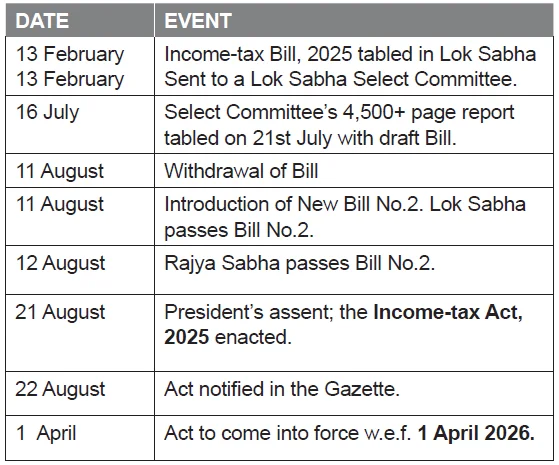
The Income Tax Act, 2025 (effective 1 April 2026) restructures the taxation of charitable and religious organisations while largely retaining the substantive framework of the 1961 Act. The concept of “trusts” is replaced by “registered non-profit organisations” (NPOs), with detailed eligibility and registration requirements under section 332. Provisions earlier treated as exemptions are now computation provisions, classifying income into regular, specified, and residual categories, with differential tax treatment. Anonymous donations, impermissible investments, and violations in commercial activity attract strict tax consequences, including 30% levy and possible cancellation of registration. Key exemptions, such as corpus donations and reinvested capital gains, remain, while accumulations are permitted for up to five years. Compliance obligations relating to books, audit, returns, and investments are tightened, with harsher penalties for violations. The exit tax on accreted income and donation approval rules under section 133 also continue. Despite restructuring, complexity persists, raising risks of litigation

The Income Tax Act 2025 (“new Act”), which comes into force from 1st April 2026, has by and large retained the substance of the manner of taxation of charitable and religious organisations as existed in the Income Tax Act, 1961 (“existing Act”), but has significantly changed the structure of the provisions relating to taxation of charitable and religious organisations.

At the stage of the draft Bill, there had been a few major changes suggested in the provisions – withdrawal of the exemption for reinvestment of capital gains [current s.11(1A)] and of the option to spend the income in the subsequent year [current explanation to s.11(1)], extending the taxability of anonymous donations to all charitable-cum-religious trusts are some of the proposals. Fortunately, at the time of passing the Revised Bill, these proposals were withdrawn, and the existing exemptions broadly continue to operate.

In this article, an attempt is being made to analyse how the new provisions need to be read, and some of the changes that may apply on account of the changed structure of the law or changes in the language of the new law. While all major aspects are sought to be covered, it may not be possible to cover all the provisions, which run into 21 pages of the new Act, besides the items contained in the Schedules.

The new provisions are contained in part B of Chapter XVII, which consists of 7 sub-parts – registration, Income of regd NPO, commercial activities by regd NPOs, compliances, violations, approval for purposes of section 133, and interpretation.

1. SIGNIFICANT CHANGES

The significant changes to the structure are analysed below:

1. The concept of a trust or institution holding property in trust for charitable or religious purposes has been replaced by a concept of registered non-profit organisation (“regd NPO”). A list of types of entities which can apply for registration as a regd NPO is laid down in s.332(1), which was not present in the current ITA. These are:

(a) A public trust;

(b) A society registered under Societies Registration Act, 1860 or under any law in force in India;

(c) A company registered under s.8 of Companies Act 2013 or under s.25 of Companies Act 1956 and deemed to have been registered under s.465(2)(g) of Companies Act 2013;

(d) A University established by law or any other educational institution affiliated thereto or recognized by the Government;

(e)An institution financed wholly or in part by the Government or a local authority;

(f) Investor Protection Funds set up by recognized stock exchanges, commodity exchanges or depositories, notified bodies administering any activity for the benefit of the general public, Prime Minister’s National Relief Fund, PM CARES Fund, Chief Minister’s Relief Fund, Swachh Bharat Kosh, Clean Ganga Fund, university/educational institutions and hospitals/medical institutions wholly or substantially financed by the Government or with annual receipts of less than Rs 5 crore, and notified bodies set up under a Central/State Act for dealing with housing accommodation, planning, development or improvement of cities, towns and villages, regulating or regulating and developing any activity for the benefit of the general public or regulating any matter for the benefit of the general public;

(g) Any other person notified by the CBDT.

Section 332(2) provides that such a person shall be eligible for registration if:

(a) It is constituted, registered or incorporated in India for carrying out one or more charitable purposes, or one or more public religious purposes, and

(b) The properties of such person are held for the benefit of the general public under an irrevocable trust –

i. Wholly for charitable or religious purposes in India; or

ii. Partly for charitable or religious purposes in India, if such person was constituted, registered or incorporated prior to 1.4.1962.

Therefore, a trust created after 1.4.1962 cannot apply for registration as a regd NPO if it is not constituted, registered or incorporated in India or any of its objects are for the benefit of the public or any persons outside India. This requirement is not contained in the current Act. This also seems to contradict the provisions of section 338 (analysed later), where income can be applied outside India with the prior approval of the CBDT. One fails to understand how an NPO can apply income outside India, if it does not have such an object permitting application outside India, in which case it would not be eligible for registration.

Further, in case of an NPO set up after 1.4.1962, it can only be wholly for charitable and religious purposes, as is the case under the existing law.

2. The earlier provisions of exemption contained in sections 10 and sections 11 to 13 were contained in Chapter III – Incomes which do not Form Part of Total Income. These were therefore exemption provisions. Under the new Act, the provisions are contained in sections 332 to 355, which are contained in Part B – Special Provisions for Registered Non-Profit Organisations of Chapter XVII – Special Provisions Relating to Certain Persons. These are now therefore computation provisions, and not exemption provisions. Certain specific provisions, such as those contained in clauses (iiiab), (iiiac), (iiiad) and (iiiae) of section 10(23C) continue as complete exemptions, being part of Schedule III, read with section 11 of the new Act, which deals with incomes not to be included in total income.

The switchover from a scheme of exemption to a scheme of computation may not have any significant impact, given that:

(a)  the provisions of section 14 (current section 14A) relating to disallowance of expenditure incurred for earning exempt income apply for the purposes of computing income under Chapter IV (i.e. under the heads of income) and not under Chapter XVII-B; and

(b)  the provisions of Alternate Minimum Tax under section 206 specifically provide for reduction of “regular income” of a regd NPO referred to in section 355 from the profits as per profit and loss account, in the definition of “book profit” in section 206(1)(c).

3. The exemption provisions contained for some specific types of important institutions, educational and medical institutions in clauses (iv), (v), (vi) and (via) of section 10(23C) have been merged with the general computation provisions for regd NPOs. Therefore, there is now only one regime of computation for regd NPOs under the new Act, as opposed to two exemption regimes under the current Act. A beginning for the merger of the two regimes had been made earlier under the current Act, by providing that with effect from 1.10.2024, no application for renewal of s.10(23C) approval would be made under that section, but would have to be made under section 12A, and by bringing the two exemption regimes almost on par with each other. Section 355(g) of the new Act provides that an approval under section 10(23C) would be a registration for the purposes of the new Act, and therefore an entity approved under section 10(23C) would be a regd NPO under the new Act.

4. Instead of all income from property held under trust, including donations, being considered for computation of exemption, and with loss of exemption for certain incomes under sections 11(3), 13 or section 115BBC,  incomes of a trust would now be categorised into 3 categories – regular income (85% of which is required to be applied), specified income (which is taxable at a flat rate of 30%) and residual income.

“Regular income” is defined in section 335 as:

(a) Income from any charitable or religious activity for which the NPO is registered, carried out by it in such tax year;

(b) Income derived from any property, deposit or investment held wholly for charitable or religious purposes by such regd NPO in such tax year;

(c) Income derived from any property, deposit or investment held in part for religious and charitable purposes by NPOs set up prior to 1.4.1962;

(d) Voluntary contributions received by such regd NPO in such tax year; and

(e) Gains of any permitted commercial activity carried out by such regd NPO in such tax year.

In the draft Bill, the word “receipts” had been used in place of the word “income” in items (a), (b) and (c), and in (b), the term used was “receipts, whether capital or revenue”. Fortunately, the language in the new Act has been rectified, with the term used now being “income”.

“Specified income” consists of anonymous donations and income which was so far taxable under section 115BBI, and includes the following:

(a) Taxable anonymous donations;

(b) Income applied for the benefit of specified persons;

(c) Income applied outside India without CBDT approval;

(d) Investment made in contravention of permitted investment pattern;

(e)Accumulated income, applied to purposes other than purposes of accumulation, or ceasing to be accumulated or set apart, or not applied within the period of accumulation, or credited or paid to another regd NPO;

(f) Income applied to purposes other than purposes for which it is registered;

(g) Business income determined by the AO in excess of income shown in books of account of the business undertaking.

Here too, in the draft Bill, the scope of anonymous donations had been proposed to include all anonymous donations received by a charitable-cum-religious trust. The new Act finally covers only anonymous donations received for a university/educational institution or hospital/medical/institution by such religious-cum-charitable trusts, besides all anonymous donations received by a charitable trust, as is the position under the current Act. Anonymous donations received by religious trusts continue to remain outside the purview of taxation as anonymous donations.

“Residual Income” is defined in section 355(j) to mean the total income without giving effect to the provisions of Part B of Chapter XVII, as reduced by regular income and specified income. Incidentally, the term “total income” is not defined in this Chapter. Section 2(108) defines total income as the total amount of income referred to in section 5, computed in the manner as laid down under this Act. Given that the headwise computation provisions would not apply (as discussed below), this would probably mean the sum total of all the incomes as computed after deductions and exclusions under Part B of Chapter XVII.

2. REGISTRATION

The provisions for registration of an NPO are contained in section 332(3), and are identical to those currently applicable under section 12A(1)(ac). Section 332(3) has a table listing out the 7 types of cases [currently found in clauses (i) to (vi)(A) and (B) of current section 12A(1)(ac)], giving the time limit for furnishing the application, time limit for passing the order by the CIT, and the period of validity of registration. The enhanced period of registration of 10 years for small NPOs having gross income of less than ₹5 crores in each of the preceding two years, introduced by the Finance Act 2025, has also been provided for in section 332(5).

As under the current Act, the CIT has been empowered to condone delay in making of the application if he finds that it was for a reasonable cause. There is now a specific provision in section 332(6) to the effect that if an application for registration is not made within the specified time and the delay in filing such application is not condoned, the NPO shall be liable to pay tax on accreted income under section 352.

The provisions of current section 11(7), which prohibit claim of exemption under section 10 except certain specific sub-sections, and which provide a regime for one-time switchover from section 10(23C) to section 11, are continued in section 333.

3. CANCELLATION OF REGISTRATION

Section 12AB(4) of the current Act lists out the “specified violations” on the noticing of which, the CIT can cancel the registration of a trust, and the procedures for the same. Section 12AB(5) provides the time limit within which such order of cancellation, or refusal of cancellation, has to be passed.

Section 351 of the new Act now contains these provisions relating to specified violations, the procedure to be followed for cancellation and the time limits for passing of order by the CIT.

The list of specified violations is identical, except that it now covers violation of section 346. Section 346 deals with commercial activity by GPU trusts, and prohibits such activity unless carried out in course of GPU objects, aggregate receipts from such activity do not exceed 20% of total receipts of the regd NPO and separate books of account are maintained for such commercial activity. Therefore, if the receipts from commercial activity of a GPU trust exceed 20% of the aggregate receipts, this can result in cancellation of registration, which was not the position under the current Act.

4. COMPUTATION OF INCOME AND TAX LIABILITY

Section 334 provides that the tax payable by a regd NPO on its total income for a tax year shall be the aggregate of tax calculated at 30% of the specified income and calculated at the applicable rate for taxable regular income and residual income for the tax year.

As per section 334(2), the provisions of Chapter XVII would override all other provisions of the new Act, except the clubbing provisions contained in sections 96 to 98 of the new Act. Therefore, the computation provisions contained under the respective heads of income would not apply to a regd NPO. This is similar to the position prevailing under the current Act, where the CBDT had clarified vide its Circular No. 5-P (LXX-6) dated 19th June, 1968, that the income, for the purpose of computation of exemption, has to be taken on a commercial basis (as per books of account). One area of difference from the current Act would be in a situation where the entire income of the regd NPO is not exempt from tax, the income would be computed and taxed under this Chapter. Under the current Act, in some Tribunal decisions, a view had been taken that income which was not exempt was to be computed under the respective heads of income.

This would also mean that the tax computation contained in section 334 would apply irrespective of the nature of income. For instance, the tax on long term capital gains would be as per the provisions of section 334, and not at the rate of 12.5% prescribed under section 197 (section 112 of the current Act). Section 334 refers to the rate applicable on taxable regular income and any residual income. This rate is not spelt out in the new Act – it would probably be prescribed under the Finance Act each year. But, in case the regd NPO is a company, it will not be eligible for the concessional rate of tax for companies under section 200 (section 115BAA of the current Act).

A. Taxable Regular Income

Section 336 defines taxable regular income. Taxable regular income is nil, where 85% or more of the regular income has been applied or accumulated for charitable or religious purposes. Where less than 85% of the regular income has been applied or accumulated, the taxable regular income would be 85% of the regular income, less income applied for charitable or religious purposes or accumulated.

Voluntary contributions received by a regd NPO are included in the definition of income under section 2(49)(c).

B. Deemed Accumulated Income

This 15% of regular income (or unspent amount up to 15% where more than 85% of the regular income is spent), is treated as deemed accumulated income [section 343(1)]. As per the draft Bill, such deemed accumulated income was to be invested in modes permitted under section 350. This could have created difficulty, as such amount may not necessarily be available with the regd NPO (e.g. if 100 is donated to another regd NPO, 85% is treated as application and balance 15% may fall under deemed accumulation, but would not be available for investment, having already been donated). Fortunately, in the new Act, the provision is that if invested, it has to be invested in modes permitted under section 350 [current section 11(5)]. In other words, such investment is not mandatory, but only the modes of investment are mandatory. It is specifically provided in section 343(2) that deemed accumulated income is different from accumulated income under section 342 [current section 11(2)].

C. Exclusions from Regular Income

Section 338 provides that certain incomes shall not be included in the regular income. These are:

(a)  Income applied outside India where the CBDT has directed that such income shall not be included in the total income (i.e. income applied outside India with the approval of the CBDT). This approval can be granted for an NPO created before 1st April 1952 for charitable or religious purposes, or for an NPO created on or after 1st April 1952 for charitable purposes where such application of income outside India tend to promote international welfare in which India is interested.

(b) Corpus donations received by the regd NPO.

The language of the new Act in effect settles the controversy existing under the current Act as to whether, to claim exemption, the application has to be in India or charitable purposes has to be in India. The current Act uses the phrase “applied to such purposes in India”, which gave rise to this controversy. The Delhi High Court in National Association of Software & Services Companies, 345 ITR 362, had held that the application had to be in India, while the Karnataka High Court in Ohio University Christ College, 408 ITR 352, had held that the exemption was available if the purposes was in India. Since the new Act uses the term “income applied outside India”, where any application of income is to be made outside India, it would be excluded from income only if prior CBDT approval is obtained for such expenditure.

The exclusion of such income applied outside India (with CBDT approval) and corpus donations, implies that such incomes would not be considered for computing the deemed accumulated income of 15% (i.e. for computing 85% of regular income) in determining the taxable regular income.

D. Corpus Donations

“Corpus donation” is defined in section 339 to mean any donation made with a specific direction that it shall form part of the corpus of the regd NPO, provided that such donation is invested or deposited in one of the modes permitted under section 350 maintained specifically for such corpus. This is similar to the current section 11(1)(d), which requires investment of corpus donations in permitted modes and earmarking of investments.

E. Application of Income

What is considered as allowable application of income is contained in section 341. Sums applied for charitable or religious purposes in India for which the NPO is registered and paid during the year, are allowable as application of income. In case of donations paid to another regd NPO, 85% of the donations are allowable. If such donations are towards the corpus of the other regd NPO, the donation will not be allowable as application of income. As under the current Act, adjustments are required to be made for payments made out of corpus or out of loans or borrowings (not to be considered in the year of payment), and reinvestment back in corpus investments or repayment of such loan or borrowing (to be considered as application in the year of reinvestment or repayment). Cash payments exceeding ₹10,000 and amounts on which TDS which was deductible, but are not deducted, are not allowable as application of income. Similarly, deficit of earlier years is also not allowable as an application of income.

F. Deemed Application of Income- Option to Spend and Capital Gains

The option to spend income in subsequent year (or the year of receipt of income), currently contained in the explanation to section 11(1), which was proposed to be done away with in the draft Bill, has been finally retained in the new Act. This is contained in section 341(5), and is deemed to be an application of income. Similarly, the exemption for capital gains, currently in section 11(1A) of the current Act, which was also sought to be removed in the draft Bill, has been retained in the new Act. It will now be treated as a deemed application under section 341(9). Interestingly, while sub-section (8) of section 341 provides that application under sub-section (1) shall include deemed application where option is exercised under sub-section (5), similar provision is absent in respect of deemed application under sub-section (9) in respect of capital gains. However, the absence of such specific provision should not impact the allowability of capital gains as a deduction in computing taxable regular income.

G. Accumulated Income

As under the current Act, under the new Act also, a regd NPO has the option to accumulate its regular income for a period of up to 5 years. Here also, a form has to be filed stating the purpose and period of accumulation. The amount of accumulation has also to be invested in the modes permitted under section 350, as under the current Act.

Under the current Act, there has been a controversy raging for the last 34 years as to what can be stated to be the purposes of accumulation – whether some or all of the objects of the trust can be stated to be the purposes of accumulation has been a matter of litigation. Unfortunately, this controversy may continue even under the new law, given that it also does not bring about clarity on the issue.

On the contrary, a new issue could arise as to whether the accumulation can only be for a single purpose or whether it can be for multiple purposes, as permitted under the current law. This issue is on account of the use of the word in singular “purpose” in the new Act and not the plural “purposes” as in the current Act. It appears that the intention is not to restrict it to a single purpose, as the objective of the new Act is merely to use simpler language and not to bring about policy changes.

In the new Act also, change in purpose is permissible with the approval of the Assessing Officer (“AO”). Besides, the amount of accumulation cannot be utilized by donating to another regd NPO as under the current Act. Similarly, as under the current Act, on dissolution of the regd NPO, an application can be made to the AO to donate the amount of application to another regd NPO.

As mentioned earlier, the unspent accumulation or accumulation ceasing to be kept apart or that is donated to another regd NPO would be taxable as specified income.

5. COMMERCIAL ACTIVITY

Section 11(4) of the current Act applies to a business undertaking held in trust, and provides that the term “property held under trust” includes a business undertaking so held. Courts have taken the view that section 11(4) applied to a situation where the business itself was held in trust, while section 11(4A) applied in other cases where business was carried on. Therefore, the requirements of section 11(4A) of incidental business and separate books of account did not apply to cases covered by section 11(4). Section 344 of the new Act corresponds to section 11(4). It provides that where the property held by a regd NPO includes a business undertaking, and if a claim is made for benefits under these provisions, then the AO has the power to determine the income of such business undertaking as per the provisions of the new Act. The definition of “specified income” includes the addition made by the AO to the book income of such business undertaking – only the book income would qualify as regular income, eligible for deduction of application, deemed application and accumulation of income.

Under the current Act, the proviso to section 2(15) used the term “activity in the nature of trade, commerce or business or activity of rendering any service in relation to trade, commerce or business”. This applied only to trusts engaged in the object of advancement of general public utility (GPU trusts). Section 11(4A) used the term “business”. Section 11(4A) applies to both GPU trusts as well as non-GPU trusts. There was accordingly a distinction between the proviso to section 2(15), which uses broader terminology, and section 11(4A), which uses the term “business”. The new Act uses the term “commercial activity” in the context of both of these, and does not distinguish between these.

The term “commercial activity” has been defined in section 355(e) as means any activity in the nature of trade, commerce or business, or any activity of rendering any service in relation to trade, commerce or business, for a cess or fee or any other consideration, irrespective of the nature of use or application or retention of the income from such activity. This is identical to the language of the current proviso to section 2(15), which was interpreted by the Supreme Court in the case of ACIT(E) vs. Ahmedabad Urban Development Authority [2022] 449 ITR 1 (SC). In that case, the Supreme Court held that any activity in furtherance of GPU objects where there was substantial mark up over cost would be regarded as in the nature of trade, commerce or business.

Two sections apply to trusts carrying on commercial activity – section 346 deals with GPU trusts, and section 345 deals with non-GPU trusts. In case of GPU trusts, the position under section 346 is the same as was earlier prevalent under the proviso to section 2(15). It provides that a regd NPO, carrying on advancement of any other object of general public utility, shall not carry out any commercial activity unless:

(a) Such commercial activity is undertaken in the course of actual carrying out of advancement of any object of general public utility;

(b) The aggregate receipts from such commercial activity/activities do not exceed 20% of the total receipts of such regd NPO of the relevant tax year; and

(c) Separate books of account are maintained by such regd NPO for such activities.

Section 345, applicable to non-GPU trusts or activities, provides that a regd NPO (other than that referred to in section 346) shall not carry out any commercial activity, unless:

(a)  Such commercial activity is incidental to the attainment of the objectives of the regd NPO; and

(b) Separate books of account are maintained for such activities.

Section 345 was meant to be the equivalent of section 11(4A), with the difference that section 11(4A) as applicable to GPU trusts has been incorporated in section 346. However, section 11(4A) used the term “business”, as opposed to the term “activity in the nature of trade, commerce or business or activity of rendering any service in relation to any trade, commerce or business”, which is a much broader term. Given that the same definition of “commercial activity” would apply to both section 346 (GPU trusts) as well as section 345 (non-GPU trusts), which definition is identical to that contained in the current proviso to section 2(15), it appears that the same meaning which earlier applied only to GPU trusts would now apply to non-GPU trusts as well. The interpretation of the Supreme Court in the case of Ahmedabad Urban Development Authority (supra) may now apply not only to GPU trusts, but also to non-GPU trusts. Therefore, some activities of non-GPU trusts, which resulted in surplus but were not considered as business for the purposes of section 11(4A), may now be covered by section 345. This would require maintenance of separate books of account for such activities.

What are the consequences of violation of sections 345 or 346? Violation of either of these provisions is regarded as a “specified violation” under section 351(1)(b), which can result in cancellation of registration of the NPO. Under the current Act, while violation of section 11(4A) is a “specified violation”, which can attract cancellation of registration, applicability of the proviso to section 2(15) is not such a specified violation and does not result in cancellation of registration. Therefore, under the new Act, if a regd NPO carries on a GPU activity which results in substantial surplus, and the  gross receipts from such activity exceeds 20% of the total receipts of the NPO, its registration can be cancelled, with consequent applicability of tax on accreted income. This is a drastic change from the current position, where there is only a loss of exemption for the year. This seems to be an unintended consequence of merger of the proviso to section 2(15) with section 11(4A) in so far as GPU NPOs are concerned.

Besides, currently, section 13(8) read with section 13(10) provides that in case the proviso to section 2(15) is attracted, while exemption would not be available, only the net income of the trust would be taxable. Section 353(1), corresponding to current section 13(10), provides for taxation of net income of a GPU trust which has violated section 346. However, there is no similar provision for violation of section 345 by a non-GPU trust, which may suffer tax on its gross income.

6. COMPLIANCES

A. Books of Account

Currently, the exemption under sections 11 and 12 is subject to the requirements of section 12A. Clause (b)(i) of section 12A requires the maintenance of books and other documents in the form and manner and at the place, as may be prescribed, where the income exceeds the maximum amount not chargeable to tax. Violation of this condition can result in loss of tax exemption for the relevant year.

Under the new Act, section 347 contains the requirement to maintain the books of accounts and other documents in prescribed form and manner and at the prescribed place. Section 353 provides that the consequence of failure to maintain books of account under section 347 shall be that the regular income as reduced by the expenditure referred to in section 353(3) shall be the taxable regular income, i.e. in other words, the benefit of accumulation, deemed accumulation, deduction for capital expenditure, corpus donations and donations to other NPOs shall not be available. It may be noted that the consequence is only for failure to maintain books of account, and not failure to maintain other documents.

B. Audit

Similarly, current section 12A(b) requires accounts to be audited if the income is above the income exemption threshold limit and the audit report to be filed, in order to get the benefit of exemption. This requirement of audit is now contained in section 348, with the consequences of failure to get books of account audited contained in section 353(1) being taxation of net income without certain deductions, similar to the consequences
of failure to maintain books of account. Here also, section 353(1) is attracted only for failure to get the books of account audited, and not for failure to furnish audit report.

C. Return of Income

Under the current Act, under section 139(4A), a charitable or religious trust claiming exemption under section 11 is required to file a return of income, if its income (before exemption under sections 11 & 12) exceeds the threshold exemption limit. This obligation is now contained in section 263(1)(iii) of the new Act, which requires a person other than a company or a firm to file its return of income if its income (before  giving effect to provisions of Chapter XVII-B)  exceeds the maximum amount not chargeable to tax (“threshold limit”). Current section 139(4C)(e) also requires institutions claiming exemption under clauses (iiiab), (iiiac), (iiiad), (iiiae), (iv), (v), (vi) and (via) of section 10(23C) to file their returns of income. Educational and medical institutions falling under the current clauses (iiiab), (iiiac), (iiiad), and (iiiae) of section 10(23C) would fall within the definition of “specified entity” under the new section 263(1)(iv) and will also be subject to the same obligation. There are no separate exemptions under the new Act corresponding to clauses (iv), (v), (vi) and (via) of the current Act, and these would therefore fall within the general exemption for regd NPOs, also covered by section 263(1)(iii).

Section 349 of the new Act provides that where the total income of a regd NPO exceeds the threshold limit, it has to furnish the return of income as per the provisions of section 263(1)(a)(iii) and (2), within the time limit allowed under section 263(1)(c). This time limit continues to be 31st October for persons whose accounts are required to be audited. Under the current Act, trusts are permitted to file returns within the time limits specified in sub-sections (1) and (4) of section 139 – i.e. even belated returns are permitted.

Section 353 provides that where any regd NPO fails to furnish its return under section 349, its taxable regular income shall be the net income without certain deductions (the same as in cases of failure to maintain books of account or failure to get books of account audited). Would this cover only cases of failure to file the return of income, or even delay in filing the return of income?  While section 353 refers only to failure to file a return under section 349, section 349 requires the return to be filed within the time allowed under section 263(1)(c). Therefore, even cases of delay may invite applicability of these provisions, unlike under the current law where filing of a belated return of income within the time limit under section 139(4) does not attract such consequence.

D. Permitted Modes of Investment

Section 350(1) of the new Act provides that the modes of investing or depositing the money under Chapter XVII-B shall be those specified in Schedule XVI. Section 350(2) further permits notification by the Central Government of other modes of investing or depositing money.

Schedule XVI lists out all the modes currently listed in section 11(5), including immovable property.
It even includes the other modes notified for the purposes of section 11(5) under rule 17C, such as units of mutual funds, equity shares of a depository, equity shares of an incubatee by an incubator, units of Powergrid Infrastructure Investment Trust, etc.

The permissible investments/deposits list in this Schedule also contains the exceptions which are currently listed under section 13(1)(d) and under clause (b) of the third proviso to section 10 (23C), such as:

(a) Assets held as part of the corpus as at 1st June 1973;

(b) Equity shares of a public company held by a university/educational institution/hospital/ medical institution as part of the corpus as of 1st June 1998;

(c) Bonus shares allotted on such shares held as corpus;

(d) Donations received and maintained in the form of jewellery, furniture or any other notified article;

(e) Any asset, other than those permitted under other clauses of this Schedule, if not held beyond one year from the end of the year in which the asset was acquired;

(f) Funds representing profits and gains of business.

Schedule XVI also has an interpretation clause, where various terms used in the Schedule are defined.

The consequences of violation of the provisions of section 350 are contained in S.No.4 of the table of specified income in section 337. It provides that any investment or deposit made in contravention of the provisions of section 350 out of any income, accumulated income, deemed accumulated income, corpus, deemed corpus or any other fund would be taxable as specified income in the year in which such investment or deposit is made.

Under the current provisions of section 13(1)(d), while exemption was lost on account of the impermissible investment to the extent of the impermissible investment, such loss of exemption could only be to the extent of income for the year. Therefore, if the gross income of the trust for the year was Rs 10 lakh, and an impermissible investment of Rs 1 crore was made out of the corpus or past accumulation, the income that could be taxed so far was only Rs 10 lakh (income for that year which suffered loss of exemption). Under the new Act, the entire Rs 1 crore would be treated as specified income and taxed at 30%. The consequences under the new Act are therefore far more stringent.

7. TAX ON ACCRETED INCOME

The provisions for tax on accreted income, a form of exit tax, currently contained in Chapter XII-EB, sections 115TD to 115TF, are now also part of Chapter XVII-B, being contained in section 352. The computation of accreted income is set out in the form of a formula in section 352(2). Section 352(4) contains a table specifying the cases attracting tax on accreted income, the specified date on which accreted income is to be computed, and the due date for payment of tax on accreted income in each case.

Delay in filing an application for renewal of registration continues to attract tax on accreted income, as under the current Act.

8. APPROVAL FOR PURPOSES OF SECTION 133 (CURRENT SECTION 80G)

The provisions for approval for purposes of section 133 (corresponding to section 80G of the current Act) is also contained in Chapter XVII-B in section 354. The conditions for such registration under the new section 354 are the same as those contained in section 80G(5), except that the condition contained in clause (i) that the income is not liable to income tax by virtue of section 11 and 12 or section 10(23C) is omitted.

Section 354(2) contains a table, stating the types of cases, time limits for furnishing application, time limit for passing the order and validity of approval in each case. These are the same as those contained in the current Act.

The requirement of filing a statement of donations and for furnishing a certificate to the donor in respect of such donations continues under the new Act.

9. PENALTY & FEES

The existing penalty and fees applicable to religious and charitable trusts continue under the new Act – penalty for provision of benefit to related persons (current section 271AAE, new section 445), penalty for failure to deliver statement of donations or furnish certificate to donors (current section 271K, new section 464), and fees for failure to deliver statement of donations or certificate to donors within time (current section 234G, new section 429).

CONCLUSION

All in all, while the general provisions relating to charitable and religious organisations have remained broadly the same, the manner in which some of the changes have been carried out could possibly cause difficulty in some cases. One hopes that these are just drafting mistakes, which will be corrected in the forthcoming Budget.

However, the complexity of the provisions and procedures relating to regd NPOs still continues, with harsh consequences for even minor mistakes. Under such circumstances, unless the provisions are really simplified and made more reasonable, the large scale litigation in this area of income tax is likely to continue.

Statistically Speaking

1.1. INDIA’S TRADE DEFICIT NARROWS

INDIA'S TRADE DEFICIT NARROWS

2. COUNTRIES THAT LOST THE MOST MILLIONAIRES IN 2025

COUNTRIES THAT LOST THE MOST MILLIONAIRES IN 2025

3. COUNTRIES THAT GAINED THE MOST MILLIONAIRES IN 2025

COUNTRIES THAT GAINED THE MOST MILLIONAIRES IN 2025

4. INDIAN STATES WITH THE LARGEST GEN-Z POPULATION

INDIAN STATES WITH THE LARGEST GEN-Z POPULATION

5. INCOME TAX RETURNS HIT NEW RECORD

INCOME TAX RETURNS HIT NEW RECORD

GST Cartoon


Learning Events At BCAS

1. Indirect Tax Laws Study Circle Meeting on “Section 74 Notices Under GST: Demands, Defenses & Dilemmas” held on Tuesday, 16th September, 2025 @ Virtual.

Group leader CA. Ganesh Prabhu Balakumar prepared five case studies covering various aspects of Section 74 of the CGST Act.

The presentation covered the following aspects with the background of the applicability of section 74 for detailed discussion:

  1. Issues relating to the classification of drones, procedural aspects of inspection proceedings u/s section 67 of the CGST Act, and whether misclassification may lead to suppression.
  2. Aspects relating to RCM on import of services, implications of treatment of transactions in the books of accounts and allegations of suppression.
  3. Whether every mismatch or lapse, classification differences, return reconciliations, delayed RCM, and ITC mismatches amount to fraud, wilful misstatement and suppression u/s 74, or should they be treated as clerical and interpretational errors u/s 73.

Around 102 participants from all over India benefited while taking an active part in the discussion. Participants appreciated the efforts of the group leader and the mentor.

2. Finance, Corporate & Allied Laws (FCAL) Study Circle –  AGM Related Compliances (W.R.T. Private Companies) including Recent Amendments in Directors’ Report & Annual Filings held on Tuesday, 2nd September 2025 @ Virtual.

The Finance, Corporate and Allied Laws Study Circle of the Bombay Chartered Accountants’ Society (BCAS) organised a virtual session on 02nd September 2025 on the topic “AGM-related compliances (w.r.t. Private Companies) including recent amendments in Directors’ Report and annual filings.” The session focused on providing participants with a comprehensive understanding of the statutory provisions and practical considerations surrounding annual general meetings for private companies.

During the session, the speaker explained the latest regulatory updates and their implications on corporate governance and statutory filings. The discussion covered recent amendments impacting Directors’ Reports and annual filings, key timelines, and documentation requirements under the Companies Act. Various practical issues faced by companies were addressed, including common mistakes in annual filings and strategies to ensure timely and accurate compliance.

The session was highly interactive and was well-received by the attendees. A total of 65 participants benefited from the detailed discussion and gained clarity on evolving compliance requirements and best practices to manage statutory obligations efficiently.

3. Family Offices Summit 2025 held on 30th August 2025@ The Rooftop & Malabar Trident, Nariman point.

The Family Offices Summit 2025, organised by the Finance, Corporate & Allied Laws Committee of Bombay Chartered Accountants’ Society, held on 30th August 2025 at Trident, Nariman Point, Mumbai, was a landmark summit that brought together leading voices from family businesses, investment management, and advisory practices. The day-long summit featured keynote addresses, thought-provoking panels, and engaging conversations that explored the evolving role of family offices in India and in the global arena.

Setting the Context – The Rise of Family Offices

The summit began with a keynote address by Mr Rishabh Mariwala, who eloquently captured the rise of family offices in India. He spoke about why family offices matter now more than ever, emphasising their role in professionalising wealth management, preserving legacies, and empowering the next generation to carry forward values and vision alongside wealth.

The international perspective on structuring family offices in Asia, the Hong Kong Perspective featured insights from Mr Jason Fong, who delivered a short video message, and Ms Joanne Zheng, who gave a presentation. Together, they highlighted Hong Kong’s evolving ecosystem for family offices and noted that Indian families are increasingly exploring global jurisdictions for wealth structuring. This shift underscores Hong Kong’s appeal as a hub for family offices, thanks to its favourable tax policies, strategic location, and professional services.

Ancient Wisdom for Modern Day Family Businesses

National award-winning author Dr Radhakrishnan Pillai delivered an invigorating talk on ancient wisdom for modern family businesses. Drawing from the Arthashastra and Chanakya’s principles, he connected timeless governance and leadership insights with today’s family business challenges. His address reminded participants that while structures and strategies evolve, the essence of values, vision, and governance remains constant.

Session 1: Family Offices in India – Emerging Trends & Realities

The first panel brought together diverse voices across two parallel discussions. Panel 1A, moderated by Mr Avik Ashar featured Ms Anupa Tanna Shah, Mr Rubin Chheda, Mr. Sachin Tagra  and Mr. Samir Shah. The discussion revolved around the growing sophistication of family offices, professional management, and the balance between preserving legacy and seeking growth through new asset classes.

Panel 1B, moderated by Mr Devashish Khanna, hosted Mr Amit Jain, Mr Rahul Khanna, and Mr Subeer Monga. This discussion focused on the realities of structuring, the need for governance frameworks, and the importance of aligning investment philosophy with family objectives. Together, both panels highlighted the vibrancy and evolving maturity of family offices in India.

Session 2: Smart Structuring – Tax-Optimized Wealth Transfer & Succession

Post lunch, the focus shifted to succession and tax-efficient structuring. Moderated by Mr Rutvik Sanghvi, the panel featured Dr Anup Shah, Mr Parthiv Kamdar, and Mr Tanmay Patnaik. The session explored practical approaches to wealth transfer, succession planning tools, and the nuances of tax implications across jurisdictions. The discussion underscored that succession is not merely a legal exercise but a delicate balance of family dynamics, governance, and foresight.

Fireside Chat – Global Playgrounds: Jurisdiction Shopping for Indian Wealth

One of the highlights of the summit was the engaging fireside chat between Mr Dinesh Kanabar and Mr Anand Bathiya. Their candid conversation on jurisdiction shopping unpacked the rationale behind families considering global structures for wealth, covering regulatory considerations, global opportunities, and challenges. The discussion was both practical and visionary, offering participants a clear sense of the opportunities available in an increasingly interconnected world.

Session 3: Family Offices as Strategic Partners in Alternative Funds

The third thematic session focused on family offices as active partners in alternative investment platforms. Moderated by Ms Kinnari Gandhi, the panel included Mr Aditya Jha, Mr Anurag Agrawal, Mr Manish Chhabra, and Mr Nirav Shah. The dialogue highlighted how family offices are now playing a strategic role in shaping investment ecosystems, co-creating ventures, and deploying patient capital to nurture long-term opportunities.

Session 4: Real-Life Case Studies in Succession Planning

The final session was a powerful exploration of succession in action, moderated by Mr. Amit Goenka. Esteemed panellists Mr Aashish Somaiyaa, Mr Ravi Sheth, Mr Shishir Srivastava, and Mr Vivek Rajaraman shared real-life experiences from different sectors. The dwiscussion illuminated both the challenges and best practices in ensuring smooth transitions, underscoring the importance of trust, governance, and preparation in sustaining legacies.

Concluding Note

The day’s deliberations made it abundantly clear that family offices are not merely financial structures but institutions of continuity, vision, and stewardship. The Family Offices Summit, 2025, was attended by 76 participants, 40 were BCAS members, and the remaining 36 were non-members. Further, 19 participants attended from 12 cities outside the Mumbai Metropolitan Region.

This informative Summit was competently coordinated by Kinnari Gandhi with the help of convenors Khubi Shah Sanghvi and Rimple Dedhia and the guidance of Kanubhai, Naushadbhai and Anandbhai.

Family Offices Summit

4. Webinar on Mastering Charitable Trust Compliances held on Friday, 29th August 2025 @ Virtual

The BCAS webinar on “Mastering Charitable Trust Compliances” was successfully conducted on Friday, 29th August 2025, over the Zoom platform. The session was led by CA Gunja Thakrar and CA Ujwal Thakrar, and attracted wide participation from across the country, with over 145 attendees joining in. The audience comprised a diverse mix of professionals, trustees, and compliance officers, with attendees from more than 40 cities, including Mumbai, Bengaluru, Ahmedabad, Chennai, Delhi, Jaipur, Coimbatore, and even remote locations like Tuensang and Bhimavaram.

The webinar was structured around key compliance areas for charitable and religious trusts under the Income-tax Act. CA Gunja Thakrar led the first half of the session, beginning with an explanation of the Audit Report in Form 10B / 10BB, focusing on the interpretation of the 49 clauses, key compliance expectations, and documentation frameworks. This was followed by an overview of ITR-7, highlighting its key schedules and the accurate reporting of total income. She also covered the nuances of Forms 9 and 10, with emphasis on their applicability and disclosure requirements.

In the second half, CA Ujwal Thakrar delved into the increasingly important area of renewal and re-registration under Sections 12AB and 80G. He offered practical guidance on assessing organizational readiness, fulfilling financial compliance prerequisites, and navigating critical timelines. His session also included tips on managing documentation workflows, engaging with regulatory authorities, and monitoring post-registration conditions — all essential for effective compliance in today’s regulatory environment.

The session concluded with an engaging Q&A round, where attendees raised practical concerns from their daily practice. With participants spanning ages from below 30 to above 60, and nearly 45% of them from outside Mumbai, the webinar served as a robust learning platform. The comprehensive structure and clarity of presentation made it especially valuable to professionals managing trust compliance, reinforcing BCAS’s role in continuous learning and capacity building within the profession.

BCAS Academy Link: https://academy.bcasonline.org/courses/webinar-on-mastering-charitable-trust-compliances/

5. Indirect Tax Laws Study Circle Meeting on “Use Of Technology in GST- Part 2” held on Friday, 29th August 2025 @ Virtual

The Bombay Chartered Accountant Society had organized the following Study Circle Meeting under Indirect Taxes on 29th August 2025.

Group leader CA Rahul Gabhawala prepared a step-by-step demonstration of the prompt use of technology in GST.

The Presentation covered the following aspects for detailed discussion:

  1. Use of Chat-GPT to create codes in order to carry out Login at the GST Portal.
  2. Use of Selenium Wrapper to teach test automation at the GST Portal.
  3. Use of Selenium Wrappers to make test automation more efficient, reliable, and user-friendly.
  4. Use of Codes in automating certain functions at the GST Portal.

Around 80 participants from all over India benefited while taking an active part in the discussion. Participants appreciated the efforts of the group leader.

This was Part 2 of the session; Part 1 was held on 25th July 2025, and the write-up was published in the September 2025 issue of BCAJ.

5. DigiSetu – The Tech Bridge for Senior Professionals held on 7th, 14th, 21st, & 28th August 2025  @ Virtual

Speakers:

  • Ms Mahima Bhalotia, Mumbai
  • Mr Rohit Khiste, Nashik
  • CA Tanmay Bhavar, Nashik
  • CA Anup Tabe, Pune

SUMMARY:

The Bombay Chartered Accountants’ Society hosted a four-part online series, DigiSetu – The Tech Bridge for Senior Professionals, in August 2025 through its Technology Initiatives Committee. Designed to blend technology with simplicity, the initiative empowered senior Chartered Accountants to stay updated in a fast-changing digital world — without jargon or complexity.

The journey began with DigiRakshak – Smartphone Safety Secrets, equipping participants with tools to block spam, manage app permissions, and secure payment apps. DigiSavdhaan – Cyber Safety 101 spotlighted online threats and safe digital habits. DigiSahayak – Gadgets & Apps Every Senior Professional Should Know opened a world of productivity apps and smart gadgets, while the finale, DigiBadlaav – AI Basics for Senior Professionals, demystified AI through practical uses of ChatGPT, automation, and ethical insights.

Short, crisp, and highly practical, DigiSetu proved that technology need not overwhelm senior professionals. Instead, it can serve as a bridge to confidence, efficiency, and ease in daily practice.

BCAS Academy Link: https://academy.bcasonline.org/courses/digisetu-the-tech-bridge-for-senior-professionals/

6. Full Day Workshop on GST Appellate Tribunal held on Friday, 22nd August 2025 @ BCAS (Hybrid)

Session Topic Faculty
Session I Pre-preparation for Tribunal CA. Adv. Ishaan Patkar
Session II Understanding the Law and Procedure CA. Adv. Vinay Jain
Session III Drafting & Filing of GSTAT Appeals CA. Vinod Awtani

(1) 123 participants from across 45 cities in India had registered for the workshop, with 32 participants enrolling physically, all the way travelling from Panaji, Satara, Nashik, Navi Mumbai and Vadodara, apart from Mumbai

(2) The first session covered the pre-preparation aspects for the upcoming GSTAT and had a detailed discussion on

– Modes of discharging pre-deposits, acceptance of taxes already paid due to compulsion from the department, discussion on case laws relating to the legal validity of such issues in the erstwhile legacy IDT laws or GST laws for the previous level. Discussions also covered the amendments of 2025 for pre-deposits on penalty orders and their implications

– Understanding the distribution of appeals filed with the Principal Bench and State Bench, and how to segregate the place of supply matters

– Understanding the bandwidth of the professionals to manage the appeals across various benches if virtual hearings are not made available

– Action points for matters remanded back from the high courts

(3) The second session covered understanding the law and procedure pertaining to GSTAT

– A comprehensive discussion amongst the participants on the legal provisions, section 109 to section 113, and CGST Rule 110 to Rule 113A was covered

– Goods and Services Tax Appellate Tribunal (Procedure) Rules, 2025, being notified and covering detailed procedural aspects, were discussed threadbare.

– GSTAT Forms, which are other than the appeal forms, were also covered to complete the procedural aspects.

(4) The last session covered the practical aspects

– Drafting and Filing of GSTAT Appeals

– Paper Book Compilation

– Drafting of Statement of Facts and Grounds of Appeals and prayers

– Curing the defects, communication with Registry

– Condonation of Delay, Miscellaneous Applications, Additional Evidence, Corrections

– This session covered the finer points and care to be taken during the entire process of drafting. The Do’s and Don’ts

(5) The full-day workshop was completely interactive throughout the 3 sessions, with the queries of the participants attending both physically as well as virtually were discussed by the group and answered by the faculty.

Full Day Workshop on GST Appellate Tribunal

BCAS Academy Link: https://academy.bcasonline.org/courses/workshop-on-gst-appellate-tribunal/

7. ITF Study Circle Meeting on the Discussion on Demystifying SC’s Decision in Hyatt International held on 20th August 2025@ BCAS Hybrid.

The International Tax and Finance Study Circle organized a meeting (hybrid mode) on 20th August 2025 to discuss the implications of the Supreme Court’s ruling in the case of Hyatt International.

Chairman of the session – Mr Prashant Maharishi

Group Leaders CA Rohit Jethani and CA Sangeeta Jain

  • The session opened with remarks from the chairman on his initial views of the Supreme Court ruling.
  • Post that, the group leaders began by discussing the concept of Permanent Establishment.
  • Next, the group leaders discussed the facts of the case, the contentions of the taxpayers and the tax authorities and the ruling by the Supreme Court.
  • Then the group leaders discussed the implications of the ruling. The chairman of the session also added key points at critical points in the discussion.
  • Many participants shared their views on the ruling and their practical experiences in dealing with similar situations.
  • The group leaders also presented certain key points from meticulously undertaken research on various aspects of the ruling.

The session closed with concluding remarks by the chairman.

8. Webinar on Filing of Income Tax Returns for AY 2025-26 held on Tuesday, 12th August 2025 @ Virtual

The webinar on “Filing of Income Tax Returns for AY 2025-26 (ITR 1 to 6)” was successfully conducted on Tuesday, 12th August 2025, via Zoom, and witnessed an overwhelming response with 500+ participants. The session was jointly addressed by CA Divya Jokhakar and CA Khyati Vasani, both of whom are eminent professionals with deep domain expertise in direct tax compliance.

The speakers provided a detailed walkthrough of the changes introduced in ITR Forms 1 to 6 for AY 2025-26, including recent disclosure enhancements and practical nuances of reporting under the updated forms. Special emphasis was placed on understanding the granular reporting requirements in light of CBDT’s clarification that the filing due date was extended specifically to accommodate the extensive changes. The session highlighted how even small inaccuracies in ITR filings could lead to serious implications in terms of tax and interest liabilities.

The webinar concluded with an engaging Q&A session where participants actively raised their queries on tricky reporting areas, which were addressed with clarity by the speakers. The event reinforced the critical role of tax professionals in the evolving compliance landscape and was aimed at enhancing the readiness of members and their teams to ensure accurate and timely filing of income tax returns.

YouTube: – https://www.youtube.com/watch?v=fNkRsvnRhzI&t

9. Tree Plantation Drive 2025 held on 02nd and 03rd August 2025@ Vada, Palghar District.

On 2nd and 3rd August 2025, 24 BCAS members along with 6 BCAS staff, participated in a school visit and tree plantation drive organized by the BCAS Foundation. The visit began on the morning of 2nd August at Lakhani School, where the team proudly inaugurated a new Digital Classroom supported by the Foundation. Members interacted with students and teachers to understand their expectations and aspirations around digital learning.

Later that evening, the group visited MM School, where the BCAS Foundation had earlier implemented a Digital Classroom, along with a Library and Science Lab. Members had the opportunity to evaluate the positive impact of these initiatives, observing encouraging outcomes such as increased student engagement, heightened interest in learning, and a noticeable reduction in dropout rates. Witnessing the transformative power of technology and infrastructure in shaping young minds was both humbling and inspiring.

On 3rd August, participants visited Koseri Village in Casa District for a tree plantation drive. The villagers welcomed the BCAS team with a vibrant tribal dance, and school students offered a heartfelt prayer before the plantation began. Together, members, staff, and villagers planted 6,000 saplings across six villages, contributing to long-term environmental sustainability and rejuvenation of green cover in the region.

The visit also included an immersive experience at Keshav Srushti, where members explored the Oxygen Park and learned about the organization’s remarkable Gramya Vikas initiatives aimed at uplifting underprivileged rural and tribal communities. Keshav Srushti’s holistic efforts in education, skill development, and building self-reliant ecosystems left a deep impression on everyone. Planting saplings amidst such an inspiring environment of service and sustainability made the experience even more meaningful.
Walking through the Oxygen Park, breathing in the freshness, and witnessing how thoughtfully nature and development coexist offered members a rare pause from their fast-paced urban lives.  The two-day visit concluded with a renewed sense of gratitude and pride in being associated with BCAS Foundation, reaffirming the collective commitment to education, environmental care, and community upliftment.

Tree Plantation

II. REPRESENTATIONS

The Bombay Chartered Accountants’ Society (BCAS) has submitted three key representations to the Government:

1. Charitable Trust Compliance Extensions: On 4th September 2025, BCAS requested extensions and clarifications for charitable and religious trusts, highlighting practical and procedural difficulties. Key requests include:

  • Extending the due date for renewal of registration under section 12AB (Form 10AB) from 30th September 2025 to 31st December 2025.
  • Addressing the punitive tax on accreted income under Section 115TD due to procedural hurdles.
  • Seeking a single renewal form for Section 12AB and Section 80G approvals.
  • Requesting a lenient approach to rejections based on technical grounds.
  • Extending the due date for Form 10B/10BB beyond 30 September 2025 due to the late release of the ITR-7 utility (late August 2025).
  • Clarifying the filing timelines for Form 9A/Form 10

Linkhttps://bcasonline.org/wp-content/uploads/2025/09/BCAS-representation-letter-to-CBDT-Form-10A-12A1aci-and-renewal-of-12AB-extension.pdf


2. Income Tax Due Date Extensions for AY 2025–26: On 1st September 2025, BCAS requested extensions for Income Tax Return and Audit Report due dates for Assessment Year 2025–26, especially for audit cases. This request is due to the delayed release of ITR forms and utilities (some as late as August 2025), technical portal issues, overlapping deadlines, reduced working days, and increased compliance burdens. BCAS proposed extending deadlines for:

  • Tax Audit Reports (including Firms, Companies, Trusts) to 30th November 2025.
  • ITR Filing for audit cases to 31stDecember 2025.
  • Transfer Pricing Reports (Form 3CEB) to 31st January 2026

Link : https://bcasonline.org/wp-content/uploads/2025/09/BCAS-Representation-for-extension-of-due-dates.pdf

3. GST Reforms: On 30th August 2025, BCAS proposed “next generational” reforms for Goods and Services Tax (GST). These suggestions focus on structural improvements, rate rationalisation, and ‘Ease of Living’ for taxpayers. Key areas include simplifying registration processes, clarifying grounds for registration cancellation, improving input tax credit (ITC) rules, streamlining invoicing and return systems, and enhancing refund mechanisms.

Link : https://bcasonline.org/wp-content/uploads/2025/09/BCAS-Representation-GST-August-2025.pdf

Readers can read the full representation by scanning the QR code or visit our website www.bcasonline.org

III. BCAS IN NEWS & MEDIA

BCAS has been featured in several news and media platforms, showing our active involvement, professional contributions, and commitment to the field. This reflects the growing recognition of BCAS in the public and professional space.

Link: https://bcasonline.org/bcas-in-news/

Guarding Market Integrity: The Evolving Contours of SEBI’S PFUTP Framework

A. INTRODUCTION

The SEBI Prohibition of Fraudulent and Unfair Trade Practices relating to Securities Market Regulations 2003, commonly referred to as PFUTP Regulations, were introduced as a direct response to systemic weaknesses observed during the late 1990s and early 2000s pertaining to market manipulation, to meet its objective of preserving market integrity, ensuring investor protection, and promoting transparency in India’s securities markets.

These regulations are broad in scope having mix of principle and rule-based approach. It applies to all market participants whether individuals, entities, or intermediaries, and are designed to curb manipulative, deceptive, or unethical conduct in connection with securities trading, public offerings, and disclosures. It prohibits person from buying, selling or otherwise dealing in securities in fraudulent manner by using any manipulative or deceptive device.

The term “fraud” under PFUTP is defined expansively to “include any act, expression, omission or concealment committed whether in a deceitful manner or not by a person or by any other person with his connivance or by his agent while dealing in securities in order to induce another person or his agent to deal in securities, whether or not there is any wrongful gain or avoidance of any loss, and shall also include—

(1) a knowing misrepresentation of the truth or concealment of material fact in order that another person may act to his detriment;

(2)a suggestion as to a fact which is not true by one who does not believe it to be true;

(3)an active concealment of a fact by a person having knowledge or belief of the fact;

(4)a promise made without any intention of performing it;

(5)a representation made in a reckless and careless manner whether it be true or false;

(6)any such act or omission as any other law specifically declares to be fraudulent,

(7)deceptive behaviour by a person depriving another of informed consent or full participation,

(8)a false statement made without reasonable ground for believing it to be true.

(9) the act of an issuer of securities giving out misinformation that affects the market price of the security, resulting in investors being effectively misled even though they did not rely on the statement itself or anything derived from it other than the market price.

And “fraudulent” shall be construed accordingly.”

The PFUTP Regulations apply to all persons, regardless of whether they are registered intermediaries, institutional investors, listed companies, or individual market participants.

The wide scope is intentional, reflecting SEBI’s philosophy that market integrity depends not just on the conduct of regulated entities but also on all participants operating within the ecosystem. SEBI, through its investigative and adjudicatory mechanisms, is empowered to detect and act against such misconduct by leveraging surveillance data, trading patterns, and documentary evidence.

B. APPLICABILITY

These regulations apply to act occurring in connection with the buying, selling, or otherwise dealing in securities, whether on-exchange, off-market, or in public offerings. The regulations are also designed to capture both actual misconduct and attempted or intended wrongdoing, even if no loss or damage occurs. The expansive language ensures that enforcement is not limited to technical breaches but encompasses conduct that undermines fair play and transparency.

A landmark case that highlights the application of this definition is SEBI vs. Kanaiyalal Baldevbhai Patel (SAT Appeal No. 44 of 2006). In this case, the Hon. Securities Appellate Tribunal upheld SEBI’s action against a market participant involved in circular trading to create artificial volumes in the shares of a company. The Tribunal observed that the intent behind the transactions was not genuine investment or trading interest, but rather to give a misleading appearance of market activity. The ruling reinforced that intent to manipulate or mislead, even in the absence of direct monetary gain, falls squarely within the definition of fraud under PFUTP.

This interpretation underscores the principle that SEBI focuses not only on outcomes but also on intent and conduct. In an emphatic demonstration of regulatory resolve, SEBI, between April 2024 and June 2025, initiated proceedings against large number of entities wherein the alleged contraventions spanned a wide spectrum of malfeasance ranging from price and volume manipulation, to front-running, dissemination of deceptive information, and fraudulent misstatements in financial disclosures. This scale of enforcement is emblematic of the regulator’s sharpened surveillance system.

The PFUTP framework is thus preventive as well as disciplinary, aimed at deterring unethical behaviour, penalizing the contraventions and ensuring fair, transparent, and trustworthy market operations.

C. KEY AMENDMENTS INTRODUCED UNDER THE 2024 REGIME

The SEBI (Prohibition of Fraudulent and Unfair Trade Practices relating to Securities Market) (Amendment) Regulations, 2024 (‘2024 Amendments’) brought important changes aimed at making the existing framework more effective in preventing and penalizing market abuses. These amendments broaden the definition of fraudulent activities, clarify what counts as manipulative behaviour, and address new types of misconduct seen in today’s markets. The main changes include:

I. INCLUSION OF MULE ACCOUNTS FOR INDIVIDUAL TRADING

One of the major updates in the 2024 amendments is the clear recognition of “mule accounts.” These are trading or bank accounts that, while registered in one person’s name, are actually controlled or operated by someone else. Such accounts have been used to hide the original identity of person behind securities transactions, reducing transparency and enabling market manipulation. By explicitly including mule accounts in the regulations, SEBI can now hold the actual controllers/beneficiaries accountable. Any transactions done through these accounts are considered manipulative, fraudulent, and unfair, and are therefore prohibited under the law.

II. INCLUSION OF MULE ACCOUNTS IN MANIPULATION OF CORPORATE ASSETS AND FINANCIAL STATEMENTS

While SEBI has previously dealt with these issues on misuse of company assets and the manipulation of financial reports by listed companies, this amendment specifically includes bringing Mule Accounts directly under the PFUTP regulations, wherein the diversion of assets or manipulation of earnings impacts the market price of a company’s securities, such actions are now clearly classified as fraudulent and unfair trade practices.

This change emphasizes that misconduct is construed as a serious abuse of the securities market. The amendment clearly states that these acts will always be considered violations under the regulations, removing any doubt about their legal status. This move also supports SEBI’s long-held view that corporate wrongdoing affecting market prices must be treated as market fraud.

D. DEALING IN SECURITIES CONSIDERED DEEMED TO BE FRAUDULENT PRACTICE

Regulation 4(2) of SEBI (PFUTP) Regulations provides an illustrative list of activities that constitute fraudulent, manipulative, or unfair trade practices. These include:

  •  Creating False or Misleading Market Appearances: Deliberate actions that give the illusion of active or genuine trading, misleading market participants about demand or supply.
  •  Dealing in Securities Without Intent to Transfer Beneficial Ownership: Transactions conducted merely to inflate, depress, or cause fluctuations in security prices, without any intention of actual ownership transfer, aimed at wrongful gain or loss avoidance.
  •  Artificially Securing Minimum Subscription: Fraudulently inducing subscriptions in securities issues, including advancing money to others to meet minimum subscription requirements.
  •  Inducing Price Manipulation Through Payments: Offering or agreeing to pay money or other benefits to any person, directly or indirectly, to cause artificial price movements.
  •  Manipulating Security Prices or Reference Benchmarks: Any act or omission that influences or manipulates the price of a security or its benchmark price.
  •  Publishing Misleading or False Information: Knowingly disseminating false or misleading statements about securities or the market to influence prices or investor decisions.
  •  Market Participants Trading Without Client Knowledge or Misusing Client Funds: Executing transactions on behalf of clients without their knowledge or consent, or misappropriating client funds or securities held in fiduciary capacity.
  •  Circular Trading: Engaging in a series of transactions between parties, including intermediaries, to create a false impression of market activity or to manipulate prices.
  • Fraudulent Inducement for Enhanced Brokerage: Persuading others to trade securities with the primary intent of increasing brokerage or commission income fraudulently.
  •  Falsifying Records by Intermediaries: Altering or backdating contract notes, client instructions, or account statements to misrepresent transactions or holdings.
  •  Insider Trading with Unpublished Price-Sensitive Information: Placing orders while in possession of material non-public information affecting security prices.
  •  Planting False News: To induce Sale or Purchase of securities
  •  Mis-selling of Securities: Knowingly making false/misleading statements, concealing/omitting material facts, etc.
  • Illegal mobilization of Funds by sponsoring or causing to be sponsored or carrying on or causing to be carried on any collective investment scheme by any person.

E. FRONT-RUNNING AND ITS DISTINCTION FROM INSIDER TRADING WITHIN THE PFUTP FRAMEWORK

Front-running is a critical aspect of SEBI’s PFUTP Regulations, designed to uphold fairness and transparency in securities markets.

Front-running arises where an intermediary or market participant leverages advance knowledge of a substantial impending order. The compliance concern here is the breach of fiduciary responsibility, particularly were brokers or dealers trade in advance of client instructions.

It differs from Insider trading, which pertains to trading while in possession of unpublished price sensitive information (UPSI) relating to the company itself. The compliance obligation here centres on safeguarding confidential corporate information from misuse by insiders or connected persons.

Both practices are prohibited under SEBI regulations but rest on different sources of confidential information. The case pertaining to SEBI vs. Kanaiyalal Baldevbhai Patel, (2018) 207 Comp Cas 416 (SC), covers front-running as a fraudulent and unfair trade practice, allowing enforcement actions based on circumstantial evidence such as suspicious trading patterns and communication records.

In the above-mentioned order, the factors like market liquidity and order size relative to average volumes were considered to contextually assessed the case. Moreover, SEBI has expanded its vigilance to cover emerging market manipulation techniques, including coordinated digital campaigns designed to artificially influence security prices. While insider trading and front-running are distinct in theory, in practice, they often intertwine in market abuse investigations. For compliance professionals, this means implementing robust surveillance systems, strict internal controls, and information barriers to detect, prevent, and address both forms of misconduct effectively.

F. CONCLUDING REMARKS

The SEBI PFUTP Regulations serve as a cornerstone for maintaining the integrity, transparency, and fairness of India’s securities markets. Through continuous evolution, most notably the recent 2024 amendments, SEBI has strengthened its regulatory framework to effectively tackle a broad spectrum of manipulative and deceptive practices, including mule accounts, financial statement manipulations, front-running, and coordinated digital misinformation campaigns. These regulations not only emphasize the prevention of outright fraud but also target conduct that disrupts market functioning and investor perceptions.

Following measure may further strengthen the PFUTP Framework:

a) Regulatory Refinement: SEBI must continue to refine the PFUTP framework, particularly by codifying guidance on emerging trading practices, ensuring that the law remains both technologically neutral and forward-looking.

b) Surveillance and Forensics: Leveraging artificial intelligence, machine learning, and data analytics in trade surveillance will be indispensable to detect patterns of collusion, layering, spoofing, and other technologically sophisticated manipulations.

c) Institutional Safeguards: Strengthening the role of intermediary’s stockbrokers, asset managers, and depositories in embedding surveillance, information barriers, and fiduciary accountability will serve as the first line of defence against front-running, insider trading, and misuse of mule accounts.

d) Global Convergence: Given the transnational nature of financial flows and digital trading, enhanced cooperation with international regulators will be necessary to combat misconduct that transcends jurisdictions. This can further be combined with global measures undertaken for prevention of money laundering.

e) Investor Awareness and Deterrence: A culture of deterrence must be reinforced not merely through penalties but also through systemic awareness campaigns, enabling investors to identify and avoid manipulative schemes, particularly those propagated via digital platforms.

Ultimately, preserving market integrity demands collective vigilance, timely enforcement, and adaptive regulatory frameworks that respond swiftly to emerging threats. By aligning regulatory rigor with market realities, SEBI and stakeholders can ensure a fair and resilient securities ecosystem that safeguards investors and supports sustainable capital market growth.

Rising Role of Shareholder Activism in Corporate Governance

In recent years, shareholder activism has emerged as a significant force reshaping corporate governance across the globe. This paper explores how active shareholders are increasingly pushing for greater transparency, accountability, and strategic realignment within companies. Shareholder activism now serves as a vital mechanism through which investors—particularly institutional and minority shareholders—exercise their rights to influence corporate policies, leadership decisions, and long-term strategies. The study demonstrates how activism enhances investor participation while acting as an important check on managerial discretion. It highlights the expanding role of institutional investors, the prevalence of proxy battles, and the growing impact of ESG-focused campaigns in redefining governance practices. Various forms of shareholder action are examined, including voting against management proposals, raising public concerns, engaging directly with boards, and seeking legal remedies where necessary. Special attention is given to the rise of ESG-driven activism, reflecting the shifting priorities of today’s investors. The paper also analyses the evolution of shareholder activism in India, shaped by regulatory reforms and changing market dynamics. Additionally, it considers the implications of activism for capital markets and discusses some potential drawbacks associated with shareholder interventions.

OBJECTIVES OF THIS RESEARCH ARTICLE

  • To trace the historical development of shareholder activism globally and in India, identifying the major drivers behind its growth.
  •  To explore how shareholders exercise influence through voting rights, proxy battles, litigation, engagement, and media campaigns.
  •  To highlight in brief the limitations, potential misuse, and regulatory hurdles associated with shareholder activism.

RESEARCH METHODOLOGY

This study follows a qualitative, descriptive, and exploratory research design to analyze the role of shareholder activism in modern corporate governance. It relies entirely on secondary data sourced from academic journals, books, SEBI guidelines, the Companies Act, 2013, stewardship codes, and proxy advisory firm reports. Case studies such as Invesco–Zee, Tata Motors, and Elliott Management campaigns are examined to understand strategies and outcomes. Content and thematic analysis techniques are applied to categorize activism into governance, financial, proxy, legal, and ESG-driven forms. The study focuses on listed companies, with emphasis on India, while acknowledging limitations of secondary data reliability.

INTRODUCTION & CONCEPTUAL FRAMEWORK

Corporate governance refers to the framework of rules, practices, and processes through which companies are directed and controlled to ensure fairness, accountability, and protection of stakeholder interests. One of the most significant shifts in this field has been the rise of shareholder activism, which has redefined the relationship between companies and their investors. Traditionally, shareholders played a largely passive role, limited to receiving dividends and casting occasional votes. Today, however, they actively participate in shaping corporate policies and governance structures.
Shareholder activism represents deliberate and organized efforts by investors—whether individuals or institutions—to influence corporate decision-making. These efforts may take the form of private engagement with management, filing shareholder resolutions, launching public campaigns, or pursuing legal action. The objective extends beyond safeguarding shareholder value; it seeks to enhance governance standards, strengthen accountability, and promote sustainable long-term performance. Activists commonly focus on issues such as board independence, executive compensation, financial performance, ESG (environmental, social, and governance) practices, and corporate social responsibility.

Modern activism increasingly addresses pressing global concerns such as climate change, diversity, and business ethics, reflecting the evolving priorities of investors. By promoting transparency and accountability, shareholder activism acts as an effective system of checks and balances, discouraging managerial misconduct and unethical behaviour. It helps mitigate the agency problem—where managers prioritise personal gain over shareholder interests—by aligning corporate actions with the goals of shareholders and other stakeholders. Activism also compels companies to enhance disclosures on executive pay, related-party transactions, and risk management practices, thereby building investor confidence. Ultimately, it fosters ethical conduct, drives long-term value creation, and contributes to the development of a healthier and more resilient corporate ecosystem.

GLOBAL CONTEXT AND ORIGIN

Shareholder activism originated in the early 20th century in the United States, when minority investors began raising concerns over corporate mismanagement. It gained prominence in the 1980s during a wave of takeovers and restructuring led by activist investors and hedge funds, initially focusing on unlocking short-term financial gains. By the 1990s and 2000s, the scope of activism expanded, with institutional investors such as pension and mutual funds influencing corporate behaviour through proxy voting and shareholder resolutions. The 2008 global financial crisis further amplified calls for stronger governance, transparency, and risk management, solidifying activism as a mainstream mechanism for holding management accountable. More recently, activism has shifted toward environmental, social, and governance (ESG) issues, with investors demanding corporate responsibility and sustainability. While the U.S. and U.K. remain leaders due to strong regulatory frameworks, emerging markets like India, Brazil, and South Africa are witnessing growing activism, driven by legal reforms and rising investor awareness. Despite variations across regions, the core goal remains to enhance shareholder value while promoting ethical and sustainable business practices.

TYPES OF SHAREHOLDER ACTIVISM

Types of Shareholder Activism

Shareholder activism has evolved into a diverse and powerful mechanism through which investors influence corporate governance, strategy, and performance. Governance activism seeks to strengthen internal governance frameworks by advocating changes in board composition, removing underperforming directors, appointing independent directors, and enhancing board diversity, often urging separation of the CEO and Chair roles to avoid concentration of power. Its primary aim is to improve board oversight, promote accountability, and protect minority shareholder rights, thereby preventing mismanagement and insider abuse. Financial or performance-based activism, typically driven by hedge funds and institutional investors, focuses on unlocking value through restructuring, divestment of non-core assets, spin-offs, improving cost efficiencies, or revising dividend and buyback policies. Proxy activism leverages shareholder voting rights to challenge management proposals, propose resolutions, and mobilize support to influence decisions on mergers, executive pay, or governance reforms, often resulting in board changes or blocking unfavourable actions. Legal activism uses courts and regulators to address fraud, insider trading, related-party transactions, or breaches of law, with frameworks like India’s Companies Act, 2013 and SEBI rules strengthening minority protection. ESG activism, now a global trend, pushes companies toward responsible practices by demanding lower carbon emissions, improved labour standards, greater diversity, and transparent sustainability reporting, aligning business strategies with long-term societal goals. Public or media-based activism amplifies pressure by publishing open letters, releasing reports, or using social media to mobilize investor and public opinion, forcing management to act when private engagement fails. Collaborative activism, by contrast, relies on constructive dialogue between investors and management to achieve gradual improvements in governance and ESG practices without confrontation, fostering long-term relationships. Hostile or aggressive activism represents the most confrontational form, where shareholders acquire significant stakes to force major changes such as board replacement, management overhaul, or mergers, combining proxy fights, litigation, and public campaigns to achieve results. While sometimes criticized for prioritizing short-term gains, this approach can catalyse rapid reform in poorly governed companies, as seen in Carl Icahn’s 2013 campaign against Dell Inc., where he opposed Michael Dell’s buyout plan, rallied shareholder support, and used aggressive tactics to influence the outcome. Together, these forms of activism reflect the expanding role of shareholders as catalysts for accountability, strategic realignment, and sustainable value creation.

MECHANISMS & TOOLS OF SHAREHOLDER ACTIVISM

HOW SHAREHOLDERS INFLUENCE DECISIONS

Shareholder activism mechanisms empower investors to influence corporate decisions through voting, engagement, proposals, litigation, and campaigns, aiming to enhance governance, accountability, transparency, and long-term shareholder value within companies. The following table encapsulates the mechanisms and tools of shareholder activism –

Mechanism Description Typical Uses Example
Voting Rights Each share usually carries one vote, allowing shareholders to influence key decisions at AGMs/EGMs. Approving mergers/acquisitions, electing directors, amending bylaws, approving executive pay. Mutual funds voting against pay hikes in Tata Motors (2017).
Shareholder Proposals / Resolutions Shareholders meeting minimum ownership criteria can submit proposals to be voted on at the AGM. ESG disclosures, governance reforms, capital allocation changes. Proposal for ESG reporting at ITC.
Board Representation (Proxy Fights) Shareholders may nominate directors and solicit votes to replace existing board members. Shifting corporate strategy, replacing underperforming management. Engine No. 1 winning board seats at Exxon Mobil.
Engagement & Negotiations Private discussions with management before resorting to public confrontation. Reaching agreement on strategy without media pressure. LIC engaging with Infosys board on corporate governance issues.
Litigation / Legal Action Filing lawsuits against directors or management for breaches of fiduciary duties, mismanagement, or violation of laws. Stopping value-destructive deals, enforcing disclosure. Shareholders suing Fortis Healthcare board over sale to IHH.
Public Campaigns & Media Pressure Using press releases, interviews, and op-eds to sway public and investor sentiment. Pressuring management to change policies quickly. Elliott Management’s open letter to Arconic shareholders.
Coalitions & Alliances Institutional investors combine votes to amplify influence. Coordinated votes for board reforms. Institutional investors uniting in Vedanta delisting opposition.

Table 1 – Mechanisms & Tools of Shareholder Activism, Source – Authors

ROLE OF PROXY ADVISORY FIRMS

Proxy advisory firms are independent entities that analyze corporate governance matters and provide voting recommendations to institutional investors. They play a vital role in influencing shareholder decisions, particularly in large publicly listed companies where ownership is widely dispersed and no single investor has controlling power. Globally, leading players include Institutional Shareholder Services (ISS) and Glass Lewis, while in India, prominent firms include InGovern Research Services, Stakeholders Empowerment Services (SES), and Institutional Investor Advisory Services (IIAS). The primary function of proxy advisors is to evaluate shareholder proposals—covering issues such as board appointments, executive pay, mergers and acquisitions, and ESG-related resolutions—and issue voting recommendations. Since institutional investors oversee vast pools of capital and may lack the resources to thoroughly analyze every agenda item, these recommendations often exert significant influence on final voting outcomes.

Year Company Proxy Advisor(s) Involved Nature of Campaign Outcome
2018 Fortis Healthcare IiAS, InGovern Opposed proposed deal with Hero-Burman group; supported IHH Healthcare’s higher bid IHH Healthcare’s bid accepted by shareholders
2020 Eicher Motors IiAS Recommended voting against reappointment of Siddhartha Lal due to remuneration concerns Shareholders initially rejected pay proposal; revised proposal later approved
2017 Tata Motors SES, InGovern Recommended voting against certain directors over governance issues post-Tata–Mistry dispute Some directors faced reduced shareholder support; governance reforms initiated
2021 Zee Entertainment IiAS Supported shareholder demand for EGM to remove MD & CEO Punit Goenka EGM proposal gained traction; later merged with Sony Pictures Networks India
2019 Infosys InGovern Called for stronger whistleblower policy after allegations against CEO Infosys strengthened governance and disclosure practices

Table 3 – Examples for Indian Proxy Advisors, Source – Authors


USE OF SOCIAL MEDIA & TECHNOLOGY

Social media and digital technology have become powerful tools for shareholder activism, enabling investors to communicate, coordinate, and influence corporate decisions more effectively than ever. Activists now use platforms like Twitter, LinkedIn, YouTube, and dedicated campaign websites to directly engage both institutional and retail shareholders. These channels serve multiple purposes. They simplify complex corporate issues, making it easier for small investors to understand and participate in voting. They also support pressure campaigns, using public exposure and reputational risk to push companies to address governance lapses or strategic errors. Additionally, they allow activists to shape narratives and influence investor sentiment ahead of key events such as Annual General Meetings (AGMs). Real-world cases highlight this trend. In the U.S., Tesla shareholder activists have used Twitter to advocate for greater board independence and stronger governance. In India, retail investors on Telegram and WhatsApp have coordinated AGM voting strategies, enabling dispersed shareholders to act collectively and increase their influence.

ROLE OF INSTITUTIONAL & RETAIL INVESTORS IN SHAREHOLDER ACTIVISM

Shareholder activism refers to the efforts of investors to influence a company’s policies, governance practices, and strategic direction by exercising their rights as owners. In recent years, activism has surged globally, reflecting the growing influence of shareholders in shaping corporate decisions. Both institutional investors—such as mutual funds, pension funds, and insurers—and retail investors—individual shareholders increasingly active through digital trading platforms—play important but distinct roles in this transformation. The following section explores how each group contributes to activism, the growing influence of retail shareholders, and the relative strengths and limitations of each.

INSTITUTIONAL INVESTORS IN SHAREHOLDER ACTIVISM

Institutional investors now play a central role in corporate governance due to the significant stakes they hold in publicly listed companies. Their large shareholdings give them considerable voting power, allowing them to influence outcomes at shareholder meetings far more effectively than dispersed retail investors. Unlike individuals, institutional investors engage actively in “stewardship” activities, monitoring the companies they invest in and intervening when governance or performance concerns arise. Their influence is most visible through proxy voting, where they routinely support or oppose proposals on executive compensation, mergers, board composition, and governance reforms. Many major asset managers have adopted formal policies to vote against boards that fail on critical issues such as diversity, independence, or ESG performance. Because institutional investors—particularly index funds—typically hold long-term positions, they often prefer engagement over divestment, using private discussions, open letters, voting campaigns, and even collaborations with activist hedge funds to drive change. Regulatory reforms have further encouraged institutional participation. For instance, India’s stewardship codes mandate institutional investors to monitor investee companies and engage constructively with management, signalling a shift from passive shareholding to proactive governance oversight.

RETAIL SHAREHOLDERS AND ACTIVISM

Historically, retail investors were considered passive participants in corporate governance, exhibiting what is often called “rational apathy”—the reluctance to invest time and resources in voting given their relatively small stakes. Traditionally, only about 25% of retail-owned shares were voted, compared with over 90% for institutional investors. However, this pattern is changing. Since 2020, retail participation in equity markets has surged worldwide, including in India, where retail investors’ share of NSE trading volumes rose from 33% pre-2020 to over 45% by 2023. Many of these new investors are younger, more financially aware, and increasingly willing to engage with corporate governance issues. Nonetheless, retail activism faces challenges: holdings are fragmented, coordination is difficult, and many investors lack the time or expertise to assess complex matters such as mergers or board nominations. Technology is helping to overcome these barriers. Social media platforms like Reddit, Twitter, and investor forums now enable retail shareholders to share information, coordinate voting, and exert collective influence. Online voting systems have also simplified participation, reducing procedural hurdles and making corporate engagement more inclusive.

EMERGING TRENDS & DIMENSIONS OF SHAREHOLDERS’ ACTIVISM IN CORPORATE GOVERNANCE

Shareholder activism, once confined to concerns over dividends and board appointments, has evolved into a powerful driver of global corporate governance. Over the past decade, the scope of activism has broadened significantly, with both institutional and retail investors now engaging on deeper issues such as sustainability, ethical leadership, executive compensation, and board diversity. This shift reflects a move from purely profit-driven motives to purpose-driven investing. A major dimension of this evolution is the rise of Environmental, Social, and Governance (ESG) activism. Shareholders increasingly demand reduced carbon footprints, enhanced gender and ethnic diversity, respect for human rights across supply chains, and stronger governance standards. These demands are not merely symbolic—they are backed by shareholder resolutions, proxy voting, and public campaigns. Executive pay has also become a focal point, with investors pressing for pay-performance alignment, tying incentives to ESG targets, increasing transparency in stock options, and curbing excessive compensation. Retail investors, empowered by digital platforms, online voting tools, and social media, have emerged as an influential force. They collaborate, participate in AGMs, submit resolutions, and raise governance issues publicly, effectively democratizing shareholder activism beyond large institutional funds. Companies that resist these evolving expectations face reputational damage, investor exits, and even leadership challenges, whereas those that embrace transparency, sustainability, and shareholder engagement are better positioned to achieve long-term competitive advantage. The convergence of ESG priorities, executive pay scrutiny, retail investor empowerment, and assertive hedge fund campaigns underscores how shareholder activism has become a multidimensional force—shaping financial performance while driving corporate accountability, inclusivity, and sustainable value creation.

IMPACT OF SHAREHOLDER ACTIVISM ON THE SECURITIES MARKETS

Shareholder activism plays a pivotal role in shaping securities markets by fostering stronger corporate governance, greater transparency, and enhanced accountability. Activist interventions often prompt strategic shifts—such as restructuring, capital reallocation, or changes in leadership—that can boost investor confidence and attract new capital. These developments frequently lead to short-term stock price gains as markets anticipate improved performance. At the same time, activism can introduce volatility, particularly when campaigns become contentious or create uncertainty about a company’s future direction. Over the long run, however, activism generally strengthens corporate efficiency, supports sustainable growth, and aligns business decisions with the interests of both shareholders and stakeholders, ultimately contributing to healthier and more resilient markets.

Growth of Shareholder Activism Cases

RISKS AND CHALLENGES OF SHAREHOLDER ACTIVISM IN INDIA

Shareholder activism is increasingly recognised as an important tool for strengthening corporate governance in India, yet it faces significant challenges due to the country’s unique ownership patterns, regulatory environment, and market conditions. One major concern is short-termism, as some activists push for quick returns, pressuring management to focus on quarterly results at the expense of long-term investments in research, innovation, and expansion. The promoter-dominated structure of most Indian companies further limits the impact of activism, as controlling families often hold majority stakes, making it difficult for minority shareholders—even with institutional backing—to effect meaningful change. Proxy advisory firms, though influential, may issue recommendations based on incomplete data or face conflicts of interest, potentially distorting voting outcomes. Legal barriers add to these challenges: under the Companies Act, shareholders must hold at least 10% ownership to initiate mismanagement cases, a threshold many retail investors cannot meet, while slow judicial processes weaken timely intervention.

Activism also carries the risk of misuse. Some investors may spread misleading information, engage in “empty voting” by temporarily acquiring shares, or pursue agendas that harm market fairness. ESG activism, though rising, sometimes results in symbolic compliance, with companies adopting check-the-box measures rather than implementing meaningful environmental or social reforms. Furthermore, activist campaigns can trigger internal board conflicts, delay decision-making, and lead management to adopt defensive measures that reduce transparency. At a broader level, high-profile activist campaigns can create market volatility, impose significant financial and reputational costs, and distract companies from core operations. In some instances, activism may even be initiated by competitors seeking to disrupt business, undermining long-term shareholder value and employee morale.

Thus, while shareholder activism has the potential to improve governance and protect investor interests in India, it requires balanced regulation, transparency, and responsible engagement to prevent misuse, safeguard long-term value creation, and maintain trust in corporate systems.

CASE STUDY: INVESCO VS. ZEE ENTERTAINMENT ENTERPRISES LIMITED

The clash between Invesco and Zee Entertainment Enterprises Ltd. (ZEEL) is one of India’s most notable cases of shareholder activism, highlighting the rising assertiveness of institutional investors in demanding accountability and transparency when shareholder value is at risk. In 2021, Invesco Developing Markets Fund, which owned 17.88% of ZEEL, raised concerns over weak governance practices, related-party transactions, lack of transparency, and what it perceived as strategic drift under CEO Punit Goenka. With ZEEL’s stock underperforming and concerns about promoter dominance growing, Invesco requisitioned an Extraordinary General Meeting (EGM) seeking the removal of Goenka and two other directors, while proposing six independent directors to improve oversight and governance. ZEEL’s board rejected the requisition, questioning its legality and the nominees’ suitability, escalating the matter into a legal battle before the Bombay High Court. During the standoff, ZEEL announced a merger with Sony Pictures Networks India, seen as a strategic move to secure Goenka’s position and counter Invesco’s challenge. Invesco ultimately withdrew its EGM request, viewed as a tactical retreat rather than a defeat. The episode underscored the influence of institutional investors, the challenges of activism in promoter-driven companies, and the potential of activism to reshape governance and corporate strategy.

CASE STUDY: ELLIOTT MANAGEMENT CORPORATION

Elliott Management Corporation, founded by Paul Singer, is one of the world’s most influential activist hedge funds, known for its assertive and highly strategic campaigns to influence corporate direction. The firm typically acquires significant minority stakes in underperforming or undervalued companies and then pushes for changes aimed at unlocking shareholder value. Elliott’s approach combines private negotiations with public activism, often through open letters, proxy battles, and, when necessary, litigation. Its philosophy revolves around identifying structural inefficiencies, governance weaknesses, or flawed strategies and advocating for reforms such as divestitures, leadership changes, capital reallocation, or improved shareholder returns. Unlike passive investors, Elliott is prepared for prolonged engagements, sometimes holding its positions for years until meaningful reforms are implemented. A well-known example of Elliott’s activism was its 2019 campaign against AT&T. After building a $3.2 billion stake, Elliott released a detailed letter criticizing AT&T’s acquisition strategy and capital deployment, urging a strategic review including asset sales and cost-cutting measures. The pressure prompted AT&T to announce a three-year plan to streamline operations, reduce debt, and refocus on core businesses. Similar campaigns at Twitter, SoftBank, and Hyundai Motor further underscore Elliott’s reputation as a determined, sophisticated activist capable of driving significant governance and strategic change.

WAY FORWARD FOR CORPORATE GOVERNANCE IN INDIA

Corporate governance in India has made notable progress in recent years with the introduction of stronger laws, SEBI regulations, and increasing investor awareness. Yet, further reforms are essential to make governance more transparent, effective, and geared toward long-term value creation. Strengthening the role of independent directors is a key priority. While they are tasked with protecting shareholder interests, many are neither fully independent nor actively engaged. A more transparent appointment process, coupled with regular training and capacity-building programs, would ensure they discharge their duties responsibly. Enhancing shareholder participation, particularly for retail investors, is equally important. Companies should leverage digital platforms—such as e-voting and virtual meetings—to simplify participation and enable small investors to influence decisions meaningfully. Legal processes also require streamlining. Lowering the minimum shareholding threshold for filing complaints and establishing faster, cost-effective dispute resolution channels would empower minority investors to raise concerns without delay. Stronger coordination between regulators like SEBI and the MCA is necessary to improve monitoring and ensure swift enforcement of governance standards. Finally, integrating ESG principles into board strategies, encouraging ethical leadership, and promoting investor education will foster a culture of good governance, ultimately boosting trust, competitiveness, and long-term corporate performance.

CONCLUSION

Shareholder activism has evolved into a powerful force in modern corporate governance, moving far beyond passive voting at annual general meetings to include proxy contests, litigation, public campaigns, and direct engagement with management. Both institutional and retail investors are now demanding greater transparency, accountability, and long-term value creation, making activism not only a reaction to governance lapses but also a catalyst for sustainable business practices. By holding boards and executives accountable, activism encourages responsible decision-making and strategic realignment that aligns with stakeholder interests. However, activism must be balanced carefully, as excessive pressure can lead to short-term decision-making or hinder long-term growth initiatives. In India and globally, its success will depend on strong regulatory frameworks, informed and active shareholders, and companies’ willingness to engage in constructive dialogue. Ultimately, shareholder activism reinforces the principle that corporations are not merely vehicles for profit but engines of sustainable value creation—representing both a challenge and an opportunity in today’s dynamic corporate landscape.

REFERENCES –

Marco Becht, Patrick Bolton, Ailsa Röell, (2003), Chapter 1 – Corporate Governance and Control, Handbook of the Economics of Finance Volume 1

https://www.sciencedirect.com/science/article/abs/pii/S1574010203010057

Kose John, Lemma W Senbet, (1998), “Corporate governance and board effectiveness”, Journal of Banking & Finance

https://www.sciencedirect.com/science/article/pii/S0378426698000053

Kevin Chuah, Mark R. DesJardine, Maria Goranova and Witold J. Henisz, (2024), “Shareholder Activism Research: A System-Level View”

https://journals.aom.org/doi/abs/10.5465/annals.2022.0069

Emma Sjostrom, (2008), “Shareholder activism for corporate social responsibility: what do we know?”

https://onlinelibrary.wiley.com/doi/abs/10.1002/sd.361

Ulya Yasmine Prisandani, (2021), “Shareholder activism in Indonesia: revisiting shareholder rights implementation and future challenges”

https://www.researchgate.net/profile/Ulya-Yasmine Prisandani/publication/354390418_Shareholder_activism_in_Indonesia_revisiting_shareholder_rights_implementation_and_future_challenges/links/6699e87202e9686cd10dc3b3/Shareholder-activism-in-Indonesia-revisiting-shareholder-rights-implementation-and-future-challenges.pdf

Regulatory Referencer

DIRECT TAX : SPOTLIGHT

1. Extension of due date for filing of ITRs for the Assessment Year 2025-26 – Circular No. 12/2025 dated 15 September 2025

Due date for furnishing the Income Tax Return for Assessment Year 2025-26 in the case of assessees referred in clause (c) of Explanation 2 to sub-section (1) of section 139 i.e whose accounts are not subject to audit extended from 15 September 2025 (as per circular No.06/2025 dated 27 May 2025) to 16 September 2025.

2. Order under section 119 of the Income-tax Act, 1961 for waiver of interest payable under section 220(2) due to late payment of demand, in certain cases – Circular No. 13/2025 dated 19 September 2025

In several cases, income tax returns were processed and rebate under section 87A was granted on income chargeable at special rates. The rebate was withdrawn by carrying out rectification, which led to additional demands being raised. The circular provides that interest payable under section 220(2) shall be waived in cases where such demands are paid on or before 31 December 2025. However, if demand is not paid on or before 31 December 2025, the interest shall be charged under section 220(2) of the Act from the day immediately following the end of the period mentioned in section 220(1) of the Act

3. Extension of timelines for filing of various reports of audit for Financial Year 2024-25 (relevant to Assessment Year 2025-26) by auditable assesses- Circular No. 14/2025 dated 25 September 2025

The due date for furnishing of the report of audit under any provision of the Income-tax Act, for the Previous Year 2024-25 (Assessment Year 2025-26), in the case of assessees referred to in clause (a) of Explanation 2 to section 139(1) of the Act is extended from 30 September 2025 to 31 October 2025.

Recent Developments in GST

A. NOTIFICATIONS

i) Notification No.12/2025-Central Tax dated 20.8.2025

By above notification, the due date for furnishing FORM GSTR-3B for the month of July, 2025 for registered persons whose principal place of business is in the districts of Mumbai (City), Mumbai (suburban), Thane, Raigad and Palghar in the State of Maharashtra is extended up to 27.8.2025.

ii)  Notification No.13/2025-Central Tax dated 17.9.2025

This notification seeks to notify the Central Goods and Services Tax (Third Amendment) Rules 2025 to come into force from 22.9.2025.

iii)  Notification No.14/2025-Central Tax dated 17.9.2025

This notification seeks to notify category of persons under section 54(6). This notification is brought into force with effect from 1.10.2025.

iv) Notification No.15/2025-Central Tax dated 17.9.2025

This notification seeks to exempt taxpayer with annual turnover less than ₹2 Crore from filing annual return from 2024-25.

v) Notification No.16/2025-Central Tax dated 17.9.2025

By this notification clauses (ii), (iii) of section 121, section 122 to section 124 and section 126 to 134 of Finance Act, 2025 are brought into force from 1.10.2025.

B.  NOTIFICATIONS RELATING TO RATE OF TAX

i)  Notification No.9/2025-Central Tax (Rate) dated 17.9.2025

The above notification seeks to amend Notification No. 1/2017-Central Tax (Rate) dated 28.06.2017. There are seven Schedules giving rate wise list of goods as under:

(i) 2.5 per cent. in respect of goods specified in Schedule I;

(ii) 9 per cent. in respect of goods specified in Schedule II;

(iii) 20 per cent. in respect of goods specified in Schedule III;

(iv) 1.5 per cent. in respect of goods specified in Schedule IV;

(v) 0.125 per cent. in respect of goods specified in Schedule V;

(vi) 0.75 per cent. in respect of goods specified in Schedule VI, and

(vii) 14 per cent. in respect of goods specified in Schedule VII.

This notification is brought into force with effect from the 22nd day of September, 2025.

ii)  Notification No.10/2025-Central Tax (Rate) dated 17.9.2025

The above notification seeks to amend Notification No. 2/2017-Central Tax (Rate) dated 28.06.2017 which is regarding exemption on various goods. By this notification amendment is made regarding exemption to drugs or medicines and indigenous handmade musical instruments. This notification is brought into force with effect from the 22nd day of September, 2025.

iii) Notification No.11/2025-Central Tax (Rate) dated 17.9.2025

The above notification seeks to amend Notification No. 3/2017-Central Tax (Rate) dated 28.06.2017, which relates to specific goods like goods required for Petroleum Operation etc. This notification is brought into force with effect from the 22nd day of September, 2025.

iv) Notification No.12/2025-Central Tax (Rate) dated 17.9.2025

The above notification seeks to amend Notification No. 8/2018-Central Tax (Rate) dated 25.01.2018, which is regarding lower rate of tax on Motor Vehicles. This notification is brought into force with effect from the 22nd day of September, 2025.

v) Notification No.13/2025-Central Tax (Rate) dated 17.9.2025

The above notification seeks to amend Notification No. 21/2018-Central Tax (Rate) dated 26.07.2018, which is regarding lower rate for handicraft goods. This notification is brought into force with effect from the 22nd day of September, 2025.

vi) Notification No.14/2025-Central Tax (Rate) dated 17.9.2025

The above notification seeks to provide rate of tax for various kinds of bricks. The notification is brought into force with effect from the 22nd day of September, 2025.

vii) Notification No.15/2025-Central Tax (Rate) dated 17.9.2025

The above notification seeks to amend Notification No 11/2017 – Central Tax (Rate) dated 28th June, 2017, which is regarding tax rate on services.

The notification is brought into force with effect from the 22nd day of September, 2025.

viii) Notification No.16/2025-Central Tax (Rate) dated 17.9.2025

The above notification seeks to amend Notification No 12/2017 – Central Tax (Rate) dated 28th June, 2017 which relates to exempted Services.

This notification is brought into force with effect from the 22nd day of September, 2025.

ix) Notification No.17/2025-Central Tax (Rate) dated 17.9.2025

The above notification seeks to amend Notification No. 3/2017- Central Tax (Rate) dated 28.06.2017, which relates to tax payment by E-Commerce Operators.

This notification is brought into force with effect from the 22nd day of September, 2025.

C. CIRCULARS

(i) Clarifications about discounts  Circular no.251/08/2025-GST dated 12.09.2025.

By above circular, clarifications on various doubts related to treatment of secondary or post-sale discounts under GST are provided.

D. ADVISORY

i)Vide GSTN dated 21.8.2025, information regarding the extension of due date of GSTR-3B for tax period July-2025 from 20th August, 2025 to 27th August, 2025 is provided.

ii)Vide GSTIN dated 28.8.2025, information regarding system enhancement for Order based refund is provided.

iii)Vide GSTIN dated 9.9.2025, information regarding filing of pending returns before expiry of three years is provided.

E. ADVANCE RULINGS

Classification – Pre-Packaged and Labelled Products

Eastern Zone Industries Pvt. Ltd.

(AR Order No.02/Odisha-AAR/2025-26 dt.24.6.2025)

The applicant presented a question in vague terms but Ld. AAR redefined the same as under:

“Whether GST is applicable on the commodity (Rice, Wheat flour (atta))”pre-packaged and labelled” more than 25 kg (say 26 kg, 30 kg & 50 kg pack) bearing a registered Brand Name? or GST is exempted on the said goods?”

Thus, the applicant sought for an advance ruling as to whether GST is applicable on the commodities like Rice, Wheat flour (atta) which are “pre-packaged and labelled” more than 25 kg (say 26 kg, 30 kg & 50 kg pack) bearing a registered Brand Name or whether GST is exempted on the said goods.

Applicant submitted that GST is applicable on specified food items when they are “pre-packaged and labelled” as defined in Notification No. 06/2022-Central Tax (Rate) which refers to Legal Metrology Act and Legal Metrology (Packaged Commodities) Rules. It was added that GST was applicable on pre-packaged commodities which are required to make declarations under Rule 6 and 24 of Legal Metrology (Packaged Commodities) Rules. Applicant presented various situations arising out of application of above narration.

On analysis the ld. AAR observed that initially GST @ 5% was made applicable on rice, wheat or meslin flour when “put up in a container and bearing a registered brand name” vide Sl. No. 51 & 54 of the Notification No.1/2017-Central Tax (Rate) dated 28.06.2017, respectively.

The ld. AAR also noted changes made in said entries vide Notification No. 27/2017-Central Tax (Rate) dated 22.09.2017.

Lastly Notification No. 6/2022-Central Tax (Rate) dated 13th July2022 was issued, to be effective from 18.7.2022, wherein GST was made applicable on such commodities when it is “pre-packaged and labelled”.

The ld. AAR also examined the meaning of term “pre-packaged commodity” as defined in Legal Metrology Act (LMA) according to which, a pre-packaged commodity is a commodity which is:

1. Packed without purchaser being present;
2. May or may not be sealed;
3. Product has a pre-determined quantity.

The ld. AAR observed that above meaning suggests that, any goods which have been packed prior to identification of purchaser and which has a pre-determined quantity would be considered as “prepackaged” commodity.

Lastly the ld. AAR noted Notification No. 01/2025-Central Tax (Rate) dated 16.01.2025 by which the principal Notification01/2017-Central Tax (Rate) was amended and an exhaustive definition of “pre-packaged and labelled” commodity has been put in place.

Reference also made to FAQ bearing F. No.190354/172/2022-TRU dated 17.07.2022 in which explanation is given about applicability of above rates.

The ld. AAR concluded that with effect from 18th July,2022 the terms Registered Brand Name and Brand Name have been done away with. Accordingly, it is held that the ruling sought by the applicant regarding applicability of GST on commodities [Rice, Wheat Flour (i.e. Atta) “pre-packed and labelled” more than 25KG bearing a registered brand name has no relevance and the applicability of GST on such commodities will be decided by determining whether it is “pre-packed and labelled” as per Legal Metrological Act or not.

The ld. AAR disposed of the AR accordingly ordering that the GST rate on the commodity (rice, wheat flour (i.e. atta) is applicable as per tax rate vide notification 01/2017-CT (Rate) dated 28.06.2017 as amended vide Notification No. 27/2017-Central Tax (Rate), Notification No. 06/2022-Central Tax (Rate) dated 13.07.2022 and subsequently amended vide Notification No. 01/2025-Central Tax (Rate) dated 16.01.2025.

NATURE OF BACK-TO-BACK JOB WORK

Bharat Petroleum Corporation Ltd.

(AR Order No. Advance Ruling/SGST&CGST/2024/AR/16 dt.26.6.2025)

The applicant (BPCL) is involved in re-gasification of LNG & subsequently supplying the re-gasified LNG [RLNG] to its customers.

The applicant had entered into an agreement [Agreement dated 23.12.2013] with Petronet LNG Limited [for short – PLL], wherein PLL undertakes re-gasification activity of LNG on behalf of the applicant. The agreement is of a job work model, wherein the LNG supplied by the applicant is worked upon by PLL & thereafter transferred back to the applicant in RLNG form for which the applicant pays the required charges.

The applicant has also entered into an agreement (Agreement for subletting dated 18.11.2021) with M/s. GAIL (India) Ltd. (for short-GAIL) wherein the applicant has agreed responsibility of re-gasification on itself in respect of the LNG owned by GAIL. It was agreed that the re-gasification will be undertaken by PLL at their facility, on the direction of the applicant. The term of delivery of LNG for re-gasification and re-delivery to GAIL etc. were determined. It was also mentioned that the applicant shall not have title to LNG or RLNG;

GAIL pay job work charges to applicant and applicant raise tax compliant invoice. It was the submission that the entire contracts between applicant and GAIL is akin to a back-to-back job work arrangement wherein the applicant is responsible for undertaking job work activity through PLL.

In this respect applicant referred to various earlier precedents as well as Circular No.38/12/2018-GST dt. 26.3.2018.

With above background, applicant sought ruling as under:

“[i] Whether the applicant’s activity of providing service of regasification of LNG owned by GAIL/others would amount to rendering of service by way of job work within the meaning of section 2(68) of CGST Act, 2017 & GGST?”

The ld. AAR referred to definition of Job Work given in section 2(68) of CGST Act.

The ld. AAR also referred to Notification No. 11/2017-CT(Rate) dated 28.6.2017, as amended about rate of tax on job work services, particularly item 26(i)(id), which provides rate of 12% for job work charges and it is reproduced as under:

(id) Services by way of job work other than [(i), (ia), (ib), (ic) & (ica)] above 10 6%

The ld. AAR referred to the clause in agreement between PLL and applicant and Agreement for subletting of Regasification capacity between BPCL and GAIL (India) Ltd. and noted the obligation of GAIL as well as applicant.

The ld. AAR also noted the averments made by the applicant that they are responsible for ensuring that PLL undertakes the job work; that GAIL pays applicant job work charges; that the title of LNG and RLNG always remain with GAIL & never gets transferred to BPCL or PLL; that the applicant raises tax invoices, and therefore the service rendered, should fall within the ambit of ‘job work’ as defined in section 2(68).

The ld. AAR also referred to clarification given in circular No. 126/45/2019-GST dated 22.11.2019 regarding scope of notification entry at item (id) related to ‘job work’, under heading 9988 of notification No. 11/2017-CT (Rate) dated 28.6.2017.

The ld. AAR confirmed that said service of re-gasification by way of job work is classifiable under serial no. 26(id) of heading no. 9988 of notification No. 11/2017-CT (R) dated 28.6.2017 as amended & is chargeable to GST @ 12%.

Applicability of GST on Interest for Pre-GST Transactions Shoft Shipyard Pvt. Ltd.

(AR Order No. Advance Ruling/SGST&CGST/2024/AR/26 dt.26.6.2025)

Certain relevant facts for this application are that the applicant had received a work order no. 703002 dated 21.5.2009, from GSL [Goa Shipyard Ltd] for construction of Hull of Ship and Towing. GSL held back amount of  ₹1.39 crores on account of losses which they claimed to have been incurred due to mistake on the part of the applicant, in respect of some other contract between the said parties.

Arbitration proceedings were initiated through Arbitration case No. 3/2004. The said proceedings culminated in award dated 29.9.2017, wherein the arbitrator held that the amount of ₹1.39 crore was payable to the applicant by GSL along with interest. The arbitrator further awarded

₹1.75 lakhs as arbitration costs to the applicant.

The applicant received the principal amount in March 2020 and the interest and the arbitration cost in the year 2024. The applicant did not pay any tax on the amount received since the work in respect of which the amount was received was completed in pre-GST era.

With above background, following questions were raised for advance ruling.

“[i] Whether in the facts & circumstances of the case, applicant is liable to pay GST on the “interest awarded under arbitration” & “costs awarded under arbitration” as received by the applicant?

[ii] If the answer to question No. 1 is affirmative, kindly clarify whether any supply is involved & what will be the time of determination of such supply involved, if any, and the rate of tax applicable thereon?”

The ld. AAR made reference to provision of section 12 regarding Time of Supply of Goods and Section 13 about Time of Supply of Services.

The ld. AAR also made reference to Section 142 regarding Miscellaneous transitional provisions.

The ld. AAR noted that the primary question posed before the Authority is whether the GST is payable on the ‘interest awarded under Arbitration’ and ‘costs awarded under Arbitration’ and received by the applicant.

The ld. AAR observed that as per section 12 of the CGST Act, 2017, the time of supply, in respect of goods is earlier of the date of issue of invoice or the date on which the supplier receives the payment. The ld. AAR noted that in present case, the invoice has already been issued and the manufacture, clearance, sale and the date of invoice have taken place in pre-GST period. Accordingly, the ld. AAR held that section 12(6) does not apply.

The ld. AAR relied upon Circular No. 178/10/2022-GST dated 3.8.2022 where in the scope of ‘consideration’ vis-à-vis ‘supply’ is discussed.

The ld. AAR also noted that since the transactions pertained to pre-GST period, the question of the amounts falling under the ambit of GST in terms of clause 5(e) of Schedule II does not arise.

Accordingly, the ld. AAR held that no GST is payable on the “interest awarded under arbitration” & “costs awarded under arbitration”, received by applicant.

Section 104 vis-à-vis Advance Ruling to be void

I_Tech Plast India Pvt. Ltd.

AAAR Order No. GUJ/GAAAR/APPEAL/13 (in application no. Advance Ruling/SGST&CGST/2024/AR/02) DT.31.7.2025

The present appeal was filed against the Advance Ruling no. GUJ/GAAR/R/2024/ dt.3.2.2024 (2024-VIL-25-AAR).

Earlier the appellant has applied for determination of rate of tax on supply of plastic toys under CGST and SGST and claim of ITC in relation to CGST-IGST paid separately in debit notes issued by the supplier in the current financial year i.e. 2020-21, towards the transactions for the period 2018-19.

The ld. AAR decided the application vide Advance Ruling no. GUJ/GAAR/R/10/2021 dated 20.1.2021 – 2021-VIL-205-AAR.

After order was passed the ld. AAR received communication about proceedings done by Directorate General of GST Intelligence Pune, wherein the applicant has even made substantial payments toward tax and interest.

Noting that above facts were never disclosed while seeking the ruling, ld. AAR granted personal hearing to the appellant to decide whether the order dated 20.1.2021was required to be declared as void ab initio in terms of sections 98 and 104 of the CGST Act, 2017.

After hearing, the ld. AAR observed that issue in DGGI was same about classification of plastic toys.

Noting above facts, the ld. AAR vide impugned ruling dated 3.2.2024 – 2024-VIL-25-AAR, held that the ruling dated 20.1.2021 – 2021-VIL-205-AAR, was void in terms of section 104 since there was suppression of material facts and misrepresentation of facts based on the sequential factual position and also findings on the issue.
In appeal before the ld. AAAR, the appellant submitted that the ruling is not hit by provision of section 104 as it was ‘primary scrutiny’ and not ‘proceedings’ and further the investigation has not culminated into any proceedings.

The ld. AAAR referred to Serial No.17 of the application Form in GST-ARA-01, which is the application form for Advance Ruling, which requires to state as under:

“17. I hereby declare that the question raised in the application is not (tick) -□
a. Already pending in any proceedings in the applicant’s case under any of the provisions of the Act

b. Already decided in any proceedings in the applicant’s case under any of the provisions of the Act”

The ld. AAAR held that the onus is on the applicant to declare whether there are any proceedings pending / decided against it in respect of the question on which a ruling is being sought. The applicant has declared that there is no pending/decided proceedings against him.

The ld. AAAR dealt with arguments of appellant in detail and observed that Section 98(2) enjoins the meeting of a certain threshold before which an application for advance ruling is considered and also once that threshold is crossed, the mandate of Section 104 comes into the picture which enjoins the applicant to disclose all the material facts before the Advance Ruling authority to enable it to take a considered view.

Ld. AAAR found that, pursuant to a letter from the DGGI, Pune, dated 15.9.2020, followed by other correspondences, appellant has conveyed to the DGGI that they have discharged their tax liabilities, along with due interest, for the year 2019-20 on 14.10.2020 and further that they had started charging the tax rate at 18% i.e., the rate contended by the DGGI to be the correct rate. Since all these facts, though directly related to the issue raised before the Advance Ruling Authority, were never disclosed in their application dated 30.11.2020, the ld. AAAR in its considered opinion held that appellant has failed to cross the bar of Section 104 of CGST Act,2017 and rejected the appeal filed by appellant.

Classification –“Cake Gel”

AB Mauri India Pvt. Ltd.

AAR Order No.KAR ADRG 20/2025 DT.28.7.2025

The applicant stated that they produce and distribute fresh yeast, bakery ingredients, spices and other functional ingredients in India and under the Bakery Ingredients segment, the Applicant inter alia manufactures a product ‘Cake Gel’ which is branded and marketed globally under the brand names ‘Rich Cake Gel’ and ‘Prime Classic Cake Gel’, collectively referred to as ‘Cake Gel’. It is a bakery food additive used in the cake batter to improve the quality of cake such that the cake is broader and fluffier.  It helps in the preparation of superior quality sponge cakes and other rich cakes.

The applicant has sought advance ruling in respect of the question “What will be the classification of the product ‘Cake gel’ and the rate of tax applicable on the said product?”

Applicant informed about ingredients as under:

Sl. No Ingredient Source INS
1 Water Natural NA
2 Emulsifier Plant INS 471
3 Emulsifier Plant INS 477
4 Emulsifier Plant INS 470(i)
5 Humectants Chemical INS 1520
6 Humectants Plant INS 422

The manufacturing process and its importance in manufacturing was explained. It was submitted that current the applicant is classifying the product under HSN 15179090, liable to tax @ 18%.

The application was interpreting that vegetable oil-based mixture or preparation is liable to tax @ 5% under entry 89 of Schedule I in Notification No.1/2017-CT(R) dt.28.6.2017 but on conservative basis it is paying tax @ 18% under entry 6 of Schedule III in said Notification.

Applicant made very elaborate submission about various related HSN and tried to sum up that the product Cake gel should be classified under HSN 15179090 as an edible mixture of vegetable oils with applicable GST rate at 5% as per Entry No. 89of Schedule I of the Notification No. 1-2017-IT(R) dated 28 June 2017.

The ld. AAR referred to classification modalities under GST. The clarification is to be done with relation to Custom Tariffs and corresponding HSN.

The ld. AAR observed that Chapter 15 covers only the preparations of animal, vegetable or microbial fats or oils or of fractions of different fats or oils whereas in the instant case, the major ingredients of the impugned product “Cake Gel” are Emulsifiers and Humectants. The ld. AAR held that though the Humectants may be derived from vegetable sources (like glycerine from vegetable oils), but they themselves are not vegetable oils or simple mixtures of them. They are chemically distinct ingredients. Emulsifiers and are processed compounds, often derived from oils, but chemically distinct. The ld. AAR held that since the “Cake Gel” is not made from vegetable oils as edible mixtures or preparations of animal, vegetable or microbial fats or oils, it does not merit classification under heading 1517. The ld. AAR held that item as covered by 2106.90.99 as it covers Food preparations not elsewhere specified or included.

Accordingly, the ld. AAR ruled that the rate of tax is 18% in terms of entry no.23 of Schedule III to the Notification no.1/2017-CT(R) dated 28.6.2017 as amended.

Goods And Services Tax

HIGH COURT

52. (2025) 31 Centax 136 (All.) K.C. Timber Products vs. Additional Commissioner dated 21.04.2025.

Appeal filed within prescribed time limit electronically cannot be rejected purely on the basis of delayed submission of certified copy of order under Rule 108 physically as the same is merely a procedural requirement.

FACTS

The petitioner was issued a SCN under section 73 of CGST Act for the F.Y. 2019-20 on account of mismatch between GSTR-3B, GSTR-1 and GSTR-2A. Thereafter, an order confirming demand was passed on 08.07.2021. The petitioner preferred an appeal electronically on 18.08.2021 enclosing all requisite documents including a copy of the order. However, the Respondent dismissed the appeal on 24.12.2024 on the ground that a certified copy of the order, as mandated under Rule 108 of the CGST Rules was physically filed belatedly. Being aggrieved by such dismissal, the petitioner has approached the Hon’ble High Court.

HELD

The Hon’ble High Court after analyzing the factual matrix and relying on the decision of Chegg India (P.) Ltd. vs. Union of India 2025 (97) G.S.T.L. 289 (Del.) held that filing of a certified copy as per Rule 108(3) of the CGST Rules 2017 was only a procedural requirement and non-filing thereof could not defeat a validly filed appeal. The High Court quashed the order dated 24.12.2024 dismissing the appeal and allowed the writ petition remanding the matter to be heard on merits.

53 (2025) 32 Centax 196 (Ker.) Mathai M.V. vs Senior Enforcement Officer, SGST Department, Ernakulum dated 24.06.2025.

Confiscation of vehicle done under section 130 of the CGST Act in absence of proper service of SCN under section 169 of CGST Act, 2017 are invalid and without jurisdiction. 

FACTS

The petitioner was the owner of a truck that was carrying goods belonging to Petro Chemicals that was detained by the respondent on 25.11.2024 and moved to a parking facility. The confiscation order for goods and the vehicle was passed on 21.12.2024 against Petro Chemicals alleging tax evasion but not against the petitioner. On 10.01.2025, the petitioner became aware of a detention order referring to proceedings under section 130 of the CGST Act. Being aggrieved by confiscation of the vehicle, the petitioner preferred Writ Petition before single judge in this High Court on 17.01.2025. However, single judge rejected the petitioner’s stand and dismissed the petition on the ground that respondent had communicated multiple times over WhatsApp. As the vehicle continued to remain in the custody of the respondent, the petitioner filed this Writ appeal challenging the detention and confiscation proceedings before Division Bench.

HELD

The Hon’ble High Court on perusal of section 130(1)(v) and 130(4) of the CGST Act, 2017 held that the vehicle owner must be given an opportunity of hearing to prove a lack of knowledge or connivance. It further stated that service of notice in WhatsApp mode, is not a valid mode of communication prescribed under section 169, and relying on Lakshay Logistics vs. State of Gujarat [2021] 126 taxmann.com 9 (Gujarat), the Court held that proceedings initiated under section 130 of CGST Act, 2017 in absence of any service of notice to concerned person is without jurisdiction. Accordingly, the confiscation order was quashed, and matter was remanded for reconsideration.

54. (2025) 32 Centax 163 (Guj.) Saurashtra Tin and Metal Industries vs. Union of India dated 06.05.2025.

Assignment of leasehold rights in an industrial plot is a transfer of immovable property falling outside the ambit of supply under GST 

FACTS

The petitioner was allotted an industrial plot in 1994, through a valid lease deed. The petitioner applied to the GIDC (Gujarat Industrial Development Corporation) for transfer of the plot to a third party, which was duly approved. On 24.02.2021, the petitioner executed a deed of assignment for transferring the plot to M/s. Janani Incast (third party) without charging GST. Subsequently, the respondent issued a summons which was followed by a SCN dated 26.11.2024, demanding Rs. 2.46 crore in GST on the transfer of leasehold rights, treating the same as a taxable supply of service. The petitioner’s response was disregarded and respondent passed an impugned order confirming the demand. Aggrieved by this, petitioner approached the High Court.

HELD

The Hon’ble High Court held that the transfer of leasehold rights of an industrial plot by way of an assignment deed, amounts to transfer of immovable property and does not fall within the scope of supply under GST. Relying on its earlier decisions in Gujarat Chamber of Commerce and Industry vs. Union of India 2025 (94) G.S.T.L. 113 (Guj.), Kabir Instrument and Technology vs. Union of India 2025 (95) G.S.T.L. 369 (Guj.) and Alfa Tools Pvt. Ltd. vs. Union of India 2025 (97) G.S.T.L. 125 (Guj.) (2025) 28 Centax 287 (Guj.). The Court observed that in the absence of any stay against these rulings, the respondent could not levy GST merely because the respondent intended to challenge them. Accordingly, the impugned order was quashed and set aside in favour of the petitioner.

54. (2025) 31 Centax 305 (Mad.) Tamilnadu State Transport Corporation (Villupuram) Ltd. vs. Additional Commissioner of Central Tax, Chennai dated 14.03.2025

Refund of tax paid under protest cannot be denied by disregarding binding Departmental Circulars, favourable and judicial precedents, merely because Department does not agree with the same. 

FACTS

The petitioner filed a refund application with the respondent for tax paid “under protest” on service of seconded employees availed from its foreign counterpart, where the same issue was disposed-off favourably by a High Court decision in their own case Thales India Pvt. Ltd. vs. Additional Commissioner (2025) 27 Centax 294 (Del.) (where the initial tax demand was quashed). However, the respondent (Assistant Commissioner) rejected the refund application because it did not agree with the precedents cited in the earlier High Court judgment, specifically Metal One Corporation India (P) Ltd. Vs. Union of India (2024) 24 Centax 13 (Del.) and Circular No. 210/4/2024-GST. Aggrieved by this refusal to comply with a binding circular and judicial precedent, petitioner filed a fresh petition with the High Court for seeking refund of tax paid under protest.

HELD

The Hon’ble High Court held that petitioner was entitled to a refund based on the decision of Metal One Corporation India (P) Ltd. vs. Union of India (2024) 24 Centax 13 (Del.) where it was held that deemed value of services from a foreign affiliate should be ‘nil’ if no invoice was raised referring to Circular No. 210/4/2024-GST. Accordingly, High Court quashed the respondent’s order rejecting the refund, stating that the refund could not be withheld as the previous judgment had attained finality and was neither challenged nor stayed.

56. (2025) 31 Centax 387 (Bom.) Sundyne Pumps and Compressors India Pvt. Ltd. vs. Union of India dated 16.06.2025.

Refund of unutilised ITC should be granted on inputs utilized for designing and engineering services to a foreign group company as the same qualifies as export of services.

FACTS

The petitioner, an Indian company, provided designing and engineering services to its group companies located outside of India. The petitioner has been periodically claiming refund of unutilized ITC for similar services. However, one of the refund applications filed by petitioner was rejected by the respondent alleging that the petitioner acted as an agent for its group companies. Being aggrieved by such rejection, the petitioner filed a writ petition before the Hon’ble High Court.

HELD

Hon’ble High Court held that the petitioner providing services to a foreign parent or group company qualifies as an “export of services” falling under “zero-rated supply” under GST law. The High Court rejected the respondent’s argument that the petitioner was merely an ‘agent’ of the foreign company, emphasizing that they are separate legal entities which was also clarified by CBIC Circular No. 161/17/2021 dated 20.09.2021. Accordingly, the writ petition was dismissed in favour of the petitioner.

57. Liberty Oil Mills Ltd. vs. Joint Commissioner (Appeals Thane) GST & Central Excise, Mumbai [2025] 178 taxmann.com 163 (Bombay) dated 02-09-2025.

Where the record suggests that the order was neither served electronically nor by post and the postal evidence contains inconsistencies and overwriting, an appeal filed within one month of actual receipt by the assessee is considered to be within the statutory timeframe prescribed under section 107 of the CGST Act.

FACTS

The petitioner challenged the Joint Commissioner (Appeals)’ order dismissing their appeal as time-barred, asserting the impugned order was neither uploaded on the portal nor communicated. The petitioner only became aware of the order after a show cause notice for a subsequent period in August 2023, prompting a request for the order copy, which was received on 17/08/2023. The appeal was filed within a month thereafter. The department relied on a postal report indicating service of the order on 11/04/2023, but the petitioner disputed this, stating only four documents were received and acted upon and the fifth (the impugned order) was not delivered. The petitioner further argued that inconsistencies and overwriting in the postal report cast doubt on proper service and actual receipt, justifying the appeal filing timeline.

HELD

The Hon’ble Bombay High Court observed that the postal report contains overwriting, suggesting that only four documents were actually delivered, not the fifth, which was the impugned order. The Court also stated that, as the petitioner filed an appeal against the fourth document in time, there was no reason not to file an appeal against the fifth document, i.e., the impugned order, if it was received on 11/04/2023. Furthermore, the petitioner’s prompt appeal against the Assistant Commissioner’s order, received shortly after it was issued, further supports the contention that there was no delay or inaction. Considering these facts cumulatively, the Hon’ble Court held that it is reasonable to accept that the order was not served on 11/04/2023 and the appeal filed on 11/09/2023 was held to be filed within the limitation prescribed under section 107 of the MGST Act.

58. Alstom Transport India Ltd. vs. Commissioner of Commercial Taxes [2025] 178 taxmann.com 71 (Karnataka) dated 15-07-2025.

Reverse Charge Mechanism (RCM) does not apply to Secondment of employees by a foreign parent company when the employees work under the exclusive administrative and functional control of the Indian entity, are integrated within its organizational structure, follow its policies, have their salaries paid directly by the Indian entity subject to Indian income tax and TDS, and receive statutory employment benefits under Indian labour laws. 

FACTS

The petitioner employed the employees of the overseas group companies on a Secondment basis to work in India for a fixed tenure. The employment agreements were executed with each of these expatriate employees, detailing their appointments, salaries, and allowances. During the term of their secondment, these expatriates were placed on the petitioner’s payroll in India, and their salaries were paid directly by the petitioner after deducting applicable Tax Deducted at Source (TDS) in accordance with the provisions of the Income-tax Act, 1961. While the expatriate employees were on its payroll, the overseas group entities continued to provide social security and related benefits available in their home countries, for which they raised debit notes on the petitioner. The petitioner has been discharging Integrated Goods and Services Tax (IGST) on a reverse charge basis, periodically, on the amounts specified in debit notes raised by the overseas group entities and has been availing Input Tax Credit (ITC). The authorities have raised no objections in this regard. The petitioner’s grievance arises from the issuance of a show cause notice demanding GST on the salaries paid to the said employees, alleging that this constitutes the import of “Manpower Supply Service” from its overseas affiliates.

HELD

The Hon’ble Court took cognizance of the decision of the Hon’ble Supreme Court in the case of Northern Operating Systems Pvt. Ltd.  [2022] 138 taxmann.com 359 (SC) and expressed that businesses must now assess Secondment arrangements on a case-by-case basis. Key factors include: who bears the economic burden and controls long-term employment; whether the posting is task-specific or open-ended; how salary is paid directly by the Indian entity or via the foreign company; and whether the secondee is absorbed into the Indian organisation or reverts to the foreign entity post-assignment, etc. As regards the facts of this case, the Court observed that expatriate employees were seconded by the foreign parent solely to render services to the petitioner in India. In the instant case, since these employees were under the exclusive administrative and functional control of the petitioner, were integrated into its organizational framework, and adhered to its internal policies, code of conduct, and disciplinary rules. Their salaries were paid directly by the petitioner and were subject to Indian income tax, including deduction of TDS and they were extended statutory employment benefits under Indian labour laws. The Court held that these facts collectively establish that the existence of a genuine employer-employee relationship between the petitioner and the seconded personnel, falling squarely within the exclusion under Schedule III of the CGST Act and thereby not constituting a taxable supply.

The Court also referred to paragraph 3.7 of Circular No.210/4/2024-GST dated 26.06.2024 that clarified the legal position regarding cross-border intra-group services where full input tax credit is available to the recipient; and held that as no invoices were raised by the petitioner in respect of the services allegedly rendered by the foreign affiliate through seconded employees, the value of such services must be deemed to be ‘Nil’ . The Court thus held that due to the statutory exclusion under Schedule III and the clarificatory Circular issued by the CBIC, the demand raised by the revenue is liable to be set aside.

59. Anand and Anand vs. Principal Commissioner Central Goods and Services [2025] 178 taxmann.com 251 (Allahabad) dated 04.09.2025.

Section 107(11) of the CGST Act, 2017 specifically bars the Appellate authority from remanding any matter back to the adjudicating authority. Any such matter remanded back is unsustainable, and such an order is to be set aside.

FACTS

In the present case, the petitioner has filed an appeal; however, the Ld. first appellate authority remanded the matter, stating that the party had not produced any conclusive evidence, any agreement etc.

HELD

The Hon’ble Court held that plain reading of section 107(11) of the CGST Act indicates a mandatory bar for the Appellate authority for remanding the matter to the original authority. The Court also observed that in the earlier part of the impugned order, there are findings in favour of the petitioner herein and observations made in paragraph 17, where the non-production of evidence is stated, do not relate to the earlier findings returned in the impugned order. The Court accordingly set aside the latter part of the impugned order whereby the matter was remitted back to the adjudicating authority to decide the appeal in accordance with the law.

60. KC Overseas Education (P.) Ltd vs. Union of India [2025] 178 taxmann.com 35 (Bombay) dated 03-03-2025.

Recommending students to foreign universities, where the consideration is paid directly by those universities, qualifies as export of services and does not constitute intermediary services.

FACTS

Under an agreement with a foreign university, the petitioner recommended names of students to foreign universities abroad for enrolment, for which the foreign university paid consideration to the appellant. The department contended that the said transaction would not qualify for export of services as the place of supply is not outside India in light of the definition of ‘intermediary’ as defined in section 2(13) of the IGST Act.

HELD

The Hon’ble Court relied upon the decision in the case of Ernst & Young Ltd vs. Additional Commissioner, Central GST Appeals-II [2023] 148 taxmann.com 461 (Delhi) and also noted that in the assessee’s own case, the service tax tribunal has held the petitioner is providing services to universities and not to Indian students. It also noted that, having regard to the definition of ‘recipient’ under section 2(93) of the CGST Act, the recipient in this case would be foreign universities who are liable to pay the consideration to the petitioner and not the students. It further held that the petitioner would not fall within the definition of an intermediary as contained in section 2(13) and therefore would be entitled to a refund of the GST paid, subject to receipt of the consideration in foreign currency.

61. Mamaine Dey vs. UOI [2025] 178 taxmann.com 243 (Gauhati) dated 03-09-2025.

The Hon’ble Court directed the concerned officer to consider the application for restoration of registration, since post cancellation of GST registration and after expiry of the period stipulated for revocation of the cancellation of the GST registration, the assessee paid entire tax, along with interest and filed all the returns along with late fees as per Rule 22(4) of the CGST Rules.

The petitioner was a sole proprietor and registered under the GST. Because of non-filing of GST returns for a continuous period of six months, the petitioner was served with a show cause notice and an order was passed by cancelling the GST registration without assigning any reason. The petitioner argued that due to unfamiliarity with the online procedure, she was unable to respond to the show cause notice. Additionally, by the time she became aware of the notice, the deadline for submitting a reply had lapsed and the order was already uploaded on the portal. The petitioner also contended that she updated all her pending returns up to the month of March, 2024 as allowed by the GST portal and while updating her returns, she also discharged all her GST dues along with her late fees and interest. Thereafter, the petitioner tried to file the necessary application seeking revocation of GST cancellation, however, the same could not be filed as the time limit prescribed for filing of revocation application was elapsed and a message was displayed in the screen “timeline of 270 days from the date of cancellation order provided to taxpayer to file application for revocation of cancellation is expired”.

HELD

The Hon’ble Court noted that cancellation of registration entails serious civil consequences. It held that if the petitioner submits such an application and complies with all the requirements as provided in the proviso to Rule 22(4) of the Rules, the concerned authority shall consider the application of the petitioner for restoration of her GST registration in accordance with law and shall take necessary steps for restoration of GST registration of the petitioner as expeditiously as possible. The Court directed the concerned authority to consider the application of the petitioner for restoration of her GST registration in accordance with law and shall take necessary steps for restoration of GST registration of the petitioner as expeditiously as possible.

AIZ – MAKA / FALEA – TUKA

It was a chance visit to one of the churches in Goa on a routine professional visit. Travelling through the urban landscape and into the marshlands of Goa, I set my eyes on the church along the quiet road leading to another of the Goa villages. The serene church premises, set amongst the greens and perched on what looked like a hillock, exhibited peace and calm only to be outdone by a low-lying cemetery adjoining the church premises. In fact, the entrance gate of the cemetery could be seen from the church premises albeit as the exit gate.

I walked into the church premises absorbing the beauty of a well-kept area and entered the church building. After having spent a few reflective minutes inside, I walked to the open space in front of the building entrance and I was exactly positioned to see the road from the cemetery leading to its entrance.

However, what caught any attention was the plaque at the cemetery’s exit gate. At first it did not make sense as it was a transliteration of something in the Goan Konkani language. I read it once more but carefully. It read thus – “AIZ – MAKA / FALEA – TUKA”. It did not take long for my little brain to process what it meant – “Today – Me/ Tomorrow – You”

It struck me like a bolt of sudden enlightenment reaffirming what is the hard reality of our life and reminding me not only of life’s impermanence but also of its uncertainty.

I was also reminded of the Bulgarian essayist, Maria Popova, who very succinctly observed – “We live amid and inside emblems of the touching longing for permanence that both defines us and defies reality – our houses, these haikus of brick and hope so easily decomposed by a tremor of the earth or a tempest of the sky; our homes, so easily hollowed by death or indifference; bodies, these boarding houses for stardust”.

However, Saint Kabir provided me a beautiful reminder –

मत कर काया को अभिमान, काया गार से काची

ओ, काया गार से काची, रे, जैसे ओस रा मोती

झोंका पवन का लग जाए, झपका पवन का लग जाए

काया धूल हो जासी, काया तेरी धूल हो जासी

I thanked the Almighty for the fact that I did not require a catastrophe to appreciate the delicateness of life. As I walked back towards my car, my heavy legs gave me more time to think and ponder about how my living today should be, as it could be ‘me’ tomorrow. No matter what luxuries I am rolling in, I need to remember that even orchids have an autumn.

Hearing Cartoon

Miscellanea

1. ARTIFICIAL INTELLIGENCE

#87% Find AI Shopping Faster, Yet 88% Continue to Choose Cash on Delivery

The “Retail Rewired Report India 2025” by NIQ reveals that Indian consumers are increasingly blending traditional shopping habits with AI-driven technologies, with 87% believing AI tools enable faster shopping and 60% feeling very comfortable with new tech for daily tasks.

The study, based on over 2,000 respondents across metros and Tier-2 cities, shows 96% have made online purchases, with more than half of shopping journeys starting in search bars and 47% on social media (rising to 52% for millennials and Tier-2 residents).

AI influences buying decisions through features like recommendations (50% usage), price comparisons (49%), review summaries (44%), and queries on availability/delivery (42%), while 60% use e-commerce apps in physical stores for price checks and offers.

Despite high digital adoption, concerns include data privacy (35%) and security (60%), and 88% prefer cash on delivery even as 63% use digital payments daily; incentives like free delivery (58%), instant cashback (55%), and discounts (48%) drive tech uptake.

The report urges businesses to balance seamless digital experiences with trust, transparency, and flexibility to meet evolving consumer demands.

(Source: India Express – 20 September 2025)

2. WORLD NEWS

#PM Modi turns 75 Highlights: Meloni, Putin, Bill Gates, Rajnikanth, Rishi Sunak share heartfelt wishes on PM’s birthday

Prime Minister Narendra Modi marked his 75th birthday on September 17, 2025, with widespread celebrations across India and globally, including the BJP’s “Sewa Pakhwada” initiative from September 17 to October 2, focusing on community service like blood donation and cleanliness drives.

He received an outpouring of wishes from world leaders, celebrities, and public figures via phone calls, social media, and public messages, highlighting his global stature and India’s strengthening international ties. Modi expressed gratitude for the “countless wishes, blessings, and messages of affection” from across India and overseas, including from leaders like Russian President Vladimir Putin, Italian PM Giorgia Meloni, Microsoft founder Bill Gates, former UK PM Rishi Sunak, and Greek PM Kyriakos Mitsotakis.

Notable events included special prayers by the Bohra Muslim community in Colombo, Sri Lanka, and the Burj Khalifa in Dubai illuminated with Modi’s portraits, “Happy Birthday” messages, and the Indian tricolour as a gesture of UAE-India friendship. Social media buzzed with tributes, including from Indian celebrities like Rajnikanth, Mohanlal, Shah Rukh Khan, Aamir Khan, Ajay Devgn, Alia Bhatt, and cricketers like Mohammed Siraj and Kris Srikkanth, while some opposition voices criticized the displays as paid promotions.

(Source: Financial Express 18 September 2025)

3. ENVIRONMENT NEWS

Air Conditioners as India’s Highest Greenhouse Gas-Emitting Appliance in India

A survey by the International Forum for Environment, Sustainability and Technology (iFOREST) highlights that air conditioners (ACs) are currently the highest greenhouse gas (GHG)-emitting household appliance in India, driven by electricity consumption, refrigerant leakage, and poor servicing practices, with AC-related GHG emissions reaching 156 Mt CO2e in 2024—equivalent to emissions from all passenger cars in India—and projected to rise to 329 Mt CO2e by 2035 without intervention, while Lifecycle Refrigerant Management (LRM) could avoid 500–650 Mt CO2e between 2025 and 2035. The study warns of rapid growth in AC ownership and emissions if not addressed, urging stronger regulations under India’s Cooling Action Plan, including LRM to reduce refrigerant demand and emissions by 25–30% by 2037–38 and implementing Extended Producer Responsibility (EPR) for manufacturers, emphasizing environmental and economic benefits such as saving $10 billion in refilling costs and generating $25–33 billion in carbon credits.

Based on 3,100 households in 7 cities (Chennai, Pune, Jaipur, Ahmedabad, Mumbai, Delhi), where 98% own 3 to 5 star rated ACs, the survey reveals that 80% of households own ACs less than 5 years old (40% less than 2 years), with 87% owning one AC and 13% owning two or more, and AC numbers expected to triple to 245 million in the next 10 years; 40% of ACs are refilled annually (versus the global norm of every 5 years), requiring 32,000 tonnes of refrigerant refills in 2024, where an AC refilled every two years emits as much GHG as a passenger car; the average refill cost per AC is ₹2,200, with total household spending on refills at ₹7,000 crore ($0.8 billion) in 2024, projected to reach ₹27,540 crore ($3.1 billion) by 2035.

(Source: Hindu.com dated 16 September 2025)

4. SPORTS

#India aspires to be among top five sporting nations of world by 2047

Union Sports Minister Mansukh Mandaviya announced India’s ambition to become one of the top five sporting nations by 2047, marking the centenary of independence, during the opening ceremony of the Commonwealth Weightlifting Championships 2025 in Ahmedabad. He highlighted significant progress in the sports sector under Prime Minister Narendra Modi’s leadership, including reforms like the Target Podium Olympic Scheme for elite athletes, a new Sports Policy to enhance accessibility, infrastructure, and governance, and the athlete-centric Sports Governance Bill emphasizing women’s representation in federations.

Mandaviya also noted India’s goal to rank in the top 10 sporting nations within the next decade and its bid to host the 2036 Olympics, stressing the need for a robust sporting ecosystem to empower athletes and strengthen the nation. The event, attended by International Weightlifting Federation President Mohammed Hasan Jalood and Indian Weightlifting Federation President Sahdev Yadav, was praised for its outstanding organization and infrastructure.

Jalood described it as a “significant occasion,” while Mandaviya called it an indication of India’s emerging athletic power, stating, “This is not just about lifting weight, this is about empowering and strengthening the country.” The championships symbolize India’s growing prominence in global sports, aligning with broader initiatives to foster a sports culture through sequential reforms.

(Source: Hindu.com – 24 August 2025)

Law Of Escheat

INTRODUCTION

How many of us have heard the term “Escheat”? While at first blush it sounds like it is a new form of cheating, the reality is far from this. Escheat is a legal phrase of French origin which means that the property of a deceased, to which there are no legal claimants, falls to the State, i.e., reverts to the Government. This law is useful in cases of intestate succession since the Laws of India provide that in cases where there is no legal heir of the deceased, the State becomes the entity entitled to succeed to his estate. The Supreme Court in Bombay Dyeing & Manufacturing Co., Ltd vs. the State of Bombay, 1958 AIR 328 has held that the expression “abandoned property” or to use the more familiar term “bona vacantia ” comprises properties of two different kinds, those which come in by escheat and those over which no one has a claim. In Halsbury’s Laws of England, Third Edition, Vol. 7, page 536, para. 1152, it is stated that ” the term bona vacantia is applied to things in which no one can claim a property and includes the residuary estate of persons dying intestate “.

The earliest exposition on this issue was by the Privy Council in the case of Collector of Masulipatnam v. Cavaly Vencata Narainapah (1859-1961) 8 M.I.A. 529. The Court held that the estate of a Hindu Brahmin, dying without heirs, escheats to the Crown, as the Sovereign power in British India. An estate taken by escheat is subject to the trusts and charges, if any, previously affecting the estate.

Article 296 of the Constitution of India is the constitutional provision enabling vesting of the property with the State Government if a person dies intestate and without any heir qualified to succeed to his or her property. It provides that any property in the territory of India which, if this Constitution had not come into operation, would have accrued to His Majesty or, as the case may be, to the Ruler of an Indian State by escheat or lapse, or as bona vacantia for want of a rightful owner, shall, if it is property situate in a State, vest in such State, and shall, in any other case, vest in the Union.

HINDU SUCCESSION ACT, 1956

This Act applies in case of a Hindu, Jain, Sikh or Buddhist dying intestate, i.e., without a valid Will. In such an event, in case of a Hindu male dying intestate, his estate devolves on his Class I legal heirs; else, his Class II heirs; else his agnates and if none, then his cognates. Similarly, in the case of a Hindu female dying intestate, her estate first devolves on her husband and children; if none, then on the heirs of her husband; if none, then on her parents; if none, then on the heirs of her father and lastly on the heirs of her mother.

However, consider a case where a Hindu male/female dies intestate and leaves behind no heirs at all to succeed to his property. In such a case, s.29 of this Act provides that such property shall devolve upon the Government and the Government would take such property subject to all obligations and liabilities to which an heir would have been subject.

Based on this enabling law, certain States have enacted specific Escheat Legislation. For instance, the Rajasthan Escheats Act, 1956 regulates the procedure for initiation of proceedings and making of enquiries in the matter of lawaris properties vesting in the State of Rajasthan under Article 296 of the Constitution of India. Maharashtra does not have such a specific Law.

The Supreme Court in State of Punjab v Balwant Singh, (1992) Suppl (3) SCC 108, has held that this section shall not operate in favour of the State if there is any other heir of the intestate. The section itself indicated that there must be failure of heirs. Failure of heirs meant the total absence of heirs to the intestate. It was important to remember that female Hindu being the full owner of the property became a fresh stock of descent. The phrase fresh stock of descent refers to an heir’s ability to inherit property, and pass it on to their own direct heirs, thereby creating a new line of succession separate from the original owner’s lineage. This would thus create a new line of succession. If she left behind any heir , her property could not be escheated. It is only in the event of the deceased leaving behind no heir to succeed, that the State steps in to take the property. The Court held that the State did not take the property as a rival or preferential heir of the deceased but as the Lord paramount of the whole soil of the country. It cited Halsburys’ Laws of England, 4th ed. Vol. 17 para 1439 wherein it was stated as follows:

“To whom land escheated – Escheat in the case of death intestate before 1926 was to the mesne lord is he could be found but, as since 1290 sub-infeudation has been forbidden, in the great majority of cases there was no record of the mesne tenure, and the escheat was to the Crown as the Lord paramount of the whole soil of the country.”

Again, in Kutchi Lal Rameshwar Ashram Trust Evam Anna Kshetra Trust through Velji Devshi Patel vs. Collector, Haridwar, 2017 (16) SCC 418, the Court explained the doctrine of escheat. It held that the postulated that where an individual died intestate and did not leave behind an heir who is qualified to succeed to the property, the property devolved on the government. Though the property devolved on the government in such an eventuality, yet the government took it subject to all its obligations and liabilities. Failure meant a total absence of any heir to the person dying intestate. When a question of escheat arose, the onus rested heavily on the person who asserted the absence of an heir qualified to succeed to the estate of the individual who had died intestate to establish the case. The law did not readily accept such a consequence. Where the Crown or Government claimed by escheat, the onus lay on it to show that the owner of the estate died without heirs. An estate taken by escheat was subject to the trusts, charges and legal obligations (if any) previously affecting the estate, e.g., mortgages and other encumbrances. It concluded that Escheat was a doctrine which recognised the state as a paramount sovereign in whom property would vest only upon a clear and established case of a failure of heirs. This principle was based on the norm that in a society governed by the rule of law, the court will not presume that private titles were overridden in favour of the state, in the absence of a clear case being made out on the basis of a governing statutory provision.

In State of Bihar vs. Radha Krishna Singh, (1983) 3 SCC 118, a Bench of three Judges of the Supreme Court formulated the principle that it was well settled that when a claim of escheat was put forward by the Government the onus lay heavily on the appellant (that is the Government) to prove the absence of any heir anywhere in the world. Normally, the court frowned on the estate being taken by escheat unless the essential conditions for escheat were fully and completely satisfied. Further, before the plea of escheat could be entertained, there must be a public notice given by the Government so that if there is any claimant anywhere in the country or for that matter in the world, he may come forward to contest the claim of the State.

The Calcutta High Court in Debabrata Mondal vs. State of West Bengal, 2008 AIR Cal 13, was faced with an interesting case. A lady died, leaving behind her step-sons from her husband’s previous marriage. The State of West Bengal invoked the law of escheat on grounds that the stepchildren were not entitled to her property for inheritance. The High Court negated the attachment by the State and held that the Hindu Succession Act was very clear that the property of a female Hindu dying intestate shall devolve upon the heirs of her husband, i.e., upon her husband’s children. Hence, there could not be any doubt that they were entitled to claim that the property left by the deceased and the same would devolve on them. Since they succeeded to their step-mother’s property, the Law of Escheat would fail.

INDIAN SUCCESSION ACT, 1925

This Act deals with intestate succession in case of persons other than that of a Hindu, Jain, Sikh, Buddhist or a Muslim. Thus, it would cover cases of Indian Christians, Parsis, etc. This Act provides that where the intestate dies without a widow and without leaving people who are kindred (i.e., persons descended from the same stock or common ancestor as his) to him, then his property shall go to the Government.

In his Commentary on “The Indian Succession Act”, 11th edition, 2015, LexisNexis, P. L. Paruck states that the reason of this law seems to be that the state as the protector of every citizen during his life is entitled to take his property as a reward for its services where there are no heirs to the deceased. In such cases, the Collector has powers to issue notices to the claimants of the property – Indian Timber and Plywood Corp Ltd, v Collector of Kozlikode, 1996 KLJ 564.

Thus, both the Hindu Succession Act and the Indian Succession Act have codified the Law of Escheat!

State of Rajasthan v. Ajit Singh & Others, SLP (C) NO(S).14721-14723/2024, Order dated 1st September 2025

This decision of the Apex Court dealt with an interesting issue of what happens when a Will of a Hindu deceased is held to be invalid? Can the law of escheat automatically apply in such a case? The Court analysed the provisions of the Hindu Succession Act and that of the Indian Succession Act inasmuch as it pertained to a Will. It laid down the following waterfall mechanism:

(a) If a Hindu male had prepared a valid Will for his property then the Will would override the provisions of the Hindu Succession Act;

(b) If the Will is probated or proved before a competent court of law, then the legatees under the Will would succeed to the demised testator’s properties.

(c) If the Will was held to be invalid by a Court, then firstly as per the Hindu Succession Act, his estate would devolve upon his Class I heirs;

(d) If there is no heir of class I, then upon the Class II heirs;

(e) If there was no Class II heir, then upon his agnate (one person is said to be an “agnate” of another if the two are related by blood or adoption wholly through males);

(f) If there was no agnate then upon his cognate (one person is said to be a “cognate” of another if the two are related by blood or adoption but not wholly through males);

(g) It was only when the Will was declared invalid and also when all of the above legal heirs failed, that the principle of escheat would come into play.

(h) In other words, if a Will of a Hindu has been declared to be invalid and probate is not granted, then the provisions of the Hindu Succession Act would automatically apply as the deceased would have died intestate. It has to be then ascertained as to whether there are any Class I or Class II heirs, agnates or cognates. Only on the failure of any qualified heir being present to succeed to the properties, under the aforesaid Act.

(i) It is only when there is failure of heirs that the estate of an intestate Hindu would devolve on the Government under the Act. This means that till that stage arrives, the Government is a stranger to the probate proceedings as well as any proceeding regarding succession under the personal law.

(j) Merely because the State has invoked the escheat provisions, would not give locus standi to assail the grant of probate of the Will of the testator.

(k) Even in the event the probate has been granted illegally to the legatees of a Will inasmuch as the Will itself is not a valid Will, then under section 263 of the Indian Succession Act, only the persons who could have succeeded, by the Will could have filed an application for revocation of the grant of probate and none else.

Ultimately, the Court concluded that it was only in the event of intestate succession, that section 29 of the Act would apply and there would be a devolution of the estate of a deceased Hindu on the Government and not otherwise.

Strangers cannot be parties to intestate succession

One important fundamental difference between an intestate succession and a succession by a Will is that in the case of an intestate succession only heirs of the deceased can succeed to his property. These could be closer heirs or distant heirs. However, strangers cannot be a party to his estate. In the case of a valid Will, a testator is free to leave everything to strangers. India does not have forced heirship rules and hence, an Indian has full freedom to prepare his Will as per his wishes and bequeath to whomsoever he wishes. This issue has been elaborated eloquently by the Supreme Court in its decision in Krishna Kumar Birla vs. RS Lodha, (2008) 4 SCC 300 where it has held:

“Why an owner of the property executes a Will in favour of another is a matter of his/her choice. One may by a Will deprive his close family members including his sons and daughters. She had a right to do so. The court is concerned with the genuineness of the Will. If it is found to be valid, no further question as to why did she do so would be completely out of its domain. A Will may be executed even for the benefit of others including animals.”

CONCLUSION

The Law of Escheat is one more reason why it makes sense for every adult to make a valid Will. This would give one the discretion to decide who gets his estate after his lifetime. Otherwise, rest assured that the Government would always be there for those who have no one!

Is It Fair To Discriminate TDS Unfairly Over Advance Tax? The Curious Case Of Section 234B Of The Indian Income Tax Act

BACKGROUND

Section 234B of the Income Tax Act was introduced in the year 1988; It seeks to levy interest for non-payment of advance tax or payment of advance tax of an amount less than ninety percent of assessed tax.

However, Section 208 obligates the assessee to make payment of advance tax if the amount of advance tax payable is ₹10,000 or more. It defines the methodology of computing the advance tax and it gives credence to deduction of TDS while computing the advance tax to be paid.

It is further provided in Section 234B that where the pre assessment taxes (that is, total taxes paid during the financial year, prior to assessment that happens after the end of the Financial Year) paid are above 90 per cent of the finally assessed tax, no interest is leviable.

Also, Explanation 1 to Section 234B (extracted below) requires that TDS should be deducted while computing the advance tax payable as it recognises that TDS is part of the pre assessment tax.

[Explanation 1. – In this section, “assessed tax” means the tax on the total income determined under sub-section (1) of section 143 and where a regular assessment is made, the tax on the total income determined under such regular assessment as reduced by the amount of,1-any tax deducted or collected at source in accordance with the provisions of Chapter XVII on any income which is subject to such deduction or collection and which is taken into account in computing such total income;

In this article, we shall see that the Department computes interest on advance tax deficiency by treating TDS differently by adversely discriminating it vis a vis advance tax payment, even though both (advance tax and TDS) are, factually, logically and legally, pre assessment taxes.

THE ISSUE:

The department treats TDS with disdain and advance tax as a superior one. The department has provided a 234B interest calculator. The hyperlink of that site is https://incometaxindia.gov.in/Pages/tools/interest-234a-234b-234c-234d-tool.aspx

The following example may be keyed in and you will find to your surprise that 234B interest is calculated for a pure TDS case, even where the TDS coverage is more than 90% of the required advance tax liability.

For readers, you may input this example:

Assessment year 2025-26
Interest payable under section 234B
Tax payable on total Income ₹2,54,043
TDS/TCS ₹2,42,352
Advance tax paid 0
Balance ₹11,691

On pressing CALCULATE button it computes interest of ₹696 up to 19th Sep. 2025 (i.e. ₹116/- per month from 1st April 2025 for six months).

Now repeat the above example but key in 0(zero) for TDS/TCS and ₹2,42,352 in advance tax (which again is more than 90% of the advance tax liability) row, the 234B interest is ZERO. Ta da!!

Looks like that for levy of penal interest, the term pre assessment taxes cover only advance tax (paid directly) and indirect payments of tax (Tax withheld from and remitted on behalf of the assessee, though made in the same Financial Year), are fully disregarded.

It is inconceivable in logic how such a discrimination is justified between two types of pre assessment taxes remitted to Government, in the same Financial Year; Ideally, both types of payment are to be treated as fungible and the duo must be taken together and given credit against the advance tax due for the Financial Year.

Another example:

A Corporate whose estimated advance tax liability is ₹1 crore pays advance tax, say ₹91 lacs leading to a deficiency is ₹9 lacs, will not attract Section 234B interest, as it has fulfilled the 90% pre assessment tax obligation. This residual amount of ₹9 lacs is greater than ₹10,000; No Section 234B interest liability is triggered. Thus, it is obvious the small tax payer undergoes the hardships of Section 234B. The small tax payers are busy with their daily lives and don’t have the wherewithal to understand nuances of advance tax payments; it is not right to penalise for non-payment of advance tax, when the TDS coverage is more than 90% of the total tax liability while filing the return of income.

Another reason to treat TDS and advance tax on par.

IS IT FAIR?

Where the residual tax payable is ₹10,000 or more, TDS remitted from the taxpayer’s money is treated with no respect, while Advance tax payments are considered superior.

Some statistics and big picture:

From CAG report

Report No. 14 of 2024 (Direct Taxes)

(Source: Income Tax Department Time Series Data for financial year 2016-17 to 2021-22 and Press Information)

“More than ninety per cent of the tax collection is through voluntary compliance by taxpayers. TDS and Advance Tax are significant contributors to the pre-assessment tax collections. The direct tax collection through TDS, Advance Tax and Self-Assessment Tax has consistently increased over the years (except in year 2019-20). While a significant part of the Direct Tax collections accrue from voluntary compliance, less than 10 per cent of the tax collections are made through post-assessment procedures. Composition of TDS and advance tax figures in the year 2021 were around 47 and 51 percent respectively in relation to total pre assessment taxes.

  • Taxpayers are expected to self-assess and pay their taxes. Tax is also deducted while making payments (TDS) and collected at source (TCS).
  • As of 2022, about 93% of income tax collection was at the pre-assessment stage. These involved collection through TDS, advance tax, and self-assessment tax.”

The interesting question is whether TDS, which is also, undoubtedly, a pre assessment tax, (whereby money is transferred from the taxpayer to the credit of Government during the Financial Year, albeit through a different process, that is by a third party) is on par with Advance tax or not.

It is a mystery how the logic of the department is justified. The discriminatory treatment meted out to TDS remitted from taxpayer’s money, ends up imposing additional taxes from assessees, in above mentioned cases. It is well recognised by the Judiciary that interest is compensatory and is linearly related to the period and quantum of the relevant cashflow withheld. Resultantly, the distinction between the two types of cashflows poured into the Government kitty (one through TDS remitted by third parties
and another by direct payment as advance tax) defies logic.

APPEAL TO GOVERNMENT AND CONCLUSION.

The Government should be fair and logical and hence treat TDS and Advance tax on the same footing. Both result in cashflow to the tax department from the taxpayer as part of preassessment tax payment.

To say more clearly, where more than 90% of taxes have been remitted/recovered in the aggregate, in the financial year (whether by advance tax payments directly by the taxpayer or TDS remittances on behalf of the taxpayer), the levy of interest is not justified in the ₹10,000 threshold cases. Therefore Section 208 (new Sections 404 and 405 of the new Income Tax Act, 2025) and 234B (Section 424 of the new Income Tax Act ,2025) need to be amended suitably to address the anomaly so that TDS will be treated on the same footing as advance taxes.


1 Revised estimates have been used for 2024-25.; Sources: Starred Question No 231, Lok Sabha, March 17, 2025; Budget documents; PRS

Current Or Non-Current – Decoding The New Rules Under Ind As 1

Ind AS 1, Presentation of Financial Statements sits at the core of how Indian companies communicate financial position and performance. The Companies (Ind AS) Second Amendment Rules, 2025 refine this foundation by tightening when an entity truly has the right at the reporting date to defer settlement, defining what counts as “settlement” for classification purposes, and adding targeted covenant-risk disclosures when non-current classification depends on meeting covenants within the next 12 months.

The amendments draw a clear line in the sand firmly separating what qualifies as current versus non-current, leaving no room for subjective interpretation. A temporary Indian carve-out applies in financial year (FY) 2025-26 allowing a post balance-sheet waiver to avoid current classification (with disclosure). From FY 2026-27 this relief goes and India fully converges with IAS 1 on breaches at period-end where only the rights on the reporting date speak, and everything else is noise.

WHY THE AMENDMENTS MATTER

Under the old wording, preparers often asked: Does a covenant tested after year-end affect classification? Can we rely on a lender’s waiver after the reporting date? What if we intend to settle early? Different interpretations led to inconsistency. The amendments address these by anchoring classification solely to enforceable rights at period-end, regardless of intentions or subsequent actions.

Pre vs. Post Amendment Criteria

Pre-amendments criteria Pre-amendments criteria
An entity shall classify a liability as current when:


(a)
It expects to settle the liability in its normal operating cycle,

An entity shall classify a liability as

current when:

(a)
It expects to settle the liability in its normal operating cycle,

(b)
It holds the liability primarily for the purpose of trading,(c)
The liability is due to be settled within twelve months
after the reporting period, or
(b)
It holds the liability primarily for the purpose of trading,(c)
The liability is due to be settled within twelve months
after the reporting period, or
(d)
It does not have an unconditional right to defer settlement of the liability for at least twelve months after the reporting period. Terms of a liability that could, at the option of the counterparty, result in its settlement by the issue of
equity instruments do not affect its classification.
(d)
It does not have the right at the end of the reporting period to defer settlement of the liability for at least twelve months after the reporting period.
An entity shall classify all other liabilities as non-current. An entity shall classify all other liabilities as non-current.
When an entity presents current and non-current assets, and current and non-current liabilities, as separate classifications in its statement of financial position, it shall not classify deferred
tax assets (liabilities)
as current assets (liabilities).
When an entity presents current and non-current assets, and current and non-current liabilities, as separate classifications in its statement of financial position, it shall not classify deferred tax assets (liabilities) as current assets (liabilities).

Overview of Key Requirements (Pre vs. Post Amendment Criteria)

Area Pre-Amendment Post-Amendment
Paragraph 69(d) – Core definition Liability classified current if due within 12 months or if no clear right to defer; wording left room for differing interpretations. Clarified: liability is current if the entity does not have the right, at the reporting date, to defer settlement for ≥12 months. Anchors classification
to enforceable rights existing at period-end.
Covenants (paragraph 72A–72B)  No explicit guidance on how covenants affect classification. New paragraphs added: covenants linked to period-end measures affect period-end classification (even if tested later); covenants tested only after reporting date do not.
Rollover rights (paragraph 73) Silent; practice varied. Explicit: liability is non-current only if an unconditional rollover right exists at period-end.
Breach at period-end (paragraph 74) No clear requirement; diversity in practice. Two-step change:

– FY 2025-26  transitional carve-out: waiver after year-end but before approval can avoid current classification (with Ind AS 107 disclosure).

From FY 2026-27: carve-out removed. If breach exists at period-end, liability is current, regardless of waiver. Only a grace period in place at period-end preserves non-current.

Grace period (paragraph 75) Not expressly codified. Non-current if, by reporting date, lender provides a grace period extending ≥12 months.
Intent / early settlement (paragraph 75A) Often debated; some looked to management intent. Clarified: classification is unaffected by management’s intention or by actual settlement after year-end.
Definition of “settlement” (paragraph 76A–76B) No definition. Settlement defined: transfer of cash/other resources or own equity instruments (with an exception for equity components classified under Ind AS 32).
Events after reporting (paragraph 76) Listed as non-adjusting events (refinancing, waivers,  grace, settlement). Temporarily deleted in 2025 text; reinstated from 2026.

Right to defer settlement

Earlier position (pre-amendment):

Under the pre-amended Ind AS 1, a liability could be classified as non-current only if the entity had an unconditional right to defer its settlement for at least twelve months after the reporting date. In practice, however, most loan agreements contain debt covenants that must be complied with either continuously (e.g., no change in control, no material adverse event) or at frequent intervals (e.g., quarterly or half-yearly debt-equity or current ratio tests). Although borrowers generally expected to comply, these conditions were not entirely within their control. This created uncertainty as to whether such loans met the strict “unconditional right” test. Different interpretations emerged in practice, leading to diversity in reporting and making it difficult for users to compare financial statements.

New position (post-amendment):

Post amendment, the standard no longer refers to an “unconditional right”; instead, it simply requires a right to defer settlement. This means that even a conditional right can support non-current classification of a financial liability or borrowing, provided it is substantive and exists at the reporting date.
A new paragraph also makes clear that, the right to defer settlement may be subject to compliance with covenants in the loan agreement. Only covenants requiring compliance on or before the reporting date are relevant for classification, even if the actual testing takes place after year-end.

Covenants that apply only after the reporting date (i.e., future covenants) do not affect classification. Instead, future covenants must be explained through disclosures in the notes, along with details of the related liabilities.

EXPECTED DEFERRALS AND INTENTIONS TO SETTLE EARLY

The amendments clarify that for a loan liability to be classified as non-current, the entity must hold a right to defer settlement for at least twelve months after the reporting date. Whether the entity actually intends to exercise that right is irrelevant.

The earlier reference to management’s expectations has been deleted, and a new paragraph makes this principle explicit: classification is unaffected by the likelihood of early settlement. Accordingly, if a loan meets the criteria for non-current classification, it remains non-current even if management intends or expects to repay within twelve months, or even if the entity actually repays the loan between the reporting date and the date the financial statements are approved for issue.

In such cases, the entity may need to disclose the timing of settlement in the notes to ensure users understand the impact on liquidity.

The amended standard also clarified that the “expected to be settled in the normal operating cycle” criterion for current classification is intended only for items such as trade payables and operating accruals that are part of working capital. This test does not apply to loans and similar financial liabilities.

IMPACT OF BREACHES TO DEBT COVENANTS – IND AS 1

The final amendments to Ind AS 1 retain a temporary carve-out for FY 2025-26 (periods beginning on or after 1 April 2025):

Material vs. minor breaches: Only a breach of a material covenant of a long-term loan triggers current classification. Breaches of minor provisions do not require reclassification.

Post-reporting date waivers: If there is a breach of a material covenant on or before the reporting date, the loan would normally be current.

However, under Ind AS 1 (FY 2025-26 only), if the lender provides a waiver after the reporting date but before approval of the financial statements, the loan may still be shown as non-current. Such waivers are treated as adjusting events.

From FY 2026-27 (periods beginning on or after 1 April 2026):

Both carve-outs are removed, and Ind AS 1 will be fully converged with IAS 1. That means, no distinction between material and minor breaches, i.e., any breach is relevant and waivers obtained only after the reporting date no longer cure the breach for classification. A liability is current if the breach exists at year-end, unless a grace period extending ≥12 months was already agreed at that date.

This transition means that entities preparing financial statements for FY 2025-26 can still apply the carve-out, but from FY 2026-27 onward, classification will strictly follow the principle that rights must exist at the reporting date.

To make the amendments easier to understand, here are some practical situations that show how classification works under revised Ind AS 1. In each case, the entity has a 31 March year end and a loan of ₹1,000 crores repayable on 31 March 2029.

Scenario 1 – Future covenant tests

The loan agreement requires compliance with debt covenants at the end of each quarter, i.e., 30 June, 30 September, 31 December, and 31 March 2025. The entity has complied with all covenants till 31 March 2025 and expects to comply going forward, but it is not fully within the entity’s control.

Analysis:

At the reporting date, the entity has the right to defer settlement for at least twelve months. Future covenant tests do not affect classification. Since there has been no breach up to 31 March 2025, the loan is classified as
non-current. The same conclusion would apply even if there were uncertainty about future compliance as the classification depends only on the position at the reporting date.

Impact across years:

There is no difference between FY 2025-26 and FY 2026-27 . Since no breach exists at the reporting date, the loan is non-current under both

Scenario 2 – Waiver before year-end

Same facts as Scenario 1 except that the entity anticipated in February 2025 that it might breach its covenant as at 31 March 2025. On 15 March 2025, it entered into an agreement with the lender under which the 31 March covenant test was waived. As a result, no breach on

31 March 2025 would give the lender the right to demand repayment, although future covenant breaches at later test dates could still trigger repayment.

Analysis:

Since the 31 March covenant was waived before the reporting date, there is no non-compliance at year-end. The entity therefore has the right to defer settlement for at least twelve months. Under the amended Ind AS 1, future covenant tests do not affect classification at the reporting date. The loan is classified as non-current.

Impact across years:

Because the waiver was obtained before the reporting date, the position is same under FY 2025-26 and FY 2026-27. Since no breach exists at the reporting date, the loan is non-current under both

Scenario 3 – Breach waived on reporting date

Same facts as Scenario 1 except that in this case, the entity did not comply with the covenant as at 31 March 2025, which gave the lender the right to demand immediate repayment. However, on the same date, the lender agreed to waive the non-compliance and confirmed it would not demand repayment for the breach at 31 March 2025. Future breaches at later covenant test dates could still trigger repayment.

Analysis:

Because the waiver was granted on the reporting date itself, the entity retained the right to defer settlement for at least twelve months. Under the amended Ind AS 1, future covenant tests do not affect classification at the reporting date. Accordingly, the loan is classified as non-current.

Scenario 4 – Short grace period

Same facts as Scenario 1 except that in this case, the entity did not comply with the covenant as at 31 March 2025, giving the lender the right to demand immediate repayment. On the same date, the lender agreed not to demand repayment until 30 April 2025. The lender also stated that if the entity complied with the covenant on 30 April 2025, it would not demand repayment for the 31 March breach. However, the lender retained the right to demand repayment for non-compliance with later scheduled covenant tests.

Analysis:

By agreeing not to act on the 31 March breach, the lender has effectively waived the non-compliance at the reporting date, but introduced an additional covenant test on 30 April 2025. Under the amended Ind AS 1, future covenant tests do not affect classification at the reporting date. Therefore, the entity is considered to have the right to defer settlement for at least twelve months after 31 March 2025. The loan is classified as non-current.

Impact across years:

The scenarios 1 to 4 above, use a 31 March 2025 year-end purely for illustration. The principles, however, apply equally to later periods — whether the reporting date is 31 March 2026 (first year of applying the FY 2025-26 amendments) or 31 March 2027 (first year after the FY 2026-27 convergence). For Scenarios 1 to 4, the outcome is unchanged across both years. Because any waiver (where relevant) exists at the reporting date, the entity clearly has the right to defer settlement for at least twelve months. The loan is therefore non-current under both FY 2025-26 and FY 2026-27 rules.

Scenario 5 – Breach waived after reporting date

Same facts as Scenario 1 except that in this case, the entity did not comply with the covenant as at 31 March 2025, giving the lender the right to demand immediate repayment. On the same date, the lender agreed not to demand repayment for one month (until 30 April 2025). At that point, the lender would reassess the entity’s covenant compliance and decide whether to continue the loan. The lender also retained rights for future covenant breaches at later scheduled dates.

Analysis:

Here, the lender has not waived the breach. Instead, it has only provided a short grace period of one month. Even if the entity complies on 30 April, the lender could still rely on the original 31 March breach to demand repayment. Therefore, the entity does not have a substantive right to defer settlement for at least twelve months. The loan must be classified as current.

Impact across years: The conclusion is the same under both FY 2025-26 and FY 2026-27 rules — a short grace period does not provide the right to defer settlement for twelve months. The loan remains current in both years

Scenario 6 – Intention to repay early

Same facts as Scenario 1, except the entity did not comply with the covenant as at 31 March 2025, giving the lender the right to demand immediate repayment. On 30 April 2025, the lender agreed to waive the non-compliance and confirmed it would not demand repayment for the 31 March breach. The lender still retained rights over future covenant breaches at later scheduled test dates.

Analysis:

At 31 March 2025, the entity did not have the right to defer settlement for at least twelve months — the waiver only came later.

Under IAS 1, such a waiver after the reporting date is a non-adjusting event, so the liability is current.

Under Ind AS 1 for FY 2025-26 (year ending 31 March 2026), India’s carve-out allows a waiver obtained after the reporting date but before approval of the financial statements to be treated as if it existed at year-end. The loan can therefore be shown as non-current.

From FY 2026-27 (year ending 31 March 2027), this carve-out is removed. The same facts will result in the loan being current.

Impact across years:

FY 2025-26: Loan is non-current (carve-out applies).

FY 2026-27: Loan is current (carve-out removed, aligned with IAS 1).

The above examples demonstrate how the amended Ind AS 1 brings clarity to the classification of liabilities as current or non-current. Under the pre-revised standard, treatment of future covenants was not explicitly addressed, which meant entities could arrive at different interpretations in practice. With the new guidance, the principle is clear: classification hinges on the rights that exist at the reporting date, not on expectations or post-date events.

The authors believe that it is therefore essential for entities to revisit past positions and ensure their policies and classifications are aligned with the amended requirements, particularly as the Indian carve-out on covenant breaches will be removed from FY 2026-27 onwards.

Example – Expected Early Settlement of Loan

As at 31 March 2025, an entity has a loan repayable in five years from the reporting date. The entity is planning to prepay this loan within the next three months. The financial statements of the entity for the year ended 31 March 2025 will be approved for issue on 31 May 2025.

In this case, the entity has a right to defer settlement for at least twelve months after the reporting date. The intention to prepay the loan does not affect classification. Hence, the liability is classified as non-current.

Will it make a difference if the entity has prepaid the loan before the financial statements were approved for issue?

The standard is clear that classification is based on the right of the entity at the reporting date. Hence, the loan will still be classified as non-current. However, the entity will be required to disclose the subsequent repayment as a non-adjusting event.

Will the position change if the entity has notified the bank of its intentions but has not entered into an irrevocable commitment to repay the loan within 12 months?

As stated above, the classification is based on the right of the entity at the reporting date. Hence, the loan will still be classified as non-current. However, the entity should make appropriate disclosures regarding its intention to prepay the loan.

What if the entity has entered into a binding agreement with the bank for early settlement before the reporting date and the said agreement is irrevocable?

In this case, the entity no longer has the right to defer settlement for at least twelve months at the reporting date. Accordingly, the loan is classified as current.

SETTLEMENT OF A LIABILITY BY ISSUE OF EQUITY INSTRUMENTS

Before the amendments, Ind AS 1 required that if a liability could be settled at the option of the counterparty by issuing equity instruments, this feature did not affect classification. For example, a convertible instrument repayable in cash after more than twelve months — but which the holder could choose to convert into equity at any time — was classified as non-current, since the cash maturity date was beyond twelve months.

The revised Ind AS 1 removes this clause. Now, settlement through the issue of equity instruments is also treated as settlement for the purpose of classifying a liability as current or non-current. The only exception is when the conversion option itself meets the definition of an equity instrument under Ind AS 32 Financial Instruments: Presentation.

Practical impact:

Many companies have issued convertible instruments that are redeemable only after a fixed period but allow the holder to convert them into a variable number of shares at any time. Prior to amendments, these were shown as non-current. After the amendment, they must be treated as current liabilities, because the counterparty can demand settlement immediately through equity.

Example– Classification of Optionally Convertible Redeemable Preference Shares (OCRPS)

An entity issues OCRPS redeemable after 10 years (either mandatorily or if there is no qualified IPO by the end of year 10). The holder, however, can require conversion into equity shares at any time after issuance. Consider the following conversion formulas:
Scenario 1: OCRPS are convertible into a variable number of shares based on the fair value of equity shares at the conversion date.

Scenario 2: OCRPS are convertible into a fixed number of shares upfront, but with down-round protection (number of shares changes if new shares are issued at a lower price).

Scenario 3: OCRPS are convertible into a fixed number of shares upfront, with no down-round protection or other clauses that change the conversion ratio.

Response:

Earlier position (pre-amendment):

Before the amendments, Ind AS 1 stated that if a liability could, at the option of the counterparty, be settled through the issue of equity instruments, this feature did not affect its classification. In practice, this meant that the holder’s right to demand early conversion into equity was ignored when deciding current versus non-current classification. As a result, in all three OCRPS scenarios discussed, the liability could reasonably have been shown as non-current in the balance sheet for years 1 to 9.

Amended position (post-amendment):

Following the amendments, the option to convert into equity can be ignored only if it qualifies as equity under Ind AS 32. If the conversion feature fails the equity test, it must be considered in classification. Accordingly, the following treatment will apply in the balance sheet for years 1 to 9:

Scenario 1: The OCRPS are convertible into a variable number of shares, determined based on the fair value of the equity shares at the conversion date. Under Ind AS 32, such a conversion feature is classified as a liability, not equity. Because the holder can demand conversion (and therefore settlement) at any time, the entire instrument must be classified as a current liability in years 1 to 9.

Scenario 2: The OCRPS are convertible into a fixed number of shares upfront, but the terms include a down-round protection clause, which can change the number of shares to be issued if new shares are issued at a lower price. Because the host instrument is a financial liability, this conversion option fails the “fixed-for-fixed” test and therefore does not qualify as equity under Ind AS 32. Instead, it is treated as an embedded derivative liability.

Under Ind AS 109, the issuer may measure the whole instrument at fair value through profit or loss (FVTPL) or separate the host liability (at amortised cost) and the embedded derivative (at FVTPL). Regardless of the measurement approach, the conversion feature is not equity. Accordingly, the entire OCRPS must be classified as a current liability in years 1 to 9.

Scenario 3: The OCRPS are convertible into a fixed number of shares upfront, with no down-round protection or other clauses that could change the number of shares to be issued. In this case, the conversion option qualifies as equity under Ind AS 32. The host instrument, however, remains a financial liability. Because the conversion option is treated as equity, it is ignored for classification purposes, and the OCRPS liability is classified as non-current in the balance sheet for years 1 to 9.

In year 10, once redemption falls due within twelve months, the liability becomes current in all scenarios, under both the pre-amended and post-amendment standards. Year 10 treatment:

This example highlights how the amendment fundamentally changes practice: only conversion options that meet the strict “equity” definition under Ind AS 32 are ignored. All others bring the liability into current classification, even if legal maturity is much longer.

NEW DISCLOSURE REQUIREMENTS

The amendments introduce detailed disclosure obligations when a liability from a loan agreement is classified as non-current, but the right to defer settlement depends on compliance with covenants falling due within the next twelve months. Disclosures required include:

(i) Information about the covenants:

(a) The nature of the covenants,

(b) When the entity must comply with them, and

(c) The carrying amount of the related liabilities.

(ii) If facts and circumstances suggests that the entity may face challenges in meeting such covenants, those circumstances must be disclosed. For example- indicate potential difficulty in compliance:

(a) The entity has already taken actions during or after the reporting period to avoid or mitigate a potential breach,

(b) The entity would not have complied with the covenants, if compliance had been assessed based on its circumstances at the reporting date

The authors believe that these disclosure requirements are entirely new for most entities. In the past, such disclosures were not made, both because there was no explicit requirement and because many companies considered covenant-related information to be confidential. With the amendments now in place, entities will have no choice but to comply. For instance, an entity with several loan arrangements and each with multiple covenants, may find itself required to disclose a long list of covenant details. In our view, the first set of disclosures (covering the nature of covenants, timing of compliance, and carrying amounts) will be necessary in all cases where:

(a) a loan liability is classified as non-current, and

(b) there are one or more covenants that require compliance within the next twelve months.

This requirement applies irrespective of whether management expects any difficulty in compliance.

With regard to the second disclosure, entities are expected to assess not only whether they have complied with covenants up to the reporting date, but also whether future difficulties may arise based on information available at that date. If such challenges are foreseen, they must be disclosed in the financial statements.

This requirement can be sensitive. Disclosure of potential difficulties may cause lenders, creditors, and other stakeholders to become more cautious, which in turn could accelerate the very risks being highlighted and reduce the chances of managing them successfully. To balance this, entities may also wish to explain how they plan to mitigate potential breaches. However, such disclosures should be factual, verifiable, and carefully worded to avoid inadvertently providing prospective financial information.

The amendments to Ind AS 1 apply retrospectively. For FY 2025-26 (periods beginning on or after 1 April 2025), companies must adopt the new rules including the temporary carve-out on covenant breaches and restate comparatives. From FY 2026-27 (periods beginning on or after 1 April 2026), this carve-out is removed, and Ind AS 1 is fully aligned with IAS 1. At that point, classification will depend only on rights that exist at the reporting date, and waivers obtained later will no longer change the outcome.

The amendments to Ind AS 1 mark a turning point in liability classification. FY 2025-26 is the clarity year: rights at the reporting date take centre stage, covenants and settlement are defined, and new disclosures improve transparency with a temporary waiver relief for breaches.

FY 2026-27 is the convergence year: the waiver relief ends, events after reporting return as disclosures, and India stands fully aligned with IAS 1. The authors believe that for preparers, the message is simple: focus on the rights that exist at the reporting date, review covenant terms carefully, and be ready to explain them clearly in the notes.

Income Tax Act, 2025 – An Overview

The Income-tax Act, 2025 replaces the 1961 law, effective from 1 April 2026, with the stated aim of simplification, modernisation, and digital alignment. It introduces a single “Tax Year”, logical reorganisation of provisions, removal of redundant clauses, and greater use of tables and formulae. The Act codifies faceless governance, modernises residence rules, streamlines assessment timelines, strengthens dispute resolution, and consolidates deductions and retirement benefits. It explicitly taxes Virtual Digital Assets (VDAs) and empowers authorities to access digital space during searches. While the Act improves readability and aligns with global practices, critics argue it largely preserves old complexities. Transitional provisions on losses, MAT credits, and incentives may trigger litigation. Key pain points—complex TDS/TCS rules, refund delays, weak taxpayer rights, and lack of automatic indexation—remain unresolved. Thus, the Act represents progress in design and digital readiness but is viewed as a missed opportunity for deeper structural reform.


The Income-tax Act, 2025(‘Act’) is introduced as a significant legislative reform in India’s direct tax landscape, replacing the six and a half decade old Income-tax Act, 1961(‘ITA’). While the core
principles of taxation and the scheme of taxation of income remain broadly the same, the 2025 legislation has the objective of introducing clarity, simplicity, and modernity to align with present-day business realities and digital compliance needs. The focus of the Act is on reducing complexity, consolidating provisions, and strengthening the governance framework.

It has attempted to improve taxpayer access and compliance by reorganising provisions logically besides removing obsolete provisions, consolidating duplicate rules, harmonising definitions, and introducing a formal “tax year” concept to align administrative and accounting practices. Special emphasis on use of plain English, sequential numbering, avoiding alphanumeric clauses is clearly visible.

The Act comes into effect from 1 April 2026 (Tax Year 2026-27 onwards). It contains the mandatory transitional provisions that ensures the continuity for pending matters under the ITA. It saves the applicability of the otherwise repealed provisions of the ITA for the ongoing assessments, appeals, and proceedings pending or initiated under the ITA, which will continue under the old law until concluded. New filings and compliances w.e.f. 1st April 2026 will fall under the framework of the Act. This phased transition has the effect of ensuring stability and avoiding disruption for taxpayers and the administration.

In 2017, the Prime Minister proposed replacing the Income-tax Act, 1961, echoing Kanga and Palkhiwala’s concern in their Eighth Edition of 1990, warning that excessive amendments had made the law a “national disgrace”. The revered authors also cautioned against mistaking constant change for progress and stressed stability in fiscal policy. The 2025 Act, while not a radical departure, represents a modernization of direct tax law. It emphasizes simplicity, digital readiness, global alignment, and dispute reduction. Key features include the tax year, consolidated deductions, faceless governance, and recognition of digital assets. Though concerns remain over search powers and delegated legislation, the Act promises clarity, stability, and reduced complexity.

For statistically oriented readers, the Timeline of the journey of the Bill to Act in 2025 is tabulated below:

Timeline of the journey of the Bill to Act in 2025 is tabulated below

The important recommendations of the PSC that made it into the final Act are consolidation of the faceless schemes and administration, enabling powers of the search party to access the virtual digital space, clarifying the rules for the tax treaty interpretation for undefined terms, need for DRP to pass a reasoned order, maintaining the status quo for determination of the annual value of the vacant house property, saving small taxpayers from penalties and continuity of rates and structure. The Legislature accepted the suggestions that the act of fixing the drafting anomalies in the ITA under the Act should not be construed as a policy change and the core architecture of the ITA is retained.

Structurally, the Act reorganises chapters and sections to group related concepts (residence, charge, exemptions, computation, assessments, appeals and penalties) in a more logical order. The Act replaces many legacy cross-references with self-contained provisions and removes archaic language.

A visible drafting change is sequential numeric sectioning (no “80C(a)(i)”) and an attempt to shorten and standardise definitions. The section count changed (some commentators note fewer words but reorganised numbering), but substance is largely intended to be continuous with earlier law unless expressly altered. The Act also reorganises timelines for assessment, reassessment and collection to be more consistent with modern IT systems and taxpayer needs.

Use of tables (increased to 57 from 18) and formulae (increased to 46 from 6) and illustrations in many sections instead of long textual (proviso/explanation) clauses are laudable and will have the effect in simplifying the otherwise complex provisions of law. This is intended to make computation / interpretation more straightforward. More use of schedules to group related items, clearer definition sections make the law easier to understand. Explanations / provisos are replaced by sub-sections or clauses, making the law modular.

Income tax in India began in 1860 to meet post-1857 financial needs, evolving through license and certificate taxes, and regular income tax in 1869, which was soon abolished. The 1886 and 1918 Acts formalized taxation, introducing six heads of income. The 1922 Act centralized administration, and was later replaced by the Income-tax Act, 1961, which became dense, amendment-heavy, and litigation-prone. Attempts to replace it with the Direct Tax Code (2012) failed. The Task Force appointed attempted to draft a modern, simplified tax law addressing global practices, faceless assessments, compliance reduction, and dispute minimization. The Income-tax Act, 2025 was enacted, modernizing and replacing the 1961 framework.

Territorial connection, and extraterritorial operation of the Act. The Bill introduced as a Money Bill, on enactment is made applicable to the whole of India, including the Union territories and the state of Jammu & Kashmir, as also to the Continental Shelf of India and the Exclusive Economic Zone of India for the extraction and production of mineral oils and the specified services, with the intended application to extra-territorial transactions. The extra-territorial operation of some of the deeming provisions of the Act should not render such provisions invalid or ultra vires the Indian legislature. Given a sufficient territorial connection or nexus between the person sought to be charged and India, levy of income-tax is validly extended to that person in respect of his foreign income. Like under the ITA, once the connection to the Indian territory is real, its extent is not relevant in considering the validity of the legislation. The connection under the Act is founded on the residence of the person or business connection within the Indian territory and the situation within India, of the money or property from which the taxable income is derived. These factors of the Act are sufficient to establish a territorial connection.

Constitutional validity: At first blush, the Act imposing the tax is constitutionally valid in as much as it has been passed by the legislature that was competent to pass it; and does not prima facie in its overall form contravene any of the fundamental rights guaranteed by Part III of the Constitution. Being a law relating to economic activities, it will be viewed with greater latitude than laws touching civil rights, such as freedom of speech, freedom of religion, etc. Unless and until a Court declares any provision to be ultra vires, the Act appears to be constitutionally valid and would be treated as such. In any case, there is always a presumption in favour of the constitutionality of a statute passed by the legislature, and the burden is upon him who attacks it to show that there has been a clear transgression of the constitutional principles.

Legislative Competence: In ‘pith and substance’ the legislation passed falls within the Seventh Schedule, List I and III of the Constitution of India. The four essential ingredients in a taxing statute namely: – (a) subject of tax; (b) person liable to pay the tax; (c) rate at which tax is to be paid, and (d) measure or value on which the rate is to be applied, are present in the Act. The Act that has been passed by the Legislature is within its competence to levy tax. Provisions carry the mechanisms and machinery for assessment of income and do not appear to be arbitrary. Provisions of presumptive taxation provide for opting out. Adequate transitional provisions are put in place and the classifications appear to be fair and reasonable. It contains the necessary machinery for levy of tax and its collection.

Article 246 read with Entry 82 of List I; Seventh Schedule of the Constitution empowers Parliament to levy taxes on income other than agricultural income. Article 265 requires that no tax be levied or collected except by authority of law. The 2025 Act, being a duly enacted parliamentary statute, satisfies this requirement. Article 14 (Equality clause) and Article 19 (1) (g) (Right to trade) place limits: taxation must not be arbitrary, discriminatory, or confiscatory. Classification for taxation under the Act appears to be valid as it is based on an intelligible differentia and has a rational nexus with the object of the law.

Thus, while particular provisions may face judicial scrutiny (especially transitional and incentive-related clauses), the Act as a whole stands on solid constitutional footing.

The Act is Exhaustive: The Act is Exhaustive in as much as it is a self-contained code, exhaustive of the matters dealt with therein. It however does not override the power of the Supreme Court under Article 32 of the Constitution, and of the High Courts under Article 226 of the Constitution, to issue, in appropriate cases, writs in the nature of certiorari, prohibition or mandamus or other directions or orders to examine the vires of the Act.

CONCEPTUAL & IMPORTANT CHANGES

1. Structural Overhaul and Simplification: The most visible feature of the Act is the streamlined structure. The ITA had around 819 sections spread across 47 chapters with a word count of nearly 500,000. The Act consolidates the provisions into 536 clauses under 23 chapters, reducing the word count to approximately 260,000.

  •  About 650 Provisos and 490 Explanations have been eliminated and are replaced by formula-based and tabular presentation wherever possible and/or are captured as sub-sections and sections.
  •  Presentation of the chapters follows a more logical sequence by first covering charging, compliance, assessments, TDS, TCS, taxes, recovery and dispute resolutions including the appeals followed by the penalty and prosecutions chapters in a linear manner.
  •  The simplification reduces interpretational ambiguities and ensures easier navigation for taxpayers, practitioners, and judicial authorities.

This design move alone is expected by the Government to improve compliance and cut down on litigation, which was often driven by complexity and multiple provisos.

2. Introduction of the “Tax Year”: One of the most important conceptual innovations is the replacement of the dual concept of “Previous Year” and “Assessment Year” with a unified “Tax Year.”

  •  Under the old regime, income was earned in the “Previous Year” but taxed in the “Assessment Year.”
  •  The new Act simplifies this by taxing income in the same Tax Year in which it accrues or arises.

This global best practice reduces confusion for taxpayers and aligns India with international tax systems. It also eliminates several interpretational disputes that arose from mismatches between the two years.

3. Emphasis on Digital Governance and Faceless Regime: The Act codifies India’s transition towards technology-driven administration.

  •  Faceless assessments, reassessments, appeals, and penalty proceedings are given a consolidated statutory foundation.
  • All schemes for reducing interface between taxpayers and officials are brought under one enabling provision, subject to parliamentary oversight.
  • E-filing of reports, returns, online payment of taxes, and digital communication of notices and responses are made the norm, reinforcing transparency and reducing subjectivity.

This shift supports the government’s vision of “minimum government, maximum governance” in tax administration.

4 Scope of taxation: One important conceptual strand in the Act is emphasis on “taxation on receipt” for certain items, and clearer rules for deemed income; the Act expressly addresses the issue of when income is to be treated as arising or being received. This clarity is intended to limit disputes over accrual versus receipt.

5. Residence: Residence rules have been rewritten to reflect modern mobility. The definitions and thresholds for residence and ordinarily resident status are rationalised to reduce uncertainty for digital nomads, expatriates and cross-border workers. Practitioners must check transitional rules carefully for individuals who change residence around the enactment date.

6. Deeming fictions: For particular classes of income (certain transfers of capital assets, stock-in-trade receipts from specified persons/entities) the Act contains express deeming provisions to tax amounts on receipt or on specified events — a shift intended to close gaps that previously caused mismatch and litigation.

7. Timelines and procedures for assessment, etc: The Act shortens and clarifies assessment and reassessment timelines, introduces clearer grounds and procedures for reopening assessments, and puts emphasis on pre-deposit and fast track dispute resolution mechanisms in some categories. It requires dispute panels to state points of determination and reasons for decisions.

These procedural changes aim to reduce lengthy litigation and multiple revisits of facts, but they also shift pressure onto initial fact-finding and show-cause stages. If case records are incomplete or notices poorly drafted, taxpayers may face hard choices within shorter windows.

8. Expanded Search and Seizure Provisions: The Act modernizes the powers of the revenue authorities in conducting the search and seizure operations.

  •  The Act explicitly empowers officers to access “virtual digital space” during searches.
  •  Tax authorities can access emails, social-media accounts, online trading platforms, and cloud storage, even by bypassing access codes.
  •  These powers aim to curb tax evasion in an era where digital transactions are widespread.

While such provisions strengthen enforcement, they also raise privacy and constitutional concerns, requiring careful implementation and judicial oversight.

9. Virtual Digital Assets (VDAs) Brought Within the Net: Unlike the ITA, the new law explicitly recognizes Virtual Digital Assets (VDAs) such as cryptocurrencies, NFTs, and digital tokens as capital assets or stock-in-trade.

  •  VDAs are included in the definitions of “property” and “income.”
  •  They are also covered under provisions relating to undisclosed income and search powers.
  •  The Act, while explicitly widening the coverage for “virtual digital assets” (VDAs), cryptocurrencies and income generated through online platforms, aims to update the tax-base, define reporting obligations, and (in some cases) prescribe withholding rules. The aim is to reduce ambiguity that existed under piecemeal amendments to the ITA.
  •  Simultaneously, withholding, reporting and data exchange rules are strengthened to leverage digital reporting (AIS, TDS/TCS modernisation). Practical implementation depends heavily on IT systems and data quality. That reliance both enables better compliance and creates operational risk if systems or guidance lag.

By acknowledging digital wealth, the Act ensures that taxation keeps pace with financial innovation, while providing clarity to investors and businesses dealing in such instruments.

10. Rule-Making Powers and Delegated Legislation: The Act strengthens the hands of the Central Board of Direct Taxes (CBDT).

  •  CBDT has been given wider authority to frame schemes, rules, and notifications to operationalise provisions.
  •  This reduces the need for constant legislative amendments while ensuring adaptability to changing circumstances.

At the same time, these rules must be placed before both the houses of the Parliament, preserving accountability and checks on delegated legislation.

11. Rationalisation of Deductions and Exemptions: The Act consolidates numerous deductions and exemptions which were earlier scattered across multiple sections.

  •  Benefits relating to gratuity, leave encashment, voluntary retirement, and commuted pension are grouped under one head for ease of reference.
  •  Deductions under sections like 80G (donations) and 80TTA/80TTB (interest income) are rationalised and clarified.
  •  Formula-based ceilings and tabular presentation make the provisions more user-friendly.

This rationalisation reduces duplication and ensures that taxpayers understand eligibility in a straightforward manner.

12. Modernised Dispute Resolution Framework: The Act seeks to address the chronic problem of tax litigation through enhanced dispute resolution mechanisms.

  •  The Dispute Resolution Panel (DRP) must now record specific points for determination and provide reasoned directions.
  •  Provisions for Dispute Resolution Committees (‘DRC’s) offer relief to small taxpayers by enabling faster settlements.

By providing multiple forums and streamlining procedures, the Act aims to reduce prolonged litigation and increase certainty.

13. Anti-Avoidance and International Taxation: The General Anti-Avoidance Rule (GAAR) has been retained but clarified. Arrangements lacking commercial substance and aimed primarily at tax benefits will be disregarded.

  •  Treaty interpretation is codified: if a term is undefined in the treaty, the Act, or relevant notifications, it’s meaning may be sourced from other central laws.
  •  The Act attempts to update many international tax linkage points: residence tests, source rules, permanent establishment concepts and rules addressing cross-border digital supplies. It attempts to harmonise domestic law with BEPS/follow-up OECD standards and recent treaty models, but practical divergence and map-ping to treaty text will remain a complex exercise.
  • Issues will arise in interpreting domestic withholding obligations where treaties provide differing attribution rules; practitioners should watch guidance on treaty override, operation of tax credits and thin-capitalisation or withholding rules that interact with treaty relief.
  • This hierarchy of interpretation provides clarity and consistency in cross-border tax matters.

Such provisions strengthen India’s stance against aggressive tax planning while ensuring harmony with international tax laws.

14. Privacy, Safeguards, and Checks: While the Act grants sweeping powers for search and seizure, including access to digital devices, it simultaneously emphasizes transparency and accountability.

  •  Schemes for faceless procedures must be notified and laid before Parliament.
  •  The DRP’s requirement of speaking orders increases judicial discipline.
  •  Penalties are rationalised to ensure that taxpayers are not punished for minor or technical defaults.

Balancing enforcement with rights protection remains a key theme of the new Act.

15. Pension and Retirement Benefits: Retirement benefits have been streamlined for clarity.

  •  Provisions relating to pension, gratuity, and commuted pension are now consolidated.
  •  Exemptions are clearly defined with formula-based thresholds and moved into schedules for easier reference.
  •  The Act ensures that salaried employees and retirees can understand their entitlements without navigating through scattered provisions.

This will benefit senior citizens, a category often affected by interpretational challenges under the old law.

16. Transition: The devil lies in the details. Any new codification requires transitional rules. The Act contains express transitional provisions for pending assessments, appeals, unabsorbed losses, credits, and ongoing litigations. These provisions are crucial because they determine whether prior tax positions will be preserved or reinterpreted under the new drafting.

Practitioners must scrutinise each transitional clause: loss carryovers, depreciation bases, pending notices and the status of settled legal interpretation under the ITA may be dealt with differently. Early commentary warns that insufficiently precise transitional wording can spawn fresh litigation.

17. Penalties, compliance costs and rationalisation: The Act retains penalties but seeks to rationalise and tier them to reduce disproportionate fines for technical defaults. Nonetheless, new reporting obligations (especially for VDAs and platform economy) may increase compliance costs, particularly for small-medium enterprises and individuals unfamiliar with digital reporting.

Where no tax is payable or refund is due, the provisions for levy of penalty are relaxed to exempt such cases from levy of penalty in MSME and other small cases. Where levy of penalties is administrative and automated, appeals will likely increase if taxpayers perceive disproportionate enforcement; hence the interplay between automated data matching and human oversight is a systemic risk.

What Remains /Conserved: Some core principles remain unchanged and are retained:

  •  Tax rates/slabs have largely been retained; the new Act is not introducing new rates drastically in many segments.
  •  Fundamental heads of income (salaries, house property, business/profession, capital gains and other sources) remain but are refined.

REPEALS & SAVINGS AND TRANSITIONAL PROVISIONS FOR RETAINING THE LEGACY

Section 536 of the Act explicitly repeals the ITA. At the same time, it contains the savings clause for protecting the past operations. Actions already taken, rights acquired, or obligations incurred under the ITA remain unaffected by the repeal. Pending proceedings for example, assessments, reopening, reassessments, rectifications, appeals, penalties, references, revisions, or any related proceedings related to tax years beginning before 1 April 2026 would continue under the ITA; procedures. penalties and proceedings for the earlier years in respect of pre -1st April 2026 tax years would continue to be initiated and pursued as if the ITA has not been repealed but is continued and has remained in force. Pending proceedings before the tax authorities, initiated under the ITA and pending on 1 April 2026, will be adjudicated under the ITA. Refunds or defaults transiting into the Act after 1 April 2026, but relating to the proceeding under the ITA, shall be governed by the ITA for the period up to 31st March, 2025 and thereafter under the Act.

Importantly, no revival or reopening of the lapsed opportunities would be possible under the Act where the time limit to file an application, appeal, reference, or revision has already expired under the ITA on or before 1 April 2026; the Act does not revive or reopen any of them even if it offers longer periods. To reiterate, the legacy law of the ITA shall remain in force in the above referred cases even though the law is otherwise repealed w.e.f 01.04.2026. Law of limitation of the ITA shall apply to the filings, including of the appeals, and where such limitation had expired under the ITA before 1st April 2026, will not get the fresh lease of time under the Act, even if the latter provides more generous timelines.

Express provisions that save the application of the ITA ensures the legal continuity, guarantee a smooth transition without legal uncertainty and render fairness to taxpayers in as much as no pending matters or rights are disrupted or lost due to the repeal of the ITA. Importantly, administrative clarity is achieved with the clear demarcation between old and new regiments.

The principle underlying s. 6 of the General Clauses Act, 1897 providing for the savings for proceedings for liabilities incurred during the currency of the previous law may apply to a law that is repealed. Section 24 of the General Clauses Act, 1897 provides for continuation of orders, notifications etc., issued under enactments repealed and re-enacted. In such instances, if repealed and re-enacted provisions are not inconsistent with each other, any order or notification made under the repealed provisions is deemed to be an order made under the reenacted provisions. Having noted the process, it appears that the prescription will fall short of ensuring the litigation free transition as is highlighted, while dealing with the shortfalls of the exercise.

KEY TRANSITIONAL AREAS AND CHALLENGES

During the transition from the ITA to the Act, several key areas, particularly the following require careful consideration;

  •  Pending assessments and reassessments initiated under ITA will continue under that law or may be deemed under the Act in specified cases. However, disputes may arise on whether the old or new procedure applies, particularly where reassessment timelines differ.
  •  Appeals already filed under the ITA will proceed before the existing appellate forums, but issues of forum shopping and jurisdictional objections may surface if the new Act alters hierarchy or timelines.
  •  Unabsorbed losses and depreciation under the ITA are intended to be carried forward into the new Act. Nonetheless, disagreements may occur regarding speculative or business losses, and whether the restrictions of the old law or the new law would govern such carry forwards.
  •  Similarly, MAT/AMT credits and tax credits such as TDS, TCS, and foreign tax credits accumulated under the ITA will be permitted under the new Act, though timing mismatches – especially for foreign tax credits claimed on accrual—could lead to litigation.
  •  Exemptions and deductions available under the ITA, including SEZ, start-up, and infrastructure incentives, will be grandfathered until expiry. Yet, ambiguity is likely where such benefits are linked to repealed provisions, leading to potential disputes on preservation of benefits.
  •  Corporate restructurings commenced under the ITA but completed after 2025 are intended to retain tax neutrality, though gaps may arise if the new Act omits certain neutralisation provisions, such as those relating to demergers or dividend upstreaming.
  •  Lastly, penalties and prosecutions for defaults committed under the ITA remain punishable under that law. Complications may occur where defaults span both the regiments, and constitutional challenges could arise if penal consequences differ between the two laws.

INTERPRETATION OF THE ACT

The Act of 2025 must be interpreted strictly according to its express words, with no tax imposed without clear legislative authority. Implied intentions or “spirit of the law” cannot create liability. The principle “there is no equity in taxation” applies, so equity cannot override statutory language. Ambiguities favour the taxpayer, and taxation cannot be extended by inference, analogy, or implication. Interpretation is confined to what is explicitly stated in the statute.

The Act of 2025 must be interpreted as a whole, ensuring harmonious construction so that no section renders another redundant and apparent inconsistencies are reconciled within the Act or with related statutes. Beneficial interpretation applies: where two meanings exist, the one most favourable to the taxpayer prevails, recognizing the power imbalance with authorities. Natural justice principles also apply unless explicitly excluded, requiring meaningful opportunity to be heard and substantive consideration of submissions. Ritualistic hearings or orders ignoring taxpayer arguments are unsustainable. Overall, interpretation must balance consistency, fairness, and protection of the taxpayer while furthering the Act’s purpose.

Legislative Simplification – Reality or Illusion? The Act has been presented as a major simplification exercise. Provisos, Explanations, and Non-obstante clauses have been formally removed, and definitions consolidated into a single section. The term ‘as maybe prescribed’ is replaced with ‘as prescribed’. The government has argued that this will reduce complexity and litigation.

Many of these important aids to interpretation, the meaning whereof is judicially settled, have merely been reintroduced as sub-sections or substantive provisions. If their language remains, but in a different form, it is debatable whether genuine simplification has been achieved. Historically, provisos, explanations, and non-obstante clauses served special interpretive functions. By converting them into sub-sections, the Act may blur distinctions and give rise to fresh interpretive disputes. Judicial rulings on the role and effect of these interpretive devices may or may not remain applicable. It is, therefore, premature to conclude that the changes will reduce litigation. Courts will ultimately determine their true import.

Provisos. Traditionally, a proviso carves out exceptions or qualifies the main provision. It cannot nullify the substantive enactment, but it may provide conditions or remedy unintended consequences. A proviso may:

  1.  Qualify or except certain cases from the main enactment.
  2. Impose mandatory conditions necessary to make the enactment workable.
  3. Become so integral as to acquire the colour of the main enactment.
  4. Serve as an explanatory addendum clarifying legislative intent.

Provisos must always be construed harmoniously with the main provision. In some cases, where necessary to give effect to legislative intent, a proviso may even operate retrospectively. In the circumstances, it is difficult to concur with the Government that the Provisos were a burden under the ITA and shifting them to the sub-sections shall retain the same meaning, more so where the understanding of the true import of the Provisos has been justified by the courts.

Explanations. An Explanation is designed to clarify ambiguities, widen scope, or reinforce the object of the Act. Generally, clarificatory and retrospective in effect, Explanations cannot override substantive provisions but can guide interpretation. They may explain phrases, supply missing links, or resolve vagueness in language.

Although ordinarily not substantive, Explanations can sometimes expand the scope of a section, depending on legislative intent. Courts will give effect to such intention even if the provision is labelled as an “Explanation.” It is again difficult to concur with the Government that the Explanations were redundant and its purpose is served by shifting to the main provisions; shifting them to the sub-sections may not retain the same meaning, more so where their understanding of the true import has been justified by the courts.

Non-Obstante Clauses. A non-obstante clause, typically beginning with “notwithstanding anything,” gives overriding effect to the section it qualifies, in case of conflict with other provisions. It is a legislative device to ensure primacy in specified circumstances. The scope of a non-obstante clause is determined by its context and the scheme of the Act. While it provides clarity in resolving conflicts, excessive reliance may undermine coherence.

The Act has replaced everywhere the term ‘notwithstanding’ with the new term ‘irrespective of’. Dictionary meaning of both the terms is interchangeable and therefore neither any harm nor any gain is perceived by the change; it does not complicate the act nor simplify the same.

Definitions and Undefined Words. The Act adopts a novel approach by consolidating definitions into a central section, while also retaining section-specific definitions where necessary. This is intended to create uniformity in interpretation.

However, contextual interpretation remains vital. Defined words ordinarily carry the statutory meaning unless context dictates otherwise. Extended definitions cannot override ordinary meaning unless compelling language demands it. One must ensure that definitions do not destroy the essence of the concept being defined. Thus, while the consolidated definition clause aids clarity, interpretation must remain context-sensitive.

As may be prescribed and As prescribed. At several places the Act, in the name of simplification, has used the term ‘ as prescribed’ in place of the term ‘ as may be prescribed’. It is not possible to corelate with the understanding of the government here. The two terms differ in its meaning as one used under the ITA was futuristic and the other used under the Act has its roots in present. The later requires that the prescription is mandatory and the failure to prescribe may not be made up by the later day prescription.

Deeming Provisions and Legal Fictions: The Act continues to extensively rely on deeming fictions. The best solution would have been to do away with such fictions by using such language that does not require fictions, and instead explains the intent in simple language for creating the effective charge of taxation. Use of legal fictions in the Act is an admission of the legislature of its’ inability to create a specific charge in simple terms. A deeming provision enlarges the meaning of a word or phrase beyond its ordinary sense. Legal fictions must be given full effect, carried to their logical conclusion, but only within the limits of the purpose for which they are created. Courts cannot extend them beyond their defined scope.

While legal fictions may include the obvious, uncertain, or even impossible, they cannot be applied in a way that causes injustice. They are legislative tools to remove doubt, broaden scope, or simplify administration, but require strict interpretation.

Relevance of Legislative History and Judicial Precedent: Legislative history, surrounding circumstances, and background may be considered to understand the object of the Act, though not to alter the plain meaning. Historical context helps identify the mischief the law seeks to remedy. Previous judicial interpretations of similar provisions may also be relevant, particularly where identical wording has been carried forward.

Where Parliament repeats phrases already judicially interpreted, one may infer that the same meaning was intended. At the same time, judicial interpretations under the 1961 Act will not automatically apply; their relevance must be tested in the context of the 2025 Act.

Rules, Circulars and Notifications issued in the context of the ITA may not automatically apply unless specifically provided by the legislature or accepted by the Central Board of Direct Taxes. Recommendation of the Parliamentary Select Committee on this aspect may be seen to understand the position of these useful aids of constructing the Act.

Key Litigation Issues Under the 2025 Act. Despite claims of simplification, several interpretive disputes are anticipated:

  1.  Ambiguity of Key Terms: Definitions of “business connection,” “virtual digital asset,” and “tax year” may give rise to litigation over scope and application.
  2.  Transition from ITA to Act: Whether facts arising before enactment are governed by the repealed Act or the newly enacted Act will be contested. Saving clauses, retrospective application, and transitional provisions will require judicial resolution.
  3. Set-off and Depreciation: Treatment of losses and unabsorbed depreciation carried forward from the ITA involving high-value cash-flow implications, will be fertile grounds for disputes.
  4. Corporate Restructuring: Lack of explicit provisions for tax neutrality in reorganisations, fast-track mergers, demergers, and dividend upstreaming may create asymmetries, leading to corporate tax litigation, more so in cases where the restructuring initiated under the ITA is concluded under the Act.
  5. AIS and Automated Matching: The Act relies heavily on Annual Information Statements (AIS) and automated data matching. Errors in data, lack of human oversight, and limited correction mechanisms may lead to unfair assessments. Taxpayers are expected to challenge these on grounds of accuracy and procedural fairness.

The Act of 2025 represents an ambitious attempt at simplification, but its true test will lie in judicial interpretation. While the express words of the statute remain paramount, the removal and reclassification of interpretive devices, such as provisos and explanations, may lead to fresh uncertainty. Courts will play a crucial role in shaping how the Act functions in practice.

Ambiguities in definitions, transitional provisions, and reliance on technology-driven assessments are likely to drive the first wave of litigation. Until judicial clarity emerges, taxpayers and advisors must proceed with caution, guided by the long-settled interpretive principles that taxation depends strictly on the language of the law, nothing more and nothing less.

IN THE END – MISSED OPPORTUNITY & ROAD AHEAD

Whether the Act of 2025 is a case of a missed opportunity, and what more could / should have been done which the reform did not quite deliver, is the question. While the Act of 2025 is a step forward in reformation of the income-tax law, many observers feel it could have gone further or could have addressed certain areas more fully. Let us first summarise what seem to be the gaps and then suggest what might have been done better.

WHERE THE ACT FALLS SHORT — WHAT IT MISSED

  1.  Incomplete simplification of core tax base and dispute-prone provisions
  •  Some core concepts like income, scope of total income, deemed income, capital receipts, revenue and capital expenditure and overlapping heads of income remain substantially unchanged, continuing old complexities and challenges.
  •  Deletion of the deeming fictions that provide for taxation of a receipt that is not an income by any stretch of imagination or of the provisions that presume higher income than the actual or real income.
  •  Making provisions redundant that provide for disallowance of the legitimate expenditure incurred in earning an income for defaults unrelated to income of a person.
  •  Scrapping of the provisions that mandate for compulsory payment in cases of persons following the mercantile system of accounting for a legitimate deduction.
  •  Removal of unfair limitations like mandatory filing of reports, return of loss or income including the revised return of income by due dates. All such provisions that limit the legitimate right to be assessed on the true and correct income irrespective of the date of filing should have been withdrawn.
  •  Provisions for reopening assessments (which are a large source of litigation and uncertainty), which have largely been retained.
  •  TDS/TCS rules remain complex; for example, TDS on partner’s salary, interest, drawings in partnership firms is retained, which leads to practical difficulties (many firms lack TAN, etc.).

     2. Refunds, late filing, fairness issues

  • No mandatory timelines for disposal of appeals / grievance petitions or revisional orders by the authorities. Delays in timely disposal continue to be pardoned.
  • Provisions for exemption from liability to pay interest for the period where the disposal of appeals are delayed by any appellate authority, including the courts.

     3. Uneven treatment, inequity, mismatch of incentives

  •  Savings-/investment-friendly incentives have not been significantly strengthened; some observers think the new tax regime doesn’t sufficiently reward long-term savings or investment relative to old regime obligations or expectations.
  •  Marginal relief under the Old Tax Regime (OTR) is less favourable compared to the New Tax Regime (NTR) in some respects, which may push taxpayers into making choices that are sub-optimal for their financial planning.

    4. Privacy, oversight and risk of overreach

  • The moulding of digital / algorithmic / data-driven triggers for reassessment and compliance is stronger in the 2025 Act but are not backed by the procedural safeguards, definitions, limits, oversight mechanisms; these are not sufficiently built in. This raises risks of arbitrary or heavy-handed action.

    5. Lack of clarity / roadmap in implementation

  • Though the law reduces sections, changes language etc., actual implementation (IT systems, staffing, training, taxpayer interface, etc.) might lag. Observers worry about capacity to handle digital records, data matching, appeals.
  • Transition rules (for those who have made long-term commitments under the old law, or whose income/assets fall across regimes) could have been more clearly spelt out.

     6. Missed opportunity in broadening tax base / reducing exemptions

  • Though the law claims simplification, many exemptions, deductions, overlapping rules remain. Some think the tax base hasn’t been meaningfully broadened in certain areas (like real estate, informal receipts, etc.).
  •  More progressive changes in rates or rebalancing burden could have been considered, especially as inflation erodes real thresholds. Tax slabs etc., still leave some taxpayers in discomfort.

    7. Support for smaller firms / MSMEs / those with low capacity

  •  Many of data requirements, reporting, TDS, digital obligations impose fixed overheads. Small businesses, partners without formal structures etc. find compliance burdens high relative to their capacity. Observers feel more relief provisions or simplified rules for such groups could have been included.

    8. Transparency, legislative oversight

  •  Some key provisions (like faceless assessments / appeals etc.) are moved to be governed by rules rather than being embedded in the law itself. This gives administrative flexibility, but reduces parliamentary visibility and makes redress harder.

The temptation to suggest what could have been done differently is irresistible; suggestions that may pave way for additional reforms. Some of them are;

  1.  Stronger deadlines mandating fixed timelines for every stage: issuance of notices, disposal of appeals by CIT (Appeals) and ITAT; grievance/redressal mechanisms; timeline for refunds etc.
  2.  Procedural fairness by ensuring the automatic stay of demands / assessments where appeals or rectification petitions are pending, to reduce hardship.
  3.  Wider margin of relief / incentives for savings and investments or simplified exemptions for retirement savings, health insurance, education etc., especially in the new regime. Possibly rebalancing marginal relief to make old regime less penalising for those with existing obligations.
  4.  Simplified regime for small businesses / partnerships including the presumptive taxation and lighter reporting (less frequent TDS / less frequent returns) for small firms or partners.
  5. Removal or postponement of the TDS obligations that create cash flow burdens (e.g. on partner salaries or drawings) especially where profit is uncertain.
  6.  Greater clarity on data / digital enforcement / rights by defining the safe harbour thresholds and introducing the de minimis rules for “unexplained income / assets / credits” so ordinary informal transactions aren’t penalised.
  7.  Stronger privacy protections and oversight for use of personal / digital data.
  8.  Meaningful expansion of the tax base by outreach to a good part of the population by covering the informal sectors, digital / gig economy more comprehensively.
  9.  Introducing transparency in the effective rate of taxation by pruning and consolidating the provisions for exemptions/deductions more aggressively.
  10.  Auto Indexation of thresholds, rates, etc. to adjust for inflation, cost of living etc. so that taxpayers are not pushed into higher tax brackets simply due to inflation rather than real income growth.
  11.  Transitional clarity, especially for those with investments, deductions etc under the old Act.
  12.  Continuity of harmless clauses for some years for minimising the disputes arising from overlapping rules.
  13.  Greater legislative embedding of taxpayer rights by including more rights of taxpayers (Taxpayer Charter) in the main body, not just in rules.
  14.  Ensuring transparency in reopening, reassessment, and appeal (for example, reasons to be stated, officer escalations etc.).
  15.  Continuous review mechanism that involves periodic review of the law, say every few years, involving stakeholders, to identify parts that are still overly burdensome or have led to disputes.
  16. Mechanism for better feedback and active public consultation and solicitation at the pre-legislative stage. An exercise should be carried out to measure the effect of the legal and economic effect and the counter-productive consequences of the Act for posterity.

Putting it all together, yes, there was a strong case for the enactment of the new law, it could have been much more transformative. Many observers feel that the legislature missed a great opportunity to really reform the income-tax law in preference for presenting the old wine in a new bottle; may be there was a lack of will or the courage to take the bull by its horns or was it the tacit acceptance that the law of income tax is beyond simplification? The government took a cautious path, balancing simplification with retaining significant legacy structures, possibly to avoid revenue risk or political backlash. The law improves readability, removes redundant parts, modernises in parts, these are all commendable, but many classic pain points remain. A tax administration which disposes of appeals promptly and reaches a fair and final settlement speedily, is itself to be classed as a tax incentive. But: it’s not fair to say the Act is a failure; it achieves many important reforms and is likely to reduce compliance costs and increase clarity.

The Act has achieved simplicity, readability. cohesiveness, lesser verbosity, modernity, some best global practices and removal of archaic provisions, has missed the structural issues like TDS complexity, refund fairness generally, appeals delays, taxpayers’ rights, MSME reliefs, automatic indexation of slabs with the passage of time. Some of the long-standing issues that cause taxpayers anxiety or litigation remained unaddressed or only partially addressed. Importantly the absence of clarity in the transitional provisions leaves a high potential source of disputes. In essence the Act is a step forward in form and readability, but not a game-changer in substance.

The Act’s strengths lie in modern language, logical regrouping of provisions, and an explicit intention to address digital economy issues and reduce routine litigation. It is a long-needed structural reform that aligns statute design with 21st century record-keeping and digital reporting.

Risks remain in drafting gaps, transitional complexity, and the speed at which administrative guidance will be issued. Simplification of language does not automatically ensure simplification of outcome; poor transitional drafting or omissions create new ambiguity and litigation.

Practitioners should act now to: map exposures, check transitional rules for each client, engage with the tax department’s FAQs and circulars, and prepare to litigate strategic issues if administrative clarification is delayed. The next 24 months will determine whether the Act delivers the promised reduction in disputes or simply reshuffles controversies.

It is a well-established principle of law that treatment given by the Assessee in its books of account is not decisive/conclusive for determining the taxable income under the Act.

15. Kedaara Captial Fund II LLP vs. Assessment Unit, National Faceless Assessment Centre (NFAC), Delhi and Ors.

[Writ Petition no. 2684 of 2025 dated: 09/09/2025 (Bom) (HC)]

It is a well-established principle of law that treatment given by the Assessee in its books of account is not decisive/conclusive for determining the taxable income under the Act.

The Petitioner is registered with SEBI as a Category II AIF – closed ended fund under the SEBI (AIF) Regulations, 2012. For the purposes of the Act, the Petitioner is regarded as an ‘investment fund’ as defined under Section 115UB. Resultantly, any income from investment activities earned is exempt under Section 10(23FBA). Such income is, however, taxable in the hands of the unit holders of the Petitioner. In other words, assessees like the Petitioner are granted a pass-through status under the Act.

During the year, the Petitioner implemented investments aggregating to ₹1,300.27 Crores using the capital raised from its unit holders. The total portfolio investments of the Petitioner as on 31st March 2022 was ₹8,665.75 Crores. It was an undisputed fact that the Petitioner neither sold any of the investments during the year nor did it earn any income from such investment activities. The only income earned by the Petitioner during the year was short term capital gains of ₹0.99 Crores on cancellation of certain forward contracts. The total expenses incurred by the Petitioner during the year was ₹118.99 Crores. In the books of accounts maintained, these expenses were debited to the statement of profit and loss for the year.

The Petitioner filed its Return of Income for the subject A.Y. 2022–23, declaring NIL income. Further, in such return, the income of short-term capital gains of ₹0.99 Crores was claimed as exempt under Section 10(23FBA) read with 115UB and taxable in the hands of the unit holders. Insofar as the expenses of ₹118.99 Crores incurred during the year, the Petitioner stated that no deduction whatsoever was claimed of such an amount. It was also stated that no carry forward of any loss under any head of income was claimed by the Petitioner. Moreover, it was also stated that a deduction of such an amount has also not been claimed by any of the unit holders as well.

The impugned assessment order was passed on 21st March 2025 disallowing the expenses of ₹103.15 Crores (expenses incurred towards management fees and other related costs of ₹15.84 Crores paid to its investment advisor, Kedaara Capital Advisors LLP, were allowed by the AO) and added the said amount under the head “profits and gains from business and profession” to the total income of the Petitioner. This amount was added by the AO on the ground that the expenses were “neither found genuine nor any income has offered against these expenses”. A notice of demand under Section 156 of the Act raising a tax demand of ₹49.02 Crores, as well as a penalty show cause notice, were also issued pursuant to the above assessment order.

The Petitioner filed the Writ Petition challenging the above order and the consequential notices issued by the AO. Amongst other grounds, the primary challenge was on the ground that the AO has added expenses to the Petitioner’s total income despite the fact that no deduction in respect of such expenses has been claimed either by the Petitioner or the unit holders. Therefore, the question of adding such an amount could never have arisen. The addition made therefore, was wholly without jurisdiction, perverse and arbitrary.

It was further contended that the AO miserably overlooked the fact that the Petitioner has been granted a pass through status under the Act. Therefore, assuming for the sake of argument that the Petitioner incurred non-genuine expenses, nevertheless, such an addition could not have been made in the hands of the Petitioner.

It was further contended that the unrealised gains reported in the financial statements of the Petitioner as ‘surplus’ does not constitute ‘income’ of the unit holders and is not taxable in their hands under Section 115UB. Secondly, in any case, it is a well-settled principle of income tax law that to determine the taxability of a particular item is not governed by how that item is treated by the counterpart assessee. Therefore, the treatment given in the hands of the unit holders cannot govern how the income of the Petitioner is to be determined. Accordingly, it was submitted that the addition made by the AO was completely unlawful, without jurisdiction and illegal.

On the first objection of the Revenue that the Writ Petition ought not to be entertained because there was an alternate remedy available to the Petitioner, the Hon. Court observed that in the peculiar facts and circumstances of this case, the Court can exercise its discretion under Article 226 of the Constitution of India and interfere in the above matter when an assessment order is completely illegal, contrary to the clear mandate of law prima facie, without jurisdiction.

Further, it was well settled that the jurisdiction of the High Court in entertaining the Writ Petition, despite alternate statutory remedies, was not affected in a case where the authority against whom the Writ was filed has usurped its jurisdiction without any legal foundation.

The Hon. Court further observed that it was undisputed that the addition of expenses (of ₹103.15 Crores) made by the Assessing Officer in the impugned order was never ever claimed as a deduction by the Petitioner in its Return of Income. In other words, these expenses were never claimed as a deduction to give rise to the Assessing Officer to add back those deductions in the Income Returned by the Petitioner.

The Hon. Court further observed that the AO failed to recall the well-established principle of law that treatment given by the assessee in its books of account was not decisive/conclusive for determining the taxable income under the Act. Whether an assessee is entitled to a deduction or not entirely depends upon the provisions of the Act de hors the disclosure in its books of account. The Hon. Court referred to decisions of the Hon’ble Supreme Court in the case of Kedarnath Jute Manufacturing Company Ltd. vs. CIT [(1971) 82 ITR 363 (SC)], Taparia Tools Ltd. vs. JCIT [[2015] 55 taxmann.com 361 (SC)] and United Commercial Bank vs. CIT [(1999) 240 ITR 355 (SC)].

In view of the above, the Hon. Court held that the addition of ₹103.15 crores made by the Assessing Officer in the income returned by the Petitioner was wholly unsustainable. The Hon. Court further refused to remand the matter back to file of AO.

Penalty 270 A – Writ – Alternate remedy- No virtual hearing was given to the Petitioner as mandated by the Faceless Penalty (Amendment) Scheme, 2022: AY 2017-18

14. Man Truck & Bus India Pvt Ltd vs. The Assessment Unit, Income-Tax Department & Ors.

[WRIT PETITION NO. 5437 OF 2025 Dated: 09/09/2025. (Bom) (HC)]

Penalty 270 A – Writ – Alternate remedy- No virtual hearing was given to the Petitioner as mandated by the Faceless Penalty (Amendment) Scheme, 2022: AY 2017-18

On 30th November 2017, the Petitioner had filed its return of income declaring its income as “NIL” after a set-off of the brought forward loss of ₹17.14 Crores. Thereafter, assessment proceedings were completed; and an order was passed on 24th June 2021 under section 143(3) r.w.s 144C (3) of the Act making an addition of ₹31.15 crores, on account of a Transfer Pricing Adjustment.

Being aggrieved by this order, the Petitioner preferred an Appeal before the CIT (Appeals). The Petitioner had filed its Advanced Pricing Agreement Application with the CBDT as far back as on 26th March 2014, which finally culminated in the APA on

21st December 2021 during the pendency of the Appeal. The APA applied to A.Y. 2011-12 to A.Y. 2018-19. Since the APA was entered into between the Petitioner and the CBDT, under the provisions of section 92CD(1), the Petitioner filed its modified Return of Income on 30th March 2022. No assessment order was passed under Section 92CD(3). Therefore, according to the Petitioner, the modified Return filed by the Petitioner under Section 92CD(1) had become final and deemed to be accepted by the Department.

The AO passed penalty order dated 24th March 2025 imposing penalty on the Petitioner under Section 270A of the Act.

The Petitioner contended that since no addition has been made by the AO under Section 92CD(3), penalty proceedings could not lie against the Petitioner under Section 270A of the Act.
It was further contented by the Petitioner that it was mandatory for the officer levying the penalty to grant a virtual hearing to the Petitioner before passing the impugned penalty order. This submission was made based on the Faceless Penalty (Amendment) Scheme, 2022 formulated by the CBDT.

The Hon. Court observed that it was admitted by the Department that no order under Section 92CD(3) was passed by Respondent No. 2 and the mistake crept in the penalty order because the secondary adjustment of ₹14,16,49,404/- was not visible in the modified return of income filed by the Petitioner and no order under Section 92CD(3) was available with Respondent No.1 at the time of passing the penalty order.

The Hon. Court observed that it was not in dispute that the Petitioner had entered into an APA with the CBDT on 21st December 2021. It was also not in dispute that as per the provisions of Section 92CD(1), the Petitioner filed its return of income on 30th March 2022 and offered to tax a sum of approximately ₹14.16 Crores towards Transfer Pricing Adjustment as per the APA entered into between the Petitioner and the CBDT. The tax on this amount has also been paid by the Petitioner as admitted by the Revenue in its affidavit-in-reply. It was also an admitted fact that no order has been passed under Section 92CD(3) on the modified return of income filed by the Petitioner. All these facts have not been taken into consideration by Respondent No.1 before passing the impugned penalty order. Further, no virtual hearing was given to the Petitioner as mandated by the Faceless Penalty (Amendment) Scheme, 2022.

Therefore, the impugned penalty order was quashed and the matter remanded to the 1st Respondent to give a virtual hearing to the Petitioner and thereafter pass any fresh order after taking into consideration all relevant facts.

TDS — Payment without TDS — Disallowance u/s. 40a(ia) — Applicability of proviso to 40a(ia) — Inserted by Finance Act 2013 with effect from 01/04/2013 — Curative and beneficial in nature —Retrospective effect from 01/04/2005 — No dispute as that the recipients had paid taxes on such payments — No disallowance can be made u/s. 40a(ia)

40. [2025] TS – 1087 – HC (Bom.)

Principal CIT vs. Morgan Stanley India Capital Pvt. Ltd. A. Y. 2009-10 Date of order 14/08/2025

S. 43B of ITA 1961

TDS — Payment without TDS — Disallowance u/s. 40a(ia) — Applicability of proviso to 40a(ia) — Inserted by Finance Act 2013 with effect from 01/04/2013 — Curative and beneficial in nature —Retrospective effect from 01/04/2005 — No dispute as that the recipients had paid taxes on such payments — No disallowance can be made u/s. 40a(ia)

In the course of scrutiny assessment for the A. Y. 2009-10, the Assessing Officer disallowed certain expenses of approximately ₹17.64 crores u/s. 40a(ia) of the Income-tax Act, 1961, on the ground that the assessee had not deducted tax at source.

The CIT(A) deleted the disallowance and held that it was merely a case of short deduction and in doing so relied upon the decision of the Calcutta High Court in the case of CIT vs. S. K. Tekriwal (2012 SCC Online Cal13210). The Tribunal dismissed the appeal of the Department.

The Bombay High Court concurred with the decision of the Calcutta High Court’s regarding the retrospective application of the second proviso to Section 40(a)(ia) of the Act, introduced effective April 1, 2013 and dismissed the appeal of the Department and held as under:

“i) This proviso deems that an assessee, who fails to deduct tax under Chapter XVII-B but is not considered in default under the first proviso to Section 201(1), is treated as having deducted and paid the tax on the date the payee files their return of income.

ii) Despite the proviso’s introduction in 2013, the court, referring to the co-ordinate bench judgment in the case of Pr.CIT vs. Perfect Circle India Pvt Ltd (Income Tax Appeal No. 707 of 2016, decided January 7, 2019), held that its curative and beneficial nature warrants retrospective application from April 1, 2005, when the main proviso to Section 40(a)(ia) was enacted. Given that the payees (the assessee’s group companies) had paid taxes on the payments received, the Assessing Officer was incorrect in invoking Section 40(a)(ia) to disallow the expenses for the A. Y. 2009-10.

iii) Consequently, there is no substantial question of law requiring further adjudication.”

General Anti-Avoidance Rules — Scope of —Impermissible Avoidance Agreement — Purchase and sale of shares — Cumulative effect of purchase and sale of shares results in loss — No strong material established by the Department to show applicability of s. 96(1) except the timing of transaction — GAAR provisions not applicable — Order passed u/s. 144BA(6) set-aside.

39. (2025) 177 taxmann.com 726 (Telangana)

Smt. Anvida Bundi vs. DCIT

A. Y. 2020-21 Date of order 22/08/2025

Ss. 96 r.w.s 144BA of ITA 1961

General Anti-Avoidance Rules — Scope of —Impermissible Avoidance Agreement — Purchase and sale of shares — Cumulative effect of purchase and sale of shares results in loss — No strong material established by the Department to show applicability of s. 96(1) except the timing of transaction — GAAR provisions not applicable — Order passed u/s. 144BA(6) set-aside.

The Assessee, an individual, held investments in shares and securities. During the year, the assessee sold certain shares (already held by her) and earned long term capital gains of about ₹44.14 crores from sale of shares. In order to deploy the funds available from sale of shares, and keeping in mind the market trend, the assessee purchased shares of HCL Technologies Pvt. Ltd. to earn short-term capital gains and thereafter to make long-term capital gains from subsequent disposal of investment. The assessee also invested in the units of mutual fund worth ₹32.92 crores during the year. Subsequently, the assessee sold shares of HCL Technologies Pvt. Ltd. in the same year. The cumulative effect of purchase of shares of M/s. HCL Technologies Pvt. Ltd. in the open market and sale of shares thereafter resulted in loss of ₹17.65 crores to the petitioner for the same Financial Year 2019-20.

The Department was of the view that the transaction of purchase and sale of shares of HCL Technologies Pvt. Ltd. during the year amounted to Impermissible Avoidance Agreement (IAA) and the provisions of Chapter X-A, dealing with General Anti-Avoidance Rules were applicable to the said transactions. The assessee filed objections. However, the approving panel passed the order dated 21/03/2023 holding that the transactions undertaken by the petitioner so far as purchase and sale of shares of M/s.HCL Technologies Pvt. Ltd., particularly taking into consideration the period of time during which the sale and purchase was made, amounts to “IAA”.

Against the said order, the assessee filed writ petition before the High Court on the contention that the Department had not met any of the criteria envisaged u/s. 96(1) of the Act to treat the transactions as IAA.

The Telangana High Court took note of certain admitted facts such as that the Department had not been able to show or has collected any material to prove that the purchase and sale of shares made by the petitioner was with any of their known persons or entity. There was no nexus between purchase and sale of shares of HCL Technologies Pvt. Ltd. All the shares were sold through the stock exchange through the DMAT account of the assessee. The assessee was an investor in shares and the purchase and sale of shares by the assessee was not one of the isolated transactions specifically made to save tax. The transactions formed part of the return of the assessee and there was no new material to hold that the so-called arrangement was hit by the GAAR provision. Lastly, except for the timing of transactions, there was also no material to hold the transactions to be an IAA. In view of these facts, the High Court taking note of the report prepared by the expert committee under the Act regarding general anti-avoidance rules held that the report itself has categorically held that sale and purchase through stock market transactions would not come under the GAAR provisions. It was held that timing of a transaction or a taxpayer would not be questioned under the GAAR provisions on sale and purchase of shares made by the assessee. The Telangana High Court allowed the petition and held as under:

“i) So far as the timing part is concerned, which perhaps was the strong point on which the authority concerned has passed the impugned order, it is necessary to take note of the report prepared by the expert committee under the Income Tax Act with regard to general anti-avoidance rules are concerned. The said report itself has categorically held that sale and purchase through stock market transactions would not come under the GAAR provisions. It was held that timing of a transaction or a taxpayer would not be questioned under the GAAR provisions on sale and purchase of shares made by the assessee.

ii) In view of the aforesaid factual matrix of the case, we are of the considered opinion that the Department has not been able to show any arrangement to have been made by the petitioner in the course of selling its shares of M/s.HCL Technologies Pvt. Ltd., and it was a pure trading done by the petitioner with no knowledge of purchase and sale carried out by the petitioner. In the absence of any strong material made available by the Department meeting the requirements and ingredients that are reflected under Section 96(1) of the Act, we are of the considered opinion that the writ petition deserves to be and is accordingly allowed. The impugned order dated 23/01/2023 passed by respondent No.3 u/s. 144BA(6) of the Act for the A. Y. 2020-21 is set aside.”

Deduction u/s. 80-IA :— (A) Interest on FD — Funds kept aside periodically by way of FD — Obligation under the license agreement to replace cranes after a certain period — Funds parked in FD to meet contractual obligation — Funds were also parked in FD under a compliance order of the High Court due to a tariff dispute between the assessee and TAMP — Placement of FD imperative for the business — FD was not created for parking of surplus funds — Interest is eligible for deduction u/s. 80-IA: (B) Interest on TDS refund — TDS wrongly deducted by customers — TDS was directly part of sales receipt of the assessee — Interest on TDS refund arose due to excess TDS deducted by the customers against the payment to be made to the assessee — TDS was part of business receipt of the assessee — Assessee entitled to deduction u/s. 80-IA on interest received by it on TDS refunded to it.

38. [2025] 177 taxmann.com 707 (Bom.)

Gateway Terminals India (P.) Ltd. vs. DCIT

A. Y. 2012-13 Date of order 26/08/2025

S. 80-IA of ITA 1961

Deduction u/s. 80-IA :— (A) Interest on FD — Funds kept aside periodically by way of FD — Obligation under the license agreement to replace cranes after a certain period — Funds parked in FD to meet contractual obligation — Funds were also parked in FD under a compliance order of the High Court due to a tariff dispute between the assessee and TAMP — Placement of FD imperative for the business — FD was not created for parking of surplus funds — Interest is eligible for deduction u/s. 80-IA:

(B) Interest on TDS refund — TDS wrongly deducted by customers — TDS was directly part of sales receipt of the assessee — Interest on TDS refund arose due to excess TDS deducted by the customers against the payment to be made to the assessee — TDS was part of business receipt of the assessee — Assessee entitled to deduction u/s. 80-IA on interest received by it on TDS refunded to it.

The assessee, a joint venture company, was engaged in the business of operating and maintaining a container terminal at Jawaharlal Nehru Port Trust (JNPT) which was eligible for deduction u/s. 80-IA of the Income-tax Act, 1961.

During the previous year, the assessee earned interest income from FDs maintained with the banks. These funds were kept in FD with banks because under the license agreement with JNPT, the assessee was under an obligation to replace cranes after a certain period. These cranes were a significant portion of the machinery and equipment of the assessee. The failure to replace cranes as per the license agreement would result in revocation of the license. Therefore, a portion of funds were regularly deposited by way of FDs to meet contractual obligations required to be fulfilled in order to continue the business of maintaining the container terminal. Further, interest was also received on FD due to a tariff dispute between assessee and TAMP and, thus, funds were parked in compliance of order of High Court. In addition to the above, the assessee also earned interest on refund of taxes due to wrongful deduction of TDS by the customers of the Appellant.

In the return of income filed by the assessee, for the A. Y. 2012-13, deduction u/s. 80-IA was claimed which included the above interest income. The assessment was completed by allowing the assessee’s claim for deduction u/s. 80-IA which included interest income on FD. The interest income on income-tax refund was taxed by the Assessing Officer under the head Income from Other Sources.

On appeal before the CIT(A), the CIT(A) enhanced the income of the assessee by denying deduction u/s. 80-IA of the Act in respect of interest on FD on the ground that it was not derived from an industrial undertaking. The Tribunal rejected the appeal filed by the assessee.

The assessee filed an appeal before the High Court against the said order. The assessee also filed miscellaneous application, which was rejected by the Tribunal. Against the order rejecting the miscellaneous application, the assessee filed a writ petition before the High Court.

The Bombay High Court disposed of both the appeal and the writ filed by the assessee and decided the issue in favour of the assessee and held as under:

“i) The assessee was entitled to deduction u/s. 80-IA of the Act on the interest from FDs which was placed by the assessee for planning of replacement of equipments as per the provisions of the agreement with JNPT. The facts that the placement of fixed deposits was imperative for the purpose of carrying on the eligible business of the assessee. The placement of FDs was not for parking surplus funds which were lying idle. The assessee had used these FDs for purchasing cranes for the eligible business and there was a direct nexus between the FDs and the eligible business of the assessee. Thus, in view of the foregoing, the deduction in respect of interest on FD was allowed.

ii) TDS was wrongly deducted by the vendors/customers of the assessee from the payment made to the assessee for using the port facility and, therefore, the TDS wrongly deducted was directly a part of the sales receipt of the assessee from the eligible business. The TDS refund arose to the assessee due to the excess TDS cut by the customers against payment to be made to the assessee and therefore the TDS was a part of the business receipt of the assessee. Had the customers not deducted excess amount of TDS, the assessee would have received the surplus funds which would be used for the business purpose/ repayment of loans etc. The refund received by the assessee was an integral part connected with the receipt of business income by the assessee and the same could not be separated from the business of the assessee. In these circumstances, the assessee was entitled to deduction u/s. 80-IA, on the interest received by it on TDS refunded to it.”

Charitable institution — Exemption u/s. 11 — Charitable purpose — Applicability of proviso to s. 2(15) — Donations received from donors after deducting an amount shown as deduction of tax at source u/s. 194C and 194J — AO treating receipts as consultancy fees and contractual income based on deduction of tax at source rejected exemption u/s. 11 — Assessee’s revision petition u/s. 264 was rejected — Held, proviso to s. 2(15) cannot be invoked alleging that services rendered in relation to trade, commerce or business — Provison under which donor deducted tax alone could not determine nature of receipt — No element of trade, commerce or business activity established — Assessee is entitled to exemption — Assessment order and order rejecting revision petition set aside.

37. (2025) 476 ITR 489 (Delhi)

Aroh Foundation vs. CIT

A. Y. 2017-18 Date of order 05/02/2024

Ss. 2(15) proviso, 11, 12, 13(8), 194C, 194J and 264 of ITA 1961

Charitable institution — Exemption u/s. 11 — Charitable purpose — Applicability of proviso to s. 2(15) — Donations received from donors after deducting an amount shown as deduction of tax at source u/s. 194C and 194J — AO treating receipts as consultancy fees and contractual income based on deduction of tax at source rejected exemption u/s. 11 — Assessee’s revision petition u/s. 264 was rejected — Held, proviso to s. 2(15) cannot be invoked alleging that services rendered in relation to trade, commerce or business — Provison under which donor deducted tax alone could not determine nature of receipt — No element of trade, commerce or business activity established — Assessee is entitled to exemption — Assessment order and order rejecting revision petition set aside.

The assessee is a non-Governmental organisation registered as a charitable institution u/s. 12A, 12AA and 80G of the Income-tax Act, 1961. The assessee claims to have been working for the upliftment of the poor, underprivileged children and women, health, preservation of the environment and other social causes. In order to fulfil its charitable objectives, the assessee receives various grants from the Government as well as the private sector which is exempted from tax u/s. 11 and 12 of the Act. During the previous year relevant to the A. Y. 2017-18, the assessee received the donations, which included receipts from donors who had deducted tax at source u/s.194C and 194J. The Assessing Officer denied exemption u/s. 11 and 12, treating these receipts as consulting fees and contractual income, invoking the proviso to section 2(15). The assessee’s revision petition u/s. 264 was rejected.

The assessee filed writ petition challenging the rejection order u/s. 264. The assessee contended that at no point of time, except for the A. Y. 2017-2018 was the charitable status of the assessee doubted by the respondent-Revenue and for all previous assessment years, specifically for the A. Ys. 2011-2012, 2012-2013, 2013-2014, and 2015-2016, under similar circumstances, exemption u/s. 11 and 12 of the Act was granted to the assessee and even for the subsequent assessment year, i.e., the A. Y. 2018-2019 as well, similar benefit was extended. However, the benefits for the relevant assessment year in question have been denied merely on the ground that the donor has deducted tax at source u/s. 194C and 194J of the Act, while allocating requisite grants to the assessee.

The Delhi High Court allowed the petition and held as under:

“i) In the instant case, the sole reason to construe the receipt amounting to ₹5,90,42,892 received by the donors under the tax regime is founded on the assumption that the same is towards professional/technical services or contractual income as tax at source was deducted under sections 194C and 194J of the Act.

ii) We, prima facie, find no merit in the above mentioned rationale as firstly, that alone cannot be the basis to conclude the aforesaid receipt to be considered under the category of consultancy fees and contractual income. Secondly, there is no element of activity in the nature of trade, commerce or business, or any activity of rendering any service in relation to any trade, commerce or business. Thirdly, in the absence of any cogent reason, receipts in question cannot be “advancement of any other object of general public utility”.

iii) If the deductor in its Income-tax return, under misconception, deducts tax at source u/ss. 194C and 194J of the Act, the same would not disentitle the assessee to claim benefit u/s. 11 and 12 of the Act unless the case of the assessee is specifically hit by the proviso of section 2(15) of the Act, which is not the case here. The proviso to section 2(15) of the Act would not get attracted merely on the basis of deduction of tax at source by the donor under a particular head.

iv) It is thus seen that deduction of tax at source by donor would not be the determinative factor for denial of benefits u/ss. 11 and 12 of the Act. The respondent-Revenue, in the instant case, in the preceding years as well as in the succeeding years, under almost similar circumstances, has accepted the exemption claimed by the assessee u/s. 11 and 12 of the Act and, therefore, should not have deviated from its consistent approach in denying benefits to the assessee.

v) Accordingly, we find that the assessment order dated December 22, 2019 and the order passed by the revisional authority dated March 27, 2021 suffer from material perversity. The writ petition is accordingly allowed and the impugned orders are hereby, set aside. The receipt of ₹5,90,42,892 shall not be treated as income and the assessee is entitled for exemptions enshrined u/s. 11 and 12 of the Act.”

Business expenditure — Disallowance u/s. 40A(3) — Cash payment in excess of prescribed limit — Effect of s. 40A and rule 6DD — Payments to agents cannot be disallowed — Meaning of agent — Assessee’s supervisor acting as agent of assessee, and accounting to him for amounts received and disbursed to individual labourers — Supervisors not sub-contractors and payments made by them to labourers on assessee’s behalf not to be disallowed u/s. 40A(3).

36. (2025) 477 ITR 95 (Calcutta)

Sk. Jaynal Abddin vs. CIT

A. Y. 2006-07 Date of order 02/04/2024

S. 40A(3) of ITA 1961 and Rule 6DD of ITR 1962 and S 182 of Indian Contract Act, 1872

Business expenditure — Disallowance u/s. 40A(3) — Cash payment in excess of prescribed limit — Effect of s. 40A and rule 6DD — Payments to agents cannot be disallowed — Meaning of agent — Assessee’s supervisor acting as agent of assessee, and accounting to him for amounts received and disbursed to individual labourers — Supervisors not sub-contractors and payments made by them to labourers on assessee’s behalf not to be disallowed u/s. 40A(3).

The appellant-assessee is engaged in the business of embroidery and stitching. The assessee paid a sum of ₹1,21,49,190 for payment to labourers. According to the assessee, the aforesaid amount was paid to the labourers through supervisors who were employees of the assessee. The assessee used to draw a lump-sum amount from bank by cheque through his employees, i.e., supervisors for payment to be made to labourers. The supervisors used to make payment to labourers and give an account to the assessee in the form of a list containing payments made to each individual labourer. In none of the cases, the payment so made by the supervisors to individual labourer exceeded ₹20,000. The Assessing Officer, while passing the assessment order dated December 31, 2008 for the assessment year in question, i.e., A. Y. 2006-07, invoked section 40A(3) of the Income-tax Act, 1961 by recording the following facts:

“The ground level labourers were not subject to professional tax, Employees’ State Insurance, provident fund, etc. There were no employer-employee relationship with the assessee and the labourers. The assessee simply got the work done by skilled labourers and the payment is ascertained on the basis of quality and quantity of the work done by them. The assessee in his submission dated December 30, 2008 further clarified that the job allotted to the worker are purely temporary. Workers are paid some times for few months even for a few days. Thus, labour welfare measures are neither taken up nor it is practicable. These workers are quite illiterate, partly homeless and fast changing the employer and work on piece rate on the condition of no work no pay.”

The Assessing Officer therefore inferred that the assessee could not produce satisfactory explanation for violation of the provisions of section 40A(3). Therefore, the Assessing Officer disallowed 20 per cent. of ₹1,21,49,191 that is ₹24,29,838 u/s. 40A(3) of the Act.

The Commissioner of Income-tax (Appeals) allowed the assessee’s appeal and recorded the following finding of fact:

“I have carefully gone through the assessment order and explanation given by the appellant. The Assessing Officer has stated that the payments to the supervisor workers are in excess of ₹20,000 in cash for which he has disallowed the expenses in terms of section 40A(3) of the Income-tax Act. It has already been held in the preceding paragraphs that the so-called sub-contractors are actually supervisor worker and employees of the appellant-firm. The payments made to them are meant for disbursement amongst the workers. It would be seen from the labour sheets that no single payment to the worker exceeds ₹20,000 in cash. The practice followed by the appellant is to withdraw the aggregate amount of labour charges from bank and to disburse the same amongst the individual workers through the supervisor. In not a single case, the individual payments to each worker ever exceeded ₹20,000 as would be seen from the monthly pay sheet and wage summary sheet. Considering the totality of the facts and circumstances and having regard to the case laws cited above, it is held that the disallowance under section 40A(3) made by the Assessing Officer is not called for. Accordingly, the addition of ₹24,29,838 is deleted.”

The Tribunal allowed the appeal filed by the Revenue and has recorded the following finding to hold that the supervisors are nothing but sub-contractors of the assessee:

“We observe that the assessee with each of the above so-called supervisors ledger account has enclosed the copies of weekly work sheet showing the name of worker, inter alia, amount paid to each of them. However, on the top of the said work sheet, name of the said supervisor is stated. It is observed that the assessee was making lump-sum payment on an ad hoc basis for the purpose of further disbursement to the workers and not as per the amount payable by them to the individual workers. We also observe from each page of the ledger account placed in paper book (supra) that there is a closing balance. Had these supervisors been merely an employee of the assessee along with the other workers, we are of the considered view that there was no question of any closing balance as on March 31, 2006. If the assessee had made the payments to them for the purpose of further disbursement, the assessee would have paid the amount to the so-called supervisors the amounts which were actually payable to them. However, this is not the case. Considering the entries in the ledger account, it fortifies the views of the Assessing Officer that the so-called group leaders or supervisors are nothing but sub-contractors of the assessee and the workers whose names are mentioned in the work sheet to whom the payments were made through respective so-called group leaders, who were working not under the assessee but under the said so-called group leader.”

On appeal by the assessee the Calcutta High Court framed the following substantial question of law for consideration:

“Whether the Tribunal was justified in law in judging the applicability of section 40A(3) of the Act with reference to the lump-sum amount paid to the leader of each group of workers for the purpose of disbursement to the individual workers on the appellant’s behalf and not with reference to the payment made to each individual worker and in holding that the group leader was the appellant’s sub-contractor or that the individual workers worked not under the appellant but under such group leader and its purported findings in that behalf are arbitrary, unreasonable and perverse?”

The Calcutta High Court allowed the appeal filed by the assessee, answered the question in favour of the assessee and held as under:

“i) On perusal of the assessment order, we find that the Assessing Officer has not disputed the specific case of the appellant-assessee that the supervisors are his employees. The specific stand of the appellant-assessee that the supervisors are his employees, was supported by books of account which were before the Assessing Officer. The Assessing Officer recorded the finding that since the provisions of Employees’ State Insurance, Provident Fund, etc., were not followed by the assessee, therefore, the individual labourers are not employees of the assessee. The Assessing Officer nowhere disputed the stand of the assessee supported by books of account that the supervisors are employees of the assessee. In paragraph 11 of the impugned order the Income-tax Appellate Tribunal recorded a finding based on surmise and presumption that the supervisors are nothing but sub-contractors of the assessee. This finding is perverse inasmuch as firstly it is not supported by any evidence and secondly it is contrary to evidence on record in the form of books of account that the supervisors are the employees who have been paid salary. Therefore, the finding recorded by the Income-tax Appellate Tribunal in the impugned order that the supervisors are sub-contractors, is perverse and is hereby set aside.

ii) Section 40A(3) of the Act afore-quoted, as it stood at the relevant time, clearly provides by the second proviso that no disallowance under this sub-section shall be made, where any payment in a sum exceeding ₹20,000 is made otherwise than by a crossed cheque drawn on a bank or by a crossed bank draft; in such cases and under such circumstances as may be prescribed, having regard to the nature and extent of banking facilities available, considerations of business expediency and other relevant factors. Circumstances as referred in the aforesaid second proviso to section 40A(3) of the Act, 1961 have been prescribed in rule 6DD of the Income-tax Rules, 1962. Rule 6DD(1) clearly provides that no disallowance under sub-section (3) of section 40A shall be made where any payment in a sum exceeding twenty thousand rupees is made otherwise than by a crossed cheque drawn on a bank or by a crossed bank draft in the cases and circumstances where the payment is made by any person to his agent who is required to make payment in cash for goods or services on behalf of such person.

iii) Supervisors of the assessee acted as “agent” of the assessee. The word “agent” and “principal” has been defined in section 182 of the Indian Contract Act. An agent is a person employed to do any act for another, or to represent another in dealings with the third persons. The person for whom such act is done, or who is so represented, is called “principal”. Undisputed facts of the present case are that the appellant had withdrawn the amount from his bank account through his employees, i.e., supervisors for disbursement to individual labourers and the supervisors gave an account of the money so received for payment to labourers. Thus, the appellant-assessee is the principal and the supervisors acted as agent of the assessee. It is settled law that an authority of an agent may be express or implied. Submission of account by a supervisor acting as agent of the assessee, for the amount received and disbursed to individual labourers, leaves no manner of doubt that the supervisors who were employees of the assessee, acted as agents of the assessee for the purposes of disbursement of amount to the labourers. The payment so made by the supervisors had not exceeded ₹20,000 to any individual labourer. As per the provisions of section 211 of the Indian Contract Act, agent is bound to conduct the business of his principal according to the directions given by the principal or in the absence of such direction according to the customs which prevail in doing business of the same kind at the place where the agent conducts such business. In the present set of facts the supervisors acted as agent of the assessee in conducting the assessee’s business. There is no material or evidence on record to indicate or establish that the supervisors were sub-contractors. Under the circumstances, the finding recorded by the Income-tax Appellate Tribunal that the supervisors were sub-contractors is perverse and contrary to law. Consequently, the said finding is hereby set aside.

iv) We have found that the supervisors acted as agent of the assessee to disburse the amount to individual labourers which in no case exceeded ₹20,000 to any individual labour. Therefore, in view of the circumstances prescribed in the second proviso to section 40A(3) of the Act, 1961 read with rule 6DD(1) of the Income-tax Rules, 1962 and the above-referred provisions of the Indian Contract Act, the aforesaid payment of ₹1,21,49,190 cannot fall within the scope of section 40A(3) of the Act, 1961. Consequently, the disallowance to the extent of 20 per cent made by the Income-tax Appellate Tribunal and to add it in the income of the assessee cannot be sustained and is hereby set aside.

v) For all the reasons afore-stated, the impugned order of the Income-tax Appellate Tribunal to the extent it upholds the disallowance u/s. 40A(3) of the Act, 1961 for ₹24,29,838 cannot be sustained and is hereby set aside. Consequently, the substantial question of law is answered in favour of the assessee and against the Revenue.”

Applicability of section 132A — Stolen property — Theft at the premises of the assessee — Criminal Case — Stolen property found by the police — Application to the Trial Court for possession of the stolen property — Objection by the Income-tax Department — Ownership documents submitted by the assessee — Objection of the Tax Department not maintainable.

35. (2025) 345 CTR 433 (MP)

Shravan Kumar Pathak vs. State of MP

A. Y. 2022-23 Date of order 09/05/2024

Ss. 132A of ITA 1961 and 397, 401 & 457 of Cr.PC

Applicability of section 132A — Stolen property — Theft at the premises of the assessee — Criminal Case — Stolen property found by the police — Application to the Trial Court for possession of the stolen property — Objection by the Income-tax Department — Ownership documents submitted by the assessee — Objection of the Tax Department not maintainable.

Assessee is an individual. In the facts of this case, a theft took place at the house of the assessee wherein cash amounting to ₹3 crores and 4 kgs of gold was stolen. A police complaint was filed by the assessee and an FIR was registered by the police. After making investigation, the police arrested the accused and recovered the stolen articles. The Assessee filed an application u/s. 457 of the Criminal Procedure Code before the trial court for handing over the possession of articles seized by the police in his favour.

Against the application moved by the assessee applicant u/s. 457 of the CrPC, the Department filed an objection that the applicant kept such a huge cash amount and gold in his house with an intent to avoid tax liability, which otherwise is a loss to the Government and as such, custody of the seized articles should not be handed over to the assessee. In addition, the Assistant Director, Income Tax, had also asked for the custody of the articles recovered from the thieves.

The application filed by the assessee was rejected by the Trial Court on the ground that the inquiry by the Department had not been concluded and the amount may be subject matter of confiscation and therefore it would not be proper to hand over the possession to the assessee applicant.

Against this order by the Trial Court, the assessee applicant filed a revision application before the High Court. The Madhya Pradesh High Court decided the issue in favour of the assessee and held as follows:

“i) From the aforesaid enunciation of law, it is clear that in a criminal case, if any stolen property is seized by the police from the accused, then the Income Tax Department cannot claim possession over the said seized property by issuing notice u/s. 132A of the Income-tax Act, 1961 for the reason that the same is a separate proceeding and can be initiated only after decision of the Court.

ii) The trial Court on a mere objection raised by the Income Tax Department cannot reject the application preferred by the applicant for the reason that it is the duty of the Court to see whether the person claiming possession over the seized articles, satisfies the Court by producing cogent evidence of his/her ownership or not. From the record of the trial Court, it reveals that while claiming title over the seized articles, the applicant has not only filed a certificate issued by the Tahsildar but also filed other relevant documents of his title over the same and as such, after considering the same, an order in this regard ought to have been passed, but the Court has failed to do so.

iii) Under such circumstances, the impugned order dated 08/04/2022 (Annexure-P/6) passed by the trial Court is not sustainable in the eyes of law and as such, it is hereby set aside.”

ICAI And Its Members

I.  REGULATORY UPDATE – ICAI ANNOUNCEMENT 

a)  Relaxation in compliance with the ‘Guidance Note on Financial Statements of Non-Corporate entities’ and ‘Guidance Note on Financial Statements of Limited Liability Partnerships’ for annual reporting period 2024-25

The ICAI has announced that compliance with the Guidance Note on Financial Statements of Non-Corporate Entities and the Guidance Note on Financial Statements of Limited Liability Partnerships, which were originally effective from April 1, 2024, has been relaxed for the annual reporting period 2024-25.

Application of these Guidance Notes during this period is voluntary. This relaxation does not affect the applicability of existing Accounting Standards or the Framework for Preparation and Presentation of Financial Statements, which remain mandatory.

b)  Widening Scope of Mandatory Applicability of Audit Quality Maturity Model (AQMM) v.2.0 and Disclosure of Levels

CURRENT APPLICABILITY

AQMM is mandatory only for firms auditing:

  • Listed entities
  • Banks (other than Co-operative banks, except multi-state co-operative banks)
  • Insurance companies (excluding firms conducting only branch audits)

EXPANDED APPLICABILITY (PHASED MANNER)

  • From 1st April 2026
  • Firms auditing holding/subsidiary/associates/JVs of listed entities, banks (other than co-operative, except multi-state co-operative banks), and insurance companies (excluding branch audits).
  • Firms undertaking statutory audit of unlisted public companies with:
  • Paid-up capital ≥ ₹500 crores, or
  • Annual turnover ≥ ₹1000 crores, or
  • Outstanding loans, debentures & deposits ≥ ₹500 crores.
  • From 1st April 2027
  • Firms undertaking statutory audit of entities which have raised > ₹50 crores from public/banks/FIs during review period or any body corporate (including trusts) covered under public interest entities.

DISCLOSURE REQUIREMENTS

  • AQMM v.2.0 level of a firm to be:
  • Hosted level-wise on ICAI website by Peer Review Board.
  • Printed on Peer Review Certificates issued to firms.

II. Expert Advisory Committee (EAC) Opinion – September 2025

Recognition of Liability towards Planned Expenditure for Stage-II Forest Clearance and Environmental Management Plan under Ind AS

FACTS OF THE CASE

  • A Government of India PSU engaged in bauxite mining, alumina/aluminium production, captive power generation and wind power.
  • For a newly allotted bauxite mine the Company obtained:
  • Stage-I Forest Clearance (Jan 2023) – paid ₹262.12 crore for compensatory afforestation etc., booked as Intangible Assets under development.
  • Stage-II Forest Clearance (July 2023) – subject to revenue-type activities (soil erosion control, green belt etc.) estimated at ₹9.89 crore.
  • Environmental Clearance (June 2023) – requires an Environmental Management Plan (EMP) with planned capital works/equipment of ₹120 crore and annual maintenance ~₹12 crore.
  • Company view: No liability recognised for ₹9.89 crore or ₹120 crore as the obligating event arises only on execution of the mining lease / commencement of operations.
  • C&AG Audit view: Present obligations exist once clearances are granted and undertakings given; non-recognition understates liabilities and capital work-in-progress.

QUERY

(i) Whether the Company’s approach of recognising liability for Stage-II forest clearance expenditure only on execution of mining lease is correct under Ind AS.

(ii) Whether liability for EMP expenditure should be recognised only when equipment is procured/works executed, or at the date of Environmental Clearance.

POINTS CONSIDERED BY THE COMMITTEE

  • Ind AS 37 (Provisions, Contingent Liabilities and Contingent Assets):
  • Provision requires a present obligation from a past event, probable outflow, and reliable estimate.
  • No provision for costs required merely to operate in the future; obligation must exist independently of future actions.
  • Obtaining Stage-II and Environmental Clearances and giving undertakings do not themselves create a present obligation; they are commitments for future operations.
  • Present obligation arises only when the Company performs activities that cause the impact requiring mitigation e.g., entering forest land, commencing mining, causing pollution.
  • Timing of recognition demands management judgement based on specific conditions and commencement of the obligating activity.

EAC’S OPINION

  • No provision should be recognised at the stage of giving undertakings or merely receiving clearances.
  • Liability and corresponding asset arise only when a present obligation exists, i.e., when mining operations/activities trigger the need to incur the specified mitigation or pollution-control expenditure.
  • Until then, these are capital commitments requiring disclosure, not recognition as liabilities or assets.

ICAI Journal – The Chartered Accountant September 2025 pages 115-121

Link: https://resource.cdn.icai.org/87967cajournal-sep2025-32.pdf

III. ICAI Awards Nomination

a) ICAI Awards for Excellence in Financial Reporting 2024–25

The Institute of Chartered Accountants of India invites enterprises to participate in its prestigious Awards for Excellence in Financial Reporting.

HIGHLIGHTS

  • Objective: To recognise and encourage high-quality preparation and presentation of financial statements.
  • Awards: One Gold Shield and one Silver Shield in each category for the best annual reports.
  • Eligibility: Annual reports for financial year ending between 1 April 2024 and  31 March 2025.
  • Last Date: 15 October 2025.

AWARD CATEGORIES

Public & Private Sector Banks, Life & Non-life Insurance, Financial Services, Manufacturing & Trading (large and small turnover), Service Sector, Infrastructure & Construction, Not-for-Profit, Public Sector Enterprises, and Co-operatives.

PARTICIPATION

Submit entry form and documents online: https://bit.ly/efricao2025 and send hard copies to ICAI Research Committee.

b) ICAI–ZEE Business: CA Business Leader 40 Under 40 Awards

ICAI, in partnership with ZEE Business, invites nominations for the “CA Business Leader 40 Under 40 Award” to honour young Chartered Accountants driving innovation and growth in industry, entrepreneurship, and public service.

Why Apply

Gain national recognition, networking opportunities, and professional visibility while inspiring the next generation of CAs.

Categories

Manufacturing, Services, MSME, Start-up, BFSI, Women, Overseas, Others

Eligibility & Process

For ICAI members under 40. Entries validated by a process auditor and reviewed by an eminent jury.

Participation

Submit entry form and documents online by yourself or your employees:

♦ zeebiz.com/icai40under40

IV. ICAI BOARD OF DISCIPLINE CASES

1. Case: Dy. Registrar of Companies, WB vs. CA. P PR/G/354/2021/DD/64/2023/BOD/739/2024

Date of Order: 29.07.2025

Particulars Details
Complainant Dy. Registrar of Companies, West Bengal (MCA)
Nature of Case Negligence in safeguarding Digital Signature Certificate (DSC) and failure to appear before investigating authorities
Background Investigation into a shell company post-demonetisation scrutiny revealed that its tax audit reports for FY 2013-14 and 2014-15 were signed using the Respondent’s DSC. Summons were issued to the Respondent in 2018 but he failed to appear.
Key Allegations – Failure to appear before ROC Inspectors despite valid summons.

– Negligence in maintaining and safeguarding his DSC, enabling alleged misuse for filing tax audit reports without his knowledge.

– Failure to update ICAI with his current address, obstructing investigation.

Respondent’s Defence – Denied filing the tax audit reports and claimed he never received the 2018 summons.

– Stated he had moved residence and inadvertently not updated ICAI records.

– Alleged that a senior CA misused his DSC without consent when they shared office space.

Findings – Admitted to sharing DSC and failing to secure it.

– Provided no evidence of corrective action (no police complaint or revocation).

– Negligence compromised integrity of digital filing system.

– Defence of non-receipt of summons rejected; responsibility to safeguard DSC lies with holder.

Charges  Established Professional Misconduct under Clause (2), Part IV, First Schedule – “Other Misconduct”.
Punishment Reprimand under Section 21A (3) of the Chartered Accountants Act, 1949.

2. Case: CA. S. vs. CA. R. PR/162/2023/DD/200/2023/BOD/753/2024

Date of Order: 29.07.2025

Particulars Details
Complainant CA. S
Nature of Case Non-communication with previous auditor on acceptance of audit (breach of professional standard)
Background The Complainant alleged that the Respondent, on being appointed as statutory auditor of a client, accepted the audit engagement without first communicating in writing with the previous auditor as mandated by the Code of Ethics and the Chartered Accountants Act, 1949.
Key Allegations Violation of the requirement to obtain a no-objection/communicate with the outgoing auditor before accepting the audit assignment.
Respondent’s Defence Appeared before the Board, acknowledged receipt of findings, and offered representation but did not disprove the allegation of non-communication.
Findings The Board held that the Respondent failed to communicate with the previous auditor prior to acceptance, constituting Professional
Misconduct under Item (8), Part I, First Schedule – failure to comply with provisions regarding acceptance of audit work.
Punishment Monetary penalty of ₹25,000 under Section 21A(3) of the Chartered Accountants Act, 1949.

3. Case: Shri S. Roy Superintendent of Police & Head of Branch, CBI EOW vs. CA. G PR/G/121/19/DD/238/2019/BOD/613/2022

Date of Order: 29.07.2025

Particulars Details
Complainant Shri Sudip Roy, Superintendent of Police & Head of Branch, CBI EOW, Kolkata
Nature of Case Other Misconduct – connivance in preparation of fake documents for car loan
Background A CBI case was registered in 2016 based on Allahabad Bank’s complaint. It was found that a Honda City car originally owned by a borrower group (HVPL / Tarun Textiles – NPA accounts) was transferred without consideration to the then Chief Manager of Allahabad Bank, Shri R.K. Singh. To cover the irregularity, Shri Singh obtained a ₹4 lakh car loan in March 2012 from Allahabad Bank by showing purchase of the same car from a second-hand dealer “M/s First Drive.”
Key Allegations – Respondent CA connived with Shri Anil Agarwal of M/s First Drive in preparing a fake bill/delivery challan of ₹4.70 lakh showing sale of the Honda City car to Shri R.K. Singh.
– The said bill was used by Shri Singh to obtain a car loan of ₹4 lakh from Allahabad Bank.- Respondent further arranged routing of ₹4.70 lakh through Hena Vincom Pvt. Ltd. and handed over cash to Shri Singh, thereby facilitating adjustment of funds.
Respondent’s Defence – Claimed the matter was over 10 years old, making it difficult to gather records.

-Denied direct involvement; argued allegations were based on contradictory third-party statements.

– Submitted that bills were forwarded only on request of the accused; the loan had already been applied on an earlier-dated bill.

– Requested charges to be quashed.

Findings – Respondent was aware of the parties and the transaction.

– Evidence showed he emailed bills/documents to Anil Agarwal, admitted during hearing to “mistakenly” forwarding them.

– Statements of Anil Agarwal and the Respondent himself established his role in arranging fake documentation and adjustment of ₹4.70 lakh.

– Board held him guilty of “Other Misconduct” under Item (2), Part IV, First Schedule, CA Act, 1949 read with Section 22.

Punishment Reprimand imposed by the Board of Discipline under Section 21A(3) of the CA Act, 1949.

GST Refunds Under Inverted Duty Structure

The inverted duty structure (IDS) under GST arises when inputs are taxed at higher rates than output supplies, leading to accumulation of unutilized input tax credit (ITC) and liquidity blockages. GST 1.0, with four tax slabs, intensified these anomalies, especially in sectors like textiles, footwear, pharmaceuticals, renewable energy, and EV manufacturing. GST 2.0, introduced after the 56th GST Council meeting in September 2025, rationalised rates into two slabs (5% and 18%), but IDS persists as inputs largely remain at 18% while many outputs fall to 5%. To ease working capital strain, the Council proposed provisional refunds of 90% and automatic refund mechanisms, though risks of fraud necessitate strong digital verification. Statutory provisions under Section 54 and Rule 89(5) govern refund eligibility, limited to input goods, with restrictions notified for certain sectors. Judicial rulings, including VKC Footsteps, Malabar Fuel Corporation, and Tirth Agro Technology, continue to shape the evolving refund landscape.

WHAT IS INVERTED DUTY STRUCTURE AND WHY IT OCCURS?

Inverted Duty Structure (IDS) means when the GST rate on inputs (input goods and/or raw materials used to manufacture final products) is higher than the tax rate on output supplies (finished goods) after manufacturing, processing or assembling goods. This situation results into the accumulation of unutilised Input Tax Credit (ITC), creating liquidity crunches and working capital shortages for manufacturers and suppliers.

Inverted Duty Structure is primarily a structural anomaly caused by the following factors:

  • Higher GST Rate on Inputs: It refers to a situation where the GST paid on input goods or raw materials (e.g., at 18%) is higher than the GST rate applicable on the finished goods or output (e.g., at 5%). This leads to accumulation of unutilised Input Tax Credit (ITC), resulting in working capital blockage and refund claims under the Inverted Duty Structure.
  • Changes in Tax Policy: Introduction of concessional or reduced GST rates on specific finished goods or services without proportionate reduction on their inputs can create an inverted duty structure. This disparity leads to accumulation of Input Tax Credit (ITC), causing cash flow challenges and frequent refund claims.
  • Sector-specific anomalies: It occur when industries use a mix of inputs taxed at higher GST rates and produce outputs taxed at lower rates. This mismatch creates a recurring Inverted Duty Structure (IDS), where input taxes exceed output liability, leading to excess Input Tax Credit (ITC) and dependency on refunds.

INVERTED DUTY STRUCTURE UNDER GST 1.0

Introduction of Goods and Services Tax (GST) in India was one of the largest indirect tax reforms aimed at simplifying the tax structure and harmonizing indirect taxes. But one of the major issues with businesses in this multiple rate regime is the Inverted Duty Structure.

Under GST 1.0, the existence of four tax slabs – 28%, 18%, 12% and 5% has created structural challenges for businesses. The large gap between high input rates (28%/18%) and lower output rates (12%/5%) has led to severe working capital blockages and persistent liquidity stress.

The Government recognized these challenges, providing a statutory framework for refund of unutilised ITC under the CGST Act, 2017 and related rules. The correct interpretation and enforcement of these provisions are important to make sure that businesses can reduce the financial hardship caused by IDS and maintain healthy cash flows.

However, Businesses often face the challenge of claiming large refunds under the inverted duty structure, but the slow and complicated processing delays the release of funds for months. The 12% GST slab, in particular, continued to be a hotspot for disputes, classification mismatches, and compliance challenges. To address these issues, the GST Council recently held its 56th meeting, focusing on rate rationalisation and measures to streamline the refund process.

INVERTED DUTY STRUCTURE UNDER GST 2.0

The 56th meeting of the Goods and Services Tax (GST) Council, held on September 3, 2025 unveiled one of the most far-reaching revisions to India’s indirect tax framework since the launch of GST. Referred as “GST 2.0”, the reform collapses the earlier four-rate structure into just major two slabs of 5% and 18% along with a higher rate of 40% for sin and luxury goods. This overhaul is designed to simplify compliance, bring predictability, and align taxation with broader economic priorities. The implications are far-reaching, promising a significant reshaping of the industry landscape.

Yet, despite the clear benefits, the changes bring a major operational complication: a rise of the inverted duty structure (IDS). Under the new regime GST 2.0, inputs/raw materials used in production remain taxed at 18%, while many finished goods now fall into the 5% or Nil category. A 13% gap between rates still creates inverted duty structure for on output goods/services with 5% slab. This mismatch locks up working capital and creates cash flow pressures for manufacturers – an issue the industry has struggled with even under the previous regime.

To offset this strain, the Council has recommended a new relief mechanism: granting a provisional refund of 90% on IDS situations and Zero-Rated Supplies as well. This step is aimed at easing liquidity constraints, ensuring smoother tax credit utilization, and allowing industries to maintain uninterrupted supply chains in the face of the revised tax rates.

Process of Automatic Refunds as Given In GST 2.0:

RISK OF AUTOMATIC REFUND:

  • Automatic refunds without strong checks increase risk of fraudulent claims.
  • Fake registrations and manipulated invoices can exploit refund systems.
  • Past GST frauds revealed massive input tax credit scams worth lakhs or crores.
  • Large-scale illegitimate refunds may strain government revenue.
  • Strong digital verification and AI-based monitoring are essential to prevent misuse.

SECTORS AFFECTED BY INVERTED DUTY STRUCTURE (IDS)

Inverted duty structure (IDS) under GST affects industries where the tax rate on inputs is higher than that on outputs, leading to accumulation of input tax credit. This, results into working capital issues. Addressing IDS is crucial to improve cash flow, boost manufacturing efficiency, and ensure a fair tax structure across the value chain. Following are illustrative examples of inverted duty structure

SECTOR INPUT GST RATE OUTPUT GST 1.0 RATE GST 2.0 RATE
Footwear Synthetic/Artificial leather PU, Chemicals, job work 18% Footwear upto

₹2,500 per pair

12% 5%
Textile/Garments Synthetic or artificial staple fibers, Machines 18% Apparel upto

₹2,500 per piece

5% 5%
Textile Job work Packing Material, Chemical, Colour, Machines 18% Textile Job-work

Processing

5% 5%
Pharmaceutical APIs, Packaging materials 18% Medicines 12% 5%
LPG Bottling & Distribution Bulk LPG Purchase 18% LPG Cylinder for Residential 5% 5%
Renewable Energy Solar Glass, Solar battery 18% Renewable energy devices 12% 5%
Electric Vehicle Manufacturing Components, Parts 18% Electric Vehicles (EV) 5% 5%
Bicycles Steel 18% Bicycles 12% 5%
Any Any Input Goods 5%/18% Supply to Merchant Exporter 0.1% 0.1%

Example of calculation of Inversion of ITC (Renewable Sector)

Particulars Outward GST@12% Proposed GST@5%
Value GST Total Value GST Total
Supply Value of

Renewable Devices

30,00,000 3,60,000 33,60,000 30,00,000 1,50,000 31,50,000
Cost of Manufacturing Renewable Devices:
Solar Cell @ 5% (earlier 12%) 15,50,000 1,86,000 17,36,000 15,50,000 77,500 16,27,500
EVA Sheet @ 18% 4,50,000 81,000 5,31,000 4,50,000 81,000 5,31,000
Solar Glass @18% 5,00,000 90,000 5,90,000 5,00,000 90,000 5,90,000
Aluminium Frame @ 18% 2,00,000 18,000 2,18,000 2,00,000 18,000 2,18,000
Cost of Manufacturing

Renewable Devices

27,00,000 3,75,000 30,75,000 27,00,000 2,26,500 29,66,500
Net Profit =

Supply – Manufacturing Cost

3,00,000 15,000   3,00,000 76,500
Inversion of Input Tax Credit Increased after decision of Reducing GST Rate [i.e., ₹76,500 – ₹15,000] 61,500

STATUTORY PROVISIONS FOR IDS REFUND

Key sections of the CGST Act, 2017

  • Section 54(1): Any person claiming refund of any tax and interest, if any, paid on such tax or any other amount paid by him, may make an application before the expiry of two years from the relevant date in such form and manner as may be prescribed:

This section allows any person to claim a refund of tax and interest paid, within two years from the relevant date.

  • Section 54(3):  Subject to the provisions of sub-section (10), a registered person may claim refund of any unutilised input tax credit at the end of any tax period:

Provided that no refund of unutilised input tax credit shall be allowed in cases other than –

(i) zero rated supplies made without payment of tax;

(ii) where the credit has accumulated on account of rate of tax on inputs being higher than the rate of tax on output supplies (other than nil rated or fully exempt supplies), except supplies of goods or services or both as may be notified by the Government on the recommendations of the Council:

This section specifically enables the refund of accumulated ITC at the end of any tax period, on account of either zero-rated supplies made without payment of tax, or where the tax rate on inputs is higher than the tax rate on output supplies (except in cases of NIL-rated or exempt supplies or as notified by the Government).

Relevant Rules of CGST Rules, 2017

  • Rule 89-97A: Procedures for claiming refund of tax, interest, penalty, fees, or any other amount.
  • Rule 89(5): Formula for calculation of maximum refund under IDS

RESTRICTION OF REFUND UNDER IDS FOR CERTAIN OUTPUT SUPPLY OF GOODS

In accordance with Notification No. 05/2017-CT(R) dated 28.06.2017, as amended from time to time by Notifications No. 29/2017, 44/2017, 20/2018, 09/2022 and 20/2023, the Government has notified a list of goods for which refund of unutilized input tax credit (ITC) under Inverted Duty Structure (IDS) is restricted. These restrictions are applicable where the rate of tax on input goods is higher than the rate on output supply, yet no refund is permitted for the accumulation of ITC. The rationale behind such restrictions is to curb excess refund outflows in certain sectors and streamline credit accumulation aligned with policy objectives.

As per the consolidated list, restriction on refund applies to various vegetable oils such as soya-bean oil, groundnut oil, olive oil, palm oil, sunflower oil, and coconut oil, including their chemically unmodified forms (Tariff Items 1507 to 1518). Similarly, refund has been disallowed for certain coal and petroleum-related products (Tariff Items 2701 to 2703), imitation yarns (5605), and an extensive list of railway locomotives and related parts (Tariff Items 8601 to 8608), with effective restriction dates ranging from 01.07.2017 to 20.10.2023.

Further, It is important to note that certain restrictions imposed earlier on woven fabrics (Tariff Items 5007, 5111 to 5113, 5208 to 5212, 5309 to 5311, 5407-5408, 5512 to 5516, 5608, 5801, 5806 & 60) were lifted later. The restriction period for refund claims on these goods ended on 31.07.2018, thereby allowing refunds for ITC accumulated due to IDS for fabrics post that date.

The restriction on IDS refunds for specified goods reflects the government’s intent to rationalise refund outflows and prevent revenue leakage. Taxpayers dealing in such notified goods must carefully evaluate their eligibility before claiming refunds. Continuous updates to the list also highlight the need for regular compliance checks and policy awareness.

REFUND UNDER IDS FOR CERTAIN OUTPUT SUPPLY OF SERVICES

REFUND RESTRICTED

  • As per Notification No. 15/2017-Central Tax (Rate) dated 28.06.2017, as amended by Notification No. 15/2023-Central Tax (Rate) dated 20.10.2023, refund of accumulated Input Tax Credit (ITC) under the Inverted Duty Structure (IDS) is not available for Construction Services of a Complex/Building meant for sale covered under Schedule II, Para 5(b) where Input goods (e.g., cement @ 28% @18%, steel @ 18%, marble @ 18%) are taxed at a higher rate than output services (1% for affordable units, 5% for others). Refund of accumulated ITC is not allowed under IDS for the same.

REFUND ALLOWED

  • Notification No. 15/2017 specified only para 5(b) of Schedule II (i.e., construction services), therefore, Works Contract Services covered under Schedule II, Para 6(b) read with Section 2(119) of the CGST Act is not restricted by the said notification. Hence, refund under IDS is allowed where works contract service involved public infrastructure and government projects taxed at concessional rates (e.g., 12%) before rate rationalisation and inputs for that is of higher rate.
  • Further, Other Services like Job work where the output service is taxed at a lower rate (e.g., 5%) compared to input taxed at higher rates (18%), Refund is allowed under IDS.
  • As per Circular No. 48/22/2018-GST, Fabric processors providing job work services (i.e., supply of services and not goods) are also eligible for refund under IDS.

It may be noted that the refund restriction under IDS applies only when the output is a supply of goods listed in the Notification, and not for all services. Thus, service providers, except those engaged in construction services under Para 5(b), remain eligible for IDS refunds.

RESTRICTION OF REFUND OF ITC OF INPUT SERVICE & CAPITAL GOODS

Section 54(3) of the CGST Act, 2017 provides that a registered person may claim a refund of any unutilized input tax credit (ITC) at the end of any tax period under two circumstances:

  1. Zero-rated supplies made without payment of tax; or
  2. Where credit has accumulated on account of the rate of tax on inputs being higher than the rate of tax on output supplies (i.e., Inverted Duty Structure or IDS).

The provision specifically mentions “on account of” higher tax on Inputs, which has raised questions about whether the refund is allowed only for input goods or also includes input services.

The term “inputs” under the CGST Act is defined in Section 2(59) as “any goods other than capital goods used or intended to be used by a supplier in the course or furtherance of business.” It does not include input services. This gave rise to confusion because Section 54(3)(ii) only refers to higher tax on inputs and is silent about services.

Initially, taxpayers interpreted that ITC on both input goods and input services could be included in the refund calculation under IDS. However, the government clarified this ambiguity through Circular No. 135/05/2020-GST dated 31st March 2020 and later re-clarified through Notification No. 14/2022-Central Tax dated 5th July 2022 (effective from 5th July 2022), and Rule 89(5) was amended.

These clarifications and amendments establish that:

  • Refund of ITC under inverted duty structure is available only on “input goods”.
  • Input services and capital goods are not eligible for refund under Section 54(3)(ii).
  • The formula under Rule 89(5) of CGST Rules was also amended accordingly to allow refund of net ITC pertaining only to input goods, excluding input services from the calculation.

This legal position has been upheld by courts as well. For instance, the Gujarat High Court in VKC Footsteps India Pvt Ltd. vs. Union of India had ruled in Favor of taxpayers, allowing refund of ITC on input services under IDS. However, the Supreme Court in Union of India vs. VKC Footsteps India Pvt Ltd., in 2021, reversed the High Court decision, upholding the government’s view that only input goods are covered for refund under IDS.

As a result, currently, under the Inverted Duty Structure, a registered taxpayer is not eligible to claim refund of accumulated ITC attributable to input services or capital goods. Only input goods, which are taxed at a higher rate than the output supplies, qualify for refund under Section 54(3)(ii).

In conclusion, while Section 54(3) refers broadly to refund of unutilised ITC due to inverted duty, the restrictive interpretation and supporting rules/circulars clearly limit the refund eligibility to input goods only. Taxpayers should ensure proper classification and calculation while filing refund claims under IDS to avoid rejections or disputes.

REFUND OF ITC OF STOCK DUE TO RATE RATIONALISATION IN GST 2.0

The Government of India has recently announced its intent to rationalise GST rates across sectors to reduce complexities, broaden the tax base, and address revenue leakages. While such rationalisation is expected to bring uniformity and curb classification disputes, it also raises a practical challenge for businesses – what happens to input tax credits (ITC) accumulated on account of higher taxes already paid on inputs when output supplies suddenly face lower tax rates?

The key question is: Can taxpayers claim refund of such unutilized ITC under the Inverted Duty Structure, even though CBIC Circular No. 135/05/2020 restricts refunds where input and output goods are the same?

RESTRICTION BY CIRCULAR:

CBIC Circular No. 135/05/2020 dated 31-03-2020) disallowed refund of ITC under IDS where input and output goods are the same but taxed at different rates.

Further, as per the FAQ issued by the department on GST Rate Rationalisation based on the recommendations of the GST Council in its 56th meeting, it has been again clarified that the refund of Input Tax Credit (ITC) arising due to a difference in tax rates on the same input and output at different points will not be allowed under Section 54(3) of the CGST Act.

FAQ 10. Will I be allowed to take refund of accumulated credit arising out of inverted duty structure for supplies effected upto the date of effect of revised rate as notified?

The said issue has been clarified vide circular No. 135/05/2020-GST dated 31.03.2020 (as amended), which states that refund of accumulated ITC in terms of clause (ii) of first proviso to section 54(3) of the CGST Act, is available where the credit has accumulated on account of rate of tax on inputs being higher than the rate of tax on output supplies. However, the input and output being the same in such cases, though attracting different tax rates at different points in time, do not get covered under the provisions of clause (ii) of the first proviso to sub-section (3) of section 54 of the CGST Act.

FORMULA AND CALCULATION OF REFUND

Refund Calculation Formula – Rule 89(5)

The refund mechanism under the Inverted Duty Structure (IDS) continues to be a controversial issue under GST, with Rule 89(5) of the CGST Rules creating systemic disadvantages for taxpayers. While the intention is to grant refund of unutilised input tax credit where the rate of tax on inputs exceeds that on output supplies, the formulaic construction of refund calculation leads to a double blow – first, by excluding input services & capital goods from the scope of “Net ITC,” and second, by deducting total output tax payable on inverted rated supplies in earlier period. This design results in a gross under-calculation of refund, especially in service-intensive businesses.

Old Formula and Its Drawbacks:

Refund Amount = (Turnover of inverted rated supply of goods and services × Net ITC ÷ Adjusted Total Turnover) – Tax payable on such inverted rated supply of goods and services.

Rule 89(5) was retrospectively amended via Notification No. 26/2018-Central Tax dated 13-06-2018 (effective from 01-07-2017) to replace “turnover of inverted rated supply of goods” with “turnover of inverted rated supply of goods and services.” However, the definition of “Net ITC” remains restrictive, covering only input goods while excluding input services and capital goods. As a result, although businesses accumulate credit on both goods and services, refunds are permitted only on a limited portion relating to goods. This distortion deepens because the formula deducts the full output tax on inverted rated supplies from the reduced “Net ITC.” Such a method overstates the deduction, leading to under-refunds or nil refunds, disproportionately harming industries like pharmaceuticals, e-commerce and exporters with higher input-service credits. While the Supreme Court in VKC Footsteps upheld the formula’s validity, it recognised this inequity and urged the GST Council to review the policy.

New Formula and its Improvements:

The Government amended Rule 89(5) through Notification No. 14/2022 – Central Tax dated 05.07.2022. The revised formula continues to retain the exclusion of input services but attempts to provide some relief by modifying the manner of calculating “tax payable on such inverted rated supply” in the second part of the formula.

Specifically, the amendment introduced “{tax payable on such inverted rated supply of goods and services x (Net ITC/ITC availed on inputs and input services)}”
However, this change was cosmetic at best, as it did not resolve the core issue that Input services continue to be excluded from “Net ITC” for refund eligibility.

After amendment, the maximum refund amount for IDS is determined using the following formula:

Maximum Refund Amount = {(Net ITC × Turnover of Inverted Rated Supply of goods & Services / Adjusted Total Turnover) – [{Tax Payable on such inverted Rated Supply of goods & services x (Net ITC/ITC availed on inputs & input Services}]

Where:

  • Net ITC: ITC availed on input goods during the relevant period.
  • Adjusted Total Turnover: Domestic Supply+ Zero Rated Supply (excluding domestic exempt supplies)

Example of Refund amount: (Pre & Post amendment)

  • Turnover of Inverted Rated Supply: ₹10,00,000
  • Adjusted Total Turnover: ₹12,00,000
  • ITC on Input Goods: ₹1,80,000
  • ITC on Input Services: ₹60,000
  • Output tax payable on Inverted Rated supply: ₹50,000

Pre amendment Refund amount

= (1,80,000 × 10,00,000/12,00,000) − 50,000
= 1,00,000

Post amendment Refund amount

= (1,80,000 × 10,00,000/12,00,000) – (50,000 x 1,80,000/2,40,000)
= 1,12,500

The refund is limited to the least of:

  • Refund calculated as per formula
  • Balance in electronic credit ledger after filing GSTR-3B for refund period
  • Balance in electronic credit ledger at the time of filing refund application

[Circular 125 – Amount of Maximum Refund that can be claimed as per ECL

In case of refunds pertaining to items listed at (a), (c) and (e) in para 3 of Circular 125, the common portal calculates the refundable amount as the least of the following amounts:

a) The maximum refund amount as per the formula in rule 89(4) or rule 89(5) of the CGST Rules (formula is applied on the consolidated amount of ITC, i.e. Central tax + State tax/Union Territory tax + Integrated tax);

b) The balance in the electronic credit ledger of the applicant at the end of the tax period for which the refund claim is being filed after the return in FORM GSTR-3B for the said period has been filed; and

c) The balance in the electronic credit ledger of the applicant at the time of filing the refund application]

REFUND OF ITC IN CASE OF INPUTS TAXED AT SAME OR LOWER RATE THAN OUTPUT

As per Circular No. 125/44/2019-GST dated 18-11-2019, it was clarified that while computing the maximum refund under Rule 89(5) of the CGST Rules, “Net ITC” includes ITC availed on all inputs during the relevant period, regardless of their tax rates, even if some inputs are taxed at the same or lower rate than the outward supply.

Example:

Particulars Value GST Rate Tax
Details of Input
Input A           500 5%             25
Input B        2,000 18%           360
2,500 385
Details of output
Output Y        3,000 12%     360
Particulars Amount
Net ITC (from inputs A & B) A 385
Turnover of inverted rated supply (Output Y) B 3,000
Adjusted total turnover C 3,000
Tax payable on Output Y (Inverted Rate Goods) (12% of 3,000) D 360
Maximum Refund = (A*B/C – D*A/A) 25

From the above example, it is evident that even though Input A attracts a lower GST rate (5%) than the outward supply Y (12%), the ITC on such inputs cannot be excluded while calculating Net ITC. As clarified, the refund computation under Rule 89(5) requires inclusion of all eligible ITC on inputs, irrespective of whether the input GST rate is lower, equal to, or higher than the output GST rate. Therefore, the entire ITC of ₹385 (including ₹25 from Input A) must be considered for refund calculation.

TIME LIMITS AND RELEVANT DATES

As per Section 54 of the CGST Act, 2017, refund claims under Inverted Duty Structure must be filed within two years from the relevant date. The relevant date varies depending on the nature of refund claim. Below are the key timelines:

  • For Refund of unutilized ITC under IDS: The relevant date is the due date for furnishing return u/s 39 (i.e. GSTR-3B) for the period in which such claim for refund arises.
  • Refund arising from Judicial Orders (Court/Tribunal/Appellate Authority): The relevant date is the date of communication of the judgment, decree, order, or direction allowing the refund.
  • In Case of Deficiency Memo (Form GST RFD-01): The time period from the original filing of Form GST RFD-01 till the date of issuance of RFD-03 (deficiency memo) is excluded from the two-year limitation. A fresh claim filed after rectification of deficiencies is considered within time if the original application was within two years.

DOCUMENTATION FOR CLAIMING IDS REFUND

Statements Statement 1 under rule 89(5) – Calculation of Maximum Refund Amount
Statement 1A of Rule 89(2)(h) – Details of Inward & Outward Invoices
Annexure B – Statement of Purchase invoices – ITC & HSN
Certificates Self-Certificate where refund amount is less than 2 lakh rupees [Rule 89(2)(l)]
CA Certificate where refund amount is more than 2 lakh rupees [89(2)(m)]
Declaration/

Undertakings

Undertaking in relation to sections 16(2)(c)
Declaration under second and third proviso to section 54(3)
GST Returns GSTR-2A/2B of the relevant period
GSTR-01 and GSTR-3B of relevant period

INTEREST ON DELAYED REFUNDS

As per Section 56 of the CGST Act, read with Notification No. 13/2017-CT dated 28-06-2017, interest is payable on delayed GST refunds if not sanctioned within 60 days from the date of receipt of the refund application. The applicable rate and period of interest vary based on the type of refund and delay involved:

  • No interest is payable if the refund is granted within 60 days of the application.
  • For regular refund applications
    -6% p.a. interest is payable from the 61st day from date of original(1st) refund application till the actual date of refund credit.
  • In cases where the refund arises from an order of adjudicating authority, appellate authority, tribunal, or court, interest is payable
    -at 6% p.a. from 61st day of original(1st) refund application till 60th day of fresh (2nd) refund application or date of refund credit
    -at 9% p.a. from 61st day of Fresh (2nd) Refund application till date of refund credit

In case of Lupin Limited [Writ Petition No.610 of 2024] (Bombay High Court – Goa Bench), held that GST refunds delayed beyond 60 days of an appellate order attract 9% interest, while delays beyond 60 days from the original order attract 6% under section 56 of the CGST Act.

Circular No. 125/44/2019-GST clarifies that the refund is deemed complete only when the amount is credited to the applicant’s bank account. Hence, the interest period starts after 60 days from the date of application and continues until the date of actual credit to the applicant’s account.

In case of Raghav Ventures [W.P.(C) No. 12209 of 2023] (Delhi High Court, 2024), it was held that interest @ 6% on delayed GST refunds is a statutory right, automatic, and not dependent on the petitioner’s claim. Even if interest is not specifically claimed, it is payable under Section 56 if the refund is delayed beyond the statutory period. The court emphasized that such interest is mandatory and automatic in terms of the Act’s provisions.

IMPORTANT CASE LAWS RELATED TO IDS REFUND

  • VKC Footsteps India Pvt. Ltd. [Civil Appeal No 4810 of 2021] (Supreme Court, 2021) – Upheld validity of Rule 89(5); refund not allowed on Input Services
    The Supreme Court upheld the validity of Rule 89(5) of the CGST Rules, which restricts refund of unutilised input tax credit in cases of inverted duty structure to input goods only, excluding input services. It held that Section 54(3) of the CGST Act grants refund entitlement subject to restrictions, and the legislature is empowered to distinguish between goods and services for refund purposes. The Gujarat High Court’s decision striking down Rule 89(5) as ultra vires was set aside, while the similar view of the Madras High Court upholding the Rule was affirmed. The Court concluded that policy choices on refunds fall within the legislature’s domain and cannot be invalidated merely for being inequitable. Any remedy for inclusion of input services in refund must come from legislative amendment, not judicial intervention.
  • Malabar Fuel Corporation [WP(C) Nos. 26112/2023, 20511/2023, 36699/2023] (Kerala High Court, 2024) – Refund allowed under IDS even with the same inward and outward supplies
    Company engaged in bottling LPG, paid GST at 18% on bulk LPG purchases but charged only 5% on domestic supplies after bottling. The Court examined whether a taxpayer can claim a refund under the inverted duty structure (IDS) when the input and output are the same goods, but the GST rate on the outward supply is lower than the GST rate paid on inward supplies.
  • The department’s argument was that IDS refunds are not allowed if the same goods are supplied outward, since refunds should only apply when different goods are involved.
  • The Court disagreed, holding that Section 54(3) of the CGST Act and Rule 89(5) only require one condition: that the rate of GST on inputs is higher than the rate on outward supplies. They do not require inputs and outputs to be different goods.
  • It also clarified that a CBIC circular No. 135/05/2020-GST cannot override the law. If the Act and Rules allow refund based on rate difference, a circular cannot impose extra restrictions.
  • As a result, the Court quashed the refund rejection order and directed the department to process the refund claim on its merits.
  • This judgment affirms that IDS refunds are driven by rate disparity, not by product variation.
  • Tirth Agro Technology Pvt Ltd [SCA No. 11630, 11635, 11647, 11649 of 2023) (Gujarat High Court, 2024) – Differential refund allowed as per new amended formula

The Court held that the amendment to Rule 89(5) of the CGST Rules, introduced by Notification No. 14/2022, is clarificatory and curative in nature and hence applicable retrospectively. It quashed CBIC Circular No. 181/13/2022, which had restricted the amendment’s benefit prospectively from 05.07.2022. Relying on its earlier decision in Ascent Meditech Ltd., the Court ruled that refund or rectification applications filed within the statutory two-year limit under Section 54(1) must be recomputed using the amended formula. Consequently, the rejection of petitioners’ claims for differential refund under the new formula was set aside. The respondents were directed to release the eligible refund amounts within three months.

The High Court’s decision is now even stronger because the Supreme Court, in Tirth Agro Technology Pvt. Ltd. (July 2025), refused to set aside it. The apex court noted that its earlier ruling in Ascent Meditech – which said the amended Rule 89(5) applies retrospectively—was already final. This means the High Court’s reasoning is not only valid within its own state but has also been effectively approved by the Supreme Court.

  • Patanjali Foods [SCA No. 17298 of 2024] (Gujarat High Court, 2025) – Refund for restricted goods allowed for period before notification

The Court struck down para 2(2) of CBIC Circular No. 181/13/2022-GST dated 10.11.2022, which applied the refund restriction on specified goods under Notification No. 09/2022 (effective 18.07.2022) to all applications filed after 13.07.2022, even for periods before the notification. It held such retrospective application to be arbitrary, discriminatory, and ultra vires Section 54 of the GST Act, violating Article 14. Since the notification itself had prospective effect, refund claims for pre-13.07.2022 periods could not be denied merely because they were filed later within the statutory two-year limit. The Court also held that once refund was sanctioned by a quasi-judicial order and not appealed, it attained finality and could not be reopened via a Section 73 notice. The impugned recovery order was quashed, and the petition allowed in favour of the assessee.

BENEFICIAL CIRCULARS UNDER IDS REFUND

Circular No. 37/11/2018 – Suppliers having merchant export supplies @ 0.05% / 1% can also claim refund under Inverted Duty Structure as per provision of the first proviso to Section 54(3) of CGST Act.

Circular No. 48/22/2018 – Clarifies that fabric processors (job workers) supply services, not goods. Since their output is job work services, not fabrics, Notification No. 5/2017–CT (Rate) does not restrict their refund eligibility. The refund restriction under section 54(3) applies only when the output supply is the goods listed in the notification. Hence, fabric processors are eligible for refund of unutilised ITC under the inverted duty structure.

Circular No. 79/53/2018 – Net ITC includes all input goods used in the course of business, even if not directly consumed in manufacturing. Items like stores, spares, packing materials, and stationery qualify as inputs if not restricted under section 17(5) and not capitalised. Revenue expensed items cannot be treated as capital goods.

Circular No. 173/05/2022-GST – Refund under Inverted Duty Structure allowed in case of same rate of inputs and output goods provided the output is supplied at a lower rate due to a concessional notification.

Circular No. 181/13/2022-GST – The restriction imposed vide Notification No. 09/2022-CTR dated 13-07-2022 on refund of unutilised input tax credit on account of inverted duty structure in case of specified goods falling under chapter 15 and 27 would apply prospectively only.

CONCLUSION

Despite the GST Council’s 56th meeting taking significant steps towards rate rationalisation, the issue of Inverted Duty Structure continues to affect several sectors. While rationalisation has eased the burden for some industries, many businesses still face blocked input tax credits, resulting in liquidity crunches and operational strain. This underscores the fact that structural anomalies within the GST framework require a more comprehensive and sector-specific approach rather than piecemeal adjustments.

To address this challenge, policymakers must intensify efforts to simplify rates and ensure timely refunds for affected sectors. Businesses, on their part, need to maintain strict compliance, robust documentation, and close monitoring of regulatory changes to safeguard working capital. A collaborative approach between industry and government, with continuous evaluation of rate structures, is essential to resolve IDS fully and sustain the growth momentum envisaged under GST.

Glimpses of Supreme Court Rulings

8. Vijay Krishnaswami vs. The Deputy Director of Income Tax (Investigation)

(2025) 177 taxmann.com 807(SC)

Prosecution – The complaint was filed by DDIT after sanction of PDIT before the Additional Chief Metropolitan Magistrate (E.O.II), Egmore, Chennai, on 11.08.2018 – Application under Section 245(C) was filed by the Appellant before the Settlement Commission later – On the date of lodging the prosecution, the finding of concealment of income or imposition of the penalty of more than ₹50,000/- was not recorded by the ITAT – Nothing was brought on record to show that any wilful attempt to evade the payment of tax was made by Assessee – No explanation had been put forth by Revenue to demonstrate as to why PDIT or DDIT did not comply the procedure while lodging prosecution in this case – The act of the authority in continuing prosecution was in blatant disregard to their own binding circular dated 24.04.2008 and in defiance to the guidelines of the Department – Further, in the settlement proceedings, Assessee had disclosed all material facts related to the computation of his additional income and fully satisfied the provisions of Section 245H – The Commission recorded a finding that overall additional income is not on account of suppression of any material facts and it did not disclose any variance from the manner in which the said income had been earned – As such the immunity from penalty under IT Act was granted in exercise of powers under Section 245H – Conduct of the authorities lacked fairness and reasonableness, and the High Court’s approach appeared to be entirely misdirected, having failed to appreciate the factual and legal position in right earnest

The Supreme Court held that the prosecution lodged with the help of proviso to Sub-section (1) to Section 245H was in defiance to the circular dated 24.04.2008, which was in vogue – the Revenue acted in blatant disregard to binding statutory instructions. Such wilful non-compliance of their own directives reflected a serious lapse, and undermined the principles of fairness, consistency, and accountability, which in any manner cannot be treated to be justified or lawful.

On 24.04.2016, search under Section 132 of the IT Act was conducted at the residence of the Appellant, and unaccounted cash of ₹4,93,84,300/- was seized. After taking statement of the Appellant under Section 132(4) of the IT Act, a show-cause notice was issued on 31.10.2017 as to why prosecution should not be initiated against him.

On assailing the same in the writ petition filed by the Appellant, it was dismissed on 17.11.2017 being premature, observing that issuance of show-cause notice is an administrative act and in absence of reply, it cannot be questioned in the writ petition.

The said order was put to challenge in Writ Appeal No. 1617 of 2017 which was dismissed as infructuous vide order dated 06.09.2020 taking into consideration the subsequent developments and the order of the Settlement Commission passed on 26.11.2019. The Division Bench observed that the complaint filed in furtherance to show-cause notice was not challenged before the learned Single Judge in a writ petition, therefore, the said issue cannot be looked into in this appeal, leaving it open to be decided in the appropriate proceedings.

During pendency, the Principal Director Income Tax (Investigation), Chennai, (in short “PDIT”) exercised power under Section 279(1) of the IT Act, and vide order dated 21.06.2018, accorded sanction to Deputy Director of Income Tax (Investigation), Chennai, (in short “DDIT”) to initiate prosecution against the Appellant. Thereafter, Respondent-DDIT filed complaint on 11.08.2018 against the Appellant for an offence under Section 276C(1) alleging wilful attempt to evade tax with respect to assessment year 2017-2018 and for not filing the correct return of income.

Being aggrieved, the Appellant filed quashing petition under Section 482 of Code of Criminal Procedure (in short “CrPC”) being Crl. O.P. No. 28763 of 2018 along with Crl. M.P. Nos. 16786 and 16787 of 2018, praying for quashing of the complaint and pending proceedings.

Pertinently, the Appellant also filed an application under Section 245C of the IT Act on 07.12.2018 before the Settlement Commissioner, Additional Bench, Chennai, (in short “Settlement Commission”) disclosing the entire additional income and sought immunity from levy of penalty as well as prosecution in the matter of alleged evasion of proposed tax.

The Settlement Commission in exercise of powers under Section 245D(4) of IT Act, partly allowed the said application vide order dated 26.11.2019 and granted immunity from levy of penalty, refraining itself to grant immunity from prosecution due to pendency of quashing petition before the High Court of Madras.

By the order impugned, the High Court dismissed the quashing petition and referring the averments of the complaint, observed that for the assessment year 2017-2018, the amount seized has not been shown in earnings, which may amount to evasion of proposed tax. The defence put forth by the Appellant was that the seized amount was an earning of the assessment year 2016-2017 and not of assessment year 2017-2018 for which settlement has been arrived at as per the order of the Settlement Commission. The said defence did not find favour on the pretext that it can be taken by the Appellant during trial. It was also observed that the complaint was filed prior and the application before the Settlement Commission was subsequent. Therefore, the stand of the Appellant indicating that the seized amount was income of the assessment year 2016-2017 may also be looked into during trial. The question of competence of DDIT to initiate the prosecution against the Appellant under Section 279(1) of the IT Act also did not turn in favour of the Appellant in the order impugned.

On the basis of the submissions as advanced by the parties, the Supreme Court was of the view that on the facts, the following questions fell for consideration:

i) Whether continuation of the prosecution initiated by the revenue Under Section 276C(1) against the Appellant after passing an order by the Settlement Commission, would amount to abuse of process of Court?

ii) Whether in the facts of the present case, the High Court was justified to dismiss the quashing petition filed by the Appellant, and if not, what relief can be granted?

The Supreme Court noted that Section 276C deals with two situations. Sub-section (1) pertains to a wilful attempt to evade tax, penalty, or interest that is ‘chargeable’, ‘imposable’, or related to ‘under-reporting of income’. In contrast, sub-section (2) addresses the wilful attempt to evade the ‘payment’ of any tax, penalty, or interest under the Act. Therefore, both sub-sections operate in separate spheres and different stages. The fundamental distinction between the applicability of sub-section (1) and sub-section (2) lies to the stage at which the offence allegedly occurs. Section 276C(1) is primarily intended to deter and penalize wilful and deliberate attempts by an Assessee for evasion of taxes, penalties and interest prior to their imposition or charging. The provision applies where there is a conscious and intentional effort to evade tax liability, distinguishing such conduct from bona-fide errors or differences in interpretation. The gist of the offence under Sub-section (1) of Section 276C lies in the wilful attempt to evade the very imposition of liability, and what is made punishable under this Sub-section is not the ‘actual evasion’ but the ‘wilful attempt’ to evade as described in the proviso to Section 276C.

The Supreme Court observed that for the allegations as alleged against Appellant, prosecution under section 279(1) was initiated by Respondent-DDIT in accordance with sanction given by PDIT. The Appellant also challenged the jurisdiction of the DDIT before the High Court, contending that she was not competent to initiate prosecution under section 279(1) of the IT Act.

On consideration of the provisions of section 279, the Supreme Court observed that, in addition to the other offences, looking to the allegations of the present case, the prosecution under section 276C may be lodged with permission of the PDIT. Sub-section (1)(a) creates a bar that the person shall not be proceeded under section 276C in relation to the assessment for the assessment year, of which penalty imposed or imposable on him, has been reduced or waived.

The Supreme Court further observed that the IT Act envisages a robust settlement mechanism under Chapter XIXA, which is titled ‘Settlement of Cases’. It was inserted by means of the Taxation Laws (Amendment) Act, 1975 (41 of 1975) w.e.f. 01.04.1976. The said amendment was brought pursuant to the recommendations of the ‘Direct Taxes Enquiry Committee’, popularly known as the ‘Wanchoo Committee’, report of December, 1971. ‘Chapter 2’ of the said report, titled ‘Black Money and Tax Evasion’.

In furtherance to recommendations of the Wanchoo Committee, an amendment was brought adding Section 245H, specifying the power of the Settlement Commission to grant immunity from prosecution and penalty.

According to the Supreme Court, on bare reading of the recommendations of the Wanchoo Committee, it was clear that the Assessee from whom the recovery of the unaccounted money has been allegedly reported, may apply before the Settlement Commission disclosing full and true income and the manner in which such income was derived. On such application, the Commission as it thinks fit, may grant immunity from penalty and prosecution of any offence under the IT Act or under the Indian Penal Code or under any other Central Act on such terms and conditions with respect to the subject matter covered under the settlement. The proviso to section 245H(1) is, however, an exception from granting immunity in case where the complaint has been lodged before the date of receipt of application for settlement. At the same time, the prosecution in either situation of section 276C(1) ought to be for wilful attempt to evade or pay tax. On literal construction of the first proviso, the prosecution initiated before the date of receipt of the application under section 245C is saved, and the second proviso restrict the Settlement Commission to grant immunity from the prosecution as specified therein.

According to the Supreme Court, the aforesaid provisions do not, in any manner, affect the basic principles of criminal law that the prosecution has to prove the case on its own. In the facts, for an offence under section 276C(1), for which a prosecution was lodged, wilful attempt to evade tax or penalty, which may be imposable or chargeable, mens rea of the Assessee is required to be proved. In absence, lodging such prosecution would result into futility.

Therefore, the ancillary question which arises is about the efficacy of the continuation of the complaint lodged, even though saved under the first proviso to Section 245H, hampering the power of the Settlement Commission to grant immunity from prosecution.

The Supreme Court, perusing the backdrop, from the recommendations of Wanchoo Committee till the date amendment was brought introducing Section 245H in the IT Act granting power of immunity to Settlement Commission, noted that the Revenue was facing the challenge of minimal prosecution and also for effectively proving the prosecution, what recourse ought to be taken was an issue before them. Simultaneously, the Assessee who in bona-fide manner had disclosed the excess earning specifying the source without any suppression, were facing unnecessary prosecution. Therefore, to streamline the said situation the revenue has issued guidelines time and again. In the guidelines, it was specified that when an Assessee is making an attempt to evade tax or its payment or penalty, if established, it is incumbent on the officers of the revenue to lodge the prosecution. In this regard, circular dated 24.04.2008 was published. Clause 3.3.1 (iii) of the said circular deals with the offences under section 276C(1) of IT Act. The relevant Clause of the said circular is reproduced as under:

“(iii) Offences Under Section 276C(1): Wilful attempt to evade taxes

All cases where penalty under Section 271(1)(C) exceeding ₹50,000/- is imposed and confirmed by the ITAT (if any second appeal has been filed) shall be processed for filing prosecution complaint.

The case for prosecution under this Section shall be processed by the A.O. preferably within 60 days of receipt of the ITAT’s order, if any.

The intent of the above scheme is indicative of the fact that the Department shall proceed to file prosecution/complaint only in those cases wherein penalty exceeding ₹50,000/- has been imposed by ITAT, within 60 days from the date of order of ITAT.”

The Supreme Court noted that the said guideline was based on a judgment of ‘M/s. K.C. Builders Ltd. vs. CIT (2004) 2 SCC 731, wherein the Supreme Court laid down that if penalty for concealment fails, the initiation of the prosecution on the basis of the same material also fails. Therefore, it was advised that after confirmation of concealment of penalty by ITAT, the prosecution may be lodged in terms as specified in the above circular dated 24.04.2008.

Similarly, on 09.09.2019, the Central Board of Direct Taxes (in short “CBDT”) in exercise of power under Section 119 of IT Act issued clarification qua the criteria to be followed for launching prosecution in respect of certain categories of offence under the IT Act, including Section 276C(1). The relevant portion is referred as under-

“iii. Offences Under Section 276C(1): Wilful attempt to evade tax, etc.

Cases where the amount sought to be evaded or tax on under-reported income is ₹25 Lakhs or below, shall not be processed for prosecution except with the previous administrative approval of the Collegium of two CCIT / DGIT rank officers as mentioned in Para 3.

Further, prosecution under this Section shall be launched only after the confirmation of the order imposing penalty by the Income Tax Appellate Tribunal.”

The Supreme Court noted that the departmental circular dated 24.04.2008, Prosecution Manual, 2009, and CBDT’s circular dated 09.09.2019, provide when the prosecution ought to be lodged by Revenue. The said Circulars have been issued to regulate the lodging of prosecution in genuine cases and to weed out the problems of the tax payers, and also to understand when can the prosecution for Section 276 ought to be lodged and continued. The said circular and clarification have been brought after the statutory scheme of Section 245H(1) and the appended proviso.

The Supreme Court noting the precedents, observed that the Supreme Court has unambiguously held that that the circulars issued by the Revenue are binding on the authorities, and can tone down the rigour of the statutory provision. Therefore, it could be concluded that the circulars as discussed above are binding on the authorities who are administering the provisions of the IT Act.

The Supreme Court, after perusal of the provisions of the IT Act, various circulars issued by the department and also the judgments referred hereinabove, held that if an Assessee has made suppression of income without disclosing the manner in which the excess amount was earned and concealed the account making wilful attempt to evade the tax which may be imposable and chargeable or payable, he/she is required to be prosecuted. Therefore, the recourse to lodge prosecution was made permissible subject to the department’s circular dated 24.04.2008 which provided for confirmation by ITAT in case the penalty imposed under Section 276C(1) is exceeding ₹50,000/-. The Supreme Court noted that the said circular was in vogue on the date of the grant of sanction by PDIT to DDIT for lodging the prosecution against the Appellant. The said circular has been reaffirmed by the Prosecution Manual, 2009 and the clarification issued by the CBDT in 2019. As such, the circulars discussed above, were binding on the authorities and required to be adhered to while lodging the prosecution by the Revenue.

Admittedly, in the present case, the complaint was filed by DDIT after sanction of PDIT before the Additional Chief Metropolitan Magistrate (E.O.II), Egmore, Chennai, on 11.08.2018. Application under section 245(C) was filed by the Appellant before the Settlement Commission later. On the date of lodging the prosecution, the finding of concealment of income or imposition of the penalty of more than ₹50,000/- has not been recorded by the ITAT. Nothing had been brought on record to show that any wilful attempt to evade the payment of tax by Assessee was made. No explanation had been put forth by Revenue to demonstrate as to why PDIT or DDIT did not comply the procedure while lodging prosecution in this case. Therefore, according to the Supreme Court, the act of the authority in continuing prosecution was in blatant disregard to their own binding circular dated 24.04.2008 and in defiance to the guidelines of the Department.

In contradistinction, the Settlement Commission passed an order under section 245D(4) on 26.11.2019. The said order is relevant, therefore, reproduced as thus:

“XX XX XX XX

PRAYER:

Immunity from penalty and prosecution

6.1 The applicant has prayed for grant of immunity from levy of penalty and prosecution. It could be seen that proceedings Under Section 276C(1) of the Income Tax Act, 1961 are pending before the Hon’ble High Court of Madras. In the circumstances, the applicant cannot be granted immunity waiver from prosecution, for the assessment years which are settled in this order.

6.2 However, the applicant has co-operated during the settlement proceedings. The applicant has disclosed all the facts, material to the computation of his additional income. Thus, the applicant has fully satisfied the provisions of Section 245H. The overall additional income is not on account of any suppression of any material facts in the application. The additional income offered does not disclose any variance from the manner in which the additional income had been earned. Hence, the applicant is entitled to immunity from penalties under the Income-tax Act for the assessment years which are settled in this order.

6.3 Immunity granted to the applicant by this order may be withdrawn, if he fails to pay including interest within the time and the manner as specified in this order or fails to comply with other conditions, if any, subject to which the immunity is granted and, thereupon, the provisions of the Income-tax Act shall apply as if such immunity had not been granted.

6.4 Immunity granted to the applicant, may at any time be withdrawn, if the Commission is satisfied that the applicant had, in the course of settlement proceedings, concealed any particulars, material to the settlement or had given false evidence and, thereupon, the applicant may be tried for the offence with respect to which the immunity was granted or for any other offence of which the applicant appear to have been guilty in connection with the settlement, and the applicant shall become liable to the imposition of any penalty and/or prosecution under the Act, to which the applicant would have been liable had not such immunity been granted.

7. The order shall be void Under Section 245D(6) if it is subsequently found that it has been obtained by fraud or misrepresentation of facts.

XX XX XX XX”

According to the Supreme Court, perusal of the said order made it clear that in the settlement proceedings, Assessee had disclosed all the facts material to the computation of his additional income and fully satisfied the provisions of Section 245H. The Commission recorded a finding that overall additional income is not on account of any suppression of any material facts and it does not disclose any variance from the manner in which the said income had been earned. As such the immunity from penalty under IT Act was granted in exercise of powers under Section 245H. From perusal of Section 245-I, it was clear that every order of settlement shall be conclusive as to the matters stated therein and no matter covered by such order shall, save as otherwise provided, be reopened in any proceeding under the Act or under any other law for the time being in force.

In view of the foregoing discussions, in conclusion, the Supreme Court held that the prosecution lodged with the help of proviso to Sub-section (1) to Section 245H was in defiance to the circular dated 24.04.2008, which was in vogue. It was the duty of the PDIT and DDIT to look into the facts that in absence of any findings of imposition of penalty due to concealment of fact, the said prosecution could not be proved against the Assessee. It seems, even after passing the order by the Settlement Commission on 26.11.2019 which was brought to the notice of the High Court, the authorities were persistent to pursue the prosecution without looking into the procedural lapses on their part. Such an act could not be construed in right perspective and the Revenue have acted in blatant disregard to binding statutory instructions. Such willful non-compliance of their own directives reflected a serious lapse, and undermined the principles of fairness, consistency, and accountability, which in any manner cannot be treated to be justified or lawful.

The Supreme Court reiterated that, in terms of Section 245-I, the findings of the Settlement Commission were conclusive with respect to the matters stated therein. Once such an order was passed, it was incumbent upon the authorities to inform the High Court that continuation of the prosecution would amount to an abuse of the process of law, in particular when the Settlement Commission did not record any finding of wilful evasion of tax by the Appellant. Even otherwise, it was the duty of the High Court to examine the facts of the case in their right context and assess whether, in light of the above circumstances, the continuation of the prosecution would serve any meaningful purpose in establishing the alleged guilt. Upon a holistic consideration of the matter, the Supreme Court was of the view that the conduct of the authorities lacked fairness and reasonableness, and the High Court’s approach appeared to be entirely misdirected, having failed to appreciate the factual and legal position in right earnest.

In view of the foregoing discussions, the Supreme Court was constrained to allow these appeals setting aside the order impugned passed by the High Court. It was directed that prosecution lodged by the Revenue against the Appellant shall stand quashed. In the facts and circumstances of the case as discussed hereinabove, the Supreme Court imposed costs against the Revenue which was quantified at ₹2,00,000/- payable to the Appellant.

Letter To The Editor

Dear Sunil

Your editorial aptly covers Key Issues in GST (viz High Pitched Demands / Accountability on Dept officers / Dispute Resolution). If you recollect, these issues were discussed during interactions with TARC & were covered in Report. Unfortunately Detailed Report has been ignored by the Govt.

Unless these issues (alongwith actions of Severe Coercive actions) are addressed, there can be no Tax Reform in the real sense.

Warm Regards

Bakul B. Mody

From The President

My Dear BCAS Family,

The notification of Income Tax Act, 2025 following the assent by the Hon’ble President of India on 21st August, 2025 marks a watershed moment in the legislative history of the country in general and specifically for professionals like us. The Act will apply from 1st April, 2026 and will replace the more than 60 year old Income Tax Act,1961. Also, at the time of writing, the first of the many compliance deadlines related to the filing of the individual tax returns within the extended timelines of 16th September, 2025 has ended but there are still a series of never ending deadlines primarily on tax, audit and charity commissioner related matters over the next couple of months which will result in continuous compliance obligations for the concerned professionals. Finally, if that were not enough, the regular slew of filing deadlines on a periodical basis all year round makes us compliance mechanics or robots! This has tempted me to share my thoughts on the theme of compliance and its changing dynamics and its role for professionals and institutions like us.

The word compliance evokes thoughts about statutes, rules, deadlines, filings, and inspections. Whilst prima facie it appears as a “checklist-driven” obligation and an unavoidable cost of doing business in a regulated environment, it is far more than just adherence to law; it is the foundation of trust and governance on which sustainable businesses and institutions are built.

Changing Landscape of Compliance and Role of Professionals:

Compliance has evolved dramatically in the past few decades and has kept pace with the maturing and global integration of our economy on its journey towards becoming the world’s third largest economy in the next couple of years as projected by several experts. The compliance landscape has now widened from Corporate, Tax and Labour laws to a vast ecosystem encompassing accounting standards, securities regulations, environmental norms, data privacy and cyber security and social responsibility related legislations, amongst others. In today’s interconnected world, compliance is no longer limited to the “letter of the law” but extends to the “spirit of the law” and includes meeting the expectations of multiple stakeholders like shareholders, regulators, customers, employees, and the society at large.

The changing landscape of compliance primarily rests on the following pillars:

Tone at the Top – The corporate and industrial landscape is dominated by promoter and family driven enterprises which contribute to approximately 75% of India’s GDP. Consequently, compliance is primarily driven by the cultural mindset or the tone at the top and permeates to every level of an organization from the boardroom to the shop floor. When directors, both promoters and independent, and senior management demonstrate commitment to ethical practices, the message percolates across the organisation. There is now a greater shift towards separation of ownership from management by hiring outside professionals which has a positive impact on the compliance culture, though the undercurrents of promoter interference could occasionally surface.

On the flipside, the cost of non-compliance is not just financial in terms of fines and penalties but also erodes credibility, damages reputation and in extreme cases, can destroy institutions. History is replete with several recent examples where lapses in compliance, whether in financial reporting or corporate governance have led to catastrophic consequences for businesses, employees and investors.

Governance, Ethics and Risk Management – Companies which embrace compliance not as a burden but as a pillar of governance command better market value and earn greater trust since investors allocate more capital and employees and other stakeholders are more attracted to such companies. This can be achieved through various tools like robust internal controls, well-documented risk management frameworks and a transparent whistle-blower policy. These are not just “tick-box” measures but enable good governance in spirit.

Sustainability – Stakeholders are now benchmarking entities not only based on their financial performance but also on their impact on the environment and rewarding those companies which have a positive and sustainable impact thereon. This is enforced through legislative measures like ESG (Environmental, Social and Governance) and Business Responsibility and Sustainability Reporting (BRSR) disclosures, Green Financing guidelines issued by the RBI and also several international frameworks like GRI reporting, Task Force on Climate Reporting Disclosures (TCFD), amongst others.

Technology and AI – The increasing complexity of regulatory frameworks and huge amount of data has made manual compliance nearly impossible. Technology is now a powerful ally in ensuring real-time monitoring, automation of filings and predictive risk analytics. From AI-driven audit tools to blockchain-enabled transparency, the compliance ecosystem is being reshaped by innovation.

The flip side is that we should not become slaves of technology whilst enforcing compliance but use it as a constructive enabler. The recent reports of non-existent case laws cited in a judgement by a trial court in Karnataka, using Chat GPT, which was challenged by the petitioner and the defendant as not having being referred to by them represents the AI Hallucinations phenomenon which produce responses that are fabricated, but seem logical on the surface, need to be guarded against. The bottom line is that technology is not a substitute for human judgement.

For Chartered Accountants, the changing landscape on compliance has widened their responsibilities. They are no longer just custodians of financial compliance; but are interpreters of governance and ambassadors of ethical business conduct. They are uniquely placed to bridge the gap between compliance as a statutory requirement and compliance as a governance enabler, by interpreting complex laws, designing control frameworks and guiding boards on ethical choices. In doing so, they help institutions transition from being reactive rule-followers to proactive value-creators.

BCAS as a Facilitator of Compliance:

Though BCAS is a voluntary autonomous body, it is a shining example of how voluntary compliance builds institutions of trust. Over its seven decades long journey it has earned the respect and confidence of its members and the larger community by being perceived as a conscience keeper of the profession through the programmes it conducts, publications and advocacy and social initiatives thereby moving towards the future where trust and transparency are non-negotiable.

Fostering Innovation through Trust:

I would like to conclude by quoting the author Stephen M.R. Covey who in the course of an interview emphasised the importance of trust in fostering innovation. Compliance by creating an environment of trust resonates with this principle – a principle that also defines the ethos of BCAS, where trust is non-negotiable!

“Compliance does not foster innovation, trust does. You can’t sustain long-term innovation, for example, in a climate of distrust”.

A big thank you to one and all!

Warm Regards,


CA Zubin F. Billimoria

President

From Published Accounts

COMPILER’S NOTE

Given below are relevant extracts from the financial statements and related disclosures for a company wherein auditors issued a qualified opinion in a situation when during the course of inventory verification huge discrepancies were noticed and investigation ordered thereon. In terms of Ind AS 8, a restatement of the financial statements was also carried out.

RAMKRISHNA FORGINGS LTD (YEAR ENDED 31ST MARCH 2025)

FROM NOTES TO STANDALONE FINANCIAL STATEMENTS:

Note 26: Cost of materials consumed

For the year ended March 31, 2025

(in ` Lakhs)

For the year ended March 31, 2024 (Restated) (Refer note 47 & 52)  (in ` Lakhs)


Inventories at the beginning of the year (Refer note 14 & 47) 19,293.37 17,549.76
Additions pursuant to Amalgamation (Refer note 52) 96.16
Add: Purchases 1,97,777.21 1,81,903.20
2,17,070.58 1,99,549.12
Less: Inventories as at end of the year (Refer note 14 & 47) 23,676.07 19,293.37
Cost of Materials Consumed 1,93,394.51 1,80,255.75
Inventories at the beginning of the year (Refer note 14 & 47) 19,293.37 17,549.76

Note 14: Inventories

As at March 31, 2025 (in ` Lakhs) As at March 31, 2024 (Restated) (Refer note 47 & 52) (in ` Lakhs)
(Valued at lower of cost or estimated net realisable value)
Raw Materials # 23,676.07 19,293.37
Work in Progress 29,410.79 39,875.79
Finished Goods # 30,341.35 13,723.58
Stores & spares (including packing material) # 23,378.59 21,174.89
Forgings Scrap 2,045.54 2,369.51
Less: Provision for Slow Moving Inventories (342.23) (462.23)
Total 1,08,510.11 95,974.91

# Includes goods-in-transit

a) Finished Goods ₹ 19,334.42 lakhs (March 31, 2024: ₹ 5,001.40 lakhs);

b) Raw Materials ₹ 199.84 lakhs (March 31, 2024: ₹ 192.03 lakhs);

c) Stores and Spares ₹ 195.89 lakhs (March 31, 2024: ₹ 94.65 lakhs)

Note 27: Increase in inventories of finished goods, work in progress and scrap

For the year ended March 31, 2025 (in ` Lakhs) For the year ended March 31, 2024 (Restated) 

(Refer note 47 & 52)

(in ` Lakhs)

Inventory at the beginning of the year (Refer note 14 & 47)
Work-in-progress 39,875.79 39,456.92
Forgings scrap 2,369.51 3,600.15
Finished goods 13,723.58 10,356.06
55,968.88 53,413.13
Inventory at the end of the year (Refer note 14 & 47)
Work-in-progress 29,410.79 39,875.79
Forgings scrap 2,045.54 2,369.51
Finished goods 30,341.35 13,723.58
61,797.68 55,968.88
Inventory loss capitalised on trial run during the year -1,557.07 -752.35
Additions pursuant to Amalgamation (Refer note 52) 580.64
-7,385.87 -2,727.46

Note 47:

The Company carries out physical verification of inventory once in a year at the time of preparing annual financial statements. During the annual physical verification for the Financial Year ended March 31, 2025, it was noted that Work-In-Progress (WIP) book stock was higher than the physical stock in certain cases. At the request of the statutory auditors, the management of the Company convened an Audit Committee who appointed Independent External Agencies to initiate a joint fact-finding study for ascertaining the discrepancy in Inventory and reasons thereof. The Interim Joint Fact-Finding Report of the Independent External Agencies confirmed that certain erroneous entries/non- recording of rejections at plant resulted in overstatement of WIP / raw material / scrap inventory in the Financial Year ended  March 31, 2025 and previous Financial Year ended March 31, 2024 by ₹22,052.43 lakhs and ₹5,022.26 lakhs respectively. The independent external agencies are still in the process of completing their joint fact finding as regards the root cause analysis of the above and final report will be submitted by them within the statutory timelines under the Companies Act, 2013. This matter has been commented upon by the Statutory Auditors in their audit report. The management does not expect any further significant accounting impact on the books of accounts arising out of the balance part of joint fact-finding being carried out by the independent external agencies.

The Company has recorded the impact of the discrepancy in the physical verification in its books of accounts for the year ended March 31, 2025 and restated previous financial year comparative as per Ind AS 8 – Accounting Policies, Changes in Accounting Estimates and Errors as follows:

Reported as at and for the year ended March 31, 2024

(in ` Lakhs)

Restated as at and for the year ended March 31, 2024*

(in ` Lakhs)

Cost of materials consumed 1,78,737.74 1,79,564.42
(Increase)/Decrease in inventories of finished goods, work in progress and scrap -7,066.03 -2,870.46
Profit Before Tax (PBT) 43,653.35 38,631.10
Profit After Tax (PAT) 32,606.93 27,584.68
Inventories as at March 31, 2024 1,00,350.75 95,328.50
Total Equity as at March 31, 2024 2,67,256.19 2,62,233.94

* without considering the impact of restatement due to merger of ACIL with the Company.

The Company is in the process of strengthening its systems & internal control including enhancing the frequency, scope and coverage of physical verification and scope of the Internal Audit.

FROM INDEPENDENT AUDITOR’S REPORT

Basis for Qualified Opinion

As more fully disclosed in Note 47 to the accompanying standalone financial statements, during our observation of the physical verification, based on testing of sample of work-in-progress inventory with the book records, we noted that book stock was higher as compared to the physical stock and we requested management to initiate an independent investigation. The external agencies’ Interim Joint Fact-Finding Report highlights shortages in work in progress / raw material / scrap inventory quantities as at March 31, 2025 and as at March 31, 2024 which have been valued by the management at ₹22,052.43 lakhs and ₹5,022.26 lakhs respectively. The standalone financial statements for the year ended March 31, 2025 has been adjusted for the above including by way of restatement of the comparative figures for the year ended

March 31, 2024 as disclosed in the aforesaid note. Pending completion of the independent investigation, we are unable to comment on further consequential impact, if any, on the standalone financial statements.

FROM CARO REPORT

(ii) (a) The inventory has been physically verified by the management during the year except for inventories lying with third parties. In our opinion, the frequency of verification by the management and the coverage and procedure for such verification is not appropriate. Inventories lying with third parties have been confirmed by them as at March 31, 2025 and discrepancies were not noticed in respect of such confirmations. As more fully disclosed in Note 47 to the standalone financial statements, discrepancies of 10% or more in aggregate for Work In Progress and Forgings Scrap were noted on such physical verification which have been properly dealt with in the books of accounts. Discrepancy of 10% or more for other class of inventory were not noticed on such physical verification.

(xi) (a) In view of the reasons stated in the Basis of Qualified Opinion paragraph and more fully disclosed in Note 47 to the standalone financial statements, pending completion of the independent investigation, we are unable to comment as to whether there is any fraud by the Company or on the Company noticed or reported during the year.

(xiv) (a) The Company does not have an adequate internal audit system which commensurate with the size and nature of its business.

FROM REPORT ON ICOFR

Disclaimer of Opinion

We are unable to obtain sufficient appropriate audit evidence in respect of internal financial controls of the Company with reference to standalone financial statements, including with respect to the matter described in the Basis for Qualified Opinion paragraph of our auditor’s report on the standalone financial statements, to determine if the Company’s internal financial controls were operating effectively as at March 31, 2025. Accordingly, we do not express an opinion on Internal Financial Controls with reference to these standalone financial statements.

Explanatory paragraph

We also have audited, in accordance with the Standards on Auditing issued by ICAI, as specified under Section 143(10) of the Act, the standalone financial statements of Ramkrishna Forgings Limited, which comprise the Balance Sheet as at March 31, 2025, and the related Statement of Profit and Loss, including the statement of Other Comprehensive Income, the Cash Flow Statement and the Statement of Changes in Equity for the year then ended, and notes to the standalone financial statements, including a summary of material accounting policies and other explanatory information. We have considered the disclaimer of opinion reported above in determining the nature, timing, and extent of audit tests applied in our audit of the March 31, 2025 financial statements of Ramkrishna Forgings Limited and this report affects our report dated May 31, 2025 which expressed a qualified opinion on those standalone financial statements.

FROM DIRECTORS’ REPORT

j) Disclosure

The Auditors noted that during the course of the ongoing physical verification of inventories (being conducted by the management and observed by the Firm), it was discovered that there is a discrepancy in Inventory and requested to appoint an independent external agency for further fact-finding into the recording of production / WIP quantity of inventories and subsequent movement thereof for the period from 1 April, 2024 to 31 March, 2025. They further requested to provide to the Statutory Auditors as per the timelines mentioned in Section 143(12) of the Companies Act, 2013 and rules prescribed thereunder the report of the independent external agency. Based on review of the final report of the Independent External Agency when received, the Audit Committee and the Board shall provide reply/observation to the Auditor within the timelines prescribed under the applicable law.

GENERAL

The Company has not revised any of its financial statements or reports except for the financial statement pertaining to the Financial Year 31st March, 2024 on account of finding of the Interim Joint Fact-Finding Report of the Independent External Agencies on account of discrepancy in the inventory and merger of ACIL Limited & Wholly-owned Subsidiary with the Company w.e.f 19th February 2024.

Working Papers

Arjun is in his office. Shrikrishna enters the office.

Arjun: (excited, stands up and welcomes him)  Ohh! Oh! Bhagwan, welcome, welcome. What a pleasant surprise!

Shrikrishna : How are you, Parth?

Arjun: With your blessings, Bhagwan, I am fine. Slogging as usual!

Shrikrishna : Is ITR pressure over?

Arjun: Lord, it was a nightmare! On the last day, I uploaded 80 returns!

Shrikrishna: Why do you keep it pending? Why don’t you keep on uploading as and when ready.

Arjun: That’s a dream of all CAs! But last 30 years, the same thing continues.

Shrikrishna: Don’t tell me all excuses – Clients don’t give data, staff are on leave, festivals in between and so on. Even after a liberal extension of time, you can’t manage it?

Arjun: Lord, we have no answer to this question.  Hum Aadat se majboor hain. (we  are the slaves of our habits).

Shrikrishna: What you lack is will-power and proactiveness. Anyway, I was passing by and saw the light in your office. So late in the night?

Arjun: Thank you, Lord. But tell me, what would you prefer? Tea or coffee?

Shrikrishna: Arjun, you know very well that right from my childhood, I have taken only milk! Anyway, why are you working so late?

Arjun: Now the next compliance! Audit. And, there is one Income tax query as to how a particular figure was arrived at 2 years before.

Shrikrishna : You don’t have that working?

Arjun: Bhagwan, our work is nothing but firefighting. Once we sign the statements and upload the returns, everything is gone! It goes out of our memory also. We get busy with the next deadline.

Shrikrishna: But you have to maintain your working papers.

Arjun: Yes, that is in the standards and in the textbooks. In reality, firms of our size never maintain working papers properly.

Shrikrishna : Why? No space?

Arjun: Space may be there, but nobody has time!

Shrikrishna: That’s very dangerous. Work should not only be done, but it should be seen that it is done. Work without documents is no work done at all!

Arjun: I agree with you. But we finish the audit and compliance at the 11th hour. From where the figures are derived, God alone knows. Many times, we make last-minute adjustments, and later, we forget those. Many entries are made in our Minds only!

Shrikrishna : But why adjustments?

Arjun: We need to perform a lot of acrobatics to reconcile everything with each other – Tax, GST, requirements of bankers.

Shrikrishna: And what about your Accounting principles and standards?

Arjun: That is incidental.  I know, it is not proper, but we are helpless.

Shrikrishna: But you need to do it in time, and seal your working papers in the system within 60 days after signing every audit.

Arjun: All that applies to big firms and large corporates.

Shrikrishna: Arjun, don’t take it so lightly. Working papers are a must.

Arjun: We take bank reco, cash and bank certificate, stock certificate and something in MRL!

Shrikrishna: Oh! Arjun, you may invite trouble. You need to maintain so many things.

Arjun : Like what?

Shrikrishna: Your correspondence with the client, your queries, their replies, noting of how you dealt with the queries, important contracts, bank loan sanction letters and other financial institutions. Most important –Third-party evidence, evidence that you tried to get, also, explanation of contingent liabilities.

Arjun: I attended a lecture about it, now I recollect it, as you are saying.

Shrikrishna: Actually, your Institute has issued very good guidelines on the working papers and documentation. The principle is very simple: whatever you do, document it immediately; and you do only what is documented. You have to issue an engagement letter as well.

Arjun: All that is easy to say but very difficult to implement.

Shrikrishna: One reason is that you are not upgraded and disciplined. So you cannot train others. Working papers are to be prepared by your staff and the articles that are involved in the concerned assignment. But for that, you need to train them properly.

Arjun: What you say is right. Now I remember, all my friends who have faced disciplinary proceedings had the same difficulty. No documentary evidence. Everything is done in good faith!

Shrikrishna: Remember, faintest of ink is stronger than the strongest of memories!

Arjun: But Bhagwan, most of our mid-size firms are focused on tax, advisory services.They don’t realise the importance of documentation.

Shrikrishna: That’s another misconception. It is not the case that documentation is required only for audit practice. It is equally essential for advisory services.

Your appointment letter, scope of work, client’s query in writing, your counter questions, data supplied by the client, study of the query, supporting case law, your thought process in replying to the query, your opinion and so on. If there are any debatable issues or risks, you should communicate them in writing. Otherwise, if anything goes wrong, the blame falls on you! Client will plead ignorant and say that he depended on you entirely.

Arjun: Yes, yes. I remember, in many cases, clients argued in tax proceedings that , their CA did everything.

Shrikrishna: Even for internal audit or assignments like accounts supervision, one should maintain notes of what one has done. Otherwise, the client feels that everything was proper in his office, and your services are redundant! Actually, you might have ensured that the wrong things are set right, but unfortunately, you cannot show what work you did!

Arjun: Bhagwan, in our Peer Review, all these things are seen and that is good for us;

Shrikrishna: In fact, the Peer Review booklet of your Institute can be a good guide as to what record you should maintain and how. There is a complete checklist.

Wake up, Arjun. There are difficult days ahead! Haven’t you read the orders of NFRA? They are in the public domain.

Arjun: Lord, as always, you have opened my eyes. This time, I will at least make a beginning. Our old habits die hard. Everything is not possible overnight!

Shrikrishna: I understand that. But please don’t try to justify your lacunae!

Arjun: Yes, Lord.

OM SHANTI.

(This dialogue is based on the importance of maintaining working papers and other documents. Members should try to implement these practices immediately since they will be signing the audit/tax audits now.)

A Partial Reform: Income Tax Act, 1961 2025

The enactment of the Income Tax Act, 2025, replacing the 1961 law, was expected to be a turning point in India’s economic history. After decades of functioning under a law designed for a socialist economy of the 1960s, taxpayers, investors and professionals anticipated a modern, simplified, and growth-oriented framework. Instead, what emerged is a repackaging of the old law with linguistic modernisation. The essence remains unchanged—an example of “old wine in a new bottle”, may be with some fizz. More troubling is the continuation of contradictory policy-making, where incentives are offered with one hand and clawed back with the other. This perpetuates uncertainty, fosters litigation, and erodes confidence in the stability of India’s tax regime.

CONFUSION IN POLICY MAKING

The core issue lies not in drafting style but in the confused approach of Indian tax policy. For decades, the government has introduced exemptions, deductions, and incentives, only to dilute or withdraw them through counter-provisions. This cycle undermines the very objective of incentives. Unfortunately, the 2025 Act has done little to change this mindset, merely replicating contradictions under a new facade.

CORPORATE EXEMPTIONS VS. MAT

A prominent example of contradiction is the Minimum Alternate Tax (MAT). Companies have historically enjoyed various incentives, such as accelerated depreciation, SEZ benefits, and R&D deductions. Yet MAT ensures that even after availing these, companies must pay tax on book profits, with eventual credit available only after long delays. The 2025 Act retains this framework, leaving businesses uncertain whether to plan around incentives or assume MAT will negate them. The coexistence of MAT and corporate incentives symbolises the persistence of policy confusion.

INDIVIDUAL EXEMPTIONS VS. NEW TAX REGIME

For individuals, complexity remains. The law retains exemptions and deductions like HRA, LTA, 80C, health insurance, and housing interest—marketed as tools for savings and social goals. Simultaneously, it continues to offer a “simplified” concessional regime with lower rates but no exemptions. Taxpayers
must choose between the two annually, creating a duality that fosters arbitrage and uncertainty. If exemptions serve a social purpose, why neutralise them with a new regime? If simplicity is desired, why preserve the old? The contradictory design continues unresolved.

MULTIPLICITY OF CORPORATE TAX REGIMES

The corporate landscape has multiple tax regimes: a standard 30% rate, 22% concessional rate without exemptions, 15% rate for new manufacturing units. Instead of predictability, this multiplicity complicates decision-making. Companies must
assess not just economic feasibility but also how structural choices impact tax regime eligibility. Uniformity—a cornerstone of stable tax systems—is thus absent.

TDS PROVISIONS

Over the period of time, the scope of Tax Deduction at Source (TDS) has expanded excessively. The provisions continue in the new law as well. TDS is often levied at higher rates irrespective of final liability, leading to refund cycles, liquidity crunch, and administrative burden. While projected as a compliance tool, in effect it operates as an interest-free loan to the government, locking taxpayers’ funds unnecessarily.

FACELESS ASSESSMENTS

The government touts faceless assessments as a reform for transparency and reduced harassment. In reality, discretion and subjectivity persist. The system is described as not just faceless but sometimes “heartless” or even “thought-less”, as it lacks sensitivity and application of mind. Thus, the reform is cosmetic rather than substantive.

LITIGATION CONTINUES UNABATED

One of the greatest flaws of the 1961 Act was the massive litigation it spawned. Each Finance Act added ambiguities, creating grounds for disputes. The 2025 Act was expected to break this cycle through clarity, yet it reproduces many of the same ambiguous provisions. Already, new reassessment provisions have triggered over one lakh writs in High Courts, burdening the Supreme Court as well. Though higher thresholds for departmental appeals have provided some relief, excessive drafting complexity and aggressive departmental appeals ensure litigation remains “business as usual”

BROADER IMPLICATIONS

India’s growth story requires tax law that enables aspiration, investment, and integration with global markets. Instead, the 2025 Act replicates the rigidity and contradictions of the past. A trust deficit between taxpayers and authorities continues, with policy uncertainty deterring both domestic and foreign investment. It seems that the reform that was promised—a modern, principle-based, globally aligned framework—has been deferred.

CONCLUSION

The Income Tax Act, 2025 represents continuity rather than change. By retaining contradictions such as MAT vs. incentives, dual regimes for individuals, multiplicity of corporate tax rates, excessive TDS, and ambiguous drafting, it misses the chance to simplify and stabilise the tax system. The result is a law that perpetuates confusion, litigation, and distrust. True reform
would require not just rewriting but a fundamental change in philosophy: replacing complexity with simplicity, contradictions with clarity, and distrust with stability. Until then, Indian taxpayers will continue grappling with an uncertain system under the guise of reform.

Best Regards,

CA Sunil Gabhawalla

Editor

Pre-Deposits

INTRODUCTION:

It is a trite law that the issuance of a show cause notice creates only a contingent liability. The liability is confirmed only after adjudication. Once adjudicated, the authorities can initiate recovery of unpaid adjudicated dues after the lapse of the statutory time prescribed in this regard. However, can the recovery be initiated if the adjudication order is contested in an appeal? This is where the concept of ‘pre-deposit’ is relevant.

MANDATORY PRE-DEPOSIT PROVISIONS UNDER GST

The provisions of mandatory pre-deposit under GST are contained under section 107 (first appeal) and section 112 (second appeal to the Tribunal), both mandating pre-deposit as a condition precedent for filing appeals before the Appellate Authority and the Goods and Services Tax Appellate Tribunal (GSTAT), respectively. The relevant provisions u/s 107 and 112 are tabulated below for reference:

 Section 107 Section 112
(6) No appeal shall be filed under sub-section (1), unless the appellant has paid—

(a) in full, such part of the amount of tax, interest, fine, fee and penalty arising from the impugned order, as is admitted by him; and

(b) a sum equal to ten per cent of the remaining amount of tax in dispute arising from the said order, [subject to a maximum of [twenty] crore rupees,] in relation to which the appeal has been filed:

(8) No appeal shall be filed under sub-section (1), unless the appellant has paid—

(a) in full, such part of the amount of tax, interest, fine, fee and penalty arising from the impugned order, as is admitted by him, and

(b) a sum equal to [ten per cent.] of the remaining amount of tax in dispute, in addition to the amount paid under sub-section (6) of section 107, arising from the said order, [subject to a maximum of twenty crore rupees] in relation to which the appeal has been filed:

[Provided that in case of any order demanding penalty without involving demand of any tax, no appeal shall be filed against such order unless a sum equal to ten per cent, of the said penalty has been paid by the appellant.] [Provided that in case of any order demanding penalty without involving demand of any tax, no appeal shall be filed against such order unless a sum equal to ten per cent. of the said penalty, in addition to the amount payable under the proviso to sub-section (6) of section 107 has been paid by the appellant.]
(7) Where the appellant has paid the amount under sub-section (6), the recovery proceedings for the balance amount shall be deemed to be stayed. (9) Where the appellant has paid the amount as per sub-section (8), the recovery proceedings for the balance amount shall be deemed to be stayed till the disposal of the appeal.


CONSTITUTIONAL VALIDITY OF PRE-DEPOSIT PROVISIONS:

The provisions relating to mandatory pre-deposit existed during the pre-GST regime under the central levies (service tax, customs, excise) and state levies (VAT, CST, etc.,). The constitutional validity of the said provisions was challenged before the Courts.

The Hon’ble High Court in Ganesh Yadav vs. UOI [2015 (39) S.T.R. 177 (All.)] upheld the constitutional validity of the pre-deposit provisions and held that the provisions were neither ultra vires, nor violative of Article 14 of the Constitution of India. It further relied on Government of AP v. P. Laxmi Devi [2008 (4) SCC 720 followed] to conclude that in exceptional cases, writ jurisdiction could be exercised for relaxation from the applicability of the said provisions. A similar view was also followed by the Jharkhand High Court in Satya Nand Jha vs. UOI [2016 SCC Online Jhar 2323], as approved by the Supreme Court in [2017 (349) E.L.T A155 (SC)]. The Supreme Court also dealt with the constitutional validity of similar provisions under the VAT laws in Tecnimont Pvt. Ltd. vs. State of Punjab [2019 (29) G.S.T.L. 737 (S.C.)] whereby following its’ own earlier decisions, it held as follows:

  •  The provisions mandating pre-deposit are not violative of Article 14 of the Constitution, since they apply to all taxpayers [Anant Mills Co Ltd. vs. State of Gujarat – (1975) 2 SCC 175].
  •  The constitutional validity was to be upheld even in cases where no exception was granted. It further held that the first appellate authority cannot grant relaxation in such cases, as such powers would render the mandatory pre-deposit provision nugatory & meaningless. However, in cases involving arbitrary, exorbitant demands based on extraneous considerations, the taxpayer could exercise a writ remedy under Article 226 in view of Maneka Gandhi vs. UOI [(1978) 1 SCC 248], which held that arbitrariness violates Article 14 [P. Laxmi Devi – (2008) 4 SCC 720]. In fact, even the Tribunal did not have the powers to grant such an exception, as held in G.D. Goenka World Institute vs. Union of India [2018-VIL-513-P&H-CE]. It was held that the Tribunal, being a creature of statute, is bound by the provisions of Section 35F (as amended), which “gives no flexibility waiving off the pre-condition of a deposit,” and thus, “there would be no escape from pre-deposit as the Tribunal lacks the power to entertain the appeal without it”.

APPLICABILITY OF PROVISIONS: TO BE DECIDED BASED ON THE PERIOD OF DISPUTE OR THE DATE OF FILING THE APPEAL?

In Ganesh Yadav’s case, the High Court further held that the provisions applicable on the date of filing the appeal would be relevant for the applicability of pre-deposit provisions, and not the provisions applicable for the period of underlying dispute. For instance, if a demand for the period up to March 2014 is confirmed on 31st May, 2014 and the appeal is filed on

15th August 2014, the amended provisions would apply to such appeal, i.e., while filing the appeal, the mandatory pre-deposit provisions would apply.

However, the Kerala High Court in Muthoot Finance Ltd. vs. UOI [2015 (38) S.T.R. 1133 (Ker.)] (though dissented by the Hon’ble Bombay High Court in Nimbus Communications vs. CST, Mumbai [2016 (44) S.T.R. 578 (Bom.]) took a contrary view that the mandatory pre-deposit provisions would not apply when the lis in question commenced before 06.08.2014 and the taxpayer would have an effective alternate remedy of filing an appeal to the CESTAT without mandatory pre-deposit.

SCOPE OF PRE-DEPOSIT PROVISIONS

The pre-deposit provisions under sections 112 (6) / 112 (8) require the payment of a specific percentage of the tax in dispute. However, the demand that emanates from an Order under sections 73 or 74 can be due to non-payment or short payment of tax (on outward or inward supplies), or the wrongful availing or utilization of input tax credit, or the erroneous sanctioning of a refund. In other words, there are three categories of demand, i.e., (a) non-payment/short payment of tax, (b) wrong availment / utilisation of input tax credit, or (c) erroneous refund.

The question that arises is whether a demand of input tax credit, or erroneous refund, can also qualify as a demand of tax, especially when the verbiage of sections 73/74 uses different terminologies.

It may be contended that situations governed by illustrations (b) & (c) above cannot constitute tax in dispute, since input tax credit, as well as erroneous refund cannot be treated at par with tax. This view finds support from the prosecution provisions u/s 132 of the CGST Act, 2017, wherein by an Explanation, it is clarified that the term “tax” shall include the amount of tax evaded or the amount of input tax credit wrongly availed or utilised or refund wrongly taken under the provisions of this Act, the State Goods and Services Tax Act, the Integrated Goods and Services Tax Act or the Union Territory Goods and Services Tax Act and cess levied under the Goods and Services Tax (Compensation to States) Act. It may be noted that the deeming fiction is created only for the purposes of Section 132 and there is no such deeming fiction under sections 107 / 112 to expand the scope of “tax” for the purposes of determination of the pre-deposit. Even when one compares the current provisions with the provisions of Section 35F of the Central Excise Act, 1944, it can be noticed that a specific Explanation to Section 35F deemed inter alia, amount of erroneous CENVAT Credit taken to be duty demanded.

It may however be noted that the prevalent ground level view in the matter is to continue the earlier interpretation of deeming input tax credit and erroneous refund as ‘tax in dispute’. The GSTN portal which has automated the process of filing appeals including pre-deposits indeed considers all these three situations as warranting pre-deposit. Therefore, while it may be legally possible to argue that in cases involving demand of input tax credit / erroneous refund, the amounts payable u/s 107 (6)/ 112 (8) shall be nil, the said position will be subject to litigation.

ENTERTAINED VS. FILED

An important change in the pre-deposit provisions under the GST regime as compared to the erstwhile regime is the use of word “filed” instead of “entertained”. While section 35F provided that no appeal shall be entertained, sections 107/112 restrict the filing of an appeal in the absence of compliance with the mandatory pre-deposit provisions. The distinction between “entertained” and “filed” was discussed by the CESTAT in Prakash & Co. vs. Commissioner [(2024) 18 Centax 94 (Tri.-All)] wherein the Tribunal held that there is no bar in filing appeal without the complete mandatory pre-deposit. However, such an appeal could not be entertained without the requisite mandatory pre-deposit. It further held that the word “entertained” could not be equated with “filing”. Similarly, in Trikoot Iron & Steel Casting Ltd. vs. Additional Director General (Adj), DGGSTI (Adj. Cell), New Delhi [(2023) 9 Centax 38 (Tri.-Del)], the Tribunal granted an additional time of one month to comply with the pre-deposit provision, which the Tribunal subsequently extended. However, with the GST Law requiring payment of pre-deposit as a condition for filing, it may no longer be possible to defer the pre-deposit even in genuine cases beyond the date of filing the appeal.

QUANTIFYING PRE-DEPOSIT

The next distinction lies in the quantification of the pre-deposit amount. Under the erstwhile regime, there was no distinction between the disputed tax and admitted tax, i.e., even if only part of the tax demand was disputed, the pre-deposit was to be quantified at the prescribed percentage of the total demand. The CESTAT upheld this view in VKS Projects Ltd. vs. CST, Mumbai [2018 (10) G.S.T.L. 573 (Tri. – Mumbai)]

However, sections 107 & 112 split the demand into admitted and disputed amounts, requiring that the entire admitted demand be pre-deposited before filing the appeal, and the prescribed percentage would apply only to the disputed demand and must be paid before the filing of the appeal. The provisions use the word “has paid” and not “pays”. Therefore, if the taxpayer has already paid an amount that is more than 10% / 20% of the disputed demand before the filing of the appeal (and the same is appropriated against the demand), the requirement of making an additional payment while filing the appeal does not arise.

The Supreme Court has dealt with the issue of whether such payments made under protest can be adjusted towards pre-deposit compliance or not in VVF (India) Limited vs. State of Maharashtra [(2023) 4 Centax 421 (S.C.)], in the context of Section 26(6A) of the Maharashtra VAT Act, 2002. It held that a taxing statute must be construed strictly and literally, and if the legislature intended to exclude such protest payments, a specific provision to that effect would have been made. This ruling emphasises that any payment made against the disputed liability, even before the final assessment order, contributes towards the mandatory pre-deposit.

However, it becomes essential to ensure that the payment of tax is intimated to the tax authorities before the adjudication is concluded, along with a request to appropriate such protest payments against the proposed demand. If the protest payments are not taken on record in the adjudication Order, the probability of the appellate authority / tribunal agreeing to treat such payments as protest payments and therefore, consider them towards compliance with the pre-deposit conditions would be unlikely. In such a circumstance, the taxpayer must consider filing an application for rectification of mistake.

At times, the taxpayers face specific administrative challenge. The appeals under GST are filed online. The adjudicating authority is required to issue the online summary of the Order, against which an appeal will be filed online and forms the basis for all future proceedings. However, while preparing the summary Orders, the payments made under protest are reduced from the demand confirmed. Therefore, while filing the online appeal form, the net demand (after appropriation) is reflected, and the demand confirmed does not match the corresponding demand in the detailed Order. In such cases, the taxpayer is unable to disclose the payment made under protest, and therefore, is unable to adjust such payments against the amounts payable under pre-deposit. The taxpayers should apply for rectification of the online summary in such cases, as any deviation in the pre-deposit amount generally results in the appellate authority rejecting the appeal for non-compliance with the pre-deposit provisions.

MANNER OF PAYMENT OF PRE-DEPOSIT

There has been a substantial controversy over how the pre-deposit can be paid. Under the erstwhile regime, the pre-deposit paid, either by GAR-7 challan or by debiting CENVAT account, was considered sufficient compliance with the pre-deposit provisions. The CESTAT, in SRD Nutrients Pvt Ltd vs. Commissioner of Central Excise & Service Tax, Guwahati [2018-VIL-138-CESTAT-KOL-ST], interpreting Section 35F of the Central Excise Act, 1944 (an analogous provision), observed that the section does not specifically mandate cash payment for pre-deposit. It held that if CENVAT credit is permissible for the payment of tax, the same can always be debited from the CENVAT account of an assessee. A similar view has been canvassed in the following decisions:

a) Emaar Mfg Land Ltd. vs. Commissioner [(2024) 17 Centax 268 (Tri.-Del)]

b) Kulithalai Municipality Appellant vs. The Commissioner of GST & Central Excise, Trichy [2021-VIL-301-CESTAT-CHE-ST]

c) Exelan Networking Technologies Pvt Ltd vs. Commercial Tax Officer [2020-VIL-76-MAD]

d) Akshay Steel Works Pvt. Ltd. vs. Union of India [2014 (304) E.L.T. 518 (Jhar.)]

However, with the advent of GST, the taxpayers faced the following issues:

a) Whether pre-deposit for appeals filed for the disputes under the erstwhile regimes after the introduction of GST could be made using the balances lying in the electronic cash/credit ledgers?

b) Whether pre-deposit for appeals filed for the GST Regime could be made using the balance lying in the electronic credit ledger?

The above issue emanated from sections 41 of the CGST Act, 2017, as applicable upto 01.10.2022 and section 49 (4) of the CGST Act, 2017. Section 41(2) of the CGST Act, 2017, before its amendment by the Finance Act, 2022, provided that the input tax credit availed shall be utilized only for payment of self-assessed output tax as per the return referred to in the said sub-section. Similarly, section 49(4) also restricted the use of the amount available in the ECR only for making payment towards output tax. The term “output tax” is defined u/s 2(82) to mean tax chargeable on taxable supply of goods or services or both made by him or by his agent, but excludes tax payable on reverse charge basis.

The Hon’ble High Court in the case of Jyoti Construction vs. Dy. Commissioner [2021 (54) G.S.T.L. 279 (Ori.)] held that the proviso to Section 41(2) (before amendment) limits the usage to which the ECR could be utilized. It cannot be used for making a pre-deposit payment at the time of filing the appeal, as per Section 107(6) of the OGST Act. While the above decision was in the context of GST regime, the Bombay High Court dealt with a similar issue for appeals under the erstwhile regime in Sodexo India Services Private Limited vs. UOI [2022 (382) E.L.T. 476 (Bom.)]. In this case, the Court set aside the Order-in-Appeal, dismissing the appeal where pre-deposit was made by DRC-03 utilizing cash, and directed the appellate authority to hear the matter on its merits. The Court also issued directions to CBIC to take a decision and pass suitable instructions on the validity of payments made through DRC-03 towards compliance with section 35F. Accordingly, the Board issued Instruction No. CBIC-240137/14/2022-SERVICE TAX SECTION-CBEC) dated 22.10.2022 as summarised below:

a) DRC-03 is not a prescribed mode for payment of pre-deposit, either under GST or service tax. Under GST, rule 108 (1) permits pre-deposit payment through the electronic cash/credit ledger and a separate DRC-03 is not required.

b) Pre-deposit is a requirement for filing the appeal and cannot be treated as arrears of tax. Therefore, it is not covered under the transitional provisions contained in section 142.

c) Therefore, pre-deposit payments for erstwhile regimes should be made in cash through the dedicated CBIC-GST integrated portal.

Subsequently, relying on the decision in Jyoti Construction, the CBIC instructions and section 41 of the CGST Act, 2017, the Tribunal in Jhonson Matthey Chemical India Private Limited vs. Assistant Commissioner [(2024) 18 Centax 371 (Tri.-All)] held that the credit lying in the electronic credit ledger can be utilized only for self-assessed output tax and cannot be utilized for making pre-deposit compliance since output tax cannot be equated to pre-deposit. By doing so, the Tribunal rejected the conclusion in Dell International Services vs. CCT [2019 (365) E.L.T. 813 (CESTAT)], wherein the CESTAT allowed pre-deposit to be made using CGST Credit, extending even to arrears of excise duty and service tax.

However, the Mumbai bench of the Tribunal permitted pre-deposit using ECR balances in Sapphire Cables & Services Pvt. Ltd. vs. Commissioner of CGST & CE, Belapur [(2024) 24 Centax 312 (Tri.-Bom)] and held as follows:

i) In view of section 174 of the CGST Act, 2017, the introduction of GST would not affect any proceeding relating to an appeal instituted after the commencement of GST, and a deeming friction is introduced to the effect that the proceedings under the erstwhile regime shall continue as if GST had not come into force.

ii) Therefore, CENVAT Credit available with Appellant on 01.07.2017 would be treated to have been in existence during filing of the appeal as if no transition to TRAN-1 had taken place. Under the erstwhile regime, it was an accepted practice to permit compliance with section 35F by utilising the CENVAT credit balance.

iii) The Board Instruction dated 22.10.2022 was issued after the appeal was filed and therefore, did not have retrospective effect.

Surprisingly, in D D Interiors vs. Commissioner [(2025) 30 Centax 405 (Tri.-Del)], following the decision in Jyoti Constructions and the Board Instructions, it was held that the pre-deposit payment made by cash, albeit using DRC-03, was not a valid mode of payment.

It is imperative to note that the Bombay High Court has distinguished the decision of Jyoti Construction in Oasis Realty vs. UOI [(2023) 3 Centax 86 (Bom.)] and held that the amount of ITC available in the electronic credit ledger can be utilized towards payment of the tax. Relying on CBIC Circular No. 186/18/2022-GST dated 27.12.2022, it explained the scope of section 49 (4) of the CGST Act, 2017 and held that any payment towards output tax, whether self-assessed in the return or payable as a consequence of any proceeding instituted under the MGST Act can be made by utilization of the amount available in ECR. The Court therefore concluded that there cannot be a restriction on utilising the ECR balance for complying with the pre-deposit provisions. In SKH Metals Ltd. vs. Union of India [2024-VIL-245-ALH], the Allahabad High Court specifically permitted the petitioner to utilize the amount available in the Electronic Credit Ledger to pay the 10% of tax in dispute as prescribed under Section 107(6) of the CGST Act.

The Gujarat High Court also followed a similar view in the case of Yasho Industries Limited vs. UOI [(2024) 24 Centax 338 (Guj.)], upheld by the Hon’ble Supreme Court in (2025) 30 Centax 352 (S.C.). It may however be noted that the appeal against the contrary view of the Patna High Court in Flipkart Internet Pvt. Ltd. vs. State of Bihar [(2023) 13 Centax 83 (Pat.)] is still pending before the Supreme Court [(2023) 13 Centax 103 (S.C.)] where an interim stay is granted pending disposal of the appeal.

MODE OF PRE-DEPOSIT TO DEPEND ON THE NATURE OF THE UNDERLYING DEMAND

The discussion in the previous section shows that pre-deposit compliance could be made using the balance lying in the electronic credit register. However, section 49 (4) permits the utilisation of the balance lying in ECR only towards output tax, which excludes tax payable on a reverse charge basis. While the above decisions were in the context of output tax, in the context of erstwhile regime, the Tribunal has in Arunachala Gounder Textile Mills Pvt. Ltd. vs. CCE & ST, Salem [2016 (46) S.T.R. 171 (Tri. – Chennai)] wherein the Tribunal, referring to the restriction on use of CENVAT credit towards payment of reverse charge liability, held that pre-deposit for RCM liability could not be discharged using credit balance. The same analogy may continue to apply even under the GST regime, since a similar restriction exists under GST as well.

This takes us to a dispute relating to an erroneous refund. Generally, a taxpayer becomes entitled to a refund based on a Refund Sanction Order passed by the Proper Officer. Such an Order becomes an appealable Order and therefore, if the Department is aggrieved with it, they must file an appeal u/s 107/112. Assuming the Department succeeds in the first appeal and the taxpayer wishes to file an appeal against it, the question that arises is whether the pre-deposit provisions u/s 112 will apply to such an appeal or not? A perusal of section 112 (8) indicates that the pre-deposit provision applies when there is a tax in dispute. The term “tax” as defined under Section 2(108) of the CGST Act means the tax leviable under the Act. The amount in question is not a tax on a transaction but a refund that is now sought to be recovered. A provision imposing an onerous condition on the right to appeal must be construed strictly. As such, the term “tax in dispute” cannot be expansively interpreted to include the recovery of a sanctioned refund. It can further be argued that the legislative construction of Section 112(8), by explicitly mentioning the pre-deposit made under Section 107(6), strongly indicates that it primarily envisages a scenario where a taxpayer, having lost at the first adjudication and having made a 10% pre-deposit to appeal to the first Appellate Authority, loses again and wishes to file a second appeal before the GSTAT. It can also be argued that by merely succeeding in an appeal against a refund sanction order does not result in the creation of a demand. The demand gets created when a notice is issued u/s 73 or 74, and therefore, unless there is an Order u/s 73 or 74, the pre-deposit provisions cannot apply, Therefore, a view can be taken that no pre-deposit is applicable in case of appeal involving erroneous refund.

In many cases, it is observed that the Department, instead of filing an appeal against Refund Sanction Order, directly issues a SCN u/s 73 or 74 and the demand is confirmed. Without going into the legality of this practice, the question that arises is whether, in such cases, the taxpayer would be required to comply with pre-deposit provisions or not? The answer to this would be in positive, since a demand is created against the taxpayer. This leads to the question of whether the pre-deposit could be paid using balance in electronic credit ledger, since the taxpayer has already received the refund in cash. The answer to this would be negative, applying the principles laid down in Arunachala Gounder Textile Mills, since the benefit has been taken in cash, its’ recovery can also be only by cash

REFUND OF PRE-DEPOSIT ALONG WITH INTEREST IF THE MATTER IS DECIDED IN FAVOUR OF TAXPAYERS

A critical aspect of the pre-deposit mechanism, which ensures fairness and upholds the principle of justice, is the provision for refund of the pre-deposited amount along with interest, should the final decision in the appellate proceedings be in favour of the appellant.

Section 115 of the CGST Act, 2017, explicitly addresses this. It stipulates that “Where an amount paid by the appellant under section 107(6) or section 112(8) is required to be refunded consequent to any order of the Appellate Authority or of the Appellate Tribunal, interest at the rate specified under section 56 shall be payable in respect of such refund from the date of payment of the amount till the date of refund of such amount”. This provision aligns with similar clauses in prior tax statutes, such as Section 35FF of the Central Excise Act, 1944, and Section 129EE of the Customs Act, 1962. Section 129EE, for instance, mandates interest at a rate fixed by the Central Government (not below 5% and not exceeding 36% per annum) on such amounts from the date of payment till the date of refund.

APPLICABILITY OF LIMITATION FOR REFUND OF PRE-DEPOSIT

Under the erstwhile regime, Courts have consistently held that the limitation does not apply to claims for refund of pre-deposit. The Mumbai bench of the Tribunal in the case of Alliance Francaise De Delhi vs. Commissioner [(2025) 27 Centax 183 (Tri.-Del)] has reiterated this principle under the erstwhile regime, wherein it held that the time limitation under Section 11B, ibid, is not applicable to the refund of pre-deposit.

However, under GST, section 54 prescribes a time limit for claim of refund of pre-deposit. Section 54 (1) thereof reads as follows:

(1) Any person claiming refund of any tax and interest, if any, paid on such tax or any other amount paid by him, may make an application before the expiry of two years from the relevant date in such form and manner as may be prescribed:

The term relevant date is further defined by explanation as follows:

(2) “relevant date” means—

… ….

(d) in case where the tax becomes refundable as a consequence of judgment, decree, order or direction of the Appellate Authority, Appellate Tribunal or any court, the date of communication of such judgment, decree, order or direction;
… …

In view of the explicit provisions, the Department has interpreted that the limitation applies to all refund claims, including the refund of the pre-deposit. However, the Madras High Court has in Lenovo India Private Limited vs. Jt. Commissioner [2023-VIL-799-MAD] held that the use of the word “may” in section 54 (1) means the taxpayer doesn’t need to file a refund claim within 2 years, and a refund application can be filed even beyond two years. The Jharkhand High Court recently followed this view in BLA Infrastructure Private Limited vs. State of Jharkhand [2025-VIL-103-JHR].

APPLICABILITY OF UNJUST ENRICHMENT TO REFUND OF PRE-DEPOSIT PAYMENT:

It is a well-established principle that pre-deposit for filing an appeal is not a payment of duty or tax per se, but rather a deposit made as a condition for exercising the statutory right of appeal. Consequently, the refund of such pre-deposits is generally not subjected to the rigorous process of refund of duty under Section 11B of the Central Excise Act, 1944 (or Section 27 of the Customs Act, 1962), which often involves the doctrine of unjust enrichment.
The Bombay High Court, in Suvidhe Ltd. vs. Union of India [1996 (82) E.L.T. 177 (Bom.)] held that Section 11B is “never applicable to such deposit since it is not a payment of duty but only a pre-deposit for availing the right of appeal”. The Court further emphasised that the “doctrine of unjust enrichment has no application to such deposit,” and therefore, the amount is “bound to be refunded when appeal is allowed with consequential relief”. This judgment quashed a show cause notice issued by the department for forfeiture of pre-deposit, terming it “thoroughly dishonest and baseless,” and ordered the refund with 15% interest per annum.

Similarly, in Swarna Techno Construction Pvt. Ltd. vs. Commissioner of Central Tax & C. Ex., Belgaum [2022 (379) E.L.T. 116 (Tri. – Bang.)], the Tribunal ruled that retention of excess pre-deposit (beyond the mandatory amount) was “without authority of law and in violation of Article 265 of Constitution of India”. Therefore, section 11B of the Central Excise Act, 1944, had no application.

GROUNDS TO WITHHOLD THE REFUND OF PRE-DEPOSIT

However, it has been observed that the Department has generally been hesitant to sanction refunds of pre-deposit and interest. A common pretext for withholding the refund is the Department’s intention to file an appeal/ having already filed an appeal. The SC dealt with this issue in the pre-GST regime. In Atul Limited vs. Commissioner of Central Excise, Surat-II [2005 (188) E.L.T. 21 (Guj.)], The pre-deposit refund was withheld on the pretext that they were filing an appeal. The High Court rejected this, and directed the refund with 18% interest per annum if not paid within a fortnight, reiterating the Board’s circular against withholding refunds merely because the Department files an appeal. This was upheld by the Hon’ble Supreme Court in 2006 (194) E.L.T. A85 (S.C.).

However, under GST, the Department may invoke section 54 (11) which provides that if order giving rise to a refund is the subject matter of an appeal or further proceedings or where any other proceedings under this Act is pending and the Commissioner is of the opinion that grant of such refund is likely to adversely affect the revenue in the said appeal or other proceedings on account of malfeasance or fraud committed, he may, after giving the taxable person an opportunity of being heard, withhold the refund till he may determine.
However, the Commissioner’s action to withhold the refund on the pretext of a department appeal against an Order that is not stayed by a higher authority, may not go in line with the judicial principle laid down in Atul Limited and therefore, may be subject to judicial review.

INTEREST ON REFUND OF PRE-DEPOSIT

Section 115 provides for interest on refund of amount paid for admission of appeal. It provides that the amount paid u/s 107(6), or u/s 112(8), is required to be refunded consequent to any order of the Appellate Authority or of the Appellate Tribunal, and interest at the rate specified under section 56 shall be payable in respect of such refund from the date of payment of the amount till the date of refund of such amount.

Courts have consistently intervened to ensure timely refunds of pre-deposits with interest. In Amin Mehdi Merchant vs. S.M. Karnik, Asstt. Coll. Of Customs, Bombay [1995 (80) E.L.T. 777 (Bom.)], the Bombay High Court, noting the Department’s failure to grant refund despite the Appellate Collector’s order being upheld by CEGAT, ordered the refund with 12% interest per annum from the date of the Appellate Tribunal’s order till the date of payment. Similarly, in Eastern Coils Private Ltd. vs. Commr. of C. Ex., Kolkata-I [2003 (153) E.L.T. 290 (Cal.)], affirmed by the Supreme Court, it was held that if an appellate authority or Tribunal directs a refund, the governmental authority cannot be “a privileged person in refunding the same without interest”. However, if the Department does not sanction such interest, the taxpayer shall be required to follow up with the Department by filing a refund claim and follow the prescribed appellate procedure, and cannot seek direct recourse from the High Court, as held in Kaleesuwari Refinery Pvt. Ltd. vs. Asstt. Commr. of C. Ex., Chennai [2022 (379) E.L.T. 303 (Mad.)].

It must also be noted that the interest is payable not only on the tax pre-deposit, but also on interest/penalty paid as pre-deposit, as held by Mercedes-Benz India Pvt Ltd vs. Commissioner of Central Tax, Pune-I [2020-VIL-179-CESTAT-MUM-CE].

In Brahmaputra Cracker and Polymer Ltd. Versus Commissioner of CGST & Excise, Dibrugarh [(2024) 24 Centax 112 (Tri.-Cal)], the taxpayer paid the entire tax under protest before filing the appeal. While dealing with a dispute relating to grant of interest on such dispute, the Tribunal held that interest was due only to the extent of mandatory pre-deposit and not the excess payment made. However, this decision is contrary to Principal Commissioner vs. Emmar Mfg Construction Pvt. Ltd. [2021 (55) G.S.T.L. 311 (Tri. – Del.)] wherein the Tribunal held that the amount deposited during investigation and/or pending litigation is ipso facto pre-deposit and interest payable on such amount to the assessee being successful in appeal. Perhaps, the decision of the Supreme Court in Sandvik Asia Limited vs. CIT [2006 (196) E.L.T. 257 (S.C.)], wherein it was held that the taxpayer must be compensated in case of excess collection of tax, or withholding of any amounts from an assessee without authority of law may be the deciding factor for this dispute.

CONCLUSION

The mechanism of pre-deposit under the Goods and Services Tax (GST) regime stands as a formidable yet indispensable statutory precondition for accessing the appellate process. Its role as a sine qua non for the right to appeal, as enshrined in Sections 107 and 112 has been a subject of extensive deliberation, litigation, and subsequent legislative and administrative clarification. While the mandate to pre-deposit a specified percentage of the disputed tax is an established principle to safeguard revenue interests and filter frivolous litigation, its implementation has navigated a complex and evolutionary path since the inception of GST.

While the requirement of pre-deposit remains a critical and non-negotiable step in GST litigation, the journey from ambiguity to clarity, propelled by judicial intervention and responsive administrative action, has been noteworthy. The settled position on the use of the Electronic Credit Ledger, coupled with forthcoming legislative relaxations, reflects a maturation of the GST framework, striving to balance revenue security with the fundamental right of a taxpayer to a fair and accessible appellate remedy.

Company Law

14. In the matter of:

Modern Hi-Rise Private Limited 

Before Nclt Kolkata Bench, Court-Ii, Kolkata    

C.P. No. 238/KB/2024 

Date of Order: 9.9.2025

Reduction of Capital in any manner for the time being authorised by law: Does it allow transfer of amounts standing to the credit of Securities Premium to the Retained Earnings of the Company?

Held: No 

FACTS

  • Capital Reduction Petition was filed by the Petitioner Company pursuant to the NCLT Order dated 1.03.2019. NCLT had approved the Composite Scheme of Arrangement in the case of Himadri Dyes & Intermediates Limited (‘Transferor Company 1’), Himadri Industries Limited (‘Transferor Company 2’) and Himadri Coke & Petrol Limited (‘Transferor Company 3°) with Modern Hi – Rise Private Limited rans ‘MHPL’) i.e. the Petitioner Company (Company). As per the terms of the Scheme, the Company had issued 1,41,34,192 1% Non-Cumulative Redeemable Preference Shares (“PS”) of ₹10 each, allotted on 28.03.2019 and outstanding as on 31.03.2024.
  •  PS are redeemable at par anytime within 20 years from the date of allotment. However, considering the fact that Company has performed exceedingly well, the management in consultation of PS has revised the redemption value to ₹120 i.e., the fair value at the time of issuance of such PS. The above-mentioned variation in terms of the PS of the Company is being carried out in accordance with the provisions of Section 48 of the Companies Act, 2013 (CA 2013) A Board Resolution was passed by the Company on 1.08.2024. The Company has obtained the consent of the PS holders for the proposed variation in terms as per Section 48 and 66 of the Act.
  • According to the provisions of Section 55 read with Section 52 of the Act, whenever the redemption of PS is made at a premium, the Company shall provide for such Premium on Redemption of PS (i.e., the amount paid over and above the face value of the PS at the time of redemption) out of profits available for dividend distribution, i.e., Retained Earnings of the Company.
  • As per the latest audited financial statements of the Company as on 31.03.2024, the Company has substantial amount of Securities Premium but there is not enough credit balance in the Retained Earnings to meet the Premium on Redemption of PS.
  • The Company was of the view that the funds represented by the Securities Premium are in excess of the Company’s anticipated operational and business needs in the foreseeable future. Thus, these reserves could be utilised to create future shareholder’s value in such a manner and to such extent, as the Board of Directors of the Company in its sole discretion, may decide from time to time and in accordance with the provisions of the Act and other Applicable Laws.
  • The Company wanted to transfer amounts standing to the credit of Securities Premium Reserves to the Retained Earnings of the Company.
  • The Regional Director (RD) report dated 22.11.2024 was filed with the NCLT Kolkata, Bench. RD made some observations, which inter alia, stated that the proposed reduction of share capital is not in consonance with the provisions of section 66 of the CA and not permit reclassification of Share Premium Account and transfer the same to Retained Earnings.
  • ROC further observed that Section 55(2)(a) reads as “No such shares shall be redeemed except out of the profits of the company which would otherwise be available for dividends or out of the proceeds of a fresh issue of shares made for the purposes of such redemption.” In the present case, the company is proposing to utilize its Securities Premium instead of Retained Earnings. Further, it is proposing to reclassify its Securities Premium into Retained Earnings. Both the aforesaid proposals cannot be allowed as they are not permissible under the provision of section 55 read with Section 48, 52 of the CA 2013.

EXTRACT FROM THE RELATED PROVISIONS OF THE ACT IN BRIEF:

(2) Notwithstanding anything contained in sub-section (1), the securities premium account may be applied by the company—

(a) towards the issue of unissued shares of the company to the members of the company as fully paid bonus shares;

(b) in writing off the preliminary expenses of the company;

(c) in writing off the expenses of, or the commission paid or discount allowed on, any issue of shares or debenture of the company;

(d) in providing for the premium payable on the redemption of any redeemable preference shares or of any debentures of the company; or

(e) for the purchase of its own shares or other securities under section 68.

FINDINGS: 

  • The Doctrine of Ejusdem Generis and its Application to Section 52: The doctrine of ejusdem generis (Latin for “of the same kind”) is a fundamental rule of statutory interpretation. It dictates that when general words in a statute follow a list of specific words, the meaning of those general words is confined to the same class or category established by the specific words. The purpose is to ensure that legislative intent is upheld by giving effect to every word in a statute, preventing general terms from being interpreted in a way that is overly broad or inconsistent with the specific terms. For the doctrine to be applicable, several conditions must be met:


  • The statute must contain an enumeration of specific words.
  • The enumerated words must constitute a distinct class or genus.
  • General words must follow the specific enumeration.
  • There must be no contrary legislative intent.


  • Applying the Doctrine to Section 52: Section 52(2) and 52(3) provide a closed and specific list of the purposes for which a company’s securities premium account may be used. These purposes form a distinct “class” of capital-related adjustments, such as:


  • Issuing fully paid bonus shares.
  • Writing off preliminary expenses.
  • Writing off share or debenture issue expenses.
  • Funding the premium on the redemption of preference shares or debentures.
  • Financing the buy-back of a company’s own shares.

The phrase “may be applied by the company” is therefore not an open-ended permission; it is limited by the specific list that immediately follows. The doctrine of ejusdem generis restricts the application of the securities premium account solely to the enumerated purposes, which are all capital in nature.

  • Securities Premium vs. Retained Earnings: they are not of a similar kind. Securities premium and retained earnings are fundamentally different, and their accounting treatment confirms this.
  • Distinct Nature: A securities premium is contributed capital— a capital receipt arising from shareholders paying more than the par value for shares. Retained earnings are earned profits, representing accumulated operational profits not yet distributed as dividends and it is revenue in nature. The specific list in Section 52 cannot be stretched to allow the securities premium to be used as retained earnings. Since, security premium is of capital nature, the legal principle of ejusdem generis and the distinct accounting classifications both confirm that they belong to different categories.
  •  The Article of Association (AOA) itself must be consistent with the Companies Act. Therefore, even if the AOA contains a specific clause, its legality is subject to the higher laws, and it cannot contradict them.
  • The moot point here is that whether such an Accounting Treatment can be allowed under the Proviso to Section 66(3) of the CA  2013. For ready reference the Proviso of Section 66(3) is reproduced hereunder:
    “Provided that no application for reduction of share capital shall be sanctioned by the Tribunal unless the accounting treatment, proposed by the company for such reduction is in conformity with the accounting standard specified in section 133 or any other provision of this Act and a certificate to that effect by the company’s auditor has been filed with the Tribunal.”
  • The ROC vide its letter dated 22.11.2024 has pointed out to Regional Director (ER), MCA that Auditor has given a certificate where he has not pointed out that the transfer of amount from ‘Security Premium Account’ to ‘Retained Earning’ is not in consonance with the provision of section 52 of Companies Act, 2013. Hence this matter may be referred to ICAI for professional misconduct.
  • Deviating from standard accounting principles by using non-GAAP (Generally Accepted Accounting Principles) financial measures carries the risk of presenting a misleading picture of an entity’s financial health. The CA 2013 and its predecessors have consistently required companies to prepare financial statements that provide a true and fair view of their financial position.
  • Consequently, the transfer of funds from the securities premium account to retained earnings is impermissible under the CA 2013, and is a clear violation of the Generally Accepted Accounting Principles (GAAP) in India as this may lead to misrepresentation of the financial statement.

CONCLUSION: 

On perusal of the records and, upon consideration of all relevant factors the Tribunal was of the opinion that the transaction recorded by the Company were not in conformity with the provisions of CA 2013 and Generally Accepted Accounting Principles. Accordingly, the Tribunal concluded that the Application filed under Section 66 seeking for reduction of the capital along with variation of terms of PS under section 48, 52 and 55 of the CA 2013 cannot be allowed in view of the Regional Director’s observation and non-fulfilment of the condition given under the Proviso to Section 66(3) of the CA 2013. Therefore, this application for Capital Reduction was rejected.

15. In the Matter of 

MILCENT APPLIANCES PRIVATE LIMITED

Registrar of Companies, Ahmedabad

Adjudication Order No. PO/ADJ/08-2025/AD/00583

Date of Order: 12.08.2025

Adjudication Order for violation regarding failure to inform ROC regarding vacation of Director amounting to violation of Section 167 of the Companies Act, 2013 for which penalty under Section 172 of the Companies Act, 2013 was imposed.

FACTS

Milcent Appliances Private Limited (MAPL) had filed a compounding application in e-Form GNL-1 vide SRN H644673635 dated 13.06.2019 for default committed under Section 167 of the Companies Act, 2013. In its application, MAPL submitted that Mr. PJP had vacated the office of Director under Section 167(1)(b) of the Company Act,2013 as he remained absent from all (5) five Board Meetings held during the financial year 2015–16, specifically on respective Board Meeting dates 1.04.2015, 22.06.2015, 3.09.2015, 31.12.2015, and 31.03.2016, despite notices being served to him through hand delivery.

Hence, as per the provisions of Section 167, MAPL was required to file e-Form DIR-12 within 30 days from the date of the Board Resolution (20.04.2016) passed for vacation of office by Mr. PJP i.e., by 19.05.2016. However, MAPL filed the said form DIR-12 on 12.03.2019, as there was a delay of 1027 days in reporting vacation of office by Director.

Accordingly, the Registrar of Companies (ROC) had submitted a report to the Directorate General of Corporate Affairs (DGCoA) on 21.06.2024, forwarding the matter for consideration. The DGCoA scheduled personal hearings on 8.10.2024 and 8.11.2024 to allow the applicants to present their case. However, no representative appeared, nor was any adjournment sought in response to emails sent by the DGCoA on 1.10.2024 and 24.10.2024.

The DGCoA vide email dated 11.05.2022, and subsequent instructions from the Ministry of Corporate Affairs (MCA), had directed to ROC that all cases filed under the Companies Act, 1956 and Companies Act, 2013, which now stand decriminalized pursuant to the Companies Amendment Acts of 2019 and 2020, shall be considered under the “In-House Adjudication Mechanism” (IAM). These amendments, effective from 2.11.2018 and 28.09.2020, were aimed at promoting Ease of Doing Business and streamlining enforcement.

In line with these directions and in view of the default committed during the period 2016–17 to 2018–19, the matter falls within the purview of IAM. Accordingly, Adjudication proceedings were initiated under Section 454 of the Companies Act, 2013, against MAPL and the officers in default for violation of Section 167 of the Companies Act, 2013.

None of the representatives of MAPL / officers appeared during the adjudication proceedings.

PROVISIONS:

Section 167:  (1) The office of a director shall become vacant in case—

(b) he absents himself from all the meetings of the Board of Directors held during a period of twelve months with or without seeking leave of absence of the Board;

Penalty section for non-compliance / default if any

Section 172: “If a company is in default in complying with any of the provisions of this Chapter and for which no specific penalty or punishment is provided therein, the company and every officer of the company who is in default shall be liable to a penalty of fifty thousand rupees, and in case of continuing failure, with a further penalty of five hundred rupees for each day during which such failure continues, subject to a maximum of three lakh rupees in case of a company and one lakh rupees in case of an officer who is in default.”

ORDER:

The AO, after having considered the facts and circumstances of the case concluded that MAPL and its directors were liable for penalty as prescribed under section 172 of the Companies Act 2013. However, MAPL was categorised under the ambit of Small Company.

Therefore, total penalty imposed was ₹2, 00,000/- (Two Lakhs only) i.e. ₹1,50,000/- (One lakh fifty Thousand only) on MAPL and ₹50,000/- (Fifty Thousand only) on its Director Mrs. JRP.

Amplifying an Auditor’s Obligation: Analysis of NFRA’s Order

The National Financial Reporting Authority’s (NFRA) order dated 26 December 2024 concerning the audit of Zee Entertainment Enterprises Limited (ZEEL) underscores a significant expansion in the interpretation of “fraud” under the Companies Act, 2013. The controversy stemmed from Yes Bank prematurely appropriating ZEEL’s fixed deposits of ₹200 crore to entities linked with promoters. Though the funds were later restored with interest, NFRA held that the information available with auditor raised red flags that the auditors failed to address adequately. The order also highlights deficiencies such as reliance on limited internal inquiries, neglecting external confirmations and insufficient professional skepticism. It also juxtaposes the broader statutory fraud definition under Section 447 with the narrower auditing standard under SA 240, raising unsettled questions on thresholds like “reason to believe” and quantification of fraud. Ultimately, NFRA’s stance reinforces heightened auditor responsibility, especially regarding related-party transactions and concealed disclosures

INTRODUCTION:

Inquiries by the National Financial Reporting Authority (“NFRA”) into audits have resulted in important orders that clarify NFRA’s view of complex issues that come from the interpretation of the Companies Act, 2013 (“Act”) read with the Standards of Auditing. In this context, NFRA’s order dated December 26, 2024 (“Order”) regarding the statutory audit of Zee Entertainment Enterprises Limited (“ZEEL” or “the Company”) is significant.

The Order addresses an alleged fraud that did not result in a loss. ZEEL’s fixed deposit proceeds were credited to other entities. However, the funds were immediately recouped, and the involved parties had no grievances. In this case, the NFRA concluded that the auditor did not comply with the Standards of Auditing and failed to report fraud U/s 143(12) of the Act.

The Order deliberates upon a spectrum of issues stemming from the broad and expansive statutory definition of “fraud,” found in Section 447 of the Act, and the unresolved tension on the auditors’ obligation to report fraud U/s 143(12) of the Act. Ultimately, the inferences drawn from Order, can cast additional, and possibly onerous, obligations on the auditor.

BACKGROUND:

The facts presented to the auditor (before issuance of the audit report) are as follows. ZEEL’s fixed deposit (“FD”) of ₹200 crore with Yes Bank was prematurely closed by Yes Bank in July 2019 and the corresponding funds were credited (“FD Appropriation”) to entities linked to and associated (“PLE”) with a ZEEL promoter and director (“Promoter”). Around 2 months later, the PLEs intimated ZEEL that Yes Bank had unilaterally credited the FD Appropriation funds to their accounts without the PLE’s knowledge and consent, and offered to remit the FD Appropriation funds to ZEEL along with interest, which they did subsequently1.

ZEEL sought explanations from Yes Bank on the FD Appropriation and, at the same time, acting on instructions from the Audit Committee, initiated an internal inquiry whose primary scope was assessing whether any authorised signatories had instructed Yes Bank to affect the FD Appropriation. The internal inquiry did not unearth any incriminating evidence2. Thereafter, on July 22, 2020, ZEEL and Yes Bank issued a joint statement stating that the FD Appropriation issue was resolved3.

The auditors had issued qualified audit reports for the quarters ending in September 2019 and December 2019, citing paucity of relevant information, including the non-availability of responses from Yes Bank regarding the FD Appropriation.4, On July 24, 2020, the auditors issued an audit report that did not cite any concerns or qualifications regarding the FD Appropriation.5 However, certain material facts that were not available to the auditor when the audit report was issued suggest that a fraud had occurred, as the FD Appropriation was effected by Yes Bank based on instructions issued by ZEEL’s Chairman, who had offered the FD as a security for loans availed by PLE’s.6


1 Para 18 and 19 of the Order

2  Para 20 of the Order

3   Para 21 of the Order

4   Para 27 of the Order

5   Para 21 of the Order

6   Para 23 and 25 of the Order

NFRA’S CRITICISM OF AUDITORS’ JUDGMENT

According to the Order, the auditor concluded that there was no basis to believe ZEEL’s officers or directors had committed fraud7. This conclusion appears to be based on the internal inquiry and the auditor’s procedures. Crucially, the internal inquiry focused on authorized signatories only and not on other officers or directors. This distinction becomes significant when viewed alongside subsequent evidence pointing to a broader circle of individuals who may have been involved or were aware of the true reasons for the FD Appropriation8.

NFRA has critiqued the auditor’s decisions on multiple fronts. First, it questioned the rationale for issuing a clean report without evaluating Yes Bank’s rationale and grounds for the FD Appropriation9. In NFRA’s view, the auditor should have formally sought external confirmation from Yes Bank, as the FD Appropriation was treated as a significant risk10. The Order also highlights that SA 33011 issued by the ICAI calls for external corroboration in high-risk scenarios. The Order opines that obtaining clarification directly from Yes Bank was essential in light of the significant reliance on explanations offered by the management.

Moreover, the Order identifies multiple red flags embedded in the information available to the auditor, that, in NFRA’s view, warranted deeper scrutiny:

  • The beneficiaries were PLEs, suggesting a heightened risk of inappropriate related-party transactions.
  • The promoters’ own explanations that they were coordinating with Yes Bank raised questions regarding the implicit reasons behind the FD’s Appropriation12.
  • An email from ZEEL dated February 2, 2019, showed that ZEEL anticipated Yes Bank might attempt to offset the FD against promoter liabilities13.
  • Yes Bank’s subsequent May 2020 letter (cited in the Order) included allegations against ZEEL’s management, hinting at broader corporate governance issues.14

According to NFRA, these red flags indicated a risk of unauthorized related party transactions, which should have led the auditor to exercise greater professional skepticism. NFRA opined that inquiries should have been expanded to evaluate the role and involvement of promoters and other officers. According to the NFRA, had the auditor insisted on explanations from Yes Bank and conducted a more thorough investigation, he/she could have uncovered evidence meeting the “reason to believe” threshold required for reporting under U/s 143(12) of the Act (“Section 143(12)”).


7   Para 27 of the Order

8   Para 25 of the Order

9  Para 28 of the Order

10 Para 17 of the Order

11 Para 31 of the Order.

12  Para 41 of the Order

13  Para 37 of the Order

14  Para 51 of the Order

CONCEALMENT OF INFORMATION AND FRAUD – JUXTAPOSED

The Order highlights a response dated October 11, 2019, from Yes Bank (“Yes Bank Response”), provided as an explanation in response to ZEEL’s query regarding the FD Appropriation15. Crucially, the Yes Bank Response was not disclosed to the auditor. According to the Order, the Yes Bank Response included evidence which showed that the Promoter had on September 4, 2018, authorised Yes Bank to appropriate the FDs in case of a default by PLEs. Notably, it also suggested a certain level of awareness within the leadership team of the Essel Group, of which ZEEL was a part, about Yes Bank’s intent to appropriate the FD16. NFRA has opined that had the auditor been apprised of these details, there would likely have been a reasonable basis to believe the occurrence of a fraud meriting reporting under Section 143(12).

At this juncture, it would be pertinent to highlight the friction between fraud as defined in Section 447 of the Act (“Section 447”) and fraud as contemplated in SA 240 – The Auditor’s Responsibilities Relating to Fraud in an Audit of Financial Statements (“SA 240”)17 . Fraud under Section 447 includes “acts with an intent to injure the interests of the company or its shareholders or its creditors or any other person, whether or not there is any wrongful gain or wrongful loss”. Therefore, acts that do not represent, entail, or result in a financial effect would constitute fraud under Section 447.

ICAI, in its guidance note on Section 143(12) (“Guidance Note”), has noted this divergence and has acknowledged that an auditor may not be able to detect acts that fall under the broader scope of Section 447, especially if the financial effects of such acts are not recorded in the company’s books of account or financial statements18.

Given these limitations, the ICAI has opined that for the purpose of reporting on fraud under Section 143(12), auditors should primarily consider the requirements of the SAs, including the definition of fraud as stated in SA 240, and plan and perform audit procedures to address the risk of material misstatement due to fraud as it impacts the financial statements19. In other words, an auditor has no obligation to identify a fraud that has no impact on the books of accounts or financial statements. It appears that the FD Appropriation squarely falls within the meaning of fraud under SA 240, as the underlying transactions were recorded in the books of accounts, even though ZEEL did not, ultimately, incur any loss.

Importantly, NFRA has also suggested that the concealment of the Yes Bank Response from the Audit Committee, as well as the auditors, may tantamount to fraud under Section 448 of the Act20, which criminalises “false statements” or “omissions of material facts” in documents or returns required under the Act. Conventionally, this provision is construed to apply to documented filings like annual returns, financial statements, or formal declarations. If this broader reading prevails, the statutory boundaries on what constitutes a “filing” or “document” for Section 448 purposes could expand significantly.

One may argue that nondisclosures or omissions during formal communications or Board-level deliberations that are affected under the framework of the Act but not in legally prescribed forms should not, on their own, be considered “false statements” under Section 448. NFRA’s interpretation suggests a more expansive scope that may expose directors and senior management to liability for any material omission in communications that fall within the framework of the Act.


15 Para 25 of the Order

16  Para 24 of the Order

17 Para 11 of SA 240 – The Auditors Responsibilities Relating to Fraud in an Audit of Financial Statements

18 Para 31 of the Guidance Note on Reporting on Fraud under Section 143(12) of the Companies Act, 2013 (Revised 2016)

19 Para 32 of the Guidance Note on Reporting on Fraud under Section 143(12) of the Companies Act, 2013 (Revised 2016)

20 Para 25 of the Order


EVIDENTIARY STANDARDS – DICHOTOMY OF CONFUSION

A crucial topic not explored in depth is how NFRA’s characterization of the FD Appropriation as fraud under Section 447 compares with the rigorous criminal-law standard of “beyond reasonable doubt.” NFRA has asserted that the Promoter misused ZEEL’s funds21 to benefit the PLEs and that ZEEL’s management was complicit, basing this on delays in seeking explanations from Yes Bank and the concealment of the Yes Bank Response; actions NFRA deemed collectively suspicious22. However, proving an offense under Section 447, which is a criminal provision, requires meeting the high “beyond reasonable doubt” threshold, which is stringent than the “reason to believe” standard applicable to auditors under Section 143(12).

The Supreme Court23 explained the reasonable doubt standard in a recent verdict as “the requirement of law in criminal trials is not to prove the case beyond all doubt but beyond reasonable doubt and such doubt cannot be imaginary, fanciful, trivial or merely a possible doubt but a fair doubt based on reason and common sense”. In essence, the reasonable doubt standard requires the prosecution to establish a high degree of certainty but not absolute certainty. Simplistically, reasonable doubt exists when the prosecution’s evidence fails to exclude reasonable alternative explanations that are consistent with innocence and arise naturally from the evidence presented.

Moreover, while the “beyond reasonable doubt” standard has substantial legal precedent, the “reason to believe” standard in relation to its application under Section 143(12) has not been vigorously tested. The Bharatiya Nyaya Sanhita defines “reason to believe”24 as “a person is said to have “reason to believe” a thing, if he has sufficient cause to believe that thing but not otherwise”. Reason to believe straddles the middle ground between knowledge i.e. absolute certainty and suspicion characterised by conjecture or doubt. It is a state of mind arrived at through a process of probable reasoning based on available facts, circumstances, and indicators. A person may not know for certain that a fact is true, but he/she possess enough information that a reasonable person would conclude it to be true25. As a result, sifting through and analysing discrete pieces of information—an inherently subjective exercise which at times would demand juristic knowledge—becomes more difficult in the absence of substantive guidance or case laws for an auditor.’ On the facts cited in the Order, it can be argued that the “reason to believe” standard was not satisfied as pivotal evidence i.e. the Yes Bank Response was not available to the auditor when the audit reports were issued.

Additionally, the Order also highlights the auditors’ views on the uncertainty surrounding the legal or contractual basis on which the FD Appropriation was affected26. While Yes Bank cited the Promoter’s letter as justification, there is no clear indication that this letter amounted to formal authorisation. Instead, the documents suggest that the Board of ZEEL did not approve the alleged lien or security arrangement as required under the Act, leaving open the question of whether Yes Bank had lawful grounds to appropriate the FD for the PLEs. That being said, this uncertainty buttresses the NFRA’s contention that the internal inquiry did not address all substantive questions, thereby warranting a deeper inquiry.


21 Para 53 of the Order.

22 Para 52 of the Order.

23 Goverdhan and Ors. vs. State of Chhattisgarh (09.01.2025 - SC) : MANU/SC/0069/2025

24 Section 2(29) of the Bharatiya Nyaya Sanhita

25 A.S. Krishnan and Ors. vs. State of Kerala (17.03.2004 - SC) : MANU/SC/0233/2004

26  Para 58 of the Order.

NFRA’S STANCE ON INTERNAL INVESTIGATIONS

Additionally, NFRA appears to have deemed all internal inquiries or investigations as inherently unreliable without clearly articulating the rationale for this broad conclusion27. In this case, the internal inquiry was conducted by a longstanding ZEEL employee and was overseen by the Audit Committee. However, the Order does not appear to consider the involvement of the Audit Committee, which bears fiduciary responsibilities, including other institutional checks and balances that are typically instituted to mitigate potential biases and maintain objectivity. Furthermore, NFRA’s assertion that reliance on outcomes derived from internal inquiries would be tantamount to gross negligence may lead auditors to insist on engaging external investigators in most instances, which in turn can impose significant financial costs and operational challenges on companies.


27 Para 51 of the Order.

AMBIGUITY IN QUANTIFYING “AMOUNT OF FRAUD”

Another legally unsettled question concerns how to measure the quantum of fraud, if any, when the entity ultimately sustains no net financial loss. This determination is crucial as frauds exceeding INR 1 Crore are to be reported by the auditor under Section 143(12) of the Act. For instance, if funds had been diverted or, in other terms, “loaned” to related parties without any intent to misappropriate, does the “amount of fraud” equates to the principal sum initially diverted, or merely the interest cost?

While the Order does not deliberate on the quantification, it hints that the FD Appropriation amounted to a misappropriation, even though it was transient. The Act does not prescribe a fixed methodology for quantifying “amount of fraud” in such scenarios, raising questions on whether intangible or temporary impairments of a company’s funds qualify as the basis for fraud calculations.

CONCLUSION: THE EXPANDING ROLE OF AUDITORS IN DETECTING AND REPORTING FRAUD

The Order highlights the evolving expectations placed on auditors, particularly in the context of detection and reporting of fraud under the Act. The Order reaffirms the broad sweep of “fraud” under the Act, whereby even transient or fully remedied misapplications of corporate assets may lead to a potential obligation to report under Section 143(12). Whether all acts falling within the ambit of Sections 447 and 448 must invariably be reported by the auditor remains an ongoing challenge.

The Order suggests that, whenever a plausible suspicion arises, particularly in related-party contexts, an auditor must either gather conclusive exculpatory evidence or fulfil the statutory mandate to report potential fraud.

Allied Laws

29. Brij Bihari Gupta vs. Manmet and Ors.

Civil Appeal No. 6338 – 6339 of 2024/

2025 INSC 948

August 8, 2025

Motor Vehicle – Compensation – Liability – Transfer of vehicle from owner to driver – Not a legal transfer in the eyes of the law – Owner liable to compensate – Insurance company liable to indemnify owner – Insurance company cannot seek extinguishment of insurance policy on the basis of unrecognised transfer of vehicle. [S. 50, Motor Vehicle Act, 1988].

FACTS

The case arose out of a motor accident involving a goods vehicle in Chhattisgarh. Several petitions were made before the Hon’ble Motor Accident Claims Tribunal. The Hon’ble Tribunal awarded compensation and held that (i) the registered owner, (ii) the driver (Appellant/ostensible owner of the vehicle), and (iii) the insurance company (Respondent) were jointly liable. Aggrieved, an appeal was filed before the Hon’ble Chhattisgarh High Court by the Insurance company – Respondent. The Hon’ble High Court observed that the car was not yet legally transferred in the name of the driver (i.e. the Appellant/ostensible owner), and the insurance policy was in the name of the registered owner and not the driver. Therefore, it was held that the liability of the insurance company to compensate extinguishes and falls entirely on the driver (Appellant). Aggrieved, an appeal was filed before the Hon’ble Supreme Court.

HELD

The Hon’ble Supreme Court held that the legal ownership of a vehicle, along with the corresponding liability, remains with the registered owner until a formal transfer of registration is effected in accordance with Section 50 of the Motor Vehicles Act, 1988. In the present case, the Hon’ble Court held that the registered owner continues to be liable for third-party claims irrespective of any informal transfer of possession or private agreement of sale. Reliance was placed on the earlier decision in the case of Naveen Kumar v. Vijay Kumar & Ors. (2018) 3 SCC 1, which categorically held that the registered owner alone is responsible for third-party claims, even if the vehicle has been sold but the statutory transfer of registration is incomplete. Applying this principle, the Court rejected the insurance company – Respondent’s contention that liability had shifted due to a private sale agreement. It observed that contractual arrangements between the parties cannot override the statutory scheme designed to protect innocent third-party victims. Consequently, the insurance company – Respondent, being statutorily bound to indemnify the registered owner, was directed to compensate the deceased/injured, and the Hon’ble High Court’s order absolving the insurance company/Respondent was set aside.

30. Sanjit Singh Salwan and Ors. vs. Sardar Inderjit Singh Salwan and Ors.

Special Leave Petition (Civil) No. 29398 of 2024/2025 INSC 988

August 14, 2025

Arbitration – Trust – Dispute –– Arbitral award – Accepted by both parties – Interim Relief – Challenge of arbitral award – Estoppel by conduct. [S. 92, Code for Civil Procedure, 1908; S. 9, 37 Arbitration and Conciliation Act, 1996].

FACTS

The Appellants and Respondents are the trustees of a school, namely Guru Tegh Bahadur Trust. After certain disputes, the Respondents removed the Appellant as a trustee. Thereafter, the Respondents instituted a suit for perpetual injunction restraining the Appellants from interfering with the school’s management. The learned Civil Court, however, dismissed the suit as barred by section 92 of the Code of Civil Procedure, 1908 (CPC), which restricts litigation involving public trusts. Thereafter, an appeal was filed before the learned Sessions Court. During the pendency of the appeal, both parties agreed to refer the dispute to arbitration, appointing a sole arbitrator. The arbitrator passed an award detailing management arrangement for the Trust, which the parties jointly accepted and incorporated into a court decree (consent decree). The Session Court dismissed the appeal accordingly based on the consent decree. Thereafter, the Appellants took steps to carry out their part of the obligations; however, it was contended that the Respondents failed to carry out their side of the obligations. Accordingly, an application was filed under section 9 of the Arbitration and Conciliation Act, 1996 (Act) seeking interim reliefs. The Respondents, however, challenged the validity of the arbitral award and contended that the award was passed with respect to the affairs of the management of the Trust. It was, therefore, barred under section 92 of the CPC. The Commercial Court accepted the contention of the Respondents and quashed the arbitral award. Aggrieved, an appeal was filed under section 37 of the Act. The order of the Commercial Court was affirmed by the Hon’ble High Court.

Aggrieved, an appeal was preferred before the Hon’ble Supreme Court.

HELD

The Hon’ble Supreme Court held that the Respondent, having consciously submitted to arbitration during the pendency of the appeal, were estopped from later questioning its validity on grounds of non-arbitrability. The Hon’ble Court observed that the arbitral award was voluntarily accepted by both parties and had, on their joint request, been merged into a consent decree passed. Once such a decree had been passed, its binding force could not be nullified by subsequently raising technical objections under Section 92 of the Act. It was noted that the Respondents had not only acquiesced in the arbitration process but also derived benefits from the award, thereby precluding them from adopting an inconsistent stance. Reaffirming the principle that no party can blow hot and cold at the same time, the Court held that the Respondents’ conduct amounted to approbation and reprobation. Thus, the appeal was allowed and the orders of the High Court and Commercial Court were set aside.

31. Ramesh Chand (D) THR. LRS. vs. Suresh Chand and Anr.

2025 INSC 1059

September 01, 2025

Ownership through GPA/Will/Agreement to Sell – Not Valid Transfer of Title. [S.54, 53A, Transfer of Property Act, 1882; S. 63 Indian Succession Act, 1925; S. 68 Evidence Act, 1872]

FACTS

The Property in dispute was originally owned by Kundan Lal, the father of Appellant and Respondent No. 1. Respondent No. 1 asserted ownership on the strength of documents executed, namely an agreement to sell, a general power of attorney, an affidavit, a receipt of consideration, and a registered will. According to Respondent No. 1, Appellant was residing as a licensee and later became a trespasser. It was further alleged that Appellant wrongfully alienated half the property to the Respondent No. 2, a purchaser, and accordingly sought possession, mesne profits, declaration of title, and a mandatory injunction. Appellant contested the claim and filed a counterclaim stating that the property had been orally transferred to him in 1973 and that he had been in continuous possession ever since, and alleged that the documents relied upon by Respondent No. 1 were forged or otherwise invalid and emphasised that in an earlier suit, the Respondent No. 1 had admitted Kundan Lal’s ownership. Upon remand, the High Court again dismissed the appellant’s appeal, leading to the appeal before the Supreme Court.

HELD
The Supreme Court examined whether the documents relied upon by the Respondent No. 1 conferred any valid title. It was held that an Agreement to sell does not by itself transfer ownership but merely gives a right to seek specific performance. A General Power of Attorney only creates an agency and cannot confer ownership rights. The registered will was not proved in accordance with Section 63 of the Succession Act and Section 68 of the Evidence Act. Moreover, the will was surrounded by suspicious circumstances since the testator had four children, and no reasons were assigned for excluding three of them. The Court observed that mere registration of a will does not grant validity if legal proof is lacking. The Affidavit and receipt of consideration also did not confer ownership since title to immovable property worth more than one hundred rupees can only be transferred by a registered deed of conveyance. The Court further held that Respondent No. 1 cannot take the benefit of Section 53A of the Transfer of Property Act because he was not in possession of the property; indeed, the very filing of suit for possession showed that the possession remained with the Appellant. Consequently, the Respondent No. 1 failed to establish ownership or entitlement to possession. Upon Kundan Lal’s demise, succession opened to all his Class I heirs, and the Property must devolve accordingly. As regards Respondent No. 2, who had purchased half of the property from Respondent No. 1, the Court reiterated its earlier interim order that his rights would be protected to the extent of the share validly conveyed by Respondent No. 1. Beyond that, no independent rights could be claimed.

The Supreme Court accordingly allowed the appeal, set aside the judgments of the Trial Court and the High Court.

32. Gian Chand Garg vs. Harpal Singh & Anr.

Special Leave Petition (Criminal) No. 8050 of 2025

August 11, 2025

Settlement – between parties after conviction – Section 138 offence is compoundable at any stage. [S. 138 & 147, Negotiable Instrument Act, 1881]

FACTS

The complainant alleged that the Appellant had borrowed a sum and issued a cheque towards repayment, which was dishonoured for insufficiency of funds. After service of notice, a complaint under Section 138 of the Negotiable Instruments Act, 1881 (NI Act) was filed. The Judicial Magistrate convicted the Appellant and sentenced him to six months’ simple imprisonment and a fine of Rs. 1,000/-. The conviction was affirmed by the Sessions Court and later by the Punjab & Haryana High Court in revision. Subsequently, the parties entered into a compromise, where the complainant accepted settlement through demand draft and post-dated cheques. The Appellant sought modification of the High Court’s revisional order, which was dismissed as non-maintainable. Aggrieved, the Appellant approached the Supreme Court.

HELD

The Hon’ble Supreme Court reiterated that though dishonour of a cheque under Section 138 of the NI Act entails criminal liability, the offence is essentially civil in nature and has been made compoundable by Section 147 of the NI Act. Referring to earlier rulings, the Court proceedings cannot be allowed to continue. The Court observed that the complainant had accepted the compromise voluntarily and received payment in full settlement of the default sum. Accordingly, the conviction and sentence imposed on the Appellant could not stand.

The appeal was allowed, the High Court’s order was set aside, and the conviction and sentence of the Appellant were quashed.

33. Shanti Devi vs. Jagan Devi & Ors.

[2025] INSC 1105 (SC)

September 12, 2025

Limitation – Sale deed – Fraudulent and void ab initio – No cancellation required – Limitation governed by Article 65 (12 years) and not Article 59 (3 years) – Suit for possession filed within 12 years held maintainable. [S. 59, 65, Limitation Act, 1963; S. 54, Transfer of Property Act, 1882]

FACTS

The plaintiffs claimed one-third share in agricultural land and challenged a sale deed dated 14-06-1973 executed in favour of the defendant, alleging fraud, impersonation and absence of consideration. The Trial Court dismissed the suit as time-barred. The First Appellate Court decreed the suit, holding the deed void and the suit within limitation under Article 65. The High Court confirmed the decree but applied Article 59.

HELD

The Supreme Court held that where an instrument is void ab initio, no cancellation is required, and a simpliciter suit for possession based on title is governed by Article 65 (12 years). Since the plaintiff never executed the deed and no consideration was paid, the transaction was a nullity. The suit filed in 1984, being within 12 years from the 1973 deed, was held within the limitation. Appeal dismissed.

Cartoon Tax

29th International Tax and Finance Conference

The 29th International Tax and Finance (ITF) Conference was held from 14th to 17th August, 2025, at Ananta Spa & Resorts, Jaipur. Organised by the International Taxation Committee of BCAS, the conference saw the participation of over 210 delegates, including senior professionals, experts, and other delegates from across the country. The conference featured well-structured sessions covering key topics in international taxation and finance, including recent developments, group discussions, paper presentations, panel discussions, practical challenges, and global trends. Eminent speakers and panellists shared valuable insights through technical presentations and interactive discussions, making the sessions both informative and engaging. In addition to technical learning, the conference also offered excellent opportunities for networking and informal interactions among professionals in a serene and rejuvenating setting. Overall, the 29th ITF Conference successfully continued its tradition of promoting professional excellence, collaboration, and knowledge-sharing in the field of international tax and finance.

The Conference covered the following:

Topic Faculty
Key Note Address: “Constitutional Limits in Taxation and Territorial Boundaries” Former Acting Chief Justice
Dr Vineet Kothari
Papers for Group Discussions
1. Corporate and Business Restructuring from a Tax and FEMA perspective – Confluence and Conflicts CA Siddharth Banwat

Mentor – CA Pinakin Desai


2. Cross-Border Structuring of Wealth for its Protection and Succession – Planning imperatives and legal controversies Dr CA Anup Shah
Paper for Group and Panel Discussion
Treaty Entitlement, Principal Purpose Test and GAAR – Case Studies Moderator – CA Ganesh Rajgopalan

Panellists – CA Anish Thacker & Sr. Adv. K K Chythanya

Papers for Panel Discussion
Investigations Under Black Money and FEMA: Practical Insights and Analysis (Fireside Chat) CA Gautam Nayak in conversation with CA T P Ostwal & Adv. Ashwani Taneja
Papers for Presentation
Intangibles in the globalised world: Sectoral Analysis from a tax and transfer pricing perspective Speaker – Sr. Adv. V. Sridharan
Global Information Exchange Standards – 2025 and Beyond – An Eye-opener Speakers – Mr Raman Chopra, Principal Commissioner, Central Charge, Delhi (Ex Member TPL)

and

Mr Gaurav Sharma – Additional Director of ADIT HRD CBDT

ABOUT THE CONFERENCE

The participants were divided into four groups, each group ably led by group leaders (aggregating to 25 across the three papers) who helped generate an in-depth discussion of the case studies from the papers. The paper writers visited each group to witness the brainstorming sessions.

An overview of each of the sessions follows:

Day 1: 14th August, 2025

The 29th International Tax and Finance (ITF) Conference commenced with impactful opening remarks by co-chair CA Rutvik R. Sanghvi.

This was followed by an insightful address by former Acting Chief Justice Dr Vineet Kothari on the theme “Constitutional Limits in Taxation and Territorial Boundaries.” His talk provided a nuanced legal perspective on the jurisdictional boundaries within which taxation laws operate, offering clarity on constitutional principles that govern legislative power in cross-border taxation matters.

The paper writer presented after the Group Discussion. The technical segment of the day concluded with a detailed presentation by CA Siddharth Banwat on corporate and business restructuring from a tax and FEMA perspective – confluence and conflicts. The session was guided by mentor CA Pinakin Desai. The session explored the intricate regulatory landscape professionals must navigate while advising on restructuring strategies. The paper provided practical insights into real-world transactions, drawing appreciation for its relevance and depth.

Day 2: 15th August, 2025

The second day of the conference opened on a patriotic note with a brief Independence Day celebration, bringing together all delegates in a spirit of unity and reflection.

This was followed by a fireside chat on the theme “Investigations under Black Money and FEMA: Practical Insights and Analysis.” The session featured CA Gautam Nayak in conversation with CA T. P. Ostwal and Advocate Ashwani Taneja. The discussion provided valuable insights into ongoing challenges in regulatory investigations, drawing from practical experiences, case studies, and policy perspectives. The interactive exchange allowed participants to gain a deeper understanding of both the technical and procedural aspects of black money laws.

In the afternoon, Dr CA Anup Shah delivered a comprehensive presentation on “Cross Border Structuring of Wealth for its Protection and Succession – Planning Imperatives and Legal Controversies” after the Group Discussion on the topic. The session examined the complex interplay between succession planning, wealth protection, and international structuring, with a focus on both legal and tax dimensions. Rich with practical examples, the presentation shed light on strategies adopted globally and their relevance in the Indian context, making it a highly engaging and thought-provoking session for the delegates.

Day 3: 16th August, 2025

The third day of the conference opened with a highly engaging session on “Global Information Exchange Standards – 2025 and Beyond – An Eye-opener.” The session was addressed by Mr Raman Chopra, Principal Commissioner, Central Charge, Delhi (Ex-Member TPL), along with Mr Gaurav Sharma, Additional Director of ADIT HRD, CBDT. Together, they offered a forward-looking perspective on global tax transparency frameworks and information-sharing mechanisms. Their analysis shed light on the impact of evolving exchange standards on multinational businesses and domestic taxpayers, while also highlighting India’s preparedness to adapt to these changes. The session provided delegates with an in-depth understanding of upcoming challenges and opportunities in this crucial area of international taxation.

The discussions were followed by a detailed paper presentation by Senior Advocate V. Sridharan on “Intangibles in the Globalised World: Sectoral Analysis from a Tax Perspective.” Drawing from his vast experience, he examined the complexities of intangible assets, their valuation, and their treatment under international tax and transfer pricing principles. The session offered sector-specific insights and addressed practical concerns faced by businesses and professionals in structuring and defending tax positions. The clarity and depth of the presentation made it one of the most enriching technical highlights of the conference.

Day 4: 17th August, 2025

The concluding day of the conference featured a comprehensive panel discussion on “Treaty Entitlement, Principal Purpose Test and GAAR – Case Studies”, after the Group Discussion. The session was moderated by CA Ganesh Rajgopalan, with panellists CA Anish Thacker and Senior Advocate K. K. Chythanya.

The panel examined the practical challenges and interpretational issues that arise in the application of treaty entitlement, the principal purpose test, and GAAR, drawing on case studies and judicial perspectives. The discussion brought out the complexities of balancing anti-avoidance principles with legitimate tax planning, while also offering practical insights for professionals advising in cross-border matters. The engaging exchange of views and depth of analysis provided a fitting conclusion to the conference, leaving participants with key takeaways for navigating an evolving international tax landscape.

CONCLUDING REMARKS

Under the leadership of Chairman CA Chetan Shah and Co-Chairman CA Rutvik Sanghvi, and with the dedicated efforts of Conference Director CA Naman Shrimal and Co-Conference Director CA Utsav Hirani, the 29th ITF Conference was successfully concluded. Notably, this year saw nearly 50% participation from professionals outside Mumbai—an encouraging sign of growing national interest in the conference and its relevance across the country.

The smooth execution of the event was supported by — CA Jagat Mehta, CA Mahesh Nayak, CA Rajesh Shah, CA Kartik Badiani, CA Divya Jokhakar, CA Naresh Ajwani, CA Anil Doshi, CA Nemin Shah, CA Chaitanya Maheshwari and BCAS Events and Admin Team—whose attention to detail and behind-the-scenes commitment ensured a seamless experience for all delegates.

29TH INTERNATIONAL TAX AND FINANCE (ITF) CONFERENCE HELD ON 14-17 AUGUST 2025

29th International Tax and Finance (ITF) lighting lamp

29th International Tax and Finance (ITF) grp pic with Chief Justice Dr. Vineet Kothari

Group Photos of 29th International Tax and Finance (ITF) Participants

Goods And Services Tax

I SUPREME COURT

48 Commissioner of CGST vs. Deepak Khandelwal

[2024] 165 taxmann.com 715 (SC)

Dated: 14th August, 2024

Hon’ble Supreme Court dismissed the SLP filed by the department against the Order of Hon’ble High Court in the case of Deepak Khandelwal vs. Commissioner 2023 (77) G.S.T.L. 5 (Del.)

OBSERVATIONS OF DELHI HIGH COURT—

During the course of the search under sub-section (2) of section 67 of the CGST Acts, 2017 (the Act), the officer conducting the search may find various types of movable assets such as furniture, computers, communication instruments, air conditioners, etc. Those assets although falling under the definition of ‘goods’ cannot be seized, if the proper officer has no reason to believe that those goods are liable to be confiscated. The word ‘goods’ as defined under sub-section (52) of section 2 of the Act is in wide terms, but the said term as used in section 67 of the Act, is qualified with the condition of being liable for confiscation. Thus, only those goods, that are the subject matter of, or are suspected to be the subject matter of evasion of tax, can be seized and confiscated. It was also held that section 67(2) of the Act makes it amply clear that documents books or things may be seized if the proper officer is of the opinion that it shall be useful or relevant to any proceedings under the Act. The words “useful for or relevant to any proceedings under the Act” control the proper officer’s power to seize such items. To further clarify, the documents or books or things seized are required to be retained only for so long as it may be necessary “for their examination and for any inquiry or proceedings under the Act”. Once the said purpose is served, the books or documents or things seized under sub-section (2) cannot be restrained and are required to be released.

The department filed an SLP against the above Order of the High Court. However, the Supreme Court found it not to be a case of interference and therefore dismissed the SLP.

II HIGH COURT

49 Kannan Mahalingam vs. Commissioner of GST & Central Tax

(2024) 22 Centax 42 (Mad.)

Dated: 16th September, 2024

Order denying ITC on the ground of belated availment under section 16(4) was remanded back for fresh adjudication- considering the amendment proposed in Finance (No. 2) Bill, 2024.

FACTS

Petitioner was issued an Order-In-Appeal for the year 2018-19 confirming demand on account of delayed availing of Input Tax Credit (ITC) in violation of section 16(4) of the GST Act. Hence, the appeal.

HELD

Without going into merits, the High Court remanded the matter back to the Adjudicating Authority directing that a fresh order be passed after considering the amendments proposed in the Finance (No.2) Bill, 2024 addressing issues pertaining to a time limit for availing ITC under section 16 of the GST Act.

[Author’s comments: A similar view has also been taken by Cal. HC in the case of North Land Construction vs. State of West Bengal (2024 22 Centax 125 dated 20th August, 2024].

50 Baazar Style Retail Ltd vs. Deputy Commissioner of State tax

(2024) 22 Centax 99 (Cal.)

Dated: 19th August, 2024

Parallel proceedings cannot be initiated on the same subject matter for the same tax period.

FACTS

Petitioner was initially issued an SCN by Central Tax Authorities dated 30th September, 2022 for the period March 2019 to May 2019, against which the response was duly submitted. Subsequently, State Authorities i.e. respondent issued a SCN dated 27th December, 2023 and passed an impugned order dated 27th April, 2024 for the tax period F.Y. 2018–19 on the same subject matter. Being aggrieved by the same, the petitioner challenged the SCN issued by the respondent stating that Central Tax authorities had already initiated proceedings for the same tax period and subject matter which was duly participated.

HELD

High Court quashed SCN and a subsequent order was issued by the respondent by referring to section 6(2)(b) of the WBGST Act which prevents parallel proceedings by Central and State authorities for the same tax period and subject matter. Thus, the order passed was set aside. However, discretion was given to the respondent for issuing SCN for matters not covered by Central Authorities in an earlier SCN dated 30th September, 2022.

[Author’s comments: A similar view had been taken by Calcutta HC in the case of R.P. Buildcon Pvt. Ltd. versus Superintendent, CGST and Central Excise (2022) 1 Centax 284 (Cal.) dated 30th September, 2022 and Gauhati HC in case of Subhash Agarwalla versus State of Assam (2024) 15 Centax 482 (Gau.) dated 12th February, 2024.]

51 BGR Energy system Ltd vs. State of U.P

(2024) 21 Centax 287 (All.)

Dated: 29th July, 2024

The order passed without considering the petitioner’s request seeking additional time to respond due to ongoing CIRP proceedings was unsustainable.

FACTS

The petitioner was undergoing the Corporate Insolvency Resolution Process (CIRP) under the supervision of an Interim Resolution Professional (IRP). During this period, the respondent issued a SCN dated 10th April, 2024 under section 73 of the UPGST Act, against which the petitioner submitted a partial response on 12th April, 2024. Petitioner further informed respondent about ongoing CIRP and requested time to seek permission from the IRP to properly contest the proceedings. However, IBC proceedings were discontinued vide an order passed by NCLAT, dated 15th April, 2024. Respondent passed an impugned order dated 26th April, 2024 without granting any further opportunity for a personal hearing. Being aggrieved by the same, the petitioner preferred a writ petition, before this Hon’ble High Court.

HELD

High Court observed that once petitioner was undergoing CIRP and this fact was communicated to respondent, respondent should not have passed the impugned order during the pendency of the insolvency proceedings. The Court further noted that the order was passed without providing any opportunity of being heard. Hence, the Court directed the respondent to allow the petitioner to file a detailed reply to the show cause notice and the respondent to conduct fresh adjudication after providing the opportunity of being heard.

52 Kumar Cargo Solution vs. State of U.P.

(2024) 21 Centax 354 (All.)

Dated: 2nd May, 2024.

Penalty cannot be imposed under section 129 of CGST Act merely due to delayed presentation of e-invoice where there was no intention to evade payment of tax.

FACTS

Petitioner’s vehicle as well as goods was detained under section 129 of the CGST Act, merely due to the absence of an e-invoice available at the time of seizure. The petitioner downloaded the e-invoice and presented it on the same day. Further, an order imposing a penalty was passed against the petitioner. Being aggrieved by such detention, the petitioner filed a writ petition challenging the detention of its vehicle and goods by the respondent.

HELD

High Court held that no penalty could be imposed in the absence of any intention to evade payment of tax. Further, even if the petitioner did not possess an e-invoice at the time of seizure, it was submitted later on the very same day. Therefore, the Court set aside an impugned order dated 20th July, 2024 imposing penalty without any evidence of intent to evade payment of tax.

53 N.H. Lubricants vs. State of Rajasthan

(2024) 21 Centax 399 (Raj.)

Dated: 25th July, 2024

Writ jurisdiction cannot be exercised in cases involving factual disputes where there is no question of jurisdiction nor is there a violation of natural justice.

FACTS

Respondent issued an order demanding reversal of ITC alleging that the supplier firm was fake or non-existent and had not made the payment of tax. Being aggrieved by such demand, the petitioner filed a writ petition challenging an order for reversal of ITC under section 16 of CGST Act, 2017 stating that the respondent should have first pursued recovery from the supplier before proceeding against the petitioner.

HELD

The High Court, without going into the merits of the case, held that the existence of the supplier firm or its genuineness is a factual dispute. Accordingly, writ jurisdiction should not be exercised in cases when there is no jurisdictional issue or violation of principles of natural justice. The court further distinguished the judgments relied upon by the petitioner in its response. Thus, a petition was dismissed, with the Court emphasizing that the petitioner to avail alternative remedy and file an appeal within three months of the receipt of the order.

54 Mitali Shah vs. State of West Bengal

(2024) 21 Centax 407 (Cal.)

Dated: 8th July, 2024

The opportunity of being heard cannot be denied and the appeal ought to be decided on merits where the petitioner could not respond to SCN and subsequent order, since the same were not uploaded on the designated portal section.

FACTS

The petitioner was issued SCN and the subsequent order was uploaded in the “view additional notices and orders” section ex-parte of the GST portal. The petitioner challenged an adjudication order under the GST Act before the Hon’ble High Court.

HELD

High Court found that the SCN and the order were not properly served through the designated portal section. Also, there was confusion regarding the uploading of SCN and passing of the order due to which the petitioner was unable to submit an appropriate response. The Court disposed of the writ while directing the appellate authority to condone the delay in filing the appeal and pass a reasoned order on merits.

55 Parmar Sandip Chamanbhai vs. State of West Bengal

[2024] 166 taxmann.com 32 (Calcutta)

Dated: 12th August, 2024.

If the petitioner complies with the Court’s order regarding partial payment of a penalty and provides bank security for the remaining amount as per the said Order, their right to appeal becomes fully established. This right cannot be revoked by the department due to a failure to make additional pre-deposits as specified in section 107(6) of the Act.

FACTS

The petitioner had challenged the Order passed under section 129(3) of the CGST Act which the Hon’ble Court disposed off by allowing the petitioner the liberty to file an appeal, subject to the condition that the petitioner makes payment of a sum of ₹10 lakhs within a period of 10 days and files proof of such payment along with the bank guarantee for the balance amount of penalty in question. The petitioner had since secured the entire penalty amount as determined under section 129 and had the goods released upon executing a bond. In light of these facts, the petitioner once again approached the Hon’ble Court, requesting for the release of the bank guarantee of ₹5,22,500 so that the same could be utilized for making the payment of pre-deposit for preferring the appeal, which is a sum equal to 25 per cent of the penalty determined under section 129(3) of the WBGST/CGST Act, 2017.

HELD

Hon’ble Court refused to give a refund of ₹5,22,500 to the petitioner. However, it held that the moment the petitioner made the payment of ₹10 lakhs and caused the bank guarantee to be executed in terms of the earlier Court order, the right of the petitioner to prefer an appeal crystallized into a full-fledged right which can neither be taken away nor can the respondent called upon the petitioner to make payment for any additional amount in terms of the proviso to section 107(6) of the said Act. It further held that authorities cannot withhold the right of the petitioner to prefer an appeal against the order passed under section 129(3) of the Act, interalia, on the ground that the petitioner has not made a further pre-deposit of 25 per cent of the determination already made under section 129(3) of the Act.

56 Subodh Enterprises vs. Union of India

[2024] 166 taxmann.com 363 (Andhra Pradesh)

Dated: 5th August, 2024.

Under provisions of the Official Language Act, 1963 and Rules framed thereunder, any communication of a Central Government office are required to be normally in both Hindi and English. However, any communication from a Central Government office to any person in region ‘C’ shall be in English. Hence, service of the order passed by the Commissioner (Appeals) only in Hindi language is not permissible.

FACTS

The petitioners approached to Hon’ble Court challenging the non-furnishing of the English translation of the hand-written orders passed by the Commissioner (Appeals) in Hindi language. The Commissioner (Appeals) defended the petition stating that Article 343 of the Constitution of India provided that “Hindi in Devanagari Script” with international form of Indian Numerals is the official language of the Union of India and that under Article 344 of the Constitution of India Official Languages Commission, has recommended for the progressive introduction of Hindi for official purposes. It was further stated that presidential order dated 2nd July, 2008 required 20% of the work to be carried out in Hindi, in regions categorized as ‘C’ region and hence the Commissioner (Appeals) is following the said orders as out of a total 619 orders issued by him only 113 orders are issued in Hindi language.

HELD

The Hon’ble High Court noted that a Committee consisting of Members of Parliament was appointed under Clause 4 of Article 344 to examine the recommendations of the Commission constituted under Article 344 in relation to a complete changeover to Hindi by 26th January, 1965. This Committee, after considering the views expressed by various persons, had expressed its opinion that a complete changeover to Hindi, by 26th January, 1965 was not practical and that a provision should be made, in pursuance of Article 344 (4) of the Constitution, for continued use of English, even after 1965 for the purposes to be specified by the Parliament, by law, as long as may be necessary. This approach was accepted by the Government and the Official Language Act, 1963 (hereinafter referred to as ‘the Act’) was enacted.

The Hon’ble Court noted that as per section 3 of the said Act, English language shall continue to be used in addition to Hindi. Further, as per Rule 6 of the Official Language (Use for Official Purposes of the Union) Rules, 1976, both Hindi and English shall be used for all documents referred to in section 3(3) of the Act and it shall be the responsibility of the persons signing such documents to ensure that such documents are made, executed or issued both in Hindi and in English. Further, Rule 3(3) of the Rules stipulates that communications from a Central Government office to a State or Union territory in region ‘C’ or to any office (not being a Central Government office) or person in such State shall be in English.

Relying upon the above, it was incumbent upon the Commissioner (Appeals), to either serve a copy of the order passed by him in English or to serve copies of the orders passed by him in both Hindi and English. Consequently, service of the order passed by the Commissioner (Appeals) only in Hindi language is not permissible.

57 [Rekha S. vs. Assistant Commissioner

2024] 166 taxmann.com 289 (Madras)

Dated: 19th December, 2023.

The Court set aside the Order passed against the deceased person. However, taking into consideration the request made by the department, the petitioners were directed to file a response to the show cause notices issued by the department to the said deceased persons before passing the said impugned Order.

FACTS

The petitioners are the legal heirs of the deceased M. K. Girish, who was running a business as a sole proprietor. The said M. K. Girish passed away on 25th January, 2021, and the same was intimated to the respondent by way of an online application dated 29th June, 2022. Despite this, GST DRC-01A dated 6th July, 2022, and GST DRC-01 dated 21st November, 2022 was issued by the respondent in the name of deceased M.K. Girish. Thereafter, the aforesaid impugned assessment order was also passed by the respondent on 1st March, 2023 against the deceased person. Therefore, a writ petition was filed by the heirs contending that the said assessment order is liable to be set aside since the said proceedings were initiated against a deceased person. The department accepted the position but requested the Court that the said notices be treated as notice to all the petitioners, who are the legal heirs of M.K. Girish.

HELD

The Hon’ble Court held that since the impugned assessment order came to be passed against the deceased person, which is non-est in law, it is liable to be set aside. However, the Court directed petitioners to file a reply to notices issued

58 Ketan Stores vs. State of Gujarat

[2024] 166 taxmann.com 258 (Gujarat)

Dated: 9th August, 2024.

Detailed order specifying the basis of the summary order should also be issued along with the summary order. Hence, merely issuing a summary of order DRC-07 without a basis of summary could not be sustained and should be quashed.

FACTS:

The petitioner received a notice of provisional attachment of a bank account against the recovery initiated vide a summary order. The said summary of the order in Form GST DRC-07 related to discrepancies between GSTR-3B and GSTR-2A. The assessee contended that no detailed order existed, which formed the basis for the summary of an order issued in Form GST DRC-07, and that he was unable to decipher the conclusive figures in the summary of an order issued.

HELD:

The Hon’ble Court quashed the summary order and set aside the bank attachment holding that in the absence of any order for which a summary order was issued, the summary order and recovery proceedings cannot be sustained.

Reimagining Investment Advisory & Research Services

Editor’s Note: Late CA Jayant Thakur contributed to the Securities Law feature since 2006-07, since its inception, for nearly eighteen years on a month-on-month basis. After his passing the feature took a brief interval. We are delighted to restart this feature with new contributors CA Bhavesh Vora and CA Khushbu.

(Consultation Paper on Review of Regulatory Framework for Investment Advisers & Research Analysts)

BACKGROUND

SEBI (Investment Advisers) Regulations, 2013, and the SEBI (Research Analysts) Regulations, 2014, were established to regulate and streamline the activities of individuals and entities offering investment advisory and research analyst services. However, every regulation stands the test of time and must be revisited and redefined to commensurate with the evolving nature of business and adapt to the changing business trends.

In light of the growth in the securities market and a notable increase in investors, it is startling to see the current number of registered Investment Adviser (IAs) and Research Analysts (RAs) as compared to the large investor base. This discrepancy has resulted in a significantly low ratio of investment advisers per million individuals, leading to an increase in unregistered entities / individuals operating as IAs and RAs. It must be appreciated that SEBI has taken strict and timely action against such unregulated activities to protect the interests of investors.

At the same time, the Regulator has been a proponent for encouraging technological innovations in the best interest of the investors, to keep up with the changing trends in the industry. The regulators’ mindset to come one step closer to bringing parity to the role of investment advisers worldwide is demonstrated through its recent consultation paper.

“Investment Adviser” means any person, who for consideration, is engaged in the business of providing investment advice to clients or other persons or groups of persons and includes any person who holds out himself as an investment adviser, by whatever name called.

“Research Analyst” means a person who is primarily responsible for:

a) preparation or publication of the content of the research report; or

b) providing research reports; or

c) making “buy / sell / hold” recommendations; or

d) giving price target; or

e) offering an opinion concerning the public offer

With respect to securities that are listed or to be listed in a stock exchange, whether or not any such person has the job title of ‘research analyst’ and includes any other entities engaged in the issuance of research reports or research analysis

The Consultation Paper issued by SEBI regarding the Review of the Regulatory Framework for Investment Advisers and Research Analysts proposes several amendments aimed at establishing a regulatory landscape that is

a. Conducive to the evolving nature of IA and RA businesses

b. Adopting a principle-based approach

c. Simplifying compliance and reducing associated costs.

KEY HIGHLIGHTS OF THE PROPOSED CHANGES

1. Relaxation in Eligibility Criteria for IAs and RAs

The proposed regulatory changes by SEBI aim to attract young professionals and ease of entry to Investment Advisory (IA) and Research Analyst (RA) roles by lowering the minimum qualification requirements from a postgraduate degree to a graduate degree. Additionally, IAs and RAs would be required to obtain only their foundational certifications instead of taking the same before expiry from the National Institute of Securities Markets (NISM) upon registration, with periodic updates focused on regulatory developments.

The proposal also recommends the elimination of prior experience and minimum net worth requirements, acknowledging that these roles are fee-based and do not entail managing client funds. Instead, IAs and RAs would be required to maintain a specified deposit, lien-marked to the stock exchange, to cover potential dues arising from arbitration or conciliation proceedings.

2. Allowing Registration as Both Investment Adviser and Research Analyst

The proposal to allow individuals or partnership firms to register for both IA and RA services stems from the overlapping nature of activities in these roles. This proposal aims to enhance service offerings while preserving regulatory integrity and maintaining an arm’s length relationship between IA & RA Activities.

3. Registration as a Part-Time Investment Adviser / Research Analyst

The proposed amendments to the registration criteria for IAs and RAs will allow individuals or partnership firms engaged in non-securities-related businesses to register as part-time IAs or RAs. This change addresses previous concerns regarding the required separation between advisory activities and other business pursuits.

Under the new rules, part-time IAs and RAs cannot manage client funds or provide advice on non-regulated investment products. They must obtain a no-objection certificate (NOC) from their employer if employed, limit their client base to a maximum of seventy-five clients at any given time, maintain a separation of advisory services from other business activities, and include a disclaimer in communications about non-IA / RA services, clarifying that they are not under SEBI’s jurisdiction.

Eligible professionals include educators, architects, lawyers, and doctors who may register as part-time IA / RA. Ineligible candidates are those advising on assets such as gold, real estate, or cryptocurrencies. For instance, a Chartered Accountant is providing security – specific / recommendations to its client even though as Part of tax planning / tax filing, he is required to seek registration as a part-time IA / RA. However, in the existing regulatory guidelines, a member of ICAI who provides investment advice to clients incidental to the professional services are exempt from seeking registration under IA regulations.

A Chartered Accountant providing investment advice must ensure that their conduct aligns with these ethical principles. The ICAI’s Code of Ethics and Professional Conduct outlines the fundamental principles and rules that members must adhere to in their professional activities. These principles include integrity, objectivity, professional competence and due care, confidentiality, and professional behaviour.

4. Relaxations in the Designation of ‘Principal Officer’

Currently, non-individual IAs are required to appoint a managing director or an equivalent as the Principal Officer. However, industry feedback indicates that in organizations with multiple lines of business, these individuals may not be directly involved in the day-to-day operations of the investment advisory division.

To address this, the proposal allows such organizations to designate the business head or unit head of the investment advisory services as the Principal Officer, ensuring that they are responsible for overseeing these activities. In contrast, entities engaged solely as IAs must still appoint a managing director or designated director as the Principal Officer. Additionally, partnership firms are required to designate one partner as the Principal Officer, and those without eligible partners will be granted a timeline to restructure as Limited Liability Partnerships (LLPs).

Furthermore, the proposal introduces a requirement for non-individual RAs and research entities to designate a Principal Officer, aligning the RA regulations with those of IAs. This move aims to ensure responsible oversight of business operations across both investment advisory and research functions.

5. Allowing Appointment of Independent Professionals as Compliance Officers

Currently, both IAs and RAs are required to appoint a compliance officer responsible for ensuring adherence to the SEBI Act and associated regulations. However, there have been industry requests to allow the appointment of independent professionals—such as Chartered Accountants (CAs), Company Secretaries (CSs), or Cost and Management Accountants (CMAs)—as compliance officers, rather than requiring a full-time officer.

Under the proposal, IAs and RAs can appoint independent professionals as compliance officers, provided that the Principal Officer submits an undertaking affirming their responsibility for compliance oversight. Additionally, independent professionals must hold relevant certifications from the National Institute of Securities Markets (NISM) to be eligible for this role. This approach seeks to enhance flexibility while ensuring robust compliance monitoring and reducing compliance costs within the IA and RA sectors.

6. Clarity in Activities that Can Be Undertaken by IAs — Scope of Investment Advice

IAs can offer financial planning that includes a mix of regulated securities and legally permitted unregulated assets. However, they may only provide investment advice on securities regulated by SEBI or products overseen by other financial regulators. Non-individual IAs wishing to advise on non-specified products must do so through a separate legal entity to maintain an arm’s-length relationship. Additionally, individual IAs are prohibited from advising on instruments outside those regulated by SEBI or other financial regulators. These changes aim to enhance client protection and ensure IAs operate within a clear regulatory framework, thereby reducing risks associated with unregulated advice and services.

7. Use of Artificial Intelligence (‘AI’) Tools in IA and RA Services

While AI tools can assist IAs and RAs in delivering personalized services tailored to client-specific needs, they may not always provide accurate or comprehensive outputs, especially in complex financial situations, and also raise concerns about data security, particularly regarding the sensitive information shared during interactions. Additionally, AI tools might lack transparency regarding the methodologies employed in generating recommendations, which is critical for ensuring compliance with risk profiling and suitability assessments.

To address these concerns, any IA or RA utilizing AI tools must fully disclose the extent of their use to clients, enabling informed decision-making regarding their services. Ultimately, the responsibility for data security and regulatory compliance remains solely with the IA or RA, regardless of how AI tools are employed in their advisory or research activities.

8. Flexibility for IAs to Change the Modes of Charging Fees to Clients

The proposed fee structure for IAs provides the liberty to switch between fixed fees mode (limited to R1,25,000 p.a.) and Asset under Advice (AUA) Mode at 2.5 per cent p.a. on AUA without any waiting time period, which under the existing regulations is a 12-month period. The maximum fee charged will be the higher of the two limits. For accredited investors, fee structures will be determined through bilaterally negotiated contractual terms, providing greater flexibility in fee arrangements while maintaining regulatory boundaries.

9. Relaxation in Requirement for Corporatisation by Individual IAs

The proposed changes to Regulation 13(e) of the IA Regulations would allow individuals to operate their advisory businesses without being compelled to transition into a corporate structure by broadening the requirement for compulsory corporatization of an individual IA i.e. 300 clients or fee collection of ₹3 Crore during the financial year, whichever is earlier.

10. Definitions of ‘research analyst’ and ‘research services

The IA Regulations require payment consideration for services rendered by investment advisors (IAs), but the current definition of “research analyst” under the RA Regulations does not explicitly mention any payment consideration, leaving room for arbitrary interpretation of the scope of services. To address this, a proposal suggests modifying the definition to state that only those providing research services “for consideration” should be classified as research analysts. “Consideration” would encompass any economic benefit, including non-cash benefits, received for such services.

Additionally, the proposal recognizes that some research analysts are currently offering services like model portfolios and stop loss target recommendations, which aren’t explicitly defined in the existing regulations. To adapt to industry practices, it is proposed that these services be included under the definition of research services provided by research analysts.

11. KYC Requirements and maintenance of record

Currently, investment advisors (IAs) must follow KYC procedures as specified by SEBI and maintain relevant records. However, research analysts (RAs) lack specific provisions for disclosing terms and maintaining client identification records. It is proposed that RAs also adhere to KYC procedures for fee-paying clients and maintain KYC records as mandated by SEBI. Both IAs and RAs are required to upload these records to the KRA system. Additionally, they must keep detailed client records, including personal information, service details, and fees charged. RAs must document disclosures of service terms and maintain records of client communications, while IAs providing execution services need to record client consent calls.

12. Clarity in the identification of ‘persons associated with research services’

The proposed changes to the RA Regulations aim to define “persons associated with research services” to align with existing definitions in the IA Regulations. This new definition will include any member, partner, officer, director, employee, or similar staff of a research analyst or research entity involved in providing research services to clients or the public. It specifically encompasses client-facing roles such as analysts, sales staff, and client relationship managers, regardless of their titles. However, it will exclude individuals performing purely clerical or administrative functions without any connection to research services or client interaction. This clarification seeks to enhance consistency and clarity in identifying personnel associated with research activities.

13. Exemption to Proxy Advisers from the RAASB framework

SEBI has established a framework for the administration and supervision of research analysts (RAs) through the RAASB, which also applies to proxy advisers (PAs) under the RA Regulations. This framework aims to effectively manage the anticipated growth in the number of RAs. However, SEBI has received requests from proxy advisers to be exempted from the RAASB framework, citing the distinct nature of their services and potential conflicts of interest when overseen by exchanges. In response, it is proposed that proxy advisers be exempt from the RAASB framework, with their administration and supervision falling solely under SEBI’s jurisdiction.

14. Eligibility of ‘partnership firm’ for registration as RA and certification requirement for its partners

Regulation 6(i) of the RA Regulations currently considers individuals, bodies corporate, and LLPs for registration as research analysts (RAs) and is proposed to be amended to explicitly include “partnership firm.” Additionally, Regulation 7(2) states that partners of a research analyst must hold a NISM certification. It is proposed to clarify that this requirement applies only to partners who are actively engaged in providing research services, aligning their qualification requirements with those outlined in Regulation 7(1).

15. Fees chargeable to clients by RAs

To establish a level playing field between Investment Advisors (IAs) and Research Analysts (RAs) regarding fee structures, it is proposed that RAs be subject to similar maximum fee limits as IAs. The proposed fee structure for RAs includes the following key points:

1. RAs may charge fees within limits set by SEBI, ensuring that fees are fair and reasonable.

2. RAs can charge a maximum of ₹1,25,000 per annum per family for individual clients, while this limit does not apply to non-individual clients, such as Qualified Institutional Buyers (QIBs), accredited investors, and institutional clients seeking proxy adviser recommendations.

3. RAs may charge fees in advance, but such advance payments cannot exceed one month’s fees.

4. If RA services are terminated prematurely, clients are entitled to a refund of proportionate fees for the remaining service period.

5. Unlike IAs, RAs cannot charge breakage, separation, or alienation fees upon early termination, as they do not incur the same fixed costs associated with client onboarding and assessments.

This framework aims to create consistency and fairness in fee structures across both roles.

16. Client-level segregation of research and distribution services by RAs

Currently, individual Investment Advisors (IAs) are prohibited from providing distribution services, and their family members cannot offer such services to clients advised by the IA. Additionally, if a client is receiving distribution services from other family members, the IA cannot provide advice to that client. Non-individual IAs must maintain client-level segregation between investment advisory and distribution services, ensuring an arm’s length relationship by operating through distinct departments.

This restriction is based on the principle that IAs should deliver unbiased advice, which could be compromised if they receive payments from product issuers under a distribution model. Similarly, Research Analysts (RAs) are expected to provide independent research, necessitating a clear separation between their research activities and any distribution services to avoid conflicts of interest.

To align RAs with the existing provisions for IAs, it is proposed that RAs also implement client-level segregation between research and distribution services. However, IAs and RAs providing advisory or research services exclusively to institutional clients and accredited investors may be exempt from these segregation requirements, provided that the investors sign a standard waiver acknowledging this arrangement.

17. Guidelines for recommendation of ‘model portfolio’ by RAs

According to Regulation 2(1)(u) of the RA Regulations, Research Analysts (RAs) are authorized to provide “buy / sell / hold” recommendations and price targets for securities listed or to be listed on a stock exchange. However, RAs have begun issuing “model portfolios,” which offer recommendations for multiple securities based on specific parameters, for which there are no existing guidelines for model portfolio recommendations regarding minimum disclosures, rationale, nomenclature, and performance.

To address this gap, it is proposed that SEBI shall issue guidelines for model portfolios created by RAs. This framework will include a clear definition of model portfolios and establish standardized reporting and disclosure requirements, which will be developed by the Industry Standards Forum (ISF) in collaboration with the RAASB and SEBI.

18. Disclosure of terms and conditions of services to the client

Currently, the RA Regulations do not mandate the disclosure of terms and conditions or clients’ rights, which may leave clients unaware of their entitlements in the event of grievances. To enhance transparency, it is proposed that Research Analysts (RAs) be required to provide explicit client consent and documentation outlining service conditions. Similar to Investment Advisors (IAs), RAs will also need to adhere to Know Your Customer (KYC) procedures for their fee-paying clients and maintain KYC records, as specified by SEBI.

These records should be uploaded to the KRA system according to SEBI guidelines. RAs and IAs will be required to keep comprehensive records of clients, including client lists, PANs, details of the services provided, and fees charged. Additionally, RAs must document disclosures regarding the terms and conditions of their services. Both RAs and IAs should maintain records of all communications with clients related to their services, including physical documents, emails, and messages. For IAs offering implementation or execution services, it is essential to record calls where client consent for such services is obtained.

19. Other regulatory changes concerning both IAs and RAs:

It is proposed to clarify the registration requirements for individuals providing investment advisory (IA) and research analyst (RA) services under Indian regulations based on the client’s domicile and the type of securities involved according to the provided matrix under:

Sr No. Domicile of Client / Investor Securities / asset class (Indian / Global) on which IA / RA services are provided


Whether a person providing

IA / RA services for

consideration (irrespective of

whether he is located in or

outside India) is required to

obtain registration as IA / RA

from SEBI

1


Person resident in India / NRI / PIO


Indian


Yes


2


Person resident in India / NRI/ PIO


Global (indices containing Indian securities as underlying) / Global (exclusively foreign securities)


No


3


Other than a Person resident in India / NRI PIO


Indian / Global (indices containing Indian securities as underlying) / Global (exclusively foreign securities) No


Additionally, persons located outside India can issue research reports on Indian securities without registration, provided they have an agreement with a registered RA or research entity. However, this arrangement does not impose regulatory responsibilities on the external party.

To ensure accountability, it is proposed that individuals outside India intending to provide research services to clients located in India related to securities listed or proposed to be listed on a stock exchange in India must obtain registration as RAs under the RA Regulations, by establishing a subsidiary or office in India for this purpose. This change aims to create clarity and regulatory oversight in cross-border advisory and research services.

20. Compliance Audit Requirements

Under the proposed regulations, IAs and RAs are required to undergo compliance audits. Currently, the regulations mandate audits conducted by members of ICAI / ICSI. However, the amendments allow firms to select auditors from various professional bodies such as ICMAI, enhancing flexibility in compliance audits. The proposal seeks to streamline the auditing process while ensuring adherence to regulatory standards.

21. Clarity in the applicability of IA Regulations / RA Regulations to trading call providers

If a trading call is given after assessing the client’s risk profile and product suitability, it is considered a “one-to-one” service and falls under IA Regulations. Conversely, if the trading call is made without such assessments, it is classified as a “one to many” service and falls under RA Regulations.

NAVIGATING THE ROAD AHEAD

As the Indian financial landscape evolves, the above changes seek to enhance accessibility and adaptability within the research and advisory sector, encouraging a greater pool of professionals to enter the market. However, while the intentions behind these proposals may be commendable, they raise critical questions that merit careful consideration within the context of these proposed changes, summarized as under:

  • The Balancing Act

Balancing compliance with operational efficiency is crucial to ensure that advisory firms can thrive without being overwhelmed by regulatory demands.

  • Segregation of Services

Maintaining a clear separation between research and distribution services is vital to upholding unbiased advisory practices.

  • Interplay of Technology & Data Privacy

While the use of AI tools can enhance service efficiency, the Indian financial advisory sector faces unique challenges in terms of data privacy and security and their co-existence can shape the future of the advisory industry.

  • Client Protection & Grievance Redressal

The expansion of IAs’ scope to include advice on unregulated assets can lead to significant risks, especially in a market where awareness of such products is limited. The potential for conflicts of interest in ancillary services, such as tax planning or real estate investment, can compromise the fiduciary duty owed to clients. A Separate Identifiable Grievance redressal channel will have to be developed for regulated and unregulated assets by the IA’s.

  • Bridging the Gap Between Experience & Young Minds

Given the complex nature of financial products, the lack of prior experience requirements for new entrants may create a gap in sound practical knowledge and understanding of market dynamics.

In summary, while the proposed changes aim to make investment advisory and research services more accessible and adaptable to evolving market dynamics, addressing these concerns comprehensively is essential to ensure that the regulatory framework not only promotes growth with the changing dynamics but also protects the interests of investors and maintains high standards of professional conduct.


Note from Authors:

The “Securities Law” feature of the BCAJ was contributed by the Late CA Jayant M. Thakur for many years with his insightful, exceptional, and thoughtful analysis. Those contributions have significantly benefitted many readers. We are deeply humbled to take his dedication forward and continue his commitment to excellence for the benefit of members.

Debentures – An Analysis

INTRODUCTION

Debentures are one of the most popular and common forms of instruments by which a company can raise funds. In spite of that, there is a lot of confusion and many myths surrounding them. The interesting part is that several laws deal with debentures and this has added to the complexity. Dealing with all of them in detail, as well as the tax issues concerning debentures would be a mammoth exercise but let us understand some of the key regulatory aspects pertaining to debentures.

MEANING UNDER THE COMPANIES ACT

The Companies Act, 2013 (“the Act”) defines debentures in an inclusive manner as including debenture stock, bonds, or any other instrument of a company evidencing a debt, whether or not constituting a charge on the assets. Thus, the Act places bonds and debentures on the same footing. The word debt is not defined under the Act. A simple but clear definition of the word is found in Webb vs. Stenton [1883] 11 Q.B.D. 518, wherein it was defined as “……a debt is a sum of money which is now payable or will become payable in the future by reason of a present obligation, debitum in praesenti, solvendum in futuro.”. The Supreme Court in Kesoram Industries & Cotton Mills Ltd. vs. CIT, [1966] 59 ITR 767 (SC) has defined it as being applicable to a sum of money which has been promised at a future day as to a sum now due and payable. Debts were of two kinds: solvendum in praesenti and solvendum in futuro . . . A sum of money which was certainly and in all events payable was a debt, without regard to the fact whether it be payable now or at a future time. A sum payable upon a contingency, however, was not a debt or did not become a debt, until the contingency had happened.

The Full Bench of the Monopolies & Restrictive Trade Practices Commission in D.G. (I&R) vs. Deepak Fertilizers & Petrochemicals Corpn. Ltd., [1994] 1 SCL 239 (MRTPC — Delhi) has given an elaborate definition of debentures. It held that a debenture is a choice in action and is in the nature of actionable claim and as such is subject to equities. It held that “Choices in action is a term which has its origin in English law and would ordinarily include, debts, benefits of the contract, damages for breach or tort, stocks, shares, and debentures”. Ordinarily a debenture constituted a charge on the undertaking of the company or some part of its property, but there may be debentures without any such charge, and under the law, it was not necessary that the debentures should create a charge. It also relied on the UK Commentary, Palmer on Company Law which stated that in modern commercial usage, a debenture denoted an instrument issued by the company, normally but not necessarily called on the face of it a debenture, and providing for the payment of a specified sum at a fixed rate with interest thereon. The Bench further held that Debentures were clearly not shares. They were simply specialty debts due from the company, which may or may not be secured by a charge on the company’s assets. A debenture-holder as such was not a member, but a creditor of the company. He had no share in the capital of the company, and his right to payment was not dependent on its profits. He had not, as a shareholder had, a voice in the management of the company’s affairs. Debentures were borrowed money capitalized for purposes of convenience. It further held that shareholders were the owners of the company till the company was folded up fully while debenture holders were only creditors of the company, sometimes secured and sometimes unsecured, and that too for a defined period. The rights of the shareholders and debenture holders were different as also were their remedies. A debenture was thus like a certificate of loan or a loan bond evidencing the fact that the company was liable to pay a specified amount with interest and although the money raised by the debentures became a part of the company’s capital structure it did not become share capital. Debentures are neither ‘stock’, nor ‘shares’.

Another important case dealing with debentures is the Supreme Court in Narendra Kumar Maheshwari vs. UOI, 1989 AIR(SC) 2138. It held that a debenture has been defined to mean essentially an acknowledgment of debt, with a commitment to repay the principal with interest. A debenture may be secured or unsecured. A compulsorily convertible debenture does not postulate any repayment of the principal. Therefore, it does not constitute a debenture in its classic sense. Even a debenture, which is only convertible at option has been regarded as a hybrid debenture. A non-convertible debenture need not be always secured.

Under the Companies Act, 2013, a debenture is not a loan. Unlike the 1956 Act, the 2013 Act does not state that a loan includes debentures. Hence, an investment in debentures would no longer be treated as a loan.

TYPES OF DEBENTURES

Debentures could be of various types:

(a) Listed or unlisted — even private limited companies are eligible to list their debentures on stock exchanges;

(b) Convertible (optionally / partly / fully / compulsorily) or non-convertible debentures (NCDs). The Supreme Court in Sahara India Real Estate Corpn. Ltd. vs. SEBI, [2012] 25 taxmann.com 18 (SC) has held that hybrid securities generally means securities that have some of the attributes of both debt securities and equity securities which, in terms of a debenture, encompass; and it has an element of indebtedness and element of equity stock as well. It held that optionally fully convertible debentures were hybrid securities but remained within the definition of the term ‘securities’ in section 2(h) of the Securities Contract Regulation Act;

(c) Bearer debentures where the amount is payable upon presentation by the holder;

(d) Transferrable or non-transferrable;

(e) Debenture stock where separate certificates for different debentures are not issued but one consolidated certificate is issued for the entire value raised by the debentures;

(f) Secured or unsecured- one myth prevalent is that unsecured debentures cannot be issued. Nothing could be further than the truth. If the debentures are secured, then charge creation formalities under the Act must also be fulfilled.

(g) Fixed term or perpetual debentures — unlike preference shares, the Companies Act does not prescribe any fixed tenure for debentures. Debentures can also be perpetual in nature. This is one of the most interesting facets of debentures. The issuer could also have an early call option under which perpetual debentures could be redeemed at the discretion of the issuer.

PROCEDURE FOR ISSUE OF DEBENTURES

S.71 of the Companies Act deals with the issue of debentures. In addition, Rule 18 of the Companies (Share Capital and Debentures) Rules, 2014 deals with certain procedures such as the issue of secured debentures, appointing of debenture trustees in case of secured debentures, etc. S.42 of the Act read with Rule 14 of the Companies (Prospectus and Allotment of Securities) Rules, 2014 with a private placement of debentures.

If a company issues convertible debentures, then in addition to the above, it must comply with the provisions of s.62(1) of the Act read with Rule 13 of the Companies (Share Capital and Debentures) Rules, 2014 pertaining to issue of shares on preferential basis. This Rule applies to an issue of fully / partly / optionally convertible debentures.

DEBENTURE REDEMPTION RESERVE

The Act requires the creation of a Debenture Redemption Reserve (DRR) for the purposes of redemption of debentures. The DRR is created out of the profits of the company available for dividend payment. Different limits of DRR are prescribed based on the type of company and type of debentures. For instance, for unlisted companies, the DRR is 10 per cent of the value of debentures. DRR is only required if there is a profit. Further, DRR is only required up to the non-convertible portion of a debenture.

ARE DEBENTURES DEPOSITS?

The Companies (Acceptance of Deposit) Rules, 2014 state that secured debentures / compulsorily convertible debentures would be outside the purview of the definition of deposit under s.73 of the Companies Act. The amount raised by the issue of debentures should not exceed the market value of assets on which security is created. If the debentures are compulsorily convertible debentures, then they must be converted within 10 years.

Further, listed non-convertible debentures would also not be treated as deposits. This means that optionally convertible / partly convertible, unsecured, unlisted debentures would constitute a deposit under the Act unless they can be exempted under other exemption clauses of Rule 2(1) of the above-mentioned Rules.

ARE DEBENTURES SECURITIES?

The Securities Contracts (Regulation) Act, of 1956 defines “securities” to include debentures, debenture stock, or other marketable securities of a like nature in or of any incorporated company or other body corporate. Thus, debentures are securities.

ARE DEBENTURES GOODS?

The Monopolies &Restrictive Trade Practices Commission in J.P. Sharma vs. Reliance Petrochemicals Ltd. [1991] 70 Comp. Cas. 378 (MRTPC) has held that in the definition of ‘goods’, as given in section 2(vii)of the Sale of Goods Act, debentures as such are not included though stocks and shares have been included. In Deepak Fertilizers (Supra), it was held that a debenture was issued to a debenture holder in accordance with the Companies Act and thereafter, a certificate of debenture was issued. Before a certificate of debenture was issued, a charge had to be created and the Certificate of Registration, endorsed on the debenture certificate. Debenture certificate in its deliverable state came into existence only then. It held that up to the stage of allotment, the money received by the company from the subscribers was merely subscription money and had to be kept in a separate account in accordance with provisions of the Companies Act. At this stage, the question of selling or trading in the debentures could not arise. Till the debentures were, therefore, actually allotted, the question of the company having issued debentures as transferable property did not arise as the debenture holder did not have any domain over the debentures. Accordingly, it concluded that debentures could not be regarded as ‘goods’.

The same view has been taken by the Supreme Court in R.D. Goyal vs. Reliance Industries Ltd (2003) 1 SCC 81. It held that debentures would not come within the purview of the definition of goods as it was simply an instrument of acknowledgement of debt by the company whereby it undertook to pay the amount covered by it and till then it undertook further to pay interest thereon to the debenture-holders.

DEBENTURES AND IBC

The Supreme Court in Pioneer Urban Land & Infrastructure Ltd. vs. UOI, [2019] 108 taxmann.com 147 (SC) observed that debenture holders were financial creditors under the Insolvency & Bankruptcy Code, 2016.

In T. Prabhakarv. S Krishnan (Nippon Life India AIF Management Ltd.), [2022] 135 taxmann.com 346 (NCLAT — Chennai) it has been held that to sustain an application under the Code, an applicant ought to establish an existence of ‘debt’ which is due from the ‘corporate debtor’. The NCLAT held that a debenture holder was undoubtedly a ‘financial creditor’. There was no fetter in Law for the ‘debenture holder’ to file an application seeking to initiate corporate insolvency resolution without adding the ‘debenture trustee’.

DEBENTURES UNDER FEMA

The Foreign Exchange Management (Non-Debt Instruments) Rules, 2019 deal with FDI in an Indian company. It states that “equity instruments” means equity shares, convertible debentures, preference shares, and share warrants issued by an Indian company. “Convertible debentures” are defined to mean fully, compulsorily and mandatorily convertible debentures. Thus, partly / optionally / non-convertible debenture is treated as debt under these Rules and would be governed by the Foreign Exchange Management (Debt Instruments) Regulations, 2019 or the Foreign Exchange Management (Borrowing and Lending) Regulations, 2018. For instance, permission is given for FPIs to invest in listed / unlisted NCDs issued by Indian companies; for NRIs / OCIs to invest in listed NCDs on repatriation / non-repatriation basis. Any other debenture would be treated as an External Commercial Borrowing and would be governed by the applicable ECB Regulations. This would include, rupee-debentures, rupee-bonds and masala bonds (Rupee denominated bonds listed on overseas exchanges).

STAMP DUTY

The Indian Stamp Act, of 1899 levies a duty @ 0.005 per cent on the issue of debentures. The earlier requirement of these debentures being marketable debentures has since been removed. The earlier confusion of whether debentures could be chargeable to duty as bonds has been removed and now, they would only be covered under the Article dealing with debentures. Transfer of debentures now attracts duty @ 0.0001 per cent.

DEBENTURES AND SEBI REGULATIONS

The SEBI (Issue and Listing of Non-convertible Securities) Regulations, 2021 deal with the procedure for listing of debt securities, which are non-convertible with a fixed maturity period. These include bonds, debentures, green debt securities, perpetual debt instruments, etc., issued by a private / public / listed company a Real Estate Investment Trust (REIT), or an Infrastructure Investment Trust (InvIT).

If a company whose equity shares are listed wishes to issue convertible debentures, then the issue of the same would be treated as a preferential issue and would be governed by the provisions of the SEBI (Issue of Capital and Disclosure Requirements) Regulations, 2018.

DEBENTURES AND NBFC DIRECTIONS

NBFCs are permitted to issue Debentures. However, they need to consider whether the issuance would be a public deposit and hence, would the NBFC Acceptance of Public Deposits (Reserve Bank) Directions, 2016 apply? For instance, the definition of public deposit excludes any amount raised by secured debentures or which would be compulsorily convertible into equity shares. Further, any amount raised by issuance of NCDs with maturity > 1 year and minimum subscription of ₹1 crore / investor would also be excluded from this definition.

In addition, the RBI (Non-banking Financial Company — Scale Based Regulation) Directions, 2023 contain certain directions. For instance, NBFCs-Middle Layer can augment their capital funds of issuing perpetual debt instruments. Such debt would be eligible for inclusion as Tier 1 Capital to the extent of 15 per cent of total Tier 1 Capital.

DEBENTURES ARE ACTIONABLE

CLAIMS

The Transfer of Property Act, 1882 defines an actionable claim to mean a claim to any debt, other than a debt secured by mortgage of immoveable property or by hypothecation or pledge of moveable property, or to any beneficial interest in moveable property not in the possession, either actual or constructive, of the claimant, which the Civil Courts recognise as affording grounds for relief, whether such debt or beneficial interest be existent, accruing, conditional or contingent. The Supreme Court in R.D. Goyal (supra) has held that debentures, having regard to the definition of ’actionable claim’ as defined in s. 3 of the Transfer of Property Act, would constitute actionable claims except where they are secured by mortgage of immovable property or hypothecation or pledge of immovable property.

Under s.130 of this Act, the transfer of an actionable claim can be only by the execution of a written instrument, and thereupon all the rights and remedies of the transfer or shall vest in the transferee. However, the Act also provides that these provisions would not apply to debentures which are by law or custom negotiable.

The Constitution Bench of the Supreme Court in Standard Chartered Bank vs. Andhra Bank, 2006 (6) SCC 94 has held as follows:

“A debenture is an actionable claim. However, Section 137 of the Transfer of Property Act exempts debentures inter alia from the provisions of Sections 130 to 136 of the TP Act. Thus, with respect to debentures, there is no prescribed mode of transfer of property under the TP Act.”

ARE DEBENTURES NEGOTIABLE INSTRUMENTS?

Is a debenture a type of a negotiable instrument? There is no express provision on this. However, an old decision of the Bombay High Court in the case of Mercantile Bank of India Limited vs. Capt. Vincent L. D’Silva, AIR 1928 Bom 436 held that debentures issued did not have the ordinary form of a negotiable instrument and were not negotiable instruments either under the Negotiable Instruments Act, 1881 or otherwise in the absence of evidence of custom or usage.

One of the types of debentures that can be issued is a bearer debenture, i.e., anyone who holds it can claim interest on due dates and repayment of principal on maturity. A register of holders of bearer debentures is not maintained by the issuer. While there is no express provision on this, considering the wordings of the Negotiable Instruments Act, of 1881 it could be construed that a bearer debenture would be covered within the definition of a bearer promissory note and hence, would become a negotiable instrument.

CONCLUSION

An issue of Debentures requires adherence to various myriad laws. When the tax and accounting issues are added, one gets an entire spectrum of provisions that should be kept in mind while raising funds by the use of debentures.

Recent Developments in GST

A. NOTIFICATIONS

i) Notification No.16/2024-Central Tax dated 6th August, 2024

The above notification seeks to make sections 11 to 13 of the Finance Act (No.1) 2024 operative. The sections 11 & 12 which are regarding provisions of Input Service Distributor (ISD), are to come into effect from 1st April, 2025. Section 13, which is relating to penalty under section 122A, is to come into effect from 1st October, 2024.

ii) The Finance (No.2) Act, 2024 (Act No.15 of 2024), in which amendments proposed in the Budget are incorporated, is assented to by the president on 16th August, 2024, and accordingly the Act has come into operation from 16th August, 2024.

B. CIRCULARS

The following circulars have been issued by CBIC.

(i) Clarification about advertising services — Circular no.230/24/2024-GST dated 11th September, 2024.
By the above circular, clarifications are given in respect of advertising services provided to foreign clients.

(ii) Clarification regarding ITC on demo vehicles — Circular no.231/25/2024-GST dated 11th September, 2024.
By the above circular, the position regarding the availability of input tax credit in respect of demo vehicles is clarified.

(iii) Clarification regarding the place of supply — Circular no.232/26/2024-GST dated 11th September, 2024.
By the above circular, clarifications are given in place of the supply of data hosting services, provided by service providers, located in India, to cloud computing service providers located outside India.

(iv) Clarification about refund regularization — Circular no.233/27/2024-GST dated 11th September, 2024.
By the above circular, clarifications are given regarding the regularization of refund of IGST availed in contravention of rule 96(10) of CGST Rules, 2017, in cases where the exporters imported certain inputs without payment of integrated taxes and compensation cess.

C. ADVISORY

  1.  Advisory dated 26th July, 2024 is issued regarding GSTR-1A.
  2.  The GSTN has issued an advisory dated 2nd August, 2024 giving information about changes in GSTR-8.
  3.  One more advisory dated 2nd August, 2024 is issued about biometric-based Aadhar authentication applicable to J&K and West Bengal. Further, such advisory is issued dated 24th August, 2024 in relation to Dadra, Nagar Haveli & Diu, and Chandigarh. By further advisory dated 6th September, 2024, a similar position is made applicable to Bihar, Delhi, Karnataka, and Punjab.
  4. There is information dated 23rd August, 2024 about the Introduction of the RCM liability/ITC statement.
  5.  An advisory dated 23rd August, 2024 has been issued about furnishing bank details before filing GSTR-1/IFF.
  6.  An advisory dated 3rd September, 2024 is issued about reporting interstate supplies to unregistered dealers in GSTR-1/GSTR-5.

D. INSTRUCTIONS

The CBIC has issued instruction No.2/2024-GST dated 12th August, 2024 by which guidelines are given for a second special all-India drive against fake registrations.

Further, CBIC has also issued instruction No.3/2024-GST dated 14th August, 2024 by which para 2(g) of Instruction no.1/2024-GST dated 30th March, 2024, which is regarding procedure in the investigation, is made applicable in relation to the audit also.

E. ADVANCE RULINGS

29. Exemption vis-a-vis functions under Article 243W
M/s. Navya Nuchu (AR Order No.A. R. Com/12/2023 dt. 9th February, 2024 (Telangana)

The applicant has entered into agreement with the Scheduled Castes Development Department, to rent its property.

Scheduled Castes Development Department provides hostel facilities to Students of Schedule Caste weaker sections and backward classes and renting of property from applicants, which was for creating a hostel facility. The argument of the applicant was that they are providing pure services by way of renting activity which is in relation to functions entrusted to a Municipality / Panchayat under Article 243W/243G of the Constitution of India and the same is covered under entry number 3 of Notification No. 12/2017, dt. 28th June, 2017 and hence exempt under GST Act, 2017. Accordingly, the following question was raised.

“1. Whether rent received from the Govt. SWCBH is taxable or not?”

The ld. AAR referred to entry at serial no.3 of notification 12/2017, which reads as follows:

“Pure services (excluding works contract service or other composite supplies involving supply of any goods) provided to the Central Government, State Government or Union territory or local authority or a Governmental authority by way of any activity in relation to any function entrusted to a Panchayat under article 243G of the Constitution or in relation to any function entrusted to a Municipality under article 243W of the Constitution.”

The ld. AAR observed that the contract entered by the applicant to provide their buildings on rent to the Government in an urban area shall be by way of an activity in relation to functions of the Municipality under Article 243W of the Constitution.

The ld. AAR, therefore, referred to Article 243W, and, held that the exemption should be directly related to the functions enumerated under Article 243W of the Constitution of India. The ld. AAR observed that the applicant is providing renting of buildings to GHMC and there is no direct relation between the services provided by the applicant and the functions discharged by the GHMC under Article 243W read with Schedule 12 to the Constitution of India. The Schedule 11 to the Constitution of India contains “Education including primary and secondary schools” at serial no.17. However, Schedule 12, which is in relation to Article 243W, does not contain such a specific entry. Therefore, activity cannot be said to be covered by functions enumerated under Article 243W, observed the ld. AAR.

Accordingly, the ld. AAR held that these services of renting of property do not qualify for exemption under Notification No. 12/2017 and answered the question accordingly, in negative.

30.Classification ‘Teicoplanin’ and ‘Caspofungin’
M/s. Stanex Drugs & Chemicals Pvt. Ltd. (AR Order No.A. R. Com/16/2023 dt. 7th February, 2024 (Telangana)

The applicant is active in developing, Manufacturing & Marketing Domestic and Exporting comprehensive range of pharmaceutical formulations such as small value parental.

The applicant raised a question about the determination of the liability to pay tax on ‘Teicoplanin’ and ‘Caspofungin’.

The ld. AAR observed that the applicant is a manufacturer of parental dosage forms i.e., Drugs and Medicines.

The ld. AAR referred to the item “Drugs or Medicines” as enumerated in Schedule-I to Notification 1/2017 dt. 28th June, 2017 which is as follows:

“S. No. Chapter/Heading/ Sub-heading/ Tariff item


Description of Goods
180. 30 Drugs or medicines including their salts and esters and diagnostic test kits, specified in List 1 appended to this Schedule
181. 30 Formulations manufactured from the bulk drugs specified

in List 2 appended to this Schedule or pharmacopeia]

181A 30 Medicaments (including those used in Ayurvedic, Unani, Siddha, Homeopathic or Bio chemic systems), manufactured exclusively in accordance with the formulae described in the authoritative books specified in the First

Schedule to the Drugs and Cosmetics Act, 1940 (23 of 1940) or Homeopathic Pharmacopoeia of India or the United States of America or the United Kingdom or the German Homeopathic Pharmacopoeia, as the case may be, and sold under the name as specified in such books or

pharmacopoeia]”

The ld. AAR observed that the commodity name is enumerated in the lists appended to the above schedule and the applicant’s commodities are enumerated in said list as follows:

“Sl. No. in List – 1 to Schedule-I Item
103 Capsofungin acetate
216 Teicoplanin”


Accordingly, the ld. AAR held that the above products are taxable at the rate of 2.5% CGST & 2.5% of SGST.

31. AIIMS — Exemption as “Governmental Authority”
M/s. All India Institute of Medical Sciences (AR Order No.A. R. Com/21/2023 dt. 8th February, 2024 (Telangana)

All India Institute of Medical Sciences (i.e. applicant, also referred to as AIIMS) is located in Bibinagar, a town in the YadadriBhuvanagiri district in the State of Telangana.

AIIMS is committed to offering top-tier medical education and training programs with an aim to produce skilled healthcare professionals who can meet the evolving healthcare needs of the nation.

The applicant has entered into contracts with several entities for getting inward services, like for the provision of house-keeping services and manpower supply services at AIIMS Bibinagar, for the provision of security services at college, hospital, and hostel facilities, and for Chartered Accountant services etc.

The above service providers charge 18% GST to applicants and it is currently paying said GST at 18% to service providers. However, applicants have to reverse the entire Input Tax Credit (ITC) availed by them on the above services as it is providing exempt services.

The applicant raised the following question:

“1. Whether All India Institute of Medical Sciences can claim GST Exemption on pure services received from Vendors?”

The contention of the applicant was that it is the Central Government and hence supplies made to it are exempt under entries 3 & 3A of Notification 12/2017. To support the claim that it is the Central Government, it submitted documentary evidence like,

“1. AIIMS, Bibinagar, falls directly under the purview of the Ministry of Health & Family Welfare (MOHFW) and is created by an Act of Parliament Act.

2. That Section 5 of the AIIMS Act 1956 designates them as an “Institute of National Importance”.

3. That they are financed by the Central Government by way of appropriation made by Parliament by Lawon this behalf under Section 15 of the said Act.

4. That their accounts are audited by the comptroller and auditor General of India.”

However, based on the above evidence, the ld. AAR held that the applicant is not a Central Government but a “Governmental Authority” as it is established by the Government by the Act of Parliament. The ld. AAR also observed that the entries at SR. No.3 & 3A of Notification 12/2017 are amended with effect from 1.1.2022 by which reference to Governmental Authority is deleted from the said entries. Therefore, the ld. AAR held that the applicant is not eligible for exemption under these two serial numbers and GST is payable by them.

32. ITC vis-à-vis Immovable Property
M/s. ArthanarisamySenthilMaharaj (AR Appeal No.04/2024 AAAR dt. 21st August, 2024 (TN)

This appeal is against the Advance Ruling No.07/ARA/2024 dated 30th April, 2024 – 2024-VIL-70-AAR passed by AAR on the Application for Advance ruling filed by the Appellant.

The appellant supplies ‘Renting of Immovable Property Service’ falling under Service Accounting Code 997212. The Appellant sought a ruling on the admissibility of Input Tax Credit (ITC) on the ‘Rotary Parking System’ falling under HSN code 8428, installed in its premises, which is rented. The AAR held that ITC is not eligible, being blocked u/s.17(5)(d), as immovable property.

In the appeal, the ground was reiterated that the parking system is in the course of business, as allied services for renting business.

It was argued that ultimately the Car parking facility would bring more revenue to the appellant as a result of more revenue to the GST department.

The argument was also made that the car system is movable and the observations about installation etc., to construe car parking as a system, by ld. AAR is not justified on facts. It was also argued that the parking system is plant and machinery.

Thus, the disallowance, holding the car parking system as immovable property, was objected to.

The ld. AAAR observed that a ‘Rotary Parking System’, as the name suggests, is a system in its own right, much more than an equipment, machinery, or apparatus, as it involves the functionality of various items like machines, equipment, motors, frame assembly, pallets, electrical panels, Hydraulic power packs, Operator boxes to floor/walls/columns and other electrical and electronic support system, a specialized civil foundation with steel structure to withstand the load, etc. and Rotary Parking, takes shape and becomes operational only at the site of the appellant when all the constituent parts are assembled first and installed over the civil foundation and steel framework specifically designed for this purpose. Therefore, the ld. AAAR held that it does not fall within the category of ‘plant and machinery’, and that they are very much part of the immovable property, that is being rented out.

After elaborate discussion, the ld. AAAR opined that within the facts and circumstances of this case, the ‘rotary parking system’, installed and commissioned at the premises of the appellant amounts to the construction of an immovable property, whereby the input tax credit on the purchase of ‘rotary parking system’, by the appellant becomes ineligible for ITC under Section 17(5)(d) of the CGST/TNGST Acts, 2017. Thus, the AR passed by AAR was confirmed.

Allied Laws

29 Sri Bhaskar Debbarmaand Ors vs. State of Tripura and Ors

AIR 2024 (NOC) 640 (TRI)

22nd May, 2024

Electronic evidence — Certification-Condition Precedent — Mandatory Requirement. [S. 65B, Indian Evidence Act, 1872].

FACTS

A Petition was filed under Article 226 of the Constitution before the Hon’ble Tripura High Court challenging the actions of a Learned District Magistrate (D.M.) who conducted a raid at a marriage hall during the COVID-19 pandemic. The Petitioners were accused of violating strict lockdown protocols by holding a wedding beyond curfew hours. The Petitioner further claimed that the Learned D.M., accompanied by a team of over a hundred members, illegally raided the venue, abused his authority by mistreating guests, making unlawful arrests, and forcibly dispersing the gathering. The Petitioners further alleged that the entire incident was recorded on video, shared widely on social media, and is now presented as evidence before the Hon’ble Court in the form of a Compact Disk (CD). However, it was argued by the Respondents that the said CD was not certified as per the compulsory mandate of section 65B and section 65B(4) of the Indian Evidence Act, 1872 (Evidence Act).

HELD

The Hon’ble Court, relying on the decision of the Hon’ble Supreme Court in the case of Arjun Panditrao Kothkar vs. Kailash Kushanrao Gorantyaland Ors [(2020) 7 SCC 1], held that certification of electronic evidence under Section 65B(4) of the Evidence Act is a condition precedent and under no circumstances provisions of section 65B of the Evidence Act can be diluted. Therefore, the CD cannot be taken into evidence.

The Petition was, thus, dismissed.

30 Chitta Ranjan Meher and Ors. vs. Soudamini Meher

AIR 2024 Orissa 118

14th May, 2024

Registration — Part Performance of contract — Unregistered agreement to sale- Payment of stamp duty along with penalty — Cannot cure the defect of non-registration. [S. 53A, Transfer of Property Act, 1882; S. 35, Indian Stamps Act, 1899; S. 17(1-A), Registration Act, 1908].

FACTS

The Appellants (Original Plaintiff) had entered into two agreements to sell two properties to the Respondent (Original Defendant). The Respondent paid the agreed consideration, and possession of the properties was handed over. However, since the properties were subject to consolidation, and the proposed sale could lead to fragmentation, the Appellants submitted applications under Section 34 of the Orissa Consolidation of Holdings and Prevention of Fragmentation of Land Act, 1972, seeking permission from the consolidation authority. The agreements stipulated that the deeds of conveyance would be executed once this permission was obtained. Unfortunately, the permission could not be secured within the agreed time frame. Subsequently, the Appellants filed a suit seeking a declaration that the two agreements should be declared null, void, and inoperative. In response, the Respondent filed a counterclaim for specific performance of the contract. The agreements, being not properly stamped, were impounded by the Court, but the Respondent remedied this by paying the requisite stamp duty and penalty under section 35 of the Indian Stamps Act, 1899 (Stamps Act). The Learned Trial Court held that since the Respondent had paid the stamp duty and penalty, she was the rightful owner of the suit properties, leading to the dismissal of the Appellants’ application. This decision was subsequently upheld by the Learned District Court.

Aggrieved, a second appeal was preferred before the Hon’ble Orissa High Court (Cuttack Bench).

HELD

The Hon’ble Orissa High Court observed that the Appellants had handed over the possession of the suit property to the Respondent. Further, the respondent duly made the payment. Therefore, the counterclaim of the Respondent was in the nature of part performance (of the agreements to sell) as per the provisions of section 53A of the Transfer of Property Act, 1882 (TOPA) and not that of specific performance. The Hon’ble Court held that payment of stamp duty and penalty as per section 35 of the Stamps Act cannot cure the defect of non-registration as provided in Section 17(1-A) of the Registration Act, 1908 (Registration Act). Further, there is no provision by which it can be held that mere payment of stamp duty or penalty would validate the contract for the purpose of section 53A of the TOPA, thereby overcoming the bar of section 17(1-A) of the Registration Act. The Hon’ble Court, therefore, held that the counterclaim of part performance could not be entertained, and the appeal of the Original Plaintiff seeking for nullity of the agreement to sell was confirmed.

The appeal was, thus, allowed.

31 Shabna Abdullah vs. Union of India and Ors.

Criminal Appeal No. 3082 of 2024 Supreme Court

20th August, 2024

Judicial discipline — Earlier decision of co-ordinate Bench — Subsequent co-ordinate Bench cannot come to an alternate finding- Ought to have referred to larger Bench. [A. 22(5), Constitution of India; S. 3, Conservation of Foreign Exchange and Prevention of Smuggling Activities Act, 1974].

FACTS

Mr. Abdul Rao (detenue and brother-in-law of the Petitioner) was arrested along with other co-accused under section 3 of the Conservation of Foreign Exchange and Prevention of Smuggling Activities Act, 1974 for allegedly sending contraband gold concealed in compressors of refrigerators along with unaccompanied baggage. The defence and the other co-accused were served with detention orders and grounds of detention. However, they were not supplied with material information, such as audio recordings of the voice messages pertaining to the WhatsApp conversations relied upon by the Detaining Authority for making such arrests. Therefore, a Writ Petition was filed before the Hon’ble Kerala High Court by the other co-accused, challenging the non-supply of critical information, which led to the arrests of the co-accused. The Hon’ble Kerala High Court (Division Bench) held that the non-supply of information vitally affected the rights of the accused under Article 22(5) of the Constitution, and thus the said detention was bad in law. Similarly, the sister-in-law of the detenue (i.e., Petitioner) had also filed a Writ Petition before the Hon’ble Kerala High Court. However, the Hon’ble Kerala High Court (Division Bench) dismissed the said Petition.

Aggrieved, an appeal was preferred before the Hon’ble Supreme Court.

HELD

The Hon’ble Supreme Court held that when the same grounds for detention and the same material were relied upon by the detaining authority, which the Hon’ble Kerala High Court (Division Bench) had rejected, another Division Bench of the same Court should not have disregarded the conclusion and come to an alternate finding. Further, the Hon’ble Supreme Court also noted that the subsequent Division Bench ought to have referred the matter to the larger Bench if they were of the view that the earlier decision was not correct in law. Therefore, the appeal was allowed, and the detention was revoked.

32 The President vs. The State Information Commissioner

AIR 2024 Madras 239

6th June, 2024

Right to Information — Co-operative Society — Does not fall within the ambit of public Authority [S.2(h), Right to Information Act, 2005].

FACTS

Respondent No. 4, Mr. K. Jeeva, is a member of Petitioner’s Co-operative Society. Mr. Jeeva had filed a Right to Information (RTI) application before Respondent No. 3 (i.e., Deputy Registrar of Co-operative Society seeking information regarding loans extended by Petitioner-Co-operative Society to farmers between 2015 and 2021. Respondent No. 3 forwarded the application to the Petitioner-Co-operative Society and requested it to furnish the details of the same, to the extent possible, to Mr. Jeeva. Aggrieved by such a shocking request, Mr. Jeeva filed an appeal before the Joint Registrar of Co-operative Society (Respondent No. 2), requesting it to submit the relevant information regarding the Petitioner-Co-operative Society. Respondent No. 2, however, forwarded the application to Respondent No. 3 since Respondent No. 3 was the competent authority to provide the necessary information. Respondent No. 3 once again sent the application to the Petitioner-Co-operative Society with the same request. Aggrieved by the action of Respondent No. 2 and Respondent No. 3, Mr. Jeeva filed a second appeal before the State Information Commissioner (Respondent No. 1). The State Information Commissioner directed the Petitioner- Society to provide all the information sought by Mr. Jeeva.

Aggrieved by the order, a Petition was filed before the Hon’ble Madras High Court under Article 226 of the Constitution.

HELD

The Hon’ble Madras Court observed that the Petitioner-Society was registered as a society under the Tamil Nadu Co-operative Societies Act, 1983, and was an autonomous body. Further, as per section 2(h) of the Right to Information Act, 2005, a society does not fall within the definition of public authority. Therefore, relying on the decision of the Hon’ble Supreme Court in the case of Thalappalam Service Cooperative Bank Ltd. and Others vs. The State of Kerala and Others [2013 (7) MLJ 407 (SC)], the Hon’ble Court held that Co-operative Societies do fall under the ambit of the RTI Act.

Thus, the Petition was allowed, and the order of the State Information Commissioner was set aside.

33 C/M Arya KanyaPathshala Samiti and Ors. vs. State of U.P. and Ors.

AIR 2024 Allahabad 238

25th April, 2024

Society Registration — Election for Committee Members — Election result placed before Registrar for recognition- Election invalidated by Registrar — No jurisdiction to invalidate elections — Ought to have referred to prescribed authority. [S. 25(2), Societies Registration Act, 1860].

FACTS

The Petitioner is a society registered under the Societies Registration Act 1860 (Act). Following a resolution passed on 30th October, 2021, the Society held elections to appoint members to the committee of management. The results of these elections were then submitted to the Assistant Registrar for official recognition. However, the Registrar declared the results invalid under section 25(2) of the Act, following a complaint from the Society’s President, who claimed that the resolution had not been signed by her.

Aggrieved by the Order, a Petition was filed before the Hon’ble Allahabad High Court under Article 226 of the Constitution.

HELD

The Hon’ble Allahabad High Court noted that the Registrar failed to provide the Petitioner an opportunity to present their case before declaring the elections invalid. Further, the decision was made solely on the basis of the President’s complaint without gathering any supporting facts. The Court also observed that, under section 25(2) of the Act, the Registrar does not have the authority to cancel or invalidate an election. Instead, the matter should have been referred to the prescribed authority in accordance with section 25(2). Thus, the Hon’ble Court set aside the Registrar’s order.

The Petition was allowed.

Taxability of Compensation for Reduction in Value of ESOPs

ISSUE FOR CONSIDERATION

Employee stock options (ESOPs) are granted to employees by the employer company or its parent company as an incentive. These ESOPs so granted can be exercised only after they vest in the employee over the vesting period, after which the employee can choose to exercise the vested ESOPs by applying for shares of the issuer company (employer or its parent) and making payment of the exercise price to the company. The shares are then allotted to the employee by the company.

Such ESOPs are taxable at the time of exercise of the ESOPs by virtue of clause (vi) of section 17(2) as a perquisite under the head ‘Salaries’. This provides that:

“(2) ‘perquisite’ includes the value of any specified security or sweat equity shares allotted or transferred, directly or indirectly, by the employer, or former employer, free of cost or at concessional rate to the assessee.

Explanation: For the purposes of this sub-clause –

(a) ‘specified security’ means the securities as defined in clause (h) of section 2 of the Securities Contracts (Regulation) Act, 1956 (42 of 1956) and, where employees stock option has been granted under any plan or scheme therefore, includes the securities offered under such plan or scheme;

(b) …..

(c) Shall be the fair market value of the specified security or sweat equity shares, as the case may be, on the date on which the option is exercised by the assessee as reduced by the amount actually paid by or recovered from, the assessee in respect of such security or shares;

(d) ………….

(e) ‘Option’ means a right but not an obligation granted to an employee to apply for the specified security or sweat equity shares at a predetermined price;”

At times, it may so happen that the value of the shares for which ESOPs are granted is diminished before the vesting period and the employer may compensate an employee for the diminution in the value of his options, pending the exercise of the options. In such a case, even after the receipt of such compensation, the options continue to exist and can be exercised by the employee.

In one such case, a company compensated employees of its subsidiary for the diminution in the value of their vested but unexercised stock options. On rejection of an application by the employee to the AO, for lower deduction of tax at source, the Delhi High Court held that such compensation was not taxable as a perquisite under the head ‘Salaries’; the Madras High Court in the case of another employee of the same company held that such compensation was taxable as a perquisite and was therefore taxable under the head ‘Salaries’ and tax was deductible by the employer at source at the time of payment of such compensation. It is this controversy, fuelled by the conflicting decisions of the courts, that is sought to be addressed here on the question whether the receipt for compensating the diminution in value is a perquisite and is taxable under the head ‘Salaries’ and is therefore liable to tax deduction at source under s. 192 of the Act by the employer.

The Assessing Officer (AO) in the case before the Madras High Court had in fact conceded that the compensation received was not a perquisite that was taxable under the head ‘Salaries’, but had nonetheless proceeded to hold that the receipt was an income taxable under the head ’Capital Gains’. This issue was not before the Delhi High Court at all, and, therefore, obviously not examined by the court, and as such there is no conflict between the courts on the issue of taxation under the head ‘Capital Gains’. The issue, however, was extensively examined by the Madras High Court to hold that the receipt could not have been taxed as capital gains, though finally it held that receipt was a perquisite taxable under the head ‘Salaries’ and was liable to deduction of tax at source under s. 192 of the Act. For the sake of being comprehensive in reproducing the facts, the contentions and the counter contentions on the issue of capital gains and the findings in law of the Madras High Court are also reproduced for the benefit of the readers.

SANJAY BAWEJA’S CASE

The issue first came up before the Delhi High Court in the case of Sanjay Baweja vs. DCIT 299 Taxman 313.

In this case, the assessee was an ex-employee of Flipkart Internet Pvt Ltd (FIPL), an Indian company, which was a step-down subsidiary of Flipkart Pvt Ltd, Singapore (FPS), a Singapore company. FPS gave stock options (ESOPs) to its employees and the employees of its subsidiaries. The assessee had been granted ESOPs from November 2014 to November 2016 during the period of his employment with FIPL. Some of the ESOPs had vested in the assessee before he left the employment of FIPL, and the unvested ESOPs had been cancelled on account of termination of his employment with FIPL. Out of the vested ESOPs, some had been repurchased by Walmart when it acquired FPS, subsequent to the cessation of employment of the assessee with FIPL.

FPS divested another wholly owned subsidiary, PhonePe. Due to such divestment and subsequent distribution to the shareholders of FPS on account of dividend, buy-back, etc., the value of the ESOPs of FPS fell. The Board of Directors of FPS decided that while there was no legal or contractual right under the ESOP plan to provide compensation for loss in current value or any potential losses on account of future accretion to the ESOP holders, at its own discretion, it decided to pay USD 43.67 as compensation for each ESOP, subject to applicable withholding taxes and other tax rules in respective countries of various ESOP holders.

The assessee was, therefore, entitled to certain compensation from FPS for the diminution in the value of his remaining vested ESOPs. The assessee filed an application under section 197, seeking a nil declaration certificate on the deduction of TDS by FPS from such compensation.

The AO rejected the application of the assessee for nil deduction certificate on the following grounds:

  1.  While the assessee had contended that the amount receivable by him did not constitute income under section 2(24), this section provided an inclusive definition of “income”, which was not exhaustive. Therefore, even a receipt not specifically mentioned therein could still be includible in the taxable income of the assessee.
  2.  While the general rule was that every amount received by an assessee was taxable unless specifically exempt under any provision, the assessee had failed to quote any express provision under which this receipt was exempt from tax.
  3.  The assessee had stated that FPS intended to withhold full tax on the payment. If the amount receivable by the assessee was not an income and not taxable, then the question arose as to why the payer intended to withhold tax on it. This implied that the payer was satisfied that the payment was subject to withholding tax.
  4.  Since the assessee stated that he would be reporting this income as exempt in his tax return, and the quantum was quite substantial, there was a high probability that the tax return would be selected for scrutiny assessment, and the assessee’s claim will not be accepted by the AO, which would result in creation of tax demand. Issue of a nil TDS certificate would hence be detrimental to the interest of revenue and recovery of taxes.
  5.  The use of the phrase “directly or indirectly” in section 17(2)(vi) implies that the amount receivable by the assessee in this case would be covered under the purview of “perquisite”.
  6.  The compensation was linked to the vested ESOPs. ESOPs resulted in a taxable perquisite on the allotment of shares, equivalent to the fair market value less the exercise price of the shares so allotted, which was taxable under the head “Salaries” in the hands of the employee or ex-employee, as the case may be. Consequently, the compensation receivable on these ESOPs, even though from a former employer, on account of diminution in value of the underlying shares, should also have the same characterisation and tax treatment, and was hence taxable under the head “Salaries”.

The Delhi High Court noted that ,undisputedly, the assessee had not exercised his vested right with respect to the ESOPs till date, which showed that the right of holding the shares had not been exercised. It analysed the provisions of section 17(2)(vi). The Delhi High Court observed that the determination of whether a particular receipt tantamounted to a capital receipt or a revenue receipt was dependent upon the factual scenario of the case. It noted the decisions of the Supreme Court in the case of CIT vs. Saurashtra Cement Ltd 325 ITR 422 and Shrimant Padmaraje R Kadambande vs. CIT 195 ITR 877 in this regard. The Delhi High Court also took note of the decision of the Supreme Court in the case of Godrej & Co vs. CIT 37 ITR 381, where a one-time payment was given to the assessee in view of the change in contractual terms between the assessee and the management company. In that case, the Supreme Court held that the amount was received as compensation for the deterioration or injury to the managing agency by reason of the release of its rights to get higher termination, and was, therefore, a capital receipt.

As regards the AO’s argument that the amount was liable to be taxed since FPS intended to deduct TDS, the Delhi High Court observed that the manner or nature of payment, as comprehended by the deductor, would not determine the taxability of such transaction. It was the quality of payment that would determine its character and not the mode of payment. According to the Delhi High Court, unless the charging section of the Act elucidated any monetary receipt as chargeable to tax, the revenue could not proceed to charge such receipt as revenue receipt. The Delhi High Court referred to the Supreme Court decision in the case of Empire Jute Co Ltd vs. CIT 124 ITR 1 for the proposition that the perception of the payer would not determine the character of the payment in the hands of the recipient.

Referring to the provisions of section 17(2)(vi), the Delhi High Court noted that the most crucial ingredient of this provision was – determinable value of any specified security received by the employee by way of transfer / allotment, directly or indirectly, by the employer. As per explanation (c) to this provision, the value of the specified security could only be calculated once the option was exercised. In a literal reading of the provision, the value of specified securities or sweat equity shares was dependent upon the exercise of option. Therefore, for an income to be included as perquisite, it was essential that it was generated from the exercise of options by the employee.

On the facts of the case before it, the High Court noted that the assessee had not exercised options under the ESOP scheme till date but the options were merely held by the assessee. The Delhi High Court was, therefore, of the view that the options did not, therefore, constitute income chargeable to tax in the hands of the assessee, as none of the contingencies specified in section 17(2)(vi) had occurred.

Besides, the Delhi High Court noted that the compensation was a voluntary payment and not a transfer by way of any obligation. It was important that the management proceeded by noting that there was no legal or contractual right under the ESOP scheme to provide compensation for loss in current value or any potential losses on account of future accretion to the ESOP holders. FPS, on its own discretion, had estimated and decided to pay USD 43.67 as compensation for each stock option held on the record date.

According to the Delhi High Court, it was elementary to highlight that the payment in question was not linked to the employment or business of the assessee but was a one-time voluntary payment to all the option holders of ESOP, pursuant to the divestment of PhonePe business from FPS. In the case before it, even though the right to exercise the option was available to the assessee, the amount received by him did not arise out of any transfer of stock options. It was a one-time voluntary payment not arising out of any statutory or contractual obligation.

Therefore, the Delhi High Court held that treatment of the amount of compensation as a perquisite under section 17(2)(vi) could not be countenanced in law, as the stock options were not exercised by the assessee, and the amount in question was a one-time voluntary payment made by FPS to all the option holders in lieu of disinvestment of PhonePe business.

NISHITHKUMAR MUKESHKUMAR MEHTA’S CASE

The issue again came up before a single judge of the Madras High Court in the case of Nishithkumar Mukeshkumar Mehta vs. Dy CIT 165 taxmann.com 386.

In this case, the assessee was an employee of FIPL to whom stock options had been granted by FPS. Compensation was announced by FPS at USD 43.67 per ESOP on divestment of PhonePe business as described above, with former employees to receive the compensation only on vested ESOPs which were not exercised, while existing employees would receive the compensation on all unexercised outstanding ESOPs, whether vested or unvested. Such compensation was proposed to be treated as a perquisite taxable under the head ‘salaries’ by FIPL, with deduction of tax at source under section 192 on that basis. The assessee applied for a nil tax deduction certificate under section 197.

The assessee’s application was rejected by the AO on the basis of the following:

  1.  While the compensation to be received was not chargeable under the head ‘Salaries’, the contention that it was not taxable as capital gains was found to be an illogical contention;
  2.  The value of compensation to be received represented the surrender value of PhonePe shares held by the assessee while holding the FPS ESOPs. Therefore, the claim that no asset was transferred was found to lack credence;
  3.  The surrender or relinquishment of right to sue and litigate was the asset transferred so as to earn this compensation and therefore, the transaction squarely fell under the provisions of section 45.

Therefore, the AO was of the view that there was a capital gain arising out of the transfer of a capital asset, which was taxable under section 45,and therefore, rejected the application u/s 197. Against this rejection of application under section 197, the assessee filed a writ petition to the Madras High Court.

On behalf of the assessee (incidentally represented by the same counsel who had appeared before the Delhi High Court in Sanjay Baweja’s case), before the Madras High Court, it was pointed out that the ESOPs were rights in relation to shares of FPS which had issued such ESOPs. They were, therefore, capital assets. Since the assessee continued to hold the same number of ESOPs before and after receipt of the compensation, there was no transfer of capital assets, and in the absence of transfer of capital assets, capital gains tax could not be levied. Compensation paid to the assessee was a capital receipt, and such capital receipt was taxable as capital gains only if gains accrued from the transfer of capital assets. Since capital assets were not transferred by the assessee, capital gains tax could not be imposed.

It was further argued on behalf of the assessee that it was never held that the asset transferred by the assessee was the relinquishment of the right to sue or litigate. The assessee had no right to receive compensation for the divestment of the PhonePe business by FPS. In the absence of a right to receive compensation, the payment was a discretionary one-time payment by FPS. Even if such compensation had not been paid, the terms of the ESOP scheme did not confer any rights on the assessee, including the right to sue. Further, a right to sue was not transferable as per section 7 of the Transfer of Property Act, 1882. Therefore, the conclusion that the transaction fell within the scope of section 45 was untenable.

It was argued that since the receipt by the assessee was a capital receipt, the Income Tax Act did not provide for TDS thereon. While the Income Tax Act provides for machinery for the computation of capital gains, being the difference between the acquisition price and resale price, there was no machinery provision with regards to taxation of receipts such as compensation in relation to ESOPs. It was submitted that the order of rejection called for interference not only because the conclusion that there was a relinquishment of the right to sue was erroneous, but also because the order did not identify the provision of the Income Tax Act under which the assessee was liable to pay tax or under which tax was liable to be deducted at source.

Reliance was placed upon various judgments of the Supreme Court and High Courts to support the propositions that the compensation was in the nature of a capital receipt, that capital receipts which are not chargeable under section 45 cannot be taxed under any other head, that capital gains tax cannot be imposed in the absence of a computation mechanism, that a mere right to sue cannot be transferred and that tax cannot be deducted at source if the payment does not constitute income.

On behalf of the revenue, it was submitted that ESOPs are capital assets, and that the ESOPs had a higher value while FPS held an interest in PhonePe. Since the value of ESOPs held by the assessee declined on divestment of the PhonePe business by FPS, the assessee had a right to sue for diminution of value. Since the compensation was paid as consideration for relinquishment of the right to sue, such relinquishment qualified as the transfer of a capital asset.

Reliance was placed upon the decision of the Madras High Court in K R Srinath vs. ACIT,268 ITR 436, where the court held that the compensation received for relinquishment of a right to sue for specific performance of a contract relating to the purchase of immovable property was a capital receipt, which was liable to capital gains tax. It was, therefore, argued that the amount of compensation received by the assessee was a capital gain which was taxable, because it accrued from the transfer / relinquishment of the right to sue for compensation for diminution in the value of the ESOPs.

On behalf of the assessee, in rejoinder, it was pointed out that in contrast to the facts of the case in K R Srinath (supra), the ESOP scheme did not confer a contractual right on the assessee to sue for specific performance.

The Madras High Court analysed the provisions of the ESOP scheme and the facts pertaining to the compensation. It then went on to analyse whether the ESOPs were capital assets. It noted that while shares were indisputably capital assets because they qualified as movable goods under the Sale of Goods Act, 1930, and the Companies Act, 2013, ESOPs were rights in relation to capital assets, i.e., right to receive capital assets subject to the terms and conditions of the ESOP scheme. Analysing the definition of capital assets, it noted that explanation 1 to section 2(14), which clarifies that property includes and shall be deemed to have always included any rights in or in relation to an Indian company, including rights of management or control or any other rights whatsoever, was not attracted, since the assessee had no rights in the Indian company of which he was an employee.

It, thereafter, went on to analyse the judgments relied upon by the assessee for the proposition that compensation was a capital receipt which was not taxable because it did not accrue from the transfer of a capital asset.

  •  In Kettlewell Bullen & Co Ltd vs. CIT 53 ITR 261 (SC) and Karam Chand Thapar & Bros Pvt Ltd vs. CIT 4 SCC 124, the compensation received for relinquishment of the managing agency was construed as a capital receipt because it was intended to compensate for the impairment of the source of revenue or profit-making apparatus.
  •  In Vodafone India Services (P) Ltd vs. UOI 368 ITR 1 (Bom), receipt arising out of a capital account transaction was held to be not taxable as income in the absence of an express legislative mandate.
  •  In Oberoi Hotel (P) Ltd vs. CIT 236 ITR 903 (SC), compensation received for relinquishment of rights of management of a hotel for a management fee calculated on the gross operating profits and right of first offer in the event of transfer / lease, was held to be for injury inflicted on the capital asset of the assessee, resulting in the loss of the source of the assessee’s income, and was, therefore, construed as a capital receipt.
  • On a similar basis, compensation for variation of the terms of the managing agency was held to be a capital receipt by the Supreme Court in Godrej & Co’s case (supra).
  • In Senairam Doongarmall vs. CIT 42 ITR 392 (SC), compensation received for acquisition of factory buildings adjoining a tea garden with consequential cessation of the production was held to be a capital receipt, while in CIT vs. Saurashtra Cement Ltd 325 ITR 422 (SC), liquidated damages received for failure to supply an additional cement plant was construed as a capital receipt.

According to the Madras High Court, the common thread running through all these cases was that the compensation was paid either for the loss of the profit-making apparatus or, at a minimum, for the sterilisation thereof. Hence, such compensation was held to be a capital receipt.

The Madras High Court observed that, at first blush, the ratio of these cases seems to apply to the case at hand because compensation was paid for the diminution in value of ESOPs and potential losses on account of future accretion to ESOP holders due to the divestment of the PhonePe business. It, however, noted the following significant differences on a closer examination. It noted that the ESOPs were contractual rights, and that the scheme included conditions regarding vesting, cancellation and transfer. In case of breach of the obligation by the insurer to allot shares upon exercise of the option in terms of the ESOP scheme, the assessee would have the right to claim compensation or sue for specific performance. Therefore, the ESOPs were contractual rights that may qualify as actionable claims (though not as defined in The Transfer of Property Act) or choses in action in certain circumstances.

Unlike in the case of managing agency or tea factory in the cited cases, ESOPs were not a source of revenue or profit-making apparatus for the holder because these actionable claims were intrinsically not capable of generating revenue (notional or actual) and could not be monetised, whether by transfer or otherwise, until shares were allotted. Even at the time of allotment,
there was a notional but not an actual benefit. Actual benefit accrued only upon transfer, provided there was a capital gain.

According to the Madras High Court, in all the cited cases, the compensation was received in relation to relinquishment of rights in revenue generating and subsisting capital assets, while in the case of ESOPs, the capital assets came into existence only upon allotment of shares, and revenue generation from the capital assets was possible only thereafter. Therefore, the compensation was not for the loss of or even sterilisation of a profit-making apparatus but by way of a discretionary payment towards potential (as regards unvested options) or actual (as regards vested options) diminution in value of contractual rights. This was supported by the FPS communication that referred to the compensation as being paid without legal or contractual obligation towards loss in value of ESOPs (and not shares).

The Madras High Court noted that the ESOP scheme did not contain any representation or warranty to ESOP holders that no action would be taken that could impair the value of the ESOPs, and therefore, there was no contractual right to compensation. It could, therefore, not be said that a non-existent right was relinquished.

The Madras High Court, therefore, concluded that ESOPs did not fall within the ambit of the expression “property of any kind held by an assessee” in section 2(14) and were consequently not capital assets. Therefore, the receipt was not a capital receipt.

Since the order of rejection by the AO concluded that a capital asset was transferred, the Court then went on to analyse the tenability of that conclusion. Since the ESOPs were not exercised, shares of FPS were not issued or allotted to the assessee, and therefore the assessee neither received nor transferred a capital asset. Since the ESOP scheme did not confer a right to receive compensation for impairment in the value of ESOPs, both the conclusion in the order of rejection the contention on behalf of the revenue, that compensation was paid towards relinquishment of the right to sue, by placing reliance on the decision in the case of K R Srinath, was untenable.

Given this conclusion, the matter could have been remanded by the Court to the AO. However, the counsel for the assessee confirmed to the Court that the relief claimed included a direction for issuance of a nil certificate, and therefore, it was not sufficient to remand the matter for reconsideration. The Madras High Court, therefore, went on to consider the manner in which the Income Tax Act dealt with receipts in relation to the holding of ESOPs. It noted that the definition of “salary” was inclusive and included perquisites, while the definition of “perquisite” was also inclusive and covered the value of a specified security. It analysed that the ESOPs granted to the assessee as an employee of a step-down subsidiary qualified as ESOPs under the Companies Act, 2013, and therefore, fell within the scope of explanation (a) to clause (vi) of section 17(2). It is in this light that the specific issue of whether the compensation paid to the assessee qualified as a perquisite had to be considered.

The Madras High Court noted the decision of the Delhi High Court in Sanjay Baweja’s case (supra), where the Delhi High Court had concluded that the one-time voluntary payment was a capital receipt, which was not liable to tax as a perquisite.

Analysing clause (vi) of section 17(2), the Madras High Court observed that since clause (vi) was illustrative of perquisite, it was not intended to tax the capital gains that may accrue if such specified security were to be sold by the allottee after capital appreciation. Instead, as the plain language indicated, clause (vi) took within its fold and treated as a perquisite the benefit extended to the employee or any other person from out of the grant of specified securities at concessional rates or free of cost. In the specific context of ESOPs, explanation (a) to clause (vi) explains the scope of “specified security” by using expression “includes the securities offered under such plan or scheme”, and not the phrase “includes the securities allotted under such plan or scheme”. Given that the assessee had not exercised the option in respect of the ESOPs held by him, shares of FPS were not issued or allotted to him. According to the court, the inference that followed was that “specified security” in the context of ESOPs was not confined to allotted shares but included securities offered to the holder of ESOPs. The use of “includes” instead of “means” also indicated that the phrase “securities offered under such plan or scheme” was not intended to be exhaustive.

The Madras High Court was of the view that the expression “value of any specified security… transferred directly or indirectly by the employer… free of cost or at concessional rate to the assessee” in clause (vi) was wide enough to encompass the discretionary compensation paid to ESOP holders to compensate for the potential or actual diminution in value thereof. Consequently, especially in view of the inclusive definition of perquisite, merely because the method of valuing the perquisite did not fit neatly into explanation (c) to clause (vi) of section 17(2), did not mean that it could not be taxed as a perquisite, provided the value of the perquisite could be determined. According to the High Court, to determine the value of the perquisite, the benefit that the employee or other person received from the specified security, though not by way of capital gains, should be determinable.

Addressing the issue of ascertainment of the benefit, the Madras High Court observed that ordinarily, the benefit would be the difference between the fair market value of the share and the price at which such share is offered to the ESOP holder. Since such monetary benefit would typically be realised, though notionally, only at the time of exercise of the option and remains a non-monetisable contractual right until then, the fair market price of the shares on the date of exercise of the option is reckoned and the price paid by the option holder is deducted therefrom to determine the value of the perquisite in the form of ESOP. Therefore, explanation (c) to clause (vi) prescribes that the value of the specified security is the difference between the fair market value of the shares on the date of exercise of the option and the price paid by the option holder. In the case before the court, the assessee received a substantial monetary benefit at the pre-exercise stage by way of discretionary compensation for diminution in the value of the stock options.

The Madras High Court referred to the decision of the Supreme Court in the case of CIT vs. Infosys Technologies Ltd 297 ITR 167, where the Supreme Court considered the question whether the issuer company was liable to deduct TDS under section 192 in respect of shares allotted under an ESOP scheme and subject to a lock-in for a period of five years. The relevant assessment year was 1999–2000, when clause (vi) was not applicable. After holding that the insertion of clause (vi) with effect from assessment year 2000–01 did not apply retrospectively, the Supreme Court held that the notional benefit that accrued from shares that were subject to a lock-in could not be treated as a perquisite because there was no cash inflow to the employees till the end of the lock-in period. The Madras High Court observed that while the principle that notional benefit cannot be taxed as a perquisite was formulated in a specific statutory context which no longer existed, the broader principle laid down therein to the effect that the benefit from the ESOP was to be determined for purposes of and as a prerequisite for taxation as a perquisite continued to apply.

The Madras High Court noted that in the case before it, actual monetary benefit was received at the pre-exercise stage by the assessee and other stakeholders. Such monetary benefit was paid to the assessee on account of being an ESOP holder, and ESOPs were granted to the assessee as an employee under the ESOP scheme. If payments had been made by the assessee in relation to the ESOPs, it would have been necessary to deduct the amount of such payment to arrive at the value of the perquisite. Since the assessee did not make any payments towards the ESOPs and continued to retain all the ESOPs even after the receipt of compensation, the Madras High Court was of the view that the entire receipt qualified as a perquisite liable to be taxed under the head “Salaries”.

Therefore, according to the Madras High Court, it was not necessary to consider whether it fell under any other head of income. Due to the conclusion that the compensation qualified as a perquisite and not as a capital receipt, as per the Madras High Court, the judgments cited in respect of capital gains, including those relating to the absence of the rate or computation mechanism or provision for TDS, lost relevance. For these reasons, the Madras High Court expressed its inability to endorse the view taken by the Delhi High Court in the case of Sanjay Baweja (supra).

OBSERVATIONS

The crucial aspect in this controversy is whether the compensation received for diminution in value of ESOPs is a perquisite under the head ‘Salaries’ and if yes, whether the payer was liable to deduct tax at source. The incidental issue is whether the receipt is a capital receipt and the right granted of ESOPs is a capital asset or not. The Madras High Court addressed the issue of capital gains to hold that the employee in question was not holding a capital asset that was transferred resulting into capital gains but proceeded further to hold that the receipt in question was a perquisite liable to taxation under the head ‘Salaries’ and the employer was required to deduct tax at source.

An important point that is required to be noted, at the outset, is that in the case before the Madras High court, the AO had conceded and held that the compensation was not a perquisite under the head ‘Salaries’. In view of the definitive conclusion of the AO on the issue of perquisite, there was no dispute before the High Court on this aspect of taxation under the head ‘Salaries’. It is, therefore, intriguing that the Madras High court proceeded to hold, though it was not asked to do so, that the receipt of compensation was a perquisite that was taxable under the head ‘Salaries’ and was liable to deduction of tax at source under s. 192 of the Act. Could it have done so in the writ jurisdiction, where the issue before the court was perhaps whether the AO was right in holding that the compensation received was a capital gain and was subjected to the deduction of tax at source, when there is no provision for such deduction in respect of the payment of capital gains?

The logic of the Madras High Court was that ESOPs were merely rights to receive capital assets (shares) and not capital assets themselves. In doing so, the definition of “specified security”, which referred to securities as defined in section 2(h) of the securities Contracts (Regulation) Act, 1956, was not considered in depth by the High Court.

Section 2(h) of the Securities Contracts (Regulation) Act, 1956 (SCRA) reads as under:

“securities” include—

(i) shares, scrips, stocks, bonds, debentures, debenture stock or other marketable securities of a like nature
in or of any incorporated company or other body
corporate;

(ia) derivative;

(ib) units or any other instrument issued by any collective investment scheme to the investors in such schemes;

(ic) security receipt ………….;

(ii) Government securities;

(iia) such other instruments as may be declared by the Central Government to be securities; and

(iii) rights or interest in securities.

Therefore, derivative or rights or interest in securities are also securities. Further, “derivative” is defined in section 2(ac) of SCRA as under:

“derivative” includes —

(A) a security derived from a debt instrument, share, loan, whether secured or unsecured, risk instrument or contract for differences or any other form of security;

(B) a contract which derives its value from the prices, or index of prices, of underlying securities.

Further, section 2(d) of SCRA defines “option” as under:

“option in securities” means a contract for the purchase or sale of a right to buy or sell, or a right to buy and sell, securities in future, and includes a teji, a mandi, a teji mandi, a galli, a put, a call or a put and call in securities.

An option is definitely a derivative, if not a right or interest in a security, and is, therefore, a security by itself. That being so, it would certainly be a capital asset. Therefore, the very basis of the distinction drawn by the Madras High Court in rejecting the decisions cited on behalf of the assessee, and in holding that such a right is merely a chose in action or only a right to receive a capital asset, does not seem to be justified. The fact that an ESOP is a capital asset is also supported by the well-settled view taken by the Bombay High Court in the case of CIT vs. Tata Services Ltd 122 ITR 594 and the Madras High Court in the case of K R Srinath (supra), where the High Courts had held that the right to acquire an immovable property or the right to specific performance under an agreement to purchase an immovable property was also a capital asset, the transfer or extinguishment of which was subject to capital gains tax. Besides, the Karnataka High Court in the case of Chittranjan A. Dassanacharya, 429 ITR 570 and the Bangalore bench of the Tribunal in the case of N.R. Ravikrishnan, 155 ITD 355 have held that the right to acquire shares under ESOP was a capital asset and the holding period commenced with the date of grant.

The other angle in the logic of the Madras High Court was that the ESOP scheme did not contain any representation or warranty to ESOP holders that no action would be taken that could impair the value of the ESOPs, and therefore, there was no contractual right to compensation, and therefore, it could not be regarded as a transfer of any rights. On the facts of the case, it was clear that the payment was a voluntary one, and that the assessee was not entitled to any such compensation. The assessee also did not have any right to make such a claim for any compensation under the ESOP scheme. In fact, the assessee’s claim was that since there was no transfer, the amount received could not be taxed as capital gains.

The third basis of the Madras High Court decision was that section 17(2)(vi) was an inclusive definition and, therefore, applied to the compensation received. In this connection, the Madras High Court failed to take note of certain findings of the Supreme  Court in the case considered by it of Infosys Technologies (supra):

Unless a benefit /receipt is made taxable, it cannot be regarded as ‘income’. This is an important principle of taxation under the Act.
…..
Be that as it may, proceeding on the basis that there was ‘benefit’, the question is whether every benefit received by the person is taxable as income? It is not so. Unless the benefit is made taxable, it cannot be regarded as income. During the relevant assessment years, there was no provision in law which made such benefit taxable as income. Further, as stated, the benefit was prospective. Unless a benefit is in the nature of income or specifically included by the Legislature as part of income, the same is not taxable.

As per the Supreme Court, unless an item is specifically included in the definition of “perquisite”, it would not be taxable as a perquisite. This is directly contrary to the view taken by the Madras High Court that even if the compensation did not fall strictly within the definition of perquisite, it would still be taxable as a perquisite since the definition was an inclusive one. Clause (vi) clearly provides for both the date of taxation as well as the computation mechanism — if neither applies, the compensation received would not be taxable as a perquisite.

On the other hand, the various decisions cited on behalf of the assessee before the Madras High Court clearly point out that if a receipt is relatable to a capital asset, it is a capital receipt. Such capital receipt is chargeable to tax as capital gains only if there is transfer of a capital asset. If there is no transfer of a capital asset in connection with which the amount is received, in the absence of a specific charging provision, it is not subject to tax at all. In this case, there was no transfer of a capital asset at all by the assessee.

Therefore, the view taken by the Delhi High Court in Sanjay Baweja’s case that such compensation was not a perquisite, not liable to be taxed under the head ‘Salaries’, and not subject to tax deduction at source, seems to be the better view of the matter.

Glimpses of Supreme Court Rulings

9 C I T (E), Pune vs. Lata Mangeshkar Medical Foundation

(2024) 464 ITR 706 (SC)

Charitable Purpose — Exemption — Principle of consistency — High Court upheld the order of the lower authorities which allowed the exemption based on earlier appellate orders which had become final — Special Leave Petition dismissed

The Assessee Trust was running a hospital by the name “Deenanath Mangeshkar Hospital” in Pune. During the assessment proceeding for Assessment Year 2010–2011, the Assessing Officer (“AO”) denied the exemption under Section 11 of the Income Tax Act, 1961 (“the Act”) and then vide assessment order under Section 143(3) of the Act, computed the total income at ₹18,16,02,520. The exemption under section 11 of the Act was denied because —

(i) The Assessee-Trust had not furnished proper information to the Charity Commissioner and there was a shortfall in making provisionsfor the Indigent Patients Fund (“IPF”). According to AO, Assessee should have credited an amount of ₹2.14 crores to the IPF as against ₹75.96 lakhs only.

(ii) The Assessee Trust had generated a huge surplus and therefore, the intention of the trust was
profit-making. AO was of the opinion that the hospital of Assessee did not provide services to the poor and underprivileged class of the society.

(iii) The Assessee-Trust was running a canteen in the hospital with a profit motive and was not providing free meals.

(iv) There was a violation of provisions of Section 13(1)(c) of the Act by Assessee-Trust as remuneration was paid to two individuals, viz., Mrs. Bharati Mangeshkar, who is a trustee with no significant qualification and Mrs. Meena Kelkar, mother of the trustee Dr. Dhananjay Kelkar, who also did not possess any qualification and was beyond 65 years of age.

Being aggrieved by this assessment order dated 22nd March, 2013, Assessee Trust preferred an Appeal before the Commissioner of Income Tax (Appeal) (“CIT(A)”). The CIT(A) granted relief to Assessee-Trust by restoring the exemption under Section 11 of the Act.

Revenue challenged the said order before the Income Tax Appellate Tribunal (“ITAT”). The ITAT was pleased to dismiss the Appeal by an order dated 23rd June, 2017.

The order of the ITAT was challenged by the Revenue before the High Court. The High Court noted that CIT(A) while deciding the issue in favour of the Assessee noted that the facts in the year under Appeal, i.e., for Assessment Year 2010–2011 were identical to those of Assessment Years 2008–2009 and 2009–2010. The CIT(A) followed the orders of his predecessor for Assessment Years 2008–2009 and 2009–2010 and decided the issue in favour of the Assessee.

Revenue had challenged those orders of CIT(A) and filed an Appeal before the ITAT for Assessment Years  2008–2009 and 2009–2010. The co-ordinate Bench of the ITAT by an order dated 15th April, 2016 upheld the order of CIT(A).

According to the High Court, The ITAT for the assessment year 2010–11 had merely followed what its co-ordinate Bench held in its order dated 15th April, 2016 for Assessment Years 2008–2009 and 2009–2010. Since there was nothing on record that the order of ITAT dated 15th April, 2016 had been set aside or overruled in any manner by the High Court, the ITAT found no reason to interfere with the order of CIT(A). The High Court noted that the Appeals for those years were filed before the High Court for the earlier years had been dismissed on the ground of delay. In the circumstances, the High Court found no reason to interfere with the order of ITAT.

Revenue challenged the said order before the Supreme Court by way of a special leave petition. The Supreme Court dismissed the special leave petition holding that no case for its interference was made out by the Appellant.

10 PCIT vs. Trigent Software Ltd.

(2024) 464 ITR 770 (SC)

Business Expenditure — Capital or Revenue — Software company abandoned a new software that it was developing — High Court holding that the amount spent was deductible as revenue expenditure — Special Leave Petition dismissed.

The assessee was engaged in the business of software development solutions and management. The assessment for the assessment year 2007–08 was completed u/s. 143(3) r.w.s 147. The Assessing Officer disallowed the claim of expenditure of ₹7.09 crores in respect of the development of software that was abandoned.

The Commissioner of Income-tax (Appeals) allowed the claim of deduction holding that the expenditure for the development of a new product by the assessee was in the assessee’s existing line of business. The CIT(A) further held that though the assessee had shown the expenditure as capital work-in-progress for the earlier assessment years, the deduction had to be allowed as a revenue expenditure in the year in which the project in question was abandoned.

The Income Tax Appellate Tribunal upheld the view expressed by the Commissioner of Income-tax (Appeals).

The High Court held that the appellant was admittedly in the business of development of software solutions and management, and therefore its endeavour to develop a new software was nothing but an endeavour in its existing line of business of developing software solutions. Admittedly, the product that was sought to be developed never came into existence, and the same was abandoned. No new asset came into existence which would be of enduring benefit to the assessee, and, therefore the expenditure could only be said to be revenue in nature.

The Supreme Court dismissed the special leave petition of the Revenue holding that no case for interference was made out so as to exercise its jurisdiction under Article 136 of the Constitution of India.

11 Jt. CIT vs. Clix Capital Services Pvt. Ltd.

(2024) 464 ITR 768 (SC)

Penalty notice — Assessment order passed on 28th October, 2011 — Show cause notice u/s. 274 for imposition of penalty issued on 9th November, 2017 — High Court holding that the notice is barred by limitation — SLP dismissed

On 31st October, 2007, the assessee filed its return of income for the assessment year 2007–08 declaring a total income of ₹47,39,42,143.

A revised return of income was filed on 31st March, 2009 declaring the total income of ₹47,14,28,736. In the revised return the assessee inter alia added back certain expenses amounting to ₹84,62,03,987 by way of abundant caution, having regard to the provision of section 40(a)(ia) of the Act. In the succeeding assessment year, that is, the assessment year 2008–09, the assessee claimed the said expense of ₹84,62,03,987 as a deduction, as the said amount had been actually expended.

The assessment order for the assessment year 2007–08 was passed u/s. 143(3) of the Act on 28th October, 2011 determining total income at ₹102,06,71,340.

The Assessing Officer, in an internal communication dated 9th September, 2013 addressed to the Additional Commissioner of Income-tax wrote that a penalty should be imposed on the assesee for failure to deduct tax at source qua assessment year 2007–08. A reminder was sent on 11th July, 2014. A notice u/s. 274 of the Act was issued on 9th November, 2017 calling upon the assessee to show cause as to why penalty should not be imposed u/d. 271C of the Act for the assessment year 2007–08.

The assessee filed a response on 19th December, 2017, inter alia raising a preliminary objection, namely, that the notice was barred by limitation.

The assessee filed a writ petition before the Hon’ble Delhi High Court which directed that an order be passed on the objection of the assessee.

This led to the passing of the order dated 14th June, 2018 which was followed by a second show-cause notice on 27th June, 2018.

The assessee once again approached the court and filed a writ petition challenging both the show cause notices.

The High Court observed that section 275 of the Act has two limbs. The first limb concerns the fixation of a period of limitation when the penalty is sought to be imposed as fallout of action taken in another proceeding. On the other hand, the second limb of clause (c) of sub-section (i) of section 275 of the Act fixes the period of limitation, where initiation of action of imposition of penalty is taken on a standalone basis, that is, not as a consequence of action taken in another proceeding.

For the second limb, the legislature has provided a limitation of six months from the end of the month in which action for imposition of penalty is initiated. But there is no indication, as to when the period of six months ought to commence. The High Court agreed with the assessee that the proceedings should be commenced within a reasonable period.

The High Court was of the view that the show cause notice dated 9th November, 2017 was delayed and therefore quashed the same.

On a special leave petition being filed by the Revenue, the Supreme Court dismissed the same holding that no case for interference was made out for it to exercise its jurisdiction under Article 136 of the Constitution of India.

Section148: Reassessment — Notice — against company that has been successfully resolved under a Corporate Insolvency Resolution Process (“CIRP”) under the Insolvency and Bankruptcy Code, 2016 (“IBC”)— effect of resolution of a corporate debtor is that the terms of resolution bind tax authorities and their enforcement actions.

16 Uttam Galva Metallics Ltd. and Mr. SubodhKarmarkar vs. Asst. CIT

WP(L) No. 9421 OF 2022

A. Y.: 2016-17

Dated: 28th August, 2024 (Bom) (HC)

Section148: Reassessment — Notice — against company that has been successfully resolved under a Corporate Insolvency Resolution Process (“CIRP”) under the Insolvency and Bankruptcy Code, 2016 (“IBC”)— effect of resolution of a corporate debtor is that the terms of resolution bind tax authorities and their enforcement actions.

The Petitioner-Assessee was admitted into a CIRP by an order dated 11th July, 2018 passed by the National Company Law Tribunal, New Delhi (“NCLT”). Various processes under the IBC were undertaken. Eventually, the company came to be resolved pursuant to a resolution plan finalised by the Committee of Creditors, and approved by the NCLT under Section 31 of the IBC by an order dated 6th May, 2021. The resolution plan, as approved by the NCLT, entails a full waiver of all tax and tax-related interest dues pertaining to the period prior to commencement of the CIRP.

On 27th March, 2021 i.e., well after the resolution plan was approved, the Revenue issued a notice under Section 148 of the Act seeking to initiate reassessment of the Petitioner-Assessee’s income for AY 2016-17, on the premise that income chargeable to tax had escaped assessment. On 26th October, 2021, the Revenue issued a communication containing reasons for initiating the said reassessment. It was stated that the original assessment of the Petitioner-Assessee had been completed on December 28, 2018 in terms of the loss of ₹220.25 crores as returned by the Petitioner-Assessee. Thereafter, the Revenue had conducted survey proceedings against some companies and had reason to believe that dealings by the Petitioner-Assessee with those companies could have led to income in the sum of ₹111.28 crores escaping assessment.

On 19th November, 2021, the Petitioner-Assessee submitted its objections, specifically asserting that after approval of a resolution plan under Section 31 of the IBC, the Petitioner-Assessee had begun on a new slate with all past claims and dues being extinguished in terms of the resolution plan. The Petitioner-Assessee made submissions on the import of Section 31 of the IBC and various case law interpreting the IBC. The Petitioner-Assessee also called upon the Revenue to share the documents and material relating to the sanction of reassessment proceedings, under Section 151 of the Act.

Thereafter, on 15th February, 2022 the Petitioner-Assessee called for a speaking order on the objections raised by it. On 18th February, 2022, the Revenue passed an order, rejecting all the objections raised by the Petitioner-Assessee and asserted that while recovery may be impermissible, prosecution of the erstwhile management and recovery from other persons would still be permissible. On such premise, the Revenue refused to drop reassessment proceedings against the Petitioner-Assessee. Pursuant to such rejection of the objections, the Revenue issued a notice dated 12th March, 2022 calling upon the Petitioner-Assessee to furnish various details by 21st March, 2022.

Being aggrieved by the Revenue persisting with the reassessment proceedings despite the successful resolution of the Petitioner-Assessee, the Petitioner-Assessee, invoked the writ jurisdiction under Article 226 of the Constitution of India, for quashing and setting aside of the impugned proceedings including all notices and communications received from the Revenue.

The Petitioner contended that Section 31 of the IBC explicitly makes the resolution plan binding on the Revenue. The Petitioner-Assessee has also submitted that the law declared by the Supreme Court, interpreting Section 31 of the IBC fully covers the position that the Petitioner-Assessee is in, namely, that a corporate debtor after being resolved, starts with a clean slate and cannot be pursued for past tax claims.

The Revenue opposing the Petition contended that once the CIRP came to an end (with the approval of the resolution plan), the moratorium on initiating and continuing proceedings against the Petitioner-Assessee too came to an end. Therefore, according to the Revenue, the power of the Revenue to continue proceedings against the Petitioner-Assessee would revive. The Revenue quoted from orders of the Supreme Court passed during the course pending CIRP proceedings, when dealing with the import of the moratorium under Section 14 of the IBC, to argue that the approval of the resolution plan can have no bearing on the power of the Revenue to pursue proceedings in relation to past tax claims. The Revenue also argued that there is nothing inconsistent between the IBC and the Act for the non-obstinate provisions in the IBC to have any relevance.

Section 31(1) of IBC and its import:

They are extracted below:

“31. (1) If the Adjudicating Authority is satisfied that the resolution plan as approved by the committee of creditors under sub-section (4) of section 30 meets the requirements as referred to in sub-section (2) of section 30, it shall by order approve the resolution plan which shall be binding on the corporate debtor and its employees, members, creditors, including the Central Government, any State Government or any local authority to whom a debt in respect of the payment of dues arising under any law for the time being in force, such as authorities to whom statutory dues are owed, guarantors and other stakeholders involved in the resolution plan.”

[Emphasis Supplied]

The court observed that even a plain reading of the foregoing would show that once the Adjudicating Authority (the NCLT) approves the resolution plan, it would be binding on, among others, the Central Government and its agencies in respect of payment of any statutory dues arising under any law for the time being in force. It is now trite law that the effect of resolution of a corporate debtor is that the terms of resolution bind tax authorities and their enforcement actions — a position in law declared in numerous judgments of the Supreme Court. The judgment in Ghanshyam Mishra and Sons Private Limited vs.. Edelweiss Asset Reconstruction Company  Limited [(2021) 9 SCC 657](Ghanshyam Mishra) comprehensively summarises the import of various judgments on the point.

The court held that, it is crystal clear that once a resolution plan is duly approved under Section 31(1) of the IBC, the debts as provided for in the resolution plan alone shall remain payable and such position shall be binding on, among others, the Central Government and various authorities, including tax authorities. All dues which are not part of the resolution plan would stand extinguished and no person would be entitled to initiate or continue any proceedings in respect of any claim for any such due. No proceedings in respect of any dues relating to the period prior to the approval of the resolution plan can be continued or initiated.

Thus, there can be no manner of doubt that the Impugned Proceedings and their continuation against the Petitioner-Assessee are wholly misconceived and untenable. The Impugned Proceedings are essentially reassessment proceedings, and that too of AY 2016-17. Evidently, such proceedings pertain to the period prior to the approval of the resolution plan. The outcome of such proceedings, particularly if adverse to the Petitioner-Assessee, would clearly be in relation to tax claims for the period prior to the approval of the resolution plan. The resolution plan came to be approved on 6th May, 2020. Any attempt to re-agitate the assessment for AY 2016-17, evidently and squarely, constitutes pursuit of claims for the period prior to even the initiation of the CIRP. The conduct of such proceedings would be directly in conflict with the law declared in Ghanshyam Mishra, which makes it clear that continuation of existing proceedings and initiation of new proceedings that relate to operations prior to the CIRP are totally prohibited after the approval of the resolution plan. Consequently, nothing in the Impugned Proceedings can legitimately survive.

Evidently and admittedly, the reassessment proceedings pre-date the CIRP. They would relate to the period prior to the approval of the resolution plan of the Petitioner-Assessee, and therefore stand extinguished. Upon completion of the CIRP, the Petitioner-Assessee has completely changed hands and has begun on a clean slate under new ownership and management.

Consequently, all the notices and communications issued by the Revenue in connection with the Impugned Proceedings, and the consequential actions as impugned in the Writ Petition were quashed and set aside.

Section 119(2): CBDT — Condonation of delay in filing the return of income — the Chartered Accountant of assessee was in a situation of distress due to the ill-health of his wife — genuine human problems may prevent a person from achieving such compliances — sufficient cause for condonation of delay.

15 Jyotsna M. Mehta vs. Pr. CIT – 19

WP(L) No. 17939 of 2024

Dated: 4th September, 2024 (Bom) (HC).

Section 119(2): CBDT — Condonation of delay in filing the return of income — the Chartered Accountant of assessee was in a situation of distress due to the ill-health of his wife — genuine human problems may prevent a person from achieving such compliances — sufficient cause for condonation of delay.

The application filed by the Assessees / Petitioners  under section 119(2)(b) of the Income-tax Act, 1961  praying for condonation of delay in filing the return of income. The Petitioners are members of one family. Their accounts and all issues in relation to their income-tax returns were handled by a Chartered Accountant, who could not take timely steps on account of ill health of his spouse. For such reason, the returns of the Petitioners could not be filed within the stipulated time.

The Petitioners contended that they were fully dependent on the Chartered Accountant in all respects from the finalisation of the accounts as also in taking steps to file their respective returns. They contend that there was a genuine reason on the delay caused to the petitioners to file returns, as the Chartered Accountant was in a situation of distress due to the ill-health of his wife, keeping him away from the Petitioners professional work.

In such circumstances, the petitioners filed an application under section 119(2)(b) of the Act praying for condonation of delay in filing of their returns; setting out such reason, which according to the petitioner, was bonafide and a legitimate cause, requiring the delay to be condoned in the filing of the petitioners’ returns. The petitioners also submitted all the medical papers in support of their contentions that the case as made for condonation of delay was bonafide / genuine as reflected from the medical papers. The PCIT disbelieved the petitioners’ case and observed that the reasons are not genuine reasons preventing the petitioners from filing Income-tax returns. In recording such observations, the PCIT has not recorded any reasons as to why the documents as submitted by the petitioner were disbelieved by him, and / or the case of the petitioners was not genuine. Also, there is no contrary material on record, that the petitioner’s case on such ground was required to be rejected.

The Hon Court observed that the approach of PCIT appears to be quite mechanical, who ought to have been more sensitive to the cause which was brought before him when the petitioner prayed for condonation of delay.

The Hon Court further observed that it can never be that technicalities and rigidity of rules of law would not recognise genuine human problems of such nature, which may prevent a person from achieving such compliances. It is to cater to such situations the legislature has made a provision conferring a power to condone delay. These are all human issues and which may prevent the assessee who is otherwise diligent in filing returns, within the prescribed time. The PCIT is not consistent in the reasons when the cause which the petitioners has urged in their application for condonation of delay was common.

The Court further observed that it would have been quite different if there were reasons available on record of the PCIT that the case on delay in filing returns as urged by the petitioners was false, and / or totally unacceptable. It needs no elaboration that in matters of maintaining accounts and filing of returns, the assessees are most likely to depend on the professional services of their Chartered Accountants. Once a Chartered Accountant is engaged and there is a genuine dependence on his services, such as in the present case, whose personal difficulties had caused a delay in filing of the petitioners returns, was certainly a cause beyond the control of the petitioners / assessees. In these circumstances, the assessee, being at no fault, should have been the primary consideration of the PCIT. It also cannot be overlooked that any professional, for reasons which are not within the confines of human control, by sheer necessity of the situation can be kept away from the professional work and despite his best efforts, it may not be possible for him to attend the same. The reasons can be manifold like illness either of himself or his family members, as a result of which he was unable to timely discharge his professional obligation. There could also be a likelihood that for such reasons, of impossibility of any services being provided / performed for his clients when tested on acceptable materials. Such human factors necessarily require a due consideration when it comes to compliances of the time limits even under the Income-tax Act. The situation in hand is akin to what a Court would consider in legal proceedings before it, in condoning delay in filing of proceedings. In dealing with such situations, the Courts would not discard an empathetic /humane view of the matter in condoning the delay in filing legal proceedings, when law confers powers to condone the delay in the litigant pursuing Court proceedings. Such principles which are quite paramount and jurisprudentially accepted are certainly applicable, when the assessee seeks condonation of delay in filing income tax returns, so as to remove the prejudice being caused to him, so as to regularise his returns. In fact, in this situation, to not permit an assessee to file his returns, is quite counter-productive to the very object and purpose, the tax laws intend to achieve. In this view of the matter, the Hon court held that the delay was sufficiently explained and to be condoned.

Revision — Powers of Commissioner — Assessee inadvertently filing data of next assessment year instead of relevant assessment year — Intimation u/s. 143(1) — Application for revision rejected only on the ground that intimation is not an order — Inadvertance of the Assessee not with a malafide intention to evade tax — Orders, intimation and communication set aside — Matter remanded to Principal Commissioner for de novo enquiry and fresh consideration.

51 DiwakerTripathi vs. PCIT

[2024] 466 ITR 371 (Bom)

A. Y. 2013-14

Date of order: 29th August, 2023

S. 143(1), 154 and 264 of ITA 1961

Revision — Powers of Commissioner — Assessee inadvertently filing data of next assessment year instead of relevant assessment year — Intimation u/s. 143(1) — Application for revision rejected only on the ground that intimation is not an order — Inadvertance of the Assessee not with a malafide intention to evade tax — Orders, intimation and communication set aside — Matter remanded to Principal Commissioner for de novo enquiry and fresh consideration.

The Assessee, an individual, filed his return of income for A.Y. 2013-14 on 28th March, 2015 declaring total income at ₹12,48,160. While filing the return of income, the Assessee mistook the assessment year to be the financial year and filled in all the details of income for the A. Y. 2014-15 in the return of income for the A. Y. 2013-14. In the intimation u/s. 143(1), the AO did not grant credit for tax deducted at source by one of his two employers but granted credit of the
tax deducted at source by the employer for the A. Y. 2013-14 though not claimed by the Assessee in his return. Thereafter, the Assessee filed his return of income for the A. Y. 2014-15 showing the correct income.

The Assessee filed a revised return of income u/s. 139(4) instead of u/s. 139(5) and filed an application u/s. 264 for the A. Y. 2013-14. The application u/s. 264 was rejected only on the ground that the intimation u/s. 143(1) was not an order. According to the Principal Commissioner, the income of an assessee was dependent on the sources he had, the head under which it was assessed, special rate and applicable if any and that determination of income of any assessee was an exercise which involved deep scrutiny and could not be merely substituted by acceptance of the income claimed by the assessee and determination of total income of the assessee could not be the mandate of section 264. The Assessee filed an application u/s. 154 for rectification of the order passed u/s. 264 which was also rejected.

The Bombay High Court allowed the writ petition filed by the assessee challenging the orders and held as follows:

“i) The power conferred u/s. 264 of the Income-tax Act, 1961 is wide and the Commissioner is duty bound to apply his mind to the application filed by the assessee and pass such order thereon. Section 264 also empowers the Principal Commissioner or Commissioner to call for the record of any proceedings under the Act in which any order has been passed and make such inquiry or cause such inquiry to be made and pass such order as he thinks fit. Therefore, if he is of the opinion that a detailed inquiry is necessary and he will be hard pressed for time, he may cause such inquiry made by the Assessing Officer and direct the Assessing Officer to file a report.

ii) The assessee’s inadvertence in filling the details of the A. Y. 2014-15 in his return of income for the A. Y. 2013-14 was not a deliberate mistake or an attempt to gain some unfair advantage or to evade tax. Therefore, the orders passed u/s. 264 and section 154 and the intimation issued u/s. 143(1) were quashed and set aside and the matter was remanded for de novo consideration to the Principal Commissioner to dispose of the assessee’s application u/s. 264 on the merits. He could make any inquiry as he deemed fit or cause any inquiry to be made by the Assessing Officer after giving personal hearing to the assessee for clarification or explanation and thereafter pass a speaking order considering every submission of the assessee.”

From Published Accounts

COMPILERS’ NOTE

Accounting for real estate projects, joint development agreements and related inventory is governed by Ind AS 115. Companies follow varied policies for such accounting. Looking to the nature of activities in the industry and uncertainties, auditors also mention the above matters in Key Audit Matters in their reports. Given below are illustrations of disclosures in three large companies for the year ended 31st March, 2024 for the above.

DLF LIMITED

From Auditors’ Report

From Material accounting policies (extracts)

Revenue from contracts or services with customers and other streams of revenue

Revenue from contracts with customers is recognised when control of the goods or services is transferred to the customer at an amount that reflects the consideration to which the Company expects to be entitled in exchange for those goods or services. The Company has generally concluded that it is the principal in its revenue arrangements because it typically controls the goods and services before transferring them to the customers.

The disclosures of significant accounting judgements, estimates and assumptions relating to revenue from contracts with customers are provided in note 2.2(bb).

i. Revenue from Contracts with Customers:

Revenue is measured at the fair value of the consideration received / receivable, taking into account contractually defined terms of payment and excluding taxes or duties collected on behalf of the government, and is net of rebates and discounts. The Company assesses its revenue arrangements against specific criteria to determine if it is acting as principal or agent. The Company has concluded that it is acting as a principal in all of its revenue arrangements.

Revenue is recognised in the statement of profit and loss to the extent that it is probable that the economic benefits will flow to the Company and the revenue and costs, if applicable, can be measured reliably.

The Company has applied a five-step model as per Ind AS 115 ‘Revenue from contracts with customers’ to recognise revenue in the standalone financial statements. The Company satisfies a performance obligation and recognises revenue over time, if one of the following criteria is met:

a) The customer simultaneously receives and consumes the benefits provided by the Company’s performance as the Company performs; or

b) The Company’s performance creates or enhances an asset that the customer controls as the asset is created or enhanced; or

c) The Company’s performance does not create an asset with an alternative use to the Company and the entity has an enforceable right to payment for performance completed to date.

For performance obligations where any of the above conditions is not met, revenue is recognised at the point in time at which the performance obligation is satisfied.

Revenue is recognised either at a point of time or over a period of time based on various conditions as included in the contracts with customers.

Point of Time:

Revenue from real-estate projects

Revenue is recognised at the Point in Time w.r.t. sale of real estate units, including land, plots, apartments, commercial units, development rights including development agreements as and when the control passes on to the customer which coincides with handing over of the possession to the customer.

Incremental cost of obtaining contract

The incremental cost of obtaining a contract with a customer is recognised as an asset if the Company expects to recover those costs subject to other conditions of the standard being met. These costs are charged to statement of profit and loss in accordance with the transfer of the property to the customer.

Over a period of time:

Revenue is recognised over period of time for following stream of revenues:

Revenue from Co-development projects

Co-development projects where the Company is acting as contractor, revenue is recognised in accordance with the terms of the co-developer agreements. Under such contracts, assets created do not have an alternative use for the Company, and the Company has an enforceable right to payment. The estimated project cost includes construction cost, development and construction material, internal development cost, external development charges, borrowing cost and overheads of such project.

The estimates of the saleable area and costs are reviewed periodically and effect of any changes in such estimates is recognised in the period in which such changes are determined. However, when the total project cost is estimated to exceed total revenues from the project, the loss is recognised immediately.

Construction and fit-out projects

Construction and fit-out projects where the Company is acting as contractor, revenue is recognised in accordance with the terms of the construction agreements. Under such contracts, assets created do not have an alternative use, and the Company has an enforceable right to payment. The estimated project cost includes construction cost, development and construction material and overheads of such project.

The Company uses cost-based input method for measuring progress for performance obligation satisfied over time. Under this method, the Company recognises revenue in proportion to the actual project cost incurred as against the total estimated project cost. The management reviews and revises its measure of progress periodically and is considered as change in estimates and accordingly, the effect of such changes in estimates are recognised prospectively in the period in which such changes are determined. However, when the total project cost is estimated to exceed total revenues from the project, the loss is recognised immediately.

As the outcome of the contracts cannot be measured reliably during the early stages of the project, contract revenue is recognised only to the extent of costs incurred in the statement of profit and loss.

Revenue from golf course operations

Income from golf course operations, capitation, sponsorship, etc., is fixed and recognised as per the management agreement with the parties, as and when Company satisfies performance obligation by delivering the promised goods or services as per contractual agreed terms.

Rental and Maintenance income

Revenue in respect of rental and maintenance services is recognised on an accrual basis, in accordance with the terms of the respective contract as and when the Company satisfies performance obligations by delivering the services as per contractual agreed terms.

Other operating income

Income from forfeiture of properties and interest from banks and customers under agreements to sell is accounted for on an accrual basis except in cases where ultimate collection is considered doubtful.

ii. Volume rebates and early payment rebates

The Company provides move in rebates / early payment rebates / down payment rebates to the customers. Rebates are offset against amounts payable by the customer and revenue to be recognised. To estimate the variable consideration for the expected future rebates, the Company estimates the expected value of rebates that is likely to be incurred in future and recognises the revenue net of rebates and the refund liability for expected future rebates.

Inventories

  • Land and plots other than area transferred to constructed properties at the commencement of construction are valued at lower of cost / as re-valued on conversion to stock and net realisable value. Cost includes land (including development rights and land under agreement to purchase) acquisition cost, borrowing cost if inventorisation criteria are met, estimated internal development costs and external development charges and other directly attributable costs.
  • Construction work-in-progress of constructed properties other than Special Economic Zone (SEZ) projects includes the cost of land (including development rights and land under agreements to purchase), internal development costs, external development charges, construction costs, overheads, borrowing cost if inventorisation criteria are met, development / construction materials and is valued at lower of cost / estimated cost and net realisable value.
  • In case of SEZ projects, construction work-in-progress of constructed properties includes internal development costs, external development charges, construction costs, overheads, borrowing cost if inventorisation criteria are met, development / construction materials and is valued at lower of cost / estimated cost and net realisable value.
  • Development rights represent amount paid under agreement to purchase land / development rights and borrowing cost incurred by the Company to acquire irrevocable and exclusive licenses / development rights in the identified land and constructed properties, the acquisition of which is either completed or is at an advanced stage. These are valued at lower of cost and net realisable value.
  • Construction / development material is valued at lower of cost and net realisable value. Cost comprises purchase price and other costs incurred in bringing the inventories to their present location and condition.
  • Stocks for maintenance facilities (including stores and spares) are valued at cost or net realisable value, whichever is lower.

Cost is determined on weighted-average basis.

Net realisable value is the estimated selling price in the ordinary course of business less estimated costs of completion and estimated costs necessary to make the sale.

MACROTECH DEVELOPERS LIMITED

From Auditors’ Report

Key audit matters How our audit addressed the key audit matter
Revenue Recognition for Real Estate Projects
Refer Note 1(III)(11) of standalone financial statements with respect to the accounting policies followed by the Company for recognising revenue from sale of residential and commercial properties. The Company applies Ind AS 115 “Revenue from contracts with customers” for recognition of revenue from sale of commercial and residential real estate, which is being recognised at a point in time / over the time depending upon the Company, satisfying its performance obligation under the contract with the customer, and the control of the underlying asset gets transferred to the customer. Significant judgement / estimation is involved in identifying performance obligations for revenue recognition under point in time and over the time methods. Determining when control of the asset underlying the performance obligation is transferred to the customer and estimating stage of completion, basis which revenue is recognised as per Ind AS 115, has been considered as a key audit matter


Our audit procedures in respect of this area, among others, included the following:


• Read the Company’s revenue recognition accounting policies and evaluated the appropriateness of the same with respect to principles of Ind AS 115 and their application to the significant customer contracts;


• Obtained and understood the Company’s process for revenue recognition including identification of performance obligations and determination of transfer of control of the property to the customer;


• Evaluated the design and implementation and verified, on a test check basis, the operating effectiveness of key internal controls over revenue recognition, including controls around transfer of control of the property and calculation of revenue recognition, which is based on various factors including contract price, total budgeted cost and actual cost incurred;


• Obtained and read the legal opinion taken by the Company and provided to us to determine timing when the control gets transferred in accordance with the underlying agreements.


• Verified the sample of revenue contract for sale of residential and commercial units to identify the performance obligations of the Company under these contracts and assessed whether these performance obligations are satisfied over time or at a point in time based on the criteria specified under Ind AS 115;


• Verified, on a test check basis, revenue transaction with the underlying customer contract, Occupancy Certificates (OC) and other documents evidencing the transfer of control of the asset to the customer based on which the revenue is recognised;


• Verified, on a test check basis, budgeted cost of certain projects, actual cost incurred, balance cost to be incurred and recomputed stage of project completion based on which the revenue is recognised; and


• Assessed the adequacy and appropriateness of the disclosures made in standalone financial statements in compliance with the requirements of Ind AS 115 ‘Revenue from contracts with customers’.

Inventory Valuation
Refer Note 1(III)(5) to the standalone financial statements which includes the accounting policies followed by the Company for valuation of inventory.


The Company’s properties under development and completed properties are stated at the lower of cost and NRV.


As of 31st March, 2024, the Company’s properties under development and inventory of completed properties amount to ₹2,92,454 million and ₹34,883 million, respectively.


Determination of the NRV involves estimates based on prevailing market conditions, current prices, and expected date of commencement and completion of the project, the estimated future selling price, cost to complete projects and selling costs.


The cost of the inventory is calculated using actual land acquisition costs, construction costs, development-related costs and interest capitalised for eligible project.


We have considered the valuation of inventory as a key audit matter on account of the significance of the balance to the standalone financial statements and involvement of significant judgement in estimating future selling prices and costs to complete the project.

Our audit procedures in respect of this area, among others, included the following:


• Obtained an understanding of the Management’s process and methodology of using key assumptions for determining the valuation of inventory as at the year-end;


• Evaluated the design and implementation and verified, on a test check basis, operating effectiveness of controls over preparation and update of NRV workings and related to the Company’s review of key estimates, including estimated future selling prices and costs of completion for property development projects;


• Assessed the appropriateness of the selling price estimated by the management and verified the same on a test check basis by comparing the estimated selling price to recent market prices in the same projects or comparable properties;


• Compared the estimated construction cost to complete the project with the Company’s updated budgets; and


• Assessed the adequacy and appropriateness of the disclosures made in the standalone financial statements with respect to inventory in compliance with the requirements of applicable Indian Accounting Standards and applicable financial reporting framework.


From Material Accounting Policies

Revenue Recognition (extracts)

The Company has applied five-step model as set out in Ind AS 115 to recognise revenue in this financial statement. The specific revenue recognition criteria are described below:

i. Income from Property Development

Revenue is recognised on satisfaction of performance obligation upon transfer of control of promised goods (residential or commercial units) or services to customers in an amount that reflects the consideration the Company expects to receive in exchange for those goods or services.

The Company satisfies the performance obligation and recognises revenue over time, if one of the following criteria is met:

  • The customer simultaneously receives and consumes the benefits provided by the Company’s performance as the Company performs; or
  • The Company’s performance creates or enhances an asset that the customer controls as the asset is created or enhanced; or
  • The Company’s performance does not create an asset with an alternative use to the Company and an entity has an enforceable right to payment for performance completed to date.

For performance obligations where any one of the above conditions is not met, revenue is recognised at the point in time at which the performance obligation is satisfied. Revenue is recognised either at the point of time or over a period of time based on the conditions in the contracts with customers. The Company determines the performance obligations associated with the contract with customers at contract inception and also determines whether they satisfy the performance obligation over time or at a point in time.

The Company recognises revenue for performance obligation satisfied over time only if it can reasonably measure its progress towards complete satisfaction of the performance obligation.

The Company uses cost-based input method for measuring progress for performance obligation satisfied over time. Under this method, the Company recognises revenue in proportion to the actual project cost incurred as against the total estimated project cost.

In respect of contracts with customers which do not meet the criteria to recognise revenue over a period of time, revenue is recognised at the point in time with respect to such contracts for sale of residential and commercial units as and when the control is passed on to the customers which is linked to the application and receipt of occupancy certificate.

Revenue is recognised net of discounts, rebates, credits, price concessions, incentives, etc. if any.

ii. Sale of Materials, Land and Development Rights

Revenue is recognised at the point in time with respect to contracts for sale of Materials, Land and Development Rights as and when the control is passed on to the customers.

iii. Others Operating Revenue

Revenue from facility management service is recognised at value of service on accrual basis as and when the performance obligation is satisfied

Inventories

Stock of Building Materials and Traded Goods is valued at lower of cost and NRV. Cost is generally ascertained on a weighted average basis.

Finished Stock is valued at lower of Cost and NRV.

Land and Property Development Work-in-Progress is valued at lower of estimated cost and NRV.

Cost for this purpose includes cost of land, shares with occupancy rights, Transferrable Development Rights, premium for development rights, borrowing costs, construction / development cost and other overheads incidental to the projects undertaken.

NRV is the estimated selling price in the ordinary course of business, less estimated cost of completion and the estimated cost necessary to make the sale.

SHRIRAM PROPERTIES LIMITED

From Auditors’ Report:

Key Audit Matters

Revenue recognition for real estate projects
The Company applies Ind AS 115 ‘Revenue from Contracts with Customers’ for recognition of revenue from real estate projects. Refer notes 1.2(g), 23 and 45 to the standalone financial statements for accounting policy and related disclosures.


For the sale of constructed properties, revenue is recognised by the Company as per the requirements of Ind AS 115 over a period of time and is being recognised in the financial year when sale deeds are registered with the revenue authorities of the prevailing State as the management considers that the contract becomes binding on both the parties only upon registering the sale deed, as until such registration, the customer has the right to cancel the contract without compensating the Company for the costs incurred along with a reasonable margin (as specified in Ind AS 115).


Significant judgments are required in identifying the contract obligations, determining when the obligations are completed and recognising revenue over a period of time. Further, for determining revenue using percentage of completion method, budgeted project cost is a critical estimate, which is subject to inherent uncertainty as it requires ascertainment of progress of the project, cost incurred till date and balance cost to be incurred to complete the project.


For revenue contract forming part of Joint Development Arrangements (JDA), the arrangement comprises sale of development rights in lieu of construction services provided by the Developer and transfer of constructed area and / or revenue sharing arrangement based on the standalone selling price, which is measured at the fair value of the estimated construction service. Significant estimates are used by the Company in determining the fair value of ‘non-cash consideration’, i.e., receipt of development rights in lieu of the construction service and recognising revenue using percentage of completion method.


Considering the significance of management judgement involved and the materiality of amounts involved, revenue recognition was identified as a key audit matter for the current year audit.

Our audit procedures included but were not limited to the following:


• Evaluated the appropriateness of accounting policy for revenue recognition of the Company in terms of principles enunciated under Ind AS 115;


• Evaluated the design and implementation of Company’s key financial controls in respect of revenue recognition around transfer of control and tested the operating effectiveness of such controls for a sample of transactions;


On sample basis, we have performed the following procedures in relation to revenue recognition from sale of constructed properties:


• Read, analysed and identified the distinct performance obligations in the customer contracts;


• Assessed management evaluation of determining revenue recognition from sale of constructed property over a period of time in accordance with the requirements under Ind AS 115;


• Inspected sale deeds evidencing the transfer of control of the property to the customer based on which revenue is recognised;


• Tested costs incurred and accrued to date on the balance sheet by examining underlying invoices and signed work orders and compared it with budgeted cost to determine percentage of completion of the project;


• Reviewed management’s internal budgeting approvals process, on a sample, for cost to be incurred on a project and for any changes in initial budgeted costs; and


• Discussed exceptions, if any, to the revenue recognition policy of the management and obtained appropriate management approvals and representations regarding the same.


For projects executed during the year through JDA, we have performed the following procedures on a sample basis:


• Evaluated estimates involved in determining the fair value of development rights in lieu of construction services in accordance with principles under Ind AS 115;


• Evaluated whether the accuracy of revenue recognised by the Company based on ratio of constructed area or revenue sharing arrangement as agreed in the revenue sharing arrangement as entered with the Developer over a period of time is in accordance with the requirements under Ind AS 115;


• Compared the fair value of the estimated construction service to the project cost estimates and mark up considered by the management; and


• Ensured that the disclosure requirements of Ind AS 115 have been complied with.

Revenue recognition in development management arrangements
The Company renders development management (DM) services involving multiple performance obligations such as Sales and Marketing, Project Management and Consultancy (PMC) services, Customer Relationship Management (CRM) Services and Financial Management services to other real estate developers pursuant to separate Development Management Arrangements executed with them.


Refer notes 1.2(g), 23 and 45 to the standalone financial statements for accounting policy and revenue recognised during the year.


The assessment of such services rendered to customers involves significant judgment in:


• Identifying different performance obligations;


• Allocating transaction price to these performance obligations;


• Assessing whether these obligations are satisfied over a period of time or at the point in time for the purposes of revenue recognition;


• Assessing whether the transaction price has a significant financing element; and


• Assessing for any liability arising on guarantee contracts entered by the Company.


Considering the significance of management judgements involved as mentioned above and the materiality of amounts involved, we have identified this as a key audit matter.


Our audit procedures included, but were not limited to the following:


• Evaluated the appropriateness of the accounting policy for revenue recognition of the Company in terms of principles enunciated under Ind AS 115;


• Evaluated the design and implementation of the Company’s key financial controls in respect of revenue recognition for DM contracts and tested the operating effectiveness of such controls for a sample of transactions;


On a sample of contracts, we have performed the following procedures in relation to revenue recognition in DM contracts:


• Read, analysed and identified the distinct performance obligations in these contracts


• Assessed the Management’s evaluation of identifying different performance obligations, allocating transaction price (adjusted with financing element) and determining timing of revenue recognition, i.e., over a period of time or at the point in time in accordance with the requirements under Ind AS 115;


• On a sample basis, inspected the sale agreements entered with respect to sale of units in DM projects;


• Recomputed the amount to be billed in terms of DM contract and compared that with amount billed and investigated the differences if any and held discussions with management;


• Reviewed communications between the Company and DM customers regarding construction progress for contract obligations that involve recognising revenue over a period of time; and


• For contracts modified during the period without change in the scope of services such as incentives, we have reviewed whether
the accounting for contract modification is made in accordance with the principles of Ind AS 115; and


• Ensured that the disclosure requirements of Ind AS 115 have been complied with.

Assessing the recoverability of advances paid for land purchase and refundable deposit paid under JDAs
As of 31st March, 2024, the carrying value of land advance is R19,602 lakhs and refundable deposit paid under JDA is ₹4,914 lakhs.


Advances paid by the Company to the landowner / intermediary towards purchase of land is recognised as land advance under other assets
on account of pending transfer of the legal title to the Company, post which it is recorded as inventories.


Further, for land acquired under joint development agreement, the Company has paid refundable deposits for acquiring the development rights.


The aforesaid deposits and advances are carried at the lower of the amount paid / payable and net recoverable value, which is based on the management’s assessment which includes, among other things, the likelihood when the land acquisition would be completed, expected
date of completion of the project, sale prices and construction costs of the project.


Considering the significance of the amount and assumptions involved in assessing the recoverability of these balances, the aforementioned areas have been determined as
a key audit matter for the current
year audit.

Our audit procedures included, but were not limited to, the following procedures:


• Evaluated the design and implementation of the Company’s key financial controls in respect of recoverability assessment of the advances and deposits and tested the operating effectiveness of such controls for a sample of transactions;


• Obtained and tested the computation involved in the assessment of carrying value of advances;


• Obtained status of the project / land acquisition from the management and enquired for the expected realisation of deposit amount;


• Assessed the appropriateness and adequacy of the disclosures made by the management in accordance with applicable Ind AS.

Assessing the recoverability of carrying values of inventories
The accounting policies for Inventories are set out in Note 1.2 (h) to the Standalone financial statements.


As of 31st March, 2024, inventory of the Company comprises properties held for development, properties under development, properties held for sale and as referred in note 10 to the standalone financial statements and represents 14 per cent of the Company’s total assets.


Inventory is valued at cost and NRV, whichever is less. In case of properties under development and properties held for sale, determination of the NRV involves estimates based on the prevailing market conditions, current prices, expected date of completion of the project, the estimated future selling price, cost to complete projects and selling costs. For NRV assessment, the estimated selling price is determined for a phase, sometimes comprising multiple units.


We have identified the assessment of the carrying value of inventory as a key audit matter due to the significance of the balance to the standalone financial statements as a whole and the involvement of estimates and judgement in the NRV assessment.

Our audit procedures included, but were not limited to, the following procedures:


• Assessed the appropriateness of the Company’s accounting policy by comparing with applicable Ind AS;


• Evaluated the design and implementation of the Company’s key financial internal controls related to testing recoverable amounts with carrying amount of inventory, including evaluating the Company’s management processes for estimating future costs to complete projects and tested the operating effectiveness of such controls for a sample of transactions. We carried out a combination of procedures involving inquiries and observations and inspection of evidence in respect of operation of such key controls;


• Performed re-computation of NRV and compared it with the recent sales or estimated selling price (usually contracted price) to test inventory units are held at the lower of cost and NRV;


• Compared the estimated construction costs to complete each project with the Company’s updated budgets; and


• Assessed the appropriateness and adequacy of the disclosures made by the management in accordance with applicable Ind AS.

FROM MATERIAL ACCOUNTING POLICIES

Revenue recognition (extracts)

Revenue from contracts with customers

Revenue from contracts with customers is recognised when control of the goods or services is transferred to the customer at an amount that reflects the consideration to which the Company expects to be entitled in exchange for those goods or services. Revenue is measured based on the transaction price, which is the consideration, adjusted for discounts and other credits, if any, as specified in the contract with the customer. The Company presents revenue from contracts with customers net of indirect taxes in its statement of profit and loss.

The Company considers whether there are other promises in the contract that are separate performance obligations to which a portion of the transaction price needs to be allocated. In determining the transaction price, the Company considers the effects of variable consideration, the existence of significant financing components, non-cash consideration and consideration payable to the customer (if any).

The Company has applied a five-step model as per Ind AS 115 ‘Revenue from contracts with customers’ to recognise revenue in the standalone financial statements. The Company satisfies a performance obligation and recognises revenue over time, if one of the following criteria is met:

a) The customer simultaneously receives and consumes the benefits provided by the Company’s performance as the Company performs; or

b) The Company’s performance creates or enhances an asset that the customer controls as the asset is created or enhanced; or

c) The Company’s performance does not create an asset with an alternative use to the Company, and the entity has an enforceable right to payment for performance completed to date.

For performance obligations where any of the above conditions is not met, revenue is recognised at the point in time at which the performance obligation is satisfied.

Revenue is recognised either at a point of time or over a period of time based on various conditions as included in the contracts with customers.

i. Sale of constructed / developed properties

Revenue is recognised over the time from the financial year in which the registration of sale deed is executed based on the percentage-of-completion method (POC method) of accounting with cost of project incurred (input method) for the respective projects determining the degree of completion of the performance obligation.

The revenue recognition of real estate property under development requires forecasts to be made of total budgeted costs with the outcomes of underlying construction contracts, which further require assessments and judgments to be made on changes in work scopes and other payments to the extent they are probable and they are capable of being reliably measured. In case, where the total project cost is estimated to exceed total revenues from the project, the loss is recognised immediately in the Statement of Profit and Loss.

Further, for projects executed through joint development arrangements not being jointly controlled operations, wherein the landowner / possessor provides land and the Company undertakes to develop properties on such land and in lieu of landowner providing land, the Company has agreed to transfer certain percentage of constructed area or certain percentage of the revenue proceeds, the revenue from the development and transfer of constructed area / revenue sharing arrangement in exchange of such development rights / land is being accounted on gross basis on launch of the project. Revenue is recognised over time using input method, on the basis of the inputs to the satisfaction of a performance obligation relative to the total expected inputs to the satisfaction of that performance obligation.

The revenue is measured at the fair value of the land received, adjusted by the amount of any cash or cash equivalents transferred. When the fair value of the land received cannot be measured reliably, the revenue is measured at the fair value of the estimated construction service rendered to the landowner, adjusted by the amount of any cash or cash equivalents transferred. The fair value so estimated is considered as the cost of land in the computation of percentage of completion for the purpose of revenue recognition as discussed above.

For contracts involving sale of real estate unit, the Company receives the consideration in accordance with the terms of the contract in proportion of the percentage of completion of such real estate project and represents payments made by customers to secure performance obligation of the Company under the contract enforceable by customers. Such consideration is received and utilised for specific real estate projects in accordance with the requirements of the Real Estate (Regulation and Development) Act, 2016. Consequently, the Company has concluded that such contracts with customers do not involve any financing element since the same arises for reasons explained above, which is other than for provision of finance to / from the customer.

ii. Sale of services

Development management fees

The Company renders development management services involving multiple elements such as Sales and Marketing, PMC services, CRM Services and financial management services to other real estate developers. The Company’s performance obligation is satisfied either over a period of time or at a point in time, which is evaluated for each service under development management contract separately. Revenue is recognised upon satisfaction of each such performance obligation.

Administrative income

Revenue in respect of administrative services is recognised on an accrual basis, in accordance with the terms of the respective contract as and when the Company satisfies performance obligations by delivering the services as per contractual agreed terms.

iii. Other operating income

Income from transfer / assignment of development rights

The revenue from transfer / assignment of development rights is recognised in the year in which the legal agreements are duly executed and the performance obligations thereon are duly satisfied and there exists no uncertainty in the ultimate collection of consideration from customers.

Maintenance income

Revenue in respect of maintenance services is recognised on an accrual basis, in accordance with the terms of the respective contract as and when the Company satisfies performance obligations by delivering the services as per contractual agreed terms.

Others

Interest on delayed receipts, cancellation / forfeiture income and transfer fees, etc., from customers are recognised based upon underlying agreements with customers and when reasonable certainty of collection is established.

Unbilled revenue disclosed under other financial assets represents revenue recognised over and above the amount due as per payment plans agreed with the customers. Progress billings which exceed the costs and recognised profits to date on projects under construction are disclosed under other current liabilities. Any billed amount that has not been collected is disclosed under trade receivables and is net of any provisions for amounts doubtful of recovery.

Inventories

Properties held for development

Properties held for development represent land acquired for future development and construction and is stated at cost including the cost of land, the related costs of acquisition and other costs incurred to get the properties ready for their intended use.

Properties under development

Properties under development represent construction work in progress which are stated at the lower of cost and NRV. This comprises cost of land, construction-related overhead expenditure, borrowing costs and other net costs incurred during the period of development.

Properties held for sale

Completed properties held for sale are stated at the lower of cost and NRV. Cost includes cost of land, construction-related overhead expenditure, borrowing costs and other costs incurred during the period of development.

NRV is the estimated selling price in the ordinary course of business less estimated costs of completion and estimated costs necessary to make the sale.

Refund — Interest on refund — Refund of TDS — Scope of Article 265 — Tax deducted at source and deposited by assessee in anticipation of contract with non-resident — Cancellation of contract — No authority of law in department to retain remittance to non-resident — Assessee entitled to refund with interest.

50 Tupperware India Pvt. Ltd. vs. CIT(IT)

[2024] 465 ITR 777(Del.)

A. Y. 2012-13

Date of order: 1st February, 2024

Ss. 195 and 237of the ITA 1961; Articles 226, 227 and 265 of the Constitution of India

Refund — Interest on refund — Refund of TDS — Scope of Article 265 — Tax deducted at source and deposited by assessee in anticipation of contract with non-resident — Cancellation of contract — No authority of law in department to retain remittance to non-resident — Assessee entitled to refund with interest.

The assesse company imported molds during the assessment year under consideration from a company in USA and the payment was made according to the rental agreement between the assessee and the USA Company. As per the agreement, the Assessee had to pay lease rent for mold on the basis of actual production days.

Due to a change in the method of charging mold lease rent, deliberations were made between the Assessee and the USA Company to increase the rent. However, before the negotiations were finalised, the Assessee made a provision for higher rent in the books of account as the estimated lease rent came out to be ₹7,19,96,529. Pursuant to the revised estimate, the Assessee deducted TDS of ₹71,99,653 on the higher side and deposited the same. However, subsequently, the increase in mold lease rent did not happen and the rent was recognised to be only ₹45,80,337 which resulted in excess deposit of TDS of ₹67,41,620 as the actual TDS amounted to only ₹4,58,035.

Accordingly, the Assessee made an application to the AO for refund of higher TDS in accordance with the procedure prescribed under the CBDT Circular dated 23rd October, 2007. However, no action was taken by the AO on the said application. Thereafter, the Assessee filed second application dated 16th January, 2017 which was rejected without providing any opportunity of hearing to the Assessee. Thereafter, on 21st March, 2017, the Assessee filed an application before the senior authority, i.e. Respondent No. 2, but to no avail.

The Assessee, therefore filed writ petition before the High Court challenging the orders rejecting the Assessee’s claim for refund of TDS. The Assessee, inter alia, contended that since the negotiations between the petitioner and Dart USA never culminated into a transaction or any agreement, the Assessee is rightfully entitled for claiming the benefit envisaged in the said circular. Further, if any amount credited to the Government does not fall in the category of tax, the said amount cannot be unjustifiably retained by the Government.

On the other hand, the contention of the Department was that under the provisions of the Act, the deductor is not entitled to the refund of excess tax deducted at source deposited by it and only the payee will get the refund.

The Delhi High Court allowed the petition of the Assessee and held as follows:

“i) The cardinal duty of imposition or collection of taxes which flows from article 265 of the Constitution of India is that it can only be exercised by the authority of law and not otherwise

ii) The Department was not entitled to withhold the excess tax deducted at source deposited by the Assessee in lieu of the anticipated liability for the assessment year 2012-13 since it would amount to collection of tax without any authority of law. Regarding the enhanced mold lease rent, the Assessee while anticipating tax liability had made a bona fide payment and had deposited the tax deducted at source at the rate of 10 per cent. Those deliberations did not materialise into a transaction or a contract and thus no income had accrued qua the excess tax deducted at source paid by the Assessee. Consequently, the Department had no right to retain the deducted tax deposited. The orders denying the refund of the excess tax deducted at source deposited by the Assessee on the ground that it did not fall within the gamut of cases mentioned in the Central Board of Direct Taxes circular dated 23rd October, 2007 ([2007] 294 ITR (St.) 32) was set aside. The assessee was entitled to refund of excess tax deducted at source with interest at the applicable rate.”

Reassessment — Notice —Limitation — Amendment in law — Effect of amendment with effect from 1st April, 2021 — Notices dated 31st March, 2021 but dispatched on 1st April, 2021 or thereafter from Income-tax Business Application Portal — Notices barred by limitation.

49 KalyanChillara vs. DCIT

[2024] 465 ITR 729(Telangana)

Date of order: 14th June, 2024

Ss.147, 148, 149 and 151 of the ITA 1961

Reassessment — Notice —Limitation — Amendment in law — Effect of amendment with effect from 1st April, 2021 — Notices dated 31st March, 2021 but dispatched on 1st April, 2021 or thereafter from Income-tax Business Application Portal — Notices barred by limitation.

This judgment deals with a batch of petitions which were before the Hon’ble Telangana High Court challenging the notices issued u/s. 148 of the Act.

In all these writ petitions, the last date of service of notice and initiating proceedings for re-opening of assessment was coming to an end on 31st March, 2021. In majority of the cases, the notice issued u/s. 148 was dated 31st March, 2021. However, the notices have been issued from the office of the Department either on 1st April, 2021 or on subsequent dates. The Assessee’s main contention for challenge was that since in all the cases the notices were issued on or after 1st April, 2021, the notices were hit on the ground of limitation.

It was contended on behalf of the Assessees that under the unamended provisions, a notice u/s. 148 had to be issued and served on or before 31-03-2021 and in case the notices have been served on or after 1st April, 2021 then in view of the decision of the Hon’ble Supreme Court in the case of UOI vs. Ashish Agarwal, the amended provisions would be applicable and the notices in the writ petitions before it would not be sustainable. It was contended that the documents maintained by the Department would indicate the date of actual dispatch and the actual date of service of the notice. Further, since the notices are mostly sent by email, the date of dispatch and the date of delivery are reflected. Even the page on the income tax portal would reflect the date and time at the originator’s place and the date and time at the recipient’s end.

On the other hand, it was the contention of the Department that there are large number of notices in the pipeline with the Income-tax Business Application Department by which the email is sent and since there is too much pressure upon the said Department, the notices are normally delayed more because of the network problem and not for any lapse or lacking on the part of officer. Therefore, probably technically, it has to be presumed that the dispatch has been made but for technicalities that arise because of the system and not because of the fault or lacking on the part of the authorities.

The Hon’ble High Court allowed the batch of petitions filed by the Assessees and held as follows:

“i) All the notices u/s. 148 had been issued (not served) on 1st April, 2021 or on a later date. The question of service of these notices and the date of service of notices upon the assessees was of no relevance or consequence since the notices had been dispatched from the Department on or after 1st April, 2021 which itself was beyond the period of limitation. All the notices issued u/s. 148, dated 31st March, 2021, were barred by limitation u/s. 148 and 149, since these notices had left the Income-tax Business Application portal on or after 1st April, 2021 and therefore, were unsustainable.

ii) The objection raised by the learned counsel for the petitioners that the impugned notices under challenge are barred by limitation is sustained. Therefore, the impugned notices in all these writ petitions are as a con sequence set aside / quashed on the ground of it being barred by limitation.”

Reassessment —Search and seizure —Assessment in search cases — Jurisdiction — Assessment of third person — Reassessment based on incriminating material and information collected prior to and post search — Permissible only u/s. 153C — Failure to assess within time limit for assessment u/s. 153C — Reassessment cannot be made u/s. 147 — Notices and orders set aside.

48 Tirupati Construction Co. vs. ITO

[2024] 465 ITR 611 (Raj)

A. Ys. 2016-17, 2017-18

Date of order: 21st March, 2024

Ss. 132, 147, 148, 148A, 148A(b), 153A, 153B and 153C of ITA 1961

Reassessment —Search and seizure —Assessment in search cases — Jurisdiction — Assessment of third person — Reassessment based on incriminating material and information collected prior to and post search — Permissible only u/s. 153C — Failure to assess within time limit for assessment u/s. 153C — Reassessment cannot be made u/s. 147 — Notices and orders set aside.

The assessee was a firm. The Delhi High Court allowed the writ petitions filed by the assesse against the notices for reassessment u/s. 148A and section 148 of the Income-tax Act, 1961 and held as under:

“i) Where the basis for reassessment u/s. 147 of the Income-tax Act, 1961 is incriminating material and information collected during the search and seizure operation u/s. 132, the only legally permissible course of action is the one provided u/s. 153C and not u/s. 147.

ii) The information as contained in the annexure to the notice and the order passed in exercise of powers u/s. 148A(d) of the Act made it clear that the entire basis for reopening the assessment was nothing but the material and information collected during search conducted in the premises of another assessee. Collection of details relating to search would not mean collection of new incriminating material and information, independent of the incriminating material and information collected during search proceedings. The earlier notice, dated 31st March, 2021, issued u/s. 148 merely stated that the Assessing Officer had reasons to believe that the income chargeable to tax for the A. Y. 2016-17 had escaped assessment u/s. 147. The later notice, dated June 2, 2022, issued u/s. 148A(b) pursuant to the decision in UOI v. Ashish Agarwal [2022] 444 ITR 1 (SC), it was stated that there was information pertaining to the assessee which suggested that income chargeable to tax for the A. Y. 2016-17 had escaped assessment u/s. 147. The notice clearly showed that incriminating material and information was found during the search proceedings and not beyond that and to assume jurisdiction u/s. 148A such information was made a basis to draw inferences which were described as pre search and post search investigations. It had been assumed that the incriminating material and information collected during search followed by collection of details which were intrinsically related to such material and information would confer jurisdiction u/s. 147.

iii) The Department had the authority to reopen the assessment by invoking the powers u/s. 153C and draw reassessment proceedings u/s. 153A. That was not done within the period of limitation prescribed u/s. 153B. The Department was fully aware of the fact that proceedings u/s. 153C would be barred by limitation, and therefore, recourse was taken to the provisions u/s. 148 and section 148A which had no application in the assessee’s case. The orders passed for the A. Ys. 2016-17 and 2017-18 were unsustainable and accordingly, quashed and set aside.”

Reassessment — Notice — Sanction of prescribed authority — Sanction accorded by competent authority by merely stating “yes” — Non-application of mind — Notice and reassessment proceedings invalid.

47 Principal CIT vs. Pioneer Town Planners Pvt. Ltd.

[2024] 465 ITR 356(Del.)

A. Y. 2009-10

Date of order: 20th February, 2024

Ss. 147, 148 and 151 of ITA 1961

Reassessment — Notice — Sanction of prescribed authority — Sanction accorded by competent authority by merely stating “yes” — Non-application of mind — Notice and reassessment proceedings invalid.

Subsequent to search operations u/s. 132 of the Income-tax Act,1961 in the premises of certain group entities, of which the assessee was one, reassessment proceedings u/s. 147 were initiated against the assessee. The assessee requested the Assessing Officer to treat the original return as filed in response to the notice u/s. 148. The Assessing Officer, in his order u/s. 143(3) read with section 147, made additions on account of unexplained share premium and expenditure of commission for accommodation entries.

The Tribunal allowed the Assessees appeal and held that the Assessing Officer had initiated the reassessment proceedings on the basis of borrowed satisfaction and without any application of mind and that the prescribed authority had granted approval u/s. 151 in a mechanical manner.

On appeal by the Department the Delhi High Court upheld the decision and held as under:

“i) Section 151 of the Income-tax Act, 1961 stipulates that the Principal Chief Commissioner or Chief Commissioner or Principal Commissioner or Commissioner must be “satisfied”, on the reasons recorded by the Assessing Officer, that it is a fit case for the issuance of notice u/s. 148 to reopen the assessment u/s. 147. Thus, the satisfaction of the prescribed authority is a “sine qua non” for a valid approval. The satisfaction arrived at by the prescribed authority u/s. 151 must be clearly discernible from the expression used at the time of affixing the signature while according approval for reassessment u/s. 147. Such approval cannot be granted in a mechanical manner as it acts as a link between the facts considered and conclusion reached. Merely appending the phrase “Yes” does not appropriately align with the mandate of section 151 as it fails to set out any degree of satisfaction, much less an unassailable satisfaction, for the purpose.

ii) The Principal Commissioner had failed to satisfactorily record his concurrence. Mere penning down the expression “yes” could not be considered to be valid approval. Though the Assistant Commissioner had appended his signature by writing in his hand “Yes, I am satisfied”, the Principal Commissioner had merely written “Yes” without specifically noting his approval, while recording the satisfaction for issuance of notice u/s. 148 for reopening the assessment u/s. 147.

iii) Therefore, the order of the Tribunal holding that the Assessing Officer had initiated the reassessment proceedings on the basis of borrowed satisfaction and that the prescribed authority had granted approval u/s. 151 in a mechanical manner need not be interfered with.”

Assessment — Faceless assessment — Validity — Effect of section 144B, circulars and instructions of CBDT — Notice must be given for proposed additions to income or disallowance along with necessary evidence.

46 Inox Wind Energy Ltd. vs. ACIT

[2024] 466 ITR 463 (Guj)

A. Y. 2021-22

Date of order: 19th March, 2024

S. 144Bof ITA 1961

Assessment — Faceless assessment — Validity — Effect of section 144B, circulars and instructions of CBDT — Notice must be given for proposed additions to income or disallowance along with necessary evidence.

By this petition under articles 226 and 227 of the Constitution of India, the petitioner has prayed for quashing and setting the assessment order under section 143(3) dated 29th December, 2022 passed by the respondent-Assessing Officer for the A. Y. 2021-22. It is the case of the petitioner that after the aforesaid notices and replies exchanged between the petitioner and the respondent-Assessing Officer, no further show-cause notice was issued to the petitioner on the proposed addition indicating the reasons along with necessary evidence / reasons forming the basis for such additions by the respondent-Assessing Officer and accordingly the petitioner is deprived of opportunity of personal hearing as the impugned assessment order was passed on 29th December, 2022 by assessing the income at ₹71,06,57,281 raising a demand of ₹24,30,03,540 along with a notice for penalty under section 274 read with section 271A of the Act.

The Gujarat High Court allowed the Petition and held as under:

“i) U/s. 144B of the Income-tax Act, 1961, which provides for faceless assessment, the Assessing Officer is required to frame the assessment notwithstanding anything contained in sub-section (1) or sub-section (2) of section 144B with prior approval of the Board. On a harmonious reading of the circulars, instructions and letters of the Board, it appears that since 2015 as per the desire of the Board, the Assessing Officer is mandatorily required to issue an appropriate show-cause notice duly indicating the reasons for the proposed additions and disallowances along with necessary evidence and reasons forming basis thereof before passing the final order. As a matter of fact, such position will continue even when the case is transferred to the Assessing Officer u/s. 144B(8) of the Act as per Circular No. 27 of 2019 ([2019] 417 ITR (St.) 68).

ii) The Assessing Officer had committed flagrant breach of the principles of natural justice by not issuing a show-cause notice indicating the reasons for the proposed addition or disallowance along with the necessary evidence forming the basis thereof and, therefore, the assessment order had to be quashed and set aside.

iii) The matter is remanded back to the stage of issuance of show-cause notice by the Assessing Officer to the petitioner duly indicating the reasons for the proposed addition/disallowance along with necessary evidence / reasons forming the basis of the same so as to enable the petitioner-assessee to request for personal hearing if any required in compliance of Circular No. 27 of 2019 ([2019] 417 ITR (St.) 68) read with circular dated September 6, 2021 applicable in the facts of the case. Such exercise shall be completed within a period of 12 weeks from the date of receipt of a copy of this order.”

Assessment — Eligible assessee — Procedure to be followed — Objections filed by assessee against draft assessment order before DRP but factum not intimated to AO — Final assessment order passed by AO without directions of DRP — Assessment set aside and to be framed afresh in accordance with directions of DRP.

45 DiwakerTripathi vs. PCIT

[2024] 465 ITR 622 (Del)

A. Y. 2020-21

Date of order: 1st December, 2023

S. 144Cof ITA 1961

Assessment — Eligible assessee — Procedure to be followed — Objections filed by assessee against draft assessment order before DRP but factum not intimated to AO — Final assessment order passed by AO without directions of DRP — Assessment set aside and to be framed afresh in accordance with directions of DRP.

Though the assessee had preferred its objections against the draft assessment order before the Dispute Resolution Panel(DRP) within limitation as provided u/s. 144C(2)(b)(i) read with section 144B(1)(xxiv)(b)(I) of the Income-tax Act, 1961, it inadvertently failed to intimate the Assessing Officer regarding the objections in terms of section 144C(2)(b)(ii) of the Act. The Assessing Officer passed the final assessment order in the absence of the directions of the DRP.

The assessee filed a writ petition. The Bombay High Court allowed the writ petition and held as under:

“Once the objections have been filed by the assessee against a draft assessment order within the time limit prescribed u/s. 144C(2)(b) of the Income-tax Act, 1961, the rest of the procedure should be followed as prescribed and the final assessment order ought to be passed by the Assessing Officer in accordance with the directions issued by the DRP. No prejudice would be caused to the Department if the assessment order was set aside as the Department would be well within its rights to pass a fresh assessment order post the receipt of directions from the DRP.”

Sulzer Pumps India Pvt. Ltd. vs. DY. CIT [2024] 465 ITR 619 (Bom) followed.

Learning Events at BCAS

1. Workshop on Public Speaking for Professionals: Strategies to Enhance Your Career and Influence held on 31st August, 2024, Venue: BCAS

The HRD Committee of the Bombay Chartered Accountants’ Society organised an engaging workshop conducted by faculty CA Hrudyesh Pankhania.

The workshop focused on effective communication techniques, providing practical strategies for enhancing career growth and professional influence through public speaking. It featured a range of interactive activities, including impromptu speaking exercises, role-playing, and group discussions, fostering a lively and engaging learning environment. A total of 54 participants attended the workshop, and they had the opportunity to practice their speaking skills in a supportive setting, receiving personalised feedback from the speaker.

The interactive format encouraged participants to share their experiences, helping to build confidence and improve their public speaking abilities.

2. Direct Tax Laws’ Study Circle meeting on the topic of Capital Gains Amendments in Finance (No.2) Act, 2024, held on 29th August, 2024. Venue: Zoom Platform.

Group Leader — CA Krishna Upadhya provided insights into the recent significant changes impacting the capital gains tax structure and related provisions by the Finance (No.2) Act, 2024. The discussion was attended by 54 members, and it was well received. Some key takeaways were:

  • Period of holding for various capital assets, such as listed/unlisted securities, immovable property, and debentures, comparing the rules before and after the amendments in the Finance (No.2) Act 2024.
  • Capital gains tax rates for different assets, highlighting the changes in rates before and after the amendments and their impact on long-term and short-term gains.
  • Amendment to Taxation of Buy-Back of Shares: Prior to the amendment, buy-back of shares was exempt for shareholders under section 10(34A) of the Income-tax Act, 1961, with taxes paid by the company under section 115QA.
  • Post-amendment, buy-back is treated as a taxable transfer, with TDS under section 194.
  • The benefit of grandfathering provisions for land/buildings purchased before 23rd July, 2024, ensuring tax benefits for transfers of such assets.
  • New proviso to section 194-IA of TDS on sale of immovable property: The threshold of ₹50 lakhs for TDS is now based on the total property value, not per seller. If the sale value exceeds ₹50 lakh, TDS under Section 194-IA applies, regardless of the number of sellers.

3. Indirect Tax Laws Study Circle on Notices u/s 73 & 74 held on 26th August, 2024, Venue: Zoom Platform.

Group leader, Adv Rushil Shah, in consultation with Group Mentor, Adv Vinaykumar Jain, prepared 6 case studies covering various contentious issues around notices under GST.

The presentation covered the following aspects for detailed discussion:

  • Multiple tax periods under one notice.
  • Multiple notices for the same tax period.
  • Notices issued by multiple officers (parallel proceedings).
  • Issuance of the same notice on different dates and in different modes.
  • Interplay of section 75 (2) in 73 vs 74 cases.
  • Notices for fake invoices

Around 80 participants from all over India benefitted while taking an active part in the discussion. Participants appreciated the efforts of the group leader & group mentor.

4. ‘CA Pariksha Pe Charcha’ held on 24th August 2024, Venue: Zoom Platform.

The Human Resource Development Committee of BCAS organized a special program to guide and support CA students preparing for the exams. The keynote address was delivered by CA Nilesh Vikamsey, who emphasized the importance of resilience in achieving success and provided strategies for effectively dealing with failures. CA Umesh Sharma discussed various practical exam preparation strategies and clarified doubts about the ICAI evaluation process. He also highlighted the role of AI and other technological tools in enhancing study methods.

Following this, a panel discussion took place where top CA rankers from the May 2024 exams — CA Shivam Mishra, CA Ghilman Saalim Ansari, and CA Kiran Manral shared their personal experiences, detailed their study techniques, and discussed approaches to overcoming the challenges faced during their exam journey. The panel was ably moderated by CA Vedant Gada, a committee member, the session saw active participation from 76 students across the country and was well-received.

Youtube Link: https://www.youtube.com/watch?v=IuxNHjd1s_0&t=434s

QR Code:

5. FEMA Study Circle meeting on “Bank Account & Demat of Shares Mandate for R to NR and NR to R under FEMA” held on 23rd August, 2024, Venue: Zoom Platform.

The study circle meeting was led by Group Leader — CA Divya Jokhakar. She highlighted the nuances around the topic. In the context of FEMA (Foreign Exchange Management Act), the mandate for a bank account and Demat account transition from Resident (R) to Non-Resident (NR) and back to Resident (R) involves specific regulatory requirements. When an individual’s status changes from Resident to Non-Resident, they must re-designate their savings bank account to a Non-Resident Ordinary (NRO) account or open a Non-Resident External (NRE) account. The Demat account must also be converted to a Non-Resident Demat account.

Upon becoming a Resident again, the NRO/NRE accounts should be re-designated as resident savings accounts. Similarly, the Non-Resident Demat account should be converted back to a Resident Demat account. It was also discussed that it is important to note that any investments made while being a Non-Resident must adhere to FEMA regulations, and compliance with tax laws is crucial during these transitions to avoid penalties. Proper documentation and timely communication with the bank and Depository Participants (DPs) are essential for smooth transitions. The study circle meeting was attended by 74 participants and was well received.

6. Felicitation of Chartered Accountancy pass-outs of the May 2024 Batch — “प्रोfessional Career — The Road Ahead”, held on 3rd August, 2024 Venue: Walchand Hirachand Hall — IMC.

In line with the spirit of celebrating achievements while preparing for future endeavors, the Seminar, Membership & Public Relations (SMPR) Committee of the BCAS organized a special session to honor the achievers of the May 2024 CA Final examinations and provide them with valuable guidance for their professional journey. This annual event serves as both a celebration and a platform for emerging professionals to gain insights from distinguished mentors.

The session, titled “Journey to Professional Excellence: Insights from Leading Minds,” featured two prominent Chartered Accountants: CA Raman Jokhakar and CA Gautam Shah. The event was marked by a significant turnout, with 264 newly qualified Chartered Accountants attending the event, including AIR 3 — CA Ghilman Saalim Ansari.

CA Chirag Doshi, Chairman of the SMPR Committee, inspired the attendees to embrace the myriad opportunities available to them in his opening remarks. He also provided an overview of the Committee’s activities, highlighting programs where young professionals take the lead. The speakers addressed a common question among new pass-outs—whether to pursue a career in industry or practice. CA Raman Jokhakar shared valuable insights on the importance of professionalism, emphasizing that conduct often outweighs mere qualification. CA Gautam Shah offered a detailed account of his career in practice, sharing practical experiences. CA Ghilman Saalim Ansari briefly shared his inspiring CA journey. The session concluded with a celebratory cake-cutting ceremony, recognizing the achievements of the new Chartered Accountants.

Youtube Link: https://www.youtube.com/watch?v=f59BCkdfznw

QR Code:

7. Lecture meeting on Direct Tax Law provisions of the Finance (No.2) Bill, 2024 Held on 27th July, 2024 at Yogi Sabagrah, Dadar.

The Finance (No. 2) Bill, 2024 introduced various direct tax law provisions, including changes in tax rates, capital gains, and withholding requirements for partnerships. While it aims for simplification, concerns arise over potential complications and inequities. Notably, the withdrawal of the Equalization Levy and Angel Tax provisions reflects a shift in tax policy. This public lecture meeting is the most awaited by our members, CA Fraternity, professionals, and the public at large; we had CA Shri Pinakin Desai addressing the participants with his first-hand views on the Finance Bill. He rated the budget as a satisfactory budget overall, which contains positive aspects and points requiring further attention or simplification.

Youtube Link: https://www.youtube.com/watch?v=iweDyhhFqNw

QR Code:

Miscellanea

1. BUSINESS

#Indian space start-up Pixxel bags NASA contract to support Earth science research

Indian space start-up Pixxel has bagged a NASA contract to support Earth science research using the hyperspectral technology.

The Bengaluru-based company has become a part of NASA’s $476-million commercial small-sat data acquisition program — a first for an Indian start-up after the space sector was opened to private companies in 2020.

Co-founder and CEO Awais Ahmed called the award a “monumental achievement for Pixxel”.

He said the contract, valid till November 2028, “validates that hyperspectral imaging will be integral to the future of space-based Earth observation and enable us to truly build a health monitor for the planet”.

As per the contract, Pixxel will provide NASA and its US government and academic partners with hyperspectral Earth observation data. This will help empower the administration’s Earth science research and application activities.

Pixxel hyperspectral can capture data across hundreds of narrow wavelengths. Its datasets can also unravel granular insights on climate change, agriculture, biodiversity, and resource management, among others.

Building on this momentum, Pixxel is also making significant strides toward launching six satellites shortly. Fireflies — its 5-metre resolution hyperspectral satellites — will be the highest-resolution hyperspectral satellites ever launched.

These satellites will capture data across over 250 spectral bands, offering more comprehensive coverage with a 40km swath width and a 24-hour revisit frequency anywhere on the planet.

In addition, Pixxel also plans to expand its constellation to 24 satellites to make hyperspectral data commercially. This will make it more broadly available and accessible to stakeholders across industries and governments.

Pixxel has a constellation of the world’s highest-resolution hyperspectral imaging satellites that are designed for
24-hour revisits anywhere on Earth.

The satellites can help detect, monitor, and predict critical global phenomena across agriculture, oil and gas, mining, environment, and other sectors in up to 50 times richer detail.

Pixxel has also launched its in-house Earth Observation Studio, Aurora, to make satellite imagery analysis easily accessible.

The company has also raised over $70 million from Google, Lightspeed, Radical Ventures, Relativity’s Jordan Noone, Seraphim Capital, Ryan Johnson, Blume Ventures, Sparta LLC, Accenture, and others.

(Source: International Business Times –— ByIBT Business Desk — 10th September, 2024)


2. TECHNOLOGY

#Unlocking Success with AI-Powered CRMs: A New Era in Customer Relationship Management

AI-powered CRMs provide a crucial advantage by automating routine tasks like data entry, lead qualification, and follow-up communications, allowing employees to focus on strategic initiatives.

Integrating Artificial Intelligence (AI) into customer relationship management (CRM) systems is revolutionizing how businesses engage with customers. Vikas Reddy Penubelli highlights how AI-powered CRMs utilize machine learning, predictive analytics, and automation to enhance customer experiences, streamline operations, and drive business growth. By harnessing data insights, companies can personalize engagement, optimize resources, and remain competitive in the fast-paced, data-driven marketplace.

A Paradigm Shift in CRM

The integration of AI into CRM systems marks a significant shift in how businesses engage with their customers. AI-powered CRMs leverage machine learning, predictive analytics, and automation to deliver enhanced customer experiences. These systems enable companies to analyze vast amounts of data to predict customer behavior, personalize engagement, and optimize operations.

Enhanced Customer Understanding and Personalization

AI-powered CRMs analyze customer data from sources like transaction history, social media, and support interactions using advanced techniques such as clustering and sentiment analysis. These insights enable businesses to tailor products, services, and communications for personalized experiences. For example, retail companies can offer personalized product recommendations based on purchase history and browsing behavior, leading to increased engagement, higher conversion rates, and improved customer satisfaction.

Automation and Efficiency Gains

AI-powered CRMs provide a crucial advantage by automating routine tasks like data entry, lead qualification, and follow-up communications, allowing employees to focus on strategic initiatives. For instance, a software company can automatically classify and prioritize support tickets, addressing high-priority issues quickly. Automation optimizes resource allocation and boosts operational efficiency. Additionally, the productivity gains from AI-powered CRMs directly enhance profitability, as faster data processing and intelligent task prioritization enable sales teams to close more deals and drive revenue growth.

Predictive Capabilities and Market Trends

One of the most powerful features of AI-powered CRMs is their predictive capabilities. These systems can forecast customer behaviour, churn risk, and future market trends by analyzing complex data patterns. Vikas Reddy Penubelli highlights how businesses can leverage these insights to stay ahead of the curve and proactively address customer needs.

For example, a telecommunications company using an AI-powered CRM can predict which customers will likely churn due to poor network coverage in certain areas. By offering targeted retention incentives, the company can reduce churn and enhance customer lifetime value.

Predictive insights empower businesses to make informed decisions, optimize their strategies, and drive sustainable growth.

Challenges and Considerations

While AI-powered CRMs offer numerous benefits, their implementation comes with challenges. Businesses must address hurdles related to data privacy, employee adaptation, and technological integration. As companies collect and analyze large amounts of customer data, ensuring compliance with regulations like GDPR and the CCPA becomes essential for maintaining trust and security.

Moreover, successfully integrating AI into existing workflows requires significant employee training and adaptation. Sales teams, for example, must learn to trust AI-driven insights while applying their own expertise and judgment. Businesses that invest in upskilling their workforce and fostering a data-driven culture are better positioned to maximize the value of AI-powered CRMs.

The Future of AI-Powered CRMs

Looking ahead, the future of AI-powered CRMs looks promising, with advancements in technologies like edge computing, 5G networks, and blockchain set to enhance CRM capabilities. These innovations will enable real-time data processing and secure data sharing. As AI evolves, businesses can expect more advanced predictive modeling, natural language understanding, and autonomous decision-making, driving further growth and efficiency.

In conclusion, AI-powered CRMs represent a significant shift in customer engagement and business growth. By harnessing the power of AI, companies can gain deep insights into customer behavior, personalize experiences at scale, and automate repetitive tasks. Businesses that adopt AI-powered CRMs will be well-positioned to succeed in the increasingly competitive, data-driven marketplace.

(Source: International Business Times — By Alexander Maxwell — 18th September, 2024)


3. HEALTH

#India’s Health Coverage for Seniors Over 70

The Indian government has announced its decision to provide health coverage to all senior citizens aged 70 and above. This decision, approved by the Union Cabinet under the chairmanship of Prime Minister Narendra Modi, in the country’s approach towards elder care. The health coverage will be provided under the flagship scheme Ayushman Bharat Pradhan Mantri Jan Arogya Yojana (AB-PMJAY), also known as AA. This scheme will offer free treatment up to ₹5 lakh to the senior citizens, irrespective of their income.

Abhay Soi, President of NATHEALTH, has lauded this move, calling it a historic shift in the way the country approaches elder care. He emphasized that this segment of the population, which carries a high disease burden, is in urgent need of social protection. He further stated that this initiative will strengthen India’s position as a leader in inclusive healthcare”. So I also highlighted the need for the benefit package to be tailored to the population segment so that it encompasses the entire continuum of care. He assured that NATHEALTH is ready to support the government with the rollout of this scheme.

Under the new provisions, senior citizens aged 70 years and above, who belong to families already covered under the scheme, will receive an additional top-up cover up to ₹5 lakh per year. This amount will not have to be shared with the other members of the family who are below the age of 70 years. All other senior citizens of the age 70 years and above will get a cover up to ₹5 lakh per year on a family basis. The eligible senior citizens will also be issued a new distinct card under the scheme.

Dr. Sudhir Kumar, a renowned neurologist from Indraprastha Apollo Hospitals, Hyderabad, took to social media to express his approval of the government’s decision. He wrote, “Excellent move by the Govt of India to provide health coverage for all people aged 70 and above irrespective of income.” He also urged the government to extend this health coverage to citizens of other age categories. Dr. Kumar pointed out that there are about 9 crore people in the age group of 60 to 70 years. He expressed hope that they could be included in this scheme before 2029 and that by 2034, every Indian citizen would be provided health coverage.

This move by the Indian government is reminiscent of similar initiatives taken by other countries to provide comprehensive health coverage to their senior citizens. For instance, the United States has the Medicare program, which provides health insurance to people aged 65 or older. Similarly, the United Kingdom has the National Health Service, which provides free healthcare to all residents, including senior citizens

(Source: International Business Times — By Sheezan Naseer — 12th September, 2024)


4. SPORTS

#”Khelo India” goes global: South Africa hosts first international sports event

The inaugural international edition of the ‘Khelo India’ program, an initiative spearheaded by Prime Minister Narendra Modi, has been successfully hosted in South Africa. The event, which concluded after two weeks of competitions, was a massive success.

In a significant milestone for India’s global sports outreach, the first phase of the Khelo India initiative was held outside the country and concluded successfully in South Africa. The two-week-long event united South African and Indian expatriates through competitions in volleyball, badminton, table tennis, and chess.

Prime Minister Narendra Modi’s vision for Khelo India, which was launched in 2017 to promote sports across India, has now taken an international leap. The event in South Africa is seen as a testament to sports diplomacy, with the initiative aiming to bring people together through athletic engagement.

“Prime Minister Modi is the driving force behind this initiative,” said South African table tennis player Revaldo Wilson. “Sports is powerful, and we enjoyed playing with our Indian brothers.”

The Khelo India event was co-hosted by the India Club and the Consulate General of India in Johannesburg. Manish Gupta, Chairman of the India Club, highlighted the collaboration between local South African associations and various Indian organizations.

“We gladly accepted Consul General Mahesh Kumar’s request to coordinate the event. We brought in a number of Indian expatriate organizations, ensuring inclusivity across the board,” Gupta said.

The tournament saw the South African Tamil Association managing the volleyball competition, while the Gauteng Malayalee Association oversaw badminton. Chess and table tennis were coordinated with local bodies like Chess South Africa and the South African Table Tennis Board. Gupta added that the chess event had international grading, while the table tennis competition was a national championship-level event, attracting top-tier players, including South Africa’s six-time national champion.

Consul General Mahesh Kumar praised the spirit of the event, emphasizing that Khelo India transcends national borders. “Sport unites people in ways that nothing else can. By hosting the first Khelo India games abroad in South Africa, we are building on the special relationship between our two nations. The support from both the Indian diaspora and local South Africans has been overwhelming,” Kumar said.

Kumar also mentioned that participants travelled from neighbouring countries such as Lesotho and Zimbabwe, further highlighting the unifying power of sports.

“This event brings non-mainstream sports into the limelight. We hope it grows into an international movement, perhaps even evolving into an event similar to the Commonwealth or Asian Games,” Kumar added.

While the first phase of the event has concluded, more traditional Indian games such as kabaddi, Kho-Kho, Carrom, and Satoliya/ Lagori will be featured in the second phase, scheduled for December 2024 to January 2025. These games aim to introduce Indian cultural sports to a wider audience in South Africa.

The event not only created a platform for Indian expatriates but also strengthened bonds with the local South African community. Gupta noted that each sport was organized in collaboration with local partners, ensuring a strong foundation for future events. For example, the volleyball competition was supported by the South African Masters’ Volleyball Association and the chess tournament by Chess South Africa and the Johannesburg Metro Chess bodies.

(Source: International Business Times – By Steven Klien – 17th September, 2024)

Letters to the Editor

Sir,

Re: Your Editorial in the September 2024 issue of the BCAJ

You have made a great effort to communicate the taxpayers’ sufferings under Direct and Indirect taxes. In fact, it is your duty to sum up the real problems taxpayers are facing. It is because an editor has a great influence on the policymakers. Whatever suggestions you make, as an editor, they are considered by the Finance Ministry as well as the Finance Minister.

Faceless proceedings give tremendous opportunity to the authorities to take fair and reasonable decisions. It is because no one can make allegations of any corruption, as the proceedings are faceless. However, the desired change in the mindset of the authorities have not taken place. At times, High Courts have to levy costs on the authorities for taking obvious unreasonable decisions.

In the end, I must appreciate your tireless effort to bring in the existing ground realities in very lucid and clear terms, in your editorial.

Regards,

Adv. R. K. Sinha

Ex – DIT and IRS


Dear Sir,

Hats off to CA Raman Jokhakar for his candid and thought-provoking article in “Chatting up about India: When a $10 Trillion Economy Won’t Make a Difference”, published in the August 2024 issue of the BCAJ. It is very well written, detailing what is mentioned in the title, in a very systematic and analytical manner. It is worth sharing, going through a number of times and deliberating on it. We sincerely hope that many, especially those who matter, do take some cues out of it and amplify further on the contents thereof to take our motherland and country to greater heights.

Once again congratulations to Ramanji and our appreciation and accolades for the excellent article.

With Best Regards,

Rakesh Parikh


Dear Editor,

I have been studying (not reading) the BCAJ for more than three decades. The articles are well-researched and thought-provoking. The BCAJ is a professional life-line for me. I do not find such kind of articles in any of the professional magazines which I read. I always ensure that all my colleagues subscribe to the BCAJ and study it.

I am highly impressed and absorbed with the INSPIRING QUOTES given in the August Journal. I am sure this will help the younger generation to know about the infinite knowledge that Bharat possessed and has in every field of mankind.

Again, there are no words to express the high quality of the BCAJ, which the Team has been maintaining for over seven decades and the future to come.

Regards,

R.S. Balasubramanyam

FCA, FCS, LLB and IP

Introspection

Once a few Indians were discussing with some friends from Western countries about the difference between the Indian culture vis-à-vis the Western culture. Indians were as usual boasting of their spiritual heritage to which the Westerners agreed. But they said, ‘We agree that spiritual principles are deeply rooted in the mind of even illiterate common man of India’. They have less greed. They are contented with small things and have no craze for hifi living. They are pious and God-fearing. These principles of detachment are not understood by even the highly educated people in Western countries.

However, they added, that even an illiterate common man from Western countries understands the importance of cleanliness. He knows disciplined behaviour and has a good civic sense of not throwing garbage anywhere in an indiscreet manner and not spitting anywhere he likes.
This understanding is not found even among the moneyed and so-called educated people in India! Indians had to keep quiet.

There is a very interesting true story about this. One Australian lady had come to watch the Asian Games held in India in the year 1982. From there, she went to Kolkata to stay with some close acquaintances. One day she was invited to a function. The Indian audience asked her as to what she felt about Kolkata city, whether she liked it etc. She said she liked it. Still, they insisted that she should express her opinion frankly. So, she said, everything is alright, but there is a lot of filth around. There is a total lack of cleanliness.

The people tried to argue and pointed out to her – “Madam, are you aware that there are as many as one crore people staying in Kolkata? They wanted, perhaps, to justify the lack of cleanliness.”

She retorted- “How many more people do you need to keep the city clean?”

This is really an eye-opener, and it underlines the fact that it is everybody’s responsibility to have civic sense and keep the surroundings clean!

I heard another very interesting story which is the height of honesty. In a village, there was a small boy who was very poor. But he had a habit that whatever little he got, he used to offer half of it to the Lord Krishna in a particular temple. Once he stole a banana from a shop; offered half of it to the God and ate the remaining half. The shopkeeper was watching all this with interest. He caught him and said, I saw you stealing the banana and also that you kept half of it in the temple. I know, you are poor but a good and innocent boy. At the same time, the theft has to be punished. So, have 3 rounds (pradakshina) around the temple. The boy started the ‘pradakshina’. The shopkeeper was amazed to notice that Bhagwan Krishna was also walking along with the boy. When he came closer, he told the shopkeeper – “haven’t I eaten the half banana? So, I also should share the punishment”.

This is our concept of God, friends. We should try to emulate all the good things stated in this short article.

Regulatory Referencer

I. DIRECT TAX: SPOTLIGHT

1. CBDT issues circular revising the monetary threshold for filing of appeals — Circular No. 09/2024 dated
17th September, 2024

Circular 5 of 2024 dated 15th March, 2024 had prescribed monetary limits for filing income tax appeals by the Income tax department. The limits are revised to ₹5 crore, ₹2 crore, and ₹60 lakhs respectively for filing appeals before the Supreme Court, High Court, and Income Tax Appellate tribunal respectively. CBDT has further clarified that the Department should not file an appeal merely because the tax effect exceeds the monetary limit but filing of an appeal should be decided based on the merits of each case.

II. COMPANIES ACT, 2013

1. C-PACE to facilitate voluntary LLP closures under new rules effective 27th August, 2024: The Hon’ble Finance Minister, in her budget speech, announced that the services of the Centre for Processing Accelerated Corporate Exit (C-PACE) would be extended to facilitate the voluntary closure of LLPs. Accordingly, the Ministry of Corporate Affairs (MCA) has notified the Limited Liability Partnership (Amendment) Rules, 2024. Under these amended rules, the application for voluntary closure of LLPs will now be approved by C-PACE instead of the ROC effective from the 27th August, 2024, [MCA Notification G.S.R. 475(E), dated 5th August, 2024]

2. Foreign Companies must now file Form FC-1 with CRC within 30 days of setting up business in India: MCA has notified the Companies (Registration of Foreign Companies) (Amendment) Rules, 2024. Pursuant to the amendment to Rule 3(3), a foreign company must now file Form FC-1 with the Registrar, Central Registration Centre (CRC), within thirty days of establishing its place of business in India. Further, documents for registration by a foreign company must also be delivered in Form FC-1 to the Registrar, Central Registration Centre. These rules are effective from 9th September, 2024. [Notification No. G.S.R 491(E), dated 12th August, 2024]

3. MCA introduces ‘Ind AS 117’ on Insurance Contracts: MCA has notified Companies (Indian Accounting Standards) Amendment Rules, 2024. As per the amended norms, a new Ind AS 117 relating to ‘Insurance Contracts’ has been inserted. Ind AS 117 establishes principles for recognizing, measuring, presenting, and disclosing insurance contracts. The objective is to ensure that an entity provides relevant information that faithfully represents those contracts. An entity is expected to apply Ind AS 117 to insurance, reinsurance, and investment contracts. [Notification No. G.S.R 492(E), Dated 12th August, 2024]

III. SEBI

1. SEBI launches chatbot “SEVA” for investors: SEBI has launched its Virtual Assistant (SEVA) – an Artificial Intelligence (AI) based conversation platform for investors. The Beta version of the chatbot includes features like citations for generated responses, speech-to-text and text-to-speech functionality for accessibility, etc. The chatbot is presently enabled to answer questions regarding general information on the securities market, grievance redressal process, etc. The beta version is available on SEBI’s investor website and the SAARTHI mobile app. [PR NO. 14/2024, dated 29th July, 2024]

2. Stock exchanges and clearing corporations must now disclose shareholding patterns in the format as per LODR norms: SEBI has notified an amendment to the Securities Contracts (Regulation) (Stock Exchanges and Clearing Corporations) Regulations, 2018. As per the amended norms, stock exchanges and clearing corporations are now required to disclose their shareholding pattern on their respective websites every quarter as per the requirements and format specified for listed companies under LODR Regulations. [Notification No. SEBI/LAD-NRO/GN/2024/196, dated 29th July, 2024]

3. AMCs must have surveillance, controls, and escalation processes to detect and prevent potential market abuse: Earlier, SEBI carried out a public consultation on the proposal of putting in place a structured institutional mechanism at the end of AMCs, which can proactively identify and deter instances of such market abuse. Accordingly, the SEBI (Mutual Funds) Regulations, 1996 was amended. Now, SEBI has directed that this mechanism shall consist of enhanced surveillance systems, internal control procedures, & escalation processes to effectively identify, monitor & address misconduct. [Circular No. SEBI/HO/IMD/IMD-POD-1/P/CIR/2024/107, dated 5th August, 2024]

4. SEBI issues guidelines for borrowings by Category I and Category II Alternative Investment Funds: SEBI has issued guidelines for borrowing by Category I and II Alternative Investment Funds (AIFs). As per the new norms, Category I and II AIFs are allowed to borrow to meet a temporary shortfall in the amount called from investors for making investments in investee companies (‘drawdown amount’). Further, all Category I and II AIFs must maintain a 30-day cooling-off period between two periods of borrowing as permissible under AIF Regulations. The circular shall be effective immediately. [Circular No. SEBI/HO/AFD/AFD-POD-1/P/CIR/2024/112, dated 19th August, 2024]

5. Research Analysts must be entitled to charge fees for providing research services to Clients: SEBI has notified an amendment to the SEBI (Research Analysts) Regulations, 2014. As per the newly inserted norms, a Research Analyst must be entitled to charge fees for providing research services from a client, including an accredited investor, in the manner specified by the Board. These amended norms shall come into force from the date of their publication in the Official Gazette i.e., 19th August, 2024. [Notification No. SEBI/LAD-NRO/GN/2024/199, dated 19th August, 2024]

IV. FEMA:

1. Important amendments in Non-debt Instruments Rules:

NDI Rules under FEMA have been liberalised and the following are the amendments in brief. A swap of shares leading to an ODI transaction as well as an FDI transaction is called an “ODI-FDI swap” in general parlance. While Overseas Direct Investment (ODI) has been permitted through the swap of shares of any entity vide the new Overseas Investment regime notified in August 2022, FDI through the swap of shares of a foreign entity was still under the Approval route. Hence, the FDI leg of an ODI-FDI swap required prior approval. The Foreign Exchange Management (Non-debt Instruments) Rules, 2019 have been amended to permit FDI through the swap of shares. This has enabled full ODI-FDI swap under the automatic route. This has eased out several transactions and arrangements.

The other amendments in NDI Rules include an updation in the definition of control and start-up; clarity in the calculation of indirect foreign investment by excluding the investment made on a non-repatriation basis from the same; increase in limit on foreign portfolio investment under the automatic route from 49 per cent to the respective sectoral cap prescribed; and liberalization of norms for FDI in White Label ATM operations. Please refer to the NDI Rules for complete information.

[Foreign Exchange Management (Non-Debt Instruments) (Fourth Amendment) Rules,
2024 – Notification S.O. 3492(E) [F. NO. 1/8/2024-EM], dated 16th August, 2024]

2. Scheme notified for trading and settlement of Sovereign Green Bonds in IFSC

The FEM (Debt Regulations), 2019 were amended in August 2024 permitting persons resident outside India to purchase or sell Sovereign Green Bonds issued by the Government of India in IFSC. Now, the scheme for trading and settlement of sovereign green bonds in IFSC has been notified by the IFSCA. The operational guidelines for participation in the Scheme by entities in the IFSC shall be further issued by the IFSC Authority.

[Circular No. CO.FMRD.FMIA.NO.S242/11-01-051/2024–25, dated 29th August, 2024]

3. Listing Regulations notified in IFSC:

The IFSCA (Listing) Regulations, 2024 have been notified for IPOs, debt securities, and secondary listings in IFSC exchanges. There have already been amendments in the Companies Act and FEMA enabling provisions for Indian companies to list in IFSC exchanges. These regulations provide a comprehensive framework for the same.

[International Financial Services Centres Authority (Listing) Regulations, 2024 – Notification No. IFSCA/GN/2024/006, dated 20th August, 2024]

4. Discontinuation of monthly LRS returns to be submitted by Banks

AD Category-I banks were required to furnish information on the number of applications received and the total amount remitted under LRS on a monthly basis in the Centralised Information Management System (CIMS). This requirement has been discontinued from the reporting month of September 2024. The banks will be required to upload only transaction-wise information under LRS daily return at the close of business of the next working day. The Master Direction — Reporting under the Foreign Exchange Management Act, 1999 has also been updated to reflect this change.

[A.P. (DIR SERIES 2024–25) Circular No. 16, dated 6th September, 2024]

5. New rules notified for compounding under FEMA:

The Central Government has notified Foreign Exchange (Compounding Proceedings) Rules, 2024 in supersession of the Foreign Exchange (Compounding Proceedings) Rules, 2000. There has been an increase in the amount of fees to be paid while submitting the compounding application from INR 5,000 to 10,000 and the pecuniary limits with respect to which the powers have been delegated to the officers to compound the contravention. The non-compoundable offenses have been specifically listed and multiple forms which were required to be submitted along with the compounding application have been merged into a single form.

[Foreign Exchange (Compounding Proceedings) Rules, 2024 — Notification No. G.S.R. 566(E) [F. NO. 1/10/2023-EM], dated 12th September, 2024]

Part A | Company Law

8 In the Matter of:

M/S Lions Co-Ordination of Committee of India Association

Registrar of Companies, Chennai

Adjudication Order No. ROC/CHN/ADJ/LIONS CO/S.134(3)(b)24

Date of Order: 25th June, 2024

Adjudication Order on Company and its Directors for Non-disclosure of details of the Number of Board Meetings conducted and the Dates of Board Meetings held during the financial years 2018–19 and 2019–20. This amounts to violation of the provisions of Section 134(3) (b) with Secretarial Standard-4 of the Companies Act, 2013, and hence, penalty was imposed under Section 134(8) of the Companies Act, 2013.

FACTS

An inquiry was conducted in the matter of M/s LCCIA by officer authorised by Central Government (CG), wherein it was observed that:

M/s LCCIA had not disclosed number of Board meetings conducted and dates of Board meetings in its Director’s Report for the Financial Year (FY) 2018–19.

Further, it was observed that in the Director’s Report for the FY 2019–20, the Company had disclosed that the maximum interval between any two meetings was well within the maximum period of 120 days. However, as per provisions of Section 134(3)(b) of the Companies Act, 2013 (CA 2013), “Number of Board Meetings conducted” should be disclosed and as per Secretarial Standard-4, the company should disclose “Dates of Board Meetings” conducted by the Company during the year.

Thereafter, the officer submitted his Inspection Report to the Regional Director (RD) of Chennai, and the office of RD had directed to initiate necessary action against the defaulters.

Thereafter, the Adjudicating Authority / Officer issued a Show Cause Notice (SCN) on 8th September, 2023 to M/s LCCIA and its directors. Mr Shri VPN was the only Director of M/s LCCIA who had filed a suo-moto Adjudication application in form GNL-1 dated 25th November, 2023. Therefore, on the basis of such application received from Mr Shri VPN, the AO imposed penalty on him for violation of Section 134(3)(b) of CA 2013.

Since no reply / information was received from M/s LCCIA and its other directors, the AO decided to fix a final hearing on 8th April, 2024 to complete the adjudication proceedings and issue notice to M/s LCCIA and all its Directors except Mr Shri VPN.

Pursuant to the notice, Mr PPK, Company Secretary appeared on behalf of the directors Mr VKL, Mr JPS, Mr NJKM and Mr RS before Adjudicating Authority and submitted that violation may be adjudicated.

RELEVANT PROVISIONS OF CA 2013:

134. Financial statement, Board’s Report, etc.

(3) There shall be attached to statement laid before a company in general meeting, a report by its Board of Directors, which shall include-

(a) the web address, if any, where annual return referred to in sub-section (3) Section 92 has been placed

(b) number of meetings of the Board;

(8) If a company is in default in complying with the provisions of this section, the Company shall be liable to a penalty of three lakh rupees and every officer of the company who is in default shall be liable to a penalty of fifty thousand rupees

Part I- SS-4: Secretarial Standard on the Report of Board of Directors: Board Meetings:

The number and dates of meetings of the Board held during the year shall be disclosed in the Report.

ORDER

After considering the facts and circumstances of the case, the AO concluded that M/s LCCIA and its directors had violated Section 134(3)(b) of CA 2013 and were liable for penalty as prescribed under Section 134(8) of CA 2013 for the FYs 2018–19 and 2019–20.

AO, accordingly, imposed penalty on the Company and its Officers in default aggregating to ₹ 24 lakhs. The said amount of penalty was to be paid through online mode by using the website www.mca.gov.in (Misc. head) within 90 days of receipt of this order, and intimate with proof of penalty paid.

Contingent Features and SPPI Test

IASB has amended IFRS 9 and IFRS 7 with respect to contingent features, which will take effect from reporting periods beginning on or after 1st January, 2026. We can expect similar amendments in Ind AS in the near term, probably taking effect from 1st April, 2026. The amendments provide some leeway, such that the SPPI test will be considered met even if there are contingent features in an instrument, that alter the contractual cash flows. The amendments were introduced to provide some relief in situations where contractual cash flows are altered because of reduction in carbon emissions. The amendments will apply to all contingent features including those relating to carbon emissions. In this article, the author has provided the existing requirements and the amendments in a very simplified question and answer format.

FINANCIAL ASSETS AND AMORTISED COST

Which are the financial assets that can be classified under the ‘amortised cost’ category?

A ‘debt instrument’ can be measured at the amortised cost if both the following conditions are met:

(a) The asset is held within a business model whose objective is to hold assets for collecting contractual cash flows, and

(b) Contractual terms of the asset give rise on specified dates to cash flows that are solely payments of principal and interest (SPPI) on the principal amount outstanding.

Financial assets included within this category are initially recognised at fair value plus transaction costs that are directly attributable to the acquisition of the financial asset and subsequently measured at amortised cost. The following diagram explains the classification requirements.

FVTOCI is Fair Value through Other Comprehensive Income.

FVTPL is Fair Value through Profit and Loss.

CONTRACTUAL CASH FLOWS

ANALYSIS — SPPI TEST

After assessing the business model, the entity should assess whether the asset’s contractual cash flows represent solely payments of principal and interest (SPPI). This test is also referred to as the ‘SPPI’ test.

What is the relevance of SPPI test for deciding classification of financial assets?

SPPI test is required to decide whether an instrument structured as ‘debt instrument’ actually has the ‘basic loan features’. Ind AS 109 allows amortisation or FVTOCI measurement categories only for the debt instruments which satisfy the SPPI test. All other debt instruments need to be classified as at FVTPL, irrespective of the business model.

The SPPI is designed to weed out financial assets on which the application of the effective interest rate (EIR) method either is not viable from a pure mechanical standpoint or does not provide decision useful information. Since the EIR is a mechanism to allocate interest over time, Ind AS 109 allows measurements requiring the use of this methodology only for the instruments having low variability such as traditional unleveraged loans and receivables and ‘plain vanilla’ debt instruments. Thus, the SPPI test is based on the premise that contractual cash flows should give the holder a return which is in line with a ‘basic lending arrangement’.

Are the terms ‘principal’ and ‘interest’ defined for SPPI test?

Ind AS 109 provides the following definitions to help management in making a preliminary assessment of whether contractual cash flows represent SPPI:

Principal: is the fair value of the financial asset at initial recognition. However, that principal amount may change over the life of the financial asset, e.g., if there are repayments of principal.

Interest: Is typically the compensation for the time value of money and credit risk. However, interest can also include consideration for other basic lending risks (for example, liquidity risk) and costs (for example, servicing or administrative costs) associated with holding the financial asset for a period of time, as well as a profit margin.

Consider that contractual provisions of a debt instrument contain clauses which may modify the cash flows of an instrument. How should an entity assess the impact of modifications? Does it mean that SPPI test will not be met?

Ind AS 109 requires that if contractual provisions of an instrument contain elements that modify the time value of money, the entity should compare the financial asset under assessment to a standard/ benchmark instrument without any modification in the time value of money. If cash flows of the two instruments are significantly different, the instrument under assessment fails the SPPI test. If the cash flows of the two instruments are not significantly different, the instrument with modified cash flows will also meet the SPPI test.

The standard clarifies that it will be not necessary for an entity to perform a detailed quantitative assessment if it is clear with little or no analysis that cash flows of the instrument under assessment and those of the benchmark instrument are or are not significantly different.

The standard does not provide any specific guidance or bright-lines to be used for deciding whether cash flows of two instruments are ‘significantly different’. This will require entities to exercise judgment. For example, less than 5 per cent difference in cash flows in each reporting period as well as cumulatively over the life of the asset may not be significant. However, 20 per cent difference either in a reporting period or cumulatively over the life of the asset is likely to be significant.

Is an entity required to consider all features of the instruments while performing SPPI test?

In performing SPPI test, an entity can ignore de minimis features and non-genuine features.

The de minimis threshold is about magnitude of modification. To be considered de minimis, the impact of feature on the cash flows needs to be de minimis in each reporting period as well as cumulatively over the life of the asset. For example, a feature will not be considered de minimis if it could lead to a significant increase in cash flows in one period and a significant decrease in another period and the amounts offset each other on a cumulative basis. Similarly, if the impact of the feature on the cash flows of each individual period is always de minimis but its cumulative effect over time is more than de minimis; such a feature cannot be considered de minimis.

Ind AS 109 does not specify whether an entity should perform qualitative or quantitative analysis to determine whether a feature is de minimis. The author believes that in most cases, an entity should be able to conclude this without a quantitative analysis.

If a ₹10 million loan contains an early repayment clause which, if exercised, requires repayment of outstanding principal and interest plus ₹100, the additional ₹100 would have only a de minimis impact to cash flows in all circumstances. It is clearly trivial and negligible.

When assessing if a feature is de minimis an entity is not permitted to take into account the probability that the future event will occur, unless the contingent feature is not genuine. De minimis must be assessed at the individual financial asset level and not at some higher level, for example at a portfolio or entity level, because what is not de minimis at the financial instrument level may be de minimis at the portfolio level. Additionally, the assessment should be made by reference to all the cash flows of an instrument (principal and interest).

Non-genuine features are contingent features. A contingent feature is not genuine if it affects the instrument’s contractual cash flows only on the occurrence of an event that is extremely rare, highly abnormal and very unlikely to occur. This implies that although a non-genuine feature can potentially lead to cash flows to significant changes in cash flows, its existence in the contract provisions will not fail the SPPI test. Disregarding non-genuine features also means that classification requirements cannot be overridden by introducing a contractual non-genuine cash flow characteristic to achieve a specific accounting outcome. A clause should not be considered ‘not genuine’ just because historically the relevant event has not occurred. If a clause is ‘not genuine’ the fair value and pricing of the instrument would also be expected to be the same regardless of whether or not the clause is included.

A contract issued at par permits the issuer to repay the debt instrument, or the holder to put the debt instrument back to the issuer before maturity at par, when the BSE 100 index reaches a specific level. When the contingent event takes place, it results in a pre-payment that represents unpaid amounts of principal and interest on the principal amount outstanding. Does this always pass the SPPI test?

Yes. The contingent event (the BSE100 index reaching a specific level) changes the timing of the cash flows, but it still results in the redemption of the debt for an amount equal to par plus accrued interest. Therefore, it will always pass the SPPI test, because the cash flows still represent solely payments of principal and interest on the principal amount outstanding. If, on the other hand, the debt instrument was issued at a discount, but it is repayable at par, this may represent compensation to the issuer for the BSE 100 achieving the target level, which is inconsistent with SPPI.

Ve Co borrows ₹100 million from a bank. The borrowing agreement permits the bank to demand early repayment if Ve’s credit rating falls by more than two notches compared with the credit rating at origination. Is the SPPI test met in this case?

The contingent feature within the early repayment term is consistent with a return of principal and interest on the principal outstanding because the contingent event is directly linked to the credit risk of the borrower, i.e. the prepayment option is designed to provide the lender with the protection from the adverse changes in credit quality of the borrower. The credit risk of the borrower is a risk that is reflected in a basic lending arrangement. Therefore, SPPI test is met.

IFRS 9 AND IFRS 7 AMENDMENTS

The amendments introduce an additional test for financial assets with contingent features to meet SPPI test if contingent feature does not change in basic lending risks or costs, e.g. the interest rate on a loan is adjusted by a specified amount if the borrower achieves a contractually specified reduction in carbon emissions. Under this example, returns have changed due to a contingent event and credit risks (lending risk) of borrower will remain unchanged.

While the amendments may allow certain financial assets with contingent features to meet the SPPI criterion, companies may need to perform additional work to prove this. Judgement will be required in determining whether the new test is met.

IASB has introduced following additional SPPI test:

IASB has prescribed corresponding additional disclosures for financial instruments with a contingent feature that is not measured at fair value through profit and loss:

  • a qualitative description of the nature of the contingent event
  • quantitative information about the range of possible changes to contractual cash flows that could result from those contractual terms
  • the gross carrying amount of financial assets and the amortised cost of financial liabilities subject to those contractual terms.

Ind AS 117 – Insurance Contracts

INTRODUCTION

We have got used to the Ministry of Corporate Affairs (MCA) introducing new Accounting Standards at the end of a financial year. Both Ind AS 115 — Revenue from Contracts with Customers and Ind AS 116 — Leases were announced in the end of March. One would have thought that the same pattern would play out for the implementation of Ind AS 117 — Insurance Contracts. However, the MCA pulled a surprise on 12th August, 2024 by not only announcing the Standard but also making it applicable for the Financial Year 2024–25. Ind AS 117 is a much more detailed and comprehensive standard than Ind AS 104 – Insurance Contracts. Ind AS 117 takes into account that the insurance and banking industries provide services that complement each other. Ind AS 117 acknowledges this and takes us back to Ind AS 109 wherever there is a trace of a financial instrument in an insurance contract. Ind AS 117 is a detailed standard: the standard has 132 main paragraphs, 154 paragraphs of application guidance, 22 definitions and 57 paragraphs on transition provisions.

SCOPE

Ind AS 117 defines an insurance contract as “A contract under which one party (the issuer) accepts significant insurance risk from another party (the policyholder) by agreeing to compensate the policyholder if a specified uncertain future event (the insured event) adversely affects the policyholder”. By definition, it is clear that Ind AS 117 would apply to plain-vanilla insurance contracts such as fire, life, theft, damage, product liability, professional liability, life-contingent annuities or pensions and medical costs, etc. However, by interpretation of the definition, Ind AS 117 would also apply to product warranties issued by another party on behalf of the manufacturer, surety, fidelity and catastrophe bonds and insurance swaps. (Para B 26 of Ind AS 117).

GROUPING OF CONTRACTS

IND AS 117 requires entities to identify portfolios of insurance contracts, which comprises contracts that are subject to similar risks and managed together. Contracts within a product line would be expected to have similar risks and hence would be expected to be in the same portfolio if they are managed together. Each portfolio of insurance contracts issues shall be divided into a minimum of three cohorts: onerous contracts, contracts that could not turn onerous and a residuary category. An entity is not permitted to include contracts issued more than one year apart in the same group.

RECOGNITION

An entity shall recognise a group of insurance contracts it issues from the earliest beginning of the coverage period, the date when the first payment from a policyholder in the group becomes due or for a group of onerous contracts, when the group becomes onerous.

MEASUREMENT

Ind AS 117 provides three methods to measure insurance contracts:

1. General Measurement Model or Building Block Approach: the default method

2. Premium Allocation Approach: an optional method for certain specific type of contracts

3. Variable fee approach: a specific method for direct participating contracts.

BUILDING BLOCK APPROACH

Ind AS 117 mandates that on initial recognition, an entity shall measure a group of insurance contracts at the total of the fulfilment cash flows (FCF) and a contractual service margin (CSM). FCFs are an explicit, unbiased and probability-weighted estimate (i.e., expected value) of the present value of the future cash outflows minus the present value of the future cash inflows that will arise as the entity fulfils insurance contracts, including a risk adjustment for non-financial risk.

Risk adjustment for non-financial risk

The estimate of the present value of the future cash flows is adjusted to reflect the compensation that the entity requires for bearing the uncertainty about the amount and timing of future cash flows that arises from non-financial risk.

Contractual service margin

The CSM represents the unearned profit of the group of insurance contracts that the entity will recognise as it provides services in the future. This is measured on initial recognition of a group of insurance contracts at an amount that, unless the group of contracts is onerous, results in no income or expenses arising from:

(a) the initial recognition of an amount for the FCF,

(b) the derecognition at that date of any asset or liability recognised for insurance acquisition cash flows, and

(c) any cash flows arising from the contracts in the group at that date.

As a simple mathematical example, assume that over a three-year insurance contract, an insurance company estimates discounted cash inflows to be ₹1,000, discounted outflows to be ₹200, risk adjustment for non-financial risk to be ₹150 and the CSM to be ₹100, the value of the insurance contract at initial measurement would be ₹1,050.

Subsequent measurement

On subsequent measurement, the carrying amount of a group of insurance contracts at the end of each reporting period shall be the sum of:

(a) the liability for remaining coverage comprising:

(i) the FCF related to future services, and

(ii) the CSM of the group at that date;

(b) the liability for incurred claims, comprising the FCF related to past service allocated to the group at that date.

Onerous contracts

Taking a cue from Ind AS 37, Ind AS 117 states that an insurance contract is onerous at initial recognition if the total of the FCF, any previously recognised acquisition cash flows and any cash flows arising from the contract at that date are a net outflow. An entity shall recognise a loss in profit or loss for the net outflow, resulting in the carrying amount of the liability for the group being equal to the FCF and the CSM of the group being zero. On subsequent measurement, if a group of insurance contracts becomes onerous (or more onerous), that excess shall be recognised in profit or loss.

As a simple mathematical example, assume that over a three-year insurance contract, an insurance company estimates discounted cash inflows to be ₹1,000, discounted outflows to be ₹1,200 and risk adjustment for non-financial risk to be ₹150. The net outflow of ₹350 would be recognised in the profit or loss account. CSM would always be Nil for onerous contracts.

PREMIUM ALLOCATION APPROACH

An entity may simplify the measurement of the liability for remaining coverage of a group of insurance contracts using the Premium Allocation Approach (PAA) on the condition that at the inception of the group:

(a) the entity reasonably expects that this will be a reasonable approximation of the general model, or

(b) the coverage period of each contract in the group is one year or less.

Where, at the inception of the group, an entity expects significant variances in the FCF during the period before a claim is incurred, such contracts are not eligible to apply the PAA.

Using the PAA, the liability for remaining coverage shall be initially recognised as the premiums, if any, received at initial recognition, minus any insurance acquisition cash flows. Subsequently, the carrying amount of the liability is the carrying amount at the start of the reporting period plus the premiums received in the period, minus insurance acquisition cash flows, plus amortisation of acquisition cash flows, minus the amount recognised as insurance revenue for coverage provided in that period, and minus any investment component paid or transferred to the liability for incurred claims.

VARIABLE FEE APPROACH

The Variable Fee Approach (VFA) is a modified model for insurance contracts with direct participation features. The VFA defines a variable fee as the entity’s share of the underlying items as a fee for the services it provides. The value of the variable fee changes based on the value of the assets.

REINSURANCE CONTRACTS HELD

The requirements of the standard are modified for reinsurance contracts held.

In estimating the present value of future expected cash flows for reinsurance contracts, entities use assumptions consistent with those used for related direct insurance contracts. Additionally, estimates include the risk of reinsurer’s non-performance.

The risk adjustment for non-financial risk is estimated to represent the transfer of risk from the holder of the reinsurance contract to the reinsurer.

On initial recognition, the CSM is determined similarly to that of direct insurance contracts issued, except that the CSM represents net gain or loss on purchasing reinsurance. On initial recognition, this net gain or loss is deferred, unless the net loss relates to events that occurred before purchasing a reinsurance contract (in which case, it is expensed immediately).

Subsequently, reinsurance contracts held are accounted similarly to insurance contracts under the general model. Changes in reinsurer’s risk of non-performance are reflected in profit or loss, and do not adjust the CSM.

MODIFICATION OF AN INSURANCE CONTRACT

If the terms of an insurance contract are modified, an entity shall derecognise the original contract and recognise the modified contract as a new contract if there is a substantive modification, based on meeting any of the specified criteria.

The modification is substantive if any of the following conditions are satisfied:

(a) if, had the modified terms been included at contract’s inception, this would have led to:

(i) exclusion from the Standard’s scope;

(ii) unbundling of different embedded derivatives;

(iii) redefinition of the contract boundary; or

(iv) the reallocation to a different group of contracts; or

(b) if the original contract met the definition of direct par insurance contracts, but the modified contract no longer meets that definition, or vice versa; or

(c) the entity originally applied the PAA, but the contract’s modifications made it no longer eligible for it.

DERECOGNITION

An entity shall derecognise an insurance contract when it is extinguished, or if any of the conditions of a substantive modification of an insurance contract are met.

Presentation in the statement of financial position

An entity shall present separately in the statement of financial position the carrying amount of groups of:

(a) insurance contracts issued that are assets;

(b) insurance contracts issued that are liabilities;

(c) reinsurance contracts held that are assets; and

(d) reinsurance contracts held that are liabilities.

Recognition and presentation in the statement(s) of financial performance

An entity shall disaggregate the amounts recognised in the statement(s) of financial performance into:

(a) an insurance service result, comprising insurance revenue and insurance service expenses; and

(b) insurance finance income or expenses.

Income or expenses from reinsurance contracts held shall be presented separately from the expenses or income from insurance contracts issued.

Insurance service result

An entity shall present in profit or loss revenue arising from the groups of insurance contracts issued, and insurance service expenses arising from a group of insurance contracts it issues, comprising incurred claims and other incurred insurance service expenses. Revenue and insurance service expenses shall exclude any investment components. An entity shall not present premiums in the profit or loss if that information is inconsistent with revenue presented

Insurance finance income or expenses

Insurance finance income or expenses comprises the change in the carrying amount of the group of insurance contracts arising from:

(a) the effect of the time value of money and changes in the time value of money; and

(b) the effect of changes in assumptions that relate to financial risk; but

(c) excluding any such changes for groups of insurance contracts with direct participating insurance contracts that would instead adjust the CSM.

An entity has an accounting policy choice between including all of insurance finance income or expense for the period in profit or loss or disaggregating it between an amount presented in profit or loss and an amount presented in other comprehensive income (OCI).

Under the general model, disaggregating means presenting in profit or loss an amount determined by a systematic allocation of the expected total insurance finance income or expenses over the duration of the group of contracts. On derecognition of the groups, amounts remaining in OCI are reclassified to profit or loss.

Under the VFA, for direct par insurance contracts, only where the entity holds the underlying items, disaggregating means presenting in profit or loss as insurance finance income or expenses an amount that eliminates the accounting mismatches with the finance income or expenses arising on the underlying items. On derecognition of the groups, the amounts previously recognised in OCI remain there.

DISCLOSURES

An entity shall disclose qualitative and quantitative information about:

(a) the amounts recognised in its financial statements that arise from insurance contracts;

(b) the significant judgements, and changes in those judgements, made when applying IND AS 117; and

(c) the nature and extent of the risks that arise from insurance contracts.

IRDAI

Now that Ind AS 117 has been issued, insurance companies would be looking forward to final formats and instructions from their regulator, Insurance Regulatory and Development Authority of India (IRDAI). In the past, IRDAI has had committees to suggest formats and guidelines for the implementation of Ind AS. A report of an erstwhile Committee was received in 2018 but since there were a few revisions made to IFRS 17, a new committee was formed in early 2024. IRDAI would need to implement the suggestions made by the Committee when its report is received.

IMPLEMENTATION ISSUES

Given the short time provided to insurance companies to implement the standard, they could face a few implementation issues. The fact that most of these companies have also not implemented Ind AS 109 – Financial Instruments further adds to their implementation issues since Ind AS 117 refers to Ind AS 109 quite frequently. The European Insurance and Occupational Pensions Authority (EIOPA) has published a report on the impact of IFRS – 17 and the challenges in implementation of the standard. The challenges were divided into four categories: understanding the standard, getting the data, interpreting the financial statements and building the systems. In India, there could be a further challenge in terms of impact on GST and income tax. GST laws would not recognise concepts such as CSM and risk adjustments while the Income Computation and Disclosure Standards (ICDS) have still not been upgraded to deal with any of the Ind AS accounting standards. Skilling the finance and accounts team on the nuances of the Standard through training programs would probably be the first priority for insurance companies.

Bank Accounts and Repatriation Facilities for Non-Residents

In this article, we have discussed the rules and regulations related to NRO, NRE, FCNR and other accounts pertaining to Non-residents under Foreign Exchange Management Act, 1999 (FEMA).

BANK ACCOUNTS

Opening, holding and maintaining accounts in India by a person resident outside India is regulated in terms of 6 section 6(3) of the FEMA, 1999 read with Foreign Exchange Management (Deposit) Regulations, 2016 (‘Deposit Regulations’) issued vide Notification No. FEMA 5(R)/2016-RB dated 1st April, 2016, Master Direction – Deposits and Accounts FED Master Direction No. 14/2015-16 dated 1st January, 2016 and FAQs on Accounts in India by Non-residents, updated from time to time, provides further guidance on the same.

An Authorised Dealer (AD) bank is permitted to open in India the following types of accounts for persons resident outside India:

i) Non-Resident (External) Account Scheme (NRE account) for a non-resident Indian (NRI) – Schedule 1 of the Deposit Regulations;

ii) Foreign Currency (Non-Resident) Account Banks Scheme, (FCNR(B) account) for a non-resident Indian – Schedule 2 of the Deposit Regulations;

iii) Non-Resident (Ordinary) Account Scheme (NRO account) for any person resident outside India – Schedule 3 of the Deposit Regulations;

iv) Special Non-Resident Rupee Account (SNRR account) for any person resident outside India having a business interest in India – Schedule 4 of the Deposit Regulations;

v) Escrow Account for resident or non-resident acquirers – Schedule 5 of the Deposit Regulations.

Currently, a company or a body corporate, a proprietary concern or a firm in India may accept deposits from an NRI or PIO on a non-repatriation basis only1 – Other conditions that apply to such deposits include:

  • Deposit should be for a maximum maturity period of three years.
  • Deposit can be received from NRO account only.
  • Rate of interest should not exceed the ceiling rate prescribed under the Companies (Acceptance of Deposit) Rules, 2014 / NBFC guidelines / directions issued by RBI.
  • Deposit shall not be utilised for relending (other than NBFC) or for undertaking agricultural/plantation activities or real estate business.
  • The amount of deposits accepted shall not be allowed to be repatriated outside India.

Under the current regulations, a company or a body corporate is not permitted to accept any fresh deposits on repatriation basis from an NRI or PIO. However, it is only permitted to renew the deposits which had already been accepted under the erstwhile Notification.


1 Refer Schedule 7 of the Deposit Regulations

KEY FEATURES OF NRE, FCNR (B) AND NRO ACCOUNTS

NRIs usually have majority of their earnings in foreign currency and thus their financial and investment objectives differ from residents. NRIs and PIOs are permitted to open and maintain accounts with authorised dealers and banks (including co-operative banks) authorised by the Reserve Bank to maintain such accounts. The major types of accounts that can be opened by an NRI2 or PIO3 in India include NRE, NRO and FCNR accounts. The key features of these accounts are as under:

NRE ACCOUNT

  • This account is denominated in Indian rupees, wherein proceeds of remittances to India can be deposited in any permitted currency;
  • The monies held in this account can be freely repatriated outside India;
  • Current income in India like rent, dividend, pension, interest, etc. can be deposited subject to payment of income taxes;
  • This account is subject to exchange rate fluctuations since the foreign currency earnings deposited into this account are converted into INR using the current exchange rate of the receiving bank;
  • Interest income earned from the NRE account is tax-free.

NRO ACCOUNT

  • A resident account needs to be redesignated as a NRO account when a person becomes non-resident. For this, the person becoming non-resident needs to submit the documentary evidences to prove his intentions to leave India for the purpose of employment, business or vocation or an uncertain period. Additionally, NRO account can be opened by a non-resident for any bonafide transactions. For further details, refer to the table below.
  • This account allows you to receive remittances in any permitted currency from outside India through banking channels or permitted currency tendered by the account holder during his temporary visit to India or transfers from rupee accounts of non-resident banks;
  • Repatriation from the NRO account can be done to the extent of USD 1 million for every financial year;
  • Income earned in India in the form of interest, dividend, rent, etc. can be deposited into this account;
  • This account is also subject to exchange rate fluctuations since the foreign currency deposited into this account are converted into INR using the current exchange rate of the receiving bank;
  • Interest income earned from the NRO account is not tax-free.

2 A ‘Non-resident Indian’ (NRI) is a person resident outside India who is a citizen of India.
3 ‘Person of Indian Origin (PIO)’ is a person resident outside India who is a citizen of any country other than Bangladesh or Pakistan, or such other country as may be specified by the Central Government, satisfying the following conditions: [PIO will include an OCI cardholder]
a) Who was a citizen of India by virtue of the Constitution of India or the Citizenship Act, 1955 (57 of 1955); or
b) Who belonged to a territory that became part of India after the 15th day of August, 1947; or
c) Who is a child or a grandchild or a great grandchild of a citizen of India or of a person referred to in clause (a) or (b); or
d) Who is a spouse of foreign origin of a citizen of India or spouse of foreign origin of a person referred to in clause (a) or (b) or (c)

ACCOUNT OPENED BY FOREIGN TOURISTS VISITING INDIA

In case of a current / savings account opened by a foreign tourist visiting India with funds remitted from outside India in a specified manner or by sale of foreign exchange brought by him into India, the balance in the NRO account may be paid to the account holder at the time of his departure from India provided the account has been maintained for a period not exceeding six months and the account has not been credited with any local funds, other than interest accrued thereon.

FCNR ACCOUNT

  • This is a term deposit account and not a savings account;
  • Monies can be deposited in any currency permitted by RBI i.e., a foreign currency which is freely convertible;
  • The deposits can range from a period of one to five years;
  • The principal amount and interest earned from the deposits are fully repatriable;
  • This account is not subject to exchange rate fluctuations since deposits and withdrawals are in foreign currency.
  • Income earned from FCNR account is tax-free.

A tabulated comparison of the three accounts is provided below for your reference:

Particulars NRE Account FCNR (B) Account NRO Account
NRIs and PIOs (Individuals / entities of Pakistan and Bangladesh require prior RBI approval) Any person resident outside India for putting through bonafide transactions in rupees.

Individuals / entities of Pakistan nationality / origin and entities of Bangladesh origin require prior RBI approval.

A Citizen of Bangladesh / Pakistan belonging to minority communities in those countries i.e., Hindus, Sikhs, Buddhists, Jains, Parsis, and Christians residing in India and who has been granted LTV* or whose application for LTV is under consideration, can open only one NRO account with an AD bank.

* Long Term Visa

Type of Account Savings, Current, Recurring, Fixed Deposit Term Deposit only Savings, Current, Recurring, Fixed Deposit
  From one to three years. However, banks are allowed to accept NRE deposits for a longer period i.e., above three years from their Asset-Liability point of view. For terms not less than 1 year and not more than 5 years. As applicable to resident accounts.
Permissible Credits i. Inward remittance from outside India.

ii. Proceeds of foreign currency/ bank notes tendered by account holder during his temporary visit to India.

iii. Interest accruing on the account

iv. Transfer from other NRE / FCNR(B) accounts.

v. Maturity or sale proceeds of investments (if such investments were made from this account or through inward remittance).

vi. Current income in India like rent, dividend, pension, interest, etc. is permissible subject to payment of taxes in India.

i. Inward remittances from outside India.

ii. Legitimate dues in India.

iii. Transfers from other NRO accounts.

iv. Rupee gift / loan made by a resident to an NRI / PIO relative within the limits prescribed under LRS may be credited to the latter’s NRO account.

As a benchmark, credits to NRE / FCNR(B) account should be repatriable in nature.
Permissible Debits


i. Local disbursements.

ii. Remittance outside India.

iii. Transfer to NRE / FCNR (B) accounts of the account holder or any other person eligible to maintain such account.

iv. Permissible investments in India in shares / securities / commercial paper of an Indian company or for purchase of immovable property.

i. Local payments in rupees.

ii. Transfers to other NRO accounts.

iii. Remittance of current income abroad.

iv. Settlement of charges on International Credit Cards.

v. Repatriation under USD 1 million scheme is available only to NRIs and PIOs.

vi. Funds can be transferred to NRE account within this USD 1 million facility.

Permitted Joint Holding May be held jointly in the names of two or more NRIs / PIOs.

NRIs / PIOs can hold jointly with a resident relative on ‘former or survivor’ basis. The resident relative can operate the account as a PoA holder during the lifetime of the NRI / PIO account holder.

May be held jointly in the names of two or more NRIs / PIOs.

May be held jointly with residents on ‘former or survivor’ basis.

Loans in India AD can sanction loans in India to the account holder / third parties without any limit, subject to the usual margin requirements.

The loan amount cannot be used for re-lending, carrying on agricultural / plantation activities or investment in real estate.

In case of loan to account holder the loan can be used for personal purposes or for carrying on business activities or for making direct investments in India on non-repatriation or for acquiring a flat / house in India for his own residential use.

In case of loan to third parties, loans can be given to resident individuals / firms / companies in India against the collateral

of fixed deposits held in NRE account.

The loan should be utilised for personal purposes or for carrying out business activities. Also, there should be no direct or indirect foreign exchange consideration for the non-resident depositor agreeing to pledge his deposits to enable the resident individual / firm / company to obtain such facilities.

These loans cannot be repatriated outside India and can be used in India only for the purposes specified in the regulations.

The facility for premature withdrawal of deposits will not be available where loans against such deposits are availed of.

Loans against the deposits can be granted in India to the account holder or third party subject to usual norms and margin requirement.

The loan amount cannot be used for relending, carrying on agricultural / plantation activities or investment in real estate.

The term “loan” shall include all types of fund based / non-fund-based facilities.

  Loans outsid AD may allow their branches / correspondents outside India to grant loans to or in favour of non-resident depositor or to third parties at the request of depositor for bona fide purpose against the security of funds held in the NRE / FCNR (B) accounts in India.

The term “loan” shall include all types of fund-based/ non-fund-based facilities.


Not permitted


Rate of Interest There is no restriction on the rate of interest. It varies across banks and is generally based on the repo rate of RBI.
Operations by Power of Attorney in favour of a resident Operations in the account in terms of PoA is restricted to withdrawals for permissible local payments or remittances to the account holder himself through normal banking channels.

The PoA holder cannot repatriate outside India funds held in the account under any circumstances other than to the account holder himself, nor to make payment by way of gift to a resident on behalf of the account holder nor to transfer funds from the account to another NRE or FCNR(B) account.

Operations in the account in terms of PoA is restricted to withdrawals for permissible local payments in rupees, remittance of current income to the account holder outside India or remittance to the account holder himself through normal banking channels. While making remittances, the limits and conditions of repatriability will apply.

The PoA holder cannot repatriate outside India funds held in the account under any circumstances other than to the account holder himself, nor to make payment by way of gift to a resident on behalf of the account holder nor to transfer funds from the account to another NRO account.

IMPACT OF CHANGE IN RESIDENTIAL STATUS

  • All non-resident accounts i.e., NRE / NRO (wherein, you are the primary account holder) need to be converted / re-designated as resident accounts immediately upon the return of the account holder to India for taking up employment or return of the account holder to India for any purpose indicating his intention to stay in India for an uncertain period or upon change in the residential status. The account holder should provide appropriate documentation to the bank for conversion of NRE / NRO account into resident account.
  • FCNR (B) deposits may be allowed to continue till maturity at the contracted rate of interest, if so desired by the account holder. Authorised Dealers should convert the FCNR(B) deposits on maturity into resident rupee deposit accounts or RFC accounts (if the depositor is eligible to open RFC account), at the option of the account holder.

With respect to the above, it would be relevant to refer to the compounding order C.A. No. 4578 /2017 dated 30th January, 2018 in the matter of Mr. Gaurav Bamania for compounding of contravention of the provisions of the Foreign Exchange Management Act, 1999 (the FEMA) and the Regulations issued thereunder. The compounding was on account of violation on two grounds viz; payment of consideration towards investment in an Indian company by an NRI through a resident account and the applicant had not re-designated his existing account as a NRO account on becoming NRI. As per the RBI, there was a contravention of the provisions of Para 8(a) of Schedule 3 of FEMA 5 and Para 3 of Schedule 4 of FEMA 20, and applicant was required to apply for regularis ation of the contraventions subject to compounding. The RBI has quoted Para 8(a) of Schedule 3 of FEMA 5 in the compounding order which states as under:

“When a person resident in India leaves India for a country (other than Nepal or Bhutan) for taking up employment, or for carrying on business or vocation outside India or for any other purpose indicating his intention to stay outside India for an uncertain period, his existing account should be designated as a Non-Resident (Ordinary) account.”

The matter was compounded in terms of the Foreign Exchange (Compounding Proceedings) Rules, 2000 and a sum of ₹26,530/- was levied as compounding fees by RBI as the amount of contravention involved was ₹56,850/-.

Further, it would also be useful to note the compounding order C.A. No. 85 /2019 dated 18th March, 2019 in the matter of Mr. Thakorbhai Dahyabhai Patel wherein the contravention sought to be compounded related to transfer of funds from NRE account to ordinary savings account thereby resulting in contravention of the provisions under Regulation 4(C) of Schedule 1 to Notification No. FEMA.5/2000-RB dated May 3, 2000, as amended from time to time. While the contravention was with respect to transfer of funds from NRE account to ordinary savings account, the same could have been mitigated if the applicant had converted / re-designated his ordinary savings account into NRE / NRO account after becoming a non-resident since the applicant, being a non-resident, is not eligible to open or maintain an ordinary savings account as per extant FEMA guidelines.

It would also be pertinent to note that the decision of the Hon’ble High Court of Delhi in the case of Basant Kumar Sharma vs. Government of India [2013] 33 taxmann.com 282 (Delhi), which has been rendered in the context of Section 2(p)(ii)(c) of the Foreign Exchange Regulations Act, 1973 (‘FERA’). In this case, the petitioner was an NRI who had returned to India for exploratory purposes and the petitioner had approached State Bank of India (‘SBI’) to convert his subsisting NRE account into NRO account and also to obtain necessary approval from RBI for sale of his investments. The SBI informed him that after becoming a resident, he was not allowed to keep a NRE account and his NRE account would have to be re-designated as a ‘Resident Account’ under Section 2(p)(ii)(c) read with Regulation A.15 of the Foreign Exchange Manual. The Petitioner did not agree with the stand adopted by SBI that he was a ‘Resident’ since he had come to India for exploring possibilities of resettlement but had also kept the doors open for overseas relocation in case, he would find a job outside India. The Petitioner wrote to various authorities, which included RBI, and requested their intercession in this matter and after a series of communications with various authorities, the Petitioner filed a writ petition with the Hon’ble Delhi High Court. The Hon’ble Delhi High Court affirmed the view adopted by SBI that the Petitioner had attained the status of a Resident in India within the meaning of Section 2(p)(ii)(c) of the FERA since his stay in India was for an uncertain period and thus his NRE account was required to be re-designated as a Resident Account due to change in residential status.

The provisions of residential status under FEMA and key differences vis a vis the Income-tax Act, 1961 (ITA) is covered in detail in earlier issue of this series titled Residential Status of Individuals — Interplay With Tax Treaty published in January 2024.

A person can be Resident or Non-Resident under both ITA and FEMA or a person can be Resident under one Act and Non-Resident under the other Act. In such a scenario, it would be pertinent to analyse the impact of taxability of an individual under the ITA where his / her residential status is different under ITA and FEMA.

The interplay of residential status under ITA and FEMA comes into light at the time of claiming income tax exemption under Section 10(4)(ii) of the ITA for a person earning interest from his NRE account in India. As per Section 10(4)(ii) of the ITA, interest received on NRE account is exempt from tax in India, if the account holder is a Person Resident Outside India as defined under Section 2(w) of the FEMA or is a person who has been permitted by the Reserve Bank of India to maintain such account. Thus, the residential status under the ITA is not required to be looked into for claiming such exemption.

Say, an individual having NRE account in India when he was a Person Resident Outside India as per FEMA and a Non-Resident as per the ITA comes to India for good during December 2023. It would be important to dwell into the change in residential status under each Act to determine eligibility for exemption u/s 10(4)(ii) of the ITA with respect to interest received from NRE account. The individual becomes a person resident in India as per FEMA from December 2023 onwards, however, he would be regarded as a Non-Resident under the ITA during Financial Year 2023-24 (assuming his stay in India was below the threshold as required under ITA). In order to claim exemption from tax u/s 10(4)(ii) of the ITA, a person has to be resident outside India under FEMA. Thus, even though the individual is a Non-Resident under the ITA, he would be entitled to claim exemption under Section 10(4)(ii) of the ITA only up to December 2023 (i.e till he was a Person Resident Outside India as per FEMA), as he would become resident of India under FEMA from the date of his return for good. Further, such individual shall be required to redesignate his NRE account to resident account on account of change in his residential status under FEMA.

On the contrary, interest earned on FCNR account by a Non-Resident or Resident but Not Ordinarily Resident (‘RNOR’) under the ITA is exempt from tax under Section 10(15)(iv)(fa) of the ITA. Thus, the exemption from tax in this case is determined by a person’s residential status under the ITA and not under FEMA. If a Non-Resident holding FCNR account in India returns to India on a permanent basis in a particular financial year, he would become a Person Resident in India under FEMA immediately upon his return, but may continue to be a Non-Resident or RNOR under ITA for that particular year. Accordingly, such person can continue to claim exemption of tax for interest earned from FCNR account since the residential status under FEMA shall not impact his eligibility to claim exemption. The exemption can continue to be claimed till the residential status is RNOR and the deposit has not matured.

With respect to the above, we would like to draw your attention to the decision of the Hon’ble Chennai Tribunal in case of Baba Shankar Rajesh vs. ACIT 180 ITD 160 (Chennai ITAT) [2019] wherein Assessee was denied exemption under Section 10(4)(ii) of the ITA by the Hon’ble Tribunal on the ground that the Assessee was a ‘Person Resident in India’ under Section 2(v) of the FEMA as he was a Non-Resident who had come to India for taking up employment in India.

Another important decision was rendered by the Hon’ble Supreme Court of India in the case of K. Ramullan vs. CIT 245 ITR 417 (SC) [2000] in the context of Section 2(p) & (q) of the Foreign Exchange Regulation Act, 1973 (‘FERA’) which was in favour of the Assessee. The Assessee was earlier denied exemption under Section 10(4A) of the ITA by the High Court with respect to interest earned from NRE account and the Supreme Court set aside the order of the Hon’ble High Court holding that under erstwhile clause (c) casual stay with spouse should not be included and hence unless the stay was for uncertain period or with some permanence the Assessee was a ‘Person Resident Outside India’ under Section 2(q) of the FERA and was thus entitled to claim exemption under Section 10(4A) [erstwhile section] of the ITA.

Of course, determination of residential status under FEMA depends upon facts and circumstances of each case.

Furthermore, the following two types of accounts are also permitted to be opened by persons resident outside India for specific purposes as explained:

i) Special Non-Resident Rupee Account (SNRR Account)

Any PROI having a business interest in India may open, hold and maintain with an Authorised Dealer (AD Banks) in India, a SNRR account for the purpose of putting through bona fide transactions in rupees. SNRR accounts shall not earn any interest.

For the purpose of SNRR account, business interest, apart from generic business interest, shall include INR transactions relating to investments permitted under FEM (NDI Rules), 2019 and FEM (DI Regulations) 2019, import and export of goods and services, trade credit and ECB and business-related transactions outside International Financial Service Centre (IFSC) by IFSC units.

AD bank may maintain a separate SNRR account for each category of transactions or a single SNRR Account as per their discretion.

The tenure of the SNRR account should be concurrent to the tenure of the contract / period of operation / the business of the account holder and in no case should exceed seven years in case of generic business transactions.

SNRR account is often used by foreign entities to obtain income tax refunds on account of earning passive income from India or foreign entities undertaking turnkey projects in India. Earlier foreign entities were required to establish project offices (as regulated by RBI) in India to execute turnkey projects awarded to joint ventures between Indian entity and foreign entity also known as unincorporated joint venture. Now, with the introduction of the SNRR account, foreign companies can execute projects without establishing a project office in India.

ii) Escrow Account

Resident or non-resident acquirers may open, hold and maintain Escrow Account with ADs in India as permitted under Notification No. FEMA 5(R)/2016-RB. The account can be opened for acquisition/transfer of capital instruments / convertible notes in accordance with Foreign Exchange Management (Non-Debt Instrument) Rules, 2019.

The accounts shall be non-interest bearing. No fund / non-fund-based facility would be permitted against the balances in the account.

PPF AND SSY ACCOUNT FOR NRIS

The Ministry of Finance has issued updated guidelines for Public Provident Fund (PPF), Sukanya Samriddhi Yojana (SSY), and other small savings schemes, effective from 1st October, 2024. One of the key changes under the new guidelines in relation to PPF accounts of NRIs are as under:

  • For NRIs, PPF accounts which were opened under the Public Provident Fund Account Scheme, 1968 where Form H did not require the residency details of the account holder and the account holder became an NRI during the account’s tenure, the Post Office Savings Account (‘POSA’) interest rate shall be granted to the account holder until 30th September, 2024. However, after this date, the interest on these accounts will drop to 0 per cent.

Further, it is pertinent to note that an NRI cannot open a new PPF account. If an account was opened by an individual while he / she was a resident who subsequently became an NRI, the account can continue until maturity. This rule has been there from quite some time, however, there have been cases where NRIs have even continued holding PPF accounts for another 5 years after completion of 15 years. In such cases, banks have denied interest in such accounts.

PPF interest is tax-free in India under Section 10(11) of the ITA for both residents and non-residents. However, the said PPF interest might be taxed in the residence country of the NRIs if it taxes its citizens / residents on their worldwide income.

Further, NRIs are not eligible to open and operate a Sukanya Samriddhi Yojana Account under the erstwhile Guidelines. There has been no change in this respect under the updated guidelines as well.

REMITTANCE FACILITIES UNDER FEMA

We have further discussed below the options available for persons resident outside in India to remit funds outside India under the Foreign Exchange Management (Remittance of Assets) Regulations, 2016 [Notification No. FEMA 13(R)/2016-RB dated 1st April, 2016]. As explained, current income in NRE and FCNR(B) account is freely repatriable outside India. For other balances and accounts pertaining to capital account transactions which are not repatriable in nature, the RBI has provided the following options:

i) Remittances by NRIs / PIOs:

Popularly known as USD 1 Million scheme / facility which covers only capital account transactions. ADs may allow NRIs / PIOs to remit up to USD one million per financial year:

  • out of balances in their NRO accounts / sale proceeds of assets / assets acquired in India by way of inheritance / legacy;
  • in respect of assets acquired under a deed of settlement made by either of his / her parents or a relative as defined in the Companies Act, 2013. The settlement should take effect on the death of the settler;
  • in case settlement is done without retaining any life interest in the property i.e., during the lifetime of the owner / parent, it would be as remittance of balance in the NRO account;

The NRI or PIO should make such remittances out of balances held in the account arising from his / her legitimate receivables in India and not by borrowing from any other person or a transfer from any other NRO account.

Further, gift by a resident individual to an NRI / PIO after turning non-resident in a particular year may not be permitted under the Liberalised Remittance Scheme (‘LRS’) since such remittances under LRS are only permissible for resident individuals. However, such remittance can be made under the 1 million Dollar scheme by the residential individual after turning non-resident.

The prescribed limit of USD 1 million is not allowed to be exceeded. In case a higher amount is required to be remitted, approval shall be required from RBI. In our experience such approvals are given in very few / rare cases based on facts.

ii) Remittances by individuals not being NRIs/ PIOs:

ADs may allow remittance of assets by a foreign national where:

  • the person has retired from employment in India (upto USD 1 million per financial year);
  • the person has inherited from a person referred to in section 6(5) of the Act4 (up to USD 1 million per financial year);
  • the person is a non-resident widow / widower and has inherited assets from her / his deceased spouse, who was an Indian national resident in India (up to USD 1 million per financial year);
  • the remittance is in respect of balances held in a bank account by a foreign student who has completed his / her studies (balance represents proceeds of remittances received from abroad through normal banking channels or out of stipend / scholarship received from the Government or any organisation in India).
  • Salary income earned in India by individuals who do not permanently reside in India5.

However, these facilities are not available for citizens of Nepal or Bhutan or a PIO.

iii) Repatriation of sale proceeds of immovable property:

A PIO/ NRI / OCI, in the event of sale of immovable property other than agricultural land / farmhouse / plantation property in India, may be allowed repatriation of the sale proceeds outside India provided:

  • the immovable property was acquired by the seller in accordance with the provisions of the foreign exchange law in force at the time of acquisition;
  • the amount for acquisition of the immovable property was paid in foreign exchange received through banking channels or out of funds held in FCNR(B) account or NRE account.

4 “person resident in India” means 
(i) a person residing in India for more than one hundred and eighty-two days during the course of the preceding financial year but does not include— 
(A) a person who has gone out of India or who stays outside India, in either case— 
   (a) for or on taking up employment outside India, or 
   (b) for carrying on outside India a business or vocation outside India, or (c) for any other purpose, in such circumstances as would indicate his intention to stay outside India for an uncertain period; 
(B) a person who has come to or stays in India, in either case, otherwise than— 
   (a) for or on taking up employment in India, or 
   (b) for carrying on in India a business or vocation in India, or (c) for any other purpose, in such circumstances as would indicate his intention to stay in India for an uncertain period; 
(ii) any person or body corporate registered or incorporated in India, 
(iii) an office, branch or agency in India owned or controlled by a person resident outside India, 
(iv) an office, branch or agency outside India owned or controlled by a person resident in India;
5 “ As per Explanation to Regulation 5 of the Remittance of Asset Regulations, 2016, ‘not permanently resident’ means a person resident in India for employment of a specified duration (irrespective of length thereof) or for a specific job or assignment, the duration of which does not exceed three years.

In the case of residential property, the repatriation of sale proceeds is restricted to a maximum of two such properties in the lifetime of the NRI / PIO. The non-resident seller shall be liable to TDS @ 20 per cent under Section 195 of the ITA on the sale consideration of the property. In such cases, non-resident sellers may apply for a Lower Deduction or Nil Deduction Certificate from the tax authorities under Section 197 of the ITA in order to minimise their tax liability and retain a higher portion of the sale proceeds. If the non-resident seller does not obtain a lower / nil deduction certificate, he / she can claim a refund by filing a return of income, in case the actual tax liability works out to be lower than the tax withheld by the buyer.

Further, the seller repatriating sale proceeds outside India may be required to obtain Form 15CB from the Chartered Account for repatriation of sale proceeds outside India.

Foreign Remittance by NRIs / OCIs — Compliances under ITA

The relevant provisions governing taxability of foreign remittances and the compliance requirements with respect to the same are provided under Section 195 of the ITA and Rule 37BB of the Income-tax Rules, 1962.

Section 195 of the ITA states that any person responsible for paying to a resident, not being a company or foreign company, any interest (excluding certain kinds of specified interest) or any other sum chargeable under the provisions of the ITA (not being the income under salaries) shall at the time of credit of such income to the payee in any specified mode, deduct income-tax thereon at the rates in force. The provisions of Section 195 of the ITA are applicable only if the payment to non-residents is chargeable to tax in India.

Further, Section 195(6) of the ITA requires reporting of any payment to a non-resident in Form 15CA / 15CB irrespective of whether such payments are chargeable to tax in India. Rule 37BB defines the manner to furnish information in Form 15CB and making declaration in Form 15CA. In terms of Rule 37BB, the information for payment to a non-resident is required to be provided in Form 15CA in four parts as under:

  • Part A – For payment or aggregate of payments during the FY not exceeding ₹5,00,000.
  • Part B – When a certificate from Assessing Officer is obtained u/s 197, or an order from an Assessing Officer is obtained u/s 195(2) or 195(3) of the ITA.
  • Part C – For other payments chargeable under the provisions of the ITA – To be filed after obtaining a certificate in Form 15CB from a practicing Chartered Accountant.
  • Part D – For payment of any sum which is not chargeable under the provisions of the ITA.

Form 15CA is a declaration by the remitter that contains all the information in respect of payments made to non-residents and Form 15CB is a Tax Determination Certificate in which the Chartered Accountant (‘CA’) examines a remittance with regard to chargeability provisions. These forms can be submitted both online and offline (bulk mode) through the e-filing portal. A CA who is registered on the e-filing portal and one who has been assigned Form 15CA, Part-C by the person responsible for making the payment is entitled to certify details in Form 15CB. The CA should also possess a Digital Signature Certificate (DSC) registered with the e-filing portal for e-verification of the submitted form.

Form 15CB has six sections to be filled before submitting the form which are as under:

  1. Certificate
  2. Remittee (Recipient) Details
  3. Remittance (Fund Transfer) Details
  4. Taxability under the Income-tax Act (without DTAA)
  5. Taxability under the Income-tax act (with DTAA relief)
  6. Accountant Details (CA’s details)

The foreign remittances by NRI / OCI would generally comprise of payments to NRIs / foreign companies / OCIs / PIOs towards royalty, consultancy fees, business payments, etc., where the payment contains an income element or transfer from one’s NRO bank account to NRE / foreign bank account i.e., transfer to own account. Sub-rule (3) of Rule 37BB of the Income-tax Rules, 1962 provides a specific exclusion for certain remittances under Current Account Transaction Rules, 2000 or remittances falling under the Specified List provided thereunder6.


6. https://incometaxindia.gov.in/pages/rules/income-tax-rules-1962.aspx

The transfer from NRO to NRE / foreign bank account may fall within one of the purposes under the category of remittances which may not contain an income element and thus would not be chargeable to tax in India. Thus, there should not be any requirement of obtaining Form 15CB and reporting would only be required in Part D of Form 15CA. However, certain Authorised Dealer banks insist on furnishing Form 15CA along with Form 15CB for source of funds from which remittance is sought to be made in order to process the remittance. In such case, reporting would be required in Part C of Form 15 CA and the CA would be required to report the taxability of such remittance under Section 4 (which deals with taxability under ITA without DTAA) or Part D, Point No. 11 under Section 5 (which deals with taxability under the ITA with DTAA relief).

It may be noted that furnishing of inaccurate information or non-furnishing of Form 15CA can trigger penalty of sum of Rupees 1 lakh under section 271-I of the ITA. Thus, in order to avoid any future litigation and to be compliant from an income-tax perspective, it would be advisable to comply with the reporting obligation under Part C of Form 15CA and obtain Form 15CB from a CA at the time of making remittance from NRO account to NRE / foreign bank account.

When dealing with certification on taxability of funds from which remittance is sourced, a CA may need to bifurcate into separate certificates and also travel back several years. A CA must analyse the following aspects before issuing certificate for remittances from one’s own NRO bank account to NRE account:

  • Find out the source of funds lying in the NRO account by tracing them back to the incomes comprised therein which may trace back to several years;
  • Income-tax returns filed by the NRI in India for the period concerned;
  • Relevant year’s Form 26AS and TDS certificates;
  • Documents and issues pertaining to each type of income.

Third parties transferring money to NRE / NRO accounts of NRIs (for e.g., payment of rent or a sale consideration of an immovable property), may ask for certain documents from NRI before making transfers, such as a certificate under section 197 of the ITA from the Assessing Office (AO) of NRI, undertaking/ bond from NRI, certificate from the CA in case of certain controversial issues. Further, such third-party payers shall be required to obtain Form 15CA / Form 15CB at the time of remittance to the NRI. NRIs should pre-empt such documentation requirements of tax authorities at the time of receiving remittances from third parties in their NRI / NRO account and thus obtain such documents in advance and keep them on their records, in case required to be furnished before tax authorities at the time of remittances / transfers by NRI’s between their own accounts i.e., NRO to NRE.

Such documentation may also be helpful to CA issuing Form 15CA / CB to the NRI in future for remittance between own accounts.

It is not possible nor intended to cover all aspects of the important topic of Bank Accounts in India by non residents and Repatriation of Funds. In view of the dynamic nature of FEMA and other laws, readers are well advised to get an updated information at the time of advising their clients and / or undertaking transactions relating to bank accounts or repatriation of funds outside India.

Cross-Charge vs. Input Service Distributor (ISD)

INTRODUCTION

Notification 16/2024-CT has notified 1st April, 2025 as the date from which the proposed amendments to the provisions relating to ‘input service distributor’ will come into effect. In view of the far-reaching implications of the said amendment, this article decodes the provisions relating to ‘input service distributor’, and the interplay the said concept has with the concept of ‘cross charge’ as propounded in view of the provisions of entry 2 of Schedule I of the CGST Act, 2017.

BACKGROUND OF EARLIER LAWS

Prior to the imposition of GST, a central excise duty was imposed on the manufacture of excisable goods. The central excise law required separate registration for each of the premises from where the manufacturing activity was carried out. While the CENVAT Credit Rules as amended from time to time provided for claim of credit of inputs and capital goods used in the manufacture of final products, there was substantial emphasis laid on receipt of the goods in the registered premises and documentary evidence in the form of tax compliant invoices reflecting the said address of the registered premises.

In the said backdrop, when the said Rules were expanded to also permit the credit of input services used in the manufacture of the final products, a need was felt for implementing the existing procedural framework in a realistic manner. In the case of services, it was very common for the said services to be centrally procured at the corporate office. To enable a free flow of credit to the manufacturing locations, the concept of ‘input service distributor’ was introduced under the erstwhile CENVAT Credit Rules, 2004. The said concept permitted an office of the manufacturer to receive invoices towards the receipt of services (either by the said office or by the respective manufacturing units) and distribute the credit embedded in such invoices to the respective manufacturing units. Based on the said concept and registration, the corporate office of a manufacturer could pay for a customs house agent from the office receive an invoice in this regard, and distribute the credit to the concerned manufacturing unit. Similarly, it could pay for corporate services like statutory audits and distribute the credit proportionately to all manufacturing units (since the definition of input service was wide enough to cover services directly or indirectly used in the manufacture of the final product and included various activities related to business and the law also did not require the receipt of input services at the registered premises, such statutory audit services were eligible for credit at the manufacturing locations). The concept of input service distributor was therefore a blessing under the said regime permitting a free flow of credits from the corporate office to the duty-discharging manufacturing locations.

It may be noted that the definition of ‘input service distributor’ under the CENVAT Credit Rules, 2004 laid emphasis on the office receiving an invoice and laid no emphasis on whether the services were received by the office or the manufacturing location and whether the invoice or the services were received by the office on its’ own account or ‘for or on behalf of’ the manufacturing location. This is evident on a plain reading of the definition of input service distributor as provided under 2(m) of the erstwhile CENVAT Credit Rules, 2004, which is reproduced below for ready reference.

“input service distributor” means an office of the manufacturer or producer of final products or provider of output service, which receives invoices issued under rule 4A of the Service Tax Rules, 1994 towards purchases of input services and issues invoice, bill or, as the case may be, challan for the purposes of distributing the credit of service tax paid on the said services to such manufacturer or producer or provider, [or an outsourced manufacturing unit] as the case may be

— Emphasis supplied

The concept of ‘input service distributor’ under the CENVAT Credit Rules, 2004 applied to service providers as well. However, in view of the facility for centralized registration available under the service tax law, the said concept had limited applicability except in the case of taxpayers who had obtained decentralized registrations.

WELCOME GST

GST was introduced as a comprehensive indirect tax modeled on the principle of destination-based consumption tax. However, in view of the federal structure and the Constitutional mandate, the law required distinct registration in each of the States from which the taxpayer supplied taxable goods or services. This need for distinct state-level registration triggered a fundamental challenge of imbalance in input tax credits and output taxes in cases where the inward procurements are effected in one State and the outward supplies are effected from another State. Perhaps to address the said situation, Entry 2 was inserted in Schedule I to deem the supply of goods or services or both between distinct persons as liable for payment of GST even if the said supplies are made without consideration. Accordingly, an office warehouse, or factory in the State procuring the inward supplies could raise a tax invoice on a branch warehouse, or factory located in another State for effecting the deemed outward supplies to the said branch warehouse, or factory (even though there is no monetary consideration and the supply is between two units of the same legal entity). Such discharge of output tax by the first state would be eligible as input tax credit to the other state resulting in no revenue loss to the taxpayer but at the same time permitting free flow of credits from the input procuring locations to the output supplying locations. In trade parlance, such raising of internal tax invoice is referred to as ‘branch transfer’ in case of deemed supply of goods and ‘cross charge’ in case of deemed supply of services.

Despite having introduced the above deeming fiction to address the issue of imbalance in input tax credits and output taxes, the Legislature, in its wisdom deemed it fit to continue with the provisions of ‘input service distributor’ existing in the erstwhile CENVAT Credit Rules, 2004. The definition was amended mutatis mutandis, permitting the input service distributor to receive a tax invoice and issue an ISD Invoice for distribution of the said credit without any specific emphasis on whether the services were received by the said office or the other unit and whether the invoice or the services were received by the said office on its’ own account or ‘for or on behalf of’ the other unit. The relevant definition of ‘input service distributor’ under section 2(61) at the time of the introduction of GST is reproduced below for ready reference.

“input service distributor” means an office of the supplier of goods or services or both, which receives tax invoices issued under section 31 towards the receipt of input services and issues a prescribed document for the purposes of distributing the credit of central tax, state tax, integrated tax or Union territory tax paid on the said services to a supplier of taxable goods or services or both having the same PAN as that of the said office.

— Emphasis supplied for suitable comparison with the erstwhile definition under CCR, 2004

On a comparison of the above definition with the erstwhile definition under CCR, 2004, it is evident that both definitions are pari materia with no substantial change in the scope of the said provisions.

CONTROVERSIES GALORE!

The co-existence of Schedule I, Entry 2 (‘cross charge provision’), and Section 20 (‘input service distributor’) presented substantial confusion since apparently, both the provisions appeared to address a similar problem of ‘imbalance in input tax credit and output taxes’ in different ways. In view of the proviso to Rule 28(1) permitting flexibility in the valuation of the cross charge in case the recipient is eligible for full input tax credit and FAQ issued by the CBIC clarifying that registration as an input service distributor is optional, there was a view that a taxpayer may implement either of the two provisions to address the problem, whereas certain advance rulings canvassed a view that both the provisions operate in different set of situations and as such, both the provisions need independent implementation.

The matter was taken up by the GST Council in its’ 50th Meeting held in July 2023, wherein it was clarified that the provisions of ‘input service distributor’ are indeed optional. Further clarifications were also provided relaxing the rigors of the applicability of ‘cross charge’ provisions. At the same time, the GST Council suggested that the provisions of ‘input service distributor’ be made mandatory prospectively from a date to be notified in the future. Accordingly, suitable changes have been proposed in the CGST Act, 2017 and the CGST Rules, 2017, and the said changes are proposed to be made effective from 1st April, 2025.

KEY AMENDMENT

As stated above, there are amendments to various sections and rules. However, the fundamental amendment pertains to the definition of ‘input service distributor’ and the amended definition u/s 2(61) needs detailed scrutiny to understand the impact of the change being proposed in the correct perspective. The amended definition (as proposed to be effective from 1st April, 2025) is reproduced below for ready reference:

“Input Service Distributor” means an office of the supplier of goods or services or both that receives tax invoices towards the receipt of input services, including invoices in respect of services liable to tax under sub-section (3) or sub-section (4) of section 9, for or on behalf of distinct persons referred to in section 25, and liable to distribute the input tax credit in respect of such invoices in the manner provided in section 20

— Emphasis supplied for suitable comparison with the erstwhile definition under CCR, 2004, and the pre-amended definition under section 2(61) of the CGST Act, 2017

On a perusal of the above-amended definition, it is evident that there are two substantial amendments being carried out as compared to the erstwhile definition under CCR, 2004 and the pre-amended definition under section 2(61) of the CGST Act, 2017:

1. The phrase ‘for or on behalf of distinct persons’ is being introduced for the first time in the definition of ‘input service distributor’

2. The ‘input service distributor’ is made ‘liable’ to distribute the input tax credit, thus making the provisions of the input service distributor mandatory.

The judicial interpretation of the phrase ‘on behalf of’ is fairly settled. The said phrase connotes the existence of an agency relationship between the two parties (State of Mysore vs. Gangamma AIR 1965 Mysore 235). In the context of property, it was held that the holder of the property was only a representative of the real owner (Kripashankar vs. Commissioner of Wealth Tax AIR 1966 Patna 371). Even in the context of intermediary services under GST, the concept of agency vs. principal and the implications of the phrase ‘on behalf of’ has been exhaustively explained.

Extending the said interpretation of the phrase to the current context, it can be understood that the provisions of ‘input service distributor’ are triggered in a situation where an ISD office receives tax invoices towards the receipt of input services for or on behalf of distinct persons. As compared to the erstwhile definition under the CCR, 2004, and the pre-amended definition under the GST Law, clearly the introduction of this phrase reduces the scope of coverage under ISD post amendment. Effective from 1st April, 2025, it would therefore be important to distinguish between a situation where an input service is received by an office on behalf of a distinct person and an input service that is received by an office on its’ own account.

A few examples may illustrate the implications of this interpretation:

1. The head office in Maharashtra appoints and pays for security services procured at the factory located in Gujarat. Since the security services are received by the factory located in Gujarat, the tax invoice for the said service is received by the head office ‘for or on behalf of’ the factory in Gujarat, thus triggering the mandate of registration as an input service distribution and the consequent distribution of credit to Gujarat. Incidentally, a similar example was explained in a draft circular recommended by the Law Committee and placed before the GST Council in its’ 35th Meeting. However, the said Circular never saw the light of the day.

2. The head office in Maharashtra appoints and pays for goods transportation services procured at the factory located in Gujarat. It also pays the GST under reverse charge mechanism on such GTA services. Since the GTA services are received by the factory located in Gujarat, the tax invoice for the said service is received by the head office ‘for or on behalf of’ the factory in Gujarat, thus triggering the mandate of registration as an input service distribution and the consequent distribution of credit to Gujarat.

3. The head office in Maharashtra enters into a contract with an insurance company for insurance of assets located across the country. There are assets located in Maharashtra and also in the state of Gujarat. To the extent of assets located at the Gujarat factory, the insurance service of coverage of risk is received by the factory located in Gujarat, and the tax invoice for the said service is received by the head office ‘for or on behalf of’ the factory in Gujarat, thus triggering the mandate of registration as an input service distribution and the consequent distribution of credit to Gujarat.

While the above specific examples may look simplistic, where would one draw the line to say that the instance is that of service received ‘on behalf of’ a distinct person or a service received on ‘own account’. Let us understand this through a couple of more examples:

1. The head office in Maharashtra imports certain raw materials at the Mumbai port and transports the said goods to a warehouse in Bhiwandi. It appoints and pays for goods transportation services for the movement from Mumbai port to Bhiwandi. After some time, the said raw materials are further supplied to the factory located in Gujarat at a value prescribed under rule 28. It is obvious that in this scenario, the transportation and warehousing services are not received by the factory located in Gujarat, but are received by the head office on its’ own account. In fact, the cost of such transportation and warehousing services would become components of the cost calculation for arriving at a valuation under rule 28. Therefore, such services would not be a subject matter of input service distributor (but indirectly become a part of Schedule I, Entry 2 by way of the value of goods being ‘branch transferred’)

2. The head office in Maharashtra houses a centralized Human Relations Team. The said Team is responsible for addressing comprehensively all the HR requirements of the company including the employees at the factory located in Gujarat. If the HR Team places an advertisement in the newspaper inviting applications from prospective candidates, can it be said that the said advertisement service is received for and on behalf of the Gujarat factory? The draft circular referred to earlier suggests that through the HR Team, the head office internally generates a support service for the Gujarat factory, albeit through another circular, a relaxation in valuation has been provided to the extent of salary costs of the HR Team. If the Head Office is providing a support service to the Gujarat factory, is the advertisement service not received and consumed by the Head Office on its’ own account for further rendition of the ‘cross-charged support service’?

Based on the above examples, one may conclude that the provisions of input service distributors will get triggered only when the tax invoices for the services are received for or on behalf of distinct persons. Receipt would mean actual receipt of service and not an imaginary receipt in the form of perceived benefit. In cases where a service is received and consumed by the HO, the provisions of the input service distributor will not get triggered. It may also be possible that the service is received for self-consumption by the head office and the consumption of the said service may result in the generation of another supply of goods or service for the branch. The two examples mentioned above drive home this interpretation.

There may also be situations where the service may be self-consumed by the head office with no further supply of goods or services to the branch. For example, a research service procured by the head office may not immediately result in a further supply of support services to the branches. At the same time, in many cases, it cannot be said that the research is undertaken for or on behalf of the branches. At some future point in time, an indirect benefit of the service may be derived by the branch, but merely a derivation of some indirect benefit cannot result in the presumption that the head office procured the service on behalf of the branch.

NEXT STEPS TOWARDS IMPLEMENTATION

– Registration

With ISD becoming mandatory w.e.f. 01.04.2025, the first step towards preparing for ISD would be identifying the number of such offices that qualify as ISD. All offices that undertake centralized procurement of services / procurement of services consumed by more than one registration will have to apply for registration. Wherever possible, organizations will have to move towards decentralized procurement of services, if current procurement is centralized. Similarly, if more than one offices are engaged in centralized procurement, wherever possible, organizations should move towards a single procurement office. Once such offices are identified, the next step would be to apply for registration as an ISD.

– Vendor Communication

Though ISD is mandatory from 01.04.2025, taxpayers will have to apply beforehand for registration and communicate the ISD GSTIN to all the vendors/suppliers for existing as well as new contracts.

In case the vendor communication is not done, the vendors may continue to raise invoices under the regular GSTIN which may delay the taxpayer’s ITC claim. This is because the ITC may not be available for claim in regular GSTIN and the taxpayer will not be able to distribute the ITC under ISD in view of section 16 (2) (aa) of the CGST Act, 2017. It is therefore imperative that all the suppliers for services procured centrally are intimated to the ISD GSTIN in advance.

Vendor communication needs to be done, irrespective of whether the taxpayer is entitled to claim ITC or not. This is because the ultimate objective of making ISD mandatory is to ensure that the taxes flow to the states where the consumption takes place. Therefore, the taxpayer cannot exclude considering supplies not eligible for ITC from the purview of the ISD mechanism.

– Invoicing and Accounting

Taxpayers will also have to adapt their systems to separate accounts & identify the invoices received under ISD registration. More importantly, while accounting for such supplier invoices, care should be taken to ensure that the invoices are accounted / plotted against the ISD GSTIN and not the regular GSTIN to avoid any mismatches. If any invoice pertains to specific GSTINs, a mechanism to identify such transactions should be introduced to ensure that the ITC is distributed only to such GSTINs and not all GSTINs, as it would otherwise amount to erroneous distribution of ITC and may result in recovery proceedings at the recipient GSTIN end.

Similarly, systems will also have to be geared up to account for the ISD invoices issued to the regular GSTIN. This would be crucial in case ISD and regular GSTIN are of the same state. In such cases, the systems may not be geared up for accepting all three taxes, i.e., IGST, CGST & SGST against the same invoice/ document.

– Filing of GSTR6 based on GSTR6A

The ISD compliances lay between the accounting of the vendor invoices and the distribution of the ITC to the regular GSTIN. On the 12th of every month, based on the disclosure by the supplier, invoices will be communicated to the ISD in Form GSTR-6A.

A matching of transactions reflected in GSTR-6A (irrespective of whether ITC is eligible or not) with the corresponding invoices received by the ISD shall be undertaken and after adding, correcting, or deleting the auto-populated details, the ITC available for distribution shall be determined. The ITC so available for distribution shall then be distributed in the following manner:

a) If any ITC pertains only to a particular GSTIN, such ITC shall be distributed only to that GSTIN.

b) Similarly, any ITC that pertains to more than one GSTINs shall be distributed to such GSTINs in the ratio of turnover during the relevant period.

Separate ISD invoices are to be prepared for distribution of eligible & ineligible ITC.

– Compliances & recovery at the recipient’s end

The various compliances that apply to a claim of ITC, such as receipt of goods / services, payment of tax by the supplier, payment of consideration to the supplier, etc., in case of ISD shall apply to the receiving GSTIN. Therefore, the taxpayers will have to specifically keep track of payment to suppliers to ensure compliance u/r 37 & classification of the invoice for Rule 42 purposes and the said compliance will have to be done by the GSTIN receiving the ITC.

If the ISD receives any credit note for an invoice that has already been considered in the earlier period distribution, the ISD will have to ensure that the reduction in the distribution of the ITC on account of the credit note follows the same ratio applied for distribution of the ITC on the invoice.

Lastly, if any excess distribution by ISD is determined, the recovery shall be done at the recipient end and not at the ISD end. Therefore, an officer of the recipient GSTIN can very well demand to verify the compliances of ISD and may result in potentially multiple and in some cases, conflicting proceedings.

Disputes surrounding the applicability of ISD vs. cross-charge

The examples explained above suggest that the line of divide between ISD and cross charge is very thin. In the absence of authoritative objective guidelines in this regard, it is likely that there can be disputes on the applicability of the said provisions.

In case the taxpayer considers a particular transaction as a subject matter of ISD and the same is ultimately held to be not a subject matter of distribution but that of cross charge, there could be a risk of denial of input tax credit at the recipient’s end on account of excess distribution of credit by the input service distributor. Independently, there could be an action against the head office for undervaluation of cross charge (the action could survive only if the recipient is not eligible for full input tax credit)

In a reverse scenario where the taxpayer has considered a particular transaction as a subject matter of the cross charge, but the same is ultimately held to be a subject matter of input service distribution, the credit claimed by the head office can be denied on the grounds of non-receipt of input service (since the allegation would be that the service is received on behalf of the branches). Further, at the branch level, there could be a risk of denial of credit embedded in the cross-charge invoice by the head office to the branch again on the ground of the non-existence of a ‘cross-chargeable service’

Conclusion:

While both the concepts of ‘cross charge’ and ‘input service distributor’ attempt to address the same problem of non-alignment of input tax credits and output taxes, in terms of implementation, both of them differ significantly. With the concept of ‘input service distributor’ becoming mandatory, it will be important for taxpayers to implement the said concept with full precaution. It may also be appropriate for the Government to provide a detailed guideline on the extent of coverage of the provisions of input service distributors.

Assessment — Eligible assessee — Draft assessment order — Assessee filing its objections thereto before DRP but failing to communicate this to AO — AO unaware of pending application before DRP — Final assessment order passed during pendency of assessee’s objections to draft assessment order — Order set aside and AO directed to pass fresh order in accordance with directions of DRP.

44 Sulzer Pumps India Pvt. Ltd. vs. Dy. CIT

[2024] 465 ITR 619 (Bom)

A.Y.: 2017-18

Date of order: 27th October, 2021

Ss. 143(3), 144B, 144C(2), 144C(3), 144C(4), 156 and 270A of ITA 1961

Assessment — Eligible assessee — Draft assessment order — Assessee filing its objections thereto before DRP but failing to communicate this to AO — AO unaware of pending application before DRP — Final assessment order passed during pendency of assessee’s objections to draft assessment order — Order set aside and AO directed to pass fresh order in accordance with directions of DRP.

The assessee, under the belief that with the assessments being faceless and completely electronic, the application filed by it u/s. 144C(2) of the Income-tax Act, 1961 against the draft assessment order for the A. Y. 2017-18 before the Dispute Resolution Panel(DRP) would automatically be communicated to the Assessing Officer by the DRP, failed to directly communicate to the Assessing Officer. While the application was pending the Assessing Officer passed an order u/s. 143(3) read with sections 144C(3) and 144B of the Income-tax Act, 1961, issued a demand notice u/s. 156 and a penalty notice u/s. 270A.

The assessee filed a writ petition. The Bombay High Court allowed the writ petition and held as under:

“The Assessing Officer could not be faulted for passing the order in question. However, since the assessee had already filed application raising its objections before the Dispute Resolution Panel and section 144C(4) required the Assessing Officer to pass the final order according to the directions that would be issued by the Dispute Resolution Panel, the order passed u/s. 143(3) read with sections 144C(3) and 144B, the notice of demand u/s. 156 and the notice of penalty u/s. 270A were set aside. The Assessing Officer could pass a fresh order in accordance with the directions of the Dispute Resolution Panel in the pending application.”

Long-term capital loss arising from sale of quoted equity shares with STT paid was eligible to be set-off against long-term capital gain earned from sale of unquoted shares, in view of specific provisions of sections 2(14), 10(38), 45, 47 and 48.

50 Riya Gupta vs. DCIT

[2024] 113 ITR(T) 1 (Kol – Trib.)

ITA NO. 46 (KOL.) OF 2024

A.Y.: 2014-15

DATED: 6th June, 2024

Sec. 70

Long-term capital loss arising from sale of quoted equity shares with STT paid was eligible to be set-off against long-term capital gain earned from sale of unquoted shares, in view of specific provisions of sections 2(14), 10(38), 45, 47 and 48.

FACTS

The assessee filed return of income on 31st July, 2014 declaring total income of ₹18,31,980/. -During the assessment proceedings, the AO called for various information from the assessee which were supplied and replied by the assessee. The AO passed the order making various additions including the addition of ₹47,90,616/- resulting on non-allowance of set off of loss from sale of equity shares on recognised stock exchange with STT paid against the profit on sale of unquoted equity shares. The AO rejected the said action on the ground that the long-term capital gain on sale of quoted shares is exempt u/s 10(38) of the Act and similarly the loss incurred was also not liable to be set off against the other taxable income.

Aggrieved by the assessment order, the assessee filed an appeal before CIT(A). The CIT(A) dismissed the appeal of the assessee by upholding the order of the AO on this issue on the same reasoning. Aggrieved by the order, the assessee filed an appeal before the ITAT.

HELD

The undisputed facts were that during the year, the assessee had earned long term capital gain of ₹50,00,000/- from sale of unquoted shares of M/s IRC Infra and Reality Pvt. Ltd. and also incurred long term capital loss of ₹47,90,616/- from sale of quoted equity shares which was executed on the recognized stock exchange and STT was duly paid. The issue for adjudication was whether the long term capital loss suffered on sale of equity shares can be set off against the long term capital gain earned by the assessee on sale of unquoted equity shares or not.

The ITAT, after perusing provisions of section 2(14), 45, 47 and 48, observed that nowhere any exclusion or exception has been provided to the long-term capital gain resulting from sale of equity shares. The ITAT observed that it’s only the long term capital gain resulting from sale of shares / securities which was granted exemption u/s 10(38) subject to the fulfillment of certain conditions and not the entire source which was excluded from the aforesaid sections.
The ITAT relied on the following Judgments –

  • Hon’ble Kolkata High Court in the case of Royal Calcutta Turf Club vs. CIT [1983] 144 ITR 709/12 Taxman 133
  • United Investments vs. ACIT TS-379-ITAT- 2019 —Kolkata Tribunal
  • Raptakos Brett & Co. Ltd. vs. DCIT (69 SOT 383) —Kolkata Tribunal

In the result, the appeal of the assessee was allowed for the above-mentioned issue.

EDITORIAL COMMENT

The decision of Hon’ble Apex Court in the case of CIT vs. Harprasad& Co. (P.) Ltd.[1975] 99 ITR 118 is distinguished on the ground that the principle laid down by the Hon’ble Apex Court that income includes negative income can be applied only when the entire source of income falls within the charging provision of Act but where the source of income is otherwise chargeable to tax but only a specific kind of income derived from such source is granted exemption, then in such case, the proposition that the term income includes loss would not be applicable. In other words, where only one of the streams of income from a source is granted exemption by the legislature upon fulfillment of specified conditions then the concept of income includes loss would not be applicable.

Commissioner (Appeals) has to decide appeal on merits by passing a speaking order and does not have any power to dismiss appeal for non-prosecution.

49 Meda Raja KishorRaghuramy Reddy

[2024] 113ITR(T)258 (Panaji – Trib.)

ITA NO. 127 (PANJ.) OF 2022

A.Y.: 2014-14

DATE: 28th February, 2024

Commissioner (Appeals) has to decide appeal on merits by passing a speaking order and does not have any power to dismiss appeal for non-prosecution.

FACTS

The assessee had filed return of income electronically on 29th November, 2014 declaring total income of ₹37,60,840/-.The assessee’s case was selected for scrutiny proceedings. The assessee had failed to comply with the notices issued by the AO. The AO passed an ex-parte assessment order making the following additions:

  • ₹6,22,72,638/- under section 68 of the Act as unproved creditors
  • ₹39,62,472/- under section 69 of the Act
  • ₹5,78,850/- on account of difference in Form 26AS and return of income.

On appeal before CIT(A), the CIT(A) in a cryptic manner dismissed the appeal of the assessee.

Aggrieved by the Order, the assessee preferred an appeal before the ITAT.

HELD

DELAY IN FILING APPEAL

There was a delay of 1330 days in filing the appeal which included the period of Covid Pandemic.

Considering the principle of substantial justice, respectfully following the Hon’ble Supreme Court in the case of Gupta Emerald Mines (P.) Ltd. vs. Pr. CIT [2023] 156 taxmann.com 198 (SC) [25-09-2023] and Hon’ble Jurisdictional High Court in the case of Hindalco Industries Ltd vs. Pr. CIT Writ Petition No. 569 of 2023/ [2024] 158 taxmann.com 485, the ITAT condoned the delay in filling the appeal.

MERITS OF THE CASE

The ITAT observed that the assessee had filed written submission dated 14th August, 2017 containing following documents — Copy of confirmation of Accounts, Copy of Ledgers, Identity and Address proof of Creditors, cash books, bills, vouchers, bank statements, affidavits etc. The ITAT further observed that Form 35 which is form of appeal for filing appeal before CIT(A) was enclosed with application for admission of additional evidence under rule 46A.

The ITAT further observed the following fall outs in the assessment proceedings —

  • It was possible for AO to collect information directly from renowned companies — Jaypee cement Bangalore & JSW Steel [Sundry creditors of the assessee] u/s 133(6) or 131 of the Act.
  • Some of the creditors appeared in the balance sheet from earlier years – under section 68 the amount which was credited during the year only can be added.
  • Assessee had shown Interest income on FD of ₹1,98,487/- and the AO had merely added ₹40,063/- without discussing what was total interest as per Form 26AS statement
  • Fixed Deposit in Ratnakar Bank Account Number 3158 appeared in the balance sheet of the Assessee — the AO had worked out corresponding FD in the Ratnakar Bank at ₹507,087/- without actually calling the details from the Ratnakar Bank.
  • The AO made an addition of ₹31,700/- as receipt from Gammon India Ltd based on 26AS statement — exact amount and exact name appeared in the Balance Sheet – the AO could have called for information u/s 133(6) of the Act from Gammon India Ltd.

The ITAT held that though the assessee had failed to comply with the notices issued by AO, the AO also failed to carry out necessary investigations and to understand the facts in totality.

The ITAT held that the CIT(A) has discretion to admit the Additional evidence, if there was sufficient cause which prevented the assessee from filling the documents during the assessment proceedings. The discretion had to be used in judicious manner and one must be able to reason out. In this case the CIT(A) had not passed a speaking order for rejecting the additional evidence. The CIT(A) had failed to follow the procedure laid down in Rule 46A.

The ITAT also held that the CIT(A) had not adjudicated each and every ground raised by the Assessee on merits. The ITAT followed the Hon’ble Jurisdictional High Court in the case of Pr. CIT (Central) vs. Premkumar Arjundas Luthra (HUF) [2016] 69 taxmann.com 407 wherein it was held that CIT(A) has to decide the appeal on merits and CIT(A) does not have any power to dismiss appeal for non-prosecution.

The ITAT set aside the order of the CIT(A) for de novo adjudication after giving opportunity to the assessee. In the result, the appeal of the assessee was allowed for statistical purpose.

Where the view taken by the AO that the assessee was eligible for deduction under section 80G for CSR expenses was approved by various decisions of Tribunal, PCIT could not invoke revisional jurisdiction under section 263 on the ground that the order of AO was erroneous.

48 American Express (India) P. Ltd. vs. PCIT

(2024) 165 taxmann.com 91 (Del Trib)

ITA No.: 2468(Delhi) of 2023

A.Y.: 2016-17

Dated: 30th August, 2024

Ss. 263, 80G

Where the view taken by the AO that the assessee was eligible for deduction under section 80G for CSR expenses was approved by various decisions of Tribunal, PCIT could not invoke revisional jurisdiction under section 263 on the ground that the order of AO was erroneous.

FACTS

The assessee had incurred expenditure amounting to ₹5,20,00,000 under section 135 of the Companies Act 2013 dealing with Corporate Social Responsibility (CSR). It voluntarily disallowed the same in the computation of income; however, it claimed benefit of deduction under section 80G to the extent of ₹3,21,43,427.

During the assessment proceedings, after examining the assessee’s claim of deduction under section 80G, the Assessing Officer allowed the said deduction. PCIT initiated revision proceedings under section 263 on the ground that claim of deduction under section 80G for CSR expenses was not allowable to the assessee.

Aggrieved by order of PCIT, the assessee filed an appeal before ITAT.

HELD

The Tribunal observed that:

(a) In the past, the Tribunal has considered this issue in various cases and consistently held that though CSR expenses which are mandatory under section 135 of the Companies Act are not allowable as deduction under section 37(1), if any part of CSR contribution is otherwise eligible for deduction under Chapter VI-A, there is no bar on the companies to claim the same as deduction under section 80G.

(b) Merely because the PCIT does not agree with the view taken by the AO, the assessment order does not become erroneous. The view taken by the AO in allowing deduction under section 80G for CSR expenses was approved by various decisions of the Tribunal.

(c) The satisfaction of twin conditions set out in section 263, namely, the order is (i) erroneous; and (ii) prejudicial to the interest of Revenue is sine qua non for exercising revisional jurisdiction. If any of the said conditions are not satisfied, the revisional jurisdictional under section 263 cannot be invoked.

It noted that this view was also supported by coordinate bench in JMS Mining P Ltd. v. PCIT, (2021) 130 taxmann.com 118 (KolTrib).

Accordingly, the Tribunal allowed the appeal of the assessee and quashed the revisional order passed by PCIT.

S. 12AB –Registration under section 12AB could be denied to a trust if it had not complied with the applicable State public trusts law.

47 Gurukul Shikshan Sansthan vs. CIT

(2024) 165 taxmann.com 369(JaipurTrib)

ITA No.: 482(Jpr) of 2024

A.Ys.: 2022-23 to 2024-25

Dated: 3rd July, 2024

S. 12AB –Registration under section 12AB could be denied to a trust if it had not complied with the applicable State public trusts law.

FACTS

CIT(E) rejected the assessee-trust’s application for registration under section 12AB dated 26th September, 2023 on the ground that it was not registered under the Rajasthan Public Trusts Act, 1959, genuineness of the activities of the assessee could not be verified due to non-compliance, and that the assessee had filed incomplete Form No. 10AB.

Aggrieved, the assessee filed an appeal before ITAT.

HELD

Before the Tribunal, the assessee filed a request for adjournment stating that the assessee-trust had applied for a certificate under the Rajasthan Public Trusts Act, 1959 and was awaiting such certificate.

Rejecting the adjournment request, the Tribunal, vide an ex-parte order, observed that:

(a) As admitted in the adjournment request, as on the date of application for registration, that is, 26th September, 2023, the assessee was not registered under the Rajasthan Public Trusts Act although such registration was mandated under section 17 of the said Act.

(b) Section 12AB(1) mandates that all the applicable laws shall be followed and if any applicable law is not followed by the assessee, then it is not eligible for registration.

Following the decision of Supreme Court in New Noble Educational Society vs. CCIT, (2022) 448 ITR 594 (SC), the Tribunal held that since the assessee had not followed provisions of Rajasthan Public Trusts Act, it was not eligible for registration under section 12AB.

Additionally, the Tribunal observed that since the assessee had neither submitted the details called by CIT nor filed any document before the Tribunal to prove genuineness of its activities, it was not eligible for registration under section 12AB also on this ground.

A determinate trust with sole beneficiary was liable to be taxed at same rate as applicable to its beneficiary.

46 ITO vs. Petroleum Trust

(2024) 165 taxmann.com 504 (MumTrib)

ITA No.: 2694(Mum) of 2024; C.O. No. 133 (Mum) of 2024

A.Y.: 2021-22

Dated: 2nd August, 2024

S. 161

A determinate trust with sole beneficiary was liable to be taxed at same rate as applicable to its beneficiary.

FACTS

The assessee was a discretionary trust, which held investments mainly for its beneficiary, RIIHL. RIIHL, being a limited company, opted to be taxed under the new tax regime under section 115BAA by filing Form 10-IC claiming to be taxed @ 22 per cent (+surcharge / cess). The assessee-trust, being a representative assessee under section 161, claimed to be taxed at same rate applicable to its beneficiary in its return of income. The tax department disagreed with this position.

CIT(A) accepted the status of the assessee as a representative assessee under section 161 and held that since the assessee is a determinate trust with RIIHL as its sole and 100 per cent beneficiary and settlor and since RIIHL has opted to be taxed under the new tax regime @22 per cent, the assessee-trust was also liable to be taxed at the same rate.

Aggrieved, the tax department filed an appeal before the ITAT. The assessee also filed cross objections in support of order of CIT(A).

HELD

Noting language of section 161(1) and following the decision of Bombay High Court in Mrs. Amy F. Cama vs. CIT,(1999) 237 ITR 82 (Bom), the Tribunal held that the tax shall be levied upon and recovered from a representative assessee in like manner and to the same extent as it would be leviable upon and recoverable from the person represented by him, which meant that the assessee-trust will be subject to same rate of tax as applicable to the person represented by it, that is, RIIHL which was taxed @ 22 per cent under section 115BAA.


I : Capital gains is taxable in the year in which possession of constructed premises was received by the assessee and not in the earlier year when occupancy certificate was granted. II : The cost of construction given by the developer which is not supported by any particulars cannot be taken as full value of consideration. Section 50D of the Act, would be applicable and accordingly, the full value of consideration should be computed on the basis of guideline value of land or building that is transferred / received on development.

45 AlagappaMuthiah HUF vs. DCIT

ITA No. 775/Bang./2024&954/Bang./2024

AY: 2017-18

Date of Order: 12th August, 2024

Sections: 45, 48

I : Capital gains is taxable in the year in which possession of constructed premises was received by the assessee and not in the earlier year when occupancy certificate was granted.

II : The cost of construction given by the developer which is not supported by any particulars cannot be taken as full value of consideration. Section 50D of the Act, would be applicable and accordingly, the full value of consideration should be computed on the basis of guideline value of land or building that is transferred / received on development.

FACTS I

The assessee HUF along with Alagappa Annamalai HUF were co-owners of land in respect of which they entered into two development agreements dated 10th February, 2011. Under these Development agreements the properties belonging to these two persons were being developed into both residential as well as commercial units. These two persons were allotted the entire commercial unit and 6 apartment units in the residential units.

In the course of a search conducted in the case of Sri Alagappa Annamalai on 4th July, 2019, a sworn statement was recorded from Sri Alagappa Annamalai as to why the capital gain in respect of transaction of entering into development agreement has not been offered for tax in AY 2017-18. In response, it was submitted that capital gain has been offered in the year in which possession of constructed premises has been received. This was done in absence of information about occupancy certificate and cost of construction. Similar statement was recorded in the case of assessee on 5th July, 2019 under section 131. Thereafter, both the assessee and Alagappa Annamalai retracted their respective statements and stated that the possession of the properties was received by them after development on 8th May, 2017 and accordingly the liability to capital gains arose for the assessment year 2018-19 and not for the assessment year 2017-18 as admitted in their earlier statements. Accordingly, they stated that they would be offering capital gains for the assessment year 2018-19 on the above basis in course of assessment proceedings after receipt of notice.

The assessee, accordingly, filed returns in response to notice u/s.153C of the Act offering capital gains by adopting the value determined by the registered valuer. In the assessment proceedings, the A.O. held that the liability to capital gains arises for the assessment year 2017-18 as occupancy certificate was received on 1st February, 2017 for commercial portion and 17th March, 2017 for residential portion. On the other-hand both these persons contended that the liability to capital gains arose for the assessment year 2018-19 on receipt of possession vide letter dated 8th May, 2017 when simultaneous with receiving possession they have returned the deposits. The AO was of the view that the letter of possession was manipulated in collusion with the builder.

HELD I

The Tribunal observed that reason for taxing the capital gain as income of assessment year 2017-18 is that the occupancy certificate was received on 17th March, 2017. On behalf of the assessee,it was contended that section 45(5A) has been introduced w.e.f. 1.4.2018 and therefore the same does not apply to the present case. Section 45(5A) applies w.e.f. AY 2018-19 and not AY 2017-18. The Tribunal noted that section 45(5A) cannot be applied retrospectively and also that the possession has been received vide letter dated 8th May, 2017. It held that the parties to the transfer of impugned property mutually agreed to hand over the delivery of the possession vide the said letter and it is to be accepted as true unless it is proved otherwise.There is no basis for the allegation made by the AO that the letter of possession is manipulated in collusion with the builder.The Tribunal, relying upon the decision of the co-ordinate bench in the case of N A Haris in ITA No.988/Bang/2018 dated 15th February, 2021 held that the capital gain arising pursuant to development agreement dated 10th February, 2011 is to be taxed in AY 2018-19 and not AY 2017-18 as held by the AO.

FACTS II

The assessee in the retraction letter had informed the AO that it had engaged a registered Valuer to determine the value of the property received by it after development and the said value was –

Commercial portion: ₹82,26,36,541

Residential portion: ₹6,89,11,624

—————————————————————————

                        Total: ₹89,15,48,165

===========================================

The assessee computed the capital gains by adopting the above stated value. In the assessment order, the A.O. varied the computation of capital gains by adopting the full value of consideration at ₹120,03,46,357/- based on the details furnished by the Developer vide letter dated 7th January, 2022. While doing so the A.O. has taken the cost of construction reported by the Developer of ₹4,597 per sft for the commercial portion and ₹3,750 per sft. for the residential portion.

The assessee disputed the cost of construction before the CIT(A). The CIT(A) observed that except for one unsigned sheet, the Developer had not furnished any bills or documents in support of the cost claimed to be incurred by the Developer. The DVO had without giving any reasons stated that the valuation as done by the Registered Valuer is understated.

Before CIT(A), reliance was placed on the decision of the Hon’ble Karnataka High Court in the case of Shankar Vittal Motor Company in ITA 653/2016 dated 1st December, 2021 as well as the decision of the jurisdictional High Court in the case of Smt. Sarojini M. Kushe in ITA 475/2016 dated 1st December, 2021. In the aforesaid cases it has been held that the cost of construction given by the developer which is not supported by any particulars cannot be taken as full value of consideration. The Hon’ble High Court has held that section 50D of the Act, would be applicable and accordingly, the full value of consideration should be computed on the basis of guideline value of land or building that is transferred / received on development.

The CIT(A) determined the full value of consideration for transfer of the undivided interest land to the developer at ₹93,80,19,968/- as against ₹120,03,46,357/- taken by the Assessing Officer. The CIT [A] has noticed that the appellant has transferred 1,94,368sft. of land to the developer. The said land has been valued at ₹4,826 per sft. after deriving the same by reducing the guideline value of the building from the guideline value of the super built-up area. This is because the super built-up area includes both undivided interest in land as well as the built-up area. In this manner the learned CIT[A] has held that the deemed value of consideration for the transfer of the undivided share of land in the project pertaining to the developer share was ₹93,80,19,968/-

HELD II

The method adopted by AO for determining the consideration of the impugned transfer of property is not correct. There is no basis for inclusion of cost of land, finance cost and administrative cost for determining the consideration received by the landlord. The Tribunal held that the most appropriate judgment to be followed is the decision of Karnataka High Court in Shankar Vittal Motor Company in ITA 653/2016 dated 1st December, 2021. It held that no fault can be found with the decision of the CIT(A) which has been rendered by following the ratio of the decision of the Karnataka High Court Shankar Vittal Motor Company in ITA 653/2016 dated 1st December, 2021 as also the decision of the Smt. Sarojini M. Kushe in ITA No.475 of 2016 dated 15th December, 2021. The Tribunal dismissed this ground of appeal of the revenue.

Section 143(1) mandates only processing the return of income to vouch for the arithmetical error, detect the incorrect claim of expenses, losses, verify and cross check the claim made in the audit report, claim of deductions, cross verify the income declared in form 26AS or form 16A etc. and the Revenue is not allowed to go beyond that. Claim not made in the return of income, which has been processed, and time for filing revised return has expired can be made only before the administrative officers or the Board and not in an appeal.

44 PasupatiAcrylon Ltd. vs. ACIT

TS-696-ITAT-2024(DEL)

ITA No. 1773/Delhi/2024

AY: 2019-20

Date of Order: 19th September, 2024

Sections: 37, 143(1)

Section 143(1) mandates only processing the return of income to vouch for the arithmetical error, detect the incorrect claim of expenses, losses, verify and cross check the claim made in the audit report, claim of deductions, cross verify the income declared in form 26AS or form 16A etc. and the Revenue is not allowed to go beyond that.

Claim not made in the return of income, which has been processed, and time for filing revised return has expired can be made only before the administrative officers or the Board and not in an appeal.

FACTS

For the year under consideration, the assessee filed its return of income declaring therein a total income of ₹28,98,24,424. The CPC processed the return of income and passed an intimation accepting the return of income as filed by the assessee.

Assessee filed an appeal to the CIT(A) raising a ground that the assessee failed to make a claim of certain business expenditures in the return filed by it, which was duly processed u/s 143(1) of the Act. The CIT(A) held that the claim of business expenses u/s 37 after processing the return of income seems an afterthought. He opined that the assessee can easily file the revised return of income if there is any discrepancy in the original return of income before the due date, which the assessee failed to do so. The due date for filing the revised return of income was 30th November, 2020. The contention of the assessee cannot be accepted by simply writing a letter to the concerned authority for allowing the business expenses which was not claimed in the return of income. The CIT(A) relied on the decision of Supreme Court in the case of Goetze (India) Ltd, wherein the issue was well-settled, any deduction stating that the assessee can revise the return of income within due date for raising any new claim which was not claimed in the original return of income. Accordingly, he dismissed the appeal.

Aggrieved, the assessee preferred an appeal to the Tribunal.

HELD

All the case law relied by the assessee are relating the fresh claim made by the assessee in the regular assessment proceedings, not in the case of preliminary assessment u/s 143(1) of the Act. The mandate of the preliminary assessment u/s 143(1) of the Act is different, it is only to process the return of income to vouch for the arithmetical error, detect the incorrect claim of expenses, losses, verify and cross check the claim made in the audit report, claim of deductions, cross verify the income declared in form 26AS or form 16A etc. The AO is not allowed to go beyond the above mandate given under section 143(1) of the Act.

The Tribunal noted that the asssessee filed the return of income in which it did not make certain claims which, according to the assessee, are genuine. The return was processed accepting the return of income as filed. The time allowed for filing revised return of income having elapsed the assessee found filing an appeal to be an easy option.

The Tribunal considered the possibilities available to make the fresh claim in case the assessee fails to make the claim in the original return of income. These, according to the Tribunal, are:

i. By filing revised return of income (not possible in this case as the limitation period already elapsed);

ii. Claim in the regular assessment, in case the return is selected for scrutiny. (in this case, not selected, the avenue to go in appeal also ruled out);

iii. The assessee can proceed by filing revision application u/s 264 of the Act before the jurisdictional commissioner. The application has to be filed within one year from the date of passing of the relevant impugned order;

iv. The assessee may file an application u/s 119(2)(b) of the Act before the Board. The board may find it desirable or expedient so to do for avoiding genuine hardship to admit an application or claim for any exemption, deduction, refund or any other relief under the Act. The important thing is that there is no limitation period attached to it. The assessee can approach any time when it has genuine claim.

The Tribunal was of the view that the assessee filed the present appeal before it without there being any grievance in preliminary or intimation order in which the Assessing Officer accepted the return of income filed by the assessee. It held that, the assessee may have two types of fresh claim, which may be genuine claim which is traceable from the return filed by the assessee, which can be claimed by the assessee, the other type is debatable issues which may be claimed only upon making proper verification and assessment, this will lead to discretion of the relevant authorities including the Board. It held that the remedy for the fresh claim is not with any appellate authority and the remedy lies only with the administrative officers or with the board. In case the board rejects the application, the remedy available only in the writ proceedings. The Tribunal dismissed the appeal filed by the assessee.

For failure on the part of the payer to deduct TDS, the assessee cannot be penalised by levy of interest under section 234C.

43 Standard Chartered Bank (Singapore) Limited vs. DCIT

TS-615-ITAT-2024(Mum)

Assessment Year: 2021-22

Date of Order: 14th August, 2024

Sections: 234B, 234C

For failure on the part of the payer to deduct TDS, the assessee cannot be penalised by levy of interest under section 234C.

FACTS

The assessee, a company incorporated in Singapore, registered as a Category I Foreign Portfolio Investor (FPI) with SEBI made investments in debt securities and equity shares in India. The assessee filed return of income for the year under consideration on 15th March, declaring a total income of ₹75,66,62,391. The return of income filed by the assessee was processed under section 143(1) and a demand of ₹47,13,33,940 was raised as a result of TDS credit not been granted and interest under section 234B and 234C being levied.

During the year under consideration, the assessee had received interest on commercial papers and non-convertible debentures amounting to ₹62,10,11,200 and ₹13,68,16,712 respectively which was subject to deduction of tax at source @ 20 per cent. The Assessee had also received interest on government securities which was subject to deduction of tax at source @ 5 per cent. On some part of income received from commercial papers, non-convertible debentures and government securities the payers did not deduct tax at source, though they were liable to deduct tax at source under section 196D and 194LD of the Act. Pursuant to the failure of the payer to deduct tax at source the assessee was required to discharge tax liability by way of advance tax at the time of receipt of such interest income from commercial papers, NCDs and government securities. The assessee did pay the full tax on interest receipts as advance tax.

Levy of interest under section 234B was subsequently rectified but the levy of interest under section 234C at ₹51,75,514 stood.

Aggrieved, the assessee preferred an appeal to the CIT(A) who dismissed the appeal filed by the assessee.

Aggrieved, the assessee preferred an appeal to the Tribunal where, on behalf of the assessee, reliance was placed on following decisions –

i) Goldman Sachs Investment (Mauritius) Ltd. vs. DCIT [(2021) 187 ITD 184 (Mum.-Trib.)];

ii) CIT vs. Madras Fertilisers Ltd. [149 ITR 703 (Mad. HC)].

HELD

The Tribunal observed that it is an undisputed fact that on some part of interest received by the assessee on commercial papers, NCDs and Government Securities, payers have faulted in not deducting tax at source. It was observed that for the fault of the payer, the assessee cannot be held responsible. The Tribunal held that in its understanding of the law, for failure on the part of the assessee to deduct tax at source under sections 196D and 194LD of the Act, the assessee cannot be penalised by levy of interest under section 234C. The Tribunal observed that the assessee has diligently discharged its full tax liability by paying entire advance tax on interest income.

Having examined the provisions of section 234C of the Act, the Tribunal held that it can be seen that advance tax is reduced by any tax deductible or collectible which means that the legislators have taken care of liability of the payer to deduct tax at source on payments and to that extent, assessee is not required to pay any advance tax. In the present case, since the payers faulted in deducting tax at source and assessee discharged its liability by paying full tax, the assessee cannot be levied with interest under section 234C of the Act for the fault of the payers. For this proposition, the Tribunal drew support from the decision of the Bombay High Court in Director of Income-tax (International Tax) v. Ngc Network Asia LLC [(2009) 313 ITR 187 (Bom. HC)] where the court held that when a duty is cast on the payer to deduct and pay tax at source, on payer’s default to do so, no interest under section 234B can be imposed on the payee assessee.

The Tribunal held that it is not a case of deferment of advance tax on income as envisaged in section 234C of the Act. The Tribunal directed the AO to delete the interest levied under section 234C.

The Tribunal allowed the appeal filed by the assessee.

Deduction under Sections 54 and 54F can be claimed simultaneously qua investment in the same new asset. The covenants in the sale deed executed and registered are conclusive in the absence of any evidence to the contrary. The crucial date for the purpose of determination of date of purchase for the purpose of section 54 is the date when the possession and control of the property is given to the purchaser’s hands.

42 RamdasSitaramPatil vs. ACIT

TS-618-ITAT-2024(PUN)

ITA No. 621/Pune/2022

AY: 2016-17

Date of Order: 7th August, 2024

Sections: 54 and 54F

Deduction under Sections 54 and 54F can be claimed simultaneously qua investment in the same new asset.

The covenants in the sale deed executed and registered are conclusive in the absence of any evidence to the contrary.

The crucial date for the purpose of determination of date of purchase for the purpose of section 54 is the date when the possession and control of the property is given to the purchaser’s hands.

FACTS

The appellant, an individual, filed his Return of Income for the A.Y. 2016-17 on 7th March, 2017 declaring a total income of ₹96,55,810/-. The assessment was completed by the Assessing Officer (AO) vide order dated 28th December, 2018 passed u/s.143(3) of the Act at a total income of ₹2,59,13,610/-. While doing so, the AO disallowed the claim for deduction of income u/s.54F of ₹98,97,654/- and deduction u/s.54 of ₹63,60,146/-.

During the year under consideration, on 9th February, 2016, the assessee entered into a joint development agreement for a consideration of ₹25,00,000 and 7 constructed flats. On 1st November, 2015, he entered into an unregistered agreement to sell a residential flat in Kolhapur for a consideration of ₹80,00,000. The assessee purchased a bungalow at Kolhapur, whose possession was taken on  31st March, 2015, for a consideration of ₹3,06,00,000, of which ₹1,30,00,000 was paid during the period from 20th May, 2014 to 2nd December, 2014 and ₹90,00,000 was paid in cash in 2014 as per MOU dated 19th May, 2014.

In view of the fact that the possession of the bungalow purchased was received on 31st March, 2015, the assessee claimed deduction under sections 54 and 54F against the long term capital gains arising on two transfers effected by him. The said claim was denied by the AO by holding that (1) deduction u/s.54/54F cannot be claimed simultaneously in respect of the same asset; and (2) payment for purchase of new house was made prior to one year before the sale of the original asset.

Aggrieved, the assessee preferred an appeal to the CIT(A) who vide impugned order confirmed the action of the AO in disallowing the claim for deduction u/s.54/54F by holding that the possession agreement dated 31st March, 2015 is a fabricated document in view of the statement made by him u/s.132(4) of the Act on 19th December, 2014 that the new residential property is in his possession.

Aggrieved, the assessee preferred an appeal to the Tribunal.

HELD

The Tribunal observed that the solitary issue in the present appeal revolves around the entitlement of assessee for deduction u/s.54/54F of the Act. It noted that admittedly, the sale consideration was paid prior to the one year before the sale of original asset. The Tribunal held that there is no bar under law to claim deduction simultaneously u/s. 54 and u/s.54F in respect of the same asset. It observed that the crucial fact which needs to be determined in the present case is the date of purchase of the new residential property.

The Tribunal held that it is settled position of law that the crucial date for the purpose of determination is when the property is purchased for the purpose of section 54 and the date when the possession and control of the property is given to the purchaser’s hands.

The Tribunal applying the principle laid down by the Andhra Pradesh High Court in case of CIT vs. Shahzada Begum [(1988) 173 ITR 397] and also the decision of Hon’ble Bombay High Court in the case of CIT vs. Dr. Laxmichand Narpal Nagda (deceased) [211 ITR 804] and observing that in the present case, the recital of the sale deed clearly says that possession of the property was taken on 31st March, 2015 which is within the period of one year before the date of sale of the original asset. The Tribunal held that the covenants in the sale deed executed and registered are conclusive in the absence of any evidence to the contrary; the finding of the CIT(A) that it is a fabricated document is a mere bald allegation and cannot be sustained in the eyes of law; the appellant is entitled for deduction us/.54/54F as claimed.

Whether The Gift Of A Capital Asset By A Corporate Entity Be Subjected To Income Tax?

BACKGROUND

  • Capital gains were charged for the first time via the Income Tax and Excess Profit Tax (Amendment) Act, 1947, which inserted section 12B under the Indian Income Tax Act, 1922. Indian Finance Act, of 1949, virtually abolished this levy. The levy of capital gains was revived vide Finance (No. 3) Act, 1956 w.e.f. 1st April, 1957. Whether at the time of the introduction of capital gains in 1947 or at the stage of the revival of capital gains tax in 1956, the transaction of transfer of a capital asset by way of gift or transfer under irrevocable trust was not considered a transfer for the purpose of capital gains. In other words, the transfer of capital assets by way of gift or under an irrevocable trust was exempt. Such exemption was available to all classes of taxpayers, whether individual, HUF, firm, company, etc.
  •  Even under the Income-tax Act, 1961 (ITA), section 47(iii) of ITA provided exemption from capital gains on the transfer of capital assets by way of gift or under an irrevocable transfer. Such exemption was available to all classes of taxpayers. However, vide Finance (No. 2) Act, 2024, w.e.f. 1st April, 2025 (AY 2025–26 and onwards), section 47(iii) of ITA is substituted to provide that exemption on the transfer of a capital asset by way of gift or under an irrevocable transfer available only to individuals, and HUF.
  •  Explanatory Memorandum to Finance (No. 2) Bill, 2024 provides that amendment is carried out to (a) widen the tax base and act as an anti-avoidance measure, (b) section 50CA and section 50D of ITA are on statute book providing deeming consideration aiming to bolster anti-avoidance provisions, (c) taxpayers have argued in multiple judicial precedents that transaction of gift of shares by company is exempt under section 47(iii) of ITA (d) and (iv) to target tax avoidance and erosion of India tax base.
  •  Though the Explanatory Memorandum to Finance (No. 2) Bill 2024 provides that amendment is carried out to widen the tax base and target tax avoidance, there is no express mention that a transaction of gift by taxpayers other than individual and HUF will result in capital gains taxation.

WHETHER CORPORATE ENTITY CAN MAKE A VALID GIFT?

  •  Before delving into the tax implications arising from the transfer of capital assets by way of gift by a corporate entity, it may be of utmost importance to understand the legality of the corporate entity making a gift.
  •  Section 122 of the Transfer of Property Act, 1882 (TOPA) defines gift to mean a transfer of certain existing moveable or immoveable property made voluntarily and without consideration by one person, called the donor, to another, called the donee, and accepted by or on behalf of the donee. Section 5 of TOPA provides that the transfer of property shall be carried out by a living person, and the living person includes the company. Accordingly, a corporate entity is also a person who can make a gift.
  •  In following judicial precedents, it has been held that the corporate entity can make a valid gift.


  • DP World (P) Ltd [2012] 103 DTR 166 (Delhi Trib.) — There is no restriction on a company to make a gift. As long as a donor company is permitted by its Articles of Association to make a ‘gift’, it can do so.
  • Nerka Chemicals [2014] 103 DTR 249 (Bombay HC) — Relied on DP World (supra). Bombay HC held that a corporate gift is a valid transaction.
  • KDA Enterprises Private Ltd [ITA No. 2662/Mum/2013] (Mumbai Trib.) — Corporates are competent to make and receive gifts, and natural love and affection are not necessary requirements for making gifts. The only requirement for a company to make gifts is to have the requisite authorization in the Memorandum of Association or Article of Association.
  • PCIT vs. Redington (India) Ltd [2021] 430 ITR 298 (Madras):
  • It seems that there is no express denial under the law for a corporate entity making the gift of its assets. So long as the Memorandum of Association and/or Article of Association authorizes the gift of its assets, a company can make the gift.

ESSENTIAL ELEMENTS FOR COMPUTATION OF CAPITAL GAINS AND ABSENCE OF ANY ELEMENT, THE CHARGE FAILS

  •  Section 45(1) of ITA is a principal charging provision for taxing capital gains income. Section 45(1) of ITA provides that any profits and gains arising from the transfer of capital assets effected in the previous year be chargeable to income-tax under the head ‘capital gains’ and shall be deemed to be income of the previous year in which the transfer took place.
  •  Section 48 of ITA provides for a mode of computation of capital gains income. Section 48 of ITA requires a reduction of expenditure in relation to the transfer of capital assets, cost of acquisition, and cost of improvement from the full value of consideration.
  •  Judicially, it is well settled that charging provision and computation provision form integrated code. In order to create an effective charge for capital gains income, the transaction shall be covered by a charging provision as well as a computation provision. Where a transaction is not covered by computation provision, the transaction falls outside the scope of the charging provision itself.


  •  Reference may be made to the SC ruling in the case of CIT vs. B C SrinivasaSetty [1981] 128 ITR 294. In this case, SC was concerned with the computation of gains arising on the transfer of goodwill of business. In the absence of the cost of acquisition of goodwill, SC held such asset is not covered within the fold of section 45 of ITA. Relevant observations from SC rulings are as under:

“8. Section 45 charges the profits or gains arising from the transfer of a capital asset to income tax. The asset must be one which falls within the contemplation of the section. It must bear that quality which brings section 45 into play. To determine whether the goodwill of a new business is such an asset, it is permissible, as we shall presently show, to refer to certain other section of the head “Capital gains”. Section 45 is a charging section. For the purpose of imposing the charge, Parliament has enacted detailed provisions in order to compute the profits or gains under that head. No existing principle or provision at variance with them can be applied for determining the chargeable profits and gains. All transactions encompassed by section 45 must fall under the governance of its computation provisions. A transaction to which those provisions cannot be applied must be regarded as never intended by section 45 to be the subject of the charge. This inference flows from the general arrangement of the provisions in the Income-tax Act, where under each head of income the charging provision is accompanied by a set of provisions for computing the income subject to that charge. The character of the computation provisions in each case bears a relationship to the nature of the charge. Thus, the charging section and the computation provisions together constitute an integrated code. When there is a case to which the computation provisions cannot apply at all, it is evident that such a case was not intended to fall within the charging section. Otherwise, one would be driven to conclude that while a certain income seems to fall within the charging section, there is no scheme of computation for quantifying it. The legislative pattern discernible in the Act is against such a conclusion. It must be borne in mind that the legislative intent is presumed to run uniformly through the entire conspectus of provisions pertaining to each head of income. No doubt there is a qualitative difference between a charging provision and a computation provision. Ordinarily, the operation of the charging provision cannot be affected by the construction of a particular computation provision. But the question here is whether it is possible to apply the computation provision at all if a certain interpretation is pressed on the charging provision. That pertains to the fundamental integrity of the statutory scheme provided for each head.”

  •  Reference may also be made to the SC ruling in the case of Sunil Siddharthbhai vs. CIT [1985] 156 ITR 509. In this case, SC was concerned with the determination of the full value of consideration accruing or received by a partner on the contribution of the personal asset to the firm. In the absence of a determination of consideration on the transfer of capital assets, SC held that the case of a contribution of capital assets into the firm is outside the scope of the capital gains chapter. Relevant observations from the ruling are as under:

“In CIT vs. B.C. SrinivasaSetty [1981] 128 ITR 294 this Court observed that the charging section and the computation provisions under each head of income constitute an integrated code, and when there is a case to which the computation provisions cannot apply at all, it is evident that such a case was not intended to fall within the charging section. On the basis of that proposition, the learned counsel for the assessee has urged that section 45 is not attracted in the present case because to compute the profits or gains under section 48, the value of the consideration received by the assessee or accruing to him as a result of the transfer of the capital asset must be capable of ascertainment in monetary terms. The consideration for the transfer of the personal assets is the right that arises or accrues to the partner during the subsistence of the partnership to get his share of the profits from time to time and after the dissolution of the partnership or with his retirement from the partnership, to get the value of a share in the net partnership assets as on the date of the dissolution or retirement after a deduction of liabilities and prior charges. The credit entry made in the partner’s capital account in the books of the partnership firm does not represent the true value of the consideration. It is a notional value only, intended to be taken into account at the time of determining the value of the partner’s share in the net partnership assets on the date of dissolution or on his retirement, a share which will depend upon a deduction of the liabilities and prior charges existing on the date of dissolution or retirement. It is not possible to predicate beforehand what will be the position in terms of monetary value of a partner’s share on that date. At the time when the partner transfers his personal assets to the partnership firm, there can be no reckoning of the liabilities and losses that the firm may suffer in the years to come. All that lies within the womb of the future. It is impossible to conceive of evaluating the consideration acquired by the partner when he brings his personal asset into the partnership firm when neither the date of dissolution or retirement can be envisaged nor can there be any ascertainment of liabilities and prior charges which may not have even arisen yet. In the circumstances, we are unable to hold that the consideration which a partner acquires on making over his personal asset to the partnership firm as his contribution to its capital can fall within the terms of section 48. And as that provision is fundamental to the computation machinery incorporated in the scheme relating to the determination of the charge provided in section 45, such a case must be regarded as falling outside the scope of capital gains taxation altogether.”

  •  It may also be observed that in the context of the capital gains Chapter, SC, in the case of PNB Finance Ltd vs. CIT [2008] 307 ITR 75, held that in the absence of the determination of the cost of undertaking, the amount received on compulsory acquisition of undertaking cannot fall within the scope of section 45 of ITA.
  •  Reference may also be made to the SC ruling in the case of Govind Saran Ganga Saran vs. CST [1985] 155 ITR 144 rendered under the Bengal Finance (Sales Tax) Act, 1941 (‘Sales Tax Act’) as applied to the Union Territory of Delhi. The case revolved around the interpretation of Sections 14 and 15 of the Sales Tax Act. Cotton yarn was classified as one of the goods of special importance in inter-state trade or commerce as envisaged by Section 14 of the Sales Tax Act. Section 15 of the Sales Tax Act provided that sales tax on goods of special importance should not exceed a specified rate and further that they should not be taxed at more than one stage. The issue arose because the stage itself had not been clearly specified, and accordingly, it was not clear at what stage the sales tax would be levied. The Financial Commissioner held that in the absence of any stage, there was a lacuna in the law and consequently, cotton yarn could not be taxed under the sales tax regime. The Delhi High Court reversed the decision of the Financial Commissioner. However, SC held that the single point at which the tax may be imposed must be a definite ascertainable point, and in the absence of the same, tax shall not be levied. While rendering the ruling, SC has made the following observations which are worth quoting:

“The components which enter into the concept of a tax are well known. The first is the character of the imposition known by its nature which prescribes the taxable event attracting the levy, the second is a clear indication of the person on whom the levy is imposed and who is obliged to pay the tax, the third is the rate at which the tax is imposed, and the fourth is the measure or value to which the rate will be applied for computing the tax liability. If those components are not clearly and definitely ascertainable, it is difficult to say that the levy exists in point of law. Any uncertainty or vagueness in the legislative scheme defining any of those components of the levy will be fatal to its validity.”

SC ruling in the case of Govind Saran Ganga Saran (supra) has been quoted with approval by the Constitution Bench of SC in the case of CIT vs. Vatika Township (P.) Ltd. [2014] 367 ITR 466.

  •  From the above, it is clear that, in order to create an effective charge, there shall be the presence of all the elements that go into the computation of capital gains income. The absence of any element that goes into the computation of capital gains will be fatal to the levy itself.

WHETHER THE TRANSACTION OF THE GIFT INVOLVE ANY CONSIDERATION?

  •  The term ‘gift’ is not defined under ITA. Section 122 of the Transfer of Property Act, of 1882 defines ‘gift’ as under:

“Gift” is the transfer of certain existing movable or immovable property made voluntarily and without consideration, by one person, called the donor, to another, called the donee, and accepted by or on behalf of the donee

  •  Reference may be made to the SC ruling in the case of Sonia Bhatia vs. the State of U.P., [AIR 1981 SC 1274]. Section 5(6) of U.P. Imposition of Ceiling on Land Holdings Act, 1960 (UP Act) as it stood at the relevant time provided that in determining the ceiling area any transfer of land made after  24th January, 1971 should be ignored and not taken into account. Clause (b) of the proviso to section 5(6) of the UP Act carves out an exception and states that section 5(6) of the UP Act shall not apply to a transfer proved to the satisfaction of the Prescribed Authority to be in good faith and for adequate consideration under an irrevocable instrument. Explanation II to said proviso places the burden of proof that a case fell within clause (b) of the proviso on the party claiming its benefit. On 28th January, 1972, the donor gifted away certain lands in favor of his granddaughter, the appellant, daughter of a pre-deceased son. The gift having been made after the prescribed date; the Prescribed Authority ignored the gift for purposes of section 5(6) of the UP Act. On behalf of the appellant, it was contended that a gift could not be said to be a transfer without consideration because even love and affection may provide sufficient consideration and hence the condition regarding adequate consideration would not apply to a gift. SC held that the gift does not involve adequate consideration and hence case does not fall within the carve-out in the said proviso. The relevant extracts from the ruling are as under:

“To begin with, it may be necessary to dwell on the concept of gift as contemplated by the Transfer of Property Act and as defined in various legal dictionaries and books. To start with, Black’s Law Dictionary (Fourth Edition) defines gift thus:

A voluntary transfer of personal property without consideration.A parting by the owner with property without pecuniary consideration. A voluntary conveyance of land, or transfer of goods, from one person to another made gratuitously, and not upon any consideration of blood or money”.

A similar definition has been given in Webster’s Third New International Dictionary (Unabridged) where the author defines gift thus:

“Something that is voluntarily transferred by one person to another without compensation; a voluntary transfer of real or personal property without any consideration or without a valuable consideration- distinguished from sale.”

Volume 18 of Words & Phrases (Permanent Edition) defines gift thus:

A ‘gift’ is a voluntary transfer of property without compensation or any consideration. A ‘gift’ means a voluntary transfer of property from one person to another without consideration or compensation.”

In Halsbury’s Laws of England (Third Edition-Volume 18) while detailing the nature and kinds of gifts, the following statement is made.

“A gift inter vivos (a) may be defined shortly as the  transfer of any property from one person to another gratuitously. Gifts then, or grants, which are the eighth method of transferring personal property, are thus to be distinguished from each other, that gifts are always gratuitous, grants are upon some consideration or equivalent.

Thus, according to Lord Halsbury’s statement the essential distinction between a gift and a grant is that whereas a gift is absolutely gratuitous, a grant is based on some consideration or equivalent. Similarly in Volume 38 of Corpus Juris Secundum, it has been clearly stated that a gift is a transfer without consideration, and in this connection, while defining the nature and character of a gift the author states as follows:

A gift is commonly defined as a voluntary transfer of property by one to another, without any consideration or compensation therefor. Any piece of property which is voluntarily transferred by one person to another without compensation or consideration. A gift is a gratuity, and an act of generosity, and not only does not require a consideration but there can be none; if there is a consideration for the transaction it is not a gift.”

It is, therefore, clear from the statement made in this book that the concept of gift is diametrically opposed to the presence of any consideration or compensation. A gift has aptly been described as a gratuity and an act of generosity and stress has been laid on the fact that if there is any consideration then the transaction ceases to be a gift.

Under section 122 of the Transfer of Property Act, the gift is defined thus:

“‘Gift’ is the transfer of certain existing movable or immovable property made voluntarily and without consideration, by one person, called the donor, to another, called the donee, and accepted by or on behalf of the donee. Such acceptance must be made during the lifetime of the donor and while he is still capable of giving. If the donee dies before acceptance, the gift is void.”

Thus, s. 122 of the Transfer of Property Act clearly postulates that a gift must have two essential characteristics-(1) that it must be made voluntarily, and (2) that it should be without consideration. This is apart from the other ingredients like acceptance, etc. Against the background of these facts and the undisputed position of law, the words, ’transfer for adequate consideration’ used in clause (b) of the proviso clearly and expressly exclude a transaction that is in the nature of a gift and which is without consideration. Love and affection, etc., may be motive for making a gift but is not a consideration in the legal sense of the term.”

  •  Reference may also be made to Shakuntala vs. the State of Haryana, [AIR 1979 SC 843] wherein the transaction of gift is explained as under:

It is, therefore, one of the essential requirements of a gift that it should be made by the donor ‘without consideration’. The word ‘consideration’ has not been defined in the Transfer of Property Act, but we have no doubt that it has been used in that Act in the same sense as in the Indian Contract Act and excludes natural love and affection…. It would thus appear that it is of the essence of a gift as defined in the Transfer of Property Act that it should be without ‘consideration’ of the nature defined in Section 2 (d) of the Contract Act”

  •  Reference may be made to the Madras HC ruling in the case of CIT vs. ParmanandUttamchand [1984] 146 ITR 430. In this case, the taxpayer was carrying on the business of money lending. On the event of grahapravesham, taxpayer received gifts from relatives, friends, and well-wishers which included some of the borrowers of the taxpayer. Tax authorities brought this amount to tax as income. In this regard, refer following observations from the HC ruling dealing with the meaning of gift.

Under the general law of gifts, a voluntary or gratuitous payment is a gift. The absence of quid pro quo is regarded as an essential element of a gift. For purposes of taxation on income, however, it was said that these characteristics of gifts were to be regarded as indecisive and treated with indifference. It was said that the receipt of gifts should be considered from the point of view of the recipient, more especially in the context of the recipient’s walk of life. If the recipient, it was argued, receives the so-called gift by virtue of his employment or by virtue of his vocation, profession, or calling, then the gift, it was said, must be seen in a totally different light. In such cases, it was said, the receipts cannot escape being regarded as income, even though the person who made the payments did so voluntarily and intended it to be taken as a mere bounty.”

  •  Reference may be made to the Bombay HC ruling in the case of CED vs. NarayandasGattani [1982] 138 ITR 670. In this case, there was some dispute between the deceased and two of his sons regarding the earnings and the ownership of certain properties. To end the controversy, the deceased, out of his sweet will, gave ₹31,000 to one of his sons and ₹51,000 to the other, with the condition attached that the sons would relinquish all their rights over disputed properties. The sons, on receiving the said amounts, executed relinquishment deeds in respect of the said properties. Thereafter, the deceased and his sons entered into a partnership and the sons invested the above mentioned amounts as their capital in the firm. On the deceased’s death, the Assistant Controller included the said amounts in the deceased’s estate under section 10 of the Estate Duty Act, 1953 on the ground that the deceased had gifted the money and was not entirely excluded from its enjoyment because it had been invested in the partnership firm in which the deceased was also a partner. The Appellate Controller sustained the Assistant Controller’s order. On the second appeal, the Tribunal set aside the Appellate Controller’s order on the ground that the impugned transaction was not a “gift” at all. Bombay HC held that the impugned transaction was not without consideration and hence not a gift. Relevant observations from the HC ruling are as under:

The concept of gift is that it has to be without consideration whatsoever except the consideration of love and affection in certain cases. The moment it is demonstrated that there was some consideration for the transfer, the transaction will be anything but a gift. The consideration can be the settling of a future probable dispute or even getting an admission from the party which will preclude the raising of a dispute. In the instant case, the Tribunal had concluded that there was a certain amount of mutuality in the impugned transaction and that it was not without consideration, the consideration being to put the affairs beyond the pale of controversy by obtaining the deed of relinquishment and giving the sons funds so as to enable them to start their own business, keeping in view the circumstances of the case and the recitals contained in the two relinquishment deeds executed by the sons, the impugned transactions were not gifts.”

  •  Reference may be made to Madras HC ruling in the case of PCIT vs. Redington Ltd [2021] 430 ITR 298 dealing with a gift by a company to a step-down subsidiary the concept of gift has been explained by HC as under:

“40. As noticed above, the Tribunal in the impugned order from paragraphs 72 to 79 examined the aspect as to whether a company/corporate body can execute a valid gift and concluded that a company is a person both for the purposes of the TP Act and the Gift Tax Act, 1958 and can make a gift to another company which is valid in law and accepted the contention of the assessee that it was entitled to gift its shares in RG to RC. Having held so, the Tribunal failed to examine whether the ingredients of section 122 of the TP Act have been fulfilled to qualify as a valid gift. Section 122 of the TP Act defines “gift” to be a transfer of certain existing movable or immovable property made voluntarily and without consideration by one person called the donor to another called the donee and accepted by or on behalf of the donee. The essential elements of a gift are (i) absence of consideration; (ii) the donor; (iii) the donee; (iv) to be voluntary; (v) the subject matter; (vi) transfer; and (vii) the acceptance. The concept of gift is diametrically opposed to any person’s consideration or compensation. It cannot be disputed that there can be transactions that may not amount to a gift within the meaning of section 122 of the TP Act but would qualify as a gift for the purpose of levy of tax under the Gift Tax Act owing to the definition contained in section 2(iii) read with section 4 of the Gift Tax Act. Block Stone states that “gifts” are always gratuitous, grants or upon some consideration or equivalent. In several decisions, it has been held that for proving a document of the gift was executed with the free and voluntary consent of the donor, it must be proved that the physical act of signing the deed coincides with the mental act viz., the intention to execute the gift. The principles laid down in the Indian Contract Act relating to free consent would apply in determining whether the gift is voluntary.”

  •  Reference may be made to the recent ruling of Bombay HC in the case of Jai Trust vs. Union of India [Writ Petition No. 71 of 2016, order dated 8th March 2024]. In this case, the taxpayer gifted shares of the listed company to a private limited company and claimed exemption under section 47(iii) of ITA. There was a reassessment proceeding initiated against the taxpayer. The taxpayer challenged reassessment proceedings by filing a Writ Petition. Bombay HC held that (a) transfer of capital asset under a gift is not a transfer for the purpose of section 45 of ITA (b) reading of section 48 of ITA bears out that profits or gains can be measured only when the consideration is involved (c) section 50CA is not applicable as it was inserted w.e.f. 1st April 2017 and in any case, section 50CA applies only where consideration is received on transfer of capital asset being unquoted shares and does not apply when there is no consideration (d) section 50D is not applicable as it was inserted w.e.f. 1st April, 2013 and in any case, it applies only where consideration is received on the transfer of capital asset and does not apply when there is no consideration (e) A gift is commonly known as a voluntary transfer of property by one to another without any consideration. A gift does not require a consideration and if there is a consideration for the transaction, it is not a gift. In view of the above Bombay HC quashed the notice of reassessment. Relevant observations from the ruling are as under:

“18. Mr. Sharma’s reliance on Section 50CA of the Act in this regard has to be rejected because (a) Section 50CA of the Act was inserted with effect from 1st April, 2018 by the Finance Act, 2017 and (b) it applies to a capital asset being share of a company other than a quoted share (in this case shares transferred were quoted shares) and also applies only where the consideration received or accruing as a result of such transfer. Mr. Sharma’s reliance on Section 50D of the Act also has to be rejected because (a) it was inserted by the Finance Act, 2012 with effect from 1st April, 2013 and (b) there also the Section postulates receiving consideration and not a situation where admittedly no consideration has been received.

19. A gift is commonly known as a voluntary transfer of property by one to another without any consideration. A gift does not require a consideration and if there is a consideration for the transaction, it is not a gift. Since the reason to believe it is admitted that shares were transferred by the assessee to NCPL without consideration, certainly, it is a gift. In fact, it is not even the respondents’ case that is it not a gift. Mr. Sharma submitted, as an afterthought, that the assessee being a Trust it can be reasonably presumed that the transfer was for a consideration because anything a Trust does is for the benefit of its beneficiaries. It is not the case of the Revenue in the reasons to believe or in the order disposing objections or even in the affidavit in reply. Therefore, this submission of Mr. Sharma cannot be even considered. We cannot proceed on the hypothesis and deal with such a presumptuous argument. Moreover, if the transfer is not valid, the property still remains with the Trust and in such a situation, there can be no capital gain.”

  •  Reference may also be made to the AAR ruling in the case of Deere & Co., In re [2011] 337 ITR 277. In this case, the taxpayer company incorporated in the USA gifted the shares of the Indian company to the Singapore group company. The transaction was finished by way of a gift. The taxpayer company claimed that it was not liable to pay capital gains. AAR held that the taxpayer company was not liable to pay capital gains in view of the exemption under section 47(iii) of ITA. Relevant extracts from the ruling are as under:

“4. The learned counsel for the applicant on the other hand has argued that there is no element of love and affection attached to the gift. According to the ordinary meaning, “gift” means a thing given willingly to someone without payment. The learned counsel further brought to our notice the definition of “gift” given in section 122 of the Transfer Property Act 1882, “Gift” is the transfer of certain existing movable or immovable property made voluntarily and without consideration by one person called the donor to another called donee and accepted by or on behalf of the donee. The meaning of gift supra reflects no element of love and affection and therefore the contention of the Departmental representative in this regard is without substance. The gift of shares by the applicant to John Deere Asia (Singapore) is made without any consideration and therefore the transfer has to be held to be a gift.”

  •  The above rulings including SC rulings are an authority that the transaction of gift does not involve consideration. If a transaction involves consideration (whether direct or indirect), such cannot qualify as a gift. The absence of consideration is an essential characteristic of a valid gift.
  •  In the case where a corporate entity has made a valid gift, there is no involvement of consideration or the transaction can be said to be without consideration. In the absence of consideration, one of the essential elements for the computation of capital gains is not present and accordingly, there is no trigger of capital gains provision.

REFERENCE MAY BE MADE TO THE PROVISO TO ERSTWHILE SECTION 47(III) AND THE SIXTH PROVISO TO SECTION 48 OF ITA TO SUGGEST THAT ABSENT CONSIDERATION, THERE CANNOT BE AN EFFECTIVE CHARGE

  •  The erstwhile proviso to section 47(iii) of ITA provided that exemption under section 47(iii) of ITA shall not be available for transfer of capital asset by way of gift or irrevocable trust of capital asset being shares, debenture or warrants allotted under ESOP to employees. In order to back up the charge and deny exemption, a sixth proviso to section 48 of ITA was inserted to provide that market value as on the date of transfer of capital asset under a gift or irrevocable trust shall be considered as the full value of consideration.
  •  It may be noted that when the exemption was denied under section 47 of ITA, there was a backup provision under section 48 of ITA providing for deemed full value of consideration. In the present case, though the transfer under a gift or irrevocable trust by any person other than individual or HUF is not provided for exemption under section 47(iii), there is no provision providing for the full value of consideration. In the absence of full value of consideration, there is no effective charge under the capital gains chapter.

ABSENT CONSIDERATION, THERE IS NO RELEVANCE OF SECTIONS 50C, 50CA, AND SECTION 50D OF ITA

  • Section 50C of ITA provides that where the consideration received or accruing as a result of the transfer of capital asset being land or building is less than the value adopted or assessed or assessable for stamp duty purposes, the value considered for stamp duty purposes shall be deemed to be the full value of consideration. Section 50CA of ITA provides that where the consideration received or accruing as a result of the transfer of capital asset  being unquoted shares is less than Rule 11UAA value, such Rule 11UAA value shall be deemed to be the full value of consideration. Section 50D of ITA provides that where the consideration received or accruing as a result of the transfer of the capital asset is not ascertainable or cannot be determined, the fair market value of a capital asset on the date of  transfer shall be deemed to be the full value of consideration.
  •  The common thread that runs through sections 50C, 50CA, and 50D of ITA is accrual or receipt of consideration on the transfer of capital assets. In order to trigger these sections, it is the sine qua non that there shall be the presence of consideration. By definition, the transaction of a gift is without consideration, and accordingly, in the case of the transaction of a gift, there is no accrual or receipt of consideration. This proposition has been dealt with by Bombay HC ruling in the case of Jai Trust (supra) wherein HC observed that section 50CA and section 50D of ITA postulates receipt of consideration and in the case of gift transaction, there is no consideration involved.
  •  Accordingly, in absence of consideration, provisions of sections 50C, 50CA and 50D of ITA cannot be triggered.

THE ABSENCE OF AN EXEMPTION DOES NOT RESULT IN THE CREATION OF A CHARGE

  •  In order to bring the transaction within the tax net, the transaction shall be covered by the charging provision and shall be a backup computational provision. Where the transaction is not covered within the charging provision, the mere absence of exemption will not create an effective charge. In the case where the transaction is not covered by a charging provision and a specific exemption is provided, it may be construed as a draftsman’s anxiety to make the law clear beyond any doubt.
  •  In this regard, reference may be made to the SC ruling in the case of CIT vs. Madurai Mills Ltd [1973] 89 ITR 45. In this case, SC was concerned with capital gains liability in the hands of shareholders in case of liquidation of the company. It may be noted that SC held that in the absence of a charge under the India Income-tax Act, 1922, the absence of exemption does not result in the creation of a charge. Relevant extracts from the SC ruling are as under:

“If the language of sub-section (1) of section 12B of the Act is clear and does not warrant the inference that distribution of assets on liquidation of a company constitutes sale, transfer or exchange, the said transaction of distribution of assets would not, in our opinion, change its character and acquire the attributes of sale, transfer or exchange, because of the omission of a clarification in the first proviso to sub-section (1) of section 12B of the Act, even though such clarification was there in the third proviso of the section inserted by the earlier Act (Act 22 of 1947). It is well settled that considerations stemming from legislative history must not be allowed to override the plain words of a statute (see Maxwell on the Interpretation of Statutes, twelfth edition, page 65). A proviso cannot be construed as enlarging the scope of an enactment when it can be  fairly and properly construed without attributing  to it that effect. Further, if the language of the enacting part of the statute is plain and unambiguous and does not contain the provisions which are said to occur in it, one cannot derive those provisions by implication from a proviso (see page 217 of Crates on Statute Law, sixth edition)”

  •  Reference may also be made to the Privy Council1 ruling in the case of CIT vs. Shaw Wallace [AIR 1932 PC 138]. In this case, the taxpayer received compensation for cessation of the agency. Privy Council held that such an amount received cannot be considered as income of the taxpayer. Privy Council held that even where the amount received was covered by the exemption provision, such was never income of the taxpayer. Refer following extracts from the Privy Council ruling.

“Some reliance has been placed in argument upon Sec. 4(3)(v ) which appears to suggest that the word ‘income’ in this Act may have a wider significance than would ordinarily be attributed to it. The sub-section says that the Act ‘shall not apply to the following classes of income’ and in the category that follows, clause (v) runs: ‘Any capital sum received in commutation of the whole or a portion of a pension, or in the nature of consolidated compensation for death or injuries, or in payment of any insurance policy, or as the accumulated balance at the credit of subscriber or to any such Provident Fund.’ Their Lordships do not think that any of those sums, apart from their exemption, could be regarded in any scheme of taxation as income, and they think that the clause must be due to the over-anxiety of the draftsman to make this clear beyond the possibility of doubt. They cannot construe it as enlarging the word ‘income’ so as to include receipts of any kind which are not specially exempted”


1   Rulings rendered by Privy Council are binding on all Courts except SC – refer ShrinivasKrishnarao Kango vs Narayan Devji Kango and others [1954 AIR SC 379], Delhi Judicial Service Association v State of Gujarat [1991 AIR SC 2176].
  •  Reference may also be made to International Instruments (P) Ltd vs. CIT [1982] 133 ITR 283 (Karnataka) wherein the following observations are made:

“As observed by the Privy Council in CIT vs. Shaw Wallace & Co. AIR 1932 PC 138, just because an amount was exempted from tax under section 4(3) of the Indian Income-tax Act, 1922, it was not to be treated as income when such amount could not be regarded as income under any scheme of taxation and such exemptions only indicated the over anxiety of the draftsmen to place the matter beyond any possible controversy. [See also the Full Bench judgment of the Allahabad High Court in Rani AmritKunwar vs. CIT (supra)].

On the above reasoning, with which we respectfully agree, a receipt that is income does not cease to be income even if exempted from income tax, and a receipt that is not income does not become income just because it is included as one of the items exempted from income-tax”

  •  Accordingly, in the absence of a specific exemption provision, it may be incorrect to contend that there is a charge of capital gains income.

AUTHOR’S VIEW

Considering that (a) for creation of effective charge, all elements of computation provisions have to be present, (b) the transaction of gift does not involve any consideration, (c) absent consideration, there is no trigger of deemed consideration provisions under
ITA, (d) absence of exemption does not result in creation of charge, (e) absent consideration, there cannot be computation of capital gains income, in view of the author, the taxpayer stands on a firm footing to urge that there cannot be capital gains
income in the hands of corporate entity on gift of a capital asset.

However, it may be noted that where the transaction involves some direct or indirect consideration, the transaction may itself lose the status of a gift as it involves consideration. Consequently, it may be difficult to claim non-taxability. Further, once the transaction involves consideration, sections 50C, 50CA, and 50D
of ITA, which provide for deemed consideration, may also apply.

Interview – CA Rajeev Thakkar

“WHEN YOU ARE BUYING EQUITIES, HAVE THE BUSINESS OWNER’S MINDSET, RATHER THAN TRYING TO FLIP IT EVERY NOW AND THEN”

BCAS and the CA profession have completed their 75 years of existence. In order to commemorate this special occasion, the BCAJ brings a series of interviews with people of eminence from different walks of life, the distinct ones whom we can look up to, as professionals. Readers will have an opportunity to learn from their expertise and experience, as well as get inspired by their personal stories.

Here is the text (with reasonable edits to put it into a text format) of an interview with Rajeev Thakkar.

Rajeev Thakkar is the Chief Investment Officer & Director, PPFAS Asset Management Private Limited, the asset manager of PPFAS Mutual Fund. As of March 2024, the Company has an asset under management of over ₹64,000 crores.

Rajeev Thakkar possesses over 30 years of experience in various segments of the Capital Markets such as investment banking, corporate finance, securities broking and managing clients’ investments in equities. Rajeev strongly believes in the school of “value-investing” and is heavily influenced by Warren Buffett and Charlie Munger’s approach. His keen eye for ferreting out undervalued companies by employing a diligent and disciplined approach has been instrumental in the scheme’s stellar performance ever since he assumed the mantle.

He resists the temptation of entering speculative stocks during extremely bullish times as he believes that it is not appropriate to wager on clients’ funds and faith by chasing companies that one does not have any conviction in. He strongly believes that only stocks purchased at the right valuations will provide long-term returns and is unperturbed by short-term underperformance. He is a Chartered Accountant, Cost Accountant, CFA Charter holder, and a CFP Certificant.

In this interview, Rajeev Thakkar talks to BCAJ Editor MayurNayak, past editor Raman Jokhakar and Journal Committee member Preeti Cherian about his winning equation, investor behaviour, his advice to investors, company management, auditors, directors, gold as an asset class, de-dollarisation, speculation, the regulatory framework in India, great investor habits and routines and much more…

Q. (Mayur Nayak): Welcome, CA Rajeev Thakkar. On behalf of the Bombay Chartered Accountants’ Society and the Journal Committee of BCAS, I, together with CA Raman Jokhakar and CA Preeti Cherian, thank you for this opportunity to interact with you.

A. (Rajeev Thakkar): Thank you. I have not been part of the profession formally since 1994 when I moved to the financial markets, but my formative years were spent doing my CA articleship and my interactions with Chartered Accountants started since then.

Q. (Raman Jokhakar): Thank you, Rajeev. Morgan Housel has famously said that average returns for an above-average period equals extreme outperformance; he believes this is the most obvious secret in investing. What is your winning equation when you measure performance as a fund manager who is stepping into the shoes of the investors?

A. (Rajeev Thakkar): We studied this one formula in high school, which, unfortunately, a lot of people do not remember in their grown-up years; that formula is the compound interest formula, A = P (1 + R/N)nt; where “A” is the final amount, “P” is the principal amount, “R” is the annual interest rate (decimal), “n” is the number of times interest is compounded per year (12 for monthly) and “t” is the time in years.

If we look at the formula, there is only one term which is exponential in the formula, and that is, the number of years. Addition, multiplication move slowly, but the exponential term moves very rapidly after a certain period. So, if you invest long enough, the number of years “t” is a bigger factor driving the returns. Something which will give you 25–35 per cent for six months will not be that meaningful of a return driver as compared to something which will, let’s say, give you 15–16 per cent over 30–40 years. That is what he means — invest for an above-average period.
In our case, we do what is commonly referred to as ‘active investing’, where instead of putting all the client’s money into stocks which are part of the indices, we identify those companies (that) we believe will outperform the index, and we invest in them. Sometimes, we succeed in this, sometimes we don’t. Our journey has been satisfactory. On average, we have managed to do better; but again, more than the return, the longevity matters. I completely agree that one should look at long-term compounding; but, if in the process, you can do better than the index, you will be even more successful.

Q. (Mayur Nayak): When you talk about the long-term, what is the horizon you look at? Is it 5, 10 or 15 years?

A. (Rajeev Thakkar): Look at the behaviour of our family or our friends or even our behaviour. Typically, in an Indian household, jewellery is passed from one generation to another. We add to the existing jewellery stock; very rarely do people sell jewellery which has been inherited. People buy a home and stay in the same home for 20–30 years. Even if they change the home, they sell that and buy something even more expensive by, typically, putting in some more money. An employee joining the workforce at the age of, let’s say, 25, will regularly put money in the Employees Provident Fund for 35 years till retirement. We buy LIC policies for 20–30–40 years. Yet when it comes to equity investing, the moment we buy the stock, we put it in Google Finance, Yahoo Finance, Money Control, some app or the other, and the TV channels will show you tick-by-tick price data. There is this urge to do something — sell something, buy something else. And we do not have a long-term outlook for it.

At PPFAS, we look at equity as, ‘effectively owning a part of the business’ when we buy shares of the company. When you buy TCS shares, you are partnering with the House of Tata in providing IT services. When you buy Bharti Airtel shares, you are partnering with the company in providing telecom services. Now businesses go through their ups and downs in terms of demand cycles, competition, environment-related matters, etc. Sometimes, the market sentiment will cause share prices to go up and down. We have had long periods of time where equity did nothing; we have also had periods where equities gave supernormal returns — these returns have come only to those who have had the patience to hold through the long up-and-down cycles. The mistake that people make while driving their investment vehicle is that they only look in the rear-view mirror. If the past five years have been good, they will come and invest heavily. If the past five years were bad, they will withdraw or not add money, which is precisely the wrong way to look at it.

To answer the question, “How long is long-term?” you should look at it like you look at your Employees’ Provident Fund or your insurance policies. Equity is the longest asset class; so, when you buy equity, there is no maturity date. As all Chartered Accountants know, it is the permanent capital of the company. Now, on the other hand, a bond will have a maturity date. So, when you are buying equities, have the business owner’s mindset, rather than trying to flip it every now and then.

Q. (Raman Jokhakar): Managing risk is a key part of investing. Some say that even more important than return is the management of risk. What strategies do you employ to mitigate the risk of losses or the risk of permanent loss of capital during market crashes or economic downturns or, you know, black swan events like COVID, etc?

A. (Rajeev Thakkar): So, one thing which is not very widely appreciated about losses and risk is that people generally tend to equate the upside and downside in their minds. If you make 10 per cent and then, you lose 10 per cent, people think they are more or less quits. Well, let me give you some vivid examples.

If you lose 50 per cent, to come back to where you started, you do not need a plus 50 per cent, you need to double your money — you need plus 100 per cent returns. Say, from 100 you go down to 50. Now, from 50 to go back to 100, you require a 100 per cent return. Then again, if you fall from 100 to 25, that is minus 75 per cent; you need to take your money up by 4X to go from 25 to reach 100.

If your return in year 1 is 25, year 2 is 15 and year 3 is 20, you cannot add the three numbers and divide by three to get the average return — you need to multiply the returns. So, in a scenario, where returns are multiplicative, if any one number is 0–100% (investment goes to 0), you get checked out. And similarly, if any one number is a big negative, coming back to par becomes very, very difficult.

Permanent loss of capital needs to be distinguished from what Warren Buffett calls ‘quotationalloss’. After you buy your share, the price could either go up or down. It is almost a 50–50 per cent probability in the near term. Market prices keep bouncing around all the time, so the permanent loss of capital comes only when the mistake is so bad that chances of recovery are either zero or the time taken to recover will be so long that effectively all capital will be gone. This can happen in a situation where the company you buy shares in goes bankrupt. That is one very clear example of permanent loss of capital. This can also happen on account of fraud, excessive leverage or very, very severe business downturns.

If you invest in debt-free businesses or minimal debt or cash-rich companies where the management has a good track record over decades, the chances of fraud are less. That is one thing to look out for while managing risk; buy into businesses which are not that prone to disruption hits. If the business environment changes every six months, then what is a very successful business model today may not work in a year. So, buying into stable businesses helps.

The second reason for permanent loss of capital could be if you have severely overpaid — where the drawdowns are 80–90 per cent. This happened in the late 1990s with what was called New Age or New Tech businesses: technology, media, telecom or internet, communication, and entertainment — the ‘new economy stocks’ as they were called. Those fell significantly after the crash, and people took almost a decade to come back to par and, in some cases, the money was completely lost. Similarly, we saw a cycle in 2007 where people were valuing companies on potential land banks and how they could get monetised. If we avoid these mistakes, the other smaller mistakes get evened out. In a portfolio where let’s say, there are 20 stocks, 10 could do reasonably well, 5 could do exceptionally well, and the other 5 may not do well at all; so, on average, you tend to do reasonably ok.

So, one, guard against fraud, excessive leverage, or disruption, and two, avoid paying very, very excessive valuations to avoid permanent loss of capital.

Q. (Mayur Nayak): Very well answered. Just to take a cue from that, say in a case like Satyam, where there is a sudden or permanent loss, in that situation, how would you react because there is total uncertainty as to whether the company will revive? So, should one stop loss?

A. (Rajeev Thakkar): Let’s say you have invested in 20 businesses, and you have, on average, 5 per cent in each business. Any one stock going to 0 will affect your portfolio value by 5 per cent. 100 will go to 95 if a particular stock goes to 0. Now if the stock market, on average, is giving you a 12–15 per cent return, then you would have to wait for the remaining stocks to give that return to make up for the loss (that) you have suffered. What to do in a specific scenario requires (1) knowledge, (2) skill set, (3) temperament and (4) a certain amount of luck.

There have been people who have invested in downturns where they saw that whatever has happened is not fatal for the company, and they could make huge returns from buying into such a scenario. Then again, there have been scenarios where one should have sold off in that environment. Warren Buffett famously put 40 per cent of his partnership assets into American Express after a scandal broke out, and that worked out very well for him. In India, we have had banks which have gone completely bankrupt, like the Global Trust Bank, or something like Jet Airways. If something is going bankrupt, you will lose all your money. So, after a crisis hits, should you exit that stock or should one buy more? The answer depends on your understanding of the balance sheet, your understanding of the business and how you see the future playing out.

Q. (Mayur Nayak): I think you gave a very important answer, that one should diversify their portfolio as much as possible. To quote Morgan Housel again, “Things that never happened before happen all the time.” Can you share your experience of navigating previous market crises such as the 2008 financial crisis and COVID?

A. (Rajeev Thakkar): Both were very, very interesting in terms of that they happened during my career as a professional investment manager. An individual can choose to do what he or she wants. But a professional investment manager is answerable to a whole set of people. Luckily, we were able to navigate reasonably well during both these crises. COVID was different from the global financial crisis; the proximate causes were different. However, one common theme across both crises was that stock prices came off significantly. So, in COVID, at the lows, you saw something like a 40 per cent drop from peak levels; during the global financial crisis, it was a 60 per cent drop — this is at the index level. Individual stocks would have fallen even more.

The common theme across both these crises is that initially, a few years were / will be difficult for the business environment, economic growth could be slow and there could be losses due to hitherto unseen situations. So, in the case of the virus outbreak in China, the hospitality sector was badly affected, airlines could not operate and hotels could not operate. Or for example, the subprime crisis in the US affected the inter-bank liquidity in India. One does not know what impacts will be there, and what 2nd / 3rd / 4th order effects will be there in a crisis kind of a situation.

My advice is to firstly, go through your existing list of companies where you have invested. The key criteria to look at is, will this company survive over the next three to four years on its own without government support, without anything else? If the answer is yes, you can hold. If the company has too much leverage, if interest payments and principal payments are due, if they are going to be facing issues servicing their loans, then their assets will most likely get sold off, and as a shareholder, you will end up with nothing.

Secondly, let’s say, the next three years’ earnings are 0, but if the stock price is down 50 per cent, in most cases, it results in a ‘buy’ kind of scenario, as long as the business is going to survive because, in the life of a business, three years is a relatively short period. The inherent assets do not go away; the inherent business value does not go away. From the intrinsic value perspective, it does not have that big of an impact, maybe a 10–15–20 per cent value reduction; if the discount you are getting is much larger, it mostly results in a ‘buy’ kind of scenario.

Q. (Raman Jokhakar): In the coming years, the crisis may be different, or may be of a mixed nature. For example, we had this pandemic, a financial crisis. With impending war and the volatile geopolitical situations in some areas, all these could get enmeshed and create a new form of crisis. How do you see such kind of crisis affecting us as investors?

A. (Rajeev Thakkar): Sure. So, several things could go wrong: you could have a meteor strike the earth, you could have a nuclear war break out, you could have cyber-attacks and/or ransomware attacks, you could have political instability or you could have a civil war kind of situation. Various things can happen in the realm of possibilities. If you are investing in equities, there must be a certain amount of optimism that the world will continue to do well. Otherwise, one gets into too much of a defensive nature. We jokingly tell people that if something strikes the earth and all the life as we know it is wiped out, will it then matter whether you invested in gold or bonds or equities? No one will be around to see the asset values decimate.

Coming to asset allocation, how much emergency money / liquid money to keep, how much to put in gold, how much to put in asset classes like REITS (Real Estate Investment Trusts) for regular cash flow, how much to put in growth assets like equity all depends on personal circumstances — personal risk tolerances, age, financial goals, all these things. But once you decide on asset allocation, it helps to tune out worrying about all the things that could go wrong. Occasionally, things will go wrong. But on average, things even out. If people were equity investors in pre-Nazi Germany, most likely, their portfolios would have been wiped out. Or if someone was an equity investor in China or Russia before communism, their holdings would be zero, but so would be everything else, including their large homes, which would be taken over by the state. There are some things you cannot do anything about, except for maybe global diversification; at the end of the day, you should not worry too much about those things.

Q. (Raman Jokhakar): How do you manage customer / investor expectations and show it through your performance, because people do expect some kind of outcome from their investment?

A. (Rajeev Thakkar): We see a very strange kind of investor behaviour. At one end, investors will be very, very comfortable buying insurance plus mixed investment products, where they will get maybe 5–6 per cent return over the long-term, or they will be happy with their bank fixed deposit rates; but when it comes to equity, immediately the expectations go to 20–25–30–35 per cent, the higher, the better. Our job is to communicate to the investors that equity in the short run is a risky asset class. There are periods where returns can be negative. There can be long periods where returns are subdued, and only if you hold it through a longer term, can you expect moderately good returns — ‘moderately good’ meaning something better than fixed income securities and better than inflation. We portray the different kinds of rolling returns that have been achieved over the index level in the past, so that gives some grounding to our communication. We try and explain both these factors: (1) the requirement for long-term investing and (2) we tone down the return expectations whenever we can.

Q. (Mayur Nayak): That takes me to the next important aspect from the investors’ perspective — re-balancing and re-checking the portfolio. What should an investor consider as triggers to undertake this? And the period to review the portfolio — whether it is under a mutual fund or a mix of equity, debt and mutual fund and other asset classes?

A. (Rajeev Thakkar): People have different approaches to this aspect. Some people typically think of re-balancing as a tactical move, and many times, they mix it with upcoming events or their outlook on what is going to happen. I think this is where people go significantly wrong. To give you an example, people try to bet on political outcomes, and they invest accordingly, and invariably get it wrong. They end up losing not only in India but globally as well. People read the Brexit Referendum wrong, they read the Trump and Clinton elections wrong and they read the 2004 Indian elections wrong. This year, on the exit poll day, the markets were significantly up; on result day, markets were down. Again, we are up to all-time highs. People tend to swing between greed and fear and end up losing a lot of money — that is not the reason to re-balance.

The other reason for re-balancing could be because of their asset allocation. Let us say, someone’s asset allocation is 60 per cent equity, 40 per cent bonds. Now if equity does very well, the temptation would be to sell equity and buy more bonds. One could do that if that is the appetite. People should follow a disciplined approach and maybe review it once a year. Re-balancing once a year is reasonably ok. In my opinion, typically, people fall into two categories: either people are saving for retirement or people are consuming in retirement. If you are a saver, my recommendation is rather than selling one asset class and buying the other asset class, you can divert your incremental savings to the asset class which is underweighted. For example, say, the allocation is 70:30 between equity and bonds, and you put the year’s savings only in bonds so  that the weightage of bonds starts going up. Each time you switch between asset classes, that is tax-inefficient; you end up paying tax without benefiting from that cash flow.

Similarly, if you are in retirement and you want to re-balance, withdraw from the asset class which is heavier than your target weight rather than trying to sell one and buying the other frequently. Buying–selling creates unnecessary transactions. If it is too lopsided, then sure, one can sell one (asset) and buy the other (asset).

Q. (Raman Jokhakar): Today we are in a slightly tricky situation – we are facing high interest rates and markets also keep going up, not only in India but also, say, in the US. What do you read into this? What are the causes and consequences? How should investors look at this? How do you look at it?

A. (Rajeev Thakkar): All Chartered Accountants know that the technically correct formula to value any financial asset is the discounted cash flow of any asset, be it a bond, aircraft lease, equity shares, real estate, etc. This formula helps you decide whether the asset is worth buying or not. One of the factors which affect this discounted cash flow is the discount rate you use. Logically, at higher interest rates, the discounting rate would be higher and at lower rates, the discounting rate is lower. So, when rates go down, the intrinsic value goes up.

The linkage between the federal funds rate, RBI repo rate to bonds has been very clearly established. In the case of government bonds, the cash flow is very certain — you know the exact amount you will get and the exact date on which you will get it. In equity shares, neither is the amount nor is the date certain. So, while interest rates do factor in terms of equity valuations, the linkage is not that very strong. The movement of stock prices is better determined by the growth prospects that people see in cash flows and the business environment. This partly explains the fact you mentioned — when interest rates were going up, we saw stock prices also go up. However, when interest rates come down, stock prices may or may not go up — as the linkage is not that very strong, rather it is a weak linkage.

Today, in terms of the environment, we have factored in a lot of positives that are there in India and globally — so, valuations are looking stretched. In one-off companies and sectors, you find opportunities. But if one looks at the overall market levels, I believe it is time to be cautious in equities.

Q. (Raman Jokhakar): Picking information at the right time and analysing it rightly is critical to investing. But like we CAs use the word ‘professional judgment’, how do you stay informed of what action to take? There is way too much information from various sources, such as regulatory changes, market developments, geopolitical risks, etc. How do you sift through all this information to arrive at your investment decision?

A. (Rajeev Thakkar): Firstly, when you are looking at a company, it helps to look at the market cap and  total profits, rather than other parameters. Let’s assume you have enough money in your bank account to write a cheque and buy the entire company at the current market price. Once you buy it, you are the business owner and now the stock ceases to be listed on the exchange. Would you be happy being a business owner at the current offered price? That kind of thinking really clarifies matters a lot.

I believe most of your readers / listeners are Chartered Accountants. Let’s say you are in practice and some other Chartered Accountant is retiring and offers their professional practice to you for a fee. Would you buy that professional practice at the price offered, basis the same factors you would consider to evaluate a listed business? Chartered Accountants in practice would know what a professional practice is. Similarly, you should be aware of what the business of the listed company is. If you are analysing a telecom company, but you do not know anything about telecom, it is difficult to arrive at a business value. Each analyst and each manager is familiar with a certain number of sectors such that they can arrive at a reasonable judgement; do not stray beyond that, that is my first recommendation; if you do stray, then the chances of making a mistake go up.

You mentioned regulatory changes and other changes too. Typically, the chances of making a mistake in such businesses (where regulations change very frequently) are very high. Jeff Bezos once famously said that he frequently gets asked, “What’s going to change in the next 10 years?” And that he rarely gets asked the question, “What’s not going to change in the next 10 years?” The second question is the more important of the two because one can build a business strategy around the things that are stable in time. In the retail business, customers will always want lower prices, faster delivery and bigger selection. It is impossible to imagine a future 10 years from now when a customer will come up and ask for higher prices, slower deliveries or lesser selection. When one has something that one knows is true, even over the long term, one can afford to put a lot of energy into it.

Similarly, as investors, we need to focus on businesses which will look largely similar 5, 10 or 15 years from now. The basic needs of humans — buying consumer goods, soaps, shampoos, biscuits, basic banking, basic insurance — all these have not changed too much. Whereas if you are in some niche technology space or some biotech space where some regulatory approval could either come or not come, then your entire valuation hinges on that one event happening or not happening; that’s when things become very difficult. Stick to things that you understand and things that are relatively slow-moving. Of course, changes are there everywhere. Even in consumer goods, for example, Gillette which offers shaving products faced competition from a direct-to-consumer brand in the US-based Dollar Shave Club. Be on top of the change; focus on things that are slow moving and then take your time. Opportunities will come your way.

Again, in the late 1990s, all tech companies were overvalued. So, if you bought Infosys or Wipro in the late 1990s, you would have lost money or you would have not broken even for seven to eight years. Ironically, after seven years, if in 2007 you bought these tech companies, you would have done well despite the global financial crisis. So, at what valuation you buy matters, apart from all your business analysis, quality checks and all that and much more. Many times, things are obvious. It’s just that you need patience to wait for the right opportunity to come your way and when it does, you should have the courage to act.

Q. (Mayur Nayak): So, Rajeev, you made a very profound statement that one should focus on things that are not going to change. And one of the things which people expect to continue is the governance structure of the investing company. Broadly speaking, what is your broad governance evaluation mechanism?

A. (Rajeev Thakkar): I think more than the technical aspects, past behaviour matters. Sometimes people try to use too much of a checklist kind of approach: How many board meetings did this director attend / not attend? How many other boards is this director present on? I agree there is some importance in that, but are these the people running the company? Are they fair to the minority shareholders or not? Do they have a personal interest in the well-being of the company? Let’s say the promoter group has just a 3 per cent to 4 per cent stake in the company. Then they are not going to be so bothered about minority shareholders. They may be interested in building their empire or paying themselves excessive remuneration. So, essentially, are they being fair to the minority shareholders? Do they have the competence to run the business? Are they energetic? All these things matter.

Seen in the photo from left to right: CA Raman Jokhakar, CA Rajeev Thakkar, Dr CA Mayur Nayak and CA Preeti Cherian

Warren Buffett listed three things. Firstly, you want integrity. Without integrity, nothing will work, no matter how good the business is. Secondly, you want competence. Someone may have integrity but does not know how to run the business; then it will not work out. Thirdly, you want energy. You want commitment in terms of time and effort. If someone has integrity and competence but spends all the time on the golf course, then again, it won’t work. So, you need a combination of these three; but largely, you need integrity and competence.

Q. (Mayur Nayak): Excellent answer! Moving on, how do you see the role of auditors as one of the lines of defence? There are many auditors who have been involved in fraud across the world. How do you see the role of auditors in this governance structure?

A. (Rajeev Thakkar): As investors, we have access to the annual accounts where the auditor puts theirs and the firm’s names behind the assurance that is being given. And that matters a lot. While studying auditing, we were told that we are watchdogs and not bloodhounds. So, if the fraud is too convoluted, there is a limitation on what the auditor can do and cannot do.

The one interesting change in recent times has been in the format of the audit reports. Earlier, you just stated whether these statements were true and fair. Now you have to make additional qualitative disclosures. So, when you read key audit matters and things like that, as an investor, you can decide that this business is too complicated. Then no matter what the published statements say, if there are these significant uncertainties, maybe it’s better to stay away from the company.

Let’s say, one company has a simple standalone balance sheet in India — big promoter stake, long track record, understandable business, not too many issues in terms of inventory valuation, depreciation estimate, impairment, etc., — you can go with the financial statements and invest in it. Now, let’s say, there is another company with 200 subsidiaries in multiple geographies, 20 acquisitions, a huge amount of goodwill lying on the balance sheet and huge paragraphs upon paragraphs of key audit matters. Now in such a case, the reported financials are just these numbers, meaning you can’t nail them down with any precision. Again, if the nature of business is such that it involves a lot of estimates, what is the chance of completing these projects? In the famous case of Enron, the whole structure was so complicated that people could not understand what was going on inside. It’s better to avoid such companies, I think.

When you look at the audit report, irrespective of who the auditor is, the description generally gives you enough information as to what to stay away from. And interestingly, there is a lot of data disclosure these days, apart from whatever is there in the auditor report. There are a lot of data points which are put out by the government and regulatory authorities; there are subscriptions that investors can take and look at. For example, you can do a case search on all the litigations where the company is a party either as a plaintiff or as a respondent, you can look at whether they are filing GST returns on time or not, whether they are paying PF dues on time or not, how many employees do they have, so on so forth; various checks can be done in that manner.

Q. (Mayur Nayak): Today, auditors are regarded as conscience-keepers for the stakeholders. Do you believe that auditors have discharged their duties ably or have they failed in some areas? What more can be done by various regulatory authorities like NFRA and ICAI to make the system more robust?

A. (Rajeev Thakkar): While I am not part of the audit profession as such, I regard myself as a little bit of both an insider and an outsider. As someone with a Chartered Accountancy qualification but one who is a consumer of the accounts rather than someone who writes an audit opinion, I think we are expecting far too much from auditors. Even the way the financials are reported these days — I am slightly old school in terms of preference — things such as historical cost accounting, the adjustments would be done by the end investor or the users of the financial reports. Nowadays, with this fair value concept, making comparisons across time has become difficult because earlier statements would be under one accounting regime and the later statements are under a different accounting regime. So, in our mind, we must redo the numbers and try and compare again. It is not so much of a challenge in the kind of businesses that we invest in because they are simpler businesses, and we don’t place too much importance on a particular quarter’s result or a particular year’s result — when you look at it over 5 years, 10 years, these things even out. So, it is not so much of a hassle.

Q. (Mayur Nayak): Do you use any risk management tools or instruments to hedge against potential losses? Anything from the AI space?

A. (Rajeev Thakkar): Ask the saying goes, artificial intelligence has not prevented natural stupidity. The market cycles are still what they are. If you look at the US markets, for example, you have these meme stocks where the companies are almost bankrupt but because some people are pumping them up on social media, the stock price keeps going up. And then when it goes up very, very dramatically, the company says, oh, this is a golden opportunity, let’s issue more shares and raise actual cash, and then the stock price collapses, and the capital gets misallocated because the business is inherently bad.

Most of the work we do is old school. AI helps in terms of doing certain activities to speed up things. For example, if you want AI to go through all the conference call transcripts and go to a particular term which was used, let’s say, ‘cloud computing’, then you could do that. You could use AI to scan social media posts for a new car brand that has been launched and do sentiment analysis of the reviews — positive or negative. Those kinds of things could be done. You could use AI to summarise stuff but do not outsource the decision-making to AI. We do use things like derivatives for hedging and so on, but these are firstly not for speculation at all. My advice to the investor, especially the retail investor, is to stay completely away. We are the counterparty to them — whenever the retail investor does something foolish, we benefit from their actions.

A matchbox can be used both to light a fire in the kitchen and to burn down the building. Let me give you a simple example. A biscuit company will want to buy wheat, and a farmer will want to sell it. Now, the farmer may not want to take the price risk since the crop is standing; he may want to lock into a fixed price. On the other hand, the biscuit manufacturer may want to lock in the purchase price. So, they may partly enter a wheat futures contract and de-risk both their operations — this is a case of hedging. Now, there could be a commodity speculator who wants to speculate on the price of wheat. He will pay ₹10 as margin and take a position of 100 or 200 and when the price moves, he either makes a lot of money or loses the entire capital. So, it depends on what a person is using those instruments for.

Q. (Raman Jokhakar): Can you walk us through your decision-making process? This is surely the most important work that people count on you for. How do you decide when to buy, and of course, to sell?

A. (Rajeev Thakkar): Before deciding to buy a particular company or not a few things need to be checked out. First is the promoter quality that we spoke about, the integrity, competence and energy of the promoter, and the manager group. Second are good industry characteristics. Now the same business house may be very successful in running an IT services company and yet may fail very miserably in running an airline company because the businesses are different.

Today, anyone can walk into a bank and make a fixed deposit at 7.5 per cent p.a. If the business is going to generate a return on capital employed of 6 per cent p.a., why would you even invest in such a business? There are certain industries and businesses we rule out; if they do not have a track record of a decent return on capital employed, we simply do not invest in them. Third, we discussed leverage or borrowings. Borrowings increase the riskiness of our business. There are certain exceptions — utilities and banks typically are in the business of borrowing money but otherwise we stay away from leveraged businesses. The business should be understandable — if it’s a biotech company dependent on one approval coming for a particular medicine, I’m not competent to judge that company. It should be a business that we can understand. After all these criteria are met, I want a valuation that is reasonable. This is the decision-making process for a company per se.

We have a team of analysts covering different sectors. They track all the companies under their coverage on a regular basis. Periodically, an opportunity comes, and they pitch it to the fund management team, the investment team. How much to buy depends on the upper limits at the regulation level. We cannot own more than 10 per cent of a company across schemes. So, if the company has an outstanding paid-up capital of 100 shares, we cannot own more than 10 shares in the company across all our schemes. This is the first restriction. Also, as a per cent of our assets, we cannot own more than 10 per cent in a company. The company may be very large, let’s say, TCS, I cannot put 20 per cent of my clients’ money in TCS; I am restricted to 10 per cent. So, this is the second restriction. We also do not want to overextend in a particular sector; so, there are sectoral limits in place.

The weightage also depends on the relative attractiveness of different things. If I have five equally good opportunities, then it would be spread over all five. Of these five, if there are three better opportunities, then the weightage would be slightly higher in those three. Of some of the stocks that we currently own, if we get fresh client money, we would buy more of those companies if they are still attractively valued. If there is redemption, obviously we will sell to pay money to the unit holders.

Another reason to sell is when either the promoter and / or management integrity comes into question. Then the exit is relatively quick. If the business worsens significantly and that too on a permanent basis, then the exit is also very quick. Further, if the valuation keeps going up, we generally trim the position over a period. Then it is not a one-shot exit because there is no precise answer as to when something is overvalued; we would end up reducing the weight over a period.

Q. (Raman Jokhakar): These days, when money sort of keeps getting pumped in, with everyone investing in the market through mutual funds, what happens when there is so much inflow?

A. (Rajeev Thakkar): We are clear that we will not buy something which is overvalued just because money is coming in. The money will go to money market instruments which, in the current environment, give around 7.5 per cent p.a. Just because inflows are coming, we will not buy just anything.

Q. (Mayur Nayak): Investing in US securities – PPFAS MF’s well-acclaimed Flexi Cap Fund has exposure to US equity as well. What has been the experience of your fund to US exposure?

A. (Rajeev Thakkar): I’ll split the question into two parts. One is only currency and the second is investing abroad, especially in US markets.

One interesting thing about US markets is the opportunity to invest in larger companies — when you are buying into those larger companies, you are participating in the world economy. These companies don’t just operate in the US, they have global operations. Look at Microsoft, Amazon, Google and Meta (earlier called Facebook), these operate globally. In India, when people buy a new cell phone, among the first apps that they download are WhatsApp, YouTube, Google, Amazon, and things like that. So, when you are buying into US companies, you are buying their Asia business, you are buying their European business, their North American business, their South American business — everything comes to you together.

We do not have any view on the US$ as such. We are saying these are businesses on the right side of the business trends that are there — the business trends being the shift from traditional advertising to digital advertising, the shift from on-premises computing to cloud computing, from linear TV to streaming services like Amazon Prime Video or YouTube or Netflix, shift towards AI where again these companies are at the forefront – so these businesses are growing in terms of revenue now.

The US$ could weaken against other currencies, sometimes it could strengthen, which is ok. We are partnering in that business which is global. When we buy into a global business, what this does is that the India-specific ups and downs get muted on the portfolio level. Let’s say, there is a surprise demonetisation in India, there’s uncertainty around GST introduction or there’s border tension with China. All these things get muted in the portfolio — both positive and negative. Like, we had a surprise tax cut, Indian stocks went up, and global stocks obviously did not follow — so, the journey for the investors is smoother to that extent. Also, some opportunities are not available in India. We have a good corporate sector across various industry segments, but some segments are missing. For example, we do not have big EV players. So, if you want a very strong EV player, you must either buy something like a Tesla or BYD globally. If you want device manufacturers, you want to buy Apple or Samsung globally. Look at software and operating systems, we do not have the equivalent of Microsoft kind of companies in India, Google kind of companies in India or innovator pharma companies. Most of our companies are generic companies. A Johnson & Johnson kind of company is not there in India. So, you must look at overseas investing.

I do not have a view on currency; whatever the currency, if the business is valuable, people will pay for that business and the companies will earn a profit. About the central bank’s de-dollarising — clearly, I think the West has overplayed its hand in the Russia–Ukraine war. If a country has balances with you and you say, because I don’t politically agree with you, I’ll freeze or seize your assets, then people will move away. Even people who are not directly involved will say who knows if 5 years, 10 years from now I could be in a similar situation, I don’t want to be taking that risk now. Recently, we have had India bringing back gold to our shores; why keep our gold in foreign countries? Central banks have been buying gold as opposed to US treasury securities. I think that trend could continue. People could create strategic reserves of oil, industrial metals and rare earths, rather than just keep assets in the reserves, in paper money. Then it does not matter what currency you use as a medium of exchange. You could continue to use US$ because it is a temporary thing. If the balance is not too much, you could use $, €, ¥ or whatever.

Q. (Mayur Nayak): How do you see gold as an asset class? Because today we find both equity and gold going up seamlessly, silver is also going up. How do you look at them as an asset class?

A. (Rajeev Thakkar): Historically, gold has been able to protect purchasing power reasonably well, especially in India, against rupee depreciation or inflation and things like that. But it’s not my favourite asset class. Let’s say, you buy 10 grams of gold. Those 10 grams of gold after 10 years will remain 10 grams of gold. Instead of that, if you buy a business making cars, tractors or manufacturing mobile phones, they could set up new factories, increase turnover and increase profits. It’s productive — putting money in equities or lending money to businesses to generate employment. So as a country, it would be better if we put money in productive assets rather than buying metal, which will go into lockers.

Q. (Raman Jokhakar): There are alternative or competitive investment philosophies which state that the word “long-term” is like a cushion because, in the long term, everything anyways goes up. Instead, they propose to see the long-term view but also try and make money with a higher turnover of their holdings by calling it as being more dynamic.

A. (Rajeev Thakkar): Firstly, let us distinguish between two things — and I am not passing any moral judgment here — let us distinguish between investing and speculation. Let us say all of us sitting in this room took out a pack of cards and said let’s gamble, right? Can all of us be profitable at the end of the session? No. So if you win, I would have lost money to you. When we add up all the winnings and losses, the total will be zero, right? This is what is called a zero-sum game. In the market, speculation is a zero-sum game minus taxes minus brokerage. It’s a negative sum game; it doesn’t mean everyone will lose money. In fact, some people are very, very successful at this — case in point, Jim Simons, founder of the quant fund, Renaissance Technologies in the West. The fund has earned annual returns of around 60 per cent before fees and has one of the best track records. Overall, it adds nothing to the marketplace — there would be counter parties who would have lost money to that extent.

In investing, if all of us put money and, let’s say, start a restaurant and if that restaurant does well, can all of us make a profit? The answer is yes, because we are partners, and the business is doing well — that is investing — we are in the investing camp. Does it mean that you should sell businesses which are not doing well and buy more of things which are doing well? Periodically, you should eliminate companies that are deteriorating and put money to better use. But this continuous need to try and find the next big theme that will work well goes into the realm of speculation. Some people are successful at that. That is not our style. We are in the investing space where the management quality, the balance sheet quality and understanding the business and values are all that matters. Renaissance Technologies that I spoke about? They did not even know what the companies were doing or what the tickers were doing for them. It was a symbol and price. They would analyse price, volume, data and some other indicators and they would keep buying and selling all the time. They did not care about related party transactions, whether it was a qualified annual report or a clean audit report.

Q. (Raman Jokhakar): SEBI has been regulating the mutual fund industry now for almost 30 years. What do you have to tell mutual fund investors about the regulatory protection they have today compared to earlier?

A. (Rajeev Thakkar): I think with each passing day, investor protection gets stronger, and today, if you ask people working in the field, they sometimes feel, oh, is this necessary? We are already so well-regulated. So, of course, anyone in the industry will keep complaining all the time. But, net-net, everything that is required has been done. We are having this conversation after market hours because, during market hours, there are restrictions on what we can speak about, as while trades are going on, the information should not go out. Everything is audio recorded; there are video cameras in the dealing room recording people’s actions. All the securities are held with the custodian bank, so the fund house does not handle the pay-in / pay-out of the securities. There’s a panel of brokers. There are mutual fund custodians. There are registrar and transfer agent companies who provide services to investors on behalf of mutual fund houses. Portfolio disclosures are very detailed. The expenses that the managers can charge the investors are very tightly regulated and are brought down all the time. It is a phenomenal activity where the interest of the unit holder is kept paramount; the entire activity is overseen by a trustee company where two-thirds of the directors are independent — these are people not associated with the company.

So, a lot of measures have been taken, which is seen in the results. Anyone can just look at the number of investors flocking into mutual funds and the size of the assets. People, in this day of social media, immediately turn against you if the experience has not been good. The experience of the people who have been investing with us for a while has been good, and that strong word-of-mouth is helping — we have now reached roughly 4.60 crore unique investors in mutual funds. Till very recently, it used to be less than 2 crores; so, the numbers are growing and more people are coming in.

The one thing that SEBI cannot do anything about to protect investors is the tendency of the investors to invest by looking at returns from the recent past. One thing I think as an industry we could do better is this practice of launching thematic funds. In the late 1990s, mutual funds launched tech funds. In 2007, they launched real estate and infra funds. These are not great instruments for retail investors. Diversified equity funds are a good product. Diversified equity funds, index funds, fixed-income security funds — these are hybrid funds. These are good categories. In very niche industry-specific funds, typically, the end investor sometimes ends up getting a bad experience, so I think that is something that we could collectively do better by not launching thematic and sectoral funds, but otherwise, it is a very well-regulated product, and people are getting a good experience.

Q. (Raman Jokhakar): Compared to markets outside India, in your experience, do you feel there is something that could fall through the cracks as it is not being done and is not yet happening?

A. (Rajeev Thakkar): I think we are far ahead of other markets. Some of the things we have are not prevalent in other markets; for example, on boarding customers — typically, it is completely digitalised and centralised; once you have done a KYC, you can invest in any of the funds. Partly, the pain point right now is the frequent changes in the way KYC is done. Hopefully, we will resolve this very soon. I do not think too much is left now to be done, but otherwise what happens is someone who has done KYC six or twelve months back gets these SMS notifications saying to do this one more thing, else they will not be able to do XYZ, so that has caused some anxiety, but I think that will get resolved soon.

So, again, just to put things in perspective, globally, it’s not as easy, because here we have Aadhaar, mobile linkage, DigiLocker – all these things are seamless here. So, although there are some pain points, we are still better off than the rest of the world.

Q. (Mayur Nayak): We would like to now ask a few quick questions: if you had to list out three worst investor behaviours, what would they be?

A. (Rajeev Thakkar): Falling prey to greed and fear, panicking when markets are crashing and just rushing in when your neighbour is making a lot of money — that is one big mistake. The second big mistake is that people invest in fixed-income products and do not allocate enough to equities. Indians, in general, love physical assets like gold or bank fixed deposits and small savings instruments, but not equity. Another is looking at the rear-view mirror or as it is called, a sunk cost fallacy. Say, you have bought something at 100 and it’s fallen to 50, you know it is going to 0, but still, you do not get the courage to exit at 50 because you think it should go up to 200 for you to exit.

Q. (Raman Jokhakar): What are the great habits and routines of investors, meaning what should they cultivate?

A. (Rajeev Thakkar): I think curiosity is right up there — one must be a constant learning machine. Read all the time, talk to industry people as to what are the drivers of their business, what are the developments happening. Today, the challenge is not access to information; today, the challenge is filtering information. So, how to filter out the noise? How to filter out the useless stuff? Do focused work on what is important.

Q. (Mayur Nayak): Which are your all-time top five books or courses on investing that you would recommend to investors? Also, any blogs that you follow particularly?

A. (Rajeev Thakkar): My vote goes to some accessible writing where one doesn’t need (to have) too much of a background. I believe Peter Lynch’s books are accessible in that sense — One Up on Wall Street and Beating the Street. Peter Lynch is the famous mutual fund manager of Fidelity Investments in the US, where he has a reasonably long track record.

Warren Buffett’s open letters to Berkshire Hathaway shareholders and the videos which are on CNBC’s website are easily accessible to all — these are very, very interesting. Unfortunately, he hasn’t written a book himself. But there are books written on him, on his investing style, so you could pick up one of those, apart from the letters – Buffett:The Making of an American Capitalist is one such book.

For understanding the qualitative aspects, you could read Common Stocks and Uncommon Profits by Philip Fisher where he looks at buying quality companies for a very long period. Then there are a lot of books on behavioural finance. Our company’s founder, Parag Parikh, has authored two books; look up those. One is Value Investing and Behavioural Finance and the other is Stocks to Riches. You mentioned Morgan Housel. His blog and his books are also interesting.

Q. (Mayur Nayak): One more personal question. How do you relax and unwind?

A. (Rajeev Thakkar): So, the organisation has been good in the sense that culturally, we have never subscribed to working long hours or working weekends and things like that. Typically, once we leave the office, we leave work behind in the office. Spending time with the family, listening to music, watching some content on streaming services or reading a book — that is what I like to do.

Q. (Mayur Nayak): Any favourite non-investing or non-fiction books you would want to recommend?

A. (Rajeev Thakkar):Deep Work: Rules for Focused Success in a Distracted World is something I would highly recommend. The 7 Habits of Highly Effective People is again a must-read.

Q. (Mayur Nayak): If you were to write a book, what would be the title?

A. (Rajeev Thakkar): I am not someone who will give something very, very original. In that sense, it would be more on the lived experience part of my journey in the investment process, but it would be something like experiential investing. Charlie Munger was a big fan of vicarious learning. So, instead of making the mistakes yourself, learn from someone else’s mistakes or learn from other people’s experiences.

Q. (Mayur Nayak): Is there any last advice you would like to give to our readers or investors?

A. (Rajeev Thakkar): I think people spend far too much time picking individual stocks and individual mutual fund schemes, tracking it all the time, and spend very little time in terms of the basic asset allocation. Whether you bought company A or company B will have less of an impact on your personal finances than how much money you put in equity versus bonds. People will put maybe 5 per cent of their net worth in equities and then expect that 5 per cent to make them billionaires; it doesn’t work that way. Having a meaningful allocation to a diversified portfolio and holding it for the long term is what will create wealth.

Q. (Preeti Cherian): Mr Thakkar, when I look at you, there’s a Zen-like quality around you. So, my question to you is, does anything ruffle you?

A. (Rajeev Thakkar): Do things upset me? Of course, they do. Things upset any human being. It is not that there is a global financial crisis, but no impact; there is COVID, but no impact. Obviously, there are concerns and there is anxiety. It is not just about markets going up or down. During COVID, it was personal health, being locked up at a place, not even being able to go out for a walk in the initial days — those things ruffled people, I think. One should have a meditation practice, to help oneself calm down. I’ve done vipassana for 10 days and occasionally practise it.

Q. (Preeti Cherian): In your role as CIO, do you exercise a casting vote when it comes to you and your team taking critical decisions?

A. (Rajeev Thakkar): Our investment team has four individuals, so three individuals and myself. Four of us make the fund management team and, more or less, the decisions we arrive at are on a consensus basis. Typically, if there are concerns which we are not able to address, we do not go ahead with that investment. If there is a clear buy-in from the team, then we go ahead with the investment. I am first among equals in that sense, and there would be a casting vote if there ever arose a need to vote, but we do not work like that.

Q. (Preeti Cherian): Before investing in a company, do you and your team analyse who the independent directors are, on which other boards they sit? Does that carry any weight? Similarly, with auditors — do you look at them — which firm and / or which partner? Does that influence your decision-making?

A. (Rajeev Thakkar): One of our team members has created something like a social graph of independent directors and auditors, just like you have a social graph on LinkedIn or Facebook. These directors are associated with this kind of companies, this auditor is associated with these companies. If there is a particular auditor who has also been associated with two or three bad companies, that would be a red flag; similarly for directors. It’s not a very big percentage of how we go about deciding, but it is definitely something we look at, apart from other things.

Q. (Preeti Cherian): Do you get an opportunity to interact with the investee companies?

A. (Rajeev Thakkar): Yeah. So various kinds of interactions happen. Every quarter, there is an analyst call. This is typically on the phone rather than in person. Various brokers have these broker conferences where a lot of companies come over — those are face-to-face meetings. Once in a while, we seek out meetings, go across to the company and meet them. Sometimes, the company management comes to our office, and we meet them. They inaugurate a new plant or R&D facility where they take a group of analysts and investment managers to visit the plant — there are interactions there. When interacting with the company management, we want to make sure that we do not cross the line, we do not ask nor do we get anything which is not in the public domain; but anything that enhances our understanding of the business or increases the knowledge-base of how this sector operates is more than welcome and we seek that out. Typically, this happens after the results are declared, so there is not much to disclose in terms of what is not already known.

Apart from the companies, what our team does is they also interact with other people in the field. So, let’s say we are invested in company A or tracking company A. Company B may be an unlisted company operating in the same space but they would have insights into the strategies of various companies. Sometimes, we  may interact with the channel — where we interact  with the stockists and dealers or we interact with customers. Sometimes, we may interact with suppliers. We could be looking at trade publications or industry exhibitions.

 (Mayur Nayak): This has been an extremely engaging interaction with you, Mr Rajeev Thakkar. I am sure our readers will benefit greatly from your experience. On behalf of the Bombay Chartered Accountants’ Society and my colleagues, I thank you for taking time out of your schedule to talk to us.

(Rajeev Thakkar): Many thanks.

From The President

Dear Members,

  •  More than 17.76 lakh applications were received for 17,471 police constable posts.1
  •  India needs to create an additional 60 to 148 million jobs by 2030.2
  •  India, on average, grew 6.6 per cent a year in the decade starting in 2010, but the employment growth rate was below 2 per cent, which was below its G20 peers.3

The single largest challenge that stands between present-day India and a developed nation is our capacity to create sufficient employment opportunities and, thereby, leverage our demographic dividend. The Indian economy must generate approximately 7.85 million jobs ‘annually’ in the non-agricultural sector until 2030 to accommodate the increasing workforce; currently, we fall short of this target. Empirical evidence suggests that jobless growth can lead to unintended consequences of income inequality, economic stagnation, lower productivity, strain on public finances, unrest, etc.

While the broader issue of ‘oversupply’ is a significant challenge for our nation, within our community and profession, the situation seems to be more balanced or even tipping in the opposite direction. Converse to the national phenomenon:

-The second-most critical challenge facing our profession was considered that of ‘Attracting and Retaining Talent’;4

– We need more than 30 lakh Chartered Accountants by 2047.5

– In 2023–24, the highest number of jobs were created in ‘services’, of which ‘financial services’ is a major contributor. This trend is expected to continue.6


1 Maharashtra police recruitment drive outcome.
2 Gita Gopinath, first deputy managing director of International Monetary Fund
in conversation with 15th Finance Commission chairman N K Singh.
3 Economic Survey – 2024-25
4 BCAS Membership Survey 2024
5 ICAI president at a press conference in New Delhi on 21st February, 2024
6 Study report by Bank of Baroda.

As our profession and organisations expand, we have a genuine opportunity to bridge this dichotomy by creating significant direct and indirect employment, thus remaining true to our purpose of Partners in Nation-building. Globally, the worrisome trend of a declining number of CPAs entering the profession and a fragile student pipeline — alongside over 75 per cent of current CPAs retiring over the next 12 years — creates a unique opportunity for Indian Chartered Accountants to become the key enablers to the business world.

While external factors can offer support, they are not sufficient by themselves to address the challenge of Attracting and Retaining Talent. A vital aspect of fostering growth and excellence in our profession lies in reflecting on our mindset, approach and strategies to attract and, more importantly, retain talent. During the recent BCAS Lecture meeting on Profession @ 2047, Shri Shailesh Haribhakti highlighted the profound effect of small but meaningful adjustments and their overall contribution to our cause. From my observations, a few recurring themes emerge among successful professionals who excel in attracting and retaining talent:

i. Purpose-driven practices: The cultural fabric of purpose-led ethical organisations contrasts sharply with that of short-term, opportunistic entities. Individuals with integrity seek to affiliate with reputable organisations and align with a clear organisational purpose, substantially contributing to team unity. As professional entities, adhering to our core values of ethics, professionalism and knowledge serves as the most effective method for attracting and retaining top-tier talent. Purpose-driven organisations also embody genuine leadership that emanates from the highest levels.

ii. People over profits: While a business aims for ‘maximisation’, a profession strives for ‘satisfaction’. The line between professions and businesses is becoming less clear, and as professionals, an excessive focus on profits is inappropriate. Incidents where health and lives are compromised due to extreme work pressure and toxic environments cause irreparable harm to organisations, their employees and their families. The culture of prioritising ‘profits over people’ requires a complete reversal, placing the well-being of team members at the forefront. The practice of paying 1.3x and demanding 1.5x effort does not support sustainable well-being in the long run. Evaluating our progress on the axis of good > better > best is more meaningful than focusing on being big > bigger > biggest.

iii. Investing in the future: As managers or owners, we also have the responsibility of acting as trustees for the future of our teams. The position of influence we hold should be directed towards genuinely caring for and improving our team’s prospects. Adopting the perspective of your subordinates often leads to a more balanced approach to important issues. Organisations designed for longevity positively affect thousands of lives over time.

iv. Collaborate with scale: The scalability and security of an expanding organisation inherently attract and retain talent. As teams’ ambitions rise, it becomes essential for organisations to grow and provide long-term career opportunities. Scaling also introduces challenges that test and enhance the capabilities of teams, offering them a chance to reach their full potential.

Fostering an environment where we regard our teams with attention, care and respect, rather than merely as ‘resources’, is crucial in tackling the issue of attracting and retaining talent.

Whilst learning events continued throughout the September month, at your Society, four sub-groups have been constituted with specific terms of reference:

i. SA 600 Working Group: The newly released exposure draft on SA 600 by the National Financial Reporting Authority carries significant implications. At BCAS, a working group comprising distinguished accounting professionals has been formed to examine these proposed changes thoroughly and provide meaningful recommendations.

ii. Direct Tax Simplification Working Group: In her Budget speech, the Finance Minister announced plans to undertake a comprehensive simplification of the current Income-tax Act, 1961. As a leading voice in the accounting and tax field, the BCAS has formed a working group with the aims to (i) propose potential simplification strategies, (ii) assess the drafted simplification initiatives once they are available, and (iii) address the educational needs of our members concerning changes brought about by the proposed simplification measures.

iii. Sherpa Steering Group: The BCAS has members spread over 350 cities and towns throughout India. Last year, we launched the Sherpa initiative with the goal of connecting with our community and enhancing engagement. This initiative enables various BCAS projects to extend their reach to different regions, thus magnifying the benefits of the BCAS nationwide. To support the development of this crucial initiative, a dedicated steering group has been established.

iv. IIM-M + BCAS Joint Steering Group: As you know, the BCAS and IIM Mumbai signed a research-focused MoU last month. To advance this initiative, a joint steering committee featuring leading members from both the BCAS and IIM-M has been established. A list of potential research topics has been finalised, and more developments will follow soon.

Separately, the International Tax Committee submitted its representation to the Reserve Bank of India on draft FEM (Export and Import of Goods and Services) Regulations, 2024. The same can be accessed on the Society’s website.

I would like to take this moment to thank our members for their incredible participation in all the BCAS events during the busy September month, as well as for fully consuming the entire stock of BCAS Referencer publications. The dedication and effort from BCAS volunteers in planning, preparing and executing these initiatives are immense, and the enthusiastic response from our community motivates us to continue striving for excellence.

Greetings and best wishes for the upcoming festive seasons.

Thank you.


CA Anand Bathiya

President

Work–Life Balance & SA 600

There is a famous quote by Dolly Parton: “Never get so busy making a living that you forget to make a life.”

The age-old debate on work–life balance is back at the centre of discussion, with the deaths of a young chartered accountant and a banker on account of alleged work-related stress.

It is well known that work-related stress is at an all-time high in modern times across every segment of society in India, be it industry, profession, government departments, or even homemakers. One assessing officer confided years ago that after every assessment season, many officers develop a variety of diseases, such as hypertension, diabetes, etc., due to sheer work pressure.

Some professions or occupations are more exposed to pressures and stress, whereas at some places we find toxic work culture due to aggressive work atmosphere.

There are multiple factors leading to toxic or work-related stress. Unrealistic expectations and targets, tight deadlines, intense competition, peer pressure, etc., are some of the factors leading to stress. These factors are man-made and, therefore, can easily be controlled with proper planning and orientation.

Unfortunately, “work from home” has its own set of problems, such as extended working hours, depression, posture problems, loneliness, emotional imbalances and so on.

Whole Life Balance

The problem of balancing “work” and “life” aggravates as we consider them apart and separate from one another. Work is an integral part of our life and therefore, it is not a separate thing. To quote Sadhguru: “There is no such thing as work–life balance. It is all life. The balance has to be within you.”

Unfortunately, our education system teaches us how to make a living but not how to live a life. Systematic training / teaching is required on how to handle pressures and failures in life and live a balanced life.

People who have no work face different kinds of problems, stress and trauma. Work keeps our minds occupied and healthy. Therefore, work, per se, is not bad; it is how we do it that matters. If one has a congenial work atmosphere, with good camaraderie with colleagues, one does not feel the pressures of long hours of work. Here, we also carry the responsibility of making our workplaces healthy, productive and better without too much of pressure. India, being a developing country, needs to put in extra hours of work to catch up with the rest of the world. As Swami Vivekananda said, “There is no substitute for hard work.”

However, when we don’t like our work, situation, people or environment, we feel more stressed. More than physical exertion, mental stress kills a person. If we love our work, then we don’t get stressed even by working for long hours and work itself rejuvenates us. Many of us spend more of our awake time at the office than at our homes, and therefore, everything and anything that happens at the workplace does shape our lives or is part of our lives. We should, therefore, be more careful of how we spend time at our workplaces.

Having said that, we must remember that anything in excess is bad. Therefore, we need to achieve a life balance by a proper mix of official work and personal work.

Proposed revision of Standard of Auditing (SA) 600

Another talk of the profession is about the proposed revision of SA 600 by the National Financial Reporting Authority (NFRA). The existing SA 600 on “Using the Work of Another Auditor” essentially deals with guidance on group audits. Its objective is to establish standards in situations where an auditor (referred to herein as the ‘principal auditor’), reporting on the financial information of an entity, uses the work of another auditor (referred to herein as the ‘component auditor’) with respect to the financial information of one or more components included in the financial statements of the entity. “Component” means a division, branch, subsidiary, joint venture, associated enterprise or other entity whose financial information is included in the financial information audited by the principal auditor.

Paragraph 24 of the SA 600 deals with “Division of Responsibility”, whereby it provides that “the principal auditor would not be responsible in respect of the work entrusted to the other auditors, except in circumstances which should have aroused his suspicion about the reliability of the work performed by the other auditors.”

Corresponding to SA 600, the International Standard on Auditing 600 (revised) (ISA 600) addresses issues related to group audits. ISA 600 states that “the group engagement partner remains ultimately responsible, and therefore accountable, for compliance with the requirements of this ISA”.

It may be noted that SA 600 was issued by the ICAI in 1995 and revised in September 2002. The revised version is stated to be generally consistent with the ISA 600 in all material respects but with a significant difference with respect to the degree of responsibility of the Principal Auditor vis-à-vis the Component Auditor. Thus, fundamentally, SA 600 provides for shared responsibility between a principal auditor and component auditors, whereas ISA 600 provides for singular responsibility of the principal auditor for the quality of audit, including the work of component auditors.

NFRA proposed the revision of SA 600 on the lines of ISA 600, primarily with respect to the degree of responsibility and has issued the draft of the proposed SA 600 (Revised) for public consultation and comments by 30th October, 2024. The revisions proposed are to be applied to audits of Public Interest Entities (PIEs)1 except Public Sector Enterprises, Public Sector Banks, Public Sector Insurance Entities and their respective branches.


1 Only those PIEs which fall under Rule 3 of NFRA Rules 2018

As per newspaper reports, the ICAI has raised concerns and requested to put the proposal on hold2. ICAI has a detailed procedure to set or revise any auditing standard, and therefore its opinion does matter. We hope that NFRA will address various concerns raised by the ICAI, and both will work in tandem to improve the quality of audit.


2 The Economic Times, dated 20th September, 2024

The consultation paper on the proposed SA 600 (Revised) by NFRA gives detailed reasoning of the necessity for change and explanations to some of the apprehensions pertaining to the concentration of audits, impact on small and medium accounting and auditing firms, etc. Readers are well advised to go through this paper and give their valuable suggestions to NFRA / ICAI on the proposed revision.

One thing is certain: auditing, per se, has become sophisticated and demanding, and the proposed change will cast a huge responsibility on the Principal Auditor, who needs to be well-equipped to handle such risks. Component auditors can also benefit by adopting best practices and by participating actively from the planning to closing of audits of the entire group.

A day is not far when the Principal Auditor and Component Auditors may require additional qualifications to do audits of large groups, as is prevalent in some countries. ICAI can play a pivotal role in training and upgrading the skills of its members who wish to do audits of large groups / conglomerates.

Well, to sum up on the work–life balance, we need to put more life in our work than work in our life. Take regular breaks and vacations, find out our de-stress buttons and press them often to relax and rejuvenate.

Let the upcoming Deepawali fill your life with brightness and joy.

Best Regards,


Dr CA Mayur Nayak

Editor


मौनं सर्वार्थसाधनम्

This saying is often used as a proverb. मौनं Mauna means silence, keeping mum. The shloka is from Panchatantra (4.46). The full text is as follows:

आत्मनोमुखदोषेणबध्यन्तेशुकसारिका:!

बकास्तत्र न बध्यन्तेमौनंसर्वार्थसाधनम्!!

Literal meaning

आत्मनोमुखदोषेण: Due to their own fault of ‘talking’

बध्यन्तेशुकसारिका: Parrots and mynas get trapped

बकास्तत्र न बध्यन्ते: Egrets do not get trapped (since they don’t talk like parrots)

मौनंसर्वार्थसाधनम्: By remaining silent, one can achieve everything.

There was a story in Panchatantra of a monkey who wanted to cross a river. One crocodile, using a sweet language, offered to carry him on its back. The monkey trusted the crocodile. Once they reached the middle of the river, the crocodile told the monkey that actually, it intended to eat him once they reach a particular spot. The monkey became frightened but cautious. In between, they passed by a small island where there were tall trees. As soon as they reached the island, the monkey jumped and rescued himself by climbing up a tall tree. The crocodile repented for having disclosed its plans to the monkey.

It is a common experience that people who are intelligent, wise and mature do not talk much. On the other hand, people who lack wisdom and maturity keep on talking incessantly. In that process, they are caught in their own words and people thrust on them many tasks which they are not able to perform. They get entangled and, in a way, trapped.

Actually, this line Maunam Sarvartha Saadhnamis used in another context as well. Those people who are either of scheming nature or shrewd do not talk about their true intentions and plans. It is not necessary that their intentions are bad. Sometimes, they maintain secrecy even with pious intentions and plans, e.g., a country may not talk about its military strength or certain secret research programmes. India carried out the nuclear explosion at Pokhran and did the surgical strike without talking about it.

Even in court proceedings, your trump cards are opened only at an appropriate stage and not in the beginning.

There are people around with negative attitude who may create obstacles in your plans. They will do something which may cause damage or harm to your tasks on hand.

Therefore, it is rightly said मौनं सर्वार्थसाधनम्!!

Society News

fiogf49gjkf0d

International Tax and Finance Conference, 2016 held on 13th August to 17th August 2016 in Sri Lanka

The International Tax and Finance (ITF) Conference, a
popular program of the Society, was organized by The International Taxation
Committee at Bentota & Colombo in Sri Lanka between 13th to 17thAugust,
2016. There were 143 registrations (including spouse and children), from all across
India, Sri Lanka and UAE. The active contribution from learned paper-writers,
speakers, group leaders has yet again proved ITF to be an excellent knowledge
sharing platform which aims for consistent progress of our fellow Chartered Accountants
and industry professionals. Paper writers and speakers played a pivotal role in
bringing out the emerging tax issues in light of the global developments.


L
to R – Mr. Ravi Karunanayake (Hon.Minister of Finance, Sri Lanka), CA
Deepak Shah, CA Chetan Shah (President), CA Gautam Nayak and CA Narayan
Pasari


CA Pinakin Desai(Speaker)

Despite
overnight travel, the delegates participated enthusiastically in the
group discussion on the inbound and outbound tax structuring on the
backdrop of the BEPS. On the 1st day, the interesting group discussion
followed by an outstanding presentation from CA Pinakin Desai. He forced
all to take a deep dive into the ocean of issues The case studies
highlighted the potential issues and implications under the domestic
laws if the recommendations of the OECD were implemented through
domestic legislations.


CA Vijay Dhingra(Speaker)

Day
two was an awakening to the thoughts of “succession planning” wherein
nuances in this untapped field were set forth by CA Vijay Dhingra. The
posers and case studies forced groups to revisit the basic provisions
relating to the determination of residential status of person(s)
resulting into succession related tax issues. The paper-writer
emphasised the importance of succession planning and related tax
consequences for large businesses given the environment where families
are going global and there exist multiple laws on inheritance in various
jurisdictions exist.


CA Padamji Khincha(Speaker)

Moving
on to the world of digitization and e-commerce, CA Padamji Khincha in a
very lucid manner explained equalisation levy in India. The highlights
on the issues covering applicability and non-applicability of the
equalisation levy in conjunction with tax treaties made it interesting. 
Further, an effective panel discussion on various practical issues
arising from effective exchange of information was an excellent show put
up by eminent and renowned speakers within our fraternity – CA T. P.
Ostwal, CA Padamji Khincha and CA Sushil Lakhani.


Mr. Shiluka Goonewardene(Speaker)

In the final session in Colombo, the conference was privileged to have Honourable Minister of Finance, Sri Lanka, Shri Ravi Karunanayake He explained the economy updates of Sri Lanka and was appreciative of India and its progress in a candid manner. The session was followed by presentation on taxation and investment presented by leading professionals from Srilanka Mr Shiluka Goonewardene, and Mr Suresh R. I. Perera. In the concluding session CA T.P. Ostwal   took the participants to the world of intangibles in line with the BEPS action plan. Through various case studies on the Transfer Pricing issues relating to the intangibles in the current time of digital economy, the presentation highlighted the need to unlearn and re-learn the transfer pricing concepts post BEPS.

Mr. Suresh R. I. Perera(Speaker)

CA T.P. Ostwal(Speaker)

The active involvement of the group leaders and the participants at the group discussion along with other proceedings at the Conference has elevated the standard of discussion year after year and this has made this conference popular. The residential nature of the Conference not only built camaraderie amongst fellow professionals but also got personal touch as many participants were accompanied by their spouses and children.
The overwhelming response of the participants, the quality of the discussions backed with eminent speakers and the seamless coordination of the entire event with the help of the coordinators has once again made ITF a grand success.

GST series lecture meetings held on 20th August, 10th September and 17th September, 2016

GST series lecture
meetings were held by Indirect Tax Committee jointly with the Indirect Tax Study
Circle on 20thAugust, 2016, 10th September, 2016 and 17th
September, 2016 at BCAS Conference Hall. A batch of 3 lecture series on GST
model law was organized to discuss the significant provisions of Model GST law
and related literature available in the public domain. Considering the nature
of subject on hand, the maximum enrolment per meeting was restricted to 60
members only.

Each session was led
by two Group Leaders and mentored by two Group Mentors having domain expertise
in various fields of present indirect tax laws like central excise, VAT and
service tax

The contribution by the group leaders especially
in terms of the presentations was highly appreciated. The sessions witnessed
excellent participation amongst members and interactive discussion on the
subject. At times members came forward to discuss the issues by way of dramatic
presentation to other members which made the discussions very interesting.

It was decided to hold one more lecture in the
series on 1st October, 2016 to discuss the provisions of Input Tax
Credit and hold further such sessions once the amended draft is placed in the
public domain.


FEMA
Study Circle Meeting on “Current, Capital Account Transactions and
Liberalized Remittance Scheme (LRS)”held on 26th August 2016

A
FEMA Study Circle Meeting was held on 26th August, 2016 at BCAS
Conference Hall where CA Sudha G. Bhushan led the discussion on the topic of
“Current, Capital Account Transactions and Liberalized Remittance Scheme
(LRS)”. Large number of members participated in this meeting. The Group Leader
deliberated upon factors determining the nature of a transactions as to capital
or current account transactions. Various concepts such as “Balance of Payment”,
“Characterization and Permissibility” of various transactions were discussed at
length. Issues such as:

Whether loan can be given to non-resident
third party under LRS?

Can
payment for ESOP be considered as current account transaction?  

Whether
remittance for minimum investment for obtaining a resident visa or green card
in USA is a permissible current account transaction?

Can
an Individual invest under LRS in a foreign company which is engaged in leasing
of properties?

Can a
grand-mother make remittance outside India for education of her grand-daughter?

Many
such questions were deliberated upon. In all the members got a complete
understanding as to how to determine a transaction under FEMA as a current
account or a capital account transaction and what is permissible under LRS. CA
Sudha G. Bhushan’s experience added value to the participants.

A total of 73 participants
attended the meeting.


Blood Donation Camp held on 27th August 2016

The
purpose of life is not to be happy – but to matter, to be productive, to be
useful, to have it make some difference that you have lived it all.  ~Leo
Rosten


Blood Donation camp at BCAS

The
blood donation drive was one full day event organised by the Membership &
Public Relations Committee of BCAS on Saturday, August 27, 2016 at BCAS
Conference Hall, in collaboration with the Tata Memorial Hospital (TMH), one of
the biggest and renowned hospital in Mumbai for having the sophisticated blood
bank facilities and laboratories. It was a great team effort of 20 to 25
volunteers which included 15 Members from Tata Memorial Hospital and others
from BCAS staff, who actively extended their support for the event and made it
a successful one.

The
drive was extremely well organised and smoothly managed by the volunteers. BCAS
had kept the atmosphere very soothing and lively with smooth instrumental
music.  There was a team of two doctors
and one supervisor from TMH specially to diagnose the donor’s eligibility to
donate blood. he TMH team ensured that each donor was assisted by one volunteer
and that the donor was completely fit and fine after donating blood. .

BCAS got an
overwhelming and encouraging response for this blood donation drive. Awareness
and messages were spread by the BCAS team for this Drive within their family
members and friends.  More than 56 donors
were eligible and could donate blood. The donors consisted more of young
members.  The, BCAS provided all the
donors with a Certificate for donation as a token of appreciation. The donors
will also be given a donor card from TMH, having a validity of two years. 

It was truly an
enriching and enlightening experience for all of us. The experience from this
drive, would always encourage and motivate to participate more in such events
which would be ultimately beneficial for the society at large.


Seminar on Tax Audit held on 27th August, 2016

A full day seminar on
Tax Audit was held by the Taxation Committee of the BCAS at the lndian
Merchants’ Chamber, Churchgate, Mumbai.

President CA. Chetan
Shah gave the opening remarks followed by introductory words from the Chairman
of the Taxation Committee, CA. Ameet Patel.

Various topics were
taken up at the Seminar by the following Speakers:

  • Overview of Tax Audit Provisions, including applicability in
    presumptive cases and calculations of limits, Reporting Requirements,
    Audit Quality and Documentation : CA
    Paresh Clerk
  • Reporting in Form 3CD – Clause by clause analysis by  CA
    Mehul C. Shah and CA. Sanjeev Lalan

·        
E-filing
of Tax Audit Report and other related forms : CA Avinash Rawani


CA Paresh Clerk (Speaker)

CA Paresh Clerk
explained the applicability of Tax Audit in case of business and profession and
provided detailed illustrations in order to explain the applicability of tax
audit in case of presumptive taxation. He provided suggestions with respect to
audit procedures and documentation to be maintained by the auditors. Also, he
highlighted issues which majority of the times go unnoticed by the auditors and
provided practical solutions for the same.


CA Mehul C. Shah (Speaker)

CA Mehul. C. Shah
explained the fundamentals of Tax Audit. He discussed with examples certain
clauses of the Form 3CD. Additionally, he provided a check list covering the
vital aspects of Tax Audit and the information which should be obtained from a
client. He resolved various queries of the participants.

CA Sanjeev Lalan (Speaker)

CA
Sanjeev Lalan discussed in detail the provisions of section 40(a) (ia)
of the Income-tax Act, 1961. He provided clause wise the issues which
should be considered by auditors during Tax Audit.  Suggestions on
various clauses in order to deal with the challenges faced by auditors
while carrying out the tax audit were provided by him.

CA. Avinash Rawani,(Speaker)

CA Avinash Rawani
made the participants aware about the nuances of e-filing of the Tax Audit and
other reports. He explained in detail the stepwise procedure to be followed for
e-filing of the reports. He pointed out several issues faced by auditors while
e-filing and provided tips which would simplify the process.

The content of the
sessions and the speakers’ practical suggestions in response to the numerous
queries raised helped the participants in easing the perplexities of Tax Audit.

The event was
attended by 153 participants.


Seminar on Model GST Law held on 3rd and 9th September, 2016

CA Mandar Telang (Speaker)

CA Sunil Gabhawala (Speaker)

CA Samir Kapadia (Speaker)

BCAS
held a Seminar on Model GST Law at the BCAS Conference Hall on 3rd September..
The speakers included CA. Mandar Telang, CA. Sunil Gabhawalla, CA. Samir
Kapadia, CA. Udayan Choksi, CA. Naresh Sheth, CA. Bharat Shemlani, CA. Janak Vaghani
and CA. Jayraj Sheth


Gita
for Professional in Hindi Publication Release- L to R: CA Govind
Goyal,CA Chetan Shah (President), CA Chetan Dalal (Author), CA Rashmin
Sanghvi,and CA Narayan Pasari

Another,
similar session called GST Seminar Part II having the same topics was
held on 9th September, at Navinbhai Thakkar Hall, Vile Parle, Mumbai. On
this occasion, 1st edition of our publication gita for professionals in
Hindi titled “Gita Vyavsaiyon Ke Liye” was released by the hands of CA
Rashmin Sanghvi. The speakers on this day were CA. Mandar Telang, CA.
Sunil Gabhawalla, CA. Samir Kapadia, CA. Udayan Choksi, CA. Naresh
Sheth, CA. Bharat Shemlani, CA. Janak Vaghani, CA. S .S. Gupta.

CA Udayan Choksi (Speaker)

CA Naresh Sheth (Speaker)

CA Bharat Shemlani (Speaker)

Goods and Service Tax has already received the
President’s assent in September 2016. It will form a major part of our lives
and there is a heated discussion going on around the country and especially
amongst the professionals, who will face a major hurdle in their routine
practice. They would be required to advise clients on the various aspects of
this new law. The topics ranged from concept of new law, Supply and Nature of
Supply, Inter State, Intra State, Payment of Tax, Valuation & Rates of tax,
Input Tax Credit to Compliances like Registrations, Returns & Assessments.
The forecast of the GST Model Law and its after effects were also presented by
Shri Jayraj Sheth and Shri S. S. Gupta at the respective seminars namely 3rd
and 9th September, 2016.

CA Janak Vaghani (Speaker)

CA Jayraj Sheth (Speaker)

CA S. S. Gupta (Speaker)

The
presentations made by the speakers were structured in such a way that that the participants
understood the impact of GST. .

Both
the halls were full of enthusiastic participants who  were quiet satisfied with all the
presentations.

A
total of 105 and 475 participants attended the seminars at BCAS and Vile Parle respectively.


FEMA Study Circle Meeting on “FEMA from Auditor’s Perspective” held on 7th September, 2016

A
FEMA Study Circle Meeting was held on 7th September, 2016 at BCAS
Conference Hall where CA Hardik Mehta led the discussion on the topic of “FEMA
from Auditor’s Perspective” and CA Mayur Nayak chaired the said meeting. The
Group Leader shared from his personal experience what aspects are to be
verified when one audits transactions 
such as investment in equity received under Foreign Direct Investment,
loan borrowed under External Commercial Borrowing regulations, Import / export
of goods and services etc. Issues taken up for discussion amongst others were:

Whether
loans from NRIs are permitted?

Whether
Data Management Company is eligible borrower for ECB under Miscellaneous
sectors where ECB is permitted under automatic route?

Whether
ECB can be utilised to acquire another Indian company?

He
also pointed out what documents one needs to see for these transactions. In all,
the members got an overview of various capital account transactions and
specific audit documentation.  The Group
leader also shared a check-list for verifying various documents related to
these specific transactions which is a handy tool for the auditor.

A
total of 56 participants attended the Study Circle
.


Study
Circle Meeting on “Important practical aspects of Reporting on Internal
Controls on Financial Reporting (ICFR), CARO and Audit Report – For
SME’s ” held on 17th September 2016

The Suburban Study Circle jointly
with
Accounting
and Auditing Study Circle
had organized the study circle meeting on 17th
September, 2016 at Direct-i-plex, Andheri East, Mumbai.

The group leader CA Payal
Punatar ex
plained
the applicability of ICFR reporting as per the requirement of Companies Act,
2013. Group was briefed about the meaning of Process, Risk and need of various
types of controls. She further explained the issues in Implementation of ICFR
framework for Private/ Small/ less complex companies.

The group discussed the various
components of framework such as Control Environment, Risk Assessment, Control
activities, Information and communication and monitoring for SME sector.
Further she explained the common constraints faced in implementation / review
of testing and how to meet the compliance requirement. Finally Group discussed
the illustrative Risk Control Matrix (RCM) for Fixed Assets and accounts
payable process.   

The participants were benefited from
the timely guidance for the presentation and experiences shared by the group
leader.

A total of 20 participants attended the meeting.

Society News

fiogf49gjkf0d
Lecture Meeting on Corporate Governance – recent
updates including amendments to Clause 49 of Listing Agreement on 27th
August 2014


L to R : Mr. Somasekhar Sundaresan (Speaker), Mr. Raman Jokhakar, Mr. Nitin Shingala (President), Mr. Jayant Thakur

The
lecture meeting was held at the Walchand Hirachand Hall, IMC. Mr.
Somasekhar Sundaresan, Advocate, addressed the audience on the recent
updates including amendments to Clause 49 of Listing Agreement on
Corporate Governance. More than 250 members benefited from the expert
analysis and knowledge shared by the speaker.

Advanced FEMA Conference on 6th September 2014


L
to R : Mr. Nitin Shingala (President), Mr. Gaurang Gandhi, Mr. Naresh
Ajwani, Mr. Dilip Thakkar, Mr. G. Padmanabhan (Speaker), Mr. Paras
Savla, Mr. C.D Srinivasan (Speaker), Mr. Gautam Nayak, and Mr. Hinesh
Doshi.

The International Taxation Committee of the Society
organised this Conference jointly with The Chamber of Tax Consultants.
The Conference was held at Rangaswar Hall, Y B Chavan Pratisthan. The
objective of the Conference was to offer insight into advanced level
issues on cross border transactions & intricacies involved and to
understand the RBI’s perspective on these developments.

Officials
from RBI, including Mr. G. Padmanabhan, Executive Director and Mr. C.D.
Srinivasan, Chief General Manager along with General Managers, Mr. A.
O. Basheer, Mr. Ajay Vij, Ms. Jayasree Gopalan, Ms. Tuli Roy and Ms.
Rajani Prasad responded to the questions raised by the participants at
the Conference.

The following topics were discussed at the conference:

BCAS
and CTC raised a number of concerns which are causing difficulties
under FEMA. The officials appreciated these concerns and gave an
assurance that they would be addressed. They also expressed their
concerns to the delegates. They advised the participants to look at the
spirit of the law and not just the letter of the law, to avoid lapses
under FEMA.

143 participants attended and benefited from the Conference.

Lecture
Meeting on Auditors Dilemma – Reporting requirements on Internal
Financial Controls as required under the Companies Act, 2013 and Clause
49 of the Listing Agreement on 10th September 2014


Mr. Vishwanath Venkatraman (Speaker)

The
lecture meeting was held at Walchand Hirachand Hall, IMC. Mr.
Vishwanath Venkatramanan, Chartered Accountant addressed the audience on
various aspects of Reporting requirements on Internal Financial
Controls as required under the Companies Act, 2013 and Clause 49 of
Listing agreement and section 134 of the Companies Act 2013. He also
shared his vast experience and perspective on the same. More than 150
members benefited from the expert analysis and knowledge shared by the
speaker.

Monsoon Trek on 13th September 2014


Participants of Monsoon Trek

The
BCAS Youth Group, under the aegis of the Membership and Public
Relations and Human Resources Committee of the Society organised a
Monsoon Trek for Chartered Accountants and their families along the
Jummapatti-Bekere trail near Bhivpuri, Karjat. Attended by 44
participants, the trek saw equal representation from industry and
practice, from the seniors and the youth and from men and women.
Participants enjoyed the easy walk through the lush greenery. They also
got the opportunity to network with different segments of the
profession.

18th International Tax & Finance Conference, 2014


L
to R : Mr. T. N. Manoharan(Speaker), Mr. Deepak Kanabar, Mr. Deepak
Shah, Mr. Nitin Shingala (President), Mr. Gautam Nayak, Mr. Raman
Jokhakar, Mr. Rajesh Shah

The 18th Residential International Tax
& Finance Conference which was organised by the International
Taxation Committee from 14th August 2014 to 17th August 2014 at ITC
Grand Chola, Chennai, received an enthusiastic response from over 190
participants from over 20 cities of India including Hyderabad,
Bangalore, Chennai,

Coimbatore, Delhi, Ahmedabad, Pune, Goa, Secunderabad, Jamnagar, Kolkatta, Mumbai and even Dubai.

The
Conference was inaugurated by Padamshree T. N. Manoharan, Past
President of ICAI who addressed the participants on the Role,
Opportunities and Challenges for the Chartered Accountants. His address
included inspiring anecdotes, analytical insights and subtle humor.


Mr. Pinakin Desai

Papers for Group Discussion:


Case studies on International Taxation (including royalty and Capital
Gains) by Shri P. D. Desai who dealt with issues relating to capital
gains on indirect transfers, treaty residence, GAAR, etc.. He also
presented case studies on Liquidation, Distributions and subsequent
disposals, Royalty Taxation, Source Rule, MFN impact, beneficial
ownership and Tax implications of Participation Arrangements.


Mr. T.P. Ostwal (Speaker)


Tax Challenges in Digital Economy- OECD Draft (BEPS Action 1) by Shri
T.P. Ostwal, who analysed the emerging developments in information
technology and international taxation regime. He presented business
models in digital economy and discussed opportunity in and tackling of
BEPS in digital technology. Further, he identified the tax challenges
raised by digital economy and the methods dealing with them.


Case Studies on structuring Outbound (Investment – Tax & Regulatory
Aspects) by Shri Pranav N. Sayta, who presented intricate case studies
involving issues such as acquisition of overseas entity, tax efficient
structures for such acquisition, Indian Exchange Control Regulations,
Tax Credits, Demergers, etc.


Mr. Yogesh Thar (Speaker)


Current Issues in Transfer Pricing (including Domestic Transfer
Pricing) by Shri Yogesh A. Thar, who covered issues relating to
international and domestic transfer pricing in great detail along with
practical examples and solutions covering issues relating to Equity
Infusions Transactions, Business Transfers, Common Cost Allocations,
Real Estate Transactions, Director’s Remuneration, Partner’s
Remuneration, etc.

Papers For Presentation:


Mr. Dilip Sheth (Speaker)


Prevention of Money Laundering Act – overview and impact by Shri Dilip
Sheth, who covered issues relating to property, scheduled offences,
transfer, procedural provisions and rules along with important issues
decided by the courts.


Mr. Gautam Doshi (Speaker)


Exchange Risk Management (Commercial, Regulatory and Tax aspects) by
Shri Gautam Doshi, who dealt with various types of Forex transactions,
Call and Put options, swaps, hedge, with practical examples.

The
participants gained handsomely from the knowledge and experience shared
by eminent faculties, group discussions and informal interactions. The
audience also appreciated the overall ambience and comfort at the venue.

Society News

fiogf49gjkf0d
Study Circle Meeting on “Benchmarking of Intra Group Services” in transfer pricing on 1st August, 2015 at Direct-I-Plex, Andheri (E)

The Direct Tax Laws Study circle jointly with the Suburban Study Circle had organised a study circle meeting on the Benchmarking of Intra Group Services (including Recent Jurisprudence). The group leader Ms. Riddhi Shah explained in detail, the concerns and issues in respect of the benchmarking of Intra Group services. The group leader also discussed the recent important judgments and issues therein. She covered the following topics while leading the group:

  • Concept
  • Illustrative list of Intra-Group services
  • OECD Guidelines
  • Cost Allocation
  • Other considerations
  • Documentation requirements
  • Audit experience in India

The Chairman, Shri Natwar Thakrar provided his valuable insights on various unresolved issues, controversies and various important notifications/circulars of the Income Tax department. The Chairman elaborated on the concept of shareholder’s activities and duplicative services.

The participants benefited immensely from the interaction and experiences shared by the speaker and the chairman.

Klaus Vogel Study Circle held on 5th August 2015

A meeting of the Group was held on August 5, 2015 to discuss the newly released FAQ on Liberalized Remittance Scheme by RBI. The two Group Leaders were: – CA. Dhishat B. Mehta & CA. Gaurang V. Gandhi. There was interaction amongst the group with regard to most of the FAQs.

Students Study Circle on “Overview of Goods & Services Tax” held on 7th August 2015

The Students Forum of the Society organised a study circle on the topic “Overview of Goods & Service Tax” at the Society’s Office.

The study circle was led by student speaker Shri Sagar Desai under the guidance of the Jt. Secretary of the society and renowned speaker on Indirect Taxation matters, Shri Sunil Gabhawalla.

The motive of organising this study circle was to make the future chartered accountants proactive and aware of the biggest tax reform in the history of Independent India – Goods & Service Tax. The study circle was well attended by 35 students. It was a great learning experience for the student members.

The chairman of the session Shri Sunil Gabhawalla made the session interesting, with his deep knowledge on the subject. The speaker Shri Sagar Desai covered the topic and gave an insight into the proposed tax structure and its benefits to the economy. The roadblocks towards the implementation of Goods & Services Tax were also discussed.

The convenor of the Students Study Circle Shri Viren Doshi encouraged students to participate actively in the activities of the Students Forum and come forward to lead study circles.

Intensive Workshop on “Internal Financial Control” held on 7th and 8th August 2015

In keeping with its title, this was an intensive workshop, covering various components of an Internal Financial Control like Control Environment, Risk Assessment, Control Activities, Information and Communications and Monitoring. A workshop well designed keeping in mind the requirements of the Companies Act, 2013 from the perspective of management compliance and Auditors’ certifications
requirements. The Speaker Ms.Preeti Dani shared her knowledge and
experience over a period of 2 full days, in a most lucid manner. Every
topic was well covered and explained to the participants by way of case
studies and examples well designed to understand the complexities of the
subject.

The workshop held at the Palladium Hotel, Mumbai on August 7th and 8th,
2015, was attended by more than 60 participants from various Industries
and Practice arena and from various locations spread across India. The
speaker covered topics like General Computer controls, Entity level
controls, walkthroughs and testing methodology, sampling, Materiality,
Financial Statement Assertions reporting on internal controls, etc. in
detail. The interactions between the participant and speaker were
commendable and considering the positive feedback received, the Society
has organised a similar workshop in Chennai.

19th International Tax & Finance Conference, 2015 held on 14th to 17th August 2015
The
19th Residential International Tax & Finance Conference organised
by the International Taxation Committee from 14th August, 2015 to 17th
August, 2015 at Aamby Valley, received an overwhelming response from
members, with a record enrolment of 262 participants. The delegates were
from over 20 Indian cities as well as from out of India.

The Keynote Address at the Conference was given by Shri Sunandan
Chaudhari, Senior Economist with ICICI Bank, who addressed the
participants on the recent global events (including the Greek crisis and
Chinese slowdown and devaluation) and their impact on the Indian
economy. His address was laced with informative data charts, analytical
insights and insights about future movement of currency. He held the
participants spellbound for more than an hour.

The papers for group discussion were as under:

1. OVERSEAS FUNDS – TA X AND REGULATORY ASPECTS by Shri Bhavin Shah. He dealt with issues relating to taxation of overseas funds and structures for inbound investment by such funds. He also highlighted issues in respect of capital gains on indirect transfers, treaty residence, GAAR, etc. He also provided insights into normal structures of overseas funds.

2. STRUCTURING OF EPC CONTRACTS – TA X & OTHER ISSUES by Shri H. Padamchand Khincha. He highlighted and exhaustively analysed the controversies and issues relating to taxation of various types of EPC contracts, including splitting up of such contracts, treatment of joint ventures, accrual and classification of income from such contracts.

3. EXPATRIATE S – TAX AND REGULATORY ASPECTS by Shri Nikhil Bhatia. He analysed the various issues relating to taxation of expatriates, including determination of residential status, deductibility of social security contributions, and treatment of tax equalisation, and also discussed other provisions affecting expatriates, such as provident fund contribution, etc. This was supplemented by various Case Studies involving issues such as transfers, tax efficient method for such transfers, Indian Exchange Control Regulations, Tax Credits, etc.

4. PLACE OF EFFECTIVE MANAGEMENT (POEM) by Shri Pinakin Desai, who analysed the meaning of the newly introduced term in the Indian context. He discussed the international perspective and earlier case laws on control and management, and the various factual aspects which would assist in determination of the POEM.

The group discussions were lively, with active participation of the group members.

The Papers for Presentation were:

BASE EROSION AND PROFIT SHIFTING (BEPS) – RECENT DEVELOPMENTS by Shri T. P. Ostwal, who covered issues relating to recent developments internationally, and at the OECD. He explained the progress on each of the 15 action points under the BEPS initiative, and the expected timelines within which further actions were to be taken.

ISSUES UNDER THE BLACK MONEY (UNDISCLOSED FOREIGN INCOME AND ASSETS) AND IMPOSITION OF TAX ACT, 2015 by Shri Gautam Doshi, who dealt with various issues under this new Act, including issues relating to disclosures under the 3 month window, as well as in respect of valuation under the rules and the FAQs.

The participants benefited immensely from the knowledge and experience shared by the eminent faculty, from the group discussions and from informal interactions. The overall ambience and comfortable stay at the venue was also appreciated by all the participants.

Company Law, Accounting and Auditing Study Circle series on Indian Accounting Standard (IND-AS)

The Company Law, Accounting and Auditing Study Circle announced a series of Study Circle meetings on IND-AS to be held on 20th August, 2015, 7th October, 2015, 15th October, 2015 and 19th October, 2015. After notification of Companies (Indian Accounting Standards) Rules, 2015 comprising of IFRS converged IND-ASs by the Ministry of Corporate Affairs, there is a certainty on implementation of IND-AS. The objective of the series is to understand, discuss and deliberate each IND-AS in detail and understand the process of implementation of IND-AS. The series is organised in such a manner that each IND-AS will be dealt with separately.

The first meeting of this series was held on 20th August, 2015 and the discussion was led by CA. Anand Banka. The following topics were covered in this meeting:

(I)    Overview of IND-AS and roadmap to conversion; and

(II)    Presentation of Financial Statements

CA. Anand Banka briefed the members about the background of IND-AS and took the members through the process of formulation of IFRS and IND-AS. He also discussed about the applicability of IND-AS to various companies. In the second part of the session, he explained IND-AS 1 on “Presentation of Financial Statements” in detail. He discussed various issues including initial implementation and conversion of financial statement and preparation of opening Balance Sheet. The members discussed and deliberated on various issues in a lively interactive session. The members appreciated the initiatives taken by BCAS for organising series on IND-AS.

Interactive Presentation for CA Students: “Success in CA Exams” held on 21st August 2015

Human Development and Technology Initiative Committee of our Society jointly with WICASA of The Institute of Chartered Accountants’ of India had organised the second interactive presentation for the benefit of CA students covering the subject: Success in CA exams.

In the welcome address, the President complimented the students sharing many anecdotes of converting challenges into success. The most remarkable and memorable moment of the programme was when young Mahesh Londhe who recently passed his CA Final exam in his first attempt, braving the most challenging economic and social background was felicitated by Shri Narayan Varma and the President of the Society. All those present in the audience including the students and Mahesh’s parents and relatives were deeply moved by his acceptance speech. His message was loud and clear: Dream big, do not allow your dream to die down by challenges in life. Be grateful to all who contribute to achieve our dream and make us worthy human beings.

In the presentation, both the speakers, Shri Atul Bheda and Shri Mayur Nayak discussed at length, important points and issues which would help students while preparing and appearing for the CA Exams.

In the 1st Session, Shri Atul Bheda advised students to study regularly, with confidence, positivity, discipline and consistency. He emphasised on Focusing, the conceptual clarity in each subject, and judicious use of time . His success mantra was “Study the subjects thoroughly and avoid selective way of study”. He advised to refer to the study material, revision test papers, practical manuals published by the ICAI and regular visit of the website: http://www.icai.org to download reference material freely available on it compiled by the Board of Studies of the ICAI. He further said that students must appreciate that the dates of exams are fixed and are well known from the beginning. These exams are conducted with the highest standard of controls, confidentiality and quality in checking of papers. All precautions are taken to avoid any unforeseen situations.

In the second session, Shri Mayur Nayak shared his experiences. He touched upon all important topic of self-improvement. He explained that for success three important elements are Knowledge, Skill and Attitude. i.e. knowledge of the subject. Improving writing and memorising skill. Developing the analytical mind, and keeping

positive attitude even in the most challenging undesirable situation. He presented many motivating stories of illustrious personalities. He emphasised that the key to success is maintaining physical, mental, emotional fitness in all situation. In the end, he conducted a guided meditation.

The Study Circle Meeting on “Service Tax Investigation and Audit” on 22nd August, 2015 at Direct-I-Plex, Andheri (E)

The Indirect Tax Laws Study circle jointly with the Suburban Study Circle had organised a study circle meeting on the Service Tax Investigations and Audit (with special reference to a recent CBEC circular 185/4/2015 ST Dt. 30/06/2015).

The speaker, Shri Gaurav Sarda explained the provisions of the preliminary scrutiny and the detailed manual scrutiny of the Service Tax Returns Form ST-3. He mentioned that the detailed scrutiny will cover the taxability, valuation, reconciliation, classification, Cenvat credit and other similar aspects of the returns.

He also elaborated on the issues to be considered while providing information on the said areas. The criteria for selection, procedure for scrutiny and formats in which the data is to be prepared for submission was also discussed. The speaker also shared his experience of working as a part of the tax department’s audit team.

The Chairman Shri Sunil Gabhawalla provided his valuable insights on the limited scope of the new provisions of manual scrutiny especially in the light of other existing audit and investigation procedures. He advised members to be careful while replying to the notices and avoid going into details which the department can otherwise derive out of its own databases.

47 participants attended the study circle meeting and gained immensely from the details and experiences shared by the speaker and the chairman.

Lecture Meeting on “Food Smart Cities, Leading a Transition to Health, Sustainability and Fairness” held on 28th Aug 2015 at IMC by Speaker Dr. Vandana Shiva.

President Raman Jokhakar welcomed the speaker, Dr. Vandana Shiva who has dedicated over 30 years in protecting the Indian biodiversity from Corporate Biopiracy including the fight to revoke international patents on our Neem, Basmati and Wheat. Dr Shiva is world renowned for her work in dealing with mindless corporate led globalisation that is causing irreversible social, ecological and economic damage. This lecture meeting was under the auspices of Dilip Dalal Oration Fund.

Dr. Shiva commenced her speech with a brief background about how and why around more than 3 lakh farmers committed suicide since 1995. She went ahead to explain that a farmer actually earns only 1/10th of the Minimum Legal Wage in India compared to other vocations. The plight of our Annadattas today as articulated by her was alarming.

This she mentioned was just the beginning of the entire process. We are what we eat and it is this food that is so contaminated with pesticide that it has led to so many diseases. There is an epidemic of diseases related to our lifestyle and food such as diabetes, cancer, hypertension, infertility and heart attacks. India, she added, has emerged as the epicentre of Diabetes. Cancer has seen a 30% increase in the last 5 years with 180 million people affected in India alone.

To eliminate these problems, she took the audience to a solution within our own reach. The feasible way around getting and leading an organic life away from pesticides, benefitting both the annadattas and the consumers of food supplies.

Dr Shiva suggested the concept of ‘eat fresh, eat local’. She mentioned that eating local food and creating a sustainable and healthy FOODSHED for our city meant reducing food miles and toxics in the food chain. Eating local means relating directly to our farmers and helping them shift to an agriculture that allows them to grow biodiverse, safe, healthy food that we all can have access to.

The lecture concluded with the Smart Cities concept which talked about eat fair and eat healthy. This, Dr. Shiva mentions, can be done by eating local food grown in your own garden. This can be started by concepts of smart cities, she mentioned. This can be done by forming a group of citizens and placing bulk orders from organic farms at Navdanya and starting Anna Swaraj Circles. This could lead to profits passing to the one who grows and not to the reseller which is resulting in deaths and deprivation of Indian Farmers.

Towards the end of the session, the enthralled audience raised several questions, asking for practical tips. The talk concluded with a vote of thanks and a round of applause. This talk is available on You Tube channel of the BCAS which can be viewed freely – https://www.youtube.com/ watch?v=8UCeGV-19MU

Half-Day Seminar on “Foreign Contribution Regulation Act, 2010” on Friday, 4th September 2015

The FCRA 2010 has done away with the Concept of ‘permanent’ registration, restricting the validity of registration to five years. The validity of registration of NPOs under the previous FCRA is valid upto 30th April 2016, subject to renewal. Such application for renewal is required to be submitted at least six months prior to the date of expiry of the validity period, i.e. before 31st October, 2015.

To understand the nitty-gritty of the FCRA and recent developments, the Corporate & Allied Laws Committee of the Society organised this half – day seminar at the office of BCAS.

Shri Chetan Shah, Vice-President of the Society welcomed the audience. Mr. Kanu S. Chokshi, Chairman of the Corporate & Allied Laws Committee of the Society briefly introduced the subject matter and the Speaker of the Seminar.

The Speaker, Mr. Noshir Dadrawala explained the procedure for registration/ renewal of registration and other compliances under FCRA 2010. He also enlightened the participants about the proposed amendments to the FCRA rules whereby the entire process of registration, renewal, applications, filings etc. is proposed to be online, with no

requirement to send the hard copies of the documents to the Ministry of Home Affairs, Delhi. The Seminar was ended with a question & answer session where the learned and experienced speaker satisfactorily addressed the queries of the participants.

The Seminar received overwhelming response. Out of the 104 participants,69 participants were non-members; and 13 were outstation participants. Presentation of the speaker on the subject was provided to the participants.

The Seminar was coordinated by Ms. Preeti Oza and Shri Manish Sampat.

Intensive Workshop on “Internal Financial Control”– Chennai held on 4th and 5th September 2015

A workshop, as it mentions, was an intensive workshop, covering various components of an Internal Financial Control like Control Environment, Risk Assessment, Control Activities, Information and Communications and Monitoring. A workshop well designed keeping in mind the requirements of the New Companies Act, 2013 from the perspective of management compliance and Auditors’ certifications requirements. The program was inaugurated by Padmashri T. N. Manoharan and then Speaker Ms. Preeti Dani shared her knowledge and experience over a period of 2 full days, in the most practical manner. Every topic was well covered and explained to the participants by way of practical case studies and examples well designed to understand the complexities of the Internal Financial control in a simplest way.

The workshop held at the Le Meridian Hotel, Chennai on September 4th and 5th, 2015, was attended by 63 participants from various Industries and Practice arena and from various locations spread across South India. Speaker Ms. Preeti Dani, covered topics like General Computer controls, Entity level controls, walkthroughs and testing methodology, sampling, Materiality, Financial Statement Assertions reporting on internal controls, etc in detail. The interactions between the participant and speaker were commendable and considering the positive feedback received, the future plans for similar workshops in various other cities have already been kicked off.

Lecture Meeting on “Tax & Structuring- The Big Picture” held on 16th September 2015 at IMC by Speaker CA. Ketan Dalal

President Raman Jokhakar introduced Shri Ketan Dalal the speaker for the evening as one having immense knowledge on tax and tax planning aspects. He further added that the discussion will evolve around the speaker’s experiences and thoughts that would stand as a guide for all while advising our clients.

Shri Ketan Dalal started his presentation with his thoughts on addressing the bigger picture which our clients want to see in today’s complex business scenario and increasingly complex tax regulatory scenario. While as tax and legal professionals we all get more and more specialised in our field of expertise and as a fall out, we fail to see the fact that clients are expecting us to understand the business dynamics and expect us to give a holistic advice covering various aspects and not only restrict to tax so that the client can take an informed decision.

It is imperative    for us    professionals to know the regulator’s point of view. Otherwise, there are risks and reputational issues involved. He demonstrated his view with examples of Hero Honda and Maruti’s case. Shri Ketan Dalal mentioned that the client looks at us as a business advisor and not only as a tax advisor. The role of advisors need to undergo a change beyond the technical advice on any issue.

Shri Ketan Dalal concluded his presentation by throwing light on aspects of Transfer Pricing and the complexities involved in Put and Call Options. What the client wants and what the regulators expect from us, both are to be kept in mind while providing the complete picture to the client. Treacherous landscape needs to be recognised while advising on transactions and it’s often better to flag issues at least, even if not within scope. The speaker finally completed his session with an interactive discussion with the audience. The audience asked very practical questions and the speaker very well addressed them.

Finally, Shri Ketan Dalal concluded his session by stating that a holistic view is required in an increasingly specialised world.The session ended with a formal vote of thanks.

Society News

Human Development Study
Circle Meeting on “Interview Demo Pack“ held on 16th August, 2017 at
BCAS.

The meeting organised by
HDTI Committee at BCAS Conference Hall was addressed by Mr. Rahul Majumdar, an
IIT Bombay – IIM Lucknow alumnus and one of the co-founders of “Know Lens”.

He discussed the importance
and relevance of soft skills in the Chartered Accountancy profession and
informed that recent research indicated that 65% of the people are visual
learners. Therefore, today’s learning is more effective by way of visual
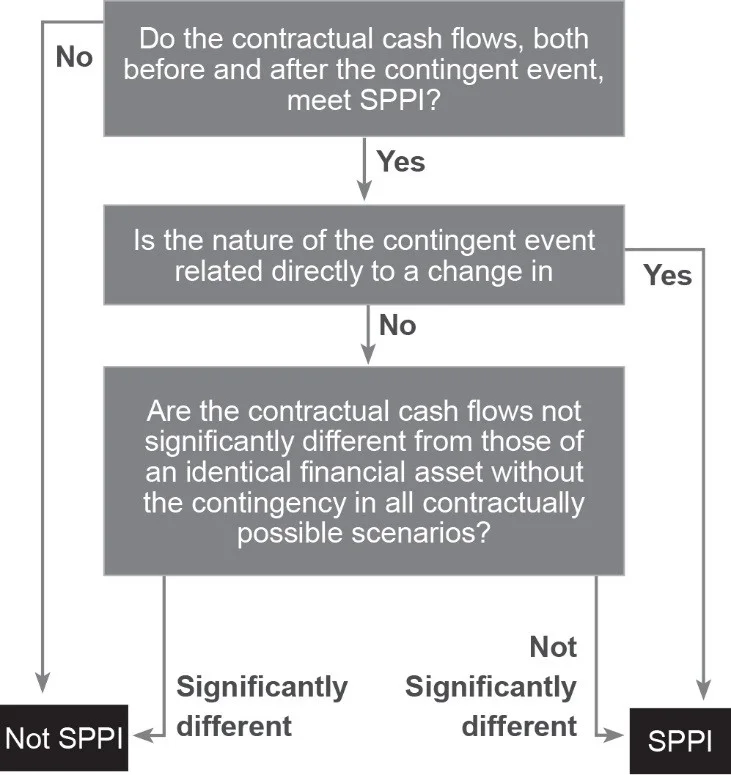
knowledge sharing through videos. While there is a lot more rigour in the
management of knowledge, it lacks sufficient focus on skills. To enhance skill
sets, video based learning is more useful, practical and quick to grasp.
Aspiring CAs or article clerks can build their key soft skills to develop their
careers more effectively through video based learning.

The Speaker was of the
opinion that today CAs broadly have their own practices or work in larger
organisations. They have a range of practices including taxation, audit and
even strategic advisory services for some aspects of business. Also,
professionals are exposed to a rapidly changing regulatory framework along with
a fluid client landscape and work culture.

Mr. Rahul also deliberated
upon the case studies on sales interaction and job interviews to make the
participants understand the need to develop soft skills. The meeting was very
interactive and participants benefitted a lot.    


“2nd Narayan
Varma Memorial Lecture” held on 18th August, 2017

The
Greatness of one’s life depends not on the number of years lived but rather on
the effect one leaves on the minds of one’s generation.

The 2nd Narayan
Varma Memorial Lecture & Narayan Varma Memorial Awards was organised
jointly by Bombay Chartered Accountants’ Society, Public Concern for Governance
Trust (PCGT) and Dharma Bharathi Mission(DBM)

The Programme was organised
in the memory of Late Narayan Varma who was closely associated with these
organisations and mentored & nurtured many members of these organisations
with his values, ideology & hard work. It was an occasion to salute and
remember him & also pay tribute to his spirit of giving, professionalism,
commitment towards service to humanity, relentless quest for truth &
justice, wit & wisdom, vision & planning and determination to make a
difference to Society. He always inspired many with his simplicity and humility
by setting an example.


Dr. Shashikala Gurpur

The Memorial Lecture was delivered
by Dr. Shashikala Gurpur, who is a distinguished academician and orator having
presented more than 200 lectures, workshops and seminars across India and
abroad. She has an outstanding career with a wide range of experience in
teaching, research and industry. In her address, she described Late Narayan
Varma’s life and his message to humanity. Dr. Gurpur also mentioned about the
role of giving by a responsible person in the society i.e. to connect with the
people, plunge into the movement for people and utilise resources for the good
of everybody. She described that human life is a gift of goodness without any
expectation and is a spontaneous but satisfying experience in the wonderful
journey of life. She explained that both passion and compassion make a person
innovative to do something new in life. Dr. Gurpur also referred to
intellectual and participative skills and managing conflict to achieve one’s
goal and mission in life. She further emphasised on the responsible citizenship
and patriotic belongingness to India.

In the meeting, three
distinguished persons were awarded for their humanitarian services namely Shri
Pankaj Udhas by DBM, Shri Pradeep Shah by BCAS and Shri Anand Bhandare by PCGT.

The meeting ended with
heart-warming memories and inspiration to work for the Society at large as a
real tribute to Shri Narayan Varma.

FEMA Study Circle Meeting
held on 21st August, 2017 at BCAS Hall

FEMA Study Circle Meeting
was held on the topic of “Analysis of select Compounding Orders passed by RBI”
at BCAS Conference Hall where CA. Harshal Bhuta & CA. Tanvi Vora led the
discussion. The session was chaired by CA. Rajesh P. Shah.

The Group leaders discussed
various Compounding Orders passed by RBI touching upon contraventions relating
to “Restrictions on dealing in Foreign exchange”, “Current Account
Transactions”, “ECB”, “Outbound Investment by Individuals”, “Outbound
Investment by LLP”, “Method of funding overseas direct investment”, etc. The
systematic analysis of these orders helped the participants to understand the
law and gain insights on ‘how to not contravene the same’.

CA. Rajesh P. Shah shared
his experience on various issues and that was a valuable takeaway for the
participants.

The participants gained a
lot and appreciated the views put in by the group leaders and the chairman.

Experts Chat on
Concept & Issues in “Place of Effective Management (POEM)” held on 1st
September 2017 at BCAS    

One thing certain about
life is its manifold uncertainties and the same can be aptly equated with the
newly introduced nascent concept of POEM- ‘Place of Effective Management.’ In
pursuance of the knowledge sharing on this subject, BCAS arranged an expert’s
chat where Mr. Kamlesh Varshney, CIT (International Taxation 2), New Delhi was
hosted by CA. Dinesh Kanabar on 1st September 2017 at BCAS
Conference Hall.  

The session encompassed
multiple aspects ranging from elementary concepts akin to primary intent,
genesis and comparative global practices, to complex conundrums pertaining to
e-presence in board meetings, threshold turnover calculation mechanism, DTAA
& Transfer Pricing implications, GAAR & MAT applicability.

L to R – Mr. Kamlesh Varshney and CA. Dinesh Kanabar

CA. Dinesh Kanabar proposed
poignant posers on wide-ranging matters such as (i) pre-POEM revenue leakage,
(ii) cost-benefit analysis of POEM implementation, (iii) effect on Indian
inbound-outbound investment ratio, (iv) CFC vis-a-vis POEM, (v)
practical existence of overseas business structures for non-tax objectives,
(vi) subjectivity in proceedings and confidentiality concerns in the Income Tax
department, (vii) availability of foreign tax credit, (viii) requirement of
clear-cut guidelines, (ix) FAQs, (x) circulars from Government, etc. Further,
practical impediments, excessive compliances resulting in genuine industry
grievances and necessity to safeguard bonafide entities were duly emphasised.

Several noteworthy points
highlighted in the Chat included – intent of POEM to curb Intentional Tax
Avoidance because profit shifting in tax havens by artificial restructuring,
emphasis on substance over legal form, minimal deep dive on satisfaction of
active business test and supporting documentation required for entities mainly
earning passive income. P/E peculiar issues, adequate documentation for Board
meetings and establishing controlling personnel were also explained.
Thereafter, Mr. Varshney remarked on assurance of confidentiality of disclosed
information pursuant to section 138 of IT Act and endeavour of overall
improvement & reduced litigation in Income Tax Department. He also touched
upon liberalisation and transitional issues.

The  pertinent point pertaining to unaltered
applicability of IT Act provisions specifically applicable to foreign companies
and a foreign company reclassified as resident by POEM drew a fine distinction
between residential status of a company and type of company. Discussions were
also carried out on provisions of draft notification u/s. 115JH of the IT Act
covering eligibility of resident entitled to specific benefits, tax rates for
reclassified foreign companies and implications on other person transacting
with reclassified foreign companies.

The above insightful and
thought-provoking deliberations were followed by Q&A session where queries
were meticulously answered by Mr. Varshney. The participants got highly enthralled
and enriched by the session.

Direct Tax Laws Study
Circle Meeting on “Implications of Ind-AS on MAT” held on 6th
September 2017 at BCAS Hall

The Chairman of the
session, CA. Sanjeev Lalan gave the opening remarks and pointed out some issues
relating to Ind-AS which could face litigation in the long run. The Group
leader, CA. Darshak Shah gave an overview on Ind-AS and its applicability to
companies, NBFCs and Insurance companies.

Thereafter, the group
leader briefly explained the impact of the provisions of MAT under Ind-AS
framework where in order to convert the books of accounts to Ind-AS, the
transition balance sheet has to be prepared from FY 2015-16. The same has been
clarified in the FAQs issued by the Indian Revenue authorities.

CA. Darshak Shah also
touched upon the adjustments under MAT where in case of items accounted under
‘OCI not re-classifiable to P&L’ i.e. revaluation of PPE and Intangible
assets and gains/ losses from investment in equity instruments designed at
FVOCI would be taxed under MAT on disposal only. Also, in case of items
considered as ‘Other Equity’ such as Investments in subsidiaries, JVs and AE
recorded at FMV and cumulative translation, differences of foreign operations
will be taxed under MAT on disposal.

Subsequently, he briefly
explained the provisions in case of certain items that would be offered to tax
equally over the period of 5 years like receivables provided based on expected
credit loss, fair value gains on derivative assets, gains/ loss on fair value
recognition on investments in MFs etc. The team leader then went through
certain case studies to explain various principles impacting the MAT
computation.

The participants got enriched through the
insights provided by the learned Speaker.