Subscribe to the Bombay Chartered Accountant Journal Subscribe Now!

Sections 194H read with section 40(a)(ia) of the Income Tax Act, 1961 – Mere distribution of the collected amount of commission does not require tax deduction if it is not shown as an expense.

fiogf49gjkf0d
5. (2013) 55 SOT 356 (Delhi)
ITO vs. Interserve Travels (P.) Ltd.
ITA No.3526 (Delhi) of 2010
A.Y.2006-07. Dated 18-05-2012
 
Sections 194H read with section 40(a)(ia) of the Income Tax Act, 1961 – Mere distribution of the collected amount of commission does not require tax deduction if it is not shown as an expense.

Facts

The assessee was engaged in business of travel agents. It had entered into a consortium agreement with 12 other members who were travel agents for booking air tickets through platform provided by `A’. The consortium members agreed that assessee would act as a lead member and authorised it to enter into contracts with `A’ to make collections and distribute monies to each of the consortium travel agents in proportion to segment bookings effected by each travel agent. The assessee collected commission for services rendered by other members and distributed said commission amongst members on priority basis. Though the TDS certificate issued by `A’ reflected commission of Rs. 65.72 lakh, the assessee distributed an amount of Rs. 52.22 lakh amongst members for services rendered by them in booking tickets, etc. Since assessee did not deduct tax at source while making payment of commission to travel agents, the Assessing Officer disallowed the amount of Rs. 52.22 lakh u/s. 40(a)(ia).

The CIT(A) held that since the amount of Rs. 52.22 lakh was not received for any services rendered by the assessee to `A’, the amount could not be treated as income of the assessee. Further, since the assessee did not claim the said amount as expenditure in its accounts, no tax was deducted at source by the assessee. Therefore, no disallowance could be made in terms of provisions of section 40(a)(ia).

Held
On further appeal by the Revenue, the Tribunal upheld the CIT(A)’s order. The Tribunal noted as under :

1. As is evident from the terms and conditions of the consortium agreement, the payment by the assessee to other consortium members is not voluntary. The assessee is under a legal obligation in terms of the agreement to pay the amount to other consortium members in accordance with settled terms.
2. There is nothing to suggest that the assessee rendered any service to `A’. It is the settled legal position that income accrues when an enforceable debt is created in favour of an assessee. In other words, income accrues when the assessee acquires the right to receive the same. The terms of the consortium agreement do not reveal any such right in favour of assessee. Income of Rs. 52.22 lakh rightfully belonged to the other consortium members to whom the amount was distributed by the assessee.
3. Since the assessee only distributed the income in terms of the agreement and this did not amount to incurring of an expenditure nor did the assessee claim any expenditure, there was no infirmity in the findings of the CIT(A) in deleting the disallowance u/s. 40(a)(ia).

levitra

ICAI and Its Member

1.    Code of Ethics

The Ethical Standards Board of ICAI has considered some issues relating to Code of Ethics. These issues are published on pages 1518-1520 of April, 2013, CA Journal. Some of these issues are as under.

(i) Issue No. 1
Can the name of a proprietary firm of a Chartered Accountant, after his death, be used by the C.A. who purchases the goodwill of the firm?

Response

The Council has taken the view that the goodwill of a proprietary firm of Chartered Accountant can be sold/transferred to another eligible member of the Institute, after the death of the proprietor concerned and the name of the firm can be used by the purchaser subject to following conditions:

(a)    in respect of cases where the death of the proprietor concerned occurred on or after 30-8-1998, if the sale is completed/effected in all respects and the Institute’s permission to practice in deceased’s proprietary firm name is sought within a year of the death of such proprietor concerned. In respect of these cases, the name of the proprietary firm concerned would be kept in abeyance (i.e. not removed on receipt of information about the death of the proprietor as is being done at present) only up to a period of one year from the death of proprietor concerned as aforesaid.

(b)    in respect of cases where the death of the proprietor concerned occurred on or after 30-8-1998 and there existed a dispute between the legal heirs of the deceased proprietor, the position is as under.

The information as to the existence of the dispute should be received by the Institute within a year of the death of the proprietor concerned. In respect of these cases, the name of the proprietary firm concerned shall be kept in abeyance till one year from the date of settlement of dispute.

ii) Issue No. 2
What is the meantime of communicating with the retiring auditor?

Response

Where a new auditor is appointed, the incoming auditor has an obligation to communicate the fact of his appointment to the retiring auditor and make enquiry as to whether there are any professional or other reasons why he should not accept the appointment.

This is intended not only as a mark of professional courtesy but also to know the reasons for the change in order to be able to safeguard member’s own interest, the legitimate interest of the public and the independence of the existing accountant. The provision is not intended, in any way, to prevent or obstruct the change.

The incoming auditor may not accept the audit in the following cases :-

(i)    Non-compliance of the provisions of Sections 224 and 225 of the Companies Act.

(ii)    Non-payment of undisputed audit fees by auditee’s other than in case of sick units for carrying out the statutory audit under the Companies Act, 1956 or various other statutes; and

(iii)    Issuance of a qualified report.

(iii) Issue No. 3
Can a member act as a Tax Auditor and Internal Auditor of an entity?

Response

The Council has decided that Tax Auditor cannot act as an Internal Auditor or vice-versa for the same financial year.

(iv) Issue No. 4

Can a Concurrent Auditor of a Bank also undertake the assignment of quarterly review of the same bank?

Response

The Concurrent audit and the Assignment of quarterly review of the same entity cannot be taken simultaneously as the concurrent audit is a kind of internal audit and the quarterly review is a kind of statutory audit. It is prohibited in terms of the ‘Guidance Note on Independence of Auditors’.

2.    EAC Opinion

Treatment of Expenditure on Stabilisation of Expanded Plant Declared Commercial.

Facts:


(i)    A company (company) engaged in petrochemicals business decided for an expansion project to enhance the production capacity of its mother plant by about 30%. The expansion project was of a complex nature requiring integration of its mother plant with various downstream plants. The execution of the project started in the year 2006.

(ii)    The company stated that after completion of the major activities of the said project, the existing plant was shut down from October, 2009 to February, 2010 for completing the installation, integration and commissioning of the project / plant. Although the existing plant which was shut down during this installation period came into operation from February, 2010, the Parallel Chilling Train and the Extended Binary Refrigeration (EBR) Compressor had not been successfully integrated. As a result, the capacity of the mother plant had not been ramped up and the increased feed from mother plant to auxiliary and other downstream plants had not been achieved. In view of this, the expansion project was not declared commissioned in February, 2010. The plant started operation at nearly 95% of the enhanced capacity (without one heater which was damaged in fire in July, 2009 and was under reconstruction) for about a month following the integration and commissioning of the EBR and the New Chilling Train (NCT) in May, 2010 and based on an internal certification, the management decided to go ahead with the capitalisation of the project in the books of account in June, 2010.

(iii)    In view of the frequent problems faced by the company post commissioning of the project, non-achievement of the expanded capacity of the plant and also considering the opinion given by the licensor, the management of the company has prospectively realised that the expansion project which was commissioned and capitalised in June, 2010 has not yet fully stabilised to operate at the enhanced capacity on a consistent basis.

(iv)    Therefore, the management of the company is of the opinion that (i) Till stabilisation and successful commissioning of the plant in compliance of the criteria and parameters recommended by the licensor, the company should consider costs relating to the expansion project so capitalised earlier as capital work in progress. (ii) All subsequent expenditure for rectification of the defects, shut down cost, revenues, gain and loss, etc., incurred during the commissioning and stabilisation period of this expansion project should form part of the project cost (iii) Capitalisation of all such costs as mentioned in point (i) and (ii) above in the books in the year of such successful commissioning.

Query:

(v)    On the basis of the above, the company has sought the opinion of the EAC on the aforesaid accounting treatment and whether the same is in conformity with the applicable accounting principles and Accounting Standards.

EAC Opinion

(vi)    The Committee notes that the basic issue raised in the query relate to accounting for expenditure on rectification of defects, shut down costs, revenues, gains and losses, etc., incurred during the stabilisation period of the expansion project after declaration of its commissioning and fitness for commercial production in June, 2010 and determination of the point of time when costs relating to expansion project should be capitalised along with the plant.

(vii)After considering the facts stated in (i) above and Paragraphs 9.4 and 9.4 of AS 10 – “Accounting for Fixed Assets” the Committee is of the view that the activities undertaken for stabilisation of plant cannot be treated as the test run as prescribed in the Standard. The purpose of test run, in the view of the Committee, is to ascertain whether the plant and machinery and other relevant facilities, as installed, give the commercially feasible output in terms of quality and quantity. If during the test run, the production standards are not met, normally, the production is stopped and necessary alterations/modifications are made in the plant and machinery. It may be necessary to carry out test runs(s) further until the output of commercially feasible quality and quantity is obtained. The Committee notes that in the company’s case, the plant after expansion was operational at 95% of the enhanced capacity and was able to produce the commercially feasible goods, and, therefore, was ready for commercial production in June, 2010. Accordingly, in the company’s case, capitalisation of expenditure on rectification of defects, shut down costs, revenues, gains and loss, etc. incurred after declaration of commissioning of the expansion project in June, 210 is not appropriate. Therefore, the question of writing back the costs related to the expansion project, capitalised earlier, in June 2010 to ‘capital work in progress’, as stated by the company does not arise.

[Pl. Refer Page nos. 1558 to 1561 of C. A. Journal – April , 2013]

3. ICAI News

(Note :    The page nos given below are from CA Journal of April, 2013)

(i)  ICAI Towers, BKC, Mumbai

ICAI Towers at BKC, Mumbai, was dedicated to ICAI members and students on 15-3-2013 by the Union Corporate Affairs Minister, Shri Sachin Pilot. The Towers has ground + 8 floors which will house the WIRC office as well as ICAI Decentralised office. This building is spread over 32090 sq. ft. (Page 1506)

(ii) Industrial Training for Articled Assistants

CA Regulations, 1988 provide scope for Industrial Training facilitating articled assistants real life exposure in office workings at industry and service organisations in order to develop their professional acumen. Industrial Training is highly benefiting to articled assistants in terms of practical knowledge & learning. The period of Industrial Training may range between nine months to twelve months during last year of the prescribed period of Practical Training under CA Course.

An articled assistant who has passed Intermediate (Integrated Professional Competence) Examination/

Intermediate (Professional Competence) Examination Professional Education (Examination-II)/Intermediate Examination may serve as an Industrial Trainee in any of the financial, commercial, industrial undertakings under an eligible member of the Institute working with such organisation. A list of registered organisations permitted to impart Industrial Training is available at the ICAI website.

Members are requested to inform and encourage their articled assistants to pursue industrial training by fulfilling the above eligibility. Detailed information and prescribed application forms are available on ICAI website www.icai.org as well from concerned regional offices of ICAI.

Members serving in such organisations/industries are also requested to apply separately in the prescribed form for empanelment of their organisation with the Institute for imparting Industrial Training (Page 1646).

(iii) Secondment of Articled Assistants

CA Regulations, 1988 provide scope for Secondment of articled assistant facilitating an opportunity for gaining practical experience in multi-disciplinary work and variety of business situations. A principal may second an articled assistant to other member/s with a view to provide him/her training in the areas where the principal/articled assistant may require. Secondment can also be availed during Industrial Training.

Such Secondment can be done under an eligible member whether in practice or in employment. A member can provide secondment upto maximum two articled assistants at a time. The minimum period of secondment shall be four months and the maximum period shall be one year which may be served with more than one member. During the period of secondment, the member with whom the articled assistant is seconded shall pay stipend at the rates prescribed under CA Regulations. A record of training imparted during secondment will be properly maintained.

For Secondment, a statement in the form containing particulars of training needs to be filed with the Institute within 30 days from the date of commencement of training on secondment.

Members may inform their articled assistants regarding secondment and encourage them to undergo secondment with an eligible member for training in the desired field. Detailed information and prescribed application form of secondment is available on ICAI website www.icai.org as well as with the concerned regional offices of ICAI. (Page 1646)

(iv) Quality Review Board

The Government of India has constituted Quality Review Board (QRB) u/s. 28A of CA Act. Details about its constitution and functions are published on page 1648 of CA Journal for April, 2013. Our members interested in working as “Technical Reviewers” for QRB can empanel their names with QRB as stated in ICAI Note at page 1648.

(v)    Notification about consequences of breach of C.A. Regulation 65

The Executive Committee of ICAI has noticed that some Articled Assistants are pursuing more than one study courses, besides C.A. Course, during their training period. This amounts to breach of CA Regulation 65. Council is taking a serious view about this non-compliance of CA Regulations. The Notification states that in the cases of Articled Trainees, who have not complied with this Regulation, ICAI will not grant Membership after they qualify for the period during which there was non-compliance. It is also clarified that appropriate action will be taken against the members who have trained such Articled Trainees (Page 1517).

Sections 45(4) read with section 2(47) of the Income Tax Act, 1961 – Capital gain tax cannot be levied on firm on mere admission of partner if there was no distribution of any capital asset.

fiogf49gjkf0d
4. (2013) 55 SOT 122 (Mumbai)
ITO vs. Fine Developers
ITA No.4630 (Mum.) of 2011
A.Y.2008-09. Dated 12-10-2012

Sections 45(4) read with section 2(47) of the Income Tax Act, 1961 – Capital gain tax cannot be levied on firm on mere admission of partner if there was no distribution of any capital asset.


Facts

During the relevant assessment year, the assesseefirm of builders and developers admitted HDIL as a new partner with 50% share. The Assessing Officer held that on the date of admission, there was a plot of land costing Rs. 28 crore held by the firm and 50% of such amount was transferred in favour of the new partner HDIL on its admission in the firm. Accordingly to the Assessing Officer the assesseefirm was, therefore, liable to capital gain tax u/s. 45(4).

The CIT(A) held that :
a. During the relevant assessment year there was only admission of HDIL as new partner in the firm.
b. There was neither retirement nor distribution of assets nor revaluation of plot of land during the assessment year under consideration.
c. Mere admission of partners did not attract provisions of section 45(4).
d. During the continuance of the partnership-firm, rights of the partners were confined to obtaining the share of the profit and no partner could have exclusive claim to any assets.

Accordingly, the addition made by the Assessing Officer was set aside.

Held
On appeal by the Revenue, the Tribunal dismissed the appeal. The Tribunal noted as under :

1. It is not a case where firm was taken over by the new partner so that provisions of section 45(4) can be invoked. As per the settled principles of law of partnership, during the continuation of the partnership, partners do not have separate right over the assets of the firm in addition to interest in share of profits. The basis of the said proposition is that value of the interest of each partner with reference to the assets of the firm cannot be isolated and carved out from the value of the partners’ interest in the totality of the partnership assets.

2. In the case under consideration, asset of the firm, i.e., plot of land, was never transferred to anybody – it always remained with the assesseefirm only. From the date of purchase of the plot till 27-05-2008, when three partners retired, it was the asset of the firm and there was no change in the ownership of the said plot. Thus, there was no extinguishment of rights, as envisaged by section 2(47), in the case of assessee-firm.

3. From the very beginning of the partnership, the plot of land in question was treated as stockin- trade by the assessee-firm. Even on 31-03- 2008 it was shown as current asset (i.e. W-I-P) in the balance sheet. The Assessing Officer has nowhere rebutted/doubted this factual position.

levitra

Guarantor’s Liability

fiogf49gjkf0d
Introduction

How often have we come
across requests from close friends and relatives to stand as a guarantor
for a loan proposed to be taken by them? The loans could be housing
loans or for business. Further, one is also conversant with promoters of
companies/partners of firms standing as guarantors for loans obtained
by their entities. This is even true in case of large listed companies
where the promoters, managing directors, etc., are required to furnish
promoter guarantee. If the going is good and the original debtor meets
his dues, then all is well that ends well. However, what happens if the
original debtor cannot/does not meet his dues and the creditor/bank
invokes the guarantee furnished by the guarantor? Does the creditor have
to first approach the primary borrower or can he directly approach the
guarantor who may be in a better financial position than the borrower?
Let us look at some of the issues arising in this important aspect of
trade and commerce.

Meaning of Guarantee

Section
126 of the Indian Contract Act, 1872 defines a ‘contract of guarantee’
as a contract to perform the promise or discharge the liability of a
third person in the case of the third person’s default. Performance
guarantees/bank guarantees are also instances of contracts of guarantee.
For instance, Mr. A agrees to pay the housing loan amount borrowed by
Mr. C from a bank if Mr. C cannot/does not pay the loan. This is a
contract of guarantee.

A contract of guarantee is not a contract
in respect of a primary transaction but it is an independent
transaction containing independent and reciprocal obligations —
Industrial Finance Corp. v. Cannanore Spg. and Wvg. Mills, (2002) 5 SCC
54.

The person who gives the guarantee is called a surety or a
guarantor, the person to whom the guarantee is given is called the
creditor and the third person on whose behalf the guarantee is given is
called the principal debtor. Thus, the essentials of a guarantee are as
follows:

(a) It is a contract and so all the elements of a valid
contract are a must. Without a contract this section has no
application. Since a contract is a must, it goes without saying that all
the prerequisites of a contract also follow. Thus, if the contract has
been obtained by fraud, misrepresentation, coercion, etc., then it is
void ab initio and the section would also fail — Ariff v. Jadunath,
(1931) AIR PC 79. The contract may be oral or written.

(b) There
must be a principal debtor-creditor relationship. Without this there
can be no contract of guarantee. The surety’s obligations arise only
when the principal debtor defaults and not otherwise.

(c) It is a tri-partite arrangement, involving the surety, the principal debtor and the creditor.

(d) There must be a consideration for the surety. If there is no consideration at all, then the surety agreement is void.

However,
anything done or any promise made for the benefit of the principal
debtor is sufficient consideration to the surety for giving the
guarantee. A contract of guarantee is a complete contract by itself and
separate from the underlying contract. Enforcement of an on-demand bank
guarantee in accordance with the terms of the bank guarantee would not
be the subject-matter of judicial intervention. The only reason why
Courts would interfere if the invocation is not as per the terms of the
guarantee or it has been obtained by fraud — National Highways Authority
of India v. Ganga Enterprises, (2003) 7 SCC 410.

Nature of liability

The
liability of the surety is co-extensive with that of the principal
debtor. However, the contract may provide otherwise. Thus, the guarantor
has to pay all debts, interest, penal charges, etc., payable by the
principal debtor. He is liable for whatever the debtor is liable. Where
the liability arises only on the happening of some event, then the
guarantee cannot be invoked till such contingency has happened. Even if
winding-up proceedings have been filed against the principal debtor, the
surety would remain liable to pay to the creditor. A discharge of the
principal debtor by operation of law does not absolve the surety of his
liability — Maharashtra State Electricity Board v. OL, (1982) 3 SCC 358.

Continuing Guarantee

A guarantee which extends
to a series of transactions is a continuing guarantee. Whether or not a
contract is a continuing guarantee is to be ascertained from the
language of the transaction. For instance, Mr. A guarantees payment of
all dues by Mr. X to Mr. C in respect of goods supplied by Mr. C. This
is an example of continuing guarantee and does not come to an end with
the clearance of the first payment. A continuing guarantee can be
revoked at any time by giving notice to the creditor. However, the
revocation operates only in respect of future transactions.
Alternatively, the death of a surety revokes all future transactions
under a continuing guarantee.

Alterations

Any
variation made in the contract of guarantee without the guarantor’s
consent by the principal debtor and the creditor, discharges the
guarantor from all transactions after the variation. For instance, Mr. C
agrees to lend money on 1st June to Mr. B, repayment of the same
guaranteed by Mr. A. Mr. C instead lends on 1st April. The surety is
discharged from his obligations since the creditor may now demand a
repayment earlier than what was originally agreed upon. However, if
there is an unsubstantial alteration which is to the surety’s benefit,
then the surety is not discharged from his liability. However, if the
alteration is to the disadvantage of the surety, then the surety can
claim a discharge.

Discharge

The guarantor is
discharged by any contract between the creditor and the principal debtor
by which the debtor is released of by any act of the creditor which
results in the discharge of the debtor. For instance, A guarantees the
repayment of the loan taken by X Ltd from C Ltd provided C Ltd supplies
certain goods to X Ltd. C Ltd does not supply the goods as agreed. A is
discharged from his guarantee. Similarly, a contract between the
creditor and the principal debtor under which the creditor gives a
concession or extends the time for repayment to the principal debtor,
releases the guarantor from his obligations.

If the creditor
does anything which affects the rights of the surety or omits to do
anything which we was required to do to the surety, then the guarantee
contract comes to an end. Thus, the creditor cannot gain out of any
negligence on his own accord.

However, it has been held that the
discharge of the principal debtor by virtue of a Statute/Notification
does not discharge the guarantor — SBI v. Saksaria Sugar Mills, (1986) 2
SCC 145.

Guarantor steps into shoes of creditor

On
discharge of the liability of the principal debtor, the guarantor steps
into the shoes of the creditor, i.e., he becomes entitled to all
actions and rights against the principal debtor which the creditor had.
He also becomes entitled to the benefit of all security which the
creditor had against the debtor, whether or not the surety is aware of
the security. The term ‘security’ includes all rights which the creditor
had against the property of the principal debtor on the date of the
contract — State of MP v. Kaluram, AIR 1967 SC 1105.

In case the creditor loses or parts with security without consent of the security, then the surety is discharged to the extent of the value of the security. In one case, the debtor gave a guarantee and a pledge of his goods as security for loan to a bank. The surety was aware of the pledge. However, the bank lost the goods due to its own fault. Held, that the surety was discharged from his obligations — State Bank v. Chitranjan Raja, 51 Comp. Cases 618 (SC).

Must creditor first proceed against debtor?

The law in this respect is very clear. The creditor is free to directly proceed against the guarantor instead of first approaching the principal debtor and then failing him, the guarantor/surety.

In Bank of Bihar Ltd. v. Damodar Prasad, (1969) 1 SCR 620, the Supreme Court held that it is the duty of the surety to pay the amount. On such payment he will be subrogated to the rights of the creditor under the Indian Contract Act, and he may then recover the amount from the principal debtor. The very object of the guarantee is defeated if the creditor is asked to postpone his remedies against the surety. In that case the creditor was a bank. It was held that a guarantee is a collateral security usually taken by a banker. The security will become useless if his rights against the surety can be so easily cut down.

In State Bank of India v. M/s. Indexport, (1992) 3 SCC 159, it was held that the decree-holder bank can execute the decree against the guarantor without proceeding against the principal borrower and then proceeded to observe:

“The execution of the money decree is not made dependent on first applying for execution of the mortgage decree. The choice is left entirely with the decree-holder. The question arises whether a decree which is framed as a composite decree, as a matter of law, must be executed against the mortgage property first or can a money decree, which covers whole or part of decretal amount covering mortgage decree can be execute earlier. There is nothing in law which provides such a composite decree to be first executed only against the principal debtor.”

In Industrial Investment Bank of India
Limited v. Biswanath Jhunjhunwala, (2009)
9 SCC 478, it was held that the liability of the guarantor and principal debtor is co-extensive and not in alternative and the creditor/decree-holder has the right to proceed against either for recovery of dues or realisation of the decretal amount.

SARFAESI Act vis-à-vis Surety

A related question which arises is what is the position of the guarantor under the SARFAESI Act in case he gives a security for a loan borrowed by the principal debtor from a bank/financial institution. The Securitisation and Reconstruction of Financial Assets and Enforcement of Security Interest Act, 2002 (‘the SARFAESI Act’) ensures that dues of secured creditors including banks, financial institutions are recovered from the defaulting borrowers without any obstruction. Secured creditors have been empowered to take steps for recovery of their dues without intervention of the Courts or Tribunals by directly taking over the properties of the borrowers.

In the case of Union Bank of India v. Satyawati Tondon, (2010) 8 SCC 110, the Supreme Court had an occasion to consider the position of the guarantor under the SARFAESI Act. In this case, the guarantor mortgaged her property as security for the loan given by the bank to the principal debtor. She also executed an agreement of guarantee for the principal and interest amount. The loan account became an NPA and the bank directly approached the guarantor for the amounts due. On her failure to repay, the bank invoked

the provisions of the SARFAESI Act against her and took possession of her mortgaged property. The Supreme Court held that nothing prevents the bank from directly approaching the guarantor without first approaching the debtor. It further held that the action taken by the bank for recovery of its dues by issuing notices under the SARFAESI Act cannot be faulted on any legally permissible ground.

It further held that if the guarantor had any tangible grievance against the recovery proceedings under the

SARFAESI Act, then she could have availed remedy by filing an application u/s.17(1) of the Act before the Debt Recovery Tribunal. The expression ‘any person’ used in the Act is of wide import. It takes within its fold, not

only the borrower but also guarantor or any other person who may be affected by the action taken under the Act. Both, the DRT and the Appellate Tribunal are empowered to pass interim orders under the Act and are required to decide the matters within a fixed time schedule. It is thus evident that the remedies available to an aggrieved person under the SARFAESI Act are both expeditious and effective.

Epilogue

The guarantor’s liability is like the proverbial ‘Sword of Damocles’ which is hanging by a very slender thread and can come down at any time. One may even rephrase the legal maxim of ‘Caveat Emptor’ to say ‘Guarantor be aware of what you guarantee’. Thus, it is very important that before giving any promoter/ personal guarantee, a person is well aware of the risks and consequences of the same.

Succession — Right of daughter-in-law — Devolution of interest — Notional Partition — Hindu Succession Act, 1956, section 6.

fiogf49gjkf0d
The grievance of the appellant (Deft. No. 7) was that she being one of the daughters of the propositor should have been granted a decree for 1/3rd share in all the suit schedule properties, more particularly when it had been established on record that the suit schedule properties are the ancestral properties of the joint family consisting of plaintiffs and defendants of which her husband was a member. The Trial Court decided the issue in favour; however, due to some mistake the same is not reflected in the operative portion of the decree. Though a rectification application u/s.152 of CPC could be applied, however, the defendant No. 7 preferred the appeal.

The Court observed that the 7th defendant preferred the appeal with the ambitious intention of augmenting her share further. While 1/3rd share in terms of the judgment was the correct share to which the 7th defendant was entitled to, the further claim for augmenting her share by claiming a share in a share allotted to her father-in-law making a claim for 1/2 share is only an ambitious claim not tenable in law as the daughter-in-law in the family can claim only through her husband and not as a direct heir to her father-in-law. The appellant cannot get any share from out of the properties allotted notionally to the share of a father-in-law who was no more.

Even otherwise, in Hindu law the shares of joint family members are determined per stripes vis-àvis their position in the family and not by what they would have got with reference to a notional partition that has to be effected at that point of time when a member of the family who is no more as of now. This is not the legal position either by applying the customary law or by the Hindu Succession Act. Therefore, the claim of the appellant for enhancing her 1/3rd share to ½ share was not tenable and the appeal was to be disposed by affirming 1/3rd share granted by the Trial Court.

Insofar as the sharing ratio particularly vis-à-vis the 4th plaintiff was concerned, a daughter in the family, who was married and the partition taking place subsequent to her marriage.

The 1/3rd share allotted to the 4th plaintiff by the learned Trial Judge becomes validated by the strides taken by the legislation in amending section 6 of the Hindu Succession Act, 1956 by Act No. 39 of 2005. The share claimed by the appellant in the dwelling units on the premise that a married daughter cannot get a share in the dwelling house of the family also does not sustain in the wake of the legislative development, which would apply while disposing of the appeal.

levitra

Recovery — Hire-purchase agreement — Taking back the possession of vehicle by use of force is against provision of law and RBI Guidelines — Consumer Protection Act, section 21.

fiogf49gjkf0d
[Citi Corpn. Maruti Finance Ltd. v. S. Vijayalaxmi, AIR 2012 Supreme Court 509]

On 4th April, 2000, at the initiative of the respondent, a hire-purchase agreement was entered into between the appellant and the respondent, to enable the respondent to avail of the benefit of hire-purchase in respect of a Maruti Omni Car. Clause 2.1 of the hire-purchase agreement provided for payment of the hire charges in the manner stipulated in the agreement and it also indicated that timely payment of the hire charges was the essence of the agreement. On the failure of the respondent to pay the hire charges in terms of the repayment schedule, the appellant sent a legal notice to the respondent on 10th October, 2002, recalling the entire hire-purchase facility.

Pursuant to a request made by the respondent, the appellant made a one-time offer of settlement for liquidating the outstanding dues of Rs. 1,26,564.84p. for Rs.60,000, subject to payment being made by the respondent by 16th May, 2003, in cash. Thereafter, in keeping with the terms and conditions of the hire-purchase agreement, the appellant took possession of the financed vehicle and informed the concerned police station before and after taking possession of the vehicle from the residence of the respondent. It was also the appellant’s case that subsequent thereto, the date of the settlement offer was extended as a special case, but despite the same, the respondent failed to pay the amount even within the extended period. It is on account of such default that the appellant was constrained to sell the vehicle after having the same valued by approved valuers and inviting bids from interested parties.

In June, 2003, the respondent filed consumer complaint before the Consumer Disputes Redressal Forum, against the appellant alleging deficiency in service on their part. By its order dated 22nd December, 2003, the District Forum, directed the appellant to pay a sum of Rs.1,50,000, along with interest at the rate of 9% per annum, from the date of filing of the complaint till the date of payment, together with a further sum of Rs.5,000 towards harassment and cost of litigation. The National Commission, while dismissing the revision petition modified the order of the State Commission. The Commission directed the appellant to pay a sum of Rs.10,000 to the complainant/respondent by way of cost.

On appeal to the Supreme Court, the Court observed that the lower forum had held that the vehicle had been illegally and/or wrongfully recovered by use of force from the loanees. The Court observed that recovery process should be effected in accordance with due process of law and not with use of force. Although till such time as ownership is not transferred to purchaser hirer normally continues to be the owner of goods, but that does not entitle him on strength of the agreement to take back possession of vehicle by use of force. Such acts are in violation of RBI guidelines. Hence, recovery by financial corporation was against process of law and RBI guidelines and hence order of Consumer Forum directing financial corporation to compensate the purchaser was proper.

levitra

Month — Interpretation of term ‘Month’ — Number of days in that month is not criterion and month alone is criterion — General Clauses Act — Section 3(35).

fiogf49gjkf0d
An application was filed by the appellant to declare respondents Nos. 1 and 2 as insolvents which was allowed by the lower Court. The appeal against the said order was allowed by the Additional District Judge on the legal aspect that the application filed by the appellant was barred by time without going into other contentions. Before the High Court the appellant contended that the order of the lower Court holding that the application barred by limitation was not correct. Admittedly, as per the provisions of section 9 of the Provincial Insolvency Act an application to declare a person as insolvent shall be filed within a period of three months from the date of act of insolvency. The act of insolvency, in this case was on 8-6-2001. The application was filed on 7-9-2001. The lower Appellate Court has considered that the period of limitation as 90 days and consequently, held that the application had been filed after a period of 90 days therefore barred by time.

The Court observed that there was nothing in the provisions u/s.9 of the Provincial Insolvency Act that the period of limitation is 90 days. As per section 3 s.s 35 of the General Clauses Act, ‘month’ shall mean a month reckoned according to the British calendar. Therefore, it is not 90 days that has to be taken into consideration. Evidently, the months of July and August have got 31 days and consequently, the number of days in that month is not the criterion and the month alone is the criterion. In this connection, reliance was placed on a decision reported in in re V. S. Metha and others, AIR 1970 AP 234, wherein it was held by the Division Bench of the High Court that the expression ‘month’ in the statute does not necessarily mean 30 days, but goes according to the Gregorian calendar, unless the context otherwise requires. Therefore, when the period of three months was mentioned u/s.106 of the Factories Act in that case, the Court held that it does not mean 90 days and it means three calendar months.

Accordingly the appeal was allowed and matter was remanded to consider the matter on merits.

levitra

A Report on Jal Erach Dastur Students’ Annual Day Function held on 23rd February 2013 at the Navinbhai Thakkar Auditorium, Vile Parle, Mumbai.

fiogf49gjkf0d
The Students’ Forum of Human Resources Committee organised this function for the CA Students. The programme commenced with Saraswati Vandana and was followed by a welcome address by Mr. Naushad Panjwani, Vice President. Mr. Mayur Nayak, Chairman of the HR Committee, praised the efforts put in by students in organising this mammoth event and outlined various activities carried out by the Students Forum.

Mr. Nilesh Vikamsey central council member of the ICAI in his, the Keynote address , gave a very inspiring presentation titled “Power of Dream & Power of Positivity”.

To mark the Annual Day four competitions were held, namely, Essay Writing, Elocution, Debate and Talent Showcase. The results are as given below. 1.

Essay Writing Competition

The judges Mr. Vipin Batavia, Ms. Sangeeta Pandit and Mr. Mukesh Trivedi evaluated essays written by 59 students and prizes were awarded to the following three :

Award Name of the Participant Name of the Firm
First Prize Charmi Doshi Pradip Kapasi & Co.
Second Prize Aneri Merchant Rashmi Modi & Co.
Third Prize Mudit Yadav NMAH & Associates
2. Elocution Competition

The Elocution Competition was organised under the auspices of Smt. Chandanben Maganlal Bhatt Foundation and was graced by the presence of

Mr. Mukesh Bhatt, a family member, who presented the trophies to the winners.

Out of thirty-six students who participated in the elimination round, eight students made it to the final round. The judges of the elimination round were Ms. Shruti Shah, Mr. Nitin Shingala, and Mr. Mihir Sheth.

The judges for the final round were Mr. Suresh Prabhu, Mr. Atul Bheda, and Mr. Shrikant Kanetkar. As the competition was intense the Judges in their discretion awarded 5 prizes as against 3 normally declared.

The winners are as follows:

Award Name of the Participant Name of the Firm
First Prize Kartik Srinivasan Pankaj Parekh & Co
Second Prize Shweta Agarwal Churuwala & Associates
Third Prize Mudit Yadav NMAH & Associates
Consolation Prize Amishi Vora Pradip Kapasi & Co.
Consolation prize Kush ganantra Paras Sheth & Associates
3. DebatingCompetition
Out of fifty-one student participants in the elimination round, sixteen participants made it to the final round. The final round was moderated by Mr. Ashish Fafadia in his inimitable style by involving the audience and this made the debate even more interesting. He was assisted by Mr. Mukesh Trivedi and Mr. Krishna Kumar Jhunjhunwala, judges for competition.

The winners are as follows:

4. Talent Show

Out of the twelve nominations, nine participants were selected for the final round of the Talent Show that was judged by Mr. Suril Shah and Mr. Nipun Nayak. The following three performers were adjudged winners.

The winners are as follows:


The Annual Day was attended by nearly 300 strong audience comprising mainly of the students, who were enthusiastically supported by their appreciative Principals and Parents. The event was compered by Ms. Khushboo Shah and Mr. Chintan Shah with active support of Ms. Shweta Agarwal.

The participants and the audience bonded over a sumptuous and delicious dinner and left home refreshed by joyful learning and a fun-filled experience.

When gold falls – Govt cannot assume it will solve current account problem

fiogf49gjkf0d
Gold prices, which have been falling for the last six months, have a major impact on the current account deficit. The precious metal is the second-largest item in the import bill. The current account deficit is running at $75 billion, and gold imports at $42 billion (April 2012-January 2013) account for over half that. Indian households are the biggest gold bugs in the world; they hold, according to some estimates, over 25,000 tonnes. The precious metal is now in the middle of the longest correction of the last 15 years, with the price down 15 per cent from the all-time highs of 2012. If the trend continues, it could considerably ease worries on the external front. Given that the first 10 months of 2012-13 saw imports of $42 billion, full-year imports will be lower than the $56 billion imported in 2011-12. But in January 2013, as prices fell, the month’s imports rose 23 per cent in volume terms, to over 100 tonnes. This spike was partly driven by speculation that import duty would be hiked in the Budget, which was not the case. However, if demand is elastic enough, the fear is that the import bill may actually increase despite lower prices. Indian prices track international prices closely, with a premium in the festive season as weddings account for a base demand of about 500 tonnes. The traditional fascination with gold has been reinforced by a 10-year bull run, at a compounded annual growth rate of over 19 per cent. Gold went up from about $300/ounce (about $11 a gram) in 2002 to an all-time high of above $1,900 ($66 a gram) in mid-2012 before dropping back to the current $1,600 ($53 a gram). In the past three years, its value as a hedge has also come into play as consumer inflation ran high. The reputation as a hedge against currency weakness and inflation may have been self-fulfilling. As fears of currency weakness developed, legendary traders such as George Soros and John Paulson took massive positions, driving prices up. The Indian government has tried several measures to reduce domestic gold demand, without much success. The import duty has been raised from two per cent to six per cent in phases. It cannot be raised further without attracting smuggling on a large scale. The 2013-14 Budget introduced the concept of inflation-indexed bonds, which may be an alternative hedge. Such an instrument would have to be structured and marketed in a fashion that appeals to conservative housewives, who view gold as a default asset.

levitra

Judges must stay clear of policy matters unless in conflict with Constitution: CJI

fiogf49gjkf0d
Judges should not normally interfere with policy matters unless they are in conflict with the Constitution and the law, Chief Justice of India Altamas Kabir said on Sunday at the end of a conference of chief justices of High Courts and state Chief Ministers. Judges should also refrain from commenting unnecessarily on other constitutional authorities, he said. “As a general principle, we don’t interfere.”

The CJI’s remarks can be seen as both introspection and a cautionary note to courts which have been very active of late in policy areas. The top court itself is dealing with several challenges to policy whether it be FDI in retail, coal block allocations or environmental clearances to major industrial projects.

The top court’s decision to set aside 2G spectrum licences over irregularities had marked a remarkable departure from courts’ reluctance to interfere in policy matters. Responding to a question about the proposed Judges’ Accountability Bill, which has a clause that bars judges from commenting on unrelated issues while dealing with a case, the Chief Justice said: “Unnecessary comments should not be made. I agree on that.”

levitra

PM Manmohan Singh – Analytical lion, prescriptive lamb

fiogf49gjkf0d
The speech given by Prime Minister Manmohan Singh to business leaders last week was unfortunately overshadowed in media coverage by a largely vacuous speech by Congress vice-president Rahul Gandhi to the same audience.

Singh provided a clear sense of how he looks at the current economic situation. There was little to fault there in terms of economic analysis, though one cannot miss the hidden irony that he spoke as if the policy mess created by his government since 2004 has no role in the current slowdown.

There are three significant points he made.

First, the general economic slowdown cannot be dealt with unless there is a revival in private sector investment. Singh believes investment depends on the psychological mood, or what John Maynard Keynes called animal spirits of entrepreneurs.

Second, Singh did well to highlight the absolute necessity to bring down the fiscal deficit, not only because of its inevitable inflationary consequences but also its role in undermining the India growth story. Once again, there was no mention of why we are close to a fiscal crisis. The fiscal deterioration began before the crisis, with the farm loan waiver in February 2008.

Finally, Singh warned that the current account deficit, still the single biggest risk to economic stability, will be higher than acceptable for at least a few more years. “We have to accept that our exports will be weak and our current account deficit…higher than it should be,” he said. “We have to learn to cope with these problems.” He added that India will have to plan to finance a high current account deficit for a few years.

Singh’s speech had professorial clarity of analysis but lacked a strong agenda one expects from a national leader. That is an old problem.

levitra

Empowering a new CAG

fiogf49gjkf0d
Many recent reports of the Comptroller and Auditor General of India (CAG) have highlighted grave discrepancies in government expenditure and deliberate distortions of stated policies. These reports and their aftermath demonstrate the true potential of the office of the CAG to force action against corruption. As the custodian of the public purse, it is one of the key actors in the system of checks and balances envisaged under our Constitution. In fact, today the CAG is likely the most important functionary responsible for ensuring accountability of the government.

However, the CAG can do justice to this role only if he is competent, independent and suitably empowered. Sadly, the current framework compromises this, leaving room for abuse in appointments, as well as limiting the CAG’s authority to effectively perform his constitutional duties. This is particularly important now, as the appointment of a new CAG looms on the horizon.

The CAG’s appointment process is a legacy from the pre-Independence ‘not-accountable-to-Indians’ mindset, whereby it is entirely at the government’s discretion. Given the governing coalition’s exasperation with the incumbent, it is probable that this time around it will look for someone who is likely to be favorably inclined towards the government, or at the least be ineffective.

To ensure that the independence of the CAG does not depend on the morals of the government of the day, his appointment should reflect real checks and balances. My formula would have the CAG appointed by a committee consisting of the Speaker, the prime minister and the two leaders of the opposition in the Lok Sabha and the Rajya Sabha. Their choice should be by simple majority and, in the event of a tie, it should be referred to the Chief Justice of India to cast the deciding vote.

Many infrastructure projects are now undertaken in the PPP mode, involving transfer of public assets (for instance, oilfields) and revenue sharing between the government and the private sector. Many of these newer structures are presently outside the ambit of the CAG. This reduces oversight and creates avenues for corruption. Therefore, the scope of the CAG’s powers must be expanded to include such arrangements.

levitra

Sales Tax – Best Judgment Assessment – Addition of Sales – Based on Quotations Against Which No Sale Bills Raised-Not Justified, Tamil Nadu General Sales Tax Act,1959.

fiogf49gjkf0d
Facts

The dealer was assessed for the period 1991-92 under The Tamil Nadu General Sales Tax Act, 1959. The assessing authority levied tax on estimation of turnover of sales based on quotations raised against which no sale bills were issued. The Tribunal in appeal, observing that there was no material to prove that the assesse had sold any goods to any individual or contractor, passed the order deleting the levy of tax on estimated turnover of sales. The Department filed appeal petition before the Madras high Court against the impugned order of the Tribunal.

Held

As observed by the Tribunal, there was no material for treating the quotations as sale bills and estimating turnover on the basis of the quotation. As rightly held by the Tribunal, the assessing authority had not probed the matter beyond treating quotation book as sale bill. Accordingly, the High Court confirmed the order of the Tribunal and dismissed the appeal filed by the Department.

levitra

Section 253 of the Income-tax Act, 1961 — Direct stay application filed before Tribunal is maintainable and it is not a requirement of law that assessee should necessarily approach Commissioner before approaching Tribunal for grant of stay.

fiogf49gjkf0d
(2012) 49 SOT 333 (Pune)
Honeywell Automation India Ltd. v. Dy. CIT
A.Y.: 2006-07. Dated: 24-2-2011

Section 253 of the Income-tax Act, 1961 — Direct stay application filed before Tribunal is maintainable and it is not a requirement of law that assessee should necessarily approach Commissioner before approaching Tribunal for grant of stay.

The assessee filed separate application for stay of demand before the Deputy Commissioner, before Additional Commissioner and finally before the Commissioner. None of these officials disposed of the assessee’s applications for stay of demand. The assessee-company thereupon filed application before the Tribunal for stay against the demand of arrears by the Revenue. The Revenue raised an objection that Tribunal had no jurisdiction to entertain directly stay application (DSA) without waiting for decision of the lower authorities.

The Tribunal dismissed the objections raised by the Revenue. The Tribunal noted as under:

(1) The Act has conferred certain powers on the Income Tax authorities for discharging and 158 (2012) 44-A BCAJ 9 10 one such power relates to matters of stay of the demand. The assessee filed the stay application before the Assessing Officer, but the Assessing Officer did not take any action, be it a case of rejection or otherwise. The same is the fate of application lying with the Additional Commissioner. The Commissioner merely passed on the responsibility to his deputies instead of either staying the demand or rejecting the request for stay of the same or otherwise.

(2) While there is inaction on part of the Revenue on the applications for stay, the assessee is busy in making application for stay of demand from time to time fearing ultimate coercive action by the AO and its likely adverse effects on the business operations of the assessee.

(3) Regarding the DSA by the assessee before the Tribunal, the decisions of the Tribunal are in favour of the assessee for the proposition that it is not necessary that the assessee should necessarily approach the Commissioner of Income-tax before approaching the Tribunal for grant of stay.

(4) Therefore, DSA filed before the Tribunal is maintainable and it is not the requirement of law that the assessee should necessarily approach the Commissioner before approaching the Tribunal for grant of stay.

(5) It does not make any difference whether the assessee filed any application before the Revenue and not awaited their decisions before filing application before the Tribunal or directly approached the Tribunal without even filing the applications before the Revenue authorities when there exists threat of coercive action by the Assessing Officer.

levitra

Section 54F of the Income-tax Act, 1961 — Deduction allowable even if the building in which investment was made was under construction and assessee had paid entire amount as advance.

fiogf49gjkf0d
(2012) 49 SOT 90 (Mumbai)
ACIT v. Sudhakar ram
A.Y.: 2005-06. Dated: 31-10-2011

Section 54F of the Income-tax Act, 1961 — Deduction allowable even if the building in which investment was made was under construction and assessee had paid entire amount as advance.

The assessee earned long-term capital gain on sale of shares and claimed deduction u/s.54F in respect of investment in a new house. The Assessing Officer noted that the assessee had made investment in two new flats and the building was under construction stage and the assessee had chosen to pay the entire advance and, therefore, deduction u/s.54F could not be given.

The CIT(A) allowed the assessee’s claim. The Tribunal also held in favour of the assessee. The Tribunal noted that since the assessee has paid the full consideration before the statutory period of 2 years from the date of sale of shares and has acquired the right in the two flats which is being constructed by the builder, the benefit of deduction u/s.54F cannot be denied to the assessee.

levitra

Sections 147, 154 — Once there is retrospective amendment to the statute, the earlier order which is not in conformity with the amended provisions, can be rectified u/s.154 of the Act — In the absence of any fresh material, sufficient to lead inference of escapement of income, the AO cannot exercise jurisdiction u/s.147 r.w.s. 148 of the Act.

fiogf49gjkf0d
(2012) TIOL 193 ITAT-Mum.
Binani Cement Ltd. v. DCIT
A.Y.: 2007-08. Dated: 27-1-2012

Sections 147, 154 — Once there is retrospective amendment to the statute, the earlier order which is not in conformity with the amended provisions, can be rectified u/s.154 of the Act — In the absence of any fresh material, sufficient to lead inference of escapement of income, the AO cannot exercise jurisdiction u/s.147 r.w.s. 148 of the Act.


Facts:

For A.Y. 2007-08, the assessment of total income of the assessee was completed vide order dated 23-3- 2007, passed u/s.143(3) of the Act. While assessing the total income, the Assessing Officer (AO) allowed a deduction of Rs.74,42,770 being the amount of interest on term loan from IDBI which was not paid as due, but was deferred by IDBI and such deferral was regarded as deemed payment.

Subsequently the Assessing Officer (AO) recorded the reasons which were supplied to the assessee vide letter dated 26-8-2009, and issued notice u/s.148. One of the reasons recorded was that on perusal of the assessment records it is noticed that in respect of the loan obtained by the assessee from IDBI, the assessee had not paid interest instalment amounting to Rs.74,42,770 which was deferred by IDBI. This had been treated as deemed payment of interest and was allowed as deduction. Upon receiving the copy of reasons recorded, the assessee objected to the issuance of notice u/s.148 on the ground that the time section 43B was amended after the assessee has filed its return of income, by Finance Act, 2006 with retrospective effect from 1-4-1989 to provide for disallowance of interest which has been converted into loan and also that since the amount under consideration has been paid in subsequent years it will not have any impact on the income-tax liability ultimately. The assessee consented that this can be rectified u/s.154 of the Act. The AO without disposing of the assessee’s objections proceeded to complete the reassessment and added the sum of Rs.74,42,770 to the total income of the assessee.

Aggrieved, the assessee preferred an appeal to the CIT(A) who confirmed the action of the AO in reopening the assessment u/s.147 r.w.s. 148 of the Act on the ground that the assessee has admitted one of the reasons recorded for reopening the assessment. Aggrieved the assessee preferred an appeal to the Tribunal.

Held:

The Tribunal noted that in view of the retrospective amendment of section 43B of the Act by the Finance Act, 2006, subsequent to the filling of the return, certain disallowance under this provision was called for, which was consented by the assessee by filing rectification petition vide letter dated 30-9-2009. The amendment was on the statute even at the time when the AO completed assessment u/s.143(3) of the Act. On behalf of the assessee, relying on the decision of the Bombay High Court in the case of Hindustan Unilever Ltd. v. DCIT, (325 ITR 102) (Bom.) it was contended that proceedings u/s.147 were being objected to as there was no escapement of income.
The Tribunal held that:

(1) Mere fresh application of mind to the same set of facts or mere change of opinion does not confer jurisdiction even after amendment in section 147 w.e.f. 1-4-1989.

(2) When a regular order of assessment is passed in terms of section 143(3), a presumption can be raised that such an order has been passed on application of mind. A presumption can also be raised to the effect that in terms of section 114(e) of the Indian Evidence Act, 1872, judicial and official acts have been regularly performed. If it be held that an order which has been passed purportedly without application of mind would itself confer jurisdiction upon the AO to reopen the proceeding without anything further, the same would amount to giving a premium to an authority exercising quasi-judicial function to take, benefit of its own wrong.

(3) Considering the ratio of the decisions of the Delhi High Court in the case of Jindal Photo Films Ltd. v. DCIT, 234 ITR 170 (Del.) and also the decision of the Full Bench of the Delhi High Court in the case of CIT v. Kelvinator India Ltd., (256 ITR 1) which has been affirmed by the Supreme Court in 320 ITR 561 (SC), in order to invoke the provisions of section 147, the AO is required to have some tangible material pinpointing escapement of income from assessment and in the absence of any fresh material, sufficient to lead inference of escapement of income, the AO cannot exercise jurisdiction u/s.147 r.w.s. 148 of the Act.

(4) The amendment to section 43B was available to the AO while framing assessment, even otherwise, based on the ratio of the decision of the Bombay High Court in the case of Hindustan Unilever Ltd. (supra) it can be safely concluded that once there is retrospective amendment to the statute, the earlier order which is not in conformity with the amended provisions, can be rectified u/s.154 of the Act.

The Tribunal held that the jurisdiction is to be assumed by the AO u/s.154 of the Act and not 148 of the Act. The Tribunal allowed this issue of the assessee’s cross-objections.

levitra

Section 255(4) — The opinion expressed by the Third Member (TM) is binding on the member in minority — Questions framed by the member in minority while giving effect to the opinion of majority are outside the purview of section 255(4) of the Act and have no relevance.

fiogf49gjkf0d
(2012) TIOL 188 ITAT-Mum.-SB
Tulip Hotels Pvt. Ltd. v. DCIT
A.Ys.: 2004-05 & 2005-06. Dated: 30-3-2012

Section 255(4) — The opinion expressed by the Third Member (TM) is binding on the member in minority — Questions framed by the member in minority while giving effect to the opinion of majority are outside the purview of section 255(4) of the Act and have no relevance.


Facts:

In an appeal filed by the assessee, the Tribunal was considering taxability of certain amounts as cash credits u/s.68 of the Act and also allowability of certain expenditure as a deduction. In the course of hearing before the Tribunal, the assessee filed certain additional evidence. After considering the evidence filed by the assessee before the lower authorities and also the additional evidence filed before the Tribunal, the Judicial Member (JM) decided both the issues in favour of the assessee, while the Accountant Member (AM) decided both the issues in favour of the Department. The members formulated questions to be referred by the President to the Third Member. The TM agreed with the JM and decided both the issues in favour of the assessee. At the stage of giving effect to the opinion of the TM, the JM passed an order in conformity with the order of the TM, whereas the AM observed that it is not possible to give effect to the order of the TM on the ground that the order of TM was contrary to the opinion expressed by the TM himself in his own order and that the TM had not considered various points of differences arising from the dissenting orders. He raised certain new questions on merits of the dispute and directed that the matter be referred back to the President. The JM did not agree and raised an issue whether the Members of the Bench could comment on the order of the TM instead of merely passing a confirmatory order in terms of section 255(4). The President on a reference made by the Division Bench referred the following question to the SB for its consideration:

“Whether on a proper interpretation of s.s (4) of section 255 of the Income-tax Act, the order proposed by the learned AM while giving effect to the opinion of the majority consequent to the opinion expressed by the learned Third Member, can be said to be a valid or lawful order passed in accordance with the said provision.”

Held:

(1) There is no doubt that the Accountant Member while agreeing with the questions formulated at the time of the original reference to the President of the ITAT has again framed three new questions at the time of giving effect to the opinion of the majority de hors the provisions of section 255(4) of the Act as he had become functus officio after he passed his initial draft order;

(2) The opinion expressed by the Third Member was very much binding on the Accountant Member. The Accountant Member who is in minority was bound to follow the opinion of the Third Member in its true letter and spirit. It was necessary for judicial propriety and discipline that the member who is in minority must accept as binding the opinion of the Third Member;

(3) On a difference of opinion among the two Members of the Tribunal, the third Member was called upon to answer two questions on which there was difference of opinion among the two members who framed the questions and the third Member in a wellconsidered order, answered the reference by giving sound and valid reasons agreeing with the views of the Judicial Member. Thus, the majority view was in favour of the assessee;

(4) The proposed order dated 18-2-2010 of the Accountant Member who is in the minority and had become functus officio wherein he has expressed his inability to give effect to the opinion of the majority and proceeded to frame three new questions to be referred to the President, ITAT again for resolving the controversy cannot be said to be a valid or lawful order passed in accordance with the provisions of section 255(4) of the Act. The SB held that the said order dated 18-2-2010 proposed by the Accountant Member to be not sustainable in law. It answered the question referred to it in favour of the assessee.

levitra

Revision of Stamp Duty on Registration of Articles of Association in Kerala State

fiogf49gjkf0d

Stamp Duty payable for registration of Articles of Association in Kerala revised from Rs.1,000/- to Rs.10,000/- with effect from 01-04-2013 vide THE KERALA FINANCE BILL 2013.

levitra

Companies ( Acceptance of Deposits Amendments) Rules 2013

fiogf49gjkf0d
The Ministry of Corporate Affairs has vide notification dated 21st March 2013 issued amendments to the Companies ( Acceptance of Deposits ) Rules 1975 whereby the following sub-clause is to be substituted in (i) in rule 2, in clause (b), for Clause (x):

“(x) any amount raised by the issue of bonds or debentures secured by the mortgage of any fixed assets referred to in Schedule VI of the Act excluding intangible assets of the Company or with an option to convert them into shares in the Company:

Provided that in the case of such bonds or debentures secured by the mortgage of fixed assets referred to in Schedule VI of the Act excluding intangible Assets the amount of such bonds or debentures shall not exceed intangible assets the amount of such bonds or debentures shall not exceed the market value of such fixed assets : Rule 11A of “The regional director of the Department of Company Affairs shall be authorised officer to make complaints under s/s. (2) of section 58AAA of the Act.”

is substituted as follows:

“The Regional Director or Registrar of Companies or any other officer of the Csdddddentral Government shall be authorised to make complaints under s/s. (2) of section 58AAA of the Act.

“Full version of the Circular can be accessed on http://www.mca.gov.in/Ministry/pdf/noti_ Rules_20130010_dated_21mar2013.pdf

levitra

A. P. (DIR Series) Circular No. 98 dated 9th April, 2013

fiogf49gjkf0d
Trade Credits for Imports into India – Review of all-in-cost ceiling This circular states that the all-in-cost ceiling, as under, in respect of trade credit will continue till 30th June, 2013.

Maturity period

All-in-cost ceilings over


6
months LIBOR for


the
respective currency


of
credit or applicable


benchmark


Up to 1 year

350 basis points


More than 1 year and up to


3 years


More than 3 years and up to


5 years


The all-in-cost ceiling will include arranger fee, upfront fee, management fee, handling/processing charges, out of pocket and legal expenses, if any.
levitra

A. P. (DIR Series) Circular No. 96 dated 5th April, 2013

fiogf49gjkf0d

Memorandum of Instructions governing money changing activities

This circular permits Authorised Money Changers (AMC) to sell, to foreign tourists/visitors, Indian rupees against International Credit Cards/International Debit Cards and obtain prompt reimbursement for the same through normal banking channels.

CIRCULAR 1 OF 2013 – D/o IPP F. No. 5(1)/2013-FC.I Dated the 05-04-2013

Consolidated fdi policy

The Government of India Ministry of Commerce & Industry Department of Industrial Policy & Promotion (FC Section) has issued a new Circular laying down the Consolidated FDI Policy. This Circular replaces the earlier Circular and is effective from 5th April, 2013.

levitra

Zenith Infotech – A Mini-Satyam? — Disturbing Findings and an Unprecedented SEBI Order

fiogf49gjkf0d
SEBI’s Order and findings in Zenith’s case again present many disturbing things (Order No. WTM/RKA/ ISD/11/2013 dated 25th March 2013). How Promoters can take out monies from the Company belonging to creditors and shareholders. How existing laws seem ineffective in their prevention, enforcement of action against them and in recovery of lost monies which could end up being a prolonged process. Thus, creditors have to wait a long time and spend a lot of efforts and monies before they can get some of their dues. How shareholders would lose their monies – like in Satyam – and may finally have only some satisfaction that the Promoters are punished. And how SEBI resorts to drastic and desperate orders which though may appear to be justified and directly resolving the issue, may be tough to implement and have shaky foundation. It is quite possible considering certain related press reports that the role of Auditors here too may come under scrutiny. The audited accounts allegedly showed huge amount of liquid assets, which was higher than the liabilities but still the Company defaulted on its dues.

The unprecedented nature of the SEBI Order is that the SEBI has ordered the Board of Directors to give what is effectively a personal guarantee to SEBI, for an amount to cover those funds that have been used for purposes other than for which approval of shareholders was given.

Facts as per Order of SEBI
The Zenith case has been in the news for more than a year now. But a brief summary of the allegations leading to this Order may be worth recounting. It appears that Zenith was not in a position (despite supposedly having large liquid assets in its balance sheet) to repay the first tranche of its FCCBs that had become due for repayment. This, incidentally, caused default of 2nd of FCCBs tranche too on account of acceleration clause. To meet these liabilities, the Company approached shareholders for obtaining their approval for raising large sums of monies by borrowings and through sale of its divisions. SEBI states in its Order that the Company specifically communicated to shareholders that raising of funds through this manner was for repayment of FCCBs. Pursuant to this, the Company sold a division. This sale was in a fairly convoluted way for reasons not clear from the Order. More curiously, this also involved a series of related party transactions. Apparently, the division was first sold to a related party where the Promoters had a 60% stake. It appears (if one reads this Order with certain press reports), the division was eventually sold to a foreign entity.

However, the net sale proceeds of $ 48 million even through this route were not wholly and directly received by the Company. They were only partly received by the Company and the rest by a foreign subsidiary. Zenith received $21 million while the foreign subsidiary received $ 27 million. The Order states that such amount was paid to the foreign subsidiary “as consideration for Software & Intellectual Property Rights of MSD Division held by it”. A further consideration in the form of 15% of shares of another Company with the value of such shares, as stated by Zenith, was $7.4 million, was paid, again, to the foreign subsidiary.

Even after receipt of monies, these were used for payment mainly to related parties for purposes not wholly clear, for payment to creditors (not FCCBs holders) and purchase of capital assets. In other words, as SEBI alleges, not a rupee was paid to FCCBs holders.

Worse, SEBI alleges that the Company made several misleading/false statements and omissions though eventually it admitted the facts. The share price halved twice, once till the date of Company making disclosure and again after such date. In barely a few months, the price of the shares reduced from 190 to 45.

There were other allegations of false disclosures/ non-disclosures under the listing agreement, the SEBI Insider Trading Regulations, etc. Legal proceedings by the FCCBs holders for winding up, etc. are before the court.

Order of SEBI

SEBI passed an interim order directing two things. Firstly, it banned the specified Promoters from accessing the capital markets and dealing in securities.

Secondly, it directed the Board of Directors of the Company to give a bank guarantee in favor of SEBI within 30 days for the amount of $ 33.93 million allegedly diverted for uses other than repayment of FCCBs. The guarantee shall be valid for at least one year during which SEBI may invoke it to compensate the Company in case of adverse findings.

As is discussed later, the Board is not allowed to use the assets of the Company for giving this guarantee making it like a personal guarantee. As the Order states, the Board shall give such guarantee “without using the funds of ZIL or creating any charge on assets of ZIL”.

Effectiveness of laws in such situations

The manner in which the transactions were carried out raises questions once again as to the effectiveness of laws relating to companies. The Company allegedly used funds for purposes other than for what the shareholder approved. However, the consequences of this are curious. Firstly, this does not necessarily mean that the transactions carried out are null and void. Secondly, it is arguable that such transactions can be ratified in a subsequent general meeting and since the Promoters held 64% shares, this should have been easy. Thirdly, the punitive consequences under the Act on the Company, its Board and the Promoters are not stringent. This is of course assuming that the payments were genuine and not diversion/siphoning off of the funds as SEBI alleges. SEBI states:-

“…I note that the promoters/directors of ZIL have in a devious manner attempted to take away the assets of a listed company directly and indirectly for their own benefit or for benefit of entities owned and controlled by them. Such conduct of promoters /directors not only defeats the whole purpose of seeking shareholders’ approval for crucial decisions but also jeopardises the integrity of the securities market.”

However, even if there was diversion/siphoning off, there are no quick remedies for recovery of the monies, repayment to creditors and punishing the directors/promoters concerned.

The provisions concerning related party transactions again get highlighted. The restrictions on them seem flimsy in law and even flimsier in enforcement. Often, companies may get away by mere disclosure.

Direction to the Board of Directors to give guarantee
Coming to the SEBI direction for bank guarantee, many things are curious. Does SEBI have the power in the circumstances to direct the Board to give such a bank guarantee without using the Company funds? On first impression, this appears not only justified but the only appropriate way. The shareholders had authorised the Board to use the sale proceeds for repayment of FCCBs. However, they were used for other purposes. Thus, the Board ought to compensate the Company and for this purpose, giving a bank guarantee that SEBI may invoke to compensate the Company or perhaps directly the FCCBs holders may make sense. Nonetheless, several questions arise.

• Firstly, does SEBI have such powers at all? The powers are to be seen from several angles. Whether SEBI has the have power to punish/ remedy a violation of a provision of the Companies Act, 1956? Whether it has the power to direct the Board of Directors in this manner?

• Secondly, can it direct the Board of Directors as a whole without making a specific finding that it was they who approved such uses of funds? Or that they were negligent in monitoring the use of such funds?

• Thirdly, why not allow the Company, at least as an alternative, to get the funds back? Why insist only on a guarantee?

•    Fourthly, even if assuming that the funds were used for other purposes, what if such uses were genuine? For example, if the funds were used for payment to creditors, acquisition of capital assets, etc. There are no findings on record thatthese were bogus, just that these purposes were not for which the Company took approval.

•    Fifthly, what if the Company had (and still can, though this is highly unlikely now) obtained ratification of shareholders which, considering the 64% holding of Promoters, would have been quite easy?

•    Sixthly, is an Order to the Board as a whole without making a finding of role of the Promoters on one hand and the non-promoter directors on the other, fair and valid? How would it be enforced and punitive action taken, if they are unable to provide such a guarantee? Will the liability be joint and several?

Role of Auditors
While the Order, perhaps because it is directed towards role of the Board, does not discuss the Auditors’ role, if any. However, several press reports had stated that as per the audited accounts, the Company had huge amount of liquid assets, which was more than the total liability under both the tranches of the FCCBs. The Company still defaulted and in fact proposed to raise further funds.

While the SEBI Order does not discuss this, the memory of the Satyam’s case is too recent and one remembers how a large amount of liquid assets shown in that case turned out to be not genuine. One will have to see whether there are any problems in this case too and the implications on this on the role of the Auditors.

All in all, this case, assuming many of the allegations are found true, presents a murky and sordid state of affairs in listed companies and the ineffectiveness of laws, even though they are many and complex.

The case is likely to result in further developments soon, since SEBI has provided post-decision hearing and SEBI may pass a revised order. 30 days are given to the Board to furnish this guarantee and it is possible that they are unable to so provide. It appears quite likely that the Promoters/ Board may appeal to SAT. It will be worth seeing whether this case creates good precedents in law for keeping malpractices in check or it again shows that the action and remedies will be prolonged and perhaps finally ineffective for some or all of the parties who have lost money.

PART C: Informati on on & Around

fiogf49gjkf0d
Information on ethical trails:

The Bhopal hospital has been at the centre of a long standing controversy over carrying out drug trials on poor gas victims but had refused to reveal information claiming confidentiality of the client- the drug companies, the hospital and the patients. The CIC has over-ruled the objections by the hospital and ordered it to reveal all information.

The hospital also contended that the trials were conducted when it was run by a trust – an autonomous body – and was not getting any grants from the Central or the State Government. It noted that the hospital had been taken over by the Government only in July 2010 since when the RTI rules should apply.

The CIC held, “Even if the patients do not agree to disclosure of the requested information, it is still open to this Commission to order disclosure of information in the larger public interest.”

Police Manual:
Maharashtra Chief Information Commissioner, Ratnakar Gaikwad has set at rest the prolonged debate over whether the Police Manual is confidential or otherwise. In a land mark order, Gaikwad held that within the meaning of the Right to Information Act, the Police Manual is not a confidential document and copy of it should be provided to applicant P K Tiwari.

“The police manual does not fall within the category of documents, which have been exempted from disclosure. The applicant should be allowed to inspect the manual and be provided the relevant papers. The director general of police should put up the entire manual on the website of the state police within a month.” Gaikwad said in his two page order.

“Taking into consideration the provisions of Section 8 of the RTI Act, it appears that refusal to provide the police manual is wrong. The view taken by the public information officer is contrary to the spirit of the RTI Act. It is essential for the common man to know the provisions of the police manual. Competent authorities should put up all such information on the website in larger public interest,” Gaikwad observed.

Motor Vehicles Tax:

The activist Sujit Nadkarni stumbled upon the scam under which the dealers of vehicles dupe the Government. The Modus operandi was

• On sale of a car, give customer a tax invoice showing that motor vehicle tax has been paid.

• Make a facsimile of the invoice, watering down the actual cost of the car and tax payable on it.

• Give the first invoice to the customer, and the second to the Government

• Pocket the difference in the amount, duping both customer and state exchequer

It was experienced by Nadkarni that when he purchased a Maruti Swift VDI on 30th March, 2008, he was issued an invoice, which said the car’s actual price was Rs. 4,35,886 and the final amount after taxes Rs. 4,90,349.

Nadkarni, however, noticed that another copy of the invoice was prepared by the car dealer for submission to the road transport authorities. The price of the car in this copy was shown as Rs. 4,21,766, while the final amount was Rs. 4,74,487.

While selling the car to Nadkani, the car dealer prepared two invoices with same number, one for the customer and the other for submission to RTO. The motor vehicle tax of Rs. 1,110 was thus evaded, although the same was collected by the car dealer from Nadkarni.

Nadkarni then conducted a sample survey of tax evasion by fraudulent invoicing. Under the Right to Information Act, he requested the Nashik RTO to furnish copies of all vehicle invoices sold in the area during 2006, 2007 and 2008.

There was, prima facie, a loss to exchequer of Crores of rupees. The transport commissioner is to conduct a detailed inquiry and file a report,” the division bench of justices A. M. Khanwilkar and A. P. Bhangale ordered.

levitra

PART A: Decision of the High Court

fiogf49gjkf0d
Section 2(h) of the RTI Act: Public Authority:

The question for consideration in the instant writ petition is whether the petitioner – Chandigarh University is “Public Authority” within the meaning of Section 2(h) of the Right to Information Act, 2005 (the “RTI Act”). The State Information Commission, Punjab had, by an Order dated 14.12.2012, answered such question in the affirmative. It is this order dated 14.12.2012, passed by the State Information Commission, Punjab that has been impugned before this Court.

Learned counsel appearing for the petitioner, at the very outset, conceded that the petitioner- University was a creation by law made by the State Legislature i.e. the Punjab University Act, 2012 of the State of Punjab (Act No.7 fo2012). Learned counsel however, strenuously argued that the petitioner would not fall within the definition of ‘public authority’ u/s. 2(h) of the RTI Act. In furtherance of this submission, it was urged that the statements of objects and reasons of the Act have to be read with the provisions contained in the Act itself, while interpreting the provision. Reliance in this regard was placed upon a judgment of the Apex court in Rameshwar Parshad etc. vs. State of U.P. & others, AIR 1983 SC 383. It was argued that the objective of the RTI Act was not to victimise a private body, person or entity under the garb of eliciting information. The second limb of the argument raised by the learned counsel was that the petitioner University was not an authority or body of self-Government. Much emphasis was laid upon the expression “self-Government” to contend that the same would mean the Office of the Government or State itself which by act of law creates the said “public authority” to carry out the acts and deeds of the State as defined in Article 12 of the Constitution of India. Learned counsel while impugning the Order dated 14.12.2012, passed by the State Information Commission, Punjab further argued that the petitioner-University is a privately owned and managed Institution which is not re ceiving financial assistance directly or Indirectly from the State and, accordingly, on this count alone cannot be construed as “public authority” as defined under the RTI Act.

The Court observed that there would be no quarrel as regards the first submission raised by the learned counsel that while interpreting the provision of the statute, due emphasis would have to be given to the statement of objects and reasons of the RTI Act. The statement of objects and reasons of the RTI Act indicate that it has “provisions to ensure maximum disclosure and minimum exemption, consistent with the constitutional provisions and effective mechanism for access to information and disclosures by authorities”. The pre-amble to the RTI Act notes that “democracy requires an informed citizenry and transparency of information which are vital to its functioning and also to contain corruption and to hold Governments and their instrumentalities accountable to governed.”

The Court further observed that it is against such background that the provisions of the RTI Act as also definition of “public authority” under Section 2(h) would require to be interpreted. A wider definition would have to be assigned to the expression “public authority” rather than a restrictive one. The Hon’ble Supreme Court in Reserve Bank of India vs. Peerless General Finance and Investment Co. Ltd. (1987) 1 SCC 424 noted the importance of the context in which every word is used in the matter of interpretation of statute and held in the following terms:

“Interpretation must depend on the text and the context. They are bases of interpretation. One may well say if the text is the texture, context is what gives colour. Neither can be ignored. Both are important. That interpretation is best which makes the textual interpretation match the contextual. A statute is best interpreted when we know why it was enacted. With this knowledge, the statute must be read, first as a whole and then section by section, clause by clause, phrase by phrase and word by word. If a statute is looked at, in the context of its enactment, with the glasses of the statute maker, provided by such context, its scheme, the sections, clauses, phrases and words may take colour and appear different than when the statute is looked at without the glasses provided by the context. With these glasses we must look at the Act as a whole and discover what each section, each clause, each phrase and each word is meant and designed to say as to fit into the scheme of the entire Act. No part of a statute and no word of statute can be construed in isolation. Statutes have to be construed so that every word has a place and everything is in its place.”

On a plain reading of the provision, the expression “public authority” would include an authority or a body or an institution of self-government established or constituted by a law made by the State Legislature u/s. 2(h)(c) of the RTI Act. The legislature had made a conscious distinction between “by or under” which used in relation to the Constitution and “by” in relation to a Central or State Legislation. As such, it would not be enough for the body to be established under “a Central or State legislation to become a “public authority”. If this be so, then every Company registered under the Companies Act would be a “public authority”. However, this is not the case here. Admittedly, the petitioner-University is a body established by law made by the State Legislature. Clearly, the petitioner would be covered under the scope and ambit of the definition of “public authority” under Section 2(h)(c) of the RTI Act.

The requirement as regards a body being owned, controlled or substantially financed would only apply to the latter part of Section 2(h) of the RTI Act i.e. body falling within the meaning of Section 2(h)(d)(i) or (ii). Once it is shown that a body has been constituted by an enactment of the State Legislature, then nothing more need be shown to demonstrate that such a body is a “public authority” within the meaning of Section 2(h)(c) of the RTI Act.

The Court held that the submission made by the learned counsel to assert that petitioner- University was not a body of a “self-Government” and thereby would not be covered under the expression “public authority”, was also without merit. Self-Government as sought to be portrayed in the pleadings on record and at the stage of arguments would not be a requirement and essential ingredient for invoking the provisions of RTI Act. It would have been a relevant para-meter to fulfil the requirement under Article12 of the Constitution of India in relation to enforcement of the fundamental rights through Courts. The RTI Act, on the other hand, intends to achieve access to information and to provide an effective frame–work for effecting the right to information recognised under Article 19 of the Constitution of India.

For the reasons recorded above, the Court found no infirmity in the impugned Order dated 14.12.2012, passed by the State Information Commission, Punjab holding the petitioner-University was a “public authority” u/s. 2(h) of the RTI Act.

[Chandigarh University vs. State of Punjab & Ors. CWP No. 1509 of 2013 decided on 01.03.2013] [Citation: RTIR I (2013) 353(P&H)]

levitra

Related Party Transactions and Minority Rights – Part 1

fiogf49gjkf0d
Background

Related party transactions
(RPTs) that treat shareholders inequitably or oppress minority tend to
damage capital market integrity. Therefore, RPT’s covering both equity
and non-equity transactions, is an important corporate governance and
regulatory issue, dogging the mind of the government. Some inter-company
transactions with 100 per cent owned subsidiaries might present no
great threat of abuse but others where a company has controlling and
minority shareholders, RPT’s can cause significant concern. Around the
world, group structures and concentrated ownership are normal, the
exceptions being the United Kingdom, United States and Australia.
Executive compensation is a key concern in certain jurisdictions,
particularly the United States and this is accompanied by the threat of
financial statement manipulation done in order to retain the job or
maximise compensation.

Every jurisdiction has over a period of
time developed its own mechanism to minimise the abuse of RPT’s, though
there is wide variability in their respective approach. At times, RPT’s
can be economically beneficial and necessary. Therefore, with some
exceptions such as loans to directors, RPTs are rarely banned, in most
jurisdictions. But there is a clear concern globally that such
transactions can be abused by insiders such as executives and
controlling shareholders and hence need to be regulated or monitored.
Searching for the right balance is a difficult but ongoing process which
keeps changing as institutions and economies change.

There are a
number of empirical studies focusing on the relation between the
corporation valuation and cash-flow ownership or control-ownership
wedge. A controlling shareholder often has control of a listed company
but with very few claims on its cash flows. This creates an incentive to
use RPTs to transfer cash to companies in which their rights are
greater. The empirical studies conclude that in general cash-flow
ownership and control-ownership wedge is associated with lower firm
value. Another study shows that the cost of debt financing is
significantly higher for such companies.

Extent of RPT’s in India1

In
India, there has been a tradition of operating through several
companies. The genesis of a multigroup organisation could be traced to
the licensing requirements, labour laws, FDI regulations, financial
structuring, joint ventures, tax planning, etc. For example, because FDI
is prohibited in e-retailing, a local structured entity is set up to
operate at a break-even level on behalf of the investors; and the
profits are retained in the wholesale entity. Subsidiaries are quite
common in the case of real estate companies, as they are the means of
owning a land bank. Whilst there are multiple reasons for group
structures and transactions between them, some of which are absolutely
necessary for various reasons there is no denying that group structures
have also been used to create inequitable treatment of minority
shareholders by the controlling shareholders.

India is
characterised by concentrated ownership and by the widespread use of
company groups, often in the form of pyramids in many different
activities and companies and with a number of levels. One study of the
1470 companies listed on the NSE indicated that as of March 2010
controlling shareholders (i.e. promoters) held 57 per cent of all shares
and institutional shareholders about 20 per cent (Bhardwaj, 2011). One
study (Balasubramanian et al., 2009) of 300 companies indicated that 142
included a shareholder with an ownership stake higher than 50 per cent.
A further 100 included a shareholder holding 30-50 per cent of the
equity. The actual holdings are likely to be more since holdings are
often hidden in other corporate bodies in a pyramid structure or in
benami names.

Ownership of Indian listed companies

Largest shareholder ownership stake Number of firms Per cent
75% and more 19 7
50.01%-74.9% 123 43
40.01%-50% 61 21
30.01%-40% 42 15
20.01%-30% 26 9
Up to 20% 18 6

1The statistical information is sourced from the OECD report Related
Party Transactions and Minority Shareholder Rights Of the firms sampled
by Balasubramanian et al. (2009), 165 of them (a little over a half) are
part of an Indian business group which includes one or more other
public firms. Another study states that in 2006, 2922 companies were
affiliated with 560 Indian owned groups, a predominant majority of these
identified with specific families (Sarkar, 2010, p. 299).

Concentrated
ownership and group company structures are associated with a particular
structure of boards. One study found that 40 per cent of Indian
companies had a promoter on the board and in over 30 per cent of cases
they also served as an executive director (Chakrabarti et al., 2008, p.
17). Executives of one group company often serve on the boards of other
group companies as outside directors. Potentially concerning, Sarkar
reports that independent directors are also related to company groups,
with about 67 per cent of their directorships in group affiliates, and
notably 43 per cent of directorships concentrated within a single group.

RPT’s
are not only widespread in India but are also of significant value. An
analysis of company reports by the stock exchanges of 50 companies
indicates that loans, advances, and guarantees account for a high
percentage of net worth of the reporting companies, with subsidiaries
and associated companies accounting for the bulk (see Annexure 2). Key
management personnel, individuals and relatives accounted for an
insignificant share. One study of over 5000 firms for the period 2003-05
reported that most RPTs occurred between the firm and “parties with
control” as opposed to management personnel that is typically seen in
the United States (Chakrabarti et al., 2008).

Some studies
suggest that RPTs have been detriment to the interest of minority
shareholders and to valuations of those companies. Using a sample of 600
of the 1000 largest (by revenues) listed companies in 2004, one study
found that firm performance is negatively associated with the extent of
RPTs for group firms (Chakrabarti et al., 2008).

It is clear that
the structure and ownership of Indian listed companies creates
incentives that, is conducive to RPT’s. This could result in short
changing the minority and compromising their rights. Therefore, it has
to be balanced by corporate governance arrangements, company law,
financial regulations and regulatory environment.

An Expert
Committee (popularly known as JJ Irani Committee) to advise the
Government of India on the new Company Law was set up by the Ministry of
Company Affairs vide Order dated 2nd December, 2004. This eventually
culminated in the Companies Bill, which at the time of writing this
article has been passed by the Lok Sabha and is awaiting passing at the
Rajya Sabha and the final assent of the President of India. The
Companies Bill contains significant provisions to regulate RPT’s, many
of which are discussed in this article. Clause 49 of the listing
agreement contains SEBI’s corporate governance norms which includes
matters relating to RPT’s though they are not as comprehensive as the
Companies Bill.

Who is a related party?

One of
the biggest challenges in regulating RPT’s is defining a related party. A
related party obviously is someone with whom there is a special
relationship. Transactions are entered into with the related party which
may not be at arm’s length, and causes gain to the controlling
shareholders and loss to the minority shareholders. Whilst a spouse is a
related party, a close friend is not a related party under the
Companies Act. Marriage is a legal relationship and hence easy to prove,
friendship is not a legally solemnized relationship and hence difficult
to prove. Obviously such differences create challenges in defining a
related party. In India, there is a tradition of extended families
unlike in the West. Therefore typically in the western countries a
spouse and dependent children are relatives, but in India the regulators
have taken a more form based approach to define relatives and have
specified innumerable relationship. In the western countries, many would
not know who their daughters son’s wife is; but under Indian
legislation the law would treat them as relatives.

A comparison
of the related party definitions under Companies Bill, Companies Act and
Accounting Standards is provided in Annexure 1. The related parties
have been far more extensively defined under the Companies Bill. The
Companies Bill includes as related parties key managerial persons,
holding-subsidiary relationship, etc which were not hitherto covered
under the Companies Act. However, all three, i.e., the Companies Act,
Companies Bill and AS-18 Related Party Disclosures have deficiencies in
the way related parties are defined.

Example 1 & 2 explain
the deficiencies in the AS-18 definition of related parties, whereas
Example 3 explains the deficiencies in the Companies Bill definition.

The
Companies Bill requires RPT’s to be approved by a special resolution at
the general meeting, if the transaction is not in the ordinary course
or business or not at arm’s length. No member will be entitled to vote
on such resolution, if such member is a related party. However, it is
not clear which related parties will be considered for this purpose.
Consider Example 4. Subsidiary S intends to make royalty payment to
Parent P. It is clear that P is not entitled to vote on the special
resolution. However, it is not clear if investor A who owns 20% of S and
therefore S is a related party to A, entitled to vote or not. Further,
will it make any difference if A is also a related party to P? None of
these questions are clear under the Bill.

To
sum up, the definition of related party needs to be further tightened.
Further, both Companies Act and Companies Bill takes a form based
approach rather than a substance based approach in defining related
parties; particularly the way relatives are defined. The substance
approach would define relatives as financial dependants; whereas a form
based approach would actually spell out innumerable relations. This is
not particularly helpful, if one were to keep in mind, that crooks can
circumvent any law. They can use employees, friends, cooks, maids and
drivers to abuse the law. It is not possible for any legislation to
legislate beyond a point. Legislation cannot be a substitute for
stronger enforcement. Any attempt to substitute stronger enforcement
with legislation would only result in bad and cumbersome laws. Not to
forget there are unintended consequences of bad legislations, for
example, purchase of a share of a company by a distant relative with
whom one may have lost contact, could disqualify the person from being
an auditor or independent director of that company.


Which RPT’s are covered?

The
Companies Bill like the Companies Act contains restrictions over both
equity and non equity RPT’s. The non equity transactions covered under
the Companies Bill are far more comprehensive than the Companies Act and
practically covers almost all transactions (see Annexure 1). The BOD
has to consent to the RPT’s under both the Companies Act and the Bill.
The Companies Bill specifically casts a duty on independent directors to
ensure that adequate deliberations are held before approving RPT’s and
assure themselves that the same are in the interest of the company.

Materiality
thresholds are clearly necessary in establishing an efficient
management regime for RPTs. Care needs to be taken to ensure that a
material transaction does not escape regulation by breaking it into a
transaction of several small amounts. Under the Bill the requirements to
obtain a special resolution apply to a company whose paid up capital or
the RPT value is beyond a threshold amount. Those thresholds will be
prescribed by the rules, which are not yet exposed/published. U/s. 297
of the Companies Act, a company with a paid up share capital of not less
than Rs 1 crore, was required to take previous approval of the Central
Government.

The requirement of section 297 of the Companies Act
does not apply to purchase/sales which were made by cash at prevailing
market prices. Similarly, clause 188 of the Companies Bill does not
require a company to take a special resolution of non related parties on
a RPT, if that transaction was entered into in the ordinary course of
business and was at arm’s length. It is not clear when a transaction
would be not in the ordinary course of business. Given that the Bill was
heavily influenced by what happened in the case of Satyam, an example
of a transaction not in the ordinary course of business may probably be
the proposed transaction of acquisition of Maytas by Satyam, i.e.
acquisition of a real estate company by a software company.

Given
that a special resolution of disinterested parties is required only
when a transaction is not at arm’s length; there would be considerable
pressure on how the term arms length is interpreted. It is defined under
the Bill as “arm’s length transaction is a transaction between two
related parties that is conducted as if they were unrelated, so that
there is no conflict of interest.” The Indian Income-tax Act also
contains a somewhat similar definition. However, there are too many
questions around what is an arm’s length price. Who will judge what is
an arm’s length price? Can the arm’s length price determined under
Indian Income-tax Act be applied for Company Law purposes as well? What
if the income-tax assessing officer disallows the arm’s length price
determined by the company (for which it had not taken a special
resolution of disinterested parties) – would that mean that the company
has not complied with the requirements of the Bill? What if a continuing
royalty arrangement was approved by the Central Government u/s. 297 of
the Companies Act – would that need a special resolution of the AGM on
the Bill being enacted? The Ministry of Corporate Affairs will need to
provide guidance on these issues.

The Companies Bill also
imposes significant restriction on equity related RPT’s. These are
briefly described below and are set out in greater detail in Annexure 1:

•   
Loans/guarantees to directors and connected persons are prohibited both
under the Companies Act and the Bill. However, u/s. 295 of the
Companies Act, loans/guarantees can be extended to directors and
connected persons by obtaining Central Government approval. Under clause
185 of the Companies Bill, loans/guarantees can be extended to
directors/connected persons only in limited circumstances such as when
it is pursuant to a scheme applicable to employees or in the case of
companies whose business is to extend loans.

•    Loans and
investments under both the Companies Act and the Companies Bill are
subjected to overall limits of 60% of paid up share capital, free
reserves and securities premium or 100% of free reserves and securities
premium. Under the Companies Act any loan made by a holding company to
its wholly owned subsidiary is exempt. The Companies Bill does not
provide that exemption.

•    The Companies Bill contains
restrictions on non-cash transactions involving directors. The Companies
Act does not contain similar restrictions.

•    The Companies
Act and the Companies Bill contain several provisions protecting
minority rights, though there are slight differences in the two
legislations. The important provisions are on changing shareholder’s
rights, appointment of directors by small shareholders, the requirement
to have a nomination and remuneration committee and stakeholders
committee, restriction on managerial remuneration and prevention of
oppression and mismanagement.

•    The Companies Bill imposes more elaborate responsibilities and duties on audit committees and independent directors.

•   
The Companies Bill provides the acquirer with powers to acquire shares
of dissenting minority shareholders in a scheme of merger/amalgamation
at a price determined by a registered valuer. The Companies Act also
contains similar requirements, except that there is no specific
provision for price to be determined by a registered valuer.
Numerous
provisions of SEBI are also designed to protect the interest of
minority shareholders. One such example is the open offer requirement in
the takeover code to provide a reasonable exit option to minority
shareholders.

Related Party Disclosures

AS 18
requires significant disclosures to be made in the financial statements
with respect to RPT’s. AS 18, among other matters, requires disclosure
of “any other elements of the RPT’s necessary for an understanding of
the financial statements.” An example of such a disclosure is an
indication that the transfer of a major asset had taken place at an
amount materially different from that obtainable on normal commercial
terms. However, this disclosure is rarely made.

The Companies
Bill requires disclosure in the BOD’s report of contracts/arrangements
with related parties. The report will also disclose justification for
entering into such transactions. These disclosure requirements are not
contained in the existing Companies Act. It may be noted that the
disclosure requirements under AS-18 and the Companies Bill would be
overlapping, but there are some significant differences. Firstly, there
are differences in the definition of related parties between AS-18 and
the Companies Bill. Secondly, AS-18 does not require to disclose
justification for entering into RPT’s; the Companies Bill requires such a
disclosure. AS-18 disclosures are made in the financial statements,
whereas the Companies Bill disclosures are required in the BOD’s report.
Finally, AS-18 allows aggregation of disclosures, the Companies Bill
does not allow aggregation of disclosures.

The Companies Bill
requires disclosure to the members in the financial statements of the
full particulars of loans given, investments made or guarantee given or
security provided and the purpose for which the loan or guarantee or
security is proposed to be utilised by the recipient of the loan or
guarantee or security. No such requirement exists under the Companies
Act. The Companies Bill also requires every listed company to disclose
in the BOD’s report, the ratio of the remuneration of each director to
the median employee’s remuneration and such other details as may be
prescribed. These disclosure requirements did not exist under the
Companies Act.
 
Post the Satyam episode, SEBI reacted with, inter
alia, new rules in February 2009 requiring greater disclosure of the
promoter shareholdings and any pledging of shares to third parties.
Those disclosures were found to be very useful by investors and
analysts. SEBI also requires promoters to make disclosures of changes in
their shareholdings to the stock exchanges.

The Duty of the Controlling Shareholders

In
some jurisdictions a controlling shareholder has a fiduciary duty to
other shareholders and the company. An abusive RPT would be against the
interests of non-controlling shareholders and thus represent a breach of
duty. A key feature in many jurisdictions is the duty of controlling
shareholders to other shareholders not to infringe the minority rights.
Such a duty opens another legal way of disciplining RPTs. There is an
oppression remedy in India with 447 cases lodged in 2011/12. However,
the process appears to be quite long with 1170 cases pending as at 31st
March 2012.

The Role of Board of Director’s and Audit Committees

Many
jurisdictions require BOD’s, particularly an independent committee to
play a significant role in minimizing the abuse of RPT’s. An important
aspect of the Corporate Governance framework in India concerning RPT’s
is Clause 49 issued by SEBI. With respect to RPTs, it contains the
following requirements:

•    Audit committees shall review annual
financial statements (before submission to the board for approval) with
particular reference to several factors, one of which is disclosure of
RPTs.

•    Audit committees shall also review, on a more general
basis, any statements of “significant RPTs (as defined by the audit
committee) submitted by management”.

•    Listed companies must
periodically give their audit committees a summary statement of
“transactions with related parties in the ordinary course of business”
as well as details of “material individual (related) transactions that
are ‘not in the normal course of business’ or not done on an arm’s
length basis (‘together with management’s justification for the same’)”.

•   
For subsidiaries, a significant transactions report must be given to
the holding company’s board along with the board minutes of the
subsidiary.

•    A quarterly compliance report on corporate
governance is required to be submitted to stock exchanges. One element
of this disclosure is the basis of RPT’s. Companies must also include a
section on corporate governance in their annual reports and it is
suggested that they include “disclosures on materially significant RPT’s
that may have potential conflicts with the interests of the company at
large”.

In this regard, the Companies Bill is more stricter and
requires pre-approval by audit committee of RPT’s. The Companies Bill
requires the Audit Committee to approve or modify transactions with
related parties and scrutinize inter-corporate loans and investments.
Further, the Companies Bill gives Audit Committee the authority to
investigate into any matter falling under its domain and the power to
obtain professional advice from external sources and have full access to
information contained in the records of the company.

There are
some safeguards for independent directors in the form of numbers. Thus,
in India, 50 per cent will be independent directors if the chairman is
an executive director or a representative of the controlling
shareholder; otherwise it is a third. There is also at least one
independent director from any holding company on the board of a material
non-listed subsidiary. Another protection of independence is via the
nomination and election of board members.

Director liability is
often put forward as a means of ensuring that directors and especially
independents fulfil their duties. The case of Satyam in India indicates
that liability is, nevertheless still important. The scandal has been a
shock for independent directors, with many resignations in the following
year as they reassessed their liability and damage to reputations.
Indeed, liability is sometimes the least important sanction. In Belgium,
France and Israel, it is reported that independent directors are very
concerned about their reputations.

The Companies Bill contains
numerous penalties on directors, and is more onerous than the Companies
Act. For example, with respect to RPT’s, it will be open to the company
to proceed against a director or any other employee who had entered into
such contract or arrangement in contravention of the requirements for
recovery of any loss sustained by it as a result of such contract or
arrangement. This disgorgement provision was not contained in the
Companies Act. Violating the requirements of clause 188 of the Companies
Bill could also land the director in jail for a period of one year.
Similarly violating the requirements of clause 186 with regards to loan
and investment could land the director in prison for two years. However
with respect to independent director’s liability, the Bill is far from
clear.

Clause 149(12) of the Companies Bill clarifies that
independent directors and other non executive directors shall be liable
only in respect of such acts of omission or commission by a company that
had occurred with his or her knowledge, attributable through Board
processes, and with the consent or connivance or where he or she had not
acted diligently. From this it appears that the clause seeks to provide
immunity to independent director’s from civil or criminal action in
certain cases. However clause 166(2) of the Bill seems to be a
contradiction. It states that the whole Board is required to act in good
faith in order to promote the objects of the company for the benefit of
its members as a whole and in the best interest of the company, its
employees and shareholders, the community, and for the protection of the
environment. This clause narrows the distinction between independent
directors and executive directors and also extends the responsibility of
the directors to protecting the environment and taking care of the
community.

The importance of independent board members around the
world in approving RPTs does raise questions whether independent
directors are really independent. Whether an independent director is
likely to stand against policy determined on a group basis by the very
shareholders who have often elected them? Particularly in India
independent directors see themselves as advisors to controlling
shareholders rather than as watchdogs who will ensure equitable
treatment of all shareholders. If controlling shareholders cease to be
pleased with the efforts of an independent director, such a director can
be certain that his or her term will not be renewed. Most investors
would not regard independent directors as effective in India,
particularly in the case of family owned companies.

The ability
of small shareholders to appoint a director of their choice under the
Indian Companies Act (and the Companies Bill) has been ineffective in
dealing with the issue of providing adequate representation to small
shareholders. This is because small shareholders have not been able to
galvanise themselves to appoint the director. In any case, a single
director appointed by small shareholders on a large board is generally
rendered useless.

The role of Minority shareholders

Taking
shareholders approval is a universal practice with regard to equity
RPTs but less common for non-equity transactions. However, clearly in
the context of concentrated ownership voting per se is not enough. Thus
Italy and Israel and to some extent, on an ex post basis, France, call
for approval only by disinterested shareholders, i.e. the majority of
the minority. Israel has also had to recognise another necessary policy
trade-off. Where there is a small free float there is always a
possibility of hold-up by some minority shareholders who can abuse their
position.

Given that independent directors may not be successful
or only partially successful in minimizing the abuse of RPT’s, two
other options were considered by the JJ Irani Committee. The JJ Irani
Committee deliberated on whether transactions/contracts in which the
company or directors or their relatives are interested should be
regulated through a “Government Approval-based regime” as is the case
under the prevailing Act or through a “Shareholder Approval and
Disclosure-based regime”. The Committee looked into international
practices in this regard and felt that the latter approach would be
appropriate in the future Indian context. SEBI felt that whilst the
shareholder approval was a good way of allowing each company to decide
for themselves, a majority shareholder could easily pass a resolution in
favour of the resolution. At the recommendation of SEBI, the Companies
Bill was drafted to require a special resolution of the company in which
the related party would not be allowed to vote. Whilst this addressed
the issue of oppression of the minority by the majority, concerns were
raised of potential “hold ups” which we discuss in the following
paragraphs.

Oppression of Majority by Minority

In
late 2004, KarstadrQuelle, Germany’s largest department-store operator,
risked bankruptcy without an increase in capital. The crisis got out of
hand after a small group of just six shareholders constituting only
0.24% of the entire share capital took legal action to challenge the
shareholders’ resolution to increase share capital urgently required to
rescue the company. KarstadrQuelle was forced into lengthy negotiations
it could ill – afford before finally reaching a settlement with the
minority shareholders. Under the German law just one minority
shareholder could hold a company to ransom and even ruin a company. A
single shareholder with only one share could block shareholders’
resolutions and put major decisions at risk by delaying plans by months
or even years through filing lawsuits.

Over the years,
Germany witnessed considerable growth in professional blackmailers who
touted themselves as Robin Hoods of the investment world. They rarely
had any interest in the company other than holding one share, so that
they could participate in an AGM tourism, challenge shareholders’
resolutions and arm twisting the companies into a hush settlement. This
had become a lucrative profession for them, nuisance to the companies
and rarely benefitted the minority shareholders. In the 15 years prior
to 2004, the number of shareholders’ suits had increased tenfold in
Germany. Around half of the suits were initiated from the same club of
professional minority investor, who brought about a hundred actions each
year. The German government reacted to the phe-nomenon of extortive
shareholders suits and came out with a new legislation UMAG in 2005
expected to partly remedy the problem of shareholder suits.

India
should learn from this experience of Germany. In the Companies Bill a
special resolution is required of non interested shareholders to approve
RPT’s. Given that the attendance of minority shareholders at AGM is
very low, it is possible that a small group of rabble rousers can expose
companies to the same blackmailing experienced by the German companies.
However, given that RPT’s need a special resolution only when they are
not in the ordinary course of business and not at arm’s length, the
requirement of a special resolution by minority shareholders should not
be seen as a harsh step. Besides, companies can make use of postal
ballot, if they believe that a transaction which is not at arm’s length
is actually good for the company and all its shareholders!

The Role of the Government/Regulator

The
dispensation of the Central Government approval for RPT’s and replacing
it with shareholders approval in the Companies Bill is a step in the
right direction, particularly keeping in mind that India needs to reduce
discretionary powers of the Government, at a time when corruption is at
an all time high. But that does not mean that the Government does not
have any role in the administration of RPT’s. Government should function
as a watchdog and ensure that laws are meaningfully enforced. Thus, in
enforcing the requirements of the Companies Bill, the Government will
have to ensure that the company in question has done the following (a)
interpreted meaningfully what is an arm’s length transaction (b)
provided adequate and sufficient disclosure of the proposed RPT to the
shareholders (c) clearly identified the related parties and the
disinterested parties on the transaction, and (d) followed the right
practices and an effective voting system to seek a special resolution of
the disinterested parties.

Government should ensure that there
is an effective voting system. Shareholder meetings and proxy voting
practices in India like many parts of Asia lack efficiency and
accountability. Voting processes need to be modernised to reflect best
market practices and the growing global interest in active share
ownership. Some investors strongly recommend conducting voting on all
resolutions at AGMs and EGMs by poll rather than by a show of hands that
often occurs at present, and allowing proxies to speak at meetings,
irrespective of whether the company law is amended on this point.

Section
179 of the Companies Act states that “any member or members present in
person or by proxy” may call for a poll if they hold shares in the
company giving them not less than 10 per cent of total voting power.
However, in practice it is often far from straight forward since in
part, some custodian banks will not do so, i.e. request a poll on the
basis of proxies received. Under the Companies Bill important matters
are voted by postal ballots, allowing investors to have their shares
counted on issues of significance. However, at the time of writing this
article the bill was not yet enacted and the rules were not yet exposed;
therefore it was not clear what important matters government would
require postal ballot on.

The problem of enforcement is a more
general one in India. Currently there are more than 3 crore cases
pending in various courts in India. Decade long legal battles are
commonplace in India. In spite of having around 10,000 courts (not
counting tribunals and special courts) India has a serious shortfall of
judges. A dispute contested until all appeals are exhausted can take up
to 20 years for disposal. Automatic appeals, extensive litigation by
government, underdeveloped alternative mechanisms of dispute resolution
like arbitration, and the shortfall of judges all contribute to the
state of affairs in Indian courts. Most important, since the same courts
try both civil and criminal matters, and the latter gets priority,
economic disputes suffer even greater delays.

In order to
improve efficiency of enforcement actions, the MCA proposed to change
the CLB to a Tribunal staffed by commercial professionals such as
lawyers and accountants. However, due to certain provisions with regard
to eligibility conditions and qualification requirements for
Chairpersons/member of the Tribunal, the proposal was successfully
challenged before the Supreme Court in 2010. The directions given by the
Supreme Court have been taken into account in the proposed new Company
Bill. If it is passed as planned a Tribunal will be established.
Tribunals will speed up the justice system, but critics argue that the
quality of justice system could fall further.

Compliance with
Clause 49 has been enforced by both the Bombay (BSE) and National (NSE)
Stock Exchanges. The chosen method appears to be through suspensions
either of a short term nature or in some cases for a considerable
period. De-listing is rarely used as that may not be in the interest of
the minority shareholders. The bulk of the problem appears to be PSU’s
and smaller companies, with the top companies mostly compliant. The
issue for the PSU concerns independent director requirements since SEBI
had earlier ruled that government nominees on PSU boards are not
independent per Clause 49’s requirements.

SEBI has been more
effective in blocking IPOs if companies fail to meet the required
standards, including those relating to RPT’s and loans/guarantees to
group companies. In cases of violation of the Listing Agreement, SEBI
has the power to appoint adjudication officers to levy penalties.
However, until recently even serious offences were consented under
SEBI’s consent mechanism scheme. Only recently SEBI decided not to
consent serious offences such as insider trading or fraudulent and
unfair trade practices, and expose them to the regular justice system.
However, in the absence of any significant powers, such as
“wire-tapping”, SEBI has found it extremely difficult to prove insider
trading cases.

The Special Appellate Tribunal (SAT) is a
statutory body set up to hear appeal against orders passed by SEBI. The
post of presiding officer of the SAT has been lying vacant since
November 2011 due to non availability of a suitable candidate. This was
hampering the smooth functioning of SAT. However, the selection norms
for the presiding officer have been eased and this issue may be soon
resolved. Another interesting perception is that a large number of SEBI
decisions are over ruled by SAT. This perception also needs to be
addressed by SEBI.

Multiple regulators in India is a thorny
issue. The RBI, MCA, SEBI & IRDA have frequent spat with each other.
These turf battles provide regulatory arbitrage to the wrong doers,
besides weakening the legislation and its implementation. The Financial
Sector Legislative Reforms Commission (FSLRC) was constituted by the
Government of India, Ministry of Finance in March 2011, to look into the
legal and institutional structures of the financial sector in India.
The institutional framework governing the financial sector has been
built up over a century. There are over 60 Acts and multiples rules and
regulations that govern the financial sector, some of which are
outdated. The RBI Act and the Insurance Act are of 1934 and 1938 vintage
respectively. The main result of the work of FSLRC is a single unified
and internally consistent draft law that replaces a large part of the
existing Indian legal framework governing finance. This is work in
progress and even if accepted would take several years to implement.
Besides critics believe that a unified regulator in the financial sector
will not solve India’s problem. What may work in India small and
incremental steps, which cumulatively could have a significant impact.

Conclusions
RPT’s
that treat shareholders inequitably is no different from “sophisticated
stealing”. Some investors believe that more needs to be done about the
heart of the problem in India: the accountability of controlling
shareholders (i.e. promoters) to other shareholders. There is not just
one silver bullet that will serve to protect minority rights in the
presence of powerful insiders and potentially abusive RPTs.

India
has done a great deal to develop a sound corporate governance framework
both under the Companies Act and Clause 49 of the listing requirements.
The Companies Bill imposes far greater and onerous responsibility on
companies and independent directors to ensure that the abuse of RPT’s is
minimised. It is a significant step in the right direction and is a
significant improvement over the existing Act. However, there are still
some loose ends that need to be tightened. The definition of related
parties and relatives for one is a problem. The definition should be
sufficiently harmonised with respect to different bodies of law such as
accounting standards and income-tax law to avoid misunderstandings and
an excessive regulatory burden, thereby underpinning better
implementation and enforcement. Besides the Bill is not clear on which
related parties are not allowed to vote on a RPT resolution.

Under
the Companies Bill, the role of the board and its independent directors
is underpinned by the right of shareholders to have a say on certain
material RPT’s. In addition, it will be essential to improve the
efficacy of AGMs by ensuring the effective possibility to call for a
poll vote rather than a show of hands as is being done currently.
Providing minority shareholders right to approve RPT’s s might need to
be accompanied by safeguards to avoid potential hold-ups by a small
number of investors. At the same time appropriate regulatory
intervention is required to ensure that companies interpret the term
“arm’s length transaction” sensibly and that all transactions where
arm’s length price is questionable are brought to the AGM/EGM for
approval.

Finally, lack of meaningful enforcement,
multiple-regulators and an overburdened judicial system remain
significant concerns. While laws and regulations are in place, effective
means of redress is lacking. Steps need to be taken to strengthen law
enforcement by both the MCA/CLB/Tribunal and SEBI and especially to
remove civil cases from the overwhelmed court system. The Companies Bill
should not be seen as a panacea for all the current problems with
regards to minority rights and abusive RPT’s. To avoid circumvention,
continuous and close monitoring by the regulator is absolutely
necessary.

LEASE TRANSACTION — IMPORTANT JUDGMENT ABOUT LEASE OF ‘SPACE SEGMENT CAPACITY’ IN TRANSPONDERS IN SATELLITE

fiogf49gjkf0d
Vat

Introduction :


Whether a particular transaction is a transaction for
‘Transfer of Right to use goods’ (Lease transaction), so as to be liable under
Sales Tax Laws, is always an issue of contest. There are a number of judgments
analysing the scope of deemed sale by way of lease transaction. Mainly two
aspects are required to be determined. One is, whether the subject matter of
transaction is ‘goods’ and the other one is, whether on the facts of the case
the transaction is of lease or not. If answer to both the issues is yes, the
next


issue arises is about situs of lease transaction.

Criteria for determining nature of lease transaction :

Up till today there are a number of judgments specifying the
criteria for determining the nature of lease transaction. Reference can be made
to the judgments in following cases :

(a) Rashtriya Ispat Nigam Ltd., (126 STC 114) (SC)

In this case, amongst others, the Supreme Court held that to
be a lease transaction, there should be delivery of possession to the lessee.
Unless effective control given to party, no lease transaction takes place.

(b) Bharat Sanchar Nigam Ltd., (145 STC 91) (SC)

The issue in this case was about levy of lease tax on
services provided by telephone companies. The Supreme Court held that no such
tax is applicable as the transaction pertains to service. While holding so, one
of the learned Judges on the Bench observed as under in para 98 about the nature
of taxable lease transaction :


    “98. To constitute a transaction for the transfer of the right to use the goods, the transaction must have the following attributes :

    (a) There must be goods available for delivery;

    (b) There must be a consensus ad idem as to the identity of the goods;

    (c) The transferee should have a legal right to use the goods — consequently all legal consequences of such use including any permissions or licences required therefor should be available to the transferee;

    (d) For the period during which the transferee has such legal right, it has to be the exclusion to the transferor — this is the necessary concomitant of the plain language of the statute — viz. a ‘transfer of the right to use’ and not merely a licence to use the goods;

    (e) Having transferred the right to use the goods during the period for which it is to be transferred, the owner cannot again transfer the same rights to others.”


Thus, it can be said that whether a lease sale has taken
place or not, can be decided in light of the above criteria laid down by the
Supreme Court.

(c) Agrawal Brothers v. State of Haryana,


(113 STC 317) (SC)

In this case the dealer has allowed its shunting material to
the contractor to whom it has awarded contract for construction. Rent was
charged for the same. In this case the Supreme Court observed that to the extent
the shunting material is handed over to the contractor, the delivery of
possession takes place and therefore the transaction is liable to lease tax.

In light of the above judgments the criteria becomes clear
that if effective control is passed on to the lessee, then lease transaction
takes place, otherwise not.

Whether subject matter of transaction is ‘goods’


The second issue is to decide about the nature of item, which
is subject matter of lease transaction. If it is goods, then only taxable lease
transaction can take place. The term, ‘goods’, is also analyzed in various
judgments. Brief reference can be made to the following important judgments :

(a) Bharat Sanchar Nigam Ltd., (145 STC 91) (SC)

In relation to meaning of goods the Supreme Court has
observed as under :

“54. The judgment in that decision is awaited. For the time being, we will assume that an incorporeal right is ‘goods’.

55. In fact the question whether ‘goods’ for the purpose of sales tax may be intangible or incorporeal need not detain us. In Associated Cement Companies Ltd. v. Commissioner of Customs, (2001) 4 SCC 593, the value of drawings was added to their cost since they contained and formed part of the technical know-how which was part of a technical collaboration between the importer of the drawings and their exporter. It was recognized that knowledge in the abstract may not come within the definition of ‘goods’ in S. 2(22) of the Customs Act.

56. This view was adopted in Tata Consultancy Services v. State of Andhra Pradesh for the purposes of levy of sales tax on computer software. It was held :

“A ‘goods’ may be a tangible property or an intangible one. It would become goods provided it has the attributes thereof having regard to (a) its utility; (b) capable of being bought and sold; and (c) capable of being transmitted, transferred, delivered, stored and possessed. If a software, whether customised or non-customised, satisfies these attributes, the same would be goods.”

57. This in our opinion, is the correct approach to the question as to what are ‘goods’ for the purposes of sales tax. We respectfully adopt the same.”

(b) Tata Consultancy Services, (137 STC 620) (SC)

In para 17 the Supreme Court has observed as under :

“17.    Thus this Court has held that the term ‘goods’, for the purposes of sales tax, can-not be given a narrow meaning. It has been held that properties which are capable of being abstracted, consumed and used and/or transmitted, transferred, delivered, stored or possessed, etc. are ‘goods’ for the purposes of sale tax. The submission of Mr. Sorabjee that this authority is not of any assistance, as a software is different from electricity and that software is intellectual incorporeal property whereas electricity is not, cannot be accepted. In India the test, to determine whether a property is ‘goods’, for purposes of sales tax, is not whether the property is tangible or intangible or incorporeal. The test is whether the concerned item is capable of abstraction, consumption and use and whether it can be transmitted, transferred, delivered, stored, possessed, etc. Admittedly in the case of software, both canned and uncanned, all of these are possible.”

Situs of lease transaction:

If a lease transaction is a taxable lease transaction under Sales Tax Laws, then further issue is about the situs, i.e., where the sale has taken place. In this respect reference can be made to landmark judgment in case of M/s. 20th Century Finance Corporation Ltd. v. State of Maharashtra, (119 STC 182) (SC). In this case the Supreme Court has laid down as under about situs of lease transaction.

“35.    As result of the aforesaid discussion our conclusions are these:

    …………………….

    The appropriate Legislature by creating legal fiction can fix situs of sale. In the absence of any such legal fiction the situs of sale in case of the transaction of transfer of right to use any goods would be the place where the property in goods passes, i.e., where the written agreement transferring the right to use is executed.

    Where the goods are available for the transfer of right to use the taxable event on the transfer of right to use any goods is on the transfer which results in right to use and the situs of sale would be the place where the contract is executed and not where the goods are located for use.

    In cases of where goods are not in existence or where there is an oral or implied transfer of the right to use goods, such transactions may be effected by the delivery of the goods. In such cases the taxable event would be on the delivery of goods.
    The transaction of transfer of right to use goods cannot be termed as contract of bailment as it is deemed sale within the meaning of legal fiction engrafted in clause (29A)(d) of Article 366 of the Constitution wherein the location or delivery of goods to put to use is immaterial.”

Under the above background the Karnataka High Court had an occasion to deal with taxability of a particular transaction under the Karnataka VAT Act which is dealt with in the following judgment.

Antrix    Corporation    v.    Asst.    Commissioner    of Commercial Taxes, (29 VST 308) (Kar.):

In this judgment, delivered on 6-2-2010, the issue was about taxability of transaction of hiring of space segment capacity on transponders attached to IN-SAT Satellites. The facts are that, under the authority from the Department of Space of Government of India, the dealer entered into agreements with private parties for hiring of space in the satellite. The Sales Tax authorities considered the transaction as lease of goods liable to tax under the Karnataka VAT Act. The High Court has upheld the action of the sales tax authorities.

The High Court based on judgments cited above about ‘goods’, observed that the ‘Space Segment Capacity’ in transponders is goods by itself. The High Court also noted that they are capable of giving exclusive control to the parties. In respect of effective control the High Court observed that though the technical control on the satellite is of the dealer, (the satellite being controlled and operated by them), the ‘legal control’ is with the lessee. In respect of situs the High Court observed that though the satellite, in which the space is located and which is given on hire, is in orbit, which is 36000 kms away from the earth, still since the agreement is executed in Karnataka the situs will be in Karnataka. Accordingly the High Court justified the assessment of hire charges for space under Karnataka VAT Act, rejecting the writ petition of the dealer.

Conclusion:

The judgment will have considerable impact upon the judicial interpretation of nature of lease transaction.

Some Important Judgments Priority of Government Dues

Central Bank of India vs. State of Kerala and Others (21 VST 505)(SC)

    The facts before the Hon’ble Supreme Court were that the bank gave credit facilities to dealers against mortgage of moveable and immovable properties. When the bank sought to recover money by sale of properties through the Debts Recovery Tribunal (DRT) the Sales Tax Department intervened saying that by virtue of specific provisions in the State Sales Tax Acts (like Section 26B in the Kerala Act and Sec.38C in the BST Act, 1959) sales tax recovery has priority and first charge. The banks were insisting that since the properties are mortgaged to them and since recovery is under Central legislations viz., the DRT Act, 1993 they have priority. The respective High Courts of Kerala and Bombay held in favour of State Sales Tax Authorities. Hence matters were taken to the Supreme Court by respective banks. The Supreme Court confirmed the orders of the High Courts. Various constitutional challenges were raised. The Supreme Court, after dealing with same, rejected the said challenges.

Short gist of observations on constitutional issues is as under :

    The Supreme Court held that Article 254 of the Constitution gets attracted only when both Central and State legislations have been enacted on any of the matters enumerated in List III in the Seventh Schedule to the Constitution and there is conflict between the two legislations. The Recovery of Debts Due to Banks and Financial Institutions Act, 1993 and the Securitisation and Reconstruction of Financial Assets and Enforcement of Security Interest Act, 2002 have been enacted by the Parliament under Entry 45 in List I in the Seventh Schedule, whereas the Bombay Sales Tax Act, 1959 and the Kerala General Sales Tax Act, 1963 have been enacted by the concerned State Legislatures under Entry 54 in List II in the Seventh Schedule. The two sets of legislations have been enacted with reference to entries in different Lists in the Seventh Schedule. Therefore, the Supreme Court held that Article 254 cannot be invoked for striking down the State legislations on the ground that they are in conflict with the Central legislations. The Supreme Court held that there is no ostensible overlapping between the two sets of legislations.

    The Supreme Court observed that there is no provision in either of 1993 or 2002 enactments by which a first charge has been created in favour of banks, financial institutions or secured creditors qua the property of the borrower. Under Section 13(1) of the 2002 Act, limited primacy has been given to the right of a secured creditor to enforce his security interest vis-à-vis Section 69 or Section 69A of the Transfer of Property Act. In terms of that sub-Section, a secured creditor can enforce security interest without intervention of the Court or Tribunal and if the borrower has created any mortgage of the secured asset, the mortgagee or any person acting on his behalf cannot sell the mortgaged property or appoint a receiver of the income of the mortgaged property or any part thereof in a manner which may defeat the right of the secured creditor to enforce security interest. The Supreme Court held that this primacy has not been extended to other provisions like Section 38C of the Bombay Act and Section 26B of the Kerala Act by which a first charge has been created in favour of the State over the property of the dealer or any person liable to pay the dues of sales tax, etc. Sub-Section (7) of Section 13 of the 2002 Act which envisages application of the money received by the secured creditor by adopting any of the measures specified under sub-Section(4) merely regulates distribution of money received by the secured creditor. It does not create a first charge in favour of the secured creditor, observed the Supreme Court.

    The Supreme Court also observed that the non obstante clauses contained in Section 34(1) of the 1993 Act and Section 35 of the 2002 Act give overriding effect to the provisions of those Acts only if there is anything inconsistent contained in any other law or instrument having effect by virtue of any other law. In other words, if there is no provision in the other enactments which are inconsistent with the 1993 Act or the 2002 Act, the provisions contained in those Acts cannot override other legislations. Section 38C of the Bombay Act and Section 26B of the Kerala Act also contain non obstante clauses and give statutory recognition to the priority of the State’s charge over other debts. These Sections and similar provisions contained in other State legislations not only create a first charge on the property of the dealer or any other person liable to pay sales tax, etc., but also give them overriding effect over other laws, held the Supreme Court.

    The Supreme Court analysed the background of the above legislations and observed that while enacting the 1993 Act and the 2002 Act, the Parliament was aware of the law laid down by the Supreme Court, wherein priority of the State dues was recognised. If the Parliament intended to create a first charge in favour of banks, financial institutions or other secured creditors on the property of the borrower, then it would have incorporated a provision like Section 529A of the Companies Act, 1956 or Section 11(2) of the Employees Provident Funds and Miscellaneous Provisions Act, 1952 and ensured that dues of banks, financial institutions and other secured creditors should have priority over the State’s statutory first charge in the matter of recovery of the dues of sales tax, etc. In the absence of any specific provision to that effect, it is not possible to read any conflict or inconsistency or overlapping between the provisions of the 1993 Act and 2002 Act on the one hand and Section 38C of the Bombay Act and Section 26B of the Kerala Act on the other. And the non obstante clauses contained in Section 34(1) of the 1993 Act and Section 35 of the 2002 Act cannot be invoked for declaring that the first charge created under the State legislation will not operate qua or affect the proceedings initiated by banks, financial institutions and other secured creditors for recovery of their dues or enforcement of security interest, as the case may be.

The Supreme Court also held that the State legislations creating first charge in favour of the State operate in respect of charges that are in force on the date of introduction of the provisions creating the charge.

Observing as above, in elaborate judgment, the Supreme Court confirmed the orders of the High Courts and held that the provisions creating first charge for recovery of sales tax dues will prevail upon the charge in favour of banks under the DRT Act, 1993 and Securitisation Act, 2002.

Certificate of Entitlement – Stretching back effective date in assessment proceedings! appeals against assessment orders

Whirlpool India Ltd. S.A.1212 of 2003 dt.18.3.2009 (Larger Bench of M.S.T. Tribunal)
 
The issue before the Larger Bench was from reference judgment passed by the 2nd Bench in S.A.1212 of 2003 dt.31.3.2008. The appellant has filed this S.A. against assessment order for 1997-98. He was granted Certificate of Entitlement (COE) under PSI 1993, effective from 16.9.98. The date of commencement of commercial production was 1.3.98 and the appellant was praying to stretch back the effective date of COE in the assessment proceedings from 16.9.98 to 1.3.98. The Referring Bench noted judgments in case of Prav Electro (S. A. 575 of 96, dated11.1.2002) and Hikal Ltd., wherein it is held that the effective date can be stretched back in second appeal against assessment order also. The Referring Bench held a different view that the effective date cannot be stretched back in appeal against assessment order. Therefore, the matter was referred to the Larger Bench.

The Larger Bench, on hearing both the parties, observed that stretching back in appeal against assessment order is not permissible. The Hon’ble Larger Bench gave its verdict on different points raised by the appellant as under:

  • In the assessment proceedings, the Assessing Officer has authority to change the effect of COE and grant benefits  of exemption  by doing so.

The Assessing Officer in assessment proceedings u/ s.33 has no authority to change the effect of COE. The benefits of exemption u/ s.41 are dependent upon Entitlement Certificate (EC) & COE. The benefits could only be claimed by the appellant in respect of goods manufactured and sold during the eligibility period mentioned in E.C. and COE.

  • The 1993 PSI, provides unconditionally for grant of COE from the date of commencement of commercial production.

On close reading of the provisions contained in 1993 PSI, such a proposition cannot be advanced. The said Scheme does not provide for the same.

  • Other COE, being a certificate under 1993 PSI, is administrative in nature. The Assessing Officer has authority to change its effect in assessment proceedings. As such by the Tribunal too.

No doubt COE is a part of 1993 PSI. However, for regulatory aspect, it has been accommodated in Notification entry E-3, 136 u/s.41 of the Act. The authority to grant exemption to a specified class of sales is delegated by law to the Government u/ s.41 of the Act. Thus the COE and its regulatory aspect for grant of exemption to a specified class of sale in the Act is well absorbed in Notification entry E-3/136 u/s.41 of the Act. By law the Assessing Officer has to strictly follow Notification entry E-3/136 while consid-ering exemption to a specified class of sales. He has no authority to change the effect of COE in assessment proceedings and hence the Tribunal.

The Bombay High Court in Great Eastern case lays the law that ‘the sales tax liability accrues when event of sale takes place. It cannot be extinguished by subsequent certification with retrospective effect.’

Thus the proposition, canvassed by the appellant, does not get any support of law.

  • The benefits of exemption could be claimed unconditionally by the appellant on possessing of COE without looking into the eligibility period mentioned in COE.

The sales tax benefits become available to Eligible Unit (EU) on the basis of EC and COE and not on the basis of COE alone. They are available in respect of goods manufactured and sold during the eligibility period mentioned in EC and COE. All the Package Schemes viz.,1979, 1983, 1988 and 1993 of the Government adopt the benefits during the eligibility period given in EC and COE, the 1993 PSI does not adopt a different period or a different terminology.

  • A liberal interpretation be made of Notification entry E-3/136, u/s.41 of the Act for allowing the benefits of exemption to the appellant in assessment.

The ratio of the Supreme Court judgment in Wood Papers case, warrants strict construction of Notification entry E-3/136 u/s.41 of the Act. A plain reading of the Notification and plain construction of the Entry do not advance the case of the appellant. There is no contingency for full play to be given to the appellant for exemption and more particularly in assessment when the Assessing Officer has no authority.

  • The judgment of the Tribunal in the case of Prav Electro Spark Ltd. does advance the case of the appellant,

The Tribunal’s judgment in the above matter does not advance the correct proposition of law declared by the Apex Court in Jeypore case for the explained reason.

  • The effect of COE could be changed in the assessment proceedings by the Assessing Officer  and  benefits    of exemption could be made available to the appellant.

The ratio of the Bombay High Court’s judgment in  the  case of Great Eastern Spinning & Weaving Mills demolishes  this proposition, so also the Wood Papers judgment of the Apex Court. Such a proposition  of the appellant also goes against the Notification  E-3/136 u/s.d lof the Act.

  • Substantial justice be done to the appellant since he was pursuing alternate remedy for change of effect of COE by representing to the Commissioner and the Government.

The appellant did not agitate on the effect given to EC & COE at any point of time u/ s.55 of this – Act. The alternative remedy claimed by the appellant being administrative in nature, it has no sanctity of law and it is not a matter concerning the lawful remedy. In the present case we are in appeal against assessment (and no appeal is before us against COE). The powers which we possess u/ s.55 of this Act pertain to a limited aspect of what the Assessing Officer can do in assessment, we can do it in appeal, or what the Assessing Officer was supposed to do in assessment but not done, can be done by the Appellate Authority. This is the authority explained by the Bombay High Court in the case of M/ s.Amar Dye Chem, we are in possession . of. There exists no case for substantial justice when a matter pertains to strict construction and strict compliance of exemption conditions, as held by the Supreme Court, and when exemption is dependent on EC and COE and not COE alone.

  • The Tribunal has an authority to change the effect of EC & COE to date of commencement of commercial production certified by IA in assessment proceedings.

The appeal proceedings before the Tribunal are against the assessment. The Tribunal could deal with the grounds of appeal in the manner and authority the Assessing Officer remains in possession of. The ratio of the Apex Court judgment in Wood Papers (cited supra) warrants a strict interpretation of exemption notification. It does not allow the Tribunal to act otherwise. Any attempt of granting exemption by amending COE and EC in assessment shall amount to violation of the position of law declared by the Apex Court. It would be in breach of Notification so also result in subsuming the Notification to the appellant’s proposition. It is not a proposition of law.

Thus the Hon’ble Larger Bench held that the issue of stretching back the date of COE cannot be entertained in the appeal proceedings against the assessment order.

VAT Audit — Writ Petitions

fiogf49gjkf0d

VAT

Audit of Accounts


“It is a specialised job which can only be undertaken by the
person professionally competent and trained to audit.”

The Bombay High Court, by its order dated 28th March 2008,
disposed of the writ petitions filed by The Sales Tax Practitioners’ Association
of Maharashtra, The Bar Council of Maharashtra and Goa, The Bombay Small Scale
Industries Association, The Maharashtra State Tax Practitioners’ Associations
Federation, and others, challenging the constitutional validity of S. 61 of
Maharashtra Value Added Tax Act, 2002.

While rejecting all such petitions, the Honourable High Court
considered two major questions, which may be posed as follows :

1. Whether provisions regarding audit of accounts u/s.61(1)
of the MVAT Act, 2002 are constitutionally valid [particularly with reference
to Article 14, Article 19(1)(g) and Article 254 of the Constitution of
India] ? Held, Yes.


2. Whether advocates and sales tax practitioners can be
empowered to audit the accounts, u/s.61 of the MVAT Act, and give Report in
Form 704 ? Held, No.


The main contentions of the petitioners were :

  •  For the last 56 years, advocates and sales tax practitioners have been enjoying an equal-level field in practice before the Sales Tax Authorities.

  •  The impugned provision seeks to keep out a class of advocates and sales tax practitioners from their legitimate field of practice.

  •  This class of practitioners and advocates have attained appreciable standard of expertise to understand and interpret the sales tax laws before the tax authorities under the Act.

  •  The advocates also practice in the field of sales tax before the High Court and Supreme Court. Therefore, there is no reason to take away a vested right of such large class of practitioners in a bid to favour a particular class at the cost of rest of the categories.

  •  U/s.82 of the Act, various categories of persons are entitled to practise, who are called sales tax practitioners. They comprise (1) Advocates, (2) Chartered Accountants (3) Other persons who hold qualification prescribed under the Act and (4) Government servants of the Sales Tax Department upon their leaving or retiring from the service in the sales tax department.

  •  On account of the impugned legislation, this class of advocates and practitioners is being denied the rightful field of practice for certifying deductions and claims under the Act.

  •  Perusal of S. 61 as also the reading of the prescribed form of audit would show that the audit is in fact a statutory return of the dealer for the purpose of enabling the Sales Tax Officer to complete assessment and therefore, involves minor skills, which can be better performed by the advocates.

  •  As such, exclusion of advocates and sales tax practitioners from performing audit or carrying on audit is clearly discriminatory, arbitrary and unreasonable.

  •  Several other States in the country have provided that the value added tax audit can be done not only by the C.A., but also by other professionals, including advocates.

  •  Sales tax practitioners and also advocates have been guiding the trade in giving due information of the ever-changing sales tax laws, the implication of various claims and in filing the returns and appearing in assessment and if necessary in appeals.

  •  There has been no grievance made against the easily accessible and expert services of this class.

  •  The sales tax practitioners and advocates have been giving commendable services to the industries at all stages of sales tax proceedings.

  •  Their valuable guidance and help is easily accessible at affordable charges.

  •  By the amendment what is sought to be done is to have the assessment of tax liability under the Act assessed, approved and certified as the correct liability of a dealer by a third agency, who is described as class of persons called Chartered Accountants.

  •  The work that the chartered accountant has to do is to verify the return with full details and certify the legality or otherwise of the claims in the returns. This function of assessment for the tax dues from a dealer under the MVAT Act has already been assigned and entrusted to the Commissioner or its delegates or officers appointed under the said Act.

  • The industries, therefore, would be obliged to engage services of chartered accountants over and above their respective appointee from the class of sales tax practitioners or advocates.

  • On account of this, heavy financial burden would be cast on small-scale industries and such burden is a serious impediment to the trade and would cut into the net profit of the respective industry.

  • This action of the State is unreasonable and cannot be done even under its exercise of ancillary legislation. The State Legislature under Entry 54 of the State List can enact law taxing sales. However, any ancillary legislation or procedure must have nexus to the object of the Act. The mandatory provisions of engaging services of CA are not based on any object of the Act, and as such, the provision is not within the legislative competence of respondent State as an ancillary provision.

  • The State Legislature by the impugned provisions has outsourced their statutory powers to assess the tax to a third party. Such delegation of powers is destructive of basic tenet of law and its enforcement.

  • The payment to be made to the chartered accountant is over and above the payment for the services of a sales tax practitioner who keeps the dealer well informed.

  • The audit charges to be paid to a CA are perceptively heavy. The industry will have to pay heavy burden by way of audit fees.

  • This additional compliance cost in terms of money and waste of time is an added impediment.

  • This additional payment is in pith and substance nothing but compulsory levy amounting to tax by the State. Such action offends Article 265 of the Constitution.

  • The impugned enactment is contrary to Article 19(1)(g) of the Constitution, since it prohibits the members of the petitioners from practising their profession and trade of their choice without there being any valid reason. [Since the petition raising this issue was by the Maharashtra Sales Tax Practitioner Associations’ Federation, and, not joined by any individual as petitioner, challenging vires of Article 19(1)(g), the BHC has not considered the maintainability of the petition].

  • The impugned S. 61 has resulted in divisive exelusion of advocates and sales tax practitioners, as the traders would not like to engage services of sales tax practitioners or advocates for certification.

  • The result is that a large section of Practitioners in mofusil area and small towns will be rendered out of practice and consequently adversely affecting their livelihood.

  • The requirement of CA alone for the certification in form 704 is wholly irrelevant and arbitrary.

  • No purpose is served by CA’s certification of correctness under the garb of audit of books of accounts.

  •  S. 82 of the MVAT Act provides which categories of persons are entitled to practise under the said Act. Explanation to S. 61 carves out a separate class which does not serve the object of S.61.

  • It causes  equals  to be treated  unequally.  This violates  the equality  right  under  Article  14.

  • As there is no reasonable basis for the exclusion, the  provision  is arbitrary  being  violative  of Article  14.

The petitioners placed reliance in the judgments of Omprakash Sud and Ors. v. State of J. & K. and Ors., 1981 (2) SCC 270, Suneel Jetley and Ors. v. State of Haryana, 1984(4) SCC 296, Deepak Sibal v. Punjab University & Ors., 1989(2) SCC 145, Ahmedabad Municipal Corpn. and Anr. v. Nilaybhai R. Thakore and Anr., 1999 (8) SCC 139 and in D. S. Nakara and Ors. v. Union of India, 1983 1 S.CC 305.

The petitioners also argued that S. 22 of the MVAT Act provides for audit (by the Department). S. 22(1)(a) to (e) contemplates all situations which require audit. This audit is carried out by the Officers empowered by the Commissioner or to whom powers have been delegated. S. 22 therefore, covers all situations which require audit. This situation arises after the returns are filed. There is no indication of any requirement of audit before filing of returns, and as such, S. 61 is directly in conflict with S. 22 and is ultra vires the scope of S. 22. S. 22(3) permits the audit to be conducted by an officer who may not be a chartered accountant. If S. 22 audit can be conducted by an officer who may not be a chartered accountant, then there is no reason why S. 61 audit cannot also be conducted by a person who is not a chartered accountant. S. 61 which requires audit only by a chartered accountant, therefore, is discriminatory. Reliance is placed on Municipal Corporation of Grater Bombay and Ors. v. Thukral Anjali Deokumar and Ors., (1989) 2 S.CC 249.

Before proceeding further, the Honourable High Court first made a reference to S. 61 of the MVAT Act and the amendments made thereto. The Court also referred to S. 82 of the MVAT Act and observed “S. 82 of the Act  permits  sales tax practitioners  and others set out therein, the right of appearance before any –  authority in proceedings under the Act. The right of appearance, therefore, has not been taken away. The right to appear subsists.  The limited  question  is whether u/s.61, the exercise of getting  the accounts audited, can be said to be part of the right to appear and plead before the Courts or judicial forums and or getting the accounts audited is part of the right conferred by S. 82 or in the alternative excluding other than chartered accountants and cost accountants is arbitrary or violative of the rights of these excluded categories to carryon their trade or profession. “

The Court also referred  to the dictionary  meaning of the expression  ‘audit’  and  ‘auditor’  as given in P. Ramanatha  Aiyar’s  Advanced  Law Lexicon, 3rd Edition,  Oxford  English  Dictionary  and  Mr. R. A. Irish’s book ‘Practical  Auditing’.  It also referred  to the discussion  on the subject in President,  Councillors and  Ratepayers  of the  Shire of Frankston  and Hastings v. Cohen, 102 C.L.R.  607 the High Court of Australia.

Responses  were invited from the respondents i.e., (1)the Government of Maharashtra and (2) the Institute of Chartered Accountants of India.

In its detailed reply, the Government of Maharashtra, through its Dy. Commissioner of Sales Tax submitted as follows:

“The Government of Maharashtra decided to introduce VAT system with effect from 1st April, 2005. At that time the Government decided to amend the VAT Act, 2002 in terms of the national consensus arrived at by the Empowered Committee of State
 

Finance Ministers. Accordingly, a draft bill was prepared for submission to the Government and it was made open for comments of the public. The amendment bill inter alia included a proposal on the request of advocates, tax practitioners and cost accountants to include them u/s.61 for tax audit along with the chartered accountants having stand-ing in profession for a period of 7 years or more. But there was no assurance directly or impliedly that such proposal will be accepted by the Govern-ment or enacted by the Legislature. Various aspects were considered including that under the Companies Act. S. 211(C) of the Companies Act requires that all companies in India must prepare their annual accounts in accordance with the Accounting Standards and get those accounts audited in accordance with the Auditing Standards laid down by the Institute of Chartered Accountants of India. The Government decided to continue the old provision of audit under MVAT i.e., audit u/s.61 only by chartered accountants.

Under the Companies Act, the Central Government has also constituted a National Advisory Committee on Accounting Standards (NACAS), which is required to recommend the Accounting and Auditing Standards. However, the Central Government did not issue any notification based on the recommendations of NACAS. The Accounting and Auditing Standards issued by the Institute of Chartered Accountants of India are binding. Thus, no corporate entity can prepare its accounts by an method other than that provided by ICAL Similarly, no audit can be conducted without following Auditing and Assurance Standards (AAS) issued by ICAL

The Accounting and Auditing Standards issued by the Institute of Chartered Accountants of India are based upon the Accounting and Auditing Standards issued by the International Federation of Accountants (IFAC). Accounting Standards Board of IFAC in the year 2002-2003 stands converted into independent Accounting Standards Board (ISAB). The Board to start with, Adopted Accounting Standards (AAS) issued by IFAC and now is in the process of revision of some of these Standards. The AS are very complex and there are major variances in respect of turnover of sales and purchases accounted as per AAS in the profit and loss account of the enterprise and turnover of sales and purchases which is required to be considered for the purpose of levy of tax under the Maharashtra Value Added Tax Act, 2002. Clear-cut comments on the major changes made by any firm in a given period in respect of accounting system, method of valuation of stocks and business model, etc. are required from the auditor.

These are complex accounting and audit issues which advocates, sales tax practitioners and company secretaries are not professionally qualified to handle.

S. 29 of the Advocates Act, 1961 provides that advocates would be the only class of persons to ‘practise the profession of law’. S. 33 of the Advocates Act bars any other professional to practise in any Court or before any authority, etc. S. 49 of the Advocates Act gives general powers to the Bar Council of India to make such rules. Under this power, the Bar Council of India has framed the rules, which prohibit an advocate from engaging in any other profession other than practicsing the profession of law. The requirement of S. 61 of the MVAT Act is of auditing of the books of accounts and giving a certificate of his conclusion after verification. This cannot be called as ‘practise the profession of law’.

The area u/s.61 is practising in the field of accountancy and auditing, which an advocate is not competent to undertake under the Rules framed by the Bar Council of India u/s.49 of the Advocates Act, 1961.

Parliament of the country has framed the Chartered Accountants Act, 1949. U/s.2(2) the area in which a member of the Institute of Chartered Accounts of India (ICAI) can practise is defined. The practice of accountancy and auditing can be carried out by the chartered accountants who are members of ICAI and are holding a certificate of practice.

If the advocates embark on practice in the area of accountancy and auditing work, then it would amount to practice in accounting and auditing and thus will violate the provisions of the Advocates Act, 1961 and the rules framed thereunder by the Bar Council of India. Therefore, the advocates cannot be allowed to carry out the function of an accountant or of an auditor.

As regards sales tax practitioners, they are not governed by any professional Act. Any graduate having acquired a Diploma in Taxation or having passed specified accountancy examination and acquired such qualifications as are prescribed by the Central Board of Revenue or having retired as an officer from the Sales Tax Department, can enrol with the Sales Tax Department as a sales tax practitioner. He is not required to be a qualified auditor, nor is he governed by the strict discipline and acceptability required under the Chartered Accountants Act, 1949 for any acts of omission and commission in the conduct of audit. Hence, a sales tax practitioner cannot be expected to provide the level of assurance and creditability of the audit of the accounts of a VAT payer expected by the Revenue. Hence, while a sales tax practitioner is qualified to appear in proceedings, he cannot conduct audit u/s.61.

All over India, as per information available, 30 States and Union Territories have introduced VAT, either in the year 2005-2006 or in the year 2006-2007. Information about audit provision in two States i.e., Nagaland and Mizoram is not available. Out of the remaining 28 States, four States (Haryana, Himachal Pradesh, Sikkim, West Bengal) have no provision for audit from independent professionals. Thirteen States and Union Territories have called for an Audit Report under the VAT Act exclusively from chartered accountants. These States are (i) Auranachal Pradesh, (ii) Bihar, (iii) Chattisgarh, (iv) Goa, (v) Madhya Pradesh, (vi) Maharashtra, (vii) Manipur, (viii) Meghalaya, (ix) Punjab, (x) Rajasthan, (xi) Dadra and Nagar Haveli, (xii) Daman and Diu, (xii) Chandigarh.

Another 7 States have called for Audit Report only from professionals who have knowledge in the field of accountancy i.e., chartered accountants or cost accountants. In those States the sales tax practitioners or advocates are not authorised to give the Audit Report, though they are allowed to represent. before the authorities. These States are (i) Assam, (ii) Delhi, (iii) Kerala, (iv) Orissa, (v) Tripura, (vi) Jammu and Kashmir, (vii) Uttranchal.

Only four States have allowed other professionals besides chartered accountants and cost accountants to conduct this audit. These States are (i) Andhra Pradesh, (Ii) Gujarat, (iii) Jharkhand and (iv) Karnataka.

The C.A.s were included after consideration and analysis of the facts as to their expertise and specialised training. The VAT is designed for the purpose of self- assessment by certifying returns by the C.As. The VAT is invoice-based system and the deductions are based on certification. A true and correct invoice of having paid Value Added Tax, in the treasury is required. It is therefore, necessary ingredient of certification of data contained in returns and encompasses entire sphere of verification of account books and vouchers. It is submitted that the experience of the income tax department shows that independent tax audit has improved the proper maintenance of books of accounts from the taxation point of view. The Empowered Committee had referred the issue to the Group of Commissioners of Sales Tax to decide the necessary provisions for audit. It was recommended by the said committee that the audit of certification of the books of accounts should be by specified authority only.”

The Institute of Chartered Accountants of India in its reply, submitted that VAT is an invoice-based system, where the major thrust is on self-assessment of the tax liability by the dealer. It is necessary therefore to respect book-keeping requirements and also necessary to ensure that the particulars furnished by the dealer are true and correct. Consequently, in the interest of the State, the Legislature has found it necessary to have the accounts audited.

The audit is a specialised subject and the same is required to be carried out after detailed verification of the books of accounts applying the accounting and auditing principles. Audit of accounts requires expertise. The chartered accountants being experts in the field of accounting and auditing, the said Act rightly provides that the accounts be audited only by chartered accountants.

To consider the challenges under Articles 14 and 19(1)(g), the Hon’ble Court referred to S. 44AB of the Income-tax Act, which contains a similar provision for audit of accounts of persons whose total sales or turnover or gross receipts exceeds the pre-scribed limits. This provision, when introduced for the first time, was challenged before various High Courts. And the Supreme Court in an appeal before it, has upheld the legality of the Section. [T. D. Venkata Rao (SC) (AIR 1999 sC 2242)]

In the case of R. Sathya Moorthy and Ors. v. Union of India and Ors., (1991) 189 ITR 491, the petitioner challenged the validity of S. 44AB of the Income-tax Act, before the Madras High Court. The challenge made was on behalf of Income-tax practitioners as also an assessee, to contend that u/s.44AB, as compulsory audit was restricted to chartered accountants, it violates both, Articles 14 and 19 of the Constitution.

The petition was dismissed and an appeal was filed before the Supreme Court. While dismissing the appeal, the Supreme Court held as under:

“The chartered accountants by reasons of their training having special aptitude in the matters of audits. It is reasonable that they, who form a class by themselves, should be required to audit the accounts of businesses whose income exceeds RsAO lakhs and professionals whose income ex-ceeds Rs.10 lakhs in any given year. There is no material on record, and indeed, in our view, there cannot be, that an income tax practitioner has the same expertise as chartered accountants in the matter of accounts. For the same reasons, the challenge under Article 19 must fail, and it must be pointed out that these income tax practitioners are still entitled to be authorised representatives of assessees.”

In view of above, the Justice F. I. Rebello & R. S. Mohite of the Bombay High Court opined that once the Supreme Court has upheld the legality of S. 44AB of the Income-tax Act, where the same terminology was used and which ‘was also a provision pertaining to audit, in our opinion, and considering the object of both the provisions, which is prevention of evasion of tax dues, the challenge by the petitioners on the ground of infraction of Article 14 and 19 will have to be similarly rejected. There are practically no distinguishing features. The only distinction, if any, is that, whereas S. 44AB is for the purpose of ascertaining ‘total income’, S. 61 is for certification whether VAT had been correctly assessed, collected and paid.

The various submissions now made under Articles 14 and 19 in the challenge to S. 61 were also advanced whilst challenging S. 44AB of the Income-tax Act before the various High Courts. The Madras High Court had referred to judgments of various other High Courts which had decided the challenge to S. 44AB. The judgments of the High Courts are Mohan Trading Co. v. Union of India, 196 ITR 134 (MP). Rajkot Engineering Association v. Union of India, 164 ITR 148 (Raj), A. S. Sharma v. Union of India, (1985) 175 ITR 254 (A.P.) and T. S. Natraj v. Union of India, (1981) 155 ITR 81 (Kar.).

After noting various points from the above-referred judgments, the Court rejected the challenge based on Article 14 on the following grounds:

(i) Chartered accountants by reason of their training have special aptitude in the matter of audit. An income tax practitioner does not have the same expertise as the chartered accountants in the- matter of accounts. The argument therefore, that the effect of such a provision will be to exclude all other categories of authorised representatives except the chartered accountants from carrying on their profession is liable to be rejected, as they constitute two distinct classes having a nexus with the object of the provisions, which is evasion of tax dues.

(ii)The contention that such a provision brings in an oppressive restriction is also liable to be rejected as auditing accounts is a specialised job. It may be true that some income tax practitioners may also ac-quire that skill by sheer practice without passing the necessary examination. But that does not preclude Parliament from prescribing special qualifications with reference to the auditing of accounts.

(iii) Legal practitioners and chartered accountants are equal for the purpose of representation of assesses before the Assessing Authority, but they are not equals for the purpose of compulsory audit. The preferential treatment given to the chartered accountants for the purpose of compulsory audit does not militate against the rule of equality under Article 14 of the Constitution. The terms ‘audit’, ‘auditing’ and the ‘functions of auditor’ clearly bring about the difference between the chartered accountants and others.

The object and purpose in providing compulsory audit is to facilitate the prevention of evasion of taxes, administrative convenience in quick and proper completion of assessments, etc. In the light of this object, chartered accountants and others cannot be said to be similarly situate. The qualifications and eligibility to be enrolled as income tax practitioners are entirely different from that of chartered accountants from the point of view of auditing.

(iv) Merely because apart from dealers whose turnover is more than 40 lacs, dealers dealing in liquor trade have also to get their accounts audited does not make the provision arbitrary. Such dealers are a class by themselves as they are carrying on a trade which is res extra commercium. They constitute a class by themselves and if the Legislature in its wisdom has provided that their accounts should be audited, it is neither unreasonable, nor treating them as a class arbitrary. The classification in the instant case is reasonable and has a nexus with the object which is to direct a class of dealers getting their accounts audited by a specialised agency,…so that there is no tax evasion.
 

On behalf of the petitioners, a distinction was sought to be made in certification under the Income-tax Act and under the VAT Act. In our opinion, the legality of the provisions or its non-arbitrariness is not dependent on the manner in which the form has to be filled, the contents thereof and the procedure. What is relevant is to consider the object of the Act and in selecting the class of professionals whether the Legislature has acted unreasonably or has imposed unreasonable restrictions on the right of the assessee and or income tax practitioners to carryon their occupation or profession. It must be noted that the chartered accoun-tants cannot certify the correctness and completeness of the sales tax returns, unless they audit the accounts of the dealer as maintained in the first part of S. 61. After audit, chartered accountant has to certify the various items in Part I of Form No. 704. These items are subject to audited observations of the chartered accountant and comments about the non-compliance, shortcomings, deficiencies, in the return filed by the dealer. There are various other requirements.

“Suffice it to say that it is a specialised job which can only be undertaken by the person professionally competent and trained to audit. Advocates are not qualified as observed by the Supreme Court in T. D. Venkatarao v. Union of India, 237 ITR 315. The other sales tax practitioner and retired employees definitely not.”

The settled law on the subject is that as 10Ifgas the twin tests of reasonableness of the classification and nexus with the object are satisfied, wisdom of legislation cannot be substituted. The State Legislature is free to decide in its wisdom as to how best to safeguard the State revenue. Different States may adopt different standards and policy of one Legislature may not be adopted by another Legislature, as the matter lies in the domain of policy making. Because some States have permitted sales tax practitioners to carryon audit need not necessarily mean that as the Legislature of the State of Maharashtra has not so provided, that would be arbitrary or that the classification considering the nexus of the object is arbitrary. It is for the State Legislature to decide how to protect its revenue and this is more true with regard to economic legislation. See R. K. Garg v. Union of India and Ors., 1982 Vol. 133 ITR 239 SC as also the observations of the Supreme Court in Para 16 in Directorate of Film Festivals and Ors. v. Gaurav Ashwin Jain and Ors., (2007) 4 Supreme Court Cases 737 wherein the

Court observed as under:
“16 ….    Courts    cannot    interfere    with  policy, either on the ground that it is erroneous or on the ground that a better, fairer or wiser alternative is available. Legality of the policy, and not the wisdom or soundness of the policy, is the subject of judicial review …. “

Rejecting the challenge under Article 19(1)(g), the Court after referring to the Supreme Court’s decisions in V. Sasidharan v. Peter and Karunakar, 1984 (4) SCC 230, State of Gujarat v. Mirzapur Moti Kureshi Kassab Jamat and Ors., (2005) 8 SCC 534 and Fertiliser Corporation Kamgar Union v. Union of India, AIR 1981 SC 344, observed: “in the instant case considering S. 82 of the VAT Act, the category of persons who are excluded from the ambit of explanation of S. 61 are not denied their right of appearance before the authorities under the Act. In other words, they are not prohibited from carrying on their profession.”

The High Court  further said that  there  is a difference between prohibition and restriction. Article 19(6) of the Constitution empowers the State to put reasonable restrictions in public interest. Apart from the power conferred on the State to impose reasonable restrictions under Article 19(6), there is a further power conferred under Article 19(6) of laying down professional or technical qualifications necessary for practising the profession as in the instant case.

Considering the tests laid down in MRF Ltd. v. Inspector, Kerala Government and Ors., 1998 (8) SCC 227 to judge the reasonableness of the restriction, can the provision which requires the audit to be done only by an accountant as explained, amount to an unreasonable restriction? In the matter of carrying out audit the State has chosen to confer that right only on a class of persons having expertise in the field. This cannot be said to be arbitrary or excessive in nature, so as to go beyond the requirement of the interest of the general public. That would be yet another reason as to why the challenge  under Article  19(1)(g) must fail.

Rejecting the challenge to the Constitutional validity of the Legislation under Articles 14 and 19 at the instance of the Bar Council of Maharashtra and Goa, The Court said :

“We may only point out that S. 29 of the Advocates Act till date has not been brought into force. Apart from that, one fails to understand the stand of the Bar Council after the decision of the Supreme Court in T. D. Venkatrao (supra) where the Supreme Court has accepted the fact that chartered accountants by the reason of their training have special aptitude in the matter of audit. The act of maintaining accounts is neither pleading, practice, nor acting.”

From the conclusion drawn by the Supreme Court and various High Courts and considering the contentions advanced, various challenge made by the petitioners including the challenge based on Articles 14 and 19, etc., the views expressed by the Hon’ble Bombay High Court, in the above decision, may be summarised as follows:

  • Chartered accountants by their training have special aptitude in the matter of audit.

  • Argument that it is oppressive restriction is re-jected as auditing accounts is a specialised job.

  • Legal practitioners and chartered accountants are equal for the purpose of representation of asses sees, but they are not equals for the purpose of audit.

  • Audit is a specialised job, which can be under-taken by a person professionally competent and trained to audit. Advocates and sales tax practitioners are not qualified.

  • Difference States may adopt different standards and policy.

  • Provisions u/s.61 have nothing to do.with provisions u/ s.22 of the MVAT Act. S. 22 is a special power conferred to the Commissioner.

  • The State has chosen to confer the right of auditing u/ s.61 only to CAs having expertise in the field. Therefore, challenge u/s.19(1)(g) must fail.

  • Following  SC judgment   in the  case  of L. M. Mahurkar  v. Bar Council  of Maharashtra,  (1996) 101 STC 541 & T. D. Venkatrao (supra), challenge to the constitutional validity of the legislation under Articles 14 & 19 at the instance of the Bar Council is rejected.

  • Audit of accounts by a chartered accountant does not amount to outsourcing the statutory power of the Government. It neither amounts to abdication, nor excessive delegation.

  • Such an exercise does not amount to conferring on the accountant a power to determine the correct tax liability of the dealer.

  • A certificate by CA is to enable the department to consider that the person having knowledge of audit and subject to the disciplinary control of its parent body has certified that the accounts are properly maintained.

  • This is to aid the officers in discharging their statutory duties.

  • The audit of accounts is to be conducted only in respect of certain specified class of dealers. The amount of fee which has to be paid is the amount to be decided between the dealer and that person whom he selects from amongst the accountants that are available. It cannot be said to amount to compulsory levy amounting to tax. Thus, challenging under Article 265 also fail.

  • The enactment is pursuant to the power of the State Legislature to make law within its competence. This does not attract Article 301.

The Bombay High  Court  thus  held:

“In our opinion, there is no merit in any of the petitions and consequently rule discharged in all the petitions. In the circumstances of the case, each party to bear their own costs.”


S/s. 2(15), 12A, 12AA(3) – In proceedings u/s. 12AA(3) it is not open to the DIT(E) to re-examine the objects of the trust to see if the same were charitable in nature.

fiogf49gjkf0d
9. 2013-TIOL-256-ITAT-BANG
Kodava Samaj vs. DIT(e)
ITA No. 200/Bang/2012
Assessment Year: 2009-10.                                             
Date of Order: 08-02-2013

S/s. 2(15), 12A, 12AA(3) – In proceedings u/s. 12AA(3) it is not open to the DIT(e) to re-examine the objects of the trust to see if the same were charitable in nature.


Facts
The assessee, a society registered under the Societies Registration Act, was granted certificate of registration u/s. 12A vide order dated 27-06- 1980. As per the Memorandum of Association, the main objects for which the assessee was formed were to preserve, protect and maintain, the traditional customs, culture, heritage and language of the Kodavas; to promote and advance the social, cultural, economic, educational, physical and spiritual progress and development of the members of the Samaja; etc. The DIT(E), in view of the proviso to section 2(15) which came into effect from 01-04-2009, was of the view that the certificate of registration granted to the assessee u/s. 12A should be cancelled by invoking the provisions of section 12AA(3), because, according to him, the assessee society was carrying on activity in the nature of trade, commerce or business. He held this view for the reason that the assessee was running schools & colleges but its predominant object was not education. Also, the assessee was running a recreation club having a liquor bar and provided tables for playing cards. He held that such activities cannot be called “charitable”. He also held that the assessee cannot take the plea that it is a charitable organisation since it is running a school and surplus, if any, generated from other activities is utilised for the development of education. For these reasons, the DIT(E) cancelled the registration by passing an order u/s 12AA(3).

Aggrieved, the assessee preferred an appeal to the Tribunal.

Held
The Tribunal noted that the power to cancel registration already granted u/s. 12AA of the Act is contained in section 12AA(3) of the Act which states that the registration which has already been granted can be cancelled only in two situations mentioned in the section viz. (i) that the activities of the trust or institution are not genuine; and (ii) the activities of the trust or institution are not being carried out in accordance with the objects of the trust or institution. The Tribunal noted that there is no finding in the order of DIT(E) on the satisfaction of any of the two conditions mentioned in section 12AA(3). The Tribunal observed that from the facts noted by DIT(E) it does not follow that the activities of the trust are not genuine or that the activities are not being carried out in accordance with the objects. It also noted that the second proviso to the definition of “charitable purpose” provides that even if there are receipts from commercial activities below Rs. 25 lakh, it will still be considered to be a “charitable purpose”. It held that it is not open to the DIT(E) in an action u/s. 12AA(3) of the Act to examine the objects of the trust to see if the same were charitable in nature. That has already been done when registration was granted to the assessee u/s. 12AA(1) of the Act. It is not open to the DIT(E) to re-examine the objects of the trust in proceedings u/s. 12AA(3) of the Act. It noted that this proposition is supported by the following decisions, relied upon by the assessee –

(i) CIT v Sarvodaya Ilakkiya Pannai 343 ITR 300 (Mad)
(ii) Chaturvedi Har Prasad Educational Society v CIT 46 DTR (Lucknow)(Trib) 121
(iii) Bharat Jyoti v CIT 63 DTR (Lucknow)(Trib) 409. (iv) Karnataka Badminton Association v DIT(E) ITA No. 1272/Bang/2011, order dated 22.11.2012

The Tribunal quashed the order passed by DIT(E) u/s. 12AA(3).

levitra

Section 271(1)(c) – Penalty cannot be levied when the dispute is not about the genuineness of the expenditure or the bonafides of the claim but only about the year of its allowability.

fiogf49gjkf0d
8. 2013-TIOL-265-ITAT-MUM
Silver Land Developers Pvt. Ltd. vs. ITO
ITA No. 8444/Mum/2010
Assessment Year: 2005-06.                                            
Date of Order: 08-03-2013

Section 271(1)(c) – Penalty cannot be levied when the dispute is not about the genuineness of the expenditure or the bonafides of the claim but only about the year of its allowability.


Facts
The assessee company was engaged in the business of development of land and construction of buildings. In the course of assessment proceedings the assessee was confronted with certain expenses claimed by it in the return of income which were incurred in relation to projects which have not yet commenced and not in relation to the project whose income was offered for taxation. Upon being so confronted the assessee revised its return of income, though the revision was beyond the time limit prescribed in section 139, and disallowed a sum of Rs. 31,58,467. The AO, however, further found certain other expenses amounting to Rs. 6,47,000 which were not related to the project of the assessee in respect of which profits were offered for taxation but were relating to a project which had not yet commenced. The AO, disallowed Rs. 6,47,000 on account of expenses relating to project not yet commenced. He also initiated penalty proceedings. The CIT(A) confirmed the disallowance in quantum proceedings. The AO levied penalty in respect of total disallowance of Rs. 38,05,470 made on account of expenses relating to projects yet to be commenced by holding that the assessee has furnished inaccurate particulars of income.

Aggrieved, the assessee preferred an appeal to CIT(A) who confirmed the levy of penalty.

Aggrieved, the assessee preferred an appeal to the Tribunal.

Held The Tribunal noted that the genuineness of the expenditure was not doubted by the AO and there was nothing in the orders of the lower authorities to doubt the bonafides of the assessee in claiming the said expenses as per the practice consistently followed. All the material particulars relating to the claim were furnished by the assessee and there was no allegation by the AO that such particulars were found to be incorrect or inaccurate. The Tribunal noted that the Supreme Court has in the case of Reliance Petro Products Ltd. observed that mere making of the claim, which is not sustainable in law, by itself will not amount to furnishing inaccurate particulars regarding the income of the assessee and merely because the assessee’s claim has not been accepted, penalty cannot be attracted specially when there is no allegation that any particulars filed by the assessee in relation to his claim were found to be incorrect or inaccurate. The Tribunal noted that the dispute was only relating to the year in which the said expenses are allowable and not about the very deductibility of the expenses as the genuineness was not doubted at any stage. Considering all these facts, the Tribunal held that the penalty cannot be levied. The Tribunal cancelled the penalty levied by the AO and confirmed by the CIT(A).

The appeal filed by the assessee was allowed.

levitra

Sections 50C , 55(2)(b), 251(1)(c): Fair Market value as on 1st April 1981 should be adopted as cost of acquisition while computing the capital gains during the course of assessment even when the assessee has not filed a revised return for the said claim.

fiogf49gjkf0d
7. (2011) 133 ITD 172 (Mum)
Mrs. Gopi Shivani vs. ITO
A.Y 2005 -06
Dated: 30-11-2010

Sections 50C , 55(2)(b), 251(1)(c): Fair Market value as on 1st April 1981 should be adopted as cost of acquisition while computing the capital gains during the course of assessment even when the assessee has not filed  a revised return for the said claim.


Facts
The assessee had sold office premises for a consideration of Rs. 21,00,000/-. While computing the capital gains for his return of income the assessee had taken the cost as on 1st September 1968 as the cost of acquisition i.e the original cost for which property was acquired.

During the course of assessment the A.O replaced the full value of consideration with the stamp duty value (i.e Rs. 42, 27,104) of the property for the purpose of section 50C .

The assessee then submitted a valuation report stating the value as on 01-04-1981 as Rs. 3,80,000. He filed a revised calculation of capital gains claiming indexed cost of acquisition to be Rs. 18,40,000.

The A.O rejected the claim on the ground that no revised return had been filed. The CIT(A) upheld the order of the A.O and rejected the claim of the assessee.

Aggrieved, the assessee filed an appeal to the Honourable ITAT.

Held
Section 55(2)(b) permits the assessee to adopt either the cost of acquisition or the fair market value as on 01-04-1981. The A.O chose to modify the capital gains calculation by replacing the full value of consideration with the stamp duty value ignoring the fact that the assessee had invested more than the capital gains derived in the NABARD bonds taking the original cost of acquisition.

Since the value under 50C was being increased and the capital gains sought to be reworked, the assessee chose to exercise the option given in the Act to adopt the fair market value. The A.O has not rejected the valuation by the registered valuer.

Thus, A.O had erred in not considering the claim of the assessee even without a revised return. Also CIT(A) had erred in not considering the claim of the assessee which is a legally permissible claim as per Section 251(1)(C) which empowers him to dispose of the appeal by passing any order as he deems fit.

levitra

International Arbitration — Jurisdiction of Indian Court — Parties agreed for final settlement of disputes under International Chamber of Commerce.

fiogf49gjkf0d
[Progressive Construction Ltd. v. The Louis Berger Group Inc. & Ors., AIR 2012 AP 38]

The appellant, namely, M/s. Progressive Construction Ltd., is a Public Limited Company. It is engaged in the business of and carrying out construction activities throughout the world, including India. The appellant stated that the Government of Sudan received assistance from the United States Agency for International Development under Sudan Infrastructure Services Project, which was being administered by respondent No. 1, namely, M/s. Louis Berger Group Inc. For execution of the said project, the respondent No. 1 issued notification inviting applications.

The respondent No. 1 invited bid by dividing the contract into packages. Thereafter, the respondent No. 1 entered into an agreement with the appellant on 30-4-2009 for execution of contract work. According to the appellant, the respondent No. 1 to cover up its latches and to avoid payment to the appellant has resorted to issuing the impugned notice of expulsion dated 21-10-2009 expelling the appellant from the site. The appellant, pending initiation of arbitration proceedings, filed the petition u/s.9 of the Arbitration & Conciliation Act, 1996 to declare the action of the respondent No. 1, in issuing notice of expulsion dated 21-10-2009 to the appellant and the consequences following therefrom as illegal and arbitrary, and to grant injunction restraining the respondent No. 1 from issuing letter of demand to the respondent Nos. 3 and 4 (Banks) in order to invoke/encash the bank guarantee and also restrain them from demanding any amount from the appellant pursuant to invocation of bank guarantee.

The respondent Nos. 1 and 2 having received the notice in the petition, filed counter inter alia stating that as per Clause 67.3 of the agreement, the parties have agreed to settle the disputes arising out of the agreement finally under the rules of American Arbitration Association. Therefore, the Civil Courts in India, which includes the Courts at Hyderabad, have no jurisdiction to entertain petitions in respect of the disputes arising out of the agreement. It was contented by the appellant that since it is an International arbitration, and as part of cause of action has arisen at Hyderabad, the appellant was entitled to invoke the jurisdiction of the Courts at Hyderabad in India. The lower Court granted status quo to be maintained, however ultimately dismissed the petition.

On appeal the High Court observed that the arbitration proceedings u/s.9 of the Act cannot be equated with proceedings in a regular suit. The application u/s.9 is legislated to protect the interest of parties before initiation of arbitration proceedings or during the pendency of the proceedings. It is never the intention of the Legislature to by-pass the arbitration clause totally. While determining the application u/s.9 of the Act, it is required to determine the need to protect the property pending before the arbitration. Once the Court finds that it has no territorial jurisdiction to entertain the matter, the only course open to the Court is to reject the application to enable the parties to go before the competent Court, instead of making a decision on merits. In case it proceeds and records the findings on merits, it would affect the rights of the parties on merits. The law is well settled that any finding or observations made by a Court, which has no jurisdiction to entertain a suit or application, would be Coram non judice (a Court which has no jurisdiction to decide the matter). In view of the above, the findings recorded by the lower Court that the appellant has no prima facie case in his favour for grant of interim relief u/s.9 of the Act and other findings recorded on merits, cannot be sustained and accordingly was set aside.

levitra

Hindu law — Gift of undivided share by coparcener — Held to be void.

fiogf49gjkf0d
[Subhamati Devi (Smt.) & Ors. v. Awadhesh Kumar Singh & Ors., AIR 2012 Patna 45]

The plaintiffs had filed the suit for declaration that the deed of gift dated 27-1-1989 executed by Ambika Singh in favour of the defendants was an illegal document and not binding upon the plaintiffs. One Bharosa Singh had executed a gift of deed in favour of Rashari Singh who was the predecessor of the plaintiffs. As the said gift of deed of the year 1919 was exclusively in the name of Rashari Singh, the plaintiffs asserted that Ramdhari Singh and his son Ambika Singh did not acquire any right, title and interest in the property covered by the said gift deed. The plaintiffs also stated that Ambika Singh had filed title suit No. 10 of 1989 for partition of the joint family property, including the properties covered by the gift of deed of 1919, and simultaneously he had executed a gift deed dated 27-1-1989 in favour of defendant Nos. 1 to 7, which is a void document as a coparcener in his status as such he could not have executed or alienated the joint family property by way of gift. However, the defendants have contended that there was separation and Ambika Singh had separated from the joint family in the year 1982-83 and as such he was fully competent to execute the gift deed in question.

The Trial Court after considering the evidence had come to the finding that the gift deed dated 27-1-1989 by Ambika Singh was a valid and legal document. However, in appeal by the plaintiffs, the Appellate Court reversed the finding of the Trial Court and came to hold that the gift deed of Ambika Singh, who was a coparcener, was not a valid document with regard to coparcenary property.

On further appeal the Court observed that a mere assertion of separation is not sufficient to entitle a coparcener to alienate the coparcenary property by gift. In the present case this aspect is further fortified by the admitted fact of filing of title suit No. 10 of 1989 for partition by Ambika Singh accepting unity of title and jointness of possession over the suit land between parties to the suit in which the defendant/respondents of the present appeal were defendants and the property subject-matter of the gift deed had also been included in the suit property. The said suit was abandoned as per the submission of the counsel for the appellants, after the death of Ambika Singh. There is no evidence on record to establish the partition in the joint family of the appellant and the respondents. The Apex Court in (T. Venkat Subbamma v. T. Rattamma) AIR 1987 SC 1775 after taking notice of the authoritative texts on Hindu law and different decisions on the issue has affirmed the view and held:

“There is a long catena of decision holding that a gift by a coparcener of his undivided interest in the coparcenery property is void.”

For the reasons it was held that Ambika Singh had no right to gift the joint family property and as such has rightly reversed the decree of the Trial Court.

levitra

Chartered Accountants can practice in LLP Format

fiogf49gjkf0d
Limited Liability Partnership Concept

The Limited Liability Partnership Act, 2008 (LLP Act) was passed by the Parliament in December, 2008. Some sections of this Act came into force on 31-3- 2009. Some of the other sections have come into force on 31-5-2009. The LLP Rules, 2009, have come into force on 1-4-2009. Limited Liability Partnership (LLP) is a new form of statutory organisation which is gaining its importance and opening new opportunities for practising Chartered Accountants. Section 3 of the LLP Act provides that LLP formed under the Act is a body corporate and is a legal entity separate from its partners. It is also provided that LLP shall have perpetual succession and any changes in its partners will not affect the existence, rights or liabilities of the LLP. In other words, the concept of LLP is akin to a partnership firm with the liabilities of the partners being limited to the amount of capital contributed by the partners. It is a better alternative to a private limited company. The status of the LLP under the Income-tax Act is that of a ‘Firm’. After the amendment of the Chartered Accountants Act, w.e.f. 1-2-2012, the status of LLP formed by Chartered Accountants in practice is also that of a ‘Firm”. Government Notification dated 23-5-2011 provides that for the purposes of section 226(3)(a) of the Companies Act, LLP formed by Chartered Accountants in practice will not be considered as a corporate body. In this article the features of the LLP Act with special reference to eligibility of Chartered Accountants to use LLP format for their audit and tax practice are discussed.

Formation of LLP

Any two or more persons can form an LLP for the purpose of carrying on any business, profession or occupation. Even the LLP can also be a partner in another LLP. It is necessary that at least one of the partners in LLP should be a resident in India. Every LLP should have two designated partners who are individuals, one of whom should be a resident in India. The restriction of 20 partners which is applicable to a partnership firm does not apply to LLP. In other words, LLP with any number of partners can be formed for carrying on any business or profession. It may be noted that u/s.10 (23) of the Income-tax Act the definition of ‘Firm’ includes LLP and all the provisions relating to a partnership firm apply to LLP.

The partners of LLP will have to select a name and apply to the Registrar of Companies (ROC) in Form No. 1 with prescribed fees for approval of such name. The ROC will approve the name only if it is not the same or similar to the name of a limited company, an LLP or a firm. After getting the approval for a name, the partners will have to file the following Forms with ROC with the prescribed fees and follow the following procedure for incorporation of LLP.

(i) Form No. 2 — Form of incorporation document to be signed by all partners who have to join LLP as partners.

(ii) Form No. 3 — Form for filing LLP Agreement. For this purpose LLP agreement will have to be executed.

(iii) Form No. 4 — Notice of appointment and cessation of partners, designated partners, consent of partners/designated partners or any changes in their particulars to be filed by LLP with ROC.

(iv) Form No. 6 — Particulars of names and addresses of partners or changes therein to be intimated by partners to LLP.

(v) Form No. 7 — Application for allotment of Designated Partner Identification Number (DPIN).

(vi) Form No. 9 — Consent to act as designated partner to be filed by such partner with LLP.

(vii) When the above forms are submitted to ROC, he will give certificate of incorporation in Form No. 16. The LLP will be deemed to have been incorporated on that day. It can start its business or profession from that date.

Relationship of partners

Upon registration of LLP, the partners will have to enter into a partnership agreement in writing. This agreement will determine the mutual rights and duties of the partners and their rights and duties in relation to the LLP. Persons who have signed the incorporation document as partners along with other partners, if any, can execute this partnership agreement. The information of this partnership agreement is required to be filed with ROC with Form No. 3. Whenever there are changes in the terms and conditions of the partnership, LLP has to file the details of the change in Form No. 3 with ROC and pay the prescribed fees for the same. If the partnership agreement is executed before registration of LLP, the partners will have to ratify this agreement after incorporation of LLP and file the details in Form No. 3 with ROC.

If the partners do not execute the partnership agreement, the relationship between the partners will be governed by the First Schedule to the LLP Act. This schedule provides that mutual rights and duties of partners of LLP shall be determined as stated in this schedule in the absence of a written agreement. Even if there is a written agreement, but there is no specific mention about any of the specified matters, such matters will be governed by the provisions of First Schedule to the LLP Act.

Any person may join the LLP as a partner if all partners agree to admit him as a partner. Similarly, a partner will cease to be a partner on his death, retirement or on winding up of the LLP in which he is a partner. For this purpose, the partners will have to execute a fresh partnership agreement recording the terms and conditions of the partnership with revised constitution. Intimation about admission of new partners or retirement of a partner will have to be given to the ROC in Form No. 3 and Form No. 4 within 30 days.

The rights of a partner to share profits or losses of LLP are transferable either in whole or in part. Such transfer will not mean that the partner has ceased to be a partner or that the LLP is wound up. Such a transfer will not entitle the transferee or assignee to participate in the management or conduct of the activities of the LLP. Similarly, the transferee will not get right to any information relating to the transactions of LLP.

The partnership agreement may provide for payment of interest on amount contributed by partner in LLP or remuneration payable to the partners. Further, the agreement will have to provide the share of each partner in profits or losses of LLP. The partnership agreement should also provide for the voting rights of each partner. The conditions relating to payment of interest, remuneration or share in profits or losses can be changed by amendments in the partnership agreement. It may be noted that under the Income-tax Act interest and remuneration paid to the partners is allowable as deduction from business or professional income of LLP if it does not exceed the limits provided in section 40(b). The provisions of section 40(b) of the Income-tax Act are applicable to an LLP since its status under the Income-tax Act is that of a ‘Firm’.

 Limited liability of partners

A partner of LLP is not personally liable, directly or indirectly, for any debts or obligations of LLP. However, a partner will be personally liable for any liability arising from his own wrongful act or omission. If such liability arises due to wrongful act or omission of any partner, the other partners will not be personally liable for the same. Each partner of LLP will have to contribute such amount for the business of LLP as may be determined by the partnership agreement. The liability of each partner will be limited to the extent of the amount as specified in the partnership agreement.

Designated partners

As stated earlier, at least two partners (individuals) have to be appointed as designated partners. It is also necessary that at least one of the designated partner is a resident of India. Appointment of such partners will be governed by the partnership agreement. In the event of any vacancy due to death, retirement, or otherwise, LLP has to appoint another partner as a designated partner within 30 days. Particulars of designated partners or changes therein have to be filed with ROC in Form No. 4. If LLP does not appoint at least two designated partners or if the number of designated partners fall below two, all partners shall be considered as designated partners. It may be noted that the designated partner has to give consent in writing to the LLP in the prescribed Form No. 9 of his appointment. LLP has to file this consent letter with ROC in Form No. 4 within 30 days of his appointment.

The following will be the obligations of designated partners.

(i)    They are responsible, on behalf of LLP, for compliance with the provisions of the LLP Act and Rules, including filing of any document, return, statement, etc. as required by the Act and the Rules.

(ii)    They are liable for all penalties imposed on the LLP for any contravention of LLP Act and the Rules.

(iii)    Every designated partner will have to sign the annual financial statements and annual solvency statement.

(iv)    Each designated partner will have to obtain a ‘Designated Partner Identification Number’ (DPIN). For this purpose, the application is to be made in Form No. 7.


Accounts and audit

LLP has to maintain such books of accounts as prescribed in Rule 24 of the LLP Rules. These books should be retained for 8 years. Such books may be maintained either on cash basis or accrual basis of accounting. It may be noted that the accounting year of each LLP will have to end on 31st March. LLP cannot choose accounting year ending on any other date. LLP has to prepare a statement of accounts and a solvency statement on or before 30th September each year. These statements have to be signed by the designated partners of LLP. The accounts of LLP have to be audited by a Chartered Accountant in accordance with Rule 24 of the LLP Rules. Under this Rule, such audit is compulsory if the turnover of LLP exceeds Rs.40 lac or contribution of partners in LLP exceeds Rs.25 lac. Rule 24 provides for procedure for appointment, removal, resignation, remuneration, disqualification, change of auditors, etc. There is no specific form of Audit Report which is required to be given. ICAI will have to issue guidance in this respect. The particulars of statement of accounts and solvency statement have to be filed with ROC in Form No. 8 on or before 30th October each year with the prescribed fees. LLP has to file an annual return with ROC on or before 30th May each year in Form No. 11 with the prescribed fees.

Conversion of partnership firm into LLP

Section 55 of the LLP Act provides that an existing Partnership Firm (Firm) can be converted into LLP by following the procedure laid down in the Second Schedule. Briefly stated, this procedure is as under.

(i)    A firm may apply to convert into an LLP if and only if the partners of the LLP to which the firm is to be converted, comprise all the partners of the firm and no one else.

(ii)    The firm will have to comply with the provisions of the Second Schedule to the Act.

(iii)    The firm will have to follow the procedure for getting the name of LLP approved and procedure for incorporation of LLP as stated above.

(iv)    Further, the firm has to apply for conversion into LLP to ROC in Form No. 17 with prescribed fees. The firm has to attach documents listed in that Form.

(v)    The ROC will then give certificate of conversion into LLP in Form No. 19.

(vi)    Thereafter, the LLP will have to inform the Registrar of Firms about conversion of firm into LLP in Form No. 14. The Registrar of Firms will then remove the name of the firm from his records. Thus, the firm will be deemed to have dissolved.

Effect of conversion of firm into LLP

If an existing partnership firm is converted into a LLP and registered as such, as stated above, u/s.55 of the LLP Act, the effect of such registration shall be as under. This is provided in Second Schedule.

(i)    On and from the date of registration specified in the certificate of registration —

(a)    all tangible and intangible properties vested in the firm all assets, interests, rights, privileges, liabilities, obligations, relating to the firm and the whole of the undertaking of the firm shall be transferred and shall vest in LLP without further assurance, act or deed, and

(b)    the firm shall be deemed to be dissolved and removed from the records of the Registrar of Firms.

(ii)    If any of the above properties is registered with any authority, LLP shall, as soon as practicable, after the date of registration, take all necessary steps as required by the relevant authority to notify the authority of the conversion and of the particulars of LLP in such medium and form as the authority may specify. If any stamp duty is payable under the relevant law, the same will have to be paid.

(iii)    All proceedings by or against the firm which are pending in any court, tribunal or any authority on the date of registration shall be continued, completed and enforced by or against LLP.

(iv)    Any conviction, ruling, order or judgment of any court, tribunal or other authority in favour of or against the firm shall be enforced by or against LLP.

(v)    All deeds, contracts, schemes, bonds, agreements, applications, instruments and arrangements subsisting, immediately before the date of registration of LLP, relating to the firm or to which the firm is a party, shall continue in force on or after that date as if they relate to LLP and shall be enforceable by or against LLP as if LLP was named therein or was a party thereto instead of the firm.

From the above discussion, it will be noticed that a partnership firm, with unlimited liability of partners, can now be converted into limited liability partnership (LLP) by following the above procedure. Such partnership firm after such conversion will not be required to comply with the provisions of the Partnership Act.

Taxation of LLP

The Finance (No. 2) Act, 2009, provides for taxation of LLP. In the definition of the term ‘Firm’ and ‘Partnership’ in section 2(23) of the Income-tax Act, it is stated that the term ‘Firm’ or ‘Partnership’ will include any LLP w.e.f. 1-4-2009. Further, the definition of a ‘Partner’ will include a partner of LLP. Therefore, all the provisions for taxation of ‘Firm’ will apply to LLP. The tax will be payable by the LLP at 30% plus Education Cess. No surcharge will be payable by LLP from A.Y. 2010-11. In view of this provision, no Minimum Alternate Tax (MAT) will be payable by LLP. Similarly, no dividend distribution tax will be payable by LLP. As discussed above, the remuneration paid to working partners and interest to partners, subject to the limits prescribed in section 40(b), will be allowed in computing taxable income of LLP.

The return of income of LLP will have to be signed by a designated partner of LLP. If for some reason he is not able to sign the return, any partner can sign. New section 167 C is added to provide that each partner of LLP is jointly and severally liable to pay tax due from LLP if it cannot be recovered from LLP. If such partner proves that the non-recovery cannot be attributed to any gross neglect, misfeasance or breach of duty on his part in relation to the affairs of LLP, he will not be liable to discharge this liability. Similar provision exists in section 188A which applies to partners of a ‘Firm’. It may be noted that to this extent liability of partners LLP is unlimited.

Position under Chartered Accountants Act

The C.A. Act, 1949, has been amended by the Chartered Accountants (Amendment) Act, 2011 in December, 2011. This Amendment has come into force from 1-2-2012.

The following provisions are made by the Amendment Act.

(a) ‘Firm’ is defined in section 2(1)(ca) as under.

“(ca)    ‘Firm’ shall have the meaning assigned to it in section 4 of the Indian Partnership Act, 1932, and includes —

(i)    The Limited Liability Partnership as de-fined in clause (n) of s.s (1) of section 2 of the Limited Liability Partnership Act, 2008.

(ii)    The sole proprietorship registered with the Institute”

(b)    ‘Partner’ is defined in section 2(1)(eb) as under.

“(eb)    ‘Partner’ shall have the meaning assigned to it in section 4 of the Indian Partnership Act, 1932, or in clause (q) of s.s (1) of section 2 of the Limited Liability Partnership Act, 2008, as the case may be.”

(c)    ‘Partnership’ is defined in section 2(1)(ec) as under.

“(ec)    ‘Partnership’ means —

A.    a partnership as defined in section 4 of the Indian Partnership Act, 1932, or

B.    a limited liability partnership which has no company as its partner.”

(d)    Further, the Explanation to section 2(2) is amended to clarify that “a firm of such chartered accountants” shall include a firm or LLP consisting of one or more chartered accountants and members of any other professional body having prescribed qualifications.

Hitherto, the terms ‘Firm’, ‘Partnership’ or ‘Partner’ were not defined. The Amendment Act of 2011 now defines these terms. Therefore, LLP in which partners are Chartered Accountants holding CoP and members of other recognised professions, as may be prescribed, are also partners will be entitled to practice as Chartered Accountants if LLP is registered by ICAI. Such LLP can undertake any audit or attest function.

Conversion of a CA Firm into Limited Liability Partnership (LLP)

ICAI has issued detailed guidelines for conversion of CA Firm into LLP on 4-11-2011. These guidelines are published on pages 939-941 of CA Journal for December, 2011. Some of the salient features of these guidelines are as under.

(i)    All existing CA firms who want to convert themselves into LLPs are required to follow the provisions of Chapter-X of the Limited Liability Partnership Act, 2008 read with Second Schedule to the said Act containing provisions for conversion from existing firms into LLP.

(ii)    In terms of Rule 18(2)(xvi) of the LLP Rules, 2009, if the proposed name of LLP includes the words ‘Chartered Accountant’ or ‘Chartered Accountants’, as part of the proposed name, the same shall be referred to ICAI by the Registrar of LLP and it shall be allowed by the Registrar only if the Secretary, ICAI approves it.

(iii)    If the proposed name of LLP of CA firm resembles with any other non-CA entity as per the naming Guidelines under the LLP Act and its Rules, then the proposed name of LLP of CA firm which includes the word ‘Chartered Accountant’ or ‘Chartered Accountants’, in the name of the LLP itself, the Registrar of LLP may allow the same name, subject to compliance with Rule 18(2)(xvi) of LLP Rules as referred above.

(iv)    For the purpose of registration of LLP with ICAI under Regulation 190 of the Chartered Accountants Regulations, 1988, the partners of the firm shall apply in ICAI Form No. ‘117’ and the ICAI Form No. ‘18’ along with copy of name registration received from the Registrar of LLP and submit the same with the concerned regional office of the ICAI. These Forms shall contain all details of the offices and other particulars as called for together with the signatures of all partners or authorised partner of the proposed LLP.

(v)    The names of the CA firms registered with the ICAI shall remain reserved for the partners as one of the options for LLP names subject to the provisions of the LLP Act, Rules and Regulations framed thereunder.

(vi)    There are provisions relating to seniority of firms.

(vii)    These guidelines will apply to conversion of proprietary firm into LLP.

(viii)    There are similar provisions for formation of new LLP by Chartered Accountants in practice.

Position for statutory audit under the Companies Act

In July, 2011 issue of CA Journal, the President has, in his letter to the members, specifically stated that LLP will not be treated as Body Corporate for the limited purpose of appointment of statutory auditors. Following is the extract from the President’s letter which clarifies that the Ministry of Corporate Affairs have clarified by Circular No. 30A of 2011, dated 26-5-2011 that LLP of Chartered Accountants will not be treated as Body Corporate and MCA has taken the view that LLP can be appointed as a statutory auditors of the company.

“Important Clarifications

LLP will not be treated as Body Corporate for Limited Purpose of Appointment as Statutory Auditors:

Limited Liability Partnership (LLP) has now become a new form of statutory organisation which is gaining its importance and opening up new opportunities for the practising Chartered Accountants. The practising Chartered Accountants can now take the advantage in forming/realigning their firms as Limited Liability Partnership. As per section 3(1) of the Limited Liability Partnership Act, 2008, since a limited liability partnership is a body corporate, it is precluded from appointment as Statutory Auditors of the company u/s.226(3)(a) of the Companies Act, 1956 which provides by way of disqualification for appointment of auditor of a company that a body corporate cannot be appointed as an Auditor. To remove this lacuna, on a representation made by us, the Ministry of Corporate Affairs has clarified vide its Circular No. 30/2011, dated 26-5-2011 that Limited Liability Partnership of Chartered Accountants will not be treated as body corporate and has taken the LLP out of the purview of the definition of Body Corporate u/s.2(7)(c) of the Companies Act, 1956 and therefore, LLP can be appointed as Statutory Auditors of the company.”

It may be noted that in the Companies Bill, 2011, which is pending before the Parliament, section 139 dealing with appointment of auditors provides that any individual Chartered Accountant holding CoP or any firm of Chartered Accountants can be appointed as auditors of a company. Explanation to section 139(4) clarifies that a firm of Chartered Ac-countants shall include LLP practising the profession of Chartered Accountants. In view of the above, it is now evident that with effect from 1-2-2012, when the C.A. (Amendment) Act, 2011, has come into force, Chartered Ac-countants can join as partners and practice in LLP format. Such LLP will be eligible to be appointed as statu-tory auditors of a company under the Companies Act. Similarly, such LLP can also undertake tax audit assignment u/s.44AB of the Income-tax Act. Such LLP can also undertake any attest function under other laws as the definition of ‘Firm of Chartered Accountants’ in the C.A. Act now includes ‘Limited Liability Partnership’ registered with the Institute.

Taxation on conversion of a C.A. firm in LLP

As stated earlier, the C.A. Act has been amended with effect from 1-2-2012 to permit Chartered Accountants to practise in LLP format. ICAI has issued guidelines on 4-11-2011 for conversion of C.A. Firms into LLPs. ICAI is making all efforts to encourage those in business or profession to adopt LLP form of organisation. However, the Income-tax Act does not contain any specific provision granting exemption from tax on conversion of a Firm into LLP.

Since ‘Partnership Firm’ and ‘LLP’ are separate entities, on conversion of C.A. Firm into CA LLP the tax authorities are likely to treat such conversion as transfer of assets of the Firm to LLP. The tax authorities may treat this as transfer, as the firm will stand dissolved u/s.55 read with Second Schedule of the LLP Act, as discussed above. They may invoke the provisions of section 45(4) dealing with transfer of firm’s assets on dis-solution of the firm and levy capital gains tax on the difference between the market value of the assets of the firm on the date of such conversion and the cost of the assets of the firm.

It may be noted that section 47(xiii) and 47(xiv) of the Income-tax Act provides for exemption from capital gains tax on conversion of a firm or a proprietary concern into a limited company, subject to certain conditions. Further, the Finance Act, 2010, has inserted section 47(xiiib) to provide for exemption from capital gains tax on conversion of an unquoted limited company into LLP, subject to certain conditions. No such exemption is provided in the Income-tax Act when a firm is converted into LLP.

Explanatory Memorandum attached to the Finance (No. 2) Bill, 2009, stated that since a partnership firm and LLP is being treated as equivalent, the conversion from partnership to LLP will have no tax implication, if the rights and obligations of the partners remain the same after conversion, and if there is no transfer of any asset or liability after conversion. If there is a violation of these conditions, the provisions of section 45 will apply and capital gains tax will be payable. This is a very vague statement and does not specify any conditions in clear terms. There is no specific provision made in the Income-tax Act for granting exemption when conversion of a partnership firm is made into LLP and all assets and liabilities of the firm are transferred to LLP.

It may be noted that the Standing Committee on Finance, while considering Clause 47 of the Direct Taxes Code, Bill, 2010 in para 4.14 of their report has recommended that the Ministry should modify this Clause so that conversion of a partnership firm into LLP does not attract any tax liability.

If the LLP format is to be made popular for Chartered Accountants and others, it is necessary that ICAI and various chambers, representing the business community, should strongly represent to the Government to amend section 47 of the Income-tax Act. This can be achieved by inserting a new clause similar to section 47(xiii), granting exemption from capital gains tax, to any firm, which is converted into LLP under the provisions of section 55 read with the Second Schedule of the LLP Act.

Mobile Payments — the future trend

fiogf49gjkf0d
This write-up discusses some of the prevailing trends and products available for making payment by using a mobile phone. While there is a lot of similarity in the payment process, there are subtle differences in technologies used and accompanying advantages/ disadvantages. This write-up seeks to highlight some of the differences.

To say that the advent of mobile telephony in India has changed the lives of countless millions would be stating the obvious. Today, mobile phones are not just a means of communication, but they are much more. I am sure, neither Alexander Graham Bell (who invented the telephone in 1875) nor did Dr. Martin Cooper (who is credited with designing the first practical mobile phone back in 1973) ever imagined that one day in the future their invention would be used to:

  • Flash1 one’s status (funky, snooty, VFM)
  • Collect memories (photos)
  • Stay connected (Facebook & Twitter)
  • Keep updated (news, alerts)
  • Entertain (music, video)
  • Transact (m-commerce)
  • Influence people (Obama’s election campaign) 

Be that as it may, today, mobile phones are an integral part of our day-to-day environment and (at the cost of repeating myself2), their importance/ our dependence on this marvel of technology is growing by the day. Today, the phone has become the hub for all our activities, from e-mailing and browsing to paying bills and transferring money. In fact, mobile phones are fast replacing your credit/ debit/ATM cards (Plastic money) as a convenient mode of transacting. For the uninitiated, please watch the recent ads put up by Airtel, Indusind Bank. There are several active players3 and they offer the same or similar services, for a charge (of course). Here it is important to understand what is on offer, and then pare down expectations accordingly.

How does a mobile banking/wallet work?

Mobile banking (not to be confused with phone banking) allows you to conduct financial transactions on your phone just as you would at a bank branch or through Net banking. Banks are now evolving this facility as they launch innovative products (this sometimes entails installing an app on your phone). In the mobile banking segment, all telecom companies have tie-ups with different banks that allow you to avail of banking services.

  • The process is pretty simple, and the steps could be something like: Register with the service provider: Open an account with the concerned bank or telecom company.
  •  In case of a bank — register for Net banking.
  • Use a Java-based phone4.
  • Activate GPRS services on your connection, so that you can access the Net5.
  • Install the banks phone app.

To transfer funds, you will have to:

  • Log in using the bank’s app menu and input the mobile phone number or bank account number of the beneficiary.
  •  Message the PIN you receive from the bank to the beneficiary who will also receive a secret number.
  • The recipient will have to log in with both PINs at the ATM to withdraw the money.
  • If the funds are being transferred to a bank account, it will take about four working days.

Practical applications:

IndusInd Bank’s cash-to-mobile service enables customers to transfer money to anybody, including those who do not have an Indusind Bank account. A bank customer is required to download the bank’s app on his phone, and then put in the phone number of the person to whom he wants to send the money, along with the transaction amount. The bank sends a message to the remitter and the beneficiary, along with different PINs to each. The remitter is required to message his PIN to the beneficiary, who can then use both PINs and his mobile number to withdraw cash from an IndusInd Bank ATM. The service is free, but operator charges would apply. Also, the sender will need a Java-enabled handset. Airtel Money has a different offering.

Airtel Money can be used on any mobile phone, and you can register for it by dialling *404# or at an authorised Airtel Money retailer. There are two types of accounts. The first one is an express account, wherein you can load Rs.10,000, and use it to pay utility bills or for booking rail/flight tickets on travel portals. The upgraded version is called a power account, which can be loaded with amount up to Rs.50,000. This can be done through Net banking or an Airtel Money retailer.

Charges?

There is a minimum fee for each transaction. For instance, a transfer of up to Rs.500 will cost Rs.5, while higher transactions and up to Rs.10,000 will entail a fee of Rs.10. Under mobile banking, apart from the transaction charge, one also pays Internet charges and SMS charges to the service provider.

Other considerations:

The Reserve Bank of India (RBI) has capped the transaction limit to Rs.10,000 for all essential services like ticketing, utility bill payments, etc. For non-essential transactions, the limit is set at Rs.5,000. There is also a ceiling of Rs.50,000 for loading the wallet.

While online banking has picked up pace, mobile banking is currently subdued. One reason for this is that whenever a new technology is introduced in the market, it takes time for people to familiarise themselves with it, which is why the growth is slow. Phone technology is another problem area, as there are different platforms of mobile banking for different phones. Also, let us not forget the whole business of bandwidth — all these applications need secure and good connections.

 Presently, most banks have decided to take one step at a time. They are not pushing hardcore banking services, but only presenting mobile banking as an enquiry tool to entice customers to carry out transactions. For example, SMS alerts for bill payment may tempt you to pay the bill through the phone itself.

What’s in store for the future?

Notwithstanding the above, the advent of smart phones has definitely spelt good news for the mobile banking segment. Why? For starters, the younger generation today prefers to use mobiles more than PCs. Secondly, statistics7 suggest that there are approximately 13 million Internet users in the country, as against 911 million mobile phone users. Obviously, the numbers would justify future trends and investments.

This decade belongs to mobile telephone, and the use of phones (smart or otherwise) is going to be the trend of the future. Until then, bon chance.

1    On April 3, 1973 Dr. Martin
Cooper did show off to his rival Joel Engel, head of research at AT&T’s
Bell Labs by placing a call to him while walking the streets of New York City
talking on the first Motorola DynaTAC prototype.

 2    Refer to this feature in the BCAJ March 2010.

 3    Airtel, Oxicash, Paymate, ICICI, Citi, Indusind,
etc.

 4    Not required for Airtel Money.

  5    Not required for Airtel Money.

6     This is based on the
information available in public domain, there may other charges/conditions.
Readers are expected to do their own due diligence before subscribing to the
service.

   7  Released by TRAI in February 2012.


levitra

Section B : Miscellaneous

fiogf49gjkf0d
The Company had initiated a voluntary recall of certain products as a precautionary measure against possible contamination due to the packaging integrity of such recalled products. The provision for loss due to products recalled is based on estimates made by the management by applying principles laid down in Accounting Standard – 29 ‘Provisions, Contingent Liabilities and Contingent Assets’. Further it is not possible to estimate the timing/uncertainty relating to the outflow. The movement in the provision during the period is as under:
levitra

Day one fair valuation of financial instruments

This article
illustrates the accounting implications of day one fair valuation of assets and
liabilities on initial recognition and its subsequent measurement. When a
financial asset or financial liability is recognised initially in the balance
sheet, the asset or liability is measured at fair value (plus transaction costs
in some cases). Fair value is the amount for which an asset could be exchanged,
or a liability settled, between knowledgeable, willing parties in an
arm’s-length transaction.

In other words, fair value is an actual or estimated transaction price on the
reporting date for a transaction taking place between unrelated parties that
have adequate information about the asset or liability being measured.

The following are certain transactions where fair value on initial recognition
may be different than their transacted amounts.

1. Low-interest or interest-free loans Where a loan or a receivable is
transacted at market interest rates the fair value of the loan will equal the
transaction value. If a loan or a receivable is not based upon market terms,
then it is accounted for in accordance with IAS 39 which states that “the fair
value of a long-term loan or receivable that carries no interest can be
estimated as the present value of all future cash receipts discounted using the
prevailing market rate(s) of interest for a similar instrument (similar as to
currency, term, type of interest rate and other factors) with a similar credit
rating. Any additional amount lent is an expense or a reduction of income
unless it qualifies for recognition as some other type of asset.” In assessing
whether the interest charged on a loan is below market rates, consideration
should be given to the following factors:

  • Credit worthiness of the
    counter-party
  • The terms and conditions of the
    loan including whether there is any security
  • Local industry practice
  •  Local market circumstances.

In particular, the entity would
consider the interest rates currently charged by the entity or by others for
loans with similar maturities, cash flow patterns, currency, credit risk,
collateral and interest basis.

Initial recognition

A. Repayable on demand: A loan repayable on demand is not required to be
discounted, as the fair value of the cash flows associated with the loan is the
face value of the loan (due to it being repayable on demand).

B. Repayable with fixed maturity: The fair value of the interest-free loan is
the present value of all future cash flows discounted using the market-related
rate over the term of the loan. The rate used to discount an interest-free loan
is the prevailing market interest rate of a similar loan. Any difference
between the cost and the fair value of the instrument upon initial recognition
is recognised as a gain or a loss, unless it qualifies to be recognised as an
asset or liability. Subsequent measurement If the loan is classified by the
lender as a ‘loan and receivable’, the loan is measured at amortised cost using
the effective interest rate method. The fair value of the loan will increase
over the term to the ultimate maturity amount. This accretion will be
recognised in the income statement as interest income.

 For the borrower that measures the financial liability at amortised cost,
the liability will increase over the life of the loan to the ultimate maturity
amount. This accretion in the liability will be recognised in the income
statement as interest expense. Illustration — Nil interest loan between common
control parties When low-interest or interest-free loans are granted to
subsidiaries, in the separate financial statements of the investor, the
discount should be recognised as an additional investment in the subsidiary. In
the separate financial statements of the investee, the effect would be given in
the shareholders’ equity.

Illustrative examples

Assume the face value of the loan is Rs.100,000 and the fair value of the loan
is Rs.80,000 at the initial recognition date.

Case 1: Parent grants interest-free loan to the subsidiary

Case 2: Subsidiary grants an interest-free loan to its parent

Case3: Subsidiary grants an interest-free loan to another fellow subsidiary


Note: Deferred tax entries have been ignored

Accounting entries in the books of the


Parent in Case 3

Dr.

Cr.

Deemed Investment in
borrowing subsidiary

20


To deemed dividend
income from lending


subsidiary

(20)


2. Low-interest or interest-free loans to employees

Loans given to employees at lower than market interest rates generally are
short-term employee benefits. Loans granted to employees are financial
instruments within the scope of IAS 39 Financial Instruments. Therefore,
low-interest loans to employees should be measured at the present value of the
anticipated future cash flows discounted using a market interest rate. Any
difference between the fair value of the loan and the amount advanced is an
employee benefit. If the favourable loan terms are not dependent on continued
employment, then there should be a rebuttable presumption that the interest
benefit relates to past services, and the cost should be recognised in profit
or loss immediately. If the benefit relates to services to be rendered in
future periods (e.g., if the interest benefit will be forfeited if the employee
leaves, or is a bonus for future services), then the amount of the discount may
be treated as a prepayment and expensed in the period in which the services are
rendered. If the services will be rendered more than 12 months into the future,
then the entire benefit is a long-term benefit.

The above accounting treatment would not hold good if the loans are repayable on demand. This is because in absence of a fixed tenure and the feature of repayable on demand, the fair value of the loan would correspond with the amount of the loan.

3.    Interest-free security/lease deposits

Initial recognition

In case of the provider of the deposit, the deposit should be recognised at fair value. The difference between the fair value and transaction amount would be considered as a prepaid rent under IAS 17 for the provider.

Subsequent measurement
The loan is classified by the provider of the deposit as a ‘loan and receivable’; the loan is measured at amortised cost using the effective interest rate method. The fair value of the deposit will increase over the term to the ultimate maturity amount. This accretion will be recognised in the income statement as interest income and prepaid rent will be amortised on a straight-line basis as rent expense under the principles enunciated in IAS 17.

For the receiver of the deposit, the deposit shall be classified as a financial liability at amortised cost; the liability will increase over the life of the loan to the ultimate maturity amount. This accretion in the liability will be recognised in the income statement as interest expense and advance rent received will be amortised on a straight-line basis as rent income. The amortisation would be similar to the prepaid salary as illustrated above.

Illustration

Assume Rs.1,000,000 lease deposit has been given — interest-free for a term of 5 years. Assuming market rate of borrowing is 10% for the lessee and market rate for investments is also 10% for the lessor. The fair value on the first day of the lease would be Rs.620,931 (i.e., fair value as discounted).

The accounting would be as follows:


Accounting
entries

Dr.


Cr.


In
the books of entity


giving
the deposit


Transaction
date —


Initial
recognition of


deposit
at fair value


and
difference treated


as
prepayment


Lease deposit receivable

620,921


Prepaid rent

379,079


To bank


1,000,000


End
of first period —


1.  Accretion of interest


on
deposit using


original
discount rate


Lease deposit receivable

62,092


To Interest income on


deposit


62,092


Accounting
entries

Dr.

Cr.


2.  Amortisation
of


notional
prepaid rent


Rent expense


(i.e., 379079/5 years)

75,816


To prepaid rent


75,816


In
the books of entity


receiving
the deposit


Bank

1,000,000


To lease deposit payable


620,921

To rent received in advance


379,079


End
of first period —


1.  Accretion of interest on


deposit
using original


discount
rate


Interest expense on


deposit

62,092


To lease deposit payable


62,092


2.  Recording
additional


notional
rental income


Rent received in advance

75,816


To rent income


75,816


The aforesaid accounting principles would not apply if the lease is a cancellable lease, since then the security deposit would be repayable on demand and as explained above would need to be accounted at the transaction value.

Section A : Accountin g Treatment for Share Issue and IPO-related expenses

fiogf49gjkf0d
Bajaj Corp. Ltd. (31-3-2011)
From Significant Accounting Policies:

Initial Public Offer (IPO) Expenses: All the IPO expenses amounting to Rs.1,896.25 lac are written off during the year and shown as exceptional item in the Profit & Loss Account.

IndoSolar Ltd. (31-3-2011)

From Significant Accounting Policies and Notes to Accounts:

Miscellaneous expenditure: Until 31st March 2010, the Company had an accounting policy to amortise share issue expenses over a period of 5 years. The share issue expenses amounting to Rs.308,863,060 incurred during the year and the balance of Rs.26,960,927 remaining unamortised as at 31st March 2010, has now been adjusted against the Securities Premium Account as permitted u/s.78 of the Companies Act, 1956, on account of a change in the accounting policy in the year ended 31st March 2011. Had the Company continued to follow the same accounting policy, the miscellaneous expenditure written off and the net loss would have been higher by Rs.34,778,485 for the year ended and miscellaneous expenditure would have been higher by Rs.301,045,502 as at 31st March 2011.

Subex Ltd. (31-3-2011)

From Significant Accounting Policies:

Preliminary and Share Issue Expenses: Expenses incurred during the Initial Public Offer, follow on offer and issue of Bonus Shares are amortised over 5 years. Other issue expenses are charged to the securities premium account.

 Kingfisher Airlines Ltd. (31-3-2011)

Deferred revenue expenses: Share issue expenses are amortised over a period of three years on a straight-line basis following the year of incurring the expenses.

levitra

GAPS in GAAP — Guidance Note on Accounting for Real Estate Transactions (Revised 2012) is in no-man’s land

Introduction

On account of the diverse practices, the ICAI felt it necessary to issue a revised Guidance Note titled Guidance Note on Accounting for Real Estate Transactions (Revised 2012) to harmonise the accounting practices followed by real estate companies in India. The revised Guidance Note should be applied to all projects in real estate which are commenced on or after April 1, 2012 and also to projects which have already commenced but where revenue is being recognised for the first time on or after April 1, 2012. An enterprise may choose to apply the revised Guidance Note from an earlier date, provided it applies it to all transactions which commenced or were entered into on or after such earlier date. The revised Guidance Note (2012) supersedes the Guidance Note on Recognition of Revenue by Real Estate Developers, issued by the ICAI in 2006, when this Guidance Note is applied as above. Though apparently the Guidance Note on accounting for real estate transactions is drafted in a simple and lucid manner, but when implemented, can throw a lot of implementation issues. Particularly, there are several requirements in the Guidance Note, which some may argue conflict with the accounting standards notified under the Companies (Accounting Standards) Rules.

 Scope of the Guidance Note

One of the big challenges is with respect to scope of the Guidance Note, which is not very clear on several aspects. The Guidance Note scopes in development and sale of residential and commercial units. Would that mean that if a customer were to hire a real estate developer to construct a villa on the land owned by the customer and in accordance with the customer’s specification, that transaction would be covered under the Guidance Note? In the author’s view, this seems like a typical construction contract, to which AS-7 and not the Guidance Note would apply. The Guidance Note applies to construction-type contracts, for example, construction of a multi-unit apartment to be sold to many buyers. It is pertinent to note that though percentage of completion is applied under AS-7 and the Guidance Note, there are other significant differences which would give different accounting results. Consider another example. A real estate developer sells villas to customers. It enters into two agreements with each buyer: one for sale of land and other for construction of building. Can the company treat these two agreements separately and recognise revenue accordingly?

In a practical scenario, three possibilities may exist with regard to construction of villa. These possibilities and likely views are:

(1) Customer owns land and it hires real estate developer to do the construction according to its specifications. In this case, the arrangement seems like a typical construction contract to which AS-7 and not the Guidance Note will apply.

(2) Real estate developer sells land and constructed villa together as part of one arrangement in a manner that customer cannot get one without the other. In this case, it seems appropriate that the developer will apply Guidance Note to land and building together.

(3) Real estate developer sells land. The buyer has an option of getting construction done either from the developer or any other third party. Both the land sale and construction element are quoted/ sold at their independent fair values.

The Guidance Note does not specifically deal with this scenario. However, the author believes that the more appropriate view will be to treat the sale of land and construction of building as two separate contracts and apply revenue recognition principles accordingly. The Guidance Note applies to redevelopment of existing buildings and structures. This scope is very confusing. For example, very often existing housing societies may ask a developer to reconstruct a property, with detailed specification on structure and design and the right to change that specification before or during the construction. The developer (who is hired like any other contractor) in return is remunerated by a fixed amount or a part of the constructed property or land. The author’s view is that in these circumstances, AS-7 should apply, rather than the Guidance Note. This is because the said contract is a construction contract which is covered under AS-7 and not a construction-type contract which is covered under the Guidance Note. But consider another example of a SRA project in Mumbai. The real estate developer evacuates existing tenants, constructs a huge property to be sold to customers, and adjacently constructs a small building that will house the existing tenants. All through the builder acts as a principal. In such a scenario the Guidance Note will apply.

Can the Guidance Note be applied by analogy to construction and sale of elevators or windmills, etc.? Therefore, applying the guidance note by analogy, can entities manufacturing elevators or windmills, which are of a standardised nature, use the percentage of completion method? The scope of the Guidance Note is very narrow.

The Guidance Note should not be applied by analogy to any other activity other than real estate development. Depending on the facts and circumstances, either AS-7 or AS-9 should apply to construction and sale of elevators, aircraft, windmills or huge engineering equipments. The Guidance Note scopes in joint development agreements, but provides no further guidance on how joint development agreements are accounted for. Joint development agreements may take various forms. The accounting for joint development agreement will be driven by facts and circumstances. They could be joint venture agreements or they could represent the typical scenario where land development rights are transferred to the real estate developer by the land owner, and the legal transfers take place much later, for reasons of stamp duty or indirect taxes. Transfer of development rights on land is like effectively transferring the land itself. Where development rights are transferred, the author has seen mixed accounting practices. Some developers treat the transaction as a barter transaction and record the development rights acquired as land purchased with the corresponding obligation to pay the landowner at a future date. The payment to the landowner could either be in a fixed amount or a fixed percentage of revenue or a portion of the constructed property. Many developers do not account for the barter transaction.

A third option is to record the acquisition of the development rights at the cost of constructed property to be provided to the land owner. This option can be justified on the basis that the Guidance Note requires TDRs to be recorded at lower of net book value or fair value. Though there is no impact on the net profit on the overall contract, whichever method is followed, it would impact the grossing up of revenue and costs. It will also result in the grossing up of the balance sheet. Further though the overall profit is the same over the project construction period, due to the manner of computing POCM, year-to-year profit may vary under the three options. For better clarity the three options are enumerated below. (Figures in all tables are in CU=Currency Unit, unless otherwise stated)

Balance sheet

Particulars Option 1 Option 2 Option3
Share capital 100 100 100
Reserves 500 500 500
Equity 600 600 600
Loan liability 2,000 2,000 2,000
Liability to landowners
(to be paid by way of
transfer of constructed
property — long term) 2,000 1,500
Total liabilities 2,000 4,000 3,500
Total funds 2,600 4,600 4,100
Land (acquired thru JDA) 2,000 1,500
Other assets 2,600 2,600 2,600
Total assets 2,600 4,600 4,100
Debt/equity ratio 3.33 6.66 5.83
Particulars Option 1 Option 2 Option 3
Sale of flats to outsiders  8,000 8,000 8,000
Transfer of flat to
land owners 2,000 1,500
Total revenue 8,000 10,000 9,500
Land cost 2,000 1,500
Construction cost 7,500 7,500 7,500
Total cost 7,500 9,500 9,000
Profit 500 500 500
% profit on turnover 6.25% 5% 5.26%


Is the Guidance Note in conformity with the Companies (Accounting Standards) Rules?

AS-9, Revenue Recognition, applies to sale of goods and services. AS-7, Construction Contracts applies to construction contracts which are defined as “contracts specifically negotiated for the construction of an asset or a combination of assets that are closely interrelated or interdependent in terms of their design, technology and function or their ultimate purpose of use”. In respect of transactions of real estate which are in substance similar to delivery of goods, principles enunciated in Accounting Standard (AS) 9, Revenue Recognition, are applied. For example, sale of plots of land without any development would be covered by the principles of AS-9. These transactions are treated similar to delivery of goods and the revenues, costs and profits are recognised when the goods are delivered. In case of real estate sales, which are in substance construction-type contracts, a two-step approach is followed for accounting purposes.

Firstly, it is assessed whether significant risks and rewards are transferred to the buyer. The seller usually enters into an agreement for sale with the buyer at initial stages of construction. This agreement for sale is also considered to have the effect of transferring all significant risks and rewards of ownership to the buyer. After satisfaction of step one, the second step is applied, which involves the application of the POCM. Once the seller has transferred all the significant risks and rewards to the buyer, any acts on the real estate performed by the seller are, in substance, performed on behalf of the buyer in the manner similar to a contractor. Accordingly, revenue in such cases is recognised by applying the POCM. Once the revenue recognition conditions as per the Guidance Note are fulfilled, the POCM is to be applied mandatorily. In circumstances where the revenue recognition conditions are fulfilled, completed contract method is not permissible.

Accounting standards are notified under the Companies Accounting Standard Rules. The standards that deal with revenue recognition contract are AS-7 & AS-9. Accordingly the entire population of revenue contracts should either fall under AS -7 or AS-9. For example, a strict interpretation of a construction contract under AS-7 will lead one to the conclusion that a real estate sale is a product sale rather than a construction contract. By carving a new category in the Guidance Note, namely, in substance construction contract, for purposes of real estate development; some may argue that this Guidance Note falls in no -man’s-land and is not in accordance with the law. This line of thinking may be of particular interest to private companies that may find completed contract method more attractive for tax reasons.

Volatility in earnings

The Guidance Note imposes several conditions before a company can start applying the percentage of completion method on the real estate project. One of the conditions is that at least 25% of the construction and development costs should have been completed. One interesting aspect of the Guidance Note is that land cost is not included to determine if the 25% construction cost trigger is met. However, once the revenue recognition trigger is met, all costs including land cost is added to the project cost to determine percentage completion and the corresponding revenue and costs. This is likely to bring about a lot of volatility in the reported revenue and profit numbers. For example, let’s assume that land cost is 60% and development cost is 40%. As soon as 25% development cost is incurred, POCM commences. In this example, 70% of the costs (land cost of 60% and 25% of 40 on development), and corresponding revenue would be recognised at the point 25% development cost criterion is met. This would result in significant spike in the revenue and profit numbers. One of the main criticisms of the completed contract method is that it resulted in lumpy accounting. The manner in which POCM is applied as per the revised Guidance Note, it would fall into the same trap.

The examples below will explain more clearly how the revised Guidance Note results in volatility and how one could have avoided the volatility in the pre-revised Guidance Note.

RE Ltd. undertakes construction of a new real estate project having 20,000 square feet saleable area. The project will take 2 years to complete. Half the project is sold on day 1, and there are no further sales. All critical approvals are received upfront and all other POCM conditions are fulfilled at the end of Year 1. The construction and development cost is evenly spread in the two years at CU 150 million each. The total sale value of the units sold is Rs.400 million. Assume 50% amount is realised on all executed contracts and there are no defaults from customer side.

Particulars Year 1 Year 2
Area sold (sq.ft) 10,000 10,000
Estimated land cost (a) 300 300
Estimated construction cost (b) 300 300
Total estimated cost (a+b) 600 600
Actual cost incurred on land (c) 300 NIL
Actual additional construction cost (d) 150 150
Actual cost incurred on cumulative
basis (c+d) 450 600
Total sale consideration as per
executed agreements 400 400

Revenue as per POCM under revised GN

Particulars Year 1 Year 2
Total estimated project cost 600 600
Actual cost incurred 450 600
Stage of completion (% completion) 75 100
Cumulative revenue to be recognised
(400 x % completion) 300 400
Revenue for the period (a) 300 100
Land cost charged to P&L (b)
(300 x 10,000/20,000) 150
Construction cost charged to P&L (c)
(Actual construction cost incurred x
10,000/20,000) 75 75
Particulars Year 1 Year 2
Profit for the period (a-b-c) 75 25
Inventory — land cost 150 150
Inventory — construction cost of
unsold area 75 150
Total inventory 225 300

As stated earlier, consider that under the revised Guidance Note land cost is not included to determine the revenue trigger; but once the revenue trigger is achieved, land cost is included to determine percentage completion and the corresponding revenue and costs. As one can see in the above table this Guidance Note results in significant volatility in the revenue and profit recognised in Year 1 and Year 2, though the construction activity was evenly spread in the two years. This is because the land costs and the associated revenues get recognised in Year 1.

Revenue as per POCM under pre-revised GN

Particulars Year 1 Year 2
Total estimated project cost
(excluding land) 300 300
Actual cost incurred (excluding land) 150 300
Stage of completion (% completion) 50% 100%
Cumulative revenue to be recognised
(400 x % completion) 200 400
Revenue for the period (a) 200 200
Land cost charged to P&L (b)
(300 x 10,000/20,000 x % completion) 75 75
Construction cost charged to P&L (c)
(Actual construction cost incurred x
10,000/20,000) 75 75
Profit for the period (a-b-c) 50 50
Inventory — Land cost 225 150
Inventory — construction cost of
unsold area 75 150
Inventory 300 300

In the pre-revised Guidance Note the practice many companies followed was to allocate the land cost and revenue proportionately over the development activity. As one can see in the above table, one of the practices under the pre-revised Guidance Note results in a more stable recognition of revenues and profits. This is because the land cost and corresponding revenues are recognised in proportion to the development activity.

Revenue as per POCM if only 24% construction is completed under revised GN

Particulars Year 1 Year 2
Total estimated project cost 600 600
Actual cost incurred 372 600
Stage of completion for revenue
recognition threshold* 24% 100%
Stage of completion (% completion) NIL 100%
Cumulative revenue to be recognised
(400 x % completion) NIL 400
Revenue for the period (a) NIL 400
Land cost charged to P&L (b)
(300 x 10,000/20,000) NIL 150
Construction cost charged to P&L (c)
(Actual construction cost incurred x
10,000/20,000) NIL 150
Profit for the period (a-b-c) NIL 100
Inventory — land cost 300 150
Inventory — construction cost
(sold — no revenue recognised
+ unsold area) 72 150
Total inventory 372 300

Assumptions

  •    Same facts as POCM example except actual construction cost incurred
  •     Assume company has incurred CU72 million of construction cost in Year 1

*    First year POC = 72/300 = 24% (actual construction cost/total estimated construction cost)

In a slightly tweaked example (as seen in the above table), assume in Year 1 that construction cost of CU 72 million is incurred. This works out to 24% of the total construction costs. Hence revenue recognition trigger is not satisfied in Year 1. All of the revenue and costs get recognised in Year 2. This example demonstrates two things. One is that the Guidance Note would result in significant volatility in the revenue and profit numbers. Secondly, this example demonstrates how a rule-based standard can be abused. For example, by incurring a little more cost and crossing the 25% threshold, the developer could have recognised significant revenue and profits in Year 1.

What is a project?

The application of the POCM under the Guidance Note is done at the project level. The Guidance Note defines project as the smallest group of units/plots/ saleable spaces which are linked with a common set of amenities in such a manner that unless the common amenities are made available and functional, these units/plots/saleable spaces cannot be put to their intended effective use. The definition of a project is very critical under the Guidance Note, because that determines when the threshold for recognising revenue is achieved and also the manner in which the POCM is applied. The definition of the term ‘project’ in the Guidance Note is somewhat nebulous. Firstly, it is defined as a smallest group of dependant units. This is followed by the following sentence in the Guidance Note “A larger venture can be split into smaller projects if the basic conditions as set out above are fulfilled. For example, a project may comprise a cluster of towers or each tower can also be designated as a project. Similarly a complete township can be a project or it can be broken down into smaller projects.” Once the term ‘project’ is defined as the smallest group of dependant units, it is not clear why the word ‘can’ is used instead of ‘should’. Does it mean that there is a limitation on how small a project can be, but no limitation on how big a project could be?

The definition is nebulous. Consider an example where two buildings are being constructed adjacent to each other. Both these buildings would have a common underground water tank that will supply water to the two buildings. As either of the building cannot be put to effective use without the water tank, the project would be the two buildings together (including the water tank). Consider another example, where each of those two buildings have their own underground water tank and other facilities and are not dependant on any common facilities. In this example, the two buildings would be treated as two different projects. Consider a third variation to the example, where each of those two buildings have their own facilities, and the only common facility is a swimming pool. In this example, judgment would be required, as to how critical the swimming pool is, to make the buildings ready for their intended use. If it is concluded that the swimming pool is not critical to the occupancy of either of those two buildings, then each of those two buildings would be separate projects. Where it is concluded that the swimming pool is critical to put the two buildings to its intended effective use, the two buildings together would constitute a project. In the example, where two buildings are being constructed adjacently, and each have their own independent facilities and are not dependant on common facilities, one may argue that there is a choice to cut this as either a project comprising two buildings or two projects comprising one building each. If this is indeed the case, the manner in which this choice is exercised is not a matter of an accounting policy choice, but rather a choice that is exercised on a project-by-project basis. In the author’s view, a company should exercise such choice at the beginning of each project and not change it subsequently.

Recognition criteria — Some practical issues

Query
For the purposes of applying the POCM risks and rewards should be transferred to the buyer. Real estate construction involves various types of risks, such as the price risks, construction risks, environmental risks, ability of the real estate developer to complete the project, political risks, etc. There could be situations where the political or environmental risks may be very significant and put to doubt the developers ability to complete the project. Clearly both under the 2006 Guidance Note and the 2012 Guidance Note revenue should not be recognised. But in normal scenario’s how much weightage one would provide to price risks in determining the transfer of risks and rewards?

Response

As per the 2006 Guidance Note, the important criteria were the legal enforceability of the contract, the transfer of price risks to the buyer and the buyer’s legal right to sell or transfer his interest in the property. In contrast paragraph 3.3 of the 2012 Guidance Note states as follows: “The point of time at which all significant risks and rewards of ownership can be considered as transferred, is required to be determined on the basis of the terms and conditions of the agreement for sale. In the case of real estate sales, the seller usually enters into an agreement for sale with the buyer at initial stages of construction. This agreement for sale is also considered to have the effect of transferring all significant risks and rewards of ownership to the buyer, provided the agreement is legally enforceable and subject to the satisfaction of conditions which signify transferring of significant risks and rewards even though the legal title is not transferred or the possession of the real estate is not given to the buyer.” As can be seen the 2012 Guidance Note is nebulous, and is not explicit like the 2006 Guidance Note which clearly sets out the price risk as being most critical to the transfer of significant risks and rewards. At this stage it is not clear how this difference will impact accounting of the real estate sales. For example, a company may decide the construction, environment and regulatory risk as being more critical than the price risk. In those circumstances, would the company apply the completed contract method instead of the POCM? Therefore this will be a significant area of judgment, and could lead to diversity in practice if companies interpret this term differently. However, if a project has become highly uncertain because of political and environmental issues, revenue should not be recognised under either Guidance Note.

Query

Is payment of stamp duty and registration of the real estate agreement necessary to start applying POCM?

Response

In certain jurisdictions, one needs registered docu-ments for the purposes of obtaining a bank loan. In other cases, a customer may decide to register the documents later at the time of possession to save on the interest element on the stamp duty amount. It is important to understand this. POCM can be applied only when there is a legally enforceable contract. It is a matter of legal interpretation and the applicable legislation, whether an unregistered document is legally enforceable. If the agreement is legally enforceable, POCM can be applied. If the agreement is not legally enforceable, POCM cannot be applied. The same also holds true in the case of MOU or letter of allotment given by the builder to the customer instead of a complete legal agreement. The question to be answered invariably is whether the arrangement is legally enforceable.

Query

Very often real estate companies to protect the valuation of the property impose a lock-in restriction on a buyer for a reasonable period, which generally does not extend beyond the project completion period. Would lock-in restrictions preclude the application of the POCM till such time the lock-in rights exist?

Response
In the author’s view, such reasonable restrictive provision does not materially affect the buyer’s legal right. Accordingly, it can be argued that in such instances risks and rewards are transferred to the buyer. Hence POCM can be applied.

Query
In rare cases, real estate developers provide price guards to customers as an incentive to buy properties. For example, a guarantee is provided that should the real estate developer sell the property to subsequent buyers at a rate lower than the previous buyer, the real estate developer would reimburse the previous buyer for the fall in price. Would this preclude application of the POCM?

Response

If these restrictions are substantive, then it may be argued that price risks are not transferred and hence POCM should not be applied. In some situations the price guards may not be substantive, for example, a guarantee by the developer that subsequent sales would not be made at a price lower than 40% charged to the previous buyer may be irrelevant in a rising property market. In such cases POCM can be applied. In the author’s view if there are repurchase agreements or commitments, or put-and- call options, between the developer and the customer, which are substantive in nature, POCM cannot be applied in those circumstances.

Query

One of the conditions for POCM is environment clearance and clear land title. In few cases, this could be a highly judgmental area. Auditors may have difficulty in auditing the same.

Response

Past experience has been that some major projects were stalled mid-way in India, because of lack of environmental clearance, or the land title was questionable. The problem is further compounded because of myriads of clearances and complicated legislations. As an auditor, one would look at seeking clarity from the in-house legal department or an external law firm. Banks generally conduct due diligence on these projects before approving loan to the developer and the customer. Clearance of the project by various banks may provide additional evidence.

Query

One of the conditions for POCM is the 25% completion of construction and development costs. Whether borrowing cost capitalised would be included to determine if this 25% threshold is achieved?

Response

There is some confusion on this. In paragraph 2.2 of the Guidance Note borrowing cost is treated as a distinct category separate from construction and development costs. But paragraph 2.5 lists down borrowing cost as construction and development costs. Based on paragraph 2.2 borrowing costs will not be included to determine the trigger. Based on paragraph 2.5 borrowing costs will be included to determine the trigger. The best way to resolve this anomaly is to include borrowing costs relating to construction and development costs and exclude proportionate borrowing costs on land to determine the trigger.

The other issues around borrowing cost relate to allocation of borrowing cost and which borrowing cost qualify for capitalisation for the purposes of determining project cost and corresponding revenue. The EAC had earlier opined that borrowing cost relating to security deposit for the purposes of acquiring land or other assets is not eligible for capitalisation, because security deposit is not a project cost. Another question that arises when determining project cost for calculating POCM is whether proportionate borrowing cost on land should be included. One view is that land is ready for its intended use when acquired and hence borrowing cost should not be capitalised. Another view is that land and building should be seen as part of a project. If the project is considered as a unit of account, borrowing cost should be capitalised on the project which includes the land component till the project is ready for its intended use. The author believes that the latter is more appropriate given the emphasis on project as the unit of account in the Guidance Note.

Query

Real estate developers enter into innovative schemes with customers. A customer may pay the entire consideration upfront of CU 100 and receive the possession of the property after 2 years of construction. Alternatively the customer pays CU 121 after 2 years on receiving the possession of the property. Would the real estate developer consider time value of money and recognise an interest expense of CU 21 and revenue of CU 121 in the former case?

Response

Well, generally interest imputation is not done under Indian GAAP.

Query

Real estate developers usually pay selling commission to various brokers for getting real estate booking. Can a real estate company include such commission in project cost to apply POCM?

Response

The Guidance Note does not explicitly deal with selling commission paid to brokers. According to paragraph 2.4 of the Guidance Note, selling costs are generally not included in construction and development cost. This suggests a company cannot include selling commission in the project cost and it will need to expense the same to P&L immediately. However, some real estate companies may argue that this view is not in accordance with paragraph 20 of AS-7. Since the Guidance Note refers to AS-7 for application of POCM, implication of its paragraph 20 should also be considered. According to this paragraph “costs that relate directly to a contract and which are incurred in securing the contract are also included as part of the contract costs if they can be separately identified and measured reliably and it is probable that the contract will be obtained.” This is one more instance where the Guidance Note conflicts notified accounting standards. The ICAI should clarify this issue.

Query

With respect to onerous contract, at what level would the developer evaluate onerous contract – is it at the individual contract level or project level?

Response

At the project level, the overall project may be profitable, as the profitable contracts may outnumber the loss -making contracts. If the unit of account was the individual contract, then all contracts that are loss making, will require a provision for onerous contract. The Guidance Note requires such evaluation to be done at the project level rather than on each individual contract. Some may argue that this requirement of the Guidance Note is in contravention of the requirements of the notified accounting standard, namely, AS-29 which requires the provision to be set up at the individual contract level.

Query

How is warranty costs accounted for?

Response

Warranty costs are included in project cost. In practice there are different ways in which warranty costs are treated in the application of the POCM. Warranty costs are unique in the sense that they are incurred after the project is completed and can only be estimated. Firstly warranty is not a separate multiple element or service or sale of good or service. Rather it is part of the obligation of the developer to hand over the constructed property to the buyer. The author has seen mixed accounting practices for warranties. Some companies recognise warranty costs and the corresponding revenue when the project is completed, because that is the time, the warranty period effectively starts. Other companies recognise warranty costs and corresponding revenue throughout the construction period, on the basis that a percentage of the cost incurred would need reworking.

Assume the same facts as POCM example. Consider that RE also gives a 5-year warranty from water leakage and other structural defects. Based on past experience, RE estimates that it will incur warranty cost equal to 5% of total construction cost. Hence, additional warranty cost is CU 15 million (i.e., 5% of CU 300 million construction cost).

Option 1 — Consider warranty cost only when tower is handed over

Particulars Year 1 Year 2
Total estimated project cost
(excluding warranty) — (a) 600 600
Total estimated project cost
(including warranty) — (b) 615 615
Actual cost incurred
(excluding warranty provision) — (c) 450 600
Warranty provision — (d) NIL 15
Total cost including
warranty — (c + d) (e) 450 615
Stage of completion
(% completion) — (e)/(b) 73.17% 100%
Cumulative revenue to be
recognised (400 x % completion) 293 400
Revenue for the period 293 107

In this case, the company recognises warranty cost and related revenue only when tower is handed over. Warranty cost is factored in total estimated construction cost. Since no provision for warranty is made in Year 1, stage of completion is lower resulting in lower revenue being recognised in Year 1 (i.e., CU 293 million vis-à-vis CU 300 million in earlier scenario when there was no warranty cost). Lower revenue recognised in Year 1 gets recognised in Year 2 on completion of the project.

Option 2 — Consider warranty cost as and when revenue is recognised

Particulars Year 1 Year 2
Total estimated project cost
(excluding warranty) — (a) 600 600
Total estimated project cost
(including warranty) — (b) 615 615
Actual cost incurred (excluding
warranty provision) — (c) 450 600
Warranty provision (5% of actual
construction cost) — (d) 7.5 15
Total cost including warranty
(c + d) (e) 457.5 615
Stage of completion
(% completion) — (e)/(b) 74.39% 100%
Cumulative revenue to be recognised
(400 x % completion) 298 400
Revenue for the period 298 102

In this option, company follows a policy of recognising warranty as and when revenue is recognised. Hence company provides for warranty as and when work is carried out. In Year 1, company incurs actual construction cost of CU 150. Hence, it makes a warranty cost equal to 5% of actual construction cost incurred i.e., CU 7.5 in Year 1. Since warranty provision is made on an ongoing basis, stage of completion in Year 1 is higher vis -à-vis option 1. This results in higher revenue being recognised in Year 1.

Transfer of development rights

TDRs are recorded at the cost of acquisition; but interestingly in an exchange transaction, TDR is recorded either at fair market value or at the net book value of the portion of the asset given up, whichever is less. For this purpose, fair market value may be determined by reference either to the asset or portion thereof given up or to the fair market value of the rights acquired, whichever is more clearly evident. The principle of recording TDRs at lower of cost or fair value ensures that fair value gain on exchange of TDRs is not recognised in the financial statements but when fair value is lower than cost, it is recorded at fair value, so that impairment is captured upfront.

Typically under AS-26 and AS-10, recording of exchange transactions at fair market value is permitted. Under IFRS principles, exchanges that have substance are also recorded at fair market value. It is not clear why recording of exchanges with substance at fair market value is not permitted. By conjecture, the standard setters may be concerned about the possibility of abuse by recognising profits on exchanges that may not have substance.

Transactions with multiple elements

An enterprise may contract with a buyer to deliver goods or services in addition to the construction/ development of real estate. The Guidance Note gives example of property management services and rental in lieu of unoccupied premises as multiple elements. It further states that sale of decorative fittings is a separate element, but fittings which are an integral part of the unit to be delivered is not a separate element. Where there are multiple elements, the contract consideration should be split into separately identifiable components including one for the construction and delivery of real estate units. The consideration received or receivable for the contract should be allocated to each component on the basis of the fair market value of each component. For example, a real estate company in addition to the consideration on the flat, charges for property maintenance services for a period of two years, after occupancy. Such revenue is accounted for separately and over the two-year period of providing the maintenance services.

As already mentioned, the consideration received or receivable for the contract should be allocated to each component on the basis of the fair market value of each component. Such a split-up may or may not be available in the agreements, and even when available may or may not be at fair value. When the fair market value of all the components is greater than the total consideration on the contract, the Guidance Note does not specify how the discount is allocated to the various components. Under the proposed revenue recognition standard in IFRS, the allocation is done on a proportion of the relative market value. This in the author’s view is the preferred method. However, some may argue that the residual or reverse residual method may also be applied, in the absence of any prohibition in the Guidance Note. Under the residual method the entire discount is allocated on the first component and in the reverse residual method the entire discount is allocated to the last component.

Would one consider revenue on sale of parking slots as a multiple element? Unfortunately the Guidance Note does not elaborately define multiple elements. In the author’s view, parking slots are an extension of the construction and development of the real estate unit and hence should not be treated as a separate multiple element.

What about lifetime club membership fees? Will it be treated as a separate element? If the club is going to be transferred to the tenants or the housing society, then it should be treated as an extension of the real estate unit rather than a separate element. However, if the real estate developer will own and operate the club, it should be treated as a separate element.

Conclusion

As discussed at several places in this article, there are too many loose ends and too many matters of conflict between the notified accounting standards and this Guidance Note. Some may argue that the Guidance Note is ultra vires the law. These matters need to be appropriately addressed by the ICAI. In the author’s view, an appropriate response would have been to participate in the standard-setting process of the IASB; particularly with respect to the development of the new IFRS standard on revenue recognition, which requires the application of the POCM on real estate contracts.

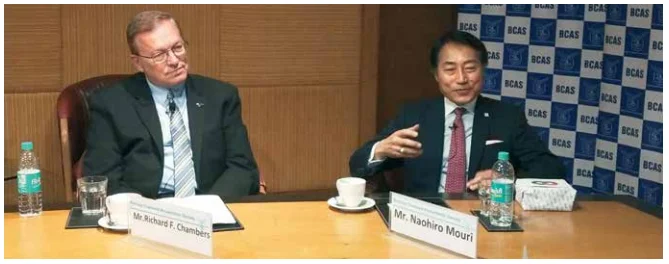
Reality Check in Implementing the Revised Schedule VI

fiogf49gjkf0d
Introduction

The Revised Schedule VI is applicable for the financial statements prepared for the periods commencing on or after 1 April, 2011. Since the year end for the majority of the Indian companies happens to be 31 March, the real impact of the changes brought out in the format of financial reporting in the form of Revised Schedule VI is going to be felt by the corporate world only now! By way of introducing the changes in the reporting format of the financial statements which was prevailing for several years and introducing new concepts and disclosure requirements, the Regulator has posed an onerous obligation on the finance professionals serving the Indian corporates to understand the nuances of the reporting requirements and extract the information required to ensure appropriate reporting and compliance. Though the Revised Schedule VI itself contains several explanatory provisions for the various new reporting requirements at a macro level, there are several matters which need to be micro managed and addressed carefully. The Institute of Chartered Accountants of India (ICAI) has issued a Guidance Note on the Revised Schedule VI providing implementation guidance on various aspects of the Revised Schedule VI. In view of the extent of the changes and the complications involved in applying the changed concepts in practical business scenarios, the first year of reporting under the Revised Schedule VI will throw several questions/ implementation issues. This article is aimed at discussing some of the implementation issues that may arise in presenting the financial statements as per the Revised Schedule VI and the suggested approach for dealing with the same.

Backbone of the Revised Schedule VI

  • The essence of the changes brought out by the Revised Schedule VI could be broadly summarised as under from a macro perspective:Changing the presentation of the financial statements in line with the expectations of the international investor community. ? Bringing in clarity/standardisation in the formats.
  • Making explicit that the requirements of the Companies Act, 1956 and the Accounting Standards would override the reporting requirements.
  • Introducing the robust concept of current and non-current classification of assets and liabilities. In the light of the above, several new disclosure requirements have been introduced and similarly some of the redundant disclosures have been omitted. It is quite obvious that the extent of additions is comparatively more than the disclosures which have been discarded. A careful analysis of the Revised Schedule VI would also highlight that the disclosures required now do not imply a simple representation of the figures but also a careful compilation of the various information with sound business knowledge. 

Implementation challenges

Various implementation challenges arising out of the Revised Schedule VI could be broadly summarised under the following categories:

  • Issues relating to Applicability
  • Issues relating to Presentation
  • Issues relating to Interpretation of Concepts/ Terms
  • Other Issues

The above classification is intended for analysing the practical problems logically so as to better understand the issue and deal with the same. Needless to add that the issues identified are not exhaustive but representative only.

Issues relating to applicability

The issues that arise with respect to the applicability of the Revised Schedule VI are discussed below:

Applicability for the consolidated financial statements

As regards the applicability of the Revised Schedule VI for the consolidated financial statements, the current requirement of AS-21 stipulates that the consolidated financial statements have to be prepared in accordance with the format closer to the stand-alone financial statements. In this regard, since the standalone financial statements are expected to be prepared as per the Revised Schedule VI, it is but natural to prepare the consolidated financial statements also in accordance with the Revised Schedule VI requirements. However, to the extent the information is not relevant for meeting the AS- 21 requirements, the same need not be included. It is worth noting that the information as stipulated under the Revised Schedule VI relating to various subsidiaries including foreign subsidiaries needs to be obtained well in advance to facilitate the preparation of the consolidated financial statements.

Applicability for tax purposes

If a company has a reporting period which is different from the tax financial year which is based on April-March, there is a need for preparing a set of separate financial statements for the financial year to meet the tax requirements. There is an issue regarding the format to be used for such reporting in view of the changes made in the reporting format for the statutory accounts prepared under the Companies Act, 1956. Since there is no format prescribed as per the provisions of the Income-tax Act, 1961, the financial statements specifically compiled for the tax financial year may be prepared using the Revised Schedule VI to the extent feasible.

Applicability for Clause 41 of the Listing Agreement As regards presentation of the information for meeting the Clause 41 requirements with respect to the statement of assets and liabilities, the SEBI, recently vide its Circular No. CIR/CFD/DIL/4/2012 dated 16 April 2012, has introduced a new format for reporting the results for listed companies which is in line with the Revised Schedule VI.

Issues relating to presentation

The various issues related to presentation aspects in the Revised Schedule VI could be summarised as under:

Data relating to previous year to be provided for comparative purposes

The Revised Schedule VI stipulates that the corresponding amounts have to be provided in the financial statements for the immediately preceding reporting period for all items shown in the financial statements including notes. This would result in representing the previous year financial data as per the Revised Schedule VI which has introduced several new concepts/requirements. With respect to certain requirements where the information is not readily available with the company, suitable disclosures have to be made in the financial statements explaining the same along with the reasons. Further, wherever the previous year audited numbers are represented in accordance with the Revised Schedule VI requirements, it would be better to provide a detailed reconciliation of the reclassifications carried out for making them comparable with the current year presentation.

Cash Flow Statement presentation

The Revised Schedule VI does not stipulate any format for the Cash Flow Statement similar to that for the Balance Sheet and the State of Profit and Loss. This would imply that the Cash Flow Statement needs to be prepared based on the guidance provided in AS-3. Since majority of the companies would present the cash flow statement using the indirect method involving the derived movements between two Balance Sheets, for the purpose of presenting the movements of the previous year, the Balance Sheet of the year preceding the previous year is the starting base. If the cash flow movements have to be presented using the terminologies/principles stipulated as per the Revised Schedule VI (such as Trade receivables, trade payables with current and non-current break-ups, etc.), the exercise of identification/ regrouping of the relevant Balance Sheet items in the year preceding the previous year also needs to be carried out using the Revised Schedule VI in addition to the representation required for the previous year Balance Sheet.

Since there is no stipulated format for the Cash flow statements in the Revised Schedule VI, the possibility of presenting the Cash flow statements as per the terminologies used in AS-3 which may not be in line with the Revised Schedule VI terminologies may also be considered wherein the movements can be continued to be provided as in the case of the past for the current year as well as for the previous year.

Cash and Cash Equivalents

As per the Revised Schedule VI, Cash and Cash Equivalents have to be presented separately on the face of the Balance Sheet. Further, the term Cash and Cash Equivalents have been defined to include balance with banks, cheques and drafts on hand, cash on hand and others. However, the term cash and cash equivalent has been defined differently under AS-3 as per which, cash comprises cash on hand and demand deposits with banks and cash equivalents are short-term, highly liquid investments that are readily convertible into known amounts of cash and that are subject to an insignificant risk of changes in value. In addition, the deposits can be considered as Cash Equivalent only when the original maturity period for the same is less than 3 months. Since the Revised Schedule VI clearly indicates that in the case of conflict, an Accounting Standard would prevail over the Schedule, there is a need for using the definition as per the AS-3 for Cash and Cash Equivalents with suitable disclosures for the other component which would imply suitable modification of the terminologies used in the Balance Sheet for presenting the Cash and Bank Balances. This view has been confirmed by the Guidance Note on Revised Schedule VI issued by the ICAI as well.

Another view could also be taken that the term Cash and Cash Equivalents defined as per AS-3 is applicable only for Cash Flow Statement preparation purposes and not necessarily for other purposes, which would imply that the reporting requirements as the per Revised Schedule VI may be presented as intended in the Revised Schedule VI with a suitable disclosure relating to the break-up of the Cash and Cash Equivalents as per AS-3 (for cash flow tie up purposes) and other items.

Issues relating to interpretation of concepts/ terms

Identification of Current Element

The Balance Sheet format in the Revised Schedule VI has been designed on the basis of classified Balance Sheet approach and hence requires all assets and liabilities to be categorised into current and non- current. One has to remember that while doing the categorisation, the term current will also include the current portion of the long-term assets and liabilities. Further, categorisations of employee benefit-related liabilities, provisions as current and non-current would pose practical difficulties and the same need to be planned upfront.

As part of this exercise of categorisation of the Balance Sheet, while applying the concept of operating cycle, identification poses practical challenges. In general, the term operating cycle is considered as the time required between the acquisition of assets for processing and their realisation in cash or cash equivalents. If a company has different operating cycles for different parts of the business, then the classification of an asset as current is based on the normal operating cycle that is relevant to that particular asset. In cases where the normal operating cycle cannot be identified, it is assumed to have duration of 12 months.

Materiality threshold for disclosure

As per the Revised Schedule VI, separate disclosure is required on the face of the Statement of Profit and Loss for (i) cost of materials consumed, (ii) purchases of stock-in- trade and (iii) change in inventories of finished goods, work-in-progress and stock-in-trade. In this regard, details of consumption of raw materials, purchases and work-in- progress are required to be given under ‘broad heads’.

The term ‘broad heads’ has not been defined under the Revised Schedule and the same needs to be decided taking into account the concept of materiality and presentation of a true and fair view of the financial statements. Such identification of broad heads requires careful consideration and exercise of professional judgment. Considering the general practice, application of a threshold of 10% of total value of purchases of stock- in-trade, work-in-progress and consumption of raw materials can be considered as acceptable for determination of broad heads. However, nothing prevents a company in applying any other threshold as well, duly considering the concept of materiality and presentation of a true and fair view of the financial statements. This position has also been reiterated by the ICAI in its Guidance Note on Revised Schedule VI in Para 10.7.

Identification of Other Operating Revenue

Revised Schedule VI requires specific classification of revenue into sale of products, sale of services and other operating revenue. Interpretation of the term Other Operating Revenue as required under the Revised Schedule VI would pose challenges to companies. This has to be carefully identified and differentiated from Other Income. Whether a particular income constitutes ‘Other Operating Revenue’ or ‘Other Income’ is to be decided based on the facts of each case and a detailed understanding of the company’s activities.

The term Other Operating Revenue would include revenue arising from the company’s operating activities, i.e., either its principal or ancillary revenue-generating activities, but which is not revenue arising from the sale of products or rendering of services.

Goods in transit for individual inventory items
Revised Schedule VI stipulates that the items of inventories of goods in transit need to be disclosed separately for each and every item of the inventory such as raw material, work -in-progress, finished goods, etc. (if any).

Other issues

Impact on ratios calculated for banking arrangements

The definitions for the terms current assets and current liabilities as per the Revised Schedule VI could lead to redefining the current ratios computed by the management and submitted for various banking and other arrangements. Similarly, the extent of cash and cash equivalents as per the Revised Schedule VI could be different from the liquid assets computed for various other purposes.

I GAAP v. Ind AS

Though the Revised Schedule VI is not expecting any change in the measurement yardstick used for accounting and reporting the financial results, there could be practical challenges in dealing with some of the disclosure aspects as per the Revised Schedule VI. For example, the stock options cost charged to the Statement of Profit and Loss needs to be disclosed separately as per the Revised Schedule VI; however, at present there is no accounting standard which deals with the accounting aspects of stock options. However, the ICAI has issued a guidance note on the subject. This poses challenges since basic accounting for stock options cost is not mandatory, whereas the disclosure requirements relating to the same are made mandatory through the Revised Schedule VI. This confusion would continue till the relevant Ind AS dealing with the accounting aspects of stock options becomes mandatory. Similar issues could arise with respect to other items as well where there is no accounting standard governing the basic accounting aspects but there is a disclosure requirement in the Revised Schedule VI.

Change in accounting policy for dividend income received from subsidiaries

As per the old Schedule VI, the parent company had to recognise dividends declared by subsidiary companies even after the date of the Balance Sheet if it pertains to the period ending on or before the Balance Sheet date. However, there is no such requirement as per the Revised Schedule VI. Hence, in line with the Accounting Standard 9 on Revenue Recognition such dividends will have to be recognised now as income only when the right to receive dividends is established.

This would also require a suitable disclosure in the financial statements regarding the change in the accounting policy followed by the company with respect to recognition of such dividend income from subsidiaries.

It is worth noting that though the Revised Schedule VI requires the disclosure of the proposed dividend as part of the notes, in view of the specific provisions of AS-4 ‘Contingencies and Events Occurring After the Balance Sheet date’ which specifically requires adjustment of the proposed dividend in the Balance Sheet, companies need to continue to adjust the proposed dividend in the Balance Sheet, though the declaration by the shareholders is pending. Till such time AS-4 is amended, this position would continue in view of the supremacy of the accounting standards over the Revised Schedule VI which has been stated specifically in the Revised Schedule VI itself.

Position regarding AS-30/31/32

As per the current position AS-30, 31, 32 on Financial Instruments have not been notified under the Companies (Accounting Standards) Rules, 2006; hence, early application of these standards by a company is encouraged only subject to compliance of the of the other notified Accounting Standards such as AS-11, AS-13 and other applicable regulatory requirements which would prevail over AS-30, 31 and 32. If a company has early adopted Accounting Standards AS-30, 31 and 32, it could have challenges in presenting the financial statements as per the Revised Schedule VI.

For example, for an entity which has early adopted AS-30, 31, and 32, presentation of preference shares and determination of its status as liability or equity based on the economic substance could be an issue for dealing with the presentation requirements of Revised Schedule VI. This has been clarified by the ICAI vide its Guidance Note on Revised Schedule VI (Para 8.1.1.4) that since Accounting Standards AS-30 Financial Instruments: Recognition and Measurement, AS-31 and AS- 32 Financial Instruments: Disclosures are yet to be notified and section 85(1) of the Act refers to Preference Shares as a kind of share capital, Preference Shares will have to be classified as Share Capital.

Considering the above and the legal status of Accounting Standards AS-30, 31 and 32 which is recommendatory pending Notification by the Government, careful consideration has to be given with respect to the conflicts, if any, in the presentation between the same and the Revised Schedule VI which is part of the Companies Act, 1956.

Dealing with the requirements from other statutes

If there are any disclosure requirements which emanate from other statutes, the same needs to be provided in addition to the other disclosure requirements stipulated under Revised Schedule VI. For example, the disclosure requirements related to outstanding dues to micro small and medium enterprises should be disclosed in accordance with the Micro Small and Medium Enterprises Development Act, 2006. The same position would continue in the case of disclosures required under the Listing Agreements with the stock exchanges.

Conclusion

Introduction of the Revised Schedule VI is a path-breaking initiative for the Indian corporate world in the era of globalisation. The changes brought out in the financial reporting through the Revised Schedule VI cannot be considered as a simple exercise of representation of numbers in a different format, but requires careful consideration of various factors duly reflecting the business considerations and the investor expectations. There is no doubt that application of the Revised Schedule VI is intended to bring the disclosure requirements of the Indian corporate financial statements in line with the prevailing international practice. The Indian corporates are in the process of responding to the expectations of the Regulators swiftly by gearing themselves to adapt to the new environment of financial disclosures. In this process, there are bound to be various challenges and implementation issues and hence would naturally lead to enhanced learning/experience. By way of properly planning and navigating the financial reporting exercise with utmost care and attention, and taking best use of the available guidance, the implementation challenges can be well managed.

Income arising upon buy-back of shares by a whollyowned Indian subsidiary of a foreign company is taxable in accordance with section 46A and not section 47(iv).

fiogf49gjkf0d
RST in re
(2012) 19 taxmann.com 215 (AAR) Section 46A, 47(iv) of Income-tax Act Dated: 27-2-2012
Before P. K. Balasubramanyan (Chairman)
and V. K. Shridhar (Member)
Present for the appellant: Rajan Vora, Vinesh Kirplani, Srirupa Tandon
Present for the Department: V. S. Sreelekha

Income arising upon buy-back of shares by a wholly-owned Indian subsidiary of a foreign company is taxable in accordance with section 46A and not section 47(iv).


Facts:

The applicant, a German company (FCO), was a part of group of companies. FCO had a wholly-owned public limited subsidiary company in India (ICO). To comply with requirements of the Companies Act as regards the minimum number of members, one share each in ICO was held by six other companies as nominees of FCO. Also, FCO held shares in ICO as investment and not stock-in-trade. Subsequently, FCO received intimation from ICO for buy-back of shares at a price determinable in accordance with the RBI guidelines. FCO approached AAR on the issue whether transfer of shares in the course of the proposed buy-back by ICO was exempt u/s.47(iv) of the Income-tax Act. The Tax Department contended that upon buy-back, shares are extinguished and hence section 47(iv) has no application. Further, section 47 does not override section 46A. Also, section 46A was specifically introduced to deal with buy-back. Hence, the gain was taxable in India u/s.46A of the Income-tax Act or Article 13(4) of India-Germany DTAA. FCO contended that the charging section was section 45 and not section 46A. Section 46A was only clarificatory. Section 47(iv) and (v) apply generally to capital assets and to attract section 47(iv), it is enough if the share is a capital asset.

Ruling:

  • The AAR rejected FCO’s contention and held that income arising upon buy-back of shares by ICO would be taxable u/s.46A for the following reasons: Even if six other members of ICO are nominees of FCO, it cannot be postulated that FCO was holding all the shares in ICO. Section 45 is a general provision whereas section 46A is a specific provision dealing with purchase of its own shares by a company and hence, it should prevail over section 45.
  •  Speech of Finance Minister while introducing section 46A has made it clear that section 46A was enacted to deem that the amount received on buy-back was taxable as capital gain and not as dividend.
  • Since income is chargeable to tax under section 46A, the payment made by ICO would be subject to withholding tax.
levitra

Where the sale price of CCDs issued by subsidiary company was linked to the holding period; CCDs were guaranteed by parent company; directors of subsidiary company had no powers of management; difference between the sale price and purchase price of CCDs held by Mauritian company was ‘interest’ and not ‘capital gains’ in terms of DTAA.

fiogf49gjkf0d
‘Z Mauritius’, in re (2012) 20 taxmann.com 91 (AAR) Article 11, 13(4) of India-Mauritius DTAA; Section 2(28A) Income-tax Act Dated: 21-3-2012 Before P. K. Balasubramanyan (Chairman) and V. K. Shridhar (Member)
Counsel for applicant: Vinay Mangla, Gaurav Kanwin, Percy Pardiwala & Preeti Goel Counsel for Department: Poonam Khera Sidhu, R. K. Kakar

Where the sale price of CCDs issued by subsidiary company was linked to the holding period; CCDs were guaranteed by parent company; directors of subsidiary company had no powers of management; difference between the sale price and purchase price of CCDs held by Mauritian company was ‘interest’ and not ‘capital gains’ in terms of DTAA.


Facts:

  • The applicant (‘Z’) is a company incorporated in and tax resident of Mauritius. V Ltd. (‘V’) and S Ltd. (‘S’) are two Indian companies.
  • ‘V’ is parent company of ‘S’ and company ‘S’ was engaged in developing a real estate project in India.
  • The applicant, ‘V’ and ‘S’ jointly executed a Share Holders Agreement (‘SHA’) and Securities Subscription Agreement (‘SSA’).
  • Pursuant to SHA and SSA, the applicant and ‘V’ invested in ‘S’. The applicant subscribed to equity shares and CCDs.
  • As per SHA, CCDs were to be fully and mandatorily converted into equity shares after 72 months. The applicant had put option to sell certain shares and CCDs on specified dates to ‘V’ and ‘V’ had call option to purchase the said shares and CCDs from the applicant.
  • The respective options were to be exercised prior to the mandatory conversion date. ‘V’ exercised its call option to purchase shares and CCDs from the applicant.
  • The applicant contended that the capital gains arising from transfer was exempt from tax in India in terms of Article 13(4) of India-Mauritius DTAA. The contention of applicant was rejected by the Tax Department which held that:
  • The concept of optional conversion rate was incorporated in SHA to compensate for normal interest from debentures. Only small portion of investment comprised equity shares and balance was CCDs. To characterise the gain to have arisen from transfer of capital assets was improper. ? For interpreting agreements, its essence as a whole should be considered and not merely their form. Relying on LMN India Ltd., in re (2008)5, CCDs recognised the existence of debt till repaid or discharged. The two agreements were entered into to camouflage the true character of income from interest on loan to capital gains.
  • The applicant submitted that it was engaged in real estate business, but its only transactions in India were investment in ‘S’. Hence, alternatively, nature of income arising from the transaction should be business income.
  • As per current FDI Policy, optionally and partly convertible debentures and preference shares are to be treated as ECB. Debentures recognise the existence of a debt. It does not cease to be so simply because they are redeemed by conversion to equity shares and not payment. Thus, ECB is contrived to look like CCDs convertible into equity. A transaction where the parties have a common intention not to create the legal rights and obligations which they give appearance of creating, is sham6. Since the rate of return was predetermined 6 years before the exercise of option, there was no commercial purpose. Accordingly, the transaction was designed to avoid tax by taking advantage of Article 13(4) of India-Mauritius DTAA. It was the applicant’s contention that:
  • Investment through CCDs is not loan or advance and there is no lender-borrower relationship with ‘S’. Even if ‘S’ is assumed to be borrower, the consideration is received from ‘V’ for sale of assets. Any amount received over and above purchase price cannot be treated as interest7.
  • Gains on sale of CCDs have arisen because of the value of the underlying assets, namely, equity shares.
  • Applicant and ‘V’ are totally unrelated parties and hence, purchase of CCDs by ‘V’ cannot be regarded as redemption of CCDs.
  • Since the tax benefit would result to only one, there is no reason for parties involved to share a common intention to create legal facade.

Ruling The AAR observed and ruled as follows:

 (i) Reliance placed on CWT v. Spencer & Co. Ltd. and Eastern Investments Ltd. v. CIT8, to contend that a CCD creates or recognises the existence of a debt, which remains to be so till it is repaid or discharged.

(ii) Article 11(5) of India-Mauritius DTAA, includes any type/form of ‘income from bonds and debentures’ within the ambit of ‘interest’. Purchase price under call option was linked to the holding period. While CCDs were not to carry any interest, they gave option of conversion into shares at a different price. Conversion of debentures into equity shares at the end of the specified period amounts to constructive repayment of debt. While calculating the purchase price the conversion rates vary, depending upon the period of holding of CCDs. This is nothing else but ‘interest’ within the meaning of section 2(28A) of the Income-tax Act and Article 11 of India- Mauritius DTAA.

 (iii) To ascertain true legal nature of the transaction, and to appreciate true nature of the consideration received, ‘look at’ test needs to be applied by examining substance of the transaction, inter se relationship of the parties and the transaction as a whole. While ‘S’ and ‘V’ were two independent juridical persons, ‘S’ did not exercise any power in managing its affairs. The management powers of the directors of ‘S’ were taken away through various clauses of SHA. ‘V’ was developing and running real estate business of ‘S’. ‘V’ was the guarantor of investment made by ‘Z’. ‘V’ acknowledged CCDs as debt. Thus, ‘V’ and ‘S’ were different only on paper, but otherwise they were one and the same entity. ‘V’ had de facto control and management over ‘S’. Therefore the argument that the sale of CCDs is not to the debtor but to a third party and hence, what is realised cannot be said to include interest, cannot be accepted.

(iv) Article 11 is a specific provision dealing with treatment of income from debt claims of every kind, whereas Article 13 deals with capital gains. ‘V’ and ‘S’ are one and the same. ‘V’ has paid fixed pre-determined return to the applicant. Hence, the amount paid by ‘V’ is towards the debt taken by ‘S’ from the applicant and therefore, appreciation in value of CCDs is ‘interest’ under Article 11.

levitra

Usance interest which is directly related to the period for which purchase price was due, is ‘interest’ in terms of section 2(28A) and consequently, it is deemed to accrue or arise in India u/s.9(1)(v) of ITA.

fiogf49gjkf0d
Uniflex Cables Ltd. v. DCIT
(2012) 19 Taxmann 315 (Mumbai-ITAT) Section 2(28A), 40(a)(i) of Income-tax Act A.Ys.: 1999-2000 & 2002-03. Dated: 28-3-2012
Before R. S. Syal (AM) and N. V. Vasudevan (JM)
Present for the appellant: Rajan Vora
Present for the Department: Jitendra Yadav

Usance interest which is directly related to the period for which purchase price was due, is ‘interest’ in terms of section 2(28A) and consequently, it is deemed to accrue or arise in India u/s.9(1)(v) of ITA.


Facts:

The taxpayer, an Indian company (ICO), purchased raw material from several non-resident suppliers under irrevocable LCs payable within 180 days from the date of bill of loading. ICO was required to pay usance interest for the period of credit and the supplier raised a separate invoice in respect of such usance interest. During the years under consideration, on the ground that the usance interest was in the nature of interest and it had accrued and arisen in India, the Tax Department held it to be chargeable to tax in India. Further, as ICO had not deducted tax on such usance interest, the claim for deduction of such interest was disallowed u/s.40(a)(i) of the Income-tax Act. The disallowance was upheld by the CIT(A). Before ITAT, ICO contended that:

  • Interest within meaning of section 2(28A) of the Income-tax Act means interest payable in respect of moneys borrowed or debt incurred. Payment of interest for the time granted by non-resident supplier of raw material cannot be considered as payment in respect of money borrowed or debt incurred. Hence, such payment would not partake the character of interest as per section 2(28A) of the Income-tax Act.
  • The finance charges were for delayed payment of raw material purchases and hence would partake the character of money paid for purchase price of raw material. Therefore, no tax is required to be deducted. In support, ICO relied on various decisions3.
  • Reliance placed by the Tax Department on the Gujarat HC in the case of CIT v. Vijay Ship Breaking Corporation, (2003)4, where it was held that usance interest was not part of the purchase price, but was interest and the payer was required to deduct tax.

Held:

The ITAT rejected ICO’s contentions and held: Unlike certain cases cited by ICO, in ICO’s case, usance interest had no relation with the price of raw material purchased, but had direct relationship with the time when the payment became due. Hence, on facts, usance interest was in the nature of interest within the meaning of section 2(28A) of the Incometax Act. Consequently such interest would be deemed to have accrued or arisen in India u/s.9(1) (v)(b) of the Income-tax Act.

levitra

Payment for development of Balanced Score Card (BSC) management tool is Fees for Technical Services under Article 12 of the India-Singapore DTAA.

fiogf49gjkf0d
Organisation Development Pte. Ltd. v. DDIT TS 86 ITAT 2012 (CHNY)
Article 5, 7, 12 of India-Singapore DTAA; Section 9(1)(vi)/(vii)of Income-tax Act A.Y.: 2007-08. Dated: 9-2-2012
Abraham P. George (AM) and George Mathan (JM) Present for the appellant: Vikram Vijayaraghavan Present for the Department: K.E.B. Rangarajan

Payment for development of Balanced Score Card (BSC) management tool is Fees for Technical Services under Article 12 of the India-Singapore DTAA.


Facts:

Taxpayer, a company incorporated in Singapore (FCO), provided services to various clients around the world for development of BSC project. BSC is a strategic performance management tool which can indicate deviations from expected levels of performance. During the year under consideration, FCO rendered services to various companies located in India.

FCO contended that the receipts towards services were business profits under Article 7 of DTAA and in the absence of Permanent Establishment (PE) the same would not be taxable in India.

The Tax Department divided services for development of BSC into two segments viz. professional fees rendered to the clients and lump sum received for sale of software. The Tax Department held that the amount received towards the sale of software was taxable as ‘royalty’ for use of equipment, while the professional fees were taxable as ‘fees for technical services’ (FTS).

FCO contended that there was no ‘equipment royalty’ as the users had no domain or control over such software. Also the software downloaded by clients was not customised to suit any particular client. Furthermore, as FCO had not made available any technical knowledge, experience, skill, knowhow, etc. amount would not be taxable as FTS. The matter was referred before the Dispute Resolution Panel (DRP) which upheld the order of the Tax Department.

ITAT Ruling:

  • The ITAT held that the payments received by FCO would be taxable as FTS u/s.9(1)(vii) for following reasons: FCO had sent its team to help its clients in implementing licensed software which was required to develop BSC. The clients were required to make lump-sum payments for downloading such software from the designated sites and such software was to be used in various phases of developing the BSC system.
  •  In a BSC system each client has its own goals and different strategies to reach such goals. A team, which is evolving a BSC system necessarily, has to identify the measures that are relatable to the entity under study. This is not a type of service which can be used by any organisation by application of an off-the-shelf software.
  • Software is only a part of the total process for development of BSC. Fees received by FCO are linked to the downloading of software, but that is not sufficient to come to a conclusion that software is equipment from which FCO earned royalty. The Tax Department was not right in dividing the whole process into two parts one for the royalty and the other for FTS.
  • The provisions of DTAA with regard to the definition of the term ‘FTS’ are different from the definition provided u/s.9(1)(vii) of the Incometax Act. This is supported by AAR in the case of Bharti AXA General Insurance1. FCO is thus justified in availing benefit of treaty provisions and this is well supported by SC ruling in UOI v. Azadi Bachao Andolan2.
  • FCO made available technical knowledge and skill which enabled its clients to acquire the knowledge for using BSC system for their business and for meeting long-term targets.
  • Software was only a part of the management consultancy tool and was never considered as independent of the total system. The technical knowledge and skill provided by FCO remained with its clients. Thus, fees received for designing of BSC management tool falls within definition of FTS under Article 12(4) of the India–Singapore DTAA.
levitra

Amendments in Schedules A, C and D w.e.f. 1-4-2012 — Notification No. VAT.1512/ C.R.40/Taxation-1 of MVAT Act, 2002, dated 31-3-2012.

fiogf49gjkf0d

Vide this Notification amendments have been carried to entries in Schedule A, C & D.

levitra

Rate of reduction in set-off in case of branch transfer — Notification No. VAT-1512/CR-43/ Taxation-1, dated 31-3-2012.

fiogf49gjkf0d
From 1st April, 2012 in case of branch transfer that when goods are transferred from Maharashtra State to branch in other State then the set-off on the corresponding purchase of taxable goods will be reduced by 4% as against 2% till then.

levitra

Profession Tax Act, 1975 — Procedure for online submission of application for obtaining registration and enrolment — Trade Circular No. 5T of 2012, dated 31-3-2012.

fiogf49gjkf0d
From 1st April, 2012 application for registration (PTRC) and enrolment (PTEC) under the Profession Tax Act should be electronically uploaded in ‘Form I’ and ‘Form II’, respectively.

Remaining processes of obtaining registration/ enrolment such as verification of documents, etc. will remain the same. Manually filled forms will not be accepted on or after 1st April 2012 except for non-resident employer/person and Government departments. Procedure for online application has been explained in the Circular.

levitra

Electronic refund of service tax paid on taxable services used for export of goods — Circular No. 156/7/2012-ST, dated 9-4-2012.

fiogf49gjkf0d
By this Circular it has been announced that a Committee has been constituted to review the scheme for electronic refund of service tax paid on taxable services used for export of goods, made operational vide Notification 52/2011-ST, dated 30th December, 2011.

 The Committee has been instructed, as a part of the review, to

(a) evolve a scientific approach for the fixation of rates in the schedule of rates for service tax refund; and

(b) propose a revised schedule of rates for service tax refund, taking into account the revision of rate of service tax from 10 to 12% and also movement towards ‘Negative List’ approach to taxation of services. The Committee will submit its report before 20-6-2012. Views and suggestions may be posted at the e-mail address: feedbackonestr@gmail.com.

levitra

Point of Taxation Rules — Clarification reg. airline tickets — Circular No. 155/6/2012-ST, dated 9-4-2012.

fiogf49gjkf0d
In view of reports that some airlines are collecting differential service tax on tickets issued before 1st April 2012 for journey after 1st April 2012, causing inconvenience to passengers, this Circular clarifies that Rule 4 of the Point of Taxation Rules 2011 deals with the situations of change in effective rate of tax. In case of airline industry, the ticket so issued in any form is recognised as an invoice by virtue of proviso to Rule 4A of the Service Tax Rules 1994. Usually in case of online ticketing and counter sales by the airlines, the payment for the ticket is received before the issuance of the ticket. Rule 4(b)(ii) of the Point of Taxation Rules 2011 addresses such situations and accordingly the point of taxation shall be the date of receipt of payment or date of issuance of invoice, whichever is earlier.

Thus the service tax shall be charged @10% subject to applicable exemptions plus cesses in case of tickets issued before 1-4-2012 when the payment is received before 1-4-2012. In case of sales through agents (IATA or otherwise including online sales and sales through GSA), when the relationship between the airlines and such agents is that of principal and agent in terms of the Indian Contract Act, 1872, the payment to the agent is considered as payment to the principal.

Accordingly, as per Rule 4(b)(ii), the point of taxation shall be the date of receipt of payment or date of issuance of invoice, whichever is earlier. However, to the extent airlines have already collected extra amount as service tax and do not refund the same to the customers, such amount will be required to be paid to the credit of the Central Government u/s.73A of the Finance Act 1994 (as amended).

levitra

Point of Taxation Rules — Clarification reg. individuals or proprietorships, partnerships, eight specified services — Circular No. 154/5/2012-ST, dated 28-3-2012.

fiogf49gjkf0d
It has been clarified that for invoices issued on or before 31st March 2012, the point of taxation shall continue to be governed by the Rule 7 as it stands till the said date. Thus in respect of invoices issued on or before 31st March 2012 the point of taxation shall be the date of payment.

levitra

Pandals, Shamiana liable to tax-clarification Circular No. 168/3 /2013 – ST dated 15 04 2013

fiogf49gjkf0d
The CBEC clarified that the activity by way of erection of pandal or shamiana is a declared service under Section 66E 8(f) of the Finance Act, 1994.

It is further clarified that for a transaction to be regarded as “transfer of right to use goods”, the transfer has to be coupled with possession. Court rulings have upheld that when the effective control and possession is with the supplier, there is no transfer of right to use. It is a service of preparation of a place to hold a function or event & effective possession and control over the pandal or shamiana remains with the service provider, even after the erection is complete. Accordingly, services provided by way of erection of pandal or shamiana would attract the levy of service tax.

levitra

ST-3 for July to September 2012 -due date extended Order No. 02/2013 –ST dated 12-04-213

fiogf49gjkf0d
By this Order, due date for submission of the Service Tax Return in Form ST-3 for the period 1st July 2012 to 30th September 2012 has been extended from 15th April, 2013 to 30th April, 2013.

levitra

State of Tamil Nadu vs. Marble Palace, [2011] 43 VST 519 (Mad)

fiogf49gjkf0d
Sales Tax- Best Judgment Assessment- Addition of Sales – Based on Quotations Against Which No Sale Bills Raised-Not Justified, Tamil Nadu General Sales Tax Act,1959.

Facts
The dealer was assessed for the period 1991-92 under The Tamil Nadu General Sales Tax act, 1959 wherein the assessing authority levied tax on estimation of turnover of sales based on quotations raised against which no sale bills were issued. The Tribunal in appeal, observing that there was no material to prove that the assesse had sold any goods to any individual or contractor, passed the order deleting the levy of tax on estimated turnover of sales. The Department filed appeal petition before the Madras High Court against the impugned order of the Tribunal.

Held
As observed by the Tribunal, there was no material for treating the quotations as sale bills and estimating turnover on the basis of the quotation. As rightly held by the Tribunal, the assessing authority had not probed the matter beyond treating quotation book as sale bill. Accordingly, the High Court confirmed the order of the Tribunal and dismissed the appeal filed by the Department.

levitra

DOW Chemical International P. Ltd., vs. State of Haryana and Others, [2011] 43 VST 507 (P& H)

fiogf49gjkf0d
Central Sales Tax- C Forms – Failure to Produce at The Time of Assessment- Forms Obtained Subsequently- Can Be Produced Before The Authority, Rule 12 (7) of The Central Sales Tax (Registration and Turnover) Rules, 1957

Facts
In the assessment for the period 2004-05, the claim of the dealer for concessional rate of tax against form ‘C’ was disallowed for want of required ‘C’ forms but the Tribunal permitted production of ‘C’ forms received subsequently and the matter was remanded back to the assessing authority for verification of the forms. Subsequently, the dealer received four more ‘C’ forms and produced before the assessing authority with a request to consider those forms also. This prayer was rejected by the assessing authority on the ground that there was no evidence of those forms having been produced before the Tribunal at the time of hearing of the appeal. The dealer filed writ petition before the Punjab and Haryana High Court, against the refusal by the assessing authority to consider the claim of concessional rate of tax for production of additional ‘C’ Forms before him on the ground that forms can be produced at any stage.

Held
The explanation of the dealer was that the forms were issued by the purchasing dealers in question after the decision of the appellate authority and on that ground the same could not be produced earlier. As noted in the quoted part of the order of the Tribunal, during the hearing, the forms were sought to be produced, which was not allowed. In view of explanation given by the petitioner that the forms were received late, it could be held that there was sufficient cause for the petitioner for not producing the same before the assessing and appellate authority which was no bar to the same being produced before the Tribunal. Accordingly, the writ petition filed by the dealer was allowed by the High Court to allow the petitioner to produce the Forms in accordance with law.

levitra

Additional Commissioner of Sales Tax, VAT III, Mumbai vs. Sehgal Autoriders Pvt. Ltd., [2011] 43 VST 398 (Bom)

fiogf49gjkf0d
Value Added Tax- Sale Price- Sale of Motor Cycles- Separate Collection of Handling Charges For Registration- Not Forming Part of Sale Price, Section 2 (25) of The Maharashtra Value Added Tax Act, 2002

Facts
Dealer engaged in selling motor cycles collected service charges or handling charges from customer for registration of motor cycles under Motor Vehicles Act, 1988. The vat authorities levied vat on such amount which was contested before The Maharashtra Sales Tax Tribunal. The Tribunal held that such charges did not constitute a part of sale price within the meaning of ‘sale price’ defined in section 2 (25) of the MVAT Act, 2002. The Vat Department filed appeal before the Bombay High Court against the decision of the Tribunal setting aside the levy of vat on such handling charges collected by the dealer from the customer at the time of sale of motor cycles.

Held
The High Court held that the transfer of property in the goods in pursuance of the sale contract took place against the payment of price of the goods. Delivery of the goods was effected by the seller to the buyer. The obligation under the law to obtain registration of the motor vehicle was cast upon the buyer. The service of facilitating the registration of the vehicles which was rendered by the selling dealer was to the buyer and in rendering that service, the seller acted as an agent of the buyer. Therefore, the handling charges which were recovered by the respondent could not be regarded as forming part of the consideration paid or payableto the dealer for the sale. Those charges cannot fall within the extended meaning of the expression “ sale price”, since they did not constitute sum charged for anything anything done by the seller in respect of the goods at the time of or before the delivery thereof. The High Court accordingly dismissed the appeal filed by the Department and confirmed the order of the Tribunal.

levitra

2013 (29) 605 (Tri.- Kolkata) United Enterprises vs. Commissioner of Central Excise & Service Tax

fiogf49gjkf0d
Whether services of Consignment Agent such as loading and unloading of cargo, stacking, carrying out stock verification during storage at the stock yard etc. be classified under Cargo Handling service?

Facts:
Appellant was described as consignment Agent by M/s. SAIL as per the Agreement dated 30-03- 2001. The appellant registered and paid service tax under the category of “Storage and warehousing services” for the year 2001-2002 and part of 2002-2003. But, later they discontinued payment of service tax. A show cause notice was issued to them alleging that they were the consignment agents of M/s. SAIL and were liable for service tax as “Clearing & Forwarding Agent”. As per the agreement, the appellants were required to render the services of ‘unloading of materials at Danapur/Fatuha or any other nearest operating Public siding, transportation of materials and unloading at consignment yard in the appointed place, stacking (including marking/painting) of materials as per stacking plan/storage guidelines and loading into customers vehicles for delivery. As per the agreement, the appellants provided services of transportation of iron and steel products from Fatuha Rail Goods to Banka Ghat Stockyard, wherefrom, importers of such goods from Nepal could collect the said goods. Appellants raised invoices for unloading, transportation and loading of the export consignment. Appellants were neither clearing the goods from the factory of M/s. SAIL nor forwarded the goods to anybody else. They carried out the activity of transhipment of goods meant for export. Appellant was of the view that his activities were covered under the category of cargo handling service. Appellant also contended that, mere mentioning the appellant as consignment Agent in the Agreement, ipso facto, cannot be the criterion for classifying the activities under the heading C & F Agents for the purpose of service tax. The intention, purpose, and activities rendered by the appellants, were alone relevant. Appellant further contended that, activity of Consignment Agent did not come under the purview of Clearing and Forwarding Agents. Penalty on director was also levied.

Held:
The activities were not limited to just loading and unloading of cargo but also involved stacking, which included marking/painting, loading, into customers’ vehicles for delivery with weighment and necessary documentation, carrying out stock verification during storage at the stock yard clearly indicated that the services fall under the scope of “Clearing and Forwarding Agent Services” as per section 65(25) and 65(105)(j) of the Finance Act, 1994. Service of consignment agent is specifically included in the scope of Clearing and Forwarding Services. Section 65(25) and 65(105)(j) of the Act. As per section 65A of the Act, the sub-clause providing most specific description is to be preferred to sub-clause providing a general description. After reading the Agreement between M/s. SAIL And the appellant, it is clear that appellant was appointed as Consignment Agent, which is specifically included in the definition of Clearing & Forwarding Agent services. In contrast, claim of the appellant that they are rendering cargo handling service to M/s. SAIL and accordingly classifiable under the Heading Cargo Handling service, is more general in nature than the specific service of a consignment agent included in the definition of C & F service. Accordingly, they were C&F Agents. Since the authorities did not record specific involvement of the director in short/non payment of service tax warranting a personal penalty on him, except holding that he was overall in charge of the affairs of the appellant company, the penalty was set aside.

levitra

2013 (29) S.T.R. 591 (Tri.- Del.) LSE Securities Ltd. vs. Commissioner of Central Excise

fiogf49gjkf0d
Whether service tax is applicable to a Stock Broker on receipts such as turnover charges, stamp duty, BSE charges, SEBI fees and DEMAT charges paid to various authorities?

Facts:
Appellant filed appeal against the order levying service tax along with interest and penalty on the receipts of stamp duty, BSE charges and SEBI fees, which were deposited by the appellant with the authority under different statutes. Limitation ground was also pleaded.

Held:
Clause (a) of explanation to section 67 of Finance Act,1994 stipulates that aggregate of commission or brokerage charged by broker on sale or purchase of securities including commission or brokerage paid by the stock broker to any sub broker is liable to service tax. It cannot be expanded to levy tax on a receipt by implication or inference. It is an unambiguous charging section, which is to be construed strictly. No receipt other than commission or brokerage made by a stock broker, that being the consideration for taxable service, is intended to be brought to ambit of assessable value of service provided by stock broker, charge on such other items is arbitrary taxation and cannot be taxed in disguise – section 65(101) and 65(105) (a). Scope of section 67 cannot be expanded to have artificial measure for levy bringing a receipt by implication and not in accordance with the charging provision. It is intrinsic value of service provided which is taxed without any hypothetical rule of computation of value of taxable service. Bonafide belief was clear as there was no levy on receipts other than brokerage received by stock broker from investors. In such a case, suppression cannot be charged. Hence, extended period was not invokable. No subject can be made liable without authority of law and based on presumption or assumption. Provisions cannot be imported in statute so as to supply any deficiency. Appeal was thus allowed.

levitra

S/s.- 5, 9, 40(a)(i), 195 – Payments made for online advertisement on search engines of Google/Yahoo are neither royalty nor FTS. On facts, no business connection; accordingly, not taxable in India and hence no tax withholding applies; websites do not constitute permanent establishment in India.

fiogf49gjkf0d
8. TS-137-ITAT-2013(KOL)
ITO vs. right Florists Pvt. Ltd.
A.Ys.: 2005-06, Dated: 12-04-2013

S/s.- 5, 9, 40(a)(i), 195 – Payments made for online advertisement on search engines of Google/Yahoo are neither royalty nor FTS. On facts, no business connection; accordingly, not taxable in India and hence no tax withholding applies; websites do not constitute permanent establishment in India.

Facts
The Taxpayer, an Indian company, used search engines of Google/Yahoo for advertising its business. Payments were made to Google Limited (a company resident of Ireland) and Yahoo (a US based company) for displaying the Taxpayer’s advertisement when certain key terms were used on such search engines. No taxes were withheld as the Taxpayer was of the view that the payment was not taxable in India in the hands of the recipient non-residents.

The Tax Authority disallowed the advertisement expenses u/s. 40(a)(i) on the ground that taxes ought to have been withheld by the Taxpayer. CIT(A) ruled in favour of the Taxpayer as the non-resident recipients did not have any permanent establishment (PE) in India, no portion of the payments can be considered as taxable in India.

Held
The Tribunal based on the following ruled that the payment for online advertisement is not taxable in India and hence no withholding on the same was warranted.

Whether income accrues or arises in India:

The Tribunal drew reference to SC decision in the case of Hyundai Heavy Industries (291 ITR 482) wherein SC observed that in order to attract taxability in India u/s. 5(2)(b), income must relate to such portion of income of the non-resident, as is attributable to business carried out in India, and the business so carried out in India could be through its branches or through some other form of presence such as office, project site, factory, sales outlet etc which was collectively referred to as “PE of the foreign enterprise”

Whether Google/ Yahoo have a PE in India

• Traditional commerce required physical presence to carry out business in a country and the concept of PE had developed at a time when e-commerce was non-existent. • The ITAT concluded that a website per se could not constitute a PE in India under the Act for the search engine companies which was also the view taken by the High Powered Committee (HPC) .

• In a tax treaty context, reliance was placed on the OECD MC Commentary to conclude that a search engine, which has a presence through its website, cannot therefore, constitute a PE under the treaty unless its web servers are located in the same jurisdiction which is in line with the physical presence test.

• India’s reservations on the OECD MC Commentary merely state that the website may constitute a PE in certain circumstances, but it does not specify what those “circumstances” are in which, according to tax administration, a website could constitute a PE. Hence, the reservations do not really constitute “actionable statements” and there is difficulty in understanding somewhat vague and ambiguous stand of the tax administration on this issue.

Thus, conditions of income accrual u/s. 5(2)(b) as laid by the SC in Hyundai Heavy Industries are not satisfied to the extent no profits can be said to accrue or arise in India.

Whether income deemed to accrue or arise in India,

• On business connection, the ITAT held that there was nothing on record to demonstrate or suggest that the receipts were on account of business connection in India.

• Payment in connection with online advertising services is not in the nature of royalty – Reliance placed on earlier rulings in Yahoo India Pvt Ltd (140 TTJ 195) and Pinstorm Technologies Pvt Ltd [TS- 536-ITAT-2012(Mum)].

• Based on SC ruling in Bharti Cellular (330 ITR 239), it was concluded that payment is not fees for technical services (FTS) as “human intervention,” is essential for the service being characterised as FTS. As the whole process of online advertising is automated in which there is no human element, the same cannot constitute FTS.

levitra

S/s. 195, 40(a)(i) – Reimbursement of expenses to holding company is not an income under the Act and hence not chargeable to tax; Expenses routed through holding company for payment to third party not in the nature of reimbursement of expenses and liable to withholding by evaluating tax implications in the hands of the third party.

fiogf49gjkf0d
7. TS-132-ITAT-2013(Mum)
C. U. Inspections (I) Pvt. Ltd. vs. DCIT
A.Y. 2006-07, Dated: 06-03-2013

S/s. 195, 40(a)(i) –  reimbursement of expenses to holding company is not an income under the Act and hence not chargeable to tax;  expenses routed through holding company for payment to third party not in the nature of reimbursement of expenses and liable to withholding by evaluating tax implications in the hands of the third party.


Facts

The Taxpayer, an Indian company, was a subsidiary of a company incorporated in Netherlands (Parent Company). During the relevant AY, the Taxpayer made two types of payments to the Parent Company on which taxes were not withheld on the ground that the same amounted to reimbursement of expenses, viz :

(i) Payment in respect of common expenses borne by the Parent Company for various group companies in respect of accounting services, legal and professional services, communication, R&D etc.

These expenses were incurred by the Parent Company for and on behalf of the Taxpayer and other group companies and the same were recovered/allocated on the basis of arm’s length principle based on agreed parameters. As per the Auditor’s Certificate, allocation of such expenses was done without any income element. (Common expenses)

(ii) Payments in respect of expenses for training services availed by the Taxpayer from independent third party and for which the payment was routed through the Parent Company.

Such training services were arranged by the Parent Company which paid to the third party trainers and later on recovered the amount from the Taxpayer on actual basis. (Training expenses)

The tax authority was of the view that taxes were required to be withheld on the above payments and in the absence of tax withholding, such payments/ expenses were not allowed as deduction while computing taxable income of the Taxpayer under the Act.

The CIT(A) upheld the action of the tax Authority.

Held
• The payments towards common expenses incurred by the Parent company for and on behalf of the Taxpayer and group entities, amounted to reimbursement of expenses. Such reimbursement of expenses was not chargeable to tax in the hands of parent company and, hence, was not subject to withholding of taxes u/s. 195 of the Act.

• In connection with training expenses, it held that the payments were not reimbursement of expenses but remission of amount by the Taxpayer to the Parent company for finally making the payment to third party service provider and, hence, was a payment to third party through the hands of the parent company. Accordingly, provisions of withholding of taxes under Act will apply as if the Taxpayer has made the payment to such independent third party service provider.

levitra

Article 7, 11 of India-UAE DTAA – Interest received by an UAE resident from an Indian partnership firm in which he is a partner is not taxable as business income, but as Interest income, owing to specific “Interest” article in the India-UAE DTAA; DTAA rate is not to be further enhanced by surcharge and education cess.

fiogf49gjkf0d
6. TS-117-ITAT-2013(Mum)
Sunil V. Motiani vs. ITO
A.Ys.: 2008-09, Dated: 27-02-2013

Article 7, 11 of India-UAE DTAA – Interest received by an UAE resident from an Indian partnership firm in which he is a partner is not taxable as business income, but as Interest income, owing to specific “Interest” article in the India-UAE DTAA; DTAA rate is not to be further enhanced by surcharge and education cess.

Facts
The Taxpayer, resident of UAE, received interest income from partnership firms in India in which he was a partner. The Taxpayer offered such interest income to tax in India as per provisions of India-UAE DTAA (UAE DTAA). The tax authority, in addition to taxing the interest income at the rate prescribed in Article 11 of DTAA, also levied education cess and surcharge.

The CIT(A) ruled that as the interest income was in the nature of business income the same was taxable as per normal rates and the concessional rate as provided in the Article 11 was not applicable.

Held
• The specific Articles in DTAA dealing with taxation of income under different heads would govern the taxability of a specific income.

• Income from business is governed by Article 7 whereas interest income is governed by Article 11.

• Article 7(7) of the DTAA provides that in case specific provision deals with a particular type of income, the same has to be dealt with by those provisions.

• Thus, though interest income may be assessed as business income under the Act, in view of specific interest Article i.e. Article 11, interest income should be governed by the said Article 11.

• The term ‘Income Tax’ has been defined in Article 2 of the UAE DTAA to include surcharge. Therefore, tax rate provided in Article 11(2) dealing with interest income also includes surcharge.

• Based on Kolkata Tribunal decision in the case of DIC Asia Pacific Pte Ltd. v. ADIT(IT) [ITA No.1458/ Kol/2011], it can be held that education cess is in the nature of surcharge. Accordingly, both education cess and surcharge can be regarded as included in the treaty rate of 12.5%.

levitra

S/s. 9, 10(23G) – Sale of shares of an Indian company by a Netherlands company to a Singapore company not taxable under the Act or India-Netherlands DTAA; Shares in the Indian company engaged in infrastructure activity is not “immovable property” so as to be taxed under Article 13(1) of Netherlands DTAA; Interest received for delay in payment of sale consideration by the Netherlands company which was received outside India, did not accrue or arise in India and cannot be taxed u/s. 9 of the Act.<

fiogf49gjkf0d
5. TS-120-ITAT-2013(HYD)
Vanenburg Facilities B.V. vs. ADIT
A.Ys.: 2005-06, Dated: 15-03-2013

S/s. 9, 10(23G) – Sale of shares of an Indian company by a Netherlands company to a Singapore company not taxable under the Act or India-Netherlands DTAA; Shares in the Indian company engaged in infrastructure activity is not “immovable property” so as to be taxed under Article 13(1) of Netherlands DTAA; Interest received for delay in payment of sale consideration by the Netherlands company which was received outside India, did not accrue or arise in India and cannot be taxed u/s. 9 of the Act.

Facts
The Taxpayer, a Netherlands Company, made 100% equity investment in an Indian Company (ICo), which was engaged in the business of developing, operating and maintaining infrastructure facilities of an industrial park in India. Further, ICo was an approved infrastructure company u/s. 10(23G) of the Act, which exempts Long Term Capital Gains (LTCG) on investments made in infrastructure projects.

During the relevant AY, the Taxpayer sold its 100% shareholding in ICo to a Singapore Company (BuyCo). BuyCo also paid interest to the Taxpayer for delay in payment of sale consideration. Taxes were withheld by BuyCo both on LTCG and on interest paid. The Taxpayer claimed refund of the taxes withheld on the ground that, under the India-Netherlands Double Taxation Avoidance Agreement (Netherlands DTAA) LTCG was not taxable and the interest income did not accrue or arise in India. Alternatively, the Taxpayer also claimed shelter u/s. 10(23G) of the Act.

The tax authority rejected the claim made by the Taxpayer on the following grounds

• Article 13(1) of the Netherlands DTAA, which permitted taxation of gains arising on alienation of ‘immovable property’ and the same is applicable in the facts of the present case as transfer of 100% shares implied that the rights to enjoy the property of ICo vested with BuyCo.

• Exemption u/s. 10(23G) was not available as the approval to ICo was granted after the investment was made by the Taxpayer.

• Since interest is inextricably linked to base transaction, the same is taxable on the same lines as the base transaction.

The CIT(A) upheld tax authority’s order.

Held
The Tribunal based on the following, ruled that the LTCG and the interest received from FCo is not taxable in India in the hands of the Taxpayer.

On taxability under the Netherlands DTAA:

• Though the Act does not define ‘immovable property’ in section 2, it has been defined in a varied manner under different sections in the Act, which would be applicable specifically in a particular scenario. Therefore, it cannot be considered that ‘immovable property’ as defined for special purpose in sections like 269UA of the Act, 3(26) of General Clauses Act etc. has a general purpose meaning applicable to all provisions of the Act.

• A share held by a company cannot be considered as ‘immovable property’. In terms of Article 6 of the Netherlands DTAA immovable property shall have the meaning which it has under the law of the State in which the property in question is situated. Unless the conditions prescribed in Article 6 of Netherlands DTAA apply, the same cannot be considered as immovable property under Article 13(1) of the DTAA.

• Article 13(1) cannot be made applicable to the transfer of shares, as Taxpayer has not sold the immovable property or any rights directly attached to the immovable property.

• Article 13(5), which provides for taxability in case of alienation of shares (and consequential exclusive right of taxation to country of residence) is applicable to the facts of the present case, as per which the capital gains would be taxable in Netherlands. On exemption u/s. 10(23G):

• Since the Indian Company was already approved as an infrastructure company and was allowed deduction u/s. 80IA and further at the time of sale of shares the conditions as provided u/s. 10(23G) are satisfied, the sale of shares of an infrastructural company, is eligible for exemption as provided u/s. 10(23G).

• The fact that the approval was received post the date of investment is not relevant. On taxability of interest:

• As per Section 9 of the Act, interest is taxable in India if the same is towards a debt incurred or moneys borrowed and used for the purpose of a business or profession carried on by non-resident in India. In the facts, neither the Taxpayer nor BuyCo is carrying on any business in India, nor is the interest payable in respect of any debt incurred or moneys borrowed and used for the purpose of business in India. Therefore, the interest received by the Taxpayer which was paid and received outside India, cannot be taxed u/s. 9 of the Act.

• Even if interest were to be considered as part of consideration it would form part of the sale consideration and will be considered like capital gains.

levitra

Section 2(22)(e) – Share application money is not “loan or advance” for the purpose of section 2(22)(e).

fiogf49gjkf0d
4. DCIT vs. Vikas Oberoi
ITAT  Mumbai `F’ Bench
Before D. Karunakara rao (AM) and Vivek Verma (JM)
ITA Nos. 4362/M/2011  and 4 other appeals
A.Y.: 2002-03 and 2004-05 to 2007-08.     
Decided on: 20th  March, 2013.
Counsel for assessee/revenue: Murlidhar/A P Singh  

Section 2(22)(e) – Share application money is not “loan or advance” for the purpose of section 2(22)(e).


Facts
The assessee, was a partner/director/shareholder in various Oberoi Group entities. There was a search action on the assessee on 19-07-2007. In response to the notice issued u/s. 153A, the assessee filed return of income with no additional income as compared to return filed u/s. 139.

During the assessment proceedings u/s. 153A, the AO noticed that the assessee was a beneficial shareholder in both M/s Kingston Properties Pvt. Ltd (KPPL) and New Dimensions Consultants P. Ltd. (NDCPL). NDCPL had reserves and had contributed share application money into KPPL. KPPL was not the beneficial shareholder of NDCPL but the assessee was there in both the companies. NDCPL did not allot shares but the share application money was returned after the period of three years. The AO held that the assessee being a beneficial shareholder, had chosen this route to enrich his wealth by increasing net worth of KPPL, where he had beneficial interest. He rejected the book entries of both the companies by mentioning that it was a case of lifting of corporate veil. The AO assessed the sum of Rs. 1,40,03,700 as deemed dividend u/s. 2(22)(e) of the Act.

Aggrieved, the assessee preferred an appeal to CIT(A) who allowed the appeal in favor of the assessee.

Aggrieved, the revenue preferred an appeal to the Tribunal.

Held
Share application money or share application advance is distinct from ‘loan or advance’. Although share application money is one kind of advance given with the intention to obtain the allotment of shares/equity/preference shares etc, such advances are innately different form the normal loan or advances specified both in section 269SS or 2(22)(e) of the Act. Unless the mala fide is demonstrated by the AO with evidence, the book entries or resolution of the Board of the assessee become relevant and credible, which should not be dismissed without bringing any adverse material to demonstrate the contrary. It is also evident that share application money when partly returned without any allotment of shares, such refunds should not be classified as ‘loan or advance’ merely because share application advance is returned without allotment of share. In the instant case, the refund of the amount was done for commercial reasons and also in the best interest of the prospective share applicant. Further, it is self explanatory that the assessee being a ‘beneficial share holder’, derives no benefit whatsoever, when the impugned ‘share application money/advance’ is finally returned without any allotment of shares for commercial reasons. In this kind of situations, the books entries become really relevant as they show the initial intentions of the parties into the transactions. It is undisputed that the books entries suggest clearly the ‘share application’ nature of the advance and not the ‘loan or advance’. As such the revenue has merely suspected the transactions without containing any material to support the suspicion. Therefore, the share application money may be an advance but they are not advances which are referred to in section 2(22)(e) of the Act. Such advances, when returned without any allotment or part allotment of shares to the applicant/subscriber, will not take a nature of the loan merely because the same is repaid or returned or refunded in the same year or later years after keeping the money for some time with the company. So long as the original intention of payment of share application money is towards the allotment of shares of any kind, the same cannot be deemed as ‘loan or advance’ unless the mala fide intentions are exposed by the AO with evidence.

The appeal filed by the Revenue was dismissed.

Cases Relied upon :
1 Ardee Finvest (P) Ltd. vs. DCIT ITA No. 218/Del/2000 (AY 1996-97)(Del)
2 Direct Information P. Ltd. ITA No. 2576/M/2011 order dated 31.1.2012 (Mum)
3 CIT vs. Sunil Chopra ITA no. 106/2011 judgment dated 27-04-2011 (Del)(HC)
4 Subhmangal Credit Capital P Ltd. ITA No.7238/ Mum/2008 dtd 19-01-2010 (Mum)
5 Rugmini Ram Gagav Spinners P. Ltd 304 ITR 417 (Mad)(HC)

levitra

S/s. 148, 150, 153, 254 – A notice u/s. 148 may be issued at any time for the purpose of making a reassessment in consequence of or to give effect to any finding or direction contained in an order. For the purpose of section 150(2), the “order which was the subject matter of appeal” is the assessment order and not the order of CIT(A). Reassessment may be completed at any time where the reassessment is made in consequence of or to give effect to any finding/direction of an order passed u/s. 254(<

fiogf49gjkf0d
3. Sandhyaben A. Purohit vs. ITO
ITAT  Ahmedabad `C’ Bench
Before Mukul Kr. Shrawat (JM) and Anil
Chaturvedi (AM)
ITA No. 1536/Ahd/2011
A.Y.: 2004-05.   Decided on: 8th February, 2013.
Counsel for assessee / revenue: M. K. Patel /   D. K. Singh  

S/s. 148, 150, 153, 254 – A notice u/s. 148 may be issued at any time for the purpose of making a reassessment in consequence of or to give effect to any finding or direction contained in an order. For the purpose of section 150(2), the “order which was the subject matter of appeal” is the assessment order and not the order of CIT(A). reassessment may be completed at any time where the reassessment is made in consequence of or to give effect to any finding/direction of an order passed u/s. 254(1) of the Act i.e. an order of the ITAT.


Facts
The assessee sold a piece of land vide sale deed dated 21-05-2001. The consideration of sale was received before execution of the sale deed and possession was given simultaneous with the execution of the sale deed. However, the sale deed was registered on 30-07-2003. The Assessing Officer (AO) on getting information from the records of the purchaser, issued notice u/s. 148 for assessment year 2004-05. The AO collected information from the office of the Registrar and completed the assessment u/s. 144 by adopting the market value of the property sold.

Aggrieved the assessee preferred an appeal to CIT(A) who noted that the assessee had not offered capital gains on sale of property even in AY 2002-03. CIT(A) held that since the property was registered with the Registrar on 30-07-2003, transfer took place in AY 2004-05 and was correctly taxed by the AO.

Aggrieved the assessee preferred an appeal to the Tribunal and contended that the transfer u/s. 2(47) had taken place in the financial year relevant to assessment year 2002-03 and not 2004-05. Reliance was placed on decision in Arundhati Balkrishna & Anr. vs. CIT 138 ITR 245 (Guj) for the proposition that transfer is effective from the date of execution of the document and not from the date of registration. Revenue relied on the decision of the Apex Court in the case of Suraj Lamp & Industries 14 taxmann. com 103 (SC) for the proposition that transfer of an immovable property is enforceable only from the date of registration of the document.

On the possibility of making the assessment for AY 2002-03, it was submitted on behalf of the assessee that provisions of section 150 can only be attracted in respect of an order which is a subject matter of appeal and in this case order which is the subject matter of appeal is the order of cit9a0 which was dated 25-03-2011, hence the period of six years is to be computed considering the date of pronouncement of the order of CIT(A). Revenue contended that the assessment order is the subject matter of appeal which is dated 28-12-2007, hence direction can be given after considering the said date of assessment order.

Held
Considering the provisions of section 2(47)(v) and following the ratio of the decision of Bombay High Court in the case of Chaturbhuj Dwarkadas Kapadia v CIT 260 ITR 491 (Bom) the tribunal held that transfer had taken place in previous year relevant to assessment year 2002-03. It observed that since the decision of the Apex Court in the case of Suraj Lamps (supra) has been decided in a different context and the income-tax provisions were not adjudicated upon, the reliance placed by the revenue on the said precedent was misplaced.

The Tribunal noted the ratio of the decision of the Gujarat High Court in the case of Kalyan Ala Barot vs. M. H. Rathod 328 ITR 521 (Guj) and also the provisions of section 150 and observed that a notice u/s. 148 may be issued at any time for the purpose of making a reassessment in consequence of or to give effect to any finding or direction contained in an order. Further, in s/s. (v) of section 150, a limitation is prescribed that the clause of re-opening in s/s. (1) of section 150 shall not apply where any such reassessment relates to an assessment year in respect of which an assessment could not have been made at the time of order, which was subject matter of appeal, or as the case may be, was made by reason of any other provision of limiting the time within which any action for reassessment may be taken. The Tribunal held that assessment order is the order which is the subject matter of appeal. It also clarified that a co-joint reading with section 153(3) reveals that a reassessment may be completed at any time where the reassessment is made in consequence or to give effect to any finding / direction of an order passed u/s. 254(1) of the Act i.e. an order of the ITAT.

The appeal filed by the assessee was allowed subject to the direction mentioned above.

levitra

Section 50C and Tolerance Band

fiogf49gjkf0d
Issue for consideration

Section 50 C has been introduced by the Finance Act, 2002, with effect from 01-04-2003, to provide for substitution of the full value of consideration with the stamp duty valuation, in cases where such valuation happens to be more than the agreed value. As a result in computing the capital gains, on transfer of land or building or both, as per section 48, the assessee, in ascertaining the full value of consideration, is required to adopt the higher of the agreed value or the stamp duty valuation. The objective behind the introduction of section 50C is to eliminate or reduce the possibility of unaccounted element in the real estate transactions and it is on this account that the provision has been found to be constitutional by a number of high courts.

The provision contains an in-built safeguard, for authorising the assessee to seek a reference to the Valuation Officer, in a case where he is of the opinion that the stamp duty value does not represent the fair market value of the asset transferred by him. In spite of this statutory safeguard , it is usual to come across numerous cases where the assessee genuinely is aggrieved on the valuation put forth by the Valuation Officer.

It is also usual to come across instances, where the assessee is subjected to the additional taxes and interest in cases involving a marginal or insignificant difference. This difference, howsoever insignificant, arises mainly on account of the inherent element of estimation in valuation that is unavoidable. Realising this handicap in the past, while dealing with the similar provisions, the Supreme court held that a tolerance band of 15% be read in to such provisions by the authorities while applying such provisions, with the idea that no taxpayer is unjustly punished for the difference.

It is on this touchstone of avoiding unjust outcome of the literal reading of a statutory provision, one has to test the provisions of section 50C to ascertain,

whether it is possible to read therein, the existence of a tolerance band, to save the tax payers in cases of marginal differences form the noose of additional taxation. The Pune bench of the tribunal is in favour of reading such a tolerance band in the provisions of section 50C while the Kolkata bench holds a contrary view.

Rahul Constructions’ case
The issue first came up for consideration of the Pune bench of the tribunal, in the case of Rahul Constructions vs. DCIT, reported in 38 DTR at page 19, for assessment year 2004-05. In that case, the assessee firm had sold two units in the basement for the total sale consideration of Rs. 19 lakh. The stamp valuation authorities had adopted the value of Rs. 28.73 lakh for the said units. The AO invoking the provisions of section 50C, made a reference to the DVO, u/s. 50C(2), for valuation as per the law. The DVO valued the said units at Rs. 20.55 lakh. The AO adopting the said value of Rs. 20.55 lakh, substituted the full value of consideration and computed the capital gains at a higher amount than the one returned by the assesssee firm.

The explanations advanced by the firm to the AO and the DVO to the effect that the basement in rear building had no “commercial” value, the height was 8-1/2’ only, the units got waterlogged during the rainy season, they were old premises and were used by tenant/lessee and were sold on as is where is basis and the booking was in February, 2001, so valuation of 2001 be considered, were all rejected by them.

The said contentions were reiterated before the CIT(A) and in addition he was asked to apply the tolerance band due to insignificant difference between the agreed value and the DVO’s valuation. It was submitted that there was a marginal difference of Rs. 1,55,000 only, which was 8.5 per cent of the estimated sale value which was within the tolerance limit of 15 per cent for variation as was held by the Supreme Court in the case of C.B. Gautam vs. UOI, 199 ITR 530 (SC) under Chapter XX-C of the Act. The CIT(A) rejected the contentions of the firm to dismiss the appeal by observing that

the provisions of section 50C(1) of the Act were unambiguous and the AO was bound to take the rate as per the stamp valuation authorities and he was not empowered to go beyond the valuation made by the DVO. He distinguished the decision in the case of C.B. Gautam (supra) on the ground that the said decision concerned itself with the case of a purchase of property under Chapter XX-C of the Act. He upheld the action of the AO.

The firm aggrieved with such order of the CIT(A), appealed to the tribunal, inter alia, on the ground that on the facts and in law the learned CIT(A) erred in not appreciating that the difference between the sale consideration shown by the assessee and the value determined by the DVO was marginal and therefore, no addition was justified on account of the valuation determined by the DVO.

The counsel for the assessee reiterated the submissions as were made before the AO and the CIT(A). Referring to the DVO’s report he submitted that the difference between the value adopted by the DVO and the sale consideration received by the firm was less than 10 per cent and submitted that the consideration received by the firm should be considered as representing the fair market valuation and no addition was justified on account of the valuation by the DVO.

In reply the Departmental Representative submitted, that once the matter was referred to the DVO and the valuation adopted by the DVO was found to be less than the value determined by the stamp valuation authorities, the AO was bound to substitute the value determined by the DVO as the deemed sale consideration and the assessee could not challenge the same.

On due consideration of the rival submissions made by both the sides, the tribunal held that the valuation adopted by the DVO was subject to appeal and the same was not final. The value adopted by the DVO was also based on some estimate and that the difference between the sale consideration shown by the assessee at Rs. 19,00,000 and the FMV determined by the DVO at Rs. 20,55,000 was only Rs. 1,55,000 which was less than 10 per cent. It observed that the courts and the tribunals were consistently taking a liberal approach in favour of the assessee where the difference between the value adopted by the assessee and the value adopted by the DVO was less than 10 per cent.

The tribunal noted that the Pune bench of the tribunal in the case of ACIT vs. Harpreet Hotels (P) Ltd. vide ITA Nos. 1156-1160/Pn/2000 had dismissed the appeal filed by the Revenue, where the CIT(A) had deleted the addition made on account of the unexplained investment in house construction on the ground that the difference between the figure shown by the assessee and the figure of the DVO was hardly 10 per cent. Similarly, the Pune bench of the tribunal in the case of ITO vs. Kaaddu Jayghosh Appasaheb, vide ITA No. 441/Pn/2004, for the asst. yr. 1992-93, following the decision in the case of Honest Group of Hotels (P) Ltd. vs. CIT 177 CTR (J&K) 232 had held that when the margin between the value as given by the assessee and the Departmental valuer was less than 10 per cent, the difference was liable to be ignored. In the result, the appeal of the assessee was allowed by the tribunal.

Heilgers’ case

The issue again came up recently, for consideration of the Kolkata tribunal, in the case of Heilgers De-velopment & Construction Co. (P) Ltd. vs. DCIT, 32 taxmann.com 147 by way of appeal by the assessee, for the assessment year 2008-09, on the ground that the ld. CIT(A) erred in confirming the addition made on account of capital gains based on the value determined by the Stamp Valuation Authority that was higher than the sale consideration declared by the assessee which was wrong and needed to be deleted.

In that case, the assessee had sold two commercial premises admeasuring 3265 sq.ft. in aggregate, for the stated aggregate consideration of Rs. 2.12 crore against the stamp duty valuation of about Rs. 2.23 crore, in aggregate. The difference was attributed by the assessee to the long gap of 7 to 9 months between the date of agreement and the date of conveyance. It was argued that considering the difference in market value when compared with the consideration received by the assessee was less than 10%. And therefore the net difference of Rs. 10,98,980 should be ignored in computing the long term capital gains. None of these submissions found favour with the AO and the CIT(A).

In the further appeal before the tribunal, the assesssee’s counsel’s first and basic contention was that the provisions of section 50C could not be invoked at all where the difference in stamp duty valuation vis-a-vis stated sales consideration was less than 15% of the stamp duty valuation; that every valuation was at best an estimate and therefore under valuation could not be presumed when there was only a marginal difference between such an estimate and the apparent consideration declared in the sale document; that the Honourable Supreme Court, in the case of C.B. Gautam vs. Union of India, 199 ITR 530, had recognised a tolerance limit for pre-emptive purchase of property under Chapter XXC, at 15% of variation, mainly for a similar reason, even though no such tolerance band was prescribed in the statute.

Quoting from certain observations in “Sampat Iyen-gar’s Law of Income Tax” (Volume 3; 10th Edition) at page 4362, it was submitted that by the same logic that was employed by the Honourable Supreme Court in Gautam’s case (supra), section 50C was also subject to similar tolerance for the cases with the marginal difference. It was pleaded that the difference in valuation as per the sale deed vis-a-vis the stamp duty valuation being much less than 15% in the present case, the provisions of section 50C did not come into play at all.

The submissions of the assesssee failed to con-vince the tribunal. It noted that the submissions, howsoever attractive as they seemed at the first blush, were lacking in legally sustainable merits. The tribunal observed that ; when a provision for tolerance band was not prescribed in the statute, it could not be open to tribunal to read the same into the statutory provisions of section 50 C- no matter howsoever desirable such an interpretation was; what the provisions of section 50C clearly required was that when stated sales consideration was less than the stamp duty valuation for the purposes of transfer, the stamp duty value, subject to the safeguards built in the provision itself, should be taken as the sales consideration for the purposes of computing capital gains; casus omissus, which broadly referred to the principle that a matter which had not been provided in the statue but should have been there, could not be supplied by the tribunal as laid down in the case of Smt. Tarulata Shyam vs. CIT, 108 ITR 345(SC); the tribunal was itself a creature of the Income-tax Act and it could not, therefore, be open to it to deal with the question of correctness or otherwise of the provisions of the Act.

The tribunal also did not find any merits in the assessee’s claim of undue hardship being caused to the taxpayers and to avoid that a tolerance band be read into the provisions of the section 50C. The safeguard built in section 50C, the tribunal noted, did envisage a situation that whenever an assessee claimed that the fair market value of the property was less than the stamp duty valuation of the property and allowed for a reference to the DVO and at which point all the issues relating to valuation of the property – either on the issue of allowing a reasonable margin for market variations, or on the issue of time gap , could be taken up, before the DVO and, therefore, before subsequent appellate forums as well. This inherent flexibility, the tribunal held might rescue the assessee particularly in the case of marginal differences however, challenging the very application of section 50C was something which tribunal found to be devoid of legally sustainable merits.

Observations

The avowed legislative intention behind the introduction of section 50C is to bring to tax the unaccounted funds, used in the real estate transactions, involving land and/or building. There is no dispute about this aspect. The objective is certainly not to tax a tax payer in respect of the sterile transactions. In this background, any attempt to tax a clean transaction amounts to penalising the person for having entered in to a transaction and such attempt becomes punishing in a case where the difference is marginal.

The valuation, including the valuation by the stamp duty authorities, without doubt involves an element of estimation and can never be precise. Such a valuation, as has been repetitively held by the courts, is, at the most, a guiding factor and cannot be conclusive of the fact of the use of unaccounted funds. Interestingly, the ready reckoner rate, so famously applied by the authorities and blindly relied upon by the AOs, are nothing but the standard and generic rates annually prescribed by the stamp authorities. The prescribed rate is not even the ‘valuation’ of a specific asset. This rate is prescribed for an entire locality or an area and does not take in to consideration several factors that have a direct bearing on the price and therefore the valuation. Hardly does one come across a case where the transaction value exactly matches with the prescribed rates; it is either less or more and in most of the cases more. The values do match only in those transactions where it is so designed to match to avoid the attending issues.

It is therefore essential for the revenue to appreciate and concede that the stamp duty valuation or the DVO’s valuation is essentially an estimation that requires to be adjusted by some tolerance band. Once this wisdom, based on the ground reality, is allowed to percolate, resulting litigation or the fear or the threat thereof shall rest at least in half the cases.

One of the main reasons advanced by the Kolkata bench, for not allowing the case of the assessee, was the inability of the tribunal, as a body, to read down the provisions of the law. The bench stated in clear terms that their powers are circumscribed and the tribunal as a creature of the Income-tax Act cannot read down the provisions of the law so as to permit the application of a tolerance band. The bench expressed its helplessness and explained that such powers were vested with the courts. This also confirms that the last word on the possibility of applying the tolerance band is yet to be said.

The better course, with respect, in our considered view, for the tribunal should have been to accept that the agreed value, considering the insignificant difference, represented the fair market value.

On a careful reading of the provisions of section 50C, one gathers that a reference to the DVO is possible on the primary assumption that the stamp duty valuation exceeds the fair market value. It is also gathered that the job of the DVO is to ascertain the fair market value. The fair market value, so ascertained by the DVO, is subject to the scrutiny of the appellate authorities whose word about the correctness of the fair market value is the final word. In this background of the facts, we are of the considered view that the tribunal, in all such cases involving the marginal difference, shall accept the agreed value as the fair market value, independent of the statutory tolerance band.

Section 80 HHE – Deduction respect of profits from export of computer software – For the purpose of computation of deduction only the total turnover and export turnover of the eligible business is to be considered.

fiogf49gjkf0d
2. Datamatics Technologies Ltd. vs. DCIT
ITAT Mumbai benches “D”, Mumbai
Before D. Manmohan (V.P.) and Sanjay Arora (A.M.)
ITA No. 5557 / Mum / 2011
Asst Year 2003-04.  Decided on 08-03-2013
Counsel for Assessee/revenue:  J. P. Bairagra /rupinder Brar

Section 80 HHE – Deduction respect of profits from export of computer software –  For the purpose of computation of deduction only the total turnover and export turnover of the eligible business is to be considered.


Facts
The assessee had claimed deduction of Rs. 55.99 lakh u/s. 80 HHE. The AO restricted the assessee’s claim to Rs. 8.02 lakh by taking into account the turnover of all the units of the assessee instead of the turnover of only the eligible units u/s. 80 HHE as claimed by the assessee. On appeal, the CIT(A) confirmed the AO’s order.

Before the tribunal, the revenue justified the orders of the lower authorities on the ground that if the contentions of the assessee were to be accepted, the whole premise or basis of the allocation of profits as prescribed per s/s. (3) of section 80 HHE would stand defeated inasmuch as the turnover of the assessee’s export unit would be its total turnover, rendering the apportionment as of no consequence. It also relied on the decisions of Kerala high court in the case of CIT vs. Parry Agro Industries Ltd. (257 ITR 41) and Mumbai tribunal decision in the case of Ashco Industries Ltd. vs. JCIT (ITA no. 2447 /Mum/2000 dt. 14-01-2003). The decisions in the above two decisions were rendered in the context of the provisions of section 80HHC. However, the revenue justified its reliance on the said two decisions on the ground that the two sections viz., 80 HHC and 80 HHE, are para material prescribing the same computational formula to compute profit attributable to the eligible export business.

Held
According to the tribunal, the issue to be decided was whether the ‘total turnover’ for the purpose of deduction u/s. 80 HHE would be the total turnover of only the eligible units or the total turnover of all the units.

The tribunal noted that unlike the provisions in section 10A, 10B, 80 IA, 80 IB, 80HH, etc. the deduction u/s. 80 HHE is not unit specific but is business specific, i.e. the business of export of computer software. Further, it referred to a decision of the Mumbai tribunal in the case of Tessitura Monti India Pvt. Ltd. (ITA No. 7127/Mum/2010 dt. 11- 01-2013 which decision was rendered in the context of section 10B. Relying on the said decision, the tribunal observed that the qualifying profit for the purpose of computing ‘profits and gains of business or profession’ as per Explanation (d) to the section would be the profits of the computer software business and correspondingly, it would be the export and the total turnover of the said business only that would stand to be considered for apportionment u/s. 80 HHE(3).

As regards the revenue’s contention that the formula to compute profit of the business should be given the same meaning as is given u/s. 80 HHC, the tribunal noted that the provisions of section 80 HHC also requires the adjustment of sales turnover of mineral resources from the total turnover or the adjusted total turnover, in case the assessee is also engaged in the said business. Further, referring to the various legislative amendments carried out in section 80 HHC, the tribunal observed that the same were only to neutralise the anomalies that arose in the wide variety of business situations.

levitra

Financial Sector Reforms

fiogf49gjkf0d
The last 45 days have witnessed several events that may have been of interest to the world of finance and have received considerable news coverage across the country. After years of political wrangling and months of rumours, India finally received its first tranche of FDI into the aviation sector when Jet Airways and Etihad announced their strategic partnership. The West Bengal based Saradha Group turned out to be yet another elaborate ponzi scheme that recycled deposits of vulnerable sections of the public. Worse, the financial institution went bust and cannot now return its investors’ money.

But one event of significance that went relatively unnoticed was the release of the report of the Financial Sector Legislative Reforms Commission (FSLRC). The Report recommends a paradigm shift in the regulation of our country’s financial system and is bound to evoke diverse reactions from different stakeholders. The FSLRC was headed by Justice B.N. Srikrishna (Retd.), who is a veteran of several key reports, and included several noted persons like Mr. Y. H. Malegam.

The present regulatory system has gaps, overlaps, inconsistencies and opportunity for regulatory arbitrage. The Report calls for several fundamental changes in the way financial sector is regulated in India. While some of these changes were long overdue, others are innovative and will require some debate before their acceptance. As noted by the FSLRC, financial regulators are unique in the sense that three functions – legislative, executive and judicial – are placed in the single agency. This concentration of power needs to go along with strong accountability mechanisms.

Unlike most commissions, the FSLRC’s Report includes a draft ‘Indian Financial Code’ that is the first step towards the consolidation of all existing regulations into a single piece of legislation. The Code proposes an equal regulatory environment that is non-sectoral and ownership neutral. This means that the same regulations would apply to all firms, irrespective of what sector they operate in, be it banking, securities or insurance. Further, all firms would be treated on par without regard to their ownership structure. So the regulator would not discriminate between private and public, Indian and foreign, private and government undertakings, or companies and cooperatives.

The Report recommends an overhaul of the existing regulatory agencies. This overhaul, though characterised only as “a modest step away from present practice” includes modifying the mandate for the RBI, setting up of a Unified Financial Agency (replacing SEBI, IRDA, Forward Market Commission and Pension Fund Regulatory and Development Authority), a Financial Sector Appellate Tribunal (replacing SAT), Resolution Corporation (replacing Deposit Insurance and Credit Guarantee Corporation of India), a Public Debt Management Agency, instituting a single unified consumer redressal mechanism comprising of a Financial Redressal Agency and giving statutory recognition to Financial Stability and Development Council. Other note-worthy recommendations in the Draft Code proposed by the Commission include legalisation of and bringing clarity to validity of non-exchange traded derivative contracts between sophisticated counterparties and an internal control system for all regulated firms that may involve compulsory reporting of some findings to the concerned regulator. FSLRC recommends setting up of Resolution editorial Financial Sector Reforms Bombay Chartered Acountant Journal, may 2013 7 editorial 139 (2013) 45-A BCAJ BCAJ Corporation to keep a check on the health and stability of financial firms and resolve swiftly problems arising out of the instability of one or more firms.

While the implementation of these path-breaking changes will no doubt address many of the problems and shortcomings of the existing regulatory regime, it will also have a cost. A large number of businesses have already been set up and transactions executed keeping in mind the existing regulations. Many of these may need to be reworked. Secondly, setting up of institutions staffed with qualified professionals is expensive. The present day RBI, SEBI and consumer fora are a result of evolution and years of institution building that required intensive investment into infrastructure and human resource development. This will have to be repeated all over again for the new institutions to be set up under the draft Code. Other non-monetary costs include the cost of developing new precedents and case-law on the new Code. The present legislations and regulations have been the subject of substantial litigation and it has taken years for the tribunals and Courts to clarify the scope, intent and interpretation of the various provisions of the existing laws. New laws will mean several rounds of long drawn litigation before the meaning of the laws become reasonably final.

The Commission recognises that its recommendations are ambitious and will require many of the Acts to be repealed or amended. There are also issues of jurisdiction, e.g. co-operative sector, chit funds come within the purview of the States. But these will also have to be regulated, being part of the financial sector.

The Commission has emphasised that piecemeal modifications to the existing system will not work and will not have the desired effect. The Finance Minister has indicated that no time limit can be set for taking action on the report. It is a mammoth work and a big exercise. If experience is any guide, change of such nature will take at least a few years before it sees the light of the day.

“The foundations of modern financial legal regulatory structures should be erected during peaceful times rather than wait for a crisis to unfold and then embark on a fire-fighting mode of institution building, which would be muddled and fragile”. – Report of FSLRC

levitra

Financial Statement Disclo sures — How Much is Too Much

fiogf49gjkf0d
Now that the IASB and the FASB’s joint projects are making steady progress in addressing key accounting areas, the two Boards are spending more time at the conceptual issues such as the presentation and disclosure in the financial statements. Earlier this year, the IASB hosted a public forum to brainstorm the topic while the FASB discussed a summary of the responses to its discussion paper on the disclosure framework.

Over the last five years, the size of annual reports of companies has increased substantially. One of the reasons attributed to the global financial crisis was the off-balance sheet exposures and the lack of adequate disclosures in the financial statements relating to these exposures by the companies. This pushed regulators, standard-setters, auditors, preparers and users of the financial statements alike in working overtime to bulge the size of companies’ annual reports without much deliberation around the usefulness of enhanced disclosures or their potential implications on loss of more relevant information among the resultant disclosure ‘noise’ in the financial statements.

Soon after, the solution began to emerge itself as a problem as preparers and auditors started feeling the burden of complying with these additional reporting requirements. Many organisations were forced to expand their financial reporting teams manifold to cope with the exhaustive data collection and analyses and to upgrade their financial reporting systems. This strain pushed forward the momentum around the Boards’ respective projects addressing the presentation and disclosure and is now creating a lot of traction among those affected.

As the participants from Africa, Asia, Europe and North America continue to debate possible solutions to the issue through the IASB and FASB forums, a message that has come out loud and clear is that while the preparers think there is too much required to disclose, users, on the other side, are suffering from information indigestion. There is a lot served, but of that there is very little that’s palatable. Much of the relevant information intended to address the needs of the key stakeholders is lost in this disclosure overload. However, if the constitution of the participants is to go by, the message is crystal clear that it’s the preparers who see this as a larger issue than users of the financial statements.

There are several ideas being mulled to achieve disclosure effectiveness, as there is also a scepticism around the practicability of these ideas. Some of these are:

• Materiality – How can this be applied to qualitative disclosures

• Principles-based guidance – Is it possible to have a single source of principles-based guidance providing conceptual framework for all disclosures

• Purpose and relevance – Is it possible to provide a ‘one-size-fits-all’ definition of purpose and/or relevance of the disclosure requirements

• Offer flexibility – Move away from the words such as ‘shall’ or ‘at a minimum’ from the disclosure requirements in the existing standards; let the preparers use discretion in deciding what’s relevant for their business

• Avoid overlap – There are areas requiring disclosures in the Management Discussion & Analysis (the front half) and also within the financial statements (the back half) of an annual report. A cross-reference mechanism may be developed to avoid repetition.

There is a high degree of engagement on this issue indicating wider approval to the disclosure framework project but a near unanimous view is that there isn’t going to be an easy fix to the disclosure problem.

The key challenges expected at this stage are:

• Finding the right balance to cater to all users with different needs

• Alignment with the overall financial statement conceptual framework

• Legal, institutional barriers

• Disclose more, not less – the cost of a disclosure failure is high

The debate continues but things seem to be moving in the right direction. The problem has been diagnosed; a solution will follow in due course. Standard-setters will need to work with regulators and other bodies who have a say in imposing the disclosure requirements and expand their outreach efforts to be able to cut the clutter effectively from financial statements without losing relevance and effectiveness from the disclosures. Let’s do our bit by getting involved in these discussions and work towards achieving a better world of financial reporting.

Thought to munch – There are so many of us who cannot find enough time to read an interesting book that’s more than 200 pages long. For an annual report with more than 200 pages!! Any takers?

levitra

REVISED REPORTING REQUIREMENTS FOR AUDIT OF FINANCIAL STATEMENTS

fiogf49gjkf0d
Introduction

An audit report is an opinion of an auditor regarding entity’s financial statements. It is the conclusion of an audit of financial statements is the audit report. It is only through the audit report that the statutory auditor communicates about the audit procedures followed, the auditing framework followed and whether the financial statements on which the report is given depicts a ‘True and Fair’ view.

The Institute of Chartered Accountants of India (ICAI) has promulgated several standards for the conduct of audit and reporting. The SAs are divided into 2 groups:

a) Standards on Quality Control (SQC) (which apply at the firm level) and

b) Standards on Audit (SA) which apply to audits of historical financial information. SAs are further categorised as standards dealing with:

i) G eneral principles and responsibilities (issued under 200 series);

ii) Risk assessment and response to assessed risks (issued under 300 and 400 series);

iii) Audit evidence (issued under 500 series);

iv) Using work of others (issued under 600 series);

v) Audit conclusions and reporting (issued under 700 series) and

vi) Specialised areas (issued under 800 series).

ICAI had issued a new set of SAs (under 700 series) which were to be applied for audits for financial statements for the period on or after 1st April 2011. However, in view of inadequate dissemination of information about the applicability of the series 700 SAs and consequent unawareness of the same, the applicability was postponed by ICAI for audits for financial statements for the period on or after 1st April 2012. Thus, audit reports for audits conducted for the financial year 2012-13 would be the first year of applicability of the series 700 SAs. ICAI has also issued “Implementation guide on Reporting Standards” to address the concerns, apprehensions and difficulties in relation to implementation of the new reporting standards.

This article discusses the Standards on Audit Conclusions and Reporting issued under 700 series.

The new SAs are listed as under:

SAs apply to audits of general purpose financial statements (GPFS). They do not apply to engagements other than audits, where the procedures performed are ‘reviews’ or ‘compilations’ or ‘agreedupon- procedures’. GPFS generally consist of balance sheet, statement of profit and loss (or income statement), cash flow statement, significant accounting policies and notes and where applicable, statement of changes in equity.

GPFS are Financial Statements are FS prepared in accordance with a Financial Reporting Framework (FRF) and is designed to meet common financial information needs of a wide range of users. The FRF may be a ‘fair presentation framework’ or a ‘compliance framework’. Broad differences between these two frameworks are given in the Table 1.

A question which arises is that apart from audit reports of companies, whether these SAs would also apply to reports issued under the Income Tax Act, 1961 (e.g. tax audit report issued in Form 3CB)? As mentioned in 6 above, SAs apply to audits of GPFS – hence if the financial statements for which the report is issued in Form 3CB, are GPFS, then these SAs would also apply for such reporting. Para 3.4 of the Preface to the Statements of Accounting Standards issued by ICAI in 2004 states that “the term ‘General Purpose Financial Statements’ includes balance sheet, statement of profit and loss, cash flow statement (wherever applicable) and statements and explanatory notes which form part thereof, issued for the use of various stakeholders, governments and their agencies and the public…”

Further, footnote 9 to SA 800 ‘Special Considerations – Audits of Financial Statements Prepared in accordance with Special Purpose Frameworks’ states that “In India, financial statements prepared for filing with income tax authorities are considered to be general purpose financial statements”.

In view of this specific assertion from ICAI, the audit report format prescribed by SA 700(R), SA 705, SA 706 and SA 710(R) would also apply to reports issued in Form 3CB under the Income Tax Act, 1961.

The ‘Financial Reporting Framework’ (FRF) is not defined in SA 700(R). However, para 22 of SA 700 (AAS 28) mentions: “Paragraph 3 of “Framework of Statements on Standard Auditing Practices and Guidance Notes on Related Services”, issued by the ICAI, discusses the financial reporting framework. It states: “ ….Thus, FS need to be prepared in accordance with one, or a combination of:

(a) Relevant statutory requirements, e.g., the Companies Act, 1956,

(b) Accounting Standards issued by ICAI; and

(c) Other recognised accounting principles and practices, e.g., those recommended in the Guidance Notes issued by the ICAI” (emphasis supplied)

The above Framework issued in 2001 has been withdrawn pursuant to the revised “Framework for Assurance Engagements” applicable from April 1, 2008. The revised framework does not define ‘Financial Reporting Framework’. Due to this, does it imply that the other recognised accounting principles and practices, e.g., those recommended in the Guidance Notes (GN) issued by the ICAI will not form part of FRF? ICAI needs to clarify this, since, if the GNs issued by ICAI do not form part of FRF, the very mandatory nature of these GN for members of ICAI comes in doubt.

SA 700(R) requires an auditor to form an opinion on whether the FS are prepared in all material respects in accordance with the applicable FRF. To form that opinion, the auditor has to conclude, whether reasonable assurance has been obtained that the FS as a whole are free from material misstatement, whether due to fraud or error. In order to come to such conclusion the auditor shall need to take into account the following:

i)    whether Sufficient Appropriate Audit Evidence (SAAE) has been obtained in accordance with SA 330 ‘Standard on the Auditor’s Responses to Assessed Risks’;

ii)    whether uncorrected misstatements are material, individually or in aggregate in accordance with SA 450 ‘Standard on Evaluation of mis-statements identified during the Audit’;

iii)    other required evaluations related to selection, consistent application and disclosure of the significant accounting policies and reasonability of accounting estimates by management; and

iv)    In case of fair presentation framework, evaluation to also include whether FS achieve fair presentation.

SA 700(R) requires that the auditor expresses an unmodified opinion if he concludes that the FS are prepared, in all material respects, in accordance with the applicable FRF. The auditor has to, however, give a modified opinion in two situations:

i)    When the auditor has obtained SAAE but he concludes that the FS taken as a whole are not free from material misstatement(s); or

ii)    When he is unable to obtain SAAE.

In either of the above situations the auditor must give a modified opinion as per SA 705.

In case of reporting under fair presentation frame-work, if the auditor concludes that the fair presentation is not achieved, he should discuss the matter with the management to resolve the issue and based on the outcome, decide whether he should give a modified opinion or not.

As per the SA 700(R), the auditor’s report has to be in writing and should include the following:

Title

The title of an auditor’s report should clearly indicate that it is the report of an independent auditor like “Independent Auditor’s Report”. Unlike the earlier title ‘Auditor’s Report’ this title makes it very implicit that independence is one of the important considerations while doing the audit.

Addressee

The report should be addressed to those for whom it is prepared in line with the existing requirement. Typically, it is addressed to ‘the shareholders’ or ‘the members’ in case of the statutory audit under the Companies Act, 1956 or to the Board of Directors in case of Consolidated Financial Statements (CFS).

Introductory Paragraph

In this paragraph apart from identifying the entity, the title of each statements comprised in the FS and the period covered by each of the statements, a specific reference has to be made to the summary of significant accounting policies and other explanatory information given in the FS. The following illustration is given in the Appendix of the Standard:
“We have audited the accompanying financial statements of ABC Ltd, which comprise the Balance Sheet as at March 31, 20XX, and the Statement of Profit and Loss for the year then ended, and a summary of significant accounting policies and other explanatory information”.

Management’s Responsibility Paragraph

The SA requires the Auditor to describe, under a separate paragraph with heading ‘Management’s Responsibility for the financial statements’ that the management (or those charged with governance) is responsible:

•    for the preparation of FS in accordance with the applicable FRF; and

•    for the design, implementation and maintenance of the internal controls relevant to the preparation of FS which are free from material misstatement, whether due to fraud or error.

In cases where FS are prepared in accordance with a fair presentation framework, the report should refer to “the preparation and fair presentation of these FS” or “the preparation of FS that give a true and fair view”.

Auditor’s Responsibility Paragraph

The SA requires the report to state the following:

i)    that the responsibility of the auditor is to express an opinion on the FS based on the audit;

ii)    that audit was conducted in accordance with Standards on Auditing issued by ICAI and that these SAs require the auditor to:

•    Comply with ethical requirements;

•    Plan and perform the audit to obtain reasonable assurance about whether the FS are free from material misstatement.

The report should also describe an audit by stating that:

•    An audit involves performing procedures to obtain audit evidence about the amounts and disclosures in the FS;

•    The procedures selected depend on the auditor’s judgment, including the assessment of the risks of material misstatement of the FS, whether due to fraud or error.

•    In making those risk assessments, the auditor considers internal control relevant to the entity’s preparation of the financial statements in order to design audit procedures that are appropriate in the circumstances,

An audit also includes evaluation of Appropriateness of accounting policies used and Reasonableness of management’s accounting estimates; and

Overall presentation of FS

i)    Where the FS are prepared in accordance with a fair presentation framework, the description of the audit in the auditor’s report shall refer to “the entity’s preparation of FS that give True & Fair view”

ii)    The auditor’s report should also state whether the auditor believes that he has obtained SAAE to provide a basis for his opinion.

Auditor’s Opinion Paragraph

The SA requires the expression of opinion as under:

Unmodified opinion expressed

In case of Fair Presentation framework:

FS present fairly, in all material respects, in accordance with {applicable FRF}

Or

FS give a True & Fair view of in accordance with [applicable FRF]

The SA gives an illustration of an unmodified opinion in case of fair presentation framework under Companies Act, 1956 as under:

“In our opinion and to the best of our information and according to the explanations given to us, the Financial Statements give the information required by The Companies Act, 1956, in the manner so required and give a true & fair view of the financial position of ABC Ltd. As at March 31, 20xx and of its financial performance and its cash flows for the year then ended, in accordance with accounting standards referred to in section 211(3C) of the said Act”.

In case of Compliance framework:

FS are prepared, in all material respects, in accordance with [applicable FRF]

Other Reporting Responsibilities Paragraph

The SA mentions that sometimes the auditor is also required to report on other matters that are supplementary to the auditor’s responsibility to report on the financial statements. For example, report on additional specified procedures or to express an opinion on specific matters or under the relevant law or regulation. The SA provides that if the auditor addresses other reporting responsibilities in the auditor’s report on the FS that are in addition to the auditor’s responsibility under the SAs to report on the FS, they shall be addressed in a separate section in the auditor’s report that shall be sub-titled “Report on Other Legal and Regulatory Requirements,” or otherwise as appropriate to the content of the section. For e.g. reporting under CARO or for NBFCs as required by RBI, etc.. Unlike the current practice where different practices were being followed with reference to such reporting, SA 700(R) requires the same to be reported under a specific heading.

Signature

The Audit Report has to be signed in the auditor’s personal name and where a firm is appointed as auditor, report shall be signed in personal name and in name of audit firm. The report has to also mention membership number issued by ICAI and wherever applicable, the registration number of the firm, allotted by the ICAI.

Though it apparently appears from the SA that the signatures need to be in individual as well as in the name of the firm, the implementation guide to SA 700(R) issued by ICAI in Question 21 mentions that “the intention of the SA is not to have 2 separate signatures, one in personal name and one in firm name, but that the partner signing should sign in his personal name for and on behalf of the firm which has been appointed as the auditor with the name and registration number of the firm also mentioned as signatory”.

Date of Auditor’s Report

The SA mentions that the audit report cannot be dated earlier than the date on which auditor has obtained SAAE on which the auditor’s opinion is based. This is to inform users of the FS that the auditor has considered effect of events and transactions that have occurred upto that date.

Place of Signature

The SA requires that the auditor’s report has to specify location, which is ordinarily the city where the audit report is signed. Thus, in a case where the report is signed in a city other that the one where the Board has adopted the FS, the name of the city where the directors sign would be different from that where the auditor signs the report.

The SA mentions that the wording of an auditor’s report may sometimes be prescribed by the law or regulation applicable to the client. If the prescribed terms are significantly different from the requirements of SAs, SA 210 ‘Agreeing the Terms of Audit Engagement’ requires the auditor to evaluate:

•    whether users might misunderstand the assurance obtained from the audit, and if so,

•    whether providing additional explanation in the auditor’s report can mitigate such misunderstanding.

SA 705 – Modifications to the opinion in the Independent Auditor’s Report

SA 705 deals with the auditor’s responsibility to issue an appropriate report in circumstances when, in forming an opinion in accordance with SA 700(R), the auditor concludes that a modification to the auditor’s opinion on the financial statements is necessary.

SA 705 describes 3 types of modified opinions: (i) Qualified Opinion, (ii) Adverse Opinion and (iii) Disclaimer of Opinion

The decision on which type of modified opinion is appropriate depends on:

a)    Nature of matter giving rise to the modification i.e. whether the FS are materially misstated or in case of inability to obtain SAAE maybe materially misstated; and

b)    Auditor’s judgement about the pervasiveness of the effects or possible effects of the matter on the FS.

The SA mentions the circumstances when modification to opinion is required. It states that if the auditor concludes that based on the audit evidence obtained, the FS as a whole are not free from mate-rial misstatement, he can issued a modified report. This may be due to:

•    Inappropriateness of the selected accounting policies:

  •     Accounting Policies not consistent with applicable FRF;

  •     FS do not represent underlying transactions and events in a manner that achieves fair presentation;

•    Inappropriateness of adequacy of disclosures in FS

  •     FS do not include all disclosures required by applicable FRF;

  •     Disclosures not presented as per applicable FRF;

  •     FS do not contain disclosures necessary to achieve fair presentation

•    Inability to obtain SAAE

  •     Circumstances beyond control of entity; (e.g. records destroyed or seized by authorities)

  •     Circumstances relating to nature of timing of auditor’s work; (e.g. timing such that physical inventory cannot be taken )

  •     Limitations imposed by management (e.g. auditors prevented from obtaining external confirmations, etc.)

SA 705 lays down as under the criteria for deter-mining the type of modification which are given in Table 2:

The SA mentions that ‘pervasive’ effects are those that, in the auditor’s judgment:

•    Are not confined to specific elements, accounts or items of the FS;

•    If so confined, represent or could represent a substantial proportion of the FS

•    In relation to disclosures, are fundamental to users’ understanding of the FS.

The SA requires the auditor to disclaim an opinion when, in extremely rare circumstances involving multiple uncertainties, the auditor concludes that, notwithstanding having obtained SAAE regarding each of the individual uncertainties, it is not possible to form an opinion on the FS due to the potential interaction of the uncertainties and their possible cumulative effect on the FS.

SA 705 also gives the form and content of Auditor’s Report in case of Modified Opinion. It requires that

i)    In addition to other elements as per SA 700(R), the Auditor’s Responsibility statement is to be amended to provide description of matter giving rise to modification;

ii)    The placement of the same is immediately before the Opinion para with the heading “Basis for Modified Opinion”

iii)    The contents of the ‘Basis of Modification Para’ dependon the cause of modification.. The same are given in Table 3

SA 705 requires a Qualified Opinion to be given as:

“Except for the effects of the matter(s) described in the ‘Basis for qualified opinion para’’

•    In case of Fair Presentation framework:

The FS present fairly, in all material respects (or give a true and fair view) in accordance with the [applicable FRF]

•    In case of Compliance framework:

The FS have been prepared, in all material respects in accordance with the {applicable FRF}”.

SA 705 requires an Adverse Opinion to be given as:

“In the auditor’s opinion, because of the significance of the matter(s) described in the ‘Basis of Adverse Opinion para’,

•    In case of Fair Presentation framework: “The FS do not present fairly, in all material respects (or give a true and fair view) in accordance with the [applicable FRF]”.

•    In case of Compliance framework: “The FS have not been prepared, in all material respects in accordance with the [applicable FRF]”.

SA 705 requires a Disclaimer of Opinion to be given as:

“Because of the significance of the matter(s) described in the ‘Basis for Disclaimer of Opinion para’, the auditor has not been able to obtain SAAE to provide a basis for an audit opinion and accordingly, the auditor does not express an opinion on the FS.”

The SA also requires description of auditor’s responsibility to be amended when the auditor expresses a qualified or adverse opinion. In such cases, the description of the auditor’s responsibility has to be amended to state that the auditor believes that he has obtained SAAE to provide a basis for his modified audit opinion.

In case, the auditor has disclaimed an Opinion, he has to amend the introductory paragraph of the auditor’s report to state that he was engaged to audit the FS and amend the description of the auditor’s responsibility. The same should be as under:

“Because of the matter(s) described in the Basis for Disclaimer of Opinion paragraph, we were not able to obtain sufficient appropriate audit evidence to provide a basis for an audit opinion”

SA 706 – Emphasis of Matter (EOM) paragraph and Other Matter (OM) paragraph in the Independent Auditor’s Report

SA 706 deals with additional communication in the Auditor’s Report when auditor considers necessary to draw user’s attention to:

•    Matter(s) presented or disclosed in FS are of such importance that they are fundamental to user’s understanding of FS

Or

•    Matter(s) other than those presented or disclosed in FS that are relevant to user’s understanding of audit or auditor’s responsibilities or audit report

SA 706 has laid down the following requirements with respect to EOM para:

•    Auditor should obtain SAAE evidence that the matter is not materially misstated in the FS;

•    EOM para shall refer only to information presented or disclosed in the FS;

•    Widespread use of EOM para diminishes the effectiveness of the auditor’s communication of such matters, by implying that matter has not been appropriately presented or disclosed in FS;

•    It is to be placed immediately after Opinion para.

The SA requires that the EOM para must include a clear reference to the matter being emphasized, where the relevant disclosures that fully describe the matter can be found in FS and indicate that the audit opinion is not modified in respect of matter emphasized. An EOM para is to be included in the Auditor’s Report in the following circumstances:

•    An uncertainty relating to the future outcome of an exceptional litigation or regulatory action;

•    Early application (where permitted) of a new accounting standard that has a pervasive effect on the FS in advance of its effective date;

•    A major catastrophe that has had, or continues to have, a significant effect on the entity’s financial position.

As per the SA, if the auditor considers it necessary to communicate a matter other than those that are presented or disclosed in the FS that, in the auditor’s judgment, is relevant to users’ understanding of the audit, the auditor’s responsibilities or the auditor’s report and this is not prohibited by law or regulation, he shall do so in a paragraph in the auditor’s report, with the heading “Other Matter”, or other appropriate heading. This paragraph is placed immediately after the Opinion paragraph and any EOM paragraph.

SA 710(R) – Comparative Information – Corresponding Figures and Comparative Financial Statements

SA 710(R) deals with the auditor’s responsibilities regarding comparative information in an audit of financial statements. The nature of the comparative information that is presented in an entity’s FS depends on the requirements of the applicable FRF.

SA 710(R) mentions that there are two broad approaches to the auditor’s reporting responsibilities in respect of comparative information: (a) Corresponding Figures; and (b) Comparative Financial Statements.

The approach to be adopted is often specified by law or regulation or in the terms of engagement. SA710 (R) addresses separately the auditor’s reporting requirements for each approach.

SA 710(R) requires the auditor to determine whether FS include the comparative information required by the applicable FRF and whether such information is appropriately classified. For this purpose, the auditor has to evaluate whether:

a)    The comparative information agrees with the amounts and other disclosures presented in the prior period; and
b)    The accounting policies reflected in the comparative information are consistent with those applied in the current period or, if there have been changes in accounting policies, whether those changes have been properly accounted for and adequately presented and disclosed.

If the auditor becomes aware of a possible material misstatement in the comparative information while performing the current period audit, the auditor has to perform such additional audit procedures as are necessary in the circumstances to obtain SAAE evidence to determine whether a material misstatement exists.

The SA requires that when corresponding figures are presented, the auditor’s opinion shall not refer to the corresponding figures except in the circumstances described as under:

i)    If the auditor’s report on the prior period, as previously issued, included a qualified opinion, a disclaimer of opinion, or an adverse opinion and the matter which gave rise to the modification is unresolved, the auditor shall modify the auditor’s opinion on the current period’s financial statements. In such cases, in the ‘Basis for Modification’ paragraph in the auditor’s report, the auditor shall either:

•    Refer to both the current period’s figures and the corresponding figures in the description of the matter giving rise to the modification when the effects or possible effects of the matter on the current period’s figures are material;

Or

•    In other cases, explain that the audit opinion has been modified because of the effects or possible effects of the unresolved matter on the comparability of the current period’s figures and the corresponding figures

ii)    If the auditor obtains audit evidence that a material misstatement exists in the prior period FS on which an unmodified opinion has been previously issued, the auditor has to verify whether the misstatement has been dealt with as required under the applicable FRF and, if that is not the case, the auditor shall express a qualified opinion or an adverse opinion in the auditor’s report on the current period FS, modified with respect to the corresponding figures included therein.

iii)    If FS of prior period were audited by a predecessor auditor, and the auditor is allowed and decides to refer to the predecessor auditor’s report for the corresponding figures, then the auditor shall state in an OM para that the FS of the prior period were audited by the predecessor auditor, the type of opinion expressed by him along with the reasons for the same and the date of that report.

iv)    If the FS of prior period were not audited, the auditor has to state in an OM para that the corresponding figures are unaudited. However, it will not relieve the auditor from obtaining SAAE that the opening balances do not contain material misstatements that materially affect current period’s FS.

The SA also requires that when comparative financial statements are presented, the auditor’s opinion shall refer to each period for which financial statements are presented and on which an audit opinion is expressed.

As per the SA, when reporting on prior period FS in connection with the current period’s audit, if the auditor’s opinion on such prior period FS differs from the opinion the auditor previously expressed, the auditor will have to disclose the substantive reasons for the different opinion in an OM paragraph in accordance with SA 706. In case, however, the FS of prior period were audited by a predecessor auditor, the requirements as prescribed above in point 39 (iii) will apply, whereas if the FS of prior period were not audited, the requirements as prescribed above in point 40(iv) will apply.

What’s new in the revised audit report formats? The revised formats of audit reports given in the SAsare very specific formats for issuing unmodified reports [SA 700(R)], modified reports (SA 705) and giving Emphasis of Matter paragraphs in the audit reports (SA 706). Unlike current audit reports, where diverse practices were being followed in giving modified reports or giving emphasis of matter, the positioning of the various paras are also specifically mentioned in these SAs. This would make audit reports uniform across different audit firms and also achieve better comparability.

Conclusion

As can be seen from the above, the audit report will undergo a substantial change for audits for periods beginning on or after April 1, 2012. The new format of the report is very different from the old format and will require auditors to spend more time in redrafting their reports to be in line with SA 700(R), SA 705, SA 706 and SA 710(R). The specific elements as required by the revised report, should also, hope-fully, make reading and understanding reports easier for shareholders and analysts and have a better appreciate the role of auditors.

Our Endless greed

fiogf49gjkf0d
“Earth provides enough to satisfy every man’s need, but not every man’s greed” – Mahatma Gandhi
We all, as children, have heard the story of Alibaba. Alibaba discovered the cave of thieves and came to know the magic password “Open Sesame”, which opened the door of the cave. Exercising this knowledge in moderation, he became rich. His uncle Kassim also managed to know the password, entered the cave and went mad with greed, piled up huge amount of gold, and treasure and then forgot the words to open the cave. He was found inside by the robbers, killed and cut into four pieces. Yes, we know the story alright. But have forgotten the moral of the story. Do not be greedy.

Some of us may also have read a story written by Tolstoy, called ‘How much land does a man need?’ The story is about a poor peasant, eking out a living from his small plot of land. He comes to know that beyond the mountains, fertile land is available at a very cheap rate. He sells his land and buys a bigger and more fertile piece of land, and starts living a better life. The same story is repeated and each time the peasant moves to a still distant land, each time he becomes richer and richer. Ultimately, he learns that behind the distant mountain range, there was a still better opportunity. The King of the place was giving all the land a person could cover by walking from sunrise to sunset, for a hefty amount to be paid in advance. The only condition was that if one could not reach the starting point by sunset, he forfeited his entire deposit. Our friend starts walking at sunrise, finding better and better land ahead. In trying to encompass as much as he could, he loses track of time and realises that it has become very late and may not be able to reach the starting point before the sunset. He runs and runs. He staggers to the starting point with his outstretched hand. He manages to finish. But he too is finished. The cheering crowd was stunned. In his greed to cover more and more land, he had overstrained himself so much that his heart gave way. The people had to dig a grave for him and it required just six feet of land to bury our peasant friend when ;

It is truly said that while a ship needs water to sail, if the same water enters the ship, the ship sinks. Money is necessary for our necessities and comforts. But if we blindly pursue money and allow it to become our master, it is then that the problem starts. We run the risk of sinking under the weight of our wealth.

What is true of money is also true of power. It has brought about the downfall of the high and mighty like both Napoleon and Hitler. Even Alexander the Great after conquering so many countries realised that at the end everyone has to go empty handed. He directed that when his body is taken for cremation, his hands should be displayed for people to see, to realise that even Alexander the Great went empty handed.

It would do good to all of us, if we pause in this race of getting more and more riches, and think as to what is required to be truly happy.

I would end with this passage from ‘Les Miserables’ by Victor Hugo:

“Indeed, is not that all, and what more can be desired? A little garden to walk, and immensity to reflect upon. At his feet something to cultivate and gather, above his head something to study and mediate upon a few flowers on the earth, and all the stars in the sky.”

levitra

2013 (29)S.T.R. 499 (Tri- Ahmd) Shree Gayatri Tourist Bus Service vs. Commissioner of Central Excise, Vadodara.

fiogf49gjkf0d
Is service tax attracted on hiring of vehicles where Cab provider is required to maintain the said vehicles and also required to do repairing, fuelling etc. under Rent a cab operator’s service?

Facts:
Service tax was demanded from the Appellant as Rent-a-cab operator. The scope of contract with the client stipulated that vehicles were required for transportation of personnel of client under their instructions/directions and vehicles would move on official duty to outstation, depending upon exigencies of client work for which no other extra charge was to be paid. Further, vehicles were provided normally on the basis of 12 hours of duty in a day.

Hiring charges were calculated for actual number of working days on pro rata basis and maintenance etc. was responsibility of the assessee and no extra charge was to be paid. Assessee was assured minimum fixed charges per vehicle per month yet was required to maintain log book and invoices had to be based on the usage.

Held:
Vehicles were not rented to client-had it been otherwise, client would have to ensure maintenance, repairing, proper running and fuelling of the vehicle. Possession and ownership of vehicle remained with assessee and he was only required to provide service for 12 hours in a day. In case of rent, owner of property is de-possessed and possession passes on to person who has taken it out for usage. It was immaterial whether hiring of vehicle is for a day or a month. The fact that payment had to be made after verification of log book showed that monthly payment may vary from vehicle to vehicle based on kilometres run and not on monthly rent basis.

Payment of minimum fixed charges per vehicle per month was only a safety measure to ensure some minimum payment to avoid nil payment, if client did not use the vehicle at all, and could not lead to conclusion that vehicle was let out on rent and liable to service tax u/s. 65(91) of the Finance Act, 1994- Section 65(105)(o).

levitra

2013 (29) S.T.R. 648 (Commr. Appl.) In re: Sundaram Clayton Limited

fiogf49gjkf0d
Whether realisation for forex a condition under Notification No.41/2007-ST?

Facts:
The appellant was a manufacturer exporter. The appellant sent certain documents, samples and goods via courier to their foreign client and claimed refund of service tax under Notification No.41/2007-ST. Courier services is specifically mentioned as one of the services under the said notification. The said claim was rejected only on the ground that the sending of documents, samples did not yield into realisation of forex. The appellant submitted that the realisation of forex was not one of the conditions to claim refund under the said notification. The refund is awarded to exporters with the intention to neutralise all taxes and duties borne by the exporter in the course of exports.

Held:
The appellant vide documentary evidence proved that the courier services were used for export of goods and thus the appellant was entitled to claim the refund of the service tax paid on courier services.

levitra

2013 (29) S.T.R. 620 (Tri- Chennai) Commissioner of Service Tax, Chennai vs. Heidelberg India Pvt. Ltd.

fiogf49gjkf0d
Remittance towards reimbursement of expenses incurred abroad not tantamounting to training abroad.

Facts:
The respondent was in the business of procuring orders for the company located in Germany for machineries supplied to persons in India and also installed and maintained the machinery during the warranty period. The respondent’s employees went to Germany for the training. Revenue demanded service tax on expenditure captured in forex alleging that it was towards the training fees paid to the parent company while the respondent submitted that it was reimbursement of expenses of the employees who went for training to Germany. The first appellate authority in the order recorded the finding that the respondent had produced evidence that no training fees were paid and it was supported by the certificates of the parent company. Further sample invoices were submitted by the respondent to support his contention that the payments were only reimbursement of expenses namely, travel, accommodation, etc. incurred during their stay in Germany and thus it cannot be contended that the balance amount pertained to training fees.

The demand was confirmed by invoking Rule 3(ii) of the Services (Provided from outside India and Received in India) Rules, 2006, whereby the service was held taxable if it was partly performed in India. The adjudicating authority had not recorded that the services were partly performed in India and hence the contention of the respondent was accepted. The first appellate authority also held that as the respondent filed returns for the relevant period, thus the department was aware of the activities of the respondent and hence the extended period was not invokable.

The Tribunal held that not finding any infirmity in the order and upheld the order and dismissed the appeal of the revenue.

levitra

2013 (29) S.T.R. 521 (Tri- Ahmd) Commissioner of Service Tax, Ahmedabad vs. Sun- N-Step Club Ltd.

fiogf49gjkf0d
Whether when tax was paid by reverse calculation on entry fees received from non-members would tantamount to unjust enrichment and thus denial of refund?

Facts:
Service tax erroneously paid by assessee club on entry fee received from non members by working backwards from the gross fee as the same was not collected. The invoices evidenced this fact. Both lower authorities held that the assessee club was not liable to service tax. The refund claim for the mistakenly paid tax was rejected by the department. However, the revisionary authority held that the respondent was eligible for refund. Relying on the case of V. S. Infrastructure Ltd. 2012 (25) STR 170 (Tri–Del) containing identical fact, it was pleaded that there was no unjust enrichment. Revenue filed an appeal on the grounds that the charges collected from both members and non-members were inclusive of service tax. Thus, service tax was said to be collected from the client. Thus, the amount so collected as representing service tax was required to be paid u/s. 73A(2) which was rightly done. Thus, subsequent refund of such amount did not arise as it would tantamount to unjust enrichment. According to the Respondent, the adjudicating authority, in his order specifically recorded the finding “copy of the invoice reflects that there is no service tax and consequently receipt of non-membership income is without service tax.”

Held:
The Respondent paid service tax on the income received from the non-members, working backwards to determine service tax liability. Adjudicating authority recorded a factual finding that the respondent did not charge service tax on any amount which had been charged to the nonmembers and the provisions of section 73A of the Finance Act, 1994 are not attracted. The facts of the case V. S. Infrastructure (supra) being similar to the facts herein, it is settled that the question of unjust enrichment does not arise.

levitra

2013 (29) S.T.R.527 (Tri.- Del.) Commissioner of Central Excise, Chandigarh vs. Green View Land & Buildcon Ltd.

fiogf49gjkf0d
Whether amendment of taxing activity of selling under construction flats retrospective in nature?

Facts:
The appellants engaged in construction of residential complexes sold the same to the prospective buyers. During the period October, 2005 to July, 2006 they did not pay any service tax for advances received during the said period for such activity. A Show Cause Notice was issued in this regard and adjudicated confirming a demand for tax amount of Rs. 14,50,311/- along with interest and penalty as revenue’s view was that service tax was payable on such activity u/s. 65(105)(zzzh) of the Finance Act, 1994 read with section 65(30a) of the Finance Act, 1994 during the stated period. The lower appellate authority set aside the adjudication order on the ground that the appellant had engaged their own labour and constructing buildings on lands owned by themselves and thus there was no service provided by the appellant to the prospective buyers and placed reliance on the clarificatory letter issued by CBEC vide F. No. 332/35/2006-TRU, dated 01-08-2006. The Revenue contending that the Respondent received advances from the prospective buyers for the flats and therefore there was a service rendered in terms of the explanation inserted u/s. 65(105)(zzzh) by the Finance Act, 2010. Revenue relied on the decision of the Punjab & Haryana High Court in the case of G.S. Promoters vs. UOI, 2011 (21) S.T.R. 100 (P&H).

Held:
The explanation added at the Finance Act, 2010 was not effective retrospective and this issue was already decided by the Tribunal vide Final Order No. ST/A/190-197/2012 of 13-03-2012 in Appeal No. S.T./463/2008 (Delhi) and Others in the case of CCE, Chandigarh vs. M/s. Skynet Builders, Developers, Colonizer and others – 2012 (27) STR 388 (T). It was held that the decision of Punjab & Haryana High Court in G S Promoters (supra) did not examine service tax liability for the period prior to the date of the explanation, therefore not applicable in the instant case. Appeal by the department was dismissed accordingly.

levitra

2013 (29) S.T.R. 545 (Del.) Wipro Ltd. vs. Union of India

fiogf49gjkf0d
Is Filing of declaration after date of export of services a non compliance as to disentitle exporter from rebate in terms of paragraph 3 of the Notification No. 12/2005-ST ?

Facts:
The appellant engaged in the rendering of IT- enabled services such as technical support services, back office services, customer care services etc. to its clients situated outside India were taxable services under the Act.

Rule 5 of the said Export Rules provided for “Rebate of Service Tax” which, interalia, provided that where any taxable service was exported, the rebate of service tax paid or duty paid on input services or inputs would be available subject to conditions or limitations as specified in the notification issued for the purpose. Accordingly, Notification No. 12/2005-ST dated 19-04-2005 provided that, rebate of the duty on inputs or service tax and cess paid on all taxable input services used in providing taxable service exported out of India will be granted subject to conditions and procedures specified. The appellant lodged two claims for rebate in respect of service tax paid on input services like night transportation, recruitment, training, bank charges etc. However, the declaration required to be filed in terms of the Notification was filed after the date of export of taxable service. The rebate claims were rejected on the ground of late filing of the declaration beyond the date of export.

Held:
The very bedrock of the business of Call Centre relates to attending of calls on a continuous basis. It is difficult to conceive of any possibility as to how the appellant could not only determine the date of export but also anticipate the call so that the declaration could be filed prior to the date of export. Further, filing of declaration after date of export of services is not such a non-compliance as to disentitle exporter from rebate. Nature of service is such that they are rendered seamlessly, on continuous basis without any commencement or terminal points, and it is difficult to comply with requirement ‘prior’ to the date for export, except for description of services. Estimation is ruled out because of the words “actually required”. However, if particulars in declaration are furnished to Service Tax authorities, within a reasonable time after export, along with necessary documentary evidence, and are found to be correct and authenticated, object/purpose of filing declaration would be satisfied and appeal, thus, was allowed.

levitra

2013 (29) STR 557 (Ker.) All Kerala Association of Chit Funds vs. Union of India

fiogf49gjkf0d
Amendment of Finance Act, 1994 in 2007 deleted the words “but does not include cash management’ from section 65(12)(a)(v) defining banking and other financial services – Later CBEC vide Circular No. 96-07-2007-ST dated: 23-08-2007 clarified that chit funds, was cash management service provided for consideration and, therefore, liable to service tax under “banking and financial services”- whether members of the chit fund association providing cash management services liable?

Facts: The appellants were running chit business in the State of Kerala and contended that they are not covered by the Kerala Chitties Act, 1975 as the Chit Funds Act, 1982 was not notified within the State of Kerala. Appellants also contended that service tax can be imposed only vide positive incorporation of the particular service and not by way of deletion vide a circular by invoking powers u/s. 37 of the Central Excise Act, 1984 read with section 83 of the Finance Act, 1994. According to the Appellants, Chit fund was a systematic and periodic contribution of fixed measure of funds deposited with a trustee. It was disbursed to needy persons through draw of lots (Chit/Kuri/Kurip). Trustee/ Foreman had his share as well as commission. It was not a money lending business and there was no debtor-creditor relationship between subscriber and foreman. It essentially was management of cash/fund generated and distributed without much time gap.

Held:
High Court held that liability to service tax of chit fund was sustainable as it was based on statutory provisions, and not on CBEC circular ibid. Plea that tax liability could not be imposed by deletion from existing provisions, rejected as power to tax includes amendment either by incorporation or by deletion. If statute grants power to tax particular instance, but gives some exclusion, and when the exclusion is deleted by amendment, it comes within the taxable net. After the amendment, all forms of cash management were liable for service tax, and it was not necessary to enumerate each of them. Reference to section 45(1) of RBI Act, 1934 was only made in the CBEC circular to show that financial institutions carried out the chit business as well. The plea that despite its existence since enactment of Finance Act, 1994 till the amendment in the year 2007, chit business was not made taxable does not provide any estoppel against the provisions of law. It was held that procurement of funds from different subscribers, putting it together, sharing dividend, disbursement of amount to prized subscriber after commission payable to foreman etc. was a service liable to service tax in the hands of a financial institution and power of exemption is inclusive of power to modify or withdraw it.

levitra

Entry Tax on Goods

fiogf49gjkf0d
Under The Maharashtra Tax on the Entry of Goods into Local Areas Act, 2002 (Entry Tax Act, 2002), tax is levied on notified goods imported from outside the state of Maharashtra. For example, if the building contractor imports tiles from Gujarat and uses it in his contract activity, the issue can arise whether he is liable for entry tax on tiles? The contractor must be discharging liability on such contract under the MVAT Act, 2002. On the above facts, the issue about levy of Entry Tax can be examined as under:

Under Maharashtra Tax on the Entry of Goods into Local Areas Act, 2002, tax is attracted on tiles imported from outside the State of Maharashtra for consumption, use or sale. The charging section 3 of the said Act provides as under:

“3 (1) There shall be levied and collected a tax on the entry of the goods specified in column (2) of the Schedule, into any local area for consumption, use or sale therein, at the rates respectively specified against each of them in column (3) thereof and different rates may be specified in respect of different goods or different classes of goods or different categories of persons in the local area. The tax shall be levied on the value of the goods as defined in clause (n) of sub-section (1) of section 2. The State Government may, by notification in the Official Gazette, from time to time, add, modify or delete the entries in the said Schedule and on such notification being issued, the Schedule shall stand amended accordingly;

Provided that, the rate of tax to be specified by the Government in respect of any commodity shall not exceed the rate specified for that commodity under the [the Value Added Tax Act] or, as the case may be, the Maharashtra Purchase Tax on Sugarcane Act, 1962:

Provided further that, the tax payable by the importer under this Act shall be reduced by the amount of tax paid, if any, under the law relating to General Sales Tax in force in the Union Territory or the State, in which the goods are purchased, by the importer:

Provided also that no tax shall be levied and collected on specified goods entering into a local area for the purpose of such process as may be specified, and, if such processed goods are sent out of the State.

Explanation – No tax shall be levied under this Act on entry of any fuel or other consumables contained in the fuel tank fitted to the vehicle for its own consumption while entering into any local area.

(2) Notwithstanding anything contained in sub-section (1), there shall also be levied a tax in addition to the tax leviable in accordance with sub-section (1) on the entry of Petrol and High Speed Diesel Oil in any local area for consumption use or sale therein at the rate of one rupee per litre.
(3) …
(4) …


(5) Notwithstanding anything contained in subsection (1) and (2), no tax shall be levied on the specified goods, imported by a dealer registered under the [the Value Added Tax Act], who brings goods into any local area for the purpose of resale in the State or sale in the course of inter-State trade or commerce or export out of the territory of India:

Provided that, if any such dealer, after importing the specified goods for the purpose of resale in the State or sale in the course of inter-State trade or commerce or export out of the territory of India, consumes such goods in any form or deals with such goods in any other manner except reselling the same, he shall inform the assessing authority before the 25th day of the month, succeeding the month in which such goods are so consumed or dealt with and pay the tax, which would have been otherwise leviable under sub section (1) or (2).

(6) If any dealer having imported the specified goods for the ostensible purpose of resale or, as the case may be, sale, deals with such goods in any other manner or consumes the same and does not inform the assessing authority as provided in sub-section (5) or does not pay the tax as required under sub-section (5) within the specified period, the assessing authority shall assess the amount of tax which the dealer is liable to pay under subsection (1) or (2) and also levy penalty equal to the amount of tax due. ….”

It may be noted that section 3(5) exempts from levy, the specified goods, which are for resale.

 Thus, if the tiles are held to be imported for resale, no Entry Tax can be attracted. The issue will be whether use of tiles in works contract will be considered to be ‘resale’, so as not to attract any liability under Entry Tax Act?

Section 2(2) of Entry Tax Act, 2002 provides as under:

“2 (2) Words and expressions used but not defined in this Act but defined in the [the Value Added Tax Act, or the Maharashtra Value Added Tax Rules, 2005] shall have the meanings respectively assigned to them under that Act or the Rules.”

Therefore the terms not defined in Entry Tax Act will carry the meaning as given in MVAT Act, 2002.

The term ‘resale’ is defined in section 2(22) of MVAT Act, 2002 as under:

“(22) ‘resale’ means a sale of purchased goods-

(i) in the same form in which they were purchased, or

(ii) without doing anything to them which amounts to, or results in, a manufacture, and the word ‘resell’ shall be construed accordingly;”

As per facts, as stated above, the tiles are used by contractor in construction activity and they will be used in the same form as they are ready tiles for fitting. It is also a fact that works contract is a ‘sale’ transaction. This position is clear from definition of ‘sale’ in section 2(24) of MVAT Act, 2002, which defines ‘sale’ as under:

““(24) “sale” means a sale of goods made within the State for cash or deferred payment or other valuable consideration but does not include a mortgage, hypothecation, charge or pledge; and the words “sell”, “buy” and “purchase”, with all their grammatical variations and cognate expressions, shall be construed accordingly;

Explanation,-—For the purposes of this clause,—

(a) a sale within the State includes a sale determined to be inside the State in accordance with the principles formulated in section 4 of the Central Sales Tax Act, 1956;

(b) (i) the transfer of property in any goods, otherwise than in pursuance of a contract, for cash, deferred payment or other valuable consideration;

(ii) the transfer of property in goods (whether as goods or in some other form) involved in the execution of a works contract including, an agreement for carrying out for cash, deferred payment or other valuable consideration, the building, construction, manufacture, processing, fabrication, erection, installation, fitting out, improvement, modification, repair or commissioning of any movable or immovable property…”

Thus it can be concluded that ‘works contract’ is a transaction of sale.

In works contract, tax is levied on the basis that there is sale of individual items used in the contract. It is due to the above position, the contractor is liable to pay tax under MVAT Act, 2002 as per goods involved and transferred during the execution of works contract. The net result is that there is sale of tiles by use in works contract and it is ‘resale’ within the meanings of section 2(22) of MVAT Act, 2002. Under the above circumstances, no Entry Tax is attracted on the contractor. This will be the position whether the contractor is discharging liability by statutory method of Rule 58 of MVAT Rules or under Composition method.

This position will apply to all notified goods which are used as it is in ‘works contract’ and on which tax liability under MVAT Act is discharged.

levitra

Software: Taxable as Service or Goods or Both?

fiogf49gjkf0d
Introduction:
The term ‘software’ is not defined in the Finance Act, 1994 (the Act). However, in Commissioner of Customs vs. Hewlett Packard India Sales Pvt. Ltd. 2007 (215) ELT 484, the Supreme Court referred to the meaning of software as given in Computer Dictionary by Microsoft 5th Edition:

“Software—Computer programs; instructions that make hardware work. Two main types of software are system software (operating systems), which controls the workings of the computer, and applications, such as word processing programs, spreadsheets, and databases, which perform the tasks for which people use computers. Two additional categories, which are neither system nor application software but contain elements of both, are network software, which enables groups of computers to communicate, and language software, which provides programmers with the tools they need to write programs. In addition to these task-based categories, several types of software are described based on their method of distribution. These include packaged software (canned programs), sold primarily through retail outlets; freeware and public domain software, which are distributed free of charge; shareware, which is also distributed free of charge; although users are requested to pay a small registration fee for continued use of the program; and vaporware, software that is announced by a company or individuals but either never makes it to market or is very late. See also application, canned software, freeware, network software, operating system, shareware, system software, vaporware, Compare firmware, hardware, liveware.”

Software under the description Information Technology Software (IT Software) was brought into the net of service tax with effect from 16th May, 2008 by defining the term “Information Technology Software” and introducing clause (zzzze) in section 65(105) of the Finance Act, 1994 (the Act) wherein various items were listed as taxable services in relation to IT software. From 1st July, 2012, under the new regime of negative list based taxation of services, “Development, design programming, customization, adaptation, upgradation, enhancement, implementation of information technology software” is specified in section 66E of the Act as one of the 9 declared services. In turn, the definition of ‘service’ includes a declared service in its purview. Service tax levied on IT software has been a matter of debate as it has been subject to multiple taxes. Under the VAT laws of the States, all types of software are treated as goods. This is because in a landmark ruling of the Supreme Court in Tata Consultancy Services vs. State of Andhra Pradesh’ (2004) 178 ELT 22 (SC) [TCS] where the question before the Court was whether Packaged Software was goods, the proposition argued before the Court was that software was intangible, and therefore not goods. The Court held as under :

“A software programme may consist of various commands which enable the computer to perform a designated task. The copyright in that programme may remain with the originator of the programme. But the moment copies are made and marketed, it becomes goods, which are susceptible to sales tax. Sale is not just of the media which by itself has very little value. The software and the media cannot be split up. Thus, a transaction of sale of computer software is clearly a sale of “goods” within the meaning of the term as defined in the said Act. The term “all materials, articles and commodities” includes both tangible and intangible/incorporeal property which is capable of abstraction, consumption and use and which can be transmitted, transferred, delivered, stored, possessed etc. The software programmes have all these attributes.”

The Central Government under the service tax law treats software as service except packaged or canned software. Section 65B(28) of the Act defines IT software as under:

“information technology software” means any representation of instructions, data, sound or image, including source code and object code, recorded in a machine readable form, and capable of being manipulated or providing interactivity to a user, by means of a computer or an automatic data processing machine or any other device or equipment”.

Chargeability to Central Excise Duty
Introduction of levy on Packaged Software

• Extracts from Finance Minister’s Budget Speech on 28.2.2006 :

Para 138 “I propose to impose an 8 per cent excise duty on packaged software sold over the counter. Customized software and software packages downloaded from the internet will be exempt from this levy”.

• Entry 27 – General Exemption Notification 6/06 – CE

“Any customised software (that is to say any custom designed software developed for a specific user or client) other than packaged software or canned software.”

Explanation: For the purpose of this entry packaged software or canned software means software developed to meet the needs of variety of users and it is intended for sale or capable of being sold off the shelf.”

In the TCS case, the Supreme Court has observed as under:

Para 26

“…….. We are in agreement with Mr. Sorabjee when he contends that there is no distinction between branded and unbranded software. However, we find no error in the High Court holding that branded software is goods. In both cases, the software is capable of being abstracted consumed and use. In both cases the software can be transmitted, transferred, delivered, stored, possessed etc. Thus even unbranded software, when it is marketed/sold, may be goods. We, however, are not dealing with this aspect and express no opinion thereon because in case of unbranded software other questions like situs of contract of sale and/or whether the contract is a service contract may arise”

For the purpose of Central excise, so long as software does not fit within the ambit of Packaged Software, which is capable of being sold off the shelf, there would be no question of excise duty.

Can the Concept of “manufacture” apply to Software at all?

Interestingly, even assuming software is considered as goods and packaged software is considered as excisable goods, excise duty can be imposed only if there is an “activity of manufacture” in terms of Section 2(f) of CEA.

The Supreme Court in the case of Seelan Raj and Other vs. Presiding Officer, First Additional Labour Court, Chennai – 2001 AIR SC 1127 was considering the issue under the Industrial Disputes Act. It was the contention of company that it was rendering computer services and developing customised soft-ware application. Dispute arose which was referred to the Labour Court and it was contended by the Company that it was a manufacturer of software and therefore it is not an establishment under the Industrial Disputes Act and much less a factory under the Factories Act and therefore the dispute should not be referred to Labour Court as it is not an industrial dispute under the Industrial Disputes Act. The Labour Court overruled the objection and held that legislation covers the establishment of the company and directed the reinstatement of the workmen back with wages. It was also held that the company was factory and had to comply with the Industrial Disputes Act. After various rounds of litigation, the matter landed before the Supreme Court. The Supreme Court observed that there is a distinction between packaged software and custom-built software. Standard Packaged Software is marketed as a standard product, to meet the requirements of a large number of users whereas customised software is meant to meet the particular requirement of the user. The hybrid form of software also exists whereby the standard package is altered so that it fits the customised needs more clearly adopting a basis of customisation. The Supreme Court, taking into account the debate on various aspects and the questions with reference to software, referred the dispute to the Larger Bench of the Supreme Court.

In the case of CCE vs. Acer India Ltd. (2004) 172 ELT 289 (SC) the following was observed by the Supreme Court:

“Para 81


We, however, place on record that we have not applied our mind as regards the larger question as to whether the information contained in a software would be a tangible personal property or whether preparation of such software would amount to manufacture under different statutes.”

CETA is aligned to the Customs Tariff and software is identically classified under entry 8523 80 20 as (Information Technology Software) under Chapter Heading 8523. Again, the CETA is only set out for tangible goods, and the software and the media cannot be split. Attention is drawn to Chapter Note 10 to Chapter 85 of CETA which states as under:

“For the purposes of heading 8523 ‘recording’ of sound or other phenomena shall amount to manufacture”.

In other words, the recording of software on a medium could be an activity of manufacture which would attract a charge of Central Excise duty.

CETA Classification for “Software” is entry 8523 80 20 (Information Technology Software). Information Technology software is then carved up into customised software (defined as custom designed software developed for a specific user or client) and packaged or canned software (defined as software designed to meet the need of variety of users and is intended for sale or capable of being sold off the shelf), and separate notifications set out the effec-tive rates of duty in respect of these two.

By Notification No. 6/2006-CE dated 1.3.2006, the effective rate for Customised Software is nil. Ac-cordingly, CVD on imports of Customised Software is also nil.

In this regard, attention is invited to the decision in Steag Encotec India Pvt. Ltd. vs. Commissioner of Customs (2010) 250 ELT 287 (Tri – Mumbai). In the facts of the case, the software, which was imported for use in coal based plants, required to be modified according to the needs to each of the plants on the basis of design and operating conditions which varied from one plant to another. The question before the CESTAT was whether such modification of the software would suffice to give it the character of customised software so as to qualify it for the aforesaid exemption. The CESTAT held that the exemption notification would not apply, as only software which “has to be developed from the basic building blocks, whereby a new software product should emerge as per the specific requirement of the client” would qualify as CS, and that software which has just been modified from PS would not.

Chargeability to Customs Duties

Section 12 of the Customs Act, 1962 [‘CA ’62] provides that customs duty shall be levied on goods imported into India. Section 2(22) of ‘CA ’62 defines goods to include “(a) vessels, aircrafts and vehicles; (b) stores, (c) baggage; (d) currency and negotiable instruments; (e) any other kind of movable property”. Therefore, for customs duties to apply on an import of software, it must answer to this definition of goods.

In Associated Cement Companies Ltd. vs. Commissioner of Customs (2001) 128 ELT 21 (SC), the Supreme Court had occasion to examine the scope of this definition. In the context of import of designs and drawings on paper, it was contended before the Court that the transactions were for a transfer of technology which was intangible, and that the medium was only a vehicle of transmission and incidental to the main transaction. It was accordingly contended that even though the technology was put onto a medium, it would not get converted from an intangible to a tangible thing which could be subject to customs duties. The Court did not accept these contentions, and held that all tangible movable articles would fall within the ambit of the definition of goods u/s. 2(22) (e) of CA ‘62, and that it was immaterial as to what types of goods were imported or what is contained in them or recorded thereon. In other words, if there was an import of tangible movable articles, there would be a levy of customs duty on these articles without any exclusion for an intangible contained in the articles. The Court went on to say, on the related subject of valuation of the imported goods, that once the intellectual property had been incorporated on the medium, the value of the medium would get enhanced, and customs duties would apply on this enhanced value. In the words of the Court:

“It is misconception to contend that what is being taxed is intellectual input. What is being taxed under the Customs Act read with Customs Tariff Act and the Customs Valuation Rules is not the input alone but goods whose value has been enhanced by the said inputs. There is no scope for splitting the engineering drawing or the encyclopedia into intellectual input on the one hand and the paper on which it is scribed on the other.”

The Supreme Court ruling in ACC’s Case seem to imply that, though the definition of “goods” in CA ‘62 is set out in the same terms as the Constitution and various Sales tax/VAT provisions, the goods must be tangible for a levy of customs duty to apply. Such a position appears to be inconsistent with the view taken in TCS and BSNL that the ambit of the term “goods” extends to intangibles. Then, a question arises as to why, the import of intangibles does not attract a levy of customs duty.

A possible answer could be that though intangibles are goods, as the taxable event of import, i.e. crossing the customs barrier, cannot arise (given the intangible nature of the goods), there cannot be a charge to customs duty. This would be in line with the Geneva Ministerial Declaration on Global Electronic Commerce, 1998 WT/MIN (98)/ DEC/2, according to which member countries are to “continue their current practice of not imposing customs duties on electronic transmission”.

What follows from above is that only software recorded on a tangible medium is liable to customs duty. In this connection, it is relevant to note that software is classified under Tariff Entry 8523 80 20 (Information Technology software) under chapter heading 8523 (Discs, tapes, solid-state non–volatile storage devices, “smart cards” and other media for the recording of sound or of other phenomena, whether or not recorded, including matrices and masters for the production of discs, but excluding products of Chapter 37) of the Customs Tariff. This classification accords with the position set out in TCS that the software and medium cannot be split up, and the implication that follows in respect of valuation of the medium. The classification also provides yet another answer as to why intangibles (like software), though constituting goods, are not liable to customs duty, i.e. the fact that the Customs Tariff Act, 1975 (“CTA”) is only set out for tangible goods. The Customs Tariff rate for entry 8523 80 20 (IT Software) is “Free”

This means that a packaged or a canned software is goods and when it is capable of being used by a large number of users, it also amounts to manufacturing of goods whereas customised software is fully exempt goods. Board’s Instruction F, no.354/189/2009-TRU dated 04-11-2009 also clarified in this regard that so far as excise duty/CVD is concerned, packaged software attracts duty @ 8% while customised software is fully exempted.

The question therefore arises is that if both packaged or canned software and customised software are ‘goods’ for the purpose of CEA, CA, 62, one dutiable and the other ‘exempt’, whether customised software can simultaneously be considered service for the purpose of service tax law?

Packaged/canned software vs. customised software:

So far as packaged or canned software is concerned, time and again, CBEC provided indication that it is considered goods and not exigible to service tax. Education Guide dated 20-06-2012 released along with the introduction of negative list based tax on services at Guidance Note No.6.4.1 & 6.4.4 has referred to the judgment of the Supreme Court in Tata Consultancy Services vs. State of Andhra Pradesh 2004 (178) ELT 22 (SC) and stated that sale of pre-packaged or canned software is in the nature of sale of goods and is not covered by the entry for declared service of development, design etc. of IT software. The Education Guide also states that the judgment of Tata Consultancy Services (supra) is applicable in case the pre-packaged software is put on a media before sale. “In such a case, the transaction will go out of the ambit of the definition of service as it would be an activity involving only a transfer of title in goods.” It is thus not a matter of doubt or debate that packaged or canned software is ‘goods’ both for the purpose of VAT laws of the States and the Central Excise law at least when canned/packaged software is made available on any tangible medium. The question however remains open in regard to customised software. In the Tata Consultancy’s case (supra) the Honourable Supreme Court did not decide as to whether unbranded software is considered ‘goods’ or not. This is mainly because whether uncanned software (unbranded software) were goods or not was not at all an issue before the Supreme Court in that case. However, the Court was in agreement with the submission made by the petitioner in the case that there was no distinction between branded and unbranded software. The majority opinion in the said judgment held that as they did not deal with the unbranded software when it is marketed or sold as goods and therefore did not express opinion on the same. In this regard however, the Supreme Court in Bharat Sanchar Nigam Ltd. & Another vs. UOI 2006 (2) STR 161 (SC) at Para 56 and 57 upheld that software whether customised or non-customised would become goods provided it satisfies the attributes of goods, namely (a) its utility (b) its capability of being bought and sold and (c) capability of being transmitted, transferred, delivered, stored or possessed.

Considering all the above, the issue that arises is:

When an item is specifically exempted under an exemption notification of the Central Excise Tariff Act, could it not mean that it is primarily ‘goods’ though exempted. Without having characteristic of goods, why would it find place as exempted item under the Central Excise law? Viewing this from another angle, we find similar inconsistencies in the service tax law also. For instance, process amounting to manufacture and trading in goods are listed along with other non-taxable services in section 66D when the activities per se do not have characteristic of a ‘service’, whether they can find place in the “negative list” of services. Under the earlier dispensation of law, notifying the value of goods and material sold by the service provider to the recipient of service as exempt under Notifica-tion No.12/2003-ST dated 20-06-2003 was also along the same lines. Nevertheless, this does not whittle down the fact that even customised software is more akin to being goods than a service as it can be utilised, transmitted, transferred, delivered and stored and possessed. As a matter of fact, it can be used only when it is stored on a tangible medium of the hardware. The Madras High Court in the case of Infosys Technologies Ltd. vs. Commissioner of Commercial Taxes 2009 (233) ELT 56 (Mad) relying on the decision in the case of TCS (supra) held that unbranded/customised software developed and sold by the petitioner, with or without obligation for system upgradation, repairs and maintenance or employee training, satisfies the Rules as ‘goods’, it will also be ‘goods’ for the purpose of sales tax. However amidst controversy, service tax is levied on customised software considering it as ‘service’.

Software: Can it be goods as well as service at the same time?

The question therefore arises is whether an activity or a transaction can be considered ‘goods’ as well as ‘service’ under different statutes and therefore exigible to tax more than once. Since the Central Excise law and Service Tax law are under a com-mon administration, dual levy generally here would not be attracted, yet by interpreting a transaction to be either ‘service’ or ‘goods’ and offering tax accordingly, one may have to face litigation from the administration of the other levy. In Yokogowa India Ltd. vs. Commissioner of Customs, Bangalore 2008 (226) ELT 474 (Tri.-Bang), the Indian company imported a software and claimed that it was a customised software, unique to only their usage and claimed exemption under Notification No. 6/2006-CE (referred above) for countervailing duty. The appellant in this case made a number of submissions in support of its claims that the software that it imported was not capable of being bought off the shelf and that this software was designed on the basis of their unique requirement. However, it was held that the software imported by the as-sessee consisted of several standard packages and only after further modification, it would acquire characteristic of custom designed software. What was imported was packaged software and therefore benefit of Notification No. 6/2006-CE was not available.

Later, however the Government issued Notification No. 53/2010-ST dated 21/12/2010 whereby packaged/ canned software was exempted subject to the condition that the value of such packaged/canned software had suffered excise duty when domestically produced or additional customs duty along with appropriate customs duty in case of imported packaged/canned and that the service provider made a declaration on the invoice that no amount in ex-cess of retail sale price declared on the said goods (packaged/canned software) is recovered from the customer. Similarly, the tug of war between the State law relating to VAT and service tax law of the Central Government being more intense, it makes tax compliant software businesses go through a rough bet of interpretation as to whether the transaction is of sale or of a service and have to bear consequent litigation cost for no fault of theirs. In the case of Sasken Communication Technologies Ltd. vs. Joint Commissioner of Commercial Taxes (Appeals), Bangalore (2011) 16 taxmann.com 7 (Kar.), VAT was demanded from the assessee who entered into an agreement for development of software for a client as per client’s specification & expressly agreed that software when brought into existence would be absolute property of the client. The Court observed that the assessee gave up their rights before software was developed. The agreement did not have any indication for purchase of software. It was provided in the agreement that all ideas, inventions, patentable or otherwise, as a result of programming or other services would be exclusive property of the client as it would be considered as work made on hire. The deliverable was entirely related to development. In short, software prior to being embedded on a material object, belonged to the client and the entire work was done through capable employees of the assessee & no indication existed in the agreement as to purchase of software even from the market and improvement thereon by the assessee. The court, therefore, held that the contract was for a service simplicitor.

The principle that a transaction cannot simultaneously be both for goods and services is recognised at various levels. The Supreme Court in All India Federation of Tax Practitioners 2007 (7) STR 625 (SC) observed that the word ‘goods’ has to be understood in contradistinction to the word ‘services’. In BSNL’s case (supra) it was categorically held that a transaction cannot be both for goods and services. Nevertheless, there being a thin line of divide between the two or both intertwined in many situations, there lacks clarity on the subject until a common code by way of Goods and Services Tax (GST) is implemented.

Software downloaded electronically:

The following is extracted from the Finance Minister’s Budget Speech on 28-02-06:

“Para 138

I propose to impose an 8% excise duty on packaged software sold over the counter. Customised Software and Software Packages downloaded from the internet will be exempt from this levy.”

In cases where the software is made available only through the medium of internet there is no express exclusion in Entry 27 stated above. However, the Explanatory Notes, which forms part of the Budget Papers read as under:

“Excise duty of 8% is being imposed on packaged software, is also known canned software on electronic media (software downloaded from the internet and customised software will not attract duty). [Serial 27 of Notification No. 6/2006)”]

The Central Excise Rules, 2002 contemplate payment of excise duty at the time of removal of excisable goods from the factory and at the rates prevalent on the date of removal from the factory. Where a customised software solution is sold to the customer through the medium of internet, the transaction can be considered as an e-commerce transaction and there is no physical removal of goods in a tangible form from the factory gate which is the requirement of levy of excise duty. Further, the software is not available in any medium for it to be considered as goods as per the rationale of the Supreme Court in TCS case.

The following judicial considerations need to be noted:

The Supreme Court in the case of Associated Cement Company vs. CC (2001) 128 ELT 21 held that where any drawings or designs or technical materials are put in any media or paper, it becomes goods. Hence, only if an intellectual property is put in a media, it is to be regarded as an article or goods.

In Digital Equipment (India) Ltd. vs. CC (2001) 135 ELT 962 Tribunal held that information transmitted via e-mail cannot be akin to import of record media in 85.23. In an e-mail transfer, no media as a movable article is crossing the international boundaries and there is no movable property movement involved. Therefore, transfer of information or idea or knowledge on e-mail transfer would not be covered within the ambit of goods under the Customs Act. If they are not goods, then they cannot be subject to any duty.

In Multi Media Frontiers vs. CCE (2003) 156 ELT 272 the Tribunal has observed that a software cannot exist by itself and for it to be put to use it has to necessarily exist on some suitable media such has floppy disc, tape or CD.

In Pantex Geebee Fluid Power Ltd vs. CC (2003) 160 ELT 514 (Tri), it was held that, a transfer of intellectual property by intangible means like email would not be liable to customs duty.

The Geneva Ministerial Declaration on Global Electronic Commerce Document WT/MIN (98) DEC/2 dated 25-05-1998 which is a declaration of an intent by members of WTO that they would continue their current practice of not imposing customs duty on electronic declaration.

Annual maintenance contract for electronically downloaded software:

When a software is bought and sold, annual or ongoing maintenance service is important for the user. Generally, under an Annual Maintenance Contract (AMC), upgradation or updation is done by way of installation of upgraded version of the software already sold or available with the user. It is common to provide license to such versions electronically vide internet or through paper licenses. Since this is part of the obligation of the AMC along with other maintenance services like debugging, troubleshooting etc. agreed to be provided during the currency of the AMC, the value of the licensed updation is also contained in the AMC and because it is difficult to determine the said value at the time of signing of AMC, it remains inseparable. Therefore, liability under both the laws is attracted, viz., VAT law of the State and the Service Tax law’], as the sale of license to use software is goods under deemed sale concept and providing upgradation, enhancement etc. is a ‘service’ with effect from 16-05-2008 as well as “declared service” with effect from 01-07-2012. In this context, Education Guide comments at para 6.4.4 are extracted for easy reference:

“6.4.4 Would providing a license to use pre-packaged software be a taxable service?

•    ‘Transfer of right to use goods’ is deemed to be a sale under Article 366(29A) of the Constitution of India and transfer of goods by way of hiring, leasing, licensing or any such manner without transfer of right to use such goods is a declared service under clause (f) of section 66E.

•    A license to use software which does not involve the transfer of ‘right to use’ would neither be a transfer of title in goods nor a deemed sale of goods. Such an activity would fall in the ambit of definition of ‘service’ and also in the declared service category specified in clause (f) of section 66E.

•    Whether the license to use software is in the pa-per form or in electronic form makes no material difference to the transaction.

•    However, the manner in which software is transferred makes material difference to the nature of transaction. If the software is put on the media like computer disks or even embedded on a computer before the sale the same would be treated as goods. If software or any programme contained is delivered online or is down loaded on the internet the same would not be treated as goods as software as the judgment of the Supreme Court in Tata Consultancy Service case is applicable only in case the pre-packaged software is put on a media before sale.

•    Delivery of content online would also not amount to a transaction in goods as the content has not been put on a media before sale. Delivery of content online for consideration would, therefore, amount to provision of service.” [emphasis supplied].

It is noted here that although in the Education Guide the Ministry of Finance has placed reliance on the TCS decision (supra), it has made it applicable in the manner it suits its own interpretation that mode of delivery of the software would determine whether it is ‘goods’ or the ‘service’. Thus, service tax is certainly made applicable as the license to use software is considered service. The ‘rationale’ as explained by the Education Guide that the manner of delivery of a software or a programme determines the character of the transaction is hard to digest.

Whether intangible nature of the ‘goods’ capable of being bought and sold, utilised, transmitted & transferred (electronically) and stored and possessed by the user ultimately loses its characteristic of being ‘goods’ and becomes ‘services’? The issue is certainly disputable. In practice, it can be observed that most of the AMCs entered into by IT sector carry both VAT and service tax at applicable rates.

Further, introduction of repairs and maintenance contracts in the execution of works contract vide Notification No. 24/2012-ST has added further confusion. Most contractors of AMCs treat AMCs as works contracts, given the fact that value of license or goods which is deemed sale as per VAT laws is inseparable. Accordingly, in many cases it is observed that persons entering into AMC charge and recover VAT at applicable rate (depending on whichever option under the VAT law is exercised) and service tax of 12.36% is charged and recovered on 70% value (effective rate of 8.652%) in terms of Rule 2A of the Service Tax (Determination of Value) Rules, 2006 introduced with effect from 1st July, 2012. Whether this practice is correct in terms of discussion here is an issue by itself as the service tax administration considers license to use software acquired electronically as pure service. In this sce-nario, would service tax be not demanded on full value of AMC considering it a service contract?

Applicability of VAT indeed would not be influenced by this interpretation as it independently treats the subject matter as sale of goods and therefore VAT is attracted at applicable rate. Thus, uncertainty and diverse practices would continue to persist till the issue is settled judicially as tremendous litigation would be generated on account of overlap. One such attempt made in Infotech Software Dealers Association vs. UOI 2010 (20) STR 289 (Mad) hardly provided any definite direction. In this case, the petitioner challenged legislative competency of the Parliament to levy service tax under the relevant clause section 65(105)(zzzze). The High Court in this case considered the incidental question that the transaction of the software in all cases amounted to sale or in some transactions, it could be considered ‘service’. The member of the Association in this case, supplied software to their customers pursuant to end user license agreements. To this, the High Court held that it is not sale of software but only the contents of the data stored in the software were provided and this amounted to service. It was further observed that to bring the “deemed sale” concept, there must be transfer of right to use any goods and when the goods as such is not transferred, the question of deeming sale does not arise and in that sense, transaction would be of service and not a sale.

The High Court further observed that the challenge to the amended provisions was only on the ground that software is goods and all transactions would amount to sale whereas the transactions may not amount to sale in all cases and it may vary depending upon the end user license agreement Therefore, competence of Parliament to levy service tax cannot be challenged so long as the residuary power is available under Entry 97 of the List-I and finally held “the question as to whether a transaction would amount to sale or service depends upon the individual transaction and on that ground, the vires of provision cannot be questioned”. The issue therefore remains open for interpretation when a dealer in software merely passes on license to the end user without any value addition to the license, whether it would still be treated as service.

Paradoxically, in spite of the fact that software sold electronically is notified as service, in case of Microworld Software Services P. Ltd. vs. CCE, MUM-I 2012-TIOL-1044-CESTAT-MUM, the company engaged into manufacturing software cleared packaged soft-ware on payment of appropriate duty. They also effected sale of software through internet. Central Excise authorities demanded and confirmed the duty and imposed penalties. At the lower appellate stage, 25% pre-deposit on duty and penalty was directed to be paid to hear the appeal. The pre-deposit of duty was paid and for the pre-deposit on the penalty portion, modification application was filed. Both modification application and appeal were dismissed for non-compliance of the order.

Appellant’s plea to CESTAT was that from F. Y. 2008-09, they had started paying service tax considering software cleared in tangible form attracted excise duty whereas Board’s Circular dated 29- 02-2008 clarified that service tax was payable on electronically supplied software. Further, they had informed revenue that they claimed exemption under Notification No. 6/06-CE for electronic supply of software. The revenue argued that Tariff heading 8524 covers software on floppy, disc/media/ CD Rom and also covers software on other media and the term “other media” covers electronically supplied internet. Based on the above submissions of the Appellant and considering their service tax payment and letter informing revenue about claim of the exemption under Notification No. 06/2006, the Bench found 25% pre-deposit of duty amount sufficient to hear the appeal and also found the case arguable and directed the Commissioner (Appeals) to hear the appeal on merits as the same was dismissed for non-compliance of section 35F without going into merits.

Considering the above process undergone by the Appellant, the following extract of TRU letter F. No. 334/1/2008 dated 29-02-2008 may be noted:

“4.1.3 Packaged software sold off the shelf, being treated as goods, is leviable to excise duty @ 8%. In this budget, it has been increased from 8% to 12% vide notification No. 12/2008-CE dated 01-03 -2008. Number of IT services and IT enabled services (ITES) are already leviable to service tax under various taxable services.

4.1.5 Software and upgrades of software are also supplied electronically, known as digital delivery. Taxation is to be neutral and should not depend on forms of delivery. Such supply of IT software electronically shall be covered within the scope of the proposed service.”

Relying on the above and taking action thereon and given the fact that both excise duty and service tax are administered by CBEC, it can be observed that litigation cannot be avoided by law-compliant assesses as well.

Conclusion:

Given various contradictions in interpretations by different agencies of the Government machineryas regards software, IT sector as a whole and consequently the economy is imparted by not only multiplicity of taxation but also by increasing frivolous and lengthy litigation process. This could be minimised if single Government agency deals with the concept of deemed sale, intangible goods and services for implementing fair tax system in the matter at different levels and avoid hardship of the tax payers considering that the tax payer is an important part of the system of revenue collection.

Checklist received from CIT (TDS), Mumbai listing basic details to be submitted alongwith the application u/s. 197 for lower deduction/ Nil deduction of tax at source.

fiogf49gjkf0d
(a) Projected Profit and Loss Account for Financial Year 2013-14

(b) Annual Report for AY 2011-12, 2012-13 and 2013-14 (if not finalised, submit unaudited results)

(c) Tax Audit Report for AY 2011-12, 2012-13 and 2013- 14 (if finalised)

(d) Wherever there is delay in payment of TDS as per Tax Audit Report, attach proof of payment of interest.

(e) List of parties included in the projected receipts with their TAN and expected amount.

(f) If there is fall in net profit for Financial Year 13-14 as compared to earlier three years then reasons for fall in net profit.

(g) Copies of Provisional TDS statement of FY 2010-11, 2011-12 and 2012-13.

levitra

Clarification regarding conditions relevant to identify development centres engaged in contract R & D services with insignificant risk – Circular 3/2013 dated 26th March, 2013

fiogf49gjkf0d
Development centre in India may be treated as a contract R & D service provider with insignificant risk if the following conditions are cumulatively complied with:

(a) Foreign principal performs most of the economically significant functions involved in research or product development cycle whereas Indian development centre would largely by involved in economically insignificant functions;

(b) The principal provides funds. capital and other economically significant assets including intangibles for research or product development and Indian development centre would not use any other economically significant assets including intangibles in research or product development;

(c) Indian development centre works under direct supervision of foreign principal who not only has capability to control or supervise, but also actually controls or supervises research or product development through its strategic decisions to perform core functions as well as monitor activities on regular basis;

(d) Indian development centre does not assume or has no economically significant realised risks. If a contract shows the principal to be controlling the risk but conduct shows that Indian development centre is doing so, then the contractual terms are not the final determinant of actual activities. In the case of foreign principal being located in a country/territory widely perceived as a low or no tax jurisdiction, it will be presumed that the foreign principal is not controlling the risk. However, the Indian development centre may rebut this presumption to the satisfaction of the revenue authorities; and

(e) Indian development centre has no ownership right (legal or economic) on outcome of research which vests with foreign principal, and that it shall be evident from conduct of the parties.

Further, it has been clarified that all the above conditions should be actually proved by conduct of parties and not mere contractual terms.

levitra

Clarification regarding selection of profit split method as most appropriate method – Circular 2/2013 dated 26th March, 2013

fiogf49gjkf0d
The circular lists the factors to be borne in mind while selecting Profit Split method as most appropriate method, while determining the arms length price for transfer pricing purpose.

levitra

AAR: Section 245R : Application for ruling: No requirement of recording reasons at stage of admission: Commissioner or his representative need not be heard at that stage: Hearing Commissioner or his representative before pronouncing advance ruling only if Authority considers necessary:

fiogf49gjkf0d
DIT vs. AAR; 352 ITR 185 (AP):

The second Respondent sought an advance Ruling on the question whether the capital gains arising from the sale of shares of a French incorporated entity by the applicant, a French incorporated entity, was liable to tax in France or in India. Notice was given by letter to the CBDT. The Department objected that since proceedings had already been taken in terms of section 195 to 201 in the applicant’s case, the application was hit by the bar in proviso to section 245R(2) of the Income-tax Act, 1961. However, before the objections were received by the Authority for Advance Ruling, the Authority passed an order admitting the application.

In a writ petition filed by the Department, the following question was considered by the Andhra Pradesh High Court:

“Whether while allowing the application filed u/s. 245Q(1) it was essential for the Authority for Advance Rulings to consider the issue of admissibility as a preliminary issue, with regard to the threshold bar u/s. 245R(2), by recording reasons in writing and whether the Department was entitled to a hearing before allowing the application for pronouncing its advance ruling?”

The High Court dismissed the petition and held as under:

“i) S/s. (1) of section 245R, which contemplates forwarding of a copy of such application to the Commissioner, if necessary, calling upon him to furnish the relevant records, does not contemplate the filing of objections or response to the application so made. S/s (2) authorises the Authority, after examining the application and the records called for, by order, either allow or reject the application, but a rider is added by way of proviso that the Authority shall not allow application, inter alia, where the question raised in the application is already pending before any income-tax authority or Appellate Tribunal. The second proviso provides that no application shall be rejected unless an opportunity has been given to the applicant of being heard. If the application is rejected, reasons for such rejection shall be given as per the third proviso to section 245R.

ii) Nowhere does section 245R state that the Commissioner from whom records were called for is to be called upon to make his objections to the admission of application and record reasons when it allowed the application for an advance ruling.

iii) While exercising the jurisdiction under Article 226 of the Constitution, if the High Court is of the opinion that there is no other convenient or efficacious remedy open to the petitioner, it will proceed to investigate the case on its merits and if the Court finds that there is an infringement of the petitioner’s legal rights, it will grant relief, otherwise relief should be rejected.

iv) The entire exercise to be undertaken by the Authority for allowing the application is only to verify the records called for whether an advance ruling on the question specified in the application was required to be made or not. There is a clear dichotomy between the threshold stage of allowing the application for advance ruling and pronouncing of advance ruling. If the Authority admits the application for pronouncing an advance ruling recording of reasons at that stage is not at all required nor is hearing contemplated to the Commissioner or his authorised representative. Only on such admission before pronouncing its advance ruling hearing of the Commissioner or his authorised representative is provided if the Authority considers necessary to hear but not at the threshold stage of admitting the application.

v) The Director of Income-tax and the Additional Commissioner failed to substantiate the infringement of legal right conferred on them under the statute while allowing the application for advance ruling. The writ petitions were devoid of merit and were accordingly dismissed.”

iii) Therefore, the sum forfeited by the assessee to the Council was allowable u/s. 37(1).”

levitra

Industrial Undertaking – Deduction u/s. 80IA – Texturing and twisting of polyester yarn amounts to manufacture.

fiogf49gjkf0d
CIT vs. Yashasvi Yarn Ltd. (2013) 350 ITR 208 (SC).

A short question that arose for determination before the Supreme Court was whether texturing and twisting of polyester yarn amounts to “manufacture” for the purpose of computation of deduction u/s. 80IA.

The High Court had dismissed the appeals of the Revenue following its decision in CIT vs. Emptee Poly-Yarn Pvt. Ltd. (2008) 305 ITR 309 (Bom).

The Supreme Court dismissed the civil appeals of the Revenue holding that the question had been squarely answered by it in CIT vs. Emptee Poly-Yarn P. Ltd. (2010) 320 ITR 665 (SC).

levitra

Exports – Profits on telecasting rights of a T.V. Serial are entitled to the benefit of section 80HHC

fiogf49gjkf0d
CIT vs. Faquir Chand (HUF) (2013) 350 ITR 207 (SC)

The question that arose before the Supreme Court was whether the profit on telecasting rights of a T.V. serial are entitled to the benefit of section 80HHC.

The High Court had dismissed the appeal of the Revenue in view of its judgment in Abdul Gafar A. Nadialwala v. ACIT (2004) 267 ITR 488 (Bom).

The Supreme Court dismissed the civil appeal of the Revenue holding that the issued was squarely covered in favour of the assessee by its decision in CIT vs. B. Suresh (2009) 313 ITR 149(SC).

levitra

Business Expenditure – Interest on borrowed capital by an assessee carrying on manufacture of ferro-alloys and setting up a sugar plant – where there is unity of control and management in respect of both the plants and where there is intermingling of funds and dovetailing of business the interest could not be disallowed on the ground that the assessee had not commenced its business.

fiogf49gjkf0d
CIT vs. Monnet Industries Ltd. (2012) 350 ITR 304 (SC)

In 1991, the assessee had set up a ferro-alloys manufacturing plant in Raipur, which was engaged in both the manufacture of ferro-alloys, as also, trading of ferro alloys.

In the years 1994-95 and 1995-96, the assessee set up a sugar manufacturing plant at Muzaffanagar in the state of UP. The sugar plant had an installed capacity 2500 RD. The assessee’s trial in respect of sugar plant commenced on 20-03-1996. The assesee spent a sum of Rs. 5,66,79,270/- as pre-operative expenses in respect of the sugar plant which inter alia included financial charges of Rs.3,50,83,472/-.

In its return of income for the assessment year 1996-97, the assessee declared loss of Rs.7,23,18,949/- in which the assessee, inter alia, had claimed the aforesaid sum of Rs. 5,66,79,270/- as revenue expenditure.

The Assessing Officer disallowed the expenditure for the reason that the sugar plant constituted new source of income as it was not the same business in which the assessee was engaged.

The Commissioner of Income-tax (Appeals) came to the conclusion that the expenditure in issue was in the nature of revenue expenditure since the sugar plant project was in the same business fold.

The Tribunal allowed deduction of only that expenditure which was incurred towards finance charges, being a sum of Rs. 3,50,83,472/- incurred for setting up of sugar plant as revenue expenditure u/s. 36(1)(iii). In respect of the balance amount in the sum of Rs. 2,15,95,798/-, the Tribunal restored the matter back to the Assessing Officer to ascertain whether the expenditure was of capital or revenue nature.

On an appeal to the High Court by the Revenue, the High Court observed that the Tribunal had given the finding that there was unity of control and management in respect of the ferro alloys plant as well as the sugar plant and there was also intermingling of funds and dovetailing of business. The High Court held that in the circumstance, it could not be said that the assessee had not commenced its business and hence, interest would have to be capitalised. The High Court confirmed the order of the Tribunal.

The Supreme Court dismissed the civil appeal filed by the Revenue in view of the concurrent finding recorded by court below.

Note: W.e.f. 01.04.2004, the Finance Act, 2003 inserted proviso to section 36(i)(iii) which effectively, prohibits the deduction under this section in respect of interest on capital borrowed for acquisition of an asset for extension of existing business for the period up to the date on which such asset is first put to use.

levitra

Shareholder Agreements — Bombay High Court Decides

fiogf49gjkf0d
Shareholder groups of listed companies and even public companies often face a nagging problem. Many of them enter into agreements giving rights to each other of different kinds over the shares held by them. These may be in the form of restrictive or pre-emptive rights or rights to purchase the shares under certain terms and conditions. The concern that keeps bothering them is whether such rights and terms are valid under law or void or, even worse, whether these are illegal.

A recent decision of the Bombay High Court (MCX Stock Exchange Limited v. SEBI and Others, WP No. 213 of 2011, dated March 14, 2012) partially sets at rest — at least to the extent a High Court decision can — the concern whether an agreement giving certain options to purchase/sell shares is void and illegal being agreements for futures under the provisions of the Securities Contracts (Regulation) Act, 1956 (SCRA). This should help shareholders and investors of various hues who have entered into such contracts with other shareholders and faced the possibility that they may be held illegal/ void. As will be seen later though, a related issue has been kept open and so the question is not yet fully answered. Also, needless to emphasise, the decision is on facts of the case and one would have to see whether the agreements and surrounding circumstances in each case are such that the ratio of the decision may apply.

 To elaborate the issue further, before we go into the facts of the case, the SCRA, to simplify a little, was enacted mainly to regulate stock exchanges and trading on it. For this purpose, it was desired that trading in securities should take place only in regulated stock exchanges. Options, futures, etc. being securities were also required to be traded on stock exchanges. To ensure that parties do not carry out private transactions in such securities including by way of options and futures, such private transactions, subject to specified exceptions, were declared illegal and void. Stock exchanges provide a transparent mechanism for carrying out such transactions in securities also giving safety to counter parties and at the same time, other objectives such as control of undue speculation could be achieved. Hence, transactions through such exchanges were intended to be encouraged.

However, the manner in which the relevant provisions were worded resulted even in a very common set of private agreements being put to question. For example, major shareholders — particularly strategic investors — often enter into agreements whereby one or both are given an option to buy or sell the shares under certain circumstances. Such agreements are rarely assignable to third parties, are not standardised and have unique terms and conditions attached, are not generally severable into small units, etc. In other words, they do not resemble the typical options or futures that are traded on stock markets. However, the conservative view — and often endorsed by SEBI — was that such agreements amount to options/futures and hence may be held to be void and illegal.

The other provision that such private agreements fell foul of was the provisions relating to free transferability of shares. While the essence of private limited companies was restricted transferability of shares, public companies (including listed companies) required free transferability of shares. This, inter alia, enabled buyers of shares being freely able to buy shares — on and off the stock exchanges — without worrying about any restrictions the transferor may be facing. It also ensured that even the company was bound to register the transfer of the shares. Such private agreements providing for options, in a sense, created a restriction on the transfer of the shares. The question once again was whether such agreements fell foul of the law providing for free transferability of shares.

Arguably, the regulator and the law-makers had other reasons too to restrict agreements. These reasons went beyond the above purposes of ensuring trading in securities took place on stock exchanges only or to ensure that there is free transferability of shares for benefit of parties. Restrictions helped achieve other objectives such as limits on foreign holding, avoidance of benami holding of shares, etc. The problem was these provisions of SCRA which had other objectives to serve were also used and applied for such purposes. Thus, instead of making specific provisions to deal with specific concerns, they used the widely framed provisions of the SCRA. This thus resulted in bona fide and fairly common private agreements being subjected to the risk of being held illegal and void.

Coming to the Bombay High Court decision, a Company was formed by a Promoter Group for enabling trading in securities, etc. and thus required registration with the Securities and Exchange Board of India. Since a recognised stock exchange serves certain public purposes and it is not in the pubic interest that the ownership of such stock exchange is concentrated, the law provides that a group of persons acting in concert should not hold more than 5% of the share capital of such company. The relevant Regulations are in fair detail and various issues concerning it were the subject-matter of the Court decision. However, since the focus here is on the issue of validity of certain agreements relating to shares between shareholder groups, the other matters dealt with by the Court are not considered here.

 It appears that the Promoter Group originally held significantly more than 5% of the share capital of the Company. To ensure that it is in compliance with the law, a complex restructuring scheme was carried out. To simplify the matter to help focus on the issue of law, the restructuring can be explained as follows. The share capital of the Company was reduced under a court-approved scheme and further shares were issued to persons other than the Promoter Group. Further, certain shares held by the Promoter Group were transferred to other parties. The Promoter Group had entered into an agreement with certain parties holding shares in the Company whereby certain shareholders had an option to sell their shares to the Promoter Group under certain terms and conditions.

The issue was whether such an agreement amounted to options/futures and thus illegal and void. The Court analysed the nature and essence of the agreements and also the law on the subject matter. Firstly, it held that the agreements did not amount to contract of futures. Contract of futures necessarily involved agreements where the agreement to purchase/sale was concluded but only the payment and delivery was postponed. In the present case, since there was an option to sell, there was no current concluded transaction of purchase/sale. In fact, the transaction of purchase/ sale may not even arise in the future if the party did not exercise its option. Thus, the Court held there was no agreement of futures. The Court, however, did not deal with the issue whether the agreement amounted to an option, because this was not part of the allegations under the Notice issued to the aggrieved party. The Court asked SEBI, if it desired to raise that issue, to give an opportunity to the aggrieved party first.

Let us consider some extracts from the decision of the Court to consider the matter in context.

The Court described the nature of the agreements between FTIL (the Promoter) and PNB/ILFS (the counter parties) in the following words:

“The buy -back agreements furnish to PNB and IL&FS an option. The option constitutes a privilege, the exercise of which depends upon their unilateral volition. In the case of PNB, the buy-back agreements contemplated a buy-back by FTIL after the expiry of a stipulated period. But, in the event that PNB still asserted that it would continue to hold the shares, despite the buy-back offer, FTIL or its nominees would have no liability for buying back the shares in future. In the case of IL&FS, La -Fin assumed an obligation to offer to purchase either through itself or its nominee the shares which were sold to IL&FS after the expiry of a stipulated period. In both cases, the option to sell rested in the unilateral decision of PNB and IL&FS, as the case may be.”

Does the agreement amount to a contract of future so as to be violative of the law and hence illegal and void? The Court further analysed and observed as follows:

“In a buy-back agreement of the nature involved in the present case, the promisor who makes an offer to buy back shares cannot compel the exercise of the option by the promisee to sell the shares at a future point in time. If the promisee declines to exercise the option, the promissor cannot compel performance. A concluded contract for the sale and purchase of shares comes into existence only when the promisee upon whom an option is conferred, exercises the option to sell the shares. Hence, an option to purchase or repurchase is regarded as being in the nature of a privilege.

77.    The distinction between an option to purchase or (repurchase and an agreement for sale and purchase simpliciter lies in the fact that the former is by its nature dependent on the discretion of the person who is granted the option, whereas the latter is a reciprocal arrangement imposing obligations and benefits on the promisor and the promisee. The performance of an option cannot be compelled by the person who has granted the option. Contrariwise in the case of an agreement, performance can be elicited at the behest of either of the parties. In the case of an option, a concluded contract for purchase or repurchase arises only if the option is exercised and upon the exercise of the option. Under the notification that has been issued under the SCRA, a contract for the sale or purchase of securities has to be a spot delivery contract or a contract for cash or hand delivery or special delivery. In the present case, the contract for sale or purchase of the securities would fructify only upon the exercise of the option by PNB or, as the case may be, IL&FS in future. If the option were not to be exercised by them, no contract for sale or purchase of securities would come into existence. Moreover, if the option were to be exercised, there is nothing to indicate that the performance of the contract would be by anything other than by a spot delivery, cash or special delivery. Where securities are dealt with by a depository, the transfer of securities by a depository from the account of a beneficial owner to another beneficial owner is within the ambit of spot delivery.”

Finally, it concluded, with the following words, that the agreement was not in the nature of a futures contract:

“80. In the present case, there is no contract for the sale and purchase of shares. A contract for the purchase or sale of the shares would come into being only at a future point of time in the eventuality of the party which is granted an option exercising the option in future. Once such an option is exercised, the contract would be completed only by means of spot delivery or by a mode which is considered lawful. Hence, the basis and foundation of the order which is that there was a forward contract which is unlawful at its inception is lacking in substance.”

The next issue whether the agreements “would amount to an option in securities and, therefore, derivatives which were neither traded nor settled at any recognised stock exchange, nor with the permission of Securities and Exchange Board of India and therefore in violation of SCRA”. The Court noted that this allegation did not form part of the original notice and thus parties were not given an opportunity to reply to SEBI. Thus, SEBI was required to first give such an opportunity and then give its decision and then the question of appeal may arise.

The decision gives relief to parties who have entered into or propose to enter into such agreement at least from the concern that such agreement may amount to a futures agreement. Needless to emphasise, the decision was on facts. The other concern, though, remains open and that is whether such an agreement may amount to an option which is prohibited under law. It will have to be seen what course of action SEBI takes and whether the matter goes back to the Court.

However, it is time that the law-makers and even SEBI take the initiative and resolve the controversy. It does not seem that there can be any objection to such private agreements between two groups of shareholders where most of the elements of standardised over the counter futures/options contracts are absent. Such private agreements should be explicitly exempted and if desired, the specific areas where the law-makers have concern can be duly regulated.

A.P. (DIR Series) Circular No. 97, dated 28-3- 2012 — Overseas Investments by Resident Individuals — Liberalisation/Rationalisation.

fiogf49gjkf0d
This Circular has proposed the following three changes:

(1) Acquiring qualification shares of an overseas company for holding the post of a Director A resident individual can now remit funds, within the overall ceiling prescribed from time to time under the Liberalised Remittance Scheme, for acquiring qualification shares for holding the post of a Director in the overseas company up to the extent required by the laws of the host country where the company is located.

(2) Acquiring shares of a foreign company towards professional services rendered or in lieu of Director’s remuneration General permission is granted to resident individuals to acquire shares of a foreign entity in part/ full consideration of professional services rendered to the foreign company or in lieu of Director’s remuneration. However, the value of such shares must be within the overall ceiling prescribed from time to time under the Liberalised Remittance Scheme.

(3) Acquiring shares in a foreign company through ESOP Scheme Permission has been granted to resident employees or Directors of an Indian company to accept shares offered under an ESOP Scheme in a foreign company, irrespective of the percentage of the direct or indirect equity stake of the foreign company in the Indian company, provided:

(i) The shares under the ESOP Scheme are offered by the issuing company globally on a uniform basis,

(ii) Annual Return is submitted by the Indian company to the Reserve Bank through the AD Category-I bank giving details of remittances/ beneficiaries, etc.

levitra

A.P. (DIR Series) Circular No. 96, dated 28- 3-2012 — Overseas Direct Investments by Indian Party — Rationalisation.

fiogf49gjkf0d
This Circular has proposed the following six changes:

1. Creation of charge on immovable/movable property and other financial assets

A charge can be created, under the Approval Route within the overall limit fixed (presently 400%) for financial commitment, on the immovable/movable property and other financial assets of the Indian Party and their group companies by way of pledge/ mortgage/hypothecation. However, a ‘No objection’ letter needs to be obtained from lenders to the entities on whose assets the charge is being created.

2. Reckoning bank guarantee issued on behalf of JV/WOS for computation of financial commitment

For calculating the financial commitment of the Indian Party to its overseas JV/WOS, henceforth, bank guarantee issued by a resident bank on behalf of the overseas JV/WOS of the Indian party will also be considered if the same is backed by a counter guarantee/collateral from the Indian Party.

3. Issuance of personal guarantee by the direct/ indirect individual promoters of the Indian

Party General permission is now granted to indirect resident individual promoters of the Indian Party to also give a Personal Guarantee on behalf of the overseas JV/WOS of the Indian Party.

4. Financial commitment without equity contribution to JV/WOS

An Indian Party can undertake, under the Approval Route, financial commitment by way of guarantee/ loan, without equity contribution, in the overseas JV/WOS if the laws of the host country permit incorporation of a company without equity participation by the Indian Party.

5. Submission of Annual Performance Report
In cases where laws of the host country do not prescribe mandatory audit of the books of account of the overseas JV/WOS, the Indian Party can submit the Annual Performance Report on the basis of unaudited annual accounts of the overseas JV/ WOS, if:

(a) The Statutory Auditors of the Indian Party certify that the unaudited annual accounts of the JV/WOS reflect the true and fair picture of the affairs of the overseas JV/WOS.

 (b) The un-audited annual accounts of the overseas JV/WOS have been adopted and ratified by the Board of the Indian Party.

6. Compulsorily Convertible Preference Shares (CCPS)

Henceforth, Compulsorily Convertible Preference Shares (CCPS) will be treated on par with equity shares (and not as loans) and the Indian Party will be allowed to undertake financial commitment based on the exposure to overseas JV/WOS by way of CCPS.

levitra

Sales Tax — PSI units established under 1988 Scheme — Retrospective amendment to Rule — Providing calculation of CQB — Bad in law to that extent they are inconsistent with para 2.11 of 1988 GR — Rule 31AA of the Bombay Sales Tax Rules, 1959.

fiogf49gjkf0d
(2011) 41 VST 436 (Bom.)
Prasad Power Control Pvt. Ltd. and Another v. Commissioner of Sales Tax, Mumbai and Others.

Sales Tax — PSI units established under 1988 Scheme — Retrospective amendment to Rule — Providing calculation of CQB — Bad in law to that extent they are inconsistent with para 2.11 of 1988 GR — Rule 31AA of the Bombay Sales Tax Rules, 1959.


Facts:

The dealer company, entitled to sales tax exemption under the Package Scheme of Incentives (PSI), 1988 under the Bombay Sales Tax Act, 1959 as per terms and conditions of Government Resolution, dated September 30, 1988 subject to maximum specified limit of notional sales tax liability to be calculated as per Para 2.11 of the said GR. Section 41B of the Act, inserted from May 1, 1994, empowers the Commissioner of sales tax to determine the cumulative quantum of benefits (CQB) received by any dealer to whom any certificate of entitlement is granted under various specified PSI at any time from January 1, 1980, in the manner prescribed by the Rules. Rule 31AA was inserted in the Bombay Sales Tax Rules, 1959 from March 24, 1995 providing for calculation of CQB for any period starting from January 1, 1980. The assessment of the dealer was completed for the periods 1994-95 to 1996-97 and the assessing authority calculated CQB as per Rule 31AA against which dealer filed appeals before the Appellate Authority as well as filed writ petition before the Bombay High Court challenging the constitutional validity of Rule 31AA providing for calculation of CQB to that extent they are inconsistent with Para 2.11 of GR dated September 30, 1988.

Held:

 (i) There can be no dispute that the State Legislature has power to make laws with retrospective effect, but if that law arbitrarily impairs or seeks to take away the rights vested in the citizens, then such law must be held to be bad in law to the extent it is made retrospectively.

(ii) In the present case, the petitioners had a vested right in computing CQB as per Para 2.11 of the 1988 GR and since that vested right is sought to be divested by introducing Rule 31AA retrospectively, it must be held that Rule 31AA to the extent it seeks to apply to the units established under the 1988 scheme prior to the insertion of said rule is bad in law.

(iii) When the PSI itself was to operate based on the exemption granted under the sales tax law, it is difficult to envisage that in calculating the CQB, the Scheme intended to ignore the exemptions available under the sales tax law. In any event, the language used in Para 2.11 of the 1988 GR does not directly or indirectly indicate that in calculating CQB the exemptions provisions contained under the sales tax law have to be ignored.

(iv) The calculation of CQB under PSI 1988, as per Para 2.11 of 1988 GR, has to be made with reference to tax payable, by a unit not covered under PSI 1988, at maximum rate of tax payable under the Act or rules including exemptions or concessions available under any other provisions of the Act, rules or notifications. Accordingly, the High Court allowed the writ petition filed by the company.

levitra

Sales tax — TDS on works contract — At flat rate — On total contract value — Without any mechanism to determine taxable turnover, etc. — Constitutional validity — Invalid — Section 3AA of the Tripura Sales Tax Act, 1976.

fiogf49gjkf0d
(2011) 41 VST 386 (Gauhati) Sri Pradip Paul v. State of Tripura

Sales tax — TDS on works contract — At flat rate — On total contract value — Without any mechanism to determine taxable turnover, etc. — Constitutional validity — Invalid — Section 3AA of the Tripura Sales Tax Act, 1976.


Facts:

The dealer entered into works contract for digging and development of tube-well for State PWD of the Tripura Government. Under the contract, pipes were supplied free of cost by the Department and some little materials were supplied by the dealer. The State PWD deducted sales tax from payment of bills to the dealer/contractor at flat rate as provided in section 3A of the Tripura Sales Tax Act, 1976. The dealer filed writ petition before the Gauhati High Court challenging constitutional validity of provisions of section 3A of the Tripura Sales Tax Act, 1976 providing for levy of sales tax as well as provisions of TDS at flat rate u/s.3AA of the act. The High Court following various decisions of SC and other High Courts upheld constitutional validity of section 3A of the act providing levy of tax at different rate of tax on sale of goods involved in execution of works contract but TDS provisions were held as invalid.

Held:

 (i) Under the contract, the dealer was to supply necessary fittings and some other material however little they may be, the contract is not a service contract, but works contract involving sale of those goods and liable for sales tax on corresponding turnover of sales.

(ii) No tax can be imposed and recovered in respect of sale arising out of works contract as per section 3A inasmuch as tax is leviable on turnover of sales, but the manner of computation of turnover has not been provided in respect of works contract in the Act making thereby assessment and computation of tax inapplicable in respect of works contract.

(iii) Section 3AA of the act and Rule 3A(1) of the rules are bad in law inasmuch as it permits deduction of tax at flat rate.

levitra

Service tax demanded on construction of apartments for a client who in turn allotted it to its employees for residence — The issue highly debatable, however Board’s Circular No. 332/16/2010, dated 24-5-2010 in favour of appellant — Held: Activity covered by exclusion clause of the definition of ‘residential complex’ as per section 65(105) (zzzh) — Stay and waiver granted.

fiogf49gjkf0d
(2012) TIOL 283 CESTAT-Bang. — Nitesh Estates Ltd. v. CCE, Bangalore.

Service tax demanded on construction of apartments for a client who in turn allotted it to its employees for residence — The issue highly debatable, however Board’s Circular No. 332/16/2010, dated 24-5-2010 in favour of appellant — Held: Activity covered by exclusion clause of the definition of ‘residential complex’ as per section 65(105) (zzzh) — Stay and waiver granted.


Facts:

The appellant constructed residential complexes during March, 2007-March, 2008 for ITC Ltd. who provided the apartments for residence of its employees. Invoking extended period in July, 2009, service tax was demanded and penalty was levied. The appellant contended that residential construction was done for personal use of ITC Ltd. and hence was covered by exclusion clause u/s.65(91a) of the Act and relied on Board’s Circular 332/16/2010, dated 24-5-2010, wherein it was clarified that residential complex constructed by National Building Construction Corporation Ltd. (NBCC) for officers of the Central Government was not taxable. Support was also placed on Khurana Engineering Ltd. v. CCE, (2011) 21 STR 115 (Tri.-Ahmd.) wherein residential complexes constructed by the assessee for PWD/Government of India for residential use of the Central Government employees were held to be covered by the exclusion clause. The Revenue, on the other hand distinguished the situation wherein a person building on one’s own and not through a contractor, only would fall within the ambit of exclusion clause.

Held:

The issue is highly debatable, however the Board’s Circular and Tribunal’s decision (supra) could be taken support of. Further, considering that the appellant also had good case on limitation, recovery of dues was stayed, but the case was posted for early hearing.

levitra

Services of mining, loading, transportation and unloading — Whether cargo handling service or goods transportation service — Since tax paid as receiver of GTA service — Contract indicated small component of loading and unloading — Handling or transportation within factory or mining area does not amount to ‘cargo’ is well settled — In the contracts of appellants handling is incidental to transportation — Held revenue’s attempt to convert this to cargo handling appears far-fetched — Demand set as<

fiogf49gjkf0d
(2012)   TIOL   290   CESTAT-Del.   — R. K. Transport Company v. CCE, Raipur.
    

Services of mining, loading, transportation and unloading — Whether cargo handling service or goods transportation service — Since tax paid as receiver of GTA service — Contract indicated small component of loading and unloading — Handling or transportation within factory or mining area does not amount to ‘cargo’ is well settled — In the contracts of appellants handling is incidental to transportation — Held revenue’s attempt to convert this to cargo handling appears far-fetched — Demand set aside.


Facts:

The appellant provided integrated services of mining for excavation of bauxite ore, loading it into trucks at stock yards and transportation of the same by road and unloading the same at a specified area for two aluminium companies during August, 2002- March, 2006. Revenue proceeded the case considering this as cargo handling service. From 1-1-2005, the appellant discharged service tax as recipient of GTA service on consideration received for transportation of goods. For services other than transportation. The appellant paid service tax from 16-6-2005 under Business Auxiliary Service as services in relation to production were covered under Business Auxiliary Service. According to the appellant, services covered under mining service were not liable prior to 1-6- 2007. Relying on several decisions including Sainik Mining & Allied Services (2008) 9 STR 531 (Tri.) and Modi Construction (2008) 12 STR 34 (Tri.), the appellant contended that handling of goods within factory or mines could not be considered handling of cargo. The Revenue contended that argument of the assessee that mining was a dominant activity was incorrect and relied in support on Gajanand Agarwal v. CCE, (2009) 13 STR 138.

Held:

The contracts indicated insignificant component of cargo handling service and main activities were mining and transportation. No separate rates were available for loading and unloading as available in the case of Gajanand Agarwal (supra). The Revenue’s attempt to convert such activity from transportation and deny abatement claimed appeared farfetched to find legal support. Loading and unloading combined with transportation service rendered in respect of transportation would not become cargo handling service. The appeal was accordingly allowed.

levitra

Penalty — Education cess is for welfare of the state and appellant not entitled to credit of the same, hence no penalty leviable u/s.76 of Finance Act, 1994 (penalty for failure to pay service tax).

fiogf49gjkf0d
(2012) 25 STR 594 (Tri.-Del.) — Pahwa International Pvt. Ltd. v. Commissioner of Service Tax, Delhi.

Penalty — Education cess is for welfare of the state and appellant not entitled to credit of the same, hence no penalty leviable u/s.76 of Finance Act, 1994 (penalty for failure to pay service tax).


Facts:
The appellant wrongly utilised credit for education cess against service tax. Education cess was meant for specific purpose i.e., welfare of the state.

Held:

The appellant was not entitled to avail credit of education cess against credit for service tax. The penalty u/s.76 of the Finance Act, 1994, upon the appellant was waived.

levitra

Appellant, a labour contractor — Conversion process of tin plate to containers in the premises of M/s. NKPL — Tax levied on the appellant — The appellant was providing manpower recruitment or supply agency services — On the basis of facts it was held that there was no service tax liability.

fiogf49gjkf0d
(2012) 25 STR 471 (Tri-Ahmd.) — Rameshchandra C. Patel v. Commissioner of Service Tax, Ahmedabad.

Appellant, a labour contractor — Conversion pro-cess of tin plate to containers in the premises of M/s. NKPL — Tax levied on the appellant — The appellant was providing manpower recruitment or supply agency services — On the basis of facts it was held that there was no service tax liability.


Facts:

The appellant was a labour contractor and was doing conversion of tin plate to containers to pet jars in the factory premises of M/s. NK Proteins Ltd. (NKPL). The machinery, space and all other facilities were provided by NKPL. The appellant was required to take the required labour to the factory of NKPL to undertake the conversion depending upon the requirement of NKPL. According to the agreement, the appellant was to pay specific amount determined on the basis of number of containers produced by the appellant. Proceedings were initiated against the appellant on the ground that the activity undertaken amounted to providing manpower recruitment or supply agency.

Held:

To determine whether the service is taxable under manpower recruitment or supply agency, first of all it should be provided by manpower recruitment or supply agency and secondly it should be in relation to manpower supply or recruitment. The appellant was doing only contract manufacturing work and there was no question of any labour supply or manpower supply or manpower recruitment agency. Nowhere in the agreement there was any mention with regards to manpower supply or recruitment and the agreement specifically talks about the products to be manufactured and payments to be made. The appellant was also registered with the labour department as a contract manufacturer and not as a labour supply or manpower supply or manpower recruitment agency. The Department totally failed to show in which manner the service provided by the appellant could be categorised under manpower supply or recruitment. Hence it was held that the appellant was not liable to service tax.

levitra

Mutual fund distribution — Liability to pay service tax on commission — As per Service Tax Rules, 1994 such liability was on recipient of services i.e., mutual fund company — If they did not pay it, liability was not transferred to mutual fund distributor.

fiogf49gjkf0d
(2012) 25 STR 481 (Tri-Del.) — Raj Ratan Castings Pvt. Ltd v. Commissioner of Customs & Central Excise, Kanpur.

Mutual fund distribution — Liability to pay service tax on commission — As per Service Tax Rules, 1994 such liability was on recipient of services i.e., mutual fund company — If they did not pay it, liability was not transferred to mutual fund distributor.


Facts:

The appellant was a distributor of mutual fund units who received commission from mutual fund companies or asset management companies. The commission received by the appellant from the said companies, was taxed by the authorities on the ground that it provided Business Auxiliary Services to the mutual fund company.

Held:

It was held that the liability to pay tax is of the service recipient i.e., the mutual fund company. If it was not paid by the company, proceedings have to be started against the company and the liability will not transfer to the mutual fund distributor.

levitra

Tax liability — Relevant date — Rate of tax — Advance payment — Demand for differential tax due to subsequent change of rate of tax — Rate of service tax increased from 8 to 10.2% w.e.f. 10-9-2004 — Appellant received advance payment before 10-9-2004 — Appellant paid tax on full value received — Department did not take any objection to such payment in advance — Held, rate that was applicable at the time of receipt of value of service will apply in a case where the appellant chose to pay tax on

(2012) 25 STR 459 (Tri.-Del.) — Vigyan Gurukul v. Commissioner of Central Excise, Jaipur-I.

Tax liability — Relevant date — Rate of tax — Advance payment — Demand for differential tax due to subsequent change of rate of tax — Rate of service tax increased from 8 to 10.2% w.e.f. 10-9-2004 — Appellant received advance payment before 10-9-2004 — Appellant paid tax on full value received — Department did not take any objection to such payment in advance — Held, rate that was applicable at the time of receipt of value of service will apply in a case where the appellant chose to pay tax on advance amount received.


Facts:

The appellant was providing commercial coaching services during the year 2004. The rate of service tax increased from 8 to 10.2% w.e.f. 10-9-2004. The appellant received advance payment before 10-9- 2004 for providing services part of which were provided after 10-9-2004. They paid tax @8%, the rate prevalent at the time of paying service tax on the amounts received by them. The Department did not take any objection to such payment in advance. At a later date, the Department request ed the appellant to deposit the differential service tax on that part of the advance fee collected by them during the period 1-9-2004 to 9-9-2004 against which services were rendered during the period from 10-9-2004 to 31-3-2005. The appellant deposited the differential amount of service tax. The appellant later felt that they need not have paid tax at the higher rate as advised by the Department and they filed a refund claim for the same. The Department rejected the claim.

Held:

It was held that the appellants cannot recover the additional tax amount from their students in view of the fact that the contracts with students were concluded. The appellant paid tax on full value received. The Department did not take any objection to such payment in advance. So at the later date when the rate of service tax increased, there was no reason for the Department to claim that the appellant should not have paid tax in advance. The rate that was at the time of receipt of value of service will apply in case where the appellant chose to pay tax on advance amount received. Comments: The current provisions of Point of Taxation Rules are also in line with the above judgment. Where bill has been raised and payment is also received before change in the rate, the old rate will apply.

Section 66A — Import of services — Constitutional validity upheld — Charge of service tax created on services provided from outside India by a person having a business establishment/fixed establishment from which the services are provided and received in India by a person who has a place of business, fixed establishment, permanent address or usual place of residence in India and the Rules in respect thereof made under powers conferred by sections 93 and 44 r.w.s. 66A of the Finance Act, 1994 ar<

fiogf49gjkf0d
(2012) TIOL 122 HC-ALL-ST — GLYPH International Ltd. v. Union of India & Others.

Section 66A — Import of services — Constitutional validity upheld — Charge of service tax created on services provided from outside India by a person having a business establishment/fixed establishment from which the services are provided and received in India by a person who has a place of business, fixed establishment, permanent address or usual place of residence in India and the Rules in respect thereof made under powers conferred by sections 93 and 44 r.w.s. 66A of the Finance Act, 1994 are not unconstitutional on both grounds; legislative competence and/or extra-territorial operation of laws.


Facts:

The petitioner, a software manufacturer and 100% exporter had an agreement with a US company whereby the US company would promote petitioner’s business activity in US. Service tax was demanded on the amount paid to the US company for the period 2008-09. The petitioner challenged the levy on the said US company’s services viz. AMC charges for upgradation of software and online support services. The grounds of the challenge were (a) constitutional validity of section 66A and Taxation of Services (Provided from Outside India and Received in India) Rules, 2006 (Import Rules) (b) extra-territorial jurisdiction of the levy based on the scope of section 64 of the Act which provides that the Act will extend to whole of India except State of Jammu & Kashmir. The petitioner contended that section 66A and the Import Rules create another taxable event/ incidence of tax from services provided to services received in India and which was against the legislative scheme. While challenging constitutional validity the petitioner in the context of Entry 92C of the Union list contended that services rendered in India which would form part of GDP were sought to be taxed as they significantly contributed to GDP. However, levying service tax on services rendered outside India being not part of GDP would be unconstitutional. The petitioner also contended that unlike the Income-tax Act, there did not exist double taxation treaty in service tax and therefore hardship in the form of multiple taxation on the same activity would be caused. They placed reliance upon All India Federation of Tax Practitioners v. Union of India, (2007) 7 STR 625 (SC). Discussing various parts of the said decision, it was contended that service tax is a VAT which in turn is both a general tax and destination-based consumption tax leviable on services provided within the country. Further reliance was placed on various decisions, including on Ishikawajma Harima Heavy Industries (2007) 3 SCC 481. The Revenue, on the other hand, contended that 66A was a valid provision and did not suffer from the vice of unconstitutionality and inter alia relied on Tamil Nadu Kalyan Mandapam Association v. UOI, (2004) TIOL 36 SC-ST (wherein constitutional validity of section defining Mandap Keeper’s service was upheld) and All India Federation of Tax Practitioners (supra) (wherein legislative competence of Parliament to levy service tax on chartered accountants, cost accountants and architects was upheld). Among other decisions, Indian National Shipowners Association v. UOI, (2009) 13 STR 235 (Bom.) was also referred to and noted.

Held:

Constitutional validity of the competence of Parliament to levy service tax has been upheld by the Supreme Court in Tamil Nadu Kalyan Mandapam Association (supra), All India Federation of Tax Practitioners (supra) and Association of Leasing and Financial Service Companies (2016) TIOL 87 SC-ST-LB. In the case under examination, the concern was for objection to the legislative powers of the Parliament on its extra-territorial operations, namely, the charge in respect of taxable events/ incidence of service tax on services provided outside India. Citing excerpts from the decisions such as Shrikant Bhalchandra Karulkar v. State of Gujarat, (1994) 5 SCC 459, State of Bihar & Ors. v. Shankar Wire Products Industries & Ors., (1995) Supp. 4 SCC 646 and GVK Industries Ltd. v. Income-tax Officer & Anr., (2011) 4 SCC 36, the High Court held:

As held in GVK Industries Ltd.’s case, Parliament does not have power to legislate for any territory other than territory of India or part of it and such laws would be ultra vires. It follows therefore that Parliament is empowered to make laws with respect to aspects or cause that occur, arise or exist or may be expected to do so within the territory of India and with respect to extra-territorial aspects or cause that have an impact on or nexus with India. Citing various terms in the agreement of the petitioner with the US company, it was concluded, “we find that taxable services provided from outside India are received and can be taxed in India u/s.66A(1)(b) of the Act.” Further that Import Rules made in exercise of powers conferred by sections 93 and 94 r.w.s. 66A of the Finance Act, 1994 do not suffer from the vice of constitutionality either on the ground of lack of legislative competence or on the ground of extra-territorial operation of laws.

levitra

S. 37(1) — Capital or revenue expenditure — Whether the amount paid for handsets and for talk-time charges were capital in nature — Held, No.

fiogf49gjkf0d
New Page 1

Part B :
Unreported
Decisions

(Full texts of the following Tribunal decisions are available at
the Society’s office on written request. For members desiring that the Society
mails a copy to them, Rs.30 per decision will be charged for photocopying and
postage.)


8 Radial Marketing Pvt. Ltd. v. ITO
ITAT ‘SMC’ Bench, Mumbai
Before R. K. Gupta (JM)
ITA No. 3868/Mum./2008

A.Y. : 2003-04. Decided on : 19-5-2009
Counsel for assessee/revenue : G. P. Mehta/K. K. Mahajan

S. 37(1) — Capital or revenue expenditure — Whether the
amount paid for handsets and for talk-time charges were capital in nature —
Held, No.

Facts :

During the year under appeal the assessee had claimed a sum
of Rs.24,500 paid for handsets and Rs.14,000 paid for talk-time charges as
revenue expenditure. However, the AO treated the same as capital expenditure and
allowed the depreciation.

Held :

The Tribunal referred to the CBDT Circular issued with
reference to the payments made under ‘Own Your Telephone’ scheme of MTNL. It
noted that as per the Circular the amount paid for the purchase of handsets was
allowable as revenue expenditure. In view thereof, it allowed the claim of the
assessee. As regards the amount paid for talk-time — it agreed with the assessee
that it cannot be treated as capital in nature as the same was not for any
capital assets.

Reference :

CBDT Circular No. 204/70/75-IT (All), dated 10-5-1976.

levitra

S. 80-IA — Deduction in respect of profit of the power-generating undertaking — Power generated by the eligible unit captively consumed — Valuation at market price — Rates charged by the State Electricity Board, including the electricity tax levied thereo

fiogf49gjkf0d
New Page 1

Part B :
Unreported
Decisions

(Full texts of the following Tribunal decisions are available at
the Society’s office on written request. For members desiring that the Society
mails a copy to them, Rs.30 per decision will be charged for photocopying and
postage.)


7 DCW Ltd. v. ACIT
ITAT ‘D’ Bench, Mumbai
Before A. L. Gehlot (AM) and P. Madhavi Devi (JM)
ITA No. 126/Mum./2008

A.Y. : 2003-04. Decided on : 29-1-2010

Counsel for assessee/revenue : Salil Kapoor/R. N. Jha

S. 80-IA — Deduction in respect of profit of the
power-generating undertaking — Power generated by the eligible unit captively
consumed — Valuation at market price — Rates charged by the State Electricity
Board, including the electricity tax levied thereon, adopted as a benchmark to
arrive at the market value — Whether the CIT(A) was right in excluding the
electricity tax to arrive at the market value — Held, No.

Per A. L. Gehlot :

Facts :

One of the issues before the Tribunal was with reference to
the claim for deduction u/s.80-IA in respect of income from power plant. The
assessee was using power generated by its power plant for its own consumption.
In terms of the Explanation to S. 80-IA(8) — the assessee applied the rate
charged by the State Electricity Board and arrive at the market price of the
power used for captive consumption. The rate charged by the State Electricity
Board also included electricity tax levied by the State Government. According to
the CIT(A), since the electricity tax was a statutory payment, the same cannot
form part of the market price. For the purpose he relied on the decision of the
Mumbai Tribunal in the case of West Coast Paper Mills Ltd.

Held :

According to the Tribunal the issue before the Mumbai
Tribunal in the case of West Coast Paper Mills Ltd. was different than the case
of the assessee. In the case of the former, the issue was which rate was to be
adopted out of the two rates available on record. Referring to the Explanation
to S. 80-IA(8) defining the term ‘market value’, it observed that, the market
value could be understood by the simple fact viz., if the assessee was not
producing the electricity by itself and if it was purchased from the State
Electricity Board, the amount paid would be the market price which includes the
taxes levied by the authority. Therefore, it held that there was no reason for
exclusion of tax for the purpose of calculation of market price.

Case referred to :

West Coast Paper Mills Ltd. v. ACIT, 103 ITD 19 (Bom.).

levitra

Explanation to S. 73 — For the purpose of deciding whether the case of the assessee is covered by exceptions provided in Explanation to S. 73, speculation loss is to be excluded while computing business income and arriving at the gross total income.

fiogf49gjkf0d
New Page 1

Part B :
Unreported
Decisions

(Full texts of the following Tribunal decisions are available at
the Society’s office on written request. For members desiring that the Society
mails a copy to them, Rs.30 per decision will be charged for photocopying and
postage.)


6 Paramount Information Systems Pvt. Ltd. v. ITO
ITAT ‘K’ Bench, Mumbai
Before P. Madhavi Devi (JM) and B. Ramakotaiah (AM)
ITA No. 921/Mum./2008
A.Y. : 1993-94. Decided on : 24-2-2010

Counsel for assessee/revenue : Jayesh Dadia/Anil K. Mishra


Explanation to S. 73 — For the purpose of deciding whether
the case of the assessee is covered by exceptions provided in Explanation to S.
73, speculation loss is to be excluded while computing business income and
arriving at the gross total income.

Per P. Madhavi Devi :

Facts :

The assessee incurred speculation loss of Rs.22,728. This
speculation loss was in addition to the loss on trading in shares amounting to
Rs.6,66,971 separately shown in P & L Account. While assessing the total income
u/s.143(3) of the Act, in order to ascertain whether the Explanation to S. 73
applies, and therefore the loss of Rs.6,66,971 on trading in shares is to be
regarded as speculation loss, the Assessing Officer (AO) treated speculation
loss of Rs.22,728 as such and excluded it from computation under the head
‘Profits and Gains of Business’. In the computation filed by the assessee, there
was a carried forward speculation business loss of Rs.22,728 and unabsorbed
depreciation of Rs.36,992 which was to be carried forward. The assessee
contended that depreciation on business premises of Rs.38,881 on new office
which was not put to use needs to be excluded since the same was claimed wrongly
and is not allowable since the new office has not been put to use. The ITAT
remanded this matter (of depreciation being not allowable) along with the issue
of application of S. 73 to the AO.

In reassessment proceedings, AO reiterated the contentions in
original assessment but the CIT(A) after admitting additional evidences and
remanding the matter back to the AO gave a finding that the assessee had not put
to use the office premises and the AO was directed to withdraw the depreciation
on the new building and recompute business loss. However, the CIT(A) worked out
gross total income by treating speculation loss of Rs.22,728 as part of business
income. He rejected the assessee’s contention that for computing gross total
income, speculation loss of Rs.22,728 should not form part of business income
and therefore also for arriving at gross total income.

Aggrieved, the assessee preferred an appeal to the Tribunal.
The question for consideration being whether the speculation loss of Rs.22,728
is to be included as part of gross total income or to be excluded while
computing business income and arriving at the gross total income.

Held :

The Tribunal after referring to the judgment in the case of
IIT Invest Trust Ltd. 107 ITD 257, held that under the scheme of the Act
whenever there is a separate loss which cannot be set off in the computation
under each head, the same cannot be included in the gross total income and it
does not enter in the computation of gross total income being a loss, unless set
off against income under any other head. The Tribunal held that the speculation
loss was to be treated separately under the provisions of the Act. Explanation 2
to S. 28 makes it mandatory that where speculative transactions carried on by
the assessee are of such a nature as to constitute the business, the business
shall be deemed to be distinct and separate from any other business. The
Tribunal held that the speculation loss of Rs.22,728 constituted a separate
business and it cannot be set off from other business loss or profit including
income from other sources. Accordingly, it was held that the same be excluded
while working out gross total income. Upon excluding the speculation loss of
Rs.22,728 the gross total income became a positive figure of Rs.2,957 and
accordingly income from other sources was more than business profits and
assessee’s loss on trading in shares was not attracted by provisions of S. 73.
The assessee’s case was held to be covered by first exception in Explanation to
S. 73. The Tribunal observed that this principle is also laid down in IIT Invest
Trust Ltd. 107 ITD 257 and also in Concord Commercial Pvt. Ltd. 95 ITD 117 (SB).

The Tribunal allowed the appeal filed by the assessee.

It observed that the judgment of the Madras High Court is a
case of liability arising on account of a retrospective amendment, as in the
present case. It held that levy of interest in respect of the amount of deferred
tax deducted while arriving at the book profit in the return is invalid.

As regards the argument raised at the time of hearing that since powers of reduction/waiver are vested in the CBDT whether the Tribunal can examine the validity of the levy of interest, the Tribunal having noted that the Supreme Court has in the case of Central Provinces Manganese Ore (160 ITR 961) held that if the assessee denies his liability to pay interest the appeal on that point was maintainable. Based on the ratio of the decision of the Apex Court and also having noted that there is no express or implied restriction on the powers of the Tribunal while disposing of the appeal, it held that the appeal of the assessee is maintainable. It further held that the fact that the administrative relief can be obtained by the assessee cannot erode the powers of the Tribunal while dealing with a valid appeal before it.

 
The appeal filed by the assessee was partly allowed.