Subscribe to the Bombay Chartered Accountant Journal Subscribe Now!

Recovery of tax : Garnishee proceedings : S. 226(3)(iii) : Attachment and appropriation of sum in bank account : Notice to assessee prior to attachment mandatory : Appropriation of sum in bank account without notice to assessee and while stay application

New Page 1

37. Recovery of tax :
Garnishee proceedings : S. 226(3)(iii) of Income-tax Act, 1961 : A.Y. 2007-08 :
Attachment and appropriation of sum in bank account : Notice to assessee prior
to attachment mandatory : Appropriation of sum in bank account without notice to
assessee and while stay application pending before Appellate Authority is not
proper.


[Purnima Das v. UOI,
329 ITR 278 (Cal.)]

For the A.Y. 2007-08, the
assessee had preferred appeal before the Commissioner (Appeals) against the
assessment order and had also made an application for stay of the demand
u/s.220(6) of the Income-tax Act, 1961. The appeal and the application for stay
were pending. The assessee was served with notices of attachment in respect of
the demand. Thereafter, by issue of garnishee notice u/s.226(3) of the Act a sum
of Rs.1,66,000 was appropriated by the Department towards the demand from the
current account maintained with the bank by a firm of which the assessee was a
partner.

The Calcutta High Court
allowed the writ petition challenging the action and held as under :

“(i) Service of notice
prior to attachment is mandatory as evident from the language of S.
226(3)(iii) of the Income-tax Act, 1961. S. 226(3)(iii) of the Act stipulates
that a copy of the notice shall be forwarded to the assessee at his last
address known to the Assessing Officer. Therefore, it was not proper on the
part of the Assessing Officer to attach and debit a sum without serving a copy
of the notice of attachment on the assessee. The contention that actual
service of notice of attachment was not necessary could not be accepted since
the use of the word ‘shall’ in S. 226(3)(iii) mandates that such notice has to
be served before action is taken.

(ii) Moreover, the
assessee had filed an application for stay indicating that an appeal had been
filed against the assessment order in question. Once the factum of filing
appeal is made known to the Assessing Officer, he ought to have disposed of
the stay application without proceeding further with the attachment notices.

(iii) That apart, the
Assessing Officer did not exercise his discretion judiciously, rather there
was total non-application of mind.”

The High Court directed the
Assessing Officer to credit the said sum of Rs.1,66,000 to the respective
account of the firm in the bank within two weeks. The High Court also awarded
the cost of Rs.1,700 to the petitioner payable by the Department.

levitra

MAT : S. 115JA and S. 115JB : S. 115JA and S. 115JB are not applicable to State Electricity Board.

New Page 1

36. MAT : S. 115JA and S.
115JB of Income-tax Act, 1961 : A.Ys. 2002-03 to 2005-06 : S. 115JA and S. 115JB
are not applicable to State Electricity Board.


[Kerala State Electricity
Board v. Dy. CIT
, 329 ITR 91 (Ker.)]

Dealing with the scope of S.
115JA and S. 115JB of the Income-tax Act, 1961, the Kerala High Court has held
as under :

“(i) S. 115JB of the
Income-tax Act, 1961 creates a legal fiction regarding total income of
assessees which are companies. Though the Kerala State Electricity Board, a
statutory corporation constituted by virtue of S. 5 of the Electricity
(Supply) Act, 1948 answers the description of an Indian company and therefore
a company within the meaning of S. 2(17) of the Income-tax Act, 1961, it is
not a company for the purposes of the Companies Act, 1956.

(ii) At the earliest point
of time when S. 115J was introduced, the Section expressly excluded from its
operation bodies like the Electricity Board. Though such express exclusion is
absent in S. 115JA, the CBDT issued Circular No. 762, dated 18-2-1998
excluding bodies like the Electricity Board from operation of the Section.
Such an understanding of the CBDT is binding on the Department. S. 115JB,
which is substantially similar to S. 115JA cannot have a different purpose and
need not be interpreted in a manner different from the understanding of the
CBDT of S. 115JA.

(iii) The Electricity
Board or bodies similar to it, which are totally owned by the Government,
either State or Central, have no share-holders. Profit, if at all, made would
be for the benefit of entire body politic of the State. Therefore the enquiry
as to the mischief sought to be remedied by the amendment becomes irrelevant.
Therefore, the fiction fixed by S. 115JB cannot be pressed into service
against the Electricity Board while making the assessment of tax payable under
the Income-tax Act.”

levitra

35.ducational institution : Exemption u/s. 10(23C)(vi) : Capital assets acquired/constructed by educational institutions cannot be treated as income in a blanket manner without recording a finding whether capital assets have been applied and utilised to a

New Page 1

35. Educational institution
: Exemption u/s. 10(23C)(vi) of Income-tax Act, 1961 : A.Ys. 2007-08 to
2010-2011 : Capital assets acquired/constructed by educational institutions
cannot be treated as income in a blanket manner without recording a finding
whether capital assets have been applied and utilised to advance purpose of
education : Advancement of loans to employees cannot be regarded as
misapplication of funds : Remuneration paid to directors or teachers of school,
in their capacity as employees would be considered to be paid for educational
purposes.

[Kashatriya Sabha
Maharana Partap Bhavan v. UOI
, 194 Taxman 442 (P&H)]

The assessees were
educational societies claiming to exist solely for educational purposes. Their
applications for grant/renewal of approval for exemption u/s.10(23C)(vi) of the
Income-tax Act, 1961 for the relevant assessment years were rejected by the
Chief Commissioner on the grounds that they were generating substantial surplus
year after year and their incomes were not being utilised exclusively for
educational purposes. In some of the cases, the Chief Commissioner denied
exemption on the ground that the society had advanced a loan to the principal of
the school and members of the society; and that the society was paying salaries
to its members.


The Punjab and Haryana High
Court allowed the writ petitions filed by the assessees and relying on its
judgment in the case of Pinegrove International Charitable Trust v. UOI, 188
Taxman 402 (P&H) held as under :


“(i) When the facts of the
instant cases were examined in the light of the above discussion, the first
thing which became evident is that in the instant cases capital assets
acquired/constructed by the educational institutions had been treated as
incomes in a blanket manner without recording any finding whether the capital
assets had been applied and utilised to advance the purpose of education. It
is obligatory on the part of the prescribed authority, while considering the
application for grant of exemption, to decide whether expenditure incurred as
capital investment is on the object of education or not.


(ii) In all the instant
cases, the impugned orders passed by the Chief Commissioners were similar in
substance and appeared to have been inspired by the view taken by the
Uttarakhand High Court in the case of Queens Educational Society (supra),
which had not been accepted in the judgment rendered in the case of Pinegrove
International Charitable Trust’s case (supra).


(iii) The competent
authority was also required to consider the question of advancement of loans
to the employees of the college, which were given to the principal of the
institution, in its proper perspective. The advancement of loans to the
employees of the institution cannot be regarded as mis-application of funds
because good service conditions for its employees would always attract
talented persons to an educational institution. If facilities like housing
loan, car loan, etc., which are prevalent in the public sector and the
Government institutions, are given, then necessarily it would be regarded as
an expenditure spent on the objects of the education and not for any other
purpose.


(iv) Likewise, it would be
a relevant factor if any institution had enjoyed exemption for the last 2½
decades. The competent authority should have recorded findings of fact insofar
as remuneration paid to director of the school and to his wife, who was
teacher in the school, was concerned. If the remuneration had been paid in
their capacity as employees rendering the service to the school as director or
teacher, then it would be proper to interpret the same to be for education
purpose. But if the remuneration had been paid farcically, then the payments
made to such persons must be reckoned to have been spent on a purpose other
than for education.


(v) In order to avoid any
reference to all individual cases, it would suffice to mention that the
competent authorities should not have read the judgment of the Uttarakhand
High Court in the case of Queens Educational Society (supra) like a statute.


(vi) As a sequel to the
aforesaid discussion, the petitions were to be allowed and the impugned orders
passed by the Chief Commissioners refusing to grant exemption u/s. 10(23C)(vi)
or to renew the same were to be quashed.”

levitra

Loss return : Delay in filing : Condonation of delay : CBDT : S. 119 : Assessee a multi-state co-operative bank : Loss return filed belatedly : Delay on account of delay in appointing statutory auditor by Central Registrar and subsequent delay in completi

New Page 1

34. Loss return : Delay in
filing : Condonation of delay : CBDT : S. 119 of Income-tax Act, 1961 : A.Y.
2001-02 : Assessee is a multi-state co-operative bank : Loss return filed
belatedly : Delay on account of delay in appointing statutory auditor by Central
Registrar and subsequent delay in completing audit.


[Bombay Mercantile
Co-operative Bank v
. CBDT, 195 Taxman 106 (Bom.)]

The assessee was a
multi-state co-operative bank. For the A.Y. 2001-02, it filed loss return after
the statutory audit was completed on 15-11-2001 and the audit u/s.44AB of the
Income-tax Act, 1961 was completed on 28-11-2001. In view of the delay in filing
the return, the assessee had filed an application u/s.119(2)(b) for condonation
of the delay in filing the return. The reason for delay was that the statutory
auditors were appointed by the Commissioner of Corporation and the Registrar of
Co-operative Societies on 3-9-2001 and the said statutory auditors were able to
complete the audit only on 15-11-2001 and the audit u/s.44AB was completed on
28-11-2001; and that the return of income was filed on the very next day. The
CBDT rejected the said application for condonation of delay on the ground that
the assessee-bank had been operating for the several years and was, therefore,
aware of its statutory obligation u/s. 44AB, so as to get its accounts audited
within specified time to file the return of income within due date.

The Bombay High Court
allowed the writ petition filed by the assessee and held as under :

“(i) The assessee was a
multi-state co-operative bank operating under the Multi-State Co-operative
Societies Act, 1984. The power to appoint the statutory auditors was that of
the Central Registrar, who was the Registrar of the Co-operative Societies,
Maharashtra State. The said authority had appointed the statutory auditors on
3-9-2001. It appeared that the said authority appointed chartered accountants
to be statutory auditors in place of the departmental auditors. That change
was made in respect of all the societies. Therefore, the assessee could not be
blamed for the delay in carrying out its audit, as the same was beyond its
control.

(ii) The contention of the
Revenue that the departmental auditors, in fact, had started the audit in the
year 2000 and it was for the assessee to get the audit expedited, could not be
accepted. Though the departmental auditors might have started the audit, it
appeared that pursuant to the said policy decision taken, the departmental
auditors were replaced by the chartered accountants to be the statutory
auditors, which was by letter dated 3-9-2001. Therefore, the said reason
mentioned by the assessee in its application deserved to be accepted.

(iii) The other reasons
cited for condonation of delay, therefore, did not need be gone into as the
assessee would be entitled to condonation of the delay on the said ground
alone.

(iv) It is well settled
that in matters of condonation of delay, a highly pedantic approach should be
eschewed and a justice-oriented approach should be adopted. A party should not
be made to suffer on account of technicalities.

(v) In that view of the
matter, the petition was required to be allowed. The impugned order was
required to be set aside and, resultantly, the delay in filing the return
would stand condoned and the assessee would be entitled to the carry forward
and set off of losses in accordance with law.”

levitra

Business expenditure : Deduction only on actual payment : Disallowance u/s.43B : Electricity Board collecting electricity duty from customers as agent of State : S. 43B not applicable to Electricity Board.

New Page 1

32. Business expenditure :
Deduction only on actual payment : Disallowance u/s.43B of Income-tax Act, 1961
: A.Ys. 2002-03 to 2005-06 : Electricity Board collecting electricity duty from
customers as agent of State : S. 43B not applicable to Electricity Board.


[Kerala State Electricity
Board v.
Dy. CIT, 329 ITR 91 (Ker.)]

In the relevant years, the
Assessing Officer made disallowances u/s.43B of the Income-tax Act, 1961 in
respect of the electricity duty collected by the assessee Electricity Board and
paid to the Government as the agent of the Government. The disallowance was
confirmed by the Tribunal.

On appeal by the assessee,
the Kerala High Court reversed the decision of the Tribunal and held as under :

“(i) On a plain reading of
S. 43B, we are of the opinion that the only clause, if at all relevant in the
context of the facts of the appellant’s case is clause (a) which deals with
“any sum payable by the assessee by way of tax, duty, . . . . . under any law
for the time being in force”. In our opinion, the words ‘by way of tax’ are
relevant as they are indicative of the nature of liability. The liability to
pay and the corresponding authority of the State to collect the tax (flowing
from a statute) is essentially in the realm of the rights of the sovereign,
whereas the obligation of the agent to account for and pay the amounts
collected by him on behalf of the principal is purely fiduciary.

(ii) The nature of the
obligation, in our opinion continues to be fiduciary even in a case wherein
the relationship of the principal and agent is created by a statute. We are of
the opinion that when S. 43B(a) speaks of a sum payable by way of tax, etc.,
the said provision is dealing with the amounts payable to the sovereign qua
sovereign, but not the amounts payable to the sovereign qua principal.

(iii) We are, therefore,
of the opinion that S. 43B cannot be invoked in making the assessment of the
liability of the appellant under the Income-tax Act with regard to the amounts
collected by the appellant pursuant to the obligation cast on the appellant
u/s.5 of the Kerala Electricity Duty Act, 1963.”

levitra

Capital gains : Long-term or short-term : S. 2(29A) r/w S. 54 : DDA allotted a flat to assessee under its scheme on 27-2-1982 : Possession of flat given to assessee on 15-5-1986 when actual flat number was allocated to assessee : Assessee sold said flat o

New Page 1

33. Capital gains :
Long-term or short-term : S. 2(29A) r/w S. 54 of Income-tax Act, 1961 : A.Y.
1998-99 : DDA allotted a flat to assessee under its scheme on 27-2-1982 :
Possession of flat given to assessee on 15-5-1986 when actual flat number was
allocated to assessee : Assessee sold said flat on 6-1-1989 : Capital gain is
long-term.


[Vinod Kumar Jain v. CIT,
195 Taxman 174 (P&H)]

The assessee was allotted a
flat on 27-2-1982 on instalments under residential scheme of the DDA. The
possession of the said flat was, however, given to the assessee on 15-5-1986 and
the letter issued in that behalf indicated the flat number and called upon the
assessee-allottee to deposit the balance amount. The assessee sold the said flat
on 6-1-1989 and claimed that capital gain arising on sale of said flat was
long-term capital gain. The assessee had also claimed exemption u/s.54 on
account of purchase of another flat on 31-1-1989. The Assessing Officer
disallowed the assessee’s claim holding that the possession of the flat was
given to the assessee on 15-5-1986 and, therefore, the capital gain on sale of
the flat in question was short-term capital gain governed by S. 2(42A). The
Tribunal upheld the decision of the AO.

On appeal by the assessee,
the Punjab and Haryana High Court reversed the decision of the Tribunal and held
as under :

“(i) A conjoint reading of
S. 2(14), S. 2(29A) and S. 2(42A) leads to one conclusion that a capital asset
held by the assessee for 36 months would be termed as a long-term capital
asset and any gain arising on account of sale thereof would constitute a
long-term capital gain.

(ii) Circular No. 471,
dated 15-10-1996 issued by the CBDT, on which heavy reliance had been placed
by the assessee, describes the nature of right that an allottee acquires on
allotment of a flat under self-financing scheme. According to it, the allottee
gets title to the property on the issuance of an allotment letter and the
payment of instalments is only a consequential action upon which the delivery
of possession flows.

(iii) The provisions of S.
2(14), S. 2(29A) and S. 2(42A) encompass within their ambit those cases of
capital assets which are held by an assessee. Once that is so, adverting to
the facts of the instant case, the assessee was allotted a flat on 27-2-1982
on payment of instalments by issuance of an allotment letter and he had been
making payment in terms thereof, but the specific number of the flat was
allocated to the assessee and possession delivered on 15-5-1986. The right of
the assessee prior to 15-5-1996 was a right in the property. In such a
situation, it could not be held that prior to the said date, the assessee was
not holding the flat.

(iv) Accordingly, capital
gain arising on sale of flat was a long-term capital gain and the assessee was
entitled to set off the same u/s.54.”

levitra

Appeal to High Court : Power of review : High Court can review its order u/s.260A of the Income-tax Act, 1961.

New Page 1

31. Appeal to High Court :
Power of review : S. 260A of Income-tax Act, 1961 : High Court can review its
order u/s.260A of the Income-tax Act, 1961.


[D. N. Singh v. CIT,
194 Taxman 273 (Pat) (FB); 325 ITR 349 (Pat) (FB); 235 CTR 177 (Pat) (FB).]

In this case, relying on the
judgment of the Supreme Court in Commissioner of Customs and Central Excise v.
Hongo India (P) Ltd., the Full Bench of the Patna High Court has held that the
High Court can entertain application for review arising out of judgment passed
u/s.260A of the Income-tax Act, 1961.

levitra

TDS : Fees for technical services : Ss. 9(1)(vii) Expl. 2 and 194J of Income-tax Act, 1961 : Assessee cellular network provider : Fee for interconnection between networks not involving human interface : Services not technical services : Not liable for TDS

New Page 1

Reported :

38. TDS : Fees for technical services : Ss. 9(1)(vii) Expl. 2
and 194J of Income-tax Act, 1961 : Assessee cellular network provider : Fee for
interconnection between networks not involving human interface : Services not
technical services : Not liable for TDS.

[CIT v. Bharati Cellular Ltd., 319 ITR 139 (Del.)]


The assessee, company engaged in providing cellular
telephone facilities to their subscribers, had been granted licences by the
Department of Telecommunication for operating in specific circles. For
providing interconnection, the assessee entered into agreements with MTNL/BSNL,
which were regulated by the TRAI and under the agreement the assessee had to
pay interconnection, access charges and port charges to the interconnection
providers. The Department was of the view that interconnection/port access
charges were liable for tax deduction at source in view of the provisions of
S. 194J of the Income-tax Act, 1961 and that these charges were in the nature
of fees for technical services. The Tribunal held that there was no liability
for TDS.


On appeal filed by the Revenue, the Delhi High Court upheld
the decision of the Tribunal and held as under :


“(i) The services rendered qua interconnection/port
access did not involve any human interface and, therefore, the services
could not be regarded as ‘technical services’ as contemplated u/s.194J of
the Act. The interconnect/port access facility was only a facility to use
the gateway and the network of MTNL/other companies. MTNL or other companies
did not provide any assistance or aid or help to the assessee in managing,
operating, setting up their infrastructure and network.

(ii) No doubt, the facility of interconnection and port
access provided by MTNL/other companies was ‘technical’ in the sense that it
involved sophisticated technology. The expression ‘technical service’ was
not to be construed in the abstract and general sense but in the narrower
sense as circumscribed by the expressions ‘managing service’ and
‘consultancy service’ as appearing in Explanation 2 to S. 9(1)(vii) of the
Act. The expression ‘technical service’ would have reference to only
technical service rendered by a human. It would not include any service
provided by machines or robots.


(iii) The interconnect charges/port access charges could not be regarded
as fees for technical services.”

levitra

Annus horribilis

Editorial

The year 2009 has been a year which most Chartered
Accountants in India would like to forget and put behind them as a bad dream.
Not only did the world economy and the Indian economy slow down, impacting
individual professional practices and careers, but the profession as a whole
suffered major blows to its credibility and standing, which plumbed new depths
during the year.

The month of January began with the arrest of a Council
member (possibly for the first time) along with his partner for abetting and
assisting in perpetration of a management fraud. The year also witnessed various
allegations against some office bearers and Council members regarding certain
actions and certain expenditures, and adverse media publicity for the Institute
in this regard. As if this were not enough, during the recent elections, we
witnessed frenzied voter wooing by candidates and electoral malpractices. How
much worse can things get for the profession ?

The image of the profession, which had a good standing in
public perception so far as compared to other professions, and had been built up
so assiduously over the years, has been badly dented in the course of events of
a single year. It is difficult to build up a reputation — it can be easily
destroyed overnight. Chartered Accountancy was one of the few professions of
which one could be proud to be a member of — all of us have joined the
profession because of its image. Today, even students talk about the untoward
happenings in the profession, and wonder what is in store for the future. As
professionals, is it not time for members to stop playing selfish politics and
combine together to rebuild the image of the profession ?

One can compare our profession with others and claim
superiority, or point out that the ills which plague the nation and Indian
society are bound to have an impact on our profession as well, instead of taking
corrective action. This is the easy way out, and will unfortunately lower the
status and dignity of the profession, which as a body of educated intellectuals,
should stand apart from the rest.

Our newly elected Council members have been elected with the
high hopes and expectations of the common members of the profession reposed in
them that they will act and take steps to stem the decline in standards of
public life in the profession. Image building cannot happen through mere public
relations and advertisements. It can happen only through principled decisions
and actions taken in the best interests of the profession, untainted by
considerations of personal impact. It calls for individual sacrifices for the
greater good of the profession.

The tasks ahead for the new Council are many and difficult.
Besides gearing up the members of the profession to meet the challenges thrown
up by introduction of IFRS, the Direct Taxes Code, GST and the new Companies
Act, the Council needs to usher in adequate transparency in the functioning of
the Institute. In this era of transparency, where the Right to Information Act
is invoked even in case of judges of the Supreme Court, no public organisation
can ignore the need for transparency. Can we introduce some manner of disclosure
for Council members to disclose their professional interests ? Can some form of
progress reports be given to the public at regular intervals in relation to
disciplinary proceedings which have a public bearing, so that the public is
aware and kept abreast of the reasons for delay in completion of proceedings ?
Today, it is not only important to take action, but as important to be seen as
having taken it.

It is also important that the rationale behind various
decisions is conveyed to the general membership, and that members are kept
abreast of the happenings at the Institute. Only then will members feel that
they are also an integral part of the Institute. After all, the Council members
are the duly elected representatives of the members.

There are many more changes which the profession is looking
forward to — follow-up of the amendment of the CA Act and the Companies Act to
permit functioning of CA practices as LLPs, electoral reforms and electronic
voting, amendments to the Code of Conduct — all these and many more items will
ensure that the new Council has its hands full throughout its term.

All of us offer our best wishes and support to the new
Council members in tackling the difficult tasks ahead. In their success as a
Council, lies our success as a profession.

I wish each one of you a happier and more professionally satisfying 2010.

Gautam Nayak

levitra

Churn and Changes in the Profession

Editorial

The year gone by was a significant one in many ways — one
witnessed the severe worldwide economic downturn, failure of large international
financial services institutions, and the terrorist attack on Mumbai. It has also
been a year which has witnessed significant acquisitions of established and
reputed medium-sized chartered accountancy firms by the Big Four worldwide
accounting firms in India. One hears rumours of considerations running into
multiples of the gross turnover being paid for the acquisitions.

Earlier, in the 1990s, one had witnessed significant
recruitment of individual practising chartered accountants by the Big Four. A
few large firms had joined the ranks of the Big Four. A large number of fresh
chartered accountants were recruited by them since then. Acquisition of
mid-sized firms has been a new trend in India. One also now witnesses the
practice of job hopping becoming common in the ranks of the Big Four, to such an
extent that whenever one meets a friend who’s part of the Big Four, one is
tempted to ask “With whom are you currently working ?”.

The changing trend of acquisition of medium-sized practices
indicates a trend of consolidation of the accounting profession. With practice
becoming even more demanding and challenging, the need to have skills in
different spheres of practice is becoming all the more imperative. The
significant influx of foreign companies in the industrial and services sectors
has increased client expectations from the profession regarding quality of
service and speed of response. Therefore, every accountancy firm, whether large,
medium or small, feels the need to have professionals with high level of skills
in different areas of practice. Given the shortage of such professionals,
obviously firms are willing to go to great lengths to acquire such
professionals. The larger the acquirer firm, the greater is its need and
willingness to pay better remuneration and acquisition consideration.

With many of the significant Indian firms having been
acquired, does such acquisition and consolidation signal the end of the road for
small and medium practices ? It is no doubt true that, given the appetite of the
Big Four for acquisitions and recruitment, many such medium and small firms are
finding it increasingly difficult to attract and retain good people. However,
the very high scale of fees charged by the Big Four makes the fees charged by
local Indian firms seem highly attractive to medium-sized corporates, which
desire value for money. The challenge for local firms is really to ensure the
quality of their service, while charging reasonably well so as to be able to pay
employees well, while retaining enough differentiation from the fees charged by
the Big Four, to attract clients.

The worldwide experience shows that the largest corporates
normally prefer the Big Four, at least for statutory audits. The fees charged by
the Big Four are also significantly higher than the fees charged by other firms.
The number of people employed by the Big Four normally exceeds the number of
people employed by other firms.

On the other hand, with the increasing need being felt for
segregation of the auditor and the consultant, there is now potential for
rendering non-audit services even to large corporates. Further, to some extent,
the personalised services which a medium or small firm can provide to a client
can give it an edge over a large firm. A niche practice will always have a good
scope.

One also needs to keep in mind that being a part of the Big
Four is not an unmixed blessing, with only high remuneration and high-quality
clients. It also brings with it pressures to perform, pressures to market one’s
services and bring in clients, etc. Burnout due to such pressures is also a
distinct possibility, with early retirement, even with the retirement age being
far lower than in other industries. To a great extent, being a part of the
practice of a Big Four firm requires one to have the attitude of an employee of
a business, rather than that of a traditional professional.

There are many of us who choose not to be a part of the
hectic life that being a part of the Big Four entails. With the Indian economy
still growing, though at a slower pace, there is potential for such
professionals as well. There is enough work available for accounting
professionals at all levels. It only requires a gearing up by each of us in
terms of quality, networking and knowledge sharing (and perhaps joining hands)
with other similar-minded professionals. The Society provides a platform for
such interaction to each one of us, which we should take full advantage of.

Wishing each one of you a happy and professionally fulfilling new year !

Gautam Nayak

levitra

Reassessment — Opinion of DVO alone cannot be the basis for reopening the assessment.

New Page 2

 15. Reassessment — Opinion
of DVO alone cannot be the basis for reopening the assessment.


[ACIT v. Dhariya
Construction Co.,
(2010) 328 ITR 515 (SC)]

The Supreme Court noted that
the Department had sought to reopen the assessment based on the opinion given by
the District Valuation Officer (DVO). The Supreme Court held that the opinion of
the DVO per se is not an information for the purpose of reopening assessment
u/s.147. The Assessing Officer has to apply his mind to the information, if any,
collected and form a belief thereon. The Supreme Court dismissed the appeal of
the Department holding that it was not entitled to reopen the assessment.

levitra

Assessment — Reference to Departmental Valuer

New Page 2

14. Assessment — Reference
to Departmental Valuer.


[Sargam Cinema v. CIT,
(2010) 328 ITR 513 (SC)]

The Supreme Court observed
that the Tribunal was right in coming to the conclusion that the assessing
authority could not have referred the matters to the Departmental Valuation
Officer (DVO) without the books of account being rejected. In the circumstances,
reliance could not have been placed on the report of the DVO. The Supreme Court
set aside the order of the High Court as that aspect had not been considered by
it and restored the order of the Tribunal.


levitra

Settlement of cases — Settlement Commission — S. 234B applies to the proceedings of the Settlement Commission — The terminal point for levy of such interest is the date of the order u/s.245D(1) — The Settlement Commission cannot reopen its concluded proce

New Page 2

 13. Settlement of cases —
Settlement Commission — S. 234B applies to the proceedings of the Settlement
Commission — The terminal point for levy of such interest is the date of the
order u/s.245D(1) — The Settlement Commission cannot reopen its concluded
proceedings by invoking S. 154 so as to levy interest u/s.234B, though it was
not done in the original proceedings.


[Brij Lal & Ors. v. CIT,
(2010) 328 ITR 477 (SC)]

Vide referral orders dated
14-12-2004 and 20-1-2005 certain questions were referred to the Constitution
Bench of the Supreme Court and accordingly a Constitution Bench consisting of
five Judges was constituted to consider the same.

After hearing both the
sides, the Supreme Court reframed the questions for the sake of convenience as
under :

(i) Whether S. 234B
applies to the proceedings of the Settlement Commission under chapter XIXA of
the Act ?

(ii) If the answer to the
above question is in affirmative, what is the terminal point for levy of such
interest — Whether such interest should be computed up to the date of the
order u/s.245D(1) or up to the date of the order of the Commission u/s.245D(4)
?

(iii) Whether the
Settlement Commission could reopen its concluded proceedings by involving S.
154 of the said Act so as to levy interest u/s.234B, though it was not so done
in the original proceedings ?

The Supreme Court held that
in the special procedure to be followed by the Settlement Commission u/s.245C
and u/s.245D, the returned income plus income disclosed would result in
computation of total income which is the basis of levy of tax on the undisclosed
income, which is nothing but ‘assessment’ which takes place at S. 245D(1) stage.
In that computation, one finds that the provisions dealing with a regular
assessment, self-assessment and levy and computation of interest for default in
payment of advance tax, etc. are engrafted [S. 245C(1B), S. 245C(1C), S.
245D(6), S. 245F(3) in addition to S. 215(3), S. 234A(4), and S. 234B(4)].

The Supreme Court further
held that till the Settlement Commission decides to admit the case u/s. 245D(1)
the proceedings under the normal provisions remain open. But once the Commission
admits the case after being satisfied that the disclosure is full and true, then
the proceedings commence with the Settlement Commission. In the meantime, the
applicant has to pay the additional amount of tax with interest without which
the application is not maintainable. Thus, interest u/s. 234B would be payable
up to the stage of S. 245D(1).

The Supreme Court also
considered as to what happens in the cases where 90% of the assessed tax is paid
but on the basis of the Commission’s order u/s.245D(4) and the advance tax paid
turns out to be less than 90% of the assessed tax as defined in the Explanation
to S. 234B(1). The Supreme Court held that there were two distinct stages under
chapter XIX-A and the Legislature has not contemplated the levy of interest
between the order u/s.245D(1) stage and S. 245D(4) stage. The interest u/s.234B
will be chargeable till the order of the Settlement Commission u/s. 245D(1);
i.e., admission of the case. The expression ‘interest’ in S. 245(6A) fastens the
liability to pay interest only when the tax payable in pursuance of an order
u/s.245D(4) is not paid within the specified time and which levy is different
from liability to pay interest u/s.234B or u/s.245D(2C).

The Supreme Court further
held that u/s.245-I, the order of the Settlement Commission is made final and
conclusive on matters mentioned in the application for settlement except in the
two reopened cases of fraud and misrepresentation in which case the matter could
be by way of review or recall. Like the Income-tax Appellate Tribunal, the
Settlement Commission is a quasi-judicial body. U/s.254(2), the Income-tax
Appellate Tribunal is given the power to rectify, but no such power is given to
the Settlement Commission. The Supreme Court therefore held that the Settlement
Commission cannot reopen its concluded proceedings by invoking S. 154 of the
Act. The Supreme Court further held that even otherwise, invocation of S. 154 on
the facts of the cases was not justified as there was lot of controversy as to
whether the Settlement Commission had power to reduce or waive interest and also
on the question of terminus.


levitra

Radia Tapes

Editorial

Over the last few months, the Radia tape leaks have created a
sensation. Telephone lines of Ms. Niira Radia, a corporate lobbyist, were tapped
and her conversation with many prominent personalities was recorded at the
behest of the Income Tax Department.

Two magazines published the transcripts and put the leaked
audio tapes on their websites. This left many embarrassed and red faced. Hearing
the taped conversations, many wished their lips were taped instead. These
included politicians, industrialists, bureaucrats and prominent journalists.
Nobody has denied the contents of the tapes. Few persons have expressed regrets
on what they spoke. The tapes have raised many questions.

The period during which the telephone lines were tapped
included post election days when the Union Government was being formed and also
the period after the judgment of the Hon. Bombay High Court in the matter of
dispute between two industrialist brothers.

The conversations that Ms. Radia had with some of the
prominent journalists give an impression that these journalists played an active
role as go-between the political parties, promoting or otherwise a person to be
included in the government as a minister.

The tapes also include a conversation which indicates that
after the decision of the Hon. Bombay High Court in the matter of dispute
between two prominent industrialist brothers, Ms. Radia could prevail upon a
respected journalist to write an article with the aim of serving the interest of
one of them, but which, on the face of it, dealt with the national resources of
the country.

Politicians, industrialists and media have tremendous power.
They influence economic policies that affect the nation as a whole. When these
three come together for their own interests and not for those of the country, it
is a cause for worry. One starts doubting even the news that one reads in the
newspapers or watches on the TV. It is not uncommon for a journalist or a
newspaper or TV channel to be inclined towards a particular political party. But
when journalists appear to be doing a fixing job rather than collecting news,
one is left wondering about the purpose behind it. Independence of media is as
important as independence of the judiciary.

In recent times, the media has played an important role in
raising many issues of public importance. This included molestation of Ruchika
Jaiswal, the Jessica Lal murder case, unearthing of the CWG scam, etc. The
success of media gives it the power to influence opinion. But this power needs
to be exercised with responsibility. It is therefore important that media is
independent and is also seen to be independent. This image is shattered when one
reads the transcripts.

Equally surprising is the influence that Ms. Radia wielded
over the politicians, bureaucrats, journalists and industrialists. It is common
and even legitimate for any industry, interest group to lobby for favourable
policies. In a democratic set up, lobbying has a role to play. NGOs, industry
organisations, industrial houses have to lobby. In a sense, it serves the
purpose of letting the government know various points of view. Per se there is
nothing wrong with it. But the line between what is legitimate lobbying and what
is not is rather thin. When one reads the transcripts of the tapes, somewhere,
one gets a feeling that on occasion, the politicians and journalists were
getting fed at the hands of the lobbyist, leaving their own judgement and
objectivity aside. While the lobbyist may do his/her job, the journalists,
politicians and bureaucrats have to apply their own mind. But when they fail to
do so, one doubts the legitimacy of the lobbying, one feels there is something
more than what meets the eye. One wonders if there is quid pro quo.

The next point is how today, technology has completely
destroyed privacy. Possibly even George Orwell (the author of `Nineteen
Eighty-Four’ who coined the phrase `Big Brother is watching’) will be surprised
how our every action is open to prying eyes. Whether it is social networks like
Facebook, telephone lines or emails – all of these are far less secure than what
we would like to believe. This is surely a cause for concern. Just as Right to
Information is important, so is the right to privacy. There has to be a balance
between the two.

In case of Radia’s tapes, the conversations that have come
into the public domain made people aware about how things happen behind the
curtain. In this particular instance, the leaks served a public interest. At the
same time, many, as individuals, have been left acutely embarrassed because of
the opinions which they expressed which became public. Partly it was only loose
talk, partly genuine opinions. In either case, these were not expected to become
public. It is here that the Right to Privacy is important. One must be assured
of privacy. News, merely to create sensation, is not acceptable. Every person,
whether a common man or celebrity, is entitled to privacy and the media has a
responsibility in this regard. The matter of Right to Privacy is already before
the Hon. Supreme Court.

The government, for special reasons, may tap phone lines,
review mails. But then it has the solemn duty to use the information only in the
larger public interest. With this background, the leakages of the tapes to media
by government agencies is a serious lacuna in the system. The government has
ordered a probe into the leakage. One wonders if it will reveal anything. But
the system needs a thorough review to avoid such leakages. It is one thing to
get information under RTI and another to get the information through
illegitimate sources. The latter may encourage corruption. A weak system may
lead to leakage of vital information, adversely affecting national security.
Even investigative journalists need to draw the line while sourcing information
and news. Ends do not justify the means in any field including investigative
journalism.

Last but not the least, while the Radia tapes created a
sensation, the media—both print and electronic—had very little comment when
discussing the role of journalists in the whole episode. Media, when it comes to
politicians, bureaucrats etc., is so vocal but when it concerns their own clan,
has been rather silent. This silence speaks volumes.

As we enter the New Year, let us hope that India comes out
stronger and less corrupt from the scams of the year gone by.

Wish you all a Happy New Year!

Sanjeev Pandit

levitra

Writ petition — Dispute between Government Undertaking and Union of India could be ordinarily proceeded with only after receipt of permission of COD — As the matter was covered by decision of Supreme Court, as an exception, High Court was directed to deci

New Page 2

  1. Writ petition — Dispute between Government Undertaking and
    Union of India could be ordinarily proceeded with only after receipt of
    permission of COD — As the matter was covered by decision of Supreme Court, as
    an exception, High Court was directed to decide the matter on merits.

[Delhi Development Authority and Anr. v. UOI & Ors.,
(2009) 314 ITR 342 (SC)]

By a writ petition the Delhi Development Authority (DDA)
sought to challenge an order dated 9-9-2005 of the Addl. CIT, Rg. 32, New
Delhi requiring the petitioner to get the accounts of DDA audited u/s.142(2A)
of the Act. According to the petitioner, it had not applied for the COD
clearance as it was not required since the dispute was frivolous and in
support of its contention reliance was placed on the decision of the Supreme
Court in Canara Bank v. National Thermal Power Corporation, (2001) 1
SCC 43, (2001) 104 Comp. Cas. 97.

The Delhi High Court however held that it was not possible
at the admission stage to arrive at the conclusion that the dispute raised was
a frivolous one as was sought to be contended. According to the High Court the
decision in the Canara Bank’s case turned on its own facts and was
distinguishable. The Delhi High Court dismissed the petition since the
petitioner had not within one month of the filing of the writ petition,
applied to the COD for permission to litigate. It was however clarified that
the time spent in the litigation would not be counted towards the period of
completion of the assessment and also that the petitioner was not precluded
from approaching the COD for resolution of the dispute.

On appeal the Supreme Court observed that ordinarily it
would not have differed with the view taken by the High Court, but as the
matter was covered by the decision in Rajesh Kumar v. Dy. CIT, (2006)
287 ITR 91 (SC), it directed the High Court to consider the writ petition
filed by the petitioner on merits.

levitra

62. [2015-TIOL-2705-CESTAT-MUM] M/s Vamona Developers Pvt. Ltd vs. Commissioner of Customs, Central excise and Service Tax, Pune-III

62. [2015-TIOL-2705-CESTAT-MUM] M/s Vamona Developers Pvt. Ltd vs. Commissioner of Customs, Central excise and Service Tax, Pune-III

Input services used for construction prior to 01/04/2011 are allowable as CENVAT credit. Further registration is not a condition for availing of CENVAT credit.

Facts

The Appellant engaged in the construction and sale of commercial properties constructed a mall at Pune for which they received various input services and capital goods during the period June 2007-March 2011. They availed the entire credit on input services in 2011 when the construction was ready for renting out and also took centralised registration in Pune on the said date. The department contended that the input service credit is inadmissible for the construction of a mall resulting in an immovable property which is neither excisable nor any service tax is payable and is used for Renting of Immovable Property Service. Further the credits pertained to the period prior to registration.

Held

The Tribunal held that the entire credit has been availed on input services which have been used for providing the output service of Renting of Immovable Property service for which there is no restriction under clause (l) of the definition of “input service”. The words “setting up” in the definition of input service were deleted only from 01/04/2011. Accordingly, there is no restriction on use of input service for construction of building prior to the said date. Further, relying on the decision of the Karnataka High Court in the case of mPortal India Wireless Solutions Pvt. Ltd [2011-TIOL-928-HC-KAR-ST], it was held that registration is not a condition for availing CENVAT credit. Further, the Tribunal also validated the availing of credit after a period of five years by stating that it is only in 2011 that the Appellant was sure of whether the property would be sold or rented and 20% of the property was sold and therefore they availed credit only when the remaining property was ready for renting out.

Note: Readers may note a similar decision in the case of Maharashtra Cricket Association vs. Commissioner of Central Excise, Pune-III [2015-TIOL-2418-CESTAT-MUM] digest provided in the BCAJ December 2015 issue. Further it should be noted that the proviso to Rule 4(7) of the CENVAT Credit Rules with effect from 01/09/2014 provides that the credit should be taken within a period of 6 months of the issue of the document specified in Rule 9(1) of the said rules. [Extended to one year with effect from 01/03/2015].

S. 14A WHERE NO EXPENDITURE INCURRED

1.  Issue for consideration:
  S. 14A
provides for disallowance of an expenditure incurred in relation to an
income which does not form part of the total income under the Act.
Ss.(1) of the said Section reads as under:
  “For the purposes of
computing the total income under this Chapter, no deduction shall be
allowed in respect of expenditure incurred by the assessee in relation
to income which does not form part of the total income under this Act.”

 
Ss.(2) and Ss.(3) inserted by the Finance Act, 2006 w.e.f. 1-4-2007,
are held to be prospectively applicable w.e.f. A.Y. 2007-08 by the
Bombay High Court in the case of Godrej and Boyce Mfg. Co. Ltd., 328 ITR
81. These provisions provide for the manner of determination of the
amount of expenditure liable for disallowance in accordance with the
prescribed method and vests the government with the power to prescribe
the rules for computation. In pursuance of this power, Rule 8D has been
introduced by Notification dated 24-3-2008 which is held to be
prospectively applicable from A.Y. 2008-09 onwards, by the said decision
in the case of Godrej and Boyce Mfg. Co. Ltd. (supra).

  Ss.(3)
of the said Section provides that the provisions of Ss.(2) shall apply
even in cases where an assessee claims that no expenditure has been
incurred by him in relation to an exempt income.

 The Punjab and
Haryana High Court in some of the cases has held that no disallowance
u/s.14A was possible where the nexus between the expenditure claimed and
the exempt income was not established and where there was no finding by
the AO, of the assessee having incurred expenditure for earning an
exempt income. This finding of the Punjab and Haryana High Court
requires to be tested and considered afresh in view of the observations
of the Bombay High Court in its recent decision.

2.  Hero Cycles Ltd.’s case:

 
In CIT v. Hero Cycles Ltd., 323 ITR 518 (P & H), the Revenue for
the A.Y. 2004-05 raised the following substantial question of law:
 
“Whether on the facts and in law, the Tribunal was legally justified in
deleting the disallowance of Rs.3,48,04,375 u/s.14A of the Income-tax
Act, 1961 by ignoring the evidence relied on by the AO and holding that a
clear nexus has not been established that the interest-bearing funds
have been vested for investments generating tax-free dividend income?”

 
In that case, the assessee was engaged in manufacturing of cycles and
parts of two-wheelers in multiple units. It earned dividend income,
which was exempted u/s.10(34) and u/s.(35). The AO made an inquiry
whether any expenditure was incurred for earning this income and as a
result of the said inquiry addition was made by way of disallowance
u/s.14A(3), which was partly upheld by the CIT(A). The Tribunal held
that there was no nexus with the expenditure incurred and the income
generated and recorded as under:

“We have perused the same and
find that the plea of the assessee that the entire investments have been
made out of the dividend proceeds, sale proceeds, debenture redemption,
etc., is borne out of record. In fact the CIT(A) has also come to a
categorical finding that insofar as other units are concerned, none of
their funds have been utilised to make the investments in question. One
aspect which is evident that the interest income earned by the main
unit, Ludhiana, exceeds the expenditure by way of interest incurred by
it, thus obviating the application of S. 14A of the Act. Even with
regard to the funds of the main unit, Ludhiana the funds flow position
explained shows that only the non-interest bearing funds have been
utilised for making the investments. At pp. 3 to 6 of the paper book are
placed the details of the bank accounts, wherein the amount of
dividend, sale proceeds of shares, debenture redemption, etc. have been
received and later on invested in the investments in question. Such
funds are ostensibly without any burden of interest expenditure. Thus,
on facts we do not find any evidence to show that the assessee has
incurred interest expenditure in relation to earning the tax-exempt
income in question. We find that all the details in question were
produced before the AO and the CIT(A) also. The entire evidence in this
regard, which is submitted before the lower authorities have been
compiled in the paper book, to which we have already adverted to in the
earlier part of the order. Therefore, merely because the assessee has
incurred interest expenditure on funds borrowed in the main unit,
Ludhiana, it would not ipso facto invite the disallowance u/s.14A,
unless there is evidence to show that such interest-bearing funds have
been invested in the investments which have generated the ‘tax-exempt
dividend income’. As noted earlier, there is no nexus established by the
Revenue in this regard and therefore, on a mere presumption, the
provisions of S. 14A cannot be applied. Thus, we find that the CIT(A)
erred in partly sustaining the addition. In fact, in the absence of such
nexus, the entire addition made was required to be deleted. We
accordingly hold so.”

  The counsel for the Revenue relied upon
S. 14A(3) and Rule 8D(1)(b) to submit that even where the assessee
claimed that no expenditure had been incurred, the correctness of such
claim could be gone into by the AO and in the present case, the claim of
the assessee that no expenditure was incurred was found to be not
acceptable by the AO and thus disallowance was justified.  

The
Court was unable to accept the submission in view of finding that the
expenditure on interest was set off against the income from interest and
the investments in the shares and mutual funds were out of the dividend
proceeds. In view of this finding of fact, the High Court held that
disallowance u/s.14A was not sustainable. It observed that whether, in a
given situation, any expenditure was incurred which was to be
disallowed, was a question of fact. The Court rejected the contention of
the Revenue that directly or indirectly some expenditure was always
incurred which must be disallowed u/s.14A, and the expenditure so
incurred could not be allowed to be set off against the business income
which may nullify the mandate of S. 14A. It held that the disallowance
u/s.14A required finding of incurring of expenditure; where it was found
that, for earning exempted income, no expenditure had been incurred,
disallowance u/s.14A could not stand. In the case before the Court, the
finding on this aspect, against the Revenue, was not shown to be
perverse. Consequently, disallowance was held to be not permissible. The
Court relied upon the view earlier taken by the Court in IT Appeal No.
504 of 2008, CIT v. Winsome Textile Industries Ltd., decided on 25th
August, 2009, wherein it was observed as under :

  “Contention
raised on behalf of the Revenue is that even if the assessee had made
investment in shares out of its own funds, the assessee had taken loans
on which interest was paid and all the money available with the assessee
was in common kitty, as held by this Court in CIT v. Abhishek
Industries Ltd., (2006) 205 CTR (P&H) 304; (2006) 286 ITR 1
(P&H) and therefore, disallowance u/s.14A was justified. We do not
find any merit in this submission. Judgment of this Court in Abhishek
Industries (supra) was on the issue of allowability of interest paid on
loans given to sister concerns, without interest. It was held that
deduction for interest was permissible when loan was taken for business
purpose and not for diverting the same to sister concern without having
nexus with the business. Observations made therein have to be read in
that context. In the present case, admittedly, the assessee did not make
any claim for exemption. In such a situation, S. 14A could have no
application.”

  The Punjab and Haryana High Court held that no
substantial question of law arose for consideration in the appeal filed
by the Revenue.

  3.  Godrej and Boyce Mfg. Co. Ltd.’s case:
 
The issue of disallowance u/s.14A was recently examined in detail by
the Bombay High Court in the case of Godrej and Boyce Mfg. Co. Ltd. v.
CIT, 328 ITR 81. In that case the assessee had claimed a dividend of
Rs.34.34 crore as exempt from the total taxable income u/s.10(33) for
A.Y. 2002-03 by claiming that no expenditure was incurred in relation to
the said dividend income. The AO was of the view that if the assessee
had not made investments in these securities, it would not have been
required to borrow funds to that extent and consequently, the interest
burden could have been reduced. On this basis, the AO concluded that a
part of the interest payment of Rs.51.71 crore, claimed as deduction,
pertained to funds utilised for the purpose of investment in shares to
the extent of Rs.6.92 crore and disallowed the said amount by resorting
to the provisions of S. 14A. The CIT(A) relying on the decisions for the
earlier years held that no expenditure was incurred for earning the
dividend income. The Tribunal however restored the matter to the file of
the Assessing Officer to verify whether any expenditure besides
interest was incurred for the year in relation to the said dividend
income.

  On the above facts, several questions were raised for
consideration of the High Court by the company, which inter alia
required the Court to examine the need for establishing the nexus of an
expenditure claimed with that of the exempt income.

  It was
contented by the company in the context that no expenditure was incurred
by it in relation to the said dividend income and the interest claimed
by it pertained to earning of the taxable income and that the investment
in shares on which dividend was received was made out of own funds and
therefore no disallowance was possible u/s.14A read with or without Rule
8D. It was further contended that the Tribunal was in error in
restoring the matter back to the file of the Assessing Officer for
examining the facts afresh, as the facts during the year were the same
as were prevailing in the earlier years for which the disallowance was
deleted.

  The Revenue countered the contentions of the company
by stating that the provisions of S. 14A, in particular of Ss.(3), were
applicable to the case of a company where a claim was made by the
company that no expenditure was incurred by the company in relation to
the said dividend income.  The Bombay High Court, in the context,
observed in paragraphs 25 and 69 to 73 of the judgment that once the
Assessing Officer was satisfied about the fact that some expenditure was
incurred in relation to the income not included in the total income, it
was mandatory for him to disallow an appropriate amount computed under
Rule 8D. It noted that Ss.(3) covered a case where the assessee claimed
that no expenditure was made in relation to the concerned income. The
Court held that the claim of the assessee that no expenditure was
incurred was required to be examined by the Assessing Officer,
irrespective of the finding of fact in earlier year that investment in
the shares was made out of the company’s own funds, inasmuch as some
expenditure besides interest could have been incurred and such a
possibility was not examined by the Assessing Officer. Lastly, the Court
held that irrespective of Rule 8D, the Assessing Officer was entitled
to apportion an indirect expenditure by virtue of S. 14A (1) itself and
once a proximate nexus was established, a disallowance by resorting to
apportionment of an expenditure claimed was permissible in law.

  4.  Observations:
 
The decision of the Punjab & Haryana High Court was for A.Y.
2004-05, while that of the Bombay High Court was for A.Y. 2002-03.
Admittedly, the benefit of the provisions of S. 14A(2) and (3) and Rule
8D was not available to the Courts, where those provisions are accepted
to be prospective in their application. Under the circumstances,
irrespective of the relevance of the issue being examined for and from
A.Y. 2008-09, the same would continue to be relevant for assessment
years up to A.Y. 2007-08. Accordingly, for a valid disallowance for
those years, the Assessing Officer should have established that an
expenditure was incurred for earning the income not included in the
total income and should have further established nexus of such
expenditure to the income not included in the total income. The issue,
in our opinion, however continues to be relevant even for A.Y. 2008-09
and onwards.

  It is true that Ss.(3) provides expressly for
applicability of S. 14A even in cases where an assessee claims that no
expenditure has been incurred. But then, it is equally true that Ss.(2)
specifically provides that an AO shall proceed to determine the amount
of disallowance only if he is not satisfied with the correctness of the
claim of the assessee that no expenditure was incurred by him in
relation to an exempt income. In doing so, the Assessing Officer shall
be required to establish the nexus of the expenditure sought to be
disallowed with the income not included in total income before
quantifying the disallowance as per Rule 8D.

  Even the Bombay
High Court in Godrej & Boyce’s case (supra) has confirmed that
satisfaction of the AO is an essential pre-condition for applicability
of S. 14A and of Rule 8D and it is for achieving this satisfaction that
the Court restored the case to the file of the Assessing Officer. In
fact, even Rule 8D requires such satisfaction by the AO before
permitting him to compute the amount of disallowance.

  The stand
of the Income-tax Department that applicability of the formula under
Rule 8D is irrespective of absence of expenditure and that a
disallowance of an amount computed as per Rule 8D is mandatory, appears
to be incorrect. Irrespective of the assessment year involved, the
finding by the AO that some expenditure in relation to an exempt income
was incurred by the assessee would be essential for invoking the
provisions of S. 14A, more so, in cases where an assessee has claimed
that he has not incurred any expenditure. It is in the context of the
continued validity of this proposition, that the case for reading down
clause (iii) of sub-rule (2) of Rule 8D continues to be meritorious, as
the said clause (iii) provides for an ad-hoc disallowance independent of
nexus of an expenditure sought to be disallowed to an income not
included in the total income.

  It will be equally incorrect for
the Income-tax Department to solely rely on the provisions of Clause
(iii) of sub-Rule (2) of Rule 8D to advance the case of disallowance by
stating that the amount computed thereunder is deemed to be an
expenditure incurred in relation to an exempt income. The need for nexus
continues to be of relevance. Further, it is well settled that a rule
cannot travel beyond the provisions of the Section under which it falls.

 
The decisions of the Punjab & Haryana High Court, to the effect
that S. 14A requires a finding by the AO of having incurred some
expenditure before the disallowance can be made, continues to be of
significant relevance.

Withdrawal of draft Dematerialisation of Certificate Rules.

The Ministry of Corporate Affairs has in consultation with the Law Ministry withdrawn the draft of Dematerialisation of Certificates Rules, 2011 as per the Notification issued on 28-10-2011.

Reopening of a block assessment

1. Issue for consideration :

    1.1 Chapter XIV-B, inserted in the Income-tax Act, 1961 by the Finance Act, 1995 w.e.f. 1-7-1995, provides for a special assessment procedure for taxing an undisclosed income detected as a result of a search action u/s.132 that took place on or after 1st July, 1995 but before 31st May, 2003.

    1.2 The chapter contains complete mechanism for computation and assessment of the total undisclosed income of the block period and includes mechanisms for filing of a return of income, issue of a notice, payment of taxes, interest and penalty. The chapter, as considered by the Courts, is a code by itself.

    1.3 The regular income, i.e., the disclosed income of the block period continues to be governed by the general provisions of the Income-tax Act including those providing for regular assessment of such income.

    1.4 The provisions for special assessment, under Chapter XIV-B, of undisclosed income and that for regular assessment u/s.143(3), operate in different fields and run parallel to each other for assessment of income of an year; one for taxing an undisclosed income, while the other for bringing to tax a disclosed income.

    1.5 Chapter XIV-B also provides for an application of all those provisions of the Act other than those that are specifically differentiated under Chapter XIV-B. In other words, unless otherwise provided in Chapter XIVB, the provisions contained in general law of the Act will apply to the assessment of an undisclosed income even for a block period, except in cases where the chapter provides for any specific departure from the general provisions of the Act by specially providing a different course.

    1.6 An interesting issue that arises, in the context, is about the possibility of reopening a block assessment made under Chapter XIVB and the consequent reassessment of the undisclosed income of the block period. The Courts have been asked to examine the possibility of application of provisions of S. 147 and S. 148 for reopening of a completed block assessment. While the Gujarat High Court finds it to be not possible, the Gauhati High Court has held that it is possible to reopen a completed block assessment.

2. Cargo Clearing Agency (Gujarat)’s case, 307 ITR 1 (Guj.) :

    2.1 In the case of CIT v. Cargo Clearing Agency (Gujarat), 307 ITR 1, certain loose papers were found and seized during the search proceedings u/s.132 of the Act from the residential premises of one of the erstwhile partners of the petitioner-firm and his statement was recorded. An order u/s.158BD of the Act was made on a total income of Rs.40,50,900 after taking approval of the Commissioner of Income-tax, Rajkot for the block period in the status of AOP pursuant to the return of income for the block period filed showing a total undisclosed income at Rs.30,00,000. The assessment was made after various details and explanation were called for, vide notice issued under Chapter XIVB.

    2.2 Subsequently a notice u/s.148 of the Act was issued seeking to reassess the income for the block period by stating that there was a reason to believe that the income for the block period had escaped assessment within the meaning of S. 147 of the Act and that the notice was issued after obtaining the necessary satisfaction of the Commissioner. In spite of repeated letters asking for the reasons recorded u/s.148(2) of the Act, the same were not supplied. In a correspondence addressed to one of the ex-partners it was stated that it was not obligatory to supply reasons recorded and the addressee was directed to file return immediately. It is at this stage that the petitioner had approached the Court challenging the impugned notice issued u/s.148 of the Act.

    2.3 The principal issue raised in the petition was whether it was open to the assessing authority to issue notice u/s.148 of the Act in respect of an assessment framed for a block period under Chapter XIVB of the Act.

    2.4 On behalf of the petitioners, it was contended that S. 147 of the Act permitted an Assessing Officer to reassess an income which had escaped assessment for any assessment year. Emphasising the language of the provision, it was contended that an assessment Chapter XIB was not in respect of any assessment year but was for the block of years and as such it was impossible for the Assessing Officer to form a belief that any income chargeable to tax for any assessment year had escaped assessment.

    2.5 Based on the provisions of S. 147 of the Act and the proviso therein it was submitted that the scheme would fail in the case of assessment for the block period as the limitation u/s.147 that has been prescribed for issuance of notice has been reckoned from the end of a particular assessment year and as such it was not possible to specify the assessment year, in the case of a block assessment, from the end of which the time limit could be computed.

    2.6 The provisions of S. 151 and S. 153 of the Act were also relied upon by the petitioners to point out that the condition for obtaining the sanction of the higher authority as provided by S. 151 of the Act in cases where four years had expired from the relevant assessment year could not be complied with and fulfilled, as in respect of the block period there was no relevant assessment year w.r.t which the time limit could be observed. Similarly, S. 153 of the Act also provided different period of limitation as against the provisions of S. 158BE of the Act which provides for time limit for completion of block assessment.

    2.7 It was also contended that the order of block assessment was passed after the approval of the Commissioner and therefore a reopening with the sanction of the subordinate authority was bad in law.

    2.8 On behalf of the Revenue, it was submitted that S. 158BH of the Act specifically provided that save as otherwise provided in Chapter XIVB, all other provisions of the Act shall apply to assessment made under Chapter XIVB. It was, therefore, contended that when one considered the definition of ‘block period’ as provided in S. 158B(a) of the Act, it was clear that the said term covered the period comprising previous years relevant to 10/6 assessment years preceding the previous year in which the search was conducted u/s.132 of the Act and therefore, wherever the words ‘assessment year’ appeared in Chapter XIV of the Act relating to procedure for assessment, the term ’block period’ had to be read in the place of ‘assessment year’ to make the scheme workable.

2.9 Referring to Ss.(2) of S. 158BA of the Act, it was submitted for the Revenue that for the purpose of charging tax not only S. 113 of the Act was mate-rial, but even S. 4 had to be considered as laid down by the Apex Court in the case of CIT v. Suresh N. Gupta, 297 ITR 322. It was submitted that the Apex Court has considered the entire scheme of Chapter XIVB of the Act and had come to the conclusion that computation of undisclosed income had to be made u/s. 158BB in the manner provided in Chapter IV of the Act and therefore, the application of the said Chapter was not ruled out by the provisions of Chapter XIVB of the Act; that non obstante clause appearing in S. 158BA of the Act had to be read in juxtaposition with S. 158BH of the Act; that the concepts of ‘previous year’ and ‘total income’ were retained in Chapter XIVB of the Act and, therefore, ap-plication of Chapter XIV of the Act could not be ruled out from the block assessment procedure.

2.10 To begin with, the Gujarat High Court observed that in the aforesaid circumstances, when one considered the entire scheme relating to procedure for assessment/reassessment as laid down in the group of Sections from S. 147 to S. 153 of the Act and compared the same with special procedure for assessment of search cases under Chapter XIVB of the Act, it became apparent that the normal procedure laid down in Chapter XIV of the Act had been given a go by when Chapter XIVB of the Act itself laid down that the said Chapter provided for a special procedure for assessment of search cases and the stand of the Revenue that S. 158BH of the Act permitted all other provisions of the Act to apply to assessment made under Chapter XIVB of the Act did not merit acceptance.

2.11 The Apex Court decision, the Court proceeded further, on which great emphasis has been placed on behalf of the Revenue in fact went on to support the view adopted by the petitioner. The Court noted that the controversy before the Apex Court was in relation to the rate of tax which was to be applied to the undisclosed income assessed in terms of Chapter XIVB of the Act and the Apex Court in that case was concerned mainly with computation of undisclosed income u/s.158BB(1) of the Act. The Gujarat High Court pointed out that it had already noticed that S. 158BH of the Act provided for invoking other machinery provisions to an assessment made under Chapter XIVB of the Act which did not require other provisions of the Act to be applied to a block assessment to be made under Chapter XIVB of the Act.

2.12 The Apex Court decision, the Court further noted, also provided for a harmonious construction on the basis of reading of the mode of computation provided in Chapter IV of the Act and provided under Chapter XIVB of the Act by stating that S. 158BH inter alia, provided that other provisions of the Act should apply if there was no conflict between the provisions of Chapter XIVB of the Act and other provisions of the Act. The Court further noted that in a situation where there was a conflict between the provisions of block assessment procedure prescribed under Chapter XIVB of the Act and other provisions of the Act, it would be the special procedure prescribed under Chapter XIVB of the Act which had to prevail.

2.13 The Court further noted that the entire scheme under Chapter XIV of the Act, more particularly from S. 147 to S. 153 of the Act pertaining to reassessment and the special procedure for assessing the undisclosed income of the block period under Chapter XIVB of the Act, were separate and distinct from each other and in the circumstances, as per the established rules of interpretation, unless and until a plain reading of the two streams of assessment procedure did not result in the procedures being independently workable, only then the question of resolving the conflict would arise; to the contrary, in the present case, in the light of the provisions of S. 158BH of the Act, once there was a conflict between the two streams of procedure, as laid down by the Apex Court, the provisions of Chapter XIVB of the Act shall prevail and have primacy.

2.14 Thus, viewed from any angle, the Court held, the stand of the Revenue did not merit acceptance. Once assessment had been framed u/s.158BA of the Act in relation to undisclosed income from the block period as a result of search there was no question of the Assessing Officer issuing notice u/s.148 of the Act for reopening such assessment as the said concept was abhorrent to the special scheme of assessment of undisclosed income for block period. At the cost of repetition it was required to be stated and emphasised that the first proviso u/d 158BC(a) of the Act specifically provided that no notice u/s.148 of the Act was required to be issued for the purpose of proceeding under Chapter XIVB of the Act.
 
Peerchand Ratanlal Baid (HUF)’s case :

3.1 The brief facts in the case of CIT v. Peerchand Ratanlal Baid (HUF), 226 CTR 189 (Gau.) were that a search in the Baid Group of Companies had taken place u/s.132 in the year 1995 . The assessee, a HUF, as the proprietor of one of the group companies, filed the return for the block period 1986-87 to 1996-97 showing undisclosed income of Rs.60 lakhs. The assessment was completed u/s.158BC of the Act, determining an undisclosed income of Rs.1,17,25,416. The assessee filed an appeal before the Tribunal against the aforesaid order of assessment which was partly allowed and the undisclosed income for the block period was revised to Rs.24,37,850. Subsequently it was found that some of the documents seized in the case of another group company i.e., M/s. Baid Commercial Enterprises, for the same block period i.e., 1986-87 to 1996-97, pertained to the assessee. Accordingly, the AO initiated the proceedings for reopening asking the assessee to explain why the amount of Rs.59,18,246 covered by the aforesaid seized documents or any part thereof should not be added to the total undisclosed income of the assessee for the block period. The explanation given by the assessee having been found to be unsatisfactory the AO added a sum of Rs.13,66,715 to the undisclosed income of the assessee for the block period revising the assessed income to Rs.38,04,570.

3.2 The Gauhati High Court while upholding the order of the Tribunal allowing the appeal of the assessee on merits and other facets of the case, the Court at the request of the counsel appearing for the assessee, adjudicated a question raised by him to the effect that it was not within the power and jurisdiction of the assessing authority to issue notice u/s.148 of the Act in respect of an assessment for a block period made under Chapter XIV-B of the Act by placing reliance on the judgment of the High Court of Gujarat in Cargo Clearing Agency (Gujarat) v. JCIT, 307 ITR 1 (Guj.).

3.3 The Gauhati High Court expressed its inabil-ity to subscribe to the views recorded by the Gujarat High Court and the reasons contained in support thereof. In reaching the aforesaid conclusion the Court relied on a judgment of the Apex Court in CIT v. Suresh N. Gupta, 297 ITR 322 (SC) which in the respectful opinion of the Court succinctly summed up the situation and provided adequate justification for the Court’s respectful disagreement with the views of the Gujarat High Court expressed in Cargo Clearing Agency’s case (supra).

3.4 Culling from the decision on the said case of Suresh N. Gupta (supra), the Court observed that each ‘previous year’ under the Act was a distinct unit of time for the purpose of assessment and the block period under the scheme of Chapter XIVB; it was an expanded unit of time comprising of 10/6 assessment years preceding the previous years; that the unit of time in both situations above remains constant; that it was open for Parliament to treat 10/ 6 previous years as one unit of time for the purposes of assessment for the block period; that the concept of previous year was retained in Chapter XIVB of the Act; that the non obstante clause in S. 158BA had to be read in juxtaposition with S. 158BH and if so read, other provisions of the Act would be applicable to the scheme under Chapter XIVB, if no conflict arose upon such application.

3.5 The principles noted above, the Court observed, took adequate care of the contrary view of the Gujarat High Court holding that S. 147 could not have any application to a block assessment which was made for 10/6 years without reference to any particular assessment year, as S. 147 of the Act provided only for reassessment of escaped income of any assessment year specified therein.

3.6 As regards the observation of the Gujarat High Court to the effect that all material, in course of block assessment following a search, was available with the AO and therefore the conditions precedent for the exercise of power u/s.147/148 were not satisfied, the Gauhati High Court stated that “we may straightway point out that the aforesaid view does not take care of the situation that has arisen in the present case, details of which have been set out hereinabove. We, therefore, deem it appropriate to understand that the view expressed in Cargo Clearing Agency (supra) cannot be considered to be comprehensive covering all situations to justify exclusion of the power u/s.147/u/s.148 from the provision of the special procedure for block assessments contemplated by Chapter XIVB of the Act”.

3.7 The question of limitation dealt with by the Gujarat High Court, in the considered view of the Court, had to be understood in the context of the separate period of limitation provided by S. 158BE of the Act for completion of block assessments and not for reopening such assessment for the block period; that in the absence of any separate and specific period of limitation for reopening of block assessments in Chapter XIVB, on the ratio of the judgment in CIT v. Suresh N. Gupta (supra), the provisions contained in Chapter XIV prescribing the period of limitation for reopening of assessment must be understood to be applicable to assessments under Chapter XIVB of the Act inasmuch as such application would not bring in any conflict between the provisions of Chapter XIVB and those contained in Chapter XIV.

3.8 The exclusion of S. 148 by the first proviso to S. 158BC(a) of the Act was understood by the Court to be in the context of the notice that was required to be issued by the AO following action taken u/ s.132 and/or S. 132A of the Act; that such notice, in the fact of a concluded assessment for any of the assessment years included in the block period, might partake the character of reopening such an assessment, to clarify which the first proviso to S. 158BC(a) had been inserted; that the question that confronted the Court in the case under consideration was in relation to a stage after conclusion of the assessment for the block period, whereas the afore-said proviso dealt with the stage of initiation of the block assessment proceeding. Consequently and in the light of the foregoing discussions while dismissing the appeal of the Revenue, the Gauhati High Court deemed it proper and appropriate to record their conclusion that the provisions of S. 147 and S. 148 would apply to an assessment for a block pe-riod made under Chapter XIVB of the Act.

Observations :

4.1 The controversy surrounds one of the important clauses that saves the application of the other provisions of Income-tax Act, contained in Chapter XIVB. It reads as under :

“Save as otherwise provided in this chapter, all other provisions of this Act shall apply to assessment made under this chapter.”

4.2 On a bare reading of the provisions of Chapter XIVB, it is confirmed that there are no express or apparently implied provisions in the chapter which provides for reopening of a completed block assessment. It is therefore to be examined whether the general provisions for reopening and reassessment as applicable to a regular assessment con-tained in Chapter XIV, particularly u/s.147 to u/s. 153 can be applied to the case of the block assessment under Chapter XIVB for its successful reopen-ing and succeeding reassessment.

4.3 Again on a bare reading of the abovementioned clause, it is apparent that it is possible to apply all those provisions of the Act in situations and circumstances not dealt with by Chapter XIVB. In other words, the general provisions of the Act would not apply where express provision is made in Chapter XIVB, so however, they will apply with equal force where the chapter does not contain any express provision to deal with an unspecified situation. Reopening of a completed block assessment, as noted above, is one such situation which has not been expressly dealt with by Chapter XIVB.

4.4 In the above stated analysis, on a primary reading of the provisions, one is likely to concur with the decision of the Gauhati High Court in the case of Peerchand Ratilal Baid (HUF) which has for the reasons noted has held that subject to compliance of other conditions it is possible to reopen a completed block assessment.

4.5 Having observed that it is possible to reopen a block assessment, it remains to be seen that whether the ratio of the decision in the case of Cargo Clearing Agency (Gujarat) would nonetheless hold water. The Gujarat High Court decision is a very well reasoned and detailed decision has ruled out the possibility of reopening of a completed block assessment and has supported the conclusion with various findings in law.

4.6 The Gujarat High Court in Cargo Clearing Agency’s case in particular held that; (1) while S. 147 of the Act permits reassessment of income that has escaped assessment for any assessment year, assessment under Chapter XIVB of the Act is for a block period of 10/6 years without reference to any particular assessment year, (2) reassessment of escaped income u/s.147 of the Act is made where income chargeable to tax has escaped assessment either due to the failure of the assessee to file return or failure to disclose fully or truly all material facts for the purposes of assessment or where material already on record had not been processed. In a case of block assessment under Chapter XIVB of the Act escapement of undisclosed income, following a search, cannot be envisaged, as all the materials recovered in the course of the search are available with the AO and there can be no case of non-disclosure of ma-terial facts by the assessee, (3) S. 158BA and S. 158BH, read in juxtaposition, leads to the conclusion that in the absence of any provision for reassessment under Chapter XIVB of the Act the provisions contained in S. 147 under Chapter XIV will not apply to assessments made for the block period, (4) the period of limitation for completion of block assessment provided for by S. 158BE of the Act is shorter than the period of limitation prescribed by S. 153 of the Act. It, therefore, cannot be envisaged that the period of limitation u/s.153 of the Act would apply to block assessment. Any such application of the provisions contained in S. 153 will make the scheme visualised u/s.158BE unworkable, and (5) under Chapter XIVB of the Act certain provisions contained in Chapter XIV have been specifically incorporated, whereas certain other provisions have been specifically excluded. S. 148 has been excluded by the first proviso to S. 158BC(a), whereas S. 142, S. 143, S. 144 and S. 145 have been specifically incorporated by sub-clause (b) of S. 158BC.

4.7 Amongst several reasons advanced by the Gujarat High Court for coming to the conclusion, the two that stand apart for our consideration are :

  •  the Supreme Court’s decision in Suresh Gupta’s case was noted and its implications were considered by the Court while holding that it was not possible to read the provisions of reopening into the chapter of block assessment by suitably modifying the provisions of S. 147 to S. 153 of the Act.

  •  the scheme of block assessment per se ruled out any possibility of a reopening of a block assessment altogether.

4.8 The entire present controversy can be considered and appreciated in light of the legislative intent expressed at the time when Chapter XIVB was introduced vide the Memorandum Explaining the Provisions in the Finance Bill, 1995. The purpose and the object for introducing the said Chapter was explained in the following terms :

“Special procedure for assessment of search cases. Searches conducted by the IT Department are important means of unearthing black money. How-ever, under the present scheme, valuable time is lost in trying to relate the undisclosed incomes to the different years. Tax evaders generally manage to divert the focus to procedural and legal issues and often invent new evidence to explain undisclosed income. By the time search-related assessments are completed, the effect of the search is considerably diluted. Legal battles continue for many years to decide which income is assessable in which assessment year. No finality is reached and the seized assets remain with the Department for a long time. In order to make the procedure of assessment of search cases cost effective, efficient and meaningful, it is proposed to introduce a new scheme of assessment of undisclosed income determined as a result of search u/s.132 or requisition u/s.132A. Under this scheme, the undisclosed income detected as a result of any search initiated, or requisition made, after 30th June, 1995, shall be assessed separately as income of a block of years. Where the previous year has not ended or the due date for filing a return of income for any previous year has not expired, the income recorded on or before the date of the search or requisition in the books of account or other documents, maintained in the normal course, relating to such previous years shall not be included in the block.”

4.9 The memorandum referred to above, is a pointer to the fact that undisclosed income, in other words, the income which has not been disclosed and which has not been taxed, has to be assessed by adopting a special procedure. The special procedure has been evolved to save valuable time which is otherwise lost in the process of co-relating the un-disclosed income to different assessment years by obviating the legal battles involving issues of procedure and interpretation of law. The Legislature found it necessary to arrive at a cost effective, efficient and meaningful procedure to avoid litigations which continue for many years to decide which income, or part of income, is assessable in which assessment year.

4.10 Looking from several angles, to us the view expressed by the Gujarat High Court is a better view inasmuch as the reassessment of escaped income u/ s.147 of the Act is made in cases where income chargeable to tax has escaped assessment either due to the failure of the assessee to file return or failure to disclose fully or truly all material facts for the purposes of assessment or where material already on record had not been processed. It therefore pre-supposes a failure on the part of the assessee to comply with the requirements of the law. In a case of block assessment, on the contrary, under Chapter XIVB of the Act, the escapement of undisclosed income, following a search, cannot be envisaged at all, as all the material recovered in the course of the search is available with the AO and there can be no case of non-disclosure of material facts by the assessee. Not using such material indicates a possible failure on the part of the AO for which no power can not be vested in him to confer benefit for inaction. Moreover, the Gujarat High Court did examine the implications of Suresh N. Gupta’s decision in coming to the conclusion advanced by the Court.

Cost Accounting Records Rules prescribed for various products in supersession of the earlier Rules.

The Ministry of Corporate Affairs has issued the Cost Accounting Records Rules applicable to various products in supersession of the Rules issued thereof earlier. Full Notifications can be accessed on:

    1. Telecommunications http://www.mca.gov.in/ Ministry/notification/pdf/TELECOM_CARR_869E. pdf

    2. Sugar Industry http://www.mca.gov.in/ Ministry/notification/pdf/SUGAR_CARR_872E. pdf

    3. Pharmaceutical Industry http://www.mca.gov.in/Ministry/notification/pdf/ PHARMA_CARR_874E.pdf

    4. Petroleum Industry http://www.mca.gov.in/Ministry/notification/pdf/PETROLEUM_CARR_870E. pdf

    5. Fertiliser Industry http://www.mca.gov.in/Ministry/notification/pdf/Fertilizer_CARR_873E.pdf

    6. Electricity Industry http://www.mca.gov.in/Ministry/notification/pdf/ELECTRICITY_CARR_871E.pdf

Companies Bill.

The Companies Bill, 2011 as presented in the Parliament on 14th December 2011 can be accessed on http://www.mca.gov.in/Ministry/pdf/The_Companies_Bill_2011.pdf.

The Bill, proposes significant changes to the existing corporate law provisions. The Bill has 470 clauses as against 658 sections in the existing Companies Act, 1956.

Unlisted Public Companies (Preferential Allotment) Amendment Rules, 2011.

The MCA vide Notification dated 14th December 2011, has issued the Unlisted Public Companies (Preferential Allotment) Amendment Rules, 2011 wherein it has mentioned that Preferential allotment means allotment of share or any other instrument convertible to shares including hybrid instruments issued under the provisions of section 81(1A) i.e., further issue of shares to existing shareholders and the allotment has to be made within 60 days of receipt of application money, else it is to be repaid in 15 days, failing which it is to be repaid with 12% p.a. interest.

The Rules shall come into force on the date of their publication in the Official Gazette.

Company Law Settlement Scheme (CLSS 2011) extended to 15th January 2012.

The MCA vide Circular No. 71/2011, dated 15th December 2011 has extended the last date for availing benefit under Company Law Settlement Scheme (CLSS), 2011 to 15th January, 2012 and has stressed that the Scheme will not be extended beyond 15th January, 2012. The statutory documents like Balance Sheets, Annual Returns not filed with the ROC can be filed under this scheme by paying additional 25% fee and immunity from prosecution is granted by the ROC.

Allocations of regions under the Regional Director.

The MCA has notified vide its Notification dated 16th December 2011 the respective regions under the 6 regional Directors and their headquarters.

Extension of date for submission of PAN details In DIN-4.

The MCA vide Circular No. 70/2011, dated 15th December 2011 has extended the last date for filing form DIN-4 by DIN holders for furnishing their Income-tax PAN and to update Income-tax PAN details to 29th February, 2012. These details are required to be given in case of mismatch of details between the DIN and the PAN, for which the ROC has issued letters to DIN holders requesting that the same be updated.

Further, to ascertain whether a DIN holder needs to submit such details, the same can be done through the Quick Link on the MCA 21 homepage by entering the DIN no. and his PAN card.

Cost Accounting Records and Cost Audit Record Rules — Clarifications regarding applicability and compliance requirements.

The Ministry has issued clarifications vide Circular No. 68/2011, dated 30-11-2011 regarding cost accounting records and cost audit wherein it is clarified that:
    1) Companies covered under Companies Cost Accounting Records Rules, 2011 are only required to file a compliance report in Form B notified in the Circular and not details of cost records.

    2) Companies falling under the said Rules 2011 for the first time shall keep cost records and cost details, statements, schedules, etc. in good order for the next eight financial years beginning with first year of application of the said Rules.

    3) To maintain the appointment of Cost Auditor under the rules as independent and at arm’s length, it is clarified that cost auditor(s) appointed u/s.233B(2) of the Companies Act, 1956 (whether for one or all of the company’s products covered under cost audit), shall not provide any other services to the company relating to

i) design and implementation of cost accounting system; or

ii) the maintenance of cost accounting records, or

iii) act as internal auditor, whether acting individually, or through the same firm or through other group firms where he or any partner has any common interest.

However it is clarified that cost auditors are allowed to certify the compliance report or provide any other services as may be assigned by the company, but which shall not include any of the services mentioned above.

Cost Accounting Records and Cost Audit Record Rules — Clarifications about coverage of certain sectors thereunder.

The MCA has vide Circular No. 67/2011, dated 30th November, 2011 has issued clarifications regarding coverage of certain sectors in the Cost Audit Record Rules. It has mentioned that the rules are not applicable to wholesale and retail activities, those engaged in job work, export-oriented units having 100% captive consumption, etc.

Section 9(1)(vi) of the Act and Article 12 of India-USA DTAA – Indian distributor selling advertisement airtime customers held to have authority to conclude contract on behalf of foreign company and consequently, treated as Dependent Agent Permanent Establishment.

15. TS-714-ITAT-2015(Mumbai)
NGC Network Asia LLC vs. JDIT
A.Y.s: 2007-08 and 2008-09,
Date of Order: 16.12.2015

Section 9(1)(vi) of the Act and Article 12 of India-USA DTAA – Indian distributor selling advertisement airtime customers held to have authority to conclude contract on behalf of foreign company and consequently, treated as Dependent Agent Permanent Establishment.

Facts 1

Taxpayer, a US Delaware LLC, was engaged in the business of broadcasting its channels in various countries including India. The Taxpayer appointed its Indian affiliate (ICo) as its distributor to distribute its television channels for which ICO paid a fixed distribution fee to the Taxpayer. The Tax Authority held that the revenue generated on granting of distribution rights was in the nature of “royalty” as per Act as well as Article 12 of the India-USA DTAA.

The taxpayer contended that payment received by it did not fall under any of the clauses of the definition of the term “Copyright under the Copyright Act, Further, based on combined reading of section 37 and 39A with section 2(dd) of the Copyright Act, the consideration paid by ICo for Broadcast Reproduction and distribution rights was in the nature of commercial rights which were distinct and different from copyright. The broadcast and distribution rights, enables the broadcast to be heard or seen by the subscribers on payment of certain charges. Such rights did not fall within the definition of copyright as provided under the copyright law. Hence, the payment did not amount to royalty. Reliance in this regard was placed on Delhi HC rulings in case of ESPN Star Sports [RFA (OS) NO. 25/2008 (Del)] and Star India Pvt. Ltd. [CS(OS) Nos. 2722/2012, 3232/2012 and 2780/2012 (Del)].

Facts 2

The taxpayer also entered into an ‘advertisement sale agreement’ (Agreement) to sell the ‘advertisement and sponsorship time on the channels’ (advertisement airtime) to ICo for a lump sum consideration. ICo, in turn, was to sell the advertisement airtime to its customers in India. While the Taxpayer was obliged to broadcast such advertisements on its channels, the Taxpayer could accept or reject any advertisement provided by ICo. The Agreement also clarified that there would be no privity of contract remain between Taxpayer and the customer, ICo would not be deemed to be acting on behalf of the Taxpayer and risk and responsibility of sale of advertisement airtime by ICo to its customers was that of ICo and on such terms and conditions as ICo may deem fit.

The Tax Authority contended that ICo qualifies as a Dependent Agent PE (DAPE) of the Taxpayer in India under the India-USA DTAA and hence the income from sale of advertisement time to ICo was taxable in India.

The Taxpayer contended that ICo did not qualify as DAPE of Taxpayer in India. Without prejudice, even in a case where ICo is held to be creating a DAPE of the Taxpayer in India, there cannot be any further attribution of profits to such DAPE as the transaction was accepted to be at ALP by the Transfer Pricing officer (TPO). Reliance in this regard was placed on Supreme Court ruling in the case of Morgan Stanely & Co. Inc. (292 ITR 416), Delhi HC in BBC Worldwide Ltd (2011)(203 Taxman 554) as well as Bombay HC decisions in the case of B4U International Holdings Ltd (2015)(57 taxmann.com 146) and Set Satellite (Singapore) Pte Ltd. (307 ITR 205).

Held 1

Definition of the term “royalty” under the Act as well as in the India-US DTAA uses the expression “process”. The term process has been defined under the Act to include ‘transmission by satellite (including up-linking, amplification, conversion for downlinking of any signal), cable, optic fibre or by any other similar technology, whether or not such process is secret’. This definition of process was inserted under the Act vide Finance Act 2012 whereas the decisions referred by the Taxpayer were rendered prior to such insertion by Finance Act 2012 and hence, they did not deal with the issue whether such rights would fall within the definition of “process”.

Hence, the matter was remanded back to the Tax Authority to examine if the payment towards granting of distribution rights would fall under the term ‘process’ so as to get covered by the definition of royalty.

Held 2

As per the judicial precedence, the properties which are capable of being abstracted, consumed and used and/or transmitted, transferred, delivered, stored or possessed etc. can be regarded as ‘goods’. The ‘advertisement airtime’ can be identified, abstracted, possessed or stored till the time of its expiry. However, in the instant case, the “advertisement air time” is related to the television channels owned by the Taxpayer only and same does not have any value independent of the Taxpayer. Thus, ‘advertisement airtime’ fails to satisfy the test that it is capable of being used/consumed independently, i.e., independent of the Taxpayer. Accordingly, ‘advertisement airtime’ is merely a “right to procure advertisements” and does not qualify as ‘goods’ within the legal meaning of the said term.

Tribunal held that advertisement airtime, per se, does not have any value without the Taxpayer agreeing to telecast the advertisement material. Thus, in substance, ICo is actually canvassing the advertisements for the Taxpayer through the purchase and sale of advertisement airtime relating to the television channels owned by the Taxpayer. Thus the transaction between Taxpayer and ICo was not on principal-to-principal basis.

ICo provides agency services to the Taxpayer and in turn, the Taxpayer provides advertisement services or telecasting services to the clients. Hence, the relationship between the Taxpayer and ICo is in the nature of principal-to-agent basis.

Further, as per the agreement, ICo could enter into agreement with the customers to sell the advertisement airtime and Taxpayer was obliged to telecast such advertisement on its channel as per the schedule given by ICo. Accordingly, ICo had an authority to conclude contracts with the customers on behalf of the Taxpayer. Therefore ICo constituted DAPE of the Taxpayer.

On attribution of profits, the tribunal distinguished the cases referred by the Taxpayer, on the grounds that:

  • Certain rulings were delivered while examining the existence of PE under Article 5(5) of the DTAA, i.e., independent agent, whereas, in this case, DAPE is held to be created under article 5(4) and hence support cannot be drawn from these rulings;

  • Also, in some of those cases, courts were concerned with the payment made by foreign entity to its Indian PE. It is in this context, the courts have held that once transactions are considered to be at ALP, there need not be any further attribution to the PE. However, in the facts of the present case payments were received by the foreign entity (i.e. the Taxpayer) from its Indian PE (i.e. ICo).

Accordingly, the Tribunal restored the matter back to Tax Authority for the limited purpose of computation of profit attribution to PE.

Section 9(1)(vii), 195 of the Act – Withholding obligation needs to be discharged based on the law that existed at the time of making payments from which taxes were to be withheld.

14. ITA No. 1629/Kol/2012 (Unreported)
DCIT vs. Shri Subhotosh Majumder
A.Y.s: 2006-07, 2008-09 & 2009-10,
Date of Order: 27-11-2015

Section 9(1)(vii), 195 of the Act – Withholding obligation needs to be discharged based on the law that existed at the time of making payments from which taxes were to be withheld.

Facts

Taxpayer, a resident of India and a patent law practitioner specialised in Intellectual Property Laws. Taxpayer facilitated filing of Patents outside India for its clients. For this purpose, Taxpayer acted as an interface between the client and foreign lawyers and law firms and communicated and co-ordinated with them. Taxpayer also made payments to foreign lawyers on behalf of its clients after receiving payment instruction from its clients. For these facilitation services, taxpayer charged a nominal fee.

Taxpayer contended that it only acted as an interface between the client and foreign law firms and it does not have the right or capability or the need to utilise services of the overseas lawyers. In fact, the services were rendered by the foreign lawyers to the Taxpayer’s clients and not to the Taxpayer. Further, even from the view of Taxpayer’s clients, the patents in foreign country could be utilised only in that country in which such patent is granted as the patent protection provided by a country would be valid only in that country. As the services were rendered outside India as well as utilised outside India, income from such services did not accrue or arise in India. Consequently, taxes were not required to be withheld u/s 195 of the Act. In any case, Explanation 5 to section 9(1) inserted by Finance Act, 2010 (inserted retrospectively) provides that FTS would be deemed to accrue or arise in India irrespective of whether such services are rendered in India cannot make the Taxpayer liable to withhold taxes.

However, the Tax Authority held that the Taxpayer availed technical and consultancy services from non-residents and such services, although performed outside India, was for the benefit of Taxpayer’s profession carried on in India and hence, income from services accrued in India in the hands of the foreign lawyers u/s. 9(1)(vii) of the Act. Accordingly, tax was required to be withheld on payments made by Taxpayer to foreign lawyers u/s. 195 of the Act.

Held

Before the insertion of Explanation 5 to section 9(1)(i), the legal position was that unless services are rendered in India, FTS would not be deemed to accrue or arise in India. Although Explanation 5 was inserted retrospectively, so far as withholding liability is concerned, it depends on the law as it existed at the point of time when payments are made. A Taxpayer is not expected to know how the law will change in future. While retrospective amendment in law does change the tax liability in respect of income with retrospective effect, it cannot change tax withholding liability, with retrospective effect.

When withholding obligations are to be discharged at the point of time when payment is made or credited, such obligations can only be discharged in light of the law as it then stands. Accordingly, taxpayer cannot be faulted for not withholding taxes. Thus, the primary issue whether services are in the nature of FTS and whether services are utilised in India was not discussed by the Tribunal.

P.S: Reason why the taxpayer was not seeking protection under the treaty is not clear.

GAPs in GAAP – Related-Party Transactions

Accounting Standards

Related-party transactions
occur in numerous areas, such as sales and purchases, loans, investments,
financial guarantees, cost sharing arrangements, share-based payments, etc.
When a related-party transaction takes place at arm’s length, the accounting is
the same as for a non-related party.
However, the challenge arises in
situations where the related-party transactions are not at arm’s length. Under
Indian GAAP (IGAAP), AS-18 requires disclosure of related-party transactions.
However, either there is no guidance on the accounting of related-party
transactions or the IGAAP practice does not reflect the substance. This is one
of the fundamental difference between International Financial Reporting
Standards (IFRS) and IGAAP. Let us consider some examples.

A parent company extends INR
1000 interest-free loan to a subsidiary, which is repaid after two years by the
subsidiary. The applicable interest rate for a similar loan is 10% p.a. The loan
will be recorded by the parent company at INR 826, which is the fair value (INR
1000 discounted by 10% for 2 years). The balance INR 174 represents an
investment by the parent in the subsidiary. In subsequent years, interest would
be imputed, and recognised as income by the parent company and as expense by the
subsidiary company.


INR


INR


In the books of the Parent Company


Year 0


Loan to Subsidiary Dr


826


Investment in Subsidiary Dr


174


Cash Cr


1000


Year 1


Loan to Subsidiary Dr


83


Interest Income Cr


83


Year 2


Loan to Subsidiary Dr


91


Interest Income Cr


91


Cash Dr


1000


Loan to Subsidiary Cr


1000

In the subsidiary, the
accounting would be exactly the reverse. Investment would be replaced by equity
contribution from the parent, and instead of interest income there would be
interest expense. At the consolidated level, the entries would cross out, and
there would be no impact.

Similar accounting may apply in the case of financial guarantees (a financially strong company in the group provides a financial guarantee to a bank for loans extended to another group member) or cost sharing arrangements or purchases and sales between related parties. In the case of group settled share-based payments, the company whose employees receive stock options will have to bear the charge in accordance with the requirements of IFRS 2. In IGAAP the accounting practice with regards to group settled share-based payments is quite disparate. In many cases, the practice is not to account for such arrangements under IGAAP.

Under IGAAP, the accounting for related-party transactions is developed by conjecture and practice than any robust standard/guidance. Whilst some of these issues will be addressed in IFRS, IGAAP will continue to apply for some companies. Therefore there is a need to make suitable amendments to IGAAP and to keep it dynamic.

IFRS Conversion in India on Fast Track

Accounting Standards

Understanding the need for a well-coordinated approach, the
Ministry of Corporate Affairs (MCA) recently set up a high-powered group
comprising various stakeholders such as National Advisory Committee on
Accounting Standards (NACAS), SEBI, RBI, IRDA, ICAI, IBA and CFOs of industries.
The Core Group is supported by two sub-groups. The first sub-group would assist
the Core Group in identification of changes required in various laws,
regulations and accounting standards for convergence with IFRS. The second
sub-group would interact with various stakeholders in order to understand their
concerns on the issue of convergence with IFRS, identify problem areas and
ascertain the preparedness of the stakeholders for such convergence.

A joint meeting of the Core Group and the two sub-groups was
held on 6 August 2009. At the meeting, the ICAI presented the details of a
comprehensive capacity building programme which it is carrying on to prepare the
Chartered Accountancy (CA) profession for this transition and stated that a
large number of professionals have undergone training and the process is being
accelerated. The Chairman of the Accounting Standards Board of ICAI informed
that the convergence project is at an advanced stage of completion. CFOs present
in the meeting stated that industry was getting prepared. They also requested
amendments to the Companies Act and other Regulations and also the early
exposure of accounting standards which are IFRS compliant, to enable them to
prepare for meeting the deadline.

The main purpose of the Core Group is to issue a road map in
the near term for convergence to enable adherence to the targeted date of 2011.

The author strongly supports the formation of the Core Group
and the issuance of the proposed road map. We congratulate the Ministry of
Company Affairs for its unprecedented and historic action of bringing all the
concerned regulators on a common platform to achieve smooth convergence to IFRS
in India.

We believe that the proposed road map as a minimum should
contain the following :

(i) The date of transition to IFRS and the requirement of
comparable numbers

(ii) Whether IFRS would be applied as they are or there
would be certain carve-in or carve-out to those standards. This is important
so that the entities, which start preparing for conversion, are clear about
the standards that are applicable to them

(iii) Whether the first-time adoption rules under IFRS 1
First-time Adoption of IFRS would be applicable

(iv) The direct and indirect tax implications of transition
to IFRS, including implications under the new direct tax code

(v) Legal amendments needed to the key statutes to achieve
convergence. For example, Companies Act, 1956, Banking Regulation Act
(including its Third Schedule), SEBI Regulations/Guidelines and the Listing
Agreement, RBI Guidelines to Banks/NBFCs, IRDA Regulations, Electricity Act
tax laws especially Income-tax Act, etc. The road map should also cover
whether and how these amendments can be carried out prior to the transition
date

(vi) The ICAI has taken more than seven years to issue the
financial instruments standards from the date of the first issuance of IAS 39
Financial Instruments : Recognition and Measurement. These standards are still
to be notified under the Companies Accounting Standard Rules. If all the IFRS
are to be notified under the Companies Accounting Standard Rules, whether and
how it can be done at least one year prior to the transition date — for
example, would there be a fast tracking process.

Conversion to IFRS is a tedious task involving significant
time, cost and efforts. The experience indicates that for large groups,
convergence to IFRS may take even more than one year. Thus, entities need to
start preparing for transition to IFRS well in advance. To facilitate the same,
the road map should be absolutely clear on the above aspects.

We recommend the MCA should avoid any changes to IFRS. This
will enable Indian entities to be fully IFRS compliant and give an ‘unreserved
and explicit statement of compliance with IFRS’ in their financial statements.
Generally, the financial statements which are fully IFRS compliant have a higher
brand value globally as compared to the financial statements that are not fully
IFRS compliant. Also, most developed stock exchanges require financial
statements to be fully compliant with IFRS for listing purposes. If IFRS are not
adopted as they are, significant efforts involved in the conversion process may
not yield the desired benefits to converting companies and to the nation.

This article is dedicated to the loving memory of my friend
Rahul Roy, who became the President of the Institute of Chartered Accountants of
India at a young age of 33, a record impossible to break. Rahul was a great
professional, a great author and orator but more importantly a good human being.
I have penned 4 small lines in his memory . . . .

Tomorrow may or may not be

The next moment we may or may not see

But no time can wither your loving memories

Those I’ll cherish till the end of time.

levitra

Revised Schedule VI – Is it a step in the right direction ?

Accounting Standards

Schedule VI of the Companies Act, 1956, prescribes the format
of financial statements and disclosure requirements for corporate entities in
India. Considering the economic and regulatory changes that have taken place
globally, and being as old as the Act itself (1956), Schedule VI had completely
outlived its utility. The Ministry of Corporate Affairs (MCA) has issued two
drafts of revised Schedule VI for comments, namely, Saral Schedule VI for Small
and Medium Companies (SMCs) and the other for Non-Small and Medium Companies
(Non-SMCs). The revised draft aims at eliminating numerous statistical and
statutory disclosure requirements which are not relevant from an investor
perspective. Accordingly, capacity details, expenditure/income in foreign
currency, details of debts/advances due from companies under the same
management, quantitative information on inventories are done away with.

In May 2008, MCA issued a press release in which it has
committed to convergence with International Financial Reporting Standards (IFRS)
by April 1, 2011. Recently, at the G20 Summit on Financial Markets and the World
Economy, the then Finance Minister also committed to have convergence with IFRS in India. One aim of revising Schedule VI was to
attain compatibility and convergence with IFRS as well as Indian Accounting
Standards. Accordingly, the draft does not require capitalisation of exchange
gain or loss relating to fixed assets acquired from outside India. More
importantly, assets and liabilities are required to be classified as current and
non-current, which would help stakeholders in analysing the liquidity and
solvency status of a company.

Though the revision of Schedule VI aims at convergence with
IFRS, it would be far better to notify IAS 1, Presentation of Financial
Statements
(or an Indian equivalent that will be issued in the near term),
in the Companies Accounting Standards Rules, rather than rewriting Schedule VI.
This is because accounting standards and disclosure requirements are dynamic in
nature and need to be updated frequently to keep pace with changes in economic
and regulatory environment. If these formats are contained in
an accounting standard, it would be easier to amend, add or delete the
requirements. However, if it is con-tained
in an Act, the process of amending will become very excruciating and difficult,
if not impossible.

Draft revised Schedule has suggested specific format
for profit and loss account. For Non-SMCs functional classification is required
and for SMCs, classification based on nature of expense is required. Considering
industry-specific requirements, IAS 1 provides entities with a choice to either
adopt the function of expense method or the nature of expense method. The
functional classification required in the draft Schedule VI would involve a
tedious process of allocating various expenses to functional heads like cost of
sales, selling and marketing expenses and administrative expenses, which is not
hitherto required. As regards Cash Flow Statement, draft Schedule VI has
mandated the use of indirect method only. This is a deviation from IAS 7
Statement of Cash Flows
as well as AS-3 Cash Flow Statements which
permit both the direct and indirect method. It is rather unfortunate that
choices available to global companies are not being provided to Indian
companies.

IAS 1 is very prescriptive and sets out elaborate
requirements on presentation of financial statements. Draft Schedule VI, even
though modelled on lines of IAS 1, does not set out such important
requirements. For example, disclosures required under IAS 1, such as critical
judgements made in application of accounting policies; assumptions made about
the future and other major sources of estimation uncertainty that have a
significant risk of resulting in a material adjustment to the carrying amounts
of assets and liabilities within the next financial year are not required under
draft Schedule VI.

As per IAS 1, Statement of Changes in Equity (SOCIE) and
Statement of Comprehensive Income (SOCI) also form part of complete set of
financial statements. SOCIE includes all changes in equity arising from
transactions with owners in their capacity as owners, whereas SOCI includes
profit or loss for the period and other non-owner changes in equity. Draft
revised Schedule VI does not incorporate the concept of SOCIE and SOCI in the
financial statements. This would make revised Schedule VI out of sync with IFRS
(or an Indian equivalent that will be issued in the near term) even before it is
issued. Interestingly, in the general instructions contained in the draft
Schedule VI, an override clause allows accounting standards to override any
conflicting requirement of Schedule VI. If that be so, the point really is, do
we really need Schedule VI ?

Globally, the task of drafting accounting standards including
the format of financial statements and the disclosure requirements is carried
out by a specialised professional body, for example, in the United States the
task is carried out by FASB (Financial Accounting Standard Board). Accounting
standards and disclosure requirements is a specialised job, and the role of
regulators in this area is very limited. In light of various arguments, the
author believes that abandoning rather than revising Schedule VI is a step in
the right direction. This will also bring us in line with the global trend.

levitra

53. [2014] 48 taxmann.com 6 (New Delhi – CESTAT) Amit Khanna vs. Commissioner of Central Excise, Bhopal.

53. [2014] 48 taxmann.com 6 (New Delhi – CESTAT) Amit  Khanna  vs.  Commissioner  of  Central Excise, Bhopal.

Stay – Whether CENVAT Credit is allowed if benefit of small scale exemption under Notification 6/2005-ST is denied to assessee? Held, Yes.

Appellant provided taxable services of cable network. It took over another cable operator who was availing threshold limit exemption under Notification No. 6/2005-S.T. The department observed that the other cable operator was not eligible for exemption under Notification No. 6/2005 and therefore demanded service tax and consequential interest and penalties. At the time of application for waiver of pre-deposit and stay, appellant argued that even if it was liable for service tax for the period prior to take-over, it would be eligible to take credit of input service received from other multi-system operators in that period. Therefore, net service tax would be much lower. Accepting the submission, the Tribunal expressed a prima facie view that CENVAT Credit of input service can be taken in respect of years for which exemption under Notification No. 6/2005-S.T. was denied and service tax was demanded. Pre-deposit was accordingly ordered of reduced amount.

Sale of scrap — Whether income derived from industrial undertaking ?

Controversies

1. Issue for consideration :


1.1 The Income-tax Act, 1961 has provided tax holidays from
time to time in respect of profits derived from certain types of industrial
undertakings, whereby a certain proportion of such profits is allowed as a
deduction under chapter VIA for certain number of years from the date of
commencement of the undertaking. S. 80HH, S. 80HHA, S. 80I, S. 80J and now S.
80IB have all contained such provisions allowing deduction of a certain
percentage of profits derived from such eligible undertakings.

1.2 The common requirement for all such incentive provisions
has been that the gross total income should include profits derived from such
eligible undertakings. Further, the deduction has always been a percentage of
the profits derived from such eligible undertakings. The quantum of the
deduction has therefore been linked to the profits of the eligible undertakings.

1.3 A question has arisen before the Courts as to whether
income from sale of scrap of the eligible undertaking can be regarded as profits
derived from such eligible undertaking, for the purpose of computing the
deduction under the incentive provisions. While the Madras High Court has
consistently taken the view that such income from sale of scrap would form part
of the profits derived from such eligible undertaking, the Madhya Pradesh High
Court has recently taken a contrary view that the income from such sale would
not form part of the profits derived from the eligible undertaking.

2. Fenner India’s case :


2.1 This issue had arisen before the Madras High Court in the
case of Fenner (India) Ltd. v. CIT, 241 ITR 803.

2.2 In this case the assessee was an industrial undertaking
in a backward area manufacturing V-belts, oil seals, O-rings, rubber moulded
products, etc. It was eligible for deduction u/s.80HH in respect of the profits
derived from such industrial undertaking. It claimed a deduction of 20% of the
net profits of such undertaking, including profit on sale of scrap.

2.3 The Assessing Officer disallowed the deduction in respect
of profit on sale of scrap. The Commissioner (Appeals) upheld the assessee’s
claim for deduction in regard to the profit on sale of scrap. The Tribunal
however allowed the Revenue’s appeal on further appeal by the Revenue.

2.4 The Madras High Court noted that there was no dispute
that the new industrial undertaking was set up to manufacture V-belts, oil
seals, O-rings, rubber moulded products, etc. and that in the process of
manufacture of the V-belts, oil seals, O-rings, rubber moulded products, certain
scrap resulted. The resulting product of scrap also had a market and was also
sold, such sale being reflected in the turnover of the industrial undertaking.

2.5 Before the Madras High Court, on behalf of the Revenue,
it was argued that profit on the sale of scrap materials could, by no stretch of
imagination, be stated to have been derived from the industrial undertaking, and
if at all, such profits were at best attributable to the industrial undertaking.
It was argued that profits on sale of the manufactured products of the
industrial undertaking alone could be stated to be profits or gains derived from
the industrial undertaking, in respect of which a deduction of 20% was
permissible.

2.6 The Madras High Court noted that an assessee must
establish that his profits and gains were derived from his industrial
undertaking. It was not sufficient if a commercial connection was established
between the profits earned and the industrial undertaking, and the law required
that such profits must have been derived from the industrial undertaking. The
industrial undertaking itself must be the source of that profit and the business
of the industrial undertaking must strictly yield that profit. It must be the
direct source of profit and not a means to earn any other profit.

2.7 The Madras High Court observed that to say that the scrap
materials had no direct link or nexus with the industrial undertaking could not
at all be expected to commend acceptance. The scrap materials came within the
manufacturing process of the industrial undertaking in the manufacture of its
products such as V-belts, oil seals, etc. Therefore, the Madras High Court was
of the view that the profits and gains from the sale of scrap materials were
eligible for deduction of an amount equal to 20% u/s.80 HH, inasmuch as such
gains or profits were derived from the industrial undertaking and includable in
the gross total income of the assessee.

2.8 A similar view had been taken by the Madras High Court in
the cases of CIT v. Wheels India Ltd., 141 ITR 745, CIT v. Sundaram
Clayton Ltd.,
133 ITR 34 and CIT v. Sundaram Industries Ltd., 253 ITR
396.

3. Alpine Solvex‘s case :


3.1 The issue again came up for consideration before the
Indore Bench of the Madhya Pradesh High Court in the case of CIT v. Alpine
Solvex Ltd.,
219 CTR (MP) 499.

3.2 In this case the assessee was a company which had a
solvent extraction plant where soya bean oil was manufactured from soya bean
seeds. The assessee claimed deduction u/s.80HH and u/s.80I on the amount
realised by it by sale proceeds of old gunny bags which were used as packing
material. The sale proceeds of such gunny bags were included in the total
turnover of the undertaking.

3.3 The Assessing Officer rejected the assessee’s claim,
holding that it was not an income derived by the assessee from an industrial
undertaking and that it was therefore not eligible for deduction u/s.80HH and
u/s.80I. The Commissioner(Appeals) allowed the assessee’s appeal. The Tribunal
dismissed the Revenue’s appeal and upheld the order of the Commissioner
(Appeals).

3.4 Before the Madhya Pradesh High Court, on behalf of the Revenue it was contended that the amount earned by the assessee from sale of certain gunny bags lying in the factory could not be said to be the business, much less regular business activity and hence the income derived from sale of such gunny bags could not be said to be an income derived from the industrial undertaking eligible for the benefit of special deduction u/s.80HH/80I. It was argued that the expression ‘income derived from industrial undertaking’ has to be interpreted in a restricted/narrower sense, and hence only income earned directly from the business carried on by the industrial undertaking can be taken into consideration for calculating total income and deduction available under these Sections. Nobody appeared on behalf of the assessee before the Madhya Pradesh High Court.

3.5 The Madhya Pradesh High Court, relying on the decision of the Supreme Court in the case of Cambay Electric Supply Industrial Co. Ltd. v. CIT, 113 ITR 84, noted that the expression’ derived from’ was more restricted than the term ‘attributable to’, which was a comparatively broader expression. It further placed reliance on the decision of the Supreme Court in the case of Pandian Chemicals Ltd. v. CIT, 262 ITR 278, to the effect that the words ‘derived from’ used in S. 80HH must be understood as something which had direct or immediate nexus with the appellant’s industrial undertaking.

3.6 According to the Madhya Pradesh High Court, the main business of the assessee was to manufacture and sell soya oil by extracting it from soya bean seeds in their extraction plant. Therefore, according to the High Court, all income is derived from sale of soya oil has to be held as income derived from industrial undertaking, and so far as income earned out of sale of gunny bags was concerned, it could not be kept at par with the income derived from sale of soya oil. The High Court was of the view that sale of gunny bags was not the main or even ancillary business activity of the assessee, was not even regular or continuous business activity of the assessee, and that no investment was made by the assessee for sale of gunny bags, inasmuch as no industrial undertaking was established for manufacture and sale of gunny bags. Further, according to the Court the gunny bags were not manufactured by the assessee in its plant, which was established only for production of soya oil. According to the High Court, merely because some gunny bags were lying in the factory as surplus or unused or as waste material and were sold to earn some income, it could not be regarded as an income directly derived from the industrial undertaking.

3.7 The Madhya Pradesh High Court expressed the view that in order to derive income from the industrial undertaking, it must be shown that it was so earned by sale of those goods which were manufactured in the industrial undertaking as a part of the main and day-to-day business activity. The Madhya Pradesh High Court therefore held that the sale of gunny bags did not have a direct or immediate nexus with the industrial undertaking. While placing reliance on the decision of the Supreme Court in CIT v. Sterling Foods, 237 ITR 579, the Madhya Pradesh High Court expressed its disagreement with the decision of the Madras High Court in the case of Fenner (India) Ltd., noting that the Madras High Court decision did not take into consideration any decision of the Supreme Court.

3.8 The Madhya Pradesh High Court therefore held that the profit on sale of gunny bags was not part of the profits derived from the industrial undertaking eligible for deduction u/s.80HH/80I.

4. Observations:

4.1 It is significant to note that the nature of scrap dealt with by the Madras High Court was quite different from the scrap dealt with by the Madhya Pradesh High Court. The Madras High Court was dealing with a situation where the scrap arose directly out of the manufacturing process, and was an incidental part (though insignificant in value) of the very manufacturing process itself. The Madhya Pradesh High Court, on the other hand, was dealing with a case where the scrap was incidental to the acquisition of raw materials (being packed in gunny bags) or to the packing of manufactured goods. The scrap was therefore not a direct outcome of the manufacturing process, but was incidental to activities associated with the manufacture of the goods. Therefore, on facts, it is possible to distinguish between the nature of the scrap resulting in two different views being taken by the High Courts.

4.2 On a broader level, however, the question that arises is whether the business of an industrial undertaking encompasses only the manufacturing process simpliciter or covers the entire business of manufacture. Can the business of manufacture be said to commence only when the raw material is subjected to the physical process of manufacture, or does it also cover the incidental processes of preparation for manufacture, finishing and ‘Packing? If one takes a view that the business of manufacture involves all these steps as well, then the waste gunny bags clearly arise directly out of the business of manufacture, and should be regarded as the profits of the industrial undertaking.

4.3 The decision of the Supreme Court in the case of Pandian Chemicals (supra) is clearly distinguishable, as it related to interest on electricity deposit, which as the Supreme Court noted:

“Although electricity may be required for the purposes of the industrial undertaking, the deposit required for its supply is a step removed from the business of the industrial undertaking.”

Similarly, the case of Sterling Foods (supra) involved sale of import entitlements, which process was not part of the manufacturing business at all.

4.4 Viewed in this manner, it appears that the Madhya Pradesh High Court took too technical a view of the matter in holding that the waste gunny bags did not arise out of the manufacturing process. It ought to have considered that any income arising from a process which was directly associated with the business of manufacture, and not only the sale of the finished products, was profits derived from the industrial undertaking. Therefore, the view taken by the Madras High Court that sale of scrap forms part of the profits derived from the industrial undertaking, seems to be the better view of the matter.

40. [2014] 36 STR 543 (Kar) CST, Bangalore vs. Team Lease Services Pvt. Ltd.

40. [2014] 36 STR 543 (Kar) CST, Bangalore vs. Team Lease Services Pvt. Ltd.

CENVAT credit on group mediclaim services is an input service under Rule 2(l) of CENVAT Credit Rules, 2004.

Facts:

The appellant claimed CENVAT Credit on input service on group mediclaim services for the period April 2007 to September 2010 and the said credit was allowed by the Tribunal. The revenue aggrieved by the Tribunal’s order filed the instant appeal.

Held:

The appeal was dismissed as reliance was placed on the cases of (i) Commissioner vs. Micro Labs Ltd. – 2011(24)STR 272 (Kar) and (ii) Commissioner vs. Stanzen Toyotetsu India Pvt. Ltd. – 2011 (23) STR 44 of the same Court wherein the said CENVAT Credit was allowed.

Educational Institution: Exemption u/s. 10(23C)(iiiad): A. Ys. 2000-01 to 2005-06: The assessee society running 25 educational institutions claimed exemption u/s. 10(23C)(iiiad) in respect of institutions satisfying the conditions: Denial of exemption on the ground that the aggregate receipts of all institutions exceeded limit of Rs. 1 crore: Denial of exemption not proper: Assessee entitled to exemption:

35. Educational Institution: Exemption u/s. 10(23C)(iiiad): A. Ys. 2000-01 to 2005-06: The assessee society running 25 educational institutions claimed exemption u/s. 10(23C)(iiiad) in respect of institutions satisfying the conditions: Denial of exemption on the ground that the aggregate receipts of all institutions exceeded limit of Rs. 1 crore: Denial of exemption not proper: Assessee entitled to exemption:

CIT vs. Childrens Education Society; 358 ITR 373 (Karn):

The assessee society was running around 25 educational institutions. In the relevant assessment years the assessee claimed exemption u/s. 10(23C)(iiiad) of the Income-tax Act, 1961 in respect of the educational institutions which satisfied the relevant conditions. The Assessing Officer denied exemption on the ground that the aggregate of the receipts of all the institutions run by the assessee was more than Rs. 1 crore which is the condition prescribed u/s. 10(23C)(iiiad) of the Act. The Tribunal allowed the assessee’s claim and held that the assessee was entitled to exemption us. 10(23C)(iiiad) for each of the institutions the annual receipts of which were less than Rs. 1 crore.  

On appeal by the Revenue, the Karnataka High Court upheld the decision of the Tribunal and held as under:

“The Tribunal was correct in holding that the exemption in terms of the provisions of section 10(23C)(iiiad) was available to the assessee as annual receipt of each of the institutions of the assessee was less than the prescribed limit under the provision.”

Whether amendment relating to payment of P.F., etc. by ‘due date’ of furnishing return is retrospective ? — S. 43B

Introduction :

    1.1 With a view to prevent assessees from claiming deduction in respect of statutory liabilities, etc. even when they are disputed and not paid to appropriate authority, S. 43B was introduced w.e.f. A.Y. 1984-85. The provision, effectively, provides that deduction in respect of items specified therein will be allowed only on the basis of actual payment. Though originally the provision was introduced to cover statutory liabilities within its ambit, subsequently, the scope thereof is widened from time to time to include within its net bonus and commission payment to employees as well as interest payable to financial institutions, etc. Lastly, to nullify the effect of the judgment of the Apex Court in the case of Bharat Earth Movers Ltd. (245 ITR 428), even the employers’ liability in respect of provision for leave salary has also been brought within its ambit. Unfortunately, at the initial state, the provisions are introduced in the Income-tax Act (the Act) for a specific purpose (many times justifiable) and then, the scope thereof gets widened to unrelated items even if the judiciary explains the correct effects of the provisions originally introduced. S. 43B is a classic example of this nature.

    1.2 Large number of litigations were found on the effect of provision of S. 43B and finally, an attempt was made to carry out some rationalisation in the provision by the Finance Act, 1987, which introduced the first ‘proviso’ to S.43B w.e.f. A.Y. 1988-89 (hereinafter referred to as the said ‘proviso’). This is inserted with a view to provide deduction of statutory dues, etc. at the end of the previous year if, they are actually paid by the assessee on or before the ‘due date’ applicable in his case for furnishing the return of income u/s.139(1) (hereinafter referred to as ‘due date’) in respect of previous year in which the liability to pay such dues was incurred with certain further conditions with which we are not concerned in this write-up. Accordingly, with this rationalisation, such amount of outstanding at the year end and paid by the relevant ‘due date’ became eligible for deduction under the said ‘proviso’, which was made effective from 1-4-1988. However, this ‘proviso’, at that time, did not apply to items covered (contribution to P.F., etc.) under clause (b) of S. 43B, under which the conditions for allowing deductions were most stringent. In the context of this ‘proviso’, the Apex Court in the case of Allied Motors (P) Ltd. (224 ITR 677) took the view that though the ‘proviso’ is introduced by the Finance Act, 1987 w.e.f. 1-4-1988, the same will apply retrospectively and the benefit thereof will be available even in respect of the assessment year prior to A.Y. 1988-89. The effect of this judgment was considered in this column in the May, 1997 issue of the Journal.

    1.3 Presently, S. 43B covers various items listed in clauses (a) to (f). Till the amendment was made by the Finance Act, 2003 (w.e.f. 1-4-2004), the said ‘proviso’ was applicable to all the clauses of S. 43B except clause (b) of S. 43B. Contribution to employees welfare fund (such as P.F., etc.) was governed by 2nd proviso to S. 43B, under which the payment thereof was required to be made by the due date under the relevant law, rule, etc. in the manner provided in the said 2nd proviso.

    1.4 S. 43B(b) covers the employers’ contribution to any Provident Fund (P.F.) or Superannuation Fund or Gratuity Fund or any other fund for the welfare of the employees (hereinafter referred to as contribution to employees welfare fund). As stated in Para 1.3 above, this was earlier not covered by the said ‘proviso’ and accordingly, payment covered by S. 43B (except the contribution to employees welfare funds) were eligible for deduction if the payment in respect thereof is made by the relevant ‘due date’. The Finance Act, 2003 omitted the said 2nd proviso to S. 43B and amended the said first ‘proviso’ w.e.f. 1-4-2004 and made the first ‘proviso’ also applicable to clause (b) dealing with contribution to employees welfare funds (hereinafter this amendment is referred to as Amendment of 2003). Accordingly, all the items covered in S. 43B [i.e., clauses (a) to (f)] are eligible for deduction if amount is paid by the relevant ‘due date’ even if the same is outstanding at end of the relevant year. We are concerned with the effect of this Amendment of 2003 in this write-up.

    1.5 The issue was under debate as to whether the amendment of 2003 will apply to the assessment years prior to A.Y. 2004-05 as the amendment was expressly made effective from 1-4-2004. After this amendment, various Benches of the Tribunal started taking a view that the amendment is clarificatory in nature and is applicable retrospectively even to assessment years prior to A.Y. 2004-05. For this, reliance was being placed on the judgment of the Apex Court in the case of Allied Motors (P) Ltd. referred to in Para 1.2 above. Subsequently, the Apex Court in the case of Vinay Cement Ltd. (213 CTR 268) dismissed the SLP filed by the Department against the judgment of the Gauhati High Court in the case of George Williamson (Assam) Ltd. (284 ITR 619) in a case dealing with the assessment year prior to A.Y. 2004-05, by stating that the assessee will be entitled to claim the benefit in S. 43B for that period particularly in view of the fact that he has made the contribution to P.F. before filing of the return. Many of the High Courts also took similar view that the amendment of 2003 is clarificatory in nature and is applicable to assessment years prior to A.Y. 2004-05 [Ref. : 297 ITR 320 (Del.), 313 ITR 144 (Mad.), 313 ITR 161 (Del.), 213 CTR 269 (Kar.) etc.]. However, the Bombay High Court in the case of Pamwi Tissues Limited (313 ITR 137) took a view that the said amendment of 2003 is applicable only from the A.Y. 2004-05. This was followed by the Bombay High Court in other cases also. Therefore, the debate continued and the assessees within the jurisdiction of the Bombay High Court were suffering the disallowance for the prior years in such cases.

    1.6 Recently, the Apex Court had occasion to consider the issue referred to in Para 1.5 above in the case of Alom Extrusions Ltd. and the issue is now finally resolved. Though the law is amended from the A.Y. 2004-05, in respect of the prior years, many matters are pending and are under litigation (especially in the State of Maharashtra). Therefore, it is thought fit to consider the same in this column.

CIT v. Pawmi Tissues Limited, 313 ITR 137 (Bom.)

2.1 The issue referred to in Para 1.5 above came up before the Bombay High Court in the above case at the instance of the Revenue in the context of the A.Y. 1990-91. The following question was raised before the Court (Page 138) :
 
“The substantial question of law which arises in the present appeal is regarding the correct inter-pretation of S. 43B, S. 2(24)(x) read with S. 36(1)(va) and as to the claim of deductions as claimed by the assessee in respect of the PF, EPF and ESIC contributions especially in the facts and circumstances of the case and in law.”

2.2 On behalf of the Revenue, it was contended that insofar as the provident fund dues are concerned, the amendment is made applicable from the A.Y. 2004-05. In the earlier years, the employers’ contribution to P.F. if not paid within the due date under the relevant law was not eligible for deduction. For this, reliance was placed on the judgment of the Bombay High Court in the case of Godavari (Mannar) Sahakari Sakhar Karkhana Ltd. (298 ITR 149).

2.3 On behalf of the assessee, attention was drawn to the judgment of Gauhati High Court in the case of George Williamson (Assam) Limited (supra) to contend that while considering the same issues for the A.Y. 1992-93, the issue was decided in favour of the assessee following the earlier judgments of the same High Court in other cases. It was further pointed out that the Revenue preferred Special Leave Petition (SLP) in the Supreme Court in the case reported as Vinay Cement Limited and the SLP was dismissed. Consequently, the said judgment of the Gauhati High Court in the case of George Williamson (Assam) Limited got approved. Relying on the judgment of the Apex Court in the case of Employees Welfare Association (4 SCC 187), it was pointed out that if the Supreme Court has given reasons for dismissing the SLP, that still attracts Article 14 of the Constitution and consequently, it would be a binding precedent.

2.4 After considering the contentions of both the sides, the High Court decided the issue against the assessee and allowed the appeal filed by the Revenue with the following observations [Page 139] :

“In our opinion, the dismissal of the special leave petition as held in CIT v. Vinay Cement Ltd., (2009) 313 ITR (St.) 1 cannot be said to be the law decided. In State of Orissa v. M. D. Illyas, (2006) 1 SCC 275, the Supreme Court has held that a decision is a precedent on its own facts and that for a judgment to be a precedent it must contain the three basis postulates. A finding of material facts, direct and inferential. An inferential finding of fact is the inference which the Judge draws from the direct or perceptible facts; (ii) statements of the principles of law applicable to the legal problems disclosed by the facts; and (iii) judgment based on the individual effect of the above.”

2.5 In view of the above judgment of the Bombay High Court, the view also prevailed that the said Amendment of 2003 is prospective and applicable only from the A.Y. 2004-05.

CIT v. Alom Extrusions Limited, 2009 TIOL 125 SC IT:

3.1 The issue referred to in Para 1.5 above came up for consideration before the Apex Court in a batch of civil appeals with the lead matter in the case of Alom Extrusion Ltd. For the purpose of deciding the issue, the Court noted the first and the second provisos prior to the amendment of 2003 and the said ‘proviso’ (the first proviso) after such amendment.

3.2 For the purpose of deciding the issue, the Court considered the scheme of the Act and the historical background and the object of introduction of the provisions of S. 43B. The Court also referred to the earlier amendments made in 1988 with introduction of the first and second provisos. The Court also noted further amendment made in 1989 in the second proviso dealing with the items covered in S. 43B(b) (i.e., contribution to employees welfare funds). After considering the same, the Court stated that it becomes clear that prior to the amendment of 2003, the employer was entitled to deduction only if the contribution stands credited on or before the due date given in the Provident Fund Act on account of second proviso to S. 43B. This created further difficulties and as a result of representations made by the industry, the amendment of 2003 was carried out which deleted the second proviso and also made first proviso applicable to contribution to employees welfare funds referred to in S. 43B(b).

3.3 On behalf of the Department, it was, inter alia, contended that even between 1988 and 2004, the Parliament had maintained a clear dichotomy be-tween the tax duty, etc. on one hand and contribution to employees welfare funds on the other. This dichotomy continued up to 1st April, 2004 and hence, the Parliament consciously kept that dichotomy alive up to that date by making the amendment of 2003 effective from 1-4-2004. Accordingly, the amendment of 2003 should be read as amendatory and not as curative.
 
3.4 Disagreeing with the argument of the Department, the Court stated that there is no merit in the appeals filed by the Department for various reasons such as : originally S. 43B was introduced from 1-4-1984 with certain objectives and the conditions thereof were relaxed in 1988 in the context of tax duty and other items [except for contribution to employees welfare funds covered in S. 43B(b)] to remove the hardships. This relaxation appears to have not been made applicable to contribution to employees welfare funds for the reason that the employers should not sit on the collected contributions and deprive the workmen of the rightful benefits under Social Welfare Legislations by delaying payment of contribution to welfare funds. The Court then further observed as under :

“However, as stated above, the second proviso resulted in implementation problems, which have been mentioned hereinabove, and which resulted in the enactment of Finance Act, 2003, deleting the second proviso and bringing about uniformity in the first proviso by equating tax, duty, cess and fee with contributions to welfare funds. Once this uniformity is brought about in the first proviso, then, in our view, the Finance Act, 2003, which is made applicable by the Parliament only with effect from 1st April, 2004, would become curative in nature, hence, it would apply retrospectively with effect from 1st April, 1988.”

3.5 The Court then referred to the judgment of the Apex Court in the case of Allied Motors [P] Ltd. (supra) in which the amendment made by the Finance Act, 1987 w.e.f. 1-4-1988 (referred to in Para 1.2 above) was held as retrospective in nature. After considering the said judgment , the Court finally decided the issue in favour of the assessees and held as under :

“Moreover, the judgment in Allied Motors (P) Limited (supra) is delivered by a Bench of three learned Judges, which is binding on us. Accordingly, we hold that the Finance Act, 2003, will operate retrospectively with effect from 1st April, 1988 [when the first proviso stood inserted].”

3.6 To support its conclusion, the Court also drew support from another judgment of the Apex Court in the case of J. H. Gotla (156 ITR 323) with the following observations :

“Lastly, we may point out the hardship and the invidious discrimination which would be caused to the assessee(s) if the contention of the Department is to be accepted that the Finance Act, 2003, to the above extent, operated prospectively. Take an example — in the present case, the respondents have deposited the contributions with the R.P.F.C. after 31st March (end of accounting year) but before filing of the Returns under the Income-tax Act and the date of payment falls after the due date under the Employees’ Provident Fund Act, they will be denied deduction for all times. In view of the second proviso, which stood on the statute book at the relevant time, each of such assessee(s) would not be entitled to deduction u/ s.43-B of the Act for all times. They would lose the benefit of deduction even in the year of ac-count in which they pay the contributions to the welfare funds, whereas a defaulter, who fails to pay the contribution to the welfare fund right up to 1st April, 2004, and who pays the contribution after 1st April, 2004, would get the benefit of deduction u/s.43-B of the Act. In our view, therefore, Finance Act, 2003, to the extent indicated above, should be read as retrospective. It would, therefore, operate from 1st April, 1988, when the first proviso was introduced. It is true that the Parliament has explicitly stated that the Finance Act, 2003, will operate with effect from 1st April, 2004. However, the matter before us involves the principle of construction to be placed on the provisions of Finance Act, 2003.”

Conclusion :

4.1 In view of the above judgment of the Apex Court, the amendment of 2003 referred to hereinbefore is applicable to assessment years prior to A.Y. 2004-05 also and the judgment of the Bombay High Court in the case of Pawmi Tissues Ltd. (supra) is no longer a good law.

4.2 In many cases, especially within the jurisdiction of the Bombay High Court, the assessees have suffered disallowances and the matters are pending. In such cases, the assessees will be entitled to get the benefits of such deductions.

Whether accrued interest will be nullified by subsequent modification in terms ?

Closements

Introduction :


1.1 In respect of transaction of borrowing and lending,
agreements are entered into between the parties, under which interest is payable
by the borrower to the lender and such interest becomes income of the lender in
the year of accrual under the Mercantile System of Accounting. Many a time,
assets are purchased by the assessee (purchaser) on deferred credit basis and in
such cases, generally, the terms of agreement provide for the liability to pay
interest by the purchaser on the amount outstanding from time to time. Such
interest also becomes income of the person granting such credit in the year of
accrual under the Mercantile System of Accounting.

1.2 After determining the terms of credit and liability to
pay interest, sometimes, for various commercial reasons, such terms are modified
and such modification may also include change in the effective date from which
the interest becomes payable by the concerned party. For this purpose,
especially in case of companies, appropriate resolution is passed at the
relevant time, generally before the end of the relevant year recording modified
terms and the revised effective date from which the interest becomes payable. In
all such cases, the issue arises with regard to the effect of such resolution on
the past period as well as for the future period in the context of taxability of
interest income in the hands of the company passing such resolution.

1.3 Recently, the issue referred to in Para 1.2 above, came
up for consideration before the Apex Court in the case of Sarabhai Holding P.
Ltd. This judgment throws considerable light on the issue and the same would be
a good guide for dealing with such issues. Therefore, it is thought fit to
consider the same in this column, as such issue very often arises in the
day-to-day practice.


Sarabhai Chemicals Pvt. Ltd. v. CIT,


257 ITR 355 (Guj.) :

2.1 The name of the above Company had subsequently undergone
change and the Company was then known as Sarabhai Holdings P. Ltd. In the above
case, various issues with regard to liability to pay interest u/s.215, penalty
u/s.272(2) for under-estimate of income for payment of advance tax, concealment
penalty u/s.271(1)(c), etc. had come up before the Court, with which we are not
concerned in this write-up. The main issue was with regard to accrual of
interest income and taxability thereof, which is similar to the issue referred
to in Para 1.2 above and accordingly, only relevant facts in that context are
considered here. The accounting year of the assessee was July-June. The issue
related to A.Ys. 1979-80 and 1980-81. As such, the relevant previous years were
the periods from 1-7-1977 to 30-6-1978 and 1-7-1978 to 30-6-1979 as per the
provisions of the Act at the relevant time. The assessee was following the
Mercantile System of Accounting. The relevant facts were : Under an agreement
dated 28-2-1977, the assessee had transferred (effective from that date) its
industrial undertaking of Sara-bhai Chemicals & Business Activity of Sarabhai
Company Services Division as a going concern (hereinafter referred to as the
said Unit) to its wholly-owned subsidiary, namely, Elscope (P.) Ltd.
(hereinafter referred to as the said Elscope) for an agreed consideration and,
in turn, after four months, the said Elscope had transferred the said Unit to
its subsidiary, namely, Ambalal Sarabhai Enterprises Ltd. The said agreement
dated 28-2-1977 was amended by supplementary agreement dated 4-3-1977 and the
Deed of Assignment was executed on 28-6-1977. Under the terms of the agreement,
the said Elscope was liable to pay part of the consideration when demanded by
the assessee and payment of part consideration was deferred, which was to be
paid in eight equal annual instalments on 1st October of every year beginning
from 1-10-1979 and the same was to carry simple interest @ 11% per annum on the
amount outstanding from time to time.

2.1.1 On 15th June, 1978, the said Elscope wrote to the
assessee proposing modification in terms of payment and requested, inter alia,
that the interest be charged on the deferred sale consideration from 1-7-1979
instead of from 1-3-1977. It was also proposed that certain amount will be
payable (Rs.1.84 crores) as and when the assessee demands without any interest
and part of the amount (Rs.4.70 crores) will be paid in five annual instalments
beginning from 1-3-1987, which will carry simple interest @ 11% per annum with
effect from 1-7-1979. The said Elscope also offered to secure the said amount of
Rs.4.70 crores to the satisfaction of the assessee [eventually, it seems that
Secured Debentures of the said Ambalal Sarabhai Ltd. were given as security]. On
30th June, 1978, the proposal sent by the said Elscope vide letter dated
15-6-1978 was decided to be accepted by the assessee and a resolution to that
effect was passed (hereinafter referred to as the said Resolution) in the
Meeting of the Board of Directors. The relevant portion of the said Resolution
reads as under :

“. . . the company doth hereby approve, accept and adopt
the following revised mode of payment as contained in letter No. ELSCOPE/MC
dated 15th June, 1978, received from Elscope Pvt. Ltd.”


2.1.2 The assessee company furnished Returns of Income for the A.Y. 1979-80, declaring business income of Rs.772 and for the A.Y. 1980-81, declaring loss of Rs.17,345. In these returns, the assessee had not considered the interest income from the said Elscope, on the ground that as per the revised arrangement such interest was payable by the party only from 1-7-1979. The Income-tax Officer (ITA) took a view that by the date the said Resolution [dated 30-6-1978] was passed, the interest for the whole year had already accrued to the assessee. It was further held that the assessee has relinquished the interest without any commercial consideration as the two companies were closely related and it was the case of collusion to evade tax liability. Accordingly, the ITa added the interest income of Rs.66,29,236 for the A.Y. 1979-80. Almost for similar reasons, the ITa also made an addition of Rs.55,67,750 for the A.Y. 1980-81 on account of such interest. The first Appellate Authority [CIT(A)] confirmed the action of the ITa. The CIT(A) also commented on the nature of security given by the said Elscope while revising the terms of payment of interest and pointed out that the security of bonds of Ambalal Sarabhai Enterprises Ltd. were redeemable during the year 1991 or subject to some conditions in the year 1987. Accordingly, considering its quoted market price, the same are worth about %rd of the face value. Thus, in the process, the assessee company has accepted assets worth %rd of the market price as such security.
 
2.1.3 When the matter came up in the second appeal, the Tribunal took the view that it is pertinent to note that there is no indication in the said Resolution to suggest that the revised mode of payment was effective from any date prior to 30-6-1978. Therefore, it is not a case where the income though given up during the year could not be said to accrue, the accrual of interest commenced from the beginning of the accounting year as interest accrues from day to day. Accordingly, the Tribunal rejected the contention of the assessee that no interest accrued for the accounting year relevant to the A.Y. 1979-80 and confirmed the action of the ITA as well as CIT(A) for that year. However, for the A.Y. 1980-81, the Tribunal pointed out that there was a material distinction between the facts for that year and the earlier year. This difference was caused by the said Resolution (dated 30-6-1978), under which the original agreement stood modified. Accordingly, it was held that as a result of the said Resolution, no income could be said to have accrued to the assessee for this year, as the interest was to start accruing from 1-7-1979. The Tribunal also stated that as there was no accrual of income at all, no question of relinquishment of any right to receive arises. Accordingly, the Tribunal deleted the addition made in respect of interest income for the A.Y. 1980-81.

2.2 When the matter came up before the High Court, on behalf of the assessee, it was, inter alia, contended that in view of the said Resolution, there was no accrual of interest to the assessee till 30-6-1979. It was further contended that it was open for the assessee to agree to modification of the terms of payment and substitute the original stipulation re-garding the payment of interest by fixing time, from which the interest would accrue and that was done before the end of the relevant accounting year. Alternatively, it was contended that if the interest is treated as accrued for the A.Y. 1979-80, it should be held that the income accrued was given up by the assessee for valid commercial expediency and for that purpose, reliance was placed on concept of real income. It was pointed out that the assessee had agreed to modify the terms with a view to get his dues secured. Reliance was placed on the judgments of various High Courts and the Apex Court in support of such propositions.

2.3 On behalf of the Revenue, it was, inter alia, contended that there was no commercial expediency for which interest that had already accrued could have been given up. The transaction between the parties was not a genuine transaction as the said Elscope was only made a conduit pipe as the said Elscope had transferred the said Unit to its subsidiary within a short period of four months. It was also contended that the said Resolution did not effectively change the mode of payment even for the A.Y. 1980-81 and the interest continued to accrue to the assessee under the existing mode of payment stipulated in the agreement and the deed of assignment. It was also pointed out that the said Resolution could not be given retrospective effect, because on the last day of the accounting year, the interest had already accrued and the same could not have been affected by such resolution. It was also contended that there was no reason for the said Elscope to make the proposal for modification as its subsidiary (Ambalal Sarabhai Enterprises Ltd.) had also stepped in its shoes by that time. Reliance was also placed on the judgments of various High Courts and the Apex Court in support of such propositions.

2.4 After considering the contentions raised on behalf of both the parties and various judgments on which reliance was placed, the Court proceeded to decide the issue for the A.Y. 1979-80. For this purpose, the Court noted various terms and conditions stipulated in the original agreement, the supplementary agreement and the deed of assignment. Having referred to the same, the Court observed as under (pages 391/392) :

“It would be a trite thing to say that the terms of payment of interest which were binding on the parties were those which finally came to be incorporated in the deed of assignment. Payment of interest was treated as essence of the contract and as noted above. If the instalments were not duly paid, the rate of interest was to be higher than 11% per annum and the vendee was in the event of default of payment of instalment bound to pay interest at the rate payable by the vendor to its bankers in the ordinary course of business. These terms regarding mode of payment were never disturbed until the last date of the accounting year ending on June 30, 1978 on which date the assessee passed the resolution dated June 30, 1978, ‘by which it accepted the proposal of its subsidiary Elscope sent on June IS, 1978 and substituted the mode of payment by purporting to shift the date of charging of interest by July I, 1979.”

2.5 The Court, then, noted that from the terms of various agreements, it is seen that the transaction took place with effect from 1-3-1977 and the obligation to pay interest was incorporated in such agreement in the context of such transaction. The obligation to pay interest was not a separate debt, but the debt incurred under the contract included the obligation to pay interest. Therefore, to say that no date of accrual of interest was fixed in the contract is to misconstrue the provision thereto, despite the express stipulation about the obligation to pay interest which was to be treated as the essence of the contract. When no date is specified in the transaction which incorporated an obligation of party thereto to pay interest, it obviously would mean that the date from which the interest is to be paid would be the point of time from when the obligation to pay the outstanding amount starts and that will be the date from which the creditor’s entitlement to recover interest starts.

2.6 Having made the above-referred observations, the Court finally, while deciding the issue against the assessee with regard to accrual of interest, held as under (page 393) :

“Interest accrues in most circumstances on the time basis to be determined by the amount out-standing and the rate applicable. Recognition of the revenue requires that the revenue is measurable, and that at the time of sale, it would not be unreasonable to accept ultimate collection. In the present case, in view of the categorical stipulation that interest will be payable on the deferred consideration amount in respect of the sale which became effective from March 1, 1977, the interest started accruing on that time basis from March I, 1977 determined by the amount outstanding from time to time and the rate applicable which were stipulated in clearest possible terms in the deed of assignment dated June 28,1977, and the agreements which preceded it. That what already accrued during the accounting year from July I, 1977 to June 30,1978 could not be nullified by the resolution of June 30, 1978, said to have been passed at 2.00 p.m. on that day. As held by the Supreme Court in CIT v. Shiv Prasad Janak Raj and Co. (P.) Ltd. (1996) 222 ITR 583, the concept of real income cannot be employed so as to defeat the provisions of the Act and the Rules. In that case, it was held that waiver of interest after the expiry of the relevant accounting year only meant that the assessee was giving up the money which had accrued to it. It cannot be said that the interest amount had not accrued to the assessee.”

2.7 The Court, then, stated that now the only question remains to be examined is whether the interest that had accrued and which the assessee did not in fact receive was given up for any commercial expediency after its accrual as contended on behalf of the assessee on an alternative basis. For this, the assessee relies on the fact that the debt which was earlier unsecured became secured on such re-arrangement. After referring to the factual position in this regard, the Court stated that admittedly no security passed. The CIT(A) has admirably discussed this aspect in his order and exposed the hollowness of the assessee’s stand that it secured debt with the bonds of Ambalal Sarabhai Enterprises Ltd. According to the Court, the last-minute arrangement was made to ward off the payment of tax on interest income that had accrued to assessee during the accounting year ending 30-6-1978 (till the moment the resolution dated 30-6-1978 was passed at 2 p.m.). For this, the ground of commercial expediency was created of getting debt secured. In fact and reality, neither was there in particular security offered in the proposal, nor was there any acceptance of security. A ghost was created to hide the real object of modification of the mode of payment, which was to ward off payment of tax on interest income that already had accrued to the assessee. Accordingly, the Court confirmed the decision of the Tribunal for the A.Y. 1979-80 and upheld the addition on account of interest income made by the ITO.

2.8 The Court then noted that there was no challenge levelled against the genuineness of the said Resolution. The law permits the contracting parties to change their stipulations by mutual agreement and, therefore, there was no impediments in changing the terms of the contract. The resolution dated 30-6-1978 accepted the proposal of the said Elscope. In view of this, under the changed mode of payment adopted in it, no interest was to accrue during the accounting period from 1-7-1978 to 30-6-1979. Therefore, no interest accrued to the assessee during that period and hence, the reasoning of Tribunal for deleting the addition of such interest income for the A.Y. 1980-81 is correct. Since no interest accrued during this period, no question of relinquishment of interest for any commercial expediency arises, as you cannot relinquish the income that has not accrued at all. Accordingly, the Court decided the issue in favour of the assessee for the A.Y. 1980-81.

CIT v. Sarabhai  Holdings  P. Ltd., 307 ITR 89 (SC) :
3.1 The above-referred   judgment  of the Gujarat High Court came up before the Apex Court at the instance of the Revenue as well as the assessee. On behalf of both the parties various contentions were raised to support their case, which were similar to the contentions raised before the High Court.

3.2 After considering the factual position with regard to both the assessment years and the contentions raised by the parties, the Court, first dealt with the contention of the Revenue that the assessee was trying to avoid payment of tax on the interest by making such arrangements and in that context observed as under (page 98) :

“We cannot understand the criticism of learned senior counsel appearing on behalf of the Revenue that by resolution dated June 30, 1978, the assessee was avoiding the payment of tax on the interest which had accrued. The genuine nature of the resolution was not and could not be disputed. When we see the letter dated [une 15, 1978, and also note that the letter was complied with by Elscope in providing adequate security of the payable amount, there is nothing to dispute or suspect the genuineness of the transaction. The whole transaction would have to be viewed on that backdrop. In the commercial world, the parties are always free to vary the terms of contract. Merely because by resolution dated June 30, 1978, the assessee agreed to defer the payment of interest, that would not mean that it tried to evade the tax. What is material in tax jurisprudence is evasion of the tax, not the beneficial lawful adjustment therefor. Considering the genuine nature of the transaction based on the letter dated June 15, 1978, and the resolution dated June 30, 1978, it cannot be said that the whole transaction was in order to evade the tax.”

3.3 Having accepted the genuineness of the said Resolution and the object of the assessee, the Court confirmed the decision of the High Court for both the assessment years and held as under (page 99) :

“We agree with the High Court’s finding that the law permits the contracting parties to lawfully change their stipulations by mutual agreement and, therefore, the assessee and the vendee had no legal impediment in modifying the terms of their contract. We also agree with the further finding of the High Court that the resolution could not be given any retrospective effect so as to facilitate evasion of tax liability that had already arisen for the A.Y. 1979-80.We further agree with the High Court’s finding that it being a valid stipulation, it changed the mode of payment from the date of the resolution and, therefore, under the changed mode of payment adopted under the resolution dated June 30,1978, no interest was to accrue during the accounting period from July 1, 1978, up to June 30, 1979, and, therefore, the reasoning of the Tribunal on that count appeared to be correct as regards  the assessment  year 1980-81 is concerned. We further confirm the finding that since no interest had accrued in the accounting year July 1, 1978 to June 30,1979, there could arise no question of relinquishment of interest for any commercial expediency.”

Conclusion:

4.1 The above judgment of the Apex Court confirms the principle that generally interest accrues on day-to-day basis. The Court has also accepted the view of the High Court that the interest so accrued cannot be nullified by the resolution subsequently passed.

4.2 It seems to us that the effect of the resolution in the above case has been decided on the basis of the facts of that case. It also seems that the above principle cannot have universal application in every case dealing with the time of accrual of interest irrespective of the facts of the case. In a given case, based on the terms of agreement and/or facts and circumstances of the case, a different view may also emerge.

4.3 Though the concept of real income still holds good, the same has to be applied cautiously and in case of non-receipt of accrued interest, it may be difficult to apply when the assessee follows the Mer-cantile System of Accounting.

Nomination — Law relating to nomination u/s.109A of Companies Act and S. 9.11 of Depositories Act, 1996.

New Page 2

18. Nomination — Law
relating to nomination u/s.109A of Companies Act and S. 9.11 of Depositories
Act, 1996.


[Harsha Nitin Kokate v.
The Saraswat Co-op. Bank Ltd. & Ors.,
Notice of Motion No. 2351 of 2008 in
Suit No. 1972 of 2008, dated 20-4-2010, Bombay High Court.]

The plaintiff, wife of the
late Shri Nitin Kokate claimed right and interest in the shares of her husband
held in Demat Account. Her husband had executed a nomination in the prescribed
form in favour of his nephew which was filed with the depository participant
and so registered. The nephew had also claimed right title and interest in the
shares pursuant to the nomination executed in his favour. The nomination had
been executed well prior to the death of the deceased and well after his
marriage with the plaintiff.

The issue arose for
consideration as to the effect of such nomination. The Court observed that the
nomination form itself shows that the rights of transfer and/or the amount
payable in respect of the securities held by the late Nitin Kokate, vests in
the said nominee. The law relating to nomination is set out in S. 109A of the
Companies Act pursuant to the amendment which came into effect on 31st October
1998. It is common knowledge that prior to 1996, shares were not held in
dematerialised form. Consequent upon the dematting of the shares the share
certificates in physical form are not mandatorily required to be issued by the
limited companies listed on the Stock Exchanges. Shares can be transferred by
word of mouth or on the Internet from person to person. Upon such transfer the
membership rights of the holder of the shares change. Since the share is an
intangible movable property, it is bequeathable estate. The nomination in
respect of the shares is, therefore, important. S. 109A sets out the rights of
the holder of shares to nominate as well as the rights of the nominees.

The Depositories Act 1996,
S. 9.11 thereof relates to transmission of securities in the case of
nomination. Upon such nomination the dematted securities automatically get
transferred in the name of the nominee upon the death of the holder of shares.
The nomination is required to be duly registered with the depository
participant (Bank) in accordance with the Business Rules. On death of the
holder of the shares the nominee would be entitled to elect to be registered
as a beneficiary owner by notifying the Bank along with the certified copy of
the death certificate. The Bank would be required to scrutinise the election
and nomination of the nominee registered with it. Such nomination carries
effect notwithstanding anything contained in a testamentary disposition or
nominations made under any other law dealing with the securities. The last of
the many nominations would be valid. Under the said Section the holders of the
shares would nominate any person in whom the securities would vest in the
event of his death.

The nomination would have
the effect of vesting in the nominee complete title in the shares. He would be
entitled to elect to be registered as a beneficial owner of the shares or he
would have the right to transfer the shares. These are inter alia the rights
of every shareholder of listed companies. These rights show that the vesting
of the shares is upon the death of the shareholder, provided only that the
nomination is made as per the procedure set out by the Depository Participant.
The purpose and object of this Section is to simplify the procedure relating
to the transmission of shares which is otherwise an intangible movable
property.

Under the Insurance Act,
the nomination entails payment by the insurance company to the nominee to
obtain a complete discharge. Once the amount under the policy is paid to the
nominee, the nominee would hold it in trust or the estate, because under the
Insurance Act there is no legislative provision that the nominee would obtain
any other right.

It may be mentioned that
the position u/s.30 of the Maharashtra Cooperative Societies Act is similar
for nominees in respect of shares in a housing society. Hence in a cooperative
society also the shares of the member can be simplicitor transferred to the
nominee which transfer would effectually discharge the society as against any
other person making a demand. Such a transfer, therefore, cannot and does not
result in vesting of the flat in such nominee. Hence such nominee is merely a
trustee for the estate of the deceased. The society is not concerned with the
dispute amongst the heirs of the deceased.

The provision pursuant to
the amendment of the Companies Act is quite the contrary. The nomination
u/s.109A of the Companies Act does not entail mere payment of the amount of
shares. It specifically vests the property in the shares in the nominee, in
the event of the death of the holder of the shares.

It is observed that the
word ‘vest’ is a word of variable import even under Indian Statutes. Under the
Insolvency Act which provides that the property vests in the Receiver. Such
vesting is held to be temporary and only for the purpose of management of the
properties of the insolvent for payment of his debts after distributing his
assets. Consequently, the Receiver would have no interest of his own in the
property vested in him. The vesting under the Land Acquisition Act is shown to
be different. Under that Act the property would vest ‘absolutely in the
Government, free from all encumbrances’. Hence upon such vesting the property
acquired becomes the property of the Government without any conditions or
limitations either as to its title or possession. A reading of S. 109A of the
Companies Act and S. 9.11 of the Depositories Act makes it abundantly clear
that the intent of the nomination is to vest the property in the shares which
includes the ownership rights thereunder in the nominee upon nomination
validly made as per the procedure prescribed, as has been done in this case.
These Sections are completely different from S. 39 of the Insurance Act which
requires a nomination merely for the payment of the amount under the Life
Insurance Policy without confirming any ownership rights in the nominee or
u/s.30 of the Maharashtra Cooperative Societies Act which allows the society
to transfer the shares of the member which would be valid against any demand
made by anydemand made by any other person upon the society.

Since the nomination is shown to be correctly made by her husband who was the holder of the suit shares, the plaintiff wife would have no right to get the shares of her deceased husband sold or to otherwise deal with the same.

Parking spaces — Interpretation — Meaning ‘Flat’ — Separate self-contained part of building — Promoter has no right to sell ‘Stilt parking spaces’.

New Page 2

19. Parking spaces —
Interpretation — Meaning ‘Flat’ — Separate self-contained part of building —
Promoter has no right to sell ‘Stilt parking spaces’.


[Nahalchand Laloochand
P. Ltd. v. Panchali Co-op. Housing Society Ltd.
, AIR 2010 SC 3607]

The issue which arose for
consideration was in respect of encroachment on the parking spaces in the
stilt portion of the building by the promoter/developer of the building. The
promoter set up the case that under the agreement for sale it has sold flats
in its building and no other portion. The High Court had held that the stilt
parking spaces cannot be put on sale by the developer as he ceases to have any
title on the same and it becomes the property of society. The appeal arises
from the aforesaid order of the High Court which have effect on rights on
several developers.

The Supreme Court observed
that the stilt car parking spaces is part of the common amenities and it
cannot be treated to be a separate premises/garage which could be sold.

The definition of ‘flat’
occurring in S. 2(a-1) of MOFA includes an ‘apartment’. It must be a separate
unit conforming to the description capable of being used for one of these
purposes, namely, residence, office, showroom, shop, godown or for industrial
or business purposes. Alternative uses in S. 2(a-1) of MOFA do expand the
ordinary meaning of the term ‘flat’, but nevertheless such premises that form
part of building must be separate and self-contained.

The words ‘and includes a
garage’ in definition of word flat in S. 2(a-1) are put in brackets. The
bracketed phrase is indicative of the legislative intention to include a
‘garage’ as appurtenant or attachment to a flat which satisfies the
ingredients of S. 2(a-1). The open parking space does not tantamount to a
‘garage’ within the meaning of S. 2(a-1). The word ‘garage’ may not have
uniform connotation, but definitely every space for parking motor vehicles is
not a garage. A roofless erection could not be described as garage. What is
contemplated by a ‘garage’ in S. 2(a-1) is a place having a roof and walls on
three sides. It does not include an unenclosed or uncovered parking space.
That being so,
open parking space cannot be sold as flat or along with flat.

Stilted portion or stilt
area of building is not a garage under the Act. A stilt area is a space above
the ground and below the first/floor having columns that support the first
floor and the building. It may be usable as a parking space, but for the
purposes of the Act, such portion could not be treated as garage. The 1963 Act
(MOFA) does not define nor does it explain ‘common areas and facilities’
though said phrase is used at various places in that Act. This expression is
however defined in S. 3(f) of the 1970 Act (MAOA). Looking to the scheme and
object of MOFA, and there being no indication to the contrary, there is no
justification to exclude parking areas (open to the sky or stilted portion)
from the purview of ‘common areas and facilities’ under MOFA.

It is true that under MOFA
it is for promoter to prescribe and define at the outset the ‘common areas’,
but it cannot be said that the parking area cannot be termed as part of
‘common areas’ if they are not so defined by promoter. The fact that as
open/stilt parking space is treated as part of ‘common areas’, every flat
purchaser will have to bear proportionate cost for the same although he may
not be interested in such parking space at all cannot be a consideration
relevant for the consideration of term ‘common areas and facilities’ in MOFA.
It is not necessary that all flat purchasers must actually use ‘common areas
and facilities’ in its entirety. By treating open/stilt parking space as
common area, the promoter is not put to any prejudice financially since he is
entitled to charge price for the common areas and facilities from each flat
purchaser in proportion to the carpet area of the flat.

MOFA mandates the promoter
to describe ‘common areas and facilities’ in the advertisement as well as the
‘agreement’ with the flat purchaser and the promoter is also required to
indicate the price of the flat including the proportionate price of the
‘common areas and facilities’. If a promoter does not fully disclose the
common areas and facilities, he does so at his own peril. The ‘stilt parking
space’ is not covered by the term ‘garage’ much less a ‘flat’ and that it is
part of ‘common areas’. The only right that the promoter therefore has, is to
charge the cost thereof in proportion to the carpet area of the flat from each
flat purchaser. Such stilt parking space being neither ‘flat’ under S. 2(a-1)
nor ‘garage’ within the meaning of that provision is not saleable at all. The
promoter has no right to sell any portion of such building which is not ‘flat’
within the meaning of S. 2(a-1) and the entire land and building has to be
conveyed to the organisations; the only right remains with the promoter is to
sell unsold flat. Promoter has no right to sell ‘stilt parking spaces’ as
these are neither ‘flat’ nor appurtenant or attachment to a ‘flat’.

levitra

Binding precedents — Tribunals are bound by the judgment of the High Court in absence of any contrary judgment of the jurisdictional High Court.

New Page 2

17. Binding precedents —
Tribunals are bound by the judgment of the High Court in absence of any contrary
judgment of the jurisdictional High Court.


[C.C.E. Mumbai-III v.
Valson Dyeing Bleaching & Printing Works,
2010 (259) ELT 33 (Bom.)]

In the instance case the
adjudicating authority had determined the annual capacity of production (ACP)
and accordingly basic duty liability of the assessee was determined. The CIT(A)
upheld the said order. The assessee preferred the appeal to the Tribunal.

The respondent during the
course of hearing had relied on judgment of the Madras High Court in the case
of Beauty Dyers v. Union of India, 2004 (166) ELT 27 (Mad.) with one more
judgment in the case of respondent assessee itself, reported in 2004 (163) ELT
28. In the case of Beauty Dyers (supra), Madras High Court had declared the
Notification No. 42/98, issued in exercise of powers u/s.3A of the Act, under
which ACP was determined, as constitutionally invalid. The said judgment of
the Madras High Court was followed by the Tribunal in the case of Raji Thangam
Textiles Ltd. v. C.C.E., Coimbatore, 2006 (205) ELT 631 (Tri.). The Tribunal
in the present matter had relied upon the aforesaid judgments and set aside
the impugned orders of the Appellate as well as that of the adjudicating
authorities. The aforesaid order had given rise to the present appeal.

The question involved in
this case was whether or not the Tribunal was justified in relying upon the
judgment of the Madras High Court. The Court held that the judgment of the
Madras High Court in case of Beauty Dyers (supra) was very much binding on the
Tribunal. The Tribunal could not have brushed aside the said judgment of the
Madras High Court since there was no other judgment of the jurisdictional High
Court much less of any other High Court taking contrary view. The law on the
subject is absolutely clear, wherein various High Courts and the Apex Court
have ruled from time to time that the Tribunals are bound by the judgment of
the High Court in absence of any contrary judgment of the jurisdictional High
Court. Thus, the Tribunal was bound by the judgment of the Madras High Court.
Reliance was placed on the Division Bench judgment of the Court in the case of
CIT v. Smt. Godavaridevi Saraf, (1978) 113 ITR 589.

levitra

Appellate Tribunal order — Non-consider-ation of facts.

New Page 2

16. Appellate Tribunal order
— Non-consideration of facts.


[C.C.E. Coimbatore v.
Kwality Fun Foods & Restaurant P. Ltd.,
(2010) (259) ELT 641 (SC)]

In the instance case the
CESTAT without adverting to the basis facts and without making any independent
analysis of the agreement between the parties relied on a decision and allowed
the appeal of the assessee.

On appeal by the Revenue
the Supreme Court observed that though the Tribunal has referred to the
findings of the said judgment but without saying anything as to how those
findings are applicable to the facts of the present case. The issue whether
the parties are related person within the meaning of S. 4(4)(e) of the Central
Excise Act is to be considered with reference to facts in each case.

The Tribunal had failed to
advert even to the basic facts and disposed of the appeals in a summary
manner. The impugned order of the Tribunal was set aside and remitted for
fresh consideration.

levitra

Arbitration — Resolution of dispute through arbitration cannot be initiated by a debtor — Securitisation and Reconstruction of Financial Assets and Enforcement of Security Interest Act, 2002 S. 11.

New Page 1

  1. Arbitration — Resolution of dispute through arbitration
    cannot be initiated by a debtor — Securitisation and Reconstruction of
    Financial Assets and Enforcement of Security Interest Act, 2002 S. 11.

[Smt. Pushpalatha S. v. State Bank of Travancore & Anr.,
AIR 2009 Kerala 181]

The petitioner availed a loan from the first respondent,
under the available financial assistance scheme of the second respondent,
Khadi and Village Industries Commission. The petitioner states that the second
respondent recommended her application and forwarded it to the first
respondent bank. However, the bank did not duly honour its commitments and
hence margin money and other amounts payable by the second respondent, the
Commission, was not appropriately released.

On default in repayment, the bank initiated action under
the Securitisation and Reconstruction of Financial Assets and Enforcement of
Security Interest Act, 2002 (in short, SARFAESI Act). A notice u/s. 13(2) was
issued. The petitioner replied stating that in view of the disputes between
the petitioner and the first respondent regarding the total amount outstanding
from her to the bank, the parties have to go for arbitration in terms of S. 11
of the SARFAESI Act read with the provisions of the Arbitration and
Conciliation Act, 1996.

The petitioner’s challenge is to the bank’s decision that
it does not agree for arbitration in terms of S. 11 of the SARFAESI Act.

The Court observed that a reading of S. 11 of the SARFAESI
Act shows that the disputes which could be resolved by recourse to that
provision are disputes relating to securitisation or reconstruction or
non-payment of any amount due including interest. Such a dispute could be
resolved only when that arises amongst any of the parties stated in that said
provision. They are the bank or the financial institution or the
securitisation company or the reconstruction company or a qualified
institutional buyer. Therefore any dispute between a secured creditor and a
debtor in relation to the security interest or secured debt does not fall for
arbitration under that provision. For that clear reason, S. 11 of the SARFAESI
Act cannot be initiated by a debtor. Hence the decision of the bank to that
extent is sustainable. Therefore, the petitioner’s plea based on S. 11 of the
SARFAESI Act was rejected.

Power of attorney — Sale of immovable property through execution of sale agreement/general power of attorney/will instead of execution and registration of regular deeds of conveyance deprecated as illegal and irregular — Transfer of Property Act, S. 54.

New Page 1

  1. Power of attorney — Sale of immovable property through
    execution of sale agreement/general power of attorney/will instead of
    execution and registration of regular deeds of conveyance deprecated as
    illegal and irregular — Transfer of Property Act, S. 54.

[Suraj Lamp & Inds. (P) Ltd. Thru DIR v. State of
Haryana & Anr.,
AIR 2009 SC 3077]

This case is a typical example of an irregular process
spreading across the country.

The petitioner, a company incorporated under the Companies
Act, claims that one Ramnath and his family members sold two and half acres of
land in Gurgaon to them by means of an agreement of sale, General Power of
Attorney (for short ‘GPA’) and a ‘Will’ in the year 1991 for a consideration.
It was further alleged that the petitioner verbally agreed to sell a part of
the said property measuring one acre to one Dharamvir Yadav for Rs.60 lakhs in
December 1996. It was stated that the said Dharamvir Yadav, and his son Mohit
Yadav (an ex MLA and Minister), instead of proceeding with the transaction
with the petitioner, directly got in touch with Ramnath and his family members
and in 1997 got a GPA in favour of Dharamvir Yadav in regard to the entire two
and half acres executed and registered and illegally cancelled the earlier GPA
in favour of the petitioner. The petitioner claims that when its Director, S.
K. Chandak, confronted Dharamvir Yadav in the year 1999 in this behalf, the
said Yadav apologised and issued a cheque for Rs.10 lakhs towards part payment
and agreed to pay the balance of Rs.50 lakhs shortly, but that the said cheque
was dishonoured. It was further alleged that in the year 2001, the petitioner
lodged a criminal complaint against Ramnath and members of his family who
executed the sale agreement/GPA/will in favour of the petitioner and another
complaint against Dharambir Yadav and his son in the District Court, Gurgaon.
The petitioner claims that as no action was taken on its FIR by the
Investigation Officer, the petitioner filed an application under the Right to
Information Act, 2004 seeking the status. An appeal filed by the petitioner
was disposed of by the Chief Information Commissioner, merely directing that
the Police should re-investigate the FIR. The petitioner filed a writ petition
challenging the order of the Chief Information Commissioner and seeking
initiation of proceedings u/s.20 of the RTI Act and imposition of penalty. The
said writ petition was disposed of by the High Court by the impugned order
holding that S. 20 was directory and not mandatory.

The Court observed that the issue was in respect of
avoidance of execution and registration of deeds of conveyance as the mode of
transfer of freehold immovable property by increasing tendency to adopt ‘Power
of Attorney Sales’, that is execution of sale agreement/ general power of
attorney/will (for short ‘SA-GPA-Will transactions’) instead of execution and
registration of regular deeds of conveyance, on receiving full consideration.

The ‘Power of Attorney Sales’ as a method of ‘transfer’ was
evolved by lawyers and document writers in Delhi, to overcome certain
restrictions on transfer of flats by the Delhi Development Authority (for
short ‘DDA’). DDA had undertaken large-scale development by constructing of
flats. It is stated that when DDA allotted a flat to an allottee, any transfer
of the assignment by the allottee required the permission of DDA and such
permission was granted only on payment to DDA of the ‘unearned increase’, that
is the difference between the market value/sale price and the original cost of
allotment. To avoid the cumbersome procedure in obtaining permission and to
avoid payment of the huge part of the price to the DDA as unearned increase, a
hybrid system was evolved whereby the allottee/holder of the flat, on
receiving the agreed consideration would deliver the possession of the flat to
the purchaser and execute such power of attorney sales/will, etc. Such
transactions were obviously irregular and illegal being contrary to the rules
and terms of allotment. Further, in the absence of a registered deed of
conveyance, no right, title or interest in an immovable property could be
transferred to the purchaser.

The Registration Act, 1908, was enacted with the intention
of providing orderliness, discipline and public notice in regard to
transactions relating to immovable property and protection from fraud and
forgery of documents of transfer. This is achieved by requiring compulsory
registration of certain types of documents and providing for consequences of
non-registration. S. 17 of the Registration Act clearly provides that any
document (other than testamentary instruments) which purports or operates to
create, declare, assign, limit or extinguish whether in present or in future
‘any right, title or interest’ whether vested or contingent of the value of
Rs.100 and upwards to or in immovable property. S. 49 of the said Act provides
that no document required by S. 17 to be registered shall, affect any
immovable property comprised therein or received as evidence of any
transaction affected such property, unless it has been registered.
Registration of a document gives notice to the world that such a document has
been executed. Registration provides safety and security to transactions
relating to immovable property, even if the document is lost or destroyed. It
gives publicity and public exposure to documents, thereby preventing forgeries
and frauds in regard to transactions and execution of documents.

Whatever be the intention, the consequences are disturbing
and far-reaching, adversely affecting the economy, civil society and law and
order. Firstly, it enables large-scale evasion of income tax, wealth tax,
stamp duty and registration fees, thereby denying the benefit of such revenue
to the government and the public. Secondly, such transactions enable persons
with undisclosed wealth/income to invest their black money and also earn
profit/income, thereby encouraging circulation of black money and corruption.
Such power of attorney sales indirectly lead to growth of real estate mafia
and criminalisation of real estate transactions.

Power of attorney — The holder of power of attorney can only conduct case — Cannot be allowed to depose on behalf of his principal on matters which would be within his personal knowledge — Civil Procedure Code, Order III Rule 1 & 2.

New Page 1

  1. Power of attorney — The holder of power of attorney can
    only conduct case — Cannot be allowed to depose on behalf of his principal on
    matters which would be within his personal knowledge — Civil Procedure Code,
    Order III Rule 1 & 2.

[ Usha Ranganathan v. N. K. V. Krishnan & Anr., AIR
2009 Madras 178]

The respondents are defendants, they were represented by
one Mr. C. Ramesh, who was conducting their case on their behalf, as their
power of attorney. The respondents filed application stating that the Power of
Attorney Mr. C. Ramesh suddenly left them, which necessitated to cancel the
power of attorney given to him and on the same day they executed Power of
Attorney deed in favour of one Mr. D. Nagarajan and hence he may be recognised
as power of attorney holder for the defendants and be permitted to give
evidence and prosecute the above case on the behalf of defendants by
substituting his name in the place of Mr. C. Ramesh. The said petition was
resisted by filing the counter application by the respondent/plaintiff. The
learned District Munsif allowed the application.

The petitioner contended that the prayer in the application
contains a request for examination of power of attorney in place of the
defendants, which is not recognised by law and the application ought to be
dismissed.

The Court while dealing with Order III Rules 1 and 2 of CPC
explained the scope of the phrase ‘to act’ and held that the word ‘act’ would
not include adducing oral evidence on behalf of his principal for the acts
done by the principal and not by him and that he cannot depose for the
principal in respect of the matter which only the principal can have a
personal knowledge.

Order III, Rules 1 and 2 CPC, empowers the holder of power
of attorney to ‘act’ on behalf of the principal. The word ‘acts’ employed in
Order III, Rules 1 and 2 CPC, confines only in respect of ‘acts’ done by the
power of attorney holder in exercise of power granted by the instrument. The
term ‘acts’ would not include deposing in place and instead of the principal.
In other words, if the power of attorney holder has rendered some ‘acts’ in
pursuance to power of attorney, he may depose for the principal in respect of
the matter of which only the principal can have a personal knowledge and in
respect of which the principal is entitled to be cross-examined.

Thus the new power of attorney holder Mr. D. Nagarajan can
conduct the case on behalf of the respondents/defendants except giving oral
evidence on their behalf.

Property — Right of Guardian to sell the property of minor — Permission of the Court u/s.8 of the Hindu Minority and Guardianship Act read with the provisions of Guardian and Wards Act would not be necessary where an interest in the joint family is sought

New Page 1

  1. Property — Right of Guardian to sell the property of minor
    — Permission of the Court u/s.8 of the Hindu Minority and Guardianship Act
    read with the provisions of Guardian and Wards Act would not be necessary
    where an interest in the joint family is sought to be disposed of.

[Prakash Ramkrishna Khadse, Vilas Ramkrishna Khadse and
Smt. Shakuntala wd/o Ramkrishna v. Manikrao Ramaji Sonwane and Ors.,
2009
Vol. 111(9) Bom. L.R. 4137]

The appellant defendants, owners of suit property, entered
into an agreement of sale with the respondent plaintiff. Allegedly, the
plaintiff failed to perform his part of contract by providing evidence as to
payment of requisite consideration under agreement of sale. Therefore, the
defendants refused to register the sale deed in favour of the plaintiff and
entered into sale with the defendants No. 4-5 and later on with the defendants
6-7. The plaintiff had filed suit for specific performance.

One of the contentions raised by the appellant/defendants
was that there is no averment in the plaint that the contract was entered into
by the defendants 1 and 2 i.e., elder brother and mother for the
benefit of the minor defendant No. 3 or that it will so benefit the minor. He
submits that a guardian has no right to sell the property of minor without
obtaining permission of the District Judge and admittedly in this case the
permission was not obtained.

The suit property is admittedly the ancestral property of
the defendants No. 1 to 3 i.e., vendors of the plaintiff. S. 6 of the
Hindu Minority and Guardianship Act says that in the absence of the father,
the mother shall be the guardian of the person and property of the minor,
excluding his undivided share in the joint family property. S. 8 speaks of
powers of natural guardian in respect of separate property of the minor. S. 8
has no application to cases where the minor has an interest in Hindu undivided
family.

The Court observed that the permission of the Court u/s.8
of the Hindu Minority and Guardianship Act read with the provisions of the
Guardian and Wards Act would not be necessary where an interest in the joint
family is sought to be disposed of. In the instant case the elder brother who
was the Karta of the joint family and the mother have joined the execution of
the agreement.

The question that arose for consideration was whether a
contract entered into by a guardian of a Hindu minor for sale or for purchase
of immoveable property was specifically enforceable against the minor.

It was held that a minor has no legal competency to enter
into a contract or authorise another to do so on his behalf. A guardian,
therefore, steps in to supplement the minor’s defective capacity. The limit
and extent of the guardian’s capacity (authority) are conditioned by Hindu
law. They can only function within the doctrine of legal necessity or benefit.
The validity of the transaction is judged with reference to the scope of his
power to enter into a contract on behalf of the minor. Even the personal
liability arising out of the guardian’s contract is a liability of the minor’s
estate only. Since the guardian under the Hindu law has the legal competency
to enter into a contract on behalf of the minor for necessity or for the
benefit of the estate, the contract is valid from the time of its inception,
and since either party can enforce any contract, the test of enforceability is
satisfied.

The Court therefore held that a contract to purchase
immoveable property by a competent guardian acting within his authority on
behalf of a minor is specifically enforceable by or against the minor. Thus a
guardian has power to enter into a contract on behalf of a minor and it could
be so enforced against the minor. It will always be for the minor to repudiate
or not to repudiate on attaining majority. The contract is therefore not void.

Enforcement of security interest — It is open to a secured creditor to move against any secured asset and it is not essential that all the secured properties should be put to sale simultaneously — Securitisation and Reconstruction of Financial Assets and


  1. Enforcement of security interest — It is open to a secured
    creditor to move against any secured asset and it is not essential that all
    the secured properties should be put to sale simultaneously — Securitisation
    and Reconstruction of Financial Assets and Enforcement of Security Interest
    Act, 2002 : S. 13(2) and S. (4).

[M/s. Wasan Shoes Ltd. & Ors. v. Chairperson, Debts
Recovery Appellate Tribunal, Allahabad & Ors.,
AIR 2009 Allahabad 163]

The respondent-bank filed a claim application in the year
2004 before the Debts Recovery Tribunal for recovery of Rs.14.97 crores plus
interest. During its pendency, a demand notice was issued u/s.13(2) of the
Securitisation and Reconstruction of Financial Assets and Enforcement of
Security Interest Act, 2002. It was alleged in the said notice that the
petitioners were required to discharge their liabilities within sixty days
and, in the meanwhile, the petitioners were restrained from dealing with the
secured assets, in any manner, whatsoever. The secured assets were at Agra and
the other at Noida.

The petitioners submitted their reply to the notice denying
any liability to pay, and contended that no amount was due or payable by them,
and that, the notice was liable to be withdrawn. A possession notice u/s.13(4)
of the Act was issued, intimating the petitioners that possession of plot at
Agra had been taken.

The Debts Recovery Tribunal, disposed of the interim
application holding that the sale of the property at NOIDA could not be made
by the respondent-bank, inasmuch as the possession of this plot was not taken
u/s.13(4) of the Act, but permitted the respondent-bank to proceed with the
sale of the plots located at Agra. The petitioners, being aggrieved by the
said order, filed an appeal u/s.18 of the Act, which was dismissed.

The petitioner contended that the notice u/s.13(2) of the
Act was with regard to the two properties located at Agra and NOIDA, and that,
possession u/s.13(4) of the Act was only confined to one property located at
Agra, and this procedure, adopted by the respondent-bank, was patently
illegal.

The Court observed that there was no error in the issuance
of notice u/s.13(2) of the Act. It is open to a secured creditor to move
against any secured assets and it is not essential that all the secured
properties should be put to sale simultaneously. If by sale of one property
substantial recovery could be made, it is not necessary that all the
properties should be sold or possession be taken u/s.13(4) of the Act. Thus
the Court did not find any error in the procedure adopted. Insofar as Rule
8(2) of the Rules is concerned, the publication had been made in two
newspapers, and that substantial compliance had been made under Rule 8(2) of
the Rules. Therefore, the petition was dismissed.

levitra

Hindu Marriages Act : After decree of divorce is passed, relation between husband and wife with respect to matrimonial premises becomes that of licencesor and licensee : Easement Act S. 52.

New Page 4

20 Hindu Marriages Act : After decree of divorce is passed,
relation between husband and wife with respect to matrimonial premises becomes
that of licencesor and licensee : Easement Act S. 52.


The present petitioner filed suit against the respondent, who
is his divorced wife, on the ground that she is residing in a portion of the
same building in which he has been residing and her stay is continued even after
his marriage with her came to be dissolved by a decree granted by the Family
Court.

The Trial Court held that since no right has been conferred
upon the wife in the divorce decree to stay in the said premises, after
dissolution of her marriage with petitioner, the relationship between the
petitioner and the respondent became that of licensor and licensee and therefore
the husband claimed possession of it by filing the said ejectment suit.

The High Court observed that it is the settled principle of
law that once a decree of divorce is passed by the competent Court, dissolving
the marriage between the husband and wife, they cease to be husband and wife and
consequently they cease to have any right or obligation against each other,
which they had during the subsistence of their marriage. Such rights and
obligations include the right of the wife to reside with her husband and the
obligation on the part of the husband to live with her under the same roof; her
right to succeed to his properties. Therefore, after obtaining a decree of
divorce, though the husband would be liable to pay alimony towards maintenance
of his divorced wife till she remarries or till she dies, he would not be liable
to make arrangement for her stay by securing an accommodation when she has to
leave his residence by reason of dissolution of his marriage with her. At best,
his obligation would extend to enhance the alimony payable by him to her so as
to enable her to meet the additional expenses towards rent of the residential
premises wherein she has to reside after leaving his residence. This being so,
the respondent herein cannot claim against the petitioner any right to reside in
the said premises after dissolution of her marriage with him. The relationship
between the petitioner and the respondent with respect to the said premises has
been that of licensor and licensee, but not that of husband and wife, so that
the respondent could exercise her right to residence in the said premises. She
has no alternative but to quit the said premises, stay in any other premises
suitable to her and claim from the petitioner enhancement in the monthly
alimony.

[B. Krishnappa v. Smt. Chandrika G., AIR 2008
Karnataka 175]


levitra

Powers of Revenue authority : Revenue authority cannot decide question relating to genuineness of document : Stamp Act, 1899, S. 38(2).

New Page 4

21 Powers of Revenue authority : Revenue authority cannot
decide question relating to genuineness of document : Stamp Act, 1899, S. 38(2).


When a document is sent to Revenue authority or District
Collector, for the purpose of impounding, levying the stamp duty and penalty he
is expected to decide the same in accordance with provisions of the Stamp Act
and cannot travel beyond that by entering into controversy whether document sent
by the Civil Court is genuine or not. It is for the competent Civil Court to
decide the question in relation to genuineness or otherwise of document
concerned. The authority or jurisdiction of Revenue authority/District Collector
would be limited for the purpose of deciding the question of impounding i.e.,
levying the stamp duty and penalty.

[Mohd. Qamruddin & Ors. v. Masula Narsimhulu, AIR 2008 Andhra Pradesh
249]

levitra

Dishonour of cheque issued on behalf of a company : Negotiable Instruments Act, 1881 S. 141 and S. 138.

New Page 4

19 Dishonour of cheque issued on behalf of a company :
Negotiable Instruments Act, 1881 S. 141 and S. 138.


The appellant filed a complaint u/s.138 read with S. 141 of
the Negotiable Instruments Act, 1881, against the accused Company on whose
behalf the bounced cheque was issued. The cheque in question was a post-dated
cheque. The cheque was signed by the respondent in April 1995, when he was
Director of the accused Company, but the cheque was post-dated as 28-1-1998.
However, before bouncing of the cheque in January 1998 or thereafter, the
respondent had already resigned from the accused Company on 25-5-1996, and had
also given intimation to all concerned including the appellant. Despite this
intimation the respondent was impleaded as co-accused, but no specific averment
was made in the complaint, as to in what capacity he was being impleaded.

The Trial Court accepted the respondent’s plea that he should
be deleted from the array of the accused persons for the reason that he had
already resigned from directorship when the cheque bounced. The High Court also
dismissed the appellant’s criminal revision petition.

The Apex Court held that S. 141 of the Act provides for a
constructive liability. A legal fiction has been created thereby. The statute
being a penal one should receive strict construction. It requires strict
compliance with the provision. Specific averments in the complaint petition so
as to satisfy requirements of S. 141 of the Act are imperative. Mere fact that
at one point of time some role had been played by the accused may not by itself
be sufficient to attract the constructive liability u/s.141 of the Act.

A person who had resigned within the knowledge of the
complainant in 1996 could not be a person in charge of the Company in 1998 when
the cheque was dishonoured. He had no say in the matter of seeing that the
cheque is honoured. He could not ask the Company to pay the amount. He as a
director or otherwise could not have been made responsible for payment of the
cheque on behalf of the Company or otherwise.

When post-dated cheques are issued and the same are accepted,
although it may be presumed that the money will be made available in the bank
when the same is presented for encashment, but for that purpose, the harsh
provision of constructive liability may not be available except when an
appropriate case in that behalf is made out.

S. 140 of the Act cannot be said to have any application
whatsoever in this case. Reason to believe on the part of a drawer that the
cheque would not be dishonoured cannot be a defence. But, then one must issue
the cheque with full knowledge as to when the same would be presented. It
appears to be a case where the appellant has taken undue advantage of the
post-dated cheques given on behalf of the Company. The statute does not envisage
misuse of a privilege conferred upon a part to the contract. Accordingly the
appeal was dismissed.

[ DCM Financial Services Ltd. v. J. N. Sareen and
Another,
(2008) 8 Supreme Court Cases 1]


levitra

Accident claim : Compensation awarded under Motor Vehicle Act is not a ‘debt’, nor a succession, therefore production of succession certificate by heirs of deceased not necessary : Motor Vehicles Act, S. 168, Succession Act, 1952, S. 214(1)

New Page 4

17 Accident claim : Compensation awarded under Motor Vehicle
Act is not a ‘debt’, nor a succession, therefore production of succession
certificate by heirs of deceased not necessary : Motor Vehicles Act, S. 168,
Succession Act, 1952, S. 214(1)


Original claimant Abdul Razak Gulam Rasul Bhurwala had
sustained grave injuries in a vehicular accident and therefore, he had moved the
M.A.C. Tribunal for compensation. Ultimately, the said original claimant
succeeded in the claim petition and the Tribunal awarded amount of Rs.3,48,020
with cost and interest. Consequently, the insurance company deposited amount of
Rs.7,72,741 with the Tribunal. However, before the original claimant Abdul Razak
Gulam Rasul Bhurawala could realise the amount, he died of natural death. When
the heirs of the deceased claimant applied for disbursement of the amount, they
were asked to produce succession certificate.

The High Court observed that the Apex Court in the case of
Smt. Rakhsana and Others v. Nazrunnisa (Smt.) and Anr.,
reported in 2000 AIR
SCW 4941, held that the succession certificate as envisaged under the Indian
Succession Act was only granted in respect of ‘debts’ or ‘securities’ to which
the deceased was entitled and the compensation awarded under the Motor Vehicles
Act was not a debt, nor a succession. Therefore, a certificate was not required
to be obtained in order to claim the compensation awarded under the Motor
Vehicles Act. However, it would be open for the Tribunal to make appropriate
disbursement if there are any disputes amongst the heirs qua quantum of
compensation payable to each of the heirs.

[ Aktharbibi Abdul Razak Gulam Rasul & Ors. v. United
India Insurance Co. Ltd.,
AIR 2008 Gujarat 146]


levitra

Condonation of delay of 4 years : Pendency of representation filed before State Government against alleged order, sufficient ground to condone delay : Constitution of India Article 226

New Page 4

18 Condonation of delay of 4 years : Pendency of
representation filed before State Government against alleged order, sufficient
ground to condone delay : Constitution of India Article 226.


The petitioner had filed a writ petition before the High
Court against the decision of the State Government after 4 years from the date
of passing of such order. The High Court dismissed the petition on ground of
delay and laches.

The Supreme Court observed that the petitioner had filed a
representation/review of the decision of the State Government, and was expecting
that an order would be passed on the said representation. Therefore, the delay
in moving the writ petition was sufficiently explained by the petitioner and the
petition ought not to be dismissed on the ground of delay and laches. The High
Court was directed to decide the writ petition on merits in accordance with law.

[Ashok Kumar v. State of Bihar & Ors., AIR 2008
Supreme Court 2723]

levitra

SC judge puts ex-CJI in dock over Raja Ex-CM Vilasrao shielded MLA’s money lender family : SCWhistleblower cop had no posting for eight months

Cancerous Corruption

Justice H. L. Gokhale of the
Supreme Court has accused former Chief Justice of India K. G. Balakrishnan of
misrepresenting facts to conceal sacked telecom minister A. Raja’s attempt to
influence Justice R. Reghupathy of the Madras High Court on behalf of two murder
accused known to the DMK leader.

Justice Gokhale, who was
Chief Justice of the Madras High Court at the time of the incident, asserted
that contrary to Justice Balakrishnan’s claim, he had forwarded to the former
CJI Justice Reghupathy’s letter identifying Raja as the Union minister who tried
to lobby for anticipatory bail to the murder accused.

Rebutting the former CJI’s
statement that he had never received Justice Reghupathy’s letter naming Raja,
Justice Gokhale said, “I may point out that Justice Reghupathy’s letter was
already with him (Justice Balakrishnan) and in the second paragraph thereof,
Justice Reghupathy had specifically mentioned the name of minister Raja.”

When asked on December 8 why
he had not told Prime Minister Manmohan Singh about the former minister’s
attempt to influence the judiciary, Justice Balakrishnan had told TOI that he
had received no complaint from Justice Reghupathy mentioning Raja’s attempt to
fix a judicial order.

Justice Balakrishnan’s
account was repudiated by Justice Gokhale who took the unusual step of issuing a
press release on Tuesday to “clear the erroneous impression about his role in
the matter”. The Supreme Court judge said, “I also informed the former CJI about
the petitions filed in the Madras High Court concerning the incident. Continuity
of correspondence clearly shows that the incident related to advocate
Chandramohan and minister Raja had been brought to the notice of the former CJI.”
‘Chandramohan’ refers to a lawyer, R. Chandramohan who, on June 12 last year, is
believed to have told Justice Reghupathy about Raja’s interest in the
anticipatory bail petition of the two murder accused, a father-son duo.
Chandramohan had handed over a mobile to Justice Reghupathy in his chamber
saying that Raja wanted to speak with him.

Clearly wrongfooted by
Justice Gokhale’s public clarification, Justice Balakrishnan partly retracted
his version to acknowledge that “I had indeed received Justice Reghupathy’s
letter forwarded to me by Justice Gokhale.” He, however, insisted that the
letter did not name Raja or, for that matter, any minister. The former CJI also
argued that “since Justice Reghupathy had addressed his letter to Justice
Gokhale, I as CJI could not have made the contents public”.

But Gokhale’s version was
boosted by the endorsement from Justice Reghupathy himself. “I am thankful to
Justice Gokhale,” the former judge of Madras High Court said.

Though he did not elaborate,
his ‘thank you’ seemed to tip the balance in favour of the SC judge’s version of
the contents of the letter. The episode is yet another blow to judiciary’s
image. It comes at a time when other institutions — from the executive to the
army to the media — are under scrutiny, and can aggravate the unease with the
establishment.

When told that Justice
Gokhale’s press release has put him in the embarrassing position of being called
a ‘liar’, Justice Balakrishnan laughed it off.

This is what Justice
Balakrishnan had told TOI on December 8 : “I had asked for a report from Justice
Gokhale. Justice Reghupathy had also given a report to Justice Gokhale. In turn,
Justice Gokhale sent a report to me narrating how a lawyer had whipped out a
phone in his chamber saying a Union minister was on the line to talk to him. The
report mentioned that Justice Reghupathy did not take the call but it did not
identify who the minister was.”

Asked during the same
conversation why he did not take up the matter with the Prime Minister, the
National Human Rights Commission chief had said, “The report of Justice Gokhale
is still there in the files with the present Chief Justice of India (S. H.
Kapadia). He can initiate action even now on the basis of that
report.”

(Source:Extracts from a story
by Dhananjay Mahapara in
Times of India dated 15-12-2010)

(Comments:Whether the Ex-CJI
should continue as

Chairman of NHRC)

Ex-CM Vilasrao shielded MLA’s money lender family : SC

In a stinging criticism of
Maharashtra chief minister-turned Union cabinet minister Vilasrao Deshmukh, the
Supreme Court on Tuesday said he had abused his constitutional position to
prevent the police from registering a criminal case against a Congress MLA’s
money-lender father and slapped a Rs.10 lakh fine on the state government.
Deshmukh was accused of interfering with registration of complaints and
investigation of an illegal racket in the state’s Vidarbha region in which money
lenders were alleged to have been squeezing debtridden farmers dry, forcing them
to commit suicide.

Shocked by the ‘gross misuse
of power’, a Bench of Justices G. S. Singhvi and A. K. Ganguly said :
“Considering the entire matter in its proper perspective, this court is of the
view that the way interference was caused from the office of the CM by his
private secretary by two telephone calls on May 31, 2006, and the manner in
which the district collector was summoned by the CM on the very next day, June
1, 2006, for giving instructions to specially treat any complaint filed against
MLA Dilip Kumar Sananda and his family members has no precedent either in law or
in public administration.”

In a no-holds-barred
criticism of Deshmukh, the bench not only upheld the Bombay High Court order
directing filing of cases against the accused in the illegal money lending ring
but even enhanced the cost imposed on the state government from Rs.25,000 to
Rs.10 lakh.

A petition before the High
Court had alleged that though there were around 50 complaints against one family
related to Sananda for an illegal money-lending racket collecting interest up to
10% per month from poor farmers in Vidarbha, the police had refused to take
action owing to consistent interference and instructions from CM and his office.

The SC Bench said: “The message conveyed in this case is shocking and it shocks the conscience of this court about the manner in which the constitutional functionaries behaved in the state.” Ripping apart the politically dramatised pro-farmer face projected by the Cong-led coalition government, the SC said the complaint while seeking action against money lenders was categorical — farmers do not get the benefit of various packages announced by the government and the state machinery is ruthless with farmers.

It said the orders passed by Deshmukh asking the authorities to bestow special treatment to Sananda’s family members and protect them from the normal legal process came as a shock as close to two lakh farmers committed suicide in India between 1997 and 2008. “This is the largest sustained wave of suicides ever recorded in human history. Two-thirds of the two lakh suicides took place in five states of Ma harashtra, AP, Karnataka, MP and Chhattisgarh. Even though Maharashtra is one of the richest states in the country and in its capital Mumbai 25,000 of India’s one lakh millionaires reside, the Vidarbha region of Maharashtra, in which is situated Budhana, is today the worst place in the whole country for farmers,” it said.

The Bench said: “This being the grand reality, as the CM of the state and as holding a position of great responsibility as a high constitutional functionary, Vilasrao Deshmukh certainly acted beyond all legal norms by giving direction to the Collector to protect members of a particular family who are dealing in money-lending business from the normal process of law.”

”This amounts to bestowing special favour to some chosen few at the cost of the vast number of poor people who as farmers have taken loans and who have come to the authorities of law and order to register their complaints against torture and atrocities by the money lenders. The instructions of the CM will certainly impede their access to legal redress and bring about a failure of the due process,” the judges said. The state represented by counsel Uday Lalit and Sanjay Kharde argued that it had already filed about 25 cases against Sananda under the Indian Penal Code and the Money Lending Act of 1946 and counsel Abhishek Manu Singhvi for Deshmukh said the then CM only asked to verify the genuineness of the complaints through a committee and did not ask them to be stayed.

                         Whistleblower cop had no posting for eight months

It was assistant police inspector Ganesh Aney’s firm refusal to bow to ‘indecent proposals’ by the state’s highest political office that resulted in the indictment of former chief minister Vilasrao Deshmukh by the Supreme Court.

In defiance of Deshmukh’s ‘illegal verbal instructions’ to ignore complaints by farmers against the practices indulged in by Congress MLA Dilip Sananda’s father Gokulchand Sananda, Aney had recorded the exact orders from the CM’s office in their police diary.

“It was on May 31, 2006, that an FIR was filed against Sananda for kidnapping, extortion and illegal money-lending on a complaint of a farmer, Rajendra Kavadkar. At around 1.15 p.m., Ajinkya Padwal, private secretary to the CM, called up the police station and enquired about the case. I told him that an FIR had been registered at 12.15 p.m. Ten minutes later, Padwal called again and said the CM has instructed that no further cases be registered against Sananda,’’ Aney said.

Determined to book the guilty, Aney along with his superior officer Chandrakant Sugandi recorded Pad-wal’s conversation in the police diary. It is learnt that the very next day, Aney was summoned at Varsha (CM’s residence), where Deshmukh enquired about his tenure and was alleged to have expressed his displeasure about the police action against Sananda, who was the Congress’s lone MLA in Buldhana district.

“A week after the FIR, I was transferred to the police training school in Akola. I went on medical leave. On June 5, 2006, the district collector issued orders that any case against the Sananda family should be first reported to the district-level committee and only after legal scrutiny of the allegations should a case be registered,’’ Aney said. The police officer was denied any posting for nearly eight months after he reported back from his medical leave. The is-sue was sorted out after Aney’s wrote to the deputy CM, stating that she would immolate herself in front of CM’s residence.

At present, Aney is posted at Kotwali police station at Amravati, while his then superior, Sugandi, is posted as vigilance officer, caste verification, Nandurbar.
(Source : The Times of India, dated 15-12-2010)

Classical Accountancy to IFRS (A bird’s-eye view) Part I

Article

I. Introduction :


1. These are challenging times in many respects. A global
financial meltdown in which India cannot escape without hurt, a gruesome
terrorist attack on 26/11 on the financial capital of India i.e., our
dear Mumbai, politicians’ continuous play and ensuing election and what not. In
the field of Accounting and Auditing also we are expected to start a new
reporting procedure, namely, IFRS. It is stated to be applicable from 1st April
2011. However in reality, one will have to start looking at the accounts in
accordance with IFRS requirements much earlier, say, from 1st of April 2009.

2. In this background, it is thought fit to take a bird’s-eye
view of the entire journey from the base of ‘Classical Accounting’ to the
present-day IFRS. I do not pretend to be an expert in the field of IFRS. I
however, being a Chartered Accountant and forever a student of accountancy, love
this subject and it is my intention to have glimpses of the journey right from
1200 to 2008. A study of history is not merely a study of the past events, but
often tends to be a proper guide for what is there in store for future.

3. I wish to cover this history as under :

(a) Bookkeeping and accounts for a trader.

(b) Accountancy problems of a machine age.

(c) Stakeholders demanded accounting policies and
principles.

(d) Early development of Accounting Standards.

(e) Development of IFRS.

(f) Conclusion.


II. Bookkeeping and accounts for a trader :


1. All of us have studied in the first year of college
lectures the golden rules of bookkeeping, leading us to various types of
accounts. Through the medium of real, personal and nominal accounts, we have
also learnt the basis of preparation of ledger account, periodical trial balance
and a statement of final accounts, namely, profit & loss account and a balance
sheet. These were taught as golden rules of bookkeeping and accountancy and have
stood the test of time for approximately over 800 years.

2. The earliest evidence of present-day bookkeeping traces
back some 800 years, to an Italian Banker. The Italian monk Luca Paciolo, for
the first time documented these bookkeeping principles. He did not claim to be
an originator or an author of the system, but only a describer of a practice to
write the books of accounts. Even the book that documents this ‘Bookkeeping’ is
a book ‘Summa’ which is essentially a book on mathematics, containing some 36
chapters on bookkeeping and accounts. Since it is a part of a book on
mathematics, the present golden rules of bookkeeping have been expressed in the
said book in the form of algebraic equations and not in descriptive narration.
Since every business transaction has a two-way effect, it was easy to put it in
the form of an algebric equation. Truly, mathematics is the mother of all
sciences.

3. The reason for giving a brief account of the otherwise
well-known origin of bookkeeping is to emphasise that :

(a) Certain principles are fundamental and are not subject
to the normal notion of ‘Change’.

(b) IFRS is making a sincere attempt to make the
figures in Comprehensive Income Statement (earlier equivalent of P & L A/c)
and Statement of Financial Position (earlier equivalent of Balance Sheet) more
mathematics-based and avoiding hypothetical figures based on assumptions. It
involves a lot of valuation, but again the valuation is based on
mathematical modules
.


4. In any event, the primary objective of bookkeeping and
accounts is to understand the results of business operations for a particular
period (either positive or negative) and to understand the position of assets
and obligations on a given date. Over a period of 800 years of bookkeeping and
accounts, this primary objective has also not undergone any change.

5. What has changed over the year however is the trade or
commerce in the following aspects :

(a) The nature of trade and commerce

(b) The volume and value of trade

(c) The geographical spread

(d) Entities carrying on the business.

(e) Number and groups of persons who need to know the
results of operations.


6. In early days, persons carrying on trade and commerce
across the globe were essentially individuals, although they might be
undertaking a Caravan in a group. Such an individual was adventurous and
enterprising, brave and astute, knowledgeable and intelligent, but was
essentially a loner and wanted to know the results of his operations for his own
calculations.

7. A simple double-entry bookkeeping for recording
transactions manually, leading to the preparation of final accounts of a trader
were sufficient for him to take future decisions. He was not required to
disclose the results of his operations to anyone except perhaps two other
dominant persons, whose patronage as well as blessings were considered important
by him. In today’s terminology these two persons could be described loosely as
stakeholders. These stakeholders were the kings of the regions he traded in and
of course the religious heads of the place he belonged to.

8. The king would demand mostly an ad hoc amount of
the booty depending on mutual needs and also the relative power enjoyed. The
share demanded in such a case hardly related to the results of operations, but
the trader knew his calculations and would pay depending on his business
profits.

9. The religious head, on the other hand exercised a lot of moral influence. Through the medium of ‘Confession’ according to the Christianity or in the name of Allah in Islamic traditions or in the name of ‘Dharma’ as per Hindu philosophy, voluntary contributions were made for the cause of religion by traders from time to time. I would, however, not call them stakeholders of a trader, but sharers of the income without there being an obligation to disclose the results of business operations. Essentially, therefore, simple bookkeeping sufficed for the businessman to know for himself where he stood.


III. Accounting problems of machine age:

The situation however dramatically changed with the discovery of engines and machineries for the purpose of trade because of the following developments:

a) Invention of machines creates the possibility of large-scale production. It was never a trading in simplicity, but it turned out to be manufacturing and or processing and trading on a very large scale.

(b) Development of banking system and monetary economics enabling a manufacturer and trader, to have a large volume for which large funds could be availed through multiple credit creation system described by the classical economists as multiplier effect of a bank deposit.

(c) Development of a joint stock company system of organisation creating a two-tier ownership – some people owned and managed a business; the others were passive owners through different types of stock and debt instruments.

(d) Establishment of a rule of law and administrative and judicial system to regulate the legal framework and a judicial system to oversee the administration having a nation-based sovereign sanction.

2. I have just noted the above four contributory factors without any historic elaboration, since our readers are well aware of these historic developments. However, the importance of all the above factors lies in the fact that the number of stakeholders in a business entity increased by leaps and bounds. The bookkeeping results were not only meant for the owner trader or sole proprietor him-self, but it was necessary to share the results of operations with larger number of persons. These large number of persons would come from different culture, speaking different language and also due to geopolitical and national differences, held different perceptions based on their own motives and objectives.

3. The mere bookkeeping and accounts was not enough, and the classification of income and expenses, classification of assets and liabilities became more prominent. At the end of the day, it is really a classification between Capital v. Revenue, either income or expenses. The classified capital expenditure occupied the assets side in a balance sheet, whereas the classified revenue expenditure occupied a place in profit and loss statement. Similarly classified capital receipt occupied the liability side of a balance sheet; the classified revenue receipt occupied the credit or income side of Profit & Loss Statement.

4. Although laws were made and the rules laid down, the difference between capitaland revenue, either expenditure or receipt has led to volumes of literature since the 17th Century till the beginning even of the 21st Century. So much so that various judicial and legal brains have tried this several times and still would conclude that the differences could be sorted out by long-drawn out arguments and litigations and equally efficiently by the toss of a coin.

5. This acute and fierce fight between capital and revenue arises basically because of ever conflicting interests of the stakeholders. The bare-bodied book-keeping and accountancy, fully transparent like naked human beings of early civilisation, started wearing clothes and more fancy clothes as the times changed. We have fancy clothes depending on an occasion like party, marriage or other ceremony, official function, sports, evening dress and what not. Similarly, our primitive bookkeeping and accountancy started wearing different clothes. The owner management was interested in showing its best operating results when it came to its own remuneration or when it wanted finance for its operations from financers like bankers or passive owners. It tried to pretend like a pauper when it faced the labour force which got more and more organised or the revenue collecting authorities created by legal frameworks.

IV. Stakeholders demand more transparency:

1. The large majority of passive owner stakeholders, the financial stakeholders were however not satisfied with the skeleton reporting, frauds and manipulations and window dressing of accounts. The owner managers were also equally skeptical in making complete disclosures for various reasons and this created a tug of war, a game of chess between them and selective disclosure followed.

2. The legal framework of a region invariably created an independent agency like that of an Auditor, who specialised in examining the books of accounts maintained in accordance with prescribed legal frameworks, and it really did its job to the best of its ability. The auditing profession has developed and adopted not only auditing procedures and standards but also participated in a great measure even for establishment of common language in accounts through the medium of accounting principles and policies. MAOCARO order in India in the year 1975 is only one such example.
 
3. In spite of this all-round development, accounting manipulations basically arising as a result of differing perceptions and conflicting interests of various stakeholders did take place from time to time and of various dimensions.

V. Development of Accounting Standards:

1. Land, labour, capital and enterprise were described by economists as the factors of production. Out of these, except for land, all other factors of production were and are always floating and capable of movement. In spite of various restrictions put forward by sovereign authorities, they would like to cross the barriers of any type put forward by any sovereign authority. For its relatively free movement, various stakeholders required that their stakes in a business entity are safeguarded for which the present system of accounting policies and principles are thoroughly inadequate.

2. In order to iron out the differing treatment to the same set of transactions, efforts were made for establishment of sound accountancy principles and policies. Similarly, the auditing profession was also required to adopt sound and well-documented reporting standards. These however were scattered and fragmented efforts and were sovereign specific. This created lot of problems for the scattered and diversified group of stakeholders and there was a demand for establishment of Accounting and Auditing Standards. As a result of this movement, Accountancy and Auditing Standards Boards were established by each sovereign power.

3. Even in India, ICAI set up its own Accounting Standards Board and started pronouncing Accounting Standards. The initial pace was of course very slow. Other countries specially the European countries set up various functional bodies and started pronouncing what is known as International Accounting Standards (IAS). These standards were not only followed in Europe, but even the Middle East and far-eastern countries also accepted them. The USA however created its own GAAPs and it considered its standards the best in the world. Anyone wanting to do business by using capital or technical know-how of the USA, was forced to con-vert his accounts in accordance with US GAAPs.

4. The pace of development was however very slow. These standards were initially only toothless tigers and powerful industrial lobbies hardly paid any attention to them, unless the standard was such as would suit their own policy. These AS in India or IAS were mostly based on intentions, permitted alternative treatment and were flexible to an extent to satisfy business entities. On the other hand US GAAPs were more rule-based and on the face of it appeared very stringent.

5. Although the growth of these standards took place, the last decade of the 20th Century also witnessed terrible business failures in the U.S.A. Another related development was that IAS and AS no longer remained toothless tigers, but acquired necessary bite because of legal compulsions.

VI. Development of worldwide IFRS :

1. The first decade of the 21st Century noticed severe expectation gap between the stakeholders and those who managed the business. Sarbanes-Oxley also played its part. Earlier business failures were also bothering everyone and a need was felt to have a worldwide common accounting language, along with stringent corporate governance provisions.

2. Even the US agreed to modify its own earlier tough stand and accepted in principle the world-wide common accounting language and IFRS has now evolved. Our country has also accepted gradual introduction of IFRS, to begin with, for listed companies.

3. We the Chartered Accountants, in the interest of our professional development, are required to accept them, study them and should take part in their proper presentation. There should be neither an ecstasy nor any agony in the use of a common language.


VII. Conclusion of Part  I:

1. An attempt is made to give a bird’s-eye view leading us to the present study of IFRS. The language is purposely kept a non-technical narrative with a scope for the readers to read a lot between the lines to fill up the historical details. Essentially, bookkeeping captured business transactions some 800 years back through mathematical module and we are once again through IFRS, embracing in a way a mathematical base for presentation based on what is known as fair valuation. In the next and concluding part, I propose to cover some broader macro issues and some example-based micro issues again in non-technical language.

2. While I am making more noise on mathematics when dealing with IFRS, let me share with you a story about the present financial crisis in a meeting on the Wall Street (Courtesy: Abhijit Phadnis). One person while talking in the meeting in an angered voice stated that after all, 25/5 = 5. An old man attending the meeting challenged the mathematical equation and stated that 25/5 = 14. Still more angered, the young man asks the old guy to prove. The old man comes to the board and explains his equation as under:

25/5 = 14 because
5/5 = 1
25-5 = 20
20/5 = 4

so, two divisions give an answer 14.

The young man got wild with this mathematical knowledge and said that 5 X 5 = 25. Prove your equation in a reverse way. The old man once again said that 5 X 14 = 25 as under:

5 x 1 = 5
5 x 4 = 20
5+20 =25

The lighter vein and a bit of a smile on your face apart, the truth is mathematics is pure, but twisted mathematics can give any answer. What has happened on Wall Street and everywhere in the present situation is all-round confusion, giving rise to a crisis which has given rise to erosion in confidence, leading to depression and doom. I only sincerely hope that IFRS does not get caught by twisted mathematicians in the field of fair valuations. Do you get me, my dear friends?

10. Haryana and Another, VAT App. No. 73 Of 2011, Dated 27th October, 2016 (P&H).

10. Haryana and Another, VAT App. No. 73 Of 2011, Dated 27th October, 2016 (P&H).

VAT- Classification of Goods – Paper Napkins-Covered By Entry Paper, Entry 57 of Schedule C of The Haryana Value Added Tax Act, 2003.

Facts

The appellant engaged in the business of manufacture and sale of tissue paper, napkin, toilet paper rolls, kitchen wipes and facial tissues filed application u/s. 56(3) of the Haryana Value Added Tax Act,2003 to the State Government for clarification, as to under which Entry the aforesaid goods being manufactured by the appellant would fall and the rate of tax leviable thereon. The Financial Commissioner and Principal Secretary to the Government of Haryana, Excise and Taxation Department, vide order dated 18.1.2010, opined that the goods being manufactured by the appellant were not forming part of Entry 57 of Schedule ‘C’ of the Act. Hence, it would be taxable @ 12.5%, being unclassified goods. The order was challenged before the Tribunal. The Tribunal, vide order dated 29.7.2011, dismissed the appeal. The Company filed appeal before the Punjab and Haryana High Court against the impugned order of the Tribunal.

Held

Entry 57 in Schedule ‘C’ only prescribes ‘paper’, ‘paper board’ and ‘newsprint’. It does not provide for any inclusions or exclusions. It further does not provide for any user test. The word ‘paper’ used in the Entry is in generic form, which will include all types of paper, which has its essential characteristics. It is not in dispute that even the tissue paper, napkin, toilet paper rolls etc. retain the essential characteristics of paper. It is only that it is in different strength and is used for different purposes. There is no competing entry to find out whether product falls in entry ‘A’ or ‘B’. The residuary entry is to be invoked in case, with liberal construction to the specific entry, the product could not be found to be forming part thereof. Accordingly, the High Court allowed the appeal and held that the tissue paper, paper napkins etc. are covered by entry 57 of the Schedule C of the act within the expression paper and liable to 4% tax.

9. Commercial Tax Officer & Ors. vs. State Bank of India & Anr., Civil Appeal No. 1798 of 2005, dated 8th November, 2016 (SC).

9. Commercial Tax Officer & Ors. vs. State Bank of India & Anr., Civil Appeal No. 1798 of 2005, dated 8th November, 2016 (SC).

Purchase Tax – Purchase – Surrender of Exim Scrips – to SBI – Upon Cancellation – Not A Purchase, Section 4(6)(iii) of The Bengal Finance Act, 1941.

Facts

The State Bank of India, a body corporate constituted under the State Bank of India Act, 1955 for the extension of banking facilities in the country and for other public purposes. In March, 1992, the RBI took a policy decision to the effect that the unutilised Exim scrips in the hands of the holders who were willing to dispose of the same should be mopped up through specified branches of the SBI. The RBI, pursuant to the circular sent a letter on March 18, 1992 to the Chairman, State Bank of India, Bombay, authorising all designated branches of the said Bank to purchase Exim scrips from holders, who intended to dispose of the same at a premium of 20 % of the face value of the Exim scrips, from March 23, 1992, subject to certain terms and conditions. Thereafter, SBI purchased Exim scrips as directed by the RBI from various holders of Exim scrips. The department treated these as purchase of goods and levied purchase tax on 20 % premium paid to the holder of scrips who surrendered it to the Bank. The Calcutta High Court in writ petition filed by the Bank against the order of the Tribunal deleted the levy of purchase tax and hold surrender of Exim Scrips is not a purchase. The department filed appeal before the SC against the judgment of High Court.

Held

The replenishment licences or Exim scrips would be goods, when they are transferred or assigned by the holder/owner to a third person for consideration, they would attract sale tax. However, the position would be different when replenishment licences or Exim scrips are returned to the grantor or the sovereign authority for cancellation or extinction. In this process, as and when the goods are presented, the replenishment licence or Exim scrip is cancelled and ceases to be a marketable instrument. It becomes a scrap of paper without any innate market value. The SBI, when it took the said instruments as an agent of the RBI did not hold or purchase any goods. It was merely acting as per the directions of the RBI, as its agent and as a participant in the process of cancellation, to ensure that the replenishment licences or Exim scrips were no longer transferred. The intent and purpose was not to purchase goods in the form of replenishment licences or Exim scrips, but to nullify them. The said purpose and objective is the admitted position. The object was to mop up and remove the replenishment licences or Exim scrips from the market. Be it noted that the initial issue or grant of scrips is not treated as transfer of title or ownership in the goods. Therefore, as a natural corollary, it must follow when the RBI acquires and seeks the return of replenishment licences or Exim scrips with the intention to cancel and destroy them, the replenishment licences or Exim scrips would not be treated as marketable commodity purchased by the grantor. Further, the SBI is an agent of the RBI, the principal. The Exim scrips or replenishment licences were not goods, which were purchased by them. The intent and purpose was not to purchase the replenishment licences because the scheme was to extinguish the right granted by issue of replenishment licences. The ownership in the goods was never transferred or assigned to the SBI. Therefore, the SBI was not liable to levy of purchase tax under the Act. The appeal preferred by the Revenue was dismissed by the SC.

LWSPRMS Act – Let Wall Street Pay for the Restoration of Main Street Act

Financial transactions tax : Recipe for disaster ?

    Wall Street is widely blamed for causing the current economic mess in the US, so why not let it pay for it ? The idea is to impose a 0.25% tax on the value of stock transactions, and on a variety of derivative transactions. Indeed, a Bill introduced last week in the US House of Representatives is called the “Let Wall Street Pay for the Restoration of Main Street Act”. Proponents of this Bill believe the legislation could raise $ 150 billion per year.

    A small increase in trading costs would, according to supporters, be a manageable burden, and it will be borne by the speculators who the Bill’s authors apparently believe (to judge by the Bill’s name) created the financial mess. Across the Atlantic, Prime Minister Gordon Brown of Britain has supported the idea as a way to take the burden off taxpayers during a time of financial crisis. In reality, the tax would deal a poorly-timed blow to long-term investors everywhere.

    Proponents of a transactions tax misunderstand the way markets work. The bubble in home prices in the US was not caused by the rapid buying and selling of individual family homes. The financial crisis was primarily a liquidity crisis and a credit crunch, and the major problem with collateralised mortgage- backed bonds was that they declined significantly in value and became illiquid. A transactions tax that would have reduced trading and made repurchase agreements more costly could have made the problem even worse. Moreover, the Wall Street would not actually foot the bill for the presumed $ 150 billion tax as the authors of the Bill believe. In fact, the tax would simply be added to the cost of doing business, burdening all investors; not just the speculators. Some argue that high-frequency traders, who reportedly execute 70% of the equity market trades, would pick up the lion’s share of the Bill. But high-frequency traders are not villains — they play an important role in improving market efficiency.

    Often mischaracterised as speculators, high-frequency traders scour markets for minor mispricings and arbitrage trading opportunities. They buy and sell stocks in an instant, hoping to earn pennies on a trade. Far from destabilising or creating volatility in the market, their actions significantly increase trading volume, reduce spreads, promote price-discovery, and ultimately reduce transaction costs for long-term investors. Such trades might not be doing God’s work, but they are socially useful.

    Transaction costs have declined significantly over the past ten years, thanks to the many structural changes in equity markets, including trading in decimals instead of eighths, the proliferation of scores of trading venues that function as exchanges, and an explosion of high-frequency trading. US-based investment management company Vanguard has estimated that total transaction costs on an average trade have fallen by at least 50%, resulting in approximately $ 1 billion of annual savings to its investors. When magnified across the whole investment industry, investors have probably saved tens of billions of dollars in transaction costs.

    Transactions taxes would make most current high-frequency trades unprofitable since they depend on the thinnest of profit margins. Trading volume would collapse, and there would be a dramatic shortfall in the tax dollars actually collected by the government. Market liquidity would decline, bid-offer spreads would widen, and all investors would pay significantly higher costs on their trades.

    A tax on financial transactions would have to be imposed internationally to prevent a particular national market from being disadvantaged. It would be very difficult to achieve universal international consensus regarding the details of such a tax. In our environment of global capital markets, it would be virtually impossible to enforce it reliably.

    Article by Burton Malkiel and George Sauter

    (Source : Wall Street Journal — Edited excerpts published in Mint / December 10, 2009)

Ponzi scheme

Accountant Abroad

Chapter Eight

Ponzi’s Ghost

All scams are basically the same,

and the people running them are typically not very bright,

but they’re brighter than their victims,

which is all they need to be.

David Marchant, investigative journalist

Carlos Bianchi left Italy in the waning hours of the
nineteenth century, arriving in the New World to change his name from Carlos to
Charles and from Bianchi to Ponsi. By the end of World War I, he’d not only
served time in a Montreal jail for cheque forging, he’d changed his name again,
this time from Ponsi to Ponzi.

Around 1919, looking for greener pastures, Ponzi left Canada
for Boston where, one day, he received a letter from someone in Italy containing
an international postal reply coupon. Still in existence today, it’s a simple
method of paying for postage in one country with the currency of another — if
you will, the global answer to self-addressed stamped envelopes. Because someone
in, say, Glasgow, can’t buy stamps to pay for return postage for his
correspondent in, say, Vancouver, Canada, he buys one of these coupons from his
local post office. Worth a fixed amount, the fellow in Glasgow sends it to his
correspondent in Vancouver who exchanges it at his local post office for a stamp
which covers the postage back to Glasgow.

What caught Ponzi’s eye was that the coupon he received from
Italy had been purchased in Spain. He soon learned that while international
postal reply coupons were priced at fixed rates of exchange, actual currency
rates fluctuated to the point where this particular coupon had cost only about
15% of the value of the US stamps he could buy with it. In other words, coupons
bought in Spain and cashed in the States represented an instant profit of nearly
660%. So Charles Ponzi promptly announced his entry into the international
postal reply coupon business.

However, instead of funding the venture himself, which might
have been legal and would have been profitable, he invited investors to join
him. As he outlined the plan, he would personally travel to Spain to buy tens of
thousands of coupons, bring them back to the States where he would exchange them
for stamps, and then wholesale the stamps to businesses. Promising 40% profits
in just 90 days, he reinforced investor confidence with the old trick of forming
a corporation with a legitimate-sounding name: ‘The Securities and Exchange
Company’, which, of course, abbreviated to ‘S.E.C.’

For the first few months, money trickled in slowly but
steadily. It’s when he upped the promise to 100% profits that the flood-gates
opened and, on good days, hundreds of thousands of dollars arrived at his S.E.C.
In fact, he got so rich so quickly that, within six months, he purchased a large
stake in a New York bank and a Boston import-export firm. The only problem was,
his fortune wasn’t based on postal reply coupons, he was simply spending his
investors’ money.

Towards the middle of 1920, the Boston Post newspaper
began asking questions. Reporters canvassed post offices all over town, only to
discover that Ponzi couldn’t possibly be buying as many coupons as he claimed,
because that many coupons hadn’t been cashed in. The newspaper articles brought
investors to Ponzi’s front door demanding their money back. While fervently
praising the scheme, he obligingly returned investors’ money, plus interest,
paying them with the money sent in by new investors. Robbing Peter to pay Paul
worked for a while, but by August, the Boston Post was claiming that Ponzi was
millions of dollars in debt.

Maintaining a calm and reassuring exterior, Ponzi did what
conmen typically do when faced with the truth — he sued the messenger. He filed
a $ 5 million claim for damages against the Post and then, in the next
breath, announced a $ 100 million international investment syndicate. Before he
could get it off the ground, the Massachusetts State Banking Commission closed
down his bank. Newspapers across the country jumped on the bandwagon, reminding
the public of Ponzi’s earlier scuffles with the Canadian authorities, while
auditors fine-tooth-combed his S.E.C.’s books. They quickly discovered that
legitimate transactions were negligible. In fact, the grand total was a mere
$ 30. It meant that Ponzi never even bothered with his international postal
reply coupon idea.

His house of cards crumbled to the tune of $ 3 million. Ponzi
went to jail for a few years in Massachusetts, was allowed out on parole,
skipped and headed for Florida where he set up a real estate scam which earned
him another trip to prison. At the time he admitted, ‘Only a fool would have
trusted a crook like me.’ Around 1930-31, he was deported home to Italy. From
there he made his way to Brazil, where, eventually, he died penniless. His
legacy is the ‘Ponzi scheme’, and his ghost blithely lives on.

levitra

Whether proviso to S. 147 curtails time limit prescribed u/s.153(2) of the Income-tax Act ?

Background :

Recently the Bangalore Tribunal in the case of Maruthi Mercantile Pvt. Ltd. v. ACIT, (2009 TIOL 142 ITAT Bang.) has held to the effect that proviso to S. 147 of the Income-tax Act, 1961 (hereinafter referred to as the ‘Act’) does not curtail the time limit prescribed u/s.153(2) of the Act. In said decision the learned AR relied upon the decision of the very Tribunal in the case of Amitronics Pvt. Ltd. (ITA No. 299-302/Bang./2003 dated 7-4-2006) and contended that no action can be taken after the end of four years from the relevant assessment year and as no action also includes completion of assessment, no assessment order can be passed after end of four years from the end of the relevant assessment year.

However, the Bangalore Tribunal following the decision of the Ahmedabad Tribunal Special Bench in the case of Gujarat Credit Corporation Ltd. v. ACIT, (113 ITD 133) held that limitation of four years applies to the initiation of reassessment proceedings and held that proviso to S. 147 of the Act does not curtail the time limit prescribed u/s.153(2) of the Act and consequently the reopening was held as valid.

The main reasons for rejecting the plea of the assessee in the said case were as under :

1. Proviso to S. 147 of the Act refers to only initiation/reopening of assessment/reassessment. It does not provide for an assessment u/s.147 of the Act.

2. For making an assessment u/s.147 of the Act, the AO is required to follow the procedures laid down similar to the assessment u/s.143 (3) of the Act and hence provisions of S. 147 of the Act are not separate code in itself.

3. Provisions of S. 153(2) of the Act are specific as against proviso to S. 147 of the Act.

Let us discuss each of the pleas of the ITAT Ahmedabad in details.

1. What is an assessment or reassessment ?

    1.1 With reference to the first contention of the Revenue that proviso to S. 147 of the Act does not deal with making an assessment, it would be necessary to find out the meaning of ‘assessment or reassessment’.

    1.2 Assessment is defined u/s.2(8) of the Act as ‘assessment includes reassessment’. In view of the fact that the word has not been appropriately defined under the Act, it would be necessary to look to the meaning of the word ‘assessment’ as held by several courts.

    1.2.1 The Apex Court in the case of S. Sankappa v. ITO, (1968) 68 ITR 760 has defined the word ‘assessment’. The Apex Court has observed that the word ‘assessment’ is used in the Act in a number of provisions in a comprehensive sense and refers to all proceedings, starting with the filing of the return or issue of notice and ending with determination of the tax payable by the assessee. Though in some Sections, the word ‘assessment’ is used only with reference to computation of income, in other Sections it has more comprehensive meaning mentioned above.

    1.2.2 The word ‘assessment’ is not confined to the definite act of making an order of assessment — Sir Rajendranath Mukerjee v. CIT, (1934) 2 ITR 71 (PC).

    1.2.3 In the normal sense ‘to assess’ means to fix the amount of tax or to determine such amount. The process of reassessment is to the same purpose and is included in the connotation of the term ‘assessment’ — ITO v. K. N. Guruswamy, (1958) 34 ITR 601 (SC).

    1.2.4 The word ‘assessment’ bears different meanings, and in one sense it comprehends the entire process of computation and levy of tax — Addl. ITO v. E. Alfred, (1962) 44 ITR 442 (SC).

    1.2.5 Based on the above interpretation given to the word ‘assessment’, it can be said that ‘assessment’ is not merely an act in itself but it denotes the entire processes. Even though the same word is to be interpreted in a most restrictive sense, it includes computation or determination of tax.

    1.3 From the above it would be noted that assessment is not merely passing an order but is a process; normally, assessment proceedings involve the following actions :

  •      Filing of return of income

  •      Review/processing of return of income

  •     Issuance of notice

  •     Service of notice

  •      Giving of opportunity of being heard

  •      Recording of the proceedings

  •      Passing of an order relating to the proceedings

  •      Service of demand notice, if any demand is raised pursuant to the said order.

    In statute generally separate provisions are prescribed for filing of return of income, processing of return of income, issuance of notice, so on and so forth till service of demand notice.

    1.4 As per S. 2(8) of the Act, assessment includes reassessment. Hence, whatever is stated above in respect of the word ‘assessment’ will also apply in respect of ‘reassessment’. It would thus be clear that reassessment includes not merely forming an opinion on escaped income or reopening of an assessment but also making an assessment.

    1.5 In addition to the above, it may be worthwhile to refer to specific provisions relating to re-assessment proceedings which have been enacted in S. 147 to S. 152 of the Act :

  •      S. 147 of the Act provides for assessment of escaped income.

  •      S. 148 of the Act provides for issuance of notice before starting of re-assessment proceedings.

  •      S. 149 of the Act prescribes time limit for issuance of notice for re-assessment.

  •      S. 150 of the Act prescribes time limit for issuance of notice for assessment or reassessment in pursuance of the order under an appeal.    

  • S. 151 of the Act stipulates that in case where assessment has been made u/s.143(3) or u/s.147 of the Act, notice u/s.148 of the Act would be required to be issued by an officer of a rank of ACIT1 or above and if the officer below the rank of ACIT issues notice, then sanction of JCIT2 would be required. Proviso to S. 151 of the Act states that no notice should be issued after the end of four years from the end of relevant assessment year unless CCIT3 or CIT4 is satisfied for the reasons recorded by the AO5 that the same is a fit case for issuance of such notice.

    S. 152 of the Act prescribes that tax on such income should be levied as if the income under reference has not escaped assessment.
 

From the above, it would be clear that special provisions dealing with the reassessment or recomputation have been prescribed u/s.147 to u/s.152 of the Act, which call for an assessment u/s.147 of the Act.

1.6 Reference may also be made to S. 153 of the Act, which prescribes time limit for completion of assessments. S. 153(1) refers to time limit for comple-tion of assessment u/s.143(3) of the Act, whereas S. 153(2) of the Act refers to completion of assessment u/s.147 of the Act.

1.7 S. 246A of the Act prescribes orders which are appealable before the Commissioner (Appeals). Clause (a) to Ss.(1) refers to the order of assessment passed u/s.143 (3) of the Act as an appealable or-der, whereas clause (b) to Ss.(1) refers to the order of assessment passed u/s.147 of the Act.

1.8 In the said Special Bench decision, the Ahmedabad Tribunal has relied upon Gujarat High Court decision in the case of Praful Chunilal Patel v. M. J. Makwana, ACIT (236 ITR 832). The ITAT in its decision in the case of Gujarat Credit Corporation Ltd. (supra) has stated that the additional ground raised by Gujarat Credit Corporation Ltd. is squarely covered by the decision of the Gujarat High Court. However, the ITAT Special Bench has erred inas-much as facts and the question before the adjudicating authority in each of the two cases. The case before the CIT(A) was validity of reopening of the assessment and meaning of ‘reason to believe’ when assessment u/s.143(3) of the Act has been concluded by the Assessing Officer, whereas the additional ground raised before the Special Bench talks about limitation on making assessment after end of 4 years from the relevant assessment year. Hence, reliance on the Gujarat High Court decision is totally mis-placed and the decision of the Gujarat High Court is totally distinguishable. In substance, the Gujarat High Court has dealt with a case when the Assessing Officer has reopened the completed assessment based on the point which was not discussed/dealt with in the regular assessment or was missed out by the Assessing Officer. Hence, to that extent the decision of the Gujarat High Court is not applicable to the facts and circumstances of the case of Gujarat Credit Corporation Ltd.

1.9 From the above, it would be clear that order of assessment is required to be made u/s.147 of the Act and assessment is not restricted to merely initiation of proceedings but includes actions up to and including service of notice of demand.

2. It may worthwhile to consider as to whether any other interpretation is possible ?

2.1 The intention of the statute has been explained by Explanatory notes to the Direct Tax Laws Amendment Act, 1987 as initiation of proceedings is required to be done within four years from the end of the relevant year. However, the wording of the provisions indicate the other way, hence this leads us to a situation as to whether a statutory provision can be given a meaning other than or rather broader than what was required/intended ?

2.2 One classic and interesting case before us is of interpretation given to the provisions of Chapter XII-H of the Act relating to fringe benefit tax. The Legislature has intended to tax only those expenses which are expended by the organisation and result into benefit to more than one employee of the organisation rather than one specified or identified employee so that deficiency in not being able to tax as perquisite can be cured. However, by virtue of the wording of the provisions of the Act, the intention has been lost and the scope has been broadened to include all such expenses which come within the listed category of expenses by virtue of deeming fiction created by using different language in the statutory provision.

2.3 The comparison with provisions of Chapter XII-H of the Act have been made with one specific reason that both the provisions, viz. provisions of S. 147 of the Act and provisions of S. 115WE of the Act refer to assessment.

2.4 In view of the above, if intention of the statute is not required to be given undue importance if the language of the provisions is clear, then the provisions of S. 147 should be interpreted to include all actions up to and including service of notice rather than merely initiation of proceedings.

Now reverting back to the issue of curtailing limitation period u/s.153(2) of the Act to the decision on the Ahmedabad Special Bench in the case of Gujarat Credit Corporation Ltd. v. ACIT, (supra), the Special Bench has decided that the proviso to S. 147 of the Act does not curtail the time limit prescribed under the provisions of S. 153(2) of the Act.

3. Whether provision of S. 147 of the Act is complete code in itself ?

3.1 The Apex Court in the case of R. Dalmia & Anr. v. CIT, 236 ITR 480 has held that provisions of S. 147 is not a separate code in itself. It goes on to say that as the assessment u/s.147 is to be made as per the procedure laid down u/s.143 or 144 of the Act, the same is an assessment u/s.143(3) r.w. S. 147 of the Act. With due respect to ITAT Special Benchs decision it may be stated that the entire issue has been misdirected in the sense that the issue was whether the phrase ‘no action’ denotes only initiation or also includes ‘making assessment’. By referring to the Apex Court’s decision which categorically stated that “in making assessment and re-assessment u/ s.147, the procedure laid down in Section subsequent to S. 139 including that laid down by S. 144B has to be followed”. Hence, if it can be inferred that following procedure leads to passing an order u/ s.143 of the Act instead of u/s.147, it will result in number of issues.

3.2 Only by adhering to the procedure prescribed will not alter the order to be passed. This can be explained very well by an illustration regarding deduction u/s.80IB of the Act. Deduction u/s.80IB of the Act is subject to compliance with certain conditions as specified u/s.80IA of the Act. This does not lead to an interpretation that deduction is effectively allowed or claimed u/s.80IA of the Act. The very nature of the deduction will remain un-changed with regard to deduction u/s.80IB of the Act, even though the same is subject to certain conditions prescribed u/s.80IA of the Act.

3.3 Similarly, following machinery procedures laid down subsequent to S. 139 of the Act up to 144B of the Act merely enable the AO to ask for certain information in certain manner as far as assessment u/s.147 of the Act is required to be done. However, the very nature of assessment will remain un-changed at reassessment or recomputation u/s.147. Moreover, the language of provisions of S. 147 of the Act clearly states that it covers in its scope “he may assess, reassess such income”.

3.4 Even the Apex Court in the decision of R. Dalmia & Anr. v. CIT, (236 ITR 480) has held that ‘procedure’ to be followed and has not commented anything on ‘action’. Provisions subsequent to S. 139 and up to and including 144B prescribe various Sections for procedure to be followed for making an assessment and also assessment provisions. However, the Apex Court decision requires that ‘procedure’ as contained in provisions subsequent to S. 139 of the Act up to S. 144B of the Act are required to be followed. Hence, the Apex Court has expressed its view only regarding ‘procedure’. Reliance is totally misplaced on the said decisions along with other decisions like Punjab and Haryana High Court, Andhra Pradesh High Court and Delhi Special Bench Decision when the Special Bench was dealing the word ‘action’ which is much wider in its meaning and application than ‘procedure’.

3.5 This leads us to the practice followed in gen-eral by tax authorities as well as assessees, when order is passed in respect of any reassessment pro-ceedings, the same is termed as order u/s.143(3) read with S. 147 of the Act. However, in light of the above discussion, the same should be order u/s.147 read with S. 143(3) of the Act. The above change of phrase is important as when we refer to the former phrase, it indicates the order is primarily passed u/ s.143(3) of the Act by observing procedure laid down as per S. 147 of the Act, however, the same is not correct as S. 147 of the Act is a separate code in itself. The very fact is indicated by the intention of the statute which has reference in many other Sections of the Act, which say ‘order of assessment/ reassessment u/s.147’. Hence, ideally, the order should be referred as order u/s.147 read with S. 143(3) of the Act as it provides procedures applicable to order passed u/s.143(3) of the Act.

4. Whether proviso to S. 147 is special provision or provisions of S. 153(2) of the Act ?

4.1 The Special Bench has held that as S. 153 pre-scribes time limit for various types of assessments/ reassessments and S. 147 of the Act are ‘subject to’ provisions of S. 148 to S. 153 of the Act, S. 153(2) of the Act is a special provision over proviso to S. 147 of the Act.

4.2 The Special Bench has relied on the phrase ‘subject to provisions of S. 148 to S. 153’ as used in S. 147 of the Act and held that the proviso to S. 147 is also subject to provisions of S. 148 to S. 153 including provisions of S. 153(2) of the Act. This leads us to the basic interpretation issue as to when any Section is made subject to provisions of some other Section, then the effect of such other Section is required to be given first, hence provisions of such other Section would override the basic Section which makes itself subject to other provisions of the Act.

4.3 Hence, when provisions of S. 147 of the Act are concerned, the assessment or reassessment u/s.147 of the Act should be done subject to provisions of S. 148 to S. 153 of the Act. Hence, before making as-sessment u/s.147, notice as required u/s.148 of the Act should be provided within the time limit pre-scribed u/s.149 and complying with other provi-sions of S. 150 and S. 151 if applicable. Tax should be levied in manner prescribed u/s.152 of the Act and the order of assessment u/s.147 of the Act should be passed in time prescribed u/s.153(2) of the Act.

4.4 Proviso to S. 147 of the Act has been worded as under :

Provided that where an assessment U/ss.(3) of S. 143 or this Section has been made for the relevant assessment year, no action shall be taken under this sec-tion after the expiry of four years from the end of the relevant assessment year, unless any income charge-able to tax has escaped assessment for such assessment year by reason of the failure on the part of the asses-see to make a return u/s.139 or in response to a notice issued U/ss.(1) of S. 142 or S. 148 or to disclose fully and truly all material facts necessary for his assess-ment, for that assessment year. (emphasis supplied)

4.5 The proviso has been made applicable to the entire S. 147 of the Act, hence the same makes an exception to the entire Section. In view of this, whether ‘subject to’ has to be read first or proviso has to be read first and then to apply the other so as to restrict one by another.

4.6 Action u/s.147 is subject to provisions of S. 148 to S. 153 of the Act i.e., any action u/s.147 of the Act can be taken by satisfying the conditions and pro-cedures laid down u/s.148 to u/s.153 of the Act. This includes taking an action of completion of an assessment u/s.147 of the Act within the time limit prescribed u/s.153(2) of the Act. This applies to all the reassessment proceedings whether all the material and information relating to income which has escaped assessment have been disclosed by the assessee or not disclosed by the assessee.

4.7 However, the proviso provides for an exception to the reassessment made u/s.147 of the Act, which (i.e., reassessment) should be in conformity with the provisions/conditions laid down u/s.148 to u/s.153 of the Act, and state that such action (i.e., any action from initiation of proceedings to service of demand notice) should not be taken after certain time period.

4.8 This clearly indicates that even though action u/s.147 of the Act which requires making of an assessment or reassessment to be completed within time frame prescribed u/s.153(2) of the Act, such action (which is in conformity with provisions of S. 148 to S. 153 of the Act) cannot be taken after the end of four years from the end of relevant assessment year. This means that any action u/s.147 of the Act is required to be in conformity with the provi-sions of S. 148 to S. 153 of the Act and hence whether proviso applies or not, all the reassessments need to be in compliance with provisions of S. 148 to S. 153 of the Act. In the cases where proviso is applicable due to the satisfaction of the conditions prescribed thereunder; the action which otherwise would have been validly taken up will now not been taken up.

4.9 Proviso restricts application of main Section which is also supported by the legal interpretation of application of ‘proviso’ in any tax statute.

4.10 Another issue raised by the Special Bench is regarding application of rule of special over general as S. 153(2) of the Act which provides for time limit for completion of the assessment, the same is a special provision and will override proviso to S. 147 of the Act which is general in its application.

4.11 S. 153 of the Act prescribes time limits for completion of assessments/reassessments under various provisions of the Act. S. 153(2) of the Act prescribes time limit for completion of assessment u/s.147 of the Act. Hence, any reassessment u/s.147 of the Act requires to be completed within the time limit prescribed u/s.153(2) of the Act if no other exception is provided thereto. Hence, provisions of S. 153(2) of the Act apply in all the reassessment proceedings irrespective whether assessee has disclosed all the material facts or not or whether assessment has been made u/s.143(3) or u/s.144 or u/s.147 of the Act.

4.12 This indicates that S. 153(2) of the Act is a general provision prescribing time limit for completion of the reassessment proceedings as far as application of or making of reassessment u/s.147 of the Act is concerned.

4.13 However, proviso to S. 147 of the Act provides for some exceptions for taking an action (which also includes completion of assessment as discussed above), where the following conditions are fulfilled :

i) The assessment for the concerned year has been completed u/s.143(3) or u/s.147 of the Act, and

ii) The assessee has not defaulted in any of the followings :

    a. Making return u/s.139 of the Act

    b. Making return in pursuance to notice u/s.142(1) of the Act

    c. Making return in pursuance to notice u/s.148 of the Act

    d. Disclosing fully and truly all material facts important for making assessment for the concerned assessment year.

4.14 Hence, if all the above conditions are fulfilled, the proviso would apply in respect of the reassessment being otherwise validly completed within the time limit prescribed u/s.153(2) of the Act. The proviso provides for an action (which includes completion of assessment as discussed above) within four years from the end of the relevant assessment year.

4.15 From the above, it is clear that as far as completion of reassessment is concerned, proviso to S. 147 of the Act is a special provision as compared to pro-visions of S. 153(2) of the Act. Hence, in the event any judicial authority holds that rule of special over general will apply, then also proviso will apply and proviso to S. 147 of the Act will override provisions of S. 153(2) of the Act.

5. If proviso to S. 147 overrides provisions of S. 153(2), it would result in absurdity :

5.1 Another issue raised by the Special Bench of Ahmedabad is regarding absurd results if proviso overrides provisions of S. 153(2) of the Act.

5.2 First and most important thing to be understood is when there does not exist any doubt and statute is clear in its words, the absurdity cannot be a ground to give another meaning to the provisions of taxing statute.

5.3 The answer to the issue raised by the Special Bench of Ahmedabad is regarding absurdity of statutory provisions if proviso overrides provisions of S. 153(2) of the Act, lies in change brought out vide the Direct Tax Laws (Amendment) Act, 1987 w.e.f. April 1, 1989.

5.4 The Tribunal has erred in not referring to the scheme of provisions of S. 147 and amendment brought in the said provisions of the Act vide the Finance Act, 1989 w.e.f. 1-4-1989. For better understanding of the provisions of S. 147 of the Act, provision existing and in force prior to 1-4-1989 u/s.147 and u/s.153(2) of the Act are reproduced.

5.5 Provisions of S. 147 and S. 153(3) of the Act need to be noted before and after amendment

5.6 From the above, we can note the following amendments (without referring to Departmental Circular as the same is not binding on the assessee) :

  •     Provisions of S. 147 of the Act had two sub-sections (a) and (b) to deal with two separate situations and similarly provisions of S. 153(2) of the Act had two clauses (a) and (b) to provide for time limits for both the situations separately.

  •     Provisions of sub-sections (a) and (b) of the S. 147 of the Act have been merged into one Section. Moreover, one may notice that the condition of S. 153(2)(a) of the Act is merely repetitive and has already been taken care of vide clause (b)(i) or (b)(ii) of S. 153(2) of the Act, hence the same has been removed in view of merger of two sub-sec-tions u/s.147 of the Act.

  •     Provisions of S. 147(b) of the Act refer to the situation where there is no mistake or omission on the part of the assessee to disclose all the materials truly and correctly and the same situation is envisaged by proviso to S. 147 of the Act with further reduction in scope of the proviso, the statute has provided for the condition that there should have been an assessment or reassessment u/s.143(3) or u/s.147 of the Act. Therefore, it can be said that proviso provides for the situation which was envisaged in provisions of S. 147(b) of the Act as the former is narrower in scope than the latter.

  •     Hence, for cases following u/s.147(b) of the Act, the time limit applicable in case of prior to amendment was 153(2)(b) of the Act was later of the two time limits which resulted into redundancy of condition mentioned in S. 153(2)(b)(i) of the Act as in the cases where all the materials are disclosed to the tax officer, reassessment will be initiated after end of 2 years only, which will result in applicability of condition prescribed u/ s.153(2)(b)(ii) of the Act as the same would only be later date than 153(2)(b)(i) of the Act.

  •     However, now one may say that out of the two time limits, only one remains in the S. 153(2) of the Act and the second condition of erstwhile S. 153(2)(b) of the Act has been made a part of the proviso to S. 147 of the Act. Interestingly, one may note that there is absence of phrase ‘whichever is later’ which was existing in provisions of S. 153(2)(b) of the Act. In light of absence of such phrase, we need to give harmonised construction to both the conditions so that none of the provisions become redundant.

  • This is also supported by the reason for amendment in provisions of S. 147 of the Act by amending Act, 1987 which says the same as ‘rationalisation’ of the provisions of S. 147 of the Act. Vide the Amending Act, 1987, new scheme of assessment has been inserted which has brought into practice assessment by exception i.e., the Assessing Officer will not be required to pass an assessment order in all the cases and will be required to pass assessment order only in cases where the case has been selected for scrutiny. Here, the rationalisation can be seen from the amended provisions of S. 147 of the Act also as reference to assessment order u/s.143(3) of the Act which was missing in earlier provisions have been introduced to restrict the application of provisions of S. 147 of the Act in the cases where the assessing officer has already exercised its power and right to investigate the claims of the asses-see over period of not less than 2 years. Hence, the amended provisions, supports the view by naming the same as rationalising the provisions of S. 147 of the Act as once the case of the assessee has been scrutinised u/s.143(3) of the Act and if there is no mistake on the part of assessee, then extra-ordinary or special provision should not apply to all the cases which otherwise get covered.

5.7 The above discussion clearly suggests that the provisions had been amended to give its proper effect. If we need to take an interpretation that time limit prescribed u/s.153(2) of the Act needs to be seen, the proviso to S. 147 becomes redundant and hence harmonised construction should be applied particularly when the phrase ‘whichever is later’ is absent in new amended provisions, we need to interpret the provisions in a manner which do not lead to redundancy in anyone of the two provisions, which imply that we need to read ‘whichever is earlier’ so as to give due weightage to both the provisions which give time limits for completion of assessment u/s.147 of the Act.

5.8 In view of above discussion, it would be logical to conclude that should the proviso to S. 147 prevail over provisions of S. 153(2) of the Act when the case of the assessee is squarely covered by the conditions prescribed under proviso to S. 147 of the Act. This is supported by the following logical and reasoned observations;

5.8.1 Phrase ‘no action’ as used in the proviso to S. 147 of the Act also includes completion of assessment as assessment is required to be completed u/ s.147 of the Act otherwise even provisions of S. 147 of the Act should not have used the words ‘subject to provisions of S. 148 to 153’ in which provisions of S. 153 of the Act refer to time limit for completion of the assessment/reassessment.

5.8.2 Proviso to S. 147 of the Act makes an exception or restriction to the applicability of provisions of S. 147 of the Act to a particular case, which if not so restricted could have been rightly been applied application.

5.8.3 Proviso to S. 147 of the Act is more specific than provisions of S. 153(2) of the Act as provisions of S. 153(2) of the Act apply to all the reassessment proceedings, however, proviso applies in specific cases where conditions prescribed thereunder are satisfied.

5.8.4 In light of the fact that amended provisions of S. 153(2) of the Act do not contain the word ‘whichever is later’, it indicates that we need to give harmonise construction to the provisions of S. 153(2) of the Act and proviso to S. 147 of the Act which contains the time limit which was existing prior to amendment in provisions of S. 153(2) of the Act.

5.8.5 When the statutory provisions are clear and unambiguous, natural meaning has to be given than the intended meaning as far as tax statute is concerned.

6. Conclusion :

In view of the above discussions on the contentions raised not by the Department but by the Tribunal, I can form only one and single opinion that provisions of S. 147 of the Act require making an assessment which include all the acts, procedure and actions from formation of reason to belief that income has escaped assessment till service of notice of demand relating to assessment framed u/s.147 of the Act. The provisions of S. 147 of the Act is a special provision enabling tax authority to take recourse against the assessee in specific situation and hence to take any action, the condition prescribed for the same needs to be fulfilled and hence assessment needs to be framed within the time limit prescribed u/s.153(2) of the Act read with proviso to S. 147 of the Act. Hence, the time limit for completion of the reassessment proceedings shall be earlier of the following two :
 

(i) Time limit prescribed u/s.153(2) of the Act; and

(ii)  When assessment has already been framed u/ s.143(3) or u/s.147 of the Act and assessee has disclosed all the material fully and truly, then within 4 years from the end of relevant assessment year.

Hence, I am of the opinion that the ITAT Ahmedabad has without appreciating the statutory provisions in its letter and to some extent spirit of the statute has interpreted as per the general under-standing which is completely not required where issue involved is interpretation of taxing statute is concerned. Hence, I am of the opinion that harmonious construction is required to be given to both the time limits so that none of them become redundant. Hence, here is not the question whether proviso to 147 overrides 153(2) or vis-à-versa, but here the issue is giving harmonious interpretation to both the provisions so that sanctity of both remains, which can be possible only through reading the phrase ‘whichever earlier of the two’ even though unwritten. Hence, the question started with has been answered in positive only to the extent of its final conclusion or otherwise it may be a situation when 153(2) of the Act may override proviso to S. 147 of the Act.

Supreme Court decision in Dharmendra Textile Processors — Does it change the law on S. 271(1)(c) ?

Article

In penalty matter under the Central Excise Act, 1944 in the
case of Union of India & Others v. Dharmendra Textile Processors & Others,
(2007) 295 ITR 244 the Bench of two Judges of the Supreme Court doubted the
judgment of other two Judges of the Supreme Court in Dilip N. Shroff v. JCIT,
(2007) (291 ITR 519); but because one Coordinate Bench (which means the Bench of
the same strength of Judges) cannot over-rule the decision of another Coordinate
Bench, they recommended the formation of Larger Bench to the Hon’ble Chief
Justice of India. Accordingly, the matter was referred to the Larger Bench of
three Judges. The decision of the Larger Bench of three Judges is reported as
Union of India & Others v. Dharmendra Textile Processors and Others,
(2008)
306 ITR 277. In the said decision the Larger Bench held at page 302 that “the
object behind the enactment of S. 271(1)(c) read with the Explanations indicates
that the said Section has been enacted to provide for a remedy for loss of
revenue. The penalty under the provision is a civil liability. Willful
concealment is not an essential ingredient for attracting civil liability as is
the case in the matter of prosecution u/s.276C of the Income-tax Act.”

Thus, the Larger Bench disapproved the decision in Dilip
N. Shroff
(supra) and approved of what the Supreme Court held in
Chairman SEBI v. Shriram Mutual Fund,
(2006) 5 Supreme Court cases 361,
which held that “mens rea is not essential for imposing civil penalties
under the SEBI Act and regulations”.

Now the limited purpose of this article is to point out that
the decision of three Judges in Union of India v. Dharmendra Textile
Processors,
(2008) 206 ITR 277 is in conflict with the earlier three
decisions of three Judges of the Supreme Court and none of the earlier three
Judges’ decisions is considered by three Judges’ Bench of the Supreme Court in
Dharmendra Textile Processors, and therefore, the decision of
Dharmendra Processors
is per incuriam. Besides, the Coordinate Bench
(of three Judges here) cannot over-rule the decision of another Coordinate Bench
(of three Judges). Therefore, for the above two reasons, the decision of
Dharmendra
is not law under Article 141 of the Constitution of India. Let us
see those three decisions.

The earliest decision of these three decisions of three
Judges is Hindustan Steel Limited v. State of Orissa, (1972) 83 ITR 27.
The Tribunal had referred to the High Court the following question of law
u/s.24(1) of the Orissa Sales Tax Act, 1947 (corresponding to S. 256(1) of the
Income-tax Act, 1961) :

“Whether the Tribunal is right in holding that penalties
u/s.12(5) of the Act had been rightly levied and whether in view of the
serious dispute of liability it cannot be said that there was sufficient cause
for not applying for registration ?”

S. 12(5) was as follows :

“If upon information which has come to his possession, the
Commissioner is satisfied that any dealer has been liable to pay tax under
this Act in respect of any period and has nevertheless, without sufficient
cause, failed to get himself registered, the Commissioner may, at any time
within (five years) from the expiry of the year to which that period relates,
call for return U/ss.(1) of S. 11, and after giving the dealer a reasonable
opportunity of being heard, assess, to the best of his judgment, the amount of
tax, if any, due from the dealer in respect of such period and all subsequent
periods and may also direct that the dealer shall pay, by way of penalty, in
addition to the amount so assessed, a sum not exceeding one and half times
that amount.”

The High Court replied the question in the affirmative
against the assessee and the assessee appealed to the Supreme Court by Special
Leave. The Supreme Court itself framed the following relevant issue “whether
imposition of penalties for failure to register as a dealer was justified ?”
Justice J. C. Shah, the Acting Chief Justice, Justice V. Ramaswami and Justice
A. N. Grover constituted the Bench. The Court at page 29 of its judgment held as
under :

“Under the Act penalty may be imposed for failure to
register as a dealer : S. 9(1), read with S. 25(1)(a) of the Act. But the
liability to pay penalty does not arise merely upon proof of default in
registering as a dealer. An order imposing penalty for failure to carry out a
statutory obligation is the result of a quasi-criminal proceeding, and penalty
will not ordinarily be imposed unless the party obliged, either acted
deliberately
in defiance of law or was guilty of conduct contumacious
or dishonest, or acted in conscious disregard of its obligation
. Penalty
will not also be imposed merely because it is lawful to do so. Whether penalty
should be imposed for failure to perform a statutory obligation is a matter of
discretion of the authority to be exercised judicially and on a consideration
of all the relevant circumstances. Even if a minimum penalty is prescribed,
the authority competent to impose the penalty will be justified in refusing to
impose penalty, when there is a technical or venial breach of the provisions
of the Act or where the breach flows from a bona fide belief that the
offender is not liable to act in the manner prescribed by the statute. Those
in charge of the affairs of the company in failing to register the company as
a dealer acted in the honest and genuine belief that the company was not a
dealer. Granting that they erred, no case for imposing penalty was made out.”
(Italics to provide emphasis.)

It is worth noting here that this case of Hindustan Steel was not an appeal from the conviction by a Magistrate in prosecution u/ s.25 of the Orissa Sales Tax Act. It was an appeal arising from the order of penalty u/s.12(5) of the Orissa Sales Tax Act by the Assessing Officer. It will seem that in spite of the above typographical mistake or shall I say ‘slip of tongue’ of stating S. 25(1)(a) in the above quotation in place of S. 12(5), what the Supreme Court laid down as above was without doubt regarding S. 12(5) and not S. 25, because otherwise it will not describe proceeding to be quasi-criminal proceeding. Proceedings ul s.25 are criminal proceedings before a Magistrate and no Court will commit a mistake of describing them as quasi-criminal proceedings. Looking at the importance of the topic, it is worth emphasising the following from the above quotation from Hindustan Steel; “An order imposing penalty for failure to carry out statutoru obligation is the result of a quasi-criminal proceedings and penalty will not ordinarily be imposed unless the party obliged either acted deliberately in defiance of law or was guilty of conduct contumacious or defiance or acted in conscious disregard of its obligation.”

Therefore, according to the Bench of three Judges of the Supreme Court in Hindustan Steel, willful contravention is an essential ingredient of attracting liability to penalty. (contra Dharmendra.)

The second decision of three Judges of the Supreme Court in point of time is in the case of D. M. Manasvi v. CIT, (1972) 86 ITR 557, Justice K. S. Hegde, Justice P. Jagmohan Reddy and Justice H. R. Khanna constituted the Bench. This was a matter u/s. 271(1)(c) of the Income-tax Act, 1961. The Court stated at page 565 as follows:

“It cannot therefore, be said that there was no relevant material or evidence before the Tribunal to hold that the assessee had deliberately concealed the particulars of his income or has deliberately furnished inaccurate particulars of income.”

For the assessee, reliance was put on the observation of the Supreme Court in CIT v. Anwar Ali, (1970) 76 ITR 696 and it was argued that from the mere falsity of the explanation, it did not follow that disputed amount represented income and that the assessee had consciously concealed particulars of income or has deliberately furnished inaccurate particulars of income. Disposing of this contention, the Court observed at page 565 :

“In this respect we find that in the present case the inference that the assessee had consciously concealed the particulars of his income or had deliberately furnished inaccurate particulars is based not merely upon the falsity of the explanation given by the assessee. On the contrary, it is made amply clear by the order of the Tribunal that there was positive material to indicate that the business of Kohinoor Mills belonged to the assessee and the whole scheme was to disguise the profits of the assessee as those of a firm of four partners. The present is not a case of inference from mere falsity of explanation given by the assessee, but a case wherein there are definite findings that a device had been deliberately created by the assessee for the purpose of concealing his income. The assessee, as such can derive no assistance from Anwar Ali’s case.” (Italics by the author to provide emphasis.)

Therefore, according to decision of three Judges of the Supreme Court in the case of Manasvi also, deliberate concealment or deliberate furnishing of inaccurate particulars is the essential ingredient for attracting penalty u/s.271(1)(c).

The last decision in point of time of three Judges of the Supreme Court is Anantharam Veerasinghaiah& Co. v. CIT (1980) 123 ITR 457. The Bench was constituted by Justice N. L. Untwalia, Justice R. S. Pathak and Justice E. S. Venkataramiah. This too was a case of penalty u/s.271(1)(c). The Court made the following emphatic and clear statement of law at page 461 :

“It is now settled law that an order imposing penalty is the result of quasi-criminal proceedings and that the burden lies on the Revenue to establish that the disputed amount represents income and that the assessee has consciously concealed the particulars of his income or has deliberately furnished inaccurate particulars: CIT v. Anwar Ali (1970) 76ITR 696 (SC). It is for the Revenue to prove those ingredients before a penalty can be imposed. Since the burden of proof in a penalty proceeding varies from that involved in an assessment proceeding, a finding in an assessment proceeding that a particular receipt is income cannot automatically be adopted as a finding to that effect in the penalty proceeding. In the penalty proceeding the taxing authority is bound to consider the matter afresh on the material before it and, in the light of the burden to prove resting on the Revenue, to ascertain whether a particular amount is a revenue receipt. No doubt, the fact that the assessment order contains a finding that the disputed amount represents income constitutes good evidence in the penalty proceedings, but the finding in the assessment proceeding can not be regarded as conclusive for the purposes of the penalty proceeding. That is how the law has been understood by this Court in Anwar Ali’s case (1970) 76 ITR 696 (SC), and we believe that to be the law still. It was also laid down that before a penalty can be imposed the entirety of the circumstances must be taken into account and must point to the conclusion that the disputed amount represents income and that the assessee has consciously concealed particulars of his income or deliberately furnished inaccurate particulars. The mere falsity of the explanation given by the assessee, it was observed, was insufficient without there being, in addition, cogent material or evidence from which the necessary conclusion attracting a penalty could be drawn. These principles were reiterated by this Court in CIT v. KhQday Eswarsa and Sons, (1972) 83 ITR 369.;’ (Italics -and underlining by the author to provide emphasis.)

Thus, it is obvious that according to earlier three Benches of three Judges of the Supreme Court (i.e., three Co-ordinate Benches) willful concealment or willful furnishing of inaccurate particulars is an Essential Ingredient for attracting penalty u/ s. 271(1)(c), whereas the latest decision of the three Judges of the Supreme Court in Dharmendra Textile Processors holds to the contrary. In fairness to the Supreme Court it must be pointed out that none of the above three decisions of three Judges was brought to the notice of the Court and the matter proceeded as if only the Bench of two Judges had laid down that willful concealment or willful furnishing of inaccurate particulars is the essential ingredient of S. 271(1)(c) penalty.

Therefore, the bottomline is that the decision of the Supreme Court in Dharmendra Textile Processors & Others, (2008) 306 ITR 277 being of three Judges cannot and has not overruled the law laid down as above by earlier three judgments of three Judges (in other words by Bench of the same strength of Judges) and what came to be laid down by three earlier judgments continues to be the law of the land. Further, it must be pointed out that right from the times of the Bombay High Court decision in CIT, Ahmedabad v. Gokuldas Harivallabhdas, (1958) 34 ITR 98, for last 50 years the law was understood on identical lines as the above three Supreme Court decisions pronounced viz., willful concealment of income or willful furnishing of inaccurate particulars of income is the essential ingredient for attracting penalty.

What the Supreme Court itself pointed out in A.L.A. Firm v. CIT, (1991) 189 ITR 285 at page 307 in regard to the decision of G. R. Ramachari & Co. v. CIT, (1961) 41 ITR 142 (Mad.) is relevant because of the principle of stare decisis.

“The view taken by the High Court has held the field for about thirty years and we see no reason to disagree even if a different view were possible.”

The Supreme Court in a later decision (1995) 6 Supreme Court Cases 84 in the case of Gangeshwar Ltd. v. State of U.P. & Others, stated as follows:

“The understanding of S. 6 of the Ceiling Act by the High Court reflected in these two decisions, when none has been placed before us to the contrary, would require upholding on the principle of stare decisis, for if we go to reinterpret the provision contrarily, it would upset the settled position in the State insofar as this area of laws is concerned. Therefore, necessity of certainty and cold prudence requires us to uphold the orders of the High Court.”

Establishment of Offices of the Registrar of Companies-cum-Official Liquidator.

Vide Notification date 13th November 2011, the Central Government has established the following Offices of the Registrar of Companies-cum-Official Liquidator at the places having territorial jurisdictions as stated below for discharging the functions of the Registrar of Companies as well as Official Liquidator under the various provisions of the said Act:
Pursuant to the above, the existing Office of the Official Liquidator at Ranchi shall stand upgraded as the Office of the Registrar of Companies-cum-Official Liquidator and the separate Offices of Registrar of Companies and Official Liquidator at Cuttack, Patna and Jaipur shall stand merged as the Office of the Registrar of Companies–cum-Official Liquidator.

Is India watering down IFRS ?

“India must first aspire to uphold the purity of IFRS and be fully IFRS-compliant nation and second it should take a stand that it has full belief in the proposed deviations as being the best practices and then the confidence and conviction to influence the International Accounting Standards Board (IASB) through consensus about what it believes is right and the need to bring the required improvement/amendments in IFRS rather than remaining as a carved-out nation”.
Journey so far :
India started its journey towards IFRS way back in 2006 and in the last four years it has travelled many milestones and hurdles and finally at the start of 2010 and thereafter, we saw some roadmap being laid down.
In this context, some interesting news excerpts are as under:
“Let me make it very clear that India is a signatory to accept IFRS. By accept, I mean convergence to IFRS by April 2011 and not adoption. We stand by that. There is no reason to change that date or extend the time,” Mr. R. Bandyopadhyay, Secretary, Ministry of Corporate Affairs, said at ‘IFRS Summit 2009’ organised by the Confederation of Indian Industry (CII).
While pointing out that standard-setting was an evolutionary process even at the level of International Accounting Standards Board (IASB), Mr. Bandyopadhyay said that India will converge with those accounting standards which prevail at the time of transition. “If certain things are changing at IASB, it does not mean we will immediately jump into this. We are converging and doing that on our own suitability,” he said. The entire exercise of convergence ought to be in the interest of the country and also that of the growth of the corporate sector, the MCA official said.”
“On July 17, 2010, a section of the press has quoted Salman Khurshid, the Minister for Corporate Affairs saying “Convergence gives you the flexibility to stop where you want to stop, adjust where you want to adjust and make an exception where you want to make an exception.” He further said, “. . . There will be areas where ‘fair value’ will apply, there will be areas where it need not apply,” Mr. Khurshid was answering questions in the context of large Indian companies transiting to a new set of accounting standards to be issued by the Ministry of Corporate Affairs from April 1, 2011.”
As envisaged, India has finally chosen to converge with IFRS, as opposed to adopting IFRS on the pretext that Indian regulators and standard-setters will review the existing IFRS standards and their applicability in Indian context and will issue converged accounting standards called as Ind-AS. However, in this process we will face key challenges in the areas of managing the ‘carve-outs’ from IFRS and the quick response for incorporating the ongoing changes in Ind-AS in line with IFRS.
The Institute of Chartered Accountants of India (ICAI) has already issued Exposure Drafts (EDs) for substantially all Ind-AS and the same have been cleared by the Council of the ICAI (barring few exceptions). Most of the standards have also been cleared by the National Advisory Committee on Accounting Standards (NACAS). An analysis of these exposure drafts along with the recent decisions taken by the NACAS reveals the following carve-outs/deviations:
  •  Out of Ind-AS 30 (corresponding to IAS 39) or Ind-AS 40 (corresponding to IFRS 9), only Ind-AS 30 shall be applied.
  •  Not to include IFRIC 15 on accounting of agreements for the construction of real estates in Ind-AS 9, i.e., Revenue Recognition, and has included the same in the scope of Ind-AS 7, i.e., Construction Contracts. By the implication of which, the real estate developers will be able to follow percentage of completion method during the period of construction and hence, creating a big carve-out from the International Financial Reporting Standards (IFRS).
  •  The gain on bargain purchase in case of Business Combination will be recognised in the Statement of Other Comprehensive Income statement.
  •  The actuarial gains and losses arising on defined benefit obligation and related defined benefit plan, as per the present draft Ind-AS 15 (Revised 20XX), Employee Benefits, requires the same to be recognised immediately in profit or loss instead of options as available to charge the same to reserves as per IFRS. However, NACAS has suggested that the entire amount of actuarial gain or losses should be recognised immediately in other comprehensive income, keeping in view the suggestions of industry representatives on NACAS and principles given in this regard in the exposure draft on IAS 19 issued in April 2010 by the IASB.
  •  As per the draft Ind-AS 41 (corresponding to IFRS 1), first-time adoption of Indian Accounting Standards, there is mandatory provision to present the comparative figures as per previous GAAP with an option to give additional column for figures as per Ind-AS also. However, as per IFRS 1, there is a mandatory provision to present the comparatives as per IFRS only.

Apart from the above carve-outs, certain other deviations can also be expected e.g., different accounting treatment for Foreign Currency Convertible Bonds (FCCB), existing Indian GAAP carrying value of the fixed assets may be considered as ‘deemed cost’ as on the transition date, treatment of foreign exchange differences, etc.

The final journey has just begun and we are already seeing deviations in new standards and we don’t know how far or near we will be from IFRS.
Journey way forward:
The decision to converge and not to adopt IFRS gives the flexibility to carve out and or deviate from the accounting principles and policies in IFRS. The important question is to what extent we should use this flexibility. If, we make significant changes in IFRS using the flexibility, the new accounting standards will not be fully convergent with IFRS and the purpose of convergence will be lost. Our accounting practices will fall short of globally accepted accounting practices. Inflow of foreign capital may be affected adversely. Indian companies, that are listed in stock exchanges in USA, Europe and other countries, using accounting standards fully convergent with IFRS, will have to prepare two sets of financial statements.

Moreover with tax authorities still holding the cards close to their chest, it appears that the converged accounting standards may not be acceptable for tax filings for next three to five years and till then the current Indian GAAP would be used for tax purposes. This will ultimately result into three sets of financial statements being pre-pared by Indian companies.

In any debate on convergence or adoption or carve-outs, India must first aspire to uphold the purity of IFRS and be fully IFRS-compliant nation and second it should take a stand that it has full belief in the proposed deviations as being the best practices and then the confidence and conviction to influence the International Accounting Standards Board (IASB) through consensus about what it believes is right and the need to bring the required improvement/amendments in IFRS rather than remaining as a carved-out nation. We cannot just take short-term nationalist and local view rather we need to take long-term global view on IFRS.

If carve-outs/deviations are managed with this objective and attitude, then India and Indian entities would benefit in the long term.

The Foreign Contribution Regulation Act, 2010 — An analysis

Article

The Foreign Contribution
Regulation Act, 2010 (FCRA 2010) is an enactment that is relatively unknown even
to practising Chartered Accountants. Besides it is a law where compliance is
difficult to monitor and implementation presents practical difficulties. The
result is that the law is often practised in breach.

It was felt that the earlier
Act of 1976 (FCRA 1976) required a complete overhaul as it had failed to keep
pace with the changing face of India’s economic growth. In fact there was a
lobby that felt that the law had outlived its utility and needed to be scrapped.
Particularly after the introduction of the Prevention of Money Laundering Act,
2002, it was felt that FCRA did not serve any meaningful purpose.

In this article we will
discuss the basic provisions of FCRA 2010 with particular focus on the changes
brought about vis-à-vis FCRA 1976. It may however, be noted that the Act
has not yet received assent of the President and will come into force only
thereafter, on such date as is notified in the Official Gazette by the Central
Government.

The basic purpose of FCRA
2010 as mentioned in the preamble to the Act is “
to
consolidate the law to regulate the acceptance and utilisation of foreign
contribution or foreign hospitality by certain individuals or associations or
companies and to prohibit acceptance and utilisation of foreign contribution or
foreign hospitality for any activities detrimental to the national interest and
for matters connected therewith or incidental thereto.”


It is generally believed
that both these Acts cover only the Non-Profit Organisations (NPOs) and not
others. It is true that organisations having a definite cultural, economic,
educational, religious or social programme are specifically covered. However, it
also covers persons in sensitive government positions, political parties and
persons associated with the news media. After all, the avowed purpose of the Act
is to regulate and prohibit acceptance and utilisation of foreign contribution
for any activities detrimental to national interest. As such the provisions of
FCRA 2010 can be broadly classified in the following three categories and we
will discuss each of them separately :

(1) Prohibition on certain
persons from accepting foreign contribution.

(2) Restriction on certain
persons from accepting foreign hospitality.

(3) Regulating the
acceptance of foreign contribution by persons having a definite cultural,
economic, educational, religious or social programme. NPOs are covered under
this category.

Before we discuss the above,
it is essential to understand two most important terms used in both the Acts.

Foreign contribution :

Foreign contribution is
defined to mean any donation, delivery or transfer made by a foreign
source
of any article, currency (whether Indian or foreign) or any
security. It will be appreciated that the definition is very wide both in terms
of coverage and the mode of transfer of the assets covered. It brings within its
ambit not only money, but practically any asset transferred from a foreign
source. It covers all modes of receipt of foreign contribution, be it transfer,
gift or delivery in any manner. Even advance or loan received from a foreign
source would be treated as foreign contribution.

The definition is also broad
enough to cover any indirect receipt from a foreign source. Even if the money or
article is routed through several intermediaries, it will not be cleansed of
being treated as foreign source if the original source is foreign.

The only exception is with
regard to gifts received for personal use, and that too only if the market value
of the article gifted is not more than such sum as may be specified in the rules
to be framed by the Central Government. Under FCRA 1976, the monetary limit was
set in the Act itself at Rs.1,000 which was found grossly inadequate, as it had
failed to keep pace with inflation and the consequent depreciation in the value
of money. Hopefully, the rules will not only set a more realistic limit (say
Rs.50,000), but will also periodically revise the same.

The definition of foreign
contribution created all kinds of practical difficulties and FCRA 2010 has
sought to address some of them. An explanation is inserted to the definition of
foreign contribution to provide that any amount received by any person from a
foreign source by way of fee (including fees charged from foreign students) or
towards cost in lieu of goods sold or services rendered by such person in the
ordinary course of business, trade or commerce, whether within or outside India,
shall not be treated as foreign contribution. As such fees paid by a foreign
student for enrolment to an Indian educational institution or fees for enrolment
to any seminar or workshop will not be treated as foreign contribution.

Though this seems to be a
well-intentioned change, it leaves several problems unattended. Only the cost in
lieu of goods sold and services rendered is excluded from the definition of
foreign contribution. What if the goods are sold or services rendered by adding
a nominal margin ? In any case how would one determine the exact cost, would it
include overheads or not ? Even if the NPO has no intention of making profits,
it might realise some surplus, as it would price its product or service based on
certain costing assumptions. It would be impossible to arrange the affairs in
such a manner that sale proceeds exactly match the cost. If the NPO has
recovered even one rupee above the cost, would it lose the benefit of the
explanation ? Clearly, restricting the explanation only to the cost will be
practically unworkable and self-defeating.

Another interesting example is that of a temple trust offering the facility of online Aarti at a charge. If the payment is from a person who is not a citizen of India, then it would be treated as foreign contribution and would not qualify for exemption as the payment cannot strictly be treated as ‘fees’, nor can it be said to be for services in the ordinary course of trade, commerce or business.

Further, the term ‘goods or services rendered in the ordinary course of business, trade or commerce’ seems too restrictive and will hopefully be liberally interpreted to also cover goods sold or services rendered by the NPO in the course of carrying out its charitable activities.

Foreign source:

To understand the meaning of the term foreign contribution, one has to understand the term foreign source. This is an inclusive definition, again with a very wide coverage. It covers a foreign government or its agency, any international agencies (other than certain specified agencies such as United Nations, World Bank, etc.), foreign citizen, foreign company, any other foreign entity such as trade unions, trusts, societies, clubs, etc. formed or registered outside India. It also covers multi-national corporations and any company where more than 50% of the share capital is held by foreign government, entity or citizen.

Receipts from foreign citizen are considered as foreign source and hence by implication one could argue that amounts received from Indian citizen would not be treated as foreign source. As such, even foreign currency would be treated as received from Indian source, if it is received from an Indian citizen. The basic principle is to determine the source from which the currency or asset is being received. If the source is Indian, then it does not matter whether the currency is Indian or not. Conversely, if the source is foreign, then even if the receipt is in Indian Rupees, the same would be considered as foreign contribution.

Multi-national company has been defined to mean a corporation incorporated in a foreign country if it has a subsidiary or branch or place of business in two or more countries, or otherwise carries on business or operations in two or more countries. Thus a foreign company having operations in any one or more country besides India would fit into this definition. For example several foreign banks operating in India would fall under this category.

What is most damaging is that even Indian companies where foreign shareholding is more than 50% would be treated as foreign source. With liberalised FDI norms and also liberalisation of permissible foreign investment limits in listed Indian companies, there are several Indian companies where the foreign holding is more than 51%.

Any donations received from such companies (for example, Hindustan Unilever, HDFC, ICICI Bank, etc.) or even from branches of foreign companies (for example, Citibank, Standard Chartered Bank, etc.) would be treated as foreign contribution. Such companies cannot give donations to Indian trusts or even place advertisements in souvenirs brought out by such trusts, unless the trusts are either duly registered with the Central Government or have taken prior permission for receiving such donation. It was hoped that this situation would be remedied in FCRA 2010, but unfortunately the position has remained practically unaltered or has been made even more stringent.

Now let us examine the provisions of FCRA 2010 from the three broad categories as enumerated above.

Prohibition on certain persons from accepting foreign contribution:

The following persons are prohibited from accepting foreign contribution:
(a)    Candidate for election;
(b)    Correspondent, columnist, cartoonist, editor, owner, printer or publisher of a registered newspaper;
(c)    Judge, government servant or employee of any entity controlled or owned by the govern-ment;
(d)    Member of any Legislature;
(e)    Political party or its office bearers;
(f)    Organisations of a political nature as may be specified;
(g)    Associations or company engaged in the production or broadcast of audio news or audio-visual news or current affairs programmes through any electronic mode or form or any other mode of mass communication;
(h)    Correspondent or columnist, cartoonist, editor, owner of the association or company referred to in (g) above.

However, foreign contribution can be accepted by the above-mentioned persons in the following specific situation:
(a)    By way of remuneration for himself or for any group of persons working under him;
(b)    By way of payment in the ordinary course of business transacted in or outside India or in the course of international trade or commerce;
(c)    As agent of a foreign source in relation to any transaction made by such foreign source with the Central or State Government;
(d)    By way of gift or presentation as a member of any Indian delegation. However, the gift or present should be accepted in accordance with the rules made by the Central Government;
(e)    From his relative;
(f)    By way of any scholarship, stipend or any payment of like nature.

It is important to note that barring the above exceptions, there is blanket prohibition on the above-mentioned persons from accepting foreign contribution. The provisions are extremely stringent and are reminiscent of the FERA days where a foreign exchange offence was considered as destroying the economic fibre of the country and hence was to be dealt with as ruthlessly and strictly as a criminal offence.

It is clear that the above prohibition is in order to protect ‘national interest’, which can be a very ubiquitous term. However, whatever the intention, it is quite evident that FCRA 2010 has failed to keep pace with the liberalised exchange control regulations. For example, FDI is permitted to the extent of 26% in news and current affairs TV channels. However, under FCRA 2010, companies engaged in production of such TV programmes or their key employees cannot accept foreign contribution. Mercifully, amounts received in the ordinary course of business or in the course of international trade are exempt.

Interestingly, correspondent, columnist, cartoonist, editor, owner, printer or publisher of registered newspapers were covered by FCRA 1976, but the same did not cover such persons connected with the audio-visual and the electronic media. Perhaps this was because in 1976 the radio and the TV channels were Government controlled and did not have the kind of foreign participation that we have today. As such they were not considered sensitive areas from the perspective of national interest. FCRA 2010 now covers both the print and the electronic media.

The language used for bringing the electronic media and its key personnel within the ambit of FCRA 2010 seem out of place with reference to the television and audio industry. The terms ‘columnist, cartoonist, etc.’ are borrowed from the old clause under FCRA 1976 relating to print media, and seem quite inappropriate in the context of the electronic media.

Under FCRA 1976, even gifts received by the above category of persons required previous permission of the Central Government, if the value of the gift exceeded Rs.8,000 per annum. Even where the value of the gift was less than Rs.8,000, the Central Government was required to be intimated about the details of the gift. Mercifully, FCRA 2010 now gives specific exemption in respect of foreign contribution received from a relative as defined under the Companies Act, 1956.

Restriction on certain persons from accepting foreign hospitality:
FCRA 1976 as well as FCRA 2010 prohibit members of Legislature, office bearers of a political party, judges and government servants from accepting any foreign hospitality except with the prior permission of the Central Government. It is not necessary to obtain such prior permission in case of medical emergency outside India. However, even in such medical emergency, the person receiving the hospitality is required to intimate the Central Government about the receipt of such hospitality, the source from which and the manner in which the hospitality was received by him within one month.

Foreign hospitality is defined to mean any offer, not being a purely casual one, made in cash or kind by a foreign source for providing a person with the costs of travel to any foreign country or with free boarding, lodging, transport or medical treatment.

It is interesting to note that a purely casual offer is not considered as foreign hospitality. But it is not clear as to what kind of offer would be considered as a ‘purely casual’ one.

Regulating the acceptance of foreign contribution by persons having a definite cultural, economic, educational, religious or social programme:

NPOs are directly affected by the provisions of FCRA (both FCRA 1976 and 2010), and the Government closely monitors the inflow of foreign contribution into this sector.

Both under FCRA 1976 and FCRA 2010, any individual or organisation carrying out a definite cultural, economic, educational, religious or social programme is required to be registered with the Central Government or obtain prior permission of the Central Government before accepting any foreign contribution. Such an NPO cannot in turn transfer the foreign contribution received by it to any other person unless such other person is also registered or has obtained prior permission.

The process of registration is stringent and fraught with bureaucratic process. Unless the NPO has a track record of at least three years, as a matter of practice, registration has generally not been granted under FCRA 1976. Under FCRA 2010, the requirement of having a track record is now codified, as the Act specifically provides that before granting registration, the Central Government shall verify whether the NPO has undertaken reasonable activ-ity in its chosen field for the benefit of society. If the NPO is not able to fulfil the requisite conditions for registration, then the only alternative would be to apply for prior permission, which would be valid only for the specific purpose and source for which it is obtained. Even for prior permission the NPO would have to show that it has a reasonable project for the benefit of society for which the foreign contribution is proposed to be utilised.

The Central Government, before granting registration or prior permission, is required to ensure that the person or organisation is in no way working to the detriment of national interest. For example, (and the below-mentioned items are only illustrative) it should not be engaged in?:

(a)    Religious conversion through inducement or force;
(b)    Creating communal tension or disharmony;
(c)    Propagation of sedition or advocating violent methods to achieve its ends;
(d)    Undesirable purposes.

Besides,    permission    can    be    denied    if the acceptance of foreign contribution is likely to affect prejudicially the sovereignty and integrity of India or is against the security, strategic, scientific or economic interest of the State; or is opposed to public interest.

This clearly brings out that the Central Government has almost absolute powers to deny registration or prior permission. The manner in which some of the above criteria can be interpreted is extremely subjective and fear is that too much power is placed in the hands of the bureaucracy and this may lead to undesirable consequences.

Under FCRA 1976, prior permission was relatively simpler to obtain as compared to registration and was generally granted within 90 days if the paper-work was proper. Under FCRA 2010, it is specified that application for registration or prior permission should, after inquiry, be ordinarily granted within 90 days of the application or the Government should communicate the reasons for not granting the same. No specific consequences are provided for not processing the application within the 90 days and hence the provisions are rightly viewed with a great deal of skepticism, as it is unlikely that the sanctity of the time frame of 90 days will be observed.

What is worst is that the certificate for registration is now valid for a period of five years, after which the registration process will have to be repeated. This is in deviation of the present situ-ation under FCRA 1976 where registration once granted is valid for the lifetime unless specifically revoked. The Central Government has wide powers under specified situations to cancel the certificate of registration, after making such inquiry as it deems fit. For example, the certificate can be cancelled if the NPO has obtained the same by making false statements or has violated any terms and conditions of registration or of FCRA or its rules or it is necessary to do so in public interest. The certificate can also be cancelled if the NPO has not been engaged in any reasonable activity for the benefit of society for two consecutive years. Foreign contribution can be received only in a single designated bank account and it is not permissible to open multiple bank accounts. Of-ten funding agencies demand that separate bank account be opened specifically to manage and monitor the foreign contribution sent to India by them. Unfortunately that is not permitted under FCRA and needs to be clearly explained to the funding agencies.

Often trusts have projects in far-flung and remote places and it is always advisable to open a bank account at the project site. Recognising this need, it is provided that more than one bank account can be opened for actual utilisation of such foreign contribution. Such bank account is popularly referred to as project account and typically, the funds are transferred from the designated account, to the project account for direct spending on the project. No other deposits are allowed to be made in such project account as they are meant only for disbursement of expenses. Such project accounts were permitted under FCRA 1976 also by way of administrative directions, but under FCRA 2010, the same is legitimised by a specific provision in the Act itself.

This restriction on opening separate bank ac-counts, throws up some tricky problems for trusts carrying out work in remote areas. What if the trust engaged in micro credit activity receives foreign contribution as part of its revolving fund and from such fund gives petty loans to local artisans? Arguably, the loan recovered would go back into the revolving fund and would continue to be treated as foreign contribution. The amount recovered could be less than Rs.100 but it would not be possible to deposit the same in the project account, and would have to be physically carried to be deposited in the designated bank account, which may be at the head office far from the field office. Similarly any expenses reversed or any re -imbursement received cannot be re-deposited in the project account from where it was made in the first place and will have to be deposited only in the main designated account. Therefore, the problem that existed under FCRA 1976 will continue to trouble NGOs under FCRA 2010 as well.

Surplus funds in the designated bank account can be invested in approved assets. However, there is a specific ban on using such assets for speculative business. Rules will be made to specify which activities will be construed as speculative business. The investments as well as the income from such investments will continue to be characterised as foreign contribution and accordingly the interest earned or proceeds realised on encashment of the investments will have to be re-deposited in the designated bank account.

The NGOs will have to maintain records and accounts in the prescribed manner and intimation will have to be sent to the Central Government reflect-ing the amount of each contribution received, its source and manner in which the same was utilised. The designated bank also has to report the details of the foreign contributions routed through them directly to the specified authority.

In recent times concerns have been raised that trusts do not spend adequate amounts on their core objects. There isn’t enough transparency in the administration of the trusts, resulting in disproportionately high administrative expenses. Apparently to address these concerns, further controls over trusts are introduced, providing that not more than 50% of the foreign contribution received in a financial year by the trust shall be utilised to meet administrative expenses. Administrative expenses exceeding 50% can be defrayed only with the prior approval of the Central Government, which will prescribe the elements that will be included in the administrative expenses and the manner in which such administrative expenses shall be calculated.

Scholarships and stipend:

Under FCRA 1976, scholarship, stipend or any payment of like nature from any foreign source, received by any citizen of India was required to be intimated to the Central Government within the prescribed time and manner. There were some exceptions and relaxation, but by and large this was one provision that was most often observed in breach. Very few, if any, were actually intimating the Central Government about the scholarship or stipend received by them.

Fortunately the FCRA 2010 has done away with the requirement of intimating the Central Government about the receipt of such scholarship or stipend. In fact, even persons who are prohibited from accepting foreign contribution (as discussed above) are free to accept scholarship or stipend, as a specific exception has been carved out for the same.

In summary:

The FCRA 2010 is by and large an old wine in a new bottle. Unfortunately, in a lot of respects the provisions have been made far more stringent than what they were under FCRA 1976. Philanthropy is ingrained in the Indian psyche and a vast number of organisations do yeoman work, they serve the most basic problems of the neediest of the needy, where government machinery has woefully failed. Such organisations need to be encouraged and provided with a framework where they can function efficiently and effectively. However the reality is that charitable trusts have found themselves targeted from several sides in recent years. It is unfortunate that for the misdeeds of a few, all charitable entities have to deal with punitive legislation. The Foreign Contribution Regulation Act, 2010 is one more of such regulations that is only going to add to the already onerous burden that such trusts have to endure.

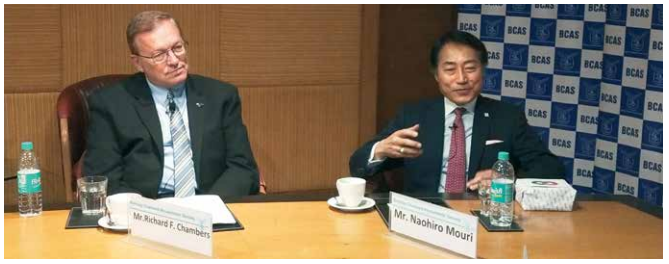
GST : Practical approach for implementation

Lot has been said about GST and its implementation in India. We all wish implementation of GST to be :
G – Good

S – Simple

T – Transition

From various different and complex tax systems to one unified, stable and simple tax regime.

However one should consider the various practical difficulties in proper implementation of GST. The following are some of the important aspects which need consideration for effective implementation of GST in India.

(1) System upgrade :

    All over India different states have taken initiative at their own level for E-Governance and computerisation of Sales Tax or VAT-related work. As there is no proper customisation of the software developed, one cannot generate various analytical reports and information.

    Technology should be used in such a way that not only blue chip companies, but a small retailer also can use it for compliance. The system should be evolved in such a way that dealers and consultants are not required to visit offices for registration, return submission or allied work. Services of our I.T. Companies should be used in development and implementation of software for one of the finest reforms ever in India’s indirect taxation arena.

    In spite of amendments in procedural compliance in income-tax, the new system has been readily accepted by people and one is hoping the same on indirect tax front.

(2) Data transition from old tax system (VAT) to GST :

    Technology should be used for transition of data or master records of dealers from the old tax system to new tax system. It should be borne in mind that it has not been long when VAT was implemented. Exhaustive details relating to dealers have already been asked for and are available with the Department. Database of the dealer is updated on real-time basis. Since all the information of existing dealers is already available with the Sales Tax authorities, requirement of the same information again for GST would lead to duplication of work and wastage of time and energy. Dealers should be asked only to confirm the correctness of it.

    Smooth implementation of GST will bring in support and confidence of the dealers and the Department with the new tax system. They will be free from unwarranted paperwork and there would be least possibilities of commitment of any error and thereafter its rectification.

(3) Strategy for disposal of matters in old tax structure :

    At present assessments under the Bombay Sales Tax Act are still pending. Assessments for the period 1998-99 and onwards are still going at various offices. It is difficult to foresee what will happen in April 2010/or April 2011 when GST will be implemented. On implementation of GST we will have to deal with three different Acts :

    (1) Old tax system (e.g., BST in Maharashtra)

    (2) VAT (With effect from 1-4-2005 as in Maharashtra, for other)

    (3) Proposed GST

    A strategy should be developed for clearance of long pending assessments. Otherwise it would become a complex structure to deal with.

    Even at present for VAT in Maharashtra, following are the pending matters with respect to year 2005 i.e., first year of VAT implementation :

    (a) Advisory Visit

    (b) Business Audit

    (c) Refund Audit

    (d) Pending Assessments

    (e) Matters before various Appellate Authorities, Tribunal & High Court, etc.

(4) Training to staff of Departments :

    Government and bureaucrats are of the view that the dealer should be updated of various tax laws. But for proper functioning of tax system both i.e., dealer and Department staff should be well versed with the tax system.

    At the time of implementation of VAT, we have observed that the Tax Department which is supposed to answer the queries of dealers/practitioners is rather itself confused and raising so many queries.

    Aspects to be taken care of :

    Dealers and the Tax Consultants/Practitioners are required to comply with all the tax matters through the Departmental set-up.

    It has been seen in the current VAT regime that the dealer is the ultimate responsible person who needs to comply with the tax provisions, but what about the department staff. Proper training should be departed to the staff and officers of the Sales Tax Department about the Acts/Rules/Provisions.

    The officer should be fully aware of the new laws and provisions thereof. Many decisions are being taken at top level, but it is the duty of top-level management to percolate the new development to the juniors, staff and officials at various spread-out locations. It will develop the confidence of the Department in the new tax system. Accordingly advance training session should be held to groom the officers about new tax structure.

(5) Common platform :

    Just like income-tax, single software should be developed for all the states. This will help both the Government and Sales Tax authorities. Unless an appropriate model is evolved for maintaining status quo for tax administration, both taxpayer and administration will be at dilemma. The following are some of the advantages of common software platform :

    (a) Speedy data sharing from one state to another.

    (b) Control and monitor over inter-state transaction, imports and exports.

    (c) Fast cross-checking of transaction resulting in saving of time and money.

    (d) Will inculcate global business atmosphere.

    (e) Increase the free trade and movement of goods and services.

    (f) Curb the black money and off-the-record transaction.

    (g) Since PAN is the base for the registration records of all the dealers, information can easily be shared across various taxation structures such as (1) Direct Tax (2) Customs Duty (3) Excise Duty (4) Service Tax.

    This will also act as catalyst for the project undertaken by the Government of importing Unique Identification Number across the country.

    All this technological upgradation can be very well undertaken when we have the best of I.T. companies like TCS, Wipro, Infosys and many more.

(6) Collaborating with the various professionals :

Professional like, Chartered Accountants, Company Secretary, Cost Accountants, Tax Consultants, and Tax Practitioners should be made aware of the Acts, Rules, and various provisions. These are people or intermediary partners for the Government to communicate the problems of the taxation system properly to the last person of the chain in best of manner. Compliance with the requirement of income-tax has been improved because of the intermediary strong professional force. The same thing can be very well achieved on indirect taxation also. The following things can be done for this purpose :

1. Spreading awareness through various professional bodies in India like C.A., C.S., ICWAI, IIMS, educational institutes, etc.

2. Providing web-based platform for all the updates and FAQs about the tax system.

3. Organising programmes and seminars to update the masses about new tax levy, similar to the various programmes organised by the Ministry of Company Affairs (MCA) for the investor awareness programmes.

7) Uniform forms and compliance :

Dealer should have common forms to comply with the Sales Tax requirement. The same forms are available all over India for income-tax (e.g., ITR1, ITR2, and Pan Application, etc.), service tax (ST1, TR6 Challan, and STR, etc.), excise, customs and others, but this is not the case with local sales tax acts. Each state prescribes their own forms which acts as obstacle to simplification. When in case of Central Sales Tax Act we have Registration Forms, Quarterly Return Forms, C-Form, etc. of same from at all over state, then this is also possible for the local Sales Tax Act.

Along with dealers, professional, service providers, tax consultants will also be in much better position to perform their responsibilities.

For example, in some States at present we have Vat Audit Report of 2 or 3 pages and in another state like Maharashtra we have Vat Audit Report in Form 704 of nearly 80 pages.

It’s not about the number of pages but what is required is uniformity and simplicity in the compliance and procedural aspects of GST all over India.

8. Promoting awareness among public :

General public should be made aware of the new tax system to be implemented, well in advance. Sufficient time should be given to the public at large so as to understand and prepare them for the transition. Few suggestive steps for this :

(a) Advertise in print media
(b) Advertise through T.V.
(c) Advertise and propaganda through news and publications.
(d) Arranging seminars and conferences.
(e) Taking the corporate sector into confidence and sharing ideas directly with them.

Concluding :

It is recommended to the concerned authorities that hasty implementation of any tax system will hamper the future progress of tax structure. To ensure smooth transition to the new tax regime, it is necessary to assess the overall impact of the new tax structure on all facets of business and carry out requisite changes in a timely manner. Public mindset is ready for the change, only because they are thinking that something better will come in GST.

Hope the suggestions come helpful for better implementation of GST in transforming our economy from developing to developed one.

Will — Suspicious circumstances — Attestation of Will Succession Act, S. 63.

New Page 2

20. Will — Suspicious
circumstances — Attestation of Will Succession Act, S. 63.


[Smt. Subasini
Choudhary v. Smt. Bisakha Kar & Ors.,
AIR 2010 Orissa 174.]

The petitioner had filed
the said case for probate of a Will u/s.276 of the Indian Succession Act. The
case of the petitioner was that the residential house site over plot No. 3 in
Unit-III, Bhubaneswar City belongs to late Rama Chandra Kar, S/o. Late
Banchhanidhi Kar of Dargha Bazar, Cuttack. The said Rama Chandra Kar died on
5-3-1996. Before his death, he executed his last Will and testament in favour
of the petitioner on 14-11-1995 in presence of witnesses. When the matter was
pending before the Court below, a finding has been recorded in the impugned
order that in spite of sufficiency of service of notice, the opp. parties, who
were arrayed as parties, did net appear in the said case, except the State of
Orissa. The lower Court below, ultimately dismissed the Probate Misc. Case.
The Court observed that there is nothing in law which requires the
registration of a Will and Wills are in a majority of cases not registered at
all. The Supreme Court in the case of Ishwardeo Narain Singh, AIR 1954 SC 280
held that to draw any inference against the genuineness of the Will on the
ground of its non-registration was wholly unwarranted.

In the instant case, there
are materials appearing on the face of the Will that the testator was
neglected by all his kith & kin which by implication includes his daughter
also. It was therefore, more fortified that no suspicious circumstances can be
presumed as because, the testator had only one daughter who was debarred by
execution of the Will. It is well settled in law that the mode of proving the
Will does not ordinarily differ from that of proving any other document except
as to the special requirement of attestation prescribed in the case of a Will
in S. 63 of the Indian Succession Act. The onus of proving the Will is on the
propounder and in the absence of suspicious circumstances surrounding the
execution of the Will, proof of testamentary capacity and the signature of the
testator as required by law is sufficient to discharge the onus. Slight
discrepancy in their evidence is plausible when they are giving evidence after
a gap of eight or nine years.

levitra

The OS war — Episode-II

Computer Interface

Circa Oct. 2009, Amazon was booking orders for copies of
Windows 7. What it didn’t know at the time (or may be it did, but didn’t
publicise it) was that the bookings were going to be the biggest ever, and would
gross even more than the latest book of Harry Potter.

Windows 7 is now more than a month old (since it hit the
stores on 22nd Oct). According to the grapevine, users are not entirely unhappy.
Early adopters report they’re mostly happy — and that is true for Vista users
even more than XP users, and rightly so. After all Windows 7 is all that its
predecessor, Windows Vista, was expected to be.

For instance :

  • Unlike Vista, Windows 7 hogs lesser resources, making it
    a far better performer, capable of running on lesser powered net-books that
    currently have to use leaner Linux or Windows XP operating systems;

  • PC users are enjoying almost the same kind of performance
    and services that owners of Macintosh and Linux computers have long taken for
    granted.

Of course there are users who ask — why they had to wait so
long — and then have to pay for it. A few of Microsoft’s harsher critics even
argue that many of the improvements that wound up in Windows 7 could have been
released as a free ‘service-pack’ a year or so ago, that is if Microsoft
wanted to salvage Vista
. After all it wouldn’t be the first time ! ! ! ! !

Still, there are others who don’t want to upgrade to Windows
7 because a good majority of the users are happy with Windows XP. There are some
who cite cost as a deterrent, a whole bunch of users are waiting for the Windows
7 service pack (already ! ! ! ! ! It’s barely one month old).

Windows XP was popular because it gave to all its users the
right to change all sorts of things (and accidentally leave back-doors open for
mischief-makers). Vista’s ‘user account control’ (UAC) technology clamped
down firmly on the user’s ability to change settings, download software or even
run installed programs. To gain the right to do so, users had to get
authorisation from an administrator. Even then, they were bombarded by UAC
interruptions, asking for all sorts of permissions and validations to continue
with whatever they were trying legitimately to do. It was enough to drive most
people insane and deem Vista’s iron-clad security feature an absolute no-no.
Just as bad, the locked-down nature of Vista made it run as slow as a sloth,
soaking up lot more computing power than XP, to perform similar tasks. The extra
security also led to instability and compatibility problems. In short, Vista
came short on a lot of expectations (that people took for granted with XP). As a
consequence, four out of five XP users (out of an estimated 800m PC owners
around the world) refused to upgrade to Vista. Incidentally, the vast majority
of those who use Vista today acquired it by default when they bought a new
computer.

But there are good reasons for XP users to upgrade. Greatly
improved security is one. Apart from being snappier and more modest in its
needs, Windows 7 is a good deal friendlier than and almost as secure as Vista.
The lack of technical support is another good reason. Microsoft ceased providing
mainstream support for Windows XP last April (though it will continue to offer
bug fixes and security patches for the venerable operating system until 2014).

Without getting into the nitty-gritty of the installation
process and the hardware requirements, let’s get on with what Windows 7 has to
offer :

Better User Access Control and security features :

Ideally the UAC was supposed to keep the users safe from
malware, but instead its constant prompts and validations prevented users from
accessing those controls. Microsoft has apparently learnt from this experience,
Windows 7’s UAC has improvised the security feature by giving the user the
option to choose the level of intrusiveness (see picture 1).

While Vista users had no choice in using the UAC (except, of
course, turning it off ! ! ! ! ! — see pic. 1), Windows 7 allows the user to
choose from two intermediate notification levels between ‘Always notify’ and
‘Never notify’.

The control is in the form of a slider containing four
security levels. As before, you can accept the full-blown UAC or opt to disable
it. Not only can you tell UAC to notify you only when software changes Windows
7’s settings, not when you’re tweaking them yourself and you can also instruct
UAC not to perform the abrupt screen-dimming effect that Vista’s version uses to
grab your attention. Naturally, the convenience comes with a caveat. The slider
that users use to reduce its severity, advises you not to do so if you routinely
install new software or visit unfamiliar sites, and it warns that disabling the
dimming effect is ‘Not recommended.’

Other than salvaging UAC, relatively few significant changes
have been made to Windows 7’s security system. One meaningful improvement :
BitLocker (courtesy of a feature called BitLocker to Go) lets you encrypt USB
drives and hard disks. However the drive-encryption tool comes only with Windows
7 Ultimate and the corporate-oriented Windows 7 Enterprise. It’s one of the few
good reasons to prefer Win 7 Ultimate to Home Premium or Professional.

Internet Explorer 8, Windows 7’s default browser, includes
many security-related enhancements, including a new SmartScreen Filter (which
blocks dangerous websites) and InPrivate Browsing (which permits you to use IE
without leaving traces of where you’ve been or what you’ve done). Nonetheless,
IE 8 is equally at home in XP and Vista (and it’s free) so it doesn’t constitute
a reason to upgrade to Windows 7.

Applications fewer, better :

It’s rather common for an OS to come with paraphernalia
applications bundled along with the main OS. However, Windows 7 has taken a
different approach (for that matter Google’s Chrome OS has gone even further).
Rather than bloating it up with new applications, Microsoft eliminated three
(ahem ! ! !) non-essential programs : Windows Mail (née Outlook Express),
Windows Movie Maker (which premiered in Windows Me), and Windows Photo Gallery.
Users who don’t want to give them up can find all three at live.windows.com as
free Windows Live Essentials downloads. They may even come with your new PC,
courtesy of deals Microsoft is striking with PC manufacturers. Ironic as it
may sound, first they say that they are non-essentials and then they add it to
the list of Windows Live Essentials, they even strike deals with PC
manufacturers — strange folks these software companies or is there something
else going on in the background ?


Still present — and nicely spruced up — are the operating system’s two applications for audio and video, i.e., Windows Media Player and Windows Media Center.

Windows Media Player 12 has a revised interface that divides operations into

  •  a Library view for media management; and

  •  a Now Playing view for listening and watching stuff.

There is a lot more functionality that’s been built in Media Player 12. Minimise the player into the Taskbar, and you get mini-player controls and a Jump List, both of which let you control background music without having to leave the app you’re in. Microsoft has also added support for several media types (currently not supported by Media Player 11) including AAC audio and H.264 video — the formats it needs to play unprotected music and movies from Apple’s iTunes Store.

Media Center, however, which comes only with the pricier versions of Windows 7, is most useful if you have a PC configured with a TV tuner card and you use your computer to record TV shows à la TiVo. Among its enhancements are a better program guide and support for more tuners.

(to be continued)

Internet Browsers — Part II