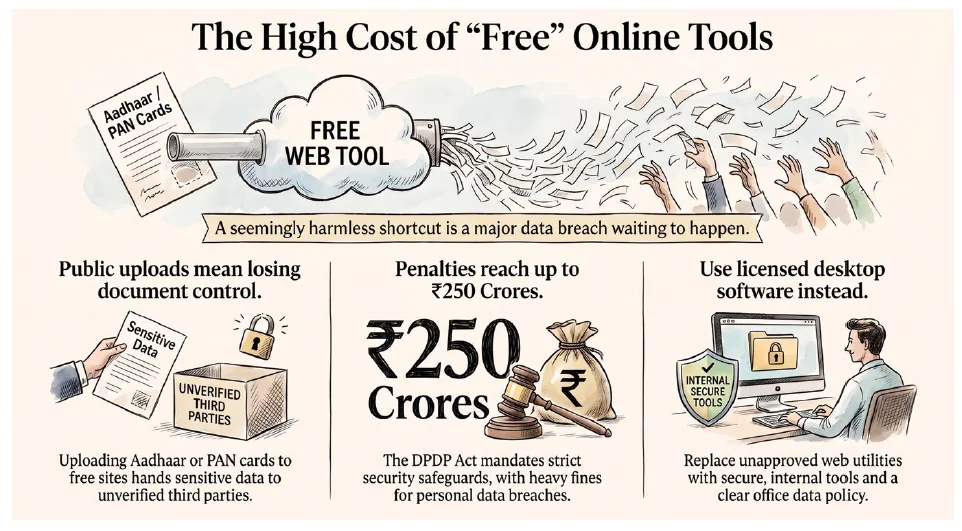
A client emails a scanned copy of his Aadhaar card to your office for uploading on the GST registration portal. The file size is 3 MB, while the portal accepts uploads only up to 1 MB. The intern handling the registration opens a free online PDF-compression website, uploads the Aadhaar scan, downloads the compressed version and completes the filing. The registration is successful. The client is satisfied. No one in the office gives the compression website another thought.
Yet this simple and commonplace act illustrates one of the most overlooked data protection risks in professional practice.
Across Chartered Accountants' offices, personal identity documents such as Aadhaar cards, PAN cards, passport copies and bank statements are routinely compressed, merged, converted, translated or subjected to OCR using freely available online tools. The convenience is undeniable. The legal implications, however, deserve closer attention.
The Digital Personal Data Protection Act, 2023 ("DPDP Act") introduces a statutory framework governing the processing of digital personal data. The principal compliance requirements including notices, co