Subscribe to the Bombay Chartered Accountant Journal Subscribe Now!

PART D: RTI & SUCESSS STORY

fiogf49gjkf0d
RTI success story of Vinita Deshmukh, Pune:

The controversial Dow Project in Pune — at Shinde- Vasuli village in Chakan came to a grinding halt in 2010. In fact, unable to sustain vociferous local protest against the establishment of its chemical plant in the heart of the village, Dow voluntarily walked out of Pune district. I couldn’t believe what I heard . . . .

Since then, the site wears a deserted look. Much of the construction material too has been lifted by the Dow people, say villagers. cement bags lie torn, construction pillars with jutting out iron rods wait hopelessly and most of the makeshift offices too have been flattened. Two security guards stroll around and dare not defy clicking photographs. The land still belongs to Dow confirms the MIDC official in Pune and MPCB Pune says no directive has been given by it to the shift base. According to news reports, Dow has voluntarily decided to move out, stung by the hostility of the local residents. Well, but there are no sympathies for this turn of events.

Like they say, as you sow, so shall you reap.

When I called up the then District Collector Chandrakant Dalvi, he confirmed that “Dow is now out of Pune district.’’ It is the intense campaign by villagers taken forward by the Warkari community of entire Maharashtra that eliminated Dow from Pune. I, in the capacity of the editor of ‘Intelligent Pune’, a weekly tabloid, played a pivotal role in accessing crucial information under RTI. Inspection of files u/s.4 of the RTI Act at the Maharashtra Pollution Control Board (MPCB), Maharashtra Industrial Development Corporation (MIDC) and Secretary, Environment office at the Mantralaya, Mumbai revealed shocking details.

When Dow was given a whopping 100 acres of land, it began construction sometime late 2007. Villagers were in the dark about it, they were not even told the name of the company. Former Sarpanch Panmant recollects that suddenly a 4,000 strong labour force was put to work day and night. When they tried getting information from the collector’s office, they were stonewalled. It was only in January 2008 that the company put up the board on site, namely, ‘Dow Chemicals International Ltd.’.

Sometime in January 2008 Justice (retd.) B. G. Kolshe Patil visited the village for a public programme. When he found the name ‘Dow Chemicals International Ltd.’ on the board, he asked the villagers whether they were aware of what was coming to their village. He enlightened them that it is the same company which was responsible for the Bhopal Gas Tragedy and that villagers should not allow this company to set up home here.

Thus, villagers began their agitation. They first stopped the water connection that they had willingly given to the company premises and then halted any company vehicle from entering their village. For this, they dug up superficial trenches. Newspapers reported about the warpath taken by the villagers.

I decided to find out more about permissions given to Dow. When I called up Member Secretary, MPCB, he answered that, “I have no documents. If you want, you can invoke the RTI Act.’’

I did so and literally opened up a Pandora’s Box. I broke the story in ‘Intelligent Pune’ in the 7th March cover story. It shocked Puneites and armed villagers of Shinde-Vasuli where the Dow Chemicals plant was coming up, with hardhitting ammunition in the form of the truth in black and white.

The Maharashtra Pollution Control Board (MPCB) is the prime body to give environmental clearance for such a project. The Maharashtra Industrial Development Corporation (MIDC) is the body which provides land. Both are required to scrutinise the proposal of this nature thoroughly since the outfit, even if it is an R&D centre, is of a chemical nature. I carried out inspection of files u/s.4 of the RTI Act at the MIDC, Pune office. I also invoked the RTI at the MPCB office to know what kind of consent DOW had applied for and what kind of consent had the MPCB given.

Though we procured crucial correspondence, which took off the lid of DOW’s claim that it was primar-ily a research and development centre and not a manufacturing unit, vital documents pertaining to NOCs from the Ministry of Environment & Forests (MOEF) and Industrial Entrepreneurs Memorandum (IEM) — both mandatory for establishment of a chemical plant were either missing or not submitted at all. “We do not have these documents in Pune — you may try in Mumbai’’ was the chorus of the regional officers of the MIDC and MPCB.

Inspection of files at MIDC, Pune on 28th February, 2008:

Information was gathered u/s.(4) of the RTI Act wherein this writer and RTI activist, Vijay Kumbhar, undertook inspection of the file containing correspondence between MIDC and DOW. Some of the file notings reveal the hurry in which the proposal was given a green signal. The correspondence also reveals that what DOW was setting up was not primarily a research and development centre. Many files were inspected. Hereunder are the observations:

19th October, 2007: In his letter dated 19th October, 2007, Sanjay Khandare, member secretary of the MPCB has granted Dow Chemicals International Pvt. Ltd. (plot no A-1, MIDC Chakan, Phase II, Taluka Khed, District. Pune) the consent for the manufacture of the following chemical products: Polymers — 2,000 kgs per month; Catalyst organic/inorganic — 1,000 kgs per month; Surfactants — 200 kgs per month; Aliphatic organic compounds — 500 kgs per month; Aromatic organic compounds — 500 kgs per month; Inorganic salts — 500 kgs per month.

In case of accidents, the MPCB expects DOW to do a clerical post-accident action — “Whenever due to any accident or any other unforeseen act or even, such emissions occur or apprehended to occur in excess of standards laid down, such information shall be forthwith reported to Board, concerned police station, officer of director of health services, Department of Explosives, Inspectorates of factory and local body. In case of failure of pollution control equipments, the production process connected to shall be stopped.’’

Maj. Gen. SCN Jatar (retd.), a petrochemical expert and RTI activist stated that, “The authorities should not have given final approval until the environmental impact assessment (EIA) report is made. The report should be made by a well-known agency and local representatives of the citizens should be associated with its preparation.”

Pollution control board experts who scrutinised the consent by the MPCB, commented:

“The list of chemicals given which are likely to be used at the Chakan plant includes hazardous and dangerous gases as well as chemicals such as (1) gases — SO2, Acetylene, HCL. (2) Solvents — Acetone, ether, nitrite compounds, halogenetic solvents, and inorganic acids. Thus the safety-related issues arising out of handling, accidents and incidents involving above chemicals require proper storage, handling and emergency procedures. For this an environmental management plan should have been asked by the Board of Government of India’s MSIHC (manufacturing, storage, import and handling of hazardous chemicals rules 1989) as notified in the EPA Act same does not seem to have been adhered to. There does not seem to be adherence of the Chemical Accidents & Emergency Preparedness (Rules 2000) for which the company needs to submit onsite and off site disaster management plan and that includes education to the neighbourhood residents. It is the fundamental right to know what is happening in the neighbourhood.”

As a precautionary principle, environmental impact analysis should have been done by the company on its own when they claim they are a responsible corporate. Neither the board has asked for it.

I informed the villagers regarding the kind of chemical manufacturing plant and that it was not just a research centre which was coming in their neighbourhood. Bandya Tatya Kharadkar, the Warkari leader successfully led a state-wide agitation as the Indrayani river is close to the heart of this community. What makes me feel overwhelmed is the fact that it was RTI that could move a colossal multinational company which flexes its muscles in countries like India based on money power. RTI can even drive away such a powerful business enterprise!

PART A : Decision of the CIC

fiogf49gjkf0d
Public Authority u/s.2(h) of the RTI Act: Public-Private Partnership
A very important order is made by CIC, Shailesh Gandhi on above subject i.e. bodies under publicprivate partnership (PPP).

The applicant had sought information from the Public Health Foundation of India, New Delhi (PHFI). While PHFI provided all the information sought, it stated that it is not a ‘public authority’ as defined under the RTI Act and it is a completely autonomous institution.

The applicant wanted the Commission to rule on this point, i.e., whether PHFI, (a PPP body) is covered under the RTI Act or not.

The Commission noted as under: “From a plain reading of the section 2(h), it appears that PHFI is not covered under clauses (a), (b), (c) & (d)(ii) of section 2(h) of the RTI Act. Therefore, the issue which remains to be determined is whether PHFI gets covered under clause (d)(i) of section 2(h) or not. The said clause reads: body owned, controlled or substantially financed directly or indirectly by funds provided by the appropriate Government.”

It appears that PHFI is not ‘owned’ by the appropriate Government. As regards being ‘controlled’ by the appropriate Government, the said term has not been defined under the RTI Act. There are various forms in which the Government exercises control over an entity, which is relevant in determining whether the latter is a public authority. On perusal of the information about PHFI’s governing board, the Commission noted that amongst its 30 Board members are:

1. Dr. Montek Singh Ahluwalia, Deputy Chairman, Planning Commission, Government of India;

2. P. K. Pradhan, Secretary, Ministry of Health and Family Welfare, Government of India;

3. Vishwa Mohan Katoch, Secretary, Department of Health Research, Ministry of Health and Family Welfare and Director General, Indian Council of Medical Research;

4. T. K. A. Nair, Principal Secretary to the Prime Minister of India; and

5. Dr. R. K. Srivastava, Director General Health Services, Ministry of Health and Family Welfare, Government of India.

Thus, at least one-sixth of the members of the governing board of PHFI consist of senior public servants. At the hearing held on 24-1-2012, the respondent claimed that most of the Government officials on the board of PHFI were occupying such positions in ‘private capacity’.

This Bench is of the view that such a claim is untenable. It is difficult to assume that senior public servants can be on the board of an organisation like PHFI — which has numerous interactions with the Government, in private capacity. In fact, this would necessarily imply a conflict of interest. The Commission can only assume that such public servants must necessarily be acting on behalf of the Government — when they are required to take executive decisions as members of the board in a public-private partnership (PPP) such as PHFI. Any other conclusion would be an improper slur on their integrity. It is not possible that India’s leading public servants could be acting in any manner, but as representatives of the Government when they are on the board of PHFI. It is also true that significant funding is provided by the Government to PHFI. Hence, it is presumed that the five officials on the board of PHFI are discharging their duties as public servants.

The RTI Act does not specify ‘complete control’ in section 2(h). As per P. Ramanatha Aiyar’s, ‘The Law Lexicon’ (2nd Ed., Reprint 2007 at p. 410), the term ‘control’ means — ‘power to check or restrain; superintendence; management . . . . . . .”. It appears that the presence of senior Government servants on the board may check or ensure that decisions taken in PHFI are in consonance with the Government’s avowed objectives. Therefore, the presence of a fair degree of Government control on the decisions of PHFI cannot be ruled out. It follows that PHFI is ‘controlled’ by the appropriate Government. This may not be complete control, but five top public servants would exercise some degree of control, which would be significant.

The respondent had doing the hearing also admitted receiving Rs.65 crore from the Government. In this regard, reliance may also be placed on the complainant’s contention that in the 20th Report of the Department-Related Parliamentary Standing Committee on Health and Family Welfare submitted to the Rajya Sabha (2007), it was noted that “The Government of India is contributing Rs.65 crore, approximately one-third of the initial seed capital required for kickstarting the PHFI and for establishment of two Schools of Public Health. The remaining amount (approximately Rs.135 crore) is being raised from outside the Government, namely, Melinda & Bill Gates Foundation (Rs.65 crore) and from high net-worth individuals. PHFI is managed by an independent governing board that includes 3 members from the Ministry of Health and Family Welfare viz. Secretary (H&FW); DG ICMR and DGHS. T. K. A. Nair, Principal Secretary to Prime Minister, Dr. M. S. Ahluwalia, Vice-Chairman, Planning Commission; Sujata Rao, AS&PD, NACO, Ministry of Health; Dr. Mashelkar, DG CSIR are also members of the governing board. The presence of the officials from Government would ensure that the decisions taken in PHFI are in consonance with the objectives for which PHFI has been supported by Government of India. It is expected that all members of the Governing Board would ensure the functioning of the Foundation as a professional organisation and with complete transparency.” (emphasis added). Thus, the Parliamentary Standing Committee also assumed that the Vice- Chairman of the Planning Commission, Principal Secretary to the Prime Minister and other public servants were ensuring that decisions of PHFI were in consonance with the Government’s objectives and complete transparency. PHFI’s refusal to accept it is coverage by the RTI Act seems at variance with this.

Further, though the term ‘financed’ is qualified by ‘substantial’, section 2(h) of the RTI Act does not lay down what actually constitutes ‘substantial financing’. It is akin to ‘material’ or ‘important’ or ‘of considerable value’ and would depend on the facts and circumstances of the case. The funding sources of PHFI are foundations, private donors and the Ministry of Health and Family Welfare, Government of India (MH&FW). At the hearing held on 24-1-2012, the respondent stated that PHFI was set up in 2006 with an initial fund corpus of Rs.200 crore (at present Rs.219 crore), out of which Rs.65 crore were provided as grant by MH&FW. It follows that Government funding in PHFI is to the tune of 30%, which cannot be considered as insubstantial. Moreover, even if taken on absolute terms, a grant of Rs.65 crore given by the Government from its corpus of public funds cannot be considered as insignificant and would render PHFI as being ‘substantially financed’ by funds from the Government.

Citizens have a right to know about the manner, extent and purpose for which public funds are being deployed by the Government. Having said so, not every financing of an entity in the form of a grant by the Government would qualify as ‘substantial — but certainly a grant of over Rs.1 crore would constitute ‘substantial financing’ rendering such entity a public authority under the RTI Act.

Furthermore, the respondent also stated that PHFI is a public-private partnership. It is relevant to mention that PPPs are in the nature of legally enforceable contractual agreements between public authorities and private organisations with clearly laid out terms and conditions, and rights and obligations. PPPs, by their very nature, stipulate certain contributions by the Government such as giving land at a concessional rate, grants, mo-nopoly rights, etc. In cases such as grants, direct funding by the Government can be easily calculated. In cases such as giving monopoly rights or land at a concessional rate, etc., value(s) must be attached and the same would tantamount to indirect financing by the Government. In other words, PPPs envisage a partnership with public funds — directly or indirectly — and therefore citizens have a right to know about the same.

As a consequence of being a public-private partnership, PHFI has received a substantial grant of Rs.65 crore from the Government initially. Further, as per the complainant’s contention — PHFI has been receiving free land and handsome financial grants from state governments for setting up ‘Indian Institutes of Public Health’ (IIPHs) as part of the public-private partnership. For instance, the Andhra Pradesh Government provided PHFI with 43 acres of land in Rajendra Nagar area of Hyderabad free of cost and Rs.30 crore in financial grant for setting up IIPH. The Gujarat Government provided 50 acres in Gandhinagar and Rs.25 crore as grant. The Orissa Government provided 40 acres near Bhubaneswar and the Delhi Government spent Rs.13.82 crore on acquiring 51.19 acres of Gram Sabha land in Kanjhawala village for PHFI to set up IIPH. Hence, there appears to be substantial financing both directly and indirectly by the Government. It follows from the above that PHFI is controlled and substantially financed by the Government.

Therefore, this Commission rules that PHFI is a public authority u/s.2(h) of the RTI Act.

I may note that PHFI subsequent to the hearing, itself agreed to submit itself to the jurisdiction of the RTI Act and the Commission further noted as under:

“It may not be out of place to mention that in recent years, there has been an emergence of multitude of public-private partnerships in different sectors. As described above, PPPs envisage an arrangement between the Government and private entities with clearly laid down rights and obligations. By their very nature, PPPs stipulate certain contributions from the Government, which may be monetary as well as non-monetary — to which values can be attributed. Moreover, PPPs envisage a certain degree of Government control in their functioning so that the decisions taken are in accordance with the objectives for which the partnership was set up. Given the above, PPPs would come within the ambit of ‘public authorities’ as defined in the RTI Act, thereby enabling citizens to know/obtain information about them. At present, most PPPs do not even accept the applicability of the RTI Act to them and wait for the issue to be adjudicated upon at the Commission’s level. For this some citizen has to pursue this matter. Such practices are required to be brought to a minimum and PPPs must comply with the provisions of the
RTI Act.”

In this instance the Commission notes with some dismay that the highest levels of public servants in India did not accept the citizen’s enforceable Right to Information in PHFI, despite the Government substantially funding it and exercising some control.

This strengthens the plea by the Commission that all public-private partnership agreements must have a clause that they are substantially funded by the appropriate Government and hence accept that they are public authorities as defined in the RTI Act. Without this, even an Institution like PHFI which has a distinguished board tries to refuse the Indian citizen his enforceable fundamental right. Finally, the Commission ruled:

“PHFI is public authority u/s.2(h) of the RTI Act and directed the chairman of PHFI to appoint a Public Information Officer and a First Appellate Authority — as mandated under the RTI Act before 15 March 2012 and also ensure compliance with section 4 of the RTI Act.”

[Kishan Lal v. Director (Development & Strategy) Public Health Foundation of India, New Delhi, decision No. CIC/SG/C/2011001273/17356 complaint No. CIC/SG/C/2011/001273, decided on 14-2-2012]

Gaming or Gambling?

fiogf49gjkf0d
Introduction

“What’s in a name?” asks Shakespeare.

Apparently a lot, if you are considering whether a particular venture is a ‘gaming venture’ or a ‘gambling venture’. While the two terms sound similar, there is a world of a difference between the two. With India’s online gaming market growing by leaps and bounds, there is a keen interest in setting up gaming ventures and investing in/acquiring Indian gaming companies. Several venture funds/large corporations have invested in gaming ventures in India. For instance, recently Walt Disney Company has acquired 100% stake in Indiagames Ltd. by buying out 42% stake held by the promoters and others for around $ 80 million. Games2Win, one of India’s oldest gaming portals has raised over $ 11 million from various venture funds. Thus, to say that the interest in this sector is large would be an understatement.

In India, gaming is a permissible activity, but gambling is either prohibited or heavily regulated. There are several laws which are relevant when one considers the nature of a venture. This Article gives an overview of this interesting subject.

Legal ecosystem

Let us first understand the various laws which deal with this subject:

(a) Under the Constitution of India, the Union Government is empowered to make laws regulating the conduct of lotteries.

(b) Under the Constitution, the State Governments have been given the responsibility of authorising/ conducting lotteries and making laws on betting and gambling.

(c) Hence, we must look at the Acts of each of the 28 States and 7 Union Territories regarding gambling/gaming.

(d) The following are the various laws which regulate/ restrict/prohibit gambling in India:

  • Public Gambling Act, 1867: This Central legislation provides for the punishment for public gambling in certain parts of India. It is not applicable in Maharashtra and other States which have repealed its application.

  • Bombay Prevention of Gambling Act, 1887 applies in Maharashtra and regulates gaming in the State.

  • Other State legislations: Acts of other States, such as the Delhi Public Gambling Act, 1955, Madras Gambling Act, etc. These Acts are more or less similar to the Public Gaming Act as the object of these Acts is to ban/restrict gambling. The State Acts repeal the applicability of the Public Gambling Act in their respective States.

  • Section 294-A of the Indian Penal Code, 1860: This Section provides for a punishment for keeping a lottery office without the authorisation of the State Government.

  • Section 30 of the Indian Contract Act, 1872: This Section prevents any person from bringing a suit for recovery of any winnings won by way of a ‘wager.’

  • The Lotteries (Regulation) Act, 1998: This Central legislation lays down guidelines and restrictions in conducting lotteries.

  • The Prevention of Money Laundering Act, 2002 which requires maintenance of certain records by entities engaged in gambling. ?
  • States which expressly permit gambling:

Sikkim: The Sikkim Casino Games (Control and Tax) Rules, 2002 permit setting up of casinos in Sikkim.

The Sikkim Online Gaming (Regulation) Act, 2008 + Sikkim Online Gaming (Regulation) Rules, 2009 provide for licences to set up online gaming websites (for gambling and also betting on games like cricket, football, tennis, etc.) with the servers based in Sikkim. Other than this law, India does not have any specific laws targeting online gambling or gaming.

Goa: An amendment to the Goa, Daman and Diu Public Gambling Act, 1976 allows casinos to be set up only at fivestar hotels or offshore vessels with the permission. That is the reason Goa has floating casinos or casinos at fivestar hotels.

West Bengal: The West Bengal Prize Competition and Gambling Act, 1957 excludes ‘skill-based’ card games like poker, bridge, rummy and nap from its operation. Thus, in the State of West Bengal, a game of poker is expressly excluded from the definition of gambling.

Public Gambling Act

Since this is a Central Act on which several State Acts have been based, we may examine this Act. Section 1 of this Act has laid down three conditions and all three must be fulfilled in order that a place is treated as a common gaming house:

(a) It must be a house, walled enclosure, room or place;
(b) cards, dice, tables or other instruments of gaming are kept in such place; and
(c) these instruments are used for profit or gain of the occupier whether by way of charging for the instruments or for the place.

It is a moot point whether these definitions can be extended to online gaming ventures.

Section 3 of the Act levies a penalty for owning or keeping or having charge of a common gaming house. The penalty is a fine not exceeding Rs.200 or an imprisonment for a term up to 3 months. It may be noted that the public gaming house concept can even be extended to a private residence of a person if gambling activities are carried on in such a place. Thus, casual gambling at a house party may be treated, if all the conditions are fulfilled, as gambling and the owner of the house may be prosecuted.

Exception u/s.12: Even if all the above-mentioned 3 conditions are fulfilled, if it is a game of mere skill, the penal provisions do not apply. What is a game of skill is a question of fact and has been the subject-matter of great debate. In Chamarbaugwalla v. UOI, AIR 1957 SC 628, it was held that competitions which involve substantial skill are not gambling activities.

In State of AP v. K. Satyanarayana, 1968 AIR 825 (SC), the Court analysed whether a game of rummy was a game of skill. It held as follows:

  • Rummy was not a game of mere chance like three cards;

  • It requires considerable skill as fall of cards is to be memorised;

  • The skill lies in holding and discarding cards;

  • It is mainly and preponderantly a game of skill; and

  • Chance is a factor, but not the major factor.

  • Held, that rummy is not a game of chance, but a game of skill.
In Dr. K. R. Lakshmanan v. State of TN, 1996 2 SCC 226 the Court analysed whether betting on horses is a game of chance or mere skill:

  • Gambling is payment of a price for a chance to win. Gaming may be of skill alone or skill and chance.

  • In a game of skill chance cannot be entirely eliminated, but it depends upon superior knowledge, training, attention, experience and adroitness of players.

  • A game of chance is one in which chance predominates over the element of skill and a game of skill is one in which the element of skill dominates over the chance element.

  • It is the dominant element which determines the character of the game.

  • In horse-racing the person betting is supposed to have full knowledge of horse, jockey, trainer, owner, turf, race system, etc.

  • Horses are given specialised training.

  • Books are printed giving details of the above which persons betting study.

Hence, betting on horse-racing is a game of skill since skill dominates over chance. In Bimalendu De v. UOI, AIR 2001 Cal. 30, Kaun Banega Crorepati aired on Star TV was held not to be a game of chance, but was held to be a game of skill. Elements of gambling, i.e., wagering and betting are missing from this game. Only a player’s skill is tested. He does not have to pay or put any stake in the hope of a prize.

In M. J. Sivani v. State of Kar, AIR 1995 SC 1770, video games parlours were held to be common gaming houses. Video games are associated with stakes of money or money’s worth on the result of a game, be it a game of pure chance or a mixed game of skill or chance. For a commoner it is difficult to play a video game with skill. Hence, they are not games of mere skill.

Thus, the facts and circumstances of each game would have to be examined as to whether it falls within the domain of mere skill and hence, is a game or is it more a game of chance and hence, gambling.

Bombay Prevention of Gambling Act, 1887
This Act is similar to the Public Gambling Act in its operation, but has some differences. It defines the term ‘gaming’ to include wagering or betting except betting or wagering on horse-races and dog-races in certain cases.

‘Instruments of gaming’ are defined to include any article used as a subject-matter of gaming or any document used as a register or record for evidence of gaming/proceeds of gaming/winnings or prizes of gaming.

The definition of common gaming house includes places where the following activities take place:

  •     Betting on rainfall

  •     Betting on prices of cotton, opium or other commodities

  •     Betting on stock-market prices

  •     Betting on cards.

The punishment under this Act is imprisonment up to two years. Police officers have been given sub-stantial powers to search and seize and arrest under this Act.

Indian Penal Code

Section 294A of the Indian Penal Code provides that whoever keeps any office or place for drawing any lottery not authorised by the Government is punishable with a fine up to Rs.1,000. What is a lottery has not been defined. Courts have held that it includes competitions in which prizes are decided by mere chance. However, if the game requires skill, then it is not a lottery. A newspaper contained an advertisement of a coupon competition which included coupons to be filled by the newspaper buyers with names of horses selected by them as likely to come 1st, 2nd, 3rd in a race. The Court held that the game was one of skill, since filing up the names of the horses required specialised knowledge about the horses and some element of skill — Stoddart v. Sagar, (1895) 2 QB 474.

Prevention of Money Laundering Act, 2002

The PMLA covers any designated business or profession carrying on activities of playing games of chance for cash or kind. Such a business must maintain for 10 years a record of all transactions between it and the clients.

Further, it must verify and maintain the records of the identity of all its clients/customers.

FEMA/Foreign Direct Investment Policy

Remittance abroad out of lottery winnings, out of income from racing/ridding or for purchase of lottery tickets, sweepstakes is prohibited under the Foreign Exchange Management Act.

The FEMA Regulations (FEMA 20/2000-RB) and the Consolidated FDI Policy of 2011 issued vide Circular 2/2011, state that Foreign Direct Investment of any sort is prohibited in gambling and betting including casinos. Thus, FDI is not allowed in any gambling ventures, whether online or offline. Further, foreign technology collaboration in any form, including licensing for franchise, trademark, brand name, management contract is prohibited for lottery businesses and betting/gambling activities.

However, if the ventures are gaming ventures, then there are no sectoral caps or conditions for the FDI and there are no restrictions for foreign technology collaboration agreements. 100% FDI is allowable in gaming ventures, online and offline. Thus, one comes back to the million dollar question — is the venture one of gambling or gaming? The tests explained above would be applicable even to determine whether FDI is permissible in the venture.

Role of a CA
Looking at the raging controversy over gaming versus gambling, a CA should alert his clients about the potential dangers of setting up a gambling venture or a venture where there is no clarity over whether it falls under gambling or gaming. Similarly, if he is associated with a fund/investor investing in such a doubtful venture, he should red flag the transaction for his client’s notice. He should recommend that a well-reasoned legal opinion on this aspect should be obtained and only then the transaction should be proceeded with. The risks involved with getting into a gambling venture are very high and could even lead to the arrest/prosecution of the persons involved with it. The old adage of ‘better safe than sorry’ should be the mantra in such a case.

Finally, I have to say that the most surprising aspect has been the speed at which the folks in India adapt to Western practices. They learn fast, really, really fast.

— Sanjay Kumar

Is it fair to Initiate Recovery Proceedings When Tax is Already Deducted?

fiogf49gjkf0d
The Income-tax Act, 1961 (‘the Act’) provides for two modes of collection and recovery of income taxes under Chapter XVII.

One and major mode of collection of tax preferred by the Department is through Tax Deduction at Source — TDS. The other mode is to collect taxes directly from the assessee — this is used where tax deduction is not provided for or TDS is not enough to meet the tax liability — advance tax and other modes of collection prescribed in Chapter XVII. In the recent years the Income Tax Department has pursued vigorously the TDS mode of collection of taxes by extending the areas of Tax Deducted at Source — refer section 192 to section 206 of the Act.

Section 205 grants protection to the deductee assessee. This is a logical step on having adopted ‘Tax Deducted at Source’ mechanism. The section reads as under:

“205. Bar against direct demand on assessee. — Where tax is deductible at the source under (the foregoing provisions of this Chapter), the assessee shall not be called upon to pay the tax himself to the extent to which tax has been deducted from that income.”

The Plain reading of this section makes it clear that whenever and wherever tax is deductible under the provisions of this Chapter and where the tax has been so deducted, no direct demand can be raised on the deductee. This implies that to the extent of TDS, demand cannot be raised on the deductee. For raising demand on the deductor a suitable provision has been inserted in section 201 of the Act. Under this provision whenever there is a default in deducting either the whole tax or part of the tax the deductor is deemed to be an ‘assessee in default’.

Thus there are self-contained foolproof provisions in the Act to protect the deductee under Chapter XVII.

The Act provides for filing of returns of income by individuals, trusts and businesses wherein the assessee has to provide detailed information regarding the name and address of the deductor, along with the TAN of the deductor and the amount of tax deducted at source based on the certificate issued by the deductor in Form 16A. Under the previous rules these certificates were to be attached with the return of income. However, in the present era of computerisation, the tax credits can be viewed under Form 26AS online. These returns of income are also affirmed by the assessee by verification provided in the form of return of income. Thus he is held responsible for claims of tax credits he is making.

After the deductee has filed the return and complied with all the formalities, no demand can be raised against the assessee for the amount of Tax Deducted at Source.

Reality

Having made such a foolproof scheme, in reality the income-tax authorities all over the country are blatantly practising something which is not provided under the Act. This was revealed in the two decisions of the Bombay High Court. The first decision is reported in (2007) 293 ITR 539 (Bom.) in the case of ACIT v. Yashpal Sahani.

In this case the assessee was a salaried employee and the tax deducted at source by his employer was not paid to the Government. Hence even Form No. 16 was not issued to the employee. At the time of assessment the employee produced all the proofs including salary slips to prove that ‘tax was deducted’. The Assessing Officer without paying any attention to the legal provisions u/s. 205 referred above, raised a demand on the employee and even issued order for attaching employee’s bank account. The employee-assessee even wrote letters to Income-tax Officer, TDS circle of the employer to initiate necessary proceedings against the employer. The employee challenged the action of Assessing Officer of attaching his bank account. The Court rightly held that the action of the Assessing Officer was not as per law and even if the credit of the TDS is not available to the petitioner-assessee for want of TDS certificate, the fact that the tax has been deducted at source from salary income of the petitioner would be sufficient to hold that u/s.205 of the Act, the Revenue cannot recover the TDS amount with interest from the employee. While dealing with this judgment the Court also referred and relied upon decisions reported in 242 ITR 638 (Gauhati) and 278 ITR 206 (Kar.).

Without paying any heed to such crucial decisions the Department continues its unlawful actions against thousands of assessees, mostly salaried. As a result, assessees having salary income continue to receive intimations under the section 143(1) with demands calculated along with interest and have to file rectification applications either themselves or through their chartered accountants or lawyers or ITP’s. As is the practice, the Department does not act on these rectification applications and keep on sending illegal demand notices to the employee-assessees, irrespective of the fact that there is bar against raising direct demand on the employee. Unfortunately, at times the professionals involved also do not point out the provisions of section 205. This unlawful practice continues unabated leading to harassment of the assessee and results in corruption. This author has not seen any indirect demand on the employer deductor raised by the Income-tax Department under such circumstances. However, the employees are made to dance to the tune of recovery officers and at times suffer at the half-baked computer system of the Department.

Very recently the matter again came up before the Bombay High Court in writ petition No. 6861 of 2011. The Court vide its order clearly held that the intimation demand is not correct and hence set aside the same.

Although procedural, section 205 grants protection to the employee (deductee) whose tax is fully deducted but unfortunately they are still made to visit incometax offices for no fault of theirs and in blatant violation of the legal provisions. The irony is that even the newly created CPC Bangalore has continued this unlawful practice.

This author has drawn the attention of the regulator i.e., the CBDT to stop this harassment. This step will be in the interest of the Department because of its avowed objective of being ‘assessee friendly’.

In all fairness the author advocates and expects the CBDT to issue proper instructions urgently to its officers to:

  • desist from attaching assets of the deductee.
  • take action against the deductor.
levitra

Judiciary — Maintenance of highest standard of propriety and probity — Rule of Law — Constitution of India Arts. 235 and 233.

fiogf49gjkf0d
[ Arundhati Ashok Walavalkar v. State of Maharashtra, (2011) 11 SCC 324]

The issue that was raised in the appeal by the appellant was whether the Disciplinary Authority was justified in imposing on the appellant the punishment of compulsory retirement in terms of Rule 5(1)(vii) of the Maharashtra Civil Services (Discipline & Appeal) Rules, 1979 on the ground that the appellant-Magistrate was found travelling without ticket in a local train thrice and on each occasion, the behaviour of the appellant-Magistrate with the railway staff in asserting that the Magistrates need not have a ticket was improper and constituted a grave misconduct.

The inquiry officer held that the appellant was found travelling without ticket at least thrice and her behaviour on each occasion was far from proper and not commensurate with the behaviour of a judicial officer. The disciplinary authority considered her case and took a decision that she was guilty of misconduct and therefore decided to impose the penalty of compulsory retirement which was accepted by the State Government and consequently the impugned order of compulsory retirement was issued against the appellant.

It was submitted by the appellant that the aforesaid punishment awarded was disproportionate to the charges levelled against her and that she should at least be directed to be paid her pension which could be paid to her if she was allowed to work for another two years. It was submitted that the appellant had completed 8 years of service and if she would have worked for another two years, she would have been entitled to pension.

The Court held that it was unable to accept the aforesaid contention for the simple reason that the Court could probably interfere with the quantum of punishment only when it was found that the punishment awarded was shocking to the conscience of the Court. The case was of judicial officer who was required to conduct herself with dignity and manner becoming of a judicial officer. A judicial officer must be able to discharge his/ her responsibilities by showing an impeccable conduct. In the instant case, she not only travelled without tickets in a railway compartment thrice but also complained against the ticket collectors who accosted her, misbehaved with the railway officials and in such circumstances, how could the punishment of compulsory retirement awarded to her be said to be disproportionate to the offence alleged against her. In a country governed by rule of law, nobody is above law, including judicial officers. In fact, as judicial officers, they have to present a continuous aspect of dignity in every conduct. If the rule of law is to function effectively and efficiently under the aegis of our democratic setup, Judges are expected to, nay, they must nurture an efficient and enlightened judiciary by presenting themselves as a role model. A Judge is constantly under public glaze and society expects higher standards of conduct and rectitude from a Judge. Judicial office, being an office of public trust, the society is entitled to expect that a Judge must be a man of high integrity, honesty and ethical firmness by maintaining the most exacting standards of propriety in every action. Therefore, a Judge’s official and personal conduct must be in tune with the highest standard of propriety and probity. Obviously, this standard of conduct is higher than those deemed acceptable or obvious for others. Indeed, in the instant case, being a judicial officer, it was in her best interest that she carries herself in a decorous and dignified manner. If she has deliberately chosen to depart from these high and exacting standards, she is appropriately liable for disciplinary action.

levitra

Public document — Annual return — Liability of directors — Companies Act, 1956 sections 159, 163 and Indian Evidence Act, 1872, section 74.

fiogf49gjkf0d
The appellant, who was a non-executive Director on the Board of M/s. Lapareil Exports (P) Ltd., resigned from the directorship w.e.f. 31-8-1998. On 20-11-1998, recording the resignation of the appellant, the company filed statutory Form 32 with the Registrar of Companies. A notice dated 10-12-2004 was issued to the appellant regarding dishonour of alleged cheques u/s.138 of the Negotiable Instruments Act (the Act) by the respondents. The appellant, replied to the said notice informing the respondents that she had resigned from the directorship of the company long back in 1998.

The respondents filed a complaint u/s.138 of the Act against the company arraying the appellant as an accused. It was stated in the complaint that the appellant and the other accused were the directors of the company and were responsible for the conduct of the business and also responsible for the day-to-day affairs of the company and that all the accused persons, who were in charge of and were responsible to the company for the conduct of its business at the time the offence was committed shall be deemed to be guilty of the offence. The appellant filed a petition before the High Court for quashing the complaint. The High Court held that the annual return dated Sept. 30, 1999, filed by the company was not a public document, and dismissed the petition.

The Supreme Court allowing the appeal held that inasmuch as the appellant’s reply to the statutory notice contained specific information that the appellant had resigned from the company in 1998, the respondent was not justified in not referring to it in the complaint and arraying her as accused in the complaint filed in the year 2005.

Further though the appellant was unable to produce a certified copy of Form 32, as it was not available with the Registrar of Companies, a copy of Form 32 was placed before the High Court. A reading of sections 159, 163 and 610(3) the Companies Act, 1956, makes it clear that there is a statutory requirement u/s.159 of the Companies Act, that every company having a share capital shall file with the Registrar of Companies an annual return which includes details of the existing directors. Section 163 requires the annual return to be made available by a company for inspection and section 610 which entitles any person to inspect the documents kept by the Registrar of Companies. The High Court committed an error in ignoring section 74 of the Indian Evidence Act, 1872 which refers to public documents and s.s (2) thereof which provides that public documents include ‘public records kept in any state of private documents’. A conjoint reading of sections 159, 163 and 610(3) of the 1956 Act, read with s.s (2) of section 74 of the Indian Evidence Act, 1872, makes it clear that a certified copy of the annual return is a public document and the contrary conclusion arrived at by the High Court could not be sustained.

In view of the fact that the appellant had established that she had resigned from the company as a director in 1998, well before the relevant date, namely, in the year 2004, when the cheques were issued, the criminal complaint in so far as the appellant was concerned was to be quashed.

levitra

Order — Reasons — Failure to give reasons amounted to denial of justice — Karnataka Sales Tax, 1957

fiogf49gjkf0d
[ Dishnet Wireless Ltd. v. ACCT, Bangalore & Ors., (2011) 45 VST 255 (Karn.)]

The petitioner, an Internet service operator extending services of broadband, web hosting, etc., provided a CD-ROM to its customers in order to access the services and recovered service charges from them. The assessment order passed on the petitioner under the Karnataka Sales Tax Act, 1957, was challenged in appeal before the Appellate Authority who dismissed the appeal. The proceedings were remitted to the Assessing Officer by the Appellate Tribunal. The Assessing Authority rejected the contention of the petitioner that the internet services did not involve sale of CD-ROM and that the services were subjected to service tax and passed orders of assessments. The said order was challenged in writ petition before the High Court.

The Court observed that the orders impugned ex facie animate non-application of mind, as the Assessing Officer without adverting to the contentions advanced by the petitioner in the objections and recording findings over the same, held the objections untenable. Application of mind means consideration of the contentions advanced by the parties with reference to proved facts and the law applicable to the said facts. It is for the AO to consider all relevant material and eschew irrelevant material to record findings, and conclusions. Recording of reasons is a part of fair procedure. Reasons are harbinger between the mind of the maker of the decision in the controversy and the decision or conclusion arrived at. They substitute subjectivity with objectivity.

Giving of reasons in support of their conclusion by judicial and quasi-judicial authorities when exercising initial jurisdiction is essential for various reasons. First, it is calculated to prevent unconscious or arbitrariness in reaching the conclusions. The very search for reasons will put the authority on the alert and minimise the chances of unconscious infiltration of personal bias or unfariness in the concusion. It is part of fair procedure and failure to give reasons amounted to denial of justice.

levitra

Foreign currency more than US $ 5000 — Legal requirement to make a declaration — Customs Act, 1962 sections 77, 113 and 114.

fiogf49gjkf0d
[In re: Kanwaljit Singh Bala 2012 (275) ELT 272 (GOI)]

Brief facts of the case are that the appellant was leaving for London on 11-2-2009 from Kolkata Airport. After completing immigration formalities while the appellant was proceeding towards the security area, one of the AIU officers intercepted him. On being asked the appellant declared of having 1500 Euro and IC Rs.5200. Not being satisfied, the person was searched which resulted in the recovery of 5200 Euro, 1000 UK Pounds, and 98 US$, collectively valued at Rs.3,73,609, kept concealed inside the brief worn by him. The appellant could not produce any licit document in support of his legal acquisition, possession and/or exportation of the said currency. Accordingly, the said currency was seized on the reasonable belief that the same was being smuggled out of the country in contravention of the provisions of the Customs Act, 1962 read with FEMA, 1999 rendering the same liable to confiscation under the relevant provisions of the Customs Act, 1962.

The said seized currency was confiscated u/s. 113(d)(1) of the Customs Act, 1962 with an option to redeem the same on payment of redemption fine of Rs.1,50,000. A penalty of Rs.75,000 was also imposed. The applicant preferred an appeal before the jurisdictional Commissioner of Customs (Appeals) who upheld the action taken by the lower authorities but reduced the redemption fine to Rs.1 lakh and penalty to Rs.50,000 only.

The appellant submitted that the foreign currency carried by him was a part of the foreign currency drawn from M/s. Clarity Financial Service Ltd. (RBI authorised money exchange), Kolkata. Due to sudden return to India, the appellant again converted the Malaysian currency into Euro & UK Pound at airport for utilising the same for subsequent visit to UK. In a hurry no money exchange receipt was obtained.

The Revisionary Authority observed that that as per Foreign Exchange Management (Import and Export of Currency) Regulations 2000, Indian National can bring any amount of foreign currency and declaration before the customs is required only if the money value exceeds US $ 5000. The money value of the unspent amount is equivalent to US $ 8500 (approx.) and non-declaration of the same has been due to impression that no declaration is required for unspent money (procured legally in India) on return.

On perusal of Regulations 5, 6 and 7 (with relevant RBI Notifications) as above, it is evident that a compulsory requirement of making a Custom Declaration Form (CDF) is the legal requirement specifically when the impugned foreign currency involved is more than US $ 5000 (or equivalent). In this case the applicant has not made any declaration in CDF. Therefore, any of the plea as made herein that impugned foreign currency is a part of his legally acquired money which was 1st taken out and then brought in after his visit abroad cannot be ‘Independently verified’. Only a proper CDF could be the connecting legal document which is very much missing in this case. In the absence of such a vital link the entire theory/submissions appears to be an after thought and excuse. Therefore taking into account a settled principle of law that ignorance of law is no excuse, the Govt. is of the opinion that the applicant(pax) had not declared the impugned foreign currency to the customs officers in contravention of section 77 of the Customs Act, 1962 and had intentionally attempted to export the same illegally.

levitra

Award — International Commercial Arbitration — Enforcement of Arbitral award in India.

fiogf49gjkf0d
[ Phulchand Exports Ltd. v. O.O.O. Patriot, (2001) 10 SCC 300

The question raised was whether enforcement of the award given by the International Court of Commercial Arbitration at the Chamber of Commerce and Industry of Russian Federation, Moscow in favour of the Respondent was contrary to public policy of India u/s.48(2)(b) of the Arbitration and Conciliation Act, 1996.

By a contract between PE Ltd. India and 0.0.0. Patriot Moscow Russia, a transaction relating to sale of India long grain was entered. It so happened that the vessel carrying the goods suffered an engine failure, as a result of which it was declared ‘General Average’ by the Master of the vessel. The entire cargo was sold out to compensate the cost of rescue of the vessel. The buyers lodged claim against the sellers for recovery of amount of USD 285,569.53 in the International Court of Commercial Arbitration at the Chamber of Commerce and Industry of the Russian Federation. The Arbitral Tribunal did not find any merit in the defences set up by the sellers. It held that the sellers broke the terms of the contract and shipped goods 16 days later than the stipulated time and the vessel freighted by the sellers left the port of Kandla (India) 38 days later than the time of departure stipulated in the contract. The vessel with the cargo had not arrived at the port of Novorossiysk on the date of lodging the claim (as a matter of fact the vessel never reached the port of destination). The Arbitral Tribunal therefore held that there was clear term about the commitment of the sellers to reimburse the amount paid towards goods in case of non-arrival.

The Arbitral Tribunal, therefore, split the amount of losses between the parties — buyers and sellers — in equal parts.

The buyers filed Arbitration Petition before the High Court of Bombay for enforcement of the above award. The sellers contested the petition on the ground that subject award was contrary to the principles of public policy and, therefore, the award was unenforceable. The Court did not find any merit in the objections raised by the sellers; and held that the award dated October 18, 1999 could be enforced as a decree of the Court.

On further appeal, the Supreme Court observed that a plain reading of section 74 of the Contract Act would show that it deals with the measure of damages in two classes of cases (i) where the contract names a sum to be paid in case of breach and (ii) where the contract contains any other stipulation by way of penalty. The stipulation for reimbursement in the event stated in last para of clause 4 of the contract is not in the nature of penalty; the clause is not in terrorem. It is neither punitive nor vindictive. Moreover, what has been provided in the contract is the reimbursement of the price of the goods paid by the buyers to the sellers. The clause of reimbursement or repayment in the event of delayed delivery/arrival or non-delivery was not to be regarded as damages. Even in the absence of such clause, where the seller has breached his obligations at threshold, the buyer is entitled to the return of the price paid and for damages.

The transactions covered by section 23 are the transactions where the consideration or object of such transaction is forbidden by law or the transaction is of such a nature that if permitted would defeat the provisions of any law or the transaction is fraudulent or the transaction involves or implies injury to the person or property of another or where the Court regards it immoral or opposed to public policy. Whether particular transaction is contrary to a public policy would ordinarily depend upon the nature of transaction. Where experienced businessmen are involved in a commercial contract and the parties are not of unequal bargaining power, the agreed terms must ordinarily be respected as the parties may be taken to have had regard to the matters known to them. The sellers and the buyers in the present case are business persons having no unequal bargaining powers. They agreed on all terms of the contract being in conformity with the international trade and commerce. It is the precise sum which the sellers are required to reimburse to the buyers, which they had received for the goods, in case of the non-arrival of the goods within the prescribed time.

The appeal was dismissed.

levitra

The Ministry of Corporate Affairs has decided to impose fees with effect from 22nd July 2012 on certain e-forms.

fiogf49gjkf0d
The Ministry of Corporate Affairs has decided to impose fees with effect from 22nd July, 2012 on certain e-forms to be filed with the ROC, RD or MCA (HQ) where at present no fee is prescribed. Fees will be applicable among others for Form 23B — being information by statutory Auditors to the Registrar of Companies Act u/s.224(1)(a) and Form 24A — Application to RD for Appointment of Auditors u/s.224(3) and others.

levitra

Catching Inside Traders – A Slippery Job Insider Trading Blatant in India, but Law is Hit or Miss

fiogf49gjkf0d
Background
One continues to be surprised by how blatantly insiders carry out insider trading, though the law prohibiting it is in place for more than 20 years now. This is particularly so in case of some Independent Directors who think that inside information is a perk of the office! On the other hand, it is equally strange that even after the experience of 20 years, the law framed by SEBI is so clumsy that, often, only by a little stretched interpretation of law it can catch and punish such offenders. A recent decision of the Securities Appellate Tribunal (“SAT”) is interesting in this context. This is in the case V. K. Kaul vs. SEBI (Appeal No. 55 of 2012 dated 8th October, 2012).

Relevant Law
Insider trading is often wrongly perceived in India. The general impression of insider trading is that it is profiting unfairly from unpublished inside information by insiders of that company. To that extent, it is surely true. For example, the CFO of a listed company may know in advance that the Company is going to declare far larger profits that would result in the market price to soar. He may thus buy shares before this information is made public officially and then sell shares at a higher price after the information is made public. This is the commonly understood concept of insider trading.

However, the actual legal concept of insider trading is much wider, particularly as a result of amendments over the years. Firstly, the inside information may not be merely about the company in relation to which a person may be an insider. It can be even about another company with which the first company may be dealing in. For example, Company X may be in the process of giving a huge contract to Company Y whereby the share price of Company Y may get a boost. This is also an inside information that the insiders of Company X are prohibited by law to deal in.

Secondly, a person who even receives or has access to unpublished inside information, is deemed to be an insider and hence his deals may amount to inside trading, though he may not be connected with the Company the way directors, officers, auditors, etc. are connected. This is an unduly wide and badly drafted provision though.

In context of the present case, the facts were Company X, through one of its controlled companies, sought to acquire substantial shares, of Company Y. This information was admittedly price sensitive in the sense that if known to the market, would have resulted in increase in the price of the shares of Company Y. The issue was, can persons connected with Company X (such as a non-executive director) deal in the shares of Company Y on the basis of such information?

Facts of the Case
In the present case, the facts (as reported in the decision cited above) were as follows. Ranbaxy Laboratories Limited (“Ranbaxy”) was a company in which one Mr. V was a non-executive director. Ranbaxy had two wholly owned subsidiaries which, in turn, jointly and wholly owned another company, Solrex Pharmaceuticals Limited (“Solrex”). Ranbaxy decided to acquire the shares of Orchid Chemicals and Pharmaceuticals Ltd. (“Orchid”), a listed company. The quantity of shares proposed to be acquired were substantial enough for it to be taken as accepted that such proposed acquisition was a price-sensitive information, which if made known to the markets would result in an increase of the price of the shares of Orchid. Solrex did not have funds to make this acquisition and the funds would have come from Ranbaxy.

The Board of the two subsidiaries held a meeting on 20th March 2008, to open a demat account for the purposes of such acquisition of shares on behalf of Solrex. Ranbaxy held a Board Meeting on 28th March 2008 to approve use of funds for such acquisition of a sum upto Rs. 800 crore (though actual acquisition was of Rs. 151 crore).

V transferred funds to his wife’s bank account and 35000 shares of Orchid were acquired by her at an average price of Rs. 131.71 on 27th and 28th of March 2008. These shares were sold on 10th April 2008 at an average price of Rs. 219.94. Solrex had made its acquisition of shares of Orchid from 31st March 2008 onwards. The proceeds of sale of such shares were transferred to the account of V from his wife’s account. The broker through whom such transactions were carried out was the same broker through which Solrex bought the shares of Orchid.

It was found that V was in constant touch with decision makers in respect of such purchases by Solrex.

The question was whether V and his wife were guilty of insider trading. SEBI held on the facts that they were guilty and, accordingly, levied a penalty of, in the aggregate, Rs. 60 lakh.

V and his wife appealed against this decision before the SAT.

Decision by SAT
The main contention raised before SAT was that, insider trading can only be in respect of a company in relation to which a person is an insider. In essence, the contention was that V could have been an insider only in respect of inside information in relation to Ranbaxy. The information of proposed purchase of shares of Orchid was not price sensitive information as far as Ranbaxy was concerned. As far as Orchid was concerned, V was not an insider. Further, even if the information was price sensitive as far as share prices of Orchid was concerned, legally speaking, so the appellant argued, it was not covered by the definition of unpublished price sensitive information. The appellant contended that the framework of law was such that the unpublished price sensitive information could only be in relation to the acquirer company and not the company whose shares were being acquired. Such latter company, it was argued, may not even be aware of such proposed acquisition.

The SAT did not accept this contention. However, it is interesting to see how weak the provisions of law are on the basis of which the appellants, perhaps because of special facts, were confirmed to be guilty.

The provisions of law relating to insider trading are scattered and even undefined to some extent. On the other hand, they are so broadly framed that even unintended cases may be covered.

Section 12A of the SEBI Act prohibits insider trading. It also prohibits dealing in shares on the basis of “material or non-public information”, etc. In addition but without directly linking to these express provisions, there are the SEBI (Prohibition of Insider Trading) Regulations 1992, which provide a very detailed set of provisions in relation to prohibition of insider trading.

The appellants had submitted that they could be held to be guilty of insider trading, only if they dealt in the shares of the company with respect of which they were insiders. The SAT pointed out that this was not the law. They can be insiders with respect to the company with which they were connected. However, the inside information and also the ban on trading of shares was in respect of any company. In the present context, though the appellant was a director of Ranbaxy and thus a connected person/ insider with respect to it, the inside information may be in respect to any other company also. Thus, the SAT held that the prohibition on dealing in shares on the basis of inside information was in respect of the shares of another company too.

The SAT thus held that since the appellants, who were insiders with respect to Ranbaxy, dealt in the shares of Orchid on the basis of unpublished price sensitive information in respect to shares of Orchid, they were guilty of insider trading.

Thus, the SAT confirmed the penalty of Rs. 60 lakh.

Problems in law
While the decision of SAT cannot be faulted either in law or in facts, the loose and vague framework of law as well as its extreme wide nature comes to light.
The scheme of law generally was indeed what the appellants argued and that it is framed in respect of insider trading with respect of the shares of the company with whom a person is an insider. However, by partial amendment of the law later, it has been provided that an insider with one company can still be prevented from dealing in shares of another company.

Thus, a person who is not an insider with respect to a company may still be held to be guilty of insider trading of the company. However, the narrow wording of the provisions itself, has the seeds of its own failure. For example, a person would still need to be insider with respect to another company. On one hand, this is too narrow a definition and on the other hand, this connection obviously does not always make sense.

At the same time, the dual and unconnected provisions – one in the Act and one in the Regulations – make the provisions too broad. The Act does not define many things including what is insider trading.

Perhaps, in this case, the findings of facts as stated in the decision were so glaring that they may have made it difficult for the parties to pursue a purely technical stand. V was a non-executive director. The purchases by him of shares were quite near the dates when the important decisions in relation to purchase of shares were taken. The price rose substantially by more than 60% in barely a couple of weeks. V/his wife purchased and sold the same number of shares and through the same broker.

However, it may happen in other cases that the facts may not be so glaring. It is possible that owing to such provisions of law that are porous on one hand and over-broad on the other, may not always have the desired effect and consequences that were intended of it.

The obvious reason for this is that the amendments have been made piecemeal, sometimes in the Regulations and sometimes in the Act. An rehaul of the provisions is desirable. At the same time, a far higher consciousness and law abiding approach is also required. As an ending point, it is also worth pointing out that the SAT referred to and, to an extent, relied on the observations in the most recent US decision in Rajratnam’s case in relation to insider trading.
    

Insertion of Rule 4BBB to Companies (Central Government’s) General Rules and Forms.

fiogf49gjkf0d
The Ministry of Corporate Affairs has inserted Rule 4BBB in the Companies (Central Government) General Rules and Forms, 1956, for filing of petition under

(a) Section 17 — Special resolution and confirmation by Central Govt. required for Alteration of Memorandum for change of Registered Office from one state to another and alteration of objects clause.

b) Section 141 — For Rectification by Central Government of Register of Charges.

(c) Section 188 — Circulation of Members Resolutions. A new Form 24AAA for filing petitions to the Central Government/Regional Director under these sections is prescribed. The rules come into effect from 12th August 2012.

levitra

Filing of Cost Audit Report (Form I) and Compliance Report (Form A) in the XBRL mode.

fiogf49gjkf0d
Further to the order dated 10th May 2012, the Ministry has decided that filing of Cost Audit Reports and Compliance Reports will be allowed after 31st July 2012.

levitra

Extension of time in filing Annual Return by Limited Liability Partnerships.

fiogf49gjkf0d
In continuation of the Ministry’s Circular No. 13/2012, dated 6-6-2012, the Form 11 being the form for filing Annual return by LLPs has been extended to 31st July 2012 i.e., instead of the limit of 60 days it shall be within 122 days for the year ended 31-3-2012.

levitra

Filing of Balance Sheet and Profit and Loss Account in Extensible Business Reporting Language (XBRL) — Mode for financial year commencing on or after 1-4-2011.

fiogf49gjkf0d
Vide Companies (Filing of documents and forms in Extensible Business Reporting Language) Rules, 2011, notified vide GSR No. 748E, dated 5-10-2011, select class of companies are required to file their Balance Sheet and Profit & Loss Account and other documents as required u/s.220 of Companies Act, 1956 with the Registrar of Companies for the financial year ending on or after 31st March, 2011.

It has now been decided by the Ministry to mandate the following select class of companies to file their Balance Sheet and Profit & Loss Account in XBRL mode for the financial year commencing on or after 1-4-2011:

(i) all companies listed with any stock ex-change(s) in India and their Indian subsidiaries; or

(ii) all companies having paid-up capital of Rupees five crore and above; or

(iii) all companies having turnover of Rupees one hundred crore and above; or

(iv) all companies who were required to file their financial statements for F.Y. 2010-11, using XBRL mode.

However, banking companies, insurance companies, power companies and Non-Banking Financial Companies (NBFCs) are exempted from XBRL filing till further orders.

The applicable taxonomy as per Schedule VI of the Companies Act, 1956 has already been placed on the Ministry’s website www.mca.gov.in. The Business Rules, validation tools, etc. required for preparing the financial statements in XBRL format, as per the revised Schedule-VI and Accounting Standards, are under preparation and would soon be made available by the Ministry. The actual date for enabling XBRL filing will be intimated separately.

All companies referred to above, will be allowed to file their financial statements in XBRL mode without any additional fee/penalty up to 15th November, 2012 or within 30 days from the date of their AGM, whichever is later.

levitra

SEBI’s amended Consent Order Guidelines-2 — the Determination of Settlement Amount

fiogf49gjkf0d
As discussed in immediately preceding article, SEBI rehauled the Guidelines for Consent Order and Compounding for settlement of violations of specified securities laws. An important aspect of the revised Guidelines is that SEBI has attempted to quantify the settlement amount for most types of violations. The objective is not only let the parties know what the indicative settlement amount would be, but more importantly, to also remove a lot of the discretion and discrimination involved in settlement. Thus, SEBI has laid down a very elaborate formula and quantification process which, though not inflexible, gives a good benchmark amount at which a party may expect that the settlement may take place.

The formula, parameters, etc. are quite complex, but since now these would be the very basis of the settlement process, an introduction to the process is worth considering.

The quantification process, formula, parameters, etc. are aimed at making the settlement and perhaps even the penal process rational rather than subjective and discretionary. An attempt has been made by SEBI to find out what are the losses that the investors/public/markets face, what are the gains made by the parties, etc. and then relate the settlement amount to such amounts rather than an arbitrary figure arrived on a caseto- case basis. However, the qualitative aspect has also been considered by providing for a varying base settlement amount depending upon who is the person accused. For example, promoters of a company face a higher base penalty as compared to others and so do asset management companies, etc. Thus, on the one hand, the losses/ gains are taken into account duly quantified, and on the other hand higher punishment is ensured on those who should know the law better.

Under the earlier Guidelines, there was no basis for an applicant to even arrive at a preliminary amount, much less know at what amount the final settlement could take place. Other orders of similar facts often showed a wide variance in the settlement amount and the rationale for such different settlement terms were not known. To worsen this, SEBI often took a stand that other consent orders were not relevant and are not to be taken as a benchmark which an applicant could use. However, now, SEBI has provided a fairly detailed and complex method of determining the indicative settlement amount. Unless the facts are special or serious, it would appear that the settlement would be at or nearabout this amount arrived as per the prescribed formula.

However, as stated, the formula and parameters are fairly complex to determine. There are other concerns too, but first, a broad description of how the settlement amount is arrived is made. Thereafter, a specific type of violation is taken and the formula and parameters applied.

Let us first understand the broad sequence of steps to arrive at the final settlement amount.

The basic objective is to determine the Indicative Amount. This is the basic amount that is arrived at without negotiation and purely as a result of applying quantitative parameters to the particular set of violations.

Included in Indicative Amount are the legal costs that appear to be on actuals and hence do not require further consideration here.

 Indicative amount is arrived at by taking into account various parameters, weights, etc. There is a Proceeding Conversion Factor (PCF) and the Regulatory Action Factor (PCF) and there is a Benchmark Amount. The Benchmark Amount is an absolute rupee amount that is worked out by applying certain factors depending upon the nature of the violation. The PCF and RAF are then applied to this Benchmark Amount as qualitative weights to increase or decrease it.

Thus, for example the PCF applies weights ranging from 0.75 to 1.20 depending upon when the initiative is taken for coming forward to settle the proceedings. Thus, if a party comes forward for settlement even earlier to the issuance of the showcause notice, then, the settlement amount would be just 0.75 times the Benchmark Amount. However, if he delays the matter to passing of the order by the SAT or the Court, then the settlement amount actually increases by 20% by it being multiplied by a factor of 1.20.

To the above factor, PCF, the Regulatory Action Factor is added. The objective is to further give due weight to earlier adverse actions taken by SEBI against the party in the past. For each such action, a certain weight, depending upon the nature of adverse direction given, is added. For example, if a warning was given, then 0.015 is added. In certain cases of suspension order, the factor can be as high as 0.3.

 Next comes the ‘Benchmark Amount’. This can be viewed as the basic settlement amount. This amount varies depending upon the nature of violations alleged. It would be different for, say, non-disclosure of certain information or non-filing of information, for price manipulation, etc.

For price manipulation, it is arrived at by taking into account several factors involved in each case, such as volumes traded, price change during the relevant period, adding a time value for money for the illegal gains, the profits made/losses avoided and even a reputation risk.

Where parties have aided/abetted the price manipulation including intermediaries, promoters, etc. a separate formula is provided.

For non-disclosure of information as for example under the Takeover Regulations, the Benchmark Amount is calculated as the product of a Base Value and a Base Amount. The Base Value is a weight that takes into account qualitative factors such as multiplicity of violations, size of company, etc. The ‘Base Amount’ is calculated as the higher of a certain fixed amount depending on factors such as percentage of holding not disclosed and period of delay.

Similarly, for other types of violations, certain factors are laid down to help calculate the Benchmark Amount.

It is provided that the minimum Indicative Amount shall be Rs.2 lakh for persons seeking consent application for the first time and Rs.5 lakh for others. Arguably, such a large minimum amount is unfair. Irrespective of the seriousness of the offence, the smallness of the amounts involved, etc. this minimum amount is paid and would obviously affect only small violators. Further, increasing the minimum settlement to Rs.5 lakh for those who are not firsttime applicants is also unfair since the applicant may be coming for a wholly different violation. Securities laws are fairly voluminous and complex and routine violations may happen for which no purpose may be served to either carry out costly adjudication proceedings or levy a heavy penalty.
For residuary cases, where none of the specified parameters apply, the amount would be decided on the facts and circumstances of the case by HPAC/SEBI.
The Guidelines, however, still provide a lot of leeway for SEBI to go away from the quantified parameters. Firstly, in case of serious violations, it can fall back on the maximum penalty that can be levied. Further, there is another provision that says that the settlement amount can be increased or decreased since the amount worked out as above is only the Indicative Amount. Even after this, the final amount so worked out can be reduced, increased or even the proposal rejected outright by SEBI’s Panel of WTM.
The orders are required to be a little more detailed giving the facts and circumstances of the case, the allegations, etc. However, one is not clear how much detailed would the actual orders be till we see a few orders.

There is a fair concern that even now, substantial discretion still remains and is possibly even further entrenched. However, considering that very specific parameters have been laid down, SEBI may need to apply its mind why it accepted a higher or lower settlement amount in a particular case.

Interestingly, now, a host of non-monetary adverse directions can be made part of the settlement including voluntary debarment, sale of shares, dis-gorgement, voluntary surrender of certificate of registration. Thus, the settlement need not be purely on monetary terms, but non-monetary terms may also be added to the settlement amount.

An interesting thing to watch for as the new settlement scheme is applied in various cases is – will SEBI levy penalty that is higher than the amount as per formula under the Consent Guidelines? There are two ways to view this issue. One way is that SEBI should levy higher penalty than the minimum amount as per the Consent formula. The party who makes SEBI go through the whole adjudication process makes it incur additional costs and efforts. Further, in such a case, the charges were proved by SEBI while in case of consent, there is no proof or admission of proof of the violation. The other way to look at it is that the minimum settlement amount as per Consent formula takes into account the fact that the party goes free from stigma. There should be a cost to this. Further, while SEBI saves time, the party also saves time and efforts.

However, there is also a case for delinking the two processes. Settlement is under a different principle and, further, it takes into account only the allegations. However, the adjudication process should not be burdened with this formula. It should examine the exact nature of the facts and circumstances that are found to be proved and the other surrounding circumstances including those statutorily prescribed (such as repetitive nature of violation, gains made, losses caused to public, etc.) and then levy appropriate penalty. If, for example, the violation is proved to be serious and intentional, a high penalty may be levied. If, however, it is technical without any gains to the person or losses to the public, and there are mitigating circumstances, then the penalty may be lower or none.

In the end, the issue that arises is, should a person opt for settlement or not? While obviously the answer will vary from case to case, some general thoughts can be shared. Some parties may not want any stigma of contravention of law on the record and for them, settlement is the only choice except of course where the violation is not permitted under the Guidelines to be settled or where they are fairly confident that they will eventually win, even if appeal is required. For some others, if the violation is technical in nature, it can be explained to concerned parties such as shareholders, etc. and thus they may not opt for settlement if it entails a higher penalty. For most people, it would have to be a careful evaluation of the settlement amount that can be worked out from the formula and the facts of the case. It would also be a matter of principle for parties to clear its name when the allegation is misconceived.

PART C: Information on Around

fiogf49gjkf0d
  •  Nexus between officers of BMC and professional complainants:

The alleged “criminal conduit” between executive engineer Ajit Karnik and local RTI activist Mukesh Kanakia was exposed by Municipal Commissioner, R.A. Rajeev after Ajit Karnik reportedly asked a Naupada-based doctor to pay Rs. 2.75 lakh to Kanakia to get him to withdraw his complaint about a nursing home being set up in a residential flat.

“It is a case of collusion. As an executive engineer, Karnik is tasked with the key role of scrutinising building plans, verifying legal papers and recommending sanctions for construction projects. He chose to act as a go-between for Kanakia and the doctor for which he would get his share of money,” Rajeev said.

The episode, however, has opened a Pandora’s Box of the goings-on in the town planning department which has been accused of being the hotbed of corruption in the Thane corporation. Mr. Rajeev suspended Mr. Karnik.

  •  Information: Now More Powerful Than Money?

The Right To Information can help people get an answer from an unresponsive bureaucracy, but what if it could do more than that? Could it clean up the system? A study by two Yale political scientists show that this might just be true.

Leonid V. Peisakhin and Paul Pinto, two PhD candidates at Yale University’s department of political science, conducted a field experiment in a Delhi slum among residents who were trying to apply for a ration card. Peisakhin and Pinto found that putting in an application for ration card and then filing an RTI request checking on its status, was almost as effective as paying a bribe. Most significantly, when poor people filed an RTI request, it erased the class disadvantage they otherwise faced, and their applications were cleared as fast as those of middle class.

  •  Gift to Foreign Guests:

The Government has spent Rs. 43.31 lakh on the Myanmar delegation that traveled to Delhi, Gurgaon and Mumbai.

The Speaker of the lower house of the Myanmar Parliament, Thura Shwe, was gifted a wooden elephant and all others with him took back dancing peacock statuettes worth Rs. 7,550; the total spend on the gifts to them was Rs. 1.11 lakh.

Similarly, Rs. 36.36 Lakh was spent during a goodwill visit of a German Delegation that journeyed to Delhi, Amritsar, Jodhpur and Mumbai. When a delegation from Cuba visited Delhi and Agra, the government spent Rs. 4.61 lakh on hosting them. “These were the years when the government had declared its austerity drive. But the RTI response reveals that millions of rupees were spent on putting up foreign dignitaries. All of them were flown to various parts of India and put up in five-star hotels,” said Agrawal. “One fails to understand why those who accompaning dignitaries cannot be put up in government guesthouses.”

  •  Foreign trip of Sonia Gandhi:
  •  The government spent Rs. 15.5 lakh on UPA chairperson Sonia Gandhi’s visit abroad between 2006 and 2011, according to data accessed through RTI.

In addition, Rs. 64.76 lakh was spent by Indian missions across the world on the SPG which travelled with Sonia.

Sonia is Z-plus security protectee with a high level of threat perception.

  •  According to replies given by Indian mission to Hisar based RTI applicant Ramesh Verma, Sonia travelled to South Africa, China, Germany and Belgium, expenses for which were paid for by the government.
levitra

PART D: Read , understand & take some action please

fiogf49gjkf0d
Corruption is worse than prostitution

 We have to sham this attitude of ‘Sab Chalta Hai’ and the attitude that nothing can move without Corruption.

— Kanwaljeet Arora, CBI judge

We need to keep up the fight against corruption which stifles innovation and is one of the biggest barriers to job creation and economic growth around the world.

— US President, Barack Obama

Please respond and let us do something to contain cancerous corruption which prevents happiness to be reality for large number of citizens.

 RTI Clinic in August 2012: 2nd, 3rd and 4th Saturdays, i.e., 11th, 18th, and 25th, 11.00 a.m. to 13.00 p.m. at BCAS premises.

levitra

PART A: High Court Decision

fiogf49gjkf0d
The petitioner, President’s Secretariat, had preferred writ petition under Article 226 of the Constitution of India to assail the order dated 4th May, 2012 passed by the Central Information Commission, New Delhi, whereby the appeal preferred before it by the respondent had been allowed, and directions were issued to the petitioner, to provide information under the RTI Act sought by the respondent in relation to the donations made by the President from time to time. A direction was also issued to the petitioner to take steps to publish the details regarding the donations made i.e. the names of the recipients of the donations, their addresses and the amount of donation in each case, on the website of the President’s Secretariat at the earliest.

Information in relation to the donations made by the President from time to time was not disclosed by the President’s Secretariat by invoking section 8(1)(j) of the Act i.e. by treating the information as personal information, the disclosure of which was stated to be not in the public interest. CIC rejected the said defence of the petitioner and directed the disclosure of the information.

The submission of learned ASG Sh. A. S. Chandhiok firstly, was that the CIC has equated donations made by the President with subsidy, which is not the case. It was also submitted that the learned CIC has not dealt with the petitioner’s submissions founded upon section 8(1)(j) of the Act. It was also argued that the right to privacy of third parties would be breached, in case such disclosure is made. In any event, the right of third parties/recipients of the donation, to oppose disclosure by resorting to section 11 has not been dealt with. It was argued that the matter requires reconsideration, and the petition should be admitted for further hearing by the court.

A perusal of the impugned order, showed that the donations made by the President are out of public funds. Public funds are those funds which are collected by the State from the citizens by imposition of taxes, duties, cess, services charges, etc. These funds are held by the State in trust, for being utilised for the benefit of the general public.

The reliance was placed by the petitioner on the earlier decision of the CIC dated 18-12-2009, pertaining to the disclosure of information under the Act in relation to the Prime Minister’s Relief Fund. Commission had held that it has no relevance to the facts of the present case, assuming for the sake of argument that the said decision of the CIC takes the correct view. The Delhi High Court noted that it was concerned with the disclosure vis-à-vis the Prime Minister’s Relief Fund, and hence the said issue was not dealt in the present writ petition. The Court further noted: “In any event, unlike in the case of the Prime Minister’s Relief Fund, in the present case, the donations have been made by the Hon’ble President of India from the tax payers’ money. Every citizen is entitled to know how the money, which is collected by the State from him by exaction has been utilised. Merely because the person making the donations happens to be the President of India, is no ground to withhold the said information. The Hon’ble President of India is not immune from the application of the Act. What is important is, that it is a public fund which is being donated by the President, and not his/her private fund placed at his/her disposal for being distributed/donated amongst the needy and deserving persons.”

The learned ASG had submitted that the disclosure of information with regard to the donations made by the President would impinge on the privacy of the persons receiving the donations, as their financial distress, other circumstances, and need would become public. The Court responded:

“I do not find any merit in the aforesaid submission of the learned ASG. Firstly, I may note that the learned CIC has directed disclosure of some basic information, such as the names of the recipients of the donations, their addresses and the amount of donation made in each case. Further details i.e. the facts of each case, and justification for making donation, have not been directed to be provided. Even if further details are sought by a querist in relation to any specific instance of donation made by the President, the same would have to be dealt with in terms of the Act. There could be instances where the entire details may not be disclosed by resorting to section 8, 10 and 11 of the Act. However, it cannot be said that mere disclosure of the names, addresses and the amounts disbursed to each of the donees would infringe the protection provided to them u/s. 8(1)(j) of the Act.”

“The donations made by the President of India cannot be said to relate to personal information of the President. It cannot be said that the disclosure of the information would cause unwarranted invasion of privacy of, either the President of India, or the recipient of the donation. A person who approaches the President, seeking a donation, can have no qualms in the disclosure of his/her name, and address, the amount received by him/her as donation or even the circumstance which compelled him or her to approach the First Citizen of the country to seek a donation. Such acts of generosity and magnanimity done by the President should be placed in the public domain as they would enhance the stature of the office of the President of India. In that sense, the disclosure of the information would be in the public interest as well.”

“The submission of Mr. Chandhiok that the learned CIC has confused donations with subsidy is not correct. The CIC has consciously noted that donations are being made by the President from the public fund. It is this feature which has led the learned CIC to observe that donations from out of public fund cannot be treated differently from subsidy given by the Government to the citizens under various welfare schemes. It cannot be said that the CIC has misunderstood donations as subsidies.”

“For all the aforesaid reasons, I find no merit in this petition and dismiss the same. The interim order stands vacated.”

[President’s Secretariat vs. Nitish Kumar Tripathi W.P. (C ) 3382/2012 dated 14-06-2012. Citation- RTIR IV (2012) 92 (Delhi) delivered by Vipin Sanghi. J]

levitra

Maharashtra Housing (Regulation and Development) Act, 2012 (Part I)

fiogf49gjkf0d
Introduction

Sometime back, the Government of India introduced the draft of the Real Estate (Regulation of Development) Act (“RERA”).
While this is yet to become law, the Maharashtra Government has
introduced a Bill for passing Maharashtra Housing (Regulation and
Development) Act, 2012 (“MHRD”). This Bill was passed by both
Houses of the State in July 2012 and press reports indicate that the
Governor has given his oral assent. However, a formal Notification in
the Official Gazette is yet awaited. Once it is notified, the Bill would
become an Act. On coming into force, one important consequence that it
will have is that it would repeal the nearly 50-year old Maharashtra
Ownership Flats (Regulation of the Promotion of Construction, Sale,
Management and Transfer) Act, 1963 (MOFA).

The Preamble
states that the MOFA did not have an effective implementing arm as the
flat purchasers could only approach the Consumer Forums or Civil Courts.
It further provides that the Bill has been drafted to ensure full
disclosure by promoters, to ensure compliance of agreed terms and
conditions and to usher in transparency and discipline in the
transaction of flats and to put a check on abuses and malpractices.

Let
us examine this important piece of Legislation which is expected to
soon become the Law and also compare it with the existing provisions of
MOFA which it seeks to repeal, to understand whether the MHRD is vintage
wine packaged in a flashy new bottle or something more?

Non-applicability
The
MHRD does not apply to MHADA. Further, the Maharashtra Apartment
Ownership Act, 1970 is not repealed. Thus, condominium structures would
yet continue to be governed by the earlier law.

Housing Regulatory Authority and Appellate Tribunal

The
Bill proposes to introduce a radical change in the real estate
industry. For the first time, a Housing Regulatory Authority (HRA) would
be constituted to regulate, control and promote planned and healthy
development and construction, sale, transfer and management of
properties. Thus, just as the capital markets have a regulator in the
form of SEBI, the banking industry has RBI, the real estate sector would
also have an authority. It would be an autonomous body in the form of a
body corporate consisting of a Chairperson and Two or more Members.

The
Authority would have powers to ensure compliance of the obligations
cast upon builders under the Act, to make inquiries into compliance of
its Orders, etc. It has powers of a Civil Court and hence, it is a
quasi-judicial authority.

An additional feature is the
establishment of the Housing Appellate Tribunal, which would hear all
appeals against the Orders of the Authority. The Tribunal shall be a
three member bench to be headed by a sitting or retired judge of a High
Court. Thus, the Tribunal has been constituted on the lines of tribunals
under other Corporate Laws, such as the Securities Appellate Tribunal.

Both
these features are on the lines of the Central Act which would
constitute a Real Estate Regulatory Authority and a Real Estate
Appellate Tribunal.

One only hopes that the addition of two new authorities does not lead to more delays and latches in serving justice.

Promoter’s Obligations
The
obligations cast on a “promoter” of a project, i.e., the builder, are a
combination of those under MOFA in a new avatar and some additional
ones. A promoter has been defined to cover any person, firm, LLP, AOP or
any other body which constructs a block or a building of flats. In the
event that the builder and the person selling the flats are different,
then both of them are promoters. The decision of the Bombay High Court
in the case of Ramniklal Kotak v. Varsha Builders AIR 1992 Bom 62 is
relevant on this issue. A mere contractor of the builder would not come
within the definition of the term.

The definition of “flat” is
also relevant and it is defined as a separate and self-contained
premises which may be used for residence, office, show-room, shop,
godown, etc., and includes an apartment. The definition of the term flat
is similar to the one u/s. 2 of MOFA except that it does not include
the words “and includes a garage”. This is a fallout of the celebrated
decision of the Supreme Court in the case of Nahalchand Laloochand P Ltd
v Panchali Co-op. Hsg. Society (2010) 9 SCC 536 which held that the
promoter has no right to sell open or stilt parking spaces. A terrace
has been held not to be a flat. The premises contemplated by the term
“flat” refers to a structure which can be used for any of the purposes
specified in the definition, for example, residence, office, show room,
etc. – Association of Commerce House v Vishandas, 1981 Bom CR 716.

Let us Look at some Key Obligations of Promoter:

(a)
Registration of a Project –
This is a new requirement cast on the
developer, which was not found under MOFA. Every developer must apply
for registration of his project with the HRA and for displaying it on
the HRA’s website. The HRA must register such project within a period of
seven days from application. Registration is required even for ongoing
projects where the Occupation Certificate has not been received. If a
Court declares that the title of the promoter to the land is invalid,
then the HRA can cancel the registration of the project which is built
on such land. If registration is cancelled, then the promoter is
prohibited from selling the flats constructed in such project.

Registration is not required in the following cases:

(i) When the land area to be developed does not exceed 250 sq. mtrs.

(ii) When the total number of flats to be developed is less than five.

(iii) When the promoter has received the OC before the provision came into force.

(iv)
Where the project is one of a renovation, repairs, reconstruction or
redevelopment project not involving a fresh allotment or marketing of
flats.

Once the project is registered, the promoter can upload
details on the HRA’s website. The features relating to a central
registry and a website are similar to the RERA. The monetary penalty for
not registering a project is Rs. 1,000 per day of default. In addition,
a promoter cannot issue any advertisement for a project or receive any
advance payment for the same, unless it is displayed on the HRA’s
website.

(b) Disclosures by the promoter –
The promoter must
make full and true disclosure of several documents and information in
respect of the project, e.g., details of the entity developing the
project, consultants used, phase-wise time schedule for completion, type
of materials used, fixtures and fittings bifurcated between branded and
unbranded, possession date, nature of organisation to which conveyance
would be made, etc. One such requirement is obtaining a title
certificate to the land which should be certified by an advocate with a
minimum three years’ standing. While disclosures are a good move, it
must be ensured that it does not lead to undue red tape.

(c)
Agreement for Sale –
Similar to the current provisions of section 4 of
MOFA, the promoter must execute an Agreement for Sale in the prescribed
form before accepting any advance payment/ deposit exceeding 20% of the
sale price. Once a promoter has executed an Agreement to Sell, he would
not mortgage or create any charge on the plot, building or apartment
without the previous consent of the allottee.

The Bombay High
Court’s decision u/s. 4 of MOFA in the case of Ramniklal Kotak v. Varsha
Builders, AIR 1992 Bom 62 is relevant in this respect :

“To prevent bogus sales being effected by a Promoter and to put a check to malpractices indulged in by the Promoters in regard to sales and transfer of flats, the Legislature has provided that the Promoter shall :

(i)    not accept any sum or money as advance payment or deposit more than 20% of the sale price;

(ii)    enter into a written agreement with each individual flat owner.”

The Bombay High Court in Association of Commerce House Block Owners v. Vishnidas Samaldas (1981) 83 Bom. L.R. 339 held that the provisions of section 4 are mandatory and not directory in nature. The ratio of the above-mentioned decisions would apply even under the provisions of the Bill.

The Agreement must also be registered. However, even if it is unregistered, the same would be admissible as evidence in a suit for specific performance or as evidence of part performance of a contract. A similar section is present under MOFA and was inserted to overrule the Bombay High Court’s decision in the case of Association of Commerce House Block Owners v. Vishnidas Samaldas that non-registered agreements are wholly invalid and void ab initio and create no rights between the parties.

(d)    Responsibilities
– If any flat buyer suffers a loss due to any false statement, then the promoter must compensate him. If the buyer withdraws, then he would be refunded the sum invested along with interest @ 15% p.a. Under MOFA, this is refundable with interest @ 9% p.a.

The promoter would have to take various specified safety measures for the builder. He is not allowed to give possession of the flats till the OC or Completion Certificate has been obtained. Interestingly, a majority of the builders in Mumbai do not obtain a Building Completion Certificate.

The promoter needs to adhere to the plans and project specifications which have been approved and which have been disclosed to the prospective flat allottees. Further, if any defect is brought to the promoter’s notice within three years from possession, then he is required to rectify the same wherever possible or offer such compensation to the flat allottees as the HRA may decide.

(e)    Carpet Area Selling – The MOFA was specifically amended in 2008 to provide that one of the responsibilities of the promoter is to sell flats on the basis of the carpet area only. He could, however, separately charge for the common areas in proportion to the carpet area. The Statement of Objects and Reasons introducing this Amendment mentioned that flat purchasers are not understanding the difference between carpet, built-up, super built-up area and hence, the promoters must sell flats on carpet area alone.

While the Bill requires a promoter to disclose the carpet area and the Agreement for Sale should mention the extent of the carpet area, the amendment made in 2008 is nowhere to be found. The Agreement is required to mention the total price of the flat, but there is no reference in this clause to the carpet area pricing. MOFA also provided that the definition of carpet area for carpet area pricing included the balcony area of the flat. The Bill now defines carpet area for all purposes under the Bill to mean the net usable floor area within a flat or building in accordance with the Development Control Regulations.

Powers of Promoters

Section 12A of MOFA provides that the promoter cannot, without just and sufficient cause, cut off, with-hold, curtail or reduce essential supply or services enjoyed by a flat purchaser. Any person who contravenes the provision of this section shall on conviction be liable to imprisonment for a term of up to three months and/or fine. These include, water, electricity, lights in passages / stair-cases, lifts, conservancy or sanitary services, etc.

The Bill contains similar provisions with some differences. The responsibility of the promoter to provide these services has been made subject to the service provider providing the same. If the service provider does not provide the services, the promoter would not be responsible. This is a welcome change. However, an interesting addition has also been made.

If the flat purchaser fails to pay the maintenance charges to the promoter for a period of more than three months, then the promoter is entitled to, after giving a seven day notice period, cut-off or withhold such essential supply or service. The provision for three months imprisonment which currently exists in MOFA has also been laid to rest.

Accounts and Audit

One interesting and welcome new facet is the compulsory maintenance of building-wise separate bank accounts. The promoter must maintain a separate bank account of the sums taken by him as advance /deposit/towards the share capital for the formation of a cooperative society or a company/towards the outgoings/taxes. He must hold these sums for the purposes for which they were given and disburse them for those purposes.

A promoter who has registered under the Act must maintain accounts for various specific heads. The promoter must also get such accounts audited by a Chartered Accountant. The HRA can direct the promoter to produce all such books of account or other documents relating to a project or flat in case of a complaint against the promoter.

PART A : DECISIONS OF THE COURTS

fiogf49gjkf0d
Section 5(3), (4) to (5) of the RTI Act

A very interesting and unusual matter came before the High Court of Delhi. The same is summarised as under:

  •  “The petitioner challenged the order dated 16th January, 2009 of the Central Information Commission (CIC) imposing penalty u/s.20 of the Right to Information Act, 2005 on the petitioner of Rs. 12,500 deductible in two instalments of Rs.6,250 each from the salary of the petitioner, starting from 3rd March 2009. The petition came up before the Court first on 2nd March, 2009, but no stay was granted. The petitioner on 14th December, 2009 informed that the penalty amount had been paid to the CIC and further submitted that the fault leading to the imposition of penalty was not in his functioning as the Public Information Officer (PIO) of the DDA, but of Shri S. C. Gupta, the then Dy. Director (Housing) of the DDA. It may be noticed that the CIC has vide the impugned order, while levying penalty of Rs.12,500 on the petitioner, levied penalty of Rs.12,500 on the said S. C. Gupta also, deductible from his salary. On the said contention of the petitioner, the said Shri S. C. Gupta was impleaded as respondent No. 4 to the petition and in fact he alone has been served with the notice of petition.”

  •  “It is the case of the petitioner that he, as PIO of DDA had acted with promptitude and has on the very next day of receiving the RTI application, sought information from the respondent No. 4 and the delay in providing information was of the respondent No. 4. It is further the case of petitioner that in pursuance to the directions of the First Appellate Authority to provide further information also, the delay in providing the same was of the said Shri S. C. Gupta.”

  • The CIC however has in the order dated 16th January, 2009 impugned in this petition held that it had in the earlier order dated 26th September, 2008 (which is not before the Court) held that it is the not the delay in response for which the petitioner had been held liable, but the petitioner had failed to provide the information sought and had simply forwarded a report to the information seeker without caring to examine whether the report even addressed the information sought. It was thus held that the petitioner had abdicated his responsibility as PIO. It was further held that the petitioner as the PIO of the DDA was responsible for providing the information and what was being passed on. The said conduct of the petitioner was held to be amounting to deemed refusal of information.

The Court stated:

  •  “It is not in dispute that the petitioner was the designated PIO u/s.5 of the Act of the DDA. U/s.5(3) of the Act it was for the petitioner to deal with the request and render reasonable assistance to the information seeker. The PIO u/s.5(4) is authorised to seek the assistance of any other officer as may be considered necessary for the purpose of providing information and section 5(5) mandates such officers to render all assistance to the PIO. Section 5(5) also deems such officers from whom information is sought, as the PIO for the purpose of any contravention of the provisions of the Act.”


  •  “The contention of the petitioner appears to be that he as PIO was merely required to forward the application for information to the officer concerned and/or in possession of the said information and upon receipt of such information from the concerned officer furnish the same to the information seeker. He would thus contend that as long as he as PIO has acted with promptitude and forwarded the application to the officer in possession of the information and furnished the same to the information seeker immediately on receipt of such information, he cannot be faulted with and liability for penalty if any has to be of such other officer from whom he had sought the information and cannot be his.” “The argument aforesaid reduces the office of the PIO to that of a Post Office, to receive the RTI query, forward the same to the other officers in the department/administrative unit in possession of the information, and upon receipt thereof furnish the same to the information seeker. It has to be thus seen from a perusal of the Act, whether the Act envisages the role of a PIO to be that of a mere Post Office.”

  •  The Court then provided definition of ‘dealt with’. In Karen Lambert v. London Borough of Southwark, (2003) EWHC 2121 (Admin) it was held to include everything right from receipt of the application till the issue of decision thereon. U/s. 6(1) and 7(1) of the RTI Act, it is the PIO to whom the application is submitted and it is he who is responsible for ensuring that the information as sought is provided to the applicant within the statutory requirements of the Act. Section 5(4) is simply to strengthen the authority of the PIO within the department; if the PIO finds a default by those from whom he has sought information, the PIO is expected to recommend a remedial action to be taken. The RTI Act makes the PIO the pivot for enforcing the implementation of the Act.

 The Court further noted

  •  “This Court in Mujibur Rehman v. Central Information Commission held that information seekers are to be furnished what they ask for and are not to be driven away through filibustering tactics and it is to ensure a culture of information disclosure that penalty provisions have been provided in the RTI Act. The Act has conferred the duty to ensure compliance on the PIO. He cannot escape his obligations and duties by stating that persons appointed under him had failed to collect documents and information; that the Act as framed casts obligation upon the PIO to ensure that the provisions of the Act are fully complied. Even otherwise, the settled position in law is that an officer entrusted with the duty is not to act mechanically. The Supreme Court as far back as 1995 in Secretary, Haila Kandi Bar Association v. State of Assam, [1995 supp. (3) SCC 736] reminded the high-ranking officers generally, not to mechanically forward the information collected through subordinates. The RTI Act has placed confidence in the objectivity of a person appointed as the PIO and when the PIO mechanically forwards the report of his subordinates, he betrays a casual approach shaking the confidence placed in him and duties the probative values of his position and the report.”
 The Court finally held
 “Thus no fault can be found with order of the CIC apportioning the penalty of Rs.25,000 equally between the petitioner and the respondent no. 4. There is thus no merit in the petition; the same is dismissed.”
[J. P. Agrawal v. Union of India and Ors., W.P. (C) 7232/2009, decided on 4-8-2011. Reported in Right to Information Reporter — RTI RI (2012) 353 (Delhi)]

Section 8(1)(d)&(a) of the RTI Act
  • Two writ petitions were heard together, since common arguments were canvassed and common questions are involved, they were disposed of by this judgment.

  •     The petitioner functions as service provider to the Government of Maharashtra. It provides the facility of Smart Card-based Registration Certificate. It is stated that considering the need for computerisation, the Government switched over to the latest technology in its various departments. In the transport sector, the Government aimed at modernising the Regional Transport Offices which was aimed at streamlining the entire process undertaken at these offices and obviously to make functions of these Regional Transport Offices efficient, prompt and easy. In this backdrop, the Central Government took a policy decision to introduce ‘Smart Card’ with micro processor chip and it was decided to permit the use of Smart Cards for issuing registration certificates in electronic form. It is stated that this micro processor chip-based Smart Card obviously has various advantages over the regular paper-based registration books. A reference is made to the Central Government’s guidelines issued on 17-10-2001. The implementation of this policy required amendments to the Motor Vehicles Act and Rules and therefore, the amendments were made on 31-5-2002 and Rule 2(s) was added to define the term ‘Smart Card’. It is stated that the registration certificate is now issued to the motor vehicle owners in the form of Smart Cards and thereafter, several provisions of the Motor Vehicles Act have been referred to. It was submitted that the Government of Maharashtra floated a PAN India tender for appointing a service provider to comply with requirement of issuance of ‘Smart Cards’. The petitioner participated in the tender process and was declared successful. A contract dated 30-11-2002 came to be executed. It is stated it is not an ordinary contract, but it is an outcome of exhaustive statutory project. The project which the petitioner is implementing must be seen in the backdrop of the policy decision of the Government to provide a more standardised and tamper-proof registration of the vehicles. The policy of the Government is to adopt a technology which will prevent tampering of registration books by the anti-social elements. It is stated that this contract is confidential in nature. The project has been undertaken by the petitioner, but attempts are made to exploit the petitioner for personal gains by various unscrupulous elements. The RTI Act, according to the petitioner, does not give an absolute right to a person to obtain any informa-tion and it is therefore, contended that Shri Sanjay Bhole, the respondent No. 4’s attempt to obtain the information must be seen in this light.

  • SCIC in its order had directed the Transport Commission to furnish the information requested for. The same is challenged in this writ petition. While the Court agreed that clause (a) of section 8(1) is in no way applicable. However, as to clause (d), order notes:

  •    “Clause (d) provides that the information can be disclosed if the competent authority is satisfied that larger public interest warrants such disclosure. Therefore, that clause as admitted by (Advocate of the appellant) Mr. Manohar is not absolute. It does not say that information including commercial confidence, trade secrets or intel-lectual property, the disclosure of which, would harm the competitive position of a third party; cannot be demanded or if demanded, cannot be disclosed even if larger public interest warrants the same. The State Information Commissioner has held that the disclosure of both agreements would not result in disclosure of trade secret or intellectual property. His conclusion is that the tenders were for an important work which affects large number of vehicle owners and drivers of vehicles. The agreements have to be entered into for providing a service in the form of making of Smart Cards for registration of motor vehicles and driving licences at enhanced fees. Further, the conclusion is that the disclosure of information would enable public scrutiny of the process and contracts and therefore, it is desirable in larger public interest that the information is provided.”

Final Order

“In the light of this conclusion, both writ petitions fail. Rule is discharged, but without any order as to costs. At this stage, it is prayed that the ad interim orders passed by this Court be continued so as to enable the petitioners to challenge this judgment in higher court. This request is opposed by the respondent No. 4. In such circumstances, the request made to continue the ad interim orders is rejected and particularly, when the information as directed to be given under the impugned orders is as early as on 23-3-2011.”

[Writ petitions No. 2912 & 3137 of 2011, Shonkh Technology Ltd. & United Telecom Ltd. v. Shri Sanjay Bhole & State IC, Joint Transport Commissioner & PIO decided on 1-7-2011: (‘Information Decisions’ 2012 (1) ID 268) Bombay High Court]

Leases

fiogf49gjkf0d
Introduction

A lease is one of the
oldest modes of enjoying immovable property. When one speaks about
leases, one often comes across terms, such as tenancy, licence, etc.
Some of these are synonyms while some have different meaning. Although
leases have been around since numerous years, there is yet a fair deal
of confusion surrounding them. Let us try and clear some of the myths
about leases.

Meaning

Section 105 of the Transfer
of Property Act, 1882 (‘the Act’) has defined the term ‘lease’ in
relation to an immovable property to mean:

(a) a transfer of a
right to enjoy such property — the person transferring the property is
called a lessor and the transferee is known as a lessee;

(b) made for a certain time. Expressly or impliedly or made in perpetuity;

(c)
in consideration of a price paid or promised or of money/share in
crops/service or any other thing of value to be rendered periodically or
on specified occasions to the transferor by the transferee who accepts
such terms. The price paid is known as premium and the money, share,
service or other thing to be rendered periodically or occasionally is
known as rent. The premium is also known as pagadi or salami.

As
opposed to a conveyance in which there is an absolute transfer of
ownership of immovable property, in the case of a lease there is only a
limited transfer of a right to enjoy the immovable property.

Once
the lessor grants a lease, he is left with two rights — right to
receive rent and a reversionary right. A reversionary right is the right
of the lessor to receive back the property once the tenure of the lease
expires. The lessor can transfer the reversionary rights. In an
interesting decision, the Supreme Court in the case of R. Kempraj v.
Barton Son & Co., (1969) 2 SCC 594 has held that even in the case of
a perpetual lease, the lessor has a reversionary right.

The
Supreme Court in A. R. Krishnamurthy, 176 ITR 417 (SC) has held that a
lease of land is a transfer of interest in the land and creates a right
in rem and there is a transfer of title in favour of the lessee though
the lessor has right of reversion after the period of the lease
terminates. The grant of a lease is a transfer of an asset. The Supreme
Court in the case of B. Arvind Kumar v. GOI, (2007) 5 SCC 745 has laid
down the essential elements of a lease of immovable property:

(a) There should be a transfer of a right to enjoy an immovable property;

(b) Such transfer may be for a certain term or in perpetuity;

 (c) The transfer should be in consideration of a premium or rent; and

(d)
The transfer should be a bilateral transaction, the transferee
accepting the terms of transfer. A lease agreement is like any other
agreement and can be oral also.

However, this would be subject to the provisions of section 107 of the Act explained later.

Tenure of lease

Unless
the lease provides otherwise a lease of immovable property, for any
purpose other than agricultural or manufacturing, shall be deemed to be a
lease from month to month, which is terminable on the part of either
the lessor or the lessee, by 15 days’ notice expiring within the end of a
month of the tenancy. Some leases contain a clause for renewal of the
lease on the same terms and conditions as the current lease except with
an increase in the rent. It should be noted that the renewal of a lease
is not automatic and it must be expressly so stated in the lease deed.

In
India, a perpetual lease is also valid — R. Kempraj v. Barton Son &
Co., (1969) 2 SCC 594. Whether a lease is a lease in perpetuity or a
monthto- month lease has been the subject-matter of great debate and is
relevant from a stamp duty perspective also (as explained below). Where
the lease deed does not specify any duration, but permits the lessee to
hold the land forever, subject to the right of the lessor to resume the
land by giving one month’s notice, there is no grant in perpetuity — B.
Arvind Kumar v. GOI, (2007) 5 SCC 745. Hence, it is important that the
lease deed clearly specifies the lease period.

Making of a lease

 U/s.107
of the Act, a lease of a period for more than one year or a lease from
year to year must be made only by way of a registered instrument. Any
other lease can be made by way of a registered instrument or by an oral
instrument accompanied by delivery of possession. In cases where a
registered instrument is executed, both the lessor and the lessee must
execute the same.

Thus, section 107 makes it mandatory for any
lease of more than one year to be in the form of a written, registered
instrument. A corollary of a registered instrument is stamping. Failure
to create a lease of more than one year by way of a registered
instrument makes the lease deed inoperative and the Courts are disabled
from using the instrument as evidence — Anthony v. KC Ittoop & Sons,
(2000) 6 SCC 394/Bajaj Auto v. Behari Lal Kohli, (1989) (4 SCC
39/Shantabai v. State of Bombay, AIR 1958 SC 532. However, the Supreme
Court also laid down an important principle in the case of Anthony v. KC
Ittoop & Sons, (2000) 6 SCC 394 in the context of leases made by
non-registered instruments:

“. . . . . . What is mentioned in
the three paragraphs of the first part of section 107 of the TP Act are
only the different modes of how leases are created. The first paragraph
has been extracted above and it deals with the mode of creating the
particular kinds of leases mentioned therein. The third paragraph can be
read along with the above as it contains a condition to be complied
with if the parties choose to create a lease as per a registered
instrument mentioned therein. All other leases, if created, necessarily
fall within the ambit of the second paragraph. . . . . . . . . . . . .

Since
the lease could not fall within the first paragraph of section 107, it
could not have been for a period exceeding one year. The further
presumption is that the lease would fall within the ambit of residuary
second paragraph of section 107 of the TP Act. . . . . . .
Non-registration of the document had caused only two consequences. One
is that no lease exceeding one year was created. Second is that the
instrument became useless so far as creation of the lease is concerned.
Nonetheless the presumption that a lease not exceeding one year stood
created by conduct of parties remains un-rebutted. . . . . .”

Thus, even in cases where leases of more than one year are not registered, a lease of one year is created.

Stamp Duty

Article 36 of Schedule I to the Bombay Stamp Act provides for the stamp duty on a lease deed, sub-lease deed.

The
rate of duty is as shown in Table 1: Hence, whether or not a lease is a
perpetual lease becomes very important from a stamp duty perspective.
In the case of perpetual leases, the duty incidence would be at 4.5% of
the market value of the property based on the Stamp Duty Ready Reckoner.

Even a monthly tenancy would be treated as a perpetual lease
because no definite period is specified. In that case, stamp duty as on a
perpetual lease would be applicable — Collector of Stamps v. Laxmibai
Saheb, AIR 1948 Bom. 336; Santosh Pundalik Madankar v. Ramdas, 1985 Mah.
LJ 973.

If no definite term for lease is fixed and it is terminable by notice, it is a perpetual lease. Though a tenancy may be described as a monthly tenancy within the purview of the Transfer of Property Act, it does not follow that the document evidences a lease for any definite period for the purposes of stamp duty — Hidayat Mohindin v. Karamullah, AIR 1961 AP 1. Similar views have also been taken in the cases of Skinner v. Arunachalam, AIR 1939 Mad. (FB) 356, Mangal Puri v. Baldeo Puri, AIR 1938 All. 304.

Lease v. Licence

A leave and licence of an immovable property is different from a lease as a lease creates an interest in the property which the licence does not since it is only a personal non-transferable right. However, in many cases, a question may arise as to whether a transaction is one of a leave and licence or one of lease. This issue has witnessed a plethora of cases and controversies as the distinction between the two is very fine. Over a period of time the Supreme Court and various High Courts have laid down several tests for distinguishing a licence from a lease, but none of them are conclusive. Some of the important judgments on this issue are Qudrat Ullah v. Municipal Board, (1974) 1 SCC 202, Konchadda Ramamurthy v. Gopinath, (1968) 2 SCR 559, Associated Hotels of India Ltd. v. R.N. Kapoor, (1960) 1 SCR 368, Dunlop Rubber Co., AIR 1968 SC 175, Behari Lal v. Chotte, AIR 1963 All. 911, Mohan Sons & Co., 78 Bom. LR 195; Delta International v. Shyam Sunder Ganeriwalla, (1999) 4 SCC 545; ICICI, (1999) 5 SCC 708 (SC). A few tests laid down by these and several other cases are the intention of the parties, their conduct and circumstances surrounding the agreements, substance of the transaction, exclusive possession in case of a lease, creation of interest in the property in case of a lease, etc. Thus, this is an issue on which there is a lot of confusion and arbitariness and there is no litmus test to differentiate one from the other. It may also be noted that there is a thin distinction between lease and leave and licence, which has led to the wide-scale misconception among many people that a leave and licence can only be for 11 months. A lease which is of more than one year is to be compulsorily registered u/s.17(1)(d) of the Registration Act, 1908 and section 107 of the Transfer of Property Act, 1882. In the event that a licence was held to be a lease, people started making licences of 11 months so that registration would not be compulsory. This led to a general impression that leave and licence agreements can only be for a term of 11 months. In a leave and licence agreement, normally, there is no right given to the licencee to assign his or her rights, whereas in a lease agreement, the licencee subject to the approval of the licensor can assign and or transfer his or her rights.

Lease v. Tenancy

The terms lease and tenancy are synonyms and are often interchangeably used. However, quite often, it is believed that the two terms are different. In fact, even the Bombay Stamp Act, 1958, till some years ago (incorrectly) believed the two to be different and provided two separate Articles under Schedule I — one for transfer of tenancy and one for transfer of a lease. The definition of a lease u/s.105 of the Act would encompass a tenancy also. Generally, tenancy refers to a duration of a month-to-month lease while a lease refers to a longer duration. However, this is only a commercial distinction and has no legal basis.

The Bombay Stamp Act has now removed the distinction between a tenancy and a lease. The stamp duty in the case of a transfer of tenancy and transfer of a lease is now the same, i.e., the same as rate specified for a conveyance under Article 25 ~ 3, 4 or 5% depending upon the location of the immovable property. The duty is leviable on the fair market value of the property as computed under the Stamp Duty Ready Reckoner.

Transfer of reversionary rights

If the landlord/lessor transfers the reversionary rights to the tenant/lessee who has taken the property on lease, then the lessee becomes the full owner of the property. The stamp duty on a transfer of a lease is the same rate as on a conveyance on the fair market value of the property computed as per the Stamp Duty Ready Reckoner. However, in case of a transfer of reversionary rights of a property by the lessor to the lessee, there is a concessional basis of valuation of the property. The value is computed at 112 times the monthly lease rent paid by the tenant and not as per the Ready Reckoner. Thus, the duty in an urban area would be @ 5% of 112 times the monthly rent of the property. This benefit is available only if the tenant is able to prove that he has been in occupation of the property for at least five years. Further, this benefit is not available in case of properties taken on leave and licence.

Doctrine of merger

When a lessee of a property acquires the reversionary rights from the lessor, the Doctrine of Merger applies and the lesser estate (the lease) merges into the larger estate (reversionary rights) — Dr. D. A. Irani, 234 ITR 850 (Bom.). The Court held that once a lessee purchases the leased property from the lessor, the lease is extinguished as the same person cannot be both the landlord and tenant at the same time. There is a drowning or sinking of the inferior right into the superior right. This principle is also recognised under the Transfer of Property Act which specifically provides for the determination of the lease in case the interests of the lessor and the lessee vest in the same person at the same time. In such a case, the period of holding of the asset would be counted from the date on which the reversionary rights were acquired. The fact that the assessee was a lessee earlier for several years would be of no consequence in determining whether or not the gain was a short-term capital gain.

Transfer of lease and section 50C

Decisions of the Income-tax Tribunal have held that a transfer of a tenancy does not attract the provisions of section 50C of the Income-tax Act — Kishori Sharad Gaitonde, AIT 2010 200 ITAT (Mum.); Atul G. Puranik, 132 ITD 499 (Mum.); Munsons Textiles, ITA No. 6320/M/2010; Tejinder Singh (2012) 19 taxmann.
com 4 (Kol.).

Auditor’s duty

The Auditor should enquire of the auditee whether it has complied with the aforesaid provisions in respect of any lease agreements executed into by it. In case the Auditor comes across a lease transaction which does not comply with any provisions of the above Acts, then he will have to consider whether appropriate disclosures should be made in the Notes to Accounts or whether the non-compliance is so material so as to warrant a qualification in his report. He may insist upon a legal opinion to support any claim which the auditee is making. He can caution the auditee of likely unpleasant consequences which might arise. It needs to be repeated and noted that an audit is basically under the relevant law applicable to an entity and an auditor is not an expert on all laws relevant to business operations of an entity. All that is required of him is exercise of ‘due care’ and ‘diligence’.

Is It Fair to Prohibit the Law Students from Pursuing any Other Studies?

fiogf49gjkf0d
Clause 6 of Rules of the Legal Education – 2008 of Bar Council of India is reproduced below.

“6. Prohibition to register for two regular courses of study.

No student shall be allowed to simultaneously register for a law degree program with any other graduation or post graduation or certificate course run by the same or any other University or an Institute for academic or professional learning excepting in the integrated degree program of the same institution. Provided that any short period part time certificate course on language, computer science or computer application of an Institute or any course run by a Centre for Distance Learning of a University however, shall be excepted.”

As per the above clause, a Law student cannot pursue any other academic/professional course. Many students of C.A./C.W.A/C.S. course intending to pursue Law course simultaneously as an additional or necessary supplementary qualification are adversely affected by the above rule.

It is submitted that the said restriction is harsh/ unreasonable and unfair for the following reasons.

i) There is already a restriction on pursuing more than one University course. Thus, effectively the above restriction remains applicable only to the courses of the Institutes.

ii) The expression “Institute” is not defined in the Rules.

Thus, the prohibition is a sweeping one. Some Institutes are statutory. Some are either run or recognised by the various administrative Ministries of Central/State Governments. Some others are purely private. The examples, other than of ICAI/ICWA/ICSI, are of Insurance Institute of India and Indian Institute of Bankers. These Institutes are running the academic courses which are mostly pursued by insurance and bank employees.

iii) The above restriction appears to be proceeding on the premises that Law course is pursued only for the practice in Law. The fact is that the same is pursued by majority as an additional or necessary supplementary qualification.

iv) A student of three years Law course can be in the full time employment, but cannot pursue other courses as above.

v) Even if a person is qualified for practice in more than one discipline, he/she can practice only in one discipline. It is therefore unreasonable to put restriction at the qualifying stage.

vi) In the case of any course, after completing the tuition period, one may be required to only appear for exams for completing the course for a long period. It is not clarified during what period a Law student can be said to be pursuing other courses.

vii) While a University student, whether for graduate or post graduate studies in other branches can simultaneously pursue a non-University course, a student of Law course, which is essentially a University course, cannot do so.

viii) There is an uncertainty about completing any particular course. By curtailing the options, the career prospects of a student gets adversely affected.

The inbuilt exemption to distant learning courses is quite logical. But it is applicable only to a University. It is a different thing that it may come into the clutches of a University’s own rules. However, if the said that exemption to distant learning education is extended to the Institutes also, the situation can be substantially salvaged. The issue is highlighted for the attention of various Institutes, academicians and prominent professionals for their consideration and pursuing it further, if and as may be deemed appropriate.

At the most, if at all the prohibition is to be applied, it should be restricted to the five year course and not for the three year course of LLB. Further, depriving the law students from acquiring indepth knowledge of accountancy, costing, corporate laws etc. would eventually be to their own detriment. In the present day world, multi-disciplinary knowledge is not only desirable, but essential. …………..

levitra

Transfer – Property of Minor – Disposal of immovable property by natural guardian – Limitation 3 years from time minor attains Majority: Hindu Minority and Guardianship Act, 1956 – Section 8(3):

fiogf49gjkf0d
Madhuriben K.Mehta & 3 ors vs. Ashvin Rupsi
Nandu & Anr Suit No. 158 of 2012, Bombay High Court, dated 2nd
August 2012 AIR 2012 (NOC) 361 (Bom.) (High Court)

The
Plaintiffs are mother and three children. They have entered into an
agreement for sale with Defendant No.1 on 3rd December 1988. On the date
of the execution of the agreement Plaintiff Nos. 3 and 4 were minors.
Their mother Plaintiff No.1 signed the agreement on behalf of herself
and her minor children. Plaintiff No.2 has signed for herself. The
consideration under the agreement was Rs.2.5 lakhs. Rs.1 lakh has been
admittedly paid. The sale was to be completed within one month from the
date the title was clear by the permission of the competent authority
and the permission of the Court was obtained for sale of the minors’
share. An Irrevocable General Power of Attorney was also executed
similarly by the Plaintiffs along with the agreement for sale. The
Plaintiff Nos. 1 and 2 have also executed a declaration and indemnity on
6th December 1989, showing the possession of the property was handed
over to Defendant No.1. It is the Plaintiffs’ case that thereafter only
in the year 2007 the Defendants sent to the Plaintiffs a draft Deed of
Conveyance and draft Irrevocable General Power of Attorney to be
executed along with a declaration cum indemnity bond.

It is the
case of the Plaintiffs that the consideration under the document is not
paid. It is the case of the Defendants that it is. The consideration is
receipted in the Deed of Conveyance itself. The Defendants have shown
the amount debited to their bank account. The Defendants have, however,
not shown that the amounts are credited to the bank account of the
Plaintiffs.

However, the document remained to be registered. The
Defendant No.1 has sought to register a conveyance in February 2007
under a Deed of Confirmation executed by him as a Constituted Attorney
of the Plaintiffs under the Irrevocable General Power of Attorney
executed by the plaintiffs in 1989.

The Court observed that
there are no disputes shown between the mother and the children. The
minors who attained majority alleged that the transaction was against
their interest and was not for legal necessity and could not have been
entered into by their mother.

It may be mentioned that u/s. 8(3)
of the Hindu Minority and Guardianship Act 1956, the disposal of an
immovable property by a natural guardian is voidable at the instance of a
minor. It is for the minor to avoid the contract. The contract can be
avoided within the prescribed period of Limitation. Article 60 of
Schedule I to the Limitation Act 1963 provides the period of 3 years
from the time the minor attains majority to set aside a transfer made on
his behalf by his guardian.

Defendant Nos. 3 & 4 attained
majority in 1994 and 1996. They could have voided the contract in 1997
and 1999 respectively. They failed to do so. They must be taken to have
acquiesced in the transfer. In fact in 2008, the minor Plaintiff No.4
affirmed the transaction. Though the most determinative aspect is the
payment and the receipt of consideration and though the payment is
sought to be shown, the receipt has not been shown by any
contemporaneous evidence of the banking transaction, the fact that the
tenants have been attorned and Defendant No.1 has been collecting rents
show knowledge on the part of the Plaintiff that the Defendant No.1 had
become the owner. That aspect was accepted. Plaintiff No.4 confirmed the
transaction on attaining the majority. Plaintiff No.2 never sought to
avoid the transaction entered into by her guardian. It is only because
the conveyance was not registered in 1993 itself, that the Plaintiffs
sought to claim rights upon the registration made years thereafter, when
the construction on the suit land became rife. In that case, it is
observed that the Plaintiffs who are minors would not have been bound by
the agreement entered into, they being minors, if they have not chosen
to standby it. It is open to them either to standby it or renounce it.
It is observed in that case, that it was reasonable to assume that the
minors therein were aware of their rights upon the facts of that case.
They did not deny the agreement. They continued to enjoy the properties.
They went on alienating items of those properties. They were taken to
have ratified the agreement entered into by their guardian, as they
elected to stand by that agreement. In this case, the benefit that they
would have obtained is only the consideration, but the circumstantial
evidence about the allowance to receive rents by the purchaser in the
agreement for sale shows that they stood by the agreement for sale even
after Plaintiff Nos. 3 & 4 attained majority. Plaintiff Nos. 1 and 2
in any event stood by the said agreement at all times by attorning
tenancies. The Plaintiffs are not entitled to any relief of injunctions.

levitra

Succession Certificate – Nominee – Widow – Right after Remarriage: Indian Succession Act, 1925 – Section 372

fiogf49gjkf0d
Rashmi Bharti alias Pinki vs. Pankaj Kumar & Ors AIR 2012 Patna 160 (High Court)

The District Judge, Patna in a succession case had directed for issuance of Succession Certificate in favour of the applicant/respondent no. 1 in accordance with provisions contained in Section 377 of the Indian Succession Act. Respondent no. 1 had filed an application for grant of succession certificate in the court of District Judge, in his favour in respect of estate of Late Sanjeev Kumar, i.e. insurance policy standing in the name of Late Sanjeev Kumar for an amount of Rs.1,00,000/- procured from National Insurance Co. Ltd. under Golden Trust Financial Service. The respondent no. 1/ applicant, had arrayed estate of Late Sanjeev Kumar, as opposite party no. 1, widow of Late Sanjeev Kumar as opposite party no. 2 (who is appellant in this appeal). It was disclosed by the applicant/respondent No. 1 before the court below that his own brother, deceased Sanjeev Kumar had taken an insurance policy of Rs. 1,00,000/- on 8.7.2002. Marriage of Sanjeev Kumar was solemnised with appellant (Smt. Rashmi Bharti) on 24.6.2002, whereas, while taking insurance policy on 8.7.2002 i.e. after the marriage of Sanjeev Kumar with appellant (Rashmi Bharti), the applicants (Respondent No. 1) name was given as nominee in the insurance policy. Subsequently, Sanjeev Kumar was murdered. It was disclosed by the applicant (Respondent No. 1) before the court below that his brother was killed on 3.4.2003. Since the applicant (Respondent No. 1) was nominee in the said policy, he approached the respondent no. 5 / Golden Trust Financial Service for payment of the insurance amount but insurance company demanded Succession Certificate. Thereafter, he filed an application for grant of succession certificate in respect of insurance policy.

The appellant disclosed that the dispute between the parties were already settled in another succession case filed by the appellant (Rashmi Bharti). It was further claimed that she being legally married wife of Late Sanjeev Kumar, she had got statutory right to inherit in toto the estate of Sanjeev Kumar to the exclusion of all other relatives of Late Sanjeev Kumar. Besides this, the appellant further asserted that after the death of her husband Late Sanjeev Kumar, the Respondent No. 1 had also obtained Rs. 50,000/- from the account of Late Sanjeev Kumar lying in Punjab National Bank. The appellant herself had accepted that subsequent to death of her husband Late Sanjeev Kumar, she had married one Arun Sao. It was submitted that the applicant/ respondent No. 1 was only nominated by her Late husband to get the amount from the insurance company, whereas, the appellant as Class I heir was entitled to get the entire amount of the insurance policy. He submits that law in respect of nominee has already been settled by the Apex Court in a case reported in AIR 1984 SC 346 (Smt. Sarbati Devi and another v. Smt. Usha Devi).

The Court observed that it is not in dispute that only being nominee in the policy taken by the deceased Sanjeev Kumar, the respondent no. 1 was not entitled to claim succession certificate in his favour in respect of insurance policy of deceased Sanjeev Kumar. Only on the basis of being nominee he was not entitled to claim. The issue regarding the right of a nominee is no longer res integra. It has already been settled in Sarbati Devi Case (Supra). In the present case, it is not in dispute that the appellant after the death of her husband had remarried, and as such, she had forfeited her right to claim any interest in the property of her deceased husband. Remarriage of a widow stands legalised by reason of the incorporation of the Act of 1956 but on her remarriage, she forfeits the right to obtain any benefit from her deceased husband’s estate and Section 2 of the Act of 1856 is very specific that the estate in that event would pass on to the next heir of her deceased husband as if she were dead.

In view of the aforesaid, the court held that the appellant herself had initially filed succession case vide Succession Case No. 123 of 2004, and thereafter, she agreed to withdraw the said case after accepting certain amount. This fact regarding compromise in between the parties was admitted by the appellant in her written statement filed before the court below. Once after compromise she had withdrawn the succession case, at subsequent stage, the appellant shall not be entitled to claim any succession right in the property of her husband (deceased), that too, after being remarried.

The district Judge rightly allowed the issuance of succession certificate in favour of Respondent No. 1 (brother of deceased)

levitra

Stamp Duty – Surrender of tenancy by earlier tenant – Creation of new tenancy on next day – Premises in question more than 60 years old – Entitled to discount of 70% – Bombay Stamp Act, 1958 (Art. 36)

fiogf49gjkf0d
Sandeep Vasant Bane & Anr vs. State of Maharashtra & Ors W.P. No. 10412 of 2011, dated 9th Jan. 2012 AIR 2012 (NOC) 376 (BOM.) (High Court)

The premises in question were earlier occupied by one Sadashiv Sheshappa Amin, who was a tenant and had filed R.A. Declaratory Suit. On 11th December, 2009, he surrendered the tenancy rights. On 12th December, 2009, the landlords Mrs. Urmila L. Pittie and Mr. Arvind L. Pittie inducted the Petitioners as tenants in respect of the premises.

The stamp duty of Rs. 100/- was affixed to the Tenancy Agreement and an Application for adjudication was made. Thereupon, the Collector of Stamps, Mumbai issued a demand notice, demanding a stamp duty of Rs.1,35,130/- alongwith penalty of Rs. 8,108/- by claiming that the Instrument was chargeable with stamp duty for lease under Article 36 of the Schedule to the Bombay Stamp Act, 1958. The Petitioners contended that Article 5 (g-d) was applicable and hence, according to the Petitioners, a stamp duty of Rs. 50,000/- only was payable.

Consequently, the Collector directed payment of sum of Rs.1,12,575/- as deficit stamp duty with penalty of Rs. 4505 after giving a discount of 50% only as building was very old.

The Petitioners case was that since earlier tenant had surrendered the tenancy and since immediately on the next date a new tenancy was created, the transaction was in fact covered by Article 5 (g-d) since it was the transaction of transfer of tenancy. He, therefore, submitted that Article 36 had no application to the facts of this case.

The Hon’ble Court observed that if the Petitioners, Landlords and the earlier Tenant who had surrendered tenancy had entered into one composite instrument whereby the tenancy had been transferred in favour of the Petitioners, then certainly the instrument would be one covered by the Article 5(g-d). However, in this case, such a composite tripartite agreement has not been executed.

Agreement of surrendering the tenancy and the agreement of creation of tenancy are two different and distinct documents arising out of the two different and distinct transactions. It is, therefore, not possible to accept the submission of the Petitioner that a composite transaction of transfer of tenancy had taken place.

On the second contention of the Petitioners about the discount on old buildings, the court observed that the Agreement of Tenancy specifically mentions that the building in which the premises in question are situated was 250 years old. The relevant extract of the Ready Reckoner also provides for different rates of depreciation for old buildings and provides that if the building was more than 60 years old only 30% of the market value is charged, meaning thereby that 70% discount over the market value for new property has to be given. Thus, the second contention of the Petitioner to get a discount of 70% was upheld.

levitra

Right of inheritance – In absence of ‘Son or Daughter’ of wife from her husband, property would devolve upon brother of her husband being heir of her husband – Hindu Succession Act, 1956 – Section 5(1)(a)(e).

fiogf49gjkf0d
Reetu Bhadha vs. Hira Kunwar & Ors. AIR 2012 Chhattisgarh 157 (High Court)

The plaintiff – Reetu brought a suit for declaration of title and to declare the sale deed executed by Hira Kunwar in favour of defendant – Rengtu Chandra and Ramlal Sonar as void and if it is found that plaintiff is not in possession of the suit land, the possession of the suit land be given back to the plaintiff, alleging that the owner of the suit property was late Matharu. After his death, the suit land came into possession of his widow Budhwara. Late Matharu was issueless. Plaintiff, being real brother of late Matharu, inherited the suit property but respondent No. 1 – Hira Kunwar, who is daughter of Budhwara from her previous husband, got her name mutated in the revenue records behind his back. The trial Court, after recording evidence, decreed the plaintiff’s suit for declaration of title, finding inter alia, that after the death of Matharu, suit property was inherited by the appellant and that the respondent No. 1 – Hira Kunwar had no right or title over the suit land and had also no right to alienate the property.

The Hon’ble Court observed that the words “sons and daughters and the husband” appeared in Clause (a) of sub-section (1) of Section 15 of the Act, 1956 only mean “sons and daughters and the husband of the deceased and not of anybody else”. The use of the words ‘of the deceased’ following ‘son or daughter’ in Clauses (a) and (b) of sub-section (2) of Section 15 and absence of the same in sub-section (1) make no difference. Therefore, where on death her daughter from previous husband would not be entitled to inherit said property within meaning of section 15(1)(e) of Act and in absence of son or daughter of deceased wife from her husband, property would devolve upon brother of the deceased husband, being an heir of the husband.

levitra

Company – Dishonour of Cheque – Offence by company – Directors/Other Officer of Company cannot be prosecuted alone – Negotiable Instruments Act, 1881 Sections. 138 and 141:

fiogf49gjkf0d
Aneeta Hada vs. M/s.Godfather Travels & Tours P. Ltd. AIR 2012 SC 2795

The common proposition of law that emerged for consideration was, whether an authorised signatory of a company would be liable for prosecution u/s. on 138 of the Negotiable Instruments Act, 1881 without the company being arraigned as an accused. There was difference of opinion between the two learned Judges in the interpretation of sections 138 and 141 of the Act and, therefore, the matter was placed before the larger bench.

The Appellant, Anita Hada, an authorised signatory of International Travels Limited, issued a cheque dated 17th January, 2011 for a sum of Rs.5,10,000/- in favour of the Respondent, namely, M/s. Godfather Travels & Tours Private Limited, which was dishonoured, as a consequence of which, the said Respondent initiated criminal action by filing a complaint before the concerned Judicial Magistrate u/s. 138 of the Act. In the complaint petition, the Company was not arrayed as an accused. However, the Magistrate took cognisance of the offence against the accused Appellant.

The Hon’ble Court observed that Section 141 of the Act is concerned with the offences by the company. It makes the other persons vicariously liable for commission of an offence on the part of the company. The vicarious liability gets attracted when the condition precedent u/s. 141 of the Act stands satisfied. The Court also held that the power of punishment is vested in the legislature and that is absolute in section 141 which clearly speaks of commission of offence by the company. The liability created is penal and thus warrants strict construction. It cannot therefore be said that the expression “as well as” in section 141 brings in the company as well as the Director and/or other officers who are responsible for the acts of the company within its tentacles and, therefore, a prosecution against the Directors or other officers is tenable, even if the company is not arraigned as an accused. The words “as well as” have to be understood in the context. Applying the doctrine of strict construction, it is clear that commission of offence by the company is an express condition precedent to attract the vicarious liability of others. Thus, it is absolutely clear that when the company can be prosecuted, then only the persons mentioned in the other categories could be vicariously liable for the offence, subject to the averments in the petition and proof thereof. It necessarily follows that for maintaining the prosecution u/s. 141 of the Act, arraigning of a company as an accused is imperative. Only then, the other categories of offenders can be brought in the dragnet on the touchstone of vicarious liability as the same has been stipulated in the provision itself. Accordingly, the proceedings initiated under Section 138 of the Act are quashed.

levitra

Succession–ProbateProceeding–Compromise between Parties: Succession Act, 1925.

fiogf49gjkf0d
Kamla vs. Mangi Bai & Ors. IAR 2013 Rajasthan 144

The appeal u/s. 384 of the Indian Succession Act, 1925 had been filed against the order passed by the Additional District Judge, Nimbahera dated 17-04-1998, whereby the application filed by the respondents No. 1 and 2 u/s. 276 of the Act was allowed and a probate of will executed by deceased Bheru Lal dated 06-04-1992 was ordered to be granted to them. Brief facts of the case are that Smt. Mangi Bai and Smt. Suhagi Bai, both daughters of Shri Veni Ram filed application u/s. 276 of the Act seeking probate of registered will dated 06-04-1992 executed by their brother Bheru Lal, who died on 01-02-1993. It was stated in the application that they were real sisters of deceased Bheru Lal, who died issueless and had no wife and to take care of the fact that there is no dispute in the future, the said will was executed by the deceased Bheru Lal in their favour. It was further indicated that the appellant herein who was impleaded as defendant in the said application had got the land, which was bequeathed under the will to them, mutated in her favour by claiming herself to be the wife of deceased Bheru Lal and the said land was acquired for construction of Mansarovar Dam and award in this regard was passed, which was sought to be received by the appellant herein. Ultimately, it was prayed that probate of the said will be issued in their favour.

However, during the pendency of the said proceedings on 07-04-1998, a compromise dated 31-3- 1998 in the form of application under Order XXIII, Rule 3 CPC was filed by the appellant as well as respondents No. 1 and 2.

It was held that there is no bar in entering into compromise in probate proceedings. It is open for parties in contested probate proceedings to settle their disputes by way of compromise-Refusal to pass decree in terms of compromise entered into amongst parties to proceedings despite filing of application under O.23, R.3 was improper.

levitra

Public Search of Trademarks database can be done through MCA21 portal.

fiogf49gjkf0d
MCA has joined up service with the Trademark Department and an online facility for searching the trademark database before applying for name availability is provided. The link ‘Public Search of Trademark’ is available on the MCA21 portal and it needs to be verified before applying for a company name to verify that the name is not subjected to any trademark or pending for trademark registration. The Trademark verification can also be accessed on http://124.124.193.245/tmrpublicsearch/ frmmain.aspx

levitra

Companies Bill, 2011 and corrigenda can be accessed on MCA website.

fiogf49gjkf0d
The Companies Bill as was presented in the Parliament can be accessed on the MCA site. The corrigenda to the Companies Bill, 2011 can be accessed on http://www.mca.gov.in/Ministry/pdf/Corrigenda_ The_Companies_Bill_2011.pdf

levitra

Clarifications for Video Conferencing at General Body Meetings and E-voting.

fiogf49gjkf0d
The Ministry of Corporate Affairs has vide General Circular No. 72/2011, dated 27-12-2011 issued clarifica- tion to Circular No. 35/2011 regarding the participation by shareholders or Directors in Meetings under the Companies Act, 1956 through electronic mode, whereby, it is decided that the requirement for holding shareholders’ meetings through video conferencing will be optional for listed companies for the year as well as subsequent years to 2011-12.

In case of e-voting at General Body Meetings, now, any agency can provide the electronic platform for e-voting after obtaining a certificate from Standardisation Testing and Quality Certification (STQC) Directorate, Department of Information Technology, Ministry of Communication and IT, Government of India, New Delhi. Full Circular can be accessed on http://www.mca.gov.in/Ministry/pdf/General_Circular_ No_72_2011.pdf

levitra

A. P. (DIR Series) Circular No. 51 dated 20th September, 2013

fiogf49gjkf0d
Export of Goods and Services–Project Exports

Presently, the time limit for submitting form DPX 1, PEX-1 and TCS-1 is 30 days of entering contract for grant of post-award approval.

This circular has done away with the requirement of submission of forms DPX1, PEX-1, TCS-1 and DPX-3, to the concerned regional office of the RBI (Foreign Exchange Department) by the Approving Authority (AA). However, these forms may continue to be submitted to ECGC and Exim Bank where their participatory interests by way of funded/non-funded facilities, insurance/risk cover, etc., are involved.

levitra

Amendments to the Companies Accounting Standards Rules 2006.

fiogf49gjkf0d
The Ministry of Corporate Affairs has made amendments to the Companies Accounting Standards Rules, 2006, called the Companies (Accounting Standards) (Second Amendment) Rules, 2011 vide a Notification F.NO. 17/133/2008-CLV, dated 29-12-2011. Accounting Standard (AS) 11 has been amended by insertion of Clause 46A pertaining to the effects of Changes in Foreign Exchange Rates. The same can be accessed on http://www.mca.gov.in/Ministry/notification/pdf/ Para_46A_Rules_GSR_914E_2011.pdf

Vide another Notification dated the same day, the Ministry has clarified that the same would be applicable for accounting periods commencing on or after 7th December 2006 and ending on or before 31st March 2020.

levitra

A. P. (DIR Series) Circular No. 48 dated 18th September, 2013

fiogf49gjkf0d
Notification No. FEMA 281/2013-RB dated 19th July, 2013 notified vide G.S.R. No. 627(E) dated 12th September, 2013

External Commercial Borrowings (ECB) Policy–Liberalisation of definition of Infrastructure Sector

This circular has expanded the definition of infrastructure sectors and sub-sectors for the purpose of ECB. The expanded definition is as under:

(a) Energy which will include (i) electricity generation, (ii) electricity transmission, (iii) electricity distribution, (iv) oil pipelines, (v) oil/gas/liquefied natural gas (LNG) storage facility (includes strategic storage of crude oil) and (vi) gas pipelines (includes city gas distribution network);

(b) Communication which will include (i) mobile telephony services/companies providing cellular services, (ii) fixed network telecommunication (includes optic fibre/cable networks which provide broadband/ Internet) and (iii) telecommunication towers;

(c) Transport which will include (i) railways (railway track, tunnels, viaducts, bridges and includes supporting terminal infrastructure such as loading/ unloading terminals, stations and buildings), (ii) roads and bridges, (iii) ports, (iv) inland waterways, (v) airport and (vi) urban public transport (except rolling stock in case of urban road transport);

(d) Water and sanitation which will include (i) water supply pipelines, (ii) solid waste management, (iii) water treatment plants, (iv) sewage projects (sewage collection, treatment and disposal system), (v) irrigation (dams, channels, embankments, etc.) and (vi) storm water drainage system;

(e) (i) mining, (ii) exploration and (iii) refining;

(f) Social and commercial infrastructure which will include (i) hospitals (capital stock and includes medical colleges and paramedical training institutes), (ii) Hotel sector which will include hotels with fixed capital investment of Rs. 200 crore and above, convention centres with fixed capital investment of Rs. 300 crore and above and three-star or higher category classified hotels located outside cities with population of more than 1 million (fixed capital investment is excluding of land value), (iii) common infrastructure for industrial parks, SEZ, tourism facilities, (iv) fertiliser (capital investment), (v) post-harvest storage infrastructure for agriculture and horticulture produce including cold storage, (vi) soil-testing laboratories and (vii) cold chain (includes cold room facility for farm level pre-cooling, for preservation or storage of agriculture and allied produce, marine products and meat.

levitra

A. P. (DIR Series) Circular No. 46 dated 17th September, 2013

fiogf49gjkf0d
Overseas forex trading through electronic/internet trading portals

This circular reiterates the prohibition on undertaking online trading in foreign exchange through portals/websites by residents. Further, it warns of stern action, as prescribed under FEMA, against the residents undertaking these transactions as well as banks which continue to allow the residents to undertake these transactions and fail to report these violations to the RBI.

levitra

A.P. (DIR Series) Circular No. 67, dated 13-1- 2012 — Foreign investment in Single Brand Retail Trading — Amendment to the Foreign Investment (FDI) Scheme. Press Note No. 1 (2012 Series), dated 10-1-2012.

fiogf49gjkf0d
Presently, FDI in retail trade is permitted up to 51%, subject to conditions specified under paragraph 6.2.16.4 of ‘Circular 2 of 2011 — Consolidated FDI Policy’.

The said paragraph 6.2.16.4 of ‘Circular 2 of 2011 — Consolidated FDI Policy’ has been replaced as under:


6.2.16.4

 Single Brand product retail trading

100%


Government


(1)    Foreign Investment in Single Brand product retail trading is aimed at attracting investments in produc    tion and marketing, improving the availability of such goods for the consumer, encouraging increased   sourcing of goods from India, and enhancing competitiveness of Indian enterprises through access to   global designs, technologies and management practices.

(2)    FDI in Single Brand product retail trading would be subject to the following conditions:
 
(a)  Products to be sold should be of a ‘Single Brand’ only.


(b)        Products
should be sold under the same brand internationally i.e., products should be
sold under the same brand in one or more countries other than India.


(c)        ‘Single
Brand’ product-retail trading would cover only products which are branded
during manufacturing.


(d)       The
foreign investor should be the owner of the brand.


(e)        In
respect of proposals involving FDI beyond 51%, mandatory sourcing of at least
30% of the value of products sold would have to be done from Indian ‘small
industries/village and cottage industries, artisans and craftsmen’. ‘Small
industries’ would be defined as industries which have a total invest-ment in
plant & machinery not exceeding US $ 1.00 million. This valuation refers
to the value at the time of installation, without providing for depreciation.
Further, if at any point in time, this valuation is exceeded, the industry
shall not qualify as a ‘small industry’ for this purpose. The compliance of
this condition will be ensured through self-certification by the company, to
be subsequently checked, by statutory auditors, from the duly certified
accounts, which the company will be required to maintain.


(3)        Application
seeking permission of the Government for FDI in retail trade of ‘Single
Brand’ products would be made to the Secretariat for Industrial Assistance
(SIA) in the Department of Industrial Policy & Pro-motion. The
application would specifically indicate the product/product categories which
are proposed to be sold under a ‘Single Brand’. Any addition to the product/product
categories to be sold under ‘Single Brand’ would require a fresh approval of
the Government.


(4)        Applications
would be processed in the Department of Industrial Policy & Promotion, to
determine whether the products proposed to be sold satisfy the notified
guidelines, before being considered by the FIPB for Government approval.


A. P. (DIR Series) Circular No. 45 dated 16th September, 2013

fiogf49gjkf0d
Memorandum of Instructions governing moneychanging activities–Location of Forex Counters in International Airports in India

This circular states that non-residents can carry Indian currency up to a maximum of Rs. 10,000 beyond Immigration/Customs desk to the Duty Free Area/Security Hold Area (SHA) in the departure hall in international airports in India for meeting miscellaneous expenditures. However, they must dispose of Indian currency before boarding the plane.

Further, in order to provide money-changing facility to non-residents to convert unspent Indian rupees with them, Foreign Exchange Counters can be opened in the Duty Free Area/SHA beyond the Immigration/Customs desk in the departure halls in international airports in India.

levitra

A. P. (DIR Series) Circular No. 44 dated 13th September, 2013

fiogf49gjkf0d
Notification No. FEMA. 285/2013-RB dated 30th August, 2013 vide G.S.R. No.597 (E)

Foreign Direct Investment (FDI) in India–Review of FDI policy–definition for control and sector specific conditions

This circular contains the following information:

1. Revised definition of the term ‘control’—’Control’ shall include the right to appoint a majority of the directors or to control the management or policy decisions including by virtue of their shareholding or management rights or shareholders agreements or voting agreements.

2. The State Governments of Himachal Pradesh and Karnataka have given consent to implement the FDI policy on Multi-Brand Retail Trading in Himachal Pradesh and Karnataka respectively. As a result the list of States stands modified with the addition of the names of the above two States.

3. The Central Government has issued the new Consolidated FDI Policy which has come into effect from 5th April, 2013. The RBI has accordingly revised and updated the FDI caps and routes for various sectors in order to bring the same in uniformity with the sectoral classification for FDI as notified under the Consolidated FDI Policy Circular.

levitra

Tenancy rights — Property in possession of tenant — SARFAESI Act has overriding effect over local Rent Control Act.

fiogf49gjkf0d
[Vikas Book Ltd. v. Bank of Baroda, Jaipur & Ors., AIR 2012 Rajasthan 93.]

The petition had been filed by the petitioner Vikas Book Ltd. against the respondent No.1 Bank of Baroda and respondent No. 2 Shri Umraomal Chordia, seeking issuance of order or direction against the respondent No. 1 Bank to the effect that the Bank may proceed under the said Act without disturbing the tenancy rights of the petitioner and that the petitioner should not be evicted from the property in question without following the due process of law. It has been averred inter alia in the petition that the petitioner was in occupation as tenant of the residential premises by virtue of the rent note dated 10-5- 2006 executed by the landlord i.e., respondent No. 2 in favour of the petitioner. According to the petitioner, on 7-2-2011, the offices of the respondent No. 1 along with some police personnel came to the said premises and asked the petitioner to vacate the premises.

It has been contended by the respondent Bank that the property in question was mortgaged by the respondent No. 2 towards the security for the repayment of loan advanced to the borrower Vipul Gems along with other properties. Since the said Vipul Gems did not pay the dues of the bank, action was initiated against borrower/ mortgagor u/s.13(4) of the said Act. It has also been contended in the said reply that the petition was filed by the petitioner in collusion with the respondent No. 2 so as to create obstructions in the way of the respondent Bank from taking possession of the disputed property and to frustrate the dues of the bank. The Court held that if the lease was created in contravention of section 65A of the Transfer of Property Act, by the mortgagor in favour of the lessee, neither the mortgagor, nor the lessee can claim any protection to defeat the right of the mortgagee.

The Court observed that in the instant case, there is nothing on record to suggest that the respondent Bank had the knowledge about any tenancy rights created in favour of the petitioners in respect of the mortgaged property in question, while granting credit facilities to the borrower Vipul Gems P. Ltd. The third party interest created before or after the mortgage in question could not frustrate the provisions of the said Act having effect of overriding the other laws for the time being in force.

The Court observed that the petitions had been filed as a collusive and manoeuvred exercise between the petitioners and the respondent No. 2 Umraomal, so as to create the inroads and obstructions in the way of the respondent Bank to take the actual possession of the disputed premises, consequent upon the measures taken by the respondent Bank u/s.13(4) of the said Act. The petitions having been filed by the petitioners as proxy and frivolous litigation at the instance of the respondent mortgagors, the Court held that SARFAESI Act has overriding effect over local Rent Control Act, accordingly the petition of the tenant was dismissed.

levitra

Succession—Death of Male Hindu—Before Coming into force Hindu Succession Act, 1956.

fiogf49gjkf0d
Bhagirathibai Chandrabhan Nimbarte & Anr. Vs. Tanabai (deed) by LRs. & Ors. AIR 2013 BOM. 99.

A Hindu joint family consisting of Vithoba, his wife Radhabai, son Chandrabhan and daughter Tanabai, owned and possessed the ancestral property. Vithoba died intestate on 23-01-1934, leaving behind him his widow Radhabai, son Chandrabhan and daughter Tanabai.

A Regular Civil Suit filed by the respondent Tanabai, claiming a declaration that she is the owner of half portion of the suit property, being the daughter of one Vithoba Nimbarte, who was the owner. The Trial Court, by its judgment and order dated 31-12-2001, has partly decreed the said suit and the declaration is granted that the plaintiff is the owner of 1/3rd share in the suit property. Accordingly, a decree for partition of the suit property has been passed and an enquiry into mesne profit has been ordered.

The Appellate Court held that after the death of Vithoba, his widow Radhabai had a right of maintenance. Hence, after coming into force of section 14 of the Hindu Succession Act, she became the absolute owner of half share in the suit property of Vithoba. After the death of son Chandrabhan, his widow Bhagirathibai was entitled to get the property as limited owner as per the provisions of section 3 of the Hindu Women’s Right to Property Act, as Chandrabhan had no Class I heir. According to the Appellate Court, Radhabai and Bhagirathibai were in possession of the suit property and by virtue of section 14 of the Hindu Succession Act, 1956, they became the owners of half portion each of the suit property. Upon the death of Radhabai, Tanabai and Wanmala shall become the owners of 1/4th share each in the suit property.

Hence, the first question is about the rights of widow Radhabai and daughter Tanabai in the ancestral property after the death of Vithoba. The son Chandrabhan died intestate in the year 1952, leaving behind him his mother Radhabai, sister Tanabai, widow Bhagirathibai and daughter Vanmala. Hence, the other question is about the rights of the heirs of Chandrabhan to succeed the ancestral property after his death. The Hindu Succession Act, 1956, came into force from 17-06-1956, and hence the last question is whether it confers any right to property upon the mother Radhabai and sister Tanabai in the ancestral property.

A Hindu joint family consists of all persons lineally descended from a common ancestor and includes their wives and unmarried daughters. A daughter ceases to be a member of her father’s family on marriage and becomes a member of her husband’s family. A joint or undivided Hindu family may consist of a single male member and widows of deceased male members. The existence of at least one male member is essentially for constituting a joint family with other members. A Hindu coparcenary is a much narrower body than the Hindu joint family. The coparcenary not only consists of father and sons, but also grandsons, great-grandsons of the holder of the joint family property for the time being. It includes only those persons who acquire by birth an interest in the joint or coparcenary property.

The property inherited by a Hindu from his father, father’s father or father’s father’s father is an ancestral property, whereas the property inherited by him from other relations is his separate property. If a Hindu inherits the property from his father, it becomes ancestral in his hands as regards his son. In such a case, it is said that the son becomes a coparcener with the father as regards the property so inherited and the coparcenary consists of a father and a son. Even a wife, though she is entitled to maintenance out of her husband’s property and has, to that extent, an interest in his property, is not her husband’s coparcener, nor is a mother a coparcener with her son, neither a mother-in-law with her daughter-in-law. Undisputedly, in the present case, there was no partition between Vithoba and his son Chandrabhan, when Vithoba was alive. Vithoba died intestate on 23-01-1934.

Here, in the present case, after the death of Vithoba on 23-01-1934, his undivided interest in the coparcenary property devolved upon the sole coparcener Chandrabhan by survivorship. Hence, Chandrabhan became the absolute owner of the entire property, and neither Radhabai, the widow of Vithoba, and the mother of Chandrabhan, nor Tanabai, the daughter of Vithoba and the sister of Chandrabhan, acquired any right in the coparcenary property.

As per the provision of section 3(1) of the Hindu Women’s Right to Property Act, when a Hindu governed by the Mitakshara School of Hindu Law dies intestate leaving separate property, his widow shall, subject to the provision of s/s. (3), be entitled in respect of the property in respect of which he dies intestate to the same share as a son. In the present case, there was no partition between Vithoba and his son Chandrabhan prior to the death of Vithoba on 23-01-1934. Hence, though Vithoba died intestate, he did not leave any separate property. It was only a coparcenary property in the hands of the son Chandrabhan after the death of Vithoba. Hence, section 3 of the said Act will not be attracted so as to make Radhabai entitled to even a limited interest in the property in question.

The next question, which falls for consideration, is the effect of coming into force of the Hindu Succession Act, 1956, with effect from 17-06-1956.

In the present case, Chandrabhan died before coming into force of the said Act, and hence his mother Radhabai did not possess any vestige of title. The mere fact that Radhabai was in possession of the suit property along with Bhagirathibai, the widow of Chandrabhan, after 1952, was not sufficient to attract the provisions of section 14 of the Hindu Succession Act. The section is not intended to validate the illegal possession of a female Hindu and it does not confer any title on a mere trespasser, as has been held by the Apex Court in Eramma’s case, cited supra.

levitra

Revision—Merger of order—Rejected only on ground of limitation and not on merits: Such an order does not merge.

fiogf49gjkf0d
Kaizen Organics Pvt. Ltd. vs. UOI (2013) 293 ELT 326 (Raj.)

The petitioner is a manufacturer of menthol powder, menthol crystal, D.M.O. and menthol oil and engaged in exporting them without payment of duty under Rule 19 of the Rules. Between October 2005 to April 2006, it accordingly cleared six consignments for export under the letter of undertaking submitted to the jurisdictional Assistant Commissioner, Central Excise. It also submitted the proof of export before the said authority for acceptance under the above provision of the Rules, where after the said authority accepted the same. It was thereafter that, by letter dated 26-10-2006, that the said authority withdrew the acceptance of the proof of export covering the consignments. Though meanwhile, as the petitioner claims, the consignments had been duly exported after being inspected by the customs authorities at the port concerned, in terms of the relevant instructions issued by the Central Board of Excise & Customs. A show-cause notice dated 27-10-2006 followed, encompassing all the six consignments requiring the petitioner to show cause as to why the central excise duty of Rs. 69,73,481 would not be recovered from it u/s. 11A of the Act, together with interest contemplated under section 11AB thereof.

The petitioner’s/assessee’s appeal before the Commissioner (Appeals), and the revision u/s. 35EE against the proposed consequential action for realisation of central excise duty with interest and penalty, having been rejected, filed a writ before the Court for relief. The petitioner incidentally had preferred appeal before the Central Excise Service Tax Appellate Tribunal.

The Tribunal having rejected the appeal as not maintainable, as the subject-matter thereof was covered by the eventualities contemplated in clauses (b) & (c) enumerated under the proviso to Section 35B(1), it thereafter sought refuge u/s. 35EE of the Act and preferred a revision thereunder. As admittedly, the revision application was at the time of institution was not only barred by time in terms of s/s. (2) of section 35EE, but also beyond the period extendable by the revisional authority under the proviso thereto, interference was declined on the ground of bar of limitation. Contending that as the petitioner had been pursuing its relief bona fide before the wrong forum i.e. the Tribunal, the learned revisional authority ought to have adjudicated its application u/s. 35EE on merits, the petitioner has sought the remedial intervention of the Court.

The petitioner’s revision u/s. 35EE has been dismissed only on the ground of delay without any adjudication on merits, there is no merger thereof with the decision of the Commissioner (Appeals) and thus, it is entitled to lay its challenge to the impugned actions of the respondent authorities under Article 226 of the Constitution of India, independently de hors such dismissal.

However, the above rejection of the petitioner’s revision application u/s. 35EE being only on the ground of limitation and not on merits, the arguments against merger thereof with the order of the Commissioner (Appeals), Jaipur has substance.

levitra

Appellate Tribunal–Judicial Discipline-Precedent- Tribunal bound to follow decision of Supreme Court in preference to decision of Tribunal which was not challenged: CESTAT:

fiogf49gjkf0d
S and S Power Switch Gear Ltd. vs. Commissioner of Central Excise & Anr. (2013) 19 GSTR 349 (Mad.)

The assessee manufactured H.T. circuit breakers of various types and discharged payment of duty at 5%, in terms of Notification No.53/1993/CE, dated 28th February, 1993, classifying the goods under a particular Heading 8535. The Commissioner confirmed the demand of duty on the ground that the goods were classifiable under Heading 8537 and also imposed penalty. The assessee challenged the said order before CESTAT. By an order dated 31st May, 2002, the Tribunal held that the notification was applicable from date of publication and there was no deliberate suppression or misstatement of facts with an intent to evade payment of duty and consequently, the extended period of limitation under the proviso to section 11A(1) of the Central Excise Act, 1944 was not available and remanded the matter for redetermination of classification and to restrict the demand of duty to six months only. This order of the Tribunal was not challenged. The Commissioner thereafter passed a final order and held that the circuit breakers with control panels were classifiable under Heading 8537 of the Central Excise Tariff Act, 1985 in terms of the Board’s Circular No. 32/8/94-CX-4, dated 14th July, 1994, that the circular was applicable prospectively and confirmed the demand of duty for the period from 14th July, 1994 to 31st July, 1994. On appeal by the Department, the Appellate Tribunal held that the Department’s prayer for confirmation of entire duties invoking the extended period could not be accepted and remanded the matter to the Commissioner for quantification of duty for a period of six months on the reason that in the earlier order, the Tribunal had held that the demand be restricted to six months’ period only and that the order had not been appealed against. On appeal by the assessee, the High Court held, allowing the appeal, that the issue involved was covered by the decision of the Supreme Court and consequently, the order passed by the Tribunal without considering the decision of the Supreme Court was not correct. Merely because the assessee had not challenged the earlier order of the Tribunal or the Commissioner, it could not be taken as a precedent when already, on the very same issue, the Supreme Court decided in favour of the assessee. The Tribunal was bound to follow the decision of the Supreme Court in preference to the decision of the Tribunal, though such decision had become final in so far as the assessee was concerned.

levitra

Appeal to Appellate Tribunal—Grounds urged in Memorandum of Appeal but not advanced during the course of submission or arguments— No error apparent on face of order of Tribunal : Central Excise Act, 1944 Section 35C(2):

fiogf49gjkf0d
Rashtriya Chemicals & Fertilizers Ltd. vs. UOI 2013 (293) E.L.T. 667 (Bom.)

Against the final order of the CESTAT, the appellant had filed an appeal before the Supreme Court u/s. 35G of the Central Excise Act, 1944. The appellant also filed an application for rectification before the Tribunal on the ground that certain grounds that were raised in the Memorandum of Appeal were not dealt with in the order of the Tribunal. While rejecting the application, the Tribunal noted that neither in the oral submissions nor in the written submissions that were tendered to it during the course of the proceedings, were any submissions advanced with reference to those grounds. Hence the appellant preferred an appeal before the Hon’ble High Court.

The appellant submitted that the Tribunal was duty bound to consider and deal with every grounds urged in the Memorandum of Appeal even though these were not raised or advanced during the course of the submissions.

The Hon’ble Bombay High Court observed that the Tribunal is indeed duty bound to address those grounds which are placed in issue, during the course of the oral arguments. Where in a given case, in the considered exercise of a professional judgment of Counsel appearing on behalf of the Appellant, the Counsel has not considered it appropriate to raise certain grounds during the course of the oral submissions, it would be unreasonable to expect that the Tribunal must nonetheless deal with all those grounds which are raised in the Memorandum of Appeal. The grounds in the Memorandum of Appeal may as contemporary experience shows, cover a broad canvas of the draftsman, who may seek to raise every possible ground of challenge. Which ground of challenge should actually be pressed before the Tribunal is a matter which lies in the exercise of the professional judgment of Counsel appearing on behalf of the contesting party. No fault can be found with the Tribunal because it has not addressed a submission which was not advanced at the hearing of the appeal before the Tribunal. In the present case, even before this Court, it is an admitted position that what has been recorded by the Tribunal in the extract noted earlier, is the correct record. The Tribunal has noted at more than one place that the ground on which the application for rectification was moved, was not advanced either in the oral submissions or for that matter, in the written submissions. Therefore, the appeal against the rectification order was dismissed, holding that there was no error apparent on the face of the order of the Tribunal.

levitra

Powers of the Tribunal to stay demand proceedings beyond 365 days

fiogf49gjkf0d
Section 254 of the Income-tax Act, 1961 (‘the Act’) provides for the powers to the Income-tax Appellate Tribunal (‘the Tribunal’) to pass any orders including orders for stay of demands. The said power to grant stay was given explicit recognition on insertion of section 253(7) and a proviso to section 254(2A). The Memorandum to the Finance Bill, 2001 and Circular No. 14 of 2001 dated 12th December 2001 [252 ITR 65(St.)] explaining the intention of insertion of aforesaid proviso to section 245(2A) vide the Finance Act, 2001 observed as under:

“….it has been observed that many assessees file appeals to the Tribunal only to obtain stay of demand and avoid payment of justified taxes. In order to discourage this practice, and ensure speedier collection of outstanding tax, the Act has amended Section 254…”

However, the language used by the legislature to introduce the proviso to section 254(2A) was subject to various interpretations by the judicial forums in the following decisions:

• Subhadra (B) vs. ITO (2005)(272 ITR 100)(Hyd.)(AT);
• Centre for Women’s Development Studies vs. DDIT (257 ITR 60)(Del)(AT);
• Anuradha Timber Estates vs. DCIT (282 ITR 59)(Hyd) (AT), etc

While the language of the proviso to section 254(2A) achieved its object, it created hardships for those assessees who had genuine reasons for stay of demand. They were subjected to unjustified and unreasonable recovery proceedings.

The said insertion of proviso to section 254(2A), however, did not limit the powers of the Tribunal to pass fresh orders of stay on expiry of 180 days. In order to address the said anomaly, the Legislature substituted the aforesaid proviso vide Finance Act, 2007 with the following three new provisos to section 254(2A):

• First Proviso—After considering the merits of application of stay arising in the appeal, the Tribunal shall pass orders of stay and dispose the appeal within a period of 180 days;

• Second Proviso—If the appeal is not disposed of within a period of 180 days, then the Tribunal may extend the period of stay or pass an order of stay for further period or periods as it thinks fit, provided the Tribunal is satisfied that delay in disposing of the appeal is not attributable to the assessee, pursuant to the application so moved before the Tribunal by the assessee on expiry of aforesaid 180 days of stay; and

• Third Proviso—The period of stay originally allowed and/or extended as above shall not exceed 365 days and the Tribunal shall dispose of the appeal within the said original and/or extended period, which if not disposed would vacate stay of demand on expiry of the said period.

However, the Bombay High Court in the case of Narang Overseas (P) Ltd vs. ITAT and Ors (295 ITR 22), relying upon the decision of the apex court in the case of CCE vs. Kumar Cotton Mills (P) Ltd. (180 ELT 434) [judgment delivered while considering similar provisions on powers of Tribunal to stay demand under the Indirect Tax Laws] held that the third proviso to section 254(2A) so inserted vide the Finance Act, 2007 cannot be construed as limitation on the powers of the Tribunal to grant interim relief even if the delay in disposal of appeal is not attributable to acts of the assessee.

Pursuant to the aforesaid observations, the third proviso to section 254(2A) was again amended vide the Finance Act, 2008 to address the said interpretation, by specifically clarifying that the order of stay by the Tribunal shall stand vacated after 365 days from the date of initial stay, even if the delay in disposing the appeal is not attributable to the assessee.

The impugned proviso of section 254(2A) as amended vide the Finance Act, 2008 has since then been subject to different interpretations by judicial forums on the powers of Tribunal to stay demand beyond a period of 365 days from the date of initial stay. One finds that the issue of whether the Tribunal has powers to stay demand beyond 365 days can be divided into three parts:

1. Determination of powers of the Tribunal under the Act;
2. Constitutional validity of third proviso to section 254(2A) of the Act; and
3. Whether third proviso to section 254(2A) is mandatory or directory

1. Determination of powers of the Tribunal under the Act:

At the outset, reliance is placed on the decision of the apex court in the case of ITO vs. M.K.Mohammed Kunhi (71 ITR 815), wherein the court made the following specific observations w.r.t. powers of the Tribunal under the Act:

“….The right of appeal is a substantive right and questions of fact or law are at large and are open to review by the Tribunal. …The powers which have been conferred by section 254 on the Tribunal with widest possible amplitude must carry with them by necessary implication all powers and duties incidental and necessary to make the exercise of those powers fully effective… It is well known that the Tribunal is not [a] Court but it exercises judicial powers. The Tribunal’s powers in dealing with appeals are of the widest amplitude and have in some cases been held similar to and identical with the powers of an appellate Court under the CPC…”

The above decision holds that while the Tribunal is not a Court, it has judicial independence and in certain cases even has powers similar and identical to an appellate Court as provided in the Civil Procedure Code. The question which then arises is can the legislature impose conditions and/or limit the said powers of the Tribunal to provide stay on demand proceedings?

On study of relevant decisions which are set out later, the following characteristics of the right of appeal emerge:

• The right of appeal is not a natural or inherent right and cannot be assumed unless expressly given by the statute;

• Right of appeal is neither an absolute right nor an ingredient of natural justice;

• The appeal is a creation of a statute and therefore subject to the conditions imposed by the statute;

However, the aforesaid plenary powers of the legislature to impose conditions in regard to the right to appeal are subject to certain limitations, which are as under:

• The conditions imposed and/or specified have to be in relation to the assessee as something which is required to be complied with by the assessee. But where the assessee has no control or say, then the said provisions cannot be sustained;

• An appeal is the right of entering a superior court and invoking its aid and interpretation to redress the error of the court below; anything which pares down this very right, carving the kernel out, it violates the provision creating the right;

• Appeal is a remedial right and if remedy is reduced to a husk of procedural excess, and

• The law does not compel a man to do that which he cannot possibly perform (lex non cogit ad impossibilia) and an Act of the Court shall prejudice no man (actus curiae neminem gravabit).

The aforesaid relevant legal propositions were observed in the following decisions while opining on the powers of the legislature to impose subjective conditions of prepayment of deposit of disputed tax and/ or penalty and/or its waiver thereof for entertaining the appeals before the Tribunal under the respective statutory acts, which are as under:

• Vijay Prakash D. Mehta and Jawahar D. Mehta vs. Collector of Customs, Bombay (AIR 1988 SC 2010);
• Seth Nand Lal & Anr. vs. State of Haryana & Ors. (AIR 1980 SC 2097);
• Emerald International Ltd. vs. State of Punjab and Ors. (122 STC 382)(P&H)(FB);
• Anant Mills Co. Ltd vs. State of Gujarat & Ors. (AIR 1975 SC 1234);
• Sita Ram and Others vs. State of UP (AIR 1979 SC 745);
• Raj Kumar Dey and Others vs. Tarpada Dey and Others (1987)(4 SCC 398);
•    PML Industries Ltd vs. Commissioner of Central Excise (2013)(30 STR 113) (P&H); etc.

So, while the legislature has plenary powers to impose conditions on the Tribunal in regard to the right of appeal, it is equally true that conditions so imposed cannot be so unreasonable or onerous that they violate the exercise of said right of appeal itself. On application of aforesaid principles to the issue under consideration:

•    Firstly, the assessee’s right for grant of stay is subjected to functioning of the Tribunal to pass final orders on appeal within the period of stay, over which the assessee has no control;

•    The assessee shall not have right for grant of stay beyond a prescribed period, if the Tribunal cannot pass final orders within period of stay, for no fault of the assessee;

•    The cause and effect relationship are prejudicial to the assessee; and

•    The assessee will not be granted stay of demand beyond the prescribed period, even though on merits he deserves and has a genuine case of stay.

Therefore, one may conclude that the conditions imposed by the legislature vide the provisos to section 254(2A) seriously affect right of appeal of the Tribunal which includes right to stay demand beyond the prescribed period.

2.    Constitutional validity of the third proviso to section 254(2A) of the Act

The constitutional validity of the third proviso to section 254(2A) of the Act was under challenge in the case of Jethmal Faujimal Soni vs. ITAT & Ors. (333 ITR 96)(Bom); however, it was not adjudicated upon on account of request by the department to instead give directions for expeditiously disposing the appeal, which was accepted by the court.

However, in the case of Narang Overseas (supra), the court, while considering the powers of the Tribunal to grant stay of demand, made the following relevant observations w.r.t. constitutional validity of the provisos to section 254(2A) of the Act, which is as under:

“…..The mischief if and at all was the long delay in disposing of proceedings where interim relief had been obtained by the assessee. The second proviso as it earlier stood could really have not stood the test of non-arbitrariness as it would result in an appeal being defeated even if the assessee was not at fault, as in the meantime the Revenue could proceed against the assets of the assessee. The proviso as introduced by the Finance Act, 2007 was to an extent to avoid the mischief of it being rendered unconstitutional. Once an appeal is provided, it cannot be regarded nugatory in cases where the assessee was not at fault.”

[Emphasis supplied]

So, the High Court in very clear terms held that any arbitrary conditions imposed to defeat the right of appeal for no fault of the assessee would regard it as unconstitutional.

Recently, CBEC issued Circular No. 967/01/2013 dated 1st January 2013, with similar conditions as present under consideration. The said Circular provides for initiating recovery proceedings against the assessee if no stay was provided by the relevant appellate authority within the prescribed period of filing an appeal. The said conditions in the Circular on being challenged before various courts, was decided in favour of the assessee by either reading down the said onerous conditions of the Circular; or setting aside the said provisions of the Circular with specific observations that no recovery proceedings shall be initiated in cases where there is no fault of the assessee; or providing interim stay of demand:

•    Larsen & Toubro Ltd. vs. Union of India and Others (2013)(29 STR 449)(Bom.);

•    Manglam Cement Ltd. vs. Superintendent, Central Excise and Ors. (86 DTR 215)(Raj);

•    Gujarat State Fertilizers Co. Ltd. vs. UOI through Secretary and Others (86 DTR 176)(Guj.);

•    PML Industries Ltd. vs. CEC (supra); and

•    Ultratech Cement Ltd. vs. Union of India and Others (W.P. No. 736 of 2013) dated 9th January, 2013

In light of the above discussions, it is possible that the third proviso to section 254(2A) may fail to pass the test of constitutional validity and the courts may decide to read down the provisions to mean that the Tribunal has powers to order stay of demand even beyond 365 days from the date of initial stay, provided there is no fault of the assessee in the disposal of appeal.

3.    Whether the third proviso to section 254(2A) is mandatory or directory:

Alternatively, without going into the constitutional validity of the impugned provisos, one may urge that the said provision is directory in nature. It is a well-settled position that if a provision is mandatory then an act done in breach thereof will be invalid, but if it is directory then the act will be valid although the non-compliance may give rise to some other conse-quences. Even a complete non-compliance of a directory provisions has been held in many cases as not affecting the validity of act done in breach thereof.

On perusal of the relevant decisions on the subject, the following tests, (which are by no means exhaustive) have been applied by the courts to determine as to whether a provision is mandatory or directory:

•    Generally, the intent of the legislature is of paramount importance and not the language of the provision in which the intent is clothed;

•    The meaning and intention of the legislature are to be ascertained by considering its nature, its design, and the consequences which would follow from construing it one way or the other;

•    The phraseology of the provisions is not by itself a determinative factor. The use of the word “shall” or “may” respectively, would ordinarily indicate imperative (mandatory) or directory character, but not always;

•    Whether non-compliance with the provision would render the entire proceedings invalid or not;

•    When consequences of nullification on failure to comply in a particular manner is provided by the statute itself, then such statutory requirement must be interpreted as mandatory;

•    If the object of the enactment will be defeated by holding the provision directory, it will be construed as mandatory, whereas if by holding it mandatory serious inconvenience will be caused to innocent persons without furthering the object of enactment, the same will be construed as directory;
 

•    The provision enacted is generally regarded as mandatory, if the language of the provision is clothed in a negative form. Negative words are clearly prohibitory and are ordinarily used as a legislative device to make a statute imperative;

•    When the provisions of statute relate to performance of a public duty and the case is such that to hold null and void acts done in neglect of this duty would cause serious inconvenience or injustice to persons who have no control over those entrusted with the duty and at the same time would not promote the main object of the legislature, it has been the practice of the courts to hold such provisions to be directory;

•    When a public authority is required to do a certain thing, within a specified period, the same is ordinarily directory; however, it is equally provided that when consequences for inaction on part of the statutory authority within the specified time is expressly provided, it must be held imperative; and

•    When mandatory and directory requirements are lumped together in a provision, then in such a case, if mandatory requirements are complied with, it will be proper to say that the enactment has been substantially complied with notwithstanding the non-compliance of directory requirements;

The relevant decisions which were considered in order to list down the aforesaid legal propositions are as under:

•    M/s. Delhi Airtech Services Pvt Ltd. and Anr vs. State of UP and Anr. (2011)(9 SCC 354);
•    May George vs. Special Tahsildar & Ors. (2010)(13 SCC 98);
•    Bhavnagar University vs. Palitana Sugar Mills Pvt Ltd. (2003)(2 SCC 111);
•    Balwant Singh vs. Anand Kumar Sharma (2003)(3 SCC 433); etc.

On the touchstone of the aforesaid principles, if the provisions of section 254(2A) are to be determined as to whether they are a mandatory or directory provision, one may infer as under:

•    Legislative history suggests that the main intention of the provision was to discourage practice of those assessees who used to defer the payment of justified taxes for months or years under the garb of stay of demand till disposal of appeal by the Tribunal and to ensure speedier collection of said taxes;

•    A Tribunal being a public functionary takes a decision on the final appeal and interim application for stay of demand and it is not within the powers and control of the assessee. The provisions of section 245(2A) relate to performance of public duty. So, on failure of the Tribunal to dispose of the appeal within the period of stay would cause serious general inconvenience or injustice to assessees who have no control over those entrusted with the duty;

•    The third proviso to section 254(2A) has caused serious inconvenience to the public (assesses), since the provisions provide for automatic vacation of stay of demand and thereby initiation of recovery proceedings, for even those who have genuine case and/or at no fault for delay in disposal of appeals; and

•    Section 254(2A) alongwith provisos thereof are not clothed in a negative form, barring use of negative words w.r.t. expiry of period for disposing of orders.

In light of the above, it may be urged that section 254(2A) read with provisos, are lumped together with both mandatory and directory conditions. The mandatory condition being the Tribunal has to decide on merits the assessee’s application for stay of demand, thereby reflecting substantial compliance with the provisions. The condition of disposing stay granted appeal within a prescribed period as being a directory condition.

Therefore, in view of the above, one can conclude that the Tribunal has powers to pass order for stay on merits even on expiry of prescribed period, provided the delay in disposal of appeal in not on account of the assessee.

For the sake of completeness, it would be necessary to mention that in the case of CIT vs. Ecom Gill Trading Pvt Ltd. (2012)(74 DTR 241)(Kar), the Court considering the provisions of section 254(2A), has held that the Tribunal has no powers to grant stay of demand for a period exceeding 365 days from the date of initial stay. The High Court has based its conclusions on the following important findings:

•    The Tribunal which is the creature of the statute should abide by the statutory provisions in letter and spirit and the introduction of third proviso to the Finance Act, 2008 makes it abundantly clear that the purpose is to ensure that order of stay of demand has no effect after the period of 365 days from the date of initial stay; and

•    None of the decisions of the Bombay High Court viz., Narang Overseas (supra), CIT vs. Ronuk Industries (333 ITR 99), have any significance or an impact on the amendment brought about by the third proviso to section 254(2A) vide the Finance Act, 2008.

These findings of the High Court to hold otherwise have either been addressed in detail in the aforesaid paragraphs and/or can be distinguished. In addition to the above, the following are the decisions of various other judicial forums, wherein it has been held that the Tribunal has powers to stay demand beyond 365 days from the date of initial stay under section 254(2A):

•    CIT vs. Ronuk Industries (supra);

•    Tata Communications Ltd vs. ACIT (130 ITD 19) (Mum)(SB);

•    Vodafone West Ltd. vs. ACIT (S.A. No. 86,87/ Ahd/2012 arising out of ITA No. 386 and 387/ Ahd/ 2011) dated 11th January 2013; and

•    Qualcomm Incorporated vs. ADIT (S.A. No. 177 to 183/Del/2012 arising from ITA No. 3696 to 3702/
Del/2012) dated 28th September 2012

The aforesaid decisions are not discussed in detail, as they have either followed the decisions discussed in detail above and/or no new observations are made therein.

Based on the aforesaid averments, one may argue that Tribunals have powers to stay demand proceedings even beyond 365 days; however, it shall be equally necessary to remind oneself of the observations of the apex court in the case of ITO vs. M.K.Mohammed Kunhi (supra), which read as under:

“A certain apprehension may legitimately arise in the minds of the authorities administering the Act that, if the Tribunal proceeds to stay recovery of taxes or penalties payable by or imposed on the assesses as a matter of course, the Revenue will be put to great loss because of the inordinate delay in the disposal of appeals by the Tribunal. It is needless to point that the power of stay by the Tribunal is not likely to be exercised in a routine way or as a matter of course in view of the special nature of taxation and revenue laws. It will only be when a strong prima facie case is made out that the Tribunal will consider whether to stay the recovery proceedings and on what conditions, and the stay will be granted in most deserving and appropriate cases where the Tribunal is satisfied that the entire purpose of the appeal will be frustrated or rendered nugatory by allowing the recovery proceedings to continue during the pendency of the appeal.”

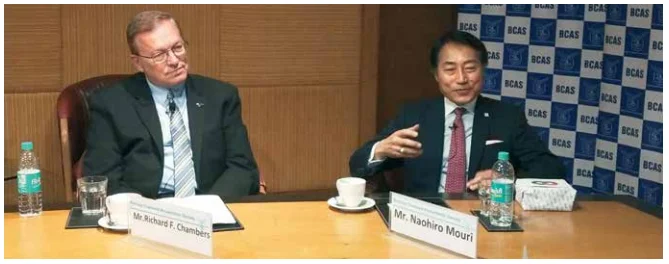
A.P. (DIR Series) Circular No. 113, dated 24-4-2012 — External Commercial Borrowings (ECB) for Civil Aviation Sector.

fiogf49gjkf0d

Presently, ECB cannot be raised to finance working capital requirements. This Circular, however, permits companies in the civil aviation sector to avail ECB for working capital requirements under the Approval Route, subject to the following:

(i) Airline companies must be registered under the Companies Act, 1956 and possess scheduled operator permit licence from DGCA for passenger transportation.

 (ii) ECB will be allowed to the airline companies based on the cash flow, foreign exchange earnings and its capability to service the debt.

(iii) The ECB for working capital must be raised within 12 months from the date of issue of this Circular.

(iv) ECB must be raised with a minimum average maturity period of three years.

(v) The overall ECB ceiling for the entire civil aviation sector would be one billion and the maximum permissible ECB that can be availed by an individual airline company will be INR18,437 million. This limit can be utilised for working capital as well as refinancing of the outstanding working capital Rupee loan(s) availed of from the domestic banking system.

(vi) Foreign exchange required for repayment of ECB cannot be raised from Indian markets and the liability can be extinguished only out of the foreign exchange earnings of the borrowing company.

(vii) No roll-over of ECB availed for working capital/refinancing of working capital will be allowed.

levitra

A.P. (DIR Series) Circular No. 112, dated 20-4-2012 — External Commercial Borrowings (ECB) Policy — Refinancing/Rescheduling of ECB.

fiogf49gjkf0d
This Circular permits borrowers to refinance, under the Approval Route, an existing ECB by raising fresh ECB at a higher all-in-cost/reschedule an existing ECB at a higher all-in-cost. However, the enhanced all-in-cost must not exceed the current all-in-cost ceiling.

levitra

A.P. (DIR Series) Circular No. 111, dated 20-4-2012 — External Commercial Borrowings (ECB) Policy — Liberalisation and Rationalisation.

fiogf49gjkf0d
This Circular has modified the ECB guidelines with immediate effect as under:

(i) Enhancement of refinancing limit for power sector

 Indian companies in the power sector can now, under the Approval Route, utilise up to 40% of the fresh ECB raised by them towards refinancing of the Rupee loans availed by them from domestic banks/institutions. The balance amount raised b way of fresh ECB must be utilised for fresh capital expenditure for infrastructure projects.

 (ii) ECB for maintenance and operation of toll systems for roads and highways

ECB can be raised, under the automatic route, for capital expenditure in respect of the maintenance and operations of toll systems for roads and highways provided they form part of the original project.

levitra

A.P. (DIR Series) Circular No. 109, dated 18-4-2012 — Authorised Dealer Category II — Permission for additional activity and opening of Nostro account.

fiogf49gjkf0d
This Circular suggests that Authorised Dealers Category-II wanting to open Nostro accounts must approach RBI for a one-time approval to open and operate Nostro accounts.

levitra

A.P. (DIR Series) Circular No. 108, dated 17-4-2012 — Anti-Money Laundering (AML)/ Combating the Financing of Terrorism (CFT) Standards — Cross Border Inward Remittance under Money Transfer Service Scheme.

fiogf49gjkf0d

This Circular advises authorised persons, their agents/franchisees to consider the information contained in the Statement issued by the FATF on February 16, 2012 on the above subject.

levitra

A.P. (DIR Series) Circular No. 107, dated 17-4-2012 — Anti-Money Laundering (AML)/ Combating the Financing of Terrorism (CFT) Standards — Money changing activities.

fiogf49gjkf0d

This Circular advises authorised persons, their agents/franchisees to consider the information contained in the Statement issued by the FATF on February 16, 2012 on the above subject.

levitra

Revised Forms 15CA and 15CB—Changes and Impact

fiogf49gjkf0d
Background
The Finance Act, 2008 inserted s/s. (6) in section 195 requiring that every person, who was required to deduct tax from the payment made to a non-resident, not being a company, or to a foreign company, should furnish prescribed information to the Central Board of Direct Taxes (CBDT). Rule 37BB was then inserted by the Income Tax (Seventh Amendment) Rules, 2009, to lay down the procedures for the same.

Forms 15CA and 15CB, which were introduced in this regard, created contentious issues for practitioners and the Income-tax Department. The procedure was that for making a payment to a non-resident or a foreign company, the person making the remittance was required to obtain the certificate of a Chartered Accountant in Form 15CB, submit Form 15CA online based on the same, and finally submit both these documents to his bankers to complete the transaction. On 5th August 2013, CBDT issued Notification No. 58/2013 amending Rule 37BB and these forms with effect from 1st October, 2013. However, soon thereafter, on 2nd September 2013, CBDT amended Rule 37BB and the forms further by way of Notification No. 67/2013, again with effect from 1st October, 2013.

This article intends to highlight the changes in the reporting requirements and the impact of the same.

Changes in reporting
Hitherto, Forms 15CA and 15CB were required to be furnished by the person making the remittance to a non-resident, not being a company, or a foreign company, for every payment—irrespective of the quantum or the taxability of such payment. Rule 37BB, as amended by the two notifications referred above, provides certain relaxations in the reporting requirements based on the quantum and nature of payment. The changes are summarised in the table below:


Note 1: The specified list (as per Notification 67) covers remittances on account of –

•    Indian investment abroad in equity/debt/branches and wholly owned subsidiaries/subsidiaries and associates/ real estate
•    Loans to non-residents
•    Operating expenses of Indian shipping /airline companies operating abroad
•    Booking of passages abroad—airlines companies
•    Business travel, travel under basic travel quota, travel for pilgrimage, medical treatment, education
•    Postal services
•    Construction of projects abroad by Indian companies
•    Freight insurance relating to import and export of goods
•    Maintenance of offices/Indian embassies abroad
•    By foreign embassies in India
•    By non-residents towards family maintenance and savings
•    Personal gifts and donations, donations to religious and charitable institutions abroad, grants and donations to other Governments and charitable institutions established by the Governments, donations by Indian Government to international institutions
•    Payment or refund of taxes
•    Refunds or rebates on exports
•    By residents on international bidding

Note 2: The following items appeared in the specified list as per Notification No. 58, but are missing in the superseding Notification No. 67:

•    Payment for life insurance premium
•    Other general insurance premium
•    Payments on account of stevedoring, demurrage, port-handling charges etc.
•    Freight on imports—airline companies
•    Booking of passages abroad—shipping companies
•    Freight on exports—shipping companies
•    Freight on imports—shipping companies
•    Payments for surplus freight or passenger fare by foreign shipping companies operating in India.
•    Imports by diplomatic missions
•    Payment towards imports—settlement of invoice
•    Advance payment against imports

Impact and Issues

It is clear that the revised procedures for making remittances to non-residents seek to reduce the burden of compliance in several cases—where payments fall under the specified list, which are not liable to tax in India or where the remittances are very small in quantum. Furthermore, in cases where the proposed reporting is as extensive as the existing requirements, these amendments seek to capture much more information, thereby casting more onerous duty on the remitter as well as the Chartered Accountant issuing the certificate in Form 15CB. The revised Form 15CB and Part B of the revised Form 15CA attempt to capture nearly the entire process of determination of taxability of a cross-border payment. In doing so, however, the amendments leave several existing issues unanswered and also manage to raise new concerns. Some of these concerns are outlined below:

Persisting Issues:

i)    Personal Payments:

Section 195 places a burden on any person making payments to non-residents for personal expenses such as online purchases, paid downloads, etc. It is impractical for the payer either to obtain a Tax Deduction Account Number (TAN) or to undertake the procedures under Rule 37BB in order to comply with these provisions. While carving out several transactions from the reporting net, payments of personal nature other than gifts or donations have been left out of the specified list.

ii) Payments to non-residents operating in India:

The obligation to deduct tax at source or to furnish details in Form 15CA are in respect of payments made to non-residents irrespective of whether such payments involve any outward remittance or not. As a consequence, one faces difficulties in making payments in Indian rupees to non-residents who are operating in India. For instance, a person banking with the Indian branch of a foreign bank ends up paying a foreign company every time his bank charges him for services provided. This in turn implies that he must comply with Section 195 read with Rule 37BB while making such “payments”.

iii) Credit Card Payments:

Rule 37BB, as it stood before the amendment, as also the revised Rule 37BB require the details in Form 15CA to be furnished prior to making the remittance. However, in the age of e-commerce, electronic payments through credit cards and net transfers have become the order of the day. In such cases, it becomes difficult for the payer as well as the remitting bank to ensure compliance with the prescribed procedures.

iv) ECS/Auto debits:

Similar to credit card payments, it is near impossible to single out the payments made by way of system generated Auto Debits and ECS. Clarity is required on the issue of how details are required to be furnished in such cases and whether monthly compliance would be required.

Added Concerns:

i)  Sums not chargeable to tax:

The language of the revised Rule 37BB clearly spells out that it would apply in respect of remittances made for sums which are chargeable to tax under the Income-tax Act. This is a deviation from the language of Rule 37BB prior to Notification No. 58 and especially from the language used in Notification No. 58. This leads to an inference that the revised procedure is not applicable in cases where the payments are not liable to tax in India. However, the notification lists 28 specific types of payments for which no information is required to be furnished. This may lead to an interpretation that all payments not falling within that list but which are not chargeable to tax in India would call for furnishing some information, either limited or extensive.

ii) Small payments:

Small payments of upto Rs. 50,000 individually or aggregating to Rs. 2,50,000 in the financial year have limited reporting requirements in Part A of Form 15CA. Accordingly, if one were to make a lumpsum payment exceeding the individual limit of Rs. 50,000 to a non-resident or a foreign company without crossing the annual limit of Rs. 2,50,000, it would attract the reporting in Part B of the Form. This would result in unintended consequences, foiling the intent to reduce the compliance burden for small payments.

iii) Difference in opinion on taxability:

If the revised Rule 37BB is not to apply to payments, which are not liable to tax in India, the same would present practical difficulties in application of the revised procedure. There could be a difference of opinion between the remitter and the authorised dealer on the taxability of a particular remittance. In the absence of any consensus, the authorised dealer may end up insisting on Form 15CA from the remitter before making a payment, while in the view of the latter, the same is not required.

iv) Import payments:

While payments for imports are considered not taxable in India in a vast majority of cases, this issue in not dealt with in the revised Rule 37BB, which otherwise exempts several types of payments from reporting requirements. In fact, in the proposed Rule 37BB as per Notification No. 58, the specified list consisted of import payments, thereby casting lesser obligations on such remittances. Deletion of imports from the specified list now creates even further ambiguity.

v) Capital Gains:

Section 195(2) is very clear that in case where only a part of the payment made to the non-resident or foreign company is liable to tax, the payer must make an application to the Assessing Officer (AO) for determination of that portion of the remittance which is taxable. The Supreme Court in the case of GE India Technology Centre Private Limited has held that the payer cannot by himself determine the taxability of such amount. Typical instances where 195(2) would get triggered and hence, an application to the AO would be required, include business income taxable in India or capital gains.

However, the revised Form 15CB requires the sum of long term and short term capital gains to be reported along with the manner of determination of the capital gains. This would imply that a Chartered Accountant can certify quantum of tax to be deducted from capital gains. This runs counter to the current interpretation of 195(2). As a consequence, it appears that the revised Form 15CB casts the duty of computation of capital gains income on the Chartered Accountant and a remittance/payment can be made to the payee on the basis of his certificate without making an application to the AO.

vi) Instructions by the RBI:

Currently, Rule 37BB does not require the details to be furnished to the authorised dealer. In fact, the requirement to submit Form 15CA accompanied with Form 15CB prior to making remittance is a mandate given by the RBI to the authorised dealers. The revised Rule 37BB(3) puts the onus on the authorised dealers for gathering of the information as well as retaining it, since an income-tax authority is entitled to call upon the authorised dealers to furnish a signed printout. Since the obligation cast under the Income-tax Act supersedes the instructions of the RBI, the revised requirements would need to be notified by the RBI. In the absence of notification by the RBI, the authorised dealers would be confused as to whether the process prescribed by Rule 37BB, the RBI or both is to be followed.

vii)    Hasty implementation:

The amendments to the procedures are sought to be implemented at a very short notice. The original Notification was issued on 5th August, 2013 followed by the Notification No. 67 issued on 2nd September, 2013. Both these notifications seek to usher in the new requirements with effect from 1st October, 2013. Considering that this is a very short-time frame, the existing system may not be geared for the changes. Further, if the RBI does not issue corresponding directions by 1st October 2013, implementation of the amendments would go haywire.

viii)  AD to furnish details to income-tax authority:

Apart from specifically requiring the details to be furnished to the authorised dealers, the revised Rule 37BB also places a cumbersome burden on them to produce the documents submitted to them if required by any income-tax authority during the course of any proceedings under the Act. This would place the authorised dealers under the duty to maintain the documents for a very long period of time.

Conclusion

The recent amendments in Rule 37BB intend to reduce the compliance burden on the remitter and the authorised dealers and facilitate more information for the income-tax authorities. However, two hurried amendments, followed by super-rapid implementation without addressing the lacunae could end up negating the intended benefits of the amendments to all concerned.

Natural justice — Officer involved in audit — Officer not competent to assess the dealer — VAT Act, 2004.

fiogf49gjkf0d
The petitioner dealer filed writ petitions challenging the assessment orders passed by the Joint Commissioner u/s.42 of the Orissa Value Added Tax Act, 2004 as a result of audit prescribed under Rule 49(1) of the Orissa Value Added Tax Rules, 2005, inter alia, contending that the orders of assessment were passed by the Joint Commissioner who was not competent to assess the petitioner, that they were passed violating the principles of natural justice and that the orders were time-barred as they were passed beyond the time stipulated u/ss. (6) and (7) of section 42 of the Act i.e., one year from January 18, 2010, when the audit visit report was approved and given by the Jt. Commissioner.

The High Court held that it was stated by the Department that the audit was directed by the Jt. Commissioner, Sales Tax of the Range and that he was required to constitute an audit team and monitor the progress of the audits assigned to the team. In view of this, it could not be said that the Jt. Commissioner was not involved in the audit process. In order to maintain transparency, any officer who was involved in any manner or had acted in the process of audit and preparation of the audit report in respect of the dealer should not be the Assessing Officer of that dealer. Otherwise, there would be violation of cardinal principles of natural justice. Therefore the orders passed by the Jt. Commissioner were to be set aside.

levitra

Authority for Advance Ruling Jurisdiction — Application for Ruling — Discretionary — Holding and subsidiary.

fiogf49gjkf0d
[ GSPL India Transco Ltd. & Anr. In re (2012) 49 VST 310 (AAR)]

The applicant, a subsidiary of a subsidiary of a Dr. K. Shivaram Ajay R. Singh Advocates Allied laws Govt. company, filed an application seeking a ruling by the Authority for Advance Rulings on its proposed transactions. The maintainability of the application was challenged by the Dept. contending that since a question identical to the one sought to be raised by the applicant was pending before the Customs, Excise and Service Tax Appellate Tribunal at the instance of the company of which the applicant was a subsidiary, the application by the applicant raising the identical question was barred by the proviso to s.s (2) of section 96D of the Finance Act, 1994. The AAR on the stated facts held that the question sought to be raised was pending before the Tribunal, though at the instance of the holding company of the applicant. If the argument of the applicant was accepted, the ruling to be given by the Authority would only bind the applicant and the authorities under the Act would be bound to implement that ruling only in the case of the applicant.

That would mean that in the appeal filed by the holding company of the applicant involving the identical question, the Tribunal was free to render a ruling ignoring what was being ruled by the Authority. That could lead to incompatible decisions concerning the same question, being rendered by two different authorities on an identical transaction. Therefore, in the facts and circumstances of the case, such a situation should be avoided. This would be in furtherance of the spirit of enacting the bar to the jurisdiction of this Authority to entertain an application for advance ruling, when the identical question was pending before an authority under the Act, the Tribunal or Court. Therefore the application was to be rejected exercising the discretion of the Authority not to allow the application u/s.96D(2) of the Act for the purpose of giving a ruling u/s.96D(4) of the Act.

levitra

Appeal — Tribunal — Adjournment — Medical certificate not necessary while seeking adjournment on medical ground.

fiogf49gjkf0d
[Megh Raj Bansal v. Customs Excise and Service Tax Appellate Tribunal & Anr., (2012) 13 GSTR 75 (P&H)]

The petitioner, a sub-contractor, was served with a show-cause notice u/s.73 of the Finance Act, 1994, stating that the petitioner had evaded payment of service tax during the relevant period. The stand of the petitioner was that service tax stood paid by the main contractor on the total amount inclusive of the service part, which was allotted to the petitioner by the main contractor. The adjudicating authority, raised demand of certain amount towards tax, interest u/s.75 and penalties u/s.76 and 78. In appeal by the petitioner before the Tribunal, a request for adjournment on medical ground was sought by the petitioner but the same was rejected, as the medical certificate had not been attached. The said order of the Tribunal was challenged in writ before the High Court.

The Court held that while seeking adjournment on medical ground that medical certificate was not expected to be produced. It was the statement made by the counsel, which was expected to be accepted unless the circumstances were brought to the notice of the Court or the Tribunal to decline the request for adjournment sought on medical ground. As no reason could be found to decline the request for adjournment by the counsel for the petitioner, the Tribunal was not justified in not accepting the request for adjournment for the reason that the medical certificate was not attached.

levitra

A.P. (DIR Series) Circular No. 129, dated 21-5-2012 — Risk Management and Inter-Bank Dealings.

fiogf49gjkf0d

This Circular provides that:

(i) The current Net Overnight Open Position Limit (NOOPL) of banks as applicable to the positions involving Rupee as one of the currencies will not include the positions undertaken in the Currency Futures/Options segment in the exchanges.

(ii) The positions in the exchanges (both Futures and Options) cannot be netted/offset by undertaking positions in the OTC market and vice versa. The positions initiated in the exchanges mt be liquidated/closed in the exchanges only.

(iii) The position limit for the Banks in the exchanges for trading Currency Futures and Options will be US INR6,265 million or 15% of the outstanding open interest, whichever is lower.

Further, Banks, whose positions are not in line with the above requirements, are required to bring down their positions to the above limits by June 30, 2012.

levitra

SEBI AMENDS GUIDELINES TO SETTLE VIOLATIONS — Complex Provisions Make Professional Help Inevitable

fiogf49gjkf0d
SEBI has recently, on 25th May 2012, made significant amendments to its guidelines for settlement of violations. In the process, they have made them so complex that, from the initial do-it-yourself simple scheme, now the new Scheme has made involving lawyers and accountants almost inevitable. There are several positive changes though and particularly some of the major criticisms of the earlier scheme have been addressed.

To recollect, in 2007, SEBI had introduced guidelines for settlement of alleged violations through consent orders and, in case of prosecution, through compounding. The Scheme was very simple and widely framed in its drafting and implementation. Any violation at any stage of punitive proceedings (or, even without proceedings) could be settled. The arbiter of what should be the agreed terms of settlement was an independent Committee (called High-Powered Advisory Committee or HPAC) though, being a voluntary settlement, obviously both sides had to agree. The settlement was usually very swift in practice, the procedures being so simple that even an educated layman could apply for it — and many did. Even the HPAC was co-operative in this regard and, in fact, as an unwritten rule, legal arguments and submissions were neither required, nor generally entertained though a fair and patient hearing was granted. Simple and brief orders were passed so that the spirit of the Settlement Scheme was upheld and a person who has not been held guilty was not seemed to be held guilty by the settlement order.

But, as was almost inevitable, the seeds of malaise were in the simplicity of the Scheme itself and serious concerns were raised. A major concern was that serious violations got settled and the stringent and exemplary punishment required in some cases was avoided through monetary penalties, even if those that appeared to be large. The settlement process was also felt to be opaque. Wide differences in settlement amounts were observed with no reason expressed explaining this and the brief orders giving no further clues. Settlement proceedings were sometimes felt to be used for delaying the regular proceedings. Inevitably, allegations — though unsubstantiated — of corruption were also made.

SEBI has taken the experience and criticism both of 5 years seriously — perhaps too seriously. Several types of serious violations have been put on the negative list though a small window of discretion even for such violations has been kept open. Many of the actual procedural details of the internal process of settlement have been formalised and made transparent. The time limits of making the application — both the earliest and the last dates — have been specified. A significant amendment is the introduction of a very detailed and fairly complicated method of determining what would be the amount at which a particular type of violation having the specified features would be settled. This is obviously to partly remove the discretion involved. On the other hand, it makes the settlement process complex requiring professional help unavoidable. The process itself becomes mechanical which to some extent is antithesis of a settlement process.

Let us consider some important amendments proposed.
First is the negative list of those violations for which settlement is not permitted. But before we examine some of important items in this list, some thoughts on what is the purpose of the settlement process. The objective of settlement is quite obviously to shorten the proceedings for investigating and punishing violations of securities laws. SEBI is benefitted as it saves time and costs, has the benefit of not having to prove the violation in accordance with due process of law and often also has the benefit of the party’s cooperation. Importantly, a punishment — even if lower than what could have been levied if the allegation had been proved — is also meted out. The party accused also saves on time and costs, gets benefit of a lower penalty and also does not have a stigma of a past violation attached, at least on record. Thus, the settlement process is — or, I think, ought to be — a consideration of how the inter- ests of justice and capital markets would be achieved on the facts of the case — a careful balance between the benefit of further proceedings with attached costs and delays and the likelihood of the accused going scot-free.

The offence of Insider trading is now prohibited from being settled. There was strong criticism that inside traders were getting away by settling their cases. Insider trading is in many ways an evil of capital markets. The perpetrator takes advantage of the trust reposed on him as an insider. He makes profits illegitimately by this trust. While some argue that it is a victimless crime, I believe that other shareholders usually do pay the cost. The need to punish such perpetrators is justifiable. However, the fair criticism of disallowing settlement is that insider trading is rather difficult to investigate and prove on facts though SEBI has put in a series of deeming provisions to make up. Prohibiting settlement of allegation of insider trading means that the long process of establishing it will have to be followed in all cases. It would have made better sense to put a higher settlement amount in such cases than an absolute ban. To clarify, though, violation of insider trading cannot be settled, other violations of the insider trading Regulations such as delay/default in disclosures, etc. can be settled.

Serious fraudulent and unfair trade practices causing substantial losses to investors and/or affecting their rights cannot be settled. However, if the person makes good the losses to the investors, the case can be settled. These perhaps constitute the single largest of violations, but a more detailed analysis would be beyond the scope of this article. But suffice is to say that words such as ‘serious’, ‘substantial’, etc. are not defined and may lead to discretion.

Failure to make an open offer under the Takeover Regulations cannot be settled except where (i) the entity is willing to make an offer unless, in the opinion of SEBI, the open offer will not be in interest of shareholders or (ii) where SEBI has decided to refer the matter to adjudication.

Front running transactions also now cannot be settled. As is known, front running transactions involve trading in anticipation of information about impending large orders. As held in some earlier cases, persons connected with mutual funds, who came to know the impending large orders of the mutual funds, traded ahead (or shared such information) and the mutual fund’s investors thus had to buy/sell at a little adverse price because of the earlier orders so placed. Strangely, SEBI defines front running here — which is inappropriate since the law does not define this term — as placing or using non-public information on an impending transaction of substantial quantity. Generally, front running is understood to be a situation where a person in a position of trust having access to non-public information uses this information to carry out front running. The analogy is of an insider. And just as having unpublished information and trading on it does not necessarily make a person guilty of insider trading, the same way a person not connected with such an institution but who still in some way has information of impending large transactions cannot necessarily be held to be guilty of front running.
Other violations on the negative list include net asset value manipulation by mutual funds, failure to redress investor grievances, failure to comply with orders of specified SEBI officers, failure to comply with orders of summons, etc.

However, interestingly, discretion has been retained to settle cases even amongst the negative list, though no criteria has been laid down how such discretion will be exercised.

Another important amendment is that now time limits are specified for making the application.

First time limit is how early can the consent application be made. It is now provided that an application cannot be made before the investigation/inspection of the alleged default is complete. Earlier, the Guidelines provided that that the application could be made at any stage, but in case of serious and intentional violation, the settlement would not be made till the fact-finding process was complete. This was a sensible provision. If a person is coming forward voluntarily, then unless SEBI had indication that more violations could be detected, the matter should be taken up. An important purpose of settlement is to shorten the proceedings.

Second time limit is specification of the last date the application for settlement should be made. The earlier Guidelines had no last date. It is now provided that the application cannot be made more than sixty days from the date of serving the show-cause notice. This would sound fair. Sixty days for examining the show-cause notice, which is expected to be comprehensive, are sufficient to decide whether one wants to fight further or come forward and settle. A concern is whether the time taken for obtaining information and documents relied on in the notice but not provided upfront should be taken (though the law requires such information/documents be provided upfront, some times this is not done). However, there is discretion for extending this last date, if the delay is beyond the control of the applicant.

Repetitive consent applications are now restricted. If an alleged default takes place within two years of the last consent order, then that default cannot be settled through these Guidelines. Further, if two consent orders are already obtained, then no further applications can be made for a period of three years from the date of the last consent order. Strangely, a consent application/order once made for a certain violation, will bar consent order in the above manner for even any other type of violation. This is unlike, say, the Reserve Bank of India Regulations for compounding where restrictions are placed for repetitive compounding of ‘similar’ contraventions. Thus, one would have to be very careful in making a consent application.

A lump-sum non-refundable fee of Rs.5000 is now provided to be paid. This amount is irrespective of the amount involved in the alleged violation or its gravity.

The process of settlement has been changed. The applicant has to first appear before an internal committee of SEBI who will work out the terms of consent in accordance with the formula. These terms will then be forward to the HPAC for its recommendation. Finally, these recommendations of the HPAC will be sent to a Panel of two Whole-time Members of SEBI who will take a final decision and if they deem fit, increase or decrease the terms or reject the application. However, it is provided that this whole process should be ‘preferably’ completed within six months of registration of the consent application. While this period of six months may sound short, it may be recollected that in actual practice, earlier, the process used to be completed much earlier in many cases.

There is an elaborate and complex formula provided for determining the settlement amount. The formula is too detailed to be within the scope of this short article. Suffice is to say that the formula considers the stage at which the application is made, the nature of the violation, etc. and provides for quantitative parameters to determine the settlement amount. Clearly, this is to make the settlement more transparent and remove discretion and discrimination. Minimum amounts have also been provided depending upon the nature of the violation or the alleged perpetrator.

It has been stated — though with some ambiguity — that the minimum settlement amount for first-time applicants will be Rs.5 lac and in case of ‘name-lenders’, this minimum will be Rs.2 lac. Curiously, the minimum amount for second-time applicants is not specified. This minimum limit is strange and perhaps even inequitable. Firstly, even orders passed with due process by SEBI for minor offences have fine far less than Rs.5 lac. Secondly, this would obviously hit persons having made less serious violation. Serious violations even otherwise would be settled for, or punished with, higher amount.

Another common complaint was that the formal orders published do not bring out the facts properly and were too brief and opaque. Thus, one could not know what were the merits of the case and whether the case was fairly settled. To meet this criticism, on the one hand, as explained above, to a large extent, the discretion is diluted. On the other hand, it is now provided that the order shall be more detailed in specific matters including the facts and circumstances of the case. It will have to be seen though how much detailed the orders are in actual practice.

In conclusion, the experience of five years is brought out well in the amendments. While one will miss the simplicity of the earlier provisions and lament the complex new law requiring the need of professional help, it will be also fair to say that the earlier provisions were too simplistic. Where the basic matter itself is complex, the settlement has to be complex. A professional analysis of a complex matter is a must for fair and transparent dealing on both sides. One hopes though that in practice, the amendments are implemented in their true spirit, since the earlier Scheme, despite its short-comings, did set an enviable benchmark to settlement proceedings in India.

Rate of interest on Senior Citizens Savings Scheme 2004 increased.

fiogf49gjkf0d
Rate of interest on Senior Citizens Savings Scheme 2004 has been increased from 9% to 9.3% p.a. and on PPF it is increased from 8.6% to 8.8% p.a. with effect from 1st April 2012 — Circular DGBA.CDD. No. H-6506/15.02.001/2011-12, dated 3rd April 2012.

levitra

A.P. (DIR Series) Circular No. 128, dated 16-5-2012 — Exchange Earner’s Foreign Currency (EEFC) Account.

fiogf49gjkf0d
This Circular clarifies that conversion of the EEFC balances into Rupee balances will only be applicable to available balances in the EEFC account which may be arrived at by netting off earmarked amounts on account of outstanding forward/option contracts booked before May 10, 2012.

levitra

A.P. (DIR Series) Circular No. 127, dated 15-5-2012 — Foreign investment in NBFC Sector under the Foreign Direct Investment (FDI) Scheme — Clarification.

fiogf49gjkf0d
This Circular clarifies that the activity ‘leasing and finance’, which is one among the eighteen NBFC activities wherein FDI up to 100% is permitted under the Automatic Route covers only ‘financial leases’ and not ‘operating leases’, insofar as the NBFC sector is concerned.

levitra

A.P. (DIR Series) Circular No. 124, dated 10-5-2012 — Exchange Earner’s Foreign Currency (EEFC) Account.

fiogf49gjkf0d
Presently, all foreign exchange earners are permitted to retain 100% of their foreign exchange earnings in their EEFC account. This Circular has modified the position as under, for holding of foreign exchange in EEFC account, Resident Foreign Currency (RFC) Account or Diamond Dollar Account (DDA):

(a) 50% of the balances in these accounts must be converted within 15 days from the date of this Circular into Rupee balances and credited to the Rupee accounts as per the directions of the account holder.

(b) In respect of all future foreign exchange earnings, an exchange earner is eligible to retain 50% (as against the previous limit of 100%) in non-interest bearing foreign currency accounts. The balance 50% shall be surrendered for conversion to Rupee balances.

(c) EEFC account holders henceforth will be permitted to access the foreign exchange market for purchasing foreign exchange only after utilising fully the available balances in the EEFC accounts.

levitra

A.P. (DIR Series) Circular No. 123, dated 10-5-2012 — Risk Management and Inter-Bank Dealings.

fiogf49gjkf0d
This Circular provides that the intra-day open position/ daylight limit of authorised dealers will be five times the Net Overnight Open Position Limit available to them or the existing intra-day open position limit as approved by RBI, whichever is higher, for positions involving Rupee as one of the currencies.

levitra

A.P. (DIR Series) Circular No. 122, dated 9-5-2012 — Risk Management and Inter-Bank Dealings.

fiogf49gjkf0d
Presently, banks are permitted to deploy foreign currency funds for granting loans to their resident customers for meeting their foreign exchange requirements or for their rupee working capital/capital expenditure needs, subject to the prudential/interestrate norms, credit discipline and credit monitoring guidelines in force.

This Circular has modified the said policy and banks can now, subject to the prudential/interestrate norms, credit discipline and credit monitoring guidelines in force, use funds in FCNR(B) accounts with them for making loans to resident customers for meeting:

(i) their foreign exchange requirements or

(ii) for the Rupee working capital/capital expenditure needs of exporters/corporates who have a natural hedge or a risk management policy for managing the exchange risk.

levitra

A.P. (DIR Series) Circular No. 121, dated 8-5-2012 — Foreign investment in Commodity Exchanges and NBFC Sector — Amendment to the Foreign Direct Investment (FDI) Scheme.

fiogf49gjkf0d
Presently, foreign investment in commodity exchanges is permitted subject to a composite ceiling of 49% with FDI limit of 26% and FII limit of 23% under Portfolio Investment Scheme (PIS).

This Circular clarifies that:

(a) With respect to foreign investment in commodity exchanges, the FDI component of 26% will be under the Approval Route whereas FII investment of 23% under PIS will be under the Automatic Route.

(b) 100% FDI under the Automatic Route is permitted only in case of ‘financial leases’ (financial leasing activity) and the Automatic Route is not available in case of ’operating leases’ (operating leasing activity).

levitra

A.P. (DIR Series) Circular No. 120, dated 8-5-2012 — Foreign Direct Investment (FDI) in India — Issue of equity shares under the FDI scheme allowed under the Government Route.

fiogf49gjkf0d
Presently, under the Approval Route, equity shares/ preference shares can be issued against import of second-hand machinery. This Circular provides that now onwards equity shares/preference shares cannot be issued against import of second-hand machinery.

levitra

A.P. (DIR Series) Circular No. 119, dated 7-5-2012 — External Commercial Borrowings (ECB) Policy — Utilisation of ECB proceeds for Rupee expenditure.

fiogf49gjkf0d
Presently, ECB proceeds can be utilised for permissible foreign currency expenditure as well as Rupee expenditure.

This Circular requires borrowers to provide bifurcation of the utilisation of the ECB proceeds towards foreign currency and Rupee expenditure in Form-83 at the time of availing Loan Registration Number (LRN). Borrowers must repatriate to India, immediately after drawn down, for credit to their Rupee accounts proceeds meant for Rupee expenditure in India. Any contravention will be viewed seriously and will invite penal action under FEMA.

levitra

A.P. (DIR Series) Circular No. 118, dated 7-5-2012 — Release of foreign exchange for miscellaneous remittances.

fiogf49gjkf0d

Presently, up to INR307,284 or its equivalent can be remitted abroad for all permissible transactions on the basis of a simple letter from the applicant containing the basic information, viz., names and the addresses of the applicant and the beneficiary, amount to be remitted and the purpose of remittance.

This Circular has increased this limit from INR307,284 or its equivalent to INR1,536,419 or its equivalent. No documents, including Form A-2, except a simple letter containing basic information as stated above is required provided the conditions mentioned below are fulfilled:

 (a) Foreign exchange is being purchased for a permitted current account transaction.

(b) Amount does not exceed INR1,536,419 or its equivalent.

(c) Payment is made by a cheque drawn on the applicant’s bank account or by a Demand Draft.

levitra

New form 24 aaa and modification to form 21 and 23:

fiogf49gjkf0d
Forms 21 and 23 have been modified to include the SRN of the new Form 24 AAA pertaining to Form for filing petitions to Central Government (Regional Director) Pursuant to sections 17, 18, 19, 141 and 188 of the Companies Act.
levitra

Form 5 INV – Returns of unclaimed amounts filed prior to 1st August 2012 should be filed again in a consolidated manner

fiogf49gjkf0d
Form 5 INV is required to be filed by all companies annually giving complete information on unpaid/ unclaimed amounts lying with companies as on the date of the AGM of that year, pursuant to the Investor Education and Protection Fund (uploading of information regarding unpaid and unclaimed amounts lying with companies) Rules 2012, published vide Notification GSR 352(E) dated 10th May 2012. However, as some companies are filing multiple Form 5 INV, the ministry requires that if multiple form 5 INV have been uploaded for the year 2010-11 on or before the date of this circular i.e. 1st August 2012, the Company should again file Form 5 INV(single) giving details in excel template by 31st August 2012. Further Companies that have not filed their Form 5 INV are required to do so by 31st August 2012.
levitra

(Auditor’s appointment under Company Law)

fiogf49gjkf0d
Clause (9) Part I of first Schedule to CA Act, 1949. CA Arjuna (A) : Hey Bhagawan, last time you explained to me the importance of communicating with the previous auditor. Now what next? Bhagawan Shrikrishna (S):I told you many things. But have you understood?

A – Well, I was attentive. I did understand; but find it difficult to digest and implement.

S – That is always the situation. You are impatient to grab the audit work; and are reluctant to comply with your Institute’s rules.

A – Unfortunately, our mindset has become that way. We often think of short-cuts or bypassing the rules or complying only at the 11th hour.

S – 11th hour is also not bad. You do it at 13th hour with a backdate!

A – We always have some hypothetical fear of doing things in time. We can’t work without tension! Now tell me, if directors of a company give us an appointment letter, is it not sufficient?

S – You often behave as if you have never studied the Companies Act. You can never see anything beyond income tax! That is the whole trouble.

A – Tell me then what I need to do.

S – At least read clause (9) of the First Schedule. First see whether you are the first auditor of that company or there is a change?

A – Why? Is there a difference? I just go by the directors’ letter.

S – Oh! Very dangerous! There are many who don’t even take an appointment letter! You are little better!

A – I am talking of a private limited company. Who is going to verify? Everything is within the family.

S – Are you sure – never are there any disputes in the family? Then why did you fight with Kauravas?

A – They were our cousins! Here, they are husband-wife and their son.

S – In Kaliyuga, there are instances where husband and wife – both CAs – separated and lodged complaints against each other to the Institute!

A – Oh Lord! I must keep Draupadi and Subhadra in good mood. Otherwise, they will drag me into court!

S – Can’t rule out! So, don’t be in a slumber. Previously you were ‘innocent’; but now they will call you ‘stupid’!

A – Anyway. Then what should I see?

S – See Sections 224 and 225 of the Companies Act. If it is the first appointment, then directors can appoint the auditor. But this has to be done within 30 days from incorporation.

A – Oh! And if they don’t?

S – That was sub-section (5) of Sec 224. Otherwise, they will have to hold an extraordinary general meeting and appoint the first auditor.

A – Ah! That’s simple. These are paper meetings. I will ask my friend to write minutes. He is a company secretary.

S – Arey Arjuna, don’t take it so lightly. All formalities of EGM must be observed.

 A – Yeah! He will draft the notice and minutes. Everything is internal!

S – One should see the record of service of notice. Remember, directors and members can deny that they received the notice. They can challenge the validity of the meeting itself.

A – Why should they? It is being done in company’s interest only.

S – So you feel. When everything is smooth and amicable, they will agree. But when friction starts, they will conveniently forget it.

A – Unnecessary complications! Very disgusting

. S – Why are you so uncomfortable when the compliances are so simple? After all, it is a corporate entity. There is sanctity behind these provisions.

A – Then tomorrow, there could be disputes amongst partners also!

S – Yes. That is very common. It is inevitable. Partners are bound to dispute and separate one day or the other! For every birth, there is a death and partnership is no exception.

A – Then, do you mean we should take everything in writing?

S – If possible, you should obtain signatures of all partners on your copy of balance sheet. Do you ever read the partnership deed of a client? There is normally a clause there that accounts will be signed by all partners.

A – Ah! All those are standard clauses. I don’t even ask for the Deed. Same is the case of memorandum and articles of a company. What’s the use of all those stereotyped clauses?

S – Then be ready for trouble.

A – Now, I am in practice for 24 years! Nothing has happened so far.

S – You have not died in the last 50 years. Can you not die now?

 A – Come back to auditor’s appointment. What if there is a change of auditors?

S – You have to first ensure whether the previous auditor has resigned or was removed. He may have just given a letter expressing his unwillingness to be reappointed.

 A – Then what? Is it not sufficient?

S – It may be an item requiring special notice under section 190 of the Companies Act. You have to see all these things.

A – This is too much! If I spend time on this, when shall I audit the accounts. There are deadlines.

S – This happens because you don’t recognise any other deadline except your tax returns. Why don’t you understand that your appointment should be validly made? It is of prime importance. Why are you so casual about it?

A – Clients come to us only at the last moment.

S – So to accommodate them, you compromise everything! If they are careless, make them understand the things. If you accommodate them, they will take you for granted. As if everything is your own duty.

A – I think I should insist on a company secretary’s certificate regarding compliances.

S – That will be better. At least some safeguard!. Client must spend for it. But your basic duty still remains.

A – What duty? S – At least to see the prima facie compliance.

A – Tell me further. Board can fill up a casual vacancy. Is it not?

S – Yes. But every vacancy is not a casual vacancy. First see whether the Board has power to do so. I mean, whether the vacancy is really casual.

A – Why?

S – Don’t expect me to teach you the whole of the Company Law. Why don’t you read the publication on Code of Ethics of your Institute?

A – Where will I get it?

 S – That also you want me to tell? What kind of a CA you are! Go to WIRC. The latest edition is of January 2009 – reprinted in May 2009.

A – Okay! I will see that. There seems no escape!

S – And remember, these provisions of Companies Act and Code of Ethics are very well thought of. Don’t take them as a burden. They are designed to safeguard your own interest. Otherwise, someday, you yourself will crib about your unjust removal.

A – I agree; but our clients are like that! And other CAs also are not bothered about it.

S – Don’t let your client take your professional work for granted. Read all these carefully and update yourself regularly. They are meant for your betterment. Your conduct with the client will decide the dignity of your fraternity, not only now but also in future. If you conduct yourself very loosely before the client, I am sure your future generation will pay for it.

Om Shanti.
Note :
The above dialogue is with reference to Clause 9 of the First Schedule which reads as under:
Clause (9): accepts an appointment as auditor of a company without first ascertaining from it whether the requirements of Section 225 of the Companies Act, 1956 (1 of 1956), in respect of such appointment have been duly complied with;
Further, readers may also refer pages 188 to 210 of ICAI’s publication on Code of Ethics, January 2009 edition (reprinted in May 2009)
levitra

Refund of the unlinked incorrect NEFT Payments

fiogf49gjkf0d

The Ministry of Corporate Affairs has introduced a refund process on 16th September, 2012 for the unlinked incorrect NEFT payments, to be done through a revised refund e-Form available on the MCA21 portal.

levitra

Conditions imposed for Conversion of Ordinary Society into Producer Company, under part-IX A of the Companies Act, 1956.

fiogf49gjkf0d
The Ministry of Corporate Affairs has vide circular No .29/2012 dated 10th September 2012 issued the conditions to be imposed for conversion of ordinary Society into producer Company, Part-IX A of the Companies Act, 1956.

On receipt of an application for conversion of a Co-operative Society into a Producer Company, the ROC’s will seek a written consent from the local Co-operative Department of the concerned state, certifying that the Society desirous of being converted into a Producer Company, under part IX A of the Companies Act, 1956, has no dues payable to the State at the time of such conversion and the Cooperative Department has ‘no objection’ to its being converted into a Producer Company. Further, the ROC’s need to satisfy themselves fully that the applicant society has indeed extended its activities outside the State where it is registered a Co-operative Society under the local/State level Law governing Co-operative Societies which are not inter State Co-operative Societies.

levitra

Filing of B alance Sheet and Profit and Loss Account by Companies in Non-XBR L for accounting year commencing on or after 01.04.2011

fiogf49gjkf0d
The Ministry of Company Affairs has on 3rd September 2012 issued a General Circular No. 28/2012 extending the time for filing of E-form 23AC/ACA (non-XBRL) as per revised Schedule VI without the additional Fees upto 15.10.2012 or within 30 days from the date of the AGM whichever is later. Full Circular can be accessed at http://www.mca.gov.in/Ministry/pdf/General_ Circular_28_2012.pdf

levitra

A.P. (DIR Series) Circular No. 93, dated 19-3- 2012 — Investment in Indian Venture Capital Undertakings and/or domestic Venture Capital Funds by SEBI registered Foreign Venture Capital Investors.

fiogf49gjkf0d
Presently subject to certain terms and conditions, a SEBI-registered Foreign Venture Capital Investor (FVCI) can invest in equity, equity linked instruments, debt, debt instruments, debentures of an Indian Venture capital Undertaking (IVCU) or of a Venture Capital Funds (VCF) through Initial Public Offer or Private Placement or in units of schemes/funds set up by a VCF.

This Circular permits, subject to certain terms and conditions, all FVCI to invest in eligible securities (equity, equity-linked instruments, debt, debt instruments, debentures of an IVCU or VCF, units of schemes/funds set up by a VCF) by way of private arrangement/ purchase from a third party also. This Circular further clarifies that, subject to certain terms and conditions, SEBI-registered FVCI are also permitted to invest in securities on a recognised stock exchange.

levitra

Filing of Balance Sheet and Profit and Loss Account by Companies in Non-XBRL for accounting year commencing on or after 01.04.2011

fiogf49gjkf0d
Vide Circular No. 21/2012 dated 2nd August 2012,
the Ministry of Corporate affairs has informed that the Forms 23 AC and
23 ACA are under finalization, as they are being revised as per the
Revised Schedule VI.

All companies who required to file Non-
XBRL e-form 23 AC and 23 ACA as per Revised Schedule VI will be allowed
to file their financial statements without any additional fees/penalty
upto 15th September 2012 or within 30 days from the date of their AGM,
whichever is later.

levitra

A.P. (DIR Series) Circular No. 92, dated 13- 3-2012 — Opening of Diamond Dollar Accounts (DDAs) — Change in periodicity of the reporting.

fiogf49gjkf0d
Presently, banks are required to submit a monthly report to RBI, giving details of the name and address of the firm/company in whose name the Diamond Dollar Account is opened, along with the date of opening/closing the Diamond Dollar Account, by the 10th of the following month to which it relates.

This Circular has reduced the periodicity of reporting from monthly basis to quarterly basis with effect from the quarter ending March 31, 2012. As a result, banks are required to submit details of the name and address of the firm/company in whose name the Diamond Dollar Account is opened, along with the date of opening/closing the Diamond Dollar Account by the 10th of the month following the quarter to which it relates.

levitra

A.P. (DIR Series) Circular No. 90, dated 6-3- 2012 — Clarification — Liberalised remittance scheme for resident individuals.

fiogf49gjkf0d
With regards to the Liberalised Remittance Scheme (LRS), this Circular clarifies that:

(i) This facility is available to all resident individuals including minors. Where the remitter is a minor, the LRS declaration form should be countersigned by the minor’s natural guardian.

(ii) Remittances under LRS can be consolidated in respect of family members. However, individual family members must comply with the terms and conditions of the scheme.

(iii) Remittances under LRS can, subject to provisions of other applicable laws, be used for purchasing objects of art.

The modified LRS application-cum-declaration form is also annexed to this Circular.

levitra

A.P. (DIR Series) Circular No. 89, dated 1-3-2012 — Foreign Institutional Investor (FII) investment in ‘to be listed’ debt securities.

fiogf49gjkf0d
Presently, SEBI registered FII are allowed to invest only in listed non-convertible debentures (NCD)/ bonds issued by an Indian company.

This Circular permits SEBI registered FII/sub-accounts of FII to invest in primary issues of to be listed NCD/ bonds only if listing of such NCD/bonds is committed to be done within 15 days of such investment. In case the NCD/bonds are not listed within 15 days of issuance, then the FII/sub-account of FII must immediately dispose of these NCD/bonds either by way of sale to a third party or to the issuer. The terms of offer must contain a clause stating that the issuer will immediately redeem/buy back the said securities from the FII/sub-accounts of FII if they are not listed within 15 days of issuance.

levitra

A.P. (DIR Series) Circular No. 88, dated 1-3- 2012 — Clarification — Establishment of Branch Offices (BO)/Liaison Offices (LO) in India by Foreign Entities — Delegation of powers.

fiogf49gjkf0d
Presently, the following powers have been delegated by RBI to banks:

(i) Acceptance of Annual Activity Certificate from BO/LO.
(ii) Extension of the validity period of LO.
(iii) Closure of BO/LO of foreign entities in India.

This Circular clarifies that powers regarding transfer of assets of LO/BO to others have not been delegated by RBI to banks. Hence, approval from Foreign Exchange Department, Central Office, RBI is required for transfer of assets by LO/BO to subsidiaries or other LO/BO or any other entity.

levitra

A.P. (DIR Series) Circular No. 87, dated 29-2-2012 — Know Your Customer (KYC) norms/Anti-Money Laundering (AML) Standards/ Combating the Financing of Terrorism (CFT) Obligation of Authorised Persons under Prevention of Money Laundering Act, (PMLA), 2002, as amended by Prevention of Money Laundering (Amendment) Act, 2009 — Cross-Border Inward Remittance under Money Transfer Service Scheme.

fiogf49gjkf0d
This Circular requires, Authorised Persons (Indian Agents) to take additional steps to identify and assess their ML/TF risk for customers, countries and geographical areas as also for products/services/ transactions/delivery channels.

Authorised Persons (Indian Agents) must have policies, controls and procedures, duly approved by their boards, in place to effectively manage and mitigate their risk adopting a risk-based approach as discussed above. They must also design risk parameters according to their activities for risk-based transaction monitoring, which will help them in their own risk assessment.

levitra

A.P. (DIR Series) Circular No. 85, dated 29- 2-2012 — External Commercial Borrowings (ECB) for Infrastructure facilities within National Manufacturing Investment Zone (NMIZ).

fiogf49gjkf0d
For the purposes of ECB, infrastructure sector includes: (i) power, (ii) telecommunication, (iii) railways, (iv) road including bridges, (v) sea port and airport, (vi) industrial parks, (vii) urban infrastructure (water supply, sanitation and sewage projects), (viii) mining, refining and exploration and (ix) cold storage or cold room facility, including for farm-level precooling, for preservation or storage of agricultural and allied produce, marine products and meat.

Presently, developers of SEZ are allowed to avail ECB to provide such infrastructure facilities within the SEZ.

This Circular permits developers of NMIZ also to avail of ECB under the Approval Route for providing infrastructure facilities within the NMIZ.

levitra

A.P. (DIR Series) Circular No. 83, dated 27-2-2012 — Import of gold on loan basis — Tenor of loan and opening of stand-by letter of credit.

fiogf49gjkf0d
Presently, the maximum tenor of gold loan, as per the Foreign Trade Policy 2004-2009 of the Government of India, is 240 days — 60 days for manufacture and exports +180 days for fixing the price and repayment of gold loan.
The Foreign Trade Policy 2009-2014 of the Government of India has increased the period of completion for export from 60 days to 90 days. As a result, the maximum tenor of gold loan is increased from 240 days to 270 days — 90 days for manufacture and exports +180 days for fixing the price and repayment of gold loan.

Further, this Circular requires banks to see that:

(i) Maximum period of gold loan must be as per the Foreign Trade Policy 2009-14 or as notified by the Government of India from time to time.

(ii) Tenor of stand-by letter of credit, for import of gold on loan basis, wherever required, must also be in line with the tenor of gold loan.

levitra

A.P. (DIR Series) Circular No. 82, dated 21- 2-2012 — Release of foreign exchange for imports — Further liberalisation.

fiogf49gjkf0d
Presently, advance towards imports up to US $ 500 or its equivalent can be issued for any current account transaction without any documentation formalities.

This Circular has increased that limit from US $ 500 or its equivalent to US $ 5,000 or its equivalent. Hence, advance towards imports can be made up to US $ 5,000 or its equivalent for any current account transaction without submitting any documents except for a simple letter containing basic information such as the name and address of the applicant, name and address of the beneficiary, amount to be remitted and the purpose of remittance and the application is accompanied by a cheque drawn on the applicant’s bank or demand draft.

levitra

A.P. (DIR Series) Circular No. 81, dated 21- 2-2012 — Export of goods and services — Receipt of advance payment for export of goods involving shipment (manufacture and ship) beyond one year.

fiogf49gjkf0d
Presently, an exporter is required to obtain prior
approval of RBI for receiving advance from the foreign buyer where the
export agreement permits shipment of goods beyond one year from the date
of receipt of advance.

This Circular has granted powers to
banks to permit exporters to receive advance from the foreign buyer
where the export agreement permits shipment of goods beyond one year
from the date of receipt of advance, subject to the following
conditions:

(i) KYC and due diligence exercise has been done by the bank for the overseas buyer.
(ii) Compliance with the Anti-Money Laundering Standards has been ensured.
(iii)
Export advance received by the exporter must be utilised to execute
export and not for any other purpose i.e., the transaction is a bona
fide transaction.
(iv) Progress payment, if any, must be directly received from the overseas buyer strictly in terms of the contract.
(v) Rate of interest, if any, payable on the advance payment must not exceed LIBOR + 100 basis points.
(vi) Exporter should not have refund of amount exceeding 10% of the advance payment received in the last three years.
(vii) Documents covering the shipment must be routed through the same bank.
(viii)
If the exporter is unable to make the shipment, partly or fully, he
will have to obtain prior approval of RBI before remittance towards
refund of unutilised portion of advance or towards interest payment is
made to the foreign buyer.

levitra

Delegation of powers to Regional Directors u/s 17, 18, 19, 141 and 188 of the Companies Act, 1956

fiogf49gjkf0d
Vide Notification Dated 30th August 2012, the Ministry of Corporate Affairs has directed that wherever fee on cases pending u/s. 17, 18, 19, 141 and 188 of the Companies Act, 1956 have already been paid by the companies/stakeholders at the time of filing of petition, consequent upon the transfer of applications/ petitions from Company Law Board to the concerned Regional Directors, which is on account of operation of law, the company/stakeholders need not pay fee for the same petitions. Further, all pending cases before CLB under these sections stand transferred to Regional Directors and objections, if any, received by CLB with respect to these petitions shall be forwarded to the concerned RDs by the Secretary, CLB in writing.

levitra

15 A. P. (DIR Series) Circular No. 31 dated 17th September, 2012

fiogf49gjkf0d
Establishment of Liaison Office (LO)/Branch Office (BO)/Project Office (PO) in India by Foreign Entities – Clarification.

This circular clarifies that foreign Non-Government Organisations/Non-Profit Organisations/Foreign Government Bodies/Departments, by whatever name called can set-up/establish offices in India (liaison/ branch/project) only after obtaining prior approval of RBI under the Approval Route.

levitra

A. P. (DIR Series) Circular No. 30 dated 12th September, 2012

fiogf49gjkf0d

Comprehensive Guidelines on Over the Counter (OTC) Foreign Exchange Derivatives – Cost Reduction Structures

Presently, use of cost reduction structures, i.e., cross currency option cost reduction structures and foreign currency – INR option cost reduction structures, is permitted only to hedge exchange rate risk arising out of trade transactions and the External Commercial Borrowings (ECB).

This circular permits the use of cost reduction structures, additionally, for hedging the exchange rate risk arising out of foreign currency loans availed of domestically against FCNR (B) deposits.

levitra

A. P. (DIR Series) Circular No. 29 dated 12th September, 2012

fiogf49gjkf0d
Overseas Direct Investments by Indian Party – Rationalisation

 This circular has amended the guidelines relating to submission of Annual Performance Report (APR) as under: –

An Indian party, which has set up/acquired a Joint Venture (JV) or Wholly Owned Subsidiary (WOS) overseas, will have to submit to its designated Bank every year, an Annual Performance Report (APR) in Form ODI Part III in respect of each JV or WOS outside India and other reports or documents as may be specified by the Reserve Bank from time to time, on or before the 30th of June each year.

The APR so required to be submitted, has to be based on the latest audited annual accounts/unaudited accounts, as the case maybe, of the JV/WOS, unless specifically exempted by the Reserve Bank.

levitra

A. P. (DIR Series) Circular No. 28 dated 11th September, 2012 Trade Credits for Import into India

fiogf49gjkf0d

Presently, trade credits upto INRNaN million per import transaction with a maturity period of more than one year and less than three years (from the date of shipment) can be availed of for the import of capital goods. This circular permits companies in the infrastructure sector to avail trade credit upto five years (instead of upto three years) for import of capital goods subject to the following: –

(i) The trade credit must be initially contracted for a period not less than 15 months and must not be in the nature of short-term roll overs.

(ii) Banks cannot issue Letters of Credit/Guarantees / Letter of Undertaking (LOU)/Letter of Comfort (LPC) in favour of the overseas supplier/bank /financial institution for the period beyond three years. The all-in-cost ceiling of the trade credit, with maturity period upto five years will be 350 basis points over six months, LIBOR for the respective currency of credit or applicable benchmark. The all-in-cost ceiling will include arranger fee, upfront fee, management fee, handling/processing charges, out of pocket and legal expenses, if any.

levitra

A. P. (DIR Series) Circular No. 27 dated 11th September, 2012 External Commercial Borrowings (ECB) Policy – Bridge Finance for infrastructure sector

fiogf49gjkf0d
Presently, Indian companies in the infrastructure sector can, under the Approval Route, import capital goods by availing of short term credit (including buyers’/suppliers’ credit) in the nature of ‘bridge finance’, subject to the following conditions:-

(i) Bridge finance must be replaced with a long term ECB.

(ii) ECB must comply with all the extant norms.

 (iii) Prior approval of RBI will have to be obtained for replacing the bridge finance with long term ECB.

This circular permits replacement of bridge finance (including buyers’/suppliers’ credit) availed of for import of capital goods with ECB under the Automatic Route subject to the following: –

 i. Buyers’/suppliers’ credit is refinanced through an ECB before the end of the maximum permissible period of trade credit.

 ii. Import of capital goods must be verified from the Bill of Entry by the Bank.

 iii. Buyers’/suppliers’ credit availed of is compliant with the extant guidelines on trade credit. iv. The goods that are imported, comply with the DGFT policy on imports. v. The proposed ECB must be compliant with all extant ECB guidelines. vi. Banks in India cannot provide any form of guarantees for the ECB. However, the borrower will still have to obtain prior approval of RBI (under Approval Route) for availing of bridge finance.

levitra

A. P. (DIR Series) Circular No. 26 dated 11th September, 2012 External Commercial Borrowings (ECB) Policy – Repayment of Rupee loans and/or fresh Rupee capital expenditure – $ 10 billion scheme

fiogf49gjkf0d

Presently, an Indian company in the manufacturing and infrastructure sector, which has consistent foreign exchange earnings during the last three years ,can avail, under Approval Route, ECB up to 50% of the average annual export earnings realised during the past three financial years (within the overall of ECB ceiling of INRNaN billion) for repayment of Rupee loan(s) availed of from the domestic banking system and/or for fresh Rupee capital expenditure, provided the companies are not in the default list/ caution list of the Reserve Bank of India. This circular has modified the above facility as under: –

(a) An Indian company in the manufacturing and infrastructure sector, which has consistent foreign exchange earnings during the last three years can avail ECB; i. upto 75% of the average foreign exchange earnings realised during the immediate past three financial years; or ii 50% of the highest foreign exchange earnings realised in any of the immediate past three financial years, whichever is higher.

(b) A Special Purpose Vehicles (SPV), which have completed at least one year of existence from the date of incorporation and do not have sufficient track record/past performance for three financial years, can avail ECB upto 50% of the annual export earnings realised during the past financial year.

(c) The maximum ECB that can be availed of by an individual company or group, as a whole, under this scheme is INRNaN billion.

levitra

A. P. (DIR Series) Circular No. 25 dated 7th September, 2012 Overseas Investment by Indian Parties in Pakistan

fiogf49gjkf0d
Presently, investment in Pakistan is not permitted. This circular permits Indian parties to invest in Pakistan under the Approval Route of ODI Scheme in terms Regulation 9 of Notification No. FEMA 120/ RB-2004 dated 7th July, 2004 [Foreign ExchangeManagement (Transfer or Issue of any Foreign Security).

levitra

A. P. (DIR Series) Circular No. 21 dated 31st August, 2012 Foreign investment by Qualified Foreign Investors (QFIs) – Hedging facilities

fiogf49gjkf0d
This circular permits Qualified Foreign Investors (QFI) to hedge their currency risk for the following: –

 i) Entire investment in equity and/or debt in India as on a particular date through foreign currency – INR options.

ii) Initial Public Offers (IPO) related transient capital flows under the Application Supported by Blocked Amount (ASBA) mechanism through Foreign Currency – INR swaps.

levitra

A. P. (DIR Series) Circular No. 20 dated 29th August, 2012

fiogf49gjkf0d
Non-resident guarantee for non-fund based facilities entered between two resident entities.

 Presently, a non-resident can issue a guarantee to a resident lender as security for funds lent to a resident borrower. RBI has granted general permission to resident borrower to make payment to the non-resident guarantor who has met the liability under the guarantee.

This circular grants general permission to a nonresident to issue a guarantee to a resident provider of non-fund based facilities, such as Letters of Credit/ Guarantees/Letter of Undertaking/Letter of Comfort, etc., to a resident borrower. General permission has also been granted to a resident borrower to make payment to the non-resident guarantor who has met the liability under the guarantee.

Further, annexed to this circular is a format introduced by RBI for reporting, on a quarterly basis, the issue and invocation of such guarantees. This format has to reach the Chief General Manager, Foreign Exchange Department, ECB Division, Reserve Bank of India, Central Office Building, 11th floor, Fort, Mumbai – 400 001, not later than 10th day of the following month.

levitra

Company Law Settlement Scheme, (Jammu & Kashmir) 2012

fiogf49gjkf0d
The Ministry of Corporate Affairs has launched the Company Law Settlement Scheme for the state of Jammu & Kashmir, as the non compliance of filing Balance Sheets and Annual returns is more critical there. The scheme condones the delay in filing of documents with the Registrar, grants immunity from prosecution and charges additional fee of 25% of the actual additional fee payable for filing belated documents under the Companies Act and Rules made there under. The scheme shall remain in force from 15.08.2012 to 14.12.2012. It applies to only Companies registered in the state of Jammu and Kashmir and foreign companies falling under section 591 of the act having their liaison office in the state of Jammu and Kashmir.
levitra

Applicability of Service Tax on commission payable to Non- Whole Time Directors of a Company u/s 309(4) of the Companies Act, 1956

fiogf49gjkf0d
The Ministry of Corporate Affairs has decided that any increase in remuneration of Non Whole Time Director(s) of a company, solely on account of payment of Service Tax on commission payable by the Company shall not require approval of the Central Govt. u/s 309 & 310 of the Companies Act, even if it exceeds the limit of 1% or 3% of the profit u/s 309(4) of the Company, as the case may be, in the financial year 2012-13.
levitra

Clarification on Para 46A of Notification No. GSR 914(E) dated 29.12.2011 on AS 11 relating to “ Effects of Changes in Foreign Exchange Rates”

fiogf49gjkf0d
In view of the several representations from industry associations, the Ministry of Corporate Affairs has vide Circular No 25/2012 dated 9th August 2012, clarified that Para 6 of of AS 11 relating to “Effects of Changes in Foreign Exchange Rates” and Para 4(e) of AS 16 relating to borrowing costs, shall not apply to a company which is applying clause 46A of AS 11.
levitra

A. P. (DIR Series) Circular No. 16 dated 22nd August, 2012

fiogf49gjkf0d
Foreign Direct Investment by citizen/entity incorporated in Pakistan. Press Note No.3 (2012 Series) Press Note No.3 (2012 Series) dated: 1st August, 2012.

Presently, a citizen of Pakistan or an entity incorporated in Pakistan, is not allowed to purchase shares or convertible debentures of an Indian company under Foreign Direct Investment (FDI) Scheme.

This circular permits, under the Approval Route, a person who is a citizen of Pakistan or an entity incorporated in Pakistan to purchase shares and convertible debentures of an Indian company under FDI Scheme. However, the Indian company in which FDI is received must not be engaged/must not engage in sectors/activities pertaining to defense, space and atomic energy and sectors/activities prohibited for foreign investment.

RBI HAS ISSUED NEW MASTER CIRCULARS ON 2nd JULY, 2012.

levitra

A. P. (DIR Series) Circular No. 15 dated 21st August, 2012

fiogf49gjkf0d
Overseas Direct Investments – Rationalisation of Form ODI

The circular has amended Part E & Part F of Form ODI by adding new items to the same. The amended new Form ODI is annexed to this circular.

levitra

A. P. (DIR Series) Circular No. 12 dated 31st July, 2012

fiogf49gjkf0d
Exchange Earner’s Foreign Currency (EEFC) Account, Diamond Dollar Account (DDA) & Resident Foreign Currency (RFC) Account – Review of Guidelines.

This circular permits EEFC/DDA/RFC account holders to credit 100% of their foreign exchange earnings to the respective accounts. However, the sum total of the accruals in the account during a calendar month will have to be converted into Rupees on or before the last day of the succeeding calendar month after adjusting for utilization of the balances for approved purposes or forward commitments.

As a result, balances outstanding in the said accounts as on 31st July, 2012 together with balances accruing on and from 1st August, 2012 to 31st August, 2012, will have to be converted into Rupee balances on or before close of business on 30th September, 2012. Similar procedure will have to be followed for accruals to the respective accounts in subsequent months.

levitra