Subscribe to the Bombay Chartered Accountant Journal Subscribe Now!

Future of Audit: The Transformation Agenda

 
BACKGROUND
The audit profession is as old as civilisation itself, but its relevance is being questioned today, perhaps more strongly than ever before. This article is an attempt to identify the root causes for the erosion of confidence in the audit function and actions required to transform this profession particularly in the context of India’s growth and the aspiration of the Indian Auditing Profession to be the world leader.


Having been part of the audit profession for over four decades my views may be somewhat biased in favor of the profession though I have tried to be impartial in my assessment of the state of the profession and the actions required to transform the audit function.


Auditing limited companies, made mandatory around a hundred years before, was always a check on the so-called ‘principal/agent problem’ inherent in the corporate form of business. As Adam Smith once pointed out, “managers of other people’s money could not be trusted to be as prudent with it as they were with their own”.


After more than seven decades of statutory recognition in India, the auditing profession is in the twilight zone transitioning from one era to another. There is a general feeling of concern, angst and helplessness. Critics of the profession believe there has been a significant delay, while hardcore loyalists passionately believe that its past glory is intact, if not enhanced and spoken glowingly about the profession’s contribution to nation building. The loyalists allege that a lot of criticism (including from its members) is biased and incorrect. I personally believe the condition of the audit profession world over and in our country is not as bad as the critics point it, nor is it as sparkling as loyalists profess it to be.


Whatever be the reality, it is time for introspection and taking corrective steps to make the audit function “fit for the future”. To determine the appropriate steps, we begin by:


  • Understanding the present situation, i.e., the current state
  • Analysing the trends, challenges, headwinds and tailwinds, and
  • Evaluating and considering the impact of external and internal factors.


CURRENT STATE
Ever since the dawn of the 21st century, the world has been plagued by several corporate failures, from Enron, Worldcom, etc., to the more recent Carillion in UK and Wirecard in Germany. In many of these, there are allegations of governance failures, frauds and audit failures.


Closer home in our country, too, we have witnessed failures and frauds in financial services entities and other companies in the business of technology, steel, jewellery, real estate, construction, etc.


Whilst laying the blame at the feet of the audit profession for what could be business failures and not necessarily audit failures may be inappropriate, it cannot be denied that in some cases, the auditors have failed to detect large craters in the balance sheet and not just holes in the balance sheet. A senior Indian Government official rightly remarked: “we don’t expect auditors to find a needle in a haystack, but surely their duty extends to finding the elephant in the room!”

Some concerns arising out of these failures are:


  • World’s most prominent companies with the best systems, reputed auditors, high profile boards collapsing suddenly overnight under the weight of shoddy accounting and auditing with no warning signals
  • Poor corporate governance
  • Lack of ethical behavior
  • Savings and retirement plans evaporating – in many cases, overnight
  • Investors experiencing complete erosion of the value of their investments
  • Erosion of credibility of oversight and enforcement actions
  • Auditors missing glaring signs


Tim Steer, in his book titled “The Signs Were There” states “….the dives in share prices and the company disasters that resulted in bankruptcy could have been predicted by a little more than a browse through the annual reports if you know where to look….the warning signs are regularly there in the form of accounting shenanigans or other clear signs that the business is changing direction for the worse, or that excellent results are being reported only because of one-off and non-recurring items. Often these red flags are either not seen or are ignored by investors and other stakeholders.


Tim Steer further states in the context of the failure of Carillion in the UK, “the collapse in January 2018 of Carillion, which had received enormous amounts of public money as one of the UK government’s favourite construction and support service companies, is just one in a long line of corporate disasters where even a cursory look at the balance sheet by anyone with a smattering of financial training would have evoked a feeling of dejavu and the realisation that the company was heading for a fall”.


In his Review Report on quality and effectiveness of audit, Sir Donald Brydon stated: “The quality and effectiveness of audit has become an increasingly contested issue …….Audit is not broken, but it has lost its way and all the actors in the audit process bear some measure of responsibility.


Regulators, too, have expressed similar sentiments. These statements correctly reflect the state of the auditing function in India and the rest of the world.


What are the causes? What should be done to fix it? What is the future? I will deal with these later in the article, as we must first also consider the trends, challenges, headwinds and tailwinds, if any, impacting the audit function.


TRENDS, CHALLENGES AND HEADWINDS
The future of auditing, if done the way it is presently, is indeed bleak, given the developments in technology and other changes in regulations, headwinds, etc. The audit function was designed in another century. Built to last, as the saying goes. It was not built to withstand rapid, radical change. A twentieth-century system cannot function forever and effectively in the 21st century.


So what is the conclusion? Has our audit function, which I was a part of for over four decades, suddenly decayed or have the audit professionals become cowboys or toxic? The answer is a firm ‘NO’. We are transitioning from another era and are undergoing the labor pains of a new birth. It will involve a lot of transformation effort with changes in mindset, skillset and toolset.


No one can predict the future. We are not soothsayers. Of course, one thing is certain and that is “change”. We can no longer function as in 1949 or in the way we have been doing so far. Disruption of the audit function is a certainty. It is not about ‘whether’, but ‘when’. Unfortunately, it can happen faster than we can expect or anticipate as it is not just ‘change’ which is happening but “exponential change”.


The Auditing profession is in a remarkable state of flux. In less than two decades, the way in which audit professionals work and what they will do will change radically. We saw auditors adapt during the pandemic, which for the first time demolished many myths. We are already witnessing many challenges, some of which we never imagined would happen after 73 years. Some examples are:

  • Disappearance of branch audits
  •  Remote physical verification
  • “Audit from home”
  • Same services being provided by other professionals
  • Moves to eliminate audits of smaller entities
  • Audits of sustainability reports and integrated reporting

Although everyone would be impacted, the unfortunate part is that the changes will impact the audit function earliest.


Even if we cannot predict the future, we need to be able to observe, understand trends, read the tea leaves correctly and smell the coffee brewing. No purpose will be served by criticizing or ignoring or resisting some of the developments. We need to understand the principles which are driving them.


As the saying goes, “We cannot direct the wind, but we can adjust the sails”


Some of the drivers of this change are:

  • Technology
  • Liberalisation
  • Exclusivity
  • Convergence
  • Corporatisation of professions
 I will briefly explain each of these.


Technology


We are told the average desktop computer will have the same processing power as the human brain which neuroscientists tell us is 1016 calculations per second.


By 2050, according to Ray Kurzweil, the average desktop machine will have more processing power than all of humanity combined.


Technology is growing exponentially in that it more than doubles in power while dropping in price on a regular basis. Moore’s Law is a classic example.


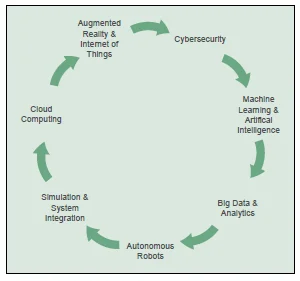
The developments in storage, speed of processing, connectivity, IOT, Big Data, Analytics, Robotics, Artificial Intelligence, etc. will undoubtedly disrupt what services are required, how services will be rendered, who will deliver the services, where services will be rendered and how services will be priced. The audit function cannot be immune to the disruption and will need to transform and adapt if it has to remain relevant and effective.


Liberalisation


As our country continues to liberalise and dismantle bottlenecks in doing business, we will witness decreases in attest requirements and more reliance on self-certification. The audit profession cannot seek legislations which are akin to ‘employment guarantee programmes’. The profession should earn its existence by creating a compelling need for audit services and delivering quality similar to other businesses or professions that have more number of persons dependant and operate in highly competitive environments where price, value and quality of service are some of the criteria which determines who succeeds.


Exclusivity


Alongside liberalisation we will witness actions to eliminate monopolies and eliminate exclusivity. This will further be facilitated by developments in technology which obviate the need for dependence on external professionals but will also shape environments functioning on sophisticated technologies where the traditional professional trained in a significantly manual environment would become extinct. If audit continues to be a relevant function and is expected to use technology and operate in complex technology environments designed by tech professionals questions would be asked as to why technology companies which designed such systems should not be eligible to audit those systems with the help of “techies” and other professionals proficient in accounting. After all, audit is about verifying data, exercising judgements and drawing conclusions. We may not wish that this happens but audit professionals who, perhaps, number 150,000+ in a population of 1.4 billion should justify their exclusivity to provide audit services.


Convergence


Increasingly we are witnessing a thirst for bundled services like a departmental store or a shopping centre. We have already discussed the impact of technology on the audit function and if we consider the increasing need for involvement of specialists in forensic, tax, valuations, technology, etc. in rendering audit services will mean that audit service providers will not only have to partner with other service providers but perhaps will have to house those skill sets under their roof. What will then be the identity of the audit firm? What changes are required in the regulations?

Corporatisation of professions

We have seen how audit services cannot be provided without the involvement of other service providers and the rapidly changing identity of an audit firm. Further, the need to invest in technology to render audit services and to house the specialists who will be involved will require huge investments. When I began my career more than four decades ago, the audit partner who attested the financial statements was a well-versed individual who was not only a specialist in audit but in corporate laws, taxation, valuation, etc. and there seldom was a need for involving anybody else. The changes we
are witnessing in other professions, for example, the medical profession where the delivery of medical services has shifted from individuals to multi-speciality institutions, and the investment required in building state-of-the-art facilities has resulted in the creation of a corporate form of organisations with the investors/financiers not being exclusively from the medical profession. The audit profession needs to introspect about this and seriously consider allowing financial and other strategic partners in audit firms.
FUTURE OF AUDIT: THE ESSENTIAL BUILDING BLOCKS

Let us come back to what needs to be done. We need to address and change:

  • The why and what of audit
  • Who does the audit
  • How audit is done and, finally
  • The output of the audit

We will need to address the perception of audit quality as well as the substance of audit quality

To succeed in this, we must:

  • Be willing to accept the present state instead of being in a denial mode.
  • Introspect and identify the root causes.
  • Identify possible actions with a clearly visualised end.
  • Be willing to transform (which is the most difficult of all) and, above all,
  • Develop the ability to implement and swiftly embrace change.

I would classify my suggestions into seven buckets or silos:

  • Purpose
  • Structural factors
  • Environmental factors
  • Execution of audit
  • Output factors
  • Oversight and evaluation
  • Other factors – frequency, timelines, fees, etc.


Purpose
Too long has the audit profession taken shelter behind the words “True and Fair” and the auditing standards which it wrote for itself and about which the users have little knowledge or care about. Any extra “asks” by the users have been rebuffed and rationalized as “Expectation Gap”.
If this rationalisation were to continue the ‘gap’ would widen and the audit profession and its users would be so far apart that audit services would become unnecessary and irrelevant. If the users’ expectation is that audit should address fraud, the profession must take appropriate steps to incorporate this in their audit approach. If the users’ expectation is that the audit should provide some form of assurance of the continuance of the entity in future, the auditor (who is the expert) should be willing to advance a few steps in this direction to meet the expectation.
Sir Donald Brydon, in his Review Report states: “the purpose of an audit is to help establish and maintain deserved confidence in a company, in its directors and in the information for which they have responsibility to report, including the financial statements”.
Our honourable Prime Minister, Shri Narendra Modi, in November 2019, said: “We must challenge the frauds. Both internal and external auditors need to find innovative methods to catch frauds. We need to encourage the core values of auditors for the same”.
Clearly, there is a case for revisiting the purpose of the audit. The sooner the profession addresses this, the faster it will prevent further erosion of confidence in the audit function.
Root causes
A survey conducted by IFIAR some time ago identified a number of causes for poor quality. Some of these are:
  • Failure to maintain/monitor independence.
  • Failure to evaluate non-audit services.
  • Deficiencies in auditing accounting estimates, internal control testing, audit sampling, revenue recognition, group audits, etc.
  • Inadequate training and learning of audit professionals.
  • Audit quality is not considered in performance assessment.
  • No timely supervision and review.
  • Insufficient depth of Engagement Quality Control Review (EQCR).

Inspections by regulators have frequently pointed out the above as root causes of audit failures.

Besides poor audit quality, there is an allegation that the audit profession has put ‘self interest’ above ‘public interest’.
The Building Blocks
The essential building blocks for the transformation of the Audit function are summarised in the table below:

Structural Factors

Environmental
Factors 

Execution of Audit

   Profile of the Profession

   Audit Market Profile

   Choice and Concentration

   Size of the Firms

   Auditor Appointment

   Auditor Compensation

   Auditor Independence

   Multi-disciplinary firms

   Corporate Financial Reporting Eco-system

   Internal Audit System

   Independent Directors, Audit Committee,
Boards

   Proxy Advisors, Credit Rating Agencies

   Regulators and Regulations

   Responsibility

   Audit Procedures

   Tools & Technology used

   Evaluation of Audit test Results


Output Factors

Oversight & Evaluation

Other Factors

   Mandatory Communication to Audit Committee

   Audit Report

   Form

   Type

   Reporting to Regulator

   Enhancements

   Management Letter

   Group Audit

   EQCR

   Evaluation of Auditor’s performance by
Audit Committee

   Inspection of Audit engagements by
Regulators

   Peer Reviews, Quality Review Board reviews,
etc.

   Frequency

   Timelines

   Transparency

Due to constraints of space, I will deal with some of the elements in the building blocks.w

STRUCTURAL FACTORS


Profile of the Profession and Audit Market profile
Every profession should have a profile consistent with the constituency it serves. Our country’s rapid expansion since liberalisation has created a situation where the audit market profile is inconsistent with the size of businesses and industries. There are a large number of sole proprietorships and very small firms involved in rendering audit service. With increasing complexity and investments required in technology and audit tools, these firms will find it exceedingly difficult to render audit service and pass regulators’ scrutiny of their work. Size enables strength and resilience. There is an urgent need for consolidation.
Choice and Concentration
Although the concentration in the Indian Audit Market is not as high as it is in many countries in the western world, yet it is not low enough to provide clients with a sufficiently wide choice. A number of suggestions have been made to address this, including auditor rotation, joint audits, etc., but these do not solve the problem. Rotation does not solve the problem, for the audits would continue to be rotated within the select few, And in some cases, the rotation would be a disincentive for an audit firm to invest in specialised resources required for a particular industry.
A joint audit is also proposed as a solution to widening professional opportunities and address concentration. In some banks, there are more than six joint auditors. The reality is that this only fragments the audit market and does not build firms of the size required to address concentration. Also, divided responsibility leads to divided accountability and impairs audit quality. If this argument is extended it means that appointing a hundred auditors for a large business would deliver better quality than a single firm carrying out the audit. Imagine if we were to have a law which mandatorily requires joint surgeries (by more than one surgeon) to enhance the quality of the surgeries and also provide opportunities for all practising surgeons!
 
Auditor appointment and Auditor independence
Appointment of auditors by an independent authority is often promoted as the panacea for the audit failures. This is on the mistaken belief that addressing auditor independence will miraculously enhance audit quality as it proceeds on the assumption that auditors are more likely to be compromised if appointed by the company they audit. If true, this is a sad reflection of the members of the audit profession. I do not believe that the manner of appointments have been the cause for audit failures including the recent failures in India and that we should amend the appointment process merely to deal with a few toxic professionals. In reality, besides independence and absence of nexus with the auditee, audit quality depends on a number of factors including size or the firm, quality and experience of audit professionals, ability to deploy the resources required to do a high-quality audit, audit methodology, auditor’s toolkit, etc.
There have been other proposals like (1) prohibiting auditors from providing non-attest services to their audit clients and (2) requiring audit firms to separate their non-audit businesses to create an “audit only” firm. While there is some merit in the former proposal as the audit firm has the rest of the market to render non-attest services, creating ‘audit only’ firms considerably weakens the audit firm and impairs delivery of quality audits.
Auditor’s compensation
If audits are to be carried out effectively by deploying experienced professionals using state-of-the-art tools and involving specialists then auditors have to be well compensated. Audit fees are presently very low in our country and this is further split into fragments by dividing amongst several joint auditors. Fixing of the audit fees by a regulator is not the solution. Entities vary by size, complexity, geographical spread, level of technology, nature of businesses, etc. and fees cannot be fixed or vary with reference to the results or any component of the financial statements. Equally, the audit profession must recognize that fixing fees on an ‘hourly rate’ model is flawed in a digital age when millions of transactions can be analysed by a mere press of a button using digital tools. Increasingly buyers of audit services will look for ‘value delivered’ rather than pay for the cost of input. Too often we have witnessed auditors seeking fee increases based on cost increases without delivering ‘incremental value’ or making efforts to reduce their input costs by using technology. Unfortunately, audit is not considered a ‘premium’ service and the enthusiasm to pay high fees is limited.
Multi-disciplinary firms

Audit in today’s complex and technology dominated environment requires a multi-disciplinary approach. This would be more efficient if the resources and capabilities are under one roof. The future, in my view, is multi-disciplinary firms and the profession should allow unlimited sharing of resources with non CAs even if it means that the CA firm is dominated or led by a non-CA. The bogey of difficulty in taking action when audit failures happen is often cited as an argument against multi-disciplinary firms whereas regulations can be shaped to take action against erring firms or erring professionals, whatever be their profession.

ENVIRONMENTAL FACTORS


Corporate Financial Reporting and Audit Ecosystem


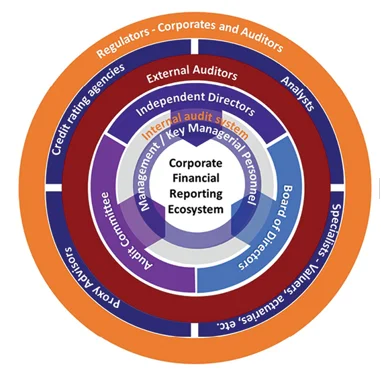
The audit function cannot alone deliver quality audit. It is influenced and facilitated by the entire Corporate Financial Reporting System. The Financial Reporting and Audit Ecosystem comprise of many participants, each having a very distinct role in ensuring the veracity of financial information and ultimately the efficient functioning of the capital markets. These participants (see graphic below) include:


1. Preparers of financial information – Management, including key managerial personnel


2. Internal monitoring mechanism – internal auditors
3. Corporate governance – audit committee, independent directors, board of directors


4. External auditors


5. Other stakeholders – credit rating agencies, analysts, proxy advisors, specialists such as valuers and actuaries


6. Regulators


7. And last but not least, the users of financial reports – shareholders, lenders, other stakeholders, potential investors, etc.


Any deficiencies in the role played by any one or more of these participants could lead to sub-optimal functioning of the entire ecosystem.


In addition to the components and participants in the financial reporting ecosystem, there are also influences on the financial reporting ecosystem, which have an effect, both positive and negative, as they drive the behaviour of the participants. These, too, need to be reviewed and, if necessary, re-calibrated to produce the desired effect. Some of these are:


  • Provisions of various laws which deal with the roles, responsibilities and accountability of the participants in the ecosystem.
  • Penalty and prosecution provisions in the various laws.
  • Role and process of investigative agencies.
  • Multiplicity and overlapping investigative/regulatory agencies.
  • Whistleblower mechanisms.
  • Standards – accounting standards, auditing standards, secretarial standards, internal audit standards, etc.


Internal Audit System


The internal audit function plays an important role in assisting the board in providing assurance on the effectiveness and efficiency of the risk management, internal control and governance process in the company. It also plays a complementary role in facilitating external audit quality.


In order to improve the internal audit function:
  • Internal audit should be subject to regulation and oversight just as the statutory audit.
  • Minimum qualifications for the internal auditor should be prescribed, including membership of a professional body or the Institute of Internal Auditors.
  • Internal auditors, too, should be accountable for their work.
  • Education and training needs of internal auditors should be addressed, including continuing professional education requirements, as well as focus on skills of the future.

Other environmental factors

Some of the other suggestions to improve the reporting environment and supporting the audit function are discussed below:


CEOs and CFOs play a very critical role in financial reporting. Not only are they signatories to the financial system, but also acknowledge and confirm their responsibility for the financial statements being free of fraud and error. They are, in effect, the architects of all business transactions and reporting. Currently, there are term limits and rotation requirements for external auditors and Independent Directors but no term limits for internal auditors, CEOs and CFOs. We must critically examine if term limits and reappointment rules should be extended to these individuals too.


MCA, SEBI or NFRA should set up a data science department that will focus its efforts on the review of the financial statements and filings to detect reporting, disclosure and audit failures. The principal goal of the department should be the detection and prosecution of violations involving false or misleading financial statements and disclosures. The department should also focus on identifying and exploring areas susceptible to fraudulent financial reporting and should include the ongoing review of financial information and the use of data analytics.


A practical public document should be brought out detailing the various deficiencies, frauds, and misstatements noticed by ROC, SFIO, NFRA, etc. This would help corporates, auditors, regulators and other users.


EXECUTION OF AUDIT
 

Let me first begin with ‘who’ does the audit as audit quality is also influenced by who performs the audit. I believe the current model is flawed.Audit procedures are significantly carried out by trainees or fresh graduates. To expect them to discover frauds or interpret visible signals of misreporting or failure is similar to a medical student carrying out a surgery and the busy eminent surgeon coming in at the end when the sutures are to be done. Our experienced and qualified auditors spend disproportionately less time compared to that of trainees either because they are too busy or that spending more hours increases the cost of audit and erodes audit profitability. A first step towards correcting this is to ensure that articleship with specific focus on specialisation should begin only after passing the CA exam.


Having briefly dealt with who does the audit, I will touch upon the “how” of audit.


The audit has, over the years, moved away from a “thinking audit” to an “inking audit”. The focus has shifted to documenting the processes rather than effectively carrying out the processes.


Auditors seem to have lost their sense of smell. The focus on testing and reliance on internal controls through walk-throughs, etc., has diluted the effectiveness of audit. There is more emphasis on the correctness of the accounting and the disclosures rather than the propriety and genuineness of the transactions. With this and the sampling methods where a speck of the entire population is tested to form conclusions, the auditors seem to be losing their sight or vision too. Sampling methods, howsoever scientific, dilute audit quality. With the use of technology, it is today possible to scan the entire population, focus on outliers, identify questionable patterns, etc. It is time the auditing standard on “Sampling” is revised. It is also time the audit profession uses technology extensively. Additionally, disclosure in the audit report of the sampling methodology used may be considered.


Sir Donald Brydon, in his Review Report, recommended that auditors be required to undergo initial and ongoing periodic training in forensic accounting and fraud awareness. In my view, every audit team should include a forensic specialist.


Yet another issue is the focus of audit. Auditors today are rarely able to walk into a client’s office with an expectation of what they should be seeing. Instead, audit today is about verifying what is presented rather than confirming expectations. I am reminded about the Sherlock Holmes story about “the dog that did not bark”. The analytical review procedures carried out by auditors generally analyse the information presented to them. That too, the focus is on analysing variances beyond certain predetermined thresholds and documenting the reasons. The absence of changes in expenses or income when there should be a change is happily ignored. A case of not probing why “the dog did not bark”!


OUTPUT FACTORS
 
The Auditor’s Report

I read with interest the dipstick survey carried out by BCAJ in May 2021, seeking views on the format, size, utility, components and other contents of the Statutory Auditors’ Report. I was alarmed and disappointed when 83.6% of auditors responded ‘Yes’ to the question – “In your opinion, will additional reporting requirements prescribed in CARO 2020 be onerous and will increase responsibilities for the auditors (evergreening of loans, going concern, reporting on defaults, etc.)?” Are we so concerned about the increase in responsibilities? Isn’t this what is expected of an auditor? Should we not focus on these matters in our audit and report our findings for the benefit of users, including regulators? It would appear that getting an auditor to do more work to bridge the ‘expectation gap’ is more difficult than getting a tooth extracted by a dentist!Another shocking response to the survey is by 59% of auditors having > 5 years’ experience who responded “Somewhat, but needs improvement” to the question “Do you believe there is adequate, emphatic and clear guidance covering situations for auditors on preparing/issuing Audit Report? This response should have woken up the professional body and resulted in swift corrective action. 

I, personally believe, “sunshine is the best disinfectant”. Over the years, I have witnessed the profession resisting any changes to the bland, template-driven audit report. This is strange as the only visible output of the audit to the users is the audit report and if anything can influence the perception of audit quality, it is the audit report. Most audit reports are similar, if not identical, barring minor differences due to the recent inclusion of Key Audit Matters. Does this mean audit quality in all cases is uniform? It is time we brought out into the open the information on what and how the auditor has performed the audit, when the audit commenced, when it ended, the number of hours spent by each category of audit personnel, the number of qualified professionals involved in the audit, the time spent by the audit partner, the use of audit tools, the sampling methodology and the number of items tested, independent external confirmations obtained and the results thereof, experts consulted, errors the auditors found, materiality, etc. rather than the bland statements that the audit has been done in accordance with the auditing standards (written by the auditors themselves only known to and understood by only them)!
 

Audit reports contain lengthy statements pointing out the roles and responsibilities of management and boards, limitations of the audit and clearly describing the auditor’s responsibility. Has these deterred regulators and investigative agencies? Have auditors been absolved of the blame? Users of audit reports see these cautionary statements with the same disdain as smokers see the statutory warnings in cigarette packs which state “cigarette smoking is injurious to health”!


CONCLUSION


The future of “audit” is bleak, and there are dark clouds on the horizon. I have great respect for the audit profession and sympathy for they are being attacked from all sides – intense competition, unremunerative prices for their services, inability to attract talent to the audit function, demanding clients and society, disruptions due to technology, intense regulatory scrutiny, pursued by multiple investigative agencies for the same work, etc. I am confident that this, too, shall pass but that depends on how the profession addresses some of the matters highlighted in this Article.


The need for a thorough overhaul and transformation is urgent. The issues need to be brought out into the open, for discussion and debate and should not be only within the walls of the Council Hall of ICAI. Wisdom also resides outside the hallowed Council Hall! We cannot forever continue to be in denial mode and hope the present glory (or distrust) would continue. Regulators like NFRA, RBI, SEBI, IRDA, etc. provide a useful role and show us the mirror. We may not like the reflection but let us not throw stones at the mirror. Instead, let us address the image reflected. I have just written a few thoughts in view of space limitations. I have many more thoughts, which are for another time.


We must not attempt any quick fixes or band-aids, or address the issues on piecemeal basis. Code of Ethics, AQMM, UDIN, etc. are some examples of positive actions which are piecemeal and do not move the needle. Such fixes are like changing the dress on a mannequin and hoping it transforms into a live human being!


The future of audit is in our hands only, and I am confident the Audit Profession will reshape itself to be one of the premier professions in our country’s journey to be the third largest economy. We can hardly claim to the partners in nation-building without rebuilding the Audit Profession. Perhaps, what we need is a Review similar to one by Sir Donald Brydon in UK. Let me list some of the questions for debate:
Need for economies of scale – the importance of consolidation of SMPs.
  • Declining interest in an accounting career and its effect on the future of auditing.
  • Trend of questioning authority by the lay public. Experts are no longer thought to be beyond criticism or scrutiny.
  • The rise of NFRA and the end of disciplining by peers – some of NFRA’s orders indicate that the auditors did not know the accounting or auditing standards.
  • The days of government-mandated work are over – need to justify the value of work.
  • Recent developments in law enforcement e.g., tax fraud, shell companies and rising demands on accountants and auditors.
  • How should education change – curriculum, selection of students, exams, training, lifelong learning.
  • Audit reports in a language that a reasonably intelligent and earnest user can understand.
  • What kind of competition would the audit face?

It is said that people change, not when they see light, but when they feel the heat. I am hopeful my fellow professionals effect the changes swiftly without measuring the transformation action on the ‘popularity’ scale.


Impact of Technology on Economic Growth of India

A year ago, I was travelling in the US with a friend of mine. At one of the airports, we had to produce our Covid vaccination certificates. My American friend took out a soiled folded paper and produced it to the medical officer with a lot of disgust; while I just got my e-copy of the certificate, and both of them were quite impressed by India’s use of technology, something that developed country like the USA has not managed to achieve. Right from healthcare to EVMs, we seem to have used technology successfully not only for elites but also for 1.4 billion of the masses. I can say today proudly that India is known today for the use of technology for the masses. JAM1 is the classic buzzword around the globe to underline India’s use of technology for the economic upliftment of people. When we talk about technology, it’s not just Information Technology, but we are talking about Biotechnology, Nano Technology, Robotics, AI, ML, Block Chain, Augmented Reality, 3D printing and so on. It is a known fact that in the current era of knowledge economy, the only factor that will push the economy is the correct use of technology, not only for the select groups, but for masses of the country. In this article, we will see the amazing impact technology had on the Indian economy in the past decade. We will also discuss emerging technologies and their impact on our economy and our lives. We will see the impact on the Service sector, Manufacturing and Agriculture sectors, which together make our Gross Domestic Product (GDP). Economic growth is measured today mainly in terms of GDP growth. Yet there are a number of social and ESG (Environment, Social and Governance) factors that determine economic growth. Economic growth is sought to be achieved with balanced growth. Balance in terms of geographies, different classes of masses, employment generation ability of economy, spending on education and healthcare etc. If a country has imbalanced geographic growth, it may create social issues. Growth with increased unemployment is not considered healthy. An increase in GDP should enable governments to spend more on the education and healthcare of citizens to enable them to enjoy the fruits of the growth. Thus, it’s not merely the numbers of GDP growth that decide economic growth but carries a much wider perspective.

1. 1. JAM (abbreviation for Jan Dhan-Aadhaar-Mobile) trinity is the initiative by the Government of India to link Jan Dhan accounts, Mobile numbers and Aadhar cards of Indians to directly transfer subsidies to intended beneficiaries and eliminate intermediaries and leakages.

Last hundred years, there is tremendous growth in the application of innovations and technologies for the betterment of people and in improving the economic growth of countries. A million years back, ‘fire’ was considered as a revolution of technology, and humans started ‘cooking’ food on fire and used it for protection. We still use fire to cook our food and rely on the same age-old technology, though the sources of fire have changed. During the Neolithic Period, around 15000 years ago, several key technologies arose together. We moved from getting our food by foraging to getting it through agriculture. People came together in larger groups. Clay was used for pottery and bricks. Clothing began to be made of woven fabrics. The wheel was also likely invented at this time. In 950 AD, windmills got into use; in 1044 AD, compass navigated us, and in 1455 AD, Printing technology made a substantial revolution and then came the steam engine in 1765 AD. In 1876, the invention of Telephones changed our communication world, and today with cell phones and broadband and satellite connectivity, geography has become history. The world has come so close that the economies of most countries got interwoven for good and sometimes for bad. In 1937 Computers and in 1947, Transistors changed the world forever and had a deep impact on the economies. The Internet came in 1974, and the term Artificial intelligence (AI) was coined in 2017. Each one of these has impacted the economic growth of countries that adopted these technologies. Rather the difference between developed, developing, and underdeveloped countries depended on the speed and ease at which they adapted the technologies.

And then came the COVID pandemic. It dramatically affected the world economies and changed the way we live and work, and it has forced us to rapidly adopt new technologies to survive the economic effects of the pandemic. Many of them will last long after Covid has passed. We have increased remote working, advanced online learning, and adopted telemedicine to a greater degree, increased e-commerce, contactless payments and entertainment streaming in significant ways.

Technology innovation has advanced significantly in the past two years. To name a few,

  • Artificial Intelligence: AI has continued to advance rapidly, with major breakthroughs in natural language processing, computer vision, and autonomous systems.
  • 5G Technology: The fifth generation of wireless technology promises to be much faster and more reliable than its predecessor, 4G.
  • Internet of Things (IoT): The IoT has continued to expand, with more devices and systems connected to the Internet, allowing for greater automation and control.
  • Cloud Computing: Cloud computing has continued to grow in popularity, providing businesses and individuals with scalable and cost-effective computing power.
  • Blockchain: Blockchain technology has continued to gain traction, with new use cases emerging in areas such as supply chain management, finance, and healthcare.
  • Quantum Computing: Quantum computing has continued to advance, with new breakthroughs in quantum computing hardware and software.

INDIAN ADAPTATION OF TECHNOLOGIES

In India, we had a peculiar situation. When knowledge was applied to products, Europe got in too quickly. We call it the Industrial Revolution and it impacted economies of entire Europe. The manufacturing industry flourished and mass-scale production created economies of scale. This allowed them to export manufactured goods and got a real economic boost. India was under British rule and clearly missed the bus. Instead, Britishers procured raw materials from India, took them to their country and exported the finished goods to India and their other colonies. In fact, this time, technology had an inverse impact on the Indian economy.

Then came the era when knowledge was applied to processes and quality and ‘Total Quality’ became the buzzword. Countries like Germany and Japan got this era right and emphasised on quality production. This time, technologies gave tremendous impetus to these economies and German goods like engineering goods and automobiles became the world’s best products by quality. India missed this bus again as we were in a closed Nehruvian economy era. We had manufacturing with complete protection and Indian manufacturers ignored the quality aspect of production. Indian masses suffered from low-quality local products with short supplies. With protection from imported products and the ‘license raj’ that prevented global manufacturers to enter India, quality took a back seat. Remember those days of the 70s and 80s, when we had a choice between two cars and used to wait for months to get a telephone line? The world used knowledge of products and processes and applied new technologies, but India lagged behind, and its economy suffered heavily, which led to the 1991 situation. It forced India to get into globalisation and free entry for global industries with their technical know-how. The rate at which Indian industry adopted the new technologies benefitted consumers, industries and certainly the economy.

Then came the era when technology started getting applied to knowledge. This happened in the mid-90s. India, by then, was a globalised economy, a free democratic country and a large number of English-speaking technically qualified resources. Information Technology (IT) and Information Technology Enabled Services (ITES) grew remarkably in India. The growth was mainly export-oriented. Two fiber optic cables reaching the east and west coasts of India connected the world, and India saw this service sector, which was completely based on technology, flourished. This industry led the contribution of the Service sector to the total GDP. India is a unique example in the global economy, where manufacturing followed the service sector growth. Since the year 1998, one of the major factors that have given rise to the growing value contributed by the services sector to the GDP is the IT/ITES sector. Overall, India’s tech industry is estimated to touch $245 billion in the 2022-23 financial year, with an incremental revenue addition of $19 billion during the same period. Furthermore, the IT industry accounted for 7.4% of India’s GDP in FY22, and it is expected to contribute 10% to India’s GDP by 2025. As innovative digital applications permeate sector after sector, India is now prepared for the next phase of growth in its IT revolution. On the other hand, the IT industry has timely moved to remote working settings. Currently, India is one of the largest data generators, with an increasingly young and tech-savvy population. Therefore, emerging technology in economic development in India is playing a huge role.

ROLE OF EMERGING TECHNOLOGIES

Key Technologies Shaping the “Digital Transformation of India”

The new technology is codified knowledge in the form of routines and protocols. Technology helps to get enough knowledge about the use of economic resources to manufacture goods and render services more efficiently and effectively. Economic growth has increased and is becoming efficient due to the advancement of technologies. In business, starting from production to profits got enhanced due to technologies. It has also helped Government machinery as they are the enablers of economic growth. Indian Government is adopting technology in the form of e-Governance, which has brought in speed and transparency to a larger extent.

India is a good adapter of new technologies. In the past decade, especially during and after COVID, the growth in e-commerce and electronic payments has been phenomenal. The number of Fintech companies that have come up and grown in India has shown the world that India, too, has a local market and appetite for using the current technologies. The cloud services market’s growth in India is driven by the growing adoption of big data, Artificial Intelligence (AI), Machine Learning (ML) and the Internet of Things (IoT). IoT links multiple devices or appliances that need to be connected to the internet. This includes automation and real-time device control. IoT-connected devices such as connected cars, household appliances, and electronics use a cloud-based backend to interact and record information. This has given a significant boost to the manufacturing sector too.

Artificial intelligence (AI) refers to the field of computer science that focuses on creating intelligent machines capable of performing tasks that typically require human intelligence. AI involves developing algorithms and systems that can process information, learn from it, reason, and make decisions or take actions. AI systems aim to replicate human cognitive abilities, such as understanding natural language, recognizing objects and patterns, solving problems, and adapting to new situations. These systems can be designed to operate in various domains, including image and speech recognition, natural language processing, robotics, recommendation systems, and autonomous vehicles, among others. The growth of AI not only boosts the IT industry but also helps all three sectors of the economy, namely, the Agriculture, Manufacturing and Service Sector.

Emerging technology in India has influenced the Indian Economy to a larger degree. Emerging technologies and their adoption have escalated quickly with time and have contributed considerably to the Economy. Furthermore, several government policies and initiatives have driven technology adoption across various verticals. According to a recent report by the World Bank, Indian economy is expected to expand by 6.5 per cent. The economic impact of the COVID-19 pandemic in India has been quite disruptive. The digital era has caused an unparalleled change in technology, business, and society. Moreover, the situation is starting to break the inertia of digital adoption and the cloud and AI will continue to be significant as part of the transformation. Emerging technologies are influencing several sectors in India propelling its faster economic development. Businesses across verticals have been impacted by the worldwide crisis, but certain industries are standing out to change the game for the economy in the coming future.

Industries like Banking, Financial Services and Insurance (BFSI), healthcare and pharmaceuticals, e-commerce, retail, and manufacturing are adopting emerging technologies. Companies in these industries have reacted to difficulties presented by the pandemic and are aiming heavily on creating strategies in the new setup to change their game in the next five years. The string that ties together all these industries is modern technology. Also, the cloud plays an important role to help all these industries propel into a game changer for the Indian economy. New-age technologies will be offering India the possibility to carve itself a unique identity as a global hub for cloud solutions.

Industry 4.0, digital supply chain, digital assistance, digital payments systems and many more are some of the technologies that will aid economic development by 2025. Emerging technology on economic development in India is beginning to allow industries to rebuild the country’s economic status in a post-Covid world. Organisations relevant to these verticals are boarding on their journeys. The smarter organisations are taking advantage of the huge capability of emerging technologies to their benefit. Once the economy bounces back, these organisations will be the leaders and will capture a larger percentage of the market.

TECHNOLOGY TOUCHING ALL SECTORS

1. Natural Resources: Modern technology helps human beings in utilising the natural resources that are hidden in seas, lands, and mountains, like oil, gas, and metals. It also allows us to find water resources beneath the soil, as water is an important element for economic growth.

2. Agricultural: The technology has helped to introduce fertilizers for plants and agricultural land, tractors, the invention of High Yield and genetically modified seeds, threshers, and pesticides. The revolution resulted in the cultivation of good crops and became a profitable profession and helped in putting an end to the shortage of food and grains. The weather forecasts, which are so crucial to this sector, have improved predictability and have helped the economy by getting better agro-produce. Technologies in storage and preservation, too, have helped farmers and markets to keep stability in the prices.

3. Healthcare: Healthcare Industry has gained maximum benefits in terms of value delivery by adapting to new technologies. Biotechnology, Biochemistry, Molecular Biology and fields like that are constantly on the move with innovations. The speed at which we could get the COVID vaccination is a classic example of this. New medicines, new drug delivery systems, drug discovery simulations, and the use of robotics have truly helped doctors and patients. While it adds to the value of GDP, the healthy population of India contributes more to the economy.

4. Entertainment: Technology has completely changed this industry. Right from production to distribution, there is a revolutionary change in the way this industry was and now is. I have no doubts, this industry will be a different economic ball game in the next five years.

5. Manufacturing: Globally, manufacturing is going to be deeply impacted by the innovations and new technologies coming into the market. Robotics will bring a lot of precision and improved productivity, lesser rejections and so on. What will bring revolution in manufacturing is 3D printing technology. This will probably make large factories redundant, and manufacturing will be on mass-scale personalised manufacturing. 3D printing is currently used to create prototypes, and many start-ups have come up in India with 3D printing utilities to help large companies to create prototypes for their new products.

6. Logistics: During covid, Flexport (logistics startup, now huge) was able to share live data and tech support with LA port authority to resolve shipping traffic – they were able to help the mayor of LA to take real-time decisions. This is just a one-off example. In India, we require huge improvement in our logistic services. We have seen in the past few years, technology such as AI, and IoT are helping warehousing and transport companies to improve the efficiency of their services. Delivery for the last mile was always facing challenges in locating addresses when they started delivering couriers. To solve this, they added location tagging to their courier agent apps. The agent had to mark delivery at the delivery address – this captured the latitude-longitude of the address. Now they have built a database of addresses in India with very high accuracy. They do have apps that aggregate deliveries at the same locality to make the service time effective.

7. Efficient operations: Technology can optimise the operations of the industry. Technology plays an important role in the generation of efficient processes. It can help the industry to reduce or eliminate duplications, errors, and delays in the workflow, as well as accelerate the automation of specific tasks. Inventory technologies allow business owners to efficiently manage production, distribution and marketing processes. With the right technology in place, businesses can save time and money and make them more productive and competitive.

8. Expansion of Markets: Technology in business made it possible to achieve a greater reach in the global market. Globalization has been carried out thanks to the wonders of technology. Anyone can now do business anywhere in the world. Technology has driven the development of electronic commerce, which has brought new dynamics to the globalisation of companies. The diffusion of information technology has made production networks cheaper and easier and has been fundamental for economic globalisation. The adaption of technology affects both the quality and cost of manufactured goods in India and makes it more competitive in the global market.

PAYMENT, FINANCIAL AND CAPITAL MARKETS IN INDIA & TECHNOLOGY

In the last few years, we have seen various new and faster payment modes emerge and establish their presence in the Indian digital payment space. This has largely been possible due to regulators introducing new initiatives and products to push digital payments, and industry stakeholders encouraging customers to shift from paper-based to digital payment modes. The benefits of shifting towards digital payments are visible in India. These benefits will witness an upward trend, marking a significant change in how the Government, corporates and citizens adopt new technologies for their transactions. RBI is planning to introduce a “Lightweight Payment and Settlement System” (LPSS) that can operate from anywhere with minimal staff. The LPSS will be activated on a need basis and will operate independently of existing payment systems, such as RTGS, NEFT, and UPI. The Indian digital payment space has seen extraordinary growth in the last few years, with the volume of transactions increasing at an average compound annual growth rate (CAGR) of 23%. The launch of new and innovative payment products like Unified Payments Interface (UPI), National Electronic Toll Collection (NETC) and Bharat Bill Pay Service (BBPS) have firmly placed the digital payment industry on an upward growth trajectory.

Apart from UPI, BBPS and NETC have also grown at a similar pace. Both BBPS and NETC are growing at a CAGR of 500% and 123%, respectively, since 2018 with the help of a government and regulatory push. Banks and non-banking financial companies are now more focused on providing integrated solutions. Digital payments have evolved from being viewed as a cost centre for banks to a revenue centre and a key lever for customer acquisition. Financial companies have stepped up their efforts to strengthen their payment infrastructure and have started offering other adjacent services such as lending, wealth management, micro insurance, and the use of data analytics to offer more customised solutions for customers.

We witness today various Fintech platforms emerging for equity and fixed income securities. One latest that I have seen is www.harmoney.in funded by ‘y combinator’ and providing a platform for fixed income security trading. We have seen multiple platforms for equity trading, and NSE, with the help of technology, is one of the hi-tech exchanges in the world. Any economy needs matured capital and financial markets, and India has witnessed how technology has helped these markets to improve in quality and volumes of transactions.

GOING FORWARD

Millions of Indians hope for a better future, with well-paying jobs and a decent standard of living. To meet these aspirations, the country needs broad-based economic growth and more effective public services. Technology would play an important role in enabling the economic growth that India needs. The spread of digital technologies, as well as advances in Nano and biotechnology, can raise the productivity of the Manufacturing, Services and Agriculture sectors of the Indian economy. It will redraw how services such as healthcare and education are delivered and contribute to higher living standards for millions of Indians by raising education levels and improving healthcare outcomes.

The Indian government’s non-profit open e-commerce network, ONDC, has grown to 236 cities while bringing on 36,000 merchants to its platform in the past year. The platform, which enhances the digital commerce process for small business and retail shops in India, is slowly recording an uptick in transactions. India is now looking forward to newer platforms like ONDC, a new commerce-commerce platform where the consumer will have a seamless choice between various e-commerce sites. The Open Credit Enablement Network (OCEN) is an open network which codifies the flow of credit between borrowers, lenders, and credit distributors under a common set of standards. Technologies like blockchain will bring a revolution in banking and other services and make many old companies and maybe banks redundant.

However, like every change, humans and societies are apprehensive of adopting these new technologies. The fear of unemployment with AI coming in is one such fear. I saw this happening in the 90s when computers started getting into banks and offices. There were union strikes resisting computerisation. Looking back today, we would laugh at it. What we need to adapt is retraining ourselves with new technology. I firmly believe new technologies cannot eliminate the need for humans. What will change is the nature of the work and the workforce adequately trained to create and handle these new technologies. India has the youngest population, and hence I feel, India is most eligible to have newly trained resources to create and handle these new technologies not only in India but globally. I don’t believe it is a threat to the economy but an opportunity for Indian Economy to grow faster.

Impact of the Alternative Dispute Resolution Mechanism on the Economic Growth of India

INTRODUCTION
On
a recent trip back to Copenhagen, I was keen to revisit Christiania, a
social experiment where hippies squatted and rejected state control.
Originally set up in 1971 in a former military complex in Denmark’s
capital, it had continued in its existence and the population had grown,
but this hippie utopia was not thriving. Accommodation was in disrepair
and members of the community could not afford its repair costs. Rising
rents meant many were forced to leave the community and return to the
main state, one with law and order, whose economic prosperity could feed
them and their families.This is the impact that a state and its legal system can have on economic growth.


TYPES OF LEGAL SYSTEMS
I
am called to the bar in India, England & Wales and the DIFC in
Dubai. All three are common law jurisdictions where court judgments
become precedents binding on future judges of lower courts or hold
persuasive value for judges of courts having an equal ranking. The
common law system permits incremental advancement in law where every
judgment slowly builds on and adds to a nation’s body of law.Dubai,
however, is a bit of a mixed bag. The DIFC Court is a common law oasis
in what is otherwise a civil law system. The ‘on shore’ Dubai courts
outside the DIFC follow a civil law system and apply Sharia law, as
legislated by the UAE. Most of Europe and many countries around the
world that are not part of the commonwealth (previous British colonies)
also follow a civil law system.In civil law jurisdictions, there
is not much scope for advocacy and historic judgments do not hold
precedent value. In these countries, the letter of the law is closely
followed. This works too, but rather differently from common law systems
as there is less opportunity for a judge to tailor his / her ruling to
the specific facts and circumstances of a case.There are also
alternate dispute resolution systems such as arbitration and mediation. I
dare say arbitration has become rather mainstream and an integral part
of the legal system in India and other countries such as Singapore,
England, Nigeria, Kenya etc. Arbitration allows tremendous flexibility.
An arbitrator / arbitral tribunal derives its power from the consent of
parties. In the circumstances, if the parties want the arbitrator to
hear and rule on only one part of a dispute between them, they can
direct the arbitrator to do so. They can remove powers from an
arbitrator or add to them. Large volumes of civil procedure code that
one must follow if their case is before a court are replaced with a thin
booklet of arbitration rules (if the arbitration is governed by an
institution) or replaced with the simple procedure laid down in the
Indian Arbitration Act 1996 (if the arbitration is an ‘ad hoc’
arbitration).


THE BENEFITS OF ARBITRATION
What
is marvellous about arbitration is that one can appoint an arbitrator
truly suited to their needs. For example, in a cement arbitration seated
in London between an Indian and Spanish party that I had undertaken
some years ago, the clause required a cement expert to be appointed as
an arbitrator. Some commodities exchanges, such as the Refined Sugar
Association and GAFTA in the UK, only appoint industry experts as
arbitrators. Even if such arbitrators could be out of depth in terms of
the law, they can appoint a lawyer as an advisor to the tribunal.
Appointing experts such as accountants, engineers etc., as arbitrators
is a power that more Indian parties should be encouraged to adopt for an
award tailored to their needs.Likewise, the appointment of
younger arbitrators, if Indian parties can stomach the idea, could
revolutionise arbitration. I began to get arbitrator appointments at age
40 and my co-author, Kunal Katariya, began to get them at an even
younger age. Younger arbitrators are keen to establish their reputation
as arbitrators, are willing to take on disputes of smaller value and
since they are mid-career and extremely busy, they are far more likely
to hold fewer hearings and pronounce arbitration awards more quickly.Appointing
more women as arbitrators can also restore a balance. A study that was
undertaken in the US following the collapse of Lehman Brothers in 2008
revealed that a lot of major financial institutions that went under, or
nearly went under, had all-male boards. Those companies that had women
on their boards of directors were more resilient to risks and changes in
the economic climate. This is because ideas were challenged, and not
everyone in the boardroom held exactly the same view, which is healthy.Presently,
one of Western India’s best arbitration institutions, the Mumbai Centre
for International Arbitration (MCIA), has managed to appoint about 30%
women as arbitrators. This is one of the best ratios in India and ought
to increase. The Indian Arbitration and Mediation Centre, Hyderabad
(IAMC), another fabulously run institution, has, in the last year,
appointed over 80% women as mediators.Mediations, if popularised
as a method to resolve commercial disputes, can dramatically reduce
costs for parties. Mediations also diminish the time spent in resolving a
dispute to a couple of months. Mediations, however, require both sides
to compromise and come to a mediation leaving ego to one side. In my
experience, several private equity/shareholder disputes tend to stem
from ego clashes or the siphoning of funds, and such cases are less
likely to be resolved by way of mediation. When appointing a mediator,
one must not be shy of asking what percentage of previous mediations
undertaken by that individual has resulted in success.
 
THE LATEST CHANGES TO INDIA’S ARBITRATION LAWS
Since
arbitration only emerges out of contract, the starting position is that
only signatories to an agreement containing an arbitration clause can
be made parties to an arbitration. India has, however, taken a liberal
approach historically by allowing group companies to be brought into the
fold of an arbitration, and thereby be bound by an arbitration ruling,
even if the group companies were not signatories to the original
contract that contained an arbitration clause. The Supreme Court is
currently reviewing this group of companies’ doctrine1. Several ongoing
arbitrations are waiting for the outcome of this review. By comparison,
England takes a strict approach to the joinder of non-parties to an
arbitration agreement and Switzerland and other European civil law
countries have taken the more liberal view.Meanwhile, the NN
Global case2 has recently held that a court cannot appoint an arbitrator
or send parties off to arbitration even if an arbitration clause is
contained in their contract in circumstances where the underlying
contract is insufficiently stamped. One of the authors, Mr Katariya,
whose view is shared by the majority of arbitration practitioners in
India, believes this judgment has dealt a significant blow to India’s
pro-arbitration stance because it is a wriggle-out method and affects
the enforceability of an arbitration clause contained in an unstamped /
under-stamped agreement. The other author, Karishma Vora, holds the view
that the law on impounding/staying the enforcement of any under-stamped
agreement should be followed in the case of an arbitration agreement
too. If this needs to change, the legislature will need to amend laws to
carve out an exception for the stamping of arbitration agreements.Arbitration
law in India has also been evolving rapidly and much-needed reforms
were brought in by the 2015 and 2019 amendments, which added strict
timelines for completion of proceedings.

1 Cox and Kings v. SAP India 2022 SCC OnLine SC 570

2 N. N. Global Mercantile Pvt. Ltd. v. Indo Unique Flame Ltd. & Ors. 2023 SCC Online SC 495


WHAT DOES THE FUTURE HOLD?
Last
month, I was in court in London. It was a virtual hearing and
announcements were made at the beginning in the usual course that it was
being recorded by the court and that no one else could record the
hearing without the court’s permission. No permission had been sought
and we went about the hearing in the usual course. The following
morning, I received a frantic call from my instructing solicitors
informing me that a full transcript of the hearing had been circulated
to everyone who attended the hearing, including the judge.We
rang the client, who is a successful co-founder of a private equity fund
that specialises in investing in tech businesses. He explained that he
subscribes to an AI app called Firefly that automatically allows itself
into every zoom, Teams or other meeting on his calendar, transcribes it
and circulates it to all who were on the calendar invite. Quite
efficient but not so when one is in contempt of court.Although
the contempt was purged, the humorous judge asked the only pertinent
question that ought to have been asked – how accurate was the
transcription?International arbitrations and litigation that
take place in London, Dubai, Singapore etc. often engage expensive live
transcribers. The sums at stake justify the few lakhs spent per week for
live transcription. All parties, counsel, solicitors and the judge or
arbitrator have immediate access to every word that was spoken or
argued. Sometimes, to reduce costs, parties subscribe to transcription
that is not live and is circulated only at the end of the day.Bringing
this to an Indian context, arbitrations tend to be conducted only in
two-hour slots 5-7 pm, after court. Counsel asks his / her
cross-examination question, the witness responds, and both the question
and the response are dictated by the arbitrator to steno. Even the
quickest steno in the world slows down the process, and often, the punch
of cross-examination is lost in translation, even when it is English to
English.If technology-assisted transcription was brought into
the fold, Indian arbitrations (and court proceedings, if courts were
open to allowing live transcription) would see a dramatic improvement in
the efficiency with which cross-examination is conducted, judgments are
dictated etc. It would ensure all submissions made by advocates are
recorded, which can be rather useful at the stage of appeal.And
this is just for transcription. Technology and AI can have a
significant impact on India’s legal system, and thereby on India’s
economy. Take small claims, for example. There are hundreds of thousands
of people who probably, on a yearly basis, forgo money owed to them by
others. These could be resolved by replacing the judge with technology.
Let us take a leaf out of eBay’s book. ‘eBay’, a platform where one can,
for example, sell their old sofa, resolves 60 million disputes per
year. Most of these are low value, often under Rs. 2000 ($25) in
dispute.This is an example of how online dispute resolution
(ODR) can and should be the future of our struggling civil justice
system. ODR can provide access to justice for lakhs of Indian citizens
who may not otherwise have the means or the time to partake in the
nation’s court system at an incredibly fast pace.A vision of
the future of India’s justice system should also include smart
contracts. In basic terms, a smart contract is a self-executing
contract. Think about your order on a food app such as Swiggy. You place
an order, and Swiggy blocks the money on your card. Although the
restaurant has not received the money, it begins to prepare your order
on the faith that it will receive payment automatically once it carries
out its end of the bargain. At the time of execution, being the delivery
of the food, the payment is automatically released to the restaurant
and the delivery person, with a small cut being retained by Swiggy.
Although this is not exactly a smart contract, it is a good example of
the beginnings of what a legal system could look like in the future.
Traders could enter into self-executing contracts once the technology
associated with smart contracts and blockchain becomes more prevalent.When
making such technology an integral part of the legal system,
legislators need to think about the level of detail going into the
legislation. I find that a broad-brush approach enables a tech-related
law to remain relevant for a longer period of time. France is
legislating technology with a tedious level of detail. This carries the
risk of its laws becoming outdated soon. The UK, on the other hand, is
modernising old laws by setting out only a basic framework, in the hope
that the framework will not need to be changed even if underlying
technology changes.

For example, the UK has just drafted a bill
for electronic bills of exchange. It is called the Electronic Trade
Documents Bill and is presently going through its second reading in the
House of Commons (the equivalent of the Lok Sabha). The bill will reduce
the estimated 28.5 billion paper trade documents printed and flown
around the world daily3. Presently, bills of lading and bills of
exchange are required to be paper based. If this bill is passed,
paperless versions of these documents will be legally recognised in the
UK, allowing British businesses to trade faster and cheaper and reduce
employee time on needless paperwork and bureaucracy.


3 https://www.gov.uk/government/news/paperless-trade-for-uk-businesses-toboost-growth


This Electronic Trade Documents Bill4 has
only seven sections and says that if reliable technology is used to
secure that only one person can exercise control over / alter an
electronic document at any one point in time, then it would be accepted
in the manner that the older paper trade documents (e.g., bills of
exchange) were legally recognised. That’s it. No further detailed
definitions or complications. In other words, no matter what technology
is used, so long as an individual can demonstrate they are the only ones
in control of the electronic document, akin to a trader having physical
possession of, say, a paper bill of lading, the electronic document
would be legally recognised.Like France and the UK, India needs
to give some thought to how it wants to prepare itself for the enormous
digitisation of trade, which is inevitable. The Indian legal system must
start preparing itself now to ensure it meets the progress of the
economy step by step. Modernising laws or introducing new ones are in
the hands of the legislature and bureaucrats and may take some time, but
the enormous advantage of India’s common law judicial system is that
its judges can apply existing laws and adapt them to the changing
circumstances of the economy.A good example of this is when
courts began to allow service of court proceedings via WhatsApp when
other methods were not acknowledged, and the recipient’s chat showed a
double blue tick.5 Another issue that the Indian judiciary can think
about is permitting litigants who are victims of online fraud
perpetrated by faceless individuals to file cases against ‘persons
unknown6. The concept of bringing a case against someone whose name and
address the plaintiff does not know is alien, but this is one of the
many ways that the existing legal system, and the judiciary in
particular, can assist the economy.As for non-litigation work,
such as drafting documents, the use of artificial intelligence can be
pathbreaking. The drafting of property documents, hire purchase
contracts, franchise agreements, trademark agreements, shareholder
agreements etc., already have a revolutionary app in ChatGPT, and it is
only getting better. Once legal software companies build on the open AI
network of ChatGPT and enable lawyers to feed in historic drafts to
train the AI, very many young associates in law firms could lose their
jobs; but the drafting could easily be of an international standard and
enable lawyers to improve their efficiency.Presently, one
spends a few hours a day on administrative tasks, delegation of work,
reviewing work, team discussions etc. This will change as practitioners
will be able to spend less time on non-legal tasks and more time on the
law.A family court in Australia replaced its mediator with an AI
machine whose outcomes matched those of the family court judge by over
80% during a pilot that was conducted to test the AI. Parties were
positively influenced by this percentage, and many settled along the
lines of what the AI predicted in order to avoid the costs of a
full-blown dispute in the family court. This is the potential of AI
crossing paths with mediation.

4 https://publications.parliament.uk/pa/bills/cbill/58-03/0280/220280.pdf

5 Tata Sons v John Do CS (Comm) 1601/2016, order dated 27.04.17, Delhi HC. Kross Television v Vikhyat Chitra Productions 2017 SCC Online Bom 1433

6 CMOC Sales & Marketing limited v Persons Unknown & 30 others [2018] EWHC 2230 (Comm)


CONCLUSION
Contracts
are the foundation of commerce and nearly every Rupee that goes in and
out of a household or company is governed by a contract. From a bus
ticket to a large investment agreement, parties fall back on the terms
of their contract for interpretation and look to a breach of those terms
to bring cases against each other. A World Bank study revealed that
while it takes 165 days to enforce a contract in Singapore, it takes
about four years on average in India. I should admit that I find the
four years also astonishingly speedy. India has about 1.09 crore civil
cases pending, and this would be in addition to arbitrations. The Indian
legal system needs a serious shake-up if it needs to assist economic
growth.In addition to the tech-based solutions set out above,
other simple solutions can also be implemented. Senior counsels in every
court could be mandated to sit as judges for a minimum of, say, three
weeks per year, or for a minimum term of, say, three years at a stretch.
This would reduce the backlog. Every adjournment should have a large
cost associated with it, payable within one week of the adjourned
hearing.Statistics could be published revealing how many
adjournments were granted by every judge in the country per term, or how
many hearings were before a judge that did not result in disposing off
the matter.Presently, most Bar Councils around India have a
one-time enrolment. If an advocate was enrolled by the Bar Council of
Maharashtra and Goa in 2006, he/she would not need to renew their Sanad
for the rest of their lives. This should be changed to periodic
renewals, say every five years, and advocates should be mandated to pay a
small percentage of their last year’s earnings in order to renew. This
money could be re-invested in providing advocacy training to younger
advocates, which would, in turn, assist judges because the quality of
submissions being received by judges would improve. In December 2022,
the Bombay High Court taught senior juniors, including one of the
authors of this article, to impart advocacy training. Even though this
training was focussed on training the teachers, the very young students
who participated in this training showed a dramatic improvement in their
advocacy skills over the course of just one weekend. Another rule that
Indian Bar Councils may want to consider promulgating is no double
booking. In other words, if an advocate has accepted a brief to argue
one case on a day, he/she cannot accept a brief to argue any other case
on that day. Alternatively, they could accept a maximum of three briefs
per day. This will dramatically reduce adjournments and far more
advocates will get an opportunity to argue cases than the present system
where most briefs are concentrated in the hands of a few.With the hope of a better tomorrow, the authors now sign off.

Economic Growth – Role Of Direct Tax

1. Let me delineate the scope of this article
The
title “Economic Growth – Role of Direct Tax” has two different facets.
An economist will read this as nexus between economic growth and direct
tax by adverting to economic areas such as – what should be the tax
policy of India; how to ensure horizontal and vertical equity; how to
ensure buoyancy in tax revenue commensurate with GDP growth; relative
composition of direct and indirect tax; whether agricultural income
should continue to remain exempt; should income tax be supplemented by
other taxes like Gift Tax or Wealth Tax to address wealth disparity,
etc. etc.The brief from the organisation does, however,
surround the alternative facet of nexus. The brief is to analyse the
impact which currently applicable direct tax laws and their
administration have on the economic growth of the country or on the
morale of taxpaying community. The mandate is to examine legitimate
expectations which taxpaying community contributing fair share of tax
may have from the framers and administrators of direct tax laws as
enacted. Indeed, this is a highly significant area of discussion
inasmuch as the reasonableness, fairness and ease with which laws are
implemented will, in the long run, cultivate greater loyalty and a high
happiness index.


2. Realisation of legitimate expectations of taxpaying community – ever a dream?

The
realisation of legitimate expectations can contribute to the
enterprising spirit and strength of Indian Taxpayers in the competitive
global world. It is also an important factor to attract FDI.
Some
legitimate expectations could be the enacted law as also tax
administration should treat taxpayers with respect which inspires
loyalty and patronage to the system; ensure certainty, predictability,
stability, and simplicity of law; smoothen/streamline process and
procedure of compliance, assessment, and collection; usher in
transparency and accountability of high standard. Some of these
parameters are commented further in this article.


3. Sermons of Kautilya: A Utopian World!!
The
Income tax Department’s website refers to the principles of taxation
laid down in Kautilya’s Arthasastra. These were cited by former Finance
Minister and President of India, Late Shri Pranab Mukherjee, in his
Budget Speech of 2010-11 as follows: –“Thus, a wise Collector
General shall conduct the work of revenue collection…. in a manner
that production and consumption should not be injuriously affected….
financial prosperity depends on public prosperity, abundance of harvest
and prosperity of commerce among other things.”
There are
many other metaphors provided by learned economists on how tax should be
collected from the subjects. Say, like, how a honeybee collects nectar
from flowers without injuring it, how the Sun draws moisture from the
earth to give it back a thousand times, how a calf draws milk from a cow
and so on.On timing of taxation, Kautilya’s Arthasastra
recommends plucking the ripe fruits from garden and avoiding unripe
fruits. The ancient text wisely recommends accountability for the tax
collectors and the prevention of corruption.


4. Impact analysis of tax incentives
The
primary aim of a tax law and administration of tax law is to generate
revenue. But one of the variables of tax policy which influences overall
tax collection is a package of tax incentives offered to the taxpayers
to meet specific fiscal objectives like make-in-India or environment
protection. These incentives reduce effective tax rate payable by the
taxpayers.Much can be said about virtues and vices associated
with the basket of incentives. For long many years, corporate India was
subject to a tax model of relatively high rates of tax with a regime of
multiple incentives but tempered by Minimum Alternative Tax (MAT)
liability which partly neutralised the advantages of tax incentives. To
say the least, it was not at all easy to resolve intricacies of
incentives; it was as highly difficult to interpret MAT provisions with
added complexity of convergence to Ind AS. Taxpayer’s life today is far
more easier with a shift in policy which favours fewer incentives along
with moderate rate of tax and dispensation of MAT. This policy is
funnelled by global initiative insisting on minimum tax levy in each
jurisdiction, on profits accruing in that jurisdiction. This aims not
only to prevent race to the bottom but also relieves pressure of
offering “wasteful” tax incentives by developing countries1Frankly,
not all incentives are introduced with the prime object of relieving
tax liability. Many of them have different economic rationale and have
been retained in the selfish (though, noble) interest of the Government.
By grant of incentives, the attempt is to lure taxpayers to undertake
certain activities/investments which, in turn, relieve the pressure of
economic upliftment from the Government. The target sectors which
supplement the Government agenda are : growth of exports; realisation of
infrastructural development; generation of employment, development of
backward areas, encouragement of start-up eco-systems, research, and
development etc. These incentives are substitutes for subsidies which
may otherwise have been imperative to disburse. Amidst the trend of
withdrawal of incentives, those incentives which attract overseas
investments are still popular2.One submission to the tax
administration could be that once an incentive is agreed to be offered,
it may be implemented with grace. As one illustrative example, an
incentive such as an incentive in respect of expenditure on medical
relief to persons with disability should be formulated, perceived, and
implemented with compassion rather than by making it compliance heavy
with difficult conditions.

1. OECD’s report of October 2022 titled ‘Tax incentives and the Global Minimum Corporate Tax – Reconsidering Tax Incentives after the GloBE’s Rules’

2 Many of these incentives may be phased out at policy level after implementation of Pillar 2 initiative of OECD leading to implementation of Global Anti-Base Erosion Rules


5. Retrospective amendments can be counterproductive to economic growth
The
Legislature has power of using the magic stick of creating a law with
retrospectivity. It can create a fiction – say for example, it can
introduce a new law from a back date. A law may be introduced today but
the Legislature can mandate us to believe as if the law was always
legislated much before. On principles, this is a perfectly permissible
exercise – though, at times, the taxpayers may consider this to be an
unfair/avoidable exercise of power.In the celebrated case of
Vodafone International Holding BV [2012] (341 ITR 1), on the 20th
January2012, a 3-judge bench of the Supreme Court pronounced that a
non-resident taxpayer is not chargeable to tax on capital gains from
transfer outside India of shares of a non-resident overseas company,
even if such company (whose shares are transferred) may be deriving
value from its underlying operating subsidiaries in India. On the 16th
March 2012, the Legislature carried out a retrospective amendment to
nullify the impact of Supreme Court decision by offering a justification
that the amendment was carried out to clarify the law and for removal
of the doubts. It was not a convincing justification to offer after
the SC had laid down the law. No wonder that the amendment puzzled most
non-resident investors; and almost undermined their faith in the tax
system of the country. There was a scare among the investors whether
investment in the country was as safe.

The country paid the
price and lost some reputation when, under the shelter of BIPAs
(Bilateral Investment Promotion and Protection Agreements), the
International arbitral tribunals ordered the Government of India to pay
damages by way of compensation (including towards interest and legal
cost) pursuant to petitions filed by Vodafone International and Cairn
Group. Their grievance was that the action of Indian Legislature was in
breach of legitimate expectations of fair and equitable treatment, which
the investor from that country had from India. In reaching to the
conclusion, the arbitral tribunals noted the recommendation of Shome
Committee that retrospective amendments should occur in exceptional
circumstances, such as (i) to correct apparent mistakes/anomalies in the
statute (ii) to remove technical defects, particularly in the
procedure, which had vitiated the substantive law or (iii) to protect
the tax base if it is eroded through highly abusive tax planning schemes
that have the main purpose of avoiding tax.The arbitral
tribunals concluded that investors (Vodafone/Cairn) were not treated
fairly and there was violation of fair and equitable treatment promised
under the BIPA.


6. Resolve of new Government to stay away from retrospectivity
Upon
its installation in 2014, the new Government was quick enough to
promise to the people that it will refrain from any retrospective
amendment to the prejudice of taxpayers. To its credit, it has largely
lived up to its promise subject to some aberrations viz. that, of late,
every February, the Government has been introducing some amendments in
the budget which hit the transactions which may have taken during the
year up to the month of January basis the law in force up to the date of
budget. Clinically, such amendments are also retrospective in nature.
One would desire that this is avoided.


7. Why should an amendment be introduced as a surprise?
A more desirable approach may be to introduce an amendment after proper debate. There
have often been suggestions that the amendments could be de-linked from
the annual budget exercise and be enacted after examining the overall
impact, including the burden of compliance on the taxpayers. So long as,
however, the new practice is not introduced, the least which is
expected is to ensure that there are no surprise amendments directly at
the enactment stage without reference thereof in the Finance Bill.

For example, provisions relating to a controversial levy, viz.
equalisation levy on e-commerce transactions having significant impact
on non-residents and consequential impact on residents was introduced at
the enactment stage in 2020 to be effective from 1 April 2020 amidst
COVID-19 nation-wide lockdown. Interpreting these provisions was a
challenge even with the professionals. The software integration of
taxpayers was obviously not ready as well. Such surprises do certainly
belie expectations of taxpayers.What is also most desirable to
ensure is that each important and significant adverse amendment
introduced as part of the Finance Bill is referred and explained in the
budget speech. A taxpayer feels aggrieved when he finds that while the
budget speech appeared to offer favourable tax proposals like lowering
of tax rate, the fine print has a number of unpleasant surprises for him
in the form of criminalisation of TDS non-deduction default or
expansion in the scope of withholding of tax refunds.


8. Taxpayers’ charter
Every
organisation has a statement on its commitment to the stakeholders,
apart from its motto and mission statement. Taxpayers’ charter of the
Income tax department enlists multiple commitments to the taxpayers. In
terms of caption headings, the commitments extend to:1. Provide fair, courteous, and reasonable treatment2. Treat taxpayer as honest3. Provide mechanism for appeal and review4. Provide complete and accurate information5. Provide timely decisions6. Collect the correct amount of tax7. Respect privacy of taxpayer8. Maintain confidentiality9. Hold its authorities accountable10. Enable representative of choice11. Provide mechanism to lodge complaint12. Provide a fair & just system13. Publish service standards and report periodically14. Reduce cost of compliance

Text-wise,
the statement is impressive as also fairly broad. Taxpayers will truly
regard themselves as fortunate if they are able to enjoy the spirit of
commitments. But, very likely, the perception and belief of many – if
not most or all, may be to the contrary on some of the above captions
when viewed in terms of real-life experience. The taxpayers in a high
scale, may have a lot to lament on the performance of administration. It
is not uncommon to hear of grievances of high-pitched assessments,
hasty disposals in defiance of natural justice, re-opening notices being
issued without making base papers available to taxpayers, withholding
of refunds, increased cost of compliance, visible lack of accountability
etc.

While on this, the statistics may often be misleading.
Refunds being granted in less than a month in >95% of the cases is
not reflective of the challenges faced by taxpayers in relatively high
tax brackets. Multiple writs filed in high courts merely to obtain
refunds may not be a good sign to cherish. Pending rectifications for
multiple past years and adjustment of refunds against erroneous demands
are commonly heard grievances of taxpayers. And, while on refunds, a
disappointing development (which can potentially cover up denial of a
valid refund due to the taxpayer) is a recent insertion in S.245 of
Income-tax Act which permits tax authority to withhold refund on the
basis that the authority is anticipating some demand to arise in future
upon conclusion of pending proceedings
. The status of such a
taxpayer may remain vulnerable, in terms of his ability to secure
refund, if pendency of one or the other proceedings is a regular feature
of his tax life.

A recommendation to the tax administration
may be to entrust, in each year, to a professional agency the
responsibility of soliciting responses on the success of taxpayer
charter (on a scale of 1 to 10) from stakeholders on a no- name basis
through the medium of a survey.
The agency may seek evaluation from
2500 randomly selected samples of stakeholders such as – HNIs, large
corporates, medium to high range income/turnover taxpayers, tax
professionals, non-residents, tax judges before whom appeals travel,
officials of tax department etc. The tax administration should endeavour
to make such independent evaluation public.

9. A recent trend which can potentially be worrisome

In some sections of Income-tax Act, introduced in the recent past, one finds following provisions by way of two sub-sections:

“If
any difficulty arises in giving effect to the provisions of this
section, the Board may, with the approval of the Central Government,
issue guidelines for the purposes of removing the difficulty.

Every
guideline issued by the Board under sub-section (4) shall, as soon as
may be after it is issued, be laid before each House of Parliament, and
shall be binding on the income-tax authorities and on the assessee”

As
part of Income-tax Act, the first such text was found in S.115BAB
introduced w.e.f. 1 April 2020. The language has been replicated in
sections 206C(1G/H), 194-O, 194Q, 194R, 194S, etc. The trend appears to
be on the path of becoming regular.

The newly introduced
innovation is far different from provisions found earlier. For example,
provisions in sections 294A & 298 of Income-tax Act were far more
graceful. While they conferred power to issue Guidelines, there was a
clear warning that the action/order of the Central Government should
never be inconsistent with provisions of the Act. Therefore, there
seemed to be an express guarantee that none of the actions of tax
administration can operate in deviation of law.

Per contrast, the
new style of delegated legislation has the ill of tax administration
imposing its own interpretation of a provision in the name of binding
guidelines. There is no assurance that the power conferred by law will
be so delicately exercised that the impact of guidelines is necessarily
restricted to removal of administrative difficulty to redress taxpayer’s
grievance or concerns.
For example, FAQ 4 of Circular 12/2022
issued in the context of S.194R states that cost of free medicine sample
given by a pharma company to a doctor with a narration ‘Not for Sale’
can be considered as a ‘benefit’/’perquisite’ provided to the doctor and
hence the pharma company providing free samples needs to deduct TDS
under s.194R. Even assuming that the tax administration may have that
view, it is unfair to presume that an alternative view has no basis. In
fact, most people in the industry subscribe to the alternative view.
There is room for another view. Yet, read with innovated text of S.194R,
the departmental view as expressed in the guidelines will unfairly
become binding on the taxpayers and carry the risk of prosecution if not
compiled. It would be a hard battle for the taxpayers to contend that
imposition of such interpretation through the medium of guidelines is in
excess of the power vested in the authority (Refer Madeva Upendra Sinai
[1975] 98 ITR 209 (SC). One hopes that the trend of such legislation is
reversed sooner than later.

In the same breadth, the
Legislature may also need to be judicious in conferring power to
prescribe rules or to issue notifications. Keeping a check over the
correct use of such actions is far more difficult.

10. Remarkable adaptation to technological innovations

All
the organs of the country connected with direct tax have recorded
enormous progress on the front of adaptation of technology in the last 5
to 10 years. The way all three organs (viz., tax administration,
taxpayers, and judiciary) responded to the challenges posed during the
COVID period is truly remarkable.The finance minister has done
away with the British-era style of bringing budget papers in a
briefcase. For some years now, the finance minister has been presenting
the budget in paperless format by using tablet of India make.To
the full credit of tax administration, the administrators have built up
huge digital infrastructure which can effectively collect, collate, and
handle data capacity, which is mind-boggling.
It has made good
progress since the days of June 2021 when its new e-filing portal was
reported to have faced glitches from day one due to which statutory due
dates of returns had to be extended. It is, as of now, much better
equipped to receive and process the returns/transfer pricing data; can
handle e-hearings and e-assessments/appeals; has in-built AI, which can
handle selection of cases for scrutiny. It is claimed to have achieved a
peak processing capacity of 22.94 Lakhs returns in a single day on July
28, 2022. There are multiple cases where refunds are sanctioned in less
than a week, or a show cause notice requiring an explanation on the
mismatch of some data is received within a week. The continuing scaling
up of networking of IT infrastructure with other Ministries or other
countries will make the infrastructure all the more versatile and should
be a very effective check on tax avoidance or tax evasion. The youth of
the country has voted completely in favour of transition.The
judiciary, too, has kept pace with changes. There is live streaming of
court hearings. Time may not be far that we may have transcripts of
hearings as well on a concurrent basis. In an interesting example, the
Supreme Court reacted very sharply to NCLT when one NCLT member required
of a petitioner to make physical filing in addition to e-filing. The
Supreme Court, speaking through Chief Justice Dr D.Y Chandrachud (who is
himself a crusader favouring technology) observed as under:“The
judiciary has to modernize and adapt to technology. The tribunals can
be no exception. This can no longer be a matter of choice. If some
judges are uncomfortable with e-files, the answer is to provide training
to them and not to continue with old and outmoded ways of working.

If a lawyer or litigant is compelled to file physical copies in addition
to e-filed documents, then they will not resort to e-filing.
It
is utterly incomprehensible why NCLAT should insist on physical filing
in addition to e-filing. This unnecessarily burdens litigants and the
Bar and is a disincentive for e-filing. This duplication of effort is
time consuming. It adds to expense. It leaves behind a carbon footprint
which is difficult to efface. The judicial process has traditionally
been guzzling paper. This model is not environmentally sustainable.”
(Emphasis supplied)
The message will be as relevant to
Income-tax Appellate Tribunals and other authorities functioning under
the Income-tax Act. In turn, this message underscores that the tax
administration will need to impart training to its own personnel, while
the professional bodies may equip professionals across age groups.Indeed,
while the progress made on technology front is commendable, it is not
as if that there are no hiccups which are still present. For example, we
continue to hear of delays in disposal of rectification applications;
helplessness in securing TDS credits; also, the difficulty is envisaged
in locating the stage at which applications for processing of refunds
are pending. The goal may be to so design the platforms that it has an
in-built tracking mechanism with regard to each petition or each
assessment. Let the taxpayers verify for themselves where exactly is the
hold up.


11. Trends in direct taxation: Some positives to cherish – some negatives to remedy
There
are some positive trends which can have noticeable impact on economic
growth. One must appreciate the commitment of the Government to optimise
rates of tax. The corporate tax rate has been virtually brought down to
22% plus surcharge. There is no overbear of wealth tax nor any sign of
imposing any new form of tax. The impact on buoyancy of economy and
enthusiasm of taxpayers is visible.What is also noticeable is
that, at the Governmental level, there is a growing thrust on voluntary
compliance; a desire to ease the norms of doing business in India;
thrust on digitalisation which encourages data mining in a faceless and
transparent manner. As a result of digitalisation coupled with warnings
from the Government, tax evasion is becoming far more expensive day by
day, and the compliance is improving. Further, by actively participating
in OECD and other forums, the Government is privy to supporting
measures which would discourage storage of wealth or earning of income
in tax heavens.Amidst all the sincerities, there are some
negatives to be taken care of. We are almost reaching a stage of
excessive compliance. The stress of compliance is evident on taxpayers
and professionals. Despite his best efforts, there is no guarantee that
the honest taxpayer will be able to establish himself to be honest
without the drudgery of litigation. This ironical imbalance impacting
taxpayers can be somewhat mitigated with equal thrust on accountability
of the administration.
The appraisal of accountability should be
self-driven with the use of technology rather than being assessed on the
basis of number of complaints received. It would be an incorrect
proposition to suggest that, absent a complaint, an administrator can be
presumed to be meritorious.One draconian provision of law,
in the context of prosecution, is that a taxpayer who has committed a
default is unfortunately (and unjustifiably) presumed to have defaulted
consciously or intentionally.
The burden is on taxpayer to convince
the court that the default was innocent and was neither deliberate nor
with intent to avoid tax. On a parity of reasoning, an administrator
should be deemed to be accountable on the basis of some objectively set
benchmark standards. Just as one example, on the basis of technology, if
it appears that there has been a default in granting the refund as
directed by law, the presumption should be that the non-grant is
influenced by an intentional move. Could such be the parity of
standards?


12. Legislating for outliers? Is simplicity a dream?
More
than a majority will likely agree that, as of now, the direct tax law
is highly complex. Ironically, every attempt at simplification results
in it becoming more complex for people in business and high brackets.An
impression which is getting consolidated every year is that, on a
consistent basis, the law is legislated, keeping in view the
probabilities of outliers. Compliance expectation is built up to rope in
the outliers; in the process, the large community of honest taxpayers
has the suffering of compliance
. This is a paradox in as much as
that, in the days of vigilance/presence of GAAR and technological
advancement, one would expect Government to spot and deal with outliers
as the responsibility of the Government.As one example, after
decades of litigation, the courts had provided clarity on the onus cast
on borrowers to explain the nature and source of cash credit. It was
working quite well. To the surprise, however, of taxpayers, the law
was recently amended to provide that the borrower has the onus of
explaining source of the source as well – a requirement or onus which is
impractical to fulfil in the commercial world. What is more, the
statutory provision as legislated expects that even a borrower from a
scheduled bank like SBI has to explain the source of source. The failure
to comply has the consequence of attracting punitive rate of tax of 60%
as increased by surcharge of 25%!
Given the environment of
accumulated litigation, such unfair provisions can only lead to heavier
pile up of litigation. One wonders whether life may be easier if the
Legislature shifts the emphasis from an outlier to an honest taxpayer
and reconcile itself to some small loss of revenue. Balancing of
strength may justify that the Government may absorb some loss to itself
should it appear to a reasonable mind that the proposed remedy is likely
to cause injury or agony to multiple honest taxpayers.It may
be interesting and rewarding to study the opportunity cost of complex
legislation. The cost is invisible but enormous. The best of the
resources of the country (in and outside the Government) are drawn into
the understanding, implementing, resolving, and litigating the
intricacies – and dare say, not by choice. Life may be a lot more better
if talent is diverted for better national use. All this is apart from
the consumption of paper, which is associated with the publications and
administration of tax laws.


13. Maze of the TDS/TCS regime
Over
the years, a wide range of TDS/TCS provisions has overtaken the tax
world. The provisions are reflective of the responsibility vested in the
tax deductors to act as collection agents on a free-of-cost basis. If I
am right,
almost around 85% of tax is collected through these
provisions. The deductors run the risk of disallowance of expense,
interest burden, risk of prosecution – all this, on the occurrence of
some defaults, at the root of which may be the inability to interpret
the complexities accurately. Not only the taxpayers themselves, but the
principal officers also carry the burden of stress. It is an area which
demands some correction. Firstly, it is time that the multiple rates
of tax are converted into some standardised rates of tax. Secondly, the
law relating to disallowance of expenditure and/or prosecution needs to
be humanised. Thirdly, there is a need to clarify some regular
controversies through the medium of FAQs, which are published by the
CBDT in consultation with external experts (may be, also the retired
judges) to provide guidance of practicality to the taxpayers.
And
such guidance may be considered as binding on the tax authority while
conducting penal actions, even if the court were to eventually opine to
the contrary.


14. Some learnings of wisdom have eternal value
Resonating
with the ancient philosophy of collecting taxes without hurting the
citizens, the current Finance Minister Smt. Nirmala ji Sitharaman in her
maiden Budget Speech of 2019 cited Pisirandaiyaar’s advice to the King
Pandian Arivudai Nambi to the following effect – a few mounds of rice
from paddy that is harvested from a small piece of land would suffice
for an elephant. But what if the elephant itself enters the field and
starts eating? What it eats would be far lesser than what it would
trample over!I may only end this with a sense of optimism
that, in action and in deeds, the philosophy remains translated into a
perceptible reality.
Let us all hope and pray that crop of paddy is
well protected as a collective responsibility and that paddy field is
not unknowingly run over either by the greed or apathy of taxpayers
themselves, or by the excessive compliances, maze of litigation with no
solution in sight or lack of accountability.