







Authors’ note: Reference has been made to certain software/tools/websites in this article only to highlight what is happening in the world in the context of AI. We have no intention of marketing or promoting any of these software/tools/websites.
INTRODUCTION
The world is on the brink of an AI revolution, with artificial intelligence reshaping industries by automating decisions, optimising workflows, and learning new things from data more effectively than before. From healthcare and logistics to finance and education, AI is transforming traditional systems, and accounting is no exception. What was once a field dominated by meticulous, manual work is now being rapidly redefined by AI-driven automation and real-time insights. And it’s not just in big firms or flashy start-ups. From CA offices in Mumbai and Delhi to practitioners in Surat or Bhopal, AI is becoming a part of daily life.
Also, this isn’t just about using a new tool. It’s about learning a new way to think, work, and grow as professionals.
Accounting, by its very nature, is rule-based, repetitive, and highly structured, making it uniquely suited for AI disruption. Tasks like ledger reconciliations, invoice processing, and compliance checks, which once took hours, are now completed in seconds. Modern AI systems can not only automate these functions but also interpret complex data, flag anomalies, and provide strategic insights. India, with initiatives like Digital India, GSTN, and MCA 21 V3, is uniquely poised to lead this AI-driven transformation in accounting.
In the last 10 years, we have already seen how the government has taken giant leaps in terms of digitisation of various services. With AI, all these would be taken to a completely different level in the days to come.
With the increasing role of AI in our daily professional and personal lives, we Chartered Accountants need to understand the disruption that is taking place, accept it and adapt it in our practices. All of us must understand the fact that AI is here to stay and that merely knowing this fact would not be enough. We need to not only have knowledge about AI but also learn how to use it in our daily professional practice.
In the other articles that are carried in this special issue of BCAJ, specific issues are dealt with by the respective authors. In this article, we look at the ways in which AI is impacting accounting and accountants in general and how, because of that, our traditional CA practice areas would also be affected.
INSTITUTIONAL PUSH AND EMERGENCE OF CA GPT
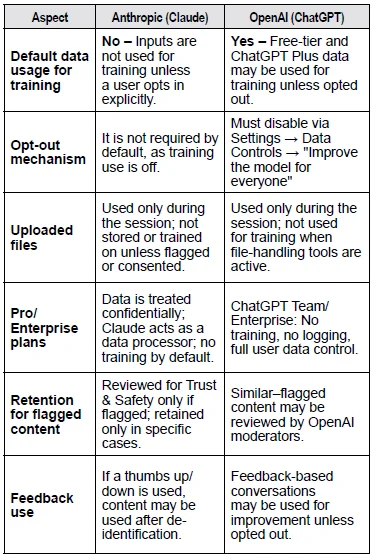
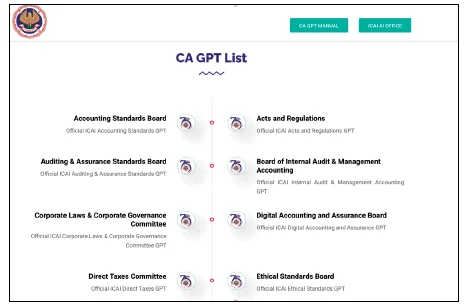
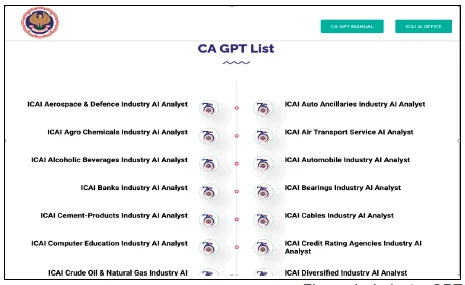
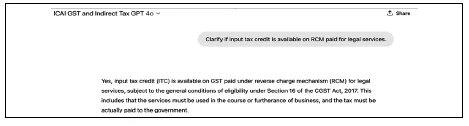
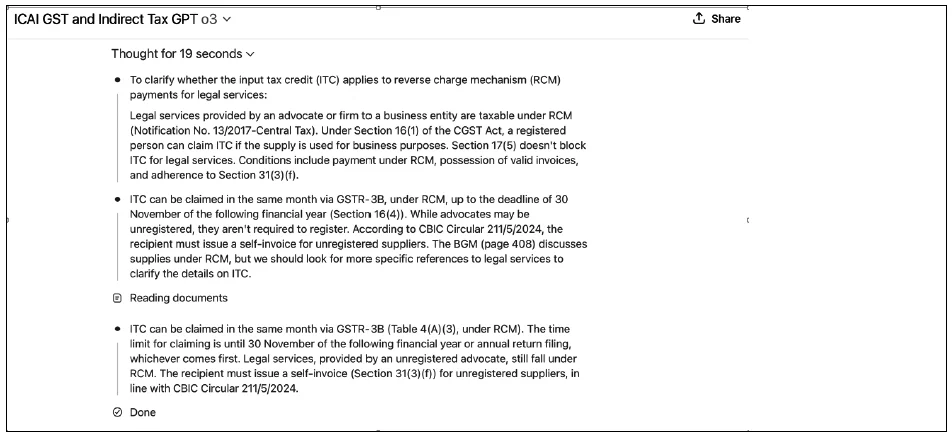
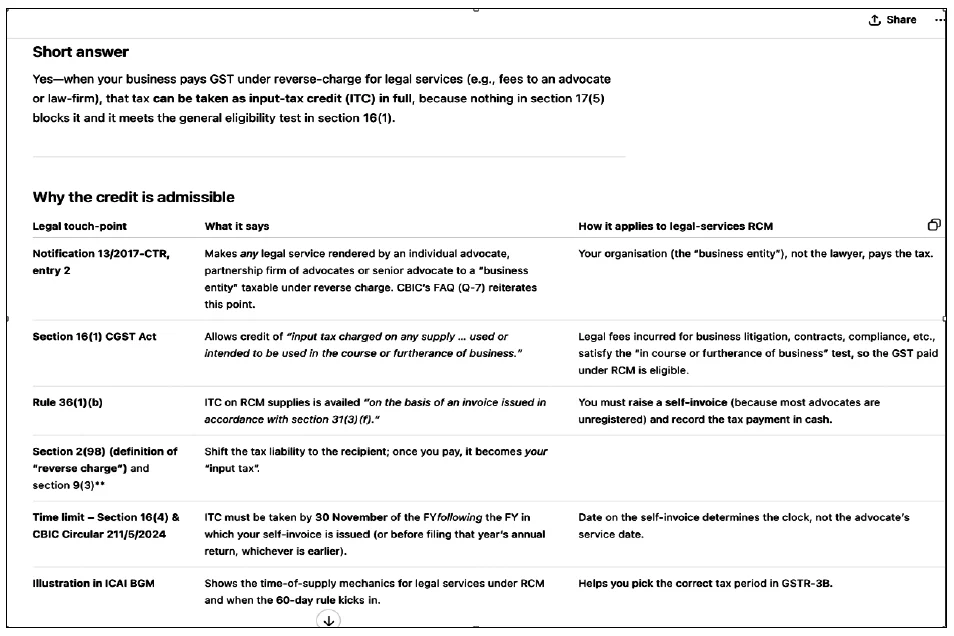
Recognising this shift, the Institute of Chartered Accountants of India (ICAI) has actively supported the integration of AI in accounting. From recommending platforms like Quadratic AI and EasyRecon to supporting Smart GST AI Summarizer, ICAI is paving the way for AI adoption in practice. A landmark development is the emergence of CA GPT a generative AI model tailored for the Indian Chartered Accountancy domain. It can interpret tax laws, generate audit documentation, and provide client-friendly summaries, showcasing the transformative potential of AI for professionals. At the same time, like any other AI tool, the CA GPT will also need to be used with moderation and care. Data privacy of our clients must be protected at all costs. It may also be appropriate and/or necessary to disclose to our client(s) that we have used an AI tool while rendering a particular service to that client.
Further, the ICAI is also conducting certificate courses on AI. It is only a matter of time before which other professional bodies too follow suit and start offering such courses to their members.
AI-POWERED ACCOUNTING PLATFORMS
Platforms like Zoho Books and TallyPrime are revolutionising financial management. They learn patterns, spot errors, and keep your ledgers neat.
Zoho Books, for example, offers powerful automation features:
- Automates recurring tasks such as expense entries, invoice generation, and payment reminders.
- Enables custom workflows to update, notify, or validate data, improving day-to-day operational efficiency.
- Enhances payment collection through auto-charging mechanisms and smart follow-ups.TallyPrime is evolving with smart capabilities:
- Automates routine processes like invoice generation, bank reconciliation, and compliance reporting.
- Supports integration with procurement systems and e-commerce platforms for seamless data flow.
- Offers built-in smart assistants and extensibility via TDL (Tally definition language) code generation, empowering businesses to tailor workflows efficiently.
One compelling example lies in the reimagining of data entry within TallyPrime. Traditional manual data input, especially from invoices, is being phased out in favour of AI-powered automation. Whether invoices are received digitally or as paper copies, intelligent systems can now extract, validate, and enter
data directly into Tally, eliminating human error and saving time.
There are other software that read data from bank statements and then provide ready-made entries that can be imported into Tally along with narrations. Edit facility is obviously available before the actual import of data into Tally. And the efficiency of this software improves as it gets more experience of how you carry out the edits. Thus, mundane and repetitive tasks like accounting are slowly but steadily being taken over by intuitive AI tools.
AI is also transforming compliance. Tools for e-invoicing and GST reconciliation now automate invoice validation, data matching, and error detection, minimising compliance risks and enhancing accuracy. These systems are not just making tax filing easier; they are fundamentally redefining the role of financial professionals by shifting their focus from data handling to strategic decision-making.
AI-DRIVEN ANALYTICS AND SaaS INNOVATIONS
Beyond automation, AI helps us not only to predict what might happen in the future but also to suggest the best actions to take.
These tools help businesses anticipate cash flow needs, detect fraud, and make proactive financial decisions. SaaS-based platforms like RazorpayX, Credgenics, and ClearTax are pushing the boundaries even further:
- RazorpayX offers integrations with Zoho Books and Tally, enabling seamless syncing of accounting data.
- ClearTax has launched AI-assisted tax filing tools that provide real-time insights and automate compliance.
- Credgenics leverages AI for credit risk analysis and intelligent collections, streamlining financial operations.
GOVERNMENT AND REGULATORY DEVELOPMENTS
The CBDT has embraced data analytics to enhance tax enforcement and compliance. A notable initiative includes a comprehensive review of approximately 40,000 taxpayers to identify discrepancies in Tax Deducted at Source (TDS) filings for the financial years 2022-23 and 2023-24. This effort involves a detailed 16-step strategy leveraging data analytics to pinpoint irregularities and ensure tax compliance.
The MCA’s rollout of MCA21 Version 3.0 marks a significant step towards leveraging AI for corporate compliance and fraud detection. This upgraded portal incorporates advanced features such as e-Adjudication, e-Consultation, and Compliance Management, all aimed at strengthening enforcement and promoting ease of doing business. By integrating AI and machine learning capabilities, MCA21 Version 3.0 enhances the ministry’s ability to detect anomalies, monitor compliance, and facilitate real-time data analysis.
THE FUTURE OF AI IN ACCOUNTING
AI-Powered Virtual CFOs are reshaping SME finance by offering intelligent financial planning, budgeting, cash flow optimisation, and real-time forecasting—services once exclusive to large firms with full-time teams. Integrated with platforms like Zoho Books and TallyPrime, they provide live dashboards, alerts, and compliance updates, helping Indian SMEs make informed decisions at a fraction of the traditional cost.
Building on this, AI and Blockchain-enabled Smart Contracts are transforming financial transactions and audits. These contracts self-execute terms, reduce errors and fraud, and, with AI, can learn from past data, detect anomalies, and adapt dynamically—streamlining compliance and taxation workflows.
Meanwhile, predictive and prescriptive analytics are enabling precise forecasting of cash flows, tax risks, and fraud while recommending strategic actions. This shift is moving accountants from record-keepers to real-time advisors.
Finally, AI-powered audit tools like MindBridge AI and Deloitte’s Argus are revolutionising risk detection, using machine learning to uncover anomalies and fraud, fundamentally changing how audits are conducted.
IMPLICATIONS FOR CHARTERED ACCOUNTANTS
As Artificial Intelligence (AI) continues to automate repetitive tasks such as data entry, reconciliations, and compliance checks, the role of Chartered Accountants (CAs) is undergoing a fundamental transformation. Traditional responsibilities are increasingly being handled by machines, compelling CAs to evolve from transactional number crunchers to strategic, tech-savvy professionals. Every traditional practice area of a CA is already and would be further impacted by the use of AI.
GST and compliances made easier
Whether it’s checking for ITC mismatches or sending reminders for upcoming filings, AI tools from platforms like ClearTax have become silent assistants for many mid-sized firms—even in smaller cities like Indore and Pune.
Audits are getting an upgrade
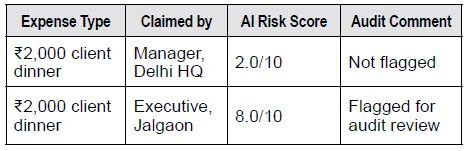
Instead of relying only on sampling, tools like MindBridge scans all the data, flagging unusual entries and helping us focus on where it really matters. It’s like having a microscope for your audit file.
Tax filing with a twist
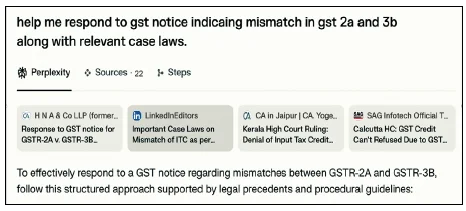
Some platforms now auto-read your Form 26AS, AIS, and bank statements—and even suggest what deductions might apply. And yes, some can draft replies to scrutiny notices based on past cases. Scary or smart? Maybe both.
Smarter client conversations
Firms are building chatbots trained on their own advice and old case files. These bots answer common queries so that the team can focus on complex, value-added work.
In these very interesting and challenging times, to remain relevant, CAs must upskill in emerging areas such as Python, data analytics, and visualisation tools like Power BI, while also developing a working knowledge of AI and machine learning concepts.
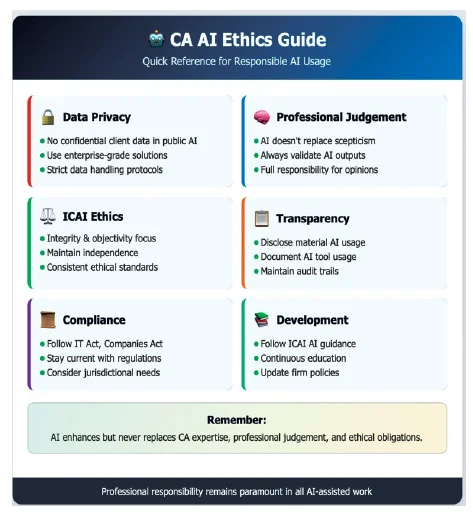
This technological shift brings with it a new set of ethical challenges, including concerns around data privacy, algorithmic bias, and accountability for decisions made by AI systems. As a result, CAs will not only need to navigate these complexities but also advise clients on the responsible use of AI. In this regard, readers may read up on the recent news item about recalling of an ITAT order because it was passed based on submissions made by the DR who relied on AI tools to come up with case laws that never existed. Anyone who relies on AI must take proper care to recheck the facts / figures and verify whether what the AI tool is suggesting is factually correct or not.
Moreover, the profession is seeing the rise of new hybrid roles such as AI implementation consultants, forensic auditors using machine learning, and cyber risk advisors that combine financial expertise with technological fluency. Client expectations are also changing, with a growing demand for real-time insights, predictive analytics, and strategic financial advice. In this evolving landscape, CAs must adopt a forward-thinking mindset, repositioning themselves as financial strategists and trusted advisors who can bridge the gap between finance and technology.
Rise of Strategic Roles
CAs are moving from being ‘compliance experts’ to ‘financial interpreters’—drawing insights, foreseeing risks, and helping clients navigate financial futures rather than just recording the past.
Faster Turnarounds
With AI-enabled data entry and verification, turnaround time is dropping. Clients now expect real-time insights, not month-end reconciliations.
Democratisation of Expertise
AI tools are empowering even solo practitioners in small towns to offer insights once limited to Big 4 firms.
Cultural Shift: How Indian CAs Are Responding
The adoption of AI is uneven—but growing.
- Gen Z Articles and Young Partners are embracing tools like ChatGPT, Notion AI, Python scripts, and Airtable automation to optimise their workflows.
- Senior Partners are cautiously optimistic. While some see it as an opportunity, others worry about quality control, liability, and client trust.
- Training and ICAI Curriculum need to evolve faster. AI literacy must now be as foundational as Ind AS.
Interestingly, the firms leading this revolution are those that build cross-functional teams—pairing accountants with data scientists or assigning articles to innovation pods.
FUTURE TRENDS: WHAT THE NEXT 5 YEARS MAY HOLD
The AI wave is not cresting—it is still rising. Here’s what the future might look like:
1. Real-Time AI-Powered Audits
Blockchains and integrated ERP-AI models could enable continuous auditing—where anomalies are flagged the moment they occur.
2. Client-facing AI Tax Assistants
Imagine a WhatsApp bot that helps a small trader plan taxes, track invoices, and even file returns—all trained by a CA firm.
3. Algorithm Assurance Services
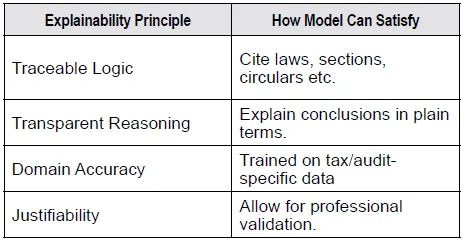
As businesses start relying on AI for decision-making, they will need CAs to audit the AI itself—ensuring it is fair, compliant, and explainable.
4. AI Co-pilots in Litigation & Representation
Drafting responses to show-cause notices or appeal memos with AI support will soon become standard.
5. Compliance-as-a-Service
Entire back offices for SMEs and start-ups may be run on AI-backed systems, with CAs providing periodic strategic oversight.
Ethical and Regulatory Considerations
This transformation must be accompanied by responsibility.
- Who is liable if AI makes a mistake?
- Should clients be informed when AI is used in their work?
- What regulatory framework is needed for AI audit tools?
As guardians of ethical practice, CAs must shape—not just follow—this debate. The ICAI should lead with a Code of Conduct for AI usage in the profession.
Conclusion
The AI revolution in Indian accounting is not a distant prospect; it is unfolding in real-time. While automation is changing the operational core of accounting, the real shift is strategic from compliance to insight, from recording history to predicting the future. CAs who embrace this shift and reinvent themselves will not just remain relevant they’ll lead.
AI is not the end of our profession. It is the rebirth of its most powerful version yet. This is not about man versus machine. It is about a man with a machine, serving better, faster, and with deeper insight.
Firms that embrace AI will not just survive—they will lead. CAs who upskill and reimagine their roles will not be replaced—they will redefine the profession.
And as we stand here, at this incredible intersection of tradition and transformation, we must ask ourselves:
“What kind of CA do I want to be by 2030?”
1 Assisted by Chaitanya Vora and Pranav Nargale, Articled Students