
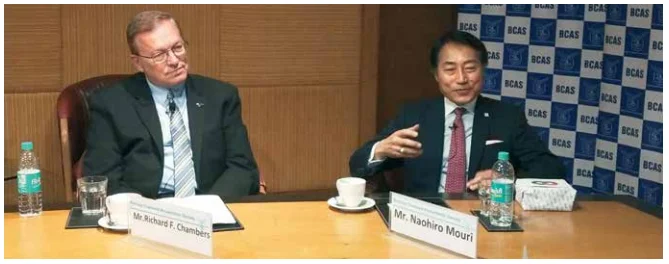
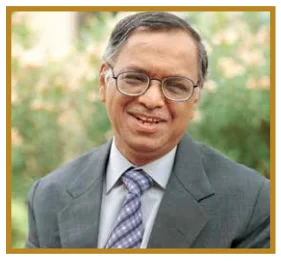
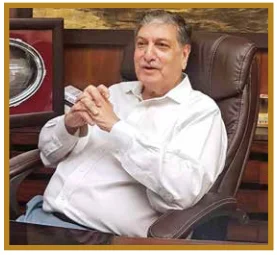






The 76th Annual General Meeting of the BCAS was held on Saturday, 5th July, 2025 at Garware Club House, Wankhede Stadium, D-Rd, Churchgate, Mumbai –400020.
The President, Mr. Anand Bathiya took the chair and called the meeting to order. All the business as per the agenda contained in the notice was conducted, including the adoption of accounts and appointment of auditors.
Mr. Anand Bathiya, announced the results of the election of the President, the Vice-President, two Honorary Secretaries, the Treasurer and eight members of the Managing Committee for the year 2025–26.
The following members were elected unopposed for the year 2025–26:
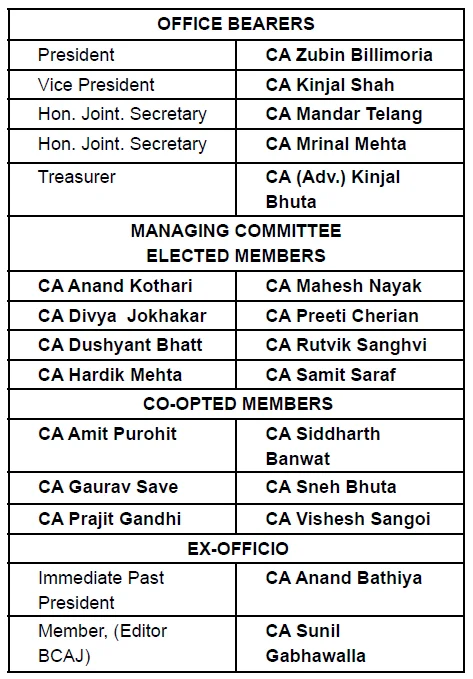
Dr CA Mayur Nayak, Editor of the BCAJ, announced the ‘Jal Erach Dastur Awards’ for the Best Article and Best Feature appearing in the BCA Journal during the year 2024–25. The ‘Best Article Award’ was awarded to Adv. Pankaj R. Toprani, for his article ‘Chamber Research by the Judges Post Conclusion of Hearing –Whether Justified?. The ‘Best Feature Award’ went to CA Chandrashekhar Vaze for ‘Namaskaar, Ethics and You” & “Light Elements‘. The Editor then announced the ‘S V Ghatalia Foundation Award’ for the ‘Best Article on Audit’. The award went to CA Anand Paurana for the article ‘Audit Trail Compliance in Accounting Software’, and CA Kishor M. Parikh & Ms. Divya A. Khaire for the article ‘Climate Change & Its Impact on Financial Statement’.
Before the conclusion of the AGM, members, including Past Presidents of the BCAS, were invited to share their views about the Society.
The July 2025 Special Issue of the BCA Journal on `Artificial Intelligence Its Impact on CA Profession’ was released by the Shri Tuhin Kanta Pandey, Chairperson SEBI.
At the end of the formal AGM proceedings, the 77th Founding Day Lecture was delivered to a packed auditorium. Members and attendees benefitted from the astute deliberation on `Corporate Governance, in letter and spirit – role and responsibility of professionals’ by Shri Tuhin Kanta Pandey, Chairperson, SEBI and `Navigating Tomorrow: How CAs can lead Financial Innovation and Sustainability’, by Shri Nithin Kamath, Founder & CEO at Zerodha.
The meeting formally concluded with CA (Adv.) Kinjal Bhuta thanking the speakers for sharing their visionary thoughts on a relevant topic with the attendees.
[The video of the lecture can be accessed on the BCAS YouTube Channel, and a Report on the Founding Day lecture is provided in the ‘Society News’ section of this journal.]
OUTGOING PRESIDENT’S SPEECH
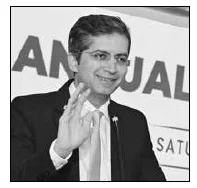
CA ANAND BATHIYA
Link: https://www.youtube.com/watch?v=qqffMirt-54
A very good evening once again. A year has just flown by.
Exactly a year ago, I stood before you and delivered my acceptance speech. And today, as I stand here again, it’s hard to believe how fast this year has gone by.
Before I say my thank yous, let me take a few moments to walk you through what we’ve done together this past year. Think of this as our Society’s report card — not mine alone, but a collective reflection of what we’ve achieved as a team.
Friends, As the outgoing President, I was amazed by how quickly the year has flown since delivering the acceptance speech on July 6, 2024. Before expressing gratitude, I felt strongly the importance of presenting our ‘report card’—a collective review of achievements—on behalf of the office bearers and managing committee.
Recalling the momentum carried forward from a remarkable 75th year, I shared how the 76th year offered an opportunity to think long-term rather than chase immediate results. On the very first day, a membership survey was distributed to over 10,500 members, receiving nearly 950 thoughtful responses. That survey became the guiding force, with comments discussed thoroughly across office-bearers, managing committee and journal committee meetings. Alongside this, we entered the second year of its five-year strategic plan, centering efforts around three shared themes: growth, embracing technology, and preserving core values and ethics—unifying members across ages, practice areas, and geographies.
From these pillars emerged a series of dynamic initiatives. With an intent to expand our Society’s reach, we partnered with a professional PR agency starting in November. Over six months, they achieved around 150 media placements—across print, digital, television and new-formats like podcasts—each chosen to reflect our ethos.
On social media, our Society transitioned from simply announcing events to actively engaging with its community. This resulted in crossing 70,000 followers, including 15,000 new subscribers over the year. Event registrations and participation improved significantly with many programs like the Residential Refresher Course, GST RRC, AIF, Redevelopment 360, CAMBA, CATHON, and even a film screening all closed registrations early amid overwhelming demand. One film event planned for 50 tickets received 250 registrations and required a cinema hall to accommodate attendees.
Growth was also geographic. The “Sherpa” initiative empowered volunteers across towns and cities, including hosting in-person events and townhalls at Hyderabad, Kolkata and Coimbatore, extending our Society’s footprint without building physical branches. Complementing this, our Society launched a digital flip-book journal via its new the BCAS Academy platform—service a wonderful new experience whilst eliminating courier wait times—and deployed a WhatsApp bot serving 2,300 subscribers with real-time event alerts and registration options.
On the professional development front, our Society’s YouTube channel now has 825 videos on YouTube, amassing over one million total views. Monetization began modestly but meaningfully, affirming the YouTube channel’s worth with a $21 cheque. Notably, three newly released videos entered YouTube’s all-time top 10 viewership list—a first in eight years.
Lecture meetings were a second area of impact. Twelve sessions were held, each drawing over 500 participants—an increase from the five-year average of 150—and collectively these lectures earned more than 30,000 YouTube views. Additional achievements included issuing 1,200 blockchain-verified certificates (shareable via LinkedIn), launching a monthly data-driven newsletter (‘Broadcast’) with tracking analytics, and debuting a podcast series.
In advocacy and networking, I spoke about the MOUs with IIM Mumbai for taxation research, NISM for capacity building, and Bombay Industries Association for industry engagement. The Society actively engaged with regulators—including SEBI, RBI, NFRA, CBDT, CBIC, and GST authorities—and presented its AIF white paper to SEBI leadership. Discussions with NITI Aayog have also commenced for joint tax policy research.
The Society’s youth and diversity ambitions took shape through ‘BCAS Nxt’, featuring student-led boot camps, mentoring and CAMBA events that drew record attendance. The newly established Shri P. N. Shah CA Students’ Endowment Fund offers financial support to CA students in need. Importantly, we surpassed 1,000 female CA members for the first time—affirming a strong commitment to ‘Nari Shakti’.
Under the CSR banner ‘Chartered’s for Change’, our Society supported MM High School near Umargaon by installing digital classrooms serving 2,300 students and planning a ₹2 crore playground upgradation. Early results are encouraging; six students from the school qualified for state-level competitions this year.
Membership trends also turned positive. Following drops of 818 members (2020–21), 352, and 24 in subsequent years, our Society’s membership rebounded with +400 members last year and +1,100 this year—reaching record-high numbers even after accounting for 450 non-renewals and deaths. This resurgence, I felt strongly, indicates both momentum and purpose driving the organization forward.
In closing, I express deep gratitude—to predecessors including Abhaybhai, Mihirbhai, and Chiragbhai—for laying the groundwork in website upgrades, hybrid events, ISO certifications, and the ReImagine initiatives. The managing committee, staff, families and professional colleagues were also honoured for their unwavering support.
INCOMING PRESIDENT’S SPEECH
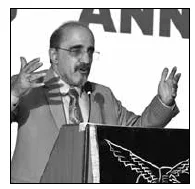
CA ZUBIN F. BILLIMORIA
Link: https://www.youtube.com/watch?v=ZrtvFUD6huE
INTRODUCTION
A very good evening to one and all; to outgoing president Anand, to my office bearer colleagues on the dais, the past presidents, guests from our sister organization CTC and others. I welcome the newly elected president of CTC Mr. Jayant Gokhale and the vice president Ms. Neha. Less than 24 hours back, I was there at their centenary, which was celebrated yesterday. So once again, congratulations to you Jayant Bhai and Neha. I also extend a warm welcome to the guests, other members and friends.
I stand before you today with mixed feelings. Feelings of gratitude, feelings of introspection. And I would also say with a lot of support from destiny and providence. So before I go further, Anand has already covered quite a lot of the things in a fair bit of detail. So I will try not to repeat some of these things. Some repetitions may be inevitable because as he said, we are in the middle of the five-year plan through these six pillars which he displayed. So I will also cover some of that.
BCAS IN PERSPECTIVE
Before proceeding further, I would like to set in perspective, two important events which mirror the history of BCAS – firstly, its history mirrors the history of India, in the sense that it is only two years younger, having been established in 1949, as against our country obtaining independence in 1947, and the other even closer connection is with the parent body of our profession, the ICAI. We are only six days younger. So we are in effect carrying forward a legacy which basically drives our country, as also our profession. Our country as we all know now is what our Prime Minister says is in its “Amritkal”. It’s in its journey towards the century, which is also where the BCAS is moving slowly and steadily towards its hundredth year.
At this stage, I cannot forget one thing which I always refer to and quote in various places. The people of the older generation would remember the eminent jurist Mr. Nani Palkiwala. When I was a young boy in my ninth standard, tenth standard and the early years of college, the late 70s and the early 80s, I used to attend his budget speech. One thing which he used to say and which has stuck in my mind is India is a young democracy. Democracies and countries take time to mature. And he had said that India’s glorious period will come between its 75th and 100th year. So which is what is happening. These were prophecies by a great man. So the same also applies to us as Anand also said, the best is yet to come.
BCAS started in a very small way in what I refer to as the Wednesday Club. This is because a group of chartered accountants started meeting on Wednesdays. They used to have their meetings and slowly it grew and is now bigger than even a banyan tree. It has weathered a lot of storms. It has seen changing times but the main source of continuity is the past presidents. This is because we here have a unique tradition that once a president gives up his office, it is not that he hangs up his shoes as far as BCAS is concerned. He is still very much involved through the chairmanship of some committees and also actively guiding and mentoring the now relatively young profile of the organization. So that is the strength. So thank you once again to all the past presidents and they all deserve a looud, round of applause.
Now I would like to reflect the journey of BCAS and the position which we are currently in through the eyes of a well-known author Stephen Covey through his book, “The Seven Habits of Highly Effective People”. It is a book which has had immense impact on me and I always refer to that. While this book talks about the seven habits of highly effective people, this is equally applicable even to organizations like us. Now what are these seven habits of highly effective people? Let us also see where we as BCAS stand and where we can go going forward.
Be proactive: We all know we have to be proactive and which is obvious as far as our organization is concerned. We have to keep on evolving, taking care of the various stakeholders. And as Anand mentioned, the membership survey is one such thing. There are various other projects through which we will see how proactive we are. Some of them were also dealt with earlier by Anand.
Setting clear goals and objectives: We have our vision and mission which you would have read in the annual report. On an ongoing basis, there are various goals which are there. Anand also talked about some of the goals. Accordingly, the goals and objectives always need to be set. The various projects which I will be dealing with, most of them a continuation of the five-year plan. Some of them have certain new initiatives which I have in mind.
Prioritizing our goals: We should not pay attention to what I always call major attention to minor details. We should alwaysfocus and look at the bigger picture. And this basically keeps on changing based on the expectations of our stakeholders.
Always think win-win: We saw a lot of collaborations which we are entering into and we will continue to do so. We have to adopt new formats. During COVID we also adapted into the new environment seamlessly. The digitization, technology and the other initiatives which Anand talked about is all ultimately leading to a win-win situation.
Seek first to understand and then be understood: This is the heart of it. Seek first to understand means we have our committees. They have a pulse of what are the needs of the professionals, what are the needs of the various stakeholders. So we try and deliberate and discuss on those. And then be understood. The understanding is through the various programs which we curate in different formats, through the publications which we come out with and through the representations which we make to the various authorities. They are all in turn tuned with the needs, whether it is to NAFRA on the SA-600, the budget present representation which we make every year. These are all based on needs which we try to understand and then be understood by the people who matter.
Synergize:This comes through basically again innovation and adapting to newer formats.
Sharpen the Saw: And finally, the most important is what I call sharpen the saw. As we all know, Charles Darwin always says that the strongest are not the people who are the most intelligent but the ones who keep on constantly changing. We have to constantly sharpen the saw. It is only then that we can get better and better and move towards not only the hundredth year but way- way beyond.
Finally, I am confident that BCAS is well positioned to continue to function in an effective way keeping in mind all these habits.
MY JOURNEY AT BCAS
Now coming to my journey at BCAS. My journey at BCAS started sometime in the year 1999 when I was working with Deloitte and S.B. Billimoria at that time. When my partner Mr. Nalin Shah, who I am very happy to state that he is here today, asked me and a couple of other people who were promoted as senior managers along with me; one of my other colleagues Kalpesh Mehta is also here. He just asked us that you become a member of BCAS and there was a US gap RRC which was at the Taj Residency Nasik. So I attended that RRC. I think Himanshu Bhai Krishnadwala was there in that RRC. So that is how my journey in BCAS started. For several years thereafter, the firm used to pay the membership fees. For the next few years I didn’t really contribute anything substantial or anything specific. Only maybe sometime in 2010 Mr. Shah asked me to meet Sanjeev Pandit who was the editor of the journal at that time whether an article or series of articles on the auditing standards could be written. So I remember I went and met Sanjeev at his office at that time it was somewhere near Malakshmi. So that is the second connection which I had with BCAS through the journal. I did contribute occasionally some other articles. But my real active involvement came through when I quit Deloitte in 2015 which was also a surprise to many people. And that is when my real journey with the BCAS began.
First I was part of a team which had to compile a publication on NBFCs for which Mr. Nalin Shah recommended my name to Abhay who was the convenor of the Accounting and Auditing Committee at that time. Sir, I would like to thank you very much for all that you have done for me. You have truly been my guide and mentor over the years and I am what I am today professionally is all because of you. Thank you very much sir. After that it was a steady journey. I became part of the journal committee when Raman was there, accounting and auditing committee, the corporate laws committee and finally became part of the managing committee and then moved up. So that is how my journey is. It is I would say a very scattered journey. I must admit here that I have gone through the grind like some of my other office bearer colleagues have. But that grind I have gone through it maybe in Deloitte and in S.B. Billimoria and that experience I hope will stand me in good stead in my journey and role as a president.
MY TEAM
Now coming to my team. First of all, as Anand just said, it is a relatively young team which could have even been younger if I wouldn’t have been there. Because the average age of the office bearers this year is 44 years as against 43 years in the previous year. And that is because the new office bearer Mrinal is slightly older than the new office bearer who was inducted last year Kinjal Bhuta. So that has increased by one year. But at the same time Kinjal being here is a very important step towards BCS being more diverse. And I will talk about that a little later.
The average age of the managing committee members, remains at a fairly youthful 42 years. A total of 28 new core group members have been added this year. As you know core group are people who are members of committees. During the year we have inducted two new co-opted members into the managing committee – Amit Purohit and Gaurav Save.
Another thing which I would like to mention specifically is we earlier had 10 committees which included the Internal Audit Committee. Now because of various reasons that committee has been subsumed into the Accounting and Auditing Committee under the chairmanship of Mr. Abhay Mehta and with him there is a new co-chairperson Samit Saraf who will be taking care of the internal audit part in the Committee. At this stage I would like to acknowledge and thank the role played by Mr. Uday Sathaye and Mr. Rajesh Muni who has been the chairmen of the internal audit committee along with Ms. Nandita Parikh who was the co-chairperson. Another thing which I would also like to mention is that Samit is the second non-past president who has been appointed as the co-chairman of a technical committee. This tradition started last year when Rutvik Sanghvi became the co-chairman of the international taxation committee. So this is also again one instance of a change moving with the times. Maybe 4 years back if that topic would have been raised it would have probably not been favourably looked upon. But now this is a reality and maybe tomorrow we don’t know. A day may not be far off, even if the chairmanship of some of the committees could go on to a person other than a past president. So this is all again in the spirit of things that we are constantly evolving. I am not putting words in anybody’s mouth nor am I saying that these things must happen! But anything could be possible. So all in all I have a mixed team. Young and vibrant with some degree of experience and of course all of you are always there to support me with your guidance. Because the way I look at my role as a leader is that I am primarily a facilitator. Because a leader can only be as good as his team. The other thing which I profess to practice as a leader and as the president is to be a good listener. Finally, the third quality which I wish to profess as a leader is the concept of servant leadership which I came across in a book by CA Pawan Agarwal – a life member who is present today and he is also the First Vice District Governor of Lions Club International. As the name suggests, this is a concept which occasionally may require you to roll up your sleeves and get into the grind. But office bearers please don’t take it for granted nor the managing committee members and others don’t expect me to do it every time! Because most of the time I will get the work done from all of you; only sometimes when there is a crisis situation I will probably happy to roll up my sleeves without any ego. So this in short will be my leadership style.
KEY PROJECTS
The next coming to the five year plan which was displayed earlier along with the following key projects, many of which have already been touched upon by Anand so I won’t go into detail. I will focus on just the main areas within each of these:
- Logistical and Administrative Excellence:
An area which I particularly want to lay more emphasis on is logistical and administrative experience. As Anand mentioned we are now an ISO compliant organization, which is something which was not forced upon us. It is something which we voluntarily took up three years back and it has now stabilized. Lot of SOPs have been formulated. So this helps in basically making the organization process agnostic rather than person agnostic. The endeavor would be to regularly review all the SOPs to safeguard our ISO accreditation. That is an ongoing process and now as Anand said we have a new Office Manager Mr. Sachin Kulkarni also since the last one year. He has been supporting us on that. A lot of employee and HR initiatives also have been started and will be continuing like raining of the staff. The streamlining of the functioning of the various committees will also be happening like regular meetings, regular reporting and so on.
- Operation Bharat (Part of the “REACH” Pillar)
Here, the focus would be on member engagements across India i.e. Bharat.
Some of the initiatives in this regard which we are evaluating are:
• Widen and formalize the Sherpa outreach.
• Focussed and formalized calendar for townhall meetings with emphasis on regular engagement, orientation and inductions.
• Have focused physical / hybrid meetings both short and long duration through Sherpas with appropriate level of support from HQ striking a balance between technical / knowledge dissemination and networking. Focus to get non members in and around the respective locations.
• Increased physical presence in various forms, through chapters / other appropriate forms of physical presence, local collaborations, selling of publications, specific and focused physical events etc.
- Membership Hooks (Part of the “REACH” and “YUVA SHAKTI” Pillars)
Some of the initiatives in this regard which we are evaluating are:
• Each committee to have atleast one members only event which will act as a natural catalyst towards enhancing our membership.
• The benefits of corporate membership to be extended to LLPs.
• Launching a separate class of e journal members as part of the BCAS Academy platform.
• Focussed efforts towards students study circle meetings by individual committees.
• To convert participants under the mentor – mentee programme and CA felicitation programs as members through a focused outreach and follow up.
• Possible collaborations with coaching classes for attracting students to become future members.
- Operation Nari Shakti (MOUNT VENUS 2.5K) (Part of the “REACH” Pillar
To me personally this is the most important initiative on which I intend to lay the maximum focus during my tenure. Our women membership has only recently crossed 1000. As of 30th June, we had 1019 members. Whilst it is improving, it is still way below being less than 10%. We need to move with the times to embrace greater diversity and inclusivity. My goal is to increase it to at least 2500 members, if not next year, at least in two years. Ideally, I would like it to happen in the next year, but at least I am giving still one more year to make it 2500!
Some of the initiatives in this regard which we are evaluating are:
• Separate sub-committee / sub group to be constituted under the SMPR Ccommittee
• Focus on targeting more women members through social media groups and channels
• Programmes- technical and motivational targeted at women members / participants.
• Career counselling programmes post motherhood including flexi work / WFH options and placement assistance.
- Technology and Digital Initiatives (Part of “PROFESSIONAL DEVELOPMENT”, “NETWORKING” AND “CHARTEREDS’ FOR CHANGE” Pillars)
This is by far the most sweeping and widespread project since it touches the maximum number of pillars. Any organization without technology and digitalization will be like a fish without water.
Some of the initiatives in this regard which we are evaluating are:
• Setting up in house audio visual and recording capabilities (BCAS Studio)
• Have regular pipeline of podcasts (“are you aware series ) by each of the Committtees
• Digitalising member communication to a greater level as part of BCAS BroadCast
• Building AI and other technological capabilities across various domain areas through joint programmes between the Technology Initiatives Committee and the respective technical committees (audit, tax, corporate laws etc.)
• Specific initiatives on technological learning targeted at senior citizens and small and marginalised practioners, both in industry and practice.
- BCS Academy (Part of “PROFESSIONAL DEVELOPMENT” Pillar)
This is a path breaking initiative about which much has been said earlier. It will serve as a self based learning infrastructure which we will be launching later today.
Some of the initiatives in this regard which we are evaluating are:
• Increasing the repository of digital assets.
• Launching / offering specifically curated and professionally relevant differentiated programs / certification course by each committee, both recurring and one time / specific with the ultimate aim of issuing digital badge and certifications for sharing by participants on their public social profiles and hence serves as a win-win, both for the society and the participant.
• My vision is that these BCAS certifications in the medium to long term should be able to enable participants to enhance their professional standing by being recognised by various stakeholders and be sought after badges/ certifications
• Reviving E clinics /expert chats (e.g. tax gurukul, Accounting and Auditing Clinics etc.) on a virtual basis.
- Research and Industry Collaborations (Part of “PROFESSIONAL DEVELOPMENT”, “ADVOCACY” AND “NETWORKING” Pillars)
Some of the initiatives in this regard which we are evaluating are:
• To explore more opportunities for collaboration with professional, trade and industry associations and academic bodies, both in India and abroad (each committee should explore more such opportunities in addition to the existing ones).
• Think tank and research initiatives – both individually and in collaboration with appropriate bodies on contemporary topics and policy level initiatives where some work has already started.
• Engagement with Regulatory and Government bodies on the above matters where considerable progress has happened and we should be able to shortly announce certain things in respect thereon.
• Timely advocacy / representations on contemporary policy and regulatory matters.
- Public Relations and Marketing (Part of “NETWORKING” PILLAR)
The idea behind this initiative is to seek professional help to leverage on our reach and achievements.
Some of the initiatives in this regard which we are evaluating are:
• Greater engagement with the Social Media agency already appointed by us for focussed and timely social media presence / engagement on events, advocacy and technical initiatives
• Seeking regular engagement with the media / press on areas of contemporary relevance through a media management agency.
- Leveraging the Library (Part of “PROFESSIONAL DEVELOPMENT” Pillar)
Whilst we have been having a library I feel over the years it has been neglected which is partly due to increased reliance on e books. However, I feel there is scope to leverage its presence and revive it once again for people who still prefer the traditional reading.
Some of the initiatives in this regard which we are evaluating are:
• Detailed and updated catalogue is ready
• Lending books for reading to members subject to certain conditions
• Subscribing to various relevant and contemporary publications
• Reviving the reading habit by organizing “Reading Clubs” on a periodic basis.
- Professional Social Responsibility (Part of “CHARTEREDS’ FOR CHANGE” Pillar)
This hinges on the premise that we are not always focussing on learning but are looking a holistic social development not only for our members but for other professionals and society in general.
Some of the initiatives in this regard which we are evaluating are:
• Deeper collaboration and engagement with BCAS Foundation- arranging a fund raising drive, clear policy on the level of corpus etc..
• Organising picnics, sporting events, family day etc. to enforce a work life balance and quality engagement.
• Conceptualising programmes and events resulting in social impact, financial literacy workshops for students, senior citizens, and marginalized sections and other similar initiatives with the aim of bringing about sustainable smiles.
CONCLUSION AND ACKNOWLEDGEMENTS
To conclude, I would like to acknowledge the presence of my family members:
My wife Farzana, my daughter Farah and my father-in-law, Mr. Minoo Bilimoria, who incidentally is also a life member of the BCAS. He is 93 years old, still going strong, touchwood! I thank them for their support and encouragement in my journey so far. I also take this opportunity to remember my late parents, who would have been very happy to see me here today and I seek their blessings!
Would also like to acknowledge my other guests from all the organizations where I am a trustee or a director and some of my personal friends as well as ex colleagues from Deloitte.
So thank you all for being here.
So with this, I accept the position of the President of the Bombay Chartered Accountants’ Society with all humility and bow before all of you with respect. Thank you very much!
