Subscribe to the Bombay Chartered Accountant Journal Subscribe Now!

Forensic Audit: Adapting to Changing Environment

Expectations from Forensic
Auditors have sky rocketed after the revelation of many large value scandals,
which have rocked corporate India in the last decade. The latest one relating
to the LOU scam has crossed over Rs 11,000 crores! Not only the affected banks,
enforcement agencies, and the regulatory bodies, but even the hitherto
unaffected banks and even blue chip companies have started doing a lot of deep
diving exercises to ascertain whether they have been abused in any way. Thus,
experts in forensic accounting services are being sought out to perform this
massive task which is unprecedented in terms of size and scale.


In this backdrop, the
challenges to forensic auditors are huge. Perpetrators of financial crimes and
fraud have evolved with stronger capabilities and are armed with technology to
launch lethal attacks. This is further compounded by the growing complexities
in business operations. The nature of the business transactionssometimes are so
technical that they are not easy to comprehend for even technically qualified
experts, and to do a thorough forensic audit in such circumstances needs a huge
amount of patience and perseverance apart from the expertise. Therefore, to do
a good forensic audit in the days to come, forensic auditors will need to
adapt. In the theory of evolution, it is believed that the species which
survives the longest is not the one which is the strongest, nor that which is
the most intelligent, but that which is able to
adapt
to the changing environment. Forensic auditors need to do exactly
that. They will have to adapt to the environment which poses such new
challenges.


The process of adapting
will be greatly facilitated if forensic auditors bring in creativity and
imaginative thinking. The following suggestions may facilitate a forensic auditor
to adapt better and perhaps bring in more penetrative results:


– Firstly, remove complete
reliance on standard checklists by customising them to the objectives of the
given situation. This can be better understood with a case study. In an
investigation assignment in a life insurance company, the forensic auditor had
to investigate and report on suspicious death claims based on data and
documents given to him for the last one year. He compiled a checklist, which
included selection of a test sample of transactions and applying routine
processes of vouching and verification of supporting claim documents like the
death certificates, crematorium receipts, doctors cause of death reports,
application form details, etc. The sample selection was done by using one of
the standard sampling methods like statistical sampling. The auditor’s entire
focus was on completing the work as per his checklist on a statistical sample,
and submitting his report. This procedure of applying a statistical sample and
then vouching and verifications of documents is certainly important, possibly
to gain confidence on the controls and procedures, but maynot be sufficient to
detect the possibility of fraud. One suggestion is to then reduce complete
reliance on standard sampling techniques and apply other kinds of focussed and
adapted sampling techniques additionally. The forensic auditor in this case
tried this approach. Since he had the full data dump of all the death claims on
an electronic spreadsheet, he started thinking about different ways of
extracting data samples which could possibly throw up any clues of fraud. That
was the key to his success. When one starts looking beyond the routine and
tries to visualise various possible ways of exposing a crook, amazing solutions
can come from such a thought process. In fact, it is said that a good
investigator is one who can think like a fraudster. The forensic auditor, in
this case, saw that in the data of death claims, there were many data fields
that were not addressed or checked by his audit check list. He realised that
fraudsters also realise what auditors check and what they generally don’t look
at. The forensic auditor spotted two data fields which caught his eye. Date of
birth of the deceased and date of birth of the beneficiary or the claimant.
These were not within the focus of the forensic audit at all. The forensic
auditor then decided to extract a new sample of data by filtering out those
claims paid where the date of birth of the
deceased and the date of birth of the claimant were the same.
The
forensic auditor expected such instances to be nil or very miniscule. Except in
the rare situations where the claimantor beneficiary was a twin sibling of the
deceased, the date of birth of the beneficiary would be unlikely to be exactly
the same as that of the deceased. So out of 13,000 line items, he expected to
find no more than 4-5 such transactions where the date of birth of the deceased
and the beneficiary would be exactly the same. The data was filtered to those transactions
where the dates of birth were matching and to his surprise he found 82
transactions where the date of birth matched exactly for the deceased and the
beneficiary. Now the forensic auditor had a new direction of investigation and
he started examining them in greater detail. He made inquiries as regards which
branch offices had originated and paid these claims, who were the claims’
approving officers, which period during the year were these claims paid and
even how fast they were paid. He then grouped the sample data appropriately
branch wise, officer wise. The results were spectacular. 77 of the 82 claims
with the common dates of birth came from only one specific branch in North
Mumbai. A claims officer Mr. M. Thanvir was the common authorising claims
officer for all these claims. These claims were paid off 50 % faster (in number
of days after lodgement). Now the original checklist for document examination
was again used to vouch and verify in detail the claims of these 77 deaths. As
expected, solid evidence of falsified death certificates and other documents
was found and a major insurance fraud in the North Mumbai branch was exposed!
Thus customising the sampling technique, and applying appropriate additional
checks based on the revelations, did the trick. In other words adapting and
innovating was the key to the forensic auditor’s success.


– Secondly, the forensic
auditor must constantly do research and look for newer solutions and techniques
to address fraud in different situations. If the perpetrators of fraud can take
advantage of technology, so can the forensic auditors. A regular visit to
websites relating to latest fraud tools, techniques and approaches in fraud
investigations can enable a forensic auditor to meet the challenges of business
complexities and possibly gain from experiences of others. In one such
investigation assignment when a forensic auditor was stuck with limited
findings, he had come to a stage where he had to submit a report and close the
matter inconclusively stating there was lack of evidence. He had really worked
hard and found that all the documentary checks that he had applied were not
yielding any significant results, but there were plenty of warning bells and
other indicators which seemed to suggest that fraud existed. But he had no hard
core evidence. Of the many matters which were not resolved, he had one major
doubt in his mind that the credit card number that had been furnished as
evidence for payment was false, but he had no way to verify its correctness. He
did not give up hope and his patience and perseverance paid off. He surfed
through the internet looking for solutions for credit card frauds and with a
little effort he came across an algorithm called the Luhn’s algorithm. This
algorithm was able to ascertain whether a credit card number was a valid credit
card number. However, the algorithm in the form available on the internet was
difficult to use, so painstakingly the auditor prepared an electronic
spreadsheet incorporating the functions of algorithm and he was able to use it
to prove that the credit card number given as evidence of payment for an
expense was an invalid number. This forensic auditor was thus able to achieve
the objective only by doing research and adapting the forensic audit to the
needs of the situation.


While these two suggestions
stated above are possible approaches for solutions, there are other measures
too which not only forensic auditors, but all professionals should take. One,
do not allow ‘a stale procedures syndrome’ to set in. This stale procedures
syndrome is nothing but a term for ‘getting used to’, or ‘taking for granted’.
In our every day work we often get complacent when we do the same or similar
tasks again and again. There was a very interesting fraud investigation case
where an auditor was auditing the financial statements of a college for 2
decades. He was doing a reasonably good audit and generally the audit reports
issued were clean and unqualified. Unfortunately, he died and a new auditor was
appointed. The new auditor brought a fresh new wave of thought processes and he
started examining data with a completely new checklist, which was compiled
after a thorough understanding and evaluation of the activities and operations
of the college. One of the items in the financial statements which caught his
eye was the huge balance ofstudents deposits lying with the college. These were
amounts deposited by the students at the time of admission such as library
deposit, caution money deposit, etc. These deposits could be collected
by the students only when they left the college, which was usually about 4
years after their date of admission. Most students would forget to collect
these deposits for various reasons and consequently over a period of time the
college balance sheet disclosed a huge amount of unpaid students deposits.  The earlier auditor never gave much attention
to this deposit amount since this was not a part of the college’s revenue and
it was merely an unclaimed liability payable only when requested for by the
students. Nevertheless, the new auditor painstakingly studied the deposit
collection and refund procedure and performed some checks on them as a part of
his new audit checklist. While he was examining the refund procedure, something
unusual caught his eye. The ledger account of deposit repayments showed
repayments for each date person wise, amount wise strangely in an
alphabetical order.
To his surprise, he found that almost throughout the
entire year (barring some random exceptions) deposits were repaid to students
in an alphabetical order of their names.


This was not only queer but
also absurd. It was unthinkable that students would come to claim their deposit
refund in an alphabetical order. The new auditor called a few of the students
who had claimed their refund. All of them confirmed his suspicions that they
had not made any request for, nor had they got any refund. It was thus revealed
that the repayments were actually effected on forged refund applications
prepared and collected by the cashier himself. The cashier had adroitly taken
great care to ensure the forged application forms were prepared with all the
necessary supporting details and were attached to the cash payment vouchers,
but he made one fatal mistake. He got the names of students from the attendance
registers of the college, which were always in an alphabetical order.The
previous auditor also would have seen this ledger, but he had been auditing for
over two decades and his mind became ‘used to’ or `stale’ and he did not spot
this absurdity. The central lesson in this for all professionals is to combat
setting in of such a stale procedures syndrome by having more than a different
person to review the work, so as to bring in freshness and a greater alertness
to spot any warning bells of fraud.


Thus, in the foreseeable
future, forensic audits can increase their chances of success if they try to
innovate and adapt. The future holds opportunities for even the middle level
and smaller sized professional firms who want to do this kind of forensic
auditing work. Presently, that may appear to be difficult, but even smaller
firms can and will get a share of the pie. For this purpose, they will have to
adapt too by undergoing training and doing intense research. This will be the
fundamental need. Once the capability has been achieved, these firms can also
get empanelled with Police, Banks, Income Tax, PSUs etc. Very soon the
need will be so intense that all companies and potential clients may not wish
to go only to giant firms but also to small specialist firms where they would
have the benefits of both economical budgets and matching quality.
 

Accountants & Auditors: Ethics And Morality – A Fast Developing Story

Last week I met a few
friends from my accounting fraternity – and the discussions hovered around a
rather difficult recent phenomenon: Whether the audit-clients are becoming more
unethical nowadays? Or is it that the accounting community carrying out audits,
raising themselves from slumber and becoming stricter?


Just think of the scenario:
It is reported that during the five-month period January to May 2018, 32 firms
have resigned as auditors midterm from companies, compared to 36 auditor
resignations in the whole of 2017-18 and 18 in 2016-17. The numbers in earlier
years were all significantly lower. Fearing probable repercussions from
regulatory authorities on corporate governance standards, more auditing firms
are dropping their assignments like hot potatoes.


Deloitte resigned as
auditor of Manpasand Beverages, the producer of MangoSip – one of the largest
mango-drinks in India, after the auditee-company reportedly failed to share key
data. Price Waterhouse (PwC) quit as auditor for construction and infrastructure
company Atlanta Limited. Same happened at Vakrangee Ltd. where PwC quit, citing
concerns to the corporate affairs ministry about the books of accounts, mainly
related to its bullion and jewellery business.


Apart from the
resignations, the audit of many big names have come under stricter ‘audit
opinions’, with auditors flagging off some sticky issues. For instance, at Jet
Airways, L&T Shipbuilding and Reliance Naval and Engineering, auditors have
raised doubts whether these companies can continue as a “going
concern”.


And these are all bad news!


It may be noted that each
auditee, where auditor resignations have taken place, has since then denied any
irregularities, though their clarifications do not exactly answer the doubts
raised by the concerned audit firms.


The key
question is: have the environment changed and made auditors behave more
responsibly?
Prima facie, the exodus of auditors
seem to be motivated by the fear of being pulled up by the market-regulator or
worse the company getting caught with their hands stuck in the hanky-panky
bowl.


Do
Corporates Cheat?

The vexed
question is: do businesses swindle? And if they do, then the auditors have a
lot to ponder, plan and perform.


A corporation is an
artificial legal entity – it can buy, sell, borrow, lend and produce – but can
it deceive and deceit? And if a company does cheat, then who should be held
responsible? Is it not the people within who cheat? If the employees of a
company cheat, can the responsibilities of the corporation be far behind?


Be it by choice or
compulsion, the corporate world has not been immune to cheating. Businesses are
a microcosm of our society and are made up of people like you and me. They have
the same strengths and weaknesses as
the people it consists of. Greed has been a major influencer for human
behaviour since long. No wonder, it has been said that many in the corporate
world have the feet of clay.


Auditors will therefore
have to be aware that cheating can and will take place. Some will try to cut
the corners, but many will not. It is the task of the auditors to sift through
the basket of eggs to find the ones which are either rotten or are in the
course of becoming decomposed.


Who is
responsible?

When a corporation commits
fraud, who should be held responsible – the management, the shareholders, the
finance managers or the auditors?


Time and again companies
have been penalised, taken to task and admonished for wrong doing. But the top
management, who would have masterminded the unlawful activity, generally have
got away rather lightly, if not scot-free. Take the example of Jeffrey
Skilling, the ex-CEO of Enron Corporation, who spearheaded one of the worst
accounting frauds in history and destroyed the company and trampled on the
lifelines of thousands of employees. But Skilling got away with a relatively
light punishment. Initially jailed in 2006 for 24 years, but his imprisonment
term was reduced by 10 years, only to walk away soon, a free man by 2019.


Are shareholders, the
ultimate owners of a joint-stock company, responsible for frauds if any? Let us
take a peep into a corporation, by lifting its corporate-veil. While in
theory the shareholders own a company, but in reality it is the directors and
the top management who run a corporation.
They decide everything – how much
dividend to declare, how much bonus shares to issue and how much stock options
to be allotted to themselves. Shareholders in general, hardly possess the
ability or the wherewithal to influence corporate’s behavior – negatively or
otherwise, unless of course it’s the controlling shareholders.


Now comes the finance team,
the accountants and most importantly the CFO. Are they responsible? The CFO and
her team, have a lot of responsibility on good governance. When it comes to
doctoring the books of accounts, they would generally have the primary
responsibility. However, there could be frauds committed ‘on’ the corporation,
of which the finance team may not be aware. But for that purpose, a robust
internal control process with concomitant internal audit system needs to be put
into place.


According to the Companies
Act 2013, the introduction of Internal Financial Control (IFC) has ordained the
finance team to ensure orderly and efficient conduct of business, including
adherence to company policies, safeguarding of its assets, prevention and
detection of frauds and errors, accuracy and completeness of accounting records
and timely preparation of reliable financial information. These are all onerous
tasks. In addition, listed companies need to submit a certification from both
the CEO and CFO under Regulation 33 of the SEBI Listing Obligations &
Disclosure Requirements (LODR), 2015 has given an onerous task to the two top
guys. They will need to not only confirm that to their best of knowledge the
financial statements do not contain any materially untrue statements, no
transactions are fraudulent and illegal and they have communicated to the
auditors and the Audit Committee of instances of any significant frauds they
have been aware of.  


There is another important
aspect the accounting team needs to consider. Most of the CFO team members
would be employees of an organisation. If the employer desires to carry out
hanky-panky, it is well neigh impossible for most employee-accountants to
negate the ulterior intent of their bosses. And this is the greatest conundrum
which faces most of the accounting community. What do you do when you know
things are not above board? Should you protest? Can you walk out or should you join
the bandwagon to save your skin with the job? Most literature would suggest
that ethics is the king, and being ethical is any accountants’ dharma. But when
the employer pulls the strings of poor governance, little in my view, are the
choices which can be made by the employees.


Now let us shift our
attention to the auditors. What is the level of their responsibility? Can they
take the sanctuary of the accounting reports and statements being ‘true and
fair’, and do not guarantee its complete ‘accuracy’? The primary responsibility
for prevention and detection of fraud lies with the management team. An auditor
do not guarantee that all material misstatements shall be detected. Auditors
opinion on the financial statements is based on the concept of obtaining
reasonable assurance from the documents, records and management team.  In addition, if an auditor finds during the
course of audit that fraud has been committed by the company or its employees,
it must be reported immediately.


Let us look at the role of
the Auditors in some more detail.


Auditors
and Auditees

Auditors are the eyes and
ears of the shareholders and their boards. Their financial statements are
relied on by the outside world to take a view on a company’s state of affairs.
Auditors verify whether accounting information and reports have been prepared
appropriately (in fact, it should be prepared accurately subject to accounting
judgements wherever applicable). Auditors are looked upon as protectors of the
interest of the shareholders, creditors and the governments.


However, the trust reposed
on the auditors are sometimes belied and some of them miss out in doing their
duties fairly. And this the challenge the accounting fraternity is currently
fighting against.


Many a times, the auditors
fail to acknowledge that they have the responsibility of detecting impending
financial disaster in a corporation and highlight on ongoing fraud. Time and
again auditors tend to wash their hands off on the plea that they were led up
the garden path by the management, and they believed in what they were told and
showed. This basic tenet may get challenged sooner than later, not only by
public pressure but also by the accounting oversight boards set up by the
various Governments.


It is a fact that some
auditees would try to get a ‘better than actual’ picture certified. Not all
have this tendency but many have. And this is where the ethical standards of
auditors get tested. What does an auditor do when audit fees are at stake? A very
vexed question indeed, which the auditor and accounting community have been
grappling since time immemorial.


Rap on
the knuckles

Prime Minister Narendra
Modi gave Chartered Accountancy community a big jolt through his speech on
Chartered Accountants’ Day on July 1, 2017. The speech powerfully suggested at
CAs’ involvement in money-laundering and tax evasion. He also highlighted the
ICAI’s apparent poor record of disciplining its members. Used to being lauded
for its efforts in “nation-building”, the CA community was stunned by the Prime
Minister’s candor and the threat of severe action against errant CAs. This was
a clarion call to get the CA community on board with ethical practice.


Then came the unfortunate
Nirav Modi scandal at PNB. The Rs. 14,000-crore bank fraud perpetrated that
surfaced in February 2018 has raised fresh questions about the effectiveness of
auditing in banks. The public outcry gained ground when it came to the fore
that Public sector banks (PSBs) have a variety of audits done by CAs including
statutory, branch, concurrent, and stock audit. This development did not augur
well for the accounting fraternity. Unfortunately, the rising non-performing
assets of banks have also raised questions about the auditors’ failure to
review asset quality carefully and insist on provisions for bad loans.


In a significant move, the
Central Government in March 2018 approved setting up of the independent
regulator National Financial Reporting Authority (NFRA) that will have sweeping
powers to act against erring auditors and auditing firms. The PNB fraud became
the trigger point for this development. The CA community could not convince the
powers that be, especially the Ministry of Corporate Affairs, that the ICAI was
doing a good job in taking to task the recalcitrant auditors. And I tend to
agree with the general belief that ICAI could have done a much better job to
detect and punish the defaulting fellow members. The NFRA now becomes an
overarching watchdog for the auditing profession, with the powers of the ICAI
to act against erring chartered accountants getting now vested with the new
regulator.


Another development which
has made life a bit more difficult for the auditors is the Insolvency and
Bankruptcy Code 2016. Many defaulting borrowers failing to repay their
committed debt amounts, could be subject to forensic audit. Fingers can then
get pointed towards the auditors, if things are not found to be in order.


The appointment of NFRA and
instituting of bankruptcy proceedings, have definitely made things tough and
harsher for the auditors. No wonder that we are seeing more resignations of
auditors in the recent times. If any nation has to develop and flourish, it is
very important that the financial reports certified by the auditors, need to be
reliable. There is nothing wrong in making movement towards attainment of this
goal to make financial reporting more credible and dependable.


It may be also noted that
the Companies Act 2013 have granted legal status to Serious Fraud Investigation
Office (SFIO). This is a significant development exposing the accounting
fraternity to the vagaries of a third-party government controlled
investigations.


Let’s be
careful and team-up

While many businesses
prepare their accounting records to present the true picture of its health,
there are several who play ducks and drakes with numbers. Accounting fraud
usually begins small – by cutting some corners here and enhancing some revenue
there. However, it is like riding a tiger. Very difficult to disembark. Once
the mischief is done – the next quarter’s profits are never sufficient to undo
mistakes or mischiefs committed in the past.


Methodologies adopted by
the tricksters and fraudsters are numerous. And the reality is accounting
manipulations have been happening since the birth of accounting. Instances
exist where auditors have been hand in glove with their clients. There are also
numerous examples where auditors have not been able to detect wrongdoing in
their client companies.


As economy progresses and
information availability enhanced, the pressure on the auditors will only go
up. The CA community who conducts most of the audits and especially the
statutory audits, have to now come up to the expectations. There will continue
to be wayward clients bent upon taking short-cuts to meet their immediate
goals.


The moot point now is: the
auditing community which is mostly consisting of CAs, now needs to hold
themselves together against the unscrupulous in the business community. The
problem will be, if one auditor resigns and stands firm on ethics, others
should not give way. This is yet not happening.
The resigning auditors’
positions are being taken by someone else. But if, we the CA community stand
firm on good governance, only we can be the winners – no doubt the economy and
the country will come out with flying colours under the banner of clean and
good governance.


The last
words

At the gathering when I and
my fellow CA fraternity members were debating what is in store for all of us,
the consensus was clearly that increasing premium will be placed on good
judgement, ability to distinguish the signal from the noise when it comes to
reporting and auditing. The audit profession will evolve significantly in the
next five years or so, changing more than what it has happened in the last
several decades.


Keeping pace with advancing
technology, discouraging immoral practices, sticking to ethics and acting
‘together’ against the black-sheep in the client-community, will become the fulcrum
for the accounting and auditing community’s continued relevance.


Substance Over Form

Background:

The principle of substance
over legal form is central to the faithful representation and reliability of
information contained in the financial statements. The responsibility on the
preparers of financial statements is to actively consider the economic reality
of transactions and events to be reflected in the financial statements. And
more importantly, account for them in a manner that does fairly reflect the
substance of the transaction (and situation). This is because, preparers
understand the commercial reality best and also the reason why the legal form
was considered appropriate to a particular set of transactions.


In the same way, it is
important for accountants and auditors whose responsibility it is to review
financial statements that they obtain the commercial reality and substance of
the transactions from the preparers to serve the overall objective of “faithful
representation” which represents one of the two ‘Fundamental Characteristics’
and components of the Conceptual Framework for financial reporting.


What is critical to both
the preparer and the reviewer is that ‘substance over form’ does not mean that
we ignore ‘Form’ …. in that case, the entire edifice on which Ind AS 115 on
Revenue Recognition where the contract with the customer is fundamental to
revenue recognition, would collapse! What is meant is, we focus on the
commercial substance and reality of the transaction(s) in its entirety.


Accordingly, this article
does not seek to judge the legality of transactions from the narrow prism of a
reviewer. Instead, it focuses on working together as preparers and reviewers to
reflect the substance of transactions in the financial statements. 


1.  Introduction:


1.1   We are all aware that an entity’s financial
statements should report the substance of the transactions that it has entered
into. Normally, transactions are such that the substance and form do not differ
and therefore, do not require any further inquiry. However, some of these would:


a. The
party that gains the principal benefits from the transaction is not the legal
owner of the asset;


b. There
are a set of transactions that we know are all inter-linked in such manner that
the commercial substance can be determined only by putting together all these
transactions, treating them as “interlinked”;


c. An
option is included on terms that make its exercise highly likely;


1.2 Let us
now look at a couple of transactions:


a. A
finance company buys a huge item of plant & machinery that it will not use
and plans to sell it to the previous owner? Is this a sale transaction or a
financing arrangement is what we may need to establish.


b. An auto
manufacturing company appoints dealers through whom it sells cars on the
condition that it will transfer the cars at a fixed price, will bear the cost
of price fluctuations and the risk of obsolescence… in effect, the auto maker
bears all the significant risks and this could be a significant indicator
whether the company needs to derecognise the asset.


2.  Substance of transactions and the standard setters…


2.1   There has been a fair amount of understanding
and consensus among various authorities and accounting standard setters that
except for certain circumstances and reasons, “substance should follow
form
“, although, it is not necessary that transactions should not
follow form.


2.2 Very
recently, Tax Authorities introduced General Anti Avoidance Regulations (GAAR)
to deal with certain set of transactions entered into by entities, with the
sole objective of reducing or shifting the tax base, etc to the detriment of
the Exchequer. The net effect of the GAAR provisions (to put them
simply) is to disregard the legal form of these transactions and look
only at the substance, that is the “Commercial Reality” and tax the entity
accordingly. Obviously, these relate to a specific set of transactions entered
into with the only significant objective of reducing tax liability.


2.3 Financial
markets have been developing products and solutions around financial
reengineering, segregating risks between parties and selling these products.
Lease financing, Securitisation, Derivative instruments, the creation of SPVs,
are part of innovative products that were developed to help finance companies.
Regulators and accounting bodies have been putting together their collective
wisdom and market knowledge to address these complexities.


Sale and Lease back arrangements were an accepted tax planning devise
until GAAR came in and so were financial leases on the basis of which an entire
industry came into being. Financial instruments became more complex with the
issue of complex derivative products, securitisation etc. The introduction of
convertible securities raised issues regarding the nature and classification of
capital and debt.  


3. The response of the IASB


There is no
specific international financial standard that deals with the topic of
substance over form. Unless specifically governed by specific standards, the
terms of transactions will be scrutinised to determine how the transaction
should be recorded.


It was only
around 1985 that the Institute of England and Wales issued the first
authoritative document on Off Balance Sheet Financing with a view to
determining the accounting treatment of transactions and their economic
substance rather than their mere legal form.


The IASB
came up over a period of time with a fairly comprehensive Financial Reporting
Framework that formed the basis and context for standard setters across the
world. Notwithstanding that, substance over matter forms an all-pervading
aspect of financial accounting; its reference was omitted from the Framework
for the Preparation and Presentation of Financial Statements because it was
considered “redundant” to be presented as a separate component of “Faithful
Representation
”. Except for FRS 5 which sets out the principles that
will apply to all transactions where we need to inquire into the basic
principles for identifying and recognising the substance of transactions,
none of the accounting bodies devote a separate standard to deal with the
complexities arising out of “substance over form”.


4.  Let us look at some of the accounting
standards that specifically address the issue of substance over form in greater detail:


a.  Ind AS 115 the new Revenue Recognition
Standard
that replaces Ind AS 11: Construction Contracts and Ind AS 18:
Revenue specifically to deal with the complexities and changes that have been
taking place in the structuring of business transactions of various types and
in several sectors such as Information Technology, Infrastructure and Real
Estate, etc. by focusing on Revenue Recognition from the customer’s
point of view.


b.  Ind AS 17 
Leases
where Operating Leases have also come within the ambit of the
Standard.


c.  Ind AS 110 that deals
with Consolidated and Separate Financial Statements. The standard deals with
various scenario which emphasises on reflecting the substance in determination
of control such as de-facto control, assessment of participating rights
vs. protective rights, analysing the rights and obligation assumed by the
shareholders irrespective of their legal shareholding in the entity.


d.  Ind AS 32 on Financial
Instruments:
Presentation specifically deals with the classification of
debt instruments into debt and equity in certain cases, like for example
Convertible Debentures that are broken based on a fair valuation into equity
and debt. This standard also covers a situation where in a financial instrument
would classify as equity instruments but if the other members of the group
assumed any obligation or provided any guarantee to the holder of the
instrument, then such additional terms and conditions would need to be
considered for the determination such instrument as equity or financial
liability.


5.   Illustrative “Principles” that could
apply to most transactions:


i.  UK GAAP deals with the concept of
“substance over form”
through FRS 5 that lays down the  general principles that could apply to
transactions. It adopts a strictly Balance Sheet strategy namely, settle the
assets and liabilities and let the profit and loss entry emerge.
One simple
governing principle is when determining the nature of transactions, one needs
to decide whether, as a result of the transaction, the reporting entity has
created new assets or liabilities or whether it has changed any of its assets
and liabilities. The Standard emphasises the need to focus on the commercial
logic of the (set of) transactions of the respective parties. And, if this does
not make sense, probably, all aspects of the transaction or all parties to the
transaction(s) have not been identified.


ii.
Complex transactions have certain common features that we need to look out for,
such as:


a.  Where the legal title to an item is separated
from the ability to enjoy the principle benefits and exposure to the principle
risks associated with it; the main issue here is the identification of assets
and liabilities and tests to ascertain whether the asset or liability should be
recognised in the balance sheet


b.  The tying up of all related transactions to
make sense of the commercial reality or substance;


c.   The inclusion in the transaction of option
whose terms make it highly likely that the option will be exercised;


d.
Situations where the relationship between the two entities is that of parent
and subsidiary; the concept of ‘control’ becomes very critical here;


iii. The
identification and recognition of the substance of transaction is to identify
whether it has resulted in complete alienation of the asset or the liability or
whether, it has given rise to new assets or liabilities for the entity or
whether it has increased the existing assets or liabilities of the entity. The
transaction may result in the entity losing control over the future economic
benefits of the asset.


iv.
Transactions may result in the creation of new obligations where the entity is
unable to avoid the outflow of benefits. If that be so, the liability is
recognised!


v.
Complexities arise when there are subsequent transactions that result in
affecting these rights or obligations. Where the transaction does not
significantly alter the entity’s rights to benefits or its exposure to risks,
the entity should continue to maintain “status quo”. When significant
variations occur, it may be necessary to vary the valuation of the asset or the
liability. For example, through a series of transactions, an entity hands over
the economic benefits from a financial asset in part (one specific revenue
stream is parted with), there is no complete alienation, in which case, it may
be necessary to recognise the variation in the books.


In this
context, it may help revisit some of the key definitions to get to the
substance of the transactions and these are: Assets, Liabilities, Common Control, Options, etc.


6.  Looking at Illustrative Case Studies to demystify some of the complexity:


A small
list of illustrations to better understand this principle….


A.  Ind AS 115: Revenue Recognition


Consignment Sales:


 This is a case of Principal vs
Agent. In this case, the Consignor sends goods to the consignee to the
specifications of the ultimate customer and is responsible for any deviations.
The Consignee sells the stock in the normal course and returns the unsold goods
to the Consignor.


Some of
the key or significant risks for consideration that would determine whose asset
or obligation it is would be:


… does
the Principal take primary responsibility for fulfilling the terms of the
contract on acceptability of the product and its specifications (that is,
meeting with customer specifications)


 … who bears the Inventory risk:
this comprises of two components that is, whom bears the risk of slow moving
inventory and second, the risk of inventory after it reaches the customer (that
is, where the customer has the right of return)


… is the stock
transferred at a price fixed by the entity.


Comments:
The crucial tests are:


i. Consignment revenues are
not recognised when the goods are delivered to the consignee because control is
not transferred. Revenue is generally recognised on sale to the customer.

ii. Revenue recognition
upon transfer of ‘control’ is different from the ‘risk and rewards model’ under
Ind AS 18. Per Ind AS 115, ‘control of an asset refers to the ability to direct
the use of an obtaining substantially all of the remaining benefits from the
asset.


Sale & Repurchase:


A is a Developer in the
Real Estate business, he also possesses significant land banks. He enters into
an agreement with ABC Bank to sell some of the land based on:


i) Sale price on date of
sale will be decided by the seller who will appoint his own valuer;


ii) A gets the right to
develop the land during any time commencing within the next three years during
ABC’s ownership. Given A’s credentials in the sector, ABC will not unreasonably
withhold any of the development plans. However, ABC will bear all the outgoings
during this entire period including taxes etc. ABC will also charge an addition
fee of 10% of costs incurred that will cover its administration costs;


iii) The bank will maintain
a “Memorandum” account to which all costs incurred will be debited
and should A re-acquire the land, all these costs will be recovered including
interest calculated at the average of the last three years;


iv. The Bank grants A an
option to buy the land anytime within the next 5 years at the price that is
determined on the date of the repurchase, except that the Bank will deduct all
expenses it incurred during the period of its holding.


v.  The Bank also has an option to sell the land
at the same price as determined in the Memorandum to any third party, except
that A will be given the first right of refusal. In the event of the land being
sold to a third party, all proceeds net of incidental costs including brokerage
etc. will be deducted by the bank and made good to A.

Comments:
The substance of the transaction appears clearly as a secured loan because, A
continues to control possession of the land, control’s its development, bearing
all costs and acknowledging all the obligations relating to ownership and use.
The right to first refusal virtually ensures that the return of the asset is
controlled fairly through the entire transaction.

Real
Estate Transactions: Performance obligation relating to the provision of common
amenities:


One area of significant
judgment is with regard to performance obligations made by the builder. It is
common, builders are able to sell individual apartments whereas common
facilities forming part of the performance obligations, remain incomplete.


1.   Hypothetically, a builder had launched a
project of five buildings, out of which, he has completed three of them in
full. Under RERA, all the five buildings were considered as one project. The
builder has completed all necessary steps with regard to the individual
apartments sold, viz:


– The builder has a present
right for full payment from the respective owners


– Legal title has been
transferred for each of the apartments


– Physical possession has
been completed.


2. Significant risks and
rewards of ownership have been transferred to the individual owners and


– The owner has accepted
the apartment.


3. Common facilities such
as sports complex and social function halls;


4.These were all part of
the performance obligations of the builder.


The builder says that
Occupancy Certificate is pending and therefore, the builder’s contention is
that they do not propose to recognise any revenue on the completed units. The
alternate view is as under:


i. Revenue should be recognised
on the units actually sold; the amenities represent implicit obligations
because they are not ‘distinct’ from the project and real estate has been sold
without completion of these facilities;


ii. The individual units
are ready and the builder has actually been advised that they can apply for an
OC for the completed part because it is completed in every which way, however,
the builder has been postponing
this process.


Comments:
In the case above: This is an area of complexity and responses will differ upon
circumstances of the case:


i.  There is a valid contract (whose attributes
meet with the conditions specified in Ind AS 115) that has been entered into
with the owners;


ii.  Individual performance level obligations have
been met except that obligations that are implied such as sports complex and
function halls are yet valid expectations and therefore, obligations that
remain unfulfilled yet; however, the contract states that these areas are
scheduled to be complete by the time the other two buildings are completed.


iii.  Given the fact that the three residential
buildings are complete in every which manner, the only question that remains
unanswered is whether the builder is in a position to apply for the OC
immediately; that would require him to confirm several matters including
mainly, an affirmation that all aspects of the three buildings have been
completed for survey by the Authorities. If the builder is in a position to do
so, Revenue should be recognised in respect of every apartment sold, which
meets the criteria set out in Ind AS 115 and para I above that is, there should
be a valid contract, individual (apartment) performance level obligations have
been met, legal title has been transferred for each of the apartments, physical
possession has been completed, significant risks and rewards of ownership have
been transferred to the individual owners and the owner has accepted the
apartment.


B. Ind AS 109: Financial
Instruments


Factoring of Debts:


Factoring is a common
practice to raise money’s especially in cases where a company wishes to remove
the factored debts from the balance sheet and preferably, show no liability for
payments made by the Factor.


Factoring: a Case Study:


A company with a poor
history of collections approaches a “Factor” because a stage has
arrived where the bankers have threatened not to increase working capital
limits to the extent of overdue debts. The company holds a portfolio of Rs.300
million. It enters into a “factoring” arrangement with a reputed
factor with the following key conditions:


i. The company will
transfer the portfolio through an assignment to the Factor for Rs. 275 million
of cash. All debts have been subject to a credit appraisal by an independent
agency to  ensure that the portfolio transferred  is, ab ignition,  not a “troubled” debt. The Factor
will pay the cash of Rs. 275 million “upfront” to the company.


ii. The company will open a
separately nominated account into which it shall deposit all the collections it
makes from its debtors. The Factor will charge a collection fee and this will
be added up to the amounts collected by the company upon settlement and end of
agreement;


iii. Any collections
falling short of Rs.275 million will be to the company’s account and so will
any collections in excess of Rs.275 million: the company takes the upside too;


iv. Upon termination of the
agreement, all outstanding are agreed upon and settled in cash.


The substance of the
transaction is as under:


i. Under the agreement, the
maximum exposure that the company has is to the extent of Rs.275 million that
it has received from the Factor, upfront;


ii. It means, the company
has given a guarantee to the Factor to the extent of the entire Rs.275 million,
that is, for all credit losses;


iii. In addition, the
company is entitled to the upside too;


Comments:


i. This means, the company
has retained both the credit and late payment risks associated with the
portfolio; therefore, the entity has retained substantially all the risks and
rewards of ownership of the receivables and continues to recognise the
receivables.


ii. Such type of
transactions can be a very useful way of raising cash quickly and can be tricky
from accounting perspective. It involves analysing terms of arrangement to
establish the substance of the transaction. Key point here is, understanding
the “ownership” of the receivable in establishing the commercial substance of
the transaction.


iii The company will
therefore need to recognise the consideration received from the broker as a secured
borrowing.


C. Ind AS 110: Consolidation


Case Study: Control


The assessment whether an
investor has control over an investee depends whether the entity has all the
three elements of control over the investee, viz; power over the investee, exposure,
or rights to variable returns and the ability to use its power to influence the
investor’s returns.


It is a simple situation
where control of an investee is held through voting rights; however, it is not
clear whether control of the investee is through voting rights, a critical step
in assessing control is identifying the relevant activities of the investee,
and the way decisions about such activities are made. Relevant activities are
activities that significantly impact the investee’s returns. Power over an
investee is fairly established when an investor who does not have majority
voting rights has power to influence decision making with regard to the
relevant activities that significantly affect the investee’s returns.


Generally, decision making
is controlled by majority voting rights that also give rise to variable
returns. But in certain cases, the investor may be holding less than majority
of the voting rights, in which case, it may not be as straight forward. This is
particularly so in the case of a structured entity (SPV) that is used to
control an investee company and the investor does not have any dominant holding
in the structured entity and voting rights are not the dominant factor in
deciding who controls that structured entity. This is where all factors listed
above (power, exposure to variable returns and ability to use power over
investee) may all be need to be taken into consideration to determine the real
substance behind the structuring.


In cases cited above (that
is, where voting rights are not the dominant factor in deciding control over
the investee), an understanding of the purpose and design of the investee would
help to understand the reasons why the investor is involved with the investee,
what risks was the investee designed to be exposed and which are the key
parties exposed to those risks and variable returns. Such mapping of power with
the ability to use that power to influence the variable returns will be helpful
in determining who has the control.


In certain complex situations
where two or more investors control several relevant activities of the
investee, it is important to ascertain which investor controls the activities
with the most significant returns.


One may
conclude that the substance of the control can be determined by examining where
the decision-making powers resides i.e. seat of power.

To establish the decision making with complex legal structure, it is necessary
to look into framework for assessment of control i.e. i) Assessment of purpose
and design of the investee, ii) Its relevant activities, iii) and how decision
about these relevant activities are made. This involves complete
understanding of the lucidity behind the structure and role of each party.


7.  Conclusion:


Given the complexities that
the financial markets are made of and also given the financial structuring
options that businesses have, it is necessary that the Financial Accounting and
Reporting Framework specifically may necessitate  separate guidance that deals with ‘Substance
over Form’. While the specific standards such as Leasing, Revenue Recognition
and Consolidation have dealt with several of the complexities, the need for an
independent standard that builds the logic for accountants and auditors to
apply cannot be overemphasised.


View and Counterview: Fair Value: Should We Fear The Fair Value?

Fair Value
accounting is now strongly entrenched in the accounting cannons after centuries
of following historical cost convention. It is a shift from ENTRY perspective
to EXIT perspective. Historical cost convention was perhaps the premium for
stability and long-term prudence, to cover the business from volatility of
business and market forces. That idea of measure of value – based on original
cost – was replaced by a measure defined as exchange value (of an asset)
between knowledgeable and willing parties in an arm’s length transaction.


Does fair
value (FV) inform the user of financials better? Does it improve upon true and
fair consideration? Are users happy to pay the price of volatility to get the ‘real’
picture? REALITY, what actually happened, has been the central pillar
accounting for centuries. FV, in a lighter vein could be augmented or virtual
reality which only time will test.


This
fourth VIEW and COUNTERVIEW aims to tells the story of how fair the fair value
is and although it has had a bumpy ride in times of turbulence, it is now an
accepted norm of accounting.


VIEW: WHY FAIR
VALUE SHOULD NOT HAVE FEAR VALUE?


Dolphy D’souza  

Chartered
Accountant


Fair value
accounting is an integral aspect of Ind AS and all other global standards, such
as IFRS or US GAAP.  Since Ind AS has
been in use for more than two years now, a discussion on this topic is probably
only academic. Most entities reluctantly or otherwise have accepted this
concept, though the debate when it was first introduced was highly exacerbated.
Of course, in good times, everyone likes fair value accounting, however, in bad
times they will be complaining. 

Some argue
that fair value accounting is procyclical and caused the credit crisis a few
years ago. However, subsequent research done by SEC indicates that financial
institutions collapsed because of credit losses on doubtful mortgages, caused
by sub-prime lending, and not fair value accounting. Fair value accounting was
rather useful in highlighting the inherent problem and weaknesses of entities.


Those
criticising fair value accounting do not seem to provide any credible
alternatives. Do we take a step back to historical cost accounting, wherein,
financial assets are stated at outdated values and hence not relevant or
reliable? Is there any better way of accounting for derivatives, other than
using fair value accounting?
For example, in the case of
long-term foreign exchange forward contracts there may not be an active market.
For such contracts, entities obtain MTM quotes from banks. In practice,
significant differences have been observed between quotes from various banks.
Though fair value in this case is judgemental, is it still not a much better
alternative than not accounting or accounting at historical price?


Some years
ago, an exercise was conducted by a global accounting firm to determine
employee stock option charge. By making changes to the input variables, all
within the allowable parameters of IFRS, option expense as a percentage of
reported income was found to vary as much as 40% to 155%. However, since then
valuation guidance on fair value measurement has been issued by IASB and
International Valuation Standards Council (IVSC), and overtime subjectivity and
valuation spread reduced substantially.


The next
question is what kind of assets and liabilities lend themselves better to fair
value accounting. Whilst many non-financial assets under Ind AS are accounted
at historical cost, biological assets are accounted at fair value. Unfortunately,
many biological assets are simply not subject to reliable estimates of fair
value. Take for instance, a colt, which is kept as a potential breeding stock,
grows into a fine stallion. The stallion starts winning race events and is also
used in Bollywood films. The stallion earns substantial amount for its owner
from breeding and other services. The stallion gets older, his utility
decreases. Eventually, the stallion dies of old age and the carcass used as pet
food. At each stage in the life of the horse, the fair values would change
significantly, but estimating the fair values could be extremely subjective,
difficult and make earnings highly volatile. In many ways, the stallion reminds
one of fixed assets. Changes in fair value of fixed assets are not recognised
in the income statement, then why should the treatment be different in the case
of atleast some biological non-financial assets? Certainly, an invariable
application of fair valuation is not what the author recommends.


In India,
the debate on fair value has got confused because of lack of understanding of
Ind AS. For example, a common misunderstanding is that all assets and
liabilities are stated at fair value.
However,
the truth is that under Ind AS many non-financial assets such as fixed assets
or intangible assets are stated at cost less depreciation (unless an entity
chooses to apply the revaluation model, subject to conditions being fulfilled).
The apprehension of using fair value accounting is driven by tax considerations
or legal legacy. However, one may note that Ind AS financial statements are
driven towards the needs of the investor and not of any regulator. Therefore,
the income-tax and other regulatory authorities should ensure that Ind AS is
tax or statute neutral.


Determining
fair value can be extremely excruciating in certain cases, such as biological
assets, contingent liabilities, unquoted equity shares, etc.
Notwithstanding the difficulty, determining fair value should not be an excuse
for abandoning the idea of fair valuation. Doing so would be throwing the baby
with the bath water. Fair valuation cannot be expected to provide, the same
result if different valuers were valuing it. This is because fair valuation is
not a science but an art and no guidance or methodology can ever make it a
science. IFRS 13 (Ind AS 113) and the IVSC valuation standards were certainly
helpful in bringing about clarity, consistency and in collapsing the valuation
spread between valuers.


In the
examples below, it is hard to imagine, a measurement basis other than fair
value.


S.No.

Particulars

Indian GAAP

Reason for fair value under Ind AS

1

Investment in equity and debt mutual funds

Long-term investments are carried at cost less provision for
other than temporary decline in the value of investment, if any.

Under Ind AS 109, Investments in debt and equity mutual funds
are measured at fair value with changes credited or debited to P&L
(FVTPL). This makes absolute practical sense. 
Both retail and corporate investors evaluate their investment in
equity and debt funds (other than FMPs) on the basis of its fair value and
not historical cost. Even ordinary investors will consider historical cost as
being an outdated measure.

2

Investment in equity shares (quoted and unquoted)

Long-term investments are carried at cost less provision for
other than temporary decline in the value of investment, if any.

The reasons discussed in (1) above equally applies to investment
in equity shares (quoted and unquoted). 
Some companies were against fair value in the case of investments in
unquoted shares.  However, Ind AS
implementation has revealed that in many cases unquoted equity shares were
either impaired or had a very high valuation. Accounting at fair value will
reflect the real value of the shares and the entity that holds such
shares.  Such information is absolutely
critical for any reader of financial statements, for making a sensible
assessment of the true worth of an entity.

3

Investment in debt instruments

Carried at amortised cost by banks and financial institutions.


Other entities carry Long-term investments at cost less
provision for other than temporary decline in the value of investment, if
any. Interest is recognised on accrual basis at contractual rate.

Such investments if they meet certain conditions are accounted
on an amortised cost basis.   However,
the fair value disclosure with respect to such instruments is required.  Factors such as change in interest rate,
credit rating, inflation rate, etc. plays an important role in
determination of fair value disclosure with respect to such instruments is
required.  Factors such as change in
interest rate, credit rating, inflation rate, etc. plays an important
role in determination of fair value.


Consider an example on why fair value disclosure of loans given
by a financial company is critical to understanding the financial position of
the entity.


Example: A finance company gives loan at competitive rates let
say @ 8% and subsequently interest rate goes up; say 10%. Fair value of the
loan is impacted significantly, resulting in a huge hair cut (but not under
Indian GAAP).  Further, an entity may
have liability at floating rate, so there is clear mismatch between assets
and liabilities, which will impact its future profitability and
viability.  This will get reflected
under Ind AS but not under Indian GAAP.

4

Interest free loans between parent and subsidiary

Both parent and subsidiary recognise loan at amount paid/
received. 

On day 1, the parent will recognize loan at fair value and debit
the differential amount to investment in subsidiary. Subsequently, interest
income is recognised in P&L at market rate.  The subsidiary will also recognise loan at
fair value and credit differential amount to capital reserve (investment by
parent). This will result in interest expense recognition at market
rate.  Some may argue that this is
notional accounting.  However, this
accounting will reveal the hidden cost in the group transactions.  Further, it will eliminate transaction
structuring by treating all loans whether interest bearing or non-interest
bearing equally for accounting purposes. It will also bring transparency in
related party transactions.

5

Redeemable and convertible instruments, for example, redeemable
or convertible preference shares

Instrument is accounted for based on their legal form.  Redeemable and convertible preference
shares are presented as equity share capital

Redeemable preference share is treated as a liability.  Convertible preference shares are split
into equity and liability or derivative and liability. Fair value principles
are applied in split accounting in case of convertible instruments and in
determining the fair value of liability and interest expense.  This, will fairly present the amount of
liability and embedded equity/derivative.

6

Share based payment

Gives an option to account for ESOP expenses using either the
fair value or the intrinsic value method over the vesting period.

It requires expenses of share based payment to be measured using
the fair value method only.  The fair
value of an ESOP is estimated using an option pricing model like the Black
Scholes Merton or a Binomial Model. Under Indian GAAP, very often the
intrinsic method did not result in any ESOP cost for an entity.  This is undesirable, since it makes a
distinction between remuneration that is paid in cash vs that which is paid
through an ESOP scheme.  The form in
which remuneration is paid should not determine the expense charge to the
P&L.

7

Foreign Parent issues ESOP to employees of Indian subsidiary
(there is no settlement obligation on subsidiary)

The parent generally recognizes ESOP expense and no expense is
recognised by the subsidiary.

The expense will need to be recognised by subsidiary since its
employees are receiving remuneration by way of ESOP. No expense can be
recognised by the parent. Who provides the ESOP is not relevant to this
assessment; rather, who receives the benefit is relevant. Fair value
principles are applied in determining the ESOP cost.

8

Acquired contingent liabilities in business combination

Contingent liabilities do not form part of acquisition
accounting.

The acquired contingent liabilities are recognised at the
acquisition date at fair value, provided it can be measured reliably. By
putting a value to contingent liabilities, the consequential goodwill amount
is fairly reflected.

9

Sales Tax deferral/loan

Sales tax loan is accounted for at the undiscounted value.

Ind AS requires that on initial recognition, sales tax loan
should be accounted for at fair value, i.e., present value of future cash
flows. Difference between amount deferred and fair value of loan is correctly
treated as government grant under Ind AS 20. 
Sales tax loan is a funding by the government to an entity.  Ind AS accounting truly reflects that
underlying substance.


In many
areas, fair valuation is simply inevitable. Fair value accounting does not
create good or bad news; rather it is an impartial messenger of the news.


counterview:
WHEREFORE FAIR VALUE?


Ashutosh Pednekar

Chartered
Accountant


A common misconception is
that wherefore means where; it is occasionally so used in
retellings of Romeo and Juliet — often for comedic effect. The meaning of “Wherefore
art thou Romeo?”
is not “Where are you, Romeo?” but “Why are
you Romeo?” i.e. “Why did you have to be a Montague” i (the
family name of Romeo).


One may wonder, why in an
article that is meant to be defiant to current trends of accounting I am
quoting Shakespeare. Well, the fact remains that English as she is spoken is
not necessarily understood in the same manner by everyone. That is the bane with
Fair Value (FV) accounting too. My concept of FV could be different from your
concept. Hence, the users of financial statements could possibly, get different
perspective of financial statements. Accounting permits or requires (based on
specific conditions) different bases of measurement. The two main bases are
historical cost and current value, with current value having bases such as FV,
value in use for assets or fulfilment value for liabilities and current cost.
The IASB in March 2018 has issued the revised Conceptual Framework of
Financial Reporting.
Chapter 6 describes various measurement bases and
discusses factors to be considered when selecting those. Our Indian Accounting
Standards (Ind AS) will need to follow this framework.


It is said that double
entry book keeping was first codified in a treatise 1494 in by Luca Pacioli.
Prior to that, there are records of double entry book keeping by Jews and
Koreans. The Bahi-Khata system of accounting in India was prevalent too. These
would have been times when traders of different regions and languages did
business with each other and to settle the trades needed a uniform language of
accounting acceptable to all. Double entry system of book keeping served the
purpose. Trade practices, technology and methods of transacting evolved but the
cardinal rules of accounting remained the same. Ever since Pacioli’s treatise
those rules (debit what comes in, credit what goes out, et al) have remained
consistent for more than 600 years!

_________________________________________________

i     
https://en.wiktionary.org/wiki/wherefore#English


Twentieth century saw
multiplication of world trade; money becoming more fungible, businesses
regulated, stakes increasing, higher gains, deeper losses. This led the users
of financial statements question accounting and financial statements. The
persons who were making decisions of providing resources to an entity relied on
the financial information that was available and they realised that the
financial information was inadequate – if an entity had acquired an asset fifty
years ago and it was carried at historical cost less depreciation, then that
information was not relevant to the user who wanted to take a decision of
providing resources. These decisions were made on an elaborate combination of
what price a similar asset / business fetches in an open market and / or a
calculation of future cash flows, discounted at an appropriate rate reflecting
the risk of the entity i.e. at FV. However, accounting continued on historical
cost measurement basis.


Since 1980s there was a
demand to have the needs of resource providers addressed in the financial
statements. Consequently, the concept of FV gained prominence and eventually
accounting standards included it and the concept of exit price emerged.
Along with that came in the complex arithmetical computations, statistical
assumptions & probabilities requiring use of significant estimations.


India is in the process of
converging to IFRS since April 2016 in a phased manner. The entities that are
applying Ind AS are of different sizes and structures even amongst listed
entities The experience of two years of Ind AS of preparers and auditors has
been educating as well as exasperating. The questions that promoters and many
preparers ask of accountants and auditors are:-


   Why
my entity needs to be evaluated on an “exit price”.


–    Am
I selling my entity as on the balance sheet date?


    What
has happened to the concept of going concern?


   My
balance sheet used to be prepared for me and my shareholders and my bankers and
my business partners and they know how healthy or otherwise I am.


   By
having my financial statements at an exit price am I telling the world that my
business is up for grabs at the values presented in the financial statements?

   I
do not want to and I have no intentions of selling my business, either in parts
or as a whole, then why should I increase my costs of compliance by undertaking
valuation exercises based on various inputs that standards themselves say can
be “unobservable” So, be definition they are abstract and unreal.


    So
am I placing a picture of my state of affairs based on presumptions, statistics
and estimations rather than at the values at which the transactions have taken
place?


Answers anyone?


The standard gives a three
level hierarchy for specific facts and circumstances. The hierarchy ranges from
simple to complex calculations. An entity is required to replicate the above at
each measurement date. If it is presenting financial results on quarterly
basis, then all these steps have to be done each quarter. The cost of
compliance with FV computations, recognition and measurement is indeed
significant. Not to mention the volatility that can enter the financial
statements. If the markets are erratic then it would get reflected in the
financial statements.  Compare this with
the stability provided by historical cost measurement, where one is certain
that the amounts at which assets and liabilities are presented are the values
that are a result of transactions that have already occurred.


One typical example of the
complexity of FV accounting is the interest free or concessional interest loans
given to employees. An entity is required to determine the FV of such loans, by
discounting the cash flows at an appropriate rate of interest and documenting
the rationale of appropriateness and then presenting the difference between the
FV of the loan and the amount of loan as employee benefits and which would be
recycled over the tenor of the loan, making it PL neutral over multiple years.
When one explains this to business owner the reaction is flabbergasting. When
one explains the rationale of this charge, then there is a reluctant nodding of
head followed by, “but when I gave the loan, this was not my intention.
Sometimes the intent was to keep my employees satisfied and that cannot be an
accounting rule / requirement”. 
He
reacts by saying, “for me it is the amount of loan to employee that is
critical – on employee leaving the organization I will recover the absolute
amount and not its fair value.”


If a simple business transaction
of loan to employee causes such difficulties in FV accounting, one can only
imagine what could be the case in complex business transactions.


Some standards require
disclosure of FV of items that are carried at amortised cost! This defies logic
to some preparers as the business model permits those items to be carried at
amortised cost but disclosure requirements requires determining FV, implying
going through the grind of estimations & computations and justifying it to
all users of financial statements.


The user now has to read
the voluminous disclosures to understand the impact of the numbers in the
financial statements. Will they have the expertise of understanding the devil
in such detailed? Isn’t it fine that an entity provides such detailed information
on a need to know basis, sat, to a potential investor to whom “FV at exit
price” is more relevant rather than “historical cost”


The reaction of other
stakeholders & users of financial statements viz. bankers, lenders,
vendors, current & potential investors, tax authorities is awaited to be
seen in public domain. Reactions and responses of users of financial statements
and their impact on businesses will tell us whether FV accounting has achieved
what it had set out to; whether the benefits indeed exceeded the costs. Only
then, perhaps, we will know the answer to wherefore art thou fair value
accounting?


India is part of a global
business community and standards of performance have to be comparable. Hence,
India decided to converge with IFRS. But, is it fair that every Indian entity
that is not comparable with an international entity in terms of size and
structure is required to go through this grind of fair value and its
disclosures? Can one not look at a model of the IFRS for SMEs? For less complex
entities IFRS for SMEs give limited options w.r.t recognition & measurement
principles and disclosures are significantly less too. It would make the
financial statements more relevant and reliable.


It has taken the world six centuries to move
from historical cost measurement bases to FV measurement bases. We all
experience that lifecycle of new technologies is much short lived. Likewise,
can we equate FV as new technology prone for obsolescence a decade or five from now? And thereafter do we move to
a new technology or do we revert to historical cost.

An alternate proposition
would be that only those entities that frequently raise resources from local
and international markets, who have international investors, who have a mass
that matters or are comparable with the Fortune Global 500ii can be
required to have FV accounting. To understand where India stands, we have only
7 companies in this global list with the highest at 168th position. The 500th
company on the global list has revenues of US$ 21,609 Mniii
(INR 1,44,780 Crore). It would be worthwhile to do an analysis around this
figure and determine what would be the right size for an entity to get involved
in determination of FV and recognizing it in its financial statements. For
others (excluding sectors such as banking, insurance & lending),
historical cost could continue. FV will be need-based information, not
necessarily part of financial statements.


One size fits all is a good
dictum. However, if the size of an average Indian business entity that applies
FV accounting is much smaller than the average size of a global entity that
applies FV accounting, aren’t we justified in having something simpler commensurate
with our size and nature of business?


This debate shall certainly
not end with this article but may at the least trigger a thought process, and
for that I would like to end with apologies to William Shakespeare by a bit
rephrasing of Marallus speaking to two rejoicing commoners in Julius Ceaser,
Act 1, Scene 1iv :-


Wherefore
rejoice

What
conquest brings fair value home?

What
levels of hierarchy follows him to the statement of financial position to grace
in probability weighted estimates

You measurement
blocks, you recognition principles, you worse than senseless disclosure
requirements

Oh you
hard hearts, you cruel men of accounting

Knew you
not historical accounting
.  

________________________________________________

ii   https://timesofindia.indiatimes.com/business/india-business/40-of-fortune-500-companies-asian-india-has-7-in-list/articleshow/59707630.cms

iii  http://fortune.com/global500/list/

iv             http://www.shakespeare-monologues.org/monologues/612


Accounting And Auditing In India – The Past, Present And Future

Evolution Of Accounting


1     Introduction


1.1    Financial
accounting and reporting remains the core tool of entities for communication
with its stakeholders. It is the semantics for such communication. Accounting
standards are the grammar of such language used by entities in such
communication. The separation of ownership and management in the growing
businesses and modern day complexities added the importance of timely and
accurate communications. The grammar (i.e. Accounting Standards) blends
uniformity in reporting and facilitation of unambiguous communication with the
variety of stakeholders including but not limited to owners/shareholders,
employees, regulators, trade/business relations, revenue authorities etc.


1.2     The subject of accountancy and its
importance has a long history in India e.g. a treatise on economics and
political science titled ‘Kautilya’s (also known as Chanakya) Arthshasthra’,
has elaborate prescriptions on accounting (and accountability) aspects for a
treasury and government which have features of universal utility. In line with
the evolution and changes in the scale and texture of economies and society,
financial reporting and accounting standards have also evolved and witnessed
path-breaking changes.


1.3     The earliest treatise on accounting is
generally thought to be Pacioli’s Summar of 1494. However, Bahi-khata (a
double-entry system of bookkeeping) predates the ‘Italian’ method by many
centuries. Its existence in India prior to the Greek and Roman empires suggests
that Indian traders took it with them to Italy, and from there the double-entry
system spread through Europe, which then evolved itself to accrual from cash
and gradually to present day modern reporting.


2     Evolution of accountancy in major jurisdictions


2.1     America:


After
the U.S. stock market crash in 1929, many investors and market participants
felt that insufficient and misleading accounting and reporting had inflated
stock prices that eventually crashed the stock market followed by the Great
Depression. Whether that perception was true or not is a separate debate, but
those feelings made accounting world more alert and agile about its role and
the continuing pressures on the accounting profession to establish accounting
standards prompted the American Institute of Accountants (now known as the
AICPA) and the New York Stock Exchange to review financial reporting
requirements.


2.2     A few years later, the Securities Act of
1933 and the Securities Exchange Act of 1934 were passed into law to restore
investor confidence, which set forth the accounting and disclosure requirements
for the initial offering of stocks and bonds and for secondary market offerings
respectively.


2.3     The 1934 Act also created the U.S.
Securities and Exchange Commission (SEC), which was mandated with standard
setting of financial accounting and reporting for publicly-traded companies.
However, the SEC while keeping the power to set standards chose to delegate its
rule-making responsibilities to the private sector. This means that if the SEC
did not conform to a specific standard issued by the private sector, it had the
authority to change that standard. Despite delegating its
rule-making responsibility, the SEC issued its own accounting pronouncements
called Financial Reporting Releases (FRRs).


2.4     The Committee on Accounting Procedure (CAP)
and American Institute of Accountants (now AICPA) were the very first
private-sector standard setting bodies. During 1938 to 1959, the CAP issued 51
Accounting Research Bulletins (ARBs). Since, it had not established a financial
accounting conceptual framework, its rule-making approach of dealing with
accounting and reporting problems and issues was subjected to severe criticism.


2.5     The CAP was then replaced by the Accounting
Principles Board (APB) set up under the recommendation of a special committee
appointed by AICPA which issued 31 Accounting Principles Board Opinions
(APBOs), 4 Statements and several interpretations during its tenure from 1959
to 1973. In contrast to its predecessor, it attempted to establish a conceptual
framework with its APB Statement No. 4 but failed. In addition to its
unsuccessful efforts to create a framework, it was also under fire for its
apparent lack of independence because its board members were supported by the
AICPA and other interest groups or stakeholders were not represented in its
rule-making process.


2.6     Emphasizing the significance of an
independent standard-setting structure, the APB was reorganized in 1973 into a
new body called the Financial Accounting Standards Board (FASB). As compared to
APB’s 18-21 part-time members who mostly represented public accounting firms,
the FASB has 7 full-time members representing the accounting profession,
industry and other various interest groups/stakeholders such as the government
and accounting educators.


2.7     In 1984, FASB formed the Emerging Issues
Task Force (EITF) with members of the FASB, auditing firms and industries with
the role of responding to emerging accounting and financial reporting issues
and publish its pronouncements in the form of EITF Issues – considered to form
part of US GAAP. The function of the EITF is important because it makes the
standard-setting process more efficient and allows the FASB to concentrate on
much broader and long-term problems.

3     UK/ Europe


3.1     Meanwhile, efforts in the UK and Europe to
create an international body to establish international accounting standards
were also gaining widespread support, which led to the creation of the
International Accounting Standards Committee (IASC) in mid-1973. Just like the
FASB’s EITF, the IASC established the Standing Interpretations Committee (SIC)
in 1997 to study accounting issues and problems that required authoritative
guidance.


3.2     In 1977, the International Federation of
Accountants (IFAC) came into existence as a result of an agreement signed by 63
accounting bodies representing 49 countries. The main objective of IFAC is ‘the
development and enhancement of a co-ordinated worldwide accountancy profession
with harmonized standards’.
ICAI is a member of the IFAC since its
inception.


3.3     In 2001, the IASC reorganized itself to act
as an umbrella organisation to a new standard-setting body – the International
Accounting Standards Board (IASB). The accounting standards issued by the IASB
were designated as International Financial Reporting Standards (IFRS). The IASB
continued to adopt the 41 International Accounting Standards (IAS) issued by
the IASC between 1973 and 2002. It also adopted all SIC Interpretations which
were renamed as International Financial Reporting Interpretations Committee
(IFRIC).


3.4
    IASB has no authority to enforce
compliance with IFRS and its adoption is entirely voluntary. In 2001, the
International Organization of Securities Commission (IOSCO) approved the use of
IAS/IFRS for cross-border offerings and listings and IFRS/IAS was also adopted
in 2005 by listed companies in the European Union. This adoption of IFRS/IAS by
EU companies gave a big filip for them to become gradually being adopted and
accepted across other jurisdictions.


3.5     Since October 2002, the IASB and FASB have
been working to remove differences between IFRS/IAS and US GAAP towards a
common set of high quality global accounting standards. Their commitment to the
convergence effort was embodied in a memorandum known as the Norwalk Agreement.


3.6     After 10 years of working together, some
notable convergence projects have been successfully completed. Major joint
projects completed include converged standards on Business Combinations,
Consolidation, Fair Value Measurement, Revenue Recognition and Leases.


3.7     Other projects were discontinued because
the two boards could not agree on some issues such as standards on
de-recognition, financial statement presentation, insurance contracts,
liabilities and equity, and post-employment benefits.


3.8     The major prevalent Accounting Practices in
the world today can be bifurcated to two broad categories:


i.   International Financial Reporting Standards
(IFRS) issued by International Accounting Standards Board (IASB), which are
prevalent in more than 100 countries including European Union, Australia,
Canada etc.;


ii.   US GAAP i.e. Generally Accepted Accounting
Principle followed in United States of America.


4     History & Evolution of Accounting and
Auditing in modern India


4.1     The evolution of India’s present-day
accounting system can be traced back to as early as the sixteenth century with
India’s trade links to Europe and central Asia through the historic silk route.
Earlier Indian accounting practices reflect its diversity as India has many
official languages and scores of dialects spread over numerous states.


1857:
The first ever Companies Act in India legislated.


1866:
Law relating to maintenance of accounts and audit thereof introduced. Formal
qualification as auditor was now required.


1913:
New Companies Act enacted. Books of accounts required to be maintained
specified. Formal qualifications to act as auditor were named and a Certificate
from the local government was required to act as an auditor – An unrestricted
Certificate to act as auditor throughout British India and a restricted
Certificate to act as auditor only within the Province concerned and in the
languages specified in the certificate.


1918:
Government Diploma in Accounting (GDA) was launched in Mumbai. On
completion of articleship of 3 years under an approved accountant and passing
of the Qualifying examination, the candidate would become eligible for the
grant of an Unrestricted Certificate.


1920:
The issue of Restricted Certificates discontinued.


1930:
Register of Accountants to be maintained by the Government of India to exercise
control over the members in practice. Those whose names found entry here were
called Registered Accountants (RA).


The
Governor General in Council replaced the local government as the statutory authority
to grant certificates to persons entitling them to act as auditors. Auditors
were allowed to practice throughout India.


1932:
First Accountancy Board was formed. The Board was to advise the Governor
General in Council on matters relating to accountancy and to assist him in
maintaining standards of qualification and conduct required of auditors.


1933:
First examination held by the Indian Accountancy Board. GDAs were exempted from
taking the test.


1935:
The first Final examination was held. GDAs were exempted from taking the test.


1943:
GDA was abolished.


1948:
Expert Committee formed to examine the scheme of an autonomous
association of accountants in India.


1949:
The Chartered Accountants Act, 1949 passed on 1st May. The term
Chartered Accountant came to be used in place of Indian Registered Accountants.
The Chartered Accountants Act was brought into effect on 1st July and The
Institute of Chartered Accountants of India (ICAI) was born on 1st
July 1949.


4.2
    The ICAI, being the premier
standard-setting body in India, constituted Accounting Standard Board (the
‘ASB’) on April 21, 1977, with the objective to formulate Accounting Standards
to enable the Council of ICAI to establish a sound and robust financial
reporting standards framework in India.


The
ASB takes into consideration the Accounting Standards at the International
Level (IFRS/IAS) and sets National Standards based on those so that National
Standards are broadly aligned to Global Accounting Principles. ASB is
represented not merely by members of ICAI but also representatives from
Government including Revenue Departments, RBI, IRDA, MCA, Chambers of Commerce.


From
1977 to 1988, ICAI notified 11 Accounting Standards (‘AS’), made in
consultative manner by ASB, but these notified AS lacked statutory recognition.


4.3     The statutory recognition and legal force
was provided to Accounting Standards by amendment made in 1999 to the Companies
Act, 1956. New sub-sections (3A), (3B) and (3C) were inserted in section 211,
which required that every balance sheet and profit & loss account of the
Company complied with the accounting standards, prescribed by the Central Government
in consultation with the National Advisory Committee on Accounting Standards
(NACAS).


The
accrual method of accounting in India also gradually evolved with growth and
evolvement of the ‘Company’ form of business organisation and mandatory
requirement prescribed under the law [Section 209(3) of 1956 Act] for the
Companies to follow ‘accrual’ basis and according to double entry system of
accounting.


5     Accounting Standards


5.1     Accounting Standards are “written
documents, policies, procedures issued by expert accounting body or government
or other regulatory body covering the aspects of recognition, measurement,
treatment, presentation and disclosure of accounting transactions in the
financial statement”.


5.2  Objective of Accounting Standards:


   Standardise the diverse accounting policies.


   To eliminate non-comparability of financial
statements to the possible extent.


    Add to the reliability to the financial
statements.


    Help understand Accounting Treatment in
financial statements.


5.3  Advantages of Accounting Standards:


    Reduce or eliminate confusing variations in
the accounting treatments used to prepare the financial statements.


    Disclosures beyond that required by law.


   Facilitating comparison of financial
statements of across different companies.


   Uniformity of accounting treatment of
identical transactions


5.4 Procedure for issuing
Accounting Standards by ICAI:


The
following procedure is adopted for formulating the accounting standards:


    ASB constitutes Study Group to formulate
preliminary draft.


    ASB considers the preliminary draft and
issues Exposure draft (ED) for public comments. ED is also specifically sent
for comments to specified bodies such as industry associations, regulators,
stock exchanges and others.


    ASB considers comments received on ED and
finalises the draft AS for consideration of Council.


  Draft approved by council is recommended to
NACAS.


   NACAS recommends the Standard to the
Government of India (MCA) after its review and modifications, if any, in
consultation with ICAI.


    Government of India (MCA) notifies the AS on
acceptance of recommendations made by NACAS.


6     Important Milestones of Accounting
Standards in India


   1979 – Preface to Statements of AS & AS
1 issued.


   1987 – Mandatory status of AS 4 & AS 5.


   1991 – Mandatory status of AS 1, AS 7, AS 8,
AS 9, AS 10 and AS 11 (Corporate Entities)

    1993 – Mandatory status of AS 1, AS 7, AS 8,
AS 9, AS 10 and AS 11 (Non Corporate Entities)


    1999  
Legal recognition to ASs issued by ICAI under Companies Act, 1956.


   2000-2003 – 12 AS were issued based on
IASs-major step towards convergence with IASs.


   2002 – Insurance Regulatory and Development
Authority (IRDA) required Insurance Companies to comply with the Accounting
Standards issued by the ICAI.


    2003 – Reserve Bank of India (RBI) issued
Guidelines on compliance with Accounting Standards (ASs) advising banks to
ensure strict compliance with the Accounting Standards issued by the ICAI.


    2006 – MCA notified separate AS under Companies
(AS) Rules, 2006 which was based on work done by ASB of ICAI and approved by
NACAS. ASB decided to constitute a task force to develop a concept paper on
convergence with IFRS.


    2007 – ASB and Council accepted
recommendations of Task Force for convergence with IFRS.


    2010-11 Ind AS (IFRS Converged Standards)
prepared by ICAI, approved by NACAS and notified by MCA (Date not notified)


    2015 – MCA issued the roadmap (dates of
implementation) for converged IFRS in phased manner & notified 39 Ind AS
formulated by ICAI and approved by NACAS.


    2016 – MCA notified revised AS 2, AS 4, AS
10, AS 13, AS 14, AS 21, and AS 29 and Ind AS 11.


    2018 – MCA notified Ind AS 115 replacing Ind
AS 11 and Ind AS 18.


7     Applicability
of Accounting Standards to Small and Medium Sized Enterprises (SMEs) and Small
and Medium-sized Companies (SMCs)

7.1     Under the Companies Act, 1956 Small and
Medium-Sized Company as defined in Clause 2(f) of the Companies (Accounting
Standards) Rules, 2006 were exempted from compliance of the Accounting
Standards AS 3 – Cash Flow Statement and AS 17 – Segment Reporting. Also AS 21
– Consolidated Financial Statements, AS 23 – Accounting for Investments in
Associates in Consolidated Financial Statements and AS 27 – Financial Reporting
of Interests in Joint Ventures (to the extent of requirements relating to
Consolidated Financial Statements were not applicable to SMCs since the
relevant Regulations did not require compliance with them. Relaxations in
respect to disclosures under certain Accounting Standards were also granted to
SMCs.


7.2    As per
‘Applicability of Accounting Standards’, issued by the ICAI (published in ‘The
Chartered Accountant’, November 2003), there are three levels of entities.
Level II entities and Level III entities are considered to be the small and
medium enterprises (SMEs). On the other hand, as per the Accounting Standards
notified by the Government, there are two levels, namely, SMCs as defined in
the Rules and companies other than SMCs. Non-SMCs are required to comply with
all the Accounting Standards in their entirety, while certain exemptions/
relaxations have been given to SMCs. Certain differences in the criteria for
classification of the levels were also noted.


Globalisation
of Accounting Standards


8.1     Globalisation of economies and evolution of
a highly interconnected world has had far reaching changes impact on economy
and the ‘accounting’ world also cannot remain unaffected there from. Since the
beginning 21st century, there was renewed demand for global
harmonisation of accounting standards and to converge or adopt single set of
high quality standards that require transparent and comparable information in
the financial statements. There is also a significant transformation in the
fundamental accounting principles and concepts fair value measurements,
prominence to fair and faithful presentation, new components in financial
statements and so on gained acceptance.


8.2     Further, the direction of accounting
standard setting has shifted towards ‘Principles’ based standards rather
than ‘Prescriptive Rule’ based ones. There are two other major
developments also impacting standard-setting viz., the unprecedented global
financial crisis starting in 2007-08 and birth of integrated reporting
framework in 2010 having core objective of more effective communication with
stakeholders. Policy makers and Regulators are following the developments in
standard-setting area with keen interest. Therefore, accounting
standard-setting role has assumed greater responsibility and accountability.


8.3     International Financial Reporting Standards
(IFRS) area set of high quality principle-based standards and has become the
global financial reporting language with more than hundred countries accepting
or requiring IFRS based financial reporting. The U.S. Securities and Exchange
Commission has also allowed Foreign Private Issuers to file financials
statements prepared under IFRS without reconciliation to the US GAAP.


8.4     It is the primary duty of any company
irrespective of Indian company or foreign company to prepare financial
statements at the end of accounting period. While preparing financial
statements some accounting standards needs to be followed that is laid down by
Accounting Standard Board of the respective country. Subsidiary/Joint
Venture/Associate of a company located in another country need to prepare its
financial statements according to accounting standards of the country where it
is located, which leads to variation in profits. This variation in profits is
due to difference in accounting standards, which differs from country to
country. In order to remove these variation/difference in profits,
International Accounting Standard Board introduced International Financial
Reporting Standards called as IFRS.  IFRS
are the common accounting standards followed by member countries of IASB in
preparing their financial statements. IFRS helps in arriving at similar profits
regardless of the location of an entity. Before any new IFRS are issued or
amendments are made in IFRS, IASB issues exposure drafts, discussion papers and
conducts out-reach events.


9      Advantages of convergence to IFRS


    Easy Comparison: Companies always
would like to compare their performance with other companies’ performance. IFRS
make this work easier because most companies are / will follow same accounting
standards in preparing their financial statements.


   One Accounting language company-wide:
Company with subsidiaries in foreign countries can use IFRS as common business
language in preparing its financial statements as most of the countries are
adopting / converging with IFRS.

    IFRS facilitates Cross border movement of
capital and cross border acquisitions, enables partnerships & alliance with
foreign entities.


   Availability of professionals
internationally: IFRS enhances the mobility of professionals internationally.


    IFRS provides more compatibility:
IFRS provide more compatibility among sectors, industry, & companies. This
would improve relationship with investors, suppliers, customers and other
stakeholders across the globe.


   Increased investment opportunities:
Common accounting standards help investors to understand available investment
opportunities better as opposed to financial statements prepared under
different set of national accounting standards.


    Lower cost of capital: Greater
willingness on the part of investors to invest across borders will enable
entities to have access to global capital markets which lowers the cost of
capital.


    Higher economic growth: Increased
investment opportunities lead to attraction of more investments which result in
higher economic growth.


    Better quality of financial reporting:
Convergence will place better quality of financial reporting due to consistent
application of accounting principles and reliability of financial statements.


10      Road to Indian Accounting Standards (Ind-AS  i.e. 
IFRS  Converged  Standards 
in India)


10.1   The Leaders’ Statement at G-20 Summit held in
September 2009 attended by our Prime Minister Dr. Manmohan Singh at Pittsburgh
contained a commitment by the G-20 nations for convergence of accounting
standards globally.


10.2   In 2010-11, the ASB of ICAI after a
tirelessly effort came out with 35 Ind AS which, after NACAS consultation were
notified by Ministry of Corporate Affairs (MCA) in February 2011. However the
date of implementation which was scheduled to be 1st April, 2011 was
not notified by the Government possibly, amongst other reasons, due to
tax-related concerns by corporates.

10.3   The current
government in its very first budget in July 2014 announced its intention of
implementing Ind AS from 2015 onwards. On 2nd January 2015, the
Ministry of Corporate Affairs (MCA) issued a press release which laid down a
roadmap for adoption of Ind AS in India. 16th February 2015 marked
the dawn of new era in accounting standards in India when MCA notified the
final roadmap for adoption of new generation accounting standards, “Indian
Accounting Standards – Ind AS” based on the size of the companies and sectors
like Banking, NBFC & Insurance.


10.4   Between 2011, when MCA deferred the
implementation of Ind ASs and this notification, the International Financial
Reporting Standards (IFRSs) had gone through a significant rejig – the biggest
ones being the new accounting standards on Consolidation (IFRS 10, 11 and 12),
Fair Value Measurement (IFRS 13), Revenue (IFRS 15) and Financial Instruments
(IFRS 9). These developments have been incorporated in the standards notified
by the MCA based on the updation by ICAI with consultation of NACAS.


11      Indian Accounting Standards (Ind AS)


11.1   The key features of Ind-AS which are
principle-based IFRS converged standards include fair value measurement, use of
time value of money and reliance on robust disclosures. These Standards are
applicable for separate as well as consolidated financial statements.


11.2   The implementation of Ind-AS has led to
enhanced qualitative reporting due to additional information requirements and
more transparency. This will help the investors to better understand the risks
and rewards associated with the investment in an entity and, therefore, it
would make investment decisions easier.


11.3   Ind AS also require greater use of judgements
and estimates. Therefore, greater disclosure requirements are prescribed under
these Standards.


    For estimates: focus on the most difficult,
subjective and complex estimates including details of how the estimate was
derived, key assumptions involved, the process for reviewing and a sensitivity
analysis.


    For judgements: provide sufficient
background information on the judgement, explain how the judgement was made and
the conclusion reached.

   There is emphasis on substance over form
under these standards as they require us to look into the economic reality of a
transaction. Therefore, the substance of a financial instrument needs to be
looked into, rather that its legal form to determine its classification in the
balance sheet. For example, a compulsorily redeemable preference share is to be
classified as a financial liability under Ind AS while under Indian GAAP it was
classified as per its form i.e., it was classified as a part of equity.


11.4   Ind-AS thus, leads to more truthful
representation of transactions, e.g.


    Where goods are sold on extended credit
terms, i.e., extending the term beyond the normal credit period; then the
financing element built into the price is segregated and considered as
‘interest’ income. For example, goods that are normally sold at price of Rs.
100 for a credit period of 3 months. If, however, they are sold for Rs. 110 for
15 months credit then Rs. 10 will be considered as ‘interest’ (say @10%) income
under Ind AS. Similarly, fixed assets or inventories purchased on deferred
credit terms having financing element, namely ‘interest’ is also to be
segregated from the ‘purchase price’.


    Derivatives and hedge accounting was earlier
done on settlement-based approach rather than deferral approach. Ind-AS
requires fair value approach in case of these instruments.


    Accounting for time value of money, the true
position of financials closer to reality is depicted. There are many instances
where Ind-AS requires discounting of future amounts to arrive at the present
value. Some of these instances are discounting of long term provisions,
measurement of asset retirement obligations, measurement of liability in
defined benefit plans etc.


11.5   There are several fundamental changes that
the new standards bring in when compared to the earlier Standards. One key
fundamental change is the significant increase in focus on fair value
accounting. Ind AS requires application of fair value principles, which is
resulting in significant differences from financial information being presented
earlier. Complying with fair value principles of Ind AS will also require
assistance from professionals with valuation skills to arrive at reliable fair
value estimates.


The
following four Ind AS will have substantial impact with significant operational
and procedural changes specially for Banks, NBFCs and Insurance Companies:


    Ind AS 109, Financial Instruments which
provides the accounting and reporting norms for Financial Instruments.


Presently,
companies follow a provisioning matrix for impairment losses of financial
assets which is based on ‘incurred loss’ model wherein impairment losses were
recognised on occurrence of a credit risk trigger or event indicating objective
evidence of impairment. This could include a past due or default, significant
financial difficulty and so on.


After
Ind AS comes into place, the ‘expected loss’ model will be followed which is
based on estimating Credit Risk since initial recognition. Ind AS 109 requires
entities to recognise and measure a credit loss allowance or provision based on
an expected credit loss model.


The
new impairment model based on the expected credit losses as compared to
current  percentage-based provisioning
requirements will have a significant impact on the entities’ estimation of the
probabilities of default.


    Ind AS 32, Financial Instruments:
Presentation which will change the presentation by the issuer of a financial
instrument as liability or equity based on principles of classification.


    Ind AS 113, Fair Value Measurement which
defines how fair value will be measured.


   Ind AS 115, Revenue from Contracts with
Customers which is effective from 1st April 2018, replacing Ind AS
11, Construction Contracts and Ind AS 18, Revenue.


11.6   Carve-Outs from IFRS: The Ind AS contain
some carve-outs as compared to IFRS as mentioned below. These carve-outs have
been made either due to conceptual issues or considering Indian economic
conditions and existing accounting practices being followed in the country.


    Events after the Reporting Period – Ind AS
10 vis-à-vis IAS 10As per IFRS, Rectification of any breach of a loan
agreement after the end of Reporting period is a non-adjusting event. Whereas,
as per Ind AS, if the lender, before the approval of Financials Statements for
issue, agrees to waive the breach, it shall be considered as an adjusting
event.


    Leases – Ind AS 17 vis-à-vis IAS 17:
As per IFRS, all leases rentals to be charged to statement of profit and loss
on straight-line basis. Whereas, as per Ind AS, no straight-lining for
escalation of lease rentals is to be done in line with expected general
inflation.


    Employee Benefit – Ind AS 19 vis-à-vis
IAS 19: As per IFRS, corporate bond rates are to be used as discount rate for
determining Actuarial Liabilities. Whereas, as per Ind AS, mandatory use of
government securities yields rate is to be done.


   The Effects of changes in Foreign Exchange
rates – Ind AS 21 vis-à-vis IAS 21: As per IFRS, recognition of exchange
rate fluctuations on long-term foreign currency monetary items is to be done in
the statement of profit and loss. Whereas, as per Ind AS, there is an Option to
defer exchange rate fluctuations on long-term foreign currency monetary items
existing as at the transition date.


    Investment in Associates and Joint Ventures
– Ind AS 28 vis-à-vis IAS 28: As per IFRS, for the purpose of applying
equity method of accounting in the preparation of investor’s financial
statements, uniform accounting policies should be used. In other words, if the
associate’s accounting policies are different from those of the investor, the
investor should change the financial statements of the associate by using same
accounting policies. Whereas, as per Ind AS, the phrase, ‘unless impracticable
to do so’ has been added in the relevant requirements.


    Financial Instruments: Presentation – Ind AS
32 vis-à-vis IAS 32: As per IFRS, equity conversion option in case of
foreign currency denominated convertible bonds is considered a derivative
liability, which is embedded in the bond. Gains or losses arising on account of
change in fair value of the derivative need to be recognised in the statement
of profit and loss as per IAS 32. Whereas, as per Ind AS, an exception has been
included to the definition of financial liability, whereby conversion option in
a convertible bond denominated in foreign currency to acquire a fixed number of
entity’s own equity instruments is classified as an equity instrument if the
exercise price is fixed in any currency.


    First time
Adoption – Ind AS 101 vis-à-vis IFRS 1: As per IFRS, on the date of
transition, either the items of Property, Plant and Equipment shall be
determined by applying IAS 16 ‘Property, Plant and Equipment’ retrospectively
or the same should be recorded at fair value. Whereas, as per Ind AS, an
additional option is given to use carrying values of all items of property,
plant and equipment on the date of transition in accordance with previous GAAP
as an acceptable starting point under Ind AS.


    Business Combinations – Ind AS 103 vis-à-vis
IFRS 3:


As
per IFRS, bargain purchase gain arising on business combination is to be
recognised in Statement of profit or loss as income, whereas, as per Ind AS, it
is to be recognised in Capital Reserve.


It
is proposed to minimise carve-outs in the future in course of time. In order to
minimise the carve-outs which are due to conceptual issues, ICAI is
continuously in dialogue with IASB and raising concerns at appropriate
international forums.


The
objective of carve-outs made due to Indian economic conditions and existing
accounting practices was to smoothen the transition to Ind AS and are proposed
to be removed over a period of time when Ind AS get stabilised in India and an
environment compatible with the requirements under IFRS is developed.


12     The way forward


12.1   Changes in Accountancy, due to change in
Technology:  Globalization of national
economies and their interdependence had been strengthened by the internet,
which brings people living across the globe together in no time. This had an
impact on the working of the different professions and the profession of
accounting has not been left unaffected by this global revolution of
networking. New technologies spawn new applications and possibilities, which in
turn inspire changes to accounting methods and methodologies. The advent of
cloud-enabled computing has brought improvements to mobility and connectivity
for accountants. As a result, one is able to work with clients across the globe
from the comfort of one’s home, remotely access one’s data from a variety of
devices regardless of one’s location or the time, perform advanced computations
on the fly and retrieve real-time analytics. Technological changes to
accounting have automated many of the inputs and calculations that accountants
once had to perform manually. This allows one to play a more analytical and
consultative role in one’s interactions with clients. Of course, these advances
also require one to remain flexible, adaptable and perpetually learning in
order to keep up with the rapid pace. The evolving Block Chain technology and Artificial
Intelligence will also impact the way accounting is done, in times to come.
These are interesting times in the Accounting arena.


12.2   India has come a long way through evolving
the accounting rules towards better governance and globalization of its rapidly
growing economy. The couple of years of experience by several hundred Indian
companies ushering in IFRS converged accounting, to the say the least, is
encouraging. The existing Standards for SME/SMCs are also being upgraded to
make them compatible with Ind AS except for the complexities of Fair Value,
time value of money, etc. and this could be next era of big changes in
Indian context.  


Origin
and Evolution of Auditing


13.    Origin of Audit


13.1
  The word audit comes from the word
“Audire” (means to hear). In general, it is a synonym to control, check,
inspect, and revise. In early days an auditor used to listen to the accounts
read over by an accountant in order to check them. Auditing is as old as
accounting. It was in use in all ancient countries such as Mesopotamia, Greece,
Egypt, Rome, U.K. and India. The Vedas contain reference to accounts and
auditing. Arthasashthra by Kautilya also detailed rules for accounting and
auditing of public finances.


13.2
  In general, it is a synonym to control,
check, inspect, and revise. Auditing existed primarily as a method to maintain
governmental accountancy, and record-keeping was its mainstay. It wasn’t until
the advent of the Industrial Revolution, from 1750 to 1850, that auditing began
its evolution into a field of financial accountability. Checking clerks were
appointed in those days to check the public accounts and to find out whether
the receipts and payments are properly recorded by the person responsible.


13.3
  As trade and commerce grew extensively
globally, the involvement of public money therein also increased manifold. This
in turn created a demand from the investors to have the accounts of the
business ventures examined by a person independent of the owners and management
of the business to ensure that they were correct and reliable. Such a demand
laid down the foundation for the profession of auditing.


13.4
  Over the years, the extent of reliance
placed by the public on the auditors has increased so much with time that it
is, unreasonably, felt by the public that nothing can go wrong with an
organisation which has been audited. Though the fact that an audit has been
carried out is not a guarantee as to the future viability of an enterprise, it
is extremely important that the auditors carry out their assignments with
utmost professional care and sincerity, to uphold the faith posed by the public
in them.


13.5
  Over the years, auditing has undergone
some critical developments. A change in audit approach from “verifying
transaction in the books” to “relying on system” also evolved due to the
increase in the number of transactions which resulted from the continued growth
in size and complexity of companies where it was unlikely for auditors to play
the role of verifying transactions. As a result, auditors started placing much
higher reliance on companies’ internal controls in their audit procedures.
Furthermore, auditors were required to ascertain and document the accounting
system with particular consideration to information flows and identification of
internal controls. When internal control of the company was effective, auditors reduced the level of detailed testing.


13.6
There was also a readjustment in auditors’ approaches where the assessment of
internal control systems was found to be an expensive process and so auditors
began to cut back their systems work and make greater use of analytical
procedures. An extension of this was the development during the mid-1980s of
Risk-Based Auditing (RBA). RBA is an audit approach where an auditor will focus
on those areas which are more likely to contain errors. To adopt the use of
RBA, auditors are required to gain a thorough understanding of their audit
clients in term of the organisation, key personnel, policies, and their
industries. The use of RBA places strong emphasis on examining audit evidence
derived from a wide variety of sources that is both internal and external
information for the audit client.This period also involved Introduction of
Computer Assisted Audit Techniques (CAATs) that facilitated data extraction,
sorting, and analysis procedures.


14.     Advent of computerization and auditing


14.1
Before the advent of the computer, bookkeeping was done by actual bookkeepers.
The bookkeeper would record every financial transaction the company made in a
journal, the then book of primary entry. The transaction didn’t just need to be
entered into the journal but also copied to other ledgers, for example, the
company’s general ledger.


14.2
  Prior to the advent of computers, to
ensure accounts were in balance, a ‘Trial Balance’ was used. If this internal
document revealed that the accounts were not balanced then the bookkeeper had
to undertake the arduous task of going through each transaction, check the
castings, carry-forwards, etc. until the root cause of the disparity was
located and rectified so that the accounts again balanced.


14.3
  The advent of computerisation
dramatically changed the manner in which the business was conducted. It had
significant effect on organization control, flow of document information
processing and so on. Auditing in a Computerised environment however did not
change the fundamental nature of auditing, though it caused substantial change
in the method of evidence collection and evaluation. This also required auditors
to gain knowledge about computer environment (hardware, software, etc.)
and keep pace with rapidly changing technology, even to the extent of using
sophisticated Audit software.


14.4
  Auditors generally followed an “auditing
around the computer
” approach by comparing the machine’s input with its
output (parallel processing), just as he/she had compared the voucher files
with the ledger books in the early 1900s.


14.5
  With the introduction of computers,
conventional accounting systems and methods using papers, pens, etc. underwent
drastic changes, therefore exerting a great impact on internal control and
audit trails in following audit procedures. Auditors could no longer depend on
visible records but only check the existence of adequate internal control
system to ensure accuracy of operations; the number of records which could be
read only when processed by computers increased while intermediary and legible
records which existed in conventional manual accounting processes decreased and
there were many cases in which audit trails were not available. Therefore,
audit procedures had to be revised to cope with
these problems.


14.6
With rapid changes in the business world, auditors only slowly realised they
needed to be technologically proficient and, perhaps, adopt new approaches. The
21st Century forced auditors to rather “work through the computer
in performing their functions as virtually all business transactions were
conducted via the information technology. Computer Assisted Audit Techniques
(CAATs) were developed for using technology to assist in the completion of an
audit. CAATs automated working papers and auditors used software to perform
audits. CAATs  were very useful when
large amounts of data were involved or complex relationships of related data
were needed to be reviewed to gather appropriate audit evidence from the
aggregated data. It also increased the efficiency of the conclusions about data
analysis. Several CAATs were developed like Generalized Audit Software, Data
analysis software; Network security evaluation software/utilities; OS and DBMS
security evaluation software/utilities; Software and code testing tools”,
Interactive Data Extraction and Analysis, and Audit Command Language.


15.    Auditing in future and use of technology
for audit


15.1
  For the past two decades, auditors have
been seeking less and less audit evidence from detailed substantive testing.
Better accounting systems and the greater use of IT by clients has meant that
very few material transaction errors are being discovered by external auditors.
Therefore, audit emphasis is increasingly shifting from the detailed
examination of the routine transactions to the internal controls and the
potential of risk. These developments have to be viewed in terms of a change
from audit efficiency to audit effectiveness. There has been resurgence in the
emphasis on judgement regarding the assessment of risks and controls, judgement
regarding the interpretation of analytical reviews, and judgement in relation
to any testing (albeit on limited basis). The focus, by some firms, on the
high-level risks and controls, together with the justification of very limited
amounts of detailed substantive testing based on their risk analyses and
analytical reviews, has completely altered previous conceptions of the external
audit.


15.2
  The functions of auditors have changed
over the years unlike its antecedent “accounting”. Much later in history, this
duty changed since auditors are not guarantors and there is no way they can
ascertain 100% that the financial statements prepared and presented are free
from fraud, therefore, the auditors were expected to give reasonable skill and
care in giving their opinion on whether the financial statements faithfully
represent the financial situation of the business. The roles of auditors were
seen to be changing due to changes in the world at large. Due to this, the
assertion in an audit report has changed from “True and correct” in the past to
the present concept of “True and Fair”.


15.3   Given the
recent advances in business technologies, the continuing emphasis on the
backward-looking or historical audit is now being seen as an outdated
philosophy. Instead, the thought is that real-time solutions are needed. As
such, it is felt that auditing firms that successfully experimented with the
CAATs should give eventual consideration to more advanced programs which
contain functionalities resembling the audit of the future and provide a higher
level of assurance. Furthermore, these programs may assist in optimizing the
audit function by analyzing all financial transactions as they occur. This has
also resulted in the evolution of different fields of audit viz., Statutory
Audit, Internal Audit, Management Audit, Systems Audit, Forensic Audit and so
on. Clearly, within the overall audit function, the scope and end result or the
reporting is different in the different types of audit.


15.4
  The extent to which data, controls, and
processes are automated must be considered and discussed with the client, for
example a company that is overburdened by manual audit processes will need to
confront this issue at some point if the objective is to yield optimal benefits
from the audit. An enterprise that moves toward greater automation relative to
data, processes, controls, and monitoring tools begins to naturally structure
itself for the coming of the future audit. There are a variety of methodologies
like Embedded Audit Modules (EAM), Monitoring and Control Layer (MCL), Audit
Data Warehouse (ADW), and Audit Applications Approach that will need to
progressively adopted and used to meet the users’ expectations.


15.5   New technological
tools have the potential to enable the auditor to mine and analyze large
volumes of structured and unstructured data related to a company’s financial
information. This capability may allow auditors to test 100% of a company’s
transactions instead of only a sample of the population. Major accounting firms
have asserted that the use of these tools will enhance the audit by automating
time-consuming tasks, which are more manual and rote in nature. For example,
through the use of artificial intelligence, robotic systems could interface
with a client’s systems to transfer and compile data automatically, something
previously done manually by a junior auditor. Other areas where such
technologies may introduce efficiencies include processing of confirmation
responses or using drones for physical inventory observations.


15.6
  As a result, the auditor should have
more time to carefully examine the more complex and higher risk areas that
require increased auditor judgement and contain high levels of estimation
uncertainty. Such tools, will also enable auditors to perform advanced
analytics which will provide them with greater awareness and deeper insights
into the company’s operations. Data analytics may also allow auditors to better
track and analyze their client’s trends and risks against industry or
geographical datasets, allowing them to make more informed decisions and
assessments throughout the audit process.


15.7
  Further, through the power of big data,
auditors will be able to correlate disparate data information to develop
predictive indicators to better identify areas of higher risk, which in turn
could lead to early identification of fraud and operational risks. For example,
firms will have the ability to develop predictive models to forecast financial
distress in order to better assess the future financial viability of a company
or improve fraud detection by helping auditors assess the risk of fraud as part
of their risk assessment.


15.8
  The use of these technological tools and
methods also raise certain challenges. For example, it is important that the
data being used is reliable, complete and accurate. That is true for general
ledger data, other financial and operating data, and data from outside the
company. Data security and quality control over these tools, whether developed
in-house or by vendors, are also factors for firms to consider. And ensuring
consistency of approaches across group audits may become difficult if such
tools are not readily available to, or used by, affiliate offices. Also,
auditors should take care that they are not over relying on data analytics. As
powerful as these tools are, or are expected to become, they nonetheless are
not substitutes for the auditor’s knowledge, judgement, and exercise of
professional scepticism.


16.     Changing role of Auditors


In
the last two decades, rapid and vast development in corporate governance has
consolidated the auditor’s position as a watchdog. The perpetual accounting and
auditing failures like Enron, WorldCom, Paramalt, and more recently Satyam has
exposed serious lacuna in the auditing. India’s largest accounting fraud
“Satyam” has dented auditing profession and surfaced the inherent conflicting
position of auditors in the Indian business scenario. The recent ‘PNB’ scam and
the more recent resignation of auditors in several listed entities just before
the financial statements were to be adopted has also put the auditors; and
their role in the limelight.


16.1
  According to IFAC, objective of an audit
is to enable the auditor to express an opinion on whether the financial
statement is prepared in all material respects, in accordance with an
identified financial reporting framework. The auditor’s opinion helps to
determine the true and fair financial position and operating results of an
enterprise. This is considered as most accepted role of the auditorsand
mandated so by the corporate laws of most countries of the world. In India
also, the auditor is cast with the responsibility of ensuring this aspect.


16.2
  With development of stricter corporate
governance codes and new reporting standards both in accounting and auditing,
the auditor’s role has implicitly enhanced to a great extent as against the
traditional role of merely assessing the true and fair value of a corporation.
With financial reporting standards now focusing on concepts of ‘fair value’,
‘impairment’ and ‘going concern’, which involve a high level of judgement, the
role of auditors is becoming much more relevant than ever.


16.3
  External auditors are the oldest
watchdogs, to protect the interest of the shareholders by verifying the
financial accounts and presenting their opinion on it. In India, in the recent
decade, capital markets have grown tremendously, open access of market has been
given to foreign nationals / investors, numerous corporate frauds (including
Satyam, Ricoh, and PNB) happened, and vast developments in the field of
corporate governance have taken place. All these increase theauditor’s
responsibilities and make them an integral part of corporate governance
framework. They are now professed to play different roles and responsibilities,
other than their statutory responsibilities in this contemporary business
environment. The corporate governancereforms by SEBI in the form of Clause 49
and the more recent LODR has improved the status of auditing and given much
needed significance to the role of auditors.


17.   Standards on Auditing in India


17.1
In simplest possible terms, auditing standards represent a codification of the
best practices of the profession, which already exists. Auditing standards help
the members in proper and optimum discharge of their profession duties.
Auditing standards also promote uniformity in practice as also comparability.
Standards on Auditing help to:


   compensate for the lack of observability of
the audit outcome by focusing on the audit process;


    partially mitigate the information advantage
possessed by the auditor as a professional expert that might motivate the
auditor to under-audit;


    counter balance the diversity of demand
across multiple stakeholders that might drive the audit to the lowest common
denominator and create a market based on adverse selection; and


    provide a benchmark that facilitates the
calibration of an auditor’s legal liability in the event of a substandard
audit.


17.2
     However, the Standards does not:


    discourage the use of judgement by auditors;


   limit the potential demand for alternative
levels of assurance;


   lead to excessive procedural routine or standardisation
in the conduct of the audit; or


   be set based on an enforcement agenda.


17.3
  Since its establishment, the ICAI has
taken numerous steps to ensure that its members discharge their duties with due
professional care, competence and sincerity. One of the steps is the
establishment of the Auditing Practices Committee (APC) in September
1982. Representatives from the Reserve Bank of India, the Securities and
Exchange Board of India (SEBI) and industry were part of APC and had their say
before the ICAI formulated its guidance and statements on `Standard Auditing
Practices’. APC issued Statements on Standard Auditing Practices (SAPs) and
guidance notes without involving the public in the entire process.


17.4   In July 2002,
the central council of ICAI renamed the existing APC as Auditing and Assurance
Standards Board (AASB) to reflect the activities being undertaken by the
committee. To bring about more transparency in the auditing standards setting
process, the council also stipulated that the AASB would have four special
invitees.. Further, all exposure drafts issued by AASB are sent to specific
bodies such as the stock exchanges, Insurance Regulatory & Development
Authority (IRDA) and the Indian Banks’ Association (IBA) for their views and
comments.


17.5   The Standards
on Auditing (SAs) issued by ICAI are based on International Standards on
Auditing (ISAs) issued by IFAC.Since, ICAIis one of the founder members of
IFAC, the Standards issued by the AASB under the authority of the council of the
ICAI are in conformity with the corresponding International Standards issued by
the International Auditing and Assurance Standards Board (IAASB) established by
the IFAC. The only exception to this is SA 600 ‘Using the work of another
auditor’ which, looking to the Indian scenario where auditors can rely on
branch auditors or subsidiary auditors, is not converged with ISA 600.


Currently, the Standards on Auditing issued by the ICAI
are:


Title

SQC-1

Quality control for Firms that perform audits and
reviews of historical financial information and other assurance and related
services engagement

Standards on Auditing (SA)

SA 100-199

Introductory Matters

SA 200-299

General Principles and Responsibilities

SA 300-499

Risk Assessment and Response to  
Assessed Risks

SA 500-599

Audit Evidence

SA 600-699

Using Work of Others

SA 700-799

Audit Conclusions and Reporting

800-899

Specialized Areas

Standards on Review Engagements (SREs)

SRE 2000 -2699


Standards on Assurance Engagements (SAEs)

SAE 3000-3699

Applicable to All Assurance Engagements

SAE3400-3699

Subject Specific Standards

Standards on Related Services (SRSs)

4000-4699

Standards on Related Services


18. Revised Audit Reporting (Effective
for
periods beginning on or after 1st April 2018
)


18.1
The ICAI has issued revised standards on audit reporting. The same are based on
the ISAs issued by IFAC in 2016. The reason stated by IFAC for issue of the
revised ISAs is as under:


    Continued relevance of audit


   Improve audit quality and
professional scepticism


    Enhance preparer focus on key
financial statement risk areas and disclosures


    Enhance communicative value to users


   Stimulate more robust auditor
interactions and user engagement


   Improve users’ understanding of what
an audit is and what the auditor does.


18.2
     Key Audit Matters (KAM):


Mentioning
KAM in an audit report is one of the major changes brought about in audit
reporting from financial year 2018-19 onwards. KAM are defined as those matters
that, in the auditor’s professional judgement, were of most significance in the
audit of the financial statements of the current period. KAM are selected from
matters communicated with TCWG. KAM are required to be communicated for audits
of financial statements of all listed entities – however an auditor may also
voluntarily, or at the request of management communicate KAM. The following
considerations are used in determining matters of most significance:


    Importance
to intended users’ understanding of the FS


   Nature and extent of audit effort needed to
address


   Nature of the underlying accounting policy,
its complexity or subjectivity


    Nature and materiality, quantitatively or
qualitatively, of corrected and accumulated uncorrected misstatements due to
fraud or error (if any)


    Severity of any control deficiencies
identified relevant to the matter (if any)


    Nature and severity of difficulties in
applying audit procedures, evaluating the results of those procedures, and
obtaining relevant and reliable evidence


18.3
  It is felt that the introduction of KAM
in the audit reports will usher in more transparency in disclosures and
improvement in audit quality. 


conclusion

19.
    Over the last decade, the users’
expectations from financial statements and audit report thereon have undergone
a sea-change. From a time where concise financial statements and crispaudit
reports were favoured, the trend now is clearly towards more disclosures and
transparency in financial statements and audit reports with more details. An
attempt has been in this article to discuss the evolution of accounting and
auditing to meet these ever-growing expectations.

 

Interview: Y. H. Malegam

In celebration of its 50th Volume – the BCAJ brings
a series of interviews with people of eminence, the
distinct ones we can look up to, as professionals. Those
people who have reached to the top of their chosen
sphere, people who have established a benchmark for
others to emulate.

This second interview is with Mr. Y. H. Malegam.
Mr.Yezdi Hirji Malegam is well known in the fraternity of
professionals – on both practitioners’ as well business
side. He served as president of the ICAI (1979-80), served
on the Board of the Reserve Bank of India (17 years),
and was awarded Padma Shri (2012). Academically, he
holds a particular distinction of passing both the Indian
Chartered Accountancy examination (stood first and won
a gold medal) and Society of Incorporated Accountants
examinations (stood first and won a gold medal).
Mr. Malegam was appointed on several committees/
commissions of significance. He also led one of India’s
oldest professional services firm for decades. However,
what surpasses his achievements and accolades is the
respect people have for Mr Malegam for his integrity,
clarity and the wealth of experience which is the true
hallmark of a professional.

In this interview, Mr Malegam talks to BCAJ Editor Raman
Jokhakar and BCAJ Past Editor Gautam Nayak about his
formative years, accounting and auditing aspects of the
profession, current issues before the profession, personal
anecdotes from his sixty plus years of career….

(Raman Jokhakar) Tell us a bit about yourself as a
young professional. What was it like growing up as a
fresher then?

After graduating as a B. Com, I started articles with
S. B. Billimoria & Co on 30thJune, 1952. I was 18 years
old. I spent the whole of my first year of articles at
Jamshedpur, where we were auditing Tata Iron & Steel
Co Ltd (Tata Steel) and Tata Engineering and Locomotive
Co Ltd (TELCO). It was a great learning experience.
These two companies had perhaps the best corporate
accounting systems, and they were amongst the few who
had started using the mainframe Punch-Card Hollerith
machines. It gave me the opportunity to audit a variety of
activities, including manufacturing, sales, iron ore mines,
collieries etc. This was the period when there was large
capital expenditure in Telco, and it was an opportunity
to understand how contractors’ bids and escalation
claims should be examined. It was also an opportunity
to appreciate how the use of accounting machines could
change the traditional audit programme. S. B. Billimoria
& Co were the main auditors of the Tata Group and the
Wadia Group as also Volkart Brothers, amongst a number
of business groups, and were auditors of the Reserve
Bank of India, the State Bank of India and almost all
the large Indian banks. Even while I was doing articles
for the Indian Institute, I was simultaneously doing byelaw
service for the Society of Incorporated Accountants,
London (which subsequently merged with the Institute
of Chartered Accountants in England and Wales). After I completed my articles in June 1955, I continued with the
firm for one year, during which time, I took charge of a
number of audits of the firm. I qualified in England in July
1957 and returned to India and rejoined S. B. Billimoria &
Co and became a partner on 1stJanuary, 1958.

I was immediately given some important and interesting
assignments. LIC had been formed with the amalgamation
of over 230 individual companies, and it was a gigantic
task to amalgamate the financial statements of the
companies. LIC had 12 auditors, but S. B. Billimoria & Co
was one of the four central auditors, and this task had to
be mainly done by me.

The Durgapur Steel Works were being constructed by
11 British firms under a contract with the Government of
India, whereby the individual firms sold the equipment
but formed a company (ISCON), which did the erection
on a cost plus basis. Price Waterhouse was appointed
by ISCON and we were appointed by the Government
to jointly certify the bills for construction. I was asked to
go to Calcutta to attend a meeting with ISCON and given
two large volumes of the contract, which I studied for the
first time on the long flight to Calcutta and thereafter, I
was in charge of this work. We had appointed Mr S. V.
Ayyar, a retired Chief Cost Officer of the Government
as our consultant, and he worked with me. I learnt a
lot from him as to how to audit construction invoices,
which stood me in great stead throughout my career.
For example, steel scrap had to be segregated between
structurals which were above a specified length, which
were sold as structurals, and which fetched a much
higher price as compared to those below this length,
which were sold as scrap. Similarly, for all construction
bills, it was necessary to examine the drawings and
ensure that the quantities billed were not in excess of
the quantities as per the drawings. On one occasion,
a sub-contract had a performance incentive, whereby
savings in cost was to be shared with the sub-contractor.
The incentive for which payment was made was a large
percentage of the estimated cost. I challenged this and
argued that obviously the estimates were understated.
This was disputed by the local office of ISCON, and
it was accepted only when, on a visit to UK, I met the
Company’s senior officials in the UK and convinced
them about my stand. Later, when examining the
fabrication bills for the capital expenditure at Telco, I
noticed that the escalation claims had been made and
accepted on the basis of the standard escalation claims
of the industry. I pointed out that the standard claim was
based on a standard percentage of the rate per ton of
fabrication, and it had been overlooked that there were
two rates which were applicable, namely one where steel
was supplied by Telco and second, where the steel was
supplied by the fabricator. The application of a common
percentage on both rates resulted in gross overpayment
where steel was supplied by the fabricator. This resulted
in substantial refunds from the fabricator for work already
done, and even more savings for work still to be done.

(R) What are the important parts of your daily
routine? Has it changed over the years?

From my student days, I always liked to start early in
the day. Even today, I wake up between 6 and 6.30 am,
take a morning walk and then start work by about 7.30
am. The best work, I feel, is done in the early part of the
morning, especially the work that involves thinking.

(R) What was your idea of success when you were
in your 20s? Did it change over the decades?

I am not a very ambitious person. I did not have a
concept of wanting to achieve something. However, I can
say that some incidents played an important role in shaping
my career.

In those days, there was no idea of increasing the business
by taking the work of someone else. We were the auditors
of RBI and of all its subsidiary corporations. I remember
that when the UTI was formed, we were closely involved in
its formation. You might still find some early documentation written in hand by me in formulating the regulations and Dr Pendharkar, the first CEO of UTI has acknowledged
this in his book. Since we were involved in its formation,
we expected that we would also be appointed as its first
auditors. However, after the formation, UTI appointed A
F Fergusson & Co. as auditors. After about two years,
the Chairman of UTI called Mr. Billimoria and said he
wanted to meet him. Mr. Billimoria asked for the reason
of the meeting. The Chairman said that they wanted to
appoint us as the auditors of UTI. Mr. Billimoria enquired
more about the matter, and the Chairman explained
that there were some differences with the auditors. Mr.
Billimoria asked the Chairman to give him the name of the
concerned partner, and told him that he (Mr. Billimoria)
would bring that partner of A F Ferguson & Co with him
to the UTI Chairman so that the matter can be sorted
out. These were the value systems, which have always
guided me.

(R) Who were your role models and mentors? How
did they shape your career?

My parents were my earliest mentors. My mother was
one of the first woman graduates and was a principal of
a school. Due to this, although she wanted me to study,
she insisted that after coming back from school, I should
go out and play and do school work later in the evenings.
This inculcated my interest in sports. I played cricket a lot,
both for my club and also my college, and represented my
Gymkhana in badminton and table tennis.

My father was a self-made man. He couldn’t complete his
studies in medicine due to financial difficulties, because
he lost his father when he was eight years old. He started
and ran a surgical equipments business, which he built
up successfully. He was more like a friend, and did not
impose things on me that I had to accept because he was
the father.

I was lucky to have good professors who took interest in
me in college and then of course there was Mr. Bhikaji
Billimoria. After the loss of my father, our relationship was
like father and son. He was a complete gentleman in all
respects. By his example, I learnt many things, including
how to behave with clients and colleagues, and most
importantly, never to compromise.

(R) What are the top lessons you learnt over
the past 8 decades that you wish to share with the
present generation?

i.To learn to ask questions and not be scared to show
my ignorance of a subject.
ii. Never to be patronising and to treat all persons
equally, irrespective of their social standing.
iii. Never be unwilling to admit mistakes and take
corrective action.

(R) Looking back, is there something you feel that
you could have done differently in your career?

I feel I should have given more time to understanding
information technology, where I am particularly deficient.
Earlier, I also used to practice income-tax and enjoy it.
Unfortunately, I could not devote enough time, as I got
more and more involved in the audit practice.

(Gautam Nayak) As a leader of a firm with stature
and long standing, what were the important pillars it
was built on – that new entrants could emulate?

i. We placed great emphasis on client acceptance and
retention. I had made a policy on acceptance or retention
of a client. Every partner, before taking a new client, had to
discuss it with me to ensure that the new client met those
criteria. Similarly, if a partner was unhappy with a client,
he was encouraged to discuss with me, the question of
whether the client should be retained.

ii. We never wanted to build a firm that was the largest or
the most profitable. The goal was to build a firm that was
most respected.

iii. Competence, fairness and integrity were the most
important aspects of the firm’s practice. Client’s
confidence in us was the most important aspect. Once we
felt that client confidence was not there, we would give up
the client. On one occasion, we had a different view with a
client group that constituted nearly 10% of our revenue. I
was the chairman of the Research Committee of the ICAI,
and a paper was presented at a Seminar in Mumbai which
suggested that customs duty need not be added as an
element of cost in the valuation of inventories. This paper
was sent to the Research Committee for consideration.
We thought that this was not a sound accounting practice,
and issued a guidance on that basis. One of the firm’s
clients, handled by another partner, had followed this
practice, as did many other companies after the Seminar.

Mr. Kuruvilla, CBDT Chairman, asked the CIT, Mumbai
to call me and discuss the whole issue of the accounting
practice. Since I was aware of the practice followed by
our client, I checked with the client if they would mind
me attending that meeting with the CIT to discuss the
matter. The client did agree. When I saw what the tax
department was intending to levy as additional tax on the
client, I told the department that the additional tax was
payable, but that the computation was excessive, which
the tax department accepted. However, the clients felt
that I should have defended their position, as they did
not want to change their stand. I told my partners that we
should not compromise, and that we should give up the
client. The client persuaded us not to do so, but within
a year, other issues arose, as the confidence had been
destroyed, and we gave up the group.

At the same time, it was necessary to demonstrate to the
client that we were willing to assist the client to act in any
way which was legal and permissible.

On one occasion, one of the Tata group entities suggested
an accounting adjustment, with which I did not agree.
However, on enquiry, I ascertained that they wanted to
give a dividend, but did not have enough profits to do so.
They had consistently given dividend, and wished to carry
on that practice. In those times, investment allowance
reserve was created in the accounts, which was meant
to be retained for seven years. Now that the seven years
had already passed, I suggested that this amount could
be brought back to the profit and loss account since it was
taken out from profit and loss account at the inception of the
reserve. The client took some time, and took an external
opinion, and came back saying that this was not possible.
They had taken an opinion of Fali Nariman. I asked the
client that I would like to meet Fali and discuss the matter.
After the meeting at the Oberoi, Fali Nariman agreed with
my view and even asked me to draft an opinion that he
could sign and give the client. This demonstrated to the
group that our approach to the audit was not negative and
encouraged the client to freely discuss with us all issues
with the confidence that we would permit everything which
was legal and acceptable, and at the same time not allow
anything which was not legal.

iv. When invited to speak on or contribute an article,
select a subject you do not know, rather than a subject
you are familiar with. This is the best form of learning, as
you prepare for the talk or article.

v. In building a professional practice, it is important to
attract talented individuals. In our firm, we did this by
identifying exceptional individuals at an early stage in
their career, giving them positions of responsibility and
empowering them and by having a policy of promoting
persons to partnership purely on merit, irrespective of
religion or caste or other considerations. In our firm, we
had partners of all communities, and no partner was
related to any other partner.

(G) Can you share your experience of the move from
heading a leading CA firm to being part of a Big N firm?

We had international affiliations for many years even
before I became a partner. However, this was mainly an
arrangement for mutual assistance. The international firms
referred clients to us and we allowed them to examine
our working papers to give them confidence about the
quality of our work. We also attended their international
conferences and built up personal relationships.

When we joined Deloitte Touche Tohmatsu in 2004, the
Indian firm consisted of S. B. Billimoria Co, C. C. Chokshi
Co and Fraser and Ross. N. V. Iyer and I became Co-
Chairmen of the firm. We shared a wonderful relationship,
as we were, and still remain, good friends. We both retired
in 2004, and A. F. Ferguson & Co. joined thereafter. The
Indian firm is, therefore, a combination of 4 large national firms. It is not controlled by an overseas entity. Only for
the purpose of technology or certain technical matters,
we had people from overseas. The benefits also flowed
the other way – when our Indian clients invested and
expanded overseas, Deloitte was appointed to do their
work in those countries.

One change that did happen. As the number of partners
increased, it became necessary to share profits on a
more results-based system and performance gradation
criteria became important for both partners and staff.
The international affiliation has greatly increased the
competence of the firm, as it had greater access to
technical inputs from overseas, as also the ability to refer
to international offices for guidance on specific issues.

(G) Worldwide, more and more reliance is being
placed on valuations and estimates, which are often
highly subjective, for the purpose of accounting.
Valuers are not as regulated as public accountants are.
Is the increasing role of valuation in accounting, more
specifically in relation to fair value measurements,
making the accounts more subjective and perhaps,
less reliable too?

The one area, other than audit, where I have done much
work, and to which I can claim expertise, is valuations.
When you do valuations, you have to have access to
information, which is otherwise not available in the public
domain. My view has always been that valuation based
approach should be applied to instruments listed in the
markets because the information is available. Valuation
based approach is also justified for associates and
subsidiaries, because the information is also available.
But applying fair value to unlisted entities does not seem
reasonable and practical since the information in the
public domain is often inadequate.

Fair value is largely applied to financial instruments, where
estimates are involved. Therefore, most other entities are
not significantly affected by fair value measurements.

(R) Is auditing becoming more a task of form over
substance? There is documentation and paperwork,
but auditor’s judgement could be missing. These
days, 60% or more time goes into documentation as
compared to actual testing and asking questions.
Is proving that procedures have been followed
becoming more important than the actual application
of mind? Is this desirable? Have the fundamentals of
audit changed?

One thing is that the auditor needs to be more
sceptical. In the olden days, you assumed that everyone
was a gentleman, and you accepted what they said. Now
you have to be sceptical of the people at the highest
level because all of these frauds take place. Not fraud in
terms of taking money out from the company, but fraud
in falsification of accounts for a number of purposes.
This is a grey line, at which things can be done without
your knowledge, so you have to be much more sceptical
during the audit.

I think you also need to realise that documentation is there
for your protection, but documentation alone does not add
to the value of audit. Except, of course, the very process
of creating documentation means that you do not leave
out some essential parts of the audit. To that extent, it is
useful, but it is not an excuse for not doing a good audit.

The other feeling is that when you had a lot of manual
work, which was being done earlier, accuracy of
accounting was one of the objectives. You had to balance
the trial balance, you had to take totals, you had to do
postings; now all that is gone – machines are doing all
that. Therefore, in the olden days, you needed a lot of
junior staff to do this work. Now that need does not arise.
Therefore, an audit cannot be done by junior staff. You
now need to do audits only with higher level of staff. And
therefore, the professional now has to think about this –
that can you afford to do auditing, when you rely upon
the work of juniors, when in effect the skills needed are of
a much higher level? That, I think, is affecting firms from
properly addressing the problem.

If I may take an example, if you are talking of concurrent
audit in banks – the whole purpose of the concurrent
audit was to prevent a malpractice before damage takes
place. And therefore it was nothing else, but equivalent
to internal audit, but internal audit done concurrently.
Therefore, you need much higher skills. And if you do not
do that, if you entrust that work to the articled clerks or the
people who have no maturity or the understanding of this,
you are not serving any purpose. In fact, you are creating
a worse situation, because you rely upon something, you
assume that is done, but there is no such control. That I
think is the big area, which you have to address.

And the other thing is, I think, increasingly now the
purpose of audit is changing. In the past, the purpose of
audit was to give some degree of reliability to the financial
information. Now, reliability by itself is not enough, with
increased computerisation, it is assumed that it will be
reliable. What is now needed is some assurance that
there is no mismanagement, that there is no fraud; some
assurance that you are able to provide to the reader. See
and answer the questions like – What is the future of this
company? Is this run as efficiently as it should be run?
This is where the changes are taking place.

(R) How do you see the audit profession developing
in the future? Would use of technology, such as
artificial intelligence, replace a significant part of the
audit process and audit judgement in the future? Or
would it only help in reducing test checks?

One of the things perhaps I was thinking about, is the
perception that the big firms are doing better audit. I think
one of the reasons perhaps is, that in the big firms there is
now specialisation. The Audit partner does only audit, the
tax partner does only tax. Now, in the smaller firms, the
same person is doing both audit and tax. I feel somehow,
that maybe you are not developing sufficient skills in either
area, in trying to do both. You may be an average auditor
and an average taxman, whereas if you specialise, you
would probably be a very good auditor and a very good tax
practitioner. Now this is the problem which is faced, and
therefore, what can the profession do? We are producing
a large number of members, and there is just not enough
work in the audit profession for them. Therefore, for those
areas which are more individual oriented, where you need
individual skills, there is no harm in having small firms, just
as you can have a lawyer who is appearing in the court as
an individual. He can have few support staff, and he can
have a huge practice. But you can’t have a solicitor’s firm
without having a large number of people specialising in
different areas. Now that is one of the basic issues in the
profession. If you want to go into the audit area, people
must get together and create larger entities; without that,
you cannot function, because you need larger staff, you
need more finances for systems, for machines and for
various other purposes.

The second is – that the skills have to be upgraded and I
don’t know whether we are doing that adequately. If you,
for example, find that people want more assurance than
there is available today, then obviously you will need to
have the skill to do that. What is needed is to understand
what is a good system of internal control, to know how
you detect fraud and what are the forensics skills that you
need. I think we are not doing enough of it in the training.
We keep on doing the same training over and over again.
I used to tell that even in the olden days to my staff – I
said “You are only looking at the paper. If someone gives
you a bill that he travelled by taxi, you will accept that bill.
You don’t know who has signed that receipt or if such a
person exists, but if a man tells you that he travelled by
taxi, you will not believe him. Now, perhaps you can be a
better judge to see whether that is a person, whose word
you can rely on, rather than a piece of paper”. Now that is
the skill which you have to develop, what is the relevant
evidence for checking the transaction, not just a piece of
paper. That is the whole point.

(R) Meaning, the amount of questioning or the type
of questioning and judgement?

Not just questioning. First is, that you are dealing with
people you must have the ability to assess, on whom you
can rely, and on whom you cannot rely. You have to be a
good judge of people, and you can find that out straight
away. There are some people whose honesty you do not
doubt. I am talking about intellectual honesty. Then there
are other people – you feel that maybe he is just trying to
tell you what you want to hear. So you have to understand
that you have to be polite, good but, at the same time,
sceptical. You have to put yourself in the shoes of that
person. If there is a company which is making losses, the
normal practice will be to try and reduce the loss, if it is
making profits, the practice will be to put some cushion
there, that sort of a thing.

(R) Few questions on the professional scene in
India: The Chartered Accountancy profession was
built on certain values and principles. People who
know you, hold you in the highest regard in terms of
abiding in and living those values. As you interact with
professionals – be it Directors, Auditors, Regulators
– do you feel that some of those fundamentals have
undergone a change?

I have personally not come across people for
whom I would say that I have some reservations about
them, but I have at the same time found the general
impression of others to be that standards have declined.
That is unfortunate.

I will give you a specific example. I was talking to some
bank people, the Managing Director of a bank, and I was
trying to work out how we can make better systems,
so I was making some suggestions, and I said, “If you
can get the borrower to submit audited certificates on
these aspects, then it will give you a better control.” And
I was shocked to find the response from that person,
when he said, “No, no, no, after all, all these auditors
certificates are fake certificates. We cannot rely upon any
of these auditors certificates”. And this, unfortunately, is
happening, because either the auditor or the person who
gives the certificate doesn’t understand the importance
of that certificate or he is too much indebted to that client
that he cannot afford not to do this.

Therefore, as far as the profession is concerned; we
have to have a zero tolerance practice. Again, I will
give you an illustration. When I was the president, there
was Mr. D’Souza who was the Commissioner of Income
tax. In the morning one day, I read in the newspaper a
report about some raid, and one Chartered Accountant
who was involved. So I went that morning to Mr. D’Souza
and I said, “Can you make a complaint against this
chartered accountant?” He was shocked, and he said,
as a President, he had expected me to protect the
member, and here I was asking him to make a complaint
against a member. I told him that “Sir, I am protecting
my members. By making a complaint and by punishing
this person, I will give the right message to the rest of
my profession. Whereas without that, it will be assumed
that the whole profession is of that type”. So that’s why I
am saying that we have to have zero tolerance. Anytime
something happens, you have to punish people who are
guilty because ultimately they are the custodians of a
brand. Chartered Accountancy is something which should
carry a lot of respect. The fact that you are a chartered
accountant must be synonymous with the fact that
you are a person of integrity. Now if that brand is
damaged, the whole profession gets damaged.

Unfortunately, our value systems have changed. You
admire a person who is very successful and how do you
measure success? You measure success by the fact that
he has got a large practice, or that is he making a lot of
money or that is he able to buy a large office. In our days,
we never looked at it in that fashion. We looked only at the
respect a person commanded, and the fact whether he
had a large practice or small practice didn’t matter.

(G) Related to this fact – Some people believe that
the distinction between business and professions,
such as the CA profession, has now blurred, and that
every profession has to function like a business to
grow and survive. What is your view?

See, I think there is some force in that. What has
happened is, that you have composite firms. You
have firms that do auditing, they do taxation, they do
management consultancy, they do advisory services etc.
So when that happens, naturally the people you take on
in the firm include non Chartered Accountants. In the old
days, you had one or two or a few of these people, now
a majority of the people are non Chartered Accountants.
They don’t have the same background, discipline etc.,-
they are result oriented. And when they are result
oriented, their whole value systems are different. Not that
they are dishonest, but for them getting work, making
larger profits, these all are more important. What is
happening, therefore, is that in these firms, the Chartered
Accountants are feeling the heat. Their performance
evaluation etc. is now being judged on the same lines
as the others. And therefore, there is a strong temptation
sometimes to cut corners. Even in the olden days, when you had people, in say a commercial organisation, you
had a chartered accountant and you had an MBA, and
the MBA seemed to be more progressive, more dynamic
and then the chartered accountant in order to survive, had
to become more dynamic – that sort of a thing. So there
is that risk, but ultimately this is what I feel – no individual
can use this as an excuse for rationalisation. The final test
for an individual is to be his own judge. If he believes that
what he is doing is ethical, his conduct is correct etc., then
it doesn’t matter whether the whole thing is becoming a
profession or not, or whether it is becoming a business.
Even within a business, you can act like a profession.

(R) About Work and Lifestyle that is changing these
days – Today in spite of technology, most people
around us are more stressed. There is more stress
and burnout amongst CAs. You worked during times
when there were no calculators, and everything had
to be done manually. What has changed?

The burnout is not because of technology, in fact,
technology helps you. This burnout is again because of
how you measure success. What do you want to achieve?
Contentment is a very difficult quality. Peer pressure is
there, and all of these situations lead to it.

[R] Having been a director of many companies,
what are your views on the overall quality of audit in
India and the independence of auditors?

Well, I have not had any occasion whereby I can say
that I have had any reservation about the quality of audit
or about the independence of the auditors. In fact, I would
say that the audit quality over the years is quite good and
it has improved. But I have been connected for auditing
with some big audits and big firms; I can’t really judge this
for smaller companies. But as I said, it’s only in some of
the financial institutions, where this feeling is there that
the reliance on the information which is provided, duly
audited, is not of the quality that one would have expected.

(G) With so many high-profile frauds becoming
public, auditors are being blamed. Is the criticism
justified? What are the real causes for this? You
mentioned about bank directors feeling a certain way.
Do you feel that the role of auditors needs to undergo
a change to match changing public expectations? Or
is a publicity initiative required to educate the public
(besides the Government) as to limitations of an
audit? What, in your opinion, is the long-term remedy
to meet this mismatch?

You see, it is very difficult at this stage to say, but
basically, you can have frauds which are facilitated by
a number of things. You can have a situation of a fraud
where there is collusion between the borrower and
the staff, or there is failure of the staff to perform their
functions. I don’t think external auditors can have a role
in this. You can have a problem, where the borrower and
the staff exploit the gap in the internal control system, and
that perhaps is an area where to some extent the external
auditor may have a responsibility.

And just to illustrate, this question of where you have
a letter of undertaking, which is not recorded in the
accounting system itself. Then, whether the system is
such that it should have been recorded – that system failure
is perhaps where the auditor has some responsibility.
You cannot expect an auditor to look at the failure of the
internal control regulation, or internal control procedures.
That the internal auditor has to do so. I would say thisto
the extent to which there is a fraud in the nature of
the falsification of financial information, I think the auditor
needs to be held responsible.

(R) Self-regulation is seen as a conflict of interest.
Why so? There are so many places where there is
similar apparent conflict of interest – legislators
passing laws to approve their own emoluments, a
tax officer becoming an appellate officer, or a lawyerfriendly
with fellow lawyers becoming a judge before
whom these fellow lawyers now appear. Do you
agree that self-regulation is a conflict of interest, or
that it has failed? Recently we have seen quite a bit
happening – how accountants can self-regulate is
being questioned.

I believe that all professions should have selfregulation,
but I also believe that there is no harm
in having an oversight. But it’s a question of what is
oversight. Oversight is not regulation – that is the big
difference which you have to make. The oversight is to
ensure that the system of self-regulation is functioning,
but the oversight does not take over the functions of the
self-regulator.

Having said that, it is also the responsibility of the selfregulator
to be able to demonstrate that the self-regulation
is effective, that you have sufficient independence, that
there are penalties for failures, and so on. If again, I may
give an example.You look at the Microfinance industry.
The Microfinance industry was in a shambles. Then,
when we made that report, we had made a number of
regulations about what a Microfinance company could
do, could not do, etc. And, at the Reserve Bank, I was
asked, who is going to monitor all this, and I said: “Our
recommendation is that you have a self-regulatory body.
Because the whole idea is that a regulator does not have
the resources to enforce regulation”.

Years ago, when I was asked to chair the committee on
the offer documents by SEBI or it’s predecessor. Before
every prospectus was to be cleared, it was examined by
the department. And it took 2 months to clear that. Then
I said that it was ridiculous, why should you do that? You
appoint an intermediary. The merchant banker is your
intermediary. He has to ensure that all the regulations
are complied with. And then you enforce discipline on
the Merchant Banker. If the Merchant Banker does
not function, you deregister him. Now, the threat of
deregistration is sufficient to ensure that he does his job.
Similarly, SEBI doesn’t regulate, the stock exchange is
the regulator. So, there also, you may have an oversight
body, but there must be a self-regulatory body, like the
Institute, which must ensure that the regulations are
followed.

(R) In this context, do you feel that NFRA, the way
it is constituted now, in its present form justified?
Given the qualifications required of NFRA members,
do you feel that they would be able to understand the
audit process, constraints and judgement calls taken
by an auditor?

I have not studied it in detail, but my general feeling is
that the oversight body has to see the functioning of the
self-regulator, but not take over its work.

(R): Right now they have powers to investigate,
they can enforce AS and SA and they can directly
reach auditors.

I feel, that perhaps is too much. That is not the correct
approach. But then you have to demonstrate that you
are doing your job adequately. Otherwise, the rationale
of doing this is because they feel it’s not being done
adequately.

[R] What is your view on rotation for public
interest entities, particularly given the international
experience showing that rotation leads to audit
concentration?

I have always been against rotation of audits, to be
quite honest. And I think the rationale for rotation, that
I pointed out repeatedly is, that if you imposed rotation,
you will be in fact destroying the second level firms. What
has happened is that a number of the companies grow,
and as they grow, they still want to retain the auditors with
whom they have grown. But when you impose rotation,
you give them an opportunity to change their auditor,
and when they have to change, they will go to a big 4
firm. So, in a sense, a lot of the work which is there with
the second level firms will flow into the big 4 firms. And I
don’t think, quite honestly, that rotation is the answer to
lack of independence. Whereas, the answer to that is the
restriction on exposure.

I mean, if you said, for example, that you cannot have
more than X percent of your work from a single group.
Because they say, at that level what will happen is, as
I said, that if I gave up 10% of my work I could afford to
give it up, but if it was 30% of my work, I would have had
second thoughts of giving up that work. So you must not
allow firms to get into the situation where they are overall
dependent on a particular client or a particular group.

(G) For that do you feel that the concept of joint
audit should be introduced in India, to encourage
the growth of medium-sized firms, and reduce audit
concentration?

I think quite honestly the whole motivation for joint audit
is wrong. You cannot impose regulation on audit to help
yourself. This is what has created a strong dislike of the
profession, especially in the case of banks. Every time,
our Institute has gone to the Reserve Bank of India to
say, give us branch audits, because if we don’t do branch
audits, then what will our members do, it has destroyed
it’s credibility.

Is it the responsibility of the client to provide work or
is it the responsibility of the profession to offer to the
client the service which the client needs? If you tell me that the joint audit is there and it helps because the
client is not dependent on a single auditor, and it helps
independence, I would agree with that view. But then, the
client must be free to appoint anyone as a joint auditor.
But, as soon as you go and tell the client that the law says
that you must appoint a joint auditor because it will help the
smaller auditor to get work, then that’s completely wrong.
And when the profession adopts or the Institute adopts
such an attitude, then you are creating a big damage to
your image.

(R) Sir, how do you view SEBI’s recent order against
Price Waterhouse? SEBI has sought to debar not just
a partner or two or not even just the firm involved, but
it has debarred the whole group. What is your view
on this? Secondly, SEBI also brought out a lower test
of ‘preponderance of probability’ as a sufficient test
in this specific matter instead of applying the test of
‘beyond reasonable doubt’.

I don’t know the details of this ‘preponderance of
probability’ which you are talking about, but I do feel that,
when you take action against a firm, and you take action
against an individual, the action against the individual
should be on the ground that the punishment for an
individual should be to debar him from doing the work
for a period of time or for all time, depending upon the
severity of his offence. The action against the firm should
only be a financial penalty, unless you can show that the
firm itself directed the individual, and the individual was
acting as an agent of the firm for the purpose of doing this.
That is the whole approach.

(R) Recently the ICAI made certain changes,
bringing the firm in, or the amendments in the
Companies Act, 2013 relating to the liability of the firm
– all of this is becoming more serious for auditors.

I feel it is virtually impossible, I mean it’s like saying
that every time the officer of the company commits an
offence, you can stop the company from doing business,
you can’t do this.

[R] Also Sir, what is your view on the Supreme
Court observations and directions on the operation of
Multinational Accounting Firms (MAF) in India? SC has
directed the Institute to take action against MAF who
are acting as surrogates of foreign accounting firms.

What is meant by surrogates?

[R] ICAI in their reports stated that some of firms
operating in India are in violation of foreign investment
norms. Accounting and auditing service is blocked
under GATS.

[G] Some firms have received subsidy from foreign
entities to acquire Indian firms – example was Price
Waterhouse – other example – there is a private
limited company where there is foreign investment,
you have Indian firm – Indian firm is regulated – but
office and staff are same – same visiting card, sharing
the same office, – on paper they are separate, but in
reality, acting as one entity.

No, I personally believe that if you have an Indian firm
and it is a part of the international membership, there is
no harm in a network arrangement, because it is like all
enterprises you work everywhere – work in cooperation,
collaboration, you get synergy out of this. If you do work
here for a foreign company, then you should do it on arm’s
length basis, then you should charge for it. But if a foreign
company or firm does something here indirectly, what it
cannot do directly, then obviously there is an offence.

(G) The Institute has issued letters to all firms who
are members of associations, not even networks.
Firms other than Big 4 – Indian firms who are members
of an association, have also been issued a letter.

I don’t see any difference in them. Having an
arrangement with an international firm, which gives
you access to technology, is no different from having a
company having a technical collaboration agreement with
someone. I do not see any particular reason if you are
paying a royalty to an international firm for using their
name. Then again, you have to see that there is a royalty
agreement which is in place. But if that International firm
has a network here, and you are doing that work on their
behalf, then it is a different situation. So you have to go
on the facts of each case – you cannot generalise the
situation.

(G) Indian Firms expanding overseas: Why has
the Indian accountancy profession not been able to
go global? What do you see as the biggest stumbling
blocks to Indian firms going global?

The question is like this – an Indian firm expanding
overseas would start off with the proposition that you are
an Indian group which is operating outside.
If you have, let’s say, a large number of Indian client
companies / groups having foreign subsidiaries, then
clearly you may need local firms to handle that work.
Suppose, for argument’s sake, you have a company, which
has a subsidiary in Spain. Now, you can either have a local
accountant there in Spain, or if you have a large number of
clients in Spain, you can have a firm there, which has an
affiliation with you, and that firm can do that work for you.

(G) The problem when you talk about collaboration
here is, the Institute does not allow sharing of fees
with non chartered accountants – typically, the ICAI
looks at it this way – a payment of fees to the foreign
firms is regarded as a violation of code of conduct.

I think, there is nothing which prevents you from
subcontracting work to a foreign firm. Sharing of fees
and paying for services are two entirely different things.
Sharing of fees means, the top line you are sharing.
Example, if you get work done from a solicitors firm, if
you get work done from a lawyer – why should you not get
work done from a chartered accountant or an accountant
there. If you are making payment for services rendered,
that is not sharing of fees.

[R] Constraints on Advertisement – Do you feel
that the constraints on advertisement and publicity
on Indian CA firms need to undergo a change, and
to what extent, especially when increasing number
of services can also be rendered by non-CA firms
– like GST or tax work or internal audit – who have
no restriction on advertisement? Do you feel that
such regulations in a competitive environment are
detrimental to the growth of the profession?

I think, perhaps the answer to that is, that you should
have a separate firm doing non-audit services. If you
have a separate firm which is doing non audit services,
then that firm because it is competing with non chartered
accountants should be allowed to advertise, but if you
have the same firm, then the question is that preferably
the names should be different – you cannot have indirectly,
a brand extension.

[R]: But then the ownership…

The ownership can remain the same. Same people
can be partners in both the firms.

[R] The role of ICAI has already been curtailed
significantly – disciplinary action and standard
setting going out. It is today left with education and
registration of members. What is happening and how
do you see its role going forward – will it remain with
these two functions?

See, in fact you have to go back, I don’t know enough
about the present situation. The Institute started as a
regulatory body and an examination body, that is how it
started. Then it developed, it setup a Coaching Board. So,
the core function of the Institute is still there.

Now, the question which arises is the standard setting.
Everywhere in the world, the standard setter is a separate
body. Now, there is no harm in the Institute being an
Accounting Standards Board, but the difficulty, which I
had always pointed out, was we set up an Accounting
Standards Board, and its composition was of the Council
Members plus a few outsiders. The authority of the
Accounting Standards Board was subservient to the
authority of the Council; the standards were issued not
by the Accounting Standards Board, but by the Council.
Now the question is, does the membership of the Council
have the competence to do this? The difficulty is that we
were not willing to shed power and responsibility. If you
had created an Accounting Standards Board, where you
have the right to appoint members for the Accounting
Standards Board, but with a composition which said that
majority of the members would be from outside, that the
chairman of Accounting Standards Board would be an
outside person, that the Board had the authority to issue
standards, and the Council was only concerned with the
procedural part and not the technical part, then you can
have it within; otherwise you can have it outside.That’s
your standard setting function. What happened with the
disciplinary action? The disciplinary action was, and
this again I had been pointing out for a long time; you
had to make a distinction between normal complaints
which were received and information received from the
regulatory bodies.

I will tell you in practice, the stand that we were taking,
in the Reserve Bank. We had a Board of Financial
Supervision, then there was a sub-committee of the
Board, which was called the Audit Committee. Now it’s no longer there. In my time, it was there. The function
of that Audit Committee really was to examine, whether
there was any lapse on the part of the auditor. When an
inspection report brought out that there was something
wrong, and that the NPAs were not properly disclosed,
we would insist on first sending a notice to the auditor, to
see what his explanation was. Then, as an independent
body, we would consider this. And if we were convinced
that there had been a failure, then we would go ahead
and make a complaint to the Institute or inform the
Institute. What does the Institute say- it said No! You
have to make a formal complaint, and if you are to make
a formal complaint, then your people must come and
give evidence, and you must do all that is required of a
complainant. Now, no regulator is willing to do that. After
we made a reference, no action was taken for years. So
what did we do finally? We decided that if we were prima
facie satisfied, we would take action on our own. We
don’t have to wait for the Institute. Now, this was when
the Institute didn’t make a distinction initially between the
matters of public interest, matters of internal obligation,
the independence of the disciplinary committee and its
functioning. These are not some things which happened
today or tomorrow. They happened over a period, and a
bad image was created. As a result of that, you gave an
excuse to the government to take away those functions.
Now you can’t blame the government for doing this.

(R) It is a result of things that have happened over
the years.

Yes.

(R) Do you feel at some point, we should have,
like in some countries, they have multiple Institutes,
meaning there is no one body that will give the
license.

There is only licensing, like that of the Board of Trade
in England, because there are separate Institutes which
exist. I don’t think that would probably come here.

(G): One aspect about image of Chartered
Accountants, which you mentioned. Amongst banks,
the image is quite negative. What do you think needs
to be done now? How does one arrest this problem
going forward? One is, of course zero tolerance
policy you mentioned. What needs to be done now
going forward?

I think it is a long drawn out process, but you have
to build up confidence. The important thing is that
for a profession, what you need, is not the brilliance
of the few, but the competence of the many. You are
holding out that as a member of the profession, your
members have a certain minimum level of competence.
You have to ensure that the competence is there; you
have to ensure that the work is taken by people who have
the ability to discharge that work. But if you are acting
like a politician, where you are trying to please your
voters and get more work for people without ensuring it’s
need or the competence, you are damaging the image of
the profession.

Needle Of Allegiance

July 2018 is a Special issue of the Journal.
However, this issue is a doubly special one as the BCAJ is in its Golden
Jubilee year. The issue is dedicated to Accountancy and Audit, which form the
core of our profession. I hope you enjoy the eight pieces of Golden Contents in the following pages.


Exclusivity and Trust

A profession normally has certain
exclusivity – legal and/or perceived. Such exclusivity commands an obligation
of trust. Competence and credibility herald this exclusivity. A Chartered Accountant’s
exclusivity generally lies in his capability to:


a.  understand substance over form,

b.  decipher and analyse the evidence
underlying such substance, and 

c.  finally arrive at a judgement over
financial reporting


The exclusive license given to CAs to attest1
is a result of a lifelong commitment to a skill set and ethical orientation.
Skill and competence without values and ethics fail miserably. The exclusivity
to ‘attest’ financial reporting of millions of entities and billions in value
casts an obligation of trust. The numbers derive their full value from the
signature of an auditor. The IFAC code of ethics (2018) says it in this opening
line: “The distinguishing mark of the accountancy profession is its
acceptance of the responsibility to act in the public interest”
. This
is the direction of an accountant’s compass, his True North.


Turbulence

The accountancy profession is undergoing
turbulence. Some of it is of its own making and some thrust upon it.
Expectation chasm, reporting frequency, measures of business performance, the
pace of change, complexity, corporate culture (unspoken behaviours, mindsets
and social patterns), thinning lines between evidence and substance, are some
challenges and even threats to the audit profession.

While accounting is more or less taken over
by technology, perhaps audit too will soon be done 100% and in real time by
machines. Human intervention in future could be close to nought.


Recent news about auditor resignations –
mid-term or days before results, SEBI Order banning a firm for wrongdoings of
partners, Audit Report changes, SEBI seeking powers on auditors, ministers
blaming auditors before investigations, putting auditors behind bars,overnight
activation of NFRA – these are all worrying trends.


Role vs. Expectation

As an intermediate student, I was taught
that an auditor was like a watchdog (meant to bark when they saw something
suspicious) and was not meant to be a bloodhound (seek the suspicious). Twenty
years later, there are several watchdogs watching the auditors, and some even
hounding them. The expectation from an auditor today is akin to a sniffer dog –
to look out for dangerous, suspicious, and explosive content that could
potentially endanger the auditee. Whether one agrees to the above re-characterization or not, there is an underlying
indication, however implicit it may be, to a dog’s life!


Auditors are blamed by some (who should be
forgiven for they have not learnt sampling and materiality) driven by rhetoric
and not reasoning, facts and objectivity. Nevertheless, over seven decades,
auditors have cumulatively endured in doing a commendable job in preventing
businesses from crossing the line.


Global Macros

I do not know of the statistics in India
post rotation, but the global audit scene is alarming: Big becoming bigger, to
an extent of ‘too big to fail’. This often drags others into failure. When a
part of the system begins to feel it is ‘the system’, it gives an impression of
infallibility and indispensability. Diversity and distribution mitigate the
risk for everyone and not the other way round. In spite of regulations and
regulators, armed with teeth and paws, corporate failures continue unabated.

[1] To bear out, to confirm, a declaration in support of a fact, a
testimony, to prove…


The recent
Carillion failure as reported widely in the UK is a case in point: A top audit
firm gave a clean bill of health for £ 29 m fees. Another firm ran the internal
audit and could not report ‘terminal failings’ or ‘too readily ignored them’.
Another firm led the restructuring of the failing giant for £ 13 m in fees
between July 2017 and January 2018 and took the last cheque of £ 2.5 m, a day
before the collapse. Directors prioritised senior executive bonus payouts and
dividends (before pension payments) as the firm neared collapse. FRC, the
regulator, did nothing, except commending the company for good accounting
practices months before it imploded. Pensioners’ £ 2.6 b will have to take a
‘haircut’ of some £ 900 m. SME Suppliers will wait for their £ 2 b of bills and
were informed that they could expect 1/100 of their outstanding. 19,000 plus in
the UK and 43,000 worldwide employees (and their families) face a question
mark. UK Parliamentary report said: ‘edifice of corporate governance is rotten
to the core’. A Labour MP in his report said “(the collapse) once again
highlighted the catastrophic failure and inadequacy of our regulatory
system”. The external audit firm was described as ‘complicit’ in the
company’s ‘questionable’ accounting practices and FRC as ‘timid’. The
liquidator firm (another top accounting firm) reported: ‘Unfortunately, as a
result of the liquidation appointments, there is no prospect of any return to
shareholders’. Lawmakers called four auditors involved as a ‘cosy club
incapable of providing the degree of independent challenge needed’. It all
sounds like a classic plot of a typical corporate and accounting failure. The
point is: auditors’ impact on the economy and society, and their sniffing,
barking and challenging, makes a big difference.


Root causes

The problems around audit and auditors are
multi-dimensional and systemic. The major part of the problems revolves around
the following:


a.  Shareholder centric and shareholder wealth
maximisation business model

b. Definition of corporate performance and
performance linked executive pay

c.  Regulations and Regulatory maze

d. Conflict of interest in case
of audit firms


I wish to leave you
with questions about audit and auditors that I feel require a fresh look:


1.  Are auditors commercial entities like other
service providers or are they distinct?


2.  Does client / shareholder / majority
shareholder interest supersede public interest as in the present model?


3.  Can a ‘reasonable assurance’ be expected to
give ‘insurance’ on components of financial statements?


4.  Should ‘scepticism’ be replaced by ‘suspicion’
in the audit lingo?


5.  What is the real incentive that auditors have
to stand up and speak up to their clients?


6.  Can those in audit practice claim to be
experts in every aspect of company business and provide services or have other
lucrative business relationship with audit clients?


7.  How many times can a firm ‘settle’ with
regulators, shareholders, creditors? Does monetary payment wipe the slate
clean?


8.  Can the same set of people, who design and
sell tax avoidance schemes with disregard to laws, be entrusted with audit in
public interest?


I was at an
academic seminar in Lucknow recently, where all others, except me, were from
academia – their names had the prefix ‘Dr’. On the last day, a professor from
Kashmir asked me if I considered myself a capitalist. He clearly saw me to be
one – a spoke in the wheel, he said. This was contrary to what I thought of my
work to be as an auditor – that I was protecting the larger public good.
Perhaps, many people do not see the audit profession that way any longer. As a
profession, we have to constantly check our compass and see if it continues to
point to its True North. Every professional will have to judge her needle of
allegiance – to ensure it has not swerved to the magnetic north – but it
continues to point towards the True North of public interest!


Raman Jokhakar

Editor

[2016-TIOL-1299-CESTAT-MUM] Commissioner of Central Excise, Aurangabad vs. Ratnaprabha Motors

fiogf49gjkf0d
Services provided by automobile dealers to financial institutions was decided only upon issuance of Circular No. 87/06/2006-ST dated 06/11/2006. Therefore demands prior to the said date cannot be confirmed.

Facts

The Assessee receives commission from various financial institutions for introducing customers seeking loans/finances to such banks/NBFCs. The First Appellate Authority confirmed the demand only from 06/11/2006. Further the demand pertaining to sharing of profit was also set aside as such an arrangement was not liable to service tax. The Revenue appealed only against the demands set aside for the period prior to 06/11/2006.

Held
The Tribunal noted the observations of the First Appellate Authority wherein it has been provided that the classification of service was finally decided by the Board vide Circular dated 06/11/2006 as Business Auxiliary Service. Therefore extended period and penalties under section 78 of the Finance Act, 1994 are liable to be set aside. Reliance was placed on the decision of the Apex Court in the case of M/s. Jaiprakash Ind. Ltd. [2002-TIOL- 633-SC-CX] and Suchitra Components [2008 (11) STR 430 SC] to hold that extended period is not invokable.

[2016-TIOL-1408-CESTAT-MAD] GRR Logistics P. Ltd vs. Commissioner of Service Tax, Chennai

fiogf49gjkf0d
Penalty u/s. 78 cannot be imposed when there is no discussion on the allegation of fraud, collusion, willful misstatement or suppression of facts in the Show Cause Notice.

Facts
During the course of audit it was observed by the departmental officers that there was a short payment of service tax. On being pointed out the Appellant paid up the entire demand along with interest. Thereafter a Show Cause Notice was issued proposing appropriation of amounts already paid and imposing penalty u/s. 78 of the Finance Act, 1994. It was argued that the entire demand along with interest was paid and there was no non-payment and therefore the SCN cannot survive u/s. 73(3) of the Finance Act, 1994.

Held
The Tribunal noted that the SCN is silent on the ingredients of suppression. The only allegation is that the “fact of nonpayment came to the notice of the department on account of audit” which is not sufficient for invocation of penalty u/s. 78. Penalty can be imposed only under the circumstances mentioned in section 78 which is not alleged in the SCN. Thus what is not alleged cannot be traversed at a later point of time in any proceedings. Therefore the penalty is unsustainable.

Note: Readers may note a similar decision in the case of Ishvarya Publicities P. Ltd vs. Commissioner of Service Tax [2016-TIOL-1409-CESTAT -MAD] and the decision of S. K. Poly Formulations P. Ltd vs. Commissioner of Service Tax, Mumbai-II [2016-TIOL-1407-CESTAT -MAD] where penalty imposed u/s. 76 was accordingly set aside.

2016 (42) STR 752 (Tri.-Mum.) JDSU India Pvt. Ltd. vs. Commissioner of Service Tax, Pune.

fiogf49gjkf0d
Classification of input services cannot be changed by service recipient for availing CENVAT credit on input services. Further, works contract for repairs, renovation and modernization of the premises are not eligible for CENVAT credit.

Facts
Appellant availed CENVAT credit on services of repairs, renovation and modernization of the premises classified as “works contract service” by service provider. Works contract services are specifically excluded from the definition of “input services”. The Appellant challenged denial of CENVAT credit on the grounds that the services for renovation and modernization of the premises were specifically covered in the inclusion clause of the definition of “input services”.

Held
There cannot be different yardstick for the purpose of classification of service at the service provider’s and service recipient’s end. In other words, classification of service cannot be disputed at service recipient’s end. Works contract service is not one service but a bunch of various activities like renovation, repairs, construction, erection, installation where the material is also involved during the course of provision of service. If renovation and modernization services are provided and classified individually, they shall be eligible for credit. However, if these services are provided as bunch under works contract, they shall not be considered as input services. If CENVAT credit is allowed on the basis of nature of service by claiming that services were for renovation and modernization of premises, it would make exclusion clause of input service redundant. Accordingly, CENVAT credit was denied.

2016 (42) STR 329 (Tri.-Bang.) AMR India Ltd. vs. Commissioner of C. Ex, Cus. and S.T., Hyderabad-II.

fiogf49gjkf0d
Free supply of items by service recipient cannot be added to the value of service.

Bonus or incentive given for good performance to service provider after the completion of service cannot be assumed to be the value of services as it was not known at the time of provision of services.

Facts

Appellants were engaged in providing site formation, clearance and excavation services and service tax was discharged on consideration for such service. As per the terms of agreement, their clients were providing specific quantities of diesel and explosives with the condition of incentives/penalties for short/excess usage of free supplies. Revenue contended that cost of free supplies and amount of incentive should be added to value of services. Commissioner did not follow the decision of Larger Bench in case of Bhayana Builders (P) Ltd vs. CST, Delhi 2013 (32) STR 49 (Tri.-LB) on the basis that the said decision was in the context of construction services in general and on the meaning of the term “gross amount charged” provided in specific notification. Further, various judgements were relied observing that bonus/incentive given to service provider for appreciating services which were not known at the time of providing services were never a ‘consideration’ received by the assessee.

Held

Following various decisions, it was held that the value of diesel and explosives supplied free of cost shall not be included in the value of services. Further, bonus/ incentives calculated after the provision of services were in the nature of prize money for good performance and cannot be linked to the value of services.

2016 (42) STR 686 (Tri.- Ahmd.) Paul Mason Consulting India (P.) Ltd. vs. C.C.E. & S.T., Vadodara.

fiogf49gjkf0d
Relevant date for calculation of time limit of 1 year for CENVAT credit refund shall be the date of export invoice.

Facts
The Appellant filed claim for refund of accumulated CENVAT credit on account of export of services. Department rejected the claim as time barred under section 11B of the Central Excise Act, 1944 (CEA). The Appellant contended that section 11B is applicable only to the refund of duty and interest whereas refund of CENVAT credit is governed by Rule 5 of CENVAT Credit Rules which does not prescribe any such time limit. Furthermore, it was contended that they have filed the refund claims within one year of the quarter-ending, pertaining to the quarter for which refund claims were made and also claimed that relevant date shall be the date of export invoice. Respondent contested that procedure for refund of CENVAT credit has been prescribed vide notification no. 27/2012-CE(NT) dated 18/06/2012, issued under Rule 5 of CENVAT Credit Rules, 2004 wherein time limit as per section 11B is made applicable for refund of CENVAT credit.

Held
Time limit of one year is applicable to refund of CENVAT credit. Analysis of decision on the subject matter revealed that CENVAT credit though not a duty but has been equated with duty since section 11B is made applicable to refund of CENVAT credit. The relevant date for filing of refund claim would be the date of export invoice, being the date when cause for refund has arose and time limit of one year shall be reckoned from the said date.

2016 (42) STR 527 (Tri-Delhi) Maruti Suzuki India Ltd. vs. Commissioner of C. Ex. & ST. Delhi –III.

fiogf49gjkf0d
Whether proportionate service tax paid on services used for generation of electricity at factory needs to be reversed in case of partial sale of electricity?

Facts
The appellant was engaged in manufacture of motor vehicles and parts thereof which were liable to excise duty. They have a captive power plant inside their factory. Some portion of the power generated was sold to other units for a consideration. CENVAT was availed on transportation of gas services used for manufacture of power. Adjudicating authority passed an order for reversal of CENVAT credit attributable for electricity sold outside. It was contested that ‘nexus’ test is applicable only in case of inputs and not input services. In case of input services, it should be used directly or indirectly, in or in relation to the manufacture of final products. Hence, as long as input service was used by the manufacturer, no portion of credit pertaining to such service can be reversed.

Held

The admitted fact is that electricity which is sold by the appellant is not used in or in relation to manufacture of dutiable final products. Consequently, inputs and input services which are used in production of such electricity sold outside will not be eligible for credit as they are outside the ambit of definition of input and input service as defined in CENVAT Credit Rules, 2004. Hence, demand for reversal of proportionate CENVAT credit is sustainable. It was also observed that since demand was issued on the basis of audit para, it was held that extended period was not invocable and considering repeated amendments in the Cenvat Credit Rules resulting in huge amount of litigation, it was held that no penalty shall be imposed.

2016 (42) STR 450 (Tri-Mum.) Commr. Of Ex., Goa vs. Kamat Constructions & Resorts Pvt. Ltd.

fiogf49gjkf0d
III. Tribunal

CENVAT credit on capital goods is allowed when the assessee was registered as a service receiver (person liable to take registration under reverse charge) only which was subsequently amended as a service provider. Further full CENVAT credit of capital goods is allowed in the second or the third year when no CENVAT is taken in the first year.

Facts
The Appellants had bought duty paid capital goods and subsequently availed CENVAT credit for the same. However, it was registered as service receiver when the capital goods were bought. Therefore, the adjudicating authority disallowed the CENVAT with respect to the same. Subsequently the Appellants amended its registration as Service provider on a later date. With respect to some capital goods procured by the assessee, the assessee had not taken any CENVAT credit in its first year and had taken full CENVAT credit in the second/subsequent years. The adjudicating authorities levied interest and penalties stating that CENVAT credit was taken wrongly.

Held
It was observed that in various judgments, Tribunals have allowed CENVAT credit for those assessees who were not registered with the service tax department at all. However, in the present case, the Appellants were at least registered as a service recipient. Therefore, there is no reason why credit in the present case be not allowed. Further, it was observed that with respect to CENVAT credit of capital goods, provision of Rule 4(2) of CCR allows an assessee to avail 50% of CENVAT in the first year and balance CENVAT in the subsequent years. Hence, if no credit has been taken in the first year at all, the assessee can avail 100% CENVAT in subsequent years. Therefore appeal was allowed.

2016 (42) STR 668 (Mad.) Classic Builders (Madras) Pvt. Ltd. vs. CESTAT, Chennai.

fiogf49gjkf0d
Tribunal has power and jurisdiction to restore the appeal on belated payment of pre-deposit on the basis of merits of the case.

Facts
The Appellant’s application for pre-deposit in installments was rejected by the Tribunal and the appeal was dismissed for non-compliance. Furthermore, restoration of appeal consequent to belated pre-deposit was also dismissed. Revenue contended that Tribunal had become “functus officio” on account of dismissal of appeal and it had no power to restore the appeal, once it is dismissed. Appellant contended that they had a very good case on merits which needs to be considered while deciding restoration of appeal.

Held
Right to appeal is a statutory right and pre-deposit requirement is procedural. Therefore, delay in making pre-deposit cannot hamper the primary right of appeal.

2016 (42) STR 425( Ori.) Maa Engineering vs. Registrar, CESTAT, Kolkata.

fiogf49gjkf0d
Court can reduce the amount of pre-deposit as directed by the Tribunal on the grounds of financial difficulties of the assessee and direct them to pay pre-deposit equal to mandatory percentage as prescribed in section 35F of Central Excise Act, 1944 even for appeals filed during the year 2012

Facts
The petitioner had filed appeals before the CESTAT in the year 2012 wherein pre-deposit of 25% of tax amount was ordered. Due to financial hardship they were unable to comply with the directions and hence challenged the predeposit order before the High Court.

Held

Although the amended provisions of section 35F of Central Excise Act, 1944 are not retrospective yet the High Court exercised its writ jurisdiction and considering the financial difficulties of Appellant to obtain statutory remedy, directed to make pre-deposit of 7.5% of the duty amount and passed the stay order till disposal.

2016 (42) STR 420 (Del) CHL Limited vs. Commissioner of Service Tax, Delhi.

fiogf49gjkf0d
Department cannot refuse application for adjournment on medical grounds of Chartered Accountant and pass ex-parte order when case was pending with department over six years.

Facts
A Show Cause Notice was pending since more than 6 years wherein only one hearing was held. An application for adjournment was filed before adjudicating authority accompanied by a Medical Certificate for the representative CA. However, the Adjudicating Authority passed an ex-parte order on the last date of his service period by refusing the adjournment request. Appellant filed writ before High Court challenging the ex-parte order.

Held

Reasonable request of adjournment was unjustifiably refused and the Petitioner was deprived of the opportunity of effectively participating in the adjudication proceedings which appears to be a case of violation of principles of natural justice. Therefore the High Court held that writ is maintainable in spite of availability of alternative remedy. It was observed that it would not have caused any serious prejudice to the department if the request for adjournment was accepted. It appears that the Adjudicating Authority was in a hurry to conclude the proceedings as he did not want to show the notice as pending for over six years and therefore, passed the order on the last date before his retirement. Therefore, the order was set aside with a direction to resume adjudication proceedings.

[2016] 69 taxmann.com 97 (Calcutta HC) – Simplex Infrastructures Ltd. vs. Commissioner of Service Tax, Kolkata

fiogf49gjkf0d
When Show Cause Notice is issued on the basis of allegation of “suppression of facts”, department must specify particulars of allegedly suppressed facts, otherwise such SCN issued by invoking extended period of limitation is bad in law.

Facts
Department initiated an enquiry in the year 1998 for levy of service tax under consulting engineer service. The petitioner clearly replied that they were engaged in civil engineering construction and therefore were not consulting engineers. An enquiry was again initiated in the year 2004 which was duly attended to. Thereafter summons were issued after almost 16 months which was also duly replied to. Finally, without making any reference to the previous notices, department issued a show cause notice in the year 2006 for the period October 2000 to March 2005 by invoking extended period of limitation on the ground of suppression of facts with an intention to evade service tax. A reply was filed to the said notice. Another show cause notice was issued in the year 2009 for the period September 2004 to June 2005. This notice culminated in an order in February, 2012. Thereafter in 2013 a personal hearing notice was received for the notice pertaining to 2006. The said notice invoking extended period by alleging suppression of facts which were actually known to the department since 1998 as well as the notice of hearing which was issued after almost 7 years is challenged in the present writ.

Held

The High Court firstly noted that the question of limitation is a question of jurisdiction and therefore the writ is maintainable. As regards allegations of suppression of facts, it was noted that all the enquiries raised by the department were diligently replied and the scope of business was also explained. Further the notice itself provided that the same was issued on basis of records submitted. In the notice there is no allegation of any conscious act constituting fraud, collusion or suppression of facts but a sweeping statement is made that had investigation not been conducted material facts would not have been unearthed. Relying upon various judicial precedents, i.e. CCE vs. Chennai Petroleum Corpn. Ltd. [2007] 8 STT 168, CCE vs. Chemphar Drugs and Liniments 1989 taxmann.com 612 (SC), Anand Nishikawa Co. Ltd. vs. CCE [2005] 2 STT 226 (SC), it was held that it is well known preposition that mere failure to disclose a transaction and pay tax thereon or mere misstatement or contravention of provisions of law is not sufficient for invocation of extended period of limitation. There has to be a positive, conscious and deliberate action, viz. a deliberate misstatement/suppression, in order to evade payment of tax. Once the information is supplied to the revenue authority and the same is not questioned, a belated demand has to be held as barred by limitation [CCE vs. Punjab Laminates (P.) Ltd. 2006 (202) ELT 578 (SC) replied upon]. Further while quashing the notice, the court also held that two show cause notices cannot be issued for the same period and further the notice issued with a pre-determined mind at the instance of a CERA Audit is also not sustainable. It was also held that a quasijudicial authority must act independently and not at the dictates of some other authority. Further on merits also it was held that Civil Engineering Construction carried on by the petitioner being a composite works contract cannot be vivisected to segregate the service element as held by the Supreme Court in the case of C,CE&C vs. Larsen & Toubro Ltd [2016] 60 taxmann.com 354. Thus the writ was allowed.

Note:
Readers may note that, the case involves a principle which could be of use in matters involving extended period of limitation. Recently, Hon’ble Bombay High Court, in the case of Excel Production Audio Visuals (P.) Ltd vs UOI, [2016] 69 taxmann.com 94 (Bombay), quashed the adjudication order which was passed almost 16 months after the date of hearing and directed re-adjudication.

[2016-TIOL-1077-HC-DEL-ST] Suresh Kumar Bansal vs. Union of India & ORS

fiogf49gjkf0d
II. High Court

In absence of machinery provisions to exclude non-service elements from a composite contract of construction of residential complex service, no service tax can be levied.

Facts
The petitioner entered into an agreement with a builder to buy flats in a housing project developed by the builder. It is contended that the agreement with the builder is a composite contract for purchase of immovable property and therefore in absence of a specific provision for ascertaining the service component of the said agreement, the levy would be beyond the legislative competence of the Parliament. Thus the question before the Court is whether consideration paid by flat buyers to builder/developer for acquiring a flat in a complex which is under construction is leviable to service tax. Reliance was placed on Circular No. 108/02/2009-ST dated 29/01/2009 wherein it was provided that the initial agreement between the promoters/builders/developers and the ultimate owner is in the nature of agreement to sell and the property remains under the ownership of the seller. Therefore, any service provided by such seller in connection with the construction of residential complex till the execution of such sale deed would be in the nature of “self-service” and consequently would not attract service tax. Further levy of service tax on preferential location charges was also challenged

Held

The High Court observed that the explanation to section 65(105)(zzzh) inserted by the Finance Act, 2010 created a legal fiction, whereby a set of activities carried on by a builder for himself are deemed to be that on behalf of the buyer and the Parliament is also competent to create such a deeming fiction. Moreover it cannot be disputed that the buyer acquires an economic stake in the project and the services subsumed in construction service in relation to a construction of a complex are rendered for the benefit of the buyer. Therefore it was held that the element of service involved cannot be disputed. However it was noted that it is essential to examine the measure of tax used for the levy as it is impermissible to tax the nonservice elements involved in the transaction viz. goods and immovable property. In the present case section 67 of the Finance Act, 1994 read with the Service Tax (Determination of Value) Rules, 2006 do not provide for any machinery for ascertaining the value of services involved in relation to construction of a complex. Rule 2A of the said rules does not cater to determination of value of service which involves sale of land. Thus neither the Act nor the Rules provide the required machinery. The abatement to the extent of 75% by a notification or a circular cannot substitute the lack of statutory machinery provisions to ascertain the value of services involved in a composite contract. Thus it was held that in absence of a measure of tax, the levy fails. Further the levy of service tax on service of preferential location was upheld as it represented an additional value that a customer would derive by obtaining a particular unit as per its preference and therefore involved an element of service.

Note: Readers may note a contrary decision of the Madras High Court in the case of N. Bala Baskar vs. Union of India & others [2016-TIOL-824-HC-MAD-ST] digest provided in BCAJ June 2016 wherein the Court primarily held that the writ was not maintainable as it is not open for a recipient to challenge the levy. However it is important to note that decision dealt with the case of joint development agreement and the Court merely held that such agreement for development is a service exigible to service tax without commenting on its valuation aspect.

2016 (42) STR 401 (S.C) Commissioner of Service Tax, Mumbai vs. Lark Chemicals P. Ltd.

fiogf49gjkf0d

I. Supreme Court

Section 80 of the Finance Act, 1994 envisages a complete waiver of penalty once reasonable cause of failure is established and the same cannot be applied to reduce partially minimum penalties prescribed u/s. 76 and 78 of Finance Act, 1994

Held
On following the judgement of Union of India and Others vs. Dharamendra Textile Processors and Others’ 2008 (231) ELT 3 (SC), it has been held that penalties imposed under section 76 and section 78 cannot be reduced u/s. 80 of Finance Act, 1994.

(Note: section 80 has been omitted with effect from 14/05/2015. The judgment may be relevant to the period prior to deletion of section 80).

‘Sale’ vis-à-vis exchange/barter

fiogf49gjkf0d
Introduction
Under Sales Tax Laws, the transactions of ‘sale’ are liable to tax. The transaction of ‘sale’ is to be understood as per Sale of Goods Act, as held by Hon’ble Supreme Court in case of Gannon Dunkerly & Co. (9 STC 353)(SC). In this case, Hon’ble Supreme Court has interpreted the term ‘sale’ and has held that the transaction to be a sale, it should fulfill the minimum criteria as laid down in Sale of Goods Act. In fact, Hon’ble Supreme Court has observed as under in relation to transaction of sale:-

“Thus, according to the law both of England and of India, in order to constitute a sale it is necessary that there should be an agreement between the parties for the purpose of transferring title to goods, which of course presupposes capacity to contract, that it must be supported by money consideration, and that as a result of the transaction property must actually pass in the goods ……”

From above passage it is clear that to be a ‘sale’ following criteria should be fulfilled.

(i) There should be two parties to contract i.e. seller/ purchaser,
(ii) The subject matter of sale is moveable goods,
(iii) There must be money consideration and
(iv) Transfer of property i.e. transfer of ownership from seller to purchaser.

Deemed sale by way of works contract

By 46th Amendment to the constitution, the concept of deemed sales was introduced which can be taxed under sales tax laws. One of the deemed sales is ‘works contract’ which has been introduced by Article 366 (29A)(b) in the Constitution of India.

A question arose as to whether the whole works contract price is liable to tax or only value relating to the goods. While analyzing the taxability of above deemed sale category of works contract, Hon’ble Supreme Court in case of Builders Association of India (73 STC 370)(SC) stated as under:

“Hence, a transfer of property in goods under sub-clause (b) of clause (29-A) is deemed to be a sale of the goods involved in the execution of a works contract by the person making the transfer and a purchase of those goods by the person to whom such transfer is made. The object of the new definition introduced in clause (29-A) of article 366 of the Constitution is, therefore, to enlarge the scope of “tax on the sale or purchase of goods” wherever it occurs in the Constitution so that it may include within its scope the transfer, delivery or supply of goods that may take place under any of the transactions referred to in sub-clauses (a) to (f) thereof wherever such transfer, delivery or supply becomes subject to levy of sales tax. So construed the expression “tax on the sale or purchase of goods” in entry 54 of the State List, therefore, includes a tax on the transfer of property in goods (whether as goods or in some other form) involved in the execution of a works contract also. The tax leviable by virtue of sub-clause (b) of clause (29-A) of article 366 of the Constitution thus becomes subject to the same discipline to which any levy under entry 54 of the State List is made subject to under the Constitution..”

It can be seen that works contract is nothing but composite transaction for supply of goods and for supply of services. By the constitution amendment the composite transaction is notionally divided between goods and services.

It is also clear that to the extent of supply of goods the nature and character of supply is at par with normal sale of goods. In other words, all the criteria as applicable to normal sale i.e. as discussed above in Gannon Dunkerly & Co. (73 STC 370)(SC) are equally applicable to this deemed sale under works contract.

Therefore, even under works contract, the transaction should be against money consideration and if it is against any other consideration in form of goods or property etc., it cannot be a taxable transaction under sales tax laws, as it will not fall in the category of ‘sale’ but in the category of ‘barter’ or ‘exchange’.

Definition of ‘sale’ under MVAT Act, 2002
The definition of ‘sale’ in section 2(24) of MVAT Act, 2002 is as under;

“(24) “sale” means a sale of goods made within the State for cash or deferred payment or other valuable consideration but does not include a mortgage, hypothecation, charge or pledge; and the words “sell”, “buy” and “purchase”, with all their grammatical variations and cognate expressions, shall be construed accordingly;

Explanation,-—For the purposes of this clause,—
(a) a sale within the State includes a sale determined to be inside the State in accordance with the principles formulated in section 4 of the Central Sales Tax Act, 1956;
(b) (i) the transfer of property in any goods, otherwise than in pursuance of a contract, for cash, deferred payment or other valuable consideration;
(ii) the transfer of property in goods (whether as goods or in some other form) involved in the execution of’ a works contract including , an agreement for carrying out for cash, deferred payment or other valuable consideration, the building, construction, manufacture, processing, fabrication, erection, installation, fitting out, improvement, modification, repair or commissioning of any movable or immovable property….”
(emphasis supplied)

It can be seen that even under MVAT Act, 2002, the works contract transaction should be against cash/deferred payment or other valuable consideration.

‘Other valuable consideration’
The term ‘other valuable consideration’, in relation to sales tax laws, is also well understood by judicial pronouncements. Reference can be made to the judgment of Kerala High Court in case of M. Jaihind vs. State of Kerala (111 STC 374)(Ker).

“The essence of a sale lies in the transfer of property “for cash or for deferred payment or for other valuable consideration”. The definition of “sale” contained in the Kerala General Sales Tax Act, 1963 cannot be construed to include within its ambit those transactions which do not fall within the definition of “sale” as contained in the Sale of Goods Act, 1930 and the definition in the Kerala General Sales Tax Act, must therefore be construed accordingly. Section 4 of the Sale of Goods Act defines “sale” as a transaction whereby there is transfer of property in goods to the buyer for a price. Section 2(10) of the Sale of Goods Act defines “price as money consideration for ‘sale of goods’”. Thus, in order that a transaction may amount to a sale in accordance with the Sale of Goods Act, the consideration has to be money. The expression “cash or deferred payment or other valuable consideration” used in the definition of “sale” in section 2(xxi) of the Kerala General Sales Tax Act has to be construed to mean cash or some other monetary payment. The words “other valuable consideration”, which occur in section 2(xxi) of the Act can be interpreted by rules of ejusdem generis, as the payment by cheque, bills of exchange or other negotiable instruments. The words “deferred payment or other valuable consideration” used in section 2(xxi) of the Kerala General Sales Tax Act merely enlarge the ambit of the consideration beyond cash, but do not carry it outside the scope of the term “money”. If, the consideration is not money, but for other valuable consideration, it cannot then be a sale.”

Thus, the ‘other valuable consideration’ should also be in money terms like Bill of Exchange or Cheque etc..

Recent judgment of MST Tribunal in relation to SRA Project Hon’ble MST Tribunal had an occasion to decide one of the important issues in relation to alleged works contract transaction. The judgment is in the case of M/s Sumer Corporation (VAT SA No. 335 of 2015 dtd 3.5.2016).

In this case, the facts noted by the Tribunal are as under; “2. Appellant contends that he is engaged in the business of construction of buildings and tenements for Slum Rehabilitation Authority (SRA). He was assessed by the Assistant Commissioner of Sales Tax, (INV- 7), Investigation-A, Mumbai for the period 2006-07 under MVAT Act vide order dated 12/05/2014. It is alleged that in the said assessment, assessing authority levied tax on a transaction which is not a sale within the meaning of MVAT Act.

Appellant states that he has constructed buildings for SRA for which he did not receive any money consideration. No contract value in terms of money was fixed. According to him, as per agreement, he has received TDR (Transferable Development Rights), which he has sold and realised money out of that. He claims that the transaction was barter and cannot be taxed under MVAT Act.

He states that assessing authority assessed him as unregistered dealer (URD). He contends that the assessing authority has committed illegality by holding the sale value of TDR and proposed value of TDR as turnover and tax is calculated on the same. He states that TDR itself is not taxable under the MVAT Act. Hence, he contended that appeal be allowed.”

Appellant had submitted that the transfer of property in the given transaction was against allotment of TDR which itself was immovable property or goods but not money consideration. Therefore, it is barter or exchange and not a sale by works contract. The department had considered the money received by sale of TDR as receipt from SRA and levied tax on the same. This was objected to on the ground that sale of TDR is separate transaction and cannot be directly linked as money consideration from SRA.

It was also submitted that if at all the TDR is to be considered as consideration, there was no mechanism given in the law to convert the same in money consideration on which tax could be levied. Relevant judgments were cited.

Hon’ble Tribunal came to the conclusion as under:
“19. Taking into consideration the definition of sale under the MVAT Act as defined in section 2(24) the word ‘other valuable consideration’ would include anything that would directly or indirectly fetch some element of money or any other consideration. In the present case, TDR which is mentioned as Transfer Development Rights can be converted into money and in the present case already appellant has en-cashed some TDR and obtained considerable amount therein and, therefore, TDR would be a valuable consideration. Under these circumstances, the contention of the appellant that the transaction is barter or free of cost or without consideration cannot be accepted.”

Thus Tribunal has departed from settled position that there should be consideration in money terms from the buyer itself. Hon. Tribunal has expanded the meaning of ‘other valuable consideration’ in relation to contracts observing that the earlier judgments are now not relevant after 46th Amendment.

Hon’ble Tribunal has also not appreciated that there is no procedure laid down for conversion of TDR in to money term to compute tax. Hon’ble Tribunal has applied its own theory and held that the monetary value can be ascertained as market value by reference to ready reckoner for stamp duty at the relevant time of agreement. Thus the Tribunal held that transaction is taxable but changed the mode of computation. Lower authorities have levied tax on amount received against sale of TDR, whereas Tribunal has shifted it to market value on the date of agreement. The tax computation is left to the lower authorities.

Conclusion

Though works contract transactions are made taxable, it is equally important that all the criteria, as required to make a transaction a sale transaction, are also applicable to works contract. Further, assuming that consideration in form of other property is also valid than there should be a procedure, prescribed by law, to convert the value of such consideration in money terms. Like, under Service Tax, there are provisions to arrive at monetary value for levy of service tax when the consideration is other than money. Unless such provisions are available under MVAT Act itself, no tax can be attracted on barter transactions. Therefore, the judgment of Hon. Tribunal cannot be said to be final. A decision by higher judicial forums will lay down the correct position.

TAXABILITY OF OCEAN FREIGHT UNDER SERVICE TAX

fiogf49gjkf0d
Introduction:
The Finance Act, 2016 introduced service tax on services of transportation of goods by a vessel from a place outside India upto the customs station of clearance with effect from 01/06/2016. Section 66D introduced from 01/07/2012 in the Finance Act, 1994 (the Act) comprising of negative list of services i.e. the services which are outside the ambit of service tax also contained entry (p) (ii) which read as follows:

“(p) Services by way of transportation of goods –
(i) ……………
(ii) by an aircraft or a vessel from a place outside India upto the customs station of clearance in India”.

The above entry now stands omitted with effect from June 01, 2016. However, such services by an aircraft continue to be exempt vide insertion of entry 53 In Mega Exemption Notification No.25/2012-ST.

TRU letter DO.F.No.334/8/2016 – TRU dated 29/02/2016 in this regard clarified as follows:

“(C) The entry in the Negative List that covers services by way of transportation of goods by an aircraft or a vessel from a place outside India up to the customs station of clearance [section 66D (p)(ii)] is proposed to be omitted with effect from 1.06.2016. Clause 146 of Finance Bill 2016 may please be seen in this regard. However such services by an aircraft will continue to be exempted by way of exemption notification [Not. No. 25/2012-ST, as amended by notification No. 09/2016-ST dated 1st March, 2016 refers]. The domestic shipping lines registered in India will pay service tax under forward charge while the services availed from foreign shipping line by a business entity located in India will get taxed under reverse charge at the hands of the business entity. The service tax so paid will be available as credit with the Indian manufacturer or service provider availing such services (subject to fulfillment of the other existing conditions). It is clarified that service tax levied on such services shall not be part of value for custom duty purposes. In addition, Cenvat credit of eligible inputs, capital goods and input services is being allowed for providing the service by way of transportation of goods by a vessel from the customs station of clearance in India to a place outside India. Consequential amendments are being made in Cenvat Credit Rules, 2004 [Not. No. 23/2004-CE (N.T.), as amended by Sl. Nos. 2(b) and 5(h) of notification No. 13/2016-C.E. (N.T.) dated refers. ]
(Clause 146 of the Bill refers) “

In terms of the above clarification, consequential amendments are made in CENVAT Credit Rules, 2004 to allow CENVAT credit of service tax paid on various input services used by domestic shipping companies or other service providers such as freight forwarders against their earnings from export freight, which hitherto was not available to them as ocean freight was not taxable.

Earlier till 30/06/2012 also, the service of transportation of goods by ocean/waterways did not find place in notified services listed in section 65(105) of the Act. The levy thus relates to service of transportation of goods by ocean in the course of import. Transportation of goods by ocean (or even air) in the course of ‘export’ did not attract service tax in the past i.e. pre and post negative list based tax regime and continue to be outside the scope of service tax by means of operation of Place of Provision of Services Rules,2012 (PoP Rules). The relevant Rule 10 of the said PoP Rules reads as follows:

“10. Place of provision of goods transportation services”.- The place of provision of services of transportation of goods, other than by way of mail or courier, shall be the place of destination of goods.

The above rule thus determines that when the goods are transported by vessel/ocean internationally, the destination of goods being beyond territorial jurisdiction to which the Act extends, the place of provision of the said service is outside India and therefore, no service tax is attracted.

Conventionally, when the goods are imported by vessel/ ocean, customs duty in terms of section 14 of the Customs Act, 1962 is charged on the cost of transportation from the place of shipment to the port of importation in India. Thus all applicable levies of customs including Counterveiling Duty (CVD), Cess and Special Additional Duty (SAD) are attracted on the ocean freight. Thus, there has been a view among professionals and freight forwarding fraternity that the freight is being taxed twice; viz. under the Customs Act and now also under Service Tax. In this context, it is relevant to note here, a few observations made in decided cases:

Ocean freight & service tax:

In United Shippers Ltd. vs. Commissioner of Central Excise 2015 (37) STR 1043-(Tri.-Mumbai) service tax was sought to be levied as cargo handling service wherein on transportation of goods by barges from mother vessel to the jetty onshore in the course of import of goods into India, it was held that the activity is not liable for service tax as the activity is part of import transaction liable for import duty. However, Tribunal – Delhi in Shri Atul Kaushik & others vs. Commissioner of Customs (Export) 2015 (330) ELT 417 (Tri.-Del), a case of import of packaged software held that there is no provision that warrants exclusion from assessable value for customs on the ground that service tax is charged on the license fee paid on such a software imported when such license fee is a part of condition of sale. In this case, relying on the case of Imagic Creative Pvt. Ltd. vs. Commissioner 2008 (9) STR 337 (SC) (wherein it was held that service tax and VAT are exclusive), the Appellants had urged that both service tax and customs duty cannot be demanded on the same transaction. The Tribunal in the reference held that decision is an authority for what it decides and mutuality of customs duty and service tax is not deduced from the said Supreme Court decision. Further, no constitution provisions restricting the same was brought to the notice of Tribunal. Since this decision examined includibility of license fee in assessable value for levying customs duty, the question is whether license fee paid should have suffered service tax when the same was includible for the purpose of customs duty by applying the ratio of decision in United Shippers Ltd. (supra).It is another matter though that license fee payable for a copyrighted product like software (wherein copyright remains vested in seller) would be a transaction of “deemed sale” of goods not liable for service tax as what is transferred is a right to use the copyrighted product against payment of license fees as held by Karnataka High Court in Infosys Ltd. vs. Deputy Commissioner of Commercial Taxes and Others 2015-TIOL-HC-KAR-VAT.

In a recent ruling provided by Authority for Advance Rulings in the case of Berco Undercarriages (India) Pvt. Ltd. AAR/ST/10/2016, the Applicant intended to import raw material and appoint a foreign C&F agent for all composite services of handling, arranging shipping liners, clearances at point of origin and destination at a composite fee in his respective currency and customs duty would be paid on the said composite fee invoice. The question was raised as to which portion of the same would attract service tax. Discussing both the above decisions of United Shippers Ltd. (supra) and Shri Atul Kaushik (supra), AAR observed that Tribunal was not consistent on chargeability of service tax when customs duty was levied. It was also noted that transportation service by vessel from outside India upto the customs station in India is in the negative list of services and therefore not chargeable to service tax. However, at the instance of revenue’s contention, Rule 5(1) of the Service Tax (Determination of Value) 2006 (Valuation Rules) was invoked and it was held that excluding the costs incurred by C&F agent as pure agent if conditions listed in the said Rule 5 of Valuation Rules are satisfied, service tax would be payable by the Applicant on the said invoice as recipient of service. It appears prima facie that AAR’s attention was neither drawn to the Delhi High Court having declared the said Rule 5(1) ultra vires service tax in Intercontinental Consultants & Technocrats P. Ltd. vs. UOI 2012-TIOL-966-HC-DEL-ST and moreover, importantly relevant here is that neither the principles governing bundled service are examined nor relevant PoP Rules apparently seem to have been brought to the notice of AAR to determine place of provision of service of the service provider referred to as C&F agent. For instance, as per Rule 4 of Place of Provision of Services Rules, 2012 (PoP Rules) when a service provider is in nontaxable territory provides performance based services in relation to goods outside India, no service tax is attracted or as per parameters laid in Rule 9 of the said PoP Rules, the services provided by an intermediary outside India, no reverse charge is attracted. Indeed, AAR ruling is binding only on the Applicant. However, it may cause widespread litigation on the issue involved.

Thus, in addition to the levy of duty of customs already levied while the goods are imported, service tax is levied when an Indian shipping line or a freight forwarder handles a cargo and when the freight is payable at the end of consignee. The issue here is assuming there are two separate taxable events, one under the service tax law and also under the Customs Act, whether or not there is a need for cost addition to the goods by way of service tax as in many cases such as traders, passing on of CENVAT credit is not enabled in terms of CENVAT Credit Rules, 2004 and conventionally when freight is being considered part of the cost of imported goods for the levy of customs duty, why should service tax be levied.

Further service tax levied on transportation in the course of import has different implications on different classes of persons. Factually, a large majority of shipments are handled by Foreign Service providers/freight forwarders and the current levy is not affecting them as they are located in non-taxable territory. As against this, an Indian multimodal transport operator or a freight forwarder handling import shipment would be liable for service tax and therefore they would have less competitive service rate with the incidence of service tax @ 4.5 per cent on import freight and such service providers often do not have potential to pass on the credit. The issue therefore arises is whether any level playing field is really provided to Indian shipping lines or other service providers when majority of the cargo in the course of imports to India is handled by foreign flagship vessels or freight forwarders. Lastly, a mention is necessary here as to nationwide litigation initiated by the service tax department wherein service tax is demanded from service providers earning margin on ocean freight as MTO /freight forwarder/Non- Vessel Owning Common Carrier (NVOCC) i.e. carrying out business on their “own account” akin to traders, margin earned on non-taxable ocean or airfreight is alleged as value of service chargeable to service tax. The department is on its way to file an appeal against Mumbai Tribunal’s decision in Greenwich Meridian Logistics (India) Pvt. Ltd. vs. Commissioner of Service Tax, Mumbai 2016-TIOL-869-CESTAT -MUM wherein it has been held that the margin on non-taxable ocean freight is not liable for service tax as business auxiliary service. Now the Government’s own action of levying service tax on import freight is inconsistent with their own claim in litigation of treating margin on freight as value of taxable service does not require to be elaborated further.

Conclusion:

As per internationally known practices, the activity of transportation of goods by vessel or air is not chargeable to VAT or GST implemented by several countries across the globe and is considered part of the cost of imported goods for customs duty. When the Government is so keen on implementing GST as soon as practically possible, whether the levy of service tax was necessary is a poser made by many. However, it is hoped that on implementation of GST, the dual levy will be taken care of in line with international practice.

Welcome GST – VA T (GST) in Canada

fiogf49gjkf0d
Introduction
This story on the salient features of Canada’s GST continues BCAS’s ongoing series discussing GST concepts, and global perspectives and practices on some of the key elements. The Canada example is especially interesting because of Canada’s system of dual taxation at the Federal and Provincial levels (like our proposed dual GST design which will allow for concurrent taxing powers to the Centre and States on all taxable transactions), and because, as we will see, the Canadian GST model incorporates certain concepts that we are familiar with in the context of income tax.

Taxing powers, GST design and levy

Like India, Canada levies indirect taxes at two levels – there is a federal GST charged by the Federal Government, and retail sales taxes are imposed at the provincial level. In the early 1990s, there was a move by the Federal Government to replace the dual imposition of taxes with a single national levy called the Harmonized Sales Tax (HST). However, not all provinces are participating in the HST system, and some provinces have retained their sales tax regimes instead of switching over to the revenue- sharing model under the HST. Fortunately, in the latest Constitutional Amendment Bill that is with the Rajya Sabha, the possibility of us having two parallel systems operating has been foreclosed.

GST is imposed on the taxable supply of goods and services made in Canada, and is collected as a transaction tax at each stage of the production and distribution value chain. GST also applies to goods imported into Canada, and to certain services and intangibles acquired from outside of Canada, known as ‘imported taxable supplies’.

In Canada, the GST is administered by the Canada Revenue Authority (CRA) which also collects all other taxes imposed by the Federal Government including income tax. GST on imported goods is administered by the Canada Border Services Agency (CBSA). Provincial sales tax regimes are administered locally.

Taxable events
(i) Supply of goods / property

Interestingly, the GST Act does not generally use the term ‘goods’ and instead uses the term ‘property’ which is defined to mean any property whether real or personal, movable or immoveable, tangible or intangible, corporeal or incorporeal and to include a right, share and chose in action, but not to include money. As we will see later in this discussion, in the Canadian GST context, ‘property’ may be subdivided into real property, goods and intangibles.

A supply of goods is made when goods are provided to another person in any manner, including sale, transfer, barter, exchange, licence, rental, lease, gift or disposition. It is to be noted that a supply takes place regardless of receipt of monetary consideration, and transfers for no consideration are also supplies of goods. Canada also cognizes the concept of deemed supplies of goods (somewhat similar to our “deemed sales” under article 366(29A)) for the compulsory transfer of property, hire purchase transactions etc.

Under the Canadian GST treatment of commissionaire arrangements, an agent is generally not considered the supplier of goods for GST purposes except where the principal is not required to collect GST and the supply is made through a taxable person acting in the course of a taxable activity, in which case the agent is deemed to have supplied goods. In such cases, the agent is deemed not to have supplied agency services to the principal.

Certain transactions that do not attract VAT under the present scheme of taxation in India are treated as taxable under Canadian GST. These include the withdrawal of business goods for personal use where the business is deemed to have made a supply of goods for consideration i.e. a “self-supply”, free-of-charge supplies of goods to third parties (here no GST is payable on the supply in the absence of consideration, yet the supplier can claim input tax credit if the supply is for the purpose of business promotion), situations of change of use of capital goods from taxable to non-taxable activities, cessation of the carrying on of taxable activity, and, importantly, the bringing of goods from one province to another – here, GST may be payable to the extent of the difference in rates between the provinces.

Intangible rights such as the right to use intellectual property, and memberships in clubs and organisations are treated as supply of property and not services.

Special provisions exist in the GST Act for taxing the transaction of a transfer of a business. In an acquisition of all or substantially all of the property necessary for carrying on a business or part of a business, GST does not apply on the consideration attributable to goodwill, and the transfer of each property (and the provision of each service) is deemed to be a separate supply, the tax status of which is required to be determined. However, an option is available whereby the recipient is relieved of the obligation of paying GST where the tax payable on the purchased assets would be fully recoverable through the credit provisions. There are additional relieving rules specific to M&A transactions wherein transfers of property on amalgamation or winding up do not result in a supply of property for GST purposes.

(ii) Supply of services

The term ‘service’ is defined to mean anything other than property, money or the services of an employee. Per this definition, some of the declared services under the Indian service tax law such as non-compete agreements also fall within the aforesaid definition. As mentioned earlier, leases and rentals are not services for GST purposes, as these constitute supplies of goods or real property. A selfsupply of services is generally not subject to GST.

Characterisation of supplies

Under Canadian GST, whether a supply is to be characterised as one of goods or services is to be determined on the basis of general legal principles. Transactions involving a combination of elements (across goods and services) are characterised on the basis of specific provisions and tests developed by case law per which, generally, multiple elements will be considered as a single supply if each of the elements is an integral part of the overall supply. Similarly, supplies of property or services that are incidental to another (principal) supply of property or services are treated as part of the principal supply, if all the properties and services are supplied for a single consideration. Also, a supply of property or services tagged to financial services for a single consideration are deemed to be supplies of financial services, if, among other conditions, the value of the financial services accounts for more than 50% of the consideration. In other words, property can be treated as services (and vice versa) depending upon which is the dominant principal supply. The aforesaid characterisation logic and methodology is in interesting contrast to the tax treatment accorded under the present indirect tax system in India, where we continue to grapple with the challenges of parallel taxation of transactions as sales / deemed sales as well as services.

(iii) Import of goods

Goods imported into Canada are subject to Canadian GST on importation. Complications in tax collection arise on account of the differences in tax rates from one province to another under the HST system, and where there is a separate provincial tax component. In some cases, the CBSA collects the federal and provincial components whereas in others, only the federal component is collected. It is important to note that no tax is payable when a commercial importer imports goods exclusively for use in taxable activities – this idea that that tax need not be paid when credit thereof is available is an important simplification that Canada has applied.

(iv) Imported taxable supply

GST also applies to certain personal property and services acquired from outside of Canada in certain situations, if the recipient in Canada receives the supply otherwise than for use in an exclusively taxable activity (for the reason that credit would not be available).

Place of supply

As stated above, GST is imposed on taxable supplies made in Canada. Like in the Indian scheme of indirect taxation, the taxing jurisdiction covers Canada’s landmass, internal waters, territorial sea the airspace above these, and extends to the EEZ. The rules to determine the place of supply vary according to whether the supply involves property (real property, goods and intangibles) or services.

Supply of real property

 In case of supply related to real property, the place of supply shall be deemed to be the place where such property is located. Therefore, the property must be situated in Canada for the place of supply to be in Canada.

Supply of goods

In determining the place of supply vis-à-vis supply of goods, a distinction has been made between supplies made by way of sale and otherwise. Where goods are supplied by way of sale, the place of supply is deemed to be in Canada if the goods are delivered or made available in Canada to the recipient of the supply – this is generally the place where possession is transferred to the buyer. In case of a supply otherwise than by way of sale (e.g. by way of rental), the place of supply shall be the place where possession or use of the property is given or made available to the recipient of the supply.

Supply of intangibles

A supply of intangible property is deemed to be in Canada if the property may be used in Canada or the property relates to real property or goods situated in Canada or to a service performed in Canada.

Supply of services

The general rule is that a supply of service is deemed to be Canada if the service is wholly or partly performed in Canada. Therefore, services will be deemed to be supplied outside Canada if they are performed wholly outside Canada. As an exception, the place of supply of a service in relation to real property depends upon where the property is situated. Telecommunication services have a separate rule under which the service is considered to be supplied in Canada if 2 out of the following 3 tests are met, viz. (1) the telecommunication is emitted from Canada, (2) the telecommunication is received in Canada, (3) the billing location is in Canada. It is important to note that, therefore, unlike in our service tax legislation, the place of establishment of the service provider or service recipient are not relevant.

In case of goods, intangibles, and services (except admissions to places, activities, and events), the aforesaid rules to determine place of supply are subject to an overriding provision per which despite the supply being determined to having been made in Canada thereunder, by a specific carve out, these supplies are deemed to be made outside Canada if the supplier is not resident in Canada, not registered for GST purposes, and the supply is not made in the course of business carried on in Canada. These transactions may nonetheless be liable to Canadian GST, as imported taxable supplies.

As stated above, GST also applies to goods imported into Canada.

Additional rules apply to determine whether a supply is made in or outside of a particular province. Apart from the aspect of taxing jurisdiction, this is important given that the rates of tax are not the same across the provinces.

It is important to understand the connection between place of supply and taxability in the light of the incidence of GST and the person liable for the payment of tax, which is discussed below.

Taxable person and liability to pay tax
GST applies to businesses operating in Canada. Supplies of goods and services are considered taxable only when made in the course of commercial activity, including isolated or infrequent commercial activity. For individuals, partnerships, and personal trusts, taxability requires reasonable expectation of profit. Real property transactions are deemed to be in the course of taxable activity unless specifically exempted.

Whereas small businesses may choose not to register for GST, charities, non-profit organisations and public bodies are subject to GST like all other persons. For some of these, dispensations in the form of different threshold levels and rebates are available.

The liability to remit GST generally attaches to the supplier, other than in cases where the reverse charge mechanism applies. The reverse charge is restricted to situations of commercial real estate sales, and imported taxable supplies which, as discussed earlier, pertain to supplies made by non-residents.

It is to be noted that the test to determine residential status for the purposes of GST is based on the concept of ‘permanent establishment’, similar to the DTAA concept. Accordingly, a place of management, branch, office, factory, workshop, place of extraction of natural resources, etc., from which supplies are made or head trigger resident status for Canadian GST in respect of activities carried out through the permanent establishment. It may also be noted that under some business models, non-residents making sales to customers in Canada are deemed to carry on business in Canada and are required to register for GST – otherwise, registrations by non-residents are optional.

Canadian GST law contains provisions enabling “group treatment” under which related corporations and partnerships who are resident in Canada and registered for GST can elect to deem intra-group transactions to be made for no consideration, subject to the fulfilment of certain conditions.

Time of supply

According to the time of supply provisions, generally, the GST becomes due on the earlier of the following two dates, viz. (1) the date on which consideration is paid, and (2) the date on which the consideration becomes due. Other than in case of property lease or licence transactions where consideration becomes due as per the terms of agreement, as a general rule, consideration becomes due on the earliest of the following three dates, viz. (1) the date on which supplier issues an invoice for taxable supply, (2) the date on which supplier ought to have issued an invoice (in case of delay in issuing invoice), and (3) the date on which recipient is required to make payment of consideration for taxable supply. Per the above, advance payments are liable to tax. However, deposits are not treated as consideration unless so applied by the supplier.

The aforesaid general rule is subject to certain overriding exceptions, among others, such as where in case of conditional sale or hire purchase transactions where the full GST becomes due though payments are spread over a period, and contracts for construction, renovation, etc. to real property and ships where tax cannot be deferred past the month of substantial completion of work. Where consideration is not completely ascertainable on the date GST is payable, the tax becomes payable to the extent that it is ascertainable, and the balance GST is due when only the date that the value is ascertainable.

Unlike the Indian service tax legislation, which provides for payment of taxes on receipt of consideration for certain small businesses, GST in Canada is to be deposited in accordance with the provisions of time of taxation relating thereto.

Valuation for GST

GST is payable ad valorem, and is therefore calculated on the value of consideration paid for a taxable supply. Where the consideration is not expressed in money terms, the fair market value of the consideration forms the tax base. Where there is no actual transaction, e.g. in a situation of a self- supply, the consideration is the base value of the property at the time it was originally acquired, and the tax is the amount that would have been recorded as a tax credit. In transactions between related parties which are not at arm’s length, the supply is deemed to take place at a value equal to the fair market value of the supply – however, this provision is not applied where the customer is engaged in exclusively taxable activity and is therefore eligible to claim all the tax on the transaction as tax credit.

Adjustment of the amount of tax collected (where excess tax is charged) is permitted subject to conditions including a time limit for such adjustment.

Whereas GST is payable on taxable transactions at the appropriate consideration value, where a supplier writes off all or a portion of the consideration and the tax charged, he may claim bad debt relief. There is a 4-year time limit for making such adjustment.

For import transactions, the basis of valuation is as provided for in the customs law. The inclusions and exclusions provided for are similar to the adjustments required under India’s customs valuation provisions which follow from our WTO commitments.

Tax rates, exemptions and zerorating

The tax rates range from 5% to 15%, depending upon the province in which the supply is deemed to have been made. The standard rate of the federal GST is 5% for all taxable supplies made in Canada other than those that are zero-rated, and the balance pertains to the provincial tax component where HST applies.

Export transactions and transactions concluded in Canada which pertain to export transactions are zero-rated. This tax treatment is conditional and also requires fulfilment of certain documentation criteria. It may be noted that there is no GST refund or rebate to travellers who export taxpaid goods out of Canada in their luggage.

In addition to exports, certain supplies under the following categories are also accorded the zero-rate, viz. (1) prescription drugs, (2) medical devices, (3) basic groceries, (4) agriculture and fishing, (5) travel, (6) transportation services, (7) supplies to international organisations, (8) financial services.

Like in the case of zero-rated transactions, no GST is also due on exempted transactions – in case of the latter, the supplier cannot claim input tax credits. Exempted transactions include (1) financial services, (2) healthcare services, (3) welfare and socials security services, and (4) education.

Certain transactions of imports of goods into Canada are exempt from the import GST. These include import of (1) crude oil for use in manufacture of exported refined products, (2) precious metals, and (3) imports for repairs.

Input tax credit, and rebates

One of the inherent benefits of a GST system is the noncascading of taxes in the value chain. Following this principle, Canada’s GST provides that a registrant who acquires or imports a property or a service, may claim an input tax credit for the GST paid thereon as a deduction in the calculation of the tax payable on supplies made by him. As follows, if the amount of input tax credit exceeds the GST payable on the supplies made, the registrant is entitled to a refund.

Sufficient documentation is required to be maintained in order to claim input tax credit as stipulated in the regulations formed for this purpose. However, interestingly, the issuance of an invoice is not mandatory and alternatives for evidencing the tax amount are acceptable.

Under the GST Act, a registered person can generally claim input tax credits within 4 years from the reporting in which such person was entitled to claim credit, but in certain circumstances a shorter time period applies.

As stated above, suppliers of exempted supplies are not eligible to take input tax credit of GST paid by them. Even where tax credits are available, the Canadian GST law proscribes full utilisation of input tax in respect of certain transactions. These include the application of property or services for personal use by employees. A “reasonableness” test applies to limit the amount of credit benefit available. Also, similar to our CENVAT credit provisions, there is a separate methodology for credits pertaining to capital goods.

Rebates of GST are granted to various organizations carrying out operations in the interest of the public, such as hospitals, charities, schools, municipalities etc. The rebate ranges from 50% to 100% of the tax borne by such entities.

Special scheme for small businesses
Small businesses have the option to account for GST on a simplified basis, wherein under a “Quick Method”, they can pay GST at a lower rate (ranging between 0% and 12%) without availing input tax credit. There is another option of a “Simplified Method” to calculate input tax credits under which credit may be determined on the basis of a calculation, as opposed to the tracking the GST paid on each purchase invoice. Similar schemes are also available to charities and public bodies.

Anti-avoidance measures and supplies within group entities

Another income tax concept that the Canadian GST law contains is that of GAAR provisions. The most commonly applied provision pertains to supplies being made at prices not at arm’s length. Under the GAAR provision, the fair market value of the transaction is to be applied, unless the receiver is entitled to full input tax credit. There are two defences against the invocation of GAAR – these are showing that the transaction was undertaken primarily for a purpose other than reduction of the amount of tax due, and demonstrating that it may be reasonable considered that the transaction would not result in misuse or abuse.

Concluding thoughts

The foregoing paragraphs provide just a brief overview of the Canadian GST provisions. As may be evident therefrom, there is significant detailing for specific situations, which is oriented toward effective and efficient tax collection. There are also several provisions that ease assessee compliance and assist in cash flow conservation. These are important ideas for us to keep in mind in the drafting of Indian GST law.

Evidence – Electronic records – Secondary evidence of electronic records inadmissible unless requirements of section 65B are satisfied. [Evidence Act, 1872, Section 65B]

fiogf49gjkf0d
Anvar P.V. vs. P. K. Basheer & Ors AIR 2015 SC 180.

The Supreme Court was dealing with an appeal filed against order whereby High Court had dismissed election petition holding that corrupt practices pleaded in the petition were not proved and hence, election could not be set aside u/s. 100(1)(b) of the Representation of People Act, 1951. The corrupt practice alleged were use of objectionable speeches, songs and announcements which were recorded using other instruments and by feeding them into computer, CDs were made therefrom which were produced in the court. However, the same were produced without due certification in terms of section 65B of the Evidence Act 1872. It was held that in case of CD, VCD, chip, etc., same shall be accompanied by certificate in terms of section 65B of the Evidence Act obtained at the time of taking the document, without which, secondary evidence pertaining to electronic record is inadmissible in respect of CDs. Thus, whole case set up regarding corrupt practice using songs, announcements and speeches fall to ground.

Co-operative Society – Transfer of membership to flat by nomination or inheritance – Co-operative society bound to transfer to nominee where valid nomination made. [West Bengal co-operative Societies Act,1983, Section 80,79]

fiogf49gjkf0d
Indrani Wahi vs. Registrar of Co-operative Societies and ors AIR 2016 SC 1969.

Nomination was made by the deceased father in the name of married daughter. Co-operative society implemented the nomination. Other legal heirs challenged the same before Dy. Registrar and succeeded. The single bench of the high court reversed the order of the Dy. Registrar. The division bench substantially set aside the order of the single bench. Hence, married daughter filed appeal to the Supreme Court.

The Supreme Court held as under :

(1) In view of section 79, where a member of a cooperative society nominates a person in consonance with the provisions of the Rules, on the death of such member, the cooperative society is mandated to transfer all the share or interest of such member in the name of the nominee. (2) Rule 128 provides that only in the absence of a nominee, the transfer of the share or interest of the erstwhile member, would be made on the basis of a claim supported by an order of probate, a letter of administration or a succession certificate (issued by a Court of competent jurisdiction).

(4) Transfer of share or interest, based on a nomination u/s. 79 in favour of the nominee, is with reference to the concerned cooperative society, and is binding on the said society. The cooperative society has no option whatsoever, except to transfer the membership in the name of the nominee, in consonance with sections 79 and 80 of the 1983 Act (read with Rules 127 and 128 of the 1987 Rules). However, that would have no relevance to the issue of title between the inheritors or successors to the property of the deceased.

Transitional Period for Rotation of Auditors

fiogf49gjkf0d
BACKGROUND
May be to strengthen the road of independence of an auditor on which the very premise of any audit is built, the Companies Act, 2013 (“the 2013 Act”) has brought a prominent change in the appointment of auditors by introducing the concept of rotation of auditors. Many a times, an introduction of new provisions is subject matter of divergent views; the applicability of transitional provisions for the rotation of auditors faces the same fate. Presently, the companies are battling the question of how to interpret the transitional provision in relation to rotation of auditors as to whether the auditors, who have already been the auditors of the company for more than one or two terms of five years, as the case may be, are required to be changed in the annual general meeting (“AGM”) to be held on or before September 30, 2016 (for the companies having April to March as its financial year) or they can be continued for one more year, that is, upto AGM to be held on or before September 30, 2017 ? The issue has garnered a lot of attention and has been subject to varied and contrary views. Genesis of this article is to highlight the issue and provide an appropriate answer thereto.

PROVISIONS OF APPOINTMENT OF AUDITORS UNDER THE 2013 ACT

Section 139 of the 2013 Act deals with appointment of auditors. Section 139(1), inter alia, requires a Company to appoint auditor at the first AGM to hold office from the conclusion of that AGM till the conclusion of its sixth AGM and thereafter, till the conclusion of every sixth AGM. Section 139(2) provides for mandatory rotation of the auditors in case of all listed and other prescribed class of companies. Under the concept of rotation of auditors, the appointment of one term of five consecutive years for an individual as auditor or two terms of five consecutive years each for a firm as auditor is provided. The third proviso to section 139(2) provides for a transition period, that is, the companies existing on/before the commencement of the 2013 Act (from April 1, 2014), which are required to comply with such rotation are required to do so ‘within three years from the date of commencement of this Act’.

ISSUE TO INTERPRET
In the light of the third proviso to section 139(2), the issue that arises is – Whether the transition period for rotation is to be counted from the date of commencement of the 2013 Act, i.e. April 1, 2014, or from the date of conclusion of AGM held after the commencement of the 2013 Act ?

POSITION UNDER THE COMPANIES ACT, 1956

It is worthwhile to note that the appointment of the auditors has always been made from AGM to AGM, i.e. under the Companies Act, 1956 (for a year at a time) and continues to be so under the 2013 Act (though now for the maximum period of block of five years at a time). Thus, though auditors carry out audit for financial year(s), their appointment ranges from AGM to AGM and not for any particular year or financial year as such. This proposition, was also enunciated in the clarification issued by the Department of Company Affairs in the context of appointment of auditors under the Companies Act, 1956. In fact, in any event, if audit of more than one financial year is to be completed between two AGMs, the appointment would not be qua a specific financial year but the auditor so appointed at the AGM would carry out the audit of all financial years which were then pending for completion till the next AGM. Of course, it is a different matter that now under the 2013 Act, the provision for appointment is for a block of five years.

INTERPRETATION BY COMPANIES (AUDIT AND AUDITORS) RULES , 2014
Section 139(4) of the 2013 Act is very pertinent to the issue under discussion and which provides-

“The Central Government may, by rules, prescribe the manner in which the companies shall rotate their auditors in pursuance of s/s. (2).”

Rules prescribed in this regard by the Central Government are contained in the Companies (Audit and Auditors) Rules, 2014 and Rule 6 thereof is the most relevant to the issue. Rule 6, inter alia, contains illustrations explaining the rotation in case of individual auditor as well as in the case of an audit firm. The relevant portion of such Rule, being the illustration explaining rotation in case of audit firm, is reproduced herein:

Thus, whether one goes by Rule 6 or by the third proviso to section 139(2) to consider the transitional period ?

RULE 6 AND LEGISLATIVE INTENT

It must be appreciated that the provisions of law would have to be read and interpreted with underlying intent of the law makers. Such intent would have to be gathered from a combined reading of the provisions of the 2013 Act and the relevant Rules framed. It would be appreciated that, for such significant change in the provisions of law compared to prevailing position, law makers have thought it fit to provide for and grant enough transition time to the companies so as to smoothly adopt the new regime. In fact, the intention of the Legislature has been to provide reasonable time to companies so as to not only comply with the new requirement but also to do away with impediments or hardships which may result due to rotation of auditors. Such intention is evident from the discussion at the parliamentary committee (i.e. Yashwant Sinha Committee) before the enactment of the 2013 Act on the matter of section 139(2). Extract of minutes read as:

“…ii) Since a period of three years has been provided for companies as transitional period to align the tenure of auditors in accordance with the provisions of new Bill, which appears to be reasonable, no further change is necessary in the provisions…”

The words “….within three years from the date of commencement of this Act” should be read and interpreted in the manner which meets the underlying intent which is clearly spelt out in the Rules. In Rule 6, the illustration explaining the rotation mentions in the column heading, “Number of years for which an audit firm has been functioning as auditor in the same company [in the first AGM held after the commencement of provisions of section 139(2)]”. Thus, both law makers and law administrators obviously were aware of the fact that the term of an auditor is not with reference to ‘financial year’. This is also evidenced from the fact that the term used in the third proviso to section 139(2) is ‘year’ and not ‘financial year’.

If the term”….within three years from the date of commencement of this Act” is to be read verbatim, it would mean that the transition period would effectively be reduced to only two years instead of three years stated in the Act. While it is true that the literal rule of interpretation is the paramount rule of interpretation, there is no doubt that such literal interpretation should be in line with the intention of the legislature. A construction which will fructify the legislative intent is to be preferred. In fact, a beneficial provision is to be interpreted so liberally as to give it a wider meaning instead of giving it restrictive meaning which would negate the very object.

Now, note the observation and recommendation in the report of the Companies Law Committee (“the Committee Report”), set up on June 4, 2015, to make recommendations to the Government on issues arising from the implementation of the 2013 Act. Relevant Para 10.5 of the Committee Report reads as under:

“…The Committee noted that the three years’ transitional period provided to companies was reasonable and required no modification. Further, the intention of the legislation had been accurately translated in the Rules, and for this purpose, a transitional time period of three years had already been given. Hence, the Committee felt that there was no need for any change. However, the Committee, felt that Rule 6 ought to provide clarity that the three years’ transition period would be counted from AGM to AGM, and not from the commencement of the Act.”

[Underlined for emphasis]

The above recommendation of the Committee further leads to affirm that the intention of the legislature is that the transition period is to be computed not from the commencement of the Act but from AGM held after the commencement of the 2013 Act, as provided under Rule 6.

RULE TO PREVAIL
A question that may now be raised – would a rule override the provisions of the Act ? But it may also be appreciated that Rules made under an Act must be treated as if they are in the Act and have the same force as the sections in the Act. Rules can be resorted to for the purpose of construing the provisions of the statute where the provisions are ambiguous or doubtful and a particular construction has been put upon the statute by the rules.

In this connection, one must attend to the decision of the Hon’ble High Court of Delhi in the case of All India Lakshmi Commercial Bank Officers’ Union and Another vs. Union of India and Others [1985] 150 ITR 1, the relevant portion of which is reproduced herein:

“…Rule have to be so interpreted that they are intra vires. Recourse also cannot be had to the rules made under the authority of the Act for the purpose of construing the provisions of the statute except where the construction of the statute may be ambiguous or doubtful and a particular construction has been put upon the statute by the rules…”

In the present situation, the literal interpretation of the law, having regard to the intention of the legislature, no doubt that there exists some ambiguity in the provisions of the Act in relation to the computation of transitional period for rotation of auditors. Therefore, due consideration should be given to the interpretation laid down by the Rules, that is, Rule 6.

Further, the Hon’ble High Court of Delhi in the case of Bansal Export (P) Ltd. and Another vs. Union of India and Others 145 ITR 642 has held as under:

“…Delegated legislation should not be regarded as some form of inferior legislation – it carried out the maker’s command as effectively as does an Act or Parliament…” Also, the Hon’ble High Court of Allahabad in the case of Kanodia Cold Storage vs. Commissioner of Incometax [1995] 215 ITR 369 has observed as under:

“The Rules framed under the Act have statutory force of law, therefore…”

INSTANCES UNDER THE 2013 ACT WHERE RULES PROVIDED FOR SUBSTANTIVE LAW
Furthermore, there have been instances under the 2013 Act itself where the related rules have provided for something that was neither provided nor empowered by the Act. In fact, in few such cases, the Act was subsequently amended in order to incorporate such provisions so as to remove any kind of difficulty in interpretation or implementation thereof. Some such examples are –

Section 185 of Act prohibits a company from advancing any loan or giving any guarantee to its director or to any other person in whom the said director is interested. Transactions in the nature of loans and guarantees between a holding company and its wholly owned subsidiary (“WOS”) were exempted from the applicability of Section 185. This exemption was already provided for in the Companies (Meetings of Board and its Powers) Rules, 2014 as it has later been incorporated in the Act vide the Companies (Amendment) Act, 2015.

Further, the requirement of shareholders’ approval for a related party transaction between a holding company and WOS was dispensed with vide the Companies (Amendment) Act, 2015. This exception was earlier present under the Companies (Meetings of Board and its Powers) Rules, 2014 and now has been incorporated in the substantive law itself.

The Companies (Declaration and Payment of Dividend) Rules, 2014 were amended by the Companies (Declaration and Payment of Dividend) Amendment Rules, 2014 whereby companies were prohibited from declaring dividend unless the previous year or years’ losses and unabsorbed depreciation which had not been provided for by the company were set off against current year’s profits. This provision was incorporated in the substantive law by amendment to section 123 of the Act.

With regard to preparation of consolidated financial statements (“CFS”), Section 129(3) provided that a subsidiary includes a joint venture and associate. Through the Companies (Accounts) Rules, 2014, it was provided that the preparation of CFS shall not be required by a company which does not have a subsidiary or subsidiaries but has one or more associate companies or joint ventures or both for the financial year 2014-15.

In all these cases, since the related rules provided for unambiguous beneficial provisions, no noise was created about them. Our fraternity as well as the industry had accepted without any doubt the law created by the rules, even though it was not specifically provided under the Act. Ideally, the case of rotation of auditors would have followed suit. However, unfortunately, these provisions have been made subject to controversy.

CONCLUSION

One may argue that this provision contained in the rules should be incorporated in the substantive law by way of amendment in the Act or a suitable clarification. But, even in the absence of such an amendment or clarification, in view of the foregoing discussion, it leaves no doubt that for the auditors who are holding the office for 5 years or more or 10 years or more, as the case may be, before the commencement of the 2013 Act, the transition period of three years would be computed from AGM held after the commencement of the Act, that is, it would have commenced at the time when AGM was held on or after April 1, 2014 and would be operative till the time AGM is held somewhere in and around June – September 2017 to approve the financial statements for the financial year 2016-17.

It may also be appreciated that the rotation of auditors, being a transitional provision, would at the most, have effect only for another year, an amendment by way of an amendment Bill may never see the light of day. At best, a clarificatory notification may come through or the Central Government may exercise its power u/s. 470 of the 2013 Act and pass an order for removing the difficulty.

“The secret of change is to focus all of your energy, not on fighting the old, but on building the new.” – Socrates. The recent past has been a period of challenges with prosperity for the profession and the prosperity would sustain only if these changes and challenges are accepted in its right spirit. The mandatory provisions on rotation of auditors is a response to the aftermath of many crises that have been witnessed in the past and are here to stay. Thus, we accept the rotation as an effective tool for the independence in the auditing process so as to enhance the credibility of the financial statements.

Expectations – Forensic Audit

fiogf49gjkf0d
What exactly is forensic accounting or forensic audit? How does it differ from an audit?

A very simple description of forensic accounting is the use of accounting, auditing and investigative skills to analyse financial information for use in legal proceedings. The word is “Forensic” means “suitable for use in a court of law”. Forensic accountants, also referred to as forensic auditors or investigative auditors, often have to give expert evidence at the eventual trial. There are many differences between an audit and a forensic audit. The most important difference between the two can be described as follows.

An auditor usually relies on documentary evidence for expressing an opinion, while a forensic auditor examines the reliability of the documentary evidence for making an assertion or a statement in a court of law. The forensic accountant has much greater responsibility and his report may have far reaching ramifications in a court of law. Forensic audit is specific to an issue and more often than not, its’ genesis is a dispute and its objectives and deliverables are unique in each situation. The forensic accountant usually visualises what kind of deliverables would be possible and there is some degree of flexibility in this aspect. However, an audit usually does not stem from any dispute and the objectives and disclosures of audits mandated under the Companies Act, 2013, or the Income Tax Act, 1961 etc are defined in the relevant Acts.

Forensic Audit – case study :

The concept of forensic audit can be best understood through a real life case. The chairman of a bank was worried. A borrower had failed to repay a huge loan of Rs 70 crores. The bank had two options. One option was to take legal recourse and commence recovery proceedings. The second option was to agree to the borrower’s request to fund a further 8 crore to revive his business. The borrower claimed that the recessionary conditions, which had caused his losses, had receded and now he had some big export orders on hand. Therefore he had a good chance to turn the corner and he expected to repay the loan to the bank in 4 years. Should the bank take the first option? If so it was certain that the legal battle would drag on for years and the chances of recovery, in the foreseeable future, were slim. On the other hand, in option two, the bank would be able to get the money back in 4 years. But the question was: “Is the borrower taking the bank for a ride? Was the past loss purely due to recessionary conditions and not due to mismanagement or siphoning of funds?” The borrower had indeed provided audited statements of his company for the past few years. However the information given in the audited financial statement and the auditor’s reports did not spell out reasons for the business loss. The financial information was not sufficient for the bank to ascertain whether there could have been any malpractice or abuse or misuse of assets or funds. This was a situation where the bank wanted information which was more specific, to enable it to decide which of the two options stated above should be selected. Essentially the bank wanted to know whether the borrower was a genuine victim of recessionary business conditions or not. The bank had to rule out the probability that the borrower was a manipulative, conniving, or deceptive borrower who had hoodwinked the bank in the past. The bank chairman was advised to get a forensic audit conducted to get answers to all these questions. The bank thus appointed a forensic accountant who was able to find a lot of information which provided valuable insights for the bank to take the right decision. The forensic audit report, on the one hand, prevented the bank from losing a further sum of Rs 8 crore per option two. On the other hand, the report facilitated the bank to go in for option one of recovery and legal proceedings including a police complaint for criminal actions of fraud and falsification of documents. What did the forensic auditor find out that the other officials in the bank, the auditor, the internal auditor, the tax auditor and others in corporate governance were unable to find? The forensic auditor found that the borrower had been transferring funds to satellite entities, which were his family concerns. Personal expenses and expenses of those satellite companies had been debited to the borrower’s company to show losses. Moreover the forensic auditor did some field investigation which revealed that the borrower used to take a lot of income in cash, thereby showing lesser sales. The combined effect of all these methods was that the borrower had been able to siphon out huge funds from those loaned by the bank and palm off such transfers as expenses resulting into losses. This process of collection of specific information and evidence which the bank could use for decision making and also for court proceedings is what is forensic auditing all about. The terms forensic accounting and forensic audit mean the same and are often used interchangeably.

What are the typical kind of forensic accounting assignments?

A large part of forensic accounting work relates to fraud detection and fraud investigation. Forensic accountants are asked to take up assignments relating to disputes, financial crimes, corrupt practices, business leakages and siphoning of funds, whistleblowers’ complaints of any kind, and the many other situations where any wrongdoing is suspected. Forensic accountants can be appointed by corporate management, third parties affected in any situation, bankers, or even under the law or by government agencies. In the last decade some of the really intensive users of forensic accountants are the police, ED, Reserve Bank of India, tax authorities and large public sector corporations. A recent trend is emerging where in individual courtroom cases even judges appoint forensic accountants for their own evaluation of disputes.

Does forensic accounting relate only to financial fraud?

Generally speaking, the answer is yes. However it would be incorrect to say that forensic accountants are not approached to investigate non financial crimes. For example in a public listed company there was a lady employee who got an obscene letter placed on her desk. She threatened to complain to the police. However the ethics counsellor stepped in and assured the lady that the company would look at this matter seriously and investigate and apprehend the culprit. They requested her to hold on till they completed an internal investigation. She relented and the ethics counsellor approached a professional forensic accountant and he did a remarkable job. The forensic accountant used his team which had comprehensive skill sets to perform computer forensics, interviewing techniques, and handwriting evaluation to nail the culprit. The aggrieved lady was satisfied and the company management was saved by the astute forensic accounting work. Similarly forensic accountants may even be used for marital disputes to understand what kind of assets and finances are held by the opposite spouse and to facilitate a fairer settlement. However such non financial cases are fewer in number.

What are the tasks usually performed by a forensic accountant?

A forensic accountant is expected to be able to perform all the tasks that an accountant and an auditor is able to perform. In addition, he should have in his team, reasonable expertise in interviewing, interrogation, data mining and investigative analysis, field investigations, computer forensics and handwriting and specimen signature analysis.

Steps in preforming forensic accounting

The broad steps in forensic accounting are (a) Establishing a clear mandate outlining specific objectives and deliverables, (b) data and evidence collection, (c) data analysis, and (d) evaluation of all data and evidence collected and finally (d) reporting.

Forensic accounting and fraud investigation have been gaining more and more importance particularly after the commencement of Companies Act, 2013. Opportunities for Chartered Accountants are plenty and appear to be increasing every day. It would be well worth the effort for chartered accountants to learn and implement forensic type techniques. They will be useful in regular audits in any case and further enhance their areas of practice in the foreseeable future.

EXPECTATIONS AND ESSENCE STATUTORY – INTERNAL – FORENSIC AUDITS

fiogf49gjkf0d
Overview
The businesses in the today’s world have grown far bigger and complex. Who knew that a company will run the biggest taxi aggregation business without owning a single car and an e-commerce company will become the biggest retail marketplace without having any inventory or a warehouse. No one ever imagined that just with a click on the mobile phone one can do online shopping. Just when people started realizing the benefits of using plastic cards, cutting edge technology that replaced the need to carry the wades of paper currency, online wallets on the mobile phones came into vogue providing far more convenience to users for carrying out commercial transactions. With the new complexities in the businesses and to cover the monetary risks exposing the stakeholders the regulators across the globe have become stricter in terms of ensuring there is proper monitoring mechanisms and the interest of all is protected.

Stakeholders are using different kinds of audits to provide assurance to the capital markets, Board of Directors and also proactively prevent frauds.

The Companies Act, 2013 (“the Act”) has introduced certain path breaking concepts, such as mandatory auditor rotation, restriction on non-audit services etc. Under the Act every company needs to get its accounts audited by a statutory auditor meeting the qualifications prescribed thereunder, certain classes of companies need to get its internal audit carried out by a chartered / cost accountant. The Act has also introduced a requirement for the auditor to report on frauds noticed during the year to the Central Government. This points towards increasing focus and scrutiny over the operations and processes of the company requiring various types of audits being conducted, such as statutory audit, internal audit, forensic audit, etc. among other things. It is therefore important to understand the differences between these audits. These differ substantially in terms of its scope, legal requirements, status of the auditor, reporting, etc. In the ensuing sections we will try to cover the expectations of the stakeholders from these different types of audits in brief and understand the critical differences in their approaches and functioning.

Statutory Audit

Statutory audit is mandated by the Act under Section 143 and it requires that the books of account of the company, be audited by a chartered accountant who is a member of the Institute of Chartered Accountants of India (‘ICAI’). The appointment of statutory auditor is through a process whereby the appointment is proposed by the Board of Directors / Audit Committee and is approved by the Shareholders in the AGM.

The standards on auditing (‘SA’) issued by the ICAI states that the objective of audit is to obtain reasonable assurance about whether the financial statements as a whole are free from material misstatement, whether due to fraud or error, thereby enabling the auditor to express an opinion on whether the financial statements are prepared, in all material respects, in accordance with an applicable financial reporting framework.

The qualifications and disqualifications of the statutory auditor are specified under the Act. This covers, among other things, restriction on providing certain nonaudit services that could impair the statutory auditor’s independence, e.g. providing accounting services or internal audit services.

Generally the team of professionals carrying out the statutory audit comprises of chartered accountants who may be further assisted by tax specialists, IT specialists, etc. These specialists work under direct supervision of the statutory auditor who reviews the work performed by the specialists and takes responsibility for such work.

With the increasing complexity of the business operations and use of technology, the statutory auditors have also started rising up to the occasion by using technology in auditing, however, presently use of such technology is limited to:

– Sampling methodology
– Audit work flows
– CAATs
– Other analytical tools

The statutory auditor draws his powers from the statute that requires the company to provide access to the statutory auditor of company’s books of account, records and other information that is considered to be necessary for performing his duties.

From above it is clear that statutory audit entails examination of the books of account and records maintained by an entity so as to enable the auditor to satisfy himself that the financial statements are drawn as per the applicable reporting frame work and present a true and fair view of the financial state of affairs of the entity and profit or loss and cash flows for the period. The reporting format is as provided in the Standards on Auditing issued by the ICAI (now deemed to be prescribed by the Act) which is in the form of an expression of “an opinion” on the financial statements.

The primary objective of the statutory audit is to form an independent opinion on the financial statements and ensure that the financial statements confirm to the accounting framework prescribed under the relevant statute.

In summary the key features of statutory auditor comprise:

appointment by shareholders

auditor’s powers, qualifications, remuneration, responsibilities enshrined in the statute

communicates with the audit committee / board of directors

opines on the financial statements and the internal financial controls

opinion is made public

independent of the company which is being audited

report format prescribed by the ICAI

subject to class action suit

Internal Audit
The Act has prescribed internal audit for certain classes of companies which include all listed companies, unlisted public companies and private limited companies meeting the prescribed criteria. The internal auditor is appointed by the management, in consultation with the Board of Directors / Audit Committee. The ICAI has laid down Standards on Internal Auditing (SIA) for governing the audits carried out by chartered accountants in India. The Act also permits internal audit to be carried out by a cost accountant or such other professional as may be decided by the Board of Directors.

The Act has not defined any scope for the internal audit function. It is therefore driven more by the company’s / management’s requirements and can be very broad and may include any matter that affects the organizational objectives. Generally, there is a wide spectrum of areas as enlisted below covered through internal audit.

Risk management policies and procedures

Effectiveness, efficiency, and economy of operations and process

Internal controls and financial reporting

Routine operational activities

Analysis of financial and non-financial information

Audit of a particular areas of operations / financial reporting, e.g. factory assets, consumption process, cycle inventory counts, payroll system, payments of statutory dues, etc.

Audit of processes of the company over its procurements, sales, fixed assets and other records to report and financial statements close processes

Audit of compliance with factory laws, labour laws and other applicable laws, rules and regulations

Audit of IT systems Compared to statutory audit approach, use of technology in performing internal audit is more prevalent and includes but is not limited to:

– Sampling methodology
– Data analytics
– IT systems
– CAATs
– Other developed tools for business intelligence

The team performing internal audit can include chartered accountants, cost accountants, MBAs, Engineers or any commerce graduate. Members of the internal audit team can be employees of the company or external professional firm. The internal auditor, being appointed by the management and pursuance to the terms of reference of their engagement is governed by the internal policies of each company.

Hence the objective of internal audit extends more towards process improvements, identifying efficiencies and finding revenue leakages, etc. in operations rather than forming an opinion on the financial information. There is no specific format in which the internal auditor is required to report and the format generally varies – from issuing management letter comments, power point presentations to detailed textual report in the form of Agreed Upon Procedures (AUP) report. Unlike statutory audit, the report is not made available to the public.

In summary, the key features of internal audit are:

it is an appointment made by the audit committee / management
it is an “internal assurance function”
the report is for internal consumption
key focus is to ensure that operations of the company are carried out in an efficient manner
also ensure that operations of the company are carried out in accordance with the policies and procedures of the company

Forensic Audit
This audit is discretionary and is not governed under any statute. It is basically an investigative exercise. If the management or any stakeholder has any suspicion about the embezzlement or misappropriation of funds or other fraudulent activities occurring in the organization, a need for detailed investigation to confirm or dispense off such suspicion may be required and a forensic audit is undertaken.

Forensic engagements generally falls into several categories e.g.

Criminal offenses
Investigating fraudulent expense claims
Anti-Money Laundering,
Insurance claim damages;
Fraud relating to taxes;
Fraud relating to issuance / dealings in securities and other marketable instruments;
Disputes on pricing, covenants, warranties and representations, etc. in business combinations;
Dissolution, insolvency, bankruptcy and reconstruction;
Computer forensics.

Techniques such as data analytics through electronic data collation and mining with an objective to identify, reconstruct or confirm a financial fraud are widely used by the forensic auditors. The main steps involved in such forensic analytics are:

(a) collection of data that is required to be analysed,

(b) reconstructing and reorganizing data in a manner conducive to perform analytics,

(c) performing data analytics and exploratory techniques, and

(d) reporting the findings.

For example, exploration and analytical technique could effectively be applied in reviewing a procurement manager’s activity to assess whether there were any kickbacks taken. Another example is to perform analysis of the activities of sales team of a company to determine where the contracts were negotiated at a much lower price than the actual cost and resulting in loss to the company. The audit driven by high-end technology, and includes:
– Data analytics
– IT systems
– E-Discoveries
– GPS tracking
– Surveillances
– Cyber securities
– Professional hacking

Forensic audit requires an understanding of the business economics, financial reporting systems, data analytics for detecting frauds, gathering of evidence and investigation, and litigations and other civil/ criminal procedures. This will necessitate the requirement of specialized skills within the team performing such audits and could include chartered accountants, certified fraud examiners, lawyers, IT professionals, ex-police personnel, ex–investigators, etc. Banks have recently started conducting forensic audits to trace the end use of the funds and try to nail the defaulting borrowers.

Findings of the forensic auditor takes shape similar to that discussed in case of internal audit, i.e. it could vary in form of power point presentation to a detailed textual AUP report. Like internal audit report, the forensic audit report is also not available to the public.

Conclusion

As businesses are growing and becoming more complex there is a heightened expectations – through the objective, approach and reporting – from the three forms of audit, viz. statutory audit, internal audit and forensic audit. The skills required to perform these audit also vary and risks associated are also very different. The stakeholders clearly need specialized services and based on the aptitude and risk appetite we should decide which audits one should specialize in.

TS-245-ITAT-2016-TP Owens Corning (India) P. Ltd vs. DCIT A.Y.: 2007-08, Dateof order: 22.4.2016

fiogf49gjkf0d
Section115JB of the Act – a self-contained code – No provision under the Act permits A.O. to make adjustment on account of transfer pricing addition to the amount of profit shown by the Taxpayer

Facts
The Taxpayer is a company incorporated in India and engaged in the manufacturing and trading of glass fiber reinforcement products. During the course of assessment proceedings, Transfer pricing officer (TPO) had undertaken certain TP adjustment. A.O. additionally sought to increase the book profits by the amount of the  TP adjustment for the purpose of S.115JB

Held

The TP adjustment made by TPO were deleted by the tribunal. On the additional issue of inclusion of TP adjustment in book profits, Tribunal held as follows:

Section 115JB is a self-contained code. Only those adjustments are permissible to the book profit as have been prescribed u/s 115JB.

The adjustment/additions made under the transfer pricing regulations are governed by altogether different sets of provision as contained in Chapter X of the Act.

Since no provision under the law permits the A.O. to make adjustment on account of transfer pricing addition to the amount of profit shown by the Taxpayer in its profit and loss account for the purpose of computing book profit u/s 115JB, the addition is deleted.

TS-278-ITAT-20162 DDIT vs. Reliance Industries Ltd. Various AYs, Date of order 18.5.2016

fiogf49gjkf0d
Purchase of Computer software does not qualify as use of copyright in literary work under the copyright Act – Such payment falls outside the ambit of royalty under the DTAA .

Facts
The Taxpayer is a public limited company incorporated in India. It had purchased different types of software from residents of different countries viz. Australia, Canada, Singapore, Netherlands, Germany, USA, UK, and France etc. (collectively referred to as FCo). The software purchased by the Taxpayer was operational software for the internal use of its business. Taxpayer contended that payment for purchase of software does not constitute royalty. Further as FCo does not have a PE in India such payment is not taxable in India. The A.O. however, argued that the consideration paid by the Taxpayer, falls in the definition of ‘royalty’ and hence taxable in India.

Aggrieved, Taxpayer appealed before the CIT(A). The CIT(A) upheld the contention of AO. Being aggrieved, the Taxpayer filed appeal before the Tribunal.

Held
Definition of royalty under the DTAA is short and restrictive definition, when compared to the definition under the Act. The Act was amended to include computer software within the ambit of “right, property or information” specified in S. 9(1)(vi). However, the right to use computer software program is not specifically mentioned in DTAA 3.

The contention of A.O. that the term literary work used in the DTAA includes software is incorrect for the following reasons.

• “Computer software has neither been included nor is deemed to be included within the scope or definition of “literary work under section 9(1)(vi) of the Act. Infact, computer software and literary work have been recognized as a separate item in s. 9(1) (vi) of the Act.

• It has been well settled that where a term is not defined under DTAA it should be understood as per the definition under the domestic laws applying the DTAA , unless the context requires otherwise. In the present case both “copyright’ and ‘literary work’ are not defined under the Act. However, they are defined under the Copyright Act. Thus the term ‘copyright’ under the DTAA has to be understood as per the Copyright Act in India.

• Computer software has been recognized as a literary work in India under the Copyright Act, if they are original intellectual creations. However, the issue that arises is whether sale of such computer software amounts to use of copyright in a literary work. Once it is incorporated on a media it becomes ‘goods’ and cannot be said to be a copyright in itself.

• To constitute “royalty under DTAA, it is the consideration for transfer of “use of copyright in the work and not the “use of work itself. Hence, one needs to understand the difference between the term “use of copy right in software and “use of software itself.

• In case of purchase of software embedded in a disk, what the buyer purchases is the copyrighted product and he is entitled to fair use of the product. The restriction or the terms mentioned in the agreement are the conditions of sale restricting misuse and cannot be said to be license to use. Moreover, the purchaser pays the price for the product itself and not for the license to use.

• Copyright Act provides certain exclusive rights to the owner of the work. The fair use of the work for the purpose it has been purchased does not constitute right to use the copy right in work or infringement of copyright.

• Sale of a CD ROM/diskette containing software is not a license but it is a sale of a product which is a copyrighted product and the owner of the copyright by way of agreement puts the conditions and restrictions on the use of the product so that his copyrights in such copyrighted article or the work, may not be infringed.

• As per the Copyright Act, even if the owner of the copyrighted work restricts the use or right to use the work by way of certain terms of the license agreement, it cannot be said to be grant of or infringement of copyright.

Thus consideration paid by the Taxpayer falls outside the scope of the definition of ”royalty” as provided in DTAA and would be taxable as business income of the recipient.

TS-226-ITAT-2016-TP Imerys Asia Pacific Pvt. Ltd. vs. DDIT A.Y.: 2010-11, Date of order: 15.4.2016

fiogf49gjkf0d
Article 11, 12, 24 of the India-Singapore DTAA – Benefits under DTAA available to the Taxpayer upon furnishing a valid TRC – Recipient of royalty income from sub-license of know-how to third party will be considered as beneficial owner of the same – As long as income is remitted to Singapore, even if in a different year, conditions under the limitation of relief (LOR) article will be considered as being satisfied

Facts
The Taxpayer, 100% subsidiary of French Company, was a company incorporated in Singapore and tax resident of Singapore. The Taxpayer was set up to act as headquarter for Asia-Pacific region and to render administrative, marketing and sales services to the group and affiliated companies as well as to trade in paper and performance minerals and other related business activities. The Taxpayer entered into an agreement with its affiliate UK Co on principal-to-principal basis for obtaining use of technical know-how. Subsequently, Taxpayer entered into an agreement with its Indian affiliate (I Co.) for sublicensing technical know-how received from UK Co, and received royalty income from I Co. Moreover, Taxpayer contended that it provided services to I Co through its employees, who travelled to India for rendering such services. Additionally, Taxpayer had granted loan to I Co. for which it received interest income.

Taxpayer furnished a valid tax residency certificate and accordingly offered royalty and interest income received from I Co to tax in India at a lower rate provided under the India-Singapore DTAA . However, the A.O. contended that Taxpayer was not the beneficial owner of the income and hence benefit under the DTAA should not be available. It was also argued that as per the Limitation of relief article in the DTAA , since the royalty and interest income was not received in Singapore, such incomes would not be eligible for the lower rates prescribed in the DTAA . Aggrieved, appeal was filed before the Dispute resolution panel (DRP), which confirmed the order of the A.O.

Aggrieved by the order of DRP, Taxpayer appealed to the Tribunal

Held:

Benefits available under the DTAA should be granted to the Taxpayer who furnishes a valid TRC as propounded by SC in UOI Vs. Azadi Bachao Andolan (2003) 263 ITR 706 (SC)

Tribunal noted that the Taxpayer entered into an agreement with UK Co under which UK Co granted right to use certain technology and know-how to Taxpayer in consideration of payment of royalty. Further as per the agreement Taxpayer was allowed to sub-license the know-how to other group companies. Accordingly, Taxpayer sub-licensed the same to I Co. Also, the Taxpayer provided certain services to ICo through its employees in relation to use of such know-how.

Since the taxpayer entered into an agreement with UK Co and received the know-how license in its own right, which it sub-licensed to ICo as well as provided further services to ICo, Taxpayer was the beneficial owner of royalty. Reliance in this regard was placed on decision of AAR in Shaan Marine Services Pvt. Ltd. v. DDIT (2014) 165 TTJ 952 (Pune).

Royalty for the relevant year was paid to Taxpayer not in same year, but in a subsequent year. Limitation of relief article does not require that the income be received in the same financial year for it to qualify for the benefits under the DTAA. Where royalty and interest income is remitted to Singapore and subject to tax therein, benefits of the DTAA should be available.

TS-252-ITAT-20161 Shri Soundarrajan Parthasarathy vs. DCIT A.Y.: 2011 -12 and 2012-13 Date of order: 5.5.2016

fiogf49gjkf0d

Section 17(2) of the Act- Benefits obtained under Stock Appreciation Rights (SAR s plan) received by employees of an Indian company (I Co) from ICo’s parent in USA (US Co) and exercised while the Taxpayers were resident – taxable in India as salary income in the hands of the employees.

Facts
Taxpayers were employees of I Co, a subsidiary of US Co. US Co rolled out a Stock Appreciation Rights plan (SARs plan) under which Taxpayers, as Employees of I Co, became eligible and received options under the SARs plan.

As per the terms of the SARs plan, Taxpayers were not offered any security or sweat equity shares, but, were given a right to receive cash equivalent of the appreciated value of certain specified number of securities of US Co. The rights under the SARs plan, vested in the Taxpayers while they were working outside India and were Nonresident (NRs). Rights were however exercised by the Taxpayers when they were residents of India. I Co withheld tax on benefit received by the Taxpayers under the SARs plan by treating it as salary Income. US Co also withheld taxes payable in the USA on the same benefits. Taxpayers in the return of income filed in India claimed that the SARs benefits were not taxable as salary Income. This claim was rejected by the A.O.

The First Appellate Authority confirmed A.O.’s action of taxing the SARs as Salary Income. Being aggrieved, Taxpayers appealed to the Tribunal.

Held

The Tribunal ruled in favor of the A.O. and upheld salary taxation on the following grounds:

SARs are not capital assets
• The Taxpayers were merely given the right to receive appreciation in value of shares in cash, and not shares itself. Hence, SARs did not represent capital assets. They were revenue receipt.

• The SARs were given to the Taxpayers as compensation for services rendered to I Co. They did not represent transfer of capital asset or termination of any source of income.

• Amount received under SARs was a revenue receipt.

The SAR benefit is taxable as Salary Income despite absence of a direct employer-employee relationship with US Co
• SARs were given to employees who are connected, directly or indirectly, with US Co so as to motivate the employees to perform their best work. But for employment with I Co, the Taxpayers would not have received the benefits. The SARs benefitted I Co directly and US Co indirectly.

• US Co promoted the SARs scheme to promote its business and for commercial expediency. The Taxpayers enriched themselves by accepting the offer.

• The SARs were in addition to salary for services rendered to I Co and, hence, they were taxable as salary, being benefit in lieu of salary for services rendered.

SARs trigger taxation in India if the exercise happens when a taxpayer is resident in India
• The Taxpayers exercised the SARs options when they were residents in India. Merely because the vesting happened when the Taxpayers were NRs and working outside India, does not relieve taxation at the time of exercise.

TS-310-ITAT-2016 Tapas Kr. Bandopadhyay vs. DDIT A.Y.: 2010-11, Date of order: 1.6.2016

fiogf49gjkf0d
Section 5, 15 of the Act – Salary paid by foreign employer from its bank account outside India and directly deposited in Non Resident External (NRE) account in India of employee, being ‘received in India’ is taxable in India since the Taxpayer had not brought facts on record to prove that he had control over salary income in foreign jurisdiction prior to its remittance to his NRE account in India.

Facts
The Taxpayer, an individual was engaged in providing marine engineering services to two foreign companies (FCos). In the relevant year, the Taxpayer was in international waters to render services to FCos for more than 182 days and hence qualified as a NR under the Act. Additionally, he was not a resident of any other country during the relevant year. During the year, FCos directly deposited salary of the Taxpayer in his Non Resident External (NRE) bank account in India.

The A.O. observed that the income was received directly in the taxpayer’s NRE account in India. As the first point of receipt of salary was in India, salary income was taxable in India u/s 5(1)(a) of the Act on receipt basis.

Taxpayer contended that services were rendered to FCo outside India and the payment for which was made in USD. Since the payment was made by FCo in USD, it should be considered as having been made at the time of payment in FCos’ jurisdiction. The amount was merely remitted to his NRE account in India at his behest. As the first receipt was outside India, overseas salary income cannot be taxed in India.

Aggrieved, Taxpayer appealed before CIT(A). The CIT(A) upheld the AO’s contention. Being aggrieved, the Taxpayer filed an appeal before the Tribunal.

Held

It is not the case of the Taxpayer that he received the salary on board of a ship on high seas which subsequently got deposited in his NRE account. On the other hand, money was transferred directly from the FCos’ account outside India to the Taxpayer’s NRE account in India. Thus, the Taxpayer’s contention that salary was received outside India and not in India is not acceptable.

Contention of the Taxpayer that he had control over salary income in international waters and remittance by employers in USD in his NRE account was at the behest of his instruction is not acceptable since this could be so only if the Taxpayer received hot currency and deposited that in his NRE account. However, in absence of any evidence on record to prove that the Taxpayer had any control over money in the form of salary income in foreign jurisdiction.

The receipt in NRE account in India is the first receipt by the Taxpayer and hence salary income is taxable in India.

Also, from the Indian tax perspective, Taxpayer was an NR. He was also not a resident of any other foreign jurisdiction. If the Taxpayer’s contention of nontaxability of income is accepted then income will neither be taxable in India nor in any foreign jurisdiction.

Equalization Levy – A step into uncharted territory

fiogf49gjkf0d
The Finance Act 2016 has levied a new tax called “Equalisation Levy” (EL) Which is levied on the nonresident online service providers who earn from Indian customers but do not pay any taxes in India in absence of Permanent Establishment (PE). The nature of specified services is such that it does not fall within the ambit of royalties of fees for technical services. Compared to them, any Indian company engaged in similar activities would be subject to regular income-tax in India. Therefore, in order to provide a level playing field so as to equalize the incidence of tax, a new levy is imposed on specified online services. This levy is an offshoot of the G-20 Nations’ initiative of the project on Base Erosion and Profits Shifting (BEPS) Action Plan 1, Addressing Tax Challenges of Digital Economy, led by OECD. This article highlights the salient features of the EL and related issues arising therefrom. For succinct understanding the subject, the EL is explained in question-answer format.

1.0 Background
Telecommunication and Information Technology has impacted our lives significantly, commerce being no exception. The ways of doing business and business models have undergone vast and significant changes in the last two decades. E-commerce (the new term used is “Digital Economy”) is indeed an off-shoot of this technological development. 1Digital economy has obviated the necessity of physical presence in the source State for doing business. This has resulted in billions of dollars worth trade in the source States without paying any taxes. Unfortunately tax laws have not kept pace with the technological developments and hence there are gaps or opportunities for tax planning or avoidance. Therefore, the G20 Nations considered the issues arising out of “digital economy” (a term wide enough to cover all sorts of e-commerce transactions) in Action Plan 1 of the BEPS project which was released in October, 2015. However, no consensus emerged on the methodology to tax such digital transactions. The report considered the following three options to address the broader tax challenges of the digital economy:

(i) New Nexus based on Significant Economic Presence
(ii) Withholding tax on digital transactions and
(iii) Equalisation Levy

1.1 Committee on Taxation of E-Commerce
Post BEPS report, the Indian Government set up a Committee on Taxation of E-Commerce with terms of reference to detail the business models for e-commerce, the direct tax issues in regard to e-commerce transactions and a suggested approach to deal with these issues under different business models. The Committee submitted its report in February 2016 and recommended to impose Equalisation Levy (EL) on specified online transactions. The Committee suggested enacting a separate law by introducing a chapter in the Finance Act, 2016 such that it becomes a distinct tax by itself and not in the nature of income- tax. If the EL partakes the character of income-tax, then it would not serve any purpose whatsoever, as tax treaty provisions would override the provisions of the Indian Income-tax Act and unless all the treaties are renegotiated and amended, the levy would be ineffectual. Although the Committee recommended thirteen specified transactions for the levying EL, at present only online advertisement/facility for online advertisement and digital advertising space are brought within the purview of EL.

1.2 Statutory Basis

EL has been imposed vide Chapter VII of the Finance Act, 2016 containing section 163 to section 180. It is a self-contained code which extends to the whole of India except the State of Jammu and Kashmir. It has come into effect from 1st June 2016. Though it is levied under a separate chapter in the Finance Act, and not supposed to be in the nature of income tax, it would be administered by the Income-tax authorities. Many administrative provisions under the Income-tax Act, 1961 (such as appeals, survey, collection and recovery of taxes etc.) are made applicable to EL as well. I n the backdrop of the above information, let us proceed to understand the implications of EL in depth by way of questions and answers.

2.0 What is Equalization Levy (EL) and how it is levied?
Ans: In simple words EL is a tax on gross revenue of non-resident providing specified services to Indian residents subject to certain conditions.

EL is a tax levied at the rate of six per cent on the amount of consideration for any specified services received or receivable by any non-resident person from –

(i) A person resident in India and carrying on business or profession; or
(ii) A non-resident having a PE in India.

Exemptions from EL
(i) A non-resident providing the specified services has a PE in India and such services are effectively connected with such PE;

(In the above case, the profits of the Indian PE of a non-resident will be taxed in India and therefore, there is no loss of revenue and consequently no need to levy EL)

(ii) The aggregate amount of consideration for any specified services received or receivable in a previous year by any non-resident person from a person resident in India and carrying on business or profession; or a non-resident having a PE in India does not exceed Rupees One Lakh;

(It means that a payer can make payment to a number of service providers below Rupees one lakh in a previous year without deducting tax at source; similarly a non-resident service provider can receive revenue from a number of resident payers without attracting EL as long as it is less than Rupees one lakh per payer)

(iii) Where the payment for specified service by the person resident in India, or the PE in India is not for purposes of carrying on business or profession.

(The above provision would provide relief to many small service recipients from the burden of tax deduction and tax compliance. As such they would not be claiming such payment as expenditure and therefore there will not be any base erosion in India on such payments)

Section 166 of the EL Chapter provides that a resident payer has to deduct the EL from the amount paid or payable to a non-resident and it is to be paid to the credit of the Government within seventh day of the month immediately following the said calendar month.

It is also provided that even if the payer fails to deduct the amount of the levy, he has to pay nonetheless the levy to the Government.

3.0 Which specified services are covered under EL?

Ans. Section 164 (i) defines “specified service” means online advertisement, any provision for digital advertising space or any other facility or services for the purpose of online advertisement and includes any other services as may be notified by the Central Government of India in this behalf.

Section 164 (f) defines “Online” means a facility or services or right or benefit or access that is obtained through internet or any other form of digital or telecommunications network.

It may be noted that the Committee on Taxation of E-commerce has recommended the following definition for ‘specified services’:-

(i) online advertising or any services, rights or use of software for online advertising, including advertising on radio & television;
(ii) digital advertising space;
(iii) designing, creating, hosting or maintenance of website;
(iv) digital space for website, advertising, e-mails, online computing, blogs, online content, online data or any other online facility;
(v) any provision, facility or service for uploading, storing or distribution of digital content;
(vi) online collection or processing of data related to online users in India;
(vii) any facility or service for online sale of goods or services or collecting online payments;
(viii) development or maintenance of participative online networks;
(ix) use or right to use or download online music, online movies, online games, online books or online software, without a right to make and distribute any copies thereof;
(x) online news, online search, online maps or global positioning system applications;
(xi) online software applications accessed or downloaded through internet or telecommunication networks;
(xii) online software computing facility of any kind for any purpose; and
(xiii) reimbursement of expenses of a nature that are included in any of the above.

At present only online advertisement/facility and digital advertising space are brought under the purview of EL. It is believed that the coverage of the EL may expand in future.

4.0 What are the implications of EL for the non-resident service provider?
Ans:
The newly inserted section 10(50) of the Incometax Act, 1961 (the Act) provides that any income arising from any specified service provided and chargeable to EL shall not form part of total income i.e. be exempt from tax. It means that where the non-resident service provider is subject to EL, it would not be required to comply with any other provisions of the Act. EL is levied at 6 per cent on gross revenue, whereas royalties and fees for technical services are taxed at the rate of 10 per cent on gross basis. It may be possible that going forward (when more services are notified for EL) some of the services may overlap and at that time it would be advantageous for the non-resident service provider to opt for EL as there would not be any litigation as to the characterization of income.

Another positive implication for the non-resident service provider is that if its income is covered under EL, then provisions of Transfer Pricing and General Anti Avoidance Rules (GAAR) will not be applicable.

5.0 What are the implications of EL for the resident tax payer?
Ans:
The Levy imposes various obligations on the resident tax payer, and prescribes various penal consequences for failure to comply with them, as follows:

5.1 Deduction of EL @ 6 per cent on gross payment exceeding one lakh rupees to a non-resident for specified services; [section 165]

5.2 Deposit to the credit of Government (meaning cheque should be cleared or online payment should be within the working hours) by the seventh day of the month immediately following the calendar month in which EL is so deducted or was deductible. The EL must be credited as aforesaid even if the assessee (resident payer) fails to deduct it from the payment to non-resident; [section 166]

There is no clarity as to whether the payer needs to gross up the EL if the non-resident service provider refuses to pay the same. Section 166(3) casts the obligation on the Indian resident payer to deposit the levy irrespective of the fact whether the same has been deducted or not. So if a deductor has to remit Rs. 100/- whether he is required to pay Rs.6/- as EL or Rs. 6.38 after grossing it up, as everywhere the terminology is used “deducted”.

5.3 Disallowance of expenditure u/s. 40(a)(ib) for failure to deduct or after deduction failure to pay, EL as aforesaid; [section 40(a)(ib)]

5.4 Furnishing of annual statement of specified services to be submitted electronically in Form No. 1 on or before 30th June immediately following the relevant previous year; [section 167 read with Rules 5 and 6]

5.5 Payer is exposed to following penalties:

-Delayed payment of EL->simple interest at the rate of one per cent of EL for every month or part of a month by which such credit of the EL or any part thereof is delayed [section 170]

-Failure to deduct EL->Penalty amount equal to EL [section 171]

-Deducted EL but failure to pay to the Government->Penalty of Rs. 1000/- for every day during which failure continues maximum up to the amount of EL [section 171]

-Failure to furnish annual statement in form 1->Penalty of Rs. 100 per day for each day during which the failure continues [section 172]

Section 173 provides that no penalties shall be imposed for offences listed in section 171 and 172 if the assessee proves to the satisfaction of the Assessing Officer that there was reasonable cause for such failure.

5.6 Section 174 and 175 respectively provide right of appeal (to the assessee) to CIT (appeals) and the Appellate Tribunal in respect of grievances on account of penalties.

6.0 W hat is the nature of EL – Direct tax or Indirect tax?

Ans: 6.1 Whether EL is Direct tax?
The report of the Committee on Transactions of E-Commerce has clarified that “the EL will be outside the income-tax Act. It is not a tax on income, as it is levied on payments. It is therefore also payable by enterprises not making any net profits”. EL is in the nature of turnover tax. It is not a tax or levy on income but on gross revenue. Under the Income-tax act certain income are taxed in the hands of the non-resident on presumptive basis e.g. profits and gains of shipping business or exploration of mineral oil and natural gas etc. However in all such cases, a certain percentage of the gross revenue is estimated to be income on which the tax is levied at the applicable rate, whereas EL is levied on gross consideration itself.

However, two arguments in favour of those who feel that the EL is in the nature of income-tax or a tax substantially similar to income tax (so as to qualify for treaty relief by invoking provisions of Article 2) are as follows:

(i) EL would be governed by the Income tax authorities and many provisions of the Act are made applicable to it. In short EL is not a complete code by itself;

(ii) The Revenue secretary in an interview to Business Today magazine dated 5th June, 2016 opined that EL in essence is income tax.

Appendix 2 of the report of the Committee on Taxation of E-Commerce has listed the objectives of EL where in it is mentioned as “to reduce the unfair tax advantage enjoyed by a multinational digital enterprise over its Indian competitors, and thereby ensure fair market competition. The unfair tax advantage arises when domestic enterprises are taxed but multinational enterprises are not taxed on their income arising from India.”

From the above objective it is clear that EL may be called by whatever name or levied in whatever manner it being understood that, the objective is to tax income arising to non-resident service providers who earn from Indian resident payers.

6.2 EL and tax Treaties

The characterization of EL is indeed significant from the treaty perspective as well. If EL is held to be income-tax or a tax substantially similar to income tax, then as per 2Article 2 of a tax treaty, EL would be covered and as per section 90(2) of the Act, treaty provisions would override the provisions of EL. The only saving grace is that section 90 (2) makes a reference to provisions of the incometax act and EL is outside the purview of the Act. However, it would be interesting to see if any nonresident or a treaty partner country invokes Mutual Agreement Procedure for seeking clarity on this issue.

It may be possible that a non-resident providing service in India and who is subject to EL may invoke the Article on non-discrimination on the ground that the non-residents who supply goods to India are not subjected to EL even though their business model is the same.

Appendix 2 paragraph 13, of the report of the Committee on Taxation of E-Commerce has stated that “as the Equalization Levy is not charged on income, it is not covered by Double Taxation Avoidance Agreements or tax treaties. Thus, no tax credits under the tax treaties will become available to the beneficial owner in the country of its residence, in respect of Equalization Levy charged in India”.

Considering the limitation or possibility of nonavailability of credit in respect of EL, the Committee recommended levy of six per cent as against normal tax of 10 per cent in case of royalties and FTS.

6.3 Whether EL is indirect tax?

Indirect tax like service tax and VAT are charged on gross turnover and in that sense EL is closer to them. However, one fundamental difference is that service tax is a destination based consumption tax and is supposed to be collected from the ultimate consumer of services. Thus actually, the non-resident service providers are supposed to get themselves registered under the Indian Service tax Provisions and Rules collect service tax on all taxable services and deposit it with the Indian Government. Australia has implemented this method of indirect tax collection. In India specified services for EL are also taxed under the provisions of relating to Service tax but under the reverse charge mechanism whereby the service recipient pays service tax and the non-resident is spared from all hassles. CENVAT credit is allowed in respect of service tax so paid by the service recipient in India and therefore, the incidence of tax is reduced.

EL, on the other hand, is a levy on the non-resident service provider and not on the service recipient. EL is over and above the service tax.

Thus, EL cannot be considered as an indirect tax.

7.0 Whether EL is constitutionally valid?

Ans: Entry 92C of List-I – Union List of the Seventh Schedule of the Indian Constitution empowers Central Government to levy taxes on services. Entry 97 of the List-I of the same Seventh Schedule empowers to levy tax on “any other matter not enumerated in List II or List III including any tax not mentioned in either of those Lists.

List II of the Seventh Schedule contains the entries reserved for States. Entry 55 of the said list provides that “taxes on advertisements other than advertisement published in the newspapers and advertisements broadcast by radio or television.”

Thus, there seems to be some overlapping. It would be interesting to see the developments in this regard if the EL is challenged for its constitutional validity.

8.0 Summation

India is perhaps the first country to introduce EL soon after the BEPS report. It has been introduced as per the recommendations of the expert Committee who have evaluated various options and deliberated on the issues threadbare from various angles. The law is in its nascent stage and would evolve in times to come. The entire world is watching India closely. In the initial stage, the burden of EL will be on Indian tax payers only, as it would be difficult for a small users of such services to bargain with giants like Google, Yahoo or Face book etc.

In our view in order to reduce the burden of EL on the Indian residents, wherever it is borne by them, it should be allowed as a deductible expenditure (express clarification is desired). Also penalty and other provisions should be made more liberal as the payer is rendering service to the Government by collecting (in many cases bearing the additional burden himself) taxes and paying it to the Government.

There is no provision of Appeal in respect of disputes pertaining to EL (appeals are prescribed only for penalties). It appears that in case of disputes pertaining to EL, the aggrieved person will have to file writ petition to the High Court which may further increase the cost of litigation.

There can be no two views on the necessity to get a fair share of revenue in respect of income generated in a country. The present rules of taxation of digital economy are in favour of country of residence (C of R) and there is apparent unwillingness of the C of R (who are usually developed nations) to share their revenue with the Country of Source (usually developing nations like India). This necessitated introduction of EL in the domestic tax laws. The best part is that it is one of the recommended options in the BEPS report and thus has a wider acceptability. The success of EL can be greater if the Government is able to introduce a mechanism whereby the non-resident service providers are forced to pay their taxes directly to the kitty of the Government and thereby absolving resident tax payers from all the hassles of tax compliance.

It would be interesting to watch further developments in this regard.

M/s. Permasteelisa (India) Pvt.Ltd. vs. State of Maharashtra, Sales Tax, Reference No.55/2014 and 80/ 2010 , dated 6th May, 2016, Bomay High Court.

fiogf49gjkf0d
Works Contract-Composition–Construction of Glass Curtain Wall – Not a Contract for Construction of Building, section 6A of The Maharashtra Sales Tax on the Transfer of Property in Goods involved in the Execution of Works Contracts (Re-enacted) Act, 1989,

Facts
The Applicant is engaged in activity of fixation of glass walls. It is the case of the Applicant that these glass walls also known as curtain walls are used in the construction of modern buildings. These glass walls are permanent walls and are constructed instead of usual brick walls. In the modern age of architecture these glass walls have replaced the traditional brick walls and many buildings are constructed and developed using glass walls. If the glass walls are erected for a building then brick walls are not required as these glass walls have all the characteristics of traditional brick walls as a result of which there are modern high rise buildings and skyscrapers. In applying the rate of composition as applicable under the Work Contracts Act, the Applicant has relied upon the Notification dated 8 March 2000 in terms of which certain contracts specified therein are identified as ‘construction contract’ eligible for beneficial rate of tax. According to the Applicant, the activities, it undertakes, are in respect of construction contracts or contracts incidental or ancillary to the construction contracts as set out in the Notification dated 8 March 2000 and it has raised invoices and filed returns accordingly.

The assessing authority held that the Applicant was not eligible for benefit under the said Notification dated 8 March 2000. The order of the Assessing Officer was upheld by the Deputy Commissioner of Sales Tax (Appeal). Aggrieved by the order of the Deputy Commissioner of Sales Tax (Appeal), the Applicant filed Appeal before the Tribunal. The Tribunal held that the activity undertaken by the Appellant was not construction and the contracts undertaken by the Applicant are not building construction contracts and would not be covered by the Notification dated 8 March 2000. Aggrieved by the order of the Tribunal, the Applicant preferred a Rectification Application which was dismissed by tribunal by an order passed in February 2013. The Tribunal, at the instance of the appellant, referred the question of law before the Bombay High Court.

Held

The Notification dated 8 March 2000 clearly mentions the contract for “construction of buildings”. The term “construction of buildings” would not involve the fixing of glass walls. Since the Applicant is seeking a lesser rate of tax, the burden to probe is on the Applicant and the provisions of the Notification dated 8 March 2000 have to be construed strictly .The word “construction” and the word “building” are not defined in the Act and are to be read in the context of their ordinary meaning. The work of fixing glass to a building can in no manner said to be an activity which is covered under Notification dated 8 March 2000. The work of the Applicant is also not covered under the term “incidental or ancillary activity to the construction of the building” as that would have to have a direct nexus to the construction of the building itself. Therefore, the alternative argument that the contract would get covered by paragraph B of the said Notification which includes incidental or ancillary contract to the contract of construction also cannot be accepted. What meaning is to be attached to the word “building” as mentioned in the Notification would have to be determined considering the facts and circumstances of each case. The reliance on the definition of ‘building’ in the Regulation 2(3)(11) of DCR is misplaced and would not assist the Applicant in any manner. That definition is in the context and purposes of DCR and cannot be imported and applied in the facts and circumstances of the present case. Accordingly, the High Court answered the question of law referred by the Tribunal as under:

The contracts of construction of glass curtain wall executed by the applicant would not constitute contracts for construction of buildings mentioned in para A of the Notification dated 8 March 2000 issued for the purpose of section 6A(1) of the Works Contract Act nor would it constitute contracts incidental or ancillary to the contracts as mentioned in paragraph B of the said Notification.

The Commissioner of Sales Tax vs. M/s. Neulife Nutrition System Pvt.Ltd., VAT Appeal No. 932of 2014, dated 6th May, 2016, Bombay High Court.

fiogf49gjkf0d
VAT- Classification of Goods- Health Drinks- Are Beverages- Concentrate in Powder Form –From Which Non-Alcoholic Beverages are Prepared- Are Covered by Entry C-107(11)(g)- Liable for 4% Tax, Schedule Entry C-107(11)(g) of The Maharashtra Value Added Tax Act, 2002

Facts
The Respondent dealer had filed an Application for determination u/s. 56 of the MVAT Act before the Commissioner of Sales Tax to decide the classification of its products and the rate of tax applicable for the relevant period i.e. 15-01-2011 to 31-03-2013. It had sought to determine the rates of tax applicable to ‘protein powders’.

It was the case of the Respondent-dealer, before the Commissioner of Sales Tax, that they were dealers in non-alcoholic beverage concentrate in powder form and the said products are general purpose protein powders from which non-alcoholic beverages are prepared. These powders are manufactured in USA and the proteins are obtained from those products which are remnants of cheese making process, these are sold in flavours, and, that the said products are covered under Schedule Entry No.C-107 (11)(g) of MVAT Act which are eligible to tax @ 5%. The Commissioner of Sales Tax, by his common order dated 18 July 2004, held that the said products were not covered by Schedule Entry C-107 (11) (g) of MVAT Act. Being aggrieved by the said order, the Respondent-dealer preferred two Appeals before the Tribunal. After hearing the parties, the Tribunal set aside the Commissioner’s order dated 18 July 2014 by allowing both the Appeals and held that the said products of the Respondent-dealer are classifiable under Schedule Entry C-107(11) (g) and liable for tax at the rate of 5%. Being aggrieved by the order of the Tribunal, the Appellant- Commissioner of Sales Tax has preferred the appeals before the Bombay High Court.

Held

It is well settled that the Entry in the Schedule is to be construed as it stands and when the Entry is clear and equivocal, it does not demand any outside interpretation. There can be no dispute that the said products of the Respondent- dealers are `powders’ from which ‘non-alcoholic’ drinks are prepared for the purpose of consumption by mixing the said powders with liquids like water, milk, juice, etc. There is no warrant for restricting the meaning of term “beverages” in Schedule Entry C-107 (11)(g) as sought to be contended by the learned Counsel for the Appellant. The Entry is clear and unambiguous. The Entry is couched with the non-technical word “beverages”, which has to be understood in its ordinary meaning. The meaning of “beverage” as stated in the Concise Oxford English Dictionary is “drink other than water”. Merely because a drink has more nutritive value in the form of proteins and meant for a certain class of consumers, it would not cease to be a “beverage”. Even if the potable drink made from the said powders are perceived as health drink, it does not fall out of the purview of the Entry. In view of the specific Entry 107-C (11)(g) to the Statute, it would override the general Entry. Even otherwise, the drink prepared from the said powders can be excluded from the term `beverages’, even assuming that the principle of common parlance were to apply, the Tribunal has rightly concluded that the `powders’ of the Respondent-Dealers are covered under Schedule Entry C-107 11(g) liable to tax @ 5%. Accordingly the High Court dismissed the appeal filed by the Department and confirmed the order of the Tribunal.

Commissioner, Delhi VAT vs. ABB Ltd, Civil Appeal Nos. 2989 – 3008 of 2016, dated 5th April, 2016, 2016 NTN (Vol-60) – 363 (SC)

fiogf49gjkf0d
Value Added Tax – Works Contract – Import of equipment – For Use in Execution of Works Contract -As per Requirement and Specification- Is Sale in Course of Import, s. 5(2) of The Central Sales Tax Act, 1956.

FACTS
The respondent is a Public Limited Company engaged, inter alia, in manufacture and sale of engineering goods including power distribution system and SCADA system. On 15.05.2003, DMRC invited tenders for supply, installation, testing and commissioning of traction electrification, power supply, power distribution and SCADA system for its Line 3 i.e. Barakhamba Road- Connaught Place-Dwarka Section. DMRC short listed the respondent and then executed the contract under which the respondent had to provide transformers, switch-gears, high voltage cables, SCADA system and also complete electrical solution, including control room for operation of trains. The respondent company claimed exemption from payment of tax on the ground of sale in course of import in respect of the importation of equipment which was strictly as per requirement and specification set-out by DMRC in their contract and only to meet such requirement of supply of specified goods which were imported, hence, the event of import and supply was clearly occasioned by the contract awarded to the respondent by the DMRC. There was a similar contention in respect of procurement of goods within the country and their movement from one State to another. The assessing authority rejected the claim and levied tax which was confirmed by the Tribunal. After carefully considering the relevant provisions of the contract, specifications of goods, requirement of inspection of goods at more than one occasion and right of rejecting the goods even on testing after supply, the High Court allowed appeal to accept the contentions advanced on behalf of respondent that the transactions leading to import of goods as well as movement of goods from one State to another were occasioned by the contract awarded by the DMRC to the respondent, hence, the transactions were not covered by the Delhi VAT Act but the CST Act. The department filed SLP before Supreme Court.

HELD

Based upon facts of the case, the SC held that the movement of goods by way of imports or by way of inter-state trade in this case was in pursuance of the conditions and/or as an incident of the contract between the assessee and DMRC. The goods were of specific quality and description for being used in the works contract awarded on turnkey basis to the assessee and there was no possibility of such goods being diverted by the assessee for any other purpose. Hence the law laid down in K.G. Khosla’s case has rightly been applied to this case by the High Court.

Accordingly, the appeal filed by the department was dismissed and the judgment of the High Court was upheld by the SC.

[2016] 69 taxmann.com 328 (New Delhi – CESTAT) – Chambal Fertilizers & Chemicals Ltd vs. Commissioner of Central Excise, Jaipur

fiogf49gjkf0d
If service receiver has borne the incidence of tax, he can apply for refund of tax before his own jurisdictional officer.

Facts

Assessee is a manufacturer of exempted excisable goods which uses natural gas as a raw material. Transmission charges for transportation of natural gas is regulated. The regulated price was fixed at a lower rate than the price at which it was procured. The vendor issued credit notes for price differentials towards the value of the service, but no credit notes were issued for excess service tax collected by him from the assessee and paid to the Government. The Appellant being a service recipient of the service filed a refund claim with the jurisdictional tax authorities claiming refund of such tax. The application was considered as ‘not maintainable’ by both the authorities below on two grounds namely; (i) the tax amount is paid in the Government treasury by the vendor and not by the Appellant. (ii) the appropriate authority for sanction of the refund amount is the tax authorities having jurisdiction over the premises of the vendor and not the Appellant.

Held

Tribunal observed that there is no dispute as to the fact that excess tax has been paid for which refund application is maintainable under the statute. It held that since the recipient of service has filed the refund application before its jurisdictional authorities the same is proper and maintainable u/s. 11B of the Central Excise Act, 1944. As regards department’s stand that receiver is not entitled to file refund application, It was held that since the incidence of service tax has been borne by the appellant itself, the refund claim can very well be lodged by him claiming refund of excess service tax paid to the supplier of goods which was ultimately deposited into the Government Exchequer. In arriving at such conclusion, Tribunal relied upon its own decision in the case of Ms. Jindal Steel & Power Ltd. vs. CC & CE [2015] 64 taxmann.com 383 (New Delhi-CESTAT) and also decision of Hon’ble Allahabad High Court in the case of CC, CE & ST vs. Indian Farmer Fertilizers Co-op. Ltd. [2014] 47 GST 4/48 taxmann.com 79.

62. [2016] 69 taxmann.com 176 (Mumbai – CESTAT) CCE vs. Cityland Associates

fiogf49gjkf0d
When failure to make 50% payment within time-limit prescribed under VCES is for the reasons not attributable to declarant but for the system error, benefit of the scheme cannot be denied.

Facts

Assessee applied for VCES Scheme on 31/12/2013 and after obtaining the service tax registration attempted to deposit 50% of declared tax dues. After making number of attempts on the website, the transaction could not be completed and error message “assessee code invalid” was reported all the time. Subsequently on 01/01/2014 the amount was deposited through banker’s cheque. The Adjudicating authority observed that since 50% dues were not paid on or before the 31/12/2013, benefit of VCES Scheme notified under Finance Act, 2013 was not available.

Held

Tribunal observed that admittedly, as per VCES Scheme, 2013, 50% of the declared dues is supposed to be deposited by 31/12/2013 and there is no provision for extension of that period for deposit. However in the present case, the respondent undisputedly applied for registration, obtained assessee code number and attempted to deposit 50% amount on 31/12/2013 however due to system fault the amount could not be deposited. It further observed that report which shows that “assessee code invalid” was also on record on 31/12/2013 and their bank account had credit balance of more than 50% amount which was to be deposited. In these factual circumstances, Tribunal held that assessee has scrupulously followed the procedure and complied with condition i.e. applied for registration and attempted to deposit the amount on the due date i.e. 31/12/2013 but only due to system fault online, the amount could not be deposited which is beyond their control therefore, it can be construed that there is no delay and though the payment is made on 01/01/2014, the same can be treated as if payment was made on 31/12/2013.

[2016] 69 taxmann.com 101 (New Delhi-CESTAT) – Intertool Engg. & Trading Co. (P.) Ltd. vs. Commissioner of Central Excise, Delhi-II

fiogf49gjkf0d
Credit of capital goods used for both the activities of job-work as well as for manufacturing dutiable products is admissible in terms of Rule 6(4) of CCR, 2004. Further once capital goods are transferred under cover of invoice, transferee is not required to prove the correctness of CENVAT credit availed by transferor.

Facts:

Appellant received a crane from its sister concern under a cover of an invoice which showed its depreciated value. Appellant took CENVAT credit of the entire duty which was paid by its sister concern at the time of acquisition of the crane. Department contended that CENVAT credit available to the Appellant is restricted to duty payable on depreciated value mentioned in the invoice. It was submitted that if sister concern has paid any excess duty, said issue is required to be taken up at supplying unit’s viz. sister concern’s end. Further, CENVAT credit in respect of another machine was denied by revenue contending that such machine is used exclusively for job work undertaken by Appellant and not used for manufacture of dutiable goods.

Held

As regards availment of CENVAT credit on acquisition of crane, Tribunal noted that in terms of Rule 3(5) of the CENVAT Credit Rules, 2004, if the capital goods were removed as such i.e. as capital goods, the sister concern of the Appellant was required to pay amount equivalent to CENVAT credit availed in respect of such crane. Once the duty paid on the crane was shown in the invoice, CENVAT credit was available to that extent. Further it was held that as regards question of correctness of payment of duty by its sister concern, such issue shall be dealt with by the authority having jurisdiction over the supplying unit. As regards availment of credit on capital goods used for job-work, the Tribunal noted that since it was clarified that machine used in its manufacturing unit was used for job-work as well as in the manufacture of dutiable goods and balance-sheet figures showed both charges received from job-work activities and sales made of dutiable goods, the Tribunal held that CENVAT credit was undoubtedly available in respect of such machine. Accordingly credit was allowed.

Note: Readers may also refer to the decision in the case of [2016] 69 taxmann.com 331 (New Delhi-CESTAT) – Shree Rajasthan Syntex vs. Commissioner of Central Excise, Jaipur-II which deals with entitlement of CENVAT credit on capital goods used initially towards manufacture of exempted goods and subsequently towards manufacture of dutiable goods. Amendment to Rule 6(4) of CCR, 2004 w.e.f. 01/04/2016 provides that if capital goods are used exclusively in manufacture of exempted goods/provision of exempted services for a period of two years from the date of commencement of commercial production or provision of service, or as the case may be installation of capital goods (if such capital goods are received after the date of commencement of commercial production), no CENVAT credit would be available, even if, after expiry of two years, such capital goods are used in manufacture of dutiable goods or provision of taxable services.

Recovery of tax pending stay application – Ss. 220(6) and 226(3) – A. Y. 2009-10 – Notice of demand – Attachment of bank accounts – No recovery permissible till stay application is disposed of – Pending stay application withdrawal of part of attached amount from banks is without jurisdiction and unlawful – Garnishee notice quashed – Direction issued to deposit withdrawn amount and dispose of stay application –

fiogf49gjkf0d
Khandelwal Laboratories P. Ltd. vs. Dy. CIT; 383 ITR 485 (Bom):

For the A. Y. 2009-10, the assessee had filed an appeal against the order u/s. 143(3) of the Income-tax Act, 1961 and had also made an application for stay of the demand u/s. 220(6) of the Act, inter alia on the ground that the issue arising in this case had been concluded in its favour by the decision of the Tribunal in its own case for the A. Y. 2000-01. The Assessing Officer attached the bank accounts of the assessee u/s. 226(3) of the Act and later withdrew amounts of Rs. 7,59,185/- and Rs. 34,265/- from the assessee’s bank accounts.

The Bombay High Court allowed the assessee’s writ petition and held as under:
“i) The right to file an application u/s. 220(6) of the Act is a statutory right available to an assessee. Any action to recover taxes adopting coercive means is not permissible till the assessee’s application for stay u/s. 220(6) of the Act is disposed of. An order disposing of the stay application must give some prima facie reasons in the context of the submission for stay made by the assessee.

ii) The Assessing Officer had only dealt with the assessee’s rectification application and not with the assessee’s application for stay. The third paragraph in that order calling upon the assessee to pay the entire demand within five days, could not be read as a communication rejecting the stay application filed by the assessee.

iii) In any case, the order was bereft of any consideration of the assessee’s primary contention that the issue in appeal is concluded in its favour by virtue of a Tribunal’s order for A. Y. 2000-01 in the assessee’s own case. Thus, the application for stay filed had not yet been disposed of by the Assessing Officer.

iv) Therefore, the action of the Assessing Officer in attaching the assessee’s bank accounts was without jurisdiction and bad in law. The notices u/s. 226(3) of the Act, issued by the Assessing Officer to the assessee’s bankers were to be quashed and set aside. The Assessing Officer was to deposit the amounts of Rs. 7,59,185 and Rs. 34,265 respectively in the assessee’s bank accounts and dispose of the assessee’s pending stay application in accordance with law.”

Income from house property vs. income from other sources – Section 22, 28(i) & 56 – A. Y. 2008-09 – Income from licensing of terrace floor for telecom antenna, constructing room for its personnel and storage – receipts are income from house property –

fiogf49gjkf0d
Naigara Hotels and Builders (P) Ltd. vs. CIT; 286 CTR 94 (Del):

The assessee had let out the terrace floor for raising telecom antenna and constructing a room for its personnel and storage. The Assessee offered the license fees as income from house property. The Assessing Officer assessed it as business income. The Tribunal held that it is income from other sources.

On appeal the Delhi High Court allowed the assessee’s claim and held that the income is to be assed under the head “Income from house property.”

Inland port – Deduction u/s. 80-IA – A. Y. 2009- 10 – Container freight stations are inland ports within the meaning of section 80IA(4)(i) – Assessee entitled to benefit u/s. 80IA –

fiogf49gjkf0d
CIT vs. Kailash Shipping Services P. Ltd.; 283 ITR 630 (Mad):

The assessee is a clearing and forwarding agent. For the A. Y. 2009-10 the assessee claimed deduction u/s. 80IA of the Income-tax Act, 1961, on the container freight station. The Assessing Officer disallowed the claim holding that the container freight station could not be classified as an inland port for the purpose of section 80IA(4)(i) of the Act. The Commissioner (Appeals) and the Tribunal allowed the assessee’s claim.

On appeal by the Revenue, the Madras High Court upheld the decision of the Tribunal and held as under:

“i) The office memorandum of Ministry of Commerce and Industry dated May 21, 2009 clarified the status of the container freight stations as inland ports and the Chennai Port Trust had issued a certificate stating that the container freight station of the assessee might be considered an extended arm of the port in accordance with the CBDT Circular No. 793 dated 23/06/2000 read with Circular No. 133 of 1995 dated 22/12/1995 of CBEC.

ii) The assessee was entitled to the benefit u/s. 80IA of the Act.”

Industrial Undertaking – Special Deduction – Profits derived from business – So long as the profits and gains emanate directly from the business itself, the fact that the immediate source of the subsidies (which reimburses, wholly or partially, costs actually incurred) is the Government would make no difference and thus are qualified for deduction u/s. 80-IB(4)

fiogf49gjkf0d
CIT vs. Meghalaya Steels Ltd. [2016] 383 ITR 217 (SC)

The
assessee was engaged in the business of manufacturing of steel and
ferro silicon. The assessee submitted its return of income for the year
2004-05 disclosing an income of Rs.2,06,970 after claiming deduction
u/s. 80-IB of the Income Tax Act, 1961 on the profits and gains of
business of its industrial undertaking. The assessee had received the
following amounts on account of subsides:

The
Assessing Officer, in the assessment order held that the amounts
received by the assessee as subsides were revenue receipts and did not
qualify for deduction u/s. 80-IB(4) of the Act and accordingly, the
assessee’s claim for deduction of an amount of Rs.2,74,09,386 on account
of the three subsidies aforementioned were disallowed. The assessee
preferred an appeal before the Commissioner of Income-tax (Appeals),
who, dismissed the appeal of the assessee. Aggrieved by the aforesaid
order, the assessee preferred an appeal before the Income-tax Appellate
Tribunal which allowed the appeal of the assessee. The Revenue carried
the matter to the High Court u/s. 260A of the Act, which decided the
matter against the Revenue. The Revenue therefore filed an appeal before
the Supreme Court against this judgment.

The Supreme Court
analysed all the decisions cited on behalf of the Revenue. The Supreme
Court noted that in the first decision, that is, in Cambay Electric
Supply Industrial Co. Ltd. vs. CIT (113 ITR 84), it was held that since
an expression of wider import had been used, namely, “attributable to”
instead of “derived from”, the Legislature intended to cover receipts
from sources other than the actual conduct of the business of generation
and distribution of electricity. In short, a step removed from the
business of the industrial undertaking would also be subsumed within the
meaning of the expression “attributable to”. The Supreme Court observed
that since it was directly concerned with the expression “derived
from”, this judgment was relevant only in so far as it made distinction
between the expression “derived from”, as being something directly from,
as opposed to “attributable to”, which could be said to include
something which was indirect as well.

The Supreme Court noted
that the judgment in Sterling Foods (237 ITR 579) laid down a very
important test in order to determine whether profits and gains are
derived from business or an industrial undertaking. It has stated that
there would be a direct nexus between such profits and gains and the
industrial undertaking or business. Such nexus cannot be only
incidental. It therefore found, on the facts before it, that by reason
of an export promotion scheme, an assessee was entitled to import
entitlements which it would thereafter sell. Obviously, the sale
consideration therefrom could not be said directly from profits and
gains by the industrial undertaking but only attributable to such
industrial undertaking inasmuch as such import entitlements did not
relate to manufacture or sale of the products of the undertaking, but
related only to an event which was post manufacture namely, export. The
Supreme Court held that on an application of the aforesaid test to the
facts of the present case, it could be said that as all the four
subsidies in the present case were revenue receipts which were
reimbursed to the assessee for elements of cost relating to manufacture
or sale of their products, there could certainly be said to be a direct
nexus between profits and gains of the industrial undertaking or
business, and reimbursement of such subsidies. The Supreme Court noted
that according to the Counsel for the Revenue the fact that the
immediate source of the subsides was the fact that the Government gave
them and that, therefore, the immediate source not being from the
business of the assessee, the element of directness was missing. The
Supreme Court did not agree with this contention. According to the
Supreme Court, what is to be seen for the applicability of section 80-IB
and 80-IC is whether the profits and gains are derived from the
business. So long as profits and gains emanate directly from the
business itself, the fact that the immediate source of the subsidies is
the Government would make no difference, as it cannot be disputed that
the said subsidies are only in order to reimburse, wholly or partially,
costs actually incurred by the assessee in the manufacturing and selling
of its products. The “profits and gains” spoken of by sections 80-IB
and 80-IC have reference to net profit. And net profit can only be
calculated by deducting from the sale price of an article all elements
of cost which go into manufacturing or selling it. Thus understood, it
was clear that profits and gains are derived from the business of the
assessee, namely profits arrived at after deducting manufacturing cost
and selling costs reimbursed to the assessee by the Government
concerned.

According to the Supreme Court the judgment in
Pandian Chemicals Limited vs. CIT (262 ITR 278) was also
distinguishable, as interest on a deposit made for supply of electricity
was not an element of cost at all, and this being so, was therefore a
step removed from the business of the industrial undertaking. The
derivation of profits on such a deposit made with the Electricity Board
could not therefore be said to flow directly from the industrial
undertaking itself, unlike the facts of the present case, in which, as
has held above, all the subsidies aforementioned went towards
reimbursement of actual costs of manufacture and sale of the product of
the business of the assessee.

Further, the Supreme Court
observed that Liberty India (317 ITR 218) being the fourth judgment in
this line also did not help the Revenue. What the court was concerned
with was an export incentive, which was very far removed from
reimbursement of an element of cost. A Duty Entitlement Pass Book
Drawback Scheme was not related to the business of an industrial
undertaking or selling its products. Duty entitlement pass book
entitlement arose only when the undertaking exported the said product,
that is after it manufactured or produced the same. Pithily put, if
there were no export, there were no duty entitlement pass book
entitlement, and therefore its relation to manufacture of a product and
or sale within India was not proximate or direct but was one step
removed. Also, the object behind the duty entitlement pass book
entitlement, as has been held by the court, was to neutralize the
incidence of customs duty payment on the import content of the export
product which was provided for by credit to customs duty against the
export product. In such a scenario, it could not be said that such duty
exemption scheme was derived from profits and gains made by the
industrial undertaking or business itself.

The Supreme Court
referred to the decision of the Calcutta High Court in Merinoply and
Chemicals Ltd. vs. CIT [1994] 209 ITR 508 (Cal), in which it was held
that transport subsidies were inseparably connected with the business
carried on by the assessee.

The Supreme Court noted that
however, in CIT vs. Andaman Timber Industries Ltd.[2000] 242 ITR
204(Cal), the same High Court had arrived at an opposite conclusion in
considering whether a deduction was allowable u/s. 80HH of the Act in
respect of transport subsidy without noticing the aforesaid earlier
judgment of a Division Bench of that very court.

The Supreme
Court further observed that a Division Bench of the Calcutta High Court
in CIT v. Cement Manufacturing Company Limited, distinguished the
judgment in CIT vs. Andaman Timber Industries Ltd. and followed the
impugned judgment of the Gauhati High Court in the present case.

According
to the Supreme Court the judgment in Merinoply and Chemicals Ltd. and
the recent judgment of the Calcutta High Court had correctly appreciated
the legal position.

The Supreme Court thereafter referred to
the judgment in Jai Bhagwan Oil and Flour Mills [(2009) 14 SCC 63] in
which it was held that and economically viable transport subsidy was
given so that industry could become competitive.

Further, the
Supreme Court referred to the decision in Sahney Steel and Press Works
Ltd. vs. CIT[1997] 228 ITR 253(SC), which dealt with subsidy received
from the state Government in the form of refund of sales tax paid on raw
materials, machinery, and finished goods subsidy on power consumed by
the industry; and exemption from water rate. It was held that such
subsidies were treated as assistance given for the purpose of carrying
on the business of the assessee.

The Supreme Court thereafter
referred to a Delhi High Court judgment in CIT vs. Dharam Pal Prem Chand
Ltd. [2009] 317 ITR 353 (Delhi) from which a special leave petition
preferred in the Supreme Court was dismissed. This judgment also
concerned itself with section 80-IB of the Act, in which it was held
that refund of excise duty should not be excluded in arriving at the
profit derived from business for the purpose of claiming deduction u/s.
80-IB of the Act.

The Supreme Court thereafter considered one
further argument made by the Counsel for the Revenue. He had argued that
as the subsidies that were received by the respondent, would be income
from other sources referable to section 56 of the Income-tax Act, any
deduction that was to be made, could only be made from income from other
sources and not from profits and gains of business, which was a
separate and distinct head as recognised by section 14 of the Income-tax
Act. The Supreme Court held that the Counsel for the Revenue was not
correct in his submission that assistance by way of subsidies which were
reimbursed on the incurring of costs relatable to a business, were
under the head “Income from other sources”, which is a residuary head of
income that could be availed only if income did not fall under any of
the other four heads of income. The Supreme Court held that section
28(iii)(b) specifically states that income from cash assistance, by
whatever name called, received or receivable by any person against
exports under any scheme of the Government of India, would be income
chargeable to income-tax under the head “Profits and gains of business
or profession”. If cash assistance received or receivable against
exports schemes are included as being income under the head “Profits and
gains of business or profession”, it was obvious that subsidies which
go to reimbursement of cost in the production of goods of a particular
business would also have to be included under the head “Profits and
gains of business of profession”, and not under the head “Income from
other sources”.

The Supreme Court therefore dismissed the appeal.

Charitable purpose – Depreciation – Disallowance u/s. 11(6) – A. Y. 2005-06 – Section 11(6) barring allowance of depreciation on such assets is prospective in nature operating w.e.f. 01/04/2015 – Depreciation on assets allowable for earlier period –

fiogf49gjkf0d
DIT vs. Al-Ameen Charitable Fund Trust; 283 ITR 517 (Karn):

The assessee is a charitable institution registered u/ss. 12AA and 10(23C) . For the A. Y. 2005-06, the Assessing Officer completed the assessment u/s. 144 of the Act denying exemption u/s. 10(23C) of the Act. The Assessing Officer disallowed the claim for depreciation on the ground that the assets were acquired out of the exempt income. The Commissioner(Appeals) and the Tribunal allowed the assessee’s claim.

On appeal by the Revenue, the Karnataka High Court upheld the decision of the Tribunal and held as under:

“i) The argument advanced by the Department apprehending double deduction was misconceived. While in the year of acquiring the capital asset, what is allowed as exemption is income out of which such acquisition is made, when depreciation is allowed in the subsequent years, it is for the losses or expenses representing the wear and tear of such capital incurred, and if it is not allowed there is no way to preserve the corpus for deriving its income. The Appellate Tribunal was right in holding that depreciation was allowable u/s. 11 of the Act and there was no double claim of the capital expenditure.

ii) Section 11(6) of the Act, which provides for disallowance of the depreciation is prospective in nature and operates w.e.f. April 1, 2015.”

Disallowance of expenditure in respect of exempt income – Section 14A – A. Y. 2009-10 – Investment from common pool – Non-interest bearing funds more than investment in tax free securities No interest disallowance can be made u/s. 14A –

fiogf49gjkf0d
CIT vs. Microlabs; 383 ITR 490 (Karn):

Dealing with the scope of section 14A read with Rule 8D the Karnataka High Court held as under:

“When investments are made out of a common pool of funds and non-interest bearing funds were more than the investments in tax-free securities, no disallowance of interest expenditure can be made u/s. 14A of the Incometax Act, 1961.”

Search and Seizure – Block Assessment – Limitation – As a general rule, when there is no stay of the assessment proceedings passed by the court, Explanation 1 to section 158BE of the Act may not be attracted. In those cases where stay of some other nature is granted than the stay of the assessment proceedings but the effect of such stay is to prevent the Assessing Officer from effectively passing assessment order, even that kind of stay order may be treated as stay of the assessment proceedings. Search and Seizure – Block Assessment – Limitation to be reckoned with the last panchnama when the search is finally concluded in the absence any challenge to subsequent searches

fiogf49gjkf0d
VLS Finance Ltd. & Anr. vs. CIT & Anr. [2016] 384 ITR 1 (SC)

Search and seizure took place in the business premises of the appellant companies on June 22, 1998 on the strength of warrant of authorisation dated June 19, 1998, which went up to in the morning hours of June 23, 1998. It was followed by further searches from time to time which went on till August 5.

Notice u/s. 158BC(c) of the Income-tax Act, 1991 (hereinafter referred to as the “Act”), was issued on June 28, 1999 requiring the appellants to furnish return for the block period from April 1, 1988 to June 22, 1998. This notice was withdrawn and another notice was issued on July 26, 1999. In response thereto, the appellants filed return for the aforesaid block period on September 10, 1999. As per section 158BE of the Act, assessment is to be completed within two years from the end of the month in which the last of the authorised for search under section 132 or for requisition u/s. 132A, as the case may be. However, the Assessing Officer could not do so because of certain developments which took place.

A direction u/s. 142(2A) was issued on June 29, 2000, which was served to the appellants on July 19, 2000 for conducting special audit for the aforesaid block period.

A writ petition (Civil) no.4685 of 2000 was filed by the Appellants, wherein a challenge was laid to the aforesaid order dated June 29, 2000, issued by Respondent No.2 directing a special audit in respect of appellants u/s. 142(2A) of the Act. In the said writ petition, the appellants also challenged the clarificatory order dated August 10, 2000 issued by respondent No.2 with regasrd to special audit in respect of appellant No.1 for the period from the assessment year 1994-95 to assessment year 1998-99 and in so far as appellant No.2 the period for assessment year 1994-95 to assessment year 1996-97.

During the pendency of the writ petition, as amendment application was filed being CM No. 9305 of 2006, seeking to add addional ground that the block assessment proceedings u/s. 158BC (c) of the Act were time barred. The appellant submitted that the time limit for completion of block assessment expired on June 30, 2000 in terms of section 158BE of the Act, since 2 years period expired on that date. It was further submitted that the authorization executed on June 22, 1998 could not have been utilised for conducting further search till August, 1998. It was also contended that the order u/s. 142(2A) of the Act was issued in violation of principles of natural justice as there was no complexity in the accounts of the appellants and, therefore, there was no justification in law to order special audit u/s. 142(2A) of the Act.

The respondents filed their affidavit in reply to the show cause explaining that the order for special audit u/s. 142(2A) of the Act was issued with proper authorization made by the Commissioner of Income Tax after due deliberation and on the basis of the report of the Assessing Officer, viz., Assistant Commissioner of Income Tax, New Delhi. It was further submitted that the period of completion of block assessment was to expire on August 31, 2000 and not on June 30, 2000 as claimed by the appellants. As per the respondents, since seizure operations were conducted from June 22, 1998 and there operations concluded only on August 5, 1998, the time limit of two years for completion of “block assessment” was to expire only on August 31, 2000.

In Writ Petition (Civil) No.4685 of 2000, interim order dated August 24, 2000 was passed, giving interim stay of the orders dated June 29, 2000.

This stay remained in operation during the pendency of the writ petition.

The matter was finally heard and decided by the Delhi High Court vide judgment dated December 15, 2006. It has quashed the direction for special audit in view of the fact that no hearing was afforded to the appellant before issuing such direction, which was necessary as per the law laid down in the case of Rajesh Kumar vs. Deputy CIT(287 ITR 91).

However, the High Court decided the question of limitation in favour of the Department holding that the period between August 24, 2000, i.e., date on which interim order was passed staying special audit direction under section 142(2A) dated June 29, 2000 and December 15, 2016, i.e., when the High Court has passed the order setting aside the direction for appeal audit, be excluded in counting limitation for concluding block assessment.

The appellant contended before the High Court that since there was no stay on block assessment proceedings in terms of interim order dated August 24, 2000, the direction to exclude the period between August 24, 2000 to December 15, 2006 was beyond its jurisdiction. It was alternatively contended before the High Court that the limitation for passing the block assessment having expired on June 30, 2000 in terms of section 158.

BE(1) of the Act, the direction to exclude the limitation period between August 24, 2000 to December 15, 2006 would not, in any case, save limitation. While rejecting the aforesaid contentions raised by the appellants, the High Court held that since special audit was an important and integral step in the assessment proceedings, once the direction for special audit was stayed by the High Court, assessment proceedings ipso facto could not go on. The High Court rejected the assessee’s second alternative argument holding that limitation period of two years was years was to be calculated from August 5, 1998, on which date last panchnama was drawn.

On appeal, the Supreme Court observed that in effect the central issue was one of limitation, which had the following two facts, viz:

(a) Whether the period of limitation expired on August 31, 2000 or the last date for completing block assessment was June 30, 2000?

(b) Whether the period between August 24, 2000 and December 15, 2006, when interim stay was in operation, required to be excluded for the purposes of counting limitation period?

The Supreme Court taking the second issue first, noted that it was not in dispute that the period during which interim stay of the order passed by the court was in operation had to be excluded while computing the period of two years as limitation period prescribed for completing the block assessment. The parties had, however, joined issue on the nature of stay order which qualify for such exclusion.

The Supreme Court noted that the plea of the appellants was that only that period could be excluded in computing the period of limitation, during which assessment proceedings were stayed. A certain distinction was tried to be drawn in the instant case by referring to the interim order which was passed by the High Court on August 24, 2000 which had stayed the order of the Department directing compulsory audit. It was, thus, argued that stay was limited only to conducting compulsory audit and there was no stay of the assessment proceedings.

The Supreme Court referring the language of Explanation 1 held that it was not in doubt that this explanation granted benefit of exclusion only for those cases where “the assessment proceeding is stayed by an order or injunction” of the court. On literal construction, therefore, it became clear from the reading of this provision that the period that was to be excluded while computing the period of limitation for completion of block assessments was the period during which assessment proceedings are stayed by an order of a court and this provision shall not apply if the stay of some other kind, i.e., other than staying the assessment proceedings, was passed. The counsel for the appellants were justified in their contention that the provision relating to limitation need to be strictly construed.

The Supreme Court further held that as a general rule, therefore, when there is no stay of the assessment proceedings passed by the court, Explanation 1 to section 158BE of the Act may not be attracted. However, this general statement of legal principle has to be read subject to an exception in order to interpret it rationally and practically. In those cases where stay of some other nature is granted than the stay of the assessment proceedings but the effect of such stay is to prevent the Assessing Officer from effectively passing assessment order, even that kind of stay order may be treated as stay of the assessment proceedings because of the reason that such stay order becomes an obstacle for the Assessing Officer to pass an assessment order thereby preventing the Assessing Officer to proceed with the assessment proceedings and carry out appropriate assessment. For an example, if the court passes an order injecting the Assessing Officer from summoning certain records either from the assessee or even from a third party and without those records it is not possible to proceed with the assessment proceedings and pass the assessment order even such type of order may amount to staying the assessment proceedings. In that context, the High Court, in the impugned judgment had propounded the correct and relevant test, viz,. whether the special audit is an intergral pat of the assessment proceedings, i.e., without special audit it is not possible for the Assessing Officer to carry out the assessment ? If it is so, the stay of the special audit may qualify as stay of assessment proceedings and, therefore, would be covered by the said Explanation.

The Supreme Court agreed with the High Court that the special audit was an integral step towards assessment proceedings. The argument of the appellants that the writ petition of the appellant was ultimately allowed and the court had quashed the order directing special audit would mean that no special audit was needed and, therefore, it was not open to the respondent to wait for special audit, would not be a valid argument to the issue that was being dealt with. The Assessing Officer had, after going through the matter, formed an opinion that there was a need for special audit and the report of special audit was necessary for carrying out the assessment. Once such an opinion was formed, naturally, the Assessing Officer would not proceed with the assessment till the time that special audit report is received, inasmuch as in his opinion, report of the special audit was necessary. Take a situation where the order of special audit is not challenged. The Assessing Officer would naturally wait for this report before proceeding further. Order of special audit followed by conducting special audit and report thereof, thus, become part of assessment proceedings. If the order directing special audit is challenged and an interim order is granted staying the making of a special report, the Assessing Officer would not proceed with the assessment in the absence of the audit as he thought, in his wisdom, that special audit report is needed. That would be the normal and natural approach of the Assessing Officer at that time. It is stated at the cost of repetition that in the estimation of the Assessing Officer special audit was essential for passing proper assessment order. If the court, while undertaking judicial review of such an order of the Assessing Officer directing special audit ultimately holds that such an order is wrong (for whatever reason) that event happens at a later date and would not mean that the benefit of exclusion of the period during which there was a stay order is not to be given to the Revenue. Explanation 1 which permits exclusion of such a time is not dependent upon the final outcome of the proceedings in which interim stay was granted.

The Supreme Court therefore, answered this question in favour of Revenue.

With this, the Supreme Court reverted to the other question, viz., from which date the period of limitation was to be counted, i.e., from June 22, 1998 when the respondent authorities visited the premises of the appellants on the basis of warrant of authorization dated June 19, 1998 or August 5, 1998, on which date the Revenue authorities last visited the premises of the appellants on the basis of the same warrant of authorization dated June 19, 1998 and conducted the search of the appellant’s premises. If the period was to be counted from June 19, 1998, the last date by which the assessment was to be carried would be June 30, 2000. If it was to be counted from August 5, 1998, then the limitation period was to expire on August 31, 2000. In the event the last date for completing the block assessment was held to be June 30, 2000, then the assessment became time barred even before the interim stay was granted by the High Court as it was granted on August 24, 2000, i.e., after the supposed limitation period was over and, therefore, the conclusion was reached in answering the other question, as above, would not come to the rescue of the Department. On the other hand, if the period of limitation was to expire on August 31, 2000, then by virtue of our answer to the first issue, the period of limitation for block assessment had not expired inasmuch as this court had passed an order dated February 5, 2007 that audit may go on but no final assessment order be passed.

The Supreme Court observed that the Revenue authorities visited and searched the premises of the appellants for the first time on June 22, 1998. In the panchanama drawn on that date, it was remarked “temporarily concluded”, meaning thereby, according to the Revenue authorities, search had not been concluded. For this reason, the respondent authorities visited many times on subsequent occasions and every time panchnama was drawn with the same remarks, i.e., “temporarily concluded”. It was only on August 5, 1998 when the premises were searched last, the panchnama drawn on that date recorded the remarks that the search was “finally concluded”. Thus, according to the respondents, the search had finally been completed only on August 5, 1998 and panchnama was duly drawn on the said date as well. The appellants, in the writ petition filed, had nowhere challenged the validity of searches on the subsequent dates raising a plea that the same were illegal in the absence of any fresh and valid authorization. On the contrary, the appellant proceeded on the basis that search was conducted from June 22, 1998 and finally concluded on August 5, 1998.

On the aforesaid facts and in the absence of any challenge by the appellants to the subsequent searches, the Court held that it cannot countenance the arguments of the appellants that limitation period was not to be counted from the last date of search when the search operation completed, i.e., August 5, 1998. The Supreme Court, therefore, decided this issue also in favour of the respondents.

Whether payment of transaction charges to stock exchange amounts FTS – SecTION 194J – Part – II

fiogf49gjkf0d
CIT vS. Kotak Securities Ltd . – Unreported – Civil Appeal No. 3141 of 2016 (SC)

3. As stated in Part I of this write-up, the Bombay High Court in the case of Kotak Securities Ltd. took the view that the Stock Exchange is rendering managerial services by providing in-built mechanism for trading in securities to its members and therefore, the payment of transaction charges by the members to the Stock Exchange is ‘fees for technical services’ [FTS] as the definition of the FTS includes consideration for ‘managerial services’ and accordingly, the same is covered by section 194J. At the same time, the High Court also held that both the parties for a decade proceeded on the footing that provisions to Sec. 194J were not applicable in this case and therefore, the disallowance u/s. 40(a)(ia) is not justified. Taking this judgment of the Bombay High Court as a lead case for the purpose of deciding the similar issues arising in various appeals before the Apex Court, the Court dealt with the judgment of the Bombay High Court for the purpose of deciding the issue referred to in para 1.5 of Part-I of this write-up.

3.1 For the purpose of deciding the issue of applicability of section 194J to the payment of transaction charges and consequent disallowance of the expenses in computing the business income, the Court noted the view taken by the Bombay High Court referred to in para 3 above. Before the Apex Court, the assessee had challenged the view of the Bombay High Court that the payment of the transaction charges to the Stock Exchange amounts to FTS covered u/s. 194J and the Revenue had challenged the view of the High Court that the disallowance u/s. 40(a)(ia) cannot be made for the Asst. Year in question.

3.2 The Court then noted the relevant parts of provisions of section 194J, Sec. 40(a)(ia) and the definition of FTS given in the said Explanation to section 9(1)(vii) as they stood at the relevant time.

3.3 Having referred to the relevant provisions of the Act, the Court stated that the moot question is what meaning should be ascribed to the expression ‘technical services’ [TS] appearing in the definition of FTS. For this purpose, the Court noted the following observations from its judgment in the case of Bharti Cellular Ltd (referred to in para 1.4 of Part –I of this write-up) :

“Right from 1979, various judgments of the High Courts and Tribunals have taken the view that the words “technical services” have got to be read in the narrower sense by applying the rule of noscitur a sociis, particularly, because the words “technical services” in section 9(1)(vii) read with Explanation 2 comes in between the words “managerial and consultancy services”.

3.3.1 Dealing with the above view taken in the case of Bharti Cellular Ltd (supra), the Court observed as under:

“Managerial and consultancy services” and, therefore, necessarily “technical services”, would obviously involve services rendered by human efforts. This has been the consistent view taken by the courts including this Court in Bharti Cellular Ltd. (supra). However, it cannot be lost sight of that modern day scientific and technological developments may tend to blur the specific human element in an otherwise fully automated process by which such services may be provided. The search for a more effective basis, therefore, must be made.”

3.4 Referring to a lengthy discourse on the services made available by the Stock Exchange contained in the Assessment order, the Court observed that this would go to show that apart from facilities of a faceless screen-based transaction, a constant up gradation of such services and surveillance of the essential parameters connected with the trade including those of a particular/single transaction that would lead credence to its authenticity is provided by the Stock Exchange and specifically noted that all such fully automated services are available to all the members of Stock Exchange in respect of every transaction entered into by them. The Court also noted that there is nothing special/exclusive or customized in the service that is rendered by the Stock Exchange.

3.4.1 Having noted the above factual position, the Court proceeded to deal with the meaning of words ‘technical services’ in the context of the definition of the FTS and its applicability to the present case. In this context, the Court stated as under:

“. . .Technical services” like “Managerial and Consultancy service” would denote seeking of services to cater to the special needs of the consumer/user as may be felt necessary and the making of the same available by the service provider. It is the above feature that would distinguish/identify a service provided from a facility offered. While the former is special and exclusive to the seeker of the service, the latter, even if termed as a service, is available to all and would therefore stand out in distinction to the former. The service provided by the Stock Exchange for which transaction charges are paid fails to satisfy the aforesaid test of specialized, exclusive and individual requirement of the user or consumer who may approach the service provider for such assistance/service. It is only service of the above kind that, according to us, should come within the ambit of the expression “technical services” appearing in Explanation 2 of Section 9(1)(vii) of the Act. In the absence of the above distinguishing feature, service, though rendered, would be mere in the nature of a facility offered or available which would not be covered by the aforesaid provision of the Act. ”

3.4.2 Having taken a view that the services rendered by the Stock Exchange would be merely in the nature of facility offered or available to its all members which cannot be regarded as ‘technical services’ as contemplated in the definition of the FTS as given in the said Explanation, the Court felt that another aspect of this matter also requires to be specifically noted and that is, each and every transaction by a member involves the use of such services provided by the Stock Exchange on compulsory payment of additional charges based on transaction value over and above the membership charges. The Court also noted that the view taken by the High Court that the member of the Stock Exchange has the option of trading through an alternative mode is not correct and the member has no option in this matter but to avail of such services. Having noted this additional specific aspect, the Court further stated as under:

“. . . The above features of the services provided by the Stock Exchange would make the same a kind of a facility provided by the Stock Exchange for transacting business rather than a technical service provided to one or a section of the members of the Stock Exchange to deal with special situations faced by such a member(s) or the special needs of such member(s) in the conduct of business in the Stock Exchange. In other words, there is no exclusivity to the services rendered by the Stock Exchange and each and every member has to necessarily avail of such services in the normal course of trading in securities in the Stock Exchange. Such services, therefore, would undoubtedly be appropriate to be termed as facilities provided by the Stock Exchange on payment and does not amount to “technical services” provided by the Stock Exchange, not being services specifically sought for by the user or the consumer. It is the aforesaid latter feature of a service rendered which is the essential hallmark of the expression “technical services” as appearing in Explanation 2 to section 9(1)(vii) of the Act.”

3.5 Finally, while deciding the issue raised by the assessee in appeal in its favour, the Court concluded as under:

“For the aforesaid reasons, we hold that the view taken by the Bombay High court that the transaction charges paid to the Bombay Stock Exchange by its members are for ‘technical services’ rendered is not an appropriate view. Such charges, really, are in the nature of payments made for facilities provided by the Stock Exchange. No TDS on such payments would, therefore, be deductible under Section 194J of the Act.”

3.6 Having decided that the services rendered by the Stock Exchange would be termed as facilities provided by the Stock Exchange which does not amount to TS as contemplated in the definition of the FTS given in the said Explanation and hence, the payment of transaction charges does not amount to FTS u/s. 194J, the Court further decided that in view of this conclusion, it is not necessary to examine the correctness of the view of the Bombay High Court with regard to the issue of disallowance u/s. 40(a)(ia). As such, this issue still remains open.

Conclusions

4 From the above judgment, the position is now settled that there is a clear distinction between services and facilities provided by the service provider and the latter, even if termed as a service, cannot be regarded as TS within the narrower meaning of those words appearing in the definition of FTS.

4.1.1 From the above judgment, in the context of meaning of the words TS appearing in the definition of FTS, it becomes clear that for a service to be regarded as TS, like ‘managerial and consultancy service’, it should cater to special needs of the customer/ user, as may be felt necessary, which is rendered by the service provider. Accordingly, it should be specialised and exclusive to the service seeker. It has to be a service specifically sought by the user or customer. This feature of a service rendered is the essential hallmark of the expression TS. As such, in this context, the test of specialised, exclusive and individual requirement of the user/ consumer [`exclusivity test’] should be satisfied to treat the consideration for service as FTS. Therefore, it appears that the general/standard services provided by an entity, which is available to everyone who intends to avail the same, should be regarded as service in the nature of facility offered or available to all and the same will not fall within the meaning of TS as contemplated in the definition of FTS.

4.1.2 The above meaning of the words TS appearing in the definition of FTS would go a long way in considering the applicability of section 9(1)(vii) as well as of section 194J. As such, this would also be very useful for interpreting the expression FTS under many Double Tax Avoidance Agreements (‘tax treaties’) entered into by India with other countries where the relevant portion of the definition of the expression FTS is identical to the one given in the said Explanation.

4.1.3 The services provided by the Stock Exchange in the above case do not satisfy the ‘exclusivity test’. As such payment of transaction charges does not amount to FTS and therefore, cannot be regarded as TS.

4.2 From the observations of the Apex Court in the above case mentioned in para 3.3 above, it would appear that the Court reiterated the principle emerging from the judgment of Apex Court in the case of Bharat Cellular Ltd. (supra) that the words TS appearing in the definition of FTS have got to be read in a narrower sense.

4.2.1 In the above context, the Court also reaffirmed the interpretation that human involvement is necessary for treating a service provided as TS within the meaning of the definition of FTS.

4.2.2 Further, in the above context, the Court also felt that modern day scientific and technological developments may tend to blur the specific human element in an otherwise fully automated process by which service may be provided and hence, search for a more effective basis may be made. It seems that these observations of the Court do not affect the settled position referred to in paras 4.2 and 4.2.1 and the same should be read in the context of the facts of the case before the Court.

4.3 Interestingly, the Bombay High Court treated the payment of transaction charges as FTS covered u/s. 194J on the ground that the services rendered by the Stock Exchange are in the nature of ‘managerial services’ as mentioned in para 2.8.1 of Part-I of this write-up and para 3 above. However, the Apex Court did not deal with this specific view taken by the Bombay High Court but dealt with the meaning of the words TS appearing in the definition of FTS and proceeded on that basis to decide the issue without considering the aspect of ‘managerial services’ considered by the Bombay High Court. However, it seems to us that this should not make any difference to the final view taken by the Apex Court. In the above case, the Court has also held that the services rendered by the Stock Exchange are in the nature of facility offered or available and they also do not satisfy the ‘exclusivity test’.

4.4 As pointed out in para 2.9 of Part- I of this write-up and para 3 above, the Bombay High Court also took the view that for a decade, both the parties have proceeded on the footing that section 194J was not applicable to the payment of transaction charges. On this peculiar facts, the disallowance u/s. 40(a) (ia) cannot be made for the year in question before the Court. The correctness of this view has not been examined by the Apex Court as stated in the para 3.6 above. In view of this, the said view of the Bombay High Court stills holds good and could be useful to contest the disallowance u/s. 40(a)(ia), if the facts of a particular case are similar to the case before the Bombay High Court in the case of Kotak Securities Ltd. (supra)

4.5 As mentioned in para 1.1 of Part- I of this writeup, section 194J is amended with effect from 13/7/2006 to include within its scope payment by way of ’royalty’. For this purpose, the definition of royalty given in Explanation 2 to section 9(1)(vi) is made applicable, which, in turn, is very wide and includes any consideration paid for the use of any industrial, commercial or scientific equipment (with some exceptions) – popularly known as ‘equipment royalty’, etc,. From the judgment of the Bombay High Court in the above case, it appears that the assessee had started deducting tax u/s. 194J from the subsequent year from payment of transaction charges as ‘royalty’ as observed by the Bombay High Court (refer para 2.9 of Part- I of this write-up).

4.5.1 In the above judgment, the Apex Court has taken a view that the Stock Exchange is rendering services which are in the nature of facility provided/offered and therefore, not a TS within the meaning of the definition of FTS as mentioned in paras 3.4.1 & 3.4.2 above. Therefore, the moot question may arise as to whether the payment of transaction charges could at all be regarded as ‘royalty’, the same being paid primarily for the services rendered, which, though, may be regarded as in the nature of facility provided/offered. This may need separate consideration.

4.6 In view of the amendment made in section 40(a) (ia) by the Finance Act, 2012, with the introduction of the second proviso w.e.f. 1/4/2013, providing relaxation from the rigor of this provision for disallowance, when certain conditions mentioned in the first proviso [introduced by the Finance Act, 2012 w.e.f. 1/7/2012] to section 201(1) are met [such as the resident payee has furnished the Return of Income u/s. 139, he has taken into account such payment in computing his income, etc.], the disallowance u/s. 40(a)(ia) could be avoided on that basis. However, this relaxation applies only when the payee is a resident and, the benefit of this relaxation is not available if the payee is not a resident. As such, the above judgment would be more useful in cases where the payee is not a resident and the applicability of TDS requirement to the payment for services as well as disallowance u/s. 40(a)(i) is to be contested.

Interest paid on borrowings for purchase of house- SECTION 24 & SECTION 48

fiogf49gjkf0d
ISSUE FOR CONSIDERATION
An assessee acquiring a house property with borrowed funds, pays interest on such borrowed funds, till such time as the borrowed funds are repaid by him. In most of the cases, the funds are repaid over a period of years, for which the interest is paid on the borrowings made.

In computing the income from such house property, a deduction is allowed u/s. 24(b) of the Income Tax Act of interest on such borrowings subject to certain conditions contained in the said provisions.

The interest so paid, over the period of years, is paid for the purposes of acquiring a capital asset, namely, the house property, and accordingly, the interest paid constitutes the cost of acquisition or the cost of improvement for the purposes of section 48 and generally qualifies for deduction in computing the capital gains arising on transfer of such house property.

Cases have come up wherein the assesses, who are allowed a deduction u/s. 24(b) of interest paid in computing the income from house property, have, on transfer of the house property, claimed deduction for the said interest in computing the capital gains on the ground that such an interest was a part of the cost of acquisition /improvement of the said asset. Obviously the Income Tax department, in such cases, has refused to allow deduction for interest paid in computing the capital gains on the ground that a deduction was already allowed, in the past assessment years, in computing the income from house property.

Conflicting decisions by different benches of the Income Tax Appellate Tribunal have warranted attention to this interesting issue. The Chennai bench of the tribunal has held that the deduction in computing the capital gains for interest is allowable while the Bangalore bench has held that such a deduction is not permissible in computing the capital gains.

C. Ramabrahmam’s case
The issue arose in the case of ACIT v. C. Ramabrahmam, 57 SOT 130 (Chennai), for the A.Y 2007-08 during which year the assessee had transferred a house property for a valuable consideration. In computing the capital gains, on transfer of the said house property, a deduction was claimed for an amount of Rs. 4,82,042, which amount represented the interest paid on a housing loan, taken in the year 2003, for purchasing the property, a deduction for which was allowed u/s. 24(b), in computing total income for A.Y. 2004-05 to 2006-07. The Assessing Officer disallowed the claim for deduction of the said interest in computing the capital gains for A.Y. 2007-08. On appeal, the CIT(A) allowed the claim of the assessee, by holding that the assessee was entitled to claim the deduction for interest u/s. 48, despite the fact that the same had been claimed u/s. 24(b) while computing income from house property.

In appeal to the tribunal, the Revenue contended that once the assessee had availed a deduction u/s. 24(b) for interest, he could not claim again a deduction for the same amount for the purposes of computation of Capital Gains. In reply, the assessee relied upon the findings and the order of the CIT(A).

The tribunal noted that there was no dispute about the fact that the interest in question was claimed and allowed as a deduction in the past in computing the income from house property under the statutory provisions of section 24(b). It further noted that the assessee had chosen to claim the said interest again as a deduction in computing the Capital Gains.

The Chennai tribunal, on consideration of the facts and the law, held in Para 8 of the order that; “We are of the opinion that deduction u/s. 24(b) and computation of capital gains u/s. 48 of the “Act” are altogether covered by different heads of income i.e., ‘income from house property’ and ‘capital gains’. Further, a perusal of both the provisions makes it unambiguous that none of them excludes operation of the other. In other words, a deduction u/s. 24(b) is claimed when concerned assessee declares income from ‘house property’, whereas, the cost of the same asset is taken into consideration when it is sold and capital gains are computed u/s 48. We do not have even a slightest doubt that the interest in question is indeed an expenditure in acquiring the asset. Since both provisions are altogether different, the assessee in the instant case is certainly entitled to include the interest amount at the time of computing capital gains u/s 48 of the “Act”. Therefore, the CIT(A) has rightly accepted the assessee’s contention and deleted the addition made by the Assessing officer. Hence, qua this ground, we uphold the order of the CIT(A).”

Captain B. L. Lingaraju’s case
The issue once again arose in the case of Captain B L Lingaraju vs. ACIT, before the Bangalore bench of the tribunal in ITA No. 906/Bang/2014 for A.Y 2009-10. In that case, the claim of the assessee for deduction u/s.48, of interest paid on a loan amounting to Rs.13,24,841, was disallowed by the A.O. on the ground that the said interest was allowed as the deduction u/s.24(b), in computing the income from house property. The action of the A.O. was upheld by the CIT(A).

In appeal to the tribunal, the assessee filed a paperbook containing written submissions and supported his claim by relying on the decisions of the Karnataka high court in the cases of CIT vs. Sri Hariram Hotels (P) Ltd., 229 TR 455 and CIT vs. Maithreyi Pai, 152 ITR 247 and also on the decisions of the Delhi and Madras high courts. He however did not appear for hearing and the appeal was decided ex-parte, qua the assessee.

The tribunal, on consideration of the written submissions and the decisions relied upon by the assessee therein, noted that the Court in the case of Sri Hariram Hotels (supra) had followed its earlier decision in the case of Maithreyi Pai (supra) to hold in Hariram Hotels case, that an interest paid on borrowings for the acquisition of capital asset must fall for deduction u/s.48 only if the same was not allowable as deduction u/s.57 of the Act and that no assessee under the scheme of the Act could be allowed a deduction of the same amount twice over. On the facts in B L Lingaraju’s case, the tribunal noted that the assessee had claimed a deduction of interest of Rs.1,50,000 in computing the income from self-occupied house property as per section 24(b) of the Act. Relying on the decision of the jurisdictional Karnataka high court in the case of Maithreyi Pai (supra), the tribunal held that no deduction u/s.48 could be allowed for the same interest in computing the Capital Gains, where it was allowed as deduction or was allowable as a deduction. The appeal of the assessee was thus dismissed by the tribunal.

Observations
Section 24(b) reads as under:

“Income chargeable under the head “Income from house property” shall be computed after making the following deductions, namely:—
(a) …………………………………..

(b) where the property has been acquired, constructed, repaired, renewed or reconstructed with borrowed capital, the amount of any interest payable on such capital:

Provided ………………………………”

The relevant part of Section 48 reads as under:

“The income chargeable under the head “Capital gains” shall be computed, by deducting from the full value of the consideration received or accruing as a result of the transfer of the capital asset the following amounts, namely :—

(i) expenditure incurred wholly and exclusively in connection with such transfer;

(ii) the cost of acquisition of the asset and the cost of any improvement thereto:

Provided ……………………………”

The principle that the cost of acquisition is a dynamic and a fluctuating number is by now widely accepted; it may increase in a subsequent year as a result of a liability or expenditure incurred after the date of acquisition. The cost of acquisition can increase on account of the interest paid, post acquisition of asset, on borrowings made for the acquisition of the asset. CIT vs. Mithlesh Kumar 92 ITR 9(Delhi), CIT vs. K.S Gupta 119 ITR 372 (AP), CIT vs. A.R Damodara Mudaliar & Co. 119 ITR 583 (Madras), CIT vs. K Raja Gopala Rao 252 ITR 459 (Madras) and CIT vs. Maithreyi Pai 152 ITR 247 (supra).

While the above stated principle permits increase in the cost of acquisition by the amount of interest, such an increase has been made conditional by the Karnataka high court in Maithreyi Pai’s case(supra), by observing that an interest which had already been allowed as revenue expenditure could not be virtually deducted again u/s 48 MLG Enterprise vs. CIT 167 ITR 11.

Usually unless otherwise prohibited, a deduction under a specific provision cannot be denied under a different provision for the same expenditure. The Act has a few parallels wherein such deductions or allowances are found by the courts to be allowable; for example the investments in depreciable assets are treated as an application for charitable purposes, and depreciation on such assets has been held to be eligible for deduction again from income u/s 11, in computing the income of a charitable institution.

The Income Tax Act is replete with examples of the provisions which specifically provide that no deduction under any other provision of the Act would be allowable in the cases where a deduction is allowed under a particular provision; e.g. section 35AD(3). The present day’s trend therefore appears to be that the legislature, wherever intended, makes a specific provision for denying double deductions. No such express provision is found either in section 24(b) or in section 48, as has been confirmed by the Chennai bench of the tribunal. These provisions operate in different fields and that too for computation of income under two different heads of income. Further the deduction in one case is a statutory deduction, whereas in the other, it is on capital account. One may at the same time have to look into the reasons behind the observations of the Karnataka high court in the case of Maithreyi Pai (supra) wherein the court observed that an interest for which a deduction had already been allowed could not be allowed twice over while computing the capital gains u/s. 48. Apparently, one does not find any express provisions in any of the provisions of the Act, at least not in section 48 and section 24(b), which could have formed the basis for the court to have observed as it did.

One may also ascertain whether there is anything in the law of taxation that has prompted the court to hold that a deduction u/s. 48 was not allowable once it was allowed in the past. The Supreme court held in Escorts Ltd vs. UOI, 191 ITR 43 a double deduction could not be a matter of inference; it must be provided for in clear and expressive language, regard being had to its unusual nature and its serious impact on the revenues of the State. Having noted the findings of the apex court, one is required to appreciate that the case of the assessee, in the issue under consideration, is not a case of having claimed a deduction for revenue expenditure at all. In the facts of the case, under the issue, a specific deduction is allowed u/s. 24(b) in computing the income from house property and, in another case, the interest constitutes the cost of acquisition and is therefore claimed as a deduction representing the capital expenditure. Considering the distinction, it may be possible to contend that the case under consideration, is not squarely covered by the decision of the Supreme court in Escort’s case. Whether it is a case of double deduction, at all, is the question that remains to be concluded.

In B. L. Lingaraju’s case, the deduction for interest was restricted to Rs.1,50,000/-, though actual interest paid was much higher than the said amount, leaving open a possibility for claiming a deduction u/s. 48, at least for the balance unclaimed amount of interest, that was not allowed and was not even allowable.

RULE FOR INTERPRETATION OF TAX STATUTES PAR T-IV

fiogf49gjkf0d
Introduction:
In the April, May and June issues of the BCAJ I had discussed the basic rules of interpretation of tax statutes and have tried to explain some rules with binding precedents. Other rules / concepts / dictums are finally discussed hereafter.

1. Harmonious Construction :

It is well settled that the provisions of a statute must be read harmoniously together. However, if this is not possible then it is settled law that where there is a conflict between two sections, and one cannot reconcile the two, one has to determine which is the leading provision and which is the subordinate provision, and which must give way to the other. A legislative instrument must be construed on the prima facie basis that its provisions are intended to give effect to harmonious goals. Where conflict appears to arise from the language of particular provisions, the conflict must be alleviated, so far as possible, by adjusting the meaning of the competing provisions to achieve that result which will best give effect to the purpose and language of those provisions while maintaining the unity of all the statutory provisions. Reconciling conflict provisions will often require to determine which is the leading provision and which the subordinate provision, and which must give way to the other. Only by determining the hierarchy of the provisions will it be possible in many cases to give each provision the meaning which best gives effect to its purpose and language while maintaining the unity of the statutory scheme.

2. Construction of a document :

A document, as is well known, must be read in its entirety. When character of a document is in question, although the heading thereof would not be conclusive, it plays a significant role. Intention of the parties must be gathered from the document itself but therefore circumstances attending thereto would also be relevant; particularly when the relationship between the parties is in question. For the said purpose, it is essential that all parts of the deed should be read in their entirety. A document as is well known, must primarily be construed on the basis of the terms and conditions contained therein. It is also trite that while construing a document the court shall not supply any words which the author thereof did not use.

3. Ratio decendi, the words and expressions :

It is a well settled principle of law that the decision on an interpretation of one statute can be followed while interpreting another provided both the statutes are in parimateria and they deal with identical scheme. However, the definition of an expression in one statute cannot be automatically applied to another statute whose object and purpose are entirely different. One should not place reliance on decisions without discussing how the factual situation fits in with the fact situation of the decision on which reliance is placed. There is always peril in treating the words of a speech or judgment as though they were words in a legislative enactment. Judicial utterances are made in the setting of the facts of particular cases. Circumstantial flexibility, one additional or different fact may make a world of difference between conclusions in two cases.

3.1. For reliance on the words and expressions defined in one statute and applying to the other statute it has also to be seen as to whether the aim and object of the two legislation, is similar. When the word is not so defined in the Act it may be permissible to refer to the dictionary to find out the meaning of that word as it is understood in the common parlance. But where the dictionary gives divergent or more than one meaning of a word, in that case it is not safe to construe the said word according to the suggested dictionary meaning of that word. In such a situation, the word has to be construed in the context of the provisions of the Act and regard must also be had to the legislative history of the provisions of the Act and the scheme of the Act. It is a settled principle of interpretation that the meaning of the words, occurring in the provisions of the Act must take their colour from the context in which they are so used. In other words, for arriving at the true meaning of a word, the said word should not be detached from the context. Thus, when the word; read in the context conveys a meaning, that meaning would be the appropriate meaning of that word and in that case we need not rely upon the dictionary meaning of that word.

4. Discretion :

Many provisions confer discretion on the Court or the Authority. Discretion should be exercised judiciously as a judicial authority well versed in law. In Halsbury’s Laws of England, it has been observed: “A statutory discretion is not, however, necessarily or, indeed, usually absolute; it may be qualified by express and implied legal duties to comply with substantive and procedural requirements before a decision is taken whether to act and how to act. Moreover, there may be a discretion whether to exercise a power, but; no discretion as to the mode of its exercise; or a duty to act when certain conditions are present, but a discretion how to act. Discretion may thus be coupled with duties”.

4.1. Discretion, in general, is the discernment of what is right and proper. It denotes knowledge and prudence, that discernment which enables a person to judge critically of what is correct and proper united with caution; nice discernment, and judgment directed by circumspection; deliberate judgement; soundness of judgment; a science or understanding to discern between falsity and truth between wrong and right, between shadow and substance, between equity and colourable glosses and pretences, and not to do according to the will and private affections of persons. When it is said that something is to be done within the discretion of the authorities, that something is to be done according to the rules of reason and justice, not according to private opinion; according to law and not humour. It is to be not arbitrary, vague, and fanciful, but legal and regular. And it must be exercised within the limit, to which an honest man, competent to the discharge of his office ought to confine; himself. (See S.G. Jaisinghani vs. Unkon of India and other AIR 1967 SC 1427.

4.2. The word ‘discretion’ standing single and unsupported by circumstances signifies exercise of judgement, skill or wisdom as distinguished from folly, unthinking or haste; evidently therefore a discretion cannot be arbitrary but must be a result of judicial thinking. The word in itself implies vigilant circumspection and care; therefore, where the Legislature concedes discretion it also imposes a heavy responsibility to exercise it soundly and properly.

5. Other Considerations :

Recourse to construction or interpretation of statute is necessary when there is ambiguity, obscurity or inconsistency therein and not otherwise. An effort must be made to give effect to all parts of statute and unless absolutely necessary, no part thereof shall be rendered surplus or redundant. True meaning of a provision of law has to be determined on the basis of what provides by its clear language, with due regard to the scheme of law. Scope of the legislation on the intention of the Legislature cannot be enlarged when the language of the provision is plain and unambiguous. In other words statutory enactments must ordinarily be construed according to its plain meaning and no words shall be added, altered or modified unless it is plainly necessary to do so to prevent a provision from being unintelligible, absurd, unreasonable, unworkable or totally irreconcilable with the rest of the statute. It is also well settled that a beneficent provision of legislation must be liberally construed so as to fulfill the statutory purpose and not to frustrate it.

5.1. In a taxing Act one has to look merely at what is clearly said. There is no room for any intendment. There is no equity about a tax. There is no presumption as to a tax. Nothing is to be read in, nothing is to be implied. One can look fairly at the language used.” This view has been reiterated by the Supreme Court time and again. In State of Bombay vs. Automobile and Agricultural Industries Corporation (1961) 12 STC 122, the court said (page 125) : “But the courts in interpreting a taxing statute will not be justified in adding words thereto so as to make out some presumed object of the Legislature……. If the Legislature has failed to clarify its meaning by the use of appropriate language, the benefit thereof must go to the taxpayer. It is settled law that in case of doubt, that interpretation of a taxing statute which is beneficial to the taxpayer must be adopted.”

5.2. To the extent not prohibited by the statute, the incidents of the general law are attracted to ascertain the legal nature and character of a transaction. This is quite apart from distinguishing the “substance” of the transaction from its “form”. The court is not precluded from treating what the transaction is in point of fact as one in point of law also. To say that the court could not resort to the so-called “equitable construction” of a taxing statute is not to say that, where a strict literal construction leads to a result not intended to subserve the object of the legislation another construction, permissible in the context, should not be adopted. In this respect, taxing statutes are not different from other statutes.

5.3. A public authority cannot be stopped from doing its duty, but can be estopped from relying on a technicality as said by the Lord Denning. Francis Bennion in his Statutory Interpretation, “Unnecessary technically : Modern courts seek to cut down technicalities attendant upon a statutory procedure where these cannot be shown to be necessary to the fulfilment of the purposes of the Legislation.”

5.4. The definition section of the Act in which various terms have been defined, if it opens with the words “in this Act, unless the context otherwise requires” would indicate that the definitions, which are indicated to be conclusive may not be treated to be conclusive if it was otherwise required by the context. This implies that a definition, like any other word in a statute, has to be read in the light of the context and scheme of the Act as also the object for which the Act was made by the legislature. While interpreting a definition, it has to be borne in mind that the interpretation placed on it should not only be not repugnant to the context, it should also be such as would aid the achievement of the purpose which is sought to be served by the Act. A construction which would defeat or was likely to defeat the purpose of the Act has to be ignored and not accepted.

5.5. In Raja Jagdambika Pratap Narain Singh vs. C.B.D.T. (1975) 100-ITR-698, Supreme Court held that “equity and income-tax have been described as strangers”. The Act, in the very nature of things, cannot be absolutely cast upon logic. It is to be read and understood according to its language. If a plain reading of the language compels the court to adopt an approach different from that dictated by any rule of logic, the court may have to adopt it, vide Azam Jah Bahadur (H.H. Prince) vs. E.T.O. (1972) 83- ITR-82 (SC). Logic alone will not be determinative of a controversy arising from a taxing statute. Equally, common sense is a stranger and an incompatible partner to the Income-tax Act. It does not concern itself with the principles of morality or ethics. It is concerned with the very limited question as to whether the amount brought to tax constitutes the income of the assessee. It is equally settled law that if the language is plain and unambiguous, one can only look fairly at the language used and interpret it to give effect to the legislative intention. Nevertheless, tax laws have to be interpreted reasonably and in consonance with justice adopting a purposive approach. The contextual meaning has to be ascertained and given effect to. A provision for deduction, exemption or relief should be construed reasonably and in favour of the assessee.

5.6. When a word is not defined in the Act itself, it is permissible to refer to dictionaries to find out the general sense in which that word is understood in common parlance. However, in selecting one out of the various meanings of a word, regard must always be had to the context, as it is a fundamental rule that ‘the meaning of words and expressions used in an Act must take their colour from the context in which they appear’.”

5.7. When a recognized body of accountants, such as the Institute of Chartered Accountants of India, after due deliberation and consideration publishes certain material for its members, one can rely upon it. The meaning given by the Institute clearly denotes that in normal accounting parlance the word “turnover” would mean “total sales”. The sales would definitely not include scrap which is either to be deducted from the cost of raw material or is to be shown separately under a different head. There is no reason not to accept the meaning of the term “turnover” given by a body of accountants, having statutory recognition. If all accountants, auditors, businessmen, manufacturers normally interpret the term “turnover” as sale proceeds of the commodity in which the business unit is dealing, there is no reason to take a different view, as held in C.I.T. vs. Punjab Stainless Steel Industries (2014) 364-ITR-144 (SC).

5.8. The principle of statutory interpretation embodies the policy of the law, which is in turn based on public policy. The court presumes, unless the contrary intention appears, that the legislator intended to conform to this legal policy. A principle of statutory interpretation can therefore be described as a principle of legal policy formulated as a guide to legislative intention.

5.9. Justice P. N. Bhagwati in Francis Coralie Mullin vs. Administrator, Union Territory of Delhi, AIR 1981 S.C. 746 ‘emphasized the importance of reading the text of the Constitution in a progressive manner in tune with the social reality and to serve the cause of improverished sections of humanity : “The principle of interpretation which requires that a constitutional provision must be construed, not in a narrow and constricted sense, but in a wide and liberal manner so as to anticipate and take account of changing conditions and purposes so that constitutional provision does not get atrophied or fossilized but remains flexible enough to meet the newly emerging problems and challenges….”

6. Some Words & Doctrines :

(i) “Profit” : means the gross proceeds of a business transaction less the costs of the transaction. Profits imply a comparison of the value of an asset when the asset is acquired with the value of the asset when the asset is transferred and the difference between the two values is the amount of profit or gain made by a person. E.D. Sassoon and Company Ltd. vs. CIT (1954) 26-ITR-27 (SC).

(ii) “Without Prejudice” : The term “without prejudice” means (i) that the cause of the matter has not been decided on merits, (ii) that fresh proceedings according to law were not barred, as held in Superintendent (Tech.I) Central Excise, I.D.D. Jabalpur vs. Pratap Rai (1978) 114- ITR-231 (SC). It signifies that the mere filing of a return will not be allowed to be used against the assessee implying its admission. “Without prejudice” implies future rectification in accordance with law, as held in C.W.T. vs. Apar Ltd. (2004) 267-ITR-705 (Bom.).

(iii) “Sums Paid” : The context in which the expression “sums paid by the assessee” has been used makes the legislative intent clear that it refers to the amount of money paid by the assessee as donation, as held in H.H. Sri Rama Verma vs. C.I.T. (1991) 187-ITR-303 (SC).

(iv) “Presumption” : A presumption is an inference of fact drawn from other known or proved facts. It is a rule of law under which courts are authorized to draw a particular reference from a particular fact. It is of three types, (i) “may presume”, (ii) “shall presume” and (iii) “conclusive proof”. “May presume” leaves it to the discretion of the court to make the presumption according to the circumstances of the case. “Shall presume” leaves no option with the court not to make the presumption. The court is bound to take the fact as proved until evidence is given to disprove it. In this sense such presumption is also rebuttable. “Conclusive proof” gives an artificial probative effect by the law to certain facts. No evidence is allowed to be produced with a view to combating that effect. In this sense, this is an irrebuttable presumption- as held in P.R. Metrani vs. C.I.T. (2006) 287-ITR-209 (SC) at 211.

(v) “Suo Moto” : “Means of own accord or on its own motion. However the Judge, even when he is free, is still not wholly free. He is not to innovate at pleasure. He is not a knighterrant roaming at will in pursuit of his own ideal of beauty or of goodness. He is to draw his inspiration from consecrated principles. He is not to yield to spasmodic sentiment, to vague and unregulated benevolence. He is to exercise a discretion informed by tradition, methodized by analogy, disciplined by system, and subordinated to “the primordial necessity of order in the social life”. Wide enough in all conscience is the field of discretion that remains” as observed by Benjamin N. Cardozo in the legal classic “The Nature of the Judicial Process”.

(vi) Doctrine of lifting Veil : The doctrine of ‘piercing the veil’ is applied to reach at reality, substance and avoid façade. It can be invoked if the public interest so requires or if there is allegation of violation of law by using the device of corporate entity or when the corporate personality is being blatantly used as a cloak for fraud or improper conduct or where the protection of public interests is of paramount importance or where the Company has been formed to evade obligations imposed by law or to evade an existing obligation to circumvent a statue or to avoid a welfare legislation etc. State of Rajasthan vs. Gotam Lime Khanij Udhyog Pvt. Ltd. – AIR 2016 S.C. 510.

7. Conclusion :

General principles of interpretation of Law including the Tax Laws are to protect a citizen against the excesses of the Executive, Administration, Corrupt authority, erring individuals and the Legislature. It is an aid to protect and uphold ‘enduring values’ enshrined in the Constitution and Laws enacted by the Parliament/Legislatures. It is to assist, to arrive at the real intention, object and purpose for which Laws are enacted and to make life of each citizen worth living. Let the hopes of the framers of the Constitution and the father of Nation, Mahatma Gandhi, inspire all Constitutional functionaries, Judges, Jurists, Members of Tribunals, Advocates, Chartered Accountants and the people of India to preserve their freedom and mould their lives on sound principles of interpretation of Laws. Endeavour should be to deliver justice, which is a divine act.

Expectations From The Profession

fiogf49gjkf0d
As I write this editorial, the results of the referendum in UK are out. By a small majority, the country has voted for an exit from the European Union (EU). The difference in the manner in which various parts of the United Kingdom voted was a revelation. To majority of the stakeholders, their expectations from the EU were not fulfilled while others expected that remaining with EU would be to their long-term benefit. Life is full of expectations but these are different for each individual. This leads one to either clamour for change or resist it.

The expectations from our profession have ben manifold and are ever increasing. The role of Chartered Accountants has seen a complete metamorphosis in a century. From being mere bookkeepers, we have now become consultants who advise on complex business strategies. As our role has increased so have the expectations. Keeping this in mind, we at the Society have kept the theme for this special issue of the journal as “Expectations from the profession”.
While, as chartered accountants, we play various roles, our niche area is that of audit. When businesses were small, in a majority of the cases there was complete identity between the management and the ownership. Consequently, the assurance that was required from the auditor was limited. As businesses became more complex, the number of stakeholders underwent a continuous increment. Today, the financial statements authenticated by auditors are relied on by investors from the public, lending banks and financial institutions, regulators and tax gatherers. The expectations of all these stakeholders are different, distinct and at times contradictory.

In order to cater to all the different expectations, audits have also been divided into different categories. A statutory audit assures the reader that the financial statements depict a true and fair view, an internal auditor reports on various areas of interest to the management, while a forensic audit seeks to detect fraud where the management or appointing authority suspects one. Unfortunately, neither can these roles be divided into straitjacket compartments, nor is the distinction understood by various stakeholders. This is the challenge that the profession has to meet. In fact, various changes in the reporting requirements under various statutes have increased the responsibilities of an auditor manifold. Apart from various amendments to CARO, an auditor is now required to comment on the adequacy or otherwise of internal financial controls. It is expected that once an amendment to the tax audit report is notified, the tax auditor may have to comment on compliance with Income Computation and Disclosure Standards (ICDS) as well.

One can often sympathise with the auditor as he strives to meet these different and often contradictory expectations. The management expects the financial statements to be drawn up in a manner that the investor is happy to remain invested and the lender is willing to lend. The investor expects that the statements are true and reflect the actual position (and possibly indicate what will happen in future) and expects the auditor to warn him of aberrations, if any. The public expects that the accounts are free from fraud / error and sees the auditor as a whistle blower, while the taxman expects the audited statements and the report thereon to reflect all the data required for computation of income.
While our profession is expected to meet all the expectations from the stakeholders which I have discussed above, it has two other challenges to overcome. The first is to convince the business houses to maintain that level of documentation which will enable the auditor to establish that he has done his duty properly. The second is to ensure that while doing his duty he maintains his independence and reports fearlessly. Although the statutes which deal with the reporting requirements, as well as the regulators do give him some support, that may not necessarily be adequate.

Apart from the role of an auditor in different forms, businesses expect a chartered accountant to perform an advisory function. On account of the expertise that he possesses, his advice in regard to conduct of business, mergers, acquisitions and restructuring thereof, as well as financial planning is extremely valuable. In this special issue, Akeel Master and Gaurish Divekar deal with the distinct expectations from statutory, internal and forensic audits, Chetan Dalal examines the role of forensic audits, while Dinesh Kanabar discusses the role of a chartered accountant as an advisor. I am grateful to these eminent chartered accountants for having authored these articles despite their busy schedules.

I hope that these articles will make interesting reading.

Mangal Singh Palsania vs. ACIT ITAT Jaipur Bench Before Vikram Singh Yadav (AM) and Laliet Kumar (JM) ITA No. 53/JP/14 A.Y.: 2008-09. Date of order: 31.03.2016 Counsel for Assessee / Revenue: M. Gargieya / Ajay Malik

fiogf49gjkf0d
Section 32(1) – In order to claim depreciation on vehicles, registration of vehicles under the Motor Vehicle Act is not essential requirement.

FACTS
The assessee derives income from transport business. The tankers used in the business were not registered in the name of the assessee. Hence, the depreciation claimed Rs. 21.02 lacs was denied by the AO. On appeal, the CIT(A) confirmed the order of the AO.

Being aggrieved the assessee appealed before the Tribunal. Before the Tribunal, the revenue submitted that the test of ownership is governed by the registration under the Motor Vehicle Act and since the tankers were not registered in the name of the assessee, the AO was justified in denying the depreciation claim.

HELD

The Tribunal referred to the observations of the Supreme Court in the case of I.C.D.S vs. CIT (29 Taxman 129) that the repository of a general statement of law on ownership may be the Sale of Goods Act. The Motor Vehicle Act was not a statement of law on ownership. Further, it also noted the observation of the Apex Court in the case of Mysore Minerals Ltd. vs. CIT (239 ITR 779) that anyone in possession of property in his own title exercising such dominion over the property as would enable others being excluded therefrom and having right to use and occupy the property in his own right would be considered as the owner of the property for the purpose of section 32(1) though a formal deed of title may not have been executed and registered. According to the Tribunal, the above proposition of law was fully satisfied by the assessee. The assessee was having possession and dominion over the income and control over the operation of the tankers. Accordingly, the Tribunal held that the assessee was eligible to claim depreciation.

Income Tax Officer vs. Rajeshwaree Shipping & Logistics ITAT “D” Bench, Mumbai

[2016] 70 taxmann.com 33 (Ahmedabad – Trib.) Urvi Chirag Sheth vs. ITO ITA Nos. 630 /Ahd/2016 A.Y.: 2012-13 Date of order: 31.05.2016

fiogf49gjkf0d
Section 56 – Interest on accident compensation, which is a capital receipt, can be characterized as income only if interest is a kind of statutory interest. Otherwise it retains the same character as that of the compensation and is not liable to tax

FACTS
The assessee met with a serious accident leaving her permanently disabled. She claimed compensation of Rs. 15,00,000 which was awarded to her by the Supreme Court. The Supreme Court also granted her interest at the rate of 8% on the enhanced compensation from the date of filing the claim petition before Motor Accidents Claims Tribunal (MACT) till the date of realisation. The amount of interest worked to Rs. 7,47,143. The Assessing Officer held that this interest of Rs. 7,47,143 is taxable and is covered by section 145A(b) r.w.s. 56(viii) of the Act.

Aggrieved, the assessee preferred an appeal to CIT(A) who confirmed the action of the AO.

Aggrieved, the assessee preferred an appeal to the Tribunal.

HELD
The Tribunal noted that the payment made to the assessee was in the nature of compensation for the loss of her mobility and physical damages and was therefore a capital receipt and beyond the ambit of taxability of income since only such capital receipts can be brought to tax which are specifically taxable under section 45. What is termed as interest also is of the same character and seeks to compensate the time value of money on account of delay in payment. On the first principles, such an interest cannot have a standalone character of income, unless the interest itself is a kind of statutory interest at the prescribed rate. It noted that in the present case interest was awarded by the Supreme Court in its complete and somewhat unfettered discretion. An interest of this nature is essentially a compensation in the sense it accounts for a fall in value of money itself at the point of time when compensation became payable vis-à-vis the point of time when it was actually paid, or for the shrinkage of, what can be termed as, a measuring rod of value of compensation. If the money was given on the date of presenting the claim before the MACT, it would have been Rs 15 lacs but since there was an inordinate delay, though partially, delay in payment of this amount, interest is to factor for fall in the value of money in the meantime. The transaction thus remains the same, i.e. compensation for disability, and the interest rate, on a rather notional basis, is taken into account to compute the present value of the compensation which was lawfully due to the assessee in the distant past. Viewed thus, the amount of compensation received at this point of time, whichever way it is computed, has the same character. If compensation itself is not taxable, the interest on account of delay in payment of compensation cannot be taxable either. The Tribunal held that the conclusion of the Allahabad High Court in the case of CIT v. Oriental Insurance Co. Ltd. 92012) 211 Taxman 369 (All) supports the school of thought that when principal transaction, i.e. accident compensation for delayed payment of which interest is awarded, itself is outside the ambit of taxation, similar fate must follow for the subsidiary transaction, i.e. interest for delay in payment of compensation as well. It also noted that the decision of the Punjab & Haryana High Court in the case of CIT v. B Rai (2004) 264 ITR 617 (P & H) which draws a line of demarcation between the interest granted under a statutory provision and interest granted under discretion of the court and holds that the latter is outside the scope of `income’ which can be brought to tax under the Act. It noted that the situation before it is covered by the observation of the Punjab & Haryana High Court viz. “where interest ….. is to be paid is in the discretion of the court, as in the present case, the said interest would not amount to `income’ for the purposes of income-tax”.

The Tribunal held that the authorities below were completely in error in bringing the interest awarded by the Supreme Court to tax. The Tribunal vacated the action of the AO and disapproved the CIT(A)’s action of confirming the same.

The appeal filed by the assessee was allowed.

2016 – TIOL – 1063 – ITAT – VIZAG ITO vs. Mother Theresa Educational Society ITA No. 326/Vizag/2013 A. Y.: 2009-10 Date of order: 31.03.2016

fiogf49gjkf0d
Ss. 40(a)(ia) and 43B – When income is computed under section 11 of the Act, the provisions of section 40(a)(ia) and 43B are not applicable.

FACTS
The assessee society, registered under Andhra Pradesh Societies Registration Act and also registered under section 12A of the Act, filed its return of income declaring total income to be Nil by claiming exemption under section 11 of the Act. In the course of assessment proceedings the AO noticed that assessee was deriving income from various sources such as fees from students, income from hospital, income from pharmacy, rent from premises and interest on bank deposits against which various expenses such as salaries of faculty and administrative staff, administrative expenses, college maintenance, etc were claimed. The AO observed that the receipts of the society increased from Rs. 1,58,84,406 to Rs. 22,57,55,509 over a period of four years from AY 2005-06 to 2008-09. He also noticed that the society had availed term loans from banks for construction of college buildings, etc.

The AO observed that though the objects are not under dispute, not is any case being made out for reconsidering the exemptions by virtue of registration under section 12A of the Act. However, he held that since the assessee’s activities are akin to any commercial activity income needs to be assessed under the head `income from business’. While assessing income under the head `Income from Business’, he disallowed various expenditures by invoking provisions of sections 40(a)(ia) and 43B of the Act.

Aggrieved, the assessee preferred an appeal to the CIT(A) who allowed the appeal filed by the assessee.

Aggrieved, the revenue preferred an appeal to the Tribunal.

HELD

The Tribunal observed that the AO has neither doubted the genuineness of the activities nor pointed out any violations referred to in sections 13(1)(c) or 13(1)(d), which are preconditions for denying exemption u/s. 11. The Tribunal held that the AO was not correct in denying exemption under section 11 and having assessed income under the head `profits and gains of business or profession’.

The Tribunal noted that Chapter III of the Act deals with incomes which do not form part of total income. Sections 11, 12 and 13 deal with income from property held for charitable or religious purposes and the mode of computation of income subject to certain conditions. Accordingly, income of any charitable trust or society is exempt from tax, if such conditions are fulfilled. Sections 40(a)(ia) and 43B fall under Chapter IVD, which deals with computation of profits and gains from business or profession. The provisions of sections 40(a)(ia) and 43B are relevant if income is computed under the head `profits and gains of business or profession’.

The Tribunal held that the concept of computation of income under section 11 is real income concept, which is computed on the principles of real income generated from property held under trust and not notional income like under other provisions of the Act. Section 11(1)(a) provides for application of income for charitable purpose, therefore, the question of application of income arises only when income is available for application. If any expenditure is disallowed by invoking the provisions of section 40(a)(ia) and 43B, it leads to a situation where assessee income available for application is enhanced without there being any real income for application for charitable purpose, which leads to an absurd situation where the trusts / societies enjoying exemption u/s 11 have to pay taxes. This is because, the assessee claiming exemption under section 11 shall apply 85% of income for objects of the trust. The legislature in its wisdom has kept separate provisions which are independent from any other provisions of the Act for computation of income of trusts claiming exemption u/s 11 of the Act. The Tribunal held that when income is computed under section 11 of the Act, the provisions of section 40(a)(ia) and section 43B of the Act are not applicable. This was also the ratio of the decision of the co-ordinate Bench in the case of Mahatma Gandhi Seva Mandir v. DDIT (Exemption) (2012) 52 SOT 26 (Mum.).

The Tribunal held that the CIT(A) had rightly deleted the additions.

The appeal filed by the revenue was dismissed.

[2016] 158 ITD 329 (Bangalore Trib.) T. Shiva Kumar vs. ITO A.Y.: 2009-10. Date of order: 19.02.2016

fiogf49gjkf0d
Section 54 – Where assessee after selling residential property; pays sale consideration to another person, within the time limit prescribed under section 54, for purchase of house property then assessee’s claim for deduction under section 54 is to be allowed even though the said purchase transaction does not eventually materialise and another person refunds the consideration paid by the assessee.

FACTS
For the relevant assessment year, the assessee had filed his return declaring income of about 3 lakhs. During the course of assessment proceedings, the AO noted that the assessee had sold a house property and the conveyance deed in relation to the said sale was executed on 15-4- 2008. However, the assessee had not shown any capital gains in his return of income.

The assessee’s case was that it had intention to invest in a residential house building from the very beginning as the entire sum realized on sale was given by him to his brother for acquiring a house property owned by his brother. However, the transaction did not go through and the amount was returned to the assessee.

Subsequently, said sum was paid to one ‘M’ for acquiring a residence owned by her on basis of agreement entered into on 10-3-2010. The said transaction also did not eventually materialise.

The AO thus denied the exemption claimed by assessee u/s. 54 as the assessee could neither show that he purchased a house within two years from the date of transfer of the original asset nor could the assessee show that he had constructed a residential house within three years of such transfer.

The CIT(A) confirmed the order of the AO.

On second appeal before the Tribunal.

HELD

The time period allowed for making a purchase if it is done after the date of transfer is two years and if it is construction it is three years. Thus, if the intention was to construct a residential house the period is three years, the outer limit of three years for constructing a house in the given case was 14-4-2011. Vide sub-section (2) of section 54 a deposit under capital gains scheme, if the capital gain is not appropriated for such construction, has to be done before the due date for furnishing the return of income under section (1) of section 139.

The Hon’ble Punjab & Haryana High Court in the case of CIT vs. Ms Jagriti Aggarwal [2011] 339 ITR 610 has held that sub-section (4) of section 139 can only be construed as a proviso to sub-section (1) and thus, the due date of furnishing the return mentioned in section 139(1) is subject to the extended period provided under section 139(4). The impugned assessment year is assessment year 2009-10, and the extended time period under section 139(4) is before expiry of one year from the end of the relevant assessment year or before completion of assessment whichever is earlier. One year from the end of the impugned assessment year would expire only on 31-3-2011.

The assessment for the impugned assessment year having been completed only on 29-12-2011 the date to be reckoned for the purpose of application of sub-section (2) of section 54 in this case is 31-3-2011. Thus, it is clear that the assessee had time upto 31-3-2011 to deposit the capital gains in capital gains account scheme, if he could not utilise it for acquiring or constructing a residence.

This brings us to the question of whether assessee can be considered to have constructed or acquired a residence before 31-3-2011. Apart from the transaction that assessee claimed to have made with his brother, the assessee had undisputedly entered into a purchase agreement with one ‘M’ on 10-3-2010. The assessee had also paid a post-dated cheque pursuant to such agreement. The agreement dated 30-3-2011 through which consideration originally agreed by the assessee with ‘M’ was reduced from Rs. 70 lakhs to Rs. 40 lakhs has been placed on record. It is clearly mentioned therein that assessee had issued a cheque dated 2-12-2010 to ‘M’ for Rs. 40 lakhs. The bank account of the assessee shows that the above cheque was encashed by ‘M’ on 18- 12-2010. The agreement clearly mentions the intention of the seller to sell a building. It is also mentioned therein that the reduction in the consideration was due to vendor’s inability to complete the work of the residence before the agreed date. The agreement also mentions that the vendor had delivered to the assessee the original documents of title and the vacant possession of the scheduled property.

The liberal interpretation of the term purchase as it appears in section 54 has to be given also to the term ‘constructs’ appearing therein, in conjunction to the former. The Hon’ble Karnataka High Court in the case of CIT vs. Smt. B. S. Shanthakumari [2015] 233 Taxman 347 has held that the completion of construction within three years period was not mandatory and what was necessary was that the construction should have commenced. There is no dispute that the construction of the property for which agreement was entered by the assessee with ‘M’ had already begun. The question whether the above agreement finally fructified is a different matter altogether. Assessee had for all purposes satisfied the conditions u/s. 54 and earnestly demonstrated his intention to invest the capital gain in a residential house. Therefore, the disallowance of such claim stands deleted.

In the result, the appeal filed by the assessee is treated as allowed.

[2016] 158 ITD 179 (Hyderabad Trib.) Heritage Hospitality Ltd. vs. DCIT A.Y.: 2007-08. Date of order: 22.01.2016.

fiogf49gjkf0d
Sections 28(i) and 22 – Where assessee does not let out any property but receives occupancy charges on daily basis for accommodating employees of various companies and moreover assessee’s memorandum of association indicates that main object of the company is to carry on the business of hotels, resorts, boarding, lodges, guest houses, etc, the occupancy charges so received is assessed as income from business and not income from house property.

FACTS
The assessee owns property on which it is running the hospitality business. The assessee had entered into agreements with various companies for accommodating their employees in assessee’s guest rooms and received rental receipts charged on daily basis for the same. Such incomes had been accepted up to assessment year 2006- 07 as ‘income from business’.

For relevant assessment year, the Assessing Officer (AO) opined that the assessee had let out the property and did not have any license to run the catering part and on enquiry it was found out that the assessee was not running a kitchen but providing food by outsourcing, on cost to cost basis. He, accordingly, held that the income received by the assessee should be brought to tax as ‘income from house property’.

The AO also noted that various companies deducted tax at source u/s. 194-I and, consequently, the rentals received were to be assessed as ‘income from house property’. The AO also opined that in case assessee’s incomes were to be assessed as ‘business income’, the expenditure could not be allowed fully. Therefore, he had substantially disallowed the amounts on a protective basis.

The CIT(A) confirmed the order of the AO.

On second appeal before the Tribunal.

HELD
There is no dispute with reference to certain facts as follows; (i) assessee owns the property on which it is running the hospitality business; (ii) assessee has not let out property per se but has entered into agreement for providing accommodation to the software engineers of various companies in its property; (iii) the agreement indicates that the charges are payable on occupancy basis on per day basis without any food, except providing coffee and tea and light snacks; (iv) the receipts which are received are for occupancy only of the seven rooms assessee is owning.

There is no letting out of any property as such, but the amounts were paid by the said companies as rent for occupation of the property. It is also not in dispute that in earlier years, assessee’s receipts were accepted under the head ‘business’. Moreover, assessee’s memorandum of association indicates that main object of the company is to carry on the business of hotels, resorts, boarding, lodges, guest houses, etc.

The Hon’ble Supreme Court in the case of Chennai Properties & Investments Ltd. vs. CIT [2015] 373 ITR 673 has held that where in terms of Memorandum of Association, main object of the assessee-company was to acquire properties and earn income by letting out the same, the said income is to be brought to tax as ‘income from business’ and not as ‘income from house property’. In assessee’s case, assessee has not let out any property but has allowed the occupancy of its properties charged on a daily rental basis and thus AO’s contention that income has to be assessed under ‘house property’ has no basis at all.

Provisions of section 194-I may be applied for any rental income paid, but as seen from the definition of ‘rent’ in section 194-I, rent includes any payment by whatever name called, for use of buildings including factory buildings, equipment, furniture or fittings. Even if machinery was leased, the consequent rent comes under the definition of section 194-I. But machinery lease cannot be considered under ‘income from house property’. Thus AO’s opinion that since TDS made under section 194-I, incomes are to be assessed under head ‘income from house property’ cannot be accepted.

Therefore, both on facts of the case and also on law, as established by the Hon’ble Supreme Court in the above said case, receipts of the assessee cannot be brought to tax under the head ‘house property’. The same is to be assessed under the head ‘Profits and gains of business or profession’ only. Thus the issue of head of income to be assessed is decided in favour of assessee and the issue of allowance of expenditure is restored to the file of AO for fresh consideration.

The CIT 11 vs. M/s. Goodwill Theatres Pvt.Ltd [Income tax Appeal no- 2356 of 2013 dt – 6/06/2016 (Bombay High Court)].[Affirmed The CIT 11 vs. M/s. Goodwill Theatres Pvt.Ltd) ; ITA No. 8185/Mum/2011 Bench G ; dt 19/6/2013 (A Y: 2008-09 )]

fiogf49gjkf0d
Mesne Profits- Not taxable- Amount received from a person in wrongful possession of its property, would be mesne profits and was capital in nature.

The assessee company received mense profit for unauthorised occupation of the premises (Novelty Chambers) from Central Bank of India who was in possession of the rented premise in the Novelty Chambers. The tenancy of Central Bank of India ended on 1.6.2000. As per the order of the Supreme Court in which the court directed the Bank to hand over the possession to the assessee company by 30/06/2003 due to which the Bank gave possession of Novelty Chambers to the assessee company on 30/09/2003. Hence a suit was filed by the assessee company for mesne profit for the aforesaid period. The Small Causes Court at Mumbai passed an order dated 28/03/2007 wherein the Mesne Profit was fixed at Rs.8,33,474/- per month for the period between 1/06/2000 to 30/09/2003 plus interest thereon. The period was decided on the basis of the fact that the tenancy of Central Bank of India was terminated on 1/06/2000 and it vacated the premises and gave peaceful possession to the assessee company on 30/09/2003. The total compensation was thus fixed at Rs.3,33,38,960/- plus interest thereon at the rate of 6%. Thereafter, Central Bank of India filed an Application to the Small Causes Court for staying execution and operation of the order dated 28/03/2007 which was disposed by directing the appellant to pay Rs.1,47,28,280/-. Central Bank of India had also preferred an appeal against the said determination of mesne profit which was admitted and was pending. Thus, in the mean time during AY 08-09, Central Bank of India paid Rs.1,47,18,280/- to the assessee company which the assessee company had directly taken to the capital reserve without crediting the profit and loss account holding it to be a capital receipt exempt from Income-tax. The appeal of the Central Bank of India was still pending for adjudication.

The Department did not accept the assessee’s contention that mesne profits of Rs.1,47,18,280/- received by it constituted a capital receipt not chargeable to tax, in spite of the decision of the Hon’ble Madras High Court in the case of CIT vs. P. Mariappa Gounder, 147 ITR 676, holding the same to be revenue in nature.

Assessee preferred appeal before the CIT(A). Since the mesne profit was capital in nature in view of the decision of the Special Bench, in case of Narang Overseas Pvt Ltd. therefore, they cannot be brought to tax under Section 115JB of the Act. Even the Explanation 2 to Section 115JB supports the case of the assessee. The CIT (A) allowed the appeal. The ITAT confirmed the order of CIT(A)

The Revenue filed an appeal before the High Court challenging the order of ITAT . Revenue had preferred an appeal against the decision of the Special Bench in Narang Overseas Pvt. Ltd. 100 ITD (Mum)(SB)

The Hon’ble COurt found that the issue before the Special Bench of the Tribunal in Narang Overseas Pvt. Ltd., (supra) was to determine the character of mesne profits being either capital or revenue in nature. The Special Bench of the Tribunal in Narang Overseas Pvt. Ltd., (supra) held that the same is capital in nature. There was no doubt that the issue arising herein was also with regard to the character of mesne profits received by the Assessee. Accordingly, the appeal if the revenue was dismissed.

Palkhi Investments & Trading Co. P. Ltd., Mumbai .. vs. The Income Tax Officer, Mumbai [INCOME TAX APPEAL NO.50 OF 2014; dt 9/6/2016 (Bombay High Court )] Affirmed [Palkhi Investments & Trading Co. Pvt Ltd vs. ITO CIR 9(2)(4) (ITA No.2623/Mum/2011 AY-2005-06; 24- 07-2013)]

fiogf49gjkf0d
Penalty u/s. 271(1)(c) – Addition made u/s 41(1) of the Act on account cessation of liabilities – Liabilities not genuine- Reflecting such liabilities without bonafide belief of their existence amounted to furnishing of inaccurate particulars:

The Assessing Officer made an addition of Rs.1.26 crore to the total income declared by the assessee. This addition was in respect of trade liabilities which had ceased to exist and represented income in terms of Sec. 41(1) of the Act. Being aggrieved the assessee carried the issue in appeal to the CIT (Appeal), who confirmed the same. On further appeal, the Tribunal reduced the addition u/s. 41(1) of the Act from Rs.1.26 crores to Rs.1.05 crores. The assessee carried the issue in further appeal to the High Court. The Court by order dated 16th November, 2010 dismissed the appeal interalia recording as under :

“The tribunal also recorded a finding that one of the creditors had even denied that any amount was due to it from the assessee. The tribunal has also recorded a finding of fact that some of the creditors named by the assessee were not found available at the addresses given by the assessee.”

The appellant filed SLP to the Supreme Court and the same was also dismissed. Thereafter review petition before High court was also dismissed on 4th August, 2015.

The Assessing Officer imposed penalty u/s 271(1)(c) of the Act. This was for furnishing inaccurate particulars of income and concealing income in its return of income for subject assessment year. The order of the Assessing Officer imposing penalty was confirmed by the CIT (A).

The Tribunal recorded the fact that the assessee was unable to prove genuineness of the amount shown as outstanding liabilities to the extent of Rs.1.05 crore. In the above view the assessee had to show on the basis of some evidence that it had a bonafide belief that the liability shown in the balance sheet was existing. During the course of hearing in penalty proceedings the Tribunal raised two queries, namely, evidence to prove as to when liability claimed to be subsisting arose for first time and other whether the assessee had received any letter from HDFC Ltd. stating that the amount due to M/s. Karamchand Chunnilal should be paid over to them as it had taken over its business as contended by the assessee. The impugned order records that the assessee was not in position to respond on both the issues. The impugned order further recorded that the claim made with regard to existing liabilities was not genuine claim as already established in quantum proceedings. The tribunal held that it was established that the assessee had filed inaccurate particulars of claim of income resulting in concealing of income. In above view, the tribunal upheld the order of AO imposing penalty of Rs.38.71 lakhs u/s. 271(1)(c) of the Act.

The Hon’ble Court observed that in quantum proceedings which were taken up to the Supreme Court the Tribunal had recorded a fact that a creditor had denied that any amount was due to the appellant and one of them was also not found at the address given. Further, in penalty proceedings all three authorities have concurrently arrived at a finding of fact that the claim made by the assessee with regard to its outstanding liabilities for subject assessment year was false. These findings of fact are not shown to be perverse in any manner. The legal claim made before the court that once a liablility is shown in the balance sheet, it must follow that it is bonafide, is not understood. The liability shown in the balance sheet as existing is found to be false. The assessee has to show the reason why he believed at the time he filed his balance sheet, it was true. No such attempt was even made.

The fact is that in terms of section 139 of the Act a return of income under the Act has to be filed along with the balance sheet and profit and loss account. In its absence the return of income is defective. Thus, same are to be considered as a part of the return of income. Further by showing a non existing liability as an existing liability, in the subject AY , the attempt was to escape offering of the ceased liability as income obliged to do u/s. 41(1) of the Act. Thus, not offering to tax, the above ceased liabilities would by itself amounted to furnishing inaccurate particulars of income leading to escapement of income from tax. In view of the above the assessee’s appeal was dismissed.

DIT (E) vs. M/s. Khar Gymkhana Income tax Appeal no -2349 of 2013 dt : 6/06/2016 (Bombay High Court).[Affirmed M/s Khar Gymkhana vs. DIT (E) ; ITA No. 373/Mum/2012 Bench: A ; dt 10/7/2013 ;(A Y: 2009-10 )]

fiogf49gjkf0d
Charitable Institution- Registration of a charitable institution granted u/s. 12AA – cancellation of registration is to be initiated strictly in accordance with sections 12AA (3) and 12AA (4):

The assessee came into being by virtue of Deed of Trust dated 04.10.1934 for the promotion of sports, physical culture and social inter-course among members. The assessee trust had facilities such as promotion and advancement of games like cricket, tennis, badminton, a library consisting of sports books and periodicals, other indoor and outdoor games facilities. The CIT, Bombay City IV, allowed the registration of the trust u/s. 12A(a). Since then, the assessee was enjoying the exemption granted by the Income Tax department.

In the assessment proceedings for AY : 2009-10, the AO came to a conclusion that the assessee trust was carrying on the activities, which were in the nature of trade, commerce, business etc. This, he concluded by noticing that out of the receipts, the assessee had earned income by the sale of liquor at Rs. 1,45,99,037/-, canteen compensation at Rs. 20,67,807/- card and daily games at Rs. 81,883/-, guests fee at Rs. 31,50,078/- and income from banquet hall. The AO, therefore, asked the assessee to explain as to why the registration may not be cancelled in view of the newly inserted proviso to section 2(15), applicable from 2009-10, as the objects are not merely the advancement of games and social interaction, and the activities were of nature set out in the proviso i.e.:

a) any activity in the nature of trade, commerce or business or

b) any activity of rendering any service in relation to any trade, commerce or business.

as prescribed by Circular No. 11/2008, dated 19.12.2008. The AO held that if any trust/Institution whose main object is “for advancement of any other object of general public utility” carries out any activities which are in the nature of any trade, commerce or business for a cess or fee , it brings all actions of a trust which are resulting in such receipts as part of its earnings under the ambit of aforesaid proviso. Since the receipts were in excess of monitory limit as led down in the aforesaid proviso, there was a clear cut contravention of the provisions of Section 2(15) r.w. proviso.

The Tribunal held that it was not the case of the department that the assessee crossed the twin conditions, as mentioned in the section 12AA(3), which are, ” … that the activities of such trust or institution are not genuine or are not being carried out in accordance with the objects of the trust or institution …”. In the instant case, the department has nowhere mentioned that “social inter-course among members” was not one of the objects of the trust, when it was originally formed on 04.10.1934. The revenue authorities have erred in cancelling the registration u/s 12AA(3).

The Revenue filed an appeal before the High Court challenging the order of ITAT .

It was submitted by the assessee that in view of the CBDT Circular having Circular No. 21 of 2016 dated 27th May, 2016, the Revenue cannot press this appeal.

The Hon’ble Court observed the Circular No.21 of 2016 when read as a whole, specifically lists out in paragraphs 4 and 5 that the Registration granted under Section 12AA could not be cancelled, only when the receipts on account of business exceeded the cutoff, specified in the proviso to section 2(15) of the Act. The jurisdiction to cancel the Registration only arises if there is change in the nature of activities of the institution or the activities of the institution, are not genuine. The aforesaid Circular by placing reliance upon 13(8) of the Act inter alia provides that the Registration granted to the Trust would continue even when the receipts on account of business is in excess of Rs.25 lakhs.

In view of the issue being covered by the CBDT Circular No.21 of 2016, no grievance against the impugned order can be made by the Revenue. Therefore, the appeal of the revenue was dismissed.

The CIT: 21 vs. Parleshwar Coop. Housing Society Ltd. [Income tax Appeal no 1569 of 2007 dt -08/06/2016 (Bombay High Court)]. Affirmed decision in[Shree Parleshwar Co-Op. Housing vs. ITO, Ward 21(2)(4); AY- 1998-99 to 2000-2001 (2006 8 SOT 668 Mum)]

fiogf49gjkf0d
Character of income- Contribution received by the Society from its four new members would be covered by the concept of mutuality and not chargeable to tax – Principle of mutuality :

The assessee was a, housing co-operative society, registered under the Maharashtra Co-operative Societies Act, 1960. The assessee fell in the category known as “tenant co-partnership housing society”. The main feature of such a society is that it owns both land and building either on leasehold or freehold basis and on construction of tenements they are allotted to its members. The society constructed 198 flats from 1954 till 1956 and allotted them to members, who, among others, had a right to transfer their right of membership and other attendant privileges.

During these assessment years the assessee society collected interest free loans from the incoming members. The AO was of the view that the loans so taken are really not refundable and consequently represented income in its hand, liable to be taxed. The assessee submitted that the loans in question were all repayable sums. In fact, all the loans were eventually repaid .

The assessee before ITAT contended that the department did not properly appreciate that the loans in question were only in the nature of loans and did not have the character of income. Even otherwise, on the basis of mutuality the sum could not be brought to tax.

The issue stood concluded against the Revenue and in favour of the assessee by the decision of the Apex Court in the case of Siddheshwar Sahakari Sakhar Karkhana Ltd. vs. Commissioner of IncomeTax, (2004), 270 ITR 1.

As regards second issue the said Society owned both the land and the building and only alloted its tenaments to its members. The respondent society was constituted in the year 1954 and had 198 members occupying its tenaments. The respondent Society had available unutilised FSI (Floor Space Index) and sought to exploit it by constructing four additional tenaments and also enclosing the balconies (Verandah) of the existing tenaments resulting in additional l00 sq.ft. to its members. None of the existing members came forward to seek allotment of the four additional tenaments which were to be constructed on exploitation of the unutilised FSI.

In 1998, four persons sought membership of the Society. The above four new members were subsequently alloted the tenaments on construction by the respondent Society. The four new members had after becoming members contributed to the Society in the aggregate an amount of Rs.1.10 Crore. This resulted in allotment of four new tenaments constructed by the Society. However, the aforesaid contribution received from the four new members was not offered to tax by the Society on the principle of mutuality. However, the Assessing Officer did not accept assessee’s contention in respect of mutuality and held that the contribution from the four new members is in fact consideration received for sale of four new tenaments and, therefore, chargeable to tax as the income of the Society.

The CIT (A) dismissed the Society’s appeal holding there is no reason to disturb the findings of the Assessing Officer.

On further appeal by the Society, the Tribunal while allowing the Society’s appeal placed reliance upon the decision of the Apex Court in Commissioner of Income Tax vs. Bankipur Club Ltd. 226 ITR 97 wherein it was held that where a number of persons combine together and contribute to a common fund for the financing of some venture or object and will in this respect have no dealings or relations with any outside body, then any surplus returned to those persons cannot be regarded in any sense as profit. There must be complete identity between the contributors and the participators.

The tribunal held that the contribution received by the Society from its four new members would be covered by the concept of mutuality and not chargeable to tax

The Revenue filed an appeal before the High court challenging the order of ITAT . The High Court held that the test to determine the satisfaction of mutuality had been laid down by the decision of the Apex Court in Banglore Club vs. CIT 350 ITR, 509. The Apex Court has observed that the basis of not taxing surplus funds in the hands of an Assessee on the principle of Mutuality found its origin in the concept that no man can make a profit of himself. The Apex Court in Banglore Club (supra) set out three tests to be satisfied as under before the principle of mutuality can be applied as under :

i) There must be a complete identity between the contributors and the participants as a class;

(ii) The actions of the participants and contributors must be in furtherance of the activities of the assessee; and
(iii) There must be no scope of profiteering by the contributors from a fund made by them, which could only be expended or returned to them.

Thus, on facts, tests are satisfied therefore the Appeal of the revenue is dismissed.

CIT- 15 vs. Sanjay Manohar Vazirani. [ Income tax Appeal no 2442 of 2013 dated- 07/06/2016 (Bombay High Court)]. Affirmed [Sanjay Manohar Vazirani vs. Commissioner of Income Tax 15 . [ITA No. 5178/MUM/2012 ; Bench – E ; dated 30/01/2013 ; A Y: 2009- 2010. Mum. ITAT ]

fiogf49gjkf0d
New Claim – Without filing revised return before AO – No Bar to entertain such claim by Appellate authority – Borrowing funds for its business of sale and purchase of shares held allowable:

The assessee in his return of income had claimed carry forward short term loss of Rs.1,17,70,414/-, in respect of sale and purchase of shares. During the course of assessment proceedings the assessee vide letter dated 17/10/2011 claimed that the activity of the assessee regarding sale and purchase of shares should be considered to be in the nature of business activity. It was pleaded that loss arising out of sale and purchase of shares should be allowed as loss arising out of business of sale and purchase of shares. A loss of Rs.5,40,98,454/- was computed by the assessee in respect of sale and purchase of shares . It was submitted that the activity of sale and purchase of shares should be considered to be business activity as all the necessary ingredients which are required to hold an activity as business activity have been fulfilled viz. (i) there is a high frequency of purchase and sale of shares; (ii) the transactions are substantial ; (iii) there is a voluminous trade as the total purchase are to the tune of Rs.51.24 crores and sales are of Rs.49.00 crores; (iv) the holding period of shares is very low; (v) the assessee has utilized borrowed funds for purchasing and holding the shares.

The AO did not accept such contentions of the assessee The AO also rejected the claim of the assessee regarding interest on loans which was claimed to the tune of Rs.71,18,278/- as according to AO only a portion of the said interest could be considered for the purpose of purchase and sale of shares. AO held that 40% of such interest is disallowable. Accordingly, he made disallowance of Rs.28,47,311/- .

Before the CIT (A) the assessee raised the same contentions . The Ld.CIT(A) did not accept the submission of the assessee on the ground that the assessee himself, in the return of income, has disclosed the income arising out of share transactions under the head capital gain; in the balance sheet, the stock had been shown under the head investment. He held that the claim made by the assessee during the course of assessment proceedings was an after thought the assessee could not be allowed to change the stand just to take advantage of some provisions of the Act; the assessee was not a trader of shares and purchase and sale of shares by him was only a part time activity because the assessee was getting regular salary income from the company; mere frequency of transactions could not be a proof of trading activity. Therefore, he held that AO was right in treating such income under the head “capital gain” and in this manner CIT(A) confirmed the action of the AO. The CIT(A) also confirmed the disallowance made by the AO in respect of interest.

The ITAT held that activity of sale and purchase entered into by the assessee was in the nature of business, as it had not been disputed by the revenue that borrowed funds on which interest had been paid by the assessee were utilized for the purpose of purchase of shares, the same was allowable out of income earned by the assessee from the activity of sale and purchase of shares. Thus appeal filed by the assessee was allowed .

The Revenue filed an appeal before the High court challenging the order of ITAT . The High Court held that the Tribunal has followed the decision of this Court in CIT vs. Pruthvi Brokers and Shareholders Pvt. Ltd. 349 ITR 336. Thus, the assessee’s contention was accepted that the gain on account of purchase and sale of shares was in the nature of business income. Consequently the interest paid by the assessee for borrowing funds for its business had necessarily to be allowed. In the above view, Appeal was dismissed.

TDS – Perquisite – A. Y. 1993-94 – Free interairline tickets provided to the employees of the assessee by other airlines – Cannot be considered as perquisite provided by assessee – No tax deductible at source –

fiogf49gjkf0d
CIT vs. Air France; 384 ITR 142 (Del):

The assessee is in the business of air transport. The Assessing Officer treated as perquisite the free interairline tickets provided to the employees of the assessee by other airlines. He held the assessee liable for short deduction of tax at source. The CIT(Appeals) and the Tribunal allowed the assessee’s claim that there is no perquisite.

On appeal by the Revenue, the Delhi High Court upheld the decision of the Tribunal and held as under:

“The Tribunal did not commit any error in deleting the addition. The Department was unable to explain how the free air ticket provided to the employees of the assessee by some other airlines could be treated as perquisites provided by the assessee.”

TDS – Compensation or interest accruing from the compensation that has been awarded by the Motor Accident Claims Tribunal cannot be subjected to TDS and the same cannot be insisted to be paid to the Tax Authorities since the compensation and the interest awarded therein does not fall under the term income –

fiogf49gjkf0d
Managing Director, Tamil Nadu State Transport Corpn. (Salem) Ltd. vs. Chinnadurai; [2016] 70 taxmann.com 53 (Mad)

In this case the Madras High Court considered the question as to whether it would be appropriate to insist the victim who is awarded compensation in motor accident cases to part with it or the interest that accrued on it towards payment as Tax Deduction at Source (TDS) ?

The High Court held as under:

“i) If there is a conflict between a social welfare legislation and a taxation legislation, then, this Court is of the view that a social welfare legislation should prevail since it subserves larger public interest. The Motor Vehicle Act is one such legislation which has been passed with a benevolent intention for compensating the accident victims who have suffered bodily disablement or loss of life and the Income Tax Act which is primarily intended for Tax collection by the State cannot put spokes in the effective and efficacious enforcement of the Motor Vehicles Act. In fact, if one might deeply analyse, it could be seen that there is no direct conflict between any provisions of the Income Tax Act and the Motor Vehicles Act and it is only by the interpretation of the provisions the concept of compulsory payment of TDS has crept into the realm of compensation payment in Motor Vehicle Accident cases.

ii) This Court arrives at the conclusion that the compensation awarded or the interest accruing therein from the compensation that has been awarded by the Motor Accident Claims Tribunal cannot be subjected to TDS and the same cannot be insisted to be paid to the Tax Authorities since the compensation and the interest awarded therein does not fall under the term ‘income’ as defined under the Income Tax Act, 1961.

iii) Therefore, this Court directs that the Petitioner Corporation cannot deduct any amount towards TDS and the same shall also be deposited in addition to the amount that has already been deposited to the credit of M.CO.P.No.879 of 2006, on the file of the Motor Accident Claims Tribunal, Additional District Judge, Fast Track Court, Dharmapuri, within a period of four weeks from the date of receipt of a copy of this order and the Respondent is entitled to take appropriate steps in a manner known to law to withdraw the amount.”

Search and seizure – Retention of seized assets – Section 132B – Application for release of seized articles within time and explanation furnished regarding the articles – Department has no authority to retain seized articles if no dispute raised within 120 days – Direction to authorities to immediately release seized articles –

fiogf49gjkf0d
Mul Chand Malu (HUF) vs. ACIT; 384 ITR 46 (Gau):

The assessee’s were members of a HUF. Under searches conducted in different premises of the assesses, jewellery ornaments and bullion amounting to Rs. 13,44,70,018 were seized. The assesses filed application under first proviso to section 132B(1)(i) on 26/11/2014 for release of the assets. Without taking any decision on the application within the stipulated period of 120 days from the date on which the last authorization for search was executed, the assesses were informed that by an order dated 28/01/2015 centralisation of their cases has been done and therefore jurisdiction of the office of the Assistant Commissioner of Income- Tax, Gauhati had ceased and that the application dated 26/11/2014 was treated as disposed of in the light of the order dated 28/01/2015.

The Gauhati High Court allowed the writ petition filed by the assesses for release of the assets and held as under:

“i) When an application is made for the release of the assets under the first proviso to section 132B(1)(i) of the Act explaining the nature and source of the seized assets and if no dispute was raised by the Department during the permissible time of 120 days, it had no authority to retain the seized assets in view of the mandate contained in second proviso to section 132B(1)(ii) of the Act.

ii) The authorities are directed to release the seized assets of the assesses immediately.”

TDS: Credit for TDS – A. Y. 2009-10 – TDS belonging to sister concern credited to Form 26AS of assessee – TDS deducted from payment to REPL, sister concern of assessee – Deductor mistakenly mentioned PAN of assessee and hence TDS amount appeared in Form 26AS of assessee – REPL paid taxes without claiming adjustment of said TDS and also not objecting to grant of credit of the same to the assessee –

fiogf49gjkf0d
Assessee is entitled to credit of the said amount of TDS: CIT vs. RELCOM; 286 CTR 102 (Del):

In the A.Y. 2009-10, one of the customers, in its TDS return mentioned the PAN of the assessee in respect of the TDS from payment to the sister concern REPL. REPL did not claim the credit of the said TDS and paid tax on its income. REPL did not have objection in giving credit of the said TDS in favour of the asessee. The said TDS reflected in Form 26AS in the case of the assessee and the assessee claimed credit of the same. The Assessing Officer refused to give credit of the said amount to the assessee. The Tribunal allowed the assessee’s claim.

On appeal by the Revenue, the Delhi High Court upheld the decision of the Tribunal and held as under:

“i) The Revenue relies on the phrase “shall be treated as a payment of tax on behalf of the person from whose income the deduction was made” in section 199 to contend that the assessee’s TDS claim cannot be based on the receipts of REPL.. However, the assessee fairly admitted throughout the proceedings for its TDS claim of Rs. 1,20,73,097 that the benefit of such claim has not been availed by REPL. Therefore, the Revenue, having assessed, REPL’s income in respect to such TDS claim cannot now deny the assessee’s claim on the mere technical ground that the income in respect of such TDS claim was not that of the assessee, given that the assessee and REPL are sister concerns and REPL has not raised any objection with regard to the assessee’s TDS claim.

ii) Procedure is the handmaid of justice, and it cannot be used to hamper the cause of justice. Therefore, the Revenue’s contention that the assesse, instead of claiming the entire TDS amount, ought to have sought a correction of the vendors mistake, would unnecessarily prolong the entire process of seeking refund based on TDS credit.

iii) The question of law is answered against the Revenue and the appeal is dismissed.”

Search and seizure – Release of seized assets – Ss. 132A and 132B(1)(i) – Time limit for disposing application – If no decision taken within time department cannot wait for outcome of assessment but bound to release asset –

fiogf49gjkf0d
Nadim Dilipbhai Panjvani vs. ITO; 383 ITR 375 (Guj):

The Department seized cash from the petitioner while he was travelling on March 25, 2014. The petitioner applied for release of cash under petition dated April 14, 2014 which was filed on April 17, 2014. The application was rejected on 20/07/2015 on the ground that the cash could be released only when its source was explained to the satisfaction of the Assessing Officer and release of seized assets could be considered only after the final assessment of the tax and penalty proceedings. The contention of the petitioner that this decision should have been taken within the time envisaged under further proviso to clause (i) of sub-section (10) of section 132B of the Income-tax Act, 1961 was rejected by the Assessing Officer.

The Gujarat High Court allowed the writ petition filed by the assessee and held as under:

“i) The second proviso to clause (i) of sub-section (1) of section 132B puts a time limit within which a seized asset must be released. The question of not releasing the asset would arise only upon the decision on an application that may have been made by the person concerned being taken by the Assessing Officer. If no decision is taken, necessarily, the option of the Assessing Officer to adjust such seized assets would be confined to the existing liabilities.

ii) It is in this context the legislature requires the Assessing Officer to follow the time limit scrupulously. In other words if the person concerned has made an application for release of the assets within the prescribed time, the authority can refuse such request on the ground of not being satisfied about the source of acquisition. But if no such decision is taken within the time envisaged in the further proviso, releasing of the asset becomes imminent.

iii) The action of the Assessing Officer was not sustainable. The impugned order dated July 20,2015 is set aside. The seized cash shall be released in favour of the petitioner with interest as per the statute.”

Before Saktijit Dey (J. M.) and Ramit Kochar (A. M.) ITA no.7297/Mum./2013 A.Y.: 2010–11. Date of order: 27.05.2016 Counsel for Revenue / Assessee: K. Mohan Das / Jignesh R. Shah

fiogf49gjkf0d
Section 40(a)(ia) – Assessee not liable to deduct tax at source when the payment made is on behalf of the client.

FACTS
The assessee, a partnership firm, is engaged in the business of providing logistic services relating to export/ import viz. transportation, warehousing, packaging, custom clearance, organizing of container with the shipping lines, arrangement of labour for unloading cargo, etc. During the assessment proceedings the AO noticed that during the year, the assessee had paid an amount of Rs. 3.29 crore to Container Freight Station (CFS) and Inland Container depots (ICD) for/on behalf of importer/ exporter. The AO was of the view that as the assessee was dealing with the CFS for and on behalf of its client, it was the liability of the assessee to deduct tax u/s 194C while making payments to CFS. On account of its failure to deduct tax at source, the AO disallowed the sum of Rs. 3.29 crore by invoking the provisions of section 40(a)(ia).

On appeal, the CIT(A) deleted the addition as the assessee had made payments on behalf of the importer/ exporter. According to him, the payments so made were deemed to be the expenditure of the importer/exporter and not an expenditure by the assessee. Since the assessee had never claimed these payments as expenditure in the Profit & Loss account, the provisions of section 40(a)(ia) cannot be invoked to disallow the same.

HELD
According to the Tribunal, when the AO himself admitted the fact that the assessee had made payments to CFS/ ICD on behalf of importer as a custom house agent and the documentary evidence produced by the assessee also proved such fact, the AO cannot disallow the payments under section 40(a)(ia) alleging non–deduction of tax by the assessee, especially when the expenditure / payment does not relate to the assessee. Merely because the assessee made payments on behalf of its client the liability of deduction of tax on the assessee would not get attracted. More so, when the assessee has not claimed such payments as expenditure by debiting to its Profit & Loss account. In coming to the conclusion, the Tribunal also found support from the Mumbai Tribunal decisions in the case of DCIT v/s Rank Shipping Agency Pvt. Ltd. (ITA no. 5946/Mum./2008 dated 21.11.2012) and in the case of ITO v/s M/s. Universal Traffic Co. (ITA no.1426 to 1429/Mum./2013 dated 17.12.2014). With the result, the Tribunal dismissed the appeal filed by the revenue.

[2016] 69 taxmann.com 199 (Mumbai-CESTAT) – Indago vs. Commissioner of Service Tax

fiogf49gjkf0d
Appellate authority cannot reject refund claim on grounds/issues which are not arising out of adjudication order. Time limit of one year for filing a refund claim shall be calculated from end of quarter.

Facts

Appellant filed a refund claim under Rule 5 of CENVAT Credit Rules for the period April 2012 to June 2012 on 08/05/2013. The sanctioning authority rejected a part of the refund claim on the grounds of (i) certain invoices mentioned incorrect address and (ii) FIRC was received by Appellant on 13/04/2012 and hence refund claim filed on 08/05/2013 was time barred. On appeal to Commissioner (Appeals), the claim was rejected on altogether different ground i.e. FIRC was issued in March 2012 and hence there being no export during April to June 2012, Appellant is not entitled to refund.

Held
Tribunal observed that the Commissioner (Appeals) categorically held that since the refund has to be filed quarterly the period of 1 year should be computed from the end of the quarter and held that the refund is not time-barred. In other words, reason given by adjudicating authority for denial of refund was rejected by the Commissioner (Appeals). However, he rejected the refund on some other ground i.e. by interpreting the amended provision as per Notification No. 18/2012-CE(NT) dated 17/03/2012 according to which, though the FIRC was received in the month of April 2012, the export had to be considered made in the month of March 2012 and hence there being no export during the quarter from April 2012 to June 2012, refund was rejected. In such a situation, Tribunal held that it was not open for the Commissioner (Appeals) to go into the issues, which do not arise out of the adjudication order. Since refund was rejected only on time-bar, the Commissioner (Appeals) was supposed to decide the issue only on time-bar. It further held that as the refund of the Appellant was filed within 1 year from the quarter ending was within time-limit, the refund was not time-barred and assessee was entitled to refund.

[2016] 69 taxmann.com 198 (Mumbai-CESTAT) – Franco Indian Pharmaceutical (P) Ltd. vs. Commissioner of Service Tax, Mumbai

fiogf49gjkf0d
Tribunal explains the concept of joint employment and held that the activity of deputation of employees between group companies in the course of “joint employment” arrangement and cost of employees borne by such companies on actual basis would not constitute service.

Facts
Appellant’s three sister concerns entered into an agreement for utilizing marketing network of Appellant for their businesses and paid certain percentage of sales towards recovery of expenses. It is also mentioned in the agreement that cost attributable to salary, wages, bonus, incidental expenses etc. for employees who were deputed to the group companies was also recovered. The revenue contended that the Appellant being specialist in marketing of Pharma products was rendering “business auxiliary services” and if not “business auxiliary services”, at least “manpower recruitment and supply services” and charged a consideration in the form of pre-decided percentage of sales.

Held
Tribunal found that agreement is suggestive of the fact that when employees were deputed to group companies, they are governed by rules and regulations of such group companies; such group companies were required to address and solve any complaint regarding sales (of products manufactured by them) made by deputed employees; Further, after completion of jobs, employees were re-deputed to any of the group companies or retained by the Appellant. Hence, Tribunal found that there was no indication of Appellant rendering promotion/ marketing services to group companies. It was further held that legislative intent of keeping services in the course of employment outside the purview of service tax is also applicable to cases of joint employment where employee renders services to more than one employer. Such joint arrangements are entered into on account of reasons such as unwillingness of employees for entering into several contracts, convenience in accounting and contracting etc. and as a result, contract of joint employment is signed by one employer and not all. Tribunal concurred with Draft Circular dated 27/07/2012 (which was never released), to the extent it provided that where one entity pays the salary and other expenses of the staff on behalf of other joint employers which are later recouped from the other employers on an agreed basis on actual, such recoveries will not be liable to service tax as it is merely a case of cost reimbursement. It was explained that mere fact that the employee’s appointment letter is signed by just one employer and not by others would not mean that it’s not a case of collective employment. If an employee consents to his deputation or secondment to another company and willingly works for other employercompanies for long periods of time, knowing fully well that his emoluments are being paid by such other companies, his contract of employment with a single employer will, by virtue of the parties conduct, transform itself into a contract of joint employment with several employers. In this case, employees have been working for many years with several group companies who have, in terms of a pre-existing understanding amongst themselves, been sharing the actual cost of employment on an agreed basis. It was held that the collective conduct of employees and employer companies for a long period of time has effect of establishing that contract of employment as one of the joint employment. In the absence of such a mark-up/ margin, the payments received against debit notes by one employer-company upon the other employer-companies, will not partake the character of consideration for any service, but will represent only reimbursement of shared costs.

[2016-TIOL-1300-CESTAT-MUM] M/s Red Hat India P. Ltd vs. Principal Commissioner, Service Tax, Pune

fiogf49gjkf0d
Works Contract service is excluded from the definition of input service only when it is used for construction service. Further the department is liable to pay interest if there is delay in sanctioning refund beyond three months of filing of the claim.

Facts
The Appellant filed a refund claim of service tax charged on the works contract service for monthly maintenance of photocopier, computer and building premises availed by them under Rule 5 of the CENVAT Credit Rules, 2004. The refund was denied on the ground that works contract service was excluded from the definition of input service under Rule 2(l) of the CENVAT Credit Rules, 2004. Therefore the present appeal is filed.

Held
The Tribunal noted that Works Contract Service is excluded only when it is used for construction service, whereas in the present case service was used for maintenance of office equipment and building therefore, this particular works contract service does not fall under the exclusion category and is eligible for refund under Rule 5. Further it was also held that irrespective of any circumstances whatsoever, if there is delay in granting refund beyond three months from the filing thereof, the department is duty bound to grant the interest for the delayed period in sanctioning the refund under section 11BB of the Central Excise Act, 1944.

Expectations

fiogf49gjkf0d
‘We get caught by not what we give,
but what we expect’.
Swami Vivekanand

1.1 We don’t realise but we are prisoners of expectations. We expect from our colleagues, clients, parents, children, spouse, friends, even acquaintances and above all from ourselves. We are conscious that all expectations are reciprocal therefore our actions are nothing but a trade or a barter.

1.2 As expectations are rarely met we feel life is muddy and messy, resulting in conflict, confusion, stress and anger. Let us realise that suffering is the result of having expectations of how things should be. Expectations make life imperfect and unhappy though happiness is what we seek in expectations. Stephen Hawking has rightly said `when one’s expectations are reduced to zero, one appreciates everything. The issue, is : Is this possible !
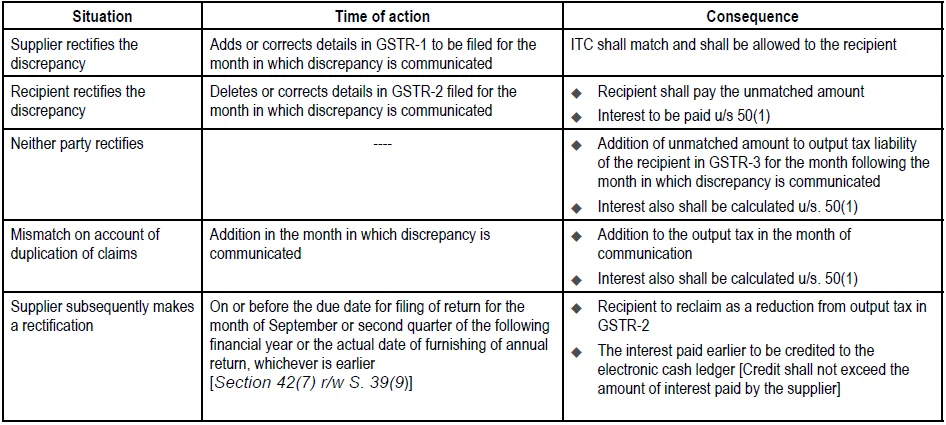
2. The danger of living upto other people’s expectations is: one puts on a mask and conceals the real person – result – our lives become artificial. In such an environment one develops a strong ego which results in or is the beginning of what one may say : `is the end of happiness’.

3.1 Expectations make us slaves of our emotions. We react instead of responding – result – impacting relationship and at times even destroying relationship. The outstanding example is the increase in divorce cases. Have we ever reflected as to why some ‘love marriages’ fail and result in divorce despite the fact that the two human beings have known each other and have chosen each other. This is because of expectations – expectation of utopia – which doesn’t exist in any relationship. As opposed to this in an arranged marriage there are virtually no expectations as persons involved virtually don’t know each other. They enter into a relationship with a few expectations and desire to make the marriage work. Let me clarify that there are divorces even in arranged marriages and the same are increasing because of the current environment of expectations, individuality and intolerance. We little realise that relationship is based on appreciating each others strengths and accepting faults for no human is without faults.

3.2 Expectations are normally based on emotions – let expectations be devoid of emotions. The issue is: is this possible! The answer is yes for if no emotions are involved there would be no disappointment –result is: if expectations are not met our relationships will not be impacted. The irony of life is we expect from those whom we love little realising that love is based on giving and not receiving. Love is unconditional.

3.3 Swami Sukhabodhanand referring to emotions advises: `One should be emotionally fit, and that emotion should be directed by intellect. Intellect without emotion and emotion without intellect, both are incomplete’.

4. Our beliefs and behaviour reflect our expectations – for example – in India parents expect to be looked after by children whereas in the West the expectations from children are much less. India is also changing and we now have an increasing number of old age homes.

5. Expectations from oneself should be based on awareness of one’s limitations. Awareness of limitations is not failure but makes life happy. This awareness also gives one confidence.

6.1 The issue is : How does one manage ‘expectations’. The answer is simple but difficult to practice. It is ‘being realistic’. Being realistic with oneself and others: Practice of this will lead to ‘happiness’.

6.2 It is rightly said: Let go of expectations. The issue is: what do you do when expectations are not met because this leads to frustration and disappointment. The fact is that expectations are nothing else but a dream we dreamt but dreams rarely come true. We need to realise that we can never live life without expectations. The answer is: Analyse whether expectation was realistic as there is always a gap between dream and reality – accept what one gets and move on.

6.3 Another way to manage expectations, is : to understand the difference between `giving’ and ‘sharing’ because in ‘giving’ one expects whereas whilst ‘sharing’ one enjoys. So let us ‘share’.

6.4 Whilst dealing with expectations from oneself – we need to use expectations as a tool of motivation to achieve our goals and nothing more.

6.5 I would conclude by quoting Eli Khamarov :

?The best things in life are unexpected – because there were no expectations’.

On Low Interest Rate Regime, Raghuraman Rajan takes critics head on

fiogf49gjkf0d
Reserve Bank of India (RBI) Governor Raghuram Rajan tore into his critics on Monday, lobbying for a low interest rate regime to spur economic growth, by stating that such views are “hopelessly optimistic” about the powers of the central bank and any clever solutions in the form of unorthodox painless pathways lead to “depressingly orthodox consequences”.

Rajan was speaking at his first public engagement after expressing on Saturday his desire to go back to academia after his term at the central bank comes to an end on September 3. The outgoing central bank governor, dressed in a sharp black suit and maroon tie, was addressing a packed hall of students and members of academia at the foundation day of the Tata Institute of Fundamental Research (TIFR).

In a long speech that went into lucid explanations of how inflation and interest rate dynamics work in a monetary policy, Rajan, the academician, almost spelt out a point by point rebuttal to arguments charging RBI of misguided actions under his command. Defending his hawkish stance on inflation, Rajan said contrary to perceptions, savings rates have gone up in the economy as the savers are finally getting real interest rates in the form of low inflation. “In recent years, our fight against inflation also meant the policy rate came down only when we thought depositors could expect a reasonable positive real return on their financial savings. This has helped increase household financial savings relative to their savings in real assets, and helped bring down the current account deficit,” he said.

Critics in favour of targeting Wholesale Price Index (WPI) because it is low now would be eager to switch to Consumer Price Index (CPI) when WPI starts rising and crosses CPI, which it has done quite a few times in the past.

In fact, WPI is something that gets influenced by what global policymakers do rather than what RBI does and therefore, it should be CPI that needs to be the policy peg, the governor said.

“By focusing on WPI, we could be deluded into thinking we control inflation, even though it stems largely from actions of central banks elsewhere. In doing so we neglect CPI which is what matters to our common man, and is more the consequence of domestic monetary policy,” Rajan said, adding, “In doing so we neglect Consumer Price Index which is what matters to our common man, and is more the consequence of domestic monetary policy.”

Turning to the charge that RBI killed private investment by keeping rates too high, he said the policy rate in effect plays a balancing act.

Monetary policy is not responsible for high interest rates charged to highly indebted customers, but such companies are charged hefty risk premiums by banks as the lenders presume the loans may not get repaid. “This credit risk premium is largely independent of where the RBI sets its policy rate,” Rajan said.

The central bank also came under fire for the monetary policy failing to show effects on inflation when the economy is supply constrained, especially in case of food inflation. “The reality is that while it is hard for us to control food demand, especially of essential foods, and only the government can influence food supply through effective management, we can control demand for other, more discretionary, items in the consumption basket through tighter monetary policy,” Rajan said. Rajan said the central bank was prepared to face any volatility that may arise due to Brexit. “Brexit can be quite damaging if it happens. Of course, we have factored in some probability of it happening. If it doesn’t happen, you could see some significant rebound. We are preparing for it and monitoring the markets. We have said earlier that we have three lines of defences – good policy, we have pushed out the maturities of foreign borrowings and they are not significantly worrisome at this point, and finally we have plenty of reserves,” Rajan said. “We will do what it takes to moderate market volatility, but once the initial bouts of wave abate, people look for good fundamentals.”

(Source: News Report in Business Standard dated 21.06.2016)

Notification No. FEMA 10 (R) / 2015-RB dated January 21, 2016

fiogf49gjkf0d
Foreign Exchange Management (Foreign currency accounts by a person resident in India) Regulations, 2015

This Notification repeals and replaces the earlier Notification No. FEMA 10/2000-RB dated May 3, 2000 pertaining to Foreign Exchange Management (Foreign currency accounts by a person resident in India) Regulations, 2000.

Further, this Notification contains regulations updated up to June 01, 2016 with respect to Foreign currency accounts by a person resident in India (including changes made vide Notification No. FEMA 10 (R) / (1) / 2016-RB dated June 01, 2016, mentioned above).

Notification No. FEMA 10 (R)/(1)/2016-RB dated June 01, 2016

fiogf49gjkf0d
Foreign Exchange Management (Foreign Currency Accounts by a person resident in India) (Amendment) Regulations, 2016

This Notification has made the following changes in Regulation 10(R): –

Amendment to Regulation 5

A. The existing sub-regulation (E) shall be renumbered as (F).

B. In the re-numbered regulation (F), the existing subregulation (3) shall be substituted by the following namely:

“Insurance/reinsurance companies registered with Insurance Regulatory and Development Authority of India (IRDA) to carry out insurance/reinsurance business may open, hold and maintain a Foreign Currency Account with a bank outside India for the purpose of meeting the expenditure incidental to the insurance/reinsurance business carried on by them and for that purpose, credit to such account the insurance/reinsurance premia received by them outside India.”

C. After the existing sub-regulation (D), the following shall be inserted namely: –

“(E) Accounts in respect of Startups

An Indian startup or any other entity as may be notified by the Reserve Bank in consultation with the Central Government, having an overseas subsidiary, may open a foreign currency account with a bank outside India for the purpose of crediting to it foreign exchange earnings out of exports / sales made by the said entity and / or the receivables, arising out of exports / sales, of its overseas subsidiary.

Provided that the balances in the account shall be repatriated to India within the period prescribed in Foreign Exchange Management (Export of Goods and Services) Regulations, 2015 dated January 12, 2016, as amended from time to time, for realization of export proceeds.

Explanation: For the purpose of this sub-regulation a ‘startup’ means an entity which complies with the conditions laid down in Notification No. G.S.R 180(E) dated February 17, 2016 issued by Department of Industrial Policy and Promotion, Ministry of Commerce and Industry, Government of India.”

Amendment to Schedule 1

In Paragraph 1, in sub-paragraph (1), after the existing clause (vi), the following shall be inserted namely: – “vii) Payments received in foreign exchange by an Indian startup, or any other entity as may be notified by the Reserve Bank in consultation with the Central Government, arising out of exports/ sales made by the said entity or its overseas subsidiaries, if any.

Explanation: For the purpose of this schedule a ‘startup’ means an entity which complies with the conditions laid down in Notification No. G.S.R 180(E) dated February 17, 2016 issued by Department of Industrial Policy and Promotion, Ministry of Commerce and Industry, Government of India.”

A. P. (DIR Series) Circular No. 74 dated May 26, 2016

fiogf49gjkf0d
Export Data Processing and Monitoring System (EDPMS) – Additional modules for caution listing of exporters, reporting of advance remittance for exports and migration of old XOS data

This circular contains details of proposed enhancements to the EDMS system which will be operational from June 15, 2016. The enhancements are in the areas of Caution / De-caution Listing of Exporters, Reporting of Advance Remittance for Exports & Export Outstanding Statement.

A. P. (DIR Series) Circular No. 73 dated May 26, 2016

fiogf49gjkf0d
Foreign Exchange Management Act, 1999 (FEMA) Foreign Exchange (Compounding Proceedings) Rules, 2000 (the Rules) – Compounding of Contraventions under FEMA, 1999

This circular states that RBI will upload on its web site www.rbi.org.in all compounding orders passed on or after June 1, 2016.

Further, annexed to this circular are the guidelines, along with examples, used by RBI for calculating the amount imposed under Section 13 of FEMA. The said Annex is as under: –

II. The above amounts are presently subject to the following provisos, viz.

(i) the amount imposed should not exceed 300% of the amount of contravention

(ii) In case the amount of contravention is less than Rs. One lakh, the total amount imposed should not be more than amount of simple interest @5% p.a. calculated on the amount of contravention and for the period of the contravention in case of reporting contraventions and @10% p.a. in respect of all other contraventions.

(iii) In case of paragraph 8 of Schedule I to FEMA 20/2000 RB contraventions, the amount imposed will be further graded as under:

a. If the shares are allotted after 180 days without the prior approval of Reserve Bank, 1.25 times the amount calculated as per table above (subject to provisos at (i) & (ii) above).
b. If the shares are not allotted and the amount is refunded after 180 days with the Bank’spermission: 1.50 times the amount calculated as per table above (subject to provisos at (i) & (ii) above).
c. If the shares are not allotted and the amount is refunded after 180 days without the Bank’s permission: 1.75 times the amount calculated as per table above (subject to provisos at (i) & (ii) above).

(iv) In cases where it is established that the contravenor has made undue gains, the amount thereof may be neutralized to a reasonable extent by adding the same to the compounding amount calculated as per chart.

(v) If a party who has been compounded earlier applies for compounding again for similar contravention, the amount calculated as above may be enhanced by 50%.

III. For calculating amount in respect of reporting contraventions under para I.1 above, the period of contravention may be considered proportionately {(approx. rounded off to next higher month ÷ 12) X amount for 1 year}. The total no. of days does not exclude Sundays / holidays.

A. P. (DIR Series) Circular No. 72 dated May 26, 2016

fiogf49gjkf0d
Memorandum of Procedure for channeling transactions through Asian Clearing Union (ACU)

Presently, the minimum amounts for which transactions can be channelized through the ACU mechanism is US $ 25,000 / € 25,000 and thereafter the amounts should be in multiples of US $ 1,000 / € 1,000.

The circular has reduced the minimum as well as multiples amount for which transactions can be channelized through the ACU mechanism. Hence, the new minimum amounts are US $ 500 / € 500 and the amounts should be in multiples of US $ 500 / € 500.

Notification No. FEMA 368/2016-RB dated May 20, 2016

fiogf49gjkf0d
Given below are the highlights of certain RBI Circulars & Notifications

Foreign Exchange Management (Transfer or Issue of Security by a Person Resident outside India) (Seventh Amendment) Regulations, 2016

Vide this amendment a new regulation – Regulation 10A has been inserted in Notification No. FEMA. 20/2000-RB dated 3rd May 2000 – Foreign Exchange Management (Transfer or issue of Security by a Person Resident outside India) Regulations, 2000. This Regulation 10A permits deferment of 25% of the total consideration for a period of 18 months with respect to payment for transfer of shares between a resident and non-resident.

The said Regulation is as under: –

“10A. In case of transfer of shares between a resident buyer and a non-resident seller or vice-versa, not more than twenty five per cent of the total consideration can be paid by the buyer on a deferred basis within a period not exceeding eighteen months from the date of the transfer agreement. For this purpose, if so agreed between the buyer and the seller, an escrow arrangement may be made between the buyer and the seller for an amount not more than twenty five per cent of the total consideration for a period not exceeding eighteen months from the date of the transfer agreement or if the total consideration is paid by the buyer to the seller, the seller may furnish an indemnity for an amount not more than twenty five per cent of the total consideration for a period not exceeding eighteen months from the date of the payment of the full consideration.

Provided the total consideration finally paid for the shares must be compliant with the applicable pricing guidelines.”

SEBI imposes restrictions on Wilful defaulters – concerns also for independent directors & auditors

fiogf49gjkf0d
The Securities and Exchange Board of India has joined and followed the Reserve Bank of India in imposing restrictions on `wilful defaulters’ from raising monies from the public. The step is laudable. Defaults, while a necessary risk of lending/investing, are a problem enough for lenders and investors. The tedious laws relating to taking action against them aggravate these problems. However, when persons default not due to difficulties but out of deliberate defiance, law does need to go an extra mile. Naming and shaming them is of course one step. However, now, SEBI, following RBI, has imposed certain restrictions on them from raising capital from the markets.

There are, however, difficulties. The definition of `wilful defaulter’ is felt to be a little too broad. The process for labelling a borrower a `wilful defaulter’ too has raised questions. There are concerns about independent and non-executive directors as to how they will be affected, though at least on paper there is some relief. As will be seen later, such matters have gone in litigation and Court had already read down the rules to some extent. These concerns are more since labelling as `willful defaulter’ would have a cascading effect on companies where such persons may be directors. Generally, auditors too of `wilful defaulters’ would be affected since there are provisions for debarring them from being given more work, etc. if they are found at fault.

Summary of new requirements
There already exist some restrictions on `wilful defaulters’ in the SEBI Regulations. However, now, SEBI has amended its Regulations relating to raising monies by issue of securities and also taking control of companies by `wilful defaulters’.

An issuer who is a `wilful defaulter’ is debarred from making any public issue of its equity securities. This bar will also apply if any of its directors or promoters is a `wilful defaulter’. Public issue of convertible debt instruments or debt securities are also barred in such cases. Further, if it is in default of repayment of principal amount of it debt instruments/debt securities or in payment of interest thereon for more than six months, then too such bar will apply. Certain disclosures are also required in respect of the `wilful default’ where issue is by way of private placement. This will ensure that subscribers know about such past defaults.

The bar does not cover issue of equity securities on `right basis’. However, certain disclosures would have to be made to ensure that the subscribers are made aware of the fact that the issuer is a `wilful defaulter’. Further, the promoters or the promoter group cannot renounce their rights except within the promoter group.

SEBI has also debarred `wilful defaulters’ from making open offers for acquiring shares under the Takeover Regulations. They are also barred from entering into any transaction that could result into attraction of obligation of making such an open offer. However, if someone else makes an open offer, then the `wilful defaulter’ can make a competing bid by way of an open offer. The intention is apparent. `Wilful defaulters’ would thus be prevented from taking control of a listed company or consolidating their stake therein.

Definition of `wilful defaulter’
The SEBI Regulations that impose restrictions on `wilful defaulters’ define the term as follows:-

“wilful defaulter” means an issuer who is categorized as a `wilful defaulter’ by any bank or financial institution or consortium thereof, in accordance with the guidelines on `wilful defaulters’ issued by the Reserve Bank of India and includes an issuer whose director or promoter is categorized as such.”

Thus, SEBI will effectively follow lead of the Reserve Bank  of India. Hence, if a person is categorized as a `wilful defaulter’ by the banks/financial institutions in accordance with the guidelines of RBI, he would also become a `willful defaulter’ for the purposes of SEBI Regulations. Promoter or director of a wilful defaulter would also be categorized a `wilful defaulter’. 

The Master Circular of the Reserve Bank of India on `Wilful Defaulters’ dated 1st July 2014 has defined `wilful default’ as follows:-

“A “wilful default” would be deemed to have occurred if any of the following events is noted:-

(a) The unit has defaulted in meeting its payment / repayment obligations to the lender even when it has the capacity to honour the said obligations.

(b) The unit has defaulted in meeting its payment / repayment obligations to the lender and has not utilised the finance from the lender for the specific purposes for which finance was availed of but has diverted the funds for other purposes.

(c) The unit has defaulted in meeting its payment / repayment obligations to the lender and has siphoned off the funds so that the funds have not been utilised for the specific purpose for which finance was availed of, nor are the funds available with the unit in the form of other assets.

d) The unit has defaulted in meeting its payment / repayment obligations to the lender and has also disposed off or removed the movable fixed assets or immovable property given by him or it for the purpose of securing a term loan without the knowledge of the bank/lender.

There are some points that can be observed from the above definition. For a person to be held to be a wilful defaulter, he needs to have made a default in meeting his payment/repayment obligations to the lender. This is a primary and obvious pre-condition. Such a defaulter would thus become a `wilful defaulter’ if he is found to have done one or more additional wrongs. For example, he may have capacity to honor his obligations and yet he defaults. He may have not utilised the finance for the specific purpose for which it was raised but diverted the funds for other purposes, or he has siphoned off the funds and such funds are not available with the unit in the form of other assets. Finally, he has disposed of or removed assets given as security without the knowledge of the lender.

The term diversion or siphoning of funds has been elaborated further and the meaning seems to go not just beyond the ordinary meaning but also to a situation where there can be serious difficulties. For example, “transferring borrowed funds to the subsidiaries / Group companies or other corporates by whatever modalities;” is also deemed to be diversion/siphoning. Now it is of course true that funds are often siphoned off through the subsidiary/group companies route. However, bonafide investments are also needed to be made through such entities. Deeming such investments in hindsight to be siphoning off can be harsh. A similar difficulty arises in respect of another category of deemed siphoning which reads “investment in other companies by way of acquiring equities / debt instruments without approval of lenders”. One trusts that these words are read in context of the original definition and that such deeming would apply only if such investments were in violation of the specific terms on which the finance was given.

Where Independent Directors/Nonexecutive directors are declared as `wilful defaulters’

The SEBI Regulations specifically provide that a person is declared as a `wilful defaulter’, then the companies where he is a director or a promoter would also be deemed to be a `wilful defaulter’. This is irrespective whether the director is a non-executive director or an independent director. This thus would have a wider effect. However, fortunately, this deeming is not the other way round too. If a company is held to be a `wilful defaulter’, its directors are not automatically deemed to be `wilful defaulters’.

As regards independent/non-executive directors, the RBI’s Master Circular does require that the principles for determining whether such a person is a `officer in default’ under the Companies Act, 2013 would be applied here. Thus, unless such an independent/non-executive director can be so held, he would not be considered a `wilful defaulter’.

However, once a persons is held to be a `wilful defaulter’, there is a cascading effect. The other companies where he is also a director would be required by its lender banks/ financial institutions to remove him.

It is interesting to note that the original wide reach of the Rules has been reducedto an extent by the Gujarathas been reducedto an extent by the Gujarat High Court, in Ionic Metalliks vs. Union of India (128 SCL 316 (Gujarat)[2015]), the court has held that the Master Circular, so far as it said that all the directors of the `wilful defaulter’ company would also become `wilful defaulters’ is arbitrary and unreasonable. To this extent, the Circular has been declared as ultra vires the powers of RBI and has been declared to be violative of Article 19(1)(g) of the Constitution of India. The Master Circular now provides for caution and requires, that the conditions under the Companies Act, 2013, for holding a director as officer in default should be applied.

Cut off amount of Rs. 25 lakhs of lending for categoriSation of `wilful defaulters’

Wilful defaulters of any amount would attract various consequences as applicable under law. However, the Master Circular provides that “…keeping in view the present limit of Rs. 25 lakh fixed by the Central Vigilance Commission for reporting of cases of `wilful default’ by the banks/FIs to RBI, any wilful defaulter with an outstanding balance of Rs. 25 lakh or more, would attract the penal measures stipulated at para 2.5 below. This limit of Rs. 25 lakh may also be applied for the purpose of taking cognisance of the instances of ‘siphoning’ / ‘diversion’ of funds”.

Process of declaration of a person as a `wilful defaulter’

An elaborate, transparent and multi-level process has been laid down in the Master Circular to declare a person as a wilful defaulter. A Committee consisting of an Executive Director and two other senior officers of rank of general manager/deputy general manager would examine the evidence whether there was a case of `wilful default’. If it is so concluded, a show cause notice would be issued to the company and its whole-time directors/ promoters and their submissions, including in personal hearing if deemed fit to be given, would be noted. Finally, another Committee headed by Chairman/CEO/MD of the Bank and consisting of two independent directors would review and take a final decision. While this process does sound reasonable, concerns are also raised since the process can be subjective and that it is the lender itself who takes the final decision. In this context, the Gujarat High Court, in the matter of Ionic Metalliks vs. Union of India (ibid) can be usefully referred to for its observations.

Conclusion
`Wilful default’ is something that cannot be generally defended. However, it is necessary that, considering the disclosure, restrictions, etc. that the process of declaring entities and individuals as willful defaulters is fair, transparent and objective. The consequences on persons having no direct role can be devastating in terms of reputation and business both. At the same time, it serves as caution to directors of companies to be extra vigilant in companies on whose board they serve. Considering, the already heavy responsibilities of non-executive/ independent directors under the Companies Act, 2013 and SEBI’s norms on corporate governance, like other laws, this is yet one more reason deterring individuals from coming forward to serve on Board of companies.

Euthanasia– The Right to Die

fiogf49gjkf0d
Introduction
We have all heard that a Will takes effect when a person dies. However, a Living Will is different than a regular Will since it takes effect even when a person is alive. A Living Will is increasingly gaining popularity the world over. It is defined as a document executed by a person in his lifetime which states his desire to have or not to have extraordinary life prolonging measures when recovery is not possible from his terminal condition. It is also known as a medical power of attorney. Its popularity stems from the fact that it lays down the desire of a person as to how he should be medically treated in case he is not in a position to exercise his discretion. The US President Barrack Obama publicly announced that he has prepared a Living Will and encouraged others to also do so. Thus, should a person in a coma or a vegetative state remain so or does he have the right to prescribe beforehand that he desires to end his suffering? Is it valid in India? Let us analyse.

Indian Judicial controversy over Euthanasia
Euthanasia is a derivative of two Greek words and means ‘good death’. The more popular meaning is mercy killing. Thus, it denotes the act of terminating a terminally ill patient / person suffering from a very painful condition in order to putting an end to his suffering. The world over there is a raging controversy over whether euthanasia is valid or not. It is also known as physician assisted suicide. In India, an attempt to commit suicide is a punishable offence under the Indian Penal Code. Hence, the issue which arises is whether a physician assisted suicide or euthanasia is valid? Three Supreme Courts have analysed this issue in great detail.

Smt. Gian Kaur vs. State of Punjab, (1996) 2 SCC 648
In this case, the Constitution Bench of the Supreme Court was faced with the issue of the constitutional validity of the Indian Penal Code which deems attempt to suicide to be a criminal offence. The Court upheld the validity of this section and also discussed certain aspects of euthanasia. It analysed Art. 21 of the Constitution which guarantees the Right to Life and held that to give meaning and content to the word ‘life’ in Article 21, it has been construed as life with human dignity. Any aspect of life which makes it dignified may be read into it but not that which extinguishes it and is, therefore, inconsistent with the continued existence of life resulting in effacing the right itself. The right to die’, if any, is inherently inconsistent with the right to life’ as is death’ with life’. It further held that propagating euthanasia on the view that being in a persistent vegetative state is not of benefit to a patient with terminal illness cannot be an aid to determine whether the guarantee of right to life’ in Article 21 includes the right to die’. The right to life’ including the right to live with human dignity would mean the existence of such a right up to the end of natural life. This also includes the right to a dignified life up to the point of death including a dignified procedure of death. In other words, this may include the right of a dying man to also die with dignity when his life is ebbing out. But the ‘right to die’ with dignity at the end of life cannot be confused or equated with the right to die’ an unnatural death curtailing the natural span of life. The Court raised a question whether a terminally ill patient or one in a persistent vegetative may be permitted to terminate it by a premature extinction of his life? It felt that such category of cases may fall within the ambit of the ‘right to die’ with dignity as a part of right to live with dignity, i.e., cases when death due to termination of natural life is certain and imminent and the process of natural death has commenced. These are not cases of extinguishing life but only of accelerating the process of natural death which has already commenced. Ultimately, the Supreme Court concluded that the debate even in such cases to permit physician assisted termination of life is inconclusive. Thus, the Court did not give any definitive ruling.

Aruna Ramchandra Shanbaug vS. UOI, (2011) 4 SCC 454
This was the famous case of Aruna Ramchandra Shanbaug, the nurse who was in a vegetative state for over 38 years. A Writ Petition was filed by a social activist on her behalf urging the Supreme Court to permit mercy killing since there was no hope of recovery. Disallowing the plea, the Supreme Court embarked upon an extensive disposition on the topic of euthanasia in India and internationally.

The Court explained that euthanasia is of two types : active and passive. Active euthanasia entails the use of lethal substances or forces to kill a person e.g. a lethal injection given to a person with terminal cancer who is in terrible agony. Passive euthanasia entails withholding of medical treatment for continuance of life, for example, if a patient requires kidney dialysis to survive, not giving dialysis although the machine is available, is passive euthanasia. Similarly, if a patient is in coma or on a heart lung machine, withdrawing of the machine will ordinarily result in passive euthanasia. Similarly, not giving lifesaving medicines like antibiotics in certain situations may result in passive euthanasia. Denying food to a person in coma may also amount to passive euthanasia. The general legal position all over the world seems to be that while active euthanasia is illegal unless there is legislation permitting it, passive euthanasia is legal even without legislation provided certain conditions and safeguards are maintained. An important idea behind this distinction is that in “passive euthanasia” the doctors are not actively killing anyone; they are simply not saving him. Active euthanasia is legal in certain European countries, such as, the Netherlands, Luxembourg and Belgium but passive euthanasia has a far wider acceptance in the USA, Germany, Japan, Switzerland, etc.

It made a further categorisation of euthanasia between voluntary euthanasia and non voluntary euthanasia. Voluntary euthanasia is where the consent is taken from the patient, whereas non voluntary euthanasia is where the consent is unavailable e.g. when the patient is in coma, or is otherwise unable to give consent. While there is no legal difficulty in the case of the former, the latter poses several problems

It observed that the Constitution Bench of the Indian Supreme Court in Gian Kaur vs. State of Punjab, 1996(2) SCC 648 held that both, euthanasia and assisted suicide, are not lawful in India. It further observed that Gian Kaur has not clarified who can decide whether life support should be discontinued in the case of an incompetent person e.g. a person in coma or persistent vegetative state. This vexed question has been arising often in India because there are a large number of cases where a person goes into coma (due to an accident or some other reason) or for some other reason is unable to give consent, and then the question arises as to who should give consent for withdrawal of life support. The Court discussed the question as to when can a person said to be dead and concluded that one is dead when one’s brain is dead. The Court observed that there appeared little possibility of Aruna Shanbaug coming out of her permanent vegetative state. In all probability, she will continue to be in the state in which she is in till her death. The question now was whether her life support system should be withdrawn, and at whose instance? The Court said even though there were no Guidelines in India on this issue, it agreed that passive euthanasia should be permitted India. Accordingly, it framed guidelines for the same till Parliament framed a Law and stated that this procedure should be followed all over India until Parliament makes legislation on this subject:

(i) A decision has to be taken to discontinue life support either by the parents or the spouse or other close relatives, or in the absence of any of them, such a decision can be taken even by a person or a body ofpersons acting as a next friend. It can also be taken by the doctors attending the patient. It must be taken bona fide in the best interest of the patient.

(ii) Such a decision requires approval from the High Court, more so in India as one cannot rule out the possibility of mischief being done by relatives or others for inheriting the property of the patient.

(iii) In the case of an incompetent person who is unable to take a decision whether to withdraw life support or not, it is the Court alone, which ultimately must take this decision, though, no doubt, the views of the near relatives, next friend and doctors must be given due weightage.

(iv) When such an application is filed, a Bench of at least two Judges should decide based on an opinion of a committee of three reputed doctors, preferably a neurologist, a psychiatrist, and a physician.The committee of doctors should carefully examine the patient and also consult the record of the patient as well as taking the views of the hospital staff and submit its report to the High Court Bench.

(v) The Court shall also issue notice to the State and close relatives of the patient e.g. parents, spouse, brothers/ sisters etc. of the patient, and in their absence his next friend. After hearing them, the High Court bench should give its verdict.

(vi) The High Court should give its decision speedily at the earliest, since delay in the matter may result in causing great mental agony to the relatives and persons close to the patient.

Surprisingly, the Supreme Court did not lay down any guidelines on the concept of a living Will. Thus, while it upheld passive euthanasia, it did not suggest adhering to guidelines on treatment laid down by the patient himself.

Common Cause vS. UOI, WP (Civil) 215/2005 (SC)
This is the latest decision on the issue of euthanasia. In this case, an express plea was made before the Court to recognise the concept of a Living Will. which can be presented to hospital for appropriate action in the event of the executant being admitted to the hospital with serious illness which may threaten termination of life of the executant. It was contended that the denial of the right to die leads to extension of pain and agony both physical as well as mental which can be ended by making an informed choice by way of people clearly expressing their wishes in advance called “a Living Will” in the event of their going into a state when it will not be possible for them to express their wishes.

The Supreme Court analysed both Gian Kaur and Aruna Shanbaug’s decisions explained above. It held that in Gian Kaur, the Constitution Bench did not express any binding view on the subject of euthanasia rather reiterated that legislature would be the appropriate authority to bring the change.

It felt that in Aruna Shanbaug’s case, the Court upheld the validity of passive euthanasia and laid down an elaborate procedure for executing the same on the wrong premise that the Constitution Bench in Gian Kaurhad upheld the same. Hence, it felt that Aruna’s decision proceeded on an incorrect footing.

Finally the Court held that although the Constitution Bench in Gian Kaur upheld that the ‘right to live with dignity’ under Article 21 is inclusive of ‘right to die with dignity’, the decision does not arrive at a conclusion for validity of euthanasia be it active or passive. So, the only judgment that holds the field in regard to euthanasia in India is Aruna Shanbaug which is based on an incorrect understanding of an earlier decision. Considering the important question of law involved which needs to be reflected in the light of social, legal, medical and constitutional perspective and the unclear legal position, the Apex Court held that it becomes extremely important to have a clear enunciation of the law. Thus, it felt that this issue requires careful consideration by a Constitution Bench of the Supreme Court for the benefit of humanity as a whole. Hence, the matter was placed before the Constitution Bench. The case is still pending and is expected to be disposed of soon.

Recent Legislation
The Government has recently introduced a draft Bill titled “The Medical Treatment of Terminally-Ill Patients (Protection of Patients and Medical Practitioners)”. The key features of this Bill are as follows:

(a) Every competent person who is a major, i.e., above 16 years (yes you read it right, not 18 years) can take a decision on whether or not he should be given / discontinued medical treatment. Thus, in India, a person cannot drive, cannot drink, cannot vote, cannot marry, cannot contract, cannot be tried for an offence as an adult, before he / she turns 18, but such a person can take a decision about whether or not he wants to live? A bit paradoxical, would you not say?

If such a decision is given to a doctor then it is binding on him, provided the doctor satisfies himself that the patient has given it upon free will. Further, a competent patient is one who can take an informed decision about the nature of his illness and the consequences of treatment or absence of it. It would be very difficult for a doctor to determine whether or not the patient is a competent or incompetent person. How would he also determine the free will of a patient? Most doctors would be wary of taking such a subjective call and hence, in most cases would fear turning off life support systems or withdrawing medical treatment. This provision totally takes away the right to die of a patient.

(b) The doctor must then inform the close relatives about the decision of the patient and wait for 3 days before giving effect to the decision to withdraw treatment.

(c) Any close relative may apply to the High Court for obtaining permission in case of an incompetent patient or a competent one who has taken an uninformed decision. The Court will then appoint 3 experts to examine the patient and then give its decision by following a process similar to the that laid down in Aruna Shanbaug’s case. The Bill states that as far as practicable the Court must dispose of the case within a month. Is this possible? Further, why should a terminally ill patient suffer even for a day let alone a month?

(d) A Living Will / advanced medical directive is one given by a person stating whether to give medical treatment in case he becomes terminally ill. The Bill states that such a living Will is void and not binding on any doctor. It is surprising that while Parliament thought it fit to enact a law on passive euthanasia, it has not yet allowed a living Will. Rather than moving a Court, a Living Will would have been the answer to many vexed questions. One hopes that the final version of this all important law permits a Living Will.

Conclusion
While a Living Will is currently not accepted in India, one must nevertheless prepare one. One never knows when the tide may turn and the same may be legally accepted in India. In any event, it would surely have persuasive value if an application is to be made to a High Court since it indicates the wishes of the patient himself. One hopes that the Parliament and the Medical Council of India join hands to frame detailed guidelines to give legal sanctity to Living Wills. While it is important to permit them, there must also be safeguards to protect against misuse of the same. A Living Will must not become a tool to get rid of old / ill relatives in an easy manner. As rightly remarked by the Supreme Court,

“This is an extremely important question in India because of the unfortunate low level of ethical standards to which our society has descended, its raw and widespread commercialisation, and the rampant corruption, and hence, the Court has to be very cautious that unscrupulous persons who wish to inherit the property of someone may not get him eliminated by some crooked method”.

(Gearing up!)

fiogf49gjkf0d
(Gearing up!)

Arjun (A) —Hey Bhagwan, with great devotion I am offering my pranam to you!

Shrikrishna (S) — What happened to you suddenly? We have been meeting so often, but you never started with such ‘pranam’!

A — Bhagwan, I didn’t say it so expressly earlier. I always bow before you. I pray you and seek blessings from you.

S — You are always blessed. But what is the special reason today?

A — No; I was just wondering how I will cope up with the work of audits and tax returns. The season has started! Next 3 to 4 months is a ‘kurukshetra’ – battlefield for us CAs.

S — But this is going on for so many years. What is frightening you so much this year?

A — I believe, this year they are not going to extend the due date! We are always banking on extension.

S — But why do you need extension every year? Can you not plan the work well in advance?

A — It is easy to say so, but difficult to implement.

S— Why?

A — Every month we are busy meeting some deadline or the other. Recently I am told, a reputed bank recruited many employees. Out of them, 80% are for compliances and only 20% for business promotion!

S — Oh! But don’t you agree that such compliances are required for having financial discipline? And you have so much of automation at your disposal.

A — I agree. Still, it is rather too much.

S — Then that is your work opportunity. Look at it positively.

A — But every year they add something new. Our time goes in updating ourselves.

S— What is new this year?

A — So many things! CARO report is changed. They have added many points. Then Ind ASs. And on the top of it that ICDS in Income Tax!

S — What have you done to keep yourself updated? Good that you have compulsory CPE hours – continuous education. At least something you can know. Thereafter, you can study on your own.

A — What you say is right. But our CAs look at CPE hours also as a compliance! They are rarely interested in the lecture.

S — Then what do they do?

A — They just enrol themselves by paying fees. Then either leave the venue and re-appear at the closing hours to sign the attendance sheet. Otherwise, they doze off in the auditorium, sitting at the back. Or depute a proxy!

S — So, people also ‘manage’ CPE hours

A — Yes. Now I am told, they are going to increase the hours.

S — Unfortunately, many of you don’t appreciate the spirit behind CPE hours. How can one do such a demanding profession without updating the knowledge? You should not only upgrade your own knowledge and skills; but also see to it that your staff and trainees are also properly trained.

A — Ah! These days articles (trainees) are absolutely of no use. They have their own priorities. Exam and leave! I wonder why they join articles. And work-wise mostly they are a big zero!

S — Arjun, tell me how much time you have spent to train up your articles? Do you have proper systems in office? Do you implement what you studied in audit subject?

A — True. We are not ourselves well organised. We have no reference files of audit-clients, we don’t do proper documentation. But we have to work under so many constraints! No space, no manpower……

S— I appreciate that. But what is basically lacking is the will power. Anyway, for audit whatever is essential, have you started doing?

A — Like what?

S — Basically, third party confirmations from banks, debtors, creditors…….

A — Who has time to do all that? Our clients never listen to us.

S — No; but somewhere you need to take a firm stand. If you tell them at the last moment, they will resist. You have to insist or indicate to your client that you would then have to put a remark in the report.

A — What you say is right. We need to be more pro-active and assertive. We need to gear up on all fronts. It is high time. We need to wake up!

S— Yes. I suggest you can also see your last year’s files, make checklist, send mails to clients….

A — Yes. And I think, I should take out some time and study important laws applicable to my clients. This will help me in my audit work also

S— Arjun, be also very particular about your documentation. This makes things easier.

A — Yes. You are right.

S— Infact, you should be alert all the time. This will help you in being pro-active automatically. And that is precisely your Institute’s motto – Ya Esha Supteshu Jagarti!

Om Shanti.

Precedent – Judicial discipline – Tribunal cannot assume power to declare judgement of division Bench of Court as per incuriam and refuse to follow it. [Karnataka Sales Tax Act, 1957, Section 6B]

fiogf49gjkf0d
State of Karnataka vs. Deccan Sales Corporation Ltd [2016] 87 VST 265 (Karn).

Reassessment u/s. 12-A of the Act was passed on the basis of the judgment dated 25.11.2004 of this Court in the case of Pali Chemical Industries, Nippani, Belgaum vs. The Additional Commissioner of Commercial Taxes, Zone-I, Bangalore and another reported in 2005 (58) KLJ 54 (HC) (DB), that the chemical fertilizer mixture is not eligible for exemption from turn over tax even if its components have already suffered local tax under the Act.

The Tribunal after noticing that, while delivering the judgment in Pali Chemical Industries case, the decision in the case of State of Karnataka vs. Kothari Industrial Corporation, reported in 2000-01 (5) K.C.T.J. 193 was not noticed or brought before the Hon’ble High Court by the parties concerned in Pali Chemical Industries case, held that the judgment in Pali Chemical Industries case cannot be considered as a binding precedent.

The High Court observed that we would like to place on record that we are very much disturbed by the tendency exhibited by the lower authorities in refusing to follow the law laid down by this Court saying that the same is not binding on them merely because other binding precedents are not taken into consideration in those judgments. It appears that the Tribunal has assumed the power to declare the judgment of the Division Bench of this Court as per incuriam and thereby refused to follow the judgment. The justification for such a course of action is that it is permitted to do so by another Division Bench. If this tendency is not nipped in the bud, we are afraid that there will be total lawlessness especially in the branch of Taxation Law.

The High Court further held that if another Division Bench of this Court is not persuaded to accept the said view, the only course open is to place relevant papers before the Hon’ble Chief Justice to enable him to constitute a larger Bench to examine the question. That is the proper and traditional way to deal with such matter.

It is high time that the lower authorities learn to maintain judicial discipline and stop showing disrespect to the constitutional ethos. Breach of discipline has great impact on the credibility of the judicial institution and encourages chance litigation. It must be remembered that practicability and certainty is a hallmark of the judicial jurisprudence developed in the country in the last six decades.

Precedent – Stay – Strictures – Recovery of demand by adjustment of refund from stayed demand – In identical case for different years of the same assessee such mode of recovery was set aside by the High Court and revenue was unable to show how facts were different this time around. Recovery was set aside. Warning that officers would in future be personally liable.

fiogf49gjkf0d
Larsen & Toubro Ltd vs. UOI 2016 (335) E.L.T. 215 (Bom)

The Bombay High Court held that officers after officers are reluctant to take decisions for the consequences might be drastic for them. No officer is acting independently and following judgments of this Court, but waiting for the superiors to give them a nod. Even the superiors are reluctant given the status of the assessee and the quantum of the demand or the refund claim. We are sure that some day we would be required to step in and order action against such officers who refuse to comply with the Court judgments and which are binding on them as they fear drastic consequences or unless their superiors have given them the green signal. If there is such reluctance, then, we do not find any enthusiasm much less encouragement for business entities to do business in India or with Indian business entitles. Such negative reactions / responses hurt eventually the National pride and image. It is time that the officers inculcate in them a habit of following and implementing judicial orders which bind them and unmindful of the response of their superiors. That would generate the right support from all, including those who come forward to pay taxes and sometimes voluntarily. Hereafter if such orders are not withdrawn despite binding Division Bench judgments of this Court that would visit the officials with individual penalties, including forfeiture of their salaries until they take a corrective action. If any approval or nod is required from superiors that should also be granted expeditiously and while obeying the court orders, the officers can always reserve the Revenue’s rights to challenge them in appropriate legal proceedings. A copy of order be sent to the Secretary in the Ministry of Finance, Government of India and the Chairman, Central Board of Excise and Customs.

Bombay Stamp Act – Amalgamation – Scheme of amalgamation is not chargeable to stamp duty. It is the order of court sanctioning the scheme that is chargeable. [ Bombay Stamp Act,1958, Section 3,2(1)]

fiogf49gjkf0d
The Chief Controlling Revenue Authority, Maharashtra vs. Reliance Industries Ltd AIR 2016 BOMBAY 108 Full Bench.

The Reliance Industries Limited and Reliance Petroleum Limited, Jamnagar Gujarat entered into a scheme of amalgamation u/ss. 391 & 394 of the Companies Act 1956. Company petitions were filed by the transferor company in Gujarat High Court and the transferee company in Bombay High court. The Scheme was sanctioned by both the High Courts. Accordingly, stamp duty was paid in Gujarat of Rs 10 crore. When the order sanctioning the Scheme of amalgamation was presented for stamp duty adjudication in Maharashtra, the Company claimed set off of the stamp duty paid in Gujarat which was refused.

The full bench of the Bombay High court held that as the scheme of arrangement or amalgamation has no effect or force unless or until it was sanctioned by the court, it is the order sanctioning the scheme that would be an instrument u/s. 2(l) and not the scheme of amalgamation. Hence, the Company was not entitled for rebate of stamp duty paid in Gujarat.

Expectations from an Advisor

fiogf49gjkf0d
“Look for what’s missing. Many Advisors can tell a President how to improve what’s proposed or what’s gone amiss. Few are able to see what isn’t there”
 
Donald Rumsfeld

Over the years that I have been in the profession. I have seen the role of an advisor undergo a radical change and marked shift on the expectations that one has from the advisor. And over these years, I have seen a few things remain constant. The constants are the bedrock of the traits of an advisor and foundation without which no advisor can be successful. The changes emanate from the evolution of the profession and the changes in the ecosystem in which we operate.

Let’s first talk of the changes; I would describe them as:

– execution is the key

– the broad basing of the recipients

– recognising that change is the only constant and

– no man is an island.

Let me elaborate.

It is all about execution. There was a point of time when what was expected from an advisor was advice and the execution was left in-house. While clients do have execution capabilities, they now expect the advisor to be fully involved and lead the execution process. The reason is simple. The challenges at the execution level impact the advice and its efficacy. Whether the Registrar of Companies (ROC) will approve a Limited Liability Partnership (LLP) carrying on financial services or whether SEBI permits an AIF to be an LLP are issues to which the advice reading the law may be different from how execution happens at the ground level.

There was a point of time when the recipient of the advice was the only constituent who the advisor had to address. No longer so. The wider constituents who can be impacted by the advice today expect their interests to be addressed. This is critical from the view point of the advisor too. Increasingly, if the client is accused for breaking a law, the advisor could have his reputation sullied or be held to abet.

The world is in a constant flux of change. Just in the field of taxation, we grew up to say that tax and equity are strangers. One merely has to look at what the law says and no more, no less. No longer so. BEPS is making changes which will have deep rooted impact on the way a MNC operates. Street protests are held if a MNC is perceived as not paying ‘fair’ taxes. The world of taxes and equity are not as strangers as it seemed!! We need to recognise this change as advisors; in fact, the result of the actions we advise today will be evaluated after a few years and we need to anticipate changes and advice accordingly

Finally, the need is to collaborate with other specialists. An accounting advice has tax and financial implications; a tax advice has accounting and financial implications and, most important, all of these need to dovetail into the overall business objectives of an organisation. As advisors, we tend many a time to forget the overall business objective and focus on the little area of specialisation we have. The broad basing of the objective, the ability to relate to the bigger picture and interaction with other Advisors to provide holistic advice is the key to success.

Let us now look at a few constants which I have experienced over the decades;

– the spirit of partnership

– client before self

– tenacity and

– ethics and values

The identification of the advisor with the client and proactively finding solutions is a key constant. Most times, clients do not know the right questions to ask. It is for the advisor to prompt the client to the right question and guide them in the spirit of partnership.

Client before self may sound like a cliché!! It is not and I have seen the most successful advisors, when proposed an assignment by a client, respond that it is not necessary to carry out the assignment!! Indeed, sometimes the client believes in a complex solution which may mean larger fees to the advisor but the solution can be quite simple. It is for the advisor, at all times, to put client’s interest first. In fact, the best advisors have the ability to tell a client that he is not the right advisor but someone else is!!

Solutions provided by an advisor may be difficult to implement and often the client wants short cuts. Building substance to a transaction is a difficult process. It may be the only way to sustain a structure. An advisor needs to be firm with his convictions and not go down the path of least resistance; howsoever convenient it may sound in the short run

Last, but the most important, is ethics and integrity. Short term gains which compromise integrity come up all the time in a variety of ways. Some of these, like referral fees, may sound innocuous but pose conflicts of interest. Similarly, disclosure of interests or potential conflicts is critical. At the end of the day, an advisor has just one reputation to protect and its compromise is the end of the journey.

IND AS ROAD MAP – CORPORATE vs. NBFC

fiogf49gjkf0d
One of the key issues with the Ind AS roadmap is the alignment of implementation dates between NBFC companies and non NBFC companies. For example, phase 1 non NBFC companies go live on Ind-AS from 1-4-2016, with a transition date of 1-4-2015. The first Ind AS financial year will be 2016-17. In the case of NBFC, phase 1 companies will go live on Ind-AS from 1-4-2018, with a transition date of 1-4-2017. The first Ind AS financial year will be 2018-19. In the case of NBFC company, early adoption of Ind AS is prohibited. This poses a unique challenge to a consolidated group that has an NBFC company and a non NBFC company. Consider the diagram below.

When the NBFC is on the top of the structure, the problem is very acute. In this case, the non NBFC companies below the NBFC Parent company (M Co, T Co & S Co) will prepare Ind AS for financial year 2016-17 as they are in phase 1. For 2016-17, the NBFC Parent will prepare stand-alone and CFS under Indian GAAP, since it is prohibited from early adopting Ind AS. For purposes of consolidation by the NBFC Parent; M Co, T Co & S Co will have to continue preparing their accounts under Indian GAA P as well. Therefore M Co, T Co & S Co will end up preparing accounts both under Indian GAAP & Ind AS, which will be a huge burden.

When a NBFC is below a non NBFC company, the NBFC will prepare Indian GAAP accounts for standalone purposes and to enable non NBFC parent to prepare Ind AS CFS, the NBFC will also prepare Ind AS accounts. In the above diagram, the NBFC subsidiary will prepare Indian GAAP stand-alone financial statements since it is prohibited from early adopting Ind AS. However to enable M Co to prepare Ind AS CFS, the NBFC subsidiary will also need to provide Ind AS numbers to M Co.

Conclusion
A group that has NBFC and non NBFC companies will bear a huge burden of preparing financial statements under both Indian GAAP and Ind AS. RBI/ MCA can remove this burden by allowing NBFCs, particularly those that are not systemically important to early adopt Ind AS.

In the author’s opinion, in such an instance, NBFC should have the option of earlier adoption of Indian AS. A clarification will avoid confusion and duplication.

GST – A Huge Area of Practice Opportunities

Background

The total indirect tax revenue in 2016-17 was Rs.17 lakh
crore. It has been guesstimated that about 30% of traders, small manufacturers
and service providers who are liable to be registered and pay duty/ tax have
not registered in the past. They were part of the “grey/ parallel economy”.
There is a business of fake bills without sale or service provision presently.
This sector is expected to close down substantially due to the matching concept
under which GST needs to be paid for credit to be available. Some part of this
segment may be forced to join the mainstream tax payers over a period. Some
sectors who still have the highest rate of 28% with or without additional
cesses could try and keep the entire transaction outside the recording and may
risk the seizure of their goods and demands.   

The total number of registered assessees in about 6 months of
its implementation is expected to cross 1 Crore!!. This could be the result of
demonetisation as well as withdrawal of exemption and broad basing objective of
GST. The need for the receiver of the services to pay under reverse charge for
all unregistered supplies including raising of invoice, classification, payment
may lead to all businesses to avoid any unregistered supplies whether for goods
or services. Dealers and Service providers who do not wish to stop their services
to the trade, industry or businesses would now voluntarily register to ensure
clients do not have to comply on their behalf. This maybe even if they are
eligible for the exemption upto Rs. 20 lakh.

The CA Advantage

The knowledge of accounts, costing, direct/ indirect tax
laws, company Law and commercial laws makes a CA’s quite complete from legal/
tax side. This coupled with the experience from understanding businesses
through conduct or audit, providing opinions, preparation/ certifying of financial
statements, representing before many financial and tax authorities provides a
CA with a deep understanding of business.

The total number of CAs who have attended at least a 20 hour
GST awareness as on date who are in industry and practice maybe around
1,00,000. As on date around 5000 CAs are learning every week in seminars,
workshops, certificate courses conducted by the ICAI, study circles, BCAS and
other associations across the country.

The non-qualified consultants who outnumber us today
operating in indirect tax area may find that the scope of being an intermediary
between the client and the officers is restricted. Those in advisory who have
learnt GST well and have some accounting knowledge may continue to support
clients in the GST regime. They would of course need to take the services of
CAs for the mandatory audit which would be started to be conducted post May
2018. 

The CAs already practicing in VAT, Service Tax and Excise /
Customs would find it easier to understand the GST which is a mixed bag of all
these laws. In the present GST Act and Rules 2017, we observe that most of the
provisions have been borrowed from VAT and to some extent service tax and
excise. The GST law was supposed to be simple and clear, but as it stands today
is very cumbersome and it may not be possible for SMEs to comply without
professional assistance. 

The total number of CAs (delegates) who have attended various
type of GST related CPE awareness / training sessions as on date is in excess
of 1,20,000 with 6,000 additionally being trained every week either through the
indirect tax committee initiatives or the various regional councils, branches
and associations. Even if some have gone for multiple programs, the minimum
number of CAs who are aware maybe in excess of 50,000.

Therefore, in the view of the paper writer, the CA would be
the first option for all enterprises of turnover above Rs. 2 crore. If they are
unable to accept, only then other professionals would be considered as an
option.

Opportunity for Image Makeover

It is indeed sad but true that a small proportion of CAs are
able to create a negative perception of the profession at large. However, the
fact that in many wrongdoings by trade/industry, the CAs are being implicated/
targeted indicates that the view of the public/ media needs to be reversed. The
common perception of the “black sheep” of our profession is normally not
discussed, much less penned. The paper writer has attempted to list a few areas
where we could improve and avoid such allegations:  

1.  Do not suggest/ manipulate the accounts.
Always give accurate certificates based on evidence (copies to be in working
papers) especially on the claim of credit on stocks, credit admissibility etc.
This would compel the tax authorities do place weight on all certificates
issued by us.

2.  To avoid assisting / helping clients in tax
evasion. It maybe far better to provide a true picture to client and stress on
the advantages of compliance. The “trust” factor which is very important to be
enhanced in the GST regime.

3.  When he gives opinions especially on issues of
continuation of business rates and credit, see that there is a clear
communication of what the client wishes in writing. If not there, communicate
what is expected from us to client and then do a professional job clearly
stating the assumptions if any and not trying to reduce the tax impact. This
would build respect of the client over time as well as the GST officers.  

4.  CAs can and need to be more communicative. We
also most times have not been trained in drafting. Complete communication,
clear case law reference, differentiating the adverse judgment, attaching
expert opinions/ books (especially in classification) and concluding logically
could stand us in good stead.  

5.  CAs would do well to escalate to higher level
officers when lower level are not helpful to resolve issues of the clients.
This should always be done in writing. The results of this practice has been
found to be favourable in the present regime and in GST would be far more
successful.

6.  We can improve in many more areas including
professionalism in dealing with the client viz., keeping commitment for
delivery of requisite quality in time, keeping the service motive etc.

These negative perceptions over time are to be overcome with
honest, ethical work, demonstrated over and over. The law is moving towards
transparency and the days of the intermediaries seem to be getting over. When
the VAT law came, the pure intermediary population came down by about 30% from
2005 onwards.   

Humongous Opportunity under
GST

The distinction can be made between the pre / post GST period
openings / service streams.

Role – Pre-GST period

This is a one-time opportunity focused on GST preparedness of
clients. Specific contribution by the professional could be:

a.  Assist in classification and arriving at the
rates applicable using the Harmonised System of Nomenclature (HSN) as well as
the interpretative rules set out in the notification. Similarly, carefully
advising on availability of any exemption based on the notification ensuring
that the conditions if any are complied;

b.  Analyse the industry impact considering the
global and Indian situation of the product / service. This study may also have
to include the major vendors and customers;

c.  In case of unintended hardship to some
sectors- representation to the drafter would be in order as the level of
listening presently is very high. This could be done upto a period of 6 months after
the implementation date;

d.  For the walk in clients who have not done an
impact study, the clarity on the major impact on the client under GST due to
indepth understanding of the business could be a value add;

e.  CA could be part of the core team of client
for transiting into GST smoothly without business disruption and safeguarding
of the margins as a knowledge advisor;

f.   Understanding legacy tax systems at client
workplaces so as to provide appropriate advise on migrating to better systems/
ERP or suggest modification to make the existing systems GST compliant;

g.  Assisting in preparation of a strategic plan
for procurement and marketing systems of clients needed under GST. For example,
supporting in decisions on: Closure/ reduction in godowns and branches; direct
sale through e-commerce; evaluation of the working with C&F agents; in
house/ outsourcing the distribution function to logistic companies; sourcing
inputs at lowest cost within shorter time; linking to the ERP of the customer etc.;

h.  Suggesting the changes in accounting software
and internal control systems to suit GST. Test and confirm the robustness;

i.   GST awareness at initial stages and training
for management, staff, customers, vendors of clients on ongoing basis
especially the operational team consisting of the marketing and purchase;

j.   Vetting and suggestion to modify agreements/
contracts/ major purchase orders overlapping or supplies to be made in GST
regime;

k.  Ensuring that the credits in the past are
examined for their eligibility and those missed are availed. The reconciliation
of the credit as per books to the returns before GST is implemented can be a
value added activity. This would include validating the last return. The time
window for this is limited to a couple of months after implementation;

l.   The verification to ensure that the credits
carried forward are eligible and complete. The deduction for the unreconciled
forms as provided is made and if negative, the decision not to claim the carry
forward; 

m. Ensuring that the claim of credit on stock in
hand is maximised by ensuring purchasing with excise duty paying documents as
well as proper stock recording especially with job workers and agents and
ensuring well thought of stocking policy;.

n.  Reviewing the various business transactions to
examine whether closing out the transaction in the pre GST or post GST period
is advantageous;

0.  The students of CA- the future CAs and staff
in the CA office would also require to be taught the new law to enable them
also to actually do the verification. Review and audit in GST and confirm that
the transition mistakes are not material;

o.  Many CAs have specialisation in information
technology and some even hand on consulting skills in ERP environment. These
skills could ensure that the client would get his IT integrated and able to
comply with the complex needs of GST compliance.

Role – Post-GST

The implementation of GST would bring many challenges for
trade / industry and for us, opportunities to serve:

i.   In the initial stages of GST implementation,
there would be many doubts which are not covered in the new law. There may also
be gaps in knowledge of GST at various levels in the organisation. These are
likely to unintendedly result in denial of registration, interruption to do
business, loss of eligible credit, old law risks and exposures carried forward,
inadvertent non-compliance in GST. There would a period of uncertainty and need
for someone to confirm the myriad issues arising. The internet (Google) at such
times may not be effective as too much of inaccurate/ incorrect suggestions in
the initial stages are expected. The proactive professional handholding and
quick response may not only ensure continuation of the clients’ business, but
enable them to take advantage of the changes in the business structures;

ii.  Regular online documented service to the
functional head of clients’ business;

iii.  Assisting in the filing of the 1st
return, claim of tax credit on stocks in hand accurately;

iv. Review the compliances in transition. It maybe
noted that the disputes in GST would come normally after 3-4 years and at that
time, rectifying past errors would well nigh not be possible;

v.  A one time comprehensive review after 3 months
of implementation to ensure GST compliance;

vi. Regular review and reconciliation on credit
matching and recovering credits lost from the vendors in case of payment made
on gross would also be required;

vii. Once GST stabilises over a year or so, the
focus would be more on compliance which means a regular internal audit of GST;

viii.  The GST audit by CAs in the year 2018 would be
a watershed year for the profession to demonstrate that we as CAs are competent
and knowledgeable; Also to assure the revenue department that there is no need
of invasive investigation or audit by tax officers;

ix. Routine tax assignments for payment and filing
of returns would see a spike at least in the initial stages of uncertainty;

x.  It is true that if one can avoid a dispute in
tax it is better. Therefore, a preventive exercise of early correction/
disclosure could avoid or mitigating the disputes allowing clients to
concentrate on their core activities;

xi. In case of dispute, look at the possibility of
passing on the impact where credit is available as an option. If not possible,
then support in making replies based on fact as well as legal principles.

xii. Support in resolving disputes where it cannot
be mitigated due to interpretation differences or due to demand raised by
revenue.

Conclusion

This new levy is bound to come up with many obvious
challenges due to the law being in the process of being drafted. It is expected
that the rough edges of the law would be ironed out in the period of 6 month to
a year post implementation of GST. This was our experience in Company Law in
the past few years. 

The extent of making use of the opportunities would largely
depend on understanding the law and preparedness for what is not covered in the
law. In the words of Abraham Lincoln – “Give me six hours to chop down a
tree and I will spend the first four sharpening the axe
”.

The implementation of GST by July 2017 is not
clear as on date. We the CAs can be ready to serve now in this period of
uncertainty and later when the law is passed. We can, by getting the axe forged
and keep sharpening it, to deliver beyond the expectation. Wish readers to have
an empowered service to the employer/client in GST era.

Impact of GST on Practising Chartered Accountants

Preamble

The most talked about change in the indirect tax laws i.e.
Goods & Services Tax (“GST”) is expected to be effective from 1st
July 2017. We, chartered accountants, being service providers are also covered
under the ambit of GST. Currently, we are liable for payment of service tax
under the provisions of the Finance Act, 1994 (“Service Tax legislation”). This
legislation will be subsumed under the GST. 
We will be governed by the provisions of the GST Acts.

An effort has been made in this article to highlight
important provisions that would be applicable to practising chartered
accountants, its impact and the challenges we might face as GST assessees.

Migration

All practising chartered accountants registered under the
Service Tax legislation are required to compulsorily get themselves migrated to
GST. [Section 22(2) of Central Goods and Services Tax Act (CGST Act)] If they
do not expect the value of their aggregate turnover during the financial year
2017-18 to exceed Rs. 20 lakh (or Rs. 10 lakh in special category states), they
can surrender their GST registration [Rule 17(4) of Registration Rules].  Aggregate turnover includes exempt supplies
and zero rated supplies also. Usually, for a practising chartered accountant
most of his services would be taxable only. However, export of services,
services provided to SEZ units and also to SEZ developers will have to be
included while computing aggregate turnover even though they are zero rated
supplies.

Registration

Under Service Tax legislation, a practising chartered
accountant has the option of not getting himself registered if his aggregate
taxable turnover in a financial year does not cross Rs. 10 lakh.  If the aggregate turnover on pan India basis
exceeds Rs. 20 lakh (Rs. 10 lakh for special category states), one has to get
himself registered under GST. The aggregate turnover would include all taxable
supplies as well as exempt and zero rated supplies also. All chartered
accountants registered under the Service Tax legislation and having turnover
between Rs.10 lakh and Rs. 20 lakh (not from the special category states), have
the option of not getting themselves registered under the GST Laws. This may
save them from the hassles of the compliances under the GST Laws. However,
negative fallout would be that they would lose credit of all the GST paid on
their inputs, capital goods and input services. It would be a cost to them.

The chartered accountant making any inter-state supply has to
get himself registered irrespective of his turnover [Section 24(i) of CGST
Act]. Similarly, if the chartered accountant is liable to pay tax under reverse
charge, then also he has to get himself registered irrespective of his turnover
[Section 24(iii) of CGST Act].

The Certificate of Registration is required to be displayed
in a prominent location at all places of business. [Rule 11 of the Registration
Rules]

Branches

In service tax, service provider was having the option to go
either for centralised registration or standalone registration for its branch
offices. Unlike Service Tax legislation, there is no concept of centralised
registration under GST. A chartered accountant having offices in more than one
state will have to obtain separate registration under the GST Laws for offices
in each state.

Further when any service is provided by one branch to another
branch without any consideration, the same will be treated as a supply liable
to GST and invoice for the same will have to be raised. [Entry 2 Schedule I
read with section 7(1)(c) of the Central Goods & Services Act]. This was
not a case in service tax as self-service was not liable to service tax.

Place of Supply

This is one of the most important provisions of the GST Laws.
This determines the tax to be charged i.e. Central GST & State GST or
Integrated GST. The Service Tax legislation was a central law and a single tax
was charged irrespective of the Place of Supply of such services.

GST is a dual tax and hence a chartered accountant needs to
find out place of supply and raise invoice accordingly on client. Section 12(2)
of IGST Act determines the place of supply of services by a chartered
accountant where the location of the chartered accountant and the location of
the recipient of services are both in India. Place of supply in such case will
be the location of the service recipient where the address on record exists
otherwise the location of the supplier of services will be the place of supply.
Mostly in all cases, the address of the client (the service recipient) as well
as his GST number will be available with the chartered accountant. Hence such
address would be the place of supply.

The location of supplier (in the given case a chartered
accountancy firm) is a crucial factor for determining whether the provision of
service is intra-state supply or inter-state supply. It will be a challenge to
determine the location of the supplier in case of multi locational firm having
presence in various states providing services to same client from different
locations. 

Services Accounting Code

All invoices raised need to mention the Services Accounting
Code (SAC). This was not a requirement under the Service Tax legislation and
also there was only one category of service i.e. Chartered Accountancy
Services. At the time of making the invoice, one will have to keep in mind the
nature of services provided and its corresponding service classification. The
most common classification of services which would cover the regular services
provided by practising chartered accountants is listed hereunder:

Sr. No.

Service Code

Service Description

1.

997156

Financial
Consultancy Services

2.

998221

Financial
Auditing Services

3.

998222

Accounting
and Bookkeeping Services

4.

998231

Corporate
Tax Consulting and Preparation Services

5.

998232

Individual
Tax Preparation and Planning services

GSTIN of Clients

One of the mandatory requirements for preparing an invoice
under the GST Laws is that if the service recipient is registered, the invoice
has to contain his GST registration number i.e. GSTIN. All chartered
accountants need to collect their clients’ GSTIN. It should be readily
available in their database and they need to ensure that the same is printed on
the invoice issued to client.

Issue of Invoice

Section 31(2) of the CGST Act read with Rule 2 of GST Invoice
Rules makes it mandatory for service provider (including Chartered Accountants)
to issue invoice within 30 days from the date of supply of service. In case of
statutory audit, the chartered accountant will have to raise invoice within 30
days of attesting financial statements. For other services, one may determine
the date of supply of services on the basis of contractual arrangement with the
client.

Invoices are required to be prepared in duplicate the
original copy being marked “Original for Recipient” and the duplicate copy
being marked “Duplicate for Supplier” [Rule 3(2) of the Tax Invoice, Credit
& Debit Note Rules].

For all advances received, a Receipt Voucher will have to be
issued containing the prescribed particulars [Section 31(3)(d) of the CGST
Act].

Time of Supply of Service

Under the service tax provisions, the chartered accountant
had the option of paying tax on receipt basis where the value of taxable
services provided in a financial year was less than Rs. 50 lakh. Most of the
chartered accountants maintain their books of account on cash method. It was
very convenient for them to compute their tax liability on cash basis of
accounting. However, under the GST there is no such option. Everyone has to
discharge their tax liability as per the time of supply which is earlier of
date of invoice or date of receipt of payment or the date of provision of
service, where the invoice is not raised within 30 days of provision of
service. This would now involve regular reconciliation and may require
maintaining additional set of records.

Applicability of Reverse Charge

Any taxable goods or services procured by a registered person
from an unregistered supplier, the registered person procuring such supply will
have to pay tax under reverse charge [Section 9(4) of the CGST Act]. A
practising chartered accountant would be incurring many expenses such as
purchase of stationery, tea & snacks for office staff, repairs &
maintenance, etc. which are mostly supplied by unregistered persons.
Registered chartered accountants will have to pay tax under reverse charge on
all such procurements and also generate an invoice and a payment voucher
[Section 31(3)(f) of the CGST Act] for the same. However, vide Notification No.
8/2017 dated 28th June, 2017, the Government has exempted intra
state supplies of goods or services received from an unregistered supplier from
the applicability of the provisions of reverse charge where the aggregate of
such supplies from any or all the suppliers do not exceed Rs. 5,000/- in a day.
This would bring a major relief to all the tax payers. In addition to this,
section 9(3) of CGST Act prescribes for payment of tax under RCM on notified
services even if it is procured from registered vendor.

Relevant Transitional Provisions

Section 142(11)(b) of CGST Act provides that GST is not
payable on those services where service tax was leviable under the Finance Act,
1994. In other words, GST will not be payable on advances received or invoices
raised before the effective date.

What happens in case where chartered accountant (liable to
discharge service tax liability on realisation basis) has provided services and
issued the invoice in pre GST regime and realises the consideration in post GST
regime? It seems such chartered accountant will be liable to pay service tax
and not GST on such consideration as the point of taxation in respect of such
services has already arisen in pre-GST regime.

Section 140(1) of the CGST Act entitles a registered person
(chartered accountant) to carry forward the Cenvat credit balance reflected in
the service tax return filed for the period immediately preceding the effective
date of GST.  He has to file form GST
TRAN-1 within 90 days of the appointed day specifying the amount of Cenvat
credit to be carried forward [Rule 1(1) of Transitional Rules].

Valuation

Section 15 of the CGST Act provides that the value of supply
shall be the transaction value which shall include all incidental expenses
charged by the service provider to the service recipient. Hence, all
reimbursement of expenses (other than incurred as pure agent) will be liable to
GST. Moreover, any expenses which the supplier is liable to pay in relation to
such supply but which is paid by the recipient will have to be included in
value of supply. Even interest or late fees received by chartered accountants
for delayed payment will also be liable to GST.

GST Rate

There is no specific entry for the services provided by
chartered accountants in the schedule of GST Rates released by the GST Council.
It falls in the residual entry No. 36 wherein the rate of GST is 18 %. So all
services provided by practising chartered accountants will be liable to GST @
18 %. If the supply is intra-state, then 9 % CGST and 9% SGST will have to be
charged and if the supply is inter-state, then 18% IGST.

Input Tax Credit

Under the Service Tax legislation, a service provider was
entitled to credit of service tax paid on input services and also excise duty
paid on inputs and capital goods. He was not entitled to credit of VAT paid on
inputs and capital goods. It was a cost to the service provider.

Under the GST, a registered chartered accountant will be
entitled to input tax credit of both i.e. GST paid on goods as well as
services. To this extent, there would be a reduction in the cost.

However, the credit would be available only if the goods and
services are received; invoice for the same is received and contains the
recipient’s GSTIN and the supplier has paid the applicable GST on the same and
also filed his GST return. Unless all the above is not done input tax credit
would not be available [Section 16(2) of the CGST Act].

Where payment to the vendor is not made within 180 days from
the date of issue of the invoice, the corresponding input tax credit will have
to be reversed. The same shall be available on making payment for the same
[Section 16(2) of the CGST Act]. Under the Service Tax legislation, this period
is 3 months.

Section 16(4) of the CGST Act provides for the time limit to
avail input tax credit. It can be claimed on the basis of invoice or tax paid
document before earlier of:

   Due date of filing of return for the month of
September following the end of the financial year to which such invoice or tax
paid document pertains; or

   Date of filing of annual return .

Tax deducted at Source

GST law provides for
deducting tax at source from the payment made to vendor by persons or such
category of persons as notified by government where total value of such supply
under a contract exceeds Rs. 2,50,000. Rate of TDS is 2% [1% CGST and 1% SGST
or 2% IGST].

There are chances that chartered accountant firms having
turnover above a certain limit might be covered under TDS. If covered, the
chartered accountancy firm will be obliged to deduct TDS on payments made to
its vendors, issue TDS certificate and file TDS returns [Section 51(1) of the
CGST Act].

The Chartered Accountancy firm would also be tax deductee.
This will add to the administrative burden of reconciling GST TDS and the
revenue declared in the GST returns.

Return Filings and Tax Payments

Currently, service tax is required to be paid on quarterly
basis and the returns are required to be filed every half year. Under the GST Laws, the payment of tax has to be made on monthly
basis on or before 20th of succeeding month.

All registered persons need to file returns as under:

Type of statement

Due Date

Details
of outward supplies

10th
of succeeding month

Details
of inward supplies

15th
of succeeding month

Monthly
Return

20th
of succeeding month

TDS
Return

10th
of succeeding month

Annual
return

31st
December following the end of the financial year

This will increase the compliance burden substantially.

Similar to Service Tax provisions, Nil returns are also
required to be filed under the GST Laws [Section 39(8) of the CGST Act].

Under the Service Tax regime, only the consolidated value of
services rendered in a quarter was required to be filed. In the GST returns,
details of each individual invoices (unless issued in favour of an unregistered
person) has to be uploaded. This again will increase compliance.

Any Return filed without payment of self-assessed tax, will
be treated as an invalid return. Returns for any tax period will not be allowed
to be furnished, if the return for any of the previous tax period has not been
filed [Section 39(10) of the CGST Act].

Audit

There is no provision under service tax legislation for
compulsory audit of accounts by a chartered accountant or a cost
accountant.  However, under the GST
regime, all assessees having turnover exceeding Rs. 200 lakh will be required
to get their accounts audited by a chartered accountant or a cost accountant
[Section 35(5) of the CGST Act read with Rule 21(3) of the Returns Rules].

Electronic Back-Up of Records

Proper electronic back-up of records will have to be
maintained so that in the event of destruction of such records due to accident
or natural causes, the information can be restored within a reasonable period
of time [Rule 2 of Accounts & Records Rules].

Conclusion

The chartered accountants are facing dual
challenge of gearing up their clients for GST as well as gearing up their own
organisation to cope up with this major indirect tax reform. It is very
interesting and challenging time and as usual chartered accountants will
definitely sail through it successfully.

GST and its Impact on Accounting

Accounting for GST is yet
another challenge the businesses will have to accept so as to be ready for
compliance in GST Regime.

The present article is
divided into various segments to understand the impact of GST on the accounting
aspects of businesses. Provisions under GST Acts require maintenance of
records, uploading information and/or periodic reporting and producing the same
on demand.

Chapter VIII of the CGST
Act contains provisions in respect of maintenance of accounting records. The
draft Rules also provides for certain additional compliances and maintenance of
documents.

Basic records by all
registered persons

In view of section 35(1),
every registered person shall maintain books of accounts and other records
relating to each place of business at the respective place of businesses. This
section requires maintenance of a true and correct account of the following
records:

a.  Production
or manufacture of goods

b.  Inward
and outward supply of goods or services or both

c.  stock of
goods

d.  Input tax
credit availed

e.  Output
tax payable and paid and

f.   Such
other particulars as may be prescribed.

Registered person may keep
and maintain accounts and other particulars in electronic form.

Warehouse keeper/
transporter

The owner or operator of
warehouse or godown, used for storage of goods, and the transporter is also
required to maintain records of the container, consignee and other relevant
details of goods.

Section 35(6) provides
that if the records are not maintained properly or the amount of tax payable on
goods or services are not accounted for then the Proper Officer will determine
the amount of tax payable on the goods or services as if the said goods or
services were supplied as such by the person.

Additional requirements

The draft rules in respect
of accounts and records also require the registered person to keep account and
other relevant documents including invoices, bills of supply, delivery challan,
Credit and Debit notes, receipt vouchers, payment vouchers, refund vouchers and
E- way bills. Besides this, he has to maintain records in respect of imports
and exports of supplies and the cases where tax is payable on Reverse Charge
Basis.

The rule also requires to
maintain the record separately for each activity including
manufacturing, trading and provision of services. For persons other than those
who have opted for composition scheme u/s. 10, the stock records are also to be
maintained. This includes data/documents in respect of the stock which is lost,
stolen issued as gift or free samples. In case of manufacturer the records of
raw material, finished goods, generation of scrap and wastage should also be
maintained. Under the GST law, besides information and records to be
maintained, as discussed hereinabove, these persons shall be required to
maintain accounts in respect of advances received and adjusted, liability under
the reverse charge mechanism, ITC claimed, name and addresses of vendors and customers,
places where the goods are stored including for transit storage etc. The record
should maintain audit trail in case of records maintained in electronic
format.

Service provider

Service provider should
also maintain records in respect of goods used in rendering of services, input
service utilised and services supplied. In case of a works contractor
the records need to be maintained for each contract separately.

Records to be
retained/preserved

These records including
the records in respect of invoices, bills of supply etc. have to be retained
for a period of 72 months from the due date of furnishing of Annual return for
the year pertaining to such accounts and records. Thus, the records are to be
maintained for a period of six years from the year end plus for the period of
time available for filing annual return that is till the 31st
December of the subsequent year. Therefore, effectively, records are to be
maintained for six years and nine months from the end of the year.

In case of matters which
are pending in appeal or other proceedings including enforcement actions,
records are to be kept till the matters are settled plus a period of 1 year
from the date of orders in such appeals/other proceedings.

Agent & Principal

Every agent shall also maintain
records; from authorisation received by him from each principal to receive or
supply of goods/ services on behalf of such principal, the particulars of the
value and quantity of goods or services received, value and quantity of Goods
or services supplied, details of accounts furnished and the taxes paid on
receipt or on supply of goods or services on behalf of every principal.

Similarly, carrier of
goods, consignment sales Agent, clearing forwarding agent should also maintain
records in respect of delivery/ dispatch of goods, records in respect of the
goods handled by him on behalf of the registered person.

Owner or operator of godown
or warehouse and transporters

Every owner or operator of
godown or warehouse and a transporter should maintain accounts and submit
details regarding his business electronically on common portal in form GST
ENR -01
. On submission of such information, a unique enrolment number
shall be generated and communicated to the said person that is the owner/
operator of godown or a transporter. Such enrolment once granted in one State
or Union Territory would be deemed as registration by such person in all the
States or Union territory. Moreover, the operator of the godown should store
the goods in such a manner that they can be identified item wise and owner wise
and should facilitate physical verification for inspection by the proper
officer on demand.

It is clear from the above
that the GST Act and the Rules provide for elaborate guidelines for
maintenance, retention and production of accounts and records to facilitate
determination of correct liability under the GST law. The other objective is to
maintain records in such manner that it facilitates cross matching of
information when processed on the Common Portal. The data to be uploaded on the
common portal requires transaction wise, HSN/SAC code wise, State wise data to
be uploaded of inward as well as outward supplies. Thus, for maintaining
accounting records a registered person will be required to reorganise its
accounting department, the information technologies software and also
appropriate training to its staff.

In view of the above legal
requirements to maintain accounts and records, the businesses are expected to
re-energise and rearrange its entire system of accounting.

Chart of accounts to be
maintained

Traditionally the accounts
include accounts in respect of excise duty payable, State VAT and CST account
Payable as also accounts in respect of CENVAT available and input tax credit
available. However, in view of the change, the following ‘Charts of Account’
will have to be created and maintained in the accounting system.

Chart of Accounts:

Under GST all these taxes
(excise, VAT, service tax) will get subsumed into one account, and following
new accounts have to be created.

   Input CGST a/c

   Output CGST a/c

   Input SGST a/c

   Output SGST a/c

   Input UTGST a/c

   Output UTGST a/c

   Input IGST a/c

   Output IGST a/c

   Electronic Cash Ledger (to be maintained on
Government GST portal to pay GST)

   Electronic Credit Ledger (to be maintained on
Government GST portal to pay GST)

   Electronic Liability Ledger (to be maintained
on Government GST portal to pay GST)

It may be noted all these
records are to be maintained state wise, hence if a person is having
registration under the GST Act, say in five states, the above chart of accounts
need to be multiplied by five times.

Accounts to be maintained
under GST Regime

To summarise, every
registered taxable person shall keep and maintain, at his principal place of
business, a true and correct account of production, inward and outward supply
and such other records as specified under Goods and Services Tax Act.

Accounts / Records

Information required

By whom?


Register
of Goods Produced

Account
should contain detail of goods manufactured in a factory or production house

Every
assessee carrying out manufacturing activity


Purchase/Inward
Register

All
supplies received during each tax period for manufacturing/sale/supply of
goods and/or services

All
Assessees


Sales/Outward
Register

Account
of all the supplies made whether of goods or services during each tax period

All
Assessees


Stock
Register

This
register should contain a correct record of inventory available at any given
point of time.

All
Assessees


Input
Tax Credit Availed

This
register should contain the details of Input Tax Credit availed in each tax
period

All
Assessees


Output
Tax Liability

This
register should contain the details of GST liability in respect of al taxable
supplies with reference to rate of tax

All
Assessees


Output
Tax Paid

This
register should contain the details of amount paid as CGST, SGST and IGST,
each tax period wise

All
Assessees


Other
Records as may be specified

Government
can further specify, by way of a notification, additional records and
accounts to be maintained

Specific
Business as may be notified by the government

Having discussed the basic
records to be maintained and chart of account required, let’s discuss other
challenges, some of them in respect of transition to the GST, in the book
keeping.

Reconciliation statements
to be maintained

A. Reconciliation of financial records
maintained at GSTN portal:

Since the concept of
supply is so wide that practically speaking, everything debited to Profit &
Loss A/c & credited to Profit & Loss A/c barring exceptions like
salaries & wages, interest and depreciation / amortisation of expenses,
etc., are all either inward supply or outward supply. Moreover, despatches to /
from branches, addition and disposal of assets etc are also added to the
aggregate supply. In the circumstances, there would be differences between
financial books of account and the ‘aggregate turnover’ reported in GSTR-1.
Even currently, such reconciliation is required to be made. However, the type of
transactions which will get reflected in the reconciliation statement would
increase substantially. To highlight one,in case of where the Head office
placing order on the vendor asking the vendor to directly despatch the goods to
the branch outside the state, would require generating an additional document
between Head office and the respective branch and treat that transaction as
‘supply’ in view of section 10(1)(b) of the IGST Act. Obviously, the financial
accounting system do not recognise this type of peculiar transaction.
Similarly, the reconciliation exercise should also involve the amount lying in
the tax credit ledger maintained at the Govt portal. Typically, the credit
reversed on account of mismatches, orphaned entry or non-payment to vendor will
get reflected only on the GSTN portal; however, in the financial books these
items will continue as claimable credits. Therefore, reconciliation of these
numerous entries and taking appropriate decisions in each of these cases is
very important.

B. Reconciliation of GSTR with the financial / MIS
reports

The GSTR requires
reporting of the transaction wise and HSN wise and SAC wise information. Thus,
aggregate of the turnover of sales as per particular HSN code – say bulk drug
should tally with the sales reflected of bulk drug in the financial accounts.
The disposal of assets in the financial books and its valuation and/or
taxability under the GST act will be quite different. This may also require
reconciliation.

In view of the above
background certain accounting challenges which requires attention and IT
support are discussed herein below in brief.

Listed below are some of
the transactions or documents that requires cross references, tracking, taking
corrective actions and/ or review at regular intervals. The accounting team and
the persons in the organisation who created those records, will have to get
involved in the process so that these transactions get attended at the
earliest. Help from the accounting software and other MIS reports generated in
this respect will certainly help in the process. Needless to say, allowance of
ITC, credit notes/debit notes, credits for TDS and TCS etc is dependent on the
actions from the vendor/customer of the company. Early resolution of these
entries goes a long way in proper accounting and determination of liability of
payment of taxes, profitability as also drawing of state of affairs on the
Balance Sheet day.

As mentioned herein above,
IT support would facilitate to a great extent in compiling the information
required and its reporting need while filing the GSTR. Some of these challenges
are enumerated/ highlighted hereunder:

1.   Linkages
of debit note/ credit note with original invoices.

2.   Adjustment
of advance received against a supply and tracking of receipt voucher and
payment voucher. Returns requires reference of the transaction no/id to be
mentioned to enable to correlate each of these transactions of adjustments of
‘advances’.

3.   Generation
of electronic way bill and mention thereof on the supply invoice.

4.   Tracking
and monitoring of mismatches / unmatched orphaned entries for claim of ITC.

5.   Monitoring
and verification of ITC reversal.

6.   Statistical
information in respect of number of invoices raised during the period.

7.   Claim of
ITC in case of proportionate allowance on a provisional basis while filing the
returns and the review therefore to carry out adjustments, if any, at the year
end.

8.   Tracking
transactions / information normally not part of the financial books of account
but are required as ‘supply’ to be reported in GSTR-1 e.g. barter and exchange,
free issues do not get captured in the financial records. However, these are
now required to be reported in GSTR-1. Further, valuation of the barter and
exchanges etc. requires framing of company policy in this respect.

9.   Creating
and updating product master and service master with the respective HSN / SAC
codes.

10. Discipline
in maintaining records. Traditional book keeping wherein generally, the rate
difference / quantity difference is in purchase / service inward invoices is
over written on the invoice and recomputed. This practice will have to be given
a good bye and system of issuing debit notes/ credit notes has to be introduced
and followed strictly. Similarly, the overall discipline in accounting,
classifying and reporting HSN and SAC codes will have to adhered to.

11. The IT
software should prompt an alert or determine the ‘place of supply’ [POS] and
‘location of supplier’ [LOS] so that errors in determining intra-state or
inter-state supplies is eliminated / minimised. Similarly, the software should
select the invoice type like ‘tax invoice’ or ‘bill of supply’ in appropriate
cases.

12. The
delivery challan should have cross reference of invoice number. Even in case of
stock transfer advices attracting IGST, similar references of tax invoice be
given.

13. Cancellation
of invoices: ERP packages normally do not allow cancellation of invoice once
generated. To nullify the wrong issuance of invoices, credit note is required
to be issued. Care should be taken that such wrong issuance of invoices and
rectifying credit notes, do not get reported in the GSTR.

14. The
invoicing / accounting software should have built in rule / concept to
determine the following:

a.  Interstate
and intra state

i.   Location
of supplier

ii.  and
place of supply

for different types of supplies

b.  Rate of
tax

i.   HSN or
SAC code classification

ii.  Composite
supply

iii.  Mixed
supply

c.  RCM –
inward supply

i.   LOS and
POS thereof

ii.  Rate of
tax

iii.  Claim
of ITC

iv. Creation
of payment voucher

v.  Reporting

d.  Bill to
ship to type of transaction

i.   POS and
LOS thereof

ii.  HO
placing order on behalf of branch factory etc. – generation of document and
recognising of the tax liability

15. The
concept under the GST Act in respect of supply, intra-state, inter-state,
composite supply, mixed supply, etc. are totally new and requires them to be
made understood to the accounting, commercial, logistics and other staff in the
organisation.

16. Mechanism
to rectify errors in intra state vis-a-vis inter-state supplies – Such wrong
classification of transaction needs to be attended to as this would result into
claim of refund of wrong deposit and/or paying incorrect taxes. Appropriate
accounting entries need to be passed in books.

17. Claims on
account of goods return / deficiency in services, etc.

18. Revision
in pricing etc. Issue of D/N or C/N. passing of the tax credit or recognising
the additional tax liability.

19. Fixation
of responsibility in the organisation in tracking and monitoring of the items
of reconciliation statements

20. Maintenance
and distribution of ISD – input service credit.

a.  transfer
of credit to the state wise electronic credit ledger in the financial books

21. Inter
branch reconciliation.

22. Policy
determination in respect of inter-branch service billing and its valuation.

23. State
wise Trial Balance:
It is observed that majority of the ERP software in the
present configuration of accounts do not facilitate drawing of state-wise Trial
Balance. Currently the assessment under state VAT Acts poses practical
difficulties in the assessment proceedings as the officers at times, demand
either state-wise Trial Balance and/or a certificate from a chartered
accountant certifying the sales and purchase turnover in the State. Now that
the software is either amended or configured for GST compliances, the software
should be able to generate state wise Trial Balances.

24. Transition
– TRAN-1. In the transition to GST, Form TRAN 1 is required to be submitted
declaring the carry forward of tax credit from CENVAT or State VAT returns into
ST, claiming of duty/ tax credit in respect of stock etc. This Form also
requires to generate certain information and supporting documents such as:

a.  data /
documents / statement required for submission of TRAN-1

b.  back up
documents and reconciliation statements in support of TRAN-1

25. Accounting
challenge in case of goods return in GST period where the sale was effected in the
pre-GST period. As per provisions contained in section 142(1), if the goods
return effected by the registered dealer, it would be treated as independent
supply under the GST and the customer would charge the applicable GST say SGST
and CGST. This will get reflected in the GSTR-1 of the customer as also
supplier. However, in the financial books; the entry would be to reversal of
the original sales / service income. On GSTN portal this would be tracked as
ITC claimable and appropriate adjustment would happen in the electronic credit
ledger. In the financial books, actually speaking, the original VAT or the
service tax payable will have to be reversed. As against this the GSTR – 1
would show fresh purchases / inward in the hands of supplier and fresh outward
supply in hands of the customer. Surely, the financial books will not recognise
this and would result into reconciliation item with financial books. Please
note, hundreds of such types of transactions will be required to be tracked and
this would have to be tracked state-wise based on the original sales offered
under the respective State VAT / service tax returns. It is quite possible that
the return could be intra state whereas the original sale was inter state sales
and was booked in the CST return. All such situations are likely to complicate
the tracking mechanism.

26. Physical
stock vs. book stock as on 30th June 2017: In the transition to GST,
stock held as on 30th June is required to be uploaded and credit, if
any, in respect of CED or VAT is to be carried forward to GST regime.
Reconciliation / rectification entries in respect of the physical vs. book
stock may have to be passed in the pre-GST period so as to avoid disallowance
of ITC etc in the GST Regime.

27. Credit
note in respect of scheme discount pertaining to Pre-GST period be passed in
the pre-GST period so that the reduction in the VAT liability, if any, can be
claimed in the pre-GST period. Similarly, the issue of free goods in respect of
supplies effected during the pre-GST period be issued in the pre -GST period.

From the above discussion, it is obvious that the
accounts team will have to be trained and made aware about appropriate
book-keeping, documentation, as also transitional compliances under the GST
Act. It is observed that many organisations have initiated review of the
present accounting and MIS software to evaluate the need for amendments into it
so that it is made GST compliant. Since a denovo approach has to be taken,
attempt should be made to ensure that the software helps in timely compliances
and the manual intervention is minimised.

Provisions of E-Way Bills in GST Law

Introduction

Both Central and State
Governments have decided to implement GST from 1st July, 2017 in
place of excise, service, VAT, etc. The GST is said to be ‘One Nation One Tax’.
It is presumed under GST that there will be a free flow of inter-State trade
and commerce. One of the hurdles of levy of CST on inter-State transaction is
subsumed in GST to levy IGST with a benefit of ITC in receiving State. It was
also expected, that since IGST will be levied on each and every inter-state
supply, the check post and e-way bill provisions contained in various State VAT
Laws would be abolished. However, to the surprise of trade and industry, the
GST Act provides for “way bills” and detention, seizure and release of goods
and conveyance in transit and confiscation thereof, etc. The draft e-way
rules are also available in public domain. Although, it is not yet clear that
from which date the provisions of E-Way Bills will be effective and whether in
the same form or in a modified manner, in this article an attempt is made to
discuss provisions of draft e-way bills rules made available as on this day.

Information to be furnished prior to Movement of Goods (Rule
1)

Rule 1 provides for
furnishing of information prior to commencement of movement of goods and
generation of e-way bill. Accordingly, every registered person who causes
movement of goods of consignment value exceeding fifty thousand rupees;-

i)  in relation to a supply:;or

ii) for
reasons other than supply; or

iii) due to
inward supply from an unregistered person, shall,
before commencement of movement of 
goods, furnish information in Part A of Form GST INS-01.

The form is to be
furnished electronically, on the common GSTN portal.

Generation of E-way Bill by Registered Supplier/ Recipient

The e-way bill is
required to be generated for 
transporting goods whether in his own conveyance or hired one and
registered supplier or recipient may generate e-way bill in form GST INS-1
after furnishing information in Part B of Form GST INS-01.

Generation of E-way Bill by Transporter

Where the e-way bill is
not generated as above and goods are handed over to a transporter, the
registered person has to furnish information relating to the transporter in Part
B of FORM GST INS-01.
Then transporter shall generate e-way bill on the
basis of information furnished by registered person in Part A of FORM GST
INS-01
.

Generation of E-way
Bill for consignment less than Rs. 50000/

It is mandatory to
generate e-way bill for transporting goods valuing more than Rs.50,000/-.
However, it is provided that the registered person or transporter may at his
option generate and carry the e-way bill even where the value of consignment is
less than Rs. 50,000/-.

Supply by unregistered person

Even an unregistered
person or transporter can generate e-way bill. However, under Explanation to
sub–rule 1, it is provided that where the goods are supplied by an unregistered
person to a registered recipient, the movement is deemed to be caused by such
recipient , if it is known at the time of commencement of movement of goods. As
a result of this explanation, in such cases the registered recipient has to
furnish the information and generate the e-way bill.

Unique E-Way bill
Number (EBN)

Upon generation of the
e-way bill on the common portal, a unique e-way bill number ( EBN) shall be
made available to the supplier, the recipient and the transporter on the common
portal.

Transfer of Goods
during Transit

Sub-rule (3) of rule 1
provides that when a transporter transfers goods from one conveyance to another
in the course of transit, he shall generate new e-way bill before such transfer
and further movement of goods specifying the mode of transport.

Multiple Consignments

In case of multiple
consignments in one conveyance, the transporter shall indicate the serial
number of e-way bills generated in respect of each such consignment and a consolidated
e-way bill in Form GST INS-2 shall be generated by him. Where the
consignor has not generated e-way bill and the value of consignment exceeds Rs.
50,000/-, then the transporter shall generate Form GST INS-01 on the basis of
invoice, bill or delivery challan, as the case may be, and also generate
consolidated e-way bill in Form GST INS-02.

Furnishing of Information

The information furnished
in Part A of Form GST INS-01 shall be made available to the registered
supplier on the common portal who may utilise the same for furnishing details
in return Form GSTR-1. In case of unregistered supplier the information
shall be furnished to him through his mobile number or e-mail, if available.

Cancellation of E-way
Bill

Sub-rule (6) to rule 1 provides for cancellation of e-way
bill when goods are either not transported or not transported as per details
given in e-way bill. The e-way bill can be cancelled either directly on GSTN or
through a Facilitation Centre notified by the Commissioner. However, the e-way
bill should be cancelled within 24 hours of its generation. But, it cannot be
cancelled once it is verified by the proper officer.

Validity of E Way-Bill

Sub rule (7) to rule 1
provides validity of e-way bills and form the relevant date as under;-

Sr. No.

Distance

Validity Period

1.

Less
than 100 km.

One
day

2.

100
km. or more but less than 300 km.

Three
Days

3.

300
km. or more but less than 500 km.

Five
Days

4.

500
km. or more but less than 1000 km.

Ten
Days

5.

100
km. or more but less than 300 km.

Fifteen
Days

The commissioner has the
power to extend the validity of e-way bill by notification for certain
categories of goods as may be specified therein.

The relevant date is
defined by way of explanation to the said sub-rule to mean that the date on
which the e-way bill is generated and the period of validity shall be counted
from the time at which it is generated.

Acceptance or
Rejection of Details of E-Way Bill by Recipient

The details of e-way bill
generated shall be made available to registered recipient of goods on common
GSTN portal. The recipient has to communicate acceptance or rejection of
consignment covered by the e-way bill. When he does not communicate his
acceptance or rejection within 72 hours of the communication to him on the
common portal, it is deemed that he has accepted the details. The facility of
generation and rejection of e-way bill may also be made available through SMS.

Documents and Devices to be carried by the Person In-charge

Rule 2 provides for
carrying of following documents and devices by the person in charge of a
conveyance;-

a) The
invoice or bill of supply or delivery challan, as the case may be,

b) A copy
of e-way bill or e-way bill number either physically or mapped to a Radio
Frequency Identification Device (RFID) embedded on to the conveyance in such
manner as may be notified by the Commissioner. The Commissioner may by
notification require the transporter to get the said device embedded on to the
conveyance and map the e-way bill to the RFID before movement of goods.

A registered person may
obtain an Invoice Reference Number by uploading a tax invoice issued by him in Form
GST-INV-1
and produce the same for verification by the proper officer in lieu
of the tax invoice. Such number shall be valid for a period of thirty days
from the date of uploading. When registered person uploads the invoice, the
information in Part A of Form GST INS-01 shall be auto populated on the
basis of the information furnished in Form GST INV-1.

The Commissioner may, by
notification, require the person in charge of conveyance to carry the following
documents instead of e-way bill;-

a) tax
invoice, or bill of supply or bill of entry; or

b)  a delivery
challan, where the goods are transported other than by way of supply.

Verification of Documents and Con-veyance

Under rule 3, the
Commissioner or an authorised proper officer may intercept any conveyance to
verify the e-way bill or the e-way bill number in physical form for all intra
or inter-state movement of goods. The Commissioner shall get RFID readers
installed at a place where the verification of movement of goods is carried out
and it shall be verified through such RFID readers where the e-way bills are
mapped with RFID. However, where any information is received for tax evasion
then the authorised proper officer, after obtaining prior approval, physical verification
of conveyance can be carried.

Inspection and Verification of Goods

The proper officer shall
prepare summary report of every inspection of goods in transit and it shall be
recorded on line in Part A of Form GST INS-03 within twenty four hours of
inspection and final report in Part B of Form GST INS-03 shall be
recorded within three days of the inspection. It is also provided that where
the physical verification of goods being transported is done at one place
within the State or any other State, no further verification of the said
conveyance shall be carried out again in the State unless specific information
relating to evasion of tax is made available subsequently.

Facility of Uploading of Information of Detention of Vehicle

It is the policy of the
Government not to detain any vehicle for more than 30 minutes. Therefore, a
provision is made in sub-rule (5) for uploading details by transporter of
information of detention of vehicle for more than 30 minutes in Form GST
INS-04.

Other Miscellaneous

The provision for e-way
bill is applicable to all goods whether taxable or not. Even for transportation
of NIL rated goods also e–way bill is required.

The e-way is applicable
for transportation of goods by unregistered person including agriculturist. However,
in that case the recipient shall have to generate e-way bill if the
unregistered person has not generated it.

E-way bill is required
for each and every movement of goods whether in same city or in a State or
interstate. Also, it is required for movement of goods between the branch of
same person within or outside the State.

The term ‘conveyance’
defined in section 2 (34) of the Act to include a Vessel, an aircraft or
vehicle. Hence the e-way bill is required only when the goods are transported
through defined conveyance.

The term value is not
defined in the draft rule. So it should be transaction value of the goods
supplied by way of sale. In any other case, valuation rule may apply to
determine the value of goods. However, when the goods are supplied for
provision of services that is by way of hire then, no clarity is required to
take value of supply of service and not the value of goods itself.

In case of contravention
of provisions of e-way bill, the goods and vehicle carrying the goods can be
detained and confiscated u/s. 129 of the act. The goods can be released upon
payment of applicable tax and penalty equal to 100% of tax if owner comes
forward for release of goods. In case the owner does not come forward for
release of goods, the payment of tax and penalty equal to 50 % of value of goods is required for release of goods.

In case of exempt goods
for owner, the payment of two percent of value of goods or twenty five thousand
rupees whichever is lower is required to be paid for release of goods. If owner
does not come forward for release of exempted goods, the amount five percent of
goods is required to be paid for release of goods.The goods can be released
upon furnishing a security of the amount payable as provided herein above.

Conclusion

The rules for e-way bills
are not yet finalised. The discussion herein above is based upon draft rules
and it is subject to final rules made in this respect. It seems that an attempt
is being made to check evasion of tax and at the same time minimum interception
is proposed. In most cases, the checking will be made through electronic basis.
In GST, the thrust of the government is to have e-process and e-checking which
may serve the purpose in a better manner than human intervention, and, it may
also ensure free flow of movement of goods. It would have been desirable that
at initial stage the e-way bill provisions are made applicable to tax evasion
prone goods and thereafter made applicable to other goods. The trade,
transporters and industry must be given sufficient time to adjust and adapt the
new provisions of GST law and the e-environment.

Export, Deemed Export, SEZ, Operations in Territorial Waters and High Seas Including Refund Provisions

Introduction

Across the globe, value added tax by whatever name called,
applies to international trade on destination principle, exports are free of
VAT and imports are taxed on the same basis and at the same rate as local
production. This destination principle is sanctioned by World Trade
Organization (WTO) Rules.What is free of VAT is termed as zero-rated where tax
on costs and overheads can be recovered.The principle of neutrality takes
centre stage in the context of international trade. GST thus being based on destination
principle, exports from a country of origin go out at zero-rated tax, after
exempting or refunding the input taxes that may be given to the resources used
in its manufacturing. Zero-rating of exports ensures neutrality of VAT in
international trade through unequivocal application of the destination
principle. The OECD guidelines on neutrality of VAT in international trade lay
this down as the first guideline. Thus, exports must leave the country
completely free of tax whereas tax on imported goods should be the same as the
tax levied on domestically produced goods.

Exports: Goods

Following the above principle and as also under the laws
relating to central excise, VAT laws of States and service tax, exports
continue to remain zero-rated and a similar benefit continues to be given to
Special Economic Zones (SEZs) under GST law effective from July 01, 2017. While
this benefit is extended to processing zones of the SEZ, sales from SEZ to
Domestic Tariff Area (DTA) continue to remain taxed under GST system.

As per section 2(5) of IGST Act, 2017 IGST Act) “Export of
goods” with its grammatical variations and cognate expressions, means taking
goods out of India to a place outside India”.

As per section 2(52) of CGST Act, ‘goods’ means every kind
of movable property other than money and securities but includes actionable
claim, growing crops, grass and things attached to or forming part of the land
which are agreed to be severed before supply or under a contract of supply”.

Thus, it appears that both tangible as well as intangible
goods are covered by the above expression. Now as per section 7(1)(d) of the
CGST Act, certain activities are treated as supply of services as listed in
Schedule II. This list inter alia includes the following transactions as
service transactions at para 5:

“(c) Temporary transfer or permitting the use
or enjoyment of any intellectual property.


(d)Development, design, programming,
customization, adaptation,upgradation,enhancement, implementation ofinformation
technology software”.

Thus, these activities have to be considered as services
under the GST law. Currently, when software is exported on a tangible medium,
it is considered as export of goods. The Karnataka High Court in Sasken
Communication Technologies Ltd. vs. Joint Commissioner of Commercial Taxes,
Bangalore 2011-TIOL-707-HC-KAR-ST held “Intellect is not property by itself.
Through intellect you can create intellectual property.” It is that
intellectual property that will become goods “once put on a medium for sale”.
Intellectual property does not exist in the mind of the technician. What exists
in his mind is the intellect. Using that Intellect, a technician creates or
develops ‘goods’. It is that goods which is called intellectual property when
put on a medium for sale.
” In view of this, no service tax was chargeable
on the said transaction of sale. Further, the above service description
appearing in respect of software service and intellectual property in Schedule
II is the same as under service tax law in section 66E. Therefore, software
when provided on a tangible medium and if also capable of replicating should be
considered sale of goods. From the description above viz. “temporary transfer”
of intellectual property or permitting use thereof only is to be treated as ‘service’.
It implies thus that permanent transfers of IPR or providing software on a
tangible medium would be treated as ‘goods’. However, considering the given
law, the issue of classification may remain open. In case of an export
transaction, there may not be direct tax implication as whether goods or
service, it will be a zero-rated supply. Nevertheless, there may be implication
when the Government announces/notifies any incentive either for export of goods
or services.

Export: Services

As per Rule 2(6) of IGST Act, “Export of services” means the
supply of any service when,––

(i)  the supplier of service is located in
India;

(ii)  the recipient of service is located outside
India;

(iii) the place of supply of service is outside
India;

(iv) the
payment for such service has been received by the supplier of service in
convertible foreign exchange; and

(v)  the supplier of service and the recipient
of service are not merely establishments of a distinct person in accordance
with Explanation 1 in section 8”.

In order that a supply of any service is considered exported,
conditions provided in section 2(6) of IGST Act are to be complied with as
discussed below. Further, as against export of goods, where only physical
movement is relevant, in case of services, the location of the supplier and
that of the recipient are relevant. For this, the provisions to determine the
place of supply are required to be looked at.

   Location of supplier in India

     When a supply is made by a service provider
from his business place or an establishment located in India, the first
condition of the above Rule 2(6) stands fulfilled i.e. the supplier of service
is located in India. The expression “location of the supplier of services” is
defined in section 2(15) of IGST Act. This is for determination of the exact
location i.e. place of business or a fixed establishment or any other
establishment, from where the supply of a service is made.

   Location of recipient outside India:

     The service supplied by a person in India
should be received outside India. For this purpose, ‘recipient’ is defined in
section 2(93) of CGST Act and “location of recipient of services” is defined in
section 2(14) of IGST Act. The meaning of recipient is provided based on
whether consideration is payable or otherwise and would include an agent on
behalf of the recipient to mean that the supply is made to the principal even
when the agent has received a service.

   The place of supply of service

     When a service is supplied by a person
located in India to a recipient located outside India, the place of supply
should be determined as “outside India”. This is to be determined in accordance
with section 13 of the IGST Act. (This is discussed and analysed in detail in
this July 2017 issue of BCAJ in the article “Place of supply of services“ and
hence not touched upon here). Under the service tax law, Place of Provision of
Service Rules, 2012 and prior to July 2012, Export of Services Rules 2005 were
prescribed for the purpose.

   Receipt of payment in convertible foreign
exchange

     On the lines of service tax provisions, GST
law also contains the condition of receipt of consideration or the payment for
the service to be in convertible foreign exchange to consider a service as
exported. This condition does not exist for export of goods. The service
supplier is required to produce evidence of such receipts in convertible
foreign exchange such as Foreign Inward Remittance Certificate (FIRC) issued by
banks in this regard. In the case of Sun-Area Real Estate Pvt. Ltd. 2015
(39) STR 897 (Tri.-MUM)
“foreign exchange” was interpreted in detail.
Referring to Notification No. FEMA 9/2000-RB of 03/05/2000, the rupee payment
appearing in FIRC was held as receipt in “convertible foreign exchange”.
Further, referring to the Supreme Court’s judgement in J B. Boda And Company
Private Limited vs. CBDT (SC) 223 ITR 271 (SC),
it was observed as follows:

     “The Hon’ble Supreme Court has held that
the said amount of brokerage retained by the Indian insurance broker from the
total amount due to the foreign insurer shall be treated as foreign exchange.
In view of the above judgments, I am of the view that when a foreign bank is
maintaining Indian rupees in their account obviously such Indian rupees were
obtained in lieu of foreign exchange. For example, if any payment is made from
India to any foreign country it is to be made in foreign exchange and thus
there is an outflow of foreign exchange but if the payment is made in Indian
rupees, there is a saving of foreign exchange and if the said Indian rupees is
received in India, the same is in lieu of foreign exchange which was saved at
the time of repatriation of Indian rupees to foreign country. On this logic
under the Foreign Exchange Management Act also it provided that if the payment
in Indian rupees is received in India through banking channel it is deemed to
be convertible foreign exchange.”

   Supplier and recipient of service are not
merely establishments of distinct person:

Under GST law, two establishments of a person in two
different States or a Union territory and establishment of a person in India
and an establishment outside India are treated as establishments of distinct
persons in terms of Explanation-I to section 8 of GST Act. Thus a service
provided by a company located in Mumbai, India to their branch office in
Mauritius is not considered as an export of service as they are establishments
of distinct persons or they are not two separate legal entities.

Export of goods and services are zero-rated under GST law and
therefore exports can be made without payment of any tax. However, for all
zero-rated supplies, input tax credit is available even when exempt supplies
are exported.

Deemed Exports

“Deemed Exports” is a unique concept operating as a part of
Foreign Trade Policy (FTP) of India. Essentially, deemed exports mean those
transactions in which the goods supplied do not leave the country and the
supplier in India receives the payment for goods either in Indian rupees or in
free foreign exchange. The purpose for ‘deeming’ is to extend certain benefits
and relaxations in so categorised transactions even though they are not export
in nature but are viewed crucial and therefore deemed as exports. Section 2(39)
of CGST Act defines deemed export as such supplies of goods as may be notified u/s.
147. Thus, the notification in this regard is yet to be issued when this is
written. Under FTP, supply of goods under advance authorisation, supply of
goods to Export Oriented Units (EOU) software technology Park (STP), Electronic
Hardware Technology Park (EHTP), Bio-Technology Park Scheme (BTP) etc.,
supply of capital goods to EPCA authorisation holders, supply of maritime
freight containers by 100% EOU when these containers are exported out of India
within 6 months or such further period as permitted by Customs, supply to
projects funded by U. N. agencies etc. are considered eligible supplies
to be ‘deemed’ as exports. The said concept may continue on the onset of GST
with or without modification.

SPECIAL ECONOMiC ZONE (SEZ)

Both, Special Economic Zone (SEZ) and Special Economic Zone
Developer (SEZ developer) are defined in the IGST Act in sub-sections (19) and
(20) respectively in section 2. These terms derive their meanings as per
definitionsunder the Special Economic Act, 2005 (SEZ Act). The SEZ Act 2005
contains special provision regarding procurement of goods and service without
payment of taxes. In line with existing laws of central excise, service tax etc.,
GST law also provides for refund of taxes paid by the supplier supplying goods
or services to a developer or a unit holder. There has been a significant
amount of litigation on the interpretation of provisions of SEZ Act, a few of
which cited here may help under GST as well although these have been ruled in
the context of service tax or customs duty. In case of Essar Steel Ltd. vs.
UOI 2010 (249) ELT 3 (Guj),
Essar located in SEZ at Hazira, Surat received
iron ore pellet from their non Vizage Pellet unit in SEZ. Customs department
demanded export duty considering that SEZ is outside the territory of India.
The High Court set-aside the demand observing that section 53 of the SEZ Act
provides that the Zone would be deemed a territory outside the customs
territory of India for the purpose of authorised operations. However, the
customs territory cannot be equated with the territory of India and such
interpretation would render SEZ Act redundant. The Zone cannot be considered
outside Indian Territory under service tax law. Notification No.9/2009-ST
provided exemption from payment of service tax for services provided to
developer or units in SEZ. In Reliance Ports and Terminals Ltd. 2015 (40)
STR 200 (Tri.-Ahmd.
), the revenue’s case was that during the relevant
period March 2005 and 20/05/2009, the exemption did not exist. Therefore,
service tax should be paid by service provider and appellant would claim refund
thereof. The Tribunal interalia observed that section 51 of SEZ Act had
overriding effect if there is anything inconsistent with the provisions in any
other law and therefore exemption was available to SEZ unit under section
26(1)(e) of SEZ Act. In Norsia Container Lines 2011 (23) STR (Tri.-Del),
containers were used by unit for authorised operations in SEZ and also
sometimes outside SEZ. The Tribunal observed that as long as the containers
were used for export of goods, the exemption was available.

As per section 7(5)(b)of IGST Act, supply of goods and
services or both to or by a SEZ developer or SEZ unit would be treated to be
supply in the course of interstate trade or commerce. In accordance therewith,
for example, even if a person in Mumbai provides any service to a unit in SEZ
in Maharashtra, it will be treated as interstate supply and IGST is chargeable
primarily, notwithstanding that refund would be available since the supply is
zero-rated as in the case of exports, however subject to conditions and
safeguards and procedure prescribed for granting refund as briefly discussed
below.

Operation in territorial waters

Section 9 of IGST Act, a non-obstante clause provides that
notwithstanding anything contained in this Act, where location of the supplier
is in territorial waters, the location of such supplier or where the place of
supply is in the territorial waters, the place of supply would be considered to
be in the coastal state or union territory where the nearest point of the
appropriate baseline is located. This provision primarily seems to be aimed at
avoiding litigation in relation to supply to or from any location in
territorial waters.

However, there requires better clarity as discussed hereafter.
The limit of territorial waters is of 12 nautical miles from the nearest point
of the appropriate baseline as per section 3(2) of the Territorial Waters,
Continental Shelf, Exclusive Economic Zone and other Maritime Zone Act, 1976.
The continental shelf of India comprises the seabed and sub-soil of the
submarine areas that extend beyond the limit of its territorial waters
throughout the natural prolongation of its land territory to the outer edge of
continental margin or to a distance of 200 nautical miles from the baseline
referred above. India has and always had full and exclusive sovereign rights in
respect of its continental shelf (sections 6CD(1) and (2) of the said Act of
1976).

The exclusive economic zone of India is an area beyond and adjacent
to the territorial waters and the limit of such zone is 200 nautical miles from
the baseline referred above. ‘India’ as per section 2(56) is defined to
includethe land mass of the country, its territorial waters, seabed and sub
soil underlying such waters, continental shelf, exclusive economic zone or
other maritime zone and the airspace above its territory and territorial
waters. Therefore the issue that requires examination is for example, when a
supply of repairs and maintenance services including supply of spare parts is
made to offshore oil and gas industry operation at Mumbai High by a Mumbai
vendor on offshore oilfield located in Arabian Sea around 160 km. West of the
Mumbai Coast, whether it would be considered supplies made in the State of Maharashtra
only as the power to levy GST is delegated to States as the said section 9 has
an overriding effect. The question is whether the expression “territorial
waters” used in section 9 would be construed as area upto 12 nautical miles
only. In any case, supplies in the area beyond 12 nautical miles and upto 200
nautical miles can neither beconsideredexport nor an interstate movement as
this area does not form part of any State of the country. Therefore by default
also, whether the supply would be construed as made in Maharashtra is an issue.
Conversely, if oil recovered at Bombay High is transferred to a refinery in
Mangalore, Karnataka, the supply would be considered interstate supply and IGST
would be recoverable.

The issue whether materials supplied on the vessel located in
the territorials waters was a sale within the state of Maharashtra in the
context of Maharashtra VAT provisions was considered by the Bombay High Court
in the case of Raj Shipping vs. State of Maharashtra [2015] 62 taxmann.com
309 (Bombay),
wherein the Bombay High Court noted that since the agreement
to sell was entered in the state of Maharashtra, the refinery was very much
within the state of Maharashtra and the assessee’s place of business was in
Mumbai and the contract was carried out from Mumbai the sale was held to be
within the State of Maharashtra (The matter lies in the Supreme Court for
finality). Another interesting decision of the Apex Court is also relevant here
i.e. In UOI vs.Rajendra Dyeing and Printing Mills Ltd. (2004) 10 SCC 187,
it was held that when there is movement of goods outside territorial waters of
India, it is then an export may be said to have taken place. In the instant
case, the cargo was destroyed when the vessel sank within territorial waters of
India. Therefore, there was no export of cargo and no duty drawback was
available in respect of the cargo. Considering theserulings, litigation as
regards supply to or from territorial waters cannot be ruled out.

High Sea sale

What is known in common parlance as High Sea sale is a sale
taking place by transfer of documents of title to goods before the goods have
crossed the customs frontiers of India, thus is a sale in the course of import.
Such transactions are known as deemed imports. There is no bar on the same
goods being sold more than once while the goods are on high sea. The delivery
from customs is therefore on account of last high sea sale purchaser. Bill of
Entry is also filed in the name of the last purchaser. These transactions are
exempt under Central Sales Tax Act, 1956.

As per section 7(2) of the IGST Act, supply of goods imported
into the territory of India till they cross the customs frontiers of India
shall be treated to be a supply of goods in the course of interstate trade or
commerce. Whereas as per proviso to section 5(1) of the IGST Act, IGST shall be
levied on goods imported into India and will be collected as per section 3 of
the Customs Tariff Act, 1975 on the value determined under the said Act at the
point when duties of customs are levied on the said goods u/s. 12 of the
Customs Act, 1962. Thus, reading of section 7(2) indicates that sale in the
course of import before crossing the customs frontier would be chargeable to
IGST. However, harmonious reading of both section 7(2) and charging section
5(1) indicates that the supply made prior to the goods reaching customs
frontiers should not be liable for IGST. Thus, whether the provision of section
7(2) leading to charging IGST on a high sea sale is unintended or otherwise,
cannot be concluded with certainty. The question that still remains is whether
jurisdiction of the GST law as per the definition of India discussed above
remains upto 200 nautical miles from the baseline and therefore, whether
“international transfer or supply of goods” made beyond 200 nautical miles
would be outside the scope of GST law. However, to prove that ‘supply’ was made
prior to the vessel or aircraft entering the ‘limit’ of jurisdiction of the law
also appears a challenging task. In view hereof, the route of high sea sale
would lose its relevance if in terms of section 7(2), the sale made prior to
goods reaching customs is subject to IGST.

Refund provisions: Zero-rated supplier

Section 16 of IGST Act defines zero-rated supply as follows:

16. (1)
“zero rated supply” means any of the following     supplies
of goods or servicesor both, namely:––

(a) export of goods or services or both; or

(b)
supply of goods or services or both to a Special Economic Zone developeror a
Special Economic Zone unit.

Sub-section (3) of the said section 16 reads as follows:

(3) A registered person making zero rated supply shall be
eligible to claim refund under either of the following options, namely:––

(a) he may supply goods or services or both under
bond or Letter of Undertaking, subject to such conditions, safeguards and
procedure as may be prescribed, without payment of integrated tax and claim
refund of unutilised input tax credit; or
 

(b) he may supply goods or services or both,
subject to such conditions, safeguards and procedure as may be prescribed, on
payment of integrated tax and claim refund of such tax paid on goods or
services or both supplied,

     in accordance with the provisions of
section 54 of the Central Goods and Services Tax Act or the rules made thereunder.

Thus the export of goods and services and supply of goods and
services to SEZ developer or units in SEZ are zero-rated supplies. As
distinguished from service tax law, supply of services/or the goods can be made
without payment of IGST only under bond or letter of undertaking or else the
payment of integrated tax to be made (from input tax credit account) and then
claim refund thereof.In turn, the refund in respect of all zero-rated supplies
is governed by section 54 of the CGST Act along with refund in other cases. In
terms of these provisions as well as the already prescribed Refund Rules,
important requirement or conditions are listed below:

   Only registered persons would be eligible to
claim refund. Thus in order to be eligible for claiming refund, registration is
a prerequisite.

   An application is required to be made in the
prescribed form from the relevant date within 2 years. Relevant date for
exported goods would be the date of vessel or aircraft leaving India or the
date of dispatch by the post office as the case may be. In case of deemed
exports, the date of furnishing the relevant returns. In case of exported
services, the relevant date is the date of receipt of foreign exchange when
services are completed prior to the receipt of such payment and when advance is
received prior to supply of services, the date of issue of invoice.

   Refund can be claimed by a registered person
at the end of any tax period for unutilised input tax credit.

   No refund of unutilised input tax credit is
available where exported goods are subject to export duty.

   Also when drawback is availed in respect of
central tax or integrated tax by supplier of goods or services, refund would
not be allowed.

   All applications would have to be accompanied
by adequate documentary evidence as prescribed to establish that refund is due
to the applicant.

   90% of the total amount claimed (excluding
the amount of input credit provisionally accepted) will be refunded within 7
days and thereafter within 60 days a final order will be made in respect of
applications complete in all respects after due verification of documents in
terms of prescribed procedure subject to the conditions that the claimant of
refund is not prosecuted during the preceding 5 year period or under the
existing law where the amount evaded was above Rs.2.5 crore.

   No refund can be withheld or deducted in
certain circumstances such as non-filing of any return or in case of pendency
of any tax interest or penalty dues.

   When the goods or services are exported
without payment of tax under bond or letter of undertaking, refund will be
granted as per the following formula:

     Refund amount = (turnover of zero-rated
supply of goods + turnover of zero rated supply of services x net ITC +
adjusted turnover.

     In the above, refund means the maximum
admissible fund, net ITC means credit availed on inputs and input services
during relevant period. Turnover means the turnover in a State or Union
Territory excluding the value of exempt supplies other than zero-rated supplies
during the relevant period

Conclusion

When GST era begins, given various limitations
in the law, it is least likely that litigations for interpretational issues
even reduces in comparison with those under the existing statutes governing
central excise, service tax, VAT etc. Further and importantly it also
remains to be seen how ‘seamless’ would be the flow of input tax credit and how
simplified would be the refund procedure for the zero-rated suppliers.

Contract Manufacturing And Job Work Operations

Job-work industry constitutes a significant sector in the
Indian economy. It is an indispensable arm of our industrial sector. “Job work”
includes outsourced activities which may or may not result into manufacture.
The person undertaking the job work is called job worker. The job worker works
under the instructions of the principal manufacturer and exercises his labour
over the inputs or material belonging to his principal. Where exercise of
labour results in manufacture of goods, excise duty becomes applicable and in
other cases, service tax comes into play. Some job works involve transfer of
material from job-worker to principal manufacturer in the course of execution
of the work in which case VAT/CST may get attracted. In some cases, a job
worker provides pure labour and entire inputs/ raw materials are provided by
the principal manufacturer.

Job-Work and Existing Law

The context of Central Excise Act, the Hon’ble Supreme Court
in the case of Ujagar Prints, etc. vs UOI 1988 (38) ELT 535 had held
that, the assessable value of the goods in the hands of job-worker, would
include value of the goods supplied to the job-worker for processing plus the
value of the job-work done plus manufacturing profits and manufacturing
expenses whatever would be included in the price at the factory gate but not
any other subsequent profit or expenses. Subsequently, Rule 10A was inserted in
the Central Excise Valuation whereby, transaction value of the goods processed
by the job-worker was amended to also include profits of the principal
manufacturers (i.e. transaction value of the goods sold by the principal
manufacturer at the time of removal of goods from the factory). The job work
operations not amounting to manufacture would be regarded as service. The
job-work processing charges charged by the job-worker to principal manufacturer
would attract service tax. This would include price of the raw material, labour
and processing charges. The raw material supplied by the Principal manufacturer
free of charge may not form the part of value of taxable services.

Job-Work and GST

Under the GST regime, the term “job work” is defined in
section 2(68) to mean any treatment or process undertaken by a person on
goods belonging to another registered person
and the expression “job
worker” shall be construed accordingly. Contract manufacturing is not strictly
same as job-work as in that case, contract manufacturer uses his own material.
The principal manufacturer only affixes his label and sells the product.
Therefore, ‘contract manufacturing’ would not be considered as job-work.
Distinction between contract manufacturer and job-worker would be relevant in
GST since transaction between principal manufacturer and job-worker has been
given special treatment in GST Law.Various provisions concerning job-work
transactions are discussed in this Article.

Whether supply of goods from Principal to Job-work would
attract GST if provisions of section 143 are ignored?

Section 143 of the GST Act, makes special provisions for
transactions between manufacturer and job worker. It provides that, a
registered person (say principal manufacturer) may send any inputs or capital
goods to a job-worker, without payment of tax on the basis of intimation
given to the proper officer and subject to certain conditions. The levy under
the GST law is on “supply” of goods and services.

The term supply is wide enough to cover any form of supply
such as sale, service, transfer, barter, exchange, licence, rental, lease,
disposal etc. However, supply made by one person to another person
without consideration would not attract GST [unless the supplier and receiver
are related persons]. Hence, author is of the view that, even in the absence of
section 143(1), a supply of any goods (inputs, capital goods, consumables,
tools, jigs etc.) by a manufacturer to unrelated job-worker would not
require payment of tax.

Why scheme under section 143 is required?

Then a question may arise as to whether principal is required
to reverse Input Tax Credit (ITC) availed by the manufacturer in respect of
such goods supplied to job-worker on the ground that outward movement of such
goods to job-worker does not suffer GST. Besides, when the job-worker returns
the ‘processed goods’ back to manufacturer and charges job-work processing
charges, the question may arise as to whether value of ‘such goods’ for the
purpose of GST would include only ‘job work charges’ or ‘transaction value’ of
the processed goods.

As regards entitlement of ITC, section 19 provides that the
principal (manufacturer sending the raw material etc.) shall, subject to
certain conditions and restrictions as may be prescribed, be allowed input tax
credit on inputs/ capital goods sent to a job worker for job work. Such
conditions and restrictions are contained in Rule 10 of the ITC Rules approved
on 17.05.2017 (discussed later). The ITC is allowed, even if the inputs/
capital goods are directly sent to a job worker for job work without being
first brought to his place of business. However certain additional
conditions are contained in section 19, which makes it necessary for principal
and job-worker to avail the benefit of scheme contained in section 143.
In
other words, benefit of section 19 is available to manufacturer only if he
avails the benefit of scheme u/s. 143.

It appears that, intention of section 19(3) and 19(6) is
to require the principal to reverse the ITC, if benefit of scheme contained in
section 143 requiring the principal to give intimation is not obtained or in
case the goods are not received back within stipulated period as per section
143, but that intention is not coming out from the wordings of section 19(3)
and 19(6).
Section 19 provides that, where the inputs (or capital goods)
sent for job work are not received back by the principal after completion of
job work or otherwise or are not supplied from the place of business of the job
worker in accordance with clause (a) or clause (b) of sub-section (1) of
section 143
within one year of inputs (and within three years in case of
capital goods) being sent out, it shall be deemed that such inputs/ capital
goods had been supplied by the principal to the job worker on the day when the
said inputs were sent out. The exception is provided only in respect of moulds
and dies, jigs and fixtures, or tools.The use of the expression “it shall be
deemed that such inputs had been supplied by the principal to the job worker on
the day when the said inputs were sent out”
in section 19(3) is a misfit
and appears to be a drafting error – copy pasting from provisions of 143(3) and
143(4) of the Act. The suggested correct wordings would be, “the principal
shall be liable to pay Input Tax Credit availed on such inputs or capital goods
on the date of supply of such goods to job-worker in accordance with provisions
contained in section 143(3) and 143(4).”

Thus, going by the spirit of section 19, if the Principal has
given/obtained benefit of scheme u/s. 143, he would not be required to reverse
the ITC in respect moulds and dies, jigs and fixtures, or tools sent out to a
job worker for job work at all, even if he had paid no GST at the time of their
supply to the job-worker. As regards inputs and other capital goods, the
reversal of ITC is not required at the time of sending such goods to job
worker, only if goods are brought back or otherwise dealt with by the principal
and job-worker, within time limit specified in the provisions of section 143.

Time Limit contained in section 143

Under section 143, if the principal supplies goods to
manufacturer under intimation, then he shall be required to bring back to
any of his place of business
, the inputs after completion of job work or
otherwise within one year or capital goods within three years of their being
sent out. The restriction is not applicable to moulds and dies, jigs and
fixtures, or tools. Alternatively, such processed goods or capital goods can,
within the aforesaid period, also be supplied from the place of business of a
job worker on payment of tax within India, or with or without payment of tax
for export. However, in order to supply such goods directly from the place of
job-worker, principal shall either be required to declare the job-worker’s
place as his place of business or the job worker should be a registered dealer.
In other words, if the place of job-work is not registered with the department,
the processed goods shall be first required to be brought to any registered
place and it can be supplied only from such place.

In this context, another question may arise that, if the
job-worker has his own registration with the department and the principal
decided to supply the goods directly from the place of business of such
job-worker on payment of duty, then who shall pay the tax on such supply,
principal or job-worker? In this regard, Explanation below section 21 provides
that, the supply of goods, after completion of job work, by a registered job
worker
shall be treated as the supply of goods by the principal
referred to in section 143, and the value of such goods shall not be included
in the aggregate turnover of the registered job worker. Besides section 143(2)
also provides that, the responsibility for keeping proper accounts for the
inputs or capital goods shall lie with the principal. If legislative intention
is to make the principal liable to pay tax in respect of such supply, then this
explanation was more suitable u/s. 143 instead of section 21. It would also
mean that, principal would be required to register job-worker’s premises as his
place of business (notwithstanding the job-worker has his own registration) as
only in that case principal would be in a position to declare and pay tax on
such outward supplies in his GSTR-1.

In short, it appears that, section 143 requires the
job-workers to pay GST only in respect of their processing/ job working charges
and not on the transaction value of the processed goods. In addition to job
work charges, if any waste and scrap is generated during the job work, the job
worker shall be required to pay tax on supply of such scrap if he is registered
and only in cases where such job-worker is not registered, payment is required
to be made by the principal.

Whether section 143 is applicable, if Job-worker’s Premise is
registered as additional place of business of Principal, where both are located
in the same State

The aforesaid discussion will be applicable, if principal and
job-worker are located in different States. However, if they are located in the
same State, then the question may arise as to what would happen, if the
job-worker’s place of business is registered by the principal as its additional
place of business? In that case, whether it would be necessary to take recourse
to provisions of section 143.

Author is of the view that, in such case, provisions of
section 143 will be of no consequence. The concept of supply presupposes
existence of more than one person. Under GST, the transaction between two units
of the same entity without consideration is regarded as supply only if said
units have obtained separate registration. Therefore, if both the units are
covered in the same registration certificate, the movement of goods between
such units would not be regarded as supply for the purpose of GST. The movement
of goods within places of businesses covered under same registration also does
not contemplate any reversal of ITC. Hence, if job-worker’s place in the same
State is registered as additional place of business of the principal, supply of
goods made by principal to job-worker as his additional place of business would
not attract GST, the question of reversal of ITC would not arise and the supply
of processed goods from the said premises of job-worker to any other premise of
the principal in the same State (covered under same registration) would also
not attract GST. Besides, the principal would be in a position to supply the
processed goods to his customers directly from place of such job worker in a
routine manner, that being his own registered place of business. The job-worker
will only be required to pay GST on his job-working charges and if the
job-worker is unregistered, principal would be liable to pay it under reverse
charge mechanism and claim ITC thereof.

Author is therefore of the view that, if the job-worker  is located in the  same State as that of Principal, it is
advisable to register job-worker’s premises as his additional place of
business.

Rule 10 – Conditions and restrictions in respect of inputs and
capital goods sent to the job worker

As per Rule 10, the inputs, semi-finished goods or capital
goods shall be sent to the job worker under the cover of a delivery challan
issued by the principal, including where such goods are sent directly to a
job-worker. The delivery challan shall be issued at the time of removal of
goods for transportation, by the principal to the job worker and shall contain
the following details:

   delivery challan should be serially numbered
not exceeding sixteen characters, in one or multiple series, and shall contain
a date.

   name, address and GSTIN of the consignor, if
registered,

   name, address and GSTIN or UIN of the
consignee, if registered,

   HSN code and description of goods,

   quantity

   taxable value,

   place of supply, in case of inter-State
movement, and

   signature.

The details of challans in respect of goods dispatched to a
job worker or received from a job worker during a tax period shall be included
in FORM GSTR-1 [ Table -13] furnished for that period.

Where the inputs or capital goods are not returned to the principal
within the time stipulated in section 143, the challan issued under sub-rule
(1) shall be deemed to be an invoice for the purposes of the Act.

Transitional Provisions concerning Job-Worker

As per section 141 where any inputs/ semi-finished goods
received at a place of business had been removed as such or removed after being
partially processed to a job worker in accordance with the provisions of
existing law prior to the appointed day and they are returned to the said place
on or after the appointed day, no tax shall be payable if such inputs/
semi-finished goods, after completion of the job work or otherwise, are
returned to the said place within six months from the appointed day. If however,
such inputs / semi-finished goods are not returned within a period of 6 months
as specified in section 141, then CENVAT Credit taken by the principal
manufacturer on such inputs / semi-finished goods is liable to be recovered
from the manufacturer in accordance with provisions of section 142(8)(a).
Similar provisions are also contained in respect of excisable goods sent for
job work for further processing not amounting to manufacture, carrying out
tests etc. As regards semi-finished goods/excisable goods sent for
further processing, carrying out tests etc., section 141 allows transfer
the said goods to the premises of any registered person for the purpose of
supplying therefrom on payment of tax in India or without payment of tax for
exports within the period specified in this sub-section. Section 141 also
requires the manufacturer and the job worker to declare the details of the
inputs or goods held in stock by the job worker on behalf of the manufacturer
on the appointed day in such form and manner and within such time as may be
prescribed. As per Rule 3 of Transition Rules approved by Council of
04.06.2017, principal and job-worker shall submit declaration in Form TRAN-1
specifying therein, the stock of the inputs, semi-finished goods or finished
goods, as applicable, held by him on the appointed day. The relevant Format is
contained in Table-9 (a) and (b) of TRAN-1 and such form is also required to be
furnished by the job-worker whether or not he is registered in GST.

As regards contract
manufacturing, since it is not a job-work and generally there is no supply of
goods from principal to contract manufacturer, job-work provisions would not be
applicable. In that case, contract manufacturers would be required to take
registration and would be required to pay GST on the manufactured goods
supplied by him to
the principal as if it is a supply of goods and not as supply of service. 

Impact of GST on Small & Medium Businesses (Including Composition Scheme)

1.  Small & Medium Business Enterprises / Tax
Payers including Non – Profit bodies, Co-operative Societies etc [SME]

SME Sector comprises a
significant component of the Indian Economy. Under the prevailing business
scenario in the country, there are small & tiny business units scattered
across the country in large numbers extensively in the Unorganised Sector. Though,
SME Sector contributes very small portion in terms of taxes, it is very
important to our Economy inasmuch as, it significantly contributes to India’s
GDP, provides employment (directly/indirectly) to a large number of people
& also contributes substantially to the Exports of our Country. Accurate
statistics in this regard are not formally available. However, the following be
noted:

   According to Annual Report (2015-16) of the
Ministry of Micro, Small & Medium Enterprises, there are estimated to be
about 51 Million MSME businesses, employing more than 117 Million people and
have a combined Fixed Asset value of 15 lakh crore (app).

   According to other press reports, if the
entire unorganised sector is considered comprehensively on a pan India basis,
the SME businesses in India estimated to be around 51 Million, could be
contributing to 45% of India’s GDP and employing 450 million people (app).

   It is also estimated that SME Sector could be
contributing around 30% to 40% of India’s Total Exports. 

SME Sector is likely to be severely impacted by the GST
Regime. Hence, the implications on this Sector are discussed hereafter, for the
awareness & understanding of SME tax payers. All references in the write up
to Central GST would cover corresponding provisions under State GST as
well. 

2   Threshold Limits

Threshold Limits are usually provided for imposition of any
tax, so that SME are kept out of the tax net. This is also administratively
expedient as it is difficult to exercise control over large number of SME,
where revenue generated is less compared to administrative costs involved.

2.1 Existing
Position

The present threshold limits for SME under different indirect
tax laws are as under:

a)  Central Excise Act, 1944 (CEA)

    SSI Exemption Scheme upto Value of Taxable
Clearances of 150 lakh in a year subject to terms & conditions.

    Concessional Excise Duty (2%) without CENVAT
Credit on Specified Products of mass consumption.

b)  Finance Act, 1994 (Act)

     (Service Tax)

    SSI Exemption Scheme upto Value of Taxable
Services of 10 lakh in a year subject to terms & conditions.

c)  Maharashtra VAT, 2002

    Turnover upto 5 lakh in a year subject to
conditions.

    Composition Scheme for specific businesses
subject to terms & conditions.

2.2  Threshold Limits under GST

a)  The threshold limits under Central Goods &
Services Tax Act, 2017 (CGST) & State Goods & Services Tax Act 2017
(SGST) are as under :

    turnover upto 10 lakh in a year
(Registration Limit 9 lakh)

    turnover upto 5 lakh in a year (Registration
Limit 4 lakh) for Specified States.

b)  There is no threshold limit under the
Integrated Goods & Services Tax Act, 2017 (“IGST”) in regard to inter–state
transactions of goods & services

c)  For computing the threshold limit, “aggregate
turnover” is defined u/s. 2(6) of CGST as under:

“aggregate turnover” means the aggregate value of all taxable
supplies (excluding the value of inward supplies on which tax is payable by a
person on reverse charge basis), exempt supplies, exports of goods or services
or both and inter–State supplies of persons having the same Permanent Account
Number, to be computed on all India basis but excludes Central tax, State tax,
Union territory tax, integrated tax and cess;

d)  Under Section 2 (47) of CGST, “exempt supply”
is defined as under :

“exempt supply” means supply of any goods or services or both
which attracts nil rate of tax or which may be wholly exempt from tax u/s. 11,
or u/s. 6 of the Integrated Goods and Services Tax Act, and includes
non–taxable supply;

e)  Notwithstanding the threshold limits stated in
Para (a) above, the following category of persons shall be required to be
compulsorily registered in terms of ection 24 of CGST:

i)   Persons making any inter–State taxable supply

ii)  Casual taxable persons

iii)  Persons who are required to pay tax under
Reverse Charge

iv) Persons who are required to pay tax under
section 9(5) of CGST

v)  Non – Resident taxable persons

vi) Persons who are required to deduct tax u/s. 51
of CGST whether or not separately registered

vii) Persons who supply goods and/or services on
behalf of other registered taxable persons whether as an agent or otherwise

viii)Input
Service Distributor, whether or not separately registered

ix) Persons who supply goods and/or services, other
than supplies specified in Section 9(5) of CGST, through electronic commerce
operator who is required to collect tax at source u/s. 52 of CGST

x)  Every electronic commerce operator

xi) Every person supplying online services from a
place outside India to a person in India, other than a registered person.

xii) Such other person or class of persons as may be
notified by the Central Government or a State Government on the recommendations
of the Council.

3   Composition Scheme – Section 10 of CGST
(Scheme)

a)  The Salient Features of the Scheme are as
under:

i)   Scheme is available to those SMEs whose
aggregate turnover in a financial year does not exceed Rs. 75 lakh (increased
from earlier limit of 50 lakh as per press reports) on an optional basis if the
registered person :

    is not engaged in supply of services other
than supply of food & services for human consumption [as referred in clause
(b) of para 6 of Schedule II – CGST]

    is not engaged in making any supply of goods
which are not leviable to tax under CGST

    is not engaged in making an interstate
outward supplies of goods

    is not engaged in supply of goods through
electronic commerce Operator (covered by section 52 of CGST)

    is not a manufacturer of such goods as may
be notified by the govt. 

ii)  All registered taxable persons having the same
PAN number can opt for the Scheme if all such persons also opt for the Scheme:

iii)  The taxable persons opting for the Scheme will
have to pay a fixed percentage of gross turnover as tax. The rates of tax for
Composition Scheme are as under :

Category
of persons

Rate
of tax as %

of
Turnover


Aggregate
rate of tax (Centre & State) as % of Turnover

Manufacturers
(other than notified goods)

1%

2%

Service
Providers [viz Suppliers of food / beverages 
as referred in clause (b) – Para 6, Schedule II of CGST]

5%

Any
other eligible supplier u/s. 10 of CGST

½ %

1%

iv) SME opting for Scheme would not be entitled to
any ITC.

v)  Taxable persons who opt for the Scheme will
not be allowed to charge GST in their invoice and cannot recover tax from
customer

vi) Scheme is subject to reverse charge provisions
contained in section 9(3) & (4) of CGST

vii) The option availed of by a registered person
under the Scheme shall lapse from the day on which his aggregate turnover
during a financial year exceeds the specified limit of 75 lakh (increased from
50 lakh as per press reports)

viii)Registered
Person opting for the Scheme shall have to comply with conditions &
restrictions stipulated under the Composition Rules notified under CGST / SGST. 

4       Concerns of SME Sector

4.1    Fixation to Effective lower threshold would
expand SME Coverage under GST

a)  The threshold limits under GST regime, as
stated in para 2, above, is likely
to bring a large chunk of SME Sector under GST inasmuch as :

    Present exemption limit of 150 lakh under
central excise is reduced to 20 lakh under GST;

    Presently, a tax payer having business
across different states in India, is entitled to the benefit of threshold limit
in each State. Under GST, in such cases, the threshold limit would be available
on an all India
basis; and

    Compulsory Registration irrespective of
threshold limit for large number of specified tax payers as stated in para 2.2(e)
above, would result in substantially higher registrations.

b)  Compared to the threshold exemption scheme
presently prevalent which is applicable to taxable turnover (Central Excise
& Service tax,) effective threshold limits under GST would be very low
inasmuch as :

    for computing, aggregate turnover, taxable
and exempt supplies of goods & services & export turnover is to be
considered

    “exempt supply” would cover non taxable
supplies.

     These factors would make the effective
threshold limit for Registration under GST very low & increase
registrations in SME Sector substantially:

     It has been provided in section 23(1)(a) of
CGST that a person engaged exclusively in the business of supplying not taxable
/exempt goods & services shall not be required to be registered. However,
even with a nominal taxable supply of goods /services, registration may become
necessary if the aggregate turnover exceeds Rs. 20 lakh.

     A significant fall out of the above, is
that such persons would be hit by provisions of section 9(4) of CGST discussed
in para 4.2 hereafter.

c)  Even in cases covered by section 23(1)(a) of
CGST, Registration would become necessary, in regard to cases covered under
Reverse Charge Provisions [viz section 9(3) of CGST.]

d)  Since the threshold limit of 75 lakh
(increased from 50 lakh as per press reports) for Composition Scheme would
cover exempt / non–taxable Supplies, the effective exemption limit would be
very low. In this regard, it is pertinent to note that, in the Union Budget for
2016-17 the turnover limit for presumptive taxation (for Specified Business)
has been increased from 1 crore to 2 crore.

4.2    Tax on purchases by registered persons from
unregistered persons
 

The relevant
extract of section 9(4) of CGST is reproduced hereafter :

The Central tax in respect of the supply of taxable goods or
services or both by a supplier, who is not registered, to a registered person
shall be paid by such person on reverse charge basis as the recipient and all
the provisions of this Act shall apply to such recipient as if he is the person
liable for paying the tax in relation to the supply of such goods or services
or both.

It is very likely that a large number of SME businesses
(traders, service providers etc.) could be within threshold limit of Rs.
20 lakh and hence strictly not required to be registered under GST. However, as
stated above, a most unprecedented provision has been made under GST law, to
the effect that if a registered person purchases goods/services from an
unregistered person, he is  required to
discharge tax liability under reverse charge basis on such purchases without
any threshold limit.

This provision is most
absurd and defies any rationale inasmuch as the govt. on the one hand has given
threshold exemption and at the same time, has indirectly taken it away on the
other hand. It would increase compliances (preparation of invoices for each
procurement) for the registered SME and also increase costs of doing business.
Another implication is, due to increased compliances, registered persons may
avoid dealing with unregistered SME. This could drive away lakhs of SMEs out of
business & affect their basic survival & livelihood.

4.3    Hardship Provisions relating to Input Tax
Credit (ITC)

a)  No ITC in cases where tax is not paid by the
supplier

     Section 16(2)(c) of CGST provides that no
ITC can be claimed, by a taxable person who receives the goods/services, in
cases where the GST is not paid by the supplier of goods & services.

     This is a highly draconian provision in GST
without any sound justification & rationale inasmuch as a taxpayer
receiving goods / services and making valid payment (with tax) to the supplier
would be penalised for default committed by the supplier (non – payment of
tax). Instead, in such cases, the supplier should face stiff penal actions.
Instead, a compliant tax payer is being penalised, for no fault of his. 

     It has
been a very well settled practice, under MODVAT (CENVAT) Credit Mechanism which
is prevalent under Central Excise / Service Tax for the past 30 years, to the
effect that, if the manufacturer / service provider availing credit has
properly and validly received goods / services supported by duty / tax paid
document and has taken reasonable steps to ensure that there is no malafide
evidence from the duty / tax paid document issued by the supplier, such
manufacturer / Service provider is entitled to Credit and Credits cannot be
reversed even in cases where it is subsequently found that the supplier has not
paid the duty / tax to the govt. There is no convincing reasoning / justification
provided as to why this settled practice is being done away with under GST.

    This provision would create unprecedented
hardships to Trade & Industry particularly in the SME Sector which is
always short of working capital and is contrary to the cause of “ease of doing
business” in India. 

b)  Matching, Reversal & Reclaim of ITC

     Under the GST regime, all GST registered
businesses are required to uplift all supply information through the GSTN
portal by the 15th day following the close of a month. In order to
claim an ITC, the purchaser must upload all purchase information by the 15th
day following the close of that month. A credit will only be available where
the purchaser’s invoice matches the sales invoice uploaded by the supplier and
the GST has been paid.

     Under this approach, it will be almost
impossible for a business to claim its credit entitlement on a timely basis.
The delay in claiming credits and the costs associated with managing this
system alone will unnecessarily increase the working capital of SME businesses,
eroding one of the benefits of moving to a GST system.

c)  Reversal of ITC in case of non – payment to
supplier

     In cases where a registered person avails
ITC but payment is not made to supplier within 180 days from the date of issue
of invoice, such registered person is required to reverse such ITC and also
liable to pay interest from the date of availment of ITC till the date of
payment. It is further provided that, such registered person shall be entitled
to claim ITC upon payment.

     This would adversely impact the SME Sector
who usually operate with low margins and under severe working capital
constraints.

d)  Denial of ITC in case of non –
compliances 

Some
examples are as under :

i)   No ITC would be available during the period
for which a tax payer is not registered.

ii)  Non – filing of GST returns for a consecutive
period of six months (3 Returns in case of Composition Scheme), would result in
cancellation of the GST registration. The fallout of this provision is onerous,
inasmuch as a cancellation of registration under GST shall be deemed to be a
cancellation of registration under GST. Further, once registration is
cancelled, ITC would be denied to the customers of such taxpayer.

iii)  Section 16(2)(d) of CGST provides that
registered taxable person shall not be entitled to ITC unless he has furnished
Return u/s. 39.

     The above provisions are too harsh inasmuch
non – compliances could happen due to variety of reasons and would adversely
impact SME Sector who operate with limited infrastructure.

4.4   Working Capital Blockages & Constraints 

     In addition to the hardship provisions
relating to ITC stated in Para 4.3 above,
the following provisions under GST, would also result in working capital
blockages & impact cash flows of SME Sector :

a)  Unlike the practice prevalent under current
indirect tax regime, under GST regime, stock transfers to own branches would be
taxable. With GST being paid on the date of transfer but Credit becoming
available only when stocks are liquidated by the receiving branch, cash flows
would be severely impacted.

b)  Merchant Exporters’ Business Model is widely
prevalent in the SME Sector. Under the existing indirect tax regime, Merchant
Exporters procure goods from exempted SSI units without excise duty and without
payment of State VAT in terms of declaration filed for export. However, under
the GST regime, suppliers’ would charge GST/SGST/IGST to the Merchant
Exporters. Upon payment, Merchant Exporters would have to claim refund. Though
it has been provided that 90% of the refund claims would be granted
provisionally within 7 days, delays are very much likely. This is likely to
create huge cash flow constraints for SME Merchant Exporters’ and cause
hardships.

4.5    Substantial Increase in Compliances 

It is widely known that the SME Sector operates with a very
limited skilled infrastructure. The level of statutory compliances, at the present
itself, is very high. Since GST would work on total automation, compliance
level is likely to increase substantially. Under GST, 3 Returns would be
required to be filed every month and 1 Annual Return. In case TDS provisions
are applicable, there would be additional compliance. The compliance costs are
likely to increase substantially for the SME Sector (including non–profit
bodies, Co-operative Societies etc.).

4.6    Recommendation

Considering the peculiar business scenario in the country and
the circumstances under which SME Sector operates, their significance in the
Indian Economy and practices prevalent worldwide, the following is recommended: 

   Threshold
limits (including composition) should be rationalised. In this regard,
Threshold for presumptive taxation under income tax, be considered.

   Scope of
Composition Scheme should be enlarged to cover specific businesses (as
successfully prevalent under present State VAT regime).

    Comprehensive Code should be put
in place for SME Sector, which should in particular include, provisions for
quarterly compliances, removal of hardship provisions under ITC and summary
assessments.

GST Returns

INTRODUCTION

Most of the indirect tax statutes in India are based on selfassessment
procedure. Filing of returns is an important
part of implementing the tax and the self-assessment
scheme. In simple words, a return is a declaration that
a tax payer gives to the tax administration which would
broadly comprise of furnishing details of his outward
supplies (and the tax collected thereon), inward supplies
(and tax charged thereon) and the net tax payable or
refundable.

Due to the multiplicity of indirect taxes, a tax payer, at
present, may be required to file more than one return
under more than one of the applicable tax legislations.
Each of the applicable legislations would have its own form
of return requiring various details. This makes compliance
under existing indirect tax structure time-consuming and
cumbersome.

RETURN FILING PROCESS UNDER GST
REGIME

A return is defined u/s. 2(97) to mean any return prescribed
or required to be filed under the Act or any rules made
thereunder. While the procedure of self-assessment would
continue under the GST regime, the process of return
filing would witness a radical change. Broadly, the filing
process envisages furnishing information through three
statements/returns, which are required to be furnished by
three different dates as prescribed under the law. In view
of complete electronic compliance and matching concept,
the sensitivity of furnishing accurate data would assume
immense importance in the GST regime.

SALIENT FEATURES OF RETURN
COMPLIANCE UNDER GST

TYPES OF RETURNS UNDER GST

The types of returns, nature of compliance, periodicity
and references to statutory provisions and return rules
are tabulated hereunder:

Form GSTR Nature of Compliance/ Category of tax payer Periodicity Due Date in the succeeding month Section/ Return Rule
1 Furnishing details of outward supplies Monthly 10th S. 37 Rule-1(1)
2A Auto drafted details of supplies to the Recipient [paying tax u/s. 9] Monthly After 10th S. 37 Rule-1(3)
2 Filing of monthly details of inward supplies Monthly 15th S. 38(2)

R. Ret-2(1)

1A Communication of auto drafted details of supplies to the Supplier Monthly After 15th S. 38(3)/(4)

R. Ret-1(4)

3 Monthly Return Monthly 20th S. 39(1)

R. Ret-3

4 Composition Taxable person Quarterly 18th S. 39(2)

R. Ret-4

4A Auto drafted details to recipient being a

Composition Tax payer

Quarterly After 10th S. 37 Rule-1(3)
5 Return for Non- Resident Taxable persons Monthly 20th S. 39(5)

R. Ret-5

5A Details of supplies of OIDAR services provided by person

located outside India to a non-taxable in India

Monthly 20th R. Ret-5A
6 Return for Input Service Distributors Monthly 13th S. 39(4) R.Ret-6
6A Auto drafted details to recipient being an ISD Monthly After 10th S. 37 Rule-1(3)
7 TDS return Monthly 10th S. 39(3) R.Ret-7
8 Statement of TCS Monthly 20th S. 52(4

R. Ret-8)

11 Inward Supply statement by UIN holders Monthly R.Ret-23

FORM GSTR1: DETAILS OF OUTWARD
SUPPLIES

The process of return filing under GST shall commence
with Form GSTR-1. A registered taxable person [‘RTP’]
shall furnish details of his outward supplies [including
deemed supplies under Schedule-1]. The various tables
in the form are summarised hereunder:

Table CONTENTS OF GSTR -1


4

Details of B2B Taxable Outward Supplies [Inter and Intra State] to registered taxable persons holding GSTIN]:

◆ Taxable under forward charge

◆ Taxable under RCM

◆ Through E-Comm attracting TCS [E-Comm wise]

Broad    details    to    be furnished are as under: Recipient’s GSTIN/ UIN, Invoice details [Rate wise], taxable value, tax amount and place of supply (where it is different from the recipient) have to be furnished


5

Details of Taxable Inter-State outward supplies to unregistered person [B2C] where invoice value is

> Rs.2.5 Lakhs:

◆ Supplies other than through E-Comm

◆ Supplies through E-Comm attracting TCS [E-Comm wise]

Details to be furnished include:

◆ Details similar to Table 4 to be furnished [except GSTIN]

◆ Place of supply field is

mandatory


6

Details of Zero Rated supplies and deemed exports:

◆ Direct Exports out of India

◆ Supplies made to SEZ Developer or unit

◆ Deemed Exports

Details to be furnished include:

◆ GSTIN of the recipient [of the supplier in case of exports]

◆ Details of Invoice, Shipping Bill or Bill of Export

◆ Rate-wise details of taxable value and amount of IGST/Cess


7

Details of B2C inter and intra- states taxable outward supplies not covered in Table 6 shall be covered in this table [Net of Debit/ Credit Notes]:

◆ Inter and Intra State supplies [Including made through E-Comm]

◆ Separate summary of supplies made through E-Comm [included above] to be given separately

Details to be furnished include:

◆ Rate wise consolidated values and tax there on

◆ Identify State for Inter- State supplies

◆ Summary of supplies through E-Comm

8 Details of value of NIL rated, exempted and Non-GST supplies to be furnished, classified as B2B Inter and Intra State and B2C Inter and Intra State


9

Details of amendments to taxable outward supplies for earlier periods furnished in Table 4, 5 and 6 Details to be furnished include:

◆ Requires tagging amendments to original document

◆ Revised details of above documents like rate, taxable value, tax & State name

10 Allows amendments relating to B2C supplies covered in Table 7 of earlier periods. Month wise revised details to be furnished where correction is required
Table CONTENTS OF GSTR -1


11

Details of advances received and adjustment of advances against outward supplies:

◆ Advances received in the current month

◆ Adjustments of advances against invoices issued during the current month

◆ Amendment to information furnished in Table 11 during earlier months

Details to be furnished include:

◆ Rate wise details of advances received or adjusted in the current month against taxable outward inter and intra state supplies

◆ Identify place of supply

◆ Also provides separate table for amendment tod details furnished earlier


12

HSN wise value of outward supplies made during the period. HSN codes would be mandatory as under:
 

13

The GST Law and the rules made thereunder require a tax payer to issue number of documents for various purposes [E.g. Invoices, Credit note, debit note, receipt voucher]. This table requires the tax payer to provide a document summary.

AUTO DRAFTED DETAILS OF SUPPLIES
– GSTR-2A/ 4A/ 6A

Auto drafted details of outward supplies furnished
by n-number of suppliers shall be communicated to
respective RTP’s in Form GSTR 2A [regular RTP’s],
GSTR-4A [Composition RTP’s] and GSTR-6A [ISD’s].
These shall be made available to the recipients after 10th
of the month following the tax period on the common
portal based on details furnished in GSTR 1, 5, 6, 7 and 8. The auto drafted details shall comprise of the following:

Table Contents Source return
TABLE A
3 Inward Supplies received from RTP [other than RCM supplies] GSTR-1/5
4 Inward Supplies from RTP on which tax is to be paid under RCM GSTR-1/5
5 Debit/ Credit Notes including amendments thereof GSTR-1
PART B
6 ISD Credit [Including amendments thereof] GSTR-6
PART-C
7 TDS/ TCS Credit (Including amendments thereof) GSTR-7/8

FORM GSTR2: FURNISHING DETAILS OF
INWARD SUPPLIES

Section 38 of the CGST Act states that every RTP shall
furnish details of inward supplies received during a month.

This process would require the RTP to first go through
the herculean task of reconciling the auto drafted details
made available in GSTR-2A with the actual supplies as
per his books of accounts. Supplies that are not auto
populated shall be entered by the RTP and he shall selfclaim
the credit thereon. Table-wise details to be furnished
in GSTR-2 are summarised hereunder:

Table CONTENTS OF GSTR -2


3

Furnish details of taxable inward supplies [Inter and Intra State] from RTP [other than RCM supplies. Details to be furnished shall include:

◆ Rate-wise invoice level of supplies from RTP after verifying details contained in GSTR-2A. If invoice carries supplies attracting different rates separate disclosure shall be made for each such supply

◆ Entries in GSTR-2A may be kept pending for action [E.g. Supplies not received]

◆ At invoice level the RTP needs to identify the following in respect of each entry

•    Nature of supply – Input, Input Services or Capital Goods

•    Identify invoices where ITC is ineligible

•    Identify amount of ITC available in the current period


4

Details of following taxable inward RCM supplies to be furnished in this table:

◆ Received from RTP

◆ Received from unregistered person

◆ Import of services


[To the extent time of supply arises]

RTP shall furnish following details

◆ GSTIN of supplier and rate wise invoice details

◆ Name of the State [where different from the recipient]

◆ Nature of supply – Inputs, Input services or capital goods

◆ Identify whether ITC eligible

◆ Amount of ITC available


5

Details relating to supplies of inputs or capital goods received on a Bill of Entry from:

◆ Outside India [Direct Imports]

◆ Received from SEZ unit

Details to be furnished are as under:

◆ GSTIN [Where supply from SEZ unit]

◆ Bill of entry details

◆ Rate-wise invoice details

◆ Nature of supply, ITC eligibility and amount available


6

Details of amendments to details in Table 3,4,5 furnished earlier to be provided in this table relating to:

◆ Details in Table 3 or 4

◆ Import details in Table 5

◆ Original Debit and Credit Notes

◆ Debit or Credit Notes – amendments

Details to be furnished are as under:

◆ Tag revised details to original document and the GSTIN

◆ For whichever sub-table correction is required furnish revised details by selecting the appropriate sub-table and month


7

Values of following Inter/ Intra State supplies to be furnished in this table supplies from

◆   From Composition Tax payer  ◆  Exempt Supplies

◆   NIL rated supplies                    ◆  Non-GST supplies


8

Details of ISD Credit received:

◆ Document and levy-wise ISD credit received [and reversal on account of Credit Note]

◆ Identification of eligible ITC


9

Details of TDS and TCS:

◆ TDS – Gross amount and TDS amount [Levy-wise]

◆ TCS – Gross amount less sales return and TCS amount [Levy- wise]

Table CONTENTS OF GSTR -2


10

This table requires furnishing following details:

◆ Advances paid for RCM supplies and tax thereon

◆ Adjustments of invoices against advance paid

◆ Correction to Information provided in this table in earlier months

Details to be furnished: Advances liable for RCM Tax Rate, Advance paid, State

name and tax amount [Levy-wise] Adjustments of [For current month]

Same details as specified above Amendments to details furnished earlier

Furnish details for entire month against the sub-table that requires correction


11

ITC reversal and reclaim shall be furnished [To be added to output liability]

Reversal to ITC would broadly include following situations:

◆ Non Payment to supplier within 180 days [S. 2nd proviso16(2)(d), Rule ITC-2]

◆ ISD Credit distributed is in the negative [Rule ITC 4(1)(j)(ii)]

◆ Pro-rata reversal of ITC on inputs or input services put to other than business use or used for exempted outward supplies [S. 17(1)/(2), Rule ITC-7(1)(m)]

◆ Pro-rata reversal of ITC on capital goods put to other than business use or used for exempted outward supplies [S. 17(1)/(2), Rule ITC- 8(1)(h)]

◆ Short reversal on account of final determination of amount to be

reversed under section 17(1) and (2) [Rule ITC 7(2)(a)]

Reclaim of ITC reversed would broadly include following situations:

◆ On account of final determination as above where excess amount

has been reversed [Rule ITC-7(2)(b)]

◆ On account of amount paid subsequent to reversal of ITC

Amendment in respect of information in information submitted in earlier period in Table 11 can be made by furnishing revised information on selecting the relevant month in Table 11


12

Levy-wise addition or reduction in output tax for mismatch and other reasons to be furnished in this table

Output Tax to be increased for following reasons:

◆ ITC claimed on mismatched or duplication of Invoices/ Debit notes

◆  Tax liability on account of mismatched credit notes Output Tax to be reduced for following reasons:

◆ Reclaim on account of rectification of mismatched invoice/ debit

notes

◆ Reclaim on account of rectification of mismatched credit note

◆ Negative Tax liability from previous tax period

◆ Tax paid on advance in earlier tax period and adjusted with tax on supplies made in current tax period

13 Reporting criteria for HSN shall be same as required in GSTR-1wise value of outward supplies made during the period. .

FORM GSTR-1A: AUTO DRAFTED DETAILS
OF SUPPLIES TO SUPPLIER

Details of inward supplies as added, corrected or deleted
by the recipients shall be communicated to the supplier
in Form GSTR-1A [Section 38(3)/ (4) r/w Rule Ret-1(4)].
This implies that supplier shall be provided only details
of unmatched transactions in GSTR-1A.The source of
details appearing in GSTR-1A shall be counter party
GSTR 2, GSTR-4 or GSTR-6. The supplier is required to
accept or reject the details contained in GSTR-1A on or
after 15th but before the 17th of the month succeeding the
tax period. Consequently, details furnished in GSTR-1 by
such supplier shall be updated. If the supplier does not accept the change made by the recipient, it shall qualify
as an unmatched transaction in the hands of the recipient.
GSTR-1A shall contain details of mismatch in respect of:

 Taxable supplies to RTP other than those attracting
RCM

 Taxable supplies to RTP attracting RCM

 Zero rated supplies made to SEZ units or developer
and deemed exports

 Debit/ Credit notes including amendments there of
issued during the period.

FORM GSTR-3: MONTHLY RETURN

Subsequent to filing GSTR-1 and 2, a monthly return in
Form GSTR-3 has to be furnished which can be filed only
after GSTR-1 and 2 are uploaded. It consists of two parts.
Part-A shall be auto generated based on details furnished
in GSTR-1 and 2. It comprises of details of turnover,
output taxes, RCM liability, ITC, reversal and reclaims
relating to ITC and reduction in output liability, TDS, TCS
and liability to pay interest and late fees. In Part-B, the tax
payer needs to furnish details of tax, interest and late fee
payments and details of refund claims.

PART-A: Elements relating to ITC and other credits

Part-A would also provide details of various credits that
flow from the claims made in GSTR-2. The structure of
details relating to credits is explained with the help of a
diagram hereunder:

PART A: Details of Interest and Late Fees

Table 10 shall auto populate levy-wise details of interest
payable on account of various reasons. Extract of the
table is reproduced hereunder. Table 11 shall also furnish
details of late fees payable.

PART-A: Elements for computing total tax liability in Table 9

Part B of the return is to be filled by the tax payer. Various
tables in which details have to be furnished in Part B are
enumerated hereunder:

FORM GSTR-4: QUARTERLY RETURNS BY
COMPOSITION TAX PAYER

Section 10 of the CGST Act provides for composition
levy for small businesses.The threshold for opting for
composition levy has been capped at Rs. 75 Lakhs.
Under composition levy the RTP is not allowed to claim
ITC. However, he has to verify details of inward supplies
received in Form GSTR-4A and prepare details of inward supplies. GSTR-4 is a consolidated return which would
contain details of outward and inward supplies and
computation of tax and other dues and details of payment
thereof.

Where RTP opts for paying tax under composition at the
beginning of the financial year, the RTP shall continue to
furnish GSTR 1, 2 and 3, wherever required, relating to
supplies for the prior period. He shall continue doing so till
the due date for filing return for the month of September
in the succeeding financial year or date of furnishing of
annual return for the previous year, whichever is earlier.
However, in such cases he shall not be entitled to claim
any ITC in respect of invoices pertaining to period
prior to opting for composition levy [Rule Return-4(4)].
Conversely on the same lines where RTP opts to withdraw
from composition he shall continue filing GSTR-4, where
required up to the dates referred above [Rule Return-4(5)].
Broad contents of GSTR-4 are tabulated hereunder:

FORM GSTR-5: RETURN FOR NON-RESIDENT
TAXABLE PERSON

Non-Resident taxpayers are required to furnish details of
all taxable supplies in GSTR-5.Details to be furnished in
GSTR-5 are tabulated hereunder:

FORM GSTR-5A: DETAILS OF SUPPLIES OF
OIDAR SERVICES BY A PERSON LOCATED
OUTSIDE INDIA TO A NON-TAXABLE PERSON
IN INDIA

The above person shall be required to furnish return in
Form GSTR-5A. Details to be furnished in the return
broadly include the following:

1 State wise and rate wise details of supplies made to
consumers in India and IGST/ Cess thereon
Amendments to above details may be made in Table
5A

2 Interest, penalty or any other amount payable

3 Tax, Interest, late fee or any other amount payable
and paid.

FORM GSTR-6: RETURN FOR INPUT SERVICE
DISTRIBUTOR [‘ISD’]

An ISD is shall furnish details of receipt ITC for distribution
and distribution of ITC in GSTR-6. The auto populated
details of inward supplies shall be made available to ISD
in GSTR-6A. The ISD shall verify, modify, accept or reject
the contents and prepare details in GSTR-6. Since, the
ISD only receives tax invoices it shall not be liable for any
payment under RCM. At its level it has to identify invoices
with respect to eligibility of ITC at invoice level in GSTR-6.
However, it shall distribute the eligible as well as ineligible
ITC [Table-5]. Further, Tax effect of amendments, credit
and debit notes as well as mismatches of ITC shall also
be distributed amongst the units by issuing credit note
[Table-8]. Any excess or short distribution amongst units
shall be re-distributed [Table-9]

FORM GSTR-7: RETURN FOR TAX DEDUCTION
AT SOURCE [‘TDS’]

Under the GST regime, certain persons are required to
deduct tax at source on specified inward supplies. Details
to be furnished in GSTR-7 include the following:

 Deductee-wise details of amount paid and TDS
deductee quoting the GSTIN of the deductee.

 Amendments to above details furnished can be made
in Table 4.

 Amount of TDS and amount paid.

 Interest, late fees payable and paid.

 Refund claimed from Electronic cash ledger

 Details of entries in Electronic cash ledger for payment
of TDS/ Interest shall be populated after payment of
tax and submission of returns

 Certificate of TDS is to be issued in GSTR-7A

FORM GSTR-8: STATEMENT OF TAX
COLLECTION AT SOURCE [‘TCS’]

An E-Comm is required to collect tax at source from net
value of taxable supplies made through it. It has to furnish
details of supplies made through it and the TCS in GSTR-
8. Broad details furnished in GSTR-8 are as under:

MISCELLANEOUS RETURN COMPLIANCES

Every RTP [Other than ISD, NR Taxable person, casual
taxable person and persons liable for TDS/ TCS] shall file
an annual return for every financial year on or before 31st
December of following the end of the said financial year:

LATE FEE [SECTION 47]

Section 47 provides for levy of late fee for default in
furnishing of returns on or before the due date. The same
are tabulated hereunder:

MATCHING CONCEPT

The GST regime has introduced the concept of matching
claims of ITC and claims relating to reduction of output
taxes by a RTP. This concept forms an important basis for
claiming of ITC under GST regime. Currently, many states
in India match input set-off claimed with corresponding
sales disclosed by suppliers. However, this is not a
practice followed under Central Excise and Service Tax.
Under GST regime the matching is envisaged on two
broad fronts:

 Matching of ITC claims

 Matching of claims relating to reduction in output tax
[e.g. Credit notes].

MATCHING, REVERSAL AND RECLAIM OF
ITC [SECTION 42]

Section 41 states that a RTP shall be allowed to self-claim
ITC in respect of his inward supplies on provisional basis
for 2 month [As per the FAQ released by the CBEC on
31-03-2017]. This provisional acceptance shall be subject
to the matching of claims in terms of section 42. In terms
of section 42, all claims of ITC by a RTP being a recipient
of supply shall be matched by the GSTN portal after the
due date of filing GSTR-3. The claims shall be matched –

 With corresponding details of outward supply
furnished by the concerned supplier in the same or
earlier month. Following details shall be matched:

• GSTIN of Supplier

• GSTIN of the Recipient

• Invoice or Debit note no.

• Invoice or Debit note date

• Tax Amount

 With the IGST paid on Import of goods by him

 For duplications of claims of ITC

Claims shall be accepted in following cases

 In respect of invoices and debit notes that were
accepted by the recipient without amendments on the
basis of GSTR-2A shall be accepted subject to the
supplier filing a valid return;

 Where the amount of ITC claimed by the recipient is
equal to or less than the amount of output tax paid by
the supplier on such invoice or debit note.

Explanation 1 & 2 to Rule ITC-10]

Details of claims that have matched shall be communicated
to the recipient in Form MIS-1 [Rule ITC-11]

Discrepancy in ITC Claim

The matching process may lead to discrepancy on
following broad grounds:

 Recipient has claimed ITC in excess of the tax
declared by the supplier

 There is no matching declaration by the supplier

 Duplication of claim of ITC by recipient.

Consequences in Case of Discrepency

The discrepancy in ITC claim shall be communicated on
GSTN portal to the recipient in [Form MIS-1] and supplier
[Form MIS-2] on or before the end of the month in which
matching is done. This process may lead to the following
situations:

MATCHING, REVERSAL AND RECLAIM OF
REDUCTION IN OUTPUT TAX [SECTION 43]

The matching process envisaged by section 43 is in respect
of credit notes issued by a RTP. Any reduction in output
tax on account of credit note requires a corresponding
reversal of ITC claim by the recipient. Section 43 states
that the details of every credit note issued by a supplier
shall be matched –

 With the corresponding reduction in claim of ITC by
the recipient, in the same or subsequent month, and;

 For duplication in claim of reduction of output tax

The matching of reduction in output tax shall be done in
respect of following details:

 GSTIN of the supplier and the recipient

 Credit note no. and date

 Tax amount

The other procedure relating to matching, reversal and
reclaim of reduction in output tax contained are similar to
provisions relating to matching, reversal and reclaim of
ITC discussed above.

CONCLUSION

It is evident that compliance under GST is going to be a
month-long activity and not a monthly activity. Accuracy
of data punching would be of utmost importance. Further,
the technology driven matching concept would surely
make GST a self-monitoring system. However, in times
to come small businesses would face great challenge in
coping up with high compliance requirements coupled
with increased cost of compliances.

GLOSSARY/NOTE

 E-Comm: Electronic Commerce Operator

 RTP: Registered Taxable person

 ITC – Input Tax Credit

 All references to section should be read as reference
to CGST Act.

Registration under GST

Registration of an assessee or a ‘taxable person’ is the
starting point in any tax law. It is the most fundamental requirement of
identification of the business for tax purposes and monitoring compliance
requirements.

CGST Act provides for registration of every supplier
effecting the taxable supplies. Every supplier having aggregate turnover
exceeding Rs. 20 lakh in the financial year is required to be registered. This
threshold limit of Rs.20 lakh is reduced to Rs.10 lakh in cases of supplies
effected in the States of Himachal Pradesh, Uttarakhand, Manipur, Arunachal
Pradesh, Assam, Jammu & Kashmir, Meghalaya, Mizoram, Nagaland, Sikkim, and
Tripura. For calculating the Threshold limit, supply of goods by a registered
Job-worker after completing job work, shall be treated as the supply of goods
by the “principal” and shall not be included in the aggregate
turnover of the registered job worker.

Registration, under GST, is a State-wise requirement which
means a person making supplies in every State is required to be separately
registered in that State once the threshold limit is crossed taking to account
supplies from all States. Such a person making taxable supplies from different
places in the State will be required to take one registration in the State,
except in case of business verticals in which case multiple registrations are
permitted. If a tax payer supplies from different places in the State, he has
to opt for one place as “principal place of business” and mention all other
places in the State as “additional place of business” at the time of obtaining
registration. The application for registration will have to be made within 30
days from the date the liability of registration arises.

A business vertical means a distinguishable component of an
enterprise that is engaged in the supply of individual goods or services or a
group of related goods or services which is subject to risks and returns that
are different from those of the other business verticals and for this purpose
the following factors shall be considered:

   the nature of the goods or services;

   the nature of the production processes;

   the type or class of customers for the goods
or services;

   the methods used for distribution of goods or
supply of services; and

   the nature of regulatory environment
(wherever applicable), including banking, insurance, or public utilities.

Aggregate turnover is defined to mean the aggregate value of
all taxable supplies, exempt supplies, export of goods or services or both and
inter-State supplies made by the person having same Permanent Account Number to
be computed on the all India basis. However, Central tax (CGST), State tax
(SGST), Union Territory tax (UTGST), Integrated tax (IGST) and Cess are not to
be included in such supplies. Further, value of inward supplies on which tax is
payable on reverse charge basis is also to be excluded.

A Special Economic Zone unit or developer shall make a
separate application for registration as a business vertical distinct from its
other units located outside the Special Economic Zone.

All the existing tax payers (under Excise, VAT or Service
Tax) are not eligible for threshold limit exemptions. They have to compulsorily
migrate and obtain provisional registration from GSTN before the appointed day,
irrespective of the fact that their turnover is less than threshold limit
specified in the GST Law. However, such tax payers can opt out from the
provisional registration if their supplies are not covered under GST or they
are within the threshold limit.

A casual taxable person or a non-resident taxable person
shall have to apply for the registration at least 5 days prior to the
commencement of business. A casual taxable person is one who occasionally
undertakes transaction involving supply of goods for services or both in the
course or furtherance of business in a State or Union Territory where he does
not have fixed place of business. A non-resident taxable person is one who
occasionally undertakes transaction involving supply of goods for services or
both in the course or furtherance of business but not having fixed place of
business or residence in India.

Categories of persons who are required to be registered
irrespective of the threshold

   person making any inter-State taxable supply;

   casual taxable person making taxable supply;

   persons who are required to pay tax under
reverse charge;

   electronic commerce operator undertaking
supplies on behalf of other suppliers (liable to discharge tax liability for
supply of services as may be notified)

   non-resident taxable person making taxable supply;

   persons who are required to deduct tax at
Source under GST;

   persons who supply goods or services or both
on behalf of other registered taxable person whether as an agent or otherwise;

   input service distributor;

   every electronic commerce operator;

   every person supplying online information and
database access or retrieval services from a place outside India to a person in
India, other than a registered taxable person;

   such other person or class of persons as may
be notified by the Central Government or a State Government on the
recommendations of the Council.

Following persons are not liable for registration

   Any person engaged exclusively in the
business of supplying goods or services or both that are not liable to tax or
wholly exempt from tax under CGST or under the Integrated Goods and Services
Tax Act

   An agriculturist, to the extent of supply of
produce out of cultivation of land.

   Government may, on the recommendations of the
Council, by notification, specify the category of persons who may be exempted
from obtaining registration under this Act.

Voluntary registration

Provisions are made for a person, though not required to be
registered, may get himself registered voluntarily.

Deemed registration or rejection of application for
registration and cancellation or revocation of registration certificate

Any grant of registration or Unique Identity Number under any
SGST or UTGST shall be construed as grant of registration under CGST.
Similarly, any grant of registration or Unique Identity Number under CGST shall
be construed as grant of registration under SGST or UTGST, as a case may be.
Any rejection of application for registration or cancellation or revocation of
registration shall be treated likewise.

Transfer of Business and Registration

A transferee, or the successor of a business on going concern
basis shall be liable to be registered with effect from the date of such
transfer or succession. In a case of transfer pursuant to sanction of a scheme
or an arrangement for amalgamation or, de-merger of two or more companies by an
order of a High Court, the transferee shall be liable to be registered with
effect from the date on which the Registrar of Companies issues a certificate
of incorporation giving effect to such order of the High Court. This means that
the Registration Certificate issued to a person is not transferable to any
other person.

Special Provisions relating to casual taxable person and
non-resident taxable person

The Certificate of Registration issued to a casual taxable
person and non-resident taxable person shall be valid for 90 days from the
effective date of registration or any earlier period as specified in the
application. An extension of period not exceeding 90 days may also be granted
on sufficient cause being shown. An advance deposit of tax shall be credited to the electronic cash ledger equivalent to the estimated
tax liability for the registration period sought.

Suo Moto Registration by the department

During the course of any survey, inspection, search, enquiry
or any other proceeding under the Act, it is found that a person liable to
register has failed to apply for the same, proper officer may register such
person on temporary basis and issue order in FORM GST REG-12. Registration will
be effective from the date of order. Such person is required to apply for
registration within 30 days from the date of such temporary order, unless he
files an appeal against such order.

Amendment to registration

There are various situations in which the Registration issued
by the competent authority requires amendment in line with real time
situations. In such a case, every registered taxable person shall inform any
changes in the information furnished at the time of registration within 15 days
of such changes.

The proper officer cannot reject the request for amendment
without affording a reasonable opportunity of being heard by following the
principles of natural justice.

Cancellation of registration

A registration granted can be cancelled by the proper officer
either on his own or on application of the registered person when —

   the business is discontinued, transferred
fully for any reason including death of proprietor, amalgamation with other
legal entity, demerged or otherwise disposed of; or

   there is any change in the constitution of
the business; or

   the taxable person is no longer liable to be
registered.

     Registration may be cancelled
retrospectively if the proper officer so deems fit any of the following
situations after giving the person an opportunity of being heard:

(a)
Registered person has contravened such provisions of the Act or Rules;

(b) Person
paying tax under Composition Scheme has not furnished returns for 3 consecutive
tax periods;

(c) any
taxable person has not furnished returns for a continuous period of 6 months;

(d) person
who has taken voluntary registration has not commenced business within 6 months
from the date of registration;

(e)
Registration has been obtained by means of fraud, willful misstatement or
suppression of facts.

As such, cancellation of registration shall not affect the
liability of the taxable person to pay tax and other dues under the Act for any
period prior to the date of cancellation whether or not such tax and other dues
are determined before or after the date of cancellation.

Where the registration is cancelled, the registered taxable
person shall pay an amount equivalent to the credit of input tax in respect of
inputs held in stock and inputs contained in semi-finished or finished goods
held in stock on the day immediately preceding the date of such cancellation or
the output tax payable on such goods, whichever is higher. The payment can be
made by way of debit in the electronic credit or electronic cash ledger.

In case of capital goods, the taxable person shall pay an
amount equal to the input tax credit taken on the said capital goods reduced by
the percentage points (to be prescribed) or the tax on the transaction value of
such capital goods whichever is higher.

Revocation of cancellation of registration

Any registered taxable person, whose registration is
cancelled, may apply to proper officer for revocation of cancellation of the
registration within thirty days from the date of service of the cancellation
order.

The proper officer shall not reject the application for
revocation of cancellation of registration without giving a show cause notice
and without giving the person a reasonable opportunity of being heard.

Procedure for registration

   Online application to be made in FORM GST
REG-01 by declaring PAN, mobile number, email address, State or UT, along with
other documents duly signed and electronically verified. Persons who are liable
to deduct TDS or collect TCS shall apply in FORM GST REG-07. Non-resident
taxable person shall apply in FORM GST REG-09. A non-resident taxable person
shall be allotted a Temporary Reference Number for making an advance deposit of
estimated tax liability.

   Acknowledgement will be generated in FORM GST
REG-02.

   Proper officer shall either grant
registration or issue a notice in FORM GST REG-03 for any additional
information and clarification within 3 working days. Applicant should reply in
FORM GST REG-04 within 7 working days from date of receipt of notice. If
applicant fails to reply, proper officer may reject the application in FORM GST
REG-05 or if he is satisfied with the information furnished then he may grant
registration within 7 working days

    Registration Certificate will be issued in
FORM GST REG-06.

Goods and Services Tax Network – Concept and Challenges in Implementation

Background

Introduction of The Goods and Services Tax (‘GST’) is being
touted as a paradigm shift in the field of indirect tax reforms in India and
rightly so because it is expected to change the manner in which taxes are
administered and at the same time it will change the way business is conducted
in India. Two key outcomes expected after the introduction of GST is the
reduction of the cascading effect of multiple taxes and the creation of a
common national market. These outcomes are sought to be achieved by merging
several Central and State taxes into a single tax namely GST, parallelly, the
introduction of GST will also make tax administration transparent and easier to
administer.

By the time this article is published, GST will have come
into effect and India will have embarked on its journey to an integrated goods
and services tax regime.

Islands of data

With the introduction of GST there was a need for a mega
infrastructural support and IT infrastructure is a key component in this.
Before GST, the Centre and State indirect tax administrations have been working
under different laws, regulations, procedures and formats and consequently they
had independent IT systems. Needless to say, independent IT systems are small
islands of data – isolated from others and dis-integrated. Integrating them for
GST implementation and bringing them under an entirely new indirect tax system
and administration need fresh institutional arrangement. For this task, the
government has created Goods and Services Tax Network (GSTN).

Concept

The GST System Project is a unique and complex IT initiative.
It is unique as it seeks, for the first time to establish a uniform interface
for the tax payer and a common and shared IT infrastructure between the Centre
and States. Integrating them for GST implementation is a complex exercise given
that it entails the consolidation of all the tax administrations (Centre, State
and Union Territories) to the same level of IT maturity with uniform formats
and interfaces for taxpayers and other external stakeholders, only then an
indirect tax ecosystem will be created.

Besides the above, given that GST is a destination based tax,
the settlement mechanism amongst the States and the Centre for settlement of
taxes accruing from inter-State trade of goods and services (IGST) needs to be
robust. This will be possible only when there is a strong IT Infrastructure and
Service back bone which enables capture, processing and exchange of information
amongst the stakeholders (including tax payers, States and Central Governments,
Accounting Offices, Banks and RBI).

The Goods and Services Tax Network (‘GSTN’)

GSTN is a section 25, not for profit organisation owned by
government and private players jointly. GSTN has been entrusted with the
responsibility of building Indirect Taxation platform for GST to help tax
payers prepare, file, rectify returns and make payments of their indirect tax
liabilities. It is expected to be a one stop solution for all indirect tax
requirements, business will be able to manage tax easily. Unlike current
indirect tax, where there are multiple sites backed by provisions and
compliances, it is expected to become lot easier for the assesse and government
to track the status of returns and payments with the help of GSTN.

What are the functions of GSTN?

The GSTN as a back end infrastructural support mechanism has
the main responsibility of providing a robust IT infrastructure and related
services to the Central and State Governments, taxpayers and other
stakeholders, by integrating the common GST portal and connecting it to the
existing tax administration IT systems.

Administrative functions of GSTN

GSTN as a tax
administration platform will be inter-connected with the existing
administrative mechanisms. The common GST Portal developed by GSTN will
function as the front-end of the overall GST IT eco-system. The common GST
portal by GSTN will process applications for registration, payment, return and
prepare MIS/ reports.

Similarly, the IT systems
of CBEC (Central Board of Excise and Customs) and State Tax Departments (except
Model I states) will function as back-ends. The work of back-end operation is
to handle tax administration functions such as registration approval,
assessment, audit, adjudication etc.

Functions of GSTN

Following are the main functions
of GSTN:(i)      facilitating
registration;

(ii)    filing
and forwarding the returns to Central and State tax authorities;

(iii)   computation
and settlement of IGST;

(iv)   matching
of tax payment details with banking network;

(v)    providing
various Management Information System reports to Governments.

(vi)   analysis
of tax payers’ profile; and

(vii) running
the matching engine for input tax credit.

Relationship of GSTN with Tax Administrations

The common GST Portal developed by GSTN will function as the
front-end of the overall GST IT eco-system. The IT systems of CBEC and State
Tax Departments will function as back-ends that would handle tax administration
functions such as registration approval, assessment, audit, adjudication etc.
Various States and CBEC are developing their backend systems themselves. GSTN
is doing the backend for 20 States and 5 UTs. GSTN is interacting with CBEC and
States for ensuring mutual interaction between the front-end that would be
operated by GSTN and the back-ends of the tax administrations. During the
operation phase, as well GSTN will continue the interaction with CBEC and
states and extend help wherever necessary.

GST IT Strategy

The GSTN has been assigned the role of facing taxpayers and
these among other things include filing of registration application, filing of
return, creation of challan for tax payment, settlement of IGST payment (like a
clearing house), generation of business intelligence and analytics. All
statutory functions to be performed by tax officials under GST like approval of
registration, assessment, audit, appeal, enforcement etc. will remain
with the respective tax departments. The diagram below shows the work
distribution.

Role of GSTN with respect to Filing of Returns

Under GST, there will be common return for CGST, SGST and
IGST, eliminating the need to file separate tax returns with Central and state
GST authorities. Checking of claim of Input Tax Credit (ITC) is one of the
fundamental pillars of GST, for which data of Business to Business (B2B)
invoices have to be uploaded and matched. The Common GST Portal created and
managed by GSTN will do this matching on the basis of invoice level data filed
as part of return by all taxpayers. Similar exercise will be done for inter-state
supplies where goods or services will move from the state of origin to the
state of consumption and so will the taxes. The claim of IGST and its
utilisation will be settled based on returns filed at the Common GST portal.

Role of GSTN with respect to Registration Application

Under GST, the registration of taxpayers will be common under
Central and State GST and hence one place of filing application for the same
i.e. the Common GST portal. The application so received will be checked for its
completeness by the GST portal, which will also carry out validation of data
like PAN from CBDT, CIN/DIN from MCA and Aadhaar of promoters, if provided,
from UIDAI. After completion of validation, the registration application will
be shared with respective central and state tax authorities. Query of tax
authorities, if any and their final decision will be communicated to GST portal
which in turn will communicate the same to the taxpayer.

The Common GST Portal, as explained in brief above, will be
the single interface for all taxpayers from any part of the country. Only in
case where a taxpayer is picked up for scrutiny or audit, and such cases are
expected to be small in number, he will interface with the respective tax
authority issuing the notice under the Act. For all other cases, which is
expected to be around 95%, the Common GST Portal will be the only taxpayer
interface.

Access to Data

The design of GST systems is based on role based access. The
taxpayer can access his own data through identified applications like
registration, return, view ledger etc. The tax official having
jurisdiction, as per GST law, can access the data. Data can be accessed by
audit authorities as per law. No other entity can have any access to data.

Challenges

The challenges before the GSTN are daunting but not
unsurmountable. Challenges inter alia include:

   Integrating multiple databases

   Creating the IT environment and enabling all
the checks and balances/validation with a moving goal post (frequent changes in
law)

   Collating data for more than 60 million tax
payers (existing and fresh) and issue registration numbers to all

   Creating a single window for accepting
returns for all tax payers

   Creating a facility for accepting invoice
level data on a month to month basis, storing and archiving the same for later
retrieval.

   Creating and maintaining online credit
ledgers to receive and disseminate data to all stakeholders

   Enable the online matching of credits and
reconciliation of mis-matches

   Maintaining data integrity, confidentiality
and security.

The aforesaid challenges and many other will be
dealt with on the go as and when we encounter them. Until then, let us welcome
GST.

Reverse Charge Mechanism under Goods and Services Tax (GST)

Preamble

Usually a supplier of goods or service is a taxable person
liable to discharge tax liability under Goods and Service Tax Act (‘GST Act’).
However, in exceptional cases, GST legislation stipulates that the liability
under the GST Act shall be discharged by recipient instead of supplier of goods
or services. This is popularly known as reverse charge mechanism (‘RCM’).

While the RCM is not entirely a new concept under the Indian
indirect tax landscape, given the fact that it was quite common under the
erstwhile Sales tax regime.  However, the
tax considerations were quite different back then, considering that Sales tax
was a single point levy (i.e. levied at the first point of sale) with limited
input tax credits, leading to value shifting and leakage of tax revenue. In
contrast, the current Value Added Tax regime is a multi-point levy whereby the
full value is captured under the tax net. Similarly, under the Central Excise
legislation, full value is sought to be covered by levying tax on the Maximum
Retail Price (‘MRP’). Due to this reason, perhaps, neither the Central Excise
nor VAT legislation (barring the States of Punjab, Assam and Madhya Pradesh)
presently provides for RCM. Given its successful implementation under service
tax legislation, the Government has decided to continue the same in GST also.

Administrative convenience and ease of tax collection are
primary motivations for using RCM. The tax authorities prefer to collect tax
from small number of assessees from organised sector instead of chasing large
number of small and unorganised tax payers. Broadening tax base could be
another purpose of RCM.

Basics of RCM

Reverse charge applies only when there is a charge on supply.
If supply is exempted, nil rated or non-taxable, RCM does not apply in such a
case.

Recipient of goods or services discharges GST under RCM as if
he is the person liable for paying the tax on supply procured by him. All
provisions of the Act including the collection, recoveries and penal provisions
apply to the recipient and he is required to pay applicable tax i.e. CGST and
SGST/ UTGST, or IGST depending on location of supplier and place of supply. The
tax liability needs to be discharged under RCM at applicable rate of tax.

Recipient makes payment on his own account under the
recipient’s GSTIN number and is declared in his GST Returns as taxable supplies
on which tax liability is discharged.

Payment made under RCM is not a Tax Deducted at Source
(‘TDS’) paid by recipient on behalf of supplier and hence, the supplier does
not get credit of tax paid under RCM by the recipient.

Once the tax is paid under RCM by the recipient, it becomes
an input tax and the recipient (payer of tax under RCM) is entitled to avail
Input Tax Credit (‘ITC’) thereof, subject to other provisions contained in
Chapter V of CGST Act and Input Tax Credit Rules.

Relevant Legal Provisions

Section 9 of Central Goods and Services Tax Act, 2017 (‘CGST
Act’) provides for levy and collection of Central Goods and Service Tax
(‘CGST’). The power to collect tax under RCM from recipient is derived by
government u/s. 9(3) and 9(4) of CGST Act which read as under:

“Section 9(3) – the Government, on recommendation of the
Council, by notification, specify categories of supply of goods or services or
both, tax on which shall be paid on reverse charge basis by recipient of such
goods or services or both and all the provision of this Act shall apply to such
recipient as if he is the person liable for paying the tax in relation to the
supply of such goods or services or both.

Section 9(4) – the central tax in respect of the supply of
taxable goods or services or both by a supplier who is not registered, to a
registered person shall be paid by such person on reverse charge basis as the
recipient and all the provisions of GST legislation Act shall apply to such
recipient as if he is the person liable for paying the tax in relation to the supply
of such goods or services or both.”

Similarly, section 5 of the Integrated Goods and Services Tax
Act, 2017 (‘IGST Act’), section 7 of the Union Territories Goods and Services
Tax Act, 2017 (‘UGST Act’) and respective section of the State Goods and Services
Tax Act, 2017 (‘SGST Act’) also provide for RCM on a similar pattern to that of
the CGST Act.

Reverse Charge Mechanism (‘RCM’) in brief


Based on the above, it can be said that reverse charge
applies in case of notified supplies of goods and services or in case of
supplies by a specified category of suppliers.

RCM on notified goods or services

Recipient of notified goods or services or both is liable to
pay CGST under RCM on supply of notified goods or services u/s. 9(3) of CGST
Act.

Recipient is liable to discharge GST liability under RCM
irrespective of:

   Recipient being registered person or
unregistered person; or

   Supplier of notified goods or services is
registered person or unregistered person.

Notified
goods under RCM

Presently, the GST Council has recommended very few goods,
i.e., tobacco leaves, cashewnuts in shell, etc. are notified
goods for the purpose of RCM. Any person buying tobacco leaves will be liable
to discharge GST under RCM on purchase of tobacco leaves.

The Government, on the recommendation of GST Council, may in
future expand the list of goods liable under RCM.

Notified services under RCM

GST Council has recommended following services on
which tax will be payable on RCM:

Nature of Service

Service Provider (‘SP’)

Service Recipient (‘SR’)

% of GST payable by SR

Import
of Services

Any
person who is located in non-taxable territory

Any
person located in taxable territory other than non-assessee online recipient
(Business Recipient)

100%

Goods
Transport Agency Services in respect of transportation of goods by road

Goods
Transport Agency

a. Factory

b. Society

c. Co-operative
society

d. Person
registered under GST Act

e. Body
corporate

f.  Partnership
Firm

g. Casual
taxable person

.

100%

Legal
Services

Individual
advocate or firm of advocate

Any
business entity

100%

Arbitration
Services

Arbitral
Tribunal

Any
business entity

100%

Sponsorship
Services

Any
person

Body
corporate or partnership firm

100%

Services
by Government or local authority excluding:

Renting of immovable property

Services by department of posts

Services in relation to aircraft or vessel
inside or outside precincts of port / airport

Transport of goods or passengers

Government
or local authority

Any
business entity

100%

Director’s
service

Director
of company or body corporate

Company
or body corporate

100%

Insurance
agency service

Insurance
agent

Any
person carrying on insurance business

100%

Recovery
agency service

Recovery
agent

Banking
company, financial institution,  NBFC

100%

Transportation
of goods by a vessel from a place outside India up to customs station of
clearance in India

Person
located in non-taxable territory to a person located in non-taxable territory

Importer
as defined under Customs Act, 1962

100%

Transfer
or permitting use or enjoyment of Copyright relating to original literary,
dramatic, musical or artistic works

Author
or music composer, photographer, artist,
etc.

Publisher,
Music Company, Producer

100%

Rent-a-cab
service through e-commerce operator

Taxi
driver or rent-a-cab operator

Any
person

100% by e-commerce operator

While the aforesaid list of services covered under reverse
charge is by and large on the same lines as the current list of services
(specified in Notification no 30/2012-ST read with Rule 2(1)(d) of Service tax
Rules, 1994, it is pertinent to note that (a) services by Online Information
Data Access providers, (b) services related to distribution and marketing of
lottery tickets, (c) supply of manpower for any purpose or security, and (d)
references to representational services by senior advocates have been excluded
and certain changes / additions have been made such as: (a) in case of GTA
services – casual taxable persons have also been obligated to pay on a reverse
charge basis, (b) Transfer or permitting the use or enjoyment of a copyright
covered under clause (a) of sub-section (1) of section 13 of the Copyright Act,
1957 relating to original literary, dramatic, musical or artistic works and (c)
in case of radio taxis or passenger transport services provided through
ecommerce operators – the obligation has been cast upon the ecommerce operator.

Partial reverse charge: Under service tax, partial
reverse charge is prescribed on few services wherein certain portion of tax
liability is to be discharged by service provider and balance to be discharged
by service recipient under RCM.

There is no concept of partial reverse charge in GST.

RCM on procurement of goods or services from unregistered
persons

Registered (taxable) person is liable to pay tax under RCM on
any goods or services or both procured by him from an unregistered
person. Following are likely to be the unregistered persons under the GST
regime:

   Person not carrying on any business or
profession; or

   Person whose aggregate turnover is below the
threshold limit; or

   Supplying exempt goods or services

   Supplying goods or services which are taxed
at NIL rate of tax

   Supplying services which are covered under
reverse charge

   Person located in Jammu & Kashmir; or

   Person located outside India; or

   In simple terms, he is not registered though obliged
to get registered.

Followings are a few illustrations to demonstrate the
circumstances in which RCM triggers:

   An unregistered architect (whose turnover is
Rs. 15 lakh) raises an Invoice of Rs. 1 lakh on builder. In such a case,
builder being registered person will be liable to pay GST on Rs. 1 lakh under
RCM.

   An item of stationery is bought by registered
business entity from small unregistered shop. In such a case, such business
entity will have to discharge GST under RCM.

Time of supply for RCM

Due date of payment of tax under RCM is linked to the time of
supply as prescribed u/s. 12 and 13 of CGST Act.

Time of Supply for goods:

It shall be earliest of following:

   Date of receipt of goods; or

   Date of payment entered in books of accounts or
date of debit in bank, whichever is earlier; or

   Date immediately after 30 days from date of
invoice

Where it is not possible to determine time of supply as
above, time of supply shall be date of entry in books of accounts of recipient
of supply.

Illustration:

Date of Invoice

Receipt of goods

Date of payment

31st day from date of invoice

Time of Supply

30/09/17

30/09/17

15/10/17

31/10/17

30/09/17

30/09/17

15/11/17

30/11/17

31/10/17

31/10/17

30/09/17

15/11/17

16/08/17

31/10/17

16/08/17

Time of Supply for
services:

It shall be earliest of
following:

   Date of payment entered in books of accounts
or date of debit in bank, whichever is earlier; or

   Date immediately after 60 days from date of
invoice

Where it is not possible
to determine time of supply as above, time of supply shall be date of entry in
books of accounts of recipient of supply.

Illustration:

Date of Invoice

Date of payment

61st day from date of invoice

Time of Supply

30/09/17

15/10/17

30/11/17

15/10/17

30/09/17

10/12/17

30/11/17

30/11/17

Mandatory registration for
person liable to pay GST under RCM

Section 24(iii) of CGST Act mandates compulsory registration
for persons liable to pay tax under RCM. Threshold limit is not applicable to
persons liable to pay under RCM. Person having less than Rs. 20 lakh turnover
or supplier of exclusively exempt or non-taxable goods /services will also be
liable for GST registration if he is obliged to discharge tax under RCM.

Illustration: Co-operative society availing goods
transport agency (‘GTA’) services of nominal value will be liable to pay GST
under RCM and consequently, liable to get itself registered irrespective of the
fact that such a society is not making any taxable supply or their aggregate
turnover is below the threshold limit.

Obligation on Service
providers (providing services covered by reverse charge) to obtain registration
under GST legislation

Service providers supplying the aforementioned services if
they are not already registered under some other category or those not given
the benefit of migration will have to obtain registration under GST
legislation, as and when the portal is enabled for the same.

In this regard, there is an ongoing controversy whether or
not persons covered under reverse charge are required to obtain registration.
In this connection, attention is invited to section 22(1) of the CGST Act which
provides that ‘Every supplier shall be liable to be registered under this
Act in the State or Union territory, other than special category States, from
where
he makes a taxable supply of goods or services or both,
if his aggregate turnover in a financial year exceeds twenty lakh rupees’.
It is highlighted that unlike Service tax legislation wherein the obligation to
register was cast upon the person liable to pay tax, under the GST legislation,
the obligation has been linked to making a taxable supply (irrespective of
whether the said service is covered by forward or reverse charge). While the
GST Council in its 16th meeting has resolved that lawyers /
advocates would be exempted from obtaining registration as per a notification
(proposed to be issued) u/s. 23(2) of the CGST Act, the fate of various other
service providers such as insurance agents, GTAs, independent directors, etc.,
remains undecided.

Documentation

Section 31(3)(f) mandates registered person liable to pay GST
under RCM to issue an invoice in respect of goods and services received by him
from unregistered supplier. Such invoices should contain all particulars as
prescribed u/s. 31(1) and 31(2) read with GST Invoice Rules to the extent
applicable. This would mean registered person procuring goods and services and
paying tax under RCM is obliged to mention HSN Codes and Service Accounting
codes of goods or services procured by him.

Rule 1 of Input Tax Credit Rules provides that a registered
person shall avail input tax credit on the basis of an invoice raised in
accordance with provisions of section 31(3)(f).

Further, registered person liable to pay GST under RCM shall
issue a payment voucher at the time of making payment to supplier.

Unintended casualties,
unanswered question and challenges posed by reverse charge provisions
pertaining to unregistered persons

While the Government may claim that there are laudable
objectives in casting obligation to pay tax on URD purchases, there are certain
unintended casualties and unanswered question and challenges which will have to
be faced going forward. Some of these are briefly described below:

Freshly qualified Chartered Accountants: One of
the outcomes expected post implementation of GST legislation is that most
businesses will shy away from dealing with an unregistered person. This would
be primarily on account of the additional compliance burden attached to the
consumption of such supplies. One direct and unintended casualty to these
provisions will be a freshly qualified Chartered Accountant and small
practitioners. It is quite likely that their turnover will be below the
threshold limit on account of which they have not obtained registration. Notwithstanding
this fact, reverse charge would apply and business will cringe at the time of
availing their services. Such small practitioners will be forced to obtain
registration, maintain records and file no less than 37 returns annually, thus
casting a huge financial and administrative burden on the fledgling
practitioner.

Requirement for a minimum threshold limit: The
obligation pay tax on procurements from unregistered persons has been cast
without reference to any monetary limit and without prescribing any exceptions.
As a result, even the smallest of purchases – i.e. purchase of a cutting chai
or basic refreshments, photocopying charges or the like will have to be mapped
and reported. In this connection, entry no. 81 of the Service exemption list released
on 18th of May suggests that an omnibus exemption may be granted
from payment of GST u/s. 9 (4) of CGST/SGST Act in respect of supplies upto Rs
10,000/-. We will have to wait and watch out for relevant notifications to this
effect. Key factors would be whether the exemption will be qua the
suppliers or qua the transaction, etc.

Obligation to issue an invoice, classification of
supply and maintain records

Every recipient procuring supplies from unregistered persons
is obligated to issue an invoice at the time of procuring the services (refer
section 31 of CGST Act). Does this mean that the Government intends all
businessmen and their employee should carry an invoice book with them wherever
they go and make an invoice every time they procure basic items or that they
should only work with the organised (registered) players and cut out the small
and medium (mom & pop stores) enterprises. Painful and yet pertinent
question which remains unanswered.

Value addition is already taxed

Considering that GST is a tax on the value added, it is a
fact taken for granted that all supplies from unregistered would form part of
the value added and ultimately form part of the price charged at the time of
making outward supply. In such cases, there would be no loss of revenue to the
Government. Despite this glaring fact, the Government seems to have fallen a
prey to its greed to garner revenue.

Inter-State transactions

Legally speaking inter-State suppliers are required to obtain
registration from Rupee 1 (i.e. without a threshold limit), nonetheless, the
Government machinery maintains a stoic silence when asked a direct question as
to whether reverse charge would apply in case of inter-State supplies. The
silence becomes even more apparent when they are asked what happens if the
inter-State supplier is later made to pay tax on the same transaction, won’t it
result in double taxation – what are the safeguards? Questions like these speak
volumes of the challenges that are likely to be faced by business and the
administration when dealing with such transactions.

Transactions with non-residents

In the earlier paras, we have described the obligation
cast by sections 22 and 24 of the CGST Act to register, that too
notwithstanding the fact that supplies procured from non- residents would be
taxed in the hands of the importer. One is at a loss to understand, how the
Government proposes to administer these transactions.

Transactions with persons located in Jammu and Kashmir

CGST Act does not extend to the State of Jammu and Kashmir (J
& K) and recent reports in the public domain suggest that J & K is not
likely to implement GST on 1st of July along with the rest of the
country. All trade with businesses / suppliers / customers are likely to face
uncertainty. Questions raised to the Government have remained unanswered.

Conclusion

The person paying tax under RCM is entitled to tax credit in
most of the cases. The Government may not be getting substantial revenue from
RCM. In the past, most of the State legislations for sales tax was having
concept of ‘purchase tax’ to be paid by registered dealer on purchases from
unregistered dealers. However, it was found to be a futile exercise (not
resulting into any substantial revenue to the Government), and therefore, in
most of the State VAT legislations, the concept of URD tax (purchase tax) was
scrapped.

RCM has inherent disadvantage of being an obstacle in the
free flow of tax credits across the businesses and  the nation. It also raises the question
whether it is fair on the part of government to put more burden of compliance
on law abiding organised sector of the economy.

It would be too cumbersome for a majority of the assessees to
comply with such a rigid compliance requirement. Moreover, it is difficult for
an assessee to reconcile their expenses as per financial statements with tax paid
under RCM as per returns. It is indeed a pain for any organisation to reconcile
such figures and satisfy the authorities in course of scrutiny, assessment,
audit and investigations, etc.

RCM provisions, as stated in the CGST Act as on
today, may be described as totally against the concept of ease of doing
business. One may feel that Government should not have brought the concept of
RCM (in this manner) under GST. The GST legislation, without RCM, would be much
more taxpayer-friendly law.

Transitional Provisions

GST is a reality

Touted as a landmark reform, GST, which is an amalgam of
around 14 indirect taxes is a reality and is all set to be effective from 1st
July 2017. The transition to GST from a plethora of existing indirect
taxes (“existing laws”) would necessarily entail challenges since not only the
legislations are different but even many of the fundamental concepts of
taxation are different.

In order to ensure a smooth transition and to keep such
challenges at the bare minimum, the GST Laws provide for various provisions
relating to transition. Such provisions are enshrined in Chapter XX of the CGST
Act. More or less similar provisions are contained in the SGST Laws as well. In
view of section 20 of the IGST Act, the transitional provisions of CGST Act
would apply to IGST Act as well.

Summary of the Transitional Provisions

The following table provides a
bird’s eye view of the statutory provisions dealing with transition from
existing laws to the GST Laws.

Section

Situation

Provisions

139

Registrations

Existing registrations will be automatically migrated provisionally.

140(1)

CENVAT Balance

Existing CENVAT Balance to be carried forward subject to conditions.

State VAT Balance to be carried forward only subject to production of
pending documents

140(2)

Capital Goods

Unavailed CENVAT Credit can be availed

140(3)

Stock in hand

Excise Duty Credit embedded in stock to be allowed (only for last one
year)

40% / 60% notional CGST Credit if duty paying document not available

140(5)

Goods/Services in transit

Credit can be claimed within a period of 30 days from the transition
date

140(6)

Stock in hand for composition dealer

Excise Duty Credit embedded in stock to be allowed (only for last one
year)

140(7)

Input Service Distributor

Input Services eligible for distribution after the transition date
also

140(8)

Centralised Registration

Carry forward of credit in case of centralised registration of service
providers

140(9)

Recredit

Credit already reversed on account of non payment to vendors will be
available for recredit if paid within 3 months

142(1)

Goods Returns

From registered dealers – independent supply

From unregistered dealers – claim refund under earlier law

142(2)

Debit Note

Credit Note

Discharge GST

Claim GST Adjustment subject to ITC Reversal by the customer

142(3)

Pending Refund Claims

To be adjudicated under the earlier law

142(4)

Refund Claims to be filed

Under the earlier law, subject to the condition of non carry forward
of credit to that extent

142(5)

Refund Claims

On account of non provision of service to be claimed under earlier law

142 (6&7)

Pending Appeals

Under the earlier law

142(8)

Pending Adjudication

Under the earlier law

142(9)

Revised Return

If results in additional tax, recoverable under the
current law

If results in excess credit, refund to be claimed under earlier law

142(10)

Ongoing Contracts

Supplies after appointed date taxable under current law

142(11)

Advances

If tax paid under earlier law, no tax payable under current law

142(12)

Goods on Approval

No tax if returned within 6 months

142(13)

TDS on works contract under existing laws.

Not liable if payment made after appointed date

Scope of this Article

As can be seen from the
above table, there are multiple provisions dealing with issues surrounding
transition. Further, many situations have not been envisaged. Broadly, the
provisions relating to transition can be divided into provisions dealing with
output taxes, provisions dealing with input credits and procedural matters.

In view of the size
constraints, this article deals with transitional provisions in relation to
output taxes and input credits. For transition provisions related to procedural
matters like registration, refunds, etc., the readers may look up to the
relevant sections.

Repeal and Savings

Section 174 of the CGST
Act repeals various existing laws from the date of commencement of the Act. At
the same time, it is also provided that the repeal of the said laws shall not
impact certain proceedings, rights and obligations already accrued under the
existing laws. Further, it is also stated that the general application of
section 6 of the General Clauses Act, 1897 is not impacted due to section 174.

The proviso to
section 174(2)(c) specifies that any tax exemption granted as an incentive
against investment shall not be treated as a privilege and accordingly, the
savings clause shall not apply. In the case of Shrijee Sales Corporation vs.
Union of India 1997 (89) E.L.T. 452 (S.C.),
the Supreme Court held that
though the principle of promissory estoppel is applicable against
Government, in case of supervening public equity, the Government is allowed to
change its stand and can withdraw a time-bound exemption notification prior to
its expiry.

The above proviso
and the decision may become very relevant in understanding situations where
long term exemptions provided for investment in backward areas have already
been granted under the existing laws and not continued under the GST Law.

Taxable Event and
Collection of Duty/Tax

Section 3(1) of the
Central Excise Act, 1944 levies an excise duty on all goods manufactured in
India. Rule 9 requires the payment of duty at the time of removal of the said
goods. In this context, the Supreme Court in the case of CCE vs. Vazir
Sultan Tobacco Co. Limited 1996 (83) E.L.T. 3 (S.C.)
has observed that
section 3 cannot be read as shifting the levy from the stage of manufacture or
production of goods to the stage of removal, that the levy is and remains upon
the manufacture or production alone and only the collection part of it is
shifted to the stage of removal

Accordingly, in the
context of special excise duty, the Court held that

The goods produced prior
to the date of the levy were not subject to such levy. If that is so, the levy
cannot attach nor can it be realised because such goods are removed on or after
the date of the levy

Goods manufactured during
the impost of levy but cleared after the lapse of levy would be liable for duty
at the rate and valuation in force as on the last date of levy.

Similar principles would
apply in the context of service tax where the taxable event u/s. 66B is on the
provision of service whereas the time of collection is defined through the
Point of Taxation Rules, 2011. However, in the context of VAT, generally the
taxable event as well as the collection is aligned to be at the time of
transfer of ownership in the goods.

While the GST Law provides
for repeal of the existing laws, it does not explicitly contain any provision
for extinguishing the liability already created under the existing laws. This
would imply that in cases where the taxable event is under the existing law,
the liability to pay tax continues under the existing law and is not exhausted
by payment of tax under the GST Law.

Services provided before
the appointed date but POT arises under the GST Regime

Rule 3 of the Point of
Taxation Rules, 2011 defines the point of taxation to be the date of issuance
of invoice if the same is issued within 30 days from the date of completion of
service. A testing agency issues a certificate of quality on 26th
June 2017 and issues an invoice on 2nd July 2017. In view of the
principles illustrated above, the testing agency will be required to discharge
service tax on the said transaction since the taxable event of rendition of
service is completed when the levy of service tax was in force. Section 142(10)
of the CGST Act will not come to the rescue of the agency since the said
provision applies only for supplies after the appointed date. Of course,
section 140(5) of the CGST Act will permit the credit of the service tax to the
recipient if the transaction is recorded in his books of accounts before 30th
July 2017. For the said purpose, the phrase “services received on or after the
appointed date” will have to be read as “invoices received on or after the
appointed date” to make the provision operational.

A construction contractor
provides a continuous service to his clients. In view of the proviso to
Rule 3 of the Point of Taxation Rules, 2011, each event which requires the
receiver of service to make any payment to service provider (‘payment
milestone’) is deemed to be completion of the service to that extent. In a
particular instance, the construction contractor may have performed partial
work but the milestone may not be triggered on 30th June 2017. In
such situations, since the deemed completion of service is not triggered at
all, the levy does not crystallise in the service tax regime and the
construction contractor may bill under the GST law with applicable GST. This
would also be in alignment with the provisions of section 142(10) of the CGST
Act.

A manufacturing company
avails the services of an advocate on 2nd June 2017. The said
services are covered under reverse charge mechanism under the service tax law.
The payment to the advocate is made on 12th August 2017. Rule 7 of
the Point of Taxation Rules, 2011 defines the point of taxation in case of
reverse charge mechanism to be the date of payment if the payment is made
within three months from the date of invoice. In this case, since the services
were rendered in June, the liability to pay service tax arises. The said
liability is payable for the month of August 2017 and needs to be discharged by
6th September 2017. Unluckily, there is no provision
permitting the credit of such service tax paid.

In case of import of
services, section 21 of the IGST Act becomes relevant. The said provision
requires the payment of GST for import of services made after the appointed
date regardless of whether the transaction had been initiated before the
appointed date. However, the term ‘import of services made’ has not been
defined and therefore the interpretation of the said term may result in
litigation.

POT exhausted under the
existing laws, but supplies made after the appointed date

A converse situation can
arise in the context of goods and services where advances are received or
invoices are raised prior to 30th June 2017 but the actual supply
happens under the GST Regime. In such situations, the correct trigger point of
taxation would be GST and not the existing tax requiring the assesse to file a
refund claim for the existing tax and further liability towards payment of GST
under the GST Law. However, in order to ease the process, Section 142(11)
provides for a transitional benefit under the GST Law.

Section 142(11)(a) states
that no tax shall be payable on goods under the GST Act to the extent that the
tax was leviable under the VAT Act of that State. Similarly, Section 142(11)(b)
states that no tax shall be payable on services under the GST Act to the extent
that the tax was leviable under the service tax law.

Section 142(11)(c) further
states that where tax was paid on any supply both under the Value Added Tax Act
and under the service tax law, GST shall be payable to the extent of supplies
made after the appointed day and the taxable personshall be entitled to take
credit of value added tax or service tax paid earlier

Subsequent Adjustments

It is likely that for a
supply effected in the pre-GST regime, there could be some variation in the
value of taxable service or value of goods on account of discount, etc. In such
cases, since the taxable event was under the existing law, the differential tax
should be payable under the existing law. However, as a transition provision,
Section 142(2) permits the issuance of a debit/credit note under the GST Regime
and such debit/credit note is deemed to have been issued in respect of an
outward supply under the GST Regime. This provision permits an adjustment on
account of GST for supplies which initially attracted VAT/Excise Duty/Service
Tax. Though no corresponding amendment is carried out under the existing laws
to insulate against the liability for the said debit notes, it can be said that
section 142(2) will have an overriding effect over the provisions of the
existing laws.

A downward adjustment of
tax consequent to the issuance of a credit note is permitted u/s.142(2)(b) only
subject to a corresponding reduction of input tax credit by the recipient. In
cases where the recipient was not eligible for input tax credit under the
existing laws, it is very likely that he will not agree for such a reduction in
his input tax credit. In such situations, will it be open for the supplier to
disregard the provisions of section 142(2)(b) of the CGST Act and invoke the
provisions of Rule 6(3) of the Service Tax Rules, 1994 and file a consequent
refund claim? In view of the legal principles enunciated, it is felt that such
an approach may be feasible.

Most of the current VAT
Regimes permit an adjustment on account of goods rejection if the rejection
happens within a period of six months. Section 142(1) reiterates the
eligibility of refunds under the existing law in case of goods rejection from
unregistered buyers. In fact, the said provision would also permit entitlement
of refund for excise duty. To that extent, the said provision is in alignment
with the legal principles. However, through a proviso in the said
section, it is stated that if the goods are returned by a registered person,
the return of such goods shall be deemed to be a supply. Can this proviso create
a tax liability on the person who is returning the goods? Further, can it override
the express provisions under the existing laws permitting the adjustment on
account of goods rejection in all cases?

Transitional Arrangements
in respect of input tax credit

Section 140 deals with
various situations where transitional arrangements are made for claim of
credit. The essence of the said provisions is covered in subsequent paragraphs.

Section 140(1) permits a
registered person to claim the CENVAT Credit carried forward in the last return
under the existing law. The Credit can be carried forward subject to certain
conditions. Similarly, the unutilised input tax credit disclosed in the VAT
Returns can be carried forward subject to certain conditions, one of which
pertains to receipt of all pending declarations.

Section 142(9)
specifically deals with situations of revised returns and states that any
increase in CENVAT Credit consequent to a revised return will not be carried
forward under GST, but be eligible for cash refund under the existing law. Will
this beneficial provision permit a back door entitlement for entities
accumulating substantial CENVAT Credits and unable to utilise the same?

Section 140(2) permits the
claim of unavailed credit on capital goods in cases where the credit under the
existing laws is available in instalments.

Section 140(3) is an
important provision permitting the claim of credit of eligible duties in
respect of inputs held in stock and inputs contained in semi-finished or
finished goods held in stock on the appointed day subject to various conditions
mentioned therein. The credit is available to a registered person, who was not
liable to be registered under the existing law, or who was engaged in the
manufacture of exempted goods or provision of exempted services, or who was
providing works contract service or a first stage dealer or a second stage
dealer or a registered importer or a depot of a manufacturer.

It may be noted that one
of the important conditions for the claim of credit is that the said registered
person is in possession of invoice evidencing payment of duty under the
existing law in respect of such and that such invoice is issued not earlier
than twelve months immediately preceding the appointed day.

In cases where the person
is not in possession of a duty paying document, a proportionate credit linked
to the output tax liability under the CGST Act has been prescribed through the
Transitional Rules. Similarly, in certain cases, the manufacturer is permitted
to issue a Credit Transfer Document to enable the person possessing the goods
to claim the credit on the basis of such document.

Section 140(9) permits
recredit of service tax credit already reversed under the existing law on
account of non-payment to vendors. The said re-credit will be available if the
value and the tax is paid to the vendor within 3 months from the appointed
date.

Section 140(5) permits a
credit of eligible duties and taxes in respect of inputs or input services
received after the appointed date if the said transactions are recorded in books of
accounts within 30 days from the appointed date.

Conclusion

Each reform or a revolution
comes with its’ own set of challenges and GST can be no exception. The
transition would present both opportunities as well as difficulties. While the
Legislature has provided for many situations to deal with transition, it will
be upto the implementers to either look at the spirit of the provisions to
avoid double taxation or non taxation and also for the judiciary to balance
between the legal principles of strict interpretation and need for minimal
business disruption.

Input Tax Credit (ITC)

Preface

Input Tax Credit or to say ITC mechanism is the backbone of
any system of Value Added Taxation (Vat). Goods and Services Tax (GST) being
based upon the principles of Vat, it has to provide for an appropriate
mechanism by which the basic concept of Vat remains intact. As we are well
aware, GST is a destination based tax, the burden of tax has to be borne by the
ultimate consumer of goods or services as the case may be. Neither there should
be any cascading of taxes nor any burden of such tax should fall on businesses.
Governments have to collect taxes from their subjects and the people have to
pay. While direct taxes are collected directly by the Government from all those
who are liable to pay such tax, in case of indirect taxes it may not be
possible for the Government to collect directly from the consumers. It is in
these circumstances, that responsibility is cast upon the businesses to collect
tax from consumers and deposit it into the Government Treasury. The businesses
as such are performing the role of a mediator. It is necessary therefore, that
such a mediator should not be burdened to pay any amount of such tax from his
own pocket. While the businesses will collect tax from consumers and deposit
into Government Treasury, it is necessary to ensure that Government gets
correct amount of taxes, as being paid by the consumers, and there is no
leakage of revenue.

Businesses, in any country, operate through a chain of people
performing different activities, and, sometimes it is a very long chain between
origin of goods and its consumption in the hands of ultimate consumer. An
importer or manufacturer may be the first person in the chain of production and
distribution of goods. Thereafter, there may be a distributor, a stockist, a
whole seller or a trader and the retailer, etc. Thus, before the goods reach in
the hands of ultimate consumer, they pass through various hands, and, each such
person may be adding some value to such goods whether by way of enhancing its
utility or otherwise whereby the price of such goods gets increased at each
stage in that chain of production and distribution. To take a simple example
suppose a manufacturer sells his goods at 100 rupees, the distributor adds his
expenses of transportation, etc. and after adding his margin sells at 110,
whole sellers sells at 120 and the retailer sells the same goods to the
consumer at 150 rupees. And if the rate of tax applicable is 10%, the consumer
is required to pay 15 rupees by way of tax (10% of 150), the Government should
get this 15 rupees in its treasury neither less nor more. One method of
collection of tax may be that Government collects 15 rupees directly from the
retailer and all other persons i.e. manufacturer, distributor, whole seller,
etc. need not  collect or pay any tax.
Such a system is called last stage taxation, which was prevailing long back but
discontinued due to large scale of revenue leakages. The system of first stage
taxation (i.e. collecting the intended amount of tax from the manufacturer
himself), which was there under the earlier sales tax laws, had to be
discontinued because of low tax base, and the MRP based system of collecting
taxes from the first stage dealer also does not find favour under a fair and
equitable system of taxation. However the system of Vat provides all such
benefits which we can expect from a fair and transparent system of taxation.
Under this system taxes are collected at each stage of production and
distribution at a predetermined rate of tax. Thus, in the above example: the
manufacturer has to collect a sum of Rs. 10 (10% of 100) from his purchaser
(the distributor). He has to deposit the same amount into Government treasury.
The distributor will collect Rs. 11 (10% of 110) from the whole seller. As he
has already paid Rs. 10 to the manufacturer, he will deposit Rs. 1 into the
treasury (11-10). Here Rs. 11 is the amount of output tax and Rs. 10 is the
input tax credit. Similarly whole seller will collect Rs. 12 (10% of 120) and
will pay into the treasury Rs. 1 (i.e. 12-11) and the retailer will collect Rs.
15 from the consumer (10% of 150) and he will deposit a net sum of Rs. 3
(15-12) into the treasury. Thus, Government will get a total sum of Rs. 15
(10+1+1+3) through all these persons involved in the production and
distribution chain. The consumer has paid Rs. 15 as tax for consuming the
product, the Government is getting the exact amount into its treasury, and,
none of the businesses have paid any amount out of their own pocket. They have
deposited the entire amount of tax that they have collected from their customer
after deducting there from the amount of tax which they have already paid
through their supplier/s. Neither any gain nor any loss to the businesses.
Thus, the amount of tax paid on supplies received in the business may be
considered as advance payment of tax, which in Vat terminologies is called as
Input Tax Credit. (Credit of taxes paid on inputs).

This concept of ITC is not new to all those who have been
dealing with Excise Duty, Service Tax and State Vat laws, wherein it already
exits either partially or fully in the form of Cenvat (earlier called Modvat)
and setoff, etc. But, as these taxes are being levied at different stages and
by different Government/s, there is no inter connectivity of these taxes and
therefore taxes paid under one or more enactments are not cenvatable against
the other. It is fragmented Vat, which is in practice in our country at
present. To overcome this difficulty the concept of GST was suggested long back
and now the stage has come that our country is ready to implement GST, although
it is dual GST, to begin with, due to federal structure, but in this form also
it will overcome several disadvantages and in future we may hope for a single
GST across the country. Thus, let all of us together ‘Welcome GST’.

The Indian GST law i.e. The Central Goods and Services Act
(CGST Act), IGST Act, UTGST Act as well as State GST Acts contain elaborate
provisions regarding input tax credit and claim thereof by eligible taxable
persons. The Rules made there under provide conditions for such claim. As the
provisions and the conditions are on the same line in all such enactments, the
provisions contained in CGST Act and the Rules may be discussed in brief as
follows: 

Input, Input Tax and Input
Tax Credit

Section 2 of the Central Goods & Services Act defines
various terminologies. Relevant definitions for the purposes of our discussion
are reproduced herein as follows:-

(59) “input” means any goods other than capital goods
used or intended to be used by a supplier in the course or furtherance of
business;

(60) “input service” means any service used or
intended to be used by a supplier in the course or furtherance of business;

(62) “input tax” in relation to a registered person,
means the central tax, State tax, integrated tax or Union territory tax charged
on any supply of goods or services or both made to him and includes—

(a)
the integrated goods and services tax charged on import of goods; (b) the tax
payable under the provisions of sub-sections (3) and (4) of section 9;

(c)
the tax payable under the provisions of sub-sections (3) and (4) of section 5
of the Integrated Goods and Services Tax Act;

(d)
the tax payable under the provisions of sub-sections (3) and (4) of section 9
of the respective State Goods and Services Tax Act; or

(e)
the tax payable under the provisions of sub-sections (3) and (4) of section 7
of the Union Territory Goods and Services Tax Act,

but does not include the tax paid under the composition levy;

(63) “input tax credit” means the credit of input tax;

(67) “inward supply” in relation to a person, shall
mean receipt of goods or services or both whether by purchase, acquisition or
any other means with or without consideration;

(19) “capital goods” means goods, the value of which
is capitalised in the books of account of the person claiming the input tax
credit and which are used or intended to be used in the course or furtherance
of business;

(94) “registered person” means a person who is
registered u/s. 25 but does not include a person having a Unique Identity
Number;

(105) “supplier” in relation to any goods or services
or both, shall mean the person supplying the said goods or services or both and
shall include an agent acting as such on behalf of such supplier in relation to
the goods or services or both supplied;

(106) “tax period” means the period for which the
return is required to be furnished;

(107) “taxable person” means a person who is
registered or liable to be registered u/s. 22 or section 24;

(108) “taxable supply” means a supply of goods or
services or both which is leviable to tax under this Act;

(47) “exempt supply” means supply of any goods or services or
both which attracts nil rate of tax or which may be wholly exempt from tax u/s.
11, or u/s. 6 of the Integrated Goods and Services Tax Act, and includes
non-taxable supply;

(78) “non-taxable supply” means a supply of goods or
services or both which is not leviable to tax under this Act or under the
Integrated Goods and Services Tax Act;

Eligibility to claim Input
Tax credit

Section 16(1) of the CGST act provides that: Every registered
person is entitled to take credit of input tax charged on any supply of goods
or services or both to him which are used or intended to be used in the course
or furtherance of his business.

Thus, to claim Input Tax Credit (ITC) it is necessary that
the claimant is a ‘registered person’. All such persons who are registered
under the Act (other than persons holding UIN) are eligible to claim ITC in
respect of taxes paid (i.e. CGST, SGST or UTGST and IGST) on all inward
supplies of goods and services received, which are used or intended to be used
in the course of his business or for furtherance of business. 

Such inward supplies may be of inputs, input services or
capital goods. All such supplies are eligible for claim of ITC. Thus, whether
it is raw material, packing material, trading goods, consumables, capital goods
or items of expenditure (debited to profit & loss a/c under various heads)
all such items are eligible provided the same are used or intended to be used
in the course or furtherance of business (subject to such conditions and
restrictions as may be prescribed).

Conditions & Restrictions

Apart from the basic condition i.e. used or intended to be
used in the course or furtherance of business, section 16(2) provides for
certain conditions, which may be summarised as follows:

(a) Goods
and/or services (as the case may be) must have been received.

(b) He must
have in possession a Tax Invoice (issued by the supplier) in respect of such supply

(c) Tax
charged on such inward supply must have been paid to the Government (whether in
cash or by way of utilisation of ITC).

(d) A return
(in accordance with section 39) has been furnished

(e) In
respect of capital goods, if the registered person has claimed depreciation
(under the Income Tax Act) on tax component of such assets (capital goods), ITC
shall not be admissible. That would mean that if tax component has been added
to the cost of such capital goods, ITC to that extent is not eligible.   

It has further been provided that if the recipient fails to
make payment to the supplier in respect of supplies so received (on which ITC
has been claimed) within a period of 180 days from the date of issuance of Tax
Invoice, the ITC so claimed has to be reversed. And such amount can be
reclaimed after making due payment to the supplier.

Reduction in ITC

Section 17 provides for certain conditions in which the claim
of ITC may get reduced to certain extent or proportionate reduction may have to
be worked out in following circumstances:-

(1)  If the taxable
supplies received are used partly for the purposes of business and partly for
any other purposes (may be for personal use). ITC will be admissible to the
extent of business uses only. If the exact amount is not ascertainable then
proportionate reduction method will be applicable.

(2) If the taxable supplies received are used partly for the
purposes of outward supply of taxable goods and/or services (including zero
rated supplies) and partly for exempt supplies. ITC will be admissible to the
extent of use in taxable supplies including zero rated supplies). If the exact
amount is not ascertainable then proportionate reduction method will be
applicable.

Note: ‘Zero Rated supplies’ are defined u/s. 16 of IGST Act
as follows:-

“16. (1) “zero rated supply” means any of the following
supplies of goods or services or both, namely:–  

(a) export
of goods or services or both; or

(b) supply of goods or services or both to a
Special Economic Zone developer or a Special Economic Zone unit.”

Thus, although there is no tax payable on outward supplies,
which are zero rated, input tax credit is available in full (without any
reduction).

(3) A banking company or a financial institution including a
non-banking financial company, engaged in supplying services by way of
accepting deposits, extending loans or advances shall have the option to either
comply with the provisions of section 17(2) (i.e. bifurcation of taxable and
exempt supplies), or avail of, every month, an amount equal to fifty per cent.
of the eligible input tax credit on inputs, capital goods and input services in
that month and the rest shall lapse.

No ITC

Section 17(5) of the CGST Act provides that; Notwithstanding
anything contained in sub-section (1) of section 16 and sub-section (1) of
section 18, input tax credit shall not be available in respect of the
following, namely:-

(a) motor vehicles and other conveyances except when they are
used––

(i) for making the following taxable supplies,
namely:—

(A) further
supply of such vehicles or conveyances; or

(B)
transportation of passengers; or

(C) imparting
training on driving, flying, navigating such vehicles or conveyances;

(ii) for
transportation of goods;

(b) the following supply of goods or services or both—      

(i) food and
beverages, outdoor catering, beauty treatment, health services, cosmetic and
plastic surgery except    where an inward
supply of goods or services or both of a particular category is used by a
registered person for making an outward taxable supply of the category of goods
or services or both or as an element of a taxable composite or mixed  supply;

(ii) membership
of a club, health and fitness centre;

(iii)
rent-a-cab, life insurance and health insurance except where––              

(A) the
Government notifies the services which are obligatory for an employer to
provide to its employees under any law for the time being in force; or

(B) such inward supply of goods or services or
both of a particular category is used by a registered person for making an
outward taxable supply of the same category of goods or services or both or as
part of a taxable composite or mixed supply; and

(iv) travel benefits extended to employees on
vacation such as leave or home travel concession;

(c) works contract services when supplied for construction of
an immovable property (other than plant and machinery) except where it is an
input service for further supply of works contract service;

(d) goods or services or both received by a taxable person
for construction of an immovable property (other than plant or machinery) on
his own account including when such goods or services or both are used in the
course or furtherance of business.

Explanation.––For the purposes of clauses (c) and (d),
the expression “construction” includes re-construction, renovation, additions
or alterations or repairs, to the extent of capitalisation, to the said immovable
property;

(e) goods or services or both on which tax has been paid u/s.
10 (composition schemes);

(f) goods or services or both received by a non-resident
taxable person except on goods imported by him; 

(g) goods or services or both used for personal consumption;

(h) goods lost, stolen, destroyed, written off or disposed of
by way of gift or free samples; and

(i) any tax paid in accordance with the provisions of
sections 74, 129 and 130 (specific cases).

Explanation.––For the purposes of Chapter V (Input Tax
credit) and Chapter VI (registration), the expression “plant and machinery”
means apparatus, equipment, and machinery fixed to earth by foundation or
structural support that are used for making outward supply of goods or services
or both and includes such foundation and structural supports but excludes-

(i) land,
building or any other civil structures;

(ii)
telecommunication towers; and

(iii)
pipelines laid outside the factory premises.

It may further be noted that following persons are not entitled
to claim input tax credit in respect of any of the items of inward supply of
goods or services:

1. An un-registered person

2.
Registered persons who have opted for Composition Scheme/s

3. Persons holding Unique Identification Number
(UIN)

4. A registered person whose registration is
cancelled (in respect of inward supplies on or after the date of cancellation).

Documentation requirements and conditions for claiming ITC

The input tax credit shall be availed by a registered person,
including the Input Service Distributor, on the basis of any of the following
documents, namely:-

(a) Tax invoice issued by the supplier of goods or
services or both in accordance with the provisions of section 31;

(b) An invoice issued in accordance with the provisions
of clause (f) of sub-section (3) of section 31, subject to payment of tax (i.e.
in respect of purchases from un-registered dealers, where tax is payable under
reverse charge scheme); 

(c) A debit note issued by a supplier in accordance
with the provisions of section 34 (in respect
of goods return, rate difference, etc.);

(d) A bill of entry or any similar document
prescribed under the Customs Act, 1962 or rules made there under for assessment
of integrated tax on imports;

(e) An ISD invoice or ISD credit note or any
document issued by an Input Service.

     Distributor in accordance with the
provisions of sub-rule (1) of rule invoice 7.

Time Limit for claim of ITC

The procedure to claim ITC
by a registered person is that the same can be claimed immediately in
respective month (Tax Period) to which the Tax Invoice relates (subject to
actual receipt of such goods/services). Each such claim of ITC is credited to
the Electronic Credit Register of such registered person. He may utilise the
credit as and when he would like to adjust the same against his output tax
liability.

However, if a person has not claimed ITC in the respective
month, for any reason, he may claim the same any time (i.e. in any tax period)
within 6 months from the end of financial year or before the time limit for
submitting Annual Return for the said financial year, whichever is earlier.
(The time limit prescribed for submitting annual return, at present is 31st
December of next financial year. Thus, practically a person can claim the
unclaimed amount of ITC till he submits his return for the month of September
of next financial year). 

It may be noted that credit of CGST, SGST or
UTGST and IGST has to be maintained separately and the same can be utilsed in a
prescribed manner only. The credit of CGST can be utilised for discharge of
output tax liability of CGST and if balance remains it can be utilised for IGST
also. But credit of CGST cannot be utilsed for payment (discharge of output tax
liability) of SGST. Similarly credit of SGST cannot be utilsed for output tax
liability of CGST. In short, cross utilisation of CGST and SGST is not permitted.
However, the credit of IGST can be utilsed first for discharge of output tax
liability of IGST, then against CGST, and if still balance remains, against
SGST.

Valuation of Supplies in GST

1.  Background

     Provisions for valuation of supplies in GST
are common for both goods and services. Section 15 of CGST Act read with nine
rules contained in Draft Valuation Rules (DVR) as approved by the GST Council
in May 2017 lay down the principles of valuation.

    Essentially, these principles of valuation
are to be applied in three buckets, depending on the nature of supply:

S. No.

Nature of supply

Applicable Section of CGST Act

1

Supply:

a)
to a recipient who is not related to the supplier; and

b)
where price is the sole consideration

15(1)

2

Supply:

a)
to a recipient who is related to the supplier; or

where
price is not the sole consideration

15(4)

3

Supplies
notified by Government on the recommendations of GST Council

15(5)

For each of the above buckets, different (and in some cases,
alternate) methods of valuation have been prescribed in the law, depending on
existence of specified circumstances in different situations under each
buckets. These methods are discussed in subsequent paras separately.

However, for each of the above buckets, while
determining the value of supply:

a)   Section 15(2) lists specific amounts which
are required to be included; and

b)   Section 15(3) and Rule 7 of DVR lists
specific amounts which are required to be excluded

2.  Mandatory inclusions in value of supply

     Irrespective of the nature of supply, as
per section 15(2), following amounts shall be included in the value of a supply
(some practical examples of these are given in brackets):

i.   any taxes, duties, cesses, fees and charges
levied under laws other than GST related Acts, if charged separately by the
supplier (e.g. basic customs duty, property tax, etc. separately charged by
supplier to recipient);

ii.  any amount that supplier is liable to pay for
the supply but is incurred by the recipient and is not included in the price
actually paid/payable for the supply (e.g. salaries of suppliers’ employees,
electricity bill of supplier etc. paid by recipient);

iii.  incidental expenses, including commission and
packing, charged by supplier to recipient (e.g. outward freight, fumigation
charges etc.);

iv. any amount charged for anything done by
supplier for supply at the time of, or before delivery of goods / supply of
services (e.g. warehousing charges);

v.  interest/late fee/penalty for delayed payment
of consideration for supply; and

vi. subsidies directly linked to price of supply
excluding Government subsidies (e.g. subsidy received by canteen contractor
from recipient for subsidised meals given to recipient’s employees
).

3.  Mandatory exclusions from value of supply

     Irrespective of the nature of supply, as
per section 15(3), following amounts shall not be included in the value of a supply,
if the conditions specified there against are satisfied (some practical
examples of these are given in brackets):

i.   any discount given before/at the time of
supply,
if it has been recorded in the invoice issued for such supply (e.g.
discount on stock clearance sale
);

ii.  any
discount given after supply, if such discount is:

   established in terms of agreement entered
into at/before time of supply;

   specifically linked to relevant invoices; and

   input tax credit (ITC) attributable to it on
the basis of document issued by supplier has been reversed by recipient.

     (e.g. volume/target discount given as
per milestones)

     It needs to be noted that the above
exclusions are specific and conditional. Hence, neither any other type of
discount nor any of the aforesaid two types of discounts where the specified
conditions are not fulfilled, will be allowed to be deducted by the supplier
from the value of supply for computing GST liability of supplier.

    However, net effect of the above is that if
in practice,in respect of post-supply discount:

   supplier does not want to seek reduction in
its GST liability (already discharged for the supply); and

   recipient does not want to reverse ITC
attributable to such discount (already claimed earlier based on original invoice
of supplier),

     they can very well do so, with the supplier
issuing credit note to recipient u/s. 34 of CGST Act, only to the extent of the
amount of post supply discount, without giving any credit to the recipient for
the GST already charged in the original invoice for the supply, ITC for which
was already taken earlier by the recipient.

     As per Rule 7 of DVR, expenditure/costs
incurred by a supplier as a pure agent of recipient shall be excluded
from value of supply if all the following seven conditions (as against
twelve conditions specified in present Valuation Rules under Service Tax Law)
are satisfied:

(i)   supplier acts as pure agent of recipient when
he makes payment to third party on authorisation of recipient;

(ii)  payment made by pure agent on behalf of
recipient is separately indicated in invoice issued to recipient;

(iii)  supplies procured by pure agent from third
party are in addition to services (and possibly goods or both2 )
supplied on his own account;

(iv) supplier acts as pure agent to incur
expenditure/costs in the course of his supply as per contractual arrangement
with recipient;

(v)  supplier neither intends to hold nor holds any
title to goods/services procured/supplied as such agent;

(vi) supplier does not use goods/services so
procured for his own interest; and

(vii) supplier receives only actual amount incurred
to procure such goods/services, in addition to amount received for supply made
on his own account.

4.  Value of supply to non-related persons

     Supply to a non-related person could be
such where:

(a) price is the sole consideration
for supply; or

(b) price is not the sole consideration
for supply.

     In situation (a), as per section 15(1),
value of such supply shall be ‘transaction value’, which is the price
actually paid/payable for the supply.

     In situation (b), as per section 15(4),
value shall be determined as per Rule 1 of DVR.

     The term ‘consideration’ is defined very
widely in section 2(31) of CGST Act in an inclusive manner. Therefore, in
addition to the specific inclusions stated in that definition, whatever
qualifies as consideration ordinarily and in terms of the Indian Contract Act,
will also be regarded as consideration. Following essential features of such
specific inclusions in the definition of ‘consideration’ need to be noted
carefully:

(a) any payment made or to be made, whether in
money or otherwise (i.e. in kind) in respect of, in response to, or for the
inducement of, the supply of goods/services;

(b) such payment may be made by the recipient or by
any other person (other than subsidy given by Government);

(c) monetary value of any act or forbearance, in
respect of, in response to, or for the inducement of, the supply of goods or
services or both, whether by the recipient or by any other person (other than
subsidy given by Government);

(d) deposit given in respect of the supply of
goods/services, if the supplier applies such deposit as consideration for such
supply.

Treatment of Free Issue/Free of Charge Material

It appears that Free Issue Material (FIM)/Free of Charge
(FOC) material
made available by the recipient to the supplier in terms of
a condition precedent stated in the contract with the supplier, clearly
defining the scope and nature of the supplies of the supplier, can be argued to
be not includible in the value of the supply in terms of specific inclusions
stated in (a) and (c) above. To avoid possible disputes in this regard that
could be raised by Departmental Officers on account of the use of phrases like
‘in respect of’ and ‘for the inducement of’ having wide meanings in the
definition of ‘consideration’ as explained above, it would be desirable that
Government appropriately clarifies whether in aforesaid and/or other
circumstances, FIM/FOC material made available by recipient to the supplier is
or is not, required to be added to the value of supply by the supplier. 

Treatment of consideration in kind

Where supply is to a non-related person but price is not
the sole consideration, i.e. where price is partly in money and partly in kind,
or it is wholly in kind, Rule 1 of DVR provides for the following methods of
arriving at valuation in the sequence stated below i.e. if the first method
fails, value has to be determined as per next method and if the next one fails,
the third method and so on, where the last method is prescribed in Rule 5:

(a) Open Market Value (OMV) of the supply;

(b) sum total of consideration in money and such
further amount in money that is equivalent to the consideration not in money
(if such amount is known at the time of supply);

(c) value of supply of goods/services of like kind
and quality;

(d) sum total of consideration in money and such
further amount in money that is equivalent to the consideration not in money as
determined by application of Rule 4 or Rule 5 in that order (these Rules are
briefly narrated at S. Nos. 3 & 4 respectively in the table in Para 6
below).

5.  Meaning of ‘related persons’

     Curiously, the definition of ‘related
persons’ is not given in the definition section 2 of CGST Act, but it is given
in the Explanation to section 15 by clearly stating, ‘For the purposes of
this Act,
– ”.

     As per this Explanation, in eight specified
types of relationships, persons will be deemed to be ‘related persons’, and
‘person’ for this purpose will include legal persons. Instances of these
specified types of relationships are – employer and employee; members of the
same family; one person directly/indirectly controls the other; persons who are
legally recognised partners in business; persons who are officers/directors of
one another’s businesses; a person who is associated with another person as its
sole agent/sole distributor/sole concessionaire.

6.  Value of supply to agents, related persons or
between distinct persons3

     Valuation for supply between a person
(being a principal) and his agent (other than sole agent), is prescribed in
Rule 3 of DVR, while valuation of supply between related persons (including
sole agent) or between distinct persons is prescribed in Rule 2 of DVR – both
of which Rules require determination of value as per Rule 4 or Rule 5 in
specified situations.

     Rules 2 to 5 also provide for sequential
method of arriving at valuation summarised in the table below:

S. No.

Method of valuation (in sequential order)

Supply between principal and agent

(other than sole agent)

Supply between distinct persons and related persons
(including

sole agent)*

1

Open
Market Value (OMV) of supply

3

[Rule 3
clause (a)]

3

[Rule 2
clause (a)]

2

Value
of supply of goods/services of like kind and quality

N.A.

3

[Rule 2 clause (b)]

3

110%
of cost of production/manufacture/acquisition of goods or cost of provision
of services

3

[Rule 4]


3

[Rule 4]


4

Value
using reasonable means consistent with the principles and general provisions
of section 15 and DVR

3

[Rule 5]


3

[Rule 5]


Option available to supplier – 90% of price charged for goods of like kind and quality by
recipient to his unrelated customer

3

(this option is in place of OMV method only)

3

(this option is in place of all above methods)

*Most importantly, as per second proviso to Rule 2 of DVR,
in all these situations, value declared in invoice of supplier shall be deemed
to be OMV, where the recipient is eligible for full input tax credit.
This is
a great relief to businesses, as it will avoid possible valuation disputes with
Department in these situations.

The expressions ‘Open Market Value’ (OMV) and ‘supply
of goods or services or both of like kind and quality’
are defined in the
Explanation at the end of Rule 9 of DVR as under:

a)  ““open market value” of a supply of goods or
services or both means the full value in money, excluding the integrated tax,
central tax, State tax, Union territory tax and the cess payable by a person in
a transaction, where the supplier and the recipient of the supply are not
related and price is the sole consideration, to obtain such supply at the same
time when the supply being valued is made.”

(emphasis supplied) 

     In essence, OMV is arm’s length price.

b)  ““supply of goods or services or both of
like kind and quality” means any other supply of goods or services or both made
under similar circumstances that, in respect of the characteristics, quality,
quantity, functional components, materials, and reputation
of the goods or
services or both first mentioned, is the same as, or closely or
substantially resembles,
that supply of goods or services or both.”

(emphasis supplied) 

In practice, several challenges could arise in determining
what are ‘similar circumstances’ in light of the above specified
characteristics of a supply and therefore, due caution will have to be
exercised in this regard by drawing support from publicly available
information, opinions of experts, etc. which should be well documented – as is
done in case of transfer pricing regulations under Income Tax Act.

7.  Option to determine value of notified supplies

     As per section 15(5) read with Rule 6 of
DVR, in case of following notified supplies, where the recipient may or may not
be related or price may or may not be the sole consideration, supplier has
the option
to determine the value as per method prescribed in Rule 6 of DVR
for each such notified supply (subject to satisfaction of specified
conditions
), instead of determining value as per the principles discussed
in Paras 4 to 6 above:

S. No.

Nature/type of supply

Relevant criteria / optional deemed valuation method
prescribed in Rule 6 – depending on specified situations

1

Exchange
of foreign currency

a)  Difference
between RBI buying and selling rates of specified currency

b)  1%
of gross amount of INR

c)  1%
of specified amount of INR derived/assumed to be received

2

Supply
of foreign currency, including money changing

a)  Upto
Rs.1 lakh – 1% of gross amount of currency exchanged (subject to minimum
of Rs.250
)

b)  >
Rs.1 lakh but < Rs.10 lakh – Rs.1,000 plus 0.5% of gross amount of
currency exchanged

c)  >
Rs.10 lakh – Rs.5,500 plus 0.01% of gross amount of currency exchanged (subject
to maximum of Rs.60,000
)

3

Booking
of air travel tickets by air travel agent

a)  Domestic
– 5% of basic fare

b)  International
– 10% of basic fare

4

Life
insurance (other than pure risk cover policies)

a)  Gross
premium less amount allocated for investment/savings

b)  Single
premium annuity policy (other than (a) above) – 10% of premium

c)  Any
other policy – 25% of premium in first year and 12.5% of premium in
subsequent years


5

Supply
of second hand goods by person dealing in buying and selling such goods where
no ITC is availed on purchase of such second hand goods

Positive
difference, if any, between selling and purchase price

(In
case of goods purchased from defaulting unregistered borrower for recovery of
loan/debt, purchase price of person making repossession shall be deemed to be
the purchase price of such borrower reduced by 5% for every quarter/part
thereof between date of purchase and date of disposal by such person making
repossession)

6

Token,
voucher, coupon or stamp (other than postage stamp) redeemable against supply
of goods/services

Money
value of goods/services redeemable

7

Taxable
services provided by notified class of service providers from out of persons
having more than one registrations under different GST Acts but treated as
distinct persons (referred to in Para 2 of Schedule I of CGST Act),where ITC
is available

Nil

8.  Rate of exchange and value inclusive of GST

     As per Rule 8 of DVR, for determining rupee
value of supplies involving foreign currency, the rate of exchange to be
applied shall be the applicable RBI reference rate on the date and time of
relevant supply in terms of section 12 (time of supply for goods) and section
13 (time of supply for services) of CGST Act.

     As per Rule 9 of DVR, where value of supply
is inclusive of GST, tax fraction shall be applied to determine the GST amount
included in such value i.e.

     GST = Value of supply inclusive of GST X Applicable GST rate for the supply /

               100 + Applicable GST
rate for the supply
 

     This method would particularly become relevant
in cases of supplies of taxable goods/services obtained from unregistered
persons, where the registered person (i.e. recipient) is liable to pay GST
under reverse charge as per section 9(4) of CGST Act.

9.  Conclusion

     Given the complexities in real life
situations of supply of goods/services and related matters like conditions
precedent, nature of payments, need for outsourcing, nature of
concessions/incentives given, actual conduct of parties, technological
advancements etc., area of valuation of supplies liable to GST will pose
several challenges as well as opportunities for small, medium and large
businesses.

     All decision makers will have to be
cautious, methodical and process oriented for being fully GST compliant on one
hand and simultaneously achieving tax optimisation, for not only sustaining in
the increasingly competitive and disruptive business environment but also
increasing one’s market share in the world’s fastest growing economy.

Revisiting
existing arrangements, contracts, processes and technology and re-imagining the
entire eco system with proper involvement of all stakeholders is the best way
to successfully navigate the transition into GST, which will completely
transform the socio, political and economic environment of India.