Subscribe to the Bombay Chartered Accountant Journal Subscribe Now!

I Hope the Tea is Hot

fiogf49gjkf0d
This story is of an extraordinary person, the best that I have come across in my thirty nine years in public life. Since he has always been low key and shunned publicity, I would not like to mention his name. I also have to camouflage the identity of the other actors involved in this episode.

About fifteen years ago, we were in the midst of the aftermath of the Harshad Mehta scam. The times were in one respect very similar to, but in one respect very different, from the present. The media was screaming that the corrupt be punished severely and quickly, but there was no 24×7 news coverage, and outside the Government very few people had heard of the Central Vigilance Commission. Vigilance work could thus be carried on the way it was supposed to. Systems, when allowed to function, could still deliver. There is an important lesson in this story, for those who are looking for instant solutions to the problem of corruption.

 I had joined the Central Vigilance Commission (CVC) as its Additional Secretary just two months earlier. My room was flooded with voluminous files, and I returned home quite late in the evening every day. Even so, I woke up one fine December morning feeling very relaxed. The sun was shining brightly and the air was very crisp. It had rained the previous night, but when I opened my bedroom window overlooking Delhi Haat, a clear blue sky greeted me. I had got through all the pending files the night before; for a change, I had a little time to myself, and I decided to wear my new suit. When I reached my office at Bikaner house, near India Gate, all hopes of being complimented on how smart I was looking quickly vanished.

“The CVC wants you immediately, Sir. The meeting he was to take in the afternoon has been advanced. He wants HA as well. I have already informed him; he’ll be with you in a few minutes.” my secretary told me breathlessly.
“Thanks a lot, S— sahib.” I said. “Do I have time for quick cup of tea or not?” I asked.

“No Sir. K, his secretary, said you should see the CVC as soon as you arrive.

In a few minutes, my colleague HA entered my room. He was looking after the All India services and the Home Ministry. He asked me “Sir, did you get time to read the case?”

“Yes; I did. I’ve already recorded my note and sent it to the CVC.” “I’m sure you’re aware of the complexities involved.”HA told me as we were travelling from Bikaner House to Jaisalmer House, a distance of about a kilometre. “The man we’re dealing with is honest. Do you know Sir, he has topped in every examination that he has taken. He has all the right credentials and many important people, including some of the CVC’s batchmates have spoken to him. So do be careful.”

I thanked HA for this briefing, but before we could carry on the conversation any further, we reached our destination. In the anteroom, we were greeted by a stout middle aged man who gave the impression of being very competent and in total charge of his little office. The moment he saw us he spoke on the intercom and smiled.

“The CVC is expecting both of you,” he said.

 The CVC was a short, spectacled, fair complexioned person. He looked detached, austere and gentle, but when warranted could be hard as nails. He was also decisive and quick and brooked no nonsense from his subordinates. Every word he spoke was carefully measured. He never promised anything easily, but if he did, he made sure he delivered. Despite an enormous workload, he always had time at his hands and complete control over the organisation that he headed with so much distinction.

He looked at both of us. “Good morning. Do come in and sit down. Hardayal, I have been through your note and gather that both of you are familiar with the facts.”

“Yes, Sir,” I replied.

“So what is the case that the State Vigilance Department has made out?” “They have argued that the officer caused an undue loss to the Government, and an undue gain to a trust in which the then Chief Minister had an interest. He sold a plot of land at a very low rate. The organisation he headed sold the adjacent plot at about the same time at a much higher rate. So, I guess a case under the Prevention of Corruption Act has been made out. The State Government is seeking permission to prosecute him.”

 “Do you see anything going in his favour?” he asked looking as detached as ever. “HA has more knowledge than I do, Sir; but I do sympathise with him. To be very honest, I don’t think he had much choice. He had to choose between the devil and the deep blue sea”. I said. “Given the circumstances, very few people would have been able to say no. The present Government is prosecuting the Chief Minister separately. They feel that this person also played a part in furthering his criminal design.”

HA then pointed out, “But for this case, we have nothing against him. As an officer, he is rated highly and is reputed for his integrity.” I nodded my head in agreement. I knew the CVC had read the file thoroughly himself. He was making me speak, to test out how much I had learnt in the last two months and get some inputs which he needed. But he had such a pleasant way of doing things that I was totally at ease. Then came the inevitable question:

“What advice should we give.” “I am afraid we don’t have much choice in the matter. We have to act according to policy. If we don’t advise prosecution in this case, we’ll not be able to recommend it in other cases, where power is misused to cause a gain to a private person and loss to the government. It will also be unfair to others in whose case we have already advised prosecution on more or less similar facts.”As I said these words, I wondered whether I had spoken too much.

“What about the extenuating circumstances in this case?”

 “Those will have to be taken into account by the court, if it convicts him. I gather this has always been our policy, Sir.” He gave me piercing look. “It’s easy for us to sit in judgement and use the benefit of hindsight to judge his conduct. Can you imagine what he must have gone through?” I nodded in agreement.

He went through certain portions of the file; he was only refreshing his memory to see if any vital aspect had been lost sight of. He looked up again and said, “But I totally agree with you. There can be no relaxation of policy. These are professional hazards of being a civil servant, but we have to act correctly. Hardayal, the file will come back to you within an hour, please advise the Ministry today itself to sanction prosecution at the earliest.”

Before I got up, I realised how difficult it must have been for him to come to this decision. He may not have spoken much, but I could see that he could empathise with the plight of the officer – his excellent track record must have reminded him of his own career. Whether he knew him at all, I’ll never know. One doesn’t ask these questions. What weighed with him, in the ultimate analysis, was an important principle which he had sworn to uphold: the Commission can’t decide cases on the basis of its likes and dislikes. It has at all times to be fair, objective and consistent in its approach.

When we stepped out of his office, we found the weather had changed. The sky was overcast and it had begun raining again. Since my staff car was going to take a few minutes, we got tempted into accepting K.’s offer for a quick cup of tea. I was in the midst of sipping it, when the CVC opened the door and gave a few instructions to K. I immediately got up in respect as he was talking. Seeing my unease, he smiled and said: “I am glad K. is looking after you. I hope the tea is hot.”

Postscript: the officer was prosecuted and later sentenced to a term in prison. He took bail and then appealed to the High Court. The latter reviewed the evidence on record and came to the conclusion that the adjacent plot of land which was sold at a much higher price was qualitatively different from the plot under consideration; in other words, it could not form the basis for valuing the latter. He was honourably acquitted. His subsequent career was quite uneventful. He retired from a respectable position and rose as much in his service as he would have, had the incident not occurred. In other words, he did in the end get some justice.

The beauty of this case lies in the fact that, at every stage every functionary who dealt with it performed his duty efficiently and quickly. Contrary to what happens often with disastrous consequences, due processes were not short-circuited. As a consequence, the system delivered. Here is a lesson for all those who want a quick fix solution for dealing with the problem of corruption: there is none.

Tenancy – Determination of Annual ratable – Property exempt from Rent Control Legislation – Value – Mumbai Municipal Corporation Act, 1888, section 154(1) and Maharashtra Rent Control Act, 1999 section 3.

fiogf49gjkf0d
Municipal Corporation of Greater Mumbai & Ors. vs. Dalamal Tower Premises Co-operative Soc. Ltd & Anr. 2012 Vol. 114(5) Bom. L.R. 3159

On a difference of opinion in a Division Bench, in an appeal arising out of the decision of a Single Judge, the following question of law was sent for reference to a third judge:

In view of the repeal of the Bombay Rent Act and enactment of the Maharashtra Rent Control Act, is the Bombay Municipal Corporation justified in taking into consideration the actual amount of rent received or receivable by the landlord in relation to the units which are let out, but where the lease is exempted from the provisions of the Rent Act for determination of annual letting value with effect from 1st April 2000?

The issue which falls for determination relates to the consequences, if any, that would ensue in computing the ratable value of land or building where the premises in a building are exempt from the provisions of the Rent Control legislation. According to the Municipal Corporation, when the premises are exempt from the operation of the Rent Control legislation, the contractual bargain between a landlord and a tenant is not circumscribed by the provision for the fixation of standard rent in the Rent Act. Moreover, once the premises are exempt from the Rent Act, it is not unlawful for a landlord to receive rent in excess of the standard rent. On the other hand, according to the property owners, the true test to be applied is whether the Rent Control legislation is in operation in the area in which the premises are situated and if it is, it would make no difference that the premises are exempt from the operation of the Rent Control legislation. Hence, according to the property owners, even if the premises are exempt from the Rent Act, the annual value for the purposes of municipal legislation cannot exceed the standard rent under the Rent Control legislation.

The Hon’ble Court observed that where the premises are exempt from the operation of the Maharashtra Rent Control Act, 1999, by the provisions of section 3, the Assessing Authority in determining the annual rent at which the premises might reasonably be expected to let from year to year u/s. 154(1) is not constrained by the outer limit of the standard rent determinable with reference to the provisions of the Rent Act and secondly, where the premises are exempt from the provisions of the Maharashtra Rent Control Act, 1999, it is not unlawful for the landlord to claim or receive an amount in excess of the standard rent, since the provisions of section 10 would not be attracted. In such a case, the actual rent received by the landlord is in the absence of special circumstances a relevant consideration which may be borne in mind by the Assessing Authority while determining the rateable value for the purposes of municipal taxation u/s. 154(1) of the MMC Act, 1888. The Assessing Authority must have regard to all relevant facts and circumstances while applying the standard of reasonableness u/s. 154(1), including the prevalent rate of rents of lands and buildings in the vicinity of the property being assessed, the advantages and disadvantages relating to the premises, such as, the situation, the nature of the property, the obligations and liabilities attached thereto and other features, if any, which enhance or decrease their value.

levitra

Registration – Property – Refusal to Register document – None can transfer a better title than what he has – Indian Registration Act:

fiogf49gjkf0d
Chairman/Secretary, Deep Apartment CHS Ltd vs. The State Maharashtra & Ors. 2012 Vol. 114 (6) Bom. L.R. 3728

Writ petition was filed challenging the orders of the Registering Authority and the Appellate Authority refusing to register a conveyance executed by and between a private limited company which was the builder of the building and the co-operative housing society of flat purchasers which had been registered under the Maharashtra Co-operative Societies Act. The order of refusal set out various provisions of various legislations which are claimed not to have been complied. The order further referred to section 72(3) of the Maharashtra Registration Manual, Part II which requires compliance with sections 19 to 26 and 33 to 35(b) of the Indian Registration Act. Under the impugned orders the Registering Authorities had consistently maintained that the vendor mentioned in the conveyance deed had no title.

The Registering Authority is required to register a document executed by the parties who present themselves before the Registering Authority and admit execution thereof.

Hence, it is seen that the document would have to be presented before the Registration office by the executors or their representatives. Once that is done, the Registering Authority would see that the executors are personally present before him or their representative is present before him. The Registering Authority will also ask whether they admit the execution. The Registering Authority will satisfy himself that the persons before him are the persons they claim to be. If that is done, the Registering Authority must register the document.

It may be mentioned that the registration of a document shows nothing other than the fact that the document which is executed is admitted to have been executed or is executed before the Registering Authority. It does not prove the contents of the document. It is settled law that even certified copies issued by the Registering Authority do not prove the truth of the contents of the documents. They only prove the fact that the document was indeed registered as per procedure. [See Omprakash Berlia vs. UTI, AIR 1983, Bom 1].

The Court observed that the Registering Authority persisted in refusing to register the document on the ground that the title of the vendor had not been shown. It is only the Civil Court which would consider the title. There is nothing in the Registration Act or the Registration Manual, to empower the Registrar to see or satisfy himself about the title of the vendor. Hence, registration entails nothing more than the factum that the executants or their agents attended before the Registrar and admitted the execution of the document.

It is contended on behalf of the respondents that there are many instances where the parties without any title seek to transfer such purported title which they do not have and legitimise the illegal act by the process of registration. That may be the ground reality. The Registering Authority, being conscious of such a fact, may consider himself obliged to prevent transfers by such illegal acts. However, the jurisprudential rule that none can transfer a better title than what he has, is indeed as elementary as it is basic. The Registering Authority, therefore, need not be take upon itself the duty of a Civil Court which alone would go into question of title upon it being challenged. The Registry Authority was directed to register the document within 4 months from the date of order.

levitra

Contract – Repayment of time barred debt – Enforceability of debtor liability Contract Act, 1872.

fiogf49gjkf0d
Dinesh B. Chokshi vs. Rahul Vasudeo Bhatt and the State of Maharashtra, 2012 Vol. 114(6) Bom. L.R. 3766

The reference to Division Bench was for deciding the two questions which were:-

(i) Does the issuance of a cheque in repayment of a time barred debt amount to a written promise to pay the said debt within the meaning of section 25(3) of the Indian Contract Act, 1872?

(ii) If it amounts to such a promise, does such a promise, by itself, create any legally enforceable debt or other liability as contemplated by section 138 of the Negotiable Instruments Act, 1881?

If there is a promise to pay an amount and if a breach thereof is committed, a suit for recovery is required to be filed within the stipulated period of limitation provided under the law of Limitation. After the time provided for filing a suit for recovery expires, the promise ceases to be enforceable. Section 10 of the Contract Act provides that all agreements are contracts, if they are made by free consent of the parties competent to contract for a lawful consideration and with a lawful object and which are not expressly declared to be void under the Contract Act. Section 20 of the Contract Act incorporates a category of void agreements. Sections 19 and 19A provide for categories of agreements which are voidable. Section 23 provides that if the consideration or the object of an agreement is forbidden by law or is immoral or is opposed to public policy, the consideration or object of the agreement is unlawful and the agreement is void. Sections 26 to 30 of the Contract Act also provide for different categories of agreements which are void. Therefore, apart from the agreements which cease to be enforceable by reason of bar of limitation, there are other categories of agreements which are void and, therefore, obviously not enforceable by law.

On a plain reading of section 13 of the Negotiable Instruments Act, 1881, a negotiable instrument does contain a promise to pay the amount mentioned therein. The promise is given by the drawer. U/s. 6 of the said Act of 1881, a cheque is a bill of exchange drawn on a specified banker. The drawer of a cheque promises to the person in whose name the cheque is drawn or to whom the cheque is endorsed, that the cheque on its presentation, would yield the amount specified therein. Hence, it will have to be held that a cheque is a promise within the meaning of s/s. (3) of section 25 of the Contract Act. What follows is that when a cheque is drawn to pay wholly or in part, a debt which is not enforceable only by reason of bar of limitation, the cheque amounts to a promise governed by the s/s. (3) of section 25 of the Contract Act. Such promise which is an agreement becomes exception to the general rule that an agreement without consideration is void. Though on the date of making such promise by issuing a cheque, the debt which is promised to be paid may be already time barred, in view of s/s. (3) of section 25 of the Contract Act, the promise/agreement is valid and, therefore, the same is enforceable. The promise to pay a time barred debt becomes a valid contract. Therefore, the first question was answered in the affirmative.

The Court further observed that u/s. 118 of the said Act of 1881, there is a rebuttable presumption that every negotiable instrument was made or drawn for consideration. Section 139 creates a rebuttable presumption in favour of a holder of a cheque. The presumption is that the holder of a cheque received the cheque of the nature referred to in section 138 for discharge, in whole or in part of any debt or liability. Thus, under the aforesaid two sections, there are rebuttable presumptions which extend to the existence of consideration and to the fact that the cheque was for the discharge of debt or liability.

Under the Explanation to section 138, the debt or other liability referred to in the main section has to be a legally enforceable debt or liability. Merely because a cheque is drawn for discharge, in whole or in part of the debt or other liability, section 138 of the said Act of 1881 will not be attracted. The provision will apply provided the debt or other liability is legally enforceable. Thus, section 138 will not apply to a cheque drawn in discharge of a debt or liability which is not legally enforceable. There may be several categories of debts or other liabilities which are not legally enforceable. A debt or liability is legally enforceable if the same can be lawfully recovered by adopting due process of law. A debt or liability ceases to be legally enforceable after expiry of the period of limitation provided in the law of Limitation for filing a suit for recovery of the amount. Thus, a time barred debt by no stretch of imagination can be said to be a legally enforceable debt within the meaning of the Explanation to section 138.

While considering the second question, the court specifically dealt with a case of promise created by a cheque issued for discharge of a time barred debt or liability. Once it is held that a cheque drawn for discharge of a time barred debt creates a promise which becomes an enforceable contract, it cannot be said that the cheque was drawn in discharge of debt or liability which was not legally enforceable. The promise in the form of a cheque drawn in discharge of a time barred debt or liability becomes enforceable by virtue of s/s. (3) of section 25 of the Contract Act. Thus, such a cheque becomes a cheque drawn in discharge of a legally enforceable debt as contemplated by the Explanation to section 138 of the said Act of 1881. Therefore, the second question was also answered in the affirmative.

levitra

Consumer complaint – Builder – Flat sold to other person – Builder to return the amount with interest @ 15% and pay cost: Consumer Protection Act.

fiogf49gjkf0d
Consumer Welfare Association vs. Trimurti Developers & Builders Complaint Case No. CC/12/89, dated 12-12-2012 (Maharashtra) (State Consumer Disputes Redressal Commission.)

Complainant was a flat purchaser and the complainant had booked a flat with the Opponent by agreement dated 20-4-2005. As per the said agreement, flat no.B-203 admeasuring 1100 sq.ft. super built up area on the second floor of the building Palm Towers Co-op. Hsg. Society was agreed to be sold to the Complainant. However, the said flat was sold by the Opponent after construction and possession of the said flat was not given. In respect of the said flat, the complainant had paid an amount of Rs. 19,80,000/-. However, since the flat was not delivered, there was subsequent MOU between the parties dated 5-9-2011. By the said MOU, earlier agreement was cancelled by the Opponent and the Opponent agreed to pay an amount of Rs. 30 lakh to the Complainant. The said amount was to be paid by three installments to be paid on 5-9-2011, 15-10-2011 and 25-12-2011. Out of this Rs. 30 lakh, an amount of Rs. 10 lakh was paid on 5-9-2011 and since the remaining amount had not been paid, the complaint was filed.

It was held that in view of the MOU executed between the parties, the Opponents was under obligation to return the amount as agreed. Since the amount had not been returned, the Opponents were also liable to pay interest on the said amount. Not only that, but since the flat had been sold to another person, naturally, he must have obtained price higher than the price which was agreed between the Complainant and the Opponent. The prayer in respect of allotment of the flat was not allowed in view of the fact that the Complainant had not pressed for the said prayer.

The complaint was allowed and the Opponent was directed to pay the balance amount of Rs.20 lakh with interest @ 15% p.a. from 25-12-2011 onwards till the actual realisation of the amount. By way of costs of the complaint, the Opponent was directed to pay Rs. 25,000/- to the Complainant.

levitra

Arbitration – Impleadments of party to arbitration proceeding in absence of arbitration agreement

fiogf49gjkf0d
JSW Ispat Steel Ltd vs. Jeumont Electric and Anr. 2012 Vol. 114(5) Bom. L.R. 3320

The Plaintiff had filed the suit for a declaration that there is no arbitration agreement between the Plaintiff and Defendant No. 1

The Plaintiff had also taken out a notice of motion, praying for an order of restraint restraining Defendant No. 1 from proceeding with or prosecuting the arbitration proceeding initiated by it before the International Chamber of Commerce. Defendant No. 2 is a subsidiary of the plaintiff, had an independent existence and, as such, independent contracting capacity.

The Court observed that the present case was squarely covered by the law laid down by the Apex Court in the case of Indowind Energy Ltd. vs. Wescare (I) Ltd. AIR 2010 SC 1793 wherein the Apex Court in clear terms had held that to constitute an arbitration agreement, it is necessary that it should be between the parties to the dispute and should relate to or be applicable to the dispute. The Apex Court in unequivocal terms observed that, unless the party who is sought to be implicated in the arbitration proceeding is signatory to the agreement, it cannot be roped in the arbitration proceedings. In the present case, it could clearly be seen from the contract as well as the correspondence between the Defendant No.1 and the Defendant No.2, that the Plaintiff was not a contracting party or even a consenting party to the contract between the Defendant No.1 and the Defendant No.2. Not only that, but the entire correspondence with regard to the claim of the Defendant No.1 was only between the Defendant No.1 and the Defendant No.2. It was only for the first time that in the arbitration proceedings the Plaintiff had been implicated and as the words used by the Defendant No.1 itself in the claim “to drag in this arbitration”. Thus, there was no agreement at all between the Plaintiff and the Dr. K. Shivaram Ajay R. Singh Advocates Allied laws Defendant No.1 and therefore, the Plaintiff could not be roped in the arbitration proceedings.

levitra

Ind AS 105 – Non-current assets held for sale and Discontinued Operations

fiogf49gjkf0d
Background

Current Indian GAAP does not prescribe comprehensive guidance on Non-current assets held for sale and discontinued operations. Under Indian Accounting Standards (Ind AS) that are converged to International Financial Reporting Standards (IFRS), Ind AS 105 has been aligned with IFRS 5 and there are no major differences between Ind AS and IFRS. Ind AS 105 also covers in an appendix the requirements specified in IFRIC 17 – Distribution of non-current assets to owners.

Scope and Definitions

Ind AS 105 provides guidance with respect to classification, measurement and presentation of all noncurrent assets/disposal groups held for sale and assets classified as held for distribution. The standard also covers classification and presentation requirements of Discontinued Operations.

Definitions

Non-current assets are assets which do not meet the definition of current assets as defined in Ind AS 1. In practical terms, non-current assets are assets which are not expected to be realised within a period of twelve months from the reporting period.

Disposal Group is a group of assets to be disposed of, by sale or otherwise, together as a group in a single transaction, and liabilities directly associated with those assets that will be transferred in the transaction. Thus, disposal group may contain assets or liabilities which are current in nature or assets which do not fall within the purview of this standard. Here, when an entity applies the measurement requirements of this standard it has to consider the Disposal group as a whole.

Discontinued Operation is a component of an entity that either has been disposed of or is classified as held for sale and:
• represents a separate major line of business or geographical area of operations;
• is part of a single co-ordinated plan to dispose of a separate major line of business or geographical area of operations; or
• is a subsidiary acquired exclusively with a view to resale.

Criteria for Classification as “Held for sale”

Under Ind AS 105, an entity shall classify a non-current asset (or disposal group) as held for sale if its carrying amount will be recovered principally through a sale transaction rather than through continuing use.

There are mainly two conditions which must be satisfied for an asset (or disposal group) to be classified as “Held for sale”.

1) An Asset must be Available for Immediate Sale in the Present Condition Subject to Terms that are Usual and Customary i.e. Common Practices which Exist for Sales of such Assets (or disposal groups) For example, an entity intends to sell second hand machinery and there is demand for second hand machinery in the market, however there are very few users of this particular machinery and usually it takes three to six months of time to close the sale transaction. In this case, the asset can be said to be available for immediate sale and can be considered as “held for sale” if other criteria is met.

2) Sale must be Highly Probable:

The Standard provides detailed guidance on this second condition about when can sale be said to be highly probable. The standard specified that for the sale to be highly probable:

• Appropriate level of management must be committed to a plan to sell the asset (or disposal group) and active programme to locate a buyer and complete the plan has been initiated.

 • Assets (or disposal group) under consideration must be marketed at a price that is reasonable to its current fair value.

• The sale should be expected to qualify for recognition as a completed sale within one year from the date of such classification i.e. an entity expects to complete the sale transaction within one year from the date on which theses assets are classified as held for sale.

Measurement Principles

There are mainly three stages of measurement of assets (or disposal group) held for sale:

• Before initial classification as held for sale – Assets (or disposal group) held for sale before such classification are measured according to applicable Indian accounting standard e.g. Plant and machinery as per Ind AS 16.

• At the time of initial classification – Non-current asset (or disposal group) classified as held for sale is measured at the lower of its carrying amount and fair value less costs to sell.

• Subsequent measurement – After the classification of assets (or disposal group) as held for sale during subsequent reporting period, these assets (or disposal group) as a whole is measured at the lower of carrying amount and fair value less costs to sell.

Ind AS 105 also provides guidance on impairment testing of assets (or disposal group) classified as held for sale. Impairment testing is carried out on initial classification as well as during the subsequent measurement period. Write down of assets to fair value less cost to sell that has not been recognised as per the above mentioned criteria is recognised as impairment loss. For example, if carrying amount of non-current asset held for sale is 1,000 and fair value less cost to sell is 900, 100 will be included in profit and loss account as impairment loss.

Also, at the time of subsequent measurement, if there is any gain due to increase in fair value less cost to sell of an asset the same should be recognised to the extent of cumulative impairment loss recognised previously. For example, continuing above if there is gain of 120 based on re-measurement of non-current asset, gain to the extent of only 100 i.e. to the extent of impairment loss recognised earlier will recognised as gain in profit and loss.

Disposal group may contain assets or liabilities that are not non-current in nature or not within the scope of Ind AS 105. At the time of initial classification or during subsequent measurement, these assets or liabilities are measured or remeasured as per the standard applicable to such assets or liabilities. The measurement criteria i.e. amount lower of carrying amount and fair value less costs to sell is applied to disposal group as a whole i.e. for the disposal group itself.

For example, Disposal group contains PP&E (non-current asset) and also has inventories (current asset – not covered under Ind AS 105). Based on the individual assessment of assets applying relevant accounting standard value of disposal group let’s say is 20,000. If after applying the measurement criteria of Ind AS 105 to this disposal group as a whole value comes to 18,000 then 2,000 will be recognised as impairment loss. However, as per the standard this loss of 2,000 will be proportionately allocated only to non-current assets within the disposal group. Another important aspect that merits consideration is that the non-current assets held for sale shall not be depreciated (or amortised) individually or as a part of disposal group.

Changes to a Plan of Sale

If non-current asset (or disposal group) classified as held for sale, no longer meet the criteria specified, then such assets cease to be classified as held for sale.

In such a case, non-current asset (or disposal group) is measured at lower of:

• its carrying amount before the asset (or disposal group) was classified as held for sale, adjusted for any depreciation, amortisation or revaluations that would have been recognised had the asset (or disposal group) not been classified as held for sale, and

• its recoverable amount at the date of the subsequent decision not to sell.

The impact of the above change is recognised in profit and loss account.

There can be a case where some of the non-current assets of disposal group still meet the criteria of held for sale’ whereas disposal group as a whole does not meet the requirement. In such cases, these non-current assets shall be measured as per the measurement criteria of this standard in their individual capacity.

Disclosure in Financial Statements

There are mainly two disclosure requirements as per Ind AS 105 viz. disclosure requirements for:

•    Non-current assets (or disposal group)
These are presented separately from other assets and liabilities (which are part of disposal group).

Also, an entity should not offset such assets and liabilities.
•    Discontinued operations
There are mainly two disclosure required with respect to discontinued operations. These include (a) post-tax profit or loss and post-tax gain or loss recognised on the measurement to fair value less costs to sell or disposal group constituting discontinued operations. Both these can be presented as a single amount in the statement of profit or loss. (b) related income tax expenses as per Ind AS 12 on above.
Similarly, cash flows from discontinued operations will also form part of disclosure in cash flow statement. An entity has a choice of presenting above either in statement of profit or loss/cash flow or in notes to accounts.

Apart from above there are certain additional disclosures required by Ind AS 105 which mainly includes description of non-current assets (or disposal group), facts and circumstances leading to sale or disposal etc.

Distribution of Non-current Assets to Owners

The essence of the above guidance is that distribution of non-current assets to owners is akin to dividend distribution and hence should be accounted as such.

Appendix C of Ind AS 105 and Appendix A of Ind AS 10 contain this guidance.

This part of the standard mainly covers two types of transactions:

•    Distribution of non-cash assets; and
•    Distribution that give owners a choice of receiving either non-cash assets or a cash alternative.

The standard does not cover transactions where non-cash assets distributed are controlled by the same party or parties who controlled such assets before distribution or transactions where entity distributes ownership in a subsidiary but retains control.

Measurement and Presentation Requirements

As per the standard, when a company declares to distribute assets to its owners, the company should recognise liability for dividend payable when dividend is appropriately authorised and is not at the discretion of the entity.

Dividend payable liability will be measured by an entity at the fair value of the assets to be distributed where non-cash assets are distributed as dividend. Further, the standard specifies that when an entity settles the dividend payable, it shall recognise the difference, if any, between the carrying amounts of the assets distributed and the carrying amount of the dividend payable in profit or loss. The same is disclosed as a separate line item in profit or loss account.

An entity shall disclose carrying amount of the dividend payable at the beginning and end of the period and any changes in carrying amount of such liability due to changes in fair value which is reviewed at the end of each reporting period and necessary adjustments are made.

Conclusion

This accounting standard provides specific guidance on measurement and classification of Non-current assets held for sale, which does not exist under current Indian GAAP. The guidance requires measurement of such assets at lower of carrying amount and fair value less costs to sell.

Further, the standard also lays down criteria to be met for an operation to be classified as discontinuing operation.

The guidance on distribution of non-cash assets to owners requires accounting for such transactions as dividend.

The above guidance would change the accounting and disclosure requirements for the above transactions/events as compared to existing Indian GAAP.

Section A: Revision of Financial Statements since 31st March 2009 pursuant to approval obtained from the Ministry of Corporate Affairs (MCA)

Essar Oil Limited (31-3-2012)

From Directors’ Report Re-opening of books of accounts for financial years 2008-09, 2009-10 and 2010-11

As a consequence of the above-referred Supreme Court order, to reflect a true and fair view in the books of account for the three financial years ended on 31st March, 2009, 31st March, 2010 and 31st March, 2011 based on the permission received from the Ministry of Corporate Affairs, the Company proposes to re-open the books of accounts and financial statements for the said three financial years. Necessary resolution seeking approval of shareholders for re-opening of the said financial statements has been incorporated in the Notice convening the ensuing Annual General Meeting. Except for reflecting true and fair view of the sales tax incentives/liabilities etc. concerning the Government of Gujarat, there is no material change in the reopened and revised accounts of the Company.

Consequent to reopening of the books of account for the above three financial years, the financial statements for these years have been revised. The statement containing the salient features of the reopened and revised audited Balance Sheets, Statements of Profit and Loss, Cash Flow statements and auditors, reports on the abridged revised financial statements for the financial years 2008-09 to 2010-11 along with Auditors’ report on full revised financial statements and amendments to Directors’ Reports for respective financial years form part of the Annual Report. With amendment in the aforementioned financial statements, there are corresponding changes in the consolidated financial statements of the Company and its subsidiaries prepared in accordance with Accounting Standard AS 21 for the financial years ended on 31st March, 2009 and 31st March, 2010. Accordingly, statements containing the salient features of the reopened and revised audited Consolidated Balance Sheets, Statements of Profit and Loss, Cash flow statements and auditors’ reports on the abridged revised consolidated financial statements for the financial years 2008-09 and 2009-10 form part of the Annual Report.

From Auditors’ Report

2. We had previously audited the Balance Sheet of the Company as at 31st March, 2012, the Statement of Profit and Loss and the Cash Flow Statement for the year ended on that date, both annexed thereto (“the original financial statements”) which were approved by the Board of Directors of the Company in its meeting held on 12th May, 2012. Our report dated 12th May, 2012 on the original financial statements, expressed a modified opinion with respect to the matter described in paragraph 3(a)(ii) of the said report.

As explained in Note 38 to the attached revised financial statements, the original financial statements have been revised pursuant to revision of the financial statements for the years ended 31st March, 2009, 31st March, 2010 and 31st March, 2011 (“the prior years”) in accordance with the approval of the Ministry of Corporate Affairs (“the MCA”) obtained during the financial year 2012-13, subsequent to the approval of the original financial statements by the Board of Directors of the Company. The said note explains the effect of the revision of the financial year 2011-12. As explained in the Note, the effect of the revision of the financial statements of the prior years on the opening balances include decrease of opening balance of Reserves and Surplus as at 1st April, 2011 by Rs. 3,006.17 crore. In view of the above, our report dated 12th May, 2012 on the original financial statements stands replaced by this report. 4.

Attention is invited to:

(a) Note 38 of the revised financial statements wherein it is stated that, the Honorable Supreme Court of India has vide its order dated 17th January, 2012, set aside the order of the Honourable High Court of Gujarat dated 22nd April, 2008 which had earlier confirmed the Company’s eligibility to the ‘Capital Investment Incentive Premier/Prestigious Units Scheme 1995 – 2000’ of the State of Gujarat (“the Scheme”), making the Company liable to immediately pay Rs. 6,168.97 crore being the sales tax collected under the Scheme (“the sales tax dues”). The Company has deposited Rs. 1, 000 crore on account of the sales tax as per the directive of the Honourable Supreme Court on 26th July, 2012. In response to a Special Leave Petition filed by the Company with the Honourable Supreme Court seeking payment of the sales tax dues in installments and without interest, the Honorable Supreme Court has, on 13th September, 2012, passed an order allowing the payment of the balance sales tax dues in eight equal quarterly installments beginning 2nd January, 2013 with interest of 10% p.a. with effect from 17th January, 2012.

Consequent to the above and having regard to the revision of the financial statements for the prior years referred in paragraph 2 above, the Company has reversed income of Rs. 978.59 crore recognised during 1st April 1, 2011 to 31st December, 2011 by defeasance of the deferred sales tax liability under the Scheme, reversed liability of Rs. 45.21 crore recognised during the said period towards contribution to a Government Welfare Scheme for being eligible under the Scheme, recognised interest income of Rs. 155.13 crore (net of break up charges of Rs. 10.57 crore) on account of interest receivable from the assignee of the defeased sales tax liability and recognised interest of Rs. 83.39 crore (net of Rs. 43.33 crore capitalised as cost of qualifying fixed assets) on sales tax dues; and presented the same under ‘Exceptional Items’ in the Revised Statement of Profit and Loss.

(b) Note 7(ii)(c) of the revised financial statements detailing the recognition and measurement of the borrowings covered by the Corporate Debt Restructuring Scheme (“the CDR”) as per the accounting policy consistently followed by the Company in the absence of specific guidance available under the Accounting Standards referred to in s/s. (3C) of section 211 of the Companies Act, 1956 and consideration of the CDR exit proposal submitted by the Company which has been recommended for approval to the CDR Core Group by the CDR Empowered Group. (c) Note 7(ii)(a) of the revised financial statements describing the fact about accounting of interest on certain categories of debentures on a cash basis as per the Court order.

37. Exceptional items

38.    Sales tax

The Company was granted a provisional registration for its Refinery at Vidinar, Gujarat under the Capital Investment Incentive to Premier/Prestigious Unit Scheme 1995-2000 of Gujarat State (“the Scheme”). As the commercial operations of the Refinery could not be commenced before the timeline under the Scheme due to reasons beyond the control of the Company viz, a severe cyclone which hit the Refinery Project site in June 1998 and a stay imposed by the Honourable Gujarat High Court on 20th August, 1999 based on a Public Interest Litigation which was lifted in January 2004 when the Honourable Supreme Court of India gave a ruling in favour of the Company, representations were made by the Company to the State Government for extension of the period beyond 15th August 15, 2003 for commencement of commercial operations of the Refinery to be eligible under the Scheme. As the State Government did not grant extension of the period as requested, the Company filed a writ petition in Honourable Gujarat High Court which vide its order dated 22nd April, 2008, directed the State Government to consider the Company’s application for granting benefits under the Scheme by excluding the period from 13th July, 2000 to 27th February, 2004 for determining the timeline of commencement of commercial production. Based on the order of the Honourable High Court, the Company started availing the benefits under the deferral option in the Scheme from May 2008 onwards and simulta-neously defeased the sales tax liability covered by the Scheme to a related party. An amount of Rs. 6,308.94 crore was collected on account of sales tax covered by the Scheme and defeased at an agreed present value of Rs. 1,892.82 crore resulting in a net defeasement income of Rs. 4,416.12 crore which was recognised during the period 1st May, 2008 to 31st December, 2011. The Company also recognised a cumulative liability of Rs. 189.27 crore towards contribution to a Government Wel-fare Scheme which was payable, being one of the conditions to be eligible under the Scheme.

The State Government had filed a petition on 14th July, 2008 in the Honourable Supreme Court of India against the order dated 22nd April, 2008 of the Honourable Gujarat High Court. The Honourable Supreme Court of India has vide its order dated 17th January, 2012, set aside the order of the Honourable High Court of Gujarat dated 22nd April, 2008 which had earlier confirmed the Company’s eligibility to the Scheme, making the Company liable to pay Rs. 6, 168.97 crore (net of payment of Rs. 236.82 crore) being the sales tax collected till 16th January, 2012 under the Scheme (“the sales tax dues”). Consequently, the Company had reversed the income of Rs. 4,416.12 crore recognised during 1st May, 2008 to 31st December, 2011, reversed the cumulative liability of Rs. 189.27 crore towards contribution to a Government Welfare Scheme and recognised income of Rs. 264.57 crore (net of breakup charges of Rs. 32.09 crore) on account of interest receivable from the assignee of the defeased sales tax liability, and had presented the same under ‘Exceptional Items’ in the Statement of Profit and Loss forming part of the financial statements for the year ended 31st March, 2012 which were approved by the Board of Directors in its meeting held on 12th May, 2012. These financial statements are hereinafter referred to as ‘the original financial statements’.

The Company has deposited Rs. 1,000 crore on account of the sales tax as per the directive of the Honourable Supreme Court of India on 26th July, 2012. In response to a Special Leave Petition filed by the Company with the Honourable Supreme Court of India seeking payment of the sales tax dues in installments and without interest, the Honorable Supreme Court has, on 13th September, 2012, passed an order allowing the payment of the balance sales tax dues in eight equal quarterly installments beginning 2nd Janu-ary, 2013 with interest of 10% p.a. with effect from 17th January, 2012.

The Company has since reopened its books of account for the financial years 2008-09 to 2010-11 (“the prior years”) in accordance with approval of the Ministry of Corporate Affairs (“the MCA”) obtained during the financial year 2012-13 subsequent to the approval of the original financial statement by the Board of Directors of the Company, for the limited purpose of reflecting true and fair view of the sales tax incentives/liabilities, etc. consequent to the order dated 17th January, 2012 of the Honourable Supreme Court of India. Accordingly, the income aggregating to Rs. 3,437.53 crore recognised during 1st May, 2008 to 31st March, 2011 by defeasance of the sales tax liability and the cumulative liability of Rs. 144.06 crore pertaining to the prior years towards contribution to a Government Welfare Scheme were reversed, and interest of Rs. 109.44 crore (net of breakup charges of Rs. 21.52 crore) recoverable from the assignee of the defeased sales tax liability was recognised and the net effect was presented as ‘Exceptional Items’ in the Revised Statement of Profit and Loss for the respective prior years.

The effects of the revisions have been explained in detail in the revised financial statements for the prior years.

In view of the above, the original financial statements for the year ended 31st March, 2012 have now been revised. Consequent to the said revision and having regard to the revision of the financial statements for the prior years described above, the Company has reversed income of Rs. 978.59 crore recognised during 1st April, 2011 to 31st December, 2011 by defeasance of the deferred sales tax liability under the Scheme, reversed liability of Rs. 45.21 crore recognised during the said period towards contribution to a Government Welfare Scheme for being eligible under the Scheme, recognised interest income of Rs. 155.13 crore (net of break-up charges of Rs. 10.57 crore) receivable from the assignee of the sales tax liability and recognised interest of Rs. 83.39 crore (net of Rs. 43.33 crore capitalised as cost of qualifying fixed assets) on the sales tax dues; and presented the same under ‘Exceptional Items’ in the Revised Statement of Profit and Loss.

The revised financial statements also consider the effect of subsequent events after the approval of the original financial statements in accordance with Accounting Standard 4, (AS 4), ‘Contingencies and Events Occurring after the Balance Sheet Date’.

The effects of the revisions of the financial statements for the prior years on the opening balances for 2011-12 have been summarised below:

The summary of changes in the original financial statements has been given below:


a)    Statement of Profit and Loss:


GAP in GAAP? Virtual Certainty vs. Convincing Evidence

fiogf49gjkf0d
The principles of virtual certainty continue to remain challenging for many Indian enterprises. Paragraph 17 of AS-22 Accounting for Taxes on Income states as follows: “Where an enterprise has unabsorbed depreciation or carry forward of losses under tax laws, deferred tax assets should be recognised only to the extent that there is virtual certainty supported by convincing evidence that sufficient future taxable income will be available against which such deferred tax assets can be realised.”

Explanation to paragraph 17 states as follows: Determination of virtual certainty that sufficient future taxable income will be available is a matter of judgment based on convincing evidence and will have to be evaluated on a case to case basis. Virtual certainty refers to the extent of certainty, which, for all practical purposes, can be considered certain. Virtual certainty cannot be based merely on forecasts of performance such as business plans. Virtual certainty is not a matter of perception and is to be supported by convincing evidence. Evidence is a matter of fact. To be convincing, the evidence should be available at the reporting date in a concrete form, for example, a profitable binding export order, cancellation of which will result in payment of heavy damages by the defaulting party. On the other hand, a projection of the future profits made by an enterprise based on the future capital expenditures or future restructuring etc., submitted even to an outside agency, e.g., to a credit agency for obtaining loans and accepted by that agency cannot, in isolation, be considered as convincing evidence.

Author’s analysis of virtual certainty

Let us analyse the above requirements of virtual certainty.

1. Virtual certainty has to be supported by convincing evidence of future taxable income. The evidence has to be very strong, such as a non cancellable order, the cancellation of which will result in heavy penalty. The explanation provides non cancellable order as an example. There could be many other examples, which do not entail a non cancellable order, but nonetheless provide virtual certainty. For example, an oil well with proven oil reserves, or FDA approval of a blockbuster drug or a toll road between two very busy cities, for which there is no alternate commute (monopoly situation).

2. Virtual certainty is not a matter of perception, but judgment needs to be exercised. Judgment is based on detailed analysis of facts and circumstances; whereas perception is not based on a detailed analysis or evidence.

3. Mere projections will not suffice. There has to be virtual certainty of future taxable income. Projections would certainly be required to determine future taxable income. However, those projections would have to be supported by virtual certainty of future profits. The virtual certainty could come from non cancellable confirmed orders or other factors.

The Expert Advisory Committee (EAC) has also opined on several occasions on the concept of virtual certainty. Some of the key views of the EAC in addition to those already described above are set out below.

1. An unlimited period of carry forward in respect of unabsorbed depreciation is not a basis for recognising DTA and on its own does not demonstrate virtual certainty.

2. The fact that the company has made book profits (DTA is with respect to tax losses) does not on its own demonstrate virtual certainty.

3. Orders secured by the company, may be considered while creating deferred tax asset, provided these are binding on the other party and it can be demonstrated that they will result in future taxable income. However, mere projections made by the company indicating the earning of profits from future orders, or financial restructuring proposal under consideration or the fact that the books of account of the company are prepared on going concern, or the upward trend in the business or economy, may not be considered as convincing evidence of virtual certainty.

Apparently, the “virtual certainty” criteria laid down in AS 22 for the recognition of DTA is difficult to implement. Given below are the author’s perspectives on some of the key challenges:

(i) The explanation to paragraph 17 gives an example of a profitable binding order for the recognition of DTA and disallows recognition of DTA on the basis of mere projections of future profits based on capital expenditure/restructuring plans.

In practice, there will be many situations that fall between the two scenarios. Let us consider the following scenarios:

(a) A newly set-up entity (New Co) incurred significant losses in the first three years of operations due to reasons such as advertising and initial set-up related costs, significant borrowing costs and lower level of activity in the first two years of operations. Over the years, there has been a significant increase in the operations of New Co and its advertisement cost has stabilized to a normal level. Further, it has raised new capital during the year and repaid its major borrowing. The cumulative effect of all the events is that the New Co has started earning profits from the fourth year. It is expected to make substantial profits in the next three years that will absorb the entire accumulated tax loss of the entity.

(b) A battery manufacturer (Battery Co), which had incurred tax losses in the past, enters into an exclusive sales agreement with a car manufacturer (Car Co). According to the agreement, all the cars manufactured by Car Co will only use batteries manufactured by Battery Co. Though Car Co has not guaranteed any minimum off-take, there is significant demand for its cars in the market.

A perusal of both the aforementioned scenarios indicates that entities have significant additional evidence than mere projections of future profitability to support the recognition of DTA. However, since they do not have any binding orders in hand, or other concrete evidence, it may lead to the conclusion that the virtual certainty criterion laid down in AS 22 for recognition of DTA is not met.

(ii) There are certain sectors such as retail or building material, which generally do not have any binding sale orders. This indicates that these sectors, unless they are monopolies, cannot recognise DTA if they have unabsorbed depreciation and/or carry forward of tax losses. This may not be fair, as the principle of virtual certainty is tilted in favour of entities that work on binding orders such as construction, IT or engineering companies.

(iii) If the intention is that profits are to be virtually certain for the recognition of DTA in case of carry forward losses/unabsorbed depreciation, then it is not clear why the virtual certainty principles are applied only for revenue and not for input costs or availability of inputs.

The virtual certainty principle has a fatal flaw; nothing in this world is virtually certain. Even profitable binding orders could be cancelled without receiving any penalty as the buyer/seller could end up getting bankrupt. Interestingly, both Ind-AS 12 (Ind-AS are notified in the Companies Act, but are not yet applicable) and IAS 12 on Income Taxes lay down the criteria of “probability” to recognise DTA, including on unabsorbed depreciation and/or carry forward of tax losses. However, when an entity has a history of recent losses, it should recognise DTA only to the extent it has convincing evidence that sufficient taxable profit will be available. The principle of convincing evidence under Ind-AS and IAS is not only fair, but is also practical to apply, compared to the “virtual certainty” principle under AS 22. In the two examples referred to in this article, the principles of convincing evidence (under Ind-AS and IFRS) would probably result in recognition of DTA, but under Indian GAAP principles of virtual certainty, no DTA can be recognised.

The ICAI should look into the matter and align the requirement of Indian GAAP with Ind-AS.

S/s. 92A, 92B – ‘Deemed international transaction’ fiction is not applicable to transactions between Indian entities. Indian JV’s transaction with ‘Indian JV partner’ is not hit by transfer pricing provisions.

fiogf49gjkf0d
Facts:

S Pvt Ltd (taxpayer) is a joint venture company (JV Co), with Andhra Pradesh Housing Board (APHB) and an Indian company (ICo) as JV partners. ICo is a subsidiary of a foreign group (FCo Group). APHB and ICo are the shareholders of the taxpayer in the ratio of 49:51. The taxpayer JV Co was responsible for the construction and implementation of the housing projects as contemplated by APHB and was bound by the policy framework of the Government of Andhra Pradesh (GAP).

During the year, the JV Co entered into transactions with ICo. The Transfer Pricing Officer (TPO) treated these transactions as ‘deemed international transactions’ u/s. 92B(2) and held that though the transactions were entered into by the taxpayer with IJMII, the terms of such transactions were determined in substance between the taxpayer and FCo Group (Associated Enterprise). On appeal, Dispute Resolution Panel (DRP) upheld TPO’s view. Aggrieved, the taxpayer appealed before the Tribunal.

Held:

In order to determine deemed associated enterprise relationship u/s. 92B(2), the international transaction should be between enterprises wherein at least one of enterprise is a non-resident. In the facts of the case, both the parties are residents and hence the same should not constitute international transaction.

Further on scope of s/s. 92A and 92B(2) the tribunal held as below:

One of the essential limbs/constituents of an international transaction is “associated enterprise”. Section 92B(2) outlines the circumstances under which a transaction between two persons would be deemed to be between associated enterprises. Such deeming fiction is in addition to the one created u/s. 92A(2) i.e., parameters of management, control or capital. Section 92B(2) should be read as an extension of definition of AE u/s. 92A.

U/s. 92A two or more enterprises once determined to be AEs remain so for the entire financial year. However, the fiction embodied in section 92B(2) is transaction specific and does not apply to all transactions between the enterprise.

The legal fiction created u/s. 92B(2) in respect of the specified transaction can be used only for the purpose of examining whether such transaction constitutes an ‘international transaction’ u/s. 92B(1). In case section 92B(1) is not attracted, the fiction u/s. 92B(2) ceases to operate.

levitra

S/s. 195A and 206AA – The grossing up of the payment in case of net of tax contracts is to be made at “rates in force” and should not be made at the higher rate of 20% specified u/s. 206AA.

fiogf49gjkf0d
Facts:

Taxpayer, an Indian company, entered into repairs contracts with its foreign supplier, a resident in Germany. Further, as per the contracts, taxpayer was required to pay on net-of-tax-basis. The Tax Authority contended that
(a) the payments were in the nature of technical services and constituted FTS, both under the Act and the India-Germany DTAA.
 (b) Also, section 206AA overrides all other provisions of the IT Act and, hence, nonresidents are also required to furnish their PAN to the payer of income
 (c). Accordingly, in the absence of PAN, higher rate of 20% should be applied and consider net of tax payments grossing up also should be done at 20%. CIT(A) upheld tax authority’s observations. Aggrieved, the taxpayer filed an appeal before the Tribunal.

Held:

Section 206AA overrides all the other provisions of the ITL and applies to all recipients of income, irrespective of the recipients’ residential status. Therefore, a nonresident whose income is chargeable to tax in India has to obtain a PAN and provide the same to the payer of income/taxpayer. In the absence of PAN, section 206AA is applicable and tax is required to be withheld at 20%.

A literal reading of the grossing up provisions u/s. 195A implies that the income should be increased by the “rates in force” for the relevant tax year and not the rate at which the “tax is to be withheld” by the taxpayer. Meaning and effect has to be given to the expression used in a section, as held by the SC in the case of GE India Technology [(2010) 327 ITR 456 (SC)]. Thus, the grossing up of the amount is to be done at the “rates in force” and not at the rate of 20% specified u/s. 206AA.

levitra

Taxpayer expected to charge separate royalty from the person who uses know-how for manufacture & supply of goods to the taxpayer itself. • Taxpayer has a right to legally arrange its affairs so as to reduce its incidence of tax.

fiogf49gjkf0d
New Page 1

Part C : Tribunal & AAR International Tax Decisions


17 Robert Bosch GmbH v. ACIT

(2010) TII 149 ITAT-Bang.-Intl.

Article 5, 12 of India Germany DTAA,

S. 9(1)(vi) of ITA

A.Y. : 2004-05. Dated : 23-7-2010

  •  Taxpayer is not expected to charge separate royalty from the person who uses
    know-how for manufacture and supply of goods to the taxpayer itself.


  • Taxpayer has a right to legally arrange its affairs so as to reduce its
    incidence of tax.


Facts :

Taxpayer, a German company (GCO), entered into a
collaboration agreement with MICO, an Indian company (MICO), for supply of the
right to use technology, patent, design, etc. The supply of technology enabled
MICO to manufacture products which were exported to taxpayer as well as to other
third parties.

Terms of the agreement, as existed up to 31-12-2000, provided
for payment of products supplied (by GCO to MICO) as well as separate payment
for know-how (by MICO to GCO). Payment for know-how was 5% of value of all sales
made by MICO. On this basis, till 31-12-2010, the taxpayer was of-fering royalty
income (including in respect of goods supplied to the taxpayer itself) to tax.

The terms of the agreement, were revised, w.e.f. 1-1-2001,
such that no royalty was payable by MICO to the taxpayer for goods supplied to
the taxpayer.

The comparative position of contract terms concerning supply
and know-how fees which persisted between GCO and MICO before and after 1st
January 2001 was as under :

Tax authority rejected the claim of the taxpayer, and imputed royalty of 5% on the basis that the revised terms of agreement resulted in evasion of taxes by the taxpayer as royalty was no longer offered for tax.

Held :

ITAT rejected the contentions of the Tax Authority and held as under :

  • Effect of terms of the agreement, prior to 1-1-2001, was that the royalty income was taxable in the hands of taxpayer in India and simultaneously it would be allowable expenditure in the country to where the taxpayer belonged. In order to avoid this situation the taxpayer had arranged its affairs in such a way that the receipt of royalty was eliminated and to that extent payment for purchases from MICO was reduced.

  • The taxpayer is not expected to make royalty income with reference to the sale effected to taxpayer itself by MICO, when know-how for manufacture of the same is supplied by the taxpayer. When the know-how belongs to the taxpayer, it is its prerogative to charge royalty for use of its know-how for manufacture of goods to be supplied to the taxpayer.

  • Taxpayer has every right to arrange its affairs such that it is in a position to reduce its tax incidence.

  • The Tax Authority’s finding was based only on presumption that royalty is deemed to have been paid to the taxpayer by MICO without deduction of tax.

  • The Tax Authority who concluded the assessment in the case of MICO had neither disputed the amount payable to the taxpayer by MICO, nor raised the issue on TDS implication.

Consideration simplicitor for supervising erection, assembling and commissioning of machinery does not fall within the exclusion clause provided for ‘construction/assembly project’ u/s.9(1)(vii). •Payments for technical services though covered under Artic

fiogf49gjkf0d
New Page 2

Part C : Tribunal & AAR International Tax Decisions


16 Aditya Birla Nuvo Limited v. ADIT

ITA 7527/Mum./2007

Articles 5, 13 of India-Italy DTAA;

S. 9(1)(vii) & S. 195 of ITA

Dated : 30-11-2010


  •  Consideration simplicitor for supervising erection, assembling and
    commissioning of machinery does not fall within the exclusion clause provided
    for ‘construction/assembly project’ u/s.9(1)(vii) of ITA.


  •   Payments for technical services though covered under Article 13 of DTAA (FTS),
    would be excluded from Article 13 if payments are for services that are
    effectively connected with a PE or fixed base in India.


  • Non-fulfilment of threshold period of stay would not trigger supervisory PE in
    terms of Article 5(2) of the DTAA. In the absence of PE, payment for
    supervisory services would not be taxable in India.


Facts :

Taxpayer, an Indian company (ICo), was engaged in the
business of yarn, filament, garments, fertilisers, textiles and insulators. It
entered into an agreement with an Italian company (GTA) for supervising the
reassembling and re-commissioning of machinery at the taxpayer’s factory
premises in India.

Key features of obligations of GTA were as under :

  •  Supervising job of uninstalling textile plant, located at South Africa and
    reinstalling at ICo’s premises in India.


  •  Deputing skilled engineers for supervision of re-installation/re-commissioning
    of plant in India.


  •  Deputing two engineers to India, who worked for 30 days and 22 days
    concurrently.


  •  All equipments/facilities were provided by ICo. Further actual erection of
    machines was to be done by local workers, provided by ICo.


The taxpayer made an application u/s.195(2) of the ITA for
remitting funds, to GTA, without deduction of tax on the basis that payments
would fall under exclusion clause (‘for any construction, assembly, mining or
like project’) of definition of ‘fees for technical services’ u/s.9(1)(vii) of
ITA. In any case, in terms of DTAA, amount would not be taxable in India, as the
services were connected to PE/fixed base of GTA in India.

Though the activities of GTA were mainly supervisory in
nature, its duration did not exceed the time threshold, of six months,
prescribed for constituting a supervisory PE under Article 5 of the DTAA. Hence
payments in relation to such activities would not be taxable in India.

Held :

Under ITA

  •  The technicians of GTA were in India only for supervising the erection of
    machines and giving advice on reassembling, erecting and commissioning of
    machinery. Actual erection of machines was done by local workers, supplied by
    the taxpayer.


  •  The payments in question thus could not fall under the exclusion clause of FTS
    under ITA as the project of construction/assembly was not of ICo.


Under the DTAA

  •  The nature of service rendered by GTA was technical, being supervisory in
    nature. However Article 13 of the DTAA excludes payments for services
    connected to PE or a fixed base in India under Article 5 of DTAA.


  •  AAR in the case of Horizontal Drilling Inter-national (94 Taxman 142) held
    that PE rule and FTS definition of the DTAA must be read harmoniously. Hence,
    payments made in consideration for supervision or construction or installation
    project should be excluded from purview of FTS taxation.


  •  Though GTA, by virtue of technicians’ presence in India, would be covered
    within supervisory PE in India, since their stay did not exceed time threshold
    of 6 months, the same would therefore not constitute PE in India under the
    DTAA.


  • Once proposed remittance was held as non-taxable, question of considering
    taxability of reimbursement of expenditure was not required.


levitra

Credit for taxes withheld cannot be denied to the taxpayer on the basis of subsequent refund to deductor when all obligations complied with.Lawful implications of validly issued TDS certificates cannot be declined on the ground that payer has been refund

fiogf49gjkf0d

New Page 2

Part C : Tribunal & AAR International Tax Decisions


15 Lucent Technologies GRL LLC v. DCIT

ITA No. 6353/Mum./2009

Article 12 of India-US DTAA, S. 195, S. 200 of Income-tax Act
(ITA)

A.Y. : 2006-07. Dated : 31-12-2010


  •   Credit for taxes
    withheld cannot be denied to the taxpayer on the basis of subsequent grant of
    refund to tax deductor (against indemnity bond), when all obligations under
    provisions of ITA relating to tax deduction and issue of TDS certificate, etc.
    have been duly complied with.


  • Lawful
    implications of validly issued TDS certificates cannot be declined on the
    ground that payer has been refunded taxes that were deposited with Government.


Facts :

The taxpayer, resident of USA, was in the business of supply
of copyrighted software for a telecommunication project. The taxpayer received
consideration from R Info (payer) for supply of software. The consideration
received was after deduction of tax. To illustrate, from supply consideration of
Rs.100, taxpayer received Rs.85 after deduction of tax @15%. The tax deduction
was pursuant to the AO’s order which directed that the remittance should be made
after deduction of tax.

The payer deposited TDS with the Government and also issued
TDS certificate to the taxpayer.

However, being aggrieved with AO order directing TDS, the
payer filed an appeal before the CIT(A). The payer was refunded the amount that
it had deducted and deposited while making remittance to the taxpayer. The CIT(A)
decided the issue in favour of the payer. It appears, refund to the payer was
granted against indemnity bond to the effect that taxes refunded would be
re-deposited with the Government.

The taxpayer claimed credit for the taxes withheld on the
basis of TDS certificates issued by the payer. On inquiry from the AO of the
taxpayer, the payer stated that it has executed an indemnity bond to the effect
that the taxes refunded to it will be re-deposited with the Government.

The AO of the taxpayer, however, held that since tax has been
refunded to the payer, the TDS certificates were not valid and hence no credit
for TDS could be granted to the taxpayer.

The AO also observed that since no confirmation of TDS being
re-deposited was made, credit of taxes would not be available to the taxpayer.
The CIT(A) also confirmed the stand taken by the AO, but directed him to verify
whether the TDS refunded to payer has been re-deposited by it with the
Government.

Aggrieved by the CIT(A) order, the taxpayer went in appeal
before the ITAT.

Held :

The ITAT rejected contention of the tax authority and held
that :


  •   Since the taxes have been deducted from the payment made to the taxpayer
    and the taxpayer is also in receipt of the appropriate TDS certificates,
    credit for TDS cannot be declined on the basis of an administrative action
    of refund, which is neither envisaged by the provisions of the Act, nor in
    the control of the taxpayer.


  • Refund of taxes to the payer is a matter that has to be dealt with by Tax
    Authorities who must have protected their interests effectively while
    granting refund; and by now the payer may even have re-deposited the monies.
    But the taxpayer (recipient of income from which tax is deducted and to whom
    valid TDS certificate is issued) is generally not expected to get into these
    aspects of the matter.


  •   All the requirements for grant of TDS credit such as deduction of tax
    u/s.195, fulfilment of obligations by tax deductor u/s.200 and issue of TDS
    certificate were duly complied with. Fairness of these procedures had also
    not been questioned by the Tax Authority.


  •   Refund of tax to a tax deductor is not prescribed under the scheme of the
    ITA and is an administrative exercise. Such exercise cannot take away,
    curtail or otherwise dilute the rights of the person from whose income taxes
    are so deducted and to whom such certificate is issued.


  •   The Tax Authority is bound to grant credit of taxes to the taxpayer on the
    basis of original TDS certificates produced by the taxpayer and in
    accordance with the provisions of the ITA.


  •   This ruling shall, in no way dilute the remedies that the Tax Authority
    may pursue qua the tax deductor, for recovery of taxes that were
    inappropriately refunded to them.


levitra

Search and seizure: Block assessment: S/s. 69A, 80-IB(10) and 158BB: Block Period 1-4- 1995 to 21-2-2002: Assessee in construction business eligible for deduction u/s. 80-IB(10): Disclosure of construction income: Assessee is entitled to deduction u/s. 80-IB(10):

fiogf49gjkf0d
CIT vs. Sheth Developers (P) Ltd.; 254 CTR 127 (Bom):

The assessee carried on business as a builder and was entitled to deduction u/s. 80-IB(10). In the course of the search action u/s. 132 of the Act, on 21/02/2002, the assessee had made a declaration of undisclosed income of Rs. 7 crore. In the block return, the assessee offered undisclosed income of Rs. 3.5 crore. The assessee claimed that at the time of making the statement, the director of the assessee was unaware of the deduction u/s. 80-IB of the Act. The Assessing Officer did not allow the claim for deduction u/s. 80-IB(10) of the Act and computed the undisclosed income at Rs. 7.68 crore. CIT(A) and the Tribunal allowed the assessee’s claim.

On appeal by the Revenue, the Bombay High Court upheld the decision of the Tribunal and held as under:

“i) Consequent to the amendment by the Finance Act, 2002 with retrospective effect from 1-7-1995, the total income or loss has to be computed in accordance with the provisions of the Act. Consequently, w.e.f. 1-7-1995, the total income/ loss for the block period has to be computed in accordance with the provisions of the Act and the same would include Chapter VI-A. Section 80-IB is a part of Chapter VI-A. In view of the above, while computing the undisclosed income for the block period, the respondent assessee is entitled to claim deduction from its income u/s. 80-IB.

ii) It is not the case of the Revenue that the money found in possession of the assessee could not be explained and/or its source could not be explained to the satisfaction of the Assessing Officer. In the present case, undisclosed income found in the form of cash was explained as having been acquired while carrying on business as builder and this explanation was accepted by the Assessing officer by having assessed the undisclosed income for the block period as income from profits and gains of business or profession.

iii) In the present case, no question of application of sections 68, 69, 69A, 69B and 69C arises as the same has not been invoked by the Department. It is an admitted position between the parties as reflected even in the order of the Assessing Officer that undisclosed income was in fact received by the assessee in the course of carrying out its business activities as a builder. In view of the above, the order of the Tribunal cannot be faulted.”

levitra

Reassessment: S/s. 115AD, 147 and 148: A. Y. 2006-07: Validity to be determined with reference to reasons recorded for belief: Assessment u/s. 143(1) determining Nil income: Notice u/s. 148 on the ground that that section 115AD may be applicable: Not valid:

fiogf49gjkf0d
Indivest Pte Ltd. vs. Addl. DIT; 350 ITR 120 (Bom):

The assessee company was owned by the Government of Singapore. For the A. Y. 2006-07, in the return of income, the assessee had claimed that the profits earned from the transactions in Indian securities are not liable to tax in India in view of Article 7 of the India-Singapore tax treaty. Accordingly, the assessee had returned Nil income. The assessment was completed u/s. 143(1) of the Income-tax Act, 1961 determining Nil income. Subsequently, the Assessing Officer issued notice u/s. 148 dated 16-3-2011 on the ground that the possibility of escapement of income taxable as STCG under the Act may not be ruled out.

The Bombay High Court allowed the writ petition filed by the assessee and held as under:

“i) The Assessing Officer has power to reopen an assessment, provided there is “tangible material” to come to the conclusion that there is escapement of income from assessment. Reason must have a live link with the formation of the belief. The validity of the notice reopening the assessment u/s. 148 of the Act, has to be determined on the basis of the reasons which are disclosed to the assessee. Those reasons constitute the foundation of the action initiated by the Assessing Officer of reopening the assessment. Those reasons cannot be supplemented or improved upon subsequently.

ii) Reading the reasons of the Assessing Officer, it was evident that there was absolutely no tangible material on the basis of which the assessment for the A. Y. 2006-07 could have been reopened. Upon the return of income being filed by the assessee both in electronic form and subsequently in the conventional mode, the assessee received an intimation u/s. 143(1).

iii) While disposing of the objections of the assessee, the Assessing Officer had purported to state that the assessee had filed only sketchy details in its return filed in the electronic form. The relevant provisions expressly make it clear that no document or report can be filed with the return of income in the electronic form.

iv) The notice was not valid and was liable to be quashed.”

levitra

Industrial undertaking: Deduction u/s. 80-IC: A. Y. 2004-05: Interest received for delay in payment for goods: Is income derived from industrial undertaking: Eligible for deduction u/s. 80-IC:

fiogf49gjkf0d
CIT Vs. Universal Pipes (P) Ltd.; 254 CTR 311 (Gau):

The assessee was engaged in the manufacture and sale of PVC pipes. The assessee was entitled to deduction u/s. 80-IC. In the relevant year, the assessee had received an amount of Rs. 3,13,19,602/- by way of interest from the irrigation department, as per the order of the High Court, for the delay involved in the payment in connection with delivery of goods. The Assessing Officer disallowed the claim for deduction u/s. 80-IC in respect of this amount. The Tribunal allowed the assessee’s claim.

On appeal by the Revenue, the Gauhati High Court upheld the decision of the Tribunal and held as under:

“Interest received from the Irrigation Department as per the order of the Court for the delay involved in the payment in connection with delivery of goods to Irrigation Department constituted income derived from the industrial undertaking of the assessee and is eligible for deduction u/s. 80-IC.”

levitra

Income from undisclosed sources: Reference to DVO: S/s. 69 and 142A: A. Y. 1989-90: Rejection of books of account is prerequisite for valid reference to DVO for valuation u/s. 142A: Report of DVO pursuant to invalid reference could not be a basis for addition u/s. 69:

fiogf49gjkf0d
Goodeluck Automobiles (P) Ltd. vs. ACIT; 254 CTR 1 (Guj):

In the previous year relevant to the A. Y. 1989-90, the assessee had constructed a building and had declared the cost of construction to be Rs. 13,23,321/-. The Assessing Officer made a reference to the DVO for valuation who computed the cost of construction at Rs. 19,13,100/-. The Assessing Officer made the addition of the difference of Rs. 5,89,779/- as undisclosed income u/s. 69 of the Income-tax Act, 1969. The reference to the DVO and the addition was upheld by the Tribunal.

On appeal by the assessee, the Gujarat High Court reversed the decision of the Tribunal and held as under:

“i) Expression used by the Legislature in the heading of section 142A as well as in the opening part of the said section is “estimate”. Question of estimate arises only when the books of account of the assessee are not reliable. For the purpose of resorting to the provisions of section 142A, the Assessing Officer is first required to record a satisfaction that the assessee has made investments which are not recorded in the books of account. As a necessary corollary, he would then reject the books of account as not reflecting the correct position and then proceed to make the assessment on the basis of the estimation. Thus, it is apparent that the question of estimating the value of any investment would arise only when the books of account are not reliable. Accordingly, the Assessing Officer is first required to reject the books of account before making a reference to the Valuation Officer.

ii) Report of the Valuation Officer cannot form the foundation for rejection of the books of account. In the instant case, the Assessing Officer has categorically recorded a finding to the effect that the assessee’s accounts are duly audited and complete details are available. He made reference to the valuation Officer merely to seek expert advice regarding the cost of construction. There is nothing in the assessment order to suggest that the Assessing Officer had any doubt regarding the cost of construction or that he was not satisfied regarding the correctness or completeness of the books of account.

iii) Prior to making the reference to the valuation Officer, the Assessing Officer has not ascertained what was the defect in the cost of construction disclosed by the assessee in its return. Except for the difference between the estimated cost determined by the Valuation Officer and the actual cost shown by the assessee, the Assessing Officer has not brought any material on record to establish that the assessee has made any unaccounted investment in the construction of the building in question and that the books of account do not reflect the correct cost of construction.

iv) Hence, the reference made to the Valuation Officer not being in consonance with the provisions of law was invalid. Accordingly, the report made by the valuation Officer pursuant to such invalid reference could not have been made the basis of the addition u/s. 69.

v) In view of the above discussion, the Tribunal was not justified in holding that the reference made by the Assessing Officer to the Valuation Officer for estimating the cost of construction was not invalid. The Tribunal was also not justified in holding that the addition made by the Assessing officer u/s. 69 of the Act was correct.”

levitra

Income: Accrual of: Section 5: A. Y. 2004-05: Amount (Rs. 3,037 crore) for transfer of indefeasible right of connectivity for 20 years: Assessee correctly spread the entire fee of Rs. 3,037 crore over a period of 20 years and accordingly paid tax: Entire amount was not assessable during the relevant year:

fiogf49gjkf0d
CIT vs. Reliance Communication Infrastructure Ltd.; 254 CTR 251 (Bom):

In the previous year relevant to the A. Y. 2004-05, the assessee had received an amount of Rs. 3,037 crore as fees for grant of Indefeasible Right of Connectivity for a period of 20 years. The assessee spread the amount over a period of 20 years and accordingly paid the tax. The Assessing Officer allowed the claim. Exercising the powers u/s. 263 of the Income-tax Act, 1961, the Commissioner held that the entire amount was income accrued to the assessee in the relevant year i.e. A. Y. 2004-05 itself. The Tribunal upheld the assessee’s claim.

On appeal by the Revenue, the Bombay High Court upheld the decision of the Tribunal and held as under:

“i) The Tribunal has on examination of the agreement dated 30-4-2003 entered into between RI Ltd and the assessee concluded that RI Ltd in terms of the agreement had only a right to use the network during the tenure of 20 years agreement. Further, the agreement was liable to be terminated at the sole discretion of RI Ltd. and consequently, the amount received as advance for 20 years lease period would have to be returned on such termination for the balance unutilised period.

ii) Further, the Tribunal held that the agreement dated 30-4-2003 was only in the nature/form of a lease agreement. On application of AS-19 formulated by the ICAI, a lease income arising from operating lease should be recognised in the statement of profit and loss in a straight line method over the term of the lease. Therefore, the assessee had in terms of AS-19 correctly spread the entire fee of Rs. 3,037 crore over the period of 20 years and to pay tax thereon over the entire period.”

levitra

Expenditure: Capital or revenue: Section 37: A. Y. 1997-98: Amounts paid by assessee to clubs for obtaining membership is revenue expenditure:

fiogf49gjkf0d
CIT vs. Infosys Technologies Ltd. (No. 3); 349 ITR 598 (Kar):

In the relevant year, the Assessing Officer disallowed the claim of the assessee for deduction of the amount paid to the clubs for obtaining membership holding the same as capital expenditure. The Tribunal allowed the assessee’s claim.

On appeal by the Revenue, Karnataka High Court upheld the decision of the Tribunal and held that the amount paid to the clubs for obtaining membership is revenue expenditure.

levitra

Charitable trust: Registration: S/s 12A and 12AA: Statute does not prohibit or enjoin the CIT from registering trust solely based on its objects, without any activity, in the case of a newly registered trust:

fiogf49gjkf0d
DI vs. Foundation of Opthalmic and Optometry Research Education Centre; 254 CTR 133 (Del):

The assessee society had applied for registration u/s. 12AA on 10-7-2008. The Director of IT(Exemption) refused to grant registration on the ground that no charitable activity had in fact taken place since the society was a newly established one. The Tribunal allowed the assesse’s appeal.

On appeal by the Revenue, the Delhi High Court upheld the decision of the Tribunal and held as under:

“i) Facially, the provisions of section 12AA would suggest that there are no restrictions of the kind which the Revenue is reading into this case. In other words, the statute does not prohibit or enjoin the CIT from registering trust solely based on its objects, without any activity, in the case of a newly registered trust. The statute does not prescribe a waiting period, for a trust to qualify itself for registration.

ii) Tribunal was right in holding that while examining the application u/s. 12AA(1)(b) r.w.s. 12A, the concerned CIT/Director is not required to examine the question whether the trust has actually commenced and has, in fact, carried on charitable activities.

iii) The appeal is accordingly dismissed.”

levitra

Reassessment: S/s. 143(1), 143(3), 147 and 148: A. Y. 2002-03: No distinction to be made while interpreting the words “reason to believe” vis-à-vis section 143(1) and 143(3): In the absence of “fresh material” assessment cannot be reopened: Change of opinion is not a valid basis for reopening assessment:

fiogf49gjkf0d
CIT vs. Oriented Craft Ltd.(Del); ITA No. 555 of 2012 dated 12/12/2012:

For the A. Y. 2002-03, the assessee filed the return of income claiming deduction of Rs. 13.35 crore u/s. 80HHC of the Income-tax Act, 1961. The returned income was accepted by an order u/s. 143(1) of the Act. Subsequently, the Assessing officer issued notice u/s. 148 of the Act and reopened the assessment on the ground that the sale proceeds of the quota was wrongly considered as export turnover and that it was business profits and 90% thereof had to be reduced for computing deduction u/s. 80HHC. The assessee challenged the reopening on the ground that there was no “fresh material” as contemplated by the Supreme Court in the case of CIT Vs. Kelvinator of India Ltd; 320 ITR 561 (SC). The Tribunal accepted the assessee’s contention and held that the Assessing Officer had no jurisdiction to reopen the assessment made u/s. 143(1) of the Act.

On appeal by the Revenue, the Delhi High Court upheld the decision of the Tribunal and held as under:
“i) Section 147 permits an assessment to be reopened if there is “reason to believe”. It makes no distinction between an order u/s. 143(3) or an intimation u/s. 143(1) of the Act. Accordingly, it is not permissible to adopt different standards while interpreting the words “reason to believe” vis-à-vis section 143(1) and 143(3). The Department’s argument that the same rigorous standards which are applicable in the interpretation of the expression when it is applied to the reopening of a section 143(3) assessment cannot apply to a section 143(1) intimation is not acceptable because it would place an assessee whose return is processed u/s. 143(1) in a more vulnerable position than an assessee in whose case there is a full-fledged scrutiny assessment u/s. 143(3).

ii) Whether the return is put to scrutiny or accepted without demur is not a matter which is within the control of assessee. An interpretation which makes distinction between the meaning and content of the expression “reason to believe” between a case where a section 143(3) assessment is made and one where an intimation u/s. 143(1) is made may lead to unintended mischief, be discriminatory and lead to absurd results.

iii) In CIT vs. Kelvinator India Ltd; 320 ITR 561(SC) it was held that the term “reason to believe” means that there is “tangible material” and not merely a “change of opinion” and this principle will apply even to section 143(1) intimation.

iv) On facts, the Assessing Officer reached the belief that there was escapement of income on going through the return of income filed by the assessee. This is nothing but a review of the earlier proceedings and an abuse of power by the Assessing Officer. There is no whisper in the reasons recorded of any tangible material which came to the possession of the Assessing Officer subsequent to the issue of the intimation. It reflects an arbitrary exercise of power conferred u/s. 147.

v) Appeal of the Revenue is accordingly dismissed.”

levitra

Appeal to High Court – High Court should not overrule the findings of the Tribunal and Commissioner (Appeals) on the factual aspects and in case of doubt should remit the matter for deciding the matter afresh after giving reasonable opportunity to the assessee.

fiogf49gjkf0d
M.K. Shanmugam vs. CIT [2012] 349 ITR 384 (SC)

The assessee was engaged in the business of jewellery and money-lending. He was the proprietor of M/s. Sri Velmurugan Financiers, M/s. Sri Raja Jewellery, M/s. Sri Raja Silks and M/s. M.K.S. Finance. He was also the managing director of M/s. Shanmugaraja Chit Funds Pvt. Ltd. and partner in M/s. Sri Raja Chit Funds, M/s. Sri Velmurugan Chit Funds, Coimbatore and M/s. United Fabrics, Tiruppur. A search was conducted in the business premises of the assessee on 31st January, 2001, u/s. 132 of the Income-tax Act, 1961, hereinafter referred to as “the Act”, by the Investigation Unit II, Coimbatore. During the course of the search, various incriminating documents were seized, which indicated that the assessee did not disclose the correct income earned by him in the returns filed by him before conducting such a search. Before the date of the search, the assessee filed returns of income only up to the assessment year 1998-99. Therefore, a notice u/s. 158BC of the Act was issued to the assessee on 28th February, 2001. The search was concluded on 13th March, 2001. On 18th September, 2002, block return in Form 2B was filed by the assessee for the period from 1st April, 1990 to 13th March, 2001, declaring a loss of Rs. 16,47,844. In response to the notices and the letters issued, the assessee made written as well as oral submissions in respect of his income and investments during the said block period. The documents seized from his business premises and the documents produced by him were scrutinised and after hearing the assessee, the Assessing Officer completed the assessment. The Assessing Officer made additions of (i) Rs. 42 lakh on account on-money received from sale of Raja Street properties; (ii) Rs. 60,72,900 being bogus outstanding deposit in jewellery; (iii) Rs. 3,83,000 being bogus outstanding fixed deposits in Sri Velmurugan Finances; (iv) Rs. 26,63,130 in respect of unexplained payments made to various parties, and (v) Rs. 2,00,000/- being sale proceeds of A.P. Lodge.

As against the assessment order, the assessee filed an appeal before the Commissioner of Income Tax (Appeals) II, Coimbatore, who by order dated 25th March, 2004, allowed the appeal in part. Aggrieved by the said order of the Commissioner of Income Tax (Appeals), the Revenue filed an appeal before the Income Tax Appellate Tribunal and the assessee filed cross-objection in respect of the disallowed portion. The Income Tax Appellate Tribunal, by its common order dated 23rd November, 2006, dismissed the appeal filed by the Revenue and partly allowed the cross objection filed by the assessee. Challenging the same, the Revenue filed appeal before the High Court.

The High Court allowing the appeal held that
(i) the Assessing Officer had not committed any error in making the addition of Rs. 42 lakh, while completing the block assessment,
(ii) out of Rs. 60,92,900/- a sum of Rs. 21,21,400/- was assessable as undisclosed income,

(iii) the addition of Rs. 13,83,000 was justified and
(iv) the amount of Rs. 26,63,130/- was rightly treated as undisclosed income [349 ITR 369 (Mad)].

On appeal to the Supreme Court by the assessee, the Apex Court, after going through the judgment of the High Court, observed that the High Court had overruled the decisions of the Income Tax Appellate Tribunal and of the Commissioner of Income Tax (Appeals) on factual aspects also. By way of illustration, the Supreme Court pointed out that the High Court had stated that cash flow statements submitted by the assessee were not supported by the documents. According to the Supreme Court, in such a case, the High Court should have remitted the case to the Commissioner of Income Tax (Appeals) giving opportunity to the assessee to produce relevant documents. The Supreme Court, for the aforestated reasons, set aside the judgement of the High Court and remitted the case to the Commissioner of Income Tax (Appeals), to decide the matter uninfluenced by the judgment of the High Court.

levitra

Business Expenditure – Disallowance under section 40A(9) – The Supreme Court refrained from going into the scope and applicability of section 40A(9) when the proper foundation of facts had not been laid.

fiogf49gjkf0d
Sandur Manganese And Iron Ores Ltd. vs. CIT [2012] 349 ITR 386 (SC)

The assessee, a limited company engaged in the business of extraction of manganese and iron ore had claimed in the return of income filed for the assessment years 1985-86, 1986-87, 1989-90, 1990-91 and 1992-93, deductions for the payments made to Sandur Residential School and Sandur Educational Society.

In the orders of assessments passed for the assessment years 1985-86, 1986-87, 1989-90, 1990-91 and 1992-93, the Assessing Officer disallowed the deductions claimed for the payments made to Sandur Residential School and Sandur Educational Society by applying the provisions of section 40A(9) of the Act r.w.s. 40A(10) of the Act.

The assessee after exhausting the remedy of the first appeal before the Appellate Commissioner, filed the second appeal before the Income Tax Appellate Tribunal. The Tribunal allowed the deductions claimed, on the ground that the expenses had been incurred fully and exclusively for the purpose of business and welfare of the employees’ children. Therefore, the deduction was allowable for the assessment year 1983-84 in view of the non-obstante clause of section 40A(10) of the Act and for the assessment years 1985-86 till 1992-93 in view of section 37(1) of the Act. The Tribunal placed reliance on the decision in the case of Mysore Kirloskar Ltd. vs. CIT [1987] 166 ITR 836 (Karn).

The Tribunal inter alia referred the following question of law to the High Court for its consideration and opinion.

“Whether, on the facts and in the circumstances of the case, the Income-tax Appellate Tribunal was right in allowing the payments made by the assessee to Sandur Residential School and Sandur Educational Society as business expenditure for the assessment years 1985-86, 1986-87, 1989-90, 1990-91 and 1992-93?” The High Court held that a reading of the Budget speech of the Finance Minister would indicate that under the provisions of section 40A(9) of the Act, no deduction is permissible on the contribution made by the corporate bodies to the so-called welfare funds, except the contributions made to such funds which are established under the statute or an approved provident fund, superannuation fund or gratuity fund.

The High Court did not accept the view expressed by the Kerala High Court in P. Balakrishnan, CIT v. Travancore Cochin Chemicals Ltd. (2000) 243 ITR 284 (Ker) and by the Bombay High Court in CIT v. Bharat Petroleum Corporation Ltd. (2001) 252 ITR 431 (Bom) in view of the decision of the Supreme Court in Larsen and Toubro Institute of Technology v. All India Council for Technical Education, AIR 1995 (SC) 1585. The High Court answered the question in favour of the Revenue and against the assessee.

On an appeal to the Supreme Court, on the issue of the allowability of the sum spent as welfare expenses towards providing education to its employees’ children, the Supreme Court observed that section 40A(9) was inserted as a measure for combating tax avoidance. The application of section 40A(9) would come into play only after the assessee has established the basic facts. According to the Supreme Court, the facts were not clear inasmuch as the assessee had made payments to other educational institutions and also not only to the school or the society promoted by the assessee. According to the Supreme Court, from each assessment year, the Tribunal would have to record a separate finding as to whether the claim for deduction was being made for payments to the school promoted by the assessee or to some other educational institutions/ schools and thereafter apply section 40A(9). The Supreme Court accordingly restored the matter to Tribunal, for de novo consideration for each of the assessment years and directing it to give a clear bifurcation between payments made by the assessee to Sandur Residential School and Sandur Education Society and payments made to schools other than the above two institutions. The Supreme Court however, refrained from going into the scope and applicability of section 40A(9) in the absence of proper facts.

levitra

Responsible Budget

fiogf49gjkf0d
It is February again and everybody has started talking and thinking about the Union Budget. The Budget for the year 2012–13 and the Finance Bill presented along with it were controversial on account of the substantial retrospective amendments that were proposed. The debate regarding the desirability and its impact continues.

When Mr. Pranab Mukherjee took over as the Finance Minister, he lost no time in reversing some of the amendments made to the Income Tax Act during the tenure of Mr. P. C. Chidambaram. Mr. Mukherjee withdrew the controversial Fringe Benefit Tax, rolled back the time limits for completing the assessments and introduced Service Tax on legal services which Mr. Chidambaram had refrained from doing.

It is Mr. Chidambaram’s turn to undo what Mr. Mukherjee did before he was elevated to the Rashtrapati Bhavan. Soon after donning the cap of the Finance Minister, Mr. Chidambaram ordered a review of the GAAR and the retrospective amendments made to the Income Tax Act. It is also mentioned that he directed the tax officers to complete the time-barring assessments before December, 2012 although the statutory limit is March 2013.

In this background, one is curious as to what is in store in the ensuing Budget. Will the Finance Minister again bring back the Fringe Benefit Tax or introduce a new controversial tax? Will he withdraw the GAAR or defer it by a few more years? What will be the fate of the retrospective nature of the amendments that were introduced during Mr. Mukherjee’s tenure? Will Mr. Chidambaram continue the shadow boxing match with Mr. Mukherjee? The Finance Minister has been talking like a socialist; he mentioned about the desirability of introducing inheritance tax. (Remember, till 1985 we had the Estate Duty.) There is a flurry amongst the wealthy for arranging their affairs, to consult professionals for succession planning to minimise the impact of inheritance tax, just in case it is actually introduced in the forthcoming Budget.

The Finance Minister has hinted at increasing the tax burden on the so-called super rich. Will he do that? What will be the burden and who will be considered as super rich in the Indian context?

The Government has been talking about various reforms. But at the ground level, very little has been done. Except for formally permitting FDI in multi-brand retail, while leaving the final decision to the State Governments and a marginal increase in the diesel prices, there is hardly anything that one can talk about as reforms. The investment climate has not been very conducive and confidence of India Inc. and foreign investors is low.

The next General Elections are due in 15 months, in 2014. Depending on when the elections are held, this may turn out to be the last full-fledged Budget of the present Government. So, there will always be a temptation to present a populist budget.

Mr. Chidambaram, intelligent and unpredictable that he is, has kept everybody guessing. Recently, while addressing foreign investors in London and elsewhere, he stated, `the Budget that will be presented in February will be a responsible Budget’. One doesn’t know what he means by a responsible Budget. Did he mean that the earlier Budgets presented by his predecessor were irresponsible? Everybody is keeping their fingers crossed and waiting!!

In this issue, we bring you an article relating to corruption by Mr. Hardayal Singh, former Income Tax Ombudsman. We always talk about the gap between what the society expects from auditors and what auditors can deliver. There is a similar expectation gap between the system combating corruption and what the society expects. The author mentions that the story he is narrating has an important lesson for those who expect instant solutions. When one reads the article, one is left wondering whether the system really delivered if an honest officer had to go through the prosecution, conviction and sentencing by a lower court before being acquitted by the High Court. Or whether the officer indeed acted under pressure of a politician and was guilty, at least, to that extent.

While rules and systems are extremely important, they should prevent corruption; yet not be such that they stifle the decision making process itself. In appropriate cases, the officer must be able to exercise and should have the courage to exercise discretion and take decisions. Today, honest officers avoid taking decisions out of fear that they will be implicated for the decision that they took. Is it a solace to the officer that ultimately some higher court will acquit him?

Nonetheless, the article brings to us a point of view which we need to think about.

levitra

Do Not Exist. Live!

fiogf49gjkf0d
We feel that the span of life is short. We make it still shorter by wasting time. The greatness of one’s life depends not on the years lived but the effect one leaves on the minds of one’s generation. The immortals live after their death through their work. So, it is not the years that count, it is what we do with them that matters. Doing good needs sacrifice. The immortals lived a full life and did not squander time. God compensates our mediocrity with more number of years – giving us more chance to serve mankind.

So, one has a choice; of simply Existing in this world or of Living, in the real sense of the word. But how do we do this?

So, if we plan to teach moral values to our children, we, in our life, need to become a role model. To influence and inspire people — setting an example is not only necessary but it is THE ONLY WAY!

In a recent book — Honest Truth about Dishonesty — by Dan Ariely, the author has explored revealing, unexpected and astonishing traits that run through modern humankind, to ask us questions: What makes us cheat? How and why do we rationalise deception of ourselves and other people, and make ourselves ‘wishfully blind’ to the blindingly obvious? How a whole company can turn a blind eye to evident misdemeanours within their ranks? Whether people are born dishonest? And whether we can really be successful by being totally, brutally honest?

Let us just see one example from his book. He gave tough questions to a bunch of seemingly highly respected people from different walks of life and after they completed the same, he asked them to destroy the answer sheet. He then asked them to state how many they had answered. They were not aware that hidden cameras were recording everything. It was found that almost all inflated the answer!

So the question is, how moral are we when nobody is looking! If not, then how do we expect honesty from others! He further shows that how many of these, when caught, tried to rationalise by saying — stealing a needle is not as same as stealing an elephant! Can anybody teach such persons? Or can they teach anything to anybody? Learning, like charity, has to begin from self. So as Gautama Buddha said — Ap divo bhava – everybody has to be his own candle. Be the change you want to see.

Further, to do something worthwhile in one’s life, one must know that it is easier to criticise but difficult to improve. There is this famous story of the painter who painted a superb painting and then placed it on the road with a request to the patrons to point out mistakes or suggestions for improvement, if any. Soon, he was flooded with hundreds of suggestions. He was quite perturbed and felt very inadequate. But his friend had an idea. On his prodding, he again painted a new painting and placed it there with a request to patrons to themselves correct/paint the mistakes if any. This time there were hardly any suggestions! Great men concentrate on the work on hand and not waste time criticising others.

We have to leave the chalta hai, hota hai attitude! In India, we celebrate mediocrity. People are happy and accept work half done. Sweepers not cleaning properly, driver not cleaning cars properly… while those who try to do jobs fully are ridiculed as fastidious and perfectionists! Should we accept this? It is because we accept this, which is why the country, our cities, villages or whole society is in bad shape. Let us resolve to be different. Once we take up any task, let us do it with our heart and soul! Let us become role models.

“We are what we repeatedly do. Excellence then, is not an act, but a habit” – said Aristotle

Essentially, it means, excellence in any field is not a onetime feat. It is a cumulative outcome of a series of acts performed by an individual over a period of time in pursuit of excellence. We cannot hope to be excellent in one field, say our workplace while we are sloppy in our personal life or the way we interact with people.

The trick to live then, is doing things with excellence, finding fulfilment in doing whatever we are working on and having extreme gratitude to the almighty for making our life meaningful and not shallow and mindless. I hope we all can live with this spirit and enrich our life!

levitra

The scope of ‘services’ in the context of Section 44BB is not restricted and they need not be only those which are other than ‘technical services’ under Section 9(1)(vii).

fiogf49gjkf0d

New Page 2

17 Geofizyka Torun Sp Zo O, In
re [2009] 32 DTR (AAR) 139

Sections 9(1)(vii), 44BB, 44DA,
I T Act

7th December, 2009

Issue

The scope of ‘services’ in the context of Section 44BB is not
restricted and they need not be only those which are other than ‘technical
services’ under Section 9(1)(vii).

Facts

The applicant was a tax resident of Poland (“PolCo”). It was
in the business of providing geophysical services to the international oil and
gas industry. It conducted seismic surveys and provided onshore seismic data
acquisition and other associated services such as processing and interpretation
of such data to global and oil companies. Seismic surveys are used to identify
hydrocarbons, increase exploration success, maximise production, better target
the oil and gas reserves and to reduce the overall exploratory drilling risks.
The short question before AAR was whether income derived by PolCo in India was
covered under section 44BB of the Act.

Before the AAR, the tax authorities contested the
applicability of Section 44BB on the ground that the services contemplated in
Section 44BB were other than those coming within the purview of Explanation 2 to
Section 9(1)(vii) of the Act, whereas the services provided by PolCo were
covered under the said provision. Further, ‘fees for technical services’ under
Section 9(1)(vii) should be computed under Section 44DA where the service
provider has a PE in India. It was also contended that PolCo itself was not
undertaking any mining or like project (which was being undertaken by someone
else), and that Section 44BB would come into play only if the services were out
of the purview of Section 9(1)(vii).

The AAR observed that it was an undisputed and undeniable
fact that PolCo was engaged in business in India. The AAR then referred to
Sections 44BB, 44DA and 115A and proceeded to consider the meaning of the
expression ‘in connection with’.

Held

Having regard to the meaning of the expression ‘in connection
with’, it is clear that the services provided by PolCo were in connection with
the prospecting for or extraction of mineral oils and there was real, intimate
and proximate nexus between the services performed by PolCo in India and
prospecting for or extraction of mineral oils.

The expression ‘services’ should be understood in its plain
and ordinary sense and in the absence of any limitation or exclusion in the
statute. There was no reason to assign narrow and restricted meaning and confine
it to ‘services other than technical, consultancy or managerial services’.
Section 44BB and Section 44DA being competing provisions, and Section 44BB being
a more specific provision, it should prevail.


End notes:

1. In its decision, the Supreme Court did not
examine this issue. It reversed Gujarat High Court’s decision merely because of
retrospective amendment to section 10(15)(iv)(c) whereby usance interest was
exempted but, only in case of an undertaking engaged in the business of ship
breaking. Hence, it is doubtful whether the Supreme Court could be said to have
reversed the ratio of Gujarat High Court’s decision.

levitra

S/s. 4, 163 – Where necessary RBI approval was not obtained for remitting amounts in foreign exchange and such amount was still payable during the relevant year, such amount cannot be taxed in the hands of recipients, despite the claim for deduction by the payer.

fiogf49gjkf0d
Facts 1:

Taxpayer is a foreign partnership firm established in Germany, having a branch office in India through which it renders management and technical consultancy services. During the relevant year, taxpayer obtained services from overseas group entities and the consideration for services was shown as ‘payable’ in the books of accounts. However, the actual payments were not made, as Reserve Bank of India (RBI) approval for the same was not obtained.

The taxpayer was incurring losses and did not have sufficient funds and therefore did not even make an application to RBI seeking its approval to remit the amount. These amounts were debited to Profit & Loss Account of PE of taxpayer in India and deduction on the same was claimed.

The tax authority treated the taxpayer to be the representative assessee of the recipient group entities and considered the amounts payable by the taxpayer as income in the hands of recipients. CIT(A) upheld tax authority’s order. Aggrieved, the taxpayer appealed to the Tribunal.

Held 1:

 Income on account of amounts payable by the taxpayer to the overseas group entities could be said to have accrued to the said entities only on receipt of the required approval from RBI and there being no such approval received during the year under consideration, the same could not be taxed as income in that year. Reliance was placed on the Bombay High Court decision in the case of Kirloskar Tractors Ltd. [(1998) 231 ITR 849) (Bom)] and in the case of Dorr-Oliver (India) Ltd. [(1998) 234 ITR 723 (Bom)], wherein it was held that accrual of income takes place only on obtaining of necessary approval required from RBI.

S/s. 9, 90 – In respect of recipient from treaty country, income in the nature of FTS should be ‘paid’ during the relevant previous year to be taxed in the hands of recipients.

Facts 2:

In addition to the above, taxpayer had received certain technical services from other overseas entities, amounts for which were also ‘payable’ during the year. However, the same was not offered to tax on the premise that as per the relevant tax treaties the same was taxable only on actual receipt. The tax authority brought these amounts to tax as FTS in the hands of these overseas entities.

Held 2:

Following the decision of Bombay High Court in the case DIT (IT) v. Siemens Aktiengesellschaft [TS-795-HC- 2012(BOM)] as well as the decisions of the Tribunal in the case of DCIT vs. UDHE GmbH [(1996) 54 TTJ 355 (Bom)] and in the case of CSC Technology Singapore Pte. Ltd. vs. ADIT [(2012) 50 SOT 399 (Del)], Tribunal held that the amounts payable by taxpayer to the overseas group entities could not be brought to tax in India during the year under consideration as FTS as per the relevant provisions of the tax treaties, since the same had not been ‘paid’ to the said entities.

levitra

(2011) 133 ITD 77 (Mum) RBS equities India Ltd. vs. Deputy Commissioner of Income Tax Assessment Year : 2004-05 Date of order: 26-08-2011

fiogf49gjkf0d
Section 271(1)(c) Explanation 7 – AO charged penalty for – Concealment in computation of Arm’s Length Price (ALP). The assessee – RBS equities India Ltd. had computed ALP as per Transactional Net Margin Method (TNMM) which resulted in reduced tax liability of Rs.2,13,25,474 and AO was of the view that the same should have been calculated as per Comparable Uncontrolled Price Method(CUP).

Facts

AO exercised option u/s. 92CA(1) to calculate ALP with reference to the transaction between the assessee and ABN Amro Asia (Mauritius) Ltd (Associated Enterprise). The assessee had provided stock broking services in respect of clearing house trade to Associated Enterprise (AE) and had earned brokerage at the rate of 0.24%. The assessee had provided the same service to FIIs @ 0.408% & to FIs @ 0.22%. The AO contended that AE being FII should have charged @ 0.408%. The AO levied penalty u/s. 271(1)(c) under Explanation 7 to section 271(1)(c). The AO rejected TNMM on the ground that CUP method could be applied to facts of case and accordingly rejected the method without any specific reasons for inapplicability of said method and on the ground that direct method was preferable.

Held:

ALP (Arms Length Price) was computed by assessee in accordance with section 92C in good faith and due diligence as per rule 10C. AO’s view is that ALP could be computed correctly by CUP method only and hence, it cannot be the proper ground to invoke provisions of section 271(1)(c). As the assessee was of the view that TNMM was the appropriate method to determine ALP and the same was derived by assessee in accordance with the provisions of section 92C and as per Rule 10C, deeming fiction under 271(1)(c) cannot be invoked.

levitra

(2011) 132 ITD 604(Mum.) Momaya Investments (P) Ltd. vs. ITO AY : 1996-97 Date of order : 22-06-2011

fiogf49gjkf0d
Section 73 – Not applicable if the principal business of the company is banking or granting of Loans and Advances – The business of Banking need not be necessarily mentioned in the Memorandum of Association of the company – But the actual nature of the business is to be looked at.

Facts:

The assessee company was mainly engaged in the business of providing loans and advances that formed about 68% of the income. The original assessment dated 30th September, 1998 was passed assessing the total income at Rs. 8,58,522/- This was eventually followed by a revision order passed which stated that the assessee dealt in shares and hence Explanation to section 73 was attracted since the main income did not consist of “Interest on securities, income from House Property, Capital Gains or Income from Other sources.” The assessee had appealed to the tribunal which remanded the matter back to CIT to re-examine certain aspects. The matter was then remanded back to the AO. In the fresh assessment, the assessee submitted that it was mainly engaged in the business of providing loans and advances and rediscounting bill. And therefore, Explanation to section 73 was not applicable. The AO however, objected to assessee’s contention that it was in business of granting loans and advances on the basis that main object of the memorandum of association was only to acquire, hold or deal in stocks and shares. Further, he also held that the activity of bill rediscounting cannot be called as granting of loans and advances.

Held:

What is important is not the object stated in the memorandum of association, but it is also important to look at the actual activity of the assessee. Therefore, merely because the business of granting loans was not mentioned in the memorandum, would not mean that actual nature of business cannot be looked at. It was even concluded that the activity of bill rediscounting has to be treated as only granting of loans. This was because the word “discount”, in regard to financial transactions, represents interest.

levitra

(2012) 80 DTR 23 (Mum) Genesys International Corporation Ltd. vs. ACIT A.Ys.: 2008-09 & 2009-10 Dated: 31-10-2012

fiogf49gjkf0d
Facts:

While computing tax liability u/s. 115JB, the assessee deducted income of its Mumbai unit which was a SEZ unit and eligible for tax benefit u/s. 10A. The Assessing Officer disputed the claim of the assessee on the ground that the Finance Act, 2007 amended section 115JB w.e.f. A.Y. 2008-09 for bringing the amount of income to which provisions of section 10A or 10B apply within the purview of MAT.

Held:

By SEZ Act, 2005 w.e.f. 10th February 2006, a new section 10AA has been inserted which provides exemption to the units located in SEZ. Section 2 of SEZ Act, defines SEZ as under:

“(za) Special Economic Zone means each Special Economic Zone notified under the proviso to s/s. (4) of section 3 and s/s. (1) of section 4 (including free trade and warehousing zone) and includes an existing Special Economic Zone.”

It is evident from the relevant provisions that an existing SEZ unit will also be governed by SEZ Act, 2005. Therefore, the benefits which are to be provided to the newly established unit in SEZ as per section 10AA will also be available to the existing units in SEZ. Moreover, section 4(1) of SEZ Act provides that an existing SEZ unit shall be deemed to have been notified and established in accordance with provisions of SEZ Act and the provisions of SEZ Act shall apply to such existing SEZ units. It is also observed that by the SEZ Act, s/s. (6) to section 115JB was also inserted providing that provisions of section 115JB shall not apply to the income accrued C. N. Vaze, Shailesh Kamdar, Jagdish T. Punjabi, Bhadresh Doshi Chartered Accountants Tribunal news or arisen on or after 1st April, 2005 from any business carried on, or services rendered, by an entrepreneur or a developer, in a unit or SEZ, as the case may be. Hence, income of units located in SEZ will not be included while computing book profit for the purpose of MAT as per section 115JB(6). In view of above, irrespective of the fact that amendment has been made in clause (f) of Explanation 1 to section 115JB(2) to apply the provisions of MAT in respect of units which are entitled to deduction u/s. 10A or section 10B, the units which are in SEZ will continue to get benefits from the applicability of provisions of MAT in view of s/s. (6). Section 115JB(6) does not refer section 10A or section 10AA but it only refers that provisions of section 115JB will not apply to the income accrued or arisen on or after 1st April, 2005 from any business carried on in a unit located in SEZ. Hence, the unit in SEZ will be covered by s/s. (6) to section 115JB irrespective of the fact that those units were claiming deduction u/s. 10A.

levitra

Waiver of interest: Section 220(2A): Provision to be construed liberally: Application for stay of recovery proceedings cannot be construed as non-cooperation: Partial relief granted:

fiogf49gjkf0d
Arun Sunny vs. CCIT ; 350 ITR 147 (Ker):

For the A. Y. 2006-07, the Chief Commissioner rejected the assessee’s application for waiver of interest u/s. 220(2A) of the Income-tax Act, 1961 on the ground that the assessee blocked recovery by obtaining stay against attachment notices and the assessee had not cooperated in recovery proceedings and payment of interest would not cause any genuine hardship to the assessee.

On a writ petition challenging the rejection order, the Division Bench of the Kerala High Court directed the Assessing Officer to reduce 25% of interest and held as under:

“i) Section 220(2A) is an incentive to defaulter assessee to co-operate with the Department and to remit the tax voluntarily at the earliest and, therefore, compliance should be rewarded by taking a liberal view and approach. What is indicated by the provision is that relief to be granted u/s. 220(2A) should be proportionate to the extent of satisfaction of the conditions stated therein. In other words, if the conditions are partially satisfied, the assessee should be given partial relief, i.e. partial waiver which should be in proportion to the extent of satisfaction of the conditions.

ii) The right to move for stay against recovery during pendency of an appeal is a statutory right, exercise of which cannot be said to be an indication of assessee’s lack of co-operation. Lack of co-operation happens when the assessee makes recovery difficult for the Revenue by transferring or siphoning off his assets leading to protracted enquiry and continuation of recovery proceedings by the Department.

 iii) The assessee voluntarily remitted the entire amount of tax before the Department started chasing the assessee with steps for recovery such as attachment of movables and immovables, sale thereof in public auction etc. In fact, the entire arrears were paid within six months from the date of payment based on the assessment. During the pendency of the stay, the assessee was not required to remit the tax which was contested in appeal. Therefore, all the three conditions were to some extent satisfied and the refusal of the Chief Commissioner to grant reduction in interest was not justified. Partial relief had to be granted, taking into account the amount of tax paid by the assessee on the interest earned on term deposits, the retention of which delayed payment of tax that led to levy of default interest.”

levitra

Sale in course of Import vis-à-vis Works Contract

fiogf49gjkf0d
VAT

As per Article 286 of the Constitution of India, the
transactions taking place in the course of import and export are made immune
from levy of sales tax. In pursuance of the said article, the transactions of
sale/purchase in course of import/export are defined in S. 5 of the CST Act,
1956. The transaction of sale in course of import is defined in S. 5(2) of the
CST Act, 1956. The said Section is reproduced below.

S. 5. When is a sale or purchase of goods said to take
place in the course of import or export :


(2) A sale or purchase of goods shall be deemed to take place
in the course of import of the goods into the territory of India only if the
sale or purchase either occasions such import or is effected by a transfer of
documents of title to the goods before the goods have crossed the Customs
frontiers of India.”

It can be seen that there are two limbs. As per the first
limb, the sale/purchase occasioning the movement of goods from foreign country
is considered to be in course of import. Therefore, the transaction of direct
import is covered by this category. In addition to the above, there is scope to
cover further transaction also as in course of import under this limb. For
example, after import of goods, they may be required to be delivered to local
party by way of sale. If inextricable link between import and such local sale is
established, then such local sale will also be deemed to be in the course of
import covered by the above first limb and it will be exempt.

The second limb covers transactions which are effected by
transfer of documents of title to goods before the goods crosses Customs
frontiers of India. However, discussion herein is about first limb and hence
this limb is not discussed further.

In relation to the first limb, there are a number of
judgments. However, in spite of the above, it is always a debatable issue. More,
there was no direct judgment of the Supreme Court in relation to first limb
vis-à-vis
works contract transactions. Therefore, there were different views
in favour and against. However, now the Supreme Court had an occasion to deal
with the said controversy. The Supreme Court has given its judgment in the case
of Indure Ltd. & Another v. Commercial Tax Officer & Others, (34 VST 509)
(SC).

The facts of this case are that N.T.P.C. invited global bids
for its ash handling plant, Farakka Super Thermal Power Project. The contract
was termed as ‘on turnkey basis’. Indure Ltd. was one of the bidders. After
submission of the bid, there were personal meetings and Indure Ltd. was the
successful bidder. The contract was divided into two separate contracts, (i)
supply contract, and (ii) erection contract. However, even if the two contracts
were stated to be separate, the Supreme Court has observed that it was only one
contract, as N.T.P.C. kept right with it, with regard to cross-fall breach
clause, meaning thereby that default in one contract would tantamount to default
in another. Therefore the issue was decided considering the transaction as works
contract. Amongst others, there were terms about imported material. The said
clauses are reproduced in the judgment as under :

“4.5.1 . . . . . . . . . For equipment of non-Indian
origin, you shall submit the details of the indices and co-efficient in line
with the provisions of bid documents within three months of the date of this
award letter.

4.5.2 The list of components/material/equipment to be
imported by you, for which the adjustment on exchange rate variation is to be
made under US$, DM and J yen will be furnished by you within three months of
the date of this award letter. The items as declared as per these lists shall
only be eligible for exchange rate variation claims.”

In light of further deliberations with N.T.P.C., Indure Ltd.
was to import MS pipes from South Korea. The company thereafter submitted
application before the DGTD, Import Export Directorate, for Special Imprest
Import Licence against the above turnkey contract. The licence was granted
mentioning in it that all components to be imported were to be exclusively used
by Indure Ltd. for the above project. On the MS pipes so imported, special
markings mentioning the name of the project were made.

The above sale by Indure Ltd., to N.T.P.C. was claimed as
sale in course of import and hence exempt. The West Bengal Sales Tax authority
held that it was not obligatory for Indure Ltd. to import the goods. It was
contended that the only obligation of the company was to complete the project
and the components should meet the required specification, irrespective of fact
whether they are imported or otherwise. Therefore, the contention was that there
is no inextricable link and S. 5(2) of the CST Act, 1956 will not apply. The
above position was confirmed up to the High Court.

The Supreme Court dealt with the issue elaborately. It also
made reference to earlier decided cases. Citing judgment in the case of K.G.
Khosla & Co. (P) Ltd. v. Deputy Commissioner of Commercial Taxes,
(17 STC
473) (SC), the Supreme Court reproduced the following para from the said
judgment :

“The next question that arises is whether the movement of
axle-box bodies from Belgium into Madras was the result of covenant in the
contract of sale or an incident of such contract. It seems to us that it is
quite clear from the contract that it was incidental to the contract that the
axle-box bodies would be manufactured in Belgium, inspected there and imported
into India for the consignee. Movement of goods from Belgium to India was in
pursuance of the conditions of the contract between the assessee and the
Director-General of Supplies. There was no possibility of these goods being
diverted by the assessee for any other purpose. Consequently we hold that the
sales took place in the course of import of goods within S. 5(2) of the Act,
and are, therefore, exempt from taxation.”

The Supreme Court also referred to the judgment in the case
of State of Maharashtra v. Embee Corporation, (107 STC 196) (SC). Further, the
Supreme Court also referred to the judgment in the case of Deputy
Commissioner of Agricultural Income-tax and Sales Tax, Ernakulam v. Indian
Explosives Ltd.,
(60 STC 310) (SC). The Supreme Court reproduced
observations from the above judgment and the following portion from the said
reproduced part is reproduced below :


“A sale in the course of export predicates a connection between the sale and export, the two activities being so integrated that the connection between the two cannot be voluntarily interrupted without a breach of the contract or the compulsion arising from the nature of the transaction. In this sense to constitute a sale in the course of export it may be said that there must be an intention on the part of both the buyer and the seller to export, there must be an obligation to export, and there must be an actual export. The obligation may arise by reason of statute, contract between the parties, or from mutual understanding or agreement between them, or even from the nature of the transac-tion which links the sale to export. A transaction of sale which is a preliminary to export of the commodity sold may be regarded as a sale for export, but is not necessarily to be regarded as one in the course of export, unless the sale occasions export. And to occasion export, there must exist such a bond between the contract of sale and the actual exportation, that each link is inextricably connected with the one immediately preceding it. Without such a bond, a transaction of sale cannot be called a sale in the course of export of goods out of the territory of India.

Conversely, in order that the sale should be one in the course of import, it must occasion the import and to occasion the import, there must be integral connection or inextricable link between the first sale following the import and the actual import provided by an obligation to import arising from statute, contract or mutual understanding or nature of the transaction which links the sale to import which cannot, without committing a breach of statute or con-tract or mutual understanding, be snapped.”

The Revenue sought to rely upon the judgment in the case of Binani Bros. (P) Ltd. v. Union of India, (33 STC 254) (SC). However the Supreme Court distinguished the same on facts.

In conclusion the Supreme Court allowed claim as in course of import in relation to the above works contract transaction. The judgment will certainly be a guiding one to resolve issue of sale in course of import vis-à-vis works contract transactions.

Nature of Lease Transaction – Update in Light of Recent Judgments

fiogf49gjkf0d

VAT

Nature of Lease Transaction – Update in Light of Recent
Judgments


The issue whether a transaction is taxable lease transaction
under Sales Tax Law or not, is a very debatable one. It is a judgment based
issue as the term ‘Lease Transaction’ (transfer of right to use goods) is not
defined in sales tax laws. From judgments delivered so far, it can be seen that
if there is delivery of possession to client, then taxable lease transaction
takes place. On the other hand, if there is no delivery of possession, i.e., if
effective control is not transferred to client, then there is no lease
transaction. Landmark judgments on the issue are as hereunder:

Rashtriya Ispat Nigam Ltd. 126 STC 114 (SC)

In this case amongst others, the Supreme Court has held that
in order to be a lease transaction, there should be delivery of possession to
the lessee. Unless effective control is given to the party, no lease transaction
takes place. The facts in this case were that Rashtriya Ispat Nigam Limited
allowed its contractor to use its machinery for the contract being executed for
it. One of the conditions of the contract was that the contractor was not free
to use the said machinery for any other work except for the contract executed
for Rashtriya Ispat Nigam Limited. The contractor was not allowed to move the
machinery outside the project area. Under above circumstances, the Supreme Court
held that there was no delivery of possession to amount as ‘transfer of right to
use goods’. Therefore, if the use is allowed under specified circumstances,
without freedom to the user, it cannot amount to taxable lease transaction.

Bharat Sanchar Nigam Ltd. 145 STC 91 (SC)

This is the latest case from the Supreme Court in the given
series. The issue in this case was about levy of lease tax on services provided
by telephone companies. The Supreme Court held that no sales tax was applicable
as the transaction pertained to service. While holding so, one of the learned
judges on the Bench observed the following (Para 98 below) about taxable lease
transaction:

“98. To constitute a transaction for the transfer of the
right to use the goods the transaction must have the following attributes:

  1. There must be
    goods available for delivery;

  2. There must be a
    consensus ad idem as to the identity of the goods;

  3. The transferee
    should have a legal right to use the goods – consequently all legal
    consequences of such use including any permissions or licenses required
    therefore should be available to the transferee;

  4. For the period
    during which the transferee has such legal right, it has to be the exclusion
    to the transferor – this is the necessary concomitant of the plain language of
    the statute – viz. a “transfer of the right to use” and not merely a licence
    to use the goods;

  5. Having
    transferred the right to use the goods during the period for which it is to be
    transferred, the owner cannot again transfer the same rights to others.”

At present, reliance is placed on above paragraph to decide
on the nature of the lease transaction. Subsequent judgments, relying and
analyzing on above judgments, are also now available. Reference can be made as
hereunder:

Alpha Clays 135 STC 107 (Ker)

In this judgment, the Hon. Kerala High Court has considered
the above judgment in case of Rashtirya Ispat Nigam Ltd. (Supra).

The Kerala High Court, amongst others, observed the
hereunder:

“From all the aforesaid decisions, it is clear that in order
to attract the provisions of section 5(1)(iii) of the Act, particularly the
expressions “transfer of the right to use goods”, there must be a parting with
the possession of the goods for the limited period of its use by the assessee in
favour of the lessees. In other words, so long as effective control of the goods
is with the assessee, the rent received from the customers for use of the goods
will not attract the provisions of section 5(1)(iii) of the Act. It is in those
circumstances, it has been held by this Court in Bahulayan’s case (1992) 1 KTR
137, that the hire charges received for use of the lorry is not exigible to tax
under section 5(1)(iii) of the Act, the effective control of the lorry was
always with its owner. It is on this principle, it was held in Rohini Panicker’s
case [1997] 104 STC 498 (Ker), that lending of video cassette for use by the
customers is exigible to tax under the Act, for the possession of the video
cassette is given to the customers for their use according to their will. It is
in view of this legal position, the Supreme Court in Aggarwal Brother’s case
[1999] 113 STC 317, has held that shuttering material is exigible to tax under
law.”

Similarly, based on
BSNL
, now there
are a few more judgments. Reference can be made to the following recent
judgments:


Commissioner of Sales Tax v. Rolta Computers & Industries Pvt.
Ltd. 25 VST 322 (BHC)

In this case, the transaction was that the party allotted its
computer time to certain parties on exclusive basis. The Sales Tax Department
wanted to consider the said transaction as lease transaction relating to
computers. However, the Bombay High Court rejected the above plea. The Hon.
Bombay High Court, amongst others, observed the following:

“75.In our opinion, the essence of the right under article
366(29A)(d) is that it relates to user of goods. It may be that the actual
delivery of the goods is not necessary for effecting the transfer of the right
to use the goods but the goods must be available at the time of transfer, must
be deliverable and delivered at some stage. It is assumed, at the time of
execution of any agreement to transfer the right to use, that the goods are
available and deliverable. If the goods, or what is claimed to be goods by the
respondents, are not deliverable at all by the service providers to the
subscribers, the question of the right to use those goods, would not arise.”

In light of above, the Hon. Bombay High Court has held that allowing computer time does not fall in the category of lease transaction as no delivery of computer is made to the customer at any time.

Commissioner, VAT, Trade and Taxes Department v. International Travel House Ltd. 25 VST 653 (Delhi)

In this one more recent judgment, the Hon’ble Delhi High Court has observed the following:
 

“13.Sub-paras (b) and (c) of para 97 are important with reference to the facts of the case to determine as to whether or not there is a sale by virtue of transfer of right to use goods as envisaged in article 366(29A)(d). The admitted position which emerges is that the transferee, namely, NDPL, has not been made available the legal right to use the goods, viz., the permissions and licences with respect to the goods. In the present case, the permissions and licences with respect of the cabs are not available to the transferee and remained in control and possession of the respondent. It is the driver of the vehicle, who keeps in his custody and control the permissions and licences with respect to the Maruti Omni Cabs or the said permissions and licenses remained in possession of the respondent. These are never transferred to M/s NDPL. It, therefore, cannot be said that there is a sale of goods by transfer of right to use the goods. It is absent, namely, the ingredient as stated in para 97(c) of the Bharat Sanchar Nigam Ltd.’s case (2006) 3 VST 95 (SC); (2006) 145 STC 91 (SC); (2006) 3 SCC 1.”

A further observation is as follows:

“We may note that it has been held in the Division Bench judgment of the Allahabad High Court in Ahuja Goods Agency v. State of Uttar Pradesh (1997) 106 STC 540, that unless specified vehicles are transferred pursuant to the contract, there is no sale of the goods. It was also held that when it is the duty of the transporter to abide by all the laws relating to motor vehicles and excise, the custody remains with the owners of the vehicles and not the persons who have hired the vehicles, and, which again shows that there is no sale. We respectfully agree with the reasoning in Ahuja Goods Agency’s case (1997) 106 STC 540 (All). In the case before us also there are no identified goods as intended in para 97(b) of the Bharat Sanchar Nigam Ltd.’s case (2006) 3 VST 95(SC); (2006) 145 STC 91 (SC); (2006) 3 SCC 1 and hence no sale of goods. We also agree with the reasoning of the judgment in Lakshmi Audio Visual Inc. v. Assistant Commissioner of Commercial Taxes (2001) 124 STC 426 (karn) wherein R. V. Raveendran, J. (as he then was) held that when there is only hiring of audio visual and multimedia equipment, which equipment is at the risk of the owner and possession and effective control remain with the owners then, in such circumstances, it cannot be said that the customer had got the right to use the equipment and there was, therefore, no deemed sale. We may note that there are other single Bench judgments of the Allahabad High Court which follow the view of the Division Bench in the Ahuja Goods Agency’s case (1997) 106 STC 540 and we need refer to only on such judgments reported as Mohd. Wasim Khan v. Commissioner of Trade Tax, U.P., Lucknow (2009) 20 VST 196(All); (2006) 30 NTN 233, in which the contracts were those to providing buses for transportation of the employees of the companies from one place to another and which transaction was held to be not a sale because the driver and other employees of the vehicles were employees of the owners, the road permit was in the names of the owners who had to take insurance for the vehicles and the workmen and consequently it was held that there was no case of transfer of the right to use the goods because the effective control of the vehicle remained with the owners of the buses.”

Thus, the concept of the nature of lease transaction gets clear from the above judgments. Whether effective control is with the client, so as to make the transaction a taxable lease transaction has to be decided in light of such judgments .

Lease vis-à-vis License of Trade Mark

fiogf49gjkf0d

VAT

The State Governments are entitled to levy Sales Tax on the
transactions of ‘Transfer of right to use goods’ (also referred to as lease
transactions). This is possible as per provisions of Article 366 (29A) of the
Constitution of India. However, the nature of lease transaction is not defined
in the Constitution or in Sales Tax Laws. Therefore, whether lease transaction
has taken place or not has to be decided based on judicial interpretation
available so far. We can say that the interpretation about nature of taxable
lease transaction is still under development. However, some guidelines are
available from the recent judgment of the Supreme Court in the case of M/s.
Bharat Sanchar Nigam Ltd. (145 STC 91). Hon. Supreme Court has observed as under
for finding out taxable lease transaction :


“98. To constitute a transaction for the transfer of the
right to use the goods, the transaction must have the following attributes :

(a) There must be goods available for delivery;

(b) There must be a consensus ad idem as to the
identity of the goods;

(c) The transferee should have a legal right to use the
goods — consequently all legal consequences of such use including any
permissions or licences required therefor should be available to the
transferee;

(d) For the period during which the transferee has such
legal right, it has to be the exclusion to the transferor — this is the
necessary concomitant of the plain language of the statute — viz. a
‘transfer of the right to use’ and not merely a licence to use the goods;


Having transferred the right to use the goods during the
period for which it is to be transferred, the owner cannot again transfer the
same rights to others.”


Thus certain guidelines are available from the above
observations. However still a difficulty is experienced in relation to
intangible goods like trade mark, copy rights, etc. In relation to tangible
goods there cannot be difficulty in applying above guidelines. But in relation
to intangible goods the difficulty persists mainly due to nature of intangible
goods. Tangible goods, once delivered to lessee, cannot be further delivered to
any other person simultaneously and the above guidelines can be applied very
easily. However, intangible goods can be allowed to be used by number of persons
at a time, unless exclusive transfer of right to use is made to one lessee. In
respect of such type of transactions, i.e., where intangible goods are
involved, in Maharashtra, there is direct judgment of the Bombay High Court in
case of Dukes & Sons (112 STC 370).

In this case the issue before the Bombay High Court was about
tax on royalty amounts received for leasing of trade mark. The argument was that
since the trade mark is not given for exclusive use to one party, but is given
or is capable of being given for use to more than one party, there is no lease
transaction. The transaction was referred to as Franchise transaction. The
requirement of exclusive use or exclusive possession to transferee, for
considering transaction as lease, was given stress before the High Court.
However, the Bombay High Court held that since the nature of goods in this case
is intangible goods, the condition of exclusive use cannot apply. Accordingly,
the High Court held that even if the goods i.e., trade mark is leased to
more than one party, still the transaction is taxable as lease transaction.

Therefore, there was a situation that in relation to
intangible goods, the transactions were considered to be lease transactions in
spite of non-exclusive transfer of right. This judgment was delivered on 22nd
Sep. 1998. Therefore, after having the judgment of the Supreme Court in BSNL,
delivered on 02nd March, 2006, it was a feeling that the above judgment in case
of Dukes & Sons cannot be a good law.

A similar issue has now been decided by the Maharashtra Sales
Tax Tribunal. The reference is to the recent judgment of the Tribunal in case of
M/s. Smokin Joe’s Pizza Pvt. Ltd. (A.25 of 2004, dated 25-11-2008). In this case
the facts were that the appellant M/s. Smokin Joe’s was holding registered trade
mark for pizza i.e., “Smokin Joe’s”. The appellant has allowed this trade
mark to be used by others on franchise basis. In other words, due to franchise
agreement the franchisees were entitled to use the said trade name on their
premises as well as on the T shirts of the delivery boys, on packing materials,
etc. The appellant has entered into franchise agreement with such other parties
for above purpose. As per the franchise agreement, in addition to allowing above
use, the appellant has to provide number of other services, like helping in
layout of the premises, selection of raw materials, training to the staff,
instructions/know-how for method of manufacture of pizzas and delivery, etc. The
appellant was of the opinion that this is a licensing transaction and not a
lease transaction. In the alternative it was understood to be composite
transaction of lease and service and in absence of any authority to divide the
transaction into lease and service, it was considered as non-taxable transaction
under the then Maharashtra Lease Act. However for sake of legal order, an
application for determination was filed before the Commissioner of Sales Tax as
per the provisions of the Lease Act read with S. 52 of BST Act, 1959. In
determination order the Commissioner of Sales Tax held that the transaction is
covered by the Lease Act and hence liable to sales tax as leasing of trade mark.

In appeal before the Tribunal the appellant reiterated his
arguments. In addition, reliance was also placed on the judgment of the Supreme
Court in the case of Gujarat Bottling Co. Ltd. & Others (AIR 1995 Supreme Court
2372) where the nature of lease and licensing of trade mark has been discussed.
The appellant also relied upon judgment in the case of BSNL as referred to above
and also further fact that he is discharging liability under Service Tax
considering the transaction as of service. The clarification issued by the
Service Tax Authority, namely, vide Circular dated 28-6-2003, clarifying the
meaning of franchise was also relied upon.

The Tribunal made reference to the above position and came to the conclusion that in the given circumstances the transaction of franchise of trade mark is not lease transaction but amounts to licensing transaction. Therefore, the Tribunal held that no tax is payable on the above transaction under the Sales Tax Law.

The Tribunal in concluding Para observed as under:

“This Departmental clarification of the concerned authorities will be helpful to us to some extent to know the nature of the franchise agreement. It may be noted that in the franchise agreement as commonly understood the use of trade mark may not be involved. The basic equipment of franchisee agreement is that the franchisee has to follow the concept to business operation, managerial expertise, market techniques, etc. of the franchisor and to maintain standard and quality of such production as required by the franchisor. Thus only because the permission to use the trade mark has also been granted while entering into the franchise agreement, the said item of the agreement cannot be carved out from the main agreement of franchisee to hold that it as a transfer of right to use.

As such, after giving anxious consideration to all pros and cons of the matter, we are of the view that the impugned transaction does not involve the transfer of right to use the trade mark. It is a licence granted to use the trade mark simultaneously to various persons. It is a composite agreement of providing various services to ensure the standard and quality of the product in order to maintain the reputation of the franchisor and permission to use the trade mark is incidental. It is therefore, not covered under the Lease Act and the levy is not justified.”

In the light of above judgment of the Tribunal it can also be said that the judgment of Dukes & Sons is indirectly overruled by the judgment in the case of BSNL.The ratio of the above Tribunal judgment will also apply to many other intangible goods, like copyright, technical know-how, etc., if in relation to such transactions it can be shown that there is no exclusive right given to the lessee. It will not be a lease transaction, but it will be a licensing transaction not covered by Sales Tax Laws. In other words, the law explained by the Supreme Court in para 98 reproduced above will apply to all goods, whether tangible or intangible. The taxability as a lease transaction is to be decided in the light of above judgment of BSNL. This judgment will also clarify the position as to when a transaction will be other than lease, where Service Tax can be attracted.

Discounted Cash Flow (DCF) Valuation

fiogf49gjkf0d
Introduction
In business, ‘Cash flow is the king’ and Discounted Cash Flow uses cash flows to arrive at the value of an enterprise. The term Discounted Cash Flow (DCF) has gained popularity in the financial world, especially in the world of valuation. With the Indian economy going through the ‘developing’ phase and private sector booming, there is a spurt in mergers and acquisitions, corporate restructuring, and foreign investments in India. At the same time, Indian entrepreneurs are exploring foreign shores. It is important, in this backdrop, to know what DCF is all about and also to learn about DCF’s importance.

DCF calculations have been used in some form or the other, since money was first lent at interest during the ancient times. It gained popularity as a method for valuation of stocks after the market crash of 1929. Irving Fisher, in 1930, in his book “The Theory of Interest” and John Burr Williams, in 1938, in “The Theory of Investment Value” first formally expressed the DCF method in the modern economic terms.

Basically, the DCF method is a method whereby an enterprise as a whole or its shares are valued, using the concept of the time value of money and estimating future cash flows of the enterprise. The cash flows that an enterprise will generate over a fairly long period, are discounted to their present value, to arrive at the value of the enterprise or shares, as the case may be.

Equity valuation vs. Enterprise valuation

The DCF method of valuation is used not only for valuation of equity, but also for the enterprise valuation. When valuing an enterprise, we consider the cash flows before debt commitments unlike in equity valuation where we consider the cash flows available to equity shareholders of the company after fulfilling all other commitments.

Enterprise valuation, also called business valuation of the company is used for arriving at the purchase consideration during amalgamations, absorptions, mergers, demergers, etc. This method also helps credit rating companies like CRISIL, ICRA, etc. to arrive at the ratings to be assigned to a company.

Three Important factors to be considered for DCF
Discount Rates

Discount rates applied to cash flow should be commensurate with the risk involved in the business. Discount is based on the cost of capital to the enterprise which considers the risk involved. Cost of capital is the weighted average of cost of equity and after tax cost of debt.

Cost of Equity is mainly dependent on market risk and the expected return for that investment. There are various types of risks involved in a business – project risk, competitive risk, political risk, economic risk, etc. Cumulatively, all these are called as market risk.

The most common and widely used model for measuring the risk is Capital Asset Pricing Model (CAPM). In CAPM, all the market risk is captured in ‘Beta’. We derive the risk measure ‘Beta’ as follows:

       Covariance of asset with market portfolio
———————————————————-
            Variance of market portfolio

Assets having risk higher than average (market portfolio) will have a Beta greater than 1, while less riskier assets than average will be less than 1. A riskless asset will have a Beta of 0. There are three main factors that affect ‘Beta’.
 i) Type of Business
ii) Degree of operating leverage
iii) Degree of financial leverage

Determination of Beta becomes quite difficult in private and closely held businesses. In such cases, we generally consider comparable Betas of publicly traded companies. Risk free rate is also an important part of determination of cost using CAPM. Generally, risk free rate is the rate of return on government securities of appropriate maturity. But not all government securities are risk–free.

Last part of CAPM model is ‘equity risk premium’. This is the extra return that investors demand over and above the risk–free rate. It is the return for taking higher risk by not investing in riskfree asset. It normally ranges from 4% to 12%.

Next we come to the cost of the debt. Determining the cost of debt is comparatively simple. It is the interest rate on the money borrowed by the enterprise to finance its operations. Interest being a tax deductible expense, the cost of debt to the enterprise should be considered, after taking into account the tax benefit on the interest paid. This is arrived at, using the following formula: After tax Cost of Debt = interest rate *(1-tax rate)

Finally, we determine the Weighted Average Cost of Capital (WACC) by taking the weighted average of the cost of equity and debt according the proportion in which they have been utilised in the enterprise. This WACC is the discount rate for discounting future cash flows. Estimating Future Cash Flows Now, the important thing is to estimate the future cash flows. These are the key to DCF valuation. The term cash flows means free usable earnings. Free Cash Flow is derived as follows:

Free Cash Flow = Net Income – (Capex – Depreciation) – Change in non-cash working capital + (Debt raised – Debt repayment).

The above formula is used for equity valuation. While valuing a business or an enterprise, adjustments on account of debt is not required to be made.

This is just the basic formula, but practically, one needs to do many adjustments to the accounting earnings to arrive at the correct free cash flow to the equity. For example: R. and D. Expenses: Future benefits of these expenses are uncertain. Where benefits are expected, these may be capitalised and amortised over their life while estimating the cash flows. Similarly, for advertisement expenses if benefits are expected over a long period one may take the same stand.

One Time Expenses: All onetime expenses, extraordinary expenses which are not expected to recur in future should be ignored.

Expenses/receipts of fluctuating nature: Items such as foreign currency fluctuation whether positive or negative should be appropriately considered.

Tax subsidies: Government often offers tax subsidies and credits to specified businesses in the form of tax holiday. In such cases, particularly if tax holiday has a sunset clause, then tax is calculated at normal rates ignoring the tax holiday. Cash flows should be after considering the tax impact.

While past earnings may be used as a guide, what is important is to estimate future cash flows. Forecasting period is also an important factor as for how many years the cash flows are to be estimated and discounted. Normally, we estimate the cash flows for a period of five years. But it can be more or less, depending upon the industry and market conditions and certainty with which future cash flows can be estimated. It is subjective and depends upon the valuer and assumptions made.

Terminal Value

Since it is impossible to estimate cash flows for a long period, we estimate cash flows for a finite period, for which estimate can be made and calculate Terminal Value which is liquidation value of the enterprise at that point. Here, we assume, a growth rate of the enterprise. It is a rate at which the enterprise is expected to grow on a year-on-year basis after the terminal year. As we are assuming growth rate for a fairly long period, the rate should not be higher than the overall growth of the economy.

                                  Cash flow (n+1)

 Terminal Value = ————————————-                          
                               Cost of equity – Growth rate

During enterprise valuation, we replace cost of equity with cost of capital in the above equation.

Final Valuation
Finally, the enterprise is valued by discounting the future estimated cash flows along with terminal value calculated in the final estimated year with the cost of capital or cost of equity as the case may be. Sum of all these present values will be the enterprise value for an enterprise. For equity value we deduct debts from the enterprise value. We can find value per share by dividing equity value with number of shares outstanding.

Advantages of DCF

•    The DCF model considers the projected cash flow of a company while determining share value of the company. Investors as well as the management are interested in the future growth, rather than the present assets.
•    It gives a more realistic value of shares if the cash flow projections can be made realistically.
•    DCF assumes the going concern approach unlike other valuation techniques.

Limitations of DCF
•    In case of newly incorporated company/non operative company, it is difficult to project future cash flow and DCF may give inappropriate valuation.

•    It is also not suitable for companies with large asset base with negative cash flows, as use of this method will not depict the real value of the company.

•    Assumptions have a big impact on the value arrived at by using DCF. Any change in the estimation of core rates will change the entire value and the purpose of valuation might not be fulfilled.

DCF and Statutory Provisions
FEMA guidelines for issue of shares

The Reserve Bank of India (RBI), by Notification no. FEMA 205/2010-RB, dated 7th April, 2010, amended the pricing guidelines applicable for issue of shares by an Indian company to a non-resident and for the transfer of shares of an Indian company from a resident to a non-resident. The new guidelines stipulate that the value of shares is to be determined using the DCF method, in the case of shares of an unlisted limited company. Prior to this change, valuation was required to be done on the basis of guidelines issued by erstwhile Controller of Capital Issues. These guidelines prescribed valuation based on historical earnings and asset values.

However, the DCF method posed a problem in valuation of shares of a new company. So, recently, RBI issued a Circular No. 36 dated 26th September 2012 under which shares can be issued to non-residents at face value if these are by way of subscription directly to Memorandum of Association which clarified the uncertainty on this issue.

Income-tax Act

Section 56(2)(viib) as inserted in the Finance Act, 2012 provides that if a closely held company issues shares at a higher price than Fair Market Value (FMV), then the difference over and the FMV if exceeding Rs. 50,000 will be taxable in the hand of issuing company.

Recently, vide Notification No. 52/2012 dated 29-11- 2012 amending Rule 11UA of Income Tax, the CBDT introduced DCF valuation as one of the two the methods for determining the FMV of unquoted shares for the purposes of section 56(2)(viib).

ITAT (Chennai) in a recent case of Ascendas (India) Pvt. Ltd. (ITAT No. 1736/Mds/2011) held valuation of shares under DCF method as an appropriate method to determine Arm’s Length Price (ALP). In the said case, assessee sold shares to its ‘Associated Enterprise’ and considered the value as per CCI guidelines for the purpose of determining the ALP. The Transfer Pricing Officer (TPO) rejected the valuation technique and directed to consider the value as per the DCF method for the purpose of determining ALP. The Tribunal held that none of the six methods specified in section 92C and Rule 10B of the Income-tax Rules were appropri-ate in this case. It further held that CCI guidelines were issued for a different purpose and cannot be used for calculation of ALP and held that the DCF method of valuing shares and enterprise which is the method accepted internationally should be used. The Tribunal finally held that the DCF method adopted by the TPO was in accordance with section 92C(1) of the Act and it would give the value as per ‘comparable uncontrolled price’.

Conclusion

Considering the volume of cross–border FDI transactions, the use of the DCF method for valuation has increased substantially. DCF valuation will prove as a great opportunity for the young generation of chartered accountants to expand their services by providing valuation services.

Finally, the valuation itself is a subjective and varies from valuer to valuer. As Warren Buffet says “Price is what you pay and value is what you get”. Value is an intrinsic value derived from the asset unlike price, which is negotiated between the buyer and the seller.

Election to Central and Regional Council

fiogf49gjkf0d
The following members are elected to Central Council from western Region and to the western India Regional Council in the elections held in December, 2012. Our greetings and best wishes to all the elected members.
(i) Central Council from Western Region Sarvashri Dhinal Shah (Ahmedabad), Jay Chhaira (Surat), Nilesh Vikamsey, Nihar Jambusaria, Prafulla Chhajed, Pankaj Jain, Rajkumar Adukla, S.B. Zaware (Pune), Sanjeev Maheswari, Shriniwas Joshi and Tarun Ghia.
(ii) Western India Regional Council Sarvashri Abhishek Nagori (Vadodara), Anil Bhandari, Dhiraj Khandelwal, Dilip Apte (Pune), Girish Kulkarni (Aurangabad), Hardik Shah (Surat), Julfesh Shah (Nagpur), Mangesh Kinare, Mahesh Madkholkar (Thane), Neel Majithia, Parag Raval (Ahmedabad), (Ms) Priti Savla (Thane), Priyam Shah (Ahmedabad), Sushrut Chitale, Sunil Patodia, Shardul Shah, Satyanarayan Mundada (Pune), (Ms) Shruti Shah, Sandeep Jain, Subodh Kedia (Ahmedabad), Sarvesh Joshi (Pune) and Vishnu kumar Agarwal.
levitra

ICAI Publication

fiogf49gjkf0d
ICAI has released its publication ”Manual on Concurrent Audit of Banks” (Revised – 2012 Edition). (Refer 1152 of CA Journal for January, 2013.

levitra

EAC Opinion – Determination of Normal capacity for the purpose of allocation of Fixed Overheads of cost of inventories and inclusion of various costs in the valuations of Inventories.

fiogf49gjkf0d
Facts: A public sector undertaking was established in the year 1976 under the administrative control of the Ministry of Steel, to develop the mine and plant facilities to produce 7.5 million tons of concentrate per year. The mines and plant facilities were commissioned in the year 1980 and the first shipment of concentrate was made in October, 1981. A pelletisation plant with a capacity of 3 million tons per year was commissioned in the year 1987 for production of high quality blast furnace and direct reduction grade pellets for export. However, in view of the Hon’ble Supreme Court verdict, the mine of the company was closed w.e.f. 31st December, 2005. After the closure of the mine, the company’s activities are restricted to production of pellets on bought out ore from outside source.

Since 1st January 2006, the mining activities of the company were stopped and hence, the production facilities of the pellet plant are wholly dependent on iron ore bought from external sources. It is, therefore, felt that under the circumstances, the average production during past five years can be considered as normal capacity for allocation of fixed overheads, in accordance with AS-2.

Expenses such as general expenses, welfare expenses, interest, advertisement and publicity, opportunity costs of loans and other income (interest recovered from employees on their loans), etc. are considered for valuation of inventories.

The company is of the view that all the expenses and other income related to the pellet plant unit only can be considered for the valuation of inventories (i.e. pellet). Such costs and other income are accumulated separately which are entirely connected to and arising from the production activity of the unit. Thus, according to the Company, the valuation of finished goods is as per AS 2.

Query:

Based on the above background, the Company has sought the opinion of the EAC regarding valuation of closing stock of finished goods as to (a) whether the average production for the last five years is to be reckoned as normal production or the budgeted production for the year under review is to be taken as normal production for the purpose of valuation of inventory? (b) Whether the expenditure on staff welfare, i.e. expenditure on township maintenance, health centre, etc. which are being maintained exclusively for the employees of that unit, general expenses, tender notice advertisement expenses and other income (interest recovered from employees on their loans) are to be considered for the purpose of valuation of inventory?

 Opinion:

(i) After considering paragraph 9 of AS 2, the EAC is of the opinion that the normal capacity may be determined at the average of production of the last five years, provided it approximates the production expected to be achieved in the future periods also. However, if there are significant changes in circumstances, then such estimation would not be appropriate. In such a situation, budgeted production should be considered for determining normal capacity.

(ii) After considering paragraphs 6,7,11 & 13 of AS 2, EAC is of the view that the test for determining whether or not the cost for carrying out a particular activity should be included in the cost of inventories is whether the particular activity contributes to bringing the inventory to their present location and condition or not. Further, administrative overheads which do not contribute to bringing the inventories to their present location and condition are not to be included in the cost of inventories and are to be expensed when incurred. The overheads that are incurred to administer the factory in relation to production activities are factory or production overheads which contribute to bringing the inventories to their present location and condition and therefore such costs should be included in the cost of inventories.

The staff welfare expenditure i.e. expenditure on township maintenance and health centre, to the extent these are used by the employees of factory/production unit who render their services in relation to production activities, should be considered for inclusion in the cost of inventories. General expenses may be considered for the purpose of valuation of inventory only if these are incurred in bringing the inventories to their present location and condition. Tender notice, advertisement expenses cannot be included in the cost of inventories, as these expenses are incurred for exploring the possible supplies of materials and services and accordingly, cannot be considered as cost of purchase of inventories or other costs that are directly attributable to the acquisition. As regards interest income recovered from the employees, it is clarified that these are part of ‘other income’ and, therefore should not be adjusted in the cost of inventories.

levitra

Related Party Disclosures-AS 18

fiogf49gjkf0d
The Financial Reporting Review Board (FRRB) of ICAI has noticed that there has been non-compliance in the matter of reporting of Related Party Disclosures by some companies. The report of FRRB is published on Pages 1140-1141 of C.A. Journal for January, 2013. Some of these issues are as under.

(i) Some enterprises, while giving the Related Party disclosures, simply state that there are no material individual transactions with the related parties during the year which are not in the normal course of their business or at arm’s length basis and, accordingly, do not provide any disclosures. Others provide disclosures for “significant transactions with the related parties.”

In the opinion of the FRRB Para 23 of AS 18, it does not prescribe for classification of transactions with related parties as significant/insignificant or material/ immaterial transactions. It is also felt that all transactions with related parties must be disclosed rather than just disclosing the significant transactions. Accordingly, non-disclosure of related party transactions on the pretext that no significant transactions have taken place or that only significant transactions are required to be disclosed is not in line with AS 18.

(ii) It may be noted that paragraph 21 of AS 18, Related Party Disclosure, requires that the name of the related party and the nature of the related party relationship where control exists should be disclosed, irrespective of whether or not there have been transactions between the related parties. Following non-compliances have been commonly noted from review of the Related Party disclosures of various enterprises.

• In some cases, the names of related parties have been disclosed, but the nature of the relationship with them has not been disclosed.

• In other cases, the names and the nature of only those related parties have been disclosed with whom transactions have taken place during the year.

(iii) It is often noted from the annual reports of various enterprises that while the schedules/notes to accounts/ Cash Flow Statements/Corporate Governance Reports, either individually or together, contain the information about the transactions taking place with related parties, the same are not reported under Related Party disclosure. It has been viewed that if any transaction has taken place during the year with the related party, then the reporting enterprise is required to disclose the details of the transactions as required under paragraph 23 of AS 18. Non-disclosure of such details is contrary to AS 18.

levitra

The new contact numbers for the DIN cell and Help desk No. for the MCA w.e.f. 17.01.2013 are

fiogf49gjkf0d

DIN Cell : 0124-4583766 – 69
Help Desk : 0124-4832500

levitra

Form 68 for rectification of mistakes in Form 1, Form 1a and Form 44

fiogf49gjkf0d
The Ministry of Corporate Affairs has, vide circular No. 42/2012 dated 21st December 2012, notified that w.e.f 23.12.2012, for a period of 180 days, from that date. Form 68 may be filed with a fee of Rs. 1000/- for Form 1 and IA, and Rs. 10000/- for Form 44 to rectify the mistakes made during the filing of such forms even prior to year 2009. Earlier, this form could only be filed for mistakes to be rectified with 365 days from date of approval of the said forms by the Registrar concerned.

levitra

NOC for registration of companies or LLP’s for professional work

fiogf49gjkf0d
Vide circular No. 40/2012 dated 17th December 2012, the Ministry of Corporate Affairs has directed that in case of registration of companies or LLP’s where one of the objects is to carry on the profession of Chartered Accountant, Company Secretary, Cost Accountants, Architect etc. NOC from the concerned regulator, the approval of the council/regulators governing the profession shall be obtained both at the time of application for incorporation and while seeking to change the name of the existing LLP.

levitra

S/s. 9(1)(vii), 195 and 201 – Payments made abroad for services in respect of arrangement of logistics for shooting of films outside India does not amount to fees for technical services.

fiogf49gjkf0d
Facts:

Yash Raj Films (taxpayer) is engaged in the business of production of films, the shooting of which is often done outside India. During the relevant previous year, the taxpayer made payments to overseas service providers (OSPs) for the services availed in connection with the shooting of different films which mainly included arranging for extras, security, locations, accommodation of cast and crew, necessary permissions from local authorities, makeup of the stars, insurance cover, shipping and custom clearances, obtaining visas. The tax authority considered the payments for obtaining the above services to be in the nature of fees for technical services (FTS) and considered the taxpayer as an assessee-in-default for not withholding taxes.

Held:

Considering the nature of the services rendered by OSPs to the taxpayer as spelt out in the relevant agreements, the said services cannot be treated as technical services within the meaning given in Explanation 2 to section 9(1)(vii).
The said services rendered outside India by the OSPs in connection with making logistic arrangement are in the nature of ‘commercial services’ and the amount received by them from the taxpayer for such services constitutes their business profit which is not chargeable to tax in India in the absence of any Permanent Establishment (PE) in India of the said service providers. The taxpayer, therefore, is not liable to withhold taxes on the payments made.

levitra

Taxation of Long Term Capital Gains on Transfer of Unlisted Securities

fiogf49gjkf0d
Clause (c) of the section 112 (1) of the Income tax Act, 1961 provides for reduced rate of tax on transfer of securities by non-residents. The reduced rate of tax applicable till the F.Y. 2011-12 for all listed securities or units or zero coupon bonds was 10%; whereas, for unlisted securities, e.g. shares of a private limited company, the rate of tax was 20%. In order to bring parity of tax rate on the transfer of unlisted securities, an amendment is made by the Finance Act, 2012, w.e.f. 1-4-2013, whereby it is provided that gains on transfer of unlisted securities also would be subject to 10% tax. This Article analyses the impact of this amendment as certain unwarranted controversies are likely to crop up.

1.0 Introduction and Background

Section 10 (38) of the Income tax Act, 1961 (Act) provides that long term capital gains (LTCG) arising from transfer of equity shares in a company or units of an equity linked units will be exempt from tax provided Security Transaction Tax (STT) is being paid on such transfer. Essentially, all transactions on a recognised stock exchange are subject to STT. In other words, LTCG on transfer of all listed shares will be exempt. This exemption, is applicable equally to residents as well as non-residents.

In this article, we will restrict our discussion to taxability of LTCG on transfer of unlisted securities in the hands of non-residents. Section 112(1)(c) of the Act deals with taxability of the LTCG in the hands of non-residents.

Proviso to section 112(1), inserted w.e.f. 1-4-2000, provided a rate of tax @ 10% in respect of LTCG on transfer of “listed securities, units and zero coupon bonds”. For the meaning of the term “listed securities”, reference has been made to the Securities Contracts (Regulation) Act, 1956 (32 of 1956) (SCRA). As stated earlier, LTCG, on listed securities, being equity shares, on which STT is paid, is exempt u/s 10(38), and it is assumed that this provision would be useful in respect of other listed securities. However, the unlisted securities continued to be taxed @ 20 %.

In order to bring about parity and encourage investment by Private Equity players in Unlisted Shares, an amendment was made to section 112 (1)(c) vide the Finance Act, 2012 w.e.f. 1-4-2013 to provide for a rate of tax @ 10% on the LTCG on transfer of unlisted securities.

The amendment assumes significance for Private Equity Investors (PEI) who invests in India in large numbers through Private Limited Companies. Even the Memorandum explaining amendment to section 112 (1) (c) refers to extending benefit of reduced rate of 10% to the PEI. Let us examine whether this intention is fulfilled by the amendment to section 112 carried out by the Finance Act, 2012.

2.0 Law as amended

Relevant extract of the section 112(1)(c), as amended, is as follows:

The following sub-clauses (ii) and (iii) shall be substituted for sub-clause (ii) of clause (c) of s/s. (1) of section 112 by the Finance Act, 2012, w.e.f. 1-4-2013:

(ii) the amount of income-tax calculated on longterm capital gains [except where such gain arises from transfer of capital asset referred to in sub-clause (iii)] at the rate of twenty %; and

(iii) the amount of income-tax on long-term capital gains arising from the transfer of a capital asset, being unlisted securities, calculated at the rate of ten % on the capital gains in respect of such asset as computed without giving effect to the first and second provisos to section 48; Relevant extract [Clause 43 & First Schedule] of the Supplementary Memorandum Explaining the Official Amendments Moved per the Finance Bill, 2012 is as follows:

Circular No. 3/2012, Dated: June 12, 2012

Concessional rate of taxation on Long Term Capital Gains in case of non-resident investors

“Currently, under the Income-tax Act, a long term capital gain arising from sale of unlisted securities in the case of Foreign Institutional Investors (FIIs) is taxed at the rate of 10 % without giving the benefit of indexation or of currency fluctuation. In the case of other non-resident investors, including Private Equity investors, such capital gains are taxable at the rate of 20% with the benefit of currency fluctuation but without indexation. In order to give parity to such non-resident investors, the Finance Act reduces the rate of tax on LTCG arising from transfer of unlisted securities from 20% to 10% on the gains computed without giving the benefit of currency fluctuations and indexation by amending section 112 of the Income-tax Act.

This amendment is to take effect from 1st April, 2013 and would, accordingly, apply in relation to the assessment year 2013-14 and subsequent assessment years.

Consequential amendments to provide for tax deduction at source have also been made in the First Schedule and will be effective from 1st April, 2012.” One distinction persisting between taxability of LTCG of listed and unlisted securities @ 10 % u/s. 112 is that, while listed securities (being shares and debentures) will get the benefit of the first proviso of section 48 of the Act (meaning gains shall be computed in the same currency in which the investment was made), such unlisted securities will not get a similar benefit.

 Except for the aforenoted distinction, the intention of the legislature appears to be very clear and that is to give parity in the case of other non-resident investors [other than the FIIs], including Private Equity investors.

However, in fact, the amendment has led to some ambiguity/controversy which is discussed hereunder:

2.0 Meaning of the term “Securities”

Explanation to the section 112 (1), as replaced by the Finance Act, 2012 w.e.f. 1-4-2013, reads as follows:

 (a) the expression “securities” shall have the meaning assigned to it in clause (h) of section 2 of the Securities Contracts (Regulation) Act, 1956 (32 of 1956);

(aa) “listed securities” means the securities which are listed on any recognised stock exchange in India;

(ab) “unlisted securities” means securities other than listed securities;

(b) “unit” shall have the meaning assigned to it in clause (b) of Explanation to section 115AB.

As the Act refers to the SCRA, let us examine the definition of “Securities” as defined in section 2(h) of SCRA as follows:
“2(h) ‘securities’ include –
(i) shares, scrips, stocks, bonds, debentures, debenture stock or other marketable securities of a like nature in or of any incorporated company or other body corporate; (emphasis supplied)

(ii) Government securities; and
(iii) rights or interests in securities”.

2.1 Meaning of the term “Unlisted Securities”:

Unlisted Securities are defined to mean securities other than listed securities. Listed Securities, in turn, are defined to mean the securities which are listed on any recognised stock exchange in India.

A plain reading of the definition of “Securities” under the SCRA would mean:

“shares, scrips, stocks, bonds, debentures, debenture stock in or of any incorporated company or a body corporate” or “other marketable securities of a like nature in or of any incorporated company or other body corporate”. If the above interpretation is adopted, then there is no issue and one can interpret that the benefit of reduced rate of tax would be available to LTCG arising on transfer of any securities of a private limited company as well.

However, there is a strong view that the term “other marketable securities of a like nature” goes with other securities mentioned therein, according to which, the definition of securities as per SCRA covers only shares which are ‘marketable’ i.e. freely transferable in the nature. Thus, since the shares of a private company normally have restrictions on free transferability, they would fail to meet the ‘marketable’ test and hence, may not be covered under the ambit of the definition of unlisted securities and would be liable for the higher rate of tax of 20% instead of concessional rate of tax of 10%, as provided in the newly inserted clause (iii) u/s. 112 (1) (c) of the Act.

The above interpretation derives strength from two old decisions of the Bombay High Court and one decision of Kolkata High Court as discussed in the subsequent paragraphs:

2.2    Judicial Interpretation

In the case of Dahiben Umedbhai Patel And Others vs Norman James Hamilton and Others [(1983) 85 BOMLR 275, 1985 57 CompCas 700 Bom.], the Division Bench of the Honourable High Court interpreted “marketable securities” as appearing in SCRA as follows:

“Now, it is difficult for us to accept the argument of the appellants that the definition of “securities” must be so read that the words “other marketable securities of a like nature” were not intended to indicate an element of marketability in so far as the preceding categories were concerned. A reading of the inclusive part of the definition shows that the Legislature has enumerated different kinds of securities and by way of a residuary clause used the words “or other marketable securities of a like nature”. The use of these words was clearly intended to mean that the earlier categories of securities had to be marketable and any other securities of “like nature”, that is to say, like those which were categorised or enumerated earlier were also to be marketable before they could be held to fall within the definition of “securities”.

In Webster’s Third New International Dictionary, “marketable” is stated to mean “fit to be offered for sale in a market; being such as may be justly or lawfully sold or bought”. In order that securities may be marketable in the market, namely, the stock exchange, the shares of a company must be capable of being sold and purchased without any restrictions. In other words, the transfer of a share in a company must vest title in the purchaser and this vesting of title in the purchaser should not be made to depend on any other circumstance except the circumstance of sale and purchase. A market, therefore, contemplates a free transaction where shares can be sold and purchased without any restriction as to title. The shares which are sold in a market must, therefore, have a high degree of liquidity by virtue of their character of free transferability. Such character of free transferability is to be found in the shares of a public company. The definition of a “private company” in section 3 of the Companies Act, 1956, speaks of the restrictions for which the articles of the private company must provide. The articles of a private company must :

“3(1)(iii)(a) restricts the right to transfer its shares, if any;

(b)    limits the number of its members to 50, not including –

(i)    persons who are in the employment of the company, and

(ii)    persons who, having been formerly in the employment of the company, were members of the company while in that employment and have continued to be members after the employment ceased; and

c)    prohibits any invitation to the public to subscribe for any shares in or debentures of, a company.”

“It is thus clear that the shares of a private company do not possess the character of liquidity, which means that the purchaser of shares cannot be guaranteed that he will be registered as a member of the company. Such shares cannot be sold in the market or in other words, they cannot be said to be marketable and cannot, therefore, be said to fall within the definition of “securities” as a “marketable security”. On the other hand, in the case of a sale of share of a public company, the transfer is completed and even if the transfer is not registered, the transferor holds the shares for the benefit of the transferee”.

Based on the above observations, the Court Ruled that “it is thus clear to us that the definition of “securities” will only take in shares of a public limited company notwithstanding the use of the words “any incorporated company or other body corporate” in the definition.”

In the case of Norman J. Hamilton vs. Umedbhai S. Patel and Ors. [(1979) 81 BOMLR 340, (1979) 49 CompCas 1 Bom], also the single bench judge held a similar view that “the definition of “securities” would exclude from its purview shares which are not marketable, such as shares in a private limited company.”

In yet another case of B. K. Holdings (P.) Ltd. v. Prem Chand Jute Mills [1983] 53 Comp. Cas. 367 (Cal.), the Kolkata High Court held as follows:

“Whatever is capable of being bought and sold in a market is marketable. There is no reason whatsoever for limiting the expression “marketable securities” only to those securities which are quoted in the stock exchange.” Therefore, transaction of purchase and sale of shares of public limited company would be covered by the provisions of the Act even if the shares are not quoted in stock exchange.

2.3 Summary of Judicial Pronouncements

The rationale or the principles laid down by the above judicial pronouncements can be summarised as follows:

i)    The term “Marketable” when used in conjunction with the word “securities”, connotes that the securities which are to be termed as marketable possess a high degree of liquidity;

ii)    A private limited company by its very definition restricts the right to transfer its shares. Hence, its shares cannot be said to be “marketable”, as normally interpreted or understood.

iii)    The words “other marketable securities of a like nature” are words of a general character which would apply to all the preceding words, namely, “shares, scrips, stocks, bonds and debentures, applying the principle of “Noscitur a sociis”, which means that “the meaning of a word to be judge by the company it keeps”.

The sum and substance of the above interpretations could be that the amendment carried out by the Finance Act, 2012 has little or no effect as far as securities of the Private Limited Companies are concerned. However, the restrictions on transfer of shares of Private Limited Companies as provided in section 3 of the Companies Act, 1956 are not applicable to an unlisted public company and therefore, one can take a view that the reduced rate of 10 % will be applicable only in respect of LTCG on transfer shares of unlisted public company.
 
Table: Summary of Tax Implication under Different Situations


3.0    Conclusion

The moot point dealt with herein is : What is the intention of amending the expression “unlisted securities”. If we apply the restrictive meanings applied by the Bombay and Kolkata High Courts as discussed above, then it would not include securities of a private limited company. In that scenario, the amendment to section 112 would be meaningful only to the extent of unlisted securities of a public limited company. This does not seem to be the intention of the legislature as flowing from the Explanatory Memorandum explaining amendment of section 112 by the Finance Bill, 2012 wherein it is clearly mentioned that the intention of amendment is to bring about parity in taxability of LTCG in the hands of NRs other than FIs, including Private Equity Investors @ 10% who also invest heavily in private limited companies.

In the light of the foregoing, a suitable retrospective amendment is imperative to remove doubts, if any, and obviate avoidable litigations. After all, the intent of the legislative and the words conveying the said intent need to be synchronised.

Protocol to India-UK Tax Treaty – Impact Analysis

fiogf49gjkf0d
Introduction

During the calendar year 2012, the Indian Government put a lot of focus on improving bilateral relationships with countries across the globe. In this regard, it entered into some new Double Tax Avoidance Agreements (‘Tax Treaty’) by extending its treaty network and entered into Protocols with countries with whom it already had Tax Treaties. Last in this list (but a significant one) is the Protocol entered into with the UK. This Protocol due to Articles on Exchange of Information and Collection of Taxes dealing with procedural aspects, apart from some changes in the aspects of taxation as well is important. In this article, we have tried to broadly capture impact of the Protocol on tax payers from both the countries.

Treaty Benefits to UK Partnerships:

The India-UK Tax Treaty (prior to insertion of the Protocol) specifically excluded ‘partnership’ from the definition of ‘person’ under Article 3(1) (f). However, an Indian partnership, which is a taxable unit under the Indian Income-tax Act, 1961 (‘the Act’), was considered as ‘person’ as per Article 3(2).

Under the UK domestic law, a UK partnership is not treated as an entity separate and distinct from the partners. Hence, the UK partnership is considered as tax transparent or a pass-through entity, and the income of the partnership is directly taxed in the hands of the partners based on their residential status and their share in the partnership income.

Due to the tax transparent status of the partnership in the UK, a UK partnership was specifically excluded from the definition of ‘person’ under Article 3(1)(f) of the India-UK Tax Treaty. The effect of such specific exclusion suggested that in case a UK partnership earns income from India, it was not eligible to have access to the India-UK Tax Treaty, even though such income was taxed in the UK (in the hands of its partners).

In this regard, contrary to the literal interpretation, Mumbai Income-tax Appellate Tribunal (‘Tribunal’) in the case of Linklaters LLP vs. ITO (132 TTJ 20) extended the benefits under the India-UK Tax Treaty to a UK Limited Liability Partnership (‘LLP’). The Hon’ble Tribunal observed that where a partnership is taxable in respect of its profits, not in its own right but in the hands of partners, as long as the entire income of the partnership firm is taxed in the country of residence (i.e. UK), treaty benefits could not be denied. The Article 3(1)(f) of India-UK Tax Treaty clearly excluded a UK partnership from the definition of ‘person’, and hence, the Tribunal had to analyse this aspect in greater detail. By applying legal analogy based on past judicial precedents, it granted the Treaty benefit to a UK LLP. Thus, this aspect was highly debatable and involved an extensive legal analysis of interpretation of the international tax framework.

Similarly, the Mumbai Tribunal in the case of Clifford Chance vs. DCIT (82 ITD 106) [which was subsequently affirmed by the Bombay High Court (318 ITR 237)] also granted benefits of the India-UK Tax Treaty to a UK partnership firm comprising lawyers. However, a detailed evaluation of the eligibility of the UK partnership claiming benefits under the India- UK Tax Treaty was not done in the said decision.

This controversy has now been put to rest by the Protocol, which has proposed to amend the definition of ‘person’ under the India-UK Tax Treaty by deleting the specific exclusion of partnership from the definition.

 Further, an amendment is also proposed in Article 4(1), which defines the term ‘resident of a Contracting State’, to provide that, in case of a partnership, only so much of income as derived by such partnership, which is subject to tax in a Contracting State as the income of the resident of such Contracting State either in its hands or in the hands of its partners, would be eligible for claiming benefits under the India-UK Tax Treaty. Hence, in the case of a UK partnership earning income from India, only so much of income which is subject to tax in the UK as the income of the UK resident partner would be eligible for India-UK Tax Treaty benefits.

It is interesting to note that similar to the UK, US partnerships are also treated as tax transparent entities under the US domestic tax law, and their income is taxed in the hands of partners directly. The definition of the term ‘resident of a Contracting State’ is pari-materia to the India-USA Tax Treaty. In this context, it would be noteworthy to refer to the definition of the term ‘person’ provided under Article 4(1)(b) of the India-USA Tax Treaty and the Technical Explanation thereof issued by the Treasury Department, which acts as guidance for the interpretation of the terms referred in the India-USA Tax Treaty. The Technical Explanation clarifies that to the extent the partners of a US partnership are subject to tax in US as US residents, the income received by such US partnership will be eligible for India-USA Tax Treaty benefit. Hence, the eligibility of a US partnership to access the India- USA Tax Treaty depends upon the residential status of the partners in such partnership.

Considering the Technical Explanation to the India- USA Tax Treaty and the wordings of the proposed amendment to the definition of ‘resident of Contracting State’ under the India-UK Tax Treaty, an analogy may be drawn that a UK partnership may not be granted benefits under the India-UK Tax Treaty in respect of income that belongs to a person who is not a tax resident of the UK. In other words, if, a UK partnership firm has a Canadian individual as a partner who is not a tax resident of UK (as his income is not taxable in the UK on account of his residence or similar criteria) then, the income earned by the UK partnership (from India), to the extent of such Canadian partner’s share would not be eligible for the India-UK Tax Treaty benefit.

It is pertinent to note that the Technical Explanation issued with reference to the India-USA Tax Treaty though, not binding while interpretating of the terms under India-UK Tax Treaty, it would be of relevance since, the Indian Government had agreed to such interpretation in the past while signing the Technical Explanation to the India-USA Tax Treaty. Hence, it will have a persuasive value on the application of India-UK Tax Treaty as well.

In light of the above, once the Protocol to India-UK Tax Treaty comes into force, an Indian entity will have to consider the tax residence of the partners of the UK partnership at the withholding stage, while granting Treaty benefits to the UK partnership. In this context, attention is invited to the recently introduced section 90(4) of the Act, which requires a non-resident claiming Treaty benefits in India to obtain a certificate containing prescribed particulars (i.e. Tax Residency Certificate or TRC) from the Government of the home country. It would be interesting to observe how a TRC would be issued by the UK Government to a UK partnership earning income from India (specifically, where one of the partners therein is a non-resident).

Treaty benefits to Trusts and Other Entities

Under the current India-UK Tax Treaty, a ‘trust’ or an ‘estate’ may qualify as a ‘person’ under Article 3(1) (f) of India-UK Tax Treaty, only if they are treated as a separate taxable unit under the taxation laws in force of the concerned country. Hence, in a scenario, where a UK trust is treated as a pass-through entity (and not a separate taxable unit) for taxation purposes in the UK and its income is taxable in the hands of its beneficiaries, then the income derived by such a trust from India may not be eligible for the India-UK Tax Treaty benefits.

The Protocol has proposed to amend the definition of the ‘resident of the Contracting State’ in Article 4(1) to provide that in case of an income derived by a ‘trust’ or an ‘estate’, if such income is subject to tax in tge resident country in the hands of its beneficiaries as tax resident of that country, then to that extent it would be eligible for benefits under the India-UK Tax Treaty. Hence, even if the UK trust is not treated as a separate taxable unit under the UK domestic tax laws, if certain portion of the income of the UK trust is taxable in the UK in the hands of beneficiaries who are residents of the UK, then to that extent, income of the UK trust would be eligible for benefits under the India-UK Tax Treaty.

Tax Withholding on Dividend:

One of the much discussed benefits proposed to be granted under the Protocol is the reduced rate of tax withholding on payment of dividend by replacing the existing Article 11 of the India UK Tax Treaty. The Protocol has provided for revised withholding tax rate as follows –

a.    15% of the gross amount of dividends where such dividend is paid out of income derived directly or indirectly from immovable property by an investment vehicle which distributes most of its income annually and whose income from such immovable property is exempted from tax;

b.    10% of gross amount of dividends in all other cases.

Dividend by Investment Vehicle Earning Income from Immovable Property

The new Article 11(2)(a) proposed to be introduced by the Protocol provides 15% withholding rate on declaration of dividend by an investment vehicle earning income from immovable property where such income is exempt in its hands. It seems to cover investment vehicle like Real-Estate Investment Trusts (REITs) registered in India, even though the income earned by such REITs are not currently exempted in India. Hence, it does not seem to have any significant impact from the Indian perspective. However, an investment vehicle in the UK (like UK REITs) earning income from immovable property, which is exempt in its hands in UK, may fall within the ambit of this provision.

Dividend in Other Cases

The Protocol proposes to amend the withholding tax on dividend (other than the dividends covered above) to 10% vide Article 11(2)(b) in line with the withholding tax rate applicable for other OECD countries.

This amendment does not appear to bring any impact on the investors from either country (except in certain cases)n due to the current tax regime under the domestic tax laws of India and the UK.

UK Shareholder Earning Dividend from Indian Company
Under the Income-tax Act, 1961, an Indian company declaring dividend has to pay Dividend Distribution Tax (DDT) . Such dividend is tax exempt in India in the hands of resident as well as non-resident share-holder and there is no withholding tax. Hence, under the current domestic tax law, the reduction in with-holding tax rate will not have any impact, though it would be critical if in the future, the DDT regime is withdrawn from the domestic tax law in India.

Interestingly, the Protocol does not throw any light on tax credit to UK shareholder in the UK with respect to DDT suffered on distribution of dividend by an Indian company. It has been over a decade now since the concept of DDT has been in place under the Income-tax Act. Issue of credit for the DDT paid in India in the hands of foreign investor in their home country is unclear and has been a matter of debate. In the past, while entering into a Protocol with Hungary, some clarity has been provided to this effect.

It is pertinent to note that the UK domestic tax law provides for the underlying tax credit for taxes paid on income earned in overseas country (i.e. corporate tax). Hence, the UK shareholder earning dividend from an Indian company would be entitled to tax credit for corporate tax paid by the Indian company on its profits from which dividends are distributed. Hence, uncertainty on the tax credit for DDT practically does not have a serious bearing.

Indian Shareholder Earning Dividend from a UK Company
Under the current UK domestic tax laws; in most of the cases, there is no tax withholding on distribution of dividend by a UK Company (subject to satisfaction of certain conditions).

In a scenario, where the Indian shareholder does not satisfy any of the prescribed conditions and is unable to claim exemption under the UK domestic tax laws, he suffers tax withholding in the UK. Only in such case, the UK company will have to withhold tax on distribution of dividend to Indian shareholder. Currently, the tax withholding rate on dividend as per the India-UK Tax Treaty is 15% which is proposed to be reduced to 10% by the Protocol.

Article on Limitation of Benefits (LOB):

UK government as well as the Indian government intend to introduce General Anti-Avoidance Rules (GAAR) under their respective domestic tax laws. UK is intending to implement the same from the next fiscal year and the Indian gvernment has recently deferred the implementation of GAAR by two years and is proposed to be introduced with effect from 1st April, 2016. Pending this, GAAR provisions have been introduced under the Protocol. Article 28C on LOB clause proposes to deny the Treaty benefits with respect to a transaction if the main purpose or one of the main purposes of the transaction was to obtain benefits under the India-UK Tax Treaty. Further, it is also provided, that the treaty benefits may also be denied if the main purpose or one of the main purpose of creation or existence of any entity in either of the country was to obtain benefits under the India-UK Tax Treaty.

This type of LOB clause is also inserted in many recently concluded Indian Tax Treaties, for example, treaties with Georgia, Uzbekistan, Nepal, Iceland, Finland, etc. The effect of the LOB clause can be far-reaching and its implementation would depend largely upon the implementation of GAAR provisions by both the countries in their domestic tax laws.

Exchange of Information and Assistance in Collection of Taxes:

The Protocol also proposes to introduce certain other measures to curb tax evasion practices by introducing Article 28 on Exchange of Information, Article 28A on Tax Examinations Abroad and Article 28B on Assistance in Collection of Taxes in the India-UK Tax Treaty.

As one of the purposes of double tax avoidance agreements is to enable and facilitate the exchange of information between the tax authorities, Article 28 on Exchange of Information gives a statutory recognition to the formal process of information exchange between the competent authorities. The information that can be exchanged under this Article is that which enables the carrying out the provisions of the Treaty or enforcement of domestic law of the Contracting States effectively. However, inspite of exchange of information, under the principle of procedural autonomy, collection of taxes by one Contracting State from the residents of the other Contracting state remains a difficult task. Thus, to overcome this, Protocol proposes to introduce Article 28B on Assistance in Collection of Taxes in the Treaty for smoothing the process of recovery of taxes. This Article is also found in tax treaties entered into by India with countries like Norway, Denmark, Sweden, Ukraine, South Africa, etc.

Entry into force:

The provisions of this Protocol will take effect only when both the governments complete the necessary implementing measures by notification to this effect.

Conclusion:

The clarity on allowability of Treaty benefits to the UK partnerships and other tax transparent entities (like trust, estates, etc.) is a welcome step; though the Indian Judicial Authorities have evaluated this aspect in the past. The reduced withholding rate on dividend seems to suggest very limited applicability. However, the implementation of LOB clause with respect to invocation of GAAR may have a far reaching impact and guidelines under the domestic tax laws on this aspect would bring in more clarity.

The procedural amendments like Article on exchange of information and assistance in collection of taxes would help to bring more transparency for the Governments of both the countries.

Last date for physical submission of audit report in Form 704 for FY 2011-2012 Trade Cir. No 2T of 2013 dated 15-1-2013

fiogf49gjkf0d
It is clarified that besides e filing of the audit report in form 704 on or before 15-1-2013, dealer should also submit physical copy of Part-I of Form 704 along with certification duly signed by the auditor, signed copy of acknowledgement of e filing of Form 704 and the statement of submission of audit report on or before 28th January, 2013.

levitra

Non levy of penalty for filing delayed audit reports by developers

fiogf49gjkf0d

Trade Cir. No 1T of 2013 dated 4-1-2013 It has been clarified that the developers who have obtained registrations up to 15th October 2012, filed returns and paid taxes due up to 31st October 2012 and who file the audit reports in Form 704 on or before 15th January 2013 for all the past periods i.e. from 2006-07 to 31-3-2012 shall not be subjected to penalty u/s 61(2) of MVAT Act, 2002. It has also been clarified that the audit report u/s. 61 in Form no. 704 for all periods up to 2011-12 is to be filed electronically.

levitra

Notification No. VAT/AMD-1012/1B/Adm-8 dated 20.11.2012

fiogf49gjkf0d
By this Notification, amendments are made in the Maharashtra Value Added Tax Rules, 2005 making various insertions and substitutions in VAT return forms numbered 231, 232, 233, 234, & 235.

levitra

Mega Exemption Notification amended Notification No. 49/2012 – Service Tax dated 24th December, 2012

fiogf49gjkf0d
Notification no.25/2012-Service Tax, dated the 20th June, 2012, regarding mega exemption has been amended by adding that services of life insurance business provided under the schemes of Janashree Bima Yojana (JBY) and Aam Aadmi Bima Yojana (AABY) are exempted u/s. 66B.

levitra

Notices/Reminder letters for renewal premium to life insurance policyholders are not invoices

fiogf49gjkf0d

Circular No.166/1 /2013

ST It is clarified that reminder letters/notices being issued to the life insurance policyholders to pay renewal premiums are not invoices within the meaning of Rule 4A of the Service Tax Rules, 1994 and consequently, no tax point arises on account of issuance of such reminders and hence, it would not invite levy of Service Tax.

levitra

No service tax on transportation of milk within India by rail or a vessel. Circular No.167/2 /2013 – ST dated 1st January, 2013

fiogf49gjkf0d
The expression ‘foodstuff’ specified in the exemption Notification No. 25/2012-ST dated 20-6-2012 would cover ‘milk’ and hence, no service tax will be applicable on transportation within India of milk by rail or vessel .

levitra

If the services were received by SEZ for their SEZ operations and were ultimately consumed within SEZ, they are eligible for exemption under Notification No.4/2004-ST dated 31-3-2004. The said Notification was inconsistent with section 51 of SEZ Act – If the transaction is of sale of software and CST is paid on the same, it would not form part of value of taxable services in respect of professional services for ERP implementation – The privity of contract being between an Indian entity and a fo<

fiogf49gjkf0d
 Facts:

Three issues were involved in the matter:

• The appellant availed benefit of exemption Notification No. 4/2004-ST dated 31-3-2004 in respect of professional services of internal audit and indirect support services, rendered to SEZ units. Department denied the exemption on the ground that the services were not consumed within SEZ. However, the appellant submitted that service receivers were granted a letter of approval by the Government of India, Ministry of Commerce to act as developer/unit and these entities were operating in SEZ and did not have other place of business. Therefore, the services were consumed exclusively for SEZ operations and within SEZ and the exemption was available to them.

• The appellants also rendered professional services in relation to ERP implementation and had purchased the software, the price of which was subsequently reimbursed by the service receiver. The department demanded service tax on such software considering it part of the value of taxable service essential for implementation of ERP system. According to the appellants, the supply of software was transaction of sale whereon CST was paid on it as there was a transfer of property in goods.

• The appellants rendered professional services for the infrastructure project in India of Indian Government for & on behalf of PricewaterhouseCoopers (PWC) Lanka (Pvt.) Ltd., Sri Lanka. The department demanded service tax on the ground that one of the pertinent conditions for export of services is that the services are delivered outside India and used outside India and this is not satisfactory in the present case. The appellants submitted that they did not have any privity of contract with the Indian Government and the beneficiary of services was PWC Lanka (Pvt.) Ltd., Sri Lanka outside India who was ultimately responsible for deliverables and even though the work was carried out in India, the same was delivered outside India.

Held:

• SEZs are deemed to be foreign territory for trade operations. SEZs are formed to promote exports and earn foreign exchange and for the overall economic development of India. In the present case, it was not disputed that the services were utilised by SEZ and therefore, were ultimately consumed within SEZ. The said notification used wordings consumption of services within SEZ, which were inconsistent with section 51 of the SEZ Act, 2005. Since Section 51 of SEZ Act has an overriding effect on all other laws and also having regard to the intention of the Government, the benefit of exemption was available to the appellants.

• Since the software was sold, there was no service involved and the same would not form part of the taxable value of services and as such, not leviable to service tax.

• As per the contractual arrangement, entity at Sri Lanka was beneficiary of the assignment and the services were delivered from India and used outside India. Therefore, the present case was covered under export of services not leviable to Service tax.

levitra

Extension of time limit for form 23 AC/ACA XBRL

fiogf49gjkf0d

Vide General Circular number 01/2013 dated 15.01.2013, time limit to file financial statements in XBRL mode (for the financial year commencing on or after 01.04.2011) without any additional fee has now been extended upto 15th February 2013 or within 30 days of AGM of the company, whichever is later.

levitra

Amendments to Form DIN1, DIN 4 and Form 18

fiogf49gjkf0d
The Ministry of Corporate Affairs vide Notification G.S.R (E) dated 24th December, 2012 has amended e-forms DIN 1, DIN 4 and Form 18. The new e-forms are in effect from 25th December 2012. Some of the changes are as follows:

a) The Application for Directors Identification Number vide Form DIN 1 now requires the current occupation and Educational Qualification to be filled in and the Affidavit to be attached thereto needs to be on duly notarised non-judicial Stamp Paper of Rs. 10/-.

b) DIN numbers allotted by the Central Government, if not activated within 365 days from date of allotment, can be deactivated or cancelled.

c) DIN 4 being the form for changes to DIN 1 requires the verification by a Professional that they are satisfied of the identity of the Director or designated partner and that the person is personally known to the professional or that the professional has met the person alongwith the originals of the documents attached. In case where the applicant is residing outside India, the particulars have to be verified from the documents duly attested by the attesting authority as mentioned in the instruction kit.

d) A mandatory Clause 4(b) has been introduced to the Form 18 – Form for notification of Registered Office Address as follows: “(b) Registered Office is
• Owned by company
• Owned by Director (not taken on lease by company)
 • Taken on Lease by Company
• Owned by any other entity/Person (Not taken on lease by company)”

Form 18 now requires proof of Registered Office address as a mandatory attachment alongwith a No-objection certificate from director if Registered Office is owned by director (not taken on lease by company) or a proof that the Company is permitted to use the address as the registered office of the Company if the same is owned by any other entity/Person (not taken on lease by Company).

Additionally, a mandatory verification has been inserted that: “The company undertakes to file the form 18 for change of registered office address with the ROC within prescribed period.”

Also a certificate, certifying the personal visit by CA/ CS/CWA (whosoever is certifying the form) to new address is inserted which is as follows: “I further certify that I have personally visited the new address, verified it and I am of the opinion that the premises are intended to be at the disposal of the applicant company.”

levitra

External Commercial Borrowings (ECB) Policy – Repayment of Rupee loans and/or fresh Rupee capital expenditure – $ 10 billion scheme

fiogf49gjkf0d
Presently, only Indian companies, in the manufacturing and infrastructure sector, who are consistent foreign exchange earners, can avail of ECB for repayment of outstanding Rupee loan(s) availed of by them from the domestic banking system and/ or for fresh Rupee capital expenditure.

 This circular grants similar facilities to Indian companies in the hotel sector (with a total project cost of Rs. 250 crore or more). As a result, these companies can now avail of ECB for repayment of outstanding Rupee loan(s) availed of by them from the domestic banking system and/or for fresh Rupee capital expenditure.

levitra

Reporting under Foreign Exchange Management Act, 1999 (FEMA)

fiogf49gjkf0d
This circular states that corporates and individuals have, during the compounding process, attributed the delays in reporting to acts of omission and commission by their Banks. The circular further states that delay in reporting transactions relating to FDI, ECB & ODI affects the integrity of data and consequently the quality of policy decisions relating to capital flows into and out of the country. The circular advices Banks to take necessary steps to ensure that checks and balances are incorporated in systems relating to dealing with and reporting of foreign exchange transactions so that contraventions of provisions of FEMA, 1999 attributable to them do not occur and warns that RBI can impose a penalty on them for contravening any direction given by the RBI or failing to file any return as directed by RBI in terms of Section 11(3) of FEMA, 1999.

levitra

Foreign Direct Investment (FDI) in India – Issue of equity shares under the FDI scheme allowed under the Government route

fiogf49gjkf0d

This circular has amended the following conditions relating to issue of equity shares/preference shares under the Approval Route by conversion of import of capital goods, etc.: –

A. P. (DIR Series) Circular No. 74 dated 30th June, 2011

Earlier Condition

Revised condition

Para 3(I)

Import of capital goods/Machineries/ equipment (including secondhand machineries),

Import of capital goods/Machineries/ equipment (excluding secondhand machineries),

Para 3(I)(b)

There is an independent valuation of the capital goods/ machineries/ quipment (including second-hand machineries) by a third party entity, preferably by an independent valuer from the country of import along with production of copies of documents/ certificates issued by the customs authorities towards assessment of the fair value of such imports;

There is an independent valuation of the capital goods/ machineries/ equipment (excluding second-hand machineries) by a third party entity, preferably by an independent valuer from the country of import along with production of copies of documents/ certificates issued by the customs authorities towards assessment of the fair value of such imports;

levitra

Uploading of Reports on FINnet Gateway

fiogf49gjkf0d
This circular states that as FIU-IND has ‘gone-live’ from 20th October, 2012 authorized persons who are indian agents under MTSS must discontinue submission of reports in CD format after 20th October, 2012 and use only FINnet gateway for uploading of reports in the new XML reporting format. Any report in CD format received after 20th October, 2012 will not be treated as a valid submission by FIU-IND.

levitra

Anti-Money Laundering (AML) standards/Combating the Financing of Terrorism (CFT) Standards – Cross Border Inward Remittance under Money Transfer Service Scheme

fiogf49gjkf0d
This circular states that FATF has updated its Statement on ‘Improving Global AML/CFT Compliance: on-going process’ on 19th October, 2012 and advices authorised persons who are Indian agents under MTSS and their sub-agents to consider the information contained in the said update.

levitra

Anti-Money Laundering (AML) standards/Combating the Financing of Terrorism (CFT) Standards – Money changing activities

fiogf49gjkf0d
This circular states that FATF has updated its Statement on ‘Improving Global AML/CFT Compliance: on-going process’ on 19th October, 2012 and advices authorised persons and their agents/franchisees to consider the information contained in the said update.

levitra

External Commercial Borrowings (ECB) Policy – Non-Banking Financial Company – Infrastructure Finance Companies (NBFC-IFCs)

fiogf49gjkf0d
Presently, Non-Banking Finance Companies (NBFC) categorised as Infrastructure Finance Companies (IFC) can avail of ECB, including the outstanding ECB, up to 50% of their owned funds under the Automatic Route. ECB above 50% of their net owned funds can be availed of under the Approval Route. This circular has: – a. Raised this limit of 50% under to 75% and hence, permits IFC to avail of ECB, including the outstanding ECB, up to 75% of their owned funds under the Automatic Route. ECB above 75% of their net owned funds can be availed of under the Approval Route. b. Reduced the hedging requirement for IFC for currency risk from 100% of their exposure to 75% of their exposure.

levitra

Know Your Customer (KYC) norms/Anti-Money Laundering (AML) standards/Combating the Financing of Terrorism (CFT) Obligation of Authorised Persons under Prevention of Money Laundering Act, (PMLA), 2002, as amended by Prevention of Money Laundering (Amendment) Act, 2009 Money changing activities.

fiogf49gjkf0d
This circular provides that for KYC purposes, Authorised persons engaged in Money changing activities and their agents & franchisees can accept, where the address on the document submitted for identity proof by the prospective customer is same as that declared by him/her current address, the same document can be accepted as a valid proof of both identity and address. However, in cases where the address indicated on the document submitted for identity proof differs from the current address declared by the customer, a separate proof of address should be obtained.

levitra

(2012) 54 SOT 44 (Hyd.) J.V.Krishna Rao vs. Dy. CIT ITA Nos.1866 & 1867 (Hyd.) of 2011 A.Y.2008-09. Dated 15-06-2012

fiogf49gjkf0d
Sections 54F – Exemption is available even if borrowed funds are used for investment.

Facts

For the relevant assessment year, the assessee’s claim for exemption u/s. 54F was denied by the Assessing Officer on the ground that the assessee’s deposit in the `Capital Gains Accounts Scheme’ included borrowed funds. The CIT(A) upheld the disallowance.

Held

The Tribunal, relying on the decisions in the following cases, allowed the exemption u/s. 54F :

a. Muneer Khan V. ITO (2010) 41 SOT 504 (Hyd.)

b. Sita Jain V. Asst. CIT (IT Appeal Nos.4754, 4755 and 5036 (Delhi) of 2010, dated 20-5-2011

c. Bombay Housing Corpn. vs. Asst. CIT (2002) 81 ITD 545 (Mum.) d. Mrs.Prema P.Shah vs. ITO (2006) 100 ITD 60 (Mum.)

The Tribunal noted as under :

The capital gains earned by the assessee can be utilised for other purposes and as long as the assessee fulfils the condition of investment of the equivalent amount in the asset qualifying for relief u/s.54F by securing the money spent out of the capital gains from other sources available to him, either by borrowing or otherwise, he is eligible for relief u/s. 54F in respect of the entire amount of capital gains realised.

In this case, even though part of those capital gains were utilised for other purposes, the assessee made deposits of the amounts equivalent to the capital gains in Capital Gains Account Scheme, by borrowing the amount equivalent to such utilised funds. Therefore, he is entitled to relief u/s. 54F as ultimately the assessee deposited the requisite amount in the Capital Gains Account Scheme within the time stipulated by the statute.

levitra

Global review lauds CAG reports

fiogf49gjkf0d
An international peer review of the CAG has appreciated its audit framework as “conceptually sound” while noting that stakeholders, including government departments, appreciate its reports as “valuable information”.

The CAG requested an international peer review in August 2011, less than a year after it submitted the 2G scam audit. The peer review team was led by the Australian National Audit Office and included representatives from audit bodies of Canada, Denmark, the Netherlands and the US.

“The objective of the peer review was to assess the extent to which the performance audit function of the Supreme Audit Institution (SAI) India adheres to applicable standards of professional practice; and to identify opportunities for improvement,” the report said.

 “During the peer review, we met with a range of SAI India’s stakeholders, including the PAC and COPU (Committee on Public Undertakings) members, and senior government officials. They advised that SAI India’s performance audits provide valuable information, often not otherwise available, on the performance and on-the ground impact of government programs and funding. Stakeholders also provided positive feedback on the quality of recent performance audit reports,” the report said.

The peer review team also recorded that the CAG’s Audit Quality Management Framework (AQMF) “is conceptually sound”, but there was a “need to strengthen the AQMF to increase the level of assurance provided to the CAG that these auditing requirements are consistently being met”. The review covered 35 performance audits from April 2010 to March 2011 that covered the period when the 2G audit was also submitted.

The peer group found that there was “variability” in CAG’s adherence to applicable standards of professional practice across the performance audit function. “Individual audit guidelines, which outline the plan for each audit, were developed for all but one of the performance audits in the peer review sample,” it said. The CAG “also interacted with the audited entities in accordance with accepted conventions, including seeking to conduct entry and exit conferences and providing a draft audit report to the audited entity for comment. The peer group said areas where CAG could improve in “the application of reporting standards” to make them more “balanced, fair, persuasive, and satisfy audit objectives.” It also said that there was scope in about half of the considered reports to be more balanced in content and tone.

levitra

(2012) 150 TTJ 159 (Mumbai) BSEL Infrastructure Realty Ltd. vs. Asst. CIT ITA No.6559 (Mum.) of 2011 A.Y.2007-08 Dated 13-04-2012

fiogf49gjkf0d
Section 271(1)(c) of the Income-tax Act 1961 – Penalty cannot be levied when additions were made while computing the total income under normal provisions of the Income-tax Act but finally the assessee’s income was determined on the basis of book profit u/s. 115JB.

Facts

For the relevant assessment year, the Assessing Officer made disallowances/additions to the assessee’s income as per normal provisions of the Income Tax Act. Finally, however, income was determined and tax was computed u/s. 115JB. The Assessing Officer, thereafter, levied penalty on all the disallowances/additions. The CIT(A) deleted the penalty on certain additions, while confirming the same on other additions.

Held

The Tribunal, relying on the decisions in the following cases, deleted the penalty:
a. CIT vs. Nalwa Sons Investments Ltd.(2010) 235 CTR (DEL.) 209/(2010) 45 DTR (Del.) 345/(2010) 327 ITR 543 (Del.)
b. Ruchi Strips & Alloys Ltd. vs. Dy. CIT ITA Nos.6940 & 6941 (Mum.) 2008 The Tribunal noted as under:

1. If book profits are deemed to be the total income of the assessee in terms of section 115JB and is more than income under the normal provisions of the Act, then by legal fiction such a book profit will be deemed to be the total income of the assessee.

2. Therefore, if tax has been imposed and collected on the deemed income u/s. 115JB in the assessment, then the tax under the normal provisions/computation is not leviable or charged.

3. Therefore, if any addition or disallowance has been made in the normal provisions/computation of the Income Tax Act and finally assessment has not been completed or tax has not been levied on such normal computation, then such additions/disallowances cannot be a subject matter of penalty because no tax has been levied on such additions/disallowances.

4. When income tax is paid on the book profits by a legal fiction, such a legal fiction has to be taken to its logical conclusion and it cannot be held that for the purpose of penalty, normal computation would be considered even though tax has not been levied under the normal provision/ computation. Therefore, penalty u/s. 271(1)(c) cannot be imposed because there was no tax sought to be evaded.

levitra

Recovery of tax pending stay application – A draconian directive

fiogf49gjkf0d
New Year Shock

The Central Board of Excise and Customs (CBEC) has, in supersession of seven previous circulars on the same subject, issued Circular No. 967/01/2013 CX dated 1-1-2013 (the new Circular), directing the departmental officers to initiate recovery action in cases where 30 days have expired after the filing of appeal by an assessee before an appellate authority. This action by CBEC is highly unprecedented and totally unjust and unfair inasmuch as it would not only result in penal consequences for reasons beyond the control of an assessee, but also render the statutory right of appeal nugatory.

While the taxpayer fraternity fully recognises that the Government is empowered under the relevant statutory provisions to collect and recover legitimate taxes due from assessees, at the same time, the taxpayer fraternity does feel that as a good tax administration practice, it is essential that, in regard to tax demands which are pending in appeal before various appellate authorities, the legitimate rights of assessees under the relevant statutory provisions are also recognised, before initiation of coercive action for recovery of tax dues.

Impact

The new Circular which seeks to instruct departmental officers to initiate recovery action, if no stay is granted by the concerned appellate authorities within 30 days of filing of an appeal, is likely to result in severe hardships to taxpayers. Coercive actions for recovery of tax like attachment of bank accounts, assets and properties, etc. of assessees pending disposal of stay applications would adversely impact businesses in a significant way and also cause unprecedented hardships. It is also likely to result in filing of writ petitions before the High Courts across the country in large numbers. In fact, the Honourable Andhra Pradesh High Court has granted interim stay against the operation of the new Circular in a writ petition.

 Reasons for High Level of Tax Litigation

Before issuing such a drastic and draconian circular, the Government needs to appreciate and take cognizance of the fact that, the principal reason for extensive tax litigation is high pitched adjudications which do not fully appreciate the correct legal position in a matter. A perusal of records available with the Government would clearly reveal that, in a high number of tax litigations, the matters are finally decided against the revenue and in favour of tax payers. Statistics (Refer Table) given by the Union Minister of State for Finance, Mr. S.S. Palanimanickam in a written reply to a question in the Lok Sabha on 5-9-2012, regarding the outcome of revenue cases supports the above view.

Table – Revenue Department’s Success Rate (%)

Year

Supreme

Court

High
Court

CESTAT

2008-09

9.81

29.6

10

2009-10

7.85

35.1

18.2

2010-11

5.5

27.1

17.2

2011-12

10.64

29.85

19.7

The Minister also mentioned that, even though approx. Rs. 86,000 crore were held up in court cases, it should not create an impression that the Government would get much monies upon finalisation of litigation. It may get only about 10% to 15% of the said amount. In the light of the above stated position, in a scenario where tax demands are unrealistic and sustained in a very small number of cases by the appellate authorities, it is totally unfair, unjust and unwarranted on the part of the Government to pressurise tax payers for no fault on their part.

Unjust and Unfair Circular

The new Circular is unjust and unfair to the taxpayer due to the following reasons, in particular:
a) Initiation of coercive actions to recover the tax dues in regard to which appeal and stay application are pending disposal before the concerned appellate authorities, is not in consonance with the settled principles of natural justice, laid down by the Supreme Court of India from time to time.

b) It also needs to be appreciated that, in a large number of cases, stay applications are not disposed off due to inactions at the end of the concerned appellate authority and for no fault of the assessee.

c) The new Circular refers to a very old Supreme Court ruling in Krishna Sales (P) Ltd (1994) 73 ELT 519 (SC) wherein it was observed as under: “As is well known, mere filing of an Appeal does not operate as a stay or suspension of order appealed against”.

However, the significant observations made by the the Honourable Supreme Court of India in a subsequent ruling in Commissioner of Cus & CE vs. Kumar Cotton Mills Pvt. Ltd. (2005) 180 ELT 434 (SC), have been totally ignored. The relevant observations are reproduced below for ready reference :

Para 6

“The s/s. which was introduced in terrorem cannot be construed as punishing the assessees for matters which may be completely beyond their control. For example, many of the Tribunals are not constituted and it is not possible for such Tribunals to dispose of matters. Occasionally by reason of other admin-istrative exigencies for which the assessee cannot be held liable, the stay applications are not disposed within the time specified. ….

The aforesaid observations need to be appropriately recognised and appreciated by the Government.

d)    There are a large number of judicial decisions including those of various High Courts, to the effect that, no recovery actions should be taken until the disposal of the stay application by the appellate authorities. In this regard, useful reference can be made to the following rulings:

i)    In Legrand (India) vs. UOI (2007) 216 ELT 678 (BOM HC DB), the Asst. Commissioner enforced the bank guarantee even before the expiry of the statutory period of filing appeal, despite a directive of High Court (in another case) not to take coercive action for recovery in such cases. It was held that this was a civil contempt of Court.

ii)    Quoting CBEC Circular, in Shree Cement Ltd vs. UOI (2002) 126 STC 324 (Raj HC DB), it was held that no coercive action for recovery should be taken when stay application is pending.

iii)    A view similar to the view expressed in the above case was expressed in Delhi Acrylic Mfg C6 vs. CC (2002) 144 ELT 24 (DEL HC DB).

It is most inappropriate for the CBEC to issue a circular in disregard to the binding court judgments and showing no respect for judicial precedence on the subject.

Suggestions

The following is suggested so as to ensure that undue hardship is not caused to tax payers:

a)    CBEC Circular No. 967/01/2013 – CX dated 1-1-2013 needs to be immediately withdrawn/appropriately modified to provide that no recovery actions are initiated until the disposal of the stay applications by the appellate authorities.

b)    Suitable instructions need to be issued that recovery action be restricted to cases where stay applications are disposed off and stipulated conditions are not complied with.
c)    Vacancies existing in Tribunals/Courts should be filled up at the earliest.
d)    All stay applications pending before appellate authorities be disposed off, in terms of existing provisions under the relevant law, on a war footing by appointing fast track Tribunals/Courts.
e)    Alternatively, in all cases where appeals are filed, stay be granted and appeal itself be taken up for disposal.

Reforming Tax Administration – Some Recommendations

In order to promote and encourage good tax administration practices, from a long term perspective, the following measures are recommended:

a)    Establish accountability in tax administration whereby statutory provisions are enacted in tax laws specifically providing for actions against departmental officers passing inappropriate orders.
b)    Install quality reviews/audits of tax administration processes including adjudication process in particular.
c)    Expand the scope of Advance Ruling Mechanism to minimise litigation.
d)    Evolve new speedy dispute redressal mechanisms.
e)    Award costs to the assessees so as to cover litigation expenses.
f)    Increase the existing rate of interest on refunds of pre-deposit pending appeals as well as other refunds so as to be on par with prevailing commercial rate of interest.
g)    Introduce incentive schemes for team of departmental officers, in cases where, demands are sustained at higher judicial levels.

Conclusion

It is projected that by 2030, India is likely to become a World Economic Power. Hence, the entire world is looking at us. As per the taxation policy announced by the Government, it is expected that substantive tax reforms (viz. DTC & GST) are likely to be introduced in the near future. However, the Government needs to expressly recognise and take cognizance of the fact that, from a taxpayer perspective, the need of the hour is reforming tax administration. Employing unfair, unjust and coercive tax administration methods, would only encourage dishonest practices and non-compliances, rather than boosting tax revenues. Government needs to recognise that employing coercive tax administration methods is not the right policy to boost tax revenues. Instead, in order to boost tax revenues, priority focus of the government should be on evolving good tax administration practices.

Centralised Processing of Statements of Tax Deducted at Source Scheme, 2013 – Notification No. 03 /2013 dated 15th January 2013

fiogf49gjkf0d

CBDT has made the subject scheme to set out the procedures for filing correction statement, rectifications, appeals, etc in connection with TDS statements filed online.

levitra

Clarifications regarding deduction for software related expenses – Circular 1/2013 dated 17-1-13

fiogf49gjkf0d
Exemption would be available u/s. 10A, 10AA and 10B (as applicable) vis-à-vis software business in following scenario:

• Software developed abroad at a client’s place amounting to ‘deemed export’, so long as there exists a direct and intimate nexus or connection of development of software done abroad with the eligible units set up in India pursuant to a contract between the client and the eligible unit.

• Profits earned from deployment of technical manpower at the client’s place abroad specifically for software development work pursuant to a contract between the client and the eligible unit provided such deputation of manpower is for the development of such software and all the prescribed conditions are fulfilled.

• In case of each Statement of Works which is a part of a Master Service Agreement.

 • Research and Development activities pertaining to software development would be covered under the definition of ‘Computer Software’.

• In case of a slump sale, the tax holiday can be availed of for the unexpired period at the rates as applicable for the remaining years, subject to fulfilment of prescribed conditions.

• Separate books of account need not be maintained for each eligible unit. However, the assessee should be able to produce the required details called for by the AO.

• When an eligible SEZ unit relocates physically to another SEZ in accordance with the prescribed rules, tax holiday would be available for the unexpired period at the rates applicable to such years.

• Exemption would be available to a freshly set up unit, as long as it is set-up after obtaining necessary approvals from the competent authorities; has not been formed by splitting or reconstruction of an existing business; and fulfils all other conditions prescribed in the relevant provisions of law.

levitra

(2012) 54 SOT 263 (Bangalore) ITO vs. Mahaveer Calyx ITA Nos.153 & 998 (Bang.) of 2011 A.Ys.2007-08 & 2008-09. Dated 31-08-2012

fiogf49gjkf0d
Section 80-IB of the Income-tax Act 1961 – Deduction available even if sold area exceeds approved area and assessee has not paid fees to regularise the same.

Facts

For the relevant assessment year, the Assessing Officer disallowed the assessee’s claim for deduction u/s. 80-IB since the built-up area sold by the assessee was in excess of the sanctioned area. The Assessing Officer, therefore, held that the project constructed by the assessee was not an approved housing project. Before the CIT(A), the assessee contended that though it had not made payment of the compounding fee for regularisation of the excess area constructed, it could not be said that the housing project was not approved. The CIT(A) held that the assessee was entitled for deduction u/s. 80IB(10).

Held

The Tribunal, relying on the decisions in the following cases, held that the CIT(A)’s order in favour of the assessee was in accordance with law: a. Petron Engg. Construction (P.) Ltd. V CBDT (1989) 175 ITR 523/(1988) 41 Taxman 294 (SC) b. Pandian Chemicals Ltd. V CIT (2003) 262 ITR 278/129 Taxman 539 c. CIT V N.C. Budharaja & Co. (1993) 204 ITR 412/10 Taxman 312 d. IPCA Laboratories Ltd. V Dy. CIT (2004) 266 ITR 521/135 Taxman 594 The Tribunal noted as under : It was clear that the assessee has fulfilled the conditions mentioned in section 80-IB(10). The assessee has obtained approval of the concerned local authorities for construction of a housing project. The fact that the compounding fee for regularisation of the excess area constructed by the assessee has not yet been paid would not mean that the housing project constructed by the assessee is unlawful. Thus, there was no violation of the provisions of section 80-IB.

The incentive provisions must be interpreted in a manner which advances the object and intention of Legislature. The fact that the assessee has obtained approval for the housing project cannot be lost sight of. As for the excess area constructed, it is for the local authority to look into the violations, if any, in the construction of the housing project. That, however, does not authorise the Assessing Officer to hold that the assessee has not got approval for the housing project or that the conditions laid down in section 80-IB(10) violated.

Therefore,the assessee was entitled to deduction u/s. 80-IB(10).

levitra

Know Your Customer (KYC) norms/Anti-Money Laundering (AML) standards/Combating the Financing of Terrorism (CFT)/Obligation of Authorised Persons under Prevention of Money Laundering Act, (PMLA), 2002, as amended by Prevention of Money Laundering (Amendment) Act, 2009 – Cross Border Inward Remittance under Money Transfer Service Scheme

fiogf49gjkf0d
Authorised persons engaged in Money transfer services and their agents & sub-agents can accept, where the address on the document submitted for identity proof by the prospective customer is same as that declared by him/her current address, the same document can be accepted as a valid proof of both identity and address. However, in cases where the address indicated on the document submitted for identity proof differs from the current address declared by the customer, a separate proof of address should be obtained.

levitra

US Decision Giving Relief to Satyam Directors – Implications for Independent Directors in India

fiogf49gjkf0d
The recent US Court decision to give relief to Satyam independent directors/audit committee members has raised both – concerns and hopes. Concerns on corporate governance are indeed ineffective in practice and impossible to enforce, as has long been the suspicion. Hopes are that SEBI’s actions against independent directors and others in several recent cases, are perhaps unwarranted or probably even without legislative sanction.

Recently, the independent directors/audit committee members of Satyam Computers Limited were given relief in a class action suit filed against them in USA, for their alleged recklessness (it may be recollected that, as widely reported, in 2009, in settlement of class action claims, Satyam had paid INR7,797 million and the Auditors had paid INR1,591 million). Would the latest decision change SEBI’s approach ? Will independent directors in India be also treated with the same standards by SEBI or will they continue to be punished, as they have been punished in several recent cases, for alleged negligence, connivance, etc.?

First of all, what does the US decision say? It will be beyond the competence of this author to comment on what the scheme of provisions is in the US in this regard nor is it relevant significantly here. But a summary of some aspects apparent on the face of the decision can be made.

The decision is related to many issues, apart from the role of independent directors, such as whether the US courts had jurisdiction if shares of an Indian company was acquired on Indian stock exchanges. However, the relevant issue for discussion here is whether the independent directors (including audit committee members) could be held liable for loss caused to the investors.

The allegations in Satyam may be recollected. The company falsified its records and showed fictitious revenues, profits and assets. Further, it showed fictitious expenditure through which monies were channeled out in group companies. Loans from related parties were shown to have been taken in Satyam to compensate for the cash shortage. Such funds diverted were used in a related party – Maytas – to acquire huge amounts of immovable properties. Such fictitious amounts rose over the years and in a last ditch effort to cure the fraud, it sought to merge the related party into Satyam and show that the fictitious assets were used to acquire immovable properties and that too at an inflated price. Though this alleged fraud was carried out over several years, neither the independent directors, the Audit Committee members, nor the auditors detected or reported it. The question in the US decision was whether independent directors (including audit committee members) could be held liable for the fraud?

It needs to be noted that the US decision was not given on merits – that is — where the facts of the case were examined in great detail and decision given. The decision was on whether the class action could be dismissed on preliminary grounds that the facts, as alleged, were insufficient to determine reasonable scienter or state of mind/knowledge. The standards for this decision were simple. Are the facts – as merely alleged and not even proved – sufficient to reach the standards of scienter or a guilty state of mind, in terms of recklessness, connivance, etc.?

Thus, the plaintiffs were required to have alleged a certain level of facts which, assumed to be wholly true, should show a level of scienter/recklessness on the part of the independent directors. Several facts were alleged. That the fraud was so huge that it could not have escaped scrutiny of such competent people. That the auditors raised certain red flags in the form of certain internal control systems not being followed. That the independent directors approved the Maytas purchase without sufficient scrutiny. That though the auditors were paid huge amount for “other services”, the independent directors did not question this properly and grasp why the auditors were engaged for ‘other services’. That the norms of corporate governance in India required several things to be done by the independent directors/audit committee members who failed in performing. And so on.

The Court found that these alleged facts were not sufficient to establish scienter/recklessness. Hence, the class action was dismissed. More specifically, it was even observed that the independent directors were more likely the victims of a sophisticated fraud themselves rather than its perpetrators. The Court observed, “The majority of the allegations in the FACC concern an intricate and well-concealed fraud perpetrated by a very small group of insiders and only reinforce the inference that the AC Defendants were themselves victims of the fraud. The strength of this competing inference outweighs the inference of scienter asserted by lead plaintiffs.”

The Court dismissed the case, stating as follows:-

“Having considered the FACC in its entirety, the Court finds that lead plaintiffs have failed to plead sufficient facts to raise a strong inference of recklessness on the part of the AC Defendants that is at least as compelling as the non-fraudulent inference reasonably drawn from the allegations.”

There are some important points to note here. Firstly, this was a private action for damages, and not an action by a regulator against persons having certain statutory obligations. Secondly, certain actions were already taken against the company and its auditors and settlement for compensation was made. Arguably, the provisions of law and standards of proof required for fraud/negligence/recklessness, etc. are different in the US as compared to India, even though some of the obligations of the independent directors in the Satyam case were traced to Indian laws. Further, what are the obligations of persons under US law and how are they deemed to be contravened are also different. The specific allegations made in the class action is also to be seen in this context.

Nevertheless, it makes a difference that the actions/ omissions of the independent directors were held as not to constitute recklessness/scienter and it has some relevance in general times in India too. This is because, unless it is alleged and found that the independent directors did not comply with specific obligations under law, the issue before the Indian regulator would be similar – and that is, did the independent directors do their duties correctly? Interestingly, to the best of the author’s knowledge, there are no findings made as of today for any of such independent directors in the Satyam case. And it would be interesting to see whether what finding SEBI makes against the same independent directors who are given relief by the US Court.

However, it is also noteworthy for comparable or even lesser levels of manipulations in several cases, SEBI has taken stringent actions against independent directors, members of audit committee, CFOs, etc. For example, in several cases (Bharatiya Global Infomedia Limited, Pyramid Saimira, Tijaria Polypipes Limited, etc. as also discussed earlier in this column), independent directors and audit committee members (and even CFOs/CSs) have been strongly acted against by SEBI. The question that will be relevant is whether such actions were correct in context of the US decision. Or whether, in India, even the Satyam independent directors would be held liable.

On balance, this author submits that the US decision should be taken in its context and will result in change in India’s approach

Having said that, there are some basic wrong things that exist in the Indian framework for corporate governance. Firstly, and perhaps most importantly, they are contained in Clause 49 of the listing agreement, which is not a law, but an agreement. Moreover, it is an agreement between the stock exchange and the company. Of course, recently, violation of the listing agreement has been made punishable. However, still, it is a legally bad place to be for a provision that is meant to have such significance.

Secondly, while a significant level of obligations are laid down on independent directors in Clause 49, their rights are fairly marginal and difficult to enforce, particularly when one compares the powers of auditors under the Companies Act, 1956. Often, the only recourse left for an independent directors is to resign or otherwise report what he has already found to be objectionable.

Thirdly, this weak basis of law making causes problems even for SEBI. It really does not have any specific powers – as it has for various other ills – for taking action against errant companies, independent directors, etc. Thus, it uses its generic powers – which are meant to be used in exceptional cases – and debars them. While it is true that SEBI as an expert body needs certain wide and discretionary powers to take action in the face of newer and innovative types of market manipulations, corporate governance is fairly old now for resorting to such actions.

Finally, the scheme of law leaves the investors uncompensated. Whether it is Satyam, Pyramid or other cases, it was the investors who were left stranded with their shares devalued, as they assumed that SEBI had put in an effective system of corporate governance, where there are responsible persons to carry out the safeguards. The weak basis of law which, at best, punishes the independent directors by debarring them, does not help the investors recover their losses.

There is another dimension too. The general principles and even the concept of corporate governance are borrowed from the West where the management is with executives whose total holdings is usually in single digits. In comparison, in India, companies are promoter controlled, usually families and who often hold 35-50% and even more of the company. The concept of independent directors, etc. are relevant where shareholders holding 90% can appoint such people to safeguard their interests. While in India, if such concepts are blindly introduced for similar purposes, they would be – and indeed they are often – defeated by promoters, having full power to appoint people who are favourably disposed to them and the inherent power to remove them.

In the end, it seems that a transparent, effective, and comprehensive scheme of law governing corporate governance relevant to Indian realities, is needed. In this context, then, it is sad that neither the concept paper on corporate governance recently issued by SEBI nor the Companies Bill 2011 addresses these fundamental issues. The result then is likely to be a false sense of security, which would often be taken away by scams and which would be acted against by SEBI using its discretionary and arbitrary powers.

Attest function where the member is personally interested (Clause 4 of Part I of the Second Schedule).

fiogf49gjkf0d
Attest function where the member is personally interested (Clause 4 of Part I of the Second Schedule). Shrikrishna (S) – Arjun, I rang your office. They told me you are not attending for the last three days. Somebody said you were at home only. Arjun
(A) – Yeah! While doing duniyabharka work, our own family’s work remains pending.

S – What was pending?

A – My brother’s all the returns are pending. Tax audit as well as VAT audit! 15th January was the last date. Now everything is done. Great relief!

S – VAT I can understand. But tax audit date has gone long back.

A – Agreed. But my experience is that while doing VAT audit, many ‘lochas’ in tax audit are revealed! That is why, in some cases, I prefer to do it together!

S – But then, you should prepone VAT audit, rather than postponing tax audit.

A – True. But who has time to do VAT audit in the September pressure! Continuously, firefighting is going on in our office. S – Anyway, I hope, your brother’s audit is done by somebody else.

A – Why? Mere bhaika audit doosre ko kyo doo?

S – Arey baba, you cannot certify the financial statements of your relatives. It is a misconduct!

A – Yes. But I make it clear in the report that the person whose audit I am signing is my relative. That’s what we learnt when we did our CA

S – That was the position long ago! Prior to 2006. But your CA Act was amended in 2006. Are you not aware?

A – We recognise only Income Tax Act. All other Acts are of no relevance to me!

S – Then remember. As I mentioned to you, you cannot sign the financial statements of any business or enterprise where you have a substantial interest.

A – Baap Re! It doesn’t talk of mere relative?

S – No. Not only that. Even if your firm or any of your partner has a substantial interest, that also you cannot attest.

A – So wide! That means I cannot sign the balance sheet of even my partner’s wife!

S – This is only to ensure your independence. If you are interested in something how can you be impartial?

A – This is strange !

S – Otherwise, people will always believe that you have ‘accommodated’ the relative. Your credibility is in doubt.

A – But I make a disclosure of interest?

S – That won’t suffice. Previously, it was permitted. But now they have deleted the words – ‘unless he discloses the interest also in his report’. Thus, that exception is a thing of the past now !

A – Oh. I never knew.

S – Your Council has issued further guidelines on 8th of August of 2008 – Date is easy to remember – 8-8-8 !

A – And what it says?

S – It says – not only your own interest – But even if one or more persons who are your relatives have a substantial interest in a concern, then that also you cannot audit.

A – Ah – But relative is a very narrow concept in Income Tax, section 2(41) only talks of parents, spouse, brother and sister !

S – Listen carefully. It is not ‘relative’ under tax act; but under the Companies Act. Section 6!

A – Oh My God! That will cover many persons. And that again I have to check in respect of my partners also!

S – Yes, my dear. Don’t take it lightly. A – And what is substantial interest?

S – For that, you need to refer to your CA Regulations. – In that, Appendix (9).

A – But it would be 20%, I believe.

S – Yes. But read it at least once! See, the Council feels that you should err on safer side; and not merely adhere to the words of law. Try to understand the spirit of it. Otherwise you may lose or compromise your independence.

A – You mean, there should not be conflict of interest and duty. Right?

S – Exactly. Therefore, as an employee of an organisation, you cannot sign as auditor. Not only that, even if you are an employee of a group concern under the same Management, then also you cannot sign.

A – What if I am a part-time lecturer in a college – and I want to sign the audit of the college? S – Even that is not allowed. For that matter, if your partner is a trustee or employee of a trust, that trust’s audit also you cannot sign.

A – Where shall I get all this to read? And who has time to read? After all who is going to see even if I sign?

S – Remember. In the Mahabharata, I supported you because you were on the right side of law. If you are casual and don’t take your rules seriously, I cannot side with you. Then you be prepared to suffer.

A – I believe, apart from our CA Act, there is some prohibition in the Company Law also.

S – Of course, yes. Section 226 of Companies Act directly states the disqualifications of auditors.

A – I will have to read it again. What other things should I see?

S – I am sure, you are not writing the accounts of any client and also signing them.

A – Ah! That I know. Therefore, I give the accounts writing invoice in my wife’s name. Sometimes in Draupadi’s name, sometimes in Subhadra’s. Advantage of having two wives!

S – But do they know what is accounting? They have learnt only classical dancing. Take care. You may invite trouble.

A – You are giving me shock after shock. Ultimately then how to practice?

S – One more thing. Just as you cannot audit the books which you have written, same way you cannot sign statutory audit where you have also done internal audit. I feel, an internal auditor should also not sign a tax audit.

A – Well, you have told me so many things. I cannot remember all this. I’d better get the literature and read it myself.

S – I can see that you have become nervous after hearing all these. But if you see the provisions of the Companies Bill, 2012, they are even more stringent and wider.

A – Oh my God!
The above dialogue is with reference to Clause 4 of Part I of the Second Schedule which reads as under:

Clause (4): expresses his opinion on financial statements of any business or enterprise in which he, his firm or a partner in his firm has a substantial interest; Further, readers may also refer to the following: – Chapter IV of Council General Guidelines, 2008 dated 8th August, 2008 (refer page nos. 313 – 323 of the Code of Ethics publication January 2009 edition or the website of ICAI). – pages 239 – 244 of ICAI’s publication on Code of Ethics, January 2009 edition (reprinted in May 2009).

levitra

Conducting of impact tests on cars amounts to rendering of technical services/information; and amounts paid to a French Company were ‘fees for technical services’, chargeable to tax in India.

fiogf49gjkf0d

New Page 216 Maruti Udyog Ltd vs ADIT [2009] 34 SOT 480 (Del)

Asst. Year: 2005-2006

Sections 9(1)(vii), I T Act ,
Article 13(4), India-France DTAA

31st August 2009

Issue

Conducting of impact tests on cars amounts to rendering of
technical services/information; and amounts paid to a French Company were ‘fees
for technical services’, chargeable to tax in India.

Facts

The assessee was an Indian company (IndCo) engaged in
manufacture of cars. Cars manufactured by it were sold globally. For evaluation
of the safety of the cars, impact tests were required to be done on the cars.
For conducting the tests, IndCo engaged a company which was a tax resident of
France (“FrenchCo”). FrenchCo was in the business of conducting impact rests on
automobiles, and manufacturers from all over the world would approach it for
conducting the tests.

FrenchCo conducted tests on IndCo’s cars only in France. At
the time of the tests, representatives of IndCo were also present. After
conducting the tests, FrenchCo furnished impact testing reports to IndCo. These
reports contained only test results and did not make available or provide any
technical know-how, knowledge or expertise to IndCo.

IndCo applied to the AO for remittance of the amount to
FrenchCo without deduction of tax. According to IndCo:

  • The payments
    were not in the nature of technical services;

  • There was no
    enrichment or gaining of technical knowledge or expertise by IndCo;

  • FrenchCo had
    merely performed its business in France;

  • FrenchCo had
    not transferred any knowledge by which IndCo could carry out testing;

  • The tests
    were required for obtaining regulatory approval; and

  • Hence, the
    payments were not fees for technical services as defined in Explanation 2 to
    Section 9(1)(vii) of the Income-tax Act.

However, the AO concluded that FrenchCo had the expertise and
the skill to perform the tests and it had rendered technical services.
Accordingly, the AO directed IndCo to deduct tax @10% from payments being made
to FrenchCo.

In appeal, CIT(A) confirmed that as the testing charges were
paid in consideration for services of technical nature, they were ‘fees for
technical services’ within the meaning of Section 9(1)(vii) of Income-tax Act
and Article 13 of India-France DTAA.

Before the Tribunal, apart from the foregoing contention,
relying on Kolkata Tribunal’s decision in DCIT Vs ITC Ltd [2002] 82 ITD 239 (Kol),
IndCo also contended that the definition of ‘fees for technical services’ in
Article 13(4) of India-France DTAA should be interpreted in the context of other
treaties between India and a member-State of OECD. It submitted that the tests
reports were just like blood test reports of a pathological laboratory and that
there is a vast difference between technical services and a technical report
obtained from a technician. From the test reports, IndCo simply came to know of
the deficiencies in the design of its cars and hence it could not be called
technical services. It also relied on Mumbai Tribunal’s decision in Raymond Ltd
Vs DCIT [2003] 86 ITD 791 (Mum). It further contended that impact testing
charges were paid for use of a standard facility which was provided by FrenchCo
to all those willing to pay and, therefore, it could not be construed as fees
for technical services. In support of this contention, it relied on Skycell
Communication Ltd Vs DCIT [2001] 251 ITR 53 (Mad), CESC Ltd Vs DCIT [2003] 87
ITD 653 (Kol) (TM),) NQA Quality Systems Registrar Ltd. v. Dy. CIT 2 SOT 249
(Del), National Organic Chemical Industries Ltd Vs DCIT [2005] 96 TTJ (Mum) and
DCIT Vs Boston Consulting Group Pte Ltd [2005] 94 ITD 31 (Mum).

The Tribunal referred to definition of ‘fees for technical
services’ in Article 13(4) of India-France DTAA and also in Explanation 2 to
Section 9(1)(vii) of the Income-tax Act. It observed that after excluding the
consideration for construction, etc., project or “salaries” from the definition
in Explanation 2 to Section 9(1)(vii) of Income-tax Act, both definitions were
same and would include payments made to any person in consideration of a
managerial, technical or consultancy services. The Tribunal also referred to
definitions in India-UK DTAA, India-USA DTAA and India-Switzerland DTAA and
observed that in these DTAAs, unless the fees for services were ancillary and
subsidiary, as well as inextricably and essentially linked to the sale of
property which is attributable to a PE and fulfills other requirements under the
business profits Article, they cannot be taxed in a source country. Thus, the
scope of ‘fees for technical services’ in these treaties was much restricted
than that under India-France DTAA.

The Tribunal further observed that the impact tests were not
in the nature of managerial services.


Held:

The impact tests were to be performed so as to pass the
quality tests. The presence of IndCo’s representatives was with an intention of
getting experience. Therefore, they were in the nature of technical services
which enhanced the product development capacity of IndCo. As the test reports
were used by IndCo for modification of its products, it would amount to
rendering of technical services/information and hence, the amounts paid would be
in the nature of fees for technical on consultancy services.

The decision in ITC Ltd was held distinguishable on the
ground that that case involved purchase of equipment. The foreign company did
not have any PE in India to which such income could be attributed. The payments
made for installation and commissioning of equipment were related to technical
services, which were ancillary and subsidiary as well as inextricably and
essentially linked to the sale of the property; and hence, it was held that the
payments were not liable to be taxed in India,

As regards the
taxability under Article 13(4), read with Explanation 2 to Section 9(1)(vii),
the Tribu
nal
relied on AAR’s ruling in Steffen, Robertson and Kirsten Eng Vs CIT [1998] 230
ITR 206 (AAR)
wherein the AAR had held that the statutory test for
determining the place of accrual is not the place where the services for which
the payments are being made are rendered but the place where
the services are utilized. Therefore, the payments
made to FrenchCo were chargeable to tax in India. Accordingly, IndCo was liable
to deduct tax at source on such payments.

The differential amount on discounting of bills with a non-resident financier are not liable to TDS under Section 195 and hence, Section 40(a)(i) cannot be invoked.

fiogf49gjkf0d

New Page 2

15 ACIT Vs Cargill Global
Trading (I) (P) Ltd [ 2009] 126 TTJ 516 (Del)

Asst. Year: 2004-2005

Sections 40(a)(i), 195, I T Act

9th October 2009


Issue

The differential amount on discounting of bills with a
non-resident financier are not liable to TDS under Section 195 and hence,
Section 40(a)(i) cannot be invoked.

Facts

In the course of its business, an Indian company (“IndCo”)
exported goods out of India. Usually, the exports would on a credit term of up
to six months. IndCo would draw the bill of exchange on the foreign buyer, which
would be accepted by the foreign buyer. After acceptance, IndCo would get the
bill of exchange discounted with its affiliate company, which was a tax resident
of Singapore (“SingCo”). SingCo would immediately remit the discounted amount of
the bill of exchange. The discounting was on ‘without recourse’ basis, i.e.,
even if the buyer does not pay on due date, SingCo cannot recover its value from
IndCo. Thus, SingCo would collect the payment on its own behalf. SingCo was
engaged, among others, in the business of subscribing, buying, underwriting or
otherwise acquiring, owning, holding, selling or exchanging securities or
investments of any kind including negotiable instruments, commercial paper, etc.
Further, in the course of its business, it would draw, make, accept, endorse,
discount, execute and issue promissory notes, bills of exchange, etc. SingCo did
not have a PE in India in terms of Article 5 of India-Singapore DTAA.

The AO concluded that:

  • The
    discounting charges were in the nature of “interest” within the meaning of
    Section 2(28A) of the Income-tax Act;

  • As the
    payment of such interest was made to a non-resident, IndCo was required to
    deduct tax at source;

  • As such tax
    was not deducted, it was disallowable in terms of Section 40(a)(i) of the
    Income-tax Act.

In reaching this conclusion, the AO relied upon Gujarat High
Court’s decision in CIT Vs Vijay Ship Breaking [2003] 261 ITR 113 (Guj).

In appeal, relying on CBDT’s Circular No 65, which provides
that in such a case where a supplier discounts a usance bill with a bank, the
discounting cannot technically be regarded as interest, CIT(A) held that the
discounting charges paid by IndCo were not “interest” as neither any money was
borrowed nor any debt was incurred. Therefore, no tax was required to be
deducted from such payment. Accordingly, the CIT(A) deleted the disallowance.

The Tribunal examined the issue: What is the nature of the
discount? It observed that, according to IndCo, the discount is not in the
nature of interest and hence, it is not disallowable under Section 40(a)(i) of
Income-tax Act, whereas, according to AO, it is in the nature of interest as
defined in Section 2(28A) of the Income-tax Act. The Tribunal then referred to
the definition of “interest” in Section 2(28A) of Income-tax Act (which does not
refer to discount on bill of exchange) and Section 2(7) of Interest-Tax Act
(which specifically refers to discount on bill of exchange). Noticing this
difference, the Tribunal observed that where legislature wanted to, it had
included discount on bill of exchange within “interest”.

Held

Having relevance to the definition of “interest” in Section
2(28A) of the Income-tax Act, CBDT’s Circular No 65, which though was issued in
the context of Section 194A, would be relevant as regards discounting charges,
opining that since the property in the usance bill/hundi passes to the bank and
the collection by the bank being on its own behalf, it is the price paid for the
bill. The Gujarat High Court’s decision in CIT Vs Vijay Ship Breaking
Corporation [2003] 261 ITR 113(Guj) being reversed by the Supreme Court in Vijay
Ship Breaking Corporation Vs CIT [2009] 314 ITR 309 (SC) , the discounting
charges were not in the nature of “interest” paid by the assessee. Further, as
discounting charges were business profits of SingCo and as SingCo did not have
any PE in India, it was not liable to tax in India in respect of such discount
charges. Hence, IndCo did not have any obligation to deduct tax at source under
Section 195 of the Income-tax Act. Accordingly, the amount could not be
disallowed by invoking Section 40(a)(i) of the Income-tax Act.

levitra

In the circumstances, reorganization involves transfer of shares of an Indian company for no consideration and hence not chargeable to tax.

fiogf49gjkf0d

New Page 2

Part C — Tribunal & AAR International Tax Decisions


14 Dana Corporation (AAR)
(2009–TIOL-29-ARA-IT)

30 November, 2009


Issues :


  • In the
    circumstances, reorganization involves transfer of shares of an Indian company
    for no consideration and hence not chargeable to tax.


  • Liabilities of the transferor taken over by the transferee as a part of
    reorganisation cannot be treated as “consideration”; nor can it be adopted as
    measure of “consideration”.


  • As Section 92 is
    not an independent charging provision, if no income arises from an
    international transaction, the Transfer Pricing (T.P) provisions are not
    applicable.


Facts :

The applicant, a US company (USCo), held shares in three
Indian companies (ICos), two US entities [viz Dana World trade Corporation
(DWTC) and Dana Global Products (DGP)] and other companies outside USA.

As part of a bankruptcy reorganization process, initiated
under the Bankruptcy Code of US, shares held in ICos, together with other
non-Indian assets and liabilities were transferred to DWTC and DGP, wholly owned
subsidiaries of USCo. The transfer was for no consideration and involved
reorganization in that shares which the applicant held directly in ICos (each
with > 50% stake) were now held indirectly through wholly owned subsidiaries.
The liabilities taken over by DHC from DC were more than the assets.

It was explained that one of the reasons for such transfer
was to achieve homogeneity of business in the same or similar products dealt
with by the group entities.

As part of bankruptcy transfers, the following
steps/transactions were undertaken:

  • Two new
    entities DHC and DCLLC were formed by USCo.

  • An
    independent private equity concern infused funds (capital) into DHC in
    exchange for shares of DHC.

  • Additional
    shares of DHC were distributed as settlement for certain claims made against
    USCo in bankruptcy. DHC thus became publicly held entity.

  • DC
    transferred shares held by it in the three Indian companies to DWTC and DGP.

  • DC
    transferred shares held in DWTC and DGP to DHC.

  • Finally, USCo
    merged with DCLLC.

The basic issue raised before the AAR was whether transfer of
shares of ICOs to DWTC and DGP attracted tax implications in India.


USCo raised the following contentions before the AAR:

  • The shares of
    ICOs were transferred without consideration. As the transfer was part of the
    overall reorganization under the Bankruptcy Code, no consideration can be
    attributed to such a transfer of shares. In the absence of or
    non-determinability of the full value of the consideration, the computation
    mechanism stipulated under the Income Tax Act failed and, consequently, the
    charge also failed.

  • Since the
    transfer of shares under the proposed reorganization did not result in any
    income chargeable to tax under the provisions of the Act, the T.P provisions
    cannot be applied.

The tax
department raised the following contentions:

  • Consideration
    did exist for transfer of ICo shares under the proposed reorganization. The
    liabilities taken over by DHC can be legitimately taken as consideration for
    transfer of shares. The tax department referred to and relied on the
    Bankruptcy Court Order which stated that the transfer was for ‘fair value’ and
    for ‘fair consideration’.

  • The applicant
    did not provide details of valuation of assets, including shares of the Indian
    companies. And whether such values have been considered while agreeing to the
    proposed reorganization. It cannot, therefore, be said that there was no
    consideration merely because the applicant had failed to identify the
    consideration attributable to ICos shares.

• In any case, since the transfer of ICos shares was between
associated persons, the arm’s length price determined under T.P provisions will
form the basis.

Held

Relying on Supreme Court’s judgments in the case of B C
Srinivasa Shetty (128 ITR 294) and Sunil Siddharthbhai (156 ITR 509), the AAR
held that the charging section must be construed harmoniously with the
computation mechanism. If the computation provision cannot be given effect to,
the charging section fails.

The profits taxable as capital gains are those which are
definite, determinable and clearly identifiable. Notional or hypothetical basis
cannot be considered.

The liabilities of the applicant, taken over as part of the
reorganization, cannot be treated as the consideration or a measure of the
consideration for the transfer. When the entire assets and liabilities have been
taken over in order to re-organize the business, it is difficult to envisage
that a proportion of the liabilities constitute the consideration for the
transfer. It cannot be said that the applicant derived profit by transferring
shares of the Indian companies to its US-based subsidiaries. In the
circumstances, the contention that the transfer was without consideration was
accepted to be the correct position.

The Annual Report of the transferees does not support the proposition
that a definite or agreed
consideration has been received
by the applicant for transferring the shares of the Indian companies. The
shares may have been notionally valued for the
purpose of preparing such financial statements
or to
facilitate the reorganization
process. But, it cannot be said that the book value or the market value of the
shares represents the consideration for the transfer
or the profit arising from
such a transfer.


The observations of the Bankruptcy Court, in its
order on ‘fair value’ and ‘fair consideration’ are with respect to the
creditors of the applicant and not with reference to the applicant itself or
its share-holders. As part of the reorganization, the claims of the creditors
were compromised and, therefore, the creditors received certain shares of DHC.


The T.P provisions under the Income Tax Law are applicable
only when there is income arising from an international transaction. The T.P
provisions are
not independent of
charging provisions. The expres
sion ‘income arising’ postulates that the income has
already arisen under the charging provisions
of the Income Tax Law. Therefore, if no chargeable income
has arisen due to failure of the computation mechanism, then the T.P
provisions cannot
be applied. In this
context, the AAR referred to its
earlier ruling in the case of
Vanenbury Group B.V [289 ITR 464] which held that the T.P provisions are
machinery provisions which do not apply in
the absence of liability to tax.

(i) Service charges received by company engaged in operation of aircraft from third-party airline companies are not entitled to benefit of Article 8 of India-USA treaty. (ii) Interest on deposit placed to meet possible tax liabilities is not income from o

fiogf49gjkf0d

New Page 2

Part C — International Tax Decisions


17 ADIT v.
Delta Airlines Inc.

(2008) TIOL 646 ITAT (Mum.)

Article 8 of India-USA DTAA

A.Ys. : 1992-93 to 1999-2000. Dated : 29-9-2008

Issues :


(i) Service charges received by company engaged in
operation of aircraft from third-party airline companies are not entitled to
benefit of Article 8 of India-USA treaty.


(ii) Interest on deposit placed to meet possible tax
liabilities is not income from operations and is not entitled to benefit of
Article 8 of India-USA treaty.


Facts :

The assessee, an airline company of the USA, is engaged in
the business of international air transport. In addition to main activity of
operation of aircraft, the assessee earned certain service charges in respect of
the following services :

(1) Security screening services provided to the third-party
airline companies with the help of X-Ray machines. The machines were basically
installed for screening of baggage of the cargo of Delta’s own passengers —
but, were also used for rendering services to other foreign airlines for a
charge.

(2) Third-party charter handling services provided to other
charter companies at the airports in India.


The assessee claimed that the entire income from the above
services was exempt from tax in India on the ground that the same represented
income incidental to operation of aircraft in international traffic and the
right of such taxation exclusively vested in the USA in terms of Article 8 of
India-USA treaty.


The assessee had also earned interest income on certain bank
deposits. As per the advice of the Tax Department, the assessee had held back
certain amount to meet probable tax liability. Interest earned on such deposit
was claimed exempt on the ground that the interest was incidental to the
activity of airline operation.


The Tax Department denied benefit of Article 8 in respect of
the above-mentioned incomes on the ground that the service fees for baggage
screening or third-party charter handling service were not covered by Article 8.
Likewise, the Department held that interest income was covered by Article 11 of
the treaty. The Department supported its view on the basis that Article 8 of
India-USA treaty specifically restricted treaty benefit only to income from
activities which relate to the actual transportation.


Held :


(a) The ITAT noted that : (i) Article 8(2) of the treaty
defines scope of expression ‘profits from operation of aircraft’; (ii) the
scope of India-US treaty is restrictive as compared to the scope of similar
Article of OECD model or that of US model; (iii) Since India-US treaty has
deviated from the model text and has specifically defined the scope of
expression ‘profits from operation of aircraft’, the same needs to be
understood as defined in the treaty; and hence, Commentary on OECD model or
technical explanation on US model cannot be relied upon to understand the
scope of the term defined differently in the treaty.

(b) In terms of Article 8(2) of India-US treaty, the
benefit is available only if income is earned from activity directly connected
with the transportation of passengers, cargo, etc. by the assessee as an
owner/lessee/charterer of the aircraft. The services of baggage screening or
third-party charter handling provided to the third-party airline company or
charterers is not connected with transportation of passengers, goods, etc. by
the assessee. Income is therefore not eligible for treaty benefit.

(c) Interest income earned on deposit made to meet possible
tax demand was not income which was connected with business of operation of
the aircraft and hence was not covered by Article 8 of the treaty.


levitra

Transportation of goods in international traffic by ships operated by other enterprises under slot-chartering arrangement is not entitled to the benefit of Article 8 of India-Brazil treaty

fiogf49gjkf0d

New Page 2

Part C — International Tax Decisions


16 DDIT
v. M/s. Cia De Navegacao
Norsul

(2008) TIOL 621 ITAT (Mum.)

Article 8 of India-Brazil treaty

A.Y. : 2001-02. Dated : 25-11-2008

Issue :

Transportation of goods in international traffic by ships
operated by other enterprises under slot- chartering arrangement is not entitled
to the benefit of Article 8 of India-Brazil treaty.


Facts :

In this case, the assessee, a Brazil shipping company, earned
freight income in respect of cargo transported from Indian port to the ultimate
destination in the subcontinent of America.


The assessee was a member of a consortium between various
shipping companies. The members of the consortium owned/leased/chartered various
ships and agreed to a pool arrangement. The assessee had about 2 vessels which
were part of such pool arrangement. The vessels of the consortium members were
operated from hub port to final destination — say, in South Africa to the
subcontinent of America.


The assessee entered into freight arrangement with various
consignors in India and provided bill of lading for transportation from India to
the final destination (say, subcontinent of America). However, for
transportation from India to the hub port, it entered into slot arrangement with
third parties.


The third parties carried the cargo from Indian ports to the
hub port in feeder vessels. The mother vessel operated by the consortium members
carried the cargo onwards to the final destination. The following presents the
information in a schematic manner.

The assessee claimed benefit of India-Brazil treaty on the
ground that the entire income was earned from operation of ship.


The AO asked the assessee to file ship registration
certificate/charter party arrangement of ships operated by it and also to
substantiate that the cargo lifted by the feeder vessel, was on one-to-one
basis, transported further by the mother vessel. Since this requirement of the
AO was not met, the benefit of Article 8 was denied to the assessee. The amount
was taxed as business income in view of presence of agency PE. The amount of
income was calculated @ 10% of the freight under Rule 10.


The CIT(A) granted the benefit on the basis that the assessee
was engaged in the business of operation of ship in international traffic.


Before the Tribunal, the DR contended that the assessee
merely owned/chartered two ships and therefore all the voyages from Indian port
by feeder vessels were not continued by the mother vessel owned or chartered by
the assessee and therefore benefit of Article 8 was not available.


Held :

The Tribunal noted that the profit from operation of ship
would qualify for exemption in terms of India-Brazil treaty which grants
exclusive right of taxation to country of residence.


The Tribunal noted that unlike OECD Model, India-Brazil
treaty defined the term ‘operation of ships’ as under :

“The term ‘operation of ships or aircraft’ shall mean
business of transportation of persons, mail, livestock or goods carried on by
the owners or lessees/charterers of the ships or aircraft, including the sale
of tickets for such transportation on behalf of other enterprises”.


Having noted the above and having referred to the decision of
DDIT v. Balaji Shipping (UK) Ltd., (12 DTR 93) (Mum.), the Tribunal
concluded :

(1) Since the term operation of ship is specifically
defined in India-Brazil treaty, the same will need to be given the meaning as
defined and the scope of expression cannot be extended beyond the definition.
The OECD or other commentaries dealing with undefined terms are of no
assistance on interpretation of defined term.

(2) The expression ‘operation of ship’ as defined in
India-Brazil DTAA is restrictive to include business of transportation only by
the owner, lessee or charterer of the ship. The definition requires both the
conditions viz. (i) the business of transportation by ship, and (ii)
the assessee has to be a person who owns/leases/charters the ship.

(3) The transportation from Indian port to the hub port
pursuant to the slot arrangement is not covered by Article 8, as the feeder
vessel is not owned/leased/chartered by the assessee. The benefit was denied
in respect of feeder activity.

(4) The benefit of the treaty was restricted to the profit
attributable to transportation by mother vessel. The Tribunal noted that
Article 8(3) of India-Brazil treaty specifically made the Article applicable
to profits from the participation in a pool, a joint business or an
international operating agency. Accordingly, the consortium arrangement
pursuant to which the mother vessels were available at the disposal of the
assessee pursuant to pool arrangement were accepted to be the ships which
could be regarded as owned/leased/chartered by the assessee.

(5) Since the evidence about the ships owned/
leased/chartered were not available, the matter was restored to the file of
the CIT(A) with the direction that the benefit of Article 8 was to be
restricted only to the extent of transportation by the ships which were
owned/leased/chartered by the consortium members.


levitra

Operations of Hong Kong company in India through its liaison office confined to purchase of goods for export from India is not taxable in terms of provisions of clause (b) of Explanation 1 to S. 9(1)(i) of the Income-tax Act.

fiogf49gjkf0d

New Page 2

Part C — International Tax Decisions


15 Ikea Trading Hong Kong Ltd. In Re


(2008) TIOL 23 ARA IT (AAR)

S. 9(1)(i) of Income-tax Act

Dated : 19-12-2008

Issue :

Operations of Hong Kong company in India through its liaison
office confined to purchase of goods for export from India is not taxable in
terms of provisions of clause (b) of Explanation 1 to S. 9(1)(i) of the
Income-tax Act.


Facts :

The Ikea Group, a multi-national retailer of furniture and
home furnishing products, marketed goods under the brand name of Ikea. It
purchased products from suppliers worldwide including India. The applicant, the
Ikea Group Company, was a tax resident of Hong Kong. The applicant had
established a liaison office in India.

Certain functions of the Group were performed in a
centralised manner from outside India. For example, the group entity at Sweden
undertook research and development, designing, determination of range of
products, quality, etc. One of the group entities at Switzerland performed the
function of acting as central treasury and made payments to various vendors on
behalf of the group concerns.

After verifying diverse details, the AAR proceeded on the
basis of the following fact pattern :

(1) The applicant company purchased goods from India.

(2) The liaison office in India provided support in the
form of identifying potential suppliers, collecting information and samples,
quality check, acting as communication channel between applicant and Indian
exporters, etc.

(3) The goods were exported by the vendors from India
directly in the name of the applicant – though, the goods were delivered
outside India for and on behalf of the group entity which purchased goods from
the applicant.

(4) The applicant received sale price of such goods outside
India. The applicant therefore did not have tax liability in India in terms of
S. 5(2) of the Act on the basis of receipt of money in India.

(5) The tax liability of the applicant was, if at all,
attracted u/s.9 of the Act.

Before the AAR, the applicant claimed that entirety of its
operations in India were confined to purchase of goods for the purposes of
export and hence in terms of clause (b) of Explanation 1 to S. 9(1)(i), no part
of the income was chargeable to tax in India.

The Tax Department contended before the AAR that the
purchases from India were not for the purpose of export by the applicant, but
were really the transactions of purchase by the associates of the applicant in
respect of which the applicant earned service fee and that the applicant merely
acted as a procurement agent. The Department therefore contended that such
income was not covered by the exception carved out in clause (b) of Explanation
1 to S. 9(1) and was accordingly chargeable to tax in India.

Held :

The AAR accepted the contention of the applicant and held
that based on the representation and the facts submitted before it, the
applicant cannot be subjected to tax in India. Since the activities of the
applicant in India were confined to purchase of goods for export from India, the
AAR held that there cannot be any income attributable or apportioned towards
such operations by virtue of exception provided in terms of clause (b) of the
Explanation to S. 9(1)(i) of the Act.

levitra

Transportation of goods in international traffic by ships operated by other enterprises under slot-chartering arrangement is entitled to benefit of Article 9 of India-UK treaty where treaty provision matches with that of OECD Model.

fiogf49gjkf0d

New Page 2

Part C — International Tax Decisions


14 DDIT v. Balaji Shipping (UK
Ltd.)

(12 DTR 93) (Mum.)

Article 9 of India-UK treaty

A.Ys. : 2001-02, 2002-03. Dated : 13-8-2008

Issue :

Transportation of goods in international traffic by ships
operated by other enterprises under slot-chartering arrangement is entitled to
the benefit of Article 9 of India-UK treaty where the treaty provision matches
with that of the OECD Model.


Facts :

The assessee, UK Company, is a shipping company engaged in
transportation of goods in international traffic. The appeal relates to two
assessment years viz. A.Y. 2001-02 and A.Y. 2002-03. For both the years,
the assessee computed income on presumptive basis @ 7.5% of the total freight
receipt. Relying on Article 9 of India-UK treaty, it claimed that no part of the
income was taxable in India as Article 9 granted exclusive right of taxation to
UK.


For A.Y. 2001-02 (Year 1), the Assessing Officer found that
from out of the total freight receipts of about Rs.40 Cr.,
1
only a small amount of freight receipt of Rs.1.7 Cr. was on account of the
freight carried in the vessels chartered by the assessee. The AO noted that
major part of the freight was in respect of cargo lifted from Indian ports
pursuant to the carrier agreement which the assessee had signed with a shipping
company at Mauritius (Mauco or Carrier). The carrier offered service of
container slot space to the assessee for transportation of cargo from Indian
port to the hub port at Dubai, Singapore, etc. (hub port).

The assessee collected cargo from Indian ports from the
consignors at its own risk and issued bill of lading for the entire
transportation from the port of loading to the port of destination. The Mauco
provided service bill of lading in respect of the containers carried in the
feeder vessel. The AO denied benefit of treaty in respect of freight earned
pursuant to carrier arrangement, but accepted computation of income @7.5% of the
total freight.

In year 2, the AO observed that the assessee did not furnish
evidence about the ships operated by it pursuant to the charter or similar
arrangement. The AO noted that the assessee had containers which were used in
transportation of cargo pursuant to the carrier arrangement. The benefit of
Article was denied in respect of the entire income on the ground that the
assessee did not operate any ship and did not bear risk of operating ship. The
AO denied benefit of the treaty and computed income @10% of the total freight
receipt. For both the years, the AO held that the assessee had PE in India in
view of Agent’s presence and hence the amount of income so determined was
chargeable under Article 7.

The CIT(A) admitted the benefit of treaty in respect of
entire freight receipts for both the years. The CIT(A) concluded that to qualify
for the treaty benefit, it was not necessary to examine whether every operation
was performed through the ship owned or chartered by the appellant. If the
assessee was engaged in operation of ship, the benefit of the treaty was
available in respect of all the ancillary and auxiliary activities connected
with the business even though they were performed through the ship belonging to
and operated by others.

Before the ITAT, the DR assailed the order of the CIT(A) by
raising following contentions :

(a) The assessee can be said to be engaged in the operation
of ship only if the ship is placed at the disposal of the assessee and the
assessee performed all the functions necessary for the purpose of running and
operating the ship in the business of transportation and earning the profit.

(b) OECD Commentary as also Klaus Vogel Commentary grants
benefit of the Article only in respect of profit obtained from ‘operation of
ship’ i.e., the ship should be in possession and at the disposal of the
assessee either on account of ownership, lease or charter arrangement and risk
of operation should be on the assessee.

(c) The activity of the assessee pursuant to the carrier
arrangement is in the nature of trading activity viz. that of purchase
of slot space and resell thereof and therefore the activity conducted pursuant
to slot arrangement does not amount to operation of ship.

(d) In the case of the assessee, almost entire income was
from purchase of space on slot basis and hence not from operation of ship. The
activity was thus not incidental or auxiliary to overall shipping operations.
In the circumstances, the activity was an independent activity and the main
business of the assessee. Since the slot charter arrangement constituted main
source of income, the activity was not eligible on the ground of it being
ancillary to the business of operation of the ship.


On the other hand, the AR supported the order of the CIT(A)
and supported eligibility to the treaty benefit by contending :

(a) The slot arrangement is an integral part of business of
operation of the ship in the international traffic.

(b) Since the term operation of ship is not defined in the
India-UK treaty, reference can be made to the OECD and other commentaries.
OECD Commentary and Klaus Vogel Commentary was relied to contend that the term
operation of ship needs to be understood in a broader sense to include even
slot arrangement.


Held :

ITAT held :

(1) Any expression defined in the treaty needs to be
understood in the sense as given in the treaty definition. If the term is not
defined in the treaty, it needs to be understood as per definition, if any, in
the local law of the contracting state as of the date the treaty is signed. If
the term is undefined, the same needs to be understood in accordance with the
rule of contemporaneous thinking. For the purpose of ascertaining
contemporaneous thinking, guidance can be taken from provisions of domestic
law or from the various commentaries available at the time of signing of DTAA.

(2) India-UK treaty does not define scope of expression
‘operation of ship’. The definition provided in Chapter XII-G introduced in
2005 in domestic law is not of relevance for interpretation of India-UK treaty
signed in year 1993.

S. 14A — Assessee maintaining separate books of account for the purpose of business and the investments, from which the exempt income was earned — Held no disallowance.S. 36(2) — Bad debts in the business of vyaj badla — Held, allowable.

fiogf49gjkf0d
New Page 1Part B :
UNREPORTED DECISIONS

(Full texts of the following Tribunal decisions are available at
the Society’s office on written request. For members desiring that the Society
mails a copy to them, Rs.30 per decision will be charged for photocopying and
postage.)

16 Pawan Kumar Parmeshwarlal
v. ACIT

ITAT ‘C’ Bench, Mumbai

Before D. Manmohan (VP) and

B. Ramakotaiah (AM)

ITA No. 530/Mum./2009

A.Y. : 2005-06. Decided on :
11-1-2011

Counsel for assessee/revenue
: Assessee in person /P. N. Devdasan

(A)
S. 14A of the Income tax Act, 1961 —
Disallowance of expenditure to earn exempt income — Assessee maintaining
separate books of account for the purpose of business and the investments,
from which the exempt income was earned — No disallowance made on the ground
of personal expenditure while assessing business income — Held that no
disallowance can be made u/s.14A.


(B)
S. 36(2) of the Income-tax Act, 1961 — Bad
debts in the business of vyaj badla — Whether allowable — Held, Yes.


Per B. Ramakotaiah :

Facts :


The assessee was an
individual, the proprietor of M/s. Pawankumar Parmeshwarlal, dealing in shares
and securities. During the year under appeal, the assessee had claimed as exempt
the income earned by way of dividend Rs.3.19 lacs, interest on RBI bonds Rs.1.11
lacs and PPF interest of Rs.0.07 lac. According to the assessee, none of these
activities required any expenditure and as such no amount was disallowable
u/s.14A. However, the AO was of the view that assessee would have spent some
amount for earning the tax-free incomes and disallowed an amount of Rs.0.2 lac
u/s.14A.

The assessee had claimed the
sum of Rs.13.16 lacs as bad debts in the business of vyaj badla and the same was
disallowed by the AO.

On appeal before the CIT(A),
in respect of claim re : disallowance u/s.14A, the CIT(A) directed the AO to
compute deduction as per Rule 8D. In respect of the claim for bad debts, he
relied on the decision in the case of Arshad J. Choksi v. ACIT, (51 ITD 511),
and held that the conditions u/s.36(2) were not satisfied in the badla
transactions.


Held :


(A) In respect of
disallowance u/s.14A :

The Tribunal noted that the
assessee was maintaining separate books of account for the purpose of business
and the investments, from which the exempt income was earned, were made in his
personal capacity. Further, while assessing the business income, no part of
expenditure claimed by the assessee was treated or disallowed by the AO on the
ground of being of personal in nature. In view of this, it held that the
expenditure claimed in the business of share dealings cannot be correlated to
the incomes earned in personal capacity. Further, it noted that the Bombay High
Court in the case of Godrej & Boyce Mfg. Co. Ltd. v. DCIT, (328 ITR 81) has
considered Rule 8D to be applicable prospective and since the assessment year
involved was before the introduction of Ss.(2) and Ss.(3) of S. 14A, it held
that there was no question of disallowing the amounts invoking Rule 8D.

(B) In respect of bad debts
:

According to the Tribunal,
the lower authorities were not correct in disallowing the claim of bad debts. It
noted that the assessee, being a stock-broker, had advanced money as part of his
business activity. Therefore, relying on the decision of the Special Bench
Mumbai Tribunal in the case of DCIT v. Shreyas S. Morakhia, (5 ITR TRIB.1), it
held that the amounts advanced by the assessee in the course of business
activity were to be treated as an allowable amount u/s.36(2).


levitra

Wealth-tax Act, 1957, S. 2(ea)(i)(5) — Where the assessee owns a warehouse which is let out on rental basis and used by the tenant for its business, the warehouse is to be excluded as an asset.

fiogf49gjkf0d
New Page 1Part B :
UNREPORTED DECISIONS

(Full texts of the following Tribunal decisions are
available at the Society’s office on written request. For members desiring that
the Society mails a copy to them, Rs.30 per decision will be charged for
photocopying and postage.)

15 Dy. CIT v. Hind Ceramics
Pvt. Ltd.

ITAT Kolkata ‘B’ Bench

Before B. R. Mittal (JM) and
C. D. Rao (AM)

WTA Nos. 42 & 43/Kol. of
2010

A.Ys.: 2003-04 and 2004-05

Decided on : 7-1-2011

Counsel for revenue/assessee
: D. R. Sindhal

& Piyush Kolhe/Rajeeva Kumar

Wealth-tax Act, 1957, S.
2(ea)(i)(5) — In a case where the assessee owns a warehouse which is let out on
rental basis and the same is not used by the assessee for the purposes of its
business but is used by the tenant for its business, the warehouse is to be
excluded as an asset in view of S. 2(ea)(i)(5) of the Act.

Per B R Mittal :

Facts :


The assessee was the owner
of a warehouse, a part of which was used by the assessee for the purposes of its
own business and a part was let out. Warehousing charges received were offered
for taxation under the head ‘Income from House Property’. The assessee
considered the let out portion of the warehouse as being used for commercial
activity and accordingly did not consider it as an ‘asset’ chargeable to tax.
The Assessing Officer (AO) relying on the decision of the Madras High Court in
the case of Indian Warehousing Industries Ltd. (269 ITR 203) (Mad.) held that
merely because warehouse is let it cannot be said that the assessee is using it
for its business purposes and commercially. He considered it to be an ‘asset’
chargeable to tax.

Aggrieved the assessee
preferred an appeal to CWT(A) who observed that the decision of the Madras High
Court was in the context of S. 40(3) of the Finance Act, 1983, whereas the
present case is covered by the law as amended by the Finance Act, 1992 w.e.f.
1-4-1993. He held that after the amendment, the moot point is how the property
is utilised and not who utilises it. Even if the lessee utilised the property as
a commercial establishment or complex it will be excluded from the list of
assets. He allowed the appeal filed by the assessee.

Aggrieved the Revenue
preferred an appeal to the Tribunal.


Held :


The Tribunal observed that
the decision of the Madras High Court in the case of Indian Warehousing
Industries Ltd. (supra) and also the decision of the Kolkata Bench of the
Tribunal in the case of T. P. Roy Chowdhury & Co. Ltd. (69 ITD 135) (Cal.),
dealt with the provisions of S. 40(3) of the Finance Act, 1983. The Tribunal
noted that the definition of asset as applicable to assessment years under
consideration has been amended by the Finance Act (No. 2), 1996 w.e.f. 1-4-1997
and subsequently items 4 and 5 were inserted by the Finance Act (No. 2) w.e.f.
1-4-1999. Upon considering the ratio of the decision of the Pune Bench of ITAT
in the case of Satvinder Singh v. DCWT, (109 ITD 241) (Pune), which dealt with
the amended Section, the Tribunal noted that since a part of the warehouse was
used by the assessee for the purposes of its own business and the part let out
was used by the lessee for commercial purposes, the entire warehouse is held to
be used by the assessee for commercial purposes and in view of the provisions of
S. 2(ea)(i)(5) of the Act the said property is to be excluded as an asset for
the purposes of computing taxable net wealth. The Tribunal upheld the order
passed by the CIT(A).

The appeals filed by the
Revenue were dismissed.

levitra

S. 23 (1)(a) — Municipal ratable value determining factor — Rent received more — Actual rent to be annual value — Notional interest on interest-free security deposit/rent received in advance not to be added.

fiogf49gjkf0d
New Page 1Part B :
UNREPORTED DECISIONS

(Full texts of the following Tribunal decisions are available at
the Society’s office on written request. For members desiring that the Society
mails a copy to them, Rs.30 per decision will be charged for photocopying and
postage.)

14 DCIT v. Reclamation
Realty India Pvt. Ltd.

DCIT v. Reclamation
Properties India Pvt. Ltd.

DCIT v. Reclamation Real
Estate Co. India Pvt. Ltd.

ITAT ‘D’ Bench, Mumbai

Before N. V. Vasudevan (JM)
and

Pramodkumar (AM)

ITA No. 1411/Mum./2007,
1412/Mum./2007 and 1413/Mum./2007

A.Y. : 2004-05. Decided on :
26-11-2010

Counsel for assessee/revenue
:

Aarati Vissanji/Jitendra
Yadav


Income-tax Act, 1961, S. 23
— For applying provisions of S. 23(1)(a) of the Act, municipal valuation/ratable
value should be the determining factor — Since the rent received by the assessee
was more than the sum for which the property might reasonably be expected to let
from year to year, the actual rent received should be the annual value of the
property u/s.23(1)(b) of the Act — Notional interest on interest-free security
deposit/rent received in advance should not be added to the same in view of the
decision of the Bombay High Court in the case of J. K. Investors (Bombay) Ltd.

Per Bench :


Facts :

M/s. Reclamation Real Estate
Co. Pvt. Ltd., the assessee, owned premises admeasuring 15,645 sq.ft. situated
on 9th floor of a building known as Mafatlal Centre (‘the property’). It had let
out the property to J. P. Morgan Chase Bank on an annual rent of Rs.2,87,87,660.
The lease commenced from 17-12-1998 for a period of 152 weeks up to November
2001. The lease was thereafter renewed for a further period of 156 weeks from
November 2001. The lease was to expire in November 2004. When the lease was
renewed in April 2002, the entire rent for the period of lease i.e., for 156
weeks, was paid by the tenant. This was a sum of Rs.8,58,91,050. In addition,
the tenant also paid a refundable interest-free security deposit of
Rs.2,60,00,000. Rate of rent at Rs.2,87,87,660 (being rent for the previous year
2003-04) in terms of rate per sq.ft. worked out to Rs.152.50 per month.
Municipal valuation of the property was Rs.27,50,835.

Since the amount of rent
received (Rs.2,87,87,660) was more than the municipal valuation of the property,
the assessee adopted actual rent received as the annual value of the property.

According to the AO, the
municipal valuation as adopted by the municipal authorities did not reflect the
true sum for which the property might reasonably be expected to let from year to
year. He held that the rent of Rs.152.50 per sq.ft. was too low and the rent was
reduced due to the fact that the rent for the entire period of lease was paid in
advance and tenant had also given an interest-free security deposit. He
estimated the annual value by allocating notional interest on rent received in
advance and interest-free security deposit and arrived at an annual value of
Rs.3,42,23,856. He held that he was not adding notional interest on security
deposit and rent received in advance to the actual rent received for determining
annual value u/s.23(1)(b) of the Act, but was treating the same as the sum for
which the property might reasonably be expected to let from year to year
u/s.23(1)(a) of the Act.

Aggrieved the assessee
preferred an appeal to CIT(A) who allowed the appeal.

Aggrieved the Revenue
preferred an appeal to the Tribunal.

Held :

The Tribunal considered the
original provisions of S. 23 of the Act and the amendments made thereto by
Taxation Laws Amendment Act, 1975 w.e.f. 1-4-1976 and noted that :


(i) Circular No. 204,
dated 24-7-1976 gives an indication as to how the expression ‘the sum for
which, the property might reasonably be expected to let from year to year’
used in S. 23(1)(a) has to be interpreted;

(ii) the Calcutta High
Court in CIT v. Prabhabati Bansali, (141 ITR 419) concluded that the
municipal valuation and the annual value u/s. 23(1)(a) are one and the same;

(iii) the decision of
the Calcutta High Court has been followed by the Bombay High Court in the
case of M. V. Sonawala v. CIT, 177 ITR 246 (Bom.);

(iv) the Bombay High
Court has in the case of Smitaben N. Ambani v. CWT, 323 ITR 104 (Bom.) in
the context of Rule 1BB to the Wealth Tax Rules, which uses the same
expression ‘the sum for which the property might be reasonably expected to
let from year to year’ as is found in S. 23(1)(a) of the Act, held that
ratable value as determined by the municipal authorities shall be the
yardstick.


The Tribunal held that :


(i) the charge u/s.22 is
not on the market rent but is on the annual value and in the case of
property which is not let out, municipal value would be a proper yardstick
for determining the annual value. If the property is subject to rent control
laws and the fair rent determined in accordance with such law is less than
the municipal valuation, then only that can be substituted by the municipal
value;

(ii) the Bombay High
Court which is the jurisdictional High Court has held that ratable value
under the municipal law has to be adopted as annual value u/s.23(1)(a) of
the Act. The decision of the Mumbai Bench of ITAT in the case of Makrupa
Chemicals (108 ITD 95) (Mum.), following the decision of Patna High Court in
the case of Kashi Prasad Katarvk

Section 271(1)(c) – No penalty can be imposed if Assessing Officer has not pointed out any specific fact not disclosed by the assessee or any wrong particulars furnished by the assessee. Based on the primary facts disclosed by the assessee inference drawn by the AO could have been drawn.

fiogf49gjkf0d
Facts:

The assessee is a company incorporated in the USA. It was awarded three distinct contracts by a company in India viz., PGCIL. The contracts entered into were for on shore supply of goods and services as well as for off shore supply of goods. The assessee executed only the offshore supply contract and sub-contracted onshore supply and the major part of the onshore service contracts to an Indian party on cost to cost basis with approval of PGCIL. All the above contracts were being carried forward from preceding years. That in AY 2003-04, on the same facts, the Assessing Officer had accepted that the assessee was not having any PE in India and, therefore, no tax was levied on offshore supply of equipment and services rendered outside India. However, during the year under consideration, the Assessing Officer held that the assessee is having PE in India and accordingly, taxed the income from offshore supply of hardware equipment and also in respect of payment for onshore services. Since a small amount was involved, the assessee, with a view to buy peace and end the litigation, did not file any appeal against the assessment order. The AO then levied penalty u/s. 271(1)(c) of Rs. 13.12 lakh for furnishing inaccurate particulars of income. On appeal, however, the penalty order was struck down by the CIT(A).

Held:

The tribunal noted that the facts of the year under consideration and of assessment year 2003-04 are identical. In AY 2003-04, the Assessing Officer had accepted the assessee’s claim that the assessee company did not have any PE in India. However, on the basis of the same facts in the year under consideration, the Assessing Officer came to the conclusion that there was a PE. The Assessing Officer has not pointed out any specific fact which was not disclosed by the assessee or any wrong particulars furnished by the assessee. It was the question of inference to be drawn from the primary facts which were duly disclosed by the assessee.

The tribunal further observed that merely because the assessee’s claim that it was not having a PE in India was not accepted by the Revenue in the year under consideration, by itself, will not amount to furnishing of inaccurate particulars regarding the income of the assessee. It further noted that on identical facts, the assessee’s claim that it was not having a PE was accepted by the Revenue in the immediately preceding year. In view of the above, the tribunal following the decision of the Apex Court in the case of Reliance Petroproducts Pvt. Ltd. [322 ITR 158 (SC)] upheld the order of the CIT(A).

levitra

(2012) 150 TTJ 590 (Pune) Dy.CIT vs. Magarpatta Township Development & Construction Co. ITA No.822 (Pune) of 2011 A.Y.2007-08. Dated 18-09-2012

fiogf49gjkf0d
Section 80-IB(10) of the Income-tax Act 1961 – Assessee is entitled for deduction u/s. 80-IB(10) on enhanced income resulting from statutory disallowance u/s. 40(a)(ia), 43B and 36(1)(va).

Facts

For the relevant assessment year, the Assessing Officer did not allow assessee’s claim u/s. 80-IB(10) on the enhanced income resulting from statutory disallowances u/s. 43B, 40(a)(ia) and 36(1)(va). The CIT(A) allowed the claim of the assessee.

Held

The Tribunal, relying on the decision in the case of S.B.Builders & Developers V. ITO (2011) 136 TTJ 420 (Mum.)/(2011) 50 DTR (Mumbai) (Trib) 299, allowed the assessee’s claim. The Tribunal noted as under:

It is held by the jurisdictional High Court in the case of CIT vs. Gem Plus Jewellery India Ltd. (2010) 233 CTR (Bom) 248/(2010) 42 DTR (Bom) 73 that the claim of deduction u/s. 10A was to be allowed on enhanced profit resulting from disallowance u/s. 43B/36(1) (va).

It is held by the Ahmedabad bench in the case of ITO vs. Computer Force [(2011) 136 TTJ 221 (Ahd.)/(2011) 49 DTR (Ahd.)(Trib) 298, ITA Nos.1636/Ahd./2009, 2441/Ahd./2007, 2442/Ahd./2007 and 1637/Ahd./2009 order dt.30.07.2010] that enhanced income due to disallowance u/s. 40(a)(ia) was eligible income under the head `Profits and gains of business or profession’, on which claim u/s. 80-IB was allowable.

In view of the ratio of these decisions, it is abundantly clear that in the appellant’s case also deduction u/s. 80-IB(10) was liable to be allowed in case there was enhanced income on account of statutory disallowances u/s. 43B, 40(a)(ia) and 36(1) (va) etc. as mentioned above. Since the nature of receipts on the credit side of P&L a/c. for the eligible housing project u/s. 80-IB(10) was the same and the disallowance was of the expenditure on the debit side for the same eligible housing project, it would result into enhancement of the net profit of the said eligible housing project. Therefore, the appellant’s claim is to be allowed.

levitra

(2012) 150 TTJ 581 (Mum.) Dy.CIT vs. Ranjit Vithaldas ITA No.7443 (Mum.) of 2002 A.Y.1998-99. Dated 22-06-2012

fiogf49gjkf0d
 54 is allowable where capital gains arising from sale of two residential houses are invested in a single residential house.

Facts

The assessee sold one residential flat in A.Y.1997-98 and another residential flat in 1998-99. He invested part of the capital gain arising from sale of these two flats for construction of a residential house and paid tax on the balance (uninvested) amount. He claimed exemption u/s. 54 in respect of the amount invested. The assessee contended that though the two flats were not contiguous, both had been used as one residential house and, therefore, it was submitted that the same should be treated as one house in view of judgment of the Honourable Allahabad High Court in the case of Shiv Narain Chaudhari vs. CWT 1977 CTR (All) 149: (1977) 108 ITR 104 (All).

The Assessing Officer did not accept the claim of the assessee that both flats constituted one residential house. The Assessing Officer also observed that section 54 allowed exemption in respect of one residential house, the income from which was chargeable under the head “Income from house property”. In this case, the assessee owned two residential houses and exemption from house property income was available only in respect of one house as self-occupied property. The assessee had claimed exemption u/s. 54 in respect of the first flat in the A.Y.1997-98, meaning thereby that the said flat had been treated as selfoccupied property. Therefore, the income from the second flat was chargeable to tax but since the assessee had not declared any income under the head “Income from house property” in respect of the said flat, the assessee had treated the flat as being used for the purpose of business because only in such a case, the income from the property is not chargeable. The Assessing Officer, therefore, held that since the second flat had been used for the purpose of business, income from the same was not chargeable to tax under the head “Income from house property”. Hence, the exemption u/s. 54 was not available. He, therefore, held that the assessee was not entitled to exemption u/s. 54 in the A.Y.1998-99.

The CIT(A) allowed the contentions of the assessee and allowed the exemption u/s. 54.

Held

The Tribunal allowed the exemption u/s. 54, but it was unable to agree with the view taken by the CIT(A) that the two flats constituted one residential house. The flats were located in two different buildings owned by the two different housing societies and were situated on two different roads. These flats were acquired in two different years. There was no common approach road to the buildings. Therefore, the two flats cannot be treated as one residential property only on the ground that two buildings in which the flats were located were within walking distance, as claimed by the learned Authorised Representative. The judgment of the Honourable Allahabad High Court in the case of Shiv Narain Chaudhari (supra) is distinguishable and not applicable to the facts of the present case. Therefore, the CIT(A) has wrongly placed reliance on the judgment of the Honourable High Court of Allahabad (supra) which is not applicable to the facts of the present case.

Having held that the two flats were two different residential houses, the Tribunal proceeded to examine whether the assessee was entitled for exemption u/s. 54 of the Act in respect of the sale of more than one residential house. The Tribunal noted as under:

No restriction has been placed in section 54 that exemption is allowable only in respect of sale of one residential house. Even if the assessee sells more than one residential house in the same year and the capital gain is invested in a new residential house, the claim of exemption cannot be denied if the other conditions of section 54 are fulfilled.

In section 54, there is an in-built restriction that capital gain arising from the sale of one residential house cannot be invested in more than one residential house. However, there is no restriction that capital gain arising from sale of more than one residential house cannot be invested in one residential house. In case capital gain arising from sale of more than one residential house is invested in one residential house, the condition that capital gain from sale of a residential house should be invested in a new residential house gets fulfilled in each case individually, because the capital gain arising from sale of each residential house has been invested in a residential house. Therefore, even if two flats are sold in two different years and the capital gain of both the flats is invested in one residential house, exemption u/s. 54 will be available in case of sale of each flat provided the time-limit of construction or purchase of the new residential house is fulfilled in case of each flat sold.

The assessee had shown no income from the second flat because the assessee had treated both the flats as one residential house which had been used as a self-acquired property. Therefore, only on the ground that the assessee had not shown any income from the second property, it cannot be concluded that the flat had been used for the purposes of business when there is no material to support the said conclusion. Even at the time of hearing before the Tribunal, the Departmental Representative did not produce any material to show that the second flat had been used for the purposes of business. Therefore, the flat had to be treated as residential house, the income from which is chargeable to tax under the head “Income from house property”.

The only requirement of section 54 is that income should be chargeable to tax under the head “House property income” and it is not necessary that income should have been actually charged. Therefore, capital gain arising from the sale of the second flat would be eligible for exemption u/s. 54 subject to fulfillment of other conditions.

levitra

(2012) 150 TTJ 444 (Mum.) Kishore H.Galaiya vs. ITO ITA No.7326 (Mum.) of 2010 A.Y.2006-07 Dated 13-06-2012

fiogf49gjkf0d
Section 54 of the Income-tax Act 1961 – Amount exceeding capital gains arising from sale of old residential house having been paid by assessee to a builder within three years for construction of new residential house, assessee was entitled to exemption u/s.54 notwithstanding that assessee obtained possession after three years and also failed to deposit capital gains in the capital gains account scheme before due date of fling return of income u/s.139 (1) for relevant year.

Facts

The assessee’s claim for exemption u/s. 54 of long term capital gain on sale of a residential house was denied by the Assessing Officer. The CIT(A) confirmed the disallowance.

Held

The Tribunal, relying on the decisions in the following cases, held that the assessee was entitled to exemption u/s. 54 :
a. Asst. CIT vs. Smt. Sunder Kaur Singh Gadh (2005) 3 SOT 206 (Mum.)
b. ITO vs. Mrs. Hilla J.B. Wadia 113 CTR 173 (Bom.)/ (1995) 216 ITR 376 (Bom.)
c. Jagan Nath Singh Lodha vs. ITO (2004) 85 TTJ 173 (Jd.)
d. CIT vs. Mrs. Jagriti Aggarwal (2011) 245 CTR 629 (P&H)/(2011) 64 DTR 333 (P&H)/(2011) 339 ITR 610 (P&H)
e. Jagtar Singh Chawla vs. Asst. CIT ITA No.4923 (Del.) of 2010 dated 30-06-2011

The Tribunal noted as under:

The assessee had booked a new residential flat with the builder jointly with his wife and he had paid booking amount of Rs.1,00,000 to the builder before the due date of filing of the return of income u/s. 139(1) for the A.Y.2006-07 and the balance amount had been paid in instalments after the said date. The builder was to handover the possession of the flat after construction. It has, therefore, to be considered as a case of construction of new residential house and not purchase of flat. This position has been clarified by the CBDT in Circular No.672, dated 16-12-1993 in which it has been made clear that the earlier Circular No.471, dated 15-10- 1986 in which it was stated that acquisition of flat through allotment by DDA has to be treated as a construction of flat, would apply to co-operative societies and other institutions. The builder would fall in the category of “other institutions”. Thus, in the present case, the period of three years would apply for construction of new house from the date of transfer of the old flat.

The assessee had invested the capital gains in construction of a new residential house within a period of three years and this should be treated as sufficient compliance of the provisions of the Act. It is not necessary that the possession of the flat should also be taken within the period of three years. The taking of the possession may be delayed because of many factors not under the control of the assessee due to default on the part of the builder and, therefore, merely because the possession had not been taken within the period of three years, the exemption cannot be denied. Within the period of three years, the assessee had invested more than the amount of capital gain in the construction of new residential house. Therefore, the claim of the exemption in this case cannot be denied on the ground that the possession of the flat had not been taken within the period of three years.

The other objection raised by the Revenue is that the assessee had paid/utilised only a sum of Rs. 1 lakh towards the construction of flat till the due date of filing of the return of income u/s. 139(1) for the relevant year, and, therefore, the balance amount of capital gain was required to be deposited in the Capital Gains Account Scheme which had not been done. This is only a technical default and on this ground, the claim of exemption cannot be denied particularly when the amount had been actually utilised for the construction of residential house and not for any other purpose.

The assessee has also made a point that the due date of filing of the return of income u/s. 139(1) for the purpose of utilisation of the amount for purchase/ construction of residential house has to be construed with respect to the due date prescribed for filing of the return u/s. 139(4). In the present case, the capital gain earned by the assessee was Rs. 9.98 lakh and the assessee had utilised a sum of Rs. 13.50 lakh towards the construction of residential house by 05-07-2007, which was within the extended period of filing of the return u/s. 139(4) till 31-03-2008 for the A.Y.2006-07. The assessee had, thus, utilised the amount which was more than capital gain earned towards construction of new residential house within extended period u/s. 139(4) and, therefore, there was no default in not depositing the amount under the Capital Gains Account Scheme.

levitra

Money transfer from abroad whether banking and financial services or business auxiliary services – Whether it is export of services when performed in India and whether the sub-agents appointed also deemed to have exported the services. Reimbursement of advertisement and sales promotion is export of services.

fiogf49gjkf0d
Facts:

Paul Merchants Ltd (PML) entered into an agreement with Western Money Union Network Ltd., Ireland (Western Union or WU) to enable the receipt of money transferred from persons from outside India to persons in India. PML had also appointed sub-agents to provide transfer of money services to Western Union. Western Union also reimbursed PML the advertisement and promotional expenses in India. The question arose whether the service of PML is categorised under Banking & Financial Services or Business Auxiliary Services and whether such services were to be considered as deemed to be export under Export of Services Rules, 2005 for the period 1st July 2003 till 30th June 2007. Similarly, the services of sub-agents were to be considered export or not as sub-agents were appointed by PML in India. Thirdly, whether the reimbursement of advertisement and promotion expenses were also to be treated as export and hence, no tax was chargeable. Lastly, whether a longer period was invokable. The two members of the Delhi Tribunal had a difference of opinion as to whether the services were in the nature of export as the said services were performed in India. The case was referred to the third member due to difference of opinion.

Held:

• The services provided by PML or the sub-agents were classified as “Business Auxiliary Services” which both the members agreed on and hence, no discussion was required on this subject. The major question was whether the service was to be considered as export as the services were provided in India. The term ‘export’ has not been defined either in Article 280(l)(b) or in any of the articles of the Constitution of India. “Though the Apex Court’s judgments in the case of the State of Kerala vs. The Cochin Coal Company Ltd. [(1961) 2 STC 1 SC] and Burmah Shell Oil Storage & Distribution Co. of India vs. Commercial Tax Officer & Others reported in (1960) 11 STC 764 (SC) explain the meaning of the term ‘export’. The ratio of these judgments which are with regard to export of goods, is not applicable for determining what constitutes the export of services. There was no question of Export of Service Rules, 2005, being in conflict with Article 286(1)(b) of the Constitution of India. The principle of equivalence between the taxation of goods and taxation of service had been laid down by the Apex Court in the case of Association of Leasing & Financial Service Companies vs. Union of India (2010-TIOL-87-SCST- LB) and All India Federation of Tax Practitioners vs. Union of India (2007-TIOL-149-SC-ST) in the context of constitutional validity of levy of service tax on certain services. This principle does not imply that service tax should be levied and collected in exactly the same manner as the levy and collection of tax on goods or that export of service should be understood in an exact manner in which the export of goods is understood. The question as to what constitutes export or import of service was neither raised nor discussed in the judgments of the Apex Court. There is nothing in Export of Service Rules, 2005 which can be said to be contrary to the principle that a service not consumed in India is not to be taxed in India. What constitutes export of service is to be determined strictly with reference to Export of Service Rules, 2005. The service is classified as “Business Auxiliary Service” and provided to WU and it is WU who is the recipient and consumer of this service provided by PML and their sub-agents, not the persons receiving money in India. Thus, when the person under whose instructions the services in question had been provided by the agents/sub-agents in India and who is liable to make payment for these services, is located abroad, the destination of the services in question has to be treated abroad.

The destination has to be decided on the basis of the place of consumption, not the place of performance of service.

• Reimbursement of advertisement and sales promotion received from WU is not taxable as the same are for the services provided to WU, which are exports of services. • The question of time bar is not relevant when the main question has been answered in favour of the agent and sub-agents.
• The services provided by the agent and subagents throughout during the period of dispute are classifiable as “Business Auxiliary Service” and the same have been exported. Hence no service tax is leviable. The following judgements were relied on for this matter:

• Muthoot Finance Corpn. Ltd. vs. CCE reported in 2010 (17) STR 303 (Tribunal-Bang)

 • Nipune Service Ltd. vs. CCE, Bangalore reported in 2009 (14) STR 706 (Tribunal-Bang)

 • Kerala State Financial Enterprises vs. CCE, reported in 2011 (24) STR 585 (Tribunal-Bang)

[Readers may note that contrary to the above, recently the Mumbai Tribunal did not grant complete stay in Life Care Medical System relying on Microsoft Corporation (I) Pvt. Ltd. vs. CST. New Delhi 2009 (15) STR 680 (Tri.-Del) reported at 2013 (29) STR 129 (Tri.-Mum), digest of which was provided in January 2013 of BCAJ under this feature].

levitra

The substantial benefit of CENVAT credit should not be denied for procedural defects of minor nature. On the other part, the assessees should also make an honest attempt to follow the procedures laid down under relevant Rules.

fiogf49gjkf0d
 Facts:

The appellants providing telephone services throughout India took CENVAT credit on certain equipments installed at other secondary switching areas (SSAs) registered separately with service tax authorities. Since the equipments were not used in the premises of the appellants, CENVAT credit was disallowed.

However, the appellants argued that the services were rendered throughout India from any SSA using capital goods installed anywhere in the country. Since the issue was technology based and facts were to be determined, the matter was remanded back by the Tribunal. On examination, the Tribunal observed that in case the proposition of the appellants is accepted, all the SSAs using equipment installed at any other SSA would be eligible for CENVAT credit. Further, DGM (Projects), Salem had placed the order for these capital goods and had handed over the duty paying documents to BSNL, Salem and CENVAT credit was availed only once by BSNL, Salem and the capital goods were used in the premises of BSNL. It was contested by the appellants that there was no condition of installing the capital goods in the premises of service provider unlike in the case of capital goods used in the manufacture of excisable goods as per Rule 2(a)(A) of the CENVAT Credit Rules, 2004. The only condition to be satisfied was that the capital goods should be used for providing output services and accordingly, the appellants were eligible for the CENVAT credit. The department’s contention was that the equipments had to be used by the registered entity and if it is used elsewhere, the department cannot verify the use of the capital goods and correctness of the CENVAT credit availment. Hence, the appellants should have taken registration as input service distributor and should have followed the proper procedures.

Held:

The present case was of not following appropriate procedures and not a case of misutilisation of ineligible CENVAT credit. No CENVAT credit was distributed since the entire CENVAT credit was availed by only one office and the same could have been verified by the department. The premises, where equipments were installed, belonged to BSNL and also the capital goods were used for providing output services.

Therefore, substantial benefit of CENVAT credit was not to be denied for procedural defects of minor nature. However, the procedures laid down under the Rules should not be circumvented quoting different decisions of the Tribunal and BSNL was directed to make an earnest attempt to follow such procedures.

levitra

CENVAT credit can be availed on capital goods received in the premises of service provider only after the services became taxable.

fiogf49gjkf0d
Facts:

The respondents were brought into service tax net with effect from 16-6-2005. They availed CENVAT credit on capital goods received in the premises of service provider on 5-5-2005 i.e. prior to services became taxable.

Held:

Decision delivered by Gujarat High Court in case of Gujarat Propack 2009 (234) ELT 409 (Guj) was not applicable to the present case as the facts of the case were completely different. Following the decision delivered by larger Bench of the Tribunal in case of Spenta International Ltd. 2007 (216) ELT 133 (Tri.-LB), it was held that CENVAT credit was available in respect of capital goods received in the premises of service provider only after the goods became dutiable and therefore, the respondents were not eligible for the said CENVAT credit on capital goods received prior to the date of the service becoming taxable.

levitra

Payment of duty made under protest during investigation – To be considered as ‘deposit’ and not duty – Principle of unjust enrichment not applicable.

fiogf49gjkf0d
Facts:

Appellant paid duty under protest during the investigation and later, it was held that it was not dutiable. Revenue asked to prove there was no unjust enrichment. It was a case of refund of ‘deposit’ and not of ‘duty’ as per the appellant wherein the principle of unjust enrichment was not applicable.

Held:

The Department did not bring anything on the record that the appellant had passed on the incidence of the duty. Further, the amount was paid under protest. Therefore, the same was in the nature of ‘deposit’ and not ‘duty’.

levitra

Imported as well as indigenous drawings and designs – Once considered as ‘goods’ by customs authorities, cannot be considered ‘services’ by service tax authorities – Import of services cannot be taxed prior to insertion of section 66A.

fiogf49gjkf0d
 Facts:

• Appellant, a company incorporated in Japan, entered into four different contracts with TISCO to set up a Skin Pas Mill at Jamshedpur. Two agreements were for supply of imported as well as indigenous designs and drawings and the other two were for supply of plant, machinery and equipments. A demand of Rs. 76 lakh was made treating supply of drawings and designs as “consulting engineer’s services”.

• Appellant’s appeal before Tribunal was remanded with a direction to consider the bill of entry and determine whether they were goods. The Commissioner after considering the relevant bill of entry, confirmed the demand and also levied equal amount of penalty. Hence, this appeal. According to the appellant, customs authorities had assessed the imported drawings and designs as ‘goods’ and appropriate customs duty was paid under chapter 49 by TISCO, and therefore, the same could not be considered as services by the service tax department for the levy of service tax and that erection, commissioning and installation activities were not covered under the head of “Consulting Engineer’s Services” as per CBEC circular dated 13-5-004.

• Further, the Indian service tax authorities had no jurisdiction to tax the appellant being a foreign company. Moreover, such services became taxable only after 18-4-2006 in the hands of recipient under reverse charge. The impugned activities were carried out much before the same. Whereas according to the revenue, designs and drawings were in essence system engineering or basic engineering and the scope of “consulting engineer’s services” was very wide. Though the appellant was a foreign company, it had a project office as well as representational office in India for more than 15 years which can be considered as fixed establishments.

Held:

• Designs and drawings imported and assessed as ‘goods’ cannot be considered as ‘services’ and be subjected to service tax. The activities purported before the insertion of section 66A, i.e. before 18-4-2006 could not be taxed under service tax.

levitra

CENVAT credit pertaining to input services for the period prior to having service tax registrationallowed.

fiogf49gjkf0d
 Facts:

 The appellant having an office in Software Technology Park was engaged in software export. They obtained registration in 2009 and availed CENVAT credit in respect to period from April 2008 to March 2009. Revenue took a view that they had not obtained registration during the said period and therefore, could not be said to be provider of taxable output services. Hence, CENVAT credit cannot be allowed. The appellant argued that the issue was no more res integra as the same is fully covered by Tribunal’s decision in case of Well Known Polyesters Ltd. reported in 267 ELT 221, wherein it was held that service tax registration is not a pre-requisite to avail CENVAT credit.

Held:

Admitting appellant’s plea and relying on the Tribunal’s decision in case of Well Known Polyesters Ltd. (supra), Tribunal held that the appellant was eligible to claim CENVAT credit of the service tax paid on input services, after getting registration even if the registration is not in place at the relevant time of availing input services.

levitra

Service tax not collected along with insurance premium in first three instalments – Insurance policy silent about service tax – Unfair trade practice – Insurance company cannot claim it subsequently.

fiogf49gjkf0d
Facts:

Second respondent took life Insurance policy from the appellant at an annual premium of Rs. 4,810/- in 2006. Service tax was applicable to insurance premium during the extant period. However, for the initial three years, appellant did not charge service tax on the premium. In 2009, the appellant asked for service tax along with the insurance premium. The second respondent approached the first respondent, who in turn held that no separate charge of service tax could be collected by the appellant over and above the premium of Rs. 4,810/-. A writ petition filed by the appellant against the order of the first respondent was dismissed and therefore, this appeal.

Held:

Policy was issued when service tax was in force. The appellant showed by way of its conduct that service tax was included in the premium in the initial three years. If the premium did not include service tax, the insurance company could have stated it explicitly. The company offered services to public at large and was duty bound to disclose real price being charged. Non disclosure of real price would be tantamount to conduct of unfair trade practice as per Consumer Protection Act, 1986 and the appeal was dismissed.

levitra

High Court should examine and decide the case on merits when huge stakes are involved and Puloma Dalal, Jayesh Gogri Chartered Accountants Part a: Service Tax Recent Decisions ? Indirect Taxes 45 46 56 Bombay Chartered Acountant Journal, February 2013 BCAJ INDIRECT TAXES 596 (2013) 44-B BCAJ not dispose the case on the grounds of delay in filing appeal by department.

fiogf49gjkf0d

Facts:

High Court disposed off the case on the grounds of delay in filing appeal by the department.

Held:

In cases where huge stakes are involved, the High Court should examine and decide the case on merits and should not dispose off the same based on the mere grounds of delay in filing appeal by the department. In such a case, the High Court may impose costs on the department. Accordingly, the present matter was remitted to the High Court to decide the case de novo in accordance with the law.

levitra

Composite construction contracts entered into prior to 1-6-2007 on which service tax was discharged already, cannot be reclassified as works contract services post 1-6-2007 to avail the benefit of composition scheme.

fiogf49gjkf0d
Facts:

The appellant was engaged in executing various composite construction contracts and paid service tax taking abatement under Notification No. 1/2006-ST dated 1-3-2006 prior to 1-6-2007 under erection, commissioning or installation services, commercial or industrial construction services and construction of residential complex service. Works contract service was introduced with effect from 1-6-2007 and consequently, a composition scheme was introduced whereby service tax was payable @ 2% on the gross amount charged for works contract. The appellant classified the ongoing contracts as on 01.06.2007 under works contract service.

Circular No. 98/1/2008 dated 4-1-2008 clarified that classification of services was to be determined as per the nature of services and it cannot be vivisected into two different taxable services on the criteria of time of receipt of consideration. Based on this circular, a SCN notice was issued challenging such change in the classification and payment under the Composition Scheme.

The appellant contested the said Circular on the ground of being contrary to Rule 3(3) of the Works Contract (Composition Scheme for Payment of Service Tax) Rules, 2007 and section 65(105) (zzzza) of the Finance Act, 1994 and that this would result in keeping the similar contracts on different footing and that it could not override the statutory provisions.

According to revenue, the Circular was explanatory in nature which merely explained Rule 3(3) of the said Rules and that the appellant had challenged the Circular and not the provisions of Rule 3(3). Therefore, as per the provisions of Rule 3(3), the appellant cannot opt for the Composition Scheme. The revenue also contended that reclassification was not permissible and in view of Rule 3(3), the appellant did not enjoy the benefit of Composition Scheme.

Held:

• Circular No.98/1/2008-ST dated 4-1-2008 only explained the provisions of Rule 3(3) and it was not contrary to the Act or the Rules.

• Since the appellant had not challenged constitutional validity of Rule 3(3), the Honourable Supreme Court did not comment on the same.

 • Even if the Circular were to be set aside, Rule 3(3) was operational and as per Rule 3(3), the assessees had the option to pay service tax under Composition Scheme before payment of service tax in respect of the works contract and the option so exercised was applicable to the entire works contract. Since the appellant had already paid service tax prior to 1-6-2007, Composition Scheme was not available to the appellant.

• Thus, the Supreme Court has upheld the decision of Andhra Pradesh High Court (2010 (19) STR 321 (AP).

levitra

“Goods/Sales Return” – Scope

fiogf49gjkf0d
Introduction

Under Sales Tax laws, the sales effected are liable to tax. However, if there is sales return (also referred to as “Goods return”) then the amount relating to such returns is not liable to tax. However, there are certain time limits for allowing this deduction. For example, under MVAT Act, 2002 and CST Act, 1956 following are the time limits for allowing the claim of ‘goods return’.

Rule 3 of MVAT Rules, 2005

“3. Goods returned and deposits refunded:- The period for return of goods and refund of deposits for the purposes of clauses (32) and (33) of section 2 shall be six months from the date of the purchase or, as the case may be, the sale.”

Similarly, Section 8A (1) (b) of CST Act provides as under:

Section 8A (1)(b) The sale price of all goods returned to the dealer by the purchasers of such goods,-

(i) Within a period of three months from the date of delivery of the goods, in the case of goods returned before the 14th day of May, 1966.

(ii) Within a period of six months from the date of delivery of the goods, in the case of goods returned on or after the 14th day of May, 1966.

Provided that satisfactory evidence of such return of goods and of refund or adjustment in accounts of the sale price thereof is produced before the authority competent to assess or as the case may be, re-assess the tax payable by the dealer under this Act.”

It can be seen from above, that the total period (time limit) allowed for claim of goods returns is six months. The issue, for consideration herein is, if the goods return is beyond a period of six months, because of valid reasons, whether the claim is tenable. More particularly, such issue arises in relation to medicines where there is date of expiry of the medicines. In normal circumstances, the said dates are beyond the period of six months. In other words, if there are unsold medicines lying with the dealer after the expiry date, such medicines have to be returned, which may be beyond six months. In such a situation, whether the statutory time limits for ‘sales return’ can be ignored and deduction can be allowable.

Recently, Honourable Kerala High Court had an occasion to deal with such an issue. The judgment is in case of Glaxo Smithkline Pharmaceuticals Ltd. vs. State of Kerala (50 VST 486)(Ker). In this case, the medicines were returned by the buyers after the expiry date and such dates were beyond six months. In other words, the sales returns were beyond six months and the assessing authority disallowed the claim. Before the Honourable High Court, the dealer made two fold arguments. It was his submission that either sales returns should be allowed or the sales should be considered as unfructified sales. The High Court, after considering the arguments, gave detailed judgment on the same, observing as follows:

“3. After hearing both sides, what we find is that the petitioner’s claim of sales return was not allowed because the rule does not permit it. What was sold was medicines with potency and what is returned much after sale and second round of sale is medicines, the life period of which is over. Having had a pre-fixed period of potency, it is unlikely that sales return of life expired medicines will be within three months. Manufacture of medicines itself is geared up to patient demand soon after marketing is done. Therefore, when first sales are made, the medicines sold will have beyond three months shelf-life. Therefore, sales returns do not happen within three months of sales. So much so, under the existing rules which permit deduction of sales return only within three months of sale, the petitioner or other medical companies cannot get deduction of sales returns. The Kerala General Sales Tax Act or the Rules do not specifically provide any provision for refund or adjustment of tax paid in respect of sale of medicines which have lost potency at the hands of the dealer and which have been collected and destroyed by the company. The only provision for granting deduction is rule 9(b)(i) which provides for sales return within three months of sale which does not happen, because no medicine sold will have such short-period of three months of shelf-life. The petitioner also has no case that the sales return claimed of shelf-life expired medicines were within three months of the sale by the petitioner and so much so, the claim was rightly rejected in assessment and confirmed by the Tribunal. We do not find any error with the finding of the lower authorities.

 The counsel for the petitioner raised an alternate contention that transaction should be treated as unfructified sales and so much so, since there is no time-limit for claiming deduction, the petitioner is entitled to refund of tax paid. This is opposed by the Government Pleader on several grounds.

In the first place, the sale of the item has really taken place from the petitioner to the distributor and from the distributor in turn to the dealer. The fact that the last retail dealer could not sell the medicine with the shelf-life period does not mean that the sale by the petitioner to distributor and in turn to dealer had not taken place. On the other hand, goods reach retail dealers only on second sales and admittedly the petitioner has not directly sold medicines to the retail dealers who returned the goods through distributors.

 Therefore, the petitioner’s claim that the sale has not taken effect and on return of the medicines after expiry of the shelf-life, the original sale gets cancelled or frustrated is unacceptable. The practice followed is that shelf-life expired medicines are collected by the company from distributors and destroyed as part of the condition of the marketing to save dealers from loss. In fact, such loss is essentially borne by the manufacturing company, and the dealers or distributors obviously and rightly are not called upon to meet the loss. Further, as a matter of practice, the medicines returned on expiry of shelf-life are not replaced by the petitioner as such. But its value is reimbursed to the distributors through credit notes who in turn issue credit notes to retail dealers. Therefore, it is not a case of return of medicine on expiry of shelf-life and cannot be treated as fructified sales or unfructified sales. So much so, the petitioner’s contention in this regard is also not acceptable.”

Conclusion

It can be seen that statutory provisions apply in spite of genuine difficulties. The claim of unfructified sale is also not maintainable. The legislatures should provide relief in such genuine cases. In fact, in the above judgment, the Honourable High Court has observed for providing necessary statutory relief.

levitra

Taxability of Sub-Contracted Services

fiogf49gjkf0d
Preliminary

Sub–contracting is a significant mode of business operations in the country (both in the manufacturing sector as well as the service sector).

In order to deal with the issue of multiple taxation, Central Excise exemptions have been granted by issuing Job work Notifications, which have the force of law. Under service tax, there are no statutory provisions which specifically deal with taxability of sub-contracted services. However, clarifications have been issued by the service tax authorities in the matter from time to time, while taxability of sub–contracted services remains a highly contentious issue.

With effect from 1-7-2012, taxability of sub-contracted services has assumed increased significance with the introduction of Negative List based taxation of services, more particularly in view of the fact that, despite substantially widening the taxation base, the threshold exemption continues to be 10 lakh. Hence, the same is discussed hereafter, separately for position prior to 1-7-2012 and after 1-7-2012.

Position prior to 1-7-2012:

• Department clarifications on or after 23/08/2007.

A Master Circular No.96/8/2007-ST dated 23-8- 2007 was issued by the Government whereby all the earlier circulars, clarifications etc. from time to time till the date of the said circular were superseded. An extract from the said circular is provided in Table 1:


• Circular No. 138/07/2011, May 2011
“Subject: Representation by Jaiprakash Associates Limited, Noida, in terms of Judgement dated 14-2-2011 in W.P. No. 7705 of 2008 – regarding

1. The Works Contract Service (WCS) in respect of construction of dams, tunnels, road, bridges etc. is exempt from service tax. WCS providers engage sub-contractors who provide services such as Architect’s Service, Consulting Engineer’s Service, Construction of Complex Service, Design Services, Erection Commissioning or Installation Service, Management, Maintenance or Repair Service etc. The representation by Jaiprakash Associates Limited seeks to extend the benefit of such exemption to the sub-contractors providing various services to the WCS provider by arguing that the service provided by the sub-contractors are “in relation to” the exempted works contract service and hence they deserve classification under WCS itself.

2. The matter has been examined.

(i) Section 65A of the Finance Act, 1994 provides for classification of taxable services, which mentions that classification of taxable services shall be determined according to the terms of the sub-clauses (105) of section 65. When for any reason, a taxable service is prima facie, classifiable under two or more sub-clauses of clause (105) of section 65, classification shall be effected under the sub-clause which provides the most specific description and not the sub-clauses that provide a more general description.

(ii) In this case, the service provider is providing WCS and he in turn is receiving various services like Architect service, Consulting Engineer service, Construction of complex, Design service, Erection Commissioning or installation, Management, Maintenance or Repair etc., which are used by him in providing output service. The services received by the WCS provider from its sub-contractors are distinctly classifiable under the respective sub-clauses of section 65(105) of the Finance Act by their description. When a descriptive sub-clause is available for classification, the service cannot be classified under another sub-clause which is generic in nature. As such, the services that are being provided by the sub-contractors of WCS providers are classifiable under the respective heads and not under WCS.” …………………..

3. “Therefore, it is clarified that the services provided by the subcontractors/consultants and other service providers are classifiable as per section 65A of the Finance Act, 1994 under respective sub-clauses (105) of section 65 of the Finance Act, 1944 and chargeable to service tax accordingly.”

 • CBEC Circular No. 147/16/2011-ST dated 21-10-2011 “

1. Reference is invited to the Circular No.138/07/2011– Service Tax dated 06.05.2011 wherein it was clarified that the services provided by the sub-contractors/consultants and other service providers to the Works Contract Service (WCS) provider in respect of construction of dams, tunnels, road, bridges etc. are classifiable as per section 65A of the Finance Act, 1994 under respective sub-clause (105) of section 65 of the Finance Act and are chargeable to service tax accordingly. Clarification has been requested as to whether the exemption available to the Works Contract Service providers in respect of projects involving construction of roads, airports, railways, transport terminals, bridges, tunnels, dams etc., is also available to the subcontractors who provide Works Contract Service to these main contractors in relation to those very projects.

2. It is thus apparent that just because the main contractor is providing the WCS service in respect of projects involving construction of road, airports, railways, transport terminals, bridges, tunnels, dams etc. it would not automatically lead to the classification of services being provided by the sub-contractor to the contractor as WCS. Rather, the classification would have to be independently done as per the rules and the taxability would get decided accordingly.

3. However, it is also apparent that in case the services provided by the sub-contractors to the main contractor are independently classifiable under WCS, then they too will get the benefit of exemption, so long as they are in relation to the infrastructure project mentioned above. Thus it may happen that the main infrastructure projects of execution of works contract in respect of roads, airports, railways, transport terminals, bridges, tunnels and dams, is sub-divided into several sub-projects and each such sub-project is assigned by the main contractor to the various sub-contractors. In such cases, if the sub-contractors are providing works contract service to the main contractor for completion of the main contract, then service tax is obviously not leviable on the works contract service provided by such sub-contractor.”

  • Taxability of sub-contractors under VAT – Important Judicial Principles

In the case of Larsen & Toubro Ltd. v. State of Andhra Pradesh (2006) 146 STC 610 (AP), there were three parties, viz.:
Contractee – One who awarded the contract

Contractor – One who took the whole con-tract

Sub–Contractors – To whom main contractor gave the contract.

Petitioner filed a writ petition praying for a declaration that section 4(7), Explanation VI to section 2(28) of the Andhra Pradesh Value Added Tax Act, 2005, Rule 17(1)(a) and 17(1)(c), read with Rule 17(1)(e) of the Andhra Pradesh Value Added Tax Rules, 2005 are against Article 366(29A)(b) of the Constitution of India and the scheme of levy and recovery of taxes both at the hands of the nominated sub-contractors and the main contractor is beyond the legislative competence of the state legislature. The Andhra Pradesh High Court held as under:

•    “Sub–contractor is an agent of the contractor –
Though there are two agreements in the transaction of execution of works contract by a contractor through sub-contracts, satisfying the definition of “works contract” under the APVAT Act, it must be noticed that there is no agreement between the contractee and the sub -contractor and, consequently, there is no legal relationship creating either rights or obligations between them under an agreement. In between the contractee and the sub -contractor, the relationship is simply that the sub-contractor is an agent of the contractor.

•    Property in goods passes directly from the sub-contractor to the contractee – In a works contract, the property in goods passes directly to the contractee by the theory of accretion. In the event of a contractor awarding the contract to a sub-contractor, the property in goods does not pass to the contractor at any point of time. The sub-contractor is only an agent of the contractor and the property in goods passes directly from the sub-contractor to the contractee and, therefore, there can be only one sale recognised by the legal fiction created under Article 366(29A).”

•    Taxing both contractor and sub-contractor would be double taxation – That to hold that there are two taxable events in such a transaction, enabling the State to levy and collect tax both from the sub-contractor and the contractor, would be violative of Article 14 also for the reason that wherever a contractor executes a works contract himself without employing the sub-contractor, the deemed sale of goods involved in such execution of works contract would attract the tax only once and whenever the contractor employs a sub-contractor, the transfer of property in the same goods involved in the execution of such works contract attracts the tax twice, which is plainly irrational and violative of article 14 of the Constitution of India.

•    Finally, the Andhra Pradesh High Court concluded that it is open for the State to frame appropriate rules to collect the same either from the sub-contractor or from the contractor, we emphasise, not from both. That means that tax can be collected from sub-contractor or from the contractor, but not from both.

The Supreme Court in State of Andhra Pradesh v. Larsen & Toubro Ltd. [2008] 17 VST 1 (SC) affirmed the above decision of AP High Court.

The Supreme Court explained that by virtue of Article 366(29A)(b) of the Constitution of India, once the work was assigned by the contractor the only transfer of property in goods would be by the sub-contractor, who was registered dealer, and who claimed to have paid the taxes under the Act on the goods involved in the execution of works.

Once the work was assigned by the assessee to the sub-contractor, the assessee ceased to execute the works contract in the sense contemplated by Article 366(29A)(b) because the property passed by accretion and there was no property in the goods with the contractor which was capable of re-transfer, whether as goods or in some other form. Thus, in such a case, the work executed by the sub-contractor resulted only in a single transaction and not multiple transactions.

The position emerging from the ruling of Larsen & Toubro Ltd. by the Andhra Pradesh High Court (affirmed by the Supreme Court) can be summed up as under:

•    Sub-contractor is an agent of main contractor and has no privity of contract with contractee.

•    Property in goods in a sub-contract works contract passes directly from the sub-contractor to the contractee and there can be only one sale recognised by legal fiction created under Article 366 (29A) of the Con-stitution of India.

•    Taxation of contractor and sub-contractor on the same works contract (or a part thereof) would mean double taxation.

The above important principle laid down by the Supreme Court in the context of VAT, could be relevant for service tax, in appropriate cases.

  •    Taxability of sub-Contracted services under service tax – judicial considerations

•    In regard to position for the period prior to 23.08.2007, based on relaxations granted through departmental clarifications, the matter stands settled by various judicial rulings viz.

•    Urvi Construction vs. CST, (2010) 17 STR 302 (Tri.-Ahmd)

•    CCE vs. Shivhare Roadlines (2009) 16 STR 335 (Tri.–Del)

•    Harshal & Company vs. CCE (2008) 12 STR 574 (Tri.– Ahmd)

•    Semac Pvt Limited vs. CCE (2006) 4 STR 475 (Tri.–Bang)

•    Shiva Industrial Security Agency vs. CCE (2008) 12 STR 496 (Tri.– Ahmd)

•    Synergy Audio Visual Workshop P. Ltd. vs. CST (2008) 10 STR 578 (Tri.– Bang)

•    OIKOS vs. CCE, (2007) 5 STR 229 (Tri.–Bang)

•    Viral Builders vs. CCE (2011) 21 STR 457 (Tri.– Ahd)

to the effect that there cannot be double taxation in cases where services are rendered by a person through another person to the ultimate consumer, as long as the main contractor who has the privity of contract with the final cus-tomer has paid service tax on the gross amount.

•    Some of the important observations by judicial authorities as regards taxation of sub–contracted services are as under:

Vijay Sharma & Co. vs. CCE (2010) 20 STR 309 (Tri.–ND) (LB)

Para 9

It is true that there is no provision under Finance Act, 1994 for double taxation. The scheme of service tax law suggest that it is a single point tax law without being a multiple taxation legislation. In absence of any statutory provision to the contrary, providing of service being event of levy, self same service provided shall not be doubly taxable.

CCE vs. Areva T&D India Ltd (2011) 23 STR 33 (Tri – Chennai)

Para 6

……………..

The dispute relates to services rendered by the respondents to their customers utilising engineering firms as sub-contractors. The original authority held that the respondents have not rendered any “Repair Service”. It is not being disputed that the respondents are having contract for rendering services with the ultimate customers and they receive payment from them and ensure the quality of services rendered to them. Mere engagement of sub-contractors for some of the activities does not take away the role of respondents as service provider to their ultimate clients. The reasoning adopted by the original authority may lead to the conclusion that the respondents are not liable to pay any service tax at all in respect of activities undertaken through sub-contractors. Apparently, the implications are not being understood or appreciated by the original authority. From the facts of the case, it emerges that the respondents are rendering services to their ultimate customers and while rendering the said service, they are receiving services from the engineering firms appointed by them. They receive payment of service charges from the ultimate customers and part of it is paid to the sub-contractors for the services rendered by them and naturally the respondents are making some profits…………..

National Building Construction Corp Ltd vs. CCE & ST (2011) 23 STR 593 (Tri.–Kolkata)

In this case, NTPC awarded contract to NBCC who entrusted work for site formation and clearance to two sub-contractors and Demand raised against sub-contractors for providing service to NTPC on behalf of NBCC. The Tribunal observed as under:

Services were rendered by sub–contractor to main contractor who are answerable to NTPC, and no service was rendered by sub-contractors to NTPC on behalf of NBCC main contractor. Hence, no tax was demandable as a case of revenue neutrality &    NBCC having paid tax on the entire amount received from NTPC.

  •     Taxability position of sub-contracted services

•    For the period prior to 23-8-2007, it would appear that there was reasonable clarity based on department clarifications and judicial rulings to the effect that in case of sub-contracting of services, where the main contractor has discharged the service tax liability on the gross amount, there would be no liability to service tax at the end of the sub-contractor.

•    For the period on or after 23-8-2007, based on department clarifications dated 23-8-2007, 6-5-2011 and 21-10-2011 stated above and subject to observations in paras (c) & (d) hereafter, it would appear that a better view would be that sub–contracted service provider (SCSP) is to be treated as an independent service provider and taxability needs to be determined based on appropriate service classification, applying the principles for classification of services contained in section 65A of the Act.

•    In the context of works contract services, based on Supreme Court ruling in the L&T case discussed above, it can be contended that in case of sub-contracting, tax can be collected either from the sub-contractor or the main contractor, but not from both.

•    In the absence of statutory provisions under service tax law as regards taxability of sub-contracted services, larger issue as to whether there can be liability at the end of sub-contractor at all, in cases where main contractor has discharged the service tax liability on the gross amount, remains judicially unresolved for the period on or after 23-8-2007.

•    Taxability of sub-contracted services provided to SEZ Units are discussed separately.

Position on or after 01/07/2012

  •     Provisions u/s. 66F of the Finance Act, 1994 (Act)

Section 66F of the Act (principles of interpretation of specified description of services or bundled services) provides as under:

“(1) Unless otherwise specified, reference to a service (hereinafter referred to as main service) shall not include reference to a service which is used for providing main service.”

……………..

Para 9.1-1 of Guidance Note 9 of Education Guide issued by CBEC dated 20/06/2012 provides the following illustrations to explain this first rule of interpretation contained u/s. 66F of the Act:

“Provision of access to any road or bridge on payment of toll is a specific entry in the negative list in section 66D of the Act. Any service provided in relation to collection of tolls or for security of a toll road would be in the nature of service used for providing such specified service and will not be entitled to the benefit of the negative list entry.

Transportation of goods on an inland water-way is a specific entry in the negative list in section 66D of the Act. Services provided by an agent to book such transportation of goods on inland waterways or to facilitate such transportation would not be entitled to the benefits of the negative list entry.”

From the above illustrations, it is clear that, as per section 66F(1), services procured for providing a service (main service) are not automatically classifiable under the same category as the main service. The above provision seems to confirm the position clarified by CBEC in May, 2011 and October, 2011 (referred earlier)

  •     Mega Exemption Notification No.25/2012 – ST dated 20/6/12 (Mega N 25)

Despite the fact that excepting provisions u/ s. 66F(1), no specific provisions have been made under service tax law in regard to taxability of sub-contracted services, significant exemptions have been granted to specific sections of sub–contracted services under Mega N25. The relevant entry is reproduced hereafter:

•    Entry No. 29

“Services by the following persons in respective capacities –

(a)    sub-broker or an authorised person to a stock broker;
(b)    authorised person to a member of a commodity exchange;
(c)    mutual fund agent to a mutual fund or asset management company;
(d)    distributor to a mutual fund or asset management company;
(e)    selling or marketing agent of lottery tick ets to a distributor or a selling agent;
(f)    selling agent or a distributor of SIM cards or recharge coupon vouchers;
(g)    business facilitator or a business corre spondent to a banking company or an insurance company, in a rural area; or
(h)    sub-contractor providing services by way of works contract to another contractor providing works contract services which are exempt.”

•    In addition to (a) above, sub-contracted services could be exempted from service tax, if they fulfill the criteria for entitlement to specific exemption under a notification (other than 10 lakh exemption). To illustrate:

Mega N25 (Entry No. 13)

“Services provided by way of construction, erection, commissioning, installation, completion, fitting out, repair, maintenance, renovation, or alteration of –

(a)    a road, bridge, tunnel, or terminal for road transportation for use by general public;

(b)    a civil structure or any other original works pertaining to a scheme under Jawaharlal Nehru National Urban Renewal Mission or Rajiv Awaas Yojana;

(c)    a building owned by an entity registered u/s. 12AA of the Income-tax Act, 1961(43 of 1961) and meant predominantly for religious use by general public;

(d)    a pollution control or effluent treatment plant, except when located as a part of a factory; or a structure meant for funeral, burial or cremation of deceased;”

Mega N25 (Entry No. 14)

“Services by way of construction, erection, commissioning, or installation of original works pertaining to,-

(a)    an airport, port or railways, including monorail or metro;

(b)    a single residential unit otherwise than as a part of a residential complex;

(c)    low-cost houses up to a carpet area of 60 square meters per house in a housing project approved by competent authority empowered under the “Scheme of Affordable Housing in Partnership” framed by the Ministry of Housing and Urban Poverty Alleviation, Government of India;

(d)    post-harvest storage infrastructure for agricultural produce including a cold storages for such purposes; or

(e)    mechanised food grain handling system, machinery or equipment for units processing agricultural produce as food stuff excluding alcoholic beverages;”

  •     Taxability position of sub-contracted services

•    Subject to observations in paras hereafter, it would appear that, a better view would be that SCSP is to be treated as an independent service provider and taxability needs to be determined based on appropriate service & classification applying the principles contained in section 66F of the Act.

•    In the context of works contract services, based on Supreme Court ruling in L&T case discussed earlier, it can be contended that in case of sub-contracting, tax can be collected either from the SCSP or the main service provider (MSP), but not from both.

•    Despite the fact that specific exemptions have been granted to a large section of sub-contracted services, it is a well settled principle laid down by the Supreme Court to the effect that, an exemption cannot necessarily imply liability to tax/duty. Hence, the larger issue as to whether there can be liability at the end of SCSP at all in cases where MSP has discharged the service tax liability on the gross amount, needs to be tested judicially.

•    Another point required to be noted is that all SCSPs do not necessarily enjoy the exemption that is available to MSP under Mega N25. For instance, certain services provided to the Government, local authority etc. are exempt under “entry No. 25” of the said Mega N25. However, when a sub-contractor is retained by MSP providing services to the Government, technically services provided by SCSP to MSP are not provided to the Government, Therefore unless SCSP enjoys exemption independently under any other entry, he would be liable for service tax in spite of the fact that his services are merged into the services of MSP who ultimately provides services to the Government.

•    Taxability of sub-contracted services provided to SEZ units are discussed herein below:

Taxability of sub–contracted services provided to SEZ Units

The relevant extracts from Notification No. 40/2012–ST dated 20-6-2012 (“N40”) are as under:

“The exemption contained in this notification shall be subject to the following conditions, namely:-

(a)the exemption shall be provided by way of refund of service tax paid on the specified services received by a unit located in a SEZ or the developer of SEZ and used for the authorised operations:

Provided that where the specified services received in SEZ and used for the authorised operations are wholly consumed within the SEZ, the person liable to pay service tax has the option not to pay the service tax ab initio, instead of the SEZ unit or the developer claiming exemption by way of refund in terms of this notification.

Explanation – For the purposes of this notification, the expression “wholly consumed” refers to such specified services received by the unit of a SEZ or the developer and used for the authorised operations, where the place of provision determinable in accordance with the Place of Provision of Services Rules, 2012 (hereinafter referred as the POP Rules) is as under:-

(i)    in respect of services specified in Rule 4 of the POP Rules, the place where the services are actually performed is within the SEZ ; or

(ii)    in respect of services specified in Rule 5 of the POP Rules, the place where the property is located or intended to be located is within the SEZ; or

(iii)    in respect of services other than those falling under clauses (i) and (ii), the recipient does not own or carry on any business other than the operations in SEZ;

…………………”

The substantive position of exemption in regard to services provided to SEZ units prior to 1-7-2012 continues with effect from 1-7-2012 as well, excepting consequential changes due to introduction of POP Rules in lieu of Rules for Export of Services/lImport of Services which were in force upto 30-6-2012.

According to one school of thinking, benefit of exemption under N 40 would not be available in regard to services availed by a MSP from a SCSP in regard to services provided by them for SEZ projects. This is supported by one or more of the following reasons:

•    SCSP has privity of contract with MSP and has no independent legal relationship with SEZ clients of MSP. Hence, MSP is the recipient of Services provided by SCSP and not SEZ clients of MSP.

•    According to department clarifications dated 23-8-2007, 6-5-2011 and 21-10-2011 and provisions of section 66F(1) of the Act, SCSP is to be treated as an independent service provider and taxability determined accordingly.

•    Though according to Rule 10 of SEZ (Amendment) Rules, 2009 benefit of exemptions & concessions available to a Contractor shall also be available to sub-contractors read with section 51 of SEZ Act, it has been judicially held that, provisions of SEZ Act/Rules do not necessarily override the provisions of the relevant statute. [Reference can be made to UOI v. Essar Steel Ltd. (2010) 249 ELT 3 (GUJ) affirmed by Supreme Court – (2010) 255 ELT A 115]

According to an alternative school of thinking, benefit of exemption under N 40 would be available in regard to services availed by MSP from SCSP in regard to services provided by them for SEZ projects. This is supported by one or more of the following/reasons:

•    SCSP has provided services on behalf of MSP to their SEZ clients. Hence, though privity of contract is between MSP and their SEZ clients, there is a constructive receipt of service by units located in SEZ from SCSP. Hence, benefit of N 40 would be available.

•    Views expressed through department clarifications that, a SCSP is an independent service provider, has no statutory force. Hence, taxation at the end of SCSP results in multiple taxation which is not contemplated under the scheme of service tax law generally.

•    Section 51 of SEZ Act read with Rule 10 of SEZ (Amendment) Rules, 2009 supports the contention that benefits available to a MSP should also be available to a SCSP.

Based on the above, it would appear that entitlement to the benefit of N 40 by a SCSP continues to be a contentious issue.

CENVAT credit on service tax paid on input services availed in connection with services provided by MSP to units in SEZ/developers of SEZ.

For availment of CENVAT credit under CENVAT Credit Rules, 2004 (CCR) on input services availed for “exported services”, it has been a settled position that, “exported services” are to be treated in the nature of “taxable services” and not “exempted services”. Hence, restrictions on availment of CENVAT credit under Rule 6 of CCR, would not apply and benefit of CENVAT credit of service tax paid on input services is available. However, whether services provided to a unit in SEZ/developer of SEZ, are to be treated as being in the nature of “exported services” or “exempted services” has also been a very contentious issue.

With effect from 1-3-2011, however, a new sub–rule (6A) has been inserted in Rule 6 of CCR to the effect that provisions of sub–rules (1), (2), (3) & (4) of Rule 6 of CCR shall not apply in cases when taxable services are provided, without payment of service tax to a unit in SEZ/developer of a SEZ for their authorised operations. Hence, with effect from 01/03/2011, benefit of CENVAT credit would be available on service tax paid on input services availed in connection with services provided to a unit in SEZ/developer of SEZ. This amendment has been given a retrospective effect, by the Finance Act, 2012. Hence, MSP can avail benefit of CENVAT Credit in cases where service tax is paid on services availed from SCSP for SEZ Projects on which Service tax has been paid by a MSP, subject to conditions stipulated under CCR.

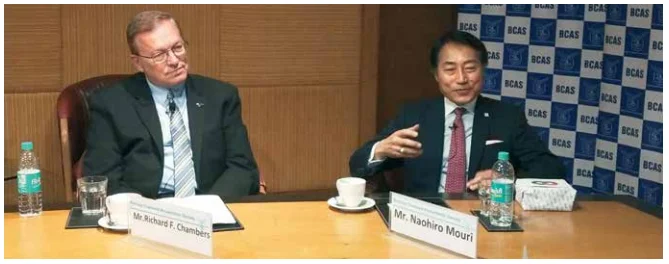
Export of Goods and Services – Simplification and Revision of Softex Procedure at SEZs

fiogf49gjkf0d
This circular provides that the revised Softex procedure which was applicable only to software exporters in Software Technology Parks of India (STPI) will, with immediate effect, be applicable to all software exporters whether in SPTI/SEZ/EPZ/100% EOU/DTA.

As per the revised procedure, a software exporter whose annual turnover is at least Rs. 1,000 crore or who files at least 600 SOFTEX forms annually on all India basis, will be eligible to submit statements in the revised excel format sheets as per formats Annexed to this circular.

levitra

Protocol amending the DTAA between India and Netherlands notified with effect from 2nd November 2012 signed – Notification no. 2/2013 dated 14-1-2013

fiogf49gjkf0d

Protocol amending the DTAA between India and Netherlands notified with effect from 2nd November 2012 signed – Notification no. 2/2013 dated 14-1-2013

levitra