For centuries, the written word has served as a window into the mind of the writer. The clarity of language suggests good reasoning ability, the structure of an argument reveals intellectual discipline, and the tone of expression hints at maturity and judgment.
Not surprisingly, this assumption has shaped many important decision-making processes in professional life. Employers evaluate candidates as fit for the interview rounds through résumés and cover letters. Academic institutions judge merit through essays, statements of purpose and research papers. Organizations assess performance through reports, presentations, and written self-evaluations. Even outside formal settings, articles, blogs, and public commentary allow readers to infer the depth and authenticity of the writer.
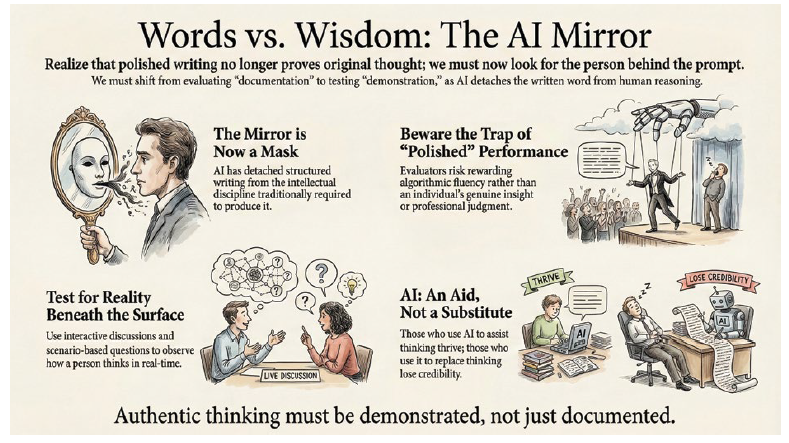
All of these processes rest on an implicit assumption - that the words on the page are the product of the mind behind them. That assumption is now undergoing a significant disruption.
THE DETACHMENT OF WRITING FROM THINKING